Tag: best cat toys for indoor cats

  • Best Cat Toys for Bored Indoor Cats: A Practical Rotation That Works

    Best Cat Toys for Bored Indoor Cats: A Practical Rotation That Works

    The best cat toys for bored indoor cats are not one magic gadget. They are a small rotation that covers the whole hunt: chase, pounce, grab, bite, kick, search for food, scratch, climb, and rest. For most bored indoor cats, start with a wand toy for owner-led movement, a durable kicker for capture, a puzzle feeder for foraging, a few safe solo toys, and a scratcher or box setup that changes the room.

    If your cat destroys ordinary toys, choose fewer toys and inspect them more often. Avoid claims like indestructible, watch hard chewers closely, and retire toys with loose strings, exposed stuffing, cracked plastic, detached feathers, or seams your cat can open. A bored cat needs stimulation, but a rough player also needs safer materials, supervision, and a plan for what happens when the toy starts to fail.
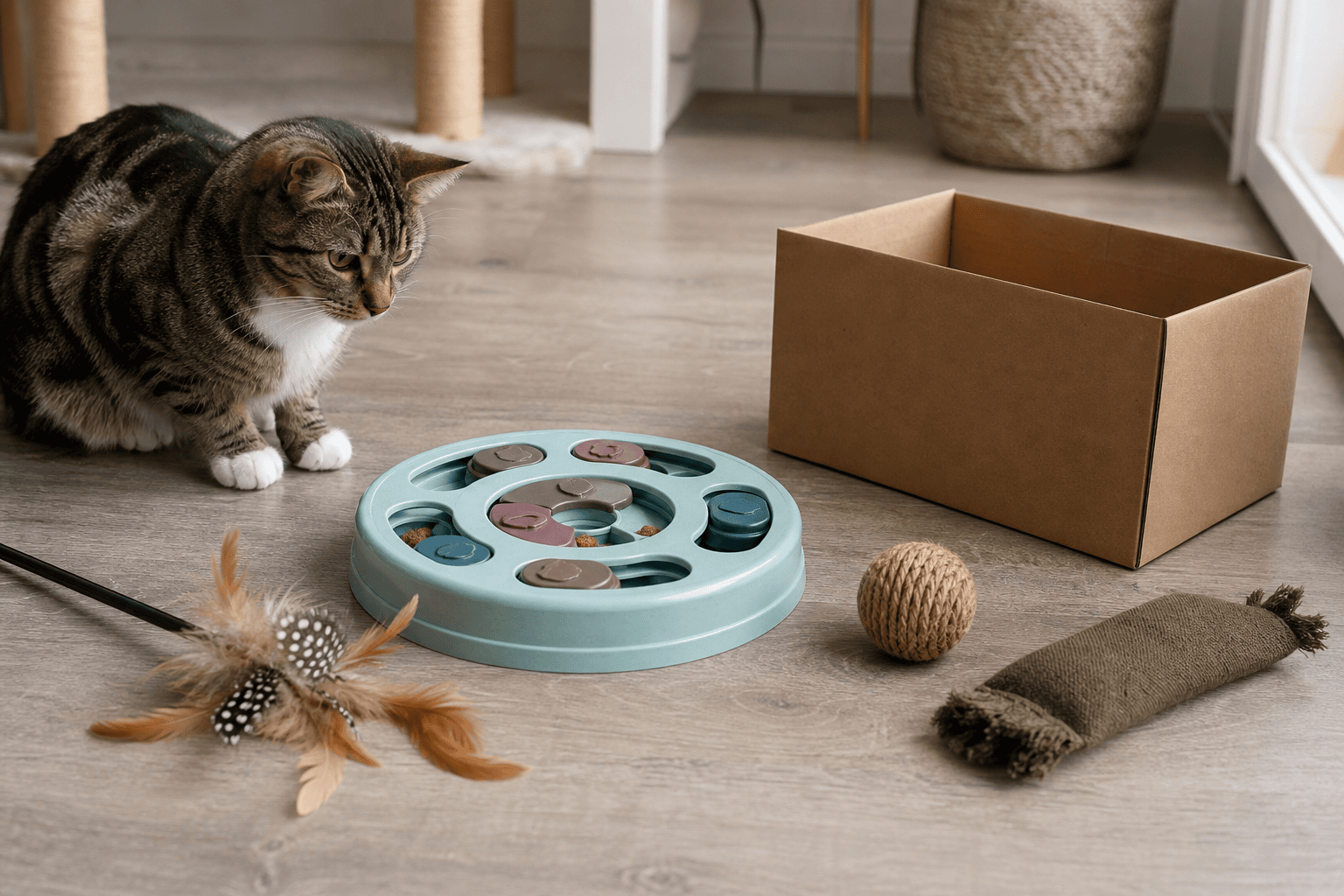
    Cat toy rotation with wand toy puzzle feeder ball and kicker toy
    A useful boredom setup mixes movement, capture, food work, and rest instead of relying on one novelty toy.

    What Bored Indoor Cats Actually Need From Toys

    Indoor cats can live rich, comfortable lives, but the home has to give them acceptable outlets for normal cat behavior. The AAFP and ISFM feline environmental needs guidelines emphasize that a healthy feline environment should let cats express natural behaviors and reduce stressors that contribute to unwanted behavior. Toys are one part of that environment, along with safe resting places, scratching surfaces, vertical space, predictable routines, and positive interaction.

    That is why the strongest toy setup is a routine, not a shopping list. A toy that only rolls around may trigger chase but never gives your cat a satisfying catch. A plush mouse may be fun for biting but boring if it never moves. A puzzle feeder may be excellent for food work but will not replace the sprint-and-pounce part of play. Boredom usually improves when you combine these jobs in a way your cat can understand.

    For a broader routine, pair this article with Titan Claws guides on cat enrichment activities and cat toys for bored cats. This guide focuses on choosing the actual toy mix.

    The Best Toy Categories for Bored Indoor Cats

    Instead of asking which single toy is best, build a compact rotation from five categories. Each one solves a different boredom problem.

    • Wand toys: best for interactive chase, jumping, direction changes, and bonding with you.
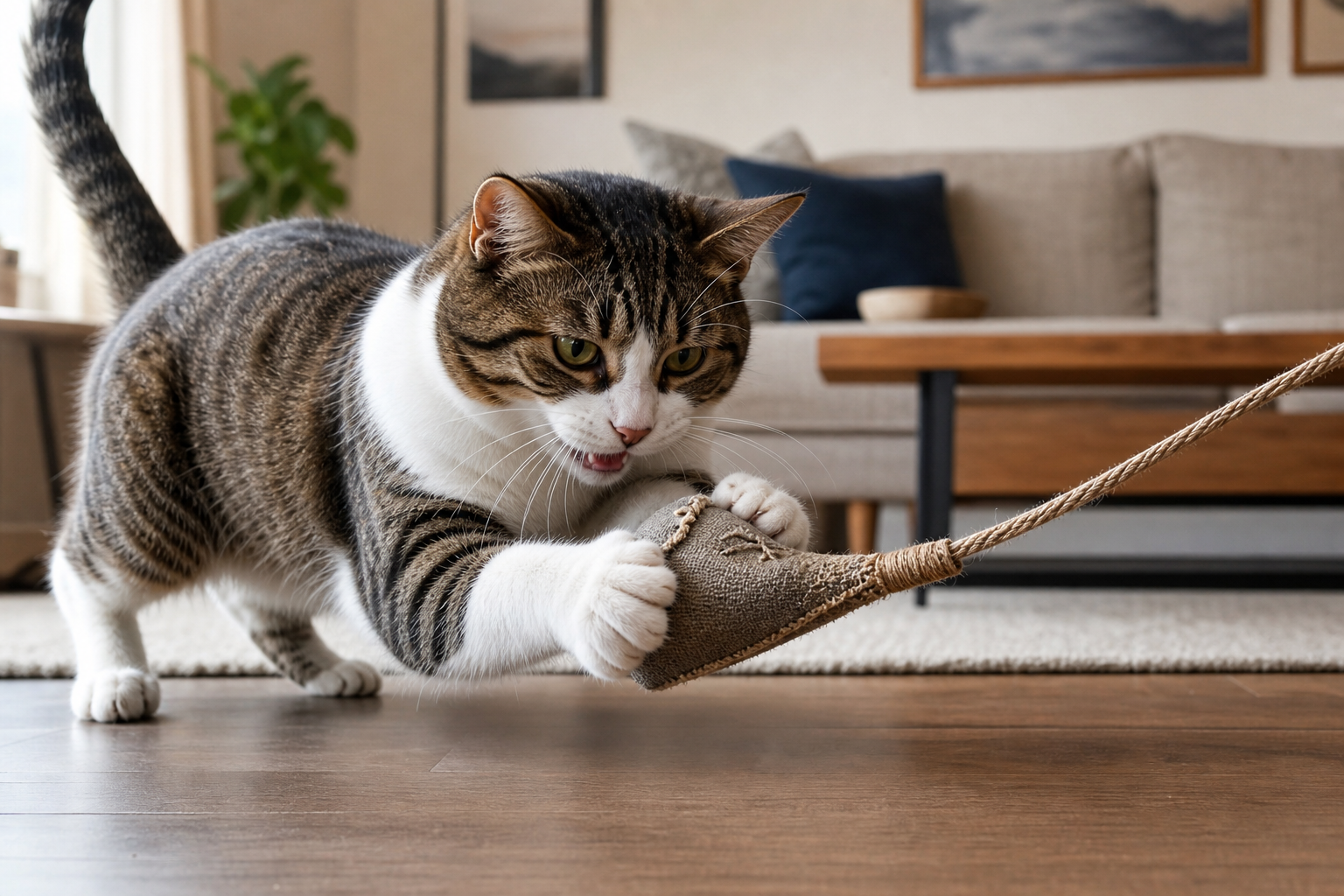
    • Kicker toys: best for cats that need to grab, bite, hold, and bunny-kick something physical.
    • Puzzle feeders: best for food-motivated cats, fast eaters, and cats that need a calmer mental task.
    • Solo chase toys: best for short independent sessions, especially balls, springs, tracks, and sturdy toss toys.
    • Environmental toys: best for changing the room, including boxes, tunnels, scratchers, paper bags with handles removed, and perch-based play.

    This mix beats most generic top-ten lists because it covers more of the cat’s day. Your cat gets movement, capture, chewing or kicking, problem solving, and environmental novelty without needing a pile of fragile toys on the floor.

    Best First Pick: A Wand Toy for Chase and Control

    If you only add one owner-led toy, make it a wand or teaser that lets you control speed, distance, and difficulty. Wand play is useful because you can make the toy move like prey: hide behind a corner, pause, dart away, crawl slowly, then let your cat catch it. That is much more interesting than waving the lure in your cat’s face.

    Use wand toys in short sessions of about five to fifteen minutes. Let your cat catch the lure several times, then end with a kicker, treat, or meal if it fits your feeding plan. If your cat is a leaper, keep jumps low and controlled. If your cat is a hard biter, choose replaceable lures and put the wand away after play. Strings and feathers should not be left out for unsupervised chewing.

    For a deeper setup, use the Titan Claws wand cat toy guide and the indoor movement advice in cat toys for exercise.

    Best for Rough Players: A Durable Kicker Toy

    Many bored indoor cats do not just want to chase. They want to grab hard, bite, clamp down, and kick. A kicker toy gives that energy a legal target. This is especially helpful if your cat attacks soft plush toys, grabs your arm during play, or tries to wrestle moving gadgets after the chase.

    Look for a size your cat can hold with the front paws while kicking with the back legs. Check for tough fabric, tight seams, limited small parts, and a shape that does not invite your cat to swallow loose pieces. Bigger is often safer than tiny for hard players because the toy is easier to wrestle and harder to gulp.

    Even a tough kicker needs supervision and inspection. Titan Claws is built around durable play, but no fabric toy should be treated as chew-proof. If you are choosing for a cat that shreds toys, read cat kicker toy, toys for cats that chew, and safe cat chew toys before buying another soft toy.
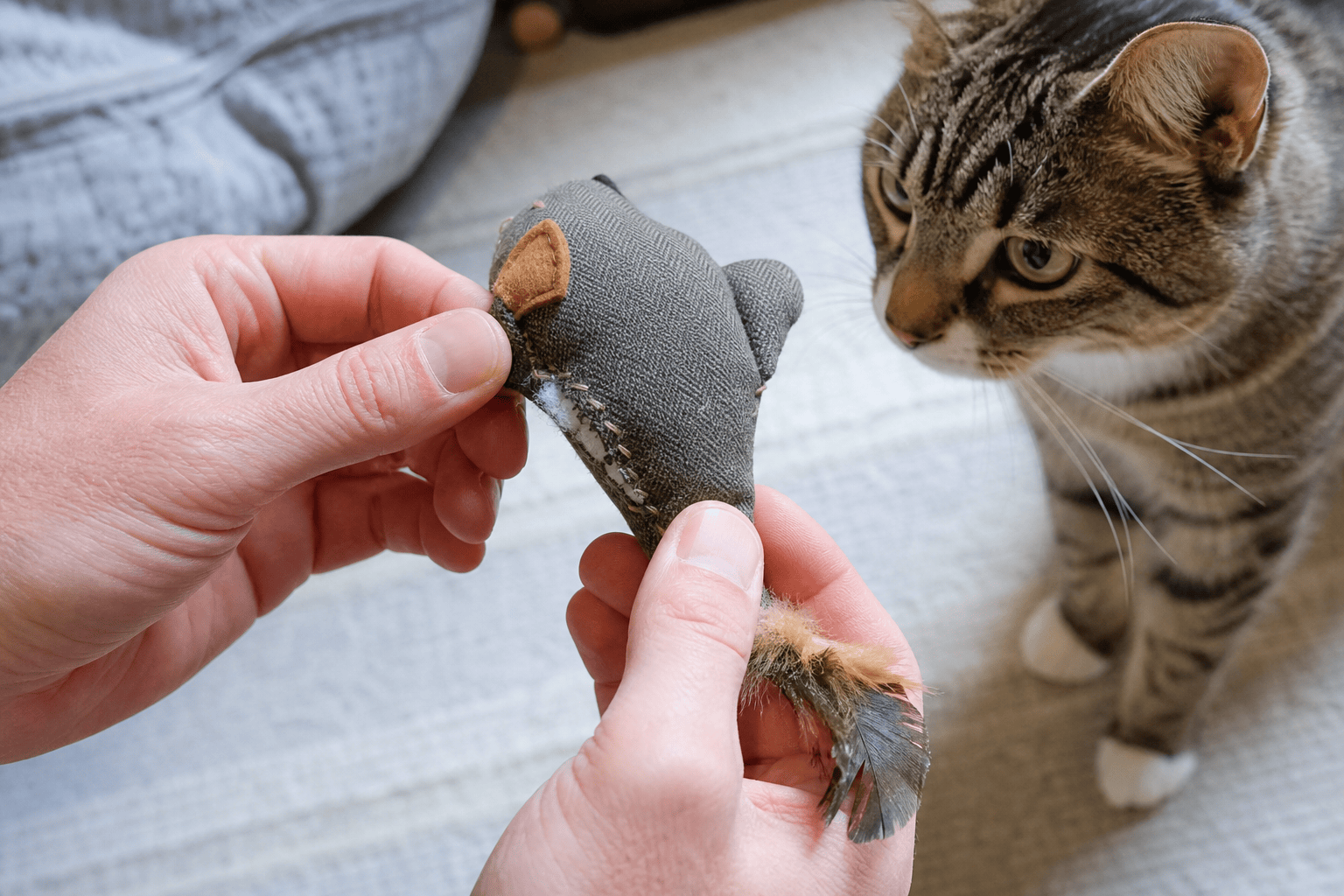
    Hands inspecting a cat toy for loose seams and damaged parts
    For cats that play hard, inspection is part of the toy routine, not an afterthought.

    Best for Food-Motivated Cats: Puzzle and Foraging Toys

    Puzzle feeders are useful for bored indoor cats because they turn food into a job. Instead of receiving every bite in a bowl, the cat has to paw, roll, nudge, lick, or search. Best Friends Animal Society recommends food puzzles and simple foraging ideas as part of indoor cat enrichment, including scatter feeding and hiding small food portions around the home.

    Start easier than you think. A puzzle that is too hard can frustrate a cat and make them quit. Use a clear, simple feeder at first, put a few treats or kibble pieces where your cat can smell them, and let the cat succeed. Increase difficulty only after your cat understands the task.

    Puzzle toys are not automatically safe for rough players. Inspect hard plastic for cracks, remove broken lids or sliding parts, and avoid tiny removable pieces. For more detail, see the Titan Claws guide to puzzle cat toys.
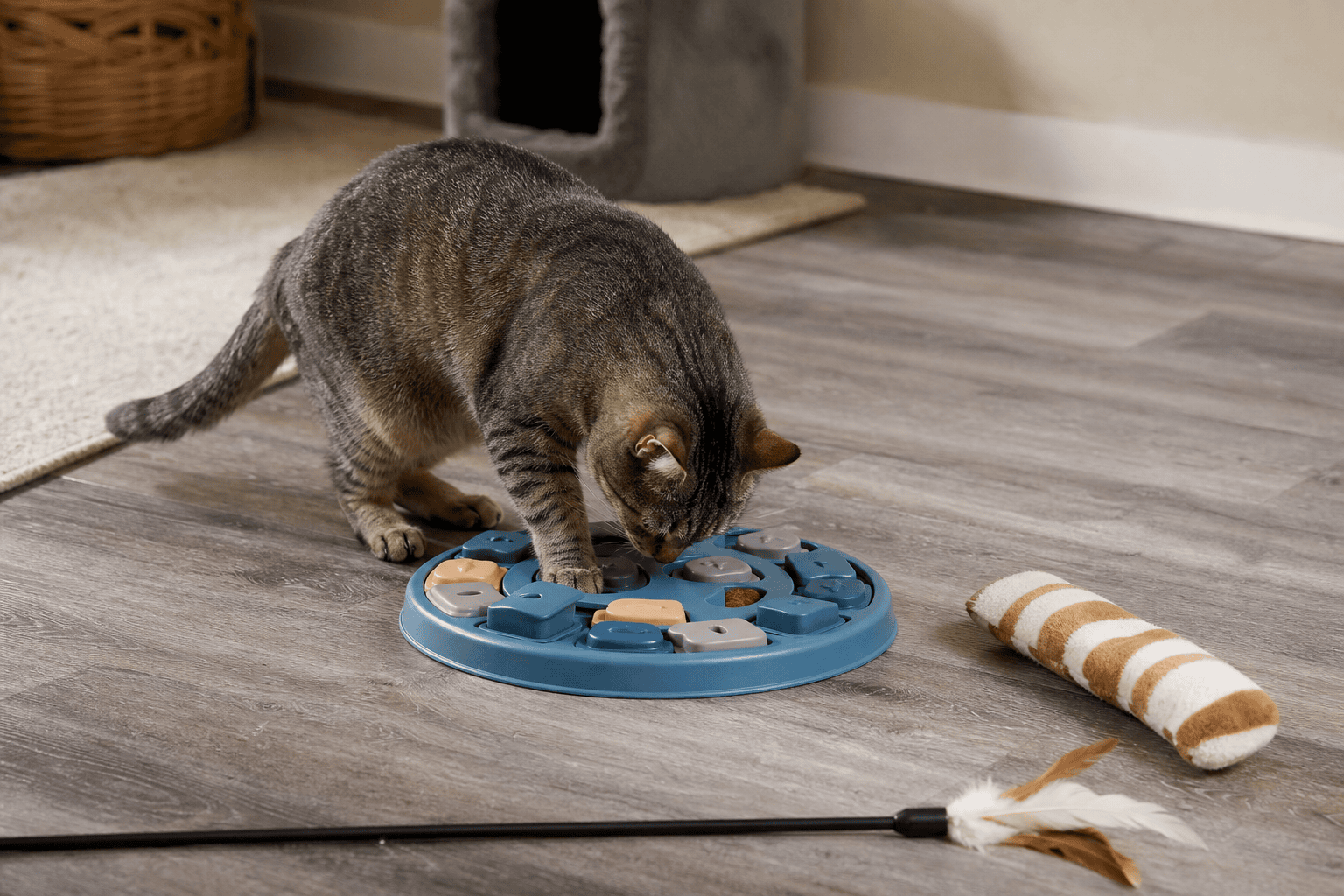
    Indoor cat using a puzzle feeder after active play
    Puzzle and foraging toys help turn play energy into calmer problem solving after the chase.

    Best Solo Toys: Simple, Sturdy, and Easy to Rotate

    Solo toys are useful between owner-led play sessions, but they should be chosen carefully. Good options often include sturdy balls, springs, soft toss toys, track toys, cardboard boxes, tunnels, and paper bags with handles removed. The best solo toy is one your cat uses safely without you having to hope a fragile part survives.

    Cornell Feline Health Center’s safe toys guidance warns owners to avoid small pieces, string-like parts, feathers, electrical cords, and other parts that can separate and be swallowed. That advice matters even more for bored indoor cats, because bored cats may chew, pry, and test toys longer than they would during a brief supervised session.

    Do not leave out every toy all the time. Keep a small active set and store the rest. Rotate toys every few days, refresh scent with catnip or silvervine if your cat responds to it, and change the play location. A spring in the hallway, a ball in a dry bathtub, and a box beside a scratcher can feel like three different games.

    Where Automatic and Electronic Toys Fit

    Automatic toys can help bored indoor cats, but they work best as one tool in the rotation. A rolling toy, moving mouse, or concealed wand can create quick bursts of movement when you are busy. The risk is treating the gadget as a babysitter. Many electronic toys have small attachments, battery doors, charging ports, tails, feathers, or moving parts that deserve inspection.

    Use electronic toys after supervised testing. Watch whether your cat bites the casing, traps paws, removes attachments, carries the toy by a fragile part, or becomes stressed by sound and movement. If the toy passes, use it for short sessions and then give your cat a real capture toy or food puzzle so the hunt has an ending.

    The Titan Claws guides to interactive cat toys for indoor cats, automatic cat toys, and electronic interactive cat toys cover those decisions in more detail.

    A Simple Seven-Day Toy Rotation

    Use this rotation as a starting point, then adjust based on what your cat actually chooses.

    1. Day 1: wand chase, then kicker capture, then dinner or a small food puzzle.
    2. Day 2: tunnel or box game with a toss toy hidden inside.
    3. Day 3: puzzle feeder for part of a meal plus short wand play at night.
    4. Day 4: solo balls or springs in a hallway, then inspect and store them.
    5. Day 5: high-energy wand session with low, controlled jumps.
    6. Day 6: kicker toy, scratcher, and scent refresh with catnip or silvervine if appropriate.
    7. Day 7: quiet foraging game: scatter a few food pieces or hide them in easy locations.

    The point is not to follow a strict calendar forever. The point is to stop asking one toy to do every job. Most bored indoor cats do better when the week has variety, predictable interaction, and a few toys that disappear before they become stale.

    Safety Checklist Before You Leave Toys Out

    • Remove string, feather, ribbon, elastic, and wand toys after supervised play.
    • Retire toys with exposed stuffing, open seams, cracked plastic, loose bells, or detached parts.
    • Use larger toys for cats that try to swallow small plush toys.
    • Keep battery toys, charging cords, and electronic parts away from hard chewers unless supervised.
    • Place active toys away from stairs, blind cords, water bowls, fragile objects, and unstable furniture.
    • Watch new toys for several sessions before treating them as solo-play options.
    • Stop using any toy that causes fear, obsessive searching, gagging, coughing, limping, or swallowed pieces.
    • Ask a veterinarian promptly if you suspect your cat swallowed string, stuffing, plastic, feathers, or any toy part.

    Quick Buying Guide

    For a bored indoor cat, buy in this order:

    1. One good wand toy for daily interactive chase.
    2. One durable kicker for biting, holding, and bunny kicking under supervision.
    3. One beginner puzzle feeder for food work and calmer problem solving.
    4. Three to five simple solo toys that can be rotated, inspected, and stored.
    5. One room-changing item such as a scratcher, tunnel, perch, or box setup.

    That small kit is usually more useful than a large bundle of fragile novelty toys. The best cat toys for bored indoor cats are the ones that match your cat’s play style, survive reasonable supervised use, and fit into a routine you can repeat. Build the rotation first. Then upgrade individual toys as your cat shows you what kind of hunter they are.
  • Interactive Cat Toys for Indoor Cats: A Practical Safety-First Guide

    Interactive Cat Toys for Indoor Cats: A Practical Safety-First Guide

    The best interactive cat toys for indoor cats are the toys that make your cat move, think, stalk, pounce, catch, bite, and then settle. For most homes, that means a small system: one owner-led chase toy, one physical capture toy, one puzzle or food toy, one safe solo toy, and a rotation plan that keeps the set fresh.

    If your cat destroys ordinary toys, interactive play needs an extra layer of judgment. Skip the fantasy of an indestructible toy. Choose toys by behavior, supervise strings and moving parts, inspect seams after rough sessions, and retire anything with loose pieces before it becomes a swallowing hazard.

    What interactive cat toys should do

    An interactive toy should give your indoor cat a job. A wand can create a chase. A kicker can give the cat something to grab and rake. A puzzle feeder can turn part of dinner into a foraging task. A track toy can add safe solo batting. A tunnel can create ambush points that make the same lure feel new.

    This is where many ranking pages fall short. Shopping pages list electronic mice, laser toys, tunnels, and feather wands, but they often do not explain how those toys fit together. A good play setup is not a pile of gadgets. It is a routine that lets the cat start the hunt, make choices, catch something physical, and then wind down.

    Cornell Feline Health Center describes toys as useful for exercise and cognitive enrichment because they encourage cats to stalk, pounce, and problem solve. That is the buying standard: pick the toy that supports a real behavior, not the toy with the loudest packaging.

    The four toy roles most indoor cats need

    Before buying another toy, decide which role is missing. Most indoor cats benefit from four categories.

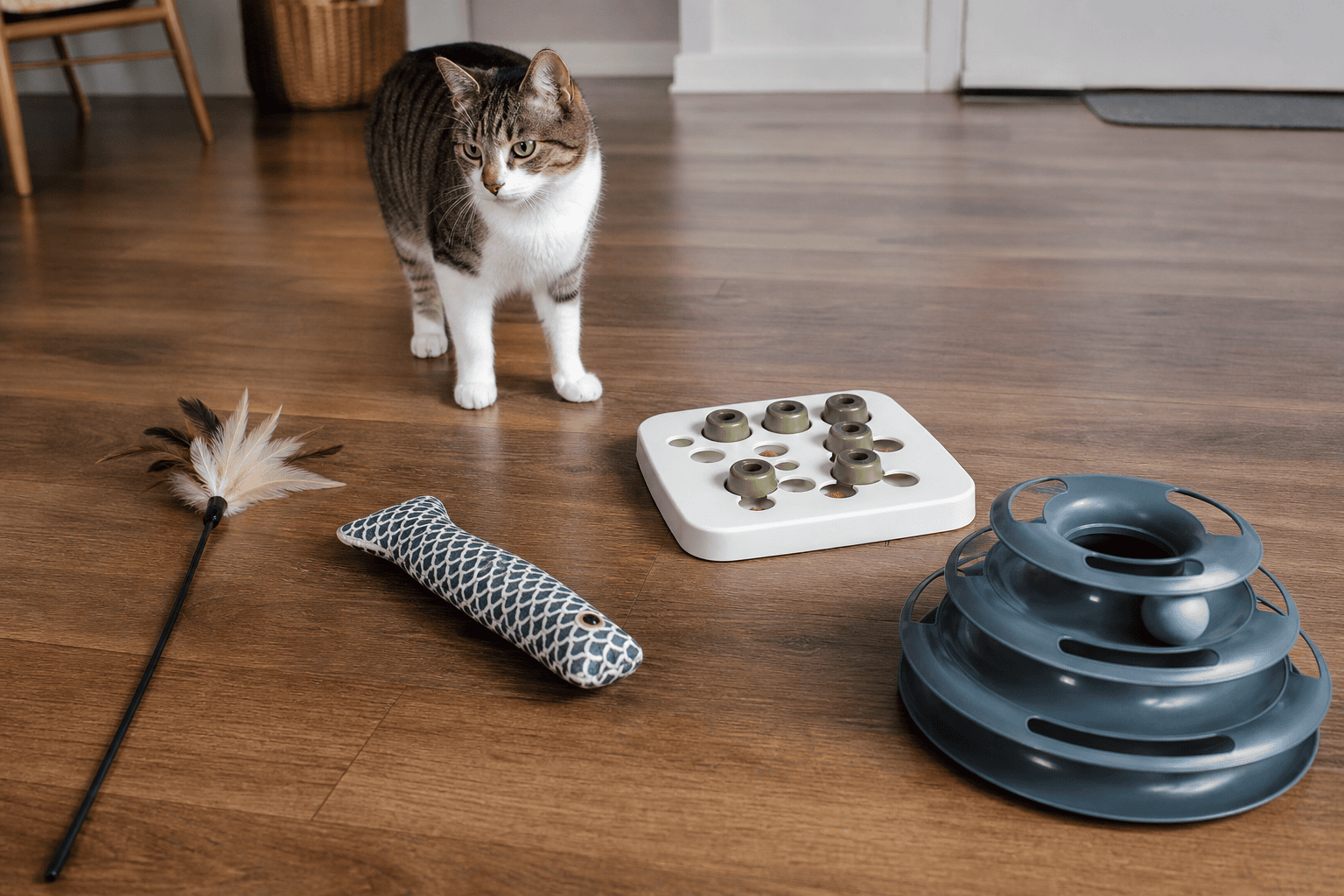
    • Chase toys: Wand toys, teaser rods, rolling balls, tunnels, and some motion toys that get your cat tracking movement and sprinting in short bursts.
    • Capture toys: Kicker toys, larger plush prey toys, and rugged fabric toys that your cat can grab, bite, and bunny-kick after the chase.
    • Puzzle toys: Treat balls, slow feeders, puzzle boards, snuffle-style mats, and hidden kibble searches that make food more mentally active.
    • Solo toys: Track toys, sturdy balls, safe springs, scratchers, window perches, and timed electronic toys that can add interest while you are busy.

    For a broader rotation system, Titan Claws has a companion guide to cat toys for enrichment. If boredom is already causing ankle attacks, night zoomies, or furniture trouble, start with cat toys for boredom and use this article to choose the interactive pieces.

    Best choices by play style

    Your cat’s best interactive toy depends on how the cat already tries to hunt. Watch one or two play sessions before you shop.

    What your cat does Try this first Watch for
    Ambushes from behind furniture Wand toy plus tunnel or box Do not leave strings, ribbons, or elastic out after play.
    Grabs toys and kicks hard Long kicker or large fabric prey toy Check seams, stuffing, tags, and stitched-on pieces.
    Gets bored with bowls Beginner puzzle feeder or scattered kibble search Use measured food from the normal meal, not unlimited treats.
    Bats objects alone Track toy, larger ball, spring, or sturdy solo toy Avoid tiny parts your cat can swallow or chew apart.
    Needs motion while you work Timed electronic toy or motion-activated toy Inspect battery covers, wheels, cords, charging ports, and fabric covers.
    Stares at birds or windows Window perch, bird-safe viewing station, wand play nearby Move play away if outdoor cats trigger stress or marking.

    Rough players usually need a stronger capture toy after the chase. The Titan Claws cat kicker toy guide explains sizing, seams, and failure points for cats that bite and rake with force.

    Indoor cat toy rotation with chase, capture, puzzle, and solo toys

    How to run a better play session

    A short session with a clear sequence usually beats a long session where the toy wiggles randomly until the cat loses interest. Think like prey: appear, hide, pause, move away, get caught, and then end calmly.

    1. Start with attention. Move the toy at the edge of your cat’s vision, not directly into the cat’s face.
    2. Let the cat stalk. Drag the lure behind a chair leg, under paper, around a corner, or through a tunnel.
    3. Create short chases. Use quick bursts with pauses. Many cats prefer several small sprints over one exhausting run.
    4. Offer a real catch. Let your cat pin the wand lure briefly, then trade to a kicker or plush toy if teeth and back claws come out.
    5. Finish with food or calm. Use a small part of dinner in a puzzle feeder, a treat, or a quiet reset so the session does not stop at peak arousal.

    The AAFP and ISFM feline environmental needs guidelines recommend opportunities for play and predatory behavior, including toys and feeding activities that let cats express parts of the hunting sequence. That supports a practical rule: do not make your cat chase forever without a capture.

    Automatic toys are useful, but limited

    Automatic cat toys can help indoor cats during quiet parts of the day, especially if they run in short timed sessions. They are useful for novelty and movement, but they are not a full replacement for owner-led interactive play.

    Choose electronic toys with secure battery compartments, sturdy casing, covered mechanisms, and no exposed cords. Stop using the toy if your cat chews the shell, attacks the charging port, pulls at fabric covers, breaks a wheel, or becomes frantic instead of engaged. If you need a deeper buying filter, Titan Claws’ guide to automatic cat toys covers what to buy, what to avoid, and how to use motion toys when you are away.

    Laser pointers need special care. Never shine the light in a cat’s eyes, and do not use a laser as the entire session. Best Friends Animal Society recommends making sure the cat eventually gets to catch something real, such as a toy or treat, so the chase has a satisfying finish.

    Safety rules for cats that play hard

    Interactive toys are often higher-risk than plain solo toys because they include strings, elastic, feathers, wires, batteries, motors, small plastic pieces, and attachments that invite hard biting. That does not make them bad toys. It means access should match the risk.

    • Put wand toys, ribbons, yarn, string, elastic, and feather lures away after supervised play.
    • Avoid glued-on eyes, bells, sequins, loose tails, tiny felt pieces, and decorative parts for cats that chew.
    • Inspect seams, stuffing, threads, exposed wire, cracked plastic, battery covers, charging ports, and sharp edges after rough sessions.
    • Keep electronic toys away from water bowls and remove them if the casing heats up, smells odd, or changes sound.
    • Choose capture toys large enough that your cat cannot swallow them whole.
    • Retire damaged toys early. A toy that was safe yesterday can become risky after one intense bite-and-kick session.

    Cornell specifically cautions against toys with small pieces or strand-like parts that can separate and be swallowed, and also notes that cords should be avoided when a cat may chew them. For strong chewers, pair this article with Titan Claws’ guides to toys for cats that chew and safe cat chew toys.

    Human hands inspecting a cat toy seam for damage after rough play

    A simple weekly rotation for indoor cats

    Rotation keeps toys interesting and gives you a built-in inspection habit. Keep risky interactive toys stored between sessions and leave out only the solo toys your cat uses safely.

    • Daily owner-led toy: Wand, teaser, tunnel chase, or moving lure for five to ten minutes.
    • Daily capture toy: Kicker, rugged plush, or larger fabric toy used after chase play.
    • Meal-based puzzle: Treat ball, puzzle tray, slow feeder, or hidden kibble search using part of a measured meal.
    • Solo-safe option: Track toy, larger ball, scratcher, cardboard box, or window perch.
    • Novelty swap: Rotate one stored toy back in every few days and remove one stale toy.

    For cats that are already bored with standard toys, the Titan Claws guide to cat toys for bored cats gives a practical troubleshooting path by behavior problem.

    When to stop and ask for help

    Stop a play session if your cat pants, limps, crashes into furniture, guards a toy aggressively, swallows non-food material, redirects hard bites onto people, or cannot settle after play. Adjust the toy, lower the intensity, shorten the session, and ask your veterinarian or a qualified behavior professional if the pattern continues.

    Also adjust for age and health. Kittens need frequent short sessions and firm rules against hands as prey. Senior cats may still want interactive play, but with lower jumps, slower movement, and softer surfaces. Cats with arthritis, heart disease, respiratory problems, or recent injuries need veterinary guidance before high-intensity chase games.

    Quick buying checklist

    Use this checklist before adding a toy to the cart:

    • Does this toy support chase, capture, puzzle feeding, solo batting, scratching, climbing, or watching?
    • Can my cat safely use it with their real bite strength and claw style?
    • Does it have strings, elastic, feathers, cords, batteries, bells, or small parts?
    • Can I clean it and inspect the likely failure points?
    • Will my cat get to catch something physical before the session ends?
    • Is this a supervised toy, a timed toy, or a toy safe enough to leave out?
    • Do I already own another toy that fills the same role?

    The bottom line

    Interactive cat toys for indoor cats work best when they are part of a routine, not a random shopping list. Give your cat a chase, a catch, a puzzle, a safe solo option, and a rotation plan. Store risky toys after play. Inspect anything your cat bites, kicks, or chews. Replace damaged toys before loose parts become hazards.

    For Titan Claws readers, the best choice is usually the toy that fits the cat’s play style and survives enough supervised sessions to be useful, while still showing clear signs when it is time to retire it. Durable matters, but durable plus inspection is what keeps indoor play productive.

    Sources