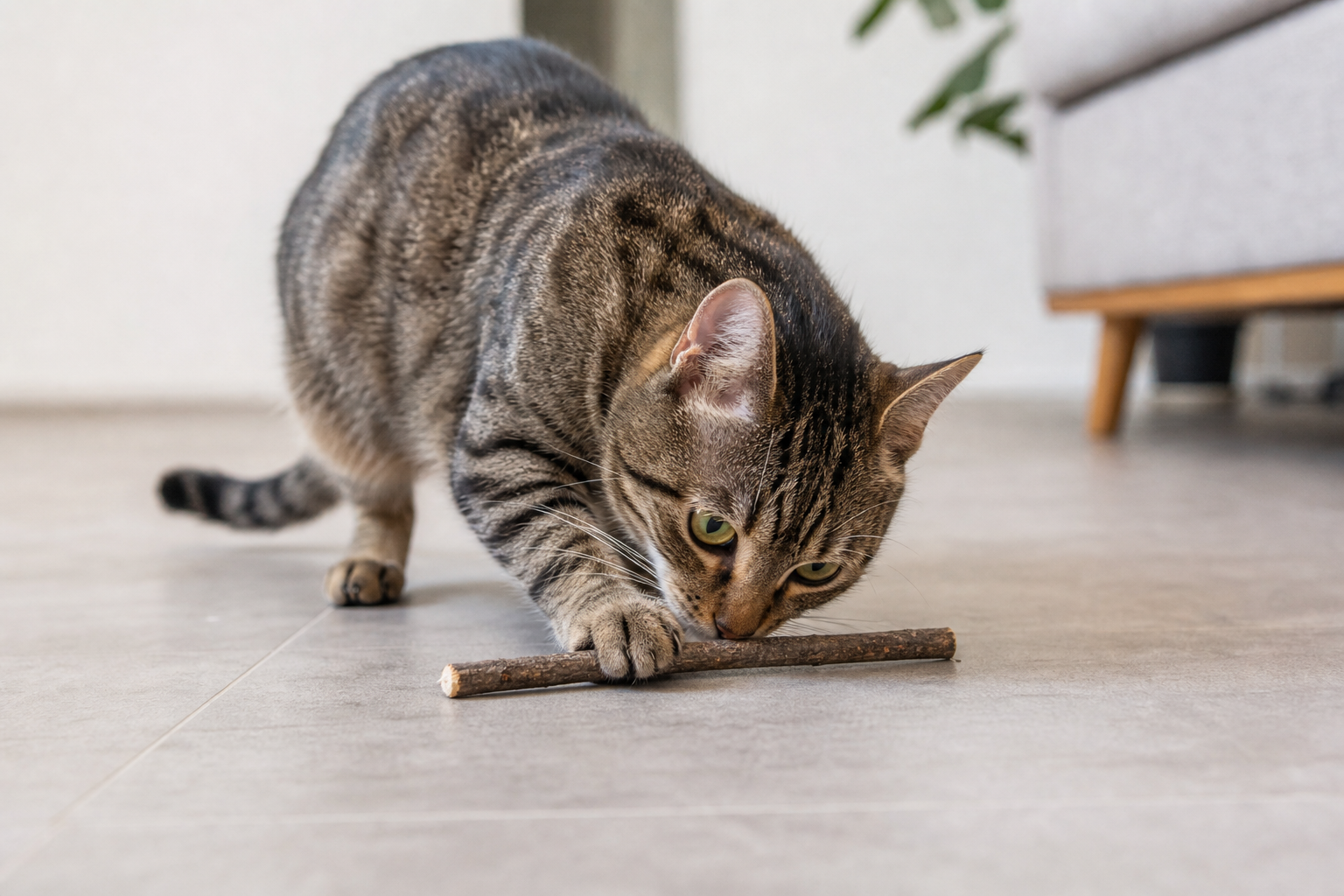
Cat chew sticks can be a useful enrichment tool when a cat wants to sniff, rub, lick, bite, and carry something plant-based. Most cat chew sticks are made from silvervine, also called matatabi, and some cats respond to it more strongly than they respond to catnip. They are not a magic dental treatment, and they are not automatically safe for every cat.
The right way to use them is simple: choose sticks made for cats, supervise the first sessions, remove bark dust and broken pieces, and stop if your cat tries to swallow chunks. If your cat is a hard chewer that destroys toys quickly, treat chew sticks as a supervised enrichment item, not a leave-out toy.
What Are Cat Chew Sticks?
Cat chew sticks are usually small dried sections of silvervine wood, silvervine gall fruit, honeysuckle wood, or a wrapped combination of silvervine, gall fruit, raffia, sisal, or catnip. The appeal is partly texture and partly scent. Many cats sniff, rub their cheeks, roll, drool, lick, bite, or kick after contact with the plant material.
Silvervine has stronger evidence behind it than most cat-stick marketing pages explain. A 2017 BMC Veterinary Research study tested silvervine, catnip, Tatarian honeysuckle, and valerian in domestic cats. Almost 80% of the cats responded to silvervine, and many cats that did not respond to catnip still responded to silvervine. That makes silvervine sticks worth considering for cats that ignore catnip toys.
Chew sticks are best thought of as scent-and-chew enrichment. They can give a cat a legal object to mouth, but they do not replace tooth brushing, veterinary dental exams, daily play, or safer chew toys for cats that gnaw hard enough to break pieces off.
Are Cat Chew Sticks Safe?
For many cats, a clean cat-specific silvervine stick used under supervision is a reasonable toy. The safety question is not only whether silvervine is toxic. The bigger issue is how your individual cat handles the physical stick: does the cat lick it, shave the bark, crunch it into chunks, or try to eat it?
Use these rules for the first few sessions:
- Supervise at first. Watch how your cat bites, holds, and breaks down the stick before deciding whether it can stay out.
- Choose cat-specific products. Do not hand over random yard sticks, treated wood, craft sticks, skewers, or wood from unknown plants.
- Remove loose wraps. Raffia, rope, sisal, string, and dangling trim can become ingestion risks for cats that chew aggressively.
- Stop if chunks come off. A cat that bites off swallowable pieces needs a different toy type.
- Keep water available. Some cats drool heavily or get very excited around silvervine.
- Use a short session. Ten to fifteen minutes is enough for most cats, especially when you are still learning their reaction.
Cornell Feline Health Center’s safe toy guidance warns owners to avoid small pieces and linear parts such as feathers and string that may detach and be swallowed. The same logic applies to chew-stick bundles: the stick may be the point, but the extras can be the hazard.

What Current Product Pages Usually Miss
Search results for cat chew sticks lean heavily toward marketplaces and product listings. Those pages are useful for seeing what exists, but they often blur together three very different cats: the gentle sniffer, the bored chewer, and the destructive cat that crushes toys. Those cats need different rules.
Most product pages also overstate dental value. Chewing a stick may rub some tooth surfaces, but it does not clean every tooth, reach below the gumline, remove established tartar, or diagnose mouth pain. If your cat has bad breath, red gums, loose teeth, drooling, pawing at the mouth, dropping food, or chewing on one side, that is a veterinary dental issue, not a reason to buy a bigger bundle of sticks.
A better buying decision starts with your cat’s failure mode. If the stick stays mostly intact and your cat rubs, licks, and briefly gnaws it, it may be a good enrichment item. If the stick splinters, the cat swallows bark, or the wrapped parts unravel, retire it immediately.
How to Choose Better Cat Chew Sticks
Look for plain, simple construction. The best stick for a rough player is often the least decorative one.
- Simple ingredient list: silvervine, matatabi, or clearly named cat-safe plant material is easier to evaluate than vague natural wood blends.
- Appropriate diameter: very thin sticks can snap quickly; very small pieces are easier to swallow.
- Smooth but not painted: skip dyes, varnish, glitter, fragrance, glue-heavy decorations, and unknown coatings.
- Minimal attachments: avoid bells, beads, feathers, elastic, ribbons, plastic caps, and long string-like pieces for chewing cats.
- Clean packaging: choose dry, clean sticks without mold, dampness, odd chemical smells, or excessive dust.
- Clear usage guidance: responsible products tell you to supervise, inspect, and replace damaged pieces.
If your cat wants a softer bite target, pair this guide with Titan Claws’ chewy cat toys guide. If the real problem is toy destruction, start with durable cat toys and the newer cat chewing toys safety guide.
How to Introduce a Chew Stick
Do not rub the stick all over your cat’s face or force interest. Let the cat choose. Silvervine and similar plant attractants work through scent, and forced handling can turn enrichment into annoyance.
- Start on a clear floor. Remove string toys, food bowls, cords, and fragile items before the first session.
- Offer one stick. Place it near the cat and allow sniffing, rubbing, licking, or walking away.
- Watch the mouth. Gentle gnawing is different from crushing, splintering, or gulping.
- End while it is still intact. Put the stick away after a short session and inspect it under good light.
- Store it dry. Keep used sticks away from moisture, litter dust, and loose household items.
- Rotate, do not flood. Bring the stick out occasionally so novelty remains useful.
Some cats only rub and roll. Some only sniff. Some become playful for a few minutes and then lose interest. All of those are normal outcomes. A cat does not need to chew the stick for the stick to have enrichment value.
When Chew Sticks Are the Wrong Tool
Skip chew sticks or keep them strictly supervised if your cat has a history of swallowing non-food material, chewing electrical cords, eating fabric, vomiting after chewing, or breaking toys into pieces. The University of Wisconsin School of Veterinary Medicine’s safe toys advice notes that aggressive chewers may ingest feathers, strings, sparkly parts, and similar toy materials, and that pieces chewed off should be removed right away.
Also be cautious with kittens, cats with known dental disease, cats on restricted diets, cats recovering from oral surgery, and multi-cat homes where one cat guards or gulps toys. If a stick causes coughing, gagging, repeated vomiting, belly pain, appetite loss, lethargy, constipation, or suspected swallowing of a sharp piece, stop using it and call your veterinarian.
If your cat persistently eats non-food material, look beyond toys. UC Davis School of Veterinary Medicine’s overview of unusual eating habits in cats describes pica as chewing and consuming non-nutritional substances, with possible medical, stress, boredom, or compulsive causes. That pattern deserves a veterinary conversation.

Better Alternatives for Hard Chewers
Some cats are simply too destructive for stick-style toys. That does not mean they should get no chewing outlet. It means the outlet should be larger, simpler, and easier to inspect.
- Large fabric kickers: good for cats that grab, bite, and rake; choose dense fabric and reinforced seams.
- Flexible chew-safe cat toys: useful for cats that like pressure on the teeth, as long as the material does not crack or peel.
- Food puzzles: better for cats chewing from boredom or frustration.
- Ball tracks: good independent play when loose pieces cannot come out.
- Supervised wand sessions: burn off hunt energy, then end with a safe bite target.
- Cardboard boxes: remove handles, tape, staples, and loose packing material; do not let the cat eat cardboard.
For a wider routine, use Titan Claws’ cat toys for enrichment and cat enrichment activities guides. Chew sticks work better as one controlled option in a rotation, not as the whole enrichment plan.
Quick Safety Checklist
- Is the stick made specifically for cats?
- Do you know the plant material, such as silvervine or matatabi?
- Is it free from dyes, fragrance, glitter, varnish, and unknown coatings?
- Are there no bells, beads, feathers, elastic, long strings, or loose wraps?
- Is it large enough that your cat cannot swallow it whole?
- Did the first session happen under supervision?
- Did the stick stay intact without sharp splinters or missing chunks?
- Did your cat chew without gulping pieces?
- Can you store it clean and dry between sessions?
- Do you have a safer alternative ready if your cat chews too hard?
The best cat chew sticks are simple, clean, cat-specific, and matched to a cat that rubs, licks, and gently gnaws rather than crushes and swallows. Use them for enrichment, inspect them like any other toy, and be willing to switch to larger durable toys when your cat’s chewing style makes sticks a poor fit.
Sources
- BMC Veterinary Research: Responsiveness of cats to silvervine, honeysuckle, valerian, and catnip
- Cornell Feline Health Center: Safe toys and gifts
- University of Wisconsin School of Veterinary Medicine: Safe toys for cats
- UC Davis School of Veterinary Medicine: Unusual eating habits in cats
- PetMD: Silvervine plant as an alternative to catnip