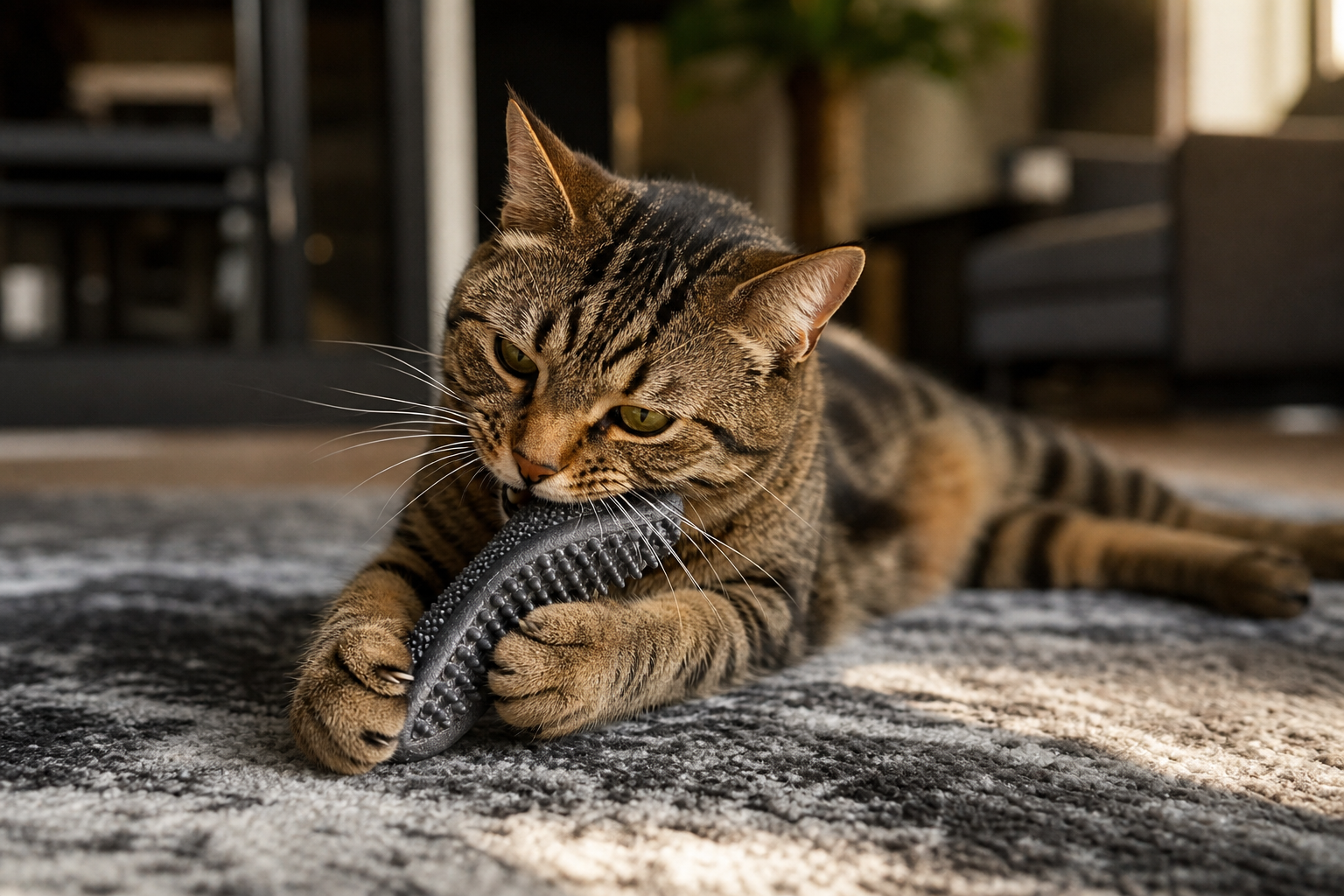
Cat chew toys for dental health can be useful, but they are not a substitute for tooth brushing, veterinary dental exams, or products with real oral-health evidence. The best way to think about them is simple: a good dental chew toy may add texture, chewing time, and enrichment. It should not be trusted to clean below the gumline, fix bad breath, remove heavy tartar, or solve dental pain.
For Titan Claws readers with rough players, the safety filter matters as much as the dental claim. Choose toys that are large enough, simple in construction, easy to inspect, and tough enough for your cat’s first supervised chewing sessions. Avoid any toy that sheds pieces, exposes stuffing, splinters, traps teeth, or depends on strings, feathers, glued decorations, or tiny parts to stay interesting.
Do Cat Dental Chew Toys Actually Work?
Some textured cat toys can rub against the outer surface of teeth while a cat bites them. That mechanical contact may help with soft debris on the parts of the tooth the toy actually reaches. The problem is that many cats chew only a few times, chew with one side of the mouth, or focus on carrying and batting rather than grinding. Even a motivated chewer will not evenly clean every tooth.
That is why dental chew toys should sit in the support category, not the treatment category. The American Veterinary Medical Association notes that many products claim to improve dental health, but not all are effective, and owners should talk with their veterinarian about dental products, treats, diets, and brushing. The Veterinary Oral Health Council maintains a list of accepted cat products that have earned its seal for plaque or tartar claims; most toy-style products sold as dental toys are not the same thing as a VOHC-accepted dental diet, treat, wipe, or oral-care product.
The practical answer: a dental chew toy can be worth using if it gives your cat a safe chewing outlet and supports a broader dental routine. It is a weak plan if it is the whole routine.
What Current Ranking Pages Miss
The search results for this topic lean heavily toward retailer categories, marketplaces, and short product lists. Those pages are useful for discovery, but many of them move too quickly from dental promise to shopping choice. A cat that gently mouths a mesh banana is a different risk profile from a cat that rips seams, pulls out stuffing, and eats loose parts.
A better buying decision starts with two questions:
- What dental job are you expecting? A chew toy may encourage chewing and surface abrasion. It should not replace brushing, veterinary exams, or treatment for dental disease.
- What damage does your cat create? If your cat punctures, shreds, peels, or swallows toy material, durability and inspection rules matter more than the word dental on the package.
If your cat destroys ordinary toys quickly, read the Titan Claws guide to durable cat toys before buying a dental-specific option. If the bigger issue is constant gnawing, our guide to cat chewing toys covers the broader behavior and safety picture.
Dental Toys vs. Dental Treats, Brushing, and Vet Care
Not every dental product works the same way. A toy is mainly an enrichment object. A dental treat is eaten and may be designed to abrade teeth as the cat bites through it. A dental diet uses kibble shape and texture to change chewing mechanics. Tooth brushing physically disrupts plaque at the gumline when the cat accepts it. A veterinary dental cleaning lets the mouth be examined and cleaned thoroughly, including areas owners cannot see.
For most homes, the hierarchy looks like this:
- Veterinary exam first if there are symptoms. Bad breath, drooling, pawing at the mouth, bleeding, loose teeth, refusal to eat hard food, or sudden chewing changes deserve a call to the vet.
- Brushing is the gold-standard home habit when possible. It takes training and patience, but it reaches the daily plaque problem more directly than toys.
- VOHC-accepted products are better evidence-based add-ons. Use them as directed and ask your vet which fit your cat’s health and diet.
- Dental chew toys are enrichment plus light support. They can encourage legal chewing, but they should be judged by safety, engagement, and damage resistance.
Cornell’s Feline Health Center lists warning signs such as bad breath, red or swollen gums, pawing at the mouth, and refusal to eat hard food in cats with dental problems. It also points out that cats may hide pain, which is one reason a toy should not be used to wait out a mouth problem.
How to Choose a Safer Dental Chew Toy
Start with the cat in front of you, not the packaging. Dental texture only helps if the toy survives use and the cat actually wants to chew it. For rough players, the safest options are usually boring-looking: fewer parts, fewer seams, fewer detachable details, and a shape you can inspect in seconds.
Use this filter before the first play session:
- Size: the toy should not fit entirely inside your cat’s mouth, and no part should be easy to swallow whole.
- Texture: mesh, ridges, woven fabric, or flexible rubber-like surfaces can create chewing interest, but they should not peel, splinter, or shed fibers under pressure.
- Construction: prefer one-piece designs, protected seams, reinforced stitching, or dense fabric over glued-on eyes, bells, beads, feathers, ribbons, and thin tails.
- Firmness: avoid very hard objects that could risk tooth damage and very brittle materials that crack into sharp edges.
- Cleanability: drool, catnip, treat dust, and moisture can weaken material. If it cannot be cleaned, it needs closer inspection and faster retirement.
- Use case: decide whether it is a supervised chew toy, a short-session toy, or a toy safe enough for limited solo access after several successful checks.
Good Options to Consider
The best dental chew toy type depends on your cat’s chewing style. Do not buy a category blindly; match it to what your cat already does during play.
Textured fabric dental toys
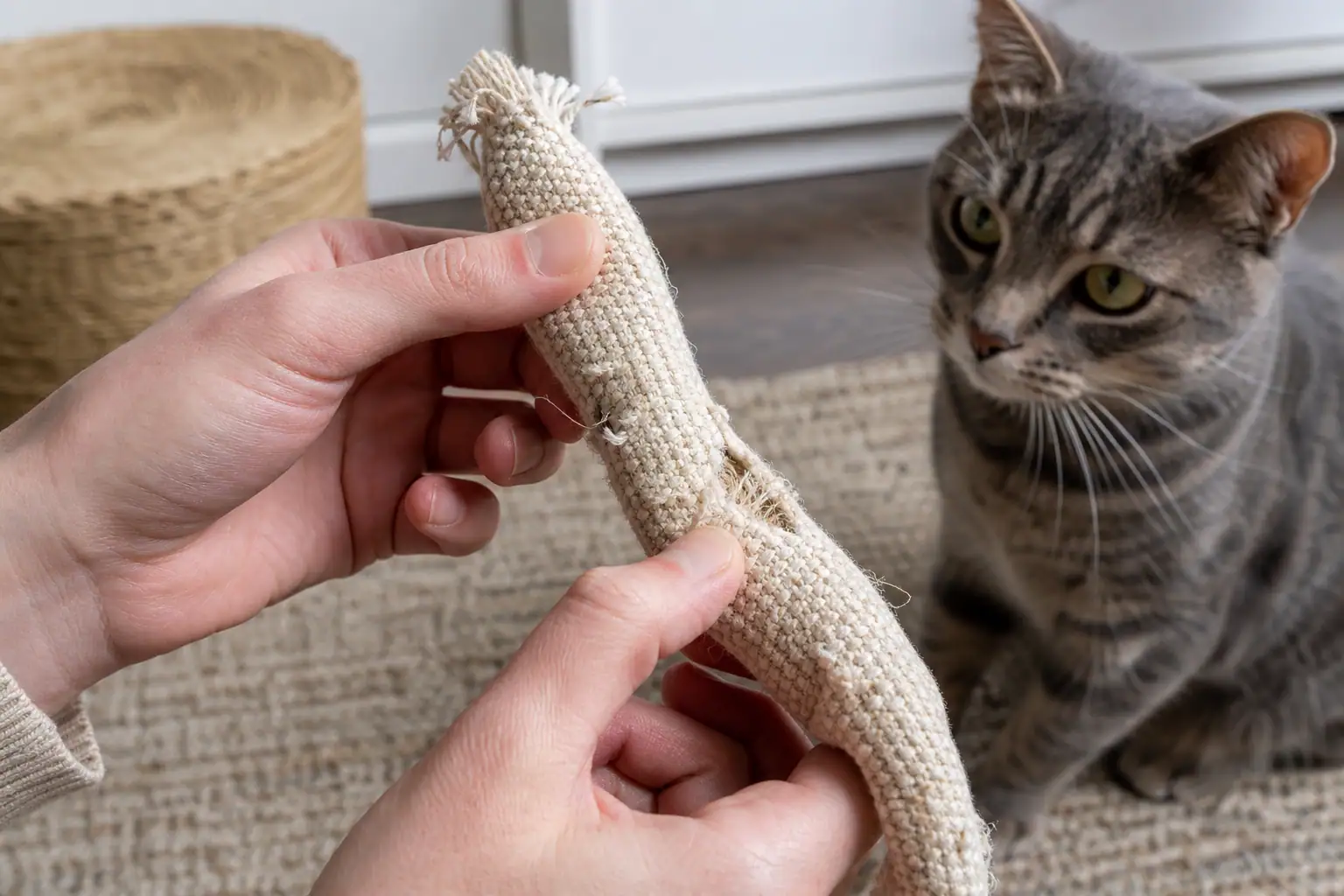
Mesh or woven fabric toys can appeal to cats that like soft mouth-feel. They are often light enough to bat and carry. Check the edges closely, because a toy that works for a gentle chewer may fray quickly with a determined shredder. Retire it when fabric lifts, seams open, stuffing shows, or the cat starts eating threads.
Flexible chew shapes
Rubber-like or silicone-style cat chew toys can work for cats that prefer pressure and bounce. They should flex rather than crack, and they should be sized so the cat cannot wedge them deep in the mouth. Watch for deep tooth grooves, sticky surfaces, peeling, or missing pieces.
Catnip or silvervine chew sticks
Plant-based sticks can encourage gnawing in some cats, especially silvervine-responsive cats. Use only products intended for cats, remove sharp splinters, and stop if your cat tries to swallow chunks. These are not a universal dental solution; they are a supervised chewing outlet for the right cat.
Kickers used after active play
A kicker is not usually sold as a dental toy, but it can reduce destructive chewing by giving a rough player something legal to bite after a chase session. For cats that grab, bite, and rake, pair wand play with a sturdy kicker at the end. Then inspect the toy before putting it back in rotation. The Titan Claws guide to cat toys for play aggression explains this redirect pattern in more detail.
What to Avoid for Rough Chewers
Dental marketing does not make a toy safe. If your cat is a destroyer, skip designs that create obvious failure points.
- String, ribbon, yarn, and elastic: these are high-risk materials if swallowed and should be stored after supervised play.
- Feathers, tassels, and sparkly trim: fun for chase games, poor choices for cats that eat pieces.
- Small plush shapes with hard details: glued eyes, bells, noses, and tails often fail before the body of the toy does.
- Brittle plastic: cracks can produce sharp edges and swallowable fragments.
- Dog chews: many are too hard, too large, too calorie-dense, or made for a different chewing style.
- Household substitutes: hair ties, foam earplugs, twist ties, cords, and children’s toys do not become safe just because a cat likes chewing them.
The University of Wisconsin School of Veterinary Medicine’s guidance on safe toys for cats is especially relevant for rough chewers: avoid pieces that can be ingested, remove loops or tags, and take damaged toy parts away rather than letting the cat keep working on them.
A 60-Second Dental Chew Toy Inspection
Make inspection part of the routine. It is faster than dealing with a swallowed piece later.
- Look at every likely bite point. Check corners, ridges, knots, seams, caps, and any textured dental surface.
- Press the seams and edges. If stuffing, foam, pellets, or inner material appears, remove the toy.
- Flex firm material. Search for cracks, sharp edges, deep channels, peeling, and pieces that lift under a fingernail.
- Check for missing material. Missing chunks matter even if the toy still looks usable.
- Smell and feel it. Sour odor, sticky residue, damp stuffing, or odd chemical smell means wash or discard.
- Choose a status. Keep, wash, supervised-only, or trash. Do not put a questionable dental toy back into solo rotation.
Build a Dental-Friendly Play Routine
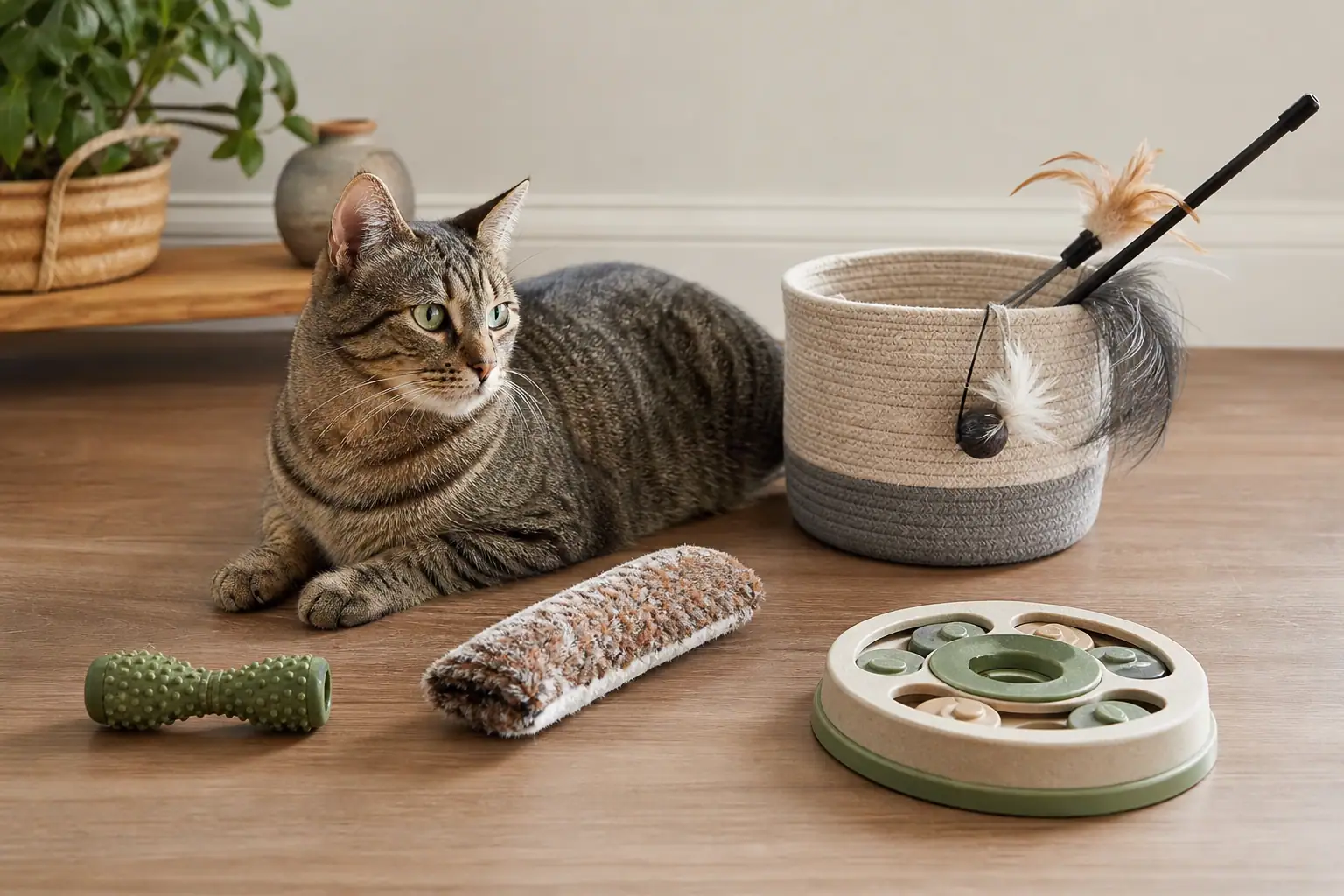
A chew toy works best as part of a routine that gives your cat movement, hunting, biting, and rest. Cats with high prey drive often chew harder when they are under-stimulated or when play ends before the catch-and-bite phase.
Try this simple structure:
- One active hunt session daily: use a wand or chase toy, let the cat catch it, then offer a safe bite target.
- One dental support habit: brush if your cat is trained for it, or ask your veterinarian about VOHC-accepted options that fit your cat.
- One rotation bin: keep only a few inspected toys available and rotate others to preserve novelty.
- One no-access sweep: remove cords, string toys, hair ties, rubber bands, and damaged toys before bedtime.
For more low-cost ways to keep a chewing cat busy, see free cat enrichment ideas. If you are waiting for Titan Claws product drops built around harder play, the shop waitlist is the right place to follow along.
When to Call the Vet
Call your veterinarian if your cat has bad breath that does not improve, red or bleeding gums, drooling, pawing at the mouth, dropped food, refusal to eat hard food, swelling, broken teeth, sudden one-sided chewing, or any sign that toy material was swallowed. Dental pain can change how a cat chews, and cats often hide discomfort until the problem is advanced.
Also call if your cat repeatedly eats non-food material. Chewing a textured toy is different from consuming fabric, rubber, plastic, string, or wood. UC Davis School of Veterinary Medicine describes unusual eating habits such as pica as a pattern that can involve medical, anxiety, boredom, or compulsive factors. That needs a health and environment plan, not just a new toy.
Quick Buying Checklist
- Am I buying this as enrichment support, not as a replacement for dental care?
- Is the toy too large to swallow whole?
- Does it avoid string, feathers, ribbons, bells, beads, tiny tails, and glued parts?
- Can the material bend or compress without cracking?
- Can I inspect the dental texture and seams in under a minute?
- Will my cat chew it, or only bat it once and ignore it?
- Does the product make realistic claims, or does it imply too much dental benefit?
- Is there a plan to brush, use vet-recommended products, or schedule dental checks?
- Will this be supervised-only until it proves safe with my cat?
The right cat dental chew toy is not the one with the loudest plaque promise. It is the toy that your cat will actually chew, that survives your cat’s real play style, that you can inspect easily, and that fits into a broader dental-care routine. Treat it as enrichment with possible surface-cleaning support, stay skeptical of oversized claims, and replace it the moment damage changes the safety equation.
Sources
- Veterinary Oral Health Council: Accepted products
- American Veterinary Medical Association: Pet dental care brochure
- Cornell Feline Health Center: When Kitty Needs a Dentist
- University of Wisconsin School of Veterinary Medicine: Safe toys for cats
- UC Davis School of Veterinary Medicine: Unusual eating habits in cats