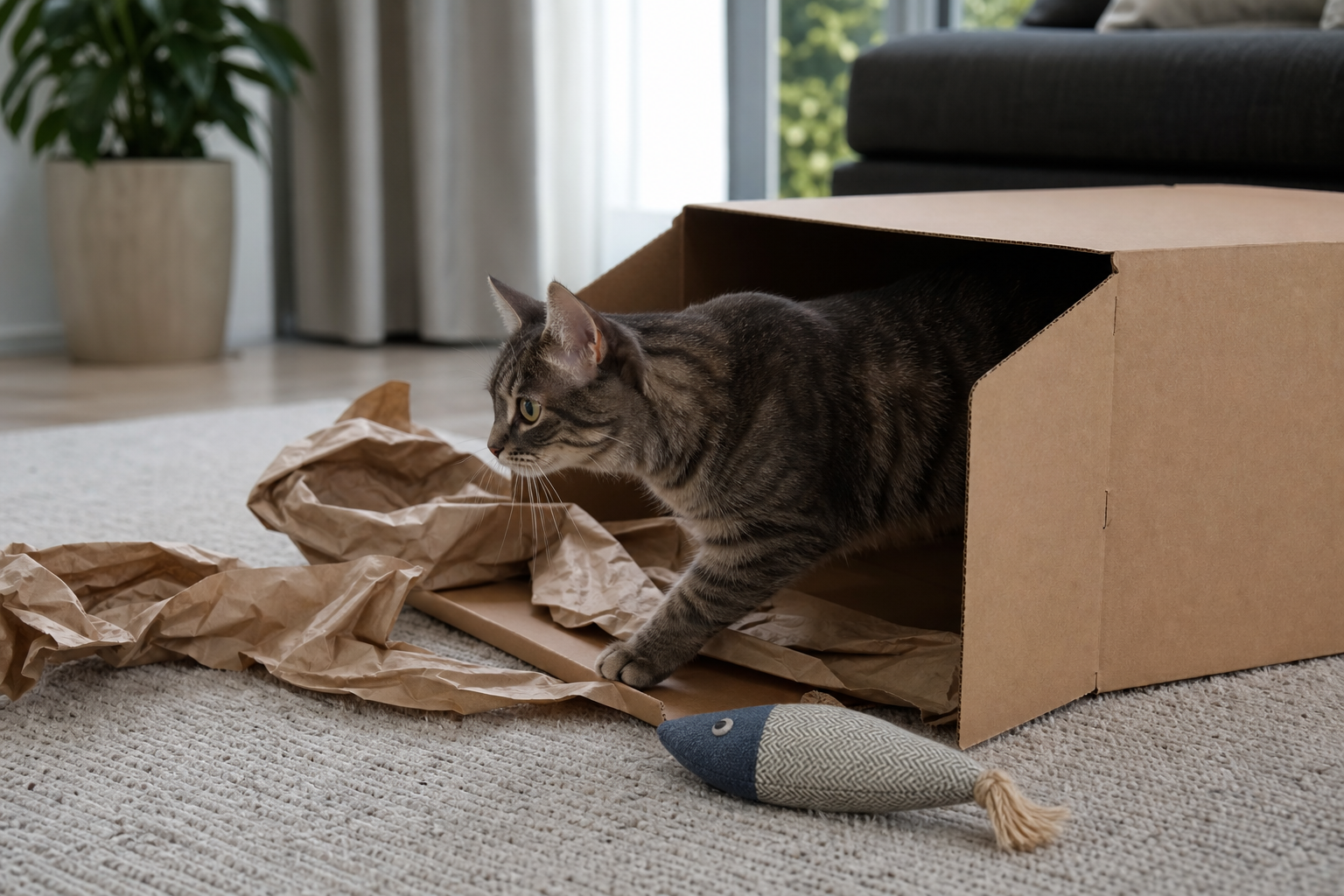
Free cat enrichment ideas are the small no-cost changes that let an indoor cat hunt, search, climb, hide, scratch, sniff, watch, and solve problems without buying another toy. The best ideas use things you already have: boxes, plain paper, towels, furniture, safe windows, meal portions, and a few minutes of focused play.
For Titan Claws readers, the important detail is safety. A gentle cat may bat a paper ball and walk away. A rough player may shred it, chew the tape, swallow the corner, or drag the whole setup under the couch. Use these ideas as supervised activities until you know how your cat handles each material.
If you only try one routine today, make it simple: five minutes of chase play, a cardboard or paper food hunt, then a quick inspection before anything stays on the floor. That gives your cat movement, a catch, a food reward, and a cleaner reset.

What Free Enrichment Should Actually Do
Free enrichment is not just clutter with a cat nearby. It should give the cat a natural behavior to perform. Cats are built for short hunting sequences: watch, stalk, chase, pounce, grab, bite, eat, groom, and rest. Indoor life often removes the work from that sequence, so a good enrichment setup puts some of the work back in a safe way.
The AAFP and ISFM feline environmental needs guidelines describe opportunities for play and predatory behavior as one of the core needs in a healthy cat environment. That can include toys, owner-led play, and feeding practices that make the cat actively acquire food. Free enrichment fits perfectly when it supports those behaviors instead of asking the cat to stare at the same toy pile every day.
Use this quick filter before you set anything up:
- Hunt: Can the cat watch, stalk, chase, pounce, or catch?
- Forage: Can the cat sniff, paw, search, or work for a small meal portion?
- Hide: Can the cat use cover, boxes, tunnels, or furniture edges?
- Climb: Can the cat reach a safe high or window-viewing spot?
- Scratch: Can the cat use claws on an appropriate surface?
- Rest: Is there a calm place to settle after play?
21 Free Cat Enrichment Ideas to Try
Pick two or three ideas per day instead of dumping everything out at once. Novelty works better when it is rotated, and rotation also makes it easier to inspect materials before they become hazards.
- Cardboard box reset: Put out one clean box for hiding and ambush play. Remove staples, tape loops, plastic windows, and shipping labels that peel easily.
- Paper bag hideout: Use a plain paper shopping bag with handles cut off. Lay it on its side so your cat can enter and leave easily.
- Crumpled paper chase: Toss a plain paper ball down a hallway. Retire it when it gets soggy, torn, or small enough to swallow.
- Meal scatter: Toss part of a dry meal across a clean floor so your cat has to search and move.
- Room-by-room kibble hunt: Hide a few pieces of food in visible beginner spots, then make future hunts slightly harder.
- Towel wrinkle search: Fold a towel into loose ridges and hide a few treats in the folds. Avoid fringe if your cat chews fabric.
- Box foraging tray: Place crumpled plain paper in a shallow box and sprinkle in a small meal portion.
- Dry bathtub ball game: Let a ping-pong ball or safe hard ball roll in a dry bathtub if your cat enjoys contained batting games.
- Chair tunnel: Drape a towel over two chairs to make a temporary tunnel, leaving clear exits.
- Safe closet tour: Open one safe closet or storage area for supervised sniffing, then close it again afterward.
- Window station: Move a sturdy chair, blanket, or perch near a secure window for watching outdoor movement.
- Furniture-edge wand game: Move a wand lure around chair legs, boxes, or couch corners so your cat can stalk from cover.
- Hide the same toy: Put a familiar toy half-under a towel, behind a box, or inside a paper bag so it feels new.
- Hallway tosses: Toss a safe toy away from your cat so the chase moves away from your hands and feet.
- Stair search: If your cat moves comfortably and the stairs are safe, place a few food pieces on different steps.
- Box maze: Put two or three open boxes near each other and move a toy between them for ambush play.
- Scratch refresh: Rotate the location of an existing scratcher or place it near a favorite route for a day.
- Sun patch setup: Move a washable blanket to a sunny spot and let it become a temporary rest station.
- Scent rotation: Rotate a clean blanket, box, or toy from storage. New smells can be interesting without adding perfume or essential oils.
- Click-and-treat basics: If you already have treats, reward simple behaviors like coming to a mat, touching a target, or following a lure.
- Post-play inspection: End every rough session by checking the materials together, then storing or recycling anything damaged.
The Cornell Feline Health Center makes a useful point for budget-conscious owners: safe fun does not have to be expensive, and ordinary items such as paper bags and cardboard boxes can provide exercise and cognitive enrichment. The catch is that the play area and the object both need to be safe for the individual cat.
Free Ideas by Cat Personality
A shy senior cat, a food-motivated young adult, and a toy-destroying rough player should not get the same setup. Choose the activity by the cat in front of you.
For bored indoor cats
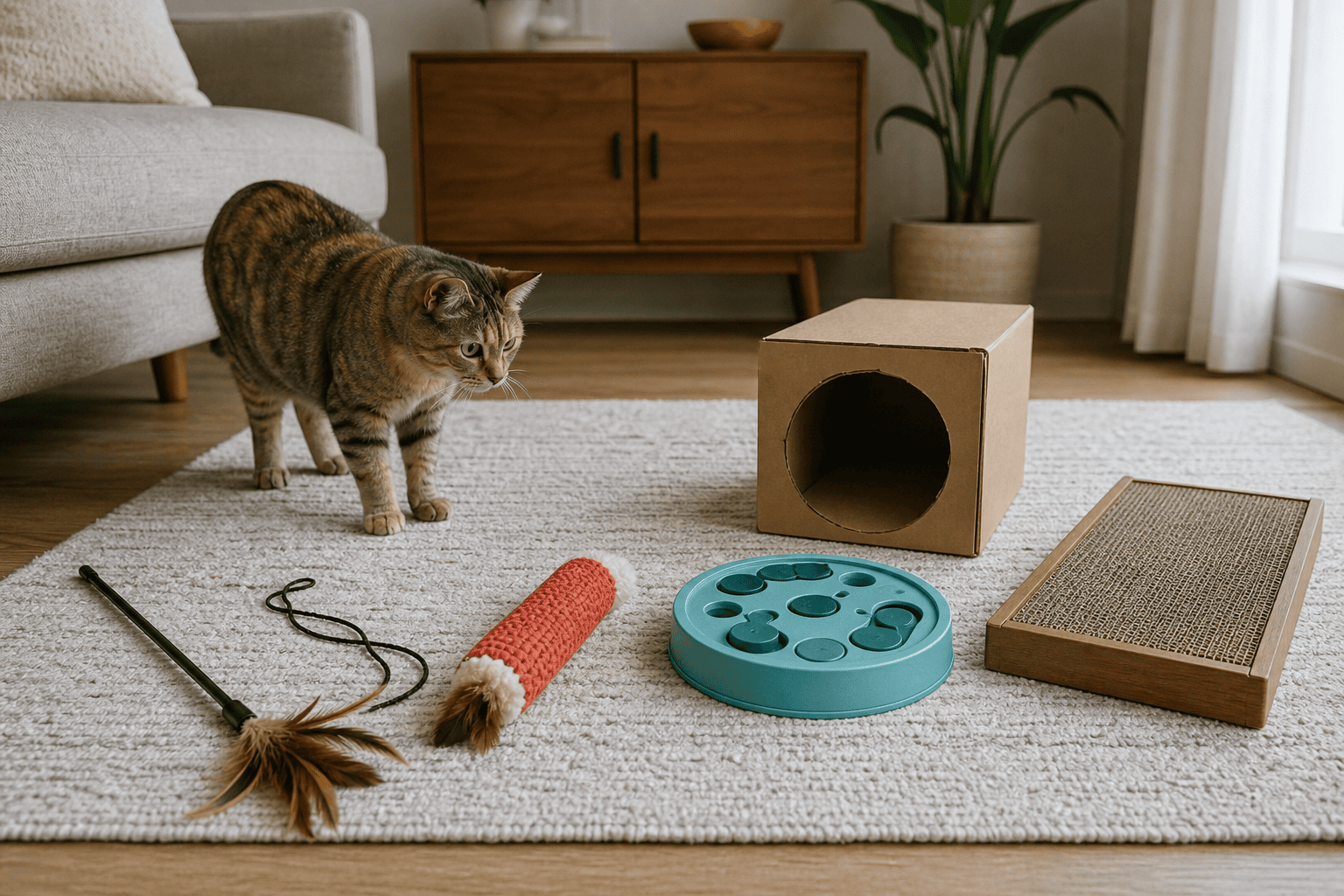
Use daily rotation. Put most toys away, then bring out one chase setup, one hideout, and one food-search activity. A familiar object in a new location often gets more attention than a new object left out forever. For a broader routine, see Titan Claws on cat enrichment activities.
For rough players
Keep fragile materials supervised. Use boxes and paper for searching, hiding, and ambush, then redirect the catch phase to a larger toy that can be bitten and kicked. If your cat destroys ordinary toys, compare safer material choices in the Titan Claws guide to durable cat toys and review the sitewide toy safety guidance.
For food-motivated cats
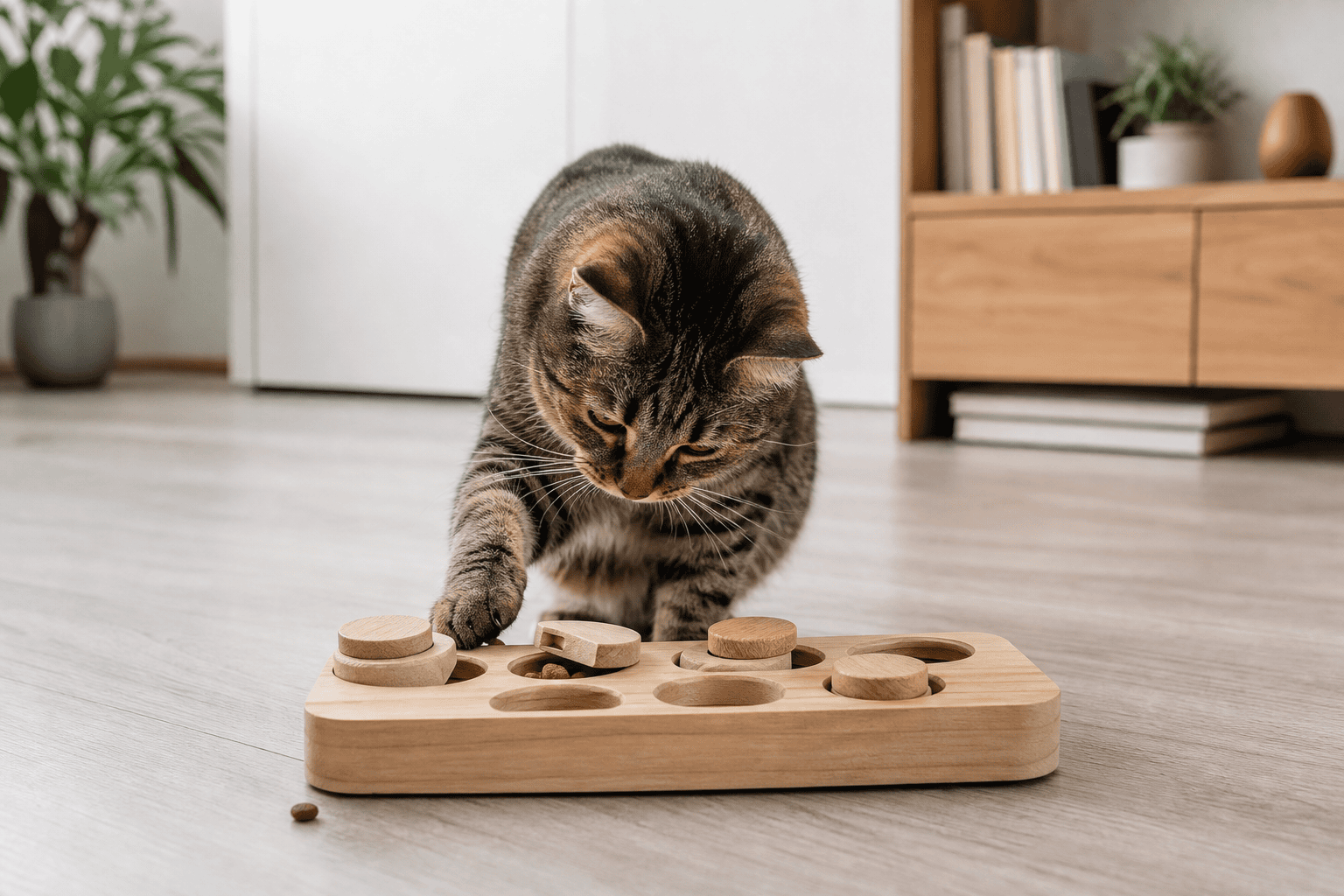
Use part of the normal meal, not endless extra treats. Scatter feeding, towel searches, and cardboard foraging boxes make the cat work without changing the diet plan. The open-access article Food puzzles for cats: Feeding for physical and emotional wellbeing explains how food puzzles can be introduced gradually and adjusted when a cat is frustrated or confused.
For kittens
Use shorter sessions and simpler setups. Kittens may chew, climb into tight spaces, and test everything with their mouths. Avoid string, rubber bands, tiny toys, loose tape, and anything they can pull apart. End with a rest period before the kitten gets overtired and bitey.
For senior cats
Make the wins easy. Place food pieces where the cat can reach them without jumping. Use low boxes, stable perches, and gentle movement instead of fast vertical play. If mobility, appetite, or play interest changes suddenly, ask your veterinarian before assuming the cat is simply bored.

The 15-Minute No-Cost Routine
A routine beats a random pile of ideas. This version works for many healthy indoor cats and can be shortened for cats with lower stamina.
- Two minutes: set the room. Pick up hair ties, cords, loose string, damaged toys, and small objects. Put one box or paper bag with handles removed near a chair or couch edge.
- Five minutes: hunt. Use a wand or tossable toy you already own. Move it away from the cat, let it hide, pause, and let your cat catch it sometimes.
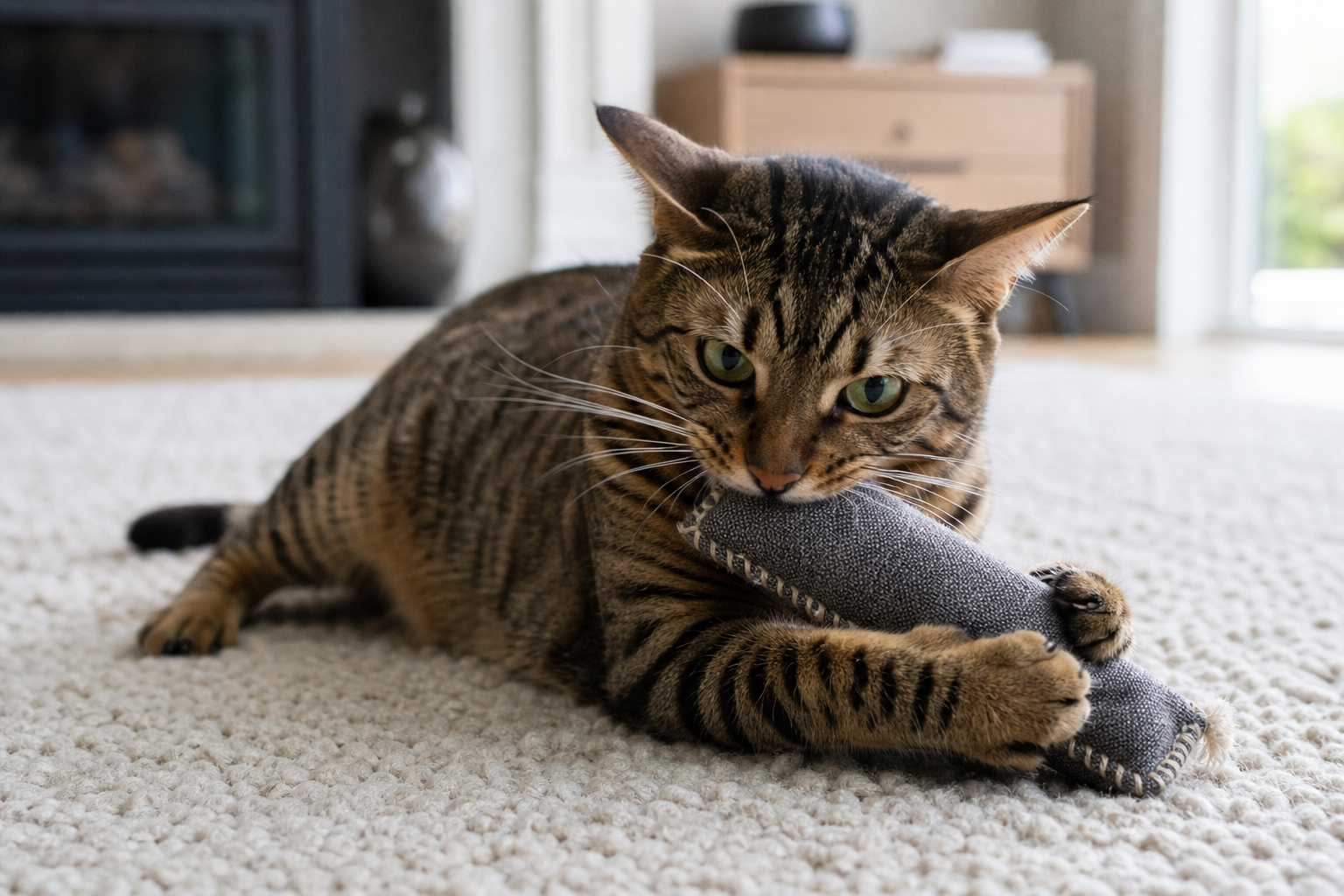
- Three minutes: catch and bite. Offer a larger kicker or sturdy soft toy so teeth and claws land on the toy instead of your skin.
- Three minutes: forage. Scatter a small meal portion or use a towel wrinkle search.
- Two minutes: inspect and store. Throw away torn paper, recycle damaged cardboard, and store wand toys, string-like toys, and anything your cat started chewing.
This structure gives the cat a beginning, middle, and end. It also helps rough players cool down because the chase leads into a legal bite target and then into food.
Safety Rules for Free Household Enrichment
Free does not automatically mean safe. Many household items are appealing because they move, crinkle, smell interesting, or fit in a cat’s mouth. Those same traits can become problems when a cat chews hard or swallows pieces.

- Cut handles off bags. Paper and plastic handles can trap heads, necks, or legs.
- Avoid string-like materials. Do not leave yarn, thread, ribbon, floss, elastic, tinsel, or wand cords out after play.
- Remove loose tape. Tape can become a chew target and can hide weak cardboard edges.
- Skip small caps, twist ties, rubber bands, beads, buttons, and bells. They are too easy to lose, chew, or swallow.
- Watch cardboard eaters. Some cats shred cardboard for fun; others consume it. If your cat eats it, cardboard is supervised-only or off the menu.
- Avoid scented or chemical packaging. Use clean, plain materials, not food wrappers, detergent boxes, dryer sheets, or treated outdoor scraps.
- Do not use hands as prey. Use toys or tossed objects so biting and grabbing are directed away from skin.
The ASPCA feline DIY enrichment guide emphasizes close supervision while DIY items are accessible and removing an item immediately if a cat attempts to ingest it. That advice is especially important for homes with cats that chew seams, tear paper, and test toy parts.
What Current Free-Enrichment Guides Miss
Many ranking pages are useful because they prove the main point: you can enrich a cat’s life with boxes, paper, food puzzles, hiding spots, and simple play. The gap is that most lists treat every cat as average. They do not always explain what changes when the cat is a serious chewer, a toy destroyer, a food guarder, or a cat that swallows non-food material.
That is where Titan Claws readers need a stricter standard. Free materials are great for novelty and problem-solving, but they are not built like pet products and they do not get safer because the price was zero. Use free setups for supervised enrichment, pair fragile activities with sturdier catch toys, and remove materials before damage turns into ingestion risk.
If you want to build actual homemade puzzles, use this guide alongside Titan Claws on DIY cat enrichment toys. If your main problem is chewing, the cat chewing toys guide explains how to separate normal biting from risky material eating.
When to Stop and Ask for Help
Stop the activity if your cat tries to swallow cardboard, paper, fabric, tape, string, or toy pieces; pants heavily during normal play; limps afterward; guards the setup aggressively; redirects hard bites onto people or pets; vomits after play; or seems painful, frightened, or unusually frantic.
Ask a veterinarian if your cat repeatedly eats non-food material, suddenly loses interest in play, has appetite changes, coughs or gags after chewing, or may have swallowed string or a toy part. Enrichment can reduce boredom and give healthy outlets, but it is not a substitute for medical care or behavior support when the pattern is dangerous.
Quick Checklist
- Does this setup let the cat hunt, forage, hide, climb, scratch, sniff, or rest?
- Have you removed handles, loose tape, string, rubber bands, staples, and small parts?
- Is the activity supervised until this cat has proven it is safe with the material?
- Does the play session end with a catch, food reward, or calm resting spot?
- Are fragile materials paired with a sturdier toy for biting and kicking?
- Will you inspect and recycle damaged paper or cardboard right after play?
Free cat enrichment ideas work because cats do not care what the activity cost. They care whether it lets them do cat things. Give your cat a safe job, rotate the setup, watch how they use it, and remove anything that starts to fail. That is the practical way to keep enrichment useful without turning your floor into a hazard pile.