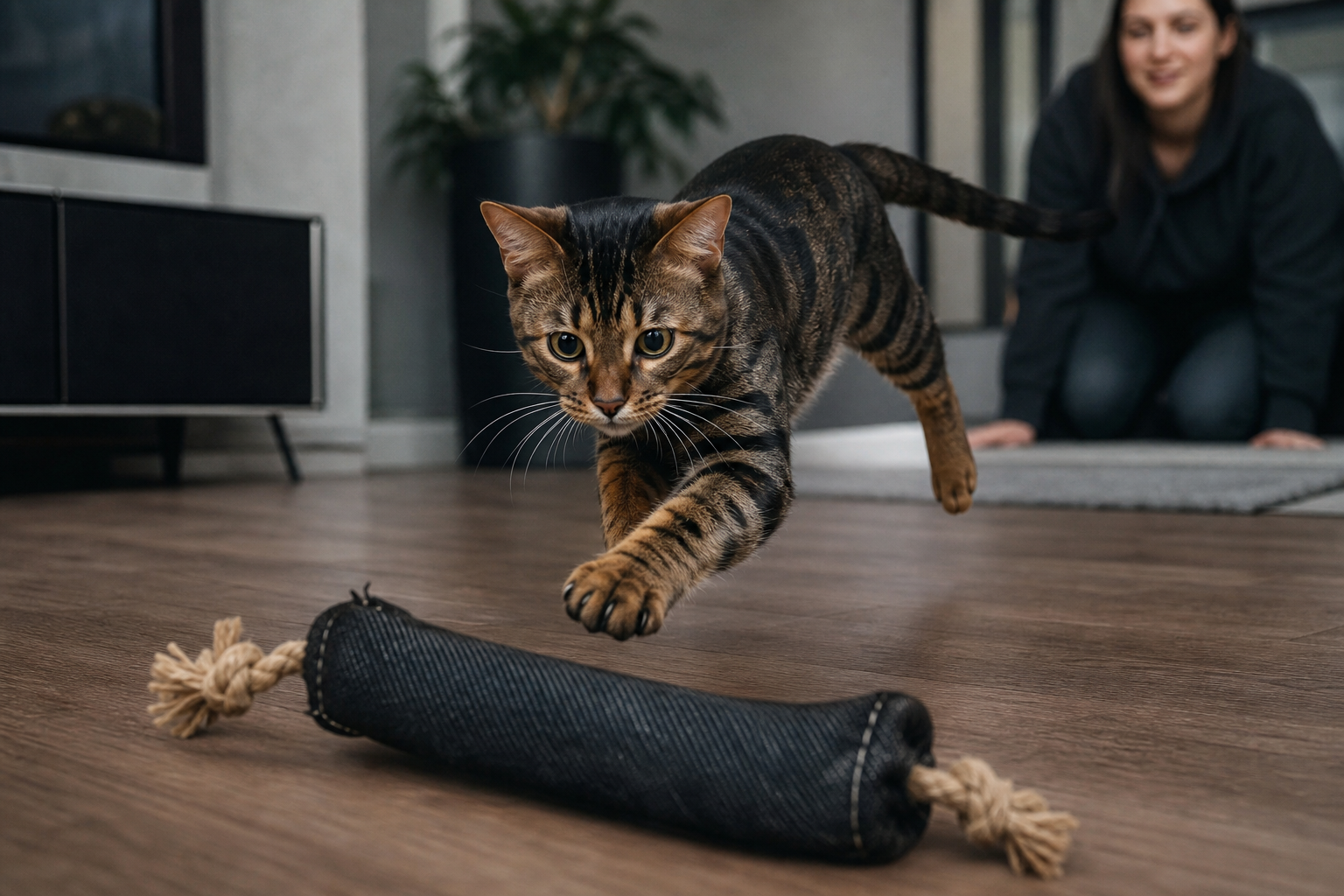
Running cat toys are toys and play setups that make a cat chase, sprint, dart, leap, or run in a controlled indoor space. The best options are not always motorized. A good running setup can be a cat exercise wheel, a wand toy moved like prey, a tunnel-and-ball game, a rolling electronic toy, a track toy, or a hallway chase routine that ends with a safe catch.
If your cat destroys ordinary toys, choose running cat toys with two goals in mind: movement and a safe finish. Fast chase without a catch can frustrate some cats, while fragile moving toys can become chew hazards for rough players. Build a routine that lets your cat stalk, chase, capture, bite, kick, and then wind down.
What Counts as a Running Cat Toy?
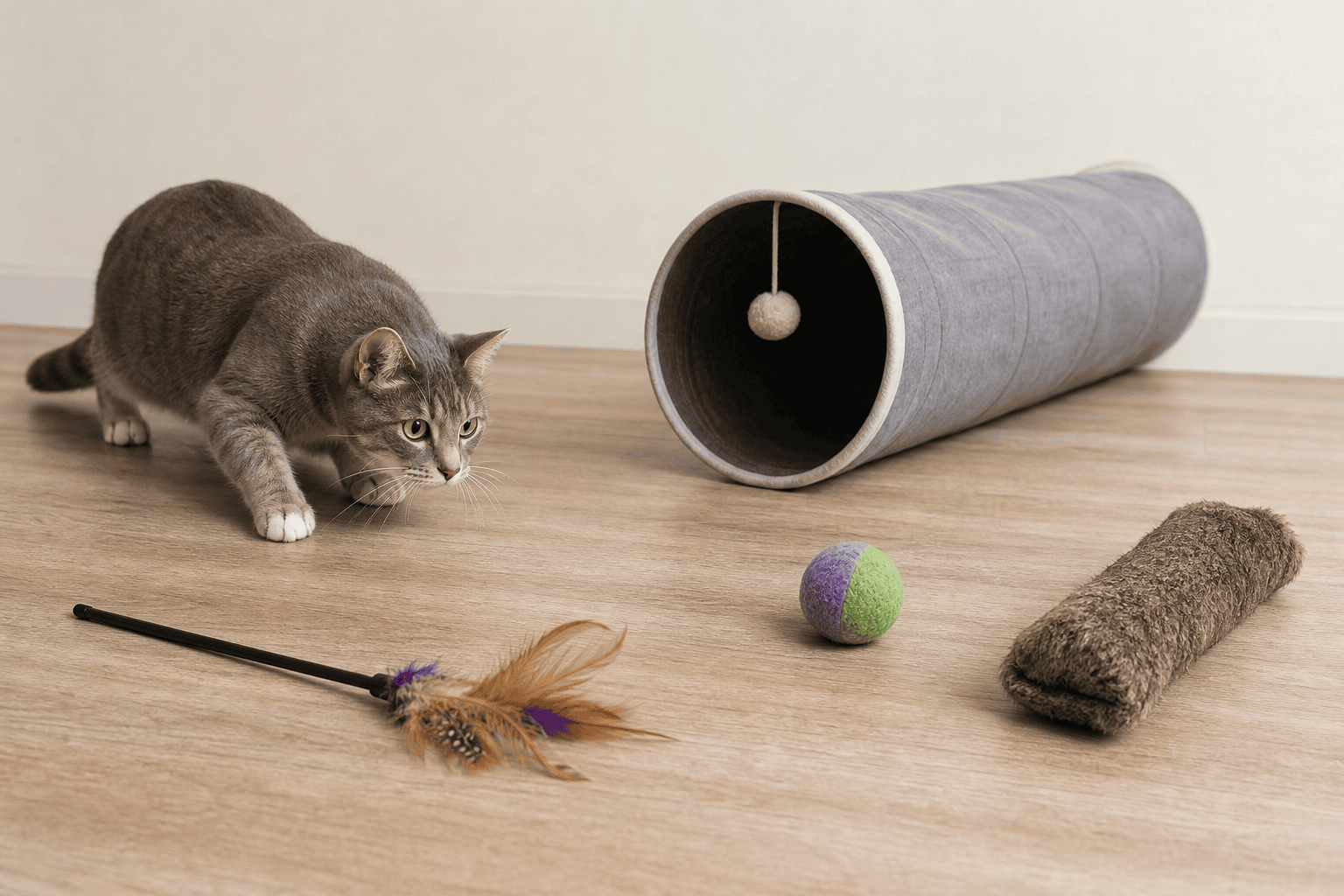
Most search results for running cat toys lead to shopping pages for exercise wheels, rolling mice, electronic balls, lasers, tracks, and general exercise toys. Those can all help, but they solve different problems. A cat wheel gives repetitive cardio. A wand toy creates short chase bursts. A rolling toy triggers pursuit. A tunnel creates ambush and sprint lanes. A kicker toy gives the cat something physical to grab after the run.
That distinction matters because cats are not just trying to burn calories. The AAFP and ISFM feline environmental needs guidelines recommend play and feeding activities that let cats express predatory behavior, including chasing, locating, capturing, and manipulating toys. A running toy is strongest when it fits that whole sequence instead of only making the cat dash back and forth.
For a broader exercise plan, pair this guide with Titan Claws articles on cat toys for exercise, cat enrichment activities, and best cat toys for bored indoor cats.
The Best Running Cat Toys by Play Style
Start with your cat’s play style, not the trendiest gadget. A toy that makes one cat sprint may make another cat stare, hide, or chew the moving part.
- For sprinters: wand toys, tunnels, hallway toss games, and rolling balls can create fast bursts without requiring a large room.
- For high-stamina cats: a cat exercise wheel may help if the cat enjoys repetitive motion and you have space for a stable wheel.
- For ambush hunters: tunnels, boxes, paper bags with handles removed, and peekaboo wand play are often better than open-floor chasing.
- For rough players: end the chase with a durable kicker or larger capture toy so the cat can bite and kick something appropriate.
- For food-motivated cats: scatter feeding, treat trails, and puzzle feeders can add movement without relying on motors or lasers.
If you do not know your cat’s style yet, start with a wand toy and a clear floor path. You can change speed, direction, height, and distance, which makes it easier to learn what your cat actually wants.
Cat Exercise Wheels: Useful, But Not for Every Cat
A cat exercise wheel is the most literal running cat toy. It can be a good fit for young, athletic, curious cats that like repeated movement, especially in homes where safe sprint space is limited. It is less useful for cats that dislike unstable surfaces, have mobility limits, are easily startled by noise, or prefer stalking and pouncing over steady running.
Choose a wheel for stability before style. Look for a wide running surface, a solid base, smooth rotation, and a size that lets your cat move without a cramped arch in the back. Place it away from stairs, cords, water bowls, fragile objects, and tight traffic areas. If the wheel wobbles, tips, pinches, or moves unpredictably, stop using it.
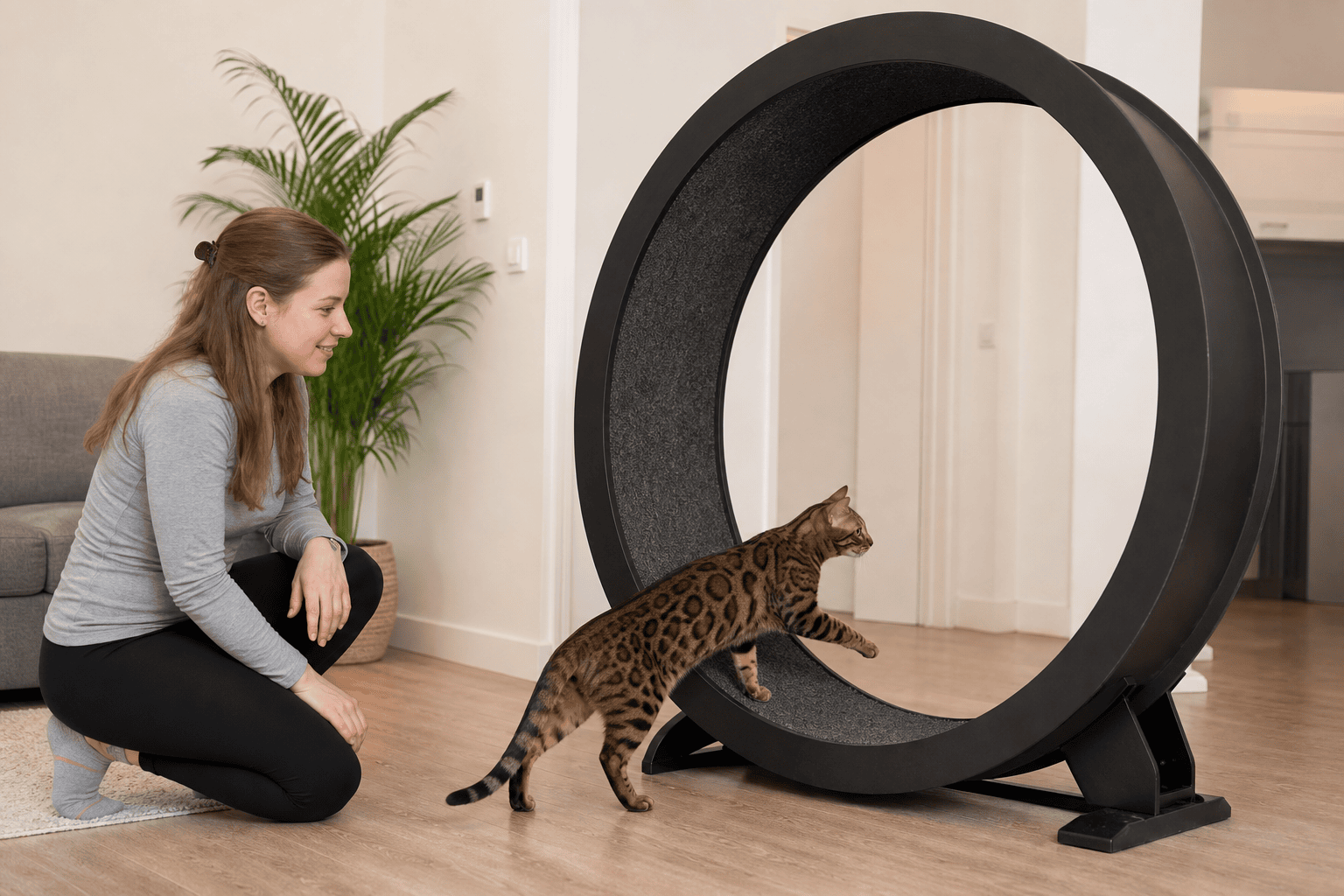
Training should be voluntary. Put treats or a favorite toy near the wheel, reward tiny steps, and let the cat leave whenever they want. Do not place a cat on the wheel and force movement. Short, positive sessions are better than trying to make the cat run because you bought the equipment.
Rolling, Automatic, and Electronic Running Toys
Rolling toys and electronic running toys can be useful for quick movement, especially when your cat likes objects that dart, vibrate, hide, or change direction. They are also where rough-play safety matters most. A cat that catches the toy may bite the casing, pull off a tail, pry at a battery door, or chew a charging port.
Test any automatic toy under supervision before treating it as a solo option. Watch for paw trapping, stress, obsessive chasing, hard biting, loose attachments, exposed wires, cracked plastic, overheating, and detachable parts. Store charging cables out of reach. If your cat is a determined chewer, many electronic toys should stay supervised only.
For deeper buying guidance, read Titan Claws articles on automatic cat toys, electronic interactive cat toys, and interactive cat toys for indoor cats.
Wands, Lasers, Tunnels, and Tracks
Many cats run harder for simple toys than for expensive machines. A wand toy can mimic prey by moving away from the cat, disappearing behind furniture, pausing, and then darting into view. Let the cat catch the lure several times. That catch is not optional for many cats. It is what turns chasing into a satisfying hunt.
Lasers can create fast running, but they need a finish. Because the cat cannot physically catch the dot, end laser play by landing the light on a real toy, treat, or food puzzle. Stop if your cat becomes frantic, confused, or keeps searching long after the session ends.
Tunnels and track toys are helpful when your cat likes repeatable games. Tunnels create hiding and sprint lanes. Tracks keep a ball contained. They are not automatically better than a hallway, but they can make a small room feel more interesting.
A Safer Running Routine for Rough Players
For cats that hit hard, the safest running routine has a beginning, a chase, a capture, and an inspection. Do not rely on a fragile motorized toy to absorb the final bite. Use the running toy to trigger movement, then direct the cat onto a larger kicker or tough fabric toy for the grab-and-kick part.
- Clear the path: remove cords, breakables, shoes, bags, and unstable furniture from the running area.
- Warm up: start with slow stalking movements before asking for full sprints.
- Build short bursts: use 30 to 90 seconds of movement, then give a catch.
- Offer a capture toy: let the cat bite, hold, and kick a larger toy instead of your hands or the electronic toy.
- Wind down: end with a small meal, treat, puzzle feeder, or calm grooming if your cat likes it.
- Inspect: check toys before storing them or leaving any solo toys out.
This approach fits Titan Claws readers because the problem is rarely just boredom. It is bored energy plus strong jaws, claws, and prey drive. For more rough-play choices, see cat kicker toy, toys for cats that chew, and safe cat chew toys.
Safety Checks Before You Let a Cat Run
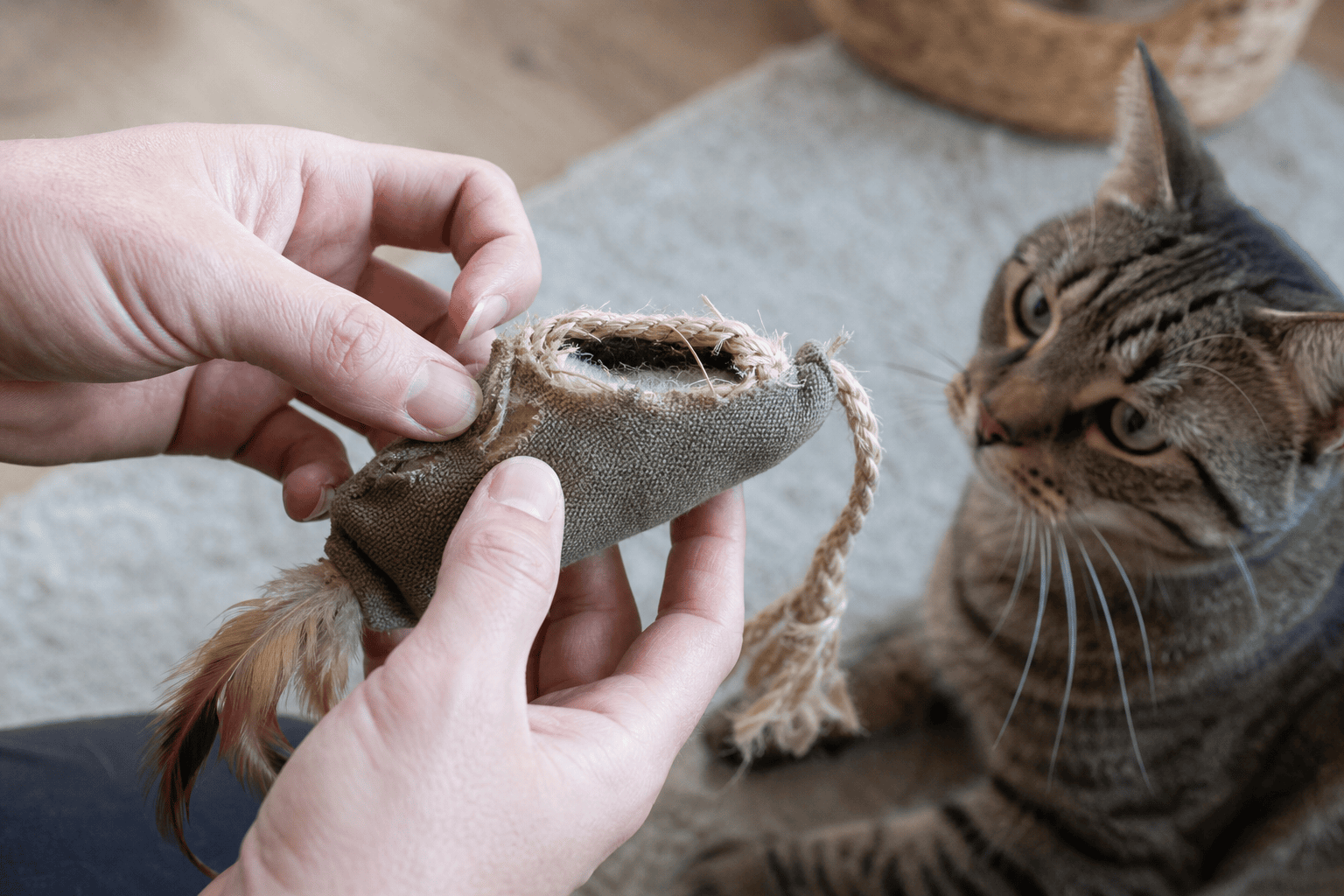
Fast play raises the stakes. A toy that is only mildly annoying during slow play can become dangerous when a cat is sprinting, grabbing, twisting, or chewing hard. Cornell Feline Health Center’s safe toys guidance warns owners to watch for small pieces, string-like parts, feathers, electrical cords, and other parts that can separate or be swallowed.
- Put away string, ribbon, elastic, feather, and wand toys after supervised play.
- Retire toys with open seams, exposed stuffing, cracked plastic, loose bells, detachable tails, or broken battery doors.
- Avoid hard running near stairs, slick floors, blind cords, water bowls, glass tables, or unstable shelves.
- Keep jumps low for kittens, seniors, overweight cats, and cats with past injuries.
- Stop play if your cat pants heavily, limps, hides, growls, coughs, gags, or seems disoriented.
- Call a veterinarian promptly if you think your cat swallowed string, stuffing, plastic, feathers, or any toy part.
Older cats and cats with known medical issues may still enjoy running games, but the intensity should match the cat. Shorter routes, slower wand work, flatter surfaces, and more frequent rests are usually better than forcing athletic play.
What Current Running Toy Lists Often Miss
Most ranking pages name the familiar categories: lasers, wands, balls, springs, tunnels, tracks, wheels, and electronic toys. That is useful, but it leaves out the harder owner decisions. Is the cat chasing because they are engaged or because the toy is making them frantic? Can they catch something at the end? What happens when they bite the toy? Is the room safe for sprinting? Will the toy still be safe after ten hard sessions?
The better question is not simply, “Which toy makes my cat run?” Ask, “Which running game can my cat repeat safely and enjoyably?” For some cats, that is a wheel. For many, it is a wand, tunnel, rolling ball, and kicker routine that costs less, takes less space, and gives the cat more control.
Quick Buying Guide
Use this order if you are building a running setup from scratch:
- Start with a wand toy because it gives you the most control over movement and difficulty.
- Add a durable capture toy for biting and kicking after the chase.
- Create a sprint lane with a hallway, tunnel, box setup, or open rug area.
- Try a rolling or track toy if your cat likes independent batting and chasing.
- Consider a cat exercise wheel only if your cat has the temperament, space, and training patience for it.
- Use electronic toys carefully for short supervised sessions before any solo use.
The best running cat toys do more than make a cat move. They let your cat hunt in a way that fits your home, your cat’s body, and your cat’s bite strength. Start simple, keep sessions short, finish with a real catch, and inspect the toys that take the hit.