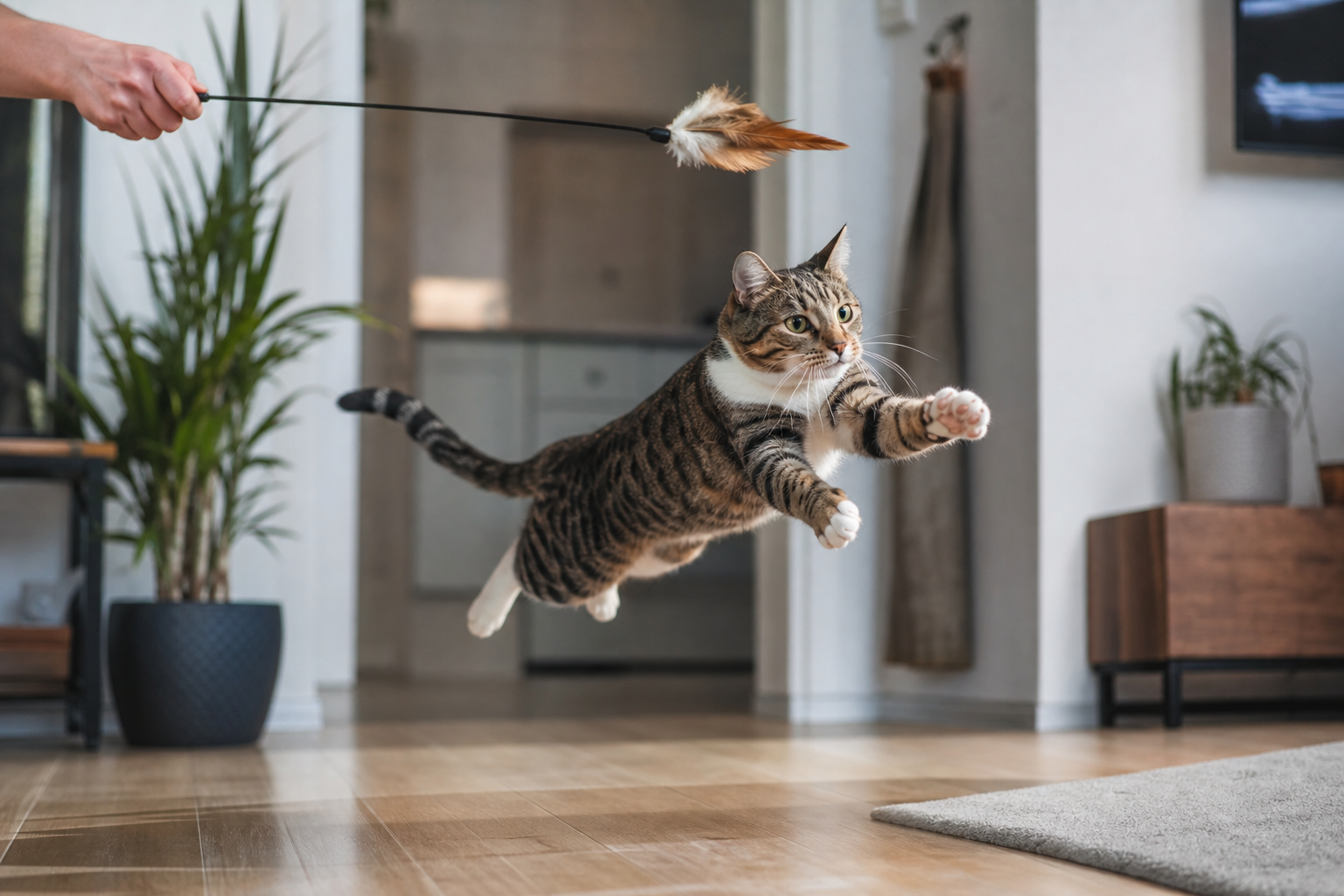
Cat feather toys are popular because they do something simple very well: they make indoor play feel like a small hunt. A feather wand can flutter, pause, skitter, hide, and flee in ways that trigger stalking, chasing, pouncing, and catching. For many cats, especially cats with high prey drive, that is more satisfying than a toy that just sits on the floor.
The catch is safety. Feathers, strings, clips, bells, elastic cords, and small lure parts can become problems when a cat chews them loose or swallows them. The best way to use cat feather toys is to treat them as supervised interactive toys, not all-day floor toys. Choose stronger construction, run short play sessions, let your cat catch the lure, inspect for damage, and store the wand when you are done.
Why Cats Love Feather Toys
Feather toys work because they mimic prey movement better than many static toys. A wand lets you make the lure glide like a bird, dart behind furniture like a mouse, freeze after a pounce, or disappear behind a box. That unpredictability gives the cat a job instead of just an object.
The AAFP and ISFM feline environmental needs guidelines recommend play that lets cats express parts of the predatory sequence, including using a rod or wand with a feather or fur toy to mimic flying or ground prey. That is the real value of a feather wand: it helps a cat stalk, chase, catch, and reset without needing outdoor hunting.
For Titan Claws readers, the important point is not that feathers are magic. It is that the movement pattern is powerful. A tough fabric lure, a worm-style attachment, or a kicker handoff can sometimes be a better choice for cats that love the chase but destroy feather bundles the moment they catch them.
What Search Results Get Right and Miss
The top results for cat feather toys are mostly shopping pages, brand pages, and best-of lists. They are useful for seeing the main formats: feather wands, replacement feather lures, door-hanging teasers, plush-and-feather toys, crinkle attachments, refill packs, and well-known options such as Go Cat Da Bird.
What many results miss is the decision-making layer. A product page can tell you a wand has feathers, bells, catnip, or a high review count. It often does not tell you whether the attachment is a good match for a cat that chews feather shafts, eats loose strands, cracks plastic clips, or refuses to release captured prey.
A better buying question is: how does this toy fail under my cat’s teeth and claws? For rough players, the safest feather toy is not necessarily the flashiest one. It is the one you can control, inspect, store, and replace before pieces come off.
Are Cat Feather Toys Safe?
Cat feather toys can be safe when they are used under supervision and retired when damaged. They become risky when loose feathers, strings, ribbons, elastic, bells, clips, or small lure pieces are left where a cat can chew or swallow them.
The Cornell Feline Health Center advises avoiding toys with small pieces or linear parts such as feathers and string that can separate and be ingested, especially when chewed. Cornell also recommends thinking about the play environment and rotating toys to prevent boredom. That guidance fits feather wands exactly: they are excellent interactive tools, but poor candidates for unsupervised access.
If your cat swallows feathers, string, ribbon, elastic, or any toy fragment, call your veterinarian for advice. Get urgent help if you see repeated vomiting, loss of appetite, lethargy, gagging, choking, abdominal pain, straining, drooling, or string hanging from the mouth or rectum. Do not pull visible string; a veterinarian should guide that situation.
Types of Cat Feather Toys
Most feather toys fall into a few practical categories. Each can work, but each has different failure points.
- Feather wand toys: Best for interactive chase and jump sessions. Watch the string, swivel, clip, knot, and feather bundle. Store the wand after play.
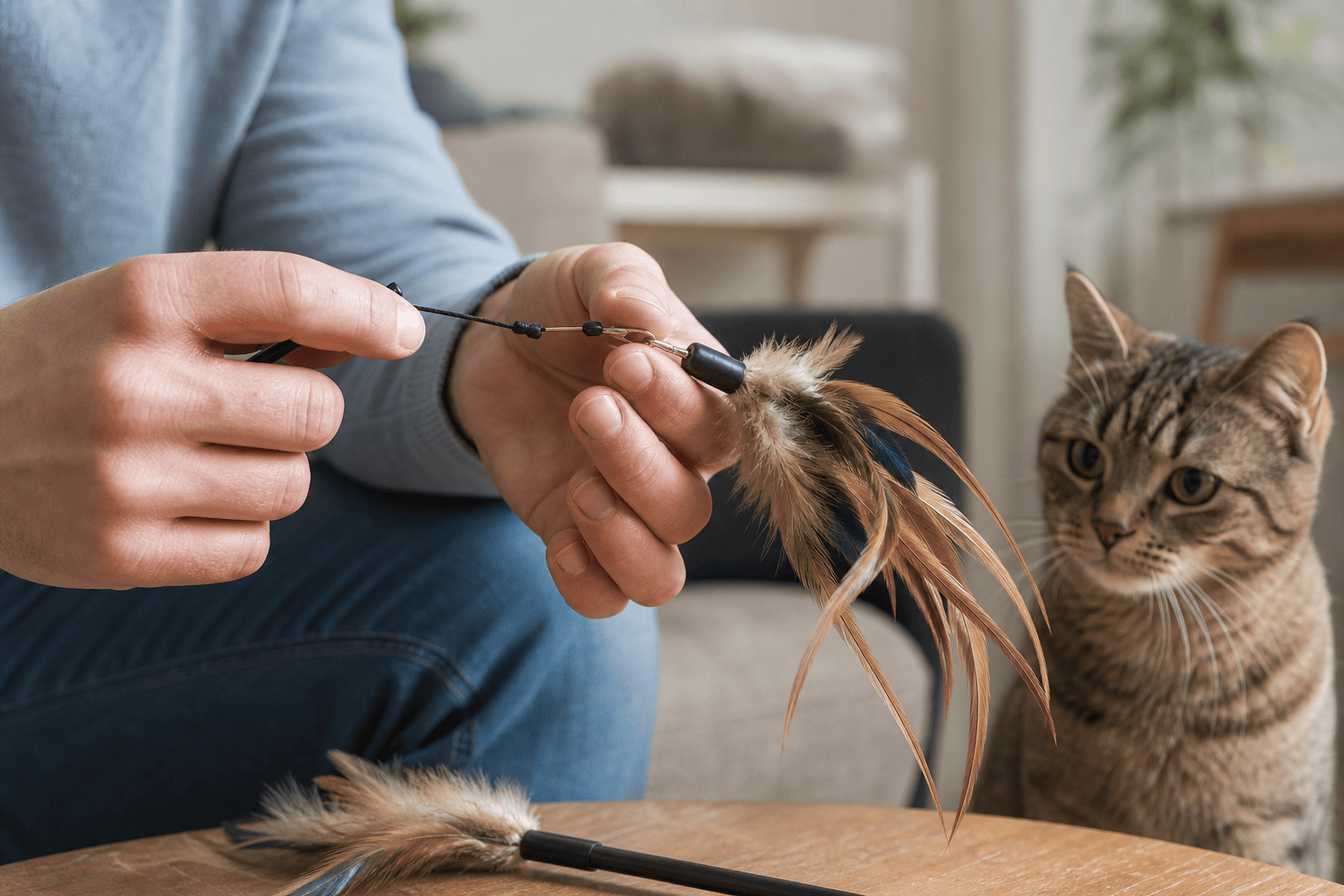
- Replacement feather lures: Useful because you can replace a damaged lure instead of keeping a dangerous one in use. Check that the connector fits securely and does not create a small chewable part.
- Short stick feather toys: Easier to control in small rooms, but they put your hand closer to teeth and claws. Use them with cats that have polite capture behavior.
- Door-hanging or elastic feather toys: Convenient, but risky for cats that chew cords or play unsupervised until parts detach. These are poor choices for destructive cats unless you can monitor them closely.
- Plush toys with feathers: Better for carrying and batting than true hunting play. Avoid glued-on feathers or tiny tails for cats that chew decorations off toys.
- Electronic feather toys: Can add movement, but they introduce battery doors, spinning parts, plastic housings, and detachable lures. Inspect them more like small appliances than simple toys.
If your cat is tough on toys, compare feather options with Titan Claws’ guides to wand cat toys, cat toys for hunting, and cat kicker toys. Many rough players do best with a feather wand for the chase and a sturdier kicker for the bite-and-rake finish.
How to Choose a Better Feather Wand
For ordinary play, engagement matters. For rough play, construction matters just as much. Look past color and choose the toy by handle control, attachment strength, and how easy it is to inspect.
- Choose a comfortable wand length: A longer wand gives your cat room to jump without landing on your hand. A shorter wand is better for tight spaces and low-impact play.
- Check the string or cord: Thin monofilament, elastic, ribbon, and string should never be left out. For supervised play, make sure the cord is intact and securely tied or clipped.
- Inspect the lure attachment: Swivels and clips can make movement more realistic, but they are also small parts. Replace the lure if a connector bends, cracks, loosens, or becomes chew-marked.
- Pick feathers for your cat’s mouth habits: Long fluffy feathers are exciting but easy to shred. Tighter feather bundles or non-feather lures may be better for cats that chew hard.
- Avoid extra decorations: Bells, beads, tinsel, loose ribbons, and glued-on trim add swallowable failure points.
- Prefer replaceable lures: A wand with replaceable attachments lets you retire damaged feathers early without throwing away the whole toy.
- Read low-star reviews: Look for patterns such as feathers fell out, string snapped, clip broke, cat swallowed pieces, or wand splintered.
Do not buy a feather toy because the listing says durable and stop there. Durable is not a regulated promise. The real test is whether the toy’s weakest part matches your cat’s strongest habit.
How to Play So the Toy Feels Like Prey
Many people accidentally make feather play less satisfying by waving the toy in the cat’s face. Real prey usually moves away, hides, pauses, and tries to escape. Your feather toy should do the same.
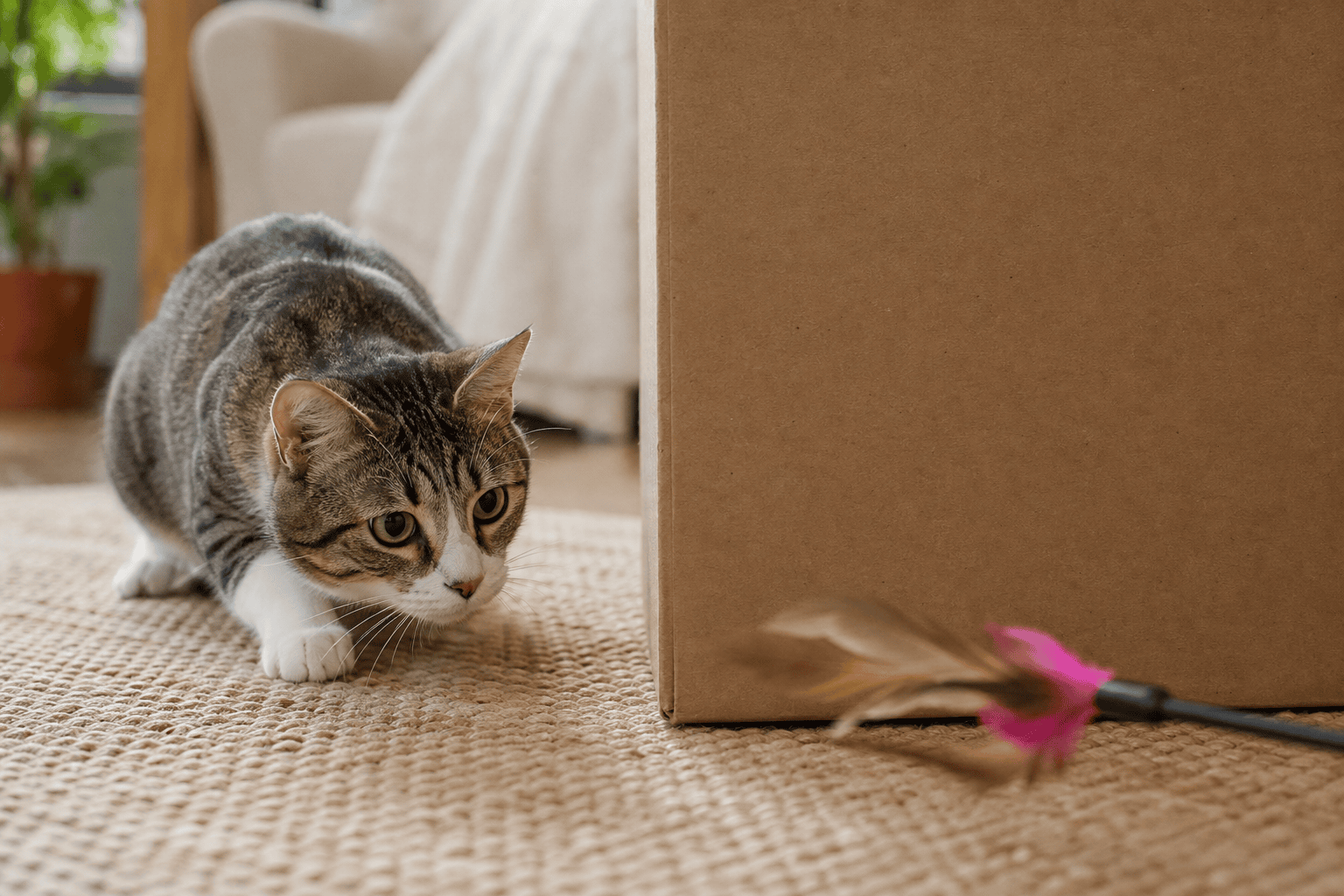
- Start slow: Drag or twitch the lure near a box, chair leg, rug edge, or doorway. Let your cat notice and stalk.
- Move away from the cat: Make the feather flee across the floor or glide away through the air. Avoid poking your cat with it.
- Use pauses: Stop the lure behind an object. Many cats pounce after the pause, not during constant motion.
- Vary height: Some cats love bird-like swoops; others prefer ground prey. Keep big jumps reasonable for kittens, seniors, and cats with mobility concerns.
- Let the cat catch it: A game with no catch can frustrate some cats. Let your cat pin the lure briefly, then reset.
- Hand off to a tougher toy: If your cat chews feathers after every catch, swap to a sturdy kicker or chew-safe toy for the bite-and-rake moment.
- End with food or foraging: A small meal, treat scatter, or puzzle feeder can complete the hunt-eat-groom-rest rhythm.
For cats that need more daily indoor stimulation, connect feather play with a broader enrichment plan. Titan Claws has separate guides to cat toys for enrichment, interactive cat toys for indoor cats, and toys for bored indoor cats.
What to Do for Cats That Destroy Feather Toys
If your cat catches the feather lure and immediately tries to eat it, do not leave the toy out and do not keep playing tug-of-war until feathers rip free. Change the routine.
- Shorten the capture: Let your cat catch the lure, praise the catch, then trade for a kicker before chewing starts.
- Use tougher attachments: Try fabric, leather-style, felt-free, or worm-style lures if feathers are too fragile for your cat.
- Switch to ground prey: Some cats chew feathers because the game is too aerial and overstimulating. Ground movement can lower the intensity.
- Use two toys: Keep one lure moving while the captured one goes still, then redirect before chewing escalates.
- Retire damaged lures immediately: Loose feathers, exposed shafts, unraveling knots, bent clips, frayed string, or cracked plastic mean the lure is done.
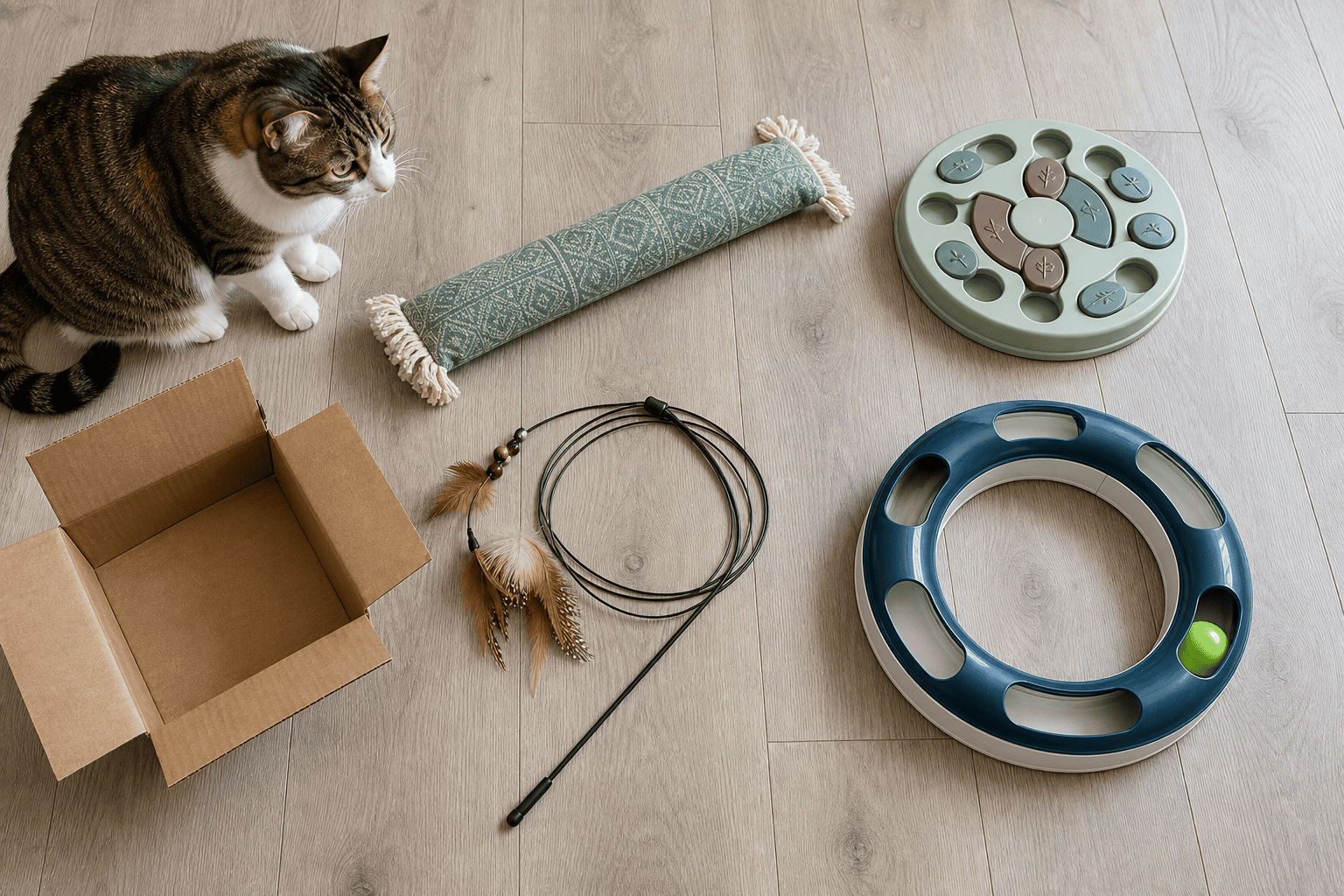
- Build a chew outlet: Add a larger durable kicker or chew-appropriate toy so your cat has somewhere safer to bite hard.
For cats that reliably shred ordinary toys, read Titan Claws’ unbreakable cat toys guide and safe cat chew toys guide. The first title uses the common search phrase, but the practical standard is more careful: no cat toy should be treated as impossible to destroy. The goal is to match the toy to the job: feather for chase, tougher object for chewing, and storage for anything with string or small parts.
Quick Safety Checklist
- Is this feather toy supervised-only? For most feather wands, the answer should be yes.
- Are the feathers tight, clean, and free of loose shafts?
- Is the string, elastic, ribbon, or monofilament intact with no frays or chew marks?
- Are clips, swivels, bells, beads, or knots too small or too tempting for your cat to chew?
- Can your cat catch the lure without landing on your hand, furniture edges, or unstable objects?
- Does your cat chew and swallow toy pieces, or just bite and release?
- Do you have a storage place your cat cannot open?
- Do you have replacement lures ready so damaged feathers get retired early?
Best Answer for Most Cat Owners
Cat feather toys are worth using when you treat them like interactive hunting tools. Pick a wand you can control, use prey-like movement, let your cat catch the lure, inspect the attachment after play, and put it away. For gentle cats, that may be enough. For rough players, pair feather chase with a tougher kicker or durable toy so the feathers are not asked to survive chewing they were never built to handle.
If you remember one rule, make it this: feather toys are for shared play, not unsupervised chewing. That one habit preserves the fun while removing most of the avoidable risk.