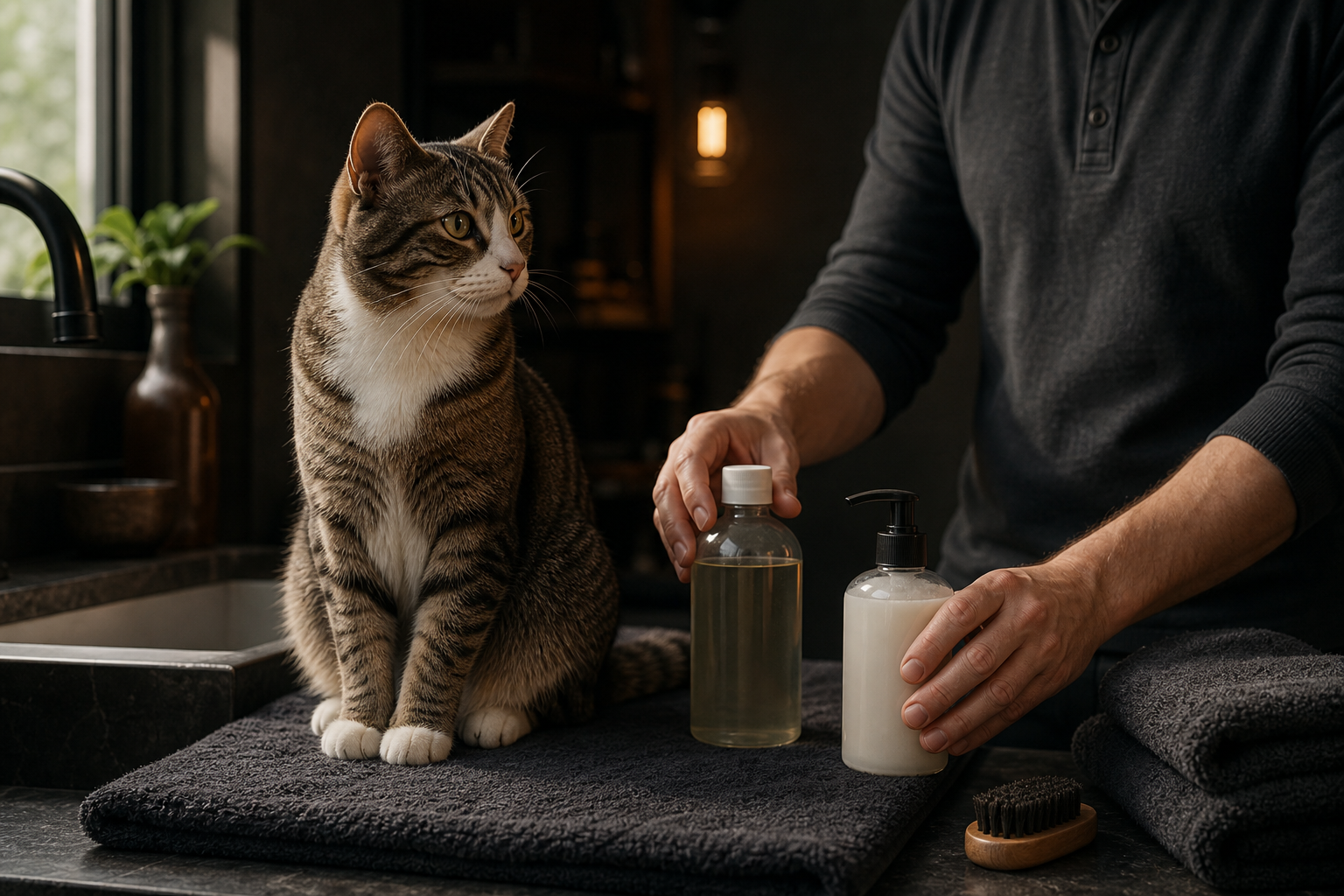
The short answer: a tiny accidental lick of diluted Dawn dish soap is unlikely to poison an otherwise healthy adult cat, but Dawn is not a cat shampoo and it is not harmless. Dishwashing liquid can irritate the mouth, stomach, eyes, and skin. Soap left on fur is especially concerning because a cat will groom it off and may inhale foamy material if vomiting occurs.
Do not use Dawn for routine baths or assume every Dawn formula is equivalent. If your cat has soap on their coat, rinse it away thoroughly. If they swallowed more than a trace amount, have persistent symptoms, or show any breathing difficulty, contact a veterinarian or animal poison service promptly. This guide offers first-aid context, not a diagnosis for an individual cat.
Is Dawn dish soap safe for cats?
Dawn is better described as low risk in a small, one-time exposure than simply “safe.” Liquid hand-dishwashing soaps contain surfactants—the ingredients that lift grease. The Merck Veterinary Manual says common anionic and nonionic detergents generally cause mild gastrointestinal irritation, with vomiting and diarrhea among the most common signs. Eye and mucous-membrane irritation can also occur.
That does not make a lick an automatic emergency, nor does it make Dawn appropriate for regular grooming. Dawn publishes a broad ingredient list that includes cleaning surfactants, fragrance, preservatives, solvents, and colorants used across its formulas. Those formulas are designed and labeled for dishwashing—not for a cat’s skin, coat, or inevitable grooming behavior.
Use this distinction
- One small lick of diluted suds: often causes no signs or temporary drooling or stomach upset, but observe closely.
- Soap left on the coat: rinse it off because grooming can turn a skin exposure into an ingestion exposure.
- A mouthful, concentrated product, or repeated vomiting: call your veterinarian or animal poison control for case-specific advice.
- Breathing trouble, collapse, blue or pale gums, or seizures: seek emergency veterinary care now.
What to do if your cat licked Dawn
Respond to what actually happened rather than relying on a blanket internet answer. Keep the bottle or take a clear photo of its front and ingredient label; the exact product, amount, time, and your cat’s weight and health all affect the advice.
- Remove access. Move the bottle, dishwater, soaked sponge, and any wet towels out of reach. Keep other pets away too.
- Clear external residue. If soap is on the paws or coat, rinse with clean lukewarm water. If there is only a tiny smear around the mouth, gently wipe it away with a damp cloth.
- Offer plain water. Let your cat drink if they want to, but do not force water by syringe. A stressed cat can inhale liquid.
- Do not induce vomiting. Foamy detergent can be inhaled into the lungs on the way back up. Merck specifically advises preventing vomiting after detergent, soap, or shampoo ingestion when possible.
- Watch closely. Note drooling, repeated lip-licking, pawing at the mouth, vomiting, diarrhea, coughing, noisy breathing, lethargy, or refusal to eat.
- Call when in doubt. Your veterinarian can assess the product and dose. In the United States, the ASPCA Animal Poison Control Center is available at 888-426-4435, and Pet Poison Helpline is available at 855-764-7661; consultation fees may apply.
Do not give milk, oil, salt, hydrogen peroxide, activated charcoal, or another home remedy unless a veterinarian or poison specialist tells you to do so for this specific exposure. Good treatment advice is product- and patient-specific.
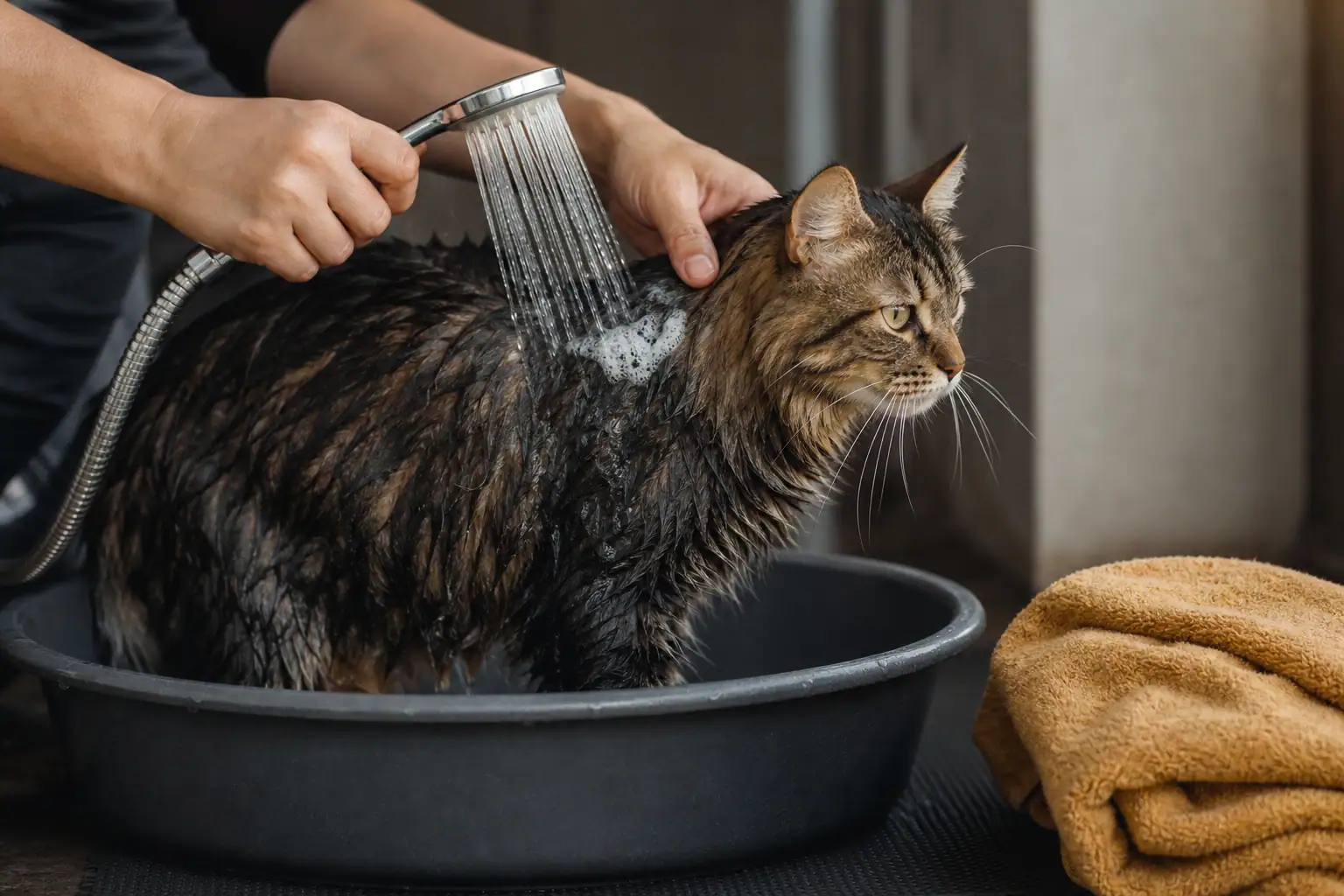
What if you already bathed your cat with Dawn?
Do not panic. The immediate priority is to remove the residue before your cat grooms.
- Rinse the entire soaped area with plenty of lukewarm water, keeping water out of the eyes, nose, and ears.
- Continue until the coat no longer feels slick and rubbing the wet fur produces no suds.
- Towel-dry your cat and keep them comfortably warm. Prevent licking until the coat is thoroughly rinsed.
- Check the skin over the next day for redness, itching, flaking, or unusual sensitivity.
- Call a veterinarian if the bath was meant to remove paint, oil, a pesticide, essential oil, or another chemical. The right decontamination method depends on the substance.
A single well-rinsed bath may cause nothing more than temporary dryness, but repeated use can strip oils from the coat and worsen irritation. For ordinary dirt, use a shampoo labeled for cats and follow its directions. Cats with wounds, skin disease, very young kittens, seniors, or medically fragile cats deserve veterinary advice before a full bath.
If Dawn got in the eyes
Flush the affected eye gently with lukewarm water or sterile saline for several minutes. Do not use eye drops intended to “get the red out.” Squinting, holding the eye closed, marked redness, cloudiness, or continued tearing warrants prompt veterinary assessment; eye injuries can deteriorate quickly.
Are Dawn Ultra, Platinum, Powerwash, or antibacterial versions safe?
Do not choose a formula for your cat based on bottle color or “original Dawn” folklore. Dawn sells many liquids and sprays with different concentrations, fragrances, and additional ingredients, and product lines can change. “Free & Clear” also does not mean tested or labeled as a cat-care product.
Sprays, concentrated formulas, antibacterial hand-soap variants, and products with added scents should not be treated as interchangeable with a plain liquid dish soap. If an exposure occurs, read the exact label and give the full product name to your veterinarian or poison specialist. When a veterinarian recommends a mild dish soap for a specific decontamination job, follow their instructions on product, dilution, contact time, and rinsing rather than substituting another formula.
Does Dawn kill fleas on cats?
Dawn can help water trap and drown some adult fleas present during a bath, but it does not provide residual protection and does not clear the eggs, larvae, and pupae spread through the home. A bath can therefore remove visible fleas without solving the infestation.
Use a flea comb and ask your veterinarian about a preventive or treatment labeled for your cat’s species, age, and weight. The U.S. Environmental Protection Agency advises following the product label and never applying a dog flea-and-tick product to a cat. If your cat is a young kitten or is ill, pregnant, nursing, underweight, or already taking medication, get veterinary guidance before applying any flea product.
Dawn is not a flea-control plan
A complete plan may include a cat-labeled treatment, flea-combing, washing bedding, vacuuming, treating every pet appropriately, and follow-up timed to the flea life cycle. Never combine pesticides or repeat a dose early unless your veterinarian directs it.
Can you use Dawn to clean cat toys?
Sometimes, but the toy’s care label comes first. For a nonporous, non-electronic toy whose manufacturer allows hand-washing, a very small amount of mild dish soap can remove saliva and grime if the toy is rinsed exceptionally well. Dawn is a poor default for porous toys that hold detergent deep in stuffing or seams.
| Toy type | Safer cleaning approach | Retire it when |
|---|---|---|
| Molded rubber or silicone | Follow the maker’s directions; hand-wash, rinse every groove, and air-dry fully. | There are deep punctures, tackiness, cracking, or pieces can be pulled away. |
| Washable fabric kicker | Use the care label. Choose a rinseable method, then press seams to check for trapped suds and moisture. | Seams gap, stuffing escapes, odor persists, or the center will not dry. |
| Catnip or stuffed plush | Spot-clean if specified. Avoid soaking a toy that cannot dry all the way through. | It smells musty, has visible mold, leaks filling, or has loose decorations. |
| Electronic or motorized toy | Remove batteries if the instructions allow and wipe only as directed. Never immerse electronics. | The housing cracks, battery area corrodes, or a motor compartment can be opened by the cat. |
| Wand lure or feather attachment | Follow the label; replace rather than saturate a weak or glued attachment. | String frays, quills splinter, clips deform, or small pieces loosen. |
Keep your cat away during cleaning. A washed toy should be residue-free, completely dry, and structurally sound before it returns to play. For rough players, squeeze and flex the toy after washing because wet seams can reveal damage that was easy to miss when dry. Our guide to safer motion toys for rough play includes a staged pre-play and post-play inspection routine.

When to call a veterinarian now
Call your veterinarian, an emergency clinic, or an animal poison service promptly if the exposure involved a concentrated amount, a spray or antibacterial formula, another cleaner mixed with the soap, or a cat with existing breathing, skin, or gastrointestinal disease.
Seek urgent care for:
- coughing, wheezing, noisy or labored breathing;
- blue, gray, very pale, or brick-red gums;
- repeated vomiting or diarrhea, blood, or inability to keep water down;
- marked drooling, mouth pain, trouble swallowing, or facial swelling;
- weakness, collapse, severe lethargy, tremors, or seizures;
- persistent eye pain, squinting, or a cloudy-looking eye.
Breathing signs can appear after detergent is aspirated into the lungs and should not be watched at home. Bring the product container or a label photo with you.
A safer home routine
- Store detergents, refill jugs, sponges, and cleaning buckets behind a closed door or latched cabinet.
- Empty dishwater promptly instead of leaving a tempting greasy basin.
- Use cat-labeled grooming products for routine coat care.
- Follow every toy’s material-specific care directions and rinse until no residue remains.
- Dry toys completely; trapped moisture and stuffing are a bad combination.
- Inspect high-bite zones, seams, attachments, and battery doors before every hard play session.
- Rotate a few clean toys instead of leaving a crowded, hard-to-audit toy box on the floor.
Cleaning is only one part of a safe setup. A balanced cat enrichment routine gives your cat appropriate ways to stalk, chase, catch, bite, and rest, while our kitten toy guide covers sizing and failure points for younger cats.
Frequently asked questions
Can Dawn dish soap kill cats?
A tiny lick of ordinary diluted hand-dishwashing liquid is more likely to cause mild irritation than life-threatening poisoning. Serious problems are still possible with larger amounts, certain added ingredients, aspiration into the lungs, or a medically vulnerable cat. Do not use the absence of immediate symptoms as proof that a substantial exposure is safe.
What should I do if my cat licks Dawn off their fur?
Stop the grooming, rinse the coat thoroughly with lukewarm water, and remove soap from the cat’s reach. Do not induce vomiting. Contact a veterinarian or animal poison service if more than a trace was swallowed, the exact amount is unknown, or any symptoms develop.
Which Dawn dish soap is okay for cats?
No Dawn formula should be your routine cat shampoo. A veterinarian may recommend a specific mild dish soap for one-time decontamination, but that is different from a product being generally approved for bathing cats. Use the exact product and method they specify.
What can I wash my cat with if I do not have cat shampoo?
If the problem is ordinary dust or dirt, try a warm damp cloth and brushing rather than improvising with a household cleaner. If the coat is contaminated with a chemical, oil, feces, or a sticky substance, call your veterinarian for advice before applying another product. The wrong solvent or cleanser can spread or react with the contaminant.
Is Dawn safe for kittens?
Kittens can become chilled during a bath and may be more vulnerable to skin irritation and incorrect flea treatment. Do not make Dawn your default. Ask a veterinarian what is safe for the kitten’s exact age, weight, health, and reason for bathing.
Editorial note: This article provides general safety information and does not replace veterinary diagnosis or treatment. For a current exposure, use the exact product label and your cat’s clinical signs when seeking professional advice.