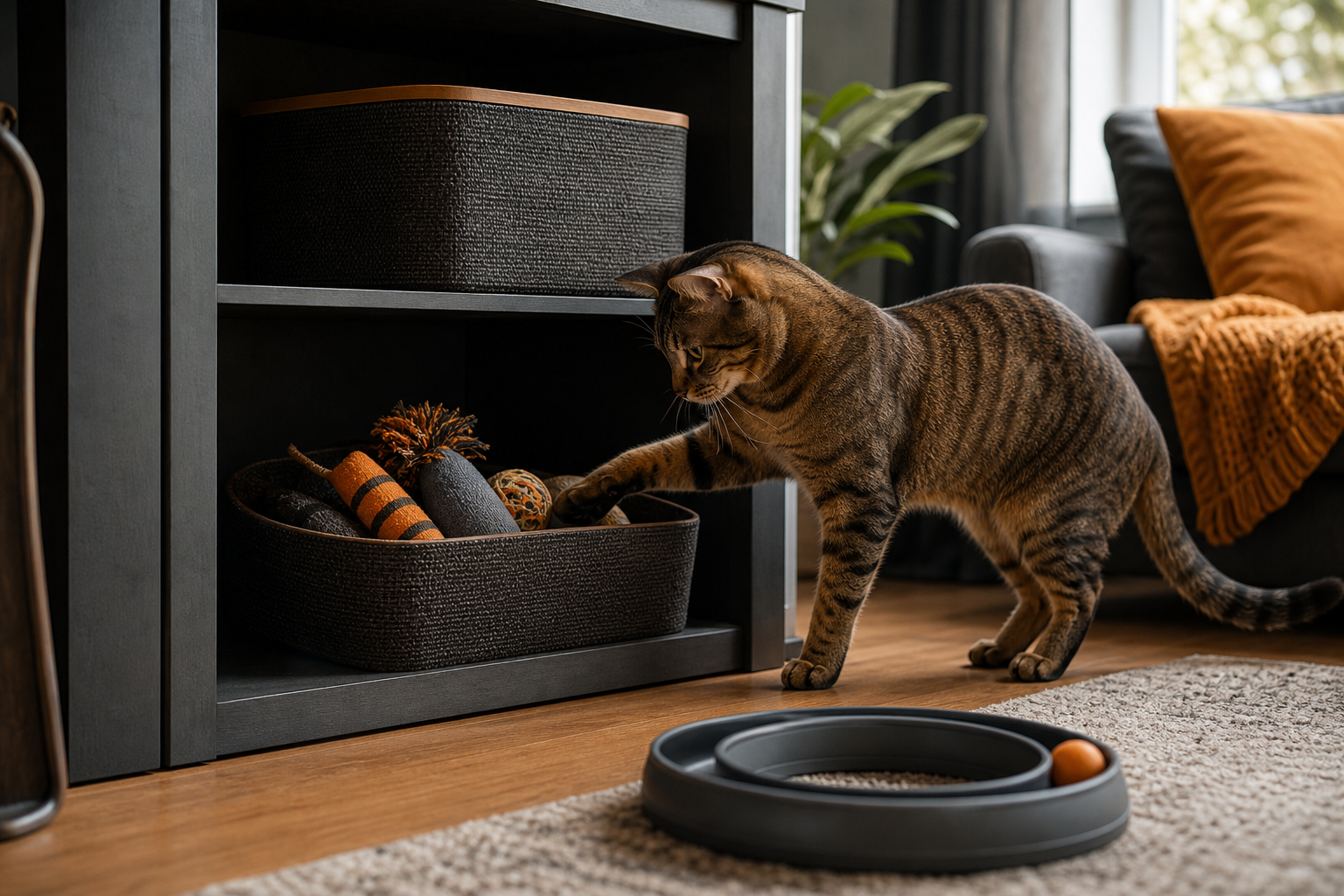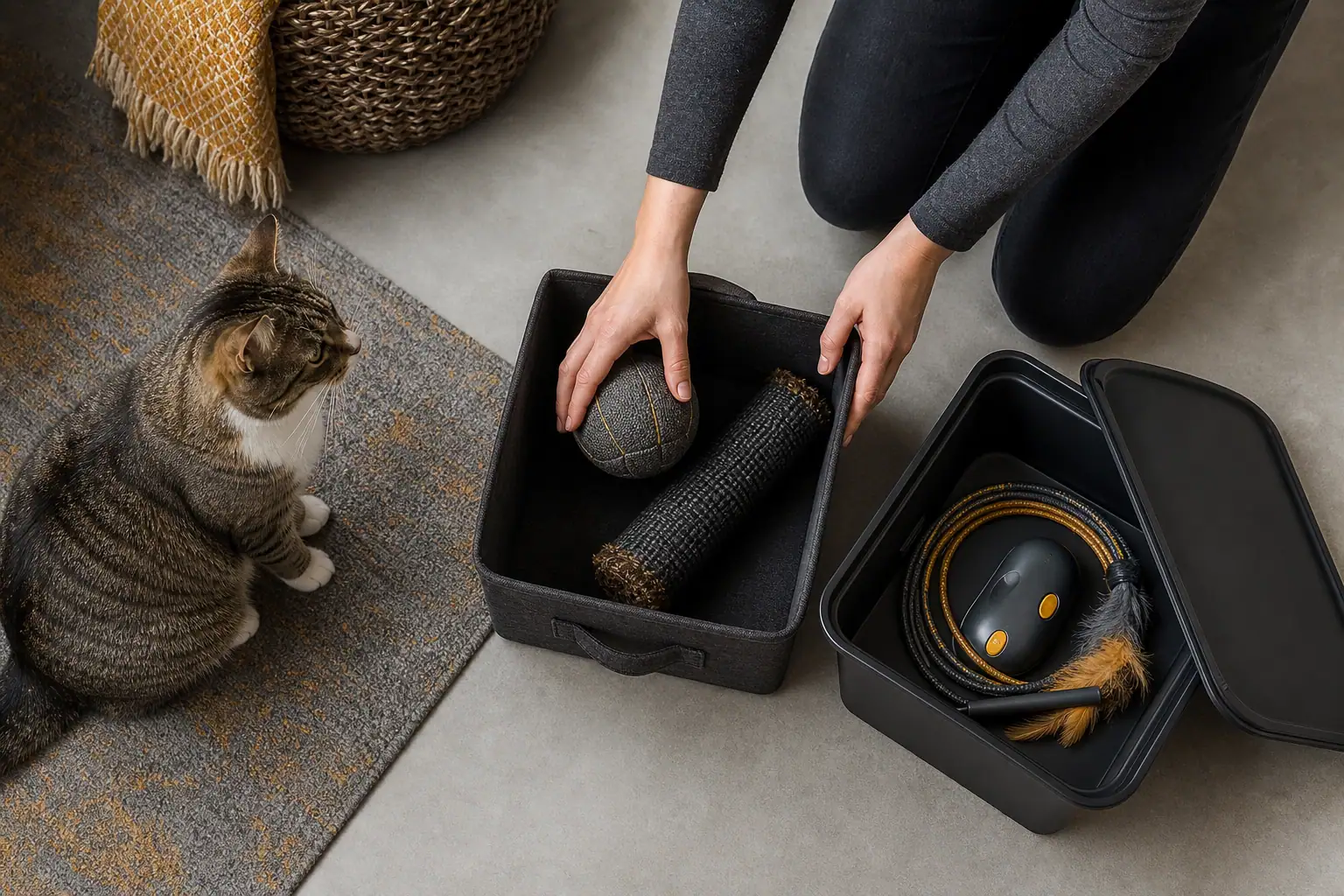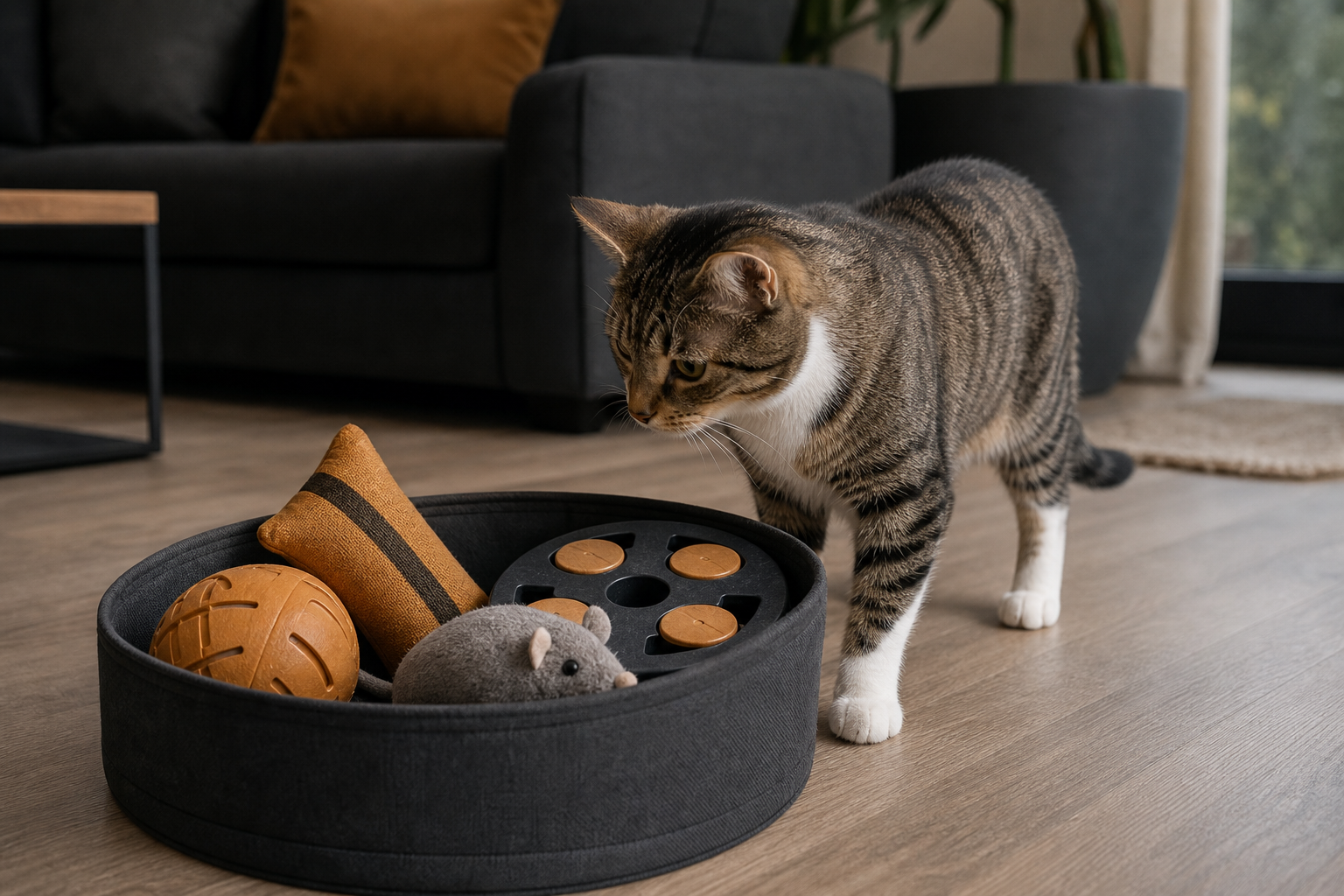
The best cat toy bin is low, stable, washable, and free of parts your cat can snag, chew, or pull loose. It should hold a small set of toys your cat has already used safely, not every wand, string, battery toy, and damaged mouse in one tempting pile. Keep supervised-only gear in a separate closed container and give dirty or questionable toys their own wash-or-retire tray.
That simple setup keeps the floor clearer, but its bigger value is control. You can rotate toys before they become boring, inspect rough-play favorites before they fail, and prevent a damp kicker or frayed feather lure from vanishing at the bottom of a basket.
What Makes a Good Cat Toy Bin?
For most homes, start with a shallow bin that your cat cannot easily tip. A washable plastic tub or tightly woven fabric bin is usually easier to maintain than an ornate basket. The opening should be wide enough for you to see the contents without digging and low enough that an approved toy does not become trapped behind a tall wall.
Check the container as carefully as the toys. Skip long loop handles, loose rope ends, exposed staples, sharp wire frames, splintering wicker, peeling coatings, and a heavy lid that could fall. If your cat chews fabric, cardboard, or basket fibers, do not assume the storage container is exempt from that habit.
| Bin type | Best use | Watch for |
|---|---|---|
| Washable plastic | Easy cleaning, active toys, food puzzles | Cracks, sharp edges, chew marks, tipping |
| Tightly woven fabric | Light toys in a living space | Frayed seams, foam inserts, loop handles |
| Wood or wicker | Decorative closed storage out of reach | Splinters, staples, loose reeds, hard-to-clean gaps |
| Lidded tote or cabinet box | Wands, cords, refills, and supervised toys | A lid or door the cat can open; trapped moisture |
The right size is not the biggest one you can fit beside the sofa. A huge, overfilled bin makes inspection harder and encourages forgotten toys to collect at the bottom. Choose enough room for one active rotation with a little air space, then keep reserve toys elsewhere.
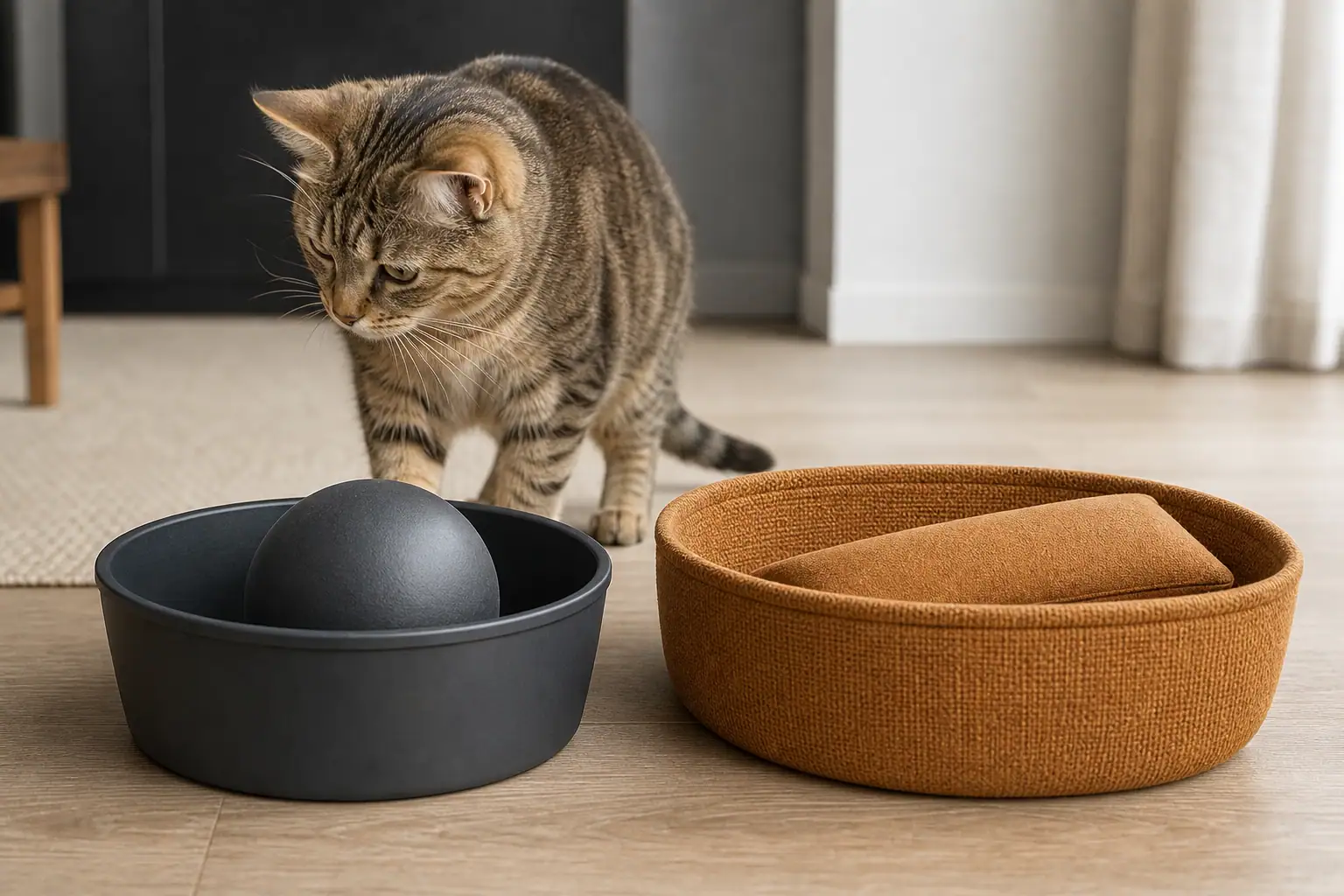
Open Bin or Closed Bin? Use Both for Different Jobs
An open cat toy bin is convenient for sturdy toys that your cat has repeatedly used without chewing pieces off. It can also become part of the game: some cats enjoy choosing a ball or carrying a kicker away. But open access is not appropriate for every toy or every cat.
Use closed storage for wands, ribbons, elastic, feather attachments, small removable pieces, electronic toys, catnip refills, and anything your cat tries to dismantle. The AAFP and ISFM feline environmental needs guidelines recommend rotating toys to reduce boredom and specifically say that toys with string or potentially ingestible parts should be put away after play.
A closed bin must be genuinely inaccessible. A loose lid on the floor is not closed storage for a cat that can nose it open. Put the container in a latched cabinet, closet, or high location that the cat cannot reach, and wrap wand cords loosely so they do not kink while still remaining contained.
If you want a broader comparison of storage boxes, subscription boxes, and DIY activity boxes, see the Titan Claws cat toy box guide. For a storage bin, the core rule is simpler: open access only for toys your cat has earned through observed safe use; everything else stays closed.
Sort Toys Into Three Clear Zones
Do not organize only by color or toy type. Sort by what should happen next.
1. Active bin
Keep four to six intact toys available: perhaps a large ball, an enclosed track toy, a sturdy toss toy, a simple food puzzle, and a rugged kicker. The exact mix depends on your cat. A toy that is a reasonable leave-out choice for a gentle carrier may be supervised-only for a seam-focused chewer.
2. Supervised and reserve storage
Store wands, string toys, delicate feathers, electronics, replacement lures, and the toys currently resting between rotations in a closed container. New toys start here until you have watched several play sessions and learned whether your cat bites, pries, carries, or swallows parts.
3. Wash-or-retire tray
Give dirty, damp, incomplete, or damaged toys a separate shallow tray outside the play area. This prevents an open seam from going back into the active bin during a quick cleanup. A tray is temporary: clean the toy by its care instructions, repair it only when that can be done safely, or retire it.
Cornell Feline Health Center advises avoiding small pieces and strand-like parts such as feathers and string that can separate during chewing and be swallowed. If an attachment is missing, keep the toy out of circulation until you find the piece or can account for what happened.
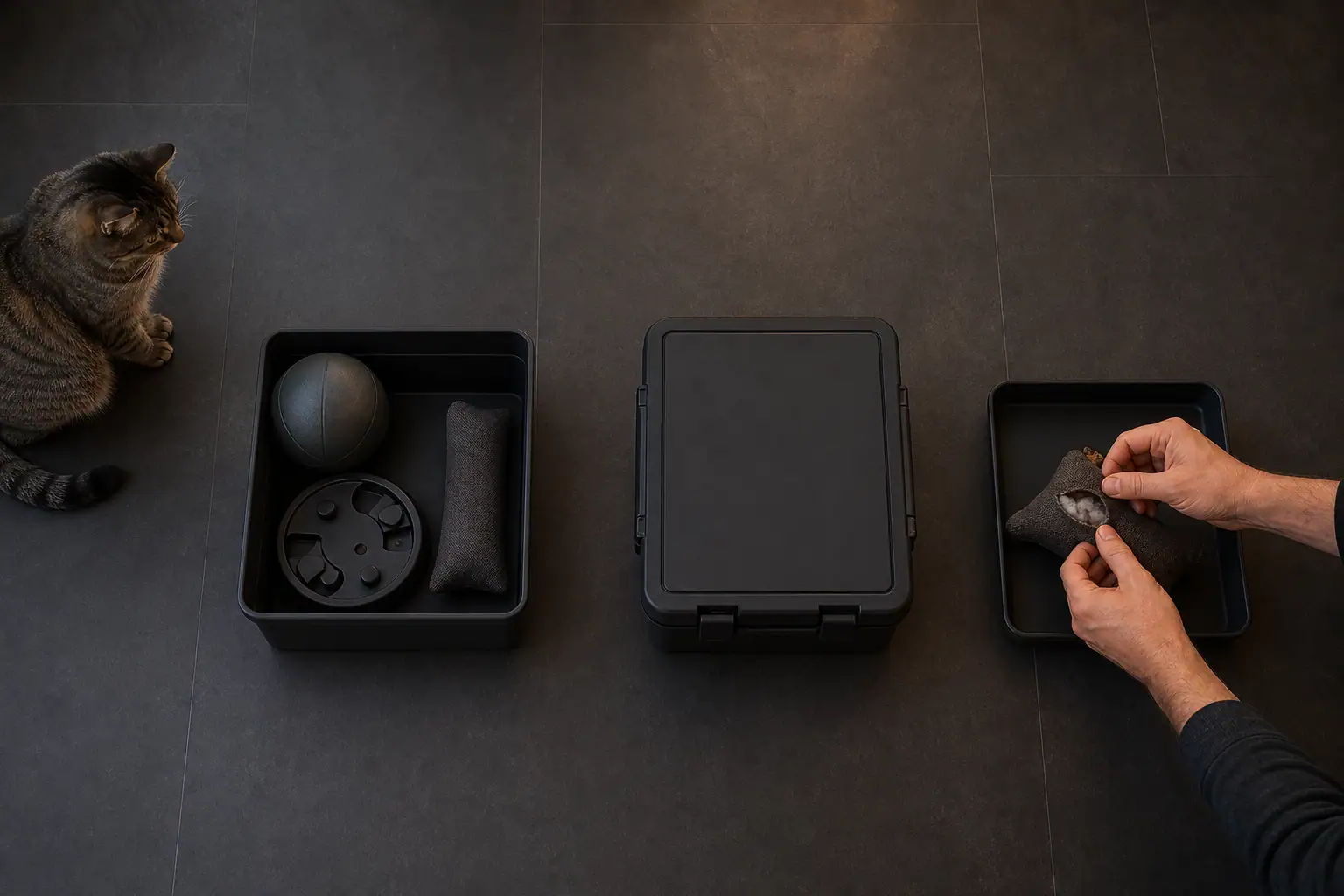
Turn the Bin Into a Toy Rotation
Rotation is more useful than permanent storage because familiar toys can regain interest after time away. You do not need a rigid schedule or a giant collection. Start with the small active set, notice what your cat chooses, and swap two or three items every week or when interest drops.
- Gather: retrieve toys from under furniture and check that every part is present.
- Inspect: pull gently at seams and attachments; look for cracks, exposed filling, bent clips, tooth damage, corrosion, and loose pieces.
- Clean or quarantine: move dirty toys to the wash-or-retire tray. Never seal a wet toy in storage.
- Swap by play job: replace a chase toy with another chase option, a kicker with a different capture toy, or a food puzzle with another foraging challenge.
- Observe: watch the first session after each swap. Interest is good; frantic chewing, fear, or immediate dismantling means the toy needs closer control or retirement.
A useful rotation covers different behaviors instead of offering six versions of the same plush mouse. Include opportunities to chase, catch, wrestle, bat, search for food, scratch, and explore. The Titan Claws guide to toys for bored indoor cats shows how to build that mix without filling the room with fragile novelty toys.
Keep the Bin Clean Without Hiding Damage
Empty the active bin regularly so crumbs, loose catnip, fur, and detached pieces cannot accumulate. Follow the bin maker’s care instructions. For a compatible hard container, wash away debris with soap or detergent and warm water, rinse thoroughly, and dry it before toys return. Fabric, wicker, wood, and reinforced bins may require different care.
Clean toys separately by material rather than washing the whole bin as one load. Food puzzles need food residue removed; electronics should not be immersed; sealed catnip toys may hold moisture; and a glued feather lure may not tolerate washing. The full cat toy cleaning guide covers those material-specific decisions.
Storage is never a repair. Retire a toy with an open seam, exposed stuffing, cracked plastic, sharp edge, damaged battery compartment, loose magnet, persistent odor, mold, or a missing part that may have been swallowed. If you think your cat ingested string, ribbon, stuffing, plastic, or another toy piece, contact a veterinarian promptly. Do not pull visible string from the mouth or rear.
Where to Put a Cat Toy Bin
Place the active bin on a level floor near a normal play area, but away from stairs, blind cords, water bowls, litter, heaters, and unstable furniture. It should not block a walkway where people can trip after the cat empties it. A bin tucked under a console can work if the cat cannot become trapped and you can still inspect the area.
In a multi-cat home, one central basket may create competition. Use more than one active location when cats guard resources or prefer separate territories. You can also lead individual play sessions in different rooms and return supervised toys to closed storage afterward.
Keep the wand container near the place where you actually play so safe storage is easy to repeat. The cat toy on a stick guide explains how to inspect cords, clips, lures, and handles before each session.
Cat Toy Bin Buying Checklist
- Low and stable enough that normal digging will not tip it
- Wide opening that lets you see and inspect the contents
- Washable surface with care instructions you can follow
- No long loop handles, loose threads, sharp wire, staples, or splintering material
- No heavy hinged lid on a cat-accessible container
- Small enough to prevent overfilling and forgotten bottom layers
- A separate, secure place available for wands, cords, electronics, and reserve toys
- A design that matches your cat’s real chewing and climbing habits
Durability matters here, but it is not a magic label. Look for a bin that fails visibly and can be inspected, then apply the same standard to every toy inside. Our guide to durable cat toys explains why seams, attachments, materials, and your cat’s failure pattern matter more than an “indestructible” promise.
Common Cat Toy Bin Questions
Should cats have access to their toy bin?
They can have access to a small active bin only when it contains toys you have observed them use safely. Keep strings, wands, feathers, electronics, small parts, and easily destroyed toys in closed storage.
How many toys should stay in the bin?
Start with four to six varied toys rather than an overflowing collection. Rotate a few at a time based on interest and wear. The useful number is the amount you can see, inspect, and keep clean.
Can I use a wicker basket?
Only if it remains smooth, intact, and easy to clean, and your cat does not chew or pull at the weave. Inspect for splinters, loose reeds, wire, staples, and loop handles. A washable plastic or tightly woven fabric bin is often simpler.
How often should I empty and check the bin?
Do a quick visual check whenever toys go back, inspect rough-play toys after hard sessions, and empty the bin during your regular rotation or whenever you see fur, crumbs, loose catnip, dampness, odor, or a missing piece.
Bottom line: A cat toy bin should make safer choices easier. Use a stable, washable open bin for a small approved rotation, closed storage for supervised gear, and a separate tray for cleaning or retirement decisions. Keep the collection visible, dry, and easy to inspect. When a rough-playing cat shows you how a toy or container fails, believe the evidence and change the setup before the next session.