Tag: cat toy storage

  • Cat Toy Bin Guide: Safer Storage, Rotation, and Cleanup

    Cat Toy Bin Guide: Safer Storage, Rotation, and Cleanup

    The best cat toy bin is low, stable, washable, and free of parts your cat can snag, chew, or pull loose. It should hold a small set of toys your cat has already used safely, not every wand, string, battery toy, and damaged mouse in one tempting pile. Keep supervised-only gear in a separate closed container and give dirty or questionable toys their own wash-or-retire tray.

    That simple setup keeps the floor clearer, but its bigger value is control. You can rotate toys before they become boring, inspect rough-play favorites before they fail, and prevent a damp kicker or frayed feather lure from vanishing at the bottom of a basket.

    What Makes a Good Cat Toy Bin?

    For most homes, start with a shallow bin that your cat cannot easily tip. A washable plastic tub or tightly woven fabric bin is usually easier to maintain than an ornate basket. The opening should be wide enough for you to see the contents without digging and low enough that an approved toy does not become trapped behind a tall wall.

    Check the container as carefully as the toys. Skip long loop handles, loose rope ends, exposed staples, sharp wire frames, splintering wicker, peeling coatings, and a heavy lid that could fall. If your cat chews fabric, cardboard, or basket fibers, do not assume the storage container is exempt from that habit.

    Bin type Best use Watch for
    Washable plastic Easy cleaning, active toys, food puzzles Cracks, sharp edges, chew marks, tipping
    Tightly woven fabric Light toys in a living space Frayed seams, foam inserts, loop handles
    Wood or wicker Decorative closed storage out of reach Splinters, staples, loose reeds, hard-to-clean gaps
    Lidded tote or cabinet box Wands, cords, refills, and supervised toys A lid or door the cat can open; trapped moisture

    The right size is not the biggest one you can fit beside the sofa. A huge, overfilled bin makes inspection harder and encourages forgotten toys to collect at the bottom. Choose enough room for one active rotation with a little air space, then keep reserve toys elsewhere.
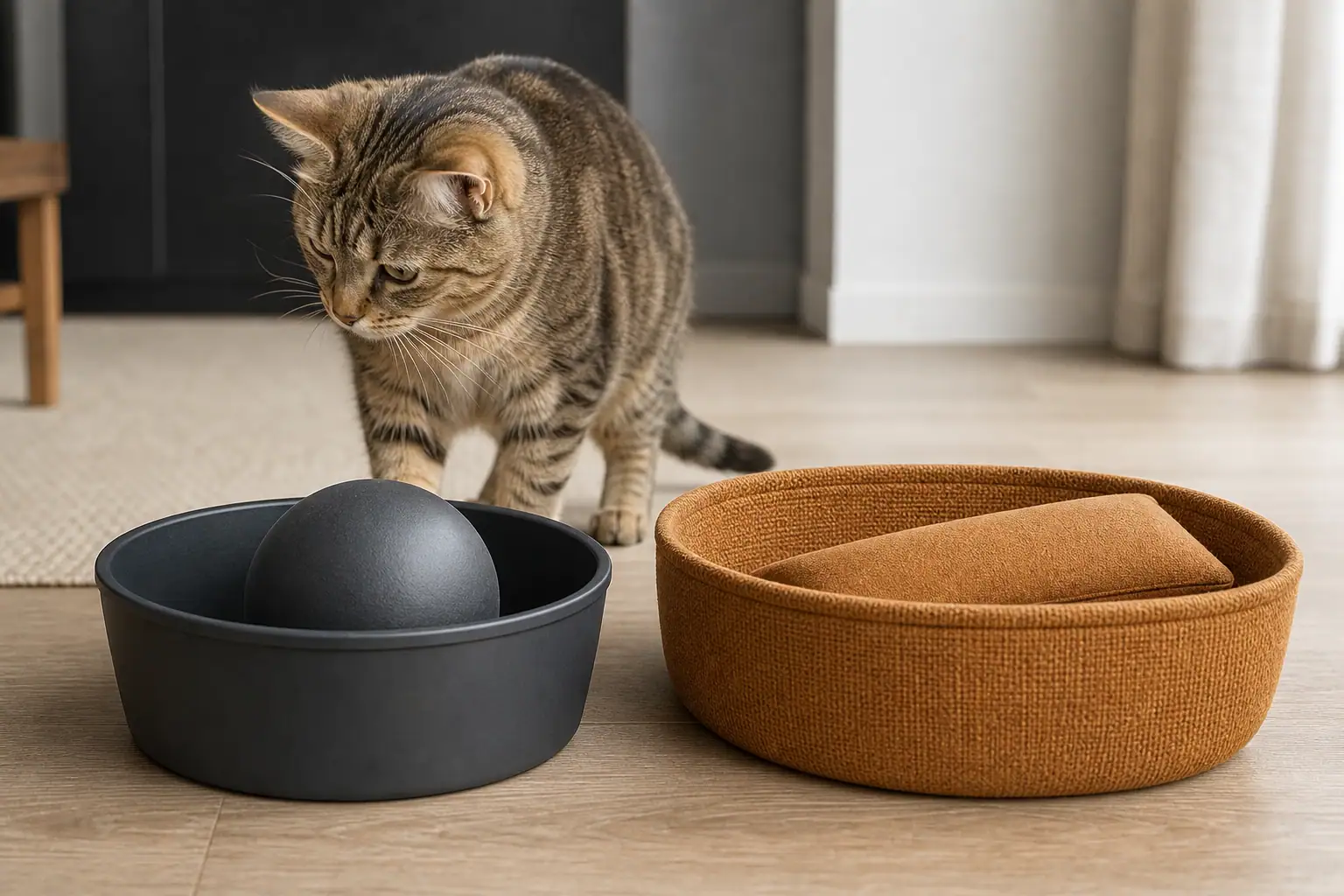
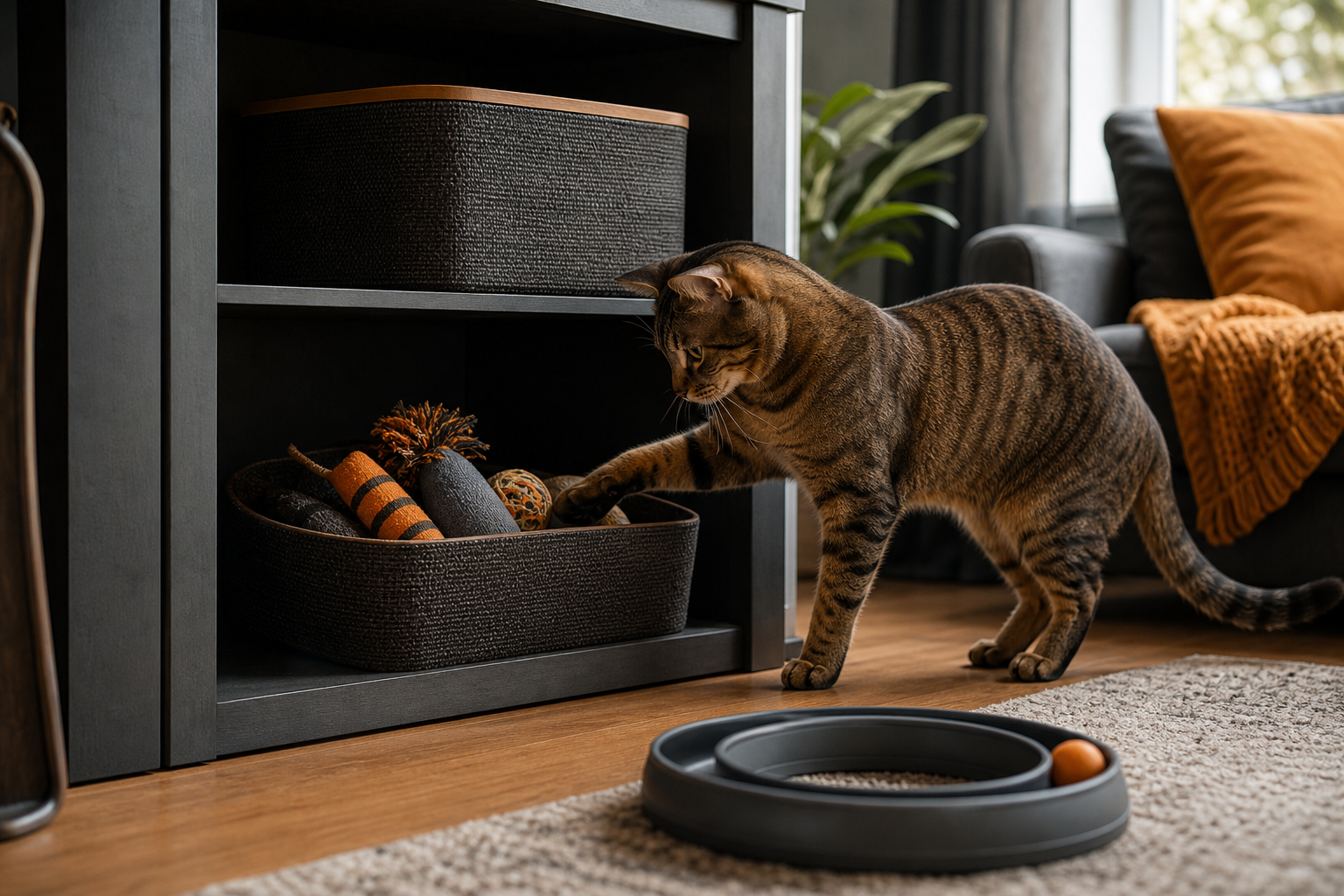
    Washable plastic and fabric cat toy bins compared side by side
    Choose a shallow, stable container with an inspectable interior and no snagging handles or sharp hardware.

    Open Bin or Closed Bin? Use Both for Different Jobs

    An open cat toy bin is convenient for sturdy toys that your cat has repeatedly used without chewing pieces off. It can also become part of the game: some cats enjoy choosing a ball or carrying a kicker away. But open access is not appropriate for every toy or every cat.

    Use closed storage for wands, ribbons, elastic, feather attachments, small removable pieces, electronic toys, catnip refills, and anything your cat tries to dismantle. The AAFP and ISFM feline environmental needs guidelines recommend rotating toys to reduce boredom and specifically say that toys with string or potentially ingestible parts should be put away after play.

    A closed bin must be genuinely inaccessible. A loose lid on the floor is not closed storage for a cat that can nose it open. Put the container in a latched cabinet, closet, or high location that the cat cannot reach, and wrap wand cords loosely so they do not kink while still remaining contained.

    If you want a broader comparison of storage boxes, subscription boxes, and DIY activity boxes, see the Titan Claws cat toy box guide. For a storage bin, the core rule is simpler: open access only for toys your cat has earned through observed safe use; everything else stays closed.

    Sort Toys Into Three Clear Zones

    Do not organize only by color or toy type. Sort by what should happen next.

    1. Active bin

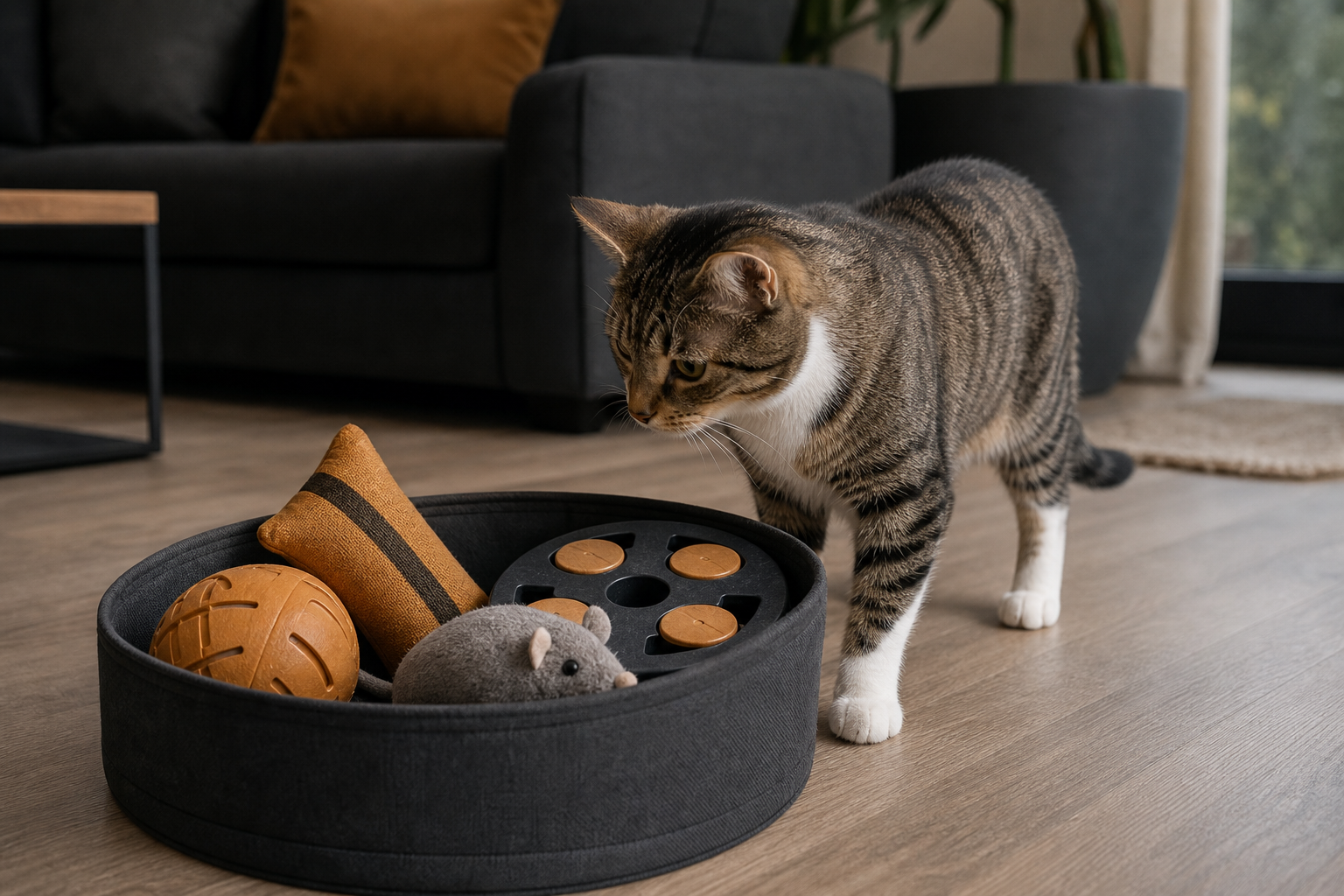
    Keep four to six intact toys available: perhaps a large ball, an enclosed track toy, a sturdy toss toy, a simple food puzzle, and a rugged kicker. The exact mix depends on your cat. A toy that is a reasonable leave-out choice for a gentle carrier may be supervised-only for a seam-focused chewer.

    2. Supervised and reserve storage

    Store wands, string toys, delicate feathers, electronics, replacement lures, and the toys currently resting between rotations in a closed container. New toys start here until you have watched several play sessions and learned whether your cat bites, pries, carries, or swallows parts.

    3. Wash-or-retire tray

    Give dirty, damp, incomplete, or damaged toys a separate shallow tray outside the play area. This prevents an open seam from going back into the active bin during a quick cleanup. A tray is temporary: clean the toy by its care instructions, repair it only when that can be done safely, or retire it.

    Cornell Feline Health Center advises avoiding small pieces and strand-like parts such as feathers and string that can separate during chewing and be swallowed. If an attachment is missing, keep the toy out of circulation until you find the piece or can account for what happened.
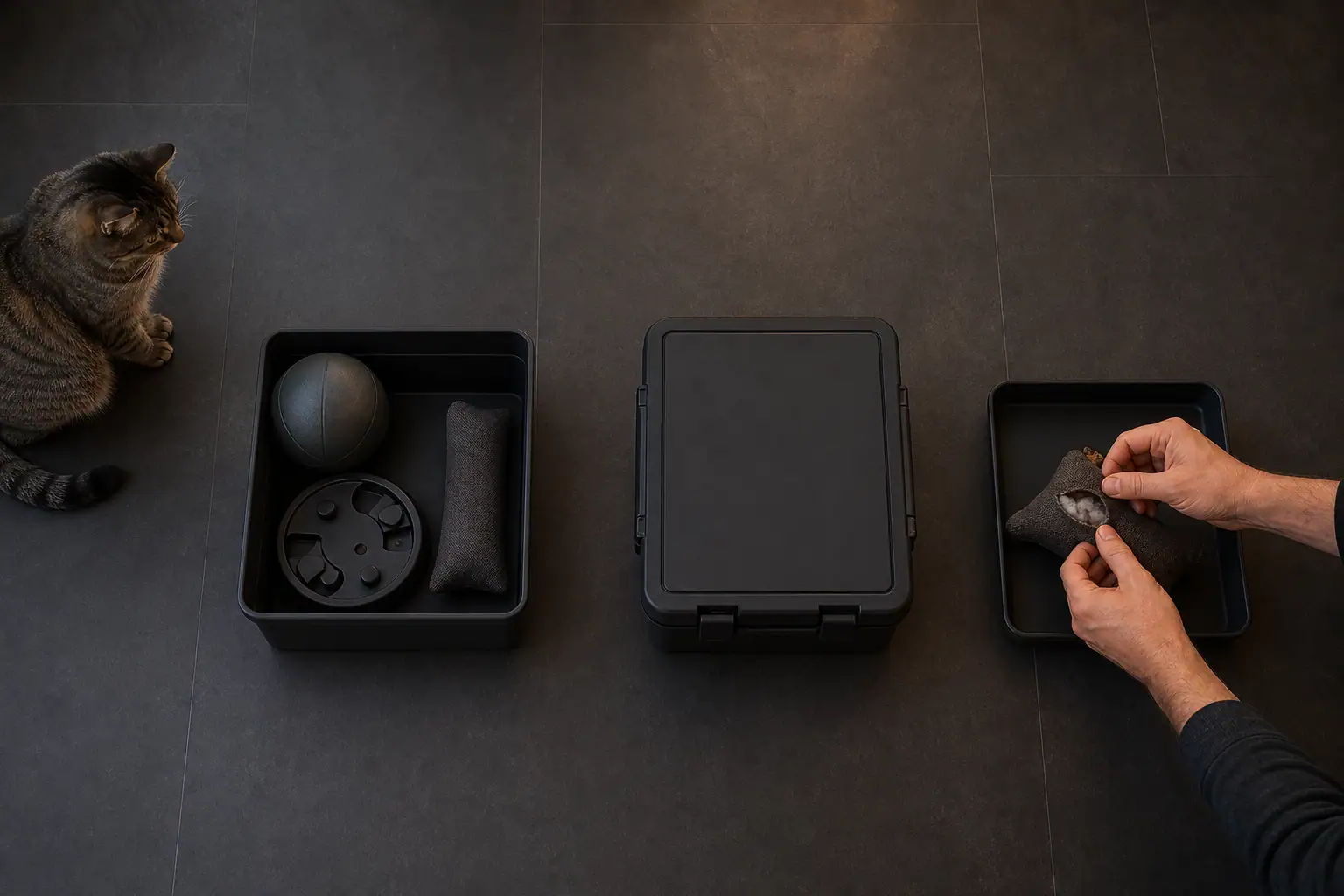
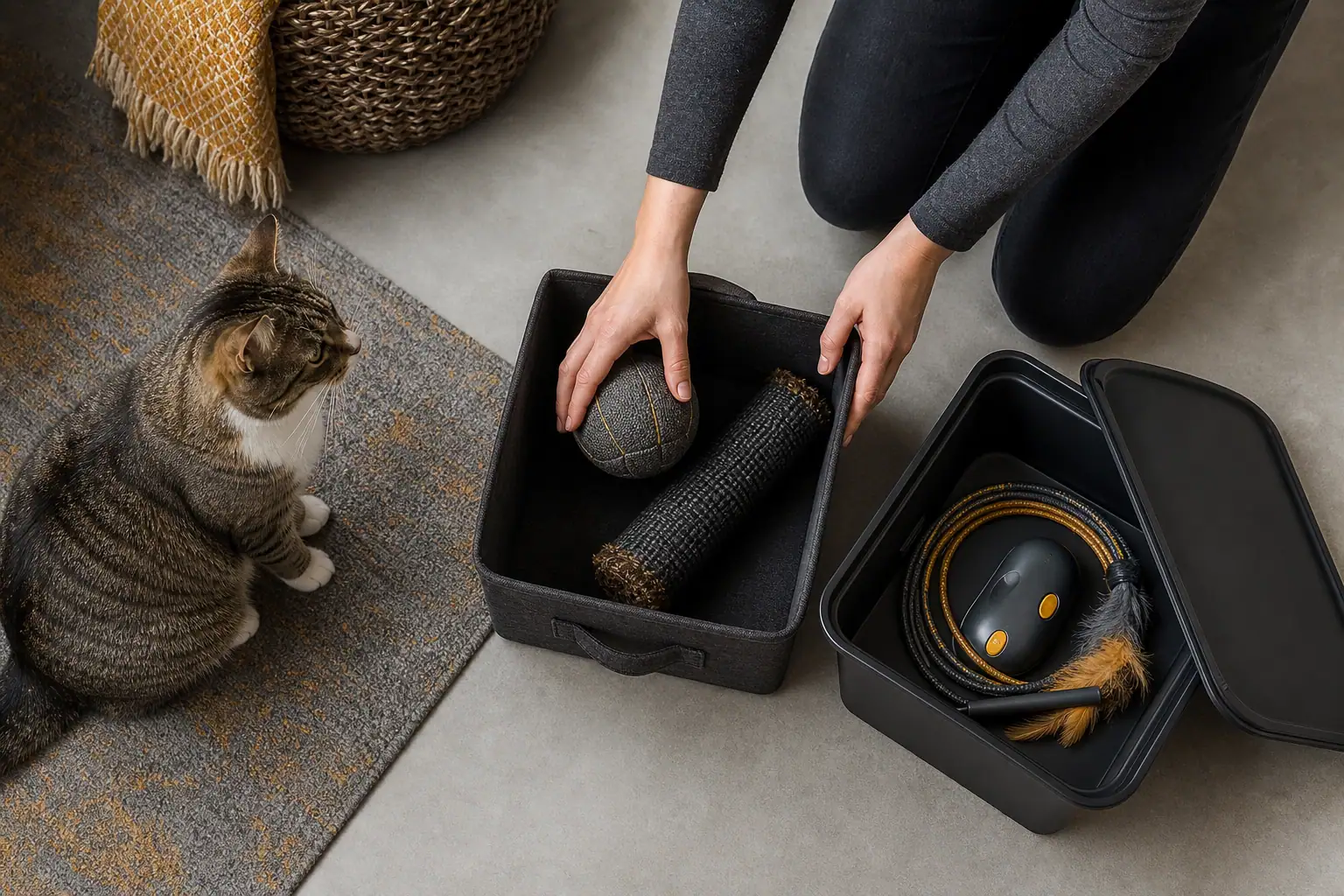
    Cat toys sorted into active, supervised, and inspection storage zones
    Separate the active rotation, supervised-only gear, and toys waiting for cleaning or retirement.

    Turn the Bin Into a Toy Rotation

    Rotation is more useful than permanent storage because familiar toys can regain interest after time away. You do not need a rigid schedule or a giant collection. Start with the small active set, notice what your cat chooses, and swap two or three items every week or when interest drops.

    1. Gather: retrieve toys from under furniture and check that every part is present.
    2. Inspect: pull gently at seams and attachments; look for cracks, exposed filling, bent clips, tooth damage, corrosion, and loose pieces.
    3. Clean or quarantine: move dirty toys to the wash-or-retire tray. Never seal a wet toy in storage.
    4. Swap by play job: replace a chase toy with another chase option, a kicker with a different capture toy, or a food puzzle with another foraging challenge.
    5. Observe: watch the first session after each swap. Interest is good; frantic chewing, fear, or immediate dismantling means the toy needs closer control or retirement.

    A useful rotation covers different behaviors instead of offering six versions of the same plush mouse. Include opportunities to chase, catch, wrestle, bat, search for food, scratch, and explore. The Titan Claws guide to toys for bored indoor cats shows how to build that mix without filling the room with fragile novelty toys.

    Keep the Bin Clean Without Hiding Damage

    Empty the active bin regularly so crumbs, loose catnip, fur, and detached pieces cannot accumulate. Follow the bin maker’s care instructions. For a compatible hard container, wash away debris with soap or detergent and warm water, rinse thoroughly, and dry it before toys return. Fabric, wicker, wood, and reinforced bins may require different care.

    Clean toys separately by material rather than washing the whole bin as one load. Food puzzles need food residue removed; electronics should not be immersed; sealed catnip toys may hold moisture; and a glued feather lure may not tolerate washing. The full cat toy cleaning guide covers those material-specific decisions.

    Storage is never a repair. Retire a toy with an open seam, exposed stuffing, cracked plastic, sharp edge, damaged battery compartment, loose magnet, persistent odor, mold, or a missing part that may have been swallowed. If you think your cat ingested string, ribbon, stuffing, plastic, or another toy piece, contact a veterinarian promptly. Do not pull visible string from the mouth or rear.

    Where to Put a Cat Toy Bin

    Place the active bin on a level floor near a normal play area, but away from stairs, blind cords, water bowls, litter, heaters, and unstable furniture. It should not block a walkway where people can trip after the cat empties it. A bin tucked under a console can work if the cat cannot become trapped and you can still inspect the area.

    In a multi-cat home, one central basket may create competition. Use more than one active location when cats guard resources or prefer separate territories. You can also lead individual play sessions in different rooms and return supervised toys to closed storage afterward.

    Keep the wand container near the place where you actually play so safe storage is easy to repeat. The cat toy on a stick guide explains how to inspect cords, clips, lures, and handles before each session.

    Cat Toy Bin Buying Checklist

    • Low and stable enough that normal digging will not tip it
    • Wide opening that lets you see and inspect the contents
    • Washable surface with care instructions you can follow
    • No long loop handles, loose threads, sharp wire, staples, or splintering material
    • No heavy hinged lid on a cat-accessible container
    • Small enough to prevent overfilling and forgotten bottom layers
    • A separate, secure place available for wands, cords, electronics, and reserve toys
    • A design that matches your cat’s real chewing and climbing habits

    Durability matters here, but it is not a magic label. Look for a bin that fails visibly and can be inspected, then apply the same standard to every toy inside. Our guide to durable cat toys explains why seams, attachments, materials, and your cat’s failure pattern matter more than an “indestructible” promise.

    Common Cat Toy Bin Questions

    Should cats have access to their toy bin?

    They can have access to a small active bin only when it contains toys you have observed them use safely. Keep strings, wands, feathers, electronics, small parts, and easily destroyed toys in closed storage.

    How many toys should stay in the bin?

    Start with four to six varied toys rather than an overflowing collection. Rotate a few at a time based on interest and wear. The useful number is the amount you can see, inspect, and keep clean.

    Can I use a wicker basket?

    Only if it remains smooth, intact, and easy to clean, and your cat does not chew or pull at the weave. Inspect for splinters, loose reeds, wire, staples, and loop handles. A washable plastic or tightly woven fabric bin is often simpler.

    How often should I empty and check the bin?

    Do a quick visual check whenever toys go back, inspect rough-play toys after hard sessions, and empty the bin during your regular rotation or whenever you see fur, crumbs, loose catnip, dampness, odor, or a missing piece.

    Bottom line: A cat toy bin should make safer choices easier. Use a stable, washable open bin for a small approved rotation, closed storage for supervised gear, and a separate tray for cleaning or retirement decisions. Keep the collection visible, dry, and easy to inspect. When a rough-playing cat shows you how a toy or container fails, believe the evidence and change the setup before the next session.
    Sources

  • Cat Toy Box Guide: Storage, Subscriptions, and DIY Play

    Cat Toy Box Guide: Storage, Subscriptions, and DIY Play

    A cat toy box can mean three different things: a bin that stores toys, a subscription box that delivers new toys, or a cardboard activity box with holes for pawing and hunting. For most homes, the best answer is a storage system first: keep four or five appropriate toys in an easy-access rotation, put strings and electronic toys in closed supervised-only storage, and use a third small container for anything that needs washing or retirement.

    That setup does more than clear the floor. It keeps risky toys out of reach, makes damage easier to spot, and restores some novelty when familiar toys return after a week away. A subscription can add variety, and a DIY box can add a hunting challenge, but neither replaces inspection and deliberate storage—especially when your cat bites, shakes, and opens ordinary plush toys quickly.

    Which Kind of Cat Toy Box Do You Need?

    Search results mix products with completely different jobs. Decide which problem you are solving before you buy anything.

    Type Best for Main drawback Smart choice
    Storage box or basket Organizing toys and running a rotation An open bin may give a cat access to unsafe toys Use an open daily bin plus closed supervised-only storage
    Cat subscription box Trying new toy types without shopping one by one Clutter, repeated toy styles, unsuitable treats, and weak toys Choose a flexible cadence and inspect every item before use
    DIY box with holes Pawing, searching, and problem-solving play Chewed cardboard, sharp cut edges, loose tape, or trapped paws Build it simply, supervise, and retire it when damaged

    If you arrived looking for a monthly delivery, jump to the subscription section below. If toys are already taking over your floor, start with the two-box storage system. If your cat likes fishing objects out of narrow spaces, the DIY play-box section gives you a safer build.

    Build a Safer Two-Box Storage System

    One giant basket is convenient until a cat digs past a solid ball to reach a feather wand, elastic cord, or damaged plush. Separate toys by the level of access they require.

    1. Make an active-toy box. Use a low, stable, washable bin for the small set your cat may access under the level of supervision you have already established. Choose a bin without long loop handles, splintering wicker, exposed staples, or a heavy hinged lid.
    2. Make a supervised-toy box. Use a secure lidded container stored in a cabinet or on a shelf the cat cannot open. Put wands, ribbons, elastic, feathers, refill attachments, electronic toys, catnip bags, and any toy your cat tries to dismantle here.
    3. Add a wash-or-retire tray. A shallow container near the laundry area keeps wet, dirty, or questionable toys from going back into circulation by accident. This is a holding area, not permanent storage.

    The active bin should not be an invitation to trust every item unattended. Your cat’s behavior determines access. A large molded track toy may be a reliable leave-out option for one cat, while another cat pries at its joints. A dense kicker may survive months of carrying but last minutes with a seam-focused chewer. Observe first, then assign the toy to a storage tier.

    Cornell Feline Health Center advises avoiding toys with small pieces and strand-like parts that can separate and be swallowed. That is why wands, loose feathers, cords, and similar toys belong behind a lid after the session rather than mixed into a cat-accessible basket.

    Owner sorting cat toys into an active set and supervised storage
    Sort toys by how they are used: safe active options, supervised-play gear, and items due for inspection.

    Use the Box to Run a Toy Rotation

    A toy box becomes enrichment equipment when it controls novelty instead of merely hiding clutter. The veterinary behaviorists at VCA suggest keeping a larger assortment but offering only four or five toys at a time, then rotating weekly. The AAFP/ISFM feline environmental needs guidelines likewise recommend rotating toys to reduce habituation and boredom.

    You do not need exactly 20 toys or a color-coded spreadsheet. You need enough variety to cover different parts of play without leaving every hazard on the floor.

    • Chase: a wand, rolling toy, or covered-motion toy used with appropriate supervision.
    • Catch and wrestle: a larger kicker or rugged plush that gives teeth and back feet a target.
    • Search and solve: a puzzle feeder, treat ball, or DIY activity box.
    • Solo batting: a sturdy ball, spring, or track toy that you have watched your cat use safely.
    • Rest-day novelty: a paper bag with handles removed, a cardboard box, or a tunnel inspected for damage.

    Once a week, swap two or three items rather than replacing the whole set. Move each returning toy through a 30-second check: pull gently at seams and attachments, look for tooth punctures and cracks, confirm battery doors close, smell for trapped moisture, and discard loose pieces. Our durable cat toys guide explains the failure points rough players expose fastest, while the cat toy enrichment rotation helps you balance chase, capture, foraging, and rest.

    What Belongs Out, Put Away, or Retired?

    Labels such as “interactive” or “durable” do not determine storage. How the toy fails—and how your cat attacks it—matters more.

    Possible active-box toys

    • Large, one-piece balls or rolling toys that cannot fit in the mouth
    • Enclosed track toys with no cracks, loose covers, or exposed fasteners
    • Rugged fabric toys with intact reinforced seams, if your cat does not ingest fabric
    • Washable food puzzles with no food left to spoil
    • Other simple toys your cat has repeatedly used without chewing pieces off

    Supervised-only storage

    • Wands, fishing-pole toys, ribbons, string, yarn, elastic, and feather attachments
    • Electronic toys with motors, charging ports, batteries, wires, or removable covers
    • Small plush mice, bells, glued decorations, removable eyes, and detachable tails
    • Catnip or silvervine toys that trigger frantic chewing or guarding
    • Any new toy until you have seen how your cat bites, carries, and dismantles it

    Retire immediately

    • Open seams, exposed stuffing, loose fibers, or detached decorations
    • Cracked plastic, sharp edges, loose magnets, damaged batteries, or exposed wire
    • A toy that has become sticky, swollen, permanently odorous, moldy, or impossible to clean
    • Cardboard that is wet, collapsing, sharply torn, or being eaten rather than shredded and abandoned
    • Anything missing a piece that you cannot account for

    If a piece may have been swallowed, stop play and call your veterinarian for guidance; do not wait for a toy-box cleanup day. Repeated fabric, rubber, foam, or string eating also deserves veterinary attention rather than an endless search for a supposedly indestructible toy.

    Are Cat Subscription Boxes Worth It?

    A cat subscription box can be worthwhile when it introduces genuinely different prey styles and you can pause deliveries before extras pile up. It is poor value when every delivery adds similar plush toys your rough player destroys, treats your cat cannot eat, or attachments you must immediately lock away.

    Current subscription competitors emphasize themes, surprise, toys, and treats. What those selling points do not answer is whether the specific contents suit your cat’s diet and failure pattern. Screen a service with six questions:

    1. Can you choose monthly, bimonthly, or skip-on-demand delivery? Slower cadence is useful when you rotate toys rather than consume them.
    2. Can you remove treats? This matters for allergies, prescription diets, calorie control, and cats that simply do not need more snacks.
    3. Can you state toy preferences? A plush-heavy box may be wrong for a cat that opens fabric seams.
    4. Are materials and dimensions disclosed? A themed photo is not a safety specification.
    5. Is cancellation clear? Test account controls before committing to a long prepaid plan.
    6. What will you do with misses? Keep unopened suitable items for donation; do not pass damaged or questionable toys to another cat.

    Inspect every arrival as if you bought each toy separately. Remove ribbons and packaging before the cat enters the room, compare toy size with the cat’s mouth, tug attachments, check seams, and supervise the first sessions. If treats are included, keep them in their original labeled package rather than tipping them into the toy bin. The FDA recommends retaining original pet-food and treat packaging so the lot number, manufacturer, and best-by date remain available if there is a defect or recall.

    How to Make a DIY Cat Toy Box With Holes

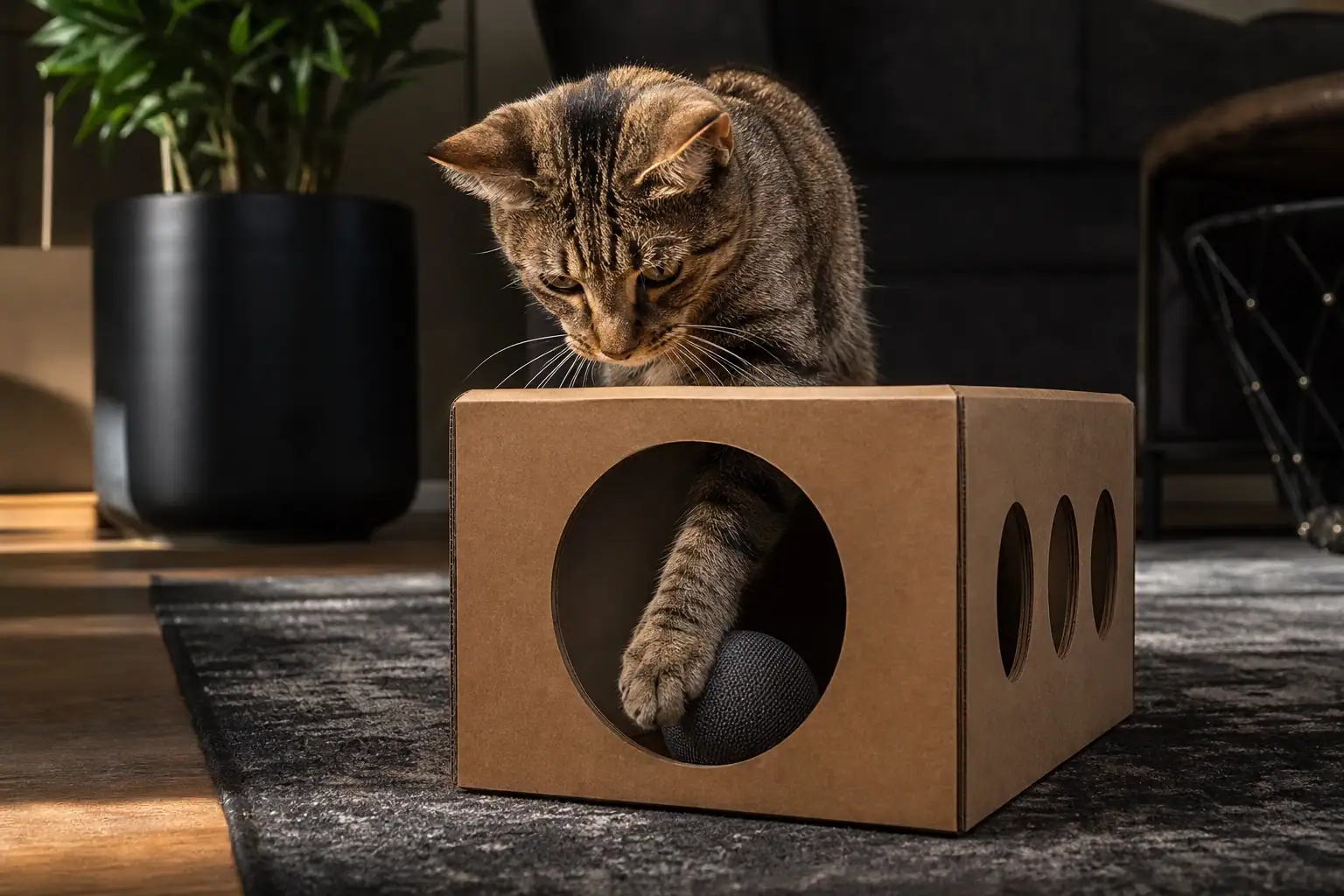
    A cardboard box with paw holes can turn familiar balls or fabric prey into a search-and-capture problem. It is inexpensive, easy to replace, and closer to feline hunting behavior than a decorative storage bin. It should also be treated as supervised play, particularly for cats that eat cardboard or force their heads and legs into openings.

    1. Choose a clean, sturdy box. Double-wall corrugated cardboard is more stable than a crushed shipping box. Remove shipping labels, plastic straps, staples, loose tape, and packing material.
    2. Cut a few generous openings. Make holes large enough for your cat to insert and withdraw a paw freely without scraping. Smooth or trim every edge. Do not create narrow slots that can pinch a claw, collar, or leg.
    3. Stabilize the box. Put it flat on a non-slip rug with clear space around it. Do not place weights, lamps, or furniture on top that could fall during hard play.
    4. Add large, simple prey. Use an intact ball or fabric toy that cannot pass into the cat’s mouth. Skip string, yarn, hair ties, rubber bands, foil, foam, and tiny loose objects.
    5. Let the cat succeed. Start with one object near an opening. Reward investigation and allow captures instead of making every attempt impossible.
    6. Inspect after the session. Retire the box when holes tear into sharp flaps, the base collapses, moisture appears, or your cat starts swallowing cardboard.
    Cat reaching through smooth holes in a sturdy DIY cardboard play box
    A DIY play box should have smooth openings, stable construction, and toys too large to swallow.

    For more builds that avoid loose strings and tiny parts, see our guide to DIY cat enrichment toys for rough players.

    Keep Stored Toys Clean, Dry, and Ready

    Do not seal damp toys in a lidded cat toy box. Saliva, wet food, and cleaning water trapped in fabric or grooves can create odor and make damage harder to assess. Wash by material, rinse as directed, dry completely, and inspect before storage. Keep dirty toys in the wash-or-retire tray rather than mixing them with clean stock.

    • Hard plastic, rubber, and silicone: follow the maker’s instructions, clean grooves, rinse away residue, and dry fully.
    • Washable fabric: use the permitted cycle and skip strong fragrance or fabric softener; check seams again after drying.
    • Catnip toys: follow the care label and keep fully dry toys in a separate closed bag or container to slow scent loss.
    • Food puzzles: remove crumbs after use and wash away oils before they become rancid or attract pests.
    • Electronics: power off, keep ports and battery compartments dry, and follow the manual.

    Keep treats, supplements, medication, and cleaning products out of the toy box. Their packaging and storage rules are different, and a cat digging for a ball should never find a chemical bottle or an edible bag. For surface and toy-cleaning decisions, use our practical guide to pet-safe cleaners for cats.

    Quick Cat Toy Box Checklist

    • Use one accessible active bin and one secure supervised-toy box.
    • Choose stable, washable storage without loop handles, staples, splinters, or a heavy lid.
    • Offer a small mixed set rather than leaving every toy out.
    • Rotate two or three toys weekly and inspect every returning item.
    • Store strings, wands, feathers, electronics, and dismantling targets behind a lid.
    • Keep damp or damaged toys in a separate wash-or-retire tray.
    • Keep subscription treats in original labeled packaging, outside the toy box.
    • Use DIY boxes only with smooth openings, stable construction, and supervised play.
    • Retire toys at the first loose part, open seam, crack, sharp edge, or missing piece.

    Should a cat toy box have a lid?

    Your supervised-toy box should have a secure lid or sit behind a cabinet door. An active box can be open only when it contains toys you have already observed your cat using appropriately. Avoid heavy hinged lids that could fall or pinch.

    Should you hide cat toys at night?

    Put away strings, wands, feathers, electronics, small parts, and anything your cat chews apart whenever you cannot supervise, including overnight. A few simple toys may remain available if they are suitable for your individual cat and pass inspection.

    What toys do cats never get bored with?

    No toy is boredom-proof. Interest depends on movement, prey preference, novelty, and the opportunity to catch something. Rotation works better than searching for one permanent favorite: mix chase, capture, foraging, solo batting, and owner-led play.

    What is the best cat toy box for a destructive cat?

    Use a rigid, washable lidded container the cat cannot open for supervised toys, plus a small active bin containing only proven options. The box does not make a weak toy safer; it makes access intentional and gives you a repeatable point for inspection.

    Bottom line: the best cat toy box is a system, not a decoration. Separate access by risk, rotate for novelty, inspect on the way in and out, and let subscription or DIY boxes earn a place only when they match how your cat actually plays.

    Sources