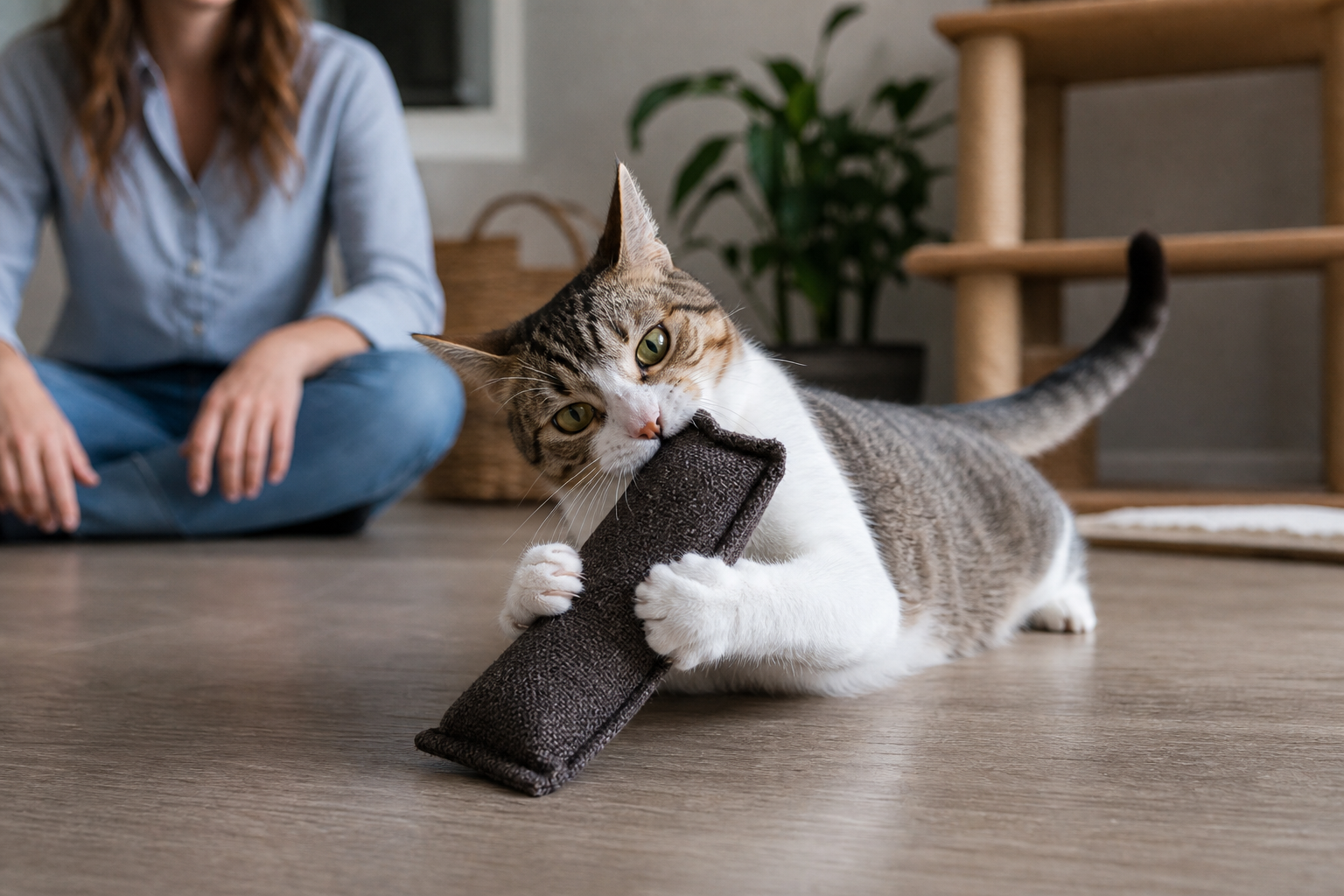
The best cat toys for play aggression are toys that let your cat chase, catch, bite, kick, and cool down without using your hands, ankles, or other pets as the target. Start with an interactive wand or teaser for controlled chasing, a longer kicker toy for the bite-and-kick part of the hunt, and a few solo toys such as puzzle feeders or larger skitter toys for off-hours energy. Avoid hand-wrestling, tiny swallowable toys, loose strings left out, fragile plush, and anything your cat can shred into parts.
Play aggression is not the same as a cat being mean. It is usually normal hunting and rough play aimed at the wrong target, especially in kittens, adolescent cats, high-energy indoor cats, and cats that do not get enough structured play. The toy choice matters, but the routine matters just as much. A toy that is perfect during a supervised session can be risky if it is left on the floor all day.
What Play Aggression Looks Like
Play aggression often shows up as stalking feet, ambushing ankles from behind furniture, biting hands during petting, grabbing arms when a toy is nearby, or launching at people during morning and evening energy spikes. Some cats give clear warning signs: wide pupils, crouching, a swishing tail, a tucked body, a wiggling rear end, or repeated hiding around corners.
The practical goal is not to stop your cat from hunting. Cats need appropriate outlets for predatory play. The goal is to move that energy onto toys, schedule play before the rough behavior usually starts, and choose toys that can handle a hard catch without becoming a hazard. The VCA guidance on play and predatory aggression makes the same core point: appropriate play opportunities have to be part of the solution, not an afterthought.
The Toy Setup That Works Best
For most play-aggressive cats, one toy is not enough. Use a small kit with three jobs:
- A chase toy: a wand, fishing-pole toy, or teaser used only while you are supervising.
- A catch toy: a longer kicker or rugged plush that the cat can grab, bite, and rake with the back feet.
- A solo outlet: a puzzle feeder, treat ball, sturdy track toy, larger skitter toy, tunnel, or box setup that is safe for that individual cat when you are not actively playing.

This combination works because it follows the cat’s play sequence. First the toy runs away, hides, and reappears. Then the cat gets a real catch. Then the cat has something calmer to do after the main session. If your cat only gets a laser dot or a toy they never capture, the session may leave them more frustrated instead of more settled.
For a broader toy foundation, pair this article with Titan Claws guides to wand cat toys, cat kicker toys, and puzzle cat toys. Those articles go deeper on specific toy types; this guide is about using them together for rough play.
Best Cat Toys for Play Aggression by Situation
If your cat attacks ankles
Use a wand toy or tossable toy before the ambush happens. Keep one or two safe redirect toys in the rooms where attacks usually occur. If your cat crouches near a hallway corner at 7 p.m. every night, start a short chase session at 6:55 p.m. instead of waiting for the pounce.
Choose toys that move away from the cat. Drag a lure around a corner, skim it along a baseboard, let it disappear behind a box, pause, then move again. Prey does not run into a cat’s face. The East Bay SPCA play-aggression handout recommends making the toy act like prey and redirecting before the pounce whenever possible, which is a useful rule for ankle attackers.

If your cat grabs hands during play
Increase distance. Use a wand, pole, or long lure instead of a tiny toy held between your fingers. End each chase with the cat landing on a kicker toy or larger plush, not your sleeve. If claws or teeth hit skin, freeze, calmly stop the game, and give the cat a moment to reset. Do not jerk away dramatically; fast movement can make your hand act even more like prey.
The San Francisco SPCA play-aggression resource is blunt about this: hands are not toys. That is especially important in multi-person homes because one person roughhousing with hands can undo everyone else’s training.
If your cat bites and bunny-kicks hard
Prioritize a longer kicker toy. The toy should be long enough for your cat to hug with the front paws and kick with the back legs without wrapping around your arm. Look for secure stitching, a cover that does not shed fibers easily, and a shape that is easy to inspect after play. Avoid glued-on eyes, thin ribbon tails, brittle crinkle pods, exposed bells, and decorative parts that can detach.
Rough kickers need a higher safety standard than gentle cuddle toys. Titan Claws has more material and sizing guidance in durable cat toys and toys for cats that chew. No soft toy is truly indestructible, so inspection is part of the routine.
If your cat gets wild when you are busy
Use food puzzles and self-play toys as pressure valves, not as the whole plan. A puzzle feeder can make part of dinner slower and more engaging. A track toy, tunnel, cardboard box, or larger skitter toy can give your cat an appropriate target while you work. These are useful because they give the cat something to do before the behavior spills onto people.
Still, many play-aggressive cats need interactive play with a person. Solo toys cannot fully replace the movement and timing you create with a wand. The East Bay SPCA handout recommends daily scheduled play and notes that cats often get more out of toys controlled by a person than toys they must animate by themselves.
Toys to Avoid or Supervise Closely
Some toys are fine for calm cats and poor choices for cats that launch, chew, or shred. Be stricter if your cat has already destroyed toys, swallowed pieces, or redirected bites onto people.
- Hands, feet, and sleeves: never use body parts as prey, even with kittens.
- Loose string, yarn, ribbon, and elastic: use only during active supervision, then store away.
- Tiny plush mice: avoid anything your cat can fit fully in the mouth or tear open quickly.
- Feathers and bells: supervise closely and retire the toy if parts loosen.
- Fragile electronic toys: inspect battery doors, moving attachments, wires, and plastic housings.
- Catnip toys for over-aroused cats: catnip is not harmful for most cats, but it can make some play-aggressive cats more intense.
- Laser-only sessions: if you use a laser, finish with a physical toy or treat the cat can actually catch.
Cornell Feline Health Center’s safe toys guidance is useful here because it emphasizes the risk of small pieces and strand-like materials. With play aggression, the same risks are amplified by harder biting and faster pouncing.
A 15-Minute Play Routine for Rough Cats
Use this routine once or twice daily, especially before the times your cat usually attacks. Morning and evening are common high-energy windows.
- Two minutes: warm up. Move the wand slowly along the floor, behind a chair leg, or around a box. Let the cat stalk.
- Five minutes: chase. Move the lure away from the cat in short bursts. Use pauses so the cat can plan the pounce.
- Three minutes: catch and kick. Let the cat land on a kicker toy. Keep your hands away from the strike zone.
- Three minutes: repeat, but easier. Run a shorter chase so the cat wins again.
- Two minutes: cool down. Offer a small food puzzle, a few pieces of kibble to forage for, or calm distance. Do not immediately pet a cat that is still in hunt mode.
The routine should feel predictable, not frantic. If the cat starts panting, limping, hiding in fear, or escalating toward people, stop and reassess. For more enrichment structure, see Titan Claws on cat toys for enrichment, cat enrichment activities, and cat toys for boredom.
How to Redirect Without Rewarding the Attack
Timing is the hard part. If you see the pre-pounce signs, redirect immediately with a toy thrown away from your body or a wand lure moved along the floor. That teaches the cat that toys are the target.
If the cat has already bitten or grabbed you, do not instantly produce the most exciting toy as a prize. Calmly stop interaction, become still and boring, step out of reach if needed, then restart a structured toy session after a short reset. This distinction matters: preempting with a toy is useful; rewarding a successful ambush can make the ambush more likely.
A small bell on a breakaway collar can help some households notice ambushes earlier, but it is not a fix by itself. The fix is still scheduled play, appropriate toys, calm disengagement after mistakes, and consistent rules from every person in the home.
Safety Checks for Durable Play
Durability is not a promise that a toy can be ignored. It is a way to buy more time, better structure, and fewer obvious failure points. After rough sessions, check the toy before it goes back into the basket.
- Are seams opening or threads hanging loose?
- Is stuffing visible?
- Are feathers, bells, eyes, clips, or tags loosening?
- Has the surface started shedding fuzz or small plastic pieces?
- Can your cat fit the whole toy in their mouth?
- Is a cord, ribbon, or elastic section chewed?
- Does a battery compartment still close securely?
- Would you trust this toy unsupervised with this specific cat?

If the answer worries you, retire the toy. A tough cat toy should be easy to inspect, large enough for the cat, and matched to the way the cat actually plays. For heavy chewers, read safe cat chew toys before leaving any chew-target toy out alone.
When Toys Are Not Enough
Ask your veterinarian or a qualified feline behavior professional for help if bites break skin, the behavior is sudden or escalating, the cat targets children or vulnerable adults, the cat seems fearful rather than playful, another pet is being injured, or your cat also shows signs of pain, illness, hiding, appetite change, or litter box changes. A toy routine can help normal play aggression, but it should not be used to explain away medical pain, fear aggression, or serious household safety risk.
Also be careful with punishment. Physical punishment, yelling, and dramatic reactions can increase fear or make the game more exciting. The better pattern is predictable play, better toy targets, calm disengagement after rough contact, and early redirection before the pounce.
Quick Buying Checklist
Before buying cat toys for play aggression, run through this checklist:
- Does this toy solve a specific job: chase, catch, kick, forage, or solo play?
- Can I use it without putting my hands near teeth and claws?
- Is it large enough for my cat’s mouth and play style?
- Are strings, feathers, bells, batteries, and small parts supervised only?
- Can I inspect the toy quickly after rough play?
- Does the cat get a real catch at the end of the game?
- Do I have a calmer follow-up, such as a food puzzle or foraging activity?
- Will everyone in the home follow the same no-hands rule?
The right toys for play aggression give your cat legal targets for normal hunting behavior. Use wand toys for distance, kicker toys for the hard catch, puzzle toys for mental work, and durable construction for rough players. Then keep the routine consistent: play before the ambush, let the cat catch something real, inspect the toy, and retire damaged pieces early.