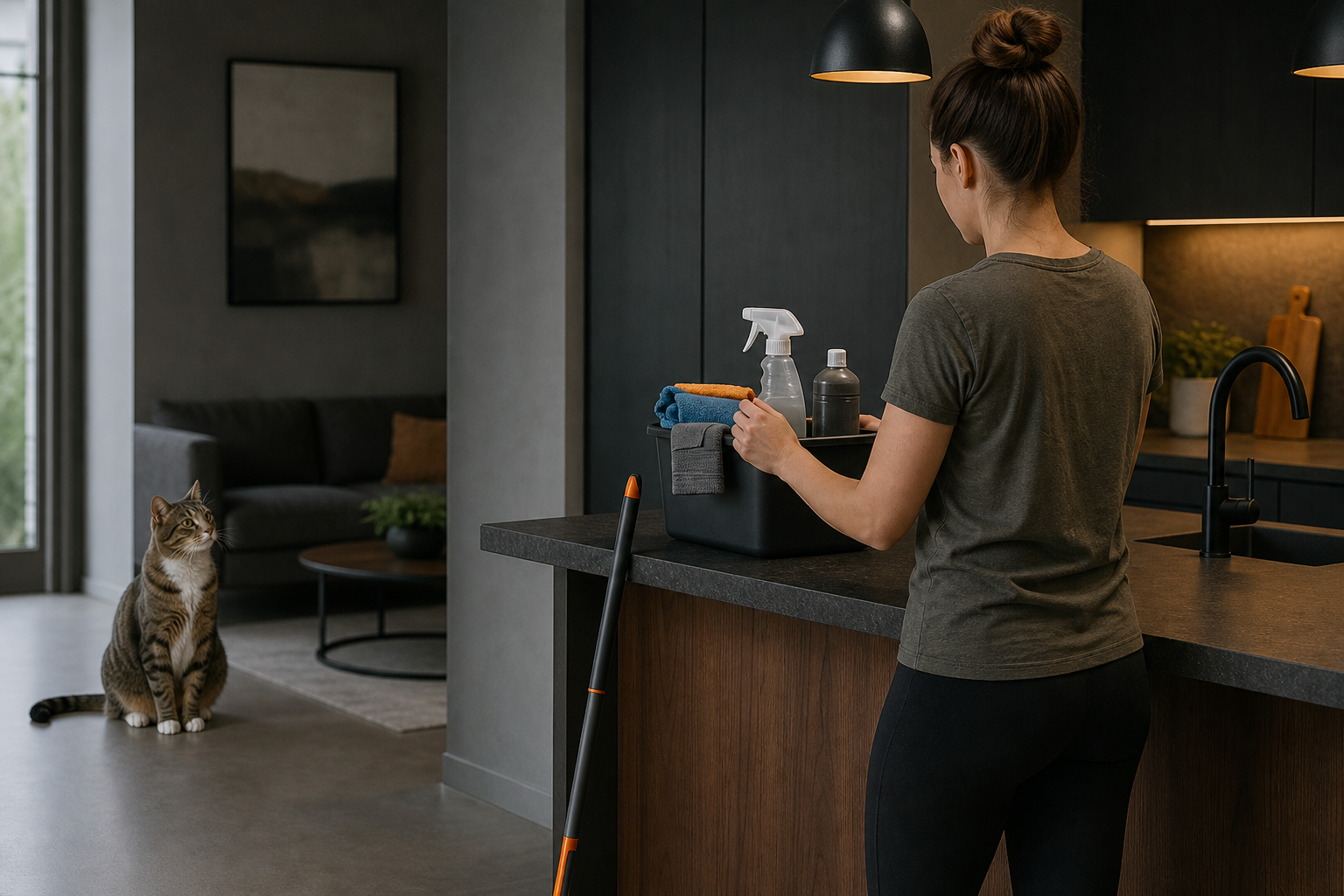
The best pet-safe cleaners for cats are products you can use exactly as labeled while keeping your cat away from the wet product. For everyday jobs, start with the least complicated option that works: vacuuming, a damp microfiber cloth, soap and water, or a fragrance-free cleaner with transparent directions. When buying a commercial cleaner, the EPA Safer Choice label is a useful screening tool because every ingredient is reviewed against health and environmental criteria, including considerations for pets.
No bottle is safe for a cat to lick, walk through, or groom off its coat. Use the correct dilution, ventilate, close mop buckets and trash, and keep cats out until the surface is fully dry and any strong odor has cleared. That routine matters more than a vague “natural” or “pet-friendly” claim on the front label.
Pet-Safe Cleaner Choices at a Glance
You do not need one heavy disinfectant for every room. The CDC’s home-cleaning guidance says regular cleaning with soap, water, and scrubbing removes most dirt and germs; routine disinfection is generally unnecessary unless someone is sick or especially vulnerable. Using less product where less will do also reduces the opportunities for a curious cat to contact wet chemicals.
- Dust, fur, and crumbs: vacuum, sweep, or use a damp microfiber cloth. There is usually no reason to add fragrance or disinfectant.
- Everyday hard floors: choose a cleaner labeled for that floor, ideally fragrance-free and EPA Safer Choice-certified. Dilute it exactly as directed and keep the cat away until dry.
- Food spills and counters: use soap and water or a surface-appropriate cleaner. Follow any label instruction to rinse food-contact surfaces.
- Urine, vomit, and organic stains: use an enzyme cleaner labeled for the surface and for use in pet households. Block access until it has finished working and dried.
- Washable bowls and hard toys: use warm water and a mild, fragrance-free dish detergent unless the manufacturer specifies another method. Rinse until no film or scent remains and dry fully.
- True disinfection: use an appropriate registered disinfectant only when the job calls for it. Respect dilution, contact time, ventilation, rinsing directions, and the full drying period.
A cleaner and a disinfectant do different jobs. A cleaner lifts grime; a disinfectant must remain wet for a stated contact time to kill listed organisms. Spraying a strong product and immediately wiping it away may add exposure without delivering the promised disinfection.
How to Evaluate a Cleaner Instead of Trusting the Brand
Searchers often ask whether Method, Mrs. Meyer’s, Lysol, or another whole brand is cat-safe. A brand-level yes or no is unreliable: formulas, concentrations, scents, and directions vary by product and can change. Evaluate the exact bottle you plan to use.
- Match the product to the job. Do not use an oven cleaner on a general spill or a disinfecting wipe for routine dust.
- Read the use sites. Confirm that the label permits use on your floor, counter, fabric, toy, or food-contact surface.
- Read every precaution. Look for ventilation, gloves, dilution, required rinsing, contact time, and re-entry instructions.
- Prefer independent screening. Search the current EPA Safer Choice product list, which can be filtered for home use, product type, and fragrance-free options.
- Check the current ingredient disclosure. The front-label words “green,” “natural,” and “plant-based” do not explain concentration or exposure risk.
- Ask a specific question. If information is unclear, contact the manufacturer with the exact product name and ask whether a floor needs rinsing before a cat can walk on it.
Even an EPA Safer Choice product still needs label-compliant use and safe storage. The label means safer ingredients within its product class; it does not mean the liquid is food, paw wash, coat cleaner, or a toy your cat can investigate.
Cleaning Ingredients and Formats That Need Extra Caution
Risk depends on the ingredient, concentration, route of exposure, and amount. Avoid turning an ingredient list into a do-it-yourself toxicology test. Instead, recognize formats that deserve stricter handling or a different product.
- Phenolic cleaners: phenols can injure skin, eyes, lungs, and the digestive tract. They may appear in some toilet-bowl and all-purpose cleaners.
- Quaternary ammonium compounds: some disinfecting sprays and wipes contain “quats.” Pet Poison Helpline warns that cats are especially sensitive and that direct contact can cause corrosive injury.
- Concentrates and pods: a small spill contains more cleaner, and a chewed packet can release it quickly. Store concentrates in their original closed container behind a secure door.
- Essential oils and heavy fragrance: do not add tea tree, eucalyptus, peppermint, citrus, pine, or other essential oils to a DIY floor or toy cleaner. The ASPCA advises against using essential oils where pets have access unless a veterinarian approves the use.
- Aerosols, powders, and strong fumes: airborne product can reach a cat before anything touches the floor. Use ventilation and choose a lower-drift format when practical, especially around cats with respiratory disease.
- Drain, oven, and toilet cleaners: these jobs often use corrosive products. Close the room, secure the container and tools, and do not let cats investigate treated water or surfaces.
Bleach is not automatically forbidden in a cat household, but it is not an everyday default. The ASPCA’s household-products guidance says properly diluted bleach can be used for pet toys and kennels when items are thoroughly rinsed and the odor has dissipated. Never improvise a concentration, never mix bleach with another cleaner, and keep the cat away throughout use and drying.
A Safer Floor-Cleaning Routine for Cats
Floors create a special exposure route: cats walk across them, rest on them, and then lick their paws. A simple room-by-room routine prevents most of that contact.
- Move the cat first. Set your cat up in another closed room with water, a resting place, and a safe toy. Pick up food bowls and loose toys from the cleaning area.
- Remove dry debris. Vacuum or sweep before adding liquid. This lets the cleaner contact the floor instead of mixing with fur and dust.
- Measure, do not guess. Use the label’s dilution. More concentrate can leave more residue and does not necessarily clean better.
- Control access and splashes. Keep the bucket covered or immediately empty it. Do not leave wet wipes, mop water, or soaked paper towels where a cat can paw or drink.
- Ventilate. Open a window or run exhaust ventilation when the label calls for it or the room holds an odor.
- Honor contact and rinse directions. A disinfectant may need to stay wet for several minutes. Rinse only when the label or surface instructions require it, then allow full drying.
- Inspect before re-entry. Check for puddles under furniture, residue at baseboards, a forgotten wipe, and damp mop strands. Reopen the room only when the surface is dry.
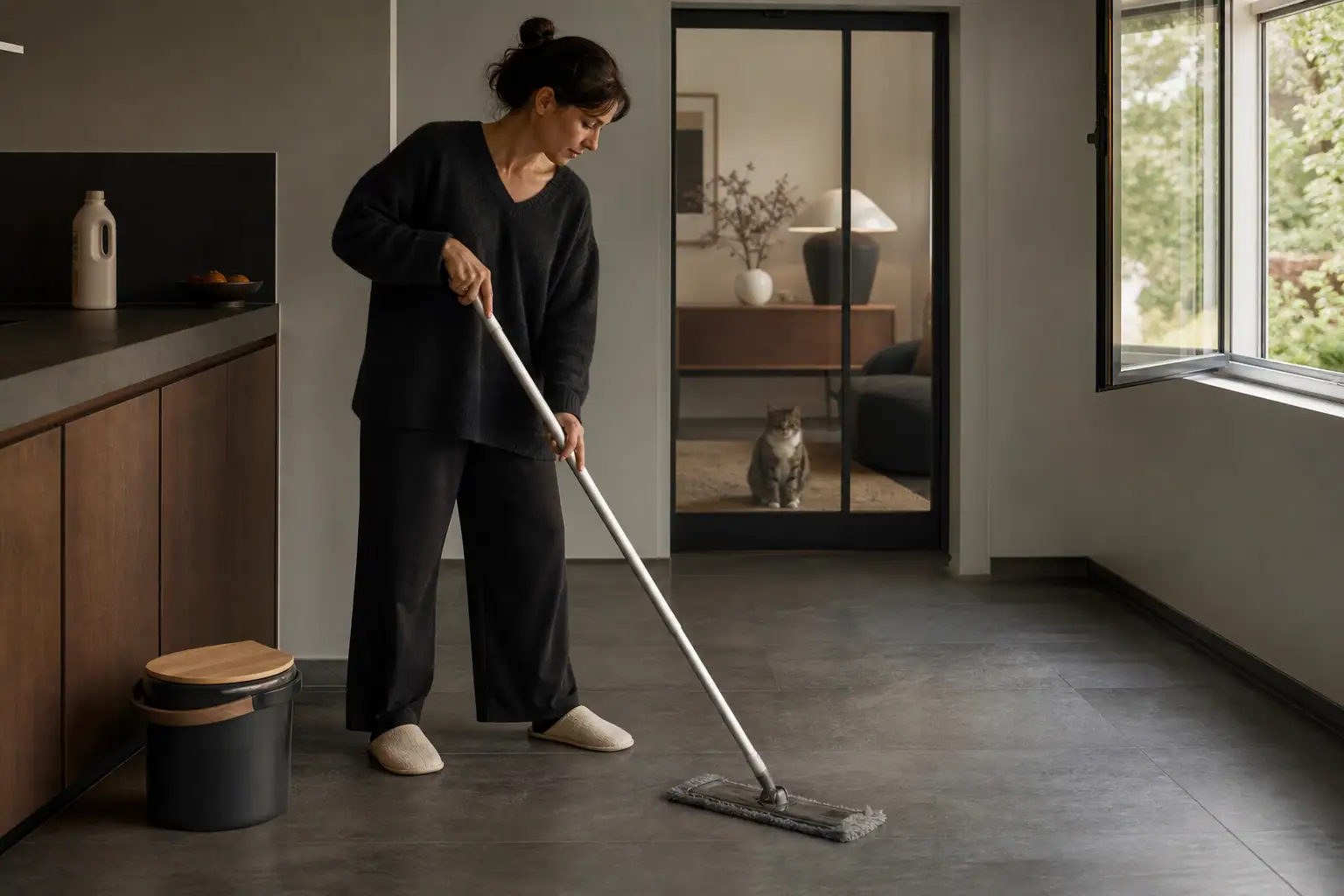
If a cat repeatedly licks a particular floor, has asthma, or cannot be separated from the room, ask your veterinarian about the exact product rather than relying on a generic online safe list. Sometimes the best adjustment is a simpler cleaner, smaller cleaning zones, or cleaning while the cat is elsewhere.
How to Clean Cat Toys Without Leaving Residue
Toys collect saliva, fur, food, litter dust, and whatever is on the floor. They also go straight back into a cat’s mouth. Clean them by material, not as one mixed load.
- Hard plastic, rubber, and silicone: check the manufacturer’s directions. Hand-wash with warm water and mild fragrance-free dish detergent, using a small brush for grooves. Rinse thoroughly and air-dry. Retire cracked, sticky, swollen, or permanently odorous pieces.
- Machine-washable fabric toys: use a mesh bag and a fragrance-free detergent on the permitted cycle. Skip fabric softener and scent boosters. Dry all the way through, then check every seam before play.
- Catnip and silvervine toys: follow the care label. Many stuffed toys lose potency or trap moisture if soaked. Spot cleaning may be appropriate, but a saliva-soaked toy that cannot be washed and dried fully should be replaced.
- Puzzle feeders: empty food after each session and clean the corners, sliders, and cavities. Our guide to puzzle cat toys explains why cleanability belongs in the buying decision.
- Electronic toys: power off and follow the manual. Never immerse a motor, charging port, or battery compartment. Replace a toy with corrosion, liquid inside, heat damage, or a compromised battery door.
- Wands, rope, feathers, and glued parts: these often cannot be sanitized reliably. Surface cleaning does not repair fraying, bent wire, loose glue, or damaged attachments.
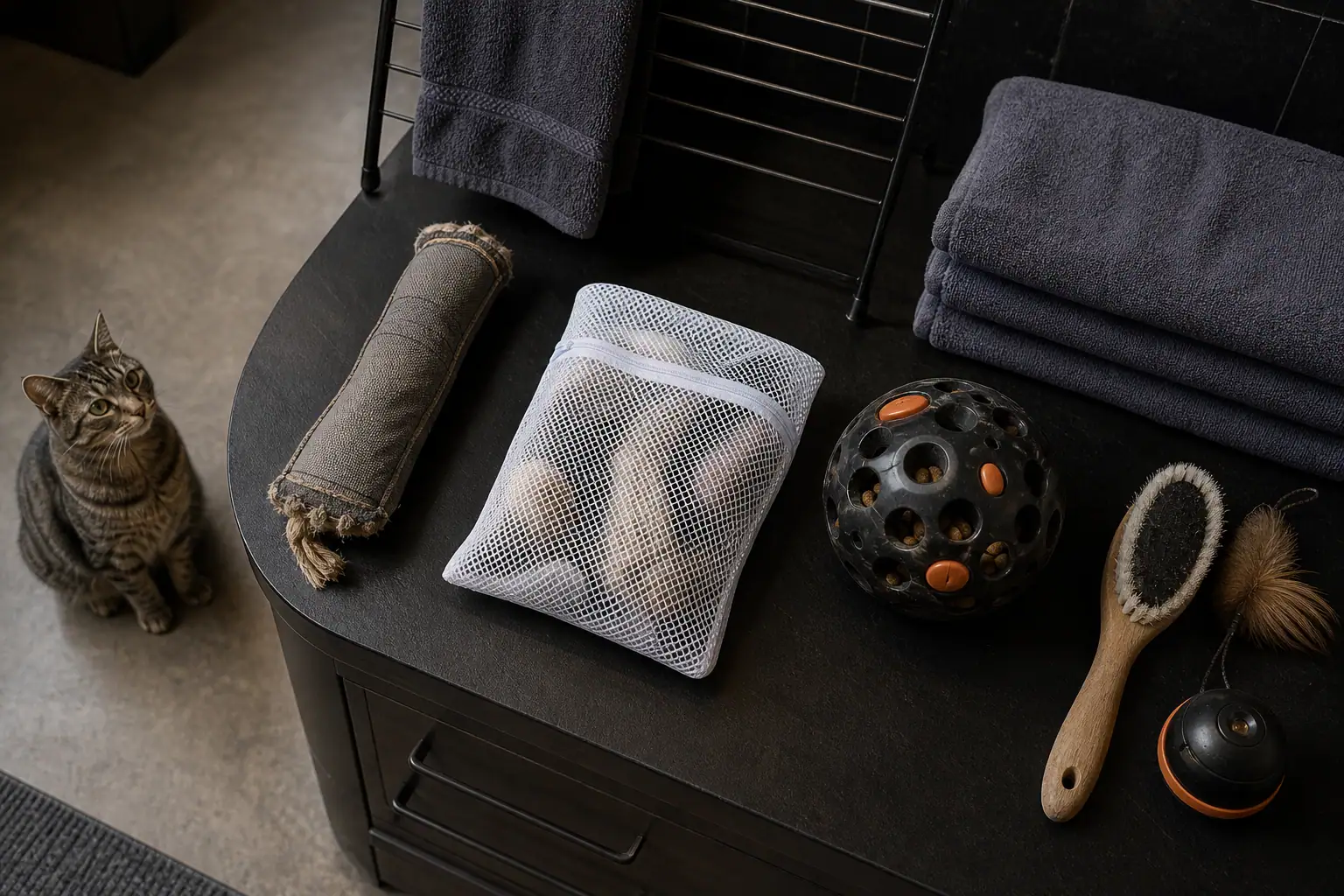
Cleaning is also inspection time. Cats that bite and bunny-kick hard can open a seam during washing or expose damage that dried saliva had hidden. Review the failure points in our durable cat toys guide, and retire a toy when pieces, stuffing, sharp edges, or unreachable grime become part of the design.
Are Vinegar, Baking Soda, and DIY Cleaners Safe?
Diluted vinegar can be useful for some routine surface cleaning, but “natural” does not mean harmless or suitable for every surface. Vinegar is acidic, can irritate after direct exposure, and may damage stone, grout, rubber seals, or finishes. The ASPCA notes that diluted vinegar is generally not a concern when it is rinsed and allowed to dry. It is not a substitute for a registered disinfectant when disinfection is actually required.
Baking soda can absorb odor and provide mild abrasion, but loose powder should not be left where a cat can walk through it, inhale it, or groom up a pile. Use only the amount needed, remove the residue, and keep the container secured.
Never use internet recipes that combine cleaning chemicals. In particular, never mix bleach with ammonia, vinegar, acids, or another cleaner. Do not improve a homemade formula with essential oils. If plain water, soap, or one labeled product will do the job, use that instead of creating a chemistry experiment in the kitchen.
What to Do If Your Cat Contacts a Cleaner
Possible warning signs include drooling, pawing at the mouth, gagging, vomiting, coughing, rapid or difficult breathing, red or painful skin, eye irritation, lethargy, hiding, or refusing food. A cat may also arrive with wet paws or a chemical odor before symptoms begin.
- Stop the exposure. Move the cat away from the spill or fumes without exposing yourself.
- Save the evidence. Keep the package, ingredient label, and product name. Note the approximate time and whether contact involved the mouth, eyes, skin, coat, or breathing.
- Call for case-specific advice now. Contact your veterinarian, the ASPCA Animal Poison Control Center at 888-426-4435, or Pet Poison Helpline at 855-764-7661. Fees may apply.
- Do not induce vomiting. Do not give milk, oil, food, activated charcoal, or another home remedy unless a veterinary professional directs you.
- Follow decontamination instructions. The right rinse or wash depends on the product and exposure route. If breathing is difficult, the eyes appear injured, the cat collapses, or severe signs are present, seek emergency veterinary care.
If the exposure involved dish detergent, our related guide, Is Dawn dish soap safe for cats?, covers licks, coat contact, rinsing, and why routine bathing needs a cat-specific product.
Quick Checklist and Common Questions
- Use the least complicated product that can do the job.
- Prefer fragrance-free options and check the EPA Safer Choice list.
- Read the exact label; do not approve or reject an entire brand.
- Move cats, bowls, bedding, and toys before cleaning.
- Measure dilution and respect contact time.
- Ventilate, secure buckets and used wipes, and allow full drying.
- Wash cat toys by material, rinse thoroughly, dry fully, and inspect.
- Store every cleaner in its original closed container behind a secure door.
- Keep the label and call a veterinarian or animal poison service after a suspected exposure.
What is the safest cleaner to use around cats?
For ordinary dirt, soap and water or a surface-appropriate fragrance-free cleaner is often enough. For a commercial product, EPA Safer Choice certification is a stronger screening signal than an unsupported front-label claim. Safe use still requires following the label and keeping the cat away until everything is dry.
What can I mop my floor with that is safe for cats?
Choose a floor-compatible, preferably fragrance-free Safer Choice cleaner, use the labeled dilution, and close the room until the floor is dry. Plain damp mopping may be sufficient for light soil. Do not add essential oils, and do not leave an open bucket.
Are cleaning wipes safe for cats?
Some surface wipes contain disinfectants, including quaternary ammonium compounds, and are not meant for a cat’s body. Use a wipe only on a labeled surface, discard it in a covered trash can, follow contact and rinse directions, and block access until dry. Never use a household disinfecting wipe on paws or fur.
Are Method or Mrs. Meyer’s products safe for cats?
There is no dependable whole-brand answer. Check the exact current formula, fragrance, intended surface, label precautions, and whether that specific product carries EPA Safer Choice certification. If the label does not answer how to use it in a cat household, ask the manufacturer and your veterinarian.
Bottom line: pet-safe cleaning is a process, not a magic bottle. Match the cleaner to the mess, use it exactly as directed, control the cat’s access, and wait for full drying. That approach keeps the home clean without treating curious paws, grooming, and rough-play toys as afterthoughts.