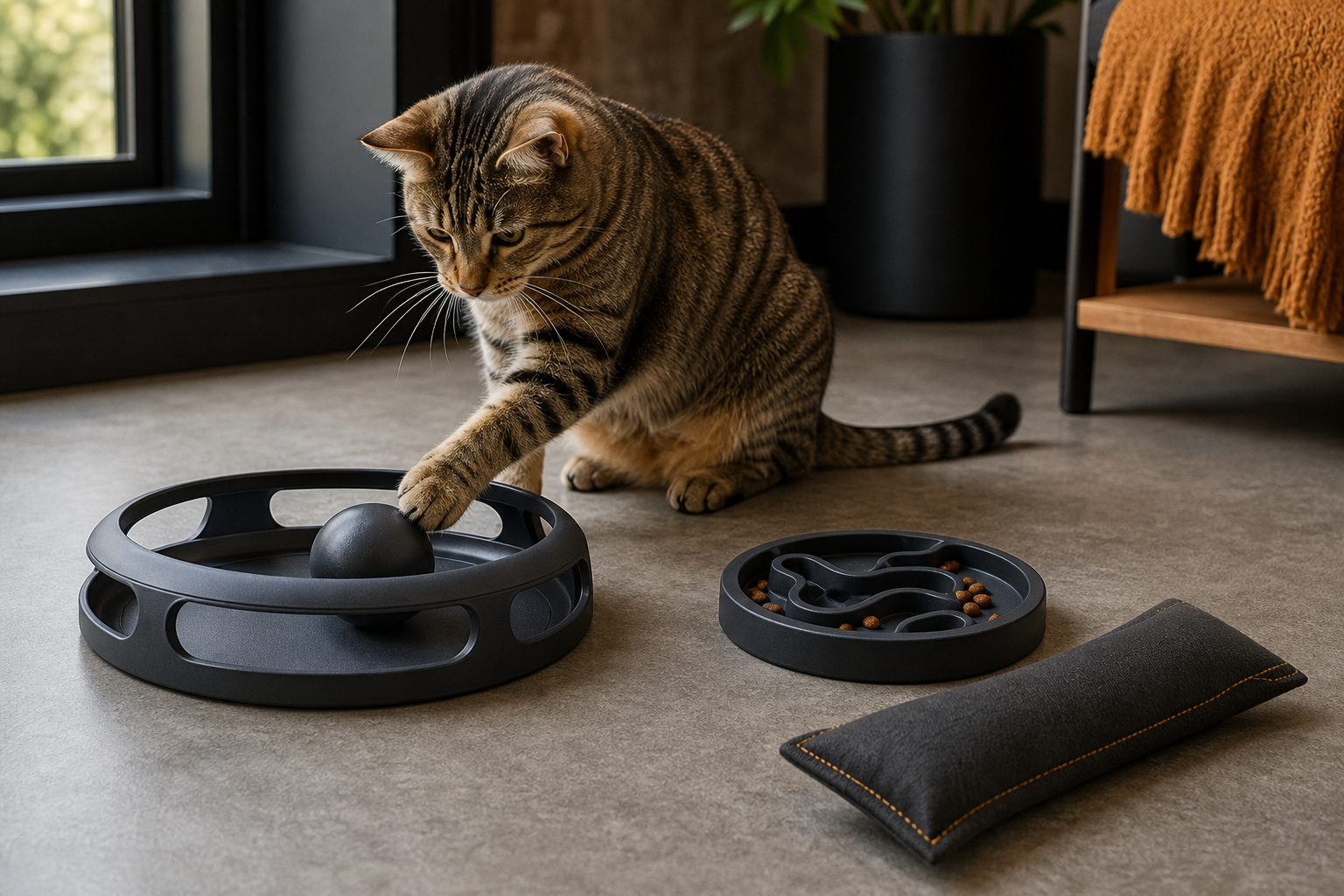
The best sensory toys for cats give them something meaningful to detect and do: track motion, follow a scent, locate a sound, feel a texture, or work for food. A useful starter kit is not a pile of flashing gadgets. It is one visual chase toy, one scent or food puzzle, and one sturdy toy your cat can grab and kick.
Choose each toy by the sense your cat actually uses during play, then watch what happens. Keep the toy if it produces relaxed stalking, chasing, pouncing, sniffing, pawing, or wrestling. Change the speed, setting, or toy if your cat freezes, flattens their ears, lashes their tail, hides, or tries to dismantle it. Sensory enrichment works best when it is specific, adjustable, and safe to finish with a real catch.
What Counts as a Sensory Toy for Cats?
A sensory toy creates feedback your cat can notice through sight, smell, hearing, touch, or taste. Most good toys use two or three channels at once. A fabric kicker may offer texture, scent, and resistance. A rolling food puzzle combines movement, sound, smell, and a food reward. A wand lure provides visual motion plus a physical capture.
The point is not maximum stimulation. It is a clear play job. The AAFP and ISFM feline environmental needs guidelines recommend giving cats opportunities to play and perform parts of the predatory sequence, including locating, stalking, chasing, pouncing, catching, and biting. A toy is more useful when it lets your cat complete several of those actions instead of merely watching an effect they cannot reach.
| Sensory channel | Useful toy features | Good for | Main caution |
|---|---|---|---|
| Sight and motion | Low, irregular movement; a lure that pauses and hides | Chasers, stalkers, deaf cats | Avoid frantic motion and uncapturable light-only play |
| Smell | Catnip or silver vine in a closed pouch; hidden food | Sniffers, stationary-toy play, some senior cats | Use cat-appropriate products, not essential oils |
| Sound | Soft rustle, rattle, or rolling sound | Auditory hunters, cats with limited vision | Loose bells and hard noise-makers can be unsafe or startling |
| Touch and vibration | Firm fabric, ridges, give-and-resistance, floor vibration | Wrestlers, kickers, deaf cats, rough players | Inspect seams, edges, stuffing, and chew damage |
| Taste and foraging | Food puzzle with adjustable difficulty | Food-motivated cats, beginners, indoor routines | Count food toward the daily diet and clean residue promptly |
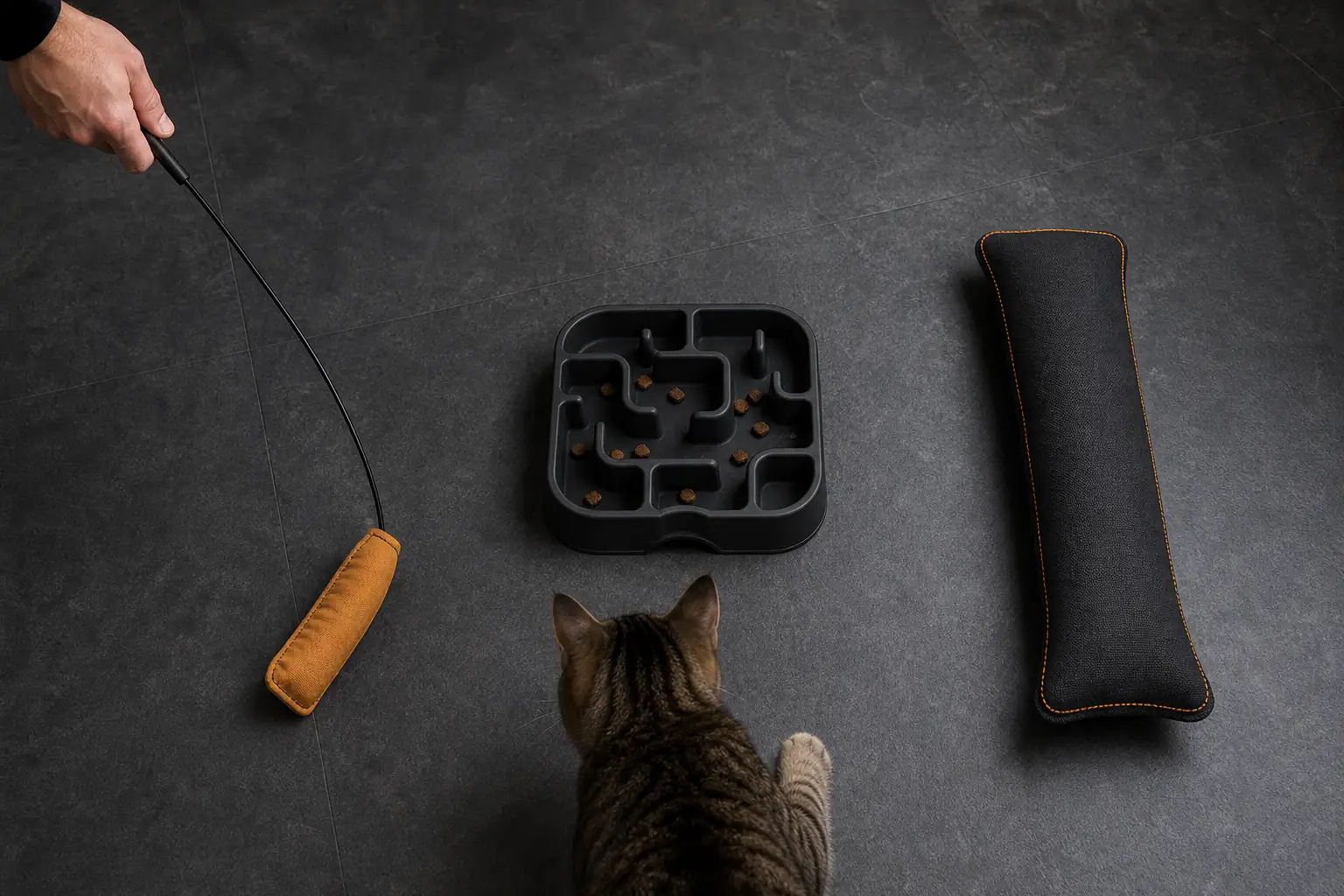
Choose Toys by Sense, Not by Marketing Label
Sight and motion: make the toy move like cautious prey
Use a wand lure, a large lightweight toss toy, an enclosed track ball, or a motion toy with a predictable off switch. Move the lure away from your cat, across the floor, around a corner, and behind a box. Pause often. A target that constantly rushes toward the cat can feel confrontational; a target that disappears and reappears creates a reason to stalk.
Let your cat catch the lure regularly. If you use a laser, keep it away from eyes and reflective surfaces, use it briefly, and transition to a physical toy or food reward the cat can capture. The Titan Claws guide to safer laser play explains how to avoid an all-chase, no-catch session.
Smell: test a preference instead of assuming catnip wins
Offer catnip and silver vine separately on different days, ideally in intact refillable pouches or sturdy toys designed for the material. Do not rub a new scent onto every toy at once. Your cat needs a clean comparison, and you need to know which item caused the response.
Individual preference is real. In a study of 100 domestic cats, 68% responded to catnip and 79% to silver vine; 71% of the catnip nonresponders reacted to silver vine. That does not promise a response from your cat, but it makes silver vine a reasonable second test when catnip earns a shrug.
Newer research adds a practical detail. A 2025 study of 31 pet cats found that cats interacted more with moving toys than stationary ones. Adding each cat’s preferred catnip or silver-vine scent increased interaction with a stationary toy, but did not add a measurable benefit to a moving toy. In other words, scent can revive a quiet kicker or cushion; a moving lure may already be doing enough.
Sound: use quiet location cues, not volume
For a hearing cat—especially one with limited vision—a soft rattle, paper rustle, or rolling sound can reveal where the “prey” went. Test the sound at a distance and low intensity. The goal is orientation, not surprise.
Skip toys with exposed bells, rigid noisemakers small enough to swallow, or parts your cat can pry free. If a cat startles, retreats, stops grooming, or scans the room after the toy has stopped, choose a quieter option. A deaf cat does not need a louder toy; use visible motion, scent, touch, and floor-level vibration instead.
Touch and texture: give rough play somewhere appropriate to land
A firm kicker lets a cat grasp with the front paws, bite, and rake with the back feet while keeping those actions away from hands. Look for a size your cat can wrap around, a surface with traction, and seams you can see and inspect. An enclosed track, corrugated scratch surface, shallow box, and textured food mat can offer different paw feedback without dangling parts.
For cats that focus on seams or chew until filling appears, sensory appeal must come second to failure behavior. Choose simple shapes, minimal attachments, reinforced construction, and supervised use. The Titan Claws durable cat toy guide shows how to judge a toy by materials, seams, and the way your cat attacks it rather than by an “indestructible” label.
Taste and foraging: turn part of a meal into a search
A puzzle feeder is both a sensory toy and a problem. Begin with an easy open tray, a few pieces of the cat’s normal food, and visible rewards. Increase difficulty only after the cat succeeds without pawing frantically, biting the device, or walking away.
Food puzzles should be stable, washable, free of sharp edges, and large enough that parts cannot be swallowed. Include the food in the cat’s normal daily intake. If your cat has a prescribed diet, dental pain, mobility limits, or a medical reason for a specific feeding schedule, ask your veterinarian before changing how meals are delivered.
Build a Three-Toy Sensory Starter Kit
You do not need five toys for five senses. Start with three toys that produce different behaviors and can be inspected easily.
- One chase-and-catch toy: a supervised wand with a sturdy, replaceable lure or a large toss toy. This covers visual tracking, motion, touch, and capture.
- One search-and-solve toy: a beginner food puzzle or a few pieces of normal food hidden in a clean, shallow activity box. This covers scent, taste, paw use, and problem-solving.
- One hold-and-wrestle toy: a firm, intact kicker with no hard internal pieces or loose decorations. Add catnip or silver vine only after testing the unscented toy.
Run each toy alone for two or three short sessions before combining them. This avoids the common mistake of switching on motion, sound, lights, and scent together, then having no idea which feature attracted—or worried—the cat.
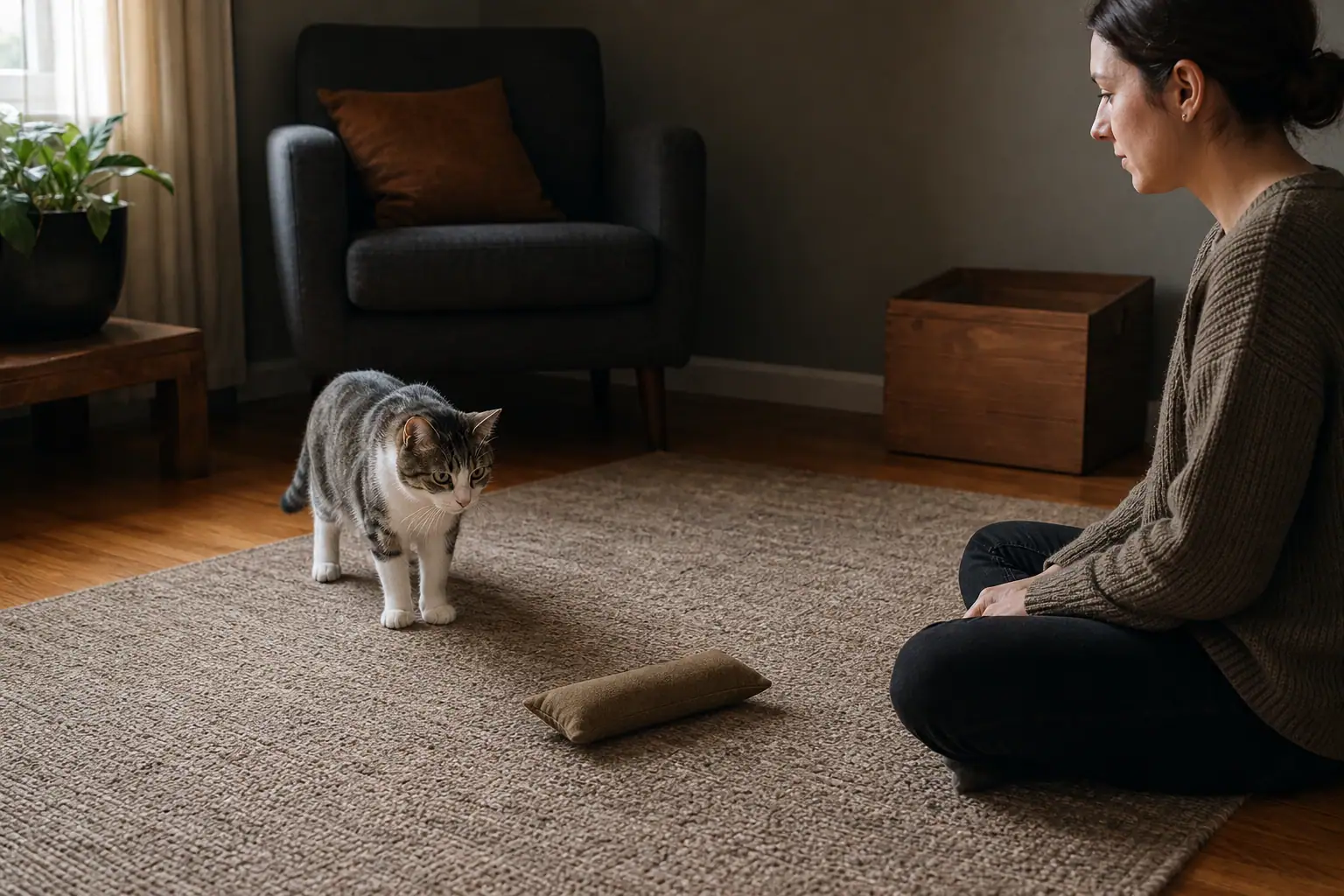
Run a Simple At-Home Preference Test
- Choose a calm time. Use a familiar room with secure windows, stable furniture, and room to retreat. Remove other loose toys.
- Present one toy at low intensity. Place it several feet away or move it slowly across your cat’s field of view. Do not press it into the cat’s face.
- Give the cat a choice. Wait. Sniffing, looking, and walking away are information; do not force contact.
- Offer a short play window. One to five minutes is enough for a first trial. Let chase toys be caught and stop while the cat is still comfortable.
- Record the behavior, not your impression. Note whether the cat stalked, batted, bit, kicked, ate, froze, hid, or ignored the toy.
- Change one variable next time. Try slower motion, a quieter surface, an easier puzzle, or scent on a stationary toy. Keep everything else similar.
A preferred toy is not simply the one that produces the wildest reaction. Look for repeatable engagement followed by a normal recovery: the cat can release the toy, take a reward, groom, rest, or choose another activity. If play escalates into repeated hard biting, frantic scanning, redirected attacks, or an inability to disengage, lower the intensity and shorten the next session.
| Continue or gently increase | Pause or simplify |
|---|---|
| Loose body, ears neutral or forward | Crouched, rigid, or suddenly frozen body |
| Stalk-pounce-catch pattern with pauses | Continuous frantic pursuit without a catch |
| Returns voluntarily after a short break | Hides, flees, or avoids the area afterward |
| Can release the toy and settle | Redirects biting or scratching onto people or other pets |
| Sniffs and solves at a steady pace | Chews the puzzle, claws desperately, or stops eating |
Adapt the Kit for Deaf, Blind, Senior, and Rough-Playing Cats
For a deaf cat
Prioritize visible low-level movement, scent puzzles, sturdy kickers, and gentle vibration transmitted through the floor or furniture. Approach within the cat’s sightline and use a consistent visual cue before starting play. Do not rely on sound or startle the cat awake. For a complete setup, see our sight, scent, and vibration guide for deaf cats.
For a blind or low-vision cat
Keep the play area consistent and use a quiet rattle, food scent, textured route, or toy tapped gently against the floor. Roll toys across the floor rather than throwing them through the air. Avoid moving furniture mid-game. Our guide to toys for blind cats covers sound localization, scent, and safer room setup in more detail.
For a senior cat
Bring the toy closer, slow the movement, use nonslip flooring, and offer ground-level puzzles with large openings. Several brief sessions may be easier than one energetic session. A sudden loss of interest in play, difficulty locating toys, head shaking, ear discharge, apparent pain, disorientation, or new hearing or vision changes calls for a veterinary exam—not a more stimulating gadget.
For a cat that destroys toys
Start every new toy as supervised-only. Favor one-piece or simple shapes, visible stitching, secure battery doors, large components, and toys that remain safe when wet with saliva. Watch how the cat tries to defeat the object: seam picking, appendage pulling, hard gnawing, crushing, or swallowing. That failure pattern should decide the next toy.
Sensory Toy Safety: What to Avoid and Inspect
Sensory features create extra failure points. A crinkle layer can become exposed; a scent pouch can tear; a motor can overheat; a wand cord can fray. Cornell Feline Health Center advises avoiding small pieces and strand-like parts such as feathers and string that can separate during chewing and be swallowed.
- Keep strings, ribbons, elastic, feathers, and wand toys put away when you are not actively supervising.
- Do not add essential oils, perfume, or household fragrance to a toy. Essential oils can create toxic and respiratory risks for cats. Use products made for cats, plain food, or a familiar untreated object for scent play.
- Check electronic toys before every session. The battery door should be secure, the shell intact, the mechanism cool, and the charging cable removed.
- Inspect fabric while it is dry and clean. Retire it for an open seam, exposed filling, detached crinkle film, a hard piece you can feel moving inside, or persistent odor.
- Size every object for your cat. A ball or toy component that cannot be swallowed by one adult cat may be too small for another.
- Clear the play zone. Remove unstable objects, open bags with handles, cords, and access to stairs or high falls before fast chase play.
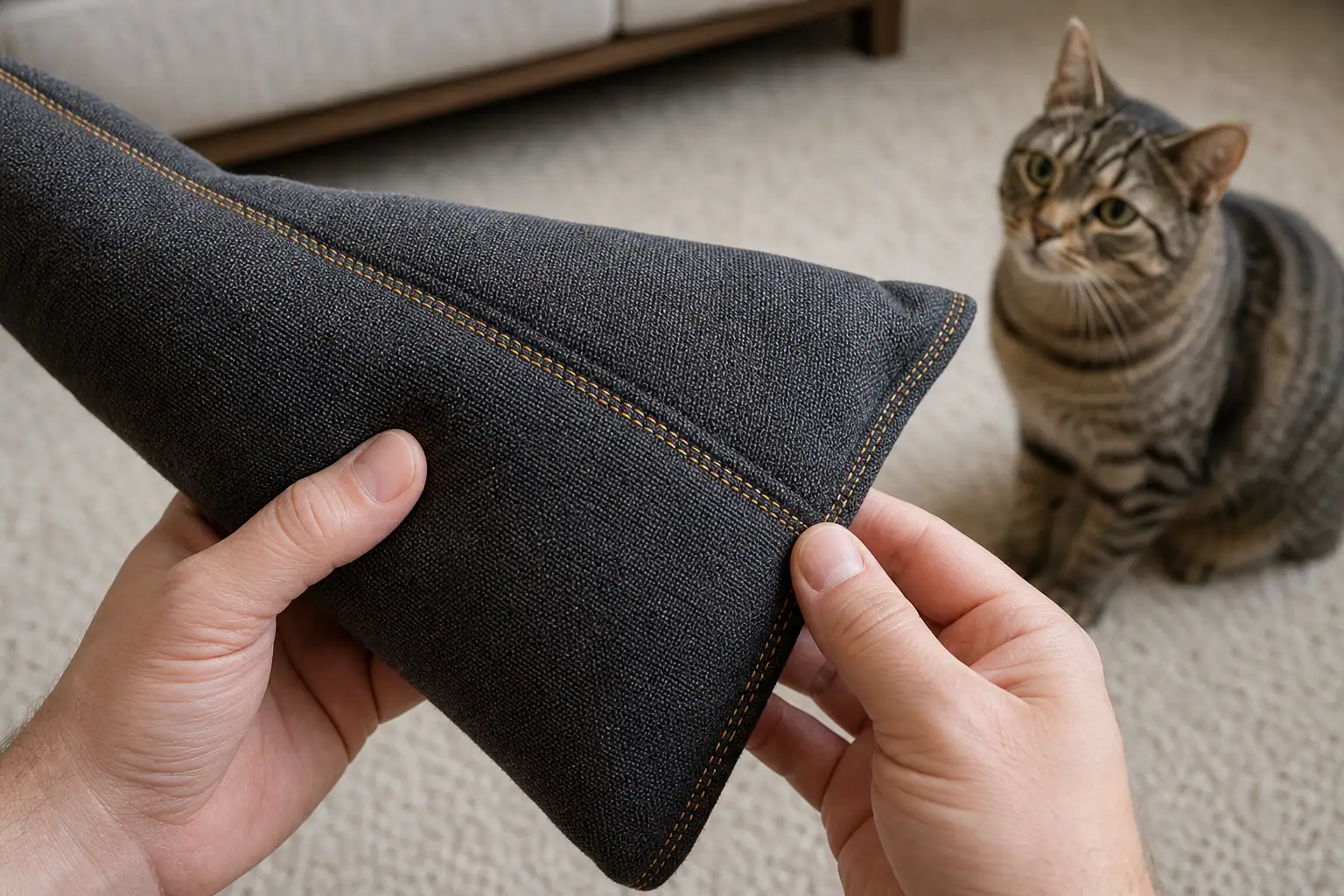
Stop play and account for every piece if a toy breaks. If you suspect your cat swallowed string, stuffing, plastic, a bell, a battery, or another component, contact a veterinarian or animal poison service promptly. Do not pull visible string from the mouth or rectum. Clean reusable toys according to their materials and maker instructions; the Titan Claws cat toy cleaning guide explains how moisture, heat, and detergent affect different toy types.
Quick Questions About Sensory Toys
What are the best toys to mentally stimulate a cat?
The best choices require a small, solvable action: stalking and catching a lure, extracting food from an easy puzzle, locating a scented kicker, or batting a ball through a track. Rotate the challenge rather than constantly increasing difficulty.
How many sensory toys should I leave out?
Leave out only a small set of toys your cat has already used safely—often three to five is enough—and rotate a few items when interest drops. Store wands, cords, damaged toys, electronics, and scent refills in closed storage.
Are automatic sensory toys safe when I am away?
Do not assume they are. Solo access depends on the toy’s construction and your cat’s observed behavior. Moving appendages, openings, motors, batteries, cords, and detachable parts all need scrutiny. First use should always be supervised, and determined chewers may never be safe with an electronic toy unattended.
What if my cat ignores every toy?
Change one variable: time of day, speed, location, surface, scent, or difficulty. Try play near dawn or evening, when many cats are naturally more active, and keep the first attempt short. If a normally playful cat suddenly disengages from all toys or shows other behavior, appetite, mobility, sensory, or grooming changes, arrange a veterinary check.
Bottom line: Build for the cat in front of you. Start with one capturable motion toy, one easy scent or food search, and one sturdy wrestling surface. Test one feature at a time, keep successful play short and repeatable, and inspect every sensory layer as carefully as the outer shell. The best sensory kit is not the loudest or smartest—it is the one your cat chooses, can complete, and can use without the toy coming apart.
Sources
- AAFP and ISFM Feline Environmental Needs Guidelines
- Webberson et al. (2025): Olfactory enrichment and toy interaction
- Bol et al. (2017): Cat responses to catnip, silver vine, honeysuckle, and valerian
- Cornell Feline Health Center: Safe toys and gifts
- Cats Protection: Cats and play
- Pet Poison Helpline: Essential oils and cats