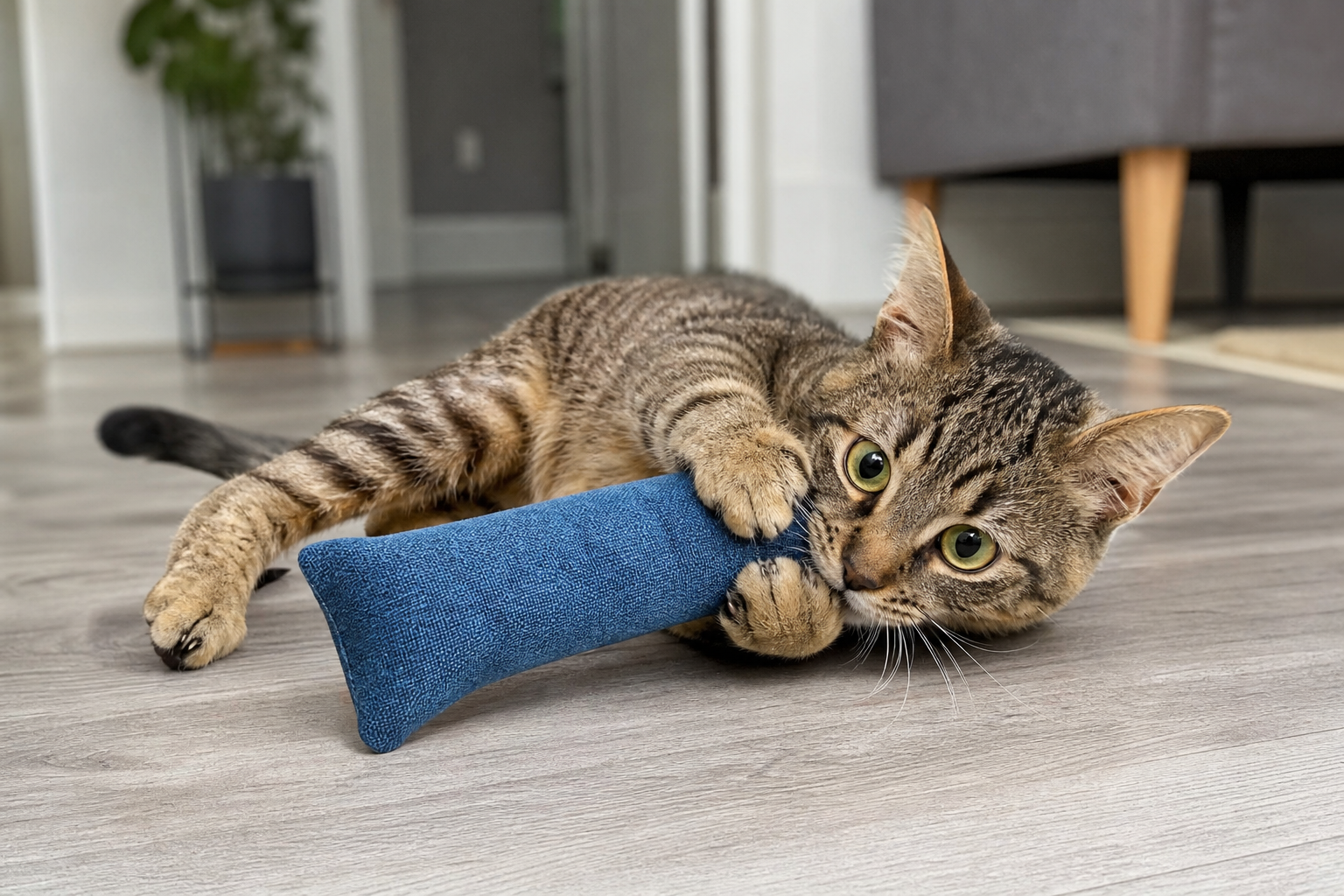
KONG cat toys are popular because they cover several useful play jobs: kicker toys for wrestling, plush mice for batting, refillable catnip toys, scratchers, teaser toys, and small treat or food-dispensing toys. For most cat owners, the best KONG cat toy is not simply the highest-rated one. It is the one that matches how your cat actually plays, how hard they bite, and whether you can inspect it before pieces loosen.
If your cat is gentle, many KONG-style plush and catnip toys can be fun additions to a toy basket. If your cat destroys ordinary toys, shop with a stricter filter. Avoid loose feathers, long strings, small glued-on details, exposed bells, brittle plastic, and any toy your cat tries to eat instead of play with. No cat toy, including a branded one, should be treated as indestructible.
This guide explains which KONG cat toys fit which play style, what current shopping pages often leave out, and how to build a safer routine for rough players, indoor cats, and catnip-motivated cats.
Are KONG Cat Toys Good for Cats?
They can be, when they fit the cat and are used with supervision. The official KONG cat toys catalogue is broad: it includes toys for batting, foraging, pouncing, hunting-style play, scratching, and treat enrichment. That variety is useful because cats do not all want the same target.
The important part is matching the toy to the behavior. The Ohio State Indoor Pet Initiative recommends watching whether a cat prefers bird-like, mouse-like, or bug-like movement. That matters more than brand name. A cat that likes ground prey may ignore a dangling feather but attack a plush mouse or kicker. A cat that likes fast, tiny movement may care more about a rolling toy or treat toss than a large plush.
KONG cat toys are best viewed as options inside a rotation, not a complete enrichment plan by themselves. A healthy routine still needs owner-led play, scratch surfaces, resting space, food puzzles when appropriate, and safe toys your cat can capture.
Main Types of KONG Cat Toys
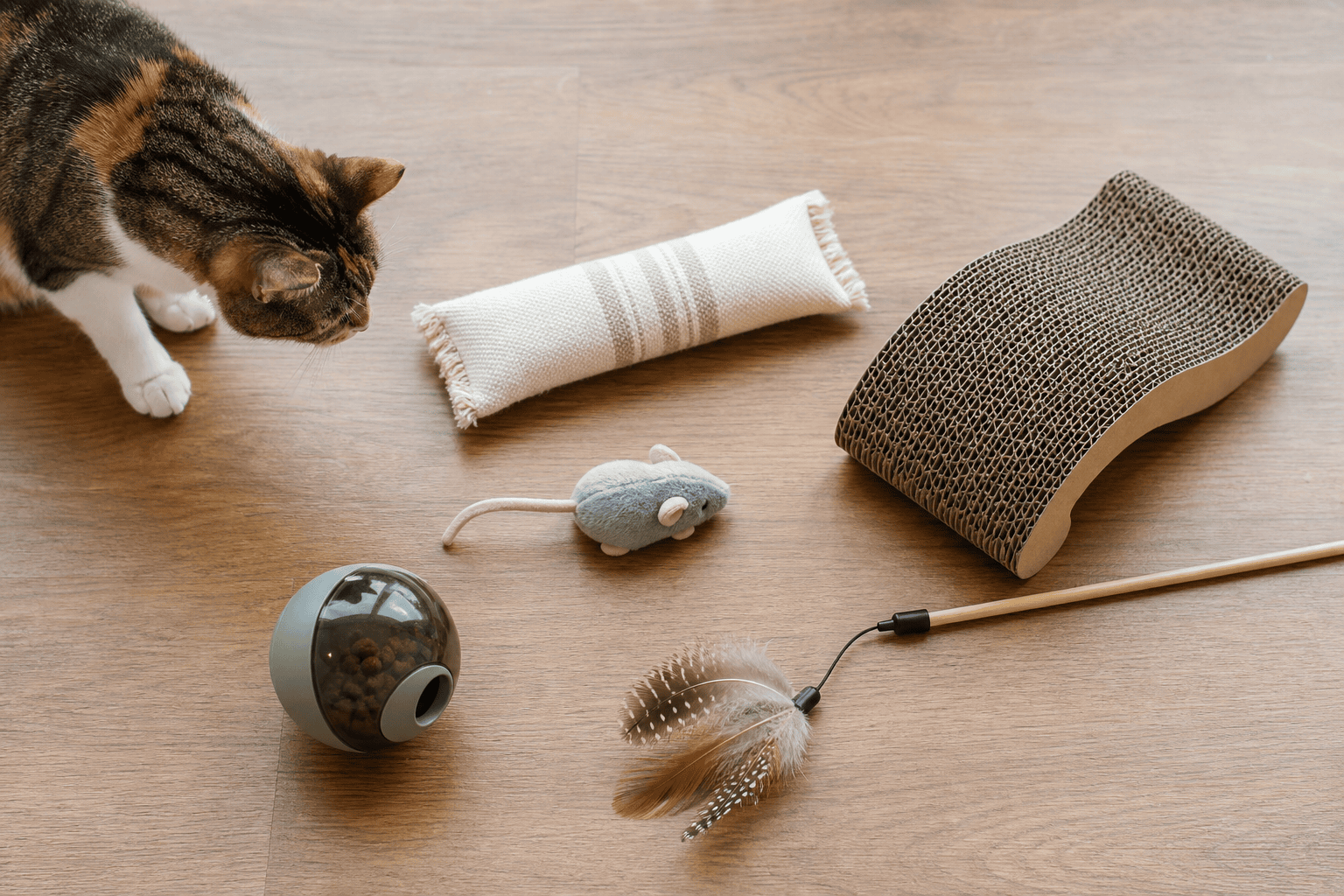
Shopping pages usually group KONG cat toys by product line. Owners get better decisions by grouping them by job.
Kicker and Wrestling Toys
The KONG Kickeroo line is built around a long body that a cat can hug, bite, and kick with the back feet. KONG describes the Kickeroo Refillable as having a refillable catnip pocket, a long body for wrestling and hind-paw kicking, and a tail that encourages active play. This format makes sense for cats that grab toys with both front paws and bunny-kick.
For rough players, the inspection points are seams, tails, stuffing, and any refillable pocket closure. A kicker is a better fit than a tiny mouse when a cat wants to wrestle, but it still needs to be retired when stitching opens or filling appears.
Plush Mice, Critters, and Refillable Catnip Toys
KONG sells several catnip plush toys, including refillable critters and mouse-style toys. These are useful for cats that like batting, carrying, rubbing, and short solo sessions. Refillable catnip can extend interest because the scent can be refreshed instead of replacing the whole toy.
The tradeoff is durability. Small plush toys often have appendages, whiskers, tails, crinkle layers, or stitched details. Those features can be exciting, but they also become the first failure points for cats that chew and swallow pieces.
Teasers, Wands, and Door Toys
Teaser toys can create strong chase behavior because the owner controls speed, pauses, and direction. They are usually best as supervised toys. Do not leave string, elastic, or feather attachments out after play, especially with cats that chew. A teaser creates the chase; a separate kicker or tough capture toy should finish the session.
Treat and Food-Dispensing Toys
KONG also makes cat toys that can hold treats or encourage foraging. These can help food-motivated cats work for part of a meal, but they need the same checks as any puzzle feeder: cleanability, stable construction, no cracked plastic, and no openings that become sharp after chewing.
What Product Pages Often Miss
Current search results for KONG cat toys are mostly official product pages and retailer grids. They are useful for seeing the range, prices, and reviews, but they often leave the hard owner questions unanswered.
- How does this toy fail? Look for seams, tails, glued details, bells, feathers, refill pockets, and hard plastic openings.
- Can my cat swallow part of it? Any small piece that can detach deserves extra caution.
- Is it a chase toy, a capture toy, or a food toy? A toy can be good at one job and bad at another.
- Can I clean it? Catnip pockets, treat cavities, plush fabric, and scratcher surfaces all have different hygiene limits.
- Will my cat use it calmly or try to eat it? Chewing the toy material is a different risk than batting, kicking, or carrying it.
That is where Titan Claws readers should be more demanding. If your cat destroys toys, read the construction guidance in what materials make cat toys unbreakable and safe. The useful lesson is that failure usually starts at attachments and seams before the main body of the toy gives out.
Safety Checks Before You Hand Over a New Toy
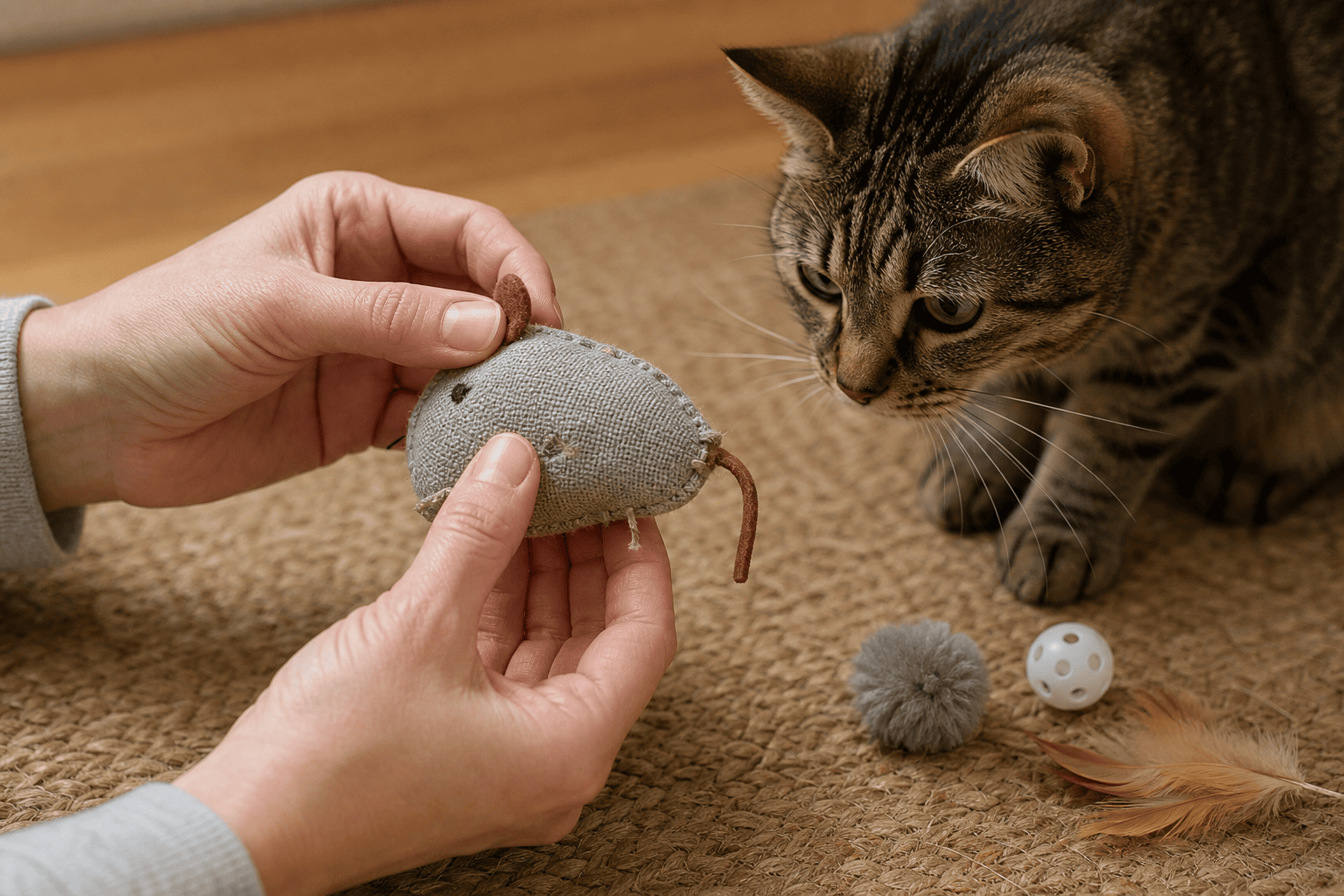
The Cornell Feline Health Center warns owners to avoid toys with small pieces or strand-like parts that may separate and be ingested, especially when chewed. That advice applies directly to plush cat toys, wand toys, tails, feathers, ribbons, strings, and loose decorations.
Before the first session, run this quick check:
- Tug lightly on tails, feathers, limbs, whiskers, and tags.
- Press along seams and refillable catnip pockets.
- Check bells, rattles, crinkle pieces, and plastic parts for exposure.
- Look for sharp plastic, brittle edges, or holes around treat openings.
- Remove packaging ties, plastic fasteners, and loose labels.
- Watch the first session instead of assuming the toy is safe because it is new.
After play, inspect again. Retire the toy if stuffing appears, a seam opens, a tail loosens, a plastic piece cracks, or your cat becomes focused on chewing off and swallowing parts.
For Cats That Destroy Toys
A destructive cat is not being difficult. They are telling you which part of the hunting sequence they need: bite, grip, rake, shake, and finish. The mistake is asking a small plush mouse, feather teaser, or treat toy to survive wrestling it was not built for.
Use KONG-style toys by role. Let a wand, rolling toy, or lightweight mouse create chase and stalking. Then hand off to a larger, inspectable kicker or rugged fabric toy for the capture. This keeps thin attachments away from the hardest biting phase.
For heavy chewers, avoid leaving plush catnip toys out all day. Use short supervised sessions, then put the toy away while it is still intact. If your cat needs a tougher capture target, the Titan Claws guide to unbreakable cat toys for aggressive chewers explains why durable should mean inspectable and appropriate for the play style, not magically impossible to damage.
Catnip, Refillable Toys, and Rotation
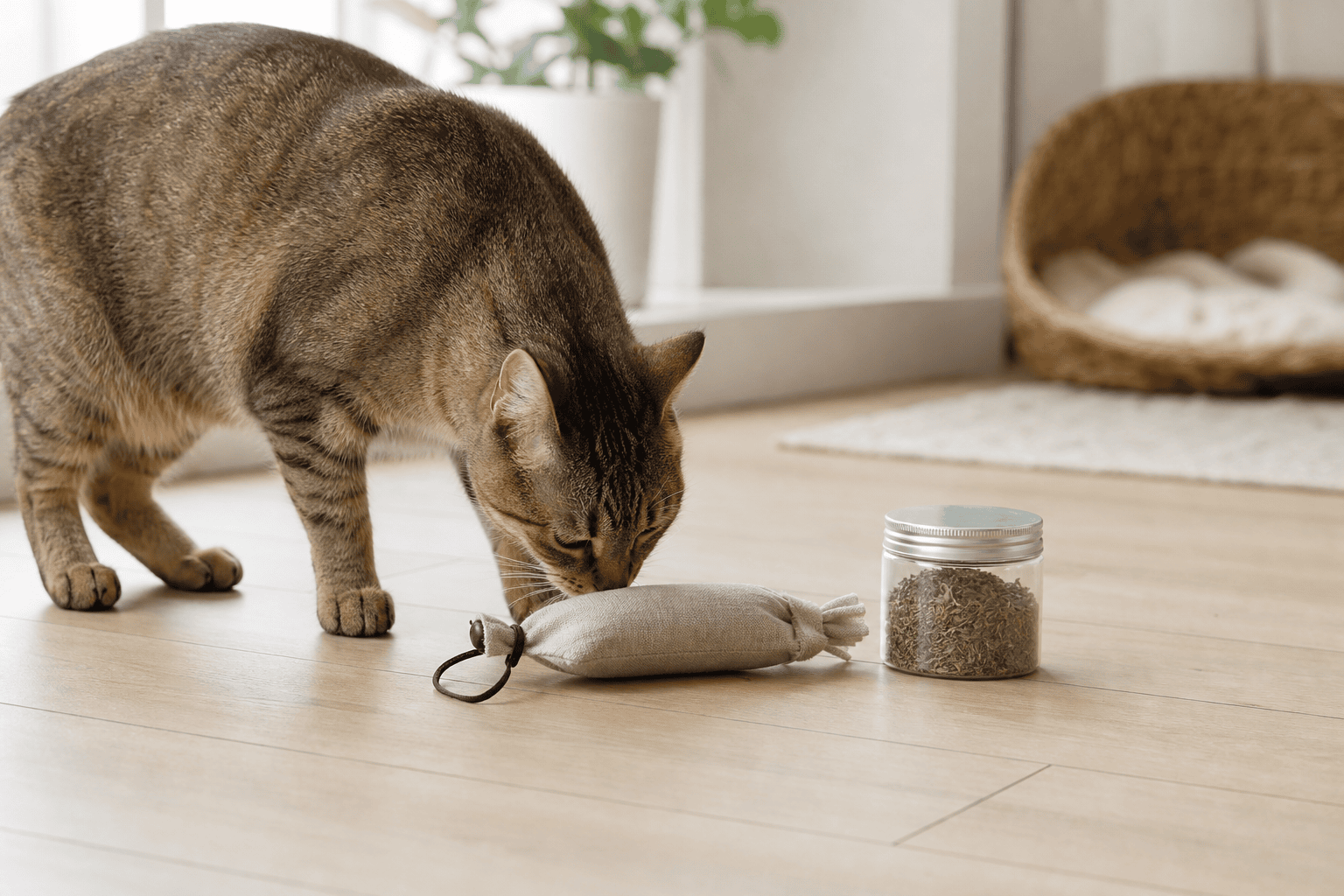
Many KONG cat toys use catnip, and some include refillable pockets. Catnip can make an ordinary toy feel new again, but more is not always better. A small refresh, a short session, and a few days off often work better than leaving the same scented toy out until the cat stops caring.
Rotation is backed by practical veterinary guidance. Cornell notes that rotating toys can help prevent boredom, and the AAFP and ISFM feline environmental needs guidelines include toy rotation, food-containing toys, and play that mimics predatory behavior as part of environmental enrichment.
A simple week can look like this:
- Day 1: teaser chase, then a kicker toy for capture.
- Day 2: refillable catnip toy for a short supervised solo session.
- Day 3: rolling treat toy or puzzle feeder using part of the normal food allowance.
- Day 4: scratcher and box play with no catnip.
- Day 5: plush mouse or critter, then inspection.
- Weekend: wash washable toys, toss damaged toys, and reset the basket.
What to Buy First
If you are choosing one KONG cat toy, start with the behavior you need to serve.
- For wrestling and bunny-kicking: choose a larger kicker-style toy with minimal small attachments.
- For catnip motivation: choose a refillable toy only if the pocket closure is secure and easy to inspect.
- For chase: choose a wand or teaser, but store it after use.
- For bored indoor cats: combine one chase toy, one capture toy, one scratch surface, and one food puzzle rather than buying five similar plush toys.
- For rough chewers: skip fragile details and prioritize size, seam quality, simple shapes, and supervised use.
- For cautious cats: start with low-noise toys, visible rewards, and slow movement instead of crinkle-heavy or rattling toys.
For broader enrichment ideas, see Titan Claws’ guide to cat toys for boredom and the practical setup in puzzle cat toys. Those routines pair well with KONG-style toys because they focus on the whole play sequence, not just one object.
Quick KONG Cat Toy Checklist
- Match the toy to the cat’s prey style: bird, mouse, bug, wrestler, or food-motivated forager.
- Use teaser and string toys only under supervision, then put them away.
- Choose larger kicker toys for cats that bite and rake.
- Inspect refillable catnip pockets, seams, tails, feathers, and small decorations.
- Do not leave plush toys out unsupervised for cats that chew and swallow fabric.
- Clean treat-dispensing toys and retire cracked plastic.
- Rotate toys so novelty stays high without overusing catnip.
- Replace any toy before loose parts become a swallowing risk.
Bottom Line
KONG cat toys can be good choices when they are matched to the cat’s play style and inspected like real equipment. The best pick for a gentle cat may be a plush catnip mouse. The better pick for a rough player may be a larger kicker used under supervision, plus a tougher capture toy when biting starts.
Buy by job, not by brand alone. Create the chase, give your cat something safe to catch, inspect the toy after rough play, and rotate it before boredom or damage takes over. That is how KONG-style cat toys become useful enrichment instead of another torn-up object in the corner.