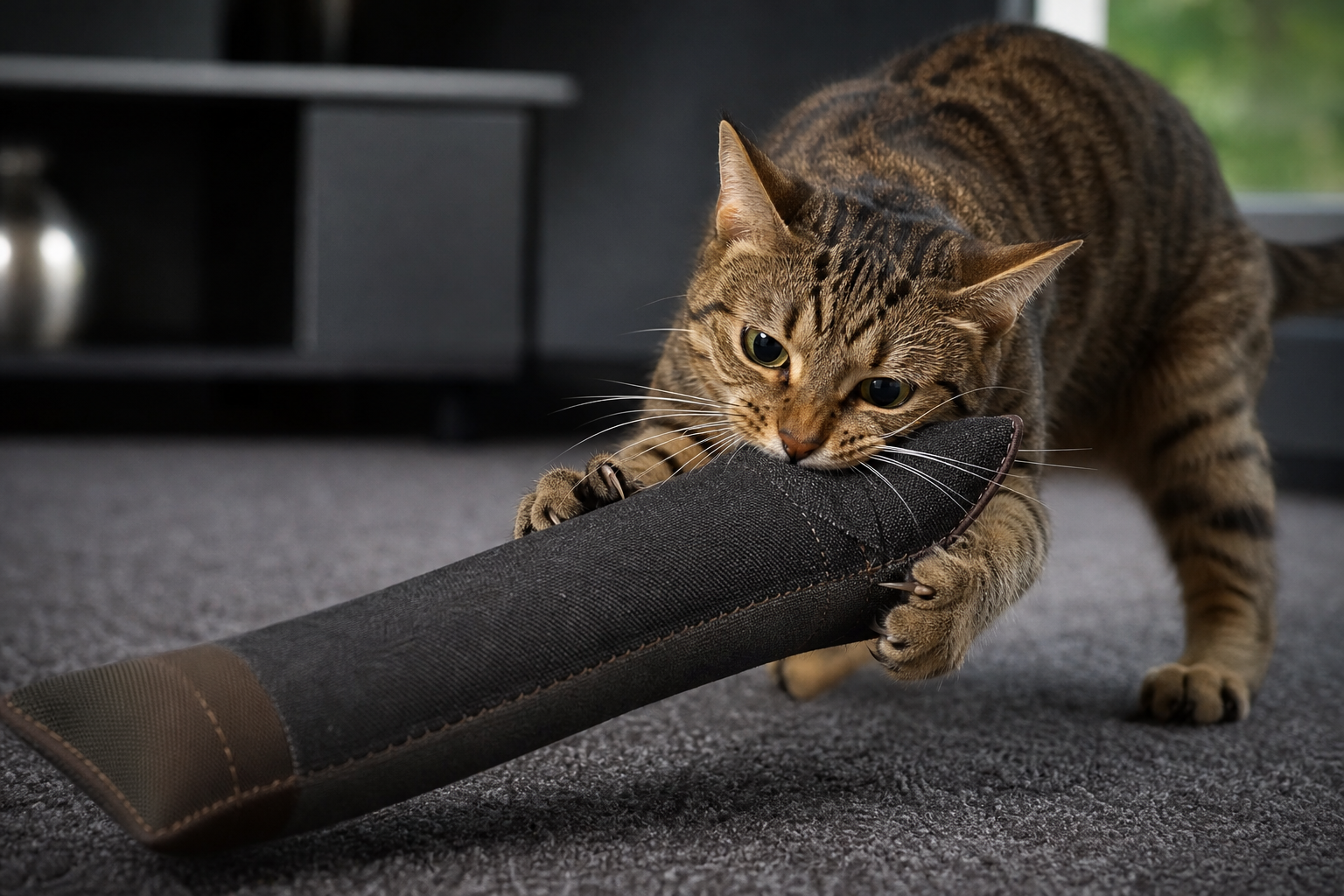
The KONG Kickeroo cat toy is a long plush kicker made for cats that grab, bite, wrestle, and rake with the back feet. It can be a good choice for cats that need a bigger target than a tiny mouse toy, especially when play gets rough and your hands keep ending up too close to the action.
It is not a magic toy for every destructive cat. The official Kickeroo Swirl listing describes a long body for hind-paw kicking, crinkle sound, catnip, a fluffy tail, soft material, and a polyester outer with catnip inside. That makes it useful for wrestling and bunny-kicking, but it also means owners of hard chewers should inspect the seams, tail, fabric, and stuffing after play.
The short version: try a Kickeroo-style toy if your cat likes to tackle, clutch, and kick. Skip it or supervise closely if your cat eats fabric, pulls off tails, opens seams, or swallows toy pieces. No plush kicker should be treated as indestructible.
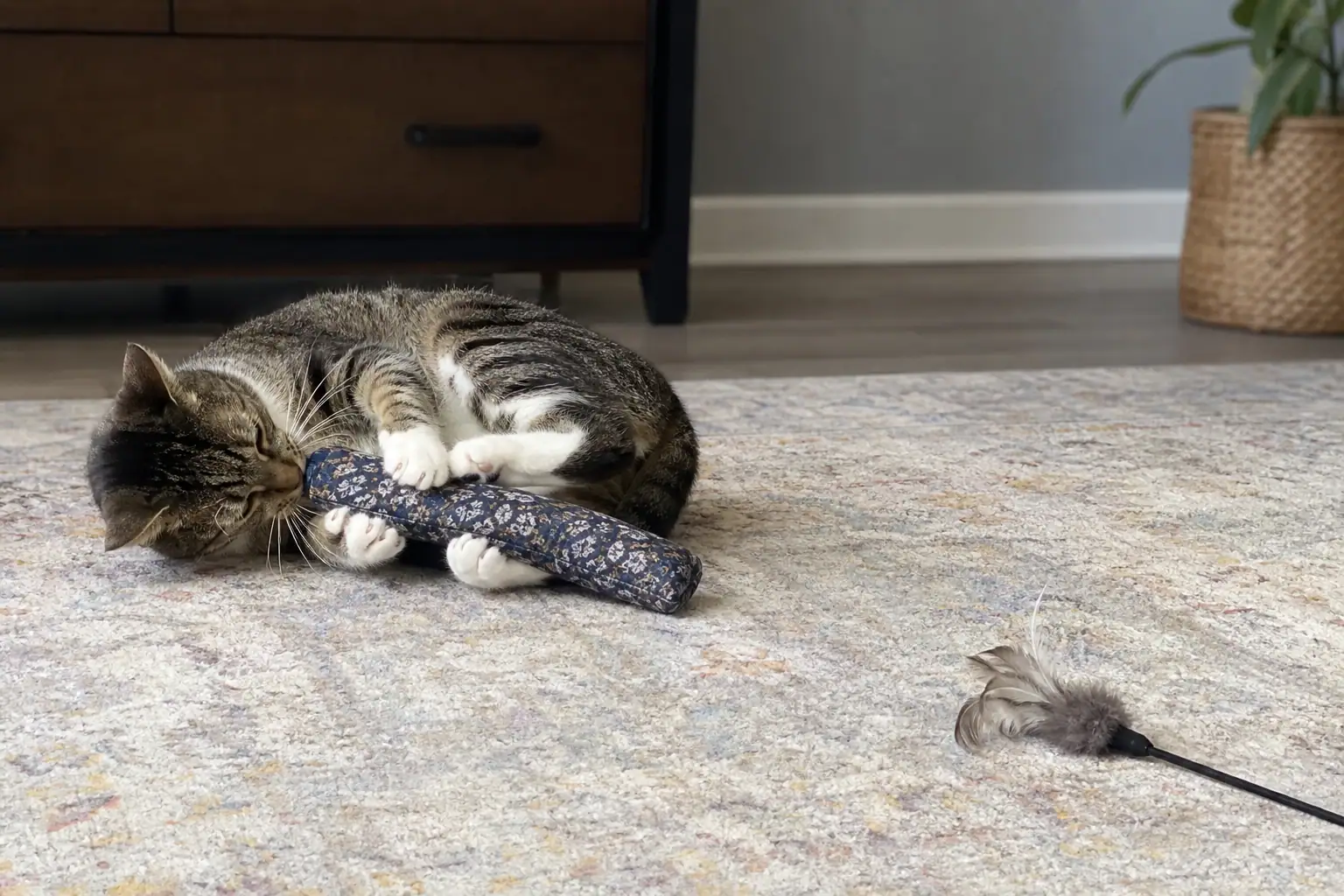
What the KONG Kickeroo Is Best For
A Kickeroo is a kicker toy. Its long shape gives a cat something to wrap the front legs around while the rear legs kick. That matters because many cats play with a full prey sequence: stalk, pounce, grab, bite, rake, and carry. Small toys can be fun for batting, but they often fail once a strong cat wants to wrestle.
The Kickeroo format is especially useful for:
- Bunny-kicking: the toy gives the back feet a target that is not your arm.
- Catch-and-bite play: after a chase session, the cat gets something legal to grip and mouth.
- Catnip response: many versions include catnip, which can make a soft toy more exciting.
- Crinkle interest: sound can keep some cats engaged longer than a silent plush toy.
- Young energetic cats: kittens and young adults often need a larger wrestling target, though kittens still need close supervision.
If your cat’s main problem is chasing ankles, redirecting hands, or biting during play, pair this guide with Titan Claws’ article on cat toys for play aggression. A kicker works best when it is part of a routine, not tossed on the floor as a complete behavior plan.
Where Current Product Pages Fall Short
Most ranking pages for this keyword are product pages. They explain that the toy has catnip, crinkle material, soft plush sections, and a shape that supports wrestling. That is useful, but it does not answer the questions rough-cat owners actually have: how fast will my cat damage it, what should I check, when is the toy unsafe, and what should I use with it?
That gap matters because the same feature can be a benefit for one cat and a risk for another. A fluffy tail may spark prey interest, but a cat that tears tails off toys needs supervision. Soft material may be comfortable for snuggling, but a fabric eater needs stricter limits. Catnip may create a great play session, but it can also make some cats chew harder.
So do not judge the toy only by star ratings. Judge it by your cat’s failure pattern. Does your cat only bite and kick the surface, or do they dismantle seams and eat pieces? That answer decides whether a Kickeroo belongs in the regular toy bin, the supervised-only basket, or not in your home at all.
Is It Durable Enough for a Destructive Cat?
For a normal rough player, a Kickeroo-style toy can be more appropriate than tiny plush mice because it is larger and easier to wrestle. For a cat that destroys ordinary toys, it should be treated as a test toy: supervise the first sessions, inspect it immediately afterward, and look for the exact damage your cat creates.
Use this fit test:
- Good fit: your cat grabs, kicks, drools on, rolls with, and carries the toy without opening seams or removing pieces.
- Supervised-only fit: your cat plays hard but starts worrying at the tail, seams, labels, or fabric edges.
- Poor fit: your cat exposes stuffing, eats threads, pulls off fabric, removes the tail, or tries to swallow pieces.
If your cat is in the second or third group, read the Titan Claws guide to durable cat toys before buying more plush. For cats that gnaw rather than wrestle, the guides to cat chew toys for aggressive chewers and cat chewing toys are better starting points.
Safety Checks Before and After Play
The University of Wisconsin School of Veterinary Medicine gives practical toy guidance for cats that chew aggressively: avoid feathers, strings, sparkly pieces, and loose decorations that cats may ingest; choose sturdy construction; remove loops or tags; and take away pieces that get chewed off. That advice applies directly to plush kickers.
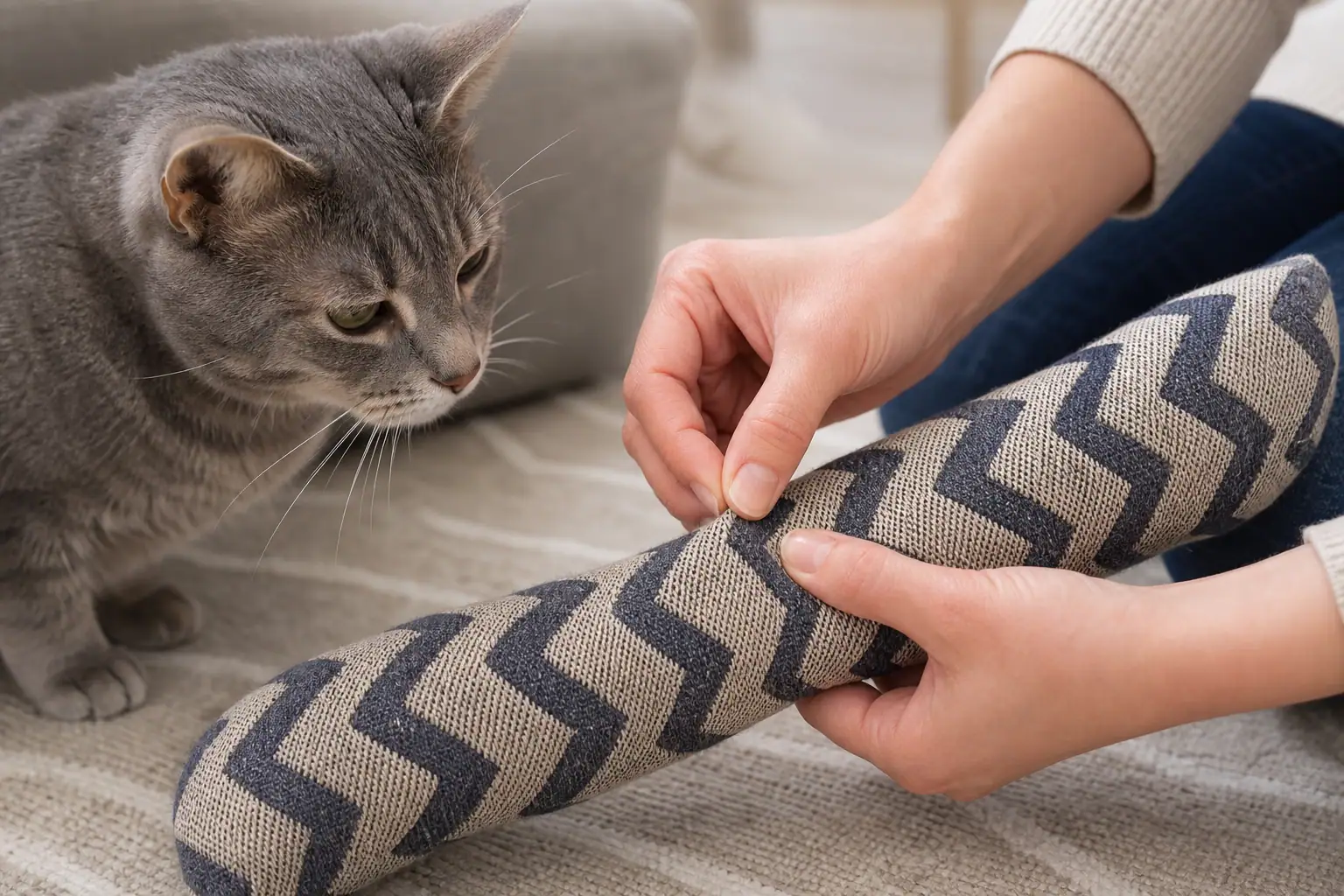
Check a KONG Kickeroo cat toy before the first session:
- Cut off external tags and any loop your cat could chew or snag.
- Look at the tail attachment and decide whether your cat will target it.
- Press along every seam and end cap so you know what intact feels like.
- Confirm the toy is large enough that your cat cannot swallow it or wedge it deep in the mouth.
- Plan where the toy will live when play is over, especially if your cat eats fabric.
After play, do the same check again. Retire or restrict the toy if you see opened stitching, visible stuffing, missing fabric, a loosened tail, hard knots, sharp plastic, heavy fraying, or any piece that looks smaller than it used to be. A toy does not need to be shredded to become unsafe; one loose section can be enough.
How to Use a Kickeroo Without Teaching Bad Habits
A kicker is most useful as the bite target at the end of a play sequence. VCA Animal Hospitals notes that adult cats still benefit from regular play and that play should let cats chase, pounce, and succeed. That is the missing piece in many households: the cat gets teased, but never gets a satisfying catch.
Try this routine:
- Start with movement. Use a wand, tossed soft toy, or rolling toy to trigger stalking and chasing.
- Let the cat catch something. Do not make every pass impossible. Frustrated cats often escalate.
- Offer the kicker. Slide the Kickeroo-style toy in as the legal grab-and-kick target.
- Keep hands out. Do not wrestle the toy while your fingers are near your cat’s mouth or back feet.
- End with a reset. Feed a meal or treat, inspect the toy, then store risky toys if needed.
This approach is especially useful for cats that bite people during play. You are not punishing the cat for normal prey behavior; you are moving that behavior onto a safer target.
When to Choose a Different Toy
A KONG Kickeroo is not the right answer for every searcher. Choose something else if your cat’s play style points to a different need.
- For cats that eat fabric: prioritize veterinary advice, managed access, and toys with fewer soft pieces.
- For cats that need exercise: use wand sessions, climbing, chase routes, and food puzzles instead of relying on one plush toy.
- For cats that chew cords or strings: remove access and avoid string-like toys outside direct supervision.
- For bored indoor cats: build a rotation that includes hiding, foraging, scratching, climbing, and window watching.
- For tiny kittens: use kitten-appropriate sizing and supervise closely because small mouths and curious chewing change the risk.
For a broader setup, see cat toys and accessories and interactive cat enrichment toys. If you want a homemade or low-cost rotation, start with free cat enrichment ideas and remove any handles, strings, tape, or chewable parts before play.
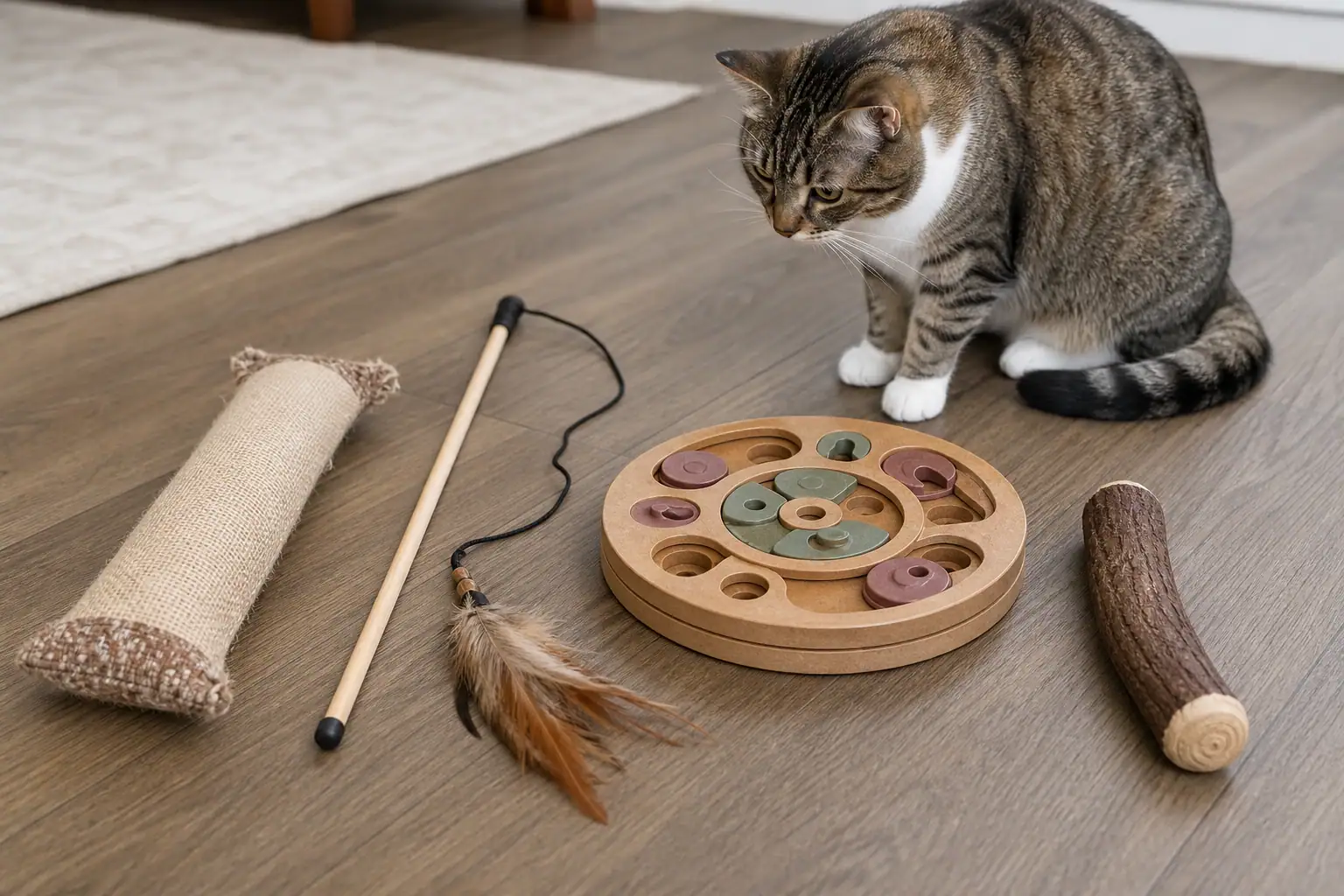
Replacement Signs for Kicker Toys
Plush toys are consumable for many cats. That does not make them bad; it means replacement is part of safe ownership. The goal is to remove the toy before damage turns into an ingestion risk.
Replace or discard a kicker when you see:
- Open seams, exposed stuffing, or loose filling.
- A tail, tuft, label, or decoration starting to detach.
- Threads long enough to chew, pull, or swallow.
- Missing pieces that may have been eaten.
- Fabric thinning at the main bite zone.
- Catnip dust leaking from the toy.
- Odor, dampness, dirt, or residue that cannot be cleaned.
- A change in your cat’s behavior from kicking the toy to eating the toy.
Titan Claws avoids calling any cat toy indestructible because that word encourages the wrong habit. The safer habit is honest inspection. A durable toy should last longer and fail more predictably, but it still needs an owner watching for wear.
Quick Decision Checklist
- Does your cat like to grab and bunny-kick larger toys?
- Can you supervise the first few sessions?
- Will you remove tags, loops, and loose pieces before use?
- Does your cat chew fabric without swallowing it, or do they eat toy parts?
- Is the tail likely to become the first failure point?
- Do you have a wand, puzzle, scratcher, or climbing outlet to rotate with it?
- Can you inspect the toy after rough play without guessing?
- Are you willing to throw it away as soon as seams, stuffing, or pieces become risky?
The KONG Kickeroo cat toy is a sensible buy for many cats that wrestle, kick, and need a legal bite target. It is less sensible as an unattended toy for cats that dismantle plush or swallow material. Use it as part of a play routine, inspect it like a piece of safety gear, and rotate it with tougher or different enrichment when your cat’s teeth start winning.