Why do cats destroy toys?
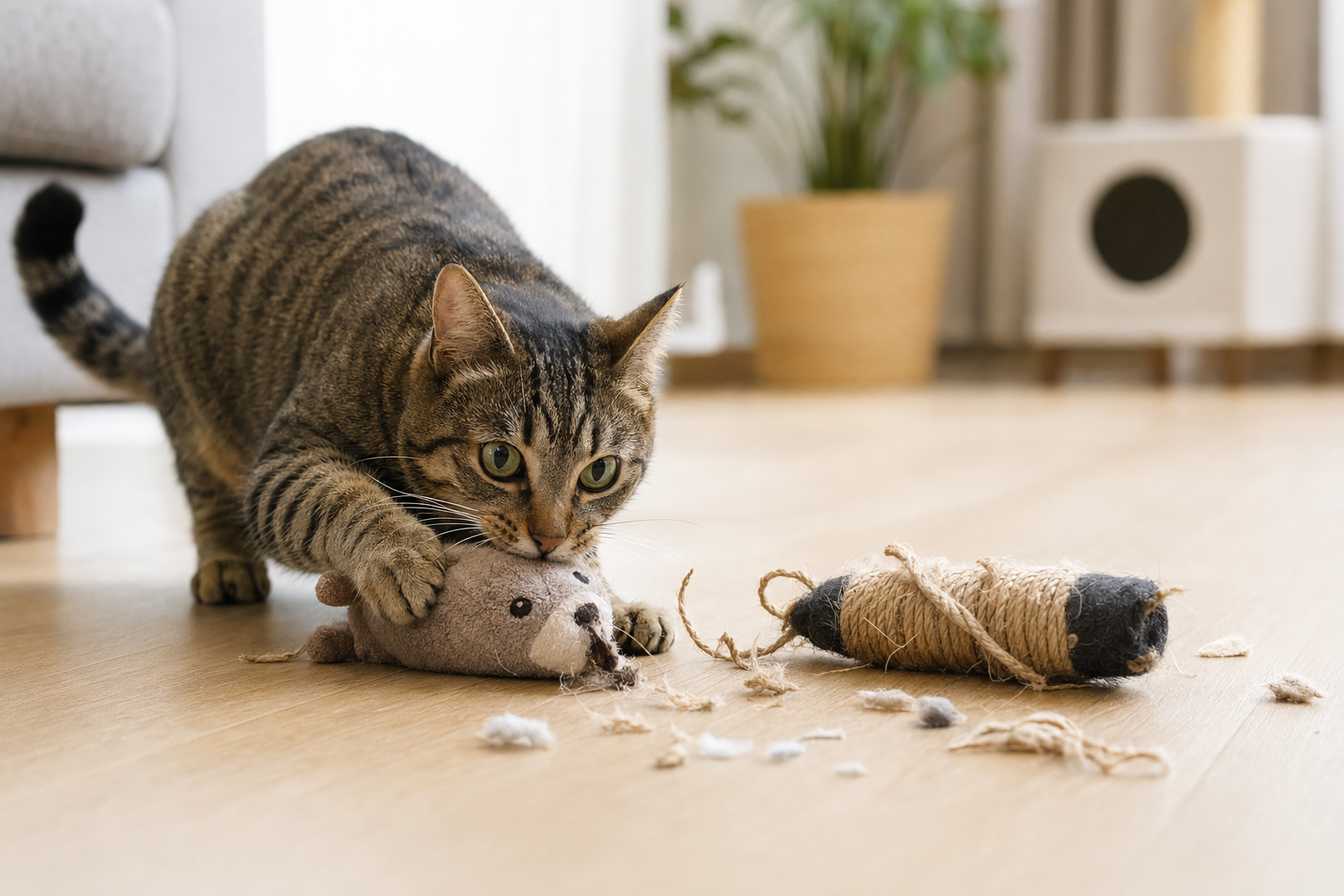
Cats destroy toys because they are doing what cats are built to do: stalk, pounce, bite, claw, and “kill” prey-shaped objects through play. In most cases, shredding a toy is a sign that your cat is engaged, not misbehaving. The toy is often acting as a stand-in for prey, so ripping seams, pulling out stuffing, and carrying the toy around are all normal parts of hunting-style play.
That said, toy destruction is not always harmless. A cat that tears toys apart can swallow pieces, chew through strings, or expose stuffing, squeakers, or plastic parts that create a choking or intestinal blockage risk. The key is to tell the difference between normal rough play and unsafe wear.
Think of toy destruction as a clue about your cat’s preferences. Some cats like to bunny-kick plush kickers. Others prefer to shred fabric, chew rope, or disassemble feather toys. Your job is not to stop the instinct. Your job is to channel it into safer play and pick toys that can handle your cat’s style.
Why toy destruction is usually normal hunting behavior
When cats attack toys, they are often practicing a complete prey sequence. They may stalk, freeze, chase, grab, bite, and then kick with their back feet. If the toy has a soft body, seams, or stuffing, the cat may rip it open during the “capture” phase.
Natural cat play often includes:
- Grabbing with front paws to hold the toy in place
- Chewing or biting to simulate a kill bite
- Bunny-kicking with back legs to tear at the toy
- Shaking small prey-like toys
- Carrying toys after a successful “hunt”
This is especially common in younger cats and highly active adult cats. Some breeds and personalities are more intense about play, but any cat can be a serious toy destroyer if the toy matches their prey preferences too well.
A destroyed toy can mean the toy was a good fit for your cat’s instincts. The goal is not to remove the instinct. The goal is to offer toys that satisfy it without creating unnecessary hazards.
Common reasons cats rip, chew, and disassemble toys
Cats do not all destroy toys for the same reason. Often, several factors are working together.
Prey drive
The most common reason is simple prey drive. A toy that moves like prey, fits in the mouth, or has feathers, fur, strings, or loose fabric can trigger a strong hunting response. Once the cat “catches” it, the toy may get torn apart.
Boredom or under-stimulation
Cats with not enough play, climbing, or enrichment may put more energy into the toys they do have. If the same toy is always available, some cats will also become more intense with it over time. Regular interactive play can reduce destructive over-focus on one item.
Texture preferences
Some cats are fabric shredders. Others prefer rope, paper, cardboard, or plush stuffing. If your cat repeatedly targets a certain texture, that preference can help you choose better toys. For example, a cat that loves plush may do better with reinforced stitching and minimal stuffing than with a light toy that opens easily.
Chewing behavior
Chewing is not as common in cats as it is in dogs, but some cats do chew toys, cords, and soft materials. This can be a form of play, teething in kittens, or a sign of boredom. If chewing seems excessive or your cat is chewing non-toy items, ask your veterinarian for advice to rule out dental pain or other health issues.
Frustration during play
Some cats become rougher if the toy does not “move right,” disappears too quickly, or is too small to hold securely. When play feels unsatisfying, they may bite harder or tear faster. Matching the toy to the cat’s preferred motion and size can make a big difference.
When destruction becomes a safety problem
Not all toy damage is equal. A torn toy is not automatically an emergency, but certain signs mean it is time to remove the toy immediately.
- Loose strings, ribbons, or elastic that can be swallowed
- Open seams with stuffing coming out
- Detached parts such as eyes, bells, feathers, or squeakers
- Small pieces that break off and fit in the mouth
- Hard plastic edges after breakage
- Any toy your cat is trying to eat rather than play with
String-like items are especially risky because they can cause serious digestive problems if swallowed. If your cat has eaten part of a toy, is drooling, vomiting, hiding, not eating, or straining in the litter box, contact a veterinarian promptly.
It is also wise to separate normal play from over-aggressive chewing. If toy destruction seems sudden, extreme, or paired with behavior changes, pain, stress, or appetite changes, get a veterinary check. Sudden changes in behavior can have medical causes.
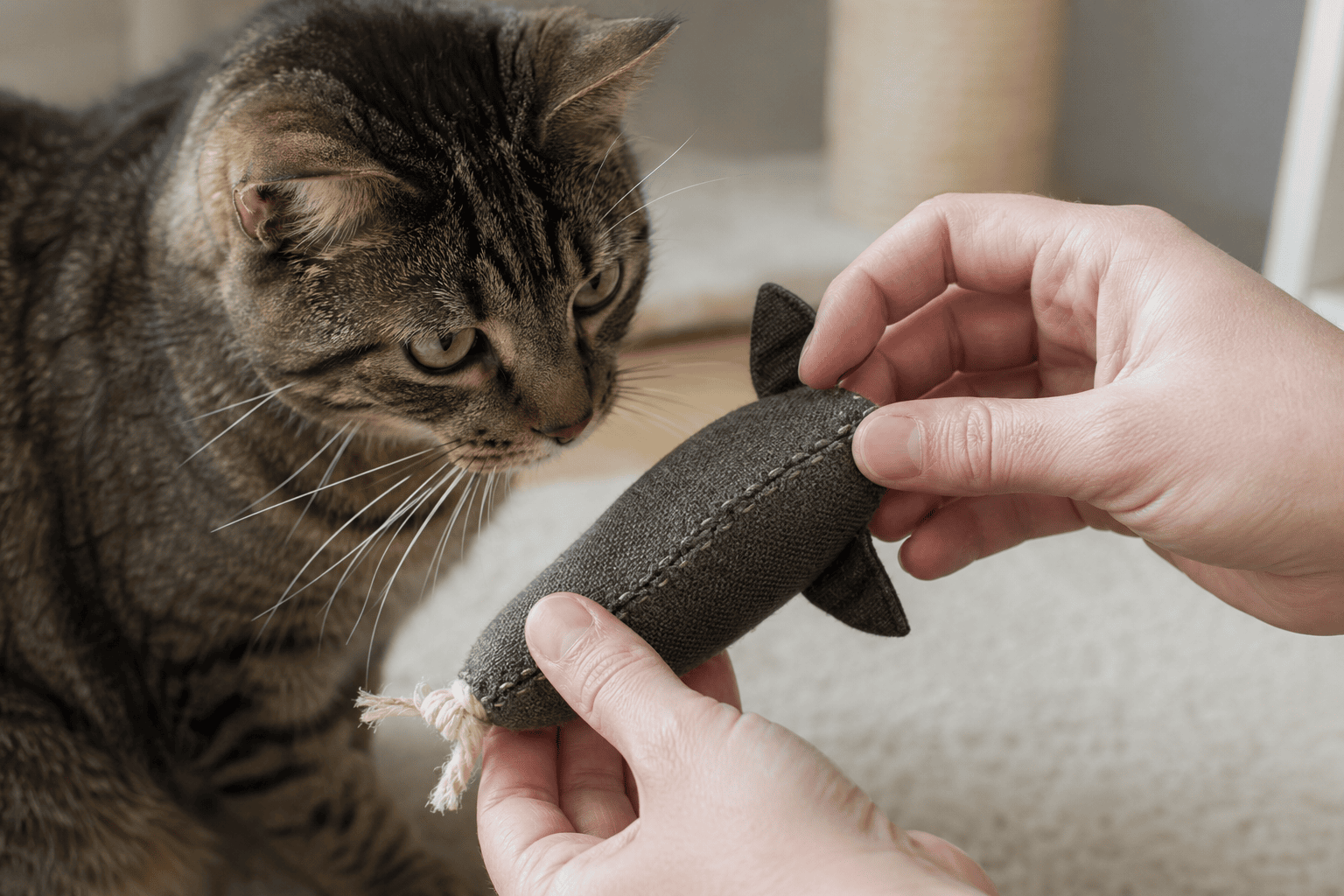
Safely checking toys after play helps you catch wear before it becomes a problem.
How to choose toys for rough players
If your cat destroys toys quickly, the answer is usually not “buy more of the same.” It is “buy better-matched toys.” Look for construction that fits rough play while still being safe.
What to look for in tougher cat toys
- Reinforced seams and tight stitching
- Durable outer fabric that resists easy ripping
- Minimal loose trim such as strings, tassels, or glued-on pieces
- Oversized parts that are harder to swallow
- Simple construction with fewer breakable attachments
- Materials that stand up to pouncing and kicking
For many rough players, the best toys are not the fanciest ones. They are the simplest ones made with better materials and stronger stitching. A well-made kicker toy, for example, can satisfy a cat that wants to grab, bite, and kick without immediately falling apart.
What to avoid for power chewers and shredders
- Fragile feathers attached with weak glue
- Long ribbons or strings left unsupervised
- Very small plush toys that can be swallowed
- Toys with detachable eyes or buttons
- Thin mesh or foil toys that tear easily
No toy is indestructible, and no cat toy is safe forever. The best approach is choosing durable options, supervising the first few play sessions, and replacing worn items before they become risky.
For cats that love rough play, rotating in a few sturdy options can keep interest high without overusing one toy.
How to rotate toys and redirect the behavior
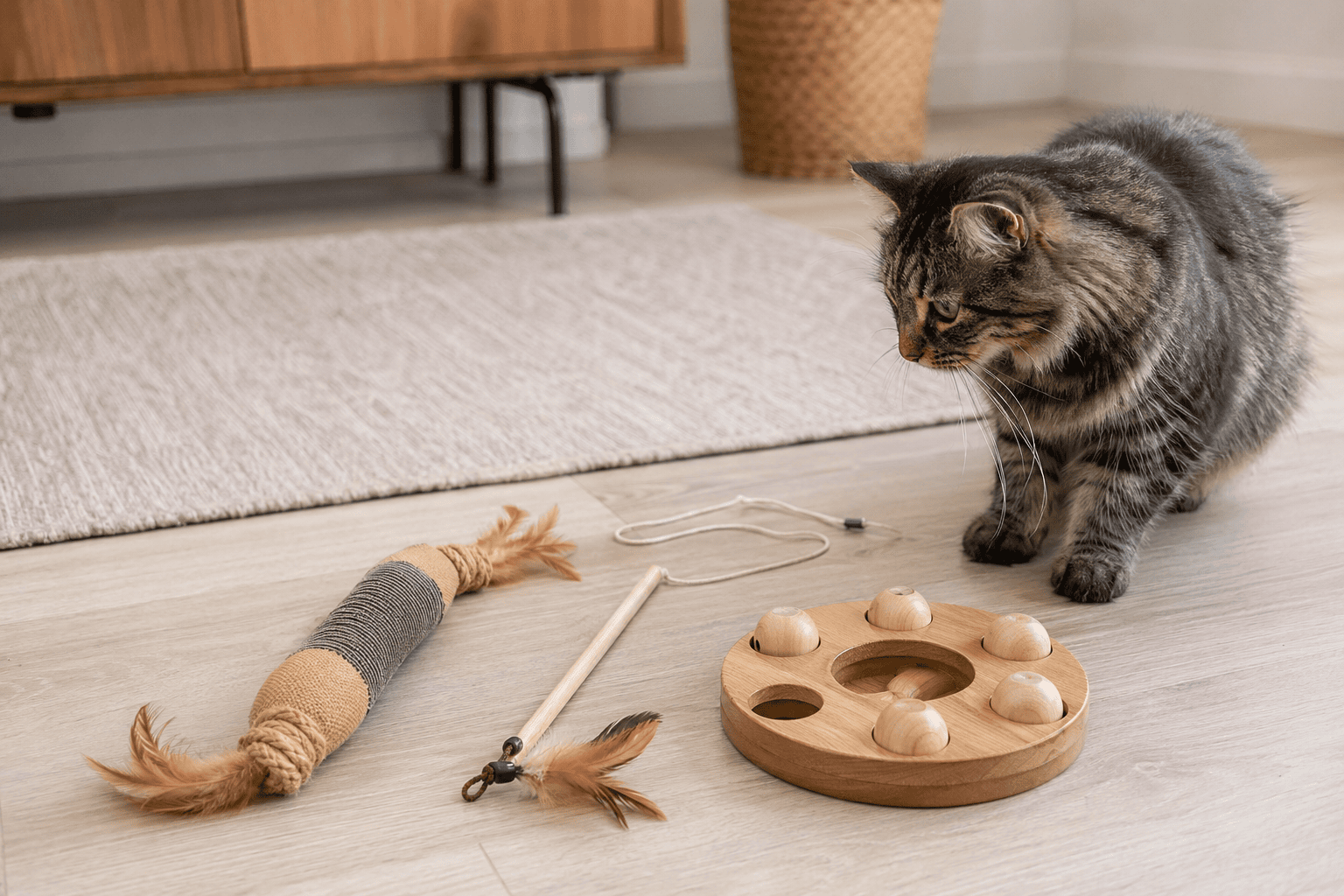
Toy rotation is one of the easiest ways to reduce destruction and boredom. When all toys are available all the time, they can lose novelty. When toys are rotated, each one feels more interesting and play tends to be more focused.
Simple rotation plan
- Keep a small set of toys out at once
- Store the rest out of sight
- Swap toys every few days or once a week
- Include different play styles, such as chase, kicker, and puzzle toys
Rotation works best when you also use interactive play. Wand toys, for example, let you control the motion so your cat can stalk and chase without immediately shredding the toy itself. End the session with a toy your cat can safely “catch” so the hunting sequence feels complete.
Redirecting destructive play
If your cat starts targeting a toy too aggressively, try ending the session before the toy is ruined. Then offer a more suitable option, such as a sturdier kicker or a wand attachment used only under supervision. You can also redirect to puzzle feeding, climbing, or short training sessions if your cat seems restless.
The goal is not to punish destruction. Punishment can increase stress and make play worse. Instead, offer a better outlet and make the safe option the most rewarding one.
What to do after a toy breaks
After a toy breaks, inspect it before leaving it out again. If the damage is minor and does not create a hazard, you may be able to set it aside for supervised use only. But if the toy has loose stuffing, broken pieces, or exposed inner material, it is usually time to discard it.
When deciding whether to keep or replace a toy, ask:
- Can my cat swallow any part of this?
- Is anything sharp, loose, or frayed?
- Can the toy still be safely supervised?
- Has my cat already started chewing off pieces?
If the answer to any of those questions is yes, replace the toy. Do not assume a damaged toy is safe just because your cat still likes it. Cats often prefer the toy most likely to fail, which is why inspection matters.
A good habit is to keep a small “retire bin” for toys that are too worn for play. That makes it easier to remove damaged items before they become a problem.
When to ask your vet about toy destruction
Most toy destruction is normal, but a vet visit is a good idea if your cat’s chewing or shredding seems unusual. Check in with your veterinarian if you notice:
- Sudden increase in chewing
- Chewing non-food items like plastic, fabric, or cords
- Drooling, vomiting, or trouble eating
- Loss of appetite or weight loss
- Signs of pain when chewing or playing
- Behavior changes such as hiding or irritability
These signs can point to dental disease, gastrointestinal trouble, stress, or other medical issues. A quick check can save you from guessing and help you choose the right next step.
Quick checklist for safer durable play
- Accept the instinct: toy destruction is often normal hunting behavior
- Watch for hazards: loose strings, stuffing, and small parts mean it is time to remove the toy
- Choose better construction: reinforced seams, simple design, and minimal detachable parts
- Rotate toys: keep play fresh and reduce overuse
- Supervise new toys: especially for cats that chew hard or shred fast
- Replace worn toys promptly: no toy stays safe forever
- Call your vet if behavior changes or your cat may have swallowed toy material
In short, cats destroy toys because that is how they play, hunt, and release energy. Your best response is not to fight the instinct, but to guide it with safer, tougher toys, regular rotation, and a quick safety check after each play session.
Leave a Reply