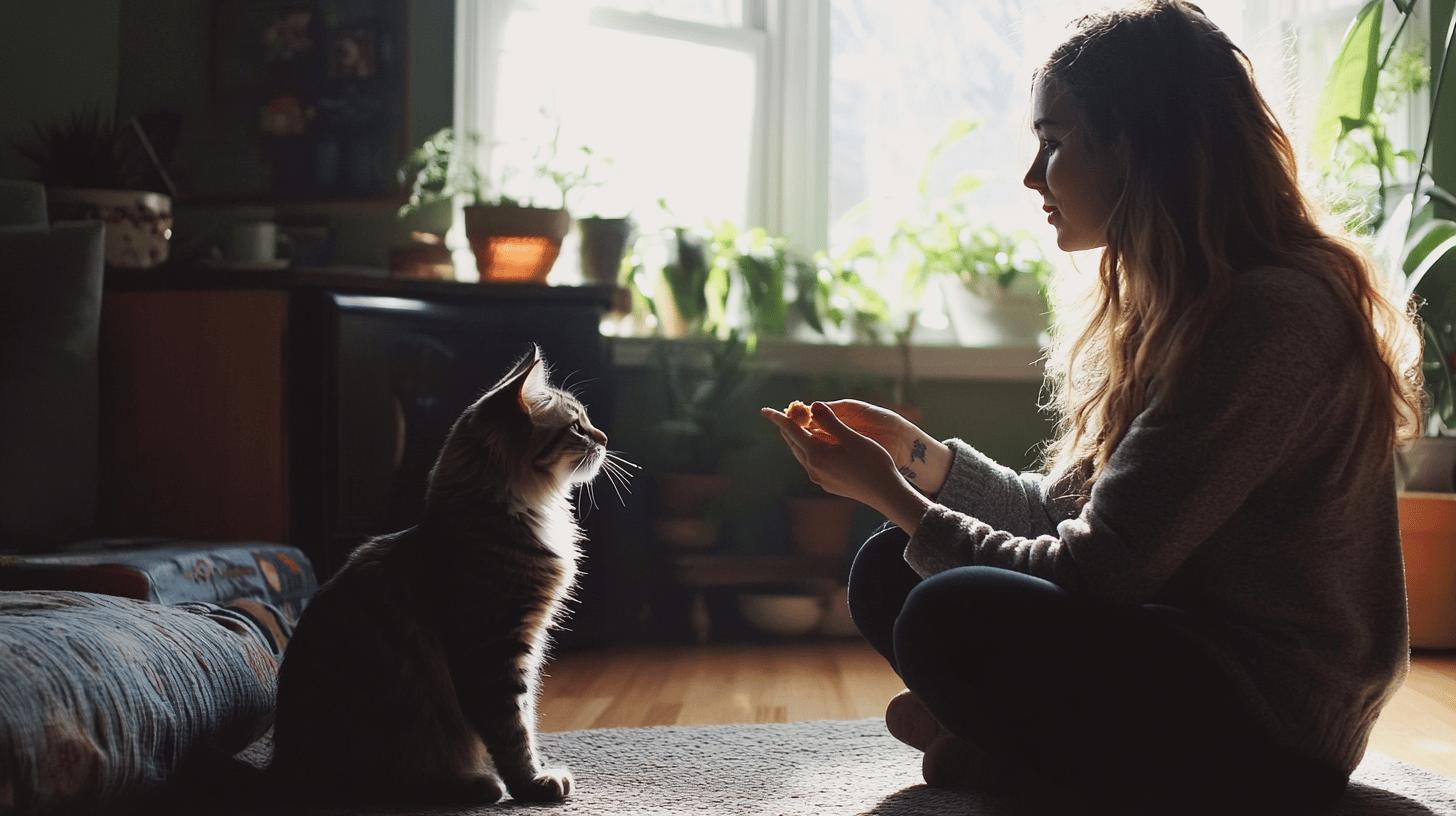
Can you train a cat without a clicker? Absolutely. While clickers are popular training tools, they’re far from necessary. Cats learn through consistent reward, timing, and positive association-none of which require a mechanical device. In fact, many expert cat behaviorists argue that voice markers and treats alone create stronger behavioral bonds than clickers ever could. This guide shows you the science, the techniques, and the step-by-step methods to train your cat without gadgets.
Why Clickers Aren’t Necessary (The Brain Science)
Clicker training works because it creates a conditioned stimulus: the sound bridges the gap between the desired behavior and the reward, marking the exact moment your cat did something right. But here’s the truth: clickers are just a tool for achieving precise timing. They’re not magic.
How Cat Learning Actually Works
Cats learn through operant conditioning-a behavior followed by a positive consequence (reward) becomes more likely to repeat. The timing between behavior and reward matters profoundly. A 2-3 second delay is acceptable; longer gaps and the cat loses the connection.
A clicker produces a distinct, emotionally neutral sound. Cats don’t inherently understand what a click means; you teach them: “Click = treat is coming.” Once learned, the click becomes a bridge-it tells your cat exactly when they earned the reward.
Voice Markers Work Equally Well
Your voice can do everything a clicker does, with advantages clickers lack:
- Consistent timing: You can deliver a voice marker (“Yes!” or “Perfect!”) with the same precision as a click, sometimes faster.
- Emotional connectivity: Your voice carries tone, warmth, and personality. Your cat associates rewards with YOU, not a device.
- No equipment needed: Your voice is always with you. No dead batteries, no forgotten devices, no noise complaints in apartments.
- Dual-purpose: “Yes!” can mean treat is coming; “Good cat” can be affection-based praise. A clicker is one-dimensional.
- Faster learning: Research shows cats trained with voice markers sometimes learn as quickly or faster than clicker-trained cats, particularly for complex behaviors.
Understanding Cat Training Fundamentals
Before starting any training, understand what motivates cats:
What Cats Actually Care About
- High-value treats: Small pieces of cooked chicken, freeze-dried meat, or premium cat treats. Nothing gets a cat’s attention like meat.
- Playtime rewards: For cats that prefer interaction, 30 seconds of wand toy play can be more motivating than treats.
- Attention: Petting, praise, or simply your undivided focus.
- Toys: For toy-driven cats, access to a favorite toy is potent reward.
- Exploration: Some cats prioritize access to new spaces or objects.
The Training Session Sweet Spot
- Duration: 5-10 minutes maximum. Cats have limited attention spans; longer sessions frustrate both you and your cat.
- Frequency: 2-3 short sessions daily beats one long session.
- Timing: Train when your cat is hungry (before meals) and alert, not exhausted or overstimulated.
- Environment: Quiet, familiar space with minimal distractions. No kids, dogs, or competing noise.
Voice & Sound Markers as Clicker Alternatives
Choosing Your Marker Word
Pick a short, distinct word your cat won’t hear in normal conversation. Options:
- “Yes!” – Simple, enthusiastic, easy to say consistently
- “Perfect!” – Longer but clearly distinct
- “Got it!” – Conversational but trainable
- “Bingo!” – Fun, memorable
- A whistle or tongue click – Non-verbal alternatives for non-voice preference
Whatever you choose, use it consistently. Your cat will learn: “[marker word] = treat is coming in 1-2 seconds.”
Establishing the Marker-Treat Connection
Before training anything, teach your cat what the marker means:
- Say your marker word (“Yes!”)
- Immediately give a high-value treat (within 1 second)
- Repeat 10 times in a session
- Do this for 3-5 days until your cat’s ears perk up when they hear the marker
You’ll know it’s working when your cat looks at you with anticipation after hearing the marker. That’s the moment you know they’ve made the connection: marker = reward.
Step-by-Step Training Techniques (No Clicker Needed)
Teaching “Sit”
Goal: Cat’s hindquarters touch the floor on cue.
- Lure setup: Hold a high-value treat just above your cat’s nose, slightly back toward their head.
- The movement: As your cat’s nose follows the treat, their rear naturally lowers. The moment their bottom touches the floor, say “Yes!” and immediately give the treat.
- Repeat: 10 reps per session. After 3-5 sessions, your cat starts anticipating the sit.
- Add the cue: Once the behavior is reliable, say “Sit” just before luring. Repeat 20+ times.
- Test without lure: Say “Sit” without treat in hand. If your cat sits, immediately produce treat and enthusiastic praise.
- Duration building: Once “Sit” is solid, wait 2-3 seconds before saying “Yes!” This teaches your cat to hold the sit.
Timeline: 1-2 weeks to reliable “Sit” behavior with daily 5-minute sessions.
Teaching “Touch” (Targeting)
Goal: Cat touches their nose to a specific point (your hand, a target stick, a mark on the wall).
“Touch” is foundational-it teaches your cat that moving toward things earns rewards, which enables teaching almost any other behavior.
- Hand positioning: Hold an open hand (palm up) at your cat’s nose height, 6 inches away.
- Natural curiosity: Most cats will sniff or touch your hand. The instant they do, say “Yes!” and give treat.
- Build distance: Gradually move your hand further away (inch by inch, over sessions) so your cat walks toward your hand to touch it.
- Add cue: Say “Touch” just before presenting your hand.
- Hand or target switch: Once reliable, use a small stick or object instead of your hand. The principle is identical.
Application: Once your cat reliably touches a target, you can use targets to lure them to:
- Different rooms (recall training)
- The carrier for vet visits
- A specific spot (useful for photos or during household chaos)
Teaching “Come” (Recall)
Goal: Cat comes to you reliably when called.
- Choose a recall word: “Come!” or “Here!” – something you’ll use consistently and positively.
- Start at ultra-short distance: Sit on the floor with your cat 2 feet away.
- Excited delivery: Say “Come!” with genuine enthusiasm, immediately shake a treat bag or show a high-value treat.
- Reward heavily: When your cat walks toward you, say “Yes!” and give multiple treats (not just one).
- Extend distance slowly: Over weeks, increase the distance: 3 feet, 5 feet, across the room, to another room.
- Add distractions carefully: Practice with mild distractions first (TV on); progress to busier environments.
- Build reliability with high-value treats: Only use recall in situations where you have excellent treats. Boring kibble won’t compete with outdoor birds.
Critical rule: Never use “Come” punitively (for nail trimming, vet visits, medication). Train a separate approach word for unavoidable unpleasant experiences. If “Come” means good things always happen, your cat will reliably respond.
Teaching “Sit” on Command (Advanced Variation)
Once your cat knows “Sit” with luring, teach them to sit without the lure:
- Say the cue: “Sit”
- Brief pause (1-2 seconds): Don’t lure. Wait to see if your cat sits.
- If they sit: “Yes!” and treat immediately.
- If they don’t: Show the lure and guide them into sit. This is a gentle reminder.
- Repeat: Each session, gradually reduce the lure and rely more on the verbal cue.
Treat Timing & Reward Psychology
The Critical 1-2 Second Window
The time between desired behavior and reward is crucial. Ideally:
- 0-1 seconds: Perfect. The behavior is fresh in your cat’s mind.
- 1-2 seconds: Good. Acceptable for building association.
- 2-3 seconds: Weak. Your cat may lose the connection.
- 3+ seconds: Too late. Your cat won’t associate the reward with the behavior; they’ll remember whatever they were doing 3 seconds ago.
This is why a voice marker (“Yes!”) can be superior to treats alone-you can deliver the marker instantly, then follow with the treat. Marker = “Reward coming in 1-2 seconds.”
Reward Variety & Motivation
- Treat size: Pea-sized pieces, not chunks. You want rapid delivery, not chewing delays.
- Treat variety: Rotate high-value treats. Repetition bores cats; novelty keeps them engaged.
- Jackpot rewards: Occasionally (randomly) give 3-4 treats instead of one after a successful behavior. This keeps your cat guessing-high motivation.
- Non-food rewards: Alternate treats with playtime (5-10 seconds of wand toy). Some sessions, mix rewards so your cat doesn’t lose interest.
Troubleshooting Common Training Issues
“My cat won’t sit even with luring.”
Diagnosis: Either the reward isn’t motivating enough, or your cat is too distracted.
Solutions:
- Upgrade treats. If you’re using regular kibble, switch to fresh cooked chicken.
- Train before meals (hungry cat = motivated cat).
- Reduce environmental distractions. Close doors, turn off TV, minimize noise.
- Try a different position. Some cats prefer “stand” to “sit.” That’s okay; train what works for your cat.
“My cat sits for a treat but ignores the command without luring.”
Diagnosis: The word “Sit” hasn’t become a true cue yet. Your cat has learned the lure predicts treats, not the word.
Solutions:
- Fade the lure more gradually. Reduce hand movement with each repetition.
- Say the cue more enthusiastically. Cats respond to tone; make “Sit” sound exciting.
- Add a hand signal (point downward) along with the verbal cue. Some cats respond better to visual cues.
- Ensure reliable lured sits before introducing the cue. You need 30+ perfect lured reps first.
“My cat trained for 2 days and then stopped responding.”
Diagnosis: Boredom or treat satiation (your cat isn’t hungry anymore).
Solutions:
- Take a break. Training fatigue is real. Resume after 1-2 days.
- Switch treats. Novelty re-engages interest.
- Train before meals (hunger = motivation).
- Keep sessions shorter (5 min max) and more frequent (3x daily).
- Rotate different behaviors in the same session. Variety prevents boredom.
Complex Behaviors: Building on Basics
Teaching “Litter Box Use” (For Multi-Cat Homes)
Some cats need training to use a specific box or location.
- Isolate and establish: Confine your cat to a small room with the target litter box for 2-3 days.
- Catch and reward: Observe when your cat uses the box. Immediately say “Yes!” and give treats.
- Expand space: Gradually allow access to larger areas while maintaining the designated box.
- Reinforce regularly: Continue rewarding litter box use for weeks, even after the behavior seems established.
Teaching “High Five” (Fun Trick)
- Start with “Touch”: Ensure your cat reliably touches your hand.
- Raise your hand higher: Gradually position your hand higher each session.
- Shape the leap: As your cat reaches higher to touch, they naturally extend a paw. Say “Yes!” and reward.
- Add cue: Say “High five!” with enthusiasm.
- Polish: Your cat will eventually raise a paw to meet your hand. That’s your high five.
Special Considerations: Age & Personality
Kittens (Under 6 Months)
Kittens learn extremely quickly but have shorter attention spans, so use 2-3 minute sessions, 4-5 times daily with high-value treats. Expect rapid progress, but keep up daily practice as kittens can forget quickly without reinforcement.
Adult Cats (1-10 Years)
Adult cats are in their prime learning years, so keep sessions to 5-10 minutes, 2-3 times daily; behaviors learned at this stage tend to stick well.
Senior Cats (Over 10 Years)
Senior cats are absolutely trainable, though sometimes slower; use high-value treats and be patient, keeping sessions to 5 minutes max to prevent fatigue. Pain or cognitive decline may slow learning-consult your vet if suddenly resistant.
Personality Considerations
- Food-motivated cats: Use treat-based training. These cats are easy to train.
- Play-motivated cats: Use wand toy access as reward. Mix in occasional treats.
- Affection-motivated cats: Petting and praise can be primary rewards. Supplement with treats.
- Independent cats: Respect their nature. Train willingly, not coercively. Stop if they disengage.
Frequently Asked Questions
Can adult cats be trained without clickers?
Yes. Adult cats learn just as well with voice markers. The principle is identical; the tool differs. Some adult cats trained with voice markers learn faster than clicker-trained cats because the emotional connection to your voice is stronger.
Is a clicker really better than a voice marker?
No. Both work equally well. Clickers are standardized (every click sounds identical), which some people find easier. Voice markers are customizable (your tone carries emotion) and always with you. Neither is objectively superior.
How long does it take to train a cat without a clicker?
Expect “Sit” to take 1-2 weeks, “Come” 4-8 weeks, and complex behaviors months; the variable isn’t the tool but consistency and training frequency. 3 sessions daily for 1 week beats 1 session per day for 3 weeks.
Can cats learn multiple behaviors simultaneously?
Yes, but introduce them separately. Train “Sit” to fluency, then add “Touch,” then add “Come.” Once each is solid independently, you can practice them together.
What if my cat refuses to cooperate?
If your cat disengages, end the session; training should feel playful, not frustrating. Try again later with better treats or a quieter environment, and never force interaction or training.
Can I train my cat to do anything?
Mostly. You can teach cats to sit, come, touch, high five, use a harness, enter a carrier, and many other behaviors. You cannot train cats to fully ignore their nature-don’t expect a cat to fetch like a dog or give up predatory behavior toward small animals. Work with cat nature, not against it.
The Bottom Line
You don’t need a clicker to train your cat. A simple voice marker (“Yes!”), high-value treats, and consistency are all you need. Your voice carries emotion and connection that a mechanical device cannot. Start with “Sit,” build to “Come,” and enjoy the enrichment training brings to your cat’s life. No equipment required.
Leave a Reply