Category: Teach My Cat

  • cat clicker: how to choose and use one

    cat clicker: how to choose and use one

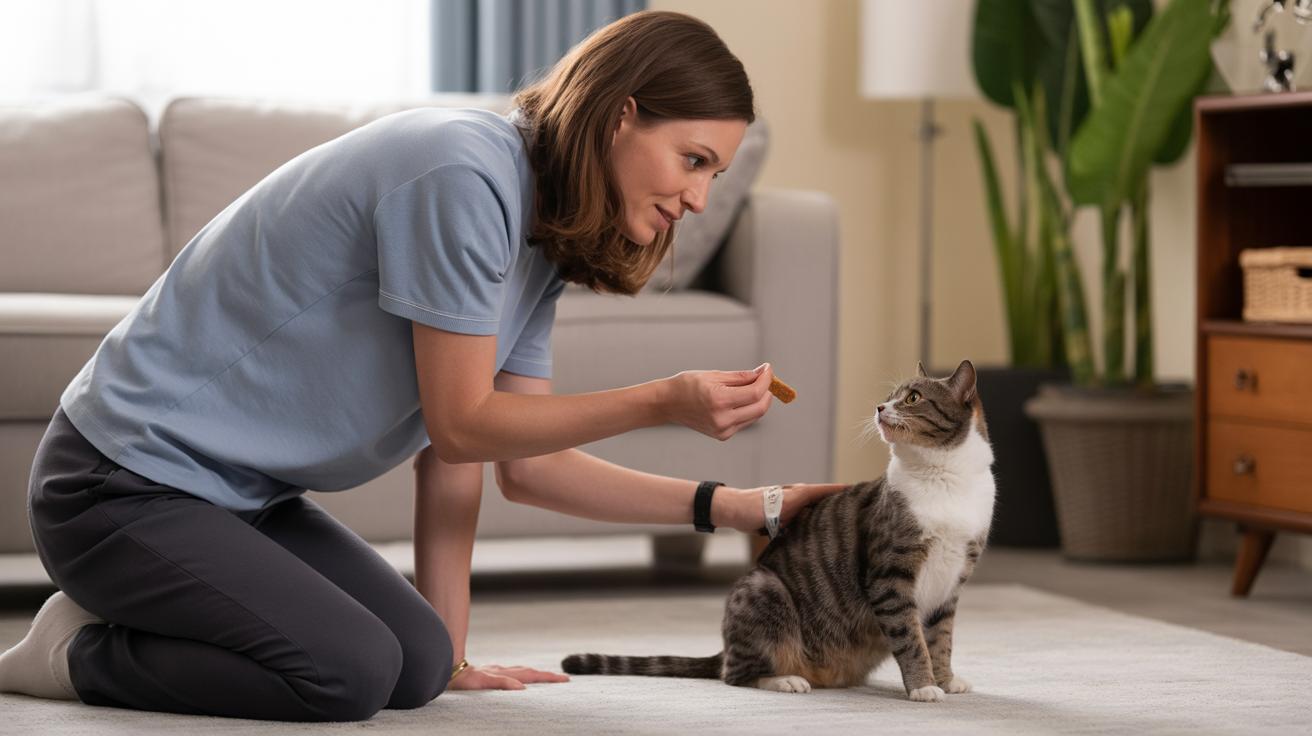
    Think clickers are just for dogs? Lots of folks do, but a tiny, repeatable click can work wonders with shy kitties. That clear little sound tells a cat exactly when they did something right, and yes, it can teach them to come, sit, and pounce on cue while keeping you calm and confident. Check out our guide on Best Toys to Reduce Play Aggression.

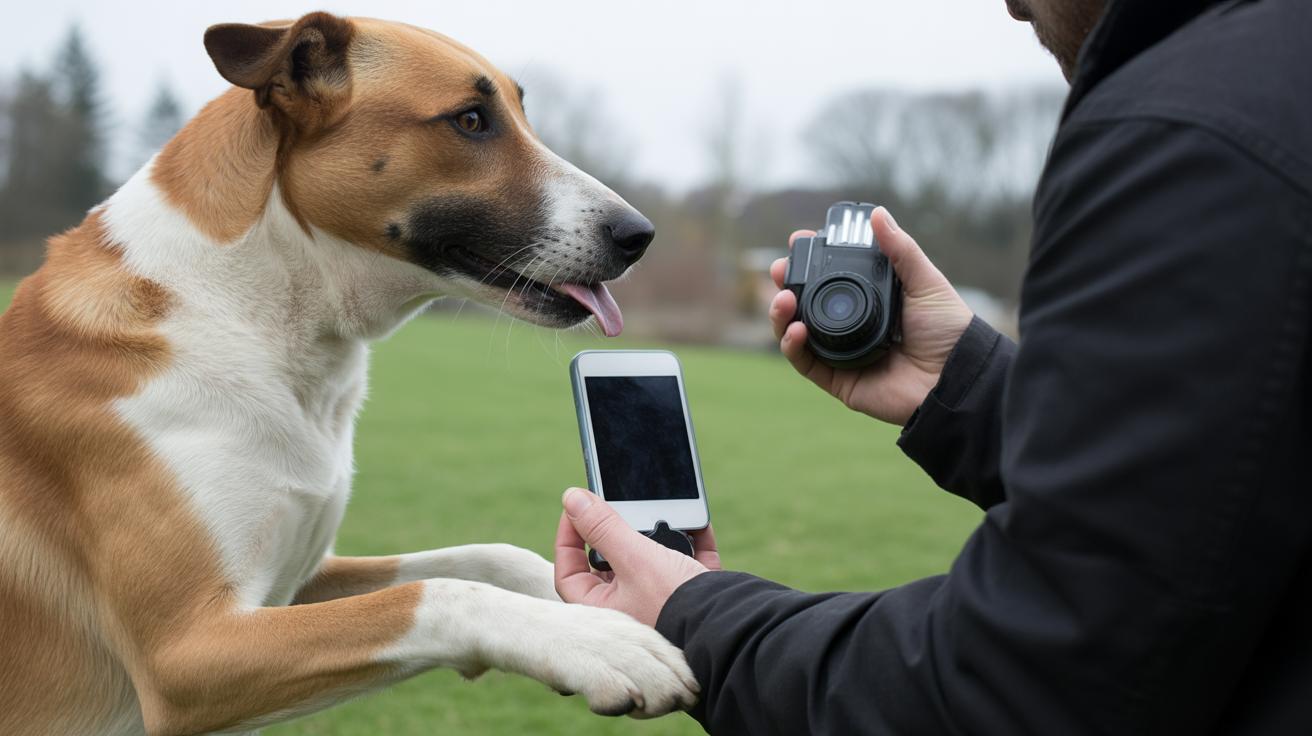
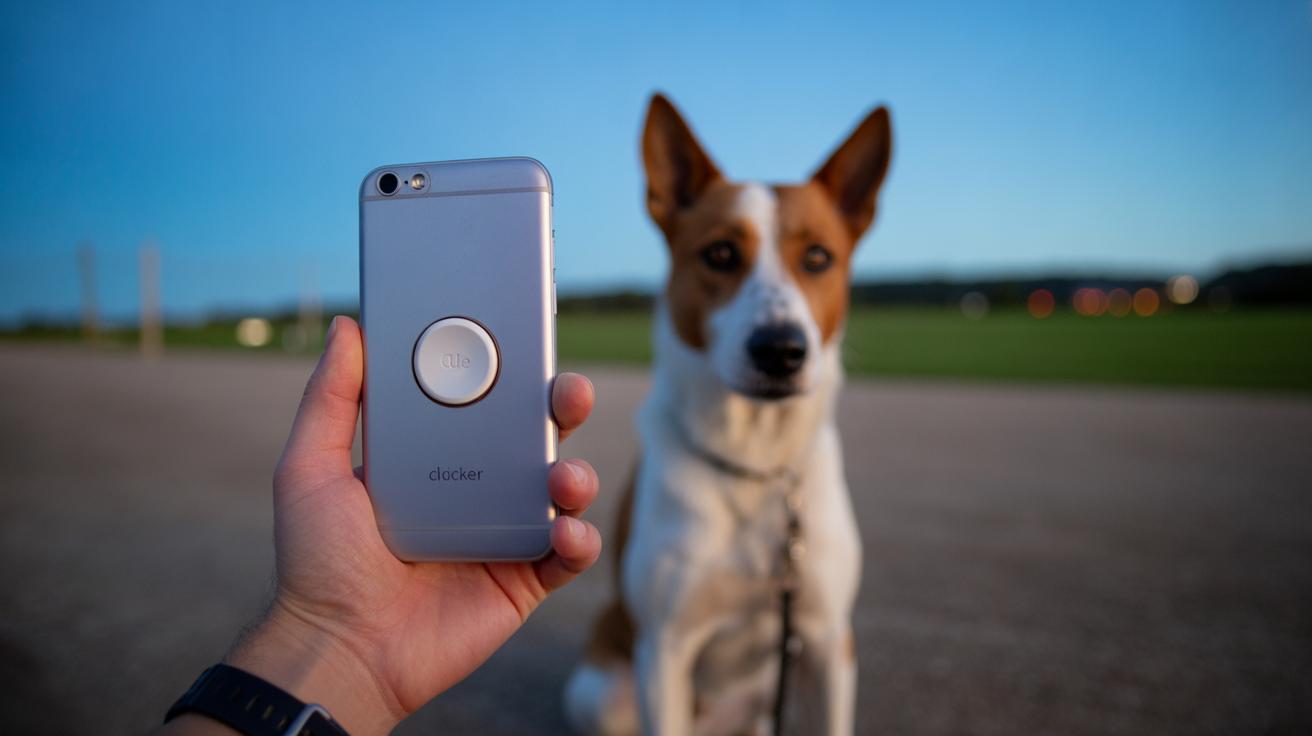
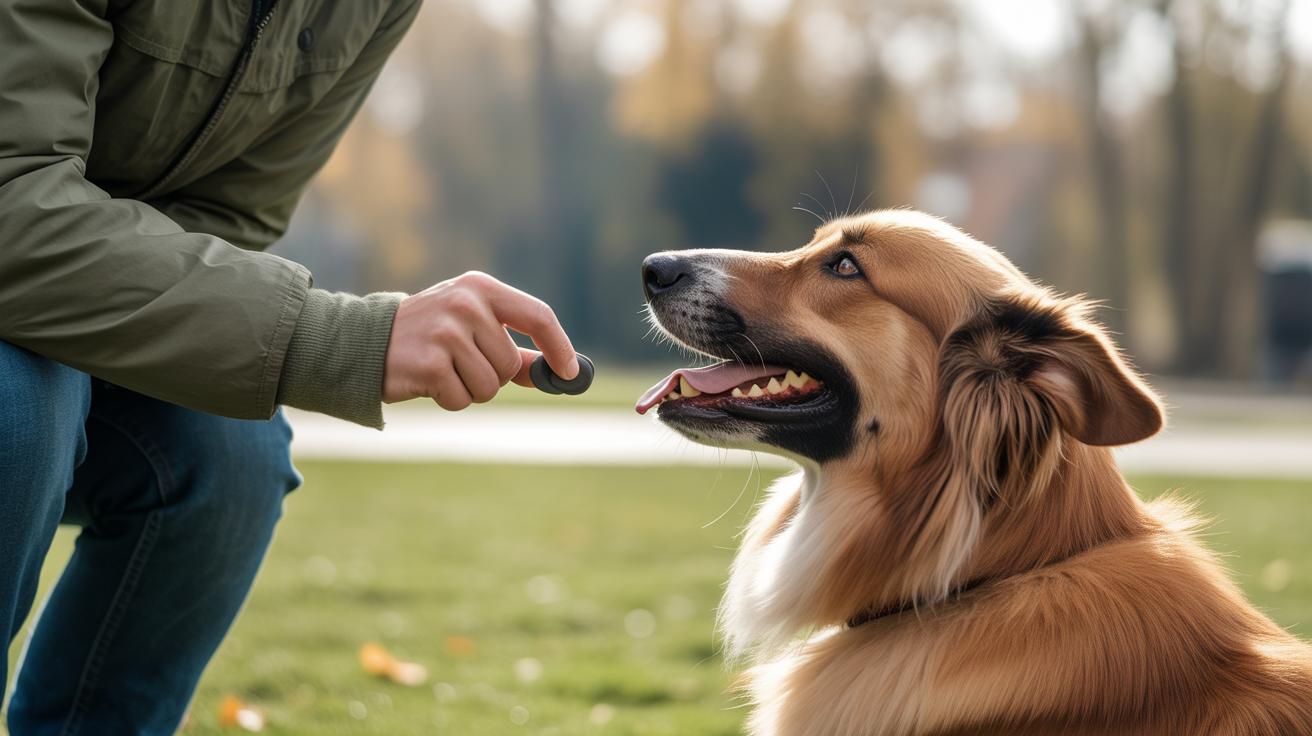
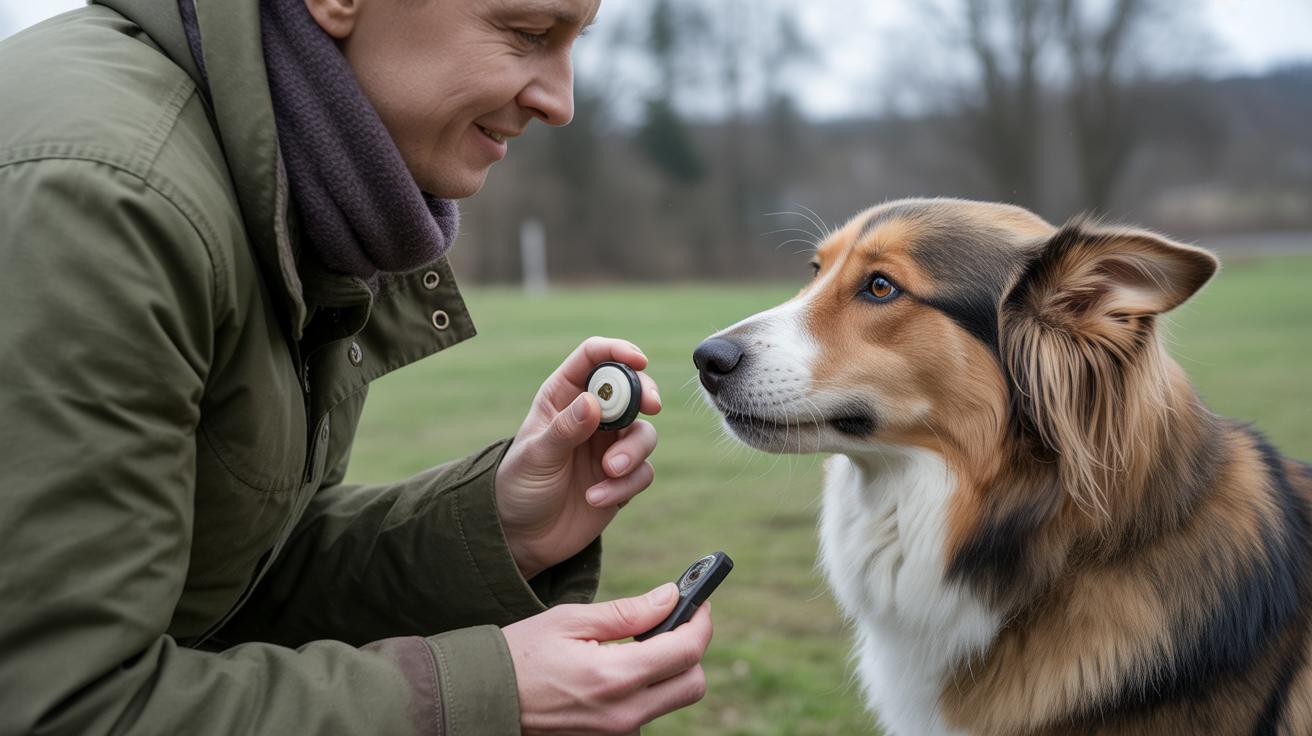
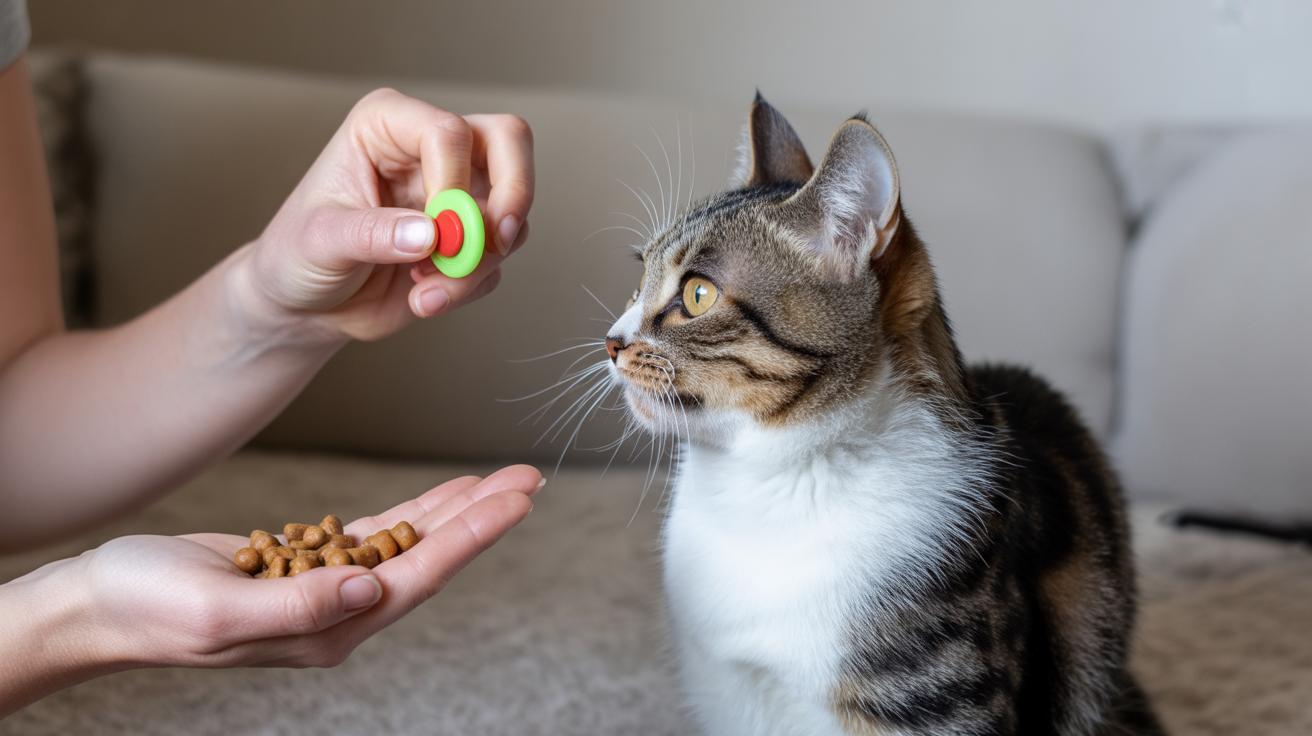
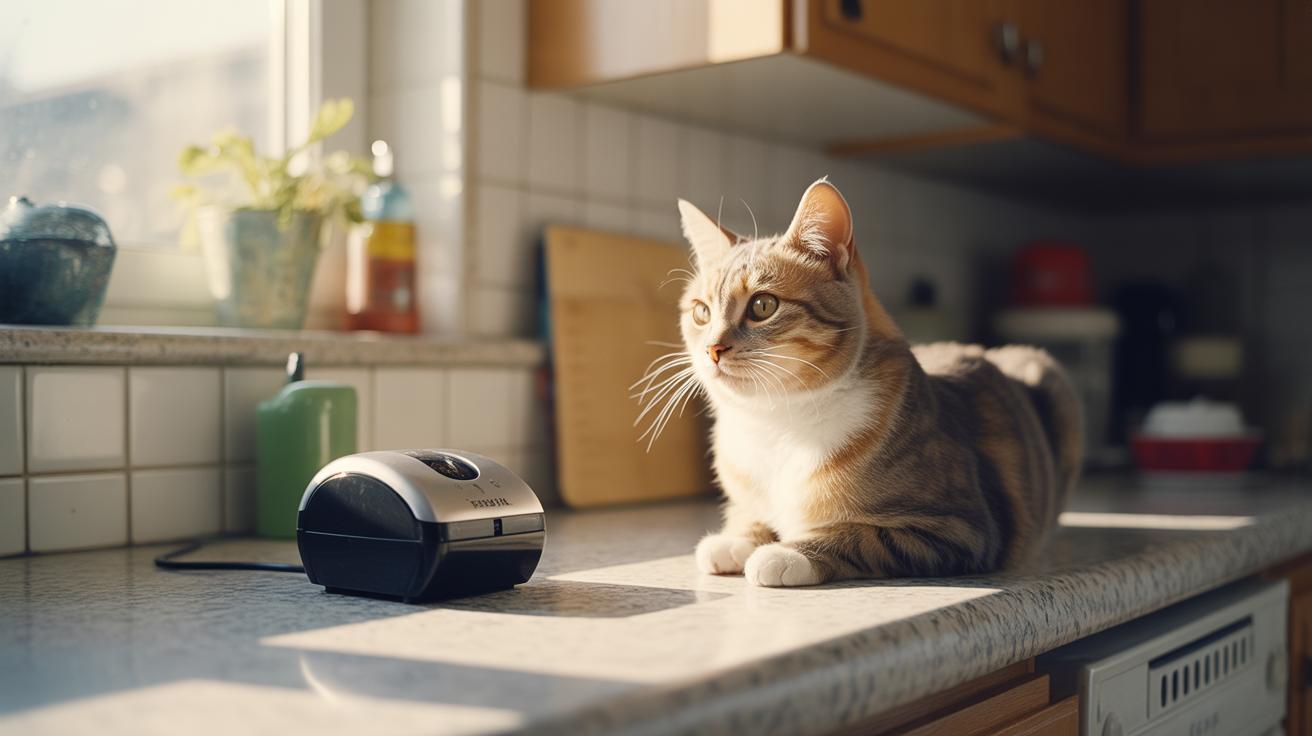
    So what is a clicker? It’s a small device that makes a consistent sound to mark a moment. Handheld clicker (a little plastic box that clicks) is the classic. Vibration clicker (a buzzy device you can feel) is great for noise-sensitive cats. LED cue (a small light flash) gives a visual “yes” for really skittish felines. Think of the click as a marker (a short sound that marks the exact behavior you want).

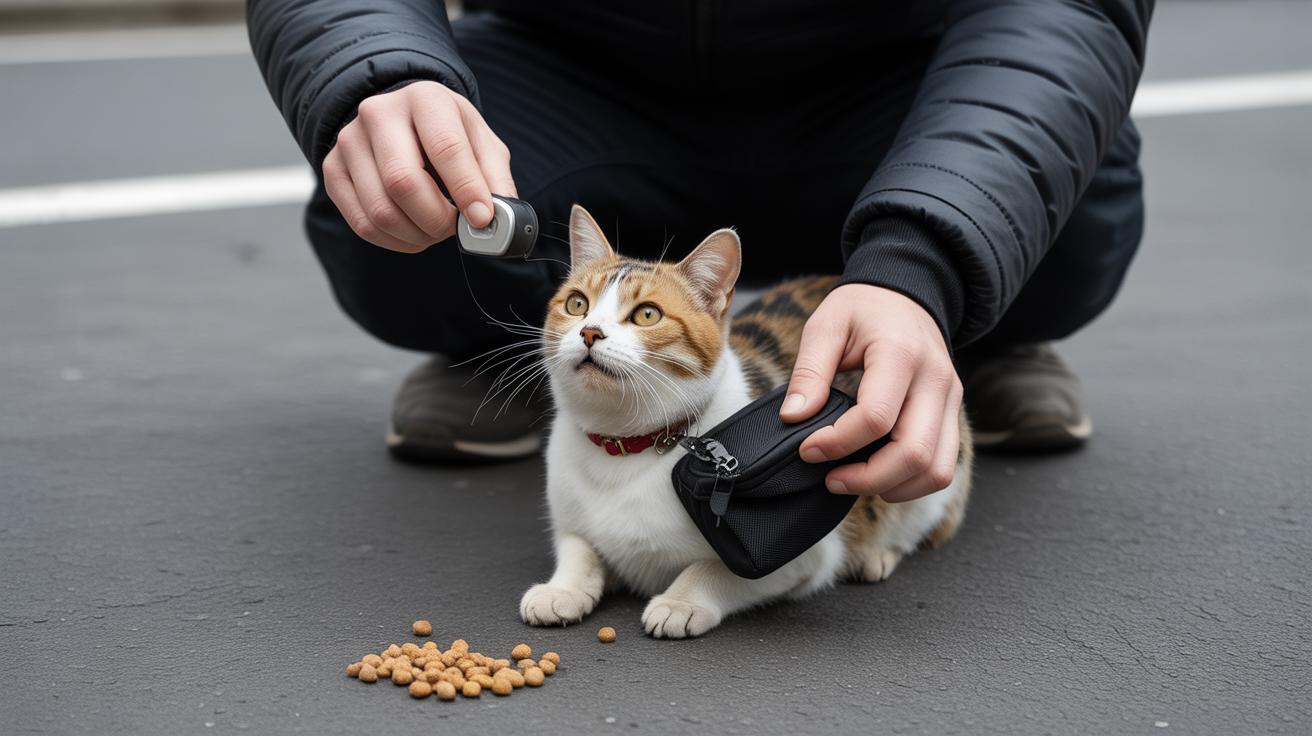
    Timing is the secret. Click the instant your cat does the thing you like, then reward within one second. Tiny treats work best, pea-sized bits of chicken or a soft commercial treat, so they stay motivated and not full. Short sessions, just 2 to 5 minutes, a few times a day, make learning fast and fun. Your cat’s whiskers will twitch as the toy rolls or as you call their name, and that tiny click tells them “do that again.”

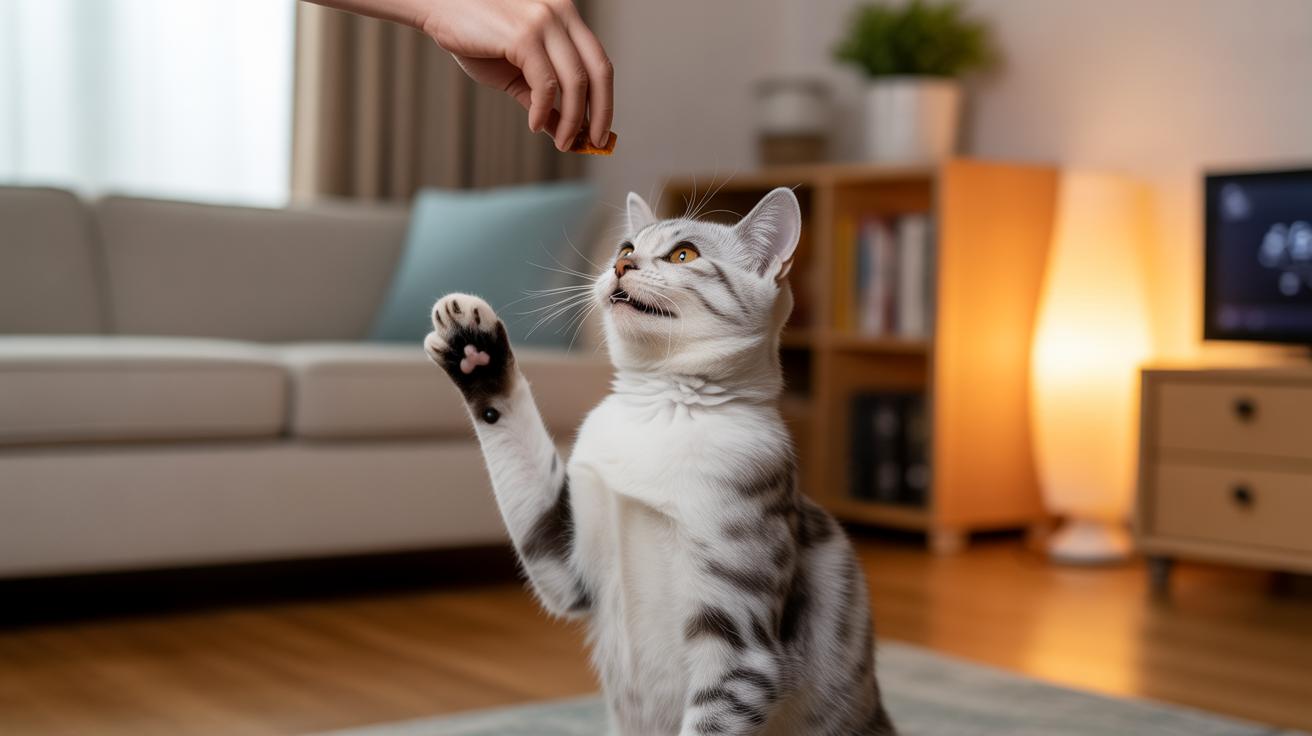
    How to use it in real life? Capture a behavior first, like a step toward you, click the moment their paw moves, then toss a tiny treat. For sit, wait for a natural pause, click, reward. For come, click the instant they move toward you, then reward where you’re standing so they connect the approach with good things. If your kitty startles easily, start with vibration or LED cues, and sit on the floor so you feel less big and noisy.

    Give it a try. Be patient, keep it playful, and celebrate small wins, your cat will thank you with purrs and dramatic leaps. Worth every paw-print.

    cat clicker: how to choose and use one
    - Quick answer and immediate starter steps.jpg

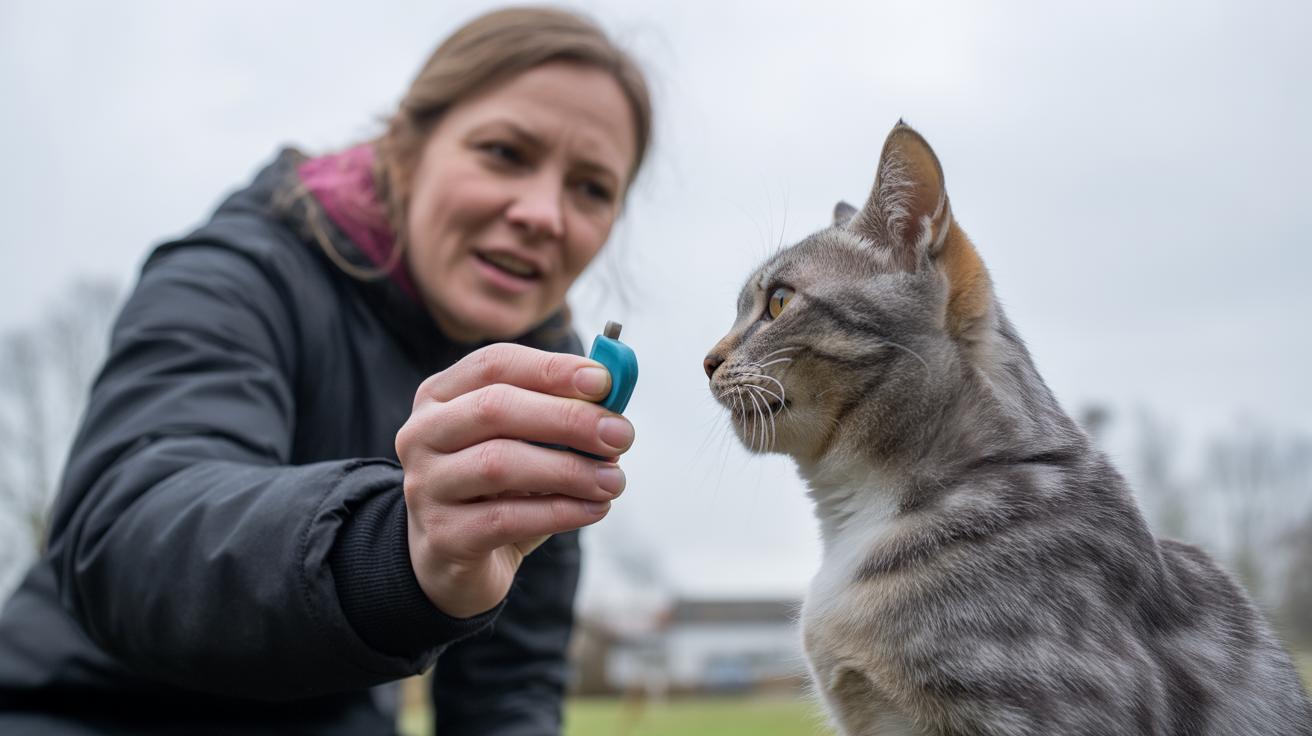
    A cat clicker is a tiny marker device (a little gadget that signals the exact moment your cat does something you want) that makes the same clear sound every time. Ever watched your kitty time a pounce perfectly? That click tells them, "Yes , do that again." It’s simple, and oddly satisfying.

    For skittish or noise-sensitive cats, try a quiet vibration marker (a small buzzer you feel more than hear) or an LED marker (a little light that blinks when you press it). For most folks, a handheld spring clicker (a small plastic tool with a metal strip that snaps and makes the click) is the default , it’s tactile, reliable, and easy to tuck in your pocket. This is the fastest way to begin clicker training. Here’s how to use a cat clicker:

    1. Load the marker: click, then give a tiny, high-value treat (something your cat really loves, like a small piece of tuna). Repeat until the sound predicts the reward.
    2. Capture or prompt a simple behavior, and click at the very instant it happens. Timing matters.
    3. Reward immediately , within one second , and keep sessions short. Five one-minute bursts or several 3-5 minute sessions work better than one long lesson.
    Action Timing Why
    Load Click, then treat (repeat) Links the sound to a reward so your cat notices the marker
    Click timing Click at the exact instant the behavior occurs Marks the precise moment you want your cat to repeat
    Reward window Give treat within 1 second; treat ≈ tip of a little finger Keeps the connection strong; short, frequent sessions build habit

    You’ll often see a lightbulb moment in minutes. Some tricks click into place after a few short sessions; others take a couple of weeks. Worth every paw-print.

    Key numbers cheat-sheet

    - Key numbers cheat-sheet.jpg

    This is your quick, go-to reference for clicker training numbers, timing, and reps. Use this box so you do not have to repeat counts all over the article. Quick note: "pairings" (click + treat) and "shaping" (rewarding tiny steps toward a goal).

    Short bursts, tiny treats, perfect timing. Ever watched your kitty pounce because of one well-timed click? These numbers help you get that moment more often.

    Metric Suggested value Notes
    Reload / pairings (click + treat) 20–30 Builds the click→reward connection
    Click-to-reward window Within 1 second Timing is everything for clear feedback
    Session format Five 1-minute bursts or 3–5 minute sessions Short, frequent practice beats long sessions
    Early reps per session 10–20 successful clicks Good for the first shaping steps
    Treat size About a fingertip Small bites keep motivation high and calories low
    Treat kcal per bite About 1–3 kcal Track treats so you do not add extra daily calories
    Shaping reps per step 10–20 clicks Click for small approximations until the behavior is steady
    Fading / reset guidance Move to intermittent rewards; reset 2–3 sessions if needed Raise criteria slowly and step back if reliability drops

    Use these numbers as a starting point and tweak for your cat. Worth every paw-print.

    Types & who they suit
    - Types  who they suit.jpg

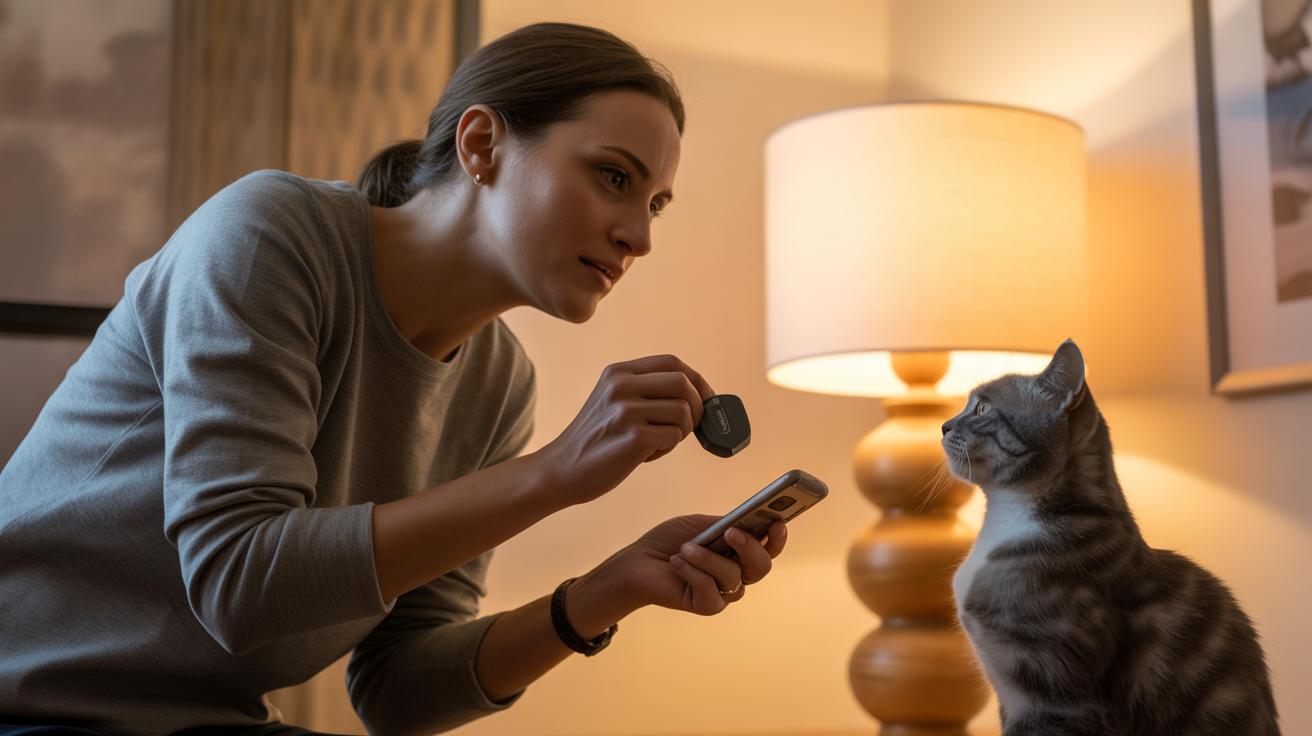
    There are six common kinds of cat clickers you’ll find: handheld spring clickers (small handheld button that makes a sharp snap), silent/vibration markers (tiny buzzer you feel more than hear), LED or visual markers (light-based signal), automatic or timed clickers (pre-set electronic clicker), smartphone app markers (phone-based sound or flash), and remote clickers (handheld transmitter). They all tell your cat “good job,” but they do it with a snap, a buzz, a blink, or a timed beep, so pick the one that fits your cat’s ears and nerves.

    • Handheld spring clicker (small handheld button that makes a sharp snap)
      Pros: it gives a clear, reliable tone and you get nice tactile feedback when you press it. Cons: some noise-sensitive cats jump or hide, and cheap plastic can wear out. It’s the classic starter clicker.

    • Silent / vibration marker (tiny buzzer you feel more than hear)
      Pros: perfect for shy, anxious, or feral cats who hate noise. Cons: you might miss the faint buzz if you’re distracted. Use this when trust is still being built.

    • LED / visual marker (light-based signal)
      Pros: great for deaf cats or loud rooms, because a flash can beat out chaos. Cons: it needs a clear line of sight and can disappear in bright sunlight. Try it for kittens who watch things with laser focus.

    • Automatic / timed clicker (pre-set electronic clicker)
      Pros: handy for distance work or sequences that need exact timing. Cons: you’ll need to test and tweak the timing so you don’t click late. Works well when you want hands-free precision.

    • Smartphone app marker (phone-based sound or flash)
      Pros: super convenient, can log sessions and offer lots of sounds. Cons: phone lag, notifications, or distractions can mess things up. If your phone buzzes mid-click, your cat will notice.

    • Remote clicker (handheld transmitter)
      Pros: nice for training at a distance when you don’t have a helper. Cons: can be bulkier and may get pressed by accident. Keep it in a pocket with the button covered.

    Match the device to your cat’s temperament and life stage. For most pet cats and new trainers, the spring clicker is the go-to because it’s simple and tactile. For nervous cats or recent rescues, reach for a silent vibe marker so your cat doesn’t flinch. Kittens usually learn fast with any gentle marker, but very young or skittish kittens often prefer a visual or vibe marker until they relax. If you need hands-free timing for complex tricks, try an automatic clicker, just practice the timing.

    Try new sounds and buzzes from a safe distance before you commit, watch for twitchy ears, flinches, or sudden hiding. When you switch marker types, “reload” the new marker using the Key numbers cheat-sheet so your cat quickly learns the new signal. If you can only buy one, get a trusty spring clicker, then swap to a vibe or LED if your cat shows stress.

    When to pick a silent or vibration marker

    If your cat freezes, runs, or flattens its ears when you click, that’s your cue to try a silent or vibration marker. These work especially well for feral or newly rescued cats that are still learning to trust humans. Pair the buzz or light with a treat the same way you would with any marker so the cat links the signal to reward. Check the Key numbers cheat-sheet for how many pairings to use, consistency wins.

    Clicker Type Best for Primary drawback
    Handheld spring clicker (small handheld button that makes a sharp snap) Everyday pet cats and beginners May startle noise-sensitive cats; plastic can wear
    Silent / vibration marker (tiny buzzer you feel more than hear) Shy, anxious, or feral cats Owner might miss the subtle buzz
    LED / visual marker (light-based signal) Deaf cats or noisy training areas Needs clear sightline; less visible in bright light
    Automatic / timed clicker (pre-set electronic clicker) Distance work and timed sequences Requires careful calibration so timing stays precise
    Smartphone app marker (phone-based sound or flash) Tech-forward trainers and session logging Phone lag, notifications, or accidental distractions
    Remote clicker (handheld transmitter) Training at a distance without a partner Can be bulky or accidentally pressed

    cat clicker: how to choose and use one
    - cat clicker features to look for size, durability, volume, and comfort.jpg

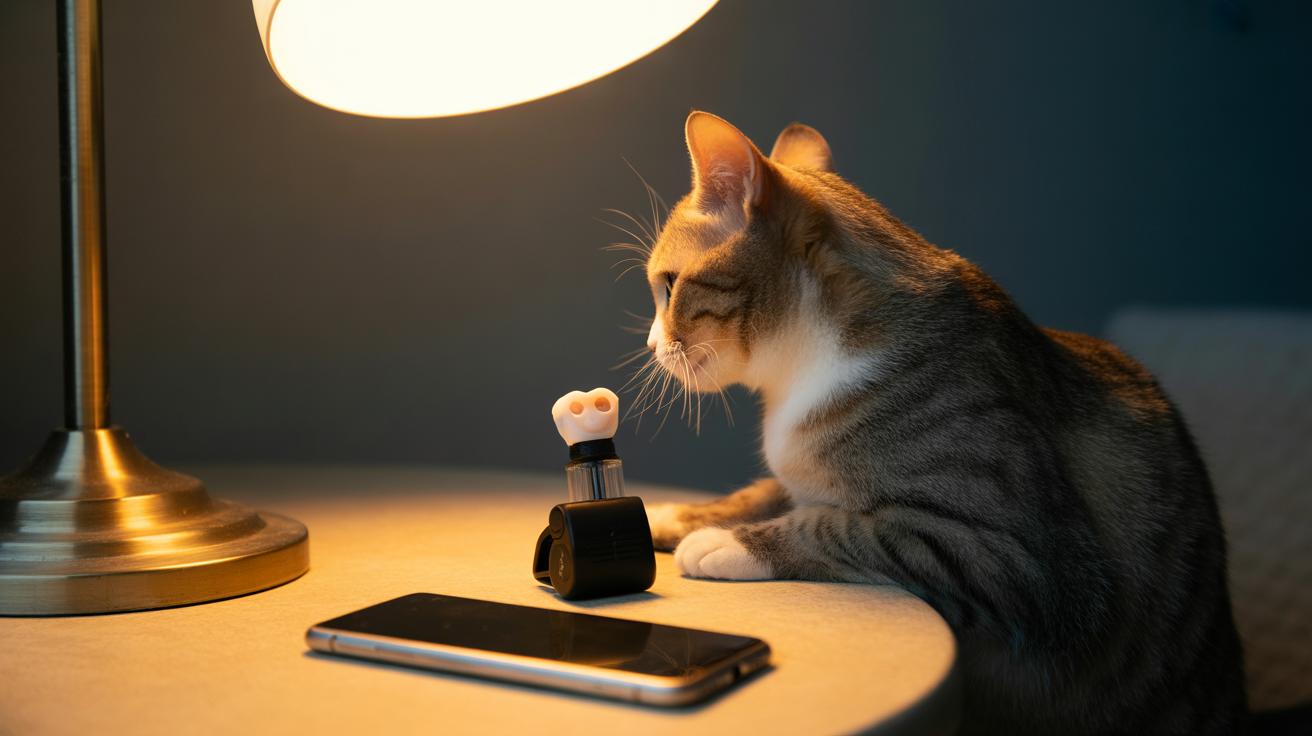
    Look for clicker features that make training quick, comfy, and built to last. Think a steady tone or a small vibration (a tiny buzz you can feel), a comfy grip, volume control or a silent mode, and a sturdy spring mechanism (a thin metal strip that snaps) or solid plastic housing (the outer case). Add a clip or lanyard so it’s always at hand, and pick a simple shape that cuts down on accidental presses. Ever watched your kitty twitch when a sound is just right? That’s the goal.

    Before you buy, try the click signal a few steps away to see how your cat reacts, and have several tiny treats ready to pair with the sound. Short, consistent training wins over long noisy sessions.

    • Tone consistency: Click several times. The sound should be the same every press so your cat learns the signal fast. Test: click 8 to 10 times and listen for any changes in pitch or length.

    • Volume control or silent mode: Some clickers let you dial the sound down or switch to a vibration-only option (a gentle buzz). Good for skittish or older cats. Test: flip through the settings and click a few feet away to see which your cat prefers.

    • Grip and ergonomics: It should feel natural in your hand for quick repeats during play. Test: hold it like you’ll use it and mimic short, fast clicks while reaching around a couch or chair.

    • Size and portability: Pocketable clickers make on-the-go sessions easy. Test: slip it in a pocket and walk around to check comfort and accidental presses.

    • Spring durability: The internal spring (that snapping metal strip) needs to last so the click stays sharp. Test: press it repeatedly to check for flimsiness or a slow return.

    • Attachment options: A clip or lanyard keeps the clicker handy when you’re carrying toys or treats. Test: clip it on and walk a short lap to see if it bounces or gets in the way.

    • Price range: You can find solid budget clickers and fancier models with extra features. Decide if a volume dial, vibration mode, or ergonomic design is worth a few extra bucks for you. Test: compare tone, feel, and features across a couple price points.

    • Warranty and return policy: Look for sellers who accept returns if the tone or build doesn’t work for your cat. Test: read the small print before buying so you’re not stuck with the wrong clicker.

    Quick tips: use tiny, tasty treats so your cat associates the click fast. Keep sessions short and fun. Worth every paw-print.

    Start training now: a beginner's cat clicker training plan
    - Start training now a beginners cat clicker training plan.jpg

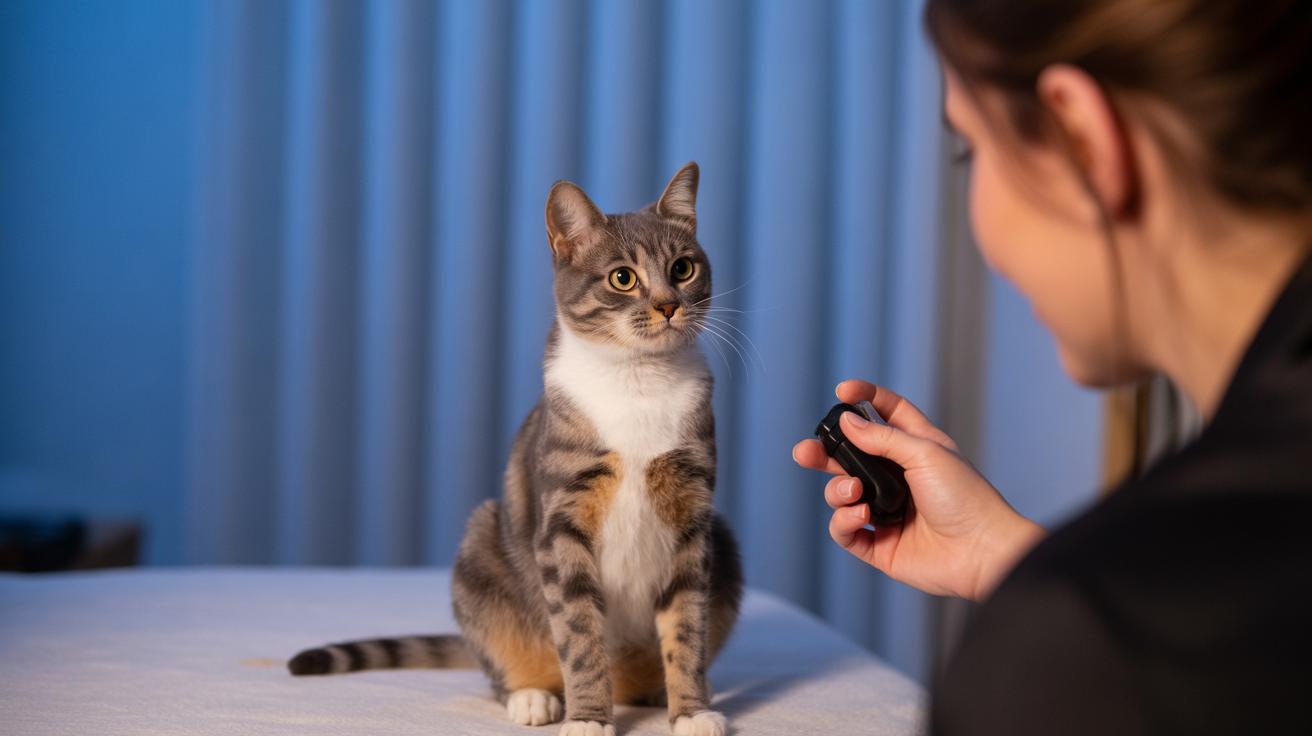
    Loading phase: sit with your cat and a small dish of tiny, smelly treats (think fingertip-sized pieces of roast chicken or a fishy Churu bite). Have a clicker (a small device that makes a clear click) or use a marker sound (the consistent click that marks a good moment). Press the click and immediately offer a treat. Repeat calmly until your cat looks at you when they hear the sound. You’re simply teaching the sound = good thing. Easy, right?

    Capturing and timing basics: pick a behavior your cat already does on their own , a sit, a head-turn toward your hand, or a nose touch to a target (a small object your cat can touch with their nose). Click the exact instant the behavior happens, then give the treat right away. Click-then-treat timing is everything: click the moment, treat within one second. Do short little practice bursts so your timing gets sharp and your cat stays excited.

    1. Load the marker with quick click → treat pairings.
    2. Capture one simple behavior your cat already offers.
    3. Click at the precise instant the behavior happens.
    4. Reward immediately with a tiny treat (about fingertip size).
    5. Repeat in short bursts and stop while your cat still wants more.

    Cue introduction and progression: once the cat repeats the behavior reliably for the click, start adding a short cue word just before the action , one syllable like “sit” or “touch.” Say the cue as your cat begins to move into the action, click the correct behavior, and reward. That’s how the clicker builds a verbal cue. As your cat gets steadier, add small challenges: take one or two steps back, toss in a soft distraction, or ask for a slightly longer hold. If you want exact repetition targets, check the Key numbers cheat-sheet for suggested pairing and rep counts instead of guessing.

    Session scheduling and reinforcement progression: keep sessions short and frequent , lots of tiny practices beat one long grind. Stop before your cat loses interest; always end on a good response so training stays fun. After a behavior is solid, move from giving a treat every click to a mix of treats, praise, or a quick toy toss so your cat stays motivated without expecting food every time. This is classic clicker training: clear signals, tasty rewards, and gradual increases in challenge. Expect quick wins in minutes for simple stuff, and steady progress over days to weeks for trickier moves.

    Worth every paw-print.

    Sample 7-day starter schedule

    • Day 1: Load the marker with calm click → treat pairings; make the sound predict a reward.
    • Days 2–3: Capture an easy behavior (sit or touch) and reinforce in short bursts.
    • Day 4: Add a one-word cue just before the action; click and reward when your cat does it.
    • Day 5: Practice at a small distance (one or two steps back) and keep sessions short.
    • Day 6: Add a mild distraction (a toy nearby or soft noise) and keep click-then-treat timing tight.
    • Day 7: Reduce treat frequency a bit; mix in praise or a quick toy reward while checking progress.
    • After week one: consult the Key numbers cheat-sheet for exact pairing and rep counts to shape longer sequences.

    cat clicker: how to choose and use one
    - Troubleshooting when your cat ignores the marker or loses interest.jpg

    If your cat ignores the clicker, don’t worry , this is super common. Most of the time it’s simple stuff: you clicked a hair late, the treat wasn’t exciting, the room was noisy or full of distractions, the click sound startled them, or the session was too long and they just tuned out. These are the usual suspects when people ask why the clicker stops working.

    Quick fixes to try right now: move to a quieter spot and sit at your cat’s level so you’re part of the world they see, switch to a stronger-smelling treat or a favorite toy, keep practice bursts short, and have a partner watch you click so someone can confirm your timing. If you changed your marker sound recently, reload the new signal by pairing click then treat a few times (reload = re-teach the click means reward). Think of reloading as making the click exciting again.

    1. Check timing accuracy – click the exact instant the behavior happens. Timing is tiny but everything.
    2. Reduce distractions – try a calmer room with fewer people or loud noises.
    3. Upgrade reward value – use smellier, tastier treats or something your cat really loves.
    4. Shorten session length – stop while your cat is still eager. Ten quick reps beat one long snoozy session.
    5. Health check – make sure your cat doesn’t have a sore mouth, low appetite, or other issues.
    6. Recondition the marker – pair click then treat several times so the sound means the same thing again (marker = the sound that marks the behavior).
    7. Have an observer watch and click – a second pair of eyes can confirm your timing and help you learn.
    8. Try toy rewards – feather wands, quick tosses, or a tiny play burst can beat food sometimes.

    If you stall, break the goal into tinier steps and click small approximations , that’s shaping (making a big trick from lots of little wins). If things still feel stuck, check your cheat-sheet for how many reload pairings and ideal session lengths, and switch rewards if your cat gets bored. Keep it fun and short. Worth every paw-print.

    Advanced cat clicker training: shaping, chaining, and fading the marker
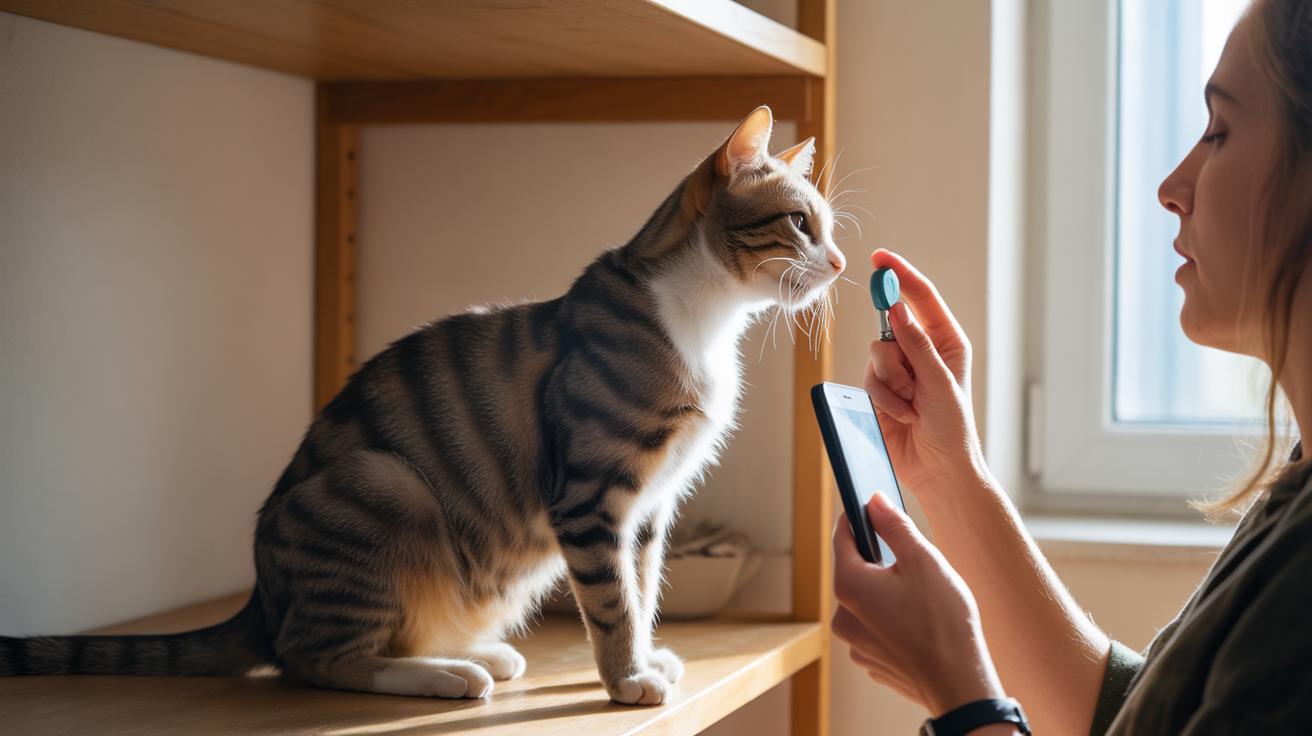
    - Advanced cat clicker training shaping, chaining, and fading the marker.jpg

    Shaping with a clicker (a small device that makes a clear click to mark a behavior) means rewarding tiny steps toward a final move instead of waiting for the whole trick to show up. Click for the little wins, look, approach, touch, then slowly raise the bar so your cat learns the path to success. Think of it like teaching a dance one step at a time; each click says, "Yes, that was it," and your cat figures out the rest.

    Chaining (linking trained parts into one smooth sequence) takes those tiny steps and stitches them together. Teach each subtask, then click and reward as you connect them so the whole action flows. It’s like stringing beads: one bead at a time becomes a necklace that your cat can wear, claw-tastic, right?

    Start simple and practical. Break the goal into very small targets, click precise approximations, and only bump up the requirement once the current step is steady. Keep rounds short and fun so your cat stays curious instead of bored, ten minutes of playful focus beats an hour of meh. If a session goes sideways, toss in a quick easy win to rebuild confidence.

    Fade the clicker (slowly reduce reliance on the click sound and treats) once performance is reliable. Move from treats on every click to a mix of treats, praise, or toy rewards. If reliability dips, go back to denser clicking for a few sessions, then try fading again. Patience here pays off, your cat learns to work for different rewards.

    Example: shaping a cat to jump onto a shelf in 8 steps

    1. Look at the shelf edge when you point (click the look).
    2. Step toward the shelf (click the movement).
    3. Put front paws on the shelf edge (click paw placement).
    4. Shift weight forward onto the front paws (click the shift).
    5. Make a small partial hop with hind feet still on the floor (click the hop start).
    6. Push so the hind feet leave the floor a little (click mid-jump).
    7. Land both front paws fully on the shelf (click the landing).
    8. Settle weight fully on the shelf so your cat looks comfy (click the full position).
    • Fading schedule: begin with continuous treats, then follow the Key numbers cheat-sheet for gradual intermittent rewards and session counts.
    • If performance slips, go back one step and reinforce with more successful clicks per the cheat-sheet.

    If fading causes confusion, first check your timing and reward value, late clicks or weak treats undo progress fast. Click right when the action happens (within a beat), and use treats your cat really loves. Keep sessions short, re-split steps if needed, and remember: steady small successes beat big leaps.

    Worth every paw-print.

    cat clicker: how to choose and use one
    - Safety, alternatives, and recommended cat clicker models and resources.jpg

    Safety first. A marker (the click or sound you pair with a treat) is a signal, not punishment, so never use it to scold your cat. Watch for stress signs like flattened ears, a tucked posture, or a fast-flicking tail, and stop the session if your kitty looks uncomfortable. If your cat just had surgery or is sick, pause training and check with your veterinarian before you start again.

    Keep treats tiny. Use bite-size rewards and shave a little off your cat’s regular meals so you’re not adding extra calories (see the Key numbers cheat-sheet for kcal per treat and daily training allowance). Short sessions win: three to five minutes a few times a day beats one long, frantic round.

    If a clicker isn’t a good fit, pick a consistent substitute: a short verbal marker (one quick word or sound you always use), a vibration marker (a little buzz), or an LED marker (a tiny blinking light). Think of the marker like a camera flash for your cat’s brain , a quick pop that means “yes, good job.” DIY options that work: snap your fingers or tap a small metal lid, as long as the sound is distinct and you pair it reliably with treats. Apps can be handy, but watch for phone lag or incoming notifications that can mess up timing.

    For recommended models, use the single model table elsewhere in this article so you don’t repeat choices. When you pick a model, match the tone, volume control, or vibration to your cat’s noise sensitivity and training goals , some cats love a loud click, others prefer a soft buzz. And hey, if your cat prefers purring to clicking, try different markers and see which one gets those whiskers twitching.

    Final Words

    Load the marker, click the exact instant the behavior happens, and reward within one second. Start with tiny, tasty treats and short bursts so your cat stays curious.

    Pick a clicker type that fits the cat, spring clicker (small handheld you press) for most, silent/vibe (gentle buzz) for shy kitties, and check tone, grip, and durability before you buy. Use the cheat-sheet for counts, follow the week-one plan, and try shaping (rewarding tiny steps) when basics click into place.

    Give it a few quick sessions and you’ll see real progress in days. Think cat clicker: how to choose and use one , happy practice, happy cats.

    FAQ

    How to use a cat clicker?

    To use a cat clicker, first load the marker (a distinct sound that marks the exact moment), click the instant the behavior happens, reward within one second, and keep sessions short and playful.

    Where can I find cat clicker training videos or Cat School resources?

    Cat clicker training videos live on YouTube — search for terms like clicker training cats, kitten clicker training, or Cat School; pick clear, step-by-step demos from trainers or vet-backed channels that show timing and treats.

    How to train a kitten with a clicker?

    Pair the click with tiny tasty treats, capture simple actions like look or sit, click the exact instant, reward immediately, and keep sessions under a few minutes.

    How to train a cat with treats?

    Mark the exact moment with a click or short word, give a fingertip-sized, high-value treat within one second, and repeat in short, frequent bursts until reliable.

    What is the 3-3-3 rule for cats?

    The 3-3-3 rule means three days to settle into a new space, three weeks to show more personality, and three months to feel comfortable and settle into routine.

    How to choose a cat toy?

    Match toy type to play style (chaser, pouncer, chewer), pick durable, non-toxic materials, check size for safety, and test moving or noisy toys from a safe distance.
  • Best cat training treats for small soft rewards

    Best cat training treats for small soft rewards

    Are big, crunchy treats secretly sabotaging your cat's training?
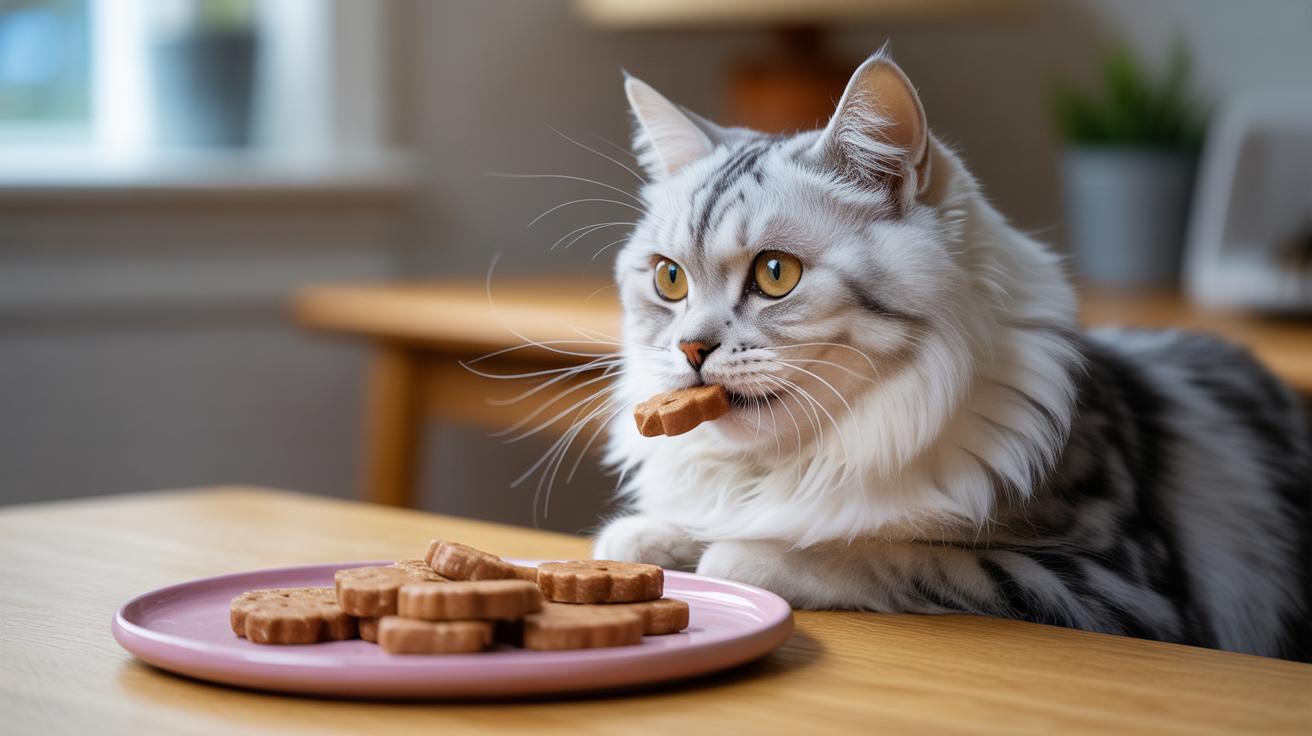
    Short answer: probably. Big, crunchy bites slow your cat down, make them chew, and cut the number of repeats you can do. For faster learning, use tiny, soft rewards that disappear in a blink, low kcal (calories), and let you deliver lots of quick successes. Check out our guide on Clicker Training for Cats.

    Look for these things: small size , think pea-sized or smaller so your cat eats it in one snap. Meat-first ingredients (meat listed first on the label) for real motivation. Easy-to-break texture (crumbles into tiny pieces without much chewing) so you can hand out repeats fast. The more reps per minute, the faster the skill sticks.

    Freeze-dried versus lickable , when to pick which. Freeze-dried (dehydrated quickly so it’s lightweight and very smelly) is great when you need a high-value treat on the go; crumble it into flakes. Lickable (a soft, paste-like treat you can smear) works well for close-up training, hand-targeting, or with kittens and picky eaters who won’t crunch. Both have their moments, so match the format to the trick.

    DIY swaps and portion tips: tear cooked chicken or turkey into tiny bits, or spoon a dab of wet food and let it set on a plate before pinching off pea-sized pieces. Aim for treats under about 2 kcal (calories) each so you can do lots of reps without packing on pounds. Keep sessions short , a few minutes with lots of tiny wins , and save the big crunchy stuff for behavior playtime, not training.

    Think of this as your cheat-sheet for snack-powered training. Worth every paw-print.

    Buying checklist: what to look for in training treats

    - Buying checklist what to look for in training treats (answers the core training-treat questions).jpg

    Pick small, low-kcal (calories), breakable, meat-based treats. They’re perfect for quick, repeat rewards and keeping your cat motivated, think tiny bites you can hand out fast.

    • Size and kcal per piece: check the package for kcal (calories) per treat and aim for about 2 kcal or less each. That way you can give lots of reps without blowing their daily calories.
    • Protein source: choose single-protein treats (one animal source, like chicken or turkey) or meat-first-ingredient clicker options so the food matches a cat’s meat-focused needs.
    • Breakability: pick treats that reliably break into micro pieces (tiny bits) so you can reward quickly and get back to training. Fast reward, fast learning.
    • Texture suitability (one short phrase): "fast-to-eat micro dry" for high-rep work; "soft/lickable" saved for special, high-value tasks (see texture H2). Ever watch a cat savor a lickable treat? That’s high-value right there.
    • Moisture and hydration: moisture-rich treats (soft, wet options) are great for hydration or hands-on handling work, but use them sparingly and skip other treats that day to balance calories.
    • Vet and diet flag: if your cat is on a prescription or restricted diet, avoid non-approved treats and check with your veterinarian first.

    For texture and format advice, head to the Cat training treats by texture and format section, and for full calorie math and session planning, see Portion control and calories.

    For quick DIY recipes and low-cost swaps, check Homemade and DIY cat training treats, and for timing and pacing, see Using cat training treats within clicker and marker training protocols.

    Cat training treats by texture and format: when to use freeze-dried, crunchy, and lickable rewards

    for format-specific use-cases.jpg

    Pick the treat texture for the job. Tiny, fast-to-eat pieces are perfect for lots of repeats. Whole freeze-dried morsels work for quick wins. And wet, lickable rewards are the go-to when you need calm, focused behavior.

    Freeze-dried treats (moisture removed quickly to lock flavor) are amazing when you want something small and super smelly. They break cleanly, so your cat gets the reward in one quick bite. Your kitty smells it, gets a hit of flavor, and goes right back to the task. Ever watched whiskers twitch at a tiny, fragrant crumb? Yeah, that.

    Crunchy, dry bites are the session workhorses. Bite-sized pieces (tiny nibbles that fit one mouthful) are easy to carry, easy to toss, and low mess. They give you endurance for lots of reps without sticky hands. The satisfying crunch helps too. Your cat learns, you don’t lose your treats, win-win.

    For hands-on stuff like grooming, nail trims, or vet-style handling, use lickable treats (a smooth purée, like a tasty paste). They’re moist, high value, and hold attention during slow, careful steps. I once held my cat for a nail trim by feeding tiny licks one at a time , calm the whole way through.

    Quick tip: bring two formats to a session. A stash of micro dry pieces for rapid reps and a tube or packet of lickable treats for the tough moments. It keeps training snappy, saves the wet rewards for big progress, and makes practice feel like playtime for both of you. Worth every paw-print.

    Portion control and calories for cat training treats (how many treats per session)

    ).jpg

    Keep treats tiny and count the calories. Aim for about 2 kcal or less per training treat, and keep all treats to roughly 10% of your cat’s daily calories. kcal (kilocalories, the "Calories" listed on food labels) is what we mean here. Small, breakable pieces let you run lots of reps without tipping the scale.

    If your cat’s daily food target is 200 kcal, set aside about 20 kcal for treats , that’s roughly ten 2-kcal pieces. Micro treats (tiny crunchy bits, about 1–2 kcal each) let you do lots of quick repetitions. Freeze-dried morsels (meat quickly dried to lock in flavor) vary in size, so if you’re unsure use a single-ingredient benchmark like PureBites (~2 kcal each) for a safe guess.

    Treat Format Approx kcal per unit Suggested max per 100 kcal allowance
    Micro dry treat (tiny crunchy bit) ~1–2 kcal 50–100
    Freeze-dried morsel (single-ingredient meat) ~2 kcal ~50
    Lickable 2-oz portion (syrupy or paste reward) ~6 kcal ~16 – use sparingly
    Crunchy commercial treat ~1.5 kcal ~66

    On training days, reduce the regular meal by the same calories you give as treats so daily intake stays steady. Use micro treats for fast clicker work and save lickable rewards for tough steps or vet-handling practice , that mix helps you train more without weight gain. Ever watched your cat pounce on a tiny morsel and feel like a proud coach? Worth every paw-print.

    Using cat training treats within clicker and marker training protocols (timing, pacing, and transition plans)

    for specific scenarios and to the Portion control section for full calorie math and session planning.jpg

    Marker training uses a short signal (a click) to mark the exact behavior, then you give a treat right away to make that action stronger. Think of the click as a tiny, precise high-five for your cat. Keep the click crisp. Give the treat faster than your cat can blink so the link stays clear in their head.

    Timing and micro-rewards

    Aim to click, then treat, in under one second. Fast timing ties the sound to the behavior, so your cat knows exactly what earned the reward. Use one-bite treats or broken freeze-dried pieces (freeze-dried means the water is removed to lock in flavor) that your cat can eat instantly and get back to work. Your cat’s whiskers will twitch as the treat disappears , cue the zoomies, maybe.

    Sample session plan:

    • Warm-up: 5 to 10 minutes of easy, fun play to get attention.
    • Training block: 20 to 50 quick reps using micro-treats (small bites, rapid succession).
    • Finish: one high-value reward for a shaped step or a little celebration.

    Short sessions beat long ones for focus and learning. Hands-free clickers (like ring clickers) speed your response and help you avoid spooking skittish cats.

    Moving from continuous to intermittent reinforcement

    Start with continuous reinforcement (reward every correct response) while you’re shaping a new behavior. Once the behavior is reliable, slowly reduce how often you treat. Move to variable schedules , reward every 2nd, then every 3rd, then make it unpredictable , so the cue stays strong even when food isn’t offered.

    Keep a mix: low-value micro-treats for routine reps, and save lickable purées or other high-value rewards for tough steps, vet handling, or outdoor distractions. If you plan a heavy training day, reduce mealtime food slightly so total calories stay steady and your cat stays motivated (don’t overfeed, but don’t starve them either).

    I once watched Luna nail a tricky jump after three days of short, snappy sessions , worth every paw-print.

    Homemade and DIY cat training treats and safe substitutions

    - Cat training treats by texture and format when to use freeze-dried, crunchy, and lickable rewards.jpg

    Pick tiny, soft, low-calorie, single-protein bites you can hand out fast, so you can keep reps high and your cat’s tail twitching. Small treats mean one-chomp rewards and lots of training wins. Easy to make, easy to portion, and usually cheaper than store micro-treats.

    Micro baked chicken bites
    Finely chop or pulse one cooked boneless, skinless chicken breast (chicken breast, cooked and trimmed of bone and skin) into a smooth paste. Add about 1 teaspoon of water if it’s too dry, then press the paste thinly onto parchment paper. Bake at 300°F (150°C) for 12–15 minutes, just until the sheet sets. Cool, then snap into pea-sized bits , about 1 gram each, roughly 1.5–2 kcal per piece. The texture is soft but holds together, perfect for one-chew training. Store in the fridge for 3–4 days or freeze in portioned zip bags for longer.

    Pumpkin-salmon soft morsels
    Stir 1/2 cup plain canned pumpkin (plain pumpkin, not pie filling) with 1/2 cup cooked or canned salmon (drained and flaked). Spoon dime-sized blobs onto a tray and bake 8–10 minutes at 300°F (150°C) to firm them up, or just chill in the fridge if you want a softer, lickable treat. Aim for about 1–2 grams per morsel , roughly 1–3 kcal depending on how much salmon you used. Keep refrigerated 3–4 days or freeze single-use portions for up to 3 months.

    Quick substitutions and tips

    • Single-ingredient freeze-dried fish or meat works brilliantly for low-effort micro treats (freeze-dried means the water’s removed fast to lock in flavor).
    • Plain meat baby food (meat-only jars) makes an on-the-spot lickable reward for handling or grooming sessions , just spoon out tiny amounts.
    • If your cat has a restricted diet, check with your vet before trying new proteins.
    • For speed, use a small cookie scoop or the tip of a teaspoon to portion consistently.

    Try a few kinds and see which one makes your cat go claw-tastic. I once watched a timid rescue pounce like a tiger for a salmon nub , worth every paw-print.

    Choosing cat training treats for kittens, seniors, and sensitive cats (age, dental, and allergy guidance)

    - Portion control and calories for cat training treats (how many treats per session).jpg

    Kittens need tiny, soft rewards they can eat in one bite. Pick soft morsels, moist lickables (sauce-like soft treats), or very small freeze-dried pieces (freeze-dried – water quickly removed to lock in flavor) so a teething kitten can chew without effort. Keep portions smaller than you would for an adult, tie treats to their meal plan so calories stay balanced, and check the package age guidance before giving anything to kittens under 12 weeks.

    Older cats often lose chewing power, so choose dental-safe soft chews (gentle on gums and easy to crumble) or freeze-dried bits that crumble with light pressure. A little moisture helps – dampen a crunchy bite with water or add a dab of wet food to soften it. Watch them closely the first few sessions; if they paw at their mouth or drop pieces, switch to softer textures right away.

    If your cat has a sensitive stomach or you suspect a food allergy, keep it simple. Try single-ingredient freeze-dried meats (one animal protein only) or limited-ingredient commercial lines (only a few ingredients to lower risk). Start with tiny samples, then watch stool, appetite, and energy for a few days before making the treat part of routine.

    Quick vet-check steps:

    • Ask your veterinarian before giving treats to cats on prescription diets or with medical issues.
    • Start new treats as tiny samples. Observe stool and appetite for 3 to 7 days.
    • Stop and consult your vet if you see vomiting, diarrhea, or loss of appetite.

    Ever watched a kitten try a new treat and suddenly turn into a tiny purring vacuum? It’s the best. Worth every paw-print.

    Best brands and category picks for cat training treats (high-value, budget, and single-ingredient options)

    - Using cat training treats within clicker and marker training protocols (timing, pacing, and transition plans).jpg

    Pick treats by the job you want them to do: fast repetitions, tough behaviors, or simple nutrition-first rewards. Match the treat type to your session style and your cat’s taste so you get motivation without sneaky extra carbs or calories. Sounds obvious, but it changes everything.

    High-value rewards
    For slow, careful work or scary vet practice, use lickable purées and toppers. Think Inaba Churu-style tubes , moisture-rich (high water content, easy to lick) and totally irresistible , a 2-oz tube is about 6 kcal (calories), so save those for grooming, handling practice, or the really hard steps where you need full attention. They calm cats and buy you focus one lick at a time. Seriously, the slick, meaty lick will get even a distracted kitty to tune in.

    Budget and everyday reps
    Want lots of cheap repetitions? Small crunchy bits are your friend. Temptations are cheap and everywhere, but they include corn and wheat and have more carbs than meat-first treats , so they’re great for play practice but not ideal if you’re watching protein or carbs. A mid-tier crunchy like Shameless Pets (salmon-first, about 1.5 kcal each) gives more protein and tossability for long sessions. Toss, click, repeat , your hands stay clean and the session can last longer.

    Single-ingredient and freeze-dried picks
    When scent and pure protein matter, go freeze-dried. Freeze-dried (water removed to lock in flavor and nutrients) treats like PureBites Freeze-Dried Chicken are single-ingredient and roughly 2 kcal per piece , high protein, low fat. The catch: pieces can crumble and vary in size, so you’ll want to break them into micro pieces for fast clicker work. Bonito flakes are another single-ingredient fave (high protein and omega-3s), but they’re messy and flaky, so plan for a little cleanup.

    Shopping checklist (quick, useful stuff)

    • Check kcal per piece (kcal means calories) so you can track session totals.
    • Confirm the ingredient list shows a single animal protein or a meat-first formula.
    • Make sure the treat reliably breaks into micro-pieces for quick reps.
    • Note packaging and shelf-life so treats stay fresh between sessions.

    A final tip: for busy days, stash a few high-value licks for the really important drills and use tossable crunchies for warm-ups. Worth every paw-print.

    Treat-carrying gear, storage, and travel options for cat training treats

    - Homemade and DIY cat training treats and safe substitutions.jpg

    Grab a small treat pouch with a drawstring or zipper that clips to your belt. Pick one with a secure closure and a wipeable lining so crumbs don’t turn into a mystery science project. Add a hands-free clicker or ring clicker (a small device that makes a sharp sound to mark the behavior) so your timing stays spot on and you don’t spook a shy kitty. Ever had treats hide in your pocket right when your cat finally looks your way? Yeah, not cute.

    For outings, portion your treats ahead of time. Pre-portion micro dry bits (very small crunchy kibble pieces) into resealable snack bags so you can snap one out, toss it, and keep moving. Bring a small travel spoon or a silicone cup (flexible, easy-to-clean cup) for lickable toppers , those soft, moist treats you spread or spoon , and toss in a tiny cooling pack (a small gel pack) if you’re carrying wet toppers. Measure portions before you go so you don’t accidentally overfeed during a session. Quick training, happy cat, less math.

    At home, store treats in a cool, dry spot and reseal bags or use airtight jars (containers that keep air out and freshness in) for crunchies and freeze-dried treats (made by quickly removing water to lock in flavor). Check expiry dates now and then, and wash your pouch, spoon, or silicone cup between uses. Pre-portioning saves time, keeps calories predictable, and makes training on the road way less chaotic.

    Worth every paw-print.

    Final Words

    In the action: choose small, low-kcal, breakable, meat-first treats for fast reps and steady weight – think micro dry or tiny freeze-dried (dehydrated to concentrate flavor) bites.

    Check texture/format notes for when to use crunchy tossables versus lickable purées (moist, high-value reward) and see the portion-control section for the full calorie math and session planning.

    For DIY recipes and clicker timing tips, try the homemade micro-bites and the timing plan in the clicker section – your cats get mental play, you save cash and furniture, and training with cat training treats feels fun and doable.

    FAQ

    What are the best treats for training cats?

    The best treats for training cats are tiny, low-kcal (~1-2 kcal) single-protein pieces you can break into micro bits — freeze-dried or crunchy for quick reps, with lickables saved for high-value rewards.

    What are low-calorie cat treats for training?

    Low-calorie cat treats for training are micro pieces around 1-2 kcal (calories) each, letting you run many short repetitions while keeping total daily treats near 10% of calorie intake.

    How many treats should I give per training session?

    The number of treats per session depends on kcal; aim for 20-50 quick reps with micro 1-2 kcal treats, and keep total daily treats inside the ~10% calorie allowance.

    Do you have a simple cat training treats recipe or DIY options?

    Homemade training treats work: tiny baked chicken bites (350°F, 10–12 minutes, cooled and cut to ~2 kcal pieces) or pumpkin-salmon soft morsels; plain meat baby food makes a quick lickable reward.

    What are the best treats for kittens?

    For kittens, choose very small soft or wet treats, tiny freeze-dried flakes, or softened morsels; give smaller portions than adults and check package age guidance or your vet before treats under 12 weeks.

    Are Churu-style treats good for training?

    Churu-style lickable purées are great high-value rewards for vet handling or hard behaviors; they’re hydrating (lickable paste) but a 2-ounce tube is about 6 kcal, so use sparingly.

    What is the 3-3-3 rule for cats?

    The 3-3-3 rule for cats means: 3 days to hide and settle, 3 weeks to explore and learn household routine, and 3 months to fully relax and bond with your home and people.

    How do I apologize to my cat?

    Apologizing to your cat looks like a soft voice, slow blinks, gentle pats if welcome, offering a tiny favorite treat, giving space, then short play or cuddles when they’re ready to reconnect.

    What is one meat I should never feed my cat?

    One meat to avoid feeding cats is raw pork, which can carry parasites and harmful bacteria; feed cooked pork only and check with your vet if your cat has special diet needs.

  • Clicker Training for Cats: Step-by-Step Tips

    Clicker Training for Cats: Step-by-Step Tips

    Think cats can't be trained? Think again.
    clicker training is simple and fun. It uses a clicker (a tiny handheld tool that makes a crisp click) and tiny special treats. The click works as a sound marker (a short, consistent "yes") that tells your cat exactly when they did the right thing. Watch those whiskers twitch.

    This short guide is your quick-start roadmap. You’ll get immediate steps, realistic timelines, and basic troubleshooting so you see first responses in just a few sessions. You’ll learn how to pair the click and the treat (so the click truly means yes), pick one easy behavior to start like touch or sit, and run short daily reps that actually fit a busy life. Ever watched your kitty chase shadows? This fits right into those little bursts of play.

    I once taught my cat to touch a target in two quick sessions, so doable.
    Worth every paw-print.

    Quick-start roadmap: immediate steps, timelines, and quick wins

    - Quick-start roadmap immediate steps, timelines, and quick wins.jpg

    This tiny plan gets you started fast with clicker training for cats and tells you what to expect in the first few weeks. You’ll build a clear marker-reward loop, see the first responses quickly, and have a short routine you can keep even on busy days. Kittens often show quick wins, watch those whiskers twitch.

    1. Pick a clear marker sound (a short click or one-word cue that always means “yes”) and choose a training-only reward (a tiny food treat or a special toy you only bring out for practice).
    2. Pair the marker with the reward 8 to 10 times so the sound reliably predicts the treat. Say the marker, then give the reward right away. Repeat.
    3. Pick one simple first behavior to teach, like sit or target (target means touching a stick or your hand with the nose or paw). Keep it easy.
    4. Mark the exact instant the behavior happens with your marker sound. Timing matters, mark the moment, not after.
    5. Give a tiny reward immediately from a saucer or treat pouch so it’s obvious what earned the treat (tiny means pea-sized for food).
    6. Do 3 to 5 quick reps of that behavior each session. Short bursts beat long, boring sessions.
    7. Run 1 to 3 short sessions a day until the response is steady. Consistency wins.

    You might see first responses in 1 to 3 sessions. A reliable cue usually takes 2 to 6 weeks of short, regular practice. Larger tricks or behavior chains can take months of shaping work, so be patient and celebrate small victories. Worth every paw-print.

    Troubleshooting quick tips:

    • Timing: re-time the marker so it lines up with the exact behavior.
    • Motivation: try a higher-value reinforcer (think: tastier treat or a toy reserved just for training).
    • Session length: shorten sessions if your cat loses interest.
      See Troubleshooting section below for full fixes and stepwise recovery strategies.

    Choosing the right clicker and rewards , Detailed guide

    Pick a clicker that makes a clear, repeatable sound and pair it with a reward your cat can’t resist. Ever watched your kitty chase a shadow and think, yes, that look? That’s the energy we want when you click and treat.

    Types of clickers and what they feel like
    Handheld plastic clickers are loud and steady (plastic clicker: a small plastic box that makes a clear click). They’re great when you need the sound to be exactly the same every time. Finger-ring clickers sit on your hand so you can click fast without fumbling. Silent or ultrasonic markers are nice for quiet homes (ultrasonic: a very high-pitched tone cats hear, but people often don’t). Voice or tongue clicks work in a pinch, but timing and tone can vary.

    Rewards that actually motivate
    Tiny high-aroma treats work best here (aroma means a strong smell cats notice from across the room). Soft, moist bites are eaten quickly so you can reward lots of repetitions. Crunchy treats last longer and can slow delivery, which is good for pacing. Training-only toys like a feather teaser or a small catnip mouse keep play exciting when food won’t do it. Match treats to any diet limits or allergies, and check ingredient lists if your cat has sensitivities.

    Quick checklist

    • Sound distinctiveness and repeatability: plastic clickers give a consistent click; voice clicks can change with your mood.
    • Ergonomics and single-handed use: finger-ring models let you hold a toy and click at the same time; handhelds tuck in pockets.
    • Silent/ultrasonic options: perfect for skittish cats or apartments; um, they might be harder for guests to copy.
    • Durability and cost: simple plastic is cheap and light; metal or branded models last longer but cost more.
    • Reward types and diet notes: tiny aromatic treats, soft vs crunchy trade-offs, and training-only toys for non-food reinforcement; always check ingredients for allergies.
    • DIY marker notes: tongue clicks or small noisemakers work short-term but lack the exact timing of a manufactured clicker, upgrade if timing matters.

    Practical tips for speedy training
    Keep treats in airtight tubs so they stay tasty, and use a small saucer for fast delivery. Rotate two or three reinforcers so your cat stays curious and interested. Wash hands and saucers after sessions, and keep your clicker where you can grab it in a flash for those short daily practices. For busy days, toss an unbreakable ball before you head out, that’s ten minutes of safe play.

    A tiny anecdote
    I once watched Luna leap four feet for a feather teaser after just three quick sessions. Worth every paw-print.

    Timing, session length, and structure for effective progress , Detailed guide

    Timing is the secret sauce. The marker sound needs to happen the instant your cat does the right thing so their brain links the action to the reward. Use a bridging marker (a short click that links the behavior to a later treat) and get that treat into the cat’s mouth within a second. Try a small saucer (a shallow dish with ready treats) or a treat pouch (a little pouch you keep at your hip) so you’re not fumbling when you need speed.

    Cat level Session length Repetitions per behavior
    Beginner (kitten or new) 3–4 minutes 3–5 reps
    Intermediate 5–7 minutes 5–10 reps
    Advanced / trick shaping 7–10 minutes Variable shaping reps

    Stop a session when your cat’s focus drops. Repeated failed attempts, strolling away, or tail swishing are signs to quit while you’re ahead. A handy rule: end after two or three misses or when enthusiasm fades. Finish on a win so your cat walks away feeling clever.

    Aim for one to three short sessions a day, spaced out, morning, mid-afternoon, and evening often work. Practice speed-of-delivery drills: click, then immediately drop a pre-portioned treat from your saucer, aiming for under one second. Pre-portioned treat (one tiny kibble or a pea-sized wet morsel) keeps timing consistent and avoids overfeeding.

    For sequence work, use a helper to hand fast rewards or try a small bridge tool (a second sound or tiny marker that links the next step). That way your first click stays precise while you deliver the next reward. Ever watched your cat lock on, whiskers forward, waiting for the next move? That’s timing doing its magic.

    Practical exercises and lesson plans , Detailed guide

    Pick exercises that match what actually gets your cat moving. Food-driven kitties often love sit and recall (recall = coming when called). Play-motivated cats usually glow with target work and paw tricks. Set a clear criterion (what counts as a success) for every step, and raise that criterion a little at a time so your cat keeps winning and having fun.

    Sit (lesson plan)

    Start tiny. Reward any small movement toward sitting, then shape the full sit over short, frequent sessions. Think in four micro-shaping stages (micro-shaping = breaking the behavior into tiny steps):

    • Reward a slight head drop or a shift back toward the haunches.
    • Reward a deeper lowering of the back, even if the feet stay planted.
    • Reward the full sit held for one second.
    • Add a verbal cue just before the action, then reward the sit.

    Fade the lure (lure = a treat or toy you use to guide the movement) across several sessions by cueing a little earlier each rep. Keep sessions short, 30 to 90 seconds for most cats. Motivated cats can give you reliable sits in a few days; expect steady cue-response in a few weeks with regular short practice. Worth every paw-print.

    High Five (lesson plan)

    Use a target or your open hand to build a paw touch, and keep criteria tiny at first so your cat succeeds. Gentle shaping steps:

    • Present a target at paw height and reward nose touches.
    • Reward any paw lift toward the target.
    • Reward direct paw contact on the target surface.
    • Raise contact time or height to shape a clear high five.

    A target stick (a small wand with a ball or dot) helps keep your hands out of the way, but your hand works fine. If your cat bats instead of touching, lower the target and reward softer, quieter contacts. This trick often takes several weeks, so be patient and celebrate the small wins.

    Recall / Come (lesson plan)

    Start close and reward every arrival. Then increase distance slowly. Distance progression idea: 1–2 feet, 4–6 feet, room-to-room, then door thresholds. Use a reward ladder: tiny frequent treats when close, higher-value treats or a short play session for longer distances, and a jackpot reward for a perfect outdoor or long-distance recall.

    For outdoor practice, use a long line (a long safety leash) and proper harness gear, and never let them free-run until recall is rock-solid. Log milestones like first reliable room-to-room come, dependable door recall, and percent success at longer distances.

    Track progress with a simple log: date, behavior, criterion, reps, reward, notes. Monitor trends over 2 to 6 weeks to spot steady gains or plateaus. I once saw Luna leap six feet for a jackpot treat, true story, and it started with tiny steps.

    Quick tip: short sessions, lots of praise, and timing your rewards right will make training feel like playtime rather than a chore. Ever watched your kitty chase a feather and forget the world? Do more of that.

    Troubleshooting during clicker training for cats: common issues and stepwise fixes

    Most training snags come from four places: a mistimed marker (the sound that links action to reward), a weak reinforcer (the reward that doesn’t excite the cat), session pacing that’s too long or too short, or a busy environment stealing focus. Fixes are mostly procedural: retrain the marker, rotate rewards, shorten training bursts, or move somewhere quieter. Do those and you’ll usually be back on track fast.

    • Late marker → do a marker-retiming drill: with your cat relaxed, give 10 quick pairings of the marker sound followed immediately by a treat (marker = a short sound that marks the exact moment the cat did the right thing). Then go back to easy, low-criteria reps so the timing stays obvious.
    • Low motivation → try a reinforcer ladder (a step-up plan of better rewards) and test new tastes or a special training-only toy (reinforcer = any treat or toy that makes your cat want to repeat the action). Small, high-value treats work best.
    • Overexcited biting or swats → drop the criteria to tiny, easy wins for a session or two, stop game-style rewards for a bit, then slowly raise the bar again. It’s like teaching a puppy to sit before letting it romp.
    • Environment distraction → use a control checklist for the room: quiet, few surfaces to leap from, closed doors. Rehearse in a calm room first, then practice in slightly busier rooms to build focus.
    • Satiation → shrink treat size, switch to short toy bursts, or shorten session length so your cat stays hungry for play.
    • Fearful response → add desensitization steps (gradual, gentle exposure to whatever scares them) and pair the marker with approach-friendly food at a safe distance (distance work = rewarding from farther away, then slowly moving closer).
    • Inconsistent handler cues → run a short pre-session checklist: cue word, your body position, and where your hands are so signals stay the same every time.
    • Multi-cat interference → give solo sessions and set up separate reward stations so each cat learns without competition.

    Read your cat’s body language like a quick map. Pause if you see flattened ears, a swishing tail, wide pupils, crouching, or sudden freezing , these are early stress signs. Keep going when ears are relaxed, eyes soft, whiskers forward, and the tail is loose. Ever watched whiskers twitch as a toy rolls? That’s gold.

    Quick recovery flow: spot the first stress sign and pause the session. If timing seems off, go back to marker-loading drills. For fear, use distance-based desensitization and reward calm approach from farther away, then inch closer. If aggressive bites or persistent avoidance keep happening after a few recovery sessions at very low criteria, consult a certified behaviorist (they can help when cat and person both need extra tools).

    Little tip: mark early and mark often during rebuilds. It’s like teaching your cat a new language, clear, tiny lessons win. Worth every paw-print.

    Adapting clicker training for kittens, seniors, shy, or reactive cats , Quick cross-reference

    This used-to-be-long block got trimmed and moved into the exact spots where it helps most. Think of the bullets below as a quick map to age- and temperament-specific tweaks you’ll find nearby in the full guide.

    • Timing, session length, and structure
      Short bursts work best. For kittens: aim for 1 to 3 minute sessions, 2 to 4 times a day. Very tiny learners may do even shorter bursts. Try simple rhythms: feather twitch, click, tiny treat. Repeat for 1 to 2 minutes and then quit while it’s still fun. You’ll see whiskers twitch and zoomies later.

    • Choosing the right clicker and rewards / Practical exercises for seniors
      For older cats, think comfort first. Train at a comfortable height or position so the cat doesn’t have to stretch or jump. Use soft, moist treats (easy to chew) and move in slower shaping steps (shaping = breaking a behavior into tiny doable pieces). Give lots of short rests and pets. Example: click for a one-inch nose lift, offer a soft treat, then give a gentle pet. Little wins add up.

    • Troubleshooting fear and avoidance , shy/reactive cats
      Take it slow and don’t rush the cuddle. Here’s a distance-progression checklist you can follow:

      1. Reward from across the room until the cat looks relaxed.
      2. Move to half the distance; keep rewarding until calm.
      3. Reward from just outside reach; repeat until approach feels normal.
      4. Reward from close contact only after calm behavior at each prior step.
      5. If you see stress signals (flattened ears, wide pupils, freezing), back up one step and try again more slowly.
        Quick pairing tip: pair the marker (the click) with a high-value treat they love (tuna or chicken are common favorites) at whatever distance feels safe , click, toss treat , so the sound means good stuff even when you’re far away.
    • Safety cautions and when to call a pro
      Stop and back up if behavior keeps escalating: freezing, repeated hissing, fast tail-lashing, or biting that’s getting worse. If mild problems keep returning even after you lower the criteria, or if there’s a real risk of injury, reach out to a certified trainer or a veterinary behaviorist for a customized plan and medical check. If hissing turns to lunging despite softer steps, call a pro.

    Worth every paw-print.

    Clicker Training for Cats: Step-by-Step Tips

    Basic gear: a clear, repeatable clicker (a small handheld device that makes a sharp click), a small treat pouch (a little bag you wear or slip into a pocket), a shallow saucer for ready treats, and a target stick (a short stick with a ball or marker used to point where you want the cat to go) for hands-off shaping (teaching a behavior in tiny steps). Pick tools that feel good in your hand, make the same sound every time, and are easy to grab when your cat gives a perfect performance. Easy to reach treats make learning faster.

    Tracking template , use this to spot patterns and tweak training. Tape a printed copy near your training spot so you’ll actually use it.

    Date Time Environment (room, distractions) Behavior Targeted Criterion Level (what counts as success) Reps Reinforcer (reward) Success Rate % Notes
    03/01/2026 9:00 AM Kitchen – door open, birds outside Touch target stick Nose touches stick twice 10 Tiny chicken bits 60% Tail flicks at rep 4

    Watch that success rate column over 2–6 weeks. A steady rise means bump the criterion a bit. A flat line for three sessions? Try a fresh reinforcer (reward) or shorten the reps. A sudden drop often points to timing or distractions you’ve noted in the environment field. Log short notes like “tail flicks at rep 4” so you can tweak pacing and timing, those little clues help a ton.

    Resources: pick one or two practical clicker training books with step-by-step photos and shaping charts (photos make it easier). Use an app (phone program) for a reliable click sound and a session timer so you’re consistent. Grab printable PDFs with lesson plans and simple charts you can tape to a cupboard. Structured courses that bundle short videos, clear lesson plans, and suggested homework are great, look for ones that show real cats and stepwise shaping.

    Cost guide: budget-friendly gear works fine for starters. Upgrade later when you’re tackling tricky shaping or running classes.

    Item Typical Cost Notes
    Basic clicker $5–$15 Plastic clickers are fine for beginners
    Treat pouch $8–$25 Look for water-resistant fabric (keeps treats fresh)
    Target stick $10–$20 Simple and light is best for quick gestures
    Apps / Courses Varies Free apps exist; pro courses cost more but include video lessons

    When it’s time to upgrade, consider a sturdier ring clicker (clicker attached to a wearable ring), a water-resistant pouch, or a pro-level course with live feedback. I once taught Luna to touch a target before breakfast, her whiskers went wild when she finally nailed it. Worth every paw-print.

    Final Words

    Jump in: the quick-start roadmap gives a short purpose, a seven-line routine, a three-line timeline, and three troubleshooting fixes to get you started.

    We covered clicker types and treats, timing and session templates, lesson plans for sit, high-five, and recall, plus adapting for kittens, seniors, and shy cats.

    Keep sessions short, rotate rewards, and track reps. With steady practice, clicker training for cats builds clear communication and happier, calmer housemates.

    FAQ

    FAQs about clicker training cats

    Are clickers good for training cats?

    Clicker training is effective for cats, speeding learning and clarifying timing with a unique marker sound (short, consistent noise). Pair the click with tasty rewards and short sessions for fast results.

    What clicker or kit should I buy for cat training?

    For a starter kit, pick a handheld plastic clicker or finger-ring clicker and a treat pouch plus tiny training treats; choose a silent or ultrasonic (very high-pitched sound) model if household noise bothers your cat.

    How can I use clicker training to stop bad behaviors like jumping on counters?

    Use clicker training to stop counter-jumping by marking and rewarding a clear alternative (like a mat), managing access, and consistently reinforcing the replacement behavior until it becomes routine.

    How do I load a clicker and how quickly will my cat respond?

    Loading the clicker means pairing the click with a reward; click and reward 8–10 times at rest. Kittens can show correct responses by the 3rd–4th repetition in early sessions.

    What is the 3-3-3 rule for cats?

    The 3-3-3 rule for cats describes adjustment phases: first 3 days to settle, 3 weeks to explore and bond, and 3 months to show full personality and routine comfort.

    What are the negatives of clicker training?

    Negatives of clicker training include mistimed clicks, low-value rewards, overlong sessions that bore cats, and inconsistent handler cues — all of which slow progress or cause confusion.

    What annoys cats the most?

    Cats are most annoyed by loud, unpredictable noises, forced handling, sudden face-level movements, water sprays, and constant interruptions during rest or feeding.

    Is Reddit a good place for clicker training tips?

    Reddit can offer practical tips and real-world success stories about clicker training, but advice varies; cross-check suggestions with trusted trainers or reliable guides before trying new techniques.

    How long until clicker-trained behaviors become reliable?

    Reliable cues usually take 2–6 weeks of short, regular sessions. First responses often appear in 1–3 sessions, while complex tricks or behavior chains can take months of shaping.

  • Teaser Wand Safety Tips for Cats

    Teaser Wand Safety Tips for Cats

    Think your cat's teaser wand is harmless? Think again. Those fluttery feathers and skinny strings look like pure fun, but they can hide real risks like choking, tangled limbs, or injured eyes. Ever watched your kitty chase a feather until their whiskers twitch? It’s adorable and a little nerve-racking.

    I once watched Luna go from playful pounces to a wide-eyed fixation, her paws going in circles around a string. That’s why short, supervised play sessions and a clear capture at the end matter. Capture (end the game by giving a treat or letting your cat “catch” a safe toy, then put the wand away) gives your cat a win and keeps things safe.

    Before you play, do a quick check: make sure feathers and attachments are secure, clips and knots are tight, and strings are not frayed. Keep sessions short, about 5 to 10 minutes for most cats; kittens should have shorter bursts. Always watch while you play, and store the wand out of reach when you’re done.

    If your cat does get tangled, stay calm and call them with a soft voice or a treat to distract them. If they won’t let go or the string is wrapped tightly, gently cut the string close to the knot with scissors and get help; if there’s bleeding, a limp limb, or an eye injury, contact your vet right away. And, um, don’t feel bad, these things happen to the best of us.

    Worth every paw-print.

    Quick-action safety summary: what to do right now

    - Quick-action safety summary what to do right now.jpg

    Always watch every teaser wand play session. Give the wand and attachments a quick once-over before you start. End play with a satisfying capture or treat so your cat doesn’t keep chasing and get fixated.

    Common immediate risks: choking (airway blockage from small parts), entanglement (string wrapped around a paw or limb), eye trauma (eye injury from whipping motions), and overstimulation that can lead to biting or redirected aggression. Ever watched your kitty go from zoomies to full-on pounce mode? That’s when you step in.

    Keep sessions short and focused. Aim for 5 to 10 minutes per burst, up to three bursts a day for active adult cats; shorten those bursts for kittens and seniors. If something goes wrong, stop play, separate the cat calmly, and cut the line with scissors if they’re tangled (careful not to cut skin). Call an emergency vet right away for severe signs like persistent vomiting, trouble breathing, heavy bleeding, collapse, or not responding.

    • Do supervise every wand session.
    • Do use non-toxic, larger attachments (no tiny parts that could be swallowed).
    • Do end each session with a “capture” or treat so play feels finished.
    • Do check the play area for cords, sharp corners, and other hazards before you start.
    • Do rotate and inspect attachments for wear or loose bits before each use.
    • Do keep sessions short: 5–10 minutes per burst, up to three times a day for active adults; reduce for kittens and seniors.
    • Don’t use elastic bands or rubber bands as attachments.
    • Don’t leave a wand, string, or parts lying around unattended.
    • Don’t whip the rod toward your cat’s face or eyes.
    • Don’t use tiny detachable beads or parts smaller than 1/2 inch.

    Worth every paw-print.

    Materials, buying, and DIY

    - Materials, buying, and DIY.jpg

    Start with a solid rod. Wood handles (light and grippy) or aluminum (a lightweight metal that bends instead of snapping) make great bases. Avoid brittle plastics that can crack into sharp bits. The part that flies? Natural feathers (real feathers that shed) or short-pile faux fur (soft synthetic fur with short fibers) feel irresistible to cats. Thick synthetic fabrics stand up to chewing way better than thin ribbon, and they make a more satisfying swat. Use thicker monofilament (single-strand fishing line) instead of thin thread for the connection. It resists fraying and is less likely to snap into dangerous fuzzy bits.

    Dyes and glue need attention. Cheap dyes and unknown adhesives can leach or stain paws and mouths. Spot-test new colors by rubbing a damp white cloth over the piece. If color blooms, skip it. Prefer sewn seams and stitched backing over glued-only joins. Pet-safe adhesives (water-based and labeled non-toxic) are okay for quick fixes, but don’t rely on glue alone. Also watch for metal parts that might contain heavy metals and avoid anything unlabeled.

    Sizing and design keep play safe. Make the toy end at least 2 inches across so cats can bat without swallowing it. No beads smaller than 1/2 inch. Tiny detachable bits are choking hazards. Pick wands with clip-on or replaceable tips so you can swap worn pieces instead of tossing the whole rod. Avoid permanently glued-on tiny parts or loose threads that can pull free during play.

    Quick buying checklist

    • Replaceable ends clearly labeled.
    • Non-toxic materials called out.
    • Thick line connections visible.
    • Visible stitching and solid backup knots.

    DIY picks that work. For homemade teaser tips, use tightly woven cotton (sturdy quilting cotton), felt (dense wool or synthetic fabric), or short-pile faux fur (low-shed synthetic). Sew seams with double stitching and use a stitched backing cloth for repairs instead of just glue. Don’t use plastic bags, rubber bands, or small beads. Store spare tips separately so you can rotate them in when one shows chewing damage. Speaking of feathers, my cat once traded a feather for a nap, so rotating keeps things interesting.

    Safe knotting and attachment methods

    Keep knots simple and strong. A double-overhand knot (two wraps) with at least a 1/2 inch tail tucked under a stitched backing patch helps stop slippage. For loop attachments, thread the line through a small metal ferrule or a sturdy clip and crimp or stitch the ferrule to lock it in place. Use thicker monofilament (single-strand fishing line) rather than thin sewing thread.

    Want a breakaway connection? Use a small breakaway clip or a deliberately weaker short cord section that releases under moderate force. Test it by tugging so the connector comes apart before the line tightens around a paw. Quick reminder: toy-end should be at least 2 inches across, no beads smaller than 1/2 inch, and leave about a 1/2 inch tail beyond knots for safe stitching. Worth every paw-print.

    Teaser Wand Safety Tips for Cats

    - Supervising play and multi-cat management.jpg

    Active supervision keeps small things like swallowing or tangling from turning into big problems. Stay low or kneel so you control the wand (a stick with a string and toy on the end). Keep the handle (the grip you hold) out of paw reach between moves, or tuck it under your foot when the chase pauses. Hold the rod (the stick) so the line (the string) never drags behind furniture where a curious paw can snag it. Controlled, deliberate motions beat wild swinging every time , safer and more fun for your kitty.

    Run play sessions like a tiny story. Start slow to spark interest, build into a lively chase with quick, jerky moves that mimic prey, then end with a calm capture and a treat or gentle petting so the hunt feels finished. Your cat’s whiskers will twitch as the toy darts away and the final pounce feels so satisfying. Clear the room first, put away cords and breakables, and check the quick-action checklist for exact burst lengths and how often to repeat sessions.

    Multi-cat homes need a plan so no one hogs the spotlight. Offer multiple wands or stagger playtimes so the high-drive kitty doesn’t monopolize the toy. Use separate areas or close a door for back-to-back sessions and watch for resource guarding, blocking access, hissing, or one cat stealing the toy and refusing to share. Rotate toys so every cat gets a turn and play stays peaceful.

    Signs of overstimulation and when to stop

    Watch for tail lashing, flattened ears, sudden hard bites, or frenzied spinning. If you see any of those, pause play. Swap to a calmer on-floor toy, or calmly separate the cats and follow the quick-action checklist’s immediate stop actions. Worth every paw-print.

    String hazards and emergency response

    - String hazards and emergency response.jpg

    Scope: This section explains how string and other linear things can hurt cats, which signs mean you need urgent care, what to do right away at home, and exactly when to call an emergency vet.

    A linear foreign body (a length of thread or string that runs along the intestinal tract) can be sneaky. The string can catch in the mouth or stomach while the intestines try to pull the rest through. The outside bit acts like an anchor while the inside part bunches and slides, sawing into tissue. Thin sewing thread or long loose fibers are more dangerous than thicker monofilament (single-strand fishing line) because thin lines cut, fray, and can slip between gut folds.

    Watch closely for these red flags and call your vet if you see any of them:

    • Drooling or lots of saliva – call right away.
    • Repeated vomiting or gagging – urgent vet contact needed.
    • A hard, swollen, or very tender belly – get emergency help.
    • Not eating for more than one meal – call your clinic.
    • Lethargy, stumbling, or collapsing – go to emergency care.
    • Trouble breathing or noisy breathing – emergency attention required.

    If your cat gets tangled, stay calm. Stop play and separate gently so you don’t scare them. Cut any external line close to the toy to free the cat instead of pulling, because pulling can make internal damage worse. Don’t try to fish a swallowed thread out of the mouth or throat – that can slice tissues. Keep your cat quiet and warm, wrap them gently for transport, and head to your vet or the emergency clinic promptly. Ever watched a cat freeze mid-pounce? Yeah, stay calm like that.

    Call an emergency clinic immediately for persistent vomiting, severe belly pain, breathing trouble, collapse, heavy bleeding, or signs of shock. Bring the toy and any detached pieces, note the time your cat was exposed, and take photos if you can. The clinic will likely do diagnostics such as x-ray (radiograph to see inside), ultrasound (sound waves that image organs), endoscopy (a camera on a flexible tube to look down the throat and stomach), or surgery to find and remove a linear foreign body.

    Quick checklist

    • Cut the external line right away if your cat is tangled.
    • Do not pull on a thread that may have been swallowed.
    • Watch for drooling, repeated vomiting, a hard belly, lethargy, or breathing trouble.
    • Phone an emergency vet now for any severe sign listed above.
    • Bring the toy or parts, the exposure time, and photos to the clinic.
    • Expect x-ray, ultrasound, endoscopy, or surgical removal if ingestion is suspected.

    Act fast. It really can make the difference.

    Maintenance: inspection, cleaning, storage, rotation, and records

    - Maintenance inspection, cleaning, storage, rotation, and records.jpg

    Scope: Here we cover the quick checks to do before play, simple cleaning methods, when to replace toys, smart storage tips, a rotation schedule, and a tiny log you can use to track toy history. Think of this as a no-fuss routine that keeps play safe and fun.

    Do a quick pre-play scan every time. Look for frayed threads, loose knots, detached feathers, cracked handles (wood or plastic), sharp edges, chewing, exposed stuffing, or popped seams. If you see any of those, pull the toy out of rotation right away. Ten seconds now can save a vet visit later. Ever watched your kitty chase shadows? That’s the exact kind of play you want to keep worry-free.

    Washing basics: Toss soft fabric toys in a gentle, cold cycle inside a mesh laundry bag (a netting bag that keeps tiny bits from disappearing). Use a pet-safe detergent that’s fragrance-free and skip bleach or harsh solvents. For mixed-material toys, hand-wash with mild soap and warm water, rinse until the suds are gone, and lay flat to air dry so glue seams (the adhesive holding pieces together) don’t soften. Wipe rigid parts (plastic or wood) and handles with a pet-safe disinfectant wipe or a damp cloth and mild soap, then dry thoroughly. Wet bits can grow mold or loosen stitching and glue.

    Replace toys the moment damage appears. Visible chewing, jagged edges, or exposed stuffing are non-negotiable replace moments. Don’t rely on a fixed calendar date; note what failed and replace when wear shows up. Keep a short log entry with purchase or replacement date and the failure mode so you spot patterns , like a feather tip that always sheds after two weeks.

    Store wands and spare tips out of paw reach in labeled containers or a closed drawer so curious cats don’t “help” between sessions. Rotate toys weekly to cut focused wear and boredom – bring a different tip or wand into play each week and inspect it before the first use. Keep worn tips separated and marked for retirement so you don’t accidentally hand a partially chewed toy back to your cat. For busy days, toss an unbreakable ball before you head out , that’s ten minutes of safe play while you’re gone.

    A tiny log makes this easy. Jot date, item, what you saw, and what you did. Over time you’ll see patterns and know which bits last and which need upgrades.

    Date Item IssueObserved ActionTaken
    2026-01-10 Feather tip Loose quill, small feathers falling Removed, replaced with faux fur tip
    2026-01-15 Faux fur ball Seam split, stuffing exposed Discarded, logged replacement
    2026-01-22 Monofilament line Fraying near knot Retied with stitched backing, tested
    2026-01-29 Wooden handle Crack forming Replaced rod, stored old for craft scrap
    2026-02-05 Clip-on tip Clip loosened Replaced clip, marked for closer inspection

    Age- and condition-specific safety

    - Age- and condition-specific safety.jpg

    Scope: This section gives simple, targeted safety tips for kittens, seniors, and cats with medical needs. Session timing and emergency steps live in the quick-action checklist and the maintenance section, so check those for exact times and stop-actions.

    Kittens mouth everything when they’re teething, so pick chew-resistant ends like tightly stitched felt (soft fabric that won’t come apart) or short-pile faux fur (short, plush fake fur), and use thicker monofilament (a single, thin fishing-line style thread) connections. Supervise every play session , don’t leave a kitten alone with a wand , and swap to a sturdier chew-safe tip the moment mouthing turns to biting or shredding. Short bursts are best; your kitten will pounce, then flop, then ask for more. Cross-reference the quick-action checklist for exact session lengths and immediate stop actions.

    For senior or mobility-limited cats, slow things down. Lower the toy height, keep movements gentle and ground-level, and use soft, low-flying targets that invite stalking rather than big leaps. Watch breathing, long pauses, or limp responses as signs to stop; older bodies tire fast. Finish calm, maybe with a slow pet or a small treat to mark play as over, and shorten sessions compared to a young adult cat. Skip high jumps and fast, whip-like motions that can jar joints.

    If a cat is post-surgery, wearing a collar, or has stitches, get the vet’s okay before bringing back active wand play. Use low-risk designs with large, non-detachable tips and a longer handle so the toy stays away from incisions or the collar. After play, check the wound for rubbing, redness, or swelling and pause active sessions until your vet clears full activity. Safety first, fun next.

    Worth every paw-print.

    Final Words

    Supervise every wand session, check the tip before play, and always finish with a calm “capture” so the hunting urge is satisfied.

    This post ran through quick-action stops, safe materials and knot tricks (think thicker monofilament, like a strong fishing-line cord), multi-cat strategies, string hazards (thin thread that can tangle and snag), emergency signs, cleaning, storage, and age-specific tweaks.

    Practice these teaser wand safety tips for cats with short, joyful bursts. Your crew stays active, your toys last longer, and home life gets a lot cozier.

    FAQ

    What are the best teaser wand safety tips for cats and how do I use wand toys with my cat?

    Supervise every session, inspect attachments before and after play, finish play with a “capture” treat or tangible toy, use short 5–10 minute bursts, avoid thin threads, and never leave the wand unattended.

    Is the Da Bird cat toy safe to use?

    Yes when used correctly: supervise play, replace frayed feathers (natural or synthetic), remove any detached bits, keep sessions short, and store the wand out of reach between uses.

    What toys are safe for cats?

    Choose toys made from non-toxic materials with replaceable tips and attachments at least 2 inches wide. Avoid beads smaller than 1/2 inch, elastic bands, and thin thread; prefer thicker monofilament (single-strand fishing-style) lines.

    How do I play safely with my cat using lasers?

    Never shine the beam into your cat’s eyes, use short 5–10 minute bursts, finish with a tangible “capture” toy or treat, and stop if chasing becomes frantic or obsessive.

    What is the 3 3 3 rule for cats moving?

    The 3 3 3 rule: three days to hide and adjust, three weeks to explore the new space, and three months to fully settle and resume normal behavior and confidence.

    Related Articles

  • Teaser Wand Target-Training Techniques for Cats

    Teaser Wand Target-Training Techniques for Cats

    Think target training is only for dogs? Try it with your cat and watch whiskers twitch, paws reach, and focus bloom in minutes.

    This quick intro gives a one-page checklist and three step-by-step methods. You’ll use a wand (a strong stick you point or dangle), a tiny soft treat (small, easy-to-eat reward), and a simple marker like a clicker (a small device that makes a sharp sound) or a short word. Target touches (gentle nose or paw taps to the wand tip) are the whole idea.

    Short sessions build trust. They keep play safe. And they make training a little ritual you both look forward to. Ever watched your kitty lock on a toy? That same zoom-in focus shows up here, and it’s oddly satisfying.

    Quick how-to in three moves:

    1. Get attention, show the wand close, wait for a sniff or tap, then mark and treat.
    2. Move the wand a bit farther so they reach or step, mark the touch, and treat.
    3. Add a cue word (like “touch”), reward every time, then slowly give treats less often as they learn.

    I once watched Luna leap six feet for a gentle tap. Worth every paw-print. Ready to get feline fine?

    Quick-start target-training: 6-item checklist plus three exact methods

    - Quick-start target-training 6-item checklist plus three exact methods.jpg

    Ready to start training your cat right now? This one-page guide gives a short checklist and three step-by-step ways to teach target touches. Think of it like a quick play session that builds focus and trust. Ever watched a whisker twitch as a toy rolls by? That’s the good stuff.

    Checklist

    • Equipment: sturdy wand with a long handle (wand = a strong stick you point or dangle, keeps your hands safe). Also have small soft treats and an optional pocket clicker.
    • Marker: clicker (small handheld device that makes a click sound) or a short bridge word said in a steady tone. Keep it the same every time.
    • Treat: tiny, high-value soft bite (easy to chew and quick to swallow).
    • Starting distance: 1-2 inches from the cat’s nose.
    • Session length: kittens 1-3 minutes; adults 3-5 minutes. Short and sweet wins.
    • Safety: watch every session, retire attachments (feathers, fabric bits) when more than 10% is frayed, and never stick treats to the tip where your cat could swallow parts.
    1. Method 1 – pretend treat on floor, point with stick
    • Setup: have a tasty treat in hand and point the wand at an empty spot on the floor near your cat.
    • First-session cue: point the wand at the pretend treat spot and wait. Let the cat come to the stick.
    • Marker-to-treat timing: mark within one second when the cat moves toward the stick, then give the treat by hand or drop it on a little plate near their paws. Timing matters.
    • Fading plan (how to remove prompts): slowly raise the stick in 1-2 inch steps over sessions. Only move on when your cat gets 8 out of 10 touches at that new height for two sessions. Yep, patience pays off.
    1. Method 2 – big ball stuffed with treats, fade to small ball, then stick
    • Setup: use a large hollow ball with visible treats inside (hollow ball = plastic orb with holes). Keep a smaller ball on the wand for later steps.
    • First-session cue: show the big ball so your cat noses it and finds the treats. This makes the idea clear.
    • Marker-to-treat timing: click or say your bridge within one second of nose contact, then reach in and give one treat right away.
    • Fading plan: when about 80% of trials are confident touches, swap in the smaller ball. After you hit 80% success across two sessions with the small ball, remove the ball and reward for touching the bare tip.
    1. Method 3 – lickable treat on the tip, fade to none
    • Setup: smear a pea-sized lickable treat on the tip of the wand (lickable treat = soft, paste-like food cats lick off).
    • First-session cue: hold the tip near the cat and let them lick once or twice. Easy wins build trust.
    • Marker-to-treat timing: mark within one second when they approach to lick, then give a small hand reward right away.
    • Fading plan: after 6-8 successful approaches for two sessions, halve the smear. Keep halving until there’s no smear and your cat still follows the tip expecting a reward. Actually, make that tiny steps, cats notice changes.

    Session notes and limits

    • Expect 3-7 trials per short session.
    • Do sessions per day: kittens 3-5; adults 1-3.
    • Stop if your cat shows overstimulation: flattened ears, tail lashing, or backing away. Take a break. Worth every paw-print to keep it fun.

    Troubleshooting and extras

    • If timing feels hard, see Equipment (H2 #2) for buying or DIY ideas, and Advanced Marker and Fading Strategies (H2 #3) for help with marker timing and smoothing the fade.
    • Tip: toss in a playful one-minute warm-up before training to get interest. My cat once leapt six feet after a wobbling ball. True story.

    Equipment, wand selection, and safety specifics

    2) for buyingDIY and Advanced Marker and Fading Strategies (.jpg

    Pick a sturdy wand with a long handle so your hands stay well away from claws and teeth. Look for a solid feel, not floppy. Good materials include strong plastics (tough, lightweight molded polymer), wrapped attachments with no exposed metal that can snag fur, and feathers or toys that are fastened tight. Think fixed-length durable wands, retractable models (they pull in for storage) for extra reach control, or combo clicker+wands if you use a marker (a training clicker).

    A longer handle gives you better control and lets you move the lure without crowding your cat. It’s more fun for both of you when you have room to swing the toy and your kitty can leap or stalk. Ever watched your cat track a feather across the carpet and go full ninja? That extra space helps.

    Check the wand every time before play. Inspect it closely; retire attachments when more than 10 percent is frayed or stitching is loose. Store wands out of reach between sessions. Never leave a wand with small parts where a cat could chew and swallow them, and always supervise play.

    DIY fixes that actually hold up: use a strong braided cord (multi-strand cord) about 2 to 3 mm thick and tie a figure-eight knot or a double-overhand knot. Then secure the knot with epoxy (thick glue) or a crimp sleeve (a small metal tube you squeeze shut) for a more permanent bond. For quick temporary repairs, wrap the joint tightly with strong tape and replace the attachment before the next session.

    Introduce any new attachment slowly. Hold it still so your cat can sniff, then add short, calm movements so curiosity beats fear. Your cat’s whiskers will twitch, the ears will swivel, and before you know it, you’re both having a claw-tastic time.

    Advanced marker and fading strategies

    3) for troubleshooting marker errors.jpg

    This section walks you through shaping progressions, medium- and long-term reinforcement plans, and a tidy four-step fix for marker errors so you can polish behaviors without repeating the basic fades in the Quick Start. Think of it like fine-tuning your timing as a trainer and building your cat’s confidence. Ever watch whiskers twitch right before a perfect pounce? That’s the magic we want to capture.

    Shaping progressions

    1. Step A – orient: Reward any nose or head turn toward the wand. Criteria: 5 out of 6 consecutive trials. Work in very short bursts. Move on after two sessions that meet that ratio and celebrate the tiny win.

    2. Step B – approach: Reward a deliberate 1 to 2 cm approach (1 cm is about the width of a fingernail). Criteria: 6 out of 8 trials. Require two successful sessions before raising the bar. Short sessions keep the cat curious, not bored.

    3. Step C – full touch: Reward a clear nose touch at about 1 to 2 inches (that’s roughly the length of a matchstick). Criteria: 8 out of 10 trials. Hold this stage for three reliable sessions so your cat feels steady and sure.

    4. Step D – distance and direction: Increase distance in small 10 to 20 percent steps (measure in centimeters), and ask for about an 80 percent success rate in one session to advance. Add left and right direction changes once distance feels steady. Tiny increments matter. Cats notice little changes, so be proud of small gains.

    Variable schedules and marker troubleshooting

    Start with a staged reinforcement plan (a reinforcement schedule is how often you give rewards). Begin at 100 percent rewards for the first 3 to 5 sessions. Then drop to 70 percent for about 5 sessions. Move to 50 percent over the next 5 to 10 sessions. Finally settle at 30 percent maintenance, and give a high-value bonus every 8 to 12 trials. Mix in short play bursts or a gentle stroke (tactile reward) every fourth reward to keep things fresh and fun. For busy days, a quick toss of an unbreakable ball before you leave gives your cat safe solo play.

    Marker troubleshooting (quick four-step protocol)

    1. Detect delay: Watch short video clips to spot markers made after the movement. Latency means delay, so look for any pause between the action and the mark.
    2. Retrain marker-to-reward: Do 20 to 50 immediate repeats at a very short latency. Mark within less than 1 second, then deliver the treat. Think of it like muscle memory for your timing.
    3. Probe test: Run controlled probe trials (about 10 trials with random timing) to confirm the marker is reliable. If the cat still looks confused, keep drilling the basics.
    4. Reintroduce continuous marking briefly if false positives rise, then shift back to the variable plan once reliability returns.

    If you use a bridge word (a spoken marker that links action to reward), keep tone and pitch consistent and practice it in 30 to 60 second drills so timing becomes automatic. This is clutch when a clicker isn’t handy. Oops, make that a quick habit, your hands and voice will thank you later.

    Worth every paw-print.

    Teaser Wand Target-Training Techniques for Cats

    - Equipment, wand selection, and safety specifics.jpg

    This 30-day plan lays out a clear week-by-week path and gives you one simple log template to track every short session. Think of it as tiny training sprints you can do a few minutes a day while your cat watches the wand like it’s the best toy in the world. Ever watched your cat’s whiskers twitch as the wand tip nudges a paw? That’s the good stuff.

    Week Primary Goal Criteria to Move On
    Week 1 Establish a reliable close-range touch (1-2 in) – touch means the cat taps the wand tip with a paw 75-85% reliable touches over 3 consecutive sessions
    Week 2 Increase distance and add simple left/right direction 80% success on distance and direction across 3 sessions
    Week 3 Cross-room following and basic transfers (mat, low perch, carrier opening) 80-85% success on transfers and room follow for 3 sessions
    Week 4 Proofing around mild distractions (window noise, other household sounds) 75-85% reliable responses with distractions present for 3 sessions

    Use the same logging format every session so you can compare progress day to day. Keep each log short and friendly – it’s easier to stick with. Here are the fields and how to write them:

    • Date (YYYY-MM-DD)
    • Time (HH:MM)
    • Session label (A/B/C)
    • Number of trials (integer)
    • Success count (integer)
    • Average latency (s, decimal) – latency means average response time in seconds (how fast your cat touched)
    • Reinforcement schedule used (e.g., 100%, 70%) – reinforcement means how often you gave a treat or click
    • Notes/triggers (short text) – distractions, mood, or funny moments
    • Video clip filename (e.g., cat_20260210_1405.mp4)

    Sample entry: 2026-02-10 | 14:05 | B | Trials 5 | Success 4 | Avg latency 0.9s | Reinforcement 70% | Notes: distracted by window | Video: cat_20260210_1405.mp4

    Keep logs consistent and a little playful, um, you know, like a tiny training diary. Your cat’s tiny wins add up fast. Worth every paw-print.

    Troubleshooting: multi-step diagnostics and escalation guidance

    - Advanced marker and fading strategies.jpg

    Quick tips: breathe, stay calm, and grab your phone to record short clips. Those videos help a lot. Use the Quick Start and Advanced Marker sections for fast retraining steps. Ever watched your cat freeze mid-pounce? Yeah, those little moments tell a story.

    • Overstimulation / play-biting
      Diagnose: look for faster reaction times, tail whipping, flat ears, sudden hard swats, or a session that ramps up quickly on video. Your cat may go from playful to prickly in a flash.
      Quick test: run two calm probe trials. First, hold the wand still so your cat can sniff. Then try one slow move. Watch for the same signs.
      Staged fixes: (1) shrink how much the wand moves and end the session at the first mild sign, (2) do only stationary sniff trials for 2-3 sessions, (3) follow recovery with 1-2 minutes of calm play or gentle grooming as a reward.
      Escalation triggers: repeated aggressive lunges, bites that break skin or draw blood, or escalation over two sessions; call a certified behaviorist or your vet.

    • Waning interest
      Diagnose: your cat takes longer to approach, misses touches, or seems unfocused on video. Boring toys are the usual suspect.
      Quick test: offer a novel high-value treat probe and a favorite toy probe to see which gets a better response.
      Staged fixes: (1) rotate wand attachments, (2) bring back a known high-value treat for 1-3 sessions, (3) slowly fade treats back to normal rewards over several days.
      Escalation triggers: no response to probes after 4 sessions or sudden avoidance; get a vet check to rule out medical causes.

    • Marker confusion
      Diagnose: the cat hesitates after you mark, looks at your hand, or you see delayed reactions on video. That means the marker word or sound lost its meaning.
      Quick test: do 10 quick marker-to-treat repeats at very close range. Make it obvious and immediate.
      Staged fixes: (1) retrain the marker with 20-50 immediate repeats, (2) run short probe trials, (3) briefly reintroduce continuous marking so the cat remembers the cue.
      Escalation triggers: persistent confusion after retraining; contact a trainer for help.

    • Safety incident – chewing or ingestion
      Diagnose: you find torn toy bits in the mouth, see coughing or gagging, or video shows chewing. Check the toy right away.
      Quick test: gently inspect the mouth and airway if your cat will let you, and check the stool for fragments.
      Staged fixes: (1) remove the toy, (2) give basic first-aid and watch closely, (3) swap to a sturdier wand and shorten sessions.
      Escalation triggers: vomiting, trouble breathing, or suspected ingestion; call your vet immediately.

    • Dependency on the wand (won’t perform without it)
      Diagnose: the cat ignores verbal or hand cues and only responds to the wand. That’s a learned dependency.
      Quick test: try a shorter wand probe or use only a hand cue for five trials to see if anything transfers.
      Staged fixes: (1) alternate between wand and hand cues, (2) shift the reward to a verbal cue or food cup over 10-20 reps, (3) gradually shorten the wand until the cup or voice is enough.
      Escalation triggers: no transfer after 20-30 reps; look into Advanced Marker strategies or consult a trainer.

    • Stalled progress / plateau
      Diagnose: you keep succeeding but you’re not moving forward in distance or time; video shows steady but stalled work. That’s normal sometimes.
      Quick test: change the distance by 10-20 percent for six probe trials to shake things up.
      Staged fixes: (1) drop criteria back one step and rebuild confidence, (2) use variable reinforcement for 3-5 sessions, (3) add a few short high-value booster trials.
      Escalation triggers: plateau that lasts two weeks despite staged fixes; consider professional help.

    Pause training long-term if fear or aggression continues for more than four sessions or if anyone gets hurt. For a referral, gather: dated session logs, 30-60 second video clips showing the issue, brief session notes, a list of treats used, photos of injuries if any, and a short timeline of what you tried. That packet makes a behaviorist or vet consult way more useful. Worth every paw-print.

    Recall & Agility Protocols

    - 30-day calendar and canonical logging format.jpg

    Add this as a short subsection under "Advanced marker and fading strategies" or slot it into Week 3 of your 30-day plan. Ever watched your cat light up when a wand appears? This is the step-by-step for keeping that spark while teaching reliable recalls and small jumps.

    • Guided recalls with a wand (teaser wand, like a fishing rod for cats) , do full-length guided repeats, then shorten the wand and finally probe with the verbal cue alone. Example snippet: Guided recalls – "Here, kitty" then "Here, Luna!"
    • Use a low-hurdle progression: raise height by 2-3 cm (centimeters, about 1 inch) between steps so it stays fun and achievable.
    • Increase distance in 10-20% steps; move on when success lands around 75-85%.
    • Keep sessions short: 2-5 minutes. Stop right away if your cat shows stress.
    • Proof the behavior with mild distractions (quiet radio or someone walking past) before making bigger changes.
    • Track reps (repetitions) and success rate for each increment so you can apply the same criteria next session.
    • If progress stalls, go back one step, repeat the required reps, then try the next increment again.

    Reproducible recall protocol (compact)

    A clear, repeatable sequence helps you fade the wand without confusing your cat.

    • 10-20 guided full-length repeats: hold the wand at full length, lead your cat to the target, mark/click (clicker: a tiny training device), then reward.
    • 10 repeats with the wand shortened: shorten the wand by half or more, keep the same motion and timing.
    • Verbal-only probes: 5-10 quick checks using the cue alone; reward when your cat comes.
      Example: Guided: 15 repeats at full length. Short wand: 10 reps. Verbal probe: say "Come" – reward when they respond.

    Agility progression table and checklist

    Step Height (cm) Required reps Success threshold
    Ground pass / rolled towel 0-2 (cm) 8-12 75-85%
    Low jump 2-5 (cm) 8-12 75-85%
    Raised jump Increase by 2-3 cm per step 8-12 per step 75-85%
    Hoop / pass-through Adjust by 2-3 (cm) clearance 8-12 75-85%

    Quick checklist for the table: pick a safe starting height, hit the reps at the stated threshold, raise height by 2-3 cm (about 1 inch) only after you meet the threshold, and add mild distractions before you call a step "done." Short sessions, consistent criteria, and a little patience make this claw-tastic. Worth every paw-print.

    Teaser Wand Target-Training Techniques for Cats

    - Troubleshooting multi-step diagnostics and escalation guidance.jpg

    Kittens: start tiny and slow. Keep sessions to 1 to 3 minutes, two to four times a day. Short bursts keep their attention and protect little joints. Use lickable treats (paste-like, easy to lick) and move the wand very slowly and predictably so a kitten can sniff and succeed. Picture their whiskers twitching as they nose the target. If you see stress signs, flattened ears, a swishing tail, or hiding, for two sessions in a row, step back to stationary sniff-only trials and shorten the pace.

    Okay, seniors need a different kind of fun. Think low-impact brain games instead of big jumps. Ask for short follow distances, tiny turns, or target-to-mat moves that keep paws on the floor. Keep sessions to a few gentle repeats and switch crunchy treats for soft bits if chewing is hard. Move more slowly if mobility is limited, and if a cat shows discomfort in two sessions, pause and reassess. My neighbor’s old tabby surprised us both by learning a tiny spin, slowly, but proudly.

    Shy or fearful cats and multi-cat homes take careful choreography. Let a new wand just sit for sniffing at first, then add tiny motions. Start with at least 1 meter of space (about 3 feet) and use very favorite treats and short, predictable sessions. In a multi-cat house, train one cat at a time in neutral space, stagger session times so there's no competition, and rotate wand attachments so no single toy becomes a hot commodity. If stress signs keep showing up for two sessions, stop or back up; trust builds faster than you think.

    Tiny tip: celebrate the small wins. A single sniff, a gentle paw, a soft purr, those are progress. Worth every paw-print.

    Rewards, reinforcement schedules, calorie management, and duration-building

    - Advancing skills recalls, agility, and real-world applications using teaser wand target-training techniques.jpg

    Mix food, toys, and praise so training feels fun and fresh. Tiny soft treats (about 2-4 kcal each; kcal = kilocalories, aka food calories) and a pea-sized lickable smear (about 4-6 kcal per portion) are great for short sessions. Keep all treats to roughly 10-15% of your cat’s daily calories. Example math: a 4 kg cat (about 8.8 lb) with a 200 kcal/day goal gets a treat budget of 20-30 kcal (200 × 0.10–0.15 = 20–30 kcal). Swap in a quick play burst or gentle petting when you need to cut calories , for instance, two minutes of feather-wand sprinting instead of an extra treat. Ever watched your kitty go full pounce mode? That’s the ticket.

    Treat budget & calorie limits Quick notes
    Small soft treat 2-4 kcal each
    Pea-sized lickable smear 4-6 kcal per portion
    Daily treat budget 10-15% of daily calories (example: 200 kcal/day → 20-30 kcal)
    Low-calorie swaps Short play burst, petting, or extra praise instead of food

    For variable reinforcement, follow the plan in Advanced Marker – Variable schedules and marker troubleshooting. That’s the master guide where the full 100%, then 70%, 50%, 30% progression and session tips live. Start with lots of rewards so your cat catches on, then shift to intermittent rewards per that schedule. Watch your cat’s motivation and tweak timing or reward type instead of changing the percentages mid-stream.

    Hold-time progression now lives under Shaping progressions – Hold-time progression (after Step C). The stepwise approach is simple: add 1-2 seconds for each successful repetition, require a set number of consecutive holds before you increase time, and use micro-rewards (tiny food bursts or very short play) to help your cat stretch out holds. Once the hold is solid, fade those micro-rewards into praise-only maintenance. Oops, make that sound easier than it is, practice and patience pay off.

    Keep sessions short, playful, and consistent. Your cat learns faster when it’s fun, predictable, and a little bit rewarding. Worth every paw-print.

    Tracking progress, logs, and FAQs for teaser wand target-training techniques

    - Target training adaptations for kittens, seniors, shy cats, and multicat households.jpg

    • Why is my cat biting the wand? Ever had your kitty go from pouncing to chomping? That’s usually overstimulation or play-biting. See the overstimulation/play-biting flow in H2 #5. Quick fixes: mark earlier (use a click or a short word like "Yes!" and say it under 1 second after the right move), make your motions smaller, try stationary sniff trials so they can investigate without chasing, and rebuild food drive with a favorite treat. Tiny steps. Mark fast: "Yes!" within under 1 second.

    • Why does my cat ignore the wand? Uh, been there. Check re-motivation steps in Quick Start and the reward schedules in H2 #8. Easy resets: swap in a new attachment so it smells or looks different, give a 30-second warm-up of gentle play to wake the interest, or bribe with a high-value treat for a few sessions to reset the game. Rotate toys like you’d rotate snacks, keeps it fresh.

    • When should I stop a session? Stop at the first signs of stress: flattened ears, tail lashing, backing away, or sudden swatting. Then do calm sniff-only reps next time so they can approach without pressure. If fear or aggression keeps happening despite staged fixes, see a behaviorist or vet. Bring dated logs, short video clips, concise notes on what you tried, a list of treats you used, and photos of any injuries, those make assessments faster.

    See the canonical log template in the 30-day plan (H2 #4) for exact fields to record: date, time, session label, trials (individual attempts), success count, avg latency (average time from cue to response), reinforcement schedule (when and how you give rewards), notes, video filename.

    Final Words

    Grab your wand and start a short session with the six-item checklist and one of the three complete methods, right now.

    We ran through gear and safety, three step-by-step training methods with exact marker timing and fading plans, advanced shaping and schedules, a 30-day calendar and log template, troubleshooting flows, skill progressions, and reward/calorie guidance.

    Follow the session metrics, stop at signs like flattened ears or tail lashing, and have fun, teaser wand target-training techniques can turn tiny practice bursts into a calmer, more playful home.

    FAQ

    Cat Target Training FAQ

    What is cat target training?

    Cat target training is teaching a cat to touch or follow a target (stick or wand tip) to guide movement, build focus, and teach tricks through short, reward-based steps that boost confidence.

    How to train using a target stick?

    Training using a target stick involves presenting the tip (a small stick with a touchable end), marking a correct touch with a clicker or bridge word, then delivering a treat within <1 second.

    What are teaser wand target-training techniques?

    Teaser wand techniques use a wand (handle with dangling toy) as a moving target: start stationary for sniffing, reward nose touches, introduce gentle motion, then fade the lure to the stick tip.

    How to teach paw targeting?

    Teaching paw targeting uses shaping: reward any paw movement toward a marked target, click within <1 second on clear progress, then raise criteria stepwise so the cat lifts the paw on cue.

    What is the easiest trick to teach cats?

    The easiest trick is a nose touch to a target; it’s quick to learn, builds focus, and provides a purr-fect foundation for recalls or paw tricks with short, fun sessions.

    Can I use a clicker with a target stick?

    Yes. Using a clicker with a target stick speeds learning: click the instant of touch and hand a treat within <1 second, practicing high reward rates early to link the sound and the reward.

    Related Articles

  • Teaser Wand Training for Kittens: Step-by-Step

    Teaser Wand Training for Kittens: Step-by-Step

    Think a teaser wand is just a toy? Think again. Spend a few focused minutes with the right moves and that feather-on-a-stick becomes a mini hunt that sharpens focus, builds muscle, and beats boredom. Ever watched whiskers twitch as the lure skitters? It’s the best.

    Here’s a short, friendly 8-step routine to make each play session count. Follow it a few times a day and you’ll see better pounces, longer focus, and that satisfied flop after a capture.

      1. Wake-up wiggle. Wiggle the wand slowly near their nose so they notice the movement. Keep it small and teasing.
      1. Slow drift. Move the lure in a smooth line across the floor so they track it with their eyes. Let them follow.
      1. Quick skitter. Make the feather dart suddenly like a fleeing bug. That tiny burst sparks their hunting instinct.
      1. Pause and wait. Stop the motion and hold it still. Let them stalk a little before you move again.
      1. Tease near cover. Drag the lure behind a box or under a blanket corner so they learn to hunt around obstacles.
      1. Big chase. Pull it away for a longer sprint to get their heart rate up. Short bursts are better than marathon runs.
      1. Capture moment. Let them catch it sometimes. A successful grab teaches them to finish the hunt.
      1. Calm down. End with a slow, gentle wave and a soft pet or treat to signal rest time.

    Safety first, five quick checks before you play.

    • Check the wand tip for loose threads or cracks; replace it if it looks worn.
    • Avoid tiny parts that can come off and be swallowed.
    • Use toys with sturdy attachments so nothing detaches mid-chase.
    • Keep strings away when unsupervised to prevent tangling.
    • Watch body language; if your cat freezes or hisses, stop and try slower play later.

    Short on time? Try these pacing tips for busy people.

    • Ten-minute bursts work great before you leave for work or after dinner. It’s enough to burn off energy.
    • Do two short sessions instead of one long one to keep them engaged.
    • Leave a safe, puzzle-style toy for solo play when you can’t be there. I know, I know, you can’t be everywhere.

    Watching a perfect pounce is its own reward: the soft thump, the little roar in their shoulders, and that proud flop afterward. It’s kitten training that’s playful, safe, and actually works. Worth every paw-print.

    Quick Start: 8-step teaser-wand routine (do this first)

    - Quick Start 8-step teaser-wand routine (do this first).jpg

    Ready to play right now? This 8-step teaser-wand routine is short, sharp, and built to get chasing, pouncing, and real thinking into your kitten's day. It only takes minutes, and it works great for busy people who want clear steps without fuss. Ever watched your kitty’s whiskers twitch as a lure skitters by? That’s the good stuff.

    Short bursts mimic real hunting, so kittens stay excited and focused. You can start today and see quicker activity and better attention.

    1. Inspect the wand with the 5-point safety checklist below.
    2. Warm-up: slow drag across the floor for 30 to 60 seconds. Make it obvious and easy to follow.
    3. Bug sequence: quick, erratic tiny bounces for 60 to 90 seconds, with sudden stops and starts like a startled insect.
    4. Snake sequence: slow ground drag for 30 to 60 seconds, a long, slithery motion that teases the belly-hunt reflex.
    5. Mouser sequence: low skittering fuzz moves for 60 seconds, shallow pulls and small hides that invite the pounce.
    6. Bird-chase: short flutter tosses for 30 to 60 seconds, a light toss so the lure floats, then settles.
    7. End on a capture: let your kitten catch the lure, give praise or a tiny treat right away. Positive finish.
    8. Store the wand out of reach and note any wear for replacement, especially frayed parts or loose pieces.

    Pacing tip: keep a playful tempo. Use short bursts, brisk changes, then a calm capture. Aim for about a 30 to 50 percent catch rate so your kitten feels challenged but rewarded. Try sessions when your kitten is naturally active, like early morning or evening. Quick five-minute wand runs between naps work wonders.

    Training variables:

    • Session length options: three 5-minute bursts, or two sessions of 10 to 15 minutes.
    • Frequency: 2 to 4 times a day.
    • Start age: supervised introduction around 8 to 10 weeks; adapt for younger litters and always watch closely.

    5-point safety checklist:

    • Check the string integrity, no frays or exposed core (exposed core means inner fibers poking out).
    • Confirm attachment security, make sure the lure is firmly fastened where it meets the wand.
    • Verify materials are labeled non-toxic (non-toxic means safe if a pet chews a bit).
    • Inspect for no small removable parts or beads that could be swallowed.
    • Store the wand where the kitten cannot access it unsupervised.

    Watch a short demo (30 to 90 seconds) showing this 8-step flow. For deeper tutorials and product picks, see how to train kittens with interactive teaser wands.

    See details below: Choosing safe teaser wand toys; Training progression (week-by-week goals); Preventing biting (prevention & cues); Using teaser wand training for behavior redirection; Troubleshooting (problem fixes); Practical sample schedule and progress log; FAQs.

    Choosing safe teaser wand toys for kittens: what to look for

    - Choosing safe teaser wand toys for kittens what to look for.jpg

    For a quick routine, see Quick Start. This section digs into picking a wand and lures that are sturdy, safe, and downright fun for tiny hunters. For product guides and picks, check how to train kittens with interactive teaser wands.

    Think of a wand as three parts: handle, shaft, and attachment. Pick handles with a soft, grippy coating or smooth wood that resists chewing, so it’s comfy in your hand and less tempting for nibblers. The shaft should bend without snapping – fiberglass (like a strong fishing-rod core) or a flexible polymer (a durable plastic) give lively motion without breaking. Attachment joints should be stitched, crimped, or bonded, with no loose glue bits that could fall off.

    Match the lure to the play style your kitten loves. Crinkle textures call out the bird-and-bug chases, faux-fur or short plush fits mouser play, and thin silicone (soft, rubbery) or ribbon slides like a little snake. Keep fluttery lures very light, about 5 to 10 grams, and small ground lures a bit heavier, about 10 to 20 grams. Ever watched your kitten stalk a flutter? Their whiskers tell you everything.

    Keep trailing lengths short – no longer than 12 inches (30 cm). And never leave a wand unattended with kittens around, even if they seem careful.

    Rotate attachments every 3 to 7 days to keep things exciting. Retire any lure that shows exposed foam, loose threads, or chewed edges. Oops, make that a rule: if it looks worn, toss it.

    Do the Quick Start safety checklist before every session.

    Product tips:

    • Pick single-piece lure heads or tightly stitched assemblies so there aren’t loose bits.
    • Skip loose beads, glitter, or tiny decorations that could come off and be swallowed.
    • Choose shatter-free fittings – no brittle plastics or thin metal crimps.

    Training progression: week-by-week goals for teaser wand training

    - Training progression week-by-week goals for teaser wand training.jpg

    For the quick routine, see Quick Start.

    Think of this plan like a gentle ramp. Each week adds a little more challenge so your kitten learns to hunt, think, and listen without getting overwhelmed. The goals below focus on clear behaviors you can watch for, approach, confident pounce, and a calm drop or handback, rather than every tiny move (those are in Quick Start).

    Week 1: Familiarization and engagement

    Goal: your kitten willingly approaches the wand and gives short pounces. Keep sessions low-intensity and frequent so the toy feels fun, not scary. Let the kitten sniff the lure (the toy tied to the wand), chase slow ground drags, and reward tiny wins with praise or a small treat; short positive moments build curiosity fast. Ever watched your kitten’s whiskers twitch as a lure moves? That’s the good stuff.

    Week 2: Build chase and pounce confidence

    Goal: consistent chases and partial captures across different prey patterns. Add a few erratic bounces and mild flutter tosses to mix things up, and watch interest levels. If your kitten hesitates, back off to simpler moves for a session or two, then try slightly faster or higher targets to encourage jumping. It’s okay to take it slow, you’re building boldness, not stress.

    Week 3: Release-on-cue and retrieval basics

    Goal: start teaching a "drop" or "leave" cue and encourage brief handback attempts. Use a tiny treat or immediate praise the instant the kitten releases the lure, repeating during calm moments so they link giving up the toy with something good. Begin short retrievals by swapping the lure for a reward (handback means bringing the toy back to your hand) so they learn that returning the toy is worth it.

    Keep a simple log: date of first voluntary pounce, first controlled capture, first release on cue, notes on enthusiasm or signs of overstimulation, and any retreat steps you used. These notes tell you when to add challenge or pause practice.

    For two copyable daily templates, see Practical sample schedule and progress log.

    Worth every paw-print.

    Preventing biting and overstimulation during teaser wand training for kittens (prevention & cues)

    - Preventing biting and overstimulation during teaser wand training for kittens (prevention  cues).jpg

    For the quick routine, see Quick Start.

    Start with simple, consistent rules. Don’t let hands act like prey; use a teaser wand (a stick with feathers or a small toy on the end) instead of your fingers. Keep sessions short and sweet, five minutes is fine, and move the toy slowly when a kitten is new or overly excited, because slow moves really cut down on biting. Use the same short phrase to begin and end play, like "play time" and "all done," so your kitten learns the routine.

    Practice cue work when things are calm. Teach "leave it" and "drop" during quiet moments, not in the middle of a full chase. Reward the right response right away, within one second, with praise or a tiny treat so the kitten makes the connection. Rehearse the cues without the wand so they work on and off playtime.

    Early overstimulation signs to watch

    Look for these early warning signals:

    • Big, wide pupils.
    • A tail whipping or thrashing.
    • Ears flattened against the head.
    • Sudden, sharp swipes or quick lunges.
    • Loud, prolonged yowling or frantic chattering.

    If you see any of these, stop the game immediately. Give a calm break until your kitten relaxes.

    Prevention protocols and cue-training steps

    Follow this 5-step checklist to keep things fun and safe:

    1. Start each session with a predictable warm-up, like a slow drag across the floor so the kitty can focus.
    2. If your kitten aims for your hands, swap in a plush target they can bite safely.
    3. Keep intensity low: short bursts, low jumps, and controlled speed. It’s better to leave them wanting more than to overdo it.
    4. Pair the "drop" cue with an immediate reward within one second so they learn to release on command.
    5. End on a calm capture or gentle hold, not a wild pounce, so the last memory is relaxed.

    If things escalate despite these steps, see Troubleshooting for focused fixes. Worth every paw-print when it clicks.

    Teaser Wand Training for Kittens: Step-by-Step

    - Using teaser wand training for behavior redirection and enrichment.jpg

    Wand play turns a kitten's hunting urge into quick, happy bursts of chase and pounce. Do short, lively sessions right before quiet times and you'll slash furniture attacks and late-night zoomies. Plus your kitty will learn a calming routine they can count on. Ever watched whiskers twitch as a feather skims the carpet? It’s oddly satisfying.

    Try an evening rhythm: 7:00 pm active play (fast flutter and big jumps), 7:08 pm calm lure (slow drag along the floor), 7:10 pm a small meal. Active, then calm, then food. That sequence helps your cat use up energy and then settle down for sleep. Worth every paw-print.

    Use the wand to steer play toward a scratching post or a tunnel entrance so hunting ends in the right spot. Guide them to touch or step into the target, then reward with a little flourish of the wand and praise. Over time they’ll learn where playtime finishes safely.

    Rotate toys every 3 to 7 days so things stay fresh. Pair wand sessions once or twice a week with a puzzle feeder (a toy that releases food slowly) to make treats work a bit for their dinner. Add climbing shelves and a cozy hide for post-play snoozes. If your cat starts snoozing through sessions or gets bored, rotate more often.

    Keep a simple 2-4 week behavior log: note the date, how many sessions you did, and the problems you saw before and after (scratching, night vocalizing, hyperactivity), plus which lure you used. A tiny table helps.

    Date Sessions Before Issues After Issues Lure Used
    2026-02-01 2 Night zoomies Settled faster Feather wand

    Watch for fewer furniture attacks, quicker settling, and calmer nights over two to four weeks. If things don’t improve, tweak the timing, try a different lure, or bring in a behavior pro. I once watched Luna leap six feet for a feather and then curl up immediately after dinner. It’s small moments like that that make this worth it.

    Troubleshooting common problems in teaser wand training for kittens: focused fixes

    - Troubleshooting common problems in teaser wand training for kittens focused fixes.jpg

    If you want the quick routine, check Quick Start.

    Watch, tweak one thing, try again. Start by observing a few short play sessions, change only one element, motion, texture, or timing, and run it again. For example: I slowed the drag and Luna started pouncing after two tries. Simple wins like that are common.

    Re-engaging a bored kitten (ignoring the wand)

    • Add sound. Use a crinkle lure (thin paper or foil layer that makes noise) or a tiny bell to spark curiosity.
    • Play at dawn or dusk when cats naturally wake up.
    • Try a slow demo: wiggle the lure on the floor for 20–30 seconds, then stop and wait. That pause usually makes them pounce. Ever seen that twitch in the whiskers?
    • Rotate lure textures across sessions to find what clicks.

    When to retire a lure (shredding / ingestion risk)

    • Stop play right away if you spot shredding, exposed foam, or loose threads. Safety first.
    • Replace the lure with a single-piece silicone (soft, rubbery) or a tightly stitched faux-fur head (fake fur that won’t pull apart).
    • Supervise future sessions and keep spare lures ready so you can swap mid-play if fraying appears. If the tail starts to fray, pull it out of rotation and use a spare right away.

    Fear or avoidance

    • Back up a few feet and do slow ground drags for 3–5 short sessions to rebuild trust. Small steps.
    • Reward calm approaches with a high-value treat right after they sniff or touch the lure. Positive vibes only.
    • Only reintroduce higher-energy moves after several calm, no-pressure exposures. Slow drags for three sessions, then one tiny hop, reward the calm sniff.

    Runaway overstimulation (brief guide and cross-reference)

    • Look for frantic tail thrash or flattened ears. If you see those, pause play. Then follow the overstimulation interruption in Preventing Biting: a 30–60 second break, withdraw the wand, offer a calm plush target, then restart slowly and reward calm. Pause, swap to a soft plush, then restart with a slow drag and a treat for calm.

    Common beginner mistakes and quick fixes

    • Sessions that are too long → switch to 3–5 minute bursts. Short and sweet.
    • Lure too easy to catch → add unpredictability and mid-air pauses so they work for the catch.
    • Inconsistent cues → pick two short words and use them every time (try "Go" and "Stop"). Cats learn patterns.
    • Using your hands as prey → never do it. Redirect to a plush toy or wand. Your fingers will thank you.
    • Ignoring damage signs → retire lures at the first exposed foam or loose threads and use spares.

    For prevention protocols and cue training, see Preventing Biting.

    Practical sample schedule and copyable daily templates for teaser wand training

    - Practical sample schedule and copyable daily templates for teaser wand training.jpg

    For a fast routine, see Quick Start.
    Pick Basic if you’ve got a busy day and need short, reliable sessions. Pick Intensive when you want quicker progress and can run three focused bursts. Week-by-week goals live in Training progression, so use those milestones while you copy these templates.

    Basic template (for busy owners)
    Two 7-10 minute sessions a day. Example minute-by-minute:
    0:00-1:00 warm-up slow drag (gentle lure across the floor to get the whiskers twitching).
    1:00-6:00 mixed prey patterns , bug, snake, mouser, bird (vary speed and direction so it feels like real hunting).
    6:00-7:00 calm capture + tiny treat (a pea-sized reward, or a lick of wet food).
    Morning idea: quick 7-minute burst before breakfast to burn off waking energy.
    Evening idea: an active 7-minute chase then a calm drag before a small meal to help your cat settle. Worth every paw-print.

    Intensive template (for focused training)
    Three 5-minute bursts spread across the day. Per burst micro-exercises:
    0:00-0:30 slow drag (get them interested).
    0:30-1:30 erratic flutter (short, buzzy moves like a trapped insect).
    1:30-3:30 ground skitter (fast, low movement across the floor).
    3:30-4:30 short toss (lift and drop the lure for a little air chase).
    4:30-5:00 calm capture and reward (soft praise and a tiny treat).
    Space bursts by a few hours so the kitten stays eager and doesn’t overheat. I once watched Luna leap six feet after a fluttering feather in a five-minute blast , pure joy.

    Progress log fields
    Keep a simple log so you can see patterns and wins. Fields to track: date, age, template used, session lengths, approaches used, milestone reached, signs of overstimulation, notes. Example entry below.

    Field Example
    Date 2026-02-01
    Age 9 weeks
    Template used Basic
    Session lengths 2 × 7 min
    Approaches used bug + snake
    Milestone reached first pounce
    Signs of overstimulation mild tail whip
    Notes very eager

    Stop conditions (when to end the session)

    • Loss of interest for more than 60 seconds. If they ignore the wand, try again later.
    • Repeated biting after gentle redirection. Don’t let biting become a habit.
    • Clear overstimulation signs: tail thrash, flattened ears, wide pupils. If you see these, pause and give a calm break.

    Quick tips

    • Think of your teaser wand (toy with a stick and dangling lure) like a fishing rod for cats. Short, varied sessions beat long, boring ones.
    • Keep rewards tiny. A little treat goes a long way.
    • For busy days, toss an unbreakable ball before you head out , that’s ten minutes of safe play.
    • Um, and remember: play should be fun for both of you. If it ever feels stressful, slow it down and try a gentler pattern.

    Teaser Wand Quick Reference Checklist

    - Frequently asked questions about teaser wand training for kittens quick answers.jpg

    • Quick Start: See the Quick Start section for when to begin and for session templates. Quick rule of thumb , start supervised at 8–10 weeks and keep mini-sessions short: 2–5 minutes. (Begin at 8 weeks with 2–3 minute play bursts.) These short bursts help build focus and keep play fun.

    • Choosing safe teaser wand toys: See that section for the full safety checklist and lure comparisons. Short picks for regular play: faux-fur (synthetic soft fur), silicone (flexible rubber-like material), or tightly woven fabric (closely knit cloth). These feel nice to touch and are less likely to shred into dangerous bits.

    • DIY feather-wand safety: Moved to Choosing safe teaser wand toys , but quick tips here: bind feathers tightly, cap any sharp ends, avoid loose glue, and retire the wand if any bits start to come loose. Better safe than sorry, right?

    • Troubleshooting: If your kitten ignores the wand, nips, or shows signs of overstimulation, check the Troubleshooting section for step-by-step fixes. Quick tries: change the lure texture, demo the motion for 20–30 seconds so they can learn the pattern, then pause and swap to a plush target to let them “catch” something. Ever watched a kitty go from meh to full pounce after a demo? It’s magic.

    • Tracking progress: Use the Practical sample schedule to log date, session length, approaches used, milestones, and any overstimulation signs. A simple log helps you spot patterns, when they’re tired, when they escalate, and what play they love.

    • Safety pre-checks: Inspect toys before each play: look for frays, loose parts, or tiny pieces. Retire any toy at the first sign of damage , a little caution now avoids a vet visit later.

    • When to escalate: If aggression, severe fear, or injury keeps happening after 2–4 weeks of consistent, documented training, consult a certified behaviorist or your veterinarian. Get help sooner rather than letting things get worse.

    Final Words

    Right in the action: you’ve got a punchy 8-step quick-start, a five-point safety checklist, session-length options, week-by-week goals, and troubleshooting fixes so you can start play now.

    Keep sessions short, aim for a 30%–50% catch rate. Run play during naturally active times. Your cats will show it with bright eyes and satisfying pounces.

    Use the demo video and Practical templates to get rolling. Try teaser wand training for kittens: step-by-step and watch those multi-cat households settle into more calm, playful evenings. Worth every paw-print.

    FAQ

    FAQ

    How do I train kittens with a teaser wand step-by-step at home or using a video or free guide?

    Inspect the wand for safety, do a short warm-up, run varied prey patterns (bug, snake, mouser, bird), finish each play session with a calm “capture,” and keep short supervised sessions starting around 8–10 weeks.

    How do I use a wand toy with a cat?

    Start with a safety check, do a slow 30–60 second warm-up, mimic varied prey motions, finish on a calm capture, and store the wand out of reach when play is over.

    What is clicker training for cats and how can it stop bad behaviors like jumping on counters?

    Clicker training uses a small handheld sound marker to mark desired actions, then you reward. To stop counter jumping, click and reward stepping down, teach an “off” cue, and redirect the cat to an approved spot.

    What is the best clicker for cat training?

    A simple, loud, easy-press clicker with a clear click and durable build. Choose a small metal or plastic model that fits your finger comfortably.

    What is the 3-3-3 rule for kittens?

    The 3-3-3 rule: first 3 days to decompress and hide, next 3 weeks to settle into a routine, and about 3 months to fully bond and feel secure in their new home.

    What is the easiest trick to teach a kitten?

    The easiest trick is “sit.” Lure with a treat to guide the rear down, click or mark the moment it sits, reward, and repeat in short 1–2 minute bursts.

    What is the two kitten rule?

    The two kitten rule means adopting two kittens together so they have a playmate, learn bite inhibition, burn energy, and reduce separation mischief—handy for busy households.

    Feather vs ribbon vs faux-fur lures—which is best?

    Feather lures spark aerial chases but can shed shafts; ribbons are lightweight but have higher ingestion risk; faux-fur mimics small prey and is usually tougher. Always supervise and retire frayed lures.

    Related Articles

  • how to train a cat with a teaser wand

    how to train a cat with a teaser wand

    Think training your cat with a teaser wand is impossible? Think again. You're about to be pleasantly surprised.

    Start with three tiny wins. First, teach your cat to come when the wand calls. Next, cue a calm stop-bite (a gentle touch or nibble, then let go). Then practice a short fetch that ends with a clean capture (a quick, tidy grab and release). Keep play in tight, short bursts. Give a treat within a second or two so the lesson lands.

    Watch your cat's whiskers twitch as the lure darts like real prey. Feel the tiny thrill when they pounce and the satisfying thud when they catch it. Training that feels like play is the best kind, your cat thinks they're just having fun, and you get real progress. Ever watched your kitty chase a feather and then sit like they won the lottery? Yeah, that.

    Worth every paw-print!

    Quick action plan , TL;DR to start training now

    Immediate wins for this session: teach your cat to come to the wand, learn a calm stop-bite cue, and practice a simple fetch/hold that ends with a clean capture. Short, focused wins build your cat’s confidence fast. Three behaviors. One quick run.

    We’re doing one short session with tight play bursts and fast rewards. Keep each active window small so your cat stays excited and doesn’t burn out. Give the treat within 1–2 seconds of the right move so your cat links the action to the reward.

    Safety first. Stay with your cat the whole time and stop if you see stress signs like tail flicking, hissing, or hard, fixed eyes. Check the wand, line, and lure before you start and keep the wand shaft away from the cat so it never becomes the toy.

    Run this sequence now and you’ll get noticeable progress. The Key rules section has the full timing and reward rules if you want the full rulebook.

    1. Introduce the wand stationary (10–20 seconds) , let your cat sniff the lure without movement.
    2. Warm-up: low, slow movement (30–60 seconds) , small, tempting motions to build interest.
    3. Active chase: vary speed/height (2–4 minutes) , mix fast darts and teasing pauses.
    4. Ambush/obstacle: place toy behind low cover (1–2 minutes) , simulate prey hiding.
    5. Kill and reward: allow capture, deliver treat within 1–2 seconds, let the capture happen then reward immediately.
    6. Cool-down: slow drag and brief petting (30–60 seconds) , calm finish and gentle praise.

    Choosing and preparing a durable teaser wand for training

    - Choosing and preparing a durable teaser wand for training.jpg

    Pick a wand that keeps your hands well away from the action. Go for a longer shaft or handle and a thicker line or a braided line (braided nylon, a strong woven synthetic). Replaceable lures are great , you can swap a chewed end instead of tossing the whole toy. Aim for a build that can handle a medium cat’s jump or landing. In plain terms, look for a sturdy shaft and a stout line that won’t snap if a 12 to 16 pound cat clamps the lure. Ever watched your kitty launch like a furry missile? You want gear that survives that.

    Wand styles and lengths vary a lot. You’ll see 30 inch wands, kits with a 16 inch wand plus a 48 inch ribbon, and retractables that extend from about 16 to 39 inches or 17 to 37 inches. Common weak spots are telescoping sections (sections that collapse into each other) that slide without firm locks, two-piece shafts that can pull apart, thin lines, and flimsy clasps. Those are the parts that break first during high-energy play, so give them extra attention when you shop.

    Before the first play session, run a quick toy safety check. Tug the clasp, wiggle the telescoping parts, and look for loose threads or splitting plastic. Trim stray threads so no toes or mouths get cut. Attach a spare lure or line and make sure the clasp swaps lures smoothly. Keep spare parts nearby so training stays safe and repeatable. Worth every paw-print.

    For busy days, having a ready-to-go spare lure gives you ten minutes of safe, engaging play before you head out. It’s simple, it’s practical, and it keeps your cat claw-tastic happy.

    Model Wand/line length Key features Notes on durability
    Pet Fit for Life 30 inches Foam handle, two-piece shaft, woven nylon line, lobster-claw clasp, 2 feather lures Good materials. Two-piece shaft can sometimes pull apart under heavy play.
    Cat Dancer Rainbow Charmer 16 inch wand + 48 inch ribbon Soft stretchy fleece ribbon for slow, flowing motion; kitten-friendly Ribbon can tangle and may not challenge very athletic adults.
    MeoHui Retractable Kit 16 to 39 inches Two telescoping wands, 5 feather lures, 4 wiggle lures, replacement lines and clasps Handy spare parts included. Telescoping sections may lose firm locks over time.
    Frisco Bird with Feathers 17 to 37 inches Catnip-filled bird lure, stretchy line, flexible wand Large lure is durable. Catnip is not refillable, but you can refresh with spray.

    Setting up a safe, repeatable training space for teaser wand sessions (environment only)

    - Setting up a safe, repeatable training space for teaser wand sessions (environment only).jpg

    Clear a play zone free of breakables and low trip hazards. Aim for about a 6-8 foot clear radius so acrobatic cats can jump, twist, and land without clipping lamps or plant pots. Pick floor surfaces that give grip, area rugs (small carpets) or a non-slip mat (rubber-backed grip pad) work much better than slick hardwood (polished wood floor) or tile (slick ceramic). Move small furniture that could snag paws or tails.

    Keep your movements controlled, and think about placement like fly-fishing. Cast the lure so it flutters past corners or under a low chair, instead of whipping the wand in wide, accident-prone arcs. Sit down if you want finer control and slower motion; stand up when you need extra reach or bigger sweeps. Practice short wrist flicks and gentle pauses so the toy mimics real prey and your cat’s leaps stay predictable, whiskers twitching, eyes locked on the prize.

    Use a teaser wand (a stick with a dangling lure) that’s the right size for your space. Ever watched your kitty chase shadows? Make the toy feel alive by varying speed and direction, but keep safety first: no fast swings near fragile stuff or people.

    Pick consistent locations and times so sessions become a repeatable habit. Morning or evening energy peaks are usually best for most cats. Check the Key rules section for exact session lengths, daily frequency, and the end-of-session routine so your setup matches the training plan. Worth every paw-print.

    Step-by-step training progression (phased learning goals, advancement criteria, cues, shaping exercises)

    - Step-by-step training progression (phased learning goals, advancement criteria, cues, shaping exercises).jpg

    This chapter lays out a friendly, step-by-step path from first contact to reliable trick work. The phases are: Intro → Engagement → Capture control → Cue pairing → Fetch/hold → Targeting/tricks → Recall with distractions → Generalization. Think of this as the long game after the quick-start stuff , same basics, but stretched into short, repeatable drills with clear goals.

    Phases A–C build steady attention and neat captures. Intro is all about calm curiosity: let the cat sniff and inspect a still lure (the toy end that moves), then reward quiet interest. Keep things in tiny bites so the cat doesn’t get overwhelmed. Engagement brings motion in slowly. Warm-ups, short chases, aim for 3 to 5 good catches per session so momentum stays fun. Capture control teaches a soft hold. Shape a calm grab, then reward the pause and the release with tiny treats and gentle praise so the cat learns to hold without chomping.

    Phases D–F introduce cues and trick shaping. Say a single-word cue like "Stop", "Take", or "Here" right when the cat does the thing you want, then fade the lure so the cue predicts the move. For fetch and hold, reward each step toward picking the toy up and keeping it for 3 to 5 seconds. For targeting and tricks like a high-five, start with a flat target, mark a paw touch, and reward five growing attempts until a full paw lift happens. Small steps win the race.

    Advanced phases test reliability in tougher places. Practice recall with low-level distractions, then move to a new room once the cat is consistent. Aim for three good trials in every new context before you level up the challenge. Keep sessions short and repeatable. If you want timing and reward details, check the Key rules section.

    Track progress and keep maintenance light. Jot the date, drills, catches, cues tried, treats used, and any stress notes. Move on when the milestone counts are hit. If you stall, try these resources: interactive teaser wand troubleshooting tips and how to introduce new play routines.

    1. Consistent attention to a stationary lure (3 sessions with about 70% attention within 30 seconds)
    2. Reliable short chases without overstimulation (3–5 successful chases in one session)
    3. Clean capture with a calm hold and immediate treat (3 captures with calm recovery)
    4. Response to single-word "Stop" cue on early presentations (3 of 5 trials)
    5. Recall to wand or handler when the lure is shown (3–5 recalls per session)
    6. Paw target or high-five shaped by successive approximations (5 increasing attempts then reward)
    7. Fetch and hold for 3–5 seconds on cue (3 successful holds)
    8. Generalization: perform core behaviors in a second room or with small distractions (3 successful trials)

    Starting kittens with a teaser wand

    Kittens love slow, flowing motion and tiny sessions. Use a teaser wand (a stick with a dangling lure) with ribbons or feathers and keep play to 3–5 minutes total. Focus on curiosity, not endurance. Reward tiny steps a lot and stop before they get tired. Let them bat and bite gently under supervision, and swap to a softer lure if the teeth get rough. Short wins build happy habits.

    Adapting wand training for senior or mobility-limited cats

    Make moves lower and gentler so joints don’t complain. Sit the handler down and drag a lighter lure along the floor so the cat can chase without big jumps. Choose soft tails or low fluttering ribbons that reward pouncing with little strain. Keep sessions shorter than for athletic cats, praise calm engagement, and celebrate small successes. Worth every paw-print.

    Key rules for teaser wand training (boxed rules: reward timing, session length, end-of-session routine)

    - Key rules for teaser wand training (boxed rules reward timing, session length, end-of-session routine).jpg

    We removed the old boxed rules to stop repeating ourselves. All the timing and reward details now live in one place: the TL;DR, Step-by-step, and Setup sections. So you won’t have to hunt around for the real rules.

    Quick heads-up: mark and treat within 1 to 2 seconds. Click at the exact moment your cat does the thing you want. Marking means saying a word or using a clicker (clicker = the little device that makes a sharp click). Do it fast. Really fast.

    Treats: use pea-sized treats. Tiny. Think one small nibble per successful move. Total training treats should stay under 10% of your cat’s daily calories (so you’re not blowing the whole day’s food budget on one session).

    Sessions: aim for 1 to 3 short sessions per day. Short means brief, focused play that keeps your cat excited instead of bored. You can do them whenever you have a free moment, before work, after lunch, or right before bed.

    We also cleaned up duplicate instructions. There’s now a single, numbered TL;DR sequence that everyone follows. Less confusion. Less scrolling. More play.

    Quick checklist (this lives under the TL;DR so all the core rules are together):

    • Mark and treat within 1 to 2 seconds (click at the instant of the behavior).
    • Keep the active-chase window short and fun (so your cat stays engaged).
    • End each session with a calm capture or a final, satisfying reward (so your cat remembers the good ending).
    • Stick to treat limits (pea-sized treats, under 10% of daily calories).

    Simple, right? Try it a few times and you’ll see how quickly your kitty catches on. Worth every paw-print.

    Safety, toy maintenance, and inspection checklist for teaser wands

    - Safety, toy maintenance, and inspection checklist for teaser wands (toy-care and storage).jpg

    A quick pre-play check keeps your cat safe and the wand working longer. Before you start, take a slow look at the whole toy while your kitty waits with those twitchy whiskers. It takes 10 seconds and could save a vet visit.

    Check the lure first. Look for loose feather bits, torn fabric, or stray threads that could come off and be swallowed. If a tiny piece pulls away with a light tug, toss that lure and clip on a fresh one.

    Inspect the line, clasp, and handle every few uses. Give the line a firm but gentle tug to test strength. Braided nylon (braided nylon, a strong woven synthetic) and thicker cords resist cuts to toes and mouths better than thin filament (a single thin strand). Twist the clasp and wiggle any telescoping parts; if connectors are loose or plastic is cracked, the wand probably won’t survive a big pounce. Ever watched a cat launch like a tiny missile? Yeah, you want gear that holds up.

    Keep spare lures and replacement lines handy so you don’t end up using a beat-up toy. Replace a feathered end the moment feathers start shedding or fabric frays. Retire the whole wand if clasps fail, metal wires poke through, or small parts come loose.

    Simple rule: if you wouldn’t put the piece in your mouth, your cat shouldn’t either.

    Store wands out of reach in a drawer or cabinet (locked if curious paws can open doors). Put toys away right after play so cats don’t drag them off for unsupervised chewing. Never leave a wand unattended with a cat.

    Troubleshooting common problems when training with a teaser wand

    - Troubleshooting common problems when training with a teaser wand.jpg

    If your cat ignores the lure (the dangly bit attached to the wand), try swapping the end pieces, feathers, ribbons, fuzzy tails, or a quiet squeaker, and give a still-lure drill a shot. Hold the lure motionless so your cat can sniff and tap it, then reward tiny interest. Example: "Hold the toy on the floor; when your cat bats it once, say 'yes' and offer a small treat." Ever watched your kitty sniff a feather like it's a mystery? This helps build curiosity. See Step-by-step / Intro for the full drill.

    When play gets snappy or your cat starts biting the lure, use a clear stop cue (a short word like "enough") and take a calm pause. Watch for signs of escalation: tail lashing, hissing, pinned ears, or hard, fixed eyes. Return to gentler motion and reward relaxed behavior. If that sounds vague, the Key rules checklist has exact timing and cue-training tips.

    For tangles or hardware trouble, stop play and inspect the wand and the line (the cord between wand and lure). Replace frayed lures or worn lines right away. Stop immediately if your cat shows signs of injury like panting, limping, or sudden soreness. Safety matters. See the Safety, toy maintenance, and inspection checklist for specifics on repair versus retiring a toy.

    • Swap end pieces and try a still-lure drill. See Step-by-step / Intro for a how-to and a quick script.
    • If your cat still ignores a lure after swapping, try a different texture or scent and a few brief, still-play interactions.
    • Use a clear stop cue for biting or overstimulation; pause and watch for escalation signs. Consult the Key rules checklist for timing and cue practice.
    • Stop immediately for tangles or if parts are shedding; replace frayed lures and lines. The safety checklist covers repair versus retire decisions.
    • If you suspect injury, stop play and check your cat; seek vet advice for ongoing signs.

    For full how-tos, exact pause lengths, and hardware inspection steps, consult the Step-by-step / Intro, the Key rules checklist, and the Safety, toy maintenance, and inspection checklist. Worth every paw-print.

    Managing multi-cat sessions and integrating teaser wand training into daily routines

    - Managing multi-cat sessions and integrating teaser wand training into daily routines.jpg

    Multi-cat homes do best with a simple plan so play stays fun, not frantic. Cats have different styles , some love center-stage acrobatics, others prefer quiet stalking. Rotate turns to cut down competition and stress, and supervise every session so you can spot resource guarding (when a cat protects a toy or space) early.

    Start with a clear turn-taking routine. Begin with the most social or confident cat to set a calm tone, then give each kitty a short, focused turn with the wand. Use a different lure (the toy end that wiggles or flutters) or texture per cat when you can so everyone gets to feel like the star. Reward each cat separately, and keep the wand in your hands , not in a cat’s mouth , to avoid rough play.

    Fit sessions into your regular day so cats learn what to expect. Slot short wand plays around morning and evening energy peaks and tuck them into your daily rhythm. Swap attachments weekly to keep novelty high and stop one cat from monopolizing a favorite end piece , think feather (soft, light plume) one week, a rubber (flexible, bouncy material) ball the next. Check the Key rules section for exact session lengths and the end-of-session routine.

    Pair wand time with other enrichment so waiting cats aren’t bored. Put out a puzzle feeder for the audience to work on while it’s another cat’s turn. If a cat seems shy, try a quiet, one-on-one session with a slow-moving lure in a low-distraction spot , small wins build confidence. Keep rotating toys and play spaces so every cat gets regular, safe attention.

    Ever watched your kitty’s whiskers twitch as the lure skims the carpet? It’s claw-tastic, honestly. Worth every paw-print.

    Tracking progress, practice logs, and realistic training goals with a teaser wand

    - Tracking progress, practice logs, and realistic training goals with a teaser wand.jpg

    Want a simple way to see how your teaser-wand sessions are going? Try a one-line, 30-second log after each session. It’s quick, tidy, and gives you real insight over time , like watching your kitty get better at that perfect pounce.

    Use this one-line format every session: Date | Drills run | Captures | Cues tried | Treats (pea-sized) | Notes (stress/health).

    • Drills run: short label for what you practiced, like warm-up or ambush.
    • Captures: successful pounces or grabs (what actually landed).
    • Cues tried: words or gestures you used (cue: a short signal, like a word or hand motion).
    • Treats (pea-sized): how many tiny rewards you gave.
    • Notes (stress/health): anything unusual , alert, sleepy, sneezing, fussiness.
    Date Drills run Captures Cues tried Treats (pea-sized) Notes (stress/health)
    2026-02-08 warm-up, ambush 4 Stop, Here 5 alert, no stress

    Training goals to aim for: try for 3-5 successful captures per 30-second session. It keeps things fun without wearing your cat out. Add one new cue every 1-4 weeks, depending on how consistent your kitten or cat is with the old ones. If they’re nailing the current cue two days in a row, you can try introducing a new one sooner. If they seem unsure or distracted, wait a bit longer.

    Keep 4-6 weeks of entries so you can spot trends , that’s where the gold is. Look for signs like more jumps, fewer captures, rising fussiness, or steady improvement in response time. Those little patterns tell you when to change drills, swap treats, or call it a day.

    Quick tips: for busy mornings, a single 30-second warm-up with the wand gives your cat a blast of play and focus. Printable log templates are available in the Step-by-step section if you want a ready-made sheet. Worth every paw-print.

    Final Words

    Jump into action: aim for three clear wins, recall to the wand, a calm stop-bite cue, and a tidy fetch/kill capture.

    This single-session plan works via tight reward timing (treat within 1–2 seconds) and short bursts: 10–20s intro, 30–60s warm-up, 2–4min chase, 1–2min ambush, capture, cool-down.

    Keep it safe. Supervise play, pause if your cat shows stress, and check the wand for frayed bits before each session.

    Stick with this routine and you’ll quickly see progress in how to train a cat with a teaser wand. Happy pouncing!

    FAQ

    How to train a cat with a teaser wand (YouTube, video, TikTok)?

    Training a cat with a teaser wand via YouTube or TikTok works by watching short demos, then running a single-session plan: quick bursts, precise treats (within 1-2 seconds), and close supervision.

    What is a single-session sequence to train my cat with a teaser wand?

    A single-session teaser wand sequence: introduce stationary 10-20 seconds, warm-up 30-60 seconds, active chase 2-4 minutes, ambush 1-2 minutes, kill + treat within 1-2 seconds, cool-down 30-60 seconds.

    How do I play with a cat using a wand or use a cat teaser?

    Playing with a cat using a wand means moving the lure like prey: move slow, build speed, let the cat capture at the end, reward within 1-2 seconds, and stop if stress appears.

    Can you train a cat with a squirt gun?

    Training a cat with a squirt gun (a short water spray) often backfires by creating fear; positive methods with teaser wands and timely treats teach behaviors while keeping your cat confident and playful.

    What are popular wand toys like Da Bird and Cat Dancer, and how do they differ?

    Da Bird and Cat Dancer are popular wand toys: Da Bird uses feather lures for airborne chases, Cat Dancer uses a springy wire (bouncy metal ribbon) for ground pouncing—pick by your cat’s play style.

    What is the 3 3 3 rule for cats moving?

    The 3-3-3 rule for cats moving says cats adjust in stages: three days to hide, three weeks to explore, and three months to feel relaxed and confident in a new home.

    Related Articles

  • how does clicker training work for pet owners

    how does clicker training work for pet owners

    Can a tiny plastic clicker teach your dog or cat faster and clearer than treats alone? Yep. That little clicker becomes a marker (a signal that marks the exact behavior you want) and a conditioned reinforcer (a sound your pet learns means "good job").

    You pair the click with a treat, some praise, or a quick play break, so the sound gets real meaning. It’s a sharp, repeatable noise that lets you say “yes” at the precise moment the behavior happens. It fixes timing problems and makes learning less guessy.

    So instead of waiting for a treat to land and hoping your pet connects the dots, you click the exact instant they do the right thing. Ever watched your cat suddenly get it and stalk the toy like a tiny tiger? It’s claw-tastic.

    Worth every paw-print.

    how does clicker training work for pet owners

    - Why clicker training works  a concise lede.jpg

    The click is a marker, a conditioned reinforcer (a sound your pet learns means “good job”). You pair that sound with positive reinforcement, treats, praise, or a quick play session, so the click itself becomes a tiny promise of something nice. It’s like teaching a secret handshake your pet understands.

    A clicker is a small handheld device that makes a sharp, consistent sound (think of a tiny plastic button that goes “click”). The method rests on operant conditioning (learning from consequences, do something, get rewarded, do it again) and classical conditioning (linking two things so one predicts the other). By separating timing from value, pets pick up behaviors faster.

    The big win is timing. The click gives a crisp, instant signal the exact moment your pet does what you want, and the treat or praise that follows gives the behavior value. Because the click is unlikely to happen by accident, pets can tell exactly which instant earned the reward. It also bridges the gap when you can’t hand over a treat right away, click first, reward soon after.

    Try this sequence: cue (verbal “sit”), click the instant the rear touches the ground, then deliver the treat right after the click. Ever watched your cat or dog cock their head the first time you click? That tiny moment says they get it. Worth every paw-print.

    how does clicker training work for pet owners

    - Clicker training timing and marker mechanics (why the click matters).jpg

    The click's biggest job is timing. When you click at the exact moment the pet does the thing you want, that sound becomes a clear bridge to the treat. The clicker (a small handheld sound device) quickly turns into a conditioned-reinforcer (a sound the animal learns means a reward), so the animal knows exactly which action earned the snack.

    Most trainers aim for about a 1-second window. Click the instant the behavior meets your rule, then give the reward right away. Pick a click sound that is distinct, quiet, and not something that happens in your pet's everyday life so you don't accidentally reward the wrong thing. Practice short, focused drills so your reflexes get sharp and your clicks stay meaningful. Ever watched your cat chase a shadow? Timing feels a lot like that, quick and a little addictive.

    Timing Element Practical Example
    Click at instant of correct action dog’s rear hits floor for sit, then click
    1-second window click within 1 second of the observed behavior
    Bridging delay click now, reward delivered a moment later when you’re across the yard
    • Silent partner drill , have someone else cue the pet while you click exactly when the criterion is met. This removes your bias and sharpens timing.
    • Mirror drill , watch a short video or live demo and click the instant you see the correct frame to build recognition speed. Fun and weirdly satisfying.
    • Delay bridge drill , click on the behavior, then wait a fixed short delay before giving the treat so the click truly bridges distance. Useful for recalls or long-leash work.
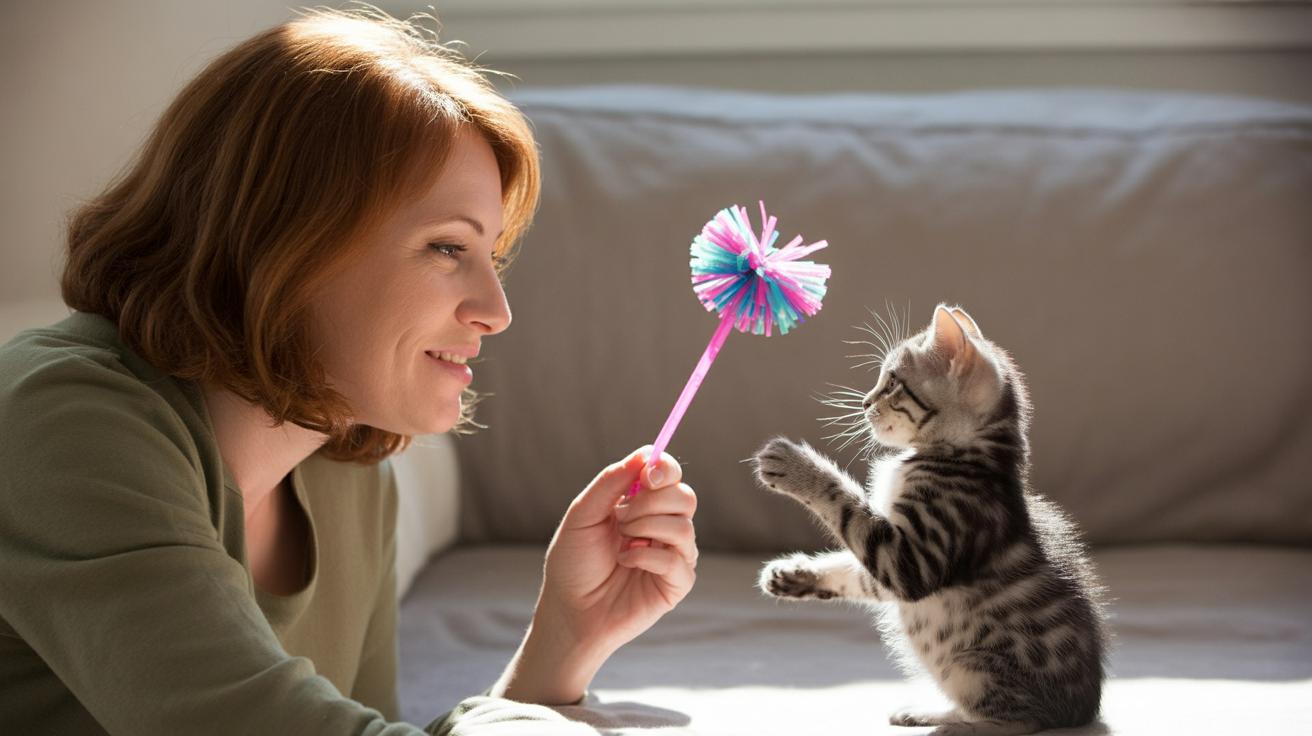
    The 1-second rule

    The 1-second guideline helps you avoid rewarding the wrong moment; it's short enough to be precise and long enough for humans to react. Do timing drills in 30 to 60 second bursts, focusing on one behavior at a time. Use a partner or video to isolate the exact instant so you train your ear and eye. For the full conditioned-reinforcer idea, check the lede if you want the deeper explanation, but basically the click tells the animal, "Yep, that was it." Worth a little practice. Worth every paw-print.

    Step-by-step beginner guide to clicker training (first sessions)

    for the definition of the click as a conditioned reinforcer.jpg

    Keep sessions short, happy, and focused so your pet stays curious and ready. Start each training day with a quick clicker charge (10-20 click-treat pairings) so the click keeps meaning, "Good thing is coming."

    1. Gather what you need. A clicker (small handheld sound device), tiny soft treats (easy-to-chew pieces), a treat pouch (a small bag you can wear), and a quiet room work best. Less noise, more success.

    2. Charge the clicker. Click, then give a treat right away. Repeat 10-20 times so your pet learns the click predicts a reward. The click should feel like a promise.

    3. Pick one easy behavior to capture. Look for something your pet already does a lot, like a natural sit, a calm look, or stepping onto a mat (a small flat target). Start simple.

    4. Capture the behavior with precise timing. Click the instant the action meets your rule. Not before. Not after. Timing is everything.

    5. Treat fast and tiny. Give the treat immediately after the click so the link stays tight. Use very small pieces so your pet eats them in one bite and you can click again quickly.

    6. Add a verbal cue once it’s reliable. Say the cue word right before or as the action begins, then keep clicking the exact moment the action meets your rule. Consistency wins.

    7. Keep a steady routine. Do 2-4 short sessions per day, 5-15 minutes each, with a few hours between sessions. Stop while you’re both still enjoying it. Worth every paw-print.

    8. Move forward slowly. Tighten the rule a little, ask for a bit more hold time, or add mild distractions only when the behavior is steady. One small step at a time.

    If your pet loses interest, repeats the wrong action, or freezes, pause and go back a step or give a quick clicker recharge. A drop in enthusiasm usually means treats were too slow, the task got too hard, or the click timing slipped. For timing drills, reviving a “dead” clicker, or knowing when to call a pro, see the Common clicker training mistakes and troubleshooting section for guided fixes.

    how does clicker training work for pet owners

    - Step-by-step beginner guide to clicker training (first sessions).jpg

    Start with a marker. Use a commercial clicker (a small handheld device that makes a clear click) or a DIY marker like a tongue click ("tsk") or a firm pen snap ("snap"). The sound tells your cat exactly when they did the right thing. Quick and consistent beats long explanations every time.

    Treats should be tiny and fast to eat. Think one-bite, smelly pieces so your cat doesn’t get distracted mid-chew. A pea-sized piece of cooked chicken works great. Keep the food high value – the kind your cat thinks is a little bit magical.

    Keep your treats where you can grab them in one smooth motion. A treat pouch (a little hip bag for kibble or bits of meat) is perfect. Wear comfy clothes so you can bend and move without fuss. It helps you be quick and feel relaxed.

    Have a toy ready as an alternate reward when play beats food. A feather wand (like a fishing rod for cats) can spark a two-second frenzy that’s worth the same as a treat sometimes. If your cat lights up for play, use that energy.

    Set up a calm space. A quiet, uncluttered room with a small mat or target (a little square to aim for) keeps training tidy and clear. Remove obvious distractions. Your cat’s whiskers will tell you when they’re focused.

    Match the reward to the behavior and the moment. Use tiny treats for repeats and save chunkier rewards for real milestones. For example, after five solid reps, celebrate with a chunk of tuna – big reward, big hooray. Match treats or toys to what your cat prefers so motivation stays high.

    Practical tips: Keep the pouch at your hip for instant delivery and wear comfy clothes so you can move fast. If you lack a clicker, use a consistent tongue click or pen snap as your marker. And when food starts to lose its magic, swap in a favorite toy and let the chase be the reward.

    Common clicker training mistakes and troubleshooting

    for remediation steps.jpg

    We removed this standalone section and folded the useful bits into the how-to steps so you don’t read the same fix three times. The idea was to put each troubleshooting tip right where you need it, clean, simple, and in-context.

    Now, troubleshooting lives as a short subsection in the Step-by-step beginner guide. It lists common errors with one-line fixes so you can scan fast and get back to training. Common problems you’ll see: timing, inconsistent rewards, over-clicking, and pushing distractions too soon. Example: Timing: Click the instant the paw touches the mat, not after the step ends. (A clicker is a small handheld sound device used to mark the exact moment an animal did the wanted action.)

    The “dead” clicker recovery advice is now part of the Step-by-step charge step and points to the 10–20 click-treat pairing suggestion. In plain terms: recharge by clicking and rewarding 10 to 20 times so your pet remembers the sound means “good.” (Click-treat pairing means you click, then immediately give a treat so the click becomes meaningful.)

    Timing errors were folded into the Timing drills so you don’t get repeat instructions. We combined the 30–60 second practice reminder with the partner or video idea into one drill. Try this: practice 30 to 60 seconds while a friend films in slow motion (video played very slowly) so you can match your click to the exact frame. It’s awkward at first, but wow, it helps.

    If your pet loses interest, that line was expanded into a quick triage: try bigger rewards, shorten sessions, or simplify the criteria so success happens faster. Signs you should stop and get professional help include freezing (sudden stillness), fear, or aggression. Don’t push it if your pet looks truly stressed.

    We also cleaned up cross-references so tips don’t bounce you around the guide. Each troubleshooting point now appears once, clearly and where it applies. Nice and tidy. Worth every paw-print.

    how does clicker training work for pet owners

    - Equipment, treats, and setting up effective clicker sessions.jpg

    Proofing is the step that makes a trick reliable when life gets messy. Practice the behavior in different rooms, near doorways, with people walking by, and then out at the park so the cue works beyond your quiet training corner. Raise the challenge slowly: ask for a little more focus, add a mild distraction, then reward when the pet meets the new standard (criterion means the exact behavior you want). As you increase difficulty, give fewer treats per repetition so success stays meaningful. And click right when the new criterion happens so the marker (the click sound that pins the exact moment) still points to the right action.

    Fading rewards and changing reinforcement schedules decide how long a behavior sticks. Start with continuous reinforcement (click and treat every time) so your pet links the click to the reward fast. Then switch to predictable intermittent rewards (for example, every third or fourth correct response) before moving to variable ratio reinforcement (rewards after an unpredictable number of responses, like a slot-machine pattern). Variable ratio reinforcement keeps the behavior eager and strong. Toss in an occasional big reward or a favorite toy to rekindle motivation , the happy squeak or crunch really helps.

    Puppies usually need shorter bursts and tinier treats; adult dogs can handle longer practice and slightly higher criteria. If you want to cut back on food rewards, swap in play or a high-value treat sometimes, but keep the click for timing. Marker methods work across species. For instance, play-based marker work with kittens pairs perfectly with toys , see how to train kittens with interactive teaser wands for a kitten-friendly routine.

    I once watched Luna leap six feet for a tiny squeaky toy after just a few well-timed clicks. Worth every paw-print.

    Stage Reinforcement Goal
    Acquisition Continuous (click + treat every time) Learn
    Transition Predictable intermittent (every 3rd or 4th) Generalize
    Maintenance Variable ratio / occasional high-value (unpredictable rewards) Long-term reliability

    how does clicker training work for pet owners

    .jpg

    Clicker training teaches pets to connect a quick sound with a reward. Think of the clicker as a tiny "yes" that tells your dog, cat, bird, or rabbit exactly when they did the right thing. It’s simple, clear, and a lot of fun to watch, your pet’s ears perk up the moment they get it.

    Step-by-step guide

    1. Pick your marker. Use a clicker (a small handheld device that makes a sharp sound) or a clear verbal marker like "yes."
    2. Charge the click. Click, then give a treat right away so your pet links the sound with the reward. Some animals need more repetitions to link the click with a reward, and some prefer play or petting to food. Try different rewards to see what lights them up.
    3. Add the behavior. Once the click means "good," only click the exact behavior you want, then reward. Short sessions work best, three to five minutes a few times a day.
    4. Shape it slowly. Break tricky behaviors into tiny steps, reward each small win, and slowly ask for more. Patience pays off.
    5. Fade the treats. Gradually give treats less often but keep the click. Then reward with praise, play, or a petting session so the behavior sticks.

    Quick tips

    • Timing matters. Click the instant the behavior happens, not after.
    • Keep rewards small and tasty, or quick and fun if your pet prefers play.
    • If your pet looks confused, go back a step and make the goal easier. Ever watched a kitty ignore a new trick until you made it tiny and obvious? That’s the trick.

    Troubleshooting and safety
    Applied behavior research (scientific studies of how animals learn) supports positive reinforcement (rewarding wanted behaviors). If your pet freezes, shows fear or aggression, or progress stalls, consult a qualified, force-free trainer (a professional who avoids punishment and uses rewards). Safety first, if anything feels scary for your pet, slow down and ask for help.

    Worth every paw-print.

    Final Words

    Jumping straight into the action, we showed that the click is a marker, a conditioned reinforcer (a learned signal that predicts a reward) paired with positive reinforcement to mark the exact instant a desired behavior happens.

    We covered the 1-second timing rule, a short beginner plan, gear and treats, common mistakes, and how to fade the clicker.

    If you're asking how does clicker training work, think cue, click, treat, short sessions, and steady practice. Give it a try. Your cats will thank you and your home will be calmer.

    FAQ

    How does clicker training work?

    Clicker training works by using the click as a marker — a conditioned reinforcer (a signal that predicts a reward) that pinpoints the exact moment of the desired action, e.g., cue “sit,” click, then treat.

    What is the psychology behind clicker training?

    The psychology behind clicker training is operant conditioning (reward strengthens behavior) plus classical conditioning (the click predicts reward), creating a precise link between an action and its outcome for faster learning.

    Does clicker training for dogs and puppies really work?

    Clicker training for dogs and puppies really works when the click is charged and timing is precise; it improves communication, speeds learning, and fits well into short, frequent practice sessions.

    How long does it take to clicker train?

    How long it takes to clicker train depends on behavior complexity and consistency; simple actions can be reliable in minutes to days, while complex skills often need weeks of short, regular practice.

    What are the disadvantages of clicker training?

    The disadvantages of clicker training include poor timing, inconsistent rewards, overclicking, and slower progress for some animals; it asks for practice, patience, and occasional re-charging if the click loses value.

    How do beginners start clicker training?

    Beginners start by charging the clicker (about 10–20 click→treat pairings), then run short sessions (5–15 minutes) two to four times daily: capture an easy behavior, click the instant, and reward immediately.

    Can clicker training stop bad behavior?

    Clicker training can reduce unwanted actions by reinforcing an alternative behavior; mark and reward the replacement, manage triggers, and skip punishment so the animal learns what you want instead.

    How do you clicker train a person or yourself?

    Clicker training a person or yourself uses the same marker-plus-reward idea: mark the exact desired action, follow with an agreed reward, get consent, and pick reinforcers the person truly values.

    Related Articles

  • How to Train a Cat to Not Jump on Counters

    How to Train a Cat to Not Jump on Counters

    Sick of tiny paw prints on your toast and your cat treating the counter like a private VIP lounge? Cats love high spots and the smell of crumbs. Your kitty’s whiskers twitch, it inches closer, and before you know it there’s a paw on your plate. Ever watched a cat leap and thought, "Really?" Me too.

    Here’s a short, humane 10-step plan with fast, practical moves you can try today. Clear away food and crumbs so the attraction disappears. Block the launch spots (those favorite jump or launch spots) so your cat has fewer easy paths up. Add a nearby perch or shelf so they still get height without the danger. Use a gentle marker-and-reward routine (marker: a short sound or word to mark good behavior, reward: a tiny treat) so your cat learns what you want. These steps help your cat stay safe, teach a new habit, and give you your kitchen back.

    Worth every paw-print.

    Quick-start: 10-step action plan

    - Quick-start 10-step action plan.jpg

    Use this quick starter plan when you want fast, humane steps to keep your cat off counters and safe. It’s simple, practical, and you can mix these ideas depending on your home.

    1. Clear counters of food, crumbs, and dishes. Cats sniff and hunt, those crumbs are an invitation. (see Food management, feeders and schedules)

    2. Remove or block boost points like chairs and stools. Boost points are the things cats jump from, so move them away or push them under the counter for a bit. (see Safe deterrents and counter-proofing)

    3. Put a stable perch or cat tree beside the counter as a nearby option. A perch or tree (tall climbing post or ledge) gives them the same height without the countertop chaos. Your cat may choose the perch when it wants the view. (see Provide alternatives: trees, shelves, perches)

    4. Try a temporary, humane deterrent on the counter edge for short-term training. Use crinkly aluminum foil (aluminum foil, the noisy, unpleasant feel under paws) or double-sided tape (sticky sensation cats dislike) only for a few days while you teach new habits. Don’t leave these forever. (see Safe deterrents and counter-proofing)

    5. Start a simple "off" or "down" marker-and-reward routine when the cat hops off. A marker is a clicker or a single word, followed by a tiny treat, fast timing wins. Keep sessions short and consistent. (see Positive reinforcement methods)

    6. Add extra daily play to cut boredom-driven jumping. Short, focused play (feather teaser, laser, or wand, think fishing rod for cats) tires them out and satisfies their chase instinct. Ten minutes before you leave can buy you peace. (see Provide alternatives and play protocols)

    7. Use a timed feeder or puzzle feeder if food is the lure. A timed feeder (automatic food dispenser) or puzzle feeder (food-filled toy that makes cats work for meals) spreads meals and reduces counter-motivated scavenging. (see Food management, feeders and schedules)

    8. Keep a quick weekly log of counter incidents and successful perch uses. Note time of day and what drew them up, this helps shape training and find patterns. One line per day is fine. (see Training kittens vs adult cats: tracking and shaping)

    9. In multi-cat homes, run these steps for each cat and stagger training. Treat each cat’s motivations separately, and give shy cats quieter perch access while outgoing cats learn boundaries. (see Special cases: multi-cat households)

    10. If the behavior appears sudden, extreme, or out of character, get a veterinary evaluation. A vet checkup (medical exam to rule out pain, thyroid issues, or stress) can catch problems that make cats act differently. (see Special cases: medical red flags)

    Detailed operational steps, like exact session lengths, clicker timing, treat-fading plans, and calorie notes, live in the linked deep-dive sections; follow those protocols for the best results. Worth every paw-print.

    Why cats jump on counters: causes you can address to stop counter-surfing

    so readers can jump to full protocols and troubleshooting.jpg

    Counters are an easy high spot with great sightlines, warm patches, and lots of smells, so cats jump on counters to scout, nap, or spy on you. That elevated vantage satisfies their instinct to watch the room and feel safe. When a counter offers a better view than a window ledge or tree, it becomes irresistible.

    Smells and food are huge drivers. Leftover crumbs, a cooling plate, or a dropped grape tell a cat there might be a reward waiting, and people sometimes accidentally reinforce the habit by sharing bites or laughing. Counters also bring real hazards like hot pans, sharp knives, and toxic foods such as onion or chocolate (both can poison cats), so keeping them clear matters for safety.

    A sudden jump in counter visits can be a red flag for health changes , more eating, more restlessness, or new routes onto counters may mean pain, dental trouble, or thyroid changes (thyroid gland shifts that speed up metabolism). If your cat starts counter-surfing out of the blue, a vet check is a smart move.

    Not every leap is about snacks. Cats love heights for privacy and to monitor the action below; bored cats or ones craving attention might hop up just to get noticed. Even small things like a dripping faucet or running sink water can be a specific lure. Older cats or those with mobility pain will change how often or where they jump, so watch the pattern.

    So how do you fix it? First, figure out why your cat is counter-surfing at home , food, height, boredom, attention, or medical reasons , then match the solution.

    • Positive reinforcement: Reward your cat for using approved spots. Give treats, pets, or playtime when they choose a cat tree or window perch instead of the counter.
    • Provide alternatives: Add a tall cat tree, a window shelf, or a padded perch (a comfy raised bed) so they get the view and warmth they want. Think of these like VIP seats just for them.
    • Safe deterrents and counter-proofing: Remove temptations by clearing plates and crumbs. Try double-sided tape, a clean aluminum foil strip, or a motion-activated clacker (safe and humane) to make counters less fun.
    • Food management and feeders: Store food in sealed containers and use puzzle feeders or scheduled feedings so food is predictable and not a counter mystery.
    • Veterinary referral: If behavior changes suddenly or you see other signs like weight change, litter box issues, or pain, get a vet visit to rule out medical causes.

    Ever watched your kitty leap up, whiskers forward, like they own the place? It’s normal. With a little detective work and a few new perches, you can keep them safe and off the countertops , and still give them their throne.

    How to Train a Cat to Not Jump on Counters

    - Why cats jump on counters causes you can address to stop counter-surfing.jpg

    Positive reinforcement is the safest, most reliable way to teach "off" and "down." Below is a step-by-step marker-and-reward plan you can start today, plus schedules, treat notes, and quick fixes when things stall. Ready? Your cat might be too, once the treats show up.

    Pairing the marker and creating the "off" response

    Pick a marker: a clicker (a small handheld device that makes a sharp click) or a short verbal word like "Yes!" The marker tells your cat the exact moment you want to reward.

    Days 1-3: charge the marker by clicking or saying your word, then give a tiny treat within about one second. Do 20-30 pairings per short session, 2-3 sessions a day so the click predicts food fast.

    Next, capture the first off behavior. When your kitty jumps down, mark the instant the paws touch the floor (that little satisfying thud), then reward and say a quick praise. If they don’t offer the move naturally, lure them with a target stick (a stick with a small ball tip cats touch with their nose) or hold a treat near the floor, mark the downward step, then reward. Keep sessions 3-5 minutes with 10-15 good reps early on. Film a few reps on your phone to check your timing, seriously, timing is everything.

    Shaping and fading: session plans and reinforcement schedules

    Beginner plan (weeks 1-2): continuous reinforcement. Reward every correct "off" so the connection is obvious. Run three short sessions each day: morning, midday, and evening. Aim for 10-20 reps total per day. Rest 15-30 seconds between reps so your cat stays interested.

    Intermediate (weeks 3-4): start cutting food rewards. Switch to a mixed system, every 2nd or 3rd correct "off" gets a treat, others get a short play burst or petting. Replace some treats with 20-30 seconds of wand play (a teaser toy like a fishing rod for cats). Treat-size note: tiny bites work best, a pea-size piece of freeze-dried chicken is often 1-3 kcal. If weight is a worry, remove the same number of calories from meals that day rather than skipping rewards.

    Advanced (weeks 5-8): move to intermittent reinforcement. Reward unpredictably, and use praise or play on non-food trials. By week 8 many cats will respond to a single food reward every few successes, plus petting or play sometimes.

    Sample cue script: show the perch, say the cue ("off" or "down"), wait, mark the instant paws are down, then reward within about one second. Short and consistent words help learning.

    Tools, product recommendations, and advanced techniques

    Find a clicker that fits your hand and clicks crisply. Choose a verbal marker you can say in one comfortable breath. A lightweight target stick speeds shaping. Use a phone timer or apps to keep session lengths steady and to remind you to train a few times a day.

    Treat picks: freeze-dried meat bits, tiny soft treats, or crushed high-value kibble. Non-food rewards: a 20-30 second high-energy chase with a wand, a quick lap of petting, or access to the window perch you want them to use. Advanced move: guide your cat from counter to perch with the target stick, then mark on the perch and reward there. Film short how-to clips of your sessions to spot timing slips or to show a trainer if you need help.

    Troubleshooting checklist

    • Marker comes too late: practice clicks and treats alone until the click predicts food instantly.
    • Rewarding while cat is still on the counter: new rule, no reward unless all four paws are on the floor or on the approved perch, then mark.
    • Inconsistent rules confuse cats: pick one cue and one reward plan and stick with it for at least two weeks.
    • Cat avoids the kitchen after a training slip: reduce startling things and make the perch more inviting with treats and toys.
    • Progress stalls despite good timing: check overall food access, add more short play sessions, and consider a vet check for hidden medical issues or a consult with a certified behaviorist.

    Worth every paw-print.

    Ever watched your kitty chase shadows while you sip coffee? Training like this gives you ten focused minutes of good behavior and your cat a safe, fun outlet. Oops, let me rephrase that, it's really a tiny routine that can change your whole kitchen vibe.

    How to Train a Cat to Not Jump on Counters

    - Positive reinforcement methods full protocols, timing, examples, and troubleshooting.jpg

    Good alternatives work when they give your cat the same perks as a countertop: height, a clear view, a warm spot, and a front-row seat to the action. Put perches where people hang out, pick models with a wide base footprint (the floor space the tree needs), and anchor shelves to studs (vertical wall supports) or use rated anchors (anchoring = securely fastening to the wall; rated anchors are heavy-duty fasteners made for drywall).

    Think of training like staging a royal takeover. Turn the new spot into your cat’s favorite throne by making it reliably rewarding. Start with tasty treats, short play bursts, and a clear cue word. Then shape the switch from counter to perch over about two weeks using a marker (clicker or a short word) and steady rewards.

    Selecting and installing the right perch or tree

    Choose a stable cat tree as a counter alternative. Look for a broad base, plywood (pressed wood board), or a solid-core post (a dense center post that won’t crush under claws), and a posted weight rating (how much load the product safely holds). Height rules of thumb: small cats 2–3 ft, average cats 4–6 ft, large breeds 6+ ft. For tall freestanding trees, pick a base at least 1.5 times the tree height in diameter so it won’t tip.

    For wall shelves and window perches you need stud-mounted brackets or heavy-duty toggle anchors if you can’t find a stud (toggle anchors are strong fasteners that spread load behind drywall). Mounting steps: find a stud, mark bracket locations, pre-drill pilot holes (small starter holes), screw brackets into the studs, attach the shelf, and test it by pressing down and applying sideways force. For window perches choose models with a lip or a non-slip pad and check that the sill and fasteners will hold your cat’s weight before letting them up.

    Training protocol to move from counter to perch

    Days 1–3: bait the perch with treats and a favorite toy. Sit nearby and mark (click or say your marker) the instant your cat steps onto the perch, then reward. Keep sessions short and sweet.

    Days 4–7: use a target stick or wand (think fishing rod for cats) to guide the cat off the counter and onto the perch. Mark on the perch and reward there. Start saying a cue word like “perch” or “tree” as you lure them up.

    Days 8–10: fade the visible lure. Give the cue and wait a beat for your cat to move, then mark and reward when they do. Start rewarding intermittently rather than every single time.

    Days 11–14: aim for independent use. Hide a tiny treat on the perch and only reward when the cat jumps up without a food lure. Measurable goal: perch used five times a day without a food lure. Practice template: three 3–5 minute sessions per day with 6–12 reps total.

    Your cat’s whiskers will twitch as the treat rolls across the perch. Reward the behavior you want, and soon the perch becomes the obvious choice.

    Play-based maintenance and toy rotation

    Keep the perch exciting with short wand-toy sessions on or near it, and a puzzle toy sometimes topped with a few kibble pieces. Rotate toys every 3–7 days so the spot feels new. Mix high-speed wand chases with slow, reward-based play to keep motivation fresh. For texture swaps and new sounds try DIY replacement attachments for teaser wands. Short how-to videos of a wand session and a puzzle feeder on a perch help you copy success.

    • Troubleshooting checklist:
      • Perch wobbles: move it to floor level, re-anchor, or choose a heavier-base model.
      • Perch in a dead spot: relocate it near where people sit or by the kitchen doorway.
      • Cat ignores the perch: add hidden treats, do a brief wand session on the perch, and use a clear cue when rewarding.

    Common setup mistakes are an unstable perch, placing it where no one hangs out, and never changing toys. Fix these by upgrading to a sturdier tree or anchoring shelves, moving the perch into view of your usual seating, and rotating toys and puzzles. If progress stalls, go back to the lure-and-mark steps and raise the perch’s immediate payoff with a timed puzzle or a short, exciting play burst on the spot.

    Worth every paw-print.

    How to Train a Cat to Not Jump on Counters

    - Provide alternatives train your cat to use cat trees, shelves, and perches instead of counters.jpg

    Deterrents are short-term, humane training helpers. Use them to make counters less rewarding while you teach a better place to sit, watch, and chill. Pair deterrents with an attractive perch, regular play, and a tidy feeding plan for the best results. Ever watched your kitty hop up like it’s on a mission? We’ll make that mission less fun, gently.

    Deterrent How it works Pros Cons Deployment protocol Safety notes
    Aluminum foil (thin metal sheet) Crinkly texture and sound that cats find annoying Cheap. Easy to set up. Cats may get used to it over time. Cover landing spots and rotate placement every 3-4 days for 10-14 days. Remove immediately if your cat shows extreme fear or stress.
    Double-sided tape / Sticky Paws (sticky strips) Sticky surface cats dislike touching with their paws Creates instant surface aversion. Adhesive can lose stickiness and might transfer to fur or skin. Apply narrow strips along edges, replace weekly or as needed. Avoid direct contact with skin, and don’t use on delicate finishes.
    Upside-down plastic carpet runner (nubby side up) Unpleasant bumpy texture under paws Reusable and low-tech. Can scratch counters if unpadded or moved roughly. Test a small area first, anchor edges so it won’t shift. Remove if your cat tries to chew the plastic.
    Motion-activated deterrent (movement sensor that triggers sound or light) Surprising stimulus interrupts the jump and teaches avoidance Hands-free, works while you’re away. May startle people, and cats can habituate over time. Start with low sensitivity and short test periods to see the reaction. Don’t use loud alarms that cause panic; avoid devices that spray air if it stresses your cat.
    Scat mat (low-voltage training mat that gives a mild static pulse) Gives a brief, low-intensity static feedback when stepped on Can be effective for some cats. Some people have ethical concerns; it’s not right for every home. Talk with a behaviorist before using, and start at the lowest setting. Do not use with cats that have heart issues, and never place on wet surfaces.

    Deployment checklist and test protocol:

    • Take a three-day baseline count of how often your cat visits counters before you start.
    • Run a 10-14 day trial with your chosen deterrent while offering a nearby perch and short marker-and-reward sessions (marker-and-reward means a clicker or a quick “yes,” then a treat).
    • Rotate the deterrent placement every 3-4 days so your cat can’t predict safe spots.
    • Keep a simple log of daily counter visits and perch uses to watch trends.
    • If your cat starts avoiding the whole kitchen, stop the deterrent and try a gentler option.

    Quick fixes if your cat outsmarts the deterrent:

    • Move the deterrent to a different approach point so your cat can’t find a new landing path.
    • Increase enrichment: a 2-5 minute wand play session, a timed puzzle feeder (a food toy that dispenses kibble on a schedule), or a fresh perch near the counter helps a lot.
    • Recheck feeding times and access. Hungry cats will beat texture-based deterrents nearly every time.
    • Try short, frequent marker-and-reward drills at the perch so your cat learns the counter is not the cool spot anymore.

    If progress stalls after a fair trial, go back to marker-and-reward and perch placement, or bring in a pro. Talk to your veterinarian if the behavior changed suddenly or seems stress-related, and consider a certified behaviorist for stubborn cases. Worth every paw-print.

    How to Train a Cat to Not Jump on Counters

    - Safe deterrents and counter-proofing tactics protocols, comparison table, and testing checklist.jpg

    Hunger is the biggest reason cats raid counters, so the trick is to take away that drive by spreading the same daily calories into more frequent, fun feedings and adding food-based enrichment that makes your cat work a little for their meal. Ever watched your cat stare at the counter like it’s the main stage? Yeah, that.

    Start with a clear calorie plan and move slowly to timed and puzzle feeding. First, figure out your cat’s daily calories (kcal, short for kilocalories , the “calories” on pet food labels). Example math: if your cat needs 240 kcal/day and you feed twice a day, each meal is 120 kcal. Split that into three meals and it’s 80 kcal each; four meals becomes 60 kcal per meal. Write those numbers down so you don’t guess.

    Pick a reliable automatic feeder (a programmable dispenser that releases set portions) and set the portion size to match your new meal plan. Do a test run: load dry kibble, program the times, and trigger manual releases while you watch to confirm each dispense equals the intended portion. Leave one supervised scheduled cycle to double-check consistent delivery. For daytime when you’re out, choose a timed feeder that holds sealed portions and runs on AC with battery backup (battery power keeps meals coming if electricity blips).

    Add puzzle feeders so meals aren’t just flat bowls , make them foraging games. Try slow-rotate bowls, snuffle mats (fabric mats you hide kibble in), and rolling treat balls. Transition slowly: on day one swap 10 to 20 percent of a meal into the puzzle, then raise that share over 3 to 7 days until the whole portion is delivered through the puzzle. Supervise early sessions so your cat doesn’t get frustrated and you can time how long the puzzle takes; aim for about 5 to 20 minutes of engagement, not hours.

    If you feed wet food, stir in 1 to 2 teaspoons of plain canned pumpkin (pure pumpkin, not pie filling) to add fiber and help your cat feel full. Track your cat’s weight when you add fiber and subtract those pumpkin calories from other portions so the total daily intake stays the same. Count treats and training rewards into the daily total too , move reward calories out of meal portions instead of tacking them on top.

    Weigh your cat weekly for the first 6 to 8 weeks and keep a simple log with date, body weight, meal times, feeder type used, and any counter incidents so you can spot trends. If weight creeps up or down, tweak portion sizes or make puzzles easier or harder to keep your cat at a healthy weight while taking away the counter temptation. Worth every paw-print.

    How to Train a Cat to Not Jump on Counters

    - Food management, feeders and feeding schedules to prevent cats from raiding counters.jpg

    Extended shaping – a 6-week plan (use this if you want the longer option in the main training protocol).

    Daily session template
    Three short sessions per day, 3 to 5 minutes each. Aim for 8 to 12 reps total. Use your marker (a clicker or a short word that marks the exact moment) and follow it immediately with a tiny, high-value reward (pea-sized freeze-dried chicken bite) or a 10-20 second play burst. Rest about 15 to 30 seconds between reps so your cat stays curious and engaged.

    Quick version you can say out loud: "Three 3-minute sessions. Mark each step-down. Reward with a pea-sized freeze-dried chicken bite."

    Week 1 – Foundation: goal is a reliable marker and captured "off" behaviors.
    Charge the marker in two short sessions each day, and mark any time the cat steps down from a counter on their own. Try to get 15 to 25 marks a day so the cat links the marker to good things.
    Pass: your cat offers spontaneous offs in at least two sessions without using lures.
    If not meeting goal: shorten sessions to about 2 minutes, switch to a higher-value treat, or add one extra short play burst before training.

    Week 2 – Move the behavior: goal is guiding the cat from counter to a nearby perch.
    Use a target or a lure (target is a small object the cat touches; lure can be a treat on a stick) to guide the cat to the perch, then mark arrival and reward there. Keep three sessions a day and reward on the perch so it becomes a more appealing spot.
    Pass: the cat accepts the lure to the perch and is marked there in about 70% of reps.
    If not meeting goal: check the perch placement – it should be near activity and very stable – add hidden treats on the perch and increase play rewards.

    Week 3 – Fade the visible lure: goal is responding to a cue without obvious food lure.
    Say the cue word, wait 2 to 4 seconds, and mark if the cat moves to the perch. Reward intermittently so the cat learns to respond to the cue itself. Aim for about 20 reps a day.
    Pass: the cat moves to the perch on cue in roughly 60% of trials.
    If not meeting goal: slow the fade down, use partial lures for a few sessions, and boost the treat value.

    Week 4 – Add mild distractions: goal is keeping the response with moderate distractions.
    Practice during mealtime smells, with normal household noise, or with another person in the room. Use variable rewards so the cat learns to choose the perch even when things are interesting elsewhere.
    Pass: the cat uses the perch on cue in 50% or more of distracted trials.
    If not meeting goal: add a short play session before training, reduce tempting smells on counters, and check deterrent placement.

    Week 5 – Reduce treat frequency: goal is switching many reps from food to play or praise.
    Move from treats every rep to treats every 2 to 4 reps, and replace some food rewards with 20 to 30 seconds of wand play (think fishing rod for cats). This builds more durable behavior.
    Pass: your cat complies at least 60% of the time using mixed rewards.
    If not meeting goal: alternate reward types more often and note which reward gets the fastest response.

    Week 6 – Generalize and maintain: goal is independent perch use and cue control.
    Randomize practice times, surprise-reinforce correct choices, and run short tests by skipping a reward one trial and rewarding the next. The idea is to make the behavior useful in real life, not just in training drills.
    Pass: the perch is used multiple times a day without treats and counters are rarely visited.
    If not meeting goal: repeat the week where progress stalled, or consult your vet or a certified behavior professional for stubborn or sudden setbacks.

    Tracking template and sample row – use this in your tracking or logging subsection.

    Date Cat Counter Jumps Perch Uses Deterrents Applied Rewards Given Notes / Medical
    2026-01-10 Luna (kitten) 3 8 Foil on stove edge Freeze-dried chicken, 6 marks Bright, active; progress on cue week 2

    Logging example: 2026-01-10, Luna, 3 jumps, 8 perch uses, foil deterrent, 6 chicken bits, bright and active.

    How to Train a Cat to Not Jump on Counters

    - Training kittens vs adult cats progressive shaping protocols, timelines, and tracking templates.jpg

    Multi-cat households: staged training and resource placement

    Go one cat at a time so you don’t accidentally teach a copycat. Pick the cat that jumps the most and do short marker-and-reward sessions with just that cat until they choose perches more often. Then add the next cat. Use closed doors or baby gates to give each kitty private practice if you need to.

    Spread vertical real estate: aim for one perch or shelf per cat plus one extra so shy cats aren’t shut out. Put feeding stations in separate rooms or well-spaced zones to cut food-driven competition. Product tips: pick trees with wide bases (more stable), wall shelves rated for the cat’s weight (weight capacity – how much load the shelf safely holds), and puzzle feeders (slow-feeding bowls that make meals last) sized so one bold cat can’t hog everything.

    Try a simple daily plan: morning perch rewards for Cat A, midday timed feeder for all, a short wand session in the evening for Cat B, then a brief supervised group perch time. Track progress per cat , count counter jumps and perch uses each day , so you know who needs more practice.

    Senior and mobility-limited cats: safer alternatives and fall prevention

    Older cats and kitties with arthritis need gentle options. Offer perches 1 to 2 feet high, ramps or step aids with shallow risers (about 4 to 6 inches per step) and non-slip treads. Pick ramps rated above your heaviest cat’s weight so they don’t sag.

    Skip loud, startle-style deterrents. Soft textures like short strips of double-sided tape used briefly are better than alarms or air puffs for a cat that moves slowly. Add soft landing zones , thick rugs or cushioned pads near counters , so a misstep won’t be a bad fall.

    Watch how they walk: slower climbs, stiffness after resting, favoring a leg, or frequent pauses can mean pain. Film short clips of your cat stepping up or walking (gait – how they move) to show your vet. There are quick how-to videos for ramp setup and gait checks you can copy for your own tests.

    Medical red flags and professional referral protocol

    Look out for sudden changes: more counter visits, bigger appetite or more thirst, limping, not eating, weight loss, sudden meowing, confusion or pacing, and litter-box changes. If you see these, do a quick home check: note meal times, new food access, recent house changes, and whether more than one cat shows the behavior.

    Vet appointment checklist – bring:

    • A 1 to 2 week log of counter incidents and perch uses.
    • Date-stamped video of the behavior.
    • Current weight records and a list of medications and supplements.
    • Recent diet details and any home changes.

    Suggested vet tests: a full physical exam, bloodwork (CBC – basic blood cell test, and chemistry – organ function tests), thyroid screen, urinalysis (urine test), a pain-focused orthopedic check, and imaging like x-rays if trauma or arthritis is suspected.

    Call a certified feline behavior consultant or veterinary behaviorist when medical causes are ruled out but the problem keeps going, when multi-cat social stress seems involved, or if your cat shows anxiety signs like hiding or redirected aggression. Bring the same logs and videos to speed up a stepwise plan.

    Quick decision guide: if signs are sudden or your cat looks painful, book a vet visit and bring videos, weight logs, and med lists; if medical checks are clear and the issue seems social or training-related, schedule a behavior consult and bring your tracking log and short clips of training sessions.

    Worth every paw-print.

    Troubleshooting, common mistakes, and when to seek professional help for cats on counters

    - Special cases multi-cat households, senior cats, and medical concerns about cats on counters.jpg

    Got a cat who thinks your counters are a private buffet? You’re not alone. Here’s a quick checklist of common training stalls so you can spot what’s tripping things up.

    Quick note: the vet/behaviorist appointment checklist moved to Medical red flags, and tracking-metrics guidance moved to Tracking/Logging (tracking/logging means simple notes, times, and short videos you can bring). Bring clips when you can, they help the pro see what you mean.

    Final Words

    In the action, you’ve got a fast 10-step starter to stop counter raids, a clear look at why cats jump, full marker-and-reward training, perch and play swaps, safe deterrents, feeding plans, age-specific shaping, multi-cat tips, and troubleshooting.

    Start with the quick-start checklist. Try a nearby perch, pair deterrents with short marker-and-reward sessions, and read the full protocols for feeder setup and tracking.

    Stick with small steps. Follow these tips and you’ll be on your way to how to train a cat to not jump on counters , worth every paw-print.

    FAQ

    How do I make my cat stop jumping on the counter?

    Making your cat stop jumping on counters means removing food rewards, blocking boost points, offering a nearby perch, using temporary deterrents, and practicing short marker-and-reward sessions until the habit changes.

    <dt>How to clicker train a cat to stay off counters?</dt>
    <dd>
      <p>Clicker training a cat to stay off counters uses a clicker (small hand-held marker), pair the click with treats, capture or lure the "off" behavior, mark the instant the paw leaves, and reward in short sessions.</p>
    </dd>
    
    <dt>How to keep cats off counters naturally?</dt>
    <dd>
      <p>Keeping cats off counters naturally uses foil or double-sided tape as short-term deterrents, clears food, adds a close perch, boosts daily play, and uses timed or puzzle feeders (to slow eating and engage hunting).</p>
    </dd>
    
    <dt>How to train cats to not eat your food?</dt>
    <dd>
      <p>Training cats not to eat your food means removing accessible food, using lids, teaching a "leave it" cue with marker-and-reward (marker = click or word), and switching to timed or puzzle feeders to meet hunger and curiosity.</p>
    </dd>
    
    <dt>Do cats outgrow counter surfing?</dt>
    <dd>
      <p>Cats do not reliably outgrow counter surfing; kittens might mellow with age, but without removing rewards and giving better alternatives the behavior usually continues into adulthood.</p>
    </dd>
    
    <dt>What is the 3-3-3 rule for cats?</dt>
    <dd>
      <p>The 3-3-3 rule for cats is an adoption guide: three days to hide, three weeks to toilet and start trusting people, and three months to feel settled in a new home.</p>
    </dd>
    
    <dt>How to cat proof a countertop?</dt>
    <dd>
      <p>Cat-proofing a countertop means clear food and crumbs, block access points, add temporary deterrents like foil or tape, anchor hazards, and place a stable nearby perch as a preferred alternative.</p>
    </dd>
    
    <dt>How to train a cat not to jump on furniture or tables?</dt>
    <dd>
      <p>Training cats off furniture and tables follows the same plan as counters: remove temptations, offer attractive perches, use marker-and-reward training, and apply gentle surface deterrents during the behavior change.</p>
    </dd>
    
    <dt>What should I do if my cat suddenly starts jumping on counters?</dt>
    <dd>
      <p>If your cat suddenly starts jumping on counters, check for new food access, household changes, pain, or cognitive signs; log incidents, boost play and perch options, and schedule a vet visit if the change is extreme.</p>
    </dd>
    
    <dt>How do I train multiple cats to stay off counters?</dt>
    <dd>
      <p>Training multiple cats requires separate sessions, staggered perch access, individual rewards, and tracking each cat's progress to avoid copycat behavior while managing shared resources like feeders and perches.</p>
    </dd>
    

    Related Articles

  • how to train cats to behave: basic commands

    how to train cats to behave: basic commands

    I used to think cats were impossible to train. Then Luna launched off the couch, all paws and determination, for one tiny shiny treat and I realized something: your cat already knows how to focus. We just teach the signals that say “sit” or “come.” Ever watched a whisker-twitching stare? That’s the start.

    Keep training short. Three to five minutes is perfect. Use a tiny high-value treat (small, super-tasty treat) and pick a marker word (a short, clear word or click that marks the exact moment they do the right thing). It’s simple: short practice, small rewards, clear signals. Before you know it, stubbornness turns into a reliable sit or come, with bright eyes and happy pounces.

    Here’s the exact flow: lure, mark, reward. Lure means show the treat and guide your cat into the position you want (think of it like a fishing rod for cats). Mark at the very instant the behavior happens, say your word or click, so the cat connects the action and the reward. Reward immediately. Timing matters; mark within a heartbeat, then treat. Quick fixes: if your cat ignores you, try a tastier treat, cut distractions, or reward tiny steps with shaping (rewarding small steps toward a behavior). And if they walk away, end the session on a high note, try again later.

    Do one to three short sessions a day, in the same quiet spot when you can. For busy days, a single quick practice before you head out gives you ten minutes of calmer behavior later. Celebrate tiny wins. Seriously, it feels great watching a cat learn. Worth every paw-print.

    how to train cats to behave: basic commands

    - Practical plan to train cats to behave with basic commands (step-by-step).jpg

    Start small. Hold a tiny high-value treat (a special, super-tasty snack your cat only gets for training) just above your cat’s nose and lift it straight up so their hindquarters lower into a sit. That’s called a lure (using a treat to guide your cat into a position). The instant their rear hits the floor, click or say your marker word and give a tiny treat right away. A clicker (a small plastic sound device) or a clear word like "yes" works great for marking the exact moment.

    Do short mini-sessions of 3 to 5 minutes. Keep reps quick and fun, then finish with a calm reward so your cat ends on a good note. For deeper methods, see methods; see tools; see tracking; see troubleshooting.

    Timing and hunger matter. Work after a nap when your cat is alert and a little hungry. Practice only one skill per session so the cue stays simple. Use a motivating treat and the same marker each time so your cat learns the pattern: lure, mark, reward.

    A simple plan:

    1. Gather a tiny high-value treat and a clicker or a short marker word.
    2. Pick a short verbal cue and a clear hand signal.
    3. Run a single 3–5 minute session focused just on "sit."
    4. Train after a nap or when your cat’s mildly hungry for best focus.
    5. Lure the cat into position, mark the exact moment, and reward immediately (then slowly fade the lure).
    6. End every session with a calm final treat and a pause so they feel good about it.
    7. Aim for dozens up to about 50–100 short reps across the day, split into many tiny sessions.
    8. If your cat stalls or shows stress, stop and check the troubleshooting section.

    Quick checklist recap: short session, single skill, lure → mark → reward, finish calm. Watch for stress signals like tucked ears, wide pupils, or a swishing tail; if you see those, take a break and consult troubleshooting. Worth every paw-print.

    Train cats: core training methods (clicker, lure-and-reward, shaping)

    for full diagnostics Do not include detailed schedules, logging formats, or sample daily plans in this section (moved to session structuretracking).jpg

    There are three go-to ways to teach cats: clicker training, lure-and-reward, and shaping. Each one shines for different jobs, so think of them as tools in your kitty toolkit. Target training (getting a cat to touch a stick or your hand) is a handy bridge between lure work and shaping.

    Clicker training is great when you need perfect timing and fast learning. First, pair the clicker with treats about 10 times: click, then give a tiny treat right away, repeat until your cat looks for the treat after the click. Keep the timing tight , mark the exact movement within a 0.5-1.0 second window, and deliver the reward immediately. Common mistakes are clicking too late, clicking for the wrong motion, or handing the treat slowly. To fade the clicker, click for only the best reps, then switch to a short marker word or an intermittent click schedule as the behavior becomes solid (see starter plan; see tracking).

    Lure-and-reward is perfect for showing a new action, like a sit or a go-to-mat. Hold a treat above your cat’s nose and move it straight up so their hind end lowers into a sit; mark that instant and reward. Fade the visible lure by using an empty hand that follows the same path, then just the hand signal, and finally the verbal cue once the move is consistent. Think of it like a fishing rod for cats, just, um, with kibble.

    Shaping helps when the trick is too big to teach in one step. Break the goal into tiny micro-steps and reward the smallest move toward the target. If your cat looks stressed, back up: flattened ears, wide pupils, or a whipping tail are signs to slow down. Ever watched your cat’s whiskers twitch as they figure something out? Reward that curiosity. For picky eaters, switch textures, freeze-dried bites (small crunchy meat pieces), squeezable treats (soft paste), or even a quick play session, to keep motivation high.

    Target training ties it all together. Ask your cat to touch a stick or your hand, click or mark the touch, then reward. It’s a simple step that leads to steering, shaping, and more complex tricks. Worth every paw-print.

    Teach a cat to sit, come, and stay: command-by-command progressions

    - Train cats core training methods (clicker, lure-and-reward, shaping).jpg

    Think tiny steps. Use one clear cue, a precise mark, and a fast reward. Marking can be a clicker (a small handheld click noisemaker) or a short word like "Yes." Give the treat within about a second so your cat links the action to the reward. Short, enthusiastic reps feel fun to your kitty, do a handful at a time and end while you both still want more. Ever watched your kitty chase shadows? This is the same playful focus, but with goals.

    Sit: hold a tiny treat just above your cat's nose and lift straight up so the hindquarters naturally drop. The instant they sit, mark it and give the treat within about a second. Repeat brief, excited reps and slowly fade the visible lure into a hand signal over several sessions. You can build high-five and lie down from target work and shaping, reward small improvements and click each better try. Many cats get a solid sit in 1–7 days with dozens up to 50–100 short reps spread through the day.

    Come / Recall (come when called): start a few steps away in a quiet room with one distinct cue. Call once, wait for them to move, mark arrival with the click or word, and reward heavily at the finish. Gradually add distance and light distractions. Some cats learn quickly; others take time, expect 1–6 weeks depending on motivation and practice. Aim for 10–30 reps a day split into mini-sessions.

    Stay: teach sit first. Ask for a 1-second hold, click and reward, then build to 3 seconds, then 10 seconds before treating. Once holds are steady, add gentle distractions and use a clear release cue to end the stay. Practice dozens of short holds daily; weeks of steady practice usually make it reliable.

    Lie down: from sit, lure the treat down and slightly forward so the chest lowers. Mark the full down position and shape deeper lowers over reps. High-five: use a target or hold a treat near paw height; click tiny paw lifts and reward, then shape to a full flat-paw touch and add a verbal cue. Both of these often come together in 1–4 weeks with many short reps through the day.

    Timing and progression rules keep things tidy. Mark the exact successful movement quickly, within 0.5–1.0 second, so your cat links the cue to the result. Keep sessions short and frequent, train one skill at a time, and increase challenges slowly. It’s better to stop while your cat is still happy than to push for one extra rep.

    Motivation and surroundings matter. Use high-value treats and rotate textures for picky kitties, or swap in a quick play burst for cats who prefer motion. Pick a low-distraction spot and have everyone use the same words and hand signals so your cat doesn't get mixed messages. Your cat’s whiskers will twitch as the ball rolls across the carpet, use that focus.

    Watch for stress signals, flattened ears, wide pupils, tail thrash, and stop if your cat looks unhappy. If progress stalls or you don’t see steady improvement after a few weeks of consistent practice, check the troubleshooting tips or talk to your veterinarian or a behaviorist. Worth every paw-print.

    Command Step-by-step micro-steps Typical timeline to reliable response
    Sit Hold tiny treat above nose and lift straight up so hindquarters drop; mark within 0.5–1s; reward immediately; repeat short reps; fade lure to hand signal. 1–7 days; dozens to ~50–100 short reps/day
    Come / Recall Start a few feet away in a quiet room with a distinct cue; call once; mark arrival; reward heavily; slowly increase distance and distractions. 1–6 weeks (varies with motivation); 10–30 reps/day in mini-sessions
    Stay Teach sit first; ask for 1s hold → click/reward, then 3s → then 10s; add mild distractions once steady; use a clear release cue. Weeks to reliable; practice dozens of short holds daily
    Lie down From sit, lure treat down and forward so chest lowers; mark full down; shape deeper lowers over reps. 1–4 weeks with shaping; dozens of reps/day
    High-five Use a target or hold treat near paw height; click tiny paw lifts and reward; build to full flat-paw touch and add verbal cue. 1–4 weeks with shaping; many short reps throughout the day

    Train cats: session structure, timing, and progress tracking

    - Teach a cat to sit, come, and stay command-by-command progressions.jpg

    Set up a quiet corner with your treat pouch (a small bag that holds tiny snacks), a clicker (a little sound device) or a marker word like "yes" (a short praise), and a small mat or chair so your cat always has the same place to work. Keep things simple so your cat knows this is training time. I like to think of it as a tiny classroom for one furry student.

    Keep each mini-session to about 3 to 5 minutes. Start with a quick warm-up of 2 to 3 easy reps (a rep is one repeat of the behavior) to help your cat focus, then spend the rest of the short session on one skill only. Your cat’s whiskers will tell you when they’re in the zone. Ever watched them lock on like a tiny hunter? Cute.

    Spread lots of these tiny sessions through the day, after naps or right after a short play burst, when your cat is alert and a bit hungry. The goal is dozens of little practices, roughly 50 to 100 reps total across the day, broken into playful bites. For busy days, toss an unbreakable ball or do a quick recall drill before you head out, that’s ten minutes of safe play and learning.

    Time Skill Session length Planned reps Primary reward
    Morning Sit 3–5 min 20 high-value treat (tiny piece of chicken)
    Midday Recall (come) 3 min 10 wet treat (creamy or meaty)
    Evening Trick (high-five or target) 3–5 min 15 short play burst (1–2 minutes)

    Track every session in a simple log so you can spot patterns over a week or two. Write down Date, Behavior, Session #, Reps, Successes, % Success, and Notes (like distractions or stress signals such as wide pupils or a swishing tail – a sign your cat might be annoyed). Calculate % Success as (Successes ÷ Reps) × 100. Yep, a little math, but it shows if you’re moving forward.

    Look for steady improvement across 1 to 2 weeks. Small jumps up mean you can raise the bar a bit. Flat lines or falling scores mean back up a step, change the reward, or make the cue clearer. Move to the next difficulty when you hit at least 80% success across three sessions in a row. Oops, make that three good sessions in a row, consistency matters. For treat sizes and gear, check the tools section if you need help with portioning or equipment.

    Date Behavior Session # Reps Successes % Success Notes
    Mon Sit 1 20 16 80% Calm, good focus
    Tue Recall 1 10 7 70% Distracted by bird outside
    Wed Trick 1 15 10 67% Needed higher-value treat
    Thu Sit 2 20 17 85% Nice progress
    Fri Recall 2 10 8 80% Shorter distance
    Sat Trick 2 15 12 80% Switched to squeezable treat
    Sun Sit 3 20 18 90% Ready to fade lure

    Train cats: tools, treats, and enrichment to motivate learning

    ).jpg

    A small training kit makes short sessions feel easy and fun. Pack a quick-release clicker (a tiny handheld marker that makes a sharp sound), or pick one short marker word everyone uses. Toss in a treat pouch with a swivel clip (a small bag that snaps to your belt or pants) so treats are always at hand.

    Bring a finger target or a target stick (a long stick with a soft tip you can ask the cat to touch). Think of the target stick like a fishing rod for cats, just point, ask, and reward. Also stow a teaser wand (a long wand with string and feathers) for motion rewards and high-energy play.

    A basic puzzle feeder (a slow-feeding toy that hides treats) is perfect for enrichment during downtime. Rotate puzzle toys so they stay interesting, and always watch new toys the first few times to make sure your cat plays safe. Inspect toys regularly for loose parts or frayed string.

    Treat variety helps with picky kitties, so carry a few textures and flavors. Use tiny bites so you can run many reps without overfeeding. Pea-sized pieces (about the size of a green pea) of freeze-dried chicken, little wet-kibble nibbles, or squeezable single-serve treats work especially well.

    For a short 3–5 minute practice, expect to use about 8–12 tiny bites. Take those treats from part of the cat’s daily meal allowance so you don’t overdo calories. If you want numbers, check the treat package for calories and cut the meal portion accordingly.

    Safety first, always. Keep treats tiny to avoid choking, read ingredient lists to avoid unsafe human foods, and replace worn tips on target sticks. Supervise play with teaser wands and puzzle feeders, and toss any toy that gets torn or has loose bits.

    Enrichment keeps learning playful and fights boredom. Use puzzle feeders during rest periods for slow rewards, and save the teaser wand for big, exciting rewards. Isn’t it nice when a toy just lasts? Worth every paw-print.

    Train cats to stop problem behaviors while teaching basic commands

    - Train cats session structure, timing, and progress tracking.jpg

    Replace-not-punish is the golden rule here. Give your cat a better choice and reward the swap. Click and treat (use a clicker for a clear, repeatable sound) when they pick the new option so they learn without fear. Expect slow, steady change. Most cats shift habits over several weeks. And if you see sudden aggression or big behavior shifts, call a pro or your vet.

    To keep cats off counters, take away tempting items and make the surface less cozy with short-term deterrents like double-sided tape. Then set up a rewarded high spot nearby, a cat tree or shelf, and shape the move: click and reward each tiny step toward the tree, and then slowly swap food rewards for praise or a quick play burst. Try little training sessions after naps so your cat links the new spot with good stuff. Track progress over weeks. It’s worth it when you catch that satisfied little look as they hop up.

    To stop furniture scratching, offer several good scratching choices: a vertical post (tall post for stretching), a horizontal pad, and a few textures like sisal, cardboard, or fabric. Put them near the problem area so your cat finds them easily. Click-and-treat every time the post gets used, then reward less often as they start preferring it. Protect furniture temporarily with deterrent tape or covers, keep nails trimmed on a regular schedule, and rotate post placement or surface texture if interest cools off. Small changes keep things fresh.

    Practical redirect tactics you can start today:

    • double-sided tape on counters
    • cat tree placement with rewards
    • scheduled play sessions to reduce boredom
    • sit-before-feeding rule (require calm before meals)
    • microchip feeder use (feeds only the cat with the registered chip)
    • regular nail trims

    To stop biting and nipping, end play the moment teeth or claws appear. Turn away and stay quiet. Only start play again when your cat is calm so calm behavior gets the reward. For food stealing, don’t free-feed. Use elevated bowls or a microchip smart feeder to protect food from other pets. If steady training doesn’t fix a problem, consult a behaviorist or your vet for next steps.

    Troubleshoot training: common problems, stress signs, and fixes

    - Train cats tools, treats, and enrichment to motivate learning.jpg

    Do a quick pre-check before you start a session: treat type and how motivating it is, what’s distracting the room, who’s giving the cues, and how long you plan to train. Pick one tiny change and try that by itself. Small experiments work best and they save both of you from frustration.

    Compact troubleshooting box:

    • Check timing. Try training right after a nap when your cat is alert. Example: "Five minutes after waking, try one short cue."
    • Swap the reward. Offer a new treat texture or a short play burst. Example: "Try a squeeze-treat (soft paste in a tube) or a 30 second feather chase."
    • Shorten the session. One to three minutes can be plenty. Example: "Two one-minute rounds beats one ten-minute flop."
    • Reduce distractions. Close doors, move other pets out of sight, and turn off noises.

    Stop a session immediately if you see stress signals, and check Problem Behaviors for the full list. Seriously, don’t push it. Your cat will tell you when they’re done.

    Six-step rescue checklist (see Session Structure, Tools, Problem Behaviors):

    1. Check timing – move training to right after a nap or whenever your cat seems most awake.
    2. Swap reward – try a different treat texture or a quick play reward to spark interest.
    3. Shorten session – break training into very short repetitions so it feels easy and fun.
    4. Reduce distractions – quiet the room, limit movement, and remove other pets from view.
    5. Back up the criterion – reward smaller steps, even just a look toward you, then build up.
    6. If no steady progress after 2 to 4 weeks of consistent, small changes, consult your vet or a certified behaviorist.

    Worth every paw-print.

    Train cats to tolerate handling: carrier, grooming, and nail trims

    - Train cats to stop problem behaviors while teaching basic commands.jpg

    Start by setting an open carrier (portable cat box) where your cat already hangs out. Pop a favorite blanket inside and tuck a few tiny treats in the back so it smells like good stuff. Let your cat wander in and out on their own, and click or mark (say “yes” or use a clicker) and reward any voluntary entry. Your cat should learn the carrier is cozy, not scary.

    Once your cat happily steps in, close the door for just a couple seconds, open it, and reward. Do that a few times, then slowly add time – seconds into minutes, not minutes into hours – so it feels like a safe den instead of a trap. Picture whiskers twitching as they sniff the blanket and settle down. Nice, right?

    For grooming, make the tools boring and tasty. Pair the brush (soft-bristle brush, like a gentle comb) and the nail trimmers (small clippers) with treats so your cat thinks, “Oh, this means snacks.” Touch paws briefly, then reward. Do one nail at a time and give a tiny treat after each clip so your cat learns calm pays. Keep sessions tiny and upbeat: a few pats, a quick brush stroke, a reward. That’s it.

    Practice handling for meds the same way. Drop a tasty bite over a pill or hide medicine in a favorite treat to teach calm acceptance. Train short, gentle restraint (one hand under the chest, one supporting the back) while you offer treats so your cat doesn’t freak out. If you need to wrap them in a towel for safety, make the towel soft and quick.
    Quick checklist recap:

    • Leave the carrier open and comfy; add bedding and treats.
    • Let your cat enter on their own; mark and reward voluntary entry.
    • Close the door briefly, then build closed-door time slowly (seconds to minutes).
    • Pair every tool with treats so grooming becomes normal.
    • Touch paws, reward often, and trim one nail at a time.
    • Practice med handling with tasty bites or pill pockets.
    • Reward calm exits.
    • Stop and step back if your cat panics; try an easier step next.

    Worth every paw-print.

    Train cats in special situations: kittens, senior cats, deaf/blind cats, and multi-cat households

    - Troubleshoot training common problems, stress signs, and fixes.jpg

    Start kittens early, around 8 to 12 weeks, and make training feel like play. Keep sessions tiny and game-like , one to three minutes , so they stay excited and curious. Use lots of praise and tiny treats so they learn fast without filling up, and switch toys often to keep their whiskers twitching.

    For housetraining, pick a low-sided litter box (short sides so kittens can hop in) and use non-clumping litter (litter that doesn’t form hard clumps, safer if a kitten nibbles it). Put the box in a quiet spot and show them where it is after naps and meals. Little, consistent routines win here more than long lectures.

    Older cats can learn new tricks, just more slowly. Choose higher-value rewards , treats they can’t resist , and chop behaviors into tiny steps so nothing feels scary. Watch for mobility limits or dental pain, and get a quick vet check if they suddenly lose interest; you don’t want discomfort to hide behind a stubborn streak. Keep sessions short, use lots of praise, and celebrate tiny progress.

    Training deaf or hard-of-hearing cats means swapping voice cues for vibration, touch, or light signals. Try tapping the floor gently or using a blinking light, then pair that cue with target training (teach the cat to touch a stick or your hand). Once they get the idea, those nonverbal cues work like charm.

    For blind cats, lean on touch and scent. Mark key spots with a distinct scent or a textured mat so they can find the litter box, bed, or food bowl by feel and smell. Keep furniture where it is , stability builds confidence , and guide them with a target stick or a gentle touch until they learn safe routes. Speaking of routes, I once watched a blind kitty map an entire apartment by scent , so smart.

    Multi-cat households need slow pacing and a calm plan. Train one cat at a time, run separate sessions and feedings, and keep rewards scaled so no one feels cheated. Start with solo work, then let the other cat watch from behind a barrier, and only try shared sessions when both cats stay calm. Small, steady wins keep jealousy down and learning up.

    Worth every paw-print.

    Maintain and generalize trained behaviors: proofing, fading rewards, and next steps after basic commands

    - Train cats to tolerate handling carrier, grooming, and nail trims.jpg

    Proofing (practicing a cue in lots of different real-life places so your cat knows it everywhere) is how you turn a good trick into a true habit. Start in a quiet room with just you and your cat, soft carpet, whiskers twitching, no distractions, then move to the living room with the TV or family noise, and later try a screened porch or patio where birds and breezes add mild distractions. Have several people give the same cue and signal so your cat learns the command, not a single voice or hand. Take it slow. Small, steady steps keep your cat confident and curious, not overwhelmed.

    Reward fading (gradually giving fewer treats so the trick stays strong without food every time) helps you keep behavior reliable long-term. Begin with continuous rewards (a treat every correct rep) until your cat is steady, around 80% success across a few sessions, then switch to intermittent reinforcement (reward sometimes, not every time) so the behavior holds up when treats are rare. Over a few weeks mix full-treat rounds with low-value rewards like warm praise (soft, happy words), a gentle pet, or a tiny play burst (ten seconds of feather-chasing) and make food the occasional jackpot. Fade visible lures (treat paths or hand-guides used to shape the movement) by swapping the treat trail for a hand signal, then use the verbal cue alone.

    Next, build fun sequences and new goals to keep your cat’s brain busy. Link actions into chains, sit → go-to-mat → stay, and then add a door-wait cue for safer exits or brief leash walking sessions outside (short steps, lots of praise). Toss in tricks like spin or high-five for variety, and run proofing sessions in different rooms and with different people so commands generalize. Keep a tiny maintenance plan: two or three short refresher sessions each week to keep those behaviors sharp and ready.

    Worth every paw-print.

    Final Words

    In the action: you now have a copyable 3-step starter, clear clicker and lure basics, command scripts for sit/come/stay, session structure and tracking tips, treat and tool picks, problem-behavior fixes, handling steps, and maintenance guidance.
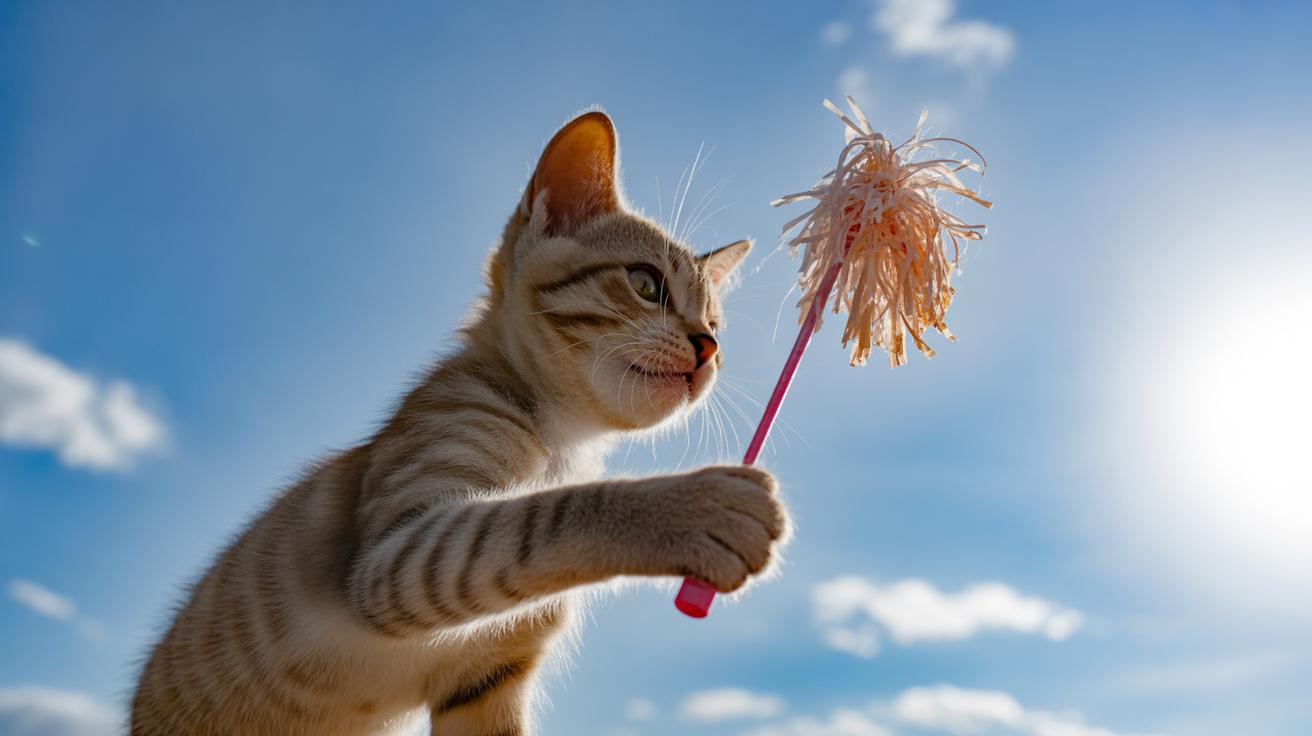
    Short sessions after naps, dozens of tiny reps spread through the day, and simple logging help you spot wins and tweak pace as needed.

    Stick with playful patience and tiny treats, and before long training how to train cats to behave: basic commands will feel like a joyful part of your routine. Worth every paw-print.
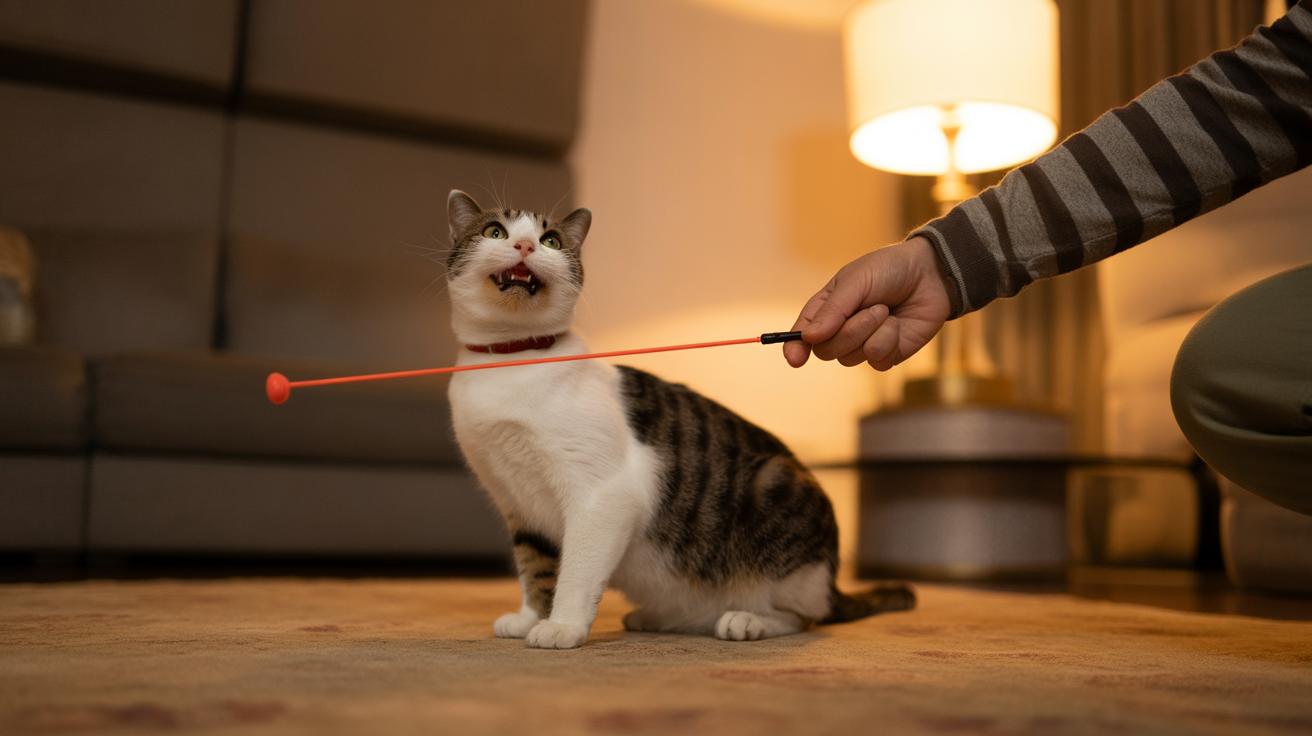
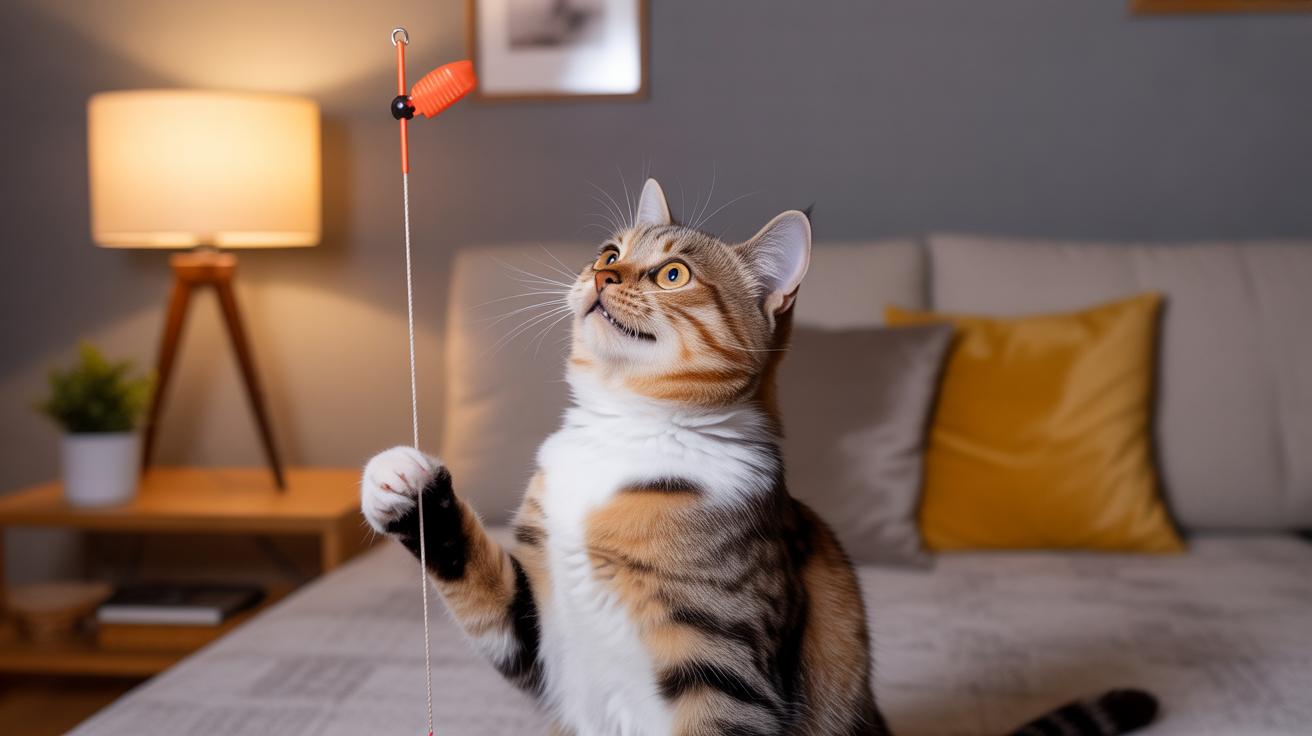
    FAQ

    FAQ

    How to train cats to behave with basic commands at home?

    Training cats to behave with basic commands at home starts with short, frequent 3–5 minute sessions using a lure (treat-guiding motion), a marker like a clicker (small handheld sound marker), and tiny high-value treats.

    How to train cats to behave using YouTube or Reddit resources?

    You can learn basic command demos and community tips on YouTube and Reddit; pick positive-reinforcement trainers, cross-check clicker (small handheld sound marker) timing advice, and follow short session rules.

    What commands or tricks can I teach my cat, and are classes helpful?

    Cats can learn sit, come, stay, lie down, high-five, fetch, target, leash walking, and dozens more; short classes or online courses speed progress and give live feedback from trainers.

    How to train a cat to be friendly and teach good behavior?

    Training a cat to be friendly and well-behaved uses gentle socialization, reward calm approaches with treats or play, short daily sessions, and never forcing contact—reward desired calm actions instead.

    Do you have to train cats to use the litter box?

    You usually do not have to train cats to use the litter box. Most instinctively bury waste; provide clean, accessible boxes, low sides for kittens, and gentle guidance for troubleshooting.

    What is the 3-3-3 rule with cats?

    The 3-3-3 rule with cats describes adoption adjustment: three days to settle, three weeks to explore routines, and three months to fully relax and bond with new people and places.

    What is a red flag behavior in cats?

    A red flag behavior in cats is any sudden change like aggression, extreme hiding, loss of appetite, repeated urination outside the box, or frantic vocalizing. Consult a vet or behaviorist.

    How to stop problem behaviors while teaching basic commands?

    Stopping problem behaviors while teaching commands uses redirection and reward: remove temptations, teach an alternative (like sit or go-to-mat), click-and-treat the desired action, and avoid punishment.

    Related Articles