Author: hans

  • cat hissing meaning helps soothe stressed cats

    cat hissing meaning helps soothe stressed cats

    Ever jumped in your slippers when your kitty let out a surprise hiss? That scratchy “hss” can feel like a door slamming. But really, it’s your cat’s way of saying “I’m uneasy.”

    Think of that rasp like a flashing warning light (kind of like the low-battery beep on your remote). It pops up when your furball needs a break, maybe they’re overstimulated or spooked.

    In this quick guide, we’ll show you what your cat’s hiss really means and how reading those signals can calm a stressed feline. Notice the ears folding back, the tail flicking like a little whip, or the fur standing up like tiny bristles.

    Catch these clues early and you can step in with a soft voice, a slow blink, or a tasty treat, whatever soothes your cat’s nerves. Before you know it, those panicked hisses will melt into happy purrs. It’s the purr-fect way to tune into your cat’s mood.

    Decoding Your Cat’s Hissing: What It Means and Why It Happens

    Decoding Your Cats Hissing What It Means and Why It Happens.jpg

    Ever heard that sharp rasp and felt your heart skip a beat? That hiss is your cat’s alarm bell saying, “I feel threatened.” Most of the time it boils down to fear, stress, or a bit of grumpy aggression. Think of it like your cat’s low-fuel light for emotions, when it flashes, you know something’s off.

    Body language fills in the rest of the story. When those ears flatten like little shields and pupils blow up wide (ready for night vision), your kitty is on high alert. An arched back and fur standing up (imagine a bristled paintbrush) mean “I’m ready to defend myself.” And that stiff, low tail with quick flicks? It’s punctuation on the hiss, take it seriously.

    So what sparks that warning? Spotting the trigger helps you calm things down fast. Next time you hear a hiss, look for these common stressors:

    • Unfamiliar people or pets
    • Sudden movements or loud noises
    • Feeling cornered with no escape
    • Pain, illness, or discomfort
    • Too much petting or rough play

    Give your cat space or remove the stressor, and you’ll often see those whiskers relax in no time. Worth every paw-print.

    Body Language Clues That Signal a Cat’s Discomfort

    Body Language Clues That Signal a Cats Discomfort.jpg

    Have you ever heard a territorial hiss? That sharp hiss often comes with ears pressed so close to the head they almost vanish. At the same time, the fur along your cat’s back stands up like little paintbrush bristles, and the tail tip flicks back and forth fast. It’s your kitty’s way of shouting, “Give me space!”

    But a play-aggression hiss sounds almost the same, just more subtle. The ears rotate sideways, the pupils turn into thin slits instead of big round moons, and the tail swishes low and slow. Think of it as a gentle heads-up: your playful tiger might be getting overstimulated rather than flat-out angry. Ever watch your furball zoom from purr to “nope” in seconds?

    Troubleshooting tip: in a multi-cat home, when you spot those paintbrush fur and flattened ears, try plugging in Feliway diffusers (a plug-in scent diffuser that helps calm cats) near doors and cat paths. It can ease tension and give each furball its own escape route. Next time the hiss starts, everyone can find a cozy hideaway.

    Everyday Triggers Behind Cat Hissing Episodes

    Everyday Triggers Behind Cat Hissing Episodes.jpg

    Ever had your kitty suddenly let out a hiss? It usually means she's reached her limit. You might see her whiskers twitch, her tail puff up or her freeze in place. Um, fur real these are clear signals she needs a break.

    • Petting overload. One too many back and forth strokes can test your cat’s patience. Soft purrs turn into sharp hisses.
    • Strange faces. A new person or another cat in the house can send your furball ducking under the couch. Try separate feeding spots, tall perches (like a high cat shelf) and easy escape routes so no one feels trapped.
    • Noisy surprises. Vacuum roars, slammed doors, rearranged furniture or sudden thunder can spook even the calmest kitty. Oops, that rumble might be too much.
    • Secret aches. Joint stiffness (when her joints feel as stiff as a creaky door hinge) or tooth pain can show up as a hiss if you touch a sore spot.

    Worth every paw print.

    Gentle Techniques to Soothe a Hissing Cat

    Gentle Techniques to Soothe a Hissing Cat.jpg

    So your cat is hissing. Ever watched your kitty flatten its ears? That scratchy warning means they feel nervous or scared.

    The first thing you can do is give them plenty of room to breathe and calm down. Avoid making sudden moves or staring right at them. Take a step back (literally) and just watch quietly.

    Next, you can try a calming pheromone diffuser (a plug-in that releases cat comfort hormones). The soft scent can help keep things mellow. After your furball settles, often hours later, you’re ready to rebuild trust with soft words, gentle side steps, and tiny treats.

    How to Help Your Hissing Cat

    • Let them duck into a safe spot without interruption.
    • Talk in a low, soothing voice.
    • Remove obvious stressors, like a loud vacuum or a barking dog.
    • When you approach, come in from the side so you’re not looming over them.
    • Crouch down at their level and offer a little treat or catnip pinch.

    These slow, respectful steps help your kitty learn that calm moments bring rewards.

    What Not to Do

    Don’t stare into those wide eyes or block escape routes, your cat’ll feel cornered.
    Avoid forcing pats or picking them up, which can backfire into more fear.
    Loud voices, sudden claps, or scolding can turn a hiss into a scratch.
    Skip any punishments, you’ll just teach them to hide longer next time.

    Remember, patience and space are the real clawsome way to rebuild trust. Worth every paw-print.

    Enrichment and Environment Tips to Prevent Future Hisses

    Enrichment and Environment Tips to Prevent Future Hisses.jpg

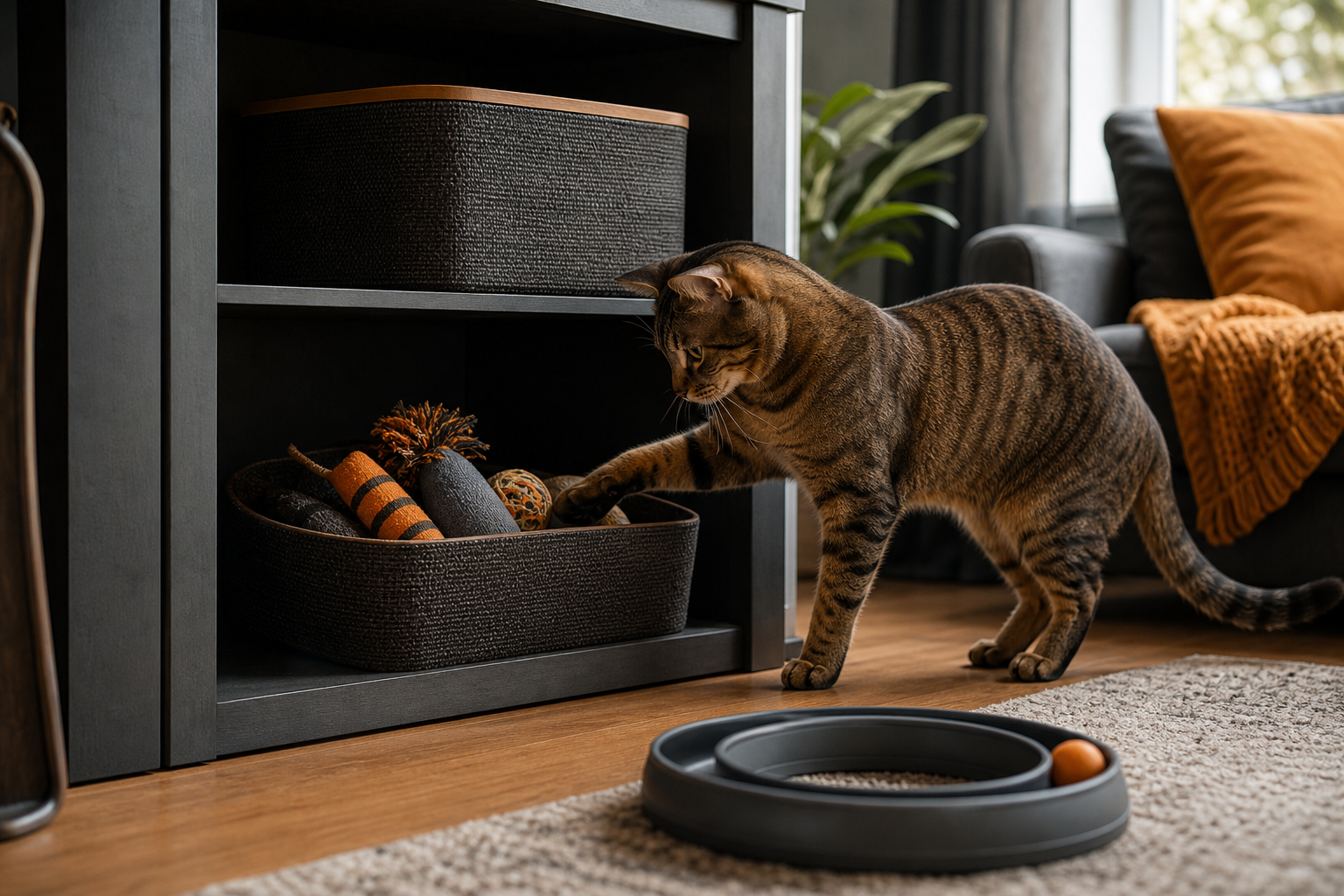
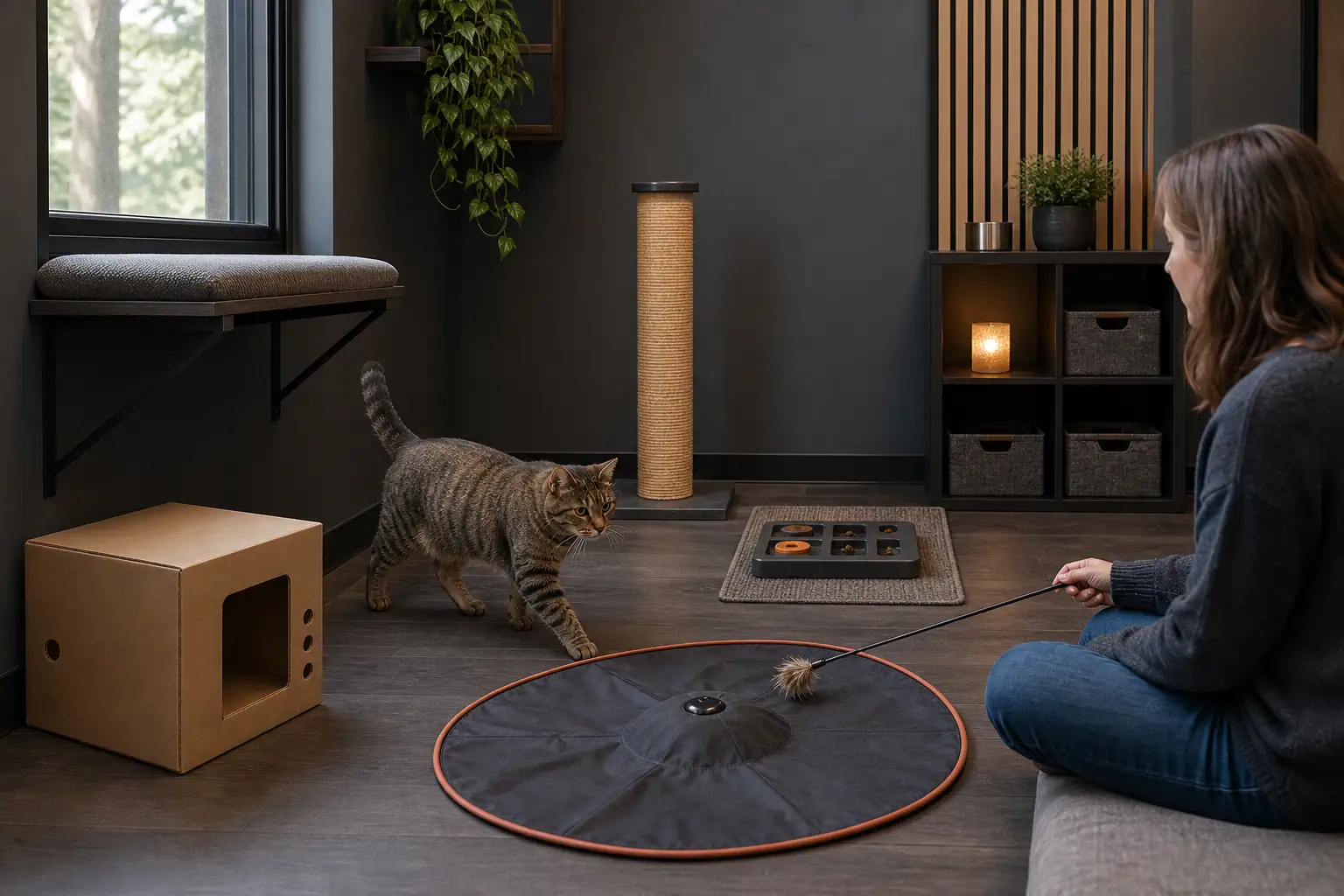
    Let’s start with your cat’s space. Offer a covered bed (think a soft hideaway) or a snug box where your kitty can slip away when it needs a break. Ever watched your cat curl up in a little cave? It’s pure bliss. Next, add some high perches, shelves or a window ledge, so they can feel like a queen surveying her kingdom. Then toss in a cat tree topped with scratching posts (sturdy poles wrapped in rough fabric). They’ll climb, scratch, and peek out without feeling cornered. Finally, sprinkle puzzle feeders (toys that hide treats inside) on those shelves, snack time turns into a little brain game that eases tension.

    Build a daily rhythm your cat can count on. Feedings at the same times every day help them feel secure, you’ll both know dinner’s at 6 p.m. Structured play sessions in the morning and evening burn off extra zoomies. Try a feather wand that makes a soft flutter or a small ball that goes “thud” across the carpet. Rotate interactive toys so each game feels new and exciting. It’s like free cat therapy, your kitty gets exercise, mental work, and something fun to look forward to.

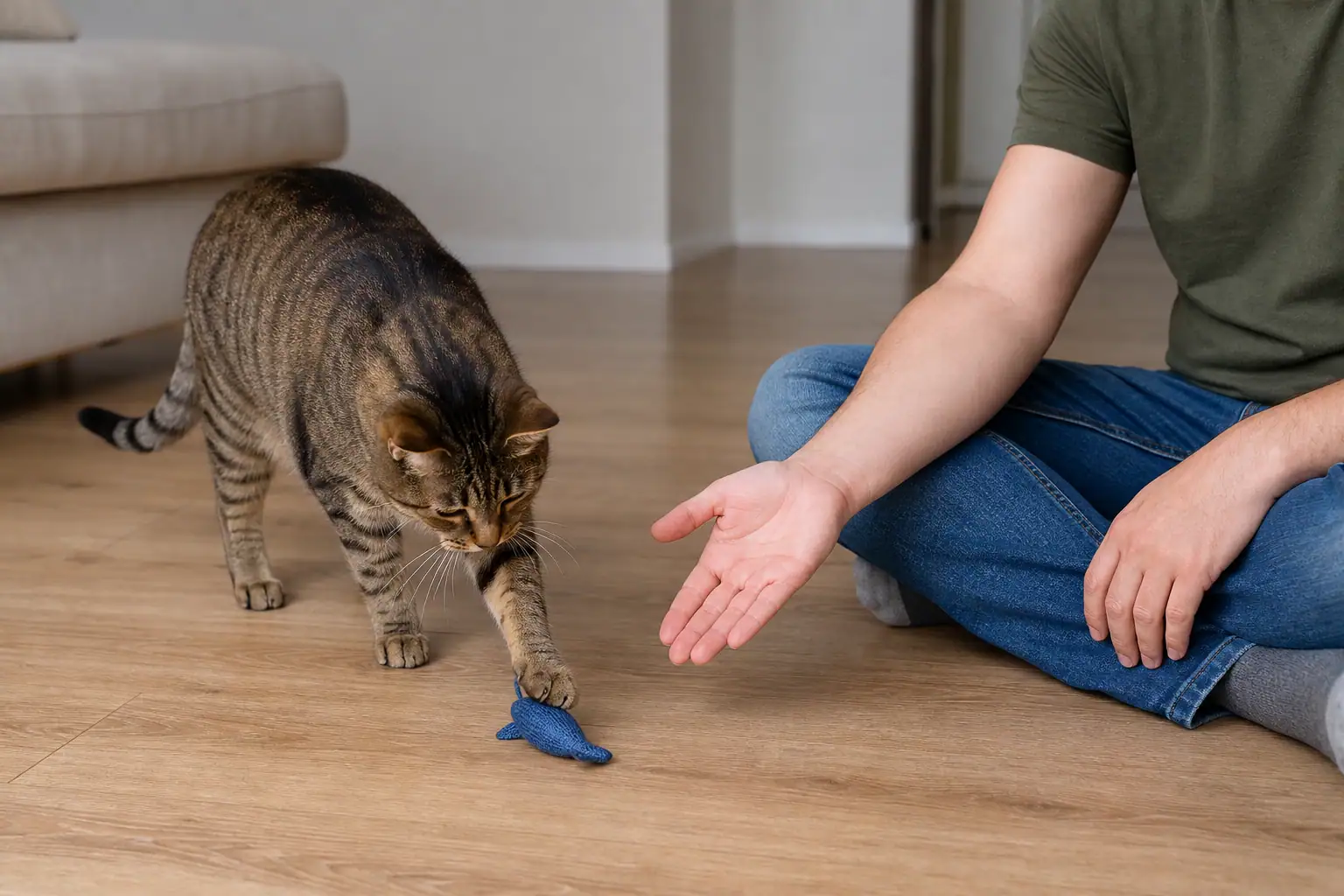
    Let visitors meet your cat on her terms. Instead of surprise face-to-face greetings, have guests roll a toy mouse or drop a treat into a bowl first. Ever seen a cat’s whiskers twitch at a moving treat? Magic. Use clicker training (a little gadget that makes a click sound) for easy “sit” commands or even high-five tricks, each click means a treat is coming. Short social games turn new faces into friends and help shrink those hissing episodes into tiny, fluffy memories.

    When Cat Hissing Signals a Health or Behavior Concern

    When Cat Hissing Signals a Health or Behavior Concern.jpg

    Ever notice your cat’s whiskers twitch right before a hiss? If that hiss pops up more than a couple times, it could point to a hidden health issue. Hissing can be a pain signal. Maybe your kitty has dental pain (aching teeth), arthritis (joint pain that feels stiff), a urinary tingle (burning or straining when peeing), or irritated skin. Watch for tiny clues: a sudden limp, extra grooming that leaves bald spots, or a drop in appetite. And if hissing comes with low energy or strange bathroom habits, it’s time to call the vet.

    But what if the hissing doesn’t stop even after you soothe the room? That’s when behavior help can save the day. A feline behaviorist can spot stress triggers you might miss and teach your cat fresh coping skills before those hisses turn into scratches. Nobody wants that kind of drama.

    Here’s when to call the vet or see a behaviorist:

    • Hissing plus appetite drop, limping, or hiding? Call the vet.
    • Growls or yowls that sound like sharp pain? Call the vet.
    • More than two hissy fits in one week with no clear cause? Call the vet.
    • Hissing that keeps up after you’ve tried gentle calm-down steps? See a behaviorist.
    • Hisses leading to bites or scratches on family members? See a behaviorist.

    Final Words

    In the action, we’ve unraveled why cats hiss and how to spot flattened ears, arched backs, and other warning sounds.

    We explored everyday triggers like sudden noises or feeling trapped and shared gentle steps to calm your kitty.

    Environment tips, hiding spots, play routines, puzzle feeders, can prevent stress before it builds.

    Finally, we covered when to see a vet or behaviorist if hissing persists.

    Armed with cat hissing meaning, you’ll feel more confident and ready to keep your multi-cat home harmonious and happy.

    FAQ

    Why does my cat hiss even when it seems friendly?

    The hiss your cat makes while still friendly shows mild stress or surprise. It’s a gentle reminder to slow down when they feel uneasy, letting them keep control of their space without full aggression.

    How do I calm a hissing cat?

    Calming a hissing cat means giving them space, avoiding direct eye contact, speaking softly, and removing sudden triggers like loud noises, so your cat can relax and feel safe before you approach again.

    What does it mean when a cat hisses at another cat?

    A hiss aimed at another cat signals territorial or defensive feelings. Your cat may feel threatened or stressed and is warning the other to back off and respect its space.

    Why does my male cat hiss?

    A male cat hisses for the same reasons as any cat: to show fear, stress, pain, or defend territory. Hormones or social hierarchy fights can also trigger a male’s defensive warning.

    Why do cats hiss at kittens?

    Adult cats hiss at kittens to teach boundaries or protect resources. They may feel annoyed by rough play or worried the kitten is intruding on their space.

    What does it mean if a cat hisses at me?

    A hiss directed at you means the cat feels threatened, scared, or stressed by your presence or action. Respect its warning by backing away and letting it regain calm before trying again.

    What does cat hissing symbolize and is it a warning?

    A cat’s hiss symbolizes a warning sign that it feels threatened, fearful, or stressed. It serves to ward off perceived threats and avoid confrontation by communicating clear boundaries.

    Related Articles

  • do cats fleas live on dogs: Yes Stress-Free

    do cats fleas live on dogs: Yes Stress-Free

    Could your dog be throwing a cat flea takeover? Sounds wild, right? But here’s the deal: about 90 percent of the fleas that land on pets in North America are cat fleas (tiny insects that jump and bite). And they don’t care if they end up on fluffy fur, twitchy whiskers, or wagging paws.

    They bite. They feed. Then they sneakily lay eggs right in your pup’s coat. Ew. It’s like a flea fiesta no one asked for.

    If your dog’s been scratching non-stop, you’re not alone. Many pet parents lose sleep over the constant itch. Um, I get it.

    So what’s next? I’ll walk you through how cat fleas make themselves at home on dogs and share stress-free tips to send those little jumpers packing. By the end, your pup will be back to napping instead of scratching. Ready? Let’s dive in.

    Cat Flea Infestation on Dogs: Fact vs. Fiction

    Cat Flea Infestation on Dogs Fact vs Fiction.jpg

    Ever noticed your pup scratching like crazy and wondered if cat fleas could be the cause? Surprise – about 90% of the fleas on both cats and dogs in North America are actually cat fleas, and they love living on dogs too.

    These tiny jumpers don’t just hitch a ride. They bite, feed, mate, and lay eggs right in your dog’s fur, yum, right? If you’ve ever found flea dirt (tiny black specks) on your dog, that’s a telltale sign.

    Folks often blame Ctenocephalides canis (dog fleas, the species that usually prefers dogs), but in most homes it’s cat fleas doing the dirty work.

    Here’s how cat fleas keep their party going:

    • One flea can lay up to 50 eggs a day, right on your pet’s coat.
    • Those eggs fall into carpets, dog beds, and yard patches.
    • Tiny larvae hatch and spin cocoons in hidden spots, then emerge as adults.
    • The new fleas leap onto any warm body, and the cycle starts again.

    So yes, your dog can get cat fleas, and they’ll breeze through every stage of their life cycle right on your pup.

    Worth a double take next time you see your dog bite at its fur.

    Cat Flea Biology and Lifecycle Implications for Dogs

    Cat Flea Biology and Lifecycle Implications for Dogs.jpg

    Fleas are tiny stowaways that settle on your dog and hide in your home. Ever felt your pup twitch from one of those itchy bites? They go through four busy stages before they’re ready to hop back on. Knowing how each step works gives you the edge to stop them.

    • Egg: tiny oval bits (salt-grain size) a female cat flea can lay up to fifty of each day in your dog’s fur or deep in carpet fibers.
    • Larva: a pale, worm-like baby (think tiny caterpillar) that hatches in about 2-12 days and feasts on flea dirt (adult flea droppings).
    • Pupa: tucked inside a sticky cocoon (like a minuscule sleeping bag), this stage can snooze for weeks to months, shrug off sprays or cold, and finally pop out when it senses warmth, vibrations or carbon dioxide.
    • Adult: wingless jumpers (1-3 mm long) that leap onto dogs to drink blood, mate and lay eggs. In warm, humid spots, this whole cycle can finish in just 2-4 weeks.

    Next, break their party at home. I once vacuumed Ziggy’s bed and watched tiny specks tumble out – eggs, larvae and pupae staging a flea festival. So grab your vacuum and go over rugs, bedding and furniture often. Um, each pass shakes out those sneaky stages so they meet your chosen treatment.

    Then treat pet areas with a home-safe insecticide spray to stop fleas before they hop back onto your dog. Worth every moment you spend fighting those tiny invaders.

    Recognizing Cat Flea Signs on Dogs

    Recognizing Cat Flea Signs on Dogs.jpg

    Ever peek at your pup’s fur and spot tiny black specks that look like pepper? That crunchy peppery bit under your fingers is flea dirt (tiny flea droppings packed with blood). And um, ever watch your dog scritch-scratch so hard you hear a soft thud on the carpet? Ouch, that sound makes me wince.

    Common clues to catch early:

    • Scratching or biting at the base of the tail and belly
    • Little bald patches around the neck or hind legs
    • Red or sore skin that looks raw or scabby
    • Tiny black dots (aka flea dirt) hugging the skin

    Each flea bite pokes through the skin to sip your dog’s blood. Then your pup might lick or chew those spots until they turn into red, oozing sores if germs (bacteria) crash the party. Itchy misery.

    Puppies and small dogs with lots of fleas can lose enough blood to feel weak. Check for pale gums, a racing heart, or low energy, signs that anemia (low red blood cells) is sneaking in. Yikes.

    Some dogs hit the jackpot with flea allergy dermatitis (a super itchy reaction to flea spit). They scratch until they carve out hot spots, moist, raw patches that can smell and ooze. Your pup may fixate on that one unlucky spot.

    Catch these signs early for faster relief and cozier, itch-free nights.

    Treatment Options for Cat Fleas on Dogs

    Treatment Options for Cat Fleas on Dogs.jpg

    Ever watched your dog scratch like there’s no tomorrow? It’s rough on them and on you. Let’s talk about easy ways to zap those pesky fleas.

    • Topical spot-on products
      Think of this as a magic drop you squeeze right between your dog’s shoulder blades. Ingredients like fipronil (a bug paralyzer), imidacloprid (a flea nerve blocker), or selamectin (a broad bug fighter) kill adult fleas on contact and stop eggs from hatching. Just do it once a month, and you’re set for weeks of calm fur.

    • Oral flea meds
      Pop a pill or give a tasty chew and voilà, your pup becomes a flea-fighting factory. Nitenpyram wipes out adults in hours. Spinosad sticks around in the bloodstream for longer protection. Perfect for dogs that hate baths or love treats.

    • Flea collars
      Clip on a collar with flumethrin or imidacloprid and let it work its magic. Some collars repel fleas, others knock them out on the spot. They last two to eight months, so you can go hands-off for a while. Worth it when life gets busy.

    • Flea shampoos
      A sudsy shampoo session gives your dog a squeaky-clean bath and kills the first wave of adult fleas. Just know you’ll need follow-up spot-on drops or sprays, those suds can’t reach every egg or pupa hiding in your home. Great for a quick spruce-up before company arrives.

    • Prescription flea treatments
      When over-the-counter options just don’t cut it, vets can prescribe stronger combos that tackle eggs, larvae, pupae, and adults all at once. These usually blend insect growth regulators with adult killers. Ideal for serious flea invasions.

    Mix and match what feels right for your dog’s comfort and how fast you need relief. If your pup has sensitive skin or you’re dealing with a stubborn flea crowd, chat with your vet first. Then set a calendar reminder, consistency is your best defense against a flea comeback.

    Environmental Control to Combat Cat Fleas on Dogs

    Environmental Control to Combat Cat Fleas on Dogs.jpg

    Ever spot tiny flea eggs tumbling off your dog onto the carpet? Vacuuming isn’t just busywork, it’s what shakes loose those eggs, larvae (baby fleas), and pupae (cocoon stage) so your flea spray can do its thing. Aim to run your vacuum over every room once or twice a week, paying extra attention to rugs, couch seams, and under furniture!

    Next, let’s tame those fabrics and bedding. Washing pet beds in hot water zaps eggs and larvae hiding in seams. And don’t forget to toss throw blankets or washable toys into the dryer, heat is a quick flea killer. Oops, make that two laundry chores you can actually feel good about.

    Now, bring out the big guns: home-safe flea sprays or foggers for adults and larvae sneaking into cracks and crevices. Remember, pupae can shrug off many sprays inside their cocoons, so plan to reapply in about 10–14 days. Here’s a simple routine to follow:

    • Vacuum floors, rugs, upholstery, and pet zones
    • Wash all bedding, blankets, and toy covers in hot water
    • Spray pet bedding and furniture with a flea-safe mist
    • Fog rooms only if fleas really spike
    • Reapply sprays or foggers after two weeks to catch new hatchlings

    Don’t forget the yard, fleas love to hang out under shrubs and patio edges. Sprinkle insect growth regulators (a treatment that stops larvae from maturing) around problem spots. Then add diatomaceous earth (fine powder that dries out bug bodies) and a ring of cedar chips, dogs and cats tend to steer clear of that woody scent.

    Stick with this vacuum-wash-spray-yard combo until your floors go crunchy-quiet and your pup’s coat is scratch-free. Worth every minute.

    Preventing Cat Fleas on Dogs with Routine Measures

    Preventing Cat Fleas on Dogs with Routine Measures.jpg

    Ever caught your cat mid-itch then spotted your dog scratching? Let’s set up a claw-tastic integrated pest management plan (a mix of flea-fighting methods that work together). Chat with your vet about spot-on treatments (liquid flea medicine you apply between the shoulder blades), safe home remedies, um, and regular cleaning routines.

    Next, tackle your home and yard with this checklist:

    • Vacuum floors and carpets (that satisfying swoosh) every week.
    • Wash pet bedding in hot water to zap hidden fleas.
    • Keep grass trimmed and leaf piles cleared so fleas have nowhere to hide.

    Then set a monthly reminder on your phone: flea drops day. You’ll stay on track and keep fleas off your dog all year. Worth every paw-print.

    Recognizing Cat Flea Signs on Dogs

    When to Consult a Veterinarian for Flea Issues.jpg

    Hey pet pals, fleas that love cats can hop onto your dog too. You might notice your pup twitching, scratching or nibbling more than usual. Sometimes you’ll spot tiny dark specks (flea dirt) near the hair roots or live fleas jumping around. Watch for these clues:

    • constant scratching or chewing
    • little black specks at the base of hairs
    • red bumps or rash-like spots
    • patches of missing fur

    Ever had your dog spin in circles because they can’t stop itching? If the scratch party lasts over a week, it’s time to call your vet. And if you see new bald spots, red oozing sores (hot spots), pale gums, low energy or a racing heart (signs of anemia), don’t wait. Smelly scabs or odd reactions to flea treatments also mean vet time.

    Worth every wag.

    Treatment Options

    Spot-on drops, sprays or collars usually kick fleas to the curb. Think of spot-ons like tiny shields that spread oil to repel those jumpy pests. You can also toss a tough toy (we love a rubber ball with that satisfying bounce) to distract your pup for a few itch-free minutes. In tougher cases, your vet will check for flea allergy dermatitis (a skin allergy from flea bites) or infections and may prescribe topical or oral meds.

    But wait, there’s more fun: regular brushing not only bonds you and your pet but can spot fleas early. That’s a game-changer.

    Final Words

    You’ve now separated fact from fiction about cat fleas on dogs, diving into life cycle details and spotting signs like flea dirt and itchy skin. That knowledge helps you catch infestations early.

    Then we explored treatment options, shampoos, spot-ons, oral meds, and learned how home and yard care breaks the flea cycle before it starts.

    Your vet is there for stubborn cases or allergy flare-ups. With these tips in hand, you’ll keep furry pals comfortable, stress free, and living their best lives. Remember, do cat fleas live on dogs? They sure can, but you’re ready to stop them.

    FAQ

    How long do cat fleas live on dogs?

    The cat flea (Ctenocephalides felis) lives on dogs feeding, mating, and laying eggs. Adults survive about two to three months on an untreated dog’s fur, producing dozens of eggs daily.

    Can cat fleas live on dogs and persist in the home?

    Cat fleas readily infest dogs—crawling into fur, including feet—and lay eggs that fall into your home’s carpets and bedding, where larvae hatch and pupae develop, fueling ongoing infestations.

    How do I get rid of cat fleas on dogs?

    To get rid of cat fleas on dogs, apply veterinarian-recommended spot-on treatments or oral medications. Complement with flea shampoos, collars, home vacuuming, and washing all pet bedding in hot water.

    Can cat fleas live on humans?

    Cat fleas can bite humans but usually survive only a few days on people. They cannot complete their life cycle on human blood and prefer animal hosts for reproduction.

    Are cat fleas worse than dog fleas?

    Cat fleas are not necessarily worse than dog fleas, but they account for about 90% of North American infestations on both species. Their adaptability makes them common and resilient.

    How long can dog fleas live on cats?

    Dog fleas (Ctenocephalides canis) can live on cats for several weeks—up to about a month—feeding, mating, and laying eggs if not removed by grooming or treated promptly.

    Are cat fleas and dog fleas the same?

    Cat fleas (Ctenocephalides felis) and dog fleas (Ctenocephalides canis) are different species but behave similarly. Cat fleas infest both pets more often, while dog fleas are less common in North America.

    Will cat fleas hurt my dog?

    Cat fleas hurt dogs by biting to feed on their blood, causing itching, skin inflammation, hair loss, anemia in heavy infestations, and potential secondary infections if left untreated.

    Related Articles

  • do cats claws need to be trimmed Healthy

    do cats claws need to be trimmed Healthy

    Ever think those tiny claws can’t do any harm when your cat’s just binge-napping on the sofa? Oops, let me rephrase that… even loungers need a trim.

    Skip those nail trims and you’ll find pointy tips poking right through the soft cushion under each toe (paw pad). Yikes. And your sofa might start looking like it survived a mini-jungle safari.

    Outdoor kitties get a free manicure from gravel and bark. Indoor cats? They miss out on that rough stuff. So their nails just keep growing. Kind of like a fishing rod (a sturdy pole that spools new layers) endlessly adding length.

    Trimming your cat’s claws is the secret to a happy, healthy feline. You’ll dodge painful piercings, claw-tastic furniture snags, and surprise ouchy moments. Ready to see how quick trims keep claws in check and kitties feeling fine?

    Why Cat Claws Need Regular Trimming

    Why Cat Claws Need Regular Trimming.jpg

    Cats claws never stop growing. They push out new layers like a fishing rod (like a strong fishing rod core) that keeps spooling. Some kitties wear them down on rough floors or scratch posts, but many get tips so long they curl into the paw pad (soft cushion under each toe) and cause pain or even bleeding. Ever feel that click on the floor – um, it’s not a fun beat, it’s a tiny alarm bell.

    Indoor cats miss out on natural filing. There’s no bark or gravel under their paws to chip away tips. Even a trusty cardboard scratcher only dulls them so much. If you’re busy or your kitty naps all day, you know, zero filing by the midnight zoomies.

    So we step in with clipping. Regular trims fill in for missing scratch sessions and keep each tip at a safe length. This simple claw check stops nails from snagging your sofa seams or your favorite sweater. Worth every paw-print.

    Untrimmed claws aren’t just a furniture nightmare – every swipe can snag fabric or skin. Those tiny scratches can harbor bacteria and lead to infections. Trimming claws gives you peace of mind – fewer wardrobe tears and no surprise ouch when your kitty gives a friendly paw-bump. And it lets your cat stretch and pounce with ease!

    Signs Cat Claws Are Too Long and Need Trimming

    Signs Cat Claws Are Too Long and Need Trimming.jpg

    Even if your kitty seems to handle their claws (the sharp nails on their paws) just fine, tiny signs can let you know a trim is overdue. Ever watch your cat pad across the floor and notice those claws poking out? It might look harmless but extra-long nails can lead your cat to claw at everything in sight. Checking their paws now and then keeps both you and your couch happy!

    Here’s what to watch for:

    • Claws peeking out when your cat walks or rests
    • Claws catching on carpets, fabrics, or upholstery
    • Curved tips digging into their paw pads (the soft part under their foot)
    • More frantic scratching of furniture or even your legs
    • Limping, reluctance to jump, or saying “no thanks” to playtime
    • Excessive licking of paws, redness, swelling, or tiny bleeding spots

    When you spot these hints, it’s time for a nail trim. It’s quick, it’s easy, and it makes your cat feel so much better. Worth every paw-print.

    Recommended Trimming Frequency for Cat Claws.jpg

    Cats need regular nail trims because their claws grow about 1–2 millimeters (mm; roughly the thickness of a nickel) each month. Ever wonder do cat claws grow back so fast? A steady nail-trimming schedule helps keep paws comfy, and your sofa scratch-free.

    Kittens under six months shoot out new nail layers like little tape-measure rollers, so you’ll want to clip their claws every 1–2 weeks. It’s quick. And it keeps those nibbling feet from turning into mini daggers.

    Adult indoor cats usually need a trim every 2–4 weeks. They don’t wear down tips much on carpet or wood floors, so a check every couple of weeks keeps nails at a good length.

    Older cats or those with long fur can end up with painful ingrown claws (when the nail grows into the paw pad). A monthly peek and trim helps avoid ouch-moments. Plus, it’s a sweet way to hang out with your senior kitty.

    Outdoor adventurers often file their own tips while climbing and scratching. Just glance at their paws now and then, and trim only when you see a sharp point.

    Age Category Trim Every
    Kittens (under 6 months) Every 1–2 weeks
    Adult Indoor Cats Every 2–4 weeks
    Senior or Long-haired Cats Monthly
    Active Outdoor Cats As needed

    Choosing the Best Tools for Trimming Cat Claws

    Choosing the Best Tools for Trimming Cat Claws.jpg

    Picking the right tool feels like choosing a trusty sidekick for your kitty’s nail trims. Each one has its perks (and quirks) to keep claws neat and drama free. Ready to meet your new grooming partner?

    • Guillotine clippers (a ring that your cat’s nail slides into and a blade that cuts in one smooth motion): You’ll hear a quick snip as it glides through. It’s super fast for most cats. But uh, you need a steady hand or you might pinch the skin.
    • Scissor-style clippers (big scissor jaws made for thick nails): They give you more control on chunky claws and you’ll feel each cut. Shy kitties might fuss when you open their paws wide. Try a treat to win them over.
    • Nail grinders (a tiny sanding drum that spins and smooths edges): They file away rough spots so you avoid splinters. Some cats hate the buzzing and vibration. Start slow. Let them sniff it before you switch it on.
    • Cat-specific scissors (slim, curved blades for little nails): Perfect for tiny or split claws with no crushing. Just a neat little snip when you need precision.

    Never grab your own nail clippers, they can crush or split your cat’s nails. Always work in a bright spot so you can see the quick (the pink part with blood vessels). And keep styptic powder (it stops bleeding fast) within reach for those “oops” moments when you nick the quick. A bit of prep means safer trims and no more claw-tastrophes. Your cat will be paw-sitively chill.

    Safe Techniques for Trimming Cat Claws at Home

    Safe Techniques for Trimming Cat Claws at Home.jpg

    Acclimation and Preparation

    Choose a quiet, well-lit spot where your kitty feels safe and cozy. After playtime or a snooze, when they’re mellow, hold one paw and gently rub each toe. Do this a few times over several days so they link paw handling to a calm moment.
    Ever watched your kitty chase shadows? Offering a treat or a soft “good job” when they let you touch their paws makes it a positive game. Short, happy sessions win over one long, scary event.

    Clipping Workflow

    Set your cat on your lap or a sturdy table with a towel beneath for extra grip. Press each pad softly to extend the claw, you’ll see the clear tip and the quick (tiny blood vessel under the nail). Only trim the transparent part, leaving about 3–4 mm (about the width of a pencil eraser) back from the quick to avoid pain or bleeding.
    Take a small snip, then pause. Clip one nail at a time and switch paws if your cat starts to wiggle. Don’t forget those dewclaws up front, they’re like thumb nails for cats and need a little love too.

    Aftercare and Rewards

    If you nick the quick, press gently with a bit of styptic powder or cornstarch and the bleeding stops fast, no sweat. Then unleash the treats and praise. A few crunchy bites or a quick toy chase seals the idea that nail time = fun time.
    Short clips with big rewards build trust and make the next session even smoother. Before you know it, your cat will be purring through every claw-tastic trim!

    Natural and Declawing Alternatives for Cat Claw Care

    Natural and Declawing Alternatives for Cat Claw Care.jpg

    Declawing means cutting off the last joint of each toe – it’s like removing a human fingertip. It can cause long-term pain, posture changes, and odd behaviors. Vets call it unethical, and many places have banned it.

    But you don’t have to do that to keep your furniture safe.

    Soft paw nail caps are a simple, non-surgical solution. These tiny vinyl (flexible plastic) covers slip onto each claw and last about four to six weeks before you pop on a fresh set. Ever watched your kitty knead like it’s making pizza dough? They come in fun shades like pink, blue, or green and won’t slow your kitty from pouncing, kneading a soft blanket, or stretching high – they’ll still feel feline fine.

    Next, give your cat plenty of scratching options. Vertical posts wrapped in sisal rope (a tough plant fiber) let them pull and file their claws. Horizontal cardboard scratchers and carpet ramps add new textures for claw maintenance. Move these scratch zones around the house so every day feels like a fresh adventure.

    Training your cat to use the right scratcher is part of the fun. Sprinkle catnip (a mild herb) on fresh posts, dangle a teaser toy beside them, or hide treats under the base. When you catch your kitty scratching the right way, um, cheer them on with a happy “Good job!” or a quick cuddle. Over time, that couch carnage becomes ancient history and you end up with healthy paw habits everywhere.

    When to Seek Professional Cat Nail Trimming Services

    When to Seek Professional Cat Nail Trimming Services.jpg

    Ever tried clipping your cat’s nails and ended up in a paw chase? Veterinary clinics and mobile groomers offer nail-only trims, sometimes with mild sedation (a gentle sleepy state) for those kitty ninjas who freak at clipper sounds. These claw-some pros can handle fussy, elderly, or creaky-joint cats with ease. You get a calm cat and less shredded sofa.

    Costs can vary, so just search “cat nail trimming near me” to compare local options. Mobile groomers bring everything to your door. It’s perfect if your cat slices the air at carrier time. Many clinics welcome walk-ins for quick trims, and some bundle it with a routine checkup.

    Wondering when to reach out to a vet? If you notice an ingrown claw, constant redness, swelling, or bleeding that won’t quit after a home clip, it’s time. Letting it slide can lead to bigger paw problems.

    A skilled groomer knows exactly how far from the quick (the tiny blood vessel under the nail) to snip. They can also treat any infection on the spot. Don’t wait – your cat and your furniture will thank you.

    Final Words

    We jumped straight into why claws grow and need a trim, spotted the tell-tale signs of overgrown nails, and laid out a simple schedule for kittens to seniors.

    We picked our favorite clippers (and felt that satisfying snip), walked through safe trimming steps, and even tossed in friendly fixes like soft paw caps or a pro’s help when claws get feisty.

    Tidy little hooks mean comfy paws, less scratched-up furniture, and a calmer home. So show those paws some love, do cat claws need to be trimmed? You bet, and your multi-cat crew will be feline fine.

    FAQ

    Do cat claws need to be trimmed?

    Cat claws need regular trimming because they grow continuously and can curve into paw pads, causing pain, tearing fabrics, and increasing scratch risks in your home.

    How often should I trim my cat’s claws?

    Trimming every 2–4 weeks for indoor cats, every 1–2 weeks for kittens, and monthly for seniors keeps nails at a safe length, preventing overgrowth and scratching injuries.

    What happens if I don’t trim my cat’s nails?

    Without trims, claws can curl into pads, causing pain, infection, and limping. Sharp nails also tear furniture and increase the chance of accidental scratches for you and your pet.

    Do cats trim their nails naturally, and do indoor cats need trimming?

    Cats wear claws on rough surfaces outside, but indoor cats lack enough abrasion to shorten nails naturally, so they still need regular trimming for comfort and safety.

    Do scratching posts keep my cat’s claws trimmed?

    Scratching posts help remove dead claw sheaths and satisfy instincts, but they rarely shorten claws enough, so you’ll still need periodic nail trims to prevent overgrowth.

    Is clipping my cat’s claws cruel?

    Clipping your cat’s claws isn’t cruel when done properly. It gently removes only the transparent tip, preventing pain and health issues, while keeping both cat and furniture safe.

    Should I trim my cat’s back claws?

    Back claws grow just like front ones and can snag fabrics or hide debris. Trimming them alongside front nails maintains overall paw health and prevents injury.

    What tools are best for trimming cat claws?

    You can use guillotine (blade pushes through tip) or scissor-style clippers for clean cuts. Nail grinders smooth edges, but some cats dislike noise. Avoid human clippers that split claws.

    How can I trim my cat’s claws safely, even if my cat is cranky?

    Calm your cat by handling paws gradually, choose a quiet spot, press pads to extend tips, trim small sections, use treats, and pause if your cat resists, rewarding good behavior.

    Related Articles

  • how long do cats vaccine side effects last

    how long do cats vaccine side effects last

    Is your kitty acting like a grumpy ninja after her shots? You might spot a tiny red bump at the injection site or feel a warm spot under her fur. And maybe she’s sneaking extra catnaps, her whiskers barely twitching! Yep, the sniffles and snoozing are her immune system (the body’s defense troops) on patrol.

    Think of vaccines like a practice drill at kitty boot camp. They train her body to fight real threats later and most mild reactions pack up and leave in one to five days. That satisfying purr will be back before you know it. Really.

    Serious alarms are super rare (under 0.5 percent of cats). But it’s good to know what to expect and when to ring your vet, you know. In this post, we’ll walk you through each side effect from the first yawns to the final purr so you can relax and keep your cat feeling fine.

    Worth every paw-print.

    how long do cat vaccine side effects last

    Duration and Severity of Cat Vaccine Side Effects.jpg

    After your kitty’s shots, most side effects pack up and go within one to five days. You might notice a bit of soreness, some sniffles, or extra snoozing, totally normal. Serious allergic reactions are super rare (around 0.5%), so don’t stress. Here’s a quick snapshot to help you spot mild vs. “better call the vet” signs at a glance.

    Side Effect When It Starts How Long It Lasts
    Soreness at injection spot (tender red bump) 2–4 hours after shot About 24 hours
    Slight fever (body temp up to ~102°F) 2–6 hours after shot Back to normal by next day
    Lethargy (extra naps, low energy) 2–4 hours after shot Usually gone within 24 hours
    Sniffles or coughing 4–8 hours after shot 2–5 days
    Injection-site lump (firm, pea-sized bump) Within a day Up to 3 weeks
    Severe reaction (hives, facial swelling, trouble breathing) Minutes to 48 hours Immediate vet care

    Expected Mild Reactions

    These are your cat’s immune system doing a happy dance. Most whisker-twitching signs vanish by tomorrow.

    • Injection-site soreness (little red bump): pops up in 2–4 hours, usually gone in a day
    • Slight fever (warm to the touch): starts 2–6 hours later, back to normal in 24 hours
    • Lethargy (extra catnaps): begins 2–4 hours after the shot, fades by bedtime
    • Skipped meals (lost appetite): kicks in around 2–4 hours post-vax, eats again by tomorrow

    Warning-Level Severe Reactions

    If you see any of these, call your vet right away, no kittening around.

    • Hives or nonstop itching (raised red welts): within minutes to 2 hours, urgent care
    • Puffy face around eyes or muzzle: 30–60 minutes after the shot, head to the clinic
    • Struggling to breathe or severe coughing: immediate action, off to the vet
    • Collapse or fainting: seconds to minutes later, rush your cat in
    • Crazy vomiting or diarrhea (more than two episodes): 1–48 hours post-vax, seek help now

    Worth every paw-print to keep your fluffball healthy!

    Symptom-Specific Duration of Cat Vaccine Reactions

    Symptom-Specific Duration of Cat Vaccine Reactions.jpg

    Symptom Starts Lasts Home Soothing
    Lethargy (tiredness) 2–4 hours Up to 24 hours Quiet rest in a comfy spot
    Fever (higher body heat) 2–6 hours Up to 24 hours Cool damp cloth
    Injection-site swelling (where shot went in) Right away Up to 3 weeks Warm compress
    Appetite loss (less hunger) 2–4 hours 24–48 hours Offer favorite food
    Respiratory signs (sneezing, coughing) 4–8 hours 2–5 days Monitor breathing. how long do cat upper respiratory infections last
    GI upset (vomiting, diarrhea) 4–12 hours 24–48 hours Bland diet, hydration. what to do cat diarrhea

    Easy Home-Soothing Tips

    • Lethargy (tiredness): Your cat might flop onto a soft blanket and snooze. Just let them rest in a calm corner away from noise.
    • Fever (higher body heat): You might feel a warm forehead under your hand. Gently dab a cool, damp cloth on their head and paws, you know, to help them chill out.
    • Injection-site swelling (where shot went in): That spot can feel tender. A warm compress (like a damp washcloth heated with warm water) for a few minutes eases puffiness.
    • Appetite loss (less hunger): Sometimes your kitty skips meals. Warm up some wet food or dangle a favorite treat under their nose, it usually does the trick.
    • Respiratory signs (sneezing, coughing): If they start to sneeze or hack, give them some fresh air or sit near a fan but not right in the draft. Keep an eye on their breathing. how long do cat upper respiratory infections last
    • GI upset (vomiting, diarrhea): Offer small portions of bland food and plenty of water. Stay close and make sure they stay hydrated. what to do cat diarrhea

    Side Effect Duration by Vaccine Type in Cats

    Side Effect Duration by Vaccine Type in Cats.jpg

    Ever watched your kitty snooze after a vet visit? Here’s the scoop on how long those mild side effects hang around:

    • FVRCP (combo vaccine for feline viral rhinotracheitis, calicivirus, and panleukopenia) and rabies shots: Your cat might feel a tad warm (mild fever) and grab a few extra catnaps about 2-6 hours after the poke. These traits usually vanish within 1-2 days. Worth every paw-print.
    • Intranasal FVRCP (nose spray version): Expect some sneezes, light sniffles (nasal discharge), or a tiny cough starting 4-8 hours in. It all wraps up in 24-48 hours.
    • FeLV (feline leukemia virus) shots¹: Around 3-4 hours after the jab, your furball might skip a meal or run a low-grade fever. But um, don’t worry. It’s usually gone after about a day.
    • Boosters²: Think of boosters as the encore of the first dose: same signs, but quicker and gentler.

    ¹ FeLV stands for feline leukemia virus (a blood-borne kitty disease).
    ² Booster reactions often wrap up faster than the initial dose.

    Who is the ABC Platform for?

    When to Call the Vet for Cat Vaccine Side Effects.jpg

    Ever sat staring at a to-do list a mile long? The ABC Platform was made for busy small and mid-sized businesses (SMBs) and agencies that already know their way around tech but just can’t spare the hours to build automations from scratch. Agencies get an extra perk, a built-in client and multi-site management system that delivers a crazy ROI (return on investment).

    What is the ABC Platform?

    At its heart, the ABC Platform is a subscription bundle that combines two user-friendly tools: a visual database (an online layout that shows your data like building blocks) and an automation platform (software that connects tasks on its own). Plus, you unlock Scale By Tech’s automation vault, packed with pre-built, production-grade automations (ready-to-run workflows).

    Why should you care?

    Because when you bring your data hub and automation engine together, with a stash of ready-made automations, you’re live in no time and barely lift a finger. You’d normally need separate apps just to kick off serious workflows. We thought, why not bundle them all into one neat package?

    Deploy & Enjoy.

    Tiger Spirit Animal

    Ever felt a fierce burst of emotion you couldn’t quite name? That’s the tiger spirit animal prowling into your world. Tigers live for raw feelings and pure instinct (your gut reactions). They teach us to trust ourselves and leap into action when life roars our name.

    In spirit animal lore, seeing a tiger can mean these things:

    • Willpower and personal strength
    • Shadow side (the parts of you you usually hide)
    • Aggression or anger, at yourself or others
    • Unpredictability in actions or feelings

    To really get what the tiger is saying, watch how it behaves in your dreams or meditations and notice how you feel around it. That emotional feedback is your guide to tapping into its message.

    Elephant Symbolism & Spiritual Meaning

    Imagine standing beside a gentle giant whose slow, steady steps shake the ground, it’s a perfect picture of elephant energy. In so many cultures, elephants stand for power, wisdom, and a deep sense of respect. Their legendary might and long memory (like a mind that never forgets) make them ideal spirit guides when you want to take charge of your life.

    Generally, elephants symbolize:

    • Strength and physical might
    • Power and invincibility
    • Wisdom and deep intuition
    • Longevity and endurance
    • Maternal instinct and caring presence
    • Stability when life feels wobbly

    Think about an elephant lifting 16,000 pounds (about four small cars) or charging at up to 40 miles per hour, despite that hefty size. It reminds us we all have hidden power we can use for good. Through quiet meditation (focus practice) or simply tuning in to your gut, you can tap into your own elephant energy.

    Worth the gentle rumble, right?

    If you ever feel powerless, pause, breathe, and ask for help when you need it. Remember, real strength often grows when we lean on others. When the elephant shows up in your spirit world, it’s nudging you to stand firm in your might and make the world a kinder place.

    Home Care and Monitoring After Cat Vaccination

    Home Care and Monitoring After Cat Vaccination.jpg

    Set a timer so Luna never skips a snack break. Check her food bowl and water dish every 4 to 6 hours so she gets tiny bites and sips to stay comfy. I pop an alert on my phone. Luna’s meows remind me her snack schedule is sacred.

    Keep play mellow for two days. No zoomies or wrestling matches for 48 hours so her tender spots heal. Sorry, Tigger. Gentle chin scratches win over full-on pounce sessions right now. Your cat will thank you with soft purrs.

    Grab a small notebook and jot down any odd bumps or sneezes plus when they start and stop. I write stuff like “lump under shoulder: 2 PM to 3 PM.” It’s super handy for vet chats. Think of it as a diary for your kitty’s recovery.

    Keep an eye out beyond the usual snoozing or tiny sniffles. If sneezing or sleepiness lasts over two days or new signs pop up call your vet right away.

    When to Use Medications

    So here’s the scoop on meds. Only give them if your vet prescribes them and follow the instructions exactly. That means any NSAIDs (nonsteroidal anti-inflammatory drugs) or antihistamines (allergy meds) go in at the time and dose your vet wrote down. My vet told me to give Bella her allergy pill at breakfast to keep things simple.

    Final Words

    You’ve jumped right into the timeline covering mild fevers, sneezes, lumps and serious reactions.

    You’ve seen the symptom table for home care and how injectable versus intranasal shots compare.

    You know what signs, hives, breathing trouble, mean it’s time to call the vet.

    Set up a cozy spot, jot down onset and duration, and pause rough play for a day.

    Now you’re ready with real talk on how long do cat vaccine side effects last and can support your kitty with confidence.

    FAQ

    How long do cat vaccine side effects last and is prolonged lethargy normal?

    Cat vaccine side effects usually clear within one to five days. Mild signs like lethargy or fever fade in 24–48 hours. Lumps can last up to three weeks. Lethargy beyond five days needs vet attention.

    How can I help my cat feel better after vaccination?

    Offer a quiet spot for rest, fresh water, favorite treats, gentle play breaks, and follow your vet’s pain relief or antihistamine directions.

    What side effects occur from the 4-in-1 cat vaccine?

    The 4-in-1 cat vaccine can cause mild fever, reduced appetite, injection-site swelling, and low energy for 24–48 hours. Some cats sniffle or sneeze if it’s an intranasal version.

    What behavior changes are normal after vaccination?

    Normal changes include mild lethargy, increased sleep, less interest in play, slight fever, and maybe a mild loss of appetite for one to two days.

    What is a delayed vaccine reaction in cats?

    A delayed reaction often shows as a firm, pea-sized lump at the injection site days later. It can last up to three weeks but should shrink over time.

    What side effects follow the FVRCP vaccine?

    FVRCP vaccine side effects may include mild fever, reduced appetite, lethargy for 24–48 hours, occasional sneezing or nasal discharge if given intranasally, and a small, temporary lump at the injection site.

    What is the 3:2:1 rule for injection site lumps in cats?

    The 3:2:1 rule warns that any injection-site mass still present after three months, larger than two centimeters, or growing one month post-vaccine needs prompt veterinary evaluation.

    Related Articles

  • do cats calming collars work Effective Anxiety Aid

    do cats calming collars work Effective Anxiety Aid

    Ever watched your kitty bolt from the vacuum cleaner’s thunder?
    You’re not alone. Many cats shiver at that loud whirr.

    Enter the calming collar. It slowly releases a safe, synthetic CAP pheromone (Cat Appeasing Pheromone, think of a mama cat’s cuddly hug). It’s like a soft whisper that says, “You’re okay.”

    Some fur-parents swear by it. Others call it a fad. But small studies show it can cut stress by about 30%. That’s real peace for anxious fluffballs.

    So, how do these collars work? And do they really help your jittery fluffball unwind? Let’s find out.

    do cat calming collars work Effective Anxiety Aid

    Quick Answer Calming Collars and Cat Anxiety.jpg

    Ever wondered if those calming collars actually help with kitty nerves? They use a synthetic CAP pheromone (Cat Appeasing Pheromone) that mimics the cozy smell of a mama cat. It’s like giving your cat a soft hug when things get noisy or new. In one small study, stressed cats wearing the collar saw their stress dip by about 30%.

    Vets often recommend pairing the collar with fun toys or a pheromone diffuser (a plug-in that spreads a calming scent) for extra chill time. Think puzzle feeders or interactive wands for a double dose of calm and play. Uh, every cat is different so you might need to try a few options. But once you find the combo that works, your furball will be purr-ready for any busy day.

    • Synthetic CAP pheromone can lower situational stress by as much as 30%
    • Best when used with toys, puzzles, or pheromone diffusers
    • Results vary from cat to cat so a bit of experimenting is key

    Feline Pheromone Technology in Cat Calming Collars

    Feline Pheromone Technology in Cat Calming Collars.jpg

    Your kitty doing zoomies or hiding under the bed? Pheromone collars tuck in a scent-infused polymer (a plastic-like strip that slowly gives off a calming scent) right next to your cat’s fur. Two synthetic pheromones (scent signals cats naturally make) mimic those friendly facial cheek rubs and gentle mama-cat vibes. As your furball wanders, it gets tiny sniffable puffs for about 30 days, so you get a chilled-out cat without lifting a finger.

    Pheromone Type Intended Use Typical Duration
    Facial Helps solo cats feel safe ~30 days
    Maternal Encourages harmony in multi-cat homes ~30 days

    Some collars come scented with lavender (flowery calm) or chamomile (soft herbal hug) if your kitty enjoys a little extra aroma. But there’s also a fragrance-free option for noses that hate smells. This way even the sniffiest cat can join in on the chill-out session without a scrunched-up whisker.

    Worth every paw-print.

    Clinical Research and Owner Feedback on Cat Calming Collars

    Clinical Research and Owner Feedback on Cat Calming Collars.jpg

    Peer-reviewed studies (small scale and not blinded) found cats wearing synthetic pheromone collars had about an 18% drop in cortisol (stress hormone). And guess what? They hid less and started rubbing the couch like they were greeting an old friend. Ever watched your kitty do a happy rub?

    Vets say collars work even better when you pair them with a plug-in diffuser during thunderstorms or vet visits. One veterinarian told me her shy patient popped out of hiding twice as fast with both pheromone tools in place during a surprise storm. You could almost hear the purr of relief.

    Owners notice whisker twitching at the first thunder rumble usually stops once the collar’s on. Some cats roll into a cozy donut shape and drift off, while others barely flinch, proof that every feline nose is one of a kind. Um, isn’t that cool?

    Worth every paw print.

    Fitting, Sizing, and Safety Features of Cat Calming Collars

    Fitting, Sizing, and Safety Features of Cat Calming Collars.jpg

    Getting the fit right is the secret to comfort and safety. Use a soft measuring tape behind your cat’s ears to find the right length. Then slip two fingers under the collar, snug but not tight. Uh, if it slides off or feels like a noose, pick a different hole so your kitty can breathe easy and the pheromone (calming scent strip) hugs the fur.

    And kittens need a gentler fit. The collar should move easily as they wiggle and grow.

    Ever watch your cat scale a tree? Breakaway clasps are your best friend for preventing collar injuries. These little fasteners pop open when your collar catches on a chair leg or cat tree so your kitty won’t get stuck. Give it a gentle tug before each use to make sure it opens under light pressure but won’t come undone during play.

    Soft fiber or woven collars feel much friendlier than hard plastic.

    Avoiding skin irritations is a bit of detective work. Check your cat’s neck every few hours for redness, swelling, or flaky spots. Slide the collar off at night so your kitty gets a skin break.

    Watch for extra scratching or sudden head shakes as clues that something’s off. If you spot sore skin, remove the collar right away. You want calm, not ouch.

    Cat Calming Collars versus Other Anxiety Relief Tools

    Cat Calming Collars versus Other Anxiety Relief Tools.jpg

    Cat calming collars travel with your furry pal. They don’t need a plug and release a gentle scent for about a month. You’ll notice a soft, rolling calm wafting around your kitty wherever they roam. If your cat loves to explore every nook, collars purr-form better than stationary gadgets.

    But plug-in diffusers need a wall socket and can cover roughly 700 square feet. They work wonders in living rooms or shelter hallways, offering a constant low hum of comfort. Just remember they stay put, you can’t slip one into a carrier for vet trips or car rides. If your kitty hangs out in one spot all day, swapping refills each month is no big deal.

    Pheromone sprays let you target trouble zones like litter boxes or carriers in a snap. A quick spritz sends a breeze of calm right where you need it, perfect for a tense ride or frantic scratching in the laundry room. Sprays fade fast, so you’ll want to reapply before the next stress wave hits. Collars, by contrast, drip out soothing signals all day long until the strip runs dry.

    Thundershirt vests (a snug fabric wrap) hug your cat like a cozy burrito. Some kitties melt into a relaxed pancake, while others stiffen up and wriggle free. Collars leave paws and bodies completely free, so your cat can leap onto cat trees or dash down the hall without missing a beat. And on hot days, collars feel like a breeze compared to a snug vest.

    Anti-anxiety diets and chews use tryptophan (an amino acid that helps serotonin, the feel-good brain chemical) or alpha-casozepine (a milk protein fragment that soothes nerves). You’ll need to stick to feeding schedules or treat times to see results. Collars start working the moment you clip them on, no waiting required. And hey, don’t forget simple enrichment: puzzle feeders, toy mice, window perches, or even a quick laser-dot chase can make a huge difference in your kitty’s stress levels.

    Leading Cat Calming Collar Brands and Price Comparison

    Leading Cat Calming Collar Brands and Price Comparison.jpg

    The Nurture Calm Collar releases gentle lavender and chamomile scents for about 30 days (like sending your cat to a mini spa). You can buy a single collar or a twin pack, so testing is easy. Some cat parents rave about the soft scent and snug fit. Others find it a bit loose or too strong for picky noses.

    The vet-recommended Sentry HC Collar soothes marking, stress, and aggressive tendencies for about 30 days. You can snag a three-pack at Amazon or Chewy without emptying your wallet. Many users report calmer cats during car rides or thunderstorms. A few mention the fastener loosens too easily, but overall it’s a solid starter collar for new users.

    The Comfort Zone Breakaway Collar offers about 30 days of scent-free calming (perfect for kitties with sensitive noses). Its breakaway clasp (a safety clasp that pops open if it snags) helps prevent accidents on cat towers or furniture. Some say the premium price stings, but many love the no-scent option for nervous felines. It’s often a top pick for cats who cringe at perfumes.

    Pzlagia’s four-pack of adjustable breakaway collars gives you fresh collars every month without emptying your wallet. Each collar lasts around 30 days and has a pheromone strip (a strip that releases calming scents) to help ease scratching and marking. Some cats seem totally chill while others hardly notice the pheromones, um, I guess it depends on the kitty. Still, that low price per collar makes Pzlagia the cost champ for multi-cat homes.

    Best Practices for Using Cat Calming Collars with Your Cat

    Best Practices for Using Cat Calming Collars with Your Cat.jpg

    Ever wish your kitty could stay calm when things get noisy? A calming collar (a nylon band that slowly releases soothing pheromones) might do the trick. But before you clip it on, peek for any snags or fraying. You don’t want a loose thread tickling their neck.

    Fasten the collar so you can slip in two fingers without a struggle, comfy but not too tight. Every few days, give the fit a once-over. As fur poofs out, move to the next hole to keep things just right. It’s all about that perfect, peaceful fit.

    Bonus tip: pair the collar with a plug-in diffuser (it fills the air with a gentle herbal scent) in your cat’s top snooze spot. Then toss in a puzzle feeder or feather wand for extra fun. Your kitty will be feline fine in no time.

    If you notice red spots, extra scratching, or head shaking, take the collar off right away. Your cat’s skin should feel smooth and happy. Give them a break and try another chill-out method later.

    Maintenance, Longevity, and Cost of Cat Calming Collars

    Maintenance, Longevity, and Cost of Cat Calming Collars.jpg

    Ever watched your kitty sniff a new collar and then flop right down? That’s the magic of pheromones (cat scent signals). Each calming collar typically stays active for 30 to 60 days before the scent runs low. They come in hard plastic, stretchy rubber, and soft woven fibers (breathable threads). Some even have fabric covers you can wash by hand. Just rinse gently and let air dry. In our tests, plastic collars keep their shape best. Rubber ones bend when your cat plays. And woven collars feel extra cozy against fur. A quick rinse shakes off dust and dander, keeping that chill-out scent fresh.

    So, worried about refills? Some brands offer monthly subscription services for collars or refill strips. You’ll get a fresh collar without lifting a finger. When a new batch arrives, tuck extras into sealed bags or airtight containers (no air, no scent fade). Keep them out of direct sun and away from heat, maybe stash them in a dark drawer. These little storage tricks turn every day into a mini spa for your whiskered pal.

    One collar runs about $10 to $20. Multi-packs lower the price per collar, which is paw-sitively purr-fect if you plan to use them long term. But um, be careful: collars stored too long can lose potency. Check how long each pack stays fresh and rotate extras into use before the scent fades. If you’re on a budget, start with one collar to see if your cat digs it. Then grab a pack once you know it works. When the scent starts to vanish, or you hit that 60-day mark, pop on a fresh collar so Fluffy never skips a day of chill.

    Final Words

    In the action, we summed up pheromone science, study stats, safety tips, and real-owner feedback.

    We saw how collars emit feline pheromones (like a cozy whisker hug), what vets suggest, and how to size and fit them for comfort.

    We compared collars to sprays, vests, and diffusers, shared top brand picks, and offered care and pairing tips.

    Now you know do cat calming collars work and can keep your fur family calm, playful, and purr-fectly happy.

    FAQ

    Are cat calming collars effective and recommended by veterinarians?

    Calming collars can lower mild situational stress by up to 30%, and many vets recommend pairing them with behavior-focused play, cozy hiding spots, and consistent routines for best results.

    Are calming collars safe for cats and what side effects occur?

    Calming collars are generally safe, but some cats experience mild skin irritation (redness or flakiness). Inspect your cat’s neck regularly and remove the collar at the first sign of discomfort.

    How long does it take for a calming collar to work on a cat?

    Calming collars begin releasing pheromones immediately, with many cats showing measurable relaxation within 24 to 48 hours and the strongest effects usually by day five.

    What is the best calming collar or aid for cats?

    The best calming aid often combines a pheromone collar (lasting about 30 days) with daily play activities and cozy resting areas. Top-rated collars include Sentry HC for marking issues and Comfort Zone Breakaway for scent-sensitive cats.

    What do reviews say about calming collars like Sentry HC?

    Reviews praise Sentry HC collars for reducing marking and situational stress over 30 days, though some owners report loose fasteners or mild scent strength issues and recommend checking fit before extended use.

    What is a breakaway calming cat collar?

    A breakaway calming cat collar is a safety-focused design that uses a quick-release clasp to prevent choking if snagged, while delivering slow-release pheromones to help soothe feline stress.

    Related Articles

  • How much do cats x rays cost Budget-Savvy

    How much do cats x rays cost Budget-Savvy

    Ever felt your wallet wince at a vet bill? A cat X-ray (a special bones picture) can run $150 to $350 for two views. Think of it like paying for two secret snaps of your kitty’s skeleton. Whoa!

    But wait, there’s more. Extra angles, sedation (calming medicine), or a late-night visit can tack on another $50 to $150. Um, you’ll hear that vet’s click-click echo in your head. Yikes.

    Knowing these numbers ahead can soften the ouch. Next, we’ll break down each cost so you’re wallet-ready and your furball gets the care it needs.

    Worth every paw-print.

    how much do cat x rays cost Budget-Savvy

    Cat X-Ray Cost Overview and Average Pricing.jpg

    Ever wondered what it costs to get your cat’s bones on film? On average, a basic two-view X-ray (side view and top view) runs between $150 and $350. You’ll hear that click-click of the machine and then have a clear picture, literally, of what’s going on inside your kitty.

    A few things can shift that price. The first X-ray usually costs about $100 and each extra angle adds about $50. If your cat needs sedation (calm-down meds), tack on another $50 to $100 for the drugs and monitoring. And city clinics tend to charge 10 to 30 percent more than vets in rural areas because rent and staff pay are higher.

    Don’t be surprised if your vet bundles an exam fee of $40 to $150 with the imaging. It pays to ask for an itemized estimate or a sample invoice before your appointment. That way you won’t get sticker shock when you pick up your purring pal.

    For after-hours or emergency visits, rates often climb higher, and digital X-rays (using an electronic sensor) may add another $20 to $50 over old-school film processing. So if you’re planning ahead, compare those figures with your budget.

    Worth every paw-print.

    Want a detailed cost breakdown for dental, abdominal, thoracic or contrast-enhanced studies? Check out the chart in Section 4 to see exactly where each X-ray fits your budget-savvy plan.

    Breakdown of Vet X-Ray Fees for Cats

    Breakdown of Vet X-Ray Fees for Cats.jpg

    Got a curious kitty who needs an x-ray? Here’s a cost guide to help you plan and keep you feline fine.

    First, just stepping into the clinic usually costs between $40-$150.

    Getting that first radiograph (x-ray image) of your cat is about $100. Need more angles? Each extra view runs around $50.

    If your furball needs to be relaxed for the photos, sedation (calming medicine) can add $50-$100. After the pictures, a radiologist’s look-over (expert vet who reads the images) is another $50-$150.

    Finally, if you ask for the film radiograph (printed x-ray), it’s usually $10-$30.

    Fee Type Cost Range
    Office visit fee $40-$150
    First radiograph (x-ray image) $100
    Additional view $50 each
    Sedation (calming medicine) $50-$100
    Radiologist interpretation (expert read) $50-$150
    Film radiograph (printed x-ray) $10-$30

    Factors Influencing Cat Radiography Pricing

    Factors Influencing Cat Radiography Pricing.jpg

    Ever hear that soft whirr of the x-ray machine and wonder why your kitty’s bill changes? If you’re footing the bill yourself, you’ll usually pay the clinic’s standard rate for radiography (that’s x-ray imaging). But if you have pet insurance or qualify for a subsidy, you might snag a lower, negotiated fee. So before you book, check if your vet offers special insurance deals or self-pay discounts, you could save a bundle of kibble cash.

    Worth every paw-print.

    Cost Differences by Type of Cat X-Ray

    Cost Differences by Type of Cat X-Ray.jpg

    Wondering how much an x-ray (think of it like a special camera beam) costs for your kitty? You’ll see each scan has its own price tag.

    • Dental x-ray (detailed tooth and root check): $75-$150. It’s perfect for spotting hidden infections in the teeth, jaw joints, or roots.
    • Abdominal x-ray (tummy snapshot): $100-$250. It helps you find bladder stones, swallowed toys, or organs that are too big or small.
    • Thoracic x-ray (chest scan): $100-$250. It’s great for checking heart size, lung fluid, or chest masses.
    • Fracture x-ray (bone-focused images): $100-$350. Ideal when your kitty tumbles and you need limb or full-body views.
    • Contrast-enhanced scan (gut map): $150-$300. Your cat sips a safe, edible dye so the digestive tract lights up like a map on film.

    Kitten x-rays usually cost less. Tiny bodies need less time under the beam.
    Senior cat scans can run a bit higher. Older kitties often need extra angles and gentler handling.

    Knowing which scan your purring pal needs helps you budget without surprises. Just ask for a detailed quote that spells out each service – then you can focus on belly rubs instead of sticker shock.

    Regional Price Comparison and Budget-Friendly Cat X-Ray Options

    Regional Price Comparison and Budget-Friendly Cat X-Ray Options.jpg

    Ever shopped around three different clinics and gotten three different prices for a cat X-ray (radiograph)? Clinic size, local living costs, even a nonprofit mission can shift that number.

    Here’s a quick look at typical rates:

    Clinic Type Price Range
    Low-income clinics $100 – $150 for a basic two-view radiograph (front and side)
    Rescue or nonprofit partners Under $80 with subsidies
    Mobile imaging home visits $100 – $200 with an on-wheels unit

    If you’re watching your wallet, those lower-cost spots can be lifesavers for your kitty. Picture a tiny mobile unit rolling up, your cat’s whiskers twitching as it steps off, and you just unfold a towel and a feather teaser (toy with light feathers on a stick) for distraction.

    Thinking about payments? Financing plans like CareCredit or ScratchPay let you spread the cost into easy monthly bites. You’ll see the full private-pay X-ray total up front, then slice it into smaller chunks, no skipping that abdominal or dental radiograph (mouth image) because the bill gave you heartburn.

    Want to compare every quote side by side? Grab a spreadsheet, or even a napkin, jot down each number, and watch those clinic estimates line up against your budget. Then pick the option that’s purr-fect for both your cat and your bank account.

    Worth every paw-print.

    Getting Accurate Cat X-Ray Quotes and Insurance Considerations

    Getting Accurate Cat X-Ray Quotes and Insurance Considerations.jpg

    Before you book, grab a [price estimate tool] or call your vet. Ask about the exam, radiograph (an X-ray image) cost, consultation fee, and any imaging fee. Jot down each line item so you know your out-of-pocket total before your furball even arrives. Keeps surprise bills at bay, purrfect, right?

    Pet insurance often kicks back 60–90% of imaging bills. First, check your deductible (the amount you pay before insurance helps) and your copay (your share of each bill). Then do a quick calc: subtract your deductible, multiply what’s left by your copay rate, and voilà, an estimate of the check you might get back. Ever had your kitty demand extra cuddles right after you see a bill? Yep, me too.

    Client communication tips:

    • Ask for an itemized cost breakdown chart by email or phone.
    • Find out if private-pay X-ray cost is different from insured rates.
    • Confirm how long claims take, sometimes two weeks, sometimes two months.

    A clear pricing guide lets you compare clinics side by side. With itemized quotes, there are no hidden fees, no surprise sedation surcharge (extra fee if sedation is used), and no mystery charges for extra views. You can plan a purr-fect budget and focus on snuggles instead of sticker shock.
    Worth every paw-print.

    Final Words

    Right in the action: we covered national pricing for pet X-rays, from basic views to sedation and radiologist fees.
    Then we dug into what changes the bill, digital vs film, weekend surcharges, clinic location.

    We even mapped costs by X-ray type (dental, abdominal, thoracic) and flagged budget-friendly options like low-income clinics or mobile units.
    Plus, we wrapped up with tips on getting clear quotes and using pet insurance to shrink your out-of-pocket.

    Now you’re all set to find out how much do cat x rays cost with confidence and ease.

    FAQ

    How much do cat X-rays cost without insurance and what low-cost options exist?

    Without insurance, two standard views run $150–$350. Low-income clinics or specials may offer $100–$150. Additional views or sedation add extra fees.

    How much do cat X-rays cost near me?

    Prices typically range $150–$350. Urban clinics often charge 10–30% more than rural ones. Use online estimate tools or call local vets for exact quotes.

    How much does a vet charge for a cat X-ray?

    Expect exam fees ($40–$150), two views ($100–$150), sedation ($50–$100) and interpretation ($50–$150), all itemized on the bill.

    What does a cat leg (fracture) X-ray cost?

    A fracture X-ray runs $100–$350 depending on views needed, sedation and any clinic imaging fees.

    What does a cat abdominal (stomach) X-ray cost?

    Abdominal X-rays cost about $100–$250 per session, based on view count, sedation and radiologist fees.

    How much are cat dental X-rays?

    Dental X-rays cost $75–$150, depending on number of teeth imaged and sedation or positioning services needed.

    How much is a dog abdominal (stomach) X-ray?

    Dog abdominal X-rays run $150–$350, similar to cats. Costs vary by location, views and sedation fees.

    Do cats need to be sedated for X-rays?

    Sedation depends on cat temperament and exam complexity. Mild sedation fees range $50–$100 to ensure clear, still images.

    Related Articles

  • How to do cat’s cradle: playful flair

    How to do cat’s cradle: playful flair

    Think cat’s cradle is just a dusty kids’ trick?
    Oops, let me rephrase that.
    This simple flick of yarn can calm you like a purring kitty and bring everyone together around one playful loop.

    You’ll learn each fun step – tying loops, hooking yarn, flipping (turning over with a quick wrist movement) loops.
    It’s like teaching your cat to bat at a feather (a light soft piece) toy.
    No stress. No frustration. Just paws-itive vibes.

    Soon you’ll weave tiny X shapes into a cozy cradle that mesmerizes friends and gives your fingers a playful workout.
    Feel the yarn slide under your thumbs like a whisper-soft feather.
    Um, doesn’t that sound claw-tastic?
    Ready to spark fun with every gentle tug?

    2 how to do cat cradle: playful flair

    Step-by-Step Cat Cradle Instructions.jpg

    1. Cut about 36 inches of string and tie the ends in a loop (a circle of string). Think of a yarn circle a playful kitten loves to chase.
    2. Slide your hands into the loop, thumbs outside, pinkies tucked in, palms facing each other.
    3. Hook your middle fingers under the loops on the opposite hand. Tiny catchers.
    4. Pull gently. Now you have two crisp X shapes and a little cradle in the middle.
    5. Pinch each horizontal X between your thumb and index finger.
    6. Lift those pinched Xs up and toward your partner. Watch the cradle shift like magic.
    7. Slip your hands out and let them hold the pattern. Easy.

    And there you go! The classic baby-in-a-cradle frame ties you and a friend into cat’s cradle fun. Feel the string slide under your thumbs and pinkies like a soft feather toy, not yanking a stubborn twig. Keep loops snug. Too floppy, and it turns into a lazy yarn blob. Too tight, and ouch, you might pinch yourself or break the loop.

    Watch for slack before each transfer and give a gentle tug to tidy things up. When you sense the right pull, the cradle will flip over smooth as a cat’s leap. Ever tried adding a little meow? It turns practice into a kitty carnival.

    If a loop sneaks off, rewind and revisit that step. A slow-mo video helps you spot when a loop slips away.

    Picture trading this loop like a secret handshake, only fuzzier. Start slow, then build a steady rhythm. It’s great for parties, family hangouts, or a quiet solo break. Kids love the tactile feel. Grown-ups can geek out over the geometry of Xs and loops.

    Bonus: mastering these patterns flexes fine motor muscles, handwriting, typing, even painting gets a boost. Soon you’ll spot tiny triangles appearing before each tug, a secret signal your fingers learn to read. Before long, you’ll weave cat cradle basics with a grin, feeling feline fine from the first loop to the final pass.

    Cat Cradle Setup and String Selection

    Cat Cradle Setup and String Selection.jpg

    Ready to weave your first cat cradle? Grab about 4 to 6 feet of 1/8-inch cord (about as slim as a swimsuit strap). I love smooth cotton or polyester cord (cord: a thin, rope-like string) because it glides through your fingers and won’t fray when your kitty pounces on it – smooth sailing all the way. You want it thin enough for silky loops but not so wispy it feels like fishing line.

    Too thick, and your fingers get stuck. Too thin, and a playful tug might snap it. The sweet spot gives you a smooth slide and crisp X shapes – purrfect for feline fun.

    Tie a secure double knot, pulling it snug so the loop lies flat against your skin. Trim the tail close to the knot – no loose ends to snag on those claws.

    Slip the loop over your hands (thumbs outside, pinkies inside) and look for any twists. Give it a gentle tug to smooth out kinks. And there you go – you’re all set to weave that pawesome first cradle.

    Mastering Finger Positions in Cat Cradle

    Mastering Finger Positions in Cat Cradle.jpg

    Ready to weave a finger spider-web that’s almost as fun as chasing a yarn ball?
    Start by laying a piece of string across your palms and slipping it over both thumbs.
    Keep your thumbs on the outside to anchor the outer loops.
    Tuck your pinkies inside those loops to create the cradle walls.

    Keep your palms flat and peek for little triangles in the center before you pull.
    Next, point your middle fingers, your tiny catchers, downward.
    Reach across and pull the opposite loop first over, then under.
    Then use your index fingers to guide and release loops, passing the pattern smoothly to your other hand.

    Pull with even tension.
    It’s snug enough for crisp X’s.
    And gentle enough to avoid pinching.
    No pinched paws here, right?

    Troubleshooting Common Cat Cradle Issues

    Troubleshooting Common Cat Cradle Issues.jpg

    Troubleshooting Tips

    Ever feel like your hands are chasing shadows in this string game? Try these quick fixes.

    • Spread the yarn strands flat in your palms. It makes the X shapes pop, kind of like whiskers on a playful kitten, and stops loops from sneaking on top of each other.
    • Rub the string (thin cord) between your fingers to unkink stubborn twists. Um, it’s almost like giving the yarn a gentle massage, so satisfying.
    • Before you lift any loop free, count “one-two” with your partner. That way no hand pounces away too soon – claw-some teamwork!
    • Peek for tiny triangles tucked under the loops. That little triangle is your perfect pinch point to keep things running smooth.

    Cat Cradle Variations and Advanced Moves

    Cat Cradle Variations and Advanced Moves.jpg

    Taking cat cradle play beyond the basics sharpens your finger skills and keeps things fresh. Ever watched your hands dance with string like your cat chasing its tail? And yes, scoring a perfect shape feels like a pounce-worthy catch.

    Diamond Formation

    Pinch the two crisscross spots (the X shapes in the middle) between your thumb and forefinger. Now pull each side out and watch the loop stretch into a sparkling diamond. Keep it tight so it doesn’t flop. Pinch a hair firmer and tug until it snaps softly, like a springy toy bouncing.

    Manger and Cat’s Eye Formation

    Next, let’s flip to a Manger, which is just an upside-down cradle: turn your palms up and lift the same X shapes through the top loops. Boom. An upside-down bed. For Cat’s Eye, grab the small loops on each side of your Manger and pull them forward. You’ll see a slim diamond with a tiny string gap in the middle, like a curious kitty peeking out.

    Sailboat and Butterfly Patterns

    Ready for more fun? To make a Sailboat, hook your pinky under one side of your Diamond and pull up, making a mast at the top. The bottom stays wide, like smooth ocean waves.

    Uh, for the Butterfly, twist your wrist so one loop crosses over, slide your finger through both layers, then tug. You’ll have two delicate wings and a slender body.

    Keep playing, mix fingers, add extra twists or team up with a friend for multi-loop shapes. It’s claw-tastic wrist exercise and a fun way to pass the time. Worth every paw-step.

    Practice Tips and Skill Progression for Cat Cradle

    Practice Tips and Skill Progression for Cat Cradle.jpg

    Ever felt the soft tug of your loops? First, let’s warm up by pacing through the basic figures. Spend about a minute on each move, loop placement (where your string lands on your fingers), the X shape, and cradle transfer (sliding one loop neatly into another). It’s like stretching before a playful pounce.

    Ready for a quick challenge? Set a timer for 60 seconds and repeat one transfer move four times without a slip. Feel that satisfying snap when it clicks into place. Really.

    Next, grab a partner and call out every pinch and pull as you hand off loops. Narrating each step sharpens your focus and makes practice feel like a fun team game, purr-fect for staying in the groove.

    Want extra help with those tricky transitions? Check out the Troubleshooting section for labeled images and slow-motion clips.

    Final Words

    We covered step-by-step moves, string tips, finger placements, and common fixes for a smooth pass.

    We even explored fun shape swaps, set-up tricks, and practice drills to boost your speed and skill.

    Give it a go. Keep that loop flat and tension gentle.

    Soon you’ll wow friends (or a curious cat) with a perfect baby-in-the-cradle fold.

    Your string fun is just a twist away.

    Time to flex those fingers, grab your string, and master how to do cat cradle, happy twisting and passing ahead!

    FAQ

    What is the Cat’s Cradle game and what are its rules?

    The Cat’s Cradle game is a hand-loop string figure activity passed between two players. You start with a loop of string around both thumbs and pinkies, create shapes like the cradle and diamond, then hand the figure to your partner until no more moves remain.

    How do you play Cat’s Cradle step by step for beginners?

    Use a 36-inch loop of string over your thumbs and pinkies. Hook your middle fingers under the opposite loops, pull tight to form two X shapes with a central cradle, then pass the loop to your partner to continue.

    Can you play Cat’s Cradle by yourself (Cat’s Cradle Solo)?

    Yes. Practice alone by cycling through figures yourself. Begin with the basic cradle and then use your fingers to pick up loops and form shapes like the diamond and cat’s eye without a partner.

    What kind of string should I use for Cat’s Cradle?

    Choose 1.5 to 2 yards of 1/8-inch cord or smooth yarn. Tie a flat loop that fits comfortably around your thumbs and pinkies and trim any excess so it lies evenly.

    Are there Cat’s Cradle instructions available as a PDF?

    Yes. Many craft and educational sites offer free PDF downloads with illustrated steps. You can also scan printed guides into a document to create your own PDF.

    What tricks or variations can I try with Cat’s Cradle?

    After mastering the basic cradle, explore variations like the diamond, manger (upside-down cradle), cat’s eye, sailboat, and butterfly by pinching and pulling specific loops for each shape.

    Related Articles

  • How to do CPR on a cat

    How to do CPR on a cat

    Ever held your kitty and watched them go totally limp?
    Whoa. Your own heartbeat feels loud as you wait for a breath.
    It’s wild how every second stretches out when the air just stops on their soft fur.

    When your furball quits breathing, time feels like it’s racing ahead. But you can help, you know.
    Gentle chest presses (tiny squeezes on the ribcage) and soft rescue breaths (small puffs of air) can keep that little heart beating until the vet swoops in.

    This quick guide shows you five easy steps.
    It’s like learning a simple hand dance. Each move is clear, so you’ll know exactly how to jump in and give your feline friend a fighting chance.

    Plus, you don’t need fancy gear. Just your hands, a bit of courage, and a sprinkle of hope.

    Ready to step up and be your cat’s hero?

    Immediate Cat CPR Steps

    Immediate Cat CPR Steps.jpg

    When your kitty’s not breathing, every second is precious. Grab a flat spot – like the floor or a sturdy table – and throw on disposable gloves and a barrier device (a simple face mask works). These keep you and your furball safe while you play lifesaver. Ready to be your cat’s hero? Let’s roll.

    This quick guide walks you through what to do when your cat goes limp. Fast action can keep blood pumping and oxygen (the air your cat needs) flowing to the brain before help arrives.

    Checking Responsiveness & Airway

    Before you do chest squeezes or rescue breaths, make sure your cat really needs help. No movement and no breathing? You likely won’t feel a pulse.

    1. Gently roll your cat onto its side. Softly shake its shoulder or call its name.
    2. Lift the chin to straighten the neck and tilt the head back. This opens the airway.
    3. Pull the tongue forward and peek inside the mouth. Use gloved fingers or a cloth to clear any bits of debris.
    4. Watch for chest movement and feel for breath at the nose.

    Compression Technique

    Next up: chest compressions (pushing on the chest to pump blood). Lay your cat on its right side, chest facing you. Bend the left front leg at the elbow – that’s your landmark for the heart.

    Keep your arms straight and shoulders above your hands. Then push at the right pace:

    Cat Size Hand Placement Compression Depth Compression Rate
    Small Cat Thumb and fingers on opposite sides About 1 inch 100 to 120 per min
    Large Cat Interlocked fingers, straight arms 1.5 to 3 inches 100 to 120 per min

    Rescue Breaths & Ventilation

    After every five compressions, give rescue breaths. Seal the muzzle with your hand so both nostrils are covered. Breathe in big and blow full lungfuls into the nose. Watch the chest rise.

    • Keep that seal tight.
    • Exhale fully into the nose.
    • Pause so the chest falls before the next breath.
    • Aim for one breath every five seconds – no rapid puffs, um, please.
    • If the chest stays flat, tilt the head back and try again.

    When to Continue or Stop CPR

    Alternate compressions and breaths, checking for a pulse or breath after each cycle. If you see no signs of life after 20 to 30 minutes, it may be time to stop. But if your cat starts breathing or shows a heartbeat, give yourself a high five and call the vet.

    Your purr pal still needs professional care, since brain damage can begin in just four to six minutes without oxygen. Dash to the clinic and let the pros take over, worth every paw-print.

    Troubleshooting Cat CPR Challenges

    Troubleshooting Cat CPR Challenges.jpg

    Mistakes happen when adrenalin’s high. Pushing in the wrong spot, squeezing too shallow or too deep, or leaning on the chest can stop blood flow. If your pace wobbles, too slow, too fast, it won’t match the heart’s rhythm. Blowing too hard during rescue breaths can even overinflate those tiny lungs.

    Kitten CPR adjustments matter because little bodies need gentler care. Aim for about half an inch of compression depth and slow to around 80–100 squeezes per minute (that’s one every 0.6–0.75 seconds). Your hands should feel light, like petting the fluffiest kitten. Pausing too long between squeezes steals precious seconds.

    Senior cat considerations call for even softer touch. Fragile bones can crack, so reduce depth and place a folded towel under the spine for extra support. If the chest seems too stiff, ease back on force and rely more on rescue breaths. Always scan for pain signals, ears flat, a soft groan, before trying another cycle.

    Hypothermic cat resuscitation needs warmth first. Wrap them in blankets to lock in heat between CPR sets and move fast to a warm surface. Watch for stress signals during CPR: hissing, wide pupils, frantic paws. If your cat panics, pause gently, clear the airway again, then resume, cold plus stress makes breathing worse.

    When to stop CPR cats is a tough call. Keep going until you see breathing, twitching, or a heartbeat return. If no change shows after 20–30 minutes, chances of recovery drop sharply. Trust your rhythm and your feel, if you hit that time mark with no pulse, it may be time to let go and focus on comfort.

    Post-CPR Care and Veterinary Referral for Cats

    Post-CPR Care and Veterinary Referral for Cats.jpg

    Once your kitty starts breathing or twitching again, gently roll her onto her side with her head a little higher than her chest. Watch her ribs rise and fall every few minutes so you know she’s still getting air. It’s like spotting tiny waves on a sandy beach. If you’ve got an oxygen mask or chamber (a clear box that gives extra oxygen), slip it on softly so she can breathe easier.

    Before you hit the road, grab your pet first aid kit. You’ll want:

    • gauze pads
    • antiseptic wipes
    • thermometer (for checking her temperature)
    • tweezers
    • an up-to-date vet contact list

    Toss it all into a little bag you can grab, um, in a flash. You don’t want to be digging around while racing to help your furball.

    Next, head straight to the nearest emergency clinic or call a mobile vet who can meet you on the way. CPR can hide bruises or stress inside those tiny bodies, and only a vet knows how to find internal injuries. Even if your cat seems calm, it can be a quiet sign of trouble. Don’t wait around – that extra minute could make all the difference.

    Worth every paw print.

    Final Words

    in the action we checked your cat’s breathing and pulse, cleared the airway, delivered chest compressions at the right pace and depth.

    Next we covered slip-ups, like wrong hand spots, too shallow pushes, or rushed breaths, and shared tips for tiny kittens and senior cats.

    Then post-CPR: keep your pal warm, watch for gasps, and have a first-aid kit ready before heading to a vet.

    Following these easy steps on how to do cat cpr can make a real difference. You’ll feel calmer, more prepared, and your furry friend will thank you with a happy head bump.

    FAQ

    How do I perform cat CPR step by step at home?

    Cat CPR starts by laying your cat on its right side with its neck extended. Check for response, clear the airway, confirm breathing or pulse, then perform 100–120 chest compressions per minute with rescue breaths in a 5:1 ratio.

    Which side do you CPR a cat on?

    You position a cat on its right side so the left chest faces you, making it easier to find landmarks for compressions and ensuring proper lung expansion during rescue breaths.

    What is the success rate of CPR on a cat?

    Cat CPR success rates vary, but studies show around 6–12% survival to discharge. Immediate action and correct technique improve chances, though risks remain high without veterinary support.

    What should I do if my cat is not responding?

    If your cat does not respond, continue five compressions to one breath cycles for up to 20–30 minutes. Call an emergency vet for guidance and prepare to transport your cat as soon as possible.

    How do I give CPR to a kitten or newborn?

    Kitten CPR uses gentle compressions (about 0.5 inch) at 80–100 per minute with rescue breaths every 5 seconds. Clear the airway first, wrap the kitten in a warm towel between cycles, and seek immediate vet care.

    How can I help a choking cat during CPR?

    When a cat is choking, open its mouth and gently sweep debris with gloved fingers. If it stays blocked, give firm back blows, then resume chest compressions and rescue breaths once the obstruction clears.

    Where can I find a reliable cat CPR video tutorial?

    You can find reliable cat CPR tutorials on YouTube channels hosted by veterinary professionals. Search for “cat CPR demonstration” from accredited vets to see correct hand placement, compression depth, and rescue-breath techniques.

    Related Articles