Category: About Cats

  • Signs of a Happy Indoor Cat

    Signs of a Happy Indoor Cat

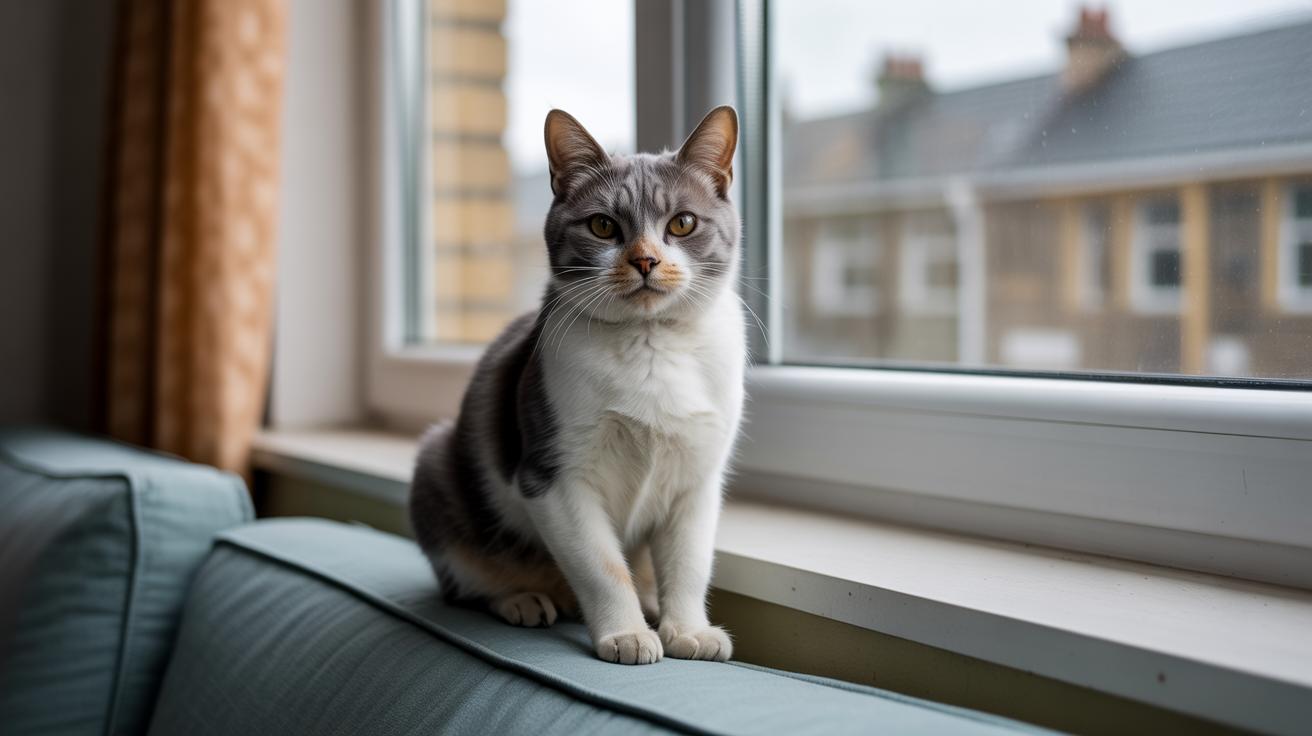
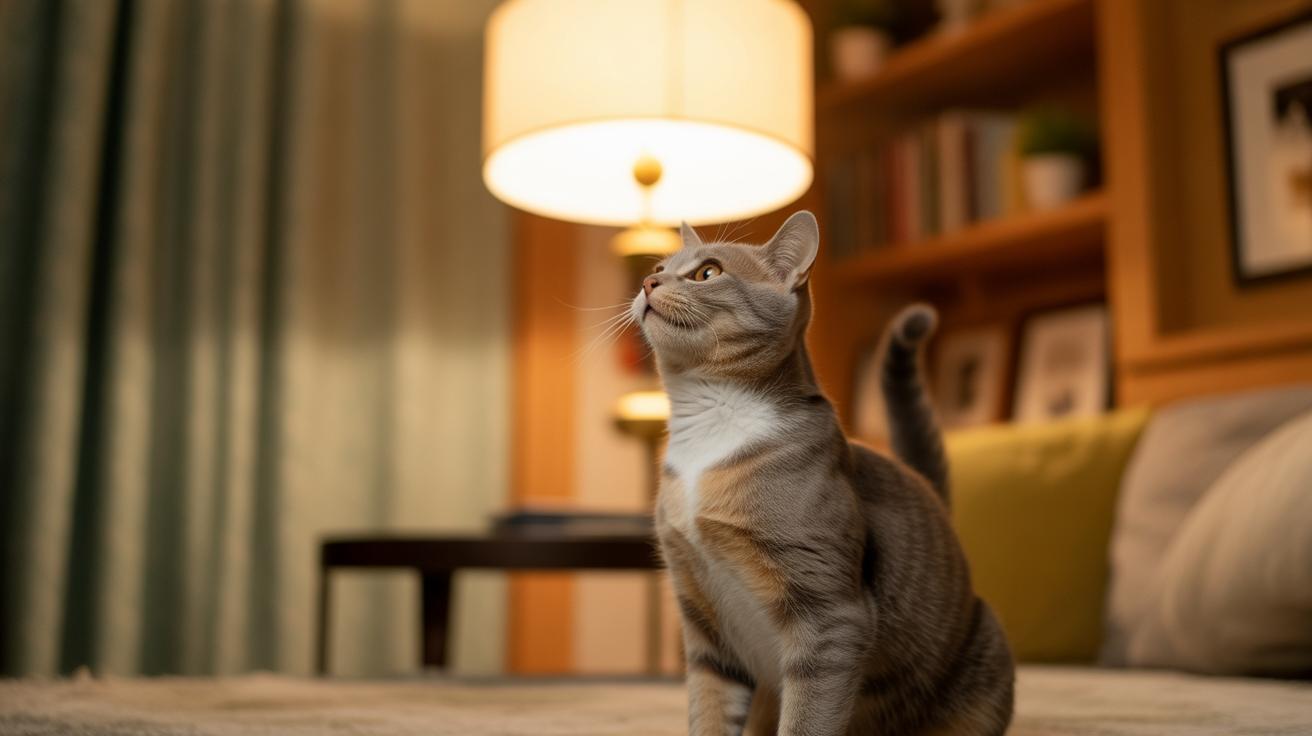
    Worried your indoor cat is bored and lonely? Hold that thought. Lots of indoor kitties are actually pretty content, and they give tiny, telling signs you can spot if you know what to look for. Check out our guide on Play Aggression Toys.

    Here’s a quick yes/no checklist to scan behavior, play, vocal cues, grooming, nutrition appetite, and litter habits. The more boxes you tick, the more confident you can be that your cat is happy.

    • Head nudges. When your cat bumps your hand or forehead, that’s a friendly hello and trust. Ever get a gentle head bop out of nowhere? Melt moment.
    • Slow blinks. Those lazy, slow blinks are basically a feline kiss. Try blinking back and see what happens.
    • Dreamy purrs. A low, steady purr while they curl against you or knead feels like a little engine vibrating under your palm.
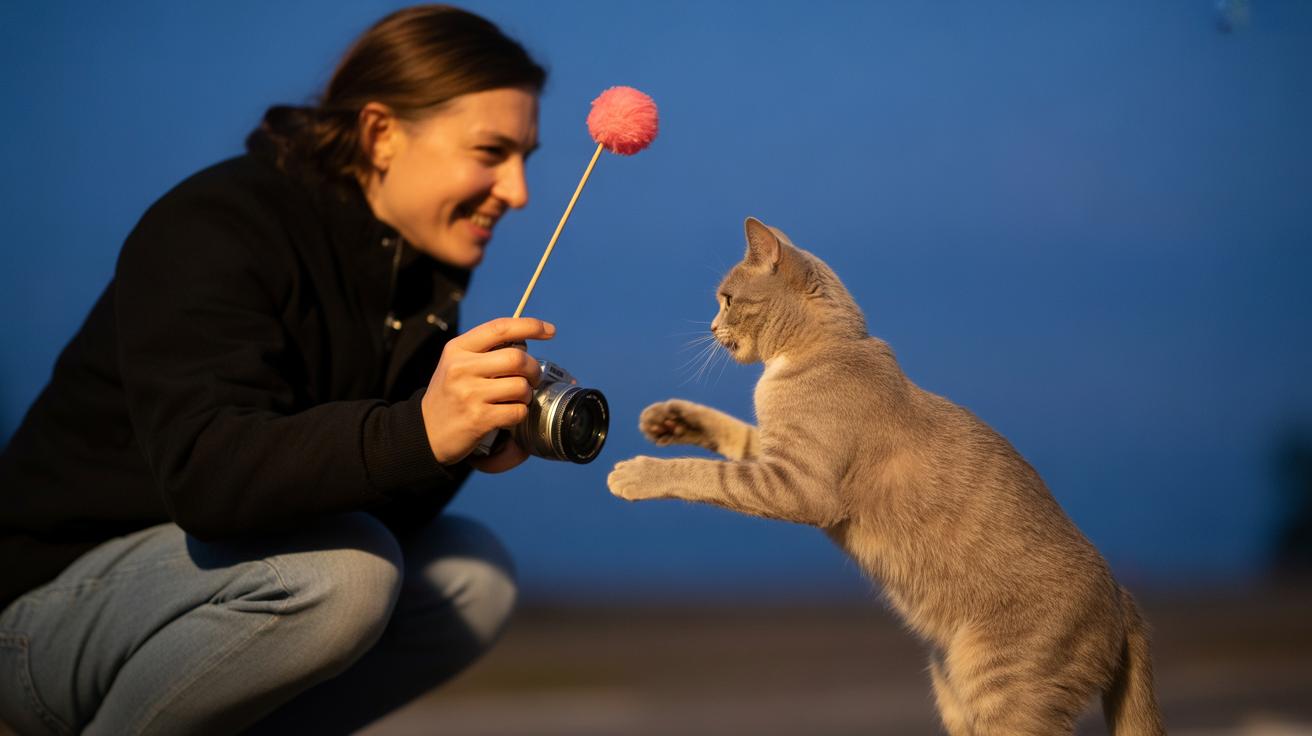
    • Play bursts. Quick zoomies, stalking a toy, or batting at a feather show curiosity and joy. Think of it like a cat workout session.
    • Neat fur. Regular self-grooming and smooth fur mean they feel safe and comfortable. No mats, no weird bald spots.
    • Steady meals. Eating at regular times and finishing food signals a healthy appetite and less stress.
    • Regular litter use. Using the litter box consistently, with no sudden changes, is a big comfort sign.

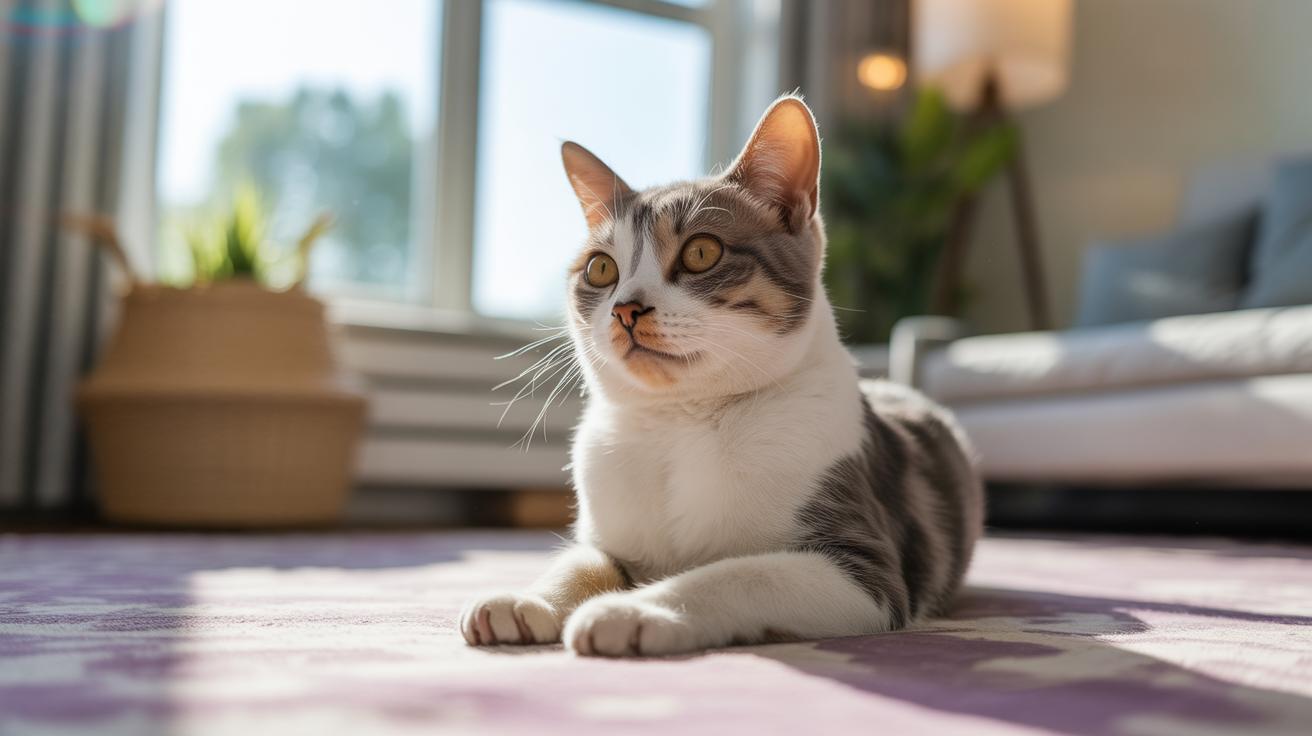
    Tick several of these, and you probably have a purrfectly happy companion.

    Worth every paw-print.

    Signs of a Happy Indoor Cat

    - Core checklist Quick-scan guide to the key signs of a happy indoor cat.jpg

    Quick, friendly checklist to spot a content indoor kitty. Scan it like a yes/no list, more checks across categories means you can be more confident your cat is happy.

    Look for matches in behavior, play, and physical signs. One thing alone might mean nothing, but several signs across social, vocal, grooming (coat care), and appetite areas usually tell the full story.

    1. Calmly asks for contact , approaches you, nudges, or gives head butts. Behavioral cues: social signals
    2. Soft, relaxed purring with sleepy-looking eyes. Behavioral cues: vocalizations
    3. Slow blink, the classic "cat kiss" (a relaxed, deliberate blink toward you). Behavioral cues: eyes/ears/whiskers
    4. Tail held up or a gentle tail quiver when greeting you. Behavioral cues: tail signals
    5. Kneading (pressing paws, "making biscuits") with half-closed eyes. Behavioral cues: social signals
    6. Flop or belly show in a loose, relaxed pose , great for photos, but be careful about touching the belly. Behavioral cues: social signals/body posture
    7. Regular, confident play and curiosity, like watching birds from the window or chasing a toy. Play, daily activity, and energy patterns
    8. Normal grooming and a shiny, clean coat (grooming means coat care and keeping fur tidy). Health & Warning signs: grooming
    9. Healthy appetite and eagerness at mealtimes. Health & Warning signs: appetite
    10. Consistent litter box use and a normal posture when going. (Litter box means where your cat pees or poops.) Health & Warning signs: litter habits
    11. Comfortable sleep rhythms , regular naps and a predictable nighttime pattern. Health & Warning signs: sleep
    12. Positive, relaxed interactions with other pets or people. Behavioral cues: social signals

    Read clusters, not singles. If your cat purrs, kneads, greets with an upright tail, and eats enthusiastically, you’re seeing social, vocal, play, and physical signs all at once. That’s a happy mix.

    Watch for vet-trigger signs and act fast if you spot them. Seek care if you notice:

    • No appetite for 48 hours.
    • Vomiting or diarrhea lasting more than 24 hours or any signs of blood.
    • Not using the litter box for 24 hours, or straining to urinate or having blood in urine.
    • New, loud, or constant vocalizing, or hiding for more than 24 to 48 hours.
    • Sudden weight loss of 5 to 10 percent or more over a few weeks.
    • New bald patches, painful over-grooming, or a big drop in coat quality.
    • Collapse, trouble breathing, or severe bleeding , get emergency care right away.

    Each checklist item links to a deeper explanation, quick photo and video examples, and a printable daily log in the Monitoring section so you can track trends and bring clear notes to your vet.

    Behavioral cues: body language, vocalizations, and social signals

    - Behavioral cues body language, vocalizations, and social signals (detailed expansion of checklist items).jpg

    This section expands the quick checklist items 1–6 and 12 so you can read kitty signals with more confidence. Click the checklist anchors to jump from the short list to each detailed bit as you go: Behavioral cues: social signals, Behavioral cues: vocalizations, Behavioral cues: eyes/ears/whiskers, and Behavioral cues: tail signals. Ever watched your cat and wondered what all that wiggling and chirping means? You’re in the right spot.

    Tail signals

    Tail posture is one of the quickest ways to read a cat’s mood. An upright tail with a curved tip or a tiny quiver when your cat greets you (checklist item 4) usually means “happy to see you” , think of it as a feline wave. A slow, relaxed swish says casual interest. A rapid lash or thrashing tail usually means irritation or alarm, so move slowly and check the rest of the body before you act.

    Always read the tail with the whole cat: a high tail on a tense back is different from a high tail on a loose, relaxed body. Short video clip: quick demo showing upright tail greeting vs rapid lash.

    Eyes, ears, and whiskers

    A slow blink , the mellow “cat kiss” , and half-closed, sleepy eyes are cozy signs (see checklist items 3 and 2). If your cat slow-blinks at you and then nudges, that’s trust in action. Try returning the slow blink; it’s an easy, sweet connection.

    Ears tell a lot: ears that sit relaxed and neutral mean calm; ears forward mean focused interest; pinned ears mean stress. Whiskers (sensitive facial hairs) held gently to the sides are relaxed; whiskers flattened back can signal fear or defense. Photo examples: side-by-side shots of slow blink, neutral ears, and whisker positions.

    Vocalizations (purrs, chirps, trills, meows)

    Vocalizations (cat sounds) give important clues. Purring during petting or lounging is usually contentment when the body looks relaxed (checklist item 2). A chirp or trill at the window or when greeting you often means excitement or a “look over here” moment, not distress.

    Short, cheerful meows are normal greetings. Long, loud, repeated yowling or sudden changes in how your cat calls may point to stress or pain. Mini-note: any vocal changes that match the vet-trigger thresholds belong in the Health & Warning signs section for quick action. Audio clip: examples of purr vs chirp vs worrying yowl.

    Social signals and body posture (head butts, kneading, flopping, belly exposure)

    Head butts and rubbing , sometimes called bunting , leave scent and build social bonds; that’s checklist item 1 and item 12 in action. When a cat presses its face to your hand or rubs against your leg, it’s saying you’re part of its circle.

    Kneading (making biscuits, pushing paws rhythmically) with half-closed eyes shows comfort and security (checklist item 5). A full-body flop or rolling onto the back can be a sign of trust, though not always an invitation to belly rubs (checklist item 6); many cats prefer head scratches instead. Safe response tips:

    • Return a head butt with a gentle forehead touch or a slow blink.
    • If your cat flops, try a soft stroke to the head or chin instead of reaching for the belly.
    • When kneading, offer a flat hand nearby or a soft blanket so they can keep going.

    When you read these behaviors, look for matches across categories , posture, touch, and vocal tone , not just one signal. A slow blink plus a relaxed tail and gentle purring is much stronger evidence of comfort than any of those alone. Keep context in mind: recent changes, a new pet, age, or medical issues can shift meanings quickly, so check the Health & Warning signs section if you see troubling patterns or vet-trigger symptoms. I once watched my cat leap three feet for a toy and then flop for chin scratches , small moments like that tell you a lot.

    Play, daily activity, and energy patterns (age-specific expansion of checklist item 7)

    - Play, daily activity, and energy patterns (age-specific expansion of checklist item 7).jpg

    Play is where cats show their inner hunter and feel really satisfied. For a quick jump back, see checklist item 7. Log session times with the Monitoring daily log so you can spot when your cat is most active.

    Aim for interactive sessions that copy a hunt: a slow stalk, a lively pounce, a believable catch, then a calm finish. Some cats get a meal after play and adore that ritual. Use wand toys (a stick with a ribbon or feather), small movable toys (balls or motorized mice), and puzzle feeders (a toy that makes cats work for food) to mix motion with brain work. Picture your cat’s whiskers twitching as a toy skitters across the floor and the satisfying thud when they nab it.

    Age Group Typical Play Pattern Session Length & Frequency
    Kitten Short, frequent bursts of wild energy; fast learners 5–15 minutes per session; 3–6 short sessions per day
    Adult Hunting-style sequences with focused bursts and solo breaks Two 10–15 minute interactive sessions per day plus short solo play
    Senior Gentler, slower moves; shorter attention span; joint-aware play 5–10 minute sessions; 1–2 times per day tuned to stamina

    Safety and variety matter. Watch breathing, limping, or sudden disinterest – stop the game if your cat pants, hunches, or favors a leg. For seniors, pick low-impact toys and lower perches so they don’t have to make hard jumps. Do a few gentle wand moves first to warm up those muscles before any intense bursts.

    Rotate toys weekly so novelty stays high , store a few and swap them like a tiny surprise. Use puzzle feeders to stretch mealtime into hunting practice and to slow eating. Keep session endings predictable; let your cat “catch” a toy so they finish calm and happy.

    Track times and reactions in the Monitoring daily log so you can tune play length and type to your cat’s age, health, and personality. I once watched Luna leap six feet for a crinkly ball , worth every paw-print.

    Health & Warning signs: grooming, appetite, litter habits, sleep, and when to see a vet

    - Health  Warning signs grooming, appetite, litter habits, sleep, and when to see a vet.jpg

    This expands checklist items 8–11 and gives the exact signs to jot down in your printable daily log (see the Monitoring section). Read the quick troubleshoot tips, try the simple home fixes, and mark anything that crosses a vet threshold so you have clear notes for the appointment. Ready? Let’s make this easy and a little bit paw-sitive.

    Grooming and coat condition

    A healthy coat looks tidy and feels soft. Cats spend a lot of time grooming, often half their waking hours, so sudden changes matter. Watch for over-grooming that makes bald patches, sores, or raw skin, and under-grooming that leaves matted fur (tangled, stuck-down hair), greasy spots, or loose clumps. Those are red flags to record.

    Start home checks by peeking in the mouth for dental pain (sore teeth or gums), bad breath, or broken teeth; run a flea check (part the fur and look for tiny dark specks or bugs); and scan the house for new stressors like a new pet or a change in routine. Try extra brushing, a quiet safe spot, and short calm play sessions to reduce stress-linked licking. If you see persistent bald spots, bleeding, or painful grooming for more than a few days, log dates and times. Then call your vet.

    I once watched Luna groom so much she left a perfect mitten-shaped bald patch. True story.

    Appetite and feeding behavior

    If your cat heads to the bowl, rubs your legs, or meows before meals, appetite is probably good. Keep a simple baseline: how much they eat at each meal and how long mealtime takes. No interest in food for 48 hours is a clear stop sign – call your vet.

    If appetite dips, try switching to a mildly different formula or warming wet food to boost the smell. Watch for signs of dental pain like dropping food or pawing at the mouth. Weigh your cat weekly if you can; a 5–10 percent weight loss over a few weeks is serious and should be logged and reported. If home fixes don’t help, call the vet with your notes.

    Litter habits and toileting changes

    Follow the plus-one rule: one litter box per cat, plus one extra. Normal toileting looks relaxed and steady. Warning signs include straining, lots of short trips with little output, crying in the box, or any blood in urine or stool. Sudden avoidance of the box is another clear red flag.

    Check the box spot – is it private and low-traffic? Check litter depth and keep boxes clean – scoop daily and deep-clean every 10 to 14 days. If your cat skips the box for 24 hours, shows painful posture while urinating, or you spot blood, log times and contact the vet fast.

    Sleep and daily rhythms

    Most indoor cats sleep 12 to 20 hours a day. A real change is when sleep or activity shifts consistently for about a week, especially if appetite, grooming, or play also change. Sleep alone rarely tells the whole story, but sleep plus other declines can point to illness or pain. Use the daily log to spot trends.

    When to see a vet (immediate action box)

    • Collapse, severe trouble breathing, or heavy bleeding – seek emergency care right away.
    • No appetite for 48 hours – call your vet.
    • Repeated vomiting or diarrhea for more than 24 hours, or any blood present – urgent review.
    • Not using the litter box for 24 hours, or straining/bleeding during elimination – contact the vet.
    • New, loud or constant vocalization, or hiding for 24 to 48 hours – arrange a vet check.
    • Sudden weight loss of 5 to 10 percent over a few weeks, or new bald patches and painful over-grooming – book an exam.

    Bring your logged observations and the printable daily log to the appointment so the clinic can see timing, frequency, and any linked behaviors. Worth every paw-print.

    Home setup and engagement strategies that support long-term contentment (age-adapted, non-duplicative)

    - Home setup and engagement strategies that support long-term contentment (age-adapted, non-duplicative).jpg

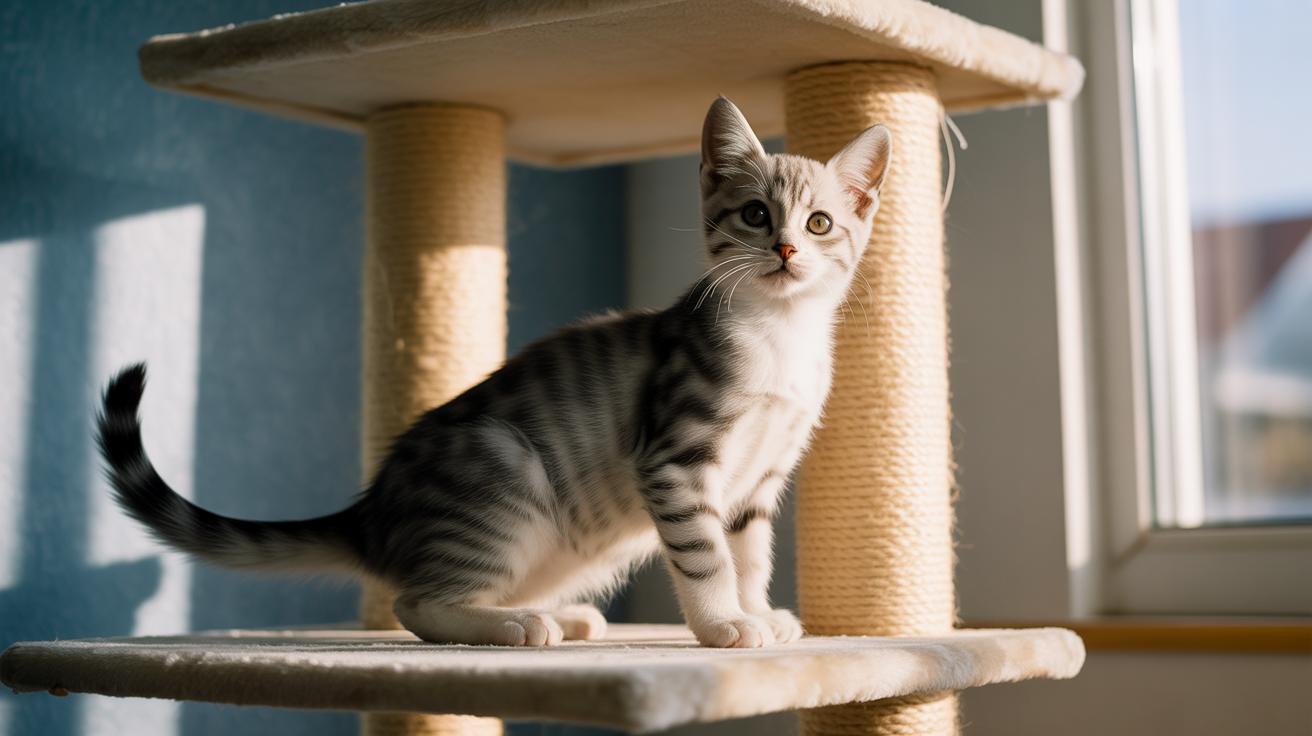
    Indoor happiness comes down to five simple needs: hunting and stalking, climbing and surveying, scratching and marking, hiding and feeling safe, and social time or peaceful alone time. Match each need with a clear setup and your cat will be content, calm, and a little more claw-tastic.

    • Hunting and stalking: toys and puzzle feeders (a food toy that makes cats work for kibble).
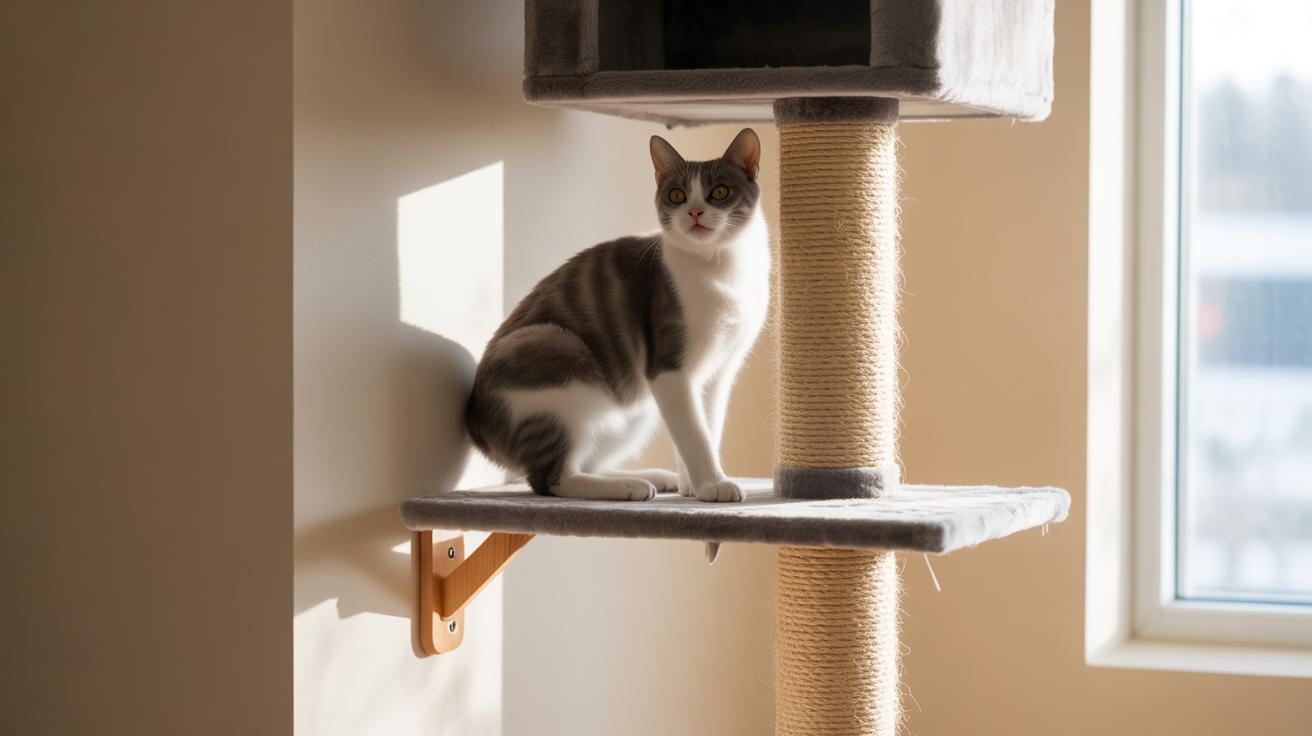
    • Climbing and surveying: multi-level perches and wall shelves (elevated resting spots and platforms).
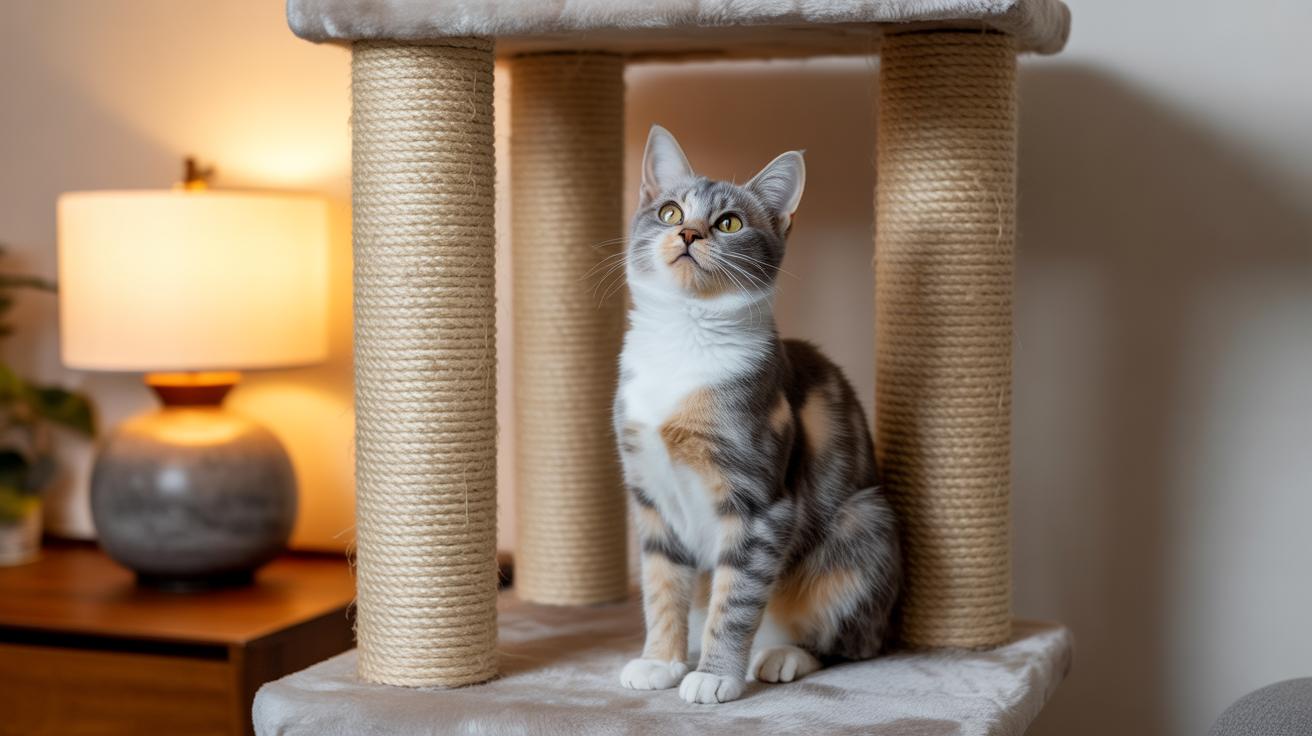
    • Scratching and marking: multiple scratching posts (upright posts covered in sisal or carpet for clawing).
    • Hiding and security: cozy hide spots like boxes, tunnels, or cat caves.
    • Social or alone time: quiet zones for bonding and separate retreats when your cat wants privacy.

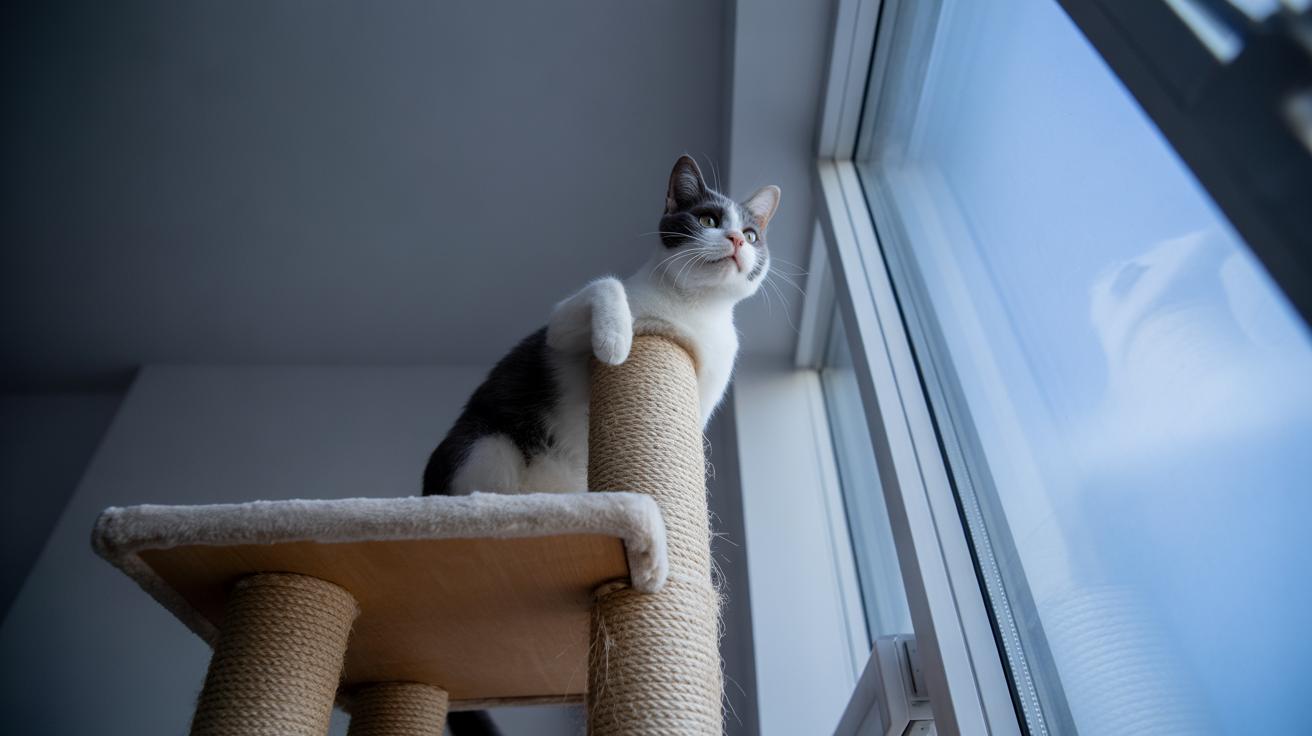
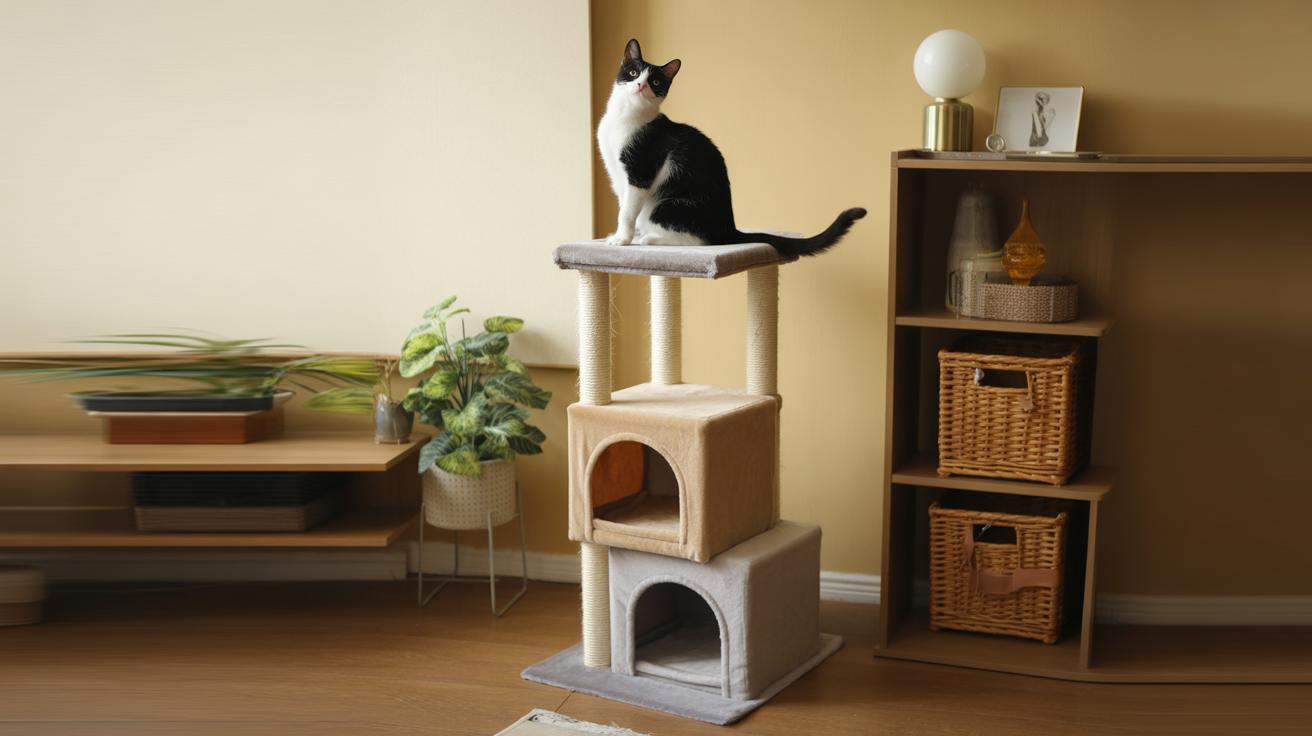
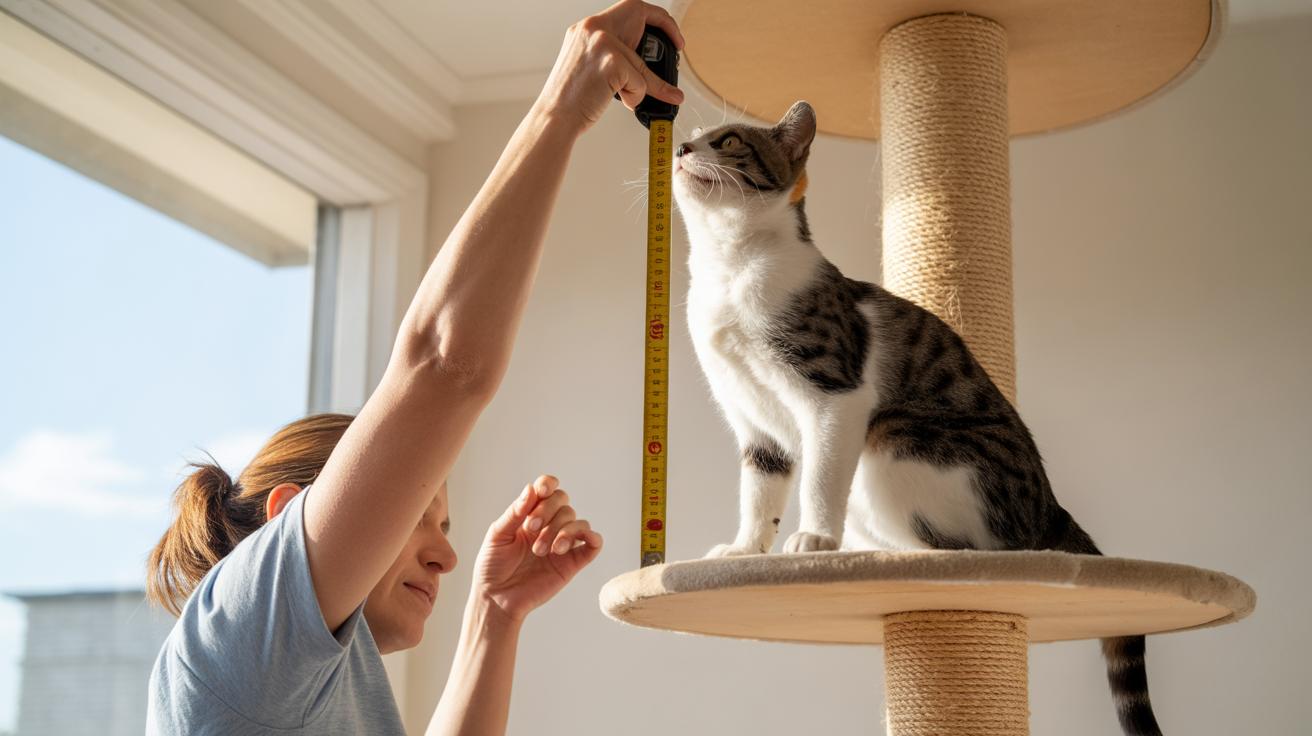
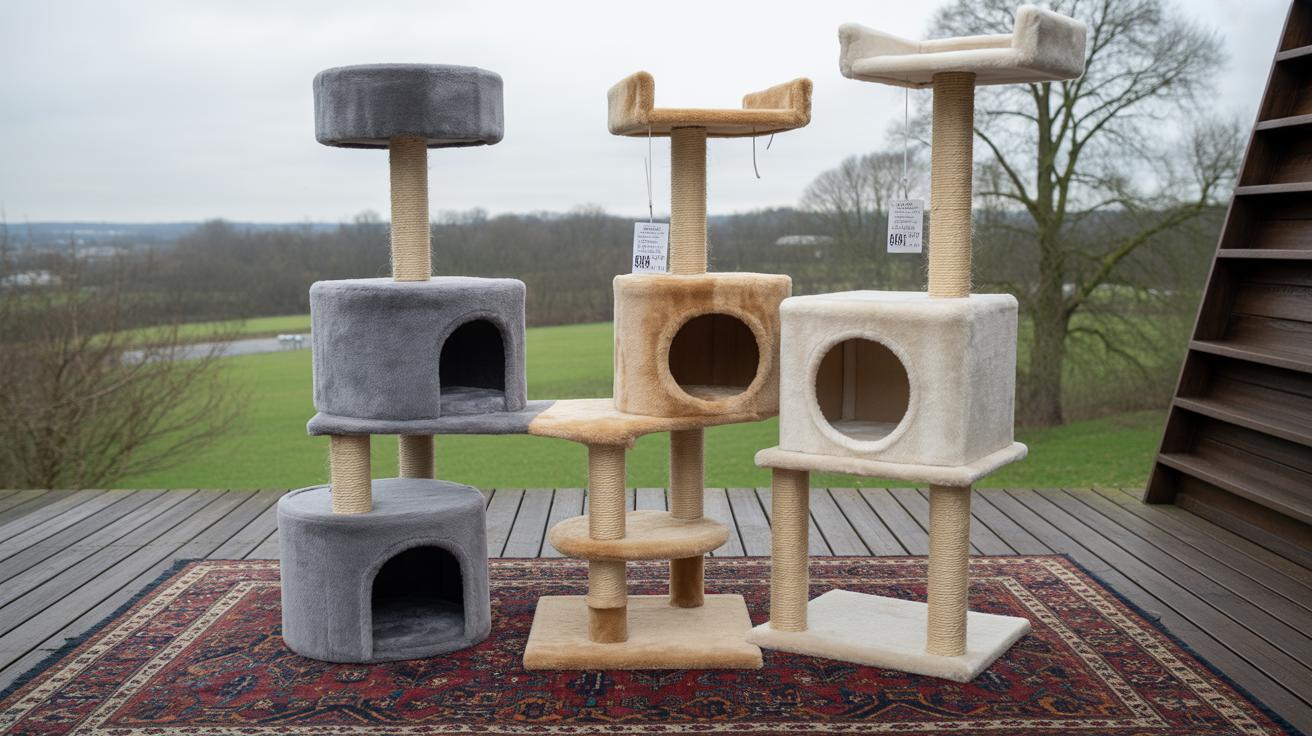
    Give them vertical territory. Cats love to climb and watch. Put at least one sturdy perch (an elevated resting spot) at window height and another higher up so your cat can choose the view. Try to position a perch within arm’s reach of the window frame so sunlight and birdwatching are easy. Use multi-tier cat trees (sturdy climbing towers) and floor-to-ceiling shelves (wall-mounted platforms) to make obvious routes up and down.

    Respect scratching needs. Aim for one scratching post per cat, plus one extra in another room so marking doesn’t turn into competition. Make sure posts are stable and tall enough to allow a full stretch. Really , your furniture will thank you.

    Turn meals into play sometimes. Use puzzle feeders for about 25 to 50 percent of daily calories, or break meals into small puzzle sessions to extend hunting play during mealtime. Watch them stalk kibble like tiny predators. Rotate toys weekly so novelty stays high; tuck a few away and swap them like little surprises. Scatter three to five hiding options around the house so retreat spots are always available. For safe outdoor variety, try a catio (secure outdoor enclosure) or short, supervised harness walks.

    Age-adapted tips. Kittens: kitten-proof small parts and keep fragile items out of reach, they’re little explorers. Adults: give higher perches and stable climbing paths for bold jumpers. Seniors: add lower-step perches, ramps, and soft bedding to protect aching joints. Works wonders for their comfort.

    Quick starter purchases:

    1. Sturdy multi-level cat tree: gives climbing, scratching, and high resting spots.
    2. Two puzzle feeders: split meals into engaging sessions.
    3. One high-window perch: prime birdwatching real estate and sunshine naps.

    Worth every paw-print.

    How age and individual personality change the signs of a happy indoor cat

    - How age and individual personality change the signs of a happy indoor cat.jpg

    Life stage and personality both shape how a happy-cat checklist looks. A single sign , like purring, a sudden play burst, or extra naps , can mean very different things depending on your cat’s age and temperament, so read each item through those two lenses. Ever watched your cat do something and wonder, is that normal? This helps you figure it out.

    Check the age-specific norms for context in the detailed anchors: Play, daily activity, and energy patterns, Health & Warning signs: grooming, and Home setup. Those sections list kitten/adult/senior rows (table rows) and the quick-tip callouts have been moved into Play and Health so you won’t lose the actionable items.

    Quick rule of thumb: use life stage to expect rhythm , how often and how long behaviors happen , and use personality to read the style , bold versus shy. That combo helps you decide when a change is just normal, or when it’s worth jotting down and watching.

    Personality: bold/outgoing vs shy/secure

    Bold, outgoing cats make everything big and obvious. Think loud purrs, theatrical leaps, and full-speed chases that shake the rug. A happy roll from a bold cat might be a dramatic, full-body flop with the belly all out. Milo barreled into the room, headbutted my knee, then made a chuffing purr like a little motor. You can almost hear the joy.

    Shy or quietly secure cats show the same feelings in small, soft ways. Look for gentle trills, slow blinks, tucked-but-relaxed loafing, or a light knead at the edge of your hand. She slid onto the armrest, blinked twice, and sighed into a soft rumble that said, I like this corner with you. Notice the tiny signals and celebrate them.

    Monitoring progress: a printable daily log concept and how to use it (linked from checklist)

    - Monitoring progress a printable daily log concept and how to use it (linked from checklist).jpg

    Keep a simple, one-page daily log so you catch slow changes before they become big problems. Use an easy layout with these columns: Date, Time, Observed sign(s) (link to the checklist anchors, for example Play, daily activity and energy patterns), Duration or Frequency, Notes/Context, and Weight (if you can weigh your cat , use a kitchen scale or pet scale).

    Track things like purring or seeking contact, play session length, grooming quality, how eager they are at mealtimes, litter box visits, and any new sounds or vocal patterns. A tiny note helps later , “short chirp at 10:05 am” or “whiskers twitching during play.” Ever watched your kitty chase shadows? Jot the time.

    Review the sheet once a week and add a one-week summary line: more active, same, or less active; eating steady or reduced; grooming normal or changed. Look for clusters across categories. A drop in play plus a dull coat plus less eating is more worrying than any single sign. Follow the Health & Warning signs thresholds right away for red flags: no appetite for 48 hours, vomiting or diarrhea for more than 24 hours, litter box avoidance for 24 hours. Bring the log to the vet if patterns stick around.

    Below is a tiny example of one day so you can copy the layout into a printable PDF or notebook and start filling it in. Worth every paw-print.

    Date Time Checklist item(s) observed (anchor) Duration/Frequency Notes/Context
    2026-03-03 08:15 [Play, daily activity and energy patterns](#play-daily-activity-and-energy-patterns) 12 min Active, chased wand, caught toy
    2026-03-03 18:30 [Health & Warning signs: appetite](#health-warning-signs-appetite) Meal eaten Rubs legs before bowl, finished wet food

    Final Words

    Spot the signs in the action: calm nudges and head-butts, relaxed purrs and slow blinks, upright tails, regular play, clean grooming, eager meals, and steady litter habits.

    We covered behavior, age-tailored play, grooming and appetite checks, home setup, and a printable daily log; quick links and photos make ID easy.

    Weigh clusters of behavior, play, and physical cues for stronger evidence. Note vet thresholds: no appetite 48 hours; vomiting/diarrhea >24 hours; litter avoidance 24 hours; collapse or breathing trouble, seek care. Those gentle purrs are real signs of a happy indoor cat.

    FAQ

    How do I know if my indoor cat is happy?

    You know your indoor cat is happy when it solicits gentle contact (nudges, head butts), purrs with soft eyes, slow-blinks, holds its tail upright, plays confidently, grooms normally, eats well, and uses the litter consistently.

    What are clear signs a cat is unhappy and what annoys them?

    Signs a cat is unhappy include hiding, sudden aggression, constant vocalizing, loss of appetite, over- or under-grooming, litter avoidance, and tail-lashing; common annoyances are loud noise, forced cuddles, a dirty box, or abrupt routine changes.

    How can I tell if a cat is happy by its tail?

    You can tell a cat is happy by its tail when it holds it upright with a curved tip or gives a gentle quiver on greeting; a rapid lash or puffed tail usually signals irritation or fear.

    What is the 3-3-3 rule of cats?

    The 3-3-3 rule of cats is roughly three days to settle into a new space, three weeks to build routine and confidence, and three months to feel fully comfortable and bonded with their people.

    What facial and vocal signs show a happy indoor cat?

    Facial and vocal signs of a happy indoor cat are slow blinks, soft half-closed eyes, relaxed whiskers and neutral ears, plus gentle chirps or meows and purring while relaxed or being petted.

    Is there a quick checklist or quiz I can use to check my cat’s happiness?

    A quick checklist or quiz helps: track contact, purring, play, grooming, appetite, litter use, sleep, and social interactions daily; clusters of positive signs give stronger proof than a single ticked box.

  • Indoor Cat Grooming Tips: Brushing, Nails, Baths

    Indoor Cat Grooming Tips: Brushing, Nails, Baths

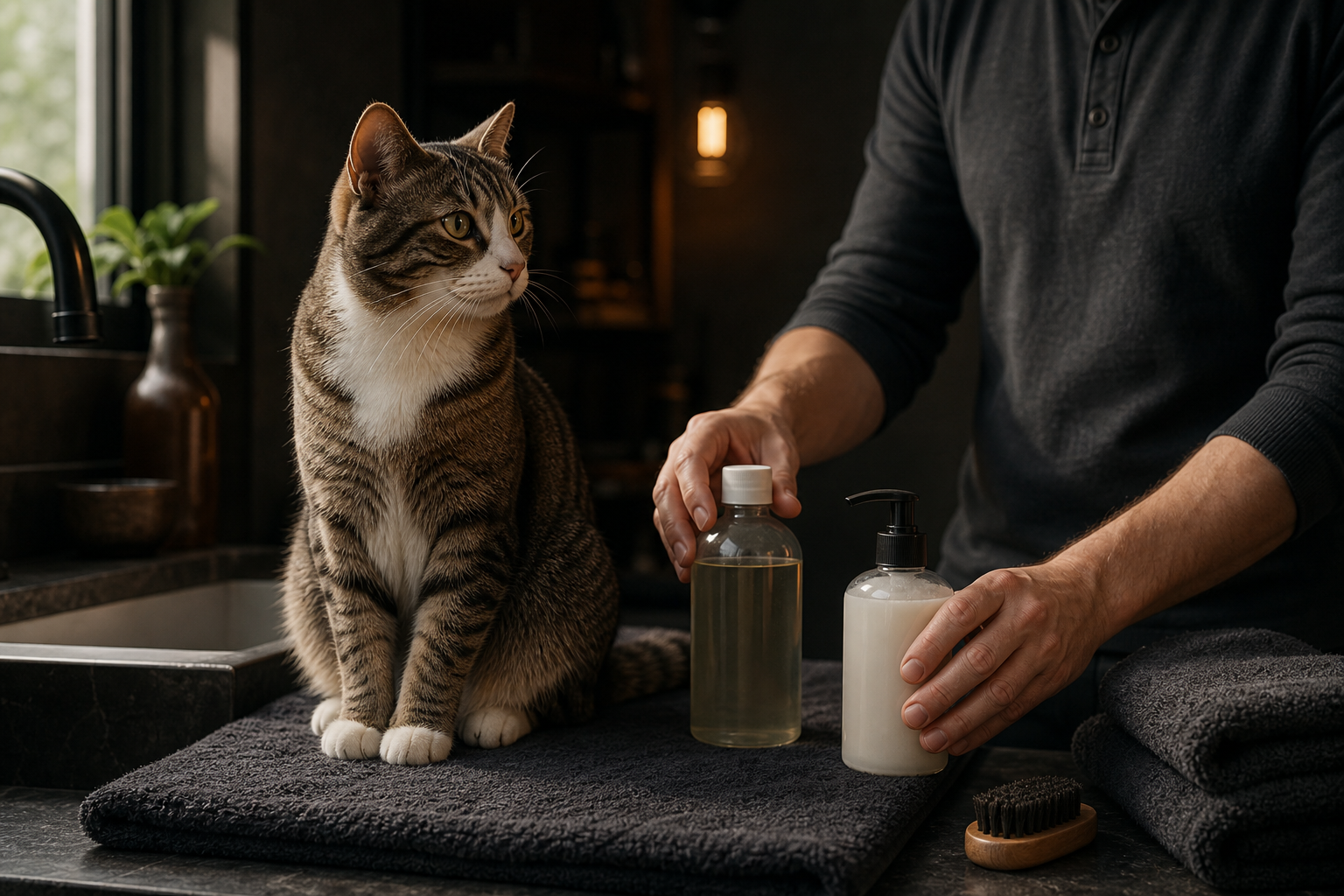
    Think indoor cats don’t need grooming? Think again. Mats, hairballs (small balls of swallowed fur), and overgrown nails can make indoor life itchy, painful, or just plain annoying for your cat. It’s not fancy, just regular care keeps them comfy. Check out our guide on Unbreakable Cat Toys.

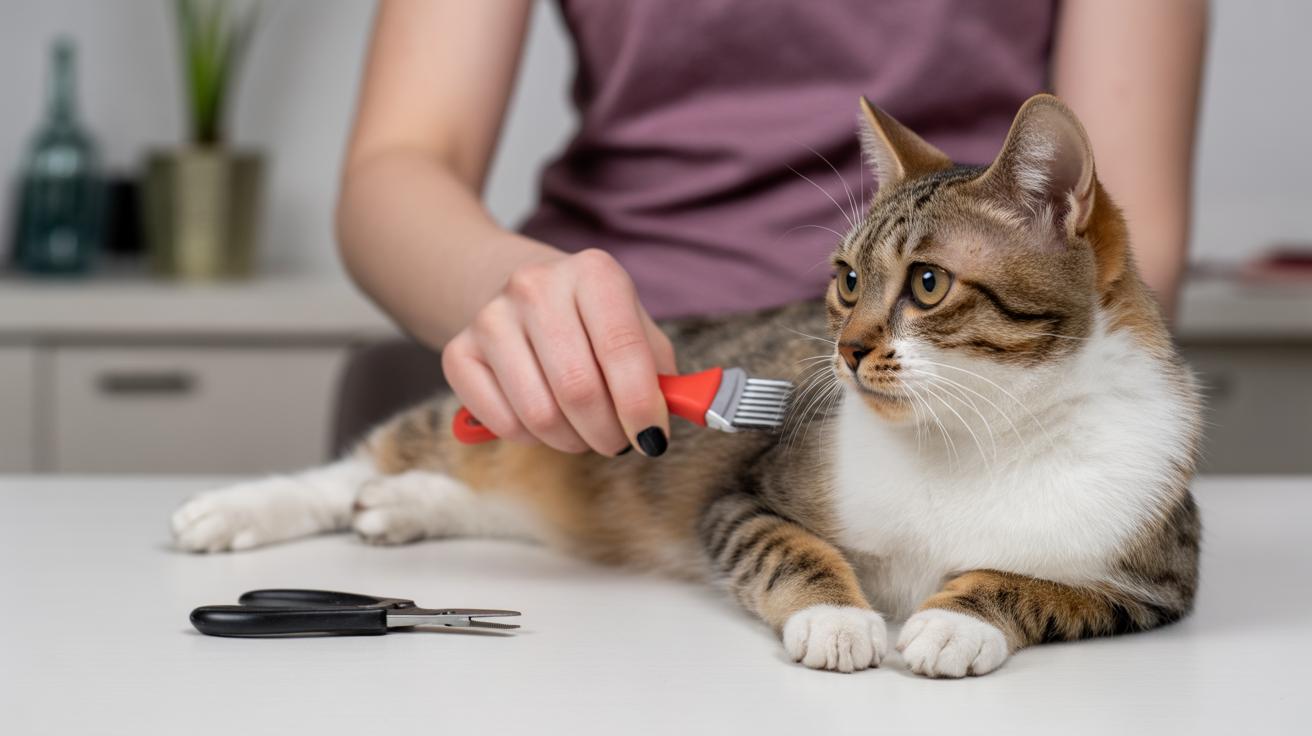
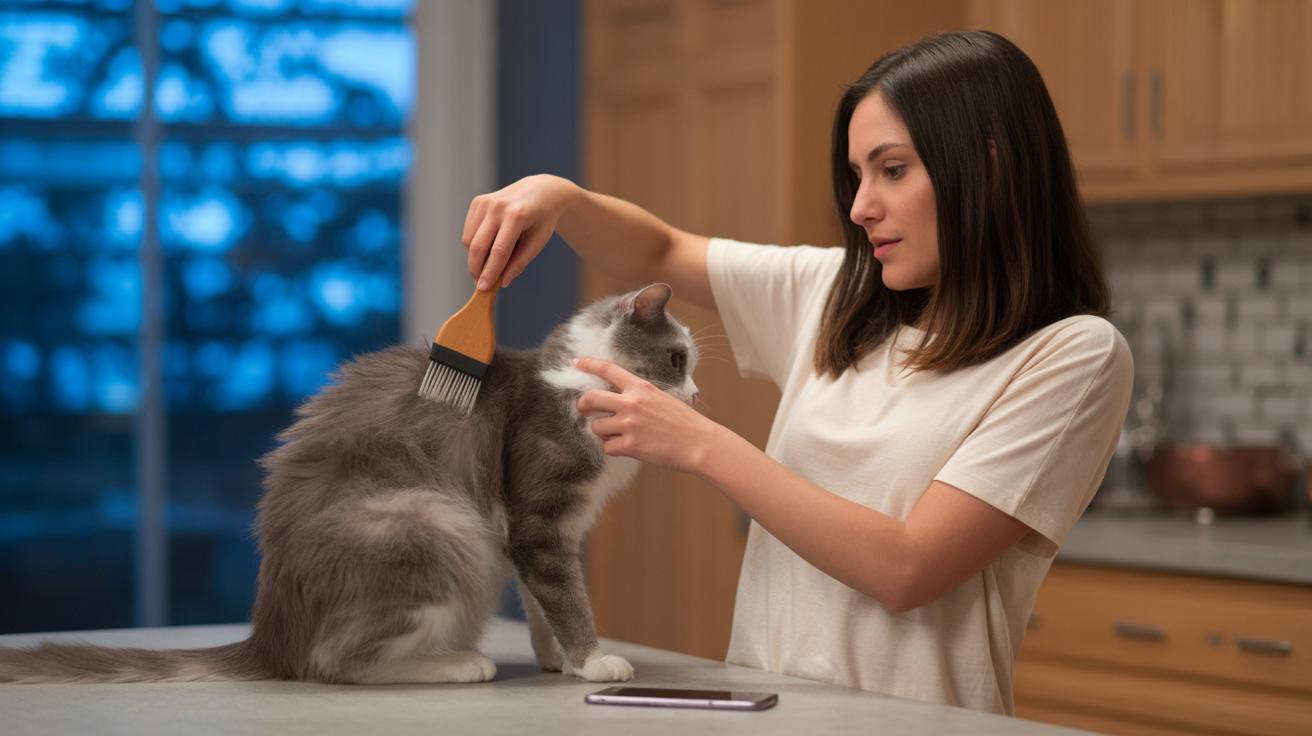
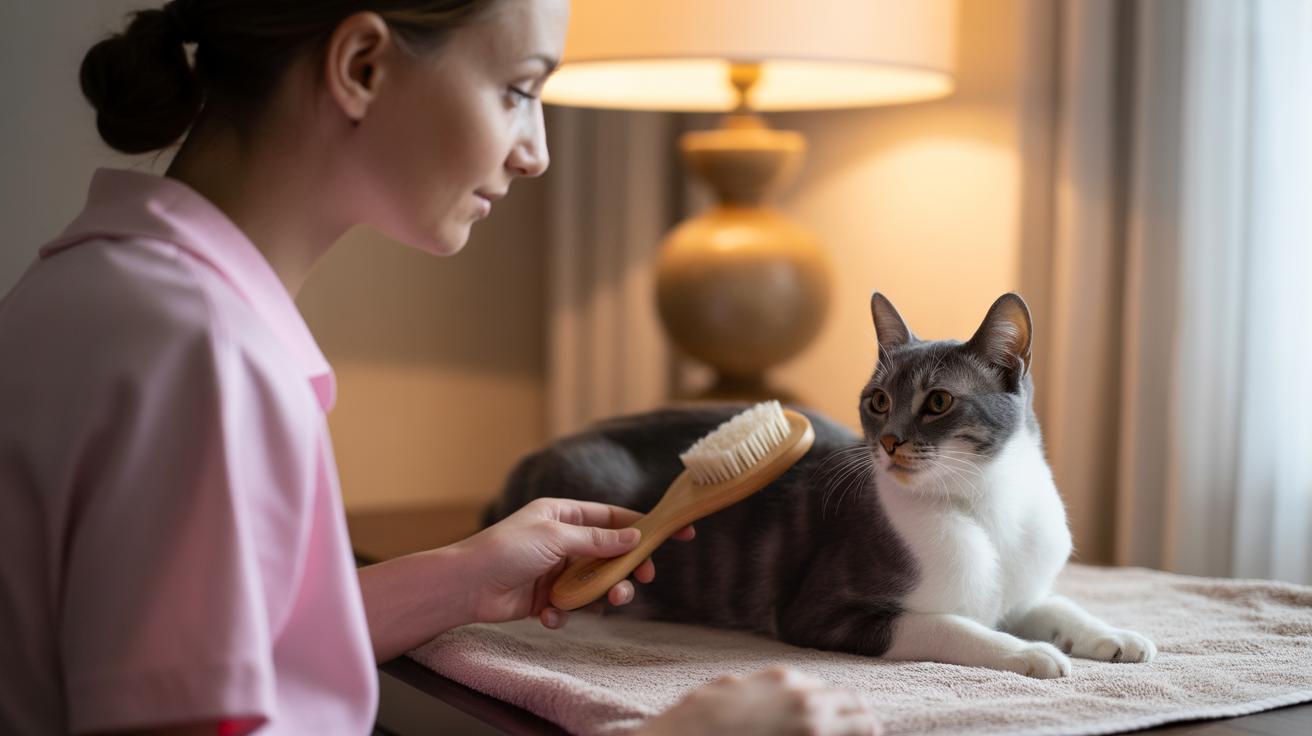
    Short, steady sessions win. Five to ten minutes a few times a week keeps fur tidy and trust strong. Your cat’s whiskers might twitch as the brush slides by. Ever watched your kitty chase a sunbeam? That calm focus makes grooming easier.

    These tips cover brushing (removing loose fur), safe nail trims (cutting just the sharp tip of the nail), quick baths (a short spot-clean wash), and dematting (removing tight mats of fur). I’ll keep the steps simple so you can fit them into even the busiest day.

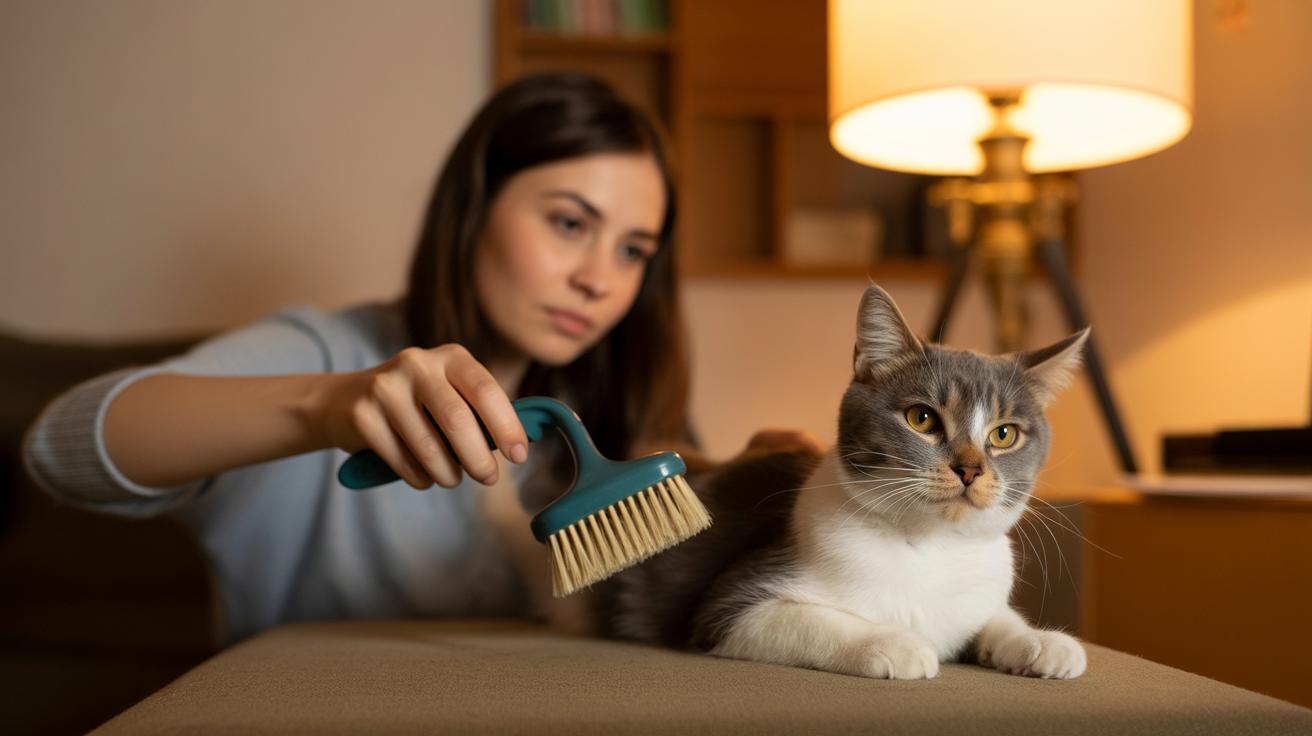
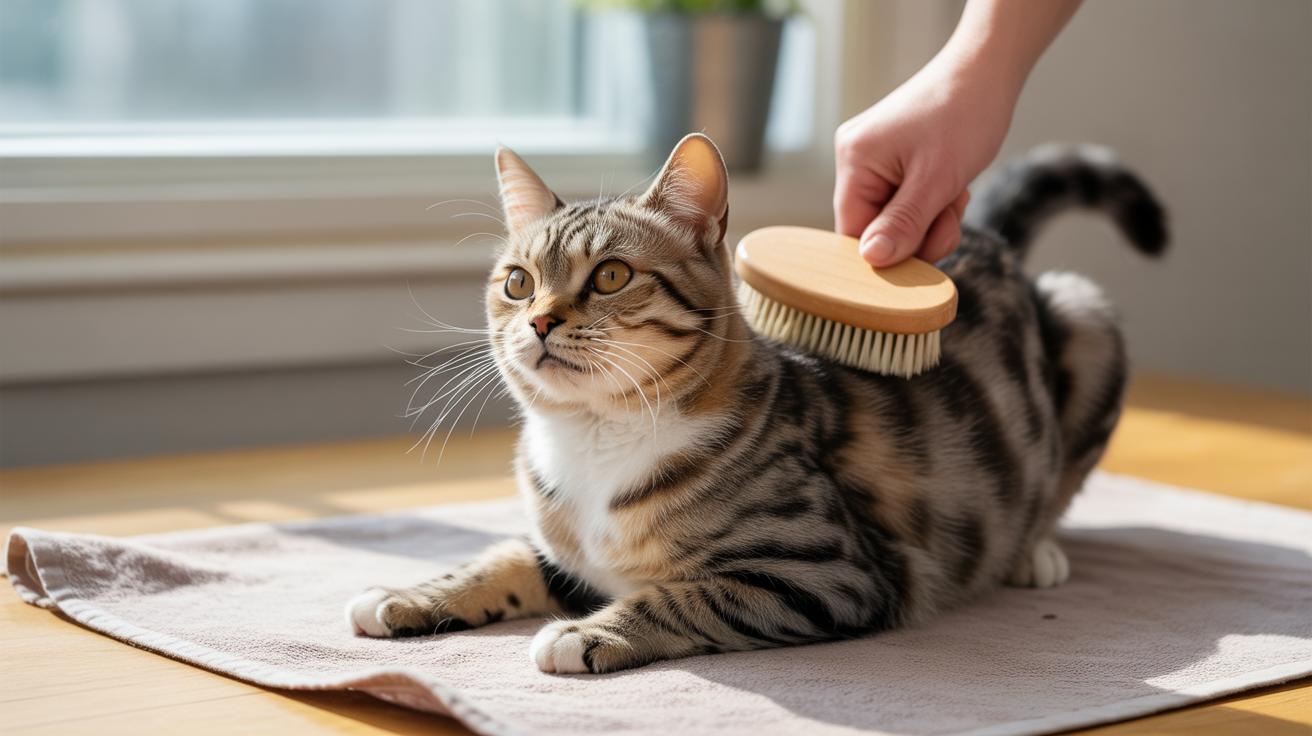
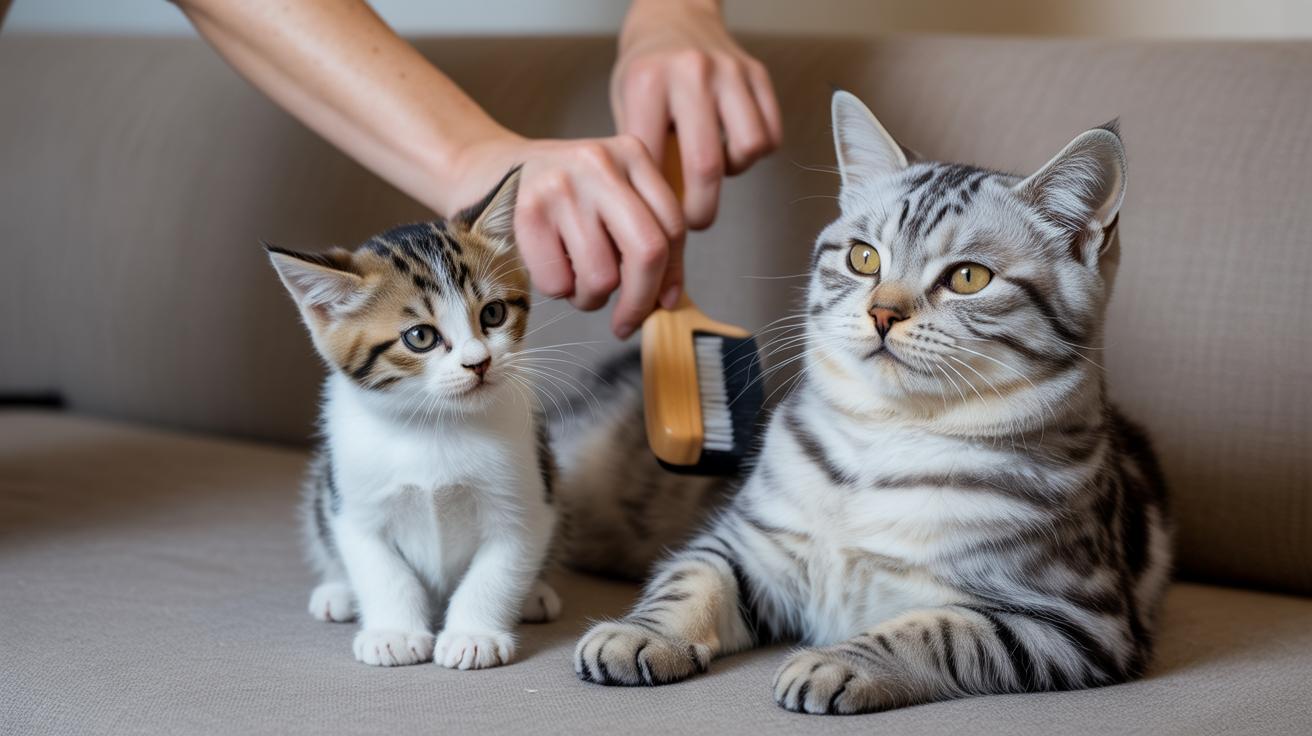
    Brushing: Use gentle, slow strokes. Start with the easy spots, praise and give a treat, then work toward the belly if they like it. Short sessions beat long struggles.

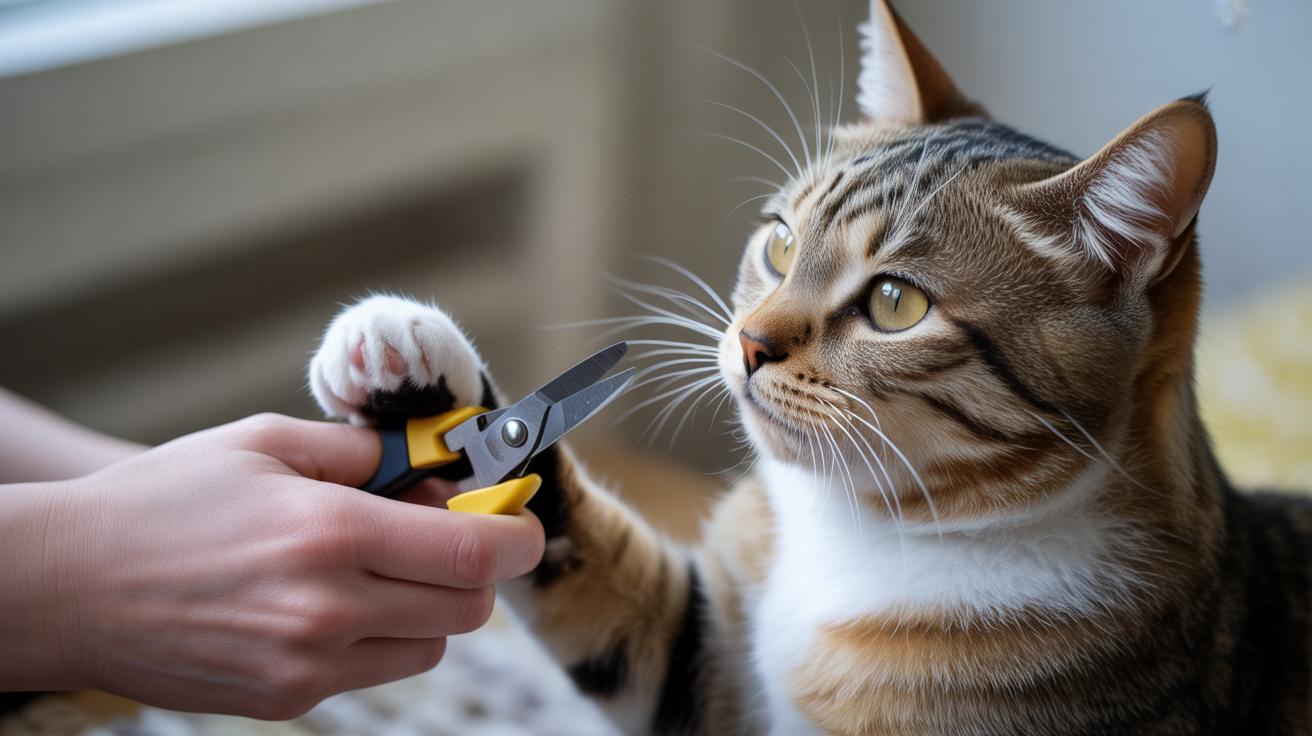
    Nail trims: Only clip the clear tip, avoid the pink quick. If your cat freezes, stop and try again later. Finger-time with a soft scratch after can help them relax.

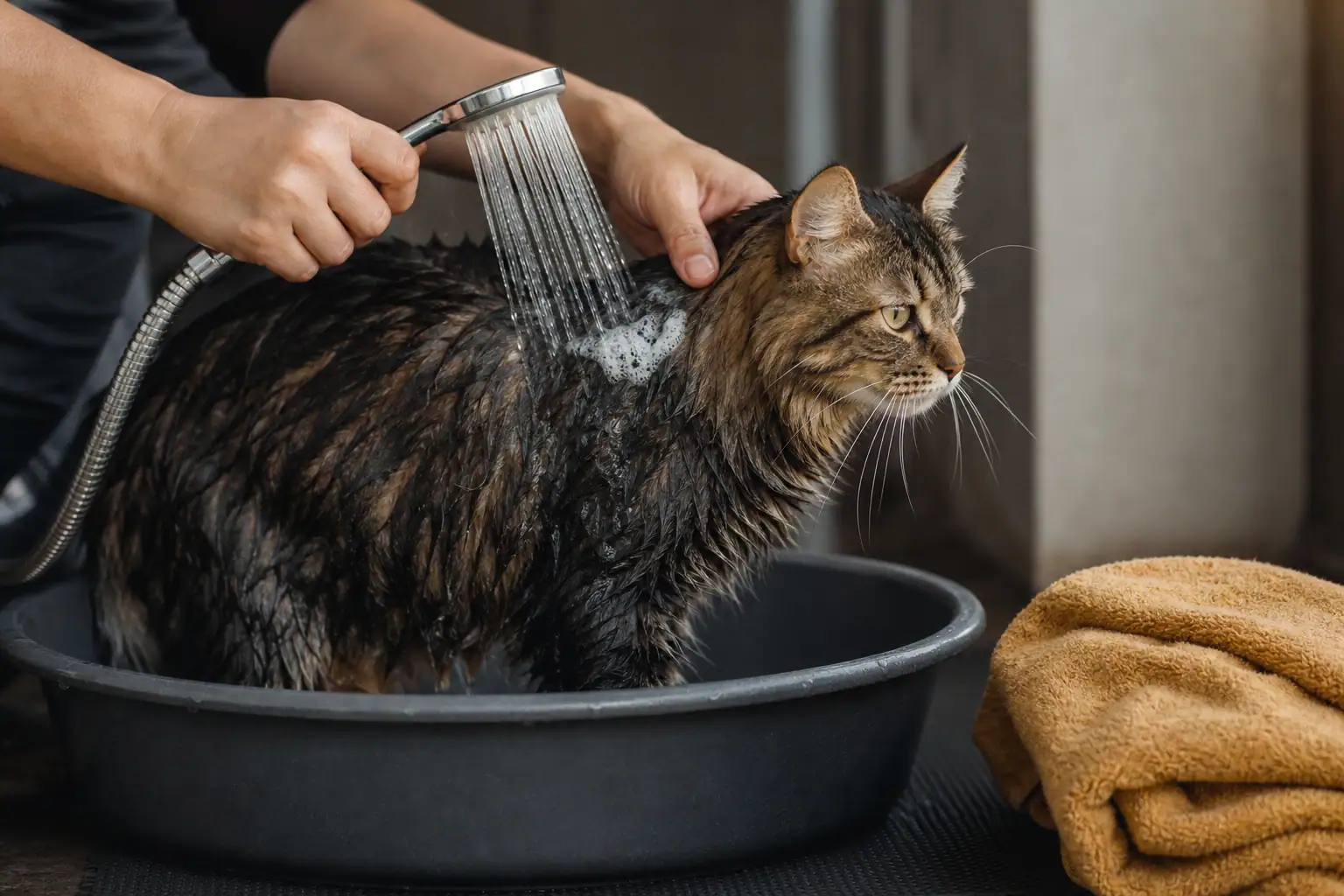
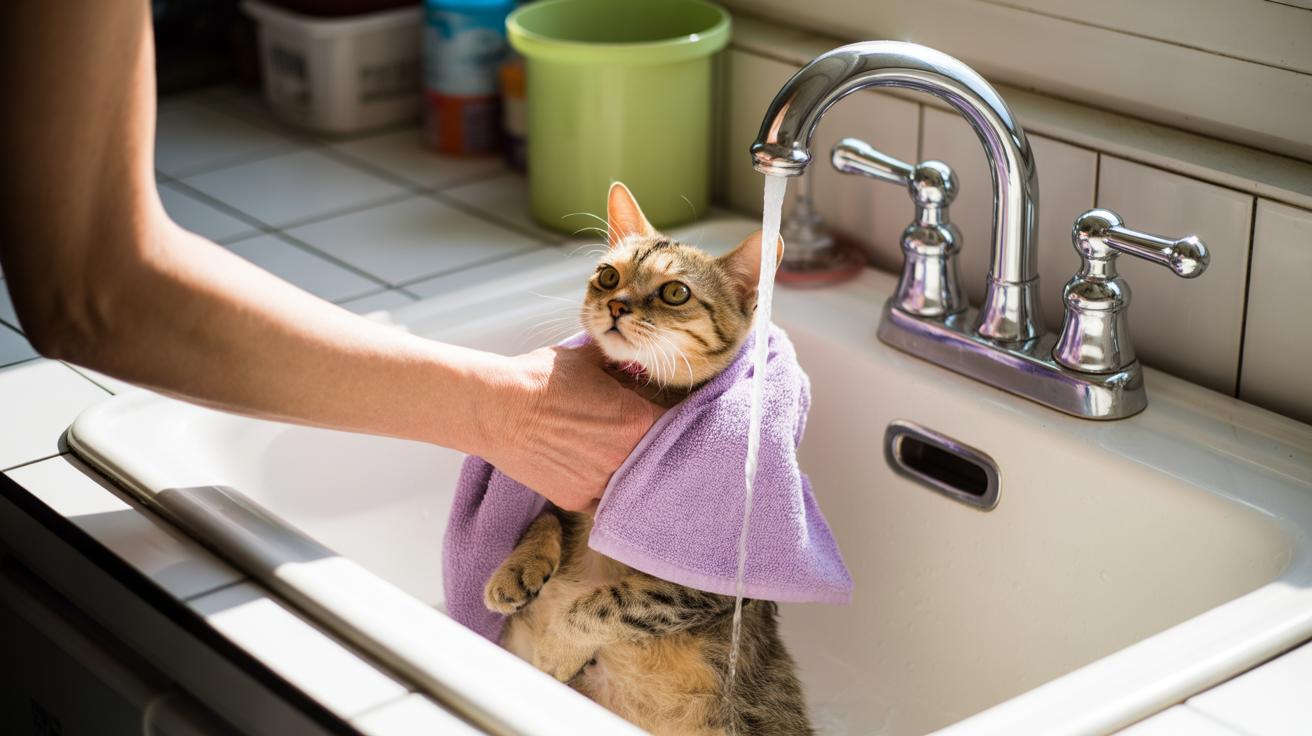
    Quick baths: Warm water, a small amount of cat shampoo, and calm praise. Think spot-cleaning more than spa day. Towel dry and warm them up quick.

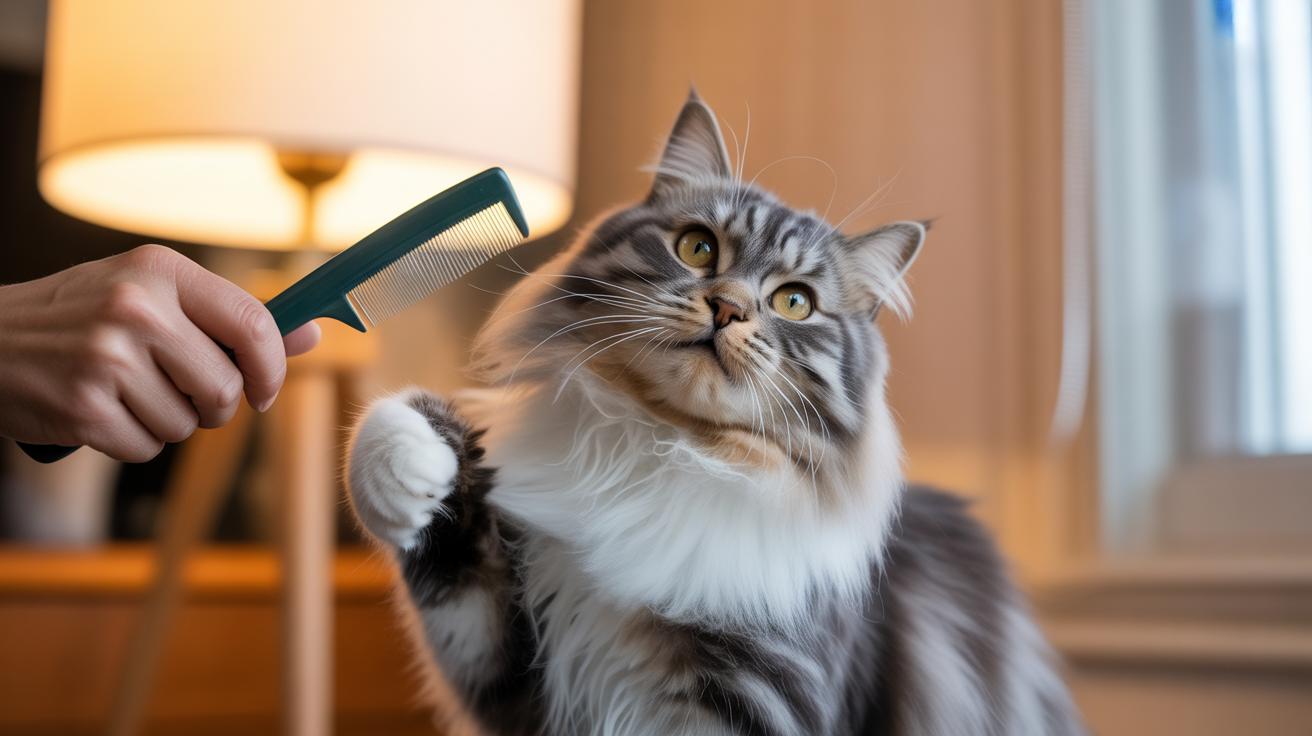
    Dematting: For small tangles, tease them apart with your fingers or a dematting comb (a tool with wide teeth). For tight mats, use a mat splitter or see a pro, don’t tug hard, you can hurt the skin. Oops, make that: if it’s stubborn, get help.

    I once watched Luna leap six feet for a feather toy and land like a tiny acrobat. That happy pounce makes the extra minutes totally worth it.

    Worth every paw-print.

    Quick-start grooming routine for indoor cats

    - Quick-start grooming routine for indoor cats.jpg

    Short sessions win. Aim for 5 to 10 minutes per grooming stint and follow the checklist below. For technique and tools, see Brushing, Bathing, Nails, Dematting, and Shedding sections below. Dematting means removing tight mats of fur that can tug at the skin.

    • Brushing: 5 to 10 minutes, 3 to 4 times per week (daily if heavy shedding) (see Brushing section)
    • Ear check: once a week (see Bathing section)
    • Nails: trim every 2 to 3 weeks (see Nails section)
    • Spot baths / waterless wipes: as needed (see Bathing section)
    • Quick dental wipe or check: once a week
    • Watch for urgent red flags: infected or foul-smelling mats; sudden large patches of hair loss or new lumps; extreme panic or aggression that prevents safe handling

    Keep an eye on how your cat reacts. If your cat freezes or panics, pause and try a calmer approach. You can split the routine into two short sessions if needed. Short, steady handling builds trust.

    Quick grooming order (easy to remember)

    1. Brush the coat briefly
    2. Do a quick ear check
    3. Wipe eyes and face
    4. Check nails and trim if needed
    5. Inspect paw pads
    6. Do a quick dental wipe or apply gel
    7. Spot-clean dirty areas with a wipe
    8. Finish with a small reward

    End on something nice. Give a small treat or 10 to 30 seconds of gentle petting to make the session feel positive. Keep your voice calm and soothing. If your cat tires, stop and try again later. Stick with the routine and it becomes second nature.

    Tips and red flags

    • Use gentle strokes. Think slow, reassuring petting more than a scrubbing session.
    • If you smell a strong, bad odor from mats or see redness, that could mean infection. Get help from your vet.
    • Sudden big patches of hair loss or a new lump need a vet check. Really.
    • If your cat becomes aggressive or very distressed, back off and ask a pro for help.
    Coat Type Basic Frequency Quick Note
    Shorthair 2 to 3 times per week rubber glove (textured grooming glove)
    Longhair daily or every other day de-tangle (brush to loosen knots)
    Double coat / heavy shedder daily during seasonal shed undercoat rake (comb that pulls out loose underfur)
    Kittens / Seniors short daily handling, 5 to 10 minutes adapt for mobility and comfort

    Brushing techniques and tool selection for indoor cat grooming

    - Brushing techniques and tool selection for indoor cat grooming.jpg

    Brushing is more than a quick tidy. It spreads your cat’s natural skin oils (the slick, protective layer their skin makes), lifts loose hair and flakes, and helps stop skin from getting irritated. Your cat’s whiskers will twitch as the brush glides , that little rhythm can be oddly soothing for both of you. Ever watched your kitty chase a rolling ball right after a good brush? Cute.

    Pick tools by fur type and temperament. Here’s a simple guide to what each tool is, who it’s best for, and what it does.

    Tool Best for What it does
    Slicker brush (fine, bent wire bristles on a flat pad) Medium and long coats Teases out surface tangles and loose hair
    Undercoat rake (comb with wide, deep teeth) Dense double coats Pulls loose inner fur and reduces undercoat bulk
    De-shedding tool (tool that removes loose undercoat hair) Heavy shedders Efficiently removes thick undercoat hair
    Rubber curry / grooming glove (rubber pad with soft nubs) Shorthaired or sensitive cats Lifts loose hair while massaging the skin
    Metal fine-tooth comb (thin metal teeth) All coats Finds tiny mats and checks for debris
    Soft bristle brush (gentle bristles) Kittens and shy cats Smooths and comforts without tugging
    Pin brush (long pins) Long, silky coats Finishes and smooths after detangling
    Dematting comb (wide-tooth) Stubborn tangles Work small sections carefully to break up mats

    How often you brush depends on coat type. Shorthaired cats: 2 to 3 times a week. Longhaired cats: daily or every other day. Heavy shedders: daily during spring and summer because they’re shedding extra. For busy days, toss an unbreakable ball before you leave , that’s ten minutes of play and less loose hair later.

    Technique matters. Use slow, gentle strokes in the direction the fur grows. It feels better for them. If you hit a tangle, hold the skin taut under the knot so you’re not pulling on skin, and work from the outer edges toward the base. If a mat’s too tight, don’t yank, try a dematting comb or ask your groomer or vet for help. I once watched Luna leap six feet for a feather toy right after I smoothed a stubborn knot, worth the patience.

    Tool care is simple and important. Pull loose fur from brushes after each use. Wash bristle heads weekly with mild soap and water, then sanitize monthly and let everything air-dry fully. Clean tools last so you don’t rub old oils back onto fresh fur. Little effort, big difference.

    Worth every paw-print.

    Reducing shedding and preventing hairballs with an indoor cat grooming schedule

    - Reducing shedding and preventing hairballs with an indoor cat grooming schedule.jpg

    Many indoor cats bulk-shed in spring and summer when they lose thicker undercoats. Some breeds, though, shed steadily all year. That loose fur ends up in their mouths while they groom, which raises the chance of hairballs.

    Increase brushing during peak-shed to catch loose hair before it’s swallowed. Short daily passes for longhair cats work wonders. Give extra attention to double coats (two-layer coats with a fluffy underfur and a coarser topcoat) so you pull out the loose underfur before your cat swallows it.

    Food matters, too. High-quality protein and balanced fats help skin and fur stay healthy. Omega-3 and omega-6 fatty acids (essential fats that support skin and coat) often add shine and can cut down on excess shedding.

    Between baths, use waterless shampoos (no-rinse foams or sprays) and moisturizing wipes (oatmeal, aloe, or chamomile blends) to lift dander and loose surface fur. They keep the coat fresher and reduce allergens, and your couch thanks you.

    Task Frequency Purpose
    Daily brushing (longhair / seasonal) Daily Remove loose hair and prevent mats (tangled clumps of fur)
    Weekly full brush + ear, eye, nail spot check Weekly General coat care and quick health check
    Biweekly nail trim Every 2 weeks Prevent overgrowth and snagging
    Monthly tool cleaning + deeper dematting check Monthly Hygiene and early mat removal

    Talk with your veterinarian before starting supplements so they can check for parasites, allergies, or thyroid problems that cause extra shedding. Keep a de-shedding tool (a comb designed to pull loose undercoat) handy during peak months and use waterless products for quick touch-ups between baths. Ever watched your kitty pounce on a rolling tuft of fur? Worth every paw-print.

    Bathing indoor cats safely: how often, waterless options, and step-by-step technique

    - Bathing indoor cats safely how often, waterless options, and step-by-step technique.jpg

    Most indoor cats only need baths rarely. Only bathe when they’re visibly dirty, have fleas, need a medicated bath (shampoo your vet prescribes), or your vet asks. A good rule of thumb is every few months, not every week, unless there’s a medical reason.

    If your cat hates water, try waterless options. Foaming waterless shampoos (no-rinse foam that lifts dirt) work great, and cleansing wipes with oatmeal, aloe, or chamomile (soothing plant extracts) are perfect for quick touch-ups. Think of it like dry shampoo for people , less stress, less drama, and still clean fur.

    Step-by-step Bathing Procedure

    1. Get everything ready first: warm, shallow water and a cat-safe shampoo (formulated for cats; never use dog or human shampoos). Put a towel down in the sink or tub for traction.
    2. Brush and trim loose tangles before you get wet. A gentle brush or a few careful snips around big knots makes the bath less pulling and much calmer.
    3. Be slow and calm. Hold your cat’s body securely, talk softly, and wet only the dirty spots at first instead of dunking the whole kitty. Small steps win trust.
    4. Rinse thoroughly with warm water, keeping soap away from the eyes and inner ears. Use a cup or a gentle sprayer on low pressure so it feels more like a warm rain than a storm.
    5. Towel-dry by blotting, not rubbing; that stops matting and hurts less. If your cat tolerates it, use a low, cool pet dryer (a low-heat blow dryer for pets) on a low setting, keeping it moving and held at a distance so it feels like a warm breeze.
    6. End on a positive note , a tiny treat or 10–30 seconds of gentle petting right away. That helps your cat remember bath time as not-so-bad.

    For very nervous cats, try a towel wrap or swaddle: wrap them snugly like a burrito, leave the head free, and blot-dry through the fabric to lower stress. For chill cats, short dryer bursts work well. If your cat panics at any point, stop, breathe, and switch to waterless cleaning , there’s no shame in that, honestly.

    Nail trimming and paw care within indoor cat grooming tips

    - Nail trimming and paw care within indoor cat grooming tips.jpg

    Trim nails every 2 to 3 weeks, or whenever the tips feel sharp when you run a fingertip across them. The quick (the pink part where blood vessels live) is what you want to avoid in light-colored nails. With dark nails you can’t see the quick, so just shave off the very sharp tip and be extra cautious. Short, regular trims save your couch, your curtains, and your cat from snagged paws. Worth every paw-print.

    Pick a tool that fits your cat’s nails and your comfort level. Guillotine clippers (a small hole with a sliding blade that cuts like a tiny guillotine) work great for tiny nails. Scissor-style clippers (look and feel like mini scissors) handle thicker claws. Rotary grinders (a battery-powered file that sands nail edges) smooth out rough tips and are useful for anxious cats, but they make noise and vibrate, so take it slow and get your cat used to the sound first.

    Get your cat used to paw handling in short, friendly bursts. Hold a paw gently each day and drop a tiny treat when you let go. Mimic the clipper sound with a piece of dry spaghetti or run the grinder near them for a few seconds, then reward calm behavior. Keep sessions under a few minutes. If your cat tenses up, stop and try again later, no pressure, just positive vibes. Ever watched your kitty chase shadows? This is the same slow, playful patience.

    Two-person Nail Trimming Technique

    One person comforts and holds: wrap the cat in a towel if needed, cradle the body to keep things steady, and speak softly. The other person trims quickly and calmly, doing one or two nails at a time, then hands over a treat. Timing and praise build calm behavior fast. If you accidentally cut the quick, press gentle pressure and apply styptic powder or cornstarch to stop minor bleeding. Call your vet if bleeding won’t stop or if you’re worried.

    A tiny tip from me: try trimming after a nap when your cat is relaxed. It’s claw-tastic and much easier for both of you.

    Removing mats and dematting safely as part of indoor cat grooming tips

    - Removing mats and dematting safely as part of indoor cat grooming tips.jpg

    Mats form when dead hair, skin oils, trapped moisture, and missed brushing let fur clump and knot. Left alone, mats tug at the skin, trap dirt and bacteria, make movement painful, and can hide sores or infections. Not comfy for any kitty.

    Start with a calm look and feel. Is it a loose tangle you can tease apart, or a tight mat pressed to the skin? For small tangles, mist a detangling spray (a slip-making conditioner spray) and gently comb with a metal comb (thin metal teeth). Then follow with a slicker brush (fine bent-wire bristles) to smooth things out. Ever watched your cat freeze when you hit a sore spot? Hold the skin taut under the mat so you don’t pinch, and work from the outside toward the base.

    For tougher mats, work in tiny sections and take breaks so your cat doesn’t freak out. If you must use scissors, use blunt-tipped scissors (rounded ends for safety) and cut only the loose outer fur, never angle the blade toward skin. Stop right away if your cat tenses, hisses, tries to bite, or if the skin looks red, swollen, or is bleeding. Better safe than sorry.

    Prevention is kinder and faster than dematting. Keep a steady brushing routine for long coats, do short sanitary trims around the rear and belly for very furry cats, and check trouble spots each week, behind the ears, under the legs, the chest, and the tail base. Short, frequent sessions and treats make grooming less scary for shy cats. For busy days, a quick five-minute brush gives your cat mental and physical enrichment, and reduces matting later.

    Dematting Tools and When to Get Help

    • Dematting rake (comb with curved teeth that reach under the topcoat)
    • Mat splitter (a tool that gently breaks large mats – use with caution)
    • Dematting comb (wide-tooth tool for nubbier tangles)
    • Blunt-tipped scissors (rounded ends for safety – only for confident owners)

    Get professional grooming or veterinary help if mats cover about five percent or more of the body, sit tight against the skin, smell foul, drain, or make your cat limp or hide. Those situations often need sedation or careful clipping to keep your cat safe. If you’re unsure, call your groomer or vet, seriously, it’s worth the peace of mind. Worth every paw-print.

    Grooming adjustments for kittens, seniors, and breed-specific indoor cats

    - Grooming adjustments for kittens, seniors, and breed-specific indoor cats.jpg

    Start grooming kittens at 6 to 8 weeks with tiny, friendly sessions. Keep them to 1 to 2 minutes several times a day and slowly build up to 5 to 10 minute sits. Let the kitten sniff a soft-bristle brush (soft nylon bristles, gentle plastic hairs) and gently handle their paws so nail trims and vet visits feel normal later. Use tiny treats and praise to make tools a positive thing, short, frequent exposure wins.

    For senior cats, go slower and softer. Use cushioned surfaces so they don’t feel every hard edge, and keep sessions short to avoid tiring them out. Try grooming gloves (a rubber mitt with soft nubs for massaging) instead of stiff brushes so you’re petting more than tugging, and check paw pads and claws for overgrowth or tender spots. If mobility or arthritis (joint pain) limits stretching, split grooming into two brief passes instead of one long one.

    Longhaired cats need daily brushing and frequent mat checks to stop painful tangles from forming, especially underfur (the soft dense layer under the topcoat) and belly areas. Shorthair cats do great with a rubber curry (a rubber brush with short teeth) or a grooming glove, plus a weekly deeper brush to catch loose hair before they swallow it. Gentle, regular handling helps both coat types accept trims, ear checks, and the whole routine, your cat won’t hate you for it, promise.

    Flat-faced breeds, called brachycephalic (flat-faced cats like Persians with short noses), often need extra facial wiping for tear stains and careful watching of breathing during baths. Keep water and steam gentle and brief so they don’t get stressed. Heavily furry or obese cats who can’t reach sanitary areas may need small trims around the rear or belly; a lion trim (short body shave leaving a mane-like ruff) is something to ask a pro about so skin isn’t overexposed or overheated. When you’re unsure, call your groomer or vet and make a calm, cat-friendly plan.

    Worth every paw-print.

    Calming strategies, conditioning, and grooming environment setup for indoor cat grooming tips

    - Calming strategies, conditioning, and grooming environment setup for indoor cat grooming tips.jpg

    Pick a quiet, comfy spot with a soft surface so your cat feels safe, after play or a meal when they’re already mellow is ideal. Use a blanket or cushion so paws sink in a bit; that little comfort matters. Ever notice how your cat gets sleepy after dinner? That’s your chance.

    Turn off noisy devices, shut the door, and warm the room a touch. Less startle means less struggle. Keep sessions short. Five to ten minutes is perfect, or split a session into two quick passes if your cat tires. Calm beats force, always.

    training Desensitize with tiny, frequent steps. Let your cat sniff brushes, clippers (electric trimmer), or the grinder (rotary nail file) first, then give a tiny treat for calm behavior. Play the clipper sound softly from across the room so it becomes familiar instead of scary. Try a towel swaddle (light towel wrap to gently limit movement) for nervous cats, or a grooming glove (rubber mitt with soft nubs) for shy or touch-sensitive kitties. Those gloves feel like petting, so they’re often a win.
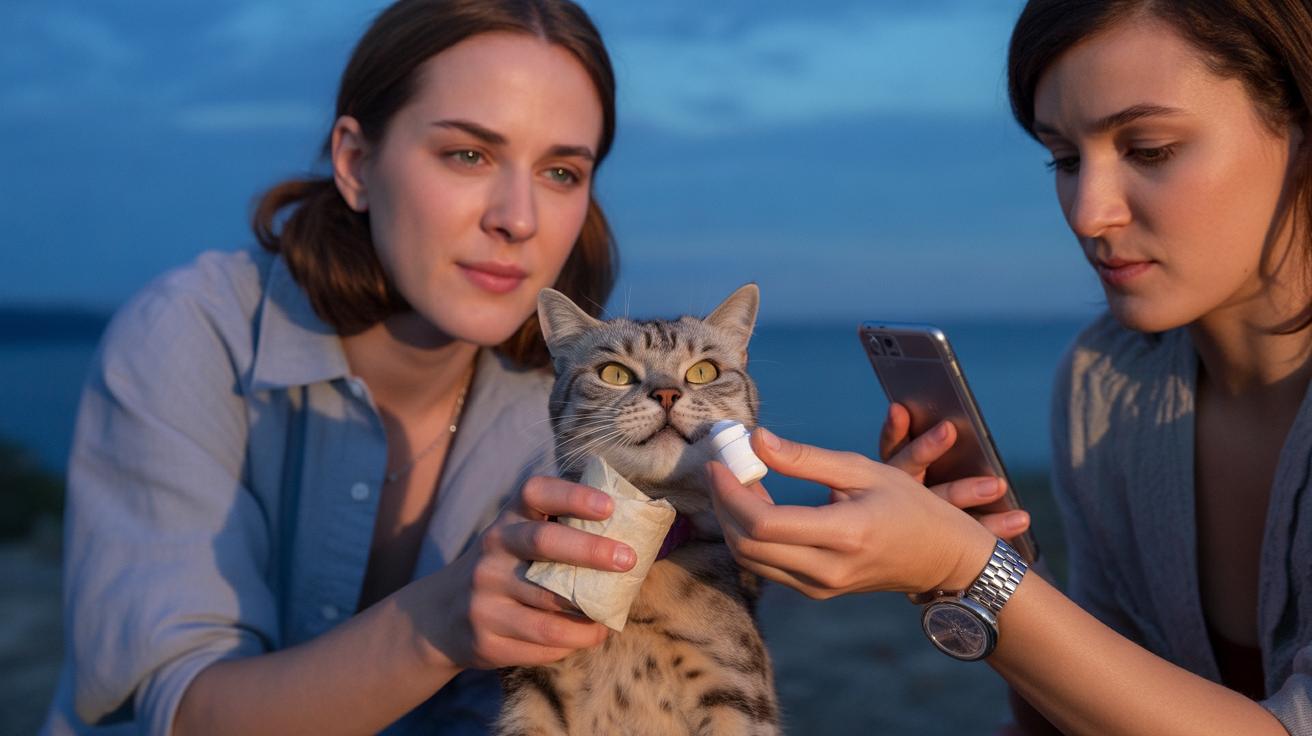
    Pheromone diffusers or sprays (plug-in or spray that mimics a cat calming scent) can help some cats. Put them out about 30 minutes before grooming so the room smells like home. Offer puzzle treats (treats hidden in a toy) or a small catnip toy after sessions to build good vibes. Break big jobs into short chunks, keep your voice soft, and reward calm. Worth every paw-print.

    Desensitization Exercises

    Days What to do
    Day 1-3 Gentle handling and paw touching for a few seconds, then a tiny treat after each touch. Keep it brief and cheerful.
    Day 4-5 Introduce the brush for 30-60 seconds while rewarding calm behavior. Let them explore the brush first with sniffing and soft pats.
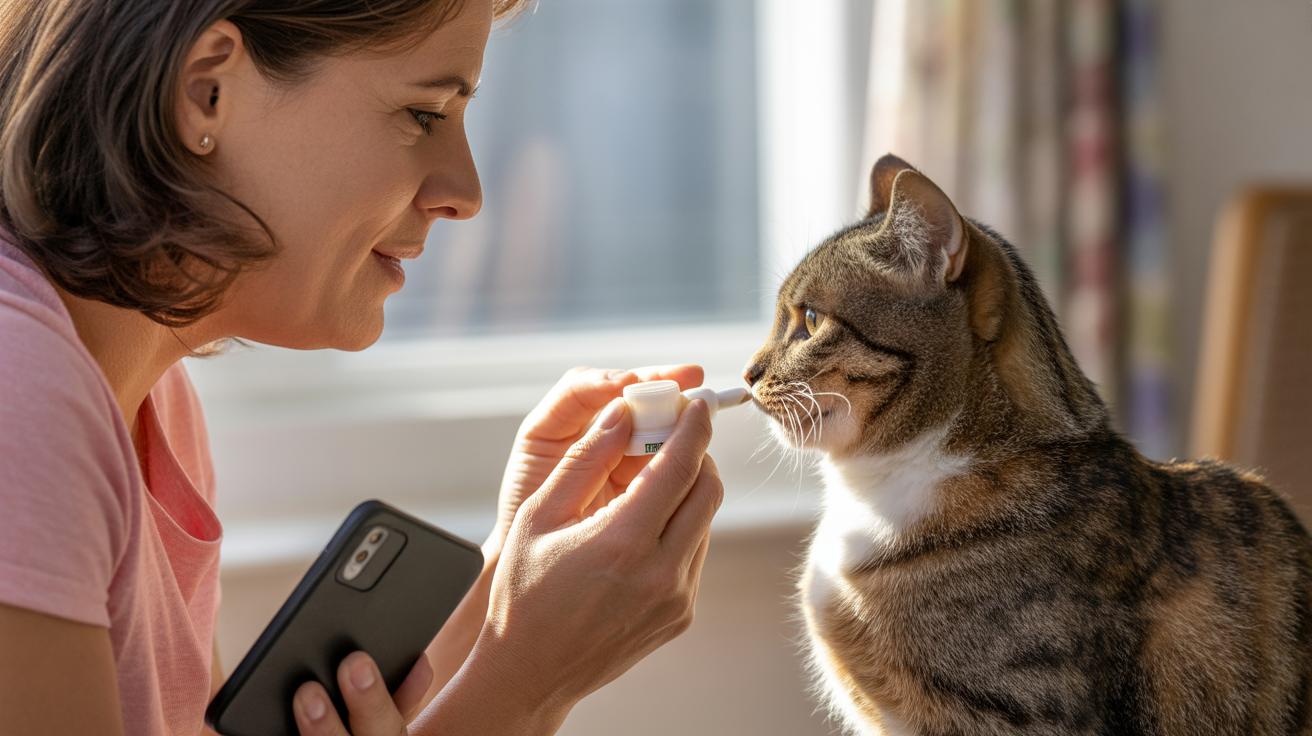
    Day 6-7 Do mock trims or run the grinder nearby for a few seconds, then praise and treat. Make the sounds normal, not scary.

    Small notes: use soft praise, one treat at a time, and stop if your cat gets overwhelmed. Try again later. And hey, maybe toss a little catnip toy afterward and watch the pounce party. Claw-tastic progress.

    Safety, signs that require a vet or professional groomer, and maintenance of grooming tools

    - Safety, signs that require a vet or professional groomer, and maintenance of grooming tools.jpg

    We moved the full list of urgent red flags into Quick-start under "Watch for urgent red flags." If you see any of those signs, stop grooming right away and call your vet. Seriously, don’t keep going.

    Tool care is now part of the Brushing "Tool care" paragraph, and we cleaned up the routine so it’s easy to follow. After each session pull fur off brushes so they don’t get gummy. Wash bristle heads (the part with the brush hairs) weekly with mild soap and warm water, then let them air-dry. Sanitize tools once a month. Wipe clippers and scissors after every use so nothing sticky builds up.

    Nail tool care moved into the Nail-trimming section. The rotary-grinder (battery-powered nail file) needs regular attention: keep it charged, swap dull bits, and store it somewhere dust-free. Replace worn parts as needed so it runs smooth and quiet. These quick steps save you headaches, and avoid sad, crunchy sounds when your cat nudges the grinder.

    At-home first aid for nicks is folded into the Nail-trimming two-person technique subsection. If you nick a quick, apply firm pressure first. Use styptic powder (a clotting agent) or plain cornstarch to help stop bleeding. Call your vet if the bleeding won’t stop or the spot looks infected.

    When to book a professional groomer? Look for big warning signs: dense mats close to the skin, mats covering large areas, a trim that needs sedation, complicated lion trims, or handling that feels unsafe for you or your cat. Those situations are best left to pros who have the right tools and experience.

    Worth every paw-print.

    Final Words

    Jump right in: brush 5–10 minutes (3–4×/week), check ears weekly, trim nails every 2–3 weeks, spot-clean as needed, and watch the big red flags like infected mats (tangled fur), sudden hair loss, or new lumps.

    Run the eight-step session checklist, keep treats ready, and split longer sessions if your cat tires.

    See the Brushing, Bathing, Nails, Dematting, and Shedding sections for technique and product notes. Finish with a small treat and calm petting so grooming becomes a cozy habit. These indoor cat grooming tips help busy, multi-cat homes cut hairballs, lower stress, protect furniture, and bring more playful purrs into the day.

    FAQ

    Cat grooming FAQs

    What are the best indoor cat grooming tips and how often should I groom my indoor cat?

    The best indoor cat grooming tips are short, regular sessions: brush 5–10 minutes, 3–4×/week (daily during heavy shedding); check ears weekly; trim nails every 2–3 weeks; spot-bathe as needed.

    How do I groom a cat that hates it and can I sedate my cat at home for grooming?

    To groom a cat that hates it, use short desensitization sessions, treats, towel swaddles, pheromone spray, and a grooming glove (soft rubber glove). Never sedate at home – only a veterinarian should sedate safely.

    What cat grooming tools should be in a basic grooming kit and how do I use clippers at home?

    A basic cat grooming kit includes a slicker brush (fine wire pins), rubber curry or glove (massage), undercoat rake (removes loose underfur), metal comb, nail clippers or grinder (rotary file), clippers for trims, and waterless wipes.

    What are the benefits of grooming and does my cat groom itself enough?

    The benefits of grooming are healthier skin, fewer hairballs, fewer mats, and a stronger bond. Cats groom themselves, but indoor cats still need owner brushing, nail care, and help with stubborn mats.

    What is the 3-3-3 rule for cats?

    The 3-3-3 rule for cats means 3 days to adjust to new smells, 3 weeks to feel more settled and explore, and 3 months to be comfortable with your home and routine.

    What are common cat grooming mistakes to avoid?

    Common cat grooming mistakes are skipping regular brushing, cutting into the quick, forcing long sessions, using human or dog shampoos, pulling mats, and neglecting ear, eye, and dental checks.

    What are the main types of cat grooming I should do?

    The main types of cat grooming are brushing and de-shedding, dematting, bathing or waterless cleaning, nail trims, ear and eye care, and quick dental wipes or checks.

  • How to Give a Cat a Pill: Step-by-Step Guide

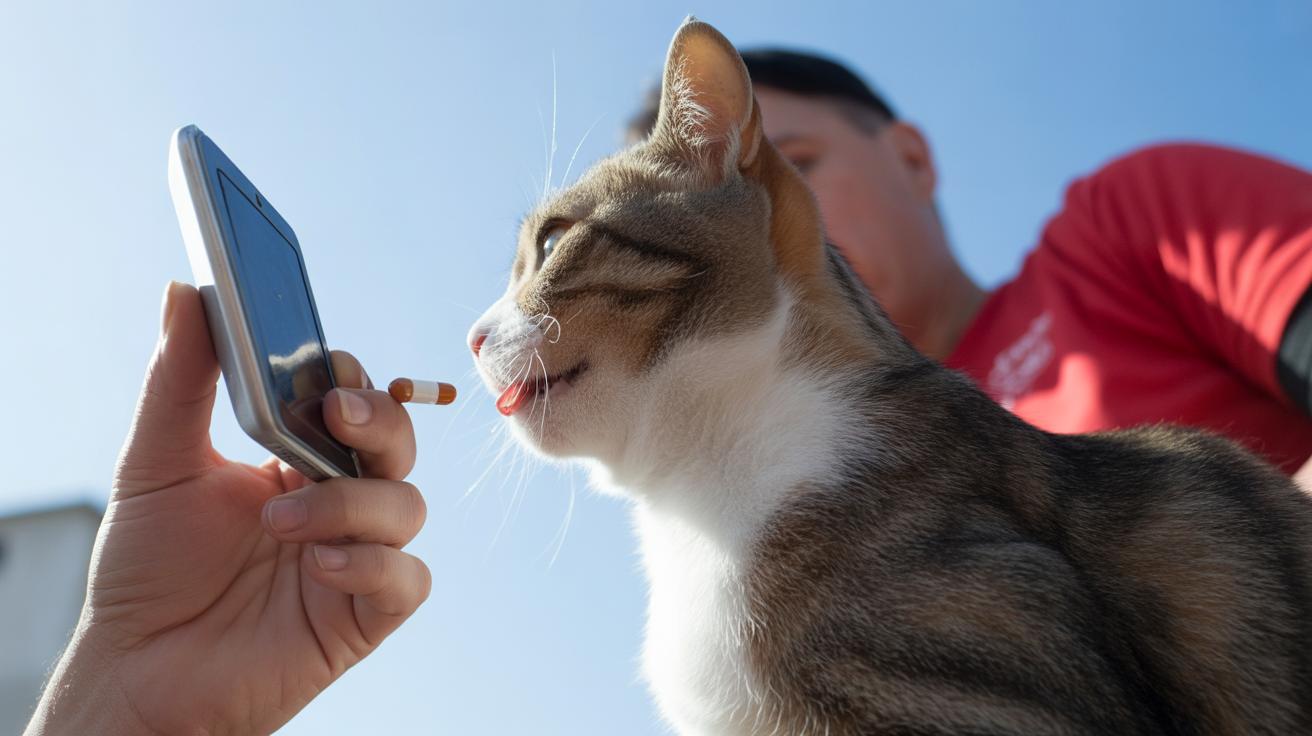
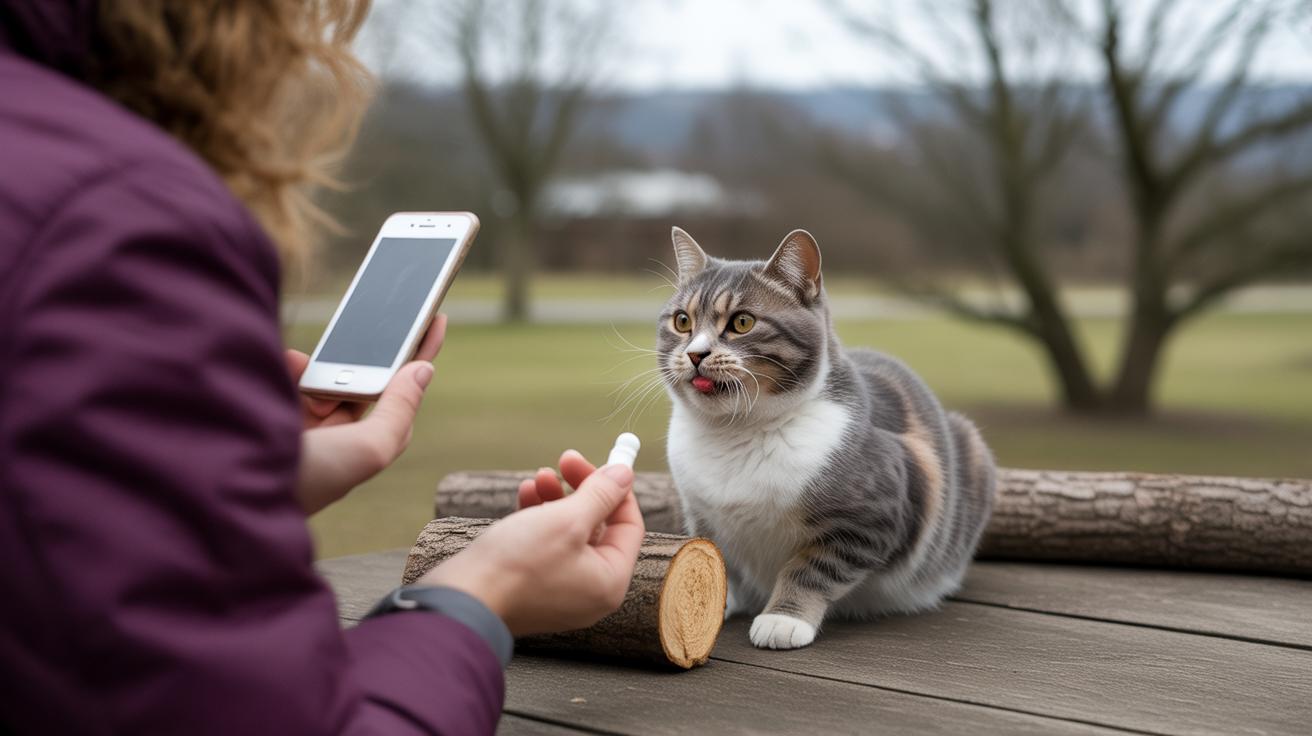
    How to Give a Cat a Pill: Step-by-Step Guide

    Think giving your cat a pill is impossible? It doesn’t have to feel like a wrestling match. With a calm voice, steady hands, and a simple plan you can get meds in without fur flying or guilt. Seriously, your cat and you can both stay relaxed.

    This short guide covers what to do in an emergency, how to prep and position your cat, a couple of quick manual pilling methods, useful tools, easy alternatives, and what to watch for afterward. Keep it handy. Ever watched your kitty chase a shadow? Same focus, less chaos.

    Emergency checklist:

    • Stay calm. Your mood sets the tone.
    • Towel ready for a gentle burrito wrap (a snug towel wrap to keep paws tucked).
    • Phone nearby for the vet’s number.
    • A treat or small bit of wet food to positive reinforcement reward afterward.

    How to prep and position:
    Sit on the floor or a low chair so you’re steady. Put your cat on your lap facing away from you, or on a table with a towel under them. Use one hand to steady the head at the cheekbones and the other to hold the lower jaw gently. Keep your voice soft , whiskers will twitch, eyes will watch, and that calm helps.

    Quick manual pilling methods:

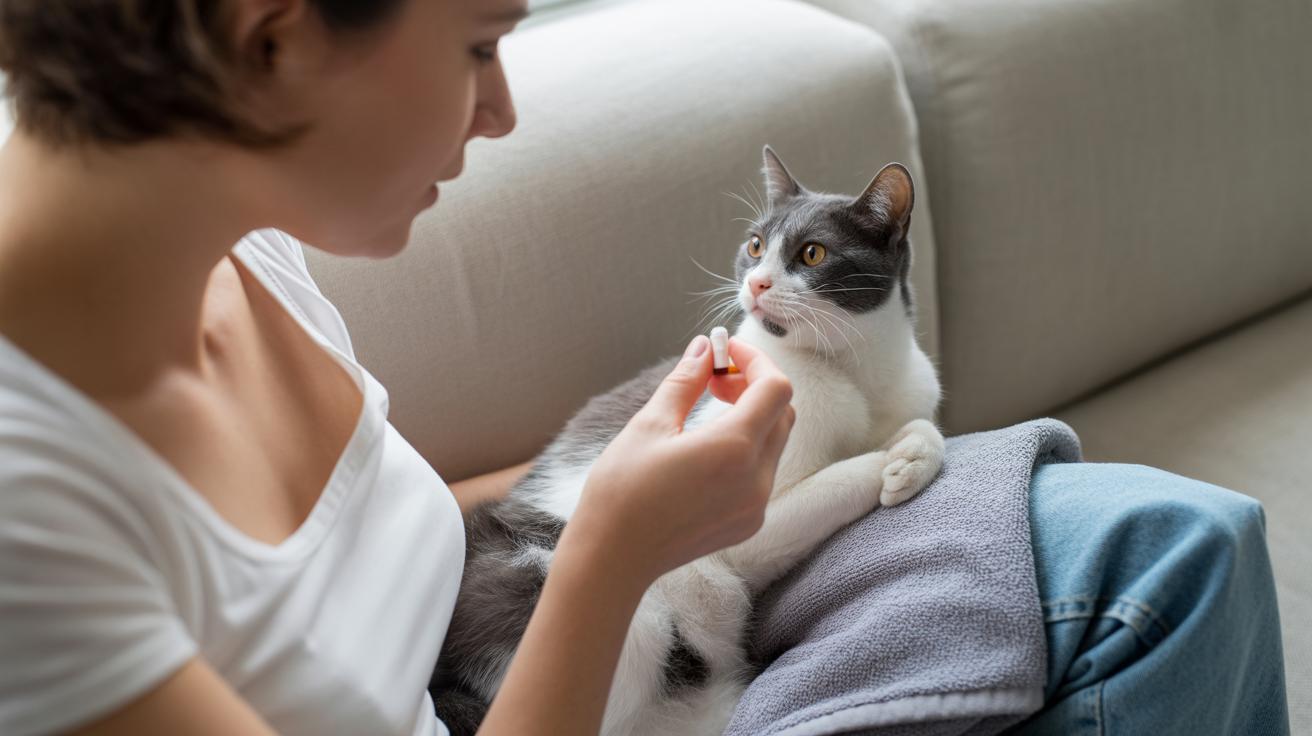
    • The scoop-and-drop: Slip the pill to the back of the tongue and close the mouth, then stroke the throat to encourage swallowing. Aim quick and be gentle.
    • The two-finger method: Hold the head top with thumb and forefinger, press the lower jaw down with two fingers, and place the pill at the base of the tongue. Close the mouth and stroke.
      Practice with a treat first so it feels less scary.

    Helpful tools:

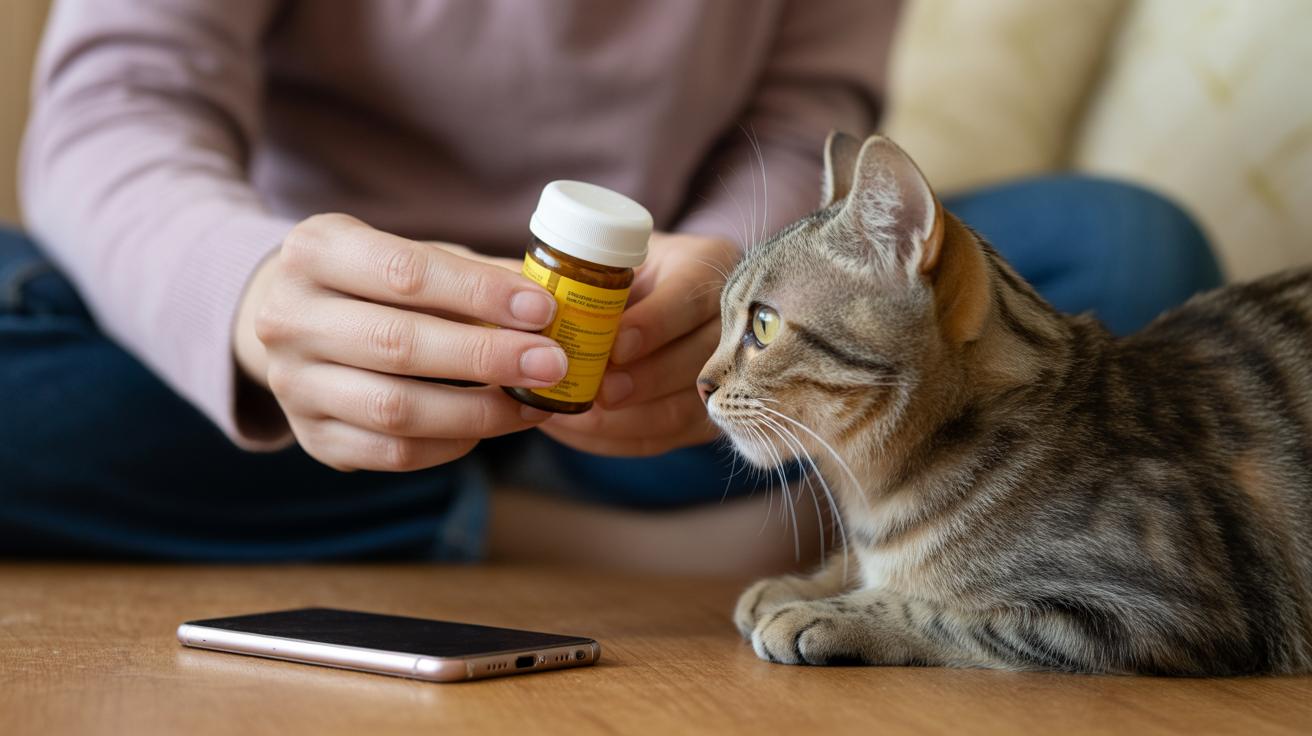
    • Pill popper (a small plastic plunger that places the pill at the back of the mouth). It’s like a tiny syringe for pills and keeps your fingers clear.
    • Pill pockets (soft treats with a pouch for pills). They hide the taste and texture.
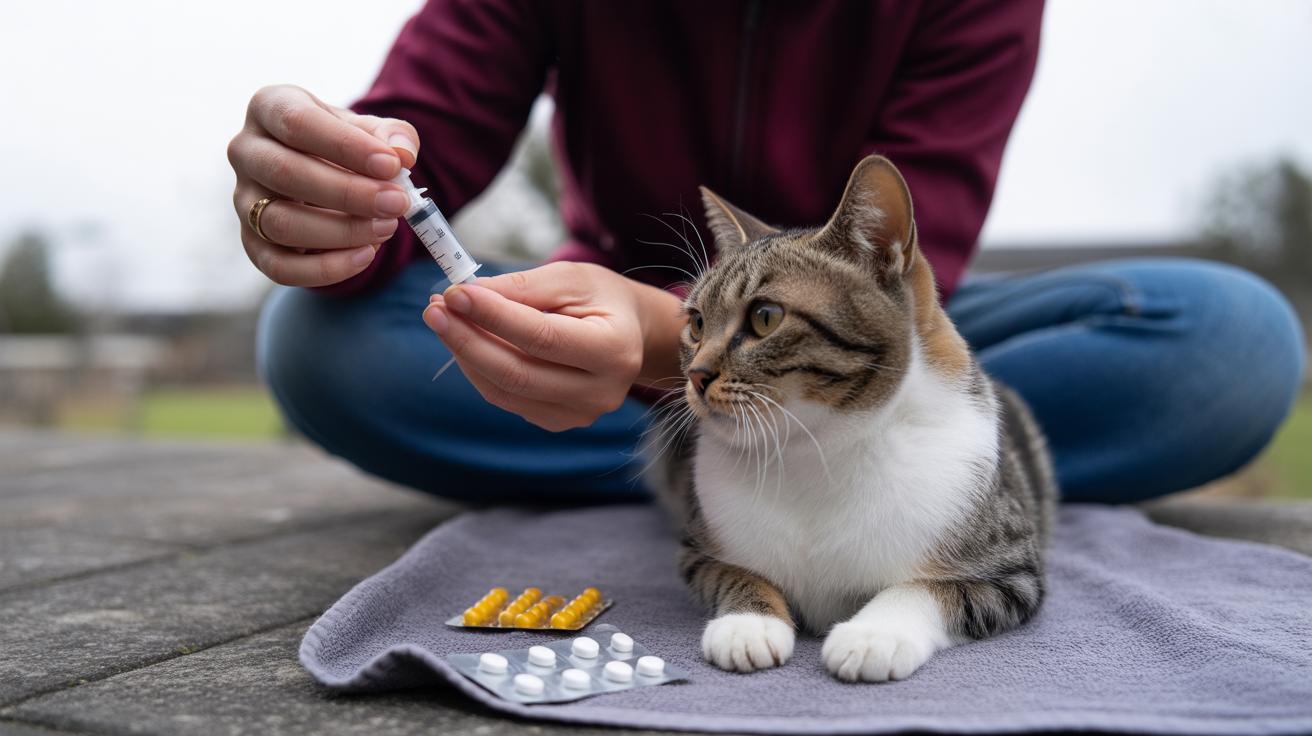
    • Oral syringe (a medicine syringe without a needle for liquid meds). It helps you squirt liquid gently into the cheek pouch.
      Try the tool that feels right for you and your cat.

    Easy alternatives:
    If pills are impossible, ask your vet about liquid medicine, which you can give with an oral syringe (a squirt tool); or transdermal gel (med applied to skin, usually the ear, that absorbs through skin) , vet approval required. Sometimes crushing the pill into wet food works, but only if the med is safe to mix. Always check with the vet first.

    What to watch for afterward:
    Make sure the cat actually swallowed , you’ll see a little lick or a soft paw to the mouth. Watch for coughing, gagging, or trouble breathing; if any of those happen, call the vet right away. Also look for vomiting or refusal to eat for a few hours.

    A quick tip: follow a pill with a tiny tasty morsel or a lick of water so they learn it’s not all bad. And if you mess up, it’s okay. Try again calmly in a minute.

    Worth every paw-print.

    Need to give a pill now? Emergency checklist

    - Need to give a pill now Emergency checklist.jpg

    In a rush and nervous? Stay calm. A steady voice and gentle hands make all the difference when your cat needs a pill.

    1. Confirm the medication name and exact dose. Double-check the label and your vet’s instructions so you don’t guess.
    2. Gather your supplies: a towel (for gentle restraint), the pill, a pill popper (a small plunger tool to place pills in the back of the mouth), a syringe (oral syringe for liquids), and a treat (a tasty reward).
    3. Hold your cat briefly and calmly. Wrap the towel loosely if needed, support their body, steady their head, then give the pill, quick but gentle. Think of it like a tiny, focused cuddle.
    4. Make sure they swallow and are breathing normally. Watch the throat for a swallow, listen for steady breaths, and check that they relax afterward.

    Watch closely for coughing, noisy breathing, repeated gagging, or blue gums. If you see any of those signs, get urgent veterinary help right away.

    See Preparing [More detail], Positioning [More detail], Manual Pilling [More detail], Tools & Alternatives [More detail], Troubleshooting [More detail], Aftercare [More detail].

    Preparing to give your cat a pill: vet checks, label reading, practice and calm setup

    - Preparing to give your cat a pill vet checks, label reading, practice and calm setup.jpg

    Before you try giving a pill, call the prescribing clinician and ask a few simple questions. Can the medication be crushed, mixed with food, swapped for a flavored version, or made as a compounded form (compounded = custom-made by a pharmacist)? Are there food interactions, does it need refrigeration, should you shake it before use, and is timing important? For a full supply list and formulation notes, see Tools & Alternatives. Ever wonder if you can hide it in tuna? Ask that too.

    Read the prescription label like a short map. Look for dose (mg), frequency (how many times per day), and route (oral versus transdermal (applied to the skin)). Check storage temperature and any warnings about food or other drugs. If the label says "do not crush" or "give on an empty stomach," follow that and call the clinic if you’re unsure. Better to ask than to guess.

    Practice the motions away from your cat so you’re calm and steady. Rehearse with a stuffed substitute or an empty pill popper, and practice drawing or dispensing with an oral syringe (a small plastic syringe for giving liquid meds). Pick a quiet, low-distraction room, lay out supplies, and have a helper nearby if you want one. I once practiced on a plush mouse and suddenly felt way less nervous. Worth every paw-print.

    Positioning and restraint for giving a cat a pill: towel wrap, one-person and two-person methods

    - Positioning and restraint for giving a cat a pill towel wrap, one-person and two-person methods.jpg

    Good positioning keeps your cat safe and stops frantic squirming that leads to scratches, bites, or even accidental inhalation. Calm, steady handling makes the whole thing faster and makes your cat more likely to cooperate next time. Ever watched your kitty try to Houdini out of a blanket? Yep, this helps.

    Towel wrap (burrito)

    Fold a medium towel so it’s wide enough to cover the cat’s body but leave the head free. Place the cat near one short edge, pull the near side over the hind legs, then snug the far side across the shoulders so the legs are gently tucked, cozy, not tight. The towel limits kicking and scratching and gives you one small head opening to work with. You’ll feel the soft towel against their fur and know they can’t fling their paws at you.

    One-person technique

    Sit with the cat on your lap or across your knees so their spine rests against you for stability. Keep the body wrapped or tucked under an arm so only the head is exposed, then support the head near the temples (the sides of the head near the eyes) with your free hand, using gentle pressure not a squeeze. This keeps your fingers farther from the mouth and helps the cat stay calm while you work. It’s easier and calmer when their back is against you.

    Two-person technique

    One person’s job is to hold and comfort: wrap the cat and steady the torso, keeping a hand over the shoulders to prevent turning. The second person focuses on the pill: steady the head and place the medication. Talk through roles before you start so both people move in sync and the cat feels steady, not jostled. Teamwork makes it faster and less scary for everyone.

    Protective gear and cautions
    If your cat bites or you’re nervous, wear sturdy gloves (garden or leather gloves work) or use a thicker towel for extra padding. Don’t make scruffing a routine move unless a veterinarian has shown you how; scruffing (grabbing the loose skin at the back of the neck) can cause fear or injury when done wrong. And if it’s not happening calmly, stop and try again later or call your vet for tips.

    Worth every paw-print.

    How to Give a Cat a Pill: Step-by-Step Guide

    - Manual pilling steps how to open a cats mouth and place the pill safely.jpg

    Start by supporting your cat’s head. Cradle the skull with one hand and tilt the muzzle up just a hair so the airway stays relaxed. This helps open the mouth safely without tugging or panicking them. Easy does it.

    Use gentle pressure at the jaw hinge or under the lower jaw (mandible – the bottom part of the skull) with your thumb and forefinger to encourage a tiny gap. Don’t pry or yank. Think slow and patient, not forceful.

    For placing the pill, slide it onto your fingertip or into a pill popper tool (a small plunger device that keeps your fingers farther from teeth). Aim to deposit the pill toward the back of the tongue, but stop before you push it into the throat. Keep your fingers flat and out of the bite zone to protect your hands. Follow any instructions your clinic gave you for tools.

    After the pill is in, close the mouth and gently massage the throat for a few seconds to help swallowing. If your vet okayed a small sip of water, give a tiny amount at the side of the mouth from an oral syringe (a small plastic syringe for giving liquids) to encourage a swallow. Only do this when your vet approves.

    For rules about trying again, how long to wait, and the urgent signs that need immediate care, see Troubleshooting.

    Tools and alternatives for giving a cat a pill: supplies, formulation warnings, pill pockets, syringes, transdermal options

    - Tools and alternatives for giving a cat a pill supplies, formulation warnings, pill pockets, syringes, transdermal options.jpg

    Keep a small pilling kit ready so you’re not hunting around while your cat glares at you. I toss these on a counter: a pill popper (Pet Piller, a plunger tool that keeps your fingers away from teeth), a pill crusher (a little grinder for pills, only use if your clinic says it’s okay), an oral syringe (a small plastic syringe for liquid meds, no needle), a clean towel, gloves, a soft plate with vet-approved wet food (no garlic, onion, or xylitol), and a few favorite treats for after the deed. Have everything within reach and the whole thing goes faster and calmer. Worth every paw-print.

    Most pills taste bitter. Call the prescribing clinician before you crush, mix with food, or swap forms. Check storage notes like “keep refrigerated” or “shake well,” and confirm whether the med should be given with food or on an empty stomach. Some meds can be made into flavored liquids or transdermal gels (a medicine you rub on the skin to absorb into the body), but those usually need a prescription and can absorb differently from cat to cat.

    Pill pockets and hiding in food

    Pill pockets or soft treats are great for masking texture and smell. Think of them like edible envelopes for tiny parcels of medicine. Rotate the hiding foods so your cat doesn’t learn one flavor equals a surprise, tuna this time, canned paté the next. Try the sandwich method: plain morsel, medicated morsel, plain morsel. It tricks the nose and the mouth, and it helps keep the odd one from getting spat out.

    Ever watched your cat’s whiskers twitch as they sniff dinner? Use that. For picky kitties, hiding a pill in a spoonful of tasty wet food can work, only if the pill is safe with food. Ask your vet first.

    Liquid syringes and transdermal options

    For liquid meds, draw the dose into an oral syringe (no needle). Gently slip the tip into the side of the mouth just past the lower teeth and squirt slowly so your cat can swallow tiny amounts; pause if you hear gagging or coughing. Go slow, too fast risks aspiration (liquid getting into the lungs).

    Transdermal gels go on thin skin, like the inner ear flap (the ear pinna), and skip the mouth-handling drama. They’re a good choice for cats who bite or hate pills, but absorption varies and the dose may need tweaking. Your vet must prescribe the specific formulation and dose.

    A few quick safety notes: don’t force anything if your cat panics, wipe up spills, and wash your hands after handling meds. Reward time helps, one lickable treat or a favorite chin-scratch goes a long way.

    Method When to use Pros Cons Vet approval required
    Pill pocket / soft treat Food-friendly pills; food-motivated cats Easy; low stress Some cats detect odd taste; not for all meds No (confirm med compatibility)
    Hide in wet food / tuna Pills safe with food Works for picky eaters Food interactions; not for meds needing empty stomach Yes
    Pill popper / Pet Piller When quick placement helps Keeps fingers away from teeth Misuse can injure throat No (use after instruction)
    Crush and mix (vet-approved) Pills safe to crush Useful with food or broths Some meds lose effect or taste awful Yes
    Oral liquid via syringe Liquid formulations or compounded liquids Good for small doses; avoids fingers in mouth Risk of aspiration if given too fast Yes (for compounded)
    Transdermal compounded gel Cats who refuse oral dosing or have dental issues Avoids mouth handling Variable absorption; may stain fur Yes

    Troubleshooting when giving a cat a pill: common problems, reattempt rules, and emergency signs

    - Troubleshooting when giving a cat a pill common problems, reattempt rules, and emergency signs.jpg

    If your cat spits a pill out, take a breath and check breathing right away. Look and listen for steady breaths, watch the chest rise, and get close enough to hear any coughing or gagging. If you can safely pick up the dropped pill without chasing the cat, do so. Note whether the pill looks whole or chewed and the exact time you tried to give it , that info helps your vet decide what to do next.

    If your cat is making loud or labored breaths, keeps coughing or gagging, breathes with an open mouth, has pale or blue gums, or collapses, get emergency care now. These signs can mean airway obstruction (something blocking the throat) or aspiration (when something goes into the airway or lungs). Don’t try to fish around inside the mouth yourself; you could make things worse and waste precious time.

    Wait until your cat calms down before trying again. Give several minutes, pet them, let them relax, maybe offer a treat if that helps. Then try quieter tactics: get a helper to gently hold the cat, hide the pill in a soft treat or pill pocket, or use a pill gun if you’ve practiced with your vet’s guidance. If your cat panics, stop. Repeated forced attempts raise stress and the risk to the airway.

    If you missed a dose, check the prescription label first. Some meds can be doubled safely, some cannot. If the label isn’t clear, call the clinic before giving an extra dose , a quick phone call prevents mistakes and keeps the treatment on track.

    Watch for allergic or bad reactions after a pill: facial swelling, hives, vomiting, sudden heavy sleepiness, or a big behavior change. If you see any of those, contact your vet or an emergency clinic right away and bring the medication label with you. It helps them identify the drug and act fast.

    A few extra tips from the trenches: think of a pill like a tiny treasure you want your cat to take willingly. Try wrapping it in a soft bit of food, or practice with a treat-sized dummy so everyone stays calm. Ever watched your kitty chase shadows after a calm snack? That’s the moment to try the pill again.

    Oops, one more thing , if you retrieve a chewed tablet, tell your vet. A chewed pill might mean a partial dose or a risk of irritation. Being specific about what you saw and when you tried the dose makes a big difference.

    How to Give a Cat a Pill: Step-by-Step Guide

    - Special situations for giving a cat a pill kittens, senior cats, dental disease, and feral animals.jpg

    Kittens need extra gentle care. Use weight-based dosing (dose set by the kitten’s weight) and handle them softly, tiny mouths and soft throats are real. Many liquid meds are easier for little kitties, and some come flavored to help. Call your veterinarian to confirm the correct dose for your kitten’s age and weight, and ask whether a liquid or flavored option is available; kittens process meds differently, so don’t guess.

    Older cats can have trouble swallowing. Missing teeth, slower reflexes, or dysphagia (difficulty swallowing) are common, so check all meds for interactions and ask the vet about alternatives like liquids or compounded formulas (custom-made meds from a pharmacy) that may be gentler on the throat. Ever watched an old cat try to gulp a pill? Yeah, we want to avoid that stress.

    Senior cats

    If your senior has trouble swallowing or has lost teeth, think about switching to a liquid, a transdermal gel (applied to the skin), or an injectable form. Absorption and dosing can change with different routes, so your vet may need to tweak the prescription. Watch for coughing, drooling, or food falling out of the mouth, those signs mean another route might be safer. Worth every paw-print.

    Feral or stray cats are a different challenge. Call your clinic or a local rescue for humane trapping, sedation, or in-clinic dosing instead of trying risky handling at home, protecting you and the cat is the top priority.

    Dental disease needs extra caution. Avoid painful oral manipulation. Talk with the prescribing clinician about transdermal, injectable, or pain-control options and see Tools & Alternatives for supply ideas and Troubleshooting for missed-dose or emergency guidance. In truth, a little planning now saves a lot of stress later.

    Aftercare, training, and building a reliable routine for giving a cat a pill

    - Aftercare, training, and building a reliable routine for giving a cat a pill.jpg

    Reward time helps. Give one lickable treat or a favorite chin scratch right after the pill so your cat starts to think medicine time is pleasant. Use a calm, happy voice and a few gentle pets after the dose. Your cat will begin to link pills with something nice, not scary.

    Desensitization & practice

    Spend about two minutes each day on tiny drills. Gently handle the head. Show an empty pill popper (a plastic pill-giving tool) like you would show a new toy. Touch the cheek with a treat so they learn the motion. Give a small reward after each step so the cat learns the routine is safe. Slow, steady repetition wins the whisker game.

    Make the practice simple and fun. Think of it like teaching a new trick – short sessions, same steps, lots of praise. Ever watched your kitty chase a laser for five minutes and then flop down satisfied? Same idea.

    Build a visible schedule and mark doses as you give them. Put a checklist on the fridge, set a phone reminder, or use a meds app and tick the dose off when done. Example checklist line: "Mon 8 AM – 5 mg – given." Rotate hiding foods – tuna one day, pâté the next – so your cat does not always expect the same smell.

    Store meds exactly as the label says and keep bottles clearly labeled and out of curious paws. When you travel, bring a written dosing plan with exact amounts and a spare supply. If home dosing keeps stressing you or just isn't working, call your clinic to talk about options like compounded meds (custom-made by a pharmacist), injectable choices, or having the clinic give doses for you. Your vet can also show a quick, hands-on demo so you feel confident.

    Final Words

    In the action, this post gives a tiny emergency checklist, then walks through prepping, safe positioning, manual pilling, tools and alternatives, troubleshooting, special situations, and aftercare.

    Practice the calm setup, read medication labels with your vet, and keep the supplies ready. Watch for coughing, noisy breathing, repeated gagging, or blue gums; call the clinic right away if any show up.

    Use the quick steps when time is tight, then follow the full how to give a cat a pill: step-by-step guide. You’ll build a low-stress routine and feel feline fine.

    FAQ

    FAQ

    What is the easiest way to give my cat a pill?

    The easiest way to give your cat a pill is with a pill pocket (soft treat with a hidden cavity) or a pill popper (small plastic tool that deposits pills), calm handling, and an immediate reward.

    Should I hide a cat’s pill in food or butter?

    Hiding a cat’s pill in food can work, but hiding in butter is not ideal; ask your vet first, use plain wet food or pill pockets, and rotate flavors so the cat won’t spot the trick.

    How do I give pills to cats without them spitting it out or refusing?

    If a cat spits or refuses a pill, try a towel wrap (snug body wrap), recruit a helper, switch to a pill pocket or flavored compound, keep sessions short, and reward after success.

    How do I give a pill to a cat with a syringe or liquid medicine?

    Giving liquid medicine with an oral syringe (plastic dropper for the mouth) means placing small amounts toward the cheek, past the lower teeth, delivering slowly and pausing so the cat can swallow.

    How do I give a cat a pill with a pill popper or Pet Piller?

    Using a pill popper (slender tool with a soft tip) means loading the pill, gently opening the mouth, aiming toward the back of the tongue, releasing the pill, then closing the mouth and massaging the throat briefly.

    What if my cat refuses to take a pill or is uncooperative?

    If a cat refuses or fights, stay calm, stop attempts, let the cat settle, try a gentler method or recruit help, and call your clinic for alternatives like liquids, transdermal gels, or clinic dosing.

    Can I crush pills or mix them with food safely?

    Crushing or mixing pills can be safe for some meds but risky for others; ask your prescribing clinician before altering a tablet and follow storage and dosing instructions on the label.

    How can a short pill-giving poem help, and what might it sound like?

    A pill-giving poem can calm you and add levity: “Tiny treat, tiny bite, swallow quick, my furball bright.” Say it softly during handling to steady your rhythm and tone.

  • Automatic Cat Litter Boxes: Pros-and-Cons for Indoor-Cats

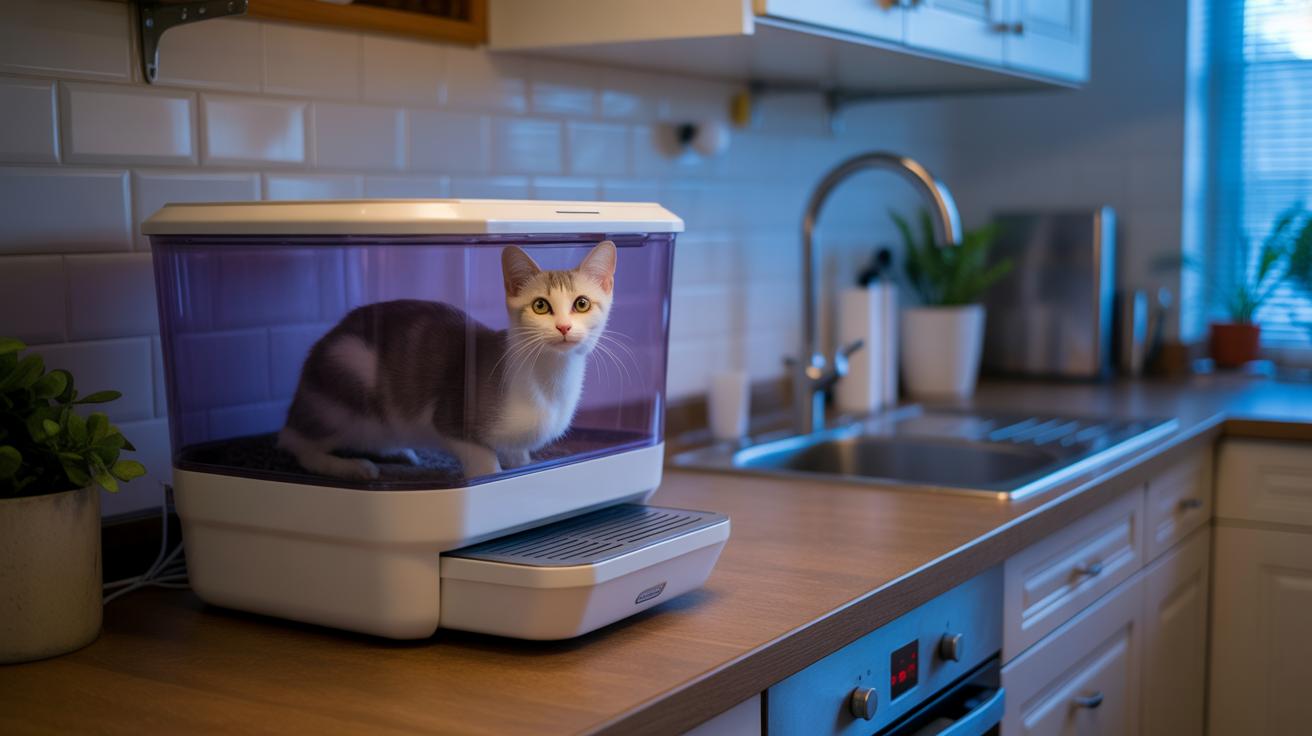
    Automatic Cat Litter Boxes: Pros-and-Cons for Indoor-Cats

    Automatic litter boxes: lifesaver for busy humans, or a noisy, wallet-draining thing your shy cat will avoid? Ever watched a skittish kitty bolt at a tiny unfamiliar sound? Same idea.

    These boxes can cut scooping to about 10 to 30 minutes a week for one cat, instead of daily little chores. They also help control odors better, many use a carbon filter (a tiny air sponge) and special litter (like silica crystals or fast-clumping clay) that trap smells. For multi-cat homes, that means less stinky traffic and fresher rooms.

    On the flip side, they cost from about $74 to $900 up front, and you’ll often spend $15 to $30 a month on replacement filters and special litter. Some models have a motor (small electric part that moves waste) that hums or a rake that clicks, and timid kitties may avoid the box because of the noise. I’ve seen a cat sit two rooms away and give the door the side-eye. Um, not kidding.

    I’ll walk you through the real pros and cons so you can pick what fits your budget and your cat’s personality. Let’s see if it’s purr-fect for you.

    Automatic Cat Litter Boxes: Pros-and-Cons for Indoor-Cats

    - Quick decision guide buy or skip automatic cat litter boxes (short verdict + numbers).jpg

    Buy one if you want to skip daily scooping and you’re okay with a $74-$900 upfront price plus ongoing consumables (replaceable items like filters, liners, or special litter). Skip them if you have a very shy kitten, a noise-sensitive cat, or a tight budget.

    New units usually cost about $74-$900. Monthly running costs are often around $15-$30 for automatic boxes. By contrast, manual boxes (the kind you scoop by hand) often run about $20-$40 per month.

    They save time. Expect about 10-30 minutes a week back for a single-cat home. In multi-cat homes you might save 30-90 minutes weekly depending on traffic and how often you’d otherwise scoop.

    Pros

    • Cuts scooping time. That’s 10-30 minutes a week for one cat, and more if you have several. Perfect for busy owners who want a little breathing room.
    • Tighter odor control. Enclosed waste compartments and sealed bins (closed containers that trap smell) mean fewer surprise whiffs and less hourly spot-scooping.
    • Great for multi-cat homes. Moving waste into a sealed receptacle faster helps shared litter areas stay fresher and less… dramatic.

    Cons

    • Higher upfront cost. Most automatic units sit in the $74-$900 range, so they’ll feel pricey next to $10-$60 manual trays.
    • Ongoing supplies add up. Monthly costs of $15-$30 include consumables (again, filters, liners, or special litter), and some models need clumping litter (litter that forms clumps when wet) or disposable trays.
    • Mechanical problems and noise. Motors, sensors, or moving parts can fail. Some models make 25-40 dB sounds – quiet for us, but scary for a timid kitty – and that can make cats avoid the box.

    Worth a closer look? For full details on pricing, maintenance, mechanics, buying tips, and behavior guidance see the Cost & Maintenance; How automatic…; How to choose & recommended model types; Safety, noise, and cat behavior sections.

    How automatic cat litter boxes work: core mechanics and sensing principles

    - How automatic cat litter boxes work core mechanics and sensing principles.jpg

    Most self-cleaning litter boxes sense when your cat uses them, wait a short timer, then run a cleaning cycle that separates waste and drops it into a sealed bin. The goal is simple: don’t spook your cat, and don’t scoop while your kitty is still inside.

    Sensors and timing

    Motion sensors, like infrared (IR) motion detectors that spot body heat and movement, watch for entry and exit. Weight sensors, usually pressure pads (thin pads that feel a cat’s weight), tell the unit when your cat leaves. Typical delay timers run about 1 to 10 minutes so clumps form and your cat has time to go. Sensor placement matters a lot. A sensor tucked near the rim can miss low-lying cats, while one aimed at the doorway might false-trigger when a tail swishes past. Ever seen a box try to clean with a cat still inside? Not great. If cycles run with a cat in the box, trigger all the time, or never happen, that usually means dirty sensors, drained batteries, or wiring issues.

    Cleaning mechanisms

    Rake systems use a linear rake that sweeps clumps into a waste drawer, driven by a linear motor (a motor that moves straight) or a small DC motor (battery-style motor). They’re quick, a single sweep takes seconds, and you’ll hear a soft mechanical thunk as it runs. Common wear points are the plastic teeth, sliding rails, and the gearbox (the gears that change speed and torque).

    Rotating drum designs spin the whole basin so clean litter falls back while waste is pushed to a collection area. These need stronger motors or stepper motors (a precise small gear motor), and they’re built to handle heavier traffic. But bearings (rotating supports) and seals (gaskets that keep dust and smells contained) can wear with time.

    Sifting trays lift or tilt a perforated tray so clean litter sifts through and solids stay on top. It’s simple and low-tech, like a big sieve, but holes can clog and trays may warp under heavy use. Sifting cycles also tend to take longer.

    Mechanism How it works Best for Common issues
    Rake systems Linear rake sweeps clumps into a drawer Single cats or small multi-cat homes Worn plastic teeth, rail jams, motor or gearbox strain
    Rotating drum Drum spins to separate waste from litter Busier homes, heavier cats Bearing wear, seal leaks, need for stronger motors
    Sifting tray Perforated tray lifts or tilts to sift litter Owners who prefer simple mechanics Hole clogs, tray warping, slower cycles

    Check build quality, motor specs, and sensor type against your household needs before you pick a model. Worth every paw-print.

    Benefits of automatic cat litter boxes

    - Benefits of automatic cat litter boxes (concise list only).jpg

    If you dread daily scooping, an automatic box can be a real game-changer. See the Safety, noise, and cat behavior section for behavior and noise details. Ever watched your kitty chase shadows while you scoop? Yeah, we can do better.

    • Saves you time. Manual scooping usually takes about 2 to 5 minutes a day, so an auto box typically frees up roughly 10 to 30 minutes a week for one cat and 30 to 90 minutes for multi-cat homes (based on timed scoop sessions). That’s extra time for a quick coffee, a cuddle, or, um, scrolling.

    • Cuts odor. Autos move waste into sealed drawers and use carbon filters (activated carbon, charcoal that traps odors), so smells don’t hang out in the room. How well this works depends on how often you empty the drawer and how fresh the filter is. Smells get locked away more than with an open pan.
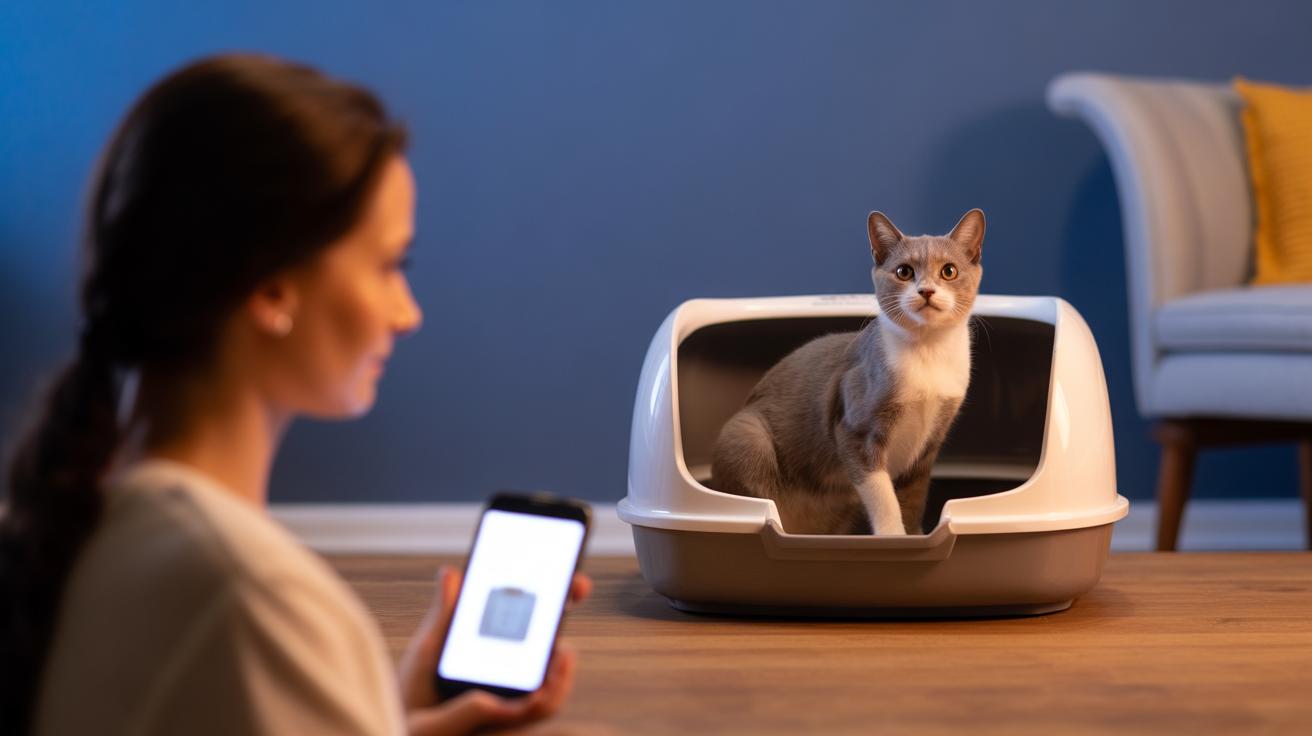
    • Works best with clumping litter and mechanical rakes. Clumping litter (litter that forms solid clumps when wet) and a mechanical rake (a motorized rake that lifts clumps into a waste drawer) make cleanup neater. Intact clumps pull away cleanly, which means less messy grit on the floor.
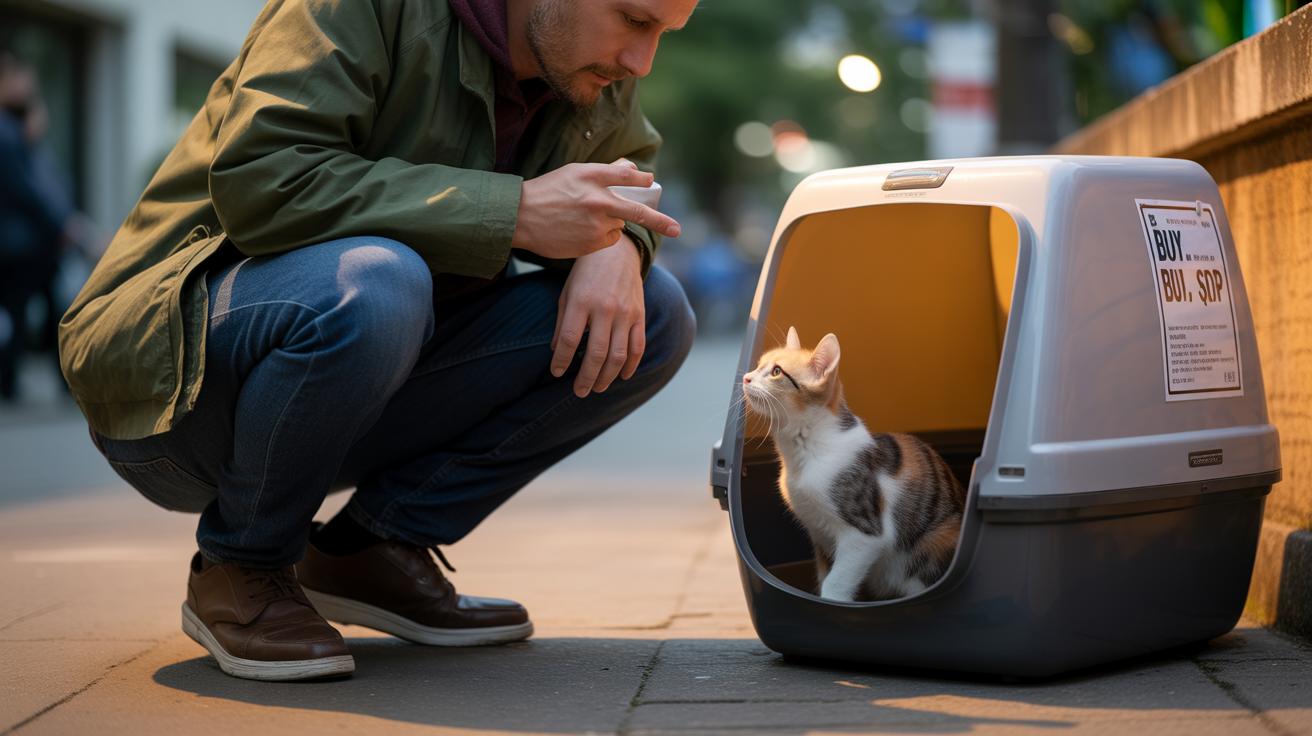
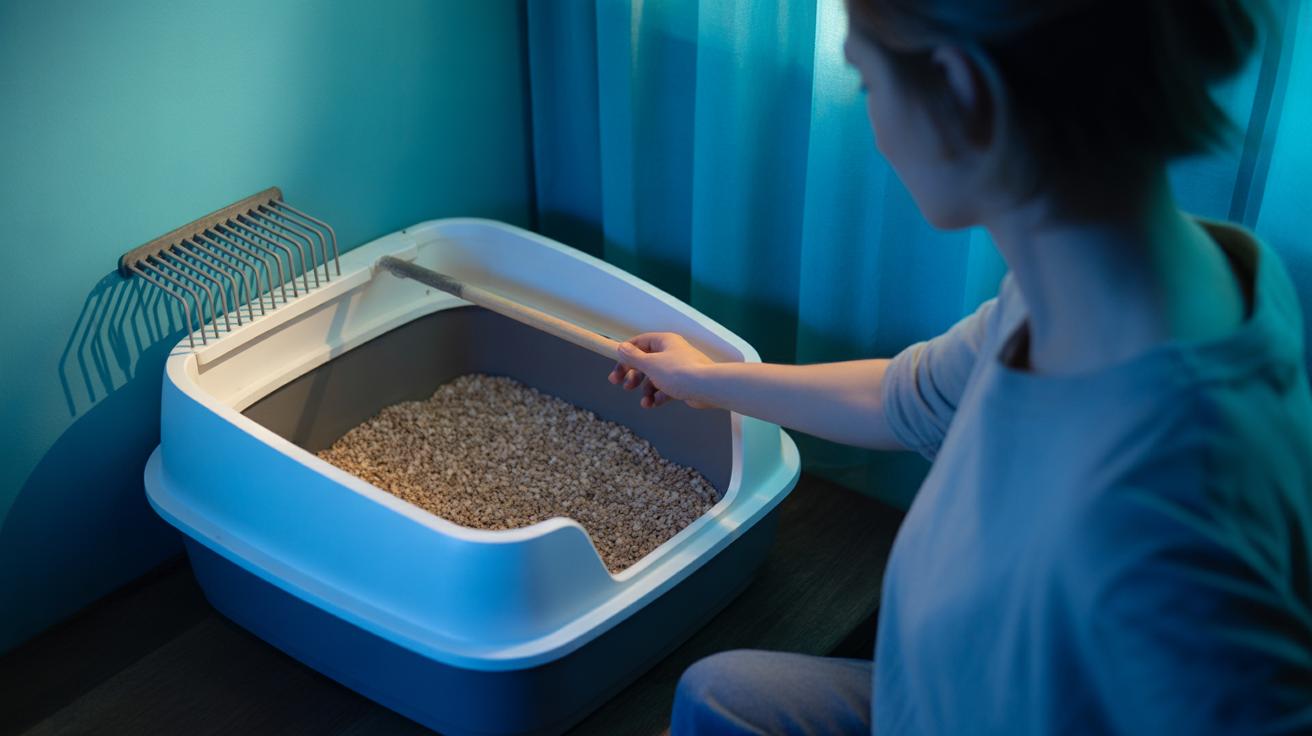
    • Quick tips to maximize benefits: put the box in a low-traffic, ventilated spot , try the laundry room against a wall. It keeps smells out of the living room. Use a fine-grain clumping litter rated for autos, and add a 24×18-inch rubber mat to cut down tracking. Little changes like that make the whole thing more claw-tastic.

    Maintenance you’ll want to stick to: empty the waste drawer every 3 to 7 days for one cat, or every 1 to 3 days for multiple cats. Replace the carbon filter about every 30 days and wipe surfaces weekly. Deep clean by disassembling and washing every 1 to 3 months depending on use.

    Worth every paw-print.

    Drawbacks and risks of automatic cat litter boxes (concise list only)

    - Drawbacks and risks of automatic cat litter boxes (concise list only).jpg

    • Higher upfront cost and ongoing consumables, like special clumping litter (litter that forms solid clumps), carbon filters (activated charcoal filters), or disposable trays.
    • Mechanical parts can jam or motors can burn out. Sensors (devices that detect motion or weight) can false-trigger or miss a use.
    • Motor noise and sudden movement can scare timid cats, causing avoidance or stress.
    • Some cats stop using the box after a bad experience, which can lead to accidents around the house.
    • Repair and replacement costs add up over time, and finding parts or service can be a hassle.
    • Power outages or dead batteries leave the unit unable to clean, so the box can become full until you fix it.
    • Certain designs have pinch points or small parts that could be unsafe for curious cats or multi-cat homes.

    See Safety, Noise & Behavior and Cost & Maintenance for details.

    Cost & maintenance: monthly, 3–5 year ownership costs, consumables, maintenance schedule, and troubleshooting

    - Cost  maintenance monthly, 35 year ownership costs, consumables, maintenance schedule, and troubleshooting.jpg

    Automatic boxes cost more up front than plain pans. Manual trays usually run $10-$60. Automatic units are often $74-$900. Monthly running costs for autos tend to be $15-$30. Manual scooping supplies often come out to $20-$40 a month. So yes, autos can save you time, but they don't always save money.

    Consumables are the slow leak in your budget. Carbon filters (activated charcoal that traps odors) usually cost $5-$15 a month if you swap them monthly. Disposable trays or liners (single-use plastic inserts) add about $10-$25 a month when a model needs them. Special clumping litter (litter that forms solid clumps when wet) runs about $10-$20 a month depending on brand and how many cats you have. Have more than one cat? Expect to be at the high end of those ranges. Add battery backups or extra filters and your monthly bill climbs. Bottom line: autos can be cheaper month-to-month for homes with lots of scooping, or a bit cheaper for single-cat households. It really depends on the model and how much traffic the box sees.

    Weekly and monthly maintenance schedule

    Keep a steady little routine and the unit will behave. Weekly tasks take minutes. Monthly checks catch problems before they jam up.

    1. Weekly wipe-down , 10 minutes. Wipe interior surfaces and sensor windows (clear plastic that helps the box know when a cat is inside) with a mild pet-safe cleaner.
    2. Empty sealed bin or drawer , 5 minutes. Pull out the waste bag, toss it, and reset the drawer.
    3. Replace carbon filter (monthly) , 5 minutes. Swap per the maker's instructions.
    4. Check sifting holes and tray for clogs , 5 minutes weekly. Clear stuck clumps so the mechanism moves freely.
    5. Inspect motor mount and rails , 5-10 minutes monthly. Look for debris, loose screws, or worn teeth on gears.
    6. Deep clean (disassemble and wash) , 30-45 minutes every 1-3 months depending on use. Take it apart, wash, dry, and put back together.

    Short. Simple. Worth every paw-print.

    Troubleshooting common issues

    Motor jams: if the rake or drum stalls, unplug the unit first. Safety first. Remove the litter bed and look for big clumps, a wrinkled liner, or stuck debris. Clear the jam, dry the parts completely, then plug in and run a manual test. If the motor hums but won’t move, the gearbox (the set of gears that turns the rake) or motor brushes (small replaceable parts that wear down with use) may be worn. Contact support or check for replacement parts.

    Sensor misfires and false cycles: clean sensor windows or pressure pads (thin sensors that feel weight) and check batteries if it’s battery-powered. If the unit runs while a cat is inside, stop using it and check sensor alignment and any firmware reset steps from the maker. Sifting holes can clog , soak trays in warm water and scrub with a soft brush. Replace warped trays sooner rather than later.

    Always unplug power before any service. If you smell electrical burning, if problems repeat after cleaning, or if repairs need parts you can’t find, call the manufacturer.

    Estimating 3-5 year total cost is easy math. Add the upfront price plus monthly consumables times 36-60 months, then tack on a small repair/parts buffer, say $50-$200 for the period. Example totals vary with quality and use. Budget units often come in around $430-$1,400 over 3-5 years. Midrange units tend to be $740-$2,300. Premium models can reach $1,220-$3,300 depending on parts and how often your cat uses it.

    Ownership Band Upfront Cost Estimated Monthly Consumables Estimated 3-5 Year Total Cost
    Budget $74-$200 $10-$20 $430-$1,400
    Midrange $200-$500 $15-$30 $740-$2,300
    Premium $500-$900 $20-$40 $1,220-$3,300

    Safety, noise, and cat behavior: assessing suitability for kittens, seniors, and multi-cat homes

    - Safety, noise, and cat behavior assessing suitability for kittens, seniors, and multi-cat homes.jpg

    Most worries are simple and real: noise and moving parts can spook a cat, lack of a quiet spot makes some cats avoid the box, and tall rims or high entry lips can stop tiny kittens or older cats with stiff joints from getting in. Think about how your cat moves and where they like privacy. Ever watched whiskers twitch as a machine hums? Yeah, that tells you something.

    Noise guidance: many popular units run around 25 to 40 dB (dB means decibel, a measure of sound). That sounds quiet to us, but sensitive cats may worry. Try a phone sound-meter app held near the box while it runs to get a real read. Look for stress signs , sudden flinches, avoiding the unit, flattened ears, or long pauses at the entrance , and act. Move the unit to a quieter room, slip a rubber anti-vibration pad under it, or set it on a thick mat to soften the thud and wobble. Small fixes, big calm.

    Multi-cat logistics: aim for one litter box per cat plus one extra when you can, so two cats get three boxes. That cuts competition and stops boxes from filling too fast. Estimate traffic: if each cat goes 3 to 5 times a day, two cats mean about 6 to 10 uses daily; pick a machine with a waste drawer and cycle speed that can handle that, or plan to empty more often. For heavy traffic, use more than one automatic unit or pair an auto with a manual pan as a backup so one busy box doesn’t become a problem. Simple math, less stress.

    Kittens and seniors need extra thought. Choose an auto with a low entry or add a ramp for little legs and stiff hips, and check that the interior is roomy enough for your cat’s length and girth. Introduce the machine slowly: put it next to the old box and leave it off for a few days so your cat can sniff and explore. Then run cleaning cycles during daytime while you’re home, and only switch to full auto once the cat uses it reliably. Reward calm approaches with treats and quiet praise. If your cat freezes or bolts at moving parts, stop and slow the process , no racing it.

    A tiny anecdote: I once watched Luna, my tabby, circle a new unit three times before sniffing in. Patience won out. Worth every paw-print.

    Stop using the unit and switch back to a manual box if your cat starts avoiding it, has new accidents, or shows sudden changes in stool or urination. If problems keep going, check with your vet , there might be a medical or stress issue behind it. Better safe than sorry.

    - How to choose  recommended model types price bands, buyer profiles, model trade-offs, and concise buying checklist.jpg

    Picking the right automatic litter box can feel confusing, but it doesn't have to. Think about how much you want to spend, how many cats you have, and how much noise or maintenance you’ll tolerate. I’ll walk you through the common price bands, the main model types, and the trade-offs so you can match a box to your cat’s needs and your sanity.

    Price Band Who it’s for What to expect
    $74–$200 Budget, single-cat homes, renters Simple features, often disposable-tray options, lower up-front cost but higher monthly consumables
    $200–$500 Midrange buyers, couples, small multi-cat homes Better build, motorized rakes or sifting designs, lower long-term consumable cost
    $500–$900 Premium buyers, busy households, tech lovers Large capacity, app features, stronger motors and metal gears for heavy use

    Major model types you’ll see

    • Disposable-tray designs (tray liners you toss after use). Easy daily life, but add monthly liner costs. Great if you hate scooping.
    • Motorized rake units (a mechanical arm that sweeps clumps into a bin). Fast clean cycles and common replacement parts. Good balance of work and cost.
    • Rotating drum models (a cylinder that tumbles to separate waste). Built for heavy traffic and big cats, but the motors and unit are heavier.
    • Sifting trays (simple trays that separate waste with a mesh or sieve). Fewer moving parts, but they can clog more easily and need regular attention.

    What to check before buying

    • Price band – Pick the band that fits both your up-front budget and monthly spend.
    • Household size (cats) – More cats means you need bigger capacity and tougher motors.
    • Internal dimensions and weight limits – Measure your cat’s length and girth so they can turn comfortably. Nobody likes a cramped loo.
    • Litter type compatibility – Confirm if it needs clumping litter (forms solid clumps when wet), crystals (silica beads that absorb moisture), or special granules.
    • Power options – Is it plug-only, battery-capable, or both? Batteries can save you in short outages.
    • Noise spec – Look for a stated decibel range (dB, how loud it is) or read user notes about night cycles. You don’t want a roar while you sleep.
    • Warranty and spare parts – Check warranty length and how easy it is to order replacement trays, gears, or filters.
    • Return and test policy – Buy from a seller with a trial window so you can see if your cat accepts the sound and motion.

    Who likes what (real-world matches)

    • Single busy owner who wants almost no daily work: a disposable-tray model in the budget or low-midrange band often fits. You trade higher monthly liner costs for almost zero scooping.
    • Multi-cat household that needs durability and lower recurring cost: aim for midrange motorized rake units or premium rotating drum models. Stronger motors and metal gears usually last longer under heavy use.

    Consumables vs durability – the money part
    Disposable trays cut your daily work, but liners add about $10–$25 per month. Solid motorized units cost more up front but usually land around $15–$30 per month for litter and filters, not counting occasional repairs. To estimate your monthly cost, add your litter and filter expenses to any tray or liner spend, then toss in a small repair buffer. Easy math, less chaos.

    A few last tips
    Ever watched your kitty sniff a new box for ten minutes? Cats are picky. If you want help deciding between a hooded or open style, see understanding cat preferences for open vs covered boxes. And if you’re considering liners, check selecting litter box liners for hassle-free cleaning to compare types and how they affect recurring cost and ease of service.

    Worth every paw-print.

    Final Words

    In the action, this post gave a quick buy-or-skip verdict and ran through how these boxes work, their benefits, risks, costs, safety notes, and a buying checklist.

    We shared real numbers ($74–$900 upfront, $15–$30 monthly for autos vs $20–$40 for manual), noise and sensor tips, a maintenance plan, and kitten/senior intro steps.

    If you want fewer scoops and calmer cats, use this guide to weigh automatic cat litter boxes: pros and cons for indoor cats and pick a quiet, durable setup that keeps your crew active and happy.

    FAQ

    Best automatic cat litter boxes pros and cons for indoor cats?

    The best automatic cat litter boxes for indoor cats balance steady odor control and less scooping, reliable sensors (motion or weight detectors), and quiet motors (small electric drives); pros are time saved and sealed bins; cons are cost and repairs.

    Best self-cleaning litter boxes?

    The best self-cleaning litter boxes match your cat’s size, household traffic, and budget; look for quiet operation (25–40 dB: sound level), reliable sensors, easy-to-empty sealed drawers, and a good warranty.

    Are automatic cat litter boxes worth it?

    Automatic cat litter boxes are worth it if you want to cut daily scooping and accept $74–$900 upfront plus roughly $15–$30 monthly; they save time but require periodic maintenance.

    Are self-cleaning litter boxes safe for kittens?

    Self-cleaning litter boxes can be safe for kittens when the unit fits their size and you enable delay settings (sensor delay: timer after exit) and supervise introductions until the kitten is comfortable.

    Do self-cleaning litter boxes need to be plugged in?

    Self-cleaning litter boxes usually need to be plugged in for motors and sensors (motor: electric drive; sensor: motion or weight detector); a few battery or hybrid models exist for light use.

    What are the disadvantages of an automatic litter box?

    The disadvantages of an automatic litter box include higher upfront cost ($74–$900), ongoing consumable expenses ($15–$30 monthly), mechanical jams from wrong litter, motor noise that may bother some cats, and sensor failures.

    Do vets recommend automatic litter boxes, and why might vets advise against closed boxes?

    Vets may recommend automatic litter boxes for many homes but often warn about closed boxes because noise, trapped-cat risk, and hidden health signs can stress cats or mask medical issues.

    What are the common problems with Litter-Robot 4?

    Common problems with Litter-Robot 4 include motor stalls, sensor errors, app or Wi‑Fi connectivity hiccups, drawer-sealing or odor issues, and occasional jammed sifting holes; many fixes are cleaning or contacting support.

    Related Articles

  • Best Cat Towers for Indoor Cats

    Best Cat Towers for Indoor Cats

    Think a scratching post will do? Think again! Indoor cats want vertical territory, their own mini jungle gym where they nap, hide, and rule like tiny tigers. You can almost hear the soft scritch of claws and see whiskers twitch as they climb. Ever watched your kitty chase a sunbeam up the curtain? It’s that kind of joy.

    This guide walks you through the best cat towers for indoor cats. We test for stability, climbable space, and cozy beds so busy owners and apartment dwellers can pick a tower that fits their cat and their floor plan. Whether you’ve got a spry kitten, a couch-potato senior, or a multi-cat crew, we focus on safety, comfort, and play.

    You’ll get a short list with a top pick and quick buys, plus straight-up info on assembly, materials like sisal rope (a coarse plant fiber) and plush velour (soft, fuzzy fabric), and which cats each tower suits. We note footprint, height, and how easy it is to put together. Oops, let me rephrase that, how fast you can have it ready for pouncing. Worth every paw-print.

    Shortlist: Top Pick + Quick Buy Options

    - Shortlist Top Pick + Quick Buy Options.jpg

    Top pick: Frisco 72-inch. Best overall for multi-cat homes.
    This quick shortlist helps you pick a cat tower fast, whether you want a simple buy now answer or a quick compare before diving into full reviews. Use it to make a fast call, or keep scrolling for full pros, cons, assembly difficulty, and specs. Ever watched your kitty claim the top perch like a tiny tiger? This will help.

    Product Best For Height Typical Price Range Key Notes
    Frisco 72-inch Multi-cat homes, lots of climbing 72 in $90–$300+ Many perches, cozy houses, and scratch surfaces; roomy but needs floor space
    New Cat Condos Premier Triple Perch Limited space but very stable 32 in $200–$400 Solid wood (real hardwood) build, heavy with almost no top wobble; pricier but built to last
    PAWZ road 78″ Very large or several big cats 78 in $300+ Extremely heavy, solid-wood (real hardwood) stability, made for big users
    Mau Ivy (53″ / 73″) Multi-cat homes with style 53 in or 73 in $150–$400 Wicker (woven natural fibers) nest beds, replaceable parts, wide stable base
    Go Pet Club 23″ Budget buyers and small rooms 23 in $30–$100 Affordable and easy to assemble; velour (soft, plush fabric) is comfy but not as durable
    Feandrea / Tuft + Paw (compact & window) Tiny apartments or window perches 22.8 in (compact) – 63 in (window) $40–$250 Space-saving picks from recycled-cardboard scratchers to suction-attached window perches (suction cups); great for small spaces

    Scroll down for full product details, pros and cons, how hard each one is to assemble, and complete specs on these best cat towers for indoor cats. Worth every paw-print.

    Best Cat Towers for Indoor Cats

    - Detailed Buying Guide Two Decisive Criteria.jpg

    Start here. This short guide shrinks the decision down to what really matters: stability and build, and materials and durability. No need to stare at endless specs, pick with confidence and get your kitty playing sooner.

    Think of it like this: spend on a solid base and stout posts if your cat launches into dramatic leaps. For seniors or kittens, choose softer fabrics and lower platforms so they can climb without a circus act. Price ranges help you shop: budget $25 to $60, mid $90 to $300, and premium $300 and up. Preassembled towers tend to be heavier and less wobbly. Many self-assembly pieces use thinner parts and may wobble until you anchor them.

    Stability & Build Quality

    Look for a wide base, multiple posts, and cores made from hardwood (dense wood like oak) or thick engineered wood (pressed panels glued with resin). These resist tipping and twisting. Give a gentle shove when you set it up to check for wobble, and follow Stability, Anchoring & Safety for step-by-step anchoring and installation tips. Ever watched your cat fling themselves at a tower like a tiny superhero? Stability matters.

    Materials & Durability

    Match the covering to how your cat claws. Carpet (dense textile) holds edges better and hides wear, sisal (coarse natural fiber) stands up to heavy scratching, and velour or fleece (soft plush fabrics) feel cozy but wear faster. Think about replaceable parts and cleaning needs too, see Materials, Maintenance & Lifespan for care schedules and realistic life-expectancy tips. In truth, a little planning saves you from buying another tree next season.

    Worth every paw-print.

    Best Cat Towers for Indoor Cats

    - Top Picks by Use Case and Room Type.jpg

    Quick-buy: Frisco 72-inch – top pick for multi-cat homes; anchor to wall. Tuft + Paw window perch – best for tiny spaces that need window views. Feandrea compact – floor-saver for calm, low-activity cats.

    Stability, materials, and where you put the tree matter more than fancy bells and toys. Look for a wide base and solid-wood (natural, dense lumber) or reinforced particleboard (pressed wood fibers) so it doesn't wobble. Sisal (coarse plant fiber) is the best scratching surface. Put tall trees against a wall or in a corner and secure them to a stud or with the included anchors; short trees are kinder to kittens and seniors who prefer easy hops.

    1. Frisco 72-inch – Great for multi-cat households. Bolt the top section to a wall stud for less wobble and tuck it in a corner so everyone can claim a perch. Tuck it into the living-room corner where all the window action is.

    2. New Cat Condos Premier Triple Perch – Heavy, stable build that sits solid on hardwood or concrete floors; skip this one if you can’t drill into walls in a rental. Set it by the big picture window so shy cats get their lookout.

    3. PAWZ road 78" – Made for very large or heavyweight cats; assemble on a main floor and avoid weak upper floors. Place near the room where the family hangs out – big cats like company and a soft spot to supervise.

    4. Tuft + Paw window perch – Perfect when floor space is tiny. Attach it to clean, smooth glass using its vacuum-seal cup (suction-style holder) and test the hold before you leave your cat alone on it. Stick it to a sun-facing window for prime nap-and-watch real estate.

    5. Feandrea compact – Small footprint for narrow nooks; great for calm cats but not ideal for rowdy jumpers. Slide it beside a bookshelf for a low-profile scratch-and-rest spot.

    6. Armarkat kitten-friendly cat tree – Low steps and gentle platforms for early climbers, so kittens build confidence without scary heights. Start it in the playroom and move it to a quieter room during rough adult play.

    7. Go Pet Club 23" – Budget-friendly and quick to assemble; use as a short-term or secondary tower instead of your main climbing hub. Keep one near the entryway for quick scritches and a spot to wait for treats.

    A quick tip: if your cat swats and the whole tree tips, it’s not their fault. Move it to a corner, add anchors, or swap in a sturdier base. Ever watched your kitty circle a new tree like it’s a tiny mountain? That first brave leap is worth the extra effort. Worth every paw-print.

    Measurements & Placement

    - Measurements  Placement.jpg

    Numbers are the backbone of a cat tower that actually works. Get the right depths, clearances, and base width and your cat will nap, leap, and claim perches without sending the whole thing wobbling into the laundry basket. Quick checks here mean you measure once and be done.

    • Platform minimum depth: about 12" (30 cm) so an adult cat can curl up comfortably and tuck its paws under, perfect for that soft purr nap.
    • Small-space max height: keep compact trees under about 35" (89 cm) for apartments and low ceilings so they fit without feeling giant.
    • Base width for tall units: at least 18–24" (46–61 cm) so the footprint resists tipping when a cat launches from a high perch.
    • Ceiling clearance: leave 6–12" (15–30 cm) between the top perch and the ceiling for headroom and safe jumps.
    • Platform vertical spacing: 10–14" (25–35 cm) so cats can hop or climb without overreaching and straining their shoulders.
    • Per-perch capacity: pick perches rated at least cat weight times two to account for landing forces (the extra shock when they hit a perch). For example, a 12 lb cat should have perches rated for 24 lb; for multi-cat stacks, check the total capacity and total perch count.

    Place towers where your cat already hangs out, a sunny window or a high view of the room is cat gold. Avoid narrow walkways or tight doorways where passersby can bump the tree; put tall pieces against a wall or in a corner and make sure they sit flat and steady before letting your cat test the highest perch. Ever watched your kitty pick the perfect sunspot? That spot matters. Worth every paw-print.

    Choosing by Cat Age, Size and Mobility

    - Choosing by Cat Age, Size and Mobility.jpg

    • Kittens: go for short trees, small ramps, or step-style access so climbs feel safe and fun. Pick soft coverings like velour (soft short-pile fabric) or fleece (cozy knit) so their tiny paws land on something squishy. Your kitten will love the plush steps and tiny leaps , cute chaos, guaranteed.
      Example: "Kitten-ready: short tree with plush steps – tiny leaps, big grins."

    • Adult and large breeds: give them wider perches (about 14 inches or more) and stout posts so they can sprawl and settle without wobble. Choose solid wood (single-piece timber) or reinforced engineered wood (layers glued together for strength) so landings stay steady and the whole unit holds up to big jumps. Think roomy, sturdy, and built to last , perfect for a heavyweight nap or a dramatic pounce.
      Example: "Adult-proof: 16-inch perch and a thick hardwood post – room to sprawl."

    • Seniors / mobility-limited cats: favor ramps, low-entry cubbies, and step-like platforms to cut down on joint strain. Lower the highest perches and make routes shallower so your older cat can get around without a running start. Ever watched a senior hesitate at a tall jump? This makes life easier and nap time comfier.
      Example: "Senior-friendly: ramp into a low cubby – easy in, cozy nap."

    See Measurements & Placement for exact perch widths, spacing, and placement tips. Check the Shortlist for detailed reviews and weight-test data.

    Materials, Maintenance & Lifespan

    - Materials, Maintenance  Lifespan.jpg

    Picking the right materials is the fastest way to a longer-lasting tower. Carpet (dense looped textile that hides wear) stands up to the roughest scratching and won’t peel at the edges, so it’s a smart pick if your cat goes full ninja on the posts. Your cat will love the noise and feel of a good scratch. Really.

    Sisal (coarse plant fiber from agave plants) is the go-to for serious scratchers and is often replaceable, so you can refresh just the post. Velour (soft, short-pile fabric) and fleece (cozy knit, like a warm sweater) feel dreamy under paws but snag and shred faster. Recycled cardboard (compressed paperboard) is cheap and irresistible for a while, but expect it to wear out quickly with heavy use.

    Cleaning keeps smells and wear from speeding things up. Vacuum carpeted surfaces weekly and use a stiff brush on sisal to lift trapped fur and loose fibers. Spot-clean stains right away with a pet-safe enzymatic cleaner; for removable covers follow the tag and machine-wash monthly on gentle, then air-dry or tumble low if allowed. Deep-clean the whole unit every three months: pull off cushions, wipe solid surfaces with mild soap, and let everything dry completely before you put it back together so mold doesn’t move in. Oops, let me rephrase that… don’t rush the drying.

    Replacement parts mean you don’t have to toss the whole tower when one rope or cushion gives out. Common replaceable items include sisal posts (posts wrapped in sisal rope you can rewrap), removable cushions and covers, dangling toys, and hammock straps. Some brands sell parts directly , Mau Ivy, for example, lists trunks, beds, cushions, and ropes you can order , and most hardware stores carry sisal rope and basic fasteners if you want to DIY a rewrap. Keep a tiny repair kit: spare sisal rope, a staple gun or clamps, and extra screws.

    Know what to expect so upgrades aren’t a surprise. With heavy daily use, budget models usually last about 1 to 3 years. Mid-range pieces often run 3 to 5 years with regular care. Solid-wood premium towers can go beyond 5 years if you swap worn parts as needed. Check sisal monthly for fraying, rotate perches every three months to spread the wear, and replace badly shredded sisal every 6 to 18 months depending on how much claw time your cat demands. Small, regular fixes pay off. Your cat gets more naps between replacements.

    Worth every paw-print.

    Stability, Anchoring & Safety

    - Stability, Anchoring  Safety.jpg

    Tall cat towers can tip if they wobble, and a tipping tower can mean a frightened cat, a knocked-over lamp, or worse, an injured kitty. Treat stability as your safety baseline: a wide base, snug fasteners (screws, bolts, or nuts), and a proper anchor (strap or bracket that secures the tower to wall or floor) keep perches steady when your cat launches into a heroic leap. Think of anchoring like a seat belt for furniture, keeping everything steady when weight shifts. Ever watched your cat pounce and the whole tower wobble? Yeah, let’s avoid that.

    1. Confirm you have every part and read the manual before you start; missing pieces or unclear steps are red flags.
    2. Assemble the base first and make those bottom connections rock-solid; stability starts at the bottom.
    3. Use every supplied fastener and tighten them snug. Hand-tighten, then give a final quarter-turn with a tool.
    4. Test load gradually: start with a light weight low down, then add more weight and try higher perches once it holds steady.
    5. Mount a wall strap to a stud (wood framing behind drywall) when possible, or use L-brackets (metal brackets shaped like an L) screwed into studs for extra security on tall, heavy trees.
    6. Add extra anchors in multi-cat homes or if you have heavy breeds that slam into perches.
    7. Schedule periodic retightening , jumps and play will loosen bolts over time.
    Anchor Type When to Use Estimated Holding Strength
    Wall strap to stud Tall units on walls with studs; your go-to first choice High
    L-bracket to stud Extra security for very heavy or wide towers High
    Floor-to-ceiling tension pole When studs are inaccessible and the maker approves (pole compressed between floor and ceiling) Medium (depends on ceiling finish)

    Small self-assembly pieces usually take under 10 minutes; medium towers run 30 to 60 minutes. Large, multi-piece towers can take 60 to 120 minutes and are easier with two people, especially when lining up heavy platforms. Preassembled units often feel heavier and steadier right out of the box.

    1. Push the top gently to check for wobble under load.
    2. Make sure each perch’s weight capacity matches your cat’s weight (the perch weight limit).
    3. Confirm the base size fits the placement guidelines for tall units.
    4. Inspect fasteners monthly and after rough play.
    5. Check fabric and sisal (rough rope cats love to scratch) for deep frays or exposed staples.
    6. Verify you have anchor hardware and that wall mounting points are accessible.

    If you spot wobble or damage, act fast: retighten loose bolts, add a wall strap or L-bracket, lower or remove high perches, or retire badly damaged parts. If the problem keeps coming back, move the tree to a safer, lower spot or contact the manufacturer for replacement parts or warranty help , your cat deserves a steady throne.

    Best Cat Towers for Indoor Cats

    - Product Details, ProsCons, Assembly Difficulty and Full Specs (Individual Models).jpg

    Frisco 72-inch – a tall, multi-level tower with lots of beds and scratch surfaces. Great for families with several cats who like to spread out and nap at different heights.

    Spec Value
    Height 72 in
    Base Dimensions 21.3″ x 23.2″
    Weight Capacity 33 lb (total tested limit)
    Materials Engineered wood (pressed wood panels), faux fleece (soft synthetic plush)
    Weight Varies by model; generally heavy
    Typical Price $90–$300+

    This one has plenty of perches and cozy cubbies, so each cat can claim a view. The carpeted and fleece surfaces feel soft under paws and make for long, dreamy naps. Scratching posts are spread across levels, so claws get a proper workout.

    But it can feel a little wobbly if it’s not anchored to a wall stud. And it takes up a lot of floor space, so it might overwhelm a tiny room. Assembly is medium difficulty and usually takes 60 to 90 minutes for the tall model. Two people help when lifting the heavier platforms. Place it against a wall or in a corner and follow Measurements & Placement and Stability, Anchoring & Safety for anchoring to a stud.

    New Cat Condos Premier Triple Perch – compact but built like a tank; designed for stability in tighter rooms.

    Spec Value
    Height 32 in
    Base Dimensions Broad base (manufacturer lists wide footprint)
    Weight Capacity Per-perch strong; tested with multi-cat use
    Materials Solid wood (real hardwood), carpeted platforms
    Weight ~33 lb
    Typical Price $200–$400

    This is super steady thanks to thick wood posts, so top-motion is minimal. It often arrives partially assembled or fully assembled, which is a nice touch. The carpet covering resists edge peel and stands up to regular clawing.

    It is pricier than basic models and still fairly heavy for tiny apartments. If it’s preassembled, you’re good to go; self-assembly takes about 30 to 45 minutes. Set it near a favorite window and check Measurements & Placement for perch depth and Stability, Anchoring & Safety if you plan to bolt it to a stud.

    PAWZ road 78 in – massive, heavy-duty tower built for larger breeds or homes with lots of active cats.

    Spec Value
    Height 78 in
    Base Dimensions 46″ x 25″ (roomy, very stable base)
    Weight Capacity High total capacity; built for multiple large cats
    Materials Solid wood (real hardwood), plush covering
    Weight ~110 lb
    Typical Price $300+

    This is the one for big, energetic cats. It’s extremely sturdy and won’t tip when they launch off a top perch. Multiple removable beds make washing easy, and the solid-wood build should last years.

    It is very heavy and tough to move, and you’ll need a lot of floor space. Assembly can take 90 to 120 minutes and is easiest with two people. Install on a stable floor and follow Measurements & Placement and Stability, Anchoring & Safety for base clearance and stud anchoring if needed.

    Mau Ivy (53 in / 73 in) – a stylish, wide-base option with wicker nests and replaceable parts so it can last longer.

    Spec Value
    Height 53 in or 73 in
    Base Dimensions About 30″ x 23″
    Weight Capacity ~18–20 lb per perch (manufacturer guidance)
    Materials Solid wood, wicker (woven natural fibers), sisal (coarse plant fiber for scratching)
    Weight 46–56 lb
    Typical Price $150–$400

    This one looks great in a living room and doesn’t scream "cat furniture." Replaceable trunks, beds, and ropes mean you can refresh parts without tossing the whole tower. The wide base gives real stability, so multiple cats can share without drama.

    Some nest beds are tight for extra-large cats, and the wicker bits can be fiddly to fit during setup. Assembly takes about 60 minutes and can be trickier when you’re fitting the wicker nests; two people help. Put it where your cats already hang out and check Measurements & Placement for perch spacing and Stability, Anchoring & Safety if you add wall straps.

    Go Pet Club 23 in – budget-friendly and compact, it fits small rooms and small wallets.

    Spec Value
    Height 23 in
    Base Dimensions Small, suited to tight nooks
    Weight Capacity Modest; best for single small or medium cats
    Materials Particleboard (pressed wood fibers), velour (short-pile soft plush)
    Weight Lightweight
    Typical Price $30–$100

    This is great when you need something quick and affordable. The velour feels nice for naps and it’s easy to assemble. Its small footprint fits narrow corners and entryways.

    Velour pulls and tears more easily than carpet, so it’s not ideal for heavy scratchers. It’s also less sturdy for very active or large cats. Assembly is usually under 10 minutes and can be done solo. Best near a low-traffic corner; confirm Measurements & Placement for platform depth and use Stability, Anchoring & Safety if extra anchoring is needed.

    Feandrea / Tuft + Paw (compact and window options) – smart picks for tiny homes, from recycled-cardboard scratchers to suction-mounted window perches.

    Spec Value
    Height 22.8 in (compact) – 63 in (window perch setup)
    Base Dimensions Very small for compact models; window perch uses minimal floor space
    Weight Capacity Compact: low; Window perch: depends on suction rating – check maker limit
    Materials Recycled cardboard (compressed paperboard), bamboo (window frame), canvas, sisal
    Weight Lightweight
    Typical Price $40–$250

    These are perfect for apartment birds, uh, cats who live for window-watching. Cardboard scratchers are eco-friendly and budget-friendly. Suction-mounted perches maximize views while taking up almost no floor space.

    Cardboard wears out fast if your cat is a heavy scratcher, and suction perches rely on clean, flat glass and have weight limits. Assembly is quick for compact units; window perches need extra care to test suction hold. Mount the window perch on clean glass and double-check Measurements & Placement for perch depth and Stability, Anchoring & Safety for weight limits and secure attachment.

    FAQs and Quick Reference Rules

    - FAQs and Quick Reference Rules.jpg

    • Perch capacity: Check Measurements & Placement for exact perch depths and load ratings.
      Example line to use when checking specs – "Perch capacity: listed max weight and perch depth in inches."
      Want a quick check before you buy? Ask the seller for max weight and perch depth in inches. Your cat will thank you when it doesn’t tip.

    • Sisal replacement schedule: See Materials, Maintenance & Lifespan for inspection intervals and replacement parts.
      Sisal (coarse plant fiber used for scratch posts) wears down with heavy use. Inspect posts often and swap them when the rope is fraying or the core shows.

    • Window-mount safety: See Stability, Anchoring & Safety for suction testing, hardware anchors, and mounting tips.
      Test suction cups and mounts before letting your cat up. Suction testing (making sure cups actually hold) is quick and worth the peace of mind.

    • Used trees and sanitation: Only buy used if you can fully inspect and clean. Check for broken posts, exposed staples, wet or smelly padding, signs of pests, and loose fasteners. Vacuum fabric, wash removable covers in hot water with pet-safe detergent, scrub hard parts with a pet-safe disinfectant or a dilute bleach solution (1 part bleach to 30 parts water), rinse well, and let everything dry completely before use.
      Quick script to ask a seller – "Has it had pests or stains? When was it last cleaned? Can you show the underside and fasteners?"
      If anything smells off or you can see damage, walk away. Worth it? Maybe not.

    Base + anchor + durable scratch surface = fewer replacements. See Measurements & Placement; Materials, Maintenance & Lifespan; Stability, Anchoring & Safety.
    Worth every paw-print.

    Final Words

    We jumped straight in with a one-line top pick , Frisco 72-inch as best overall for multi-cat homes , plus a scan-ready shortlist table so you can buy now.

    Next, we laid out the two big selection rules: stability/build quality and materials/durability, then gave measurements, room-by-room picks, age/size advice, and full model pros and cons. We also covered maintenance, anchoring steps, assembly times, and quick safety checks.

    Use the product detail blocks and FAQs to pick fast. With these tips, choosing one of the best cat towers for indoor cats will be easier, and your clowder will be happier.

    FAQ

    What are the best cat trees for large cats?

    The best cat trees for large cats are heavy-duty towers like PAWZ Road 78″ and Frisco 72″, with wide perches, reinforced bases, and high per-perch weight ratings (max load a perch supports).

    Are there unique cat trees designed for large cats?

    Unique cat trees designed for large cats feature extra-wide platforms, hammock-style loungers, modular stacks, and solid-wood posts (solid-wood = strong wooden core) that resist tipping and give roomy rest spots.

    Which cat towers for indoor cats sell well on Amazon?

    Cat towers selling well on Amazon include Frisco 72″, New Cat Condos Premier, PAWZ Road 78″, Go Pet Club 23″, and Feandrea/Tuft + Paw compact window units, offering a mix of space, durability, and price.

    What makes a cat tree “heavy duty” for large cats?

    A “heavy duty” cat tree uses thicker posts, solid plywood or solid-wood (sturdy wood core), wider bases, reinforced fasteners, and high per-perch weight ratings to limit wobble and stand up to jumps.

    How should I choose a cat tree for large or multiple cats?

    Choose a cat tree for large or multiple cats by matching perch width and per-perch capacity to cat weight, picking a broad base or wall anchor, and choosing sisal-wrapped posts (sisal = durable rope).

    Are brands like Prestige Cat Trees, New Cat Condos, and Cat Tree King reliable?

    Brands like Prestige Cat Trees, New Cat Condos and Cat Tree King offer mixed quality; read specs for base size, materials and per-perch capacity, and check customer reviews for real-world durability and fit.

    Related Articles

  • Best Scratch Posts for Indoor Cats: Top Picks

    Best Scratch Posts for Indoor Cats: Top Picks

    Think your cat loves the sofa more than its toys? You’re not the only one. Indoor kitties often pick couch chaos when they don't have a sturdy scratch post to claim. Ever watched your cat dig in like it’s digging for treasure? Oof, right.

    We tested top-rated scratch posts for stability (how wobble-proof it is), the scratching surface – sisal (rough natural fiber like coarse rope), footprint (how much floor space it uses), and how long they actually hold up to sharp claws, so you don’t end up buying something your cat shreds in a week. We looked for posts that feel solid, stay upright, and give that satisfying scratch every time.

    Match the post to your room and your kitty’s stretch style. Some cats go full-body vertical, like tiny panthers, while others prefer a low lounge for full-flop naps. Our picks cover both: SmartCat, MidWest, Modkat, PetFusion, plus budget winners that really last. Worth every paw-print.

    Best Scratch Posts for Indoor Cats: Top Picks

    - Best Scratch Posts  Quick Buying Answers and Top Picks.jpg

    Top pick – SmartCat The Ultimate Scratching Post.
    Runner-up – MidWest tall post.
    Best budget – Amazon Basics or Frisco.
    Best for large cats – MidWest.
    Best horizontal – Modkat.
    Best lounge – PetFusion.

    We looked at top-rated indoor scratch posts for stability, scratching surface, footprint, and how long they hold up so you don’t buy something your cat ruins in a week. Match the model to your room and your cat’s stretch style , some cats love to go full-body vertical, others prefer a low lounge to knead and flop on. Ever watched your kitty stretch up like a tiny panther? That helps decide which post to buy.

    Quick picks, short notes:

    • SmartCat The Ultimate Scratching Post – Simple, sturdy, and built to last; mid-range $50 – $150. Best for vertical stretching.
    • MidWest tall post – Heavy-duty, built for big cats who want a full-body stretch; mid-range $50 – $150. Best for large cats.
    • Amazon Basics Cat Scratching Post – Cheap, tall, and easy to put together with a toy on top; budget under $50. Great starter option.
    • MECOOL Premium Basic – Comes in compact sizes, well-wrapped sisal for kittens or tiny apartments; mid-range $50 – $150. Best for small spaces and kittens.
    • Modkat Horizontal Scratcher – Sleek wooden lounger for floor-level play, a bit pricier but looks nice; premium $150+. Best horizontal option.
    • PetFusion Ultimate Cat Scratcher Lounge – Big corrugated cardboard lounge that doubles as a bed and scratcher; premium $150+. Best for chill loungers.

    Here’s a handy table with the specs so you can eyeball height, base size, material, and where each one shines.

    Model Height Base Material Best for Price range
    SmartCat Ultimate About 32 inches 16 x 16 inches Sisal rope (natural plant fiber, rough and durable) Vertical stretching Mid-range $50 – $150
    MECOOL Premium Basic Two heights: 22 inches or 34 inches 11.8 x 11.8 inches Sisal rope (tightly wrapped for long wear) Compact spaces / kittens Mid-range $50 – $150
    Amazon Basics About 31.5 inches 15.75 x 15.75 inches Sisal-covered post, fabric base (soft fabric for footing) Budget buyers Budget under $50
    Modkat Horizontal 26.6 – 30 inches long Low-profile base Wood (smooth, sturdy surface) Floor-level lounging (supports ~11 lb) Premium $150+
    MidWest Large Cat Up to about 41 inches (tall models) Wide, sturdy base Thick sisal rope (extra-durable plant fiber) Large, heavy cats Mid-range $50 – $150
    PetFusion Lounge About 41 inches lounge length About 19.3 x 19.3 inches top Corrugated cardboard (layered cardboard that cats shred and love) Lounge-style scratcher Premium $150+

    Want help choosing? Think about how your cat stretches, how much floor space you have, and whether you need something budget-friendly or ultra-sturdy. For busy days, toss an unbreakable ball or point the post toward a sunny window , that’s ten minutes of safe, happy play. See How to Choose for key features and materials.

    How to Choose a Scratch Post for Indoor Cats (Height, Base, Material, Stability)

    - How to Choose a Scratch Post for Indoor Cats (Height, Base, Material, Stability).jpg

    This short guide helps you pick a scratching post without reading a whole manual. Peek at the Top Picks table for exact model sizes and match them to your room and your cat’s favorite stretch style.

    Height matters. Aim for about 3 feet (36") or taller so your cat can stand up and fully extend. Kittens do better with lower posts (about 18-28"), and big breeds need taller posts so they don’t feel cramped. If your cat can’t stretch all the way, they’ll try something else, like your couch.

    Base and stability beat fancy bells and feathers for everyday use. Go for a base that’s about 1-3 ft wide to cut down tipping. Check the screws and assembly hardware, and look for anti-tip brackets or floor-mount options (brackets that bolt the post to the floor or wall). Give a firm wiggle test: if it wobbles when your cat swipes, it’s not a keeper.

    Think about levels and footprint next. Multi-level posts or a perch add climbing and nap spots. Low loungers save floor space in small apartments. For multi-cat homes, mix tall posts and low pads so everyone has a spot to claim.

    Worth every paw-print.

    Materials Comparison

    Sisal rope (natural coarse fiber cats love to sink claws into) is the go-to for long wear. Cardboard (corrugated paper with soft texture) is comfy and cheap but wears faster. Carpet (loop or cut-pile synthetic flooring) feels familiar but can fray. Wood (solid or plywood platforms) works great for low, horizontal scratchers.

    Examples you might see in the Top Picks: SmartCat uses sisal, PetFusion offers cardboard loungers, and Modkat has wood options.

    Lifespan snapshot:

    • Sisal: 12+ months with heavy use
    • Cardboard: 1-6 months depending on how rough they play
    • Carpet: about 6-12 months, variable

    Quick checklist before you buy:

    • Height: kittens 18-28", most adults 36"+, giant breeds taller.
    • Base: aim for 1-3 ft width for stability.
    • Substrate: sisal rope (durable) is my top pick.
    • Weight capacity: check weight limits for big cats or heavy jumpers.
    • Anti-tip: look for brackets or floor mounts for extra safety.
    • Replaceable parts: rope wraps or pads that you can swap out extend life.
    • Levels: 2+ levels help climbing, playing and sharing.
    • Footprint: choose slim verticals or wall panels for tight spaces.

    Quick fit test:

    1. Measure your cat from shoulder to paw while they stand and compare that reach to the post height.
    2. Place and firmly wiggle the post to test stability.
    3. Let your cat try it. Watch whiskers twitch and paws sink in, minimal wobble and a good grip mean success.

    A tiny pro tip: toss an unbreakable ball or tug the teaser near the new post for a few minutes to encourage use, works wonders, trust me.

    Best Scratch Posts for Indoor Cats: Top Picks

    - Best Scratch Posts for Different Cat Types and Homes (Kittens, Large Cats, Multi-Cat, Apartments).jpg

    If you're skimming for the best scratching posts for indoor cats, I get it. For the quick version, check How to Choose for the one-line advice on matching post height (so your cat can fully stretch) and base stability (so it won't wobble).

    Then peek at the Top Picks table above to compare models side by side and find the size and sturdiness that fit your space and budget. Worth a quick look, your kitty will thank you with purrs and head bumps.

    Training, Placement, Maintenance and Replacement: Long-Term Care for Indoor Scratch Posts

    - Training, Placement, Maintenance and Replacement Long-Term Care for Indoor Scratch Posts.jpg

    Keeping scratch posts in good shape makes them last longer and keeps your cat safe. A little routine goes a long way. Place new posts where your cat already likes to scratch, try a dab of catnip or a wand toy to draw them in, and swap between options like the PetFusion lounge or a low MECOOL post to keep playtime fresh.

    Numbered training plan (5 steps) , practical actions for training cats to use scratch post:

    1. Put the post next to the couch or your cat’s favorite nap spot so they find it where they already hang out.
    2. Rub a little catnip on the surface or spray it lightly, and give a tiny treat when they touch it. Positive rewards speed learning.
    3. Use a wand toy to mimic prey and move it up and down the post so scratching feels like play. Think fishing rod for cats.
    4. Praise and reward every successful scratch; do short practice sessions each day until it’s a habit. Patience pays off.
    5. In multi-cat homes, keep a spare post or two so nobody has to crowd the same spot.

    Scratch post maintenance tips , quick checklist:

    • Do a weekly visual check for heavy fraying or loose fibers.
    • Tighten screws and hardware (screws, bolts) every month.
    • Replace sisal wraps (coarse rope made from agave fibers) or cardboard pads (corrugated scratching surface) when they wear.
    • Vacuum or brush to remove debris and catnip dust.
    • Rotate posts between rooms to renew interest.
    • Retire or replace surfaces that are shredded or have become slippery.

    When to Replace

    Condition Action
    Frayed sisal Replace rope wrap or retire post
    Wobbling post Tighten hardware; if still wobbly, retire
    Shredded cardboard Replace pad or swap in a new lounge
    Toy failure Replace toy or remove for safety

    Check warranty and replaceable parts before you buy so you can get new ropes or pads down the road. That saves money and keeps your kitty claw-tastically happy.

    Budget to Premium: Price Bands & Buying Checklist

    - Budget to Premium Price Bands, Warranty Notes, and Where to Buy Best Scratch Posts for Indoor Cats.jpg

    Peek at the Top Picks table for exact prices and dimensions, then pick the price band that fits your cat’s play style and the room you’ll put it in. Think about who uses it – one sleepy senior, a zooming kitten, or a crew of fluffballs – and how much space you have. At shopping time, the return window, availability of replacement parts, and the warranty fine print usually decide long-term value (for example, covers manufacturer defects 12 months; cushions and normal wear excluded).

    Price bands

    • Budget: under $50 , simple cardboard (thick paperboard that cats love to shred) and basic sisal posts (natural fiber rope for scratching). Great for testing what your cat likes.
    • Mid: $50-$150 , sturdier posts wrapped in sisal (durable scratch material) and better platforms. Good for most single-cat homes.
    • Premium: $150 and up , big towers, designer loungers, and comfy cushion pads (soft removable pads). Best for multi-cat households or long-term use.

    Buying checklist at checkout

    • Return policy and length. Compare the time window and watch for restocking fees or conditions.
    • Availability of replaceable parts. Can you buy new rope, pads, or replacement posts later (so you don’t toss the whole thing)?
    • Warranty length and coverage. Read the exclusions and the steps to get service or a replacement.
    • Assembly complexity and tools required. Does it come pre-assembled or will you need extra tools and time?
    • Shipping and return costs. Check for bulky-item fees and who pays return shipping if it doesn’t work out.

    A quick tip: match the warranty and replaceable-parts options to how long you want it to last, not just the dimensions. Ever watched a cheap post collapse in a week? Yeah, you’ll thank yourself for planning ahead. Worth every paw-print.

    Final Words

    Pick the SmartCat Ultimate for reliable full-body stretches. MidWest makes a sturdy runner-up, and Amazon Basics or Frisco cover budget needs.

    We compared stability, substrate (sisal (coarse plant fiber)), footprint, and longevity, then added placement, training, and maintenance tips so play stays fun and safe. Quick size checks like a 3-foot stretch and a 1–3 foot base help match fit.

    Match a Top Picks model to your space, swap textures to keep interest, and keep a spare for busy days. These recommendations are the best scratch posts for indoor cats.

    FAQ

    Frequently Asked Questions

    Best scratch posts for indoor cats reddit

    The best scratch posts for indoor cats on Reddit are tall sisal (rough plant fiber) towers like SmartCat, sturdy MidWest posts, and budget picks such as Amazon Basics or Frisco, praised for texture and stability.

    <details>
      <summary>Heavy Duty Cat Scratching Post</summary>
      <p>The best heavy-duty scratching posts are wide-based, thick-sisal (rough plant fiber) towers like MidWest and SmartCat; pick thicker rope and a 1–3 ft base to stop tipping and handle big cats.</p>
    </details>
    
    <details>
      <summary>Best scratch posts for indoor cats amazon</summary>
      <p>The top scratch posts sold on Amazon are Amazon Basics for budget shoppers, SmartCat for value, and Frisco lines for variety; check return policy and replaceable parts before you order.</p>
    </details>
    
    <details>
      <summary>Best scratching post for cats nails</summary>
      <p>The best scratching posts for cat nails are sisal-covered posts (sisal: rough plant fiber) because the coarse texture helps shed nail sheaths and keeps claws trimmed and healthy.</p>
    </details>
    
    <details>
      <summary>Best horizontal cat scratcher</summary>
      <p>The best horizontal cat scratcher is a sturdy wood (solid board) or thick cardboard (corrugated paper) model like Modkat for wood options or PetFusion lounge for cardboard comfort and lounging.</p>
    </details>
    
    <details>
      <summary>Is SmartCat The Ultimate Scratching Post a good pick?</summary>
      <p>The SmartCat Ultimate Scratching Post is a top pick for indoor cats thanks to its tall reach, sisal (rough plant fiber) cover, sturdy base, simple assembly, and balanced price for quality.</p>
    </details>
    
    <details>
      <summary>Which budget or popular models should I consider (Frisco, Amazon Basics, MECOOL, PetFusion)?</summary>
      <p>The budget and popular models to consider are Amazon Basics and Frisco for low cost, MECOOL for compact height options, and PetFusion for a large cardboard lounge that doubles as a bed.</p>
    </details>
    
    <details>
      <summary>Best scratching post for large cats</summary>
      <p>The best scratching posts for large cats are tall, heavy-base models like MidWest or SmartCat with thick sisal rope (rough plant fiber) and solid hardware so your big buddy can stretch without wobble.</p>
    </details>
    

    Related Articles

  • Best Cat Toys for Indoor Cats: Top Picks

    Best Cat Toys for Indoor Cats: Top Picks

    Think indoor cats are stuck with couch naps?
    Think again. Play is survival practice, and the right toy turns your sofa into a tiny hunting ground where whiskers twitch and paws fly. Ever watched a cat pounce and feel oddly proud? Me too.

    We scored three toy types on three simple things: how well they mimic hunting, how much exercise they give, and how likely they are to survive claws and teeth (durability). The toys: wands (a stick with feathers or string), puzzle feeders (toys that hide treats), and motorized toys (battery-powered movers).

    Wands: Great at copying prey movement and building focus. They give quick bursts of exercise and make your cat leap like a kitten again. Low price. Durability varies by brand, so pick a sturdy shaft and replace feathers as needed.

    Puzzle feeders: Slow, clever fun that tricks a meal into a hunt. They boost brainwork and stretch mealtime into playtime, perfect for the busy owner. Mid price. Durable if made from hard plastic or puncture-proof fabric (material that resists bites and claws).

    Motorized toys: Chaotic, unpredictable, and irresistible. They mimic a skittering critter and keep solo cats entertained longer. Higher price. Durability depends on build and battery compartment strength.

    Fast picks by life stage? For kittens, get a light wand to build skills. For adults, add a durable puzzle feeder to slow eating and up stimulation. For seniors, choose slow-moving motorized toys or easy-to-hold wands that won’t stress aching joints.

    Pick one, toss it on the couch, and watch your cat get feline fine. Worth every paw-print.

    Best Cat Toys for Indoor Cats: Top Picks

    - Quick answers best cat toys for indoor cats  top picks, why they work, who they suit, and purchase-ready flags.jpg

    Indoor cat enrichment is about giving your kitty chances to hunt, climb, chase, and solve little puzzles so they stay active and mentally sharp. We scored each play format on how well it mimics hunting, how much exercise it provides, and how likely it is to survive daily claws and teeth, so you can pick fast from the best cat toys for indoor cats. Think of it as a tiny living-room safari for your fur kid.

    We picked formats that work across ages, from bouncy kittens to dignified seniors, and flagged price and durability so you know what to expect before you click. For product-level choices and model notes, see the longer top cat toys 2024 indoor roundups and the indoor cat toy best sellers lists elsewhere in the guide.

    1. Wand / teaser – Best for owner-led bursts of chase and pounce – Price: low to med; Durability: 7/10

      • A wand is basically a stick with dangly feathers or streamers. Think of it like a fishing rod for cats, your arm does the work, they get the thrill. Great for quick interactive sessions and bonding. My cat once vaulted like a tiny panther.
    2. Puzzle / treat feeder – Best for slowing meals and foraging play – Price: med; Durability: 8/10

      • These are toys that hide kibble or treats, so cats work a bit to eat (foraging, meaning searching for food). Good for mental exercise and slowing down gulpers. It’s like giving their brain a snack.
    3. Motorized / chase toy – Best for solo bursts when you’re away – Price: med to high; Durability: 7/10

      • Battery-powered moving toys (small motors that make things zip or wobble). Awesome for solo play, but pick ones with replaceable parts so you’re not tossing the whole toy when a wheel gives out.
    4. Laser with finish-to-reward – Best for reflex training plus aerobic fun – Price: low; Durability: 6/10

      • A laser pointer that you end play sessions by pointing at a toy or treat (finish-to-reward means they get something tangible at the end). Lasers are great cardio, but cats can get frustrated if there’s never a catch, so always end with a real prize.
    5. Rolling / track systems – Best for repeated batting and short sprints – Price: med; Durability: 8/10

      • Plastic tracks with a ball inside or circular toys that roll. They make that satisfying rattle and invite batting over and over. Perfect for short bursts and cats who love repetition.
    6. Plush catnip toys – Best for cuddles, batting, and kicking – Price: low; Durability: 6/10

      • Soft toys stuffed with catnip (the herb that many cats go wild for). Great for snuggling or kicking with the back feet. Not the toughest, but adorable.
    7. Fetch-friendly small prey toys – Best for fetch practice and recall games – Price: low; Durability: 7/10

      • Small toy mice or birds that fit in a cat’s mouth. If your cat will fetch, these are perfect for recall training and short fetch sessions. Lightweight, easy to throw, and usually washable.
    8. Budget DIY / low-cost options – Best for instant play and variety (crumpled paper, boxes) – Price: low; Durability: 5/10

      • Sometimes the best toys are free: crumpled paper balls, cardboard boxes, paper bags. Instant fun, lots of variety, but not exactly long-lasting.

    Quick purchaser callouts:

    • Match toys to your cat’s play style and age. Kittens often need fast, fluttery things; older cats may prefer slower, puzzle-style play. Always check seams and small parts before gifting a toy to prevent choking hazards. See Durability section.
    • Want solo-play devices? Prioritize replaceable moving parts and quieter motors so you don’t scare your cat. Quiet, repairable toys last longer and keep your kitty coming back for more. See Durability section.

    Interactive play: best interactive toys for indoor cats (wand, laser, motorized/chase , all engagement picks in one place)

    - Interactive play best interactive toys for indoor cats (wand, laser, motorizedchase  all engagement picks in one place).jpg

    Interactive cat toys for indoor cats fall into three friendly categories: wand or teaser toys that invite you to lead the stalk-and-pounce game, laser play that gets reflexes and the heart racing, and motorized chase toys that pretend to be erratic prey when you can’t be there. Each type hits a different part of the hunt cycle, so swapping them keeps your cat curious and moving. Ever watched your kitty go from bored to full ninja in under a minute? Yeah.

    Short, high-intensity bursts work best for most cats. Try 3 to 5 minute wand sessions, a couple quick laser sprints, and a short motorized session for solo play while you’re out. Warm up briefly and finish with something physical so your cat doesn’t end the hunt frustrated, your cat’s whiskers and body language will tell you if it’s working.

    Pick owner-led play when you want bonding or to teach tricks, or when a shy cat needs slow movement and scent to feel safe. Use motorized toys for gap hours, but rotate those toys often because attention fades fast; noisy motors and the same pattern over and over get old. And with laser play, always finish by pointing the dot onto a toy or a treat so the hunt feels complete.

    Wand toys (length, attachment types, session structure)

    Wands are basically a fishing rod for cats , you hold the handle and wiggle the lure. Aim for a wand length that keeps your hands safe, like 18 to 36 inches, so you can whip in quick fluttering moves without getting swatted. Swap attachments: feathers, small balls, crinkle bits, and soft mice give different textures and sounds that picky kitties love. Structure play as 3 to 5 minute bursts with short rests to keep intensity high.

    • Vary speed and angle to mimic real prey.
    • Always end the session by leading the toy to a catcher (a toy or a treat).
    • Store wands out of reach between sessions.
    • Supervise anytime a long string is exposed, um, you know, safety first.

    Laser play (session structure and finishing tactic)

    Laser play is incredible cardio when done right. Keep sessions short: one to three five-minute bursts spread across the day works well for many cats. Never end with just the dot. Point the laser to a toy or toss a treat so your cat gets a real, physical catch. Also, don’t shine the laser in your cat’s eyes , that’s an eye-safety no-no.

    1. Warm up with a wand teaser for 30 to 60 seconds.
    2. Do a 30 to 60 second laser chase in short sweeps.
    3. Finish by landing the dot onto a toy or treat your cat can grab.

    Motorized / Chase / Rolling (buyer checklist, when to use unsupervised)

    Motorized toys and rolling tracks are perfect for solo enrichment during short absences. Expect short, repeated interactions , most cats bat, retreat, then come back a few times. Rotate these toys with quieter or scent-based items so they don’t go stale, and watch for overheating or jammed gears after heavy use. Look for toys with replaceable parts and easy cleaning since wheels and motors wear first.

    Buyer checklist:

    • Quiet motor so timid cats aren’t scared.
    • Easy-to-clean parts and removable tracks.
    • Long battery life or USB recharge (USB recharge means a small cable you plug into a wall adapter or computer).
    • Jam-resistant track design or anti-jam ramps.
    • Replaceable moving parts and available spares.

    Worth every paw-print. See top picks.

    Puzzle and feeder toys: best cat toys for indoor cats to slow eating and stimulate foraging

    - Puzzle and feeder toys best cat toys for indoor cats to slow eating and stimulate foraging.jpg

    Foraging play turns mealtime into a tiny hunt. Your cat works for food, gets mental exercise, and eats more slowly, which can cut gulping and boredom. Ever watched your kitty’s whiskers twitch as a treat drops out of a puzzle? It’s oddly satisfying.

    We tested treat-dispensing toys across three play styles: maze puzzles that hide kibble, rolling toys that release food as they move, and compartment feeders that need paw or nose work. Pick the style that fits your cat’s patience and drive, some cats love fiddly puzzles, others want a ball to bat around. Think of these as a little brain workout and a snack all in one.

    Product Best for (behavior/age) Price range Key feature / why pick
    Cat Amazing Classic Curious adults and slow eaters Medium (Durability: 8/10) Turns up difficulty as your cat learns; vets often recommend it for slower feeding
    Interactive Treat Maze & Puzzle Feeder Active cats who like sniffing and pawing Medium (Durability: 7/10) Modular maze funnels kibble into chambers for longer search sessions
    PetSafe SlimCat Rolling Feeder Kittens and chase-lovers Low (Durability: 6/10) Ball-style feeder that rewards batting with kibble; great intro to foraging
    Catit Senses Food Tree Slow eaters and picky older cats Medium (Durability: 8/10) Vertical branches force smaller bites and add a sniffing challenge

    In our sessions, play lasted anywhere from quick 3 to 5 minute bursts to steady 15 to 20 minute work for tougher puzzles. Raise the challenge slowly so your cat keeps winning and stays motivated. Close an opening, add another step, or hide a few more kibbles as they master the toy. It keeps things fun, not frustrating.

    • Start each session with a small portion of kibble so your cat learns the puzzle equals food. (It’s training and play all at once.)
    • Rotate puzzle types every week to keep curiosity up and boredom down. My cat loves new textures, um, for a while.
    • Watch new feeders for a few sessions to make sure nothing chews off or gets swallowed. Safety first, then play.
    • Use puzzles as part of a weight plan by measuring daily portions and tracking calories. Toss a ball or two before you head out for ten minutes of safe activity.

    Worth every paw-print.

    Durability, materials, and safety testing for best cat toys for indoor cats

    - Durability, materials, and safety testing for best cat toys for indoor cats.jpg

    Safety first, then fun. Keep toys free of tiny, swallowable parts and don’t leave long strings or cords unsupervised – those are the biggest hazards. Skip aluminum foil too; the crinkle and slick feel bother most cats and it can form sharp edges.

    1. Check seams and stitching for frays or open threads; retire any toy with gaps that show stuffing.
    2. Squeeze plush toys to find loose stuffing or hard lumps; toss anything damp or with a weird smell.
    3. Inspect wand hardware and clips for rust, bends, or breaks; replace or repair failing parts right away.
    4. Look for cracked plastic, sharp edges, or loose batteries in motorized toys; stop using a toy if pieces start coming apart.
    5. Watch for chew marks on rubber or polymer (a kind of durable plastic) parts and remove toys that show bite-throughs.
    6. Test cords and strings for thinning; if threads break or the string stretches, either supervise closely or throw it out.
    7. Run a quick motor test on powered toys; strange noises or heat buildup are signs to replace them.
    8. Mark the date you open a toy and follow a replacement rhythm – heavy chewers need new plush toys more often.

    Pick tough materials. Canvas and tightly stitched fabric with reinforced seams hold up best – canvas catnip toys scored about 9/10 in our checks. Plush toys feel delightfully soft, but they wear faster (around 6/10); expect heavy-use plush to last roughly 4 to 12 weeks. Puzzles and feeders made from ABS plastic (sturdy, impact-resistant plastic) or thick BPA-free polymer (plastic made without the BPA chemical) can last 6 to 18 months depending on cleaning and part wear. Motorized toys land near 7/10 durability when motors and gears are replaceable – so choose models with spare parts and easy battery or USB recharge access.

    If a toy fails or looks unsafe, stop play and quarantine it. Check the maker’s website and the U.S. Consumer Product Safety Commission for recalls, and report hazards to the seller and to consumer protection agencies if needed. Dispose of broken pieces safely so curious whiskers don’t find them, and stick to your replacement schedule so play stays fun and worry-free.

    Matching the best cat toys for indoor cats to age and personality

    - Matching the best cat toys for indoor cats to age and personality.jpg

    Pick the right toy and you get focused play, fewer couch shreds, and a happier kitty. Match toys to your cat's life stage and personality so playtime actually works. Below are short, practical picks you can use today.

    Toy picks for kittens

    Kittens love tiny, quick prey-like toys that beg for pouncing and a little fetch. Go for lightweight, easy-to-carry pieces that fly or bounce so they can practice hunting skills and mouth control. Keep sessions short , 2 to 5 minutes, a few times a day , since kittens tire fast and learn by repeating things. Ever watched a kitten chase a speck of dust? Same joy, but with less mess.

    • Small soft mice (plush, soft stuffed fabric) , Great for fetch training and pounce practice.
    • Fluttery wand attachments (feathers, crinkle) , Feathers feel real, crinkle is thin metallic-sounding film, both mimic erratic prey motion.
    • Lightweight rolling feeders/balls (plastic or rubber, polymer is tough plastic) , Teach batting and basic foraging skills.

    See Durability section. See top picks.

    Toy picks for seniors

    Older cats want gentler motion and less high-energy jumping. Choose slow-moving wobblers and low-profile puzzles that give mental work without stressing joints. Reward gentle play with soft treats and keep sessions short and calm. It’s nice when play is cozy instead of acrobatic.

    • Slow-motion wobblers or paw puzzles , Stimulate the mind without high impact.
    • Soft, snuggly catnip pads (natural plant scent) , Invite comfort plus gentle batting and kicking.
    • Low-profile rolling toys , Encourage movement without risky heights.

    See Durability section. See top picks.

    Toy picks by personality

    Cats play differently. A shy cat needs slow introductions and scent-based encouragement. An active cat wants variety and speed. Overweight cats benefit from food-motivated games. Declawed cats need toys that don’t rely on claws. Pick one thing from each list and see what clicks.

    • Shy: scent-based plush, hidden treat puzzles, quiet wand play , Builds confidence at a calm pace.
    • Active: robust wands, motorized chase toys, rolling track systems , Keeps energy spent and interest high.
    • Overweight: treat-dispensing feeders, laser-finish sessions, fetch toys , Turns exercise into meal work.
    • Declawed: soft batting toys, floor puzzles, treat dispensers , Let them play without needing claws.

    See Durability section. See top picks.

    Toy care, rotation plan, and simple DIY best cat toys for indoor cats (budget-friendly builds)

    - Toy care, rotation plan, and simple DIY best cat toys for indoor cats (budget-friendly builds).jpg

    A neat toy box and a little schedule keep play feeling fresh. Think of rotation like a surprise box for your cat: stash a few toys away in an airtight container with a small catnip sachet (catnip is the dried leaf of a plant many cats love) and swap them each week so toys feel new again. Your cat’s whiskers will tell you if they’re into it.

    1. Day 1 , Wand teaser (owner play). Pull it out for active interactive time, then put it away in the container when you’re done.
    2. Day 2 , Puzzle feeder (mealtime brain work). Let it dry fully before storing so it does not get soggy.
    3. Day 3 , Motorized or chase toy (short solo bursts). Remove batteries before stashing to avoid leaks.
    4. Day 4 , Plush catnip toy (kick and cuddle). Check seams for loose stuffing, then seal in the box.
    5. Day 5 , DIY sock toy or lightweight fetch mice. Toss them into the rotation box after play.
    6. Day 6 , Cardboard box or paper-bag play (supervised). Fold flat and stash when playtime’s over.
    7. Day 7 , Rest day and safety check. Clean toys, replace anything worn, then start the week again.

    DIY catnip sock toy (6 steps)

    1. Grab a clean cotton sock (machine-washable fabric).
    2. Put in about a tablespoon of dried catnip (dried leaf of a plant cats often love) and some stuffing or crumpled paper for shape.
    3. Add a bit of crinkle-free fabric or a small sewn-in bell if your cat likes sound.
    4. Tie the end tightly or stitch closed with sturdy thread.
    5. Wrap a short strip of canvas (sturdy cotton) around the middle and stitch to add bite resistance.
    6. Toss it into the rotation box when play ends.

    DIY cardboard puzzle feeder (6 steps)

    1. Find a shallow cardboard box (paperboard, lightweight cardboard) and a few empty toilet-paper rolls (paper tubes).
    2. Cut holes in the lid just big enough for kibble to fall through.
    3. Glue or tape the toilet-paper rolls upright inside as tunnels.
    4. Fill with a measured portion of kibble so mealtime doubles as playtime.
    5. Test and make the holes a bit bigger or smaller so treats come out slowly.
    6. Store dry and throw it away if the cardboard gets soggy.

    Cleaning and safety tips

    • Wash soft toys on a gentle cycle with mild detergent. Your washer will do the work and your cat will enjoy the clean smell.
    • Wipe hard toys with a pet-safe cleaner. Easy and quick.
    • Check seams weekly. If stuffing is poking out, retire the toy.
    • Heavy chewers may need plush toys replaced every 4 to 12 weeks; puzzles and hard toys can last months with care.
    • Supervise paper-bag or string play, safety first, then fun.

    Quick extra note: if your cat has a favorite texture or sound, lean into that when you make DIY toys. My cat once sprinted across the room for a sock toy that crinkled just right. Worth every paw-print.

    Quick buyer checklist

    - Testing methodology, buyer checklist, and quick FAQ for best cat toys for indoor cats.jpg

    We ran timed play sessions, checked seams and motors (motors are small battery-powered components), and read user reviews to spot repeat problems. We wanted toys that survive real cat chaos, the whisker-twitching, zoomie-filled kind. These quick tips are what held up best.

    • Look for reinforced seams and heavy-duty stitching (seams are where fabric pieces are joined). That keeps stuffing in when paws go to work , super important for durability.
    • Confirm there are no small detachable parts or exposed batteries (small parts and batteries can be choking hazards or cause injury).
    • Check wash instructions and whether covers or liners are removable for cleaning (wash instructions tell you if it’s machine-washable or spot-clean only). For busy days, a machine-safe cover is a lifesaver.
    • For motorized toys, note battery life and USB recharge specs (battery life is how long a charge lasts; USB recharge specs explain how it recharges and how long charging takes) and listen for quiet motors (quiet motors run at low decibels). You don’t want a toy that sounds like a tiny lawn mower.
    • Supervise string and cord toys, and prefer quick-release designs (quick-release means the toy detaches quickly if it gets snagged). Retire strings at the first sign of fraying, safety first.
    • Prefer replaceable parts or modular designs so you can repair instead of toss (replaceable parts let you swap worn pieces and save money). Makes the toy last longer and the planet happier.

    Worth every paw-print.

    Final Words

    In the action, we ran through quick answers and top picks, plus what makes a toy actually work.

    You saw interactive play routines, wand, laser, motorized, alongside puzzle feeders and the durability and safety checklist to keep cats safe.

    We matched toys to kittens, seniors, shy or busy multi-cat homes, then shared a rotation plan and two low-cost DIY builds.

    If you want fewer replacements and calmer cats, these tips help you pick the best cat toys for indoor cats and keep play fresh. Worth every paw-print.

    FAQ

    What toys are best for indoor cats?

    • Wand/teasers
    • Puzzle feeders (toys that hide treats)
    • Motorized chase toys
    • Rolling track systems
    • Plush catnip toys
    • Small prey-style fetch toys

    What toys do cats never get bored with?

    Wand teasers for owner play, puzzle feeders for foraging, motorized chase toys for solo bursts, and small plush prey with catnip for scent-driven engagement.

    How do you keep an indoor cat entertained?

    • Short 3–5 minute play bursts throughout the day
    • Rotate toys weekly to keep them novel
    • Use puzzle feeders at mealtimes
    • Provide motorized toys for solo play
    • Perform routine safety checks for worn or broken parts

    Where can I find best-rated indoor cat toys?

    Look on community threads like Reddit, large marketplaces such as Amazon, and pet stores like PetSmart. Prioritize review videos, high engagement reports, and notes about durable construction from real users.

    What are good DIY cat toys for indoor cats?

    • Catnip sock (a sock filled with catnip and tied)
    • Cardboard puzzle feeder (hidden treats, simple maze)
    • Crumpled paper balls
    • Ping-pong ball chases

    Is the Cat Dancer interactive cat toy worth it?

    The Cat Dancer is a simple spring-wire toy that creates erratic movement cats love. It’s great for quick pounce sessions and is very budget-friendly; supervise play if the wire shows signs of fraying.

    What interactive toys work best for multiple cats?

    Use several wand sessions with turn-taking, place multiple motorized chase toys around the space, and try rolling track systems with separate lanes to reduce squabbles and keep more cats engaged.

    Related Articles

  • Catnip Safety and Benefits for Cats

    Catnip Safety and Benefits for Cats

    Think catnip is just a goofy party drug for cats? You’re not alone. It’s actually a safe, natural herb that makes many kitties either full of play or deliciously mellow. Watch whiskers twitch, see a sudden spin, or hear that slow, satisfied purr.

    Here’s the science in plain terms. The active scent is nepetalactone (the smell molecule in catnip, basically a mint-like oil). It slips into a cat’s nose like a tiny key and flips brain circuits that spark zoomies, head rubbing, or relaxed loafing. It’s not addictive, and it doesn’t harm most cats.

    Not every cat reacts the same. About half to two-thirds of cats show a response, and kittens under six months or some seniors often don’t. It’s genetic. And if you use catnip all day, your cat can get bored of it for a while. If your cat doesn’t care, try silvervine (another plant that excites cats) or matatabi (also called cat powder) as alternatives.

    Simple tips to keep play fun and avoid tummy troubles: use short sessions, like 10 to 15 minutes. Pick sealed catnip toys or a spray instead of dumping loose leaves, because eating lots of catnip can cause vomiting. Supervise new experiences, stop if your cat gets overstimulated or aggressive, and rotate toys so the novelty stays fresh. Oops, let me rephrase that, rotate toys and give breaks so your kitty stays excited but calm.

    I once watched Luna leap six feet for a stuffed mouse, then flop down for a blissed-out nap. Worth every paw-print.

    Quick answer: Is catnip safe and beneficial for cats?

    - Quick answer Is catnip safe and beneficial for cats.jpg

    Yes, catnip is generally safe and helpful for most cats. See Cornell Feline Health Center (https://www.vet.cornell.edu/departments-centers-and-institutes/cornell-feline-health-center/health-information/feline-health-topics/catnip) for more detail.

    Catnip (Nepeta cataria, a mint-family herb) contains an oil called nepetalactone (a scent molecule that acts a bit like a cat-targeted pheromone). When cats smell it, many go playful or mellow. It’s not toxic and it’s not addictive for most cats, but eating lots at once can cause vomiting or diarrhea. So watch first exposures and take it away if your cat gets too overstimulated.

    • Play boost: Catnip often turns lazy loafs into zoomie machines, more chasing, batting, and pouncing. Perfect for a short active session.
    • Quick calm: Some cats actually relax after sniffing it, which can help during a quick groom or a vet trip. Handy, right?
    • Training tool: Sprinkle a little on a scratching post or carrier to reward good choices, use it as a positive cue during short training bursts.
    • Behavior redirection: Rub catnip on approved toys or posts to lure your cat away from furniture instead of scolding.
    • Mild digestive upset if overdone: Most cats self-limit, but if yours chews and eats large amounts, stop use and watch for vomiting or diarrhea.

    Responses vary, some cats don’t react at all, and kittens under about 8 weeks usually don’t respond yet. See "How catnip produces effects" for typical response rates and timelines, and "Recommended amounts, frequency, and forms" for dosing tips.

    How catnip (nepetalactone) produces effects on cats (mechanism, sensitivity, and timeline)

    - How catnip (nepetalactone) produces effects on cats (mechanism, sensitivity, and timeline).jpg

    Nepetalactone (the fragrant oil in catnip) works when a cat sniffs it, not when they eat it. It slips into the nose and fits tiny scent receptors like a key in a lock, kicking off a chain of signals to the brain. Those signals light up areas that handle emotion and movement, so your kitty might suddenly feel playful or mellow. Think of it as a smell-triggered pep talk for their brain.

    You’ll see the reaction on the outside: rolling, rubbing, purring, little chatty meows, sudden sprints, batting at toys, or sometimes a calm, sleepy state. Your cat’s whiskers twitch as the scent rolls across the carpet. Most of these active bursts last about 5 to 15 minutes. Then the cat goes into a refractory period (a short recovery when they don’t respond to more catnip) that usually lasts about the same time. Big variation is normal. Some cats turn into tiny tornadoes of play. Others flop down and knead like they just had a cozy nap.

    Sensitivity runs in the genes. About 50 to 80 percent of cats show a clear response, so it’s common but not universal. Kittens under 3 months often don’t react yet. How wild or mellow the response is depends on genetics, personality, and how often the cat has had catnip before. So try just a little first to see what your cat does.

    Nepetalactone and the feline nose

    Airborne nepetalactone molecules drift into the nasal passages and meet olfactory receptors (the nose sensors). Those receptors send signals to brain circuits that touch emotion and movement, which is why a tiny pinch of dried herb or a quick spritz is usually enough. Cats’ noses are really sensitive, so you do not need much to get a response.

    Variation and timeline of responses

    Most cats show a short, intense window of interest for about 5 to 15 minutes, then a similar quiet period before they’ll react again. Reactions can be energetic or calm, and the same cat might act different on different days depending on mood and context. Ever watched your kitty chase a feather one minute and then flop like a soft loaf the next? That’s normal. Worth every paw-print.

    Catnip benefits for play, training, and short-term stress relief

    - Catnip benefits for play, training, and short-term stress relief.jpg

    A sprinkle of catnip can turn a sleepy cat into a playful blur. They’ll roll, stalk, bat, and launch into sudden sprints that burn off energy. Try it on interactive toys, unbreakable balls (made from tough polymer – a durable plastic) that give a satisfying thud, or a teaser wand (a stick with feathers or a toy on a string) to boost chases and pounces. Perfect for indoor kitties who need extra movement and focus, ever watched your kitty chase a feather and look utterly delighted?

    It’s a great little training tool too. Rub a bit on a scratching post to teach where scratching is allowed, tuck catnip into a new toy to encourage safe play, or dab a faint scent inside a carrier (the travel box your cat rides in) to make trips less spooky. Pair the smell with a simple cue and a short training session so your cat links the action with something good.

    Catnip can also help during short stressful moments like a vet visit, a quick groom, or bringing home new furniture. Some cats mellow out; others get more energetic instead of calm. Responses are individual, so watch your cat and learn which style helps. See "How catnip produces effects" for information on who responds and typical timelines.

    Practical tips: rotate catnip toys to keep interest, tuck a few away so they feel novel, and supervise the first sessions to spot rough play or chewing. If a toy gets well-chewed, swap to one with a sealed pouch or a contained-filled option. Don’t overdo it, moderation helps keep the magic special. For specific dosing and frequency guidance, see 'Recommended amounts, frequency, and forms'. Worth every paw-print.

    Catnip safety risks, side effects, contamination, and when to call a veterinarian

    - Catnip safety risks, side effects, contamination, and when to call a veterinarian.jpg

    Catnip is usually safe and not addictive for most cats, but too much of a good thing can cause tummy trouble or, rarely, more serious reactions. If your cat eats a lot or has long play sessions, you might see vomiting or diarrhea. In very rare cases people have reported lethargy, stumbling or even seizures. Keep catnip sessions short and watch first exposures so play stays fun, not stressful.

    Watch for both digestive and nervous-system signs. Mild upset is common. But repeated vomiting, bloody diarrhea, long-lasting sleepiness, wobbliness, or seizures are reasons to act fast. Ever watched a kitty go from zooming to totally zonked? Yep, that’s when you pay extra attention.

    Red flags to watch for:

    • repeated vomiting
    • severe or bloody diarrhea
    • sustained lethargy (very sleepy or hard to rouse)
    • loss of coordination or stumbling
    • prolonged aggression or unusual behavior
    • trouble breathing
    • seizures

    Contamination can be the sneaky problem. Moldy leaf material (fungus that grows on damp herbs) can make respiratory or digestive issues worse. Pesticide residues (chemicals used to kill bugs) or bits of dirt and sticks can irritate or be toxic. If a product looks off, pull it away from all pets and keep the package or a sample.

    Immediate steps if you suspect too much catnip or a contaminated product:

    1. Remove access right away.
    2. Offer fresh water if your cat is alert and willing.
    3. Save the product, packaging, and your receipt if possible, those help identify contamination.
    4. Watch closely. If symptoms are severe, keep getting worse, or don’t improve, call your veterinarian.

    When you call the clinic, tell them:

    • what the cat was exposed to and how much
    • when the exposure happened
    • the exact symptoms you saw and when they started
    • your cat’s age and weight
    • any medicines or health conditions your cat has

    For clinical guidance about catnip overdose signs, see VCA Hospitals , Can Cats Have Too Much Catnip?

    - Recommended catnip amounts, frequency, and forms (dried, fresh, sprays, toys)  dosing and session guidance (canonical dosing section).jpg

    Start tiny and watch your cat. Begin with a pinch of dried leaf (dried catnip leaves, like a fragrant, crinkly herb) or a quick spritz of spray (catnip extract mixed into a light mist) and see how they react. Your cat will usually self-regulate and stop when they’ve had enough, so keep sessions short and sweet. If your kitty chews or swallows loose leaf, remove the material after the session to avoid an upset tummy.

    Treat a first try like a test drive: small amount, close observation, and only repeat later if your cat handled it well. Ever watched a whisker-twitch moment? That’s your cue. Uh, and if your cat seems overstimulated or uneasy, pause and try again another day.

    How often? Aim for one to two deliberate catnip sessions per week so the magic doesn’t wear off. Rotate catnip with other toys and activities so it stays special. If you have several cats, space sessions out so one bold buddy doesn’t hog the fun. When people ask “best catnip dosage,” the simple rule is start small and let your cat’s behavior guide any increases.

    Fresh vs dried vs toys, each has pros and cons. Dried is easy to sprinkle and quick to use. Spray is great for refreshing a toy or bed but use a light mist and check the ingredient list for extra additives. Infused toys (toys with sealed pouches of catnip) keep the mess down, just replace them if your cat rips them open. Fresh plants (live Nepeta cataria) let kitties nibble under supervision. Catnip treats are pre-measured (snacks with catnip) so follow the serving size and read labels for fillers.

    Keep safety in mind: avoid damp loose leaf to stop mold, supervise heavy chewers, and toss any toy that’s falling apart. For sprays, use small mists only. For plants, keep them in a pot so they don’t take over the house and watch nibbling. For treats, stick to the recommended serving size. See the Choosing, Storing, and Growing section for tips on keeping catnip fresh and low on pesticides.

    Form Typical use Safety notes
    Dried loose leaf (dried catnip leaves) Sprinkle a light fingertip pinch on a toy or post Keep dry; remove excess after the session to avoid stomach upset
    Sprays/refreshers (catnip extract mist) Light spritz on toys, bedding, or carrier Use small mists; check ingredients for additives
    Infused toys (sealed pouches inside toys) Ready-to-play toys like balls, mice, and plush Supervise heavy chewers; replace when damaged
    Fresh plant (live Nepeta cataria) Pot-grown for sniffing and supervised nibbling Keep in a pot to limit spread; watch for overeating
    Catnip treats (pre-measured snacks) Measured portions from manufacturers Follow serving size; check for extra fillers

    This is the canonical dosing reference. Writers, please cross-link to this section from other relevant pages so readers can find dosing guidance quickly.

    Catnip guidance for kittens, pregnant cats, seniors, and medically managed cats

    - Catnip guidance for kittens, pregnant cats, seniors, and medically managed cats.jpg

    If you’re wondering, is catnip safe for kittens? Think of early tries as a tiny experiment. Check "How catnip produces effects" for age-related responsiveness, then start with a very small sniff or a light toy dab on the whiskers so your kitten can decide. Watch closely for rough play or chewing, and tuck the stash away between sessions so it stays novel.

    For pregnant or nursing queens, chat with your veterinarian before offering catnip on purpose. A stray sniff is usually low risk, but planned use should be cleared with the clinic, your vet can advise based on pregnancy stage, overall health, and other household exposures. It’s nice to be cautious when tiny paws are involved.

    Senior cats and cats on ongoing medications deserve an especially gentle approach. Monitor older cats for overstimulation, wobbliness, or any change in balance, and check with your vet if you see neurologic signs (seizures, sudden stumbling, big behavior shifts). If your cat takes prescription medications (like anti-seizure meds or sedatives), ask the clinic whether catnip could interfere. Refer to "Recommended amounts, frequency, and forms" for starting amounts and safe session frequency.

    When to ask your veterinarian

    • Ask your vet before using catnip if your cat is pregnant or nursing.
    • Check with the clinic when your cat is on prescription medications.
    • Reach out if your cat has a neurological condition or recent seizures.
    • Call the vet for severe, prolonged, or unusual reactions after exposure.

    Choosing, storing, and growing safe catnip: quality control and mitigation steps

    - Choosing, storing, and growing safe catnip quality control and mitigation steps.jpg

    When you’re buying catnip, trust your eyes and nose. Look for bright green leaves and a strong minty smell, those mean it’s fresh. If the bits are brown and brittle and the scent is weak, it’s probably old. For pesticide-free options, pick brands that say organic (grown without synthetic pesticides or fertilizers) or pesticide-free (chemical used to kill bugs) on the label, or buy from local growers who tell you how they raise it. Cats tend to prefer the cleaner, greener smell of organic catnip, and honestly, we do too.

    Storage keeps the magic and stops mold from creeping in. Put dried catnip in an airtight container and tuck it in a cool, dark spot, no steamy bathrooms and not on sunny windowsills. Keep moisture out; dampness invites mold. Properly dried and sealed catnip can stay potent for many months. If you want it longer, try freeze-drying (removing moisture while frozen) or short-term refrigeration. Quick sniff check before use: if it smells musty, don’t give it to your cat.

    Growing your own is fun and easy if you keep things tidy. Plant in pots so your patch doesn’t run wild, and use well-drained soil (soil that lets extra water run off so roots don’t sit in water). Avoid chemical pesticides near the pots, safer for your plant and your kitty. Harvest stems down near the base, then dry them in a cool, ventilated, dark place so the leaves crisp without molding. Dry gently with low heat and steady airflow until everything’s fully dry.

    A couple of extra tips: crush a few leaves to check the scent before you bag them. Ever watched a cat get that focused, sniffy stare? Worth every paw-print. See 'Catnip safety risks' for contamination symptoms and what to do if you suspect a contaminated product.

    Catnip alternatives and safe companion stimulants for cats

    - Catnip alternatives and safe companion stimulants for cats.jpg

    If your cat ignores catnip, don’t worry. Try silvervine (Actinidia polygama, a climbing plant from Asia that many cats love), matatabi (the Japanese name for silvervine, sometimes with a slightly different effect), or honeysuckle (a sweet-smelling shrub some cats chew). Each one can spark different play styles or chewing habits. Silvervine often works when catnip fails, and some kitties go absolutely wild for it.

    Matatabi tends to cause more mouth-focused behaviors, like licking or gentle chewing, while catnip usually invites rolling and rubbing. Ever watched your kitty roll and make happy little chirps? That’s catnip-talk. Your cat’s reaction tells you which stimulant suits them best.

    Safety first. Avoid concentrated essential oils (highly concentrated plant extracts) and strong synthetic scents, they can overwhelm a cat’s sensitive nose. Check product purity and the ingredient list before you buy. Valerian root (an herb with a strong, earthy smell used in some calming blends) can be powerful for some cats, so introduce it carefully. And if a product claims to be a synthetic catnip alternative, look for manufacturer notes on purity and additives so you know exactly what you’re giving your cat. For dosing details, see "Recommended amounts, frequency, and forms."

    Introduce one alternative at a time so you can tell which one caused a reaction, and rotate toys and treats so the novelty sticks around. Try silvervine on a toy one day, a honeysuckle-scented item the next, watch the play style, and tuck extras away so they feel special when you bring them back out. Worth every paw-print.

    How to test an alternative safely

    Start with a tiny exposure, a pinch, a dab, or a lightly scented toy. Watch for 5 to 15 minutes (see "How catnip produces effects" for timing) and look for happy play or chewing. If your cat gets overly aroused, agitated, or shows any nausea or odd behavior, remove access and let them calm down. Only try a new stimulant after things settle, and try again later in a smaller amount.

    Quick tip: put a small amount on a toy instead of loose on the floor to control dosage, and keep records, what you tried, how much, and how long the fun lasted. Helps you find your cat’s favorites fast.

    Oops, almost forgot, if your cat has health issues or takes medication, check with your vet before trying new stimulants. Better safe than sorry.

    Using catnip in multi-cat homes and shelters: managing access and social effects

    - Using catnip in multi-cat homes and shelters managing access and social effects.jpg

    Spread a few small catnip stations around your place so shy cats and bold ones each get a turn. Think little toys, tiny loose piles, and a mix of floor-level spots and higher perches so the scent and fun reach different personalities. The faint minty smell often leads to happy head-butts and gentle rolls, not fights.

    Put toys in different rooms or corners to cut down on crowding and competition. If one cat is a bossy greeter, tuck a toy away just for the quieter cat so play stays peaceful. Variety and space are the basics, more spots means less pushing and fewer hissy moments.

    Keep an eye on body language: stiff posture, flattened ears, a hard stare, or chasing that feels serious instead of playful. If things heat up, take away the catnip item (toy or pile) and separate the cats into calm rooms. Ever watched a stare-down over a crinkly mouse? Yep, step in early.

    Because some groups can get rough around catnip, pause sessions as soon as rough behavior shows up and offer non-scented enrichments instead. Rotate toys and activities so no cat gets overexposed. See "Recommended amounts, frequency, and forms" for dose and timing guidance.

    In shelters, run short, supervised sessions and keep toys clean. Have a quick-clean routine (sanitation protocols – simple cleaning and disinfecting steps safe for pets) so germs and sticky sniffles don't spread. Staff and volunteers should jot tiny notes about who liked what, those notes help match toys to personalities and track catnip response over time. See "Catnip safety risks" for contamination signs and what to do if something looks off.

    Quick protocols for group use

    • Multiple stations placed around the space.
    • Time-limited exposures – see "Recommended amounts, frequency, and forms".
    • Sanitation and toy rotation (clean, disinfect, dry).
    • Separate bold from shy cats and record reactions for staff or household reference.

    Final Words

    Yes, catnip is safe for most cats when used right, and this post walked through how nepetalactone (the active oil in catnip) causes short play bursts, what warning signs to watch for, dosing basics, storage tips, and safe alternatives.

    Use small amounts, rotate toys, supervise first sessions, and separate cats if play gets too intense.

    Keep catnip safety and benefits front of mind, and you'll give busy multi-cat homes low-effort enrichment that lasts. Happy purring ahead!

    FAQ

    Catnip FAQs

    Catnip safety and benefits for cats

    Catnip is generally safe and beneficial for most cats, per Cornell Feline Health Center. Catnip (Nepeta cataria) contains nepetalactone (an active oil). Small, supervised sessions help avoid gastrointestinal upset from overuse.

    Is catnip a drug?

    Catnip is not a drug; it’s an herb whose nepetalactone (active oil) triggers scent-driven behavior in cats, producing short, nonaddictive bursts of play or mellowing rather than chemical dependence.

    What are the side effects and risks of catnip for cats?

    Side effects and risks include mild GI upset (vomiting, diarrhea) from large ingestion, rare lethargy or coordination loss, and illness from contaminated products. Stop use and contact your veterinarian for severe signs.

    Does catnip have benefits or effects for humans and the human brain?

    Catnip may offer mild calming or digestive effects in humans when taken as tea, but evidence is limited. Some people report drowsiness or stomach upset, and concentrated oils can irritate or cause allergic reactions.

    What does catnip do to dogs?

    Catnip usually has little behavioral effect on dogs; chewing large amounts can cause mild stomach upset, while a few dogs show curiosity for the scent—watch them and limit ingestion.

    Related Articles

  • Soft Nail Caps for Cats: Sizes, Safety, Brands

    Soft Nail Caps for Cats: Sizes, Safety, Brands

    Want to protect your sofa without resorting to declawing?
    Soft nail caps are tiny plastic or vinyl (vinyl is a soft, flexible plastic) covers you glue over a cat’s claw. They let the nail retract and grow, and they blunt scratches so your couch gets pats instead of rips. It’s a humane, low-stress option when you pick the right size and check them often.

    How do they work? Think of them like little soft caps that sit over the tip of the nail. When your cat stretches and scratches, you still get the satisfying thud of paws, but the claws won’t shred upholstery. Cats can play, climb, and knead just like normal.

    Picking the right size matters. Measure the width of your cat’s nail at the base and match the kit’s size chart – most kits include several sizes. If a cap is too loose it’ll fall off; too tight and it’s uncomfortable, so aim for a snug fit.

    Putting them on is simple. Trim any long tips, wipe the claw clean, squeeze a tiny drop of the special glue into the cap, then press it onto the nail and hold for a few seconds. Use only glue made for nail caps and follow the kit instructions closely. Supervise your cat for the first hour so they don’t chew at the caps.

    Check and replace them regularly. Look at claws every 2 to 4 weeks and swap caps that are loose or worn, most fall off naturally with nail growth around 4 to 6 weeks. If a paw is red, swollen, or your cat seems in pain, remove the cap and call the vet.

    Who’s this good for? Indoor cats that tolerate gentle handling, busy owners who want safe short-term protection, and shelters looking to prevent furniture damage. Some kitties hate having their paws handled, though, so go slow and use treats, ever watched a cat decide five seconds is enough? Uh, you know.

    When you shop, choose kits with multiple sizes, vet-approved glue, clear instructions or a tutorial video, and extra caps and glue. A good return policy helps too.

    Worth every paw-print.

    Try it for a month and see how it goes, your arms (and couch) might thank you. I once watched Luna leap six feet for a toy and tap a capped paw like it was nothing; pure joy.

    Soft Nail Caps for Cats: Sizes, Safety, Brands

    - Quick Answer Are Soft Nail Caps a Viable Alternative to Declawing.jpg

    Soft nail caps are tiny covers glued over a cat’s claw so the nail can still retract and grow like normal. They’re made from plastic (sturdy molded polymer) or vinyl (soft, flexible plastic), and they sit on the tip of the nail to blunt scratches. Ever watched your cat stalk a toy and thought, “Please don’t shred the couch”? These can be a humane, non-surgical alternative to declawing for many indoor cats. Are nail caps safe? For indoor use, the short answer is yes, when they’re applied and checked as recommended.

    Quick facts you’ll actually use:

    • Typical lifespan: 4–6 weeks.
    • If a cap’s still on at week 8, replace it.
    • Common kit sizes: 40–120 caps.
    • Typical price range: about $15–$25.

    Who they work best for: indoor cats that need furniture or people protection. Not great for outdoor cats who depend on claws for climbing, hunting, or defense, those kitties need their full grip.

    How to get started:

    • Measure: see Size Chart
    • Apply: see Step-by-Step
    • Compare: see Brands

    Worth a try if you want a claw-tastic, low-stress way to save your sofas and your hands.

    How Soft Nail Caps for Cats Work and Safety Considerations

    - How Soft Nail Caps for Cats Work and Safety Considerations.jpg

    Soft nail caps are tiny covers that slip over the sharp tip of a claw, blunting the bite against furniture while still letting the nail retract (pull back into the paw) and grow normally. Your cat can stretch and scratch like usual, but fabrics and skin take less of a beating. It feels odd at first for us humans; most cats hardly notice.

    Most caps are made from vinyl resin (a soft, flexible plastic) and are set in place with an adhesive (glue) that becomes inert once it cures (hardens). Look for products labeled non-toxic, and actually read the ingredient claims and directions before you buy. Safety varies by brand, so take a minute, this is not one of those products you want to wing.

    Two common mistakes to avoid: overfilling a cap with glue, which can trap goop on fur, and leaving caps on past eight weeks, which can make nails feel tight or uncomfortable as they grow. Trim the nail first so the cap sits flat; if you leave too much nail, the cap won’t fit right. Oops, little things like that happen, but they’re easy to fix.

    Check paws weekly for chewing, excessive licking, redness, swelling, or a limp, those are your red flags. If you see any of those signs, remove the cap and call your vet. Also keep an eye on how many caps are falling off.

    If caps keep popping off, sizing is usually the issue, or the nail wasn’t trimmed properly. Get a helper to steady your cat, or ask a groomer or vet tech to show you the right angle and amount of glue. Talk with your veterinarian if you notice signs of infection, repeated failures, or if you’re applying caps to kittens or special-needs cats, some animals may need sedation (mild calming medicine) for a safe application.

    Worth every paw-print.

    Measuring and Size Chart for Soft Nail Caps for Cats

    - Measuring and Size Chart for Soft Nail Caps for Cats.jpg

    Getting the right fit keeps caps from popping off and saves you a lot of re-gluing. Most brands use this weight guide: XS (up to 5 lbs), S (6-8 lbs), M (9-13 lbs), L (13+ lbs). Some makers add an X-Small or Kitten size for under 5 lbs so tiny toes get a snug fit.

    Trim each nail so the cap sits flat. Then slide a cap on without glue to test the fit , that dry fit is the best clue if it will stay. If a brand lists nail width in millimeters (mm; tiny units used to measure small widths), measure the trimmed nail with calipers (a tool that measures width) and match the mm to the chart.

    For polydactyl cats (cats with extra toes), measure every extra toe by itself and expect to mix sizes in one order. Extra toes are often bigger or smaller than the rest and need their own fit check. Glue only after you’ve tested every nail.

    Worth every paw-print.

    Size Typical Cat Weight Notes on Fit and Nail Width (mm)
    XS / Kitten ≤ 5 lbs Tiny toes. Check the brand’s mm chart for kitten widths and do a dry fit on each nail before gluing.
    S 6-8 lbs Small adult cats. Trim nails so caps sit flat and trial-fit each nail without glue.
    M 9-13 lbs Average adults. If the brand lists mm, measure the trimmed nail with calipers and match it.
    L 13+ lbs Large cats. You might need firmer caps; test trimmed nail width and do a careful dry fit.

    Step-by-Step Nail Cap Application for Cats

    - Step-by-Step Nail Cap Application for Cats.jpg

    First, gather your supplies: nail caps, adhesive (cat-safe glue that hardens , like a tiny, quick-setting glue made for pets), applicator tips (small nozzles for precise drops), nail clippers (pet trimmers for tiny nails), towels, lint-free wipes (wipes that don’t leave fibers), and treats. Having everything within arm’s reach makes the whole thing quicker and calmer , and your cat will thank you with fewer squawks.

    Pick a quiet, relaxed time, like right after a nap or a meal. If you can, get a helper to gently hold your cat and hand out treats. Take it one paw at a time. Short breaks are fine , nobody likes a marathon when stress levels rise.

    1. Lay out the kit so you don’t have to hunt mid-session.
    2. Trim each nail to the recommended length using the clippers. Be careful of the quick (the pink part with blood vessels); clip a little at a time.
    3. Wipe the nail surface clean with a lint-free wipe so glue sticks better.
    4. Do a dry fit: slide a cap onto each nail without glue to make sure the size is right. It should fit snugly, not squeeze.
    5. Put a tiny bead of glue into the cap , just a dot. Too much glue can touch fur and make a mess.
    6. Slide the cap over the nail and hold for 5 to 10 seconds until it feels tacky. Keep your voice soft and give a treat if your cat relaxes.
    7. Repeat for the rest of the nails, pausing if your cat fusses. One paw at a time is perfectly fine.
    8. Let the adhesive cure fully according to the manufacturer’s directions , check your kit for exact curing times so you don’t rush it.

    Watch your cat closely for the first 24 to 48 hours and check capped nails once a week. Plan to replace caps every 4 to 6 weeks, or by week 8 at the latest if they’re still on. If caps keep popping off, double-check that you used the right size and that the nails were trimmed flat before trying again. And if you see redness, swelling, or signs of pain, stop and call your vet , better safe than sorry.

    Worth every paw-print.

    Comparing Top Soft Nail Caps for Cats: Brands, Kits, and Value

    - Comparing Top Soft Nail Caps for Cats Brands, Kits, and Value.jpg

    Quick take: if you want something practical that balances how long it lasts, how easy it is to put on, and the price, there are real differences between brands. Some kits are built for multi-cat value, some fit tiny toes, and a couple focus on firmer, longer-lasting materials. Pick what matters most to you and your fluffball.

    Soft Claws Cleat Lock System is the go-to pick for most cats. Kits usually include 40 caps, two adhesive bottles, and two applicator tips. The caps are vinyl resin (soft, flexible plastic) and come in Pink and Clear. The little cleat ridges inside each cap help keep them on for about 4 to 6 weeks, so you’ll reapply less often. Easy to find in stores and online, too.

    Purdy Paws Soft Cat Nail Caps are a color-lover’s dream and great for busy homes. Their kits often have 120 caps plus six glue tubes and six applicator tips, so you’re stocked for a long time. Testers liked the flexible caps and the smooth glue flow, which makes application faster for fussy or anxious cats. Lots of choices if you want variety and quick swaps.

    Kitty Caps and Zepto cover the small-to-big spectrum and offer budget-friendly options. Kitty Caps are great for very small cats, with an X-Small size for under five pounds, and most kits come with 40 caps. Some folks say the glue applicator needs a firmer push, so heads-up on that. Zepto is the best value for multi-cat households, usually offering 120 caps and six glue tubes, with sizes from XS to L mapped to weight ranges.

    Well & Good (Petco) and ScratchPause lean toward firmer, more durable choices. Well & Good kits (20 clear and 20 pink, plus two glue tubes and two applicator tips) are stiffer and a bit pricier, which can make them harder to fit on tiny nails. ScratchPause uses a tougher plastic blend (harder plastic that resists chewing and scratching) and comes in multiple colors if you want caps that last longer.

    One pick for most homes: Soft Claws Cleat Lock System. The cleat design, reliable 4 to 6 week wear, and easy availability make it a solid, claw-tastic choice for keeping furniture safe and kitties happy. Worth every paw-print.

    Pros, Cons, and Veterinary Perspective on Soft Nail Caps for Cats

    - Pros, Cons, and Veterinary Perspective on Soft Nail Caps for Cats.jpg

    Thinking about a middle ground between declawing (surgical removal of part of the toe) and doing nothing? Soft nail caps are tiny vinyl covers you glue over the tip of the nail to blunt the point. They don’t remove the toe. They just make scratches less sharp. Nice idea, right?

    Pros

    • Humane, non-surgical alternative. Caps dull the sharp tip instead of removing the toe, so your cat keeps all their toes and you avoid surgery.
    • Protects people and furniture. Scratches are softer, so couches, curtains, and human skin take less of a beating.
    • Can cut down how often you need to trim nails, which helps busy owners or folks who hate clipping.
    • Good for hairless or skin-sensitive cats who get irritated or injured from scratching.

    Cons

    • They’re visible on the paws. Some people don’t like the look.
    • Not great for outdoor cats who rely on full grip for climbing, hunting, and defending themselves.
    • Some cats will chew or pick at them, which creates a risk of accidental ingestion.
    • They need reapplication every 4 to 6 weeks as the nail grows out, so there’s ongoing upkeep.

    What vets and animal groups say
    Many veterinarians consider nail caps a reasonable option when owners can’t keep up with regular trimming. Animal welfare groups generally prefer non-amputation choices like this. Still, check with your vet first, especially for kittens, seniors, or cats with special needs. And stop using caps right away if you see persistent licking, swelling, limping, or any discharge from the toe, those are signs something’s wrong.

    Quick tip
    Want a real-life moment? I once watched Luna leap to bat a feathery wand while her caps made a gentle thud on the couch instead of shredding it. Worth every paw-print.

    Maintenance, Troubleshooting, and When to Replace Soft Nail Caps for Cats

    - Maintenance, Troubleshooting, and When to Replace Soft Nail Caps for Cats.jpg

    Check your cat’s paws once a week for these signs:

    • Extra licking or chewing , for example, "my cat keeps nibbling at one paw."
    • Redness, swelling, or the paw feeling warm to the touch.
    • Limping or favoring one paw when walking.
    • Any discolored or foul-smelling discharge around the nail.

    Replacement timeline

    • Swap caps every 4 to 6 weeks as your cat’s nails grow.
    • If a cap is still stuck by week 8, remove and replace it to avoid discomfort.

    Troubleshooting quick fixes

    • Loose caps usually mean the size is wrong or the nail wasn't trimmed flat first.
    • Do a dry-fit: slide a cap on without glue to test the fit. You want it snug but not tight.
    • If caps keep coming off, trim the nail a tiny bit shorter or try the next size down.
    • Early pawing or chewing is common for a day or two while your cat adjusts; it usually fades.

    Removal and when to call a pro
    Peel caps off gently with gloved fingers (nitrile (thin disposable glove) is fine) or use the manufacturer’s removal solvent (mild, pet-safe liquid that loosens glue) if one is provided. Never cut into the nail. Most cats move around normally right after removal, but keep an eye on them. If your cat keeps limping, caps fall off over and over, or you notice redness, pus, or any sign of infection, call your veterinarian or a professional groomer for help.

    Alternatives to Declawing: Combining Soft Nail Caps with Scratch Management

    - Alternatives to Declawing Combining Soft Nail Caps with Scratch Management.jpg

    Soft nail caps make a lot of sense when you use them with other non-surgical tricks to protect furniture and keep your cat’s paws intact. Think of caps as one tool in a toolbox: they blunt the damage while other things teach and redirect your cat’s natural need to scratch. That way you’re fixing the problem, not just hiding it.

    Good pairings include a few simple habits and gear:

    • Soft nail caps (small vinyl covers glued to the tip of the nail) plus regular trimming. Trim on a set schedule so caps don’t trap overgrown nails.
    • Several scratching posts, both vertical and horizontal, sprinkled with catnip for interest. Variety keeps cats curious.
    • Pheromone diffusers (plug-ins that release a synthetic calming scent) to soothe high-strung scratchers.
    • Protective furniture covers during transition periods, until your cat learns new spots to scratch.

    A practical combo: caps + scratching posts + a pheromone diffuser + a weekly or biweekly trim routine. It covers wear-and-tear, scent-driven choices, and natural nail growth. Kits usually run about $15 to $25, and over time they can cost less than constant professional trims, especially if you have multiple cats and need extra caps and glue tubes.

    For multi-cat homes, mix up post types and stagger cap replacement so you’re not recapping everyone on the same day. That keeps stress down and supplies lasting longer. Outdoor cats usually need full grip for climbing and defending themselves, so caps aren’t ideal there; trimming, training, and environmental fixes work better for outdoor kitties.

    Small, steady changes plus a few caps can save curtains, skin, and a few broken hearts. Seriously, my neighbor’s cat stopped shredding the couch after we added a wide horizontal post and a set of caps. Worth every paw-print.

    FAQs About Soft Nail Caps for Cats

    - FAQs About Soft Nail Caps for Cats.jpg

    Q: Are nail caps safe for kittens?
    A: Many kits include X-Small or Kitten sizes for tiny toes (≤ 5 lbs). Soft nail caps (vinyl – a soft, flexible plastic) can be fine, but check with your vet before using them on kittens under 12 weeks. Follow the Measuring and Safety/Veterinary Perspective sections to get the right fit and age guidance. Ever tried them on a wiggly kitten? Ask your vet first. Example: "Can I try caps on Milo at 10 weeks? Ask the vet first."

    Q: How long do caps last and when should I replace them?
    A: Most caps wear off in 4 to 6 weeks. If a cap is still on by week 8, take it off and replace it so the nail doesn’t grow into the toe. Short and simple. Example: "Week 8 and it’s still snug , replace it."

    Q: What if a cap falls off or the toe looks odd?
    A: Check the toe for redness, swelling, or any discharge. Clean the nail, try a dry fit to make sure the size’s right, then reapply with skin-safe adhesive (the little glue in the kit). If the toe stays irritated or caps keep falling off, stop using them and call your vet. Better safe than sorry. Example: "The toe looked red with a bit of goo , stop and call your vet."

    Q: Could a cat swallow cap fragments and what are the warning signs?
    A: Swallowing pieces is rare but possible. Watch for vomiting, gagging, coughing, or unusual sleepiness and call your vet right away if you see those signs. If your cat seems off after play, don’t wait. Example: "He vomited after play , call the vet now."

    Q: Where can I find full how-to, measuring, safety, and maintenance instructions?
    A: See the full How-To, Measuring, Safety/Veterinary Perspective, and Maintenance sections for step-by-step guidance. Maintenance now covers bathing: avoid long soaks, use quick gentle wipes, and re-check caps after any bath. Little tip: a quick paw wipe before play helps too. Example: "Wipe gently, don’t soak the paws."

    Final Words

    Grab a calm minute: soft nail caps are tiny vinyl resin (a flexible plastic) covers glued on with adhesive (glue) that let the nail retract and grow, and they’re a viable non-surgical option for many indoor cats.

    Typical life is 4–6 weeks, replace by week 8, kits run 40–120 caps, and price usually sits around $15–$25.

    Choose the right size, follow the step-by-step routine, check paws weekly for chewing, limping, swelling, or discharge, and add good scratching posts to your mix.

    Done well, soft nail caps for cats save money, cut furniture damage, and bring calmer, play-filled days to busy multi-cat homes.

    FAQ

    Cat nail caps pros and cons

    The pros of cat nail caps are a humane alternative to declawing, protection for furniture and skin, and less frequent trimming. The cons are regular 4–6 week maintenance, possible chewing, a cosmetic look that some dislike, and unsuitability for outdoor cats.

    Cat claw caps cruel? Do vets recommend cat claw caps? Are soft nail caps safe for cats?

    Soft nail caps are widely viewed as a humane, non-surgical option when fitted properly. Many vets recommend them for indoor cats, but watch for irritation and seek veterinary advice if any problems arise.

    Best nail caps for cats and where can I buy soft nail caps?

    The best-for-most pick is Soft Claws Cleat Lock System (40-cap kits, 4–6 week wear). Purdy Paws and Zepto suit different budgets. Kits are available at pet stores, online retailers like Amazon, and some veterinary clinics.

    Nail caps for kittens — are they suitable and what sizes help?

    Nail caps can be suitable for kittens when you use kitten or XS sizes (often for cats ≤5 lbs). Consult your vet for kittens under 12 weeks and monitor for chewing or irritation during early wear.

    How to apply cat nail caps?

    Trim nails, dry-fit caps, add a tiny bead of the provided glue, slide the cap on and hold 5–10 seconds, then let the adhesive cure per the kit directions. Monitor your cat for 24–48 hours after application.

    How long does it take for cat nail caps to fall off?

    Typical wear time is 4–6 weeks; replace by week 8 if still present. Kit counts range about 40–120 caps and most kits cost roughly $15–$25.

    Related Articles

  • Effective hairball treatment for cats

    Effective hairball treatment for cats

    Think hairballs are just a gross quirk? Sometimes they are. But sometimes they mean a blockage that needs a vet right away. Stay calm. You can try a few simple steps at home while you watch for warning signs.

    Here’s a quick, easy plan you can use now: move your cat to a quiet room, offer extra water, give a tiny spoonful of wet food, and try a tiny dab of pet-safe lubricant gel (a slick, pet-safe paste that helps hair slide through your cat’s digestive tract). Watch closely and know when to call your veterinarian so you don’t waste time guessing.

    First, make a calm space. Put your cat in a small, quiet room with a soft blanket and low light so they can relax. Ever watched your kitty crouch and retch? Being calm helps them actually get the hairball up.

    Second, offer fluids and soft food. Fresh water in an easy-to-reach bowl helps things move, and running water can tempt picky drinkers. A small spoonful of wet food gives them something to swallow and can help lubricate the throat , soft nibbles are better than hard kibble right now.

    Third, give a tiny dab of pet-safe lubricant gel if you have it. Put a pea-sized amount on their paw or mixed into a little wet food so they’ll lick it up (follow the product label for dosage). Don’t use human laxatives or other medicines unless your vet says so.

    Fourth, watch and gently check. A soft belly rub toward the tail base can help, and keep an eye on breathing, energy, and litter box habits. If your cat keeps dry heaving, seems bloated, won’t eat, or acts very sleepy, that’s not just drama , call the vet.

    Prevent future hairballs by brushing often, especially during heavy shed, and offering hairball formula food or treats (hairball formula means cat food with extra fiber to help hair pass). Short trims and good hydration go a long way, too.

    Call your vet right away if you see any of these signs:

    • Repeated, forceful retching for more than a few hours
    • No poop for 24 hours with obvious discomfort or straining
    • A hard, swollen belly or obvious pain when you touch the belly
    • Trouble breathing, collapse, or extreme lethargy

    Once, Luna launched herself six feet for a toy and then coughed up a big hairball right on the carpet , gross, but quick relief. If things look serious or you’re worried, don’t wait. Your vet is the best judge. Worth every paw-print.

    Effective hairball treatment for cats

    - Complete hairball treatment for cats immediate steps, when to act, and what works.jpg

    Here’s a simple, calm plan you can use right away when your cat is struggling with a hairball. It shows how to help a cat cough up hairballs at home and when to call the vet. For product comparisons, dosing differences by brand, and how to give treatments, see 'OTC products', 'How to give paste', and 'Buying guide'.

    1. Move your cat to a quiet, dim room to cut down stress. Soft lighting helps.
    2. Put out fresh water and an extra shallow bowl at ground level so it’s easy to lap.
    3. Offer a small spoonful of easy-to-lick wet food to encourage swallowing and calm the stomach.
    4. Try a tiny dab of pet-safe lubricant gel (a slick paste that helps hair slide through) on a paw or a spoon. Use about a quarter to half teaspoon (about 1 to 2 mL).
    5. Watch closely and time each gagging or vomiting episode. Note how long each one lasts and how far apart they are.
    6. Keep a log with timestamps and what came up , hair, bile, or food , so you can tell the vet exactly what’s happening.
    7. Save or describe any vomit if you can , a photo or a sample helps your vet figure out what’s going on.
    8. Call your veterinarian with your notes ready, especially if things aren’t improving.

    Quick safety notes and thresholds. Give no more than a quarter to half teaspoon (about 1 to 2 mL) per dose of lubricant gel. If your cat keeps vomiting or refuses food, call your vet within 24 hours. If your cat gets worse fast, shows signs of pain, can’t pass stool, or you suspect a blockage, get emergency care right away. Hairball blockages are urgent and need prompt attention. For details about warning signs and how vets diagnose blockages, see 'Veterinary diagnostics'.

    Sometimes a small dose settles things and your cat will groom and nap like nothing happened. Other times it’s more serious, and that’s okay to feel worried about. Keep calm, watch closely, and call the vet when in doubt. Worth every paw-print.

    Causes and signs: mechanism, risk factors, and how to tell hairballs from other causes

    - Causes and signs mechanism, risk factors, and how to tell hairballs from other causes.jpg

    Trichobezoars (hairballs) are tight, wet clumps of fur that form in a cat’s stomach when loose hairs stick together with gastric juices (stomach acids and enzymes). They can be coughed up or vomited. Sizes vary from about an inch to several inches long, and because hair can’t be digested it stays intact and knits into a plug after a grooming session. Yep, one good lick-fest can mean a visible clump later.

    Long-haired breeds like Persians and Maine Coons and cats going through heavy seasonal shedding are most likely to make big hairballs. Cats with itchy skin or stress-driven overgrooming are at higher risk too. Short-haired cats get them less often, but they still happen. Ever watched your kitty chase shadows and leave tufts of fur behind? That’s a cue to brush more. A steady grooming routine, especially during peak shed, is your first and best defense.

    Telling a true hairball from something more serious comes down to what’s vomited and how your cat acts. A tubular, hair-filled vomit that matches the coat color usually points to a hairball. Repeated vomiting without hair, weight loss, or a change in appetite suggests other problems like inflammatory bowel disease (IBD – inflammation of the gut), pancreatitis (inflamed pancreas), or kidney problems (reduced kidney function). If you want a clinical primer on signs, testing, and how vets tell things apart, see PetMD – Hairballs in Cats. Check the Veterinary diagnostics section there for imaging and red flags if you’re worried about a blockage.

    For most cats, regular brushing and a little dietary help cut down on hairballs. Toss an unbreakable ball or use a wand toy before you leave for work for quick play and less grooming boredom. Worth every paw-print.

    At-home remedies and safe emergency options: practical recipes and procedures

    - At-home remedies and safe emergency options practical recipes and procedures.jpg

    Keep water handy and make it tempting. Add an extra shallow bowl, try a cat fountain, or put bowls on different floors so thirsty kitties stumble on them. Warm a little wet food or add a splash of low-sodium chicken broth to make hydration more appealing , just a taste, okay?

    Swap a few meals to easy-to-lick wet food for a day or two to boost moisture. Look for pate or gravy-style canned food (wet food keeps cats hydrated better than dry). You can warm it slightly to wake up the smell , cats follow their noses.

    For a gentle fiber nudge, try 1/4 teaspoon of plain canned pumpkin (not pumpkin pie filling) for small cats, mixed into wet food and stirred well so it’s not a clump. Pumpkin is a mild fiber source (fiber helps move stool) and can help hair pass through normally. Start small and don’t make it a long-term routine without checking with your vet.

    Up the brushing during heavy shedding. Short, calm sessions of 5–10 minutes work best so your cat doesn’t get cranky. Use a soft brush first, then try a deshedding tool (a tool that pulls loose undercoat hair) if you see a lot of undercoat or minor mats. If your cat hates brushing or has serious mats, consider a professional groomer , worth it for stress-free coat care.

    Introduce cat grass (young wheat or oat shoots grown for nibbling) in a sunny spot and watch if your cat picks at it; some cats like it and lick less loose hair, others ignore it, so treat it like an experiment. Ever watched your kitty go from bored to utterly focused on a sprig of grass? Cute and sometimes useful.

    About oils and laxative myths: tiny, supervised uses of light oils are sometimes suggested, but large-volume oil dosing at home carries risks and mixed results, so skip DIY oil chugs. Big amounts can cause diarrhea or aspiration (inhaling liquid into the lungs), and that’s a real emergency. If you’re tempted to try anything unusual, pause and ask.

    If your cat keeps gagging, won’t eat, seems lethargic, or home steps don’t ease the problem, stop all home measures and consult the Veterinary diagnostics section for clear escalation criteria and next steps. Better safe than sorry , and yeah, getting help early can save a lot of stress for you and your cat.

    Effective hairball treatment for cats

    - Over-the-counter hairball products for cats categories, ingredients, flavors, and master dosing table.jpg

    There are four easy over-the-counter choices for hairball help: lubricating gels and pastes, fiber powders, chewable daily chews, and hairball-formulated foods. Lubricants coat the hair so it can slide through the gut. Fibers bind hair into the stool and speed things along. Enzyme or probiotic blends aim to support digestion and gut movement.

    Pick the product that fits the problem today. Need something fast to loosen a stuck hairball? Go for a gel or paste with mineral oil (light mineral oil, a refined petroleum-based lubricant). Want to help things move regularly? Try psyllium husk (a soluble fiber that swells when wet) or powdered cellulose (plant fiber). Enzymes and probiotics help digestion but they won’t replace a lubricant when a tight hairball needs to pass.

    Product Typical Dosing Range (by weight/age) Active Ingredients Flavors/Palatability Notes Label Age / Life-Stage Special Notes (sugar, allergen)
    Tomlyn Laxatone 0.25–0.5 tsp (≈1–2 mL) daily, label varies by weight Light mineral oil (refined petroleum lubricant), soybean oil (plant oil), malt syrup (sweetener), omega fatty acids (beneficial fats) Tuna, maple, catnip flavors; many cats like it, some don’t All life stages, label OK for kittens Contains malt syrup, a sweetener
    Cat Lax 0.25–0.5 tsp (≈1–2 mL) daily, or 2–3 times/week for maintenance Cod liver oil (fish oil), white petrolatum (petroleum jelly lubricant), lecithin (emulsifier) Fishy taste, sweetened with caramel and malt; often very palatable All life stages, follow label for kittens Contains sweeteners and fish oil – potential allergen
    Vetasyl powder 1 capsule/day, sprinkle on food Psyllium husk (soluble fiber that swells), powdered cellulose (plant fiber powder), probiotics/enzymes (digestive support) Unflavored powder; texture may bother some cats All life stages, check product label Powder can clump on dry food
    Pet Honesty chews 1 chew per lb body weight daily, product guidance varies Citrus pulp, apple pomace (fruit fiber), psyllium husk, zinc methionine (zinc bound to an amino acid), omega-3s Dual-texture chews; some cats love them, others refuse Adult-focused formula; see bag for kitten guidance Low calories (<3 kcal/chew); flavor acceptance varies
    Generic mineral oil / lubricant gels 0.5–2 mL or 0.25–1 tsp per dose, product/weight dependent Mineral oil, petrolatum (petroleum jelly), or vegetable oils Often tuna or unflavored; palatability varies Many labeled for kittens 4+ weeks; follow product directions Aspiration risk if forced to ingest; some contain sweeteners
    Hairball-formulated wet & dry diets Feed per package directions; use as full diet or rotate Beet pulp (plant fiber), powdered cellulose, tailored fiber blends, added omegas Flavors vary; picky cats may refuse a switch Typically adult formulas (1+ year); check labels Usually pricier; change diet slowly to avoid upset tummies

    Labels can hide useful clues, so read them like a detective. Look for a clear life-stage statement – kitten, adult, or all life stages – and an ingredient list you recognize. NASC seals (National Animal Supplement Council) or other third-party marks suggest higher manufacturing standards. If you see petrolatum (petroleum jelly) on the label, that means lubrication, not nutrition. If psyllium or powdered cellulose is listed, you’re looking at fiber-based support, which helps regularity rather than immediate slicking.

    Palatability is just as important as ingredients. Some cats will lick a gel right off the tube. Others will sniff and walk away. Try rotating flavors, offering a chewable for food-motivated cats, or mixing the supplement into a favorite wet meal for a few days to build acceptance. Little tricks like that make regular use much easier.

    Cost matters too. Gels are usually cheap per dose for short-term use. Chewables and specialty diets cost more if you use them every day. For stubborn or recurring hairballs, many people dose daily at first to clear things up, then drop to maintenance – a few times a week or a weekly top-up seems to work for lots of cats.

    Speaking of hairball habits, trimming long fur and gentle brushing cut down on what your cat swallows. Ever watch a floofy cat groom and wonder how all that fur ends up in one tight ball? Regular brushing helps, and so does keeping weight and skin healthy. Worth every paw-print.

    Diet, fiber, and supplements for long-term hairball control: prevention-focused guidance

    - Diet, fiber, and supplements for long-term hairball control prevention-focused guidance.jpg

    Start with moisture. Swap one dry meal a day for a pate or gravy-style wet food and warm it a little to wake up the smell, your cat’s whiskers will thank you. Add a splash of low-sodium chicken or turkey broth for extra appeal, and keep fresh water or a drinking fountain out all the time so they sip between meals.

    Pick fiber for a purpose. Psyllium husk (a fiber that swells when wet) adds bulk and helps push tangled fur through the gut. Beet pulp (plant fiber) and powdered cellulose (indigestible plant fiber) give gentle roughage that helps fur move along without upsetting the tummy. Hairball-formulated diets usually mix these fibers with omega-3 fats (healthy oils for skin and coat) and balanced minerals so the coat stays good while hairball risk drops. But taste matters: if your cat refuses the food, it won’t help.

    Use supplements with care. Check labels so you don’t double up on the same active ingredients, and avoid stacking fiber powders with enzyme or probiotic blends without checking first. Probiotics (live microbes that help digestion) can be helpful, but they play differently than fiber or enzymes, so don’t assume more is always better. See OTC/product guides for exact dosing and label details.

    Introduce anything new slowly, over 7 to 10 days, and watch your cat closely. A simple plan: 25% new food on day one, 50% on day three, 75% on day five, then full switch by day seven to ten. Keep an eye on appetite, stool consistency, and body weight while you transition. If stool gets much softer, your cat stops eating, or weight changes, pause and call your vet.

    Quick checklist

    • Increase moisture first. Swap one dry meal for wet pate and add a splash of low-sodium broth.
    • Choose fiber by need: psyllium for bulk, beet pulp or powdered cellulose for gentle roughage.
    • Watch taste: a great formula won’t help if your cat turns up its nose.
    • Add supplements carefully. Check labels for duplicate ingredients and avoid accidental overlap.
    • Switch foods slowly over 7–10 days: 25%, 50%, 75%, then full.
    • Stop and call your vet if appetite drops, stool changes a lot, or body weight shifts.

    Worth every paw-print.

    Grooming routines and tools to reduce hair ingestion

    - Grooming routines and tools to reduce hair ingestion.jpg

    Long-haired cats do best with daily brushing. Short-haired cats can be brushed several times a week. Bump that up during heavy shed seasons so loose fur doesn't pile up. Daily brush sessions cut how much fur your cat swallows and lower the chance of a stubborn trichobezoar (a hairball that can block the gut). A quick extra session during peak shed often makes a big difference. Who doesn’t like fewer hairballs, right!

    Pick tools that match your cat's coat and tangle level. A slicker brush (fine wire pins that lift loose hair) is great for most coats. An undercoat rake (a comb-like tool for thick, fuzzy underfur) pulls out dense fur. A deshedding tool (designed to reach the undercoat without nicking skin) helps during major sheds. Grooming gloves (rubbery palms that catch loose hairs) are perfect for quick surface brushing and bonding time. Use gentler tools on the belly and tail where skin is thin and sensitive. If you spot raw skin, flare-ups, or hard mats, stop and get a pro to remove them so the skin doesn't get damaged.

    Keep sessions short at home. Five to ten minutes for daily brushing is ideal, long enough to remove shed hair, short enough to keep your cat relaxed. Talk softly. Follow your cat’s lead. Offer a favorite treat after a session. Try a towel wrap for nervous cats (wrap them snugly like a little burrito so only the head shows) to help them calm down. Ever watched your kitty relax once they get the hang of it?

    Seek a professional groomer when mats resist gentle work, if the cat has painful knots, or if grooming causes stress that makes handling unsafe. In truth, cutting a big mat at home can hurt your cat. Worth getting help. Your cat will thank you with purrs, maybe even a dramatic leap later, but that’s part of the fun.

    Special cases: kittens, senior cats, multi-cat homes, and cats with digestive disease (plans)

    - Special cases kittens, senior cats, multi-cat homes, and cats with digestive disease  tailored plans.jpg

    Kittens need gentle, short help while they grow. Start with a minute or two of brushing so grooming feels fun, not scary, and offer moist, easy-to-lick food to cut down on swallowed fur (moist food is softer and less likely to drag in hairs). Watch appetite, stool, and any sudden sleepiness, those are the first clues something’s off. See OTC/products for product suitability and check Veterinary diagnostics if vomiting or refusal to eat continues.

    Senior cats often do better with extra hydration and closer weight checks. Hairball care for older cats usually means more wet meals, shallow water bowls in easy-to-reach spots, and noticing tiny appetite changes that could mean other disease. Ask your vet about hydration support (for example, fluids under the skin) if drinking drops or weight slips, small shifts matter. See OTC/products for product choices and Veterinary diagnostics for any worrying signs.

    In multi-cat homes, figure out who’s coughing up hairballs and groom that cat more often. Coordinate brushing, add short, calm play sessions to reduce stress-licking, and give shy cats their own quiet feeding spot so they don’t gulp or over-groom. Keep a simple log of who shows symptoms and when, really, it helps. See OTC/products for options that fit each cat and Veterinary diagnostics if patterns worsen.

    Cats with diagnosed digestive disease need a plan made with their vet. Hairball care for cats with IBD (inflammatory bowel disease – chronic gut inflammation) usually combines tailored diets, enzyme (a protein that helps break down food) or probiotic (beneficial bacteria) strategies, and careful monitoring of stools and weight. Don’t guess at fiber (indigestible plant matter that adds bulk) or enzyme mixes; work with the clinic so you don’t accidentally make things worse. See OTC/products for product details and Veterinary diagnostics for any change that looks like an emergency.

    Veterinary diagnostics and procedures for stubborn or blocked hairball cases

    - Veterinary diagnostics and procedures for stubborn or blocked hairball cases.jpg

    Diagnostics

    When a cat keeps vomiting or seems blocked, the clinic visit usually starts with a hands-on exam and basic bloodwork (blood tests) to check hydration, organ function, and infection. The vet will feel the belly for firm spots and listen for gut sounds, which helps decide if imaging is needed next. See VCA Hospitals – Hairballs for a quick triage overview and what signs push for urgent imaging. Ever watched your kitty chase shadows? It helps to notice changes like that at home.

    Imaging choices depend on what the exam shows. Abdominal radiographs (X-rays) highlight gas patterns, dense objects, and big masses. Ultrasound (sound-wave imaging) looks at soft tissue and can spot a trichobezoar (a hairball mass) or a section of intestine that isn’t moving. If imaging suggests something reachable, the team may try endoscopy (a flexible tube with a camera and small grasping tools) before talking about surgery.

    1. Clinical exam and bloodwork
    2. Targeted imaging: X-rays, then ultrasound if needed
    3. Endoscopy consult and surgical planning if the object can’t be removed non-surgically

    Veterinary treatments and outcomes

    First things first: stabilization. That means IV fluids (into a vein) or subcutaneous fluids (under the skin) for dehydration, anti-nausea meds to stop vomiting, and appetite stimulants or syringe-feeding when a cat won’t eat. It’s all about getting your cat steady before any heavier lifting.

    Sometimes a partial blockage will respond to careful medical steps in hospital, gentle laxatives or an enema (flushing the lower bowel) can move the clog without surgery. These are done under close monitoring so we don’t make things worse, ok?

    If the hairball sits in the stomach, vets often remove it with endoscopy (the camera tube with tiny tools) , quick and usually effective. But if the trichobezoar has moved into the intestine or tightly blocks it, surgery to open the gut and remove the mass is needed. Most cats bounce back well after endoscopy or surgery, though delays, severe dehydration, or other complications raise the risk. After treatment, vets will suggest follow-up steps to cut down on repeat episodes: more brushing, diet or supplement changes, and routine checks. Worth every paw-print.

    Red-flag signs that need immediate veterinary attention:

    • No bowel movements or inability to pass stool
    • Growing abdominal swelling or a hard belly
    • Severe lethargy or unresponsiveness
    • Ongoing vomiting despite home care
    • Clear signs of dehydration or shock (weakness, pale gums, fast breathing)

    If you’re worried, call your vet right away. Better safe than sorry.

    Effective hairball treatment for cats

    - How to give hairball paste and introduce remedies to picky or stressed cats.jpg

    How to give paste

    Start gentle. Try dabbing a pea-sized bit of hairball paste (a slick, edible gel) on the top of your cat’s paw so they groom it off themselves. Or smear a tiny amount on your fingertip and touch it to their nose; many cats will lick it away. Ever watched your kitty clean a paw like it’s a full-time job? Cute, right.

    If that doesn’t work, hide a very small amount in a spoonful of favorite wet food. You can also warm the tube in your hands for a few seconds to boost the scent (that often helps picky noses). For a nervous or wriggly cat, wrap them loosely in a towel to steady them while you apply a dab to the cheek or paw.

    Keep training sessions tiny. Reward each small win with a treat or gentle praise so a picky cat slowly learns to accept paste.

    For exact amounts and life-stage guidance, follow the product label and the OTC/products master dosing table (OTC means over-the-counter). If you’re unsure, check with your vet.

    Troubleshooting tips:

    • Try a different flavor of paste. Some cats are flavor snobs.
    • Warm the tube slightly to make the scent stronger.
    • Hide a dab in a lickable treat or a bit of wet food.
    • Break the process into tiny steps: a dab day one, a fingertip day two, then a full dose, treats and praise after each step.

    Worth every paw-print.

    Buying guide: vet‑recommended products, selection checklist, and where to buy

    - Buying guide vetrecommended products, selection checklist, and where to buy.jpg

    We pulled this section so we wouldn’t repeat the OTC/products info. OTC (over-the-counter) means items you can buy without a prescription, by the way. Keeping everything in one place makes it easier to find the right product and dose.

    The short checklist and the one-line buying tip are folded into the OTC/products page under the paragraph titled "Labels can hide useful clues." That way you get the quick takeaways right where the product details live , neat and handy.

    The OTC/products master dosing table remains the single canonical product reference (dosing table = recommended amounts and directions). So when you’re shopping or figuring out how much to give, start with that table. And if you’re still unsure, ask your veterinarian.

    One-line buying guidance (moved to OTC/products): "Buy from your veterinarian's clinic, reputable online retailers with good return policies, or established pet-store chains."

    FAQ: quick-reference hairball Q&A

    For dosing, when to step up care, and how to give treatments, see "lead", "OTC/products", "How to give paste", and "Veterinary diagnostics".

    1. How do I help a cat cough up a hairball right now?
      First, keep your cat calm. Offer fresh water or a lickable wet food, and try a drop of tuna water on your finger to tempt a lick. You can also put a tiny dab of pet-safe lubricant (a hairball gel) on a paw to encourage self-licking so the gel reaches the fur. Your cat’s whiskers will twitch as it grooms. See "Lead" for immediate steps, "OTC/products" for product choices, and "How to give paste" for step-by-step technique.

    2. When should I seek emergency care?
      Go to emergency care right away if your cat suddenly gets much worse or shows worrying new signs. Trouble breathing, collapse, repeated retching with nothing coming up, or not passing stool are big red flags. See "Veterinary diagnostics" for exact signs to watch and "lead" for how to escalate.

    3. Is coconut oil safe for hairballs?
      Some owners try tiny amounts, but coconut oil can give cats diarrhea in some cases, so check with your vet first. If you see vomiting, loose stools, or other tummy problems, that’s gastrointestinal (stomach and intestines) upset and you should contact your vet. See "OTC/products" for safety notes and "Veterinary diagnostics" if GI signs appear.

    4. My cat won’t accept paste , what can I do instead?
      Try swapping flavors, warming the tube a few seconds in your hands, or hiding tiny bits in a favorite wet food. You can also switch formats to a gel or flavored treat. The paste (a thick, flavored hairball lubricant) can be given with slow desensitization, see "How to give paste" for step-by-step tricks and "OTC/products" for alternatives and the master dosing table.

    Final Words

    In the thick of it: this post gives a short, immediate-action checklist for a current hairball episode and points to product comparisons and dosing in the OTC/products section.

    You’ll also get causes and signs, safe at-home remedies, a master product dosing table, diet and grooming plans, special-case notes for kittens and seniors, and step-by-step paste administration tips.

    If things don’t improve, the veterinary diagnostics section explains imaging, endoscopy (tube-camera), and surgical options.

    Use this as your go-to hairball treatment for cats plan, calm, quick, and kind. Your cats will thank you.

    FAQ

    Frequently Asked Questions — Cat Hairballs

    What is the best treatment for hairballs in cats?

    The best treatment for hairballs in cats is veterinary-guided care with a hairball lubricant paste or gel (edible, slick lubricant), plus regular grooming and diet changes; see OTC/products and Veterinary diagnostics.

    What natural or at-home remedies help hairballs?

    Natural hairball remedies for cats include extra hydration, wet food, cat grass (edible grass cats nibble), extra brushing, and small canned pumpkin for fiber; see At-home remedies and OTC/products for safe steps.

    How can I help my cat bring up a hairball?

    You can help a cat bring up a hairball by staying calm, offering water or wet food, and using a labeled hairball gel or paste per product directions; see the lead for immediate actions and How to give paste.

    How do you know if your cat has a hairball blockage?

    A hairball blockage is likely when vomiting keeps happening, the cat has no stool, a swollen belly, or extreme lethargy; see Veterinary diagnostics for the full emergency signs and imaging steps.

    Are hairball treats effective and where can I buy them?

    Hairball treats can help by adding fiber or enzymes, though results vary by cat; buy at your vet clinic, reputable pet stores, or trusted online retailers; see OTC/products for product choice and dosing.

    How often should hairball treatment be given?

    How often hairball treatment should be given depends on the product and your cat; short daily courses may lead to maintenance dosing per label, so check OTC/products and the lead for guidance.

    Is coconut oil safe for cat hairballs?

    Coconut oil for hairballs has mixed evidence and can cause stomach upset if overused; small, supervised uses are sometimes suggested, but see At-home remedies and OTC/products for safer options.

    When should I take my cat to the vet for hairball issues?

    You should take your cat to the vet when vomiting continues, appetite falls, or severe signs appear; see Veterinary diagnostics for exact emergency signs, imaging guidelines, and what to expect at the clinic.

    Related Articles