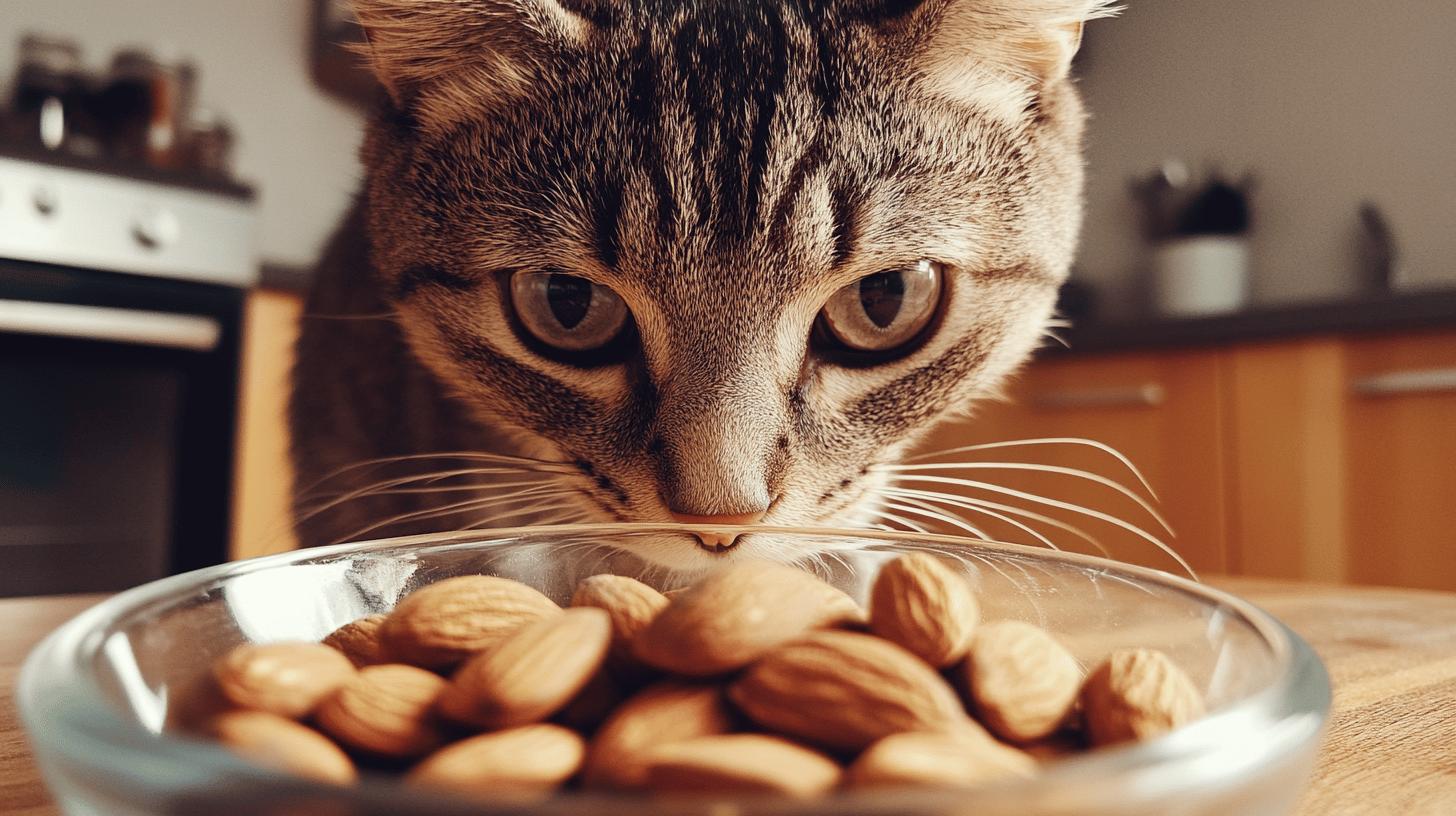
Can cats safely eat almonds? The short answer is no. While almonds aren’t acutely toxic like chocolate, xylitol (found in baked goods), or other dangerous human snacks, they pose serious choking hazards and present nutritional dangers for feline carnivores. Let’s explore the science behind almond toxicity, understand why cats are attracted to nuts, and identify genuine safe treats aligned with feline biology.
Why Almonds Are Dangerous for Cats
Almonds create multiple hazards for cats that go beyond simple toxicology. The danger comes from physical structure, digestive incompatibility, and potential aflatoxin contamination.
The Choking Hazard
Whole almonds are hard, dense, and roughly oval-shaped-perfect choking hazards for cats. A typical almond measures 2-3 cm in length, which fits directly into a cat’s throat diameter. Unlike humans who can chew nuts into smaller pieces, cats often attempt to swallow objects whole or in large chunks.
Choking incidents involving almonds can cause:
- Airway obstruction (inability to breathe)
- Esophageal damage from forced passage
- Gastric puncture if sharp edges lodge in the stomach
- Death (if not treated within minutes)
Aflatoxin Contamination Risk
Aflatoxins are naturally occurring carcinogenic compounds produced by Aspergillus mold. Almonds frequently contaminated with aflatoxins, particularly if stored improperly or sourced from humid regions. Even low levels of aflatoxin cause liver damage in cats, which lack the hepatic detoxification capacity humans possess.
Aflatoxin effects in cats include:
- Acute hepatotoxicity (liver failure) with single exposure
- Chronic liver damage with repeated exposure
- Immunosuppression (increased susceptibility to infections)
- Increased cancer risk (especially hepatocellular carcinoma)
The FDA establishes maximum aflatoxin levels at 20 ppb (parts per billion) for human consumption. Cats metabolize toxins differently-much lower concentrations cause damage. A single almond could contain aflatoxin levels 5-10x higher than considered safe for cats.
Digestive System Incompatibility
Almonds are approximately 50% fat, 20% protein (incomplete), and 20% carbohydrates. Cats lack:
- Salivary amylase: The enzyme that begins breaking down starches. Cat saliva contains 0 amylase; humans produce significant amounts.
- Pancreatic lipase reserves: Cats cannot efficiently digest high-fat foods. The almond’s fat load exceeds safe consumption levels.
- Gut bacteria for cellulose breakdown: Almond fiber passes undigested, potentially causing constipation or blockages.
Result: Almonds trigger pancreatitis (pancreatic inflammation), acute gastroenteritis, and nutritional imbalance in cats.
Almond Forms Compared: Which Are Most Dangerous?
| Almond Form | Hazard Level | Specific Risks |
|---|---|---|
| Whole raw almonds | EXTREME | Maximum choking risk; hard to swallow; aflatoxin present |
| Sliced/slivered almonds | HIGH | Reduced choking risk, but still hard; still contain aflatoxin; sharp edges cause GI damage |
| Blanched almonds (skin removed) | HIGH | Skin removal doesn’t reduce toxins; all other risks remain |
| Roasted almonds | HIGH | Heat doesn’t destroy aflatoxins; slightly reduced choking risk due to softer texture; roasting may increase digestive irritation |
| Salted almonds | EXTREME | All nut hazards PLUS sodium toxicity (salt causes electrolyte imbalance) |
| Honey roasted almonds | EXTREME | Sugar content promotes obesity/diabetes; honey may contain botulism spores (dangerous for cats under 1 year) |
| Almond butter | HIGH | Concentrated fat (often 50%+ oil); choking hazard reduced but aspiration risk increases; aflatoxins still present |
| Almond milk (unsweetened) | LOW-MODERATE | Mostly water; small amount won’t cause acute harm, but offers zero nutrition; sweetened versions contain xylitol (toxic) |
Nuts Ranked by Danger Level for Cats
If your cat has access to nuts, understand which poses the greatest risk:
EXTREME HAZARD (Avoid Completely)
- Macadamia nuts: Cause paralysis, tremors, and hyperthermia. Just 0.7g per kg body weight (one nut for a 10lb cat) is dangerous.
- Black walnuts: Contain juglone toxin; cause muscle weakness, tremors, and neurological damage.
- Pecans: High aflatoxin content; contain tremorgenic mycotoxins.
- Walnuts (any species): Similar toxins to black walnuts.
HIGH HAZARD (Avoid)
- Almonds: Aflatoxin + choking hazard
- Pistachios: High aflatoxin; contain urushiol (allergen);
- Cashews (cooked in shells): Shell contains toxic cashew oil
- Brazil nuts: Extremely high selenium content; causes selenosis (selenium poisoning)
MODERATE HAZARD (Avoid)
- Peanuts: Technically legumes, not nuts; aflatoxin risk; high omega-6 (inflammatory)
- Pine nuts: Low toxicity but high fat; extremely expensive to steal from your pantry
- Hazelnuts: Low toxicity but choking risk; aflatoxin possible
Bottom line: NO nuts are appropriate for cats. Some are marginally less dangerous than others, but all pose hazards humans don’t face.
What If Your Cat Ate Almonds? Emergency Response
Immediate Assessment (First 30 Minutes)
- Determine quantity and form: One almond? A handful? Almond butter?
- Look for immediate choking signs: Gagging, drooling, gasping for breath, difficulty swallowing.
- If choking: Do NOT delay. Go to emergency vet immediately. Airway obstruction can be fatal within minutes.
- If no choking: Monitor closely for 2-4 hours for signs of distress.
Monitoring Period (Next 12-24 Hours)
Watch for these symptoms indicating gastrointestinal damage or aflatoxin reaction:
- Vomiting: May be delayed 2-6 hours post-ingestion
- Abdominal pain: Hunched posture, reluctance to move, crying when touched
- Diarrhea or constipation: Could indicate blockage or GI inflammation
- Lethargy or behavior change: Indicates systemic response
- Refusing food or water: Sign of nausea or pain
- Straining to defecate: Possible intestinal obstruction
When to Seek Veterinary Care
Call immediately if:
- Your cat is actively choking
- You observe any choking signs within 30 minutes
- Vomiting occurs (even one episode)
- Abdominal pain is evident
- Cat hasn’t eaten or drunk water for 6+ hours post-ingestion
- Diarrhea lasts more than 2 hours
Costs escalate quickly: emergency vet visit ($800-$2,500), X-ray or ultrasound (+$300-$800), endoscopy to remove lodged almond ($1,500-$3,000+), and hepatic panel ($200-$400).
At the Vet
Veterinarian will likely:
- Perform abdominal palpation and auscultation (listen for GI sounds)
- Order imaging (X-ray or ultrasound) if blockage suspected
- Run baseline bloodwork if large quantity ingested (assess liver function)
- Induce vomiting if ingestion occurred within 1-2 hours and no blockage suspected
- Administer activated charcoal (binds toxins) if indicated
- Provide supportive care: IV fluids, anti-nausea medication, pain relief
Safe Treat Alternatives: Protein-Based Foods Cats Actually Need
Whole Food Proteins (Best Option)
These align with cat carnivore biology and carry minimal risk:
- Cooked chicken breast (skinless): 31g protein, 0g carbs per 3.5oz. Zero aflatoxin. Perfect.
- Cooked turkey: Similar nutrition; slightly leaner than chicken.
- Cooked salmon (limited): High omega-3s; lower quantity due to high fat. 1-2 small pieces, 1-2x weekly.
- Cooked lean beef: 26g protein per 3.5oz; high iron. Use sparingly (excess iron = organ damage).
- Cooked egg: 6g protein, rich choline (brain health). 1-2x weekly.
- Freeze-dried meat treats: 100% meat, no fillers. Premium but worth it for safety.
Feline-Formulated Commercial Treats
If buying treats, verify:
- Named meat (chicken, turkey, fish) is first ingredient
- No corn, wheat, soy, or fillers
- No artificial flavors or preservatives (BHA, BHT, ethoxyquin)
- Aflatoxin testing certified (look for “tested for aflatoxins” on packaging)
- Calorie content <10% of daily intake
Feeding Guidelines
Treats should represent <10% of daily calories. For a 10lb cat eating 250 calories daily:
- Maximum daily treat calories: 25
- Cooked chicken piece (1oz): ~30 calories → split into 3 servings
- Commercial treat (typically 3-5 cal each): 5 treats maximum daily
Why Cats Are Attracted to Nuts (And How to Redirect)
The Texture Appeal
Nuts’ hardness appeals to cats’ craving to chew and crunch. This mimics the sensation of gnawing on bones or cartilage-behaviors wired into feline brains through evolution. The sound of crunching triggers hunting satisfaction in cats that never hunted.
Redirect with: Crunchy, protein-based treats, crinkly toys, or teeth-cleaning dental chews (formulated for cats, not dogs).
The Aroma Signal
Roasted nuts release volatile compounds cats detect at extremely low concentrations. The smell alone triggers food-seeking behavior, even if your cat has never tasted nuts.
Prevention is simple: store nuts in sealed, elevated containers; never leave nut bowls on accessible surfaces; and make clear to all family members that nuts are human-only food.
Attention-Seeking Behavior
If your cat begs for almonds when you’re eating them, they want your attention, not the food. The novelty and your reaction reward the begging.
Address with:
- Scheduled interactive play sessions (10-15 min, 2-3x daily)
- Puzzle feeders that require problem-solving
- Wand toys during your snack time
- Reward non-begging behavior with treats and affection
Special Populations at Higher Almond Risk
Kittens (Under 6 Months)
Choking risk is extreme for kittens, whose swallowing reflex is immature and esophageal diameter is smaller, meaning one almond could cause fatal obstruction. Strictly forbid almonds for kittens.
Senior Cats (Over 10 Years)
Reduced swallowing strength and slower GI motility put senior cats at dramatically higher risk of choking and blockage, while declining kidney function impairs aflatoxin processing. Avoid almonds completely for cats over 10.
Cats with Pre-Existing Conditions
- Liver disease: Aflatoxins directly damage liver. Forbidden.
- Pancreatitis history: High fat content triggers painful flare-ups. Any nut is risky.
- Kidney disease: Reduced detoxification capacity. Aflatoxins concentrate in bloodstream.
- Diabetes: Almonds have minimal carbs but shouldn’t be introduced.
- Dental disease or missing teeth: Cannot chew almonds safely; choking risk extreme.
- GI sensitivity or IBD: Fiber and fat trigger symptoms. Avoid all nuts.
Frequently Asked Questions
Are almonds toxic to cats?
Not acutely toxic in the way chocolate or xylitol are, but almonds present serious hazards: choking risk, aflatoxin contamination, and digestive incompatibility. “Not toxic” doesn’t mean “safe.” Almonds should be treated as a poison-keep them entirely away.
Can cats eat almond butter?
No, almond butter is not safe. While the butter form reduces choking risk, aflatoxins are still present and concentrated, and the fat content (often 50%+ oil) causes pancreatitis. One teaspoon of almond butter contains the same aflatoxin load as several whole almonds.
What if my cat ate one almond?
A single almond presents low acute risk if no choking occurs. Monitor for 12-24 hours for vomiting, abdominal pain, or lethargy. The aflatoxin dose from one almond is relatively low (unless the specific almond is heavily contaminated). Call your vet if symptoms appear.
Is almond milk safe for cats?
Unsweetened almond milk is mostly water and carries minimal risk in small amounts (1-2 teaspoons). However, it offers zero nutritional value and may cause loose stools due to unfamiliar ingredients. Avoid sweetened varieties (many contain xylitol, a toxic sweetener). Water is always better.
Can cats have almonds roasted vs. raw?
Roasting doesn’t reduce aflatoxin content. Heat may make almonds slightly softer (reducing choking risk marginally) but increases digestive irritation. Raw almonds are marginally safer due to harder texture (less likely cats can consume large quantities) but equally dangerous overall. Avoid both.
Why are almonds bad for cats but safe for humans?
Humans have different gut bacteria that ferment and break down plant compounds almonds contain. Humans also have detoxification pathways cats lack and chew nuts thoroughly rather than swallowing them whole, differences that together justify entirely different risk profiles for the same food.
Which nuts are safest for cats?
There are no safe nuts for cats. All nuts present choking hazards and carry aflatoxin risk, and some species such as macadamia and black walnut are acutely toxic as well. No nut is appropriate for cats.
What should I do if my cat ate almonds yesterday and shows no symptoms?
Aflatoxin’s effects may be delayed 24-48 hours or longer with chronic exposure. If no symptoms appeared within 24 hours, risk of acute blockage or choking has passed. Monitor liver health: watch for jaundice (yellow eyes/ears), loss of appetite, or behavior changes over the next 1-2 weeks. Consider a veterinary check-up and baseline bloodwork if large quantity was ingested.
The Bottom Line
Almonds are not appropriate treats for cats because the combination of choking hazard, aflatoxin risk, and digestive incompatibility makes them genuinely dangerous. Your cat doesn’t need or benefit from almonds, and the potential harm far outweighs any behavioral satisfaction.
Redirect your cat’s desire to crunch toward protein-based alternatives-cooked chicken, freeze-dried meat, or formulated feline treats. These satisfy the sensory need while supporting your cat’s carnivorous biology.
Save the almonds for yourself. Keep your cat safe with meat-based nutrition.
Related Nutritional Guides
- Can Cats Eat Popcorn? Safety Risks Explained
- Can Cats Eat Chicken Safely? Nutrition and Preparation
- How to Get Your Cat to Drink More Water: Hydration Tips
- Signs of a Happy Indoor Cat: Health and Behavior Indicators
Leave a Reply