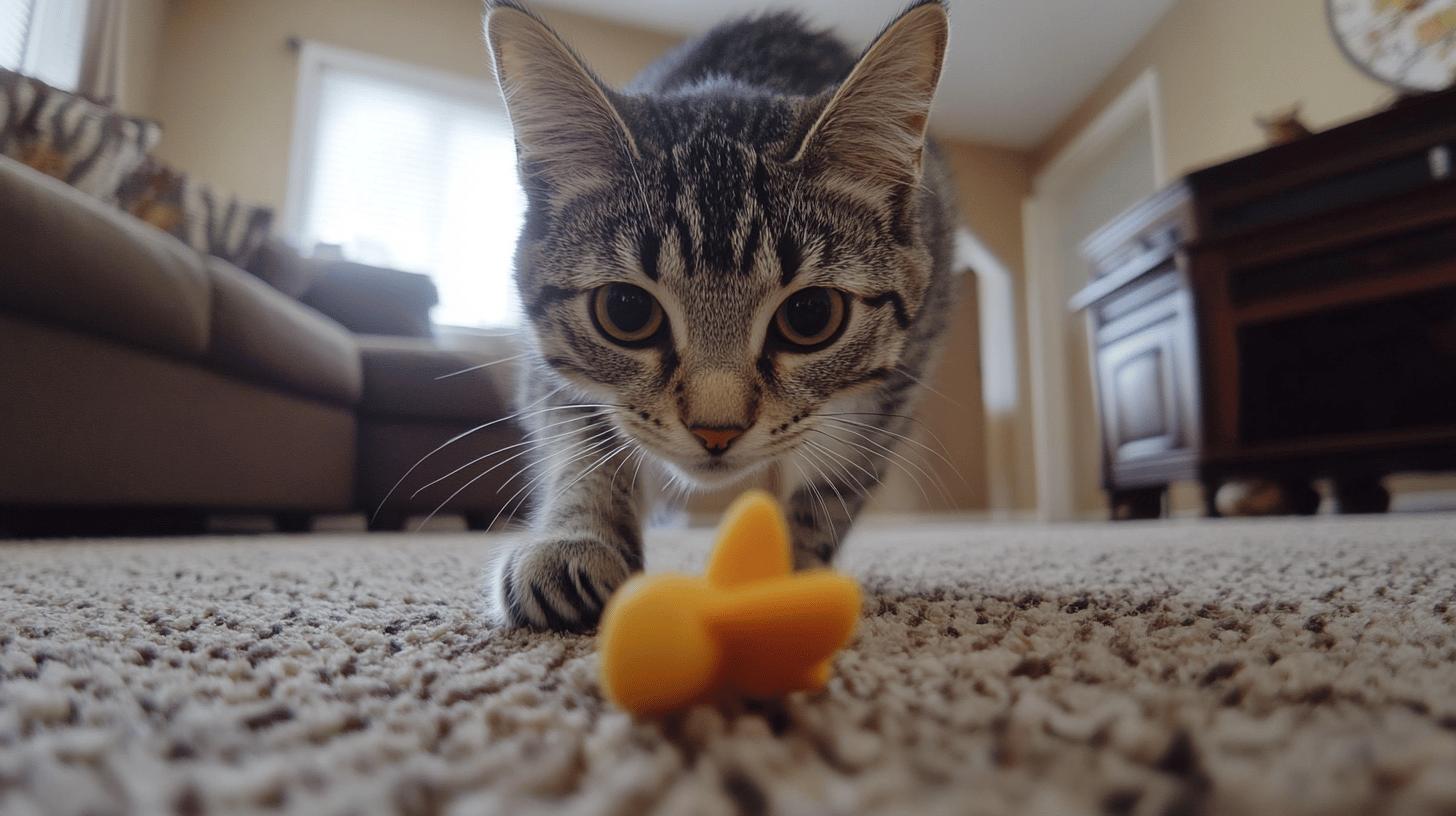
Think your cat has hunting prowess like a lion in the wild? You might be surprised! Training your cat to hunt mice isn't as simple as flipping a switch, but it's possible with a bit of patience and the right approach positive reinforcement.
Cats are natural hunters, yet many have lost touch with this skill and need a gentle nudge to get back on track. By engaging their predatory instincts through play, you can turn your feline into a skilled mouser. Ready for the challenge? Let's bring out your cat's inner hunter and keep mice at bay!
How to Train a Cat to Hunt Mice: Step-by-Step Guide
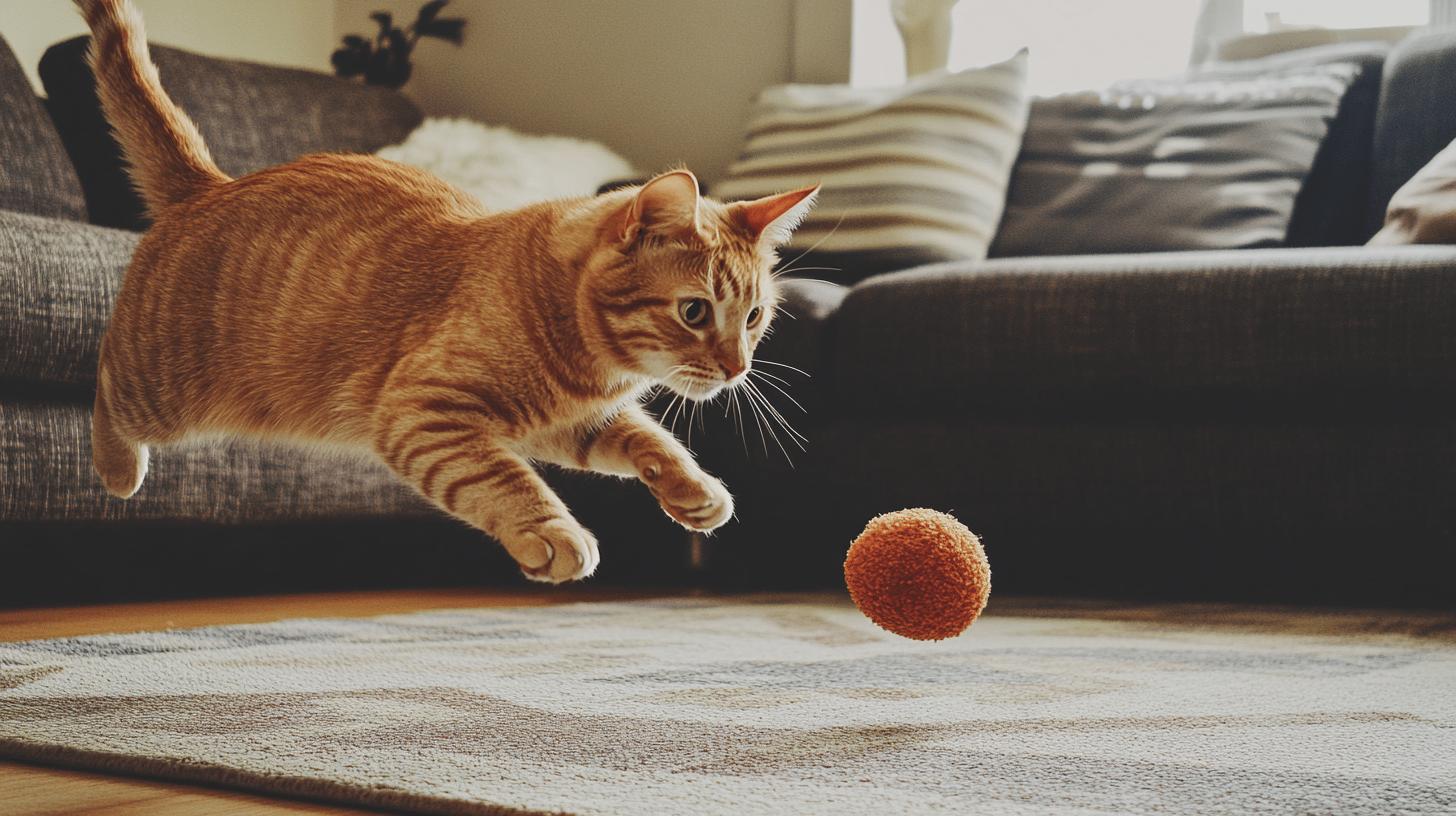
Interactive play and positive reinforcement are key to training a cat to hunt mice effectively. Start by engaging your cat with toys that mimic prey.
These toys will stimulate their natural hunting instincts. Here are some steps to guide you:
- Use Interactive Toys: Choose toys like feather wands or laser pointers to encourage pouncing and chasing.
- Simulate Prey: Drag a toy mouse across the floor and let your cat stalk it. Move it unpredictably to mimic real mouse movements.
- Positive Reinforcement: Reward your cat with treats or affection when they successfully catch the toy.
- Regular Play Sessions: Dedicate time daily for hunting games to keep your cat's skills sharp.
Cats are born with hunting instincts, though some are naturally better mousers than others. Recognizing these instincts early, especially in kittens, matters because young cats are in their prime stage for developing speed and skill.
Encouraging these instincts is crucial:
- Observe Behavior: Notice if your cat shows interest in moving objects or chases small insects.
- Provide Opportunities: Let them explore areas with potential prey under supervision.
- Encourage Natural Behavior: Allow them to express their instincts freely in a safe environment.
Patience is essential because training takes time and not every cat will become a proficient mouser. Accept your cat's natural limits with realistic expectations.
Some cats might never develop a strong prey drive, and that's okay. The goal is to enhance their natural instincts. Remember, a well-fed cat is more motivated to play, not necessarily to hunt out of hunger.
The Role of Mentorship in Cat Training
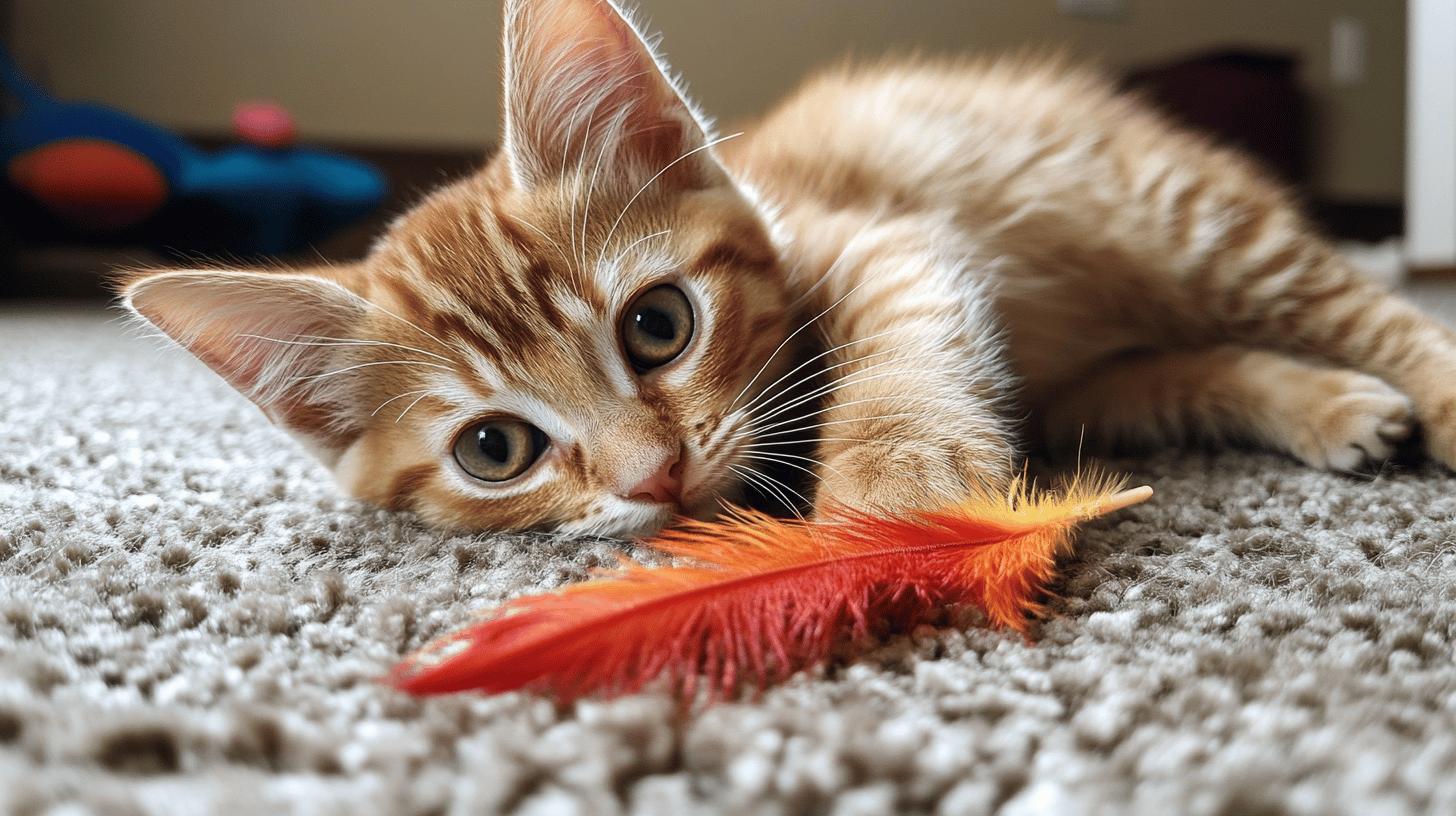
Experienced cats can guide younger ones: a mentor cat demonstrates hunting techniques, and watching a seasoned mouser helps young cats learn through observation.
Female cats often excel at teaching these skills, naturally guiding their kittens through hunting behaviors.
If you have a skilled mouser, let the young cat observe. This mentorship is crucial for developing hunting instincts.
Incorporating mentorship into play enhances skill development and makes training more effective by leveraging natural cat behavior.
Psychological Benefits of Play for Cats
Playing offers far more than physical exercise, providing mental stimulation and stress reduction that result in happier, more balanced cats overall.
Engaged cats are happier and healthier. Interactive play boosts confidence and prevents boredom, which directly contributes to a cat’s overall well-being. Use different toys to keep things fresh and changing play routines to challenge cats mentally.
Novel Training Techniques and Toys
Try new puzzle feeders and novel toys that stimulate problem-solving skills and keep your cat mentally engaged.
Introduce clicker training for positive reinforcement, use scent trails to mimic prey paths, and switch toys regularly to maintain interest and keep playtime varied enough to sharpen your cat’s skills over time.
Safety Precautions and Ethical Considerations
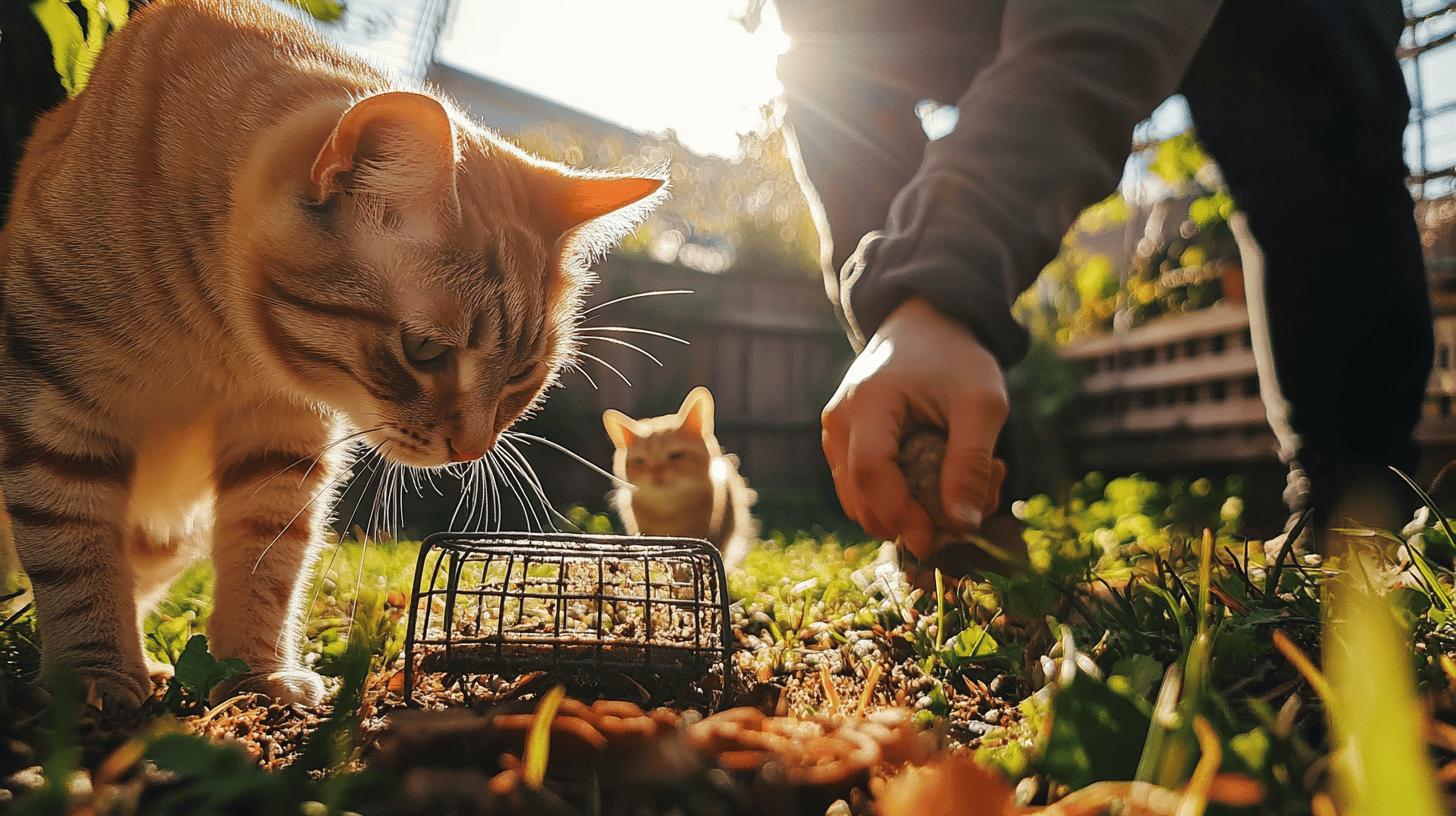
Always prioritize safety when training cats to hunt mice. Remove any rodent poisons or traps from your cat’s environment, as these could cause serious harm. Use safe and humane traps instead. This ensures your pet's safety while maintaining a rodent-free home.
Always consider the ethical dimension of training cats. While cats naturally have hunting instincts, enhancing those instincts should never lead to unnecessary harm to other animals. Focus on training approaches that align with responsible, compassionate pet ownership.
For severe infestations, do not rely solely on your cat. Professional pest control services offer solutions that are both effective and humane. This approach balances your cat's natural abilities with expert help for effective pest management.
Final Words
Training a cat to hunt mice taps into their natural instincts and can be quite rewarding.
Starting with simple training techniques like interactive toys and prey simulation helps in channeling their inherent hunting skills.
Understanding your cat's behavior and utilizing playtime can enhance these natural predatory instincts.
It's crucial to consider safety and ethical practices while training.
While not every cat can become a skilled hunter, nurturing these instincts with patience and positivity can improve their skills.
Remember, the journey is as enjoyable as the outcome.
Natural Hunting Instincts: Channeling Predatory Drive Into Enriching Play
Your cat descends from African wildcats, Felis silvestris lybica, specialized hunters with finely-tuned predatory instincts. Even domesticated cats retain these drives completely intact. Your cat and their wild ancestor share the same hunting instinct. Domestication changed the context, not the drive. Domestication channels predatory behavior toward enrichment and play rather than survival.
Hunting play serves multiple developmental and psychological purposes by exercising both mind and body, maintaining muscle tone and cardiovascular health, and providing mental stimulation and challenge that prevents boredom and behavioral problems. It allows cats to satisfy deep evolutionary drives within safe, controlled environments. Most importantly, it strengthens the bond between cat and owner through cooperative, engaging interaction.
The distinction between ethical enrichment through hunting play and actual hunting matters profoundly. Bringing live prey home causes suffering and contradicts modern cat care standards. Hunting play simulations provide identical behavioral satisfaction, including the stalking, pouncing, and “capture” of prey-simulation toys, while eliminating animal suffering entirely. Your cat’s brain doesn’t distinguish between successfully hunting a feather wand’s “bird” and a real bird. The enrichment value is identical; the ethical cost is zero.
Hunting Toy Simulations and Games: Practical Techniques to Satisfy Predatory Drives
Feather wand toys remain the gold standard for interactive hunting play. The unpredictable movement of feathers mimics real bird behavior, triggering authentic predatory responses. Move the wand with erratic, jerky motions across floors, up walls, under furniture. Let your cat stalk, pounce, and “capture” the toy. Most cats intensely engage with wand toys, eyes dilated, focused entirely on the “prey.”
Electronic prey toys provide independent hunting opportunities. Small motorized mice or robotic creatures move unpredictably, allowing your cat to hunt without your direct participation. Some batteries-powered toys simulate realistic prey movements. Cats often carry these toys as trophy “kills,” replicating bringing actual prey home. This represents normal, healthy predatory behavior redirected appropriately.
Treat-dispensing prey toys combine hunting with feeding motivation. These hollow toys require your cat to manipulate and work the toy to access treats, replicating the complexity of actual prey acquisition. The multi-sensory experience combining hunting movement, tactile manipulation, and food reward provides thorough enrichment.
DIY hunting games extend enrichment beyond purchased toys: hide treats around your house for your cat to discover, or crumple paper balls to throw for your cat to pounce on. Use string toys (supervised only) for interactive chasing. Create cardboard box “hunting grounds” with openings where your cat can hide and ambush. These games tap predatory drives while deepening engagement with you.
Structured Hunting Play Sessions: Duration, Pacing, and Managing Play Energy
Optimal hunting play sessions last 10-15 minutes per session, with most cats engaging in 2-3 sessions daily. This duration provides significant enrichment without causing exhaustion. Build play intensity gradually: start with slow movements, gradually increase speed and unpredictability. This warmup allows your cat’s nervous system to engage progressively.
Pacing matters significantly, and sustained intense play quickly becomes overstimulating for many cats. Vary between high-intensity pouncing and low-intensity stalking, give your cat brief rest periods to recover, and alternate between wand toys and stationary prey toys to sustain engagement. This variable pacing maintains engagement while preventing overstimulation.
Recognize when play has reached saturation. Some cats hunt until they physically collapse in exhaustion; others show subtle fatigue signs. Slowing movement, reduced responsiveness, or sudden disinterest in the toy indicates your cat has reached their limit. End the session gracefully with a few gentle touches or treats to create positive closure.
Important: hunting play can transition into overstimulation, aggression, or redirected aggression toward household members. If your cat becomes frantic, pounces on your hands with unretracted claws, or bites intensely, immediately redirect to toys and provide space for your cat to calm down. These reactions represent normal predatory escalation that requires management, not punishment.
Hunting Play Across Life Stages: Kittens, Adults, and Senior Cats
Kittens learn hunting through play with littermates and mother. Early exposure to interactive hunting play accelerates development of predatory skills and coordination. Start hunting play with kittens at 8-10 weeks of age using gentle wand toys with feathers or string. Kittens show intense prey drive and learn quickly, and early positive experiences with hunting play shape their lifelong enrichment preferences.
Adult cats aged three to eight years show peak hunting drive and physical capability for intensive play, typically engaging most enthusiastically with hunting games. Provide multiple daily sessions to channel energy appropriately and prevent behavioral issues from boredom. Adult cats build impressive athletic skills through consistent hunting play.
Senior cats (10+ years) often show reduced physical intensity but maintained interest in hunting play. Modify play to match aging mobility: slower movements, less jumping required, more horizontal play. Electronic prey toys that move slowly or treat-dispensing toys work well for older cats. Hunting play remains enriching for seniors; it simply requires age-appropriate modification to prevent injury.
Multi-Cat Hunting Dynamics: Managing Competition and Preventing Injury
Household cats with established hierarchy sometimes show competitive hunting behavior. During wand toy play, one cat may dominate while others watch from distance. This reflects normal social hierarchy. Allow each cat individual hunting play time with your exclusive attention to ensure each receives adequate enrichment regardless of social rank.
Some multi-cat households benefit from separate hunting play sessions to prevent competition-driven aggression. If play transitions to real fighting, with intense vocalizations, chasing with intent to injure, and visible scratches, separate the cats and end the session. This requires careful monitoring and environmental management.
Prey toys sometimes trigger possessive behavior. If one cat guards a toy aggressively while others attempt access, provide multiple identical toys or rotate toys among cats. Separate feeding stations and play areas reduce competition stress. Each cat should have personal space for hunting enrichment without territorial conflict.
For further guidance on building structured play routines, see How to Train a Cat Without a Clicker for positive reinforcement techniques that pair naturally with hunting play.
Related: Best Toys to Reduce Play Aggression covers additional enrichment strategies for channeling hunting energy.
FAQ
Q: How can I train my cat to hunt mice without killing them?
A: Use interactive toys to simulate prey. Encourage your cat with positive reinforcement. Supervise their hunts to prevent killing, and reward them for using their stalking and pouncing skills.
Q: How do I train a cat to hunt mice outside?
A: Gradually introduce your cat to the outdoor environment. Use structured play sessions that mimic hunting patterns to build their confidence gradually. Watch for safety hazards and reinforce their instincts with toys like feather wands.
Q: Do you need to train a cat to catch mice, or do they do it naturally?
A: Most cats have natural hunting instincts. Training can enhance these instincts, especially in young cats, making them more effective mousers.
Q: Can you train any cat to be a mouser?
A: Not all cats can be trained to be mousers, as the instinct to hunt must already be present in some form. Early training during kittenhood is generally the most effective approach.
Q: How long does it take for a cat to catch a mouse?
A: The time varies based on the cat's skills and environment. Kittens may take longer, while experienced cats may catch mice quickly, often within a few days of exposure.
Q: Will mice leave if they smell a cat?
A: Mice may avoid areas with cat scents. However, relying solely on this for pest control is not recommended as it may not completely eliminate a mouse problem.
Q: Which gender of cat is better for mousing?
A: Female cats are often noted for being better mousers, possibly due to their role in teaching hunting skills to their young. But, skill levels can vary individually.
Pre-Training Assessment & Natural Ability
Not all cats possess equal hunting drive. Some cats exhibit strong predatory instinct from kittenhood, pouncing on moving objects with natural intensity. Others show minimal hunting interest despite normal genetics. Age matters significantly: kittens begin developing predatory sequences around 4-6 weeks old, kittens 8-16 weeks show peak learning ability for hunting skills. Assessing your cat’s baseline hunting drive determines training feasibility. Observe whether your cat stalks toys, attacks moving strings, or shows interest in insects. Cats exhibiting zero predatory interest throughout kittenhood rarely develop it later, suggesting individual personality differences or neurological variations. Senior cats may lose interest due to reduced vision, hearing, or mobility rather than motivation loss. Female cats sometimes show lower hunting drive than males, though exceptions exist frequently. Cats with gentle, anxious, or highly social personalities might prioritize human interaction over predatory play. Understanding your cat’s natural baseline prevents frustration when expecting impossible behaviors. Training enhances existing instincts but cannot create drive from absence. If your cat shows minimal hunting interest by adulthood, accepting this preference aligns with their personality rather than indicating training failure.
Prey Simulation Progression: Sequencing Training Stages
Effective hunting training follows a logical progression from easiest to most challenging prey simulations. Begin with slow-moving, high-visibility feather wands that require minimal stalking sophistication, then progress to slightly faster movements, building your cat’s reaction speed. Introduce electronic toys that move unpredictably, requiring adaptive hunting strategies. Next, use toys that hide in areas requiring searching (hunting under furniture, behind objects). Introduce toys with scent to engage chemical tracking. Some cats progress to treat-dispensing toys requiring problem-solving combined with hunting behaviors. Finally, introduce cloth prey toys that resist capture, teaching cats to adjust tactics when prey “fights.” Each stage should last until your cat demonstrates confident success before advancing. Rushing progression frustrates cats; some individuals need weeks at each stage. Observe whether your cat is learning (stalking improves, pouncing accuracy increases) versus merely playing. Track which prey simulations generate most engagement; these reveal your cat’s specific interests. Some cats excel at aerial hunting (feather toys) while others prefer ground-level pouncing. Tailoring training to your cat’s preferences increases success and enjoyment. Patience through progression matters more than speed.
Recognizing Overstimulation & Managing Aggression
Intense hunting play can trigger overstimulation, where cats shift from playful pouncing to genuine aggression. Overstimulated cats show dilated pupils, swishing tails, and sudden redirected biting toward your hand or body. This isn’t malice; it’s neurological overflow where predatory excitement exceeds your cat’s impulse control. Recognizing early overstimulation signs (tail thrashing, skin twitching, dilated pupils) allows session ending before escalation. Overstimulated cats benefit from immediate play cessation and environmental calm. Placing them in a quiet space with no stimulation for 10-15 minutes allows the nervous system to recover. Some cats show aggression patterns suggesting prey drive exceeds socialization; these cats require shorter, more frequent play sessions to maintain control. Never use your hands as prey during hunting training; hands are bonding tools, not toys. Using wand toys or toys on strings maintains proper boundaries. If your cat shows predatory stalking toward humans after training, you’ve progressed too intensely; return to gentler play. Multi-cat households sometimes see trained hunting behavior creating dangerous dynamics; aggressive hunting play toward humans becomes concerning. Managing session length, recognizing overstimulation, and redirecting aggression prevents hunting training from undermining your household safety.
Ethical Hunting: Live Prey Alternatives & Boundaries
Traditional mouse-hunting training implies live prey exposure, raising ethical questions many cat owners consider seriously. Live prey hunting teaches natural skills but exposes mice to suffering and introduces disease risk (mice carrying parasites or pathogens can transmit to cats). Some cat owners find live prey hunting ethically problematic. Modern training achieves equivalent enrichment benefits through realistic prey simulation without live animals involved. Electronic prey toys that move realistically and high-quality cloth mouse toys with scent encoding satisfy hunting drive without live prey, and some commercial products specifically designed for predatory enrichment simulate prey behavior convincingly. These alternatives teach strategic thinking, patience, pouncing accuracy, and focused engagement, which are the core hunting skills, without causing any live animal suffering. If you prefer live prey hunting, ensuring humane treatment (humanely raised, quickly humanely euthanized if killed) matters ethically. Many cat owners feel comfortable with live prey hunting when properly managed. Others prefer simulation-based approaches exclusively. Neither approach indicates superior cat care; both respect feline nature while acknowledging your ethical framework. Choose according to your comfort level, recognizing that enrichment benefits exist across approaches.
Leave a Reply