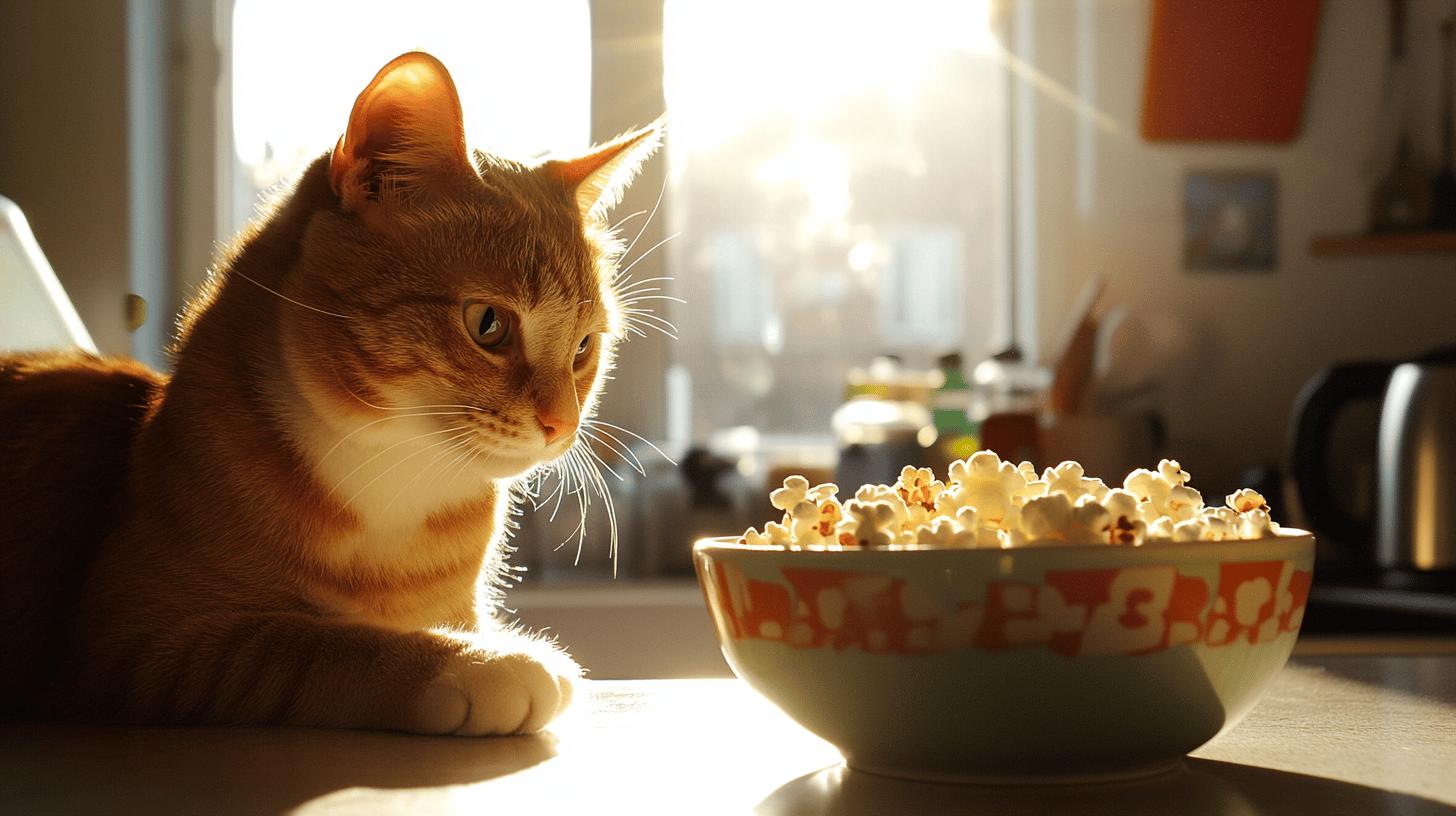
Can cats safely enjoy popcorn, or should you keep the bowl to yourself? While sharing snacks with our feline friends is tempting, understanding what’s safe for cats matters. Popcorn isn’t toxic to cats, but it doesn’t align with their nutritional needs and poses real hazards.
Can Cats Eat Popcorn? The Quick Answer
Plain, air-popped popcorn in tiny amounts won’t poison your cat. However, “not poisonous” doesn’t mean “safe” or “beneficial.” Most popcorn presents choking hazards, digestive challenges, and zero nutritional value for obligate carnivores. If your cat snatches a single plain kernel, don’t panic. But making popcorn a regular treat is a mistake.
Why Cats Want Popcorn (Sensory & Behavioral Science)
Your cat’s obsession with popcorn isn’t about the flavor-it’s about the experience. Here’s what’s happening:
The Texture Trigger
Popcorn’s crunch mimics the sensation of crunching on bone or prey. This triggers your cat’s hunting instinct and predatory behavior patterns. The light, airy structure makes it seem like prey to pounce on, which is why indoor cats that never hunt still find it irresistible.
The Aromatic Signal
Freshly popped popcorn releases volatile organic compounds that cats can detect at parts-per-trillion levels. To a cat’s nose, these aromatic signals broadcast “food” far more loudly than human senses interpret. Buttered or salted varieties amplify this signal exponentially.
Behavioral Curiosity
Cats notice when popcorn appears: sudden movement, owner excitement, the novelty factor. Your cat associates popcorn with your attention, even if the food itself isn’t rewarding; the interaction is what they’re really after. This is pure behavioral conditioning: your cat wants to engage with you.
Popcorn & Cat Nutrition: Why It Fails
Cats are obligate carnivores-they evolved to metabolize meat, not plants. Their digestive systems lack enzymes to efficiently break down carbohydrates and fiber. Here’s what makes popcorn particularly problematic:
High Carbohydrate Load
Popcorn is ~65% carbohydrates. A cat’s digestive system has no nutritional requirement for carbs. Excess carbs ferment in the gut, producing gas and digestive upset. Cats fed high-carb diets show increased risk of obesity and diabetes-conditions that shorten lifespans and reduce quality of life.
Fiber Overload
While humans benefit from dietary fiber, cats need minimal fiber (typically 1-5% of diet). Popcorn’s fiber content can cause constipation or diarrhea depending on the cat’s gut flora and hydration status. Cats fed dry kibble already receive excessive plant-based fiber; added popcorn worsens this imbalance.
Lack of Complete Protein
Popcorn contains protein (~3.5g per cup), but it’s incomplete-missing essential amino acids cats require. More critically, it lacks taurine, an amino acid cats cannot synthesize. Taurine deficiency causes blindness and heart disease. No amount of popcorn can replace meat-based nutrition.
Real Risks: What Happens When Cats Eat Popcorn
Choking & Foreign Body Obstruction
Popcorn’s lightness is deceptive. Individual kernels lodge in the throat, and the expanded kernel structure doesn’t break down easily. Smaller cats (under 5 lbs) and senior cats with reduced swallowing reflexes face highest risk. Symptoms of choking include:
- Sudden drooling or gagging
- Difficulty swallowing
- Inability to eat or drink
- Labored breathing
Choking requires immediate veterinary intervention. Don’t wait; get your cat to emergency care.
Digestive Upset & Intestinal Issues
When popcorn reaches the stomach, it expands further with gastric juices. This can cause:
- Acute gastroenteritis (vomiting, diarrhea)
- Constipation (in some cats, fiber binds stool)
- Abdominal pain and bloating
- Reduced appetite for 12-48 hours post-consumption
Salted Popcorn: Sodium Toxicity
Salted popcorn is genuinely dangerous. A single handful of salted popcorn can contain 200mg+ of sodium. Cats require only ~40mg daily. Excess sodium disrupts electrolyte balance and can cause hypernatremia (elevated blood sodium), leading to:
- Excessive thirst and urination
- Tremors or seizures
- Disorientation
- In severe cases: coma or death
Buttered Popcorn: Fat & Digestive Stress
Butter and oil coatings are 100% fat. Cats cannot efficiently metabolize high fat loads, leading to:
- Pancreatitis (inflammation of pancreas-extremely painful)
- Fatty diarrhea
- Nausea and vomiting
- Weight gain and obesity
Flavored & Processed Popcorn: Avoid Completely
| Popcorn Type | Hazard Level | Why It’s Risky |
|---|---|---|
| Plain, air-popped | Low (but not recommended) | Only risk is choking; no nutritional benefit |
| Salted | HIGH | Sodium toxicity; electrolyte imbalance |
| Buttered | HIGH | Pancreatitis risk; fat-induced GI distress |
| Caramel-coated | EXTREME | Sugar + choking hazard; can cause obesity/diabetes |
| Cheese-flavored | HIGH | Artificial flavors + high fat + lactose intolerance |
| Store-bought (any flavor) | EXTREME | Added preservatives, MSG, xylitol (toxic) |
Emergency Response: What to Do If Your Cat Ate Popcorn
If You Saw Your Cat Eat Popcorn
- Stay calm. Panic doesn’t help; clear thinking does.
- Assess amount: One kernel? Handful? Full bowl?
- Identify type: Plain? Salted? Buttered?
- Monitor for 4-6 hours: Watch for choking signs, vomiting, lethargy, or behavior changes.
- If plain popcorn, small amount: Observe only. Most cases resolve without intervention.
- If salted/buttered or large amount: Call your vet immediately. Don’t wait for symptoms.
Symptoms Requiring Immediate Veterinary Care
- Visible choking (gagging, unable to swallow)
- Vomiting or repeated retching
- Abdominal distension or pain (hunched posture, crying when touched)
- Tremors, seizures, or disorientation (possible sodium toxicity)
- Complete loss of appetite for >12 hours
- Straining or inability to defecate
Cost note: Emergency vet visits run $500-$3,000+. Prevention (keeping popcorn away) costs $0.
Safe Treat Alternatives: What Cats Actually Need
Instead of popcorn, choose treats that align with your cat’s biology:
Protein-Rich Real Foods
- Cooked chicken (skinless): 31g protein per 3.5oz. Plain boiled or baked. This is the gold standard.
- Cooked turkey: Similar nutrition to chicken; slightly leaner.
- Cooked salmon: High-quality omega-3s; limited portion due to fat content.
- Cooked beef: High protein; use sparingly due to iron content.
- Freeze-dried meat treats: 100% meat, no fillers. Mimic natural prey texture.
Feline-Formulated Treats
Commercial cat treats are engineered for cats’ nutritional requirements. Look for:
- Named meat as first ingredient (not “meat by-products”)
- No corn, wheat, or soy
- No artificial flavors or preservatives
- Calorie content <10% of daily intake (prevents obesity)
Safe Whole Foods (Limited Quantities)
- Cooked egg: 6g protein per egg. Rich in choline for brain health.
- Plain cooked pumpkin: 1 teaspoon, max 1-2x weekly. Aids digestion.
- Small piece of watermelon: Hydrating; remove seeds entirely.
- Cooked green beans: Low-calorie, high-fiber; use sparingly.
Feeding Guidelines
Treats should comprise <10% of daily calories. For a typical 10lb cat eating 250 calories daily, treats should not exceed 25 calories. A 3oz piece of cooked chicken (~35 calories) should be split across 2-3 servings.
Why Your Cat Craves Popcorn (And What to Do About It)
Understanding the “why” helps you redirect the behavior:
The Hunt-Play Connection
Your cat doesn’t want popcorn for nutrition. They want the experience of hunting something crunchy. Replace popcorn with interactive toys that provide the same sensory satisfaction:
- Wand toys with feathers or string (mimics prey movement)
- Crinkly toys (provides sound and texture)
- Puzzle feeders (combines hunting with feeding)
- Ball toys with bells inside (movement + sound)
Attention-Seeking Behavior
If your cat gravitates toward popcorn when you’re eating it, they want your attention, not the food. Try:
- Schedule dedicated play sessions (10-15 min, 2-3x daily)
- Provide enrichment toys when you’re eating human food
- Reward non-begging behavior with treats or affection
Preventing Sneaky Snacking
- Store popcorn in sealed, elevated containers
- Never leave bowls unattended during movie night
- Educate family members: “No popcorn for the cat” is a house rule
- Redirect immediately when your cat shows interest
Special Considerations: Age, Health, and Popcorn Risk
Kittens (Under 1 Year)
Kittens face extreme choking risk due to smaller throat diameter and immature swallowing reflexes. Strictly avoid popcorn in kittens.
Senior Cats (Over 10 Years)
Aging reduces swallowing power and GI motility, putting senior cats at greater risk of choking and constipation; avoid popcorn entirely for cats over 10.
Cats with Pre-Existing Conditions
- Diabetes: Popcorn’s carbs spike blood sugar. Forbidden.
- Pancreatitis history: High fat (buttered) triggers flare-ups. Plain popcorn still risky.
- Kidney disease: Sodium in salted popcorn stresses kidneys. Avoid completely.
- Dental disease: Hard kernels cause pain and potential tooth fractures.
- GI sensitivity: Fiber and carbs worsen symptoms. Skip entirely.
Frequently Asked Questions
Can cats eat popcorn with salt?
No. Salted popcorn is unsafe because salt toxicity can cause tremors, seizures, or death. Cats require only ~40mg sodium daily, yet salted popcorn contains 10-20x that amount.
Can popcorn kill cats?
While rare, yes: a large amount of salted popcorn could cause fatal sodium toxicity, and more commonly, popcorn causes severe choking or pancreatitis requiring emergency surgery. Prevention is always preferable to emergency intervention.
Can cats eat popcorn kernels?
Unpopped kernels are actually more dangerous than popped kernels. Hard kernels can crack teeth, lodge in the throat, or cause intestinal blockages. Never give unpopped kernels.
Why does my cat want popcorn so badly?
The crunch appeals to your cat’s predatory instinct, and the aroma triggers food-seeking behavior. But wanting something doesn’t make it safe. Keep popcorn away.
Can cats have one piece of popcorn?
A single plain kernel poses minimal risk but offers zero benefit. One kernel is all it takes to trigger choking in some cats. Why take the risk?
What’s a safe popcorn alternative for cats?
Cooked chicken, freeze-dried meat treats, or interactive puzzle toys provide the sensory satisfaction without health risks. These align with your cat’s carnivorous biology.
How much popcorn can a cat safely eat?
None. While a single kernel of plain popcorn won’t poison your cat, the safest amount is zero. No veterinarian recommends popcorn as a treat.
Is airpopped popcorn safer than microwave popcorn?
Slightly: air-popped avoids added butter and chemicals, but both types pose choking hazards and provide zero nutrition. Plain air-popped is marginally less risky but still not recommended.
Hidden microwave hazard: Even plain microwave popcorn bags contain a significant secondary risk: the lining is coated with PFAS (per- and polyfluoroalkyl substances) and Teflon-based chemicals used to prevent butter from seeping through. When microwaved, these compounds can volatilize into the air and onto the popcorn itself. Cats inhaling these fumes or ingesting residue face potential respiratory and metabolic stress. This applies even to “all-natural” or “unflavored” microwave varieties. The bag lining is the hazard, not the popcorn flavor.
The Bottom Line
Popcorn isn’t toxic, but it’s not safe or appropriate for cats. Your cat’s interest in popcorn stems from hunting instinct and sensory curiosity, not nutritional need. The choking risks, digestive complications, and sodium hazards aren’t worth the momentary entertainment.
Instead, redirect that popcorn-seeking energy toward appropriate play, protein-based treats, and interactive enrichment. Your cat will be healthier, happier, and live longer on a diet aligned with their carnivorous nature.
Save the popcorn for yourself. Keep your cat safe with meat-based treats.
Leave a Reply