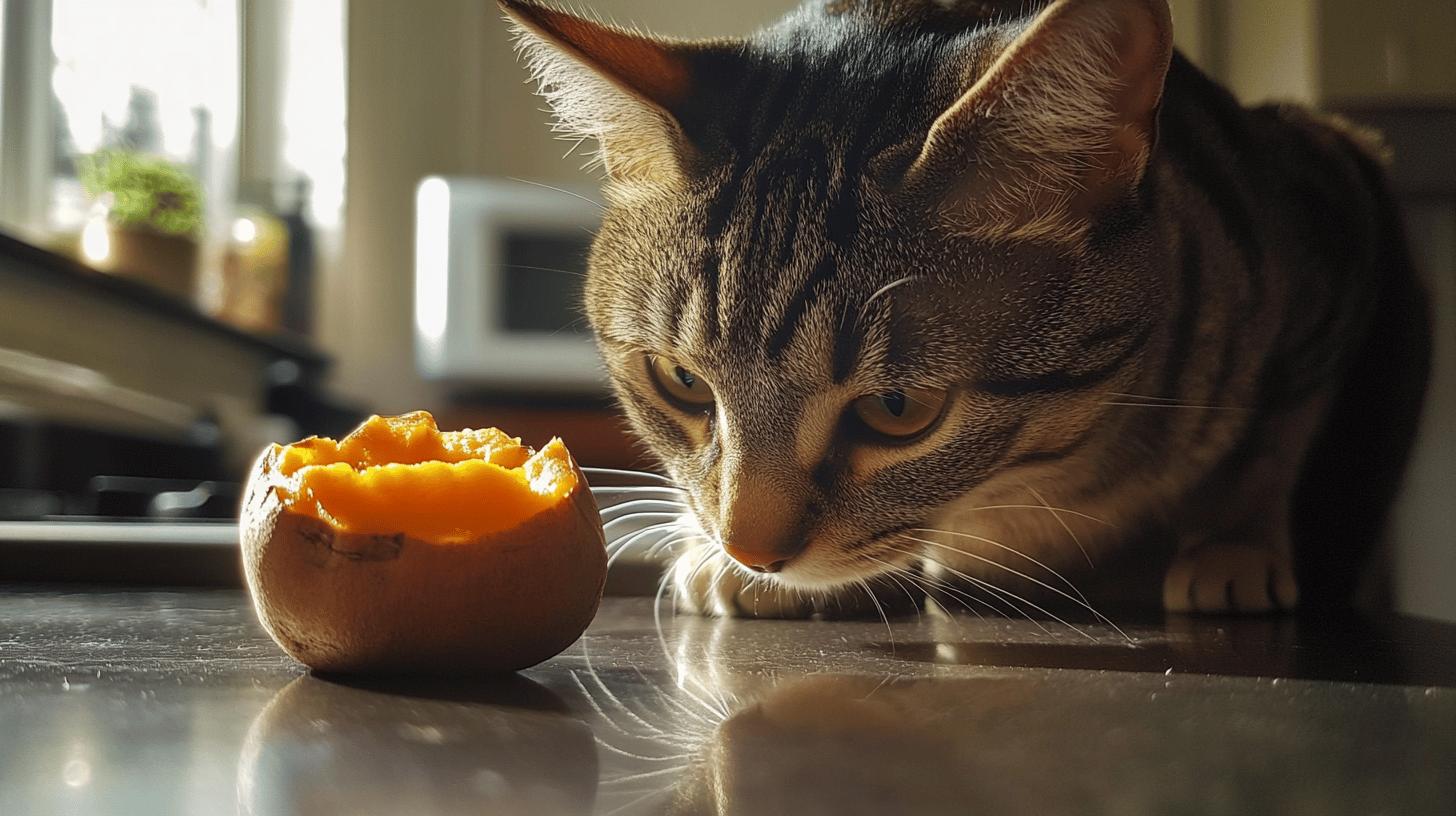
Can a cat enjoy sweet potato as an occasional treat? Yes, but with important caveats. While sweet potatoes are non-toxic to cats, they’re high in carbohydrates and should never replace the meat-based diet cats require to thrive. In this guide, you’ll learn how to safely prepare sweet potatoes for cats, when they actually help (particularly for digestive issues), how they compare to pumpkin, and what risks to watch for.
Can Cats Eat Sweet Potatoes Safely?
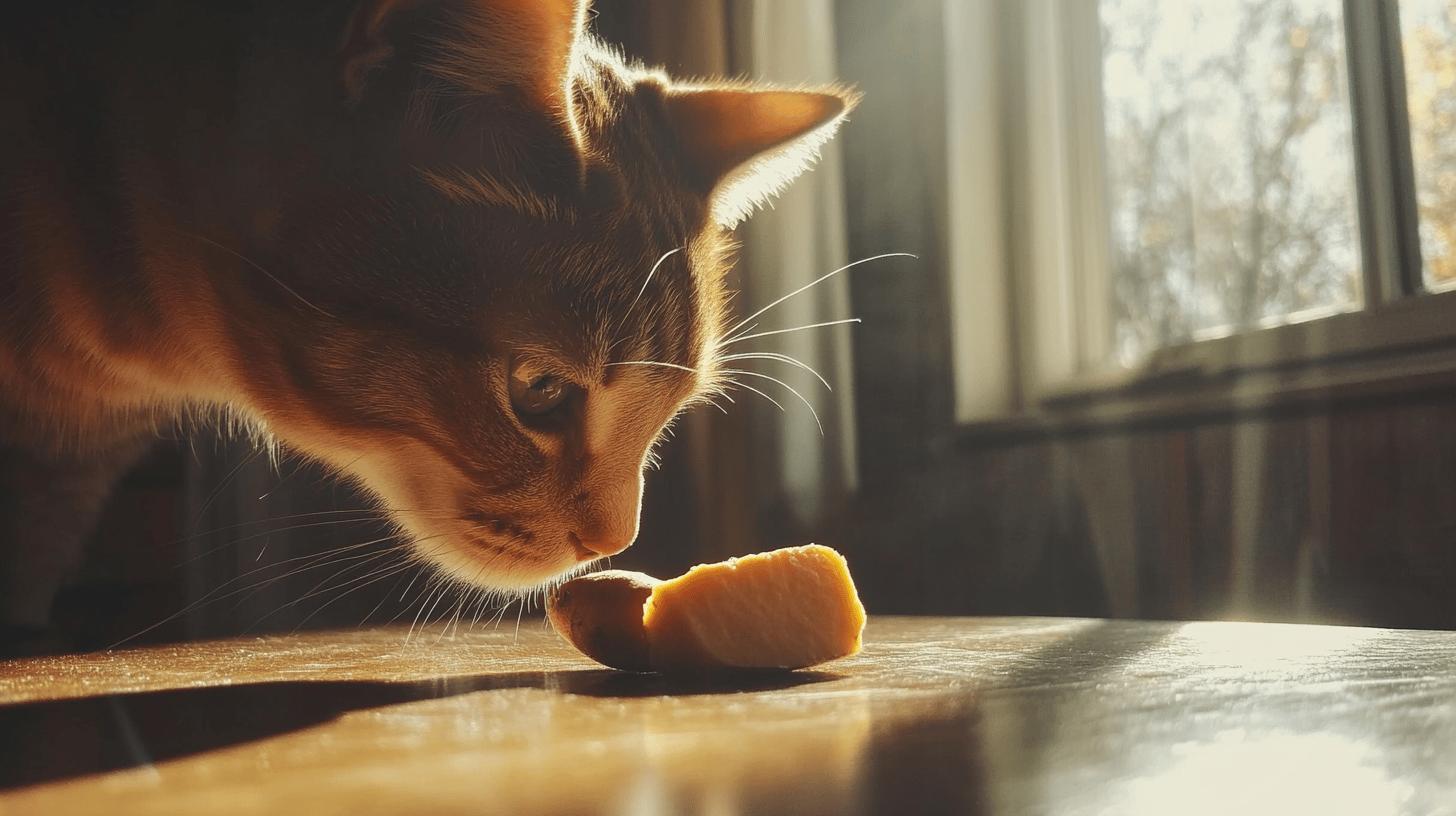
Cats can eat cooked sweet potatoes in small amounts. Sweet potatoes aren’t toxic to cats like onions or garlic, but they shouldn’t make up a significant part of their diet. Cats are obligate carnivores, meaning they require primarily meat-based protein to maintain muscle, immune function, and overall health.
The key requirement: sweet potatoes must be cooked. Boiling or baking softens the tuber and makes it digestible. Never add butter, sugar, spices, or seasonings. these can upset a cat’s stomach or be outright toxic (garlic and onion powders, for example).
Nutritionally, cooked sweet potatoes do offer some benefits. They contain vitamin A (supports vision and immune health), vitamin C (promotes skin health), potassium (helps muscle function and fluid balance), and manganese (supports bone health). However, these nutrients aren’t essential for cats. they derive what they need from properly formulated cat food.
The real value of sweet potato for cats lies in one specific area: fiber for digestive support. More on that below.
Raw Sweet Potato: Why Cooking Matters
Raw sweet potatoes are problematic for cats for three reasons:
1. Oxalate Content: Raw sweet potatoes contain oxalates, compounds that can interfere with calcium absorption. While one small piece of raw sweet potato won’t cause harm, regular feeding creates a mineral imbalance.
2. Digestibility: Raw sweet potatoes are starch-dense and difficult for cats to break down. Cats lack sufficient amylase (an enzyme for breaking down starches) in their saliva, making digestion harder and potentially causing stomach upset, diarrhea, or vomiting.
3. Choking Hazard: The firm texture of raw sweet potato can pose a choking risk, especially if a cat tries to swallow a piece whole.
Cooking breaks down the cell walls of the sweet potato, reducing oxalate availability, gelatinizing the starch to make it digestible, and softening the texture. This is non-negotiable: if you’re offering sweet potato to your cat, it must be cooked.
Note: Unlike regular white potatoes, sweet potatoes do NOT contain solanine (the toxic compound found in raw/green regular potatoes). This distinction is important when discussing potato safety for cats. sweet potato is safer, though still high in carbs.
How to Prepare Sweet Potato for Cats
Safe Preparation Method:
- Select a fresh sweet potato with no soft spots or mold.
- Wash thoroughly under running water to remove dirt and pesticides.
- Peel the skin (the skin is harder to digest and should be removed).
- Cut into small cubes (~1/4 inch) to prevent choking.
- Boil or bake until soft (typically 10-15 minutes boiling, or 20-30 minutes baking at 400°F).
- Cool completely before serving. never offer warm or hot food to cats.
- Serve plain. no butter, salt, sugar, cinnamon, nutmeg, or marshmallow topping (these are common human preparations but harmful to cats).
Portion Sizes and Frequency:
One teaspoon to one tablespoon per serving is appropriate for most cats. Serve no more than once or twice per week. For a 10-pound cat, this represents roughly 1-2% of daily calorie intake, well within the “treat” category.
Watch for Signs of Digestive Upset: When first introducing sweet potato, monitor your cat for vomiting, diarrhea, constipation, or lack of appetite. Cats with sensitive digestive systems may struggle even with cooked sweet potato. If any issues arise, discontinue and consult your vet.
Sweet Potato vs. Pumpkin for Cats
The pumpkin-for-cat-digestion trend is well-established, and for good reason. Pumpkin is the more recommended fiber source for cats with constipation or mild digestive issues. Here’s how they compare:
Pumpkin: Lower carbohydrate density (~12% carbs), higher water content, milder flavor that most cats tolerate, standardized preparation (canned pumpkin is widely available), and a proven track record with vets recommending it for constipation relief.
Sweet Potato: Higher carbohydrate density (~20% carbs), requires more preparation (peeling, cooking, cooling), and while it contains fiber, it’s not the first choice for digestive support because the higher carb content can upset some cats’ metabolisms.
Practical Guidance: If your cat has constipation, pumpkin is the better choice. it’s easier to source, standardize, and cats often tolerate it better. Sweet potato can work as a supplementary fiber source if pumpkin isn’t available or if your cat has shown good tolerance. Never use both simultaneously without veterinary guidance.
Health Benefits: When Sweet Potato Actually Helps
Constipation and Digestive Regularity: The fiber in cooked sweet potato (approximately 3g per 100g) can help cats with mild constipation or irregular bowel movements. If your cat struggles with occasional constipation, a small amount of sweet potato (served plain, cooked) may help. However, pumpkin is the standard recommendation first.
What Sweet Potato Does NOT Help With: Diarrhea, inflammatory bowel disease (IBD), food allergies, or other chronic digestive conditions. The high carbohydrate content can actually worsen these conditions. Do not feed sweet potato to cats with ongoing digestive issues without veterinary approval.
Vitamins A, C, and Minerals: While sweet potato does contain these nutrients, cats synthesize vitamin C and obtain vitamin A from meat-based cat food. There’s no nutritional deficiency that sweet potato uniquely solves for an indoor cat on a quality commercial diet.
Training Treats: Because sweet potato is soft, cooks easily, and has a mild flavor, small cooked pieces can work as low-calorie training treats. If you’re using sweet potato this way, count it toward the weekly treat allowance.
Final Words
Sweet potatoes are safe for cats when properly prepared. cooked, plain, and served in moderation as an occasional treat. The key is understanding that cats are obligate carnivores and don’t need the carbohydrates sweet potatoes provide. Their nutritional needs are met by high-quality meat-based cat food.
Use sweet potato strategically: for fiber support in constipation (though pumpkin is preferred), as a low-calorie training treat, or simply as dietary variety if your cat enjoys it. Never let sweet potato exceed 5-10% of daily calorie intake, and watch closely for digestive upset when first introducing it.
If your cat has chronic health issues (constipation, IBD, kidney disease, obesity), consult your vet before introducing any new foods. even vegetables.
FAQ
Can cats eat sweet potatoes safely?
Yes, when cooked plain and served in moderation. Raw sweet potatoes should be avoided due to oxalate content and choking risk.
Can cats eat sweet potatoes every day?
No. Sweet potatoes should be an occasional treat only. once or twice per week maximum, and should comprise no more than 5-10% of daily food intake.
Can cats eat sweet potato skin or raw sweet potatoes?
No. The skin is difficult to digest. Raw sweet potatoes contain oxalates, are harder to digest, and pose a choking hazard.
How do you cook sweet potatoes for cats?
Boil or bake (without skin) until soft, then cool completely. Serve plain. no butter, sugar, salt, or spices.
Is sweet potato good for cats with diarrhea or constipation?
Sweet potato can help with constipation due to fiber content, but it’s not the first choice. pumpkin is better tolerated. Sweet potato may worsen diarrhea in some cats; do not use for diarrhea without vet approval.
Is sweet potato or pumpkin better for cats?
Pumpkin is the standard recommendation for digestive support. It’s lower in carbs, easier to prepare, and cats tolerate it better. Use sweet potato as an alternative only if pumpkin doesn’t work for your cat.
How much sweet potato can I give my cat?
One teaspoon to one tablespoon per serving, no more than once or twice per week.
Can a cat eat potato?
Cooked regular potatoes are safe in moderation, but sweet potatoes are preferable due to lack of solanine. Both should be plain and occasional only.
What happens if my cat eats sweet potato?
If accidentally ingested: cooked plain sweet potato causes no toxicity. Monitor for digestive upset (vomiting, diarrhea). If your cat ate sweetened preparation (cinnamon, sugar, marshmallow), contact your vet.
Related Articles
- Can Cats Eat Chicken Safely . safe protein alternatives
- Can Cat Eat Biscuit . carbohydrate foods and risks
- Can Cat Eat Pasta . carbohydrate foods comparison
- How to Train a Cat Without a Clicker . using sweet potato as training treats
- Can Cat Eat Yam Safely and Benefits Explained
- Can Cat Eat Potato Safety and Dietary Insights for Pet Owners
- Can Cat Eat Asparagus Safely and Its Nutritional Benefits
- Can Cat Eat Green Beans Safely and Nutritionally
When Sweet Potato Might Help Your Cat
While sweet potatoes offer minimal nutritional benefit for most cats, they can occasionally serve a specific purpose: supporting digestive health. Some cats with mild constipation may benefit from the fiber in small quantities of cooked sweet potato, similar to how pumpkin is used. However, this should be discussed with your veterinarian first, and any supplement should represent less than 5% of daily caloric intake. Many vets recommend pumpkin over sweet potato due to its lower sugar content and better track record in feline digestive support.
Leave a Reply