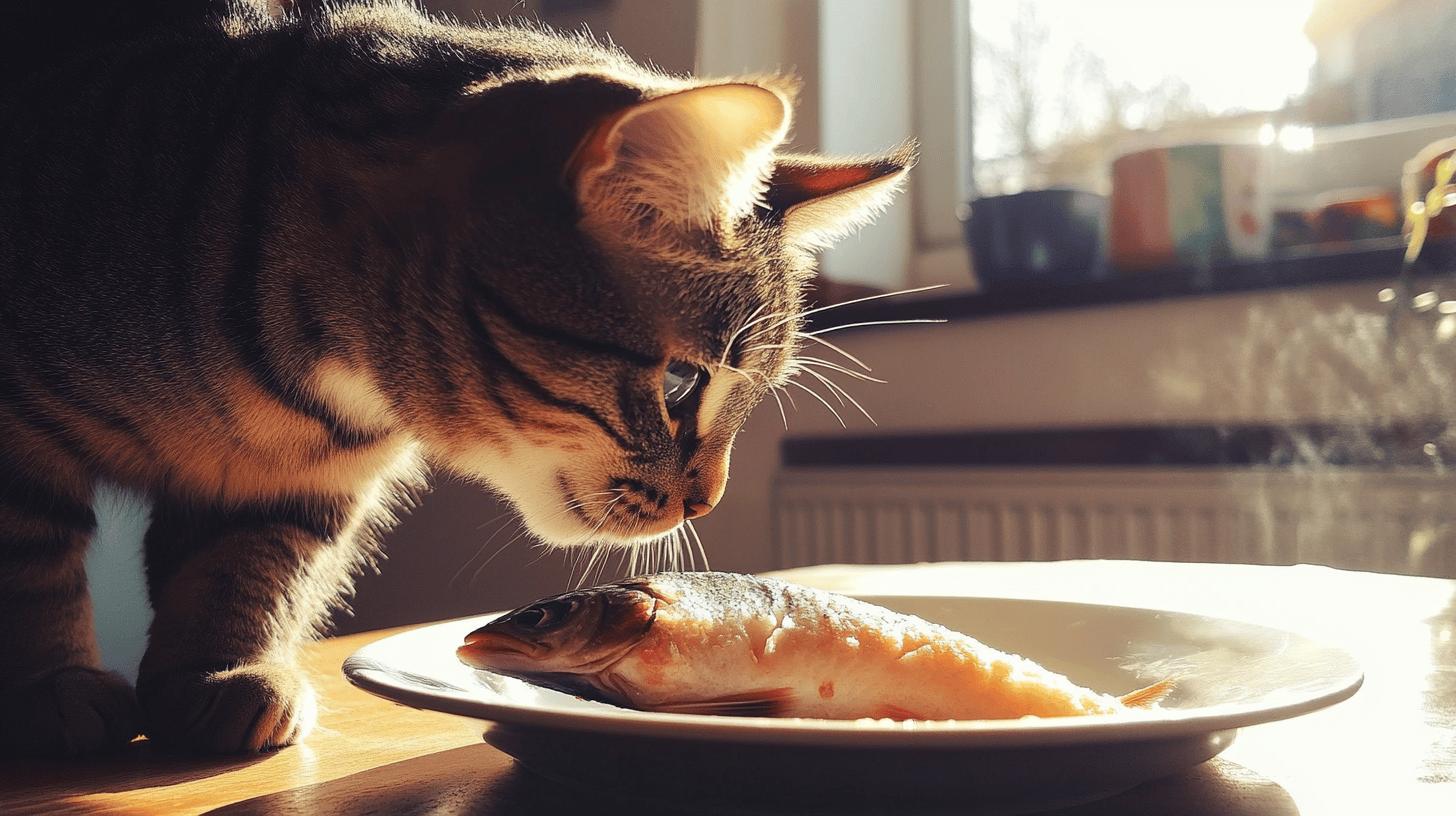
Can cats eat cooked fish safely? Yes. with important caveats. While cooked fish is non-toxic and provides high-quality protein, certain species carry mercury and other risks, and frequency matters more than most cat owners realize. This guide covers which fish are safest, which to avoid, why “in moderation” needs specific limits, the hidden hazards of fried fish, and how to balance fresh fish with commercial cat food.
Can Cats Safely Eat Cooked Fish?
Cooked fish is safe for cats in appropriate amounts. Fish provides high-quality protein and omega-3 fatty acids, both beneficial. However, fish should never be the primary protein source in a cat’s diet for two reasons: (1) many fish contain thiaminase, an enzyme that breaks down vitamin B1, and (2) some fish accumulate mercury at levels unsafe for regular feline consumption.
Raw fish poses additional risks: parasites (notably Salmon Poisoning Disease from raw salmon), bacterial contamination, and thiaminase is more active in raw fish. Always cook fish for cats.
The key principle: cooked fish as an occasional supplement (2-3 times per week maximum) is fine. Daily fish feeding or large quantities create cumulative toxicity risks, particularly from mercury.
Fish Species Guide: Safe, Risky, and Avoid
SAFEST CHOICES (Low Mercury, Minimal Thiaminase):
Sardines (Canned or Fresh Cooked): Excellent choice. Small fish accumulate less mercury than large predators. High omega-3 content. Thiaminase present but manageable with regular B1 intake from other sources. Cats typically enjoy sardines. Limit to 1-2 small sardines once weekly. Drain canned sardines in water (not oil or salt brine) before serving.
Tilapia (Farm-Raised, Cooked): Safe, mild flavor. Low mercury accumulation. Farm-raised tilapia is generally free of parasites. Thiaminase present but lower than in tuna or salmon. Plain cooked tilapia is fine 1-2 times weekly. 1-2 tablespoons per serving.
Cooked Salmon (Properly Cooked Only): High protein, rich in omega-3s. Raw salmon carries Salmon Poisoning Disease risk (Neorickettsia helminthoeca parasite). cooking eliminates this. Thiaminase present and moderately high. this is why salmon shouldn’t be daily. Cooked salmon 1-2 times weekly is fine. 1 tablespoon per serving.
Cooked White Fish (Cod, Pollock, Haddock): Low mercury, mild thiaminase levels. Boring to humans but safe for cats. Plain cooked white fish is appropriate 1-2 times weekly. 1-2 tablespoons per serving.
OCCASIONAL ONLY (Moderate Mercury or Thiaminase):
Cooked Tuna (Once Weekly Maximum): High protein, cats love it. Thiaminase content is high. More critically: tuna accumulates mercury. Regular tuna consumption (more than once weekly) can build up mercury in a cat’s body over time, causing neurological problems and organ damage. Limit to 1-2 tablespoons once per week maximum. Never offer tuna daily.
Mackerel (Once Weekly Maximum): High omega-3s but strong smell. Thiaminase is moderate-high. Mercury content is elevated. Appropriate once weekly only. 1 tablespoon serving.
AVOID ENTIRELY:
Raw Salmon: Salmon Poisoning Disease risk (parasitic infection). Symptoms appear 5-7 days after ingestion: fever, vomiting, diarrhea, lethargy, lymph node swelling. Fatal if untreated. Never serve raw.
Raw Pacific Cod and Steelhead: Similar parasite risks as raw salmon. Avoid raw.
High-Mercury Fish (Swordfish, King Mackerel, Shark, Albacore Tuna): These large predatory fish accumulate mercury to levels toxic for cats with regular exposure. One serving won’t cause harm, but these should never be intentional cat foods. Avoid entirely.
Fish Meal and Fish By-Products (in some commercial foods): Some low-quality cat foods use fish meal or fish by-products where mercury may be concentrated. Check ingredient lists. whole fish is better than fish by-products.
How Much Fish Is Too Much?
Fish should comprise no more than 5-10% of weekly calorie intake for cats. For a typical 10-pound cat eating ~200 calories daily:
- Safe guideline: 1-2 tablespoons of cooked fish, 2-3 times per week
- Tuna maximum: 1-2 tablespoons, once per week (mercury accumulation risk)
- Salmon maximum: 1 tablespoon, 1-2 times weekly (thiaminase risk)
- Sardines: 1-2 small sardines, once weekly (safest option by these metrics)
Never feed fish as the primary dinner protein daily. Fish is supplementary. your cat needs a complete and balanced commercial diet or a veterinary nutritionist-formulated diet as the foundation.
Fried Fish: The Hidden Hazards
Oil and Pancreatitis Risk: Fried fish is cooked in oil, dramatically increasing fat content. Cats eating fried fish face pancreatitis risk. inflammation of the pancreas that can be life-threatening. One piece of fried fish is unlikely to cause pancreatitis in a healthy cat, but regular fried fish exposure is risky.
Breading and Carbohydrates: Fried fish is typically breaded, adding carbohydrates and often salt. Cats don’t metabolize carbs efficiently and salt is unnecessary (and potentially harmful in high doses). Breadcrumbs add nothing nutritionally.
Seasoning and Toxins: Commercial fried fish is often seasoned with garlic powder, onion powder, black pepper, or paprika. Garlic and onion are toxic to cats (cause hemolytic anemia). Even small amounts of seasoning from fried fish can be problematic. Never feed seasoned fried fish to cats.
Safe Approach: If you eat fried fish and your cat begs for a piece, plain (unseasoned) fried fish in moderation is less risky than breaded, seasoned varieties. However, plain cooked fish (boiled or baked without oil) is always the better choice.
Fish and Commercial Cat Food
Fish-Based Wet Foods (Tuna, Salmon, Whitefish): Commercial fish-based wet cat foods are formulated to address mercury and thiaminase concerns through portion control and nutritional balance. These foods can be part of a cat’s diet. They’re often more palatable to cats than meat-only foods.
Balance Fresh Fish with Formulated Foods: If you supplement commercial food with fresh fish treats, the fish should be no more than 10% of weekly intake. Commercial food provides the nutritional baseline; fresh fish is supplementary. Do not replace complete and balanced commercial food with fresh fish.
Fish-Oil Supplements: Fish oil supplements for cats are formulated with appropriate dosing for omega-3 benefits without mercury or thiaminase risks. If you want to boost omega-3 intake, fish oil is safer than frequent fresh fish feeding.
Final Words
Cooked fish is safe and beneficial for cats in moderation. 2-3 times per week, with portion sizes limited to 1-2 tablespoons. Safest choices are sardines, tilapia, and white fish (low mercury, manageable thiaminase). Tuna and salmon should be occasional only due to mercury and thiaminase. Raw fish should never be fed due to parasite risk. Fried and seasoned fish should be avoided (pancreatitis, toxin risk).
The key is “moderation”. actual frequency limits and portion sizes matter. Fish shouldn’t be your cat’s primary protein; it’s a supplement to a complete and balanced diet.
FAQ
Can cats safely eat cooked fish?
Yes. Cooked plain fish 2-3 times weekly in small portions is safe and beneficial. Avoid raw, fried, and seasoned varieties.
Is fish safe for cats to eat daily?
No. Daily fish feeding risks thiaminase buildup (vitamin B1 depletion) and mercury accumulation (especially with tuna). 2-3 times per week maximum.
Can cats eat salmon?
Cooked salmon 1-2 times weekly is fine. Raw salmon carries Salmon Poisoning Disease risk. always cook. Don’t use as daily protein.
Can cats eat tuna?
Yes, but limit to once weekly and 1-2 tablespoons. Tuna accumulates mercury. regular tuna feeding can cause mercury toxicity.
Can cats eat fried fish?
Avoid. Oil creates pancreatitis risk, breading adds carbs and salt, seasoning often includes garlic/onion (toxic). Plain cooked fish is always better.
Can cats eat fish with bones?
Cooked fish bones soften and are generally digestible. However, small bones can splinter and cause choking or GI injury. Remove all bones before serving.
What fish are toxic to cats?
No fish is inherently toxic, but high-mercury fish (swordfish, king mackerel, shark, albacore tuna) should be avoided. Raw salmon carries parasite risk.
Can cats eat canned fish?
Yes. Canned fish in water (not oil or salt brine) is appropriate. Drain liquid and rinse if heavily salted. Limit to 2-3 times weekly like fresh fish.
The mercury bioaccumulation issue is particularly important when considering frequency of fish consumption for your cat. While occasional cooked fish (once a week or less) poses minimal mercury risk, cats that consume fish multiple times weekly over months and years can accumulate harmful levels in their tissues. This is why monitoring your cat’s fish intake and varying protein sources is crucial. Alternating between fish, poultry, and lean meat ensures nutritional variety while reducing the risk of heavy metal accumulation. The safest approach is treating cooked fish as an occasional treat or meal topper rather than a dietary staple, especially for senior cats whose kidneys may be more sensitive to accumulated toxins.
Related Articles
- Can Cats Eat Chicken Safely . safe protein comparison
- Can Cat Eat Beef . protein options cluster
- Can Cat Eat Pasta . carbs vs. protein contrast
- How to Train a Cat Without a Clicker . using small fish pieces as training treats
Mercury Accumulation in Fish Species
Different fish species accumulate mercury at different rates. Larger predatory fish (tuna, swordfish, king mackerel) accumulate more mercury over their lifespans. Smaller fish species like sardines and anchovies are lower in mercury. If you offer fish to your cat as occasional treats or toppers, rotate between species and prioritize lower-mercury options. Limit high-mercury fish like tuna to once a month or less. Your cat’s size, age, and overall health also factor into how much fish is safe.
Leave a Reply