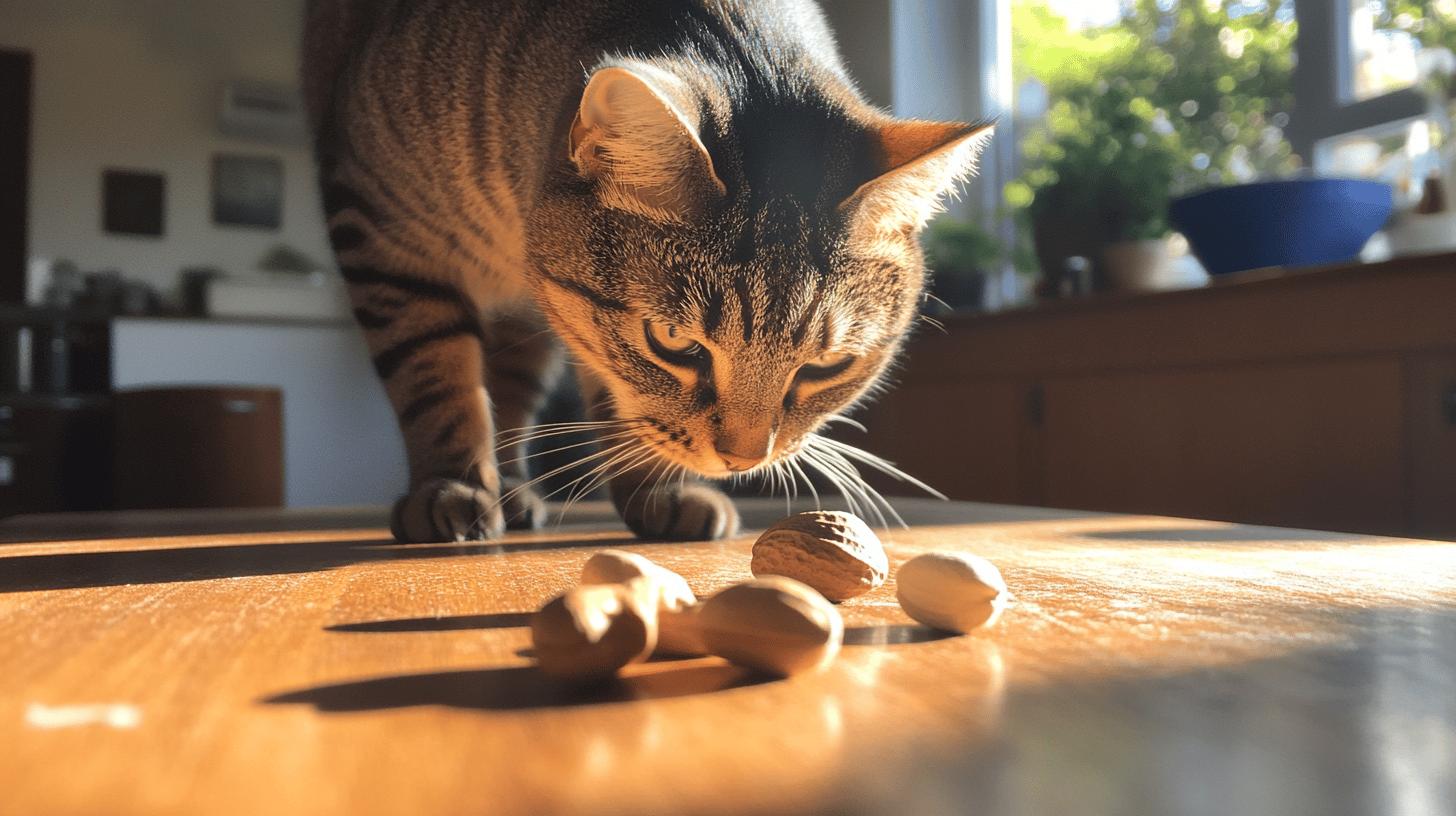
Can cats eat cashews safely? Not really. While cashews aren’t acutely toxic like chocolate or grapes, they contain compounds and nutrients that make them inappropriate for cats. The most interesting risk factor: the shell compound is in the same chemical family as poison ivy. This guide covers cashew-specific compounds, different forms of cashews and their risks, and why the fat content is particularly problematic.
What’s Actually in a Cashew: Compounds That Concern Vets
Urushiol (The Poison Ivy Compound): This is the most interesting and underappreciated risk in cashews. Urushiol is present in cashew shells and the thin layer between the shell and the nut itself. It’s the same compound that causes allergic reactions in poison ivy and poison oak. Commercial cashews are heat-treated (roasted) to remove most urushiol, but trace amounts may remain on processed nuts or in the oils.
For most cats, trace urushiol from commercial cashews is not acutely toxic. However, if your cat has sensitivity to urushiol (some do, just like some humans are more reactive to poison ivy), exposure can cause skin irritation, mouth irritation, or GI distress. This varies individual to individual.
Anacardic Acid: Another compound in the cashew shell and nut. It has antimicrobial and antioxidant properties in humans, but in cats, it contributes to the cumulative irritant effect. Anacardic acid is partially destroyed by roasting but some remains in the nut.
Oxalic Acid: Present in cashews at moderate levels. Oxalates interfere with calcium absorption and can contribute to mineral imbalances in cats. Regular cashew feeding (if that were to happen) could create problems over time.
Fat Content (44% of cashew weight): Cashews are roughly 44% fat. nearly half their weight. For context, cooked chicken is 3-5% fat. The fat in cashews is primarily unsaturated fat (not inherently toxic), but the quantity is the issue. Cats eating high-fat foods are at risk for pancreatitis. inflammation of the pancreas that can be life-threatening.
The combination of urushiol, anacardic acid, oxalates, and extreme fat density makes cashews fundamentally inappropriate for cats, even in small amounts.
Cashew Forms: Ranked by Risk for Cats
Raw Cashews with Shell (Highest Risk): Urushiol content is at maximum. The shell itself is not edible, but fragments and the layer beneath the shell contain full-strength urushiol. If your cat ate a raw cashew with shell, contact your vet. this is the highest-risk scenario.
Roasted Unsalted Cashews (Moderate Risk): Heat treatment reduces but does not eliminate urushiol. Fat content is still 44%. Safe to say “no,” but if your cat ate one or two, monitoring is sufficient in most cases. Watch for mouth irritation, vomiting, or diarrhea.
Roasted Salted Cashews (Moderate-High Risk): Same urushiol/fat concerns as unsalted, plus added sodium. Excess salt can cause hypernatremia (dangerously high blood sodium) in cats. Avoid entirely.
Cashew Butter (High Fat Concentration): Cashew butter is essentially the nut oils and solids concentrated. The fat density is even higher than whole cashews. Choking hazard due to thickness and stickiness. Pancreatitis risk is significant. Do not feed.
Honey Roasted or Candied Cashews (Toxic Risk): Added sugars, honey coating, and often glycerin (xylitol risk). This is the most dangerous form. Do not let cats near these.
Cashew Milk (Non-Dairy Alternative): Made by blending cashews with water and straining. Lower fat density than whole cashews (typically 2-3% fat), but often contains added emulsifiers (guar gum, carrageenan) and thickeners that can upset sensitive cat stomachs. Also high in unnecessary carbohydrates. Not recommended.
Fat Overload: The Pancreatitis Risk
Pancreatitis. inflammation of the pancreas. is a serious, sometimes life-threatening condition in cats. Cats are particularly susceptible to pancreatitis from high-fat meals. Unlike dogs, cats can develop pancreatitis from even a single high-fat exposure or from cumulative low-level fat overload.
How Pancreatitis Develops: The pancreas secretes digestive enzymes and produces insulin. When a cat eats a very high-fat food, the pancreas works overtime to produce lipase (the enzyme that breaks down fat). This overwork can trigger inflammation of the pancreatic tissue itself.
Acute Pancreatitis Symptoms (appear within hours to 2 days):
- Vomiting (often severe, repeated)
- Lethargy or depression (cat seems sick)
- Loss of appetite (not interested in food)
- Abdominal pain or tenderness (hunched posture, reluctance to be touched)
- Diarrhea (may be bloody)
- Dehydration (dry gums, loss of skin turgor)
Chronic Pancreatitis Symptoms (develop over weeks/months):
- Recurring vomiting or diarrhea
- Weight loss despite normal appetite
- Chronic lethargy
- Poorly controlled diabetes (if present)
Pancreatitis is diagnosed via blood tests (elevated amylase and lipase) and ultrasound imaging. Treatment is supportive (fluids, anti-nausea medication, pain management) and prevention of future high-fat exposures.
Bottom Line: One cashew is unlikely to cause pancreatitis in a healthy cat. However, regular cashew feeding or a cat with predisposition to pancreatitis eating even one cashew is risky. If your cat ate a cashew and shows vomiting or abdominal pain within 24 hours, contact your vet. this may be pancreatitis.
If Your Cat Ate Cashews: What to Do
One to Two Unsalted Roasted Cashews: Monitor for 24-48 hours. Watch for vomiting, diarrhea, mouth irritation, or abdominal discomfort. Most cats show no symptoms. If your cat is symptom-free after 48 hours, no vet visit needed.
Multiple Cashews or Salted Cashews: Monitor closely. Higher fat and salt load. If vomiting, diarrhea, or lethargy develops, vet visit is recommended. Mention the salt content and amount eaten.
Raw Cashews with Shell or Honey Roasted: Vet contact is recommended due to urushiol risk or potential toxins. Provide: amount eaten (estimate), form (roasted, raw, candied), time ingested, any symptoms observed. Your vet may recommend bloodwork to monitor pancreatic enzymes and lipid levels.
Cashew Butter: High fat exposure. If more than a lick was ingested, monitor for pancreatitis symptoms (vomiting, lethargy, abdominal pain). Contact vet if any of these appear.
Long-Term Metabolic Effects and Cumulative Risk
While a single cashew exposure is unlikely to cause acute pancreatitis in a healthy cat, the real risk lies in cumulative exposure and metabolic burden over time. Cats that are regularly exposed to high-fat foods, including cashews, develop metabolic stress that accumulates across months and years.
Lipid Metabolism in Cats: Cats have a fundamentally different metabolic architecture than humans or even dogs. They lack certain liver enzymes that help break down excess dietary fat. When a cat consumes high-fat foods like cashews, the pancreatic system must work significantly harder to produce the necessary digestive enzymes. This chronic overwork increases inflammation in pancreatic tissue, gradually lowering the threshold at which acute pancreatitis can be triggered.
Metabolic Memory: Recent feline metabolism research suggests that cats’ pancreatic systems develop a form of metabolic memory. Repeated high-fat exposures create a primed inflammatory state. A cat that has been fed cashews or other high-fat table foods multiple times is at higher risk from a subsequent exposure, even months later, than a cat with no prior history.
Long-term consequences include insulin dysregulation, weight gain despite normal appetite, and increased diabetes risk. For senior cats (over 10 years), the metabolic burden is even more significant.
Final Words
Cashews are not toxic in the way grapes or chocolate are, but they’re inappropriate nutrition for cats. The combination of urushiol (poison ivy family), oxalates, anacardic acid, and extreme fat content makes them a “just don’t” food. If your cat accidentally ate a small amount of roasted unsalted cashews, calm monitoring is fine. If they ate raw cashews, salted varieties, or cashew butter, contact your vet. the risks are more significant.
The interesting part of cashew risk is the urushiol compound. it’s not widely discussed in pet nutrition but is worth knowing about. Most cats won’t have sensitivity, but some will, and there’s no way to know without exposure.
FAQ
Can cats eat cashews?
Not recommended. Cashews contain urushiol (poison ivy family), oxalates, and extremely high fat (44%). pancreatitis risk is significant.
Are cashews toxic to cats?
Not acutely toxic like grapes, but contain compounds (urushiol, anacardic acid, oxalates) and nutrients (fat) that make them risky, especially at high doses.
What happens if a cat eats a cashew?
Usually nothing. One small cashew causes no acute symptoms in most healthy cats. Monitor for vomiting, diarrhea, or abdominal discomfort. If symptoms appear, contact your vet. may indicate pancreatitis.
Can cats eat cashew butter?
No. Cashew butter is concentrated fat (pancreatitis risk) and a choking hazard. Avoid entirely.
Can cats eat cashew milk?
Not ideal. Lower fat than whole cashews, but contains additives (guar gum, carrageenan) that upset sensitive stomachs. Not recommended.
Is cashew or peanut better for cats?
Neither. Both are high-fat, both pose choking/pancreatitis risks. Peanuts lack urushiol but have similar fat and nutritional issues. Avoid both.
What nuts are safe for cats?
Honestly, nuts are not recommended for cats. If you must offer a nut, macadamia nuts are toxic, almonds/walnuts are choking hazards and high-fat. Plain, cooked chicken is a far better treat.
Related Articles
- Can Cat Eat Almonds . nut danger comparison
- Can Cats Eat Chicken Safely . safe protein alternatives
- Can Cat Eat Popcorn Safely . other high-fat snack dangers
- Can Cat Eat Biscuit . other carb-heavy snacks
Fat Content and Pancreatic Risk
Cashews are roughly 49% fat by weight, making them particularly problematic for cats prone to pancreatitis. Pancreatitis (inflammation of the pancreas) is a serious condition in cats that can range from mild to severe, and high-fat foods are a known trigger. Some cats recover fully with supportive care; others develop chronic pancreatitis that requires lifelong dietary management. If your cat has any history of pancreatitis, GI sensitivity, or digestive upset, cashews and other high-fat nuts should be completely avoided.
Leave a Reply