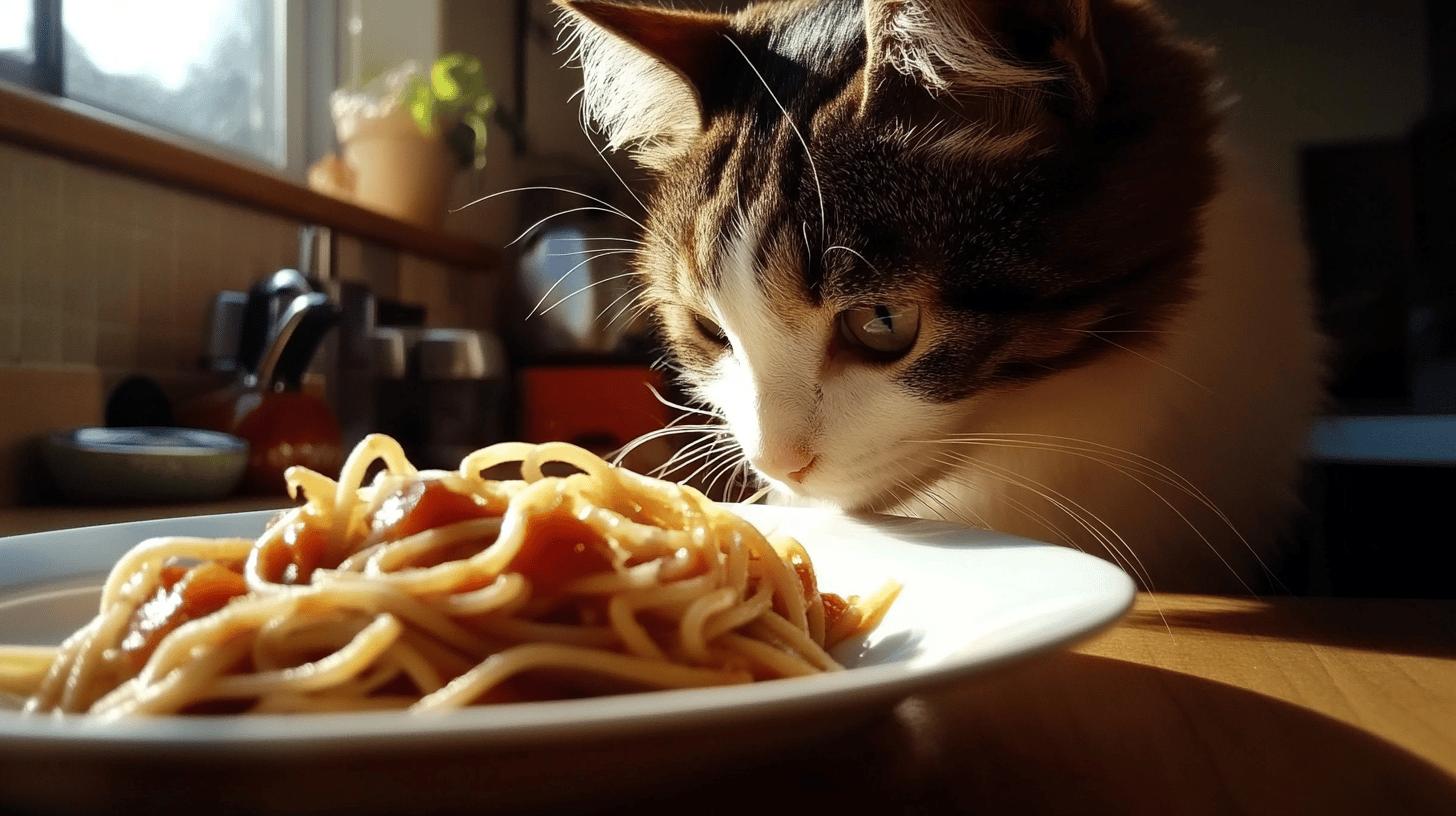
Can cats eat pasta safely? The short answer is: cooked plain pasta is not toxic to cats, but it offers no nutritional value and can cause digestive issues. This guide covers why pasta is incompatible with cat biology, which pasta types pose different risks, what makes sauces dangerous, and how to handle accidental ingestion.
Can Cats Eat Pasta? Safety, Nutrition, and Risks
Cats can technically eat a small amount of plain, cooked pasta without immediate toxicity. However, doing so is nutritionally pointless and potentially problematic. Pasta is roughly 70-75% carbohydrates. cats require less than 10% carbohydrates in their diet and have no metabolic pathway to process excess carbs efficiently.
Cats are obligate carnivores, meaning their bodies evolved exclusively for a meat-based diet. Unlike omnivores (like humans or dogs), cats:
- Lack amylase in their saliva (the enzyme that breaks down starches in the mouth)
- Have low hepatic glucokinase activity (reduced ability to manage blood sugar spikes)
- Cannot synthesize certain amino acids from plant proteins
- Have extremely limited carbohydrate metabolism pathways
When a cat eats pasta, their digestive system doesn’t process it efficiently. The result: unused carbohydrates ferment in the colon, causing bloating, gas, and diarrhea. For cats with sensitive stomachs or existing digestive issues, this is enough to trigger serious upset.
The pasta itself isn’t toxic, but it is nutritionally inert and potentially harmful depending on preparation and your cat’s health status.
Pasta Types: Does It Matter?
Plain White Pasta (Semolina): The safest pasta option if you must serve it. Plain, unseasoned white pasta cooked without oil or butter. Minimal additives. If accidentally ingested, minimal risk beyond digestive upset.
Egg Pasta: Contains raw or cooked eggs. If raw egg was used, there’s a small salmonella risk. Most commercial egg pasta is dried (heat-treated), making this safer. Still avoid. the benefit doesn’t justify the risk.
Whole Wheat Pasta: Higher fiber (which some cats tolerate worse than white pasta), no additional toxins. Likely to cause more digestive upset than white pasta due to the fiber content.
Flavored Pasta (Spinach, Tomato, Squid Ink): These add compounds beyond the pasta itself. Spinach pasta contains oxalates (which interfere with mineral absorption). Tomato pasta adds solanine risk if the tomato wasn’t fully cooked. Squid ink is non-toxic but offers no benefit and adds unfamiliar compounds. Avoid all flavored varieties.
Gluten-Free Pasta: Made from rice flour, corn flour, or legume flours. Not inherently safer than wheat pasta. still carbohydrate-dense, still poorly digested by cats. Some cats tolerate it slightly better; others have worse digestive response. No advantage over plain pasta.
Fresh Pasta (including handmade): Higher moisture content, sometimes contains raw egg. Cook thoroughly if serving, and remember: the risk-benefit analysis still doesn’t favor pasta for cats.
The Real Problem: Sauces and Toppings
Plain pasta is mildly problematic. Sauced pasta is dangerous.
Tomato Sauce: Tomatoes are in the nightshade family. Cooked ripe tomatoes are generally safe (solanine content is minimal in fully cooked fruit). However, acidic tomato sauce can cause stomach upset in cats, especially those with sensitive digestive systems. More critically: many tomato sauces contain garlic or onion powder. both are toxic to cats and damage red blood cells (hemolytic anemia).
Garlic and Onion (All Forms): Fresh, cooked, powdered, or dehydrated. all are toxic to cats. These contain thiosulfates which break down cat hemoglobin. Even small amounts in sauce can cause anemia over time or acute symptoms (lethargy, pale gums, vomiting) if the dose is high. This is the #1 reason pasta is dangerous for cats.
Butter: Fatty, can cause digestive upset and pancreatitis in cats (especially those predisposed). A lick of butter is unlikely to cause acute problems, but regular exposure is risky.
Cream Sauce (Alfredo): High fat (pancreatitis risk), high lactose (most cats are lactose intolerant). Avoid entirely.
Cheese: Lactose intolerance is common in cats. Aged cheeses have less lactose but are high in fat and salt. A tiny piece won’t hurt; regular cheese additions to pasta will cause diarrhea.
Salt and Seasoning: Commercial sauces contain salt levels unsafe for cats. Excess sodium can cause hypernatremia (dangerously high blood sodium). Spices like black pepper, red pepper flakes, and oregano can irritate cat GI tracts.
Olives, Capers, and Pickled Additions: High sodium, potentially toxic if brined in xylitol (though rare). Avoid.
Meat in Sauce (Bolognese): The meat is fine; the sauce ingredients (garlic, onion, tomato acidity, salt) are the problem. If your cat ate a small amount of meat from pasta sauce but the sauce contained garlic or onion, watch for lethargy and pale gums. signs of hemolytic anemia.
Carbohydrate Biology: Why Cats Cannot Process Pasta
Understanding cat carbohydrate metabolism explains why pasta is fundamentally wrong for cats:
No Salivary Amylase: Humans begin digesting starch in the mouth with amylase. Cats produce zero amylase. starch digestion must happen in the small intestine via pancreatic amylase. This is slower and less efficient, leaving undigested starch to reach the colon.
Low Glucokinase Activity: Cats have minimal ability to regulate blood glucose spikes. When a cat eats carbs, blood sugar rises sharply, their pancreas struggles to respond proportionally, and glycemic chaos results. Repeated carbohydrate loading can stress the pancreas and increase diabetes risk in susceptible cats.
Limited Glycolytic Pathways: Cats lack some of the metabolic machinery omnivores use to extract energy from carbohydrates. A carbohydrate calorie is not the same as a protein calorie for cats. carbs are less efficiently converted to usable energy.
Ketogenic Metabolism: Cats are adapted for a ketogenic (fat and protein-based) metabolism. Their bodies prefer breaking down amino acids and fats for energy, not carbohydrates. Feeding carbs forces their liver and kidneys to work harder to compensate.
In practical terms: pasta causes blood sugar spikes, inefficient digestion, fermentation in the colon, and metabolic stress on the pancreas and liver. Even small amounts are not “fine”. they’re metabolically inappropriate for cat physiology.
If Your Cat Ate Pasta: What to Watch
Plain Cooked Pasta (No Sauce): Monitor for vomiting, diarrhea, or loss of appetite over the next 12-24 hours. Most cats experience mild digestive upset or nothing at all. If your cat is otherwise fine by 24 hours, no vet visit is needed. If vomiting or diarrhea persists beyond 24 hours, contact your vet.
Sauced Pasta (Tomato, Cream, Cheese): Same monitoring as above. Acidity or fat may cause more severe upset (vomiting, diarrhea) than plain pasta. If symptoms emerge, vet visit is recommended to rule out pancreatitis (especially with cream sauces).
Pasta with Garlic or Onion (Bolognese, Marinara with Garlic): THIS IS A TOXICITY RISK. Do NOT wait for symptoms. Call your vet or poison control immediately. Provide: amount eaten (estimate), type of preparation, time ingested. Your vet may recommend bloodwork to check for hemolytic anemia development. Even if your cat seems fine, garlic/onion toxicity can be delayed. red blood cells are damaged silently.
Emergency Contact Information: ASPCA Poison Control: 888-426-4435 (fee applies). Pet Poison Helpline: 855-764-7661. Have information ready: your cat’s weight, pasta type, sauce ingredients, estimated time of ingestion.
Final Words
Plain pasta is not toxic, but it’s inappropriate nutrition for cats. More critically, most pasta dishes contain ingredients (garlic, onion, excessive fat or salt) that ARE toxic or harmful. If your cat accidentally ate a small amount of plain pasta and shows no symptoms, simple monitoring is fine. If the pasta contained garlic, onion, or cream sauce, contact your vet immediately.
The bottom line: don’t intentionally feed pasta to cats. If accidental ingestion occurs, the sauce ingredients matter far more than the pasta itself.
FAQ
Can cats eat pasta?
Plain cooked pasta is not toxic, but cats cannot digest it efficiently. Avoid. especially pasta with sauce.
Is pasta safe for cats?
Plain pasta: minimal risk but no benefit. Sauced pasta: risk depends on sauce. Pasta with garlic/onion: toxic risk. Call vet if ingested.
Can cats eat spaghetti?
Plain cooked spaghetti is not toxic, but offers no nutrition and causes digestive upset in many cats. Spaghetti with sauce (especially marinara with garlic) is dangerous.
Can cats eat pasta with sauce?
Depends on the sauce. Garlic/onion-based: toxic (call vet). Cream sauce: pancreatitis risk. Tomato-only: low risk but digestive upset likely. Avoid.
Can cats eat spaghetti sauce?
Most commercial spaghetti sauce contains garlic or onion powder. toxic to cats. Even garlic-free tomato sauce can cause digestive upset. Do not feed.
What happens if a cat eats pasta?
Plain pasta: likely diarrhea or no symptoms. Sauced pasta: depends on sauce ingredients. Garlic/onion pasta: toxicity risk. contact vet.
Is cooked pasta bad for cats?
Nutritionally inappropriate (high carbs, low protein). Metabolically stressful (poor glucose regulation in cats). Safely avoid. no benefit justifies the risk.
Can cats digest pasta?
Poorly. Cats lack the enzymes and metabolic pathways omnivores use for starch digestion. Undigested carbs ferment in the colon, causing gas and bloating.
Related Articles
- Can Cat Eat Biscuit . carbohydrate dangers
- Can Cat Eat Sweet Potato . carbs vs. cats
- Can Cats Eat Chicken Safely . safe protein alternatives
- Can Cat Eat Almonds . other dangerous human foods
Understanding Carbohydrate Metabolism in Cats
Cats lack the enzymatic machinery to efficiently process carbohydrates. Unlike humans and even dogs, cats have minimal amylase production (the enzyme that breaks down starches) and no taste receptors for sweetness. Their bodies simply did not evolve to handle grain-based or starch-based foods. This is why pasta (70-75% carbohydrates, minimal protein) is so incompatible with feline nutrition.
Leave a Reply