Play aggression is normal feline behavior, but it still needs structure. The goal is not to punish your cat for pouncing or biting during play. The goal is to redirect that energy into toys that are durable, safe, and satisfying enough to keep hands and ankles out of the game.
The best toys for reducing play aggression let your cat stalk, chase, grab, kick, and chew without rewarding rough contact with people. Durable wand toys, kicker toys, puzzle feeders, and track-style chase toys usually do the most work here because they channel hunting energy into predictable routines.

Quick Picks for Reducing Play Aggression
- Long wand toys: Best for keeping distance between your hands and your cat while still giving them a fast-moving target.
- Kicker toys: Best for cats that grab with the front paws and bunny-kick with the back legs.
- Treat puzzles and food balls: Best for turning restless energy into slower, focused problem-solving.
- Track toys and chase balls: Best for solo play between interactive sessions.
- Chew-safe rubber toys: Best for cats that bite hard at the end of play sessions.

How to Choose the Right Toy
Match the toy to the behavior you want to redirect. If your cat attacks feet under blankets, use a long wand toy so the prey stays away from your body. If your cat grabs arms and kicks, offer a larger kicker toy they can hold and wrestle safely. If your cat gets overstimulated quickly, switch from high-speed chase games to treat puzzles or slower batting toys before frustration builds.
- Choose toys large enough that they cannot be swallowed.
- Avoid toys with glued decorations, loose feathers, or small plastic parts that can break off.
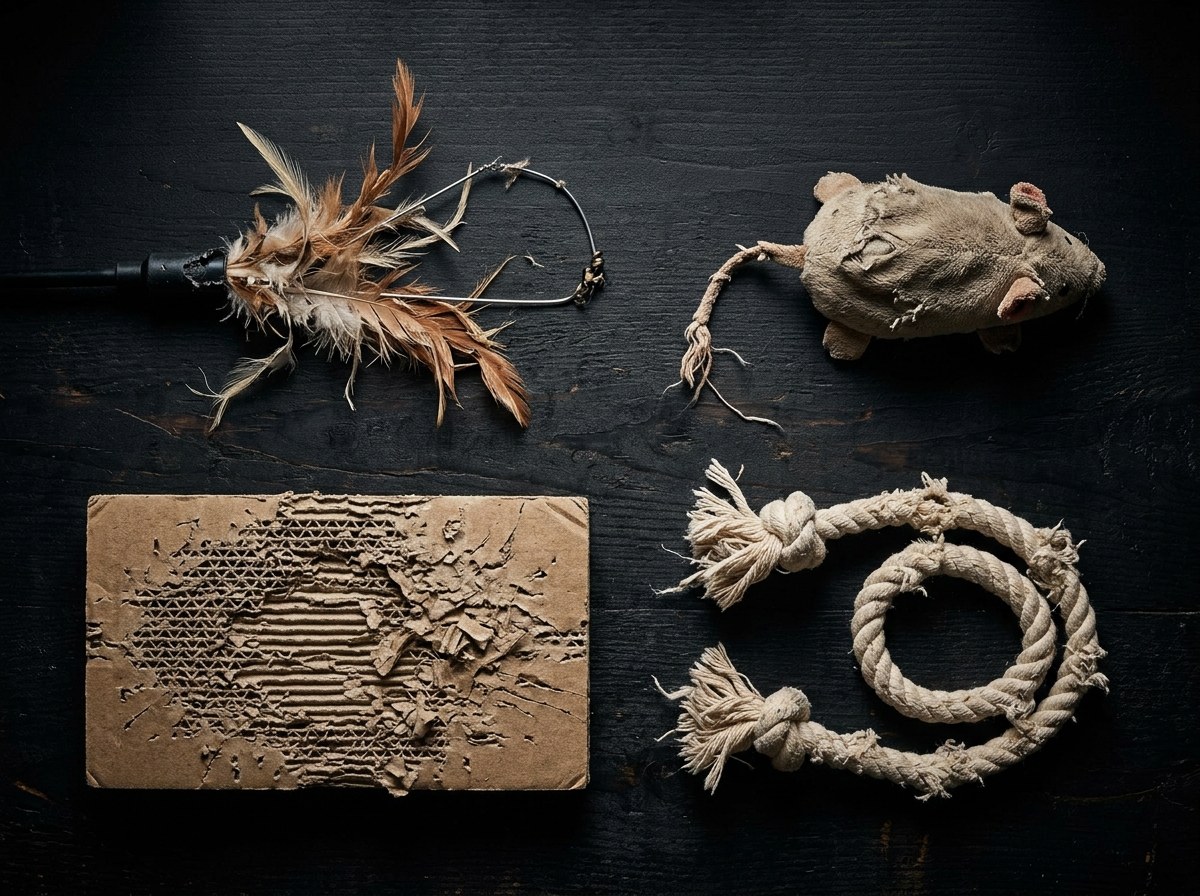
- Retire any toy with torn seams, exposed stuffing, cracked plastic, or loose cord.
- Rotate toys every few days so play stays novel without turning chaotic.
Best Toy Types for Play-Aggressive Cats
1. Durable Wand Toys
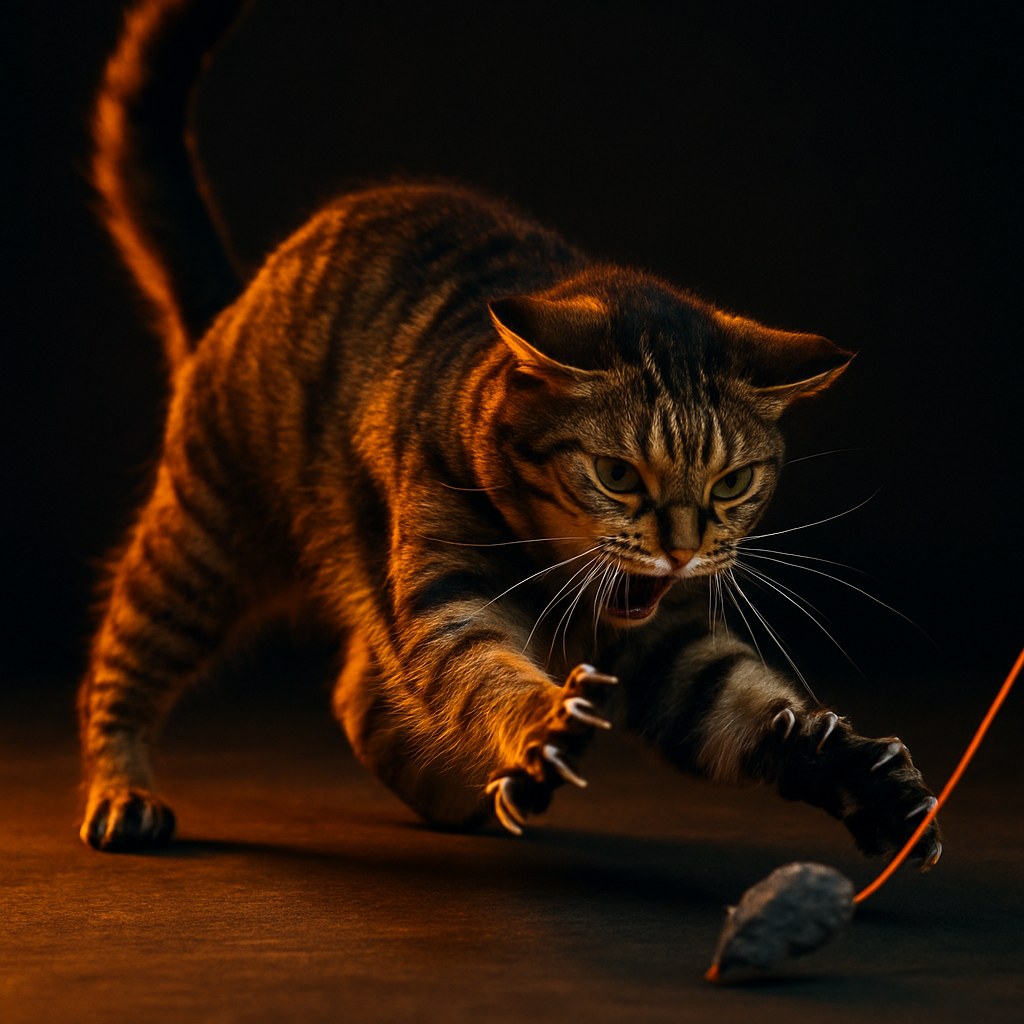
Wand toys are usually the fastest way to lower play aggression because they create distance. Use sturdy rods, strong cord, and replaceable lures. Keep the toy moving like prey across the floor instead of waving it in your cat’s face. End the session before your cat starts grabbing at you instead of the toy.
2. Kicker Toys
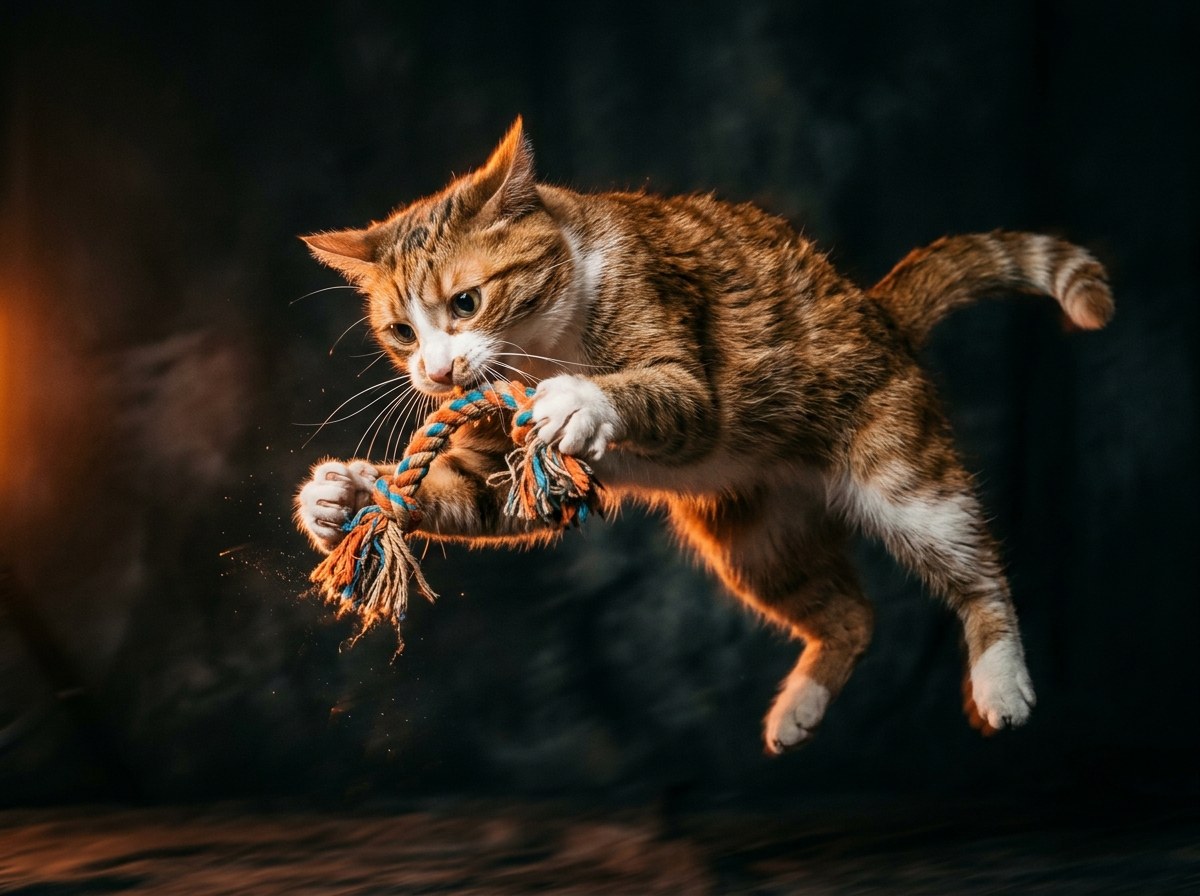
A long, heavily stitched kicker toy gives your cat a safe target for grab-and-kick behavior. If your cat tends to latch onto sleeves, blankets, or hands, a kicker toy is one of the simplest substitutions you can make.
3. Puzzle Feeders and Treat Toys
Puzzle toys reduce arousal by slowing the game down. They work especially well after an active play session, when your cat still wants an outlet but needs something calmer than another chase round.
4. Track Toys and Durable Balls
These are good for independent follow-up play. They will not replace interactive sessions, but they can help burn off extra energy during the day and keep boredom from spilling into rough behavior.
Simple Play Routine That Lowers Aggression
- Start with 5 to 10 minutes of wand play that makes your cat chase, stalk, and pounce.
- Switch to a kicker toy for the grab-and-kick phase.
- Finish with a puzzle feeder, treat toy, or small meal so the session ends on a calm reward.
- Repeat one to three times daily depending on your cat’s age and energy level.
This sequence matters. High-energy chase first, physical capture second, calm reward last. That pattern is much more effective than letting play spiral until your cat bites the nearest moving person.
Safety Checklist
- Do not use your hands as toys.
- Stop the session if your cat starts targeting skin instead of the toy.
- Store string-based toys away after play.
- Inspect toys weekly and replace damaged items immediately.
- Choose tougher materials for strong chewers, but avoid anything so hard it could damage teeth.
When to Get Extra Help
If play aggression is escalating into true aggression, breaking skin, or happening without clear play signals, pair the toy changes with a behavior plan. Start with these guides: How to Stop Play Aggression in Cats and Cat Play Aggression: Causes and Solutions. If the behavior is intense, sudden, or paired with pain signs, talk to your veterinarian.
The Toy Rotation System: Keeping Your Cat Engaged
One of the most overlooked strategies for reducing play aggression is toy rotation. Cats get bored with the same toys week after week, and boredom leads to frustration and increased destructive play behaviors. By rotating your cat’s toys every few days or weekly, you create the illusion of “new” toys without spending more money.
Why rotation works: The novelty factor keeps your cat mentally stimulated and excited about play sessions. A toy that sat in the corner for two weeks feels brand new when you reintroduce it, triggering fresh hunting instincts and engagement.
How to implement a rotation system:
- Keep 8-12 toys total (3-4 at a time in rotation)
- Rotate every 3-5 days or weekly depending on your cat’s interest
- Store toys in a basket or container so they’re out of sight (out of sight = out of mind = more exciting when reintroduced)
- Watch your cat’s responses to each toy and remove ones they ignore consistently
- Introduce one “new” (previously stored) toy every few days to maintain interest
Pro tip: Indoor enrichment activities and outdoor training can complement toy rotation by providing multiple outlets for play energy.
DIY Cat Toy Ideas: Safe, Budget-Friendly Options
Not every cat toy needs to come from a pet store. Many household items can become excellent play objects when constructed safely. DIY toys are perfect for testing what your cat responds to before investing in expensive options.
Safe DIY toy ideas:
- Crinkle balls: Wrap aluminum foil loosely in paper or fabric, leaving small crinkle sounds. Cats love the texture and sound.
- String toys: Tie safe fabric scraps or cotton string to a stick or dowel (never leave unsupervised string-based toys unattended)
- Puzzle feeders from cardboard: Hide treats inside a cardboard box with cut-out holes for your cat to fish treats through
- Paper bag toys: Crumpled paper bags create crinkling sounds and satisfy hunting instincts. Remove handles for safety.
- Toilet paper roll balls: Stuff empty rolls with crumpled paper and leave open for safe batting and chewing
- Ping pong ball in a bathtub: The unpredictable bouncing mimics prey movement without breaking or becoming a choking hazard
Safety first: Always supervise DIY toy play, avoid small parts that could be swallowed, and never leave string or elastic items unattended.
Structuring Play Sessions for Maximum Engagement
How you play with your cat matters as much as what toys you use. Unstructured, chaotic play can actually escalate aggression rather than reduce it. By using intentional play sessions with clear beginnings and endings, you teach your cat when it’s appropriate to be aggressive and when to settle down.
The ideal play session structure:
- For kittens: 3-5 minute sessions, 3-4 times daily. Young cats have short bursts of energy.
- For adult cats: 10-15 minute sessions, 2-3 times daily. This matches natural hunting cycles and keeps them engaged without overstimulation.
- For senior cats: 5-10 minute sessions, 2 times daily. Gentle, slower-paced play prevents injury and joint strain.
During play:
- Let your cat “win” sometimes (catch the toy) to satisfy the hunting instinct
- Gradually slow movements toward the end of the session to wind your cat down
- Avoid sudden stops that trigger frustrated pouncing
- End on a satisfied note, not when your cat is still highly aroused
After play: Offer a small treat or their next meal to signal the end of play and create a satisfying conclusion to the session. This also takes the “edge off” hunting energy.
Age-Specific Toy Recommendations
Your cat’s age significantly affects which toys will reduce aggression most effectively. Here’s how to match toys to your cat’s life stage:
Kittens (2-6 months): Bouncy, fast-moving toys that respond to their unpredictable energy. String wands, bouncy balls, and small feather toys work best. Kittens are learning hunting skills, so interactive play is crucial for teaching boundaries.
Junior cats (6 months-2 years): High-energy interactive toys. Wand toys, kicker toys, laser pointers, and fetch toys. This age group has intense play aggression—redirect it with durable, engaging options.
Adult cats (2-7 years): Varied toys including puzzle feeders, chase toys, and wand toys. Mix interactive and solo play. Mental engagement becomes increasingly important.
Senior cats (7+ years): Gentler toys that don’t require jumping or rough contact. Soft kicker toys, treat puzzles (slower-paced), and low-energy wand toys. Avoid toys that strain joints.
When Toys Aren’t Enough: Recognizing Behavioral and Medical Issues
In some cases, even the best toys won’t reduce play aggression if there’s an underlying behavioral or medical issue. Knowing when to escalate beyond toy-based solutions is important for your cat’s wellbeing.
Signs that toys alone won’t solve the problem:
- Your cat targets people obsessively, ignoring toys
- Play sessions consistently end with your cat biting or scratching aggressively
- Aggression is increasing despite more toys and play time
- Your cat shows signs of pain during play (limping, hesitation, excessive grooming)
- Aggression is accompanied by other behavioral changes (litter box issues, excessive vocalization, hiding)
Next steps: Schedule a vet check-up to rule out medical issues like pain, hyperthyroidism, or neurological problems. If medical issues are cleared, consult with a certified feline behaviorist who can identify whether the aggression is playful, redirected, or something else entirely.
Cat training and behavior guides on our site also cover other enrichment strategies beyond toys that can complement your toy rotation and play sessions.
FAQ
What toys help most with play aggression?
Long wand toys, kicker toys, and treat puzzles do the most to redirect play aggression because they match the way cats chase, grab, kick, and wind down.
Should I let my cat wrestle my hands if they are young?
No. Hand play teaches your cat that human skin is part of the game. Use toys every time so the target stays consistent.
How often should I replace toys?
Replace them as soon as seams split, stuffing shows, cords fray, or hard parts crack. A durable toy is only useful while it stays intact and safe.
Leave a Reply