The best stimulating cat toys for indoor cats are not just the flashiest moving toys. A good setup gives your cat several kinds of work: stalking, chasing, pouncing, biting, bunny-kicking, solving a simple food puzzle, scratching, climbing, and settling down after the hunt.
For most indoor cats, start with a small rotation of five toy roles: an interactive chase toy, a catch-and-kick toy, a food puzzle, a safe solo toy, and a scratch or climb outlet near the play zone. If your cat destroys ordinary toys, the routine matters as much as the toy: supervise string and electronic toys, inspect seams after hard play, and retire damaged toys before loose parts become swallowing hazards.
What makes a cat toy genuinely stimulating?
A stimulating toy gives your cat a reason to think or move. That can mean tracking prey-like motion, working food out of a puzzle, grabbing a toy with the front paws, raking it with the back feet, or choosing a perch where the cat can watch activity outside. Indoor cats often need this deliberate variety because the home removes many of the changing sights, scents, textures, and hunting opportunities an outdoor environment would provide.
The Cornell Feline Health Center frames toys as a way to encourage exercise and cognitive enrichment by letting cats stalk, pounce, and problem solve. That is the standard to use when buying: ask what behavior the toy supports, not just whether it is cute or popular.
The five toy roles indoor cats need
Most weak toy advice jumps straight to product names. A better approach is to cover the play jobs first, then choose products that fit your cat’s style.
- Chase toy: A wand, lure, rolling ball, or moving toy that gets your cat tracking motion and sprinting in short bursts.
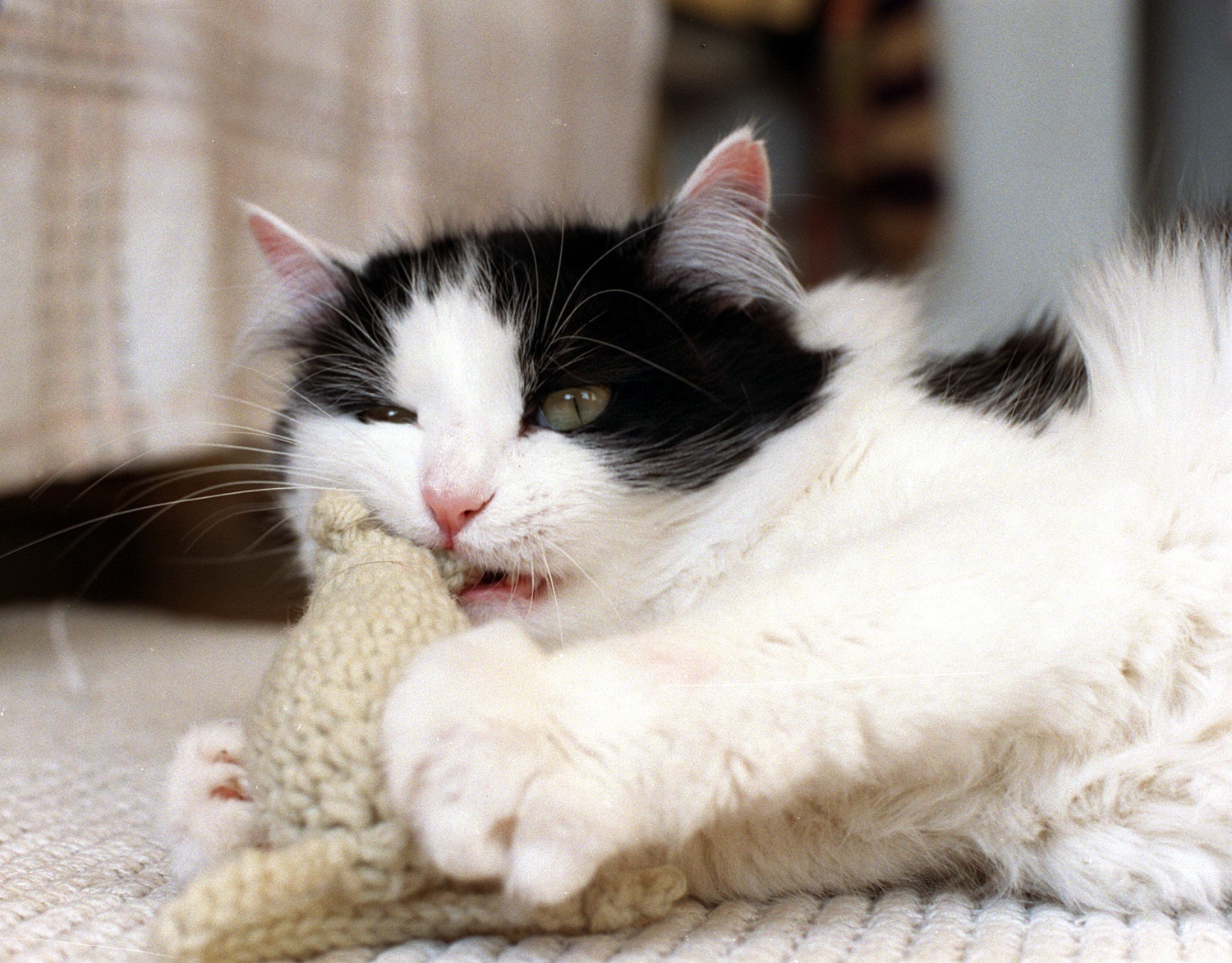
- Capture toy: A kicker, tough plush, or rugged fabric toy your cat can grab, bite, and rake after the chase.
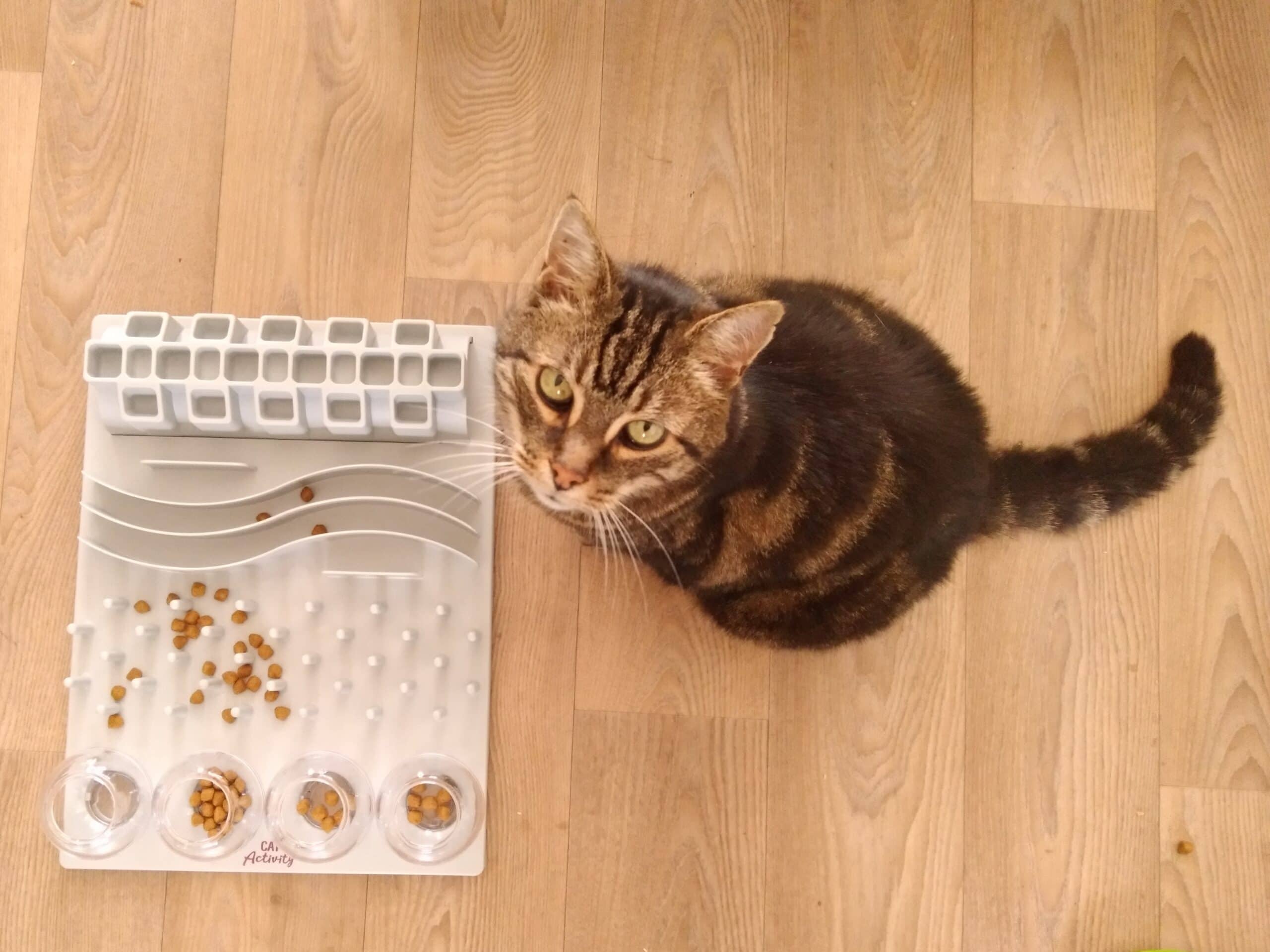
- Puzzle toy: A treat ball, slow feeder, puzzle board, snuffle mat, or DIY food search that makes part of a meal take effort.
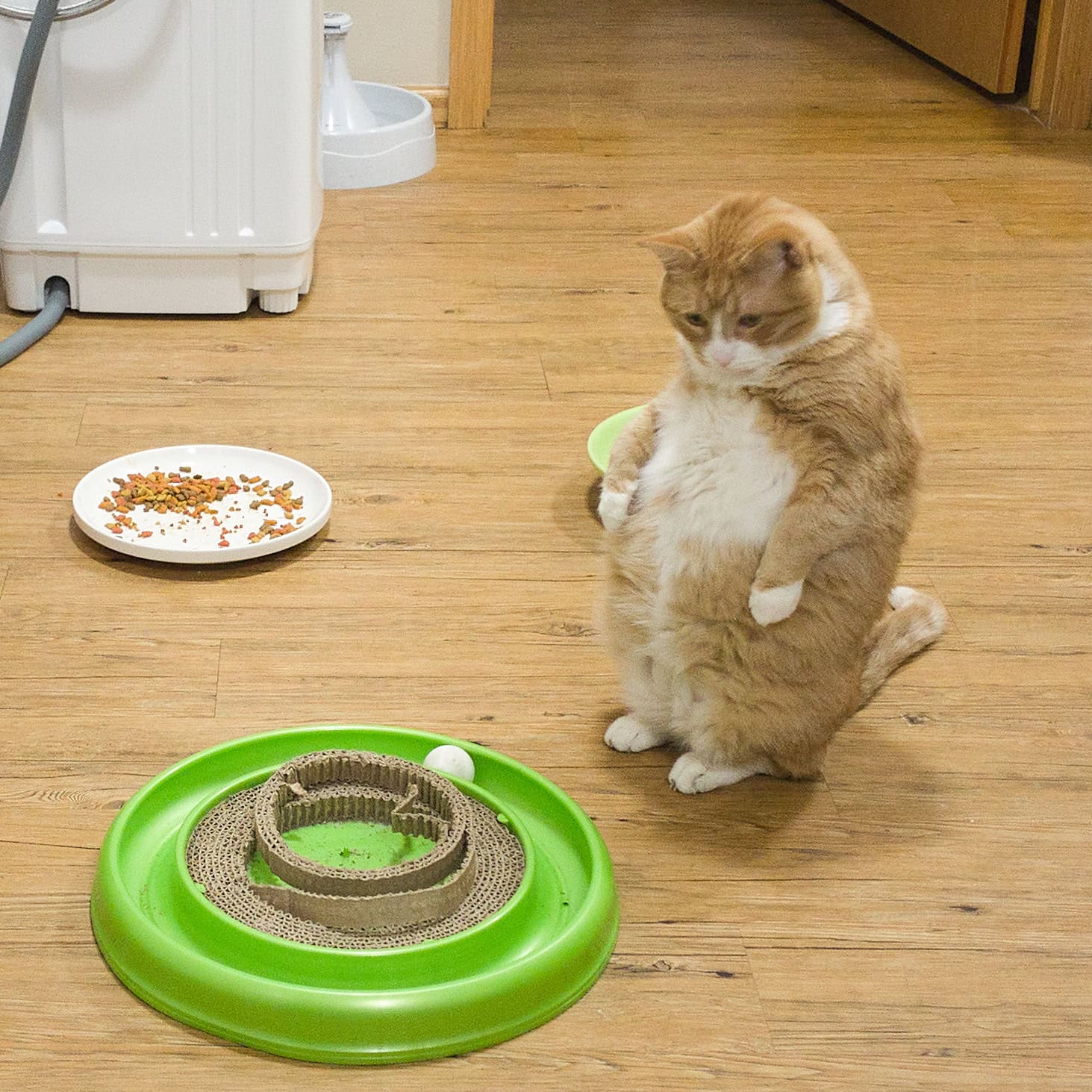
- Solo toy: A track toy, sturdy ball, tunnel, safe window perch, or timed electronic toy that can add interest while you are busy.
- Scratch and climb outlet: A scratching post, cardboard scratcher, cat tree, shelf, or climbing path that lets your cat stretch, mark, and reset.
This mix matters because cats do not only need speed. A wand toy can start the hunt, but your cat still needs something physical to catch. A puzzle feeder can slow a meal, but it does not replace running and pouncing. A solo toy can help during work hours, but it does not replace owner-led play for cats who need social interaction.
If you want a deeper rotation framework, Titan Claws’ guide to cat toys for enrichment explains how to rotate toys by behavior instead of leaving the same pile on the floor every day.
Best stimulating toy types by cat personality
The right toy depends on how your cat already tries to play. Use the table below as a practical matchmaker.
| Cat behavior | Good toy match | Safety note |
|---|---|---|
| Stalks from behind furniture | Wand toy, tunnel, crinkle mat, hide-and-seek lure | Put string and ribbon toys away after play. |
| Grabs, bites, and bunny-kicks | Kicker toy, larger plush, rugged fabric capture toy | Check seams, stuffing, tags, and small parts after hard play. |
| Gets bored with food bowls | Puzzle feeder, treat ball, slow feeder, hidden kibble search | Use measured meal portions, not unlimited treats. |
| Likes batting objects alone | Track toy, ball, spring toy, enclosed rolling toy | Avoid tiny pieces your cat could swallow. |
| Needs movement while you work | Timed electronic toy, window perch, safe solo toy rotation | Inspect moving parts, battery covers, charging ports, and cords. |
| Chews through soft toys | Dense fabric toys, larger chew-safe shapes, supervised capture toys | Retire toys before fabric opens or filling escapes. |
For rough players, read Titan Claws’ cat kicker toy guide before choosing a capture toy. The useful question is not whether a toy claims to be tough. It is whether its size, seams, attachments, and materials match the way your cat actually bites and rakes.
How to make ordinary toys more interesting
Many indoor cats ignore toys because the toy is always available, always in the same spot, and always moves the same way. Novelty is part of the value. Keep most toys out of sight, leave out only safe solo options, and rotate one or two toys back into use every few days.
Movement style also changes the result. Move a wand lure like prey: across the floor, around a corner, behind a box, under tissue paper, then still for a moment. Do not shove it into your cat’s face. Cats often get more excited by a toy that hides, pauses, and escapes than by one that wiggles frantically in the open.
The AAFP and ISFM feline environmental needs guidelines recommend allowing cats to express parts of the predatory sequence through play and feeding activities. In plain terms, your cat should get chances to search, stalk, chase, pounce, bite, and complete the game instead of only watching a moving object they can never catch.
A simple daily routine for indoor cats
You do not need an elaborate schedule. Many cats do well with short, predictable sessions that follow the hunt, catch, eat, and rest pattern.
- Five minutes of stalking: Use a wand, lure, tunnel, or box so the toy appears, hides, and moves away.
- Five minutes of chase: Let your cat sprint in short bursts. Use hallways, rugs, and open floor safely.
- Three minutes of capture: Offer a kicker or sturdy toy so your cat can grab, bite, and bunny-kick something physical.
- Five minutes of puzzle feeding: Put part of the normal measured meal into a beginner puzzle or slow feeder.
- Two minutes of cleanup: Put away strings and fragile lures, inspect the capture toy, and leave out only safe solo toys.
If boredom is the main problem, the companion Titan Claws guide to cat toys for boredom covers how to connect toys to specific problems such as night zoomies, ankle attacks, furniture scratching, and repeated begging.
Food puzzles: mental stimulation without overfeeding
Food puzzles are useful because they turn eating into foraging. Start with part of your cat’s normal meal, not a separate pile of treats. For beginners, use a shallow slow feeder, a wide-opening treat ball, kibble hidden in a towel fold, or a muffin tin with a few pieces of food in different cups.
Make the first sessions easy. Your goal is confidence, not frustration. If your cat paws, sniffs, nudges, or bats the puzzle, let that work. Increase difficulty only after the cat understands how food appears. If your cat bites at the feeder, gives up quickly, or becomes agitated, switch to an easier design and supervise more closely.
For food-motivated cats, Titan Claws’ puzzle cat toys article goes deeper on beginner, intermediate, and advanced puzzle choices plus how to inspect them for chewing damage.
Automatic and electronic toys: useful, but not a babysitter
Automatic cat toys can be helpful for indoor cats, especially when they run on a timer and add short bursts of movement during quiet parts of the day. They are best used as novelty sessions, not as a replacement for interactive play with you.
Choose enclosed designs with secure battery compartments, no exposed cords, and no fragile attachments your cat can pull loose. Remove the toy if your cat targets the charging port, chews the casing, cracks plastic, or becomes overexcited. Timed sessions are usually better than leaving a moving toy available all day, because novelty fades and rough cats may eventually find the weak point.
For more detail, use Titan Claws’ guide to automatic cat toys, which covers what to buy, what to avoid, and how to use them safely when you are away.
Safety rules for cats that destroy toys
A cat who destroys toys is giving you useful information: the toy is not matched to the force of that cat’s teeth, claws, and play style. The answer is not to remove play. The answer is to tighten supervision, choose sturdier toy roles, and inspect often.
- Put away wand strings, ribbons, elastic, feather lures, yarn, and thin cords after every play session.
- Avoid glued-on eyes, bells, sequins, loose tags, small plastic parts, and detachable decorations for chewers.
- Inspect seams, stuffing, cracked plastic, exposed wire, battery covers, charging ports, and sharp edges after rough play.
- Choose capture toys large enough that your cat cannot swallow them whole.
- Retire any toy that leaks stuffing, sheds thread, splinters, smells burnt or chemical, or changes shape after chewing.
- Use laser pointers carefully: never shine them in eyes, and end by letting your cat catch a toy or food reward.
The Best Friends Animal Society also warns that long-string wand toys should be supervised and that cats playing with lasers should eventually be able to catch something real. Those two points are easy to overlook, but they matter for frustration and safety.
If your cat chews hard, pair this article with Titan Claws’ guide to toys for cats that chew and the broader guide to cat toys that last. Durable is useful only when it is paired with inspection and sensible supervision.
When a toy problem may be a health or behavior problem
Toys can help with boredom, but they are not a substitute for veterinary care or behavior support. Sudden aggression, new hiding, appetite changes, overgrooming, litter box changes, limping, panting during play, or a cat who suddenly stops playing should be discussed with a veterinarian.
Also watch for frustration. A cat that screams at a puzzle, attacks the feeder instead of working it, guards toys aggressively, or cannot settle after electronic play may need easier toys, shorter sessions, more predictable timing, or a calmer environment. Stimulation should leave your cat engaged and satisfied, not frantic.
Quick buying checklist
Before adding another toy to the cart, run through this checklist:
- Which behavior does this toy support: chase, capture, puzzle feeding, scratching, climbing, solo batting, or visual interest?
- Can my cat use it safely with their real bite strength and claw habits?
- Does it contain strings, elastic, feathers, bells, batteries, small parts, or glued decorations?
- Can I clean it, inspect it, and tell when it should be retired?
- Does it pair with another toy to complete the hunt, such as wand chase followed by a kicker?
- Will it stay interesting if I rotate it instead of leaving it out all week?
The bottom line
Stimulating cat toys for indoor cats work best as a small system, not a random pile. Give your cat chase, capture, puzzle, solo, scratch, and climb options. Use short sessions. Let your cat catch something physical. Rotate toys for novelty. Put risky lures away. Inspect anything your cat bites, kicks, or chews.
That approach is especially important for cats that destroy ordinary toys. The goal is not to promise any toy will survive forever. The goal is to give rough indoor hunters better outlets, better-matched toys, and a safety routine that keeps play useful instead of risky.
Leave a Reply