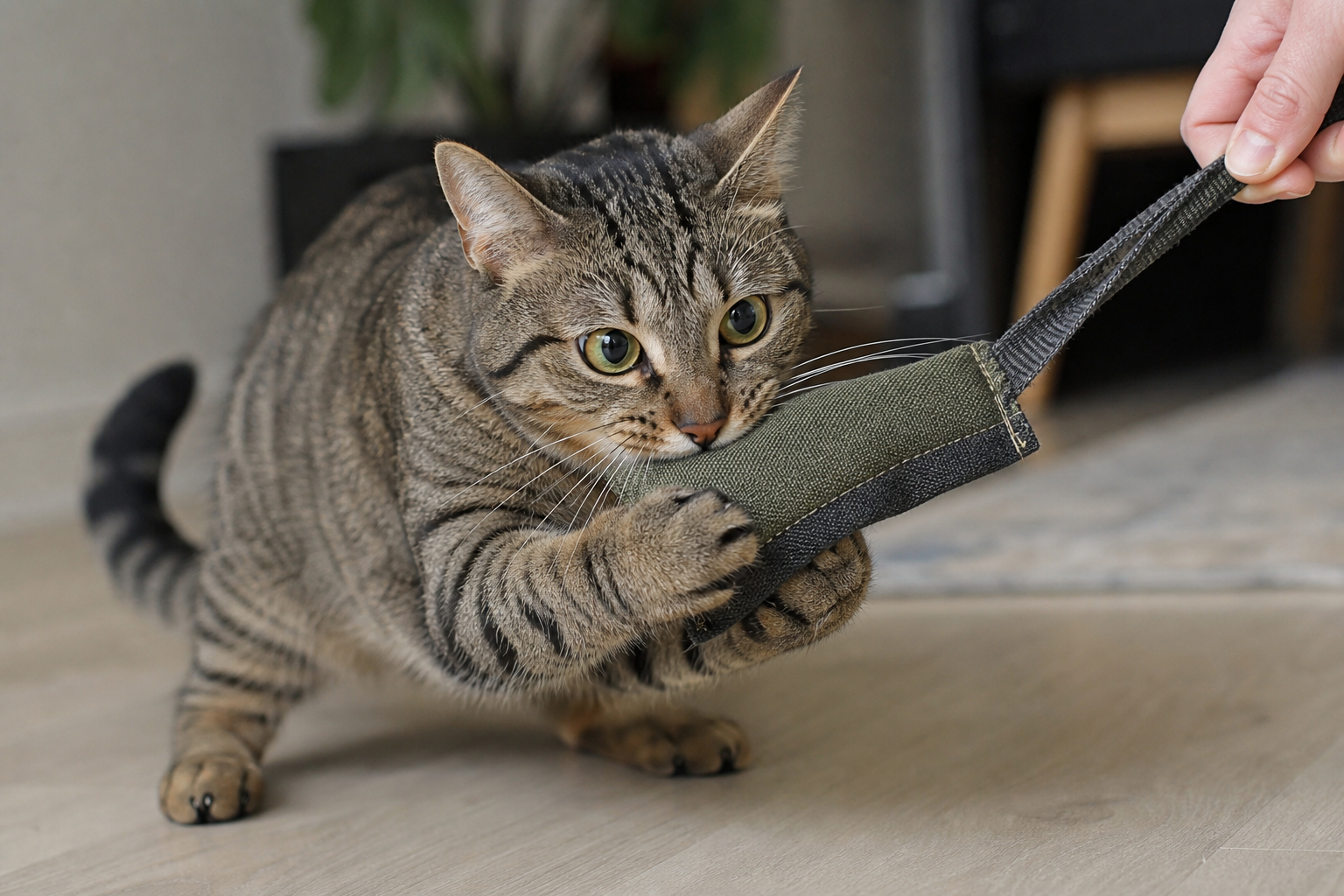
Chewy cat toys can mean two different things: cat toys sold on Chewy-style shopping pages, or toys made for cats that like to chew. Either way, the smart choice is not the toy with the cutest shape or the longest feature list. The smart choice is a toy that matches your cat’s chewing style, has fewer swallowable parts, can be inspected quickly, and gives your cat a satisfying outlet without pretending any toy is impossible to destroy.
If your cat chews cords, plastic, fabric, feathers, toy tails, or plush seams, start with safety before shopping. Look for larger-than-swallowable toys with simple construction, sealed seams, non-toxic mouth-contact materials, and no loose string, bells, glued eyes, or brittle pieces. Then decide whether the toy is safe to leave out or should only appear during supervised play.

What Search Results Get Right and Miss
The current results for chewy cat toys are mostly shopping pages, marketplace listings, and broad product roundups. They are useful for seeing what categories exist: catnip toys, chew ropes, dental toys, balls, kickers, wands, electronic toys, and puzzle toys. The weak spot is that many listings do not help you decide what is safe for a specific chewer.
A product page may say a toy is durable, dental, natural, or interactive, but those words do not answer the questions that matter at home: Can my cat bite off a strand? Is there a bell or feather shaft they can swallow? Will the toy crack into sharp edges? Is this a supervised toy or a leave-out toy? Does it redirect chewing, or does it accidentally teach my cat to eat fabric?
For Titan Claws readers, the better standard is simple: buy for the way your cat breaks toys. A gentle mouther and a determined shredder should not get the same toy just because both listings say “chew toy.”
Why Cats Chew Toys in the First Place
Chewing can be normal exploration, play, teething, comfort-seeking, boredom relief, or a response to texture and smell. PetMD notes that cats may chew toys or household objects out of curiosity, comfort, play, anxiety, boredom, or health issues. That means a chew toy is not just a product. It is part of an environment plan.
Some chewing is especially risky. Electrical cords, string, rubber bands, ribbon, plastic bags, toy fragments, and fabric a cat actually eats can cause emergencies. If your cat is swallowing non-food material, vomiting, losing appetite, straining, acting lethargic, chewing obsessively, or targeting cords, call your veterinarian. A safer toy setup helps, but it does not replace medical advice when chewing becomes ingestion or compulsion.
For kittens, chewing is often mixed with teething and rough motor practice. If you are shopping for a young cat, pair this guide with Titan Claws’ kitten teething toys and kitten toys guides so the toy also fits age, mouth size, and coordination.
The Best Types of Chewy Cat Toys
There is no single best toy for every chewing cat. A good setup usually combines several safer outlets so one object does not take all the damage.
- Durable fabric kickers: Good for cats that bite, hug, and rake with back feet. Choose dense fabric, reinforced stitching, no loose decorations, and a size long enough to keep claws away from your hand.
- Molded rubber or silicone toys: Useful for cats that like a springy mouth feel. Avoid thin tabs, weak glued seams, strong chemical smells, and pieces small enough to swallow.
- Cat-specific dental chew toys: These can help redirect gnawing, but inspect them like any other toy. Dental language is not a guarantee that a determined cat cannot damage the surface.
- Plain cardboard and boxes: Many cats love cardboard for chewing, hiding, and ambush play. Remove tape, staples, handles, and loose plastic coating. Replace soggy or shredded cardboard before pieces become snack-sized.
- Puzzle feeders and treat balls: Good for cats that chew because they are bored. Choose sturdy, washable designs with no sharp edges or detachable caps your cat can pry off.
- Wand toys: Excellent for chase and capture, but they are supervised-only. Put strings, elastic cords, feather lures, and ribbons away when the session ends.
If you want a deeper material breakdown, Titan Claws’ guide to materials for tough cat toys explains the tradeoffs between rubber, silicone, ballistic fabric, reinforced fibers, and hard plastics. The key idea is that tougher is not automatically safer. Softer materials can wear faster; harder materials can crack sharper when they fail.
How to Shop Chewy-Style Toy Listings
When you are scanning a large retail page, ignore the first impression and read the toy like a failure report. Product photos and reviews can tell you where the toy is likely to break.
- Start with your cat’s behavior: Does your cat gnaw, shred seams, eat fuzz, crack plastic, swallow string, or just carry toys around?
- Check the smallest part: Bells, tails, feathers, beads, plastic eyes, caps, and refill openings are often the weak points.
- Look for seam exposure: Long plush seams, thin felt, and glued-on trim are poor matches for cats that work one spot with their teeth.
- Separate supervised toys from floor toys: Wands, feather teasers, ribbon toys, and electronic toys with moving attachments should be stored after play.
- Read low-star reviews first: Look for patterns: stuffing came out, tail detached, cat ate rope, battery door popped open, plastic cracked, or the toy was smaller than expected.
- Buy one test toy, not a giant pack: Variety packs are tempting, but they often include mixed-risk pieces. Test one or two toy types before filling a bin.
For cats that destroy ordinary plush toys, see Titan Claws’ unbreakable cat toys guide. The title uses the common search phrase, but the practical advice is more careful: match size, material, supervision, and replacement timing instead of trusting the word “unbreakable.”
Safety Rules for Cats That Chew
Cornell Feline Health Center advises avoiding toys with small pieces or linear strand-like parts, including feathers and string, that may separate and be ingested. Cornell also warns against electrical cords a cat can chew. That guidance should shape how you use chewy cat toys at home.

- No string left out: String, ribbon, yarn, elastic, and toy cords belong in a closed drawer after play.
- No loose decorations: Remove or avoid glued eyes, plastic noses, bells, beads, feathers, tails, and thin tassels for cats that chew.
- No exposed stuffing: Retire plush toys as soon as seams open or stuffing appears.
- No cracked plastic: Replace hard toys with cracks, sharp edges, or bite-notched areas that can snap.
- No cord access: If your cat chews electrical cords, block access, use cord protectors, and talk with your vet about the underlying behavior.
- No mystery materials: Avoid toys with strong odors, shedding coatings, unknown loose fillings, or parts that flake under a fingernail.
Vetstreet gives similar cautions for traditional risky toys such as string, ribbon, yarn, rubber bands, and toys with detachable plastic pieces. That does not mean cats can never play with exciting toys. It means access has to match risk: supervised chase toys during play, simple inspectable toys for unsupervised time.
Leave-Out Toys vs. Supervised Toys
A toy that is fun is not automatically a toy that should live on the floor all day. Divide your cat’s toy collection into two bins.
Leave-out candidates are simple, larger-than-swallowable, easy to inspect, and proven safe for your cat’s chewing style. Examples may include a sturdy ball track, a plain larger ball, a tough kicker your cat does not shred, a cardboard box with unsafe pieces removed, a stable scratcher, or a simple puzzle feeder with no detachable parts.
Supervised-only toys include wands, strings, ribbons, feather teasers, small mice with tails, electronic toys with detachable pieces, refillable catnip toys with weak closures, and any toy your cat chews intensely. For powered toys, also check battery doors, charging ports, wheels, motorized tails, and fabric sleeves. Titan Claws’ automatic cat toys guide covers those extra moving-part checks.
A Better Routine for Chewing Cats
Chewy cat toys work best when they are part of a play routine, not a pile of objects. VCA Animal Hospitals recommends predatory games with toys a cat can eventually catch, and the AAFP/ISFM environmental needs guidelines recommend letting cats complete the catch during wand play while putting away toys with ingestible parts afterward.

- Warm up with stalking: Move a wand lure slowly around furniture edges or a box opening.
- Give a real chase: Let the toy flee away from the cat instead of poking the cat in the face.
- Allow the catch: Let your cat grab and bite the lure briefly so the game has a finish.
- Swap to a chew or kicker: Hand off a tougher toy so teeth and back feet land on the object, not your hand.
- End with food or foraging: Use a small puzzle, treat scatter, or part of a meal to bring the energy down.
- Inspect and store: Check the toy that took damage, then put supervised toys away.
Rotate toys every few days instead of leaving everything out. Cornell notes that rotation can help prevent boredom, and it also gives you a natural inspection schedule. A stored toy returns feeling newer, while damaged toys get caught before they become hazards.
For indoor cats that chew because they are under-stimulated, add more than chew objects. Try chase play, puzzle feeding, cardboard ambush spots, scent rotation with catnip or silvervine if your cat responds well, climbing areas, and short sessions throughout the day. Titan Claws’ cat toys for enrichment and best cat toys for bored indoor cats guides can help you build that wider plan.
Quick Buying Checklist
- Is the toy too large to swallow and appropriate for my cat’s jaw size?
- Does it have string, ribbon, feathers, bells, glued eyes, tails, beads, or caps that can detach?
- Can I inspect every seam, surface, and attachment in under a minute?
- Does the material bend, fray, crack, shed, or splinter when damaged?
- Will this toy be left out, or does it need a supervised session?
- Do low-star reviews mention the exact failure risk my cat tends to create?
- Do I have a plan to replace the toy before pieces come off?
- Is my cat chewing for normal play, or are they swallowing non-food material and needing a vet conversation?
The best chewy cat toys are not magic objects. They are safer outlets chosen for a real cat’s teeth, claws, habits, and environment. Shop slowly, test one toy at a time, inspect after rough play, and build a routine that gives your cat something better to chew, chase, kick, and solve.
Leave a Reply