Author: Lucas Turner

  • Teaser Wand Training for Kittens: Step-by-Step

    Teaser Wand Training for Kittens: Step-by-Step

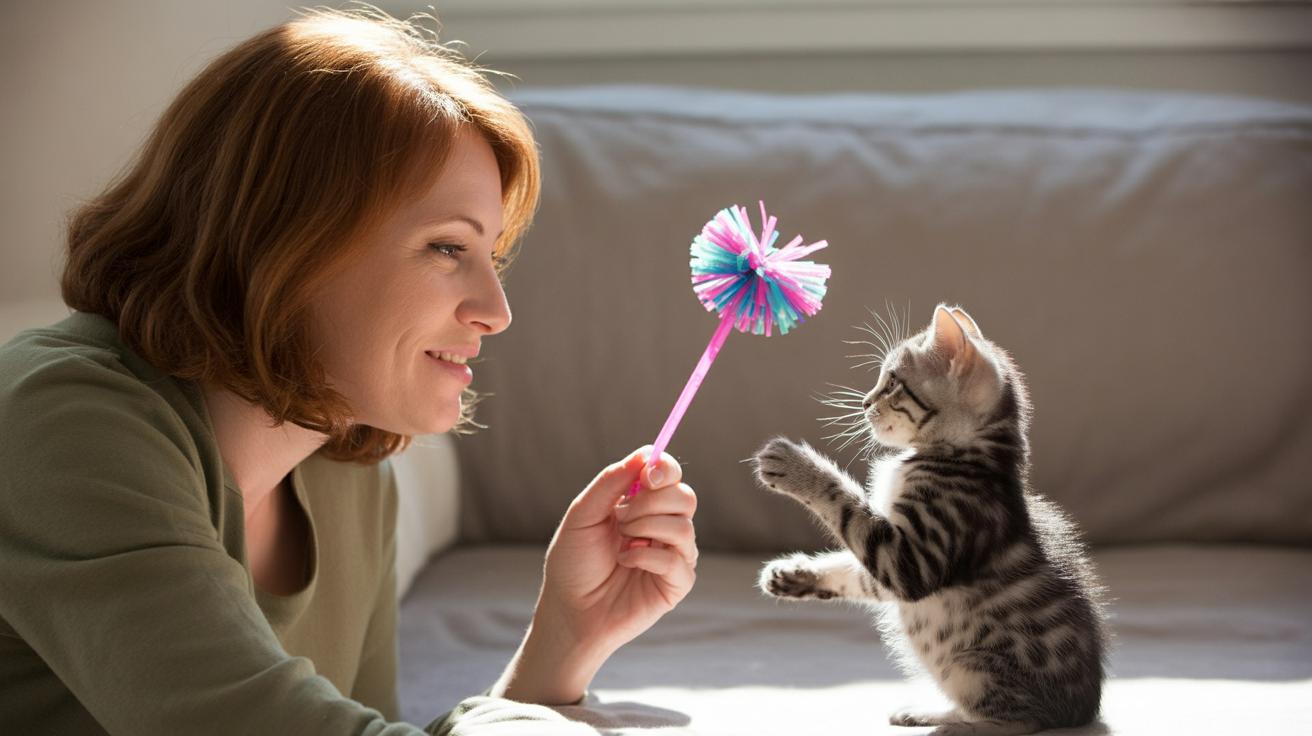
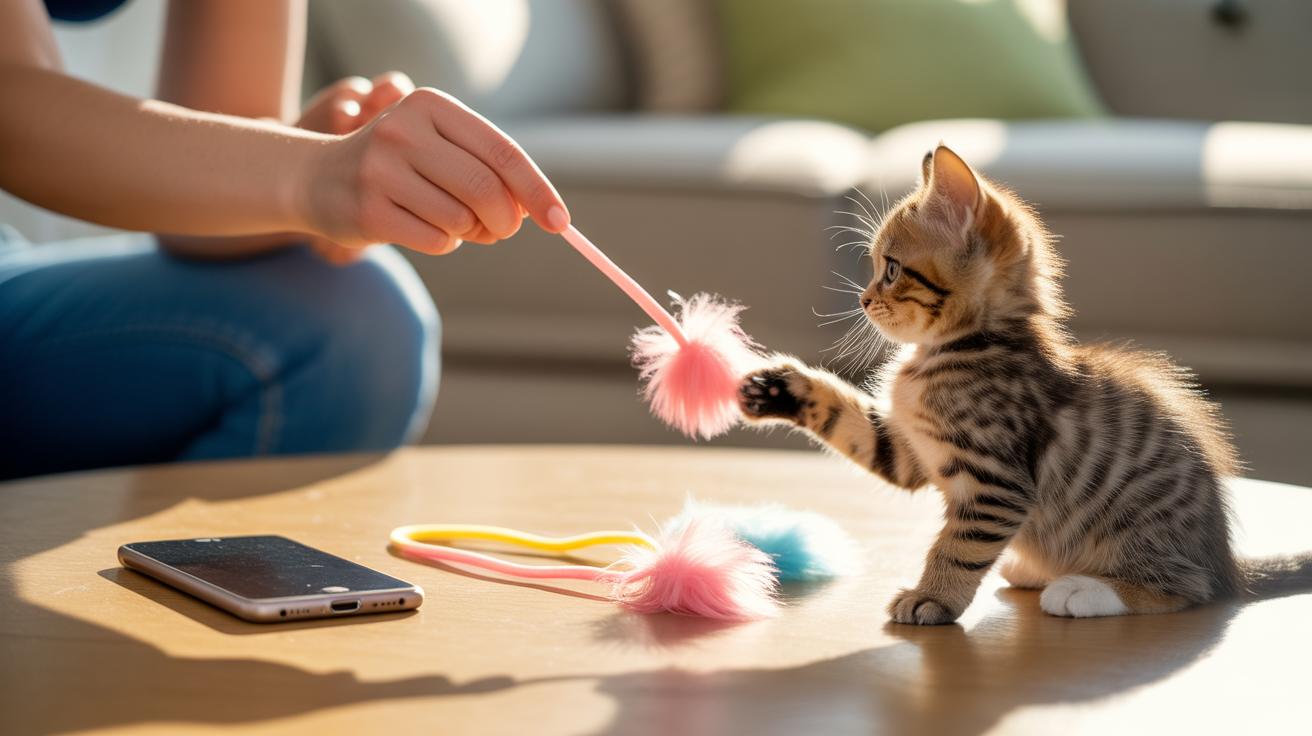
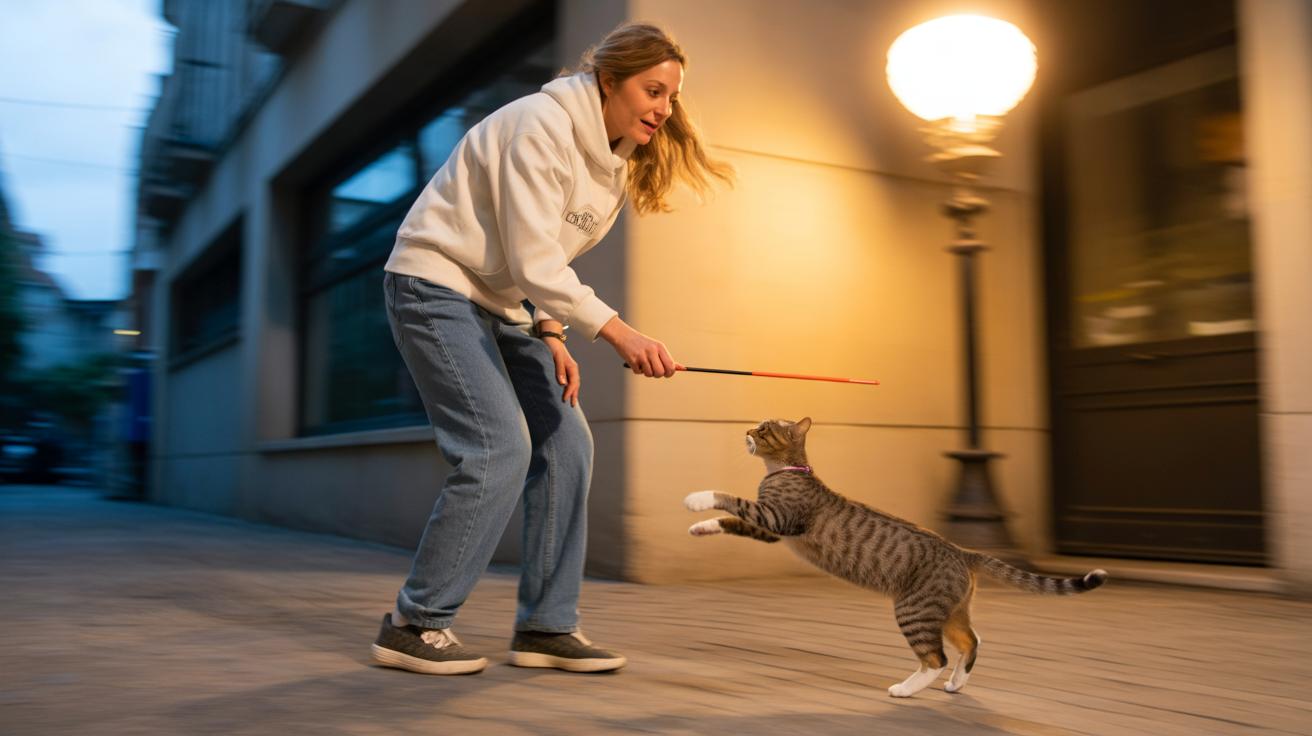
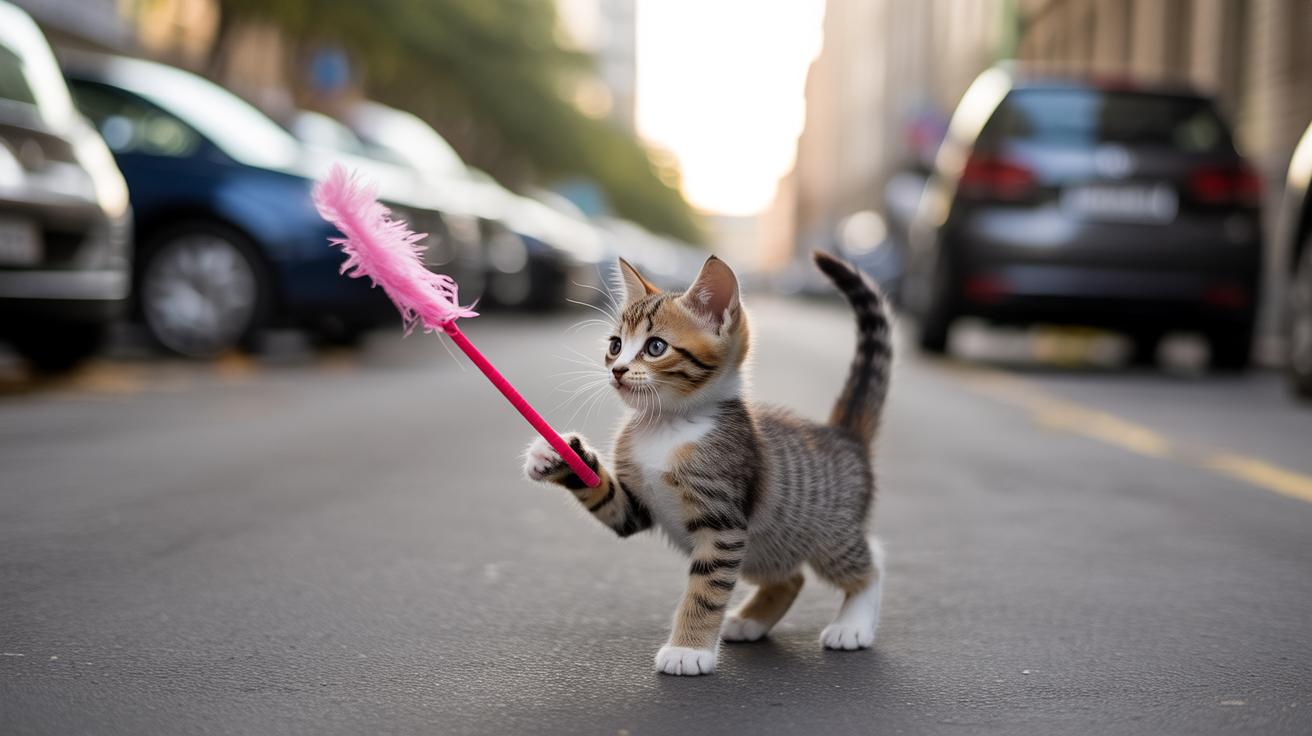
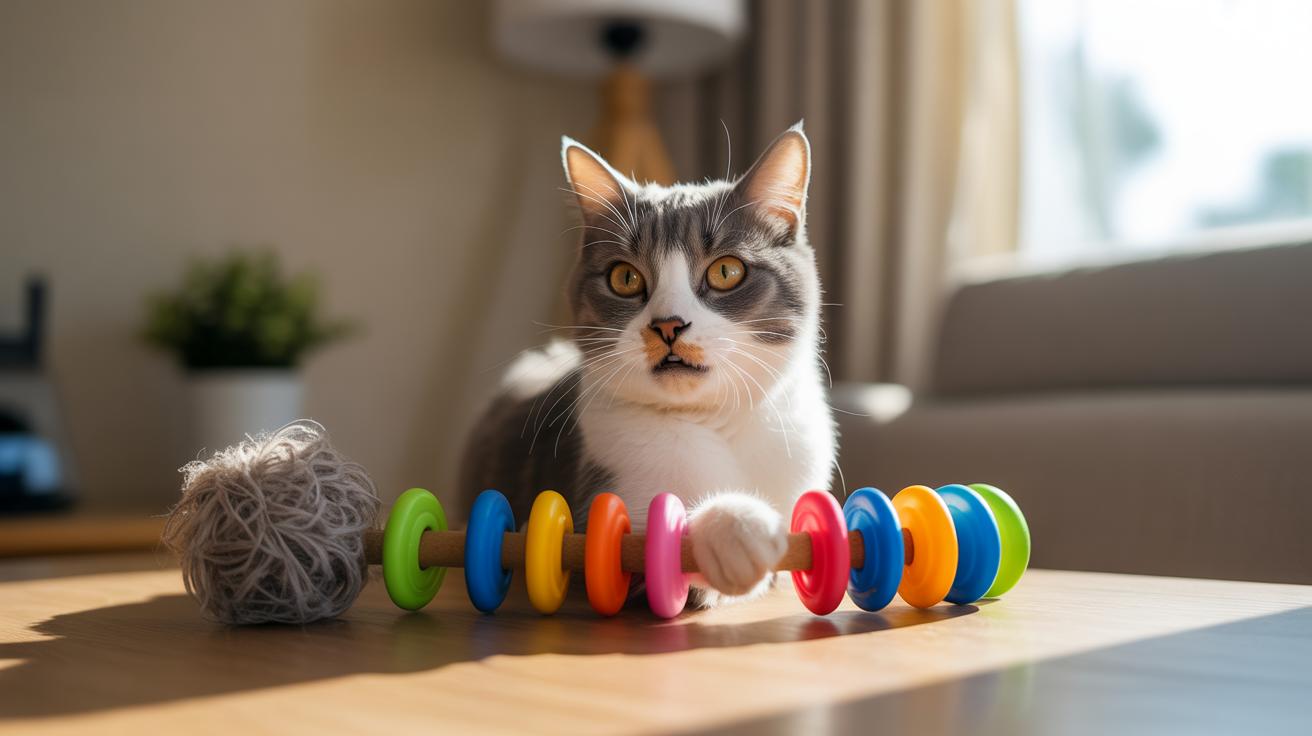
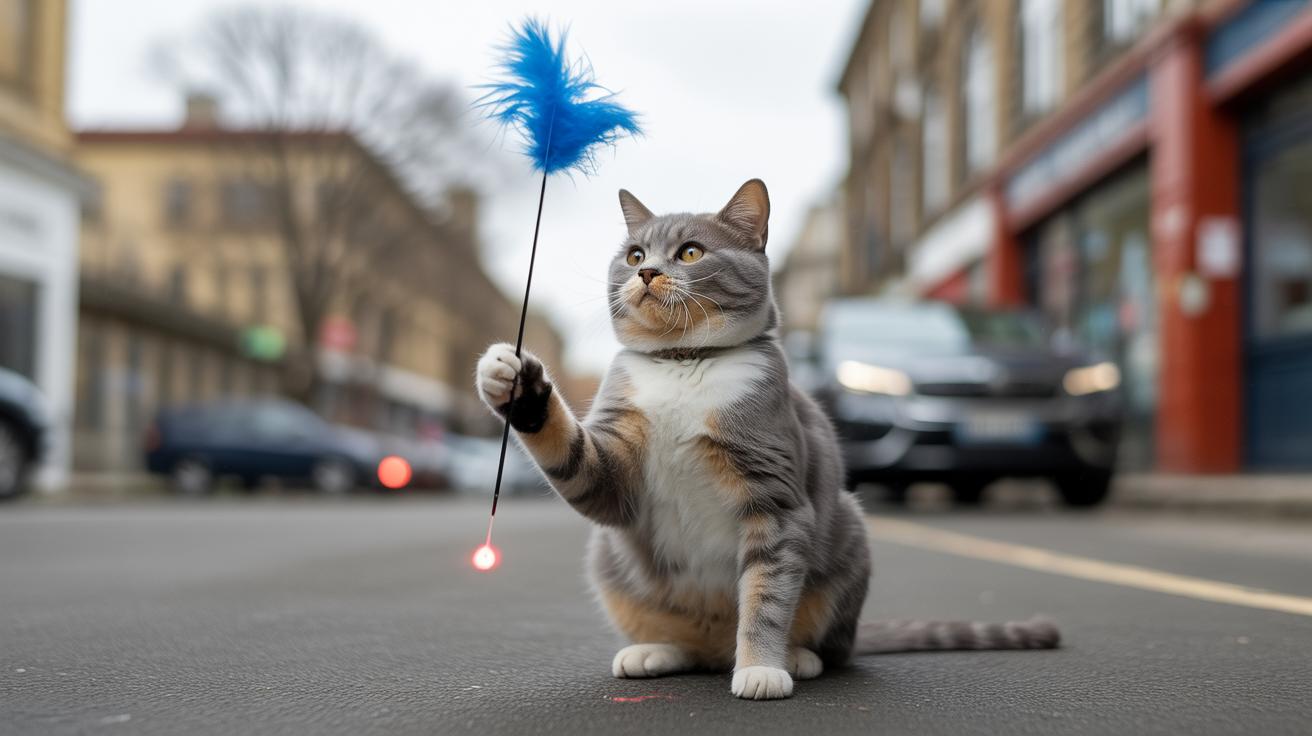
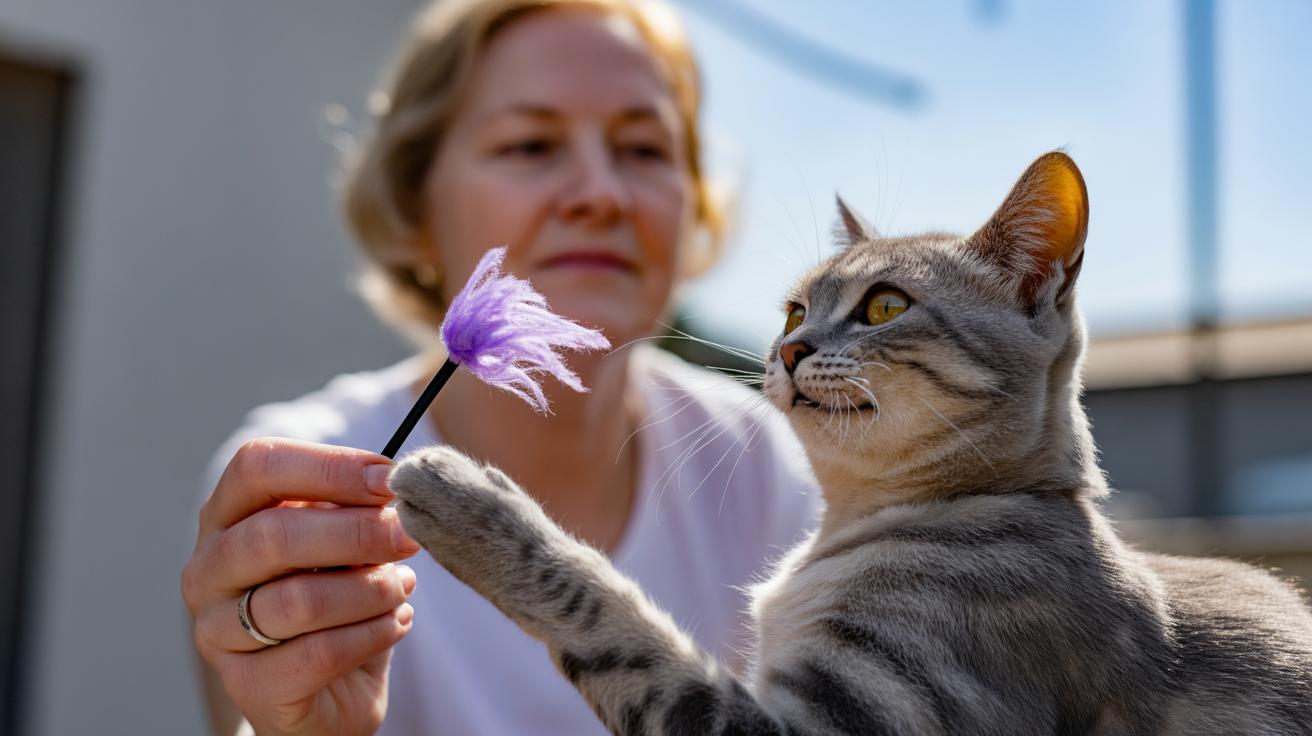
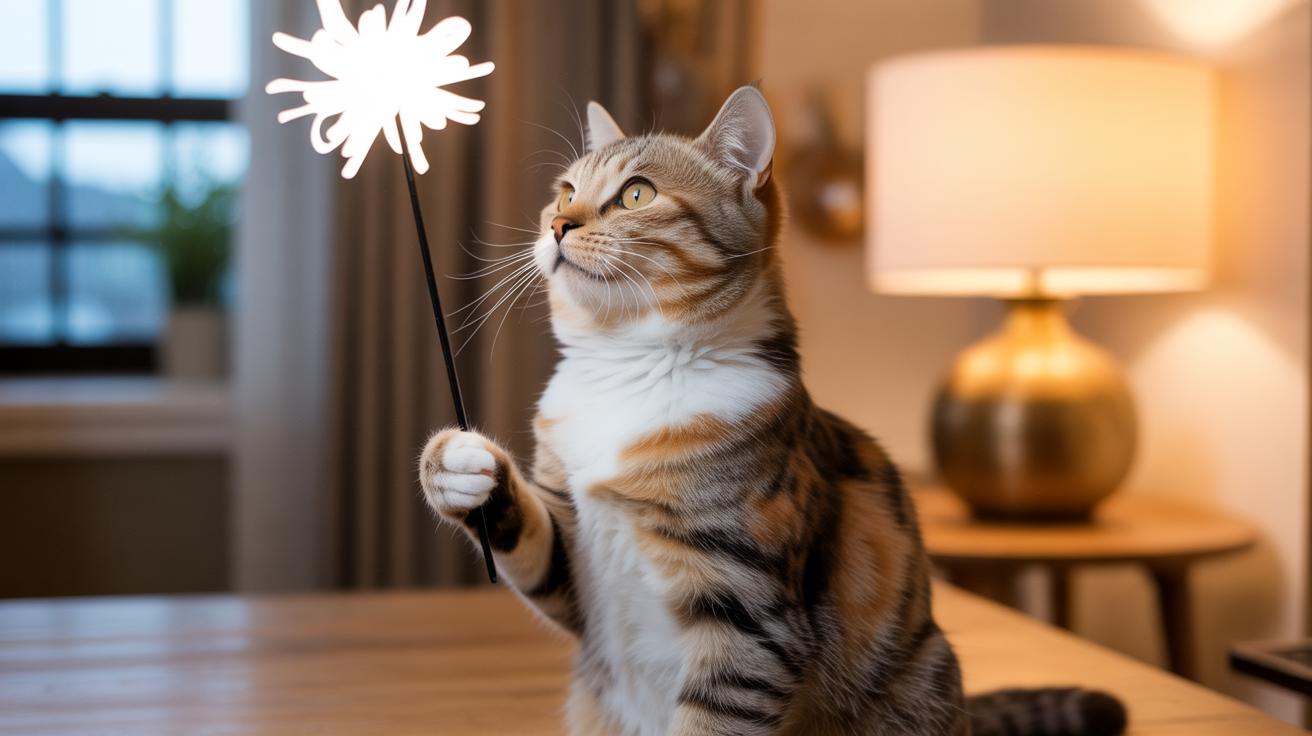
    Think a teaser wand is just a toy? Think again. Spend a few focused minutes with the right moves and that feather-on-a-stick becomes a mini hunt that sharpens focus, builds muscle, and beats boredom. Ever watched whiskers twitch as the lure skitters? It’s the best.

    Here’s a short, friendly 8-step routine to make each play session count. Follow it a few times a day and you’ll see better pounces, longer focus, and that satisfied flop after a capture.

      1. Wake-up wiggle. Wiggle the wand slowly near their nose so they notice the movement. Keep it small and teasing.
      1. Slow drift. Move the lure in a smooth line across the floor so they track it with their eyes. Let them follow.
      1. Quick skitter. Make the feather dart suddenly like a fleeing bug. That tiny burst sparks their hunting instinct.
      1. Pause and wait. Stop the motion and hold it still. Let them stalk a little before you move again.
      1. Tease near cover. Drag the lure behind a box or under a blanket corner so they learn to hunt around obstacles.
      1. Big chase. Pull it away for a longer sprint to get their heart rate up. Short bursts are better than marathon runs.
      1. Capture moment. Let them catch it sometimes. A successful grab teaches them to finish the hunt.
      1. Calm down. End with a slow, gentle wave and a soft pet or treat to signal rest time.

    Safety first, five quick checks before you play.

    • Check the wand tip for loose threads or cracks; replace it if it looks worn.
    • Avoid tiny parts that can come off and be swallowed.
    • Use toys with sturdy attachments so nothing detaches mid-chase.
    • Keep strings away when unsupervised to prevent tangling.
    • Watch body language; if your cat freezes or hisses, stop and try slower play later.

    Short on time? Try these pacing tips for busy people.

    • Ten-minute bursts work great before you leave for work or after dinner. It’s enough to burn off energy.
    • Do two short sessions instead of one long one to keep them engaged.
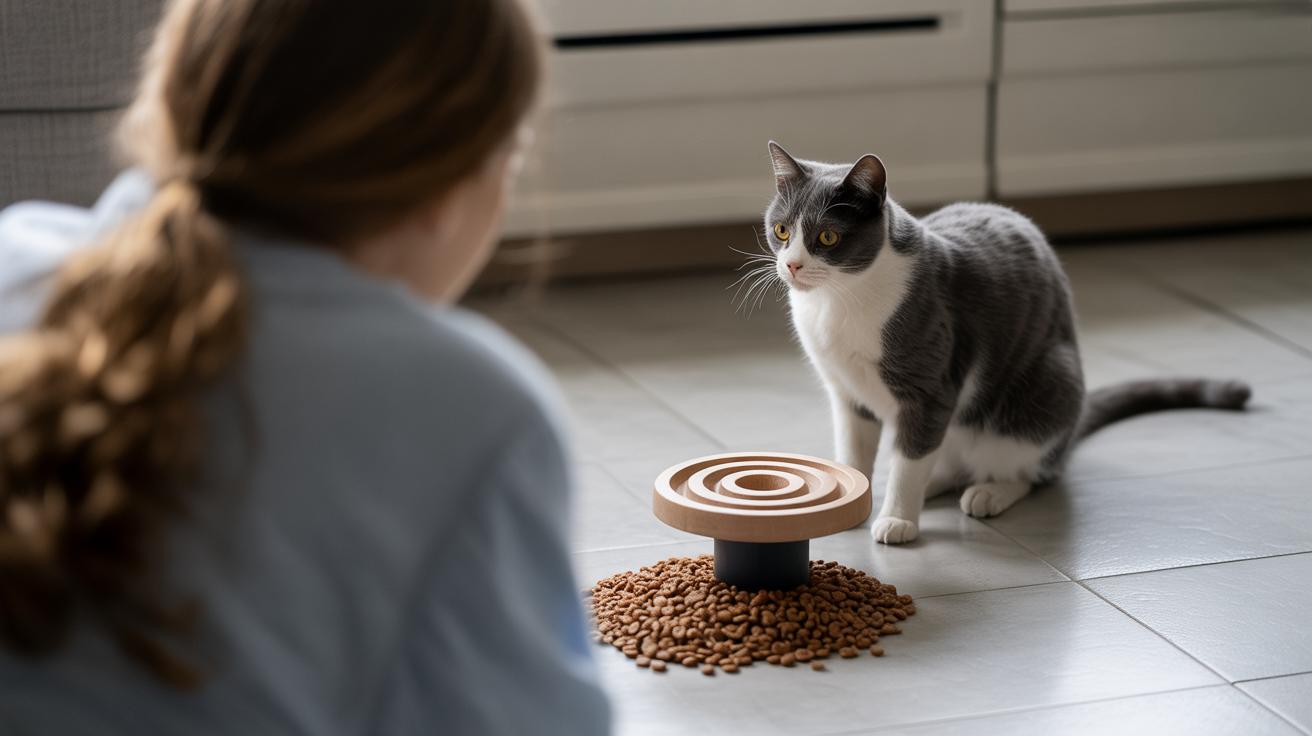
    • Leave a safe, puzzle-style toy for solo play when you can’t be there. I know, I know, you can’t be everywhere.

    Watching a perfect pounce is its own reward: the soft thump, the little roar in their shoulders, and that proud flop afterward. It’s kitten training that’s playful, safe, and actually works. Worth every paw-print.

    Quick Start: 8-step teaser-wand routine (do this first)

    - Quick Start 8-step teaser-wand routine (do this first).jpg

    Ready to play right now? This 8-step teaser-wand routine is short, sharp, and built to get chasing, pouncing, and real thinking into your kitten's day. It only takes minutes, and it works great for busy people who want clear steps without fuss. Ever watched your kitty’s whiskers twitch as a lure skitters by? That’s the good stuff.

    Short bursts mimic real hunting, so kittens stay excited and focused. You can start today and see quicker activity and better attention.

    1. Inspect the wand with the 5-point safety checklist below.
    2. Warm-up: slow drag across the floor for 30 to 60 seconds. Make it obvious and easy to follow.
    3. Bug sequence: quick, erratic tiny bounces for 60 to 90 seconds, with sudden stops and starts like a startled insect.
    4. Snake sequence: slow ground drag for 30 to 60 seconds, a long, slithery motion that teases the belly-hunt reflex.
    5. Mouser sequence: low skittering fuzz moves for 60 seconds, shallow pulls and small hides that invite the pounce.
    6. Bird-chase: short flutter tosses for 30 to 60 seconds, a light toss so the lure floats, then settles.
    7. End on a capture: let your kitten catch the lure, give praise or a tiny treat right away. Positive finish.
    8. Store the wand out of reach and note any wear for replacement, especially frayed parts or loose pieces.

    Pacing tip: keep a playful tempo. Use short bursts, brisk changes, then a calm capture. Aim for about a 30 to 50 percent catch rate so your kitten feels challenged but rewarded. Try sessions when your kitten is naturally active, like early morning or evening. Quick five-minute wand runs between naps work wonders.

    Training variables:

    • Session length options: three 5-minute bursts, or two sessions of 10 to 15 minutes.
    • Frequency: 2 to 4 times a day.
    • Start age: supervised introduction around 8 to 10 weeks; adapt for younger litters and always watch closely.

    5-point safety checklist:

    • Check the string integrity, no frays or exposed core (exposed core means inner fibers poking out).
    • Confirm attachment security, make sure the lure is firmly fastened where it meets the wand.
    • Verify materials are labeled non-toxic (non-toxic means safe if a pet chews a bit).
    • Inspect for no small removable parts or beads that could be swallowed.
    • Store the wand where the kitten cannot access it unsupervised.

    Watch a short demo (30 to 90 seconds) showing this 8-step flow. For deeper tutorials and product picks, see how to train kittens with interactive teaser wands.

    See details below: Choosing safe teaser wand toys; Training progression (week-by-week goals); Preventing biting (prevention & cues); Using teaser wand training for behavior redirection; Troubleshooting (problem fixes); Practical sample schedule and progress log; FAQs.

    Choosing safe teaser wand toys for kittens: what to look for

    - Choosing safe teaser wand toys for kittens what to look for.jpg

    For a quick routine, see Quick Start. This section digs into picking a wand and lures that are sturdy, safe, and downright fun for tiny hunters. For product guides and picks, check how to train kittens with interactive teaser wands.

    Think of a wand as three parts: handle, shaft, and attachment. Pick handles with a soft, grippy coating or smooth wood that resists chewing, so it’s comfy in your hand and less tempting for nibblers. The shaft should bend without snapping – fiberglass (like a strong fishing-rod core) or a flexible polymer (a durable plastic) give lively motion without breaking. Attachment joints should be stitched, crimped, or bonded, with no loose glue bits that could fall off.

    Match the lure to the play style your kitten loves. Crinkle textures call out the bird-and-bug chases, faux-fur or short plush fits mouser play, and thin silicone (soft, rubbery) or ribbon slides like a little snake. Keep fluttery lures very light, about 5 to 10 grams, and small ground lures a bit heavier, about 10 to 20 grams. Ever watched your kitten stalk a flutter? Their whiskers tell you everything.

    Keep trailing lengths short – no longer than 12 inches (30 cm). And never leave a wand unattended with kittens around, even if they seem careful.

    Rotate attachments every 3 to 7 days to keep things exciting. Retire any lure that shows exposed foam, loose threads, or chewed edges. Oops, make that a rule: if it looks worn, toss it.

    Do the Quick Start safety checklist before every session.

    Product tips:

    • Pick single-piece lure heads or tightly stitched assemblies so there aren’t loose bits.
    • Skip loose beads, glitter, or tiny decorations that could come off and be swallowed.
    • Choose shatter-free fittings – no brittle plastics or thin metal crimps.

    Training progression: week-by-week goals for teaser wand training

    - Training progression week-by-week goals for teaser wand training.jpg

    For the quick routine, see Quick Start.

    Think of this plan like a gentle ramp. Each week adds a little more challenge so your kitten learns to hunt, think, and listen without getting overwhelmed. The goals below focus on clear behaviors you can watch for, approach, confident pounce, and a calm drop or handback, rather than every tiny move (those are in Quick Start).

    Week 1: Familiarization and engagement

    Goal: your kitten willingly approaches the wand and gives short pounces. Keep sessions low-intensity and frequent so the toy feels fun, not scary. Let the kitten sniff the lure (the toy tied to the wand), chase slow ground drags, and reward tiny wins with praise or a small treat; short positive moments build curiosity fast. Ever watched your kitten’s whiskers twitch as a lure moves? That’s the good stuff.

    Week 2: Build chase and pounce confidence

    Goal: consistent chases and partial captures across different prey patterns. Add a few erratic bounces and mild flutter tosses to mix things up, and watch interest levels. If your kitten hesitates, back off to simpler moves for a session or two, then try slightly faster or higher targets to encourage jumping. It’s okay to take it slow, you’re building boldness, not stress.

    Week 3: Release-on-cue and retrieval basics

    Goal: start teaching a "drop" or "leave" cue and encourage brief handback attempts. Use a tiny treat or immediate praise the instant the kitten releases the lure, repeating during calm moments so they link giving up the toy with something good. Begin short retrievals by swapping the lure for a reward (handback means bringing the toy back to your hand) so they learn that returning the toy is worth it.

    Keep a simple log: date of first voluntary pounce, first controlled capture, first release on cue, notes on enthusiasm or signs of overstimulation, and any retreat steps you used. These notes tell you when to add challenge or pause practice.

    For two copyable daily templates, see Practical sample schedule and progress log.

    Worth every paw-print.

    Preventing biting and overstimulation during teaser wand training for kittens (prevention & cues)

    - Preventing biting and overstimulation during teaser wand training for kittens (prevention  cues).jpg

    For the quick routine, see Quick Start.

    Start with simple, consistent rules. Don’t let hands act like prey; use a teaser wand (a stick with feathers or a small toy on the end) instead of your fingers. Keep sessions short and sweet, five minutes is fine, and move the toy slowly when a kitten is new or overly excited, because slow moves really cut down on biting. Use the same short phrase to begin and end play, like "play time" and "all done," so your kitten learns the routine.

    Practice cue work when things are calm. Teach "leave it" and "drop" during quiet moments, not in the middle of a full chase. Reward the right response right away, within one second, with praise or a tiny treat so the kitten makes the connection. Rehearse the cues without the wand so they work on and off playtime.

    Early overstimulation signs to watch

    Look for these early warning signals:

    • Big, wide pupils.
    • A tail whipping or thrashing.
    • Ears flattened against the head.
    • Sudden, sharp swipes or quick lunges.
    • Loud, prolonged yowling or frantic chattering.

    If you see any of these, stop the game immediately. Give a calm break until your kitten relaxes.

    Prevention protocols and cue-training steps

    Follow this 5-step checklist to keep things fun and safe:

    1. Start each session with a predictable warm-up, like a slow drag across the floor so the kitty can focus.
    2. If your kitten aims for your hands, swap in a plush target they can bite safely.
    3. Keep intensity low: short bursts, low jumps, and controlled speed. It’s better to leave them wanting more than to overdo it.
    4. Pair the "drop" cue with an immediate reward within one second so they learn to release on command.
    5. End on a calm capture or gentle hold, not a wild pounce, so the last memory is relaxed.

    If things escalate despite these steps, see Troubleshooting for focused fixes. Worth every paw-print when it clicks.

    Teaser Wand Training for Kittens: Step-by-Step

    - Using teaser wand training for behavior redirection and enrichment.jpg

    Wand play turns a kitten's hunting urge into quick, happy bursts of chase and pounce. Do short, lively sessions right before quiet times and you'll slash furniture attacks and late-night zoomies. Plus your kitty will learn a calming routine they can count on. Ever watched whiskers twitch as a feather skims the carpet? It’s oddly satisfying.

    Try an evening rhythm: 7:00 pm active play (fast flutter and big jumps), 7:08 pm calm lure (slow drag along the floor), 7:10 pm a small meal. Active, then calm, then food. That sequence helps your cat use up energy and then settle down for sleep. Worth every paw-print.

    Use the wand to steer play toward a scratching post or a tunnel entrance so hunting ends in the right spot. Guide them to touch or step into the target, then reward with a little flourish of the wand and praise. Over time they’ll learn where playtime finishes safely.

    Rotate toys every 3 to 7 days so things stay fresh. Pair wand sessions once or twice a week with a puzzle feeder (a toy that releases food slowly) to make treats work a bit for their dinner. Add climbing shelves and a cozy hide for post-play snoozes. If your cat starts snoozing through sessions or gets bored, rotate more often.

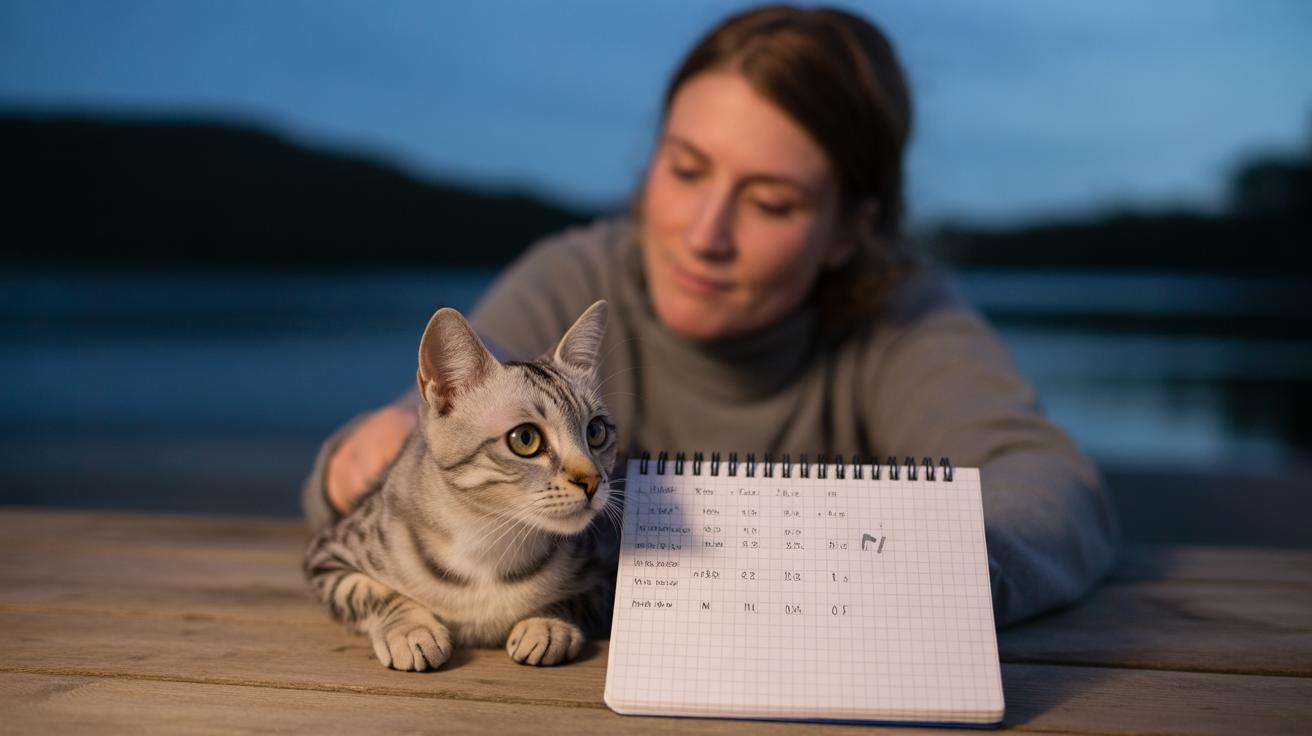
    Keep a simple 2-4 week behavior log: note the date, how many sessions you did, and the problems you saw before and after (scratching, night vocalizing, hyperactivity), plus which lure you used. A tiny table helps.

    Date Sessions Before Issues After Issues Lure Used
    2026-02-01 2 Night zoomies Settled faster Feather wand

    Watch for fewer furniture attacks, quicker settling, and calmer nights over two to four weeks. If things don’t improve, tweak the timing, try a different lure, or bring in a behavior pro. I once watched Luna leap six feet for a feather and then curl up immediately after dinner. It’s small moments like that that make this worth it.

    Troubleshooting common problems in teaser wand training for kittens: focused fixes

    - Troubleshooting common problems in teaser wand training for kittens focused fixes.jpg

    If you want the quick routine, check Quick Start.

    Watch, tweak one thing, try again. Start by observing a few short play sessions, change only one element, motion, texture, or timing, and run it again. For example: I slowed the drag and Luna started pouncing after two tries. Simple wins like that are common.

    Re-engaging a bored kitten (ignoring the wand)

    • Add sound. Use a crinkle lure (thin paper or foil layer that makes noise) or a tiny bell to spark curiosity.
    • Play at dawn or dusk when cats naturally wake up.
    • Try a slow demo: wiggle the lure on the floor for 20–30 seconds, then stop and wait. That pause usually makes them pounce. Ever seen that twitch in the whiskers?
    • Rotate lure textures across sessions to find what clicks.

    When to retire a lure (shredding / ingestion risk)

    • Stop play right away if you spot shredding, exposed foam, or loose threads. Safety first.
    • Replace the lure with a single-piece silicone (soft, rubbery) or a tightly stitched faux-fur head (fake fur that won’t pull apart).
    • Supervise future sessions and keep spare lures ready so you can swap mid-play if fraying appears. If the tail starts to fray, pull it out of rotation and use a spare right away.

    Fear or avoidance

    • Back up a few feet and do slow ground drags for 3–5 short sessions to rebuild trust. Small steps.
    • Reward calm approaches with a high-value treat right after they sniff or touch the lure. Positive vibes only.
    • Only reintroduce higher-energy moves after several calm, no-pressure exposures. Slow drags for three sessions, then one tiny hop, reward the calm sniff.

    Runaway overstimulation (brief guide and cross-reference)

    • Look for frantic tail thrash or flattened ears. If you see those, pause play. Then follow the overstimulation interruption in Preventing Biting: a 30–60 second break, withdraw the wand, offer a calm plush target, then restart slowly and reward calm. Pause, swap to a soft plush, then restart with a slow drag and a treat for calm.

    Common beginner mistakes and quick fixes

    • Sessions that are too long → switch to 3–5 minute bursts. Short and sweet.
    • Lure too easy to catch → add unpredictability and mid-air pauses so they work for the catch.
    • Inconsistent cues → pick two short words and use them every time (try "Go" and "Stop"). Cats learn patterns.
    • Using your hands as prey → never do it. Redirect to a plush toy or wand. Your fingers will thank you.
    • Ignoring damage signs → retire lures at the first exposed foam or loose threads and use spares.

    For prevention protocols and cue training, see Preventing Biting.

    Practical sample schedule and copyable daily templates for teaser wand training

    - Practical sample schedule and copyable daily templates for teaser wand training.jpg

    For a fast routine, see Quick Start.
    Pick Basic if you’ve got a busy day and need short, reliable sessions. Pick Intensive when you want quicker progress and can run three focused bursts. Week-by-week goals live in Training progression, so use those milestones while you copy these templates.

    Basic template (for busy owners)
    Two 7-10 minute sessions a day. Example minute-by-minute:
    0:00-1:00 warm-up slow drag (gentle lure across the floor to get the whiskers twitching).
    1:00-6:00 mixed prey patterns , bug, snake, mouser, bird (vary speed and direction so it feels like real hunting).
    6:00-7:00 calm capture + tiny treat (a pea-sized reward, or a lick of wet food).
    Morning idea: quick 7-minute burst before breakfast to burn off waking energy.
    Evening idea: an active 7-minute chase then a calm drag before a small meal to help your cat settle. Worth every paw-print.

    Intensive template (for focused training)
    Three 5-minute bursts spread across the day. Per burst micro-exercises:
    0:00-0:30 slow drag (get them interested).
    0:30-1:30 erratic flutter (short, buzzy moves like a trapped insect).
    1:30-3:30 ground skitter (fast, low movement across the floor).
    3:30-4:30 short toss (lift and drop the lure for a little air chase).
    4:30-5:00 calm capture and reward (soft praise and a tiny treat).
    Space bursts by a few hours so the kitten stays eager and doesn’t overheat. I once watched Luna leap six feet after a fluttering feather in a five-minute blast , pure joy.

    Progress log fields
    Keep a simple log so you can see patterns and wins. Fields to track: date, age, template used, session lengths, approaches used, milestone reached, signs of overstimulation, notes. Example entry below.

    Field Example
    Date 2026-02-01
    Age 9 weeks
    Template used Basic
    Session lengths 2 × 7 min
    Approaches used bug + snake
    Milestone reached first pounce
    Signs of overstimulation mild tail whip
    Notes very eager

    Stop conditions (when to end the session)

    • Loss of interest for more than 60 seconds. If they ignore the wand, try again later.
    • Repeated biting after gentle redirection. Don’t let biting become a habit.
    • Clear overstimulation signs: tail thrash, flattened ears, wide pupils. If you see these, pause and give a calm break.

    Quick tips

    • Think of your teaser wand (toy with a stick and dangling lure) like a fishing rod for cats. Short, varied sessions beat long, boring ones.
    • Keep rewards tiny. A little treat goes a long way.
    • For busy days, toss an unbreakable ball before you head out , that’s ten minutes of safe play.
    • Um, and remember: play should be fun for both of you. If it ever feels stressful, slow it down and try a gentler pattern.

    Teaser Wand Quick Reference Checklist

    - Frequently asked questions about teaser wand training for kittens quick answers.jpg

    • Quick Start: See the Quick Start section for when to begin and for session templates. Quick rule of thumb , start supervised at 8–10 weeks and keep mini-sessions short: 2–5 minutes. (Begin at 8 weeks with 2–3 minute play bursts.) These short bursts help build focus and keep play fun.

    • Choosing safe teaser wand toys: See that section for the full safety checklist and lure comparisons. Short picks for regular play: faux-fur (synthetic soft fur), silicone (flexible rubber-like material), or tightly woven fabric (closely knit cloth). These feel nice to touch and are less likely to shred into dangerous bits.

    • DIY feather-wand safety: Moved to Choosing safe teaser wand toys , but quick tips here: bind feathers tightly, cap any sharp ends, avoid loose glue, and retire the wand if any bits start to come loose. Better safe than sorry, right?

    • Troubleshooting: If your kitten ignores the wand, nips, or shows signs of overstimulation, check the Troubleshooting section for step-by-step fixes. Quick tries: change the lure texture, demo the motion for 20–30 seconds so they can learn the pattern, then pause and swap to a plush target to let them “catch” something. Ever watched a kitty go from meh to full pounce after a demo? It’s magic.

    • Tracking progress: Use the Practical sample schedule to log date, session length, approaches used, milestones, and any overstimulation signs. A simple log helps you spot patterns, when they’re tired, when they escalate, and what play they love.

    • Safety pre-checks: Inspect toys before each play: look for frays, loose parts, or tiny pieces. Retire any toy at the first sign of damage , a little caution now avoids a vet visit later.

    • When to escalate: If aggression, severe fear, or injury keeps happening after 2–4 weeks of consistent, documented training, consult a certified behaviorist or your veterinarian. Get help sooner rather than letting things get worse.

    Final Words

    Right in the action: you’ve got a punchy 8-step quick-start, a five-point safety checklist, session-length options, week-by-week goals, and troubleshooting fixes so you can start play now.

    Keep sessions short, aim for a 30%–50% catch rate. Run play during naturally active times. Your cats will show it with bright eyes and satisfying pounces.

    Use the demo video and Practical templates to get rolling. Try teaser wand training for kittens: step-by-step and watch those multi-cat households settle into more calm, playful evenings. Worth every paw-print.

    FAQ

    FAQ

    How do I train kittens with a teaser wand step-by-step at home or using a video or free guide?

    Inspect the wand for safety, do a short warm-up, run varied prey patterns (bug, snake, mouser, bird), finish each play session with a calm “capture,” and keep short supervised sessions starting around 8–10 weeks.

    How do I use a wand toy with a cat?

    Start with a safety check, do a slow 30–60 second warm-up, mimic varied prey motions, finish on a calm capture, and store the wand out of reach when play is over.

    What is clicker training for cats and how can it stop bad behaviors like jumping on counters?

    Clicker training uses a small handheld sound marker to mark desired actions, then you reward. To stop counter jumping, click and reward stepping down, teach an “off” cue, and redirect the cat to an approved spot.

    What is the best clicker for cat training?

    A simple, loud, easy-press clicker with a clear click and durable build. Choose a small metal or plastic model that fits your finger comfortably.

    What is the 3-3-3 rule for kittens?

    The 3-3-3 rule: first 3 days to decompress and hide, next 3 weeks to settle into a routine, and about 3 months to fully bond and feel secure in their new home.

    What is the easiest trick to teach a kitten?

    The easiest trick is “sit.” Lure with a treat to guide the rear down, click or mark the moment it sits, reward, and repeat in short 1–2 minute bursts.

    What is the two kitten rule?

    The two kitten rule means adopting two kittens together so they have a playmate, learn bite inhibition, burn energy, and reduce separation mischief—handy for busy households.

    Feather vs ribbon vs faux-fur lures—which is best?

    Feather lures spark aerial chases but can shed shafts; ribbons are lightweight but have higher ingestion risk; faux-fur mimics small prey and is usually tougher. Always supervise and retire frayed lures.

    Related Articles

  • How to Introduce Toys to Shy Cats

    How to Introduce Toys to Shy Cats

    Think shy cats won’t play? Think again. They often just need a gentler, slower invite to feel curious.

    Start with a scent-soak (rub the toy on a blanket or your shirt so it smells like home). Use distance play (play from across the room with a wand or laser so your hands stay safe). Celebrate tiny, slow practice wins. Short, calm sessions help them learn without pressure.

    Here’s a quick-start plan you’ll actually use: pick a quiet room, begin with a teaser wand (like a fishing rod for cats), then try gentle laser moves once they’re comfortable. Keep sessions tiny and sweet, two to five minutes, and finish with capture-plus-treat (let them catch the toy, then give a tiny treat). Ever watched whiskers twitch into full-on focus? It’s the best.

    Worth every paw-print.

    Step-by-step plan

    - Step-by-step plan.jpg

    Quick-start play plan: 1) set up a quiet room with a scented safe toy, 2) try distance play with a long wand (a pole with feathers or a dangling toy) or a laser pointer (the little red-dot toy), 3) finish with a small capture toy (something your cat can catch) and a treat. Simple. Fast. Fun.

    Expect this to take anywhere from a few days to several weeks for a shy or fearful cat. Go slow. Tiny wins every day beat one big, stressful session.

    1. Check temperament and health first with a quick checklist: appetite, mobility, any signs of pain. See Reading shy cat body language for red flags and vet cues.
    2. Put the new toy where the cat already feels safe so it soaks up familiar smells (see Using scent and placement for the full scent-soak procedure). Think of it like leaving a scarf in a new house so it smells like home.
    3. Place toys near comfort spots or feeding areas, not in busy hallways. That makes approaching voluntary and low-stress.
    4. Use distance play with wands or a laser. Keep your hands out of the cat’s space so they don’t feel threatened. See Slow-play techniques for wand progressions and sample plan.
    5. Keep sessions very short: 1 to 3 minutes, repeated 2 to 4 times a day. Short and frequent beats long and rare for gradual toy introduction.
    6. Always end with a capture toy and a treat reward to avoid laser frustration. Rewarding the catch helps them feel successful. See Training, treats, and reinforcement for reward schedules and treat-fading.
    7. Move closer only as the cat chooses to come forward. If you see stress, hold position and respect their pace. See Reading shy cat body language.
    8. Pause or step back when stress signals appear and check the troubleshooting list in Toy rotation, tracking progress, and troubleshooting if things stall.

    Quick checklist before the first session:

    • Quiet room set up
    • Chosen safe toy (no loose parts)
    • 2 to 4 minute timer
    • Small, high-value treats
    • Easy retreat route for the cat
    • Notebook or tracker to jot short notes

    For full procedures on scent, slow-play, training, body language cues, and milestones/troubleshooting, consult the linked detailed sections so this stepwise plan stays compact. Worth every paw-print.

    Choosing toys

    - Choosing toys.jpg

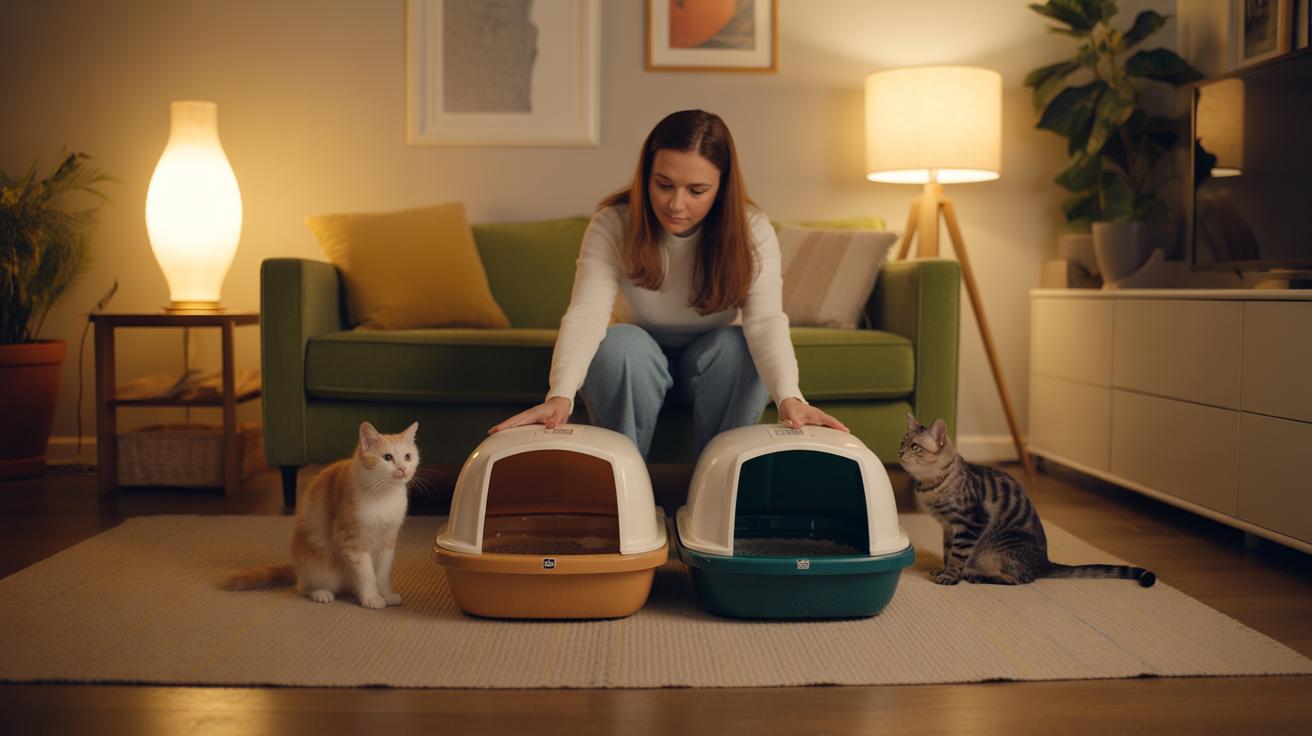
    Pick toys that move quietly, at a slow pace, and feel small and non-threatening in your cat’s paw. Look for simple designs made from tough, safe materials so the toy says "play" and not "surprise." Quiet motors are okay, think a tiny, gentle buzz, not a jackhammer.

    Toy Type Typical Movement Best For Safety Notes
    Wand / feather (like a fishing pole for cats) Slow flutter and twitch Timid cats who like distance play Supervise. No loose strings or bits that can detach.
    Plush mouse (soft fabric, cuddle-friendly) Soft bounce, optional crinkle (thin crunchy material) Comfort seekers and capture practice No button eyes; strong seams; washable fabric (easy to clean).
    Puzzle feeder (food puzzle that makes cats work for kibble) Slow dispense, foraging motion Food-motivated shy cats Easy-clean surface; no small removable pieces.
    Laser pointer Point-of-light dash Pressure-free stalking and energy burn Never shine in eyes; end sessions with a catch toy plus a treat.
    Quiet rolling toy Gentle roll, soft thud Curious trackers who follow motion Low noise; enclosed wheels; washable shell.
    Remote-controlled prey Slow skitter, variable speed Wary chasers who like lifelike motion Low-vibration motor (small motor that barely buzzes); sturdy casing.
    Soft batting toy Light nudge and tap Gentle pawers who bat tentatively No long strings; sized to avoid swallowing.

    Wands and lasers are great first steps because they keep your hands out of the kitty’s zone and let the cat choose how close to get. Plush mice are a sweet finish, something soft to catch and carry. Puzzle feeders add mental work, which can calm a nervous cat by giving them a job to do.

    Remote-controlled prey can be brilliant for cats who need a realistic target, but pick one with a low-vibration motor (small motor that barely buzzes) so it doesn’t startle. I once watched Luna leap six feet for a slow-skitter toy, worth every sigh.

    Older cats and vision-impaired cats often prefer toys with gentle sound or texture. A soft bell or crinkle helps them find the toy, but watch reactions, some cats find bells scary. Match toy type to comfort level: distance toys first, then grab-and-hold plush, then moving toys that encourage light chasing.

    Safety quick-check before first use:

    • No loose or detachable parts that could be swallowed.
    • Non-toxic materials (safe if chewed a bit) and washable fabric.
    • Secure battery hatch or sealed compartment so batteries stay put.
    • Size large enough to avoid swallowing, small enough to bat safely.
    • Smooth edges; no sharp bits that could snag fur or skin.

    Worth every paw-print.

    Using scent and placement

    - Using scent and placement.jpg

    Scent is a cat’s first language. A toy that smells like home suddenly feels less scary and more like a friendly thing to explore. Ever watched your kitty sniff a new object like it’s a tiny mystery? This is how we make shy cats come around, on their own terms.

    1. Make a scent soaker (an item that soaks up your cat’s smell). Pick a soft blanket, their bed, or a cardboard scratcher (thick corrugated pad). Leave it in the cat’s main area for 24 to 48 hours so it gathers those familiar smells.
    2. Let the new toy hang out with the soaker for 24 to 48 hours. Think of the toy borrowing the blanket’s “I live here” smell. It makes the toy feel like less of a stranger.
    3. Move the soaker and toy to a nearby neutral spot for 2 to 5 days to spread that familiar scent between rooms. Scent swapping (moving smells around) helps shy cats accept new spaces.
    4. Put the scented toy near the food bowls for 1 to 3 meals so the toy shows up during a good thing. Cats quickly learn to link the toy with positive moments.
    5. Warm plush toys in your hands for 5 to 10 minutes before offering them (warmth and your scent help). You’ll feel the toy go from chilly to cozy, your cat notices that small detail.
    6. If your cat is very fearful, leave the toy where they can see it but can’t reach it for several days, and just watch from a distance. Don’t force interaction; let them investigate at their pace. Site-swapping and scent swapping are especially useful when direct visual contact is too stressful.
    7. Keep a tiny tracker or notebook. Jot down sniffing, short approaches, bats, or full avoidance so you know when to try slow-play next (see Step-by-step and Slow-play techniques).

    Usually this scent work speeds up voluntary approach; a cat who sniff-sniffs and bats a toy a day or two later is on the right track. If you see dilated pupils (big, wide black circles), flattened ears (pinned back), or a full-body freeze (becomes a statue), back off and check the cues in Reading shy cat body language so you don’t push them into stress. Worth every paw-print.

    Slow-play techniques and distance control

    - Slow-play techniques and distance control.jpg

    Slow, steady moves and giving space help a shy cat feel safe and curious. Start with tiny, lure-like motions and let the cat choose when to join. This is all about building trust with short, frequent play sessions so your cat learns play is optional and fun.

    Ever watched whiskers twitch as a toy rolls by? That little signal means you’re on the right track. Keep sessions calm and repeat them through the day, your cat will learn the game on their own time.

    Using wand toys safely

    Long wands (think fishing-rod style shafts with a flexible core, like fiberglass (like a strong fishing-rod core)) keep your hands out of the kitty zone and let you control distance. Use soft, prey-like tugs and watch the cat’s body language for curiosity or stress.

    1. Start with your arm fully extended so the toy sits 3-5 feet away. The wand length controls how close you get.
    2. Keep motion low and parallel to the floor so the toy feels less threatening.
    3. Use tiny twitching moves, small, sharp jerks mimic real prey and help timid explorers engage.
    4. Pause after each motion and give the cat a beat to watch or sniff. Silence is part of the game.
    5. Don’t move your hand toward the cat; let the lure do the talking.
    6. Keep sessions short. Aim for 1-3 minutes, 2-4 times a day to build comfort slowly.
    7. End each playtime by leaving a capture toy nearby so your cat can snag something tangible. See Training, treats, and reinforcement for reward specifics.

    You’ll notice progress in tiny signs: a focused stare, a half-step forward, a soft paw swipe. Celebrate those little wins, totally worth every paw-print.

    Sample 2-week progression plan

    Treat this as a gentle template you can slow down or repeat. Cats set the tempo.

    1. Days 1-4: work at 3-5 feet, 1-3 minute sessions, 2-4 times a day. Keep moves tiny and quiet.
    2. Days 5-10: when your cat shows soft interest (a look or a sniff), try 2-3 feet while keeping pauses frequent.
    3. Days 11-14: attempt 1-2 foot approaches for brief touches or light pats with the toy; back off the moment stress appears. See Reading shy cat body language.

    If your cat hesitates, hold the distance steady and repeat shorter sessions instead of pushing forward. Log each session in a tracker, distance, length, and the cat’s response, so you can spot patterns and know when to consult Toy rotation, tracking progress, and troubleshooting for next steps.

    Worth every paw-print.

    Reading shy cat body language during toy introduction

    - Reading shy cat body language during toy introduction.jpg

    Cats talk with their bodies. Watch tiny cues so you can stop things before stress builds and keep play safe and fun. Ever watched a whisker twitch and known something’s up? That little signal matters.

    If you spot warning signs, stop or step back right away. A short pause can prevent a bad memory and keep your cat curious about toys. Worth every paw-print.

    Comfort signals:

    • Relaxed tail (tail down, loose) , move slowly and stay steady so curiosity can grow.
    • Slow blink , pause, praise softly or give a tiny treat to reward calm.
    • Soft purring or quiet chirps , keep things gentle; slow the motion if you want a calmer session.
    • Play-crouch (low, ready-to-pounce stance) , offer tiny, lure-like twitches to invite a pounce.
    • Ears neutral or forward , be predictable; avoid sudden reaches or fast moves.
    • Nose-touching or careful sniffing of the toy , that’s a win; mark it with a brief treat or praise and end on a high note.

    Stress signals:

    • Dilated pupils (large black centers) , slow down and give more distance; let their eyes settle.
    • Rapid tail flicking or thumping , pause play and offer a minute or two of space.
    • Flattened or sideways ears , stop and move back 1 to 2 feet; don’t force interaction.
    • Hissing, growling, spitting , end the session and let the cat go to a safe spot.
    • Full-body freeze or wide, fixed stare , remove the toy from view and wait for relaxed movement.
    • Hard swats or bites that hit skin , stop immediately, note the event, and watch for signs of pain.

    If you see sudden aggression, repeated avoidance, signs of pain, or behavior that worsens despite careful steps, get outside help. See Toy rotation, tracking progress, and troubleshooting for timelines and referral thresholds so you know when to call a vet or a behavior professional.

    Training, treats, and reinforcement

    - Training, treats, and reinforcement.jpg

    Pairing treats with toys, marking tiny wins, and ending every play session with a clear reward teaches shy cats that play is safe, predictable, and worth exploring. A little ritual, mark, reward, finish with a capture toy, can turn nervous sniffers into curious players. Ever watched a wary kitty suddenly pounce on a soft toy? Cute, right.

    1. Pair treats with a toy at first approach. Toss a small treat 6 to 12 inches from the toy when the cat sniffs or looks at it. Over several short sessions, move the treats a bit closer so the cat learns the toy means good things, without forcing contact.

    2. Basic clicker protocol: use a clicker (a small handheld sound marker) or a soft verbal marker like “yes” to mark the exact moment you want to reward. Click the instant the cat shows a micro-win (a tiny step toward the goal, like a look, sniff, nose-touch, or a light paw), then give a treat within one second. Micro-targets include: glance at the toy, step toward it, or bat with one paw.

    3. Use the clicker during wand sessions and keep your hands neutral. Hold the wand in one hand and click with the other, or use a remote clicker (a little device that makes the click sound from your pocket) so your hand motion never looks like reaching. That keeps the focus on the toy and not on you.

    4. End non-capture play with a real capture. After a laser or a distant lure, offer a small plush toy to grab and immediately give one or two treats. This avoids laser frustration and gives your cat a prey-like finish, which feels satisfying to them and to you.

    5. Reward schedule progression: start with continuous reinforcement (a treat every marked win) while the behavior is new. Once the behavior is steady, shift to intermittent rewards (variable ratio, meaning treats on a changing pattern) so the surprise treats keep them coming back.

    6. Treat-fading plan and alternatives: slowly reduce food treats over weeks. Replace some treats with praise, a brief chase of a favorite toy, or extra petting for cats who love touch. If you must cut calories, switch to tiny kibble pieces or freeze-dried bits so treats stay small.

    Sample daily routine: run 2 to 4 short sessions of 1 to 3 minutes, aim for 1 to 3 marked micro-wins per session, and finish each time with a capture toy plus treats on most days while you fade treats over weeks. Track distance to the toy, which marker you used, and the cat’s reaction in your tracker from Toy rotation, tracking progress, and troubleshooting so you can spot patterns and tweak the plan. Worth every paw-print.

    Adapting toy introductions for special cases

    - Adapting toy introductions for special cases.jpg

    Different life stages and household setups change how you bring toys into a cat’s world. A one-size-fits-all plan can stress a shy kitty, so tweak timing, toy choice, and how you handle play to match your cat’s age, history, and health. Think of it like meeting a new friend, soft steps work best.

    Newly adopted or rescued cats usually need more scent and space work before play feels safe. Let toys soak up familiar smells longer (scent means smell cues) and put new toys by the feeding spot so mealtime makes the toy seem friendly. Keep visibility controlled, like letting the cat see toys from across the room or behind a baby gate at first, and offer tiny, repeat exposures: short toy showings, soft praise, and treats tossed nearby. Let curiosity lead. Don’t force closer contact, your cat will come around when they’re ready.

    Senior or medically limited cats need gentler gear and gentler sessions. Choose slow-moving toys, soft batting pieces, or toys with a mild sound (a soft bell) so a cat with weaker sight can find them. Check with your vet for pain or arthritis (joint pain) before you step up activity, and shorten sessions or slow the motion if you see stiffness, limping, or sudden grumpiness. Puzzle feeders (food-dispensing toys) and tiny, low jumps give mental work without strain. Watch your cat’s body language for subtle pain signs and back off when needed. Worth every paw-print.

    Multi-cat household tips:

    • Introduce toys on neutral ground (a room none of them claim) so nobody feels their turf is threatened.
    • Supervise first playtimes to stop scuffles early.
    • Keep feeding and play stations separate to avoid competition.
    • Give short solo sessions to shy cats so they get one-on-one attention.
    • Swap toys between cats so each scent spreads and comfort grows.
    • Watch for resource guarding (protecting toys or food) and remove or split sessions if guarding shows up.

    Ever watched whiskers twitch when a toy finally wins a cat’s attention? Small changes make big differences, and patience usually pays off with loud purrs and big leaps.

    Toy rotation, tracking progress, and troubleshooting

    - Toy rotation, tracking progress, and troubleshooting.jpg

    Rotate toys to keep things fresh and to find what your shy cat likes. Try a simple rotation plan: pick 4-6 toys, swap them every 3-7 days, and keep a short milestone tracker (one page or note) so you can spot patterns. Log quick notes after each session , a sentence or two about what worked, what didn’t, and any body-language cues. This makes it easy to compare sessions and measure tiny wins.

    Milestone What to look for Typical timeline
    Approach / sniff Cat voluntarily sniffs or moves toward the toy Days (1-7)
    Touch / bat Tentative pawing or light batting Weeks (1-3)
    Chase small movement Follows or tracks a gently moving toy A few weeks (2-4)
    Capture / retrieve Takes and holds a small plush or batting toy Several weeks (3-6)
    Regular play sessions Engages without fear across multiple brief sessions Up to 4-8 weeks

    Troubleshooting checklist:

    1. No interest after scent and slow-play steps – try a different low-threat toy and repeat scent placement; note the response so you see patterns.
    2. Fear escalates during a session – stop right away, give distance, go back to scent work and very short sessions; check Reading shy cat body language for cues.
    3. Toy-related hazard or damage found – remove the toy, do a quick safety check, record what went wrong, and swap in a safer option.
    4. Unexpected aggression – end the session, write down what happened, compare notes with Reading shy cat body language; if it repeats, pause and get next-step help.
    5. Multi-cat interference – run separate sessions on neutral ground and rotate toys between cats so scents spread without pressure.
    6. Medical concerns – if your cat shows pain, sudden mobility changes, or signs of sensory loss, see your veterinarian before continuing play.
    7. No improvement after following steps and timelines – consider a certified behaviorist for a tailored plan.

    Calming aids can help. For example, a pheromone diffuser (a plug-in device that releases a calming cat scent) can lower background stress – plug it in a day before big changes and keep it running while you work the plan. They’re not a shortcut; they just make the stepwise approach easier.

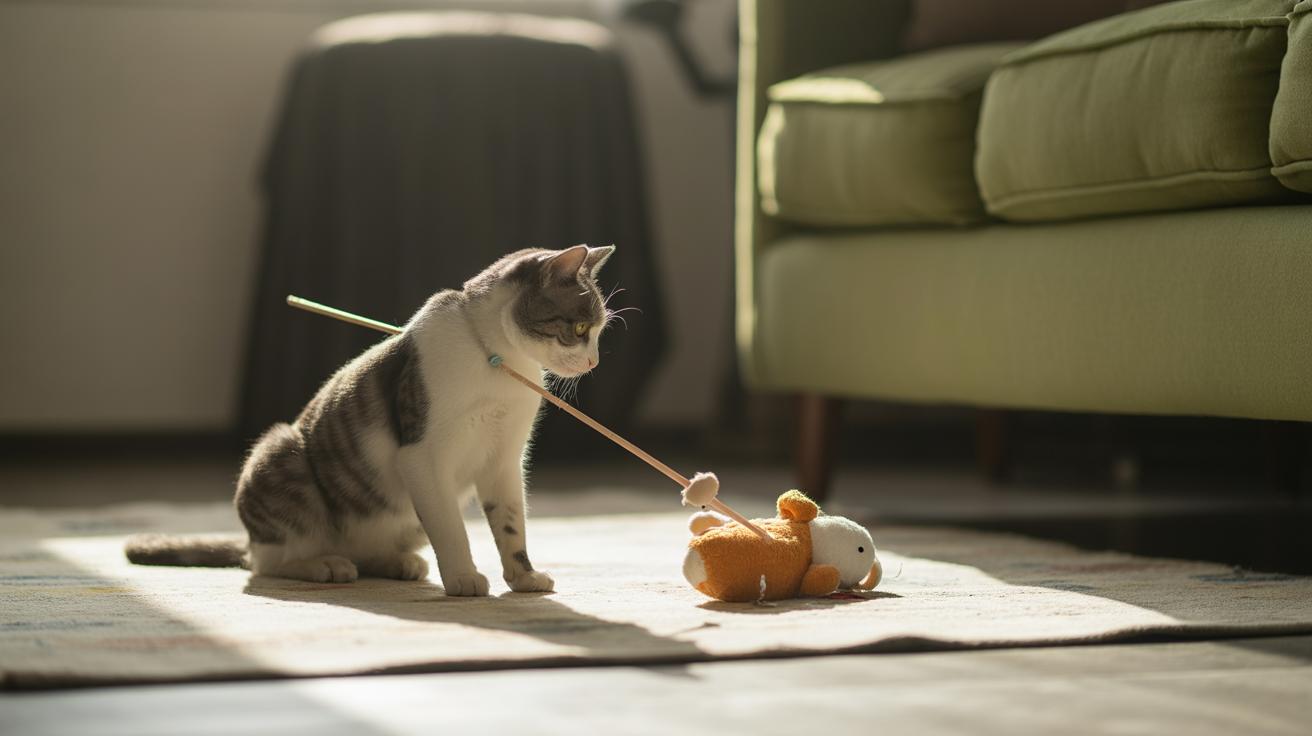
    A quick success story: Gina, a senior cat who started out hissing and defensive, calmed after moving to a bigger room, gentle scent work, and lots of slow-play. Laser sessions followed by a small capture toy built her confidence. Worth every paw-print, honestly.
    When to seek professional help

    Call a certified behaviorist or your vet if fear stays severe for weeks to months, if you suspect pain or injury, or if aggression becomes dangerous to people or other pets. See Reading shy cat body language for the red-flag cues that mean it’s time to get help.

    Final Words

    Jump right in: use the quick-start 3-step plan, scent-soaker prep, slow-play wand work, short repeat sessions, and a simple tracker to get started today.

    We walked through choosing quiet, low-threat toys, warming new items with familiar scents, distance-based wand play, reading body language, reward-based training, rotation, and special-case tweaks for seniors or multi-cat homes. Ever watched your cat perk up at a tiny twitch? Cute.

    Follow the stepwise plan and log tiny wins. For tips on how to introduce toys to shy cats, keep going, this really works and it's fun.

    FAQ

    Frequently Asked Questions

    How to introduce toys to shy cats reddit

    Start by scent-soaking and distance play: place the toy near their safe spot, warm it in your hands, then use a wand from about 3-5 feet away. Keep sessions short (1-3 minutes), and repeat 2-4 times daily.

    What is the 3-3-3 rule for rescue cats?

    The 3-3-3 rule describes settling phases after adoption or a move: three days to adjust, three weeks to show personality, and three months to become fully comfortable.

    Cat Dancer toy, Ambush cat toy, Petfusion ambush interactive electronic cat toy instructions

    Cat Dancer is a simple wire wand that twitches for pouncing. Ambush-style toys provide gentle motorized (battery-powered) prey motion. For the PetFusion Ambush: secure the battery hatch, supervise short play sessions, and use low-vibration settings.

    Related Articles

  • Automatic Cat Litter Boxes: Pros-and-Cons for Indoor-Cats

    Automatic Cat Litter Boxes: Pros-and-Cons for Indoor-Cats

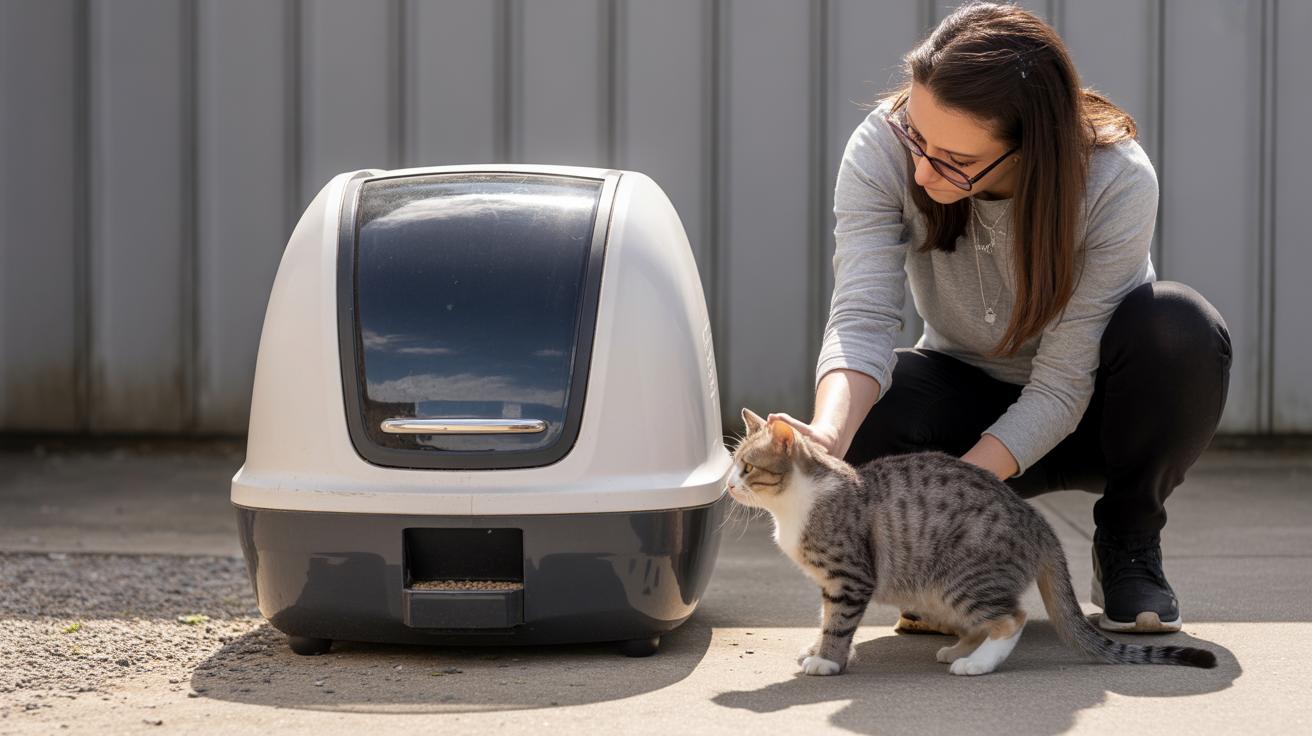
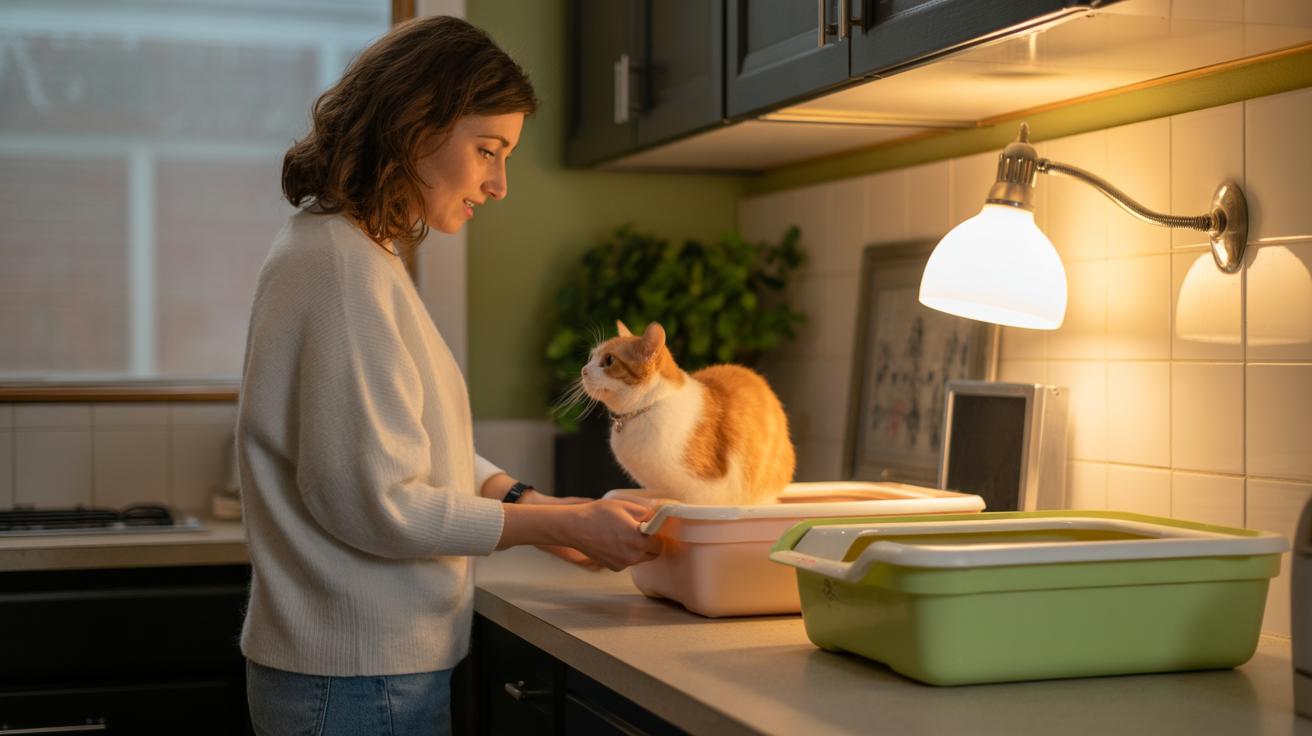
    Automatic litter boxes: lifesaver for busy humans, or a noisy, wallet-draining thing your shy cat will avoid? Ever watched a skittish kitty bolt at a tiny unfamiliar sound? Same idea.

    These boxes can cut scooping to about 10 to 30 minutes a week for one cat, instead of daily little chores. They also help control odors better, many use a carbon filter (a tiny air sponge) and special litter (like silica crystals or fast-clumping clay) that trap smells. For multi-cat homes, that means less stinky traffic and fresher rooms.

    On the flip side, they cost from about $74 to $900 up front, and you’ll often spend $15 to $30 a month on replacement filters and special litter. Some models have a motor (small electric part that moves waste) that hums or a rake that clicks, and timid kitties may avoid the box because of the noise. I’ve seen a cat sit two rooms away and give the door the side-eye. Um, not kidding.

    I’ll walk you through the real pros and cons so you can pick what fits your budget and your cat’s personality. Let’s see if it’s purr-fect for you.

    Automatic Cat Litter Boxes: Pros-and-Cons for Indoor-Cats

    - Quick decision guide buy or skip automatic cat litter boxes (short verdict + numbers).jpg

    Buy one if you want to skip daily scooping and you’re okay with a $74-$900 upfront price plus ongoing consumables (replaceable items like filters, liners, or special litter). Skip them if you have a very shy kitten, a noise-sensitive cat, or a tight budget.

    New units usually cost about $74-$900. Monthly running costs are often around $15-$30 for automatic boxes. By contrast, manual boxes (the kind you scoop by hand) often run about $20-$40 per month.

    They save time. Expect about 10-30 minutes a week back for a single-cat home. In multi-cat homes you might save 30-90 minutes weekly depending on traffic and how often you’d otherwise scoop.

    Pros

    • Cuts scooping time. That’s 10-30 minutes a week for one cat, and more if you have several. Perfect for busy owners who want a little breathing room.
    • Tighter odor control. Enclosed waste compartments and sealed bins (closed containers that trap smell) mean fewer surprise whiffs and less hourly spot-scooping.
    • Great for multi-cat homes. Moving waste into a sealed receptacle faster helps shared litter areas stay fresher and less… dramatic.

    Cons

    • Higher upfront cost. Most automatic units sit in the $74-$900 range, so they’ll feel pricey next to $10-$60 manual trays.
    • Ongoing supplies add up. Monthly costs of $15-$30 include consumables (again, filters, liners, or special litter), and some models need clumping litter (litter that forms clumps when wet) or disposable trays.
    • Mechanical problems and noise. Motors, sensors, or moving parts can fail. Some models make 25-40 dB sounds – quiet for us, but scary for a timid kitty – and that can make cats avoid the box.

    Worth a closer look? For full details on pricing, maintenance, mechanics, buying tips, and behavior guidance see the Cost & Maintenance; How automatic…; How to choose & recommended model types; Safety, noise, and cat behavior sections.

    How automatic cat litter boxes work: core mechanics and sensing principles

    - How automatic cat litter boxes work core mechanics and sensing principles.jpg

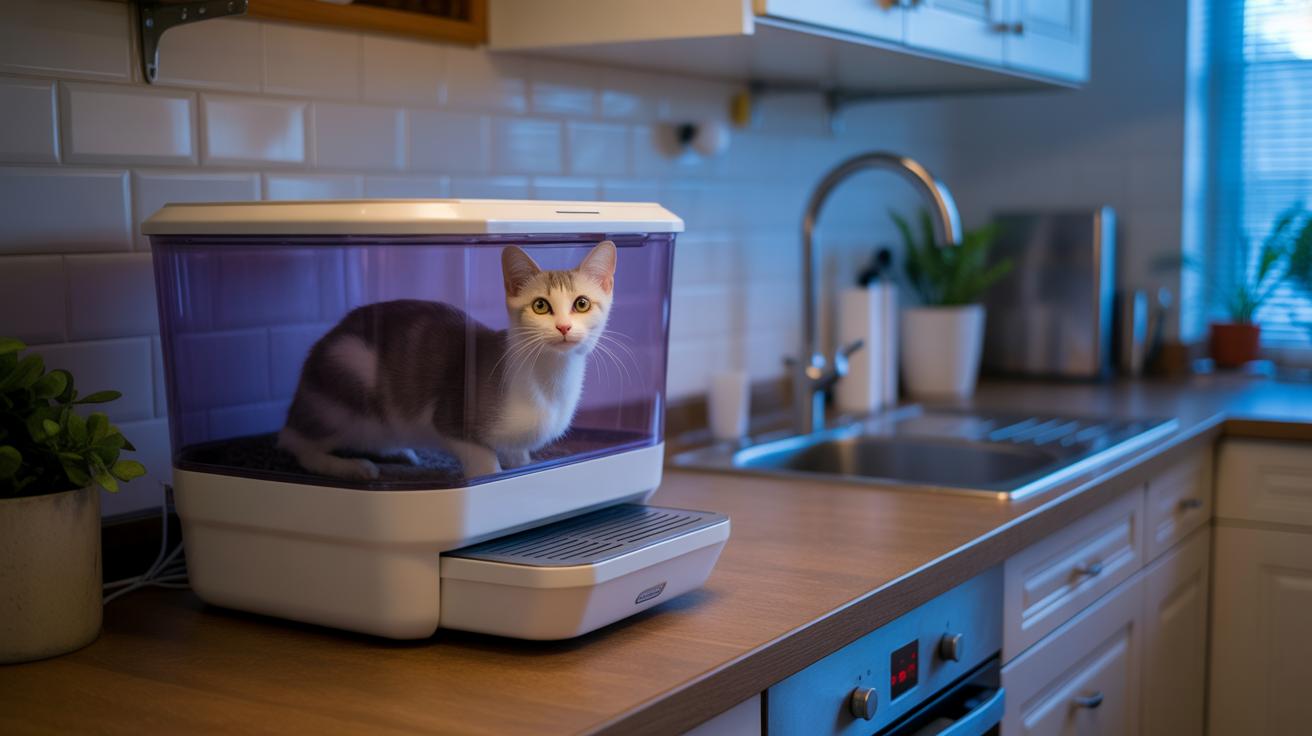
    Most self-cleaning litter boxes sense when your cat uses them, wait a short timer, then run a cleaning cycle that separates waste and drops it into a sealed bin. The goal is simple: don’t spook your cat, and don’t scoop while your kitty is still inside.

    Sensors and timing

    Motion sensors, like infrared (IR) motion detectors that spot body heat and movement, watch for entry and exit. Weight sensors, usually pressure pads (thin pads that feel a cat’s weight), tell the unit when your cat leaves. Typical delay timers run about 1 to 10 minutes so clumps form and your cat has time to go. Sensor placement matters a lot. A sensor tucked near the rim can miss low-lying cats, while one aimed at the doorway might false-trigger when a tail swishes past. Ever seen a box try to clean with a cat still inside? Not great. If cycles run with a cat in the box, trigger all the time, or never happen, that usually means dirty sensors, drained batteries, or wiring issues.

    Cleaning mechanisms

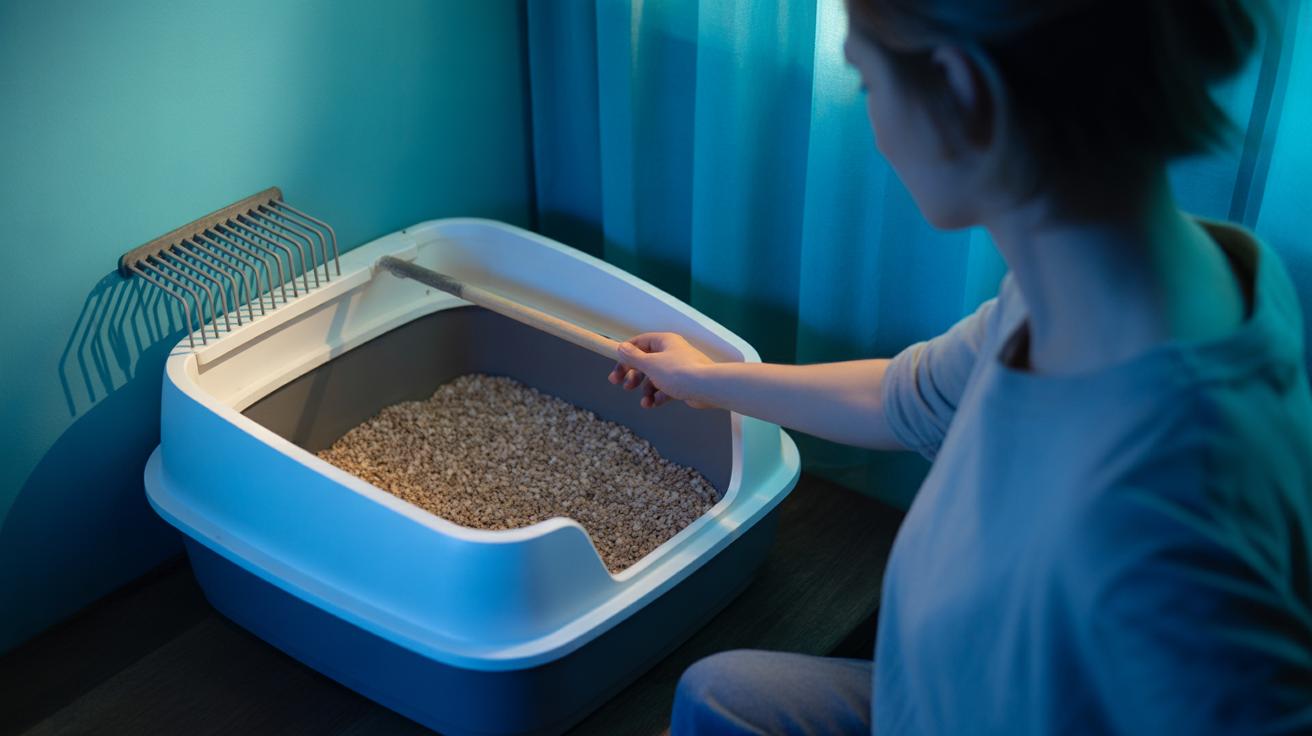
    Rake systems use a linear rake that sweeps clumps into a waste drawer, driven by a linear motor (a motor that moves straight) or a small DC motor (battery-style motor). They’re quick, a single sweep takes seconds, and you’ll hear a soft mechanical thunk as it runs. Common wear points are the plastic teeth, sliding rails, and the gearbox (the gears that change speed and torque).

    Rotating drum designs spin the whole basin so clean litter falls back while waste is pushed to a collection area. These need stronger motors or stepper motors (a precise small gear motor), and they’re built to handle heavier traffic. But bearings (rotating supports) and seals (gaskets that keep dust and smells contained) can wear with time.

    Sifting trays lift or tilt a perforated tray so clean litter sifts through and solids stay on top. It’s simple and low-tech, like a big sieve, but holes can clog and trays may warp under heavy use. Sifting cycles also tend to take longer.

    Mechanism How it works Best for Common issues
    Rake systems Linear rake sweeps clumps into a drawer Single cats or small multi-cat homes Worn plastic teeth, rail jams, motor or gearbox strain
    Rotating drum Drum spins to separate waste from litter Busier homes, heavier cats Bearing wear, seal leaks, need for stronger motors
    Sifting tray Perforated tray lifts or tilts to sift litter Owners who prefer simple mechanics Hole clogs, tray warping, slower cycles

    Check build quality, motor specs, and sensor type against your household needs before you pick a model. Worth every paw-print.

    Benefits of automatic cat litter boxes

    - Benefits of automatic cat litter boxes (concise list only).jpg

    If you dread daily scooping, an automatic box can be a real game-changer. See the Safety, noise, and cat behavior section for behavior and noise details. Ever watched your kitty chase shadows while you scoop? Yeah, we can do better.

    • Saves you time. Manual scooping usually takes about 2 to 5 minutes a day, so an auto box typically frees up roughly 10 to 30 minutes a week for one cat and 30 to 90 minutes for multi-cat homes (based on timed scoop sessions). That’s extra time for a quick coffee, a cuddle, or, um, scrolling.

    • Cuts odor. Autos move waste into sealed drawers and use carbon filters (activated carbon, charcoal that traps odors), so smells don’t hang out in the room. How well this works depends on how often you empty the drawer and how fresh the filter is. Smells get locked away more than with an open pan.

    • Works best with clumping litter and mechanical rakes. Clumping litter (litter that forms solid clumps when wet) and a mechanical rake (a motorized rake that lifts clumps into a waste drawer) make cleanup neater. Intact clumps pull away cleanly, which means less messy grit on the floor.

    • Quick tips to maximize benefits: put the box in a low-traffic, ventilated spot , try the laundry room against a wall. It keeps smells out of the living room. Use a fine-grain clumping litter rated for autos, and add a 24×18-inch rubber mat to cut down tracking. Little changes like that make the whole thing more claw-tastic.

    Maintenance you’ll want to stick to: empty the waste drawer every 3 to 7 days for one cat, or every 1 to 3 days for multiple cats. Replace the carbon filter about every 30 days and wipe surfaces weekly. Deep clean by disassembling and washing every 1 to 3 months depending on use.

    Worth every paw-print.

    Drawbacks and risks of automatic cat litter boxes (concise list only)

    - Drawbacks and risks of automatic cat litter boxes (concise list only).jpg

    • Higher upfront cost and ongoing consumables, like special clumping litter (litter that forms solid clumps), carbon filters (activated charcoal filters), or disposable trays.
    • Mechanical parts can jam or motors can burn out. Sensors (devices that detect motion or weight) can false-trigger or miss a use.
    • Motor noise and sudden movement can scare timid cats, causing avoidance or stress.
    • Some cats stop using the box after a bad experience, which can lead to accidents around the house.
    • Repair and replacement costs add up over time, and finding parts or service can be a hassle.
    • Power outages or dead batteries leave the unit unable to clean, so the box can become full until you fix it.
    • Certain designs have pinch points or small parts that could be unsafe for curious cats or multi-cat homes.

    See Safety, Noise & Behavior and Cost & Maintenance for details.

    Cost & maintenance: monthly, 3–5 year ownership costs, consumables, maintenance schedule, and troubleshooting

    - Cost  maintenance monthly, 35 year ownership costs, consumables, maintenance schedule, and troubleshooting.jpg

    Automatic boxes cost more up front than plain pans. Manual trays usually run $10-$60. Automatic units are often $74-$900. Monthly running costs for autos tend to be $15-$30. Manual scooping supplies often come out to $20-$40 a month. So yes, autos can save you time, but they don't always save money.

    Consumables are the slow leak in your budget. Carbon filters (activated charcoal that traps odors) usually cost $5-$15 a month if you swap them monthly. Disposable trays or liners (single-use plastic inserts) add about $10-$25 a month when a model needs them. Special clumping litter (litter that forms solid clumps when wet) runs about $10-$20 a month depending on brand and how many cats you have. Have more than one cat? Expect to be at the high end of those ranges. Add battery backups or extra filters and your monthly bill climbs. Bottom line: autos can be cheaper month-to-month for homes with lots of scooping, or a bit cheaper for single-cat households. It really depends on the model and how much traffic the box sees.

    Weekly and monthly maintenance schedule

    Keep a steady little routine and the unit will behave. Weekly tasks take minutes. Monthly checks catch problems before they jam up.

    1. Weekly wipe-down , 10 minutes. Wipe interior surfaces and sensor windows (clear plastic that helps the box know when a cat is inside) with a mild pet-safe cleaner.
    2. Empty sealed bin or drawer , 5 minutes. Pull out the waste bag, toss it, and reset the drawer.
    3. Replace carbon filter (monthly) , 5 minutes. Swap per the maker's instructions.
    4. Check sifting holes and tray for clogs , 5 minutes weekly. Clear stuck clumps so the mechanism moves freely.
    5. Inspect motor mount and rails , 5-10 minutes monthly. Look for debris, loose screws, or worn teeth on gears.
    6. Deep clean (disassemble and wash) , 30-45 minutes every 1-3 months depending on use. Take it apart, wash, dry, and put back together.

    Short. Simple. Worth every paw-print.

    Troubleshooting common issues

    Motor jams: if the rake or drum stalls, unplug the unit first. Safety first. Remove the litter bed and look for big clumps, a wrinkled liner, or stuck debris. Clear the jam, dry the parts completely, then plug in and run a manual test. If the motor hums but won’t move, the gearbox (the set of gears that turns the rake) or motor brushes (small replaceable parts that wear down with use) may be worn. Contact support or check for replacement parts.

    Sensor misfires and false cycles: clean sensor windows or pressure pads (thin sensors that feel weight) and check batteries if it’s battery-powered. If the unit runs while a cat is inside, stop using it and check sensor alignment and any firmware reset steps from the maker. Sifting holes can clog , soak trays in warm water and scrub with a soft brush. Replace warped trays sooner rather than later.

    Always unplug power before any service. If you smell electrical burning, if problems repeat after cleaning, or if repairs need parts you can’t find, call the manufacturer.

    Estimating 3-5 year total cost is easy math. Add the upfront price plus monthly consumables times 36-60 months, then tack on a small repair/parts buffer, say $50-$200 for the period. Example totals vary with quality and use. Budget units often come in around $430-$1,400 over 3-5 years. Midrange units tend to be $740-$2,300. Premium models can reach $1,220-$3,300 depending on parts and how often your cat uses it.

    Ownership Band Upfront Cost Estimated Monthly Consumables Estimated 3-5 Year Total Cost
    Budget $74-$200 $10-$20 $430-$1,400
    Midrange $200-$500 $15-$30 $740-$2,300
    Premium $500-$900 $20-$40 $1,220-$3,300

    Safety, noise, and cat behavior: assessing suitability for kittens, seniors, and multi-cat homes

    - Safety, noise, and cat behavior assessing suitability for kittens, seniors, and multi-cat homes.jpg

    Most worries are simple and real: noise and moving parts can spook a cat, lack of a quiet spot makes some cats avoid the box, and tall rims or high entry lips can stop tiny kittens or older cats with stiff joints from getting in. Think about how your cat moves and where they like privacy. Ever watched whiskers twitch as a machine hums? Yeah, that tells you something.

    Noise guidance: many popular units run around 25 to 40 dB (dB means decibel, a measure of sound). That sounds quiet to us, but sensitive cats may worry. Try a phone sound-meter app held near the box while it runs to get a real read. Look for stress signs , sudden flinches, avoiding the unit, flattened ears, or long pauses at the entrance , and act. Move the unit to a quieter room, slip a rubber anti-vibration pad under it, or set it on a thick mat to soften the thud and wobble. Small fixes, big calm.

    Multi-cat logistics: aim for one litter box per cat plus one extra when you can, so two cats get three boxes. That cuts competition and stops boxes from filling too fast. Estimate traffic: if each cat goes 3 to 5 times a day, two cats mean about 6 to 10 uses daily; pick a machine with a waste drawer and cycle speed that can handle that, or plan to empty more often. For heavy traffic, use more than one automatic unit or pair an auto with a manual pan as a backup so one busy box doesn’t become a problem. Simple math, less stress.

    Kittens and seniors need extra thought. Choose an auto with a low entry or add a ramp for little legs and stiff hips, and check that the interior is roomy enough for your cat’s length and girth. Introduce the machine slowly: put it next to the old box and leave it off for a few days so your cat can sniff and explore. Then run cleaning cycles during daytime while you’re home, and only switch to full auto once the cat uses it reliably. Reward calm approaches with treats and quiet praise. If your cat freezes or bolts at moving parts, stop and slow the process , no racing it.

    A tiny anecdote: I once watched Luna, my tabby, circle a new unit three times before sniffing in. Patience won out. Worth every paw-print.

    Stop using the unit and switch back to a manual box if your cat starts avoiding it, has new accidents, or shows sudden changes in stool or urination. If problems keep going, check with your vet , there might be a medical or stress issue behind it. Better safe than sorry.

    - How to choose  recommended model types price bands, buyer profiles, model trade-offs, and concise buying checklist.jpg

    Picking the right automatic litter box can feel confusing, but it doesn't have to. Think about how much you want to spend, how many cats you have, and how much noise or maintenance you’ll tolerate. I’ll walk you through the common price bands, the main model types, and the trade-offs so you can match a box to your cat’s needs and your sanity.

    Price Band Who it’s for What to expect
    $74–$200 Budget, single-cat homes, renters Simple features, often disposable-tray options, lower up-front cost but higher monthly consumables
    $200–$500 Midrange buyers, couples, small multi-cat homes Better build, motorized rakes or sifting designs, lower long-term consumable cost
    $500–$900 Premium buyers, busy households, tech lovers Large capacity, app features, stronger motors and metal gears for heavy use

    Major model types you’ll see

    • Disposable-tray designs (tray liners you toss after use). Easy daily life, but add monthly liner costs. Great if you hate scooping.
    • Motorized rake units (a mechanical arm that sweeps clumps into a bin). Fast clean cycles and common replacement parts. Good balance of work and cost.
    • Rotating drum models (a cylinder that tumbles to separate waste). Built for heavy traffic and big cats, but the motors and unit are heavier.
    • Sifting trays (simple trays that separate waste with a mesh or sieve). Fewer moving parts, but they can clog more easily and need regular attention.

    What to check before buying

    • Price band – Pick the band that fits both your up-front budget and monthly spend.
    • Household size (cats) – More cats means you need bigger capacity and tougher motors.
    • Internal dimensions and weight limits – Measure your cat’s length and girth so they can turn comfortably. Nobody likes a cramped loo.
    • Litter type compatibility – Confirm if it needs clumping litter (forms solid clumps when wet), crystals (silica beads that absorb moisture), or special granules.
    • Power options – Is it plug-only, battery-capable, or both? Batteries can save you in short outages.
    • Noise spec – Look for a stated decibel range (dB, how loud it is) or read user notes about night cycles. You don’t want a roar while you sleep.
    • Warranty and spare parts – Check warranty length and how easy it is to order replacement trays, gears, or filters.
    • Return and test policy – Buy from a seller with a trial window so you can see if your cat accepts the sound and motion.

    Who likes what (real-world matches)

    • Single busy owner who wants almost no daily work: a disposable-tray model in the budget or low-midrange band often fits. You trade higher monthly liner costs for almost zero scooping.
    • Multi-cat household that needs durability and lower recurring cost: aim for midrange motorized rake units or premium rotating drum models. Stronger motors and metal gears usually last longer under heavy use.

    Consumables vs durability – the money part
    Disposable trays cut your daily work, but liners add about $10–$25 per month. Solid motorized units cost more up front but usually land around $15–$30 per month for litter and filters, not counting occasional repairs. To estimate your monthly cost, add your litter and filter expenses to any tray or liner spend, then toss in a small repair buffer. Easy math, less chaos.

    A few last tips
    Ever watched your kitty sniff a new box for ten minutes? Cats are picky. If you want help deciding between a hooded or open style, see understanding cat preferences for open vs covered boxes. And if you’re considering liners, check selecting litter box liners for hassle-free cleaning to compare types and how they affect recurring cost and ease of service.

    Worth every paw-print.

    Final Words

    In the action, this post gave a quick buy-or-skip verdict and ran through how these boxes work, their benefits, risks, costs, safety notes, and a buying checklist.

    We shared real numbers ($74–$900 upfront, $15–$30 monthly for autos vs $20–$40 for manual), noise and sensor tips, a maintenance plan, and kitten/senior intro steps.

    If you want fewer scoops and calmer cats, use this guide to weigh automatic cat litter boxes: pros and cons for indoor cats and pick a quiet, durable setup that keeps your crew active and happy.

    FAQ

    Best automatic cat litter boxes pros and cons for indoor cats?

    The best automatic cat litter boxes for indoor cats balance steady odor control and less scooping, reliable sensors (motion or weight detectors), and quiet motors (small electric drives); pros are time saved and sealed bins; cons are cost and repairs.

    Best self-cleaning litter boxes?

    The best self-cleaning litter boxes match your cat’s size, household traffic, and budget; look for quiet operation (25–40 dB: sound level), reliable sensors, easy-to-empty sealed drawers, and a good warranty.

    Are automatic cat litter boxes worth it?

    Automatic cat litter boxes are worth it if you want to cut daily scooping and accept $74–$900 upfront plus roughly $15–$30 monthly; they save time but require periodic maintenance.

    Are self-cleaning litter boxes safe for kittens?

    Self-cleaning litter boxes can be safe for kittens when the unit fits their size and you enable delay settings (sensor delay: timer after exit) and supervise introductions until the kitten is comfortable.

    Do self-cleaning litter boxes need to be plugged in?

    Self-cleaning litter boxes usually need to be plugged in for motors and sensors (motor: electric drive; sensor: motion or weight detector); a few battery or hybrid models exist for light use.

    What are the disadvantages of an automatic litter box?

    The disadvantages of an automatic litter box include higher upfront cost ($74–$900), ongoing consumable expenses ($15–$30 monthly), mechanical jams from wrong litter, motor noise that may bother some cats, and sensor failures.

    Do vets recommend automatic litter boxes, and why might vets advise against closed boxes?

    Vets may recommend automatic litter boxes for many homes but often warn about closed boxes because noise, trapped-cat risk, and hidden health signs can stress cats or mask medical issues.

    What are the common problems with Litter-Robot 4?

    Common problems with Litter-Robot 4 include motor stalls, sensor errors, app or Wi‑Fi connectivity hiccups, drawer-sealing or odor issues, and occasional jammed sifting holes; many fixes are cleaning or contacting support.

    Related Articles

  • Best Cat Toys for Indoor Cats: Top Picks

    Best Cat Toys for Indoor Cats: Top Picks

    Think indoor cats are stuck with couch naps?
    Think again. Play is survival practice, and the right toy turns your sofa into a tiny hunting ground where whiskers twitch and paws fly. Ever watched a cat pounce and feel oddly proud? Me too.

    We scored three toy types on three simple things: how well they mimic hunting, how much exercise they give, and how likely they are to survive claws and teeth (durability). The toys: wands (a stick with feathers or string), puzzle feeders (toys that hide treats), and motorized toys (battery-powered movers).

    Wands: Great at copying prey movement and building focus. They give quick bursts of exercise and make your cat leap like a kitten again. Low price. Durability varies by brand, so pick a sturdy shaft and replace feathers as needed.

    Puzzle feeders: Slow, clever fun that tricks a meal into a hunt. They boost brainwork and stretch mealtime into playtime, perfect for the busy owner. Mid price. Durable if made from hard plastic or puncture-proof fabric (material that resists bites and claws).

    Motorized toys: Chaotic, unpredictable, and irresistible. They mimic a skittering critter and keep solo cats entertained longer. Higher price. Durability depends on build and battery compartment strength.

    Fast picks by life stage? For kittens, get a light wand to build skills. For adults, add a durable puzzle feeder to slow eating and up stimulation. For seniors, choose slow-moving motorized toys or easy-to-hold wands that won’t stress aching joints.

    Pick one, toss it on the couch, and watch your cat get feline fine. Worth every paw-print.

    Best Cat Toys for Indoor Cats: Top Picks

    - Quick answers best cat toys for indoor cats  top picks, why they work, who they suit, and purchase-ready flags.jpg

    Indoor cat enrichment is about giving your kitty chances to hunt, climb, chase, and solve little puzzles so they stay active and mentally sharp. We scored each play format on how well it mimics hunting, how much exercise it provides, and how likely it is to survive daily claws and teeth, so you can pick fast from the best cat toys for indoor cats. Think of it as a tiny living-room safari for your fur kid.

    We picked formats that work across ages, from bouncy kittens to dignified seniors, and flagged price and durability so you know what to expect before you click. For product-level choices and model notes, see the longer top cat toys 2024 indoor roundups and the indoor cat toy best sellers lists elsewhere in the guide.

    1. Wand / teaser – Best for owner-led bursts of chase and pounce – Price: low to med; Durability: 7/10

      • A wand is basically a stick with dangly feathers or streamers. Think of it like a fishing rod for cats, your arm does the work, they get the thrill. Great for quick interactive sessions and bonding. My cat once vaulted like a tiny panther.
    2. Puzzle / treat feeder – Best for slowing meals and foraging play – Price: med; Durability: 8/10

      • These are toys that hide kibble or treats, so cats work a bit to eat (foraging, meaning searching for food). Good for mental exercise and slowing down gulpers. It’s like giving their brain a snack.
    3. Motorized / chase toy – Best for solo bursts when you’re away – Price: med to high; Durability: 7/10

      • Battery-powered moving toys (small motors that make things zip or wobble). Awesome for solo play, but pick ones with replaceable parts so you’re not tossing the whole toy when a wheel gives out.
    4. Laser with finish-to-reward – Best for reflex training plus aerobic fun – Price: low; Durability: 6/10

      • A laser pointer that you end play sessions by pointing at a toy or treat (finish-to-reward means they get something tangible at the end). Lasers are great cardio, but cats can get frustrated if there’s never a catch, so always end with a real prize.
    5. Rolling / track systems – Best for repeated batting and short sprints – Price: med; Durability: 8/10

      • Plastic tracks with a ball inside or circular toys that roll. They make that satisfying rattle and invite batting over and over. Perfect for short bursts and cats who love repetition.
    6. Plush catnip toys – Best for cuddles, batting, and kicking – Price: low; Durability: 6/10

      • Soft toys stuffed with catnip (the herb that many cats go wild for). Great for snuggling or kicking with the back feet. Not the toughest, but adorable.
    7. Fetch-friendly small prey toys – Best for fetch practice and recall games – Price: low; Durability: 7/10

      • Small toy mice or birds that fit in a cat’s mouth. If your cat will fetch, these are perfect for recall training and short fetch sessions. Lightweight, easy to throw, and usually washable.
    8. Budget DIY / low-cost options – Best for instant play and variety (crumpled paper, boxes) – Price: low; Durability: 5/10

      • Sometimes the best toys are free: crumpled paper balls, cardboard boxes, paper bags. Instant fun, lots of variety, but not exactly long-lasting.

    Quick purchaser callouts:

    • Match toys to your cat’s play style and age. Kittens often need fast, fluttery things; older cats may prefer slower, puzzle-style play. Always check seams and small parts before gifting a toy to prevent choking hazards. See Durability section.
    • Want solo-play devices? Prioritize replaceable moving parts and quieter motors so you don’t scare your cat. Quiet, repairable toys last longer and keep your kitty coming back for more. See Durability section.

    Interactive play: best interactive toys for indoor cats (wand, laser, motorized/chase , all engagement picks in one place)

    - Interactive play best interactive toys for indoor cats (wand, laser, motorizedchase  all engagement picks in one place).jpg

    Interactive cat toys for indoor cats fall into three friendly categories: wand or teaser toys that invite you to lead the stalk-and-pounce game, laser play that gets reflexes and the heart racing, and motorized chase toys that pretend to be erratic prey when you can’t be there. Each type hits a different part of the hunt cycle, so swapping them keeps your cat curious and moving. Ever watched your kitty go from bored to full ninja in under a minute? Yeah.

    Short, high-intensity bursts work best for most cats. Try 3 to 5 minute wand sessions, a couple quick laser sprints, and a short motorized session for solo play while you’re out. Warm up briefly and finish with something physical so your cat doesn’t end the hunt frustrated, your cat’s whiskers and body language will tell you if it’s working.

    Pick owner-led play when you want bonding or to teach tricks, or when a shy cat needs slow movement and scent to feel safe. Use motorized toys for gap hours, but rotate those toys often because attention fades fast; noisy motors and the same pattern over and over get old. And with laser play, always finish by pointing the dot onto a toy or a treat so the hunt feels complete.

    Wand toys (length, attachment types, session structure)

    Wands are basically a fishing rod for cats , you hold the handle and wiggle the lure. Aim for a wand length that keeps your hands safe, like 18 to 36 inches, so you can whip in quick fluttering moves without getting swatted. Swap attachments: feathers, small balls, crinkle bits, and soft mice give different textures and sounds that picky kitties love. Structure play as 3 to 5 minute bursts with short rests to keep intensity high.

    • Vary speed and angle to mimic real prey.
    • Always end the session by leading the toy to a catcher (a toy or a treat).
    • Store wands out of reach between sessions.
    • Supervise anytime a long string is exposed, um, you know, safety first.

    Laser play (session structure and finishing tactic)

    Laser play is incredible cardio when done right. Keep sessions short: one to three five-minute bursts spread across the day works well for many cats. Never end with just the dot. Point the laser to a toy or toss a treat so your cat gets a real, physical catch. Also, don’t shine the laser in your cat’s eyes , that’s an eye-safety no-no.

    1. Warm up with a wand teaser for 30 to 60 seconds.
    2. Do a 30 to 60 second laser chase in short sweeps.
    3. Finish by landing the dot onto a toy or treat your cat can grab.

    Motorized / Chase / Rolling (buyer checklist, when to use unsupervised)

    Motorized toys and rolling tracks are perfect for solo enrichment during short absences. Expect short, repeated interactions , most cats bat, retreat, then come back a few times. Rotate these toys with quieter or scent-based items so they don’t go stale, and watch for overheating or jammed gears after heavy use. Look for toys with replaceable parts and easy cleaning since wheels and motors wear first.

    Buyer checklist:

    • Quiet motor so timid cats aren’t scared.
    • Easy-to-clean parts and removable tracks.
    • Long battery life or USB recharge (USB recharge means a small cable you plug into a wall adapter or computer).
    • Jam-resistant track design or anti-jam ramps.
    • Replaceable moving parts and available spares.

    Worth every paw-print. See top picks.

    Puzzle and feeder toys: best cat toys for indoor cats to slow eating and stimulate foraging

    - Puzzle and feeder toys best cat toys for indoor cats to slow eating and stimulate foraging.jpg

    Foraging play turns mealtime into a tiny hunt. Your cat works for food, gets mental exercise, and eats more slowly, which can cut gulping and boredom. Ever watched your kitty’s whiskers twitch as a treat drops out of a puzzle? It’s oddly satisfying.

    We tested treat-dispensing toys across three play styles: maze puzzles that hide kibble, rolling toys that release food as they move, and compartment feeders that need paw or nose work. Pick the style that fits your cat’s patience and drive, some cats love fiddly puzzles, others want a ball to bat around. Think of these as a little brain workout and a snack all in one.

    Product Best for (behavior/age) Price range Key feature / why pick
    Cat Amazing Classic Curious adults and slow eaters Medium (Durability: 8/10) Turns up difficulty as your cat learns; vets often recommend it for slower feeding
    Interactive Treat Maze & Puzzle Feeder Active cats who like sniffing and pawing Medium (Durability: 7/10) Modular maze funnels kibble into chambers for longer search sessions
    PetSafe SlimCat Rolling Feeder Kittens and chase-lovers Low (Durability: 6/10) Ball-style feeder that rewards batting with kibble; great intro to foraging
    Catit Senses Food Tree Slow eaters and picky older cats Medium (Durability: 8/10) Vertical branches force smaller bites and add a sniffing challenge

    In our sessions, play lasted anywhere from quick 3 to 5 minute bursts to steady 15 to 20 minute work for tougher puzzles. Raise the challenge slowly so your cat keeps winning and stays motivated. Close an opening, add another step, or hide a few more kibbles as they master the toy. It keeps things fun, not frustrating.

    • Start each session with a small portion of kibble so your cat learns the puzzle equals food. (It’s training and play all at once.)
    • Rotate puzzle types every week to keep curiosity up and boredom down. My cat loves new textures, um, for a while.
    • Watch new feeders for a few sessions to make sure nothing chews off or gets swallowed. Safety first, then play.
    • Use puzzles as part of a weight plan by measuring daily portions and tracking calories. Toss a ball or two before you head out for ten minutes of safe activity.

    Worth every paw-print.

    Durability, materials, and safety testing for best cat toys for indoor cats

    - Durability, materials, and safety testing for best cat toys for indoor cats.jpg

    Safety first, then fun. Keep toys free of tiny, swallowable parts and don’t leave long strings or cords unsupervised – those are the biggest hazards. Skip aluminum foil too; the crinkle and slick feel bother most cats and it can form sharp edges.

    1. Check seams and stitching for frays or open threads; retire any toy with gaps that show stuffing.
    2. Squeeze plush toys to find loose stuffing or hard lumps; toss anything damp or with a weird smell.
    3. Inspect wand hardware and clips for rust, bends, or breaks; replace or repair failing parts right away.
    4. Look for cracked plastic, sharp edges, or loose batteries in motorized toys; stop using a toy if pieces start coming apart.
    5. Watch for chew marks on rubber or polymer (a kind of durable plastic) parts and remove toys that show bite-throughs.
    6. Test cords and strings for thinning; if threads break or the string stretches, either supervise closely or throw it out.
    7. Run a quick motor test on powered toys; strange noises or heat buildup are signs to replace them.
    8. Mark the date you open a toy and follow a replacement rhythm – heavy chewers need new plush toys more often.

    Pick tough materials. Canvas and tightly stitched fabric with reinforced seams hold up best – canvas catnip toys scored about 9/10 in our checks. Plush toys feel delightfully soft, but they wear faster (around 6/10); expect heavy-use plush to last roughly 4 to 12 weeks. Puzzles and feeders made from ABS plastic (sturdy, impact-resistant plastic) or thick BPA-free polymer (plastic made without the BPA chemical) can last 6 to 18 months depending on cleaning and part wear. Motorized toys land near 7/10 durability when motors and gears are replaceable – so choose models with spare parts and easy battery or USB recharge access.

    If a toy fails or looks unsafe, stop play and quarantine it. Check the maker’s website and the U.S. Consumer Product Safety Commission for recalls, and report hazards to the seller and to consumer protection agencies if needed. Dispose of broken pieces safely so curious whiskers don’t find them, and stick to your replacement schedule so play stays fun and worry-free.

    Matching the best cat toys for indoor cats to age and personality

    - Matching the best cat toys for indoor cats to age and personality.jpg

    Pick the right toy and you get focused play, fewer couch shreds, and a happier kitty. Match toys to your cat's life stage and personality so playtime actually works. Below are short, practical picks you can use today.

    Toy picks for kittens

    Kittens love tiny, quick prey-like toys that beg for pouncing and a little fetch. Go for lightweight, easy-to-carry pieces that fly or bounce so they can practice hunting skills and mouth control. Keep sessions short , 2 to 5 minutes, a few times a day , since kittens tire fast and learn by repeating things. Ever watched a kitten chase a speck of dust? Same joy, but with less mess.

    • Small soft mice (plush, soft stuffed fabric) , Great for fetch training and pounce practice.
    • Fluttery wand attachments (feathers, crinkle) , Feathers feel real, crinkle is thin metallic-sounding film, both mimic erratic prey motion.
    • Lightweight rolling feeders/balls (plastic or rubber, polymer is tough plastic) , Teach batting and basic foraging skills.

    See Durability section. See top picks.

    Toy picks for seniors

    Older cats want gentler motion and less high-energy jumping. Choose slow-moving wobblers and low-profile puzzles that give mental work without stressing joints. Reward gentle play with soft treats and keep sessions short and calm. It’s nice when play is cozy instead of acrobatic.

    • Slow-motion wobblers or paw puzzles , Stimulate the mind without high impact.
    • Soft, snuggly catnip pads (natural plant scent) , Invite comfort plus gentle batting and kicking.
    • Low-profile rolling toys , Encourage movement without risky heights.

    See Durability section. See top picks.

    Toy picks by personality

    Cats play differently. A shy cat needs slow introductions and scent-based encouragement. An active cat wants variety and speed. Overweight cats benefit from food-motivated games. Declawed cats need toys that don’t rely on claws. Pick one thing from each list and see what clicks.

    • Shy: scent-based plush, hidden treat puzzles, quiet wand play , Builds confidence at a calm pace.
    • Active: robust wands, motorized chase toys, rolling track systems , Keeps energy spent and interest high.
    • Overweight: treat-dispensing feeders, laser-finish sessions, fetch toys , Turns exercise into meal work.
    • Declawed: soft batting toys, floor puzzles, treat dispensers , Let them play without needing claws.

    See Durability section. See top picks.

    Toy care, rotation plan, and simple DIY best cat toys for indoor cats (budget-friendly builds)

    - Toy care, rotation plan, and simple DIY best cat toys for indoor cats (budget-friendly builds).jpg

    A neat toy box and a little schedule keep play feeling fresh. Think of rotation like a surprise box for your cat: stash a few toys away in an airtight container with a small catnip sachet (catnip is the dried leaf of a plant many cats love) and swap them each week so toys feel new again. Your cat’s whiskers will tell you if they’re into it.

    1. Day 1 , Wand teaser (owner play). Pull it out for active interactive time, then put it away in the container when you’re done.
    2. Day 2 , Puzzle feeder (mealtime brain work). Let it dry fully before storing so it does not get soggy.
    3. Day 3 , Motorized or chase toy (short solo bursts). Remove batteries before stashing to avoid leaks.
    4. Day 4 , Plush catnip toy (kick and cuddle). Check seams for loose stuffing, then seal in the box.
    5. Day 5 , DIY sock toy or lightweight fetch mice. Toss them into the rotation box after play.
    6. Day 6 , Cardboard box or paper-bag play (supervised). Fold flat and stash when playtime’s over.
    7. Day 7 , Rest day and safety check. Clean toys, replace anything worn, then start the week again.

    DIY catnip sock toy (6 steps)

    1. Grab a clean cotton sock (machine-washable fabric).
    2. Put in about a tablespoon of dried catnip (dried leaf of a plant cats often love) and some stuffing or crumpled paper for shape.
    3. Add a bit of crinkle-free fabric or a small sewn-in bell if your cat likes sound.
    4. Tie the end tightly or stitch closed with sturdy thread.
    5. Wrap a short strip of canvas (sturdy cotton) around the middle and stitch to add bite resistance.
    6. Toss it into the rotation box when play ends.

    DIY cardboard puzzle feeder (6 steps)

    1. Find a shallow cardboard box (paperboard, lightweight cardboard) and a few empty toilet-paper rolls (paper tubes).
    2. Cut holes in the lid just big enough for kibble to fall through.
    3. Glue or tape the toilet-paper rolls upright inside as tunnels.
    4. Fill with a measured portion of kibble so mealtime doubles as playtime.
    5. Test and make the holes a bit bigger or smaller so treats come out slowly.
    6. Store dry and throw it away if the cardboard gets soggy.

    Cleaning and safety tips

    • Wash soft toys on a gentle cycle with mild detergent. Your washer will do the work and your cat will enjoy the clean smell.
    • Wipe hard toys with a pet-safe cleaner. Easy and quick.
    • Check seams weekly. If stuffing is poking out, retire the toy.
    • Heavy chewers may need plush toys replaced every 4 to 12 weeks; puzzles and hard toys can last months with care.
    • Supervise paper-bag or string play, safety first, then fun.

    Quick extra note: if your cat has a favorite texture or sound, lean into that when you make DIY toys. My cat once sprinted across the room for a sock toy that crinkled just right. Worth every paw-print.

    Quick buyer checklist

    - Testing methodology, buyer checklist, and quick FAQ for best cat toys for indoor cats.jpg

    We ran timed play sessions, checked seams and motors (motors are small battery-powered components), and read user reviews to spot repeat problems. We wanted toys that survive real cat chaos, the whisker-twitching, zoomie-filled kind. These quick tips are what held up best.

    • Look for reinforced seams and heavy-duty stitching (seams are where fabric pieces are joined). That keeps stuffing in when paws go to work , super important for durability.
    • Confirm there are no small detachable parts or exposed batteries (small parts and batteries can be choking hazards or cause injury).
    • Check wash instructions and whether covers or liners are removable for cleaning (wash instructions tell you if it’s machine-washable or spot-clean only). For busy days, a machine-safe cover is a lifesaver.
    • For motorized toys, note battery life and USB recharge specs (battery life is how long a charge lasts; USB recharge specs explain how it recharges and how long charging takes) and listen for quiet motors (quiet motors run at low decibels). You don’t want a toy that sounds like a tiny lawn mower.
    • Supervise string and cord toys, and prefer quick-release designs (quick-release means the toy detaches quickly if it gets snagged). Retire strings at the first sign of fraying, safety first.
    • Prefer replaceable parts or modular designs so you can repair instead of toss (replaceable parts let you swap worn pieces and save money). Makes the toy last longer and the planet happier.

    Worth every paw-print.

    Final Words

    In the action, we ran through quick answers and top picks, plus what makes a toy actually work.

    You saw interactive play routines, wand, laser, motorized, alongside puzzle feeders and the durability and safety checklist to keep cats safe.

    We matched toys to kittens, seniors, shy or busy multi-cat homes, then shared a rotation plan and two low-cost DIY builds.

    If you want fewer replacements and calmer cats, these tips help you pick the best cat toys for indoor cats and keep play fresh. Worth every paw-print.

    FAQ

    What toys are best for indoor cats?

    • Wand/teasers
    • Puzzle feeders (toys that hide treats)
    • Motorized chase toys
    • Rolling track systems
    • Plush catnip toys
    • Small prey-style fetch toys

    What toys do cats never get bored with?

    Wand teasers for owner play, puzzle feeders for foraging, motorized chase toys for solo bursts, and small plush prey with catnip for scent-driven engagement.

    How do you keep an indoor cat entertained?

    • Short 3–5 minute play bursts throughout the day
    • Rotate toys weekly to keep them novel
    • Use puzzle feeders at mealtimes
    • Provide motorized toys for solo play
    • Perform routine safety checks for worn or broken parts

    Where can I find best-rated indoor cat toys?

    Look on community threads like Reddit, large marketplaces such as Amazon, and pet stores like PetSmart. Prioritize review videos, high engagement reports, and notes about durable construction from real users.

    What are good DIY cat toys for indoor cats?

    • Catnip sock (a sock filled with catnip and tied)
    • Cardboard puzzle feeder (hidden treats, simple maze)
    • Crumpled paper balls
    • Ping-pong ball chases

    Is the Cat Dancer interactive cat toy worth it?

    The Cat Dancer is a simple spring-wire toy that creates erratic movement cats love. It’s great for quick pounce sessions and is very budget-friendly; supervise play if the wire shows signs of fraying.

    What interactive toys work best for multiple cats?

    Use several wand sessions with turn-taking, place multiple motorized chase toys around the space, and try rolling track systems with separate lanes to reduce squabbles and keep more cats engaged.

    Related Articles

  • Effective hairball treatment for cats

    Effective hairball treatment for cats

    Think hairballs are just a gross quirk? Sometimes they are. But sometimes they mean a blockage that needs a vet right away. Stay calm. You can try a few simple steps at home while you watch for warning signs.

    Here’s a quick, easy plan you can use now: move your cat to a quiet room, offer extra water, give a tiny spoonful of wet food, and try a tiny dab of pet-safe lubricant gel (a slick, pet-safe paste that helps hair slide through your cat’s digestive tract). Watch closely and know when to call your veterinarian so you don’t waste time guessing.

    First, make a calm space. Put your cat in a small, quiet room with a soft blanket and low light so they can relax. Ever watched your kitty crouch and retch? Being calm helps them actually get the hairball up.

    Second, offer fluids and soft food. Fresh water in an easy-to-reach bowl helps things move, and running water can tempt picky drinkers. A small spoonful of wet food gives them something to swallow and can help lubricate the throat , soft nibbles are better than hard kibble right now.

    Third, give a tiny dab of pet-safe lubricant gel if you have it. Put a pea-sized amount on their paw or mixed into a little wet food so they’ll lick it up (follow the product label for dosage). Don’t use human laxatives or other medicines unless your vet says so.

    Fourth, watch and gently check. A soft belly rub toward the tail base can help, and keep an eye on breathing, energy, and litter box habits. If your cat keeps dry heaving, seems bloated, won’t eat, or acts very sleepy, that’s not just drama , call the vet.

    Prevent future hairballs by brushing often, especially during heavy shed, and offering hairball formula food or treats (hairball formula means cat food with extra fiber to help hair pass). Short trims and good hydration go a long way, too.

    Call your vet right away if you see any of these signs:

    • Repeated, forceful retching for more than a few hours
    • No poop for 24 hours with obvious discomfort or straining
    • A hard, swollen belly or obvious pain when you touch the belly
    • Trouble breathing, collapse, or extreme lethargy

    Once, Luna launched herself six feet for a toy and then coughed up a big hairball right on the carpet , gross, but quick relief. If things look serious or you’re worried, don’t wait. Your vet is the best judge. Worth every paw-print.

    Effective hairball treatment for cats

    - Complete hairball treatment for cats immediate steps, when to act, and what works.jpg

    Here’s a simple, calm plan you can use right away when your cat is struggling with a hairball. It shows how to help a cat cough up hairballs at home and when to call the vet. For product comparisons, dosing differences by brand, and how to give treatments, see 'OTC products', 'How to give paste', and 'Buying guide'.

    1. Move your cat to a quiet, dim room to cut down stress. Soft lighting helps.
    2. Put out fresh water and an extra shallow bowl at ground level so it’s easy to lap.
    3. Offer a small spoonful of easy-to-lick wet food to encourage swallowing and calm the stomach.
    4. Try a tiny dab of pet-safe lubricant gel (a slick paste that helps hair slide through) on a paw or a spoon. Use about a quarter to half teaspoon (about 1 to 2 mL).
    5. Watch closely and time each gagging or vomiting episode. Note how long each one lasts and how far apart they are.
    6. Keep a log with timestamps and what came up , hair, bile, or food , so you can tell the vet exactly what’s happening.
    7. Save or describe any vomit if you can , a photo or a sample helps your vet figure out what’s going on.
    8. Call your veterinarian with your notes ready, especially if things aren’t improving.

    Quick safety notes and thresholds. Give no more than a quarter to half teaspoon (about 1 to 2 mL) per dose of lubricant gel. If your cat keeps vomiting or refuses food, call your vet within 24 hours. If your cat gets worse fast, shows signs of pain, can’t pass stool, or you suspect a blockage, get emergency care right away. Hairball blockages are urgent and need prompt attention. For details about warning signs and how vets diagnose blockages, see 'Veterinary diagnostics'.

    Sometimes a small dose settles things and your cat will groom and nap like nothing happened. Other times it’s more serious, and that’s okay to feel worried about. Keep calm, watch closely, and call the vet when in doubt. Worth every paw-print.

    Causes and signs: mechanism, risk factors, and how to tell hairballs from other causes

    - Causes and signs mechanism, risk factors, and how to tell hairballs from other causes.jpg

    Trichobezoars (hairballs) are tight, wet clumps of fur that form in a cat’s stomach when loose hairs stick together with gastric juices (stomach acids and enzymes). They can be coughed up or vomited. Sizes vary from about an inch to several inches long, and because hair can’t be digested it stays intact and knits into a plug after a grooming session. Yep, one good lick-fest can mean a visible clump later.

    Long-haired breeds like Persians and Maine Coons and cats going through heavy seasonal shedding are most likely to make big hairballs. Cats with itchy skin or stress-driven overgrooming are at higher risk too. Short-haired cats get them less often, but they still happen. Ever watched your kitty chase shadows and leave tufts of fur behind? That’s a cue to brush more. A steady grooming routine, especially during peak shed, is your first and best defense.

    Telling a true hairball from something more serious comes down to what’s vomited and how your cat acts. A tubular, hair-filled vomit that matches the coat color usually points to a hairball. Repeated vomiting without hair, weight loss, or a change in appetite suggests other problems like inflammatory bowel disease (IBD – inflammation of the gut), pancreatitis (inflamed pancreas), or kidney problems (reduced kidney function). If you want a clinical primer on signs, testing, and how vets tell things apart, see PetMD – Hairballs in Cats. Check the Veterinary diagnostics section there for imaging and red flags if you’re worried about a blockage.

    For most cats, regular brushing and a little dietary help cut down on hairballs. Toss an unbreakable ball or use a wand toy before you leave for work for quick play and less grooming boredom. Worth every paw-print.

    At-home remedies and safe emergency options: practical recipes and procedures

    - At-home remedies and safe emergency options practical recipes and procedures.jpg

    Keep water handy and make it tempting. Add an extra shallow bowl, try a cat fountain, or put bowls on different floors so thirsty kitties stumble on them. Warm a little wet food or add a splash of low-sodium chicken broth to make hydration more appealing , just a taste, okay?

    Swap a few meals to easy-to-lick wet food for a day or two to boost moisture. Look for pate or gravy-style canned food (wet food keeps cats hydrated better than dry). You can warm it slightly to wake up the smell , cats follow their noses.

    For a gentle fiber nudge, try 1/4 teaspoon of plain canned pumpkin (not pumpkin pie filling) for small cats, mixed into wet food and stirred well so it’s not a clump. Pumpkin is a mild fiber source (fiber helps move stool) and can help hair pass through normally. Start small and don’t make it a long-term routine without checking with your vet.

    Up the brushing during heavy shedding. Short, calm sessions of 5–10 minutes work best so your cat doesn’t get cranky. Use a soft brush first, then try a deshedding tool (a tool that pulls loose undercoat hair) if you see a lot of undercoat or minor mats. If your cat hates brushing or has serious mats, consider a professional groomer , worth it for stress-free coat care.

    Introduce cat grass (young wheat or oat shoots grown for nibbling) in a sunny spot and watch if your cat picks at it; some cats like it and lick less loose hair, others ignore it, so treat it like an experiment. Ever watched your kitty go from bored to utterly focused on a sprig of grass? Cute and sometimes useful.

    About oils and laxative myths: tiny, supervised uses of light oils are sometimes suggested, but large-volume oil dosing at home carries risks and mixed results, so skip DIY oil chugs. Big amounts can cause diarrhea or aspiration (inhaling liquid into the lungs), and that’s a real emergency. If you’re tempted to try anything unusual, pause and ask.

    If your cat keeps gagging, won’t eat, seems lethargic, or home steps don’t ease the problem, stop all home measures and consult the Veterinary diagnostics section for clear escalation criteria and next steps. Better safe than sorry , and yeah, getting help early can save a lot of stress for you and your cat.

    Effective hairball treatment for cats

    - Over-the-counter hairball products for cats categories, ingredients, flavors, and master dosing table.jpg

    There are four easy over-the-counter choices for hairball help: lubricating gels and pastes, fiber powders, chewable daily chews, and hairball-formulated foods. Lubricants coat the hair so it can slide through the gut. Fibers bind hair into the stool and speed things along. Enzyme or probiotic blends aim to support digestion and gut movement.

    Pick the product that fits the problem today. Need something fast to loosen a stuck hairball? Go for a gel or paste with mineral oil (light mineral oil, a refined petroleum-based lubricant). Want to help things move regularly? Try psyllium husk (a soluble fiber that swells when wet) or powdered cellulose (plant fiber). Enzymes and probiotics help digestion but they won’t replace a lubricant when a tight hairball needs to pass.

    Product Typical Dosing Range (by weight/age) Active Ingredients Flavors/Palatability Notes Label Age / Life-Stage Special Notes (sugar, allergen)
    Tomlyn Laxatone 0.25–0.5 tsp (≈1–2 mL) daily, label varies by weight Light mineral oil (refined petroleum lubricant), soybean oil (plant oil), malt syrup (sweetener), omega fatty acids (beneficial fats) Tuna, maple, catnip flavors; many cats like it, some don’t All life stages, label OK for kittens Contains malt syrup, a sweetener
    Cat Lax 0.25–0.5 tsp (≈1–2 mL) daily, or 2–3 times/week for maintenance Cod liver oil (fish oil), white petrolatum (petroleum jelly lubricant), lecithin (emulsifier) Fishy taste, sweetened with caramel and malt; often very palatable All life stages, follow label for kittens Contains sweeteners and fish oil – potential allergen
    Vetasyl powder 1 capsule/day, sprinkle on food Psyllium husk (soluble fiber that swells), powdered cellulose (plant fiber powder), probiotics/enzymes (digestive support) Unflavored powder; texture may bother some cats All life stages, check product label Powder can clump on dry food
    Pet Honesty chews 1 chew per lb body weight daily, product guidance varies Citrus pulp, apple pomace (fruit fiber), psyllium husk, zinc methionine (zinc bound to an amino acid), omega-3s Dual-texture chews; some cats love them, others refuse Adult-focused formula; see bag for kitten guidance Low calories (<3 kcal/chew); flavor acceptance varies
    Generic mineral oil / lubricant gels 0.5–2 mL or 0.25–1 tsp per dose, product/weight dependent Mineral oil, petrolatum (petroleum jelly), or vegetable oils Often tuna or unflavored; palatability varies Many labeled for kittens 4+ weeks; follow product directions Aspiration risk if forced to ingest; some contain sweeteners
    Hairball-formulated wet & dry diets Feed per package directions; use as full diet or rotate Beet pulp (plant fiber), powdered cellulose, tailored fiber blends, added omegas Flavors vary; picky cats may refuse a switch Typically adult formulas (1+ year); check labels Usually pricier; change diet slowly to avoid upset tummies

    Labels can hide useful clues, so read them like a detective. Look for a clear life-stage statement – kitten, adult, or all life stages – and an ingredient list you recognize. NASC seals (National Animal Supplement Council) or other third-party marks suggest higher manufacturing standards. If you see petrolatum (petroleum jelly) on the label, that means lubrication, not nutrition. If psyllium or powdered cellulose is listed, you’re looking at fiber-based support, which helps regularity rather than immediate slicking.

    Palatability is just as important as ingredients. Some cats will lick a gel right off the tube. Others will sniff and walk away. Try rotating flavors, offering a chewable for food-motivated cats, or mixing the supplement into a favorite wet meal for a few days to build acceptance. Little tricks like that make regular use much easier.

    Cost matters too. Gels are usually cheap per dose for short-term use. Chewables and specialty diets cost more if you use them every day. For stubborn or recurring hairballs, many people dose daily at first to clear things up, then drop to maintenance – a few times a week or a weekly top-up seems to work for lots of cats.

    Speaking of hairball habits, trimming long fur and gentle brushing cut down on what your cat swallows. Ever watch a floofy cat groom and wonder how all that fur ends up in one tight ball? Regular brushing helps, and so does keeping weight and skin healthy. Worth every paw-print.

    Diet, fiber, and supplements for long-term hairball control: prevention-focused guidance

    - Diet, fiber, and supplements for long-term hairball control prevention-focused guidance.jpg

    Start with moisture. Swap one dry meal a day for a pate or gravy-style wet food and warm it a little to wake up the smell, your cat’s whiskers will thank you. Add a splash of low-sodium chicken or turkey broth for extra appeal, and keep fresh water or a drinking fountain out all the time so they sip between meals.

    Pick fiber for a purpose. Psyllium husk (a fiber that swells when wet) adds bulk and helps push tangled fur through the gut. Beet pulp (plant fiber) and powdered cellulose (indigestible plant fiber) give gentle roughage that helps fur move along without upsetting the tummy. Hairball-formulated diets usually mix these fibers with omega-3 fats (healthy oils for skin and coat) and balanced minerals so the coat stays good while hairball risk drops. But taste matters: if your cat refuses the food, it won’t help.

    Use supplements with care. Check labels so you don’t double up on the same active ingredients, and avoid stacking fiber powders with enzyme or probiotic blends without checking first. Probiotics (live microbes that help digestion) can be helpful, but they play differently than fiber or enzymes, so don’t assume more is always better. See OTC/product guides for exact dosing and label details.

    Introduce anything new slowly, over 7 to 10 days, and watch your cat closely. A simple plan: 25% new food on day one, 50% on day three, 75% on day five, then full switch by day seven to ten. Keep an eye on appetite, stool consistency, and body weight while you transition. If stool gets much softer, your cat stops eating, or weight changes, pause and call your vet.

    Quick checklist

    • Increase moisture first. Swap one dry meal for wet pate and add a splash of low-sodium broth.
    • Choose fiber by need: psyllium for bulk, beet pulp or powdered cellulose for gentle roughage.
    • Watch taste: a great formula won’t help if your cat turns up its nose.
    • Add supplements carefully. Check labels for duplicate ingredients and avoid accidental overlap.
    • Switch foods slowly over 7–10 days: 25%, 50%, 75%, then full.
    • Stop and call your vet if appetite drops, stool changes a lot, or body weight shifts.

    Worth every paw-print.

    Grooming routines and tools to reduce hair ingestion

    - Grooming routines and tools to reduce hair ingestion.jpg

    Long-haired cats do best with daily brushing. Short-haired cats can be brushed several times a week. Bump that up during heavy shed seasons so loose fur doesn't pile up. Daily brush sessions cut how much fur your cat swallows and lower the chance of a stubborn trichobezoar (a hairball that can block the gut). A quick extra session during peak shed often makes a big difference. Who doesn’t like fewer hairballs, right!
    Pick tools that match your cat's coat and tangle level. A slicker brush (fine wire pins that lift loose hair) is great for most coats. An undercoat rake (a comb-like tool for thick, fuzzy underfur) pulls out dense fur. A deshedding tool (designed to reach the undercoat without nicking skin) helps during major sheds. Grooming gloves (rubbery palms that catch loose hairs) are perfect for quick surface brushing and bonding time. Use gentler tools on the belly and tail where skin is thin and sensitive. If you spot raw skin, flare-ups, or hard mats, stop and get a pro to remove them so the skin doesn't get damaged.

    Keep sessions short at home. Five to ten minutes for daily brushing is ideal, long enough to remove shed hair, short enough to keep your cat relaxed. Talk softly. Follow your cat’s lead. Offer a favorite treat after a session. Try a towel wrap for nervous cats (wrap them snugly like a little burrito so only the head shows) to help them calm down. Ever watched your kitty relax once they get the hang of it?

    Seek a professional groomer when mats resist gentle work, if the cat has painful knots, or if grooming causes stress that makes handling unsafe. In truth, cutting a big mat at home can hurt your cat. Worth getting help. Your cat will thank you with purrs, maybe even a dramatic leap later, but that’s part of the fun.

    Special cases: kittens, senior cats, multi-cat homes, and cats with digestive disease (plans)

    - Special cases kittens, senior cats, multi-cat homes, and cats with digestive disease  tailored plans.jpg

    Kittens need gentle, short help while they grow. Start with a minute or two of brushing so grooming feels fun, not scary, and offer moist, easy-to-lick food to cut down on swallowed fur (moist food is softer and less likely to drag in hairs). Watch appetite, stool, and any sudden sleepiness, those are the first clues something’s off. See OTC/products for product suitability and check Veterinary diagnostics if vomiting or refusal to eat continues.

    Senior cats often do better with extra hydration and closer weight checks. Hairball care for older cats usually means more wet meals, shallow water bowls in easy-to-reach spots, and noticing tiny appetite changes that could mean other disease. Ask your vet about hydration support (for example, fluids under the skin) if drinking drops or weight slips, small shifts matter. See OTC/products for product choices and Veterinary diagnostics for any worrying signs.

    In multi-cat homes, figure out who’s coughing up hairballs and groom that cat more often. Coordinate brushing, add short, calm play sessions to reduce stress-licking, and give shy cats their own quiet feeding spot so they don’t gulp or over-groom. Keep a simple log of who shows symptoms and when, really, it helps. See OTC/products for options that fit each cat and Veterinary diagnostics if patterns worsen.

    Cats with diagnosed digestive disease need a plan made with their vet. Hairball care for cats with IBD (inflammatory bowel disease – chronic gut inflammation) usually combines tailored diets, enzyme (a protein that helps break down food) or probiotic (beneficial bacteria) strategies, and careful monitoring of stools and weight. Don’t guess at fiber (indigestible plant matter that adds bulk) or enzyme mixes; work with the clinic so you don’t accidentally make things worse. See OTC/products for product details and Veterinary diagnostics for any change that looks like an emergency.

    Veterinary diagnostics and procedures for stubborn or blocked hairball cases

    - Veterinary diagnostics and procedures for stubborn or blocked hairball cases.jpg

    Diagnostics

    When a cat keeps vomiting or seems blocked, the clinic visit usually starts with a hands-on exam and basic bloodwork (blood tests) to check hydration, organ function, and infection. The vet will feel the belly for firm spots and listen for gut sounds, which helps decide if imaging is needed next. See VCA Hospitals – Hairballs for a quick triage overview and what signs push for urgent imaging. Ever watched your kitty chase shadows? It helps to notice changes like that at home.

    Imaging choices depend on what the exam shows. Abdominal radiographs (X-rays) highlight gas patterns, dense objects, and big masses. Ultrasound (sound-wave imaging) looks at soft tissue and can spot a trichobezoar (a hairball mass) or a section of intestine that isn’t moving. If imaging suggests something reachable, the team may try endoscopy (a flexible tube with a camera and small grasping tools) before talking about surgery.

    1. Clinical exam and bloodwork
    2. Targeted imaging: X-rays, then ultrasound if needed
    3. Endoscopy consult and surgical planning if the object can’t be removed non-surgically

    Veterinary treatments and outcomes

    First things first: stabilization. That means IV fluids (into a vein) or subcutaneous fluids (under the skin) for dehydration, anti-nausea meds to stop vomiting, and appetite stimulants or syringe-feeding when a cat won’t eat. It’s all about getting your cat steady before any heavier lifting.

    Sometimes a partial blockage will respond to careful medical steps in hospital, gentle laxatives or an enema (flushing the lower bowel) can move the clog without surgery. These are done under close monitoring so we don’t make things worse, ok?

    If the hairball sits in the stomach, vets often remove it with endoscopy (the camera tube with tiny tools) , quick and usually effective. But if the trichobezoar has moved into the intestine or tightly blocks it, surgery to open the gut and remove the mass is needed. Most cats bounce back well after endoscopy or surgery, though delays, severe dehydration, or other complications raise the risk. After treatment, vets will suggest follow-up steps to cut down on repeat episodes: more brushing, diet or supplement changes, and routine checks. Worth every paw-print.

    Red-flag signs that need immediate veterinary attention:

    • No bowel movements or inability to pass stool
    • Growing abdominal swelling or a hard belly
    • Severe lethargy or unresponsiveness
    • Ongoing vomiting despite home care
    • Clear signs of dehydration or shock (weakness, pale gums, fast breathing)

    If you’re worried, call your vet right away. Better safe than sorry.

    Effective hairball treatment for cats

    - How to give hairball paste and introduce remedies to picky or stressed cats.jpg

    How to give paste

    Start gentle. Try dabbing a pea-sized bit of hairball paste (a slick, edible gel) on the top of your cat’s paw so they groom it off themselves. Or smear a tiny amount on your fingertip and touch it to their nose; many cats will lick it away. Ever watched your kitty clean a paw like it’s a full-time job? Cute, right.

    If that doesn’t work, hide a very small amount in a spoonful of favorite wet food. You can also warm the tube in your hands for a few seconds to boost the scent (that often helps picky noses). For a nervous or wriggly cat, wrap them loosely in a towel to steady them while you apply a dab to the cheek or paw.

    Keep training sessions tiny. Reward each small win with a treat or gentle praise so a picky cat slowly learns to accept paste.

    For exact amounts and life-stage guidance, follow the product label and the OTC/products master dosing table (OTC means over-the-counter). If you’re unsure, check with your vet.

    Troubleshooting tips:

    • Try a different flavor of paste. Some cats are flavor snobs.
    • Warm the tube slightly to make the scent stronger.
    • Hide a dab in a lickable treat or a bit of wet food.
    • Break the process into tiny steps: a dab day one, a fingertip day two, then a full dose, treats and praise after each step.

    Worth every paw-print.

    Buying guide: vet‑recommended products, selection checklist, and where to buy

    - Buying guide vetrecommended products, selection checklist, and where to buy.jpg

    We pulled this section so we wouldn’t repeat the OTC/products info. OTC (over-the-counter) means items you can buy without a prescription, by the way. Keeping everything in one place makes it easier to find the right product and dose.

    The short checklist and the one-line buying tip are folded into the OTC/products page under the paragraph titled "Labels can hide useful clues." That way you get the quick takeaways right where the product details live , neat and handy.

    The OTC/products master dosing table remains the single canonical product reference (dosing table = recommended amounts and directions). So when you’re shopping or figuring out how much to give, start with that table. And if you’re still unsure, ask your veterinarian.

    One-line buying guidance (moved to OTC/products): "Buy from your veterinarian's clinic, reputable online retailers with good return policies, or established pet-store chains."

    FAQ: quick-reference hairball Q&A

    For dosing, when to step up care, and how to give treatments, see "lead", "OTC/products", "How to give paste", and "Veterinary diagnostics".

    1. How do I help a cat cough up a hairball right now?
      First, keep your cat calm. Offer fresh water or a lickable wet food, and try a drop of tuna water on your finger to tempt a lick. You can also put a tiny dab of pet-safe lubricant (a hairball gel) on a paw to encourage self-licking so the gel reaches the fur. Your cat’s whiskers will twitch as it grooms. See "Lead" for immediate steps, "OTC/products" for product choices, and "How to give paste" for step-by-step technique.

    2. When should I seek emergency care?
      Go to emergency care right away if your cat suddenly gets much worse or shows worrying new signs. Trouble breathing, collapse, repeated retching with nothing coming up, or not passing stool are big red flags. See "Veterinary diagnostics" for exact signs to watch and "lead" for how to escalate.

    3. Is coconut oil safe for hairballs?
      Some owners try tiny amounts, but coconut oil can give cats diarrhea in some cases, so check with your vet first. If you see vomiting, loose stools, or other tummy problems, that’s gastrointestinal (stomach and intestines) upset and you should contact your vet. See "OTC/products" for safety notes and "Veterinary diagnostics" if GI signs appear.

    4. My cat won’t accept paste , what can I do instead?
      Try swapping flavors, warming the tube a few seconds in your hands, or hiding tiny bits in a favorite wet food. You can also switch formats to a gel or flavored treat. The paste (a thick, flavored hairball lubricant) can be given with slow desensitization, see "How to give paste" for step-by-step tricks and "OTC/products" for alternatives and the master dosing table.

    Final Words

    In the thick of it: this post gives a short, immediate-action checklist for a current hairball episode and points to product comparisons and dosing in the OTC/products section.

    You’ll also get causes and signs, safe at-home remedies, a master product dosing table, diet and grooming plans, special-case notes for kittens and seniors, and step-by-step paste administration tips.

    If things don’t improve, the veterinary diagnostics section explains imaging, endoscopy (tube-camera), and surgical options.

    Use this as your go-to hairball treatment for cats plan, calm, quick, and kind. Your cats will thank you.

    FAQ

    Frequently Asked Questions — Cat Hairballs

    What is the best treatment for hairballs in cats?

    The best treatment for hairballs in cats is veterinary-guided care with a hairball lubricant paste or gel (edible, slick lubricant), plus regular grooming and diet changes; see OTC/products and Veterinary diagnostics.

    What natural or at-home remedies help hairballs?

    Natural hairball remedies for cats include extra hydration, wet food, cat grass (edible grass cats nibble), extra brushing, and small canned pumpkin for fiber; see At-home remedies and OTC/products for safe steps.

    How can I help my cat bring up a hairball?

    You can help a cat bring up a hairball by staying calm, offering water or wet food, and using a labeled hairball gel or paste per product directions; see the lead for immediate actions and How to give paste.

    How do you know if your cat has a hairball blockage?

    A hairball blockage is likely when vomiting keeps happening, the cat has no stool, a swollen belly, or extreme lethargy; see Veterinary diagnostics for the full emergency signs and imaging steps.

    Are hairball treats effective and where can I buy them?

    Hairball treats can help by adding fiber or enzymes, though results vary by cat; buy at your vet clinic, reputable pet stores, or trusted online retailers; see OTC/products for product choice and dosing.

    How often should hairball treatment be given?

    How often hairball treatment should be given depends on the product and your cat; short daily courses may lead to maintenance dosing per label, so check OTC/products and the lead for guidance.
    Is coconut oil safe for cat hairballs?

    Coconut oil for hairballs has mixed evidence and can cause stomach upset if overused; small, supervised uses are sometimes suggested, but see At-home remedies and OTC/products for safer options.

    When should I take my cat to the vet for hairball issues?

    You should take your cat to the vet when vomiting continues, appetite falls, or severe signs appear; see Veterinary diagnostics for exact emergency signs, imaging guidelines, and what to expect at the clinic.

    Related Articles

  • Managing Morbidly Obese Cats: Clinical Approaches & Welfare

    Managing Morbidly Obese Cats: Clinical Approaches & Welfare

    What if the soft, round cat you love is actually a ticking medical time bomb?
    Morbid obesity in cats can lead to hepatic lipidosis (fatty liver disease). It can also cause dyspnea (trouble breathing) and metabolic problems from blood-sugar and electrolyte imbalances (issues with sugar and mineral levels). So fast clinic triage matters.

    Ever set a panting kitty on the exam table? Yeah, that needs attention now. This post gives a fast intake checklist and urgent safety flags. It also lists realistic weekly weight-loss targets to protect health and welfare, plus practical tips for safe handling and owner follow-up.

    Worth every paw-print.

    Immediate clinic intake checklist and urgent safety flags for morbidly obese cats

    - Immediate clinic intake checklist and urgent safety flags for morbidly obese cats.jpg

    Why act fast? A quick intake helps us spot cats at immediate risk of fatty liver disease (hepatic lipidosis), trouble breathing (dyspnea), or blood-sugar and electrolyte problems (metabolic compromise). It also tells the team how to handle the cat safely and which same-day tests to run. Ever seen a big, panting kitty on the exam table? Yeah, that needs attention now.

    Note: full lab and imaging protocols live in Diagnostics. This section only flags same-day concerns.

    Triage checklist (one-line): record current weight, body condition score and percent excess; screen for acute flags (anorexia over 48 hours, vomiting, trouble breathing, collapse, severe lameness, seizures); review meds; check feeding access; assess owner capacity; choose and document a weekly weight-loss target.

    • Current weight and body condition score (BCS). Use clinic scale and the 1-9 BCS system. Also record percent excess above ideal weight (percent above estimated ideal).
    • Acute safety flags that need urgent workup: anorexia over 48 hours, repeated vomiting, new trouble breathing or blue gums (cyanosis), collapse or fainting, severe lameness, or seizures. If any of these are present, triage now.
    • Recent or current medications, especially corticosteroids or insulin, and when the last doses were given.
    • Owner-reported appetite and recent intake pattern, plus immediate feeding risks like multi-cat access, scavenging, or free-feeding.
    • Owner priorities and ability to return for appointments, plus capacity for home monitoring (having a scale, keeping a food diary, transport help).

    Goal setting and immediate plan: pick a numeric weekly target and write it down. For morbid cases start low at 0.5% body weight per week. Typical clinical range is 0.5-2% per week. Estimate a provisional timeline by dividing percent excess by your chosen weekly percent. For example, 20% excess divided by 0.5% per week gives about 40 weeks. Record clear stop criteria: anorexia lasting 48-72 hours, weight loss faster than 2% per week, ketones in urine (ketonuria), new lethargy, or new vomiting/diarrhea. Do same-day urgent testing only if acute flags are present. Suggested same-day tests: CBC (red and white blood cell check), chemistry panel (kidney, liver, and electrolytes), blood glucose (blood sugar), urinalysis (urine check), and blood pressure.

    Use a short owner script to set expectations. Try something like: "We need to check weight and do bloodwork if there are worrying signs, then start a slow, safe plan. Can you come back in 7 days?" Simple, clear, and honest.

    Worth every paw-print.

    Quick Reference One-line Content
    Triage checklist Weight, BCS (% excess), acute flags, meds, feeding access, owner capacity, document chosen % target.
    Numeric weekly targets Morbid cases: 0.5%/wk; common range: 0.5-2%/wk; rapid loss above 2%/wk → urgent review.
    Cross-references See Diagnostics; Nutritional management; Feeding logistics; Monitoring.
    Immediate escalation triggers Anorexia over 48 hr, repeated vomiting, trouble breathing, collapse, seizures, rapid loss over 2%/wk.
    Sample owner script “We need to check weight and do bloodwork if there are worrying signs, and start a slow, safe plan; can you return in 7 days?”

    Diagnostics and comorbidity screening for managing morbidly obese cats

    - Diagnostics and comorbidity screening for managing morbidly obese cats.jpg

    A tight, focused screening changes the diet and monitoring plan because hidden problems like diabetes, thyroid issues, kidney disease, liver changes, or painful joints shift calorie needs, protein goals, and how fast we can safely reduce weight. The intake checklist will flag same-day urgent concerns. This section lays out the baseline and follow-up tests you’ll use to tailor therapy and keep everyone on the same page.

    Consolidated laboratory and endocrine protocol

    Start with a compact, prioritized panel so you can catch endocrine drivers of obesity or treatable comorbidities early. Fast when a test needs fasting and note how long the cat was fasted.

    1. CBC (complete blood count – a check of red and white blood cells) to spot infection, anemia, or inflammation.
    2. Chemistry panel including liver enzymes and electrolytes (basic metabolic snapshot of organ function and minerals).
    3. Fasting blood glucose (blood sugar after withholding food – helps detect diabetes).
    4. Fructosamine (three-week average of blood sugar control) if glucose is abnormal or you suspect insulin resistance.
    5. Total T4 (thyroid hormone screening) to rule out hyperthyroidism or low-thyroid effects on metabolism.
    6. Serum electrolytes/renal profile to assess kidney function and correctable imbalances.
    7. Urinalysis (urine check for glucose, ketones, infection signs).
    8. Urine culture when urinalysis shows pyuria (pus in urine) or with recurrent urinary signs.
    9. Blood pressure measurement to screen for systemic hypertension (high blood pressure – often silent).

    Add advanced endocrine testing like insulin assays or C-peptide (markers of insulin production and resistance) when there’s unexplained persistent high blood sugar, ongoing increased thirst or urination, or unstable diabetes control. Document fasting duration when applicable.

    Orthopedic and pain assessment

    Weight loss only helps mobility if we measure baseline pain and function. Observe and score so you know if the plan is helping.
    • Gait observation: watch the cat walk and trot; note stiffness or asymmetry.
    • Timed up-and-go or similar mobility test: time to stand, walk a short distance, and return.
    • Joint palpation with a graded pain score 0-10 (press the joint and note reactions).
    • Muscle condition score (look for muscle loss under fat).
    • Radiographs (x-rays) when there’s focal severe pain, suspected instability, or surgical planning.

    Refer to a specialist if there’s no improvement after a reasonable weight-loss interval despite pain control, severe or worsening lameness, suspected joint instability, or neurologic deficits.

    Specific findings should change the plan. If diabetes or marked insulin resistance shows up, favor low-carbohydrate, higher-protein diets and tighter glucose monitoring. If kidney disease is present, adjust protein targets and slow the weight-loss rate to protect lean mass and electrolytes. Significant orthopedic pain means slowing progression, starting analgesia early, adding physiotherapy (range-of-motion work, controlled low-impact exercise), and sometimes referring for joint-specific medical or surgical care.

    Always document how each abnormal result changed your calorie target and follow-up timing so the whole team knows why you chose that plan. Worth every paw-print.

    Nutritional management: diet selection, caloric calculations and transition protocol

    - Nutritional management diet selection, caloric calculations and transition protocol.jpg

    Start with the goal: cut the cat’s calorie intake while protecting lean mass and vitamins/minerals so the cat loses fat, not muscle. Therapeutic weight-loss diets are made for that. They lower energy density (calories per gram), boost protein to spare muscle, and pack vitamins and minerals so a smaller amount of food still meets nutrient needs.

    Calorie math made simple. Use the resting energy requirement (RER – the calories a cat needs at rest) based on the cat’s ideal weight. RER = 70 × (ideal kg)^0.75. Example: ideal weight 4.0 kg → RER ≈ 70 × 4^0.75 ≈ 242 kcal/day. Many clinicians start a prescription at RER × 0.8 → 0.8 × 242 ≈ 194 kcal/day. Write down the exact percentage you pick.

    Turn kcal/day into grams/day using the diet’s label (kcal per 100 g). One way: grams/day = (kcal/day ÷ kcal per 100 g) × 100. Example: canned diet 90 kcal/100 g → 194 ÷ 0.9 ≈ 216 g/day. Measure with a kitchen scale and record grams/day exactly. Ever watched your cat judge a bowl like it’s a five-star critic? This helps avoid guesswork.

    What to look for in a diet:

    • High protein per kcal (protein helps keep muscle; list grams of protein per 100 kcal if you can).
    • Low carbohydrate proportion (carbohydrate means sugars and starches; lower carbs can help insulin-sensitive cats).
    • Controlled energy density (fewer calories per gram than regular maintenance food).
    • Concentrated micronutrients (vitamins and minerals packed in so restricted calories still meet needs).
    • Palatability options (different flavors or textures to help picky eaters).
    • Higher moisture in canned diets (more water helps satiety and lowers kcal density).

    Transition plan (typical total ~3 weeks; slow or speed up if the cat has tummy trouble):

    1. 25% new food / 75% old , 2 to 3 days. Watch for vomiting or loss of appetite.
    2. 50% new / 50% old , 2 to 3 days. Pause if appetite drops or stools loosen.
    3. 75% new / 25% old , 2 to 3 days. Slow the change if GI signs continue.
    4. 100% new food , start full prescription. If the cat refuses, try palatability tricks and check for underlying issues with diagnostics.
    Type Typical kcal/100g Pros Cons
    Canned 70–120 More water (feels fuller), lower calorie density, often higher protein per can Heavier to weigh out, usually costs more
    Dry 300–450 Easy to measure small volumes, long shelf life, fits many puzzle feeders High calorie density, can be overeaten if not weighed in grams

    Treat rules: keep treats to 10% or less of daily calories and subtract treat kcal from the daily prescription. Point owners to Feeding logistics for device and puzzle calorie accounting. Recheck calories and adjust based on weight trends and diagnostics. For example, diabetes usually needs lower carbs and tighter glucose checks, while kidney disease may mean slower weight loss and adjusting protein. Worth every paw-print.

    Feeding logistics, portion control, devices and multi-cat strategies

    - Feeding logistics, portion control, devices and multi-cat strategies.jpg

    Start by measuring every meal in grams with a kitchen scale (small digital kitchen scale is fine). Write down grams per feed and convert to kcal (kilocalories, the “Calories” on the label) using the diet label so you never have to guess with cups. Timed, measured meals cut the extra calories that sneak in with free-feeding and show the cat’s true intake patterns. Short, supervised meal windows stop grazing that adds up over the day. Ever watched your kitty nibble all day and wonder where the weight came from? This fixes that.

    Make feeding an activity. Use slow-feed bowls, food puzzles, timed dispensers, and feeder toys so eating also becomes play. Microchip-activated feeders let the target cat eat alone at its station (no more food policing). Put puzzles and slow feeders on non-slip surfaces and spread them around the house so your cat takes a few steps between bites. That small movement matters. See Nutritional management for calorie math before you add puzzle portions, and check Monitoring for home-weighing and food-log tips.

    • Kitchen-scale measurement: show owners clinic dosing in grams, then have them repeat the measurement before leaving so they’re confident at home.
    • Timed supervised meals: offer food for 15 to 30 minutes, once or twice a day as planned, and remove leftovers so grazing stops.
    • Microchip feeders: program the cat’s ID and train them to use their feeder so each cat gets only their food.
    • Slow-feed and puzzle placement: floor-level for seniors, elevated for shy eaters, and spaced across rooms to encourage movement.
    • Scheduled timed dispensers: use for small meals or afternoon snacks to break up long fasting stretches.
    • Cross-reference: see Nutritional management for treat calorie allocation and Monitoring for home-weighing protocols.

    Sample daily schedule (easy to follow, and you’ll see progress): weigh the cat weekly and record it. Morning: measured breakfast (grams → kcal) plus 5 to 10 minutes of wand play so whiskers twitch and paws get moving. Midday: timed dispenser snack or a short puzzle session, note grams released. Late afternoon: 10 to 15 minute puzzle feeding session to slow things down and add fun. Evening: measured dinner, 10 minutes of interactive play, and any treats that day deducted from the kcal budget. In the food log write date, time, grams offered, grams remaining, calculated kcal for that portion, and device-dispensed calories so clinic reviews match true intake.

    Worth every paw-print.

    Behavioral enrichment, non-food activity progression and adaptations for arthritic/senior cats

    - Behavioral enrichment, non-food activity progression and adaptations for arthriticsenior cats.jpg

    Principles first. Short, frequent play beats one long gym session for most cats. Non-food enrichment wakes up natural hunting instincts, burns energy without adding calories, and keeps motivation high. Think light, repeatable sessions your cat can win at; small wins build confidence and momentum.

    Practical non-food activities to prescribe and demo in clinic:

    • Feather wand: 3–5 minutes, three times a day. Move it like a tiny fleeing bird so your cat’s whiskers twitch, then let them “catch” the prey at the end for a satisfying finish.
    • Clicker or target training: 5 minutes, twice a day. Clicker training uses a small click sound as a marker (a quick noise that tells the cat they did the right thing). Start with touching a stick and build up to tricks that add movement.
    • Short leash walks: 5–10 minutes if the cat tolerates it. Use gradual harness training steps first and stop right away if you see panting or stress signs.
    • Laser sprints: 1–2 minutes, three times a day. Keep it fast and fun, then finish by pointing the laser at a physical toy so your cat can actually nab something.
    • Vertical exploration hops: Encourage 3–5 short hops onto a low perch, repeated 3–4 times daily. Even small vertical moves get muscles working and make perching feel rewarding.
    • Scent trails: 5–10 minute sniff games using safe scents on paper or toys (catnip, a dab of food scent). This promotes movement without big bursts of running.
    • Play tunnel or hiding-box fetch: 5–10 minutes, once or twice a day. Toss a toy into a tunnel or box and let them dash and pounce for short chase bursts.
    • Gentle fetch with a soft ball: 2–5 minutes, two times a day for cats who like carrying things. Short tosses, soft landings, and the joy of bringing it back.

    Progression tips and adaptations for senior or arthritic cats. Increase the number of sessions first, then slowly add time, then add repetitions. A simple rule: add one extra 2–3 minute session each week until your cat’s tolerance is clear.

    For mobility-limited cats favor floor-level play, raised food bowls, and short low ramps for perches so they don’t have to jump. Assisted ROM (range-of-motion) exercises mean gently flexing and extending joints through their safe motion (short, gentle sets). These help keep joints moving without overdoing it.

    Refer to physiotherapy (professional rehab) when pain scores rise, lameness gets worse, or mobility doesn’t improve after a reasonable trial with pain relief (analgesia) and gentle activity adjustments. In truth, catching problems early means better outcomes and more comfy purrs. Ever watched a senior cat find their spring again with the right tweaks? It’s worth the effort.

    Monitoring during active weight-loss phase: home measurements and escalation triggers

    - Monitoring during active weight-loss phase home measurements and escalation triggers.jpg

    Keeping weight loss steady means catching problems early. Regular, objective checks at home help us spot slips before they become big issues. Home measurements are fine, just have the clinic teach and confirm the technique so your numbers match theirs.

    Home monitoring techniques

    Set owners up to win with simple tools and an easy routine. Teach the steps during the visit and ask the owner to show you once before they leave. That little demo saves a lot of guesswork later.

    • Recommended scales and calibration: use a digital luggage or baby scale, or a well-calibrated bathroom scale (calibration means zeroing the scale). The clinic can show how to zero the scale and point out acceptable models.
    • Owner weighing protocol (step-by-step): weigh the empty carrier first (this is called tare, zeroing for the carrier), then weigh the cat in the carrier at the same time of day each week. Do the check twice and record the average. If you prefer the owner-plus-cat method, weigh the owner, then weigh the owner holding the cat and subtract to get the cat weight.
    • Photo diary for BCS/muscle condition: take side and top photos on a flat surface, same lighting and same distance. Add a short note about the waist and how muscle shows up (BCS = body condition score; muscle condition score is how muscly the cat looks and feels). Upload or bring the photos to appointments.
    • Standardized food log template: write date/time, grams offered, grams left, and calculated kcal (calories). Note the measuring device used and subtract treat calories.
    • Activity log guidance: jot down the type of play, how long each session lasted, how many sessions per day, and the effort level (easy/moderate/vigorous). Think of it like a short play diary.
    • Treat and puzzle calorie log: list the treat brand, kcal per treat, and estimate how many kcal puzzles release; subtract these from the daily total.
    • When to call the clinic: any of the escalation triggers below, or sudden refusal of a normally accepted meal, or an unexpected weight change you notice at home.

    Escalation triggers and clinic actions

    These are the big red flags. Call or come in fast when they pop up, your clinic should tell you what they'll do at intake so you know what to expect.

    1. Rapid loss greater than 2% of body weight per week – immediate clinic review and repeat weight check.
    2. Not eating for 48 to 72 hours – same-day assessment to check appetite and dehydration.
    3. Persistent vomiting – same-day visit for exam and diagnostics.
    4. New lameness or breathing problems (panting or open-mouth breathing) – urgent in-person evaluation.
    5. Ketonuria (ketones in urine – chemicals made when the body breaks down fat) – urgent metabolic workup and possible hospitalization.
    Metric Target or Action Frequency
    Weight Weekly home check; clinic validates technique Weekly
    BCS Photos and score update every two weeks (BCS = body condition score) Biweekly
    Muscle condition score Clinic review with photo comparison (how the muscles feel and look) Monthly
    Appetite log Daily entries; contact clinic if reduced intake >48 hours Daily
    Activity log Weekly summary to track progress Weekly
    Blood glucose (if diabetic) Follow diabetic monitoring protocol; report out-of-range readings Per protocol

    Perioperative, anesthetic and nursing adjustments when managing morbidly obese cats

    - Perioperative, anesthetic and nursing adjustments when managing morbidly obese cats.jpg

    Obese cats have extra anesthetic risk. Their bodies handle drugs differently (pharmacokinetics: how the body absorbs, moves, and clears drugs), their chest and airway are stiffer so breathing can be harder, and their heart works harder. Recovery often takes longer too. Quick triage in clinic should flag noisy breathing, obvious breathing effort, or deep lethargy before you even pick an anesthetic plan.

    Dose most induction and maintenance drugs using lean body weight (total weight minus estimated fat), and then titrate to effect instead of just using total body weight. Titrate slowly with small boluses or careful infusion changes while watching reflexes and breathing. Ever watch a sleepy cat come back to life and suddenly bat up a blanket? That’s the kind of close attention we want in recovery.

    Perioperative nursing is very hands-on. Give generous padding to avoid pressure sores and position to keep the airway open. Use active warming (like a warmed blanket or circulating warm water pad) so the cat’s core stays cozy. Monitor respiration closely: rate, effort, and SpO2 (oxygen saturation). Have suction and emergency airway gear ready, and plan for assisted feeding and toileting after surgery.

    For cats with arthritis, start multimodal pain control early , local nerve blocks, opioids, and other agents as indicated , so pain doesn’t stop them from moving during recovery. Keep a clear pain-score trigger that tells you when to give more analgesia. Document everything. Worth every paw-print.

    Plan recovery checks often. Check every 5 to 10 minutes at first, then move to hourly checks as they stabilize, and keep supplemental oxygen ready until they’re extubated and breathing well on their own. Have reversal drugs and warming devices within reach because obese cats often have longer drug effects. If elective surgery can wait until weight is stable or heart/lung function improves, postpone it.

    Anesthesia dosing and recovery

    Use lean body weight for calculations, then titrate slowly watching reflexes and respiratory rate. Expect longer drug effects and altered drug handling. Keep reversal agents, suction, and warming devices nearby. Extubate when the cat is protective and breathing strongly, and watch SpO2, EtCO2 (end-tidal CO2, the CO2 in exhaled breath), blood pressure, and temperature closely during the first recovery hour.

    • Preoxygenation: give high FiO2 (fraction of inspired oxygen) for 3 to 5 minutes before induction to boost oxygen reserves.
    • Induction dosing: base on lean body weight and titrate to effect.
    • Intubation readiness: have short, wide tubes (easier to fit an obese airway) and suction at hand; plan for a difficult airway.
    • Intra-op monitoring targets: SpO2 above 95% if possible, EtCO2 35 to 45 mmHg, MAP (mean arterial pressure) over 60 mmHg, and core temp above 36 C.
    • Extubation criteria: strong spontaneous breaths, gag or swallow reflexes, and stable oxygenation on minimal support.
    • Post-op nursing: checks every 5 to 10 minutes until extubated and responsive, then hourly for 4 to 6 hours with documented pain scores.

    Next, make a written plan for when to postpone elective procedures , for example, until the cat’s weight, breathing, or heart status improves. Small changes in prep and nursing make a big difference. Your team, your padding, and your attention can turn a risky procedure into a safe one.

    Managing Morbidly Obese Cats: Clinical Approaches & Welfare

    - Welfare, ethical decision-making and shelter protocols for managing morbidly obese cats.jpg

    Severe extra weight can make a cat’s life harder in simple, painful ways. They groom less, they struggle to jump, they breathe harder, and they face bigger risks for disease like hepatic lipidosis (fatty liver). A quick welfare check helps decide if a cat needs medical care, rehoming support, or, in very rare cases where nothing helps, a humane end of life choice.

    Set up a clear intake triage at the shelter so every cat gets the same quick, focused check. Give one staff member ownership of the case from intake through follow-up, and write down the goals in the record. Make the process simple and repeatable: who examines the cat, who orders baseline tests, who trains the handler, and who contacts the owner or adopter with the plan.

    Use a simple quality of life score (QOL) to guide choices and time-limited trials of medical or behavior plans. QOL here means a short checklist that looks at mobility, pain, grooming, appetite, breathing effort, and social behavior. Keep it short, score consistently, and use it to decide when an intervention is working or when a different path is needed.

    • Mobility: difficulty jumping or a steady limp. If the cat cannot reach resting areas or the litter box without help, intervene.
    • Grooming: a matted or dirty coat, or fecal matting. Offer grooming help and review pain and medication.
    • Pain: pain score of 4/10 or higher on handling or touching (use your clinic’s standard pain scale). Start pain medicine (analgesia, pain relief) and try a physiotherapy trial.
    • Respiratory compromise: open-mouth breathing, ongoing panting, or blue-tinged gums (cyanosis, bluish coloration indicating poor oxygen). Send for urgent oxygen and a clinic assessment.
    • Appetite: not eating for more than 48 hours. Same-day medical review and baseline tests are needed.
    • Active infections: fever, wounds, or urinary signs. Do prompt diagnostics and start treatment.
    Step Action Responsible staff
    Assessment Short physical exam, body condition score (BCS, fat vs lean assessment), QOL score, pain check Intake clinician
    Diagnostics Point-of-care glucose (quick blood sugar test), urinalysis (urine test), basic bloodwork if flagged Veterinary technician / DVM (doctor of veterinary medicine)
    Plan creation Individual weight-management plan with a monitoring schedule and clear goals Veterinarian (case lead)
    Monitoring schedule Regular weigh-ins, pain checks, grooming notes, and appetite logs Assigned technician or trained volunteer
    Rehoming / support options Behavioral rehab, foster-to-adopt, medical foster, or palliative care pathways Placement coordinator

    Make staff training a regular thing. Teach safe lifting, use of modified carriers, and two-person transfers so people and cats stay safe. Keep clear, brief records of every decision, the QOL scores, and who is responsible so the next shift can pick up where you left off. Worth every paw-print.

    Client communication scripts, workflows and follow-up cadence

    - Client communication scripts, workflows and follow-up cadence.jpg

    Short, simple scripts build trust. Say the concrete next step, who will call, and what the owner should bring: a food diary, a home scale (small digital scale for household use), and side/top photos. Weight chats can feel awkward, so start with a kind line and then move to clear actions and links to clinic tools like Feeding logistics, Nutritional management, and Monitoring (tracking progress).

    Make the clinic workflow easy to predict. Use templates for intake notes and a standard text/call schedule, plus a one-page visit checklist staff can paste into the record. Train technicians to demo the scale and show how to log food while the owner watches, so they leave feeling confident. Offer telehealth check-ins (video or phone visits) when travel is hard, but save clinic visits for weight checks or any red flags.

    • Brief intake triage script for first-call triage (quick priority check): ask about appetite, breathing, recent weight change, and ability to return for visits.
    • Standardized owner education script for starting the plan: explain calorie goals, how to weigh food, and demo a kitchen scale (small scale for food portions).
    • Scheduled check-in workflow: who calls or texts and when , tech day 3, vet day 7, then tech every 2 weeks.
    • Sample day-7 check script: ask about appetite, poop, activity, and request side and top photos uploaded to the record.
    • Escalation script for red flags: if no eating for more than 48 hours (anorexia, meaning not eating), stop the current feeding plan and bring the pet in for same-day assessment.
    • Reference Feeding logistics for device setup and puzzle calorie accounting (how to count calories in feeding toys).
    • Reference Nutritional management for kcal targets (kcal means calories) and treat budgets.
    • Documentation workflow for staff handoffs: note call summaries, uploaded photos, and the chosen percent weekly weight-loss target in the record.

    Assign roles up front. Technicians lead routine check-ins and scale training, and vets sign off on targets and handle any red-flag calls. Reassess on day 7, have owners do home weight checks weekly, and book clinic validation every 2 to 4 weeks while active weight loss is happening. Worth every paw-print.

    Outcomes, maintenance, relapse prevention and long-term metrics

    - Outcomes, maintenance, relapse prevention and long-term metrics.jpg

    Think of this as the long-game plan for keeping your cat at a healthy weight. The day-to-day feeding rules and close monitoring live in the Nutrition and Monitoring guides, so here we keep only the maintenance stuff: how often to check in, a short relapse-response plan, and little booster moves to keep everyone on track. Ever worry the weight might sneak back on? Me too. This helps stop that.

    Long-term follow-up cadence

    • After your cat reaches target weight, plan clinic check-ins every 3 to 6 months.
    • Quick example script: "Clinic check-in – 'Hi, has Miso stayed around X kg since we last saw you? Any questions about portions or treats?'"

    Relapse-response protocol (short)
    If weight drifts more than 5% from target:

    • Resume weekly home weights using a kitchen scale and record in grams (g).
    • Book a clinic visit to validate the scale reading and check BCS and muscle (BCS = body condition score, a simple 1–9 scale).
    • Review the feeding plan and any extra treats or snacks with the owner.
    • Adjust calories slowly and return to active monitoring if needed.

    If weight changes urgently (more than 2% in one week) pause calorie changes and evaluate for medical causes – fast-track clinic assessment. That sudden shift can mean something else is going on.

    Booster / refresh strategies to keep people on track

    • Kitchen-scale demos (live or video) so owners see what a real scoop looks like.
    • Low-calorie treat swaps and simple portion tricks.
    • Short motivational check-ins by phone or message.
      Example demo line: "Weigh one scoop together – see how 30 g looks in your cat's bowl; try that exact scoop for three days."

    Worth every paw-print.

    Monitoring table (added Maintenance row)

    Phase Home weight frequency Clinic visit frequency Trigger / action
    Active Monitoring Weekly (or as directed) Every 2 to 4 weeks while losing Follow active weight-loss plan; urgent change >2% in 1 week → pause calorie cut and evaluate medically
    Maintenance Monthly or every 2 to 4 weeks for routine; resume weekly if drift noted Every 3 to 6 months If weight drifts >5% from target → resume weekly home weights + clinic validation; adjust calories and re-enter active monitoring if needed
    Urgent escalation Immediate recheck; daily if unstable Prompt clinic evaluation Weight change >2% in 1 week or clinical signs → pause restriction and investigate medical causes

    Client communication (quick checklist)

    • Schedule short booster calls and refresher kitchen-scale demos at routine intervals (for example, at 3-month and 6-month clinic checks) to reinforce portions, offer treat swaps, and answer questions.

    Final Words

    in the action, this guide gave clinicians a one-line triage checklist, urgent safety flags, prioritized diagnostics, concrete diet and portion plans, feeding logistics for multi-cat homes, staged activity programs, clear monitoring triggers, and surgical and welfare checklists.

    Keep a quick-reference box at the top of clinic protocols for fast decisions. Pick a conservative weekly weight-loss percentage for morbid cases and document stop criteria and escalation triggers. managing morbidly obese cats: clinical approaches and welfare fits into routine practice when teams use clear scripts, measured feeding, and steady monitoring , a path to safer weight loss and brighter kitty days.

    FAQ

    Frequently Asked Questions

    My cat is getting fat — what do I do?

    When your cat is getting fat, get a vet check for weight and BCS (body condition score, a visual/tactile scale), rule out medical causes, measure and cut calories, and add short daily play sessions.

    My cat is getting fat — what do I do (female)?

    When a female cat is gaining weight, treat it the same: vet exam, measured feeding, rule out meds or hormones, increase safe activity, and set a clinic-monitored weight-loss plan.

    How does being obese affect a cat’s life expectancy?

    Obesity shortens a cat’s life by raising risk of diabetes, arthritis, and liver problems; controlled weight loss and treating comorbidities usually improve longevity and quality of life.

    My cat is overweight but not overeating — why?

    If your cat is overweight but not overeating, low activity, undercounted food, steroid or other meds, or endocrine issues (hormone-related) may explain it; vet exams and basic labs help find the cause.

    How do I know if my cat is overweight — calculators and charts?

    You know a cat is overweight at 10–20% above ideal and obese if >20% above ideal; research often uses body fat >30% (percent body fat). Use clinic BCS and scales; online calculators are only rough guides.

    What medical causes can make cats obese?

    Medical causes include diabetes/insulin resistance, recent corticosteroid use, rare hypothyroidism, pain-limited activity, and some drugs; fasting glucose, thyroid tests, and chemistry panels help identify medical drivers.

    Related Articles

  • How-to Get a Cat to Drink More Water

    How-to Get a Cat to Drink More Water

    Think your cat drinks enough? Most cats don't sip nearly as much as they should. A thirsty cat is sneaky. It takes tiny licks, whiskers twitching as beads of water roll off the rim. Ever watched yours ignore a full bowl but go wild for a dripping faucet? I have, Luna did that, and it was equal parts hilarious and worrying.

    Here’s a simple, low-stress plan you can try right away. Put out fresh, wide bowls (wide so whiskers don’t rub the sides). Add a second, quiet water station in another room. Try a pet fountain (a small pump that keeps water moving), offer a little tuna water (the liquid from canned tuna, in tiny amounts), and swap one meal a day for wet food (canned food that adds moisture). Do these and you’ll see more sips in hours and better drinking habits over days.

    Worth every paw-print.

    Practical plan that gets a cat to drink more water

    - Practical plan that gets a cat to drink more water (Immediate, Short-term, Vet escalation + prioritized quick wins).jpg

    Immediate (0-24 hours)
    Put out fresh water in a clean bowl and add one extra bowl in a quiet spot your cat can sneak off to. Try a small pet fountain or a slow faucet drip to make sipping more interesting. Keep bowls wide and shallow so whiskers don’t brush the sides, and top them off near the rim if your cat seems picky about whisker contact. Swap the water every day so it tastes fresh , you might see a tiny, hopeful sip within hours.

    Quick checklist

    1. Offer fresh water and change it daily.
    2. Add a second drinking station in a calm area.
    3. Try a pet fountain or a gentle faucet drip.
    4. Serve wet food or gently add water to food over a few days.
    5. Use a wide, shallow bowl (whisker-friendly).
    6. Clean bowls daily and keep the fill near the rim if your cat prefers it.
    7. Measure intake: fill once in the morning with 250–500 mL (about 8–17 fl oz) and check in the evening to see how much was drunk.
    8. Offer a little tuna water or low-sodium chicken broth (low salt broth safe for pets) for a short time , stop if your cat turns away or shows an aversion.

    Short-term (1-7 days)
    Rotate bowl types and locations to see what your cat likes , ceramic, stainless, or plastic can smell or feel different to them. Try different wet-food flavors and textures; some cats prefer pâté, others chunky. If you use a fountain, clean the filter weekly or as the maker recommends (filter = the mesh that traps hair and gunk). These small tests usually tell you what your cat will happily drink from without causing stress. If your cat refuses food or seems upset, go back to what worked before.

    Measuring and habit tips
    Keep it simple. A consistent morning fill and evening check gives a good idea of daily intake. For busy days, leave out a sturdy bowl or a safe toy that nudges water , that can buy you ten minutes of quiet, hydrated play. Ever watch your kitty hesitate, then dive in? Yeah, it’s oddly satisfying.

    When to call the veterinarian
    Call your vet right away if your cat is straining to urinate (frequent, painful attempts) or making sounds while trying to go. Get urgent veterinary care within 12-24 hours if there is no urine output, repeated vomiting, collapse, or extreme listlessness. Book a regular vet appointment within 48 hours if low drinking continues despite your changes.

    Timing and red flags
    Many cats improve in 24-72 hours with these tricks. If you see no measurable change in 48 hours, stop guessing and see the vet. Emergency signs that need immediate attention are no urination for 12-24 hours, ongoing vomiting, collapse, or severe lethargy , those aren’t things to wait on.

    How wet food and adding water to meals raises cat water intake

    - How wet food and adding water to meals raises cat water intake.jpg

    Short answer: canned and pouch wet food (soft food sold in cans or soft packets) is about 70 to 80 percent water (that means most of a meal is liquid), so a cat eating mainly wet food gets a big chunk of its daily water from the food itself. That usually means less separate bowl-drinking, which can help kidney and urinary health. Plus, wet food smells stronger, so picky noses often perk up , your cat might suddenly act like a food critic.

    Introduce wet food slowly so your cat doesn’t panic. Start by mixing a spoonful of wet food into the usual meal, then raise the amount over several days to a week while watching appetite and stool. Try different textures – pâté (smooth), gravy (saucy), flakes (shredded bits) – because some cats prefer one feel over another. If your cat refuses or seems off, back the mix down and try another flavor or texture.

    Adding water to dry food is an easy next step. For a typical serving, stir in about 1 to 2 tablespoons of warm water per 1/4 cup of kibble (kibble means dry, crunchy cat food) and let it sit 5 to 10 minutes so the pieces soften and soak it up. Increase the water slowly over a few days so the taste and texture change gradually. If your cat stops eating, gags, or seems bothered, stop and go back to the previous routine.

    Room-temperature wet food often wins over cold, because warming gently brings out the aroma and makes it more enticing. Check the moisture content on labels (moisture content means the percent of water in the food) when you compare brands. As for how much water a cat needs, a common guideline is about 40 to 60 mL per kg daily (mL means milliliters), though cats on wet diets usually sip less from a bowl. Watch for clear aversion signs – leaving food, sudden vomiting, or a sharp drop in meals – and pause changes if you see them. Worth every paw-print to do this slowly, you know?

    Best water bowls, fountain features, and cleaning / fill-level guidance

    - Best water bowls, fountain features, and cleaning  fill-level guidance.jpg

    Some cats love fountains because moving water smells fresher and looks like a toy. But fountains have trade-offs. The pump (small water motor) needs power and can fail, filters (paper or charcoal pieces that catch hair and gunk) must be replaced, and parts come apart for cleaning. A plain bowl has zero mechanics and is rock-solid reliable. Try both and see which your cat prefers, knowing fountains take a bit more upkeep.

    Clean any drinking dish at least once a week, and more often if you have multiple cats. Take a fountain apart and wash the bowl, spout, and pump housing with mild dish soap, scrub crevices with a soft brush, rinse well, and let everything air dry so no soap stays behind. Swap filters per the product directions, and check the pump for slimy buildup that can slow flow or make the water smell bad.

    Pick materials that keep water tasting neutral. Ceramic (fired clay, smooth and temperature-holding), glass (nonporous and easy to sanitize), and stainless steel (a sturdy metal that resists rust) are great choices. Plastic (lightweight but it scratches) can trap odors and bacteria in tiny scratches, so skip chewed or pitted plastic bowls.

    Bowl shape and depth matter because of whisker stress. Your cat’s whiskers are super sensitive, and rubbing them on bowl sides can feel uncomfortable. Choose wide, shallow dishes so whiskers clear the edges; saucer-style bowls about 4 to 6 inches across work well. Some kitties actually like water near the rim so they don’t touch the lip while sipping. Ever watched your cat tilt its head and sip like it’s doing a tiny balancing act? Yeah.

    For fill levels and multi-cat homes, top bowls up daily and follow fountain reservoir marks so pumps don’t run dry. If you have two or more cats, give them either a bigger reservoir or multiple water stations so no one has to guard the tap. A good rule is one water station per cat plus one extra. Swap the water every day for the freshest taste, small habits, big peace of mind.

    Safe ways to flavor and entice cats to drink more water

    - Safe ways to flavor and entice cats to drink more water.jpg

    Quick note: moving water and room-temperature liquids often tempt picky cats, but those tips belong in the bowls and fountains or wet-food sections. Here we’ll stick to safe flavoring and product advice.

    Tiny tastes work best. Try a teaspoon of tuna water (from water-packed tuna, the liquid only, not the oil) or a teaspoon of low-sodium (less salt) chicken broth with no garlic or onion. Put a little in the bowl and watch your cat’s whiskers twitch as they taste. If your cat gags, spits, or vomits, stop right away.

    Introduce any new flavor in tiny amounts so the experience stays positive. You want curiosity, not a scared kitty. Ever watched a cat decide a new smell is either a treasure or trash? Same idea.

    Safe-additive checklist:

    • Read labels for salt content and for garlic or onion ingredients. Garlic and onion are toxic to cats, even in small amounts.
    • Avoid human sugary drinks, caffeinated drinks, and alcoholic beverages, soda, coffee, energy drinks, and booze can all harm cats.
    • Talk with your veterinarian before using commercial feline hydration mixes or electrolyte solutions (rehydration mixes for pets). Your vet can confirm the right product and dose.
    • Check any product label for sugar, caffeine, and other unsafe ingredients before offering it.
    • If a new additive makes your cat gag, spit, drool, or vomit, stop immediately and call your clinic.

    For busy days, a small flavored splash can buy you ten minutes of safe sipping before you head out. Worth every paw-print.

    How to monitor hydration and spot clinical signs (advanced methods, clinical checks, device pros/cons)

    - How to monitor hydration and spot clinical signs (advanced methods, clinical checks, device proscons).jpg

    Start simple. Watch bowl levels, check the litter box, and notice how your cat acts after a meal. Ever watched your kitty chase a drip and think, huh, that’s a lot of sipping? Those small habits tell you a lot.

    Pair one steady, hands-on method with a device that actually fits your routine so you’re not chasing alerts all day. A quick daily check , top off the bowl in the morning and eyeball it at night , plus one reliable gadget usually keeps things sane.

    Smart bowls, feeders, wearables and apps are great for extra data, but they come with trade-offs. Devices can miss sips from other bowls, give false spikes in multi-cat homes, or drift as batteries run low. They need cleaning and occasional calibration (resetting the scale or flow sensor, the part that measures water movement). Treat app numbers like helpful hints. Cross-check with a morning fill and an evening look to make sense of trends.

    Do a few simple clinical checks at home. Skin tent test (pinch the loose skin over the shoulder to see how fast it returns) is quick and useful. Look at gum moisture and color , gums should feel moist and look pink. Check capillary refill time (press a gum until it blanches, then release; color should come back in under 2 seconds). These are low-tech and powerful.

    Weigh your cat on the same scale once a week (the scale is the simple weighing device you already have at home). Small drops in weight often show up before big clinical signs, so that tiny loss matters.

    Use realistic intake targets when you read device reports. Most adult cats drink about 40 to 60 mL per kilogram of body weight per day. That means a 4 kg cat sips roughly 160 to 240 mL daily. If your cat eats wet food, remember those meals add about 70 to 80 percent water, so bowl drinking will be less.

    Cat weight (kg) Typical intake (mL/day)
    3 kg 120 – 180 mL
    4 kg 160 – 240 mL
    5 kg 200 – 300 mL

    Call the clinic right away for severe signs: skin that snaps back very slowly, very dry gums, not urinating for 12 to 24 hours, repeated vomiting, collapse, or extreme listlessness. If a device shows a steady decline and your hands-on checks (skin tent, gums, weight) look worse, contact your vet within 24 to 48 hours for an exam.

    If the app and your own checks don’t match, trust the physical exam and get help. Isn’t it nicer when a toy , or a bowl , just behaves? Worth every paw-print.

    Special guidance for kittens, senior cats, and cats with kidney or urinary conditions

    - Special guidance for kittens, senior cats, and cats with kidney or urinary conditions.jpg

    Kittens need lots of tiny chances to sip. Offer a shallow dish or a few ice cubes (ice is a novelty treat that melts into drinkable water) and put a bowl where they nap and another where you feed them. Try a small, sturdy fountain only when you can watch it so they don’t tip it over. If a very young kitten refuses all fluids, seems weak, or vomits, call your vet right away , kittens can dehydrate fast (lose body water) and may need pediatric care within 12 hours.

    Senior cats, about 11 years and up, often prefer gentler setups. Warm wet food a little to wake up the aroma; you’ll see more interest that way. Add a quiet water station on each floor and raise bowls on a low platform so sore hips or necks aren’t strained. Weigh seniors weekly and keep an eye on litter-box visits , steady small weight loss or a drop in urination after starting a new medication are good reasons to check in with the clinic.

    For cats with kidney disease (when kidneys can’t filter well), urinary crystals (tiny mineral bits in urine), cystitis (bladder inflammation), or diabetes (a blood-sugar problem), moist food and easy water access are key. Extra fluids help dilute urine and support kidney filtration (filtration is the kidney’s job to clean waste from the blood). Keep any flavor add-ins very mild and vet-approved , salty broths or garlic and onion are not safe. Track daily water intake and urine output so you can give your vet clear numbers.

    When drinking and diet changes aren’t enough, vets may suggest subcutaneous fluids (fluids given under the skin) or in-clinic IV care (fluids into a vein). You might learn to give subcutaneous fluids at home from your clinic , many people do, and it can really help. Expect some appetite and energy boosts within 24 to 48 hours after fluids, but the full plan depends on the underlying condition. Get immediate care if your cat isn’t urinating for 12 to 24 hours, keeps vomiting, collapses, or becomes extremely lethargic.

    How-to Get a Cat to Drink More Water

    - Behavioral tricks, enrichment, placement, and training techniques that increase drinking.jpg

    A cat’s thirst comes down to behavior and the setup. Motion, new things, and a quiet safe spot make water more interesting. Small, playful changes usually work better than nagging. Ever watched your kitty ignore a full bowl? Yep, we’ve all been there.

    • Teach them to like fountains or faucets step by step. Start with the fountain off so they can sniff it safely. Put a few treats nearby to build trust, then run a tiny trickle of water and stay close. Slowly increase the flow and the runtime as they get comfortable. For a faucet, let a slow drip run while you supervise and encourage a gentle paw tap with a toy. Think of it like faucet training wheels. Example: Try leaving the fountain off for a day. Say, "Go on, sniff it; it’s safe." Then run a whisper of water.

    • Set up multiple drinking stations and watch for 24 hours. Put small bowls in different rooms and at different heights, but always away from litter boxes and busy doorways. Cats like choices. You might find one bowl gets all the action while others sit cold.

    • Use hydration-focused puzzle feeders. These are toys that release food or liquid rewards when solved. Fill them with tiny wet-food portions or a drop of low-sodium broth so playtime leads to sipping. It’s like a reward loop: solve, snack, sip.

    • Rotate bowl types and heights every few days and test each setup for 24 hours to see what sticks. Try ceramic (baked clay), glass (smooth, heavy glass), and stainless steel (metal that resists rust). Some cats hate plastic, some prefer the heavy feel of glass, your cat will tell you.

    • Ice-cube novelty for kittens or picky sippers. Freeze tuna-water or diluted low-sodium broth into ice cubes and offer them as a short, supervised treat. Great for curious kittens and scent-driven sippers. My cat went wild for tuna ice once, true story.

    • Pair a short play session with fresh water. Do a minute of focused play right before offering water so your cat learns that activity often leads to drink time. Example: "One-minute zoomies, then water" , toss a feather for 60 seconds, then place the bowl. Works like a charm, usually.

    • Try only one new trick at a time and give it time. Wait 24-72 hours before adding another change so your cat doesn’t get overwhelmed. Patience pays off.

    Introduce changes slowly, watch preferences in the first 24 hours for each setup, and combine a favorite bowl, a preferred station, and a quick play-to-water routine for the best result. If your cat’s drinking doesn’t improve within 48 hours, or you notice lethargy, vomiting, or very little/no urination, contact your veterinarian right away.

    How-to Get a Cat to Drink More Water

    - Troubleshooting flow diagnose cause  quick test  safe immediate fix  when to escalate (with timeframes).jpg

    If your cat has been drinking less, don’t panic. Small changes at home often kick-start sipping again, and we’ll walk through quick checks and fixes you can try right away.

    Immediate (0-24 hours) checklist – Try alternate bowls/locations:

    • Swap the bowl. Use a wide, shallow ceramic bowl or stainless steel (stainless steel – won’t hold smells). Cats hate whisker stress, so give them room to drink.
    • Move one bowl to a quiet room for 24 hours so your cat can approach without noisy appliances or foot traffic.
    • Turn a water fountain off and let it sit dry for a bit so the cat can safely sniff and inspect it. Sometimes the motion or noise is off-putting.
    • Safe immediate setup: place a wide shallow bowl filled near the rim in a calm spot, and put a second water station away from the litter box and loud machines. Two stations can cut competition and anxiety.
      Example: "Try a shallow ceramic dish; wide, comfy, no weird smells."

    When to escalate: if there’s no measurable increase in drinking within 48 hours, or you notice less urine (urine output – how much pee you see in the litter), call your vet.

    Appetite, smell, dental, or nasal issues
    Short checks and flavoring tips live in the Wet Food / Flavoring section (wet food – canned or pouched food). But a quick note here: if your cat has mouth pain, drooling, bad breath, sneezing, or nasal discharge, book a dental or nasal check with your clinic. Those things make eating and drinking painful.
    When to escalate: if your cat refuses both food and water for 24 hours, or clearly shows mouth pain, get a vet appointment within 24-48 hours.
    Example: Warm wet food like leftover chicken – about 10 seconds in the microwave; stir and test so it’s not hot.

    Medication effects and possible systemic illness
    Quick test: check any new meds or recent dose changes and write them down. Keep a simple log and measure intake by filling bowls in the morning and checking them again in the evening. That gives you numbers to tell the vet.
    Safe immediate fix: add wet food and another water station, keep that intake log, and call the clinic before you change or stop any meds.
    When to escalate: if drinking drops sharply or you also see low energy, vomiting, or weird litter-box habits, contact your vet within 24-48 hours.

    Emergency red flags and timing
    Many simple fixes show benefit in 24-72 hours, and if nothing improves in 48 hours, reach out to your vet for a consult. But get urgent care right away for really serious signs: straining to urinate, no urine for many hours, repeated vomiting, collapse, or extreme listlessness. These are emergencies. Worth every paw-print.

    Final Words

    In the action, this post gave a hands-on plan: quick wins to try now, short-term follow-ups, diet tips with wet food, fountain and bowl choices, safe flavoring, monitoring tricks, and clear vet timeframes.

    Immediate tricks often work fast. Try fresh bowls, a fountain, wet food, or tuna water (small amounts). Measure intake with a morning fill and evening check to track progress.

    Stick with the easiest changes first and watch for signs that need help. Following these steps on how to get a cat to drink more water should bring relief and purr-fectly hydrated kitties soon.

    FAQ

    Frequently Asked Questions — Cat Water Intake

    How can I encourage my cat to drink more water?

    Offer fresh water daily, place multiple bowls around the house, try a small cat fountain, feed wet food, offer low-sodium broth (no onion/garlic), and do short play sessions before offering water.

    How to get a cat to drink water from a fountain?

    Start with a low flow, place the fountain near a favorite spot, keep it very clean, run it in short supervised sessions, and reward curious sniffing or approach with treats.

    My cat isn’t drinking water but is eating wet food — is that okay?

    Often yes: wet food contains about 70–80% water. Watch urine output and litter-box habits, and offer extra water sources if your cat has urinary or kidney risks.

    How should I make a sick or post-op cat drink water, and should I force fluids?

    Avoid forcing fluids. Offer wet food, low-sodium broth, and only syringe small sips if your vet advises. Contact your vet and consider prescribed subcutaneous (under-the-skin) fluids if intake remains low.

    How do I get a kitten to drink water instead of milk?

    Use shallow dishes at room temperature, gradually swap bottle feeds to a shallow bowl during the 4–8 week weaning window, try ice-cube play to encourage lapping, and check with your vet.

    How can you tell if your cat is dehydrated?

    Signs include skin tenting, dry or tacky gums, sunken eyes, low urine output, lethargy, and slow capillary refill. Seek urgent vet care for severe signs like collapse or no urine.

    Why does my cat drink so little water?

    Cats naturally drink less because of desert ancestry and because wet food supplies much moisture. Bowl material, shape, smell, dental pain, medications, or age can also reduce voluntary drinking.

    How do I measure and track my cat’s water intake?

    Pour a known volume (250–500 mL) each morning, record the evening leftover to calculate daily intake, log values daily, and add wet-food moisture to your totals.

    Related Articles

  • How Much Water Should a Cat Drink a Day?

    How Much Water Should a Cat Drink a Day?

    Is your cat really getting enough water? Ever watch those tiny, earnest slurps at the bowl and wonder if it’s enough? Water needs can be sneaky. Some cats sip barely anything, while others drink like champs.

    Adult cats should drink about 50 to 60 ml per kg per day (ml = milliliter – a small measure of liquid; kg = kilogram – a unit of weight). That’s roughly 1 ounce per pound. So a 10-pound cat will usually drink about 7 to 9 ounces a day. Easy rule to use right now.

    Quick notes: if your cat eats mostly wet food, they get extra moisture from their meals and may drink less. If they eat dry food, expect more drinking. Kittens often drink more per pound because they’re growing, and seniors can drink more or less depending on health. If you see sudden changes in drinking, fewer litter-box visits, or your cat seems tired, call your vet, hydration can change fast.

    Keep an eye on those tiny slurps. It’s one of the quickest ways to keep your kitty feeling feline fine.

    Daily water guideline for cats (precise amounts by weight)

    - Daily water guideline for cats (precise amounts by weight).jpg

    If you’re wondering how much water your cat should drink each day, here’s an easy rule: about 50 to 60 ml per kg per day (ml means milliliter – a small measure of liquid; kg means kilogram – a unit of weight). Multiply your cat’s weight in kg by 50-60 to get milliliters. That’s roughly 1 ounce per pound (oz means ounce – about 30 ml), so a 10-pound cat usually drinks around 7 to 9 ounces daily. Think of these as baseline guidelines for adult cats, quick checks before you tweak for your cat’s life and health.

    Weight (kg) Weight (lb) Recommended ml/day Recommended oz/day
    1.4 3.1 70 2.4
    2.7 6.0 135 4.6
    4.0 8.8 200 6.8
    4.5 9.9 225-270 7.6-9.1
    6.0 13.2 300 10.1

    For a worked example: a 5 kg adult cat drinks 5 kg × 50-60 ml/kg = 250-300 ml/day (about 8.5-10.1 oz/day). Easy math. Ever watched your kitty sip slowly, then suddenly race to the bowl? Hydration can change day to day.

    Remember to treat these as starting points. Diet (wet vs dry food), age, activity, weather, and medical issues all change real needs. Kittens and seniors usually need different amounts, and some health problems call for more water or stricter limits. In later sections we cover diet tweaks, kitten and senior adjustments, and medical factors so you can tailor this to your own furball.

    How food type (wet vs dry) affects how much water a cat drinks

    - How food type (wet vs dry) affects how much water a cat drinks.jpg

    Wet food (canned or pouch food) gives your cat a lot of built-in water, while dry food or kibble (dry, crunchy cat food) has very little. That means a cat eating mostly wet food usually sips far less from a water bowl than a cat on dry food. Ever watched your kitty drink after batting at a soggy pouch? It’s a subtle thing, but it adds up.

    Food moisture content matters when you do the math. Moisture content (the percent of the food that’s water) is typically about 8% for dry food and around 80% for wet food. To turn grams of food into milliliters of water, multiply the food weight by the moisture fraction , grams × moisture percent as a decimal = ml water (1 gram of water ≈ 1 ml). If the package doesn’t list moisture, use 8% for dry and 80% for wet as a rule of thumb.

    Quick example: 100 g of wet food at 78% moisture gives 100 × 0.78 = 78 ml of water. Take that food-provided water and subtract it from the total daily need listed in "Daily water guideline for cats" to find how much extra bowl water your cat should have.

    How to calculate water provided by food

    1. Convert food grams to water ml using moisture % (moisture content = percent of the food that’s water).
    2. Use the baseline total daily need in "Daily water guideline for cats" as the amount your cat should get.
    3. Subtract the food-provided ml from that baseline to get the additional bowl water required.

    Simple, right? For busy days, toss an unbreakable water bowl out before you leave , that’s peace of mind and hydrated whiskers.

    Estimating water needs by weight and age (kittens, adults, seniors)

    - Estimating water needs by weight and age (kittens, adults, seniors).jpg

    Kittens need more water per kilogram than adults. Use the same 50 ml per kg figure from the main guideline and apply it to kittens (ml = milliliters, kg = kilogram, about 2.2 pounds). Ever watched a kitten lap water like a tiny fountain? Here’s a quick worked example: 1.4 kg × 50 ml/kg = 70 ml/day, quick and simple.

    Age/Weight Estimated water need (ml/day)
    Kitten , 1.4 kg (about 3.1 lb, up to ~3 months) 70 ml/day
    Kitten , 2.7 kg (about 5.9 lb, ~6 months) 135 ml/day

    For adult calculations and a worked adult example, see the "Daily water guideline for cats" section. And if you want to subtract water already in food, check "How food type (wet vs dry) affects how much water a cat drinks" instead of redoing that math here.

    Older and overweight cats can hide dehydration (when the body lacks enough water) and their thirst signals may be weaker, so watch for subtle shifts. You might notice your cat skipping bowls, taking tiny hesitant sips, or just seeming less thirsty than usual.

    Watch these cues closely:

    • slowed skin-tent return (skin takes longer to fall back after a gentle pinch; a simple dehydration check)
    • sticky or dry-feeling gums (gums should feel moist)
    • reduced frequency of drinking or long gaps between drinks

    If you spot any of these signs, check drinking patterns more often and talk with your vet if the changes stick around. Keeping a quick log of when and how much your cat drinks can be really helpful.

    Worth every paw-print.

    Measuring and tracking your cat’s daily water intake

    - Measuring and tracking your cats daily water intake.jpg

    Keeping a short log makes it easy to spot slow changes in drinking, and it answers the big question: how to measure how much water your cat drinks without guessing. A week of simple daily checks gives you a realistic average. That average is what you’ll compare to the "Daily water guideline for cats." Small shifts can mean a big health change, especially for seniors or cats with medical issues.

    Here’s an easy way to measure. At the start of a 24-hour period, pour a known amount of water from a measuring jug (marked in milliliters, milliliters (ml) are small units for liquid volume) into your cat’s bowl and write down the start ml. After 24 hours measure what’s left, then subtract: start ml minus end ml equals consumed ml. You can use a digital kitchen scale instead (grams, grams (g) are weight units; for water 1 g = 1 ml). Repeat this each day for seven days and note any changes in food type or bowls. Want less fuss? Try a smart fountain or app (automatic trackers that log frequency, time, and ml).

    When you have seven days of numbers, find the daily average and compare it to the guideline in "Daily water guideline for cats." Watch for big swings, steady declines, or sudden spikes. If your average is well below the guideline, or you see abrupt changes plus other signs, check the Recognizing dehydration section or contact your vet. Better safe than sorry.

    Ever watched your kitty sneak a sip and act like it was secret mission? Those tiny behaviors matter. Add quick notes like food moisture percent, bowl swaps, or if your cat spent the day hiding , all of that helps explain odd numbers later.

    Tools and practical setup for tracking

    • Measuring jug (clear ml markings; good for pouring an exact start amount)
    • Digital kitchen scale (measures grams for people who prefer weighing over pouring)
    • Notebook or spreadsheet (simple logging; a few columns is all you need)
    • Smart fountain or app (hands-off tracking, handy for busy days but may confuse results if pets share bowls)

    Tracking log template (copy for one week):

    Date Start ml End ml Consumed ml Food moisture % Notes

    A week’s worth of this makes a great handoff for your vet or a clear snapshot for you. Worth every paw-print.

    How Much Water Should a Cat Drink a Day?

    - Recognizing dehydration and overhydration in cats.jpg

    Dehydration in cats can be sneaky. You might notice your kitty acting quiet, eating less, or just not being her usual spunky self. Those small changes are early signs of dehydration and worth paying attention to fast.

    Acting quickly matters because low body water changes how organs work and can get serious. If you see several signs together, don’t wait to see if it clears up. A vet visit is the smarter move.

    Common signs of dehydration in cats include:

    • Lethargy or weakness; your cat moves slowly or hides more than usual.
    • Gums that feel tacky, sticky, or dry when you touch them.
    • Reduced skin elasticity; skin that stays up instead of snapping back.
    • Sunken eyes or a dull, tired gaze.
    • Less interest in food or skipping meals.
    • Fewer urine spots in the litter box, or darker urine.
    • Faster breathing or a racing heart after little activity.
    • Sudden changes in drinking , either drinking a lot, or oddly stopping.
    • Swelling, coughing, or trouble breathing can mean too much fluid and need urgent vet care.

    Want a simple at-home check? Try the skin tent (pinch test). Gently pinch a small fold of skin at the back of the neck or between the shoulder blades, lift to make a tiny tent, then let go. If the skin snaps back right away, hydration is probably fine. If it takes several seconds to return, that suggests dehydration.

    Check the gums too. Press a fingertip on the gum until it turns pale, then watch how color and moisture come back. The gums should feel moist, not sticky, and color should return quickly. These are quick, rough checks , not replacements for veterinary exams.

    Numeric red flags to watch: drinking over 100 ml per kg per day on a mostly dry diet, or over 50 ml per kg per day on a mostly wet diet, is considered polydipsia (excessive drinking) and should prompt a vet consultation. ml per kg means milliliters per kilogram of body weight. For example, a 10 pound cat (about 4.5 kg) hitting 100 ml per kg would be drinking roughly 450 ml a day on a dry-food diet. Also call the vet if your cat suddenly stops drinking or shows several clinical signs at once.

    Too much fluid is a risk too, so be aware of overhydration signs like swelling, coughing, or breathing trouble and seek prompt care if you see them. In truth, small changes in drinking or behavior are often the first clue that something’s off.

    Quick tip: wet food is an easy way to boost water intake, and a pet fountain can spark curiosity and sips. Ever watched your cat lap happily from a fountain? It’s oddly satisfying.

    Medical conditions and tests that affect a cat’s water needs

    - Medical conditions and tests that affect a cats water needs.jpg

    Some health problems make a cat drink more, or sometimes less. Chronic kidney disease (kidneys slowly losing their ability to filter and concentrate urine) often means your cat can’t concentrate urine well, so they drink extra to replace lost fluids. Diabetes mellitus (high blood sugar) makes cats drink and pee a lot , that thirsty little furball habit. Other things that change water needs include urinary tract disease, hyperthyroidism (an overactive thyroid that speeds the body up), Cushing’s disease, vomiting, diarrhea, nursing, hot weather, or very active play.

    When you talk with your vet they’ll ask a focused history , how often your cat drinks and pees , check weight and gum color, and run tests to find the cause. Common checks are urine specific gravity (USG, how concentrated the urine is), bloodwork for kidney markers like creatinine and BUN (waste products that rise when kidneys aren’t filtering well), and blood glucose (blood sugar). Thyroid testing is added when signs point that way. Numeric thresholds for when to call a vet live in the "Recognizing dehydration" section and won’t be repeated here.

    Test results change what your vet recommends. A low USG usually points to poor kidney concentrating ability or sugar in the urine, and that often leads to more testing. Abnormal creatinine or BUN suggests reduced kidney function; vets commonly respond with fluid therapy, diet changes, and closer follow-up. High blood glucose from diabetes typically starts glucose control measures and a hydration plan. For chronic kidney disease, your vet might suggest scheduled subcutaneous fluids (fluids given under the skin), a renal prescription diet (food formulated to support kidneys), and more frequent home checks.

    Worth every paw-print.

    Common veterinary tests and what they mean

    • Urine specific gravity (USG): measures how concentrated urine is; low values suggest poor kidney concentrating function or excess sugar in the urine.
    • Kidney blood markers (creatinine, BUN): creatinine is a waste product that rises when kidneys aren’t filtering well; BUN (blood urea nitrogen) is another waste indicator used to gauge kidney health and staging.
    • Glucose testing: checks blood sugar; high levels point to diabetes mellitus and help shape treatment and hydration plans.

    Practical strategies to encourage a cat to drink more water

    - Practical strategies to encourage a cat to drink more water.jpg

    A few small changes at home can make a big difference in getting your cat to sip more. These are quick wins that fit busy schedules and picky personalities, try one or two, then compare results to the baseline in "Daily water guideline for cats."

    • Offer fresh water every day, and swap the water at least once daily. Cats notice clean water, no dust or fur, and they’ll drink more when it looks and smells fresh. Rinse bowls with mild soap and hot water now and then to keep things inviting.

    • Put several water stations around the house so your cat finds a bowl near where she naps or prowls. Short walks to a bowl matter for picky kitties, you know. Keep water away from food and the litter box to reduce contamination worries.

    • Try a pet water fountain (a small pump that keeps water moving) or let a faucet drip gently. Running water often feels fresher and tempts cats to lap, watch those whiskers twitch as the ripples form. Ever seen a shy cat get excited by a little splash? It’s cute.

    • Choose wide, shallow bowls in stainless steel (durable metal) or ceramic (glazed clay) because they don’t trap odors the way some plastics do. A wide bowl also keeps whiskers from touching the sides, more comfy lapping. Avoid scratched plastic bowls that can hold smells or irritate chin skin.

    • Use flavor boosters sparingly to spark interest: a teaspoon of low-sodium chicken broth (no onion or garlic) or a splash of plain tuna juice can help. Make it an occasional treat so you don’t upset their diet or add too much sodium.

    • Offer wet food or drop an ice cube in the bowl on hot days; wet food adds built-in moisture and ice cubes add fun. Many cats love pawing at a melting cube, soft nibbles and a little chase. For busy days, a wet food meal can be an easy hydration boost.

    • Try different bowl heights and spots. Raised bowls can help older cats with neck comfort, while kittens and many adults prefer low, floor-level dishes. Think of it like choosing a comfy chair.

    • Consider a smart fountain or timed refills if you’re away (smart fountain = a fountain with sensors and app control). These keep water moving and fresh, give you refill reminders, and help maintain steady sipping when you’re out of the house.

    Worth every paw-print. Compare any change to the baseline in "Daily water guideline for cats" to see what really helps.

    Special situations: kittens, pregnant/nursing cats, seniors, hot weather and travel

    - Special situations kittens, pregnantnursing cats, seniors, hot weather and travel.jpg

    Kittens need more water for their size, so check the "Daily water guideline for cats" table for worked examples instead of relying on just one number. Young cats sip a lot and can lose fluids faster if they get sick or play nonstop. Offer small, shallow bowls and feed wet food (canned or pouch food with high moisture) to boost their built-in water intake. My kitten prefers a saucer-like dish; she can lap without whisker stress.

    Pregnant and nursing cats need extra fluids because making milk and growing kittens raises their demands. Ask your vet (veterinarian) for a target increase so you know how much more to offer each day. Call your clinic; they can tell you how much extra to aim for during pregnancy.

    Senior cats can quietly lose body water while acting normal, so watch weight and appetite more closely. Keep water bowls easy to reach and use raised bowls (a slightly elevated feeding bowl to reduce neck strain) if bending down is hard for your older cat. Little changes like that make drinking easier, and that can be a big help.

    Heat and travel bump up fluid needs too. Pack a nonspill bowl (spill-resistant travel bowl), extra water, and offer wet food more often on hot days or long drives. Plan short drinking breaks so your cat gets regular sips.

    Travel tips:

    • Use a portable nonspill bowl for motion-safe drinking
    • Bring spare bottled water for the trip
    • Pause every hour or two for a quick drink break and a stretch
    • Carry travel-safe wet-food pouches or trays (single-serve, easy to open)

    Watch for the signs listed in "Recognizing dehydration" and call your vet if several appear together. Ever watch your cat hide that they’re thirsty? Yeah, don’t wait, reach out if you’re unsure.

    When to contact a veterinarian and what to record before a visit

    - When to contact a veterinarian and what to record before a visit.jpg

    If your cat suddenly drinks a lot more or a lot less than usual, call the vet. Call sooner if drinking changes come with vomiting, diarrhea, extreme tiredness (lethargy, meaning your cat seems weak or less active), eyes that look sunken (hollow), or gums that feel tacky (a bit sticky to the touch). Check the numeric triggers in "Recognizing dehydration" (specific numbers that show mild, moderate, or severe dehydration) to help decide how urgent it is. Senior cats (usually over 10 years) or cats with known health problems deserve an earlier call.

    Not sure? Call; a quick phone consult can clear things up fast. When you call, focus on trends and recent changes instead of one single reading , for example, say "she drank much less for two days" or "he had three big drinks today." Have your water log (a simple diary of daily water intake), notes on appetite, vomiting frequency, stool changes, any meds, and when signs began. A short video or photo of the behavior, eyes, or gums can be super helpful. For common tests and emergency treatments, see "Medical conditions and tests" for the specifics.

    Final Words

    Daily baseline: 50–60 ml per kg (about 1 oz per lb). The post gives conversions, a five-row weight table, and a worked 5 kg example so you can do the math.

    We covered wet vs dry food math, age and medical tweaks, week-long tracking, and signs that mean call the vet. Fountains, extra bowls and tiny flavor boosts help raise sipping.

    Start with the baseline and adjust for diet or life stage. If you’re asking how much water should a cat drink a day, compare your cat’s average to the table. Happy hydrating. Your cat will purr.

    FAQ

    Frequently Asked Questions

    How much water should a cat drink a day?

    A cat should drink about 50–60 ml per kg of body weight per day (roughly 1 ounce per pound). Examples: a 4 kg cat ≈ 200–240 ml/day; a 10 lb cat ≈ 7–9 oz/day. These are guideline estimates.

    How much water should a cat drink a day if they eat wet food?

    Wet food is about 80% moisture, so a cat fed mainly wet food will drink less from a bowl. Subtract the approximate ml provided by the food from the 50–60 ml/kg baseline to estimate bowl water intake.

    How much water does a 4 kg or 10 pound cat need per day?

    A 4 kg cat needs about 200–240 ml/day (≈6.8–8.1 oz). A 10 lb (≈4.5 kg) cat needs roughly 225–270 ml/day (≈7.6–9.1 oz). All values are guideline estimates.

    How many times a day should a cat drink water and should they have access all day?

    Cats should have fresh water available all day. They sip frequently in short bursts rather than taking a few large drinks; multiple fresh water stations can help ensure adequate intake.

    How much water can a cat drink at once?

    Amounts vary by size and thirst, but most cats take small sips. Sudden large gulps or prolonged drinking can indicate a problem—measure intake and consult your vet if concerned.

    Do indoor cats drink a lot of water?

    Indoor cats often drink less than outdoor cats because of lower activity and cooler temperatures, but individual needs depend on diet, age, and health—track intake to be sure.

    How do I tell if my cat is drinking enough water?

    Measure daily bowl consumption, check skin tent (pinch skin briefly to see how quickly it snaps back) and gum moisture, then compare week averages to the 50–60 ml/kg guideline.

    How do you hydrate a cat that won’t drink?

    Offer wet food, a pet water fountain, small amounts of low-sodium broth or tuna juice, ice cubes, or syringe fluids only under veterinary guidance. Contact your vet if the cat refuses to drink for more than a day or shows other signs of illness.

    Related Articles

  • weight-management cat food: what to look for

    weight-management cat food: what to look for

    Think cutting the scoop is the easiest way to slim your cat? That’s tempting, but the smarter move is to change what’s in the bowl. You’ll get better results and your kitty won’t feel robbed.

    Look for higher animal protein (meat-based protein like chicken or fish that helps protect muscle). Aim for moderate fat (dietary fat that gives steady energy) so your cat isn’t hungry an hour later. And pick low carbs (starches and sugars) so calories aren’t hiding where you can’t see them.

    Watch out for label tricks. If there’s no calorie count (calories per serving) or the bag just says “light” with no details, that’s a red flag. “Light” can mean less fat but the same calories overall, or it can be marketing fluff, yep, tricky.

    Also, don’t forget wet food. The extra moisture (water content) helps your cat feel full faster, so they eat fewer calories and still have the spring to pounce. Ever watched whiskers twitch as a saucy bite rolls across the floor? That’s the good stuff.

    Worth every paw-print.

    weight-management cat food: what to look for

    - How weight-management cat food answers what to look for.jpg

    Quick checklist for busy cat parents. Focus on three things: higher protein, controlled fat, and low carbs. Think of it like giving your cat a meal that helps them feel full, keeps muscle, and gently sheds pounds. Ever watched your kitty chase shadows? That extra spring comes from muscle, so preserving it matters.

    Aim for calorie splits that favor animal protein (protein is the building block for muscles and cells). A good target is about 35 to 50 percent of kcal from protein. Keep fat moderate (fat is an energy-dense nutrient) at roughly 20 to 30 percent of kcal. Minimize carbs (carbs are starches and sugars) to under about 10 to 15 percent of kcal. Cats are obligate carnivores (they must eat meat), so higher protein helps spare muscle when calories are cut.

    Safe weight loss is steady, not fast. Aim for about 1 to 2 percent of current body weight per week. So a 15 pound cat should lose about 3 to 4 ounces each week. It’s slow, but that helps keep muscle and avoid problems.

    Watch these label red flags. Missing kcal per serving. Vague claims like light or reduced with no guaranteed analysis. Packaging that hides moisture or calorie info. You should see an AAFCO feeding statement (AAFCO is the pet food standards group) and any prescription label if the food needs a vet’s ok. Wet or canned food usually adds moisture and helps cats feel fuller, see the Fiber, moisture, and form section for more on wet vs dry.

    Oops, one quick aside. For picky cats, moisture can be a game changer. Your cat’s whiskers will thank you.

    Checklist

    1. Animal-source protein listed first (meat, poultry, or fish).
    2. kcal per serving or per cup stated (calories on the label).
    3. Moisture percentage shown or single-serve wet options available (wet food adds water to meals).
    4. Fiber source listed (pumpkin, beet pulp, etc.), fiber helps with satiety.
    5. Guaranteed analysis with protein, fat, and fiber percentages.
    6. AAFCO statement or prescription label visible when clinically indicated.

    Cross-reference: see Macronutrient breakdown (for taurine, L‑carnitine, and protein-quality discussion), Calorie density, labels, and portion control (for calorie conversions and sample tables), Shopping checklist (12 yes/no label checks), and Fiber, moisture, and form (wet vs dry details).

    Macronutrient breakdown in weight-management cat food: protein, fat, carbs

    - Macronutrient breakdown in weight-management cat food protein, fat, carbs.jpg

    Cats are obligate carnivores, so protein quality matters more than the percent on the bag. Aim for a higher share of calories from protein (refer to checklist for numeric targets). Favor named animal sources up front: chicken, turkey, salmon, or chicken meal (concentrated meat powder). Look for clear label cues like "taurine added" , taurine (an amino acid cats can’t make enough of on their own) is nonnegotiable when you cut calories because it helps protect heart and eye health. Example label snippet: "Chicken meal, turkey, salmon; taurine (added)."

    Fat needs to be controlled so total calories stay down, while still giving needed fatty acids and a taste your cat will love. Fat packs more calories per gram than protein or carbs, so small fat changes move total kcal quickly. That’s why weight formulas try to balance palatability with lower calorie load. Many diets add L-carnitine (compound that helps move fatty acids into cells for burning) in modest amounts to support fat use and help preserve muscle during weight loss. Example label snippet: "L-carnitine (added)."

    Keep carbs low. Cats don’t rely on carbs for fuel, and excess starch or plant protein (plant protein , soy, pea , less complete amino acid profiles) can turn into body fat or leave them feeling less satisfied. When you cut calories, double-check vitamins, minerals and taurine stay at proper levels so lean mass and overall health are protected. Look for foods labeled "complete for adult maintenance" or "formulated for weight management" so you’re not accidentally shorting essentials.

    Practical feeding cue: pick foods where animal protein is listed first, fat is moderate, and the nutrient statement shows added taurine plus balanced vitamins and minerals. Your cat will thank you with an enthusiastic pounce. Worth every paw-print.

    Nutrient Recommended target Why it matters
    Protein Refer to checklist for numeric targets Preserves lean mass; animal-source proteins give complete amino acids and taurine (an amino acid cats need)
    Fat Refer to checklist for numeric targets Provides essential fatty acids and flavor; energy-dense so watch total kcal
    Carbohydrate Refer to checklist for numeric targets Keep lower to reduce starch load; excess plant starch/protein can convert to body fat and may lower satiety

    Fiber, moisture, and form: wet versus dry weight-management cat food

    - Fiber, moisture, and form wet versus dry weight-management cat food.jpg

    Canned food brings real water into the meal, which helps your cat feel full and supports urinary health. Moisture (the food's water content) lowers calories per bite and can mean fewer treats later, so your cat stays satisfied without starving. Pate (a smooth, spreadable texture) and single-serve trays are often lower in carbs (carbohydrates, the energy from starches and sugars) and tend to tempt picky eaters and seniors who prefer softer bites.

    Fiber (the indigestible plant parts that add bulk) also matters for fullness, so look for recipes that balance fiber and protein. High protein helps keep cats lean and interested in their food, and adding a high-protein wet option can be an easy way to up both protein and water in a meal, try wet cat food high in protein if you want a quick swap.

    Dry kibble is handy for busy homes and makes portioning simple. But many kibbles have more carbs per cup and can leave a cat feeling less satisfied. Kibble size and crunchiness change how fast a cat eats; some cats inhale tiny crunchy bits and end up overeating. Also, crunchy kibble rarely gives real dental cleaning, so don’t rely on it for your cat’s teeth.

    One more note about labels: grain-free does not automatically mean low carb. Manufacturers sometimes add starches or other fillers to replace grains, so read the ingredient list. For busy days, toss a single-serve wet tray before you head out and enjoy ten minutes of safe play while your cat happily snacks.

    • Wet pro: More moisture means better hydration, more fullness, and fewer calories per serving.
    • Wet pro: Pate and single-serve trays are often lower in carbs and easy for picky or older cats to eat.
    • Wet pro: Better hydration supports bladder health and can reduce stone risk.
    • Wet pro: Softer textures are gentle on sore gums and extra palatable.
    • Dry con: Usually higher in carbohydrates per cup, which can add calories fast.
    • Dry con: Crunchy kibble rarely provides meaningful dental cleaning.
    • Dry con: Small, tasty kibbles can encourage fast eating and overeating.
    • Dry con: Some "grain-free" formulas still use starches and fillers, so they may not be low carb.

    Worth every paw-print.

    Calorie density, labels, and portion control for weight-management cat food

    - Calorie density, labels, and portion control for weight-management cat food.jpg

    Calorie density decides how much your cat actually eats. Look for kcal (kilocalories, the food energy listed on pet food) per can or per cup so you can turn a feeding plan into real portions. If a package hides kcal, that’s a red flag, portion control becomes guesswork.

    Most packages list kcal per can and kcal per cup. Use those numbers to set a daily kcal target, then split that into 2-3 meals. Many adult cats settle on a few ounces of wet food a day when the calorie target is right, but every cat is different, so do the math. Want a fast shortcut? Try an online cat food calorie calculator and keep a kitchen scale handy when measuring servings.

    Current weight (lb) Target loss rate (%/week) Daily kcal target Example portion (based on 100 kcal wet / 300 kcal cup dry)
    10 1-2% 160-180 kcal 1.6-1.8 cans (~4.8-5.4 oz) or 0.53-0.60 cup dry
    12 1-2% 184-207 kcal 1.8-2.1 cans (~5.4-6.2 oz) or 0.61-0.69 cup dry
    15 1-2% 224-252 kcal 2.2-2.5 cans (~6.7-7.6 oz) or 0.75-0.84 cup dry
    20 1-2% 280-315 kcal 2.8-3.2 cans (~8.4-9.6 oz) or 0.93-1.05 cup dry

    Weigh food with a kitchen scale for precise portions, and use a small digital scale to weigh your cat weekly, write it down. Basic approach: estimate maintenance calories from your cat’s current weight, subtract a safe deficit (usually 10-20% under maintenance, per your vet’s plan), then calculate daily kcal and divide into meals. Measure by grams or ounces instead of guessing, your cat will thank you with happy purrs.

    When to choose prescription versus over-the-counter weight-management cat food

    - When to choose prescription versus over-the-counter weight-management cat food.jpg

    Short, friendly guide to help you spot when a vet-supervised plan is the safer pick. Think of this as the quick rulebook so your cat gets the right calories, nutrients, and checkups without unnecessary risk. Ever watched your kitty sigh for more food? Yeah, us too.

    If your cat scores BCS 6–7 on the body condition score chart, they are overweight. If they score BCS 8–9, they are obese. BCS means body condition score (a 1 to 9 chart that shows very thin to very obese). For BCS 6 or 7, many cats do well with portion control and foods that are higher in protein and lower in carbs. That helps keep muscle while slimming the fat.

    But for obese cats, especially those with diabetes, arthritis, or prior hepatic lipidosis (fatty liver disease that can be dangerous), a prescription metabolic formula is usually safer. Prescription diets are made to cut calories carefully while adding joint support (things like glucosamine), urinary safeguards (helps reduce risk of crystals or stones), antioxidants (for cell health), and omega-3 fatty acids (healthy fats that lower inflammation). The goal is to lose weight without losing muscle or stressing other organs. Worth every paw-print, right?

    What vets check before starting a weight-loss diet

    Expect a short wellness exam and some baseline tests. Common checks include CBC (complete blood count, looks at red and white blood cells), a blood chemistry panel (checks organ function and electrolytes), and urinalysis. Your vet will weigh your cat, record the BCS, and measure a baseline blood glucose. If the weight change looks driven by something medical, they may add thyroid testing or other screens.

    Your vet will also write a calorie plan and pick a prescription if there are risks. Then they’ll set up a monitoring schedule with regular weigh-ins and appetite checks so problems get caught early. Follow-up is frequent at first, with weekly or every-other-week weigh-ins until your cat is losing steadily at about 1–2% of body weight per week. That steady pace helps keep muscle and keeps things safe.

    Quick tip: you can weigh your cat in a carrier at home and subtract the carrier weight, if your vet okays home weigh-ins. Little tricks like that make follow-up easier on busy days, and you get to see the progress sooner.

    Transitioning to weight-management food: practical steps and palatability strategies

    - Transitioning to weight-management food practical steps and palatability strategies.jpg

    Start slow and be gentle. Switching meals can stress a cat, and we want a calm, successful bump down in calories without losing muscle. Think of this as a slow, friendly trade-off from old food to new food, not a shock. Ever watched your kitty sniff, circle, then take a dramatic pass? Yep, been there.

    1. Vet check and plan.
      Take your cat in for a quick wellness visit so you have a starting weight, any needed bloodwork, and a calorie target from the clinic. Your vet can tell you if a prescription diet (vet-prescribed food made for specific health needs) is required and set a safe pace so muscle is spared. Tell them if your cat has diabetes or past liver problems, those change the plan. Having that baseline makes everything easier and safer.

    2. Gradual mix schedule – 7 to 14 days or longer.
      Begin 75% old food and 25% new for days 1 to 3. Then 50/50 for days 4 to 6, move to 25% old and 75% new for days 7 to 9, and aim to be fully switched by day 10 to 14 if your cat is okay. Go slower if your cat is picky. Important safety note: if your cat stops eating, call your vet, don’t let them fast more than about 36 hours because of liver risk (hepatic lipidosis, fatty liver disease).

    3. Palatability tactics.
      Warm wet food slightly, about body temperature, so the aroma wakes up (warmth makes smells stronger). Try pate if your cat dislikes chunks, or single-protein trays if allergies or sensitivities are a concern. Hand feeding or using a small spoon can make meals feel special and coax interest. A tiny sprinkle of the old food, or a splash of low-calorie broth, can bridge flavors without wrecking the diet.

    4. Fallbacks if refusal happens.
      Call your vet for next steps. They may suggest appetite stimulants (meds that gently boost hunger) only under clinical direction, short-term syringe feeding (feeding with a syringe when needed), or a supervised prescription trial. Don’t force fasting. In truth, the biggest hazard is hepatic lipidosis (fatty liver disease), so get help early if your cat won’t eat.

    Quick checklist to improve acceptance:

    • Use single-serve trays for a fresher scent and easy portion control
    • Scent food with a teaspoon of tuna water (no extra oil) for a strong but simple boost
    • Try hand feeding or a small spoon to reintroduce interest
    • Never skip meals to force a switch
    • Monitor appetite and daily intake; log changes and share them with your vet

    Worth every paw-print.

    Monitoring safety and preventing complications during feline weight loss

    - Monitoring safety and preventing complications during feline weight loss.jpg

    Start with a clear plan from day one. Weigh your cat once a week on a small digital scale (small home scale for pets) and jot each number down in a weight log or phone note. Aim for about 1 to 2 percent of current body weight lost per week. For many cats that works out to roughly half to one pound per month. Ask your vet for a starting calorie goal and a follow-up schedule so adjustments happen safely.

    Know the easy checks you can do at home. BCS (body condition score; a simple 5- or 9-point visual check of fat versus muscle) helps you see real change. A visible waist and ribs you can feel with a flat hand usually means progress. Take photos from the same angles each month and compare them side-by-side to catch slow shifts the scale might miss.

    Act quickly if something feels off. If your cat stops eating for 36 to 48 hours, call the clinic right away. Hepatic lipidosis (fatty liver disease) can develop if a cat fasts. If weight drops faster than planned or new symptoms pop up, contact your vet so the calorie plan, supplements, or medications can be tweaked.

    Here are red flags to watch for:

    • Not eating for 36 to 48 hours
    • Rapid weight loss greater than 2 percent of body weight in one week
    • Severe lethargy or collapse
    • Repeated vomiting
    • Jaundice (yellow gums or skin) or dark urine
    • Big increase in drinking or peeing
    • Trouble breathing or open-mouth breathing
    • Noticeable loss of muscle or sudden weakness

    Ever watched your kitty skip meals and pretended it was fine? Uh, don’t. Call your vet.

    Weight tracking tools and cadence

    Keep it simple and steady: weekly home scale checks, monthly photos and BCS reviews, and clinic weigh-ins every 2 to 4 weeks until weight loss is steady and uneventful. Weigh at the same time of day, ideally before feeding, and on the same surface so numbers stay consistent. Share the log or photos with your vet, teamwork makes this safer and less stressful for your cat.

    Tool Recommended frequency
    Digital scale (home) Weekly
    Photos and BCS (body condition score) Monthly
    Vet weigh-ins Every 2 to 4 weeks

    Special considerations: seniors, diabetics, and multi-cat households on weight-management diets

    - Special considerations seniors, diabetics, and multi-cat households on weight-management diets.jpg

    Some cats need a slightly different plan , seniors, diabetics, and homes with multiple cats each benefit from small tweaks to food, portions, and routines. Neutering (spay or neuter surgery) often lowers metabolic needs, so calorie targets (kcal) commonly drop after the operation. Let’s look at simple, practical changes that keep your kitty healthy and feeling feline fine.

    Senior cats

    Senior cats usually move less and many have arthritis (joint inflammation that causes pain and stiffness), so staying active can be tough. Pick recipes that support joints, like those with omega-3 fatty acids (healthy fats that reduce inflammation) and glucosamine (a joint-support compound), and keep protein high enough to protect muscle when you cut calories. Softer textures like pate help kitties with dental soreness, and L-carnitine (a compound that helps the body use fat) can be useful under your vet’s guidance. Talk to your veterinarian about adjusted calorie targets because some seniors need fewer calories, while others need a bit more if they’re losing muscle. Add gentle mobility aids – ramps, low steps, and short daily play sessions – so they keep moving without strain. I once watched an old tabby hop onto a low shelf after a week of ramp practice; worth every paw-print.

    Diabetic cats

    Losing weight can help prevent or slow Type 2 diabetes (a chronic high blood sugar condition), but diabetes needs a coordinated, vet-supervised plan. Low-carb, high-protein canned diets tend to lower post-meal glucose spikes and often cut hunger. Match meal timing to insulin schedules, monitor blood glucose (blood sugar) as your clinic recommends, and weigh your cat more often during the early phase so weight loss stays in the safe 1 to 2% per week range. It’s a little extra effort, but the payoff is calmer blood sugars and a happier cat.

    Multi-cat households

    Protect portions and stop food stealing by feeding in separate rooms, using microchip feeders, switching to scheduled meals, or offering puzzle feeders to slow gulpers. You can also put bowls on elevated stations for shy cats or feed individual meals inside carriers for privacy. For busy days, set up scheduled meals before you head out – that’s ten minutes of calm while you’re gone, and less stress for everyone. Worth every paw-print.

    Shopping checklist for weight-management cat food: label cues and red flags

    - Shopping checklist for weight-management cat food label cues and red flags.jpg

    Here’s a quick yes/no checklist to use when you’re shopping in-store or online, so you can spot good weight-control options fast. Cross-check the lede for the core buyer priorities (higher protein, controlled fat, low carbs) at weight-management cat food: what to look for. Ever watched your cat sniff every bag? Same energy.

    • Animal-source protein listed first (animal-source protein means chicken, turkey, fish, etc.). This tells you protein is the main ingredient.
    • kcal per serving or per cup present (kcal = food calories). You want a clear calorie number.
    • Moisture % stated for wet food (moisture means water content), or single-serve pouches available so you can control portions.
    • Named fiber source listed, like pumpkin or beet pulp , fiber helps cats feel full and supports digestion.
    • Guaranteed analysis shows % protein, % fat, and % fiber (this is the nutrient panel on the label).
    • Serving size and portion examples are clearly defined, including how to adjust for weight loss.
    • Manufacturer feeding guide includes weight-loss recommendations (how much to feed and how to reduce calories safely).
    • AAFCO statement present (AAFCO = American Association of Feed Control Officials; it shows the food meets basic nutrition standards).
    • Prescription status clearly labeled if the diet requires a vet’s authorization.
    • Avoid vague "light" or "reduced" claims without numbers; look for exact kcal or percent reductions.
    • You can estimate carbohydrates from the label math (a simple estimate is 100 minus the sum of protein%, fat%, moisture%, and ash% , ash is the mineral residue).
    • Packaging lists total kcal per package, not just per serving, which helps if you buy multi-serve bags.

    If a label makes you unsure, ask your veterinarian or the clinic nutritionist whether the product meets your cat’s macronutrient goals (macronutrients = protein, fat, carbs) and whether a prescription is needed. See the Macronutrient breakdown and the prescription guidance in When to choose prescription versus over-the-counter weight-management cat food for details to bring to the clinic. Worth every paw-print.

    Feeding tools and enrichment to support weight-management cat food plans

    - Feeding tools and enrichment to support weight-management cat food plans.jpg

    Practical tools and short play bursts help a weight plan actually work. Food puzzles and slow feeders (toys or bowls that make cats work for or eat more slowly) keep portions in check and give your cat some mental food-play. Switch from free-feeding to scheduled meals so every calorie is tracked.

    Technology makes portion control easier. Timed feeders (a dispenser that opens at set times) and microchip feeders (a bowl that only opens for the cat with the matching implanted ID chip) stop sneaky snackers in multi-cat homes and keep portions honest. They also cut down on stress when cats need to eat separately.

    Daily activity matters as much as the food bowl. Aim for 15 to 20 minutes of interactive play a day. Two short sessions are usually easiest for busy people and for cats that chase in bursts. Add one climbing snack session to get the hips and shoulders moving, and scatter puzzle meals so the hunt becomes gentle exercise. Ever watch your kitty’s whiskers twitch as kibble rolls away? Cute and useful.

    For step-by-step slow-feeder tactics, see how to use feeder toys for slow feeding.

    • Puzzle feeders that hide small amounts of kibble (toys that make cats work for food)
    • Timed feeders for scheduled portions (automatic dispensers)
    • Place meals on a cat tree to encourage climbing and stretching
    • Two 7 to 10 minute laser or wand play sessions daily, short, intense fun
    • Battery-operated food-dispensing toys for chase-and-eat play
    • Microchip feeders (bowl reads a cat’s implanted ID chip and opens only for that cat)
    • Meal timers or phone alarms to stop free-feeding and keep schedule consistency
    • Single-serve trays for precise wet-food portions

    Sample daily plan: two 7 to 10 minute interactive play sessions, plus one 5 to 10 minute climbing snack session; stop free-feeding and move to scheduled meals. Worth every paw-print.

    Final Words

    In the action, you’ve got a compact checklist: aim for high protein, controlled fat, low carbs.

    We hit macros, wet vs dry trade-offs, calorie math, and simple feeding gear. You saw how to read kcal per can or cup, a safe loss rate (1–2% per week, about 3–4 oz for a 15 lb cat), when a prescription diet may be needed, and how to switch foods safely.

    Use the shopping checklist, weigh portions, log weekly weights, and add short daily play sessions. Follow the weight-management cat food: what to look for checklist and you’ll have calmer, leaner cats, worth every paw-print.

    FAQ

    Frequently Asked Questions

    What to look for in weight-management cat food?

    The key things to look for in weight-management cat food are high protein (building-block nutrient), controlled fat (calorie-dense nutrient), low carbohydrate (starches/sugars), clear kcal (calories) per serving, guaranteed analysis, and moisture percentage.

    What is the best food to feed an overweight cat or vet-recommended weight loss cat food (like Royal Canin) and what about indoor cats?

    The best food for an overweight cat is a high-protein (building-block nutrient), controlled-fat (calorie-dense nutrient), low-carb (starches/sugars) formula; vets may prescribe metabolic diets like Royal Canin for medical cases, and indoor cats often do well with moist single-serve trays.

    Is wet or dry cat food better for weight loss and what about dry weight-loss options?

    Wet food is generally better for weight loss as higher moisture (water content) boosts satiety and lowers kcal (calories) density; dry food can work if strictly portioned with a scale, but often has more carbohydrates (starches/sugars).

    How much should I feed a cat trying to lose weight?

    Set a daily kcal (calories) target using estimated maintenance minus a safe deficit per your vet; aim for 1–2% bodyweight loss per week (15 lb → ~3–4 oz/week).

    How to help your cat lose weight naturally and what role does food play?

    Feed high-protein (building-block nutrient), low-carb (starches/sugars) meals, practice scheduled portions with a kitchen scale, add daily interactive play, and use slow-feeder enrichment for satiety.

    Related Articles

  • How to Train a Cat to Not Jump on Counters

    How to Train a Cat to Not Jump on Counters

    Sick of tiny paw prints on your toast and your cat treating the counter like a private VIP lounge? Cats love high spots and the smell of crumbs. Your kitty’s whiskers twitch, it inches closer, and before you know it there’s a paw on your plate. Ever watched a cat leap and thought, "Really?" Me too.

    Here’s a short, humane 10-step plan with fast, practical moves you can try today. Clear away food and crumbs so the attraction disappears. Block the launch spots (those favorite jump or launch spots) so your cat has fewer easy paths up. Add a nearby perch or shelf so they still get height without the danger. Use a gentle marker-and-reward routine (marker: a short sound or word to mark good behavior, reward: a tiny treat) so your cat learns what you want. These steps help your cat stay safe, teach a new habit, and give you your kitchen back.

    Worth every paw-print.

    Quick-start: 10-step action plan

    - Quick-start 10-step action plan.jpg

    Use this quick starter plan when you want fast, humane steps to keep your cat off counters and safe. It’s simple, practical, and you can mix these ideas depending on your home.

    1. Clear counters of food, crumbs, and dishes. Cats sniff and hunt, those crumbs are an invitation. (see Food management, feeders and schedules)

    2. Remove or block boost points like chairs and stools. Boost points are the things cats jump from, so move them away or push them under the counter for a bit. (see Safe deterrents and counter-proofing)

    3. Put a stable perch or cat tree beside the counter as a nearby option. A perch or tree (tall climbing post or ledge) gives them the same height without the countertop chaos. Your cat may choose the perch when it wants the view. (see Provide alternatives: trees, shelves, perches)

    4. Try a temporary, humane deterrent on the counter edge for short-term training. Use crinkly aluminum foil (aluminum foil, the noisy, unpleasant feel under paws) or double-sided tape (sticky sensation cats dislike) only for a few days while you teach new habits. Don’t leave these forever. (see Safe deterrents and counter-proofing)

    5. Start a simple "off" or "down" marker-and-reward routine when the cat hops off. A marker is a clicker or a single word, followed by a tiny treat, fast timing wins. Keep sessions short and consistent. (see Positive reinforcement methods)

    6. Add extra daily play to cut boredom-driven jumping. Short, focused play (feather teaser, laser, or wand, think fishing rod for cats) tires them out and satisfies their chase instinct. Ten minutes before you leave can buy you peace. (see Provide alternatives and play protocols)

    7. Use a timed feeder or puzzle feeder if food is the lure. A timed feeder (automatic food dispenser) or puzzle feeder (food-filled toy that makes cats work for meals) spreads meals and reduces counter-motivated scavenging. (see Food management, feeders and schedules)

    8. Keep a quick weekly log of counter incidents and successful perch uses. Note time of day and what drew them up, this helps shape training and find patterns. One line per day is fine. (see Training kittens vs adult cats: tracking and shaping)

    9. In multi-cat homes, run these steps for each cat and stagger training. Treat each cat’s motivations separately, and give shy cats quieter perch access while outgoing cats learn boundaries. (see Special cases: multi-cat households)

    10. If the behavior appears sudden, extreme, or out of character, get a veterinary evaluation. A vet checkup (medical exam to rule out pain, thyroid issues, or stress) can catch problems that make cats act differently. (see Special cases: medical red flags)

    Detailed operational steps, like exact session lengths, clicker timing, treat-fading plans, and calorie notes, live in the linked deep-dive sections; follow those protocols for the best results. Worth every paw-print.

    Why cats jump on counters: causes you can address to stop counter-surfing

    so readers can jump to full protocols and troubleshooting.jpg

    Counters are an easy high spot with great sightlines, warm patches, and lots of smells, so cats jump on counters to scout, nap, or spy on you. That elevated vantage satisfies their instinct to watch the room and feel safe. When a counter offers a better view than a window ledge or tree, it becomes irresistible.

    Smells and food are huge drivers. Leftover crumbs, a cooling plate, or a dropped grape tell a cat there might be a reward waiting, and people sometimes accidentally reinforce the habit by sharing bites or laughing. Counters also bring real hazards like hot pans, sharp knives, and toxic foods such as onion or chocolate (both can poison cats), so keeping them clear matters for safety.

    A sudden jump in counter visits can be a red flag for health changes , more eating, more restlessness, or new routes onto counters may mean pain, dental trouble, or thyroid changes (thyroid gland shifts that speed up metabolism). If your cat starts counter-surfing out of the blue, a vet check is a smart move.

    Not every leap is about snacks. Cats love heights for privacy and to monitor the action below; bored cats or ones craving attention might hop up just to get noticed. Even small things like a dripping faucet or running sink water can be a specific lure. Older cats or those with mobility pain will change how often or where they jump, so watch the pattern.

    So how do you fix it? First, figure out why your cat is counter-surfing at home , food, height, boredom, attention, or medical reasons , then match the solution.

    • Positive reinforcement: Reward your cat for using approved spots. Give treats, pets, or playtime when they choose a cat tree or window perch instead of the counter.
    • Provide alternatives: Add a tall cat tree, a window shelf, or a padded perch (a comfy raised bed) so they get the view and warmth they want. Think of these like VIP seats just for them.
    • Safe deterrents and counter-proofing: Remove temptations by clearing plates and crumbs. Try double-sided tape, a clean aluminum foil strip, or a motion-activated clacker (safe and humane) to make counters less fun.
    • Food management and feeders: Store food in sealed containers and use puzzle feeders or scheduled feedings so food is predictable and not a counter mystery.
    • Veterinary referral: If behavior changes suddenly or you see other signs like weight change, litter box issues, or pain, get a vet visit to rule out medical causes.

    Ever watched your kitty leap up, whiskers forward, like they own the place? It’s normal. With a little detective work and a few new perches, you can keep them safe and off the countertops , and still give them their throne.

    How to Train a Cat to Not Jump on Counters

    - Why cats jump on counters causes you can address to stop counter-surfing.jpg

    Positive reinforcement is the safest, most reliable way to teach "off" and "down." Below is a step-by-step marker-and-reward plan you can start today, plus schedules, treat notes, and quick fixes when things stall. Ready? Your cat might be too, once the treats show up.

    Pairing the marker and creating the "off" response

    Pick a marker: a clicker (a small handheld device that makes a sharp click) or a short verbal word like "Yes!" The marker tells your cat the exact moment you want to reward.

    Days 1-3: charge the marker by clicking or saying your word, then give a tiny treat within about one second. Do 20-30 pairings per short session, 2-3 sessions a day so the click predicts food fast.

    Next, capture the first off behavior. When your kitty jumps down, mark the instant the paws touch the floor (that little satisfying thud), then reward and say a quick praise. If they don’t offer the move naturally, lure them with a target stick (a stick with a small ball tip cats touch with their nose) or hold a treat near the floor, mark the downward step, then reward. Keep sessions 3-5 minutes with 10-15 good reps early on. Film a few reps on your phone to check your timing, seriously, timing is everything.

    Shaping and fading: session plans and reinforcement schedules

    Beginner plan (weeks 1-2): continuous reinforcement. Reward every correct "off" so the connection is obvious. Run three short sessions each day: morning, midday, and evening. Aim for 10-20 reps total per day. Rest 15-30 seconds between reps so your cat stays interested.

    Intermediate (weeks 3-4): start cutting food rewards. Switch to a mixed system, every 2nd or 3rd correct "off" gets a treat, others get a short play burst or petting. Replace some treats with 20-30 seconds of wand play (a teaser toy like a fishing rod for cats). Treat-size note: tiny bites work best, a pea-size piece of freeze-dried chicken is often 1-3 kcal. If weight is a worry, remove the same number of calories from meals that day rather than skipping rewards.

    Advanced (weeks 5-8): move to intermittent reinforcement. Reward unpredictably, and use praise or play on non-food trials. By week 8 many cats will respond to a single food reward every few successes, plus petting or play sometimes.

    Sample cue script: show the perch, say the cue ("off" or "down"), wait, mark the instant paws are down, then reward within about one second. Short and consistent words help learning.

    Tools, product recommendations, and advanced techniques

    Find a clicker that fits your hand and clicks crisply. Choose a verbal marker you can say in one comfortable breath. A lightweight target stick speeds shaping. Use a phone timer or apps to keep session lengths steady and to remind you to train a few times a day.

    Treat picks: freeze-dried meat bits, tiny soft treats, or crushed high-value kibble. Non-food rewards: a 20-30 second high-energy chase with a wand, a quick lap of petting, or access to the window perch you want them to use. Advanced move: guide your cat from counter to perch with the target stick, then mark on the perch and reward there. Film short how-to clips of your sessions to spot timing slips or to show a trainer if you need help.

    Troubleshooting checklist

    • Marker comes too late: practice clicks and treats alone until the click predicts food instantly.
    • Rewarding while cat is still on the counter: new rule, no reward unless all four paws are on the floor or on the approved perch, then mark.
    • Inconsistent rules confuse cats: pick one cue and one reward plan and stick with it for at least two weeks.
    • Cat avoids the kitchen after a training slip: reduce startling things and make the perch more inviting with treats and toys.
    • Progress stalls despite good timing: check overall food access, add more short play sessions, and consider a vet check for hidden medical issues or a consult with a certified behaviorist.

    Worth every paw-print.

    Ever watched your kitty chase shadows while you sip coffee? Training like this gives you ten focused minutes of good behavior and your cat a safe, fun outlet. Oops, let me rephrase that, it's really a tiny routine that can change your whole kitchen vibe.

    How to Train a Cat to Not Jump on Counters

    - Positive reinforcement methods full protocols, timing, examples, and troubleshooting.jpg

    Good alternatives work when they give your cat the same perks as a countertop: height, a clear view, a warm spot, and a front-row seat to the action. Put perches where people hang out, pick models with a wide base footprint (the floor space the tree needs), and anchor shelves to studs (vertical wall supports) or use rated anchors (anchoring = securely fastening to the wall; rated anchors are heavy-duty fasteners made for drywall).

    Think of training like staging a royal takeover. Turn the new spot into your cat’s favorite throne by making it reliably rewarding. Start with tasty treats, short play bursts, and a clear cue word. Then shape the switch from counter to perch over about two weeks using a marker (clicker or a short word) and steady rewards.

    Selecting and installing the right perch or tree

    Choose a stable cat tree as a counter alternative. Look for a broad base, plywood (pressed wood board), or a solid-core post (a dense center post that won’t crush under claws), and a posted weight rating (how much load the product safely holds). Height rules of thumb: small cats 2–3 ft, average cats 4–6 ft, large breeds 6+ ft. For tall freestanding trees, pick a base at least 1.5 times the tree height in diameter so it won’t tip.

    For wall shelves and window perches you need stud-mounted brackets or heavy-duty toggle anchors if you can’t find a stud (toggle anchors are strong fasteners that spread load behind drywall). Mounting steps: find a stud, mark bracket locations, pre-drill pilot holes (small starter holes), screw brackets into the studs, attach the shelf, and test it by pressing down and applying sideways force. For window perches choose models with a lip or a non-slip pad and check that the sill and fasteners will hold your cat’s weight before letting them up.

    Training protocol to move from counter to perch

    Days 1–3: bait the perch with treats and a favorite toy. Sit nearby and mark (click or say your marker) the instant your cat steps onto the perch, then reward. Keep sessions short and sweet.

    Days 4–7: use a target stick or wand (think fishing rod for cats) to guide the cat off the counter and onto the perch. Mark on the perch and reward there. Start saying a cue word like “perch” or “tree” as you lure them up.

    Days 8–10: fade the visible lure. Give the cue and wait a beat for your cat to move, then mark and reward when they do. Start rewarding intermittently rather than every single time.

    Days 11–14: aim for independent use. Hide a tiny treat on the perch and only reward when the cat jumps up without a food lure. Measurable goal: perch used five times a day without a food lure. Practice template: three 3–5 minute sessions per day with 6–12 reps total.

    Your cat’s whiskers will twitch as the treat rolls across the perch. Reward the behavior you want, and soon the perch becomes the obvious choice.

    Play-based maintenance and toy rotation

    Keep the perch exciting with short wand-toy sessions on or near it, and a puzzle toy sometimes topped with a few kibble pieces. Rotate toys every 3–7 days so the spot feels new. Mix high-speed wand chases with slow, reward-based play to keep motivation fresh. For texture swaps and new sounds try DIY replacement attachments for teaser wands. Short how-to videos of a wand session and a puzzle feeder on a perch help you copy success.

    • Troubleshooting checklist:
      • Perch wobbles: move it to floor level, re-anchor, or choose a heavier-base model.
      • Perch in a dead spot: relocate it near where people sit or by the kitchen doorway.
      • Cat ignores the perch: add hidden treats, do a brief wand session on the perch, and use a clear cue when rewarding.

    Common setup mistakes are an unstable perch, placing it where no one hangs out, and never changing toys. Fix these by upgrading to a sturdier tree or anchoring shelves, moving the perch into view of your usual seating, and rotating toys and puzzles. If progress stalls, go back to the lure-and-mark steps and raise the perch’s immediate payoff with a timed puzzle or a short, exciting play burst on the spot.

    Worth every paw-print.

    How to Train a Cat to Not Jump on Counters

    - Provide alternatives train your cat to use cat trees, shelves, and perches instead of counters.jpg

    Deterrents are short-term, humane training helpers. Use them to make counters less rewarding while you teach a better place to sit, watch, and chill. Pair deterrents with an attractive perch, regular play, and a tidy feeding plan for the best results. Ever watched your kitty hop up like it’s on a mission? We’ll make that mission less fun, gently.

    Deterrent How it works Pros Cons Deployment protocol Safety notes
    Aluminum foil (thin metal sheet) Crinkly texture and sound that cats find annoying Cheap. Easy to set up. Cats may get used to it over time. Cover landing spots and rotate placement every 3-4 days for 10-14 days. Remove immediately if your cat shows extreme fear or stress.
    Double-sided tape / Sticky Paws (sticky strips) Sticky surface cats dislike touching with their paws Creates instant surface aversion. Adhesive can lose stickiness and might transfer to fur or skin. Apply narrow strips along edges, replace weekly or as needed. Avoid direct contact with skin, and don’t use on delicate finishes.
    Upside-down plastic carpet runner (nubby side up) Unpleasant bumpy texture under paws Reusable and low-tech. Can scratch counters if unpadded or moved roughly. Test a small area first, anchor edges so it won’t shift. Remove if your cat tries to chew the plastic.
    Motion-activated deterrent (movement sensor that triggers sound or light) Surprising stimulus interrupts the jump and teaches avoidance Hands-free, works while you’re away. May startle people, and cats can habituate over time. Start with low sensitivity and short test periods to see the reaction. Don’t use loud alarms that cause panic; avoid devices that spray air if it stresses your cat.
    Scat mat (low-voltage training mat that gives a mild static pulse) Gives a brief, low-intensity static feedback when stepped on Can be effective for some cats. Some people have ethical concerns; it’s not right for every home. Talk with a behaviorist before using, and start at the lowest setting. Do not use with cats that have heart issues, and never place on wet surfaces.

    Deployment checklist and test protocol:

    • Take a three-day baseline count of how often your cat visits counters before you start.
    • Run a 10-14 day trial with your chosen deterrent while offering a nearby perch and short marker-and-reward sessions (marker-and-reward means a clicker or a quick “yes,” then a treat).
    • Rotate the deterrent placement every 3-4 days so your cat can’t predict safe spots.
    • Keep a simple log of daily counter visits and perch uses to watch trends.
    • If your cat starts avoiding the whole kitchen, stop the deterrent and try a gentler option.

    Quick fixes if your cat outsmarts the deterrent:

    • Move the deterrent to a different approach point so your cat can’t find a new landing path.
    • Increase enrichment: a 2-5 minute wand play session, a timed puzzle feeder (a food toy that dispenses kibble on a schedule), or a fresh perch near the counter helps a lot.
    • Recheck feeding times and access. Hungry cats will beat texture-based deterrents nearly every time.
    • Try short, frequent marker-and-reward drills at the perch so your cat learns the counter is not the cool spot anymore.

    If progress stalls after a fair trial, go back to marker-and-reward and perch placement, or bring in a pro. Talk to your veterinarian if the behavior changed suddenly or seems stress-related, and consider a certified behaviorist for stubborn cases. Worth every paw-print.

    How to Train a Cat to Not Jump on Counters

    - Safe deterrents and counter-proofing tactics protocols, comparison table, and testing checklist.jpg

    Hunger is the biggest reason cats raid counters, so the trick is to take away that drive by spreading the same daily calories into more frequent, fun feedings and adding food-based enrichment that makes your cat work a little for their meal. Ever watched your cat stare at the counter like it’s the main stage? Yeah, that.

    Start with a clear calorie plan and move slowly to timed and puzzle feeding. First, figure out your cat’s daily calories (kcal, short for kilocalories , the “calories” on pet food labels). Example math: if your cat needs 240 kcal/day and you feed twice a day, each meal is 120 kcal. Split that into three meals and it’s 80 kcal each; four meals becomes 60 kcal per meal. Write those numbers down so you don’t guess.

    Pick a reliable automatic feeder (a programmable dispenser that releases set portions) and set the portion size to match your new meal plan. Do a test run: load dry kibble, program the times, and trigger manual releases while you watch to confirm each dispense equals the intended portion. Leave one supervised scheduled cycle to double-check consistent delivery. For daytime when you’re out, choose a timed feeder that holds sealed portions and runs on AC with battery backup (battery power keeps meals coming if electricity blips).

    Add puzzle feeders so meals aren’t just flat bowls , make them foraging games. Try slow-rotate bowls, snuffle mats (fabric mats you hide kibble in), and rolling treat balls. Transition slowly: on day one swap 10 to 20 percent of a meal into the puzzle, then raise that share over 3 to 7 days until the whole portion is delivered through the puzzle. Supervise early sessions so your cat doesn’t get frustrated and you can time how long the puzzle takes; aim for about 5 to 20 minutes of engagement, not hours.

    If you feed wet food, stir in 1 to 2 teaspoons of plain canned pumpkin (pure pumpkin, not pie filling) to add fiber and help your cat feel full. Track your cat’s weight when you add fiber and subtract those pumpkin calories from other portions so the total daily intake stays the same. Count treats and training rewards into the daily total too , move reward calories out of meal portions instead of tacking them on top.

    Weigh your cat weekly for the first 6 to 8 weeks and keep a simple log with date, body weight, meal times, feeder type used, and any counter incidents so you can spot trends. If weight creeps up or down, tweak portion sizes or make puzzles easier or harder to keep your cat at a healthy weight while taking away the counter temptation. Worth every paw-print.

    How to Train a Cat to Not Jump on Counters

    - Food management, feeders and feeding schedules to prevent cats from raiding counters.jpg

    Extended shaping – a 6-week plan (use this if you want the longer option in the main training protocol).

    Daily session template
    Three short sessions per day, 3 to 5 minutes each. Aim for 8 to 12 reps total. Use your marker (a clicker or a short word that marks the exact moment) and follow it immediately with a tiny, high-value reward (pea-sized freeze-dried chicken bite) or a 10-20 second play burst. Rest about 15 to 30 seconds between reps so your cat stays curious and engaged.

    Quick version you can say out loud: "Three 3-minute sessions. Mark each step-down. Reward with a pea-sized freeze-dried chicken bite."

    Week 1 – Foundation: goal is a reliable marker and captured "off" behaviors.
    Charge the marker in two short sessions each day, and mark any time the cat steps down from a counter on their own. Try to get 15 to 25 marks a day so the cat links the marker to good things.
    Pass: your cat offers spontaneous offs in at least two sessions without using lures.
    If not meeting goal: shorten sessions to about 2 minutes, switch to a higher-value treat, or add one extra short play burst before training.

    Week 2 – Move the behavior: goal is guiding the cat from counter to a nearby perch.
    Use a target or a lure (target is a small object the cat touches; lure can be a treat on a stick) to guide the cat to the perch, then mark arrival and reward there. Keep three sessions a day and reward on the perch so it becomes a more appealing spot.
    Pass: the cat accepts the lure to the perch and is marked there in about 70% of reps.
    If not meeting goal: check the perch placement – it should be near activity and very stable – add hidden treats on the perch and increase play rewards.

    Week 3 – Fade the visible lure: goal is responding to a cue without obvious food lure.
    Say the cue word, wait 2 to 4 seconds, and mark if the cat moves to the perch. Reward intermittently so the cat learns to respond to the cue itself. Aim for about 20 reps a day.
    Pass: the cat moves to the perch on cue in roughly 60% of trials.
    If not meeting goal: slow the fade down, use partial lures for a few sessions, and boost the treat value.

    Week 4 – Add mild distractions: goal is keeping the response with moderate distractions.
    Practice during mealtime smells, with normal household noise, or with another person in the room. Use variable rewards so the cat learns to choose the perch even when things are interesting elsewhere.
    Pass: the cat uses the perch on cue in 50% or more of distracted trials.
    If not meeting goal: add a short play session before training, reduce tempting smells on counters, and check deterrent placement.

    Week 5 – Reduce treat frequency: goal is switching many reps from food to play or praise.
    Move from treats every rep to treats every 2 to 4 reps, and replace some food rewards with 20 to 30 seconds of wand play (think fishing rod for cats). This builds more durable behavior.
    Pass: your cat complies at least 60% of the time using mixed rewards.
    If not meeting goal: alternate reward types more often and note which reward gets the fastest response.

    Week 6 – Generalize and maintain: goal is independent perch use and cue control.
    Randomize practice times, surprise-reinforce correct choices, and run short tests by skipping a reward one trial and rewarding the next. The idea is to make the behavior useful in real life, not just in training drills.
    Pass: the perch is used multiple times a day without treats and counters are rarely visited.
    If not meeting goal: repeat the week where progress stalled, or consult your vet or a certified behavior professional for stubborn or sudden setbacks.

    Tracking template and sample row – use this in your tracking or logging subsection.

    Date Cat Counter Jumps Perch Uses Deterrents Applied Rewards Given Notes / Medical
    2026-01-10 Luna (kitten) 3 8 Foil on stove edge Freeze-dried chicken, 6 marks Bright, active; progress on cue week 2

    Logging example: 2026-01-10, Luna, 3 jumps, 8 perch uses, foil deterrent, 6 chicken bits, bright and active.

    How to Train a Cat to Not Jump on Counters

    - Training kittens vs adult cats progressive shaping protocols, timelines, and tracking templates.jpg

    Multi-cat households: staged training and resource placement

    Go one cat at a time so you don’t accidentally teach a copycat. Pick the cat that jumps the most and do short marker-and-reward sessions with just that cat until they choose perches more often. Then add the next cat. Use closed doors or baby gates to give each kitty private practice if you need to.

    Spread vertical real estate: aim for one perch or shelf per cat plus one extra so shy cats aren’t shut out. Put feeding stations in separate rooms or well-spaced zones to cut food-driven competition. Product tips: pick trees with wide bases (more stable), wall shelves rated for the cat’s weight (weight capacity – how much load the shelf safely holds), and puzzle feeders (slow-feeding bowls that make meals last) sized so one bold cat can’t hog everything.

    Try a simple daily plan: morning perch rewards for Cat A, midday timed feeder for all, a short wand session in the evening for Cat B, then a brief supervised group perch time. Track progress per cat , count counter jumps and perch uses each day , so you know who needs more practice.

    Senior and mobility-limited cats: safer alternatives and fall prevention

    Older cats and kitties with arthritis need gentle options. Offer perches 1 to 2 feet high, ramps or step aids with shallow risers (about 4 to 6 inches per step) and non-slip treads. Pick ramps rated above your heaviest cat’s weight so they don’t sag.

    Skip loud, startle-style deterrents. Soft textures like short strips of double-sided tape used briefly are better than alarms or air puffs for a cat that moves slowly. Add soft landing zones , thick rugs or cushioned pads near counters , so a misstep won’t be a bad fall.

    Watch how they walk: slower climbs, stiffness after resting, favoring a leg, or frequent pauses can mean pain. Film short clips of your cat stepping up or walking (gait – how they move) to show your vet. There are quick how-to videos for ramp setup and gait checks you can copy for your own tests.

    Medical red flags and professional referral protocol

    Look out for sudden changes: more counter visits, bigger appetite or more thirst, limping, not eating, weight loss, sudden meowing, confusion or pacing, and litter-box changes. If you see these, do a quick home check: note meal times, new food access, recent house changes, and whether more than one cat shows the behavior.

    Vet appointment checklist – bring:

    • A 1 to 2 week log of counter incidents and perch uses.
    • Date-stamped video of the behavior.
    • Current weight records and a list of medications and supplements.
    • Recent diet details and any home changes.

    Suggested vet tests: a full physical exam, bloodwork (CBC – basic blood cell test, and chemistry – organ function tests), thyroid screen, urinalysis (urine test), a pain-focused orthopedic check, and imaging like x-rays if trauma or arthritis is suspected.

    Call a certified feline behavior consultant or veterinary behaviorist when medical causes are ruled out but the problem keeps going, when multi-cat social stress seems involved, or if your cat shows anxiety signs like hiding or redirected aggression. Bring the same logs and videos to speed up a stepwise plan.

    Quick decision guide: if signs are sudden or your cat looks painful, book a vet visit and bring videos, weight logs, and med lists; if medical checks are clear and the issue seems social or training-related, schedule a behavior consult and bring your tracking log and short clips of training sessions.

    Worth every paw-print.

    Troubleshooting, common mistakes, and when to seek professional help for cats on counters

    - Special cases multi-cat households, senior cats, and medical concerns about cats on counters.jpg

    Got a cat who thinks your counters are a private buffet? You’re not alone. Here’s a quick checklist of common training stalls so you can spot what’s tripping things up.

    Quick note: the vet/behaviorist appointment checklist moved to Medical red flags, and tracking-metrics guidance moved to Tracking/Logging (tracking/logging means simple notes, times, and short videos you can bring). Bring clips when you can, they help the pro see what you mean.

    Final Words

    In the action, you’ve got a fast 10-step starter to stop counter raids, a clear look at why cats jump, full marker-and-reward training, perch and play swaps, safe deterrents, feeding plans, age-specific shaping, multi-cat tips, and troubleshooting.

    Start with the quick-start checklist. Try a nearby perch, pair deterrents with short marker-and-reward sessions, and read the full protocols for feeder setup and tracking.

    Stick with small steps. Follow these tips and you’ll be on your way to how to train a cat to not jump on counters , worth every paw-print.

    FAQ

    How do I make my cat stop jumping on the counter?

    Making your cat stop jumping on counters means removing food rewards, blocking boost points, offering a nearby perch, using temporary deterrents, and practicing short marker-and-reward sessions until the habit changes.

    <dt>How to clicker train a cat to stay off counters?</dt>
    <dd>
      <p>Clicker training a cat to stay off counters uses a clicker (small hand-held marker), pair the click with treats, capture or lure the "off" behavior, mark the instant the paw leaves, and reward in short sessions.</p>
    </dd>
    
    <dt>How to keep cats off counters naturally?</dt>
    <dd>
      <p>Keeping cats off counters naturally uses foil or double-sided tape as short-term deterrents, clears food, adds a close perch, boosts daily play, and uses timed or puzzle feeders (to slow eating and engage hunting).</p>
    </dd>
    
    <dt>How to train cats to not eat your food?</dt>
    <dd>
      <p>Training cats not to eat your food means removing accessible food, using lids, teaching a "leave it" cue with marker-and-reward (marker = click or word), and switching to timed or puzzle feeders to meet hunger and curiosity.</p>
    </dd>
    
    <dt>Do cats outgrow counter surfing?</dt>
    <dd>
      <p>Cats do not reliably outgrow counter surfing; kittens might mellow with age, but without removing rewards and giving better alternatives the behavior usually continues into adulthood.</p>
    </dd>
    
    <dt>What is the 3-3-3 rule for cats?</dt>
    <dd>
      <p>The 3-3-3 rule for cats is an adoption guide: three days to hide, three weeks to toilet and start trusting people, and three months to feel settled in a new home.</p>
    </dd>
    
    <dt>How to cat proof a countertop?</dt>
    <dd>
      <p>Cat-proofing a countertop means clear food and crumbs, block access points, add temporary deterrents like foil or tape, anchor hazards, and place a stable nearby perch as a preferred alternative.</p>
    </dd>
    
    <dt>How to train a cat not to jump on furniture or tables?</dt>
    <dd>
      <p>Training cats off furniture and tables follows the same plan as counters: remove temptations, offer attractive perches, use marker-and-reward training, and apply gentle surface deterrents during the behavior change.</p>
    </dd>
    
    <dt>What should I do if my cat suddenly starts jumping on counters?</dt>
    <dd>
      <p>If your cat suddenly starts jumping on counters, check for new food access, household changes, pain, or cognitive signs; log incidents, boost play and perch options, and schedule a vet visit if the change is extreme.</p>
    </dd>
    
    <dt>How do I train multiple cats to stay off counters?</dt>
    <dd>
      <p>Training multiple cats requires separate sessions, staggered perch access, individual rewards, and tracking each cat's progress to avoid copycat behavior while managing shared resources like feeders and perches.</p>
    </dd>
    

    Related Articles