Category: Cat Diseases

  • Causes of Blood in Cat Urine

    Causes of Blood in Cat Urine

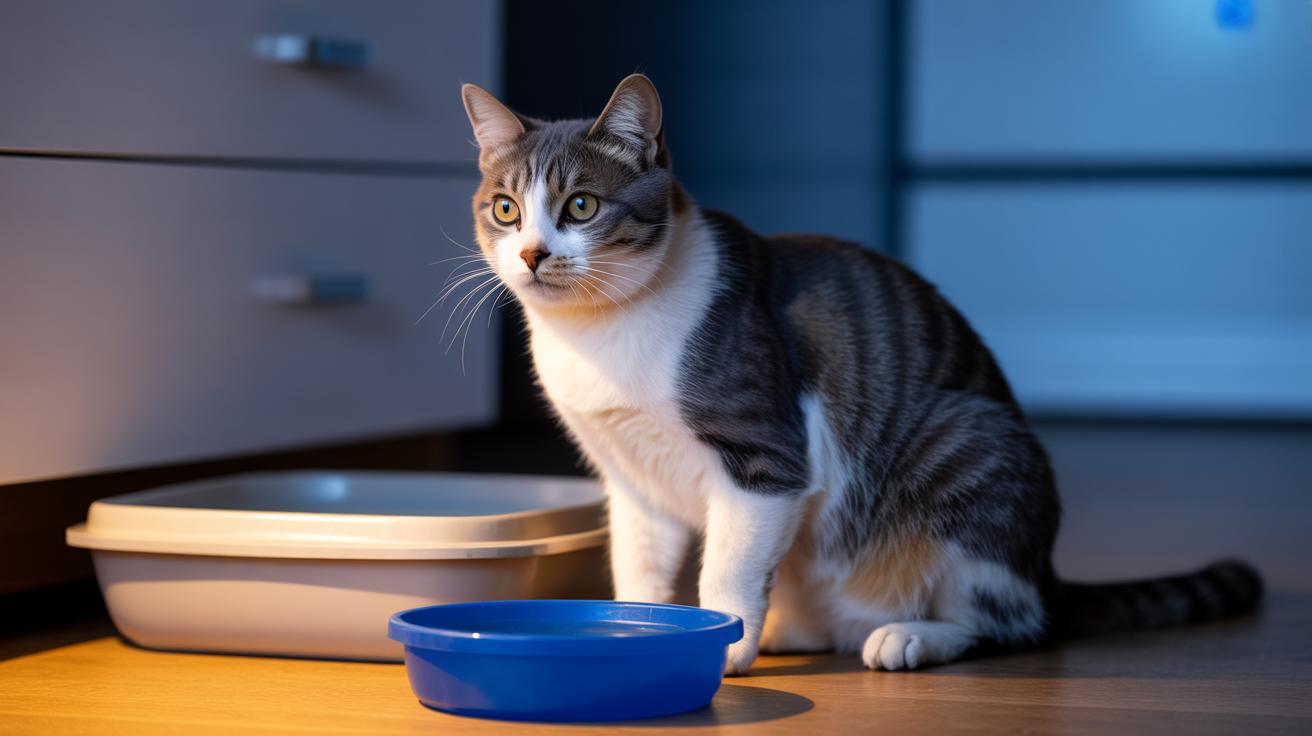
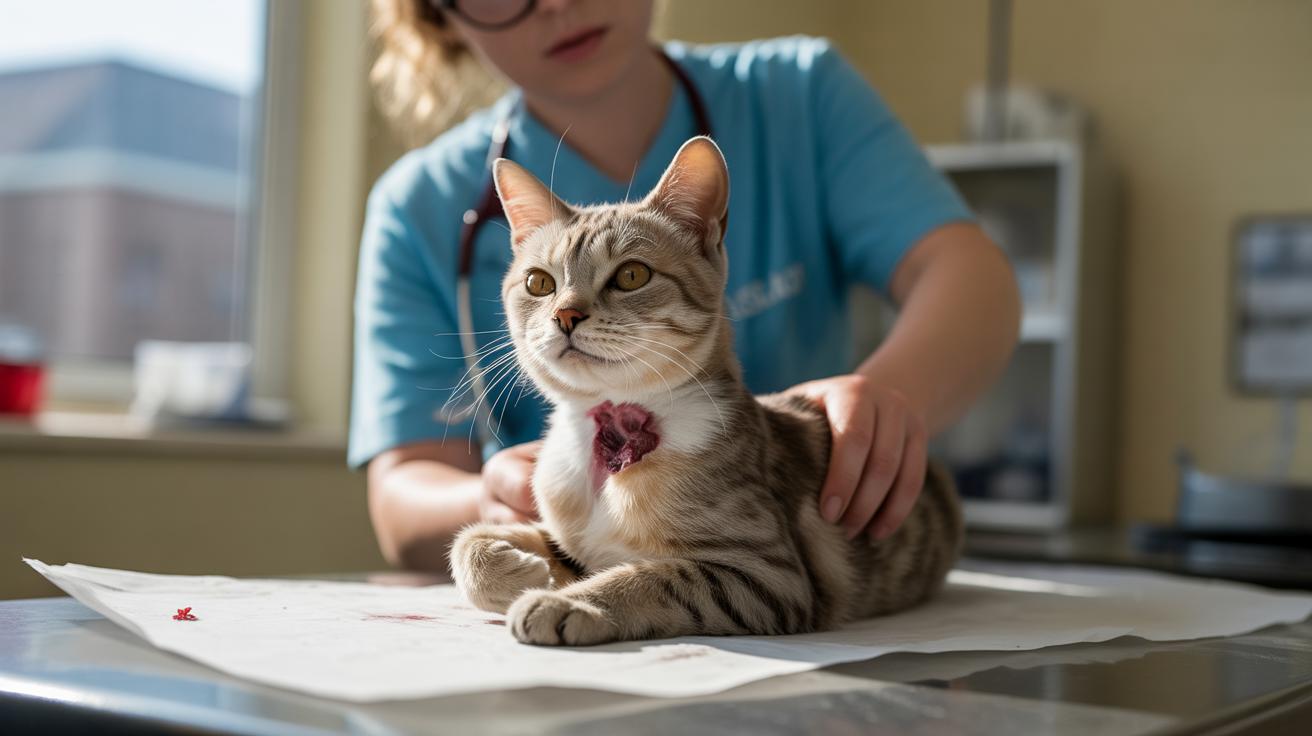
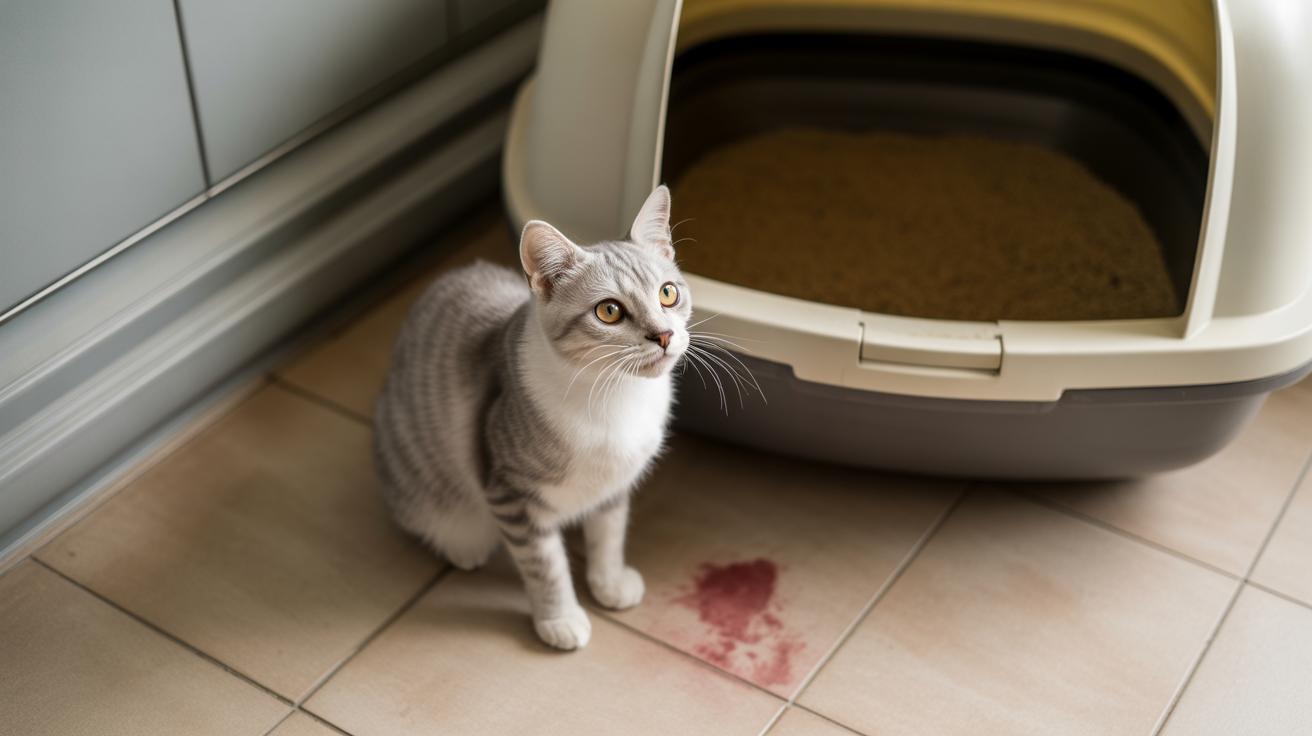
    See blood in the litter box? Don’t shrug it off. That pink puddle can mean something as simple as a urinary tract infection (UTI) or as dangerous as a urethral obstruction (a plug or blockage in the tube that carries urine out), so it deserves a quick check.

    Common causes include urinary tract infection (UTI) , germs that bug the bladder , bladder stones (hard mineral lumps that irritate or block the bladder), cystitis (bladder inflammation), and clotting disorders (when blood doesn’t clot properly). Tiny crystals (small mineral bits that can form stones) can show up too and start trouble. Each one feels different to your kitty, but they all can make peeing painful or bloody.

    Watch for emergency signs like straining in the box, repeated short trips with little or no pee, loud crying while trying to pee, a hard or swollen belly, vomiting, or sudden weakness. If your cat is struggling and producing almost no urine, go to a vet right away , this can become life-threatening in a matter of hours. Ever watched a cat try and fail to pee? Heartbreaking.

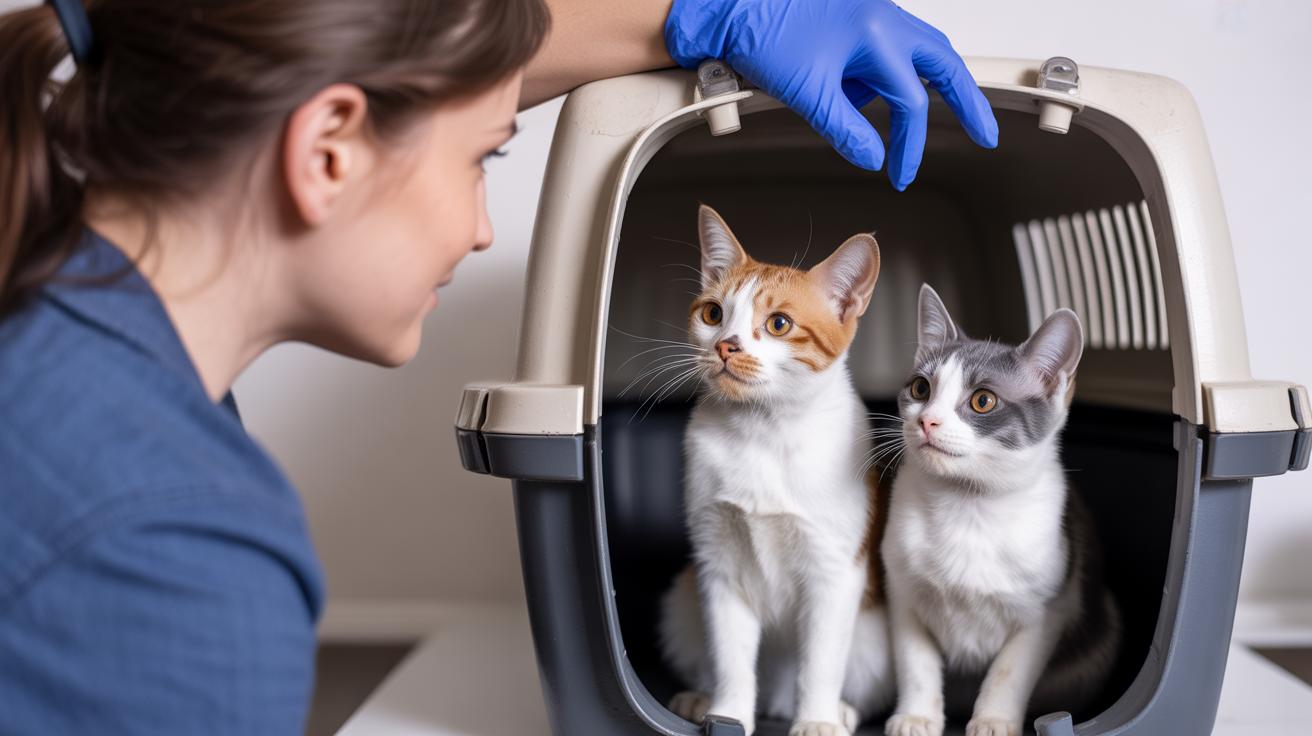
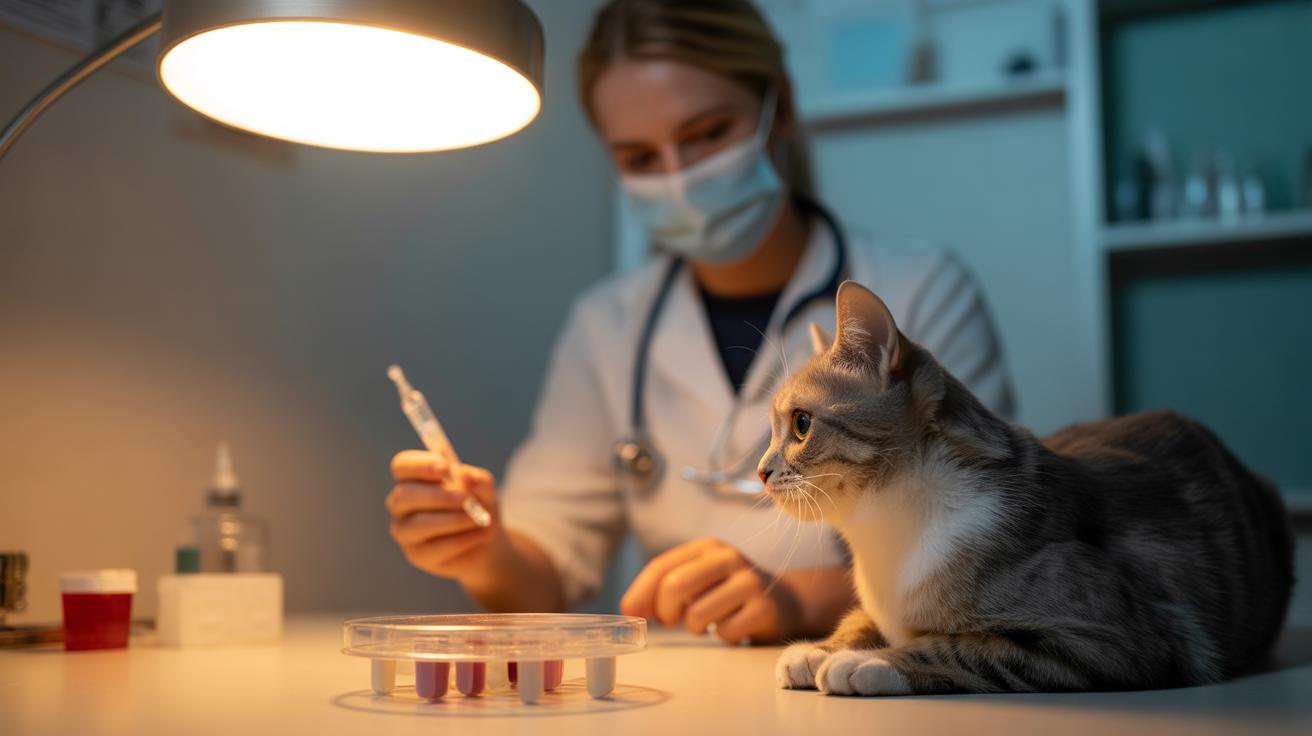
    Basic tests your vet might run include urinalysis (a urine test that checks for blood, crystals, and bacteria) and sometimes bloodwork to look at kidney function. Quick first-aid at home: stay calm, keep your cat warm, offer fresh water, and try to collect a small urine sample if you can (a clean shallow container or a plastic bag on the litter works in a pinch). Don’t try to squeeze the bladder or give human meds, okay? Pack the cat carrier and see your vet if you notice any worrying signs.

    You’ll feel better getting it looked at , and your cat will too. Worth every paw-print.

    Rapid answers for blood in your cat's urine: why it happens, how serious it is, and what to do now
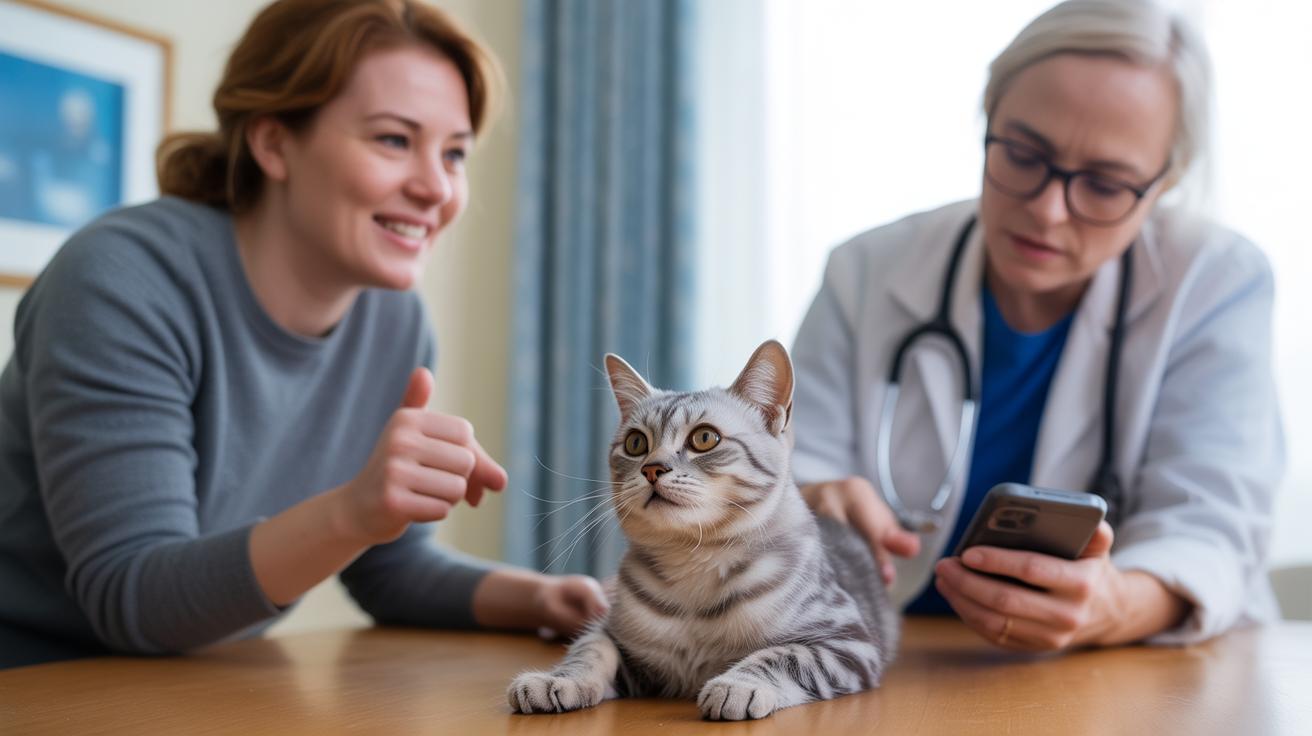
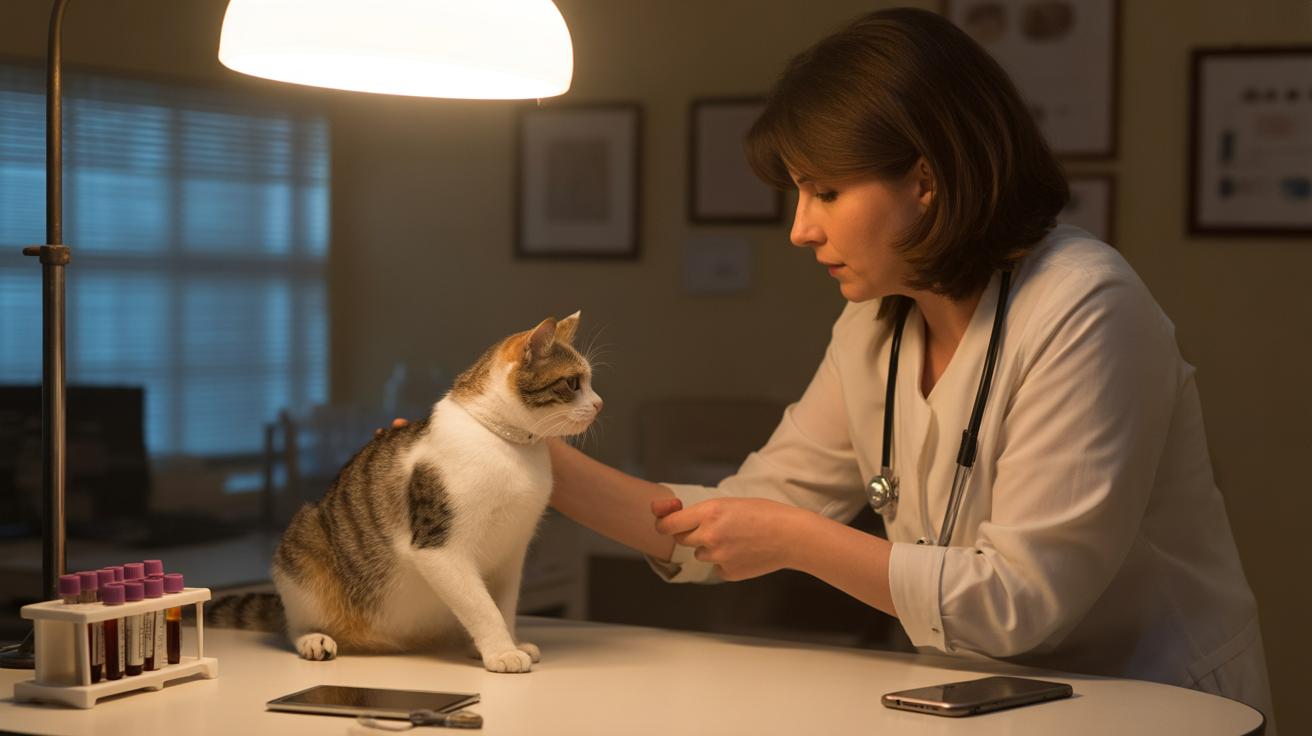
    - Rapid answers for blood in your cats urine why it happens, how serious it is, and what to do now.jpg

    If your cat is straining with little or no urine, go to an emergency clinic now.

    • Keep your cat safe and stay calm. Close them in a quiet room so they don’t panic.
    • Watch to see if they are straining and whether any urine comes out.
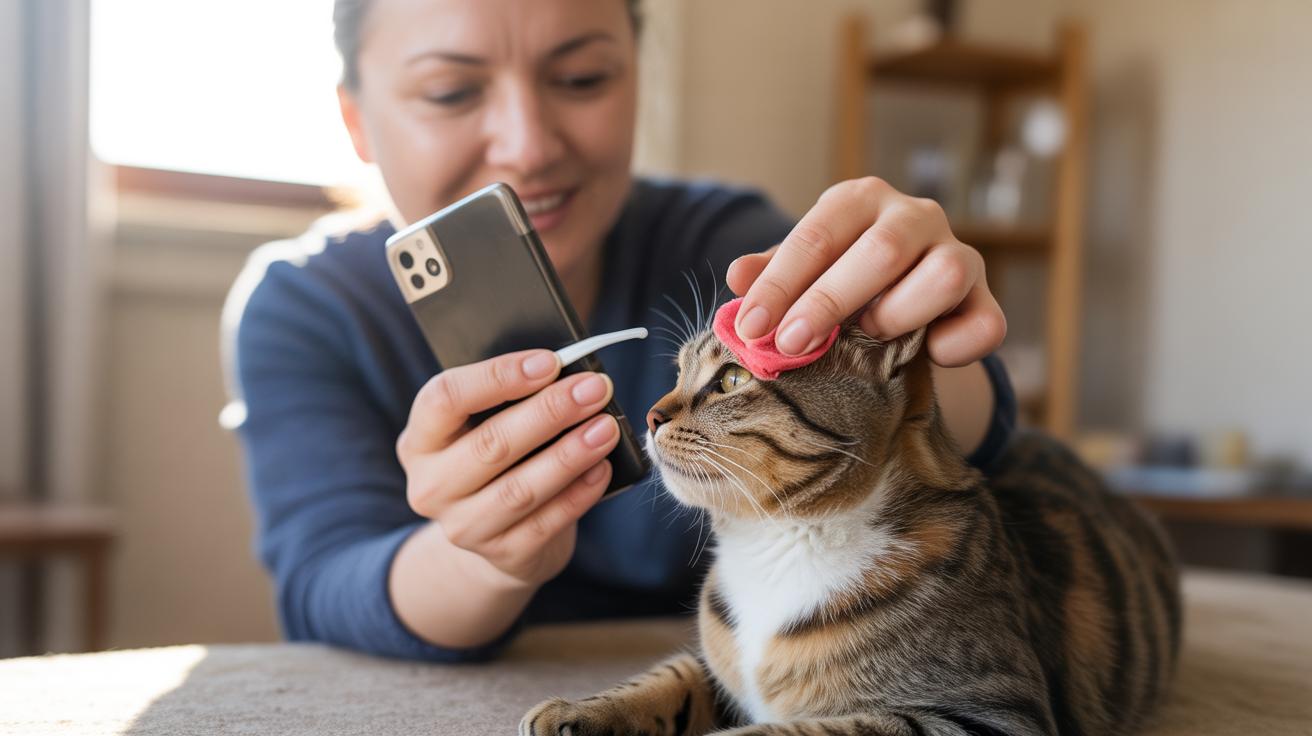
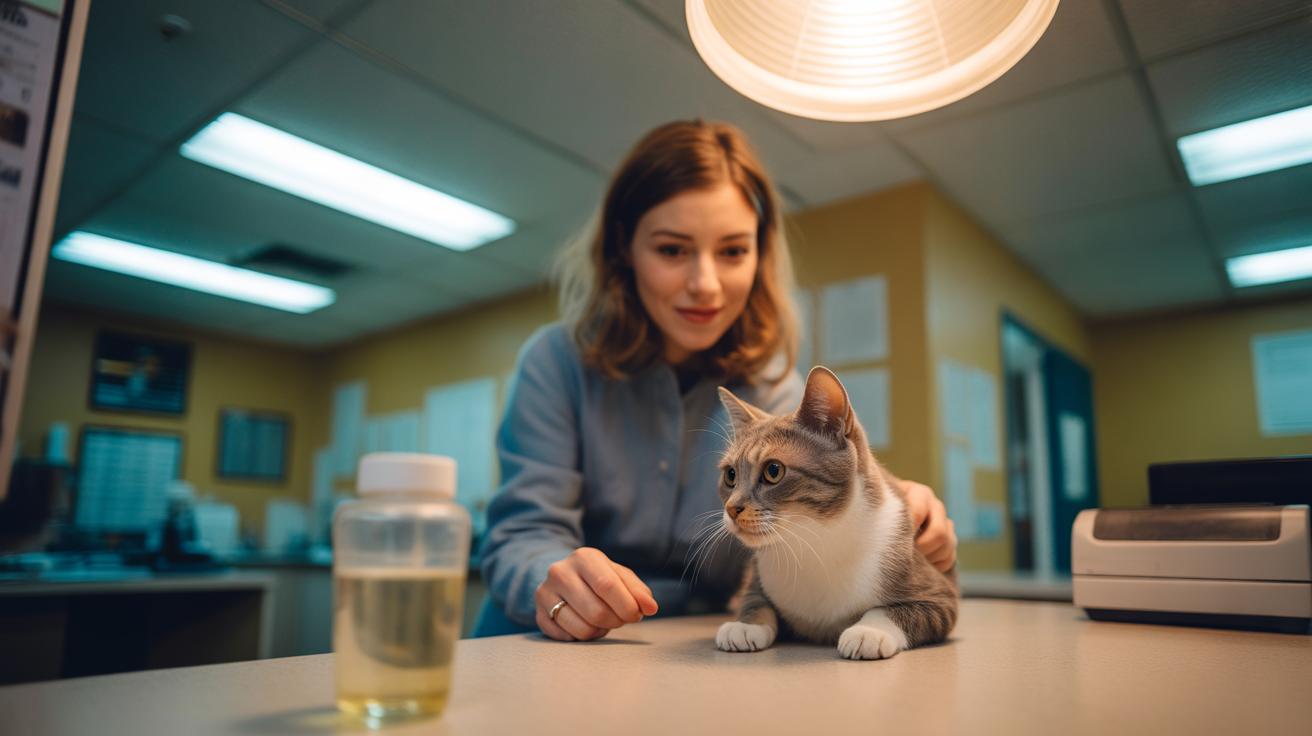
    • If you can, collect a urine sample or snap a photo of the urine or soiled litter , that can help the vet.
    • Don’t give antibiotics or other meds at home, and keep your cat away from possible toxins.
    • Call your regular clinic or an emergency clinic and head there right away if you think there might be a blockage.

    Watch for these emergency signs:

    1. Straining with little or no urine.
    2. Repeated vomiting.
    3. Collapse or not responding.
    4. Open-mouth breathing or trouble breathing.
    5. Extreme sleepiness or not waking up.
    6. A hard, swollen, or painful belly.

    A urethral obstruction (a plug or blockage in the tube that carries urine out) can get dangerous fast. If it’s not treated, your cat can get kidney failure, a life-threatening electrolyte imbalance (too much potassium), or the bladder could rupture within 48 to 72 hours. If you suspect a blockage, getting to an emergency vet quickly is critical.

    Do not try to put in a catheter at home , you can hurt the urethra or push the plug in further. Don’t give antibiotics without a vet’s advice; the wrong drug can hide signs or harm the kidneys. Bring a fresh urine sample or clear photos of urine color or soiled litter if you can, plus any recent medicines and a short history of the signs you’ve seen.

    For full diagnostic-test descriptions and the official clinic test table, see the "How vets confirm hematuria" section, which outlines urinalysis (checking urine for blood, crystals, infection), culture (growing bacteria to identify infection), bloodwork (checking organ function and electrolytes), and imaging (x-rays or ultrasound) that vets use to find the cause of blood in a cat’s urine.

    Ever watched your kitty’s whiskers twitch while they try to go? It’s scary when things go wrong, but quick action really helps.

    Causes of Blood in Cat Urine
    - Common medical causes of blood in cat urine the quick checklist of likely diagnoses.jpg

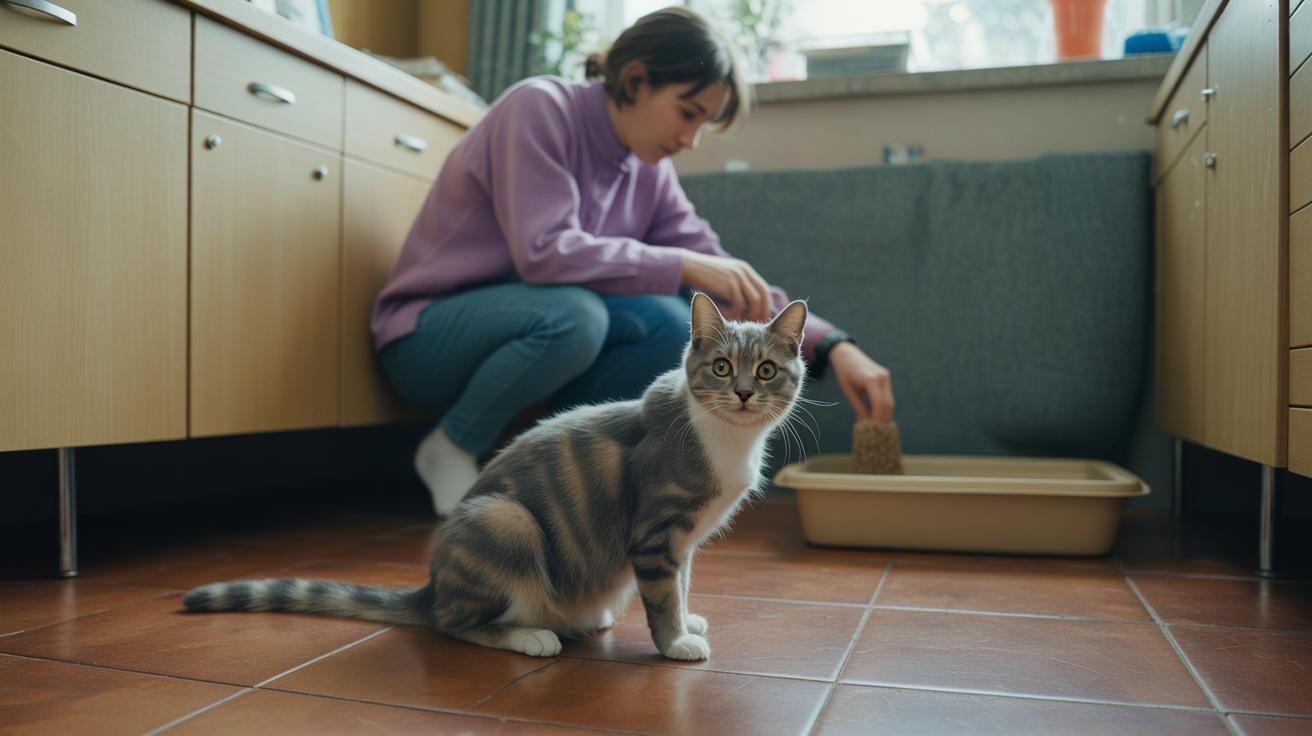
    Seeing blood in your cat’s urine is scary, and it’s one of the top reasons folks call the vet. The common culprits are FLUTD, urinary tract infection, and bladder stones, and each can make your kitty pee outside the box, strain, or produce bloody or discolored urine.

    FLUTD, which stands for feline lower urinary tract disease, is basically sterile bladder inflammation (bladder irritation without bacteria). It often hits young to middle-aged cats under stress and causes lots of trips to the litter box, tiny amounts of urine, and sometimes blood. It’s usually not an emergency unless the cat becomes blocked.

    A urinary tract infection (UTI) is more common in older cats and in females. With a UTI you’ll often see painful, frequent urination and visible blood. Prompt vet care is a good idea.

    Bladder stones and crystalluria (tiny mineral crystals in the urine) can show up at any age, but certain kinds of stones are more common in middle-aged to older neutered males. Stones are hard mineral lumps that can cause pain, repeat infections, or even blockages. Some cases need surgery.

    Urethral plugs or obstructions are most common in neutered males and cause straining with little or no urine, plus severe pain. This is an emergency. Get your cat to an emergency clinic right away.

    Trauma to the urinary tract after a fall, fight, or accident can cause visible blood and pain at any age, so urgent evaluation is wise. Coagulopathy (a bleeding disorder that makes blood not clot properly) can cause bleeding from multiple places, including the urine, and may be life-threatening.

    Bladder tumors (cancer) occur more often in older cats, usually over ten, and often cause persistent blood in the urine and weight loss. Kidney disease or pyelonephritis (a kidney infection) tends to affect older cats and can cause darker or bloody urine plus lethargy or vomiting; these sometimes need quick treatment.

    Intact females can have reproductive tract bleeding (uterine or vaginal bleeding) that looks like bloody urine and should be checked by a vet.

    Visible blood can be pink, brown, bright red, or come with clots, and sometimes the blood is microscopic and only a vet will find it. Other signs that vary by cause include changes in how much your cat pees, odd urine smell, vocalizing while peeing, or extra licking around the genitals. Ever watched your cat make everything dramatic around the litter box? Yeah, that’s the one to watch.

    Match your cat’s signs to the short list below to help the vet triage quickly:

    • FLUTD/FIC (sterile bladder inflammation): Often young to middle-aged cats of any sex, stress-related frequent urination, blood, and litter-box avoidance; usually not an emergency unless blocked.
    • Urinary tract infection (UTI): More common in older or female cats, painful and frequent peeing with visible blood; prompt vet care is typical.
    • Bladder stones/crystals: Seen in middle-aged to older cats and often neutered males; signs include straining and blood and may need urgent care or surgery.
    • Urethral plugs/obstruction: Most common in neutered males, causes straining with little or no urine and severe pain. This is an emergency.
    • Trauma to urinary tract: Any age after a fall or fight, shows blood and pain; urgent evaluation advised.
    • Coagulopathy and bleeding: Can affect cats of any age, causes bleeding from multiple sites including urine and may be life-threatening (bleeding disorder).
    • Bladder tumor: Tends to occur in older cats with persistent blood and weight loss; needs a thorough workup.
    • Kidney disease/pyelonephritis (kidney infection): Usually older cats, may cause darker or bloody urine plus lethargy or vomiting and can need fast treatment.
    • Reproductive tract bleeding: Intact females can have uterine or vaginal bleeding that may look like bloody urine and requires veterinary assessment.

    For which diagnostic tests are typical for each cause, refer to the "How vets confirm hematuria" section for full descriptions and the diagnostic table.

    How vets confirm hematuria in cats: tests you can expect at the clinic
    - How vets confirm hematuria in cats tests you can expect at the clinic.jpg

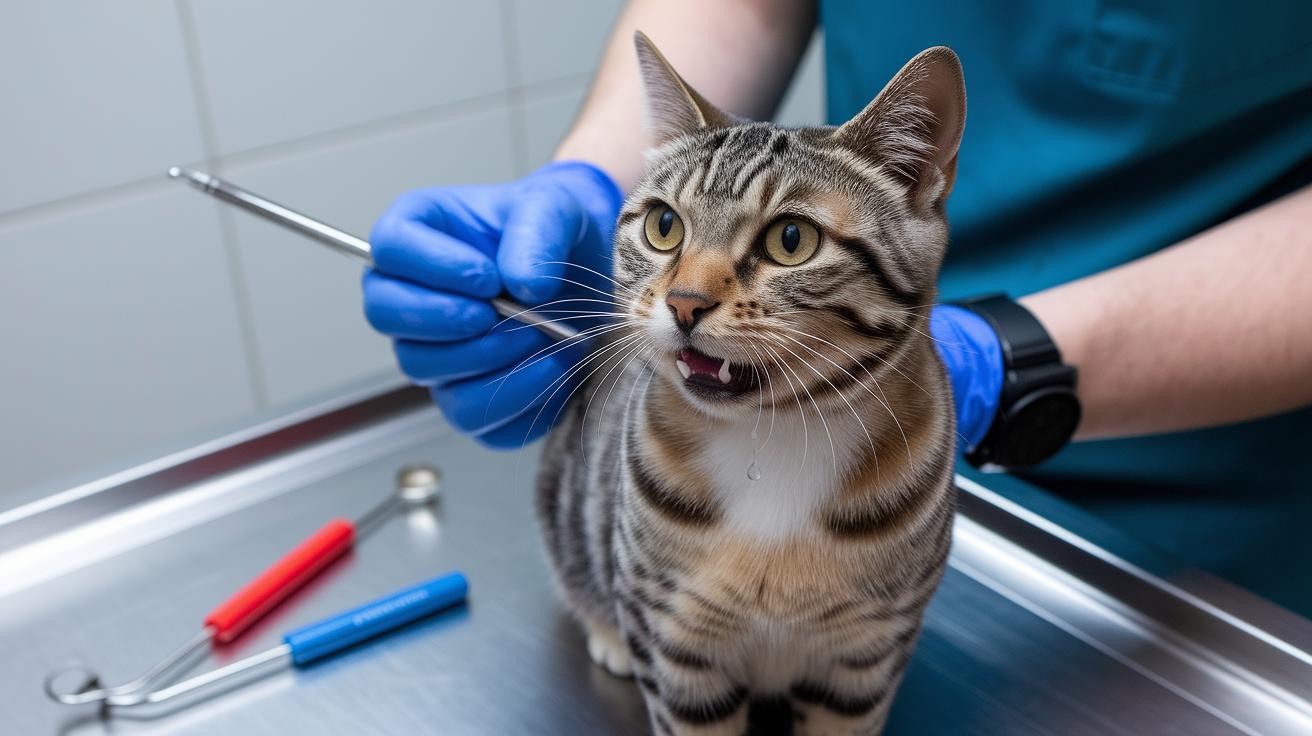
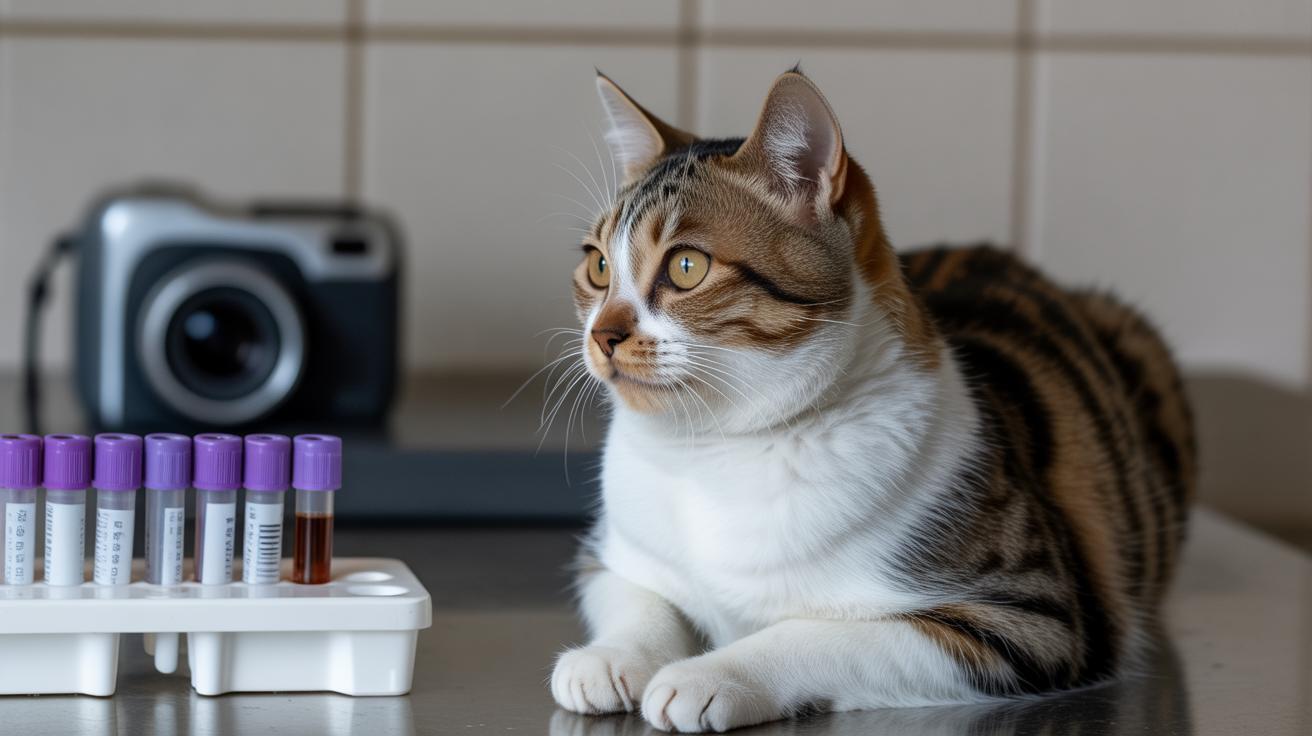
    When a vet looks into blood in your cat's urine, they follow a clear, step-by-step plan. First they take a focused history and do a physical exam, then they test the urine, check bloodwork, and image the urinary tract if needed. Think of it like building a puzzle, each test adds a piece until the picture makes sense. Ever watched your kitty stare at a puddle and you wonder why? Yeah, this is the clinic version of that curiosity.

    1. Take a detailed history and do a physical exam.
    2. Run a urinalysis (urine test) and examine urine sediment (microscope check of particles).
    3. Send a urine culture and sensitivity (grow any bacteria and find the best antibiotic) when infection is suspected or before a long antibiotic course.
    4. Perform a CBC (complete blood count) and blood chemistry panel (blood chemistry, including electrolytes and creatinine – kidney marker).
    5. Use abdominal ultrasound (sound-wave imaging that shows soft tissues) to look for stones that don’t show on x-ray, masses, and subtle kidney changes.
    6. Take radiographs (x-rays) when radiopaque stones (stones that show up on x-ray) are likely or to screen for other changes.

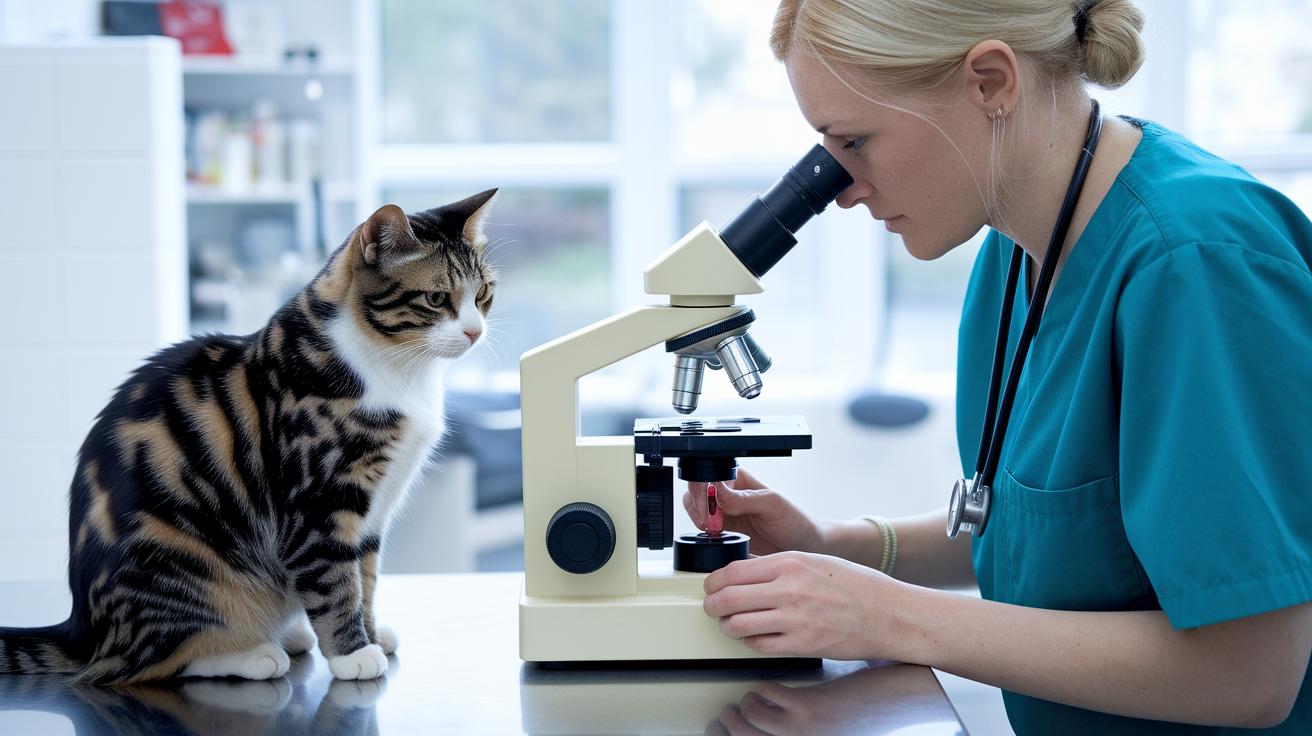
    Urinalysis uses a dipstick (a quick chemical strip) plus a microscopic sediment exam (looking for red blood cells, crystals, bacteria, and cells). Dipsticks are fast but can give false positives from foods, cleaning agents, or contamination, so the sediment exam tells the real story and can catch microscopic hematuria you wouldn’t see with the naked eye. Urine culture and sensitivity takes about 48 to 72 hours, and it helps pick the right antibiotic for a clear infection or for recurrent problems.

    Cystocentesis (taking urine with a needle straight from the bladder) gives the cleanest sample for culture and lowers contamination risk, but a vet must do it because there is a small risk of bleeding or poking something if the bladder is tiny or scarred. Catheterized samples can be useful sometimes, but they may introduce bacteria or need sedation in male cats, so your vet will choose the method that fits your cat’s situation.

    Bloodwork checks for infection, dehydration, how the kidneys are doing, and dangerous electrolyte problems like high potassium (a salt your body uses for heart and nerve function). Imaging choices: radiographs (x-rays) pick up radiopaque stones; ultrasound finds nonradiopaque stones (stones that don’t show on x-ray), bladder masses, and subtle kidney changes. If a mass shows up or the cause stays unclear, the vet might suggest cystoscopy (a camera into the bladder) or a biopsy (tissue sample).

    Sample collection tips: a voided or free-catch sample is the easiest, but it can be contaminated. Use a clean container, keep the sample chilled, and try to get it to the clinic within two hours. Bring a list of recent medications, a photo of discolored urine if you have one, and a short timeline of signs. Rechecks are common. For example, we usually recheck urinalysis 7 to 14 days after finishing treatment for a simple UTI, and follow-up is longer for kidney infections or stones.

    Test Purpose What it reveals
    Urinalysis Quick screen for blood, protein, glucose, and pH Shows visible versus microscopic hematuria, urine concentration, and clues to infection or crystals
    Urine culture Identify bacterial infection and antibiotic sensitivity Grows bacteria and guides targeted antibiotic choice (results about 48 to 72 hours)
    Urine sediment Microscopic exam of cells, crystals, and organisms Confirms red blood cells, white blood cells, bacteria, and crystal type
    CBC / Chemistry (including electrolytes) Assess overall illness and organ function Finds anemia, signs of infection, kidney values, and dangerous electrolyte imbalances
    Abdominal ultrasound Detailed look at bladder, kidneys, ureters, and masses Finds stones that don’t show on x-ray, tumors, inflammation, and subtle kidney structure changes
    Radiographs Screen for stones that show on x-ray Shows dense stones like some struvite or calcium oxalate stones when they are dense enough to appear

    Urinary tract infections and kidney infections: presentation, treatment, and timelines
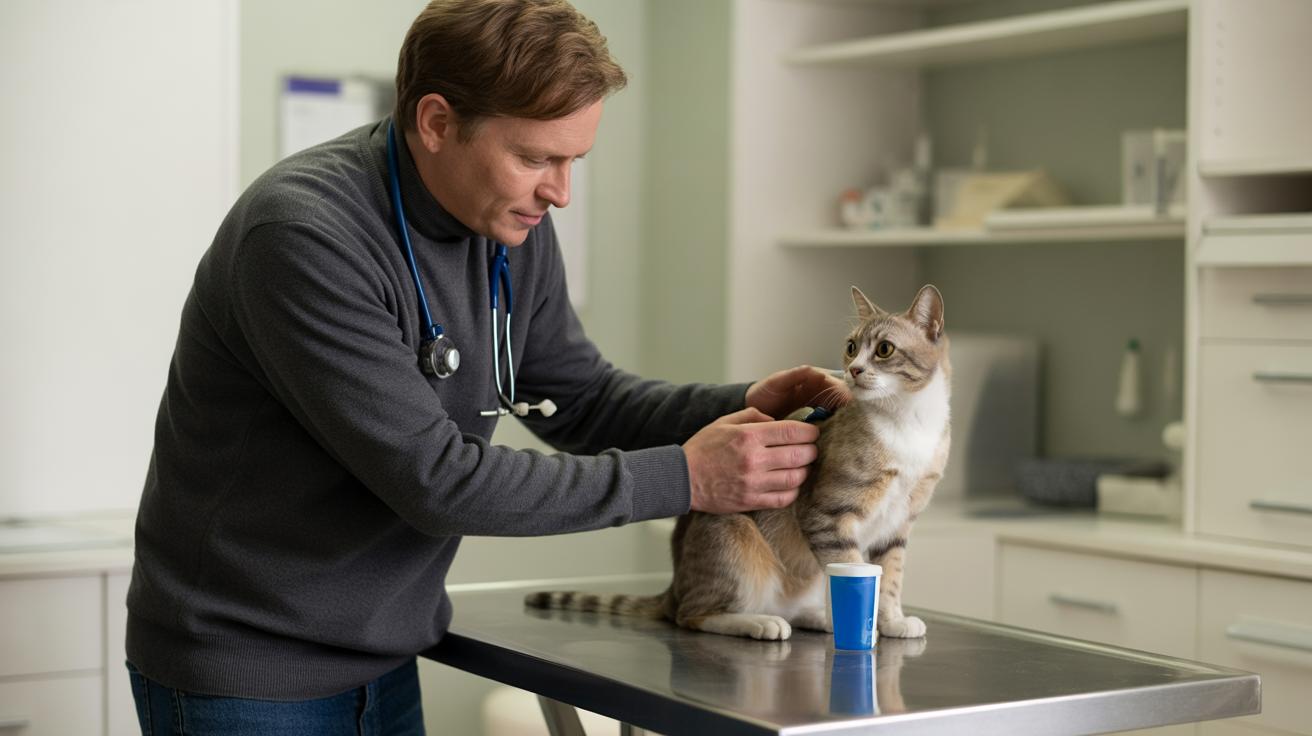
    - Urinary tract infections and kidney infections presentation, treatment, and timelines.jpg

    A urinary tract infection in cats can involve the bladder (where urine is stored), the urethra (the tube urine leaves through), the ureters (tiny tubes that carry urine from the kidneys), or the kidneys themselves. You might notice blood in the litter box, more trips to the box, straining, or crying while your cat pees. Sometimes the signs are subtle, like lingering at the box or licking down there. Older cats and females tend to get bacterial UTIs more often, but any cat can be affected. Ever watched your kitty freeze and stare while trying to pee? Yeah, not fun.

    When the infection moves up into the kidneys it’s called pyelonephritis (kidney infection). That’s deeper and tougher. Cats with pyelonephritis often seem sick overall , fever, not eating, and vomiting, on top of dark or bloody urine.

    Vets confirm a UTI with a urinalysis (a dipstick test plus looking at the urine under a microscope). They’ll usually send a urine culture and sensitivity (growing the bacteria to choose the right antibiotic) when infection is likely or before starting a long antibiotic course. For full test descriptions and timing, see the "How vets confirm hematuria" section. Hydration helps the whole process , offering canned food or giving supervised subcutaneous fluids (fluids given under the skin) can ease the kidneys while medications work.

    • collect urine for urinalysis and culture
    • give a targeted antibiotic chosen from the culture results (antibiotic selection for cats)
    • provide pain control if your cat seems uncomfortable
    • recheck urinalysis and culture at the end of treatment
    • keep fluids up and watch litter-box output

    Uncomplicated lower UTIs often start to feel better in days and are usually clearer within a week with proper treatment. Kidney infections usually need a longer antibiotic course, commonly 4-6 weeks. Follow-up testing (repeat urinalysis and culture) helps confirm the infection is truly gone. Isn’t it nice when a treatment actually works? For a practical owner resource on prognosis and recurrence, see Do cat UTIs go away.

    Bladder stones, crystals, and urethral obstruction: types, risks, and emergency potential
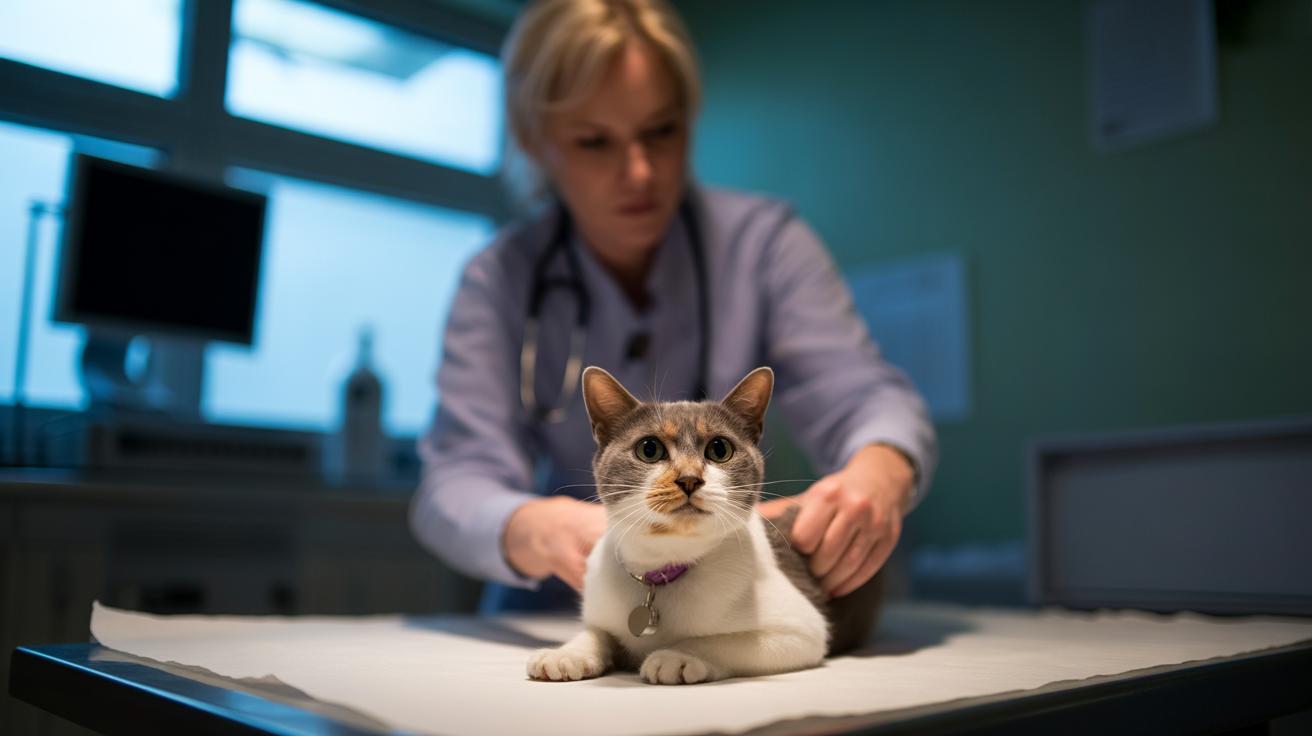
    - Bladder stones, crystals, and urethral obstruction types, risks, and emergency potential.jpg

    Stones are hard mineral lumps that form in the kidneys, ureters (tiny tubes that carry urine from the kidneys), or bladder. Crystals (crystalluria – tiny mineral bits seen in urine) can show up on a test even when no stone is present, especially if the urine is concentrated. Vets confirm what’s going on with a urinalysis (lab check of urine), radiographs (x-rays), and ultrasound (sound-wave imaging) – see the "How vets confirm hematuria" section for the full clinic test details.

    Struvite and calcium oxalate are the two most common types, and they act differently. Struvite stones (made of magnesium ammonium phosphate – a mineral salt) often respond to a prescription diet that dissolves them. You’ll usually see these in younger to middle-aged cats. Calcium oxalate stones (hard mineral lumps) don’t dissolve and most of the time need surgery to remove. These are more common in middle-aged to older neutered males.

    Other types you might hear about:

    • struvite (younger to middle-aged cats; often dissolves with a prescription diet)
    • calcium oxalate (middle-aged to older neutered males; usually needs surgical removal)
    • urate (rare; linked to certain breeds and managed case-by-case; related to uric acid)
    • cystine (rare; genetic origin and often lifelong management; caused by an inherited amino acid handling problem)

    Here are a few practical points to keep in mind:

    • Male cats have a higher risk of a complete urethral blockage (urethral obstruction – a full stop that prevents urine from leaving the body).
    • Do not try to pass a catheter at home – a catheter is a thin tube used to open the urethra and you can cause severe damage if you do it yourself.
    • If you think your cat is blocked, follow the urgent-action block at the top of this article and go to the clinic right away.
    • Bring any recent x-rays or ultrasound reports when you go to the clinic so the vet can compare images.

    A urethral obstruction is a medical emergency. Your cat may strain, cry, pace, lick the area, or only produce tiny dribbles of urine. Untreated blockage can lead to kidney failure, a dangerous electrolyte imbalance (high potassium – called hyperkalemia), or even bladder rupture within 48 to 72 hours. Fast veterinary care can be lifesaving, so get your cat to the clinic as quickly as you can.

    - Feline idiopathic cystitis (FLUTDFIC) and stress-related bladder bleeding.jpg

    Feline idiopathic cystitis, or FIC (bladder inflammation with no clear cause), is a common noninfectious reason you might see blood in your cat’s urine. It falls under the bigger category called FLUTD (feline lower urinary tract disease), which just means problems in the bladder and urethra. Ever watched your cat squat and look uncomfortable? That’s the kind of thing we’re talking about.

    Vets first rule out things we can treat, like infection (bacterial infection) and urinary stones (hard mineral crystals). They’ll check urine, do bloodwork, and sometimes run imaging (x-rays or ultrasound) to confirm hematuria (blood in urine) and find the cause , see How vets confirm hematuria for clinic tests and imaging details.

    Practical prevention and home monitoring (owner-facing):

    • Offer more wet food (canned food) to boost moisture intake.
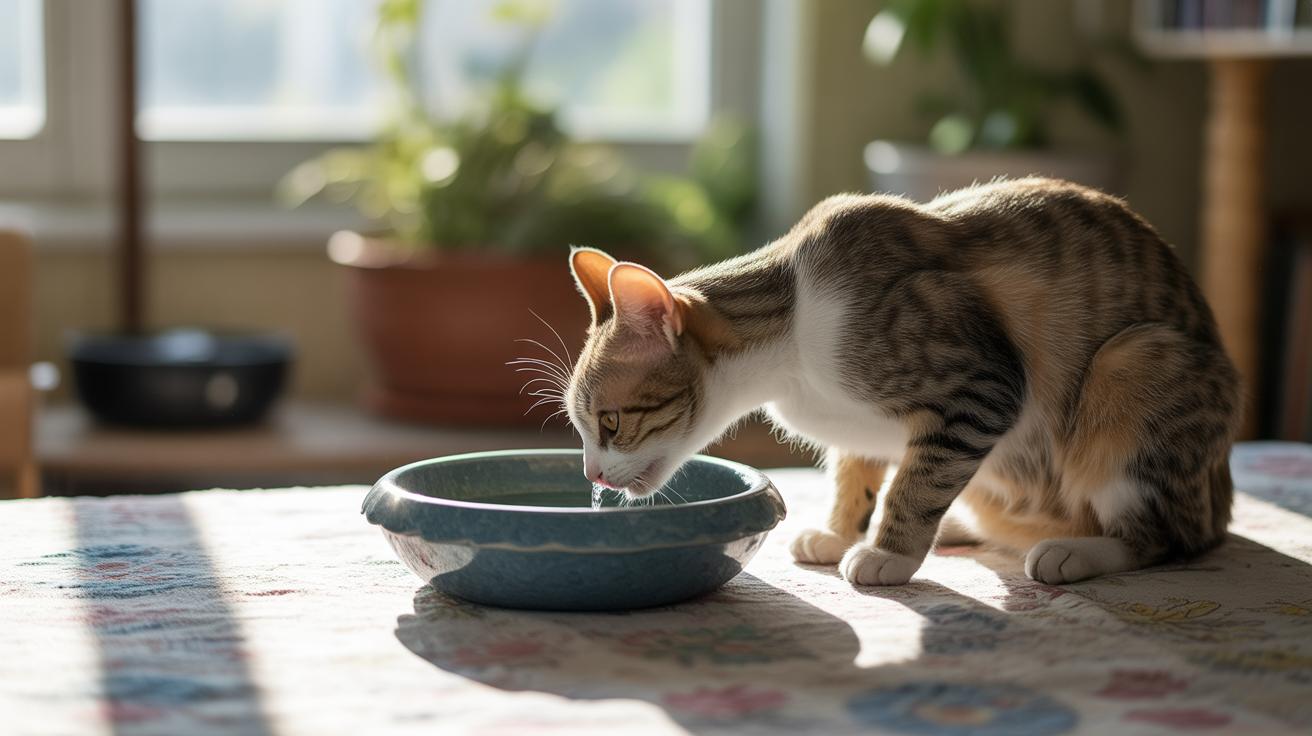
    • Add a cat water fountain (continuous-flow bowl) or other flowing water , many cats drink more from moving water.
    • Put several fresh-water stations around the house and try shallow, wide dishes if your cat prefers them.
    • Lower household stress with quiet resting spots, short regular play sessions, and easy-to-reach hiding places. Ever watched your kitty chase a ribbon and then flop down for a nap? That calm matters.
    • Watch litter-box habits closely: note how often your cat urinates and what the urine looks like. Keep enough boxes , one per cat plus one extra , and place them in separate, quiet areas.

    For the full prevention checklist and step-by-step home-care guidance, see the Treatment/Prevention section.

    Worth every paw-print.

    Causes of Blood in Cat Urine
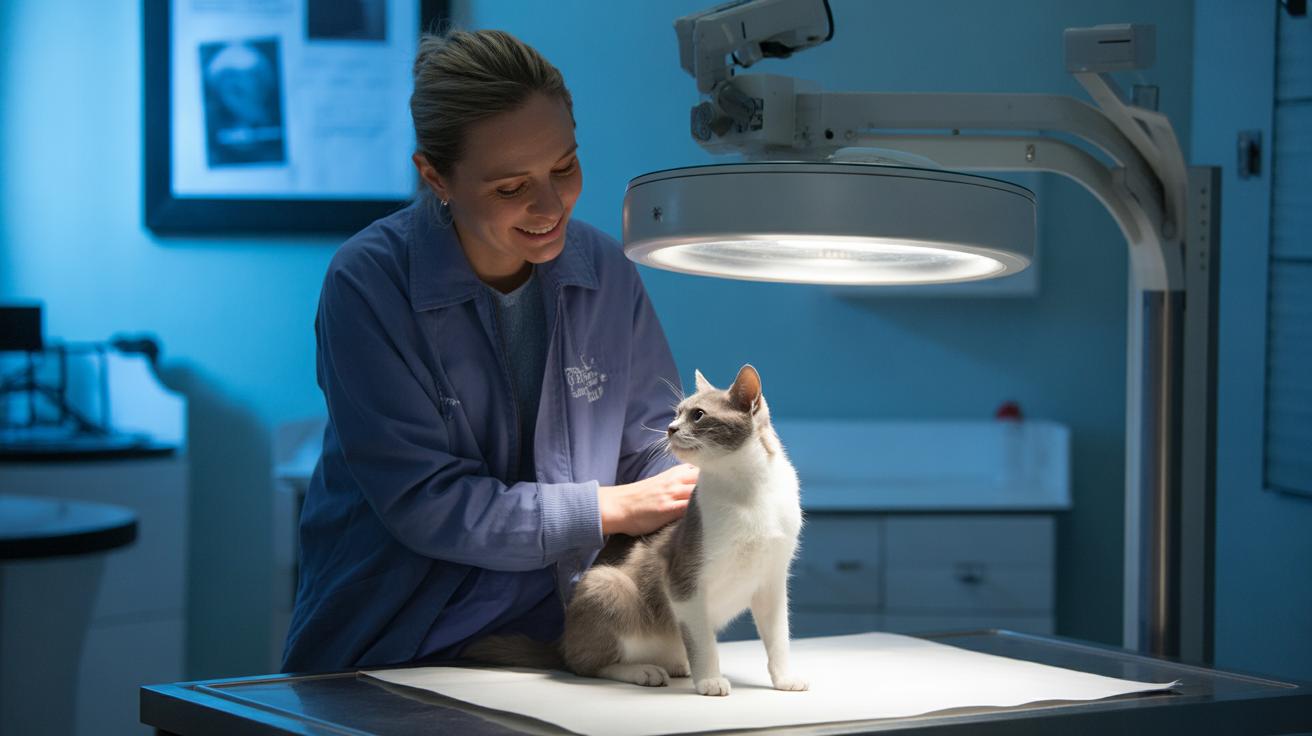
    - Less common but important causes of hematuria trauma, coagulopathy, infection links, and tumors.jpg

    Blunt trauma , from a fall, a cat fight, or being hit by a car , can nick the bladder (the small sac that holds urine), kidneys (the organs that filter blood), or urethra (the tube that carries urine out) and lead to visible blood in the urine. Sometimes there are no scratches or cuts on the fur to show something’s wrong, so if you know your cat was injured and you see blood, get them to the vet right away. They may need imaging like X-rays or an ultrasound, and sometimes surgical repair.
    Example: He seemed fine after the scuffle, then his urine had blood , internal bladder tears can hide under unmarked fur. Ever see that? It’s scary.

    Coagulopathy (a clotting disorder) can be something a cat is born with, a side effect of medications, or the result of toxins like anticoagulant rodenticide (rat poison that stops blood from clotting). You’ll often see bleeding from more than one spot: gums, skin bruises, nosebleeds, and bloody urine. Quick lab work such as clotting panels (blood tests that measure how fast blood clots) helps figure this out and guides treatment. Quick tip: if you suspect your cat ate bait or poison, tell the vet right away so they can run the right tests.

    Less common causes include bladder cancer, which shows up more in cats over ten and usually causes ongoing blood in the urine plus unexplained weight loss, and systemic viruses like FeLV (feline leukemia virus) and FIV (feline immunodeficiency virus) that can raise bleeding risk. Advanced kidney infection, called pyelonephritis (kidney infection), can also cause bloody urine. It’s not always one thing, so vets look at the whole picture.

    Red flags that mean you should get urgent veterinary care

    • Any recent trauma or obvious injury. Imaging or surgery may be needed, and internal bruising can happen with no outside wounds.
    • Bleeding from more than one place, like gums, skin, or the nose.
    • Sudden extreme tiredness, easy bruising, or weakness.
    • Known or suspected rodenticide exposure. Consider clotting panels (tests that check blood clotting).
    • An older cat with persistent blood in the urine and weight loss.

    What to expect at an emergency clinic
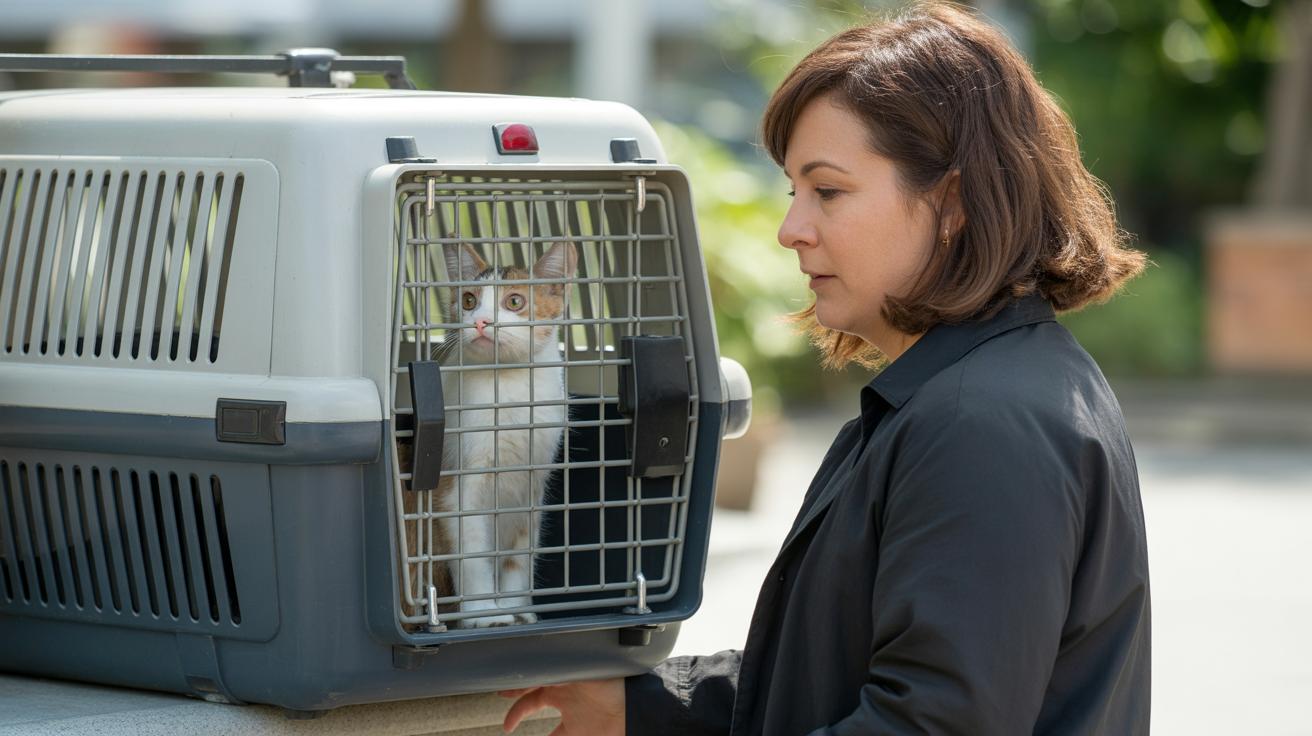
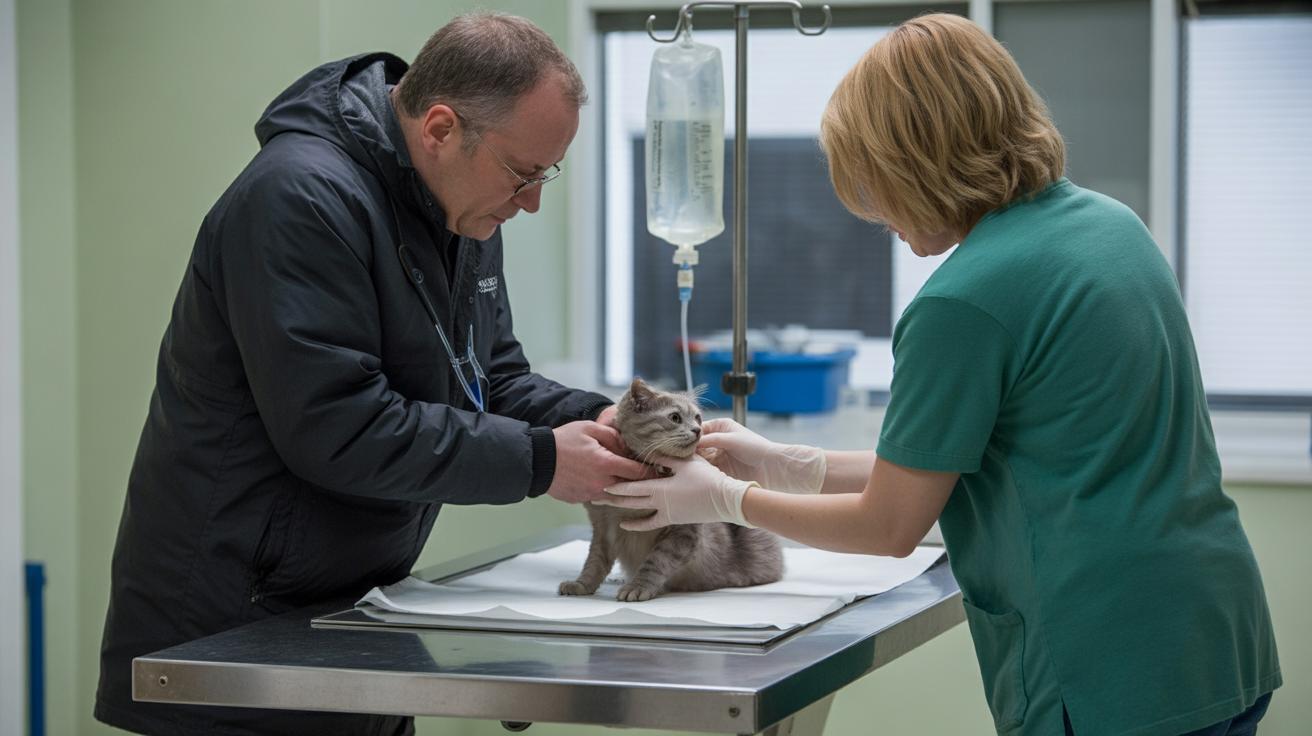
    - When blood in cat urine is an emergency clinic procedures, condition-specific nuances, and cross-reference to urgent-owner steps.jpg

    Start by following the urgent-action checklist at the top for immediate steps. When you get to the clinic, they’ll stabilize your cat first, then run the tests described in the diagnostics section. Note: owner cautions like "Do not attempt catheterization at home" and that male cats are at higher risk of complete urethral obstruction are placed in the urgent-action block so you can find them fast.

    Ever watched your kitty suddenly stop peeing? That’s the kind of emergency this is, so staff move quickly.

    • Stabilization and triage happen right away. They’ll check vital signs: temperature, heart rate, and breathing.
    • Dangerous electrolyte imbalances get corrected with IV fluids (fluids given into a vein). They’ll also monitor for hyperkalemia (high potassium) using an ECG (electrocardiogram, a test that checks heart rhythm) and bloodwork.
    • If the bladder is blocked, catheterization may be done under sedation. Catheterization (a thin tube placed to relieve a blockage) lets the bladder decompress and relieves the immediate danger. Please don’t try this at home.
    • Your cat might be hospitalized for a while for monitoring, pain control, and urine-output checks (so the team can make sure your cat is actually peeing again).

    Worth every paw-print.

    Treatment options, recovery expectations, and a master prevention checklist
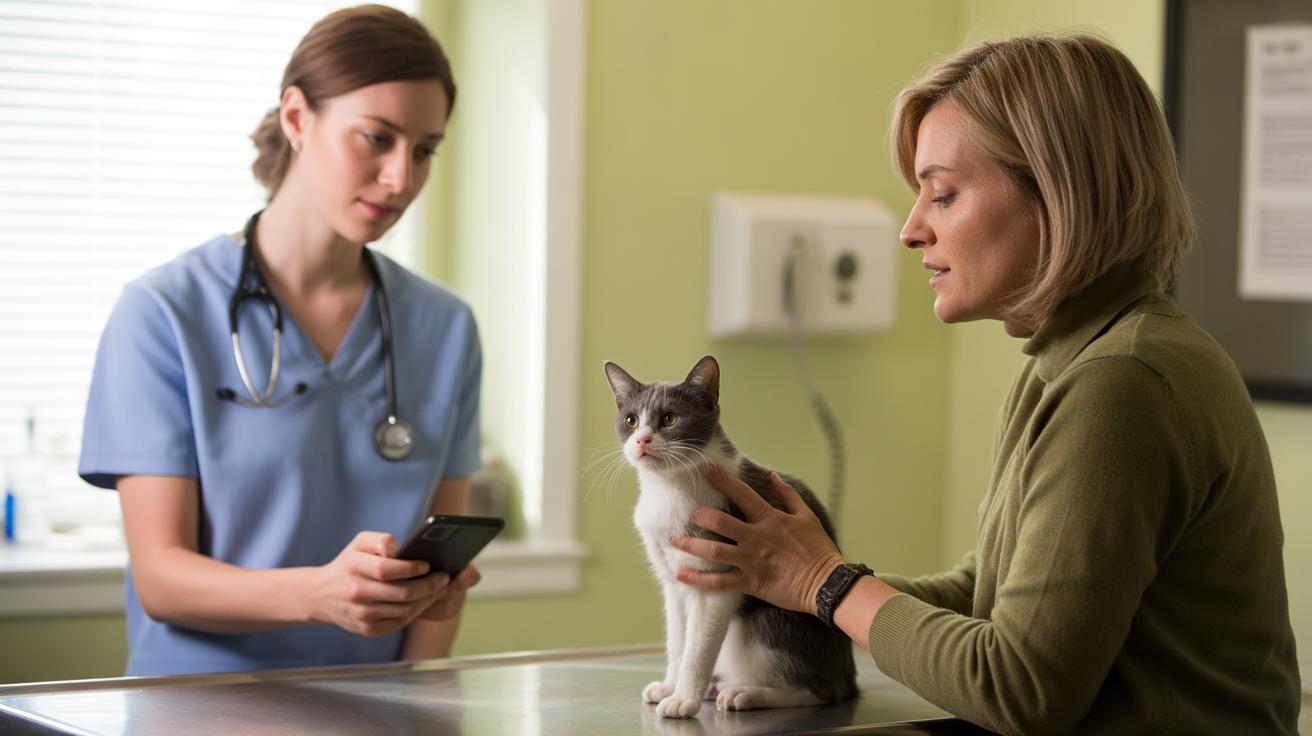
    - Treatment options, recovery expectations, and a master prevention checklist.jpg

    Follow the diagnosis-specific plan your vet gives you. See the UTI/pyelonephritis, stones, FLUTD, and How vets confirm hematuria sections for details. Meds and procedures are chosen based on tests, not guesses. For example: if a culture (a lab test that grows bacteria from urine) finds bacteria X, the vet will switch to drug Y for the best result.

    Home support matters. Give medications exactly as directed. Boost hydration with canned food and a water fountain so your cat sips more (hydration helps flush the bladder). Watch the litter box and write down changes in color, amount, and how often your cat goes. Example note: "Day 3 , pale yellow, three small clumps, peed mid-day and evening."

    Bring a fresh urine sample and clear photos to rechecks whenever you can. That really helps the clinic track color and volume changes. Photo tip: place a clean white paper under the litter area and zoom in on the wet spot to show color and size.

    If your cat is straining, collapsing, or not producing urine, use the clinic’s emergency/obstruction guidance right away. Those signs can mean a urethral obstruction (a blocked urethra) and need urgent attention. The ER/obstruction section explains the next steps.

    Follow the recheck schedule below for typical timing and what to bring, but always adjust to your vet’s plan.

    Condition Typical recheck timing What to bring
    Uncomplicated lower UTI Urinalysis (urine test) 7–14 days after finishing antibiotics Fresh urine sample, list of meds, photo of any urine change
    Pyelonephritis (kidney infection) Culture (bacterial growth test) and/or urinalysis during therapy; repeat at 2–4 weeks and at end of the 4–6 week course Fresh urine, prior culture results, any imaging reports
    Stones (medical dissolution or post-op) Imaging (x-ray or ultrasound) and urinalysis per surgeon/vet , commonly 2–6 weeks after treatment Recent imaging (CD/USB/photos), urine sample, medication list
    Post-urethral obstruction Clinic recheck within 24–72 hours, then 7–14 days as advised Fresh urine, photos, notes on litter-box behavior and meds

    Reminder: bring a fresh urine sample and photos to rechecks so the clinic can compare changes quickly. Worth every paw-print.

    Final Words

    In the action: fast triage steps, a clear shortlist of likely diagnoses, the full clinic test plan, and practical treatment plus prevention tips. You’ve got what to do right now and what vets will do next.

    Keep calm, collect a safe sample or photo, and get help fast if your cat shows emergency signs. Small changes at home, more wet food, fresh water, quiet litter boxes, go a long way.

    Stay hopeful. With quick action and steady care, you can protect playtime and spot the causes of blood in cat urine early.

    FAQ

    Causes of blood in cat urine (male)

    The causes of blood in a male cat’s urine include urinary tract infection, feline lower urinary tract disease (FLUTD), bladder stones or urethral obstruction, trauma, clotting disorders, and less commonly bladder cancer.

    Blood in cat urine (female)

    The causes of blood in a female cat’s urine include urinary tract infection, FLUTD, bladder stones, reproductive tract bleeding, trauma, kidney infection, and clotting problems; UTIs are relatively more common in females.

    Why is my cat peeing blood but acting normal?

    If your cat is peeing blood but acting normal, the cause may be early UTI, FLUTD, small stones, or intermittent bleeding; cats often hide pain, so a vet exam and urinalysis are wise.

    Blood in cat urine home remedies

    Home remedies for blood in cat urine are limited; try offering canned food and fresh water, reduce stress, and keep litter-box records, but never give antibiotics or try home catheterization.

    How do you treat blood in a cat’s urine?

    Treatment depends on the cause: antibiotics guided by culture for bacterial infection, pain relief for cystitis, diet or surgery for stones, and fluids/catheterization for obstruction.

    When is blood in cat urine an emergency?

    Blood in cat urine is an emergency if your cat is straining with little or no urine, vomiting repeatedly, collapsing, breathing poorly, extremely lethargic, or has a tense, painful abdomen — get to a clinic now.
    Related Articles

  • Conjunctivitis and Eye Infections in Cats: Care

    Conjunctivitis and Eye Infections in Cats: Care

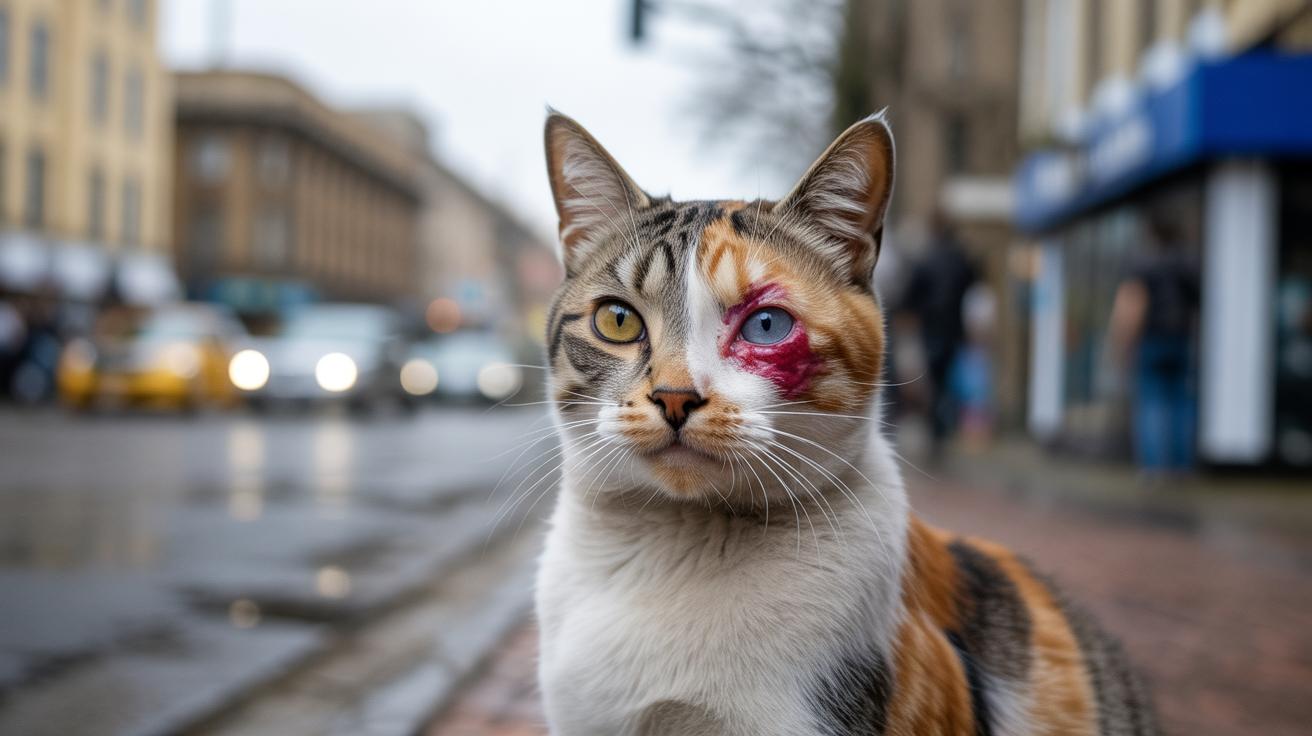
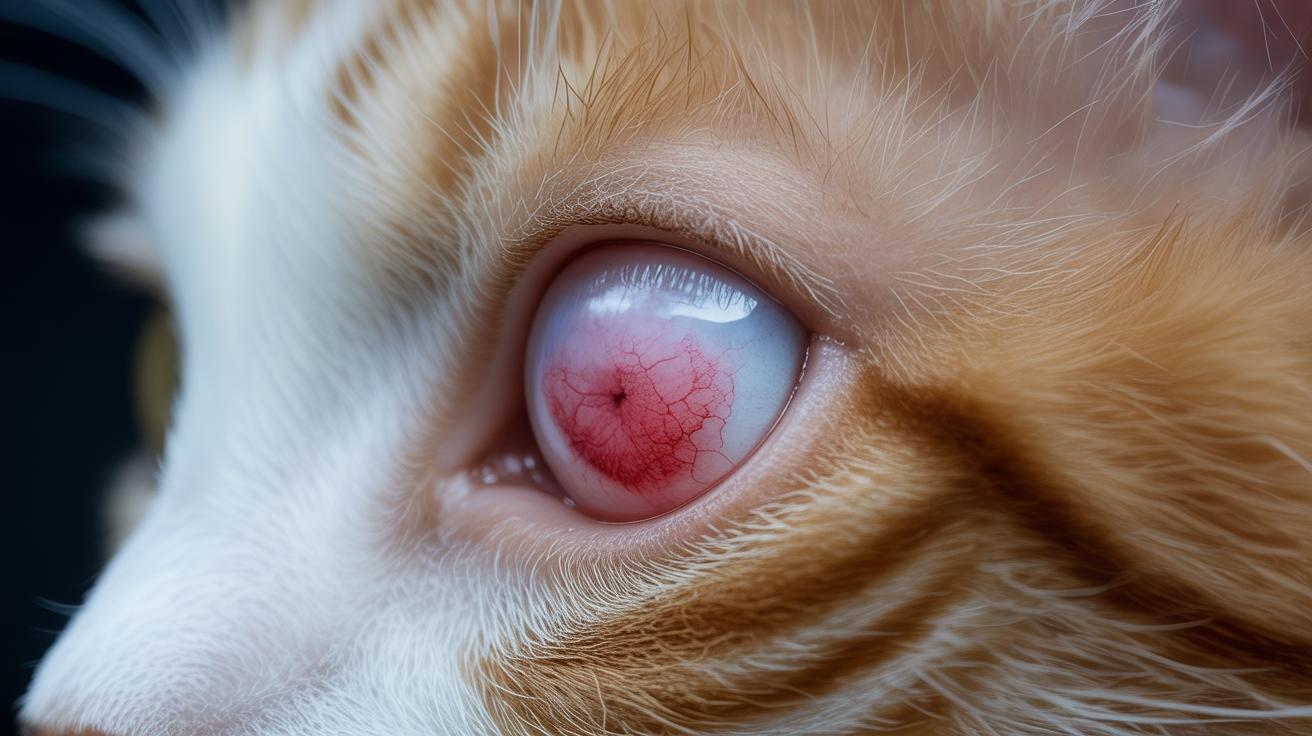
    Ever wake up to your cat with a red, goopy eye? Conjunctivitis (inflamed conjunctiva, the thin, moist tissue lining the inner eyelid) makes kitties squint, paw at their face, and wake with crusty fur around the eye. It can be small and annoying, or the start of something that could hurt their vision.

    Look for these signs: constant squinting, lots of blinking, a thick yellow or green discharge, redness, swelling, or a cloudy-looking eye. You might see your cat rubbing their face on furniture or avoiding bright light. The sticky crust at the corner of the eye is a classic, and it smells a bit off sometimes.

    Causes are usually simple: feline herpesvirus (a common cat virus that acts like cold sores), bacteria (tiny germs), allergies, or a scratch to the cornea (the clear front surface of the eye). Even a tiny foreign speck can start the whole mess. Kittens and cats with weak immune systems can get worse faster.

    When to call the vet right away: if the eye is shut and won’t open, if the cornea looks cloudy or blue, if there’s blood or lots of pus, if your cat seems in real pain, or if they suddenly stop seeing. Also get help fast if both eyes go bad quickly, or if your cat is a kitten, frail, or has a fever. Don’t wait and hope it fixes itself.

    Home care that actually helps: gently wipe discharge with a soft cloth moistened with sterile saline (you can buy it or make it by dissolving 1/4 teaspoon salt in a cup of boiled, cooled water). Dab from the inner corner outward, use a fresh bit of cloth each time, and warm-compress the eye for a few minutes to loosen crusts. If the vet prescribes drops or ointment, use them exactly. Don’t put human eye drops in kitty eyes unless the vet says so. My Luna hated the compress at first, then tolerated it, and finally purred.

    Keep other cats safe by isolating the sick one until the vet says it’s fine, washing hands after touching eyes, and cleaning bowls and bedding. If you’re unsure, call your vet and snap a quick photo to send them. Better safe than sorry.

    Quick answer – At-a-glance: cat pink eye

    - Quick answer  At-a-glance cat pink eye.jpg

    Conjunctivitis, or cat pink eye, is when the conjunctiva (the thin, moist tissue that lines the inner eyelids and covers the white of the eye) gets inflamed. It can show up in one eye or both. Not fun for your kitty, and not great for you either.

    The usual culprits are viruses, bacteria, allergies, or injury. Viral cases often involve feline herpesvirus FHV-1 (a common cat cold virus). Bacterial infections are, well, bacteria. Allergies or a scratch can irritate the eye too.

    Watch for red flags. Sudden vision loss, obvious severe pain, or heavy, thick yellow-green discharge (that’s purulent gunk) need a vet right away. These signs can mean a corneal ulcer (a painful scratch or erosion on the clear front of the eye) or a worse infection.

    Your cat needs a vet exam to tell what’s behind the redness, prevent corneal ulcers, and stop other cats from getting sick. Diagnosis usually means an eye check, maybe a swab to see bacteria or virus, and a look for corneal damage. Treatment can include topical antibiotics for bacterial infections, antiviral meds or supportive care for FHV-1, and anti-inflammatory or allergy meds when needed.

    At home, gently wipe away crust with a warm, damp cloth and keep your hands clean. Don’t use human eye drops unless your vet says so. If you have multiple cats, keep them separate until the vet clears things up.

    Read below for symptoms, diagnosis, treatment, and home care.

    Recognizing conjunctivitis and eye infection symptoms in cats

    - Recognizing conjunctivitis and eye infection symptoms in cats.jpg

    Cat eyes tell a story. When something’s wrong you’ll spot it , whiskers twitching, a soft paw to the face, or that tiny, worried blink. Ever watched your kitty squint and wondered if it’s just nap-time or something more? Let’s break it down in plain, friendly terms.

    Here are the main signs to watch for:

    • Red eye: conjunctival redness (hyperemia) , extra blood in the eye tissues that makes the white or rim look flushed.
    • Puffy eyelid lining: conjunctival swelling (chemosis) , the thin membrane around the eye gets puffy.
    • Too-teary: excessive tearing (epiphora) , tears running or pooling at the corner of the eye.
    • Clear watery discharge , the eye looks wet but not thick.
    • Thick yellow or green gunk: mucopurulent or purulent discharge (mucus plus pus) , this can cake into crusts on the lashes.
    • Crusty eyelid boogers or sticky eyelids after sleep.
    • Squinting or blinking a lot: blepharospasm (involuntary eye squeeze because the eye hurts).
    • Pawing at the face or rubbing the eye with a paw.
    • Corneal clouding , the clear front surface of the eye looks hazy or frosted, and you might see sudden vision changes.

    One eye or both?

    • If only one eye is affected, think foreign body, local injury, or an early localized infection.
    • If both eyes are involved, viral or systemic causes are more likely.

    Kittens
    Kittens often get sticky eyes. That can be neonatal infection or blocked tear ducts (tiny tear channels that didn’t open properly). Don’t ignore it , little ones can worsen fast.

    What to do and what to show your vet
    Take clear photos or a short video of the eye, the discharge, and any squinting. Note if the problem came on fast, if the discharge is thick and colored, or if your cat seems bumping into things. These details help the vet decide if it’s a simple conjunctivitis case, a corneal problem, or something needing urgent care.

    If you see thick yellow/green gunk, heavy pain signs, corneal clouding, or sudden vision loss, get veterinary help sooner rather than later. Worth getting checked.

    Common causes of conjunctivitis and cat eye infections: viral, bacterial, allergic, trauma

    - Common causes of conjunctivitis and cat eye infections viral, bacterial, allergic, trauma.jpg

    Infections are the biggest reason cats get conjunctivitis, especially where cats live close together, like shelters, catteries, or busy multi-cat homes. Kittens, stressed cats, or those with weak immune systems and conditions like FIV (feline immunodeficiency virus) or FeLV (feline leukemia virus) are more likely to get sick or have repeat problems. Ever notice sneezing or a runny nose along with the eye stuff? That often points to a viral cause.

    Viral causes
    Feline herpesvirus, FHV-1 (feline herpesvirus 1), is the most common viral culprit. Most cats meet it when they’re young and many stay lifelong carriers, meaning they harbor the virus and flare up again later when stressed or ill. Flareups usually bring watery or mucoid eyes, sneezing, and often both eyes get involved. Calicivirus can affect the eyes too, but it’s less likely to be the main cause.

    Bacterial causes
    Some bacteria commonly involved are Chlamydophila felis (a bacterial species) and Mycoplasma (tiny bacteria), which often show up in young or stressed cats. Other bacteria like Staphylococci or Streptococci can move in after a virus or an injury and make the discharge thicker and yellow-green , that sticky gunk usually means your vet will recommend topical antibiotics (eye drops or ointments).

    Non-infectious causes and trauma
    Allergic conjunctivitis comes from pollen, dust, smoke, or household chemicals , airborne irritants that make eyes red and itchy. Trauma or a foreign object in the eye usually causes sudden, one-sided signs and needs quick attention. Structural problems, like entropion (an inward-rolling eyelid) or issues with the third eyelid (the thin protective lid at the inner corner), can keep the eye irritated until they’re fixed. Worth getting checked, you know, before it turns into a bigger mess.

    How veterinarians diagnose conjunctivitis and eye infections in cats

    - How veterinarians diagnose conjunctivitis and eye infections in cats.jpg

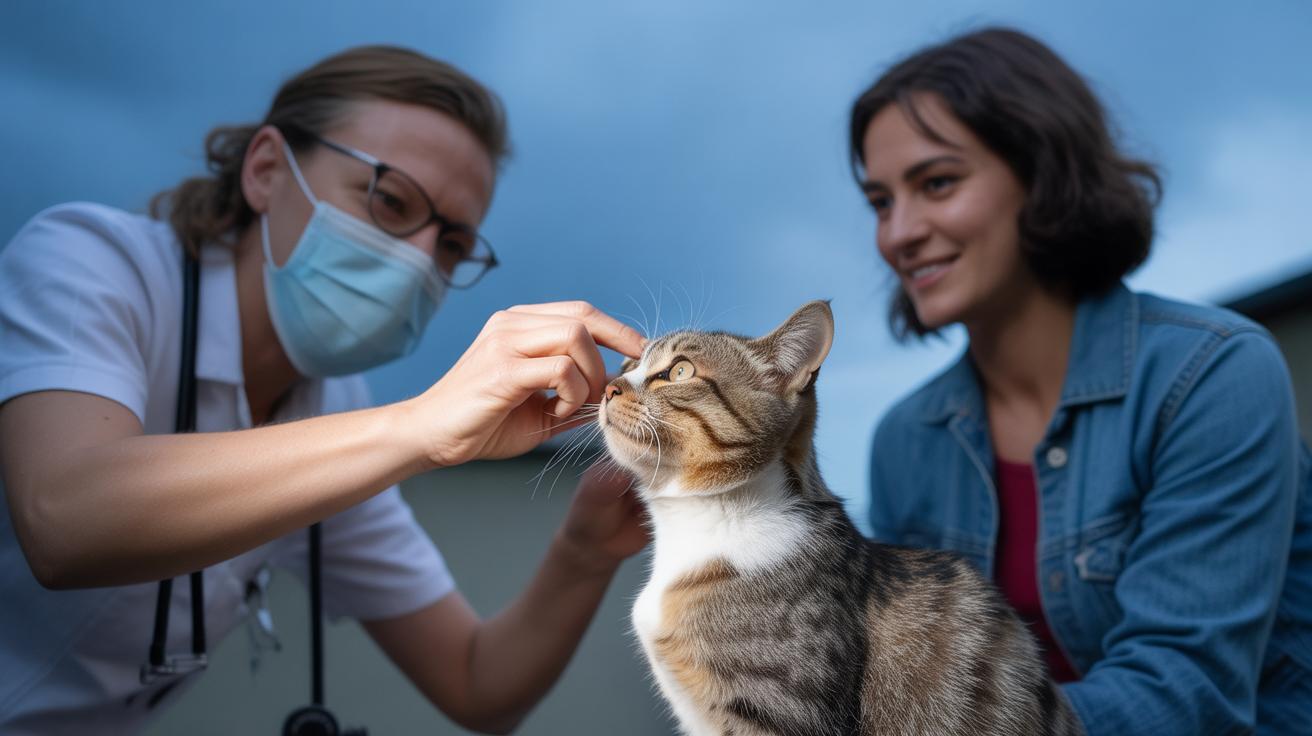
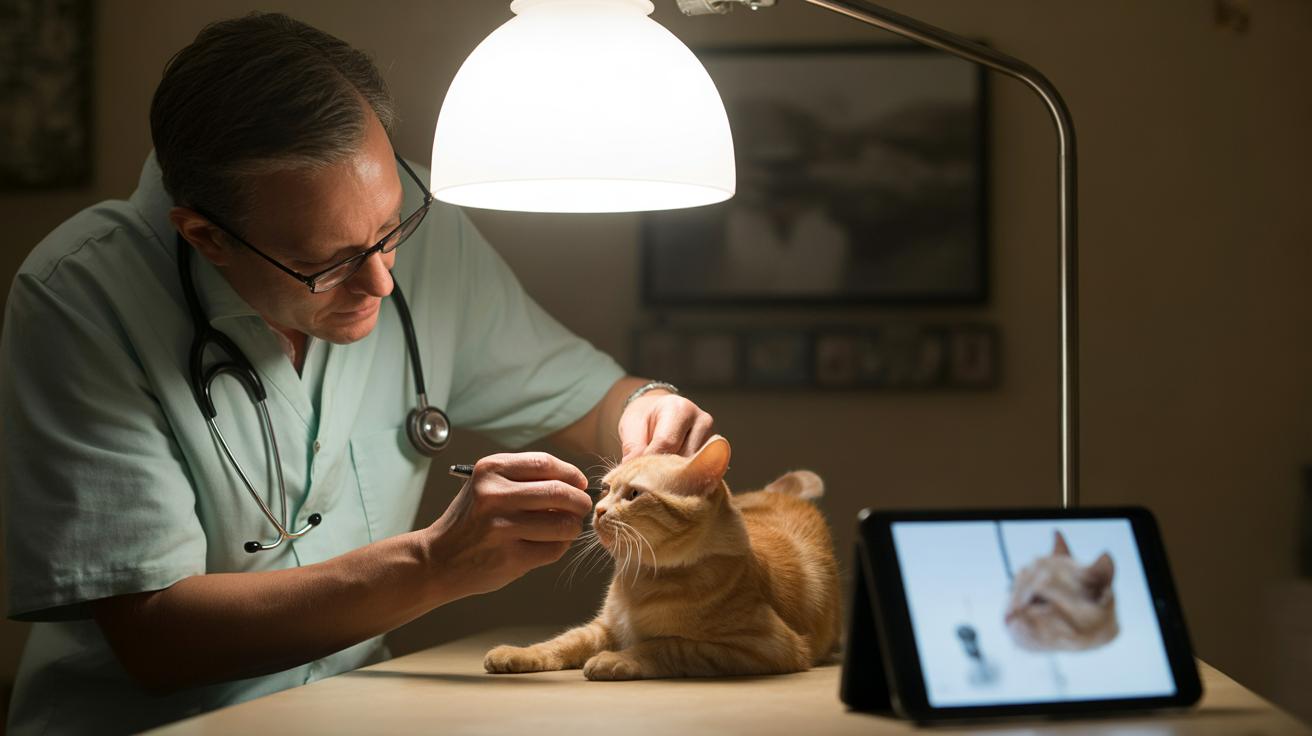
    If your cat has red, watery, or crusty eyes, vets start with a close eye check and a quick head-to-toe look for signs of a cat cold or other health issues. That extra context helps them figure out whether the eye problem is local or part of something bigger. They use magnifying tools and bright lights to examine the eyelids, the cornea (the clear front window of the eye), and the third eyelid (a thin, protective fold you might not notice).

    Next, they do a few quick bedside tests. The Schirmer tear test (measures tear production) checks for dry-eye problems. A fluorescein stain (a safe dye that highlights corneal scratches or ulcers) shows if the cornea is scratched. An intraocular pressure check (measures pressure inside the eye) helps rule out glaucoma. It’s fast, and most cats tolerate it fine.

    To find the cause, vets often collect a conjunctival swab (a sample from the lining of the eye) or perform a corneal scraping (gently removing a few surface cells) for cytology (cell exam) and culture (growing microbes to see what’s there). They may also order PCR testing for FHV-1 (a lab test that looks for feline herpesvirus DNA) or bloodwork if they suspect a systemic illness. Culture and sensitivity testing helps pick the right antibiotic by showing which drugs will work best.

    If the case is painful, keeps coming back, or the cornea has a deep ulcer, your vet may refer you to a veterinary ophthalmologist (an eye specialist) for advanced imaging or surgery. Worth every paw-print when it saves sight. Ever watched a kitty suddenly perk up after treatment? Heart-melting.

    Test Purpose Typical finding
    Schirmer tear test (measures tear production) Check for dry eye Low in KCS (dry-eye); normal otherwise
    Fluorescein stain (safe dye for corneal defects) Detect corneal scratches or ulcers Bright uptake indicates an ulcer
    Intraocular pressure (measures eye pressure) Rule out glaucoma or abnormal pressure High or low is abnormal
    Conjunctival swab / cytology (cell exam) Look for bacteria, fungi, or inflammatory cells Organisms, neutrophils, or other cell changes
    PCR for FHV-1 (detects feline herpesvirus DNA) Confirm viral infection Positive result indicates FHV-1
    Culture & sensitivity (grow and test microbes) Identify bacteria and best antibiotic Growth with an antibiogram

    Conjunctivitis and Eye Infections in Cats: Care

    - Treatment options for conjunctivitis and eye infections in cats (medications and procedures).jpg

    Treatment depends on what is causing the problem. If bacteria are to blame, your vet will usually prescribe a topical antibiotic ointment (medicine you put on the eye) placed in the lower lid, and sometimes systemic antibiotics (pills or injections that treat the whole body) if the infection is severe or your cat has a fever. Viral eye disease, like flares from feline herpesvirus, may get topical antiviral drops or ointments (meds that fight virus at the eye) or oral antivirals (pills) when the vet thinks it will shorten the flare.

    Steroid eye drops can help inflammation, but they can also make trouble worse if a corneal ulcer is present. So vets usually check with a fluorescein stain first (a tiny dye test that shows corneal scratches or ulcers). If an ulcer is there, steroids can slow healing. Oops, not worth the risk.

    Thick, sticky eye gunk (mucopurulent discharge – thick yellow or green goop) is handled by the antibiotic ointment plus gentle cleaning with a warm, damp cloth to loosen crusts so the meds actually reach the eye. Pain control matters too. Topical lubricants like artificial tears (eye drops that keep the surface moist), warm compresses, and an Elizabethan collar to stop rubbing are common parts of care. Ever watched your kitty try to claw a sore eye? Yeah, that collar helps.

    Finish the full course your vet prescribes so the infection does not come back or breed resistant bacteria. Plan rechecks so the vet can watch healing and stop or change meds if needed. Some people try L-lysine (an amino acid supplement) to help suppress feline herpesvirus, though the evidence is mixed. If infections keep coming back or the cornea (the clear front layer of the eye) is damaged, your vet may refer you to an ophthalmologist (eye specialist) for advanced care or surgery.

    Topical antibacterials and antiseptics

    Topical antibiotic ointments are picked to target the common eye bacteria and are put into the lower conjunctival sac (the little pocket under the eyelid) so they stay on the surface longer than drops. Antiseptic eye rinses may be used briefly to wash away heavy debris, but they are not a long term fix.

    Antivirals and systemic therapy

    Topical antiviral agents can be used for localized viral disease, while oral antivirals (pills) are reserved for more severe or widespread herpes flares. PCR testing (a lab test that finds viral genetic material) can help guide whether antivirals will be useful.

    Supportive care and surgical procedures

    Supportive care includes lubricants, warm compresses, pain meds, and E-collars to prevent rubbing. For chronic problems caused by anatomy or long term damage, surgical options like tear duct surgery or entropion correction (fixing an eyelid that rolls inward) can stop ongoing irritation and help the eye heal. Worth every paw-print when it gets your cat comfortable again.

    Home-care and medication administration

    - Safe home care and step-by-step guidance for treating cat conjunctivitis.jpg

    Use a clean, warm cloth for each eye and fresh water every time. A warm compress helps a lot. Soak a soft cloth in warm (not hot) water, wring until slightly damp, and hold it over the closed eye for a few minutes to soften dried gunk and calm irritation. I warmed a clean rag and held it over Luna’s closed eye for two minutes, then switched to a fresh cloth for the other eye. Nice and soothing.

    Never put human eye drops or ointments in a cat’s eye unless your vet tells you to. Use an Elizabethan collar (cone) until the eye is healed to stop scratching. And in homes with more than one cat, wash bedding, toys, and bowls to help limit spread. The cone really works. The cone stopped Mittens from pawing the sore eye so it could heal.

    1. Wash your hands before and after handling your cat.
    2. Prep two soft cloths, a bowl of warm water, and the meds your vet prescribed.
    3. Warm compress: soak a cloth in warm (not hot) water, wring it out, and hold it over the closed eye for a few minutes to loosen crusts.
    4. Gently open the lower eyelid with your thumb and forefinger.
    5. Put a pea-sized ribbon of ointment or one drop into the lower conjunctival sac (tiny pocket under the eyelid); don’t let the tip touch the eye.
    6. Hold the eyelids closed for 5 to 10 seconds so the medicine spreads across the surface.
    7. Clean dried crusts twice a day with the warm damp cloth. Pat gently. Don’t rub.
    8. Keep the Elizabethan collar (cone) on until your vet says it’s OK to take off, and wash bedding and shared items in multi-cat homes. Stop home treatment and call the vet if pain or swelling gets worse, or if thick yellow-green discharge appears.

    Take clear photos or short videos once a day from the same angle, note the time and what meds you gave, and share them with your vet for follow-up. Example note: 8:00 AM after ointment: less redness on the outer corner compared with yesterday.

    See Home-care and medication administration.

    Contagiousness, zoonotic risk, and preventing spread of cat conjunctivitis

    - Contagiousness, zoonotic risk, and preventing spread of cat conjunctivitis.jpg

    Conjunctivitis in cats spreads fast when they live close together, like multi-cat homes, shelters, or catteries (places where cats are housed). Common culprits are feline herpesvirus (a common cat cold virus that often hits the eyes) and Chlamydophila (a bacterial eye infection). These spread through eye goo and sneezes, so one sick cat can pass signs to others quickly. Watch for redness, watery eyes, or sticky crusts on the lashes.

    Can cats give humans conjunctivitis? It’s rare. Chlamydophila has a low zoonotic risk (a small chance of jumping to people), but simple hygiene makes that risk tiny. Wash your hands after petting or treating a sick cat. Gloves are a good idea if you’re handling heavy discharge, and don’t touch your face until you’ve cleaned up. Ever rubbed your eye after cuddling a sneezy cat? Yeah, don’t.

    Practical steps to stop an outbreak are simple and do-able. Separate the affected cat and keep bowls, toys, bedding, and litter boxes from being shared. Wash or launder bedding and soft toys, and disinfect hard surfaces. Wear gloves when cleaning and throw out disposable wipes or clean them separately. For shelters, check nearby cats daily for any new redness or discharge.

    Keep vaccinations current. The FVRCP vaccine (protects against feline viral rhinotracheitis, calicivirus, and panleukopenia) helps lower the chance of respiratory and eye outbreaks. It won’t stop every case, but it of­ten makes outbreaks smaller and milder.

    How long a cat is contagious depends on the cause. Some viruses can be shed for days or weeks, so keep infected cats apart until your veterinarian clears them. If you’re unsure, call the vet, better safe than sorry. Worth every paw-print.

    Complications, prognosis, and when conjunctivitis becomes an emergency in cats

    - Complications, prognosis, and when conjunctivitis becomes an emergency in cats.jpg

    Left untreated, an eye infection can cause a chain of problems. It can lead to corneal ulcers (a scratch or erosion on the clear front surface), keratitis (inflammation of the cornea), corneal opacity (clouding of the cornea), scarring, ongoing conjunctivitis (pink eye), spread to the other eye, and in bad cases partial or complete vision loss. Imagine your cat squinting, then the eye getting cloudy or crusty , that’s when you need to act.

    Most simple infections start to improve in 5 to 14 days with the right vet care. But ulcers, deep corneal damage, or long-standing issues usually need more time and sometimes a referral to a veterinary ophthalmologist (an eye specialist).

    Some things make a worse outcome more likely:

    • Existing corneal ulcers (those deep scratches).
    • Kittens with immature immune systems.
    • Cats with FIV (feline immunodeficiency virus) or FeLV (feline leukemia virus) , these weaken immunity.
    • Facial shape that causes eyelid problems, like flat-faced breeds or inward-rolling lids.
    • Heavy secondary bacterial infection.
    • Waiting too long to see the vet.
      These factors slow healing, raise the chance of scarring, and can cause repeat flare-ups. Not great. Really.

    Watch closely for true emergency signs:

    • Sudden loss of vision or bumping into things.
    • Severe eye pain , constant pawing at the eye, hiding, or refusing food.
    • Rapidly worsening redness or a thick yellow-green discharge.
    • A clearly cloudy or bulging eye.
    • Systemic signs like fever or extreme lethargy.

    If you see any of these, keep your cat calm and stop them from rubbing the eye. Use an E-collar (plastic cone) if you have one. Take a quick photo to show the vet, and call an emergency clinic right away. Do not put unprescribed human drops or medicines in the eye.

    A short example message to the clinic you can send or read: "My cat started pawing at a suddenly cloudy left eye two hours ago and won’t eat – needs urgent advice."

    Special considerations for kittens, brachycephalic breeds, and chronic/recurrent conjunctivitis in cats

    - Special considerations for kittens, brachycephalic breeds, and chronicrecurrent conjunctivitis in cats.jpg

    Kittens and neonatal care

    Kittens often get sticky eyes or neonatal conjunctivitis (eye inflammation in newborns) because their tear ducts can be narrow or blocked. Clean gently with warm sterile saline (cooled, boiled water works in a pinch) using a soft cotton ball 2–4 times a day. Be gentle, think soft nibbles on a plush ear.

    Only give systemic antibiotics (oral or injectable antibiotics your vet prescribes) if your vet suspects a bacterial infection , signs include thick yellow‑green discharge, fever, or the whole kitten acting sick. Photo records really help. Take a quick daily picture and write a one-line note so your vet can see the trend. Example: "Day 1: right eye glued shut AM; Day 3: less discharge after cleaning; Day 6: alert, eyes opening more."

    If the eye looks worse, the cornea (the clear front of the eye) looks cloudy, or the kitten is off its feet, get a vet check quickly. See Recognizing/Quick answer; see Chronic management.

    Flat-faced breeds like Persians and Exotics can have exposed corneas, shallow eye sockets, or inward-rolling lids that make irritation happen faster and lead to chronic tearing or rubbing. Small anatomy issues in these cats can become big problems fast, so ask your vet about an ophthalmology referral earlier rather than later. Think of it like catching a small leak before it floods the room. See Complications/prognosis; see Supportive care and surgical procedures.

    Managing chronic and recurrent conjunctivitis (when to refer, long-term strategies)

    Refer to a specialist when episodes keep coming back despite usual topical treatment, when corneal ulcers or vision changes appear, if discharge stays thick or foul, or if the eyelid position or tear drainage looks wrong. For clarity, nasolacrimal duct means the tear drainage tube from the eye to the nose.

    Long-term topical plans often include targeted antibiotic stewardship, anti-inflammatory drops or ointments, and sometimes immune-modulating ointments for stubborn surface inflammation. Use preservative-free gels or ointments at night and consider daytime lubricants plus a humidifier to keep the eye surface comfy. Carbomer (thick gel base) or petrolatum (a thick, protective ointment like a heavy moisturizer) products are common night choices. Rotate treatments as your specialist recommends to help prevent resistance.

    Stress matters more than you might think. Keep routines predictable, give hiding spots, and try a short, gentle play session before stressful events like carrier time or vet visits. Ever watched your kitty calm down after a quick feather chase? Works wonders.

    Quick checklist:

    • When to refer: repeated flareups, corneal ulcers, vision loss, or discharge that won’t clear.
    • Long-term topical strategies: specialist-prescribed ointments, night lubricants (carbomer or petrolatum-based gels), and planned rotation to limit resistance.
    • Daily care tips: keep a photo log (see Kittens), clean gently, treat suspected secondary bacteria quickly, and reduce stress with steady routines.

    See Kittens for neonatal specifics and see Complications/prognosis or Supportive care and surgical procedures for notes on surgery and specialist interventions.

    Frequently asked questions owners ask about conjunctivitis and eye infections in cats

    - Frequently asked questions owners ask about conjunctivitis and eye infections in cats.jpg

    Quick FAQ – short answers are in the sections below: Recognizing, Care, Home-care, Contagiousness, and Complications.

    Tap any link for vet-reviewed details on timelines, safe medications, isolation, rechecks, and when to call your clinic. We cover conjunctivitis (eye inflammation) and other common eye infections, what treatment usually looks like, and simple home-care tips to keep your cat comfortable while healing. Ever watched your kitty squint and wondered if it’s serious? Click a section and you’ll get clinic-backed answers fast.

    Final Words

    In the action we defined conjunctivitis as inflammation of the thin mucous membrane lining the eyelids and eye surface, named the main causes (viral FHV‑1, bacterial, and allergy or trauma), and listed warning signs like vision loss or heavy purulent discharge.

    We explained how vets diagnose (Schirmer, fluorescein, swabs, PCR), treatment options, safe home care steps, and prevention in multi‑cat homes, with short practical tips for busy households.

    Keep photos and follow vet advice. Rest easy. Your cats can bounce back from conjunctivitis and eye infections in cats with the right care.

    FAQ

    Cat conjunctivitis — FAQ

    How is conjunctivitis in cats treated?

    Treatment depends on the cause. Vets commonly prescribe topical antibiotics for bacterial infections or antivirals for viral disease. Care also includes gentle eye cleaning, lubricating drops, pain control, and often an Elizabethan collar to prevent rubbing.

    Can I treat my cat’s conjunctivitis at home?

    Home care can help (warm compresses, gentle cleaning), but a veterinary exam and prescription medication are usually needed. Do not use human eye drops in a cat’s eye.

    Is cat conjunctivitis contagious to other cats or humans?

    Conjunctivitis is commonly spread between cats, especially in multi‑cat environments. Transmission to humans is rare but possible with some bacteria (for example Chlamydophila). Wash hands and isolate affected cats.

    Will conjunctivitis in cats resolve on its own?

    Sometimes it can improve on its own, but untreated infections may worsen or damage the cornea. A vet check helps prevent complications and ensures correct treatment.

    How serious is conjunctivitis in cats?

    Severity ranges from mild irritation to sight‑threatening disease. Sudden vision loss, severe pain, or heavy purulent discharge are red flags requiring urgent veterinary attention.

    Should I wipe my cat’s eye when it has conjunctivitis?

    Yes, gently wipe with a warm, damp cloth and use a fresh cloth per eye. Stop and contact your vet if the cat shows pain, the eye bleeds, or the condition worsens.

    When is cat conjunctivitis an emergency?

    Seek immediate veterinary care for sudden vision loss, severe eye pain, a bulging or cloudy cornea, or rapidly worsening or heavy discharge.

    What are common symptoms of conjunctivitis and eye infections in cats?

    Typical signs include redness, swelling, tearing, mucopurulent discharge, crusting, squinting, frequent blinking, pawing at the eye, and sometimes sneezing or other respiratory signs.

    When should I see a veterinarian for my cat’s eye?

    See a veterinarian if signs persist beyond 48–72 hours, worsen, affect both eyes, are accompanied by respiratory symptoms, or if your cat is very young, old, or immunosuppressed.

    Related Articles

  • FIP in cats (feline infectious peritonitis): Diagnosis, Care

    FIP in cats (feline infectious peritonitis): Diagnosis, Care

    Imagine a routine kitty cold turning serious. Sometimes the common feline coronavirus (a common cat virus) mutates and becomes feline infectious peritonitis (FIP), a dangerous illness that damages tissues and organs. You might see a puffy, fluid-filled belly, or more subtle signs like quiet weight loss, fever, and low energy. Ever watched your cat suddenly stop jumping? I once watched Luna go from six-foot leaps to flopping on the couch, and that sudden change was a red flag. FIP usually hits young cats, about 6 to 24 months old, and it can also cause eye or brain problems that change how we treat things.

    Diagnosing FIP can be tricky because its signs mimic other diseases. Your vet will use your cat’s history and a physical exam plus blood work (checks organ function and inflammation), ultrasound (sound-wave imaging) or X-rays, and sampling of any fluid for lab tests (cell counts, protein, virus checks). There are specific tests that look for the mutated virus or its effects, but often the diagnosis is a puzzle made from several clues. So expect follow-up visits and some detective work.

    Treatment focuses on antiviral drugs (medications that stop viruses from multiplying) together with supportive care (fluids, nutrition, fever control, and pain relief). New antivirals have helped many cats recover, but treatment can be long and costly, and close monitoring is essential. Vets will tailor therapy to your cat’s symptoms and adjust if side effects appear. It’s not always simple, but many owners and vets have seen real improvements.

    If FIP reaches the nervous system or the eyes you might notice stumbling, head tilts, seizures, circling, or vision changes, and those signs need urgent attention. Keep a close eye on behavior, appetite, and mobility, and call your vet if things change quickly. It’s scary, uh, but early diagnosis and treatment give the best chance for your kitty to feel feline fine again.

    FIP in cats (feline infectious peritonitis): Diagnosis, Care

    - Complete overview of FIP in cats a concise lede and quick facts.jpg

    Feline infectious peritonitis, or FIP, is a serious illness caused when feline coronavirus (FCoV, the common cat coronavirus) mutates and starts damaging tissues. It usually shows up in two main ways: the wet form with fluid buildup, and the dry form with lumps or organ inflammation. Early veterinary care really matters, so read on for Diagnosing FIP, Treatment options, Monitoring/Prognosis, Causes/Pathophysiology, and Neurologic and ocular manifestations.

    Key points:

    • Two forms: wet (effusive, with fluid in the belly or chest) and dry (noneffusive, with inflammatory lesions in organs).
    • Common signs: weight loss, fever, low energy; wet cases often have a swollen belly or trouble breathing.
    • Most cats affected are young, usually 6 to 24 months old.
    • Eye (ocular) and brain/nerve (neurologic) signs can happen and change how we diagnose and treat things.
    • Antivirals (drugs that stop virus replication) can lead to remission for many cats.
    • A definite diagnosis sometimes needs histopathology (microscopic exam of tissue samples).
    • Prevention focuses on reducing FCoV spread in multi-cat homes or shelters.
    • Relapse risk and best follow-up plans are still being studied.

    Noticeable signs are often subtle at first. Your cat might seem quieter, eat less, or lose weight. Then you might spot a soft, round belly or faster breathing if fluid is building up. Ever watched your kitty suddenly stop jumping? Neurologic signs can look like stumbling, circling, or strange eye movements.

    Treatment choices depend on the form and how sick the cat is. Antivirals, supportive care, and sometimes anti-inflammatory meds are the toolkit. Treatment options have improved a lot recently, but access and cost vary, so Practical Decisions matter , and, um, it’s okay to ask tough questions about affordability and goals of care.

    Prevention helps in group settings. Good hygiene, minimizing overcrowding, and prompt testing of ill cats reduce FCoV spread. For shelters and multi-cat homes, simple steps can make a big difference.

    Early vet checks are important. See your veterinarian right away if your cat has a swollen belly, breathing trouble, new neurologic signs, or unexplained weight loss. Check Diagnosing FIP for testing steps, Treatment options for therapies, and Practical Decisions for cost and access guidance.

    Early action can change the story.

    Causes and pathophysiology of FIP in cats

    - Causes and pathophysiology of FIP in cats.jpg

    FIP starts when the common feline coronavirus, or FCoV, changes inside a cat and gains the ability to infect macrophages (immune cells that eat germs and move around the body). Those infected macrophages carry the virus into organs and trigger an over-the-top immune reaction that damages blood vessels – vasculitis (inflammation of vessel walls) – and leads to pyogranulomatous lesions (pus-filled, firm nodules). The funny, sad part is the damage comes more from the cat’s own immune response than from the virus itself, so symptoms depend on where the inflamed vessels and nodules show up.

    FCoV spreads mostly by the fecal-oral route (cats pick up the virus from a contaminated litter box, food bowls, or hands), so the virus is very common in many cat groups. Studies find about 40% to 80% of cats have been exposed, and roughly one-third (around 33%) will shed the virus in feces at some point. Most cats either clear the intestinal infection or only shed briefly. A few shed for long periods, and only rarely does the virus mutate inside a cat and lead to FIP – that mutation can happen weeks, months, or even years after first exposure.

    Young cats are the highest risk group. FIP usually appears between about 6 and 24 months of age, and estimates suggest around 5% to 10% of cats infected with FCoV go on to develop FIP, though overall FIP rates are often closer to 2% in many places. Crowded environments like catteries, shelters, or busy multi-cat homes, stressful changes, and some pedigree lines raise the odds. Intact males may have a slightly higher risk in some studies, so both environment and individual factors seem to matter.

    Steps in how FIP develops

    1. FCoV infects the gut and replicates there.
    2. The cat may shed virus in feces for a short or long period.
    3. In a small number of cats the virus mutates and gains macrophage tropism (ability to infect macrophages).
    4. Infected macrophages spread systemically and cause immune-mediated vasculitis, which produces the clinical disease we call FIP.

    Ever watched a kitten nap in the sun and thought, I hope it stays healthy? This is why understanding how FIP starts and spreads matters.

    Clinical presentation of wet vs dry FIP in cats

    - Clinical presentation of wet vs dry FIP in cats.jpg

    FIP (feline infectious peritonitis) usually shows up in two main ways. One is the effusive or wet form, where fluid builds up in body cavities. The other is the non-effusive or dry form, which causes localized inflammation in organs. Lots of cats have signs of both. For CNS and eye-specific signs, see Neurologic and ocular manifestations.

    Wet FIP signs:

    • Abdominal swelling or ascites (ascites = fluid in the belly) that often feels squishy when you press the belly.
    • A pot-bellied look with a tense, rounded abdomen.
    • Trouble breathing from pleural effusion (pleural effusion = fluid around the lungs).
    • Muffled or dull chest sounds when listening with a stethoscope (auscultation = listening to the chest).
    • Fast clinical decline in severe cases , low energy and rapid breathing are common.
    • The fluid is usually high in protein and straw-colored, and can be sticky or thick when analyzed.

    Dry FIP signs:

    • A persistent fever that doesn’t get better with ordinary antibiotics.
    • Progressive weight loss and muscle wasting (loss of muscle mass) even if appetite hasn’t dropped much.
    • Signs tied to specific organs, like jaundice (yellowing of skin and eyes) from liver involvement or renal azotemia (a rise in blood nitrogen waste, seen on blood tests) from kidney problems.
    • Firm nodules or palpable masses in the abdomen caused by granulomatous inflammation (granulomatous inflammation = small, firm immune cell nodules).
    • Eye problems such as uveitis (uveitis = inflammation inside the eye); see Neurologic and ocular manifestations for exam details.
    • A course that can wax and wane, with signs that come and go over time.
    Feature Wet FIP (effusive) Dry FIP (non-effusive)
    Typical fluid Large-volume, high-protein ascites or pleural effusion Minimal or no free fluid; focal organ lesions instead
    Onset/progression Often rapid decline over days to weeks Slower, more variable progression over weeks to months
    Most common clinical clues Abdominal swelling, breathing trouble, muffled chest sounds Fever, weight loss, organ-specific signs such as jaundice
    Survival without treatment Typically days to weeks in severe effusive cases Often weeks to months, but variable by organ involvement

    Neurologic and ocular manifestations of FIP in cats

    - Neurologic and ocular manifestations of FIP in cats.jpg

    When feline infectious peritonitis hits the brain or the eyes, signs can come on fast and be pretty scary. These neurologic and eye changes often shift what vets choose to do and what the outlook looks like. If you think your kitty’s brain or eyes might be involved, check Clinical Presentation for overlapping systemic signs and follow the stepwise testing in Diagnosing FIP.

    Neurologic signs are often obvious: seizures, wobbliness or ataxia (loss of balance), circling, a head tilt, weakness or partial paralysis (paresis), and cranial nerve problems that change pupils or swallowing. Advanced imaging like MRI (magnetic resonance imaging; detailed brain pictures) or CT (computed tomography; X-ray slice images) helps when there’s a focal lesion or suspected raised pressure. Analyzing cerebrospinal fluid (CSF = the clear fluid that bathes the brain and spinal cord) can show inflammation , more white blood cells and higher protein , although CSF isn’t always definitive. Referral to a neurologist and quick imaging can guide urgent care and safe sampling.

    Eye problems usually show as anterior uveitis (inflammation inside the front of the eye), chorioretinitis (inflammation behind the retina), or sometimes retinal detachment (the retina pulling away, which can cause sudden blindness). An eye exam with fundoscopy (looking at the retina and back of the eye) often gives the key clues. Short-term treatment focuses on calming inflammation and protecting vision with topical eye medicines, systemic anti-inflammatory drugs when appropriate, and pain control. A timely referral to an ophthalmologist is a good idea. Antiviral choices should be discussed with your clinician in Treatment.

    Warning signs of brain or eye involvement

    • Seizures.
    • Head tilt or other vestibular signs (losing balance).
    • Sudden vision loss or bumping into things.
    • Unequal pupils or odd pupil reactions (anisocoria).
    • Light sensitivity or very small pupils suggesting anterior uveitis.
    • A “dark curtain” across vision or abrupt blindness suggesting retinal detachment.

    What vets often recommend

    • MRI or CT for detailed brain imaging.
    • CSF analysis to look for inflammatory cells and protein.
    • Full eye exam with fundoscopy to check the retina.
    • Acute treatments: anticonvulsants for seizures, anti-inflammatory therapy to calm the immune response, and topical ophthalmics for eye inflammation and comfort.
    • Discuss antiviral options with your clinician as part of the overall plan.

    If your cat suddenly seems off , like knocking into furniture or acting blind , don’t wait. These signs can be urgent. It’s tough to watch, I know, but quick diagnosis and the right referrals can make a real difference.

    Diagnosing FIP in cats: tests, interpretation and diagnostic algorithm

    - Diagnosing FIP in cats tests, interpretation and diagnostic algorithm.jpg

    FIP can feel like a mystery. No single noninvasive test proves it. So vets put together the history, physical exam, bloodwork, imaging, fluid or tissue analysis, PCR (polymerase chain reaction, a test that finds viral genetic material), and sometimes a biopsy to get a confident answer. This mix helps tell FIP apart from look-alike problems and lets you start the right treatment sooner.

    Below is a practical roadmap you can use when you’re working up a sick cat. Think of it as a checklist to walk through, not a strict rulebook , and yes, I know it’s a lot. But step through these ideas and you’ll be clearer about next moves.

    1. Stabilize first. Fix dehydration, breathing trouble, or seizures, and run quick screening labs to spot life-threatening issues. Calm the cat, treat immediate problems, then dig into diagnostics.
    2. Get baseline bloodwork and imaging. Do a CBC (complete blood count) and chemistry panel, including the albumin-to-globulin (A:G) ratio (blood protein balance that often drops in FIP). Add an abdominal ultrasound and chest X-rays (thoracic radiographs) to look for fluid or organ changes.
    3. Collect and test any fluid or affected tissue. Tap effusions (fluid buildup) for cytology (cell-level exam), protein measurement, and FCoV PCR (tests for feline coronavirus RNA). Run a Rivalta test (a simple bedside drop test that hints at inflammatory fluid) if you have an effusion. Remember: positive PCR or Rivalta fits the story, but neither alone proves FIP because coronavirus and some infections can show the same results.
    4. When noninvasive tests are unclear, refer. Tissue biopsy and histopathology (microscopic tissue exam) with immunohistochemistry (IHC, a stain that shows viral antigen in cells) can confirm FIP. Referrals to internal medicine, neurology, or ophthalmology may be needed for tricky CNS or eye signs.
    Test What it shows Key limitations
    CBC/chemistry & A:G ratio Often sees high globulins (hyperglobulinemia), low A:G ratio (albumin to globulin), fewer lymphocytes (lymphopenia), and raised acute-phase proteins (inflammation markers) Supportive but not specific. Other diseases can cause the same changes.
    Effusion analysis & Rivalta Effusive FIP usually gives thick, straw-colored, high-protein fluid. Rivalta (a quick drop test at the bedside) is often positive in inflammatory effusions. Helpful for effusive cases but not definitive. Bacterial peritonitis and some other causes can look the same.
    FCoV PCR (blood/effusion/tissue) Detects viral RNA and can show a high viral load in effusion or tissue. FCoV is common in cats. A positive PCR needs to be interpreted with the clinical picture to suggest FIP.
    FCoV antibody testing Shows prior exposure to feline coronavirus. Many cats are antibody-positive, so this test by itself is not very useful for diagnosing FIP.
    Imaging (X-ray/US, MRI for CNS) Finds effusions, organ lesions, or brain/spinal changes if CNS is involved (MRI = magnetic resonance imaging, detailed soft-tissue pictures). Suggestive findings but not proof. MRI is needed for focal CNS disease and may require referral.
    Tissue biopsy / histopathology (IHC) Gold standard: shows pyogranulomatous vasculitis (inflammatory blood vessel lesions) and viral antigen on IHC (a staining test that highlights virus in tissue). Requires anesthesia and sampling or necropsy. Often needs referral and specialty lab work, but it’s the most definitive test.

    When should you refer? If noninvasive tests leave you unsure, if the cat has CNS or eye signs that need advanced imaging, or when a biopsy will change treatment choices, send the case on. Histopathology (microscopic tissue exam) looks for the typical pyogranulomatous vasculitis, and IHC (staining to detect viral antigen) is the confirmatory test. It can be done before death when safe, or at necropsy for final confirmation. Worth every careful step when the diagnosis matters.

    Treatment options for FIP in cats: antiviral protocols and supportive care

    - Treatment options for FIP in cats antiviral protocols and supportive care.jpg

    Antiviral drugs that stop the virus from copying itself have changed the FIP story. GS-441524 (an antiviral you can sometimes give by mouth or by injection), remdesivir (an injectable antiviral related to the drug used in people), and GC376 (a protease inhibitor – a drug that blocks a viral enzyme) have all helped cats go into remission when used with proper veterinary protocols and follow-up. Many cats improve a lot under a vet’s care; some recover after about 84 days of treatment. It used to be a hopeless diagnosis. Now there are real options.

    Protocols depend on the drug and where you live. Remdesivir is usually given by injection. GS-441524 may be oral or injectable, depending on local availability. GC376 is still investigational in many places. Typical courses last at least 12 weeks, and vets adjust duration based on how the cat looks and what blood tests show. Stick with the full, published course rather than stopping early, okay? Oops, let me rephrase that – don’t stop just because things look better for a few days.

    Good supportive care is the backbone while antivirals do the viral work. Remove dangerous fluid with abdominocentesis or thoracocentesis (needle removal of belly or chest fluid), give IV or subcutaneous fluids for dehydration, and help nutrition with appetite stimulants or feeding tubes (a small tube to deliver food when the cat won’t eat). Treat seizures with anticonvulsants (meds to stop seizures), use targeted anti-inflammatory or pain meds for comfort, and handle infections and wound care as they come up. Keeping your cat comfortable really helps them tolerate therapy and recover faster.

    Watch for treatment-related problems and change care if needed. Vets commonly check for injection-site reactions, changes in liver enzymes or blood counts, and tummy upset. Some antiviral plans require blood tests and physical exams at set times, so follow the Monitoring/Prognosis guidance for exact timing and relapse tracking. And if sourcing or cost is an issue, see Practical Decisions for legal access and budgeting tips.

    Supportive care actions

    • Abdominocentesis or thoracocentesis as needed to relieve effusion (needle removal of belly or chest fluid).
    • IV or subcutaneous fluids to treat dehydration and keep circulation going.
    • Nutritional support with appetite stimulants or feeding-tube placement (small tube to give calories when eating is poor).
    • Pain control and targeted anti-inflammatory meds to keep the cat comfy.
    • Anticonvulsant therapy for seizures and neurologic stabilization (meds that reduce or stop seizures).
    • Wound and injection-site care to prevent local problems.
    • Treat concurrent infections with appropriate antibiotics or antifungals (meds to fight bacteria or fungi).
    • Palliative care planning when antivirals aren’t used or goals change.
    Oral antivirals Injectable antivirals
    Easy for at-home dosing when owners can reliably medicate their cat Helpful when oral absorption is uncertain or the cat refuses pills
    Can be affected by appetite or gut absorption, so watch for vomiting Bypasses gut variability and gives more predictable blood levels
    Less need for clinic visits if the owner can give meds safely at home May require clinic visits or owner training to give injections
    Preferred when approved oral versions are available locally Preferred for very sick cats, poor eaters, or when fast reliable dosing is needed

    Monitoring, prognosis and expected outcomes for cats with FIP

    - Monitoring, prognosis and expected outcomes for cats with FIP.jpg

    Without antiviral treatment, the outlook is grim. Effusive (wet) FIP, where fluid builds up in the chest or belly and makes breathing hard, often leads to death in days to weeks. Non-effusive (dry) FIP tends to sneak up more slowly, with organs failing over weeks to months. Cats can seem a little off at first and then get worse fast, so knowing that timeline helps you make realistic, urgent decisions. Ever watched a cat suddenly stop jumping? That’s a clue.

    The good news is modern antiviral drugs have changed the story for many cats. Lots of cats reach clinical remission and go back to normal play and naps. There are published recoveries after long courses of therapy, for example about 84 days of treatment in one report. Still, relapses do happen and long-term outcomes are not fully known, so think of a successful course as hopeful rather than guaranteed. Worth keeping your paws crossed, but not letting down your guard.

    Monitoring during treatment is basically careful check-ins plus lab tests to see if the cat is getting better and to catch side effects early. Start with a baseline CBC (complete blood count) and a chemistry panel (blood tests that check organ function and blood proteins). Between visits watch weight, appetite, breathing, and any return of fluid. Early on vets often check bloodwork more often to track liver enzymes (blood markers of liver health) and blood cell counts, then stretch out the gaps as your cat improves. Physical exams and imaging like ultrasound or chest X-rays show whether fluid is shrinking and organs are recovering.

    Follow-up checklist for owners and vets:

    • Daily weight and appetite checks.
    • Watch activity and behavior for changes.
    • Physical exams focused on belly size and breathing effort.
    • Baseline CBC and chemistry panel before starting therapy.
    • CBC and liver enzyme checks every 2 weeks for the first month of treatment.
    • Then CBC and chemistry every 4 weeks for the rest of treatment.
    • End-of-treatment labs and exam, then rechecks at 1, 3, 6, and 12 months after finishing.
    • Re-evaluate right away for any return of fever, wasting, fluid build-up (effusion), or neurologic signs like stumbling or odd behavior.

    Remission means your cat’s symptoms have gone and blood tests are normal or clearly moving that way, for example an improving A:G ratio (albumin:globulin ratio, a simple blood protein comparison) and stable liver enzymes. Because we don’t yet have complete long-term data and relapse risk is still a bit of a mystery, it’s smart to keep up surveillance after treatment so you catch any comeback early. And hey, seeing your cat purr and chase a toy again makes all that follow-up worth it.

    Preventing FIP in cats: reducing FCoV spread in multi-cat households and shelters

    - Preventing FIP in cats reducing FCoV spread in multi-cat households and shelters.jpg

    Focus your prevention where it matters: stop fecal-oral transmission (how the virus moves from poop to mouth) and lower crowding and stress that make a common feline coronavirus (FCoV; the cat coronavirus) more likely to mutate into FIP (feline infectious peritonitis). See Causes/Pathophysiology for prevalence and shedding details. Keeping virus exposure low in homes, catteries, and shelters makes FIP much less likely.

    Here are practical, easy-to-remember steps you can use right away:

    • Reduce group size and avoid putting too many cats together when you can; fewer cats means less chance the virus circulates.
    • Give at least one litter box per cat plus one extra. More boxes cut down on shared exposure and litter-box fights.
    • Scoop and remove feces daily from litter boxes and shared areas to limit infectious material.
    • Clean litter boxes, bedding, food bowls, and scoops on a regular schedule using disinfectants labeled for coronaviruses or a dilute bleach solution (follow product directions).
    • Quarantine new arrivals for 2 to 4 weeks (quarantine means separate space with minimal contact) while watching appetite, stool, and behavior; test or screen per your clinic’s protocol.
    • Minimize stress: keep routines steady, avoid overcrowding, and give hiding spots and vertical space so cats can get away from each other. Ever watched a cat tuck into a box and relax? That’s the goal.
    • Support immune health with good nutrition, parasite control, and routine veterinary care.
    • Work with your veterinarian on targeted screening and testing strategies for high-risk facilities, and write down a clear plan for isolating sick cats and cleaning after them.

    There is a licensed FIP vaccine, but its protective value is uncertain and most major guidelines do not recommend routine use. Shelters and breeders might consider vaccination as one extra layer of biosecurity, not a cure-all. Talk with your clinic about local virus levels, how vaccination fits your operation, testing implications, and costs before adding it to your protocols so the choice matches your facility’s overall control strategy.

    - Practical decisions treatment costs, legal access, selecting a veterinarian for FIP in cats.jpg

    Treating FIP can feel like a big leap, costs and access are the two things that trip people up the most. You’ll want to budget for drugs, clinic visits for injections or checks, and the chance of a hospital stay. Some past reports show black-market GS-441524 (an experimental antiviral) courses cost thousands of dollars, so plan carefully.

    Check the legal picture first. Rules about FIP antivirals and how GS-441524 can be sourced legally vary by region and change over time, so talk with your vet before making plans. Your vet can confirm what’s lawful where you live and point to approved or legal pathways.

    Think of your veterinarian as the central hub for safe, legal care. They can prescribe or obtain approved options like remdesivir (an injectable antiviral), help find compassionate access programs or clinical trials (special pathways for hard cases), and write a monitoring and treatment plan. They’ll also manage lab checks and side effects, document the case for pharmacies or regulators, and refer you to specialists if imaging (X-ray or ultrasound) or biopsy (small tissue sample) is needed.

    Practical steps to take right now: ask for a written treatment plan that includes estimated costs, a timeline for monitoring, and who will give injections or teach you to do home dosing. Get a clear consent form that spells out goals of care and fallback options, like palliative care. Sort payment methods, pick a backup clinic for emergencies, and set expectations for follow-up visits and how often labs will be run so you’re not surprised halfway through treatment.

    Questions and criteria for selecting a veterinarian

    • Experience treating FIP, with documented case outcomes you can review.
    • Familiarity with antiviral protocols and the regional legal status of FIP antivirals.
    • Ability to perform and interpret required monitoring tests like CBC/chemistry (blood cell counts and blood chemistry tests), and access to imaging tools.
    • Clear cost estimates, a written treatment plan, and transparent billing practices.
    • Willingness to discuss compassionate access programs or clinical trials (possible legal routes for treatment).
    • Capacity to provide palliative care and have honest goals-of-care conversations.

    Worth every paw-print if you find the right team. Ever watched your cat suddenly pounce like a little furry missile? That jump back to life is what we’re aiming for, practical plans make it possible.

    Differential diagnoses for FIP in cats and the single most useful distinguishing tests

    - Differential diagnoses for FIP in cats and the single most useful distinguishing tests.jpg

    Many other conditions can look a lot like FIP, so it’s important to rule them out so treatment actually fits the problem. See [Diagnosing FIP](Diagnosing FIP) for full test interpretation and the stepwise diagnostic algorithm. Use the targeted tests below to narrow the list quickly and avoid unnecessary therapy.

    Condition Overlapping signs with FIP Single most useful distinguishing test
    Bacterial peritonitis Abdominal fluid, fever, low energy Effusion cytology (exam of fluid cells to look for infection or inflammation) plus aerobic culture (grows bacteria that need oxygen)
    Lymphoma Weight loss, abdominal masses, possible fluid accumulation Tissue biopsy with histopathology (microscopic exam to spot cancer) or flow cytometry (cell-type testing) showing neoplastic cells
    Toxoplasmosis Fever, tiredness, eye or neurologic signs Toxoplasma PCR (detects parasite DNA) or paired serology (two blood tests showing rising antibodies) and clinical response to therapy
    Heart failure / CHF Fluid around the lungs, breathing difficulty, poor tolerance for activity Echocardiography (heart ultrasound) to document cardiac disease
    Primary hepatic or renal disease Jaundice (yellowing), abnormal blood chemistry, weight loss Targeted organ bloodwork (liver/kidney panels) and imaging-guided biopsy (needle sample taken with ultrasound or CT) when indicated

    If those single key tests and the overall clinical picture still leave you guessing, next step is tissue biopsy and histopathology (microscopic tissue exam). Add immunohistochemistry (staining to show viral antigen) when available. I know, more tests. But they’re the best way to be sure. For recommended steps and when to refer, consult [Diagnosing FIP](Diagnosing FIP).

    Final Words

    in the action, we ran through what FIP is and why rapid vet assessment matters, causes and how the virus mutates, wet versus dry signs, neurologic and eye problems, stepwise testing, antiviral and supportive care, monitoring, prevention in group settings and practical cost/access choices.

    It's a lot, I know – short reads and checklists were meant to help you find what matters fast.

    FIP in cats (feline infectious peritonitis) can feel scary, but timely care and clear plans give many kitties a fighting chance. Worth every paw-print.

    FAQ

    Fip in cats feline infectious peritonitis treatment

    FIP treatment in cats involves antiviral therapy such as GS-441524 (an antiviral that blocks viral replication) or remdesivir (an injectable antiviral), plus fluid removal, nutritional support, and symptom control under veterinary care.

    Fip in cats feline infectious peritonitis symptoms and how does dry FIP differ

    FIP symptoms in cats include persistent fever, lethargy, and weight loss; wet cases show abdominal or chest fluid, and dry cases cause organ-specific signs plus eye or neurologic changes, often beginning with vague illness.

    How do cats get FIP / How did my cat get FIP?

    Cats get FIP when common feline coronavirus (FCoV) in the gut mutates into a macrophage-tropic form (infects immune cells called macrophages) that spreads systemically; roughly 5–10% of infected cats progress, risk higher in young or crowded settings.

    Final stages of FIP in cats

    Final stages of FIP include severe fluid buildup, breathing trouble, profound weakness, neurologic collapse such as seizures, extreme weight loss and organ failure, often progressing to death over days to weeks in wet cases.

    Is FIP in cats curable

    FIP can be cured in many cats when treated early with antiviral drugs like GS-441524 (an antiviral that blocks viral replication) or remdesivir, though outcomes vary and monitoring is required.

    Is FIP contagious in cats

    FIP itself is not directly contagious between cats; the related feline coronavirus spreads by fecal-oral contact and may mutate within individual cats to cause FIP.

    How long can a cat live with feline infectious peritonitis?

    A cat with untreated effusive FIP often survives days to weeks; untreated non-effusive cases may last weeks to months; treated cats can live many months or achieve remission with appropriate antivirals.

    Is it my fault my cat got FIP?

    It is not your fault your cat got FIP; most cats encounter feline coronavirus and only a small, unpredictable minority develop FIP due to viral mutation and host factors beyond owner control.

    Related Articles

  • ringworm in cats: symptoms and treatment

    ringworm in cats: symptoms and treatment

    Think that round bald patch on your cat is just a grooming quirk? Uh, it might be ringworm, dermatophytosis (a contagious skin fungus that lives on hair and nails), and it spreads easily between pets and people.

    You may spot a neat circle of missing fur, a pink or red scaly edge, flaky skin, or even brittle claws. Sometimes cats look perfectly fine but still shed spores (tiny fungal cells that spread the infection), so a glossy coat isn’t always proof everything’s safe.

    Vets usually treat it with topical meds (creams or medicated shampoos applied to the skin) and sometimes oral antifungal pills. I’ll walk you through the common options vets use and what each one does, so you’ll know what to expect.

    You’ll also get simple home steps to protect your family and other pets: isolate the affected cat, wash bedding and soft toys in hot water, vacuum often, and use a vet-approved disinfectant on hard surfaces. Wear gloves when you handle infected areas and wash your hands well , ringworm can pass to people, so don’t skip that.

    Read on for the signs, the usual vet treatments, and easy, practical steps to treat your cat and keep your home safe.

    ringworm in cats: symptoms and treatment

    - Quick overview and urgent actions for feline ringworm.jpg

    Ringworm (dermatophytosis) in cats is a contagious fungal infection of the skin, hair, and nails, most often caused by Microsporum canis (a fungus that lives on hair and skin). It spreads easily from cat to cat and can pass to people through direct contact or shared items like bedding, brushes, or towels. Kids and people with weaker immune systems are at higher risk. Ever watched a kitty groom a bald patch? That might be your first clue.

    Treatment at a glance: small, local spots often respond to topical antifungals (creams, ointments, or medicated shampoos). Bigger or stubborn infections usually need systemic antifungals (oral medicine your vet prescribes). Courses are commonly 4 to 6 weeks or longer, and vets often keep treatment going until a negative fungal culture (a lab test that grows any remaining fungus) confirms the infection is gone.

    Common signs to watch for

    • Circular or patchy hair loss , sometimes with the full circle visible.
    • Scaly, crusty patches with red edges.
    • Broken, stubby, or brittle hair.
    • Dandruff or flaky skin.
    • Lesions often show up on the head, ears, and face.
    • Changes at the nail bed , brittle, deformed, or crusty claws.
    • Note: some cats carry and shed fungal spores without looking sick (asymptomatic carriers), so a clean-looking cat can still spread it.

    Urgent action checklist (do these now)

    1. Isolate the affected cat in one room to limit spread. Keep the door closed and minimize who goes in.
    2. Use PPE – wear disposable gloves and long sleeves when handling the cat, bedding, or grooming tools (PPE means personal protective equipment).
    3. Call your veterinarian promptly and, if you can, take photos of the lesions to show them.
    4. Limit contact from children and immunocompromised household members until your vet says it’s safe.
    5. Start focused laundry and surface cleaning now , wash bedding, towels, and soft toys on hot, and clean hard surfaces (see Environmental cleaning below).
    6. Follow your vet’s treatment plan and schedule follow-up testing as recommended, including fungal cultures to confirm cure.

    See the sections below for Diagnosis, Environmental cleaning, Multi-cat management, and Monitoring.

    Ringworm in cats: common signs and what ringworm looks like on a cat

    - Ringworm in cats common signs and what ringworm looks like on a cat.jpg

    Ringworm usually shows up on your cat’s skin and coat. Spotting it early helps your vet treat it faster. Kittens and cats who are immunocompromised (weakened immune system) often get larger, harder-to-treat patches. And a lot of infected cats barely scratch, so not itching does not mean no infection.

    Look for subtle changes first , hair that feels different or skin that looks off before your cat seems uncomfortable. The classic sign is a round, spreading spot with a clearer middle and a raised, red, scaly edge that slowly gets bigger.

    • Outwardly spreading ring lesions: clear center with a raised, red, scaly rim that grows outward.
    • Patchy hair loss around the head, face, and ears, or odd bald spots with visible scaling.
    • Areas where the fur looks a different shade where hair is thinning.
    • Broken, stubby, or brittle hairs, especially on longhaired cats.
    • Thick crusts or dandruff-like flakes over the area.
    • Small raised nodules or granulomas (small lumps of inflamed tissue) in more severe cases.
    • Lesions that look bright red on the head, ears, or face.
    • Many infected cats show little or no itching; a tidy-looking cat can still spread spores.

    Photographing lesions for your vet

    Take 3 to 6 clear photos from different angles: one close-up with a small ruler or coin for scale, one showing the whole affected patch, and one wider shot that shows where the lesion sits on the body. Date each image and try to use the same lighting and background so you can compare over time. Repeat photos every 7 to 10 days to track change and share them with your veterinarian.

    Example shot , Close-up with ruler: lesion about 2 cm across.

    Ringworm in cats: diagnosis , Wood’s lamp, microscopic exam, and fungal culture

    - Ringworm in cats diagnosis  Woods lamp, microscopic exam, and fungal culture.jpg

    Start with a vet visit and a quick history. Tell the vet where the spots are, how long they’ve been there, and whether other pets or people have similar rashes. No single test finds every case, so vets usually combine fast screens with slower lab tests to get a clear answer.

    Wood’s lamp exam

    A Wood’s lamp is an ultraviolet light (a handheld black light) that can make some Microsporum canis infections glow pale green. It’s fast and cheap. But only some strains glow, and other things can fluoresce too, so a glow helps, but no glow does not rule out ringworm.

    Microscopic examination (KOH)

    A KOH prep (potassium hydroxide slide test that dissolves skin debris) means the vet plucks a few hairs and checks them under a microscope for fungal spores or arthroconidia (fungal reproductive bits). Results are quick , often same-day , and can show active shedding. Still, very low-level carriers can be missed.

    Fungal culture

    A fungal culture on dermatophyte test medium (a nutrient gel that lets fungus grow) is the clinic standard for diagnosis and for confirming cure. Cultures can take up to 14 days to grow. Vets commonly want two negative cultures spaced 2 to 4 weeks apart before stopping treatment, because cultures catch low-level infections that quick tests might miss.

    PCR and biopsy

    PCR (a DNA test that looks for fungal genetic material) and skin biopsy (a tiny piece of skin sent to the lab) are options when cases are confusing or don’t follow the usual pattern. They’re used if other tests disagree or if the vet needs more detail.

    What to bring to the clinic

    1. 3 to 6 dated photos of the lesions and a note on when they first showed up.
    2. A list of recent medications, supplements, and any topical products you’ve used.
    3. Notes about recent contact with other animals or people, and any new pets or fosters (see do cat scratches scar for how to tell scars or trauma from infection).

    Worth every paw-print.

    Ringworm in cats: topical and oral treatment options, durations, and medication notes

    - Ringworm in cats topical and oral treatment options, durations, and medication notes.jpg

    Treatment usually goes down two paths: surface care for a few spots, or medicine that works through the whole body for bigger problems. Surface treatments lower spores on the coat and help small lesions. Systemic, or oral, drugs (medicine given by mouth that reaches the whole body) are for widespread, stubborn, or carrier cats (cats that carry the fungus without looking sick). Your vet will pick based on how many spots there are, where they are, your cat’s age and health, and whether other pets or people are at risk.

    Topical treatments and dips

    Creams like miconazole (topical antifungal cream) or clotrimazole (topical antifungal cream) are great for one or two small patches. Medicated shampoos with antifungals help wash spores away from the coat , follow your vet’s schedule so you don’t dry out the skin. When you put creams on, go about 1–2 cm past the visible edge of the lesion so you catch tiny spread you can’t see.

    For bigger problems vets use whole-body dips like lime sulfur dip (sulfur-based topical that kills spores; it can stain fur and smells strong) or enilconazole dip (veterinary antifungal dip). Dips lower environmental spores well, but they can stain, smell, and bother sensitive skin. Clip matted fur first. Wear gloves and long sleeves. Ask your vet to show you how to mix, apply, and rinse safely , it’s worth watching once.

    Oral antifungal therapy

    When lesions are all over, your cat has long hair, or the cat is a carrier, vets often use oral drugs: itraconazole (oral antifungal pill), terbinafine (oral antifungal pill), or fluconazole (oral antifungal pill). Doses and schedules change by drug and by cat , some vets use daily dosing, some use pulse dosing (short treatment bursts). Griseofulvin (old-school antifungal) has more risks in cats , possible bone marrow and liver problems , so it’s rarely first choice.

    Oral meds can affect the liver, so your vet will want baseline bloodwork and periodic liver enzyme checks (blood tests that show how the liver is doing). Watch your cat for less appetite, vomiting, or being extra sleepy , call your vet if you see those signs.

    Medication Route Typical use Key precautions
    Itraconazole (oral antifungal) Oral Widespread or persistent infections; pulse or continuous dosing Monitor liver enzymes (blood tests); use vet-prescribed dose
    Terbinafine (oral antifungal) Oral Alternative systemic option for many cases Watch for stomach upset; periodic bloodwork
    Fluconazole (oral antifungal) Oral Used in selected cases or when others don’t work Follow vet dosing; watch for side effects
    Miconazole / Clotrimazole (topical antifungals) Topical Small, localized lesions; creams and shampoos Apply 1–2 cm beyond lesion edge; wear gloves
    Lime sulfur dip (sulfur-based topical) Topical dip Whole-body treatment for heavy contamination Stains fur and has strong odor; use PPE and vet guidance

    Most owners see visible improvement in 2–4 weeks, and many cats are close to recovered by 5–6 weeks. Don’t stop early , even if the spots look gone. Keep treatment until your vet confirms cure with negative fungal cultures (lab tests that check for fungus), usually two negatives a few weeks apart.

    Worth every paw-print.

    Ringworm in cats: environmental cleaning, disinfectants, and how long spores survive

    - Ringworm in cats environmental cleaning, disinfectants, and how long spores survive.jpg

    Cleaning your home is as important as giving your cat medicine. Dermatophyte spores (fungal reproductive units) love hiding in carpet fibers, fabric, and tiny cracks, ready to cause a comeback. Think of cleaning like hunting for tiny fungal hitchhikers: tidy, targeted, and done more than once.

    1. Isolate the room. Keep the sick cat in one easy-to-clean room and take out extra rugs, throw pillows, and stuffed toys that trap fur and spores. Less clutter means fewer places for spores to hide.
    2. Laundry first. Wash bedding, towels, and soft toys in the hottest water the fabric can handle with regular detergent and a disinfectant. Dry on the hottest dryer setting or toss anything you can’t clean well.
    3. Vacuum thoroughly. Go over carpets, rugs, and upholstered furniture with the vacuum. Then remove and toss vacuum bags or empty canisters into an outdoor trash bin so spores don’t blow back into the house.
    4. Disinfect hard surfaces. Use a diluted household bleach solution (about 1 part bleach to 10–16 parts water) or a registered fungicidal product (fungicidal means it kills fungi). Follow the label and leave the surface wet for at least 10 minutes before rinsing.
    5. Steam or pro cleaning. Steam-clean carpets and upholstery when you can; steam helps lift and kill spores. For heavy contamination, hire professional cleaners who know what to do.
    6. Grooming tools and toys. Soak brushes and combs in disinfectant or replace them. Wash soft toys on hot or toss them if they’re too worn. Your cat will thank you for clean toys.
    7. Litter box care. Keep a dedicated litter box in the isolation room, scoop daily, and disinfect the box between uses. Clean litter boxes more often while treatment is happening.
    8. PPE for handlers. Wear disposable gloves and long sleeves when handling the cat, bedding, or while cleaning. Wash your hands and change clothes afterward to avoid carrying spores around.
    9. Timing and repetition. Repeat cleaning weekly while your cat is on treatment and keep at it for several weeks after the vet says the cat is clear. Consistency matters.

    Dermatophyte spores can survive up to 18 months on surfaces, so regular, focused cleaning lowers the risk of relapse and protects people and other pets. Worth every paw-print.

    Ringworm in cats: managing multi-cat homes, shelters, and quarantine procedures

    - Ringworm in cats managing multi-cat homes, shelters, and quarantine procedures.jpg

    Ringworm is a fungal skin infection that can spread fast in places with lots of cats. So the idea is simple: contain the infected cat, cut down contact, and clean like a pro. Keep the sick cat in one single, well-ventilated room with bare floors and just a few items you can wash or toss. Bare floors make mopping easier, and fewer hiding spots mean fewer surprises.

    In shelters, grouping infected animals together – cohorting – plus strict PPE (personal protective equipment) and frequent cleaning really slows transmission. Screen other animals quickly; many programs test or treat all animals that were exposed instead of waiting for obvious signs. Ever watched a cat shiver and then pounce? We want to stop the jump to another host before it happens.

    • Isolate the affected cat in one dedicated room. Limit who goes in and out.
    • Give that room its own supplies – litter box, food and water bowls, bedding, grooming tools – and don’t move them between animals. Think of each item as single-use for that room.
    • Test exposed animals as your veterinarian advises. A fungal culture (lab test that grows and checks for the fungus) is common. Test early, and test again as recommended.
    • Treat positives right away or move them to separate isolation. Follow your vet’s medication and retesting schedule closely. It helps everyone if you stick to the plan.
    • Clean the isolation area often while treatment is happening. See Environmental cleaning for full steps and routines. Regular scrubbing and appropriate disinfectants make a big difference.
    • Use PPE for handlers: disposable gloves, long sleeves, and wash hands and clothes after any contact. Shoe covers or washable booties can help in high-risk settings.
    • Tell adopters, fosters, and staff about any exposure and hold adoptable animals until your clearance rules are met. Clear communication avoids surprises and keeps people and pets safe.
    • Retesting schedule: expect quarantine to continue until you have two negative fungal cultures collected 2 to 4 weeks apart and those results are documented.

    Cost and logistics note: plan for exams, cultures, medications, extra cleaning supplies, and possibly temporary housing or added staff time. Shelters and owners should budget for these things. Talk with your vet or shelter manager about low-cost testing or treatment options, bundled services, or practical ways to cohort or foster during recovery. Small tweaks, like scheduled shifts for isolation care, can make a big difference.

    Worth every paw-print.

    Ringworm in cats: zoonotic risk and protecting children and immunocompromised household members

    - Ringworm in cats zoonotic risk, protecting children and immunocompromised household members.jpg

    Ringworm (a fungal skin infection) can pass from a cat to a person – that's what "zoonotic" means (can spread from animals to people). You or your kids can catch it by touching the cat or things the cat uses, like bedding or brushes. Young children, older adults, and people with immunocompromised systems (weakened immune systems) are more likely to get sick. Routine testing of people isn’t needed unless someone shows symptoms, like a red, itchy, round patch or scaly spot.

    • Limit who handles the infected cat to one caregiver when you can. It helps keep the spread small, kind of like keeping cookie crumbs to one counter.
    • Wear disposable gloves and long sleeves for handling, grooming, and cleaning (disposable gloves are single-use latex or nitrile gloves). Add a simple apron if you have one.
    • Wash hands with soap and water right after any contact with the cat or its things – no shortcuts. Hand sanitizer is OK in a pinch, but soap and water is best.
    • Wash clothing, towels, and bedding on the hottest safe cycle and dry on high heat (hot wash and hot dryer help kill the fungus). Put contaminated laundry straight into a bag or hamper so it doesn’t touch the rest of your stuff.
    • Cover any human skin lesions and get medical care for new rashes or anything that looks like a ring-shaped sore. If you have immune problems, see your doctor sooner rather than later.
    • Tell both your veterinarian and your doctor if someone in the house gets a suspicious rash. A quick line like, "My cat tested positive for ringworm and I have a new rash on my hand," helps everyone know what to look for.

    Routine testing of people isn’t required unless symptoms appear. For details on PPE (personal protective equipment) and laundry steps, check the Urgent Action Checklist and Environmental Cleaning sections so we’re not repeating the same things here.

    Ringworm in cats: monitoring response to treatment, complications, and when to return to the vet

    - Ringworm in cats monitoring response to treatment, complications, and when to return to the vet.jpg

    You’ll usually see the first signs of improvement in 2–4 weeks. By weeks 5–6 many cats look a lot better. Keep treatment going until your veterinarian confirms a cure with fungal culture(s) (fungal culture = a lab test that grows the fungus to check if the infection is gone). Lots of clinics want two negative cultures spaced 2–4 weeks apart. If your cat is on oral antifungals (pills that fight fungus), expect baseline bloodwork (blood tests done before starting medicine) and periodic liver enzyme checks (liver enzymes = blood tests that show how the liver is doing).

    Signs of improvement vs treatment failure

    Watch clear, simple signs so you know if therapy is working. If improvement stalls or new lesions pop up, call the vet.

    • Lesion size – the red or scabby patch gets smaller over time.
    • Hair regrowth – short, fuzzy new hair appears in the bald spots.
    • Culture results – negative fungal culture(s) at the scheduled check.
    • Crusting and flakes – less scaling and fewer crusty areas on the skin.
    • Behavior and appetite – your cat is back to normal play and eating.
    • Fever or marked lethargy – any temperature rise or serious tiredness needs attention.

    Ever watched your kitty chase dust motes? That return to play is a great sign.

    When to contact the vet

    Call your clinic right away for any worsening lesions, new lesions on other pets, or signs of a secondary bacterial infection (secondary bacterial infection = bacteria making the area more sore, with pus, extra warmth, or swelling). Reach out if bloodwork shows abnormal liver values while your cat is on oral meds, or if anyone in the home develops a suspicious rash.

    Monitoring steps to follow:

    • Take dated photos every 7–10 days. Write notes like "Day 0: 2-cm red patch" and "Day 10: border smaller, tiny hair sprouts" so you can see real progress.
    • Plan for a fungal culture at about 4–6 weeks and repeat until you have two negatives 2–4 weeks apart.
    • Keep routine bloodwork on the schedule your vet recommends, especially with oral antifungals.

    You’re doing the right thing by watching closely. Worth every paw-print.

    Final Words

    In the action, we gave the quick lede: what ringworm is (Microsporum canis , a common skin fungus), how it spreads, and the six-step urgent checklist so you know what to do first.

    Then we ran through the usual signs , patchy hair loss, scaly red rings, broken hairs, crusting, nail bed changes , plus diagnosis tools (Wood’s lamp , UV lamp; KOH , microscopic hair exam; culture , fungal growth test), treatment choices, cleaning, and multi-cat steps.

    Follow your vet’s plan and keep photo notes. You can handle ringworm in cats: symptoms and treatment with steady care and calm steps. Better days ahead.

    FAQ

    Frequently Asked Questions — Ringworm in Cats

    How do you know if a cat has ringworm?

    You may spot circular hairless patches, scaly red borders, broken stubby hairs, crusting or dandruff, lesions on the head or ears, or nail changes; some cats carry ringworm with no visible signs.

    How can ringworm in cats be treated at home, and what kills it fastest?

    Home treatment can include topical antifungal creams and medicated dips (dips and shampoos reduce spores quickly). Widespread or severe cases usually require oral antifungal pills prescribed by a veterinarian.

    Can I touch my cat if it has ringworm?

    You can touch the cat, but doing so risks transmission. Wear gloves and long sleeves, wash hands after handling, and limit contact by children or immunocompromised people until treatment is underway.

    Can humans get ringworm from cats and how is it treated?

    Yes—humans can contract ringworm from cats via direct contact or contaminated items. Human treatment is usually topical antifungal creams; doctors may prescribe oral antifungals for widespread or persistent infections.

    How long should I quarantine a cat with ringworm?

    Quarantine typically continues until two consecutive negative fungal cultures taken 2–4 weeks apart, commonly totaling 4–6+ weeks. Follow your veterinarian’s testing and isolation plan.

    What happens if ringworm in a cat goes untreated?

    If untreated, ringworm can spread on the cat, infect other pets and people, cause secondary bacterial infections, and become harder and longer to clear—especially in kittens or immunocompromised cats.

    What do ringworm lesions look like in photos and what should I photograph for the vet?

    Photos typically show circular bald patches with scaly, red borders and broken hairs. Take 3–6 clear, dated photos from multiple angles with a ruler for scale every 7–10 days to help your vet monitor progress.

    Related Articles

  • Managing chronic kidney disease in cats

    Managing chronic kidney disease in cats

    Could your cat’s extra naps and a little weight loss be early kidney disease?
    About 30% of cats over 10 have signs of chronic kidney problems, and nearly half of cats over 15 do too. That’s a lot of seniors, so it’s worth paying attention.

    What kidneys do and why it matters
    Kidneys (organs that filter blood, remove waste, and control water balance) help your kitty stay energized and healthy. When they slow down, your cat may drink more, pee more, feel a bit queasy, and lose weight. Those are small, slow changes you can easily miss if you’re not looking.

    How it often looks at home
    You might notice extra naps, a thinner waist when you scratch their sides, or a litter box habit change. Your cat’s whiskers might not twitch at their favorite toy like before. Ever watched a cat chase a sunspot and then give up mid-pounce? Yeah, that subtle tiredness can mean something’s up.

    Simple action plan to catch it early

    • Get screening. Ask your vet for a blood test and a urine test, and a blood pressure check. Also ask about SDMA (a blood marker that spots early kidney decline).
    • Track trends, not single readings. One test is a snapshot. Repeat tests over weeks or months give the real picture.
    • Work with your vet on a plan that fits your cat’s life and needs.

    How treatment usually looks

    • Diet tweaks: a kidney-friendly diet (food lower in phosphorus and balanced protein for kidneys) can help. It’s like switching to food that gives less work to tired kidneys.
    • Hydration boosters: wet food, a running water fountain, or adding water to meals keeps them topped up. For some cats, at-home subcutaneous fluids (fluids under the skin) help a lot, your vet can show you how.
    • Meds and support: veterinarians may use medicines for nausea, blood pressure, appetite, or phosphate control. These don’t cure, but they can slow decline and make your cat feel better.

    What to watch for at home

    • Drinking and peeing more.
    • Steady weight loss or loss of appetite.
    • Vomiting, bad breath, or a dull coat.
    • Changes in energy or litter box habits.
      Weigh your cat once a month if you can. Even a few ounces lost matters.

    When to call the vet
    Call sooner for sudden vomiting, bloody urine, collapse, or not eating for more than a day. For slow changes, schedule a vet visit and ask for the screening tests above. Early action gives you more good days with your pal.

    I once watched a cat named Luna go from sleepy to springy after early treatment, worth every worried minute. Keep an eye, ask the vet, and you’ll help your buddy stay feline fine.

    Immediate action plan and overview for cat owners

    - Immediate action plan and overview for cat owners.jpg

    About 30% of cats over 10 years old , and about half of cats over 15 , show signs of chronic kidney disease. Chronic kidney disease (CKD) means the kidneys slowly lose their ability to do their jobs, so your cat can’t balance fluids and electrolytes or clear toxins like it used to.

    If you spot extra thirst, peeing more, weight loss, vomiting, low appetite or more sleep and hiding, get vet screening sooner rather than later. Your vet will usually run bloodwork including SDMA (a sensitive early kidney marker), creatinine (a common waste-measure in blood), and a urinalysis (a urine test to check concentration and infections). SDMA is helpful early on; see the Diagnosis and IRIS (International Renal Interest Society) sections for numbers and interpretation.

    What do kidneys do? They keep your cat hydrated, control salt and acid balance, filter waste from the blood, and support hormones that help make red blood cells (so your cat doesn’t get anemic). When kidneys slow down, waste products build up and fluid balance tips, so cats drink more, pee more, feel nauseous, eat less and lose weight. You might notice tiny changes first , less jumping, sleeping in weird spots, or a subtle drop in play , before the obvious signs show up.

    Common triggers include age-related decline, accidental toxins like antifreeze (ethylene glycol), certain medications, bad or repeated kidney infections, and some inherited conditions. There’s no cure for CKD. But with early diagnosis and a tailored plan , think diet changes, hydration help, meds and regular monitoring , many cats enjoy a slower decline and comfortable, happy months to years. Worth every paw-print.

    Early signs and symptoms of chronic kidney disease in cats

    - Early signs and symptoms of chronic kidney disease in cats.jpg

    Cats are experts at hiding pain and illness. Tiny changes at home are often the first clue that something’s off, so pay attention to how your cat looks and acts, whiskers twitching, a slow paw at the food bowl, or a quieter purr than usual.

    Kidneys can work harder for a long time before they show trouble, so signs often appear after the organs have been compensating. That means shifts in drinking, eating, energy, and litterbox habits are usually the earliest hints. Ever watched your cat suddenly nap all day? That could be one of them.

    1. increased thirst – polydipsia (drinking noticeably more water). You might see water bowls emptied faster or your cat dipping a paw into the bowl more often.
    2. increased urination – polyuria (more trips to the litterbox or wetter clumps). More frequent litterbox visits or puddles outside the box count.
    3. weight and muscle loss – ribs or spine become easier to feel or see, and hind legs look thinner with less muscle. Think of a once-bouncy cat that looks a bit bonier.
    4. reduced appetite – picky eating or skipping meals, less interest in treats. Your cat might sniff food and walk away.
    5. nausea and vomiting – lip-licking, drooling, or throwing up after eating. Cats may paw at their mouth or act queasy.
    6. lethargy and weakness – long naps, less jumping, not chasing toys. The zoomies fade and playtime shrinks.
    7. bad breath or mouth sores – breath that smells like urine or tiny ulcers in the mouth. Yuck, but it’s a clue.
    8. signs of dehydration despite drinking – dry gums, sunken eyes, or skin that slowly returns when gently pinched. These are subtle but important.
    9. behavioral changes – hiding more, irritability, or unusual meowing. Your friendly cat might seem grumpier or more withdrawn.
    10. signs of high blood pressure – sudden blindness, seizures, or confusion and disorientation. These are urgent and need fast attention.

    Spotting several of these signs means it’s time to call your vet. They’ll usually start with bloodwork (a blood test that checks kidney function) and urinalysis (a urine test to look for concentration and protein). Quick testing can make a big difference, and it’s nice to know what you’re dealing with, worth every paw-print of effort.

    How chronic kidney disease in cats is diagnosed: tests and what the numbers mean

    - How chronic kidney disease in cats is diagnosed tests and what the numbers mean.jpg

    Diagnosis starts with your cat's story and a hands-on exam. Next comes bloodwork, urine checks and imaging to fit the clues together. Early markers, how concentrated the urine is, and what the images show help your vet decide if the problem is long-term or recent. Watching numbers over time is usually more useful than one single test result.

    Blood tests

    SDMA (an early marker tied to kidney filtration; GFR means how well kidneys filter blood) often goes up when about 25 percent of kidney function is lost. Think of SDMA like an early smoke alarm. Values above about 14 µg/dL are a red flag. Creatinine and BUN (blood urea nitrogen, a waste product from protein breakdown) usually rise later, when roughly 60 to 70 percent of function is gone. Typical creatinine cutoffs used in practice are: normal less than about 1.6 mg/dL, mild 1.6 to 2.8 mg/dL, moderate 2.9 to 5.0 mg/dL, and severe over 5.0 mg/dL. Healthy BUN is often around 14 to 36 mg/dL and goes up with kidney damage. Serum phosphorus (blood phosphate) tends to rise as kidneys fail; values above about 5 to 6 mg/dL often prompt treatment.

    Urine tests

    Urine specific gravity, USG (how well the kidneys concentrate urine), tells us if the kidneys are holding water. A healthy cat usually concentrates above 1.035. A USG below 1.030 is dilute and suggests loss of concentrating ability. Isosthenuria, where urine matches blood in concentration, sits near 1.008 to 1.012. The urine protein:creatinine ratio, UPC (how much protein leaks into urine), flags protein loss; under 0.2 is normal, 0.2 to 0.4 is borderline, and over 0.4 is usually meaningful proteinuria. If infection is possible, we do a urine culture.

    Imaging and biopsy

    Ultrasound or X-rays look for small, bumpy kidneys that point to chronic change, or swollen, enlarged kidneys that suggest recent injury. Images also catch stones, blockages or masses. Biopsy is rare, but we consider it if an unusual or treatable cause is suspected or if imaging and labs don't give clear answers.

    Test What it measures Typical abnormality in CKD
    SDMA Early GFR-related marker (GFR = how well kidneys filter blood) Often >14 µg/dL when about 25% function is lost
    Creatinine Waste product showing filtration (blood) Normal < ~1.6 mg/dL; rises with moderate to severe CKD
    BUN Blood urea nitrogen (waste level from protein) Often >36 mg/dL with kidney disease
    Urine Specific Gravity (USG) How concentrated the urine is (urine) Normal >1.035; dilute <1.030; isosthenuric ~1.008–1.012
    Urine Protein:Creatinine (UPC) Protein lost into urine (ratio) <0.2 normal; >0.4 significant proteinuria
    Serum Phosphorus Phosphate level in blood Often elevated (>5–6 mg/dL) as CKD progresses

    IRIS staging and monitoring for chronic kidney disease in cats

    - IRIS staging and monitoring for chronic kidney disease in cats.jpg

    IRIS is a tool vets use to stage feline kidney disease. It leans on creatinine (a blood waste marker) to set the stage, and uses SDMA (an earlier blood signal tied to how well kidneys filter) to help when numbers sit in a gray zone. Proteinuria (measured as UPC, the urine protein:creatinine ratio) and blood pressure add subcategories so your vet knows if protein loss or high blood pressure need their own plan.

    Trends beat single snapshots. A slow rise in creatinine or SDMA over months usually matters more than one odd lab result, because kidneys can wobble day-to-day. Steady upward movement says the disease is progressing, and that often means we step up care. Staging shapes the plan: early stages usually mean diet changes and watching, while later stages bring more checks, fluid support, blood-pressure control, and treatments for protein loss or electrolyte issues.

    1. Baseline at diagnosis: get full bloodwork including SDMA and creatinine, a urinalysis with USG (urine specific gravity), UPC, and a blood pressure check.
    2. Stage 1–2: recheck every 3 to 6 months with bloodwork (SDMA/creatinine), urinalysis/UPC and blood pressure.
    3. Stage 3: recheck every 1 to 3 months depending on how stable your cat is; do labs, UPC and blood pressure at each visit.
    4. Stage 4 or unstable disease: recheck monthly or as your vet advises; increase frequency after any change in how the cat looks or acts.
    5. After therapy changes (new med, different fluid plan or diet): re-evaluate in 2 to 8 weeks with targeted labs to see the response.
    6. Proteinuria or hypertension monitoring: check blood pressure at every recheck; repeat UPC as your vet recommends, often every 1 to 3 months if proteinuria is present.

    Home care matters too. Log weights, how much your cat eats and drinks, and litterbox habits , those little clues tell you more than you might think. For busy days, a quick weight and a note about urine frequency before you head out can buy you peace of mind.

    Ever watched a cat purposefully nudge a water bowl? Those tiny behaviors are part of the story. Worth every paw-print.

    Managing chronic kidney disease in cats

    - Treatment strategies for chronic kidney disease in cats.jpg

    Treating chronic kidney disease, or CKD, is about keeping your cat comfortable and slowing things down, not curing it. Early on you might see hospital care to fix dehydration and run tests, then a steady plan at home that mixes diet, fluids, medicines and checkups so your kitty stays playful and pain free. Think of it as quality-of-life care, day by day.

    When a cat comes in very dehydrated or suddenly sick, vets often give IV fluids (intravenous fluids, a sterile salt solution given into a vein) to quickly restore circulation and balance minerals. That fast fix helps appetite and urine output show whether things are turning the corner. After that urgent care, many cats move to at-home support with subcutaneous fluids (under-the-skin fluid injections) and kidney-friendly prescription food while we watch how they’re doing.

    Home fluids can feel weird at first, but they really help. Subcutaneous fluids boost hydration, usually cut down on nausea, and can make a tired cat act more like their old self. Warm wet food up to release aroma and tempt eating. Little changes like that can mean big, happy moments, your cat’s whiskers twitching as a bowl is set down, the tiny purr of contentment when they take a bite.

    Expect ups and downs. Doses change, side effects happen, and skipping meds or rechecks lets problems sneak back in. Avoid NSAIDs (nonsteroidal anti-inflammatory drugs, pain relievers that can hurt fragile kidneys) unless your vet says otherwise. For a few cats, dialysis or transplant might be options, but those are rare and not available everywhere.

    Fluids and electrolyte support

    IV fluids are for immediate rehydration and fixing dangerous mineral imbalances like low potassium (an electrolyte, a mineral the body needs to work). Vets watch appetite, urine output and electrolyte levels to see if the cat is responding. For long term support at home, subcutaneous fluids help keep hydration steady and often improve energy and eating. Clinicians also track body weight and skin turgor (how quickly the skin springs back) to guide adjustments.

    Medications used in CKD

    Common medicines include antiemetics (drugs that stop vomiting) such as maropitant and ondansetron, and appetite stimulants like mirtazapine. Phosphate binders (drugs that prevent phosphate from being absorbed) such as sevelamer or aluminum hydroxide help control blood phosphate. Potassium supplements may be needed if levels are low. Erythropoietin (a hormone treatment that stimulates red blood cell production) can help with severe anemia. Doses are tailored to your cat and labs are repeated to check safety and effect.

    Managing blood pressure and proteinuria

    High blood pressure can speed up damage, so vets usually aim for a systolic pressure under about 160 mmHg to protect organs. Blood pressure gets checked at diagnosis and during follow ups, more often if readings are high. Amlodipine is the usual first choice for feline hypertension. Telmisartan or ACE inhibitors may be used to lower urine protein (UPC, a urine test that measures protein loss) and help protect the kidneys.

    Small comforts matter. For busy days, give a quick subcutaneous fluid session before you head out and warm a spoonful of wet food when you get home, that’s a little help that often equals more good days. Ever watched a cat leap for a toy after a week of slow energy? Worth every paw print.

    Diet and nutrition for cats with chronic kidney disease

    - Diet and nutrition for cats with chronic kidney disease.jpg

    The main goal of feeding a cat with CKD is to ease the kidneys' workload while keeping your cat in good shape and feeling well. Prescription renal diets (kidney-friendly food) usually lower phosphorus (a mineral that rises in the blood as kidneys fail) and moderate protein (the body-building nutrient), but they use high-quality protein to help preserve muscle. They also balance sodium and calories so your cat has energy and produces fewer waste byproducts like uremia (waste build-up that makes pets feel sick).

    Wet food is often the best first choice because it boosts fluid intake and has a stronger smell. Warm a bowl slightly to let the aroma wake up and your picky eater may come running. Try adding a little low-salt broth or plain water to canned food, rotate flavors, and consider a cat water fountain to tempt sipping.

    If your cat stops eating, short-term syringe feeding can bridge a few days while you work with your vet on strategies. A feeding tube (a small tube that delivers food directly to the stomach) is considered when intake stays poor or weight keeps dropping; both options need vet guidance and training. Ever try syringe feeding? Ask your vet to show you the technique so you feel confident.

    Some supplements can help. Omega-3 fatty acids (healthy fats from fish oil) may support blood flow to the kidneys. Soluble fiber (fiber that absorbs water and soothes the gut) can ease stomach upset. Higher-calorie renal-safe options help keep weight on when appetite is low.

    If food alone does not control blood phosphate, your vet may prescribe phosphate binders (drugs that prevent phosphate from being absorbed). See the Treatment section for drug details. For practical day-to-day tips on meals, syringe feeds, or tube feeds, check the Home Care section for step-by-step instructions and logs.

    Worth every paw-print.

    Home care, monitoring and long-term management of chronic kidney disease in cats

    - Home care, monitoring and long-term management of chronic kidney disease in cats.jpg

    Keep a simple home-monitoring checklist so little changes don’t slip by. Think of it like a daily cat diary: date, weight, water, appetite, litterbox trips and any vomiting. Bring this log to the vet , trends are way more helpful than one-off numbers.

    We recommend recording weights every day or every other day using grams or ounces, and writing down how much food your cat ate (portion or kcal). Note water in milliliters, how often they use the litterbox, and urine volume as small / normal / large. Jot down vomiting episodes and appetite details like ate a full meal, nibbled, or refused. A quick template you can use: date | weight | water ml | appetite ✓/✗ | litterbox trips | vomit ✓/✗. Little things add up, and you’ll notice patterns sooner this way.

    If your vet wants you to give subcutaneous fluids at home, get hands-on training first. Subcutaneous fluid therapy means fluids given under the skin (a safe way to hydrate at home). Start with clean hands and sterile supplies (germ-free tools), pick a quiet spot, sit at eye level with your cat, and give treats between steps. Practice the whole routine while the vet watches until you feel confident. Keep the fluid bags sealed and refrigerated until you’re taught how to warm and handle them, and follow the clinic’s instructions for discarding leftovers. Log every session , date, volume given, site, and how your cat reacted , so your vet can tweak the plan if needed. Call your clinic right away if you see swelling, coughing, trouble breathing, or a sudden drop in appetite.

    Routines for meds really help. Use a visible dosing calendar or set phone reminders, mark missed doses, and keep a pill plan near feeding spots so you don’t forget. For stubborn pills try hiding them in a tiny tasty bite, or ask about a compounding pharmacy (a pharmacy that makes flavored or custom-dose meds) to make things easier. If you miss a dose, call the clinic instead of doubling up. Watch for side effects like severe vomiting, sudden sleepiness, not eating, or any swelling, and contact your vet right away. For timing of formal rechecks and lab schedules see the IRIS section, and for drug names and uses see the Treatment section.

    Prognosis, emergency signs and end-of-life considerations for chronic kidney disease in cats

    - Prognosis, emergency signs and end-of-life considerations for chronic kidney disease in cats.jpg

    Prognosis can swing widely from cat to cat. Some kitties drift slowly for months or years with good days and bad days. Others decline faster if they have advanced IRIS stage (the kidney-disease staging system vets use), uncontrolled high blood pressure (hypertension), very high blood phosphate (hyperphosphatemia – too much phosphate in the blood), repeated dehydration, or ongoing vomiting that won’t stop with treatment. Your vet will use bloodwork (blood tests), blood pressure checks, urine results and how your cat behaves at home to give you a realistic picture.

    Bad signs don’t always mean an immediate goodbye, but they do mean closer monitoring and maybe more aggressive care. Repeated dehydration, severe weight loss, losing interest in food for days, and frequent, uncontrollable vomiting are red flags. If kidney numbers on bloodwork are climbing fast, that’s another worry. We’re watching overall quality of life, not just lab values.

    Some changes need instant veterinary attention because they can be life-threatening. Call your clinic right away for persistent, severe vomiting or diarrhea, especially if there’s blood. Also call if you see seizures, collapse or sudden unresponsiveness, sudden blindness, or major trouble breathing. Big, sudden behavior changes or legs so weak your cat can’t stand are urgent too. Fast action can sometimes turn a disaster into something treatable.

    Quality-of-life checks are simple: Is your cat comfortable? Eating enough? Drinking or staying hydrated? Moving around? Still enjoying small things like petting, a treat, or a warm sunbeam? Palliative care aims to keep those wins coming. That can mean appetite support, anti-nausea meds (antiemetics), fluids (subcutaneous fluids – under-the-skin fluids you can learn to give at home), pain control, and a quiet, cozy spot. Little things matter , a soft blanket, a low-sided litter box, tasty boosted meals.

    When repeated treatments stop helping and your cat spends more time suffering than happy, it’s time for an honest chat with your vet about hospice care (comfort-focused support) or humane euthanasia (peaceful, painless end-of-life care). Talk through what matters to you and your cat , pain control goals, where you’d like care to happen, and any final wishes. Ever watched your cat purr in a sunbeam and felt, yes, this is enough? Trust that feeling.

    Worth every paw-print.

    Frequently asked questions about chronic kidney disease in cats

    - Frequently asked questions about chronic kidney disease in cats.jpg

    Can CKD be cured in cats?
    No. CKD can’t be cured. Treatment is about slowing the kidney decline and keeping your cat comfortable and happy for as long as possible. See Prognosis.

    How early can CKD be detected?
    We can often spot it earlier now thanks to SDMA (a blood marker that shows how well kidneys filter). Routine bloodwork and catching small changes early help a lot, especially if your vet is watching for it. See Diagnosis → SDMA.

    Can diet prevent CKD?
    Good nutrition lowers stress on the kidneys and can slow problems, but it won’t guarantee prevention. Prescription renal food (a kidney-specific diet) can help manage the disease and improve quality of life. See Diet.

    Is CKD contagious?
    No. CKD is not infectious, so it won’t spread between cats or to people. You can cuddle without worry.

    What costs and long-term commitments should I expect?
    Plan on ongoing monitoring like blood and urine tests, prescription renal food, possible medications, and sometimes subcutaneous fluids (fluids given under the skin to keep them hydrated). Typical first-year costs often run about $500 to $2,500 depending on how much testing and treatment your vet recommends. See Home Care and Prognosis.

    When should I see a vet?
    Call your vet if your cat has lasting increases in thirst or peeing, weight loss, low appetite, or repeated vomiting. For urgent care, get help right away if your cat has seizures, collapses, suddenly goes blind, or has trouble breathing. See Home Care.

    Any other tips?
    Keep a simple care routine. Small daily things like monitoring water intake, weighing your cat at home, and offering tasty, kidney-friendly food can make a big difference. Worth every paw-print.

    Final Words

    Jump right in: spot extra thirst, peeing more, weight loss or vomiting and get vet screening , bloodwork with SDMA and creatinine, urinalysis, and blood pressure checks.

    We talked about why kidneys matter, the subtle early signs, how tests and IRIS staging guide care, and practical steps like fluids, meds, renal diet and home logs. Quick action helps slow decline and keep your cat comfy. (Vet visits are a chore, I know.)

    With steady care and vet teamwork, cats diagnosed with chronic kidney disease in cats can still enjoy many purr-filled days.

    FAQ

    Frequently Asked Questions — Chronic kidney disease in cats

    Chronic kidney disease in cats treatment

    Chronic kidney disease in cats is treated with rehydration — IV (intravenous — into a vein) or subcutaneous fluids (under-the-skin), prescription renal diets, anti-nausea and blood-pressure medicines, phosphate binders (drugs that lower blood phosphorus), and home support.

    What causes chronic kidney disease in cats

    Chronic kidney disease in cats is caused by age-related kidney decline, toxins like antifreeze, certain medications, repeated urinary or kidney infections, and some inherited kidney disorders.

    End-stage chronic kidney disease in cats — when to consider euthanasia?

    End-stage chronic kidney disease in cats means kidneys fail enough that symptoms are severe and quality of life is poor; euthanasia may be considered if pain, nonstop vomiting, refusal to eat, or repeated dehydration cannot be controlled.

    Chronic kidney disease in cats symptoms and early signs

    Chronic kidney disease in cats often begins with increased thirst and urination, then weight and muscle loss, reduced appetite, nausea or vomiting, lethargy, bad breath, dehydration signs, hiding, and sudden blindness or seizures from high blood pressure.

    Chronic kidney disease in cats stages

    Chronic kidney disease in cats is staged by IRIS using creatinine (muscle-waste marker) and SDMA (an early kidney marker), with proteinuria and blood pressure refining the stage and guiding treatment and monitoring.

    Chronic kidney disease in cats life expectancy — how long can cats live with CKD?

    Chronic kidney disease life expectancy in cats varies widely; some cats live months while many live years with early diagnosis, stable labs, good hydration, suitable diet, and regular veterinary care.

    Are cats in pain with kidney disease?

    Cats with kidney disease can be in pain or uncomfortable, especially with mouth ulcers, nausea, or advanced disease; pain and other symptoms are often manageable with medications and supportive care.

    What to do when your cat has kidney disease?

    When your cat has kidney disease, get veterinary screening (bloodwork including SDMA and creatinine, plus urinalysis), follow the vet’s treatment plan, switch to a recommended renal diet if advised, and track weight, water intake, and litterbox habits.

    What foods should cats with kidney disease avoid?

    Cats with kidney disease should avoid high-phosphorus foods (a mineral that builds up in CKD), salty human meals, unregulated supplements, and dry-only feeding that limits water intake; feed a vet-recommended renal diet.

    Can chronic kidney disease in cats be cured?

    Chronic kidney disease in cats cannot be cured; care focuses on slowing progression, managing symptoms, keeping appetite and hydration, and maintaining quality of life with medications, fluids, and diet.

    Related Articles

  • Cat scratch disease (bartonellosis): Symptoms, Treatment

    Cat scratch disease (bartonellosis): Symptoms, Treatment

    Think a harmless cat scratch is nothing to worry about? Not always. A tiny nick from a playful paw can let Bartonella henselae (a tiny bacteria that lives in blood cells) sneak in, and you might not notice right away.

    About a week or two later the lymph nodes (small glands that help fight infection) near the scratch can swell, feel warm, and ache. Your skin might feel tender where the paw hit. If your immune system (your body's infection-fighting team) is weak, these problems can be worse, you know.

    I’ll walk you through the common signs, when to call a doctor, and the usual treatment options that clear it up, usually antibiotics (drugs that kill bacteria). Oops, let me rephrase that… I’ll also cover what to do if your immune system is weak.

    Worth watching every paw-print.

    Cat scratch disease (bartonellosis): Symptoms, Treatment

    - Executive summary key takeaways (brief clinicianpatient lede).jpg

    Cat scratch disease, also called bartonellosis, comes from Bartonella henselae (a type of bacteria). Cats are the main reservoir (they can carry the germ without looking sick). Ever watched your cat bat at a toy and come away with a tiny nick? That’s when this can start.

    Symptoms usually show up about 2 to 3 weeks after a scratch or bite. At first you might see a small red papule (a tiny bump) at the spot. Then nearby lymph nodes (glands that help fight infection) often swell and feel tender or warm. You might have a low-grade fever or just feel a bit off. Most cases are self-limited , they get better on their own , but some need antibiotics or a doctor to drain a big, painful node.

    Watch closely and get medical care if a lymph node keeps growing or becomes more painful, if redness spreads, or if you develop worse symptoms like high fever or neurologic signs (confusion, severe headache, or seizures). If you’re immunocompromised (your immune system is weak) seek help sooner , even a small scratch can be riskier for you.

    For testing and step-by-step care, see "Diagnosis" and "Treatment" for testing and management details. Worth every paw-print of attention.

    Causes and transmission: detailed transmission biology, flea ecology, and numbers

    - Causes and transmission detailed transmission biology, flea ecology, and numbers.jpg

    Bartonella henselae is the main bug behind cat scratch disease. It’s part of a group called Bartonella spp. (small, slow-growing bacteria that can live inside blood cells). Cats are the usual home for these bacteria (a reservoir, meaning they carry it without getting sick). Lots of cats show no signs. About 30% of cats pick it up at some point. In warm, humid places that can climb to about 40%. Scientists have found Bartonella in roughly 27 other animal species, but most human cases still start with cats.

    Fleas are the key players in how this spreads among cats. When a flea feeds on an infected cat, it picks up the bacteria and then sheds it in flea dirt (dried flea poop that holds live bacteria). A scratch can drag that flea dirt into the skin and plant the bacteria there. Fleas are needed for cat-to-cat spread. There’s little proof that cats spread it just by sniffing or touching each other without fleas involved. Ever watch a cat groom and you wonder where that stuff ends up? Yep.

    People usually get exposed when a scratch or bite pushes contaminated flea dirt into broken skin. Kittens are extra risky because they’re more likely to be bacteremic (have bacteria in their bloodstream) and to shed the bug. If contaminated material hits the eye it can cause conjunctival inoculation (the bacteria getting into the eye’s surface). That’s why shelter workers and veterinarians face higher occupational risk. The good news is that strict flea control cuts the chance of spread. Highest-risk situations are kittens, strays, or clearly flea-infested animals. Worth keeping those fleas away.

    Symptoms and clinical signs: detailed checklist and pediatric nuance

    - Symptoms and clinical signs detailed checklist and pediatric nuance.jpg

    Cat scratch symptoms usually start at the skin as a small red bump. That little bump, called a papule (a small raised spot), can turn into a pustule (a pus-filled spot) or a vesicle (a tiny fluid blister). The spot may crust over, leak, or stay almost invisible, depending on how the scratch or bite introduces bacteria or flea-contaminated material (stuff that can carry germs) into the skin.

    In kids, nearby lymph nodes (the small glands that swell when your body fights infection) often get tender and bigger. Sometimes those nodes feel soft or squishy – that’s called fluctuance (soft and possibly full of pus) – and children more often need aspiration (drawing fluid with a needle) or imaging like an ultrasound when a node looks like an abscess.

    Systemic signs tend to be mild. Expect low-grade fever, chills, and tiredness. The swollen nodes can hang around for weeks to months even after other symptoms improve. Serious widespread illness is uncommon and usually happens in people with weakened immunity (a less able immune system).

    • inoculation papule at scratch/bite site (small red bump)
    • pustule or vesicle formation at inoculation site (pustule = pus spot; vesicle = tiny blister)
    • tender regional lymphadenopathy (swollen lymph nodes – axillary under the arm, cervical in the neck, inguinal in the groin)
    • low-grade fever
    • malaise / lethargy (feeling unwell or very tired)
    • regional erythema or fluctuance / abscess formation (erythema = redness; fluctuance = soft, pus-filled feel)
    • prolonged node enlargement (weeks to months)
    • ocular signs (conjunctival granuloma = bump on the eye surface, neuroretinitis = inflammation affecting the retina and optic nerve causing vision changes)
    • neurologic manifestations (encephalitis = brain inflammation, seizures = seizures – rare)
    • hepatosplenomegaly or systemic dissemination (enlarged liver and spleen or spread of infection – rare, more likely if immunocompromised)

    High fever, new vision changes, focal neurologic signs, or rapidly enlarging or draining lymph nodes need urgent evaluation. If you’re unsure, trust your gut and get medical attention sooner rather than later – see Complications/FAQs for red-flag thresholds.

    Diagnosis of cat scratch disease (serology, PCR, culture, imaging): testing algorithms and thresholds

    - Diagnosis of cat scratch disease (serology, PCR, culture, imaging) testing algorithms and thresholds.jpg

    When the aim is diagnosing bartonellosis we want tests that actually change care, like deciding to give antibiotics, drain a node, or protect an immunocompromised person in the home. Order testing when the result will affect those choices: unexplained progressive lymph node swelling, systemic signs, or an unusual presentation. Be ready to act on a positive result. A single negative test does not safely rule out disease when suspicion is high.

    Serology and antibody testing

    Serology (antibody blood tests) like ELISA (enzyme-linked immunosorbent assay – a lab test that detects antibodies), IFA (indirect fluorescent antibody – a visual antibody test), and Western blot (a protein-based antibody test) measure the immune response, not the bug itself. Higher antibody titers often suggest more recent exposure, but antibodies can take days to weeks to appear. About 11% of cats with bacteria in their blood (bacteremia, bacteria circulating in the bloodstream) may be seronegative, so don’t rely on antibody tests alone if clinical suspicion is strong.

    Molecular testing, culture, and tissue sampling

    PCR (polymerase chain reaction – a test that finds and amplifies the bug’s DNA) on blood or tissue is specific and fast. But because bacteremia can come and go, a negative PCR doesn’t always mean no infection. Blood culture is the most reliable proof of infection, yet it’s slow and often needs multiple samples over time; serial sampling improves yield. Think of culture like patience and persistence, while PCR is like a quick magnifying glass.

    Consider lymph node aspiration (needle sampling of the node) or excisional biopsy when disease is mainly local, when noninvasive tests disagree, or when blood culture and PCR are negative but you still suspect bartonellosis. For swollen nodes, use ultrasound for superficial or fluctuant nodes and CT for deep or complex collections. Image when an abscess is suspected, when nodes are in odd locations, or before surgical drainage. Consult infectious disease or surgery for persistent, enlarging, or atypical cases. Repeat testing after a few days or get paired samples when signs persist or worsen.

    Test Sample Notes on sensitivity/limitations
    Serology Blood Shows exposure not proof of active infection; may miss about 11% of bacteremic cases.
    PCR Blood / Tissue High specificity; intermittent bacteremia can cause false negatives.
    Blood culture Multiple samples Most reliable confirmation but slow and resource intensive; benefits from serial samples.
    Lymph node aspirate / culture / histopath Tissue Helpful for local disease, abscess evaluation, and when noninvasive tests are inconclusive.

    If clinical suspicion stays high despite negative single tests, do paired testing or get tissue samples. Worth every paw-print.

    Treatment and management of bartonellosis in humans and cats: decision algorithms and action thresholds

    - Treatment and management of bartonellosis in humans and cats decision algorithms and action thresholds.jpg

    If you’re otherwise healthy and the scratch is small with only mild symptoms, it’s reasonable to watch closely and hold off on antibiotics for now. Lymphadenitis (inflamed lymph nodes) that’s limited and not painful often gets better on its own. Start antibiotics if there’s systemic illness, rapidly worsening or painful lymphadenitis, eye or neurologic signs, or if the person is immunocompromised. Ever seen a node swell up overnight? That’s the kind of change that pushes me toward treatment.
    Signs that should make you treat right away include high or persistent fever, nodes that grow quickly or become fluctuant (soft and likely filled with pus), new vision changes, or any focal neurologic sign. Those situations usually need prompt therapy and often specialist input, so don’t wait.

    Antibiotics for people commonly used are azithromycin (azithromycin – an oral antibiotic often used for mild cat-scratch disease), and doxycycline (doxycycline – a tetracycline antibiotic used for more complicated or eye/brain involvement). For severe infections clinicians may use ciprofloxacin (ciprofloxacin – a fluoroquinolone antibiotic) or add rifampin (rifampin – an antibiotic often used in combination) with others. For mild, localized disease a short azithromycin course is common, for example a five-day regimen. Ocular, neurologic, or disseminated infections usually need longer treatment, often several weeks, and sometimes combination therapy. Dose and duration depend on the prescriber and the patient’s age and weight, so follow specialist guidance. Also check pregnancy status and pediatric dosing before choosing doxycycline or other agents.

    For cats, treat when the cat looks sick, when the cat lives with an immunocompromised person, or when the cat is being screened as a blood-donor. Common feline options include amoxicillin-clavulanate (a broad-spectrum antibiotic combo), azithromycin, doxycycline, or enrofloxacin (enrofloxacin – a veterinary fluoroquinolone). Courses are usually at least three weeks, and for severe or immunosuppressed animals treatment often extends to four to six weeks. Pair antibiotics with strict flea control, either topical or oral flea prevention, to lower the chance of reinfection. Routine testing of healthy cats usually isn’t needed.

    When a node is fluctuant or looks like an abscess, procedures matter. Needle aspiration or incision and drainage can ease pain and speed recovery, and surgical drainage should be done with proper antibiotic cover and sterile technique. Basic wound care is simple. Clean with soap and water, keep it covered if it’s draining, and check tetanus status for skin breaks. Admit people who show sepsis (sepsis – a body-wide infection that affects organs), severe systemic signs, or rapidly progressive local disease; see Complications/FAQs for full red-flag guidance.

    Follow-up and monitoring

    Expect lymphadenopathy (swollen nodes) to shrink slowly. Nodes often linger for weeks to months even after other symptoms get better, so don’t be alarmed if they’re still there. Track objective signs like fever resolution, smaller node diameter, and wound healing. Watch for treatment failure signs such as persistent fever, enlarging or new painful nodes, or new neurologic or eye problems. If progress stalls after a week or two of therapy, or if worrying changes show up sooner, repeat imaging or get a specialist consult.

    Complications and high-risk groups: red flags, algorithms for urgent care, and thresholds for escalation

    - Complications and high-risk groups red flags, algorithms for urgent care, and thresholds for escalation.jpg

    Severe Bartonella infections are uncommon, but they can be serious for people with weakened immune systems (immunocompromised), newborns, pregnant people, and anyone with prosthetic heart valves (replacement heart valves). Keep an eye out for a few clear red flags , they’re the main reason to escalate care quickly.

    Seek urgent care if you have a persistent high fever above 38.5°C (101.3°F) that lasts more than 48 hours. You should also get immediate medical evaluation for any of these warning signs: rapidly growing or draining lymph nodes; new focal neurologic problems like confusion, weakness, or seizures; sudden vision changes; signs that suggest endocarditis (a new heart murmur or embolic signs such as sudden limb pain or shortness of breath); or unstable vital signs such as low blood pressure, a very fast heart rate, or shock. Ever watched a swollen node suddenly drain? Not fun.

    "If your temp stays above 101.3°F for two days, or a swollen node bursts and drains, go to urgent care right away."

    Key severe presentations to watch for

    1. Bacillary angiomatosis (vascular skin or organ lesions that bleed or grow very fast).
    2. Bartonella endocarditis (often culture-negative endocarditis, meaning blood cultures may not grow the bacteria; prosthetic valves – replacement heart valves – are a specific high-risk factor).
    3. Encephalitis (brain inflammation) with focal neurologic deficits or seizures.
    4. Ocular neuroretinitis (inflammation of the retina and optic nerve) or other sudden vision loss.
    5. Severe systemic infection with hepatosplenomegaly (enlarged liver and spleen) or sepsis physiology (organ dysfunction from infection).
    6. Rapidly enlarging, fluctuant, or draining abscesses that typically need admission and surgical drainage.

    We moved occupational and pregnancy-specific prevention details into the Causes/transmission and the Treatment (prevention) subsection to avoid repeating guidance. See that unified Complications/FAQs section for consolidated prevention advice and the single escalation-criteria list; it covers veterinarian and shelter-staff exposure risk and pregnancy counseling (avoid rough kitten play, keep cats indoors, and maintain strict flea control).

    Prevention, pet hygiene, and public health guidance for cat owners

    - Prevention, pet hygiene, and public health guidance for cat owners.jpg

    The best way to lower risk is simple: control fleas and cut down on scratches or bites, especially if someone at home has a weakened immune system (immunocompromised – their body fights infections less well). Fleas (tiny biting insects that live on pets) are the main problem, so follow CDC, WHO, or your national veterinary association guidance for flea-control programs and animal-handling policies in high-risk homes. There’s no vaccine for Bartonella (the bacteria that can cause cat-scratch disease), so prevention rests on good pet hygiene, keeping the environment clean, and choosing pets wisely. When you put the final article together, cite CDC/WHO or your national veterinary professional guidance for prevention recommendations.

    At the personal level, keep claws trimmed, wash your hands with soap and water after touching cats (scrub about 20 seconds and clean under the nails), avoid rough play that could lead to scratches or bites, and wash any scratch right away with soap and water. Routine testing of healthy cats isn’t usually recommended; talk with your veterinarian for sick animals or if someone in the home is immunocompromised. Ever watched a kitten pounce and you think, uh-oh? A few small habits go a long way.

    • Year-round flea prevention for all cats (monthly topical or oral meds your vet recommends).
    • Inspect pets regularly for fleas and treat promptly if you find them.
    • Keep cats indoors when possible to reduce flea and stray exposures.
    • Avoid rough play with kittens and cats that can lead to scratches or bites.
    • Trim cat claws regularly (short enough to lower puncture risk, but not too short).
    • Wash hands after handling or feeding cats – soap and water, about 20 seconds, and clean under the nails.
    • Clean scratches immediately with soap and water.
    • Seek veterinary advice for cats that are sick or showing symptoms.
    • For households with immunocompromised people, consider adopting older, indoor cats that are less likely to scratch or carry fleas.
    • Do not declaw as a preventive measure. It’s not a safe or recommended fix.
    • Follow your veterinarian’s product-safety guidance when choosing flea treatments (some products are not safe for all animals).
    • Shelters and clinics should follow national public-health and veterinary protocols for screening and worker protection.

    Worth every paw-print of effort. Small steps keep both people and kitties healthy – and you get more time to enjoy the purrs.

    Frequently asked questions and guidance on when to seek medical or veterinary care

    - Frequently asked questions and guidance on when to seek medical or veterinary care.jpg

    1. What is cat scratch disease (bartonellosis)?
      Cat scratch disease is an infection usually caused by Bartonella henselae (a bacterium). Cats often carry this germ without looking sick, so your purring pal can seem fine. See Overview.

    2. How soon do symptoms appear?
      Symptoms most often start about 2 to 3 weeks after a scratch or bite. Incubation means the time between the scratch and the first signs of illness (basically the waiting period). See Symptoms.

    3. When should I seek care?
      Get medical or veterinary help if you have a fever above 38.5°C / 101.3°F, new or worsening neurologic signs (problems with the brain or nerves), eye problems (ocular signs), or lymph nodes that grow fast or start draining fluid (lymph nodes are the little glands that swell when your body fights infection). Also seek care quickly if you or the person bitten is immunocompromised (has a weakened immune system). See Complications.

    4. Pregnancy and household risk summary?
      Pregnant people can usually keep cats, but take precautions: avoid rough play that can cause scratches or bites, wash any wounds right away, and talk with your obstetrician and your vet about risks. Simple steps help a lot. See Complications/Prevention.

    5. Prevention in one line
      Controlling fleas strictly is the main way to lower risk (fleas help spread the bacterium). See Prevention.

    If you have fever over 38.5°C / 101.3°F, worsening neurologic or eye symptoms, fast-growing or draining lymph nodes, or if you are immunocompromised (weaker immune defenses), seek prompt evaluation and care. See Complications for the urgent-care checklist.

    Final Words

    Bartonella henselae (a bacterium) lives quietly in many cats, making them the main reservoir for cat scratch disease (bartonellosis). Symptoms usually pop up around 2–3 weeks after a scratch or bite as a small papule that can lead to swollen regional lymph nodes and mild fever. Seek medical care for progressive lymph node swelling, systemic symptoms, neurologic signs, high fever, or if immunocompromised. With simple flea control, trimmed claws, and prompt wound cleaning, most homes keep cats playful and people safe.

    FAQ

    What is cat scratch disease?

    Cat scratch disease is an infection caused by Bartonella henselae (a bacterium) carried mainly by cats; humans typically get exposed after scratches, bites, or when flea dirt (flea feces) contaminates a wound.

    How soon do symptoms appear after a cat scratch?

    Symptoms usually appear about 2-3 weeks after a scratch or bite, typically starting as a small papule at the injury site and later with swollen nearby lymph nodes.

    What are the common symptoms of cat scratch disease?

    Common symptoms are an inoculation papule (small raised bump) that may form a pustule, tender regional lymph node swelling, low-grade fever, fatigue, and occasional eye or neurologic signs in rare cases.

    Is cat scratch disease dangerous and is it contagious?

    Cat scratch disease can be dangerous for immunocompromised people, while most healthy people have a mild, self-limited illness; it is not usually spread from person to person.

    How is cat scratch disease diagnosed?

    Cat scratch disease is diagnosed using serology (ELISA/IFA), PCR on blood or tissue (DNA test), blood culture, and lymph node aspiration or imaging; tests can miss infections, so paired or tissue sampling may be needed.

    What is the best antibiotic or treatment for cat scratch disease in people?

    The best antibiotic depends on severity: many mild cases resolve without drugs, while azithromycin or doxycycline are commonly used; severe or systemic disease may need longer or combination therapy.

    How is cat scratch disease treated in cats?

    Cat scratch disease in cats is treated with antibiotics like azithromycin, doxycycline, or enrofloxacin when symptomatic or if household members are immunocompromised; treatment usually lasts at least three weeks plus strict flea control.

    Can you get Bartonella from a cat scratch and how does someone get Bartonella?

    You can get Bartonella from a cat scratch when flea dirt (flea feces) carrying the bacteria is rubbed into broken skin, or via bites; kittens and flea-infested cats carry the highest risk.

    Does Bartonella ever go away and can cats be cleared forever?

    Bartonella infection can clear in people and cats, but reinfection is possible if flea exposure returns; cats may remain asymptomatic carriers and are not reliably cleared forever.

    Is Bartonella worse than Lyme disease?

    Bartonella and Lyme are different infections; Bartonella often causes lymph node and rare systemic issues, while Lyme mainly affects joints and nerves. Severity depends on the person and specific complications.

    When should I see a doctor about a cat scratch?

    See a doctor when symptoms worsen or you are worried. Seek medical care for progressive lymph node swelling, systemic symptoms, neurologic signs, high fever, or if you are immunocompromised.

    Related Articles

  • Causes of Diarrhea in Cats and Warning Signs

    Causes of Diarrhea in Cats and Warning Signs

    Is your cat’s litter box suddenly full of watery puddles and soggy clumps? Yuck. Ever watched your kitty hop out like they just stepped in a puddle?

    Diarrhea is a symptom, not a disease. Think of it like your cat’s stomach flushing itself after something upset the balance, sometimes it’s short-lived and harmless, sometimes it isn’t.

    Short bouts usually follow a diet change or a tummy bug. Longer runs, frequent episodes, or bloody stool can mean parasites (tiny worms or single-celled germs), infections, medication side effects, IBD (inflammatory bowel disease , long-term gut inflammation), or pancreatitis (pancreas inflammation , painful swelling of the pancreas).

    Call your vet or go to emergency care if the diarrhea is bloody, lasts more than a day for kittens or more than two days for adults, or comes with vomiting, fever, weakness, or not drinking , dehydration happens fast. When in doubt, call the vet. Keep your cat feeling feline fine.

    Quick triage: Is my cat’s diarrhea an emergency?

    - Quick triage Is my cats diarrhea an emergency.jpg

    Diarrhea is a symptom, not a disease , loose or watery stool that happens more often or in larger amounts. Acute diarrhea (short-term, under two weeks) and chronic diarrhea (longer-term, three weeks or more) mean different things and need different approaches. Causes often include diet change, parasites, infection, toxins, IBD (inflammatory bowel disease, chronic gut inflammation), pancreatitis (pancreas inflammation), or medications. Below are easy-to-follow signs and what to do next.

    • Duration tip: one loose stool or a mild change often clears in a day or two. Action: watch your cat, offer fresh water, and save a stool sample if you can. Call your vet if diarrhea lasts more than 48 hours or keeps coming back.
    • Vomiting with diarrhea, especially if it’s happening over and over , action: go to an emergency vet right away. Cats can dehydrate fast.
    • Very sleepy, weak, or collapsed , action: emergency veterinary care now.
    • Blood in the stool (bright red) or black, tarry stool , action: save a sample and contact your vet immediately.
    • Signs of dehydration (sunken eyes, dry sticky gums, less skin bounce when you gently pinch the scruff) , action: offer small sips of water and get prompt vet care for fluids if signs are moderate or worse.
    • Straining with only tiny watery stools or a swollen, painful belly , action: possible partial blockage; head to an emergency clinic.
    • Kitten or senior cat with diarrhea , action: higher risk of quick decline. Contact your vet sooner. Kittens with diarrhea lasting more than 48 hours need prompt care.
    • Suspected poison or chemical ingestion , action: call ASPCA Animal Poison Control at 888-426-4435 right away, and gather any packaging. Don’t give human anti-diarrheal meds or try to make your cat throw up unless a professional tells you to.

    Call your regular veterinarian if diarrhea keeps going past 48 hours without other severe signs, or if episodes repeat , that’s the time to get testing and targeted treatment. If any red-flag item above shows up, go to an emergency clinic, especially if diarrhea and vomiting won’t stop. If you suspect toxin exposure, call poison control at 888-426-4435 immediately and bring the stool sample and any packaging with you to the visit.

    Dietary causes of diarrhea in cats: sudden changes, food intolerance, and toxic foods

    - Dietary causes of diarrhea in cats sudden changes, food intolerance, and toxic foods.jpg

    A surprise switch in food, a new treat, or one big meal can upset a cat’s short gut (a short digestive tract built for a meat-first diet). Quick swaps often cause loose stool and a gurgling tummy. Change food slowly over 7 to 10 days and most kitties settle down. Kittens are extra sensitive , their tiny tummies can go from fine to sloppy fast. Ever watched a kitten turn a dinner bowl into a tidal wave of crumbs? Yeah, been there.

    Food intolerance (a digestive upset) and food allergy (an immune system overreaction) can look the same but need different fixes. The usual first step is a strict diet trial: feed a novel protein (a protein your cat has not eaten before) or a hydrolyzed prescription diet (protein broken into tiny pieces so the immune system won’t recognize it) and nothing else for several weeks. Many cats start to improve in a few weeks, but true food-allergy testing from a vet or a veterinary dermatologist can take time and may take 6 to 12 weeks to show clear results. Patience helps. Really.

    Some human foods and household items cause diarrhea or worse. Keep these well out of paw’s reach:

    • Chocolate
    • Grapes and raisins
    • Onions and garlic
    • Avocado
    • Alcohol
    • Xylitol (a sweetener found in gum, some peanut butters, and toothpaste)
    • Dairy , most adult cats are lactose intolerant

    Don’t withhold food for more than 24 hours. Cats risk hepatic lipidosis (a dangerous liver disease caused by prolonged fasting) if they stop eating. Cut back on table scraps, offer treats sparingly, and watch the stools while you switch foods. A tiny change and a little patience can save a lot of clean-up. Worth every paw-print.

    Food intolerance vs food allergy in cats

    Diagnosis usually starts with a strict diet trial using a novel protein or a hydrolyzed diet for several weeks. If stools don’t firm up, a veterinarian or veterinary dermatologist may recommend blood or skin testing and more advanced steps. Prescription hypoallergenic diets often help, and many cats show improvement within a few weeks to a couple months.

    Safe diet transition steps

    1. Days 1–3: 25% new food, 75% old food. Watch stools.
    2. Days 4–6: 50% new, 50% old. Note any softness or vomiting.
    3. Days 7–9: 75% new, 25% old. Keep portion sizes steady.
    4. Day 10: 100% new food if stools are normal. If not, pause and call your vet.

    Quick tip: for busy days toss an unbreakable ball or leave a treat puzzle and then switch meals slowly when you have time. It’s claw-tastic to see them thrive.

    Infectious and parasitic causes of diarrhea in cats

    - Infectious and parasitic causes of diarrhea in cats.jpg

    Tiny unwelcome guests, like intestinal parasites, plus a few bacterial or viral infections, are common reasons your cat might have loose stool, vomit, get dehydrated, or seem a little dull in the coat. You’ll see things like roundworms (long, spaghetti-like intestinal worms), Giardia (a tiny single-celled parasite that makes stool greasy and smelly), coccidia (single-celled parasites common in kittens), and Tritrichomonas (a single-celled protozoan, meaning one-celled organism, that often causes long-lasting large-bowel diarrhea). Bacterial gastroenteritis can come from Clostridium perfringens (a bacteria that can overgrow and irritate the gut), and viral problems like FPV (feline panleukopenia virus) or FeLV-related GI disease (FeLV is feline leukemia virus) can be serious. Some parasites can jump to people, so use gloves when scooping litter and wash your hands. Fecal testing is usually the very first thing your vet will ask for to figure out what’s going on.

    A fresh stool sample helps your vet decide the next steps. Fecal flotation (a test that looks for parasite eggs under a microscope), antigen testing (checks for parasite proteins), and PCR (a DNA test that finds parasite genetic material) each catch different bugs. Treating all cats that share a home often stops the cycle of re-infection. Ever watched your kitty chase shadows and thought, hmm, maybe something else is up? This is where testing helps.

    Cause type Typical clinical signs Age or risk group
    Roundworms Soft to watery stool, vomiting, pot-bellied look Kittens, outdoor or hunting cats
    Giardia Greasy, foul-smelling diarrhea, occasional vomiting Any age; common in kennels and shelters (see giardia in cats symptoms)
    Coccidia Watery diarrhea, weight loss, dehydration Kittens and stressed cats
    Tritrichomonas Chronic large-bowel diarrhea, mucus, urgency Multi-cat homes, young cats
    Bacterial gastroenteritis (Clostridium) Sudden watery diarrhea, sometimes bloody, fever Any age, often after diet change or antibiotics
    Viral (FPV / FeLV) Severe diarrhea, vomiting, depression, low white blood cells FPV hits kittens hardest; FeLV affects immunocompromised or FeLV-positive cats

    Prevention is simpler than it sounds. Keep up with routine deworming your vet recommends, vaccinate when appropriate, and separate sick kittens until you know the cause. Sanitation matters , scoop litter daily, wash food bowls and bedding, and clean litter boxes with hot water and a pet-safe disinfectant. If you think a parasite is the problem, bring a fresh stool sample for fecal flotation, antigen testing, or PCR so the vet can choose the right medicine. Treating every cat in the house often stops a repeat infection. Worth every paw-print.

    When parasites are most likely

    Parasite-driven diarrhea shows up more when cats go outside, live in multi-cat homes or shelters, are young kittens, missed deworming, or hunt rodents. So if your cat fits any of those, keep an extra eye on their litter box and call your vet if things look off.

    Chronic and systemic causes of diarrhea in cats: IBD, pancreas, liver, thyroid, and cancer

    - Chronic and systemic causes of diarrhea in cats IBD, pancreas, liver, thyroid, and cancer.jpg

    When your cat has loose stools that stick around or keep coming back, it often means something more than a one-night tummy ache. Chronic diarrhea usually points to a longer-term or body-wide problem, not just a bug. Think of it as your cat’s way of saying, um, "something’s off," and yes, your vet will want to take it seriously.

    Common long-term causes include:

    • IBD (inflammatory bowel disease – long-term gut inflammation that irritates the intestines).
    • Exocrine pancreatic insufficiency (pancreas not making enough digestive enzymes – enzymes are the little helpers that break food down).
    • Pancreatitis (pancreas inflammation that makes digestion painful and messy).
    • Hyperthyroidism (too much thyroid hormone that speeds up metabolism).
    • Liver disease (liver not processing nutrients and toxins well).
    • Kidney disease (kidneys not filtering wastes properly).
    • Intestinal lymphoma (cancer of the intestinal lining).

    Small-bowel versus large-bowel signs can steer your vet in the right direction. Small-bowel problems usually give loose, larger-volume stools, weight loss, and a dull coat from not absorbing nutrients. Large-bowel problems cause more frequent trips to the litter box, urgency, straining, mucus, and small-volume stool with accidents. One makes your cat thinner over time. The other makes life messy and urgent. You’ll notice the difference at the litter box.

    Finding the exact cause often takes more than trying a new food. Vets typically do bloodwork, abdominal ultrasound (a picture of the organs), endoscopy (a camera to look inside the gut), and biopsy (tiny tissue samples) to see what’s really going on. Some problems get better with diet changes or medicines. Others need long-term care or a specialist’s help.

    Prognosis depends on the diagnosis and how fast you start treatment, so keep a little log of weight, appetite, and stool, bring it to the appointment. Ever watch your kitty chase a phantom dot of light? Little clues like that can help too.

    Worth every paw-print.

    Medications, toxins, and foreign-body causes of diarrhea in cats

    - Medications, toxins, and foreign-body causes of diarrhea in cats.jpg

    Medications can sneak up on you as a cause of loose stool. Antibiotics (drugs that kill or slow bacteria) often upset the gut microbiome (the helpful bacteria living in your cat’s gut), and that shift can lead to diarrhea. Metronidazole (an antibiotic commonly used for GI infections) gets used a lot, but it can hurt beneficial gut bacteria and it won’t fix every tummy problem, so talk with your vet about risks and other options. Even some topical flea and tick products (applied to the skin to kill parasites) or supplements can upset a sensitive stomach.

    Household toxins and people foods can trigger sudden, severe diarrhea along with other worrying signs. Common offenders are rodenticides (rat poison), insecticides (bug killers), ethylene glycol antifreeze (a sweet-tasting but deadly chemical), some houseplants and flowers, and human treats like xylitol (an artificial sweetener) or chocolate (contains theobromine, which is toxic to pets). If your cat has tremors, drooling, wobbliness, or fast breathing combined with diarrhea, treat it as urgent and call your veterinarian, an emergency clinic, or poison control right away. Have any packaging or the product label handy when you call; it really helps.

    Swallowing foreign objects like string, small toys, or fabric can cause a partial blockage and it shows up differently than simple stomach upset. Look for repeated straining with only tiny watery stools, persistent vomiting, a painful or swollen belly, or sudden weakness. Those signs suggest an obstruction and need immediate veterinary evaluation; don’t try to induce vomiting at home unless your vet tells you to. Ever watched a cat go after a bit of string like it’s treasure? Yup, that’s when you keep a close eye. Worth every paw-print.

    How vets diagnose causes of diarrhea in cats: tests, sample collection, and what results mean

    - How vets diagnose causes of diarrhea in cats tests, sample collection, and what results mean.jpg

    A good diagnosis starts like a conversation with a curious friend. Tell the vet what your cat ate, if you traveled recently, met new pets, got any vaccines, or is on meds. That short backstory points the vet in the right direction and gets testing started faster so your kitty feels better sooner.

    1. History and physical exam , the vet will ask about diet changes, vomiting, weight loss, and how long the diarrhea has lasted. They’ll feel your cat’s belly for pain and check hydration and body condition. These clues decide what tests come next during the same visit.
    2. Fecal flotation (a stool test that helps eggs float so a microscope can spot parasite eggs) , this looks for worms and other parasites. Results usually come in 24 to 48 hours. Quick and cheap.
    3. Antigen testing and fecal PCR (antigen tests find parasite proteins fast; PCR is a DNA test that detects tiny amounts of parasite genetic material) , antigen tests can give same-day results, sometimes in hours. PCR takes a bit longer, like 1 to 3 days, but it catches sneaky germs.
    4. Fecal culture and cytology (culture grows bacteria; cytology looks at cells and tiny bugs) , these help spot bacterial overgrowth or inflammation. Cultures often take 2 to 5 days while the lab grows whatever is there.
    5. CBC and biochemical profile (CBC is a complete blood count that checks white blood cells and anemia; biochemical profile is blood chemistry that checks liver, kidneys, and electrolytes) , these tests tell if your cat is dehydrated, fighting infection, or has organ issues. Many clinics get blood results the same day or within 24 hours.
    6. Urinalysis and thyroid testing (urinalysis checks kidney and bladder health; thyroid testing measures thyroid hormone that can speed up digestion) , these catch problems that mimic or worsen diarrhea. Labs usually return these in 1 to 2 days.
    7. Abdominal X-rays and ultrasound (X-rays show blockages and gas patterns; ultrasound gives a detailed look at organs) , X-rays can be done quickly and give immediate clues. Ultrasound may be done the same day or scheduled soon after to see the intestines and other organs up close.
    8. Endoscopy and biopsy in cats (endoscopy uses a camera to see the gut lining; biopsy means tiny tissue samples are taken for histopathology, the tissue exam) , endoscopy lets the vet see inside and grab small samples. Histopathology usually takes several days to a week and can give a definitive diagnosis for things like inflammatory bowel disease or cancer.

    Collecting a fresh stool sample saves time and money. Scoop a pea-sized to teaspoon amount into a clean, sealed container within a few hours of passage. If you can’t get it to the clinic right away, keep it chilled in the fridge (not frozen) and bring it within 24 hours. Jot down any recent meds, treats, or diet changes on a short note to hand to the vet.

    Keep a simple stool chart with dates, stool consistency, and any vomiting or appetite changes , that little log is surprisingly useful. It helps your vet figure out whether the issue is in the small intestine or the large intestine. Ever watched your cat’s whiskers twitch as a toy rolls by? Same kind of detail can help here. Worth every paw-print.

    Treatment and home care for diarrhea in cats: fluids, diets, medications, and follow-up

    - Treatment and home care for diarrhea in cats fluids, diets, medications, and follow-up.jpg

    We folded the long standalone section into shorter, practical tips you can use right away. Think of this as quick triage for mild cases and clear signs for when to call the vet. Cozy up with your cat, let’s make this as simple as possible.

    Quick home-care bullets

    • Offer tiny, frequent sips of water instead of letting them gulp. Example: "Try a teaspoon of water every 10 to 15 minutes. Sip, don’t chug." Your cat’s whiskers will twitch and maybe give you a grateful head-bump.
    • Collect a fresh stool sample in a clean container and refrigerate. Example: "Scoop into a clean jar, label with date, chill in fridge." Bring that to the vet if asked.
    • Call the vet right away for severe signs: persistent vomiting, bloody stool, marked weakness, or diarrhea lasting more than 48 hours. If your cat looks very sick, don’t wait.

    At-home feeding for acute mild diarrhea
    For a day or two, offer bland, easy-to-digest foods. Plain boiled skinless chicken (shredded) with plain cooked white rice works well. Example: "Offer 1 to 2 tablespoon portions of shredded boiled chicken with a spoonful of white rice every 4 to 6 hours." Low-residue canned foods also work short-term. These are short fixes, okay? If food looks like the problem, vets may recommend a prescription gastrointestinal diet or a hydrolyzed protein diet (protein broken into tiny pieces to reduce allergic reactions) for 6 to 12 weeks.

    Medications and supplements
    Avoid human anti-diarrheal drugs like loperamide and bismuth subsalicylate (Pepto-Bismol). They can be harmful to cats. Probiotics (live beneficial bacteria) and prebiotics (food for those bacteria) might help. Start very small and use strains and doses your vet recommends. Example: "Try one-quarter to one-half of a recommended capsule sprinkled on food for two days, then re-evaluate." Gentle fiber additions can help some kitties. Inulin (a plant fiber) and psyllium (a bulk-forming fiber) are options; introduce slowly and watch how kitty responds.

    Fluids, rechecks, and tracking
    Home oral rehydration is fine for mild dehydration. For moderate to severe dehydration, clinics use subcutaneous fluids (under the skin) or IV fluids (into a vein). Recheck or call your vet within 48 to 72 hours, or sooner if things get worse. Keep a simple daily log: weight and a stool chart noting consistency, color, frequency, appetite, and vomiting. Example entry: "Day 1 – 4.1 kg; stool soft, once; eating two small meals." Little notes like this help your vet know what’s changed.

    A few extra, cozy tips

    • For busy days, toss an unbreakable toy or give a short session of play before you leave. That ten minutes of play can help digestion and cheer everyone up.
    • Ever watched your kitty chase shadows? It’s oddly satisfying and a good way to keep them moving gently.
    • Worth every paw-print.

    Oops, one last thing: if you’re ever unsure, call your vet. They’d rather hear from you early than treat something that got worse.

    Preventing future episodes and monitoring chronic cases of diarrhea in cats

    - Preventing future episodes and monitoring chronic cases of diarrhea in cats.jpg

    Prevention steps are now in the Dietary causes section. Quick checklist: slow food changes over 7 to 10 days, no table scraps, measured portions, and new treats one at a time. Example: mix 25% new food with 75% old for 2 to 3 days, then 50/50, then finish the switch by day 7 to 10. Easy to do. Your cat will thank you. Or at least look curious.

    Sanitation and isolation notes live in Infectious and parasitic causes. Scoop litter daily. Wash bowls and bedding in hot water. Clean boxes with a pet-safe disinfectant. Separate sick kittens until they’re cleared. And wear disposable gloves when you handle stool or anything contaminated. Seriously, gloves are your friend.

    For chronic cases, keep short, clear records and save samples your vet can use. Use the stool-chart template below and log weight and appetite every week. Store stool samples in a sealed container in the refrigerator for up to 24 to 48 hours. Wear gloves when collecting. Yes, it’s a little gross, but it helps the vet help your kitty.

    Date Consistency (standard scale 1–5) Color Frequency (times/day) Weight (weekly) Appetite/notes
    2025-03-12 4 (soft, unformed) Brown 3 4.2 kg Less interest in dry food

    Consider a specialist referral if diarrhea keeps going after a 6 to 12 week diet trial, routine deworming, and basic tests. Basic tests to discuss with your vet:

    • Fecal test (stool parasite test that looks for worms, giardia, and other bugs)
    • CBC (complete blood count – checks red and white blood cells and platelets)
    • Chemistry (blood chemistry panel – checks liver, kidneys, and electrolytes)
    • Imaging (X-ray or ultrasound – pictures of the inside to look for blockages or organ changes)

    Refer sooner if your cat is losing weight, vomiting, has blood in stool, or runs a fever. If you’re unsure, call your vet. Better safe than sorry, right?

    Final Words

    Loose, watery stool is a symptom, not a disease, so quick triage matters. Acute cases often clear in 1–2 days, but common triggers include diet change, parasites, infection, toxins, IBD/pancreatitis, or medications, see the sections above for details.

    Collect a fresh stool sample, offer small sips of water, and call your vet if diarrhea lasts past 48 hours or comes back.

    Keep a stool chart and any packaging. With timely steps you’ll likely pin down the causes of diarrhea in cats and get back to cozy, purring nights.

    FAQ

    Frequently Asked Questions — Cat Diarrhea

    What is the most common cause of diarrhea in cats?

    The most common cause of diarrhea in cats is a sudden diet change, new treats, or overeating, which often causes mild upset that settles within 1–2 days with water and monitoring.

    Why does my cat have diarrhea but is acting normal?

    A cat can have diarrhea but act normal because mild diet upset, stress, parasites (worms or protozoa), or a brief infection may not change behavior; monitor hydration, collect stool, and call your vet if it lasts more than 48 hours.

    Causes of diarrhea in cats — treatment

    Causes include diet change, parasites (worms or protozoa), bacterial or viral infection, toxins, inflammatory bowel disease (IBD), pancreatitis, or medications. Treatment ranges from fluids and deworming to diet trials and targeted drugs.

    Causes of diarrhea in cats and vomiting

    Causes often include infections, toxins, parasites, pancreatitis, or obstruction. Vomiting with diarrhea increases urgency, so seek prompt veterinary care.

    What to feed a cat with diarrhea?

    Offer small water sips and a short-term bland meal like plain cooked chicken with boiled white rice, or a prescription gastrointestinal or hydrolyzed diet. Do not fast beyond 24 hours.

    When should I be concerned about my cat’s diarrhea?

    Be concerned if diarrhea lasts more than 48 hours, recurs, or comes with vomiting, blood, lethargy, dehydration, straining, if the cat is a kitten or senior, or if toxin exposure is suspected. Bring a stool sample and any packaging to the vet.

    Why does my indoor cat have diarrhea?

    An indoor cat can have diarrhea from sudden diet or treat changes, houseplants or household toxins, stress, parasites tracked inside, or medication side effects. Fecal testing and a thorough history usually reveal the culprit.

    Related Articles

  • Antibiotics for Feline Leukemia: Vet Recommendations

    Antibiotics for Feline Leukemia: Vet Recommendations

    Think antibiotics cure FeLV (feline leukemia virus)? Not quite. FeLV is a virus, and antibiotics (drugs that kill or stop bacteria) only work on bacterial infections, not the virus itself. So giving antibiotics for FeLV without a clear bacterial problem is like trying to fix a cold with a hammer.

    Vets do use antibiotics when a bacterial infection is present or strongly suspected. That includes signs like a persistent fever, purulent (pus-producing) discharge, infected wounds, urinary infections (bladder or urethra infections), or severe mouth inflammation. You might notice your cat acting sore, refusing food, or a wound oozing thick yellow stuff, those are the clues vets watch for. Ever watched your kitty tuck in and refuse dinner? That can be a red flag.

    Common drug choices vary with the infection and the cat. Things you might hear are amoxicillin (a common antibiotic), doxycycline (often used for respiratory bacteria), or enrofloxacin (used for tougher cases). Vets usually pick based on tests like a culture (growing the bacteria to see which drug works) and sensitivity results, and on what’s safe for cats. Side effects can be routine, upset stomach, loose stools, less interest in food, or rarer, more serious reactions, so keep an eye on your pet.

    Follow-up blood and urine checks matter a lot. Blood tests look at white blood cells and organ health (like kidneys and liver), while urine checks flag hidden bladder infections and kidney issues. These follow-ups tell your vet if the antibiotic is helping, if the infection is returning, or if the meds are stressing organs. Oops, let me rephrase that, they help you and your vet see the whole picture.

    I’ve seen targeted antibiotics pull a very sick kitty back from the brink. One cat came in limp, feverish, and barely purring; after a culture and the right antibiotic, she was batting a toy the next week. Worth every paw-print.

    Bottom line: antibiotics can save lives when a bacterial infection hits a FeLV-positive cat, but they don’t cure the virus itself. Ask your vet about testing, cultures, and the follow-up plan, those steps make all the difference.

    Quick answer: When antibiotics are used in FeLV cats

    - Quick answer When antibiotics are used in FeLV cats.jpg

    Antibiotics do not cure the feline leukemia virus. See what is feline leukemia. Instead, we reach for antibiotics when FeLV knocks down a cat’s immune defenses and bacterial infections move in.

    Think of antibiotics as targeted tools for confirmed or strongly suspected bacterial problems, not a fix for the virus itself. If you’re wondering when vets usually give antibiotics for FeLV cats, watch for these signs:

    • Persistent fever.
    • Purulent upper respiratory signs (purulent = producing pus, like gooey nasal discharge).
    • Recurrent or symptomatic urinary signs / bacteriuria (bacteriuria = bacteria in the urine).
    • Non-healing wounds or abscesses (abscess = a painful pocket of pus).
    • Severe stomatitis (stomatitis = painful mouth inflammation) or signs of systemic infection / sepsis (sepsis = whole-body severe infection).

    Common antibiotics you’ll hear about include amoxicillin-clavulanate (a broad oral antibiotic that helps stop bacterial growth), doxycycline (an antibiotic that blocks bacteria from making proteins), cefovecin, also called Convenia (a long-acting injectable antibiotic), clindamycin (often used for mouth and skin bugs), and sometimes fluoroquinolones like enrofloxacin (powerful drugs used cautiously because of resistance and side effects). Penicillin-combination drugs and cephalosporins work by stopping bacteria from building cell walls (so bacteria can’t survive). Doxycycline and clindamycin block bacterial protein production (so bacteria can’t make what they need).

    Routine side effects are usually stomach upset. Less often, antibiotics can affect the liver or kidneys. Baseline and follow-up blood and urine checks are often recommended, so chat with your veterinarian about monitoring.

    See Antibiotic options for the full drug table, see Dosing & Monitoring for follow-up timelines and lab checks, and see Risks/Stewardship for stewardship guidance.

    Worth every paw-print when it keeps your kitty comfortable.

    Antibiotic options for FeLV patients: single drug table, routes, and practical pros/cons

    - Antibiotic options for FeLV patients single drug table, routes, and practical proscons.jpg

    This is the spot to find the common antibiotic choices vets reach for when bacterial infections complicate feline leukemia. Think of the table below as the single-drug reference. Other sections in the article point back here. If you want a quick reminder of the signs that push your choice, see signs of feline leukemia in cats.

    Oral antibiotics work well when a cat will take pills and the infection seems mild to moderate. They let you match drug class to the likely bug and to lab results later, but they depend on reliable home dosing. Not great for stressed, inappetent, or fractious patients.

    Antibiotic (class and example) Typical Indications Route Key Clinical Notes
    Penicillin – beta-lactamase inhibitor (amoxicillin-clavulanate; penicillin plus clavulanate to block some resistance) Skin/abscess, urinary tract infection, many respiratory infections PO (by mouth) Good broad outpatient coverage. Needs reliable oral dosing. Adjust dose for renal disease when needed.
    Tetracycline (doxycycline; broad-spectrum protein synthesis blocker) Upper respiratory infections, atypical organisms, some tick-borne concerns PO (by mouth) Useful for respiratory pathogens. Give with water or food to avoid esophageal injury.
    Long-acting cephalosporin (cefovecin, Convenia; extended-release cephalosporin) Skin/abscess, UTI when oral dosing is impossible SC/IM (subcutaneous or intramuscular) Great for compliance problems. Once given, it stays in the body for days to weeks, so you can’t stop it quickly if side effects occur. Not a substitute for targeted therapy.
    Lincosamide (clindamycin; targets anaerobes and many gram-positives) Dental/anaerobic infections, skin PO (by mouth) Favored for dental work and anaerobic infections. Can cause GI upset in some cats.
    Macrolide (azithromycin; intracellular-penetrating antibiotic) Respiratory infections, intracellular pathogens PO (by mouth) Useful for atypical and intracellular organisms. Best reserved for suspected cases.
    Fluoroquinolone (enrofloxacin; strong gram-negative coverage) Severe UTI, resistant gram-negative infections, some pneumonias PO (by mouth) Powerful option. Use with caution because of resistance concerns and species or dose-related risks. Consult a clinician for high-risk cases.

    Injectable, long-acting agents solve the compliance problem and keep a cat on therapy when pills aren’t possible. But remember, they lock in exposure for days to weeks and can make managing side effects harder. Fluoroquinolones can tackle tough bugs, yet vets weigh that benefit against possible toxicity and promoting resistance.

    Culture and sensitivity testing belongs in recurrent, severe, or nonresponsive infections. If you can, collect samples before starting antibiotics so you can switch from empiric therapy to a targeted choice when results come back. Want to avoid surprises? Get that culture first, if possible.

    When to start antibiotics in FeLV cats: objective triggers, diagnostics and red flags for hospitalization

    - When to start antibiotics in FeLV cats objective triggers, diagnostics and red flags for hospitalization.jpg

    Start antibiotics only when you have clear signs of a bacterial infection or a strong clinical suspicion. FeLV is a virus, so antibiotics won’t touch the virus itself. Think of antibiotics as the tool for bacterial invaders, not the viral problem. If you’re wondering, yes, it’s okay to be cautious , we don’t want to overuse meds.

    Common reasons to treat as an outpatient include persistent fever, thick pus-y nasal or eye discharge, bacteriuria (bacteria in the urine), obvious urinary symptoms, wounds or abscesses that won’t heal, severe stomatitis (painful mouth inflammation), and breathing trouble or other signs that suggest a body-wide bacterial infection. These are the situations where antibiotics often help. Toss in a fever and a nasty wound, and you’ve got a good case for starting therapy.

    Initial office tests usually include a CBC (complete blood count, checks white and red blood cells) and a chemistry panel (checks kidney and liver numbers) to get a baseline. Do a urinalysis and, when appropriate, collect targeted samples – urine, wound swabs, or respiratory samples – so we can be smart about treatment. These tests help pick safe drugs and flag cats that might need more than just oral meds.

    Hospitalize when the cat needs IV care and close monitoring. Ho-hum illnesses can be handled at home. But not if you see neutropenia (low neutrophils – neutrophils are white blood cells that fight bacteria) with signs of toxemia, very fast or labored breathing (tachypnea, or low oxygen – hypoxia), low blood pressure or poor blood flow, profound weakness or collapse, or anything that looks like sepsis (a dangerous, body-wide infection response). Those cats often need IV antibiotics, oxygen, fluids, and constant reassessment. Not the time for a cat nap.

    Diagnostic tests to guide antibiotic decisions

    Run a CBC to check for neutropenia versus leukocytosis (high white blood cells), and get a chemistry panel to know kidney and liver baselines before you plan longer antibiotic courses. These labs guide drug choice and dosage, and they tell you when a patient might need hospital-level care.

    Collect urine by cystocentesis (needle sample from the bladder) for urinalysis and culture when you suspect a UTI. Submit wound or abscess samples for culture before giving antibiotics when you can. For febrile, systemically ill cats, consider blood culture (a test that tries to grow bacteria from the blood) before starting IV antibiotics so you can target therapy later. Respiratory PCR panels (tests that look for viral or bacterial genetic material) help separate viral causes from likely bacterial ones. Try to take diagnostic samples before antibiotics for the best chance at a clear result.

    Indicators for immediate therapy and hospitalization

    Objective red flags that should prompt immediate IV therapy and inpatient care include:

    • Fever plus neutropenia or toxic-looking neutrophils on CBC.
    • Severe breathing trouble or low blood oxygen.
    • Low blood pressure, very poor perfusion, or severe dehydration.
    • Fast heart rate with fever and slow capillary refill – think sepsis (a dangerous body-wide reaction to infection).
    • Any sudden, rapid decline that risks organ failure.

    When you can, get blood cultures before IV antibiotics to improve the chance of finding the culprit and tailoring treatment later. Quick action and the right samples make a big difference.

    Dosing, duration and monitoring of antibiotic therapy in FeLV cats

    - Dosing, duration and monitoring of antibiotic therapy in FeLV cats.jpg

    Dosing and how long you treat are set for each cat. FeLV (feline leukemia virus) positive cats often need longer or more closely watched antibiotic plans because their immune system can be weaker and infections may hang on. Use the Antibiotic options table as the single drug reference; the exact mg/kg dose is a clinician decision and should be written into the treatment plan by the prescribing veterinarian. Think of your vet as the dose-writer, not the internet.

    For how long to treat, use broad frameworks instead of strict day counts. Mild, simple skin or urinary problems usually get better in about 7-14 days. Deeper infections, bone involvement, or abscesses that do not drain well often need several weeks of antibiotics, commonly 3-6 weeks, and sometimes surgery. Recheck acute or severe cases at 48-72 hours to see if breathing, fever, or appetite are improving. Check again when the course ends and plan follow-up based on how the cat is doing.

    Baseline and follow-up lab monitoring matters. Get a CBC (complete blood count) and a chemistry panel (blood tests that check liver and kidneys) before starting therapy in at-risk patients. Repeat CBC, ALT/AST (liver enzymes) and BUN/creatinine (kidney markers) if the chosen drug carries liver or kidney risk or if the cat’s signs change. For higher-risk drugs a first lab recheck at about 5-7 days is common, then again at the end of the course or as needed. And yes, that 48-72 hour clinical check for severe infections is essential.

    Adjust doses for kittens, seniors, or cats with renal (kidney) or hepatic (liver) dysfunction, and document any changes in the record. Clinicians may lower doses, lengthen dosing intervals, or pick a safer drug class based on age and organ function. Red flags that need an immediate recheck are worsening signs, inappetence for more than 48 hours, jaundice, or severe vomiting or diarrhea – call your vet right away. Worth every paw-print to catch problems early.

    Risks, side effects and antibiotic stewardship for FeLV patients

    - Risks, side effects and antibiotic stewardship for FeLV patients.jpg

    Keep an eye out for common antibiotic side effects in cats: loose stool, vomiting, less interest in food, or itchy red patches on the skin. Some drugs can stress the liver (hepatopathy (liver disease)) or the kidneys (renal adverse events (kidney problems)), so it helps to do baseline bloodwork and a quick recheck if your cat seems off. Fungal overgrowth in the gut or mouth can pop up after broad antibiotics; if you see white patches in the mouth or diarrhea that won’t quit, call your vet right away.

    Good antibiotic stewardship means using antibiotics only when there is a clear reason and picking the narrowest drug that will do the job. Don’t give routine preventative antibiotics unless your vet has a proven reason, like a badly contaminated bite wound or a specific surgical need. For recurrent, severe, or nonresponsive infections, send a culture (a lab test that grows bacteria to see which drugs work) so you can narrow or step down therapy. Start with a broad empiric drug if you must, but switch to targeted therapy when results come back.

    FeLV cats can develop antibiotic resistance faster because their immune systems are weaker. Antibiotic resistance means the bugs stop responding to the drugs that used to work. If you suspect resistance, get culture results and only consider combination therapy or higher-tier drugs with laboratory guidance. Fluoroquinolones (a class of antibiotics) deserve a careful risk and benefit talk because they can have serious side effects. When multi-drug resistance shows up, infections fail treatment, or the patient gets worse despite correct care, refer the case to a specialty clinic that manages resistant infections in immunosuppressed cats.

    A quick note: keeping a close eye, getting timely tests, and working with your vet can make a huge difference. Worth every paw-print.

    Managing common bacterial problems in FeLV cats: clinical approach and when to culture

    - Managing common bacterial problems in FeLV cats clinical approach and when to culture.jpg

    A quick, clinic-friendly guide to spotting and handling bacterial problems in cats with FeLV. I’ll keep this practical and chatty, like a vet friend leaning over the exam table. Ever seen a kitty with a face full of goop? Yep, that’s what we mean by urgent.

    Upper respiratory infections (URIs)

    1. Key signs that prompt treatment: thick, smelly or colored nasal or eye discharge, ongoing sneezing, fever, poor appetite, or marked tiredness. Your patient might sound congested or have trouble breathing.
    2. Immediate diagnostics to collect before antibiotics: take nasal or conjunctival swabs for PCR (polymerase chain reaction, a test that finds pathogen genetic material) and for bacterial culture when possible. Try to collect samples before you start antibiotics, if you can.
    3. When to hospitalize or send culture/advanced testing: hospitalize if there’s breathing trouble, severe anorexia, or the cat is systemically unstable. If no clear improvement in 48 to 72 hours, send cultures and consider nasal imaging or rhinoscopy (using a scope to look inside the nose).

    Skin infections and abscesses

    1. Key signs that prompt treatment: obvious abscesses or draining wounds, swelling, pain, fever, or fast-spreading redness and warmth of the skin (cellulitis). Those angry bumps often need prompt attention.
    2. Immediate diagnostics to collect before antibiotics: collect an aerobic culture at the time you drain or debride the lesion so you know what’s growing. Take photos and measure lesions, and do cytology (microscope exam of cells) if you can.
    3. When to hospitalize or send culture/advanced testing: hospitalize for severe cellulitis, systemic signs, or deep tissue involvement. Send cultures at surgery for any wound that keeps coming back or won’t heal.

    Dental infections and stomatitis

    1. Key signs that prompt treatment: foul breath, drooling, loose teeth, obvious mouth pain with poor eating, or very inflamed gums. A cat refusing food usually tells you it hurts.
    2. Immediate diagnostics to collect before antibiotics: perform an oral exam and periodontal probing. Only culture periodontal or tooth-root sites when the infection is severe or not responding to treatment.
    3. When to hospitalize or send culture/advanced testing: hospitalize if the cat won’t eat or is systemically ill from oral disease. Send samples during tooth extractions or when stomatitis persists despite good dental care.

    Urinary tract infections (UTIs)

    1. Key signs that prompt treatment: straining to urinate, frequent small urinations, blood in the urine, painful urination, fever, or major lethargy. These signs need a prompt check.
    2. Immediate diagnostics to collect before antibiotics: perform cystocentesis (a sterile needle sample from the bladder) for urinalysis and urine culture. Collect urine before you give antibiotics whenever possible.
    3. When to hospitalize or send culture/advanced testing: hospitalize for azotemia (high kidney waste in the blood), vomiting, or signs of sepsis. Send cultures for complicated, recurrent, or catheter-associated infections.

    Pneumonia and lower respiratory infections

    1. Key signs that prompt treatment: cough, fast breathing, extra effort to breathe, low appetite, fever, or exercise intolerance. Watch how hard the chest moves.
    2. Immediate diagnostics to collect before antibiotics: get thoracic radiographs (chest x-rays) and, when you can, a tracheal wash or bronchoalveolar lavage (BAL, a gentle wash of the lower airways to collect cells and microbes) for cytology and culture. Use sterile technique for airway samples. Think of a tracheal wash like rinsing the airway and catching what comes out.
    3. When to hospitalize or send culture/advanced testing: hospitalize for respiratory distress, low blood oxygen, or systemic instability. Send airway cultures and consider advanced imaging or repeat x-rays if the cat doesn’t improve.

    See the Antibiotic options table for drug-class choices and dosing guidance.

    Owner guidance: safe administration, follow-up schedule and emergency signs for FeLV cats on antibiotics

    - Owner guidance safe administration, follow-up schedule and emergency signs for FeLV cats on antibiotics.jpg

    Finish the whole prescribed course, even if your cat seems better after a few days. Your clinic’s timing matters, so stick to it. Store medicines the way the label or pharmacist says , some need the fridge, some can sit on a shelf.

    Give pills with a small bit of food if the drug allows it. Try a pill pouch or a tasty topper, or ask about liquid versions or compounding (custom-made medicine) if your cat hates pills. If your vet prescribes injectable doses to give at home, ask for a hands-on demo so you feel confident doing it. Probiotics (good bacteria supplements) can help with antibiotic tummy troubles, but check with your clinic before starting them.

    Plan a recheck 48 to 72 hours after starting treatment for moderate to severe infections. We want to see fever, breathing, and appetite getting better. Expect an end-of-course exam to confirm the infection is gone, and regular wellness checks about every 3 to 6 months for cats with FeLV (feline leukemia virus).

    Watch for side effects: not eating (inappetence), vomiting, diarrhea, or new skin swelling or itchiness. If your cat seems off after starting meds , hiding more, not purring, or acting weak , call your clinic right away.

    Go to emergency care if you see sudden trouble breathing, collapse, extreme weakness, not eating for more than 48 hours, nonstop vomiting, very loose stool, or yellowing of the skin or the whites of the eyes (jaundice). Also go if you see signs that could mean whole-body infection, like very high fever, very low energy, or sudden confusion. Bring the medication label or bottle and tell the emergency team exactly what your cat has been given; that little step helps them act fast.

    Worth every paw-print.

    Final Words

    In practice, antibiotics are for secondary bacterial infections that crop up because FeLV (feline leukemia virus) weakens the immune system , they don't treat the virus itself.

    You’ve seen the quick triggers for starting therapy, the single drug table of common agents, when to hospitalize, and the monitoring and stewardship steps vets use. Short rechecks at 48–72 hours and lab follow-up were highlighted.

    Practical plans, timely vet checks, and smart use of antibiotics for feline leukemia help keep multi-cat homes calmer, healthier, and full of playful, claw-tastic moments.

    FAQ

    Do antibiotics help feline leukemia?

    Antibiotics do not treat feline leukemia (FeLV), a contagious cat virus; they treat bacterial infections that occur because FeLV weakens immunity. Learn what FeLV is: https://titanclaws.com/what-is-feline-leukemia/. Antibiotics target confirmed or suspected bacterial illness.

    What drugs are used to treat feline leukemia?

    The drugs used to treat bacterial problems in FeLV cats include amoxicillin–clavulanate, doxycycline, cefovecin (Convenia), clindamycin, and cautious fluoroquinolones; vets pick based on infection type and cat safety.

    Oral antibiotics for feline leukemia / Best antibiotics for feline leukemia

    Oral antibiotics commonly used for bacterial issues in FeLV cats include penicillin-combination and doxycycline classes; your vet will pick the safest oral option based on the infection and the cat’s health.

    What are the first signs of feline leukemia and what is the timeline?

    The first signs of feline leukemia are often vague: lethargy, poor appetite, fever, swollen lymph nodes, weight loss, and recurrent infections. Symptoms can appear weeks to months after exposure and vary by cat.

    Is feline leukemia contagious?

    Feline leukemia spreads between cats via prolonged close contact, shared bowls, grooming, bite wounds, and from infected mothers to kittens. Isolating infected cats and testing new cats helps reduce spread.

    What does the feline leukemia vaccine do?

    The feline leukemia vaccine protects cats against FeLV infection and is recommended for outdoor or at-risk cats. It prevents new infections but does not treat cats already infected; discuss timing and boosters with your vet.

    What are the final stages of feline leukemia like?

    The final stages of feline leukemia bring severe weight loss, anemia, persistent infections, breathing trouble, tumors, and organ failure. Care focuses on comfort, infection control, pain relief, and quality-of-life decisions with your vet.

    Can I get antibiotics for my cat without seeing a vet?

    You should not get antibiotics for your cat without a vet evaluation. Antibiotics need a prescription; the wrong drug or dose can harm or mask serious disease. Call your vet for diagnosis and safe treatment.

    Related Articles

  • Signs of Feline Leukemia in Cats: Early Symptoms

    Signs of Feline Leukemia in Cats: Early Symptoms

    Think your cat is just being cozy? Think again.
    Low energy, losing weight because they won’t eat, and pale gums are the three earliest signs you can act on.

    You might notice long naps where they barely twitch, a lighter frame when you pick them up, or pale pink gums when you lift their lip. Ever watched your kitty sleep and wondered if something’s off? These little changes feel small, but they matter.

    If you see two or more of these signs, call your vet and ask for a blood test that checks for FeLV (feline leukemia virus, a contagious virus that can weaken a cat’s immune system). It’s a simple test. Catching it early makes treatment easier, lowers the chance of repeat infections, and buys you more purr-filled, playful afternoons with your buddy.

    Quick tip: snap a photo of the gums to show the vet if you can. Worth every paw-print.

    How to recognize early signs of feline leukemia in cats (what to watch for now)

    - How to recognize early signs of feline leukemia in cats (what to watch for now).jpg

    The three earliest signs you can act on are low energy, losing weight from poor appetite, and pale gums that hint at anemia. Keep an eye out for two or more of these and see a vet for a blood test (this checks for feline leukemia virus, or FeLV). Quick check now can save headaches later.

    • Lethargy – your cat plays less, naps longer, stops jumping on the couch, or hides more than usual. This is often the first thing owners notice.
    • Poor appetite and weight loss – if your cat eats less and trims down over a few weeks without a clear reason, that is a red flag. Weighing them now and then helps catch slow losses.
    • Pale gums – look inside the lip for color. Pale mucous membranes may mean anemia (low red blood cell count), which is common with FeLV.
    • Intermittent fever – feel for warm ears or a hotter-than-usual body when your cat seems off. A fever often shows up with tiredness and poor eating.
    • Swollen lymph nodes – gently feel under the jaw and along the neck for lumps or firmness that do not go away in a few days; lymph nodes are small immune system glands.
    • Recurrent infections – repeated sneezing, runny eyes, or skin sores that come back despite treatment suggest the immune system is weakened.
    • Ongoing diarrhea or vomiting – watch how often and how long it lasts. Persistent gastrointestinal upset that does not clear up needs testing.
    • Severe gingivitis or mouth infections – bad breath, drooling, or pawing at the mouth can mean gum inflammation (gingivitis) or other oral disease tied to FeLV.
    • Eye infections or conjunctivitis – red, sticky, or constantly squinting eyes that return after treatment may be an early sign. Conjunctivitis means eye lining inflammation.
    • Poor coat condition or slow healing – a rough or thinning coat, or wounds that take forever to close, often point to lowered immunity.

    For a fuller symptom list, see symptoms of feline leukemia in cats.

    Early signs can be subtle and may come and go. If you spot two or more of these, ask your vet about a quick in-clinic blood test (FeLV antigen test). Worth the trip.

    Common and progressive FeLV symptoms in cats (how signs change as disease advances)

    - Common and progressive FeLV symptoms in cats (how signs change as disease advances).jpg

    FeLV often starts with small, vague changes that are easy to miss, then moves into bigger, body-wide problems as the virus attacks bone marrow (the spongey tissue inside bones that makes blood cells) and immune cells. Watch for signs that hint at a weakening immune system or poor blood-cell production, and tell your vet about them at checkups. Ever notice your cat seems a bit off but not sick-sick? That could be the start.

    Acute versus persistent and regressive FeLV stages

    Acute viremia (virus in the blood) can show up days to weeks after exposure and usually lasts a few weeks to a few months while the virus is multiplying. If the virus sticks around, that’s persistent viremia, which usually means a worse outlook; vets typically recheck at 6 to 12 weeks to see if it’s still present. Regressive infection means the virus calms down and the amount of virus falls, but the risk isn’t zero, kittens especially can move from regressive to persistent infection more often than adults.

    Mechanisms: bone marrow suppression and immune failure

    FeLV targets bone marrow and immune cells, causing bone marrow suppression (slower or damaged blood-cell production) that leads to cytopenias (low blood cell counts). That shows up as anemia (low red blood cells, which can make a cat tired or pale), leukopenia (low white blood cells, which raises infection risk), and thrombocytopenia (low platelets, which can cause bruising or bleeding). Your vet will look for these clues on a CBC (complete blood count) , low red cells, low white cells, and low platelets all point to trouble.

    How signs evolve or cluster over time

    Early, nonspecific signs like low energy, poor appetite, or mild fever can pile up into repeat infections, slow recovery, unexplained bleeding, or even cancer such as lymphoma linked to FeLV. Look for patterns: repeated illness, new lumps, prolonged recovery, or strange bleeding. Secondary infections are common in FeLV-positive cats, so regular bloodwork and close monitoring help your vet guide care and catch problems early. If you see changes, mention them , small details help a lot.

    Red-flag warning signs: when signs of feline leukemia in cats become emergencies

    - Red-flag warning signs when signs of feline leukemia in cats become emergencies.jpg

    If your cat has feline leukemia (FeLV), some signs need urgent attention right away. These are the things that mean go now, not later, your clinic or the ER can help fast.

    Severe breathing difficulty. This could be pleural effusion (fluid around the lungs) or pneumonia (a lung infection). Get emergency care now. Your cat may need oxygen therapy (extra oxygen) and chest imaging like X-rays or ultrasound to see what’s going on.
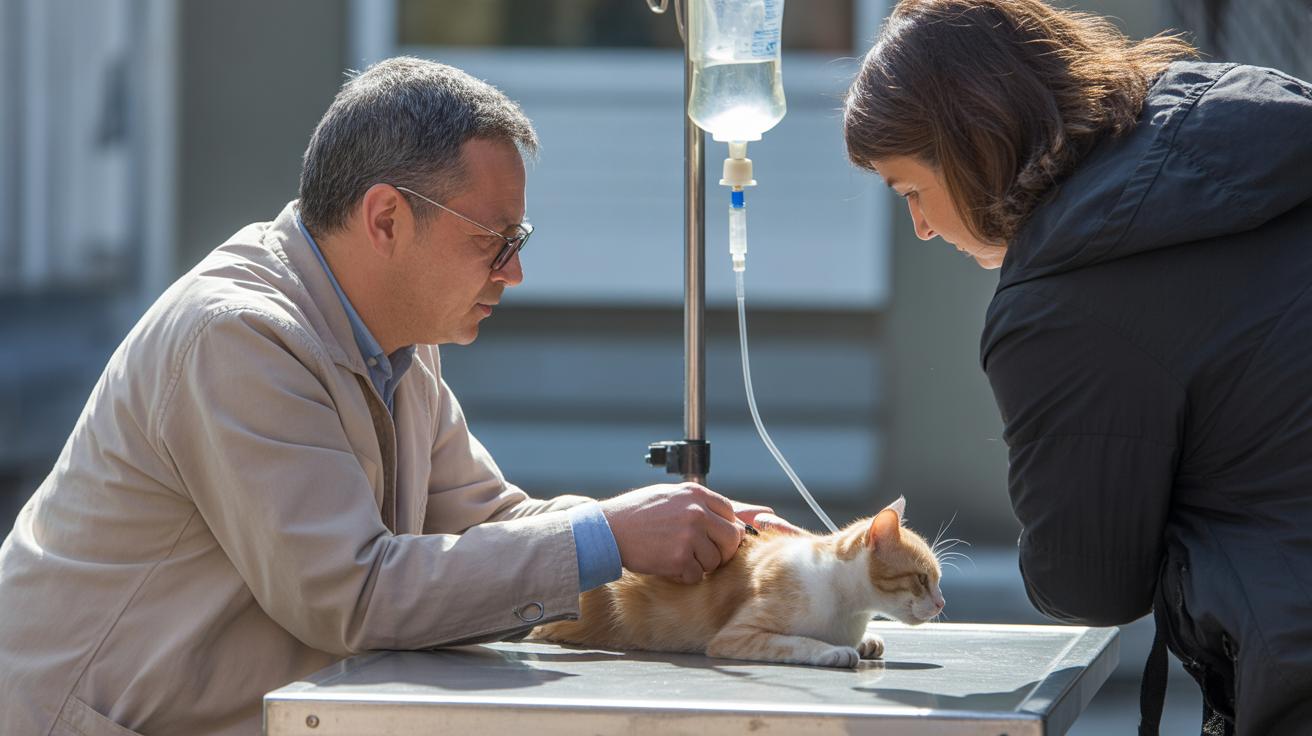
    Collapse or sudden, severe weakness. That might mean profound anemia (very low red blood cells) or shock. Head to an emergency clinic immediately and bring any medications and recent lab results you have.

    Uncontrolled bleeding, lots of bruises, or petechiae (tiny red or purple pinpoint spots). These signs suggest thrombocytopenia (very low platelets). Urgent testing is needed; transfusion (a blood transfusion) or platelet support may be required.

    Seizures or a sudden neurologic change. This could mean the central nervous system (the brain or spinal cord) is involved, or there’s a severe metabolic derangement (a dangerous chemical imbalance). Emergency stabilization and rapid diagnostics are essential.

    Sudden, marked pallor with rapid breathing. This usually points to severe anemia from bone marrow suppression. Immediate care is critical. A blood transfusion can be lifesaving.

    High, uncontrolled fever. That raises concern for a severe infection or sepsis (a life-threatening whole-body infection). Seek emergency assessment for IV antibiotics (medication given through a vein), IV fluids, and close monitoring.

    Intractable vomiting or diarrhea with signs of dehydration. Your cat can lose vital salts and fluids fast, risking electrolyte collapse and shock. Emergency rehydration (fluids under the skin or into a vein) and tests are needed.

    Not eating or drinking for more than 24 hours. That can lead to rapid decline and metabolic complications, so urgent veterinary attention is important.

    What an emergency clinic will typically do: stabilize breathing with oxygen, give IV fluids (fluids through a vein), run bloodwork/CBC (complete blood count) to check red cells, white cells, and platelets, start antibiotics if needed, and arrange transfusion or referral for advanced care. It can feel scary, but fast action really helps. Worth every paw-print.

    Final Words

    In the action, we named the top three early signs: lethargy, poor appetite or weight loss, and pale gums, and gave a 10-item home checklist; see a vet for a blood test if you notice two or more.

    We then explained how the virus can shift from mild, vague problems into bone-marrow and immune system issues, described acute, persistent and regressive stages, and flagged red-flag emergencies that need immediate care.

    Keep checking your cats, trust your gut, and act quickly when several clues appear, quick testing catches trouble earlier and helps your multi-cat household stay healthier; remember the signs of feline leukemia in cats.

    FAQ

    What are the first signs of feline leukemia in cats?

    The first signs of feline leukemia in cats are lethargy (low energy), poor appetite with weight loss, and pale gums indicating anemia (low red blood cells). See a vet for a blood test if you notice two or more.

    How do cats act when they have leukemia?

    Cats with leukemia often act unusually quiet and tired: lethargic, hiding, grooming less, playing less, and they may have recurrent infections or fever—these behavior changes are common early clues.

    How long can a cat have feline leukemia before showing symptoms?

    A cat can have feline leukemia for weeks to months before showing symptoms, though some remain symptom-free for years; kittens often progress faster, so recheck testing at 6–12 weeks after exposure.

    How does a cat get feline leukemia, and can indoor cats get it?

    A cat gets feline leukemia through close contact with infected saliva or blood—grooming, bite wounds, shared bowls, or mother-to-kitten transmission; indoor cats can become infected if an infected cat joins the household.

    What is feline leukemia treatment?

    Feline leukemia treatment focuses on supportive care and treating infections; there is no cure. Vets may use antibiotics, IV fluids, transfusions, or cancer therapy for tumors, plus regular monitoring and indoor care.

    What are the final stages of feline leukemia?

    The final stages of feline leukemia show severe bone marrow suppression (marrow stops making blood cells), profound anemia, bleeding, weight loss, uncontrolled infections, and tumors like lymphoma, with rapid decline and poor prognosis.

    What eye symptoms can feline leukemia cause?

    Feline leukemia can cause eye problems like conjunctivitis (red, watery eye), uveitis (inflammation inside the eye), discharge, cloudiness, or vision changes; see a vet promptly for eye care.

    Related Articles

  • Symptoms of Feline Leukemia in Cats: Early Detection

    Symptoms of Feline Leukemia in Cats: Early Detection

    Ever watched your kitty race around the room then suddenly flop on the couch? It’s not always just a lazy day.

    Those little clues, like pale gums (when the pink turns ghostly) or unexplained weight loss, could point to feline leukemia virus (FeLV, a virus that attacks blood cells). And uh, catching it early is a total game-changer. No more playing hide-and-seek with your cat’s health.

    Think of it like spotting small ripples before a big wave. No more guessing games. Next, we’ll share six claw-tastic warning signs to help you catch FeLV fast and keep your furball feeling feline fine.

    Six Critical Early Warning Signs of FeLV

    - Six Critical Early Warning Signs of FeLV.jpg

    FeLV (feline leukemia virus) can be sneaky. It often starts with tiny clues before bigger problems appear. Ever watched your cat just flop instead of pouncing? It could be a sign.

    • Lethargy
      When your kitty usually goes full-speed but suddenly feels like a couch potato, that’s lethargy. Poor energy. Slowed play. It’s like watching a slo-mo video.

    • Unexplained weight loss
      You serve the same food, yet the pounds keep dropping. No special diet needed.

    • Persistent fever
      A cat’s normal temp is about 100.5–102.5°F. If they stay too warm, fever (body temp above 102.5°F), it could point to FeLV.

    • Pale mucous membranes
      Flip up their lip. If the pink lining inside their mouth (mucous membranes) turns ghostly white, that’s anemia.

    • Enlarged lymph nodes
      Gently feel under the jaw or behind the knees for little bean-shaped filters (lymph nodes). If they’re swollen (lymphadenopathy), pay attention.

    • Oral lesions
      Red bumps or sores in their mouth, like stomatitis (painful ulcers), can make eating tough. Ouch.

    These clues can show up in the gut, breathing, nerves, eyes, blood or mouth. Spot any of them? Don’t wait – call your vet right away. Worth every paw print.

    Progression Phases of Feline Leukemia Virus Infection in Cats

    - Progression Phases of Feline Leukemia Virus Infection in Cats.jpg

    When your kitty first picks up feline leukemia virus (FeLV), it sneaks in almost unnoticed. This acute infection phase (initial infection) lasts a few days to a couple of weeks – it’s like your cat caught a cold, minus the sneezes. You might spot a tiny fever or a bit more napping, or you might not see anything at all. Ever watched your cat chase a sunbeam across the floor? They could be fighting off FeLV and you’d never guess.

    Next comes the regressive infection phase, often called the asymptomatic carrier stage. Here the virus hides in bone marrow (the soft, spongy inside of bones) and lymphoid tissues (parts of the immune system) but stays quiet. Your cat still zooms around like a tiny tiger, batting at toys and purring for pets. With regular vet check-ups and a careful eye, many FeLV-positive cats live years before any serious signs appear.

    Then the chronic disease phase kicks in – the progressive clinical illness. FeLV revs up, weakening immunity (your cat’s natural defenses) and causing anemia (low red blood cells), infections, and weight loss. You might notice swollen lymph nodes, mouth sores, or labored breathing. This is when extra vet visits, cozy home care, and gentle playtime really matter. Keep their favorite blanket close and ask your vet about supportive treatments – every soft head-butt will feel like a victory.

    Worth every paw-print.

    Hematological and Immunosuppressive Effects of Feline Leukemia in Cats

    - Hematological and Immunosuppressive Effects of Feline Leukemia in Cats.jpg

    When FeLV sneaks into a cat’s bloodstream, it sets up shop in the bone marrow (the spongey tissue inside bones where blood cells are born). And when that factory slows or stops, you’ll notice pale gums and that soft flop when your cat jumps off the couch. Chronic anemia (low red blood cells) steals their energy over weeks, leaving them extra wobbly and weak.

    Blood Disorder Key Lab Findings Clinical Impact
    Hemolytic anemia (RBC breakdown) Low hematocrit (red cell percentage), high bilirubin Pale gums, jaundice (yellow skin), weakness
    Neutropenia (low infection fighters) Reduced neutrophil count Frequent infections, slow wound healing
    Thrombocytopenia (low platelets) Low platelet count Bruising, nosebleeds, bleeding gums
    Pancytopenia (all cells low) Low RBC, WBC, platelets Extreme fatigue, severe infections, hemorrhage

    And those immune defenses take a nosedive, leaving your kitty open to bugs like feline infectious peritonitis, Mycoplasma (tiny bacteria-like germs), and stubborn respiratory bugs that just won’t quit. Ever seen your cat catch a simple cold and it sticks around forever? That’s FeLV’s doing. For more on how FeLV shakes up your cat’s whole body, check out Feline Leukemia Overview.
    By spotting anemia signs or a sudden drop in neutrophils early, vets can step in with antibiotics, blood transfusions, or extra fluids before things get scary. Next time your furball seems extra pale or bruised, you’ll know it’s time for a quick vet visit. Worth every paw-print.
    Neurological and Ocular Manifestations of Feline Leukemia in Cats

    - Neurological and Ocular Manifestations of Feline Leukemia in Cats.jpg

    FeLV (feline leukemia virus) can sneak into your cat’s nervous system in odd ways. You might spot Horner syndrome (when one eyelid droops and the pupil shrinks) or anisocoria (one eye sporting a bigger pupil). Then there’s mydriasis (when bright light makes a pupil freeze wide open). Ever seen that robotic stare? That fixed gaze can point to trouble.

    Ever caught your kitty forgetting the litter box? Urinary accidents or even a floppy leg can crank up the drama. Over days or weeks, muscle weakness and central blindness (losing the center of their sight) can tiptoe in until you look real close. Catching these neurological signs early helps flag FeLV before it pounces.

    FeLV can also mess with your cat’s eyes. You might see uveitis (swelling in the eye’s middle layer) that leaves eyes red and sore. Conjunctivitis (pink eye) brings tearing, redness, and crusty bits that can glue your cat’s lids shut by morning.

    Then there’s keratitis (inflammation of the cornea, the eye’s clear front window), which can cloud or scar the surface. Your kitty might paw at its eyes or squint like it’s staring at the sun. Yikes.

    Any weird eye twitches, drippy eyes, or sudden vision loss? Call your vet fast!

    Symptoms of Feline Leukemia in Cats: Early Detection

    - Gastrointestinal and Respiratory Signs of Feline Leukemia in Cats.jpg

    When feline leukemia virus (FeLV) first nudges your cat’s organs, you’ll often see hints in digestion (how they break down food) or breathing (inhaling and exhaling). Um, ever notice your kitty’s whiskers twitching while they cough or clutch their tummy? Actually, these low-key signals can slip by if you’re not looking. Spotting them early gives you a better shot at treatment before things get serious.

    Tummy troubles often start subtle, with soft stools you barely notice on the carpet. Vomiting might feel like a quick gag or a half-eaten snack left behind. If these issues stick around, your furry friend can get dehydrated (losing too much body fluid), leading to weight loss and limp paws. When diarrhea or vomiting don’t ease up, it’s time to call your vet.

    Then there’s the breathing stuff. Your cat might pant like a puppy while resting or breathe faster after chasing a toy. A sudden cough can sound like they’re clearing a hairball, except it keeps coming back. If your kitty seems to gasp for air or has a runny nose with food regurgitating, don’t wait, breathing problems are urgent.

    Worth every paw-print.

    Oral Health Challenges: Stomatitis in Cats with Feline Leukemia

    - Oral Health Challenges Stomatitis in Cats with Feline Leukemia.jpg

    Ever watched your kitty drool like a fountain? For cats fighting FeLV (feline leukemia virus), stomatitis (serious gum inflammation) and ulcers (open sores in the mouth) can turn mealtime into a showdown. You might spot matted fur under their chin or catch them pawing at their cheeks, poor things.

    Eating gets tough when gums puff up and sores feel like burning embers. Extra spit on the floor or a sudden skip of dinner? Those are your red flags. Gingivitis (gum redness and bleeding) is like minor mouth drama. But stomatitis brings in painful clusters of ulcers on cheeks, tongue, and throat. Really rough.

    Over time, ulcers can wear down tissue, loosen teeth, and make the jaw ache, yikes. Uh, don’t ask me how I know. A vet’s dental check is a game-changer. They’ll spot deep wounds early and guide you to treatments, professional cleanings or gentle mouth rinses that ease the burn.

    Next, swap to soft foods that slide down easy. And, you know, hold off on the chin scratches until they’re feeling better, unless you want an accidental love tap from a grumpy kitty. It’s all part of giving them relief and extra cuddles. Worth every purr.

    Diagnostic Approaches for Feline Leukemia in Cats

    - Diagnostic Approaches for Feline Leukemia in Cats.jpg

    Ever felt your heart do a little flip while waiting on vet news? Most vets start with an ELISA test (that’s Enzyme-Linked Immunosorbent Assay, a way to spot FeLV proteins in blood). It’s pretty reliable once you hit the sweet spot, two to six weeks after exposure, when enough viral proteins are floating around. Oops, did I scare you? Labs often double-check positive results to rule out rare false alarms from recent shots or other bugs.

    Next up is PCR testing (polymerase chain reaction, like a DNA photocopier for tiny virus bits). This one’s super sensitive, perfect when antigen levels are whisper-quiet or if your cat seems fine but the virus is hiding in the bone marrow. Vets often pair PCR with ELISA in kittens or after high-risk encounters. Early detection means more time for supportive care and a happier purr.

    Sometimes your vet will glance at a stained blood smear (a slide of dyed blood cells that really shows off their shapes). You might see low red cell counts, odd lymphocyte shapes, or even viral inclusion bodies (tiny virus spots inside cells). Testing too early or low viral load can sneak in false negatives, so a repeat check a few weeks later is common. Combining ELISA, PCR, and blood smear clues gives the clearest picture, and the best next steps for your furball’s care.

    Worth every paw-print.

    Prognosis and Care Strategies for Cats with Feline Leukemia

    - Prognosis and Care Strategies for Cats with Feline Leukemia.jpg

    Managing feline leukemia can feel like taking a winding road full of surprises. Some cats cruise along for years with vet check-ups and a calm home. Others may slow down faster if extra infections or cancers sneak in. Every kitty’s journey is different, your vet is like a co-pilot helping you pick the best route. Ever watched your furball chase shadows one moment and then snooze like a tiny loaf the next?

    Supportive care starts with zapping infections as soon as they show up. Antibiotics (germ-fighting meds) swoop in to boot out bacteria. Analgesics (pain relievers) hush any aches. And steady hydration, you know, fresh water or brothy treats, keeps them from feeling weak. Pair that with high-protein wet food or even a bit of hand-feeding when needed. Plus, fresh bedding, gentle brushing, and a quiet hangout spot can make your cat feel like royalty!

    Antiviral choices are a bit thin on the ground, but some vets recommend interferon (a protein therapy) or zidovudine (an antiviral drug) under close watch. These aim to slow the virus and give your cat’s immune system a little boost. You might also hear about B-vitamin shots or appetite stimulants, tiny helpers to keep energy high and weight steady. Chat with your vet to find the perfect paw-scription!

    Keep tabs on your cat’s mood, playtime, and munching habits to know how they’re doing. When the zoomies fade and feeding turns into hard work, it’s time for extra-soft beds, gentle pain checks, and more snuggle breaks. Making end-of-life decisions can feel tough, but sometimes comforting them is kinder than chasing another treatment. Lean on your vet’s advice, and your heart, because every choice honors your kitty’s comfort and dignity!

    Prevention and Monitoring of Feline Leukemia in Multi-Cat Homes

    - Prevention and Monitoring of Feline Leukemia in Multi-Cat Homes.jpg

    Let’s make this kitty crew a fortress against FeLV (feline leukemia virus). Think of vaccines, tests, a bit of kitty crowd control, and you’ll slash risks faster than your cat can bat a feather.

    First, start FeLV shots when kittens are 8 to 12 weeks old. Then stick to your vet’s booster plan, showing up on time means better protection. Ever watched your cat fluff up after a shot? Don’t worry, that tiny poke is worth the peace of mind.

    Thinking of adding a new fluffball? Ask for an ELISA test (a simple blood test that looks for FeLV antigens, or virus markers). Then, about a month later, say in 4 to 6 weeks, test again to catch any late bloomers. Worth every mew.

    Until their status is clear, give newcomers a 2- to 3-week timeout in a cozy spare room. This helps block horizontal spread, like grooming sessions, sharing bowls, or sneaky nose-to-nose sniffing.

    • Quarantine every new or boarding cat for 2–3 weeks before letting them mingle.
    • Keep FeLV shots up to date: core vaccines and boosters.
    • Test before adoption: an ELISA screen, then another in 4–6 weeks.
    • Wipe down litter boxes, food bowls, and bedding daily to stop virus spread via saliva and nose drips.
    • Keep kittens apart until you know their FeLV status to avoid mom-to-kitten transmission.

    Jot down every shot, test date, and room spot in a simple log. It’s like your kitty health diary, super handy for spotting trends. Then, schedule vet check-ups every 6 to 12 months or after any risky encounter.

    With everyone tested and vaccinated, you’ll sleep soundly knowing your clowder is safe, and you’ll get back to the fun stuff, like watching them chase rays of sunshine across the floor.

    Final Words

    From spotting lethargy or weight loss to noticing fever and anemia, we covered the six critical early warning signs of FeLV. We then mapped out stages from initial infection to illness progression and showed how blood, immune, nervous, and eye systems get involved. Next, we highlighted GI, respiratory, and oral challenges.

    We closed with diagnostics, care tips, and prevention strategies perfect for busy multi-cat homes, aimed at quick intervention and stress reduction.

    Symptoms of feline leukemia in cats can feel frightening, but early action sparks hope and purrs ahead.

    FAQ

    What are the first signs of feline leukemia in cats?

    The first signs of feline leukemia include lethargy, unexplained weight loss, persistent fever, pale mucous membranes (anemia), swollen lymph nodes, and oral lesions such as stomatitis or ulcers.

    What gastrointestinal and eye-related symptoms can feline leukemia cause?

    Feline leukemia can cause vomiting, persistent diarrhea, red or swollen eyes, conjunctivitis, and occasional ocular inflammation (uveitis), so watch digestive upset and eye discharge as warning signs.

    How does the feline leukemia virus spread, and can healthy cats catch it?

    Feline leukemia virus spreads through saliva, nasal secretions, urine, feces, and blood via bite wounds, shared food bowls, or grooming, so close contact or multi-cat environments raise transmission risks.

    How long do cats live after a feline leukemia diagnosis?

    After a feline leukemia diagnosis, cats live from several months up to a few years, with many surviving one to three years depending on immune response, secondary infections, and care quality.

    How do cats behave when infected with FeLV?

    Cats with leukemia often become lethargic, eat less, hide more, lose interest in play, and may show weak coordination or unsteady movements as the virus weakens their energy and immune system.

    What conditions can be mistaken for feline leukemia?

    Conditions such as FIV infection, immune-mediated anemia, or chronic infections can mimic feline leukemia symptoms; only FeLV-specific blood tests (ELISA, PCR) confirm a definite diagnosis.

    What symptoms do kittens born with feline leukemia display?

    Kittens born with feline leukemia often show poor weight gain, slow growth, persistent fever, pale gums (anemia), diarrhea, and frequent infections due to their underdeveloped immune systems fighting the virus.

    Related Articles