Category: Teach My Cat

  • How to Get a Kitten to Stop Biting

    How to Get a Kitten to Stop Biting

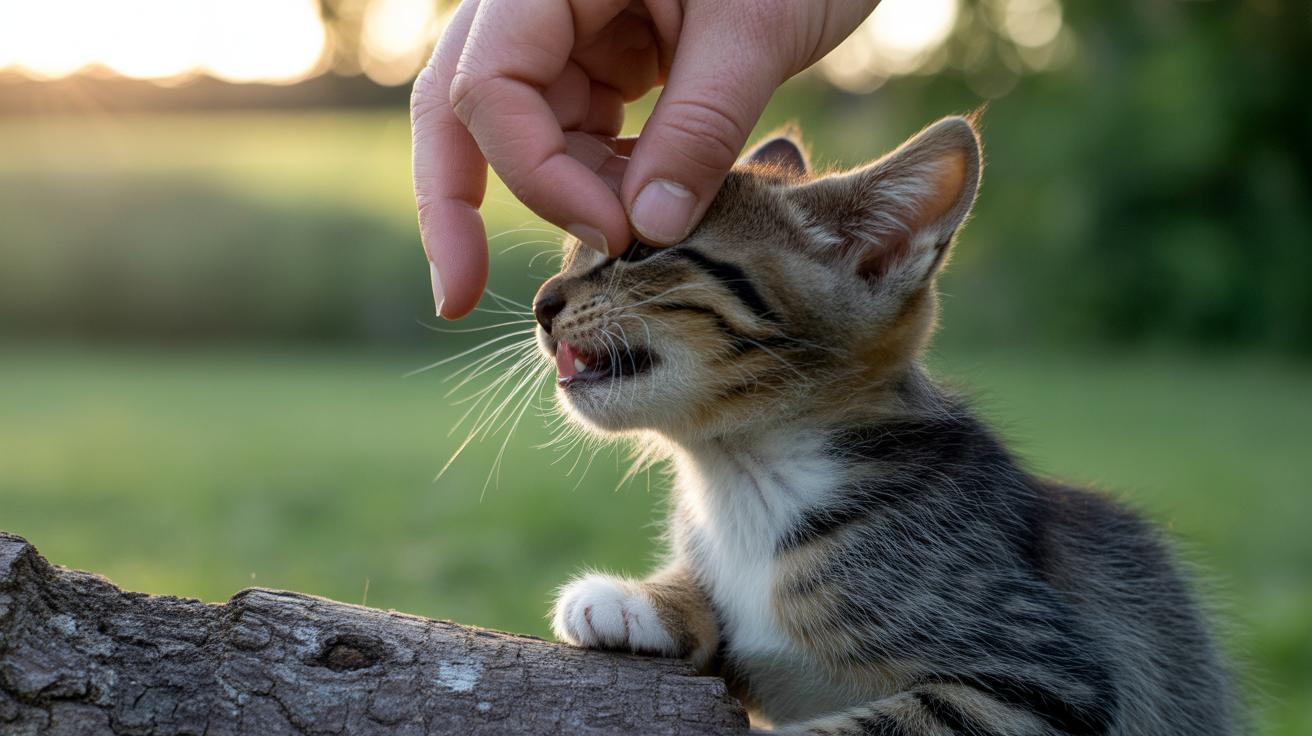
    Think kitten bites are just part of the adorable package? Not really. Those tiny teeth can sting like little pinpricks, and if you let the behavior slide it quickly becomes a habit that wrecks playtime.

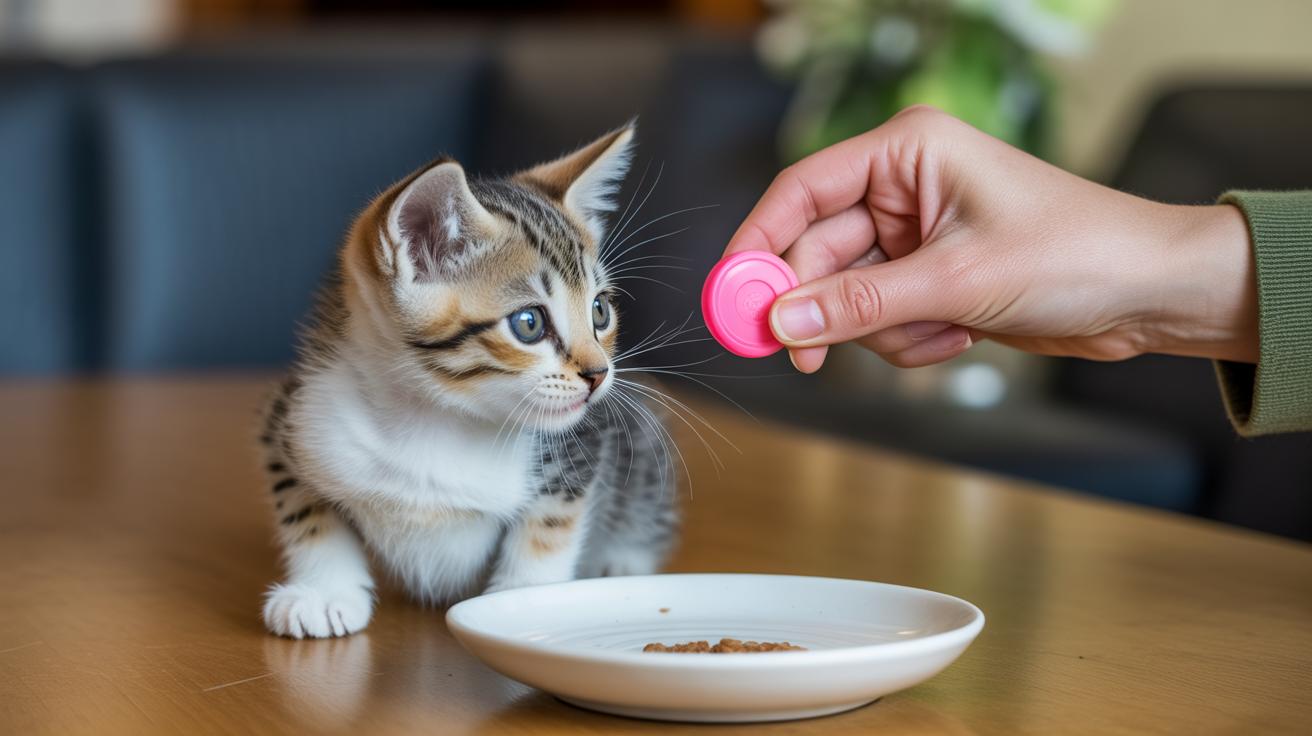
    Here’s a quick, safe script you can use right away. Say "Ouch!" in a clear voice, then freeze (stop moving so your kitten loses interest). Slide your hand back slowly, and offer a chew toy (a toy made to be bitten) so they learn toys are for nibbling, not fingers.

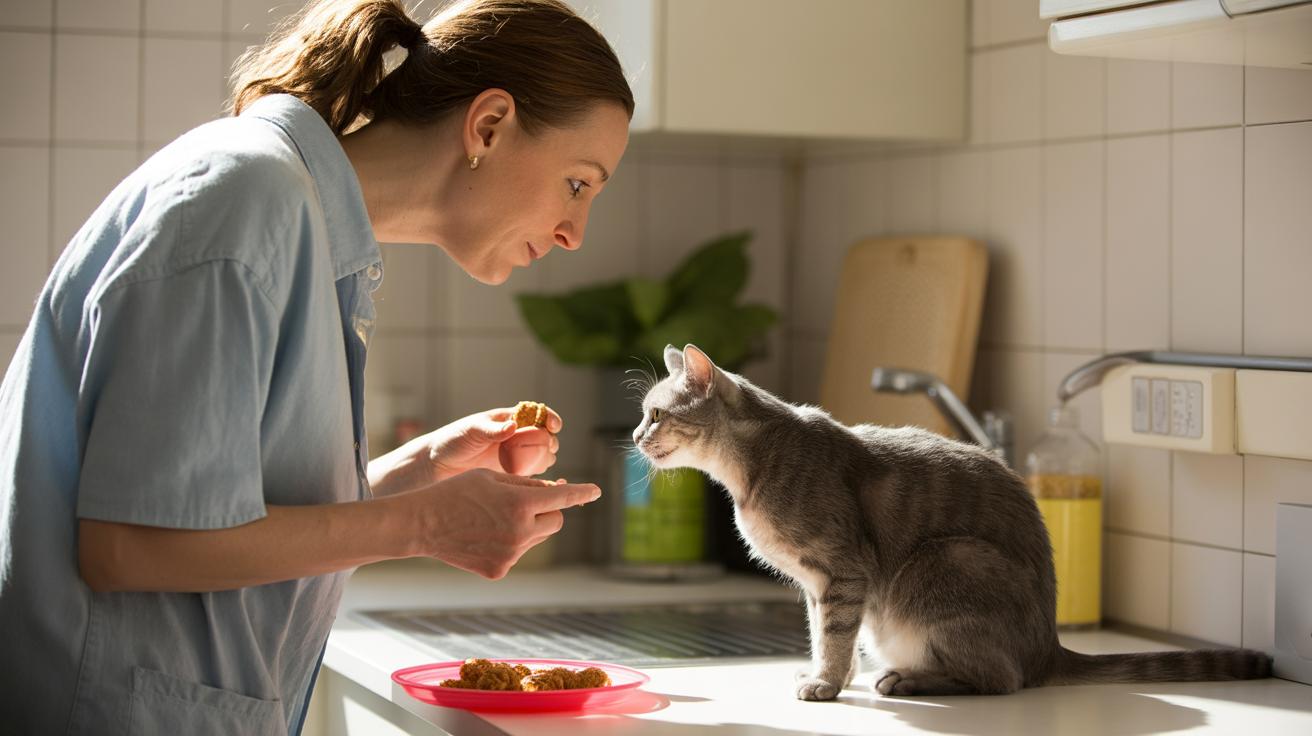
    If your kitty gives a hard latch (a firm bite that won't let go), stay calm. Don’t yank your hand. Instead, gently wiggle your fingers free or lure them off with the toy, then give a calm-down time (short timeout to relax) of about five minutes in a safe spot. Simple rewards like a soft "Good calm" and a tiny treat help teach gentle play.

    Keep it consistent and patient. Praise calm paws, replace hands with toys during rough play, and soon you’ll see more playful pounces and fewer painful nips. Ever watched your kitty chase shadows? It’s oddly glorious.

    Quick, practical steps to stop a kitten from biting
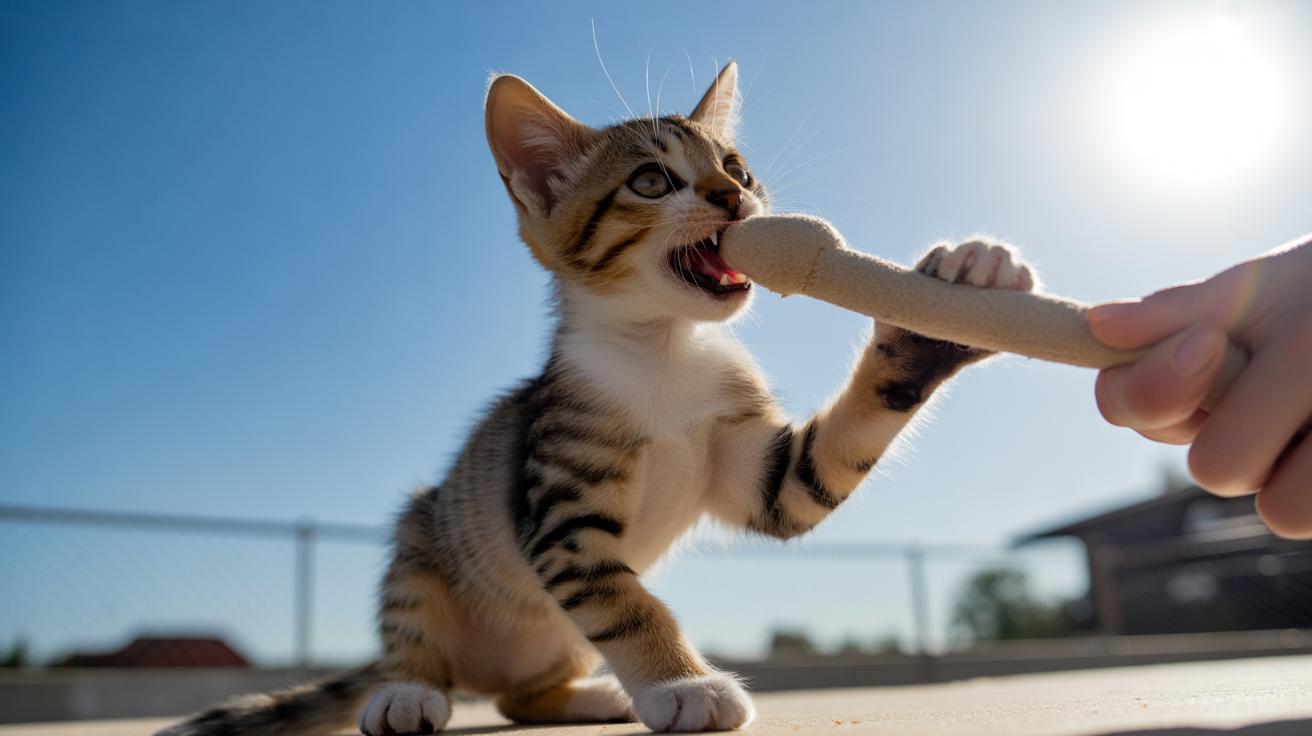
    - Quick, practical steps to stop a kitten from biting (this section fulfills the search intent).jpg

    Quick, safe moves you can do right away: give a short vocal cue, stop moving calmly, offer a toy to redirect play, and if needed use a short time-out (brief calm-down break). Say "Ouch!" (short, single-syllable) to startle the kitten, then gently offer a toy while saying "No bite."

    1. Say “Ouch!” (short, sharp) and freeze movement.
    2. Withdraw your hand slowly, slide it back and close fingers gently; do not jerk.
    3. Offer a designated bite toy (a soft chew or plush toy) and say “No bite, bite this.”
    4. If the kitten keeps biting, put them in a quiet room or a carrier (secure pet carrier with familiar bedding) for about 5 minutes, then return calmly.
    5. For a hard latch (a strong hold with teeth), follow the safety tips above and seek veterinary care (veterinarian) if the wound breaks skin or shows signs of infection.
    6. Reward calm behavior and resume play when the kitten is relaxed; cross-link these items to the on-page anchors for more detail.

    When you pull your hand back, freeze first so the kitten doesn’t see a moving target and start chasing. Then slide your hand back slowly and close your fingers gently; don’t yank or slap. Ever watched your kitty chase shadows? Same idea, movement invites pouncing.

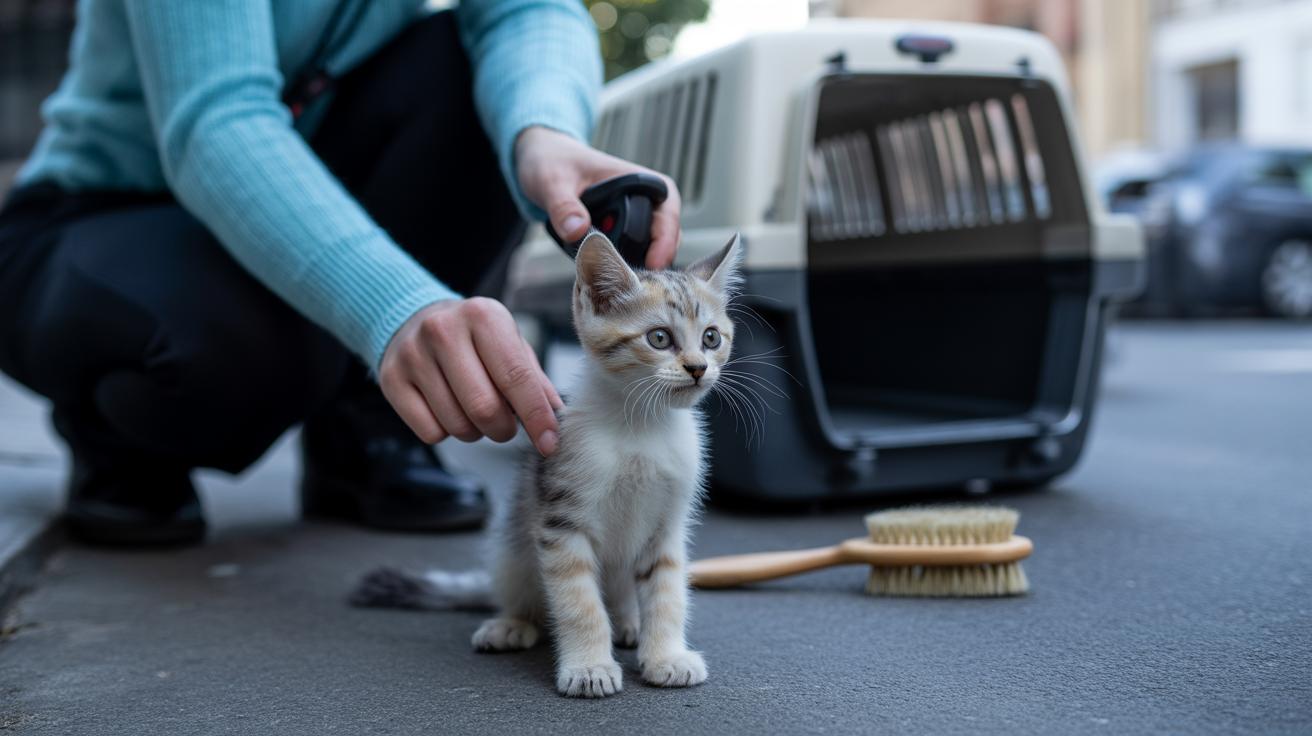
    For time-outs, use a safe, quiet room or a secure carrier with familiar bedding for about five minutes, then come back calmly and act like nothing dramatic happened. It’s just a short reset.

    If a kitten locks on hard, don’t pull. Hold still and gently roll the kitten’s muzzle (muzzle means the nose and mouth area) to break the grip, or wrap a soft damp cloth around the mouth and slide your hand free. Seek veterinary care for bites that break skin, swell, or show redness or pus. Get immediate vet help for severe pain, bleeding that won’t stop, swollen limbs, trouble breathing, collapse, or repeated severe latches.

    See Training Scripts, Play Plan, and Troubleshooting below. This quick guide doesn’t include the full scripts, full schedules, toy lists, blanket method details, or extended troubleshooting , those are in the sections that follow.

    Why a kitten bites: play, teething, overstimulation and attention-seeking
    - Why a kitten bites play, teething, overstimulation and attention-seeking.jpg

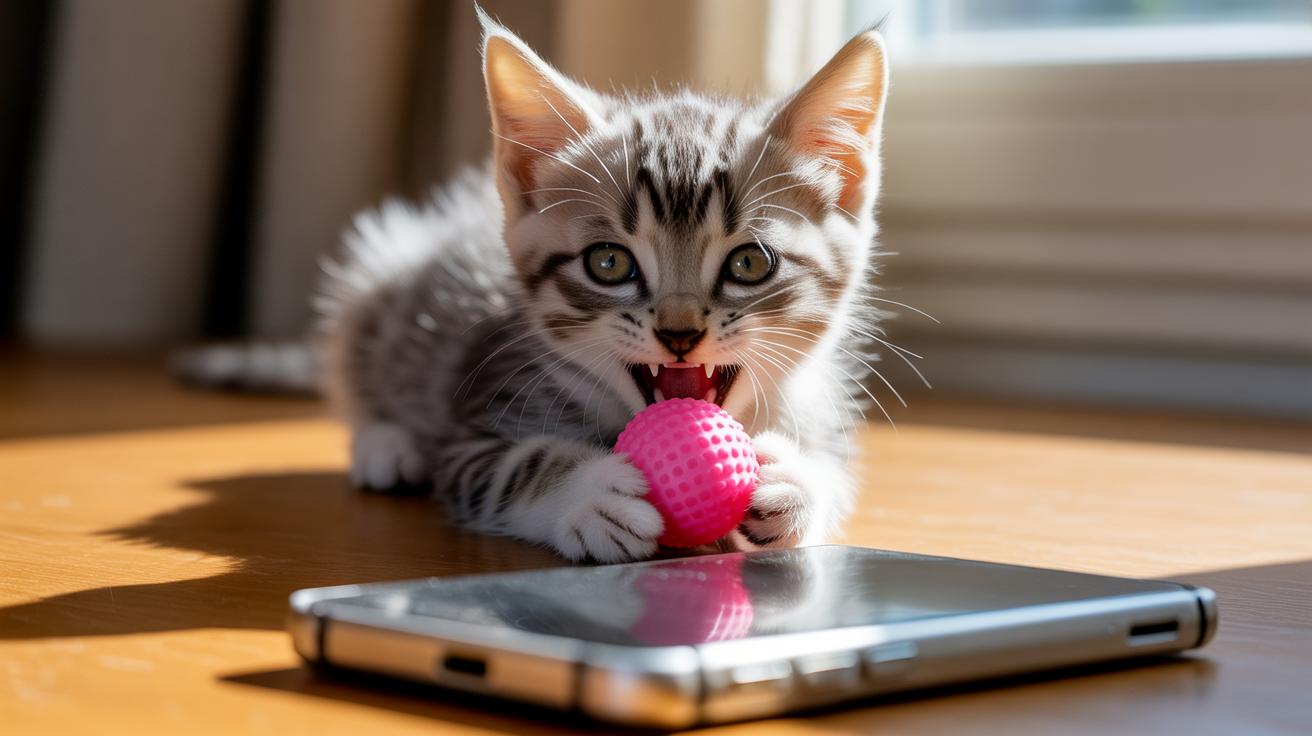
    Kittens start practicing hunting and mouthing as early as about 4 weeks old, so you’ll see them watch, stalk, pounce, and give tiny nips while they learn to catch prey. Play-bites usually come with a loose, wiggly body and soft nibbles, not meant to hurt. Fear or aggressive bites have a stiff body, flattened ears, and loud yowls, so read the body language before you react. Ever watched whiskers twitch right before a pounce? Cute and useful info.

    Teething (when baby teeth fall out and adult teeth push in) adds a fizzy urge to chew. Baby teeth usually come out around 3 to 4 months, and adult teeth are often in by about 6 months. Biting and object-play tend to peak between 4 and 6 months, so extra toys and short, guided play sessions during that window help a lot. Think safe chew toys or soft fabric mice to save your hands.

    Other common reasons are bored energy, petting that goes too far, or plain attention-seeking when the kitten wants play or food. If you want quick fixes for an immediate nip, see the lead: Quick, practical steps to stop a kitten from biting. Little tip – a ten-minute chase session before you leave can buy you calm time.

    Common causes at a glance:

    • Play and hunting practice – learning to pounce and grab
    • Teething (baby teeth fall out around 3–4 months; adult teeth by ~6 months)
    • Overstimulation from petting – sudden tail flicks or skin ripples are signs
    • Attention-seeking or frustration – wants play, food, or interaction
    • Pain, fear, or illness – sudden nips or withdrawn behavior

    Worth every paw-print.

    Use daily play and enrichment to stop a kitten from biting hands and feet
    - Use daily play and enrichment to stop a kitten from biting hands and feet.jpg

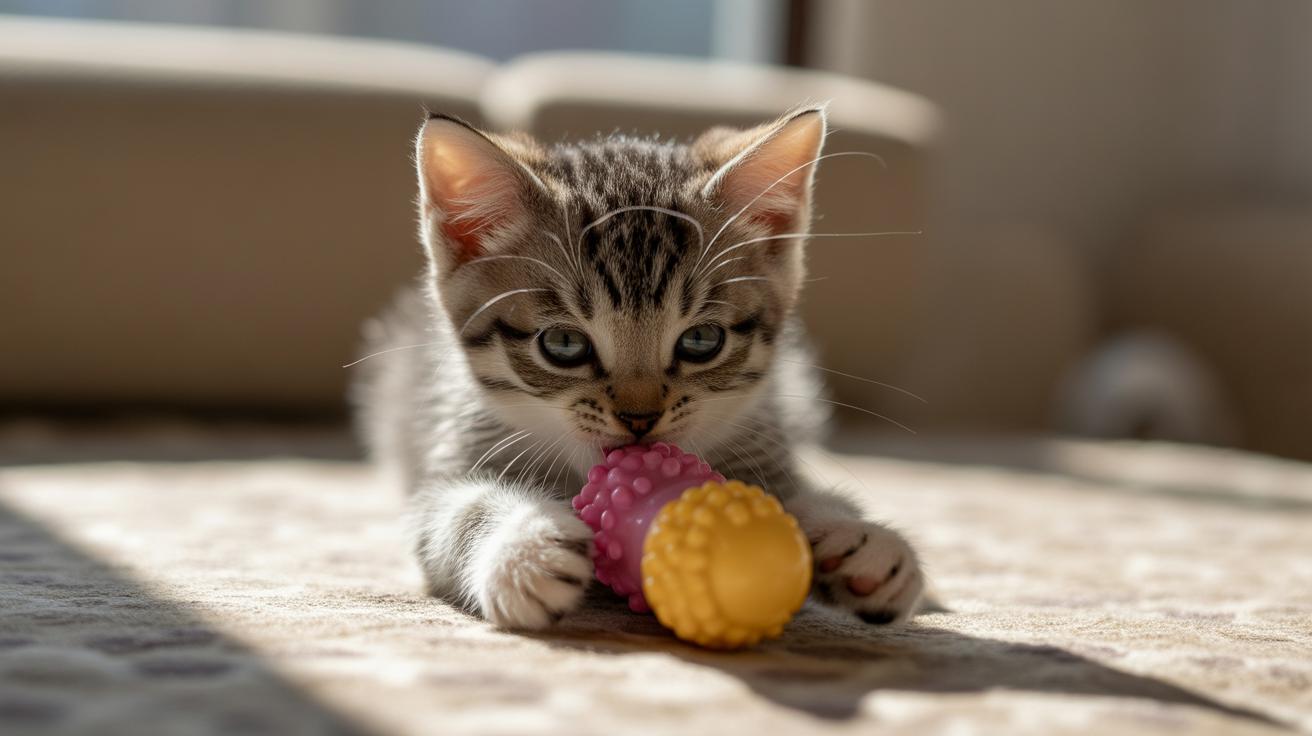
    Turn your kitten’s hunting urge into short, focused play so your fingers and toes stay off-limits. Try this simple schedule: three 15-minute sessions a day – morning (right after you wake), mid-afternoon (an energy-slap breaker), and just before bed (to tire them out). Use a wand toy to mimic prey, end each session while the kitten is calm, and let them actually catch a toy at least once so they feel successful. Ever watched a whisker-twitching pounce? That little win matters.

    Here are the toys to keep on hand:

    • wand feather toy (long stick with feathers that move like prey)
    • kicker toy (soft, long plush for biting and bunny-kicking)
    • crinkle ball (small ball that crunches and bounces in odd ways)
    • plush mouse (tiny, soft toy made for grabbing and chewing)
    • tunnel (fabric tube for hiding, pouncing, and quick sprints)
    • food puzzle (a feeder that dispenses kibble when the cat works it)
    Toy Type Why it works
    wand feather toy Keeps stalking and pouncing safe. Teaches chase mechanics while keeping your hands back.
    kicker toy Made for biting and kicking. Lets your kitten practice the grab-and-kick without hurting you.
    crinkle ball Crunchy sound and weird bounces hold attention and trigger hunting instincts.
    plush mouse Small and soft for carrying and chewing – great for that post-catch chew session.
    tunnel Creates surprise spots for ambushes and gives room to sprint, which tires them fast.
    food puzzle Makes eating feel like hunting. Slows feeding and stretches play into a rewarding task.

    After a real catch, give a tiny reward to mimic hunt-then-eat satisfaction. Play 10-15 minutes, let them catch, then offer 1-2 tablespoons of kibble or a small treat. Rotate toys in two sets – set A for three days, then set B for three days – to keep things novel. If your kitten gets overaroused, pause for a minute, switch to a slow-moving toy, or end the session early. If they ignore toys, try changing how you move the toy, add a scent or a pinch of catnip, use a food puzzle, or refresh wand bits – check DIY replacement attachments for teaser wands for ideas. Replace toys that shred or lose stuffing.

    Worth every paw-print.

    Teaching bite inhibition and safe handling for kittens (with sample scripts)
    - Teaching bite inhibition and safe handling for kittens (with sample scripts).jpg

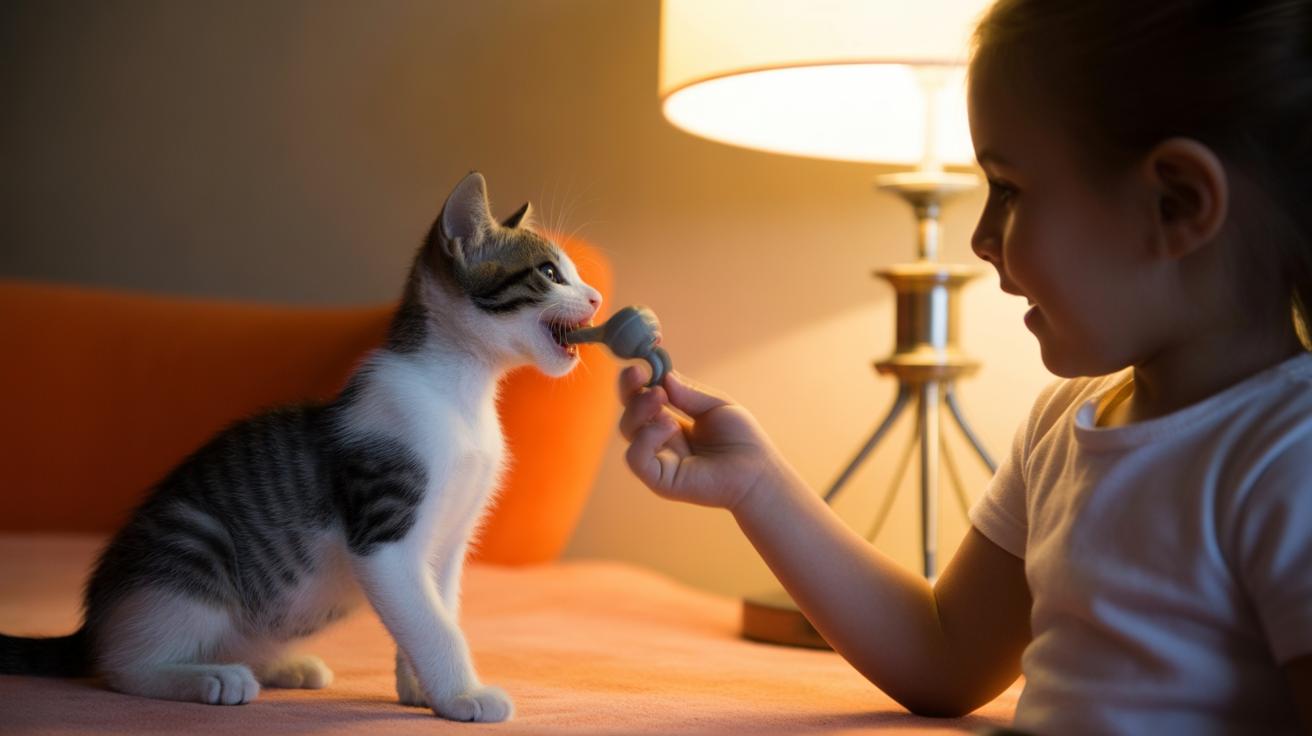
    The idea is simple and friendly: make biting stop the fun so your kitten learns to use a softer mouth. Play short drills where you let the kitten catch a toy, then if a nip happens give a calm cue and pause the game. Keep sessions brief, about 5 to 10 minutes, so the lesson sinks in without wearing anyone out.

    Ever watched your kitty chase shadows? Great, use that same playful energy. Start lively with a wand toy, let the kitten win sometimes, and finish on a calm note with a treat. That helps the kitten learn that gentle play gets rewards.

    If a kitten locks on hard, stay calm. Hold still and cup the muzzle (nose and mouth area) with one hand, then gently roll the kitten’s head toward its shoulder with the other hand to ease the bite. If that doesn’t work, slide a soft, damp cloth around the mouth to break contact without jerking. Don’t use the blanket-over-head trick if the kitten panics, has breathing issues, or is especially fearful. The blanket trick means briefly covering the head with a lightweight towel to reduce stimulation, but you must watch breathing and never leave the kitten covered.

    Sample Scripts and Cues

    • “Ouch. That’s too hard.”
    • “No bite, toy time!”
    • Child-friendly: “No teeth! Use the feather.”
    • Time-out cue: “Calm time.” (place kitten in a quiet room or carrier for about 5 minutes)
    • Reintroduction cue: “Play nice.” (offer the toy and give gentle praise)
    1. Set the tone: play lively for 5 to 10 minutes using a wand or teaser, let the kitten catch the toy, and end calmly with a treat.
    2. On a nip: give a short, firm cue, stop moving, and wait 3 to 5 seconds before offering the toy again.
    3. Hard latch: stay still, cup the muzzle (nose and mouth area), try rolling the head, or use a damp cloth; get vet care if the skin breaks or looks infected.
    4. Time-out: put the kitten in a safe, quiet room or carrier for about 5 minutes, then return calmly and offer the toy again.
    5. Reward calm: praise softly and give a tiny treat or a bit of kibble after gentle, toy-only bites; keep short, regular sessions.

    A few quick tips: use soft toys that won’t hurt tiny teeth, avoid hands-as-toys, and supervise kids so play stays safe. Worth every paw-print.

    Redirect biting to toys and safe chewables (practical redirection games)
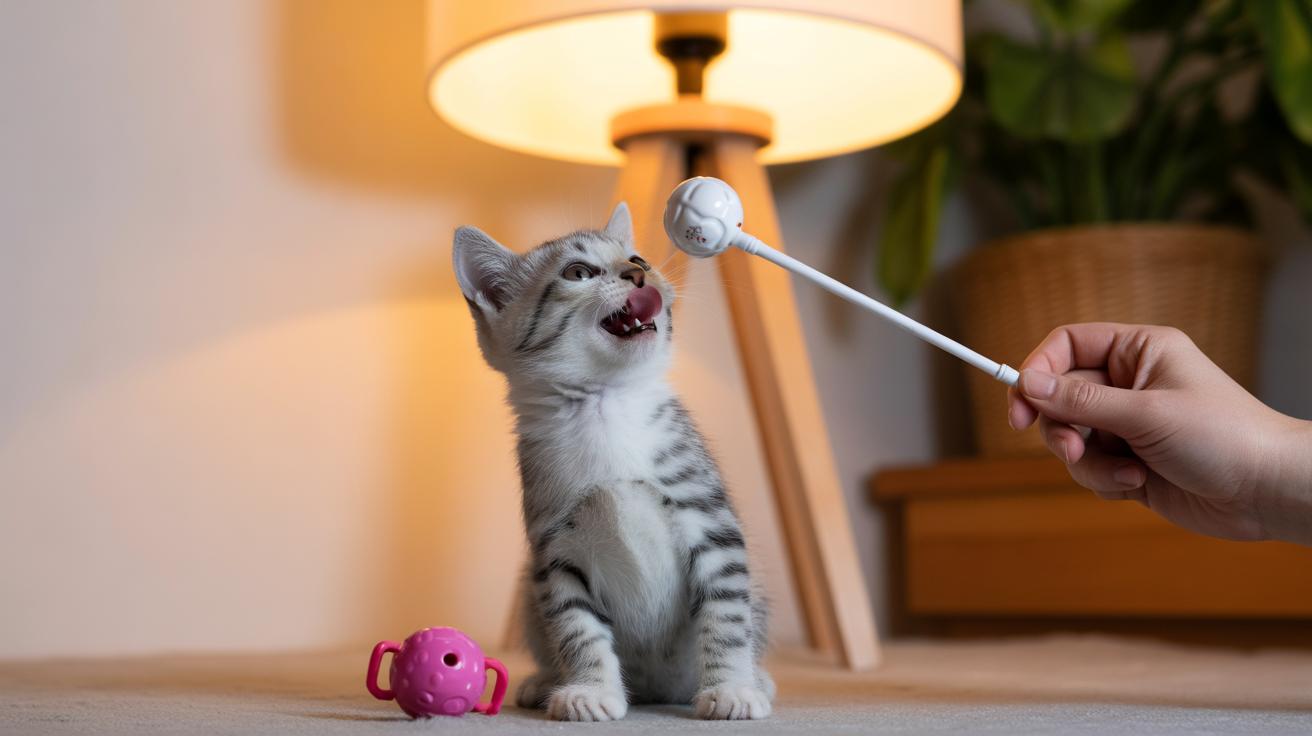
    - Redirect biting to toys and safe chewables (practical redirection games).jpg

    We moved the full redirection games into the Use daily play and enrichment section, under a short "Redirection games" subsection. There you’ll find five quick game ideas with one-line how-to tips and a toy-safety check for each: wand feather chase; kicker swap; toss-and-forget fetch; food-puzzle distraction; teether trade. Quick example: Wand feather chase – "Wiggle the feather low, then high; say 'Catch!' as your cat pounces." See Use daily play and enrichment: Use daily play and enrichment and the Quick Steps anchor: Quick, practical steps.

    Training timings and templates now live in the Teaching bite inhibition section as a small drill box, so all bite-training instructions are in one place. The drill gives the routine and simple timings: offer toy for about 30 seconds; do three rounds of teasing for 20 to 30 seconds each; let the cat catch the toy; allow a brief bite; then reward. Short cue example: Structured drill – tease 20–30s; let catch; brief bite; reward. See Teaching bite inhibition: Teaching bite inhibition and the Quick Steps anchor: Quick, practical steps.

    Toy-safety notes were moved into the toy list so we’re not repeating them everywhere. Key safety points are: inspect toys weekly; avoid small detachable parts, cheap beads, or toxic stuffing; never leave strings unsupervised. Replace any toy with exposed stuffing, loose seams, or hard chews that chip. Worth saying out loud: retire those toys right away, and you’ll sleep easier watching your kitty play.

    Oops, one last thing, if you want the fastest help, jump to the Quick, practical steps anchor: Quick, practical steps.

    Nighttime strategies: stop a kitten from biting at night by managing energy
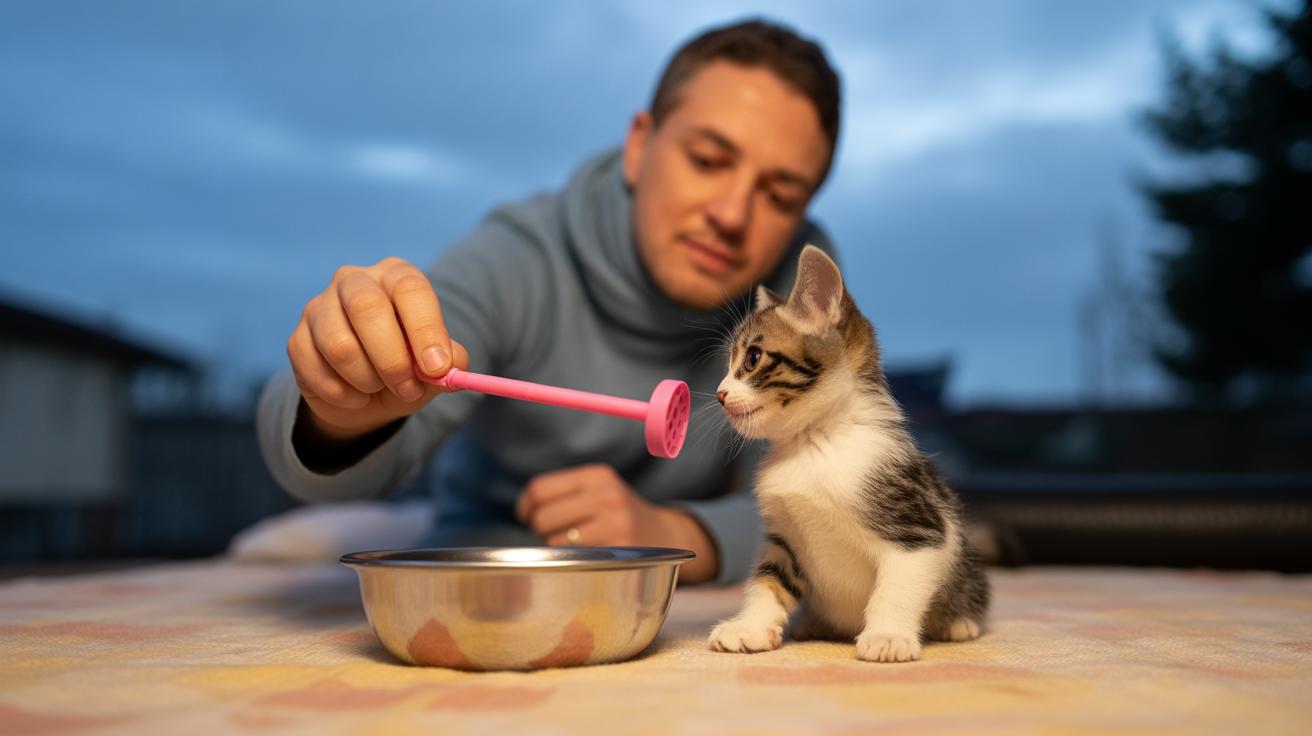
    - Nighttime strategies stop a kitten from biting at night by managing energy.jpg

    Tame the midnight pounce with a simple evening routine that works like clockwork. Play hard, feed, then settle down. Ever watched your kitten stalk a sock like it’s a wild animal? That’s the energy we want to use up before bedtime.

    1. Play 15 minutes , a vigorous teaser wand or chasing game that ends with a catch. (Teaser wand = a stick with feathers or a toy on a string, like a fishing rod for cats.) Keep it fast and exciting so your kitten practices the full hunt sequence.
    2. Feed a small meal right after play to mimic hunt then eat. Your cat’s brain expects food after the chase, so this makes them feel satisfied.
    3. Quiet 10 minutes to cuddle and settle , dim the lights, speak softly, and pet gently. Calm sensory input tells their body it’s time to rest.

    If nips keep happening, add calming supports. Try a pheromone diffuser (plug-in that releases a cat-calming scent), a cozy sleep box with familiar bedding, a low-heat pad (gentle-warm pad for extra comfort), or soft white noise (steady background sound to mask sudden house noises). These help soothe the overstimulated kitty and make the bedroom feel safe.

    Give the routine 1 to 3 weeks to really take hold. If your kitten is still active after that, try longer play sessions, a short late-night mini-play before lights out, or talk to your vet or a cat behaviorist for next steps. Worth every paw-print.

    When kitten biting may mean pain, fear, or a deeper problem (when to consult a vet or behaviorist)
    - When kitten biting may mean pain, fear, or a deeper problem (when to consult a vet or behaviorist).jpg

    If your kitten nips now and then, it’s often play. But sometimes those bites point to something else. Keep an eye out for these warning signs:

    • Bites outside play situations, like random nips or biting while being petted.
    • A sudden jump in aggression or much stronger bites than before.
    • Loss of appetite or noticeable changes in eating habits.
    • Hiding, avoiding you, or a big drop in activity.
    • Clear vocal signs of pain (growling, hissing, or loud yowls).
    • Repeated hard latches that break the skin or won’t let go.

    If you notice any of the above, call your vet right away for a physical exam and a mouth check. Vets will often run basic tests (blood work, X-rays, or other simple checks) to rule out pain, infection, or injury. Sometimes a sore tooth or an ear problem is the reason , ouch.

    If the vet doesn’t find a medical cause, a behaviorist (a qualified feline behavior consultant who studies cat behavior) can help. They’ll ask about when the biting started, daily routines, triggers, medical history, and any recent household changes. Then they’ll watch how your cat acts and check the environment before handing you a step-by-step training plan and follow-up.

    Helpful questions to bring: When did this start? Any recent illnesses or injuries? What changed at home lately? What have you already tried? Those answers make diagnosis faster and the plan more practical.

    Supervising kids and other pets to stop a kitten biting people and feet
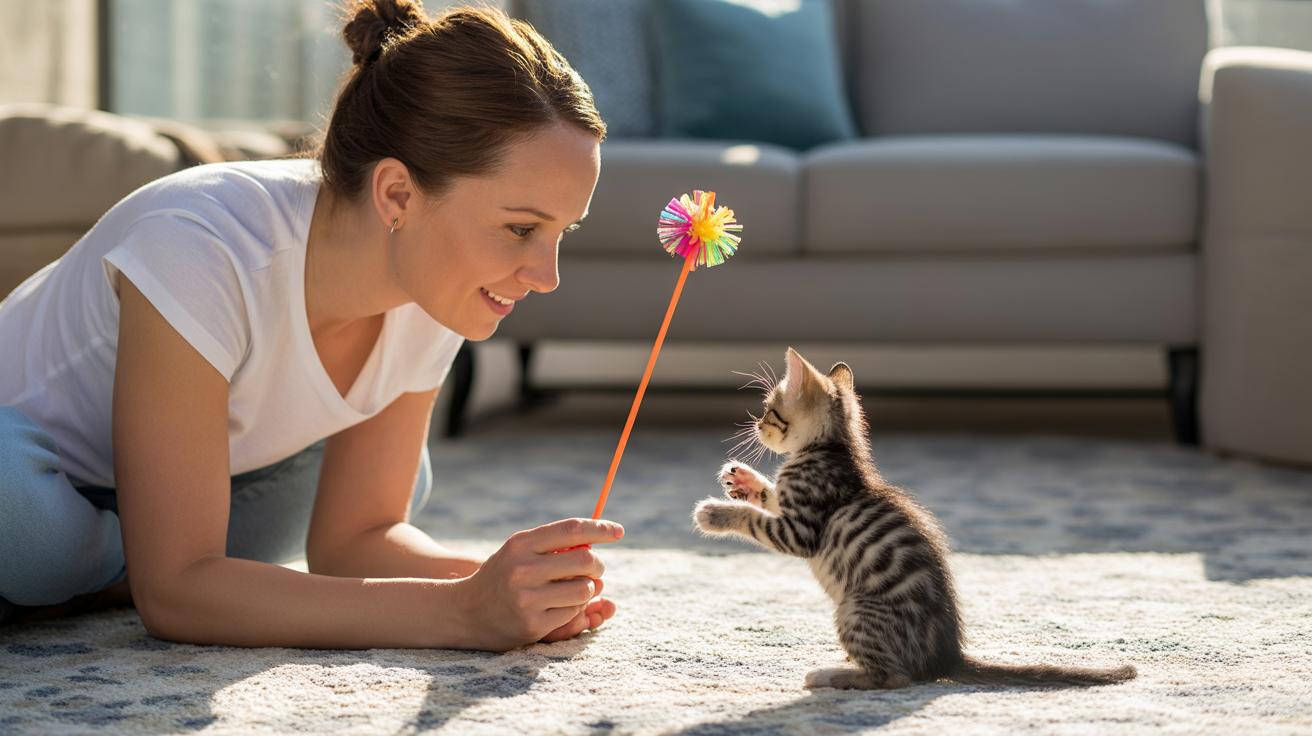
    - Supervising kids and other pets to stop a kitten biting people and feet.jpg

    Start by setting clear house rules and practicing the short lines you want kids to use. Make it a game: role-play a few times so kids know what to say and how to move. Ever watched your kitty pounce on a sock? Practicing helps keep play friendly and safe.

    Tell kids to use wand toys only (a wand toy is a stick with string, feathers, or a toy on the end). No hands. No feet. Show them how to pet softly, with slow strokes and a quiet voice. Try child-friendly cues like “No teeth! Use the feather.” and “Gentle paws, please.” Those quick, consistent phrases teach faster than yelling.

    If a nip happens, adults should stay calm. Stop the game. Put the toy away for a moment and guide the child to say the cue phrase to the kitten instead of yelling at it. Short and steady is the trick. Kids learn better from pauses and practice than from loud scolding.

    For homes with other pets, introduce everyone slowly and keep first meetings short and supervised. Do separate, short play sessions so an older cat doesn’t accidentally teach rough-play habits. Give the kitten a kitten-only room or a high perch (like a shelf or cat tree) where it can escape and breathe.

    Rotate supervised mixed playtimes so each pet learns limits, and watch body language, ears back, tail flicks, or low growls mean it’s time to stop. If tension rises, end the session calmly and separate everyone for a cool-down. Then try again later.

    1. No roughhousing
    2. Use wand toys only (not hands or feet)
    3. Stop play on the first nip
    4. Teach the child the sample phrase to use (“No teeth! Use the feather.”)
    5. Supervise all play
    6. Keep a clear escape route for the kitten (a safe spot or high perch)

    Troubleshooting and tracking progress when trying to stop a kitten from biting
    - Troubleshooting and tracking progress when trying to stop a kitten from biting.jpg

    Keep it simple and steady. Start logging each nip so small wins add up, then tweak play, timing, and rewards when you spot patterns. Make sure everyone in the house responds the same way to bites so the message is clear , consistency helps with persistent nipping. Little changes really matter.

    1. Log incidents every day. Note the time, what seemed to trigger it, how hard the bite was, what you did, and what you tried next.
    2. Add or shift interactive play to match your kitten's peak energy times. A tired kitty bites less.
    3. Rotate toys and enrichment so things stay interesting. New textures and sounds can cut boredom.
    4. Standardize household responses – same cue, same pause, same reward. Training works when everyone sings the same song.
    5. Talk to a credentialed behaviorist (a certified cat behavior professional) if you see no clear change in 4 to 6 weeks, or sooner if bites get harder.

    Sample daily log format:

    Time Trigger Bite severity (1-5) Response used Follow-up action
    7:15 AM Playing with hand 2 (soft nibble) Withdrawn attention, swapped for toy Extra 10-min wand play before leaving
    8:40 PM Overstimulation during petting 4 (grab and bite) Calm goodbye, short timeout Shorter petting sessions next time

    Use a pocket notebook or a phone note app to track changes and to test different reinforcement schedules (the timing and rewards you use to encourage better behavior). Watch for trends – same time of day, same toy, same person. Then tweak one thing at a time.

    If the bites stay the same after 4 to 6 weeks, or if the bite force increases, get professional help sooner rather than later. Better safe than sorry, and you’ll feel relieved when the pattern breaks.

    Worth every paw-print.

    Final Words

    In the action, we gave a quick safe checklist: say “Ouch!” and freeze, withdraw slowly, offer a toy with “No bite , bite this,” use a ~5-minute quiet time-out, and follow the hard-latch safety steps or get vet care if needed.

    We walked through daily play plans, toy picks and the hunt then eat feeding trick, bite-inhibition drills, redirection games, night routines, supervision rules, and tracking tips.

    Keep safety first, supervise kids and other pets, and track progress. Small wins matter.

    Stick with the plan, have fun, and you’ll soon know how to get a kitten to stop biting, worth every paw-print.

    FAQ

    Kitten biting phase

    The kitten biting phase is a normal developmental stage when kittens practice hunting and mouthing; it often peaks at 4–6 months during teething (baby teeth fall out and adult teeth come in).

    Why does my kitten bite me while purring?

    The kitten bites you when purring since purrs can mean relaxed play or an overexcited state; triggers include play-hunting, teething (baby teeth falling out), attention-seeking, or overstimulation—watch body language for stress.

    How can I stop my kitten from biting or scratching my hands or face?

    You can stop your kitten biting hands or face by saying “Ouch!” (short), freezing, withdrawing your hand slowly, offering a toy and saying “No bite,” using a ~5-minute quiet time-out if needed, then reward calm play.

    How do I get my kitten to stop biting me at night?

    You can stop nightly biting by playing actively before bed, feeding after play to mimic hunt→eat, then a quiet wind-down; leave safe toys and ignore nighttime nips so your kitten learns calm sleep.

    How do I stop my kitten from biting my older cat?

    You can stop a kitten from biting an older cat by supervising, separating rough play, redirecting the kitten to toys, doing gradual introductions and scent swapping, and giving the older cat safe escape spots.

    How do you teach a kitten not to bite or discipline a kitten that keeps biting?

    You teach a kitten not to bite by using a short vocal cue, withdrawing attention, timed ~5-minute time-outs, bite-inhibition drills, and rewarding calm behavior; avoid hitting and use consistent family scripts for kids.

    What is the 3-3-3 rule for kittens?

    The 3-3-3 rule means three days to hide and adapt, three weeks to explore and accept household routine, and three months to fully bond and feel secure in their new home.

    What should I do if a kitten locks on hard?

    If a kitten locks on hard, don’t pull; stay still, gently roll the kitten’s muzzle or use a soft damp cloth to break the grip; see a vet if the skin is broken, swollen, or shows infection.
  • Kitten Clicker Training: Early Socialization and Play

    Kitten Clicker Training: Early Socialization and Play

    Think clicker training is just a party trick for show-off cats? Think again.

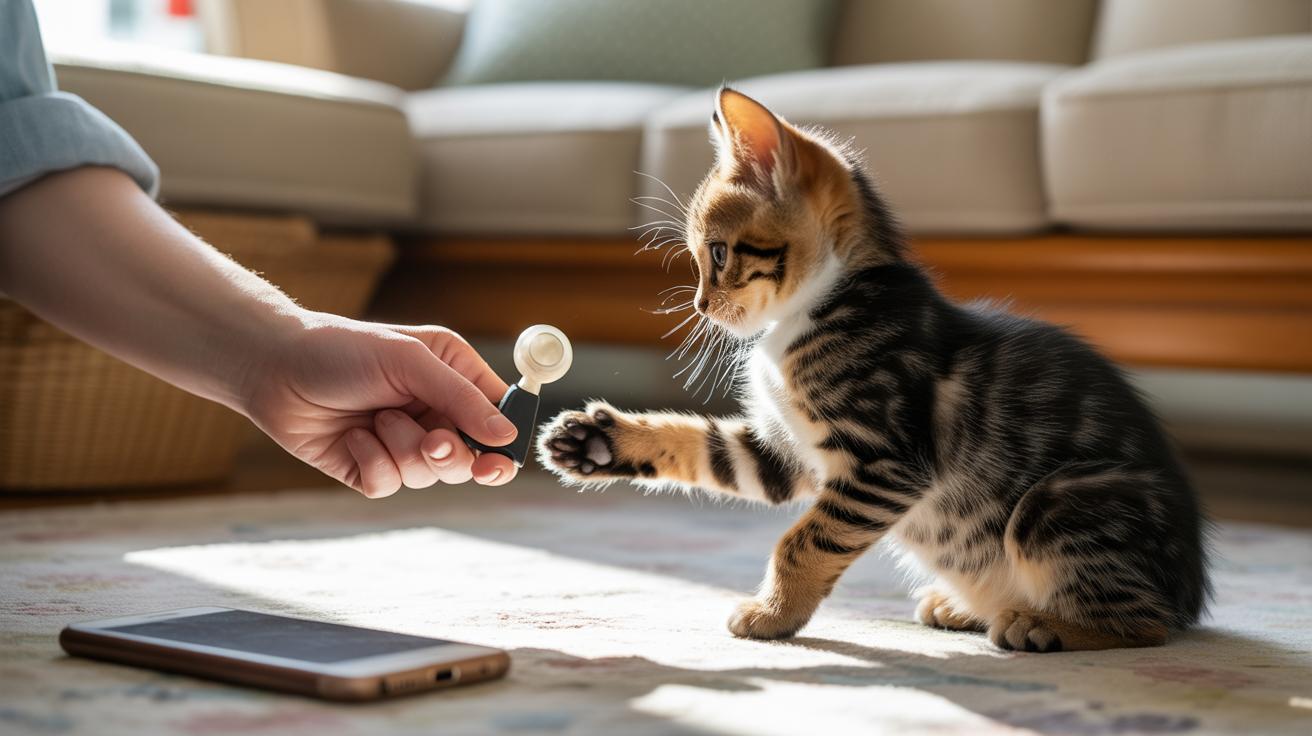
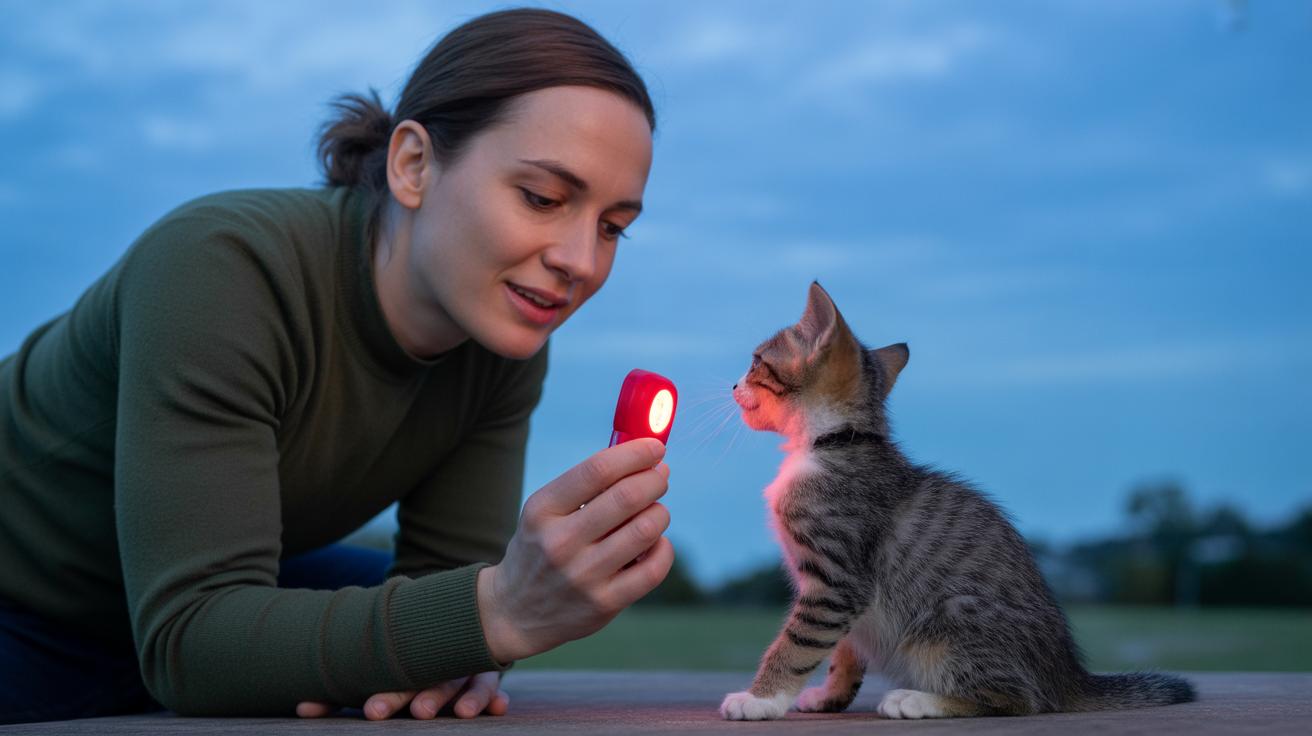
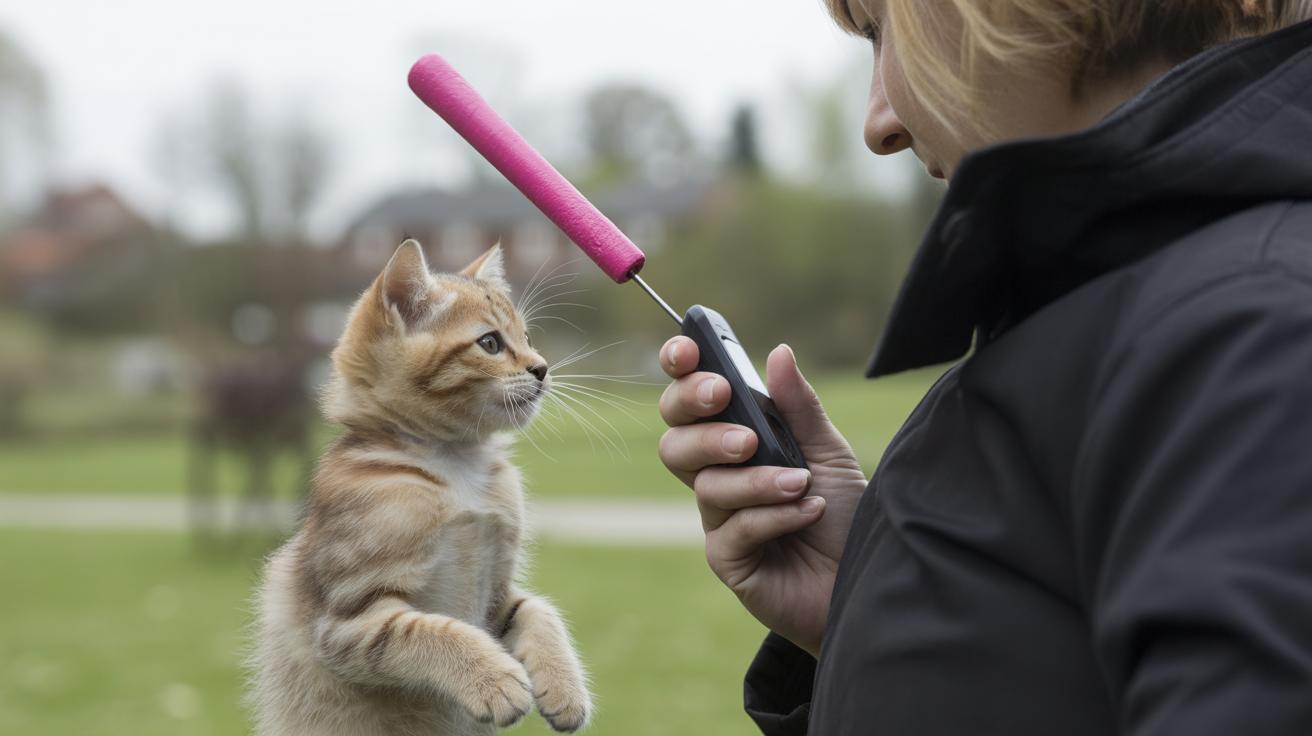
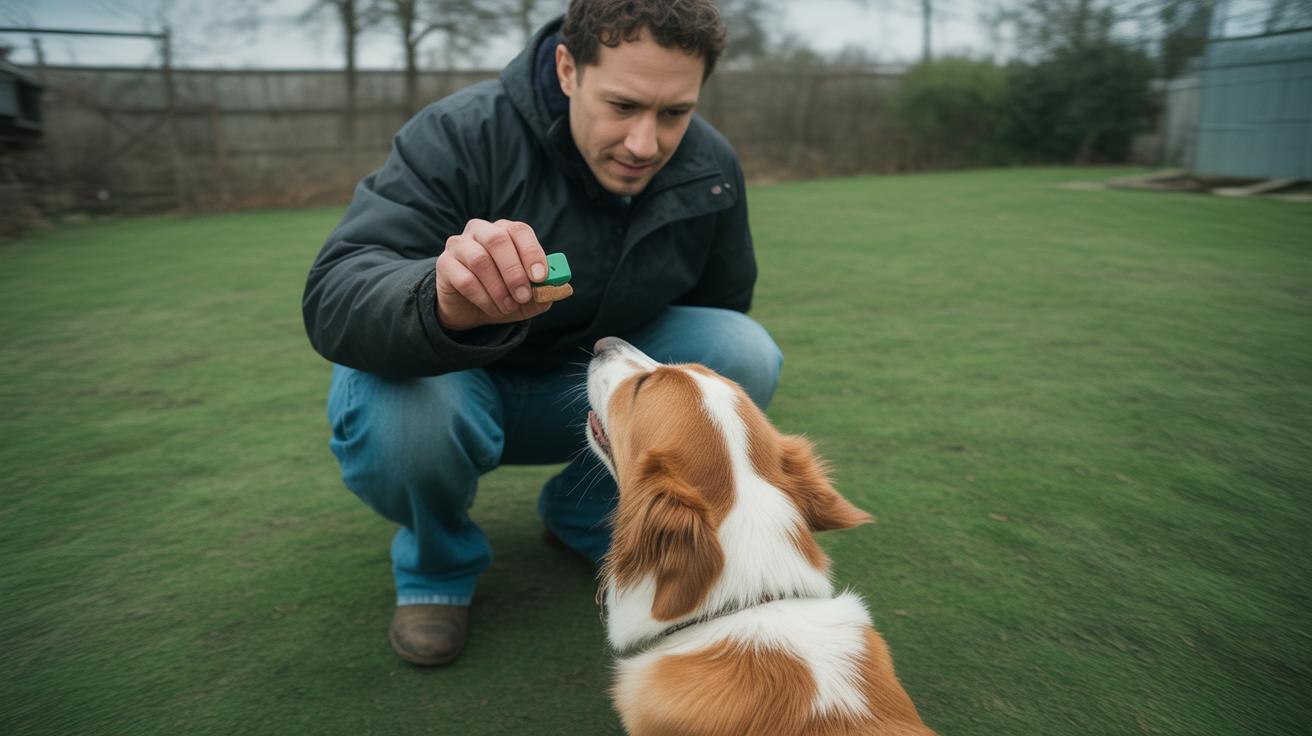
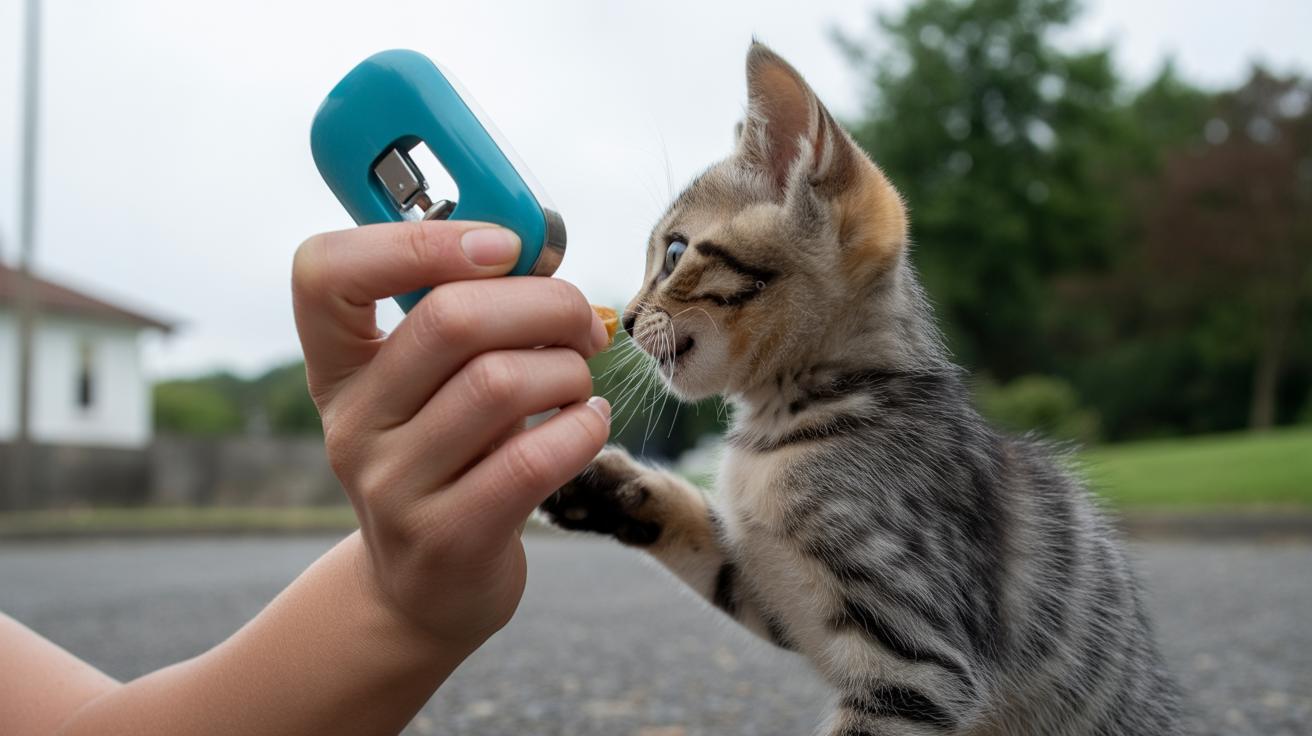
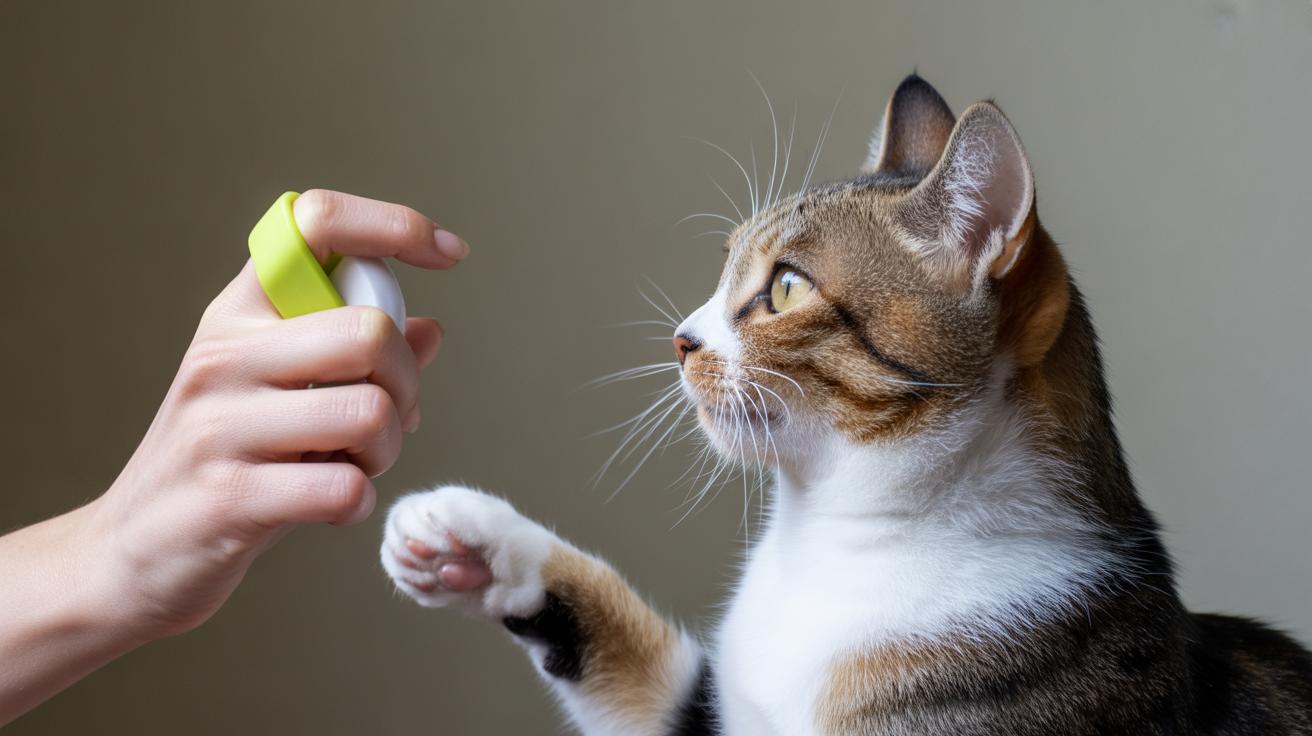
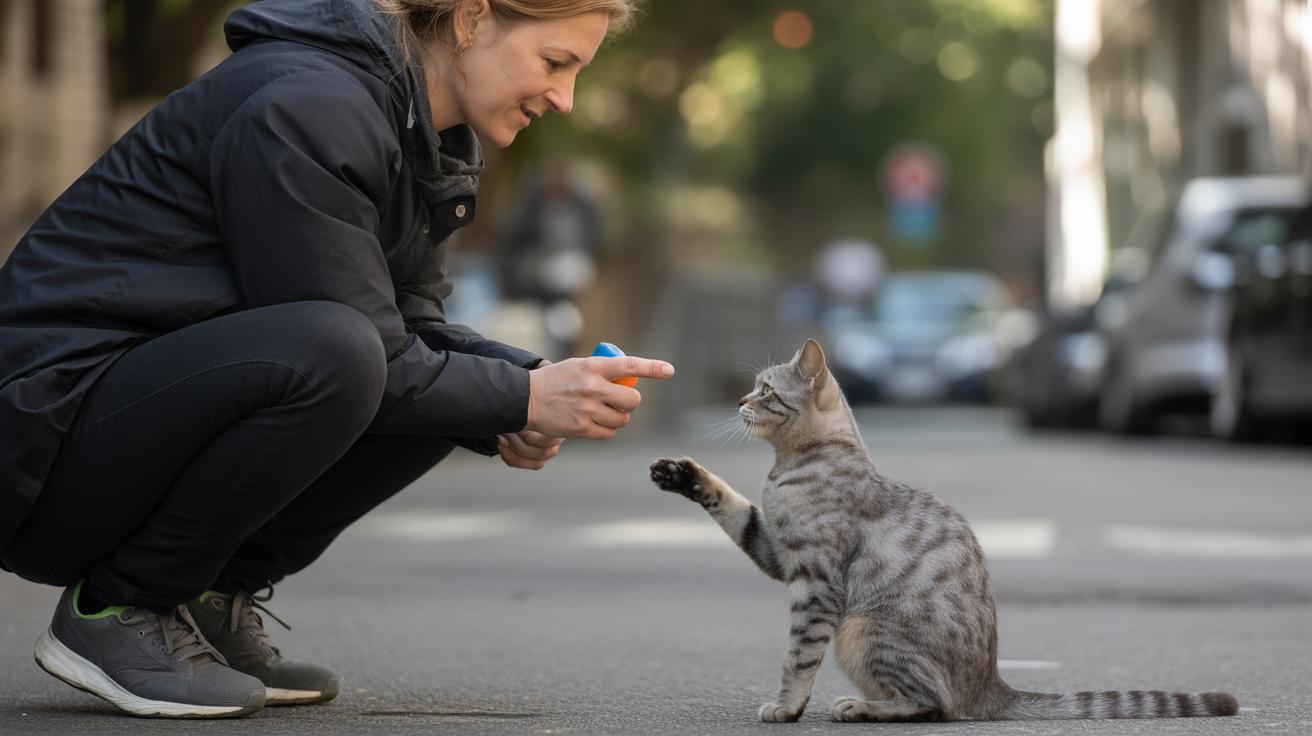
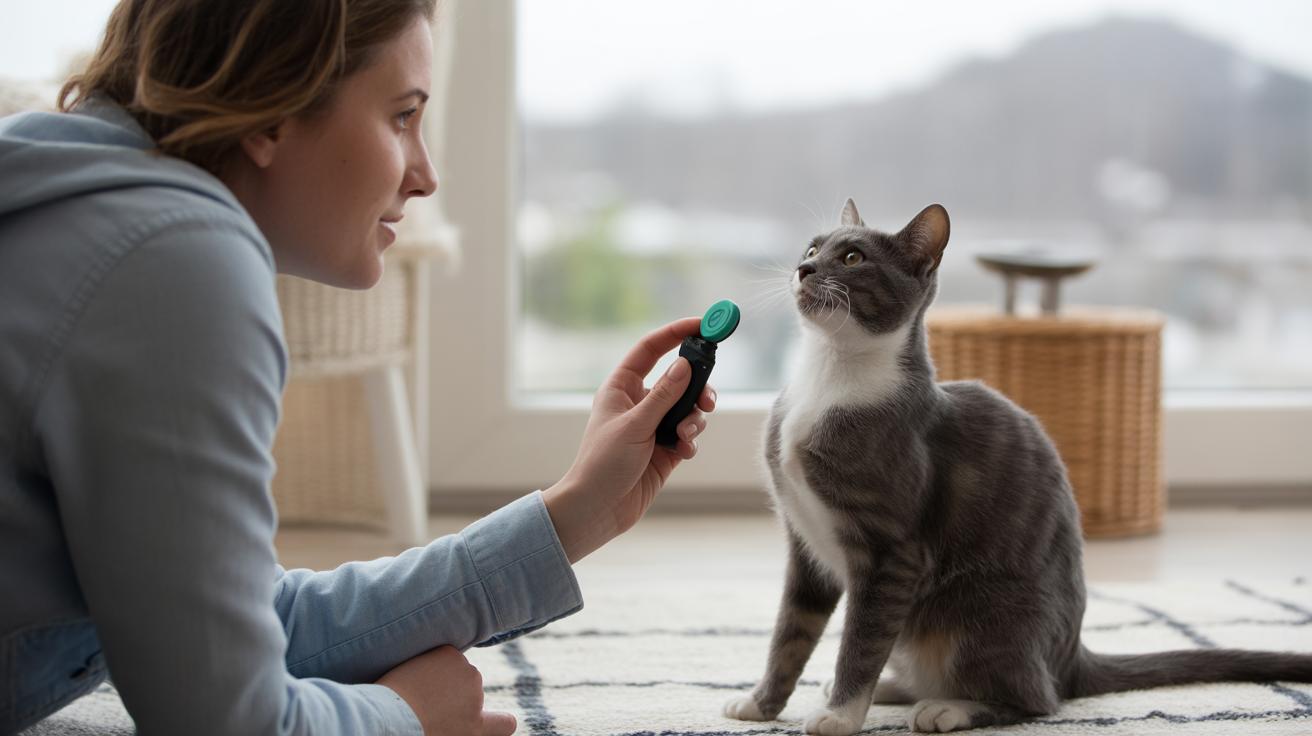
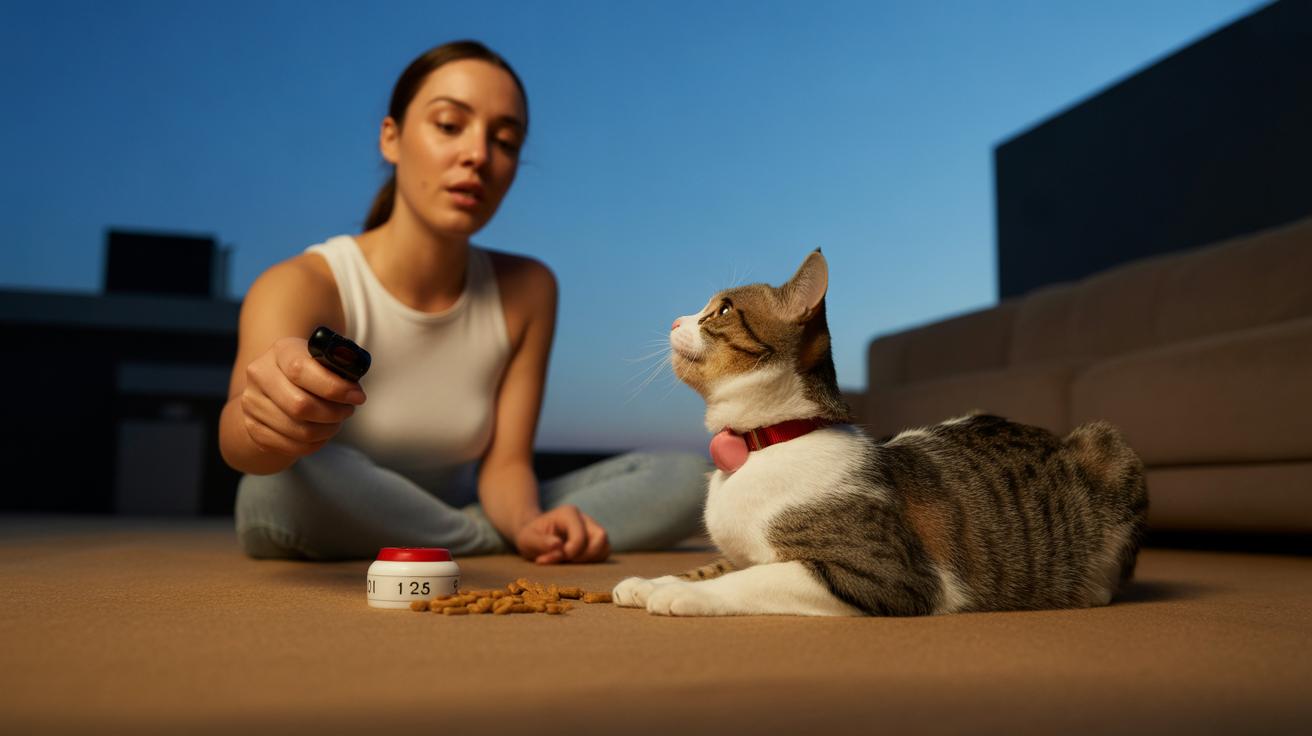
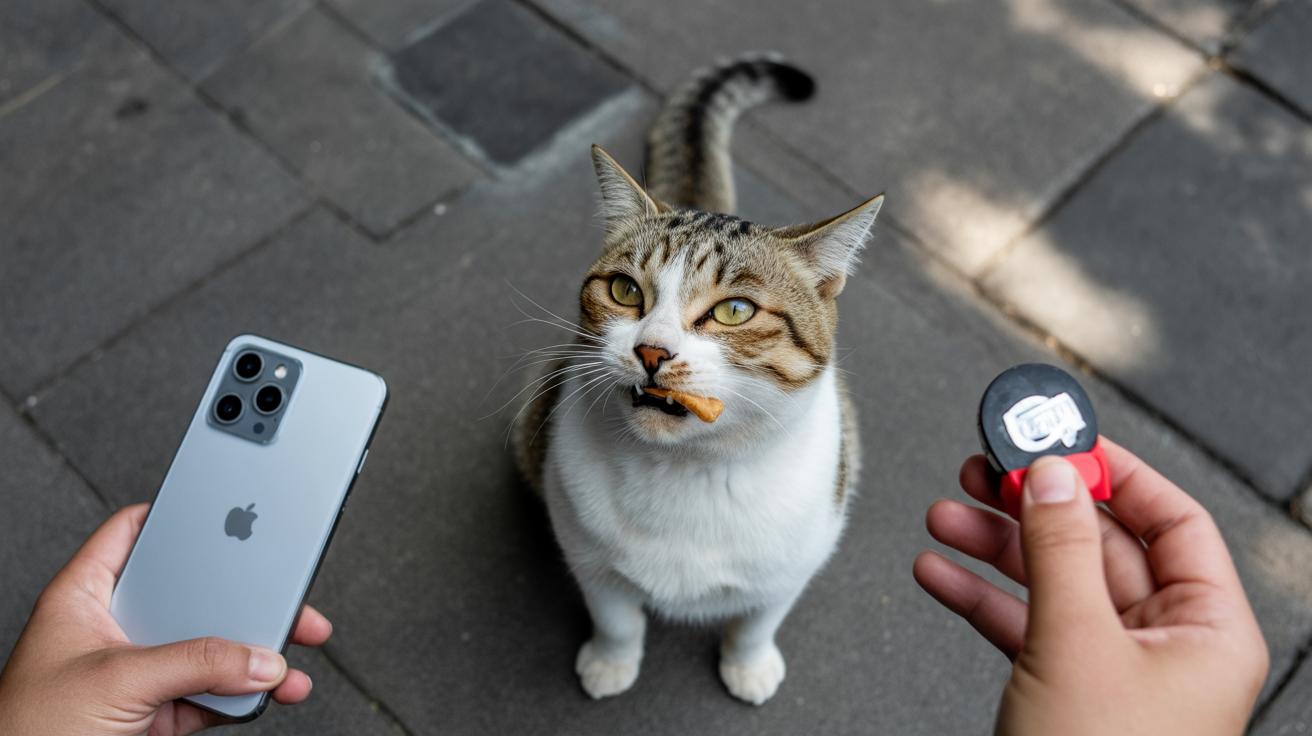
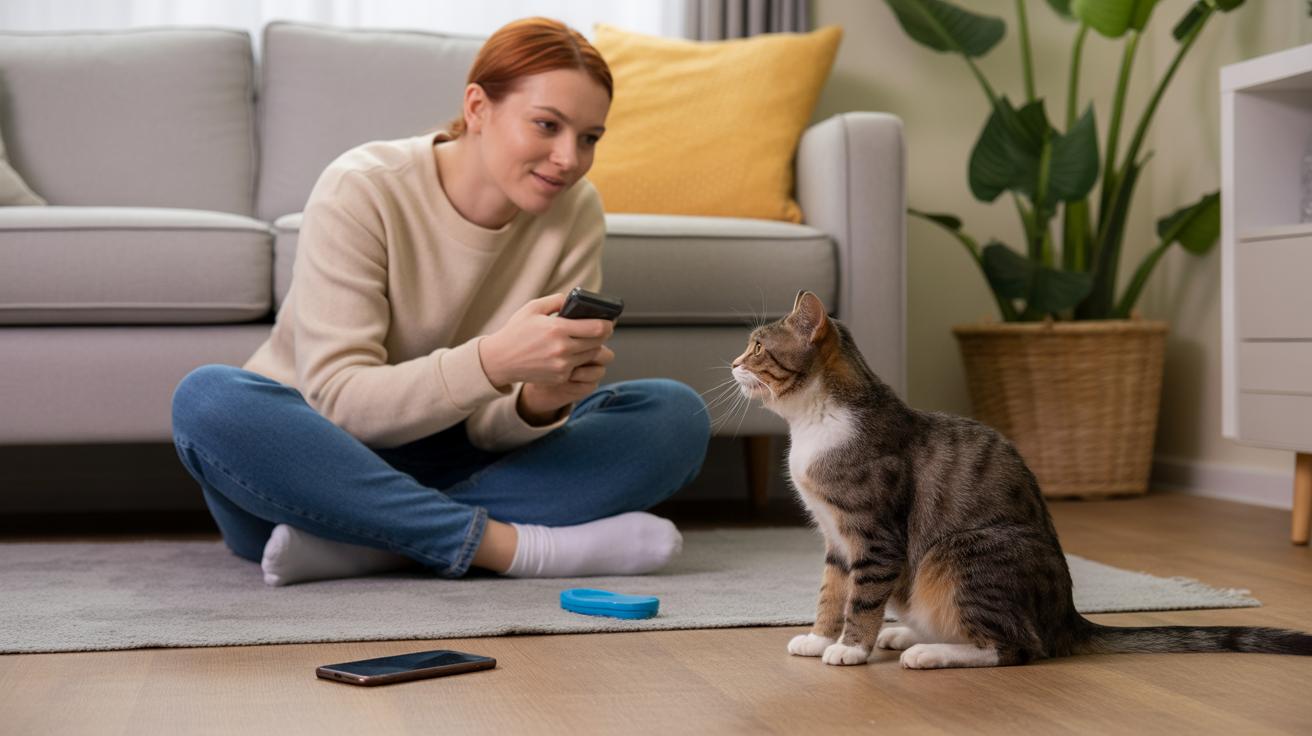
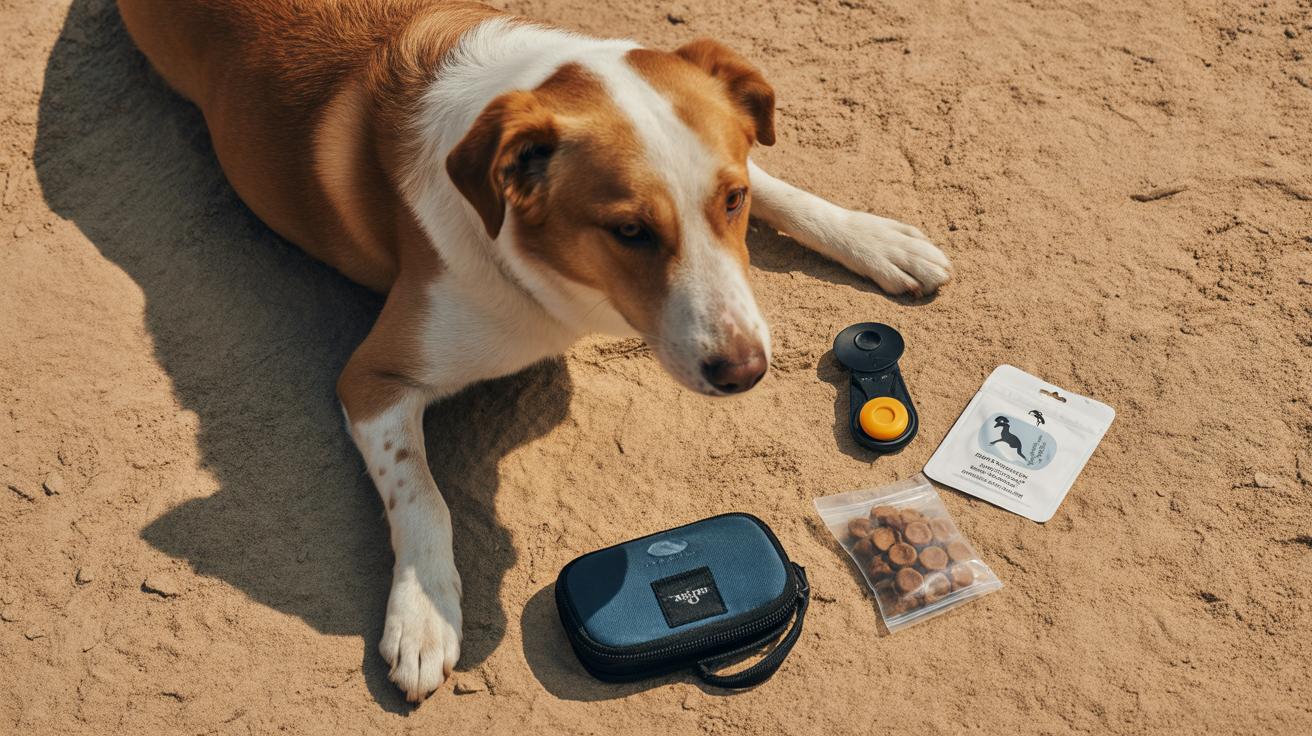
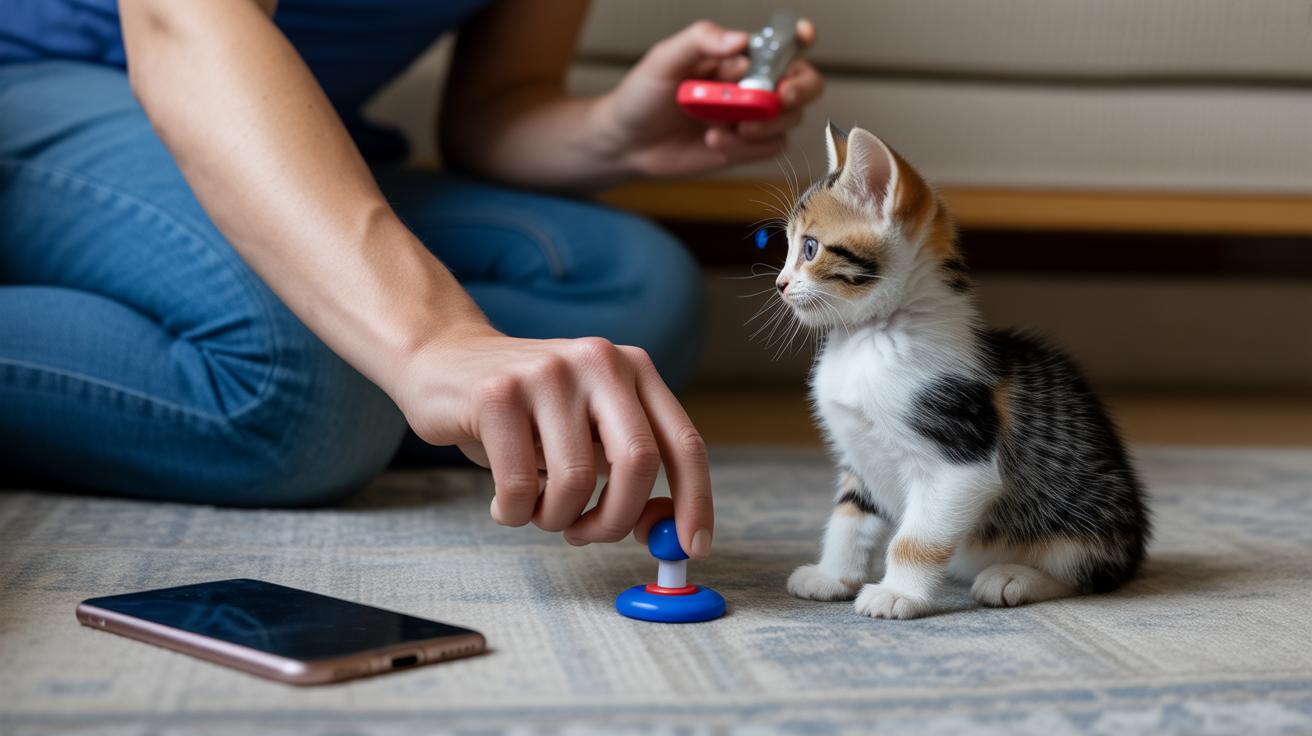
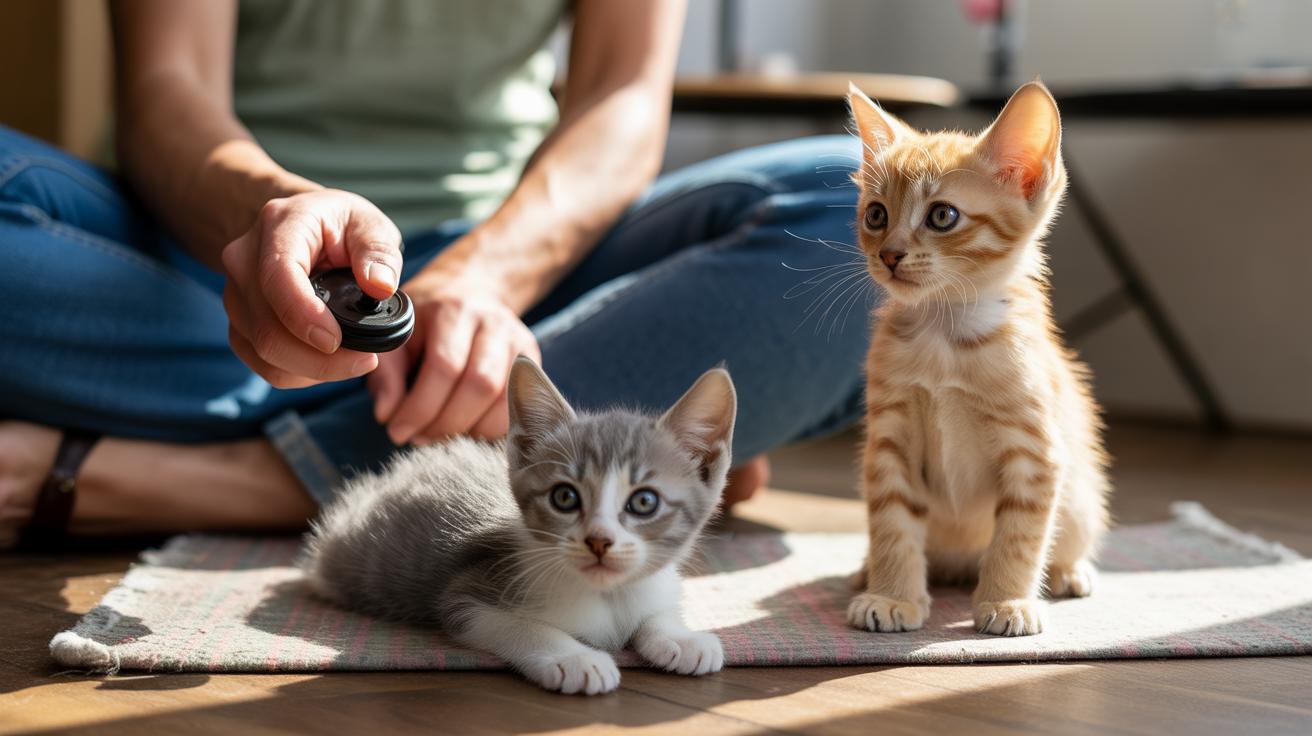
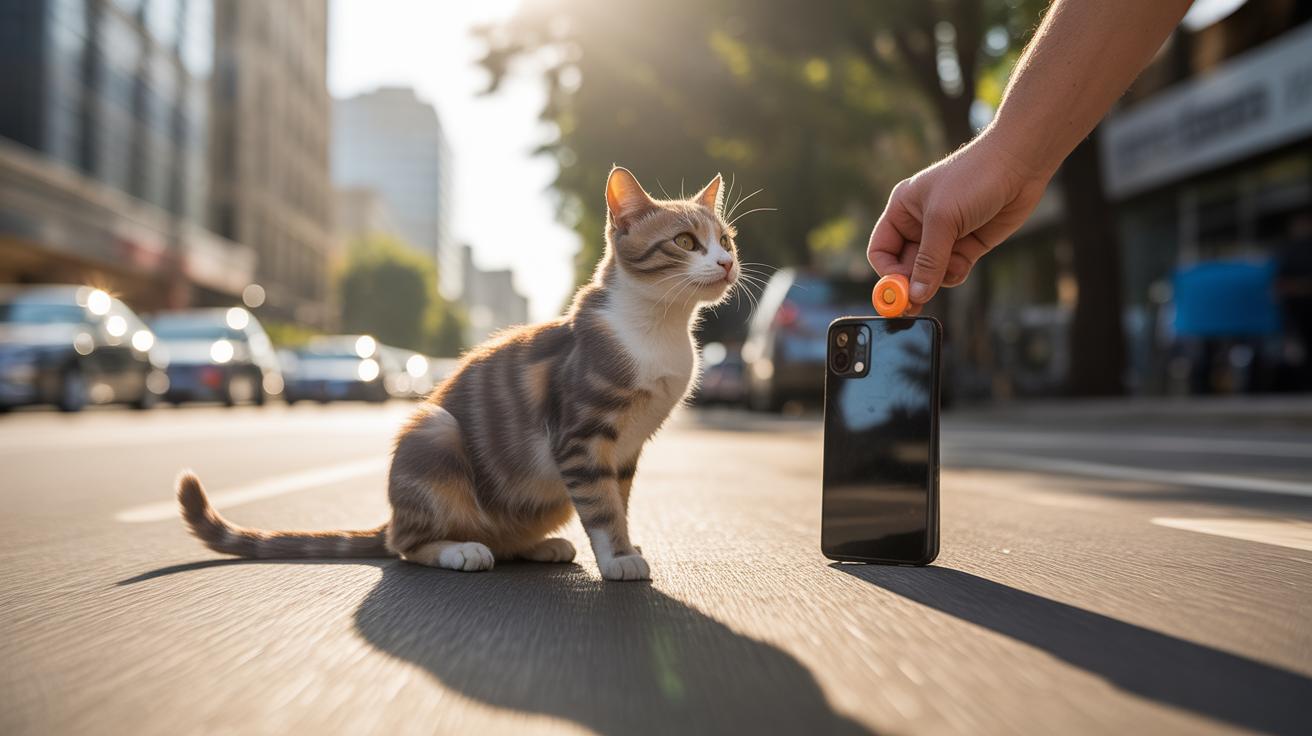
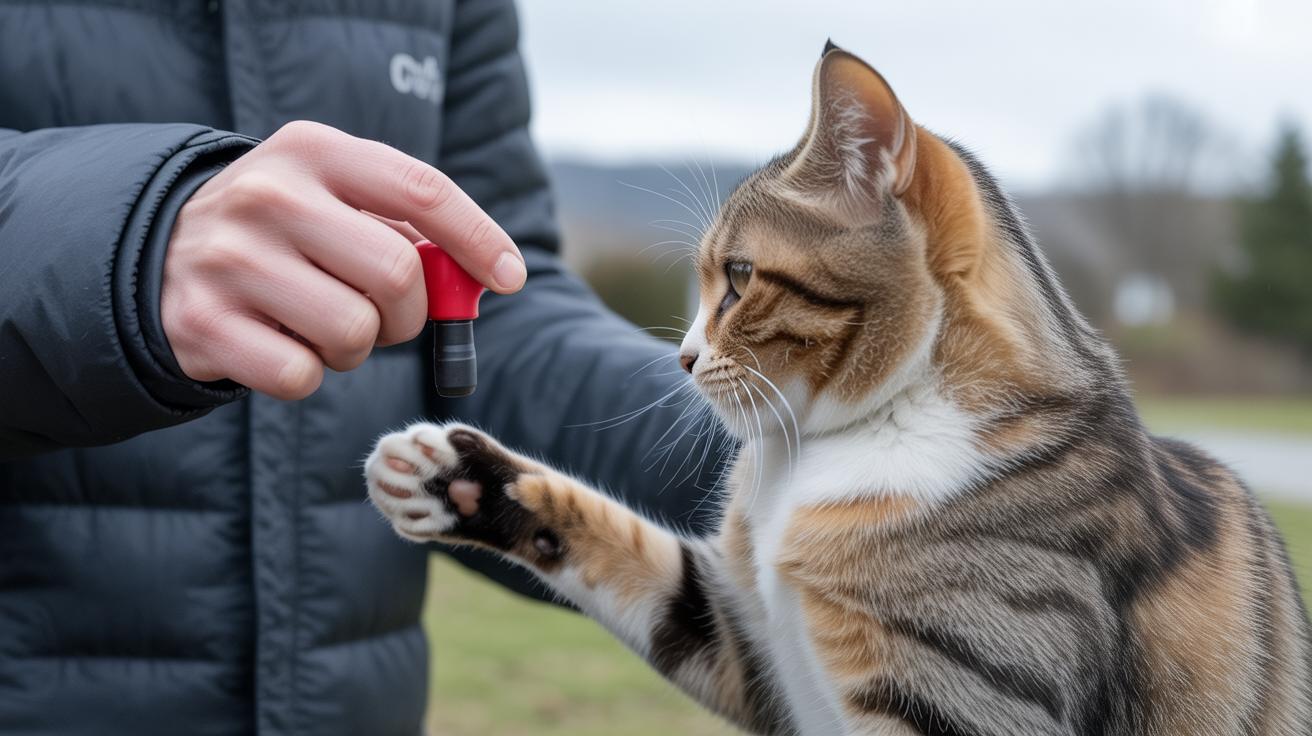
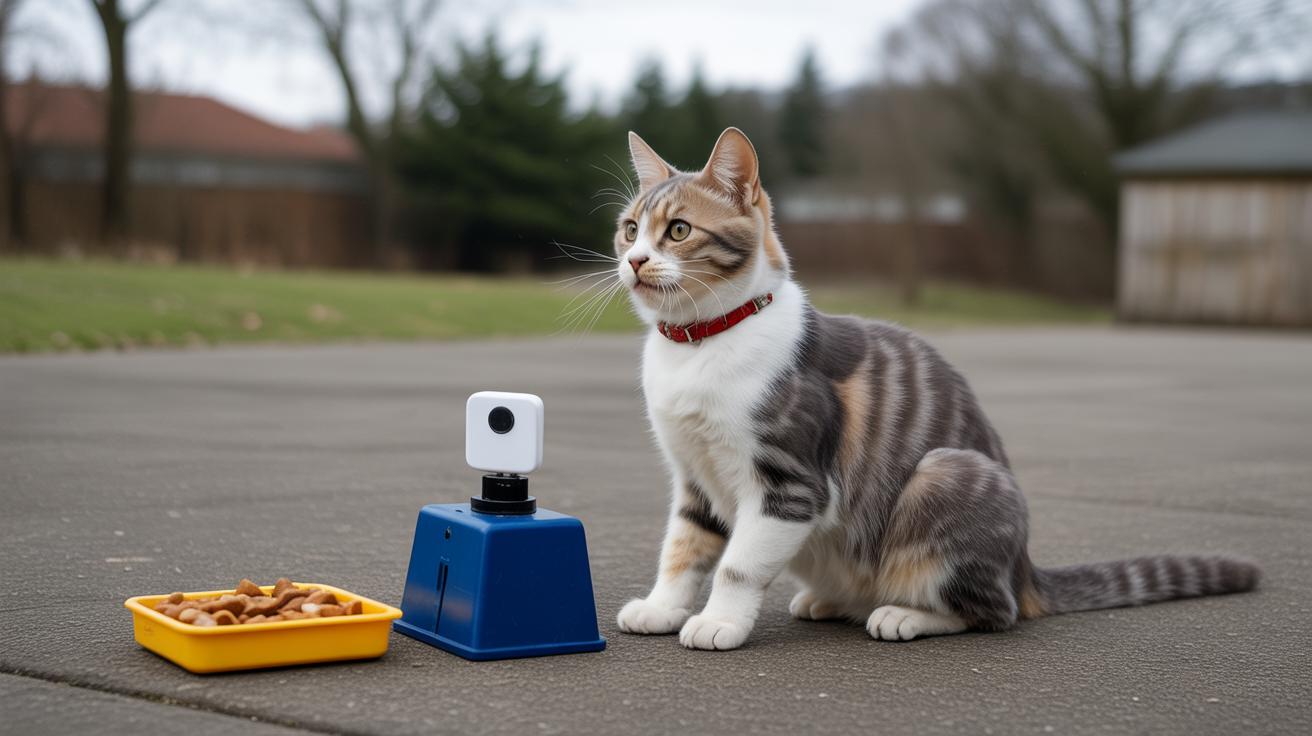
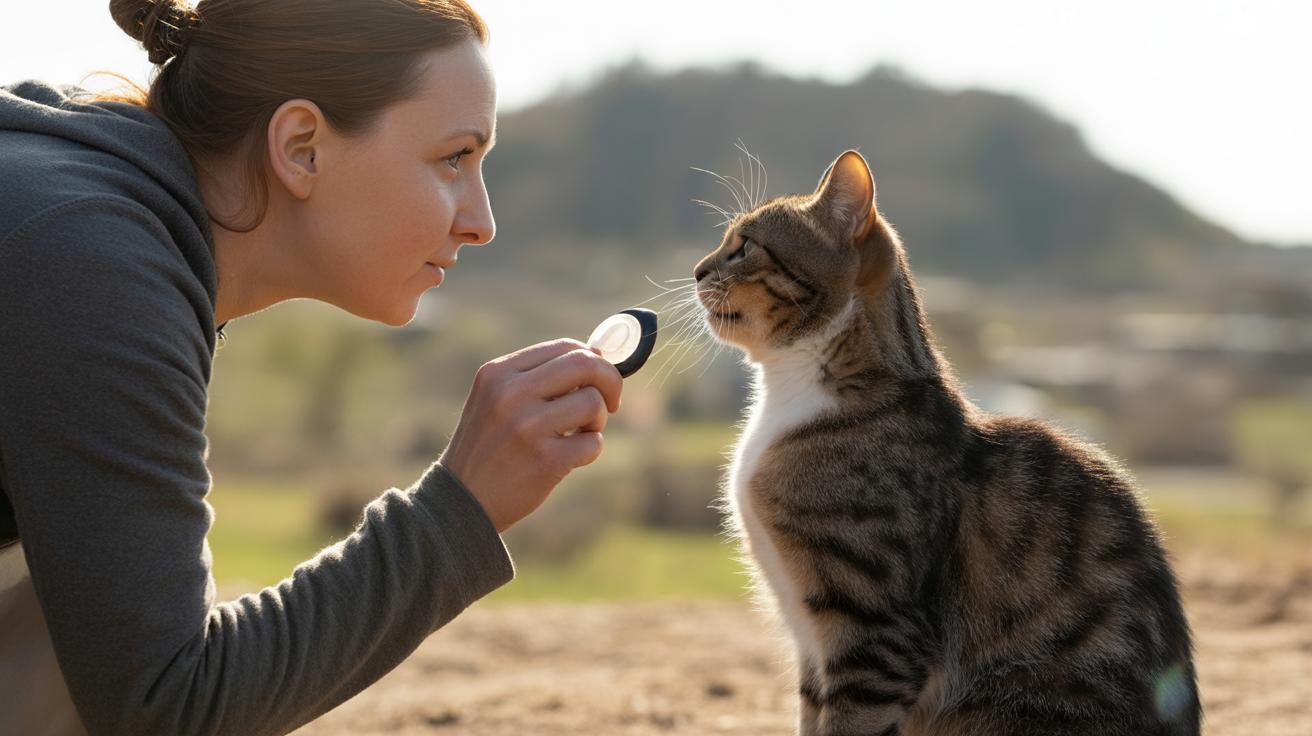
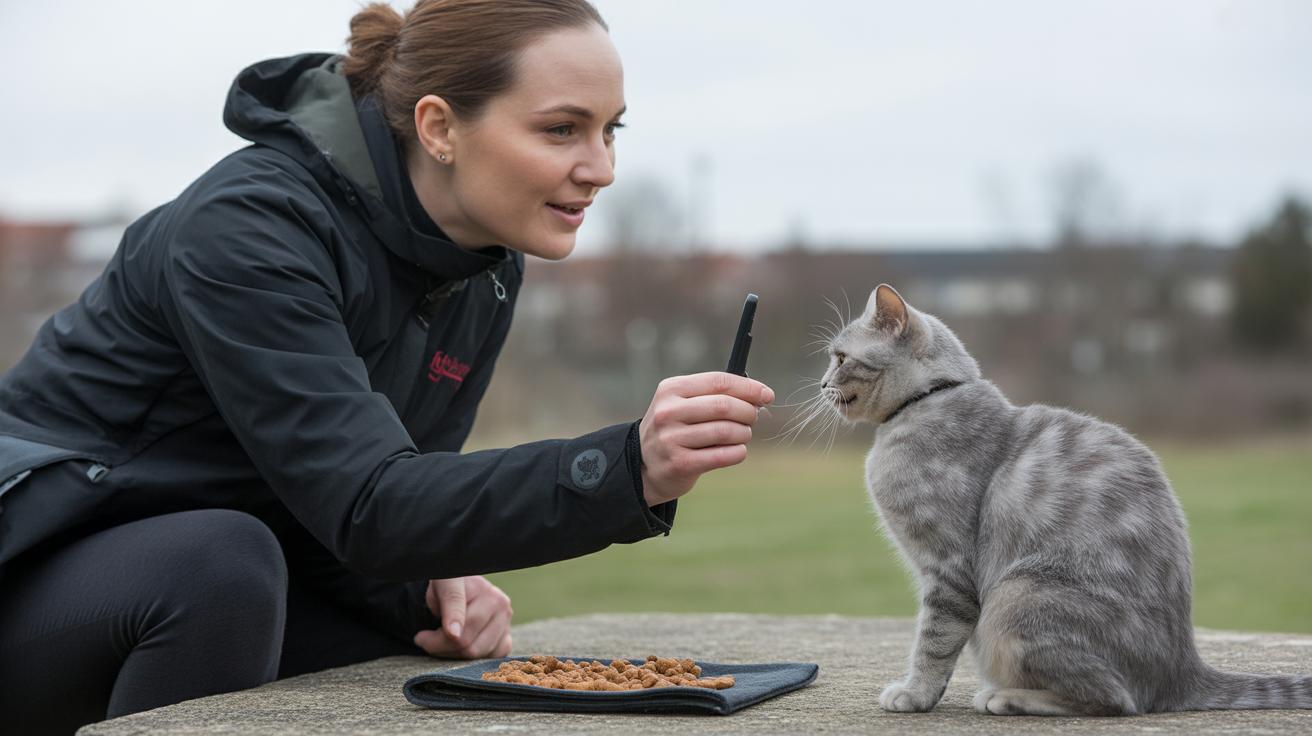
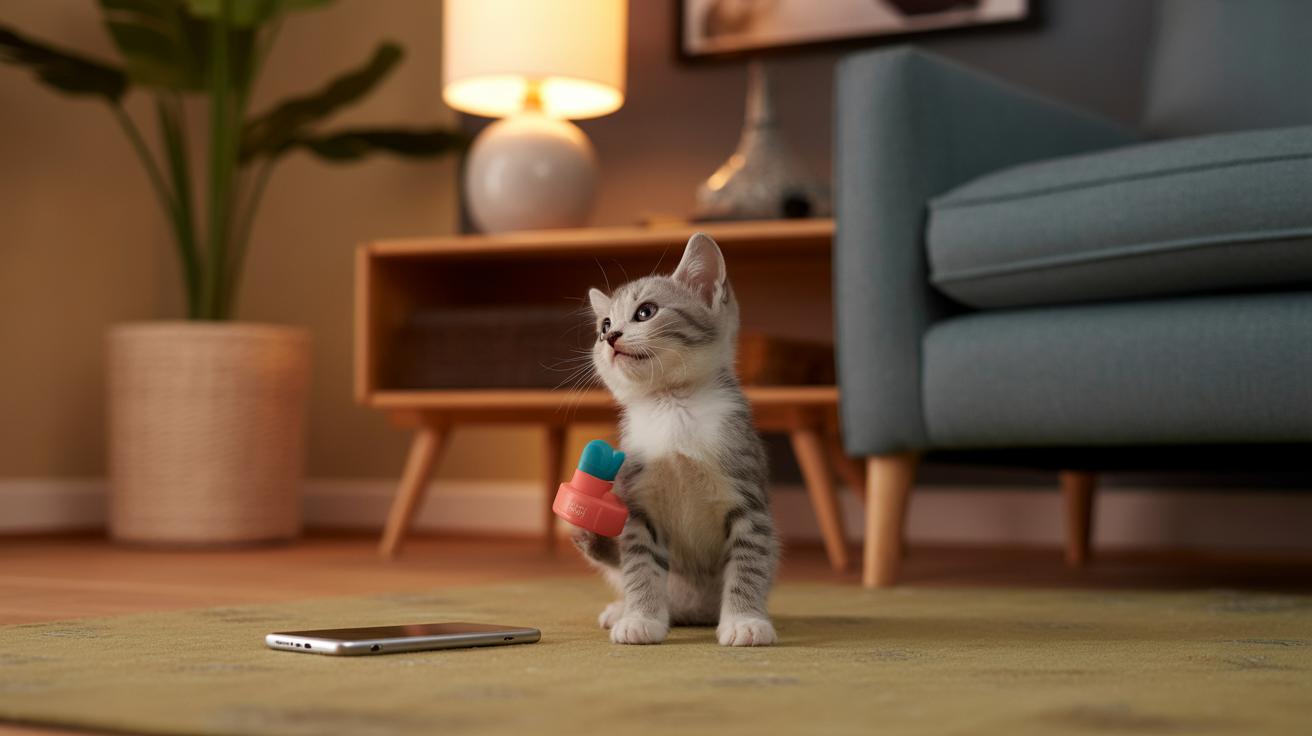
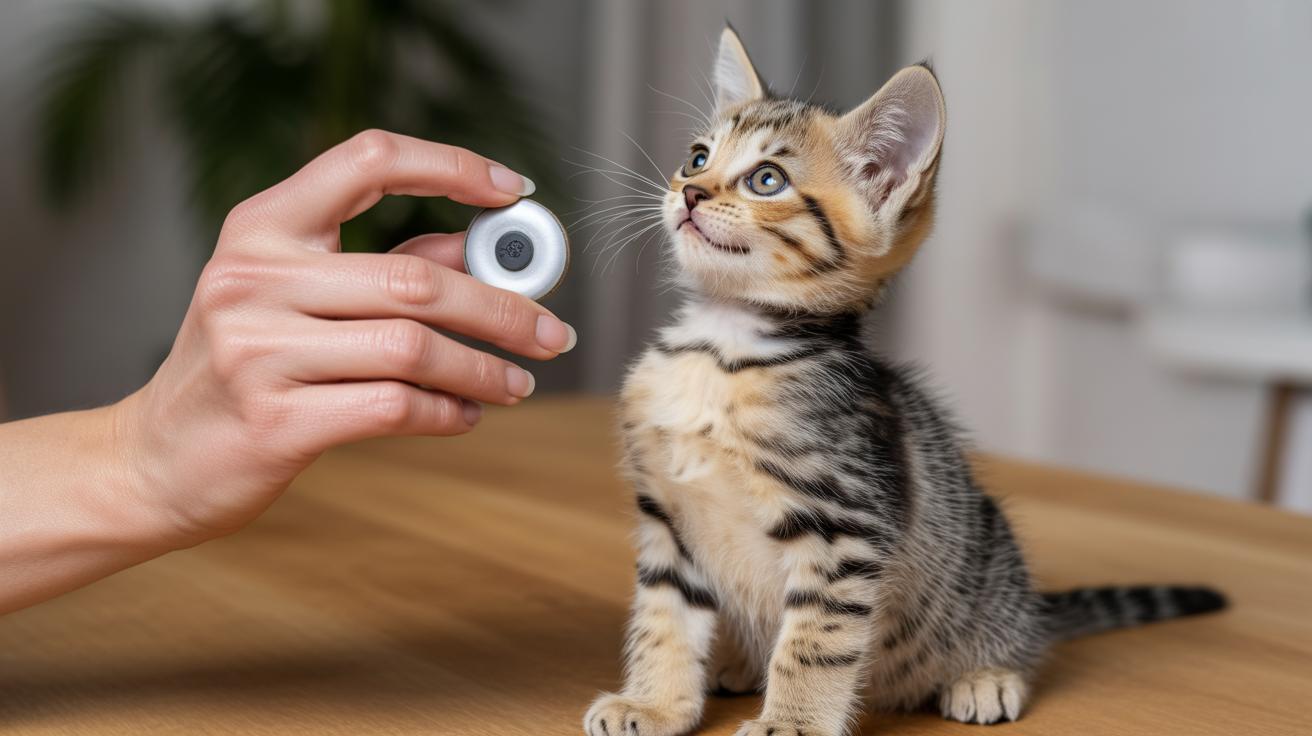
    Start during the 0 to 12-week social window (the early weeks when kittens learn to trust people). A clicker (small handheld device that makes a consistent click) acts like a tiny translator. That steady click marks the exact moment your kitten pounces, sits, or calms so you can reward them right away.

    Keep sessions short and quiet, two to five minutes a few times a day, and use tiny tasty treats. You’ll see more social confidence, gentler play, and vet visits that go much smoother in just a few weeks (vet handling means being picked up and examined).

    It’s fun, low-effort, and worth every paw-print. Claw-tastic results with almost no fuss.

    Kitten Clicker Training: Early Socialization and Play

    - How clicker training speeds socialization and playful behavior.jpg

    Kitten clicker training captures the exact moment your kitten does something you want – a pounce, a gentle paw tap, or a calm sit – with a short click that says "yes" and then a tiny treat rewards that choice. The clicker is a small handheld device that makes a consistent click sound (think of it like a camera snap that freezes the good behavior). The click becomes a marker, meaning the sound tells the kitten exactly what earned the treat.

    Start around 8 weeks, which is inside the 0 to 12 week early socialization window. First, prime the clicker by doing 5 to 10 click to treat pairings so the kitten learns that click means reward. Use very small, tasty treats (chicken, tuna, or soft training bites) so you can reward lots without filling them up. Keep practice short and quiet so the kitten stays curious, not overwhelmed.

    • Start age: 8 weeks (inside the 0 to 12 week early kitten socialization window) – ideal time for clicker training.
    • Prime: 5 to 10 click to treat runs before teaching cues (small, high-value bites).
    • Sessions: 3 minutes, 3 to 4 times per week in a calm space (short, consistent practice).

    You’ll see wins quickly. Expect less play-biting, easier handling, better vet and groomer tolerance, sharper focus during play, and faster social confidence. Your kitten’s whiskers will twitch with excitement as they learn, and many owners notice real changes within a few weeks. Worth every paw-print.

    See Getting started, Play-based exercises (Sample games), Socialization handling, Troubleshooting for step-by-step how-tos.

    Getting started: equipment, priming protocol, and first preparations

    - Getting started equipment, priming protocol, and first preparations.jpg

    Pick a compact clicker (small handheld device that makes a sharp, consistent sound) or a quiet verbal marker (a short, steady spoken cue like "good"). Try the sound a little distance from your kitten so you can see if it makes them jump; if it does, switch to a softer word. Ever watched a kitten flinch at a loud noise? Yeah, we do not want that.

    Priming means teaching your kitten that the click or word predicts a treat. Do 5 to 10 clear click → treat pairings: click, drop a pea-sized treat (tiny bite so they can eat it fast), wait one beat, then repeat. Your goal is for the kitten to look for the treat the moment they hear the marker.

    1. Choose a clicker or verbal marker and test the sound near the kitten to make sure it feels comfortable.
    2. Portion treats into bite-sized pieces so you can reward often without overfeeding. Pea-sized works great.
    3. Prime the marker with 5 to 10 clear click → treat runs so the association is obvious.
    4. Give the treat within about 2 seconds after the click so the connection stays tight.
    5. Once the behavior is reliable, swap some food rewards for a short burst of interactive play (see Shaping & rewards) to keep things fun and active.
    6. If the marker scares your kitten, switch to a softer verbal marker and check Troubleshooting for more tips.

    Keep it short and playful. A few minutes of priming now saves you time later, and your kitten will think you are the best treat machine ever.

    Age windows, session length, and a training schedule for kitten clicker training

    - Age windows, session length, and a training schedule for kitten clicker training.jpg

    Think early. The socialization window (the sensitive period when kittens learn about people, places, and handling) runs about 0-12 weeks, and starting around 8 weeks gives the biggest payoff. Beginning then helps your kitten learn calm handling, polite play, and faster tolerance for vet and grooming visits , nice wins for everyone.

    Keep sessions short and playful. For very young kittens aim for about 3 minutes. Older kittens and adult cats do well at 3-5 minutes. Short bursts keep their whiskers twitching with curiosity, not boredom.

    How often? Do 3-4 short sessions per week as a baseline, and sneak in extra tiny play-focused clicks on busier days if you want faster progress. Start every training block with marker priming (teaching the clicker to mean "yes") and one easy behavior, then repeat that behavior at least five times before you add a verbal cue (the spoken word you pair with the action). This repetition builds reliability.

    If your kitten loses focus, stop while they’re still interested and try again later. Short practice beats marathon drills. It keeps training feeling like play, not work , and that makes it stick.

    A couple quick tips: make each session fun, use tasty treats or favorite toys, and celebrate tiny wins. Ever watched a kitten pounce on a moving dot of light? That joy is the whole point. Worth every paw-print.

    Age range Session length Primary training goals
    0-6 weeks handling-only (short exposures) maternal/social exposure, basic touch tolerance
    6-12 weeks 2-3 minutes basic cues, people handling, first priming runs (marker priming = clicker means yes)
    8-16 weeks 3-5 minutes recall (come when called), sit, target (touch an object on cue), short leash/carrier exposure (brief, supervised introductions)
    16+ weeks 3-5 minutes shaping complex behaviors (building steps toward a bigger action), vet/grooming tolerance

    Kitten Clicker Training: Early Socialization and Play

    - Play-based exercises and sample clicker games for kitten socialization.jpg

    Short, burst-style play fits a kitten's hunting rhythm. It teaches impulse control by rewarding the right choices, and it builds confidence fast. Pair those bursts with a click or a soft word and you get clear, repeatable feedback. (A clicker is a small handheld marker that makes a distinct sound.)

    Safety first: pay attention for stress signs and stop if your kitten yawns, licks lips, or walks away. See Troubleshooting for more cues and when to pause.

    For exact marker timing (the precise moment you mark a behavior) and which rewards to use, follow Shaping & rewards. For how long to practice each day, check Age windows.

    Sample Game: Click-and-Recall

    Set up across the room with a tasty treat in hand. Call the kitten's name, and the instant they turn or start walking toward you, click and give the treat. Repeat, slowly increasing the distance until they come reliably. Success looks like an enthusiastic approach and a little sit or pause for the reward. Once it's steady, add a short verbal cue for recall. See Shaping & rewards for exact click-to-treat timing.

    Sample Game: Target-to-Hand and Bite Redirection

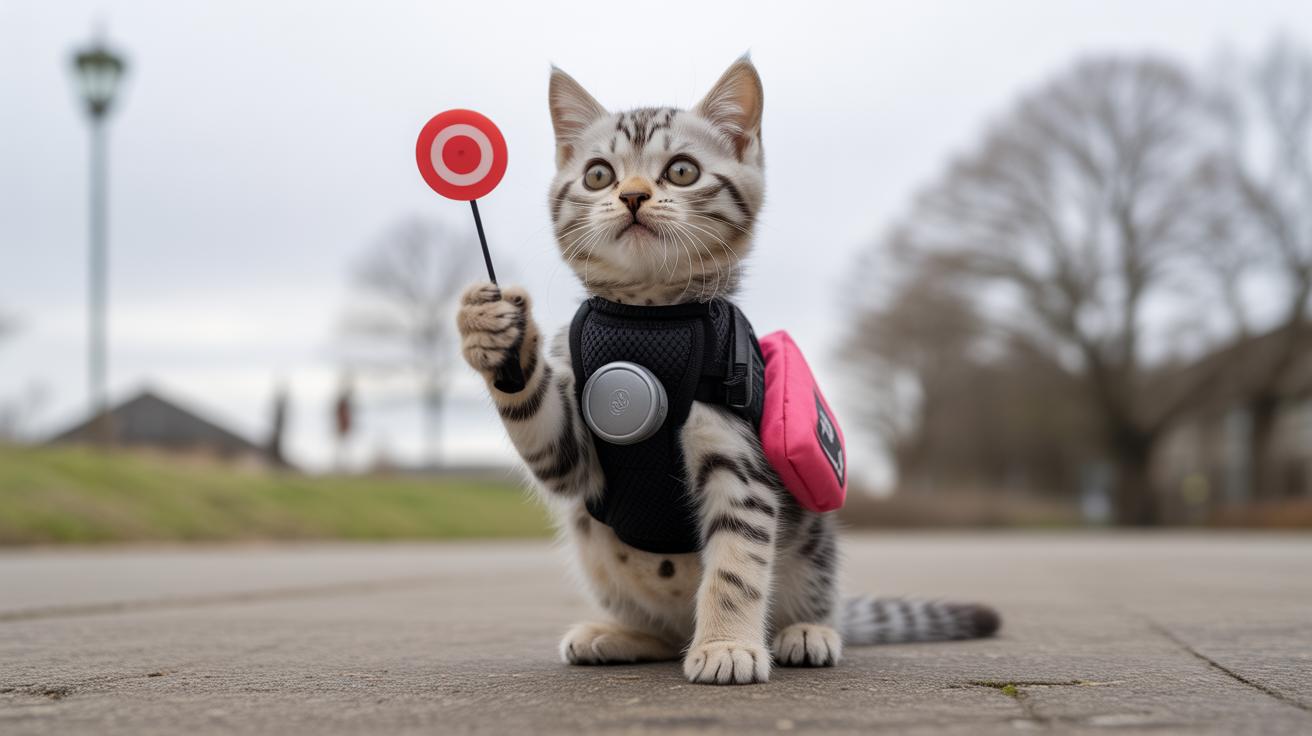
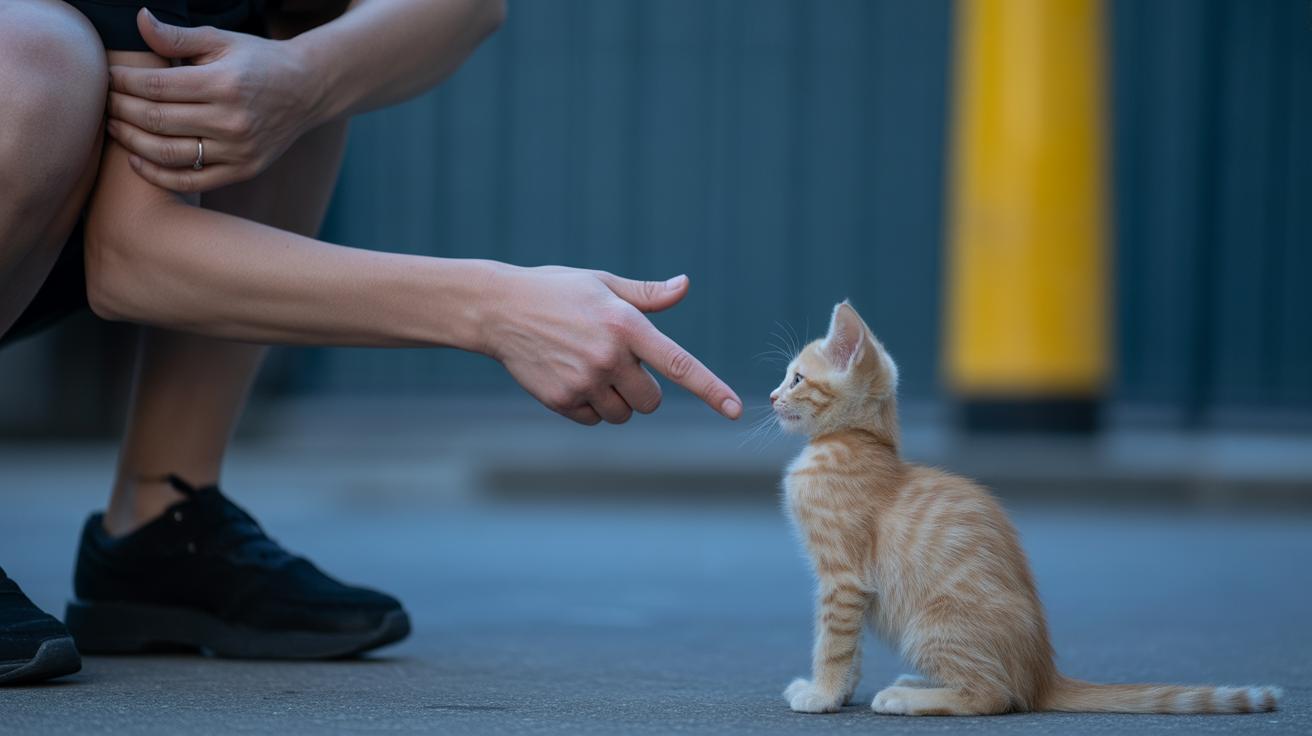
    Teach nose or paw targeting by offering a finger or a small target stick (a short rod used to guide touch). Click the moment they touch it, then reward. Move the target to guide them where you want them to go. If play-biting starts, swap the target for an approved toy so they bite that instead, click the toy-touch, and reward the calmer choice. After several consistent successes, add a short cue word. Consult Troubleshooting if biting creeps back.

    Quick games to rotate during short sessions – use tiny tasty treats or short play bursts as rewards:

    • Click-and-Recall: call the name, click as they approach, reward, and step back a few feet.
    • Target-to-Hand: present the target, click on touch, reward, and move the target toward the spot you want.
    • Sit via Lure: hold a treat above the nose then move it back toward the shoulders; click when the bottom hits the floor; reward.
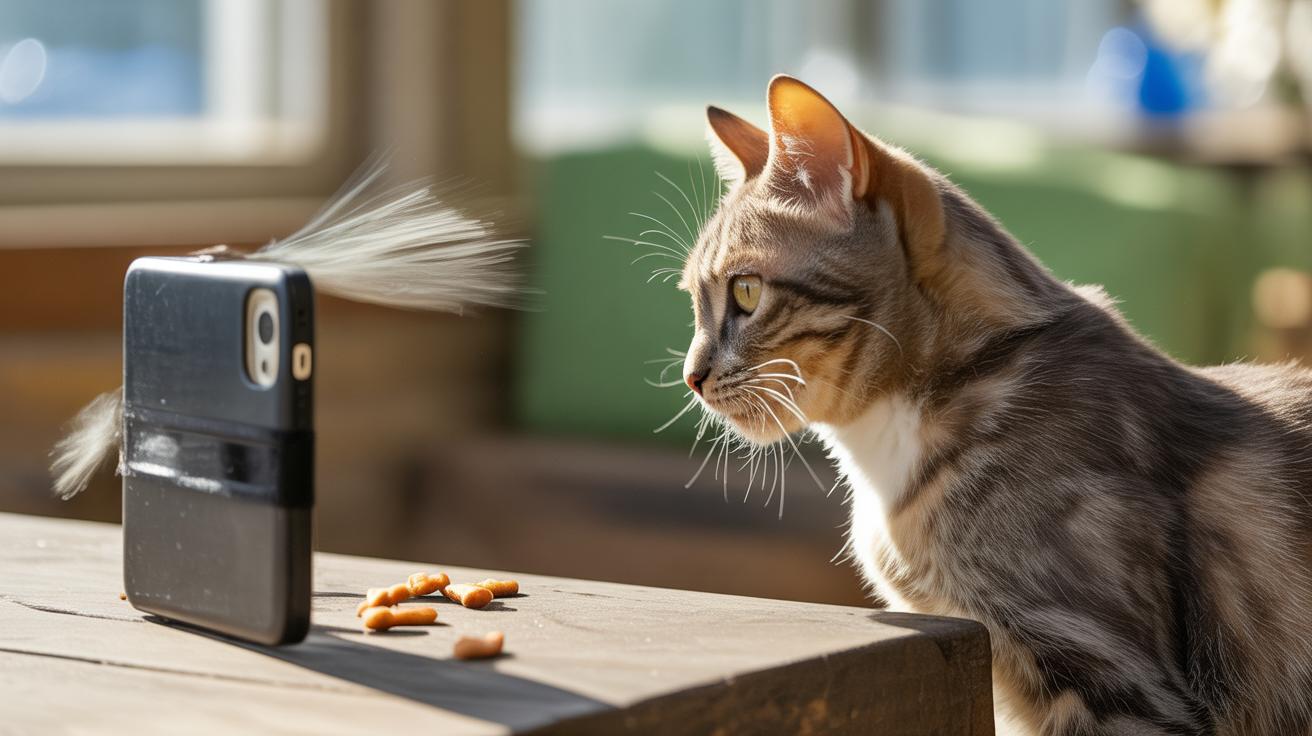
    • Wand Chase (supervised): wiggle a teaser wand (a stick with a toy on the end) at different speeds; click a clean pounce or a controlled bite on the toy; reward a calm play pause. Product note: for long-term play, use durable parts or DIY replacement attachments for teaser wands.
    • Forage Puzzle Steps: hide tiny treats in a forage puzzle (a toy that hides treats); click when they solve a compartment, then reward with a short play burst.
    • Bite Redirection Drill: invite gentle nuzzle-play with a soft toy, swap to the approved toy at the first nip, click toy contact, and reward calm play.

    Play success looks like steady approaches to targets, calm exits after play, and fewer mouthy grabs during handling. See Shaping & rewards for luring limits and how to rotate rewards. Worth every paw-print.

    Shaping & rewards: marker timing, luring limits, reward hierarchy, and fading

    - Shaping  rewards marker timing, luring limits, reward hierarchy, and fading.jpg

    Marker timing, plain and simple: click the exact moment the kitten does the tiny bit you want. Think of the click like a camera snapping when their paw taps a target. The marker window is basically instantaneous (that split second you press the clicker), and the treat or play reward needs to follow within about 2 to 3 seconds so the kitten links the click to the payoff. Wait too long and the connection blurs. Click too late and you end up praising the wrong move. Practice clicking in a quiet spot until it feels natural , trust me, your cat will notice.

    Shaping means rewarding little steps toward a bigger behavior instead of holding out for perfect performance (shaping = rewarding closer and closer approximations). Luring means using a visible treat to guide movement (luring = showing a treat to make the cat move). Lures are great to get started, but don’t let the treat’s motion become the cue. Do no more than three straight lure attempts, then switch to an empty-hand or empty-target cue so the kitten learns the action is the goal, not the treat’s movement. It’s like teaching them a trick, not how to follow food.

    Plan a clear reward hierarchy and a sensible fade. Use high-value treats to launch new cues; switch to medium-value treats for maintenance so the work stays interesting. Rotate food rewards and fold short play bursts into the routine to save calories and keep things fun. Start with continuous rewards while you’re learning, then move to variable reinforcement once you reach about 80% reliability so the behavior holds up around distractions. Tip: trade a quick toy chase for every third or fourth food reward during maintenance so your kitten starts loving the game as much as the kibble.

    Worth every paw-print.

    1. Click at the precise instant of the correct behavior (marker window = instantaneous).
    2. Deliver the reward within about 2–3 seconds of the click.
    3. Limit lures to a maximum of 3 consecutive attempts before removing the lure.
    4. Move from continuous rewards to variable reinforcement once reliability reaches about 80%.

    Kitten Clicker Training: Early Socialization and Play

    - Socialization handling grooming, nail trims, carriers, and vet prep using clicker play.jpg

    Start with tiny, friendly touches to paws, ears, tail, and mouth. Keep sessions short and predictable every day so the kitten learns that handling means treats and calm hands. Use the marker you primed (see Getting started) , the quick sound that tells the kitten exactly when it did the right thing , and follow each click with a tasty bite or a tiny play burst so the moment stays joyful, not scary. Short, regular handling practice builds acceptance for grooming, nail trims, and basic vet handling , and you’ll get to see those whiskers twitch when something fun happens.

    Introduce grooming tools slowly. Let the kitten sniff a brush or a nail trimmer (clippers) at low intensity, click and reward calm inspection, then touch with the tool for one second and reward again. Add one extra second over several days so contact grows in tiny steps. Keep touches brief and cheerful , think pocket-sized rehearsals, not grooming marathons. For nail trims, lift one paw, click the calm hold, then reward; a few successful lifts per session beat forcing a full trim every time.

    Clicker work is great for vet prep and meeting other pets because it makes scary stuff predictable and rewarding. For a resident dog, use a gate or a leashed dog so the kitten can approach from a safe height, click and treat calm curiosity at a distance, then slowly shorten that gap over sessions. Happy visits to the clinic , treats, no procedures , teach the cat to link the vet with good things. Click and reward quiet behavior during handling so the clinic becomes less stressful and more like, well, a place that gives snacks.

    Carrier training protocol

    Leave the carrier out where the kitten can explore and make it part of the furniture. Bait it with food or a favorite toy and click/treat calm entries (see Shaping & rewards for marker timing). Next, close the door for a moment and reward calmness. Practice short driveway rides, click/treat after each step, then lengthen the trips as the kitten stays relaxed. Worth every paw-print.

    Troubleshooting common problems and stress signals in kitten clicker training

    - Troubleshooting common problems and stress signals in kitten clicker training.jpg

    When training stalls, a quick troubleshooting mindset saves time and keeps your kitten curious. Look first for tiny stress cues, then pick one simple fix , shorter sessions, a softer marker, or swapping rewards , so training stays fun, not scary. Think of it like tuning a radio: small tweaks make the music comfy again.

    If the kitten ignores the marker (the short sound or word that tells them they did something right), re-prime it by doing 5–10 clear click-to-treat runs with a higher-value bite (re-prime means re-establish the sound-food link). If loud noises frighten them, switch to a soft verbal marker and pair it with treats until the kitten perks up at the cue. Ever watched a kitty freeze mid-pounce? That freeze or avoiding you is a clear ask to slow down.

    Overstimulation often shows up as sudden nips, lunges, or frantic play. For play-biting, stop the drill and redirect to a toy right away, then click when the kitten bites the toy so they learn what’s okay to sink those teeth into. Keep stressful sessions under three minutes. Break bigger goals into tiny steps using shaping (rewarding really small, steady improvements). Limit luring (using food to guide movement) to three tries so the action, not the food, becomes the cue.

    Distraction and fear are fixable, promise. If the room is busy, move to a quieter spot and re-prime the marker with another 5–10 runs. If the click makes them wide-eyed or flinch, switch to a verbal marker and re-prime (see Getting started for priming details). For ideas on changing rewards and fading treats into play, check Shaping & rewards for step-by-step ways to keep progress steady.

    Recognizing stress signals helps you pick the right fix fast. Use this short list to spot stress and respond right away so training stays a positive game. Worth every paw-print.

    • Yawning – Pause. Shorten the session and try a gentler task.
    • Lip licking – Back off and reintroduce low-effort steps so confidence returns.
    • Scratching or walking away – Stop for now. Try again later in a calmer moment.
    • Flattened ears or tucked tail – Give space and end the session; let them calm down.
    • Wide eyes or flinching – Move to a quieter area and re-prime the marker with 5–10 runs.
    • Overstimulation or play-biting – Redirect to a toy and click the toy contact so biting gets re-routed.
    • Fear of the click sound – Switch to a verbal marker and re-prime with tasty treats (5–10 clear runs).

    Small, simple fixes work best. Short sessions, clearer signals, and the right treat can turn a stalled practice into a purr-worthy playtime.

    Tracking progress, milestones, and resources for ongoing kitten clicker training

    - Tracking progress, milestones, and resources for ongoing kitten clicker training.jpg

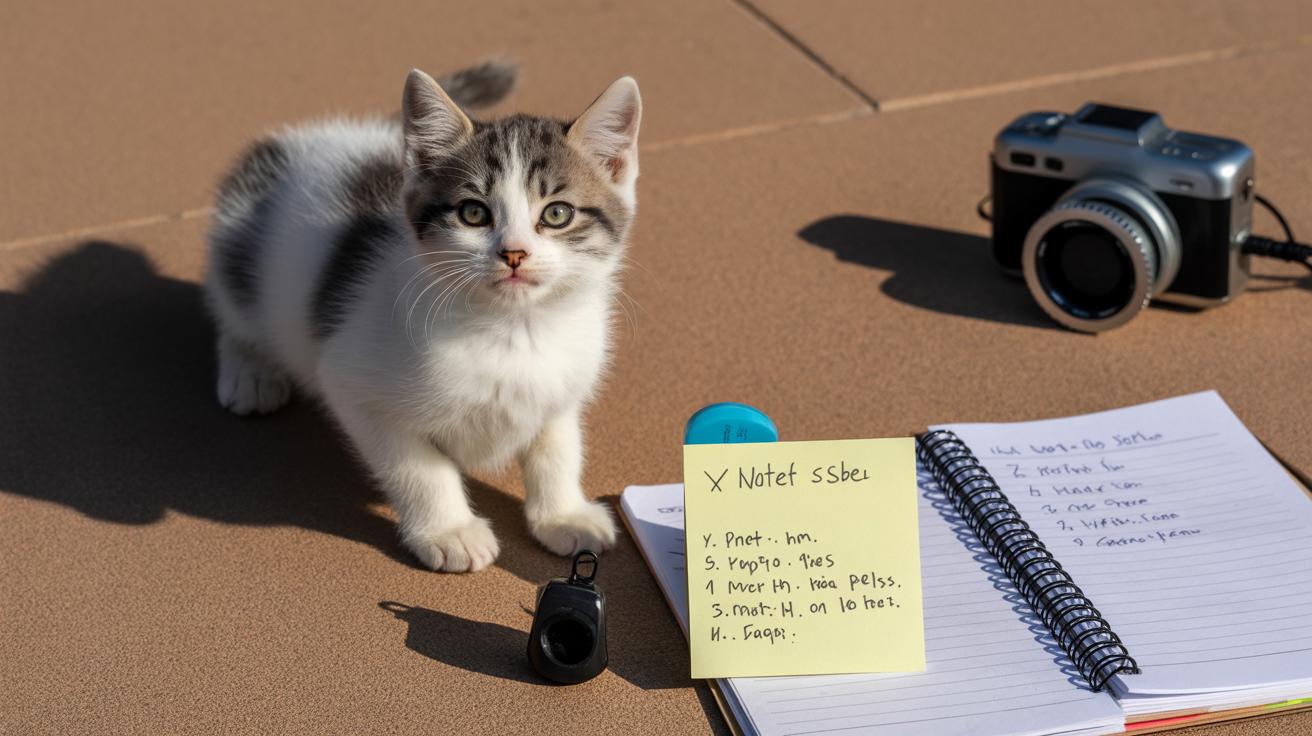
    Keep a tiny training log. Jot the date, the cue (like "sit"), how many reps you did, and the success rate. That one little habit makes progress pop out, no guessing. Example log line: "2026-01-04 | sit | 5 reps | 80% success."

    Aim for about 5 reps per cue each session. Short, focused rounds help kittens stay curious instead of bored. Wait until a cue is roughly 80% reliable across sessions before you start fading the marker (the clicker sound or a quick word that marks the correct behavior).

    When you fade the marker, do it slowly. Start mixing in variable rewards (treats given unpredictably so your cat keeps guessing) and keep a few high-value treats on hand for big wins. That surprise treat now and then keeps the game fun and the learning sticky.

    Don’t repeat milestone tables here. Use the Age windows table for week ranges and milestone details. And hey, if your kitty does a perfect sit and looks smug about it, snap a mental photo, those little victories matter.

    Final Words

    In the action, we showed how to prime a marker, set short 3-minute sessions, and use simple games to shape polite play and vet-friendly handling.
    We gave exact numbers: start around 8 weeks; 5–10 priming clicks; 3 minutes per session; 3–4x/week.

    You learned carrier steps, grooming progression, and stress signals with fixes like re-priming or switching to a verbal marker.
    Track progress, rotate rewards, and use durable toys to keep play fresh.

    Try the quick-start checklist and small daily wins. With patience, kitten clicker training: early socialization and play creates calmer, happier cats.

    FAQ

    How do I train a kitten with a clicker, what is clicker training for cats, and when should I start?

    Clicker training for kittens is a marker-and-reward method that marks the exact moment of a wanted action with a click, then rewards it. Start around 8 weeks (0–12 week social window); prime 5–10 click→treat runs.

    When should I start socializing kittens?

    Start socializing kittens during the 0–12 week window, aiming near 8 weeks for rich human and handling exposure; short, positive sessions and clicker priming help build friendly, calm responses.

    What are the negatives of clicker training?

    The negatives of clicker training include a scared kitten from the click sound, overreliance on treats, timing mistakes that confuse learners, and extra time needed for consistency; swapping to a verbal marker or re-priming fixes most issues.

    How can clicker training help stop bad behaviors like play-biting?

    Clicker training stops play-biting by rewarding alternative actions and redirecting to toys: shorten sessions to ~3 minutes, click toy contact, reward calm behavior, and gradually add a cue for polite play.

    Where can I find kitten clicker training resources on Reddit, YouTube, or free online?

    You can find free guides and demos on YouTube and Reddit training communities; pick videos that show 5–10 priming clicks, quick 3-minute sessions, clear marker timing, and hands-on examples.

    What is the 3-3-3 rule of cats?

    The 3-3-3 rule of cats says a cat often needs 3 days to adjust to a new space, 3 weeks to feel safer, and 3 months to fully settle comfortably.

    What is “Albert and Mia” clicker training?

    “Albert and Mia” clicker training appears to refer to a specific trainer or demo series; watch their clips for real examples, checking they use priming (5–10 clicks), short sessions, and clear rewards.

    Related Articles

  • cat training treats: choosing the right rewards

    cat training treats: choosing the right rewards

    What if the treats you give are actually making training harder, not easier? Ever watched your cat sniff a treat and walk away? Yeah, not fun.

    Most people assume any tasty nibble will do. But smell, size, calories, texture, ingredients, and how you give the treat all change whether your cat cares. You want treats that make them purr, not pause.

    Try six quick, action-first checks you can do right now. Check palatability (how tasty your cat finds it), pea-sized portions (about the size of a garden pea), kcal (food energy), texture, crunchy versus soft (how it feels and sounds), simple ingredient lists, and safe delivery (how you hand or hide the treat so it’s fun and safe).

    Short tests. Real results. No guesswork.

    How this section answers your cat training treats questions

    - How this section answers your cat training treats questions.jpg

    Here’s a quick, action-focused checklist to help you choose training treats that actually get your cat moving. Six clear criteria, each with one fast test you can try right now so you learn what truly motivates your cat.

    • Palatability / smell: Offer a tiny sample a few minutes before a meal and watch. If your cat’s whiskers twitch and they come sniffing, that’s a good sign. Ever watched your kitty chase a new scent? Cute, right.

    • Size / portioning: Break treats into single-reward morsels that are easy to grab and swallow. Think pea-sized pieces for rapid training. It’s easier to reinforce lots of reps when each treat is small.

    • Calories and daily accounting: Read the label for kcal (kcal = food energy, aka calories) and choose lower-calorie pieces for repeated practice. Track those calories against daily food so training doesn’t add extra weight.

    • Texture and mouthfeel: Try one crunchy option and one soft option to see which your cat prefers. Some cats love the satisfying crunch. Others want soft nibbles they can gobble.

    • Ingredients and allergies: Scan labels for onion or garlic (toxic) and favor single-protein (one meat source) or limited-ingredient treats if your cat has sensitivities. Simple ingredient lists make it easier to spot trouble.

    • Delivery / safety method: Pick a way to give treats that keeps your cat calm and prevents frantic grabs. Hand feeding, a small treat-dispensing toy (a ball that drops treats), or timed tosses after a clicker cue are all good options.

    See “How to run a treat trial”, “Portion control, caloric accounting…”, and “Safety, delivery methods…” below for full protocols, portion examples, and handling details on positive reinforcement treat strategies and clicker training with treats.

    Key criteria to evaluate cat training treats

    - Key criteria to evaluate cat training treats.jpg

    • Palatability and aroma
      Smell often wins over fancy packaging. Strong fish or liver scents grab a cat’s attention fast, and you’ll see them come running like they can smell dinner from two rooms away. Ever opened a pouch and had your cat sprint in? Yep, scent is that powerful.

    • Size and portioning
      Match the treat size to a cat’s tearing teeth and quick reps. Most adult cats do best with pea-sized bits; use even smaller crumbs for kittens. Freeze-dried (moisture removed by cold drying) and semi-moist (soft, slightly preserved) treats usually break apart easily, which makes tiny pieces perfect for rapid reinforcement.

    • Calories and label reading
      Look at kcal per piece or per gram on the bag so treats don’t quietly add weight; kcal means kilocalories, aka food calories. Pick low-calorie bits for lots of short reps, and save richer, higher-energy rewards for big wins. Tip: break a treat into smaller pieces to stretch a reward without adding extra calories.

    • Texture and life stage
      Crunchy treats feel like kibble and work well as low-value rewards. Soft, aromatic treats are best for kittens or seniors who have weak teeth or mouth pain. Freeze-dried options often sit between crunchy and soft, so they can please picky mouths. Choose softer textures for older cats or anyone with dental issues.

    • Ingredients, allergies and safety
      For sensitive cats, go limited-ingredient or single-protein treats and always scan labels for onion or garlic, which are toxic to cats. Start any new treat with tiny amounts and watch for vomiting, diarrhea, scratching, or behavior changes. I tried a new fish bite once , gave three crumbs, watched for 24 hours, and then used it in training when Milo was fine.

    • Delivery and handling safety
      Think about how you’ll hand out the treat: tiny dry crumbs can scatter into vents or under furniture; wet or sticky treats can gum up clicker devices or toys. If a treat is crumbly, use a shallow dish or your fingers to keep pieces controlled during fast sessions. A little planning means fewer messes and safer training.

    Comparing treat formats commonly used as cat training treats

    - Comparing treat formats commonly used as cat training treats.jpg

    Freeze-dried treats are your go-to when you need serious motivation. They’re often 100% meat, with the moisture removed by freeze-drying (a process that pulls out water but keeps flavor), so one tiny piece can smell like dinner. You can split a prawn into four or five rewards, which makes them stretch a long way. Raw freeze-dried treats can be insanely tempting, so buy from a trusted source and follow safe handling if the label says raw (raw means uncooked).

    Soft and semi-moist bites are gentle on mouths and loud on scent, which is perfect for kittens and seniors. Semi-moist (soft, slightly wet pieces) and wet treats let you give a quick reward without a chew battle. Squeezable tubes are great for cats that lick for rewards and they keep your fingers out of the crossfire. Plus, you can control the size by dispensing a tiny dab instead of handing over a whole morsel.

    Crunchy treats mimic kibble (dry cat food) and are ideal low-value rewards for lots of repetitions or casual praise. Use crunchy bits for quick clicks and short feedback, and save the super-stinky stuff for the big wins. Cats differ , some like tiny, tear-able bits, others prefer gnawing on longer, tendon-style chews (chewy strips). Try a few formats and match the treat to the training goal , your cat will tell you what she likes.

    How to run a treat trial to identify high-value cat training treats

    - How to run a treat trial to identify high-value cat training treats.jpg

    Ready to find your cat’s favorite reward? Do a short, simple treat trial when they’re hungry but not starving, about 30 minutes before their normal meal. Your cat’s whiskers will tell you what matters, watch for the twitch, the sniff, the quick pounce.

    Pick 4 or 5 different kinds of treats so you get a clear winner. Try commercial freeze-dried meat or fish (meat that had the water removed to lock in flavor), soft training treats (small, squishy rewards), crunchy treats, tiny bits of plain cooked chicken, fish, or egg, and a few pieces of regular kibble (dry cat food) or a spoonful of wet food (canned or pouched). My cat once ignored the fancy stuff and went crazy for plain cooked egg. Go figure.

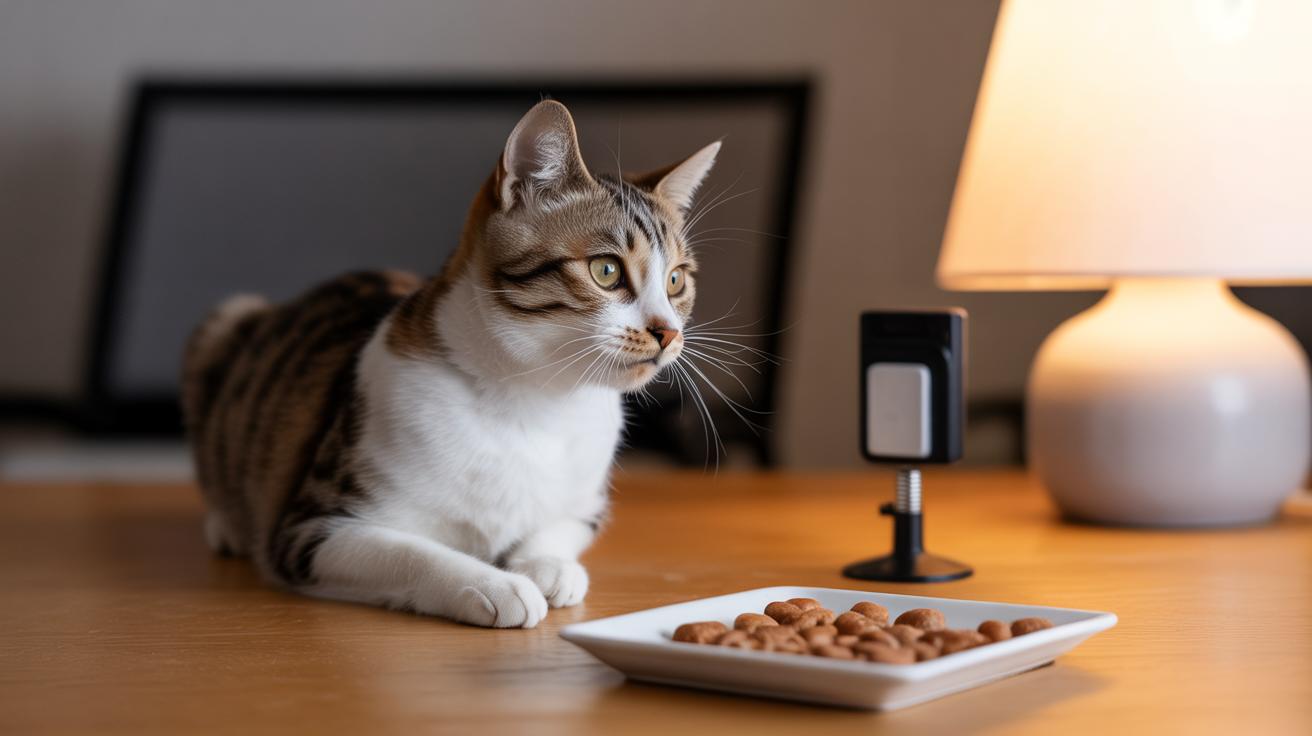
    Portion them equally on a plate in a quiet spot. Use very small amounts, about 1/8 teaspoon each, just a nibble. Watch closely: the very first pick often shows what’s most tempting, but finishing a sample and coming back for seconds is a big clue too. Note what they choose first, what they finish, and what they walk away from.

    Keep quick notes and save your top 2 or 3 winners so you’re not stuck if one runs out or your cat gets bored. Common slip-ups: testing when your cat is too full or too ravenous, offering more than 5 or 6 options, or assuming the priciest treat wins. Retest every six months or whenever your cat’s tastes seem to shift.

    1. Choose time: about 30 minutes before a meal
    2. Select 4–5 varied options
    3. Portion equally: roughly 1/8 teaspoon each
    4. Present in a quiet area
    5. Observe and record first choice and finish behavior
    6. Repeat as needed and keep the top 2–3 winners

    Worth every paw-print.

    Portion control, caloric accounting, and session planning for cat training treats

    - Portion control, caloric accounting, and session planning for cat training treats.jpg

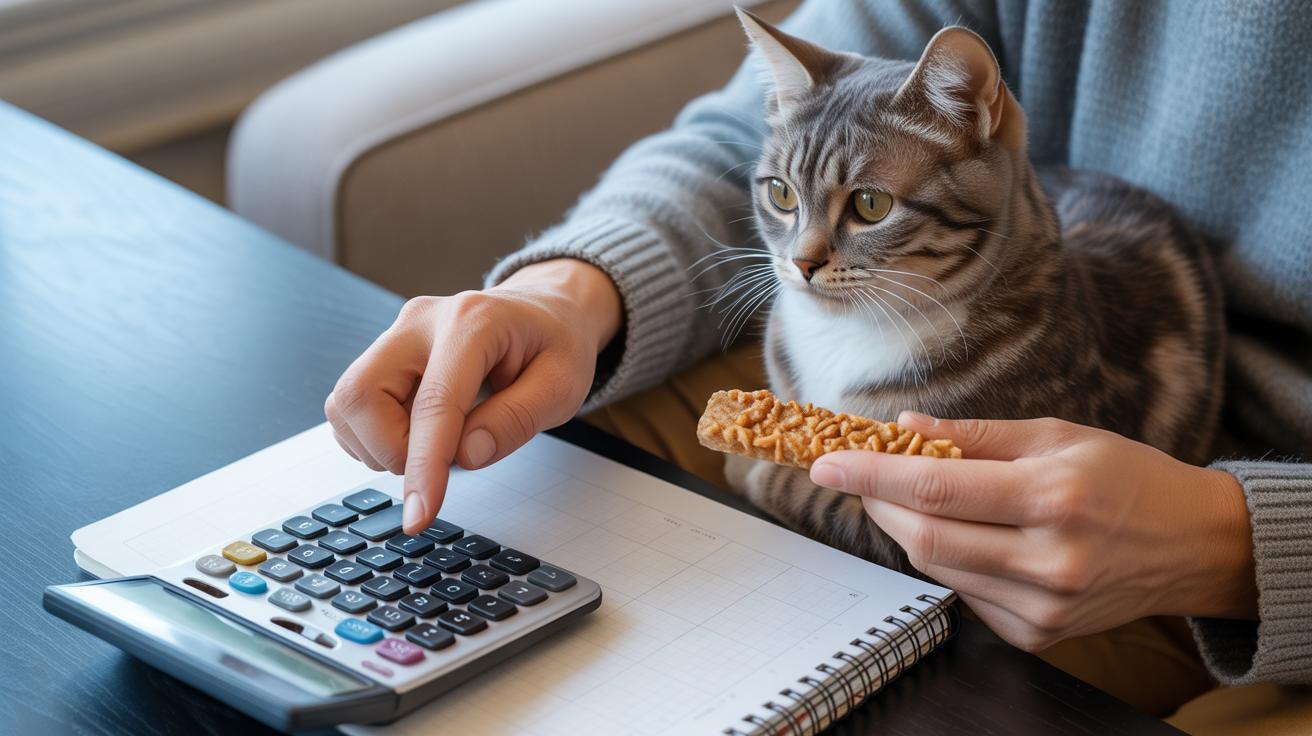
    Treats are food, and food has calories, so treat math matters. Check the package for kcal per piece or per gram (kcal = kilocalories, aka food calories), then multiply that number by how many pieces you plan to use in a session to get the training kcal. Use this simple formula: kcal per piece x pieces = training kcal, then add the training kcal to your cat’s daily food kcal to see the total.

    Many store-bought treats are bigger than we think, so break them into tiny bits to stretch the rewards and cut calories per reinforcement. Tiny pieces mean more repeats and more learning, and your cat still gets that satisfying nibble or crunch. Think of treat portioning like pocket change. Lots of small coins buy more reps than one big bill.

    Save the super tasty, smelly bits for the really hard stuff and use lower-value crunchy treats or kibble (kibble = dry cat food) for routine repeats. High-value treats (extra tasty wet bits) are your go-to when you need serious focus; kibble is great for keeping the session long without blowing the calorie budget. Your cat’s whiskers will twitch when you pull out the good stuff, ever watch them pounce on a tiny crumb? Fun, right.

    Plan sessions around your cat’s daily intake and activity so treat calories don’t push them over the line. If training adds 50 kcal, shave about 50 kcal off the main meal, or use fewer high-cal treats for big goals instead of lots of snacks. For quick math, a small kitchen scale (kitchen scale = small food scale) helps you measure bits instead of guessing.

    For cats with weight or medical issues, talk with your veterinarian about safe daily allowances and exact portion sizes. They can help you set a target kcal per day and show you how to measure treats for training so you don’t have to guess what’s right.

    Homemade and safe people-food rewards for cat training treats

    - Homemade and safe people-food rewards for cat training treats.jpg

    Plain cooked chicken (no seasoning) is a top pick for high-value training bites. Cut it into pea-sized pieces and watch your cat’s whiskers do a happy twitch as they get that savory smell. You can also try plain cooked fish or a tiny, well-drained dab of canned tuna in water (drained so it is less salty). Plain cooked egg is great for variety, and a very small piece of cheese is okay only if your cat tolerates dairy (milk products). Warm or mash these a bit to boost the aroma and get quick interest.

    Skip onions, garlic, raw dough, bones, and anything salty, spicy, or very fatty – those are people foods cats should never eat. Also avoid heavy sauces or seasonings. These can make cats sick or cause long-term problems.

    Introduce any new bite slowly. Start with one or two crumbs and watch your cat for 24 to 48 hours for vomiting, diarrhea, itchiness, or unusual tiredness. If you see any worrying signs, stop the new food and check with your vet.

    Homemade rewards are handy for portion control and usually don’t have preservatives, so you can cut pieces to the exact size and fat level you need. Use tiny pieces for lots of quick reps, and save richer treats for really tough behaviors. If your cat is on a medical diet or has a sensitive stomach, talk with your veterinarian before adding people-food rewards. Worth every paw-print.

    Choosing cat training treats for kittens, seniors, and cats with special dietary needs

    - Choosing cat training treats for kittens, seniors, and cats with special dietary needs.jpg

    Quick cheat-sheet: here’s a tiny, practical guide to pick training treats that actually work. Ever watched your kitten miss a leap because the treat was too big? Let’s fix that.

    • Kittens: pea-sized soft bites (about the size of a garden pea, roughly 5 to 7 mm). Small, soft pieces are easy to pop in during training and won’t overwhelm tiny mouths. Your kitten’s whiskers will twitch when they see something bite-sized and bouncy.

    • Seniors: soft, aromatic, easy-to-chew treats (aromatic meaning a stronger smell to tempt older noses). Go for plush textures that break apart without much chewing. It’s nicer when they can nibble gently and still get excited.

    • Overweight cats: low-calorie, highly portionable bits (low-calorie means fewer calories per piece; portionable means you can break them into many tiny rewards). Use these for frequent training without blowing their daily calories. Toss a few before you head out for ten minutes of distraction play.

    • Sensitive cats: limited-ingredient or single-protein options (single-protein means one meat source only, like turkey). Fewer ingredients make reactions easier to spot and manage. Think simple, gentle, and predictable.

    • Medical or post-surgery cases: always talk with your veterinarian about special diets or any weight-gain plan that uses higher-calorie morsels. They’ll tell you what’s safe and how to fit treats into a recovery plan.

    See "Texture and life stage," "Portion control, caloric accounting," and "Homemade and safe people-food" for full details.

    One-line life-stage summary – "Kittens: pea-sized soft bites; Seniors: soft, aromatic, easy-to-chew; Overweight: low-cal options; Sensitive: limited-ingredient/single-protein; Medical cases: consult vet"

    Safety, delivery methods, and behavior tips when using cat training treats

    - Safety, delivery methods, and behavior tips when using cat training treats.jpg

    Pick delivery methods that keep your fingers out of reach and your cat calm. Try a small metal or plastic spoon, or a wooden spatula (flat wooden stick like a kitchen stirrer) to drop tiny crumbs into a dish. Popsicle sticks (thin wooden ice-lolly sticks) are great for flicking little bits without risking nips. Wet treats from a squeezable tube (soft food in a tube with a nozzle) let your cat lick straight from the tip, which keeps hands clean and safe.

    For shy or skittish cats, use a long stick or wand (a long tool like a chopstick or wand) or a target stick (a stick with a small pad used to teach the cat to touch it) so you can keep distance while building trust. Move slowly. Let your cat come to the treat instead of shoving it near their face. Ever watched whiskers twitch as a treat rolls away? Yeah, that.

    Watch your cat’s body language and stop before things escalate. Signs of arousal include wide, dilated eyes, flattened ears, a tail that flicks or swishes, wrinkled skin, or jerky movements. If you see any of that, pause the session and give a breather. It’s better to quit early than to suffer a swipe.

    Combine short bursts of play with food rewards to tap the hunting instinct. Toss or wiggle a toy so your cat pounces, then reward with a tiny morsel right after the catch. That quick chase then snack pattern teaches speed and keeps stress low. If food motivation dips, swap in non-food rewards like a 30-second play bout, gentle brushing, or a favorite toy to keep training positive and productive.

    Keep sessions short and low-distraction, use tiny treat pieces so training lasts longer, and reward immediately so your cat connects the action with the treat. I once watched Luna leap six feet for a crumb, and I still laugh about it. Worth every paw-print.

    Quick buying guide and comparison for cat training treats

    - Quick buying guide and comparison for cat training treats.jpg

    Picking the right training treats is easier than it sounds. Think small, tasty, and fast to eat so your cat stays focused and you can reward lots of times. You’ll want treats that are easy to split, have simple ingredients, and two reliable options ready to go.

    Choose a portionable format , freeze-dried or soft. Freeze-dried (meat with the moisture removed to lock flavor) breaks into little crumbs that feel like cat crack. Soft or semi-moist (chewy, slightly moist pieces) are great when you need a quick, quiet reward. Split a freeze-dried nugget into pea-sized crumbs. Tiny pieces, big attention.

    Read the ingredient list like a detective. Aim for single-meat or just a few ingredients , for example, “chicken” means chicken, not a mystery mix. Avoid anything with onion or garlic, and skip treats with lots of fillers. Your cat will thank you, and so will your vet.

    Keep two go-to treats on hand. Use a high-value treat (think freeze-dried or wet bits) for hard tricks and first-time training. Use a lower-value crunchy treat (kibble-like, dry pieces) for lots of repetition and daily practice. Busy day? Toss a handful of the crunchy stuff before you go and get ten minutes of focused playtime.

    Worth every paw-print.

    Format Best training use Portioning tip
    Crunchy (dry, kibble-like) Everyday practice and high-repeat drills Break into pea-sized crumbs or give single kibbles
    Soft / Semi-moist (chewy, slightly moist pieces) Fast, frequent rewards; great for kittens Tear into tiny squares so each treat is a quick chew
    Freeze-dried (meat with moisture removed to lock flavor) High-value work and tough behaviors Split each piece into several pea-sized morsels
    Homemade (home-cooked or pureed-and-baked bites) Full ingredient control; good for picky or sensitive cats Cut into microcubes and keep chilled or frozen for freshness

    Final Words

    Jump right in, grab tiny samples, test in a quiet spot, and watch which scent or texture makes your cat pounce.

    We covered six quick criteria, palatability, size, calories, texture, ingredients, and safe delivery, plus how to run trials, portion treats, and keep picky cats motivated.

    Keep two to three winners on hand, swap formats now and then, and watch whiskers twitch with happy focus.

    Little habits like this turn short sessions into real gains , cat training treats: choosing the right rewards. Worth every paw-print.

    FAQ

    How do I choose the right treats for clicker training my cat?

    Pick tiny, high-aroma morsels that break into many pieces. Freeze-dried or soft treats work well. Use a small handheld clicker as an immediate sound marker to boost quick responses.

    What counts as low-calorie cat training treats?

    Low-calorie treats are small, low-fat bites or portioned kibble so you can reward often without extra calories. Use tiny crunchy pieces or split freeze-dried fragments.

    How do I train cats with treats?

    Use reward-based timing (positive reinforcement) with tiny tasty bits, mark the desired behavior immediately, keep sessions short, and use consistent cues to build repeatable behaviors.

    Can I train a house cat and a guard cat?

    Train a house cat for manners and routines. Training a cat to guard is limited—cats rarely reliably protect property. Set realistic goals, use food motivation, and prioritize safety and calm signals.

    What is a cat training stick and how do I use it?

    A cat training stick is a long wand used for distance rewards. Use it to present treats or targets, keep hands clear, and teach targeting with shy or reactive cats.

    Where can I find cat training resources?

    Look for online clicker guides, vet-behavior articles, short video courses, shelter classes, and local trainers. Choose resources with demos and printable protocols for hands-on practice.

    How should I pick treats for kittens, seniors, or sensitive cats?

    Choose tiny, soft, or limited-ingredient options. Introduce new foods in very small amounts and check labels to avoid onion, garlic, or other unsafe additives.

    Related Articles

  • Simple clicker training for cats: getting started

    Simple clicker training for cats: getting started

    Think cats can't be trained? I figured that too, until I tried clicker training. A clicker (a small plastic tool that makes a sharp click) acts like a camera flash for behavior: you click the exact moment your cat does what you want, then give a tiny treat. That quick sound tells them "yes" faster than words ever could.

    It's simple and fast, great for busy people or shy kitties. Short, playful sessions and perfect timing turn wild, random pounces into tricks you can repeat. Ever watched your cat lock onto a sunbeam and pounce? That same laser focus is what starts the magic, so try a minute or two before you head out and watch them shine.

    Worth every paw-print. Claw-tastic.

    Simple clicker training for cats: getting started

    - Quick start immediate 6-step plan to start training.jpg

    Clicker training uses a sharp, consistent click to mark the exact moment your cat does something you want, then you follow that click with a reward. The clicker (a small plastic device that makes a crisp sound to mark behavior) tells your cat, "Yes, that!" It’s simple. And kinda magical when your kitty gets it.

    1. Get your cat’s attention. Ever watched your cat stare at a sunbeam and suddenly pounce? That focus is what you want.
    2. Offer a tiny treat (tiny chicken cubes, tuna flakes, or meat baby food). Make treats so small your cat can eat one in 1–2 bites.
    3. Click the instant the desired action happens. Click at the exact millisecond the behavior finishes. The click is the marker.
    4. Give the treat immediately after the click. Fast reward helps your cat link the click to the action.
    5. Repeat in short bursts. Do a few quick tries, then pause. Short and fun beats long and boring.
    6. End on a win and stop while your cat is still interested. Worth every paw-print.

    Keep sessions super short: 1–5 minutes each, a few times a day. Click only when the behavior finishes. That exact timing is the whole secret.

    See detailed sections below for equipment, charging/timing, and troubleshooting.

    Choosing clickers and reward tools for clicker training cats

    - Choosing clickers and reward tools for clicker training cats.jpg

    Pick a click sound your cat notices but doesn’t make them jump. Think of the click as your cat’s “yes” , a clear, consistent marker that says, good job. Standard plastic clickers (plastic – a small hard device that makes a crisp snap) give a bright, repeatable sound. Soft or silent clickers (dampened plastic or foam-covered models – soften the snap) are gentler for shy kitties. You can also use a pen-click, a tongue-click, or a clicker app (phone program that plays a click sound). Try a couple of options and pick the one your cat keeps coming back to , curious ears and steady returns beat drama every time.

    Treats and a few small tools make training way easier. Use tiny, soft bites that disappear in one or two chews: tiny dice of fresh chicken, flakes of tuna, a dab of meat-flavored baby food on a spoon (baby food – smooth, single-ingredient meat), or soft commercial treats (commercial treats – bite-sized, soft). A target stick (short stick with a nub for your cat to touch) is great if your cat snatches treats from your fingers. Carry treats in a pouch or small bowl (treat pouch – clips to your waist) and use a little scoop so pieces stay the same size. That way calories don’t sneak up on you or your cat.

    Worth every paw-print.

    • Standard plastic clicker (plastic – crisp snap)
    • Soft/silent clicker (foam-covered or dampened click)
    • Pen-click method
    • Tongue-click option
    • Clicker app (phone program that plays a click sound)
    • Treat pouch or small bowl (keeps treats handy)
    • Target stick (short stick with a nub for touching)
    Clicker Type Pros Cons
    Standard plastic clicker Clear, loud marker that your cat learns quickly; cheap and long-lasting Can startle very shy or noise-sensitive cats
    Soft/silent clicker Gentler sound for nervous cats while still consistent Harder to hear across a busy or noisy room
    App / phone clicker Free, adjustable volume, handy when you forget a device Phone alerts can interrupt; sound quality and timing vary by phone

    Calorie-control note: keep pieces tiny, count rewards, and try training before meals to boost motivation.

    For a quick refresher from the Quick Start, see section: Choosing clickers and reward tools for full equipment details.

    Charging the clicker and timing the click for clicker training cats

    - Charging the clicker and timing the click for clicker training cats.jpg

    Charging the clicker means teaching your cat that the click predicts a treat. Clicker (a small handheld device that makes a sharp click) charging is just pairing the sound with food so your cat thinks, “Oh good, treat time.” Do 10 to 20 click→treat pairings in a few short sets and your cat will learn that click equals reward.

    Timing is the whole trick. Click the instant the behavior finishes – for a sit, click the moment the rear hits the floor. Then give the treat right away. If you wait even a beat, the cat gets confused.

    Here’s a simple plan to practice. Start with three sets of 10 charge pairs to build the click-treat link. After a short 5–10 minute break, run 5 to 10 timing drills where you make the action slow and clear so you can click the exact finish. Think of the drills like warm-ups before the real game.

    Many beginners hit the same snags. Late clicks, clicking while the cat is still moving, and slow treat delivery are the usual culprits. The good news: small drills and tiny habit changes fix them fast.

    1. Find a quiet spot with few distractions.
    2. Use very small treats (tiny chicken cubes, tuna flakes, or meat baby food).
    3. Do 10–20 click→treat pairings across short sets (try 3 sets of 10).
    4. Wait 5–10 minutes, then do another short set.
    5. Test by waiting for a simple offered action and click the precise finish.

    Common mistakes and quick drills

    • Late click → Drill: Practice with slow behaviors, like having your cat sit very slowly, so you can click at the exact end. Do 10 slow reps.
    • Clicking during approach → Drill: Train clear end-points (rear on floor, paw touch) and only click when that point is reached.
    • Slow reward delivery → Drill: Pre-place treats in a bowl so you can hand one instantly after the click.
    • Startling sound → Drill: Try a softer clicker or a pen-click and recharge with gentle pairings so the sound feels friendly.
    • Treat-stealing interrupts timing → Drill: Use a target stick to separate the touch from the snack, so the timing stays clear.
    • Overclicking for partials → Drill: Raise your standards slowly; only click for closer approximations to the full behavior.

    Ever watched your kitty chase a shadow and think, “Yes, more of this”? Use short, fun sessions and you’ll get clean clicks and happy cats. Worth every paw-print.

    If a troubleshooting tip points to recharging or timing practice, come back to this section: Charging the clicker and timing the click for clicker training cats.

    Simple clicker training for cats: getting started

    - First lessons teach sit, recall (come), and target in clicker training for cats.jpg

    These first three lessons – sit, recall (come), and target touch – are perfect quick wins. They give you a clear path to more fun tricks and help your cat learn the clicker-to-treat connection (the idea that a click means a treat is coming). Keep sessions short and playful. Stop while your cat still wants more.

    Sit

    Use a treat to lure your cat into a sit with a smooth upward arc toward the head, then mark the exact moment the rear hits the floor with your clicker (a small handheld device that makes a sharp click).

    1. Get your cat’s attention by holding the treat near the nose.
    2. Move the treat slowly in an upward arc to just between the ears.
    3. Wait for the rear to lower. Don’t push the cat down.
    4. Click the instant the rear touches the floor. That millisecond is the marker.
    5. Give the treat right away and praise calmly.
    6. Repeat in short bursts, and finish on a clear success so the cat ends happy.

    Timing cues to watch for

    • Click the moment the rear hits the floor.
    • Click when the head lifts to follow the lure (if you’re teaching the movement).
    • Click when the cat holds the sit for a breath or two.

    Recall (Come)

    Start close, in a quiet room, and use very high-value treats. Click while your cat is moving toward you at first, then switch to clicking on arrival once they get the idea.

    1. Pick a quiet room and a super-tasty treat.
    2. Call your cat’s name or a short cue, and show the treat.
    3. Take one step back, pause, then call again.
    4. Click as your cat moves toward you in the early stage, or click on arrival later on.
    5. Reward immediately at your feet so coming equals payoff.
    6. Slowly increase distance and add gentle distractions over many short sessions.

    Tip: start 1-3 feet away, keep sessions tiny, and remove distractions until your cat is reliable.

    Target Touch

    A target stick (a small wand with a nub) or your fingertip becomes a precise tool to guide movement and stop treat-snatching.

    1. Present the target near the cat’s nose.
    2. Wait for a nose touch; don’t push the stick into their face.
    3. Click the instant the nose makes contact.
    4. Reward and then withdraw the target briefly.
    5. Use the target to lure positions or require a touch before giving a treat, which cuts down on grabby behavior.

    Short, easy session plan

    Behavior Typical reps per set Sets per session Session time per behavior
    Sit 6-10 2-4 1-2 minutes
    Recall (Come) 3-6 3-5 1-3 minutes
    Target Touch 8-12 2-3 1-2 minutes

    Keep things fun. Your cat’s whiskers will twitch, they’ll give you that slow-blink, and you’ll both feel proud. Worth every paw-print.

    Shaping, luring, and capturing natural behaviors in clicker training cats

    - Shaping, luring, and capturing natural behaviors in clicker training cats.jpg

    Luring means using a treat to guide movement, think of moving a tasty dot where you want your cat to go. Shaping is rewarding tiny, useful steps toward a bigger trick until the full behavior appears. Capturing is the easiest one for spontaneous stuff: you click and reward the instant your cat offers the action on its own. Clicker (a small handheld sound device) or a quick verbal marker works the same way.

    Pick the method based on how easy it is to guide the action. Use a lure for simple position cues like sit or down. Use shaping for layered or new tricks that don’t follow a single baited path, like a precise jump sequence or a paw target that needs several parts. Use capture when the cat already does the thing sometimes, then you just watch closely and click the moment it happens.

    Start fast. Clicks should come quickly at first, and give a treat every time so your cat connects the sound with the reward. As the behavior gets tighter, only click for closer versions and space out treats so the action stays reliable. Keep treats tiny and quick to eat so momentum doesn’t stop (tiny chicken cubes, tuna flakes, or meat baby food).

    Ever watched your cat’s whiskers twitch as a treat rolls across the carpet? That’s exactly the kind of attention you want. Break the final behavior into the smallest possible steps, praise the little wins, and tighten your criteria slowly.

    1. Decide the final behavior you want.
    2. Break it into the tiniest possible steps.
    3. Click the closest approximation the cat offers.
    4. Reward every click at first, fast and frequent.
    5. Raise the standard gradually; only click for closer versions.
    6. Fade treat frequency as accuracy improves (keep occasional surprises).

    Examples:

    • Luring: sit, lie down.
    • Shaping: jump through a hoop, fetch a small toy.
    • Shaping: spin or weave between legs.
    • Capturing: stretching, pawing a toy offered spontaneously.
    • Capturing: head-butt or slow-blink offered without prompt.
    • Luring/Target combo: stepping onto a mat or into a carrier.

    Worth every paw-print. See section: First lessons for target and lure steps you can copy.

    Simple clicker training for cats: getting started

    - Session length, frequency and avoiding overtraining in clicker training for cats.jpg

    Short, fun bursts work best. For kittens, aim for 1 to 3 minutes per session so they stay curious and not tired. Adult cats can handle 2 to 5 minute sessions that are a bit more focused. Stop before your cat loses interest. Most cats do best with no more than 10 to 12 minutes of formal training total each day.

    Spread those minutes into 2 to 4 short sessions instead of one long block. Quick repeats keep the click-to-treat link sharp , the clicker (a small handheld sound marker) tells your cat exactly what you liked, and the treat right after seals the deal. Proofing (adding distance or distractions) gets easier when you add a little challenge each day, not a heavy lesson all at once. Keep treats tiny, like pea-sized pieces, so momentum stays friendly and fast.

    Watch your cat’s body language and end on a win. Finish while they’re still interested and give a calm, tasty reward so tomorrow feels exciting again. Ever watched whiskers twitch right before a pounce? That’s the good stuff.

    Watch for these signs that your cat needs a break:

    1. Loss of focus or staring off instead of responding to cues.
    2. Tail thumping or a quick flick during practice.
    3. Ears flattened or pupils very wide, which can mean stress.
    4. Avoidance like walking away or hiding.
    5. Sudden frantic treat-chasing or grabbing instead of a calm response.
    6. Refusal to approach the training area.
    Age Sessions per day Total time
    Kittens Three Six minutes (three 2-minute sessions)
    Adults Four Twelve minutes (four 3-minute sessions)

    Keep it light. End while your cat still wants more. Worth every paw-print.

    Troubleshooting clicker training for cats: common beginner mistakes and fixes

    - Troubleshooting clicker training for cats common beginner mistakes and fixes.jpg

    If your clicker sessions feel clumsy, you’re not alone. Think of this as a friendly quick guide from someone who’s watched a thousand whiskers twitch while learning. These fixes are simple, cat-tested, and usually work fast.

    • Late or delayed click – If your click comes even a split second after the behavior, your cat gets confused. Fix it by practicing Charging the clicker and timing (charging the clicker means pairing the clicker – a small handheld device that makes a sharp click to mark a behavior – with a treat so your cat learns the sound means "good"). Do short timing drills (quick reps where you click the instant the action happens). You’ll often see improvement in days.

    • Low motivation – If your cat isn’t interested, try higher-value treats (extra tasty, smelly, or soft treats) or brief play rewards. Swap treats or toys across a few sessions to find what really lights them up. Most cats perk up in a few days.

    • Treat management issues – Inconsistent rewards, slow delivery, or snatching the treat can break the learning loop. Use a treat pouch or pre-place tiny treats so delivery is fast. Teach a target touch (ask your cat to touch a small stick or your fingertip on cue) so you don’t fumble with treats. Expect changes in days to about two weeks.

    • Noisy or distracting training space – A loud room or lots of movement steals focus. Shorten sessions and move somewhere quieter. Your cat’s attention usually comes back after a few calm sessions.

    • Multiple cats fighting over rewards – Don’t train them together at first. Train cats separately, use different cues, give treats in separate areas, or stagger sessions. Conflicts often calm in days, though very food-driven cats might need more time.

    • Stop punishment or scolding – Punishment makes learning slow and scary. Instead, manage the environment and reward clear alternatives you want to see. Behavior usually improves in days to weeks once you switch to positive steps.

    Quick troubleshooting flow: test the click – swap the treat – reduce distractions – timing drills (see Charging the clicker and timing for timing drills).

    Adapting clicker training for shy, food‑unmotivated, or multi‑cat households

    - Adapting clicker training for shy, foodunmotivated, or multicat households.jpg

    Shy, picky, or busy multi-cat homes just need a few small tweaks so training stays calm, clear, and actually fun. Move at your cat’s speed, follow their lead, and keep sessions tiny and stress-free. Think short, happy wins, not marathon coaching.

    Shy and fearful cats

    Work at kitty pace. Ever watched a cat freeze at a sudden sound? Yeah, we don’t want that. Use quieter click options and pair the sound with gentle, low-stress treats (soft, tiny pieces). Train near a hide spot so your cat can step away when it wants, safety first, always.

    1. Start in the cat’s safe zone, like next to a bed or hiding box.
    2. Use a soft clicker (a small device that makes a short click sound used to mark behavior; try one you can dampen) or a tongue-click if that’s less scary.
    3. Keep sessions 30 to 90 seconds, a few times a day. Short and sweet.
    4. Reward any calm approach or attention with a tiny treat and soft praise, quiet, soothing voice wins.

    Short sessions add confidence. Your cat learns that the click means something good, not a surprise. Worth every paw-print.

    Food-unmotivated strategies

    Some cats don’t care about kibble. No problem. Many of them love play, new smells, or novelty. Use toys, short chase games, or tiny, stinky tastes to make the reward feel real. Train right after a play burst when your cat is fired up.

    • Rotate high-value toys (wand toys, small balls) so sessions feel fresh.
    • Offer novel tastes at mealtime in tiny amounts, think a dab of tuna on a spoon (scent reward).
    • Use play as the click to reward: click, then toss the toy for a short chase, like a mini fishing trip for cats.
    • Try scent rewards like a tiny lick of chicken juice or canned tuna (very small amounts).
    • Train right after a short play burst when the cat is engaged and ready to focus.

    Play rewards can be as motivating as food for many kitties. Try different things and watch what makes whiskers twitch.

    Multi-cat rotation plan

    Training multiple cats means giving each one attention so nobody feels left out or jealous. Start separate, teach them your cue, then rotate quick one-on-one sessions. Short turns work best.

    1. Pick a quiet room and train one cat at a time.
    2. Use distinct cues per cat (different words or tones) so they learn their own signal.
    3. Keep treats in separate bowls in separate corners to avoid scuffles.
    4. Rotate who goes first each session so everyone gets a fair turn.
    5. Short sessions, one after another, work better than long group sessions.
    6. Stop and regroup if you see tail flicking, flattened ears, hissing, or avoidance.

    Keep reward areas apart and watch body language closely. If tension rises, give everyone space and try again later.

    Safety note: watch body language and separate reward zones to prevent fights. For silent click options and tool choices, see Choosing clickers and reward tools.

    Progress tracking, reinforcement schedules and fading the clicker in clicker training cats

    - Progress tracking, reinforcement schedules and fading the clicker in clicker training cats.jpg

    Keep a simple training log so you can actually see progress. Jot the date, the exact behavior you practiced, how many reps you did, and the success rate (percent of trials that met your criteria). Aim for measurable goals , for example, 80% success at 1 meter across three sessions , and watch the trend: steady gains, a plateau, or a dip when you add distractions. Use a paper chart, a spreadsheet, or a training app, and always note what changed (new treats, different room) so you can repeat what worked.

    Start with continuous reinforcement (reward every correct response) so your cat links the click to a treat fast. A clicker (small handheld device that makes a short click sound) helps mark the exact moment the behavior happened. Then move to a fixed ratio (reward every Nth correct response – set number of responses) to build longer or repeated behaviors, and later switch to a variable ratio (rewards after an unpredictable number of responses) to keep the behavior strong even with distractions. To fade the click, add a short verbal cue (one syllable like "yes") while you still click sometimes, then slowly reduce clicks and treats until the verbal cue alone predicts the behavior.

    Schedule When to use Example
    Continuous (reward every time) Teaching new behaviors; building a clear click-to-treat link Click + treat for every correct response for 1 to 2 weeks
    Fixed ratio (reward every Nth response) Increasing repetitions and duration Reward every 2nd or 3rd correct response for 2 to 4 weeks
    Variable ratio (reward after random responses) Making behavior durable under distraction Rewards after 1 to 5 responses unpredictably, ongoing

    Actionable 4-step fade plan

    1. Solidify. Stay on continuous reinforcement until you hit 80% success at the target distance (usually 1 to 2 weeks).
    2. Shift to fixed ratio. Reward every 2 or 3 responses to build persistence and lengthen the behavior (about 2 to 4 weeks).
    3. Introduce a verbal cue. Say the cue just before you click; click less often over several weeks so the cue starts to predict the reward.
    4. Randomize rewards. Move to variable ratio and toss in surprise treats while you test distance and distractions – complex skills can take weeks to months.

    Worth every paw-print. For suggested record-keeping templates and apps see the Quick FAQ and next steps section.

    Safety, age guidelines and realistic timelines for clicker training for cats

    - Safety, age guidelines and realistic timelines for clicker training for cats.jpg

    We removed a duplicate "Simple clicker training for cats: getting started" section and folded the useful specifics into the right places so everything’s easier to find. Think of this as tidying the toy box, same good stuff, just where you’d reach for it.

    • Session length / Kittens: Kittens can start clicker exposure at 8-10 weeks with very short, play-like bursts that pair the clicker (a small handheld device that makes a sharp click to mark a behavior) with a tiny taste. Keep it sweet and tiny so they don’t fill up. Example snippet: "Kittens: 8-10 weeks – five- to ten-second play-like bursts: click, tiny treat, calm praise." Ever watched a kitten’s whiskers twitch as a treat rolls away? It’s the best.

    • Adapting clicker training for shy, food‑unmotivated, or multi‑cat households: Advice for older or arthritic cats has been moved under a Mobility-limited / senior cats heading. Mobility-limited means cats with reduced movement or joint pain. Focus on low-mobility goals like mat work (touching or staying on a small flat surface) or target work (touching a small object), shorten sessions, and use soft treats (easy-to-chew, low-calorie pieces). Example snippet: "Mobility-limited / senior cats – focus on mat or target touches, shorten sessions, use soft treats that are easy to chew." Small wins are still wins.

    • First lessons / Progress Tracking: The one-page beginner timeline lives now as a Quick beginner timeline box in the First lessons area. It’s a condensed roadmap so you don’t have to guess what’s next. Example snippet: "Quick beginner timeline – Week 1: charge + touch; Weeks 2-3: sit & recall basics; Weeks 4+: proofing and distractions."

    • Troubleshooting and session length safety notes: Safety checklist bullets are integrated into the troubleshooting and session-length sections so you’ll see them when you need them. Highlights include treat counting, tiny low-calorie pieces, avoiding allergens, checking with your vet before diet changes, scheduling rest days, stopping if stress signals appear, and setting low-impact goals for mobility-limited cats. Example snippet: "Safety checklist highlights – count treats, use tiny low-calorie pieces, stop if stress signals appear."

    Cross-reference: for exact session-length guidance by age, see the Session length section.

    Clicker training for cats: quick FAQ and next steps after the basics

    Quick sidebar: this short FAQ points you to the full sections so we don’t repeat stuff. For step-by-step guides check Session length, Troubleshooting, Adapting training, Treats and calories, Choosing clickers, Progress tracking, Target training.

    • Can any cat be trained? Most can. Short, positive sessions work wonders. Move slower for shy or senior cats. See Adapting training.
    • My cat won’t take treats. Try training before meals or swap food for play rewards like a wand toy or a quick chase. Play can be as motivating as a treat. See Troubleshooting.
    • How long should sessions be? Keep them tiny. One to five minutes per session is perfect for keeping focus. See Session length.
    • How many sessions per day? Two to four short bursts spread through the day usually does the trick. See Session length.
    • Treat calories, what’s safe? Use pea-sized pieces and low-calorie, single-ingredient treats (single-ingredient, like freeze-dried chicken). Small bits let you reward a lot without extra calories. See Treats and calories.
    • Can I train multiple cats? Start one-on-one. Then rotate short, focused sessions so each cat gets your full attention and rewards. See Adapting training.
    • My cat grabs treats, how do I fix that? Teach a target touch so your cat learns to touch a stick or your hand instead of snatching food. It slows them down and looks cute. See Target training.
    • When should I call a pro? Call if your cat shows ongoing aggression, freezes in terror, keeps injuring itself, or shows persistent stress like hiding, heavy panting, or overgrooming. Contact your veterinarian and a certified applied animal behaviorist (CAAB or equivalent) , CAAB (a certified behavior expert who works with animals).

    Next skills and a short practice plan: add a little duration and mild distractions, chain small behaviors together, teach recall (come when called), and desensitize the carrier and vet handling (desensitize means slowly reduce fear). For demo videos, guided app timers, and quick self-review clips, head to Progress tracking so you can watch examples and pace sessions without repeating article text.

    Final Words

    Jump right in , you’ve got the one-sentence definition and a six-step quick-start checklist that lets you begin training today.

    We walked through choosing the right clicker and tiny treats, charging the marker and timing the click, plus step-by-step sit, recall, and target lessons.

    You learned shaping, luring, short session rules, troubleshooting tips, adaptations for shy or multi-cat homes, tracking progress, and basic safety and age guidance.

    Ready to make playtime purposeful? With this plan, clicker training for cats: getting started is simple, playful, and kind to busy schedules , worth every purr.

    FAQ

    Clicker Training for Cats — FAQ

    How do I get started with clicker training for cats using YouTube, PDFs, or free resources?

    Start with a simple 6-step quick start, watch short beginner YouTube demos, or download free PDFs titled like “clicker training for cats beginner” to follow practice drills.

    What is cat clicker training and how does it work?

    Clicker training uses a distinct click sound to mark the exact moment a cat performs a wanted action, then you give an immediate tasty reward to reinforce that behavior.

    Which clicker is best for training cats?

    The best clicker is one your cat notices without being startled: a standard plastic clicker, a soft/silent clicker, or a quiet app—choose the sound your cat accepts.

    Do I need a clicker training kit or can I DIY?

    You don’t need a kit. For beginner training you only need a clicker (or app), tiny soft treats, a treat pouch, and a target stick (a wand your cat noses).

    Can Jackson Galaxy’s methods be used for clicker training cats?

    Yes. Jackson Galaxy’s methods fit clicker training well: use calm timing, high-value treats, and short low-stress sessions, adapting his gentle approach to your cat’s pace and comfort.

    Are there silent clicker options for shy cats?

    Silent options include soft plastic clickers, pen-click or tongue-click sounds, and low-volume clicker apps—use the gentlest sound your cat tolerates.

    What treats work best for clicker training cats?

    The best treats are tiny soft pieces eaten in one to two bites—tiny chicken cubes, tuna flakes, or meat baby food—so you can reward often without many extra calories.

    How long should clicker training sessions be?

    Keep sessions to 1–5 minutes each, with several short sessions per day. Stop before your cat loses focus and end on a small success.

    What is a beginner clicker checklist I can follow right away?

    Checklist: get your cat’s attention; present a tiny treat; click the instant the behavior happens; give the treat immediately; repeat briefly; finish while interest stays high.

    Related Articles

  • Karen Pryor clicker training principles for pets

    Karen Pryor clicker training principles for pets

    What if a tiny click could beat scolding every time? Karen Pryor’s marker training shows it can. Marker (a short, sharp sound that pins the exact moment the animal did something right) tells your cat, or dog, or bird exactly when to feel proud. It’s simple and kind.

    Her rules put the animal’s well-being first. Let them come to you. Keep the click-to-treat time very short, under 0.5 seconds (that’s the gap between the click and the reward). Shape big tricks from tiny steps (shaping means rewarding smaller pieces of a behavior until the whole trick appears). And only start using the clicker (a little handheld device that makes a clear click) after the animal reliably approaches and holds steady on the target.

    Think of the click like a camera capturing the exact frame you want.

    Follow these tips and learning gets faster, gentler, and a lot more fun for both of you. Worth every paw-print.

    Karen Pryor clicker training principles for pets

    - What Karen Pryors marker training is  starter checklist (direct answer to the query).jpg

    Karen Pryor helped shape modern marker training, also called bridge training. Marker training uses a short, sharp sound , the click , to mark the exact instant your pet does the thing you want. The click becomes a secondary reinforcer (a signal that predicts a treat). This all sits inside operant conditioning (training by consequences). Start only after the animal willingly approaches and eats, and keep the click-to-treat delay under about 0.5 seconds so the signal stays clear.

    • [ ] Welfare-first check; click-to-treat timing about 0.5 seconds; initial sequence: approach, target, charge, shape.

    Welfare-first means the learner comes on their own terms. If your pet won’t take food, don’t force it. Hand-feed tasty bits, drop a treat a short distance, try something higher value, or switch to play as the reinforcer. Short, calm get-togethers that build trust beat long, pushy sessions every time.

    The basics are simple. Mark the exact moment you like with almost no delay. Give the primary reinforcer (treat or play) right after the click. Shape bigger behaviors by rewarding tiny steps toward the goal. Use a target (a small object or your hand the pet touches) like a fishing rod for cats and dogs , it points their focus and opens the door to lots of behaviors.

    Only add the clicker after approach and targeting are steady. If the clicker makes the pet uneasy, try a softer sound or a consistent word while you charge the marker slowly (pair the sound or word with treats until it predicts reward). Keep sessions upbeat, quick, and predictable so the learner stays confident and curious.

    Worth every paw-print.

    Shaping & Timing: modern Ten Laws, timing best practices, examples, and stepwise table

    - Shaping  Timing modern Ten Laws, timing best practices, examples, and stepwise table.jpg

    We pulled the classic Ten Laws and the timing rules into one easy toolkit so trainers have one go-to place. Think of it as practical steps that help sessions change behavior faster and kinder. It’s short, focused, and meant to get you results without drama.

    Modern Ten Laws of Shaping

    • Be ready before you start. Plan the very next reinforcer (what you will give and when).
    • Keep sessions flowing. Minimize dead air and keep momentum.
    • Reward the current approximation continuously while you’re strengthening it. Continuous reinforcement means rewarding every correct try.
    • Raise criteria in very small steps so the learner can succeed. Tiny wins matter.
    • Work one thing at a time. Don’t try to shape two different criteria at once.
    • Relax old criteria briefly when you add a new detail so the learner doesn’t get overwhelmed.
    • Stay ahead of the learner so you know what to reward if they make a fast leap.
    • End sessions on a high note to keep motivation for next time. Worth every paw-print.
    • If behavior falls apart, go back to kindergarten and rebuild easy wins. Start simple.
    • Use one primary shaper per behavior during acquisition when possible. If multiple handlers must work the same goal, communicate clearly so the animal gets consistent feedback.

    Timing best practices

    Marker timing is the technical heart of marker training. A marker is a sound or signal (like a clicker or a word) that tells the animal exactly which tiny movement earned a reward. Place the marker the instant the movement you want happens. Think in tenths of a second.

    Aim for click placement within 0.0-0.5 seconds of the target action. Get the treat to the animal’s mouth within about 0.0-2 seconds. While shaping a new approximation, give continuous reinforcement (treat every correct bit). Switch to intermittent or variable schedules (rewards less often or unpredictably) only after the response is stable and reliable.

    Quick timing norms:

    • Marker placement: 0.0-0.5 s.
    • Treat to mouth: 0.0-2 s.
    • Reinforcement during shaping: continuous (every correct try).
    • Move to variable schedules after stability.

    Examples:

    • Head dip capture: mark the instant the nose moves down, then treat immediately.
    • Paw touch: click within 0.3 s of the paw meeting the target, then reward.
    • Hold duration: click for the first steady second, then slowly increase required hold across sessions.

    Practical shaping examples and progression rules

    Shape by rewarding tiny, successive approximations and never stack two big changes together. For example, approach → touch → short sit: reward the pet for stepping closer, then for touching the target, then for sitting briefly. Increase the hold by tiny, clear steps.

    For short recall → distance recall: mark and reward the animal for turning and taking one step toward you, then for three steps, then for landing on a mat. Keep each distance increment small so success is obvious.

    For paw touch → longer hold: click and treat each initial quick touch. Then ask for two quick touches, then a single touch held 0.5 seconds, and so on. Reward near-misses that move behavior toward the goal instead of waiting for perfection. Your learner will thank you with a big, goofy pounce. Ever watched whiskers twitch when a goal is close? Yup, that.
    Step Trainer action / setting What to watch for (behavioral target) Click timing (seconds) Reinforcement schedule used
    1 Approaching target Place target nearby; reward any move toward it Step toward or orient to target 0.0-0.5 Continuous
    2 Following target Move target laterally; reward following motion Side-step following target 0.0-0.5 Continuous
    3 Paw touch capture Present touch target; click for light contact Paw meets target 0.0-0.3 Continuous
    4 Sit held 1 second Click when sit is steady; increase hold gradually Sit maintained 1.0 s 0.0-0.5 Continuous → Partial
    5 Short recall Call, click at arrival; reward landing on mat Approach and touch mat 0.0-0.5 Continuous → Variable
    6 Step toward heel Mark an accurate step; shape more steps into sequence Single step initiated toward heel position 0.0-0.5 Variable

    Charging the marker

    Charge the marker in short, low-pressure sessions so the sound predicts reward without stress. Charging means pairing the marker (click or chosen signal) with tasty food until the animal looks for the treat when they hear the sound.

    • Pair in short bursts: 10-20 pairings per session, a few sessions total.
    • Look for signs the marker is charged: orienting, brightening, leaning in, or searching for the treat when they hear the sound.
    • Bridging options when delivery is delayed: drop a pre-placed treat, use a wait target (a known cue that keeps the animal steady), or give a short secondary signal that the treat is coming.

    Move from continuous reinforcement to intermittent or variable schedules once the behavior is consistent and errors drop. Check the timing best practices and the stepwise table above when you plan that shift so progress stays smooth and confidence stays high.

    Step-by-step clicker training for beginners using Karen Pryor principles

    Use this quick-start checklist to get hands-on practice. For the full timing rules, marker charging (pairing the click with a treat so the click becomes a reward signal), fading procedures, and staged proofing (practicing the behavior in harder settings), see the Shaping & Timing section.

    • Start only when your learner willingly approaches and takes treats. Offer a treat; when they take it, you’re ready , no pressure, just tasty motivation.

    • Teach following by moving side-to-side and rewarding the follow. Step a few paces, wait for your cat to trail you, then treat. Think of it like a slow, silly dance you both enjoy.

    • Introduce a simple physical target and reward every touch to build reliability. Targeting (teaching the cat to touch an object) is a great foundation for lots of tricks.

    • Bring in the clicker (a small handheld marker that makes a sharp click) only after targeting is steady. Charge the marker (click then treat repeatedly so the click predicts food); the Shaping & Timing section shows exactly how.

    • Alternate capture rounds (rewarding spontaneous offers the cat gives) with deliberate target rounds. That mix keeps sessions playful and prevents burnout , fun and learning together.

    • Shape tiny approximations by rewarding each small step; keep rewards continuous for the step you’re working on. Raise just one criterion at a time so it stays clear and doable.

    • Proof the behavior under mild distraction, increasing the challenge slowly. Proofing (testing the behavior in harder settings) helps the skill hold up when things get noisy or busy.

    • Keep sessions short: 3 to 10 minutes, several times a day. End on an easy win, jot a quick progress note, and walk away while everyone’s feeling good , worth every paw-print.

    Troubleshooting and common mistakes in Karen Pryor clicker training principles (cross-reference Shaping & Timing)

    - Troubleshooting and common mistakes in Karen Pryor clicker training principles (cross-reference Shaping  Timing).jpg

    Quick troubleshooting. The usual suspects when progress stalls are a weak reinforcer (the treat or toy that motivates your pet), jumping criteria too fast, the marker not being reliably paired (the click or word that signals a correct moment), or low motivation. Start simple: lower the criterion so the animal can win, re-pair the marker with tasty treats, or swap or boost the reinforcer (try something extra yummy or a favorite toy). See Shaping & Timing: Stepwise criteria; See Shaping & Timing: Charging the marker; See Shaping & Timing: Reward value.

    Sometimes you’ll see an extinction burst – a sudden spike in the behavior when reinforcement stops. That usually means your learner is stressed or confused, not that they’re making real progress. Fix it by stepping back to the last thing you reliably reinforced and give short, high-value rewards to rebuild predictability. For example, tiny chicken bits for a calm two seconds. Calm, consistent wins help rebuild confidence.

    Appendix , Expanded Q&A (open if you want more)

    What if my dog/cat won’t take treats?

    Start with trust-building. Hand-feed tiny pieces or toss a treat just a few inches away so approaching feels easy. If your pet prefers play, use a quick toy romp while you slowly pair the marker with treats. Short, calm sessions work best. See Shaping & Timing: Charging the marker.

    Example: “Here, tiny cheese, good!” to make food from your hand feel normal and safe.

    Why did behavior get worse after I raised criteria?

    You probably moved too fast. Go back to a simpler approximation, raise the step size smaller, and reward more often so your learner gets frequent wins. Patience pays. See Shaping & Timing: Stepwise criteria.

    Is it OK to withhold reinforcement to get a bigger response?

    Don’t do that on purpose. Withholding rewards to provoke more offers can cause drop-out or confusion. If you suspect extinction, return to the last reinforced step and make reinforcement predictable again. See Shaping & Timing: Shaping path alternatives.

    My clicker seems to scare the animal , what now?

    Switch to a quieter marker or use a soft word and pair it slowly with treats so it becomes a predictor of good things. Short, calm pairing sessions help the sound lose its edge. See Shaping & Timing: Charging the marker.

    Training stalled despite consistency , any strategies?

    Try a different shaping path, create more capture opportunities, or change where you place the reinforcer to spark spontaneous offers. Shorter sessions and tiny wins often restart progress. You can also vary the reinforcer to see what lights your learner up. See Shaping & Timing: Shaping path alternatives.

    How do I stop relying on treats?

    Pair the marker with cues, praise, or play, then fade treats gradually and move to intermittent rewards once the behavior is stable. Shift to variable schedules slowly so the marker stays meaningful. See Shaping & Timing: Intermittent schedules.

    For full timing windows, charging steps, and the stepwise table, see the Shaping & Timing section.
    Fading the Marker & Proofing

    - Proofing, fading the clicker and transferring control in Karen Pryor clicker training principles.jpg

    Layer the cue onto the marker, then trade the marker for the cue. Say a short verbal or gestural cue at the exact moment you click, then give the treat. A marker (a sound like a click that pinpoints the exact moment the behavior happened) makes it easy for your cat to know what earned the reward. Example: say the cue at the moment of the click , "Touch." After several clear cue+click+treat pairings, start replacing some click+treats with cue+treats until the cue alone predicts a reward on a mixed schedule.

    See Shaping & Timing for exact timing norms (click within 0 to 0.5 seconds) and for tips on moving from continuous to intermittent rewards. Shrink food slowly and give easy wins when slippage shows up. Reduce treat size or frequency while keeping the cue crystal clear, and move to intermittent rewards (variable reinforcement, rewards given unpredictably) once the behavior stays steady. If things slide back, give a few generous wins , for example, three clear reps with full treats , then resume the fade. Keep sessions short and playful so your cat stays engaged. Worth every paw-print.

    Proofing means practicing the cue in new places, with new people, and with more distraction, while easing the difficulty a bit so your cat keeps winning. When you add a challenge, loosen an older requirement for a few reps so the pet isn’t overloaded; small wins build confidence and keep motivation high. Ever watched your kitty nail a trick in the kitchen but forget it in the backyard? That’s normal. Next, we build real-world reliability.

    Quick steps

    • Fading marker into cue: say the cue at the click, then reward. Gradually swap click+treats for cue+treats on a mixed schedule so the cue becomes the reliable predictor.
    • Transferring to verbal or gestural cues: start cue+click together, then shift the cue just before the click and reward the correct response. Follow Shaping & Timing timing norms (click within 0 to 0.5 seconds).
    • Move rewards from continuous to intermittent once behavior is solid. Variable reinforcement keeps the behavior strong and interesting.

    Short proofing drills (quick list)

    • Hallway: 5 reps.
    • Backyard with light distraction: 5 reps.
    • Same behavior with a different handler: 5 reps.
      During each drill, relax hold-times or distance for a few reps so your cat has easy wins.

    Troubleshooting
    If fading or generalization gives you trouble, go step by step: layer the cue at the click, trade click+treats for cue+treats, hand out easy wins, and run short proofing drills. Keep it playful, keep it short, and don’t be afraid to step back a bit if your cat looks confused. It’s training, not a race , and a few soft purrs make everything better.

    Books, courses and further resources on Karen Pryor clicker training principles

    - Books, courses and further resources on Karen Pryor clicker training principles.jpg

    Start with the original sources. The Ten Laws of Shaping (1984) is the historical anchor for shaping (teaching a behavior by rewarding tiny steps). Then read Karen Pryor’s books for step-by-step examples and real trainer stories. They make the ideas click , literally. Ever watched a pet’s ears perk up the moment you click? That moment matters.

    A marker (a short sound that pinpoints the exact moment the pet did the right thing) is central. So is timing. Good workshops give hands-on feedback on your timing and shaping, so you don’t just read about it , you practice it with a coach watching. Karen Pryor Academy workshops and certification programs do that kind of coaching.

    When you pick a course, favor ones that include live practice, video review, or mentor feedback. Look for programs that use welfare-first methods, short sessions, and lots of paired marker + treat drills (click, then treat; repeat). Those quick cycles build clarity and keep animals motivated.

    If you’re studying on your own, choose books that come with clear exercises and companion videos. Record your sessions so you can check your click-to-treat timing (how fast you give the treat after the click) and track shaping progress. You’ll spot small fixes that make a big difference.

    Certification programs are worth it if you work in shelters, professional training, or service-animal work where documented competence matters. For casual pet parents, the books and a few coached sessions may be plenty.

    Key resources

    • Ten Laws of Shaping (origin: 1984)
    • Don’t Shoot the Dog! (Karen Pryor)
    • Reaching the Animal Mind (Karen Pryor)
    • Karen Pryor Academy workshops and certification programs

    Pick a hands-on workshop if you want coached practice. Pick the books for steady, self-paced study. Either way, practice the little clicks and celebrate the tiny wins. Worth every paw-print.

    Final Words

    Jump right in: we answered what Karen Pryor’s marker training is and gave a starter checklist and charging steps (Ten Laws, 1984; Pryor books/Karen Pryor Academy). You have practical timing norms, a shaping table, and a beginner checklist for short sessions.

    We explained modern Ten Laws, click timing (0.0–0.5s), charging the marker, shaping progressions, and proofing drills. Troubleshooting tips show how to go back to easier steps when things stall.

    Keep practicing short sessions and follow Karen Pryor clicker training principles, precise marking, welfare-first starts, and steady shaping. Happy training, your cats will thank you with zoomies.

    FAQ

    Frequently Asked Questions

    What is clicker training for humans / clicker training for dummies?

    Clicker training for humans uses a distinct sound as a precise marker to reinforce desired actions, shaping behavior through small steps with timely treats or rewards for fast, clear learning.

    What are the benefits of clicker training?

    Benefits include precise timing, faster learning, reduced force, clearer communication, easier shaping of complex behaviors, and more enjoyable sessions for learner and trainer.

    How does clicker training help with separation anxiety?

    It uses gradual desensitization and counterconditioning, marking calm, relaxed responses before departures, then slowly increasing absence length while rewarding low-stress behavior.

    What is the Premack principle?

    The Premack principle states a more likely behavior can reinforce a less likely one (for example, letting a pet play after it sits to boost the sit response).

    In the Autism Partnership Method, shaping involves a level of which of the following?

    Shaping involves successive approximations at the response level, reinforcing ever-closer attempts toward the target behavior until the full skill appears reliably.

    What clicker training commands should I use?

    Use short, consistent one-word cues paired with the click and reward; use the same voice, and add the click only after the behavior is reliably offered.

    How do I train an “off” cue (teach a pet to get off furniture)?

    Capture the stepping-down behavior, click the exact moment the feet leave the surface, reward immediately, shape duration away from the surface, then add the word “off” as the response stabilizes.

    How do I start charging the clicker and timing clicks?

    Charge the clicker by pairing the sound with treats in short sessions until anticipation appears. Click within about 0.0–0.5 seconds of the target action and give the reward right after.

    Related Articles

  • What Is a Training Clicker?

    What Is a Training Clicker?

    Want faster, less guessy training for your cat or dog? Ever watched your kitty chase shadows and wished you could reward the exact moment she pounces? A training clicker (a small handheld gadget you press with your finger that makes a short, sharp click) does exactly that. It marks the exact moment your pet does the thing you want (mark means a clear, consistent signal), so there’s no wondering what earned the treat.

    Think of the click as a tiny, reliable "yes" you can give in a blink. Click, treat, repeat. It’s simple. It clears up confusion and speeds learning, especially for shy kitties whose whiskers start twitching when they finally get it. My Luna started purring at the sound, true story.

    Start small: use tasty treats, keep sessions short, and reward right after the click so your pet links the sound to the good thing. Try one, you might end up with a purring, click-loving companion. Worth every paw-print.

    What Is a Training Clicker?

    - Quick lede clear definition, why it helps, and a one-line buy cue.jpg

    A training clicker is a small handheld device (a tiny gadget you press with your finger) that makes a consistent, sharp click to mark the exact moment a pet does something you want. That click is an immediate, clear signal telling your cat or dog which action earned a reward. Think of it as a tiny, reliable "yes" you can give at lightning speed.

    Using a clicker speeds up communication, especially with skittish cats who need precise timing. It helps avoid the "did I mean that?" guessing game and makes learning faster and less confusing. When you press the clicker, then give a treat right after, your pet links the sound to the reward and repeats the behavior.

    Pick a simple, reliable clicker that fits your hand – ergonomics (how comfy it feels to hold) matter. Also choose a sound level (how loud it is) that won’t scare your pet; some cats prefer a softer click or a silent clicker. Try the click near your pet a few times and watch their reaction before you start training.

    Common uses

    • Basic commands – mark sits, downs, and eye contact.
    • Shaping behaviors – reward tiny steps toward a bigger skill (shaping means breaking a trick into little pieces and rewarding each step).
    • Recall and leash cues – mark quick comes and loose-walk wins (recall means coming when called; leash cues are the small wins while walking on leash).

    Quick tip: click at the exact moment your pet does the thing you want, then treat right away. Timing is everything. Worth every paw-print.

    How a training clicker works: the learning mechanisms and core training chain

    - How a training clicker works the learning mechanisms and core training chain.jpg

    A clicker is a tiny tool that makes a short, steady click. That crisp little sound tells your cat exactly which split-second move earned a reward. Think of it as a precise marker that freezes the moment your kitty did the right thing.

    The clicker relies on two learning processes. Operant conditioning (learning when actions change because of rewards) links what your cat does to the outcome. Classical conditioning (learning when a neutral sound predicts a reward) teaches the cat that the click itself means a treat is coming. The basic training chain is simple: action, then click, then reward.

    Charge the clicker first by pairing the sound with food. Click, give a tiny treat, repeat a few times until the cat looks for a treat after the click. Pretty soon the click predicts the treat and becomes meaningful on its own.

    The click is useful because it marks micro-movements (tiny bits of behavior, like a paw lift or a head turn). That lets you shape bigger tricks one small step at a time. Think of the clicker like a camera shutter for behavior , it captures the exact moment you want.

    Simple steps to follow:

    1. Build the click→treat link by clicking and rewarding several times.
    2. Click the exact instant your cat makes the target action.
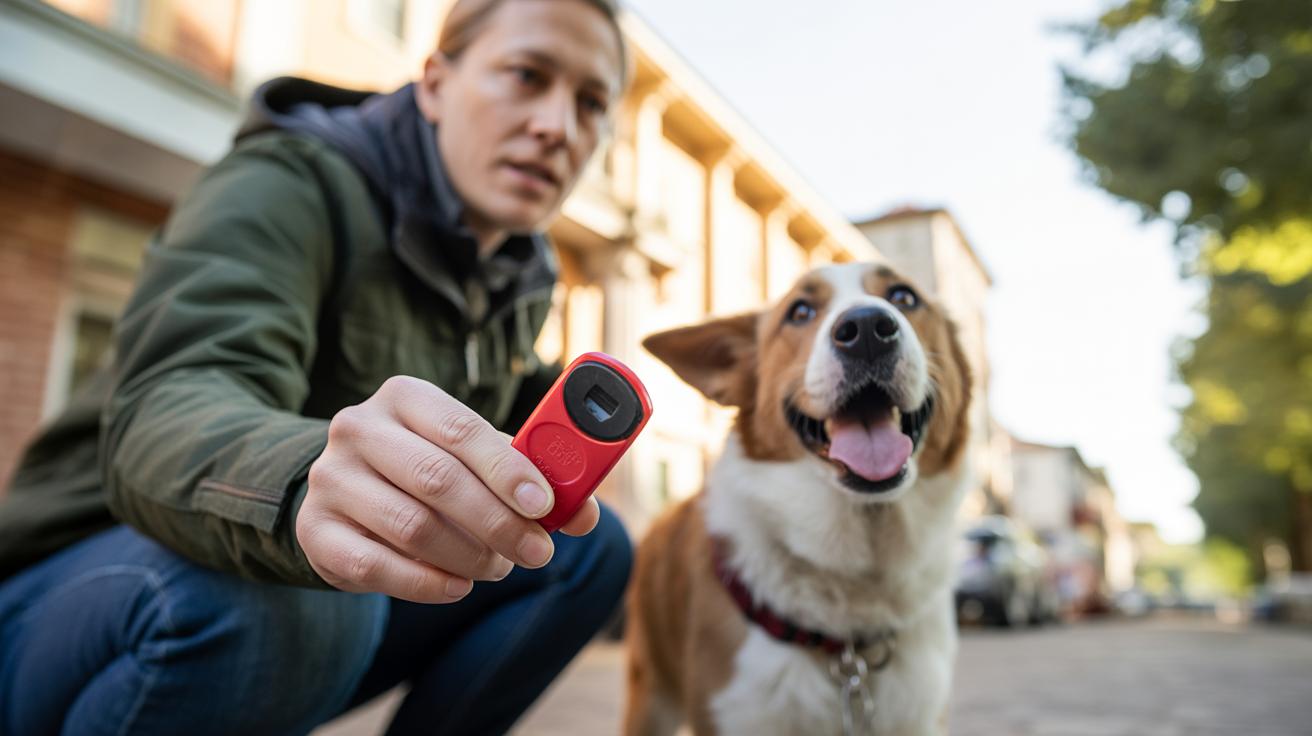
    3. Give the reward right after the click.

    Timing matters. If you wait too long to click or to give the treat, your cat might connect the wrong thing to the sound and learning slows. Ever click a heartbeat late and your cat thinks the sunbeam earned the snack? Yeah, been there.

    Start with tiny steps, reward often, and slowly replace treats with everyday rewards like praise or a favorite toy. It’s claw-tastic when it clicks into place. Worth every paw-print.

    Origins and brief history of the training clicker

    - Origins and brief history of the training clicker.jpg

    It all began in marine mammal training, where handlers needed a clear, repeatable sound to mark the exact moment an animal did something. They used a short, sharp noise called a marker (a short, repeatable sound that marks the exact moment a behavior happens), then gave the animal fish as a reward. The click was simple, reliable, and easy for the animal to link to the reward.

    That little mechanical sound (think a small handheld clicker, a device that makes the same click every time) helped trainers close the gap between action and reward. That mattered a lot when animals were far away, worked in noisy pools, or did fast moves that were hard to reward instantly. It made timing precise, and timing matters.

    From there the idea moved out of pools and into homes, shelters, and kennels. Behavior scientists and pet trainers adapted marker-based methods for dogs, cats, and other companions. Karen Pryor and a few other teachers wrote about the science, taught the method, and showed how a simple marker plus rewards can teach very precise, sometimes complex behaviors across species. Ever clicked for a perfect sit or a neat trick? It's oddly satisfying.

    • 1950s–1970s: Marine mammal trainers used marker sounds during performances and research.
    • 1970s–1980s: Companion-animal trainers began experimenting with marker-based methods for dogs and cats.
    • 1980s onward: Karen Pryor and colleagues published, taught, and popularized clicker-based, reward-focused training.

    Worth every click.

    Benefits of clicker training and outcomes it helps produce

    - Benefits of clicker training and outcomes it helps produce.jpg

    Clicker training uses a clicker (a small handheld tool that makes a quick, sharp sound) to mark the exact moment your pet does something right. It’s a reward-based signal (you click, then give a treat or praise), so training stays calm and clear. That exact timing helps animals learn faster and without corrections (no scolding or physical force).

    Animals quickly learn to cooperate because the cue is predictable and kind. You’ll see ears perk, whiskers twitch, and a real eagerness to try new things. Ever watched a cat or dog brighten at that single click? It builds trust fast and makes handling, like grooming or nail trims, less stressful.

    This method is a lifesaver in busy homes, fosters, and shelters. Short, focused sessions give reliable responses even from short-term caregivers. For staff with little time, a few clicks and treats can turn chaotic moments into calm, cooperative ones.

    • Less aversive: Uses rewards instead of corrections, so pets stay relaxed and curious. Think soft interest, not fear.
    • Builds a cooperative bond: Positive, predictable sessions make pets want to work with you and tolerate handling better (cooperative meaning calm, voluntary participation).
    • Practical for busy, foster, and shelter settings: Quick, low-stress cues help staff and short-term caregivers get reliable responses fast, useful when shifts change or there’s little time to train.

    Step-by-step beginner how-to for using a training clicker

    - Step-by-step beginner how-to for using a training clicker.jpg

    Start in a calm, low-distraction spot with tiny, high-value treats and a learner who’s a little hungry. Charge the clicker (a small handheld device that makes a quick, sharp sound) so the click comes to mean “treat is coming.” Timing is the real magic , click exactly when the behavior happens. Keep sessions short, about 5 to 15 minutes, and use very small treats so your pet stays eager for more.

    Charging the clicker

    Charging the clicker means pairing the sound with a treat so the click becomes a reliable signal before you ask for anything.

    • Hold the clicker comfortably in your hand.
    • Click once (a single, sharp press).
    • Give a tiny treat right after the click.
    • Repeat that click → treat sequence 5 to 10 times.
    • Test it: click when your pet is doing nothing and see if they look for a treat.

    First training session setup

    A quick checklist to get you ready.

    • Quiet room or corner with few distractions.
    • Treats cut into pea-sized pieces (tiny, so they don’t fill up fast).
    • Keep the session 5 to 15 minutes.
    • Put phones and toys away so you can focus.
    • Use a reward your pet loves right now , turkey, chicken, or something extra tasty.
    • Jot one short note about what worked after each session.

    1. Charge the clicker first using the routine above.
    2. Stand near your pet and choose one simple behavior to teach, like sit or touch.
    3. Wait for the behavior to happen naturally, or lure it gently with a treat (think of it like fishing for a response).
    4. Click the instant the behavior occurs , not before, not after. Timing, remember?
    5. Give the tiny treat immediately after the click.
    6. Repeat the behavior several times, keeping your timing steady.
    7. Slowly make the treats smaller and start rewarding every other or every third correct response.
    8. Test the clicker as a marker by clicking from a little farther away and watching for that treat-seeking look.
    9. End on a high note with a favorite reward or a short play break. Worth every paw-print.

    Practice short sessions daily. Quick troubleshooting: recharge the clicker if your pet ignores clicks, make treats smaller if they get full too fast, and cut distractions if your timing slips. Full fixes are in the Troubleshooting section, but these little fixes usually do the trick.

    What Is a Training Clicker?

    - Practical exercises and example behaviors to teach with a training clicker.jpg

    A training clicker is a tiny handheld device that makes a clear, consistent click (think: a quick, sharp sound) to mark the exact moment your dog does the thing you want. It gives you a super-precise way to tell your dog, yes, that was perfect. Cool, right?

    Want a handful of ready-to-try exercises? Here are six simple drills you can do with a clicker to build useful skills, great for puppies or adult dogs. Short sessions, lots of tiny wins.

    • Capture a sit , Goal: reward a naturally offered sit. Wait quietly and click the instant their rear hits the floor, that clean moment, then drop a tiny treat. After a few clear reps, add a verbal cue and practice in slightly busier rooms so it generalizes.

    • Shape a down , Goal: build a full down by rewarding tiny steps (shaping means breaking a behavior into very small pieces). Click each small improvement: nose lowering, elbows tucking, then the full lay-down. Use micro-treats and only move to the next step when the current one is reliable.

    • Recall in a quiet space , Goal: a dependable come in low-distraction areas (recall means coming when called). Call softly, click the instant they reach you, and reward with a high-value treat (something extra tasty) plus warm praise. Slowly add distance and gentle distractions once it’s consistent.

    • Target touch for positioning , Goal: teach nose-to-target so you can guide movement (target can be your finger or a small stick). Present the target, click the exact touch, then reward. Gradually use the target to steer sits, spins, or stepping onto a platform.

    • Leash loose-walk micro-rewards , Goal: reward short moments of a slack leash to teach loose walking. Click when the leash relaxes, then reward with a treat or letting them walk forward. Ask for slightly longer slack before clicking over time, and fade treats into occasional rewards.

    • Crate approach and step-in , Goal: make the crate a comfy choice. Click for approach, click for a nose or paw in, then click when they step fully inside; reward and close the door briefly. Build up duration slowly and keep breaks calm so the crate stays a safe, pleasant spot.

    Keep sessions short, five to fifteen minutes, and end on a happy note. Mark tiny wins and move up only when the behavior is steady for a few sessions in a row. Worth every paw-print.

    Troubleshooting common training clicker problems and mistakes

    - Troubleshooting common training clicker problems and mistakes.jpg

    If your training hits a roadblock, pause and check the basics first: is the click-to-treat link weak (click-treat association – the sound no longer predicts a reward), is your timing off, are the rewards not worth it, or is the environment distracting? Don’t worry, we’re not repeating full lessons here – for step-by-step practice see Step-by-step beginner how-to and the Charging the clicker H3.

    Problem Likely cause Recommended fix
    Click ignored Weak click-treat association (the click no longer reliably predicts a treat) Re-charge the clicker – rebuild the sound-to-treat link so the click again means food
    Wrong behavior rewarded Click timing off (clicked too early or too late) Do timing drills (practice marking the exact moment). Slow down and mark the precise action
    Dog/full too fast Treats too large or sessions too long Use tiny, pea-sized treats (very small food rewards) and shorten sessions
    No interest in food Low food drive or wrong reward Try higher-value treats or switch to play/toy rewards that your pet loves
    Trainer misses micro-moments Poor hand-eye timing or rushing Mark bigger, slower actions first. Practice on simple moves before fine details
    Pet startled by sound Clicker too loud or surprising Try a softer clicker or a visual/tactile marker (a hand signal or gentle tap)
    • Re-charge the clicker – see "Charging the clicker" in Step-by-step beginner how-to.
    • Practice timing drills – see Step-by-step beginner how-to, steps 4-6.
    • Shrink treats and shorten sessions – see "First training session setup."
    • Swap rewards if food interest is low – see Step-by-step beginner how-to for alternatives.
    • Slow your delivery and mark larger, slower actions first – see Step-by-step beginner how-to steps 2-5.
    • Try a softer or electronic clicker (quiet beeping device) if your pet startles – see Types of training clickers for options.

    If your learner shows fear or aggression, stop the session and consult a certified behavior professional for a safe plan. Worth every paw-print.

    Types of training clickers and how to choose the best one

    - Types of training clickers and how to choose the best one.jpg

    Clickers usually come in four common styles. There’s the classic handheld plastic clicker with a metal strip (a tiny box you press that has a thin springy metal tongue), quieter muted models with a softer sound, electronic clickers that beep or flash and run on small batteries (like watch batteries), and visual or tactile markers such as lights or vibrations for deaf or noise-sensitive pets. Pick the one that fits your pet’s hearing and your hands, and pay attention to sound level, how it feels to hold, and whether it seems well made.

    Type Pros Cons Best for
    Handheld plastic Simple to use. Very cheap. Gives a clear, consistent click sound. Can be loud or awkward for small hands. Most pet owners and beginners.
    Silent / muted Softer sound that is less likely to startle pets. Can be hard to hear in busy or noisy places. Skittish or noise-sensitive cats and dogs.
    Electronic Volume often adjustable. Some models add lights or multiple tones. Needs batteries. Can feel less tactile than a clicker you press. Trainers who work in different rooms or want presets.
    Visual / tactile Works when sound is a problem. Good for deaf pets or quiet homes. Pet must see or feel the signal to learn it. Deaf animals, very noisy environments, or owners who prefer no sound.

    Here are a few friendly tips to help you choose.

    • Test the sound near your pet before you buy. See if it startles them or makes their whiskers twitch.
    • Pick an ergonomic design you’ll actually use. If it’s comfy, you’ll click more often and that’s how learning happens.
    • Think multi-animal: different sounds or colors help tell pets apart during training.
    • Want hands-free? Look for wrist-attach or clip models so you can hold a toy or treat while you click.
    • Check durability. A solid casing and a sturdy metal strip (the little springy part) usually last longer.
    • Balance price and features. A cheap clicker works fine to get started.
    • If your pet hates noise, try a visual or vibration marker, or chat with a trainer for other options.

    Ever watched your cat chase a dot of light? Clicker training can give you that same spark, only with treats. Worth every paw-print.

    Fading the clicker, reinforcement schedules, and maintaining learned behaviors

    - Fading the clicker, reinforcement schedules, and maintaining learned behaviors.jpg

    Once a behavior is reliable, the goal is to stop leaning on the clicker so your pet does the thing in real life without always expecting a treat. Think of it like teaching your cat to come when called even if there is no tuna waiting. It keeps responses useful in messy, distracting places.

    Why fade the clicker? If you always click and feed, your pet learns to wait for a snack. Gradually removing the click and food prevents that and lets you use everyday wins as rewards , a walk, playtime, or being let out. That makes the behavior more useful and more likely to happen when it counts.

    Here’s a simple fade process you can follow, with rough timing and examples. Fixed ratio (reward after a set number of responses). Variable reinforcement (rewards come unpredictably but average out). No crazy jargon, promise.

    1. Continuous to fixed ratio (days)
      Start by rewarding every correct response like you always do. Then move to rewarding every 2 to 4 responses for several days. You still celebrate the wins, just not every single time. It feels silly at first, but your pet will catch on.
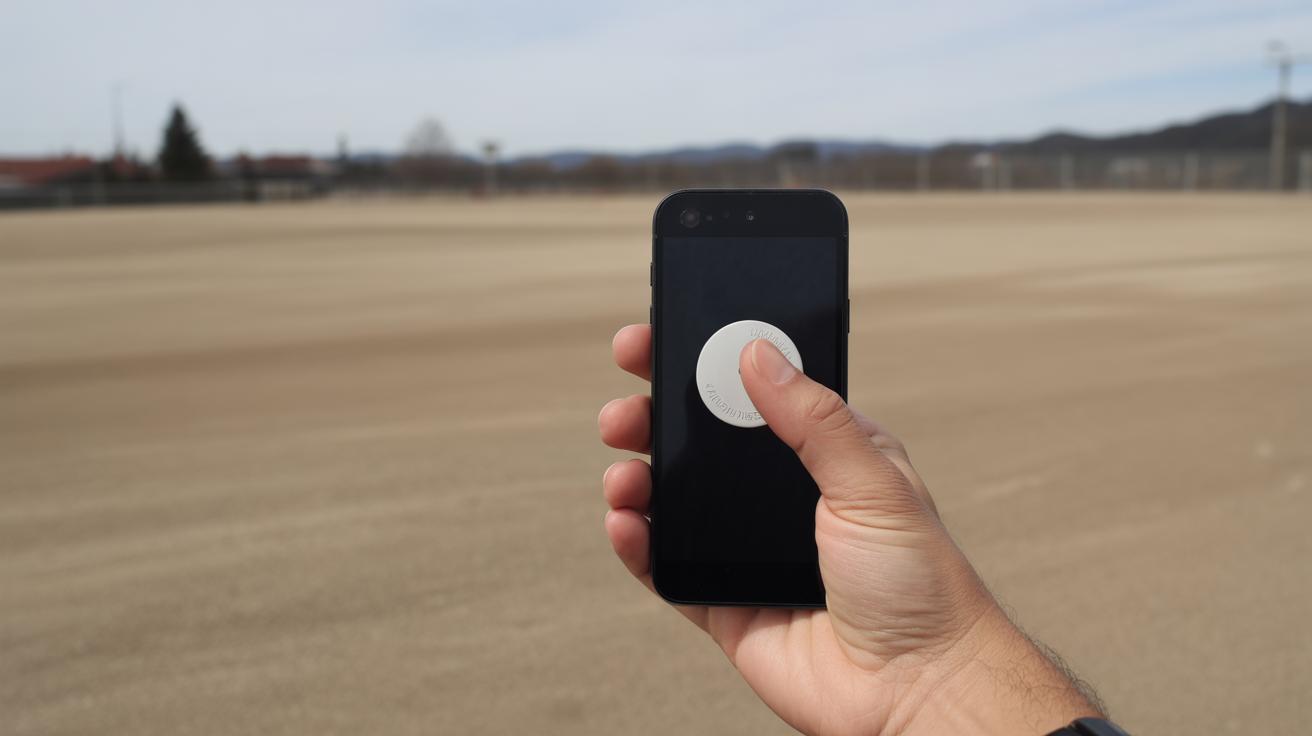
    2. Increase the ratio (1 to 2 weeks)
      Once it’s steady, stretch out the rewards , try every 5th response, then every 8th as the behavior stays solid. If your pet starts missing cues, drop back a step for a day. Small step backs are fine; we’re building reliability, not pressure.

    3. Variable reinforcement (2+ weeks)
      Now switch to an unpredictable pattern so rewards are not on a set count. For example, average one reward every 3 responses , sometimes after 1, sometimes after 5. This unpredictability makes the behavior persistent, kind of like how slot machines keep people trying. It works, but be gentle , too much randomness too fast can be confusing.

    4. Real-life rewards and maintenance
      Replace most food treats with natural outcomes: play, a walk, attention, or access to the door. Keep giving food sometimes so the behavior stays exciting , maybe a mini-treat now and then. Practice in different rooms and with mild distractions so the response stays solid everywhere.
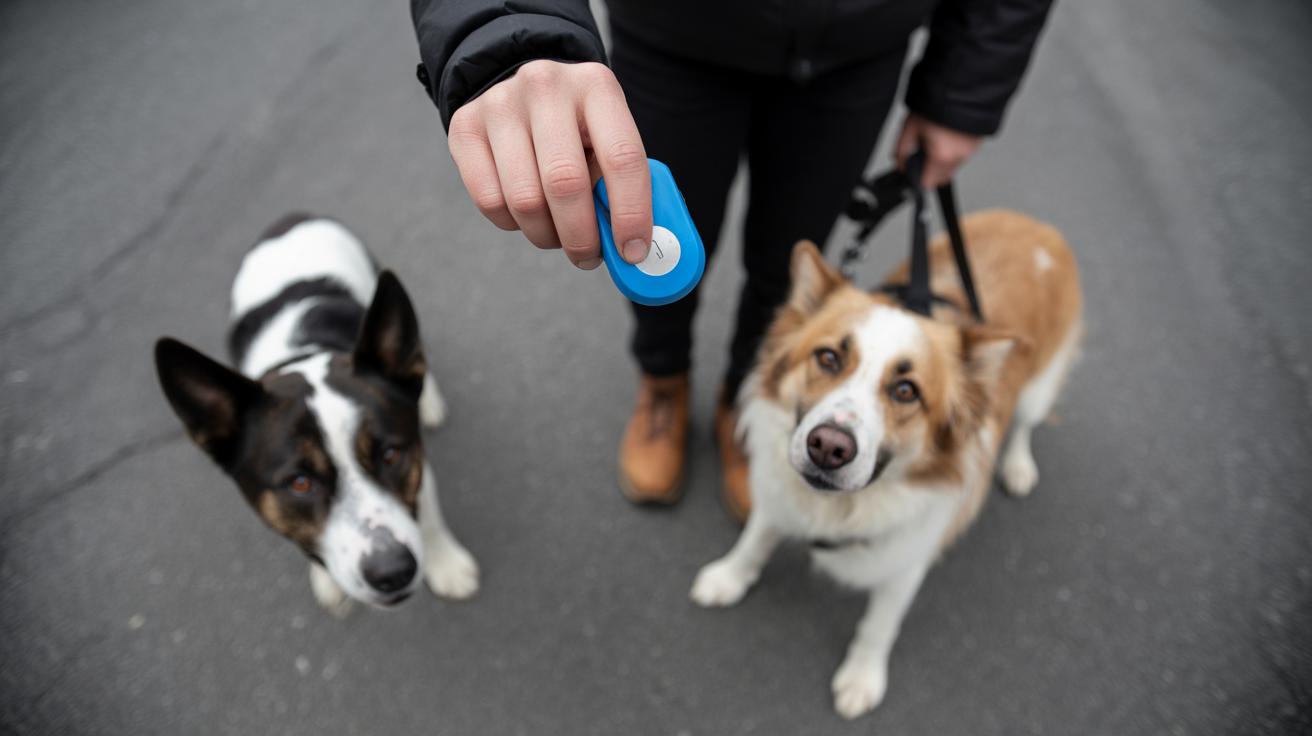
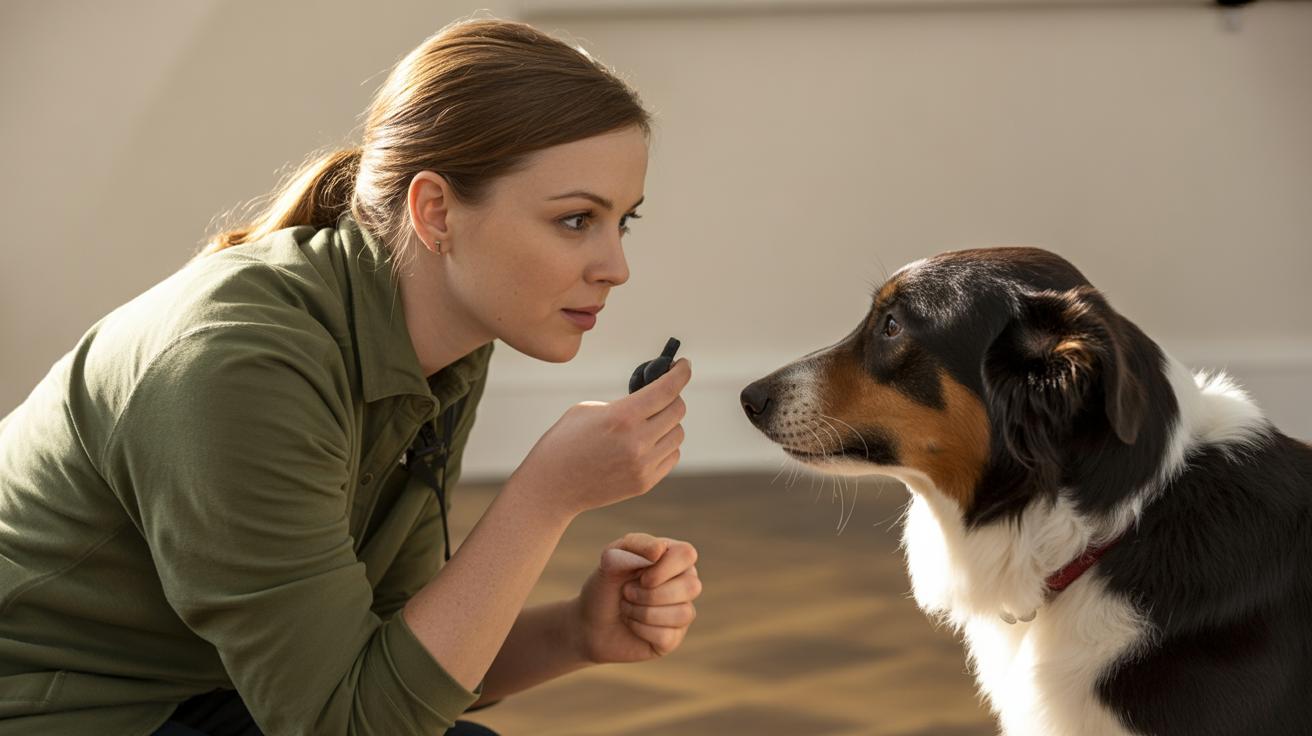
    Quick tips: if your pet pauses and looks for food, reward the behavior you want right away with something real. For busy days, toss a toy or a short play session before you leave , that’s real reward, and fast. Ever watched your kitty pounce on a feather wand after a long nap? That’s the joy we want to tap into.

    Worth every paw-print.

    FAQs, safety tips, and resources for training with a training clicker

    - FAQs, safety tips, and resources for training with a training clicker.jpg

    • How do I start?
      Start by "charging" the clicker (small handheld sound marker) so your pet learns that click equals good stuff. See "Charging the clicker" in the Step-by-step beginner how-to for the exact steps. Try this simple routine: Click. Treat. Wait for the twitch of interest. Repeat a few times, and the sound will start to mean treats.

    • How long should sessions be?
      Keep it short and sweet, about 5 to 15 minutes tops, see "First training session setup" for details. Five focused minutes beats a distracted half hour. Your learner stays eager, and you stay sane.

    • My pet ignores the click, now what?
      If the click isn't grabbing attention, rebuild the link using higher-value treats for a few quick reps, see "Charging the clicker." Use tiny, super-smelly bites so they notice right away. Short and tasty wins over long and boring.

    • Deaf or noise-sensitive pet?
      No problem, use a visual or tactile marker instead, like a quick light flash or a gentle vibration (a tap on the shoulder or a vibration collar, used carefully). See "Types of training clickers" for alternatives and matching tips to your pet's sensitivity.

    • Could training frighten my pet?
      Training should never scare them. Watch for stress signs, like wide eyes, tucked tail, freezing, or trying to hide. If that happens, stop, breathe, and slow the pace. Give breaks, make sessions fun, and go back to tiny steps.

    • When do I add a verbal cue?
      Add a word after the behavior becomes reliable, not before. First get the action consistent with the click, then pair the cue. It helps to say the cue calmly, then click and treat when they do it.

    • What treats work best?
      Tiny, high-value bites work best, think pea-sized pieces or small bits of chicken. Keep them small so your pet stays hungry for more practice. For picky pets, try a mix of options so you can swap to what feels irresistible.

    • How often do I click during shaping?
      Click each time your learner makes a small correct step toward the goal, see "Fading the clicker." Then slowly click less as the behavior becomes solid, so the cue and behavior stick without the crutch.

    • Safety checklist
      Stop if your pet shows stress. Use tiny treats so they don't get full fast. Don’t train right after a big meal. Match the marker to their sensitivity, whether sound, light, or touch. And, you know, keep nails safe and floors clear for dramatic leaps.

    Further resources, compact and specific

    • Don't Shoot the Dog! , Karen Pryor, classic book on positive reinforcement and shaping, good for beginners and pros.
    • The Trainable Cat , John Bradshaw and Sarah Ellis, practical tips if you're working with cats specifically.
    • Karen Pryor Academy (KPA) , online courses and workshops focused on marker training (great for hands-on skills).
    • International Association of Animal Behavior Consultants (IAABC) , articles, courses, and a searchable list of certified behavior consultants.
    • For fear or aggression, seek a certified behavior professional , look for a board-certified veterinary behaviorist (DACVB, a veterinary specialist) or an IAABC or CCPDT-certified trainer (CCPDT is the Certification Council for Professional Dog Trainers) for tailored behavior plans and hands-on help.

    Worth every paw-print.

    Final Words

    We jumped right into a clear definition, why the click helps, and a one-line buy cue. Then we dug into the learning science, a brief history, real benefits, step-by-step how-to, useful exercises, troubleshooting, gear choices, fading plans, and FAQs.

    That gives you a practical playbook for short daily sessions that cut boredom, sharpen recall, and stretch your toy budget.

    If you wondered what is a training clicker, it’s a tiny, reliable marker (a small handheld device that makes a consistent clicking sound) that bridges action to reward. Worth every paw-print.

    FAQ

    What is a training clicker used for?

    A training clicker is a small handheld device that makes a consistent click to mark the exact moment a desired behavior occurs, acting as a sound marker to signal a forthcoming reward.

    How does a training clicker work?

    It marks the precise instant of the target action—action → click → reward—creating operant (reward-based) learning; repeated pairing makes the click predict reinforcement.

    What age should you start clicker training?

    You can start with puppies as young as about eight weeks, and with people when they grasp cause-and-effect; use very short, low-distraction sessions and tiny rewards.

    Why would someone use a clicker and what does it do during training?

    A clicker gives a fast, precise marker that speeds learning, reduces confusion, helps shape small steps (shaping), and clarifies correct responses to redirect unwanted behavior.

    Is clicker training bad or are there downsides?

    Clicker training itself isn’t bad; problems come from poor timing, a weak click→treat link, oversized treats, or training a stressed learner—fix these by recharging the link and practicing timing.

    How do beginners start clicker training for dogs or puppies?

    Start by charging the clicker (click then treat 5–10 times), practice timing on easy actions, keep sessions 5–15 minutes, use tiny high-value treats, and work in a low-distraction area.

    What is clicker training for humans?

    For humans, the click is used as clear feedback to mark desired actions in learning or rehab settings, though verbal markers or brief praise often serve the same purpose.

    Related Articles

  • what is clicker training: simple steps for beginners

    what is clicker training: simple steps for beginners

    What if one tiny click could turn chaos into calm and help your cat or dog learn tricks faster than treats alone? Picture the small, satisfying click, your pet’s whiskers twitching and tail giving a curious flick. Ever watched your kitty chase a shadow? This is kind of like that, but way more productive.

    Clicker training uses a short sound as a marker (a quick noise that tells your pet the exact moment they did the right thing). It’s a kind of positive reinforcement, which just means you reward good behavior so they’re more likely to do it again. Think of the click like a little photograph , it freezes the perfect moment.

    Start by charging the clicker (teach your pet that click equals treat) with tiny, tasty bites. Then either capture the behavior or shape it: capture means you wait and reward the pet when they do the behavior on their own, shape means you build the behavior in small steps by rewarding closer and closer tries. Click, then give a reward within one second so the message stays crystal clear. Watch whiskers twitch. Watch tails flick. It’s so fun.

    This quick intro gives beginners the simple steps to get clear results and more joyful playtime. Try a few short sessions a day, and you’ll notice calmer, sharper pets before you know it. Worth every paw-print.

    Clicker training explained , quick-start action plan

    - Clicker training explained  quick-start action plan.jpg

    Clicker training is a marker-based positive reinforcement method (a marker is a short sound that tells the animal exactly when it did the right thing; positive reinforcement means you add something good to increase that behavior). It starts with classical pairing (pairing the click with a reward until the sound predicts food, like teaching a bell means dinner) and then becomes operant conditioning (the animal repeats actions that earn rewards).

    1. Charge: Pair the click with a treat until the click alone predicts food. Use tiny, tasty bits, think pea-sized or smaller, so your cat or dog stays hungry for more practice. Do a few quick repeats, like 10 to 20 clicks with a treat right after each one, until the animal looks for a reward after hearing the click.

    2. Capture or shape the behavior: Wait for the action you want to happen, or guide it in small steps. Capture means you click the moment the animal naturally does the thing (a sit, a paw, a spin). Shaping means you reward closer and closer approximations , like rewarding a head turn, then a paw lift, then a full paw touch.

    3. Click and reinforce: Click the exact instant the target action happens. Then give the reinforcer within about one second so the animal links the click to the action. Reinforcers can be tiny food bits, a short play burst, a favorite toy, or petting (whatever your pet loves most).

    Timing is everything. The click marks the micro-moment you want repeated, and the reward tells the pet, “Yes, do that again.” Ever watched your kitty zoom after a toy right after a click? Magic.

    See H2 "Why clicker training works" for the science and H2 "How to clicker train" for a detailed step-by-step plan.

    Why clicker training works: operant and classical conditioning plus the marker function

    Why clicker training works for the science and.jpg

    Clicks get their power in two steps. First we pair the click with food so it becomes meaningful. That’s classical conditioning (a neutral cue, like a sound, comes to predict a reward). Next we use the click to reward actions so the animal repeats them. That’s operant conditioning (things that bring good outcomes happen more often). Think of the click as a tiny, instant "yes" that tells your cat exactly what worked.

    The marker is the magic. The marker (a short, sharp sound that points to an exact moment) is distinct, consistent, and immediate, so it pins down tiny micro-moments better than a changing human voice. Click the instant the paw lifts. That precise split-second gets reinforced. Ever watched your kitty freeze mid-pounce? That’s the kind of tiny moment a click can lock in. See the "How to clicker train" section for step-by-step procedures.

    Trainer tips What to do
    Accidental clicks Give a free treat right away to keep the click→treat link strong, then move on.
    Faded marker Rebuild quickly with a few short click→treat rounds to restore the sound’s value.
    Historical note Karen Pryor helped popularize this marker method from marine-mammal work.

    How to clicker train: a beginner step-by-step guide

    How to clicker train for a detailed step-by-step plan.jpg

    Refer back to the quick-start lede for the basic idea. Keep it simple: sound, treat, repeat. Your cat will get it faster than you expect.

    1. Prepare equipment and tiny treats.

      • Get a clicker (a small handheld sound marker), a treat pouch (hands-free pocket or wide-mouth bag), and pick a quiet spot with few distractions.
      • Cut rewards into pea-sized bits so your cat eats fast and keeps momentum. Think diced hotdog, tiny cheese cubes, or freeze-dried liver (concentrated, meaty bites).
    2. Charge the clicker with 10-20 pairings.

      • Click, then give a treat right away. Do that until the click means food. The click is your cat's "you did it" sound.
      • If you click by accident, give a free treat immediately so the click stays positive.
      • For deaf cats, use a brief light flash or a gentle tap on the shoulder or rump paired with the treat the same way. Same idea, different sense.
      • Quick example: Click. Treat in hand. Repeat 10 to 20 times.
    3. Choose a known behavior to capture or pick a target to shape.

      • For fast wins, capture something your cat already does, like a sit, a head turn, or a paw lift. Reward those moments.
      • To shape a new trick, break the final action into tiny steps and reward small forward moves. Raise the criteria slowly. Patience pays off.
    4. Click at the precise micro-moment.

      • Mark the exact split-second that made the behavior correct. The instant the butt hits the floor, the paw touches the target, or the head turns. That one crisp click teaches what to do next.
      • Timing matters. A fuzzy click tells your cat nothing. A sharp click says, "Yes, that."
    5. Deliver the treat within about one second and manage retrieval speed.

      • Keep treats tiny so chewing does not break the flow. If your cat lingers, try even smaller pieces, softer treats, or have someone roll treats to you so timing stays tight.
      • Quick reward. Quick reset. That keeps the game moving.
    6. Run short, frequent sessions.

      • Do several 5 to 15 minute sessions a day. Aim for about 10 to 20 clicks per session. Short bursts beat marathon sessions any day.
      • Take short breaks between sets so your cat stays engaged, not tired. Your cat will thank you with a focused pounce.
    7. Introduce the cue once the behavior is reliable.

      • Say or signal the cue just before the action, then click the correct response. If you cue too early, drop expectations and reward smaller approximations until timing rebuilds.
      • Quick example: Say "Sit" just before the butt touches the floor. Then click.
    8. Fade clicks and treats using intermittent rewards and real-life outcomes.

      • Start with click then treat every time. Then slowly reduce food and mix in praise, play, or access to a favorite spot. Keep occasional food rewards so motivation stays high.
      • This helps the behavior stick in the real world, not just training time. See the science section for research on marker fading and reinforcement schedules.

    Note: Follow this numeric guide, 10 to 20 click→treat pairings to charge the clicker, 5 to 15 minute sessions, and about 10 to 20 clicks per session. Worth every paw-print.

    Clicker training for dogs, cats, and birds: species-specific examples and tips

    - Why clicker training works operant and classical conditioning plus the marker function.jpg

    For dogs, pick quick wins like sit, recall (coming when called), or a tidy trick so everyone feels successful fast. Use a clicker (a small handheld device that makes a sharp click) and tiny, high-value treats so the dog stays focused. Cue "sit," click the instant the butt hits the floor, then toss a pea-sized treat. The click plus that tiny reward creates a clear, repeatable cue and yes, you get that satisfying thud when they sit. Keep sessions short and cheerful. Puppies learn fast, so short reps beat marathon practice every time.

    Training cats and small pets is more about catching what they already do than forcing poses. Use short bursts and shape behavior (rewarding tiny steps toward the final action) so they choose to try things. I taught my cat to touch a target by clicking for a head turn, then a little lean, then a tap, each tiny win felt like a mini celebration. Use very tasty bites and read body language; if a rabbit or chinchilla freezes, slow the pace and reward the smallest brave move. Seriously, even a tiny twitch counts.

    Birds need calm pairing, tiny food bits, and strict flight-space safety so wings and perches stay happy. Pair the clicker or marker with treats until the bird links the sound to food, and always make sure there’s clear room for a quick hop or flap. Be gentle and patient; a nervous parrot will teach you a new kind of quiet.

    For deaf animals swap the click for a visual marker (a brief light flash) or a tactile marker (a gentle tap you can feel) paired with a treat so the marker still means something. Try the visual or touch cue a few times before adding the food so it’s obvious. You’ll know it worked when the animal looks for the marker like clockwork.

    Think about age and stamina. Young animals often have speed and energy on their side, so you can raise criteria faster. Older pets may need slower steps, comfy positions, and extra praise. Adjust expectations, and you’ll save everyone stress and time.

    Short sessions. Tiny treats. Lots of praise. Worth every paw-print.

    Choosing clickers and rewards: equipment, treat size, and alternatives

    - How to clicker train a beginner step-by-step guide.jpg

    Pick a clicker that feels good in your hand. Ergonomics (how it fits your hand) matters. Look for one that makes a crisp sound you can hear but that won’t scare your cat (sound quality). Try audible and silent models and watch your pet’s reaction. Click once, does your cat’s head turn? Ever had them ignore it? Uh, yeah, me too. Phone-app clickers are handy for practice, but a physical clicker gives faster, more consistent timing and tactile feedback (the little click you feel in your fingers).

    Use tiny, high-value treats only. Think pea-sized bits of diced hotdog, small cheese cubes, or freeze-dried liver (concentrated protein, low mess). Keep an eye on calories so training doesn’t sneakily replace a meal. See earlier treat examples for specifics. Short sessions. Lots of tiny rewards.

    For noisy rooms or deaf pets use a different marker (a signal that marks the exact right moment). Try a quick visual flash of your hand, a gentle tap, or a small bell. Make the marker obvious and consistent so your cat connects it to the reward. Carry treats in a pouch with a wide mouth and a secure snap (so goodies come out smoothly when you need them). Ready, click, treat. Worth every paw-print.

    Timing, session length, and reinforcement schedules in clicker training

    - Clicker training for dogs, cats, and birds species-specific examples and tips.jpg

    Click right on the tiny moment your cat does the thing you want. Use the click as your marker (the short sound that says "yes – do more of this"), then give the treat within about 1 second so the click-to-treat link stays clear. For chained behaviors (a series of actions linked together), either click each micro-moment or mark one key step and treat at the short pause. Small example: click at the paw lift – "click…treat."

    Keep sessions short and fun. Aim for 5 to 15 minutes, with roughly 10 to 20 marked reps (reps = repetitions) per session. Then take a 30 to 90 second break and run another short set. Do several short sessions across the day instead of one long marathon, your cat stays engaged and you both avoid burnout. Ever watched your kitty’s whiskers twitch as a toy rolls? That’s when the learning sticks.

    If your marker starts to slip or your cat looks confused, run a quick charging/booster round (fast, repeated click-to-treat pairings to rebuild the link). Think: click, treat, click, treat, about 8 to 12 fast reps to refresh the association. It’s quick, simple, and usually gets things back on track. Worth every paw-print.

    Troubleshooting clicker training: common mistakes, fixes, and when to get help

    - Choosing clickers and rewards equipment, treat size, and alternatives.jpg

    Quick recap: when your cat’s progress stalls, most fixes are small and fast. Below is a short, practical checklist of fixes you can try right now without repeating the full how-to stuff.

    • Oops, accidental click? Give a free treat right away so the click stays honest. Clicker (a small handheld device that makes a click sound) mistakes are common. Example: click, then toss a treat and watch the whiskers twitch.

    • Reward tinier steps when precision slips. Lower your expectation and click the smallest approximation you can see. Example: a tiny paw lift gets a click and a treat. It rebuilds confidence fast.

    • Swap to a higher-value reward when motivation dips. Try a tastier treat like a bit of chicken or tuna (higher-value reward = something your cat really wants).

    • Change location or remove distractions. Move to a quieter room or a different surface so attention stays on you, not the noisy heater or that fluttering curtain.

    • Stop clicking the unwanted action. Instead, teach a replacement behavior that earns the same payoff, using tiny shaping steps (shaping means rewarding small, progressive improvements).

    • Run a quick charging round to rebuild the click→treat link. Charging (rebuilding the association between the click and a reward) can be as simple as 8 to 12 quick click-and-treat pairs. Your cat will remember the sound means good things.

    • If timing feels off, practice short timing drills. Timing drills are brief exercises where you focus only on clicking at the exact moment of the behavior. It’s awkward at first, but you get better fast.

    • If attention drops quickly, do very short, frequent sessions and try again later. Two minutes of intense focus beats ten minutes of distracted training.

    See the How to clicker train section for basics, the Timing section for timing drills, and the Charging table for step-by-step recharge guidance.

    When to seek professional help

    If aggression increases, fear gets worse, or anyone might get hurt, call a qualified behavior consultant right away. A good consultant will rule out medical causes, assess safety risks, identify triggers, and give you a step-by-step plan that usually mixes management, desensitization, and targeted training. Expect clear homework, regular progress checks, and a safety plan you can use at home. Worth it.

    Look for credentialed specialists such as a veterinary behaviorist (a veterinarian with behavior specialty) or a certified applied animal behaviorist (a science-trained behavior expert). Your vet can refer you, or search professional directories to find someone with documented training and experience.

    Final Words

    In the action: you’ve got the quick-start, charge, capture, click & reinforce, and the why , classical conditioning (pairing a sound with a reward) and operant conditioning (doing things that earn rewards).

    1. Charge the clicker.
    2. Click the exact micro-moment and give the treat within about one second.
    3. Keep sessions short and use tiny, high-value rewards.

    If you’re wondering what is clicker training, it’s a tiny, clear marker that helps cats learn fast , perfect for busy, multi-cat homes. Try it; your cats will purr (and your furniture will thank you).

    FAQ

    Frequently Asked Questions

    What is clicker training used for?

    Clicker training is used to teach precise behaviors by marking the exact moment with a click (a marker signal), then giving a reward, shifting from pairing into operant conditioning (learning by consequences).

    Who invented clicker training?

    Karen Pryor popularized modern clicker training; its roots go back to marine-mammal work (like dolphins) and earlier animal trainers who used markers to shape behaviors.

    What is clicker training for dogs and cats?

    Clicker training for dogs and cats teaches sit, recall, or target touches by clicking the precise micro-moment and rewarding tiny treats; cats usually need shorter, playful sessions.

    What is clicker training for humans and how is it used online or as slang?

    Clicker training for humans applies the same marker-and-reward method to shape small actions in classrooms, therapy, or skill practice; online slang sometimes jokes about “conditioning” people.

    What is an example of clicker training?

    An example of clicker training is teaching a dog to sit: click the instant its rear touches the floor, then give a pea-sized treat, repeating until the behavior is offered willingly.

    What are the disadvantages of clicker training or why is it considered bad?

    Disadvantages include poor timing, accidental clicks that confuse animals, over-reliance on food rewards, limits with aggression or severe fear, and the need for qualified help in risky cases.

    What age should you start clicker training?

    You should start clicker training when an animal can eat tiny treats and focus, commonly around eight weeks for puppies and kittens, while older animals learn with stamina and mobility adjustments.

    Related Articles

  • Kitten Clicker Training: Start, Rewards, Troubleshooting

    Kitten Clicker Training: Start, Rewards, Troubleshooting

    Want your kitten to sit on cue faster than a laser pointer can steal their attention? Let’s make training feel fun and easy!

    Clicker training uses a clicker (a tiny handheld device that makes a sharp click) plus tiny aromatic treats (soft, smelly bites cats love) and very short practice bursts, one to three minutes, to build clear "aha" moments your kitten remembers. Start as early as eight weeks. Learn the simple load-click-treat rhythm: get the treat ready, click the moment your kitten does the thing you want, then give the treat. You’ll hear the crisp click and watch their ears perk up.

    I’ll show you how to begin, pick treats that actually motivate your kitty, run short sessions that fit busy days, and make a simple practice plan you can stick to. I’ll also cover the usual hiccups, like distraction or timing flubs, and quick fixes so training stays fun, not frustrating. Worth every paw-print.

    What kitten clicker training provides

    - What kitten clicker training provides.jpg

    Start as early as about 8 weeks. Use tiny aromatic treats (strong-smelling treats that grab a kitten’s attention) and keep sessions short so the fun never fades. First lightbulb moments usually show up after just a few clear repetitions. Your kitten’s ears will perk. You’ll grin.

    1. Load the clicker (clicker is a small handheld sound device). Use the saucer or toss method so the kitten learns click means treat.
    2. Pick tiny aromatic treats reserved only for training , diced chicken, tuna, Churu (a squeezable paste treat), or meat baby food. Fingertip-sized morsels work best.
    3. Run 1–3 minute sessions. Very short bursts keep attention sharp.
    4. Ask for a simple behavior or lure gently , think sit or a nose touch. Make the cue clear and calm.
    5. Click the exact instant the correct movement finishes, then give the treat by hand. Timing is everything.
    6. Repeat these short sessions many times across the day. Track reps in a simple log , date, behavior, and when you saw that “aha” moment.
    7. End while the kitten is still interested and reward a calm exit so training ends on a good note.

    Use lots of short bursts instead of one long training push. Positive reinforcement for kittens works best with quick repeats. Try a practical weekly plan: twenty 2-minute bursts spread across the week, or micro-bursts like ten 1-minute rounds on busy days. Watch your kitten’s interest to guide pacing. Most kittens show progress after a few good reps , note that third-time spark and then slowly increase distance or add a verbal cue.

    Want visuals? Make a 20–30 second how-to clip or three stills: loading the clicker, the click-to-treat handoff, and a short sit exercise. Easy to do, and super helpful when you replay it while your cat practices.

    Curious for more details? Check Clicker Training Basics , it’s a great next step for the clicker-curious.

    Kitten clicker training equipment and treats: clickers, alternatives, and reward selection

    Pick one clear marker and stick with it. A small plastic click box (a tiny device that makes a sharp, repeatable click) is great for precise timing and fast lessons. If your kitten is noise-sensitive, try a softer marker like a pen snick, a tongue click, or a one-syllable word such as "yes", those feel less spooky to shy kitties. Think about personality: shy kittens like gentler sounds and steady repetition. Bold kittens usually love a crisp click. When you shop, search "kitten training clicker" or "best clicker for kittens" so you get a lightweight model made for tiny paws and short sessions.

    Use tiny, high-value rewards and save them just for training. High-value treats (strong-smelling, super tasty bites) keep the session flowing because they’re eaten fast. Cut treats to fingertip size so your kitten can pop them in and get back to the behavior. See the Quick-Start above for the loading method and ideal treat size. For ideas on keeping training positive and rewarding, check Positive reinforcement basics (ASPCA). Worth every paw-print.

    Round out your kit with a few practical items and a plan for non-food rewards. Treat pouch (a small bag with a fast-access mouth) makes it easy to grab snacks without fumbling. Store tiny treats in sealed tins (metal containers that keep morsels fresh) or dividers to avoid crushed crumbs. Pick a feather or small ball to use only as a special play reward so toys stay exciting. For busy days, a quick toy toss before you leave gives ten minutes of safe play and mental stimulation.

    Vendor-style tips and what to look for:

    • Clicker options: regular click boxes and soft-click variants , choose something lightweight and reliable for clear timing.
    • Alternative markers: pen click, tongue click, or "yes" , switch to these for noise-sensitive kittens or busy homes.
    • Training treats and storage: tiny, aromatic bites; keep them in sealed tins or divided containers so you can grab one in a flash.
    • Treat pouch styles: clip-on, belt pouch, or magnetic-closure , pick the one that keeps your hands free and your movements smooth.
    • Target stick choices: lightweight wands or foam-tipped sticks (a target stick is a wand with a small marker to guide your cat) , helps you add distance and shape behaviors without constant treats.
    • Toy rewards and play-launch tips: reserve one feather or small ball for training-only play so it stays special; use short, high-energy bursts after a successful rep.

    A few last notes: keep sessions short, stay cheerful, and praise the small wins. Ever watched your kitty suddenly get it and do a perfect little pounce? Pure gold.

    When to start kitten clicker training: readiness signals, vaccine/safety caveats, and teething adjustments

    - Kitten clicker training equipment and treats clickers, alternatives, and reward selection.jpg

    Start when your kitten seems curious and calm. That calm curiosity makes lessons faster and kinder, and it falls inside the socialization window when gentle, positive moments stick. Ever watch your kitten’s whiskers twitch as they focus? That’s a great sign.

    Look for simple readiness signals:

    • Calm approach to you , not hiding or freaking out
    • Accepts tiny food rewards from your hand (small tasties work best)
    • Short, focused gazes , brief eye contact as they pay attention
    • Not overly worked-up after playtime; they can settle quickly

    If your kitten shows most of these, short cheerful sessions will be way more productive and less stressful.

    Keep training at home during routine vaccine windows (when they get their shots). Avoid outdoor exposure until your vet gives the okay. If your kitten is sore after shots or feels under the weather, keep sessions extra gentle and brief , low-stress timing aids recovery.

    Teething (when their baby teeth fall out and their gums get sore) can make kittens bite more. Swap to softer rewards like a smear of wet food or tiny spoon-fed tastes. Use stationary lures instead of moving your fingers, and shorten bursts to match their bitey attention span. Actually, make that plenty of short, tasty wins.

    See the Quick-Start H2 for the baseline age and start guidance.

    Kitten clicker training step-by-step exercises: progressive training and advanced variations for sit, recall, litter, carrier, and bite reduction

    - When to start kitten clicker training readiness signals, vaccinesafety caveats, and teething adjustments.jpg

    Use the Quick-Start H2 as your baseline for how many treats to load, treat size, and session length. These progressions follow those core rules and slowly push your kitten toward distance, distraction, and real-world proofing with clicker training (clicker = small handheld device that marks the exact moment you want your cat to repeat).

    Sit (progression & proofing)

    Start by shaping the sit with tiny guides and a target-stick (a wand with a foam tip that shows where the nose should go). Short, clear motions work best , think gentle guidance, not wrestling.

    1. Ask for a target-touch to the nose, then lift your hand slightly so the hips lower. Do 3 to 10 reps to notice a change; repeat over days.
    2. Add a small upward arc of the lure (lure = hand-held treat guide) so the back end drops into a sit. Reliable in a few days to one week.
    3. Swap the lure for the target-stick to reduce treat grabbing. Give it a week or two.
    4. Fade the visible lure toward an empty-hand cue; click at the finish and reward the behavior. This takes more weeks.
    5. Add a 1 to 3 second pause before you mark with the clicker to build patience. Proof this over days to weeks.
    6. Slowly increase distance and introduce mild distractions, rewarding sometimes as reliability grows. Proofing at distance can take multiple weeks. Worth the effort.

    Recall (progression & distance proofing)

    Recall keeps kittens safe and makes for great bonding. Shape it from short hops to eager dashes.

    1. Say the name, take one step back, then click and reward when your kitten comes. Short-distance reliability can happen in days.
    2. Add a few backward steps after each successful rep; build up over days to weeks.
    3. Offer a visible target or mat for the kitten to aim at , a clear end point helps focus.
    4. Use intermittent high-value rewards or reserved play as distance grows. Try a variable schedule (reward often at first, then less: for example 3 rewards out of 4, later 1 out of 5).
    5. Practice with low-level distractions, then raise the challenge slowly over weeks.
    6. Occasionally follow a successful recall with a quick play session or a toy toss to make coming back fun and generalize eagerness.

    Litter, Carrier, and Bite reduction

    These skills need slow shaping and calm sessions. Pick quiet moments and log small wins. Tiny celebrations welcome.

    A) Litter

    1. Reward every confident entry to the box. The smell of the treat may help at first.
    2. Gradually delay the treat until the kitten finishes the task, so the whole action gets reinforced.
    3. Proof placement by moving the tray in small steps and rewarding correct choices. Patience pays off.

    B) Carrier

    1. Reward approach and sniffing at the open carrier. Make it a safe, interesting spot.
    2. Reward for sitting at the carrier mouth. Celebrate small steps.
    3. Reward stepping in, then close the door briefly and give a calm reward; lengthen the closed-door time slowly so the cat learns the carrier is okay.

    C) Bite reduction

    1. Watch for tiny triggers that lead to nips and note them. Awareness is half the battle.
    2. Shape gentler contact by rewarding soft touches and immediately swapping to a toy on a short timer.
    3. Set a clear rule: gentle touch gets play, hard bite ends the fun. Be consistent.
    4. Increase tolerated handling time little by little, with calm food rewards for staying relaxed.
    Behavior Progression steps Reward type for each stage Expected timeline (range)
    Sit Target-touch → fade lure → empty-hand cue → distance proof Tiny aromatic treats → target-stick rewards → intermittent play 3 to 10 reps to notice; days to weeks to proof
    Recall Name → short step-back → increase distance → variable rewards High-value treats → reserved toy play Short-distance: days; generalized: multiple weeks
    Litter entry Reward entry → delay-to-reward → placement proofing Small smell-first treats → occasional praise Days to reliable; weeks for proofed placement
    Carrier step-in Approach → sit-by → step-in → brief close-door increments Soft treats and calm petting → slow desensitization rewards Days to weeks depending on fear level
    Scratching-post use Target the post → reward initial contacts → shape full use Tiny treats → praise → play after good use Quick wins: days; solid habit: weeks
    Bite reduction Record triggers → shape soft touch → timed toy swaps Toy rewards → calm food rewards for tolerance Weeks for steady improvement

    Session management for kitten clicker training: advanced timing, reinforcement schedules, and tracking

    for age and initial session defaults).jpg

    Start with the Quick-Start baseline for loading the clicker (a small handheld sound marker) and the first session length, then tweak from there to fit your kitten’s mood and your schedule. Think of that baseline like a warm-up. It gets the clicker meaning into your kitten’s head before you stretch sessions longer or pile on reps. Ever watched a kitten freeze, ears twitching, when a new sound shows up? That’s normal.

    Keep training in two main flavors: micro-bursts and proofing blocks. Micro-bursts are very short checks (10–60 seconds) to keep attention high. Proofing blocks are longer, focused practice on one skill so your kitten learns to do it under more pressure (proofing block – longer practice to build reliability). Use micro-bursts when you’re busy and proofing blocks when you want real progress.

    Here’s an easy reinforcement progression to follow as your kitten gets better: 1:1 → 3:2 → 3:1 → variable. That just means you start by rewarding every correct click, then slowly give fewer treats for the same number of clicks, and finally switch to variable reinforcement (rewards given unpredictably so motivation stays high). It’s like moving from training wheels to free-riding.

    Weekly plan examples so you can pick what fits your week:

    • Busy week: 10 × 1-minute micro-bursts spread through the day. Perfect if you’re rushing out the door.
    • Moderate week: 3 × 3-minute short sessions plus one 8-minute proofing block. Nice balance.
    • Intensive week: 5 × 3-minute sessions plus one 10-minute proof day for heavier practice.

    Advanced session rules (quick, usable):

    • Always use the Quick-Start baseline before you lengthen or densify sessions.
    • Stop a session before engagement drops. End on a calm, rewarded note so training feels like a win.
    • Shorten or shift sessions during teething, illness, or over-arousal. Kittens get cranky then.
    • Vary reward types so value stays high: tiny treats, a reserved toy play session, or a brief pet (tiny treat – small food reward; reserved toy play – a special toy only used after training).
    • Tag each session in a log for quick review later. You’ll thank yourself when you can see what worked.

    Keep a tiny training log with these columns so you can spot patterns and tweak fast:

    Date Time Session length Behavior Success Reward Notes (mood, teething, distractions)

    Finish sessions with a calm cue so the kitten learns training ends predictably and happily. A soft “all done” or a gentle pet works wonders. Worth every paw-print.

    Troubleshooting kitten clicker training: advanced fixes for nonresponse, noise sensitivity, and multi-cat challenges

    - Kitten clicker training step-by-step exercises progressive training and advanced variations for sit, recall, litter, carrier, and bite reduction.jpg

    Treat the Quick-Start H2 as your baseline. If a kitten stops responding, don’t panic. Go back to basics with tiny steps and calm repetition. Short re-loads , brief click→treat pairings using a clicker (small device that makes a sharp click) , and careful reward swaps usually get attention back fast.

    When motivation flags, try a reward hierarchy (low to high value treats) and small timing tweaks. Feed a smaller meal first so training treats feel extra tempting, or train right before a regular mealtime when hunger helps focus. Test each swap in tiny trials , one or two reps , so you don’t waste a whole session on a dud. Concrete swaps I like: kibble → tiny tuna dice → Churu smear → reserved toy play. Keep treats fingertip-sized so the kitten eats fast and you can run more reps. Worth every paw-print.

    1. Run quick re-load sessions: three short 30 to 60 second click→treat pairings and note how the kitten reacts.
    2. Build a reward hierarchy and test higher-value items in tiny trials, one step at a time.
    3. Do a staged desensitization for the click sound (desensitization = gradual getting used to a trigger): start soft, then slowly raise volume only when the kitten stays calm.
    4. For multiple kittens, use spatial separation, different treat bowls, and staggered sessions so one cat’s excitement doesn’t ruin another’s focus.
    5. Shorten session bursts and move training to calmer windows when arousal spikes.
    6. If fear or avoidance keeps showing up, get a pro involved and send video examples so they can help faster.

    If the click sound spooks a kitten, try this step-by-step plan. Start with a barely audible marker , a pen snick or a whisper “yes” , while dropping a treat from a saucer at the same time. Run 10 to 15 micro-sessions over a few days. Each micro-session should be 30 to 60 seconds, then pause and give one or two calming pats. Only raise the marker’s volume when the kitten has been calm for three reps in a row. Slow and steady wins the purr.

    Multi-cat homes need rotation and logging. Stagger sessions, use separate bowls, and give each kitten 3-minute bursts with clear log entries: date, time, kitten initials, reward used, success rate. A short volunteer script that works in shelters: "Hi, I’m [name]. Click, treat, good sit." For staff handoff keep it simple: "3-minute turn, feed tiny Churu pieces, log results."

    Ever watched a kitten flinch at a click? It’s a little heartbreaking, but fixable. With calm, tiny steps and consistent notes you’ll get back to fun, focused training , and maybe a few dramatic pounces along the way. Claw-tastic progress.

    Progress milestones and maintaining results in kitten clicker training: logs, fading, and proofing timelines

    We moved this material into the Step-by-step exercises and the Session management timeline so all milestone timelines live in one place. Keep the Quick-Start as your baseline and watch for the classic "third-rep lightbulb" , that sudden moment when the kitten offers the behavior more often. Ever seen it? One minute you’re luring, the next your cat sits on cue like it’s been doing it forever. Example note: third-rep lightbulb – "On the third try, Luna sat and then repeated the sit twice more without the lure (a visible food guide)."

    Logging fields suggested earlier , date, behavior, session length, reps, success percentage, reward used, one-line mood , are now merged into the single Session management log template; duplicate tables were removed. Use the unified log to spot trends fast and measure progress day-to-day or week-to-week. A quick glance should show whether you’re improving, plateauing, or need to change rewards.

    Date Behavior Session Length Reps Success % Reward Mood
    2025-06-01 Sit 5 min 12 83% Freeze-dried chicken Curious

    We removed the longer reinforcement-fading progression from this spot to avoid clutter; fading cues, planned reduction ratios (how you gradually give fewer food rewards), and proofing steps are all in Session management now. Quick note on when a behavior looks ready to fade: steady success across sessions, fast responses, and low reliance on visible food lures (you can cue from a little farther away). Example ready-to-fade note: "Three sessions with 90%+ responses, cue given at a slight distance, no visible lure needed."

    Proofing means practicing the behavior in different places and with more distractions so it holds up outside training (think living room, hallway, under mild distraction). For busy days, do one short, focused session before you head out , ten minutes of tidy reps gives your cat good practice and buys you peace of mind. Worth every paw-print, honestly.

    Kitten Clicker Training: Start, Rewards, Troubleshooting

    - Session management for kitten clicker training advanced timing, reinforcement schedules, and tracking.jpg

    Start with the Quick-Start baseline as your core rule set for loading, treat size, and session length. Keep things steady: the same marker (a click or short word that marks the exact good behavior), the same tiny treats (pea-sized bites), and the same calm voice so shy rescue kittens learn to trust different handlers fast. See the log template and Quick-Start baseline for the exact fields and timings instead of repeating them here.

    Keep sessions spaced so kittens don’t pile up at one station. Use separate treat bowls and different reward types to reduce squabbling. Put visual barriers or use different rooms and rotate training stations so cues don’t get mixed up (cue contamination is when different handlers give different signals and the kitten gets confused).

    Make a simple per-kitten log with these fields: kitten ID, time, session length, behavior, success rate, reward used (see log template). That keeps data quick and useful. Example log line: "Luna | 09:03 | 3 min | sniff, pawed toy | 4/5 | fish kibble."

    Volunteer script to keep things crisp: "3-minute turn; click, treat, log." Short, repeatable, easy to remember. That way volunteers can swap in and out without changing the loading or timing.

    Shelter workflow idea: three stations per volunteer, rotating every kitten for 3-minute bursts. Keep short log entries (kitten ID, time, session length, behavior, success rate, reward) so records stay speedy. Swap stations gently, use separate treat inventories, and keep everyone using the same Quick-Start loading protocol so timing and reward rates match.

    Celebrate small wins. Watching a shy kitten catch on is seriously joyful and worth every paw-print.

    Kitten clicker training FAQ and additional resources (video, books, and professional help)

    - Troubleshooting kitten clicker training advanced fixes for nonresponse, noise sensitivity, and multi-cat challenges.jpg

    We retired the standalone FAQ and folded the useful, actionable bits into the main guide so you don’t have to hunt for them. Here’s a friendly guide to what changed and where to find the stuff you actually need.

    What changed

    1. We added a Further Resources box under Visuals/Equipment with 2–3 short video demos and 4–5 cat-specific book picks. These are quick, practical clips you can watch in a minute or two.
    2. Notes about clicker apps were merged into Session Management. Short version: apps can help, but physical clickers are usually clearer for a kitten learning the marker. Apps still shine as timers and session logs.
    3. “How to prep for a professional” moved into Troubleshooting. Bring 30–60 second clips, a short session log, and the Quick-Start steps you already tried. That makes any consult faster and more useful.
    4. We removed duplicate Q&A and tightened Troubleshooting into a short 3–5 bullet FAQ with only the newest guidance: apps, exactly what to bring to a pro, and where to find the demo videos and books.

    Further resources (to place under Visuals/Equipment)

    • Short video examples to link:

      • Click→treat handoff demo , "Click, then reach with the same hand and offer the treat immediately." (shows timing and smooth hand motion)
      • Loading the marker and one-minute sit drill , "Start with two easy clicks and treats, then add a sit cue in one-minute chunks." (easy chunked practice)
      • Timing replay for owners , "Record a 30s trial and watch the click-to-treat gap; tight timing matters." (record, replay, learn)
        These are short, hands-on clips you can watch while your kitten naps. Ever watched your kitty twitch a whisker and pounce? Timing like that is everything.
    • Recommended cat-specific books (4–5):

      • "Clicker Training for Cats" , simple drills and troubleshooting.
      • "The Trainable Cat" , behavior-focused steps for small wins.
      • "Cat Sense of Play" , practical ideas for reward hierarchies.
      • "Positive Training for Feline Friends" , short sessions and shaping methods.
      • Optional: a quick-reference booklet for quick sessions (small, tear-out pages you can stash by the treats).

    Session management (apps note to add)
    Clicker apps can work in a pinch, but a physical marker is generally clearer for the kitten. Apps are great for timers, session logs, and tracking reps. Try a combo: use a simple clicker for the actual marker, and an app to log short notes like "3 min, 10 reps, high-value treat." It makes follow-up easier.

    Troubleshooting , short FAQ (3–5 bullets to add)

    • Apps vs physical clicker: physical clickers are preferred for clarity; use apps for timers and logging if you want easy records.
    • Preparing for a pro consult: bring 30–60 second video clips that show the behavior, a one-page log of recent reps and rewards, and the Quick-Start steps you used. That helps the pro give fast, specific tips.
    • When to call a pro: if your kitten shows persistent fear, aggression, or zero progress after several weeks of steady Quick-Start practice, get a consult. Seriously, don’t wait too long if things feel stuck.
    • Quick resource pointer: check the Further Resources box under Visuals/Equipment for the demo videos and the book list above. They’ll save you time and show exactly what good timing looks like.

    Worth every paw-print. Oops, let me rephrase that, these changes are all about saving you time and making training feel doable, even on busy days.

    Final Words

    Jump right in: you’ve got the quick-start, begin around eight weeks, load the clicker with tiny fragrant treats, run many short 1–3 minute bursts, and watch for those first lightbulb reps.

    We covered markers and treats, spotting readiness and teething tweaks. Then we walked through step-by-step exercises, sit, recall, carrier, bite reduction, plus session plans, troubleshooting, and milestone logs.

    Stick with short, playful sessions and clear records; kitten clicker training pays off with happier cats, calmer homes, and plenty of joyful pounces.

    FAQ

    Kitten Clicker Training — FAQs

    Is clicker training effective for kittens?

    Clicker training is effective for kittens, creating clear communication with short, fun reps and tasty treats; many kittens show ‘lightbulb’ signs after just a few correct responses.

    When should I start clicker training my kitten?

    Start as early as about 8 weeks, using tiny aromatic treats, many 1–3 minute sessions, and expect first clear responses within a few short reps.

    What is the 3-3-3 rule for kittens?

    The 3-3-3 rule means three days to settle into a new home, three weeks to adjust to routines, and three months to feel fully comfortable and bonded.

    What are the negatives of clicker training?

    Negatives include the time and consistency required, ruined learning from poor timing, noise-sensitive kittens who dislike the click, and risking treat-dependence without proper fading.

    How do I clicker train a cat to stay off counters or stop bad behavior?

    Reward a clear alternative (a go-to mat or sit), click the instant the correct action finishes, remove counter rewards, and be consistent across sessions.

    What clicker or training kit is best for cats?

    Look for a small plastic clicker or soft-click alternative (pen snick or a ‘yes’ word), tiny sealed treats, a clip-on treat pouch, and a lightweight target stick with a small ball tip.

    Where can I find free kitten clicker training resources or community help?

    Free resources include Reddit training groups, YouTube demos (including Jackson Galaxy clips), free articles and PDFs, and local shelters or trainers offering advice.

    Related Articles

  • Best Treats for Clicker Training Cats: Top Picks

    Best Treats for Clicker Training Cats: Top Picks

    Controversial take: cats can be easier to clicker-train than dogs, if you bribe them right. I know, I said it. But hear me out, cats are clever, food-motivated, and wildly dramatic when something tasty appears.

    The right tiny treat will turn a bored flick of the tail into a full-on sprint across the living room. Your cat’s whiskers will twitch, paws will skitter, and before you know it there’s a graceful pounce and the satisfying pat of success. Ever watched a kitty suddenly remember how to move like a ninja? It’s glorious.

    Keep treats to about 10% of your cat’s daily calories (that keeps treats from replacing meals). Break those treats into pebble-sized bits, seriously tiny, so you can reward lots of quick wins during a session without overfeeding. Think rice-grain or pea-sized pieces, handed out fast and often.

    Go for micro-rewards that hold attention: freeze-dried chicken (moisture removed, flavor concentrated) is perfect because it’s powerful and crumbs easily. Lickable purées (soft, spoonable wet treats cats lick right off your finger) are another great pick for sustained focus. Both let you reward instantly, which is the secret sauce for clicker training.

    Save the big stuff for real jackpots: tiny flakes of tuna or salmon are high-value fishy treats that make cats try harder when a trick is tough. And don’t worry, there are budget-friendly options, like plain cooked chicken or affordable crunchy kibbles you crumble up, so training isn’t expensive.

    So you’ll be clicking for results and feeling feline fine. Ready to give it a try? Your cat might just amaze you.

    Best Treats for Clicker Training Cats: Top Picks

    - Top quick picks  immediate treats to start clicker training.jpg

    Quick note before we start: for training, treats should be about 10% of your cat’s daily calories. Keep portions tiny. Ever watched a cat zoom for one pebble-sized bite? That’s the magic.

    My top three go-tos right now are PureBites, Shameless Pets, and Inaba Churu. PureBites and Shameless are great for fast micro-rewards. Inaba Churu is perfect when you need a slow, lick-by-lick focus.

    1. PureBites freeze-dried chicken , single-ingredient, easy to break into tiny bits, and super smelly in the best way (freeze-dried means moisture is removed so flavor is concentrated).
      Use: fast micro-rewards during shaping and high-rep sessions. Your cat will hurry back for more.

    2. Shameless Pets salmon bites , moist, low-calorie pieces with salmon listed first and a gentle texture that’s easy on sensitive tummies.
      Use: everyday training and practice on the go.

    3. Inaba Churu lickable purées , squeezable tubes of tasty paste that your cat licks, lick, licks (lickable purée means a squeezable, lick-ready snack).
      Use: handling work, grooming, and nail trims when you need the cat’s full attention.

    4. Bonito flakes , single-ingredient dried fish flakes with a big fishy aroma (think thin, flaky tuna-like bits).
      Use: high-value jackpot or lure during tricky or distracted tasks.

    5. Temptations crunchy treats , cheap, crunchy, and most cats adore them; higher in carbs but great for lots of quick rewards.
      Use: high-frequency home sessions when budget matters.

    6. Feline Greenies dental bites , crunchy, VOHC-approved pieces that help scrape teeth and freshen breath a bit.
      Use: dental training or when texture helps motivate chewing.

    7. Crunchie Munchie catnip bites , small, low-cal treats with catnip and mixed proteins to spark extra interest.
      Use: novelty rotations and short-session excitement boosts.

    8. Homemade steamed chicken pieces , plain cooked poultry cut into tiny bits, single-ingredient and low-fat.
      Use: everyday shaping, kittens, or cats with sensitive stomachs.

    9. Homemade baked fish flakes , baked, crumbled fish with strong appeal but watch sodium and mercury.
      Use: occasional jackpot; save for big wins.

    10. Small cooked egg pieces , soft, protein-rich bites with a bold aroma.
      Use: rare jackpot only. They’re rich, so keep them occasional.

    Worth every paw-print.

    A few quick tips: keep treat pieces tiny, mix low-cal and jackpot treats, and rotate to avoid boredom. For busy days, toss a few micro-rewards before you leave. Your cat gets play, you get peace. Win-win.

    Treat Type kcal per treat Best training use
    PureBites Freeze-dried chicken (moisture removed to concentrate flavor) ≈2 kcal/treat Fast micro-rewards, shaping
    Shameless Pets Salmon bites (moist, salmon-first ingredient) ≈1.5 kcal/treat Everyday, portable low-fat rewards
    Bonito flakes Single-ingredient flakes (thin dried fish pieces) ≈5 kcal/serving High-value jackpot or lure
    Inaba Churu Lickable purée (squeezable, lick-ready paste) ≈6 kcal per 2-oz tube Handling, grooming, nail trims
    Temptations Crunchy budget treats (flavorful, higher-carb) varies High-frequency, low-cost sessions
    Feline Greenies Dental crunchy bites (VOHC-approved texture) ≈2 kcal/treat Dental training, texture rewards
    Crunchie Munchie Catnip bites (small, low-cal, mixed proteins) <2 kcal/treat Novelty rotation, excitement boosts
    Homemade steamed chicken Plain cooked poultry (single-ingredient, low-fat) varies Sensitive stomachs, everyday shaping
    Homemade baked fish flakes Baked, crumbled fish (high-appeal, watch sodium) varies Occasional jackpot, high-appeal
    Small cooked egg pieces Cooked egg (soft, protein-rich) varies Rare jackpot for major wins

    Timing, size, texture and flavor: how to choose treats that speed learning

    - Timing, size, texture and flavor how to choose treats that speed learning.jpg

    Speed matters. Click, then treat. Fast delivery and an ultra-small bite let you pile on repetitions without your cat losing focus or gulping a huge reward.

    Micro-reward sizing means tiny, quick-to-eat pieces so you can reward lots of tiny steps. Think pinhead bits that disappear in one chew. Freeze-dried (moisture removed to lock in flavor) proteins are perfect for this, break them into flakes for rapid repeats. Save lickable puree (squeezable paste) for when you need slow, focused attention; limit it to a few licks so it doesn’t become a full snack. Ever watched your cat get hypnotized by a lickable treat? It’s oddly satisfying.

    Match texture and flavor to the job and to your cat’s body. Strong-smelling fish or organ flavors work when you need peak motivation for stubborn or distracting tasks. Milder poultry flavors are great for everyday shaping. Soft purees or finely shredded proteins help kittens and cats with dental wear (worn or missing teeth). Dry crunchy bites are handy for quick, portable training when chewing is fine.

    Plan sessions like tiny sprints. Aim for five to ten minute bursts with rapid-fire tiny rewards at first. As the behavior becomes reliable, lengthen pauses and cut back on treat frequency. Then swap some food rewards for praise or a short two-minute play burst once your cat is responding well, and save the highest-value textures for the tricky steps.

    A quick tip from my kitchen experiments: I once split a freeze-dried chunk into dust and got twenty perfect repeats during a door-target drill. Worth every paw-print.

    How to match treats to uses:

    • Lickable purees (squeezable paste) = handling, grooming, nail-trim focus
    • Freeze-dried proteins (moisture removed, intense flavor) = high-rep shaping and mobile training
    • Single-ingredient flakes = jackpot lures for distracted cats
    • Poultry-flavored soft bits = routine, low-distraction shaping
    • Soft/puree textures = kittens, seniors, and dental-sensitive cats (dental wear = worn or missing teeth)
    • Crunchy low-kcal pieces (low-calorie) = portable, low-value rewards for many repeats

    Short, simple sessions. Mix textures smartly. And, um, have fun watching that whisker twitch.

    Calorie math, sample budgets, and simple calculators for safe portioning

    - Calorie math, sample budgets, and simple calculators for safe portioning.jpg

    Treats should be about 10% of your cat's daily calories (kcal = food calories). If you hand out richer or higher-calorie rewards, cut back the meal portions so your kitty's total intake stays steady and they don't pack on extra weight. Ever watch those pleading eyes? Yeah, me too.

    Quick formula: treat budget (kcal) = daily kcal × 0.10. Then number of treats = treat budget ÷ kcal per treat (kcal again means food calories). Simple math. Friendly for humans. Useful for kitties.

    Example 1: a 10 lb cat eating about 250 kcal/day gives 250 × 0.10 = 25 kcal for treats. If each freeze-dried chunk is roughly 2 kcal (a small, dry bite), that’s 25 ÷ 2 = 12.5 treats , round down to 12 small pieces to be safe. Example 2: a 15 lb cat at about 300 kcal/day gets 30 kcal for treats; 30 ÷ 2 kcal = 15 treats. If you use higher-calorie rewards, count those too , bonito flakes (dried fish flakes) can be around 5 kcal per serving, and lickable tubes like Inaba Churu (a lickable puree treat) are about 6 kcal per 2-oz tube. Those add up fast, so give fewer micro-rewards when you use them.

    If your cat needs to lose weight, drop the treat budget to around 5% while losing weight. Pick lower-kcal options (1–2 kcal pieces) and swap some food rewards for a short play burst or praise to keep motivation high without extra calories. Toss a tiny ball, watch the whiskers twitch, and save a handful of calories.

    Cat weight (lbs) Daily kcal (approx) 10% treat allowance (kcal) Example treats per day (based on 2 kcal/treat)
    6 lb 180 kcal (approx) 18 kcal ≈9 treats
    10 lb 250 kcal (approx) 25 kcal ≈12 treats
    15 lb 300 kcal (approx) 30 kcal ≈15 treats
    1. Estimate your cat's daily kcal (examples: 6 lb ≈ 180, 10 lb ≈ 250, 15 lb ≈ 300).
    2. Multiply that number by 0.10 to get your treat-kcal budget.
    3. Divide the treat-kcal budget by the kcal per treat (use ≈2 kcal for a baseline freeze-dried or chunk treat).

    Worth every paw-print.

    Treat recommendations for kittens, senior cats, and cats with sensitivities (categories, not brands)

    - Treat recommendations for kittens, senior cats, and cats with sensitivities (categories, not brands).jpg

    Pick treat types that match your cat’s life stage and health. Think lickable purees (squeezable paste), single-ingredient freeze-dried proteins (moisture removed to preserve flavor), tiny soft-cooked bites (tender cooked pieces), and low-carb animal-protein morsels (few added carbs) for sensitive or diabetic kitties. Match texture and carbs to needs, not to the cutest packaging. Your cat will thank you with purrs.

    Kittens

    Go tiny and soft. Use morsels that dissolve or mash easily in the mouth so little throats don’t struggle. Lickable purees and finely shredded soft-cooked pieces work best for weak chewing and tiny teeth. Cut portions into 3-5 mm bits and give lots of quick rewards so they learn fast without getting full. Hydration matters, pick moist options to help growing bodies and make swallowing easy. Ever watched a kitten chase a wet dab of puree? It’s adorable and effective.

    Senior cats

    Choose higher-moisture, softer textures to make eating comfy for older mouths. Purees and finely shredded slow-cooked protein pieces are gentle on worn or missing teeth (dental disease means fragile or absent teeth). Offer smaller portions to lower choking or stomach-upset risk. Try slightly warmed treats to boost smell and interest for picky seniors. Worth every paw-print when it gets them eating again.

    Sensitive or diabetic cats

    Stick to single-ingredient proteins (just one protein, nothing else) and low-carb animal-protein morsels to limit tummy trouble and blood sugar spikes. Freeze-dried single-protein pieces (moisture removed to concentrate flavor) and tiny plain cooked shreds are great swaps for grainy crunchy treats that can hide carbs. Introduce anything new slowly and watch stool and energy for a few days. If you spot loose stool or sudden changes, pause and reassess.

    Check with your veterinarian before big diet changes, especially for kittens, seniors, or cats on meds. Keep an eye on weight, stool consistency, and appetite. Call the vet if vomiting, ongoing diarrhea, or sudden appetite loss shows up.

    Homemade and budget-friendly training treats (recipes, storage, safety)

    - Homemade and budget-friendly training treats (recipes, storage, safety).jpg

    Two easy, vet-friendly options cover everyday shaping and the big jackpot rewards. Plain steamed or poached chicken and low-sodium baked fish flakes give you low-cost, high-value bites your cat will love. They smell great, are gentle on tummies, and let you reward fast without overdoing calories.

    Steamed/poached chicken training bites

    Ingredients: boneless, skinless chicken breast and water. No salt, spices, or oil. Poach (simmer gently in water) or steam (cook with steam, not oil) until done, then chill. Cut into 3-5 mm pieces so each treat disappears in one or two chews , perfect for quick shaping and avoiding fattening up your cat. These tiny bits are low-fat and easy on sensitive stomachs, so they work for kittens and cats that need gentle rewards. Never give bones. Keep portions small so treats still fit into your cat’s daily calorie plan; ask your vet if you’re unsure about amounts.

    Baked fish flakes

    Pick lower-mercury white fish (mercury is a heavy metal that can build up in fish) or use tuna only very rarely. Flake cooked fish, spread on a foil-lined tray, and bake at low heat to dry and crisp; this reduces strong odors while making a crunchy, high-value treat. Once dry, crumble into pinhead morsels for a super-smelling jackpot that will get your cat’s attention. No added salt , watch sodium (sodium means salt) , and keep fish treats for special rewards so mercury and salt don’t add up.

    Store homemade treats in the fridge for 48 to 72 hours, or freeze single-serve portions and thaw small batches as needed. Freeze-dry (remove moisture so food lasts longer) or commercial freeze-dried treats are great to rotate in for novelty and convenience. Rotating keeps your cat excited and keeps your cost per session very low.

    Safety tips and quick notes

    • Trim visible fat from chicken and fish before cooking to reduce spoilage.
    • For frequent shaping sessions, use the chicken bites; save fish flakes for jackpot moments.
    • If your cat has allergies, a medical condition, or weight concerns, check with your vet first.
    • A little messy kitchen is worth it when your cat pounces with joy. Worth every paw-print.

    Practical training kit and timing logistics for smooth delivery

    - Practical training kit and timing logistics for smooth delivery.jpg

    Speed matters. Click, then treat within one second. Short 5-10 minute training bursts keep your cat focused and ready to do it again. A compact kit helps you move fast and avoid fumbling mid-session. Worth every paw-print.

    Ever watched your kitty chase a rogue sunbeam? That quick focus is what we want in training. Keep sessions snappy, predictable, and fun, so your cat stays eager, not bored.

    Pack things that let you be ready in a blink. Bring:

    • a hands-free treat pouch with a belt clip (clips to your waist so you can use both hands);
    • pre-portioned micro-bags (small sealed snack bags) or resealable sachets (zip-top pouches) of tiny treats;
    • a small scoop (measures tiny, consistent portions);
    • a reliable clicker (a small device that makes a sharp sound to mark the exact moment of the right behavior);
    • a pack of moist wipes for sticky fingers;
    • one small container for a lickable purée (soft, squeezable wet treat);
    • a separate bag of freeze-dried pieces (dehydrated crunchy treats) or tiny cooked shreds.

    Practice the motions so the reward follows the click with no pause. Open the lickable tube smooth and pop a micro-piece into your palm until it becomes second nature. That tiny pause between click and treat is the enemy. You want the treat in their face fast. Um, you’ll thank me later.

    When a behavior is reliable, start easing off on food every time. Move to intermittent treats and short play or praise bursts to keep motivation high while saving calories. Save the richest textures, lickable purées and meaty shreds, for the hardest steps, and use crunchy crumbs for quick repeats.

    Sample compact treat kit

    • Treat pouch with belt clip
    • 10–15 pre-portioned mini zip bags of micro-treats
    • Small plastic scoop for consistent servings
    • Clicker (marker sound)
    • Few moist wipes
    • One small container for a lickable tube (soft squeeze treats)
    • Travel bag of freeze-dried crumbs (dehydrated crunchy treats)
    • Tiny wand toy for a fast play reward
    • Folded napkin to catch crumbs

    Pack by use: one pouch for shaping skills at home, one for outings and quick practice. Playful, portable, and claw-tastic.

    Troubleshooting common treat problems during clicker training

    - Troubleshooting common treat problems during clicker training.jpg

    Treat trouble is normal, and you’re not alone. The usual culprits are: low interest (your cat might not be hungry, or the treat’s texture or flavor isn’t right, or there’s too much going on), weight gain from too many rewards, an upset tummy after a new snack, and jealousy when more than one cat is around. Quick checks before you start: was your cat fed recently? Are the treats tiny and appealing? Is the room calm?

    If your kitty won’t engage, try changing flavors and textures to spark curiosity. Warm a treat for a few seconds to boost the smell so your cat perks up. Try a lickable (a soft, spreadable paste you squeeze out) for handling or tiny freeze-dried crumbs (moisture removed so flavor’s concentrated) for fast repeats , they’re great when you need lots of quick rewards. Move to a quiet spot and keep sessions short so your cat stays interested. Ever watched whiskers twitch when a toy rolls? That’s the vibe you want.

    Keep an eye on health signs: weight gain, sluggishness, vomiting, diarrhea, or changes in stool and appetite. If you see any of those, pause the new treats and switch back to small pieces of regular kibble (everyday dry food) while you watch. If symptoms last more than a day or two, or your cat seems unusually tired or won’t eat, call the vet for advice.

    Multi-cat homes need a little extra planning. Do one-on-one training with doors or baby gates between sessions so one cat doesn’t steal everything. Use identical treats to keep things fair, or learn each cat’s favorite so everyone gets something they love. Give each cat a quiet corner and quick solo practice to cut stealing and stress. I once had two sisters who turned into polite little trainers after a few solo sessions , worth every paw-print.

    Final Words

    In the action, we gave immediate treat picks, quick timing tips, calorie math, special-population tweaks, two homemade recipes, a compact kit list, and troubleshooting fixes for multi-cat life. Short, usable stuff you'll try tonight.

    Use the 10% treat rule, pick tiny, fast-to-eat morsels, and pack a pouch so clicks get instant rewards. Play and praise pair nicely with food.

    Try a few options, watch mood and weight, and have fun. The best treats for clicker training cats will keep your crew active and happy.

    FAQ

    What treats are best for clicker training cats?

    The best treats for clicker training cats are tiny, high-smell single-ingredient bites: freeze-dried proteins (dehydrated meat), lickable pouches (syrupy purees) for fast rewards, and low-cal crunchy morsels.

    Do you use treats with clicker training?

    You use treats with clicker training as immediate rewards after the click; tiny fast-to-eat morsels speed learning, then shift to intermittent treats and praise to keep behaviors valuable.

    When should I stop using treats with clicker training?

    You stop using treats with clicker training once the behavior is reliable; begin intermittent reinforcement, substitute praise or play, and reserve treats as occasional jackpots to maintain interest.

    What cat treats are best for kittens?

    For kittens, the best training treats are tiny, soft morsels or lickables (syrupy puree) that are easy to chew and swallow; micro-portions prevent choking and support quick repetition.

    What homemade treats work for clicker training cats?

    Homemade treats that work include steamed or poached chicken cut into 3-5 mm micro-bites and baked fish flakes dried and crumbled; both freeze well for single-serve training portions.

    What are low-calorie cat training treats?

    Low-calorie cat training treats are tiny crunchy kibble bits or single-ingredient freeze-dried pieces (dehydrated meat, about 1–2 kcal each); use them for many repetitions or when your cat needs weight control.

    Do calming cat treats actually work?

    Calming cat treats sometimes work for mild stress; ingredients like L-tryptophan or chamomile can help, but responses vary—talk to your vet for persistent or severe anxiety.

    How should treats be delivered during clicker training?

    Treats should be delivered immediately after the click—within a second—using tiny, fast-to-eat morsels; keep sessions short (5–10 minutes) and high-rep for quick skill building.

    Related Articles

  • Clicker Training for Cats: Step-by-Step Basics

    Clicker Training for Cats: Step-by-Step Basics

    Think cats can't be trained? You're not alone. But clicker training is actually simple, precise, and surprisingly fast.

    A clicker (a small handheld noisemaker that gives a crisp click) acts like a camera for behavior , it pins the exact moment your cat does something you like. The click is your marker (a short, clear sound that tells your cat "yes"), and a treat right after solidifies the idea. The crisp click and the soft crunch of a treat make the lesson click in their head.

    Start by "loading the marker" (teach your cat that click equals treat). Keep sessions short, five minutes is perfect, and repeat a few times a day. Time your clicks to the very instant your kitty sits, comes, or bats a toy, and you’ll see those behaviors show up fast. Ever watched your cat zero in on a tiny sound? It's magic.

    Worth every purr.

    Clicker Training for Cats: Step-by-Step Basics

    A clicker (a small handheld noisemaker that gives a crisp click) marks the exact moment your cat does something you like. That click acts as a marker (a sound that tells your cat, yes, that was it), and you follow it right away with a treat so the cat links action to reward. It’s precise timing that makes clicker training work, and it can feel a little magical when your kitty figures it out. Ever watched a cat suddenly get it? Cute, right.

    1. Pair the click sound with a treat 8-12 times to "load" the marker (teach your cat that click equals reward).
    2. Run short sessions , about 5 minutes each , 2-4 times per day. Short and sweet keeps them engaged.
    3. End every session while your cat is still interested. Finish on a happy note.

    See details: Basics (#basics), Tools (#tools), Step-by-step (#step-by-step), Troubleshooting (#troubleshooting).

    Always follow the click with a treat. If your cat is scared of the sound, muffle the clicker (cover it with a soft cloth) and pair the quieter click with treats until they relax (see Troubleshooting). Worth every purr.

    Detailed how-to , Basics: marker timing, loading, and why it works

    - Detailed how-to  Basics marker timing, loading, and why it works.jpg

    A marker is a crisp sound that pins down the exact moment your cat did something you like. Think of a marker (a short, clear sound that says "that!"), like a clicker (small handheld noisemaker) or a mouth click (a tiny click made with your tongue). That precise cue tells your cat exactly which action earned the reward. Timing is the whole trick.

    Click the microsecond the behavior finishes, then give the treat within one second so the cat can link the sound and the reward. For shaping a sit, click the split-second the rear touches the floor. If you click when a paw lifts, you’ll mark a different action, so watch closely and practice those split-second choices.

    To load the marker, pair click + treat 8–12 times in a calm spot so your cat learns that every click means a snack is coming. Space those pairings across a short session (not all at once), use tiny fragrant treats (small, smelly bites), and stop when the cat looks for the snack after the click , that’s your cue the marker is loaded. Keep sessions brief so the click stays meaningful and your kitty stays game.

    If you don’t have a physical clicker, a mouth click or a clear “Yes” works, but it can be harder to hit the exact microsecond because your voice or mouth may lag. For lightning-fast moves, a handheld clicker usually gives the sharpest timing. Ever watch your cat snatch a toy in a blink? That’s when the clicker really helps.

    Practical timing drills

    Hand-movement drill: hold a treat in a closed fist, move your hand just a little, and click the exact instant your cat looks at or touches your hand. Repeat slowly until your reflex to click matches that tiny motion. It trains your eye-hand timing and helps you catch real behavior moments.

    Slow-motion click drill: exaggerate a simple action, like lifting a paw very slowly, and click at the precise end of the motion, then reward. Do this a few times so your brain and fingers learn the exact endpoint. Then bring the action back to normal speed and you’ll be ready to mark real, quick moves.

    See details: Quick Start (#quick-start)

    Detailed how-to , Tools: choosing a clicker and treat strategy (portioning & calories)

    - Detailed how-to  Tools choosing a clicker and treat strategy (portioning  calories).jpg

    Keep your kit simple and ready. Use a small, consistent cat clicker (handheld noisemaker) so your timing stays sharp and your cat learns the sound fast. If you like moving targets, try a combined clicker-and-target wand (a clicker with a short stick attached) , it saves a hand and gets you moving with the toy. A target stick (long, lightweight rod that points or taps) lets you guide motion without touching your cat. For treats, a shallow treat saucer (a low dish) keeps pieces visible and from rolling off. Carry extras in a zipped treat pouch or pocket so you can reward on the fly. The best clickers are the ones you actually use: comfy in your hand, loud enough to mark, and simple to press without fumbling.

    Pick tiny, high-aroma treats most of the time. Think a bite the size of the tip of your little finger , or a pea-sized nugget. Good choices: high-aroma wet treats, freeze-dried meat (dehydrated meat snacks), or lickable purees (soft spreadable treats). Portioning tip: aim for pea-sized or smaller so calories stay low. Many pea-sized training bits are about 1 to 3 kcal each. Freeze-dried chunks are denser, so break them into micro pieces. To log calories, do this: check the package for kcal per serving, count how many bites are in that serving, then divide to get kcal per bite. Easy math, and you can jot it in a quick note. For cats who aren’t food-motivated, use short toy bursts , a feather teaser or a toss of a tiny ball , as the reward.

    Rotate rewards so your cat stays excited. Keep two or three food options plus one toy in play, and save the highest-aroma treat for the toughest steps. If your cat ever startles at the click, there’s a muffling protocol in Troubleshooting (#troubleshooting). See details: Troubleshooting (#troubleshooting)

    Reward type Example items Portion / notes
    High-aroma wet treats e.g., salmon puree tiny pea-sized portions; low calorie per bite; check kcal per serving
    Freeze-dried meat e.g., chicken liver bites very high value; break into micro pieces before using
    Lickable puree e.g., tuna paste small blots on saucer; low total kcal if used sparingly
    Toy rewards feather teaser, small ball use for short play breaks; calorie-free

    Set up a small training tray with your saucer, clicker, and treat pouch within arm’s reach. Carry treats in a zipped pocket for quick access, and jot treat calories in a short log after each session , it only takes a few seconds and saves confusion later. Treat-size, portion guidance, and calorie monitoring live only in this Tools section; other sections should cross-reference Tools for those specifics.

    Detailed how-to , Step-by-step training plan (first 10 sessions and sample behaviors)

    - Detailed how-to  Step-by-step training plan (first 10 sessions and sample behaviors).jpg

    Keep it short. Five-minute sessions, two to four times a day is perfect. Make them upbeat and predictable so your cat knows the game. Check the Quick Start rules at Quick Start and loading tips at Basics. Have a tiny saucer of treats and a clicker (the click sound that marks the exact right moment) nearby so you can move fast between click and reward.

    Start with easy, clear goals. Ask for a look at your hand, a touch to a target stick (a small wand with a dot or ball on the end), and tiny steps toward a sit. Reward the smallest improvements and slowly raise the bar. Track progress and practice the behavior in different rooms so the skill holds up.

    1. Session 1: Load the marker gently with calm pairing. Five minutes of click + treat while your cat watches , soft, slow, and no pressure.
    2. Session 2: Capture looks to your hand. Aim for three clean reps where you click for the cat looking at your hand.
    3. Session 3: Tap the target stick briefly. Try for two clear, intentional touches on the stick.
    4. Session 4: Start shaping a sit by clicking any lowering of the rear. Goal: three reps showing a deeper sit.
    5. Session 5: Chain look to target in one short run. Click the look, then click the target touch in the same session.
    6. Session 6: Fade a gentle lure for the sit. Reward the first solid contact of rear to floor once.
    7. Session 7: Build sit duration. Work toward holding two seconds across three reps.
    8. Session 8: Move from target to mat. Guide the cat to a small mat and click the first two contacts.
    9. Session 9: Proof in a slightly busier space with one mild distraction (another person or a toy nearby). Check for reliable responses.
    10. Session 10: Mix drills quickly: look, target touch, short sit. Link the skills in one playful run.

    Sample behavior outlines

    Sit: Capture or lure an initial sit and click the instant the rear meets the floor (marker = click). Reward right away so the moment becomes obvious. Slowly fade the lure and only raise the hold time when your cat is comfy. Success = two seconds held across three consecutive sessions before you step up the requirement. Worth every paw-print.

    Target-to-mat: Teach a touch to the target stick (think fishing-rod for cats). Once your cat reliably touches the stick, move the stick onto the mat and click the first paw or nose that contacts the mat. Success = three clear mat contacts from about one meter away in a single session.

    Recall indoors: Use a visible treat or toy, call your cat, and click when they come within two meters, then reward at arrival. Keep rewards small and tasty so you can repeat. Success = a voluntary approach in three of four repetitions across two sessions.

    Increase difficulty only after your cat meets the success criteria and stays eager. For timing tips see Basics and for treat portioning see Tools. Keep it playful, keep it short, and enjoy the little wins , your cat will too.

    Detailed how-to , Troubleshooting: common mistakes, muffling protocol, and when to get help

    - Detailed how-to  Troubleshooting common mistakes, muffling protocol, and when to get help.jpg

    Most stalled training comes from a few repeat offenders: clicking without giving the treat, marking the wrong instant, sessions that run too long, rewards that feel boring, and too many treats that mess with appetite. Your cat gets confused or bored, and progress grinds to a halt. Frustrating, I know , been there with a toy-flinging tuxedo.

    Fixes are simple and friendly. Click only when you will deliver a reward, and make that reward worth a sniff and a nibble. If a treat fails, swap to a higher-aroma bite (high-value treats: strong-smelling, extra tasty bites) or give a tiny toy burst instead. Also, the clicker (a small handheld device that makes a sharp sound) should always be paired with something your cat wants right away.

    Keep sessions short , think five minutes. Break big behaviors into tiny steps, click small approximations (tiny steps toward the final trick) and reward each one. If motivation dips, tighten meal timing a bit so training treats count as part of the day’s food rather than extras. That helps treats stay exciting without overfilling the belly.

    Muffling protocol (step-by-step):

    1. Cover the clicker with a sock or soft cloth so the sound is gentler.
    2. Click and immediately toss a tiny treat 8 to 12 times while the sound is quiet, until your cat looks expectant , whiskers twitching, ears forward.
    3. Over several calm sessions, peel the cloth back a little each day and keep pairing the click with treats.
    4. When your cat stays relaxed with the quieter then slightly louder clicks, remove the cover.
      Watch body language: relaxed blinking, a loose tail, and coming closer are good signs. Flattened ears, crouching, or fleeing mean slow down and make the steps easier.

    Once a behavior is solid, move to intermittent rewards (giving treats sometimes instead of every time). Reward every click for a stretch, then every other click, then switch to an unpredictable pattern. Mix in high-value treats now and then so the behavior stays sharp without constant treats.

    When to seek professional help
    Talk to an experienced trainer or a certified behaviorist if stress escalates, if you see aggression or fear that worsens, or if progress stalls even though your timing and rewards are correct. Professionals can keep both of you safe and sane, and offer steps tailored to your cat’s needs.

    See details: Quick Start, Tools

    Clicker training adaptations for kittens, senior, and shy or fearful cats (special cases)

    - Clicker training adaptations for kittens, senior, and shy or fearful cats (special cases).jpg

    Kittens (~8 weeks) learn fast but tire faster. Keep sessions tiny , 30 seconds to 2 minutes, several short rounds a day , and focus on positive handling (gentle petting, calm voice, brief friendly touches). Start with ultra-simple goals: look at your hand, nose-tap a target (a small object you want them to touch with their nose), or sit for a heartbeat. Measurable progress looks like three clear, eager reps in one short session where the kitten looks or taps on cue without fuss.

    Senior cats benefit from mental work without lots of movement. Pick stationary tasks , nose-touch, short sits, or target-to-mat (ask the cat to touch a target then step onto a mat) , and shape slowly with tiny increases in expectation. Two brief sessions of 2–5 minutes a day keeps it gentle and enjoyable. Pairing training with light play boosts engagement; see importance of play for senior cats to learn simple ways training plus play improves wellbeing. Success is steady, relaxed participation across three sessions.

    Shy or fearful cats need an extra-soft approach, and the muffling protocol in Troubleshooting (#troubleshooting) can help reduce sound sensitivity (muffling protocol means softening the clicker sound, or switching to a quieter marker). Work at the cat’s pace: one calm click (clicker: a small handheld device that makes a crisp sound), one tiny treat, and lots of space; sessions may be 20–60 seconds at first. Look for relaxed blinking, approaching within about a meter, or a steady tail as signs you can inch forward. When food motivation is low, use play-based rewards and go slow , trust-building beats speed every time.

    See details: Tools (#tools), Troubleshooting (#troubleshooting)

    Advanced clicker techniques: shaping, chaining, proofing and enrichment (Detailed how-to)

    - Advanced clicker techniques shaping, chaining, proofing and enrichment (Detailed how-to).jpg

    For a quick refresher on tiny shaping steps, click timing, and the basic tools, see Quick Start, Tools and Step-by-step. This piece skips the basics and jumps into practical, advanced ways to build and troubleshoot multi-step chains, plus enrichment plans that pair puzzle feeders with training.

    Keep the core rules in mind but I won’t repeat them here: shaping means tiny steps. Intermittent reinforcement means rewarding some correct responses, not every one (reward some but not all). Proofing means practicing the behavior in different rooms and situations. See Quick Start, Tools and Step-by-step for basics if you need them.

    Multi-step chain examples (3–5 linked actions)

    Here are simple chains to try. Train each link by itself first, then connect them slowly.

    • 3-step chain example: recall → target touch (target = small object cats touch) → sit on mat.
      • Teach each part alone. Add the cue for the first link once it’s solid. Then link 1 to 2, and later link 2 to 3. Keep sessions short so your cat stays keen.
    • 4-step chain example: come to box → jump on box → turn 180° → paw touch a switch.
      • Teach the turn and the paw touch separately (use a clear reward each time). Then practice the short moves between them until the flow feels smooth.
    • 5-step chain example: move to low platform → hop to mid platform → target nose-touch a spot → spin → sit.
      • Use short bursts and frequent resets. Small, predictable steps keep transitions crisp.

    I once watched Luna nail a three-step jump-spin-sit in under a minute. Tiny wins stack fast, you know?

    Fading schedules and intermittent-reward progressions

    Use clear numbers so you know how to fade rewards and move to variable reinforcement (variable ratio = rewards on an unpredictable pattern).

    Stage Reward Rate Goal / Criteria
    Stage 1 100% Reward every correct link to build reliability
    Stage 2 75% Skip about 1 in 4 correct responses at random; keep marking the right moments
    Stage 3 50% Reward roughly half the correct sequences; still give the occasional full-sequence prize
    Stage 4 Variable (variable ratio) Unpredictable pattern; give occasional high-value rewards for perfect runs

    Timing tip: shorten the pause between clicks as you link actions. If your cat hesitates, back up one link and rebuild confidence.

    Troubleshooting chained behaviors (timing errors, error propagation)

    • Timing errors (click comes late):
      1. Stop the chain right away.
      2. Re-teach the tiny step where timing failed with a clear bridging signal (bridging signal = a short sound that marks the exact correct moment).
      3. Do 3–5 reps at that micro-step pace before you try linking again.
    • Error propagation (one bad link ruins later links):
      1. Find the earliest shaky link.
      2. Rebuild that link at 100% rewards for a few short blocks.
      3. Only add the next link when the first is solid.
    • Timing drift between links (little pauses stack up): shorten the interval between clicks and reward only when transitions hit your target tempo.

    Enrichment protocol: combining puzzle feeders and training

    This is fun. Start with a little foraging to wake the brain, then train transitions, then finish with a puzzle that needs the trained behavior.

    • Session structure (example): 5–10 minutes with a puzzle feeder to get the problem-solving drive going, then 3 short training bursts (1–2 minutes each) focused on transitions, finish with a quick puzzle challenge that uses the trained behavior as the key.
    • Progression: bump puzzle difficulty slowly (adjustable resistance = puzzle you can make harder or easier) while keeping training bursts concise so your cat stays engaged.
    • Rotation: switch tasks across days so your cat practices chains, foraging, and new problems, keeps motivation high.

    For busy mornings, toss an unbreakable ball before you head out and you’ve bought ten minutes of safe play.

    Advanced problem / solution (3 real scenarios)

    • Problem: Cat stops mid-chain and stares off.
      1. Pause training.
      2. Go back to the last reliable link and reward at 100% for 5 reps.
      3. Re-link with shorter transitions and add a brief, obvious cue to restart momentum.
    • Problem: Cat loses interest across sessions.
      1. Shorten sessions to 1–2 minutes.
      2. Add variety: change the order of links or start in a new spot.
      3. Give easy wins early to rebuild engagement.
    • Problem: Poor generalization (works in one room only).
      1. Move the chain one small step toward the new room (practice the first link in the new room).
      2. Add the next link in that room once the first is solid.
      3. Use brief, frequent sessions across several rooms to transfer the behavior.

    See Quick Start, Tools and Step-by-step for the fundamentals. Worth every paw-print.

    Progress tracking, schedules, milestones, and measuring success

    - Progress tracking, schedules, milestones, and measuring success (Detailed how-to).jpg

    Think of a training log like a map for your cat’s progress , it shows what’s working, what needs a tweak, and when to celebrate a real win. A quick record keeps timing tight (click-to-treat means the time between the clicker marker and the treat), prevents overfeeding, and helps you spot trends your memory will miss. You’ll stop guessing and start celebrating actual progress. Cute moment bonus: watching whiskers twitch as a behavior clicks into place never gets old.

    Keep sessions short and steady. Start with five-minute bursts, two to four times a day for beginners, then cut back on treat frequency as the behavior becomes reliable. Jot a line or two right after each session so details don’t blur , small daily notes add up into clear patterns that tell you when to raise the bar or move practice to a new room. For busy days, toss an unbreakable ball or do a quick recall drill before you head out , that’s ten minutes of safe enrichment.

    Simple fields to track after each session:

    1. Date , when you trained.
    2. Duration , minutes spent this session (how long you actually worked).
    3. Behavior targeted , exactly what you asked for (sit, target touch, recall , recall means coming when called).
    4. Click-to-treat latency , seconds between the marker (clicker sound) and the reward (how fast you delivered the treat).
    5. Success rate , clear reps out of total attempts (how often the behavior was correct).

    Keep it honest and tiny. A few lines per session beat a long, perfect log you’ll never fill out. Then, when you spot steady wins, raise criteria or add distance, distractions, or another room. Worth every paw-print.

    See details: Tools (#tools) for treat-calorie calculations and Step-by-step (#step-by-step) for session templates.

    Final Words

    Click the instant you like a behavior and reward right away. That quick-start marker method (marker = a sound that marks the exact moment of desired behavior) plus the Basics give you fast, clear results.

    Gather simple Tools: a small clicker, tiny high-aroma treats, and a pouch. Follow the Step-by-step plan, five-minute sessions, 2–4 times daily, to shape sits, targets, and recalls.

    If progress stalls, check Troubleshooting for muffling and fixes. Keep sessions short and fun. With a bit of practice, clicker training for cats brings smarter play and calmer, happier homes.

    FAQ

    FAQ

    Is clicker training good for cats?

    Clicker training is good for cats. It gives precise timing, builds clear associations, provides mental play, and teaches alternative behaviors with short, fun sessions that most cats enjoy.

    What are the negatives of clicker training?

    Negatives include poor timing, clicking without a treat, overfeeding, stress from loud clicks, and the time needed for consistent practice. Fixes include short sessions, careful timing, proper portioning, and muffling or using a quieter marker if needed.

    What is the 3-3-3 rule for cats?

    The 3-3-3 rule describes settling milestones: three days hiding and calming, three weeks exploring the space, and three months to settle into new routines and bonds.

    How do I start clicker training my cat?

    Pair the click and a treat 8–12 times to load the marker. Run five-minute sessions 2–4 times daily, and end each session while the cat is still interested.

    Can clicker training stop bad behavior or excessive meowing?

    Yes. Mark and reward an alternative action like quiet or sit to reinforce the replacement habit, and rule out medical causes with your vet.

    Where can I find books, PDFs, or free clicker training resources for cats?

    You can find books, free PDFs, and active Reddit communities with step-by-step plans. Start with a Quick Start checklist and the Tools section for treats, portioning, and timing tips.

    What should be in a cat clicker training kit or what’s the best clicker?

    A good kit includes a small consistent clicker or clicker-target combo, a target stick, a discreet treat pouch, tiny high-aroma pea-sized treats, and a saucer for portioning.

    Related Articles