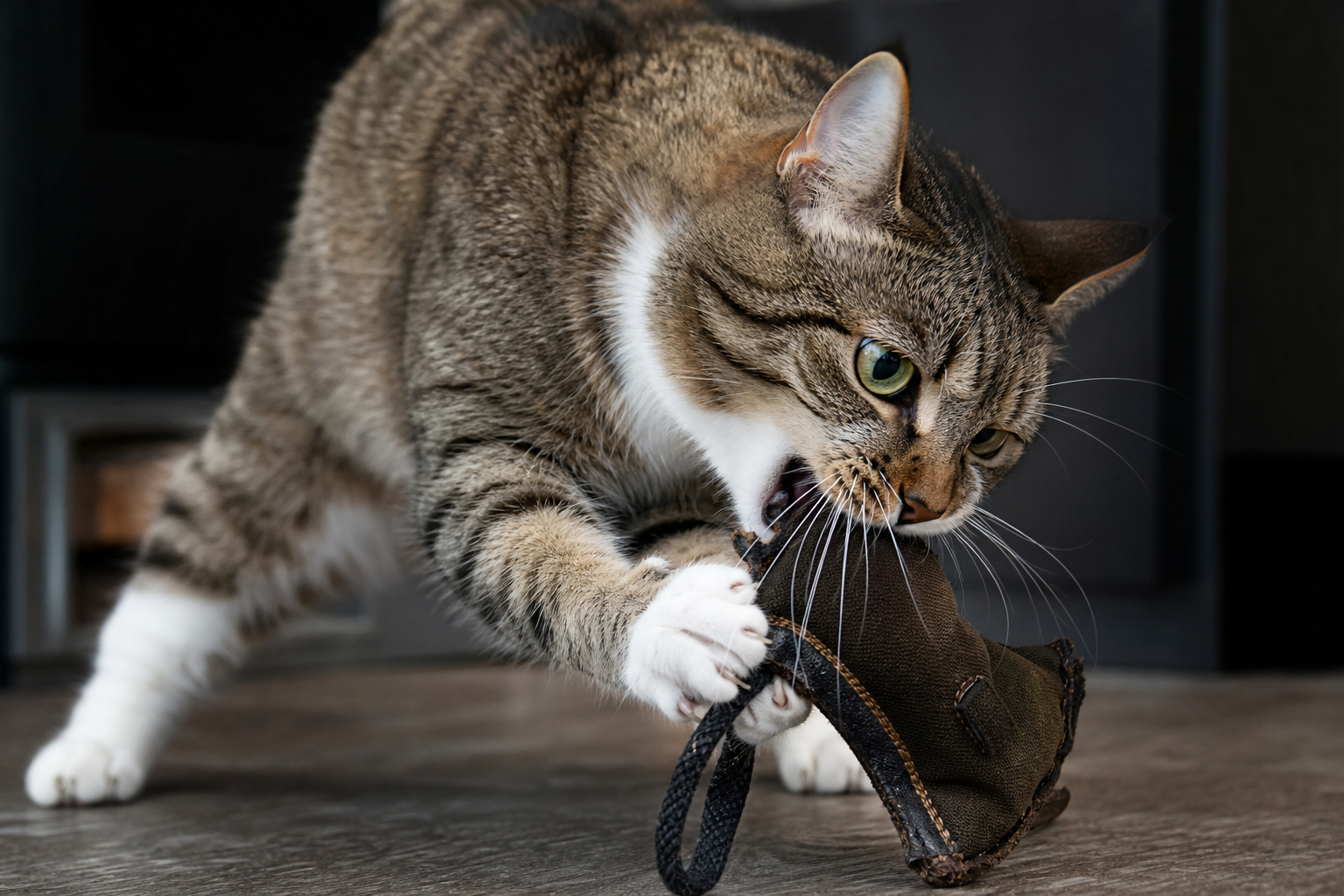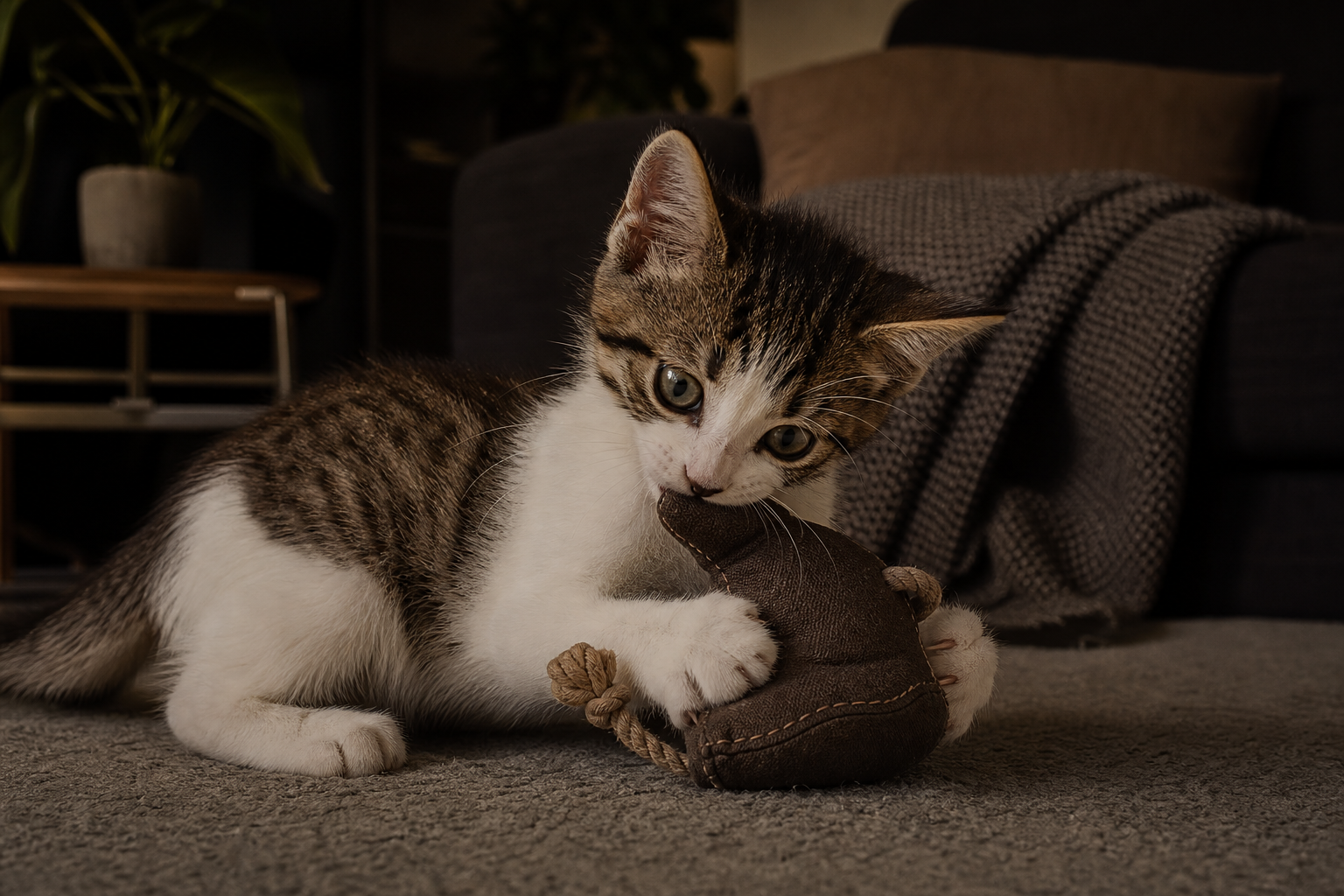
Tag: durable cat toys

  • Cat Scratching Post: How to Choose One Your Cat Will Actually Use

    Cat Scratching Post: How to Choose One Your Cat Will Actually Use

    A good cat scratching post gives your cat a legal place to stretch, mark territory, maintain claws, and release energy without turning your sofa into the target. The best choice is not always the cutest post or the tallest cat tree. It is the post that matches how your cat already scratches: vertical or horizontal, rope or cardboard, carpet or wood, high stretch or low rake.

    For cats that destroy ordinary toys, the scratching post also has a second job. It should absorb serious claw work while the rest of the play plan gives your cat safe outlets for chasing, biting, kicking, and carrying. A sturdy post helps with furniture damage, but it will not replace active play, toy rotation, and regular inspection.

    Why Cats Need a Scratching Post

    Scratching is normal cat behavior, not spite. Cornell Feline Health Center explains that cats scratch to mark territory with scent from paw glands, remove the outer claw sheath, and leave visible marks. The Cornell destructive behavior guide also points out that cats can be redirected to better scratching objects when owners match the cat’s preferences and use patience.

    The AAFP and ISFM feline environmental needs guidelines include scratching areas among the key resources cats need in the home, along with feeding, water, resting, toileting, and play areas. In practical terms, a scratching post is not decor. It is part of the indoor cat’s territory map.

    If a cat scratches furniture, carpet, door frames, or curtains, the goal is not to stop scratching. The goal is to make the approved scratching surface more satisfying than the forbidden one.

    Start by Reading Your Cat’s Current Scratching Style

    Before buying a cat scratching post, look at the damage your cat has already made. The pattern tells you what your cat is trying to do.

    • Vertical scratches on sofa arms, curtains, or door trim: choose a tall, upright post or wall-mounted scratcher.
    • Horizontal scratches on carpet or rugs: add a flat scratch pad, low board, or horizontal cardboard scratcher.
    • Corner scratching: try a corner-mounted surface beside the target area.
    • Deep claw marks in rough fabric: test sisal, woven fabric, or a sturdy nubby surface.
    • Shredded cardboard everywhere: cardboard may be satisfying, but the cat may need a heavier-duty backup and closer cleanup.

    This is where many product pages are thin. They show attractive scratching posts, prices, and materials, but they rarely help you diagnose why one cat ignores a post and another cat destroys it in a month. Your cat’s existing damage is better information than a generic bestseller list.

    Height and Stability Matter More Than Style

    A vertical scratching post should let your cat stretch with the front legs extended. For many adult cats, that means a post around 30 inches tall or taller, and large cats may need more. A short post can work for kittens or low scratchers, but it often fails for cats that want the full body stretch they get from furniture.

    Stability is just as important. If the post wobbles, slides, or tips the first time your cat digs in, your cat learns that the sofa is safer. Look for a wide, heavy base; wall attachment; a low center of gravity; or a cat tree that does not rock under your cat’s body weight. If you build a DIY cat scratching post, test it hard before calling it finished.

    For rough players, avoid flimsy novelty posts with tiny bases, dangling pieces, lightweight cardboard towers, or thin tubes that twist under pressure. A scratching post for a powerful cat should feel boringly solid.

    Stable cat scratching post with a wide base beside a sofa
    A post that wobbles teaches many cats to go back to the sofa. Stability matters more than decorative style.

    Choose the Right Scratching Surface

    Common scratching surfaces include sisal rope, sisal fabric, corrugated cardboard, carpet, wood, and upholstery-style fabric. None is best for every cat. The right surface is the one your cat consistently chooses and can use safely.

    • Sisal fabric: often grips well and may wear more evenly than rope on some posts.
    • Sisal rope: popular and satisfying, but inspect for loose coils and long frays.
    • Corrugated cardboard: inexpensive and loved by many cats, but messy and not ideal for cats that eat pieces.
    • Carpet: useful for carpet scratchers, though it can confuse cats if it feels too much like household carpet.
    • Wood: a good option for cats that like rough natural textures, especially in catios or supervised areas.

    If your cat chews or swallows torn material, treat the scratcher like a toy safety issue. Remove loose rope, staples, tacks, tape, splinters, and chunks of cardboard. For cats that bite and pull, simple construction is safer than a post covered in trim, pom-poms, feathers, or glued-on decorations.

    Where to Put a Cat Scratching Post

    Placement decides whether the post becomes part of your cat’s routine. Put the first post next to the object your cat already scratches. Once the cat is using it reliably, you can move it a few inches at a time toward a better spot.

    Good locations include beside a favorite sofa arm, near a sleeping area, close to a window perch, at a room entrance, or along a path your cat already travels. Scratching is partly communication, so hiding the post in a spare room usually fails. Cats often scratch after waking, after play, and when they enter a socially important area.

    Multi-cat homes may need more than one post. The AAFP/ISFM environmental guidance recommends multiple separated resources so cats do not have to compete for key areas. A single beautiful post in the living room may not help the cat who wants to mark the hallway, bedroom, or office.

    Cat scratching post placed beside the sofa arm a cat used to scratch
    Put the post beside the current scratching target first, then move it gradually after the habit is established.

    How to Get Your Cat to Use the Post

    Make the post easy to choose and reward your cat for using it. Place it where the scratching already happens, play near it, sprinkle a little catnip or silvervine if your cat responds to those, and praise or treat the cat when claws hit the right surface. Keep the tone calm. You are building a habit, not winning an argument.

    The ASPCA destructive scratching guidance recommends providing varied scratching surfaces, placing posts beside forbidden targets, and avoiding force. Do not grab your cat’s paws and drag them down the post. That can make the post feel threatening.

    Make the old target less convenient while the new target becomes rewarding. Cover the sofa arm temporarily, use furniture-safe double-sided tape where appropriate, block access when you cannot supervise, or rearrange the room so the post sits in the prime scratching spot. Avoid punishment. Cornell warns that punishment can teach a cat to fear the owner or scratch only when the owner is absent.

    Pair Scratching With a Better Play Plan

    A scratching post handles clawing and marking. It does not fully handle prey drive. If your cat sprints through the house, attacks ankles, shreds plush toys, or bites the post cover, add a play plan that gives the cat a better job.

    Start with two short wand sessions each day. Move the lure away like prey, let your cat stalk and catch it, then put the wand away. Add a tough kicker or large fabric toy for grab-and-bite play, and keep a few solo-safe chase toys in rotation. Our guide to choosing safer cat toys for rough play explains how to match toys to chasing, pouncing, chewing, and kicking styles.

    If scratching spikes during high-energy moments, read it as useful information. The cat may need more active play before the usual furniture-scratching window, not another deterrent after the damage starts. For cats that cross into ankle attacks or hand biting, pair this article with durable toys that reduce play aggression and why cats destroy toys.

    When to Replace or Repair a Scratching Post

    A ragged scratching post is not automatically bad. Cornell and ASPCA both note that cats may prefer used posts because they smell familiar and give claws a good grip. Do not throw away a favorite post just because it looks worn.

    Replace or repair the post when wear changes the safety or function. Watch for wobbling bases, exposed staples, sharp broken plastic, loose screws, splintered wood, rope loops that can catch claws, long strands a cat can chew, and cardboard chunks that your cat might swallow. If the post is part of a cat tree, check platforms, bolts, wall straps, and seams too.

    For a cat that hits scratchers hard, inspect the post weekly. If your cat also chews fabric or cardboard, use the stricter toy-bin rule: anything that can come off in the mouth needs to be trimmed, repaired, supervised, or removed.

    Hands inspecting worn sisal rope on a cat scratching post
    Ragged can be useful, but loose rope, sharp hardware, and swallowable pieces need repair or replacement.

    Quick Buying Checklist

    • Orientation: does your cat need vertical, horizontal, angled, or corner scratching?
    • Height: can your cat stretch fully on the post?
    • Stability: does it stay planted when pulled, climbed, or kicked?
    • Surface: does it match the texture your cat already prefers?
    • Placement: can it sit beside the current scratching target at first?
    • Safety: are there no loose ropes, staples, sharp edges, dangling parts, or swallowable pieces?
    • Durability: can it handle your cat’s real strength, not just product-page photos?

    The Bottom Line

    The best cat scratching post is tall enough, stable enough, textured correctly, and placed where your cat already wants to scratch. Choose by behavior first: vertical or horizontal, stretch or rake, sisal or cardboard, furniture corner or hallway marker.

    For cats that destroy ordinary toys, use the post as one part of a bigger enrichment system. Give your cat an approved place to claw, a safe way to chase, a tougher outlet for biting and kicking, and a regular inspection routine. No post or toy is indestructible, but a better setup can protect your furniture while giving your cat a more satisfying indoor life.

  • Interactive Toys for Cats: Safer Play for Bored Indoor Hunters

    Interactive Toys for Cats: Safer Play for Bored Indoor Hunters

    The best interactive toys for cats are the toys that let your cat hunt in a safer, more satisfying way. For most homes, that means a mix of human-led wand play, a few solo-safe chase toys, one food puzzle or treat hunt, and a tougher bite-and-kick toy for cats that grab hard. Automatic toys can help, but they should not replace daily play with you or basic toy safety checks.

    If your cat destroys ordinary toys, choose interactive toys by the job they need to do: chase, pounce, wrestle, chew, forage, or burn off late-night energy. Then decide whether the toy is safe for unsupervised access. A wand with string is interactive, but it belongs in a closet after play. A sturdy ball track may be fine for solo play. A fabric kicker may work for rough play if it is large enough, tightly stitched, and inspected often.

    What Counts as an Interactive Cat Toy?

    An interactive cat toy is any toy that changes the game for the cat. Sometimes the interaction comes from you moving a wand or tossing a toy. Sometimes it comes from the toy itself, such as a puzzle feeder, rolling ball, track toy, motion-activated lure, or treat dispenser. The useful question is not whether the packaging says “interactive.” The useful question is what behavior the toy asks your cat to perform.

    Good interactive toys usually support one part of the hunting sequence: stalking, chasing, pouncing, grabbing, biting, bunny-kicking, carrying, searching, or eating. The AAFP and ISFM feline environmental needs guidelines recommend opportunities for play and predatory behavior, including toys cats can manipulate and food devices that let cats work for part of a meal. That is the heart of a good toy plan for indoor cats.

    For Titan Claws readers, the extra filter is durability. A toy that entertains a gentle cat for months may fail in one session with a strong chewer. If that sounds familiar, start with our broader guide to choosing safer cat toys for rough play, then use the sections below to build an interactive rotation.

    Match the Toy to Your Cat’s Play Style

    Before buying another toy, watch what your cat does when play gets intense. A chaser needs movement. A pouncer needs hiding and surprise. A wrestler needs something long enough to grip and kick. A chewer needs fewer detachable parts. A food-motivated cat may need a puzzle more than another plush mouse.

    • Chasers: wand toys, rolling balls, springs, track toys, and motion toys that move away from the cat.
    • Pouncers: tunnels, crinkle mats, toys hidden under a towel, and lures that vanish behind furniture.
    • Biters and kickers: larger kicker toys with dense fabric, tight seams, and minimal trim.
    • Problem solvers: puzzle feeders, treat balls, snuffle-style mats, and simple food hunts.
    • High-energy indoor cats: scheduled wand sessions plus safe solo toys between sessions.

    This is where many list-style articles fall short. They rank popular toys, but they do not help you diagnose why your cat ignores one toy and demolishes another. For a cat that attacks ankles or shreds small plush, the answer is rarely “more toys.” It is usually a better outlet for the specific behavior that is spilling over.

    Human-Led Toys: The Highest Value Play

    Wand and teaser toys are usually the best interactive toys because you can make them behave like prey. Move the lure away from your cat, pause it, hide it, let it dart, and let your cat catch it. Best Friends Animal Society’s enrichment guidance warns against frantic movements that startle cats and recommends wide, changing motions for wand play. In plain terms: do not jab the toy into your cat’s face. Make it flee.

    For rough players, two short sessions often work better than one long chaotic session. Try five to ten minutes in the morning and again in the evening. End with a catch and a small treat or meal so the hunt has a satisfying finish. If play aggression is part of the problem, pair this with our guide to durable toys that reduce play aggression.

    Wand toys need stricter storage than most owners expect. String, ribbon, elastic cord, feather bundles, bells, and glued-on pieces can become hazards when chewed. Use them while you are present, then put them away. For more detail on that risk, see our teaser wand safety tips.

    Cat chasing a wand toy moved away like prey
    Human-led wand play is valuable because you can make the toy move like prey and then store it safely afterward.

    Automatic Toys: Helpful, but Not a Babysitter

    Automatic interactive toys can be useful for cats that need movement when you are working, cooking, or away for a short stretch. The best candidates have enclosed mechanisms, secure battery compartments, no chewable wires, no loose tails or detachable lures, and an auto-shutoff so the cat does not become overstimulated or bored.

    Use automatic toys as a supplement, not the whole enrichment plan. Some cats love unpredictable motion. Others watch for a minute and walk away. A high-prey-drive cat may flip the toy over and start attacking the weakest part. That does not mean the toy is bad; it means the toy needs supervision until you know how your cat treats it.

    Before leaving any electronic toy out, inspect the shell, wheels, charging port, screws, battery door, and attachments. If plastic cracks, a lure loosens, or the battery area can be opened by teeth or claws, remove it. The safest automatic toy is the one that still looks boringly intact after your cat’s hardest play.

    Puzzle Toys and Food Hunts for Indoor Cats

    Puzzle toys are a strong choice because they turn feeding into work. The Cornell Feline Health Center notes that toys encourage stalking, pouncing, problem solving, exercise, and cognitive enrichment, and it also points out that simple items such as boxes and ping pong balls can be useful when chosen safely. A puzzle does not need to be expensive. It needs to be solvable, stable, and cleanable.

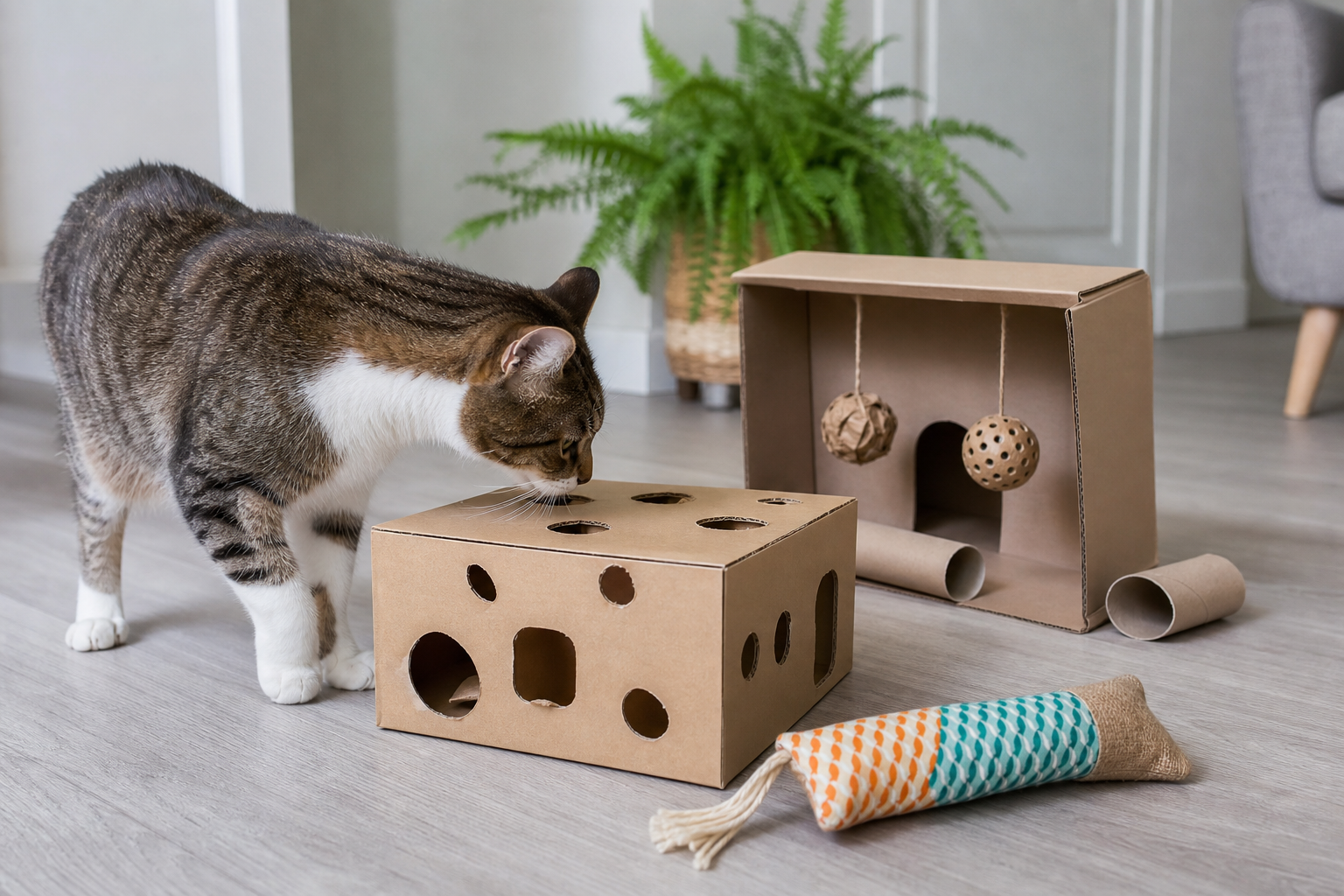
    Start easy. Put a few pieces of kibble or treats in open cups, a low-difficulty puzzle, or a cardboard tube with holes cut into it. Once your cat understands the game, make it slightly harder. If the cat gives up, the puzzle is not enriching; it is just frustrating. If your cat eats too fast, puzzle feeding can also slow the meal and add a calmer job between active play sessions.

    For cats that chew cardboard, supervise homemade puzzles and remove them when they get soggy, torn into small pieces, or covered in tape or staples. For plastic puzzles, check for cracked edges and trapped food. Wash them often enough that they do not become a stale-smelling object your cat avoids.

    Cat using a simple puzzle feeder for indoor enrichment
    Puzzle toys and food hunts give indoor cats a job between active play sessions.

    Rough-Play Rules for Cats That Destroy Toys

    Interactive toys for a gentle cat can have feathers, tiny plush parts, little tails, bells, and decorative trim. Interactive toys for a destroyer need a different standard. Avoid small detachable pieces. Prefer larger toys that cannot be swallowed. Choose simple shapes and stronger fabric over cute details. Check seams after hard sessions.

    Cornell’s safe toys and gifts guidance cautions against small pieces and strand-like parts such as feathers and string that may separate and be ingested. RSPCA Pet Insurance gives similar warnings about string-like or small sharp materials. Those warnings matter most for exactly the cats Titan Claws writes for: cats that bite, pull, shred, and keep going.

    Use this rough-play rule: if a part would worry you if it came off in your cat’s mouth, do not leave that toy out unsupervised. That includes feathers, yarn, ribbons, elastic, bells, plastic eyes, glued trim, dangling tails, and exposed stuffing. Our material-focused guide on what makes cat toys stronger and safer goes deeper on construction choices.

    A Simple Interactive Toy Rotation

    Most cats do better with a small active rotation than a pile of toys that never changes. The AAFP/ISFM guidelines recommend rotating toys to reduce habituation and boredom, and Cornell gives the same practical advice. Rotation also helps owners inspect toys before damage becomes a swallowing risk.

    Try this weekly setup:

    • One supervised wand toy: used daily, then stored away.
    • One durable kicker: offered when the cat wants to grab, bite, or bunny-kick.
    • Two solo-safe chase toys: a track toy, sturdy ball, spring, or oversized toy that has no loose parts.
    • One puzzle or food hunt: used for part of a meal several times a week.
    • One environmental option: a tunnel, box, perch, window view, or paper bag with handles removed.

    Put a few toys away for a week, then bring them back. A toy that felt stale on Monday can become interesting again after absence. More importantly, rotation gives you a natural inspection rhythm: look for loosened seams, exposed stuffing, cracks, missing pieces, and long threads before the toy returns to play.

    Small rotation of cat toys including a wand, kicker, chase toy, and puzzle feeder
    A small rotation keeps toys interesting and gives you a regular chance to inspect damage.

    Safety Checklist Before You Leave a Toy Out

    • Is the toy too large to swallow?
    • Are seams tight, with no exposed stuffing or long threads?
    • Are there no feathers, strings, ribbons, bells, plastic eyes, or small detachable parts?
    • If it is electronic, is the battery compartment secure and undamaged?
    • Can the toy be cleaned or replaced before it gets gross or brittle?
    • Does your cat play with it without trying to eat pieces of it?
    • Would you still feel comfortable if your cat played with it for ten minutes while you were in another room?

    If the answer is no, treat it as a supervised toy. If your cat may have swallowed string, ribbon, elastic, a battery, stuffing, a bell, or another toy part, contact a veterinarian promptly. Do not pull visible string from a cat’s mouth or rear. Linear material can become anchored internally, and pulling can make an injury worse.

    The Bottom Line

    Interactive toys for cats should do more than keep a cat busy for a few minutes. They should give your cat a safe way to hunt, chase, solve, bite, and settle. Build the rotation around your cat’s play style, use wand toys with supervision, inspect automatic toys carefully, add puzzle feeding for mental work, and reserve the toughest designs for cats that destroy ordinary toys.

    No toy is truly indestructible. The better goal is a smarter system: active play with you, solo-safe options when you are busy, food puzzles for indoor enrichment, and regular replacement before worn toys become hazards.

  • Cat Toys That Last: How to Choose Safer Toys for Rough Play

    Cat Toys That Last: How to Choose Safer Toys for Rough Play

    The best cat toys are not just the toys a cat attacks first. They are the toys that fit the way your cat hunts, bites, carries, kicks, and rests after play. For a gentle cat, that might be a feather wand and a crinkle ball. For a rough player, it usually means sturdier fabric, fewer dangling parts, bigger chew-safe shapes, and a clear rule: some toys are for supervised play only.

    If your cat shreds ordinary toys, shop by play style before you shop by trend. Match wand toys to chasers, kicker toys to grab-and-bite cats, puzzle toys to food-motivated cats, and tough plush or fabric toys to cats that like to carry prey around the house. Then inspect the toy often. No cat toy is truly indestructible, and the safest setup is a rotation that gives your cat variety without leaving risky strings, feathers, bells, or loose stuffing available overnight.

    Start With the Way Your Cat Hunts

    Cats play in pieces of the hunting sequence: stalk, chase, pounce, grab, bite, bunny-kick, carry, and sometimes eat. A toy works better when it gives your cat one of those outlets without putting your hands, household cords, or fragile objects in the middle of the game.

    For chasers, use wand toys, track balls, springs, rolling toys, or battery-operated toys that move unpredictably. For pouncers, try tunnels, crinkle mats, paper bags with handles removed, and toys hidden partly under a blanket. For biters and kickers, choose a long kicker toy or sturdy plush that is large enough to grip with the front paws and kick with the back legs. For problem solvers, use puzzle feeders and treat hunts that make dinner feel more like foraging.

    The mistake many owners make is buying one popular toy and expecting it to solve boredom. A cat that ignores a plush mouse may still love a wand that moves like a bird. A cat that destroys a feather teaser may be asking for a tougher kicker, not more delicate feathers.

    The Main Types of Cat Toys and When to Use Them

    Wand and teaser toys are best for exercise, bonding, and redirecting play away from hands and ankles. They should usually be put away after the session because strings, cords, feathers, and small attachments can become chewing or swallowing hazards.

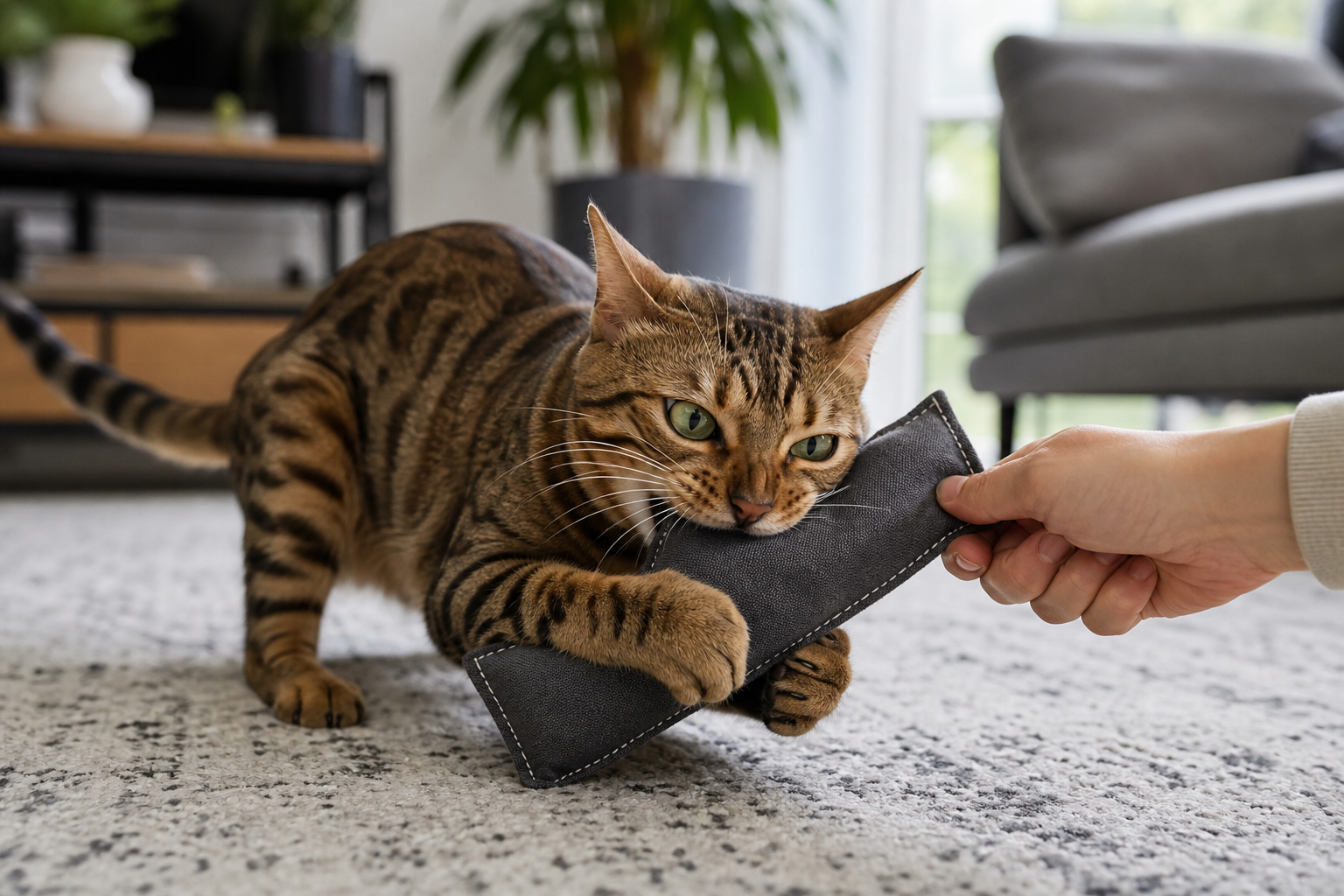
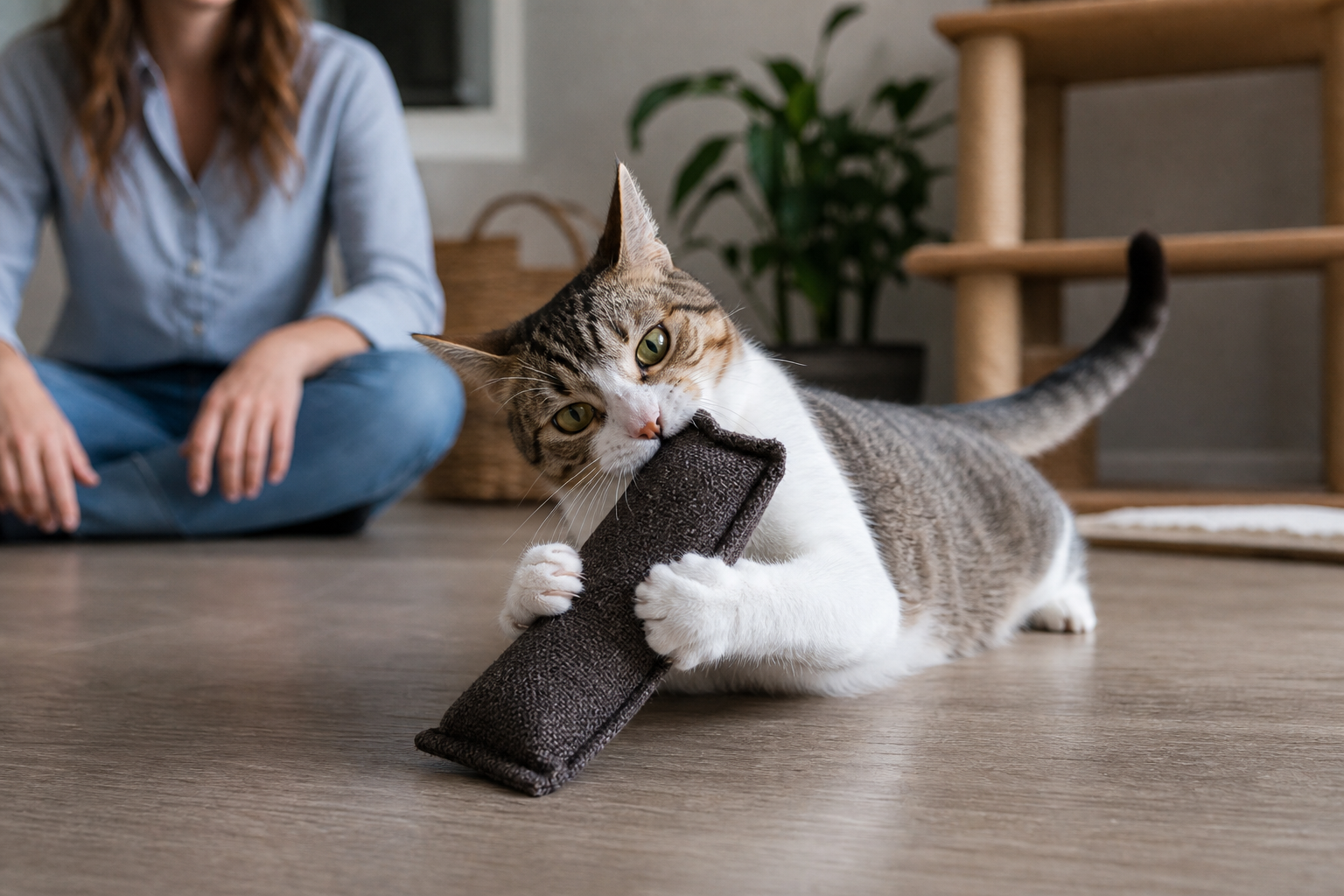
    Kicker toys are useful for cats that latch on and rake with their back feet. Look for dense fabric, reinforced stitching, a shape that is too large to swallow, and minimal decorative pieces. A good kicker lets a strong cat wrestle without tearing into tiny parts immediately.

    Chase toys such as balls, springs, and track toys give cats quick movement. For unsupervised use, favor toys that are too large to swallow, cannot splinter, and do not have detachable bells, pom-poms, or glued-on parts.

    Puzzle toys and food dispensers help indoor cats work for part of their meal. These are especially useful for cats that get bored between human play sessions. Start easy so the puzzle feels solvable, then make it harder once your cat understands the game.

    Electronic toys can be helpful when you are busy, but they need extra checking. Inspect battery compartments, charging ports, wheels, tails, and removable lures. Any battery-powered toy should have a secure compartment and should be removed if the case cracks or the battery area loosens.

    What Makes a Cat Toy More Durable

    Durability starts with construction, not marketing language. Look for tight stitching, smooth seams, layered or heavier fabric, and a body shape that spreads bite pressure instead of concentrating it on a thin tail or glued-on decoration. If a toy has a lure, feather bundle, bell, ribbon, or plastic eye, assume that part will be the first failure point.

    For cats that chew aggressively, simple designs are often safer. A plain fabric kicker can outlast a cute toy covered in trim. A ball track can be safer for solo play than a loose ball that disappears under furniture and gets chewed later. A cardboard box can be better enrichment than a flimsy novelty toy, as long as staples, tape, handles, and loose plastic labels are removed.

    Do not use the word durable as permission to leave a toy out forever. Use it as a reason to expect more play sessions before replacement, while still checking seams and parts after rough use.

    Hands inspecting a cat toy for loose seams near a curious cat
    Inspect seams, attachments, and stuffing before leaving any toy in the rotation.

    Safety Checks Before You Hand Over a Toy

    Run every new cat toy through a quick inspection before the first play session. Pull gently on feathers, cords, bells, eyes, tails, and tags. If a piece moves easily in your fingers, it may come off in your cat’s mouth. Check that fabric does not shed long threads. Make sure the toy is not small enough for your cat to swallow, especially if your cat carries toys around or tries to eat them.

    • Remove loose tags, loops, and packaging strings before play.
    • Put wand toys, ribbon toys, and string toys away after supervised sessions.
    • Avoid leaving feathers, bells, small plastic parts, or tinsel-like material with a heavy chewer.
    • Check electronic toys for secure battery compartments and cracked plastic.
    • Throw away toys with exposed stuffing, sharp edges, loose seams, or missing parts.

    If you think your cat swallowed string, ribbon, a battery, stuffing, a bell, or another toy part, contact a veterinarian promptly. Do not pull string from a cat’s mouth or rear, because it may be caught internally. Treat repeated toy-eating as a safety issue, not as normal play.

    How Many Toys Does a Cat Need?

    Most cats do better with a small active rotation than a floor covered in every toy they own. Keep three or four solo-safe toys available, then store the rest and swap them every few days. Novelty matters: the same toy often becomes interesting again after it disappears for a week.

    A strong daily mix is one active play session, one solo-safe toy, one scent or food puzzle, and one environmental option such as a box, tunnel, perch, or window view. Indoor cats benefit from both physical movement and problem solving. A cat that tears toys apart may simply need a better outlet for the whole hunt, not just another object to bite.

    A small rotation of wand, kicker, chase, and puzzle toys for indoor cat enrichment
    A small toy rotation keeps play fresh without leaving every toy out all week.

    A Simple Play Plan for Cats That Destroy Toys

    Start with two supervised wand sessions a day, five to ten minutes each. Move the lure like prey: hide it, pause it, let it dart, then allow the cat to catch it. End with a small treat or meal so the sequence feels complete. This often reduces frantic chewing because the cat gets a full chase-and-catch routine instead of constant frustration.

    Next, add one tough kicker for bite-and-kick play. Offer it when your cat grabs your hand, attacks ankles, or redirects excitement onto furniture. Praise the toy choice by keeping the game going with the toy, not your skin. If the kicker starts losing fabric, seams, or stuffing, replace it.

    Finally, use puzzle feeding or hidden kibble for quiet enrichment. Put a portion of the meal in an easy puzzle, a treat ball, or a simple cardboard tube with holes cut into it. The goal is not to make eating difficult; it is to give the cat a safe job.

    When to Replace a Cat Toy

    Replace a cat toy when damage changes the risk. Faded color or flattened plush is usually cosmetic. Loose seams, dangling threads, broken plastic, exposed stuffing, detached feathers, missing bells, and chewed battery compartments are safety problems. For rough players, inspect favorite toys after every hard session and do a deeper toy-bin check once a week.

    It is also worth replacing toys that create bad habits. If a toy teaches your cat to chew string, swallow fabric, or attack hands, retire it and switch to a safer format. Good enrichment should make life calmer and more satisfying, not add a new hazard.

    Quick Buying Checklist

    • Play style: Does it match chasing, pouncing, kicking, chewing, carrying, or foraging?
    • Size: Is it too large to swallow and large enough for your cat’s body type?
    • Construction: Are seams tight, fabric sturdy, and decorations minimal?
    • Supervision: Is this a solo toy or a toy that must be put away after play?
    • Inspection: Can you easily spot wear before it becomes dangerous?
    • Rotation: Does it add something different from the toys your cat already has?

    The Bottom Line

    The right cat toys help your cat move, think, hunt, and relax without turning play into a safety problem. For cats that destroy ordinary toys, prioritize sturdy construction, simple shapes, supervised wand play, safe solo options, and regular inspection. The goal is not to find a magic toy that cannot fail. The goal is to build a smarter toy rotation that keeps rough play satisfying and safer.

  • Why Do Cats Destroy Toys? What It Means and What to Do

    Why Do Cats Destroy Toys? What It Means and What to Do

    Why do cats destroy toys?

    Cats destroy toys because they are doing what cats are built to do: stalk, pounce, bite, claw, and “kill” prey-shaped objects through play. In most cases, shredding a toy is a sign that your cat is engaged, not misbehaving. The toy is often acting as a stand-in for prey, so ripping seams, pulling out stuffing, and carrying the toy around are all normal parts of hunting-style play.

    That said, toy destruction is not always harmless. A cat that tears toys apart can swallow pieces, chew through strings, or expose stuffing, squeakers, or plastic parts that create a choking or intestinal blockage risk. The key is to tell the difference between normal rough play and unsafe wear.

    Think of toy destruction as a clue about your cat’s preferences. Some cats like to bunny-kick plush kickers. Others prefer to shred fabric, chew rope, or disassemble feather toys. Your job is not to stop the instinct. Your job is to channel it into safer play and pick toys that can handle your cat’s style.

    Why toy destruction is usually normal hunting behavior

    When cats attack toys, they are often practicing a complete prey sequence. They may stalk, freeze, chase, grab, bite, and then kick with their back feet. If the toy has a soft body, seams, or stuffing, the cat may rip it open during the “capture” phase.

    Natural cat play often includes:

    • Grabbing with front paws to hold the toy in place
    • Chewing or biting to simulate a kill bite
    • Bunny-kicking with back legs to tear at the toy
    • Shaking small prey-like toys
    • Carrying toys after a successful “hunt”

    This is especially common in younger cats and highly active adult cats. Some breeds and personalities are more intense about play, but any cat can be a serious toy destroyer if the toy matches their prey preferences too well.

    A destroyed toy can mean the toy was a good fit for your cat’s instincts. The goal is not to remove the instinct. The goal is to offer toys that satisfy it without creating unnecessary hazards.

    Common reasons cats rip, chew, and disassemble toys

    Cats do not all destroy toys for the same reason. Often, several factors are working together.

    Prey drive

    The most common reason is simple prey drive. A toy that moves like prey, fits in the mouth, or has feathers, fur, strings, or loose fabric can trigger a strong hunting response. Once the cat “catches” it, the toy may get torn apart.

    Boredom or under-stimulation

    Cats with not enough play, climbing, or enrichment may put more energy into the toys they do have. If the same toy is always available, some cats will also become more intense with it over time. Regular interactive play can reduce destructive over-focus on one item.

    Texture preferences

    Some cats are fabric shredders. Others prefer rope, paper, cardboard, or plush stuffing. If your cat repeatedly targets a certain texture, that preference can help you choose better toys. For example, a cat that loves plush may do better with reinforced stitching and minimal stuffing than with a light toy that opens easily.

    Chewing behavior

    Chewing is not as common in cats as it is in dogs, but some cats do chew toys, cords, and soft materials. This can be a form of play, teething in kittens, or a sign of boredom. If chewing seems excessive or your cat is chewing non-toy items, ask your veterinarian for advice to rule out dental pain or other health issues.

    Frustration during play

    Some cats become rougher if the toy does not “move right,” disappears too quickly, or is too small to hold securely. When play feels unsatisfying, they may bite harder or tear faster. Matching the toy to the cat’s preferred motion and size can make a big difference.

    When destruction becomes a safety problem

    Not all toy damage is equal. A torn toy is not automatically an emergency, but certain signs mean it is time to remove the toy immediately.

    • Loose strings, ribbons, or elastic that can be swallowed
    • Open seams with stuffing coming out
    • Detached parts such as eyes, bells, feathers, or squeakers
    • Small pieces that break off and fit in the mouth
    • Hard plastic edges after breakage
    • Any toy your cat is trying to eat rather than play with

    String-like items are especially risky because they can cause serious digestive problems if swallowed. If your cat has eaten part of a toy, is drooling, vomiting, hiding, not eating, or straining in the litter box, contact a veterinarian promptly.

    It is also wise to separate normal play from over-aggressive chewing. If toy destruction seems sudden, extreme, or paired with behavior changes, pain, stress, or appetite changes, get a veterinary check. Sudden changes in behavior can have medical causes.

    Safely checking toys after play helps you catch wear before it becomes a problem.

    Close view of a cat toy being inspected for loose seams

    How to choose toys for rough players

    If your cat destroys toys quickly, the answer is usually not “buy more of the same.” It is “buy better-matched toys.” Look for construction that fits rough play while still being safe.

    What to look for in tougher cat toys

    • Reinforced seams and tight stitching
    • Durable outer fabric that resists easy ripping
    • Minimal loose trim such as strings, tassels, or glued-on pieces
    • Oversized parts that are harder to swallow
    • Simple construction with fewer breakable attachments
    • Materials that stand up to pouncing and kicking

    For many rough players, the best toys are not the fanciest ones. They are the simplest ones made with better materials and stronger stitching. A well-made kicker toy, for example, can satisfy a cat that wants to grab, bite, and kick without immediately falling apart.

    What to avoid for power chewers and shredders

    • Fragile feathers attached with weak glue
    • Long ribbons or strings left unsupervised
    • Very small plush toys that can be swallowed
    • Toys with detachable eyes or buttons
    • Thin mesh or foil toys that tear easily

    No toy is indestructible, and no cat toy is safe forever. The best approach is choosing durable options, supervising the first few play sessions, and replacing worn items before they become risky.

    For cats that love rough play, rotating in a few sturdy options can keep interest high without overusing one toy.

    Several different cat toys arranged for toy rotation

    How to rotate toys and redirect the behavior

    Toy rotation is one of the easiest ways to reduce destruction and boredom. When all toys are available all the time, they can lose novelty. When toys are rotated, each one feels more interesting and play tends to be more focused.

    Simple rotation plan

    • Keep a small set of toys out at once
    • Store the rest out of sight
    • Swap toys every few days or once a week
    • Include different play styles, such as chase, kicker, and puzzle toys

    Rotation works best when you also use interactive play. Wand toys, for example, let you control the motion so your cat can stalk and chase without immediately shredding the toy itself. End the session with a toy your cat can safely “catch” so the hunting sequence feels complete.

    Redirecting destructive play

    If your cat starts targeting a toy too aggressively, try ending the session before the toy is ruined. Then offer a more suitable option, such as a sturdier kicker or a wand attachment used only under supervision. You can also redirect to puzzle feeding, climbing, or short training sessions if your cat seems restless.

    The goal is not to punish destruction. Punishment can increase stress and make play worse. Instead, offer a better outlet and make the safe option the most rewarding one.

    What to do after a toy breaks

    After a toy breaks, inspect it before leaving it out again. If the damage is minor and does not create a hazard, you may be able to set it aside for supervised use only. But if the toy has loose stuffing, broken pieces, or exposed inner material, it is usually time to discard it.

    When deciding whether to keep or replace a toy, ask:

    • Can my cat swallow any part of this?
    • Is anything sharp, loose, or frayed?
    • Can the toy still be safely supervised?
    • Has my cat already started chewing off pieces?

    If the answer to any of those questions is yes, replace the toy. Do not assume a damaged toy is safe just because your cat still likes it. Cats often prefer the toy most likely to fail, which is why inspection matters.

    A good habit is to keep a small “retire bin” for toys that are too worn for play. That makes it easier to remove damaged items before they become a problem.

    When to ask your vet about toy destruction

    Most toy destruction is normal, but a vet visit is a good idea if your cat’s chewing or shredding seems unusual. Check in with your veterinarian if you notice:

    • Sudden increase in chewing
    • Chewing non-food items like plastic, fabric, or cords
    • Drooling, vomiting, or trouble eating
    • Loss of appetite or weight loss
    • Signs of pain when chewing or playing
    • Behavior changes such as hiding or irritability

    These signs can point to dental disease, gastrointestinal trouble, stress, or other medical issues. A quick check can save you from guessing and help you choose the right next step.

    Quick checklist for safer durable play

    • Accept the instinct: toy destruction is often normal hunting behavior
    • Watch for hazards: loose strings, stuffing, and small parts mean it is time to remove the toy
    • Choose better construction: reinforced seams, simple design, and minimal detachable parts
    • Rotate toys: keep play fresh and reduce overuse
    • Supervise new toys: especially for cats that chew hard or shred fast
    • Replace worn toys promptly: no toy stays safe forever
    • Call your vet if behavior changes or your cat may have swallowed toy material

    In short, cats destroy toys because that is how they play, hunt, and release energy. Your best response is not to fight the instinct, but to guide it with safer, tougher toys, regular rotation, and a quick safety check after each play session.