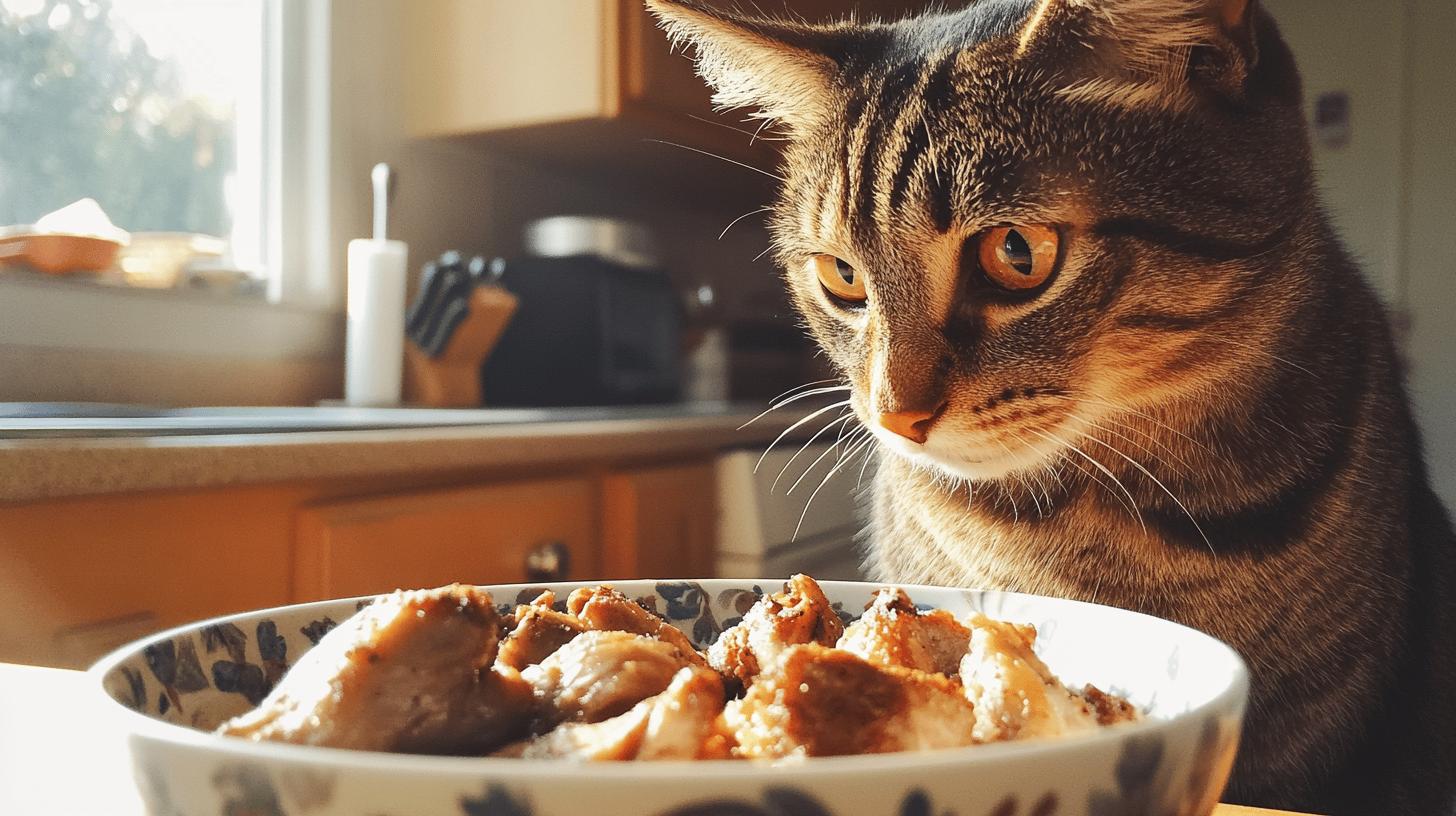
Can cats eat chicken safely? Yes-chicken is one of the safest, most nutritionally appropriate foods for cats. As obligate carnivores, cats thrive on high-quality protein, and chicken delivers exactly that. Unlike many human foods, chicken aligns perfectly with feline biology. This guide covers preparation methods, portion guidelines, safety considerations, and how to incorporate chicken into your cat’s diet responsibly.
Is Chicken Safe for Cats? The Nutritional Foundation
Chicken is genuinely safe and beneficial for cats. Here’s why:
Complete Protein Profile
Chicken contains all 11 essential amino acids cats require, including taurine (which cats cannot synthesize). A 3.5oz serving of cooked chicken provides:
- 31g protein: High-quality, complete protein supporting muscle maintenance
- 0g carbohydrates: Perfect for obligate carnivores
- Taurine: Critical for heart health and vision; deficiency causes blindness and cardiomyopathy
- B vitamins: Support energy metabolism and nervous system health
- Selenium & phosphorus: Support bone and thyroid health
Chicken Organ Meats: Liver, Heart, and Gizzards
While chicken breast and thighs are excellent protein sources, chicken organ meats offer superior nutritional density and are among the most bioavailable foods for cats.
Chicken liver: Exceptionally rich in taurine (essential amino acid cats cannot synthesize), vitamin A, iron, and B vitamins. A small amount goes a long way. Offer no more than 5-10% of your cat’s diet as organ meat because of vitamin A concentration. Excessive vitamin A causes toxicity over time. Serve small portions (approximately pea-sized) as treats or meal toppers; some cats enjoy lightly cooked liver shreds mixed into wet food.
Chicken heart: The single best natural source of taurine in the chicken family. Hearts are lean, protein-dense, and lower in vitamin A than liver, making them safer for frequent feeding. Whole chicken hearts can be a fun training treat or puzzle feeder enrichment for cats who enjoy hunting and chewing.
Chicken gizzards: High in protein and iron but tougher texture than breast meat. Gizzards work well as slow-feed enrichment treats: the chewing effort stimulates jaw muscles and dental health. Some cats dislike the texture; observe your cat’s reaction before making them a regular addition.
Preparation: Cook gently (boil or low-heat simmer) to eliminate bacteria; raw organ meats carry higher pathogenic risk than muscle meat. Never feed organ meats from factory-farmed chickens treated with antibiotics without consulting your vet.
Digestibility
Cats digest animal protein with exceptional efficiency. Chicken protein is digestible at 95%+ (humans digest plant protein at ~60-80%, animal protein at ~90%). Your cat’s body readily absorbs and utilizes chicken’s amino acids.
Low Allergenic Risk
Chicken is the least allergenic animal protein for cats. Food allergies in cats typically stem from grains, fillers, or fish-not chicken. This makes chicken ideal for cats with digestive sensitivities.
Chicken Preparation: Raw vs. Cooked Safety
Cooked Chicken (SAFEST OPTION)
Best cooking methods:
- Boiling (preferred): Place chicken breast in water, no salt or seasonings. Boil 12-15 minutes until internal temperature reaches 165°F. Shred into bite-sized pieces. Can add a tablespoon of cooking water to kibble for palatability.
- Baking: 350°F for 20-25 minutes (uncovered). No oil, salt, or seasonings. Once cooked, shred before serving.
- Slow cooker: Low heat 6-8 hours with water. Extremely tender; easy to shred.
- Steaming: Preserves nutrients; 15-20 minutes until fully cooked.
Safety guidelines:
- Remove all bones: Cooked bones splinter dangerously. Even small fragments can perforate the intestines.
- Remove skin: Skin is high fat; unnecessary and increases pancreatitis risk.
- No seasoning: Salt, garlic, onion, spices are harmful. Plain chicken only.
- Cool completely: Cats have less heat tolerance than humans; hot food causes mouth damage.
- Store properly: Refrigerate up to 3 days; freeze up to 3 months. Use in 24 hours if thawed.
- Portion control: 1-2 ounces per serving, 3-4x weekly maximum (see dosage section).
Raw Chicken (ACCEPTABLE BUT WITH CAUTION)
Some raw-food advocates recommend raw chicken for cats, arguing that cats in nature eat raw meat, which is partly true; however, there are important safety considerations:
- Bacterial risk: Raw chicken frequently contains Salmonella and Campylobacter. While cats have strong stomach acid that kills many pathogens, they can still become carriers and shed bacteria, potentially infecting human family members.
- Nutritional completeness: Raw chicken lacks the nutrient profile of a balanced diet. It must be part of a formulated raw diet including organs, bones, and supplements-not a standalone treat.
- Parasite risk: Wild-caught raw chicken may contain parasites cats’ immune systems can handle but that you should avoid deliberately introducing.
If pursuing raw feeding: Work with a veterinary nutritionist to ensure balanced macro/micro nutrients. Never feed raw chicken as a casual treat without the framework of a complete raw diet.
For most owners: Cooked chicken is safer, equally nutritious, and requires zero additional supplementation.
Portion & Frequency Guidelines (By Cat Weight & Age)
Chicken should comprise 5-10% of daily calories, maximum. Never use chicken as a meal replacement for complete cat food.
By Cat Weight
| Cat Weight | Daily Calories | Max Chicken/Day | Recommended Serving |
|---|---|---|---|
| 5 lbs (underweight) | 180-200 cal | 15-20 cal | 0.5oz every other day |
| 8 lbs (ideal) | 240 cal | 20-25 cal | 1oz, 3-4x weekly |
| 10 lbs (ideal) | 280 cal | 25-30 cal | 1oz, 3-4x weekly |
| 12 lbs (overweight) | 250 cal (diet mode) | 20-25 cal | 0.75oz, 2-3x weekly |
| 15+ lbs (obese) | 200-220 cal (strict diet) | 15-20 cal | 0.5oz, 2x weekly |
By Life Stage
- Kittens (under 6 months): Higher protein needs but smaller portions. 0.25-0.5oz per serving, 3-4x weekly. No raw chicken (immune system still developing).
- Adult cats (1-10 years): Use guidelines above. Both raw and cooked are acceptable if properly prepared.
- Senior cats (over 10 years): Often appetite decreases. Chicken becomes important protein source if eating less kibble. 0.5-1oz, daily may be appropriate depending on overall diet. Cooked only (easier to digest).
- Pregnant/nursing queens: Protein needs increase 25-50%. Up to 2oz daily of cooked chicken is appropriate. Work with your vet for complete nutrition during this critical period.
Chicken as a Training Tool & Behavioral Reward
Why Chicken Works for Training
Chicken is high-value: cats prioritize it above kibble or standard treats. This makes it ideal for:
- Teaching “Sit,” “Come,” or other behaviors
- Rewarding desired behavior (using the litter box, entering carrier)
- Building positive associations (vet visits, nail trimming)
Training Portions
For training, use pea-sized pieces of cooked chicken. Multiple small pieces achieve faster delivery than one larger treat, improving learning speed.
Example training session: 5-minute “Come” training with 10 successful repetitions = 10 pea-sized pieces = ~5-10 calories total. This fits within daily treat allowance.
Chicken vs. Other Proteins: Comparative Nutrition
| Protein Source | Protein (per 3.5oz) | Fat | Taurine | Best For |
|---|---|---|---|---|
| Chicken | 31g | 3.6g | High | Daily treats; ideal baseline |
| Turkey | 29g | 1.3g | High | Leaner alternative |
| Beef | 26g | 11g | High | Occasional (iron overload risk) |
| Salmon | 25g | 13g | Medium | Omega-3 boost; limit frequency (high fat) |
| Lamb | 25g | 8g | High | Good alternative; less common |
Verdict: Chicken is the most balanced: high protein, moderate fat, excellent taurine, low allergy risk.
Allergies & Health Conditions: When to Avoid or Limit
Chicken Allergies (Rare but Possible)
True chicken allergies are uncommon in cats (<5% of food allergies involve chicken). If your cat has a diagnosed chicken allergy, substitute turkey or another protein. Discuss with your vet before changing proteins.
Signs of chicken allergy/sensitivity:
- Vomiting within 1-2 hours of eating
- Diarrhea or loose stools
- Excessive itching or skin irritation (rare in food allergies but possible)
- Consistent GI symptoms with chicken, resolved when removed
Condition-Specific Considerations
- Kidney disease: Moderate protein is usually recommended. Chicken is fine in appropriate portions (not as meal replacement). Work with your vet on overall diet.
- Pancreatitis: Chicken breast (very lean) is safer than fattier meats. Limit to 0.5oz, 1-2x weekly. Avoid skin entirely.
- Liver disease: Chicken is appropriate; high-quality protein supports liver function. Limit to 0.5-1oz daily depending on condition severity.
- Diabetes: Chicken as a protein treat is excellent for diabetic cats. Zero carbs support blood sugar regulation.
- Hyperthyroidism: Chicken is fine. Some cats benefit from iodine restriction-discuss with vet if using chicken as primary food source.
Chicken Preparation & Storage Guide
Weekly Preparation (Time-Saving Method)
- Cook 1 lb chicken breast using boiling or baking method (see above)
- Cool completely
- Shred into serving-size portions
- Store in airtight glass containers
- Refrigerate up to 3 days; freeze remaining portions in ice cube trays (each cube = 1oz)
- Thaw frozen cubes 2-4 hours before serving
Food Safety
- Never leave cooked chicken at room temperature >2 hours
- Discard uneaten portions after 15 minutes
- Freezing halts bacterial growth; use thawed chicken within 24 hours
- Wash hands and surfaces after handling raw chicken (reduces human contamination risk)
Frequently Asked Questions
Can kittens eat chicken?
Yes, cooked chicken is excellent for kittens; use smaller portions (0.25-0.5oz) due to smaller stomach capacity, avoid raw chicken while the immune system is still developing, and offer it 3-4x weekly at most.
Can cats eat chicken bones?
Never. Cooked bones splinter into sharp fragments that perforate the esophagus, stomach, or intestines. This requires emergency surgery, and even raw bones are less brittle but still dangerous and must be fully removed before serving.
Is chicken skin safe for cats?
Technically yes, but it is not recommended because skin is 50%+ fat, which is excessive for cats and can trigger pancreatitis. Always remove the skin before serving.
Can cats eat rotisserie chicken?
Rotisserie chicken from grocery stores contains garlic, onion, salt, and other seasonings harmful to cats. Never offer. Prepare your own unseasoned chicken instead.
What about chicken broth?
Plain chicken broth (no salt, seasonings, onion, garlic) is safe in small amounts (1-2 tablespoons). It adds flavor to kibble or serves as hydration. Many broths contain excessive salt-check labels.
How much chicken per meal?
Keep portions to 1oz maximum: chicken supplements meals rather than replacing them, so your cat still needs balanced commercial food for complete nutrition.
Can cats eat chicken every day?
3-4 times weekly is ideal. Daily chicken replaces other nutritionally complete foods. If offering daily, reduce to 0.5oz and ensure balanced kibble comprises bulk of diet.
Behavioral Benefits: Chicken as Enrichment
Beyond nutrition, chicken provides behavioral enrichment:
- Mental stimulation: Working for chicken treats (training, puzzle feeders) provides cognitive engagement
- Predatory satisfaction: Handling and consuming meat aligns with natural hunting behaviors
- Bonding: Hand-feeding chicken creates positive association with you
The Bottom Line
Chicken is one of the safest, most nutritionally appropriate treats for cats. Properly prepared (cooked, boneless, unseasoned), chicken supports health and enriches your cat’s diet. Follow portion guidelines, maintain balance with complete food, and enjoy the confidence that you’re offering species-appropriate nutrition.
Related Nutrition & Training Guides
- Healthy Weight Guidelines for Cats: Target Weights
- Best Cat Training Treats: High-Value Rewards
- How to Get Your Cat to Drink More Water
- Signs of a Happy Indoor Cat: Health Indicators
These practices will help you make informed decisions about your cat’s care and well-being.
Consistent practice and patience are the keys to success with this approach.
Leave a Reply