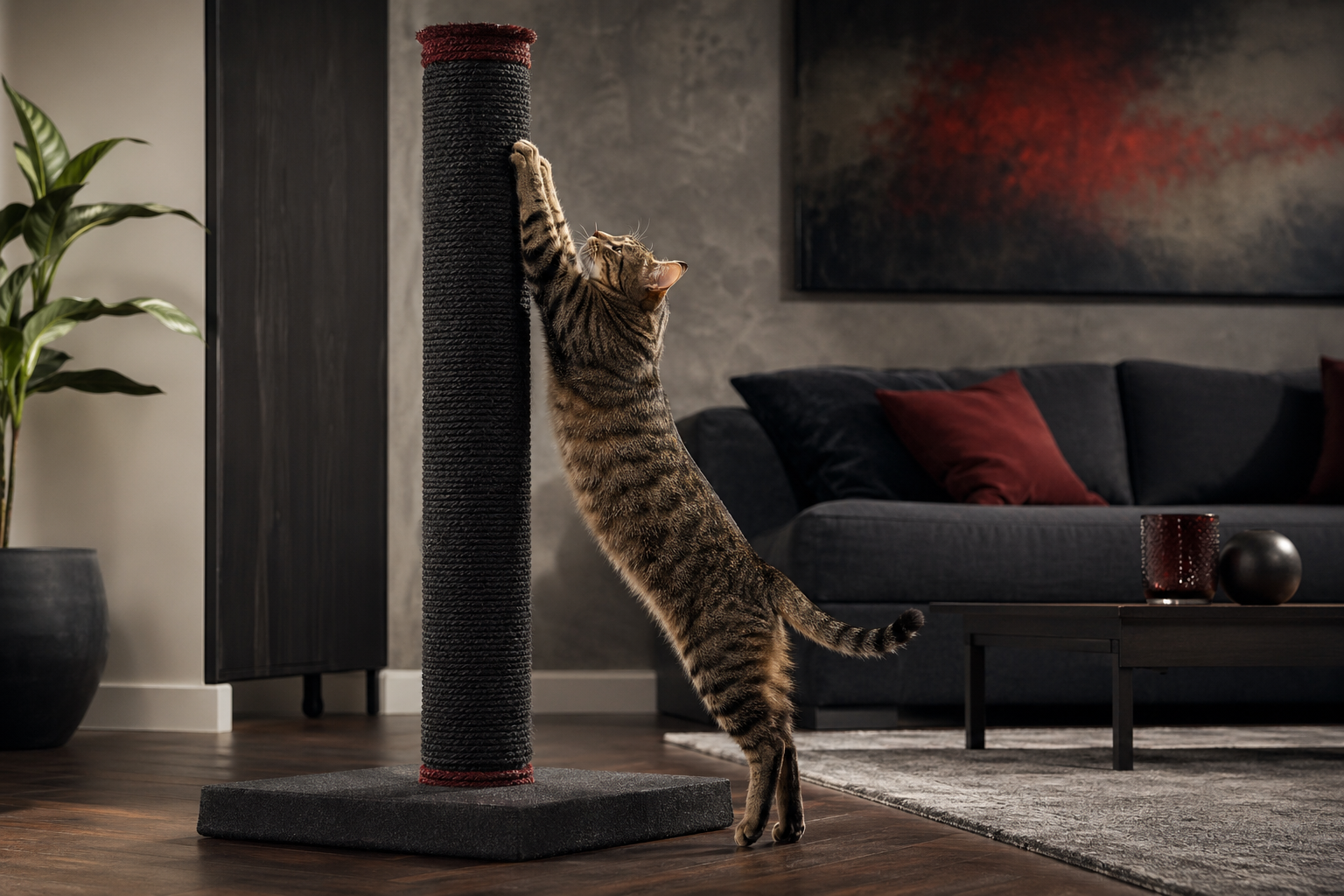
A good cat scratching post gives your cat a legal place to stretch, mark territory, maintain claws, and release energy without turning your sofa into the target. The best choice is not always the cutest post or the tallest cat tree. It is the post that matches how your cat already scratches: vertical or horizontal, rope or cardboard, carpet or wood, high stretch or low rake.
For cats that destroy ordinary toys, the scratching post also has a second job. It should absorb serious claw work while the rest of the play plan gives your cat safe outlets for chasing, biting, kicking, and carrying. A sturdy post helps with furniture damage, but it will not replace active play, toy rotation, and regular inspection.
Why Cats Need a Scratching Post
Scratching is normal cat behavior, not spite. Cornell Feline Health Center explains that cats scratch to mark territory with scent from paw glands, remove the outer claw sheath, and leave visible marks. The Cornell destructive behavior guide also points out that cats can be redirected to better scratching objects when owners match the cat’s preferences and use patience.
The AAFP and ISFM feline environmental needs guidelines include scratching areas among the key resources cats need in the home, along with feeding, water, resting, toileting, and play areas. In practical terms, a scratching post is not decor. It is part of the indoor cat’s territory map.
If a cat scratches furniture, carpet, door frames, or curtains, the goal is not to stop scratching. The goal is to make the approved scratching surface more satisfying than the forbidden one.
Start by Reading Your Cat’s Current Scratching Style
Before buying a cat scratching post, look at the damage your cat has already made. The pattern tells you what your cat is trying to do.
- Vertical scratches on sofa arms, curtains, or door trim: choose a tall, upright post or wall-mounted scratcher.
- Horizontal scratches on carpet or rugs: add a flat scratch pad, low board, or horizontal cardboard scratcher.
- Corner scratching: try a corner-mounted surface beside the target area.
- Deep claw marks in rough fabric: test sisal, woven fabric, or a sturdy nubby surface.
- Shredded cardboard everywhere: cardboard may be satisfying, but the cat may need a heavier-duty backup and closer cleanup.
This is where many product pages are thin. They show attractive scratching posts, prices, and materials, but they rarely help you diagnose why one cat ignores a post and another cat destroys it in a month. Your cat’s existing damage is better information than a generic bestseller list.
Height and Stability Matter More Than Style
A vertical scratching post should let your cat stretch with the front legs extended. For many adult cats, that means a post around 30 inches tall or taller, and large cats may need more. A short post can work for kittens or low scratchers, but it often fails for cats that want the full body stretch they get from furniture.
Stability is just as important. If the post wobbles, slides, or tips the first time your cat digs in, your cat learns that the sofa is safer. Look for a wide, heavy base; wall attachment; a low center of gravity; or a cat tree that does not rock under your cat’s body weight. If you build a DIY cat scratching post, test it hard before calling it finished.
For rough players, avoid flimsy novelty posts with tiny bases, dangling pieces, lightweight cardboard towers, or thin tubes that twist under pressure. A scratching post for a powerful cat should feel boringly solid.
Choose the Right Scratching Surface
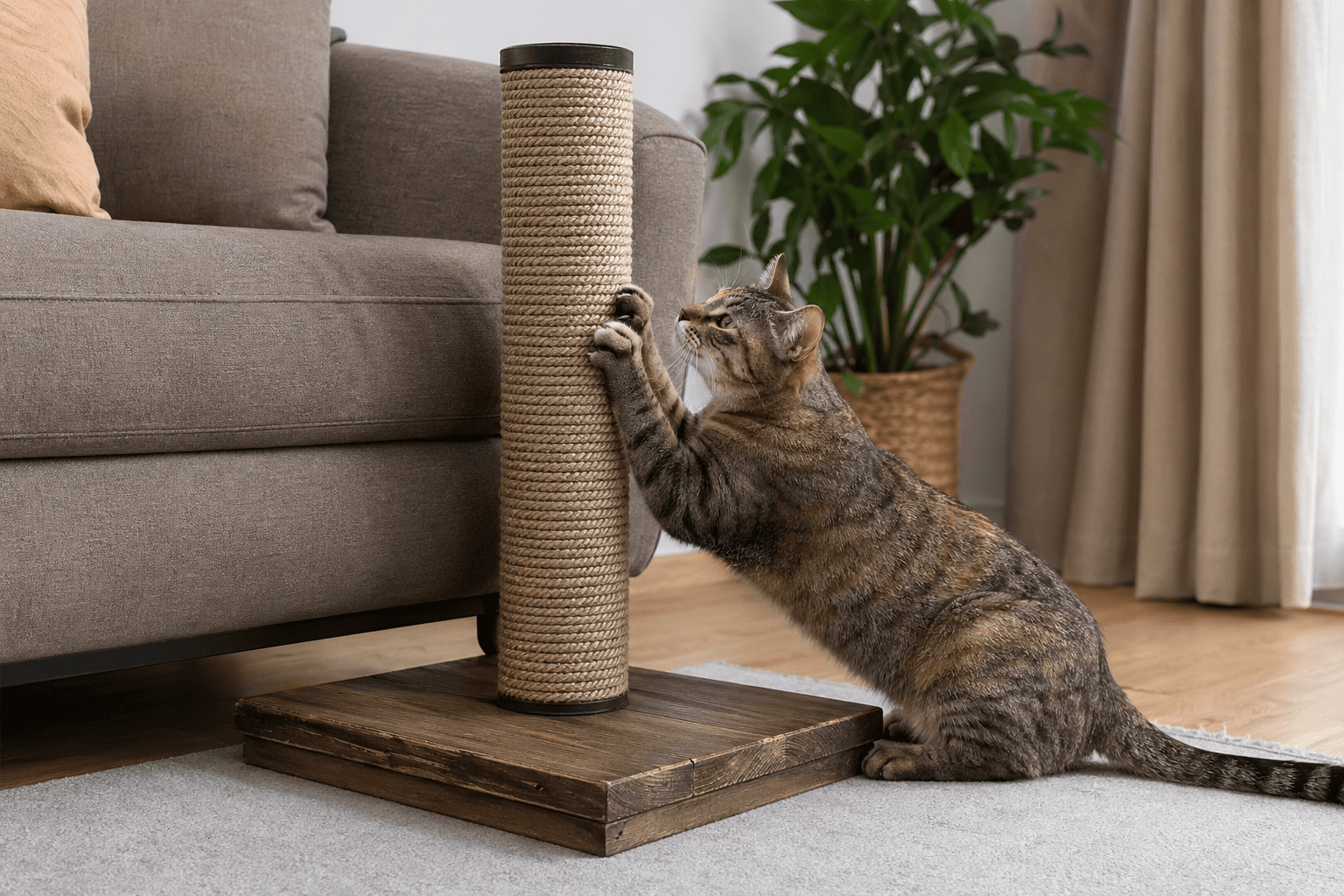
Common scratching surfaces include sisal rope, sisal fabric, corrugated cardboard, carpet, wood, and upholstery-style fabric. None is best for every cat. The right surface is the one your cat consistently chooses and can use safely.
- Sisal fabric: often grips well and may wear more evenly than rope on some posts.
- Sisal rope: popular and satisfying, but inspect for loose coils and long frays.
- Corrugated cardboard: inexpensive and loved by many cats, but messy and not ideal for cats that eat pieces.
- Carpet: useful for carpet scratchers, though it can confuse cats if it feels too much like household carpet.
- Wood: a good option for cats that like rough natural textures, especially in catios or supervised areas.
If your cat chews or swallows torn material, treat the scratcher like a toy safety issue. Remove loose rope, staples, tacks, tape, splinters, and chunks of cardboard. For cats that bite and pull, simple construction is safer than a post covered in trim, pom-poms, feathers, or glued-on decorations.
Where to Put a Cat Scratching Post
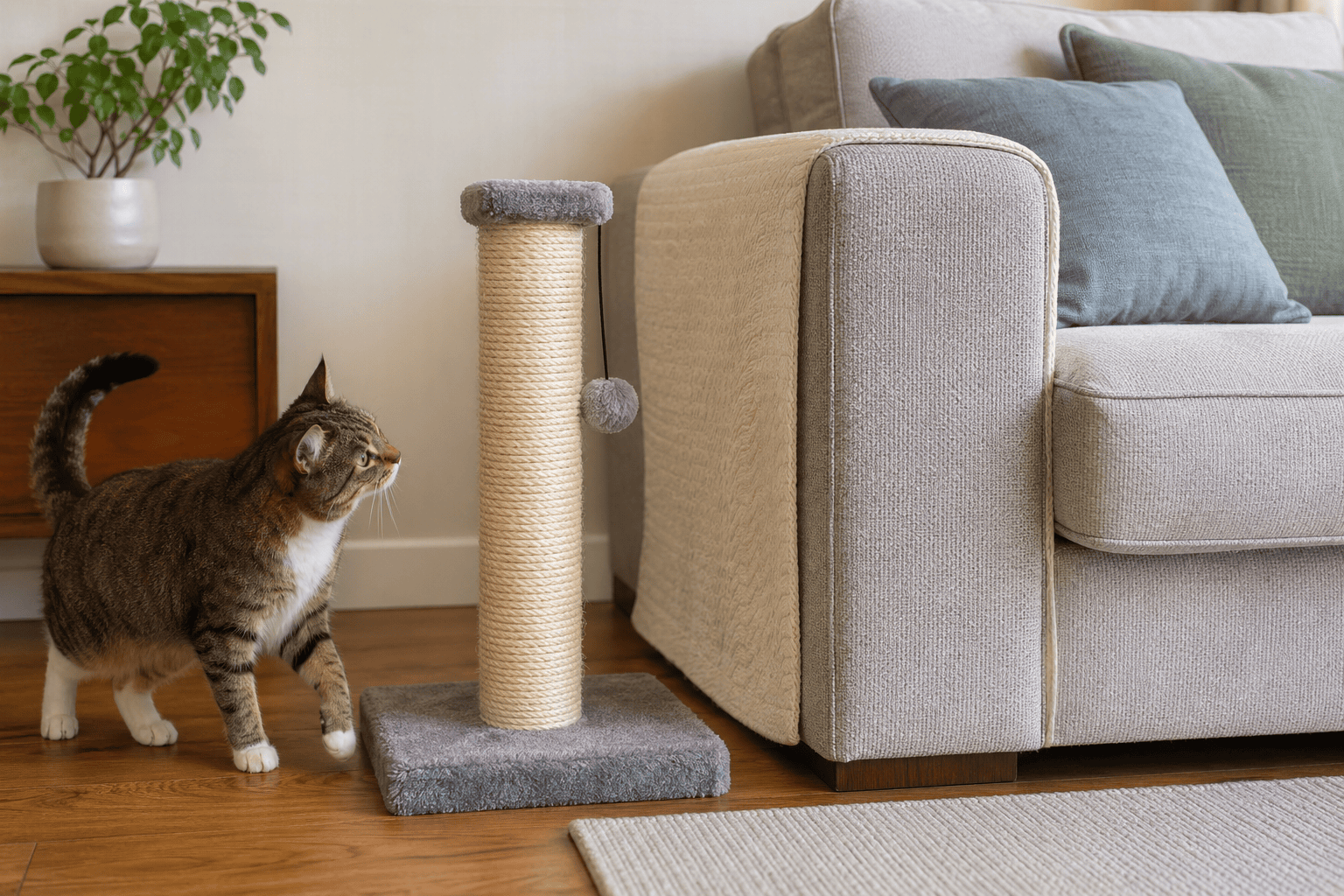
Placement decides whether the post becomes part of your cat’s routine. Put the first post next to the object your cat already scratches. Once the cat is using it reliably, you can move it a few inches at a time toward a better spot.
Good locations include beside a favorite sofa arm, near a sleeping area, close to a window perch, at a room entrance, or along a path your cat already travels. Scratching is partly communication, so hiding the post in a spare room usually fails. Cats often scratch after waking, after play, and when they enter a socially important area.
Multi-cat homes may need more than one post. The AAFP/ISFM environmental guidance recommends multiple separated resources so cats do not have to compete for key areas. A single beautiful post in the living room may not help the cat who wants to mark the hallway, bedroom, or office.
How to Get Your Cat to Use the Post
Make the post easy to choose and reward your cat for using it. Place it where the scratching already happens, play near it, sprinkle a little catnip or silvervine if your cat responds to those, and praise or treat the cat when claws hit the right surface. Keep the tone calm. You are building a habit, not winning an argument.
The ASPCA destructive scratching guidance recommends providing varied scratching surfaces, placing posts beside forbidden targets, and avoiding force. Do not grab your cat’s paws and drag them down the post. That can make the post feel threatening.
Make the old target less convenient while the new target becomes rewarding. Cover the sofa arm temporarily, use furniture-safe double-sided tape where appropriate, block access when you cannot supervise, or rearrange the room so the post sits in the prime scratching spot. Avoid punishment. Cornell warns that punishment can teach a cat to fear the owner or scratch only when the owner is absent.
Pair Scratching With a Better Play Plan
A scratching post handles clawing and marking. It does not fully handle prey drive. If your cat sprints through the house, attacks ankles, shreds plush toys, or bites the post cover, add a play plan that gives the cat a better job.
Start with two short wand sessions each day. Move the lure away like prey, let your cat stalk and catch it, then put the wand away. Add a tough kicker or large fabric toy for grab-and-bite play, and keep a few solo-safe chase toys in rotation. Our guide to choosing safer cat toys for rough play explains how to match toys to chasing, pouncing, chewing, and kicking styles.
If scratching spikes during high-energy moments, read it as useful information. The cat may need more active play before the usual furniture-scratching window, not another deterrent after the damage starts. For cats that cross into ankle attacks or hand biting, pair this article with durable toys that reduce play aggression and why cats destroy toys.
When to Replace or Repair a Scratching Post
A ragged scratching post is not automatically bad. Cornell and ASPCA both note that cats may prefer used posts because they smell familiar and give claws a good grip. Do not throw away a favorite post just because it looks worn.
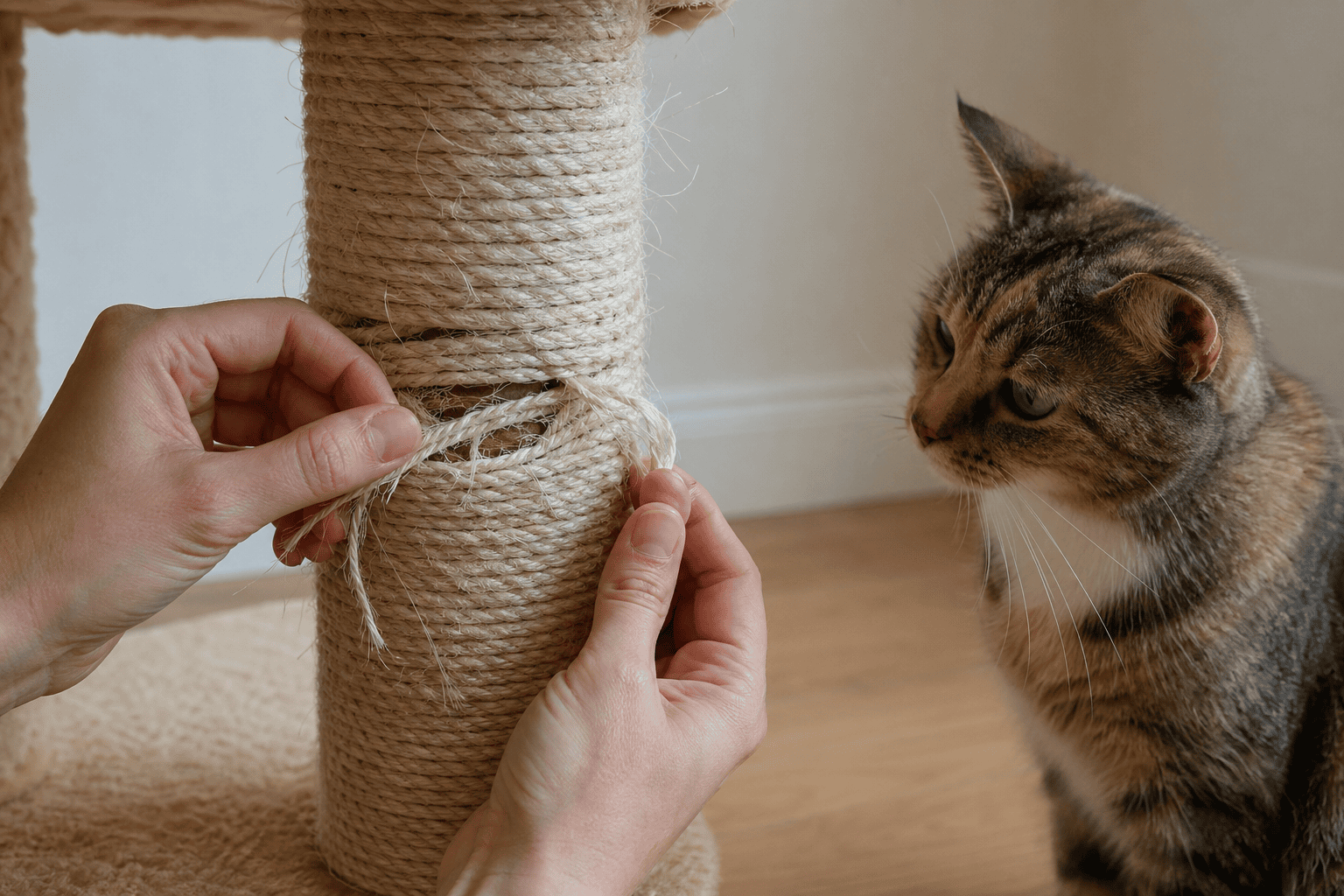
Replace or repair the post when wear changes the safety or function. Watch for wobbling bases, exposed staples, sharp broken plastic, loose screws, splintered wood, rope loops that can catch claws, long strands a cat can chew, and cardboard chunks that your cat might swallow. If the post is part of a cat tree, check platforms, bolts, wall straps, and seams too.
For a cat that hits scratchers hard, inspect the post weekly. If your cat also chews fabric or cardboard, use the stricter toy-bin rule: anything that can come off in the mouth needs to be trimmed, repaired, supervised, or removed.
Quick Buying Checklist
- Orientation: does your cat need vertical, horizontal, angled, or corner scratching?
- Height: can your cat stretch fully on the post?
- Stability: does it stay planted when pulled, climbed, or kicked?
- Surface: does it match the texture your cat already prefers?
- Placement: can it sit beside the current scratching target at first?
- Safety: are there no loose ropes, staples, sharp edges, dangling parts, or swallowable pieces?
- Durability: can it handle your cat’s real strength, not just product-page photos?
The Bottom Line
The best cat scratching post is tall enough, stable enough, textured correctly, and placed where your cat already wants to scratch. Choose by behavior first: vertical or horizontal, stretch or rake, sisal or cardboard, furniture corner or hallway marker.
For cats that destroy ordinary toys, use the post as one part of a bigger enrichment system. Give your cat an approved place to claw, a safe way to chase, a tougher outlet for biting and kicking, and a regular inspection routine. No post or toy is indestructible, but a better setup can protect your furniture while giving your cat a more satisfying indoor life.
Leave a Reply