Author: Nathaniel Price

  • how to train cats to behave: basic commands

    how to train cats to behave: basic commands

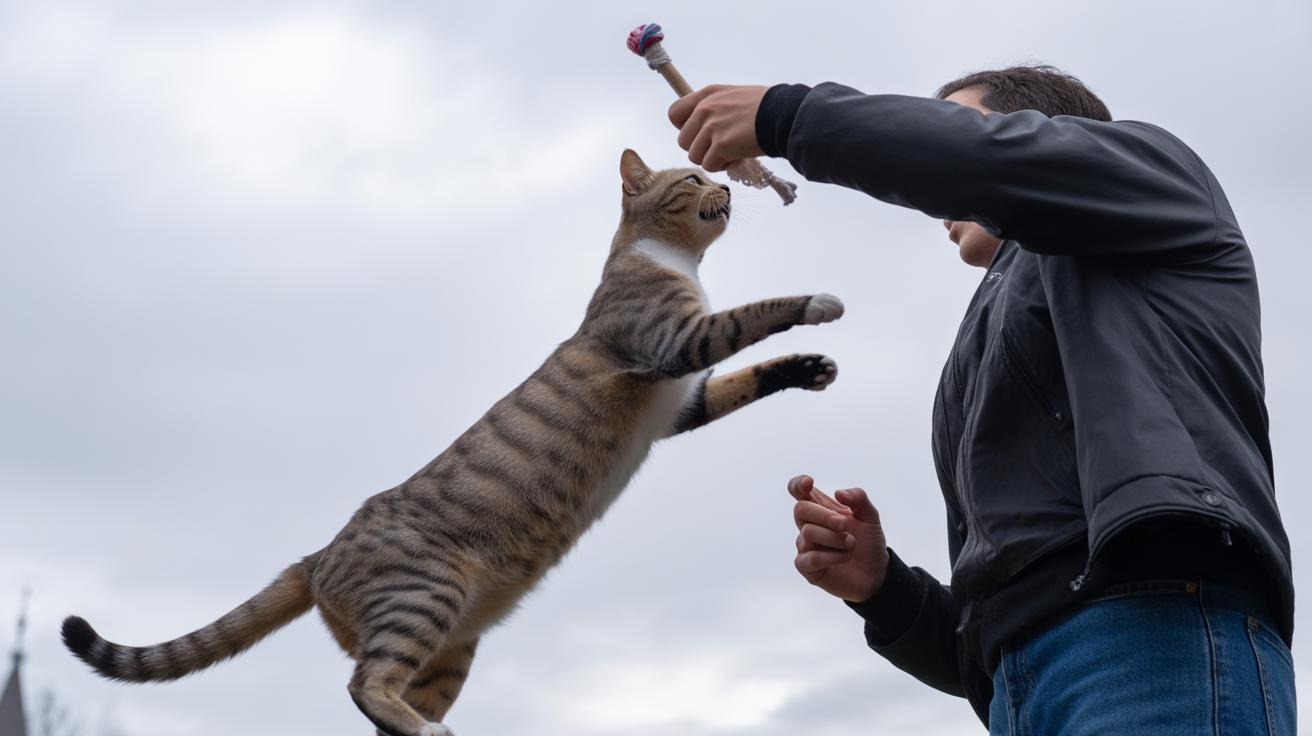
    I used to think cats were impossible to train. Then Luna launched off the couch, all paws and determination, for one tiny shiny treat and I realized something: your cat already knows how to focus. We just teach the signals that say “sit” or “come.” Ever watched a whisker-twitching stare? That’s the start.

    Keep training short. Three to five minutes is perfect. Use a tiny high-value treat (small, super-tasty treat) and pick a marker word (a short, clear word or click that marks the exact moment they do the right thing). It’s simple: short practice, small rewards, clear signals. Before you know it, stubbornness turns into a reliable sit or come, with bright eyes and happy pounces.

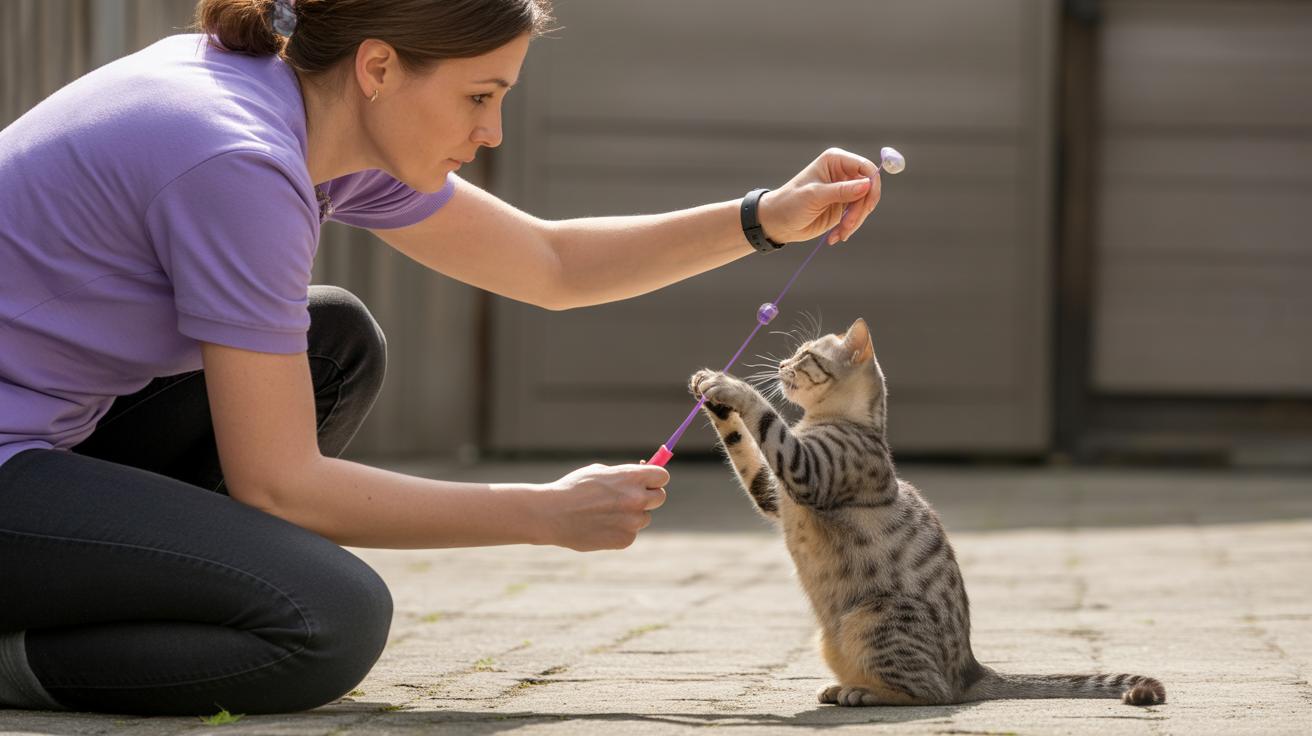
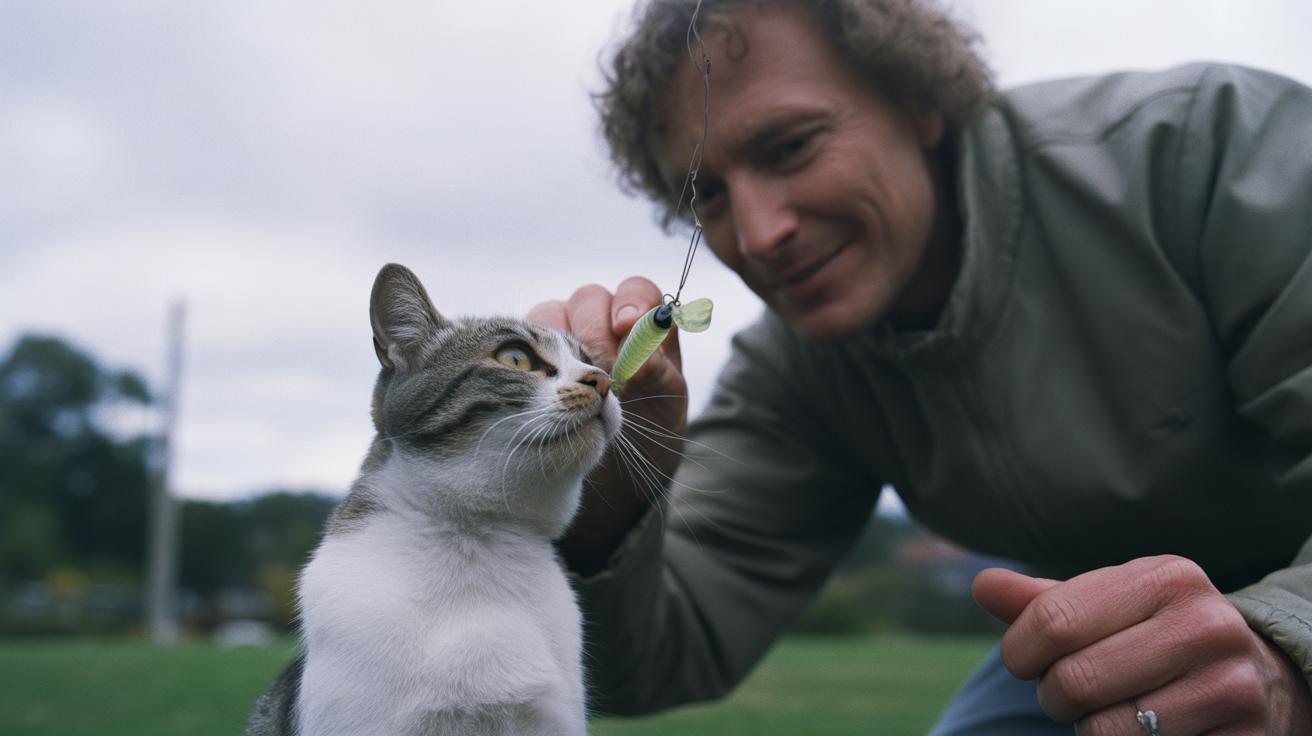
    Here’s the exact flow: lure, mark, reward. Lure means show the treat and guide your cat into the position you want (think of it like a fishing rod for cats). Mark at the very instant the behavior happens, say your word or click, so the cat connects the action and the reward. Reward immediately. Timing matters; mark within a heartbeat, then treat. Quick fixes: if your cat ignores you, try a tastier treat, cut distractions, or reward tiny steps with shaping (rewarding small steps toward a behavior). And if they walk away, end the session on a high note, try again later.

    Do one to three short sessions a day, in the same quiet spot when you can. For busy days, a single quick practice before you head out gives you ten minutes of calmer behavior later. Celebrate tiny wins. Seriously, it feels great watching a cat learn. Worth every paw-print.

    how to train cats to behave: basic commands
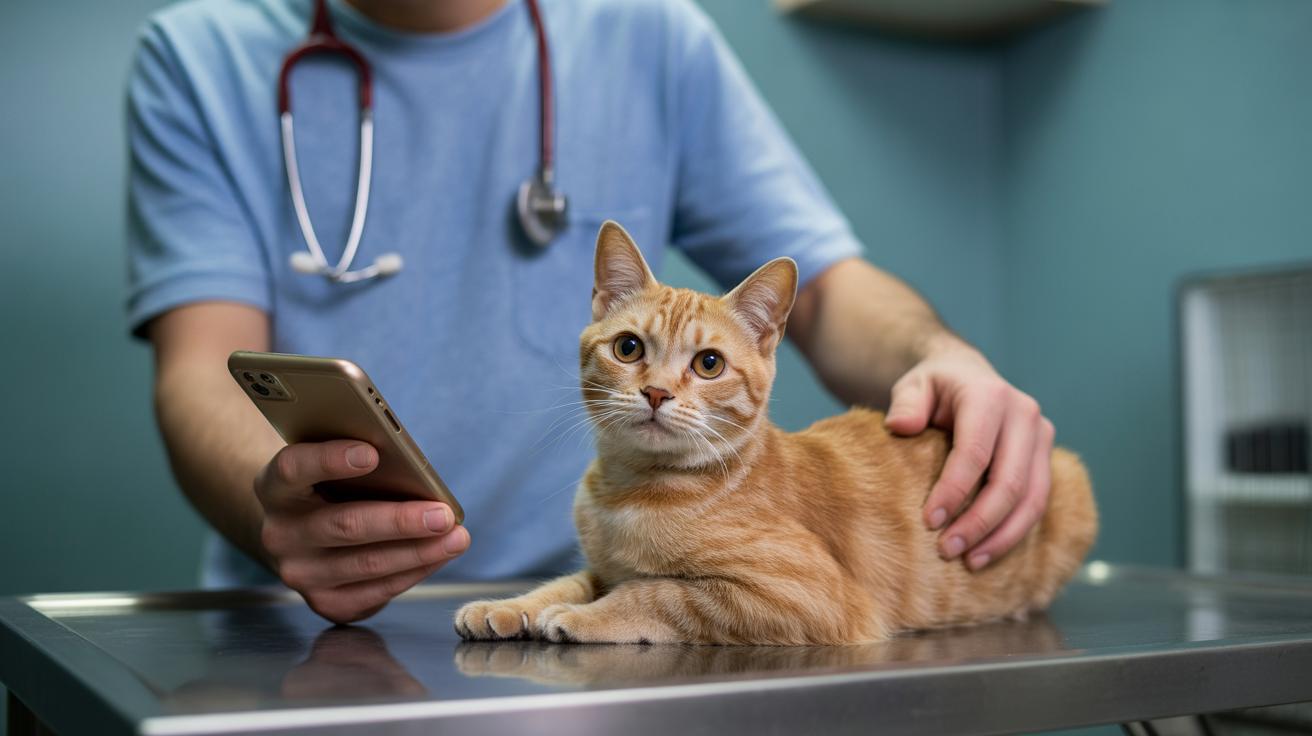
    - Practical plan to train cats to behave with basic commands (step-by-step).jpg

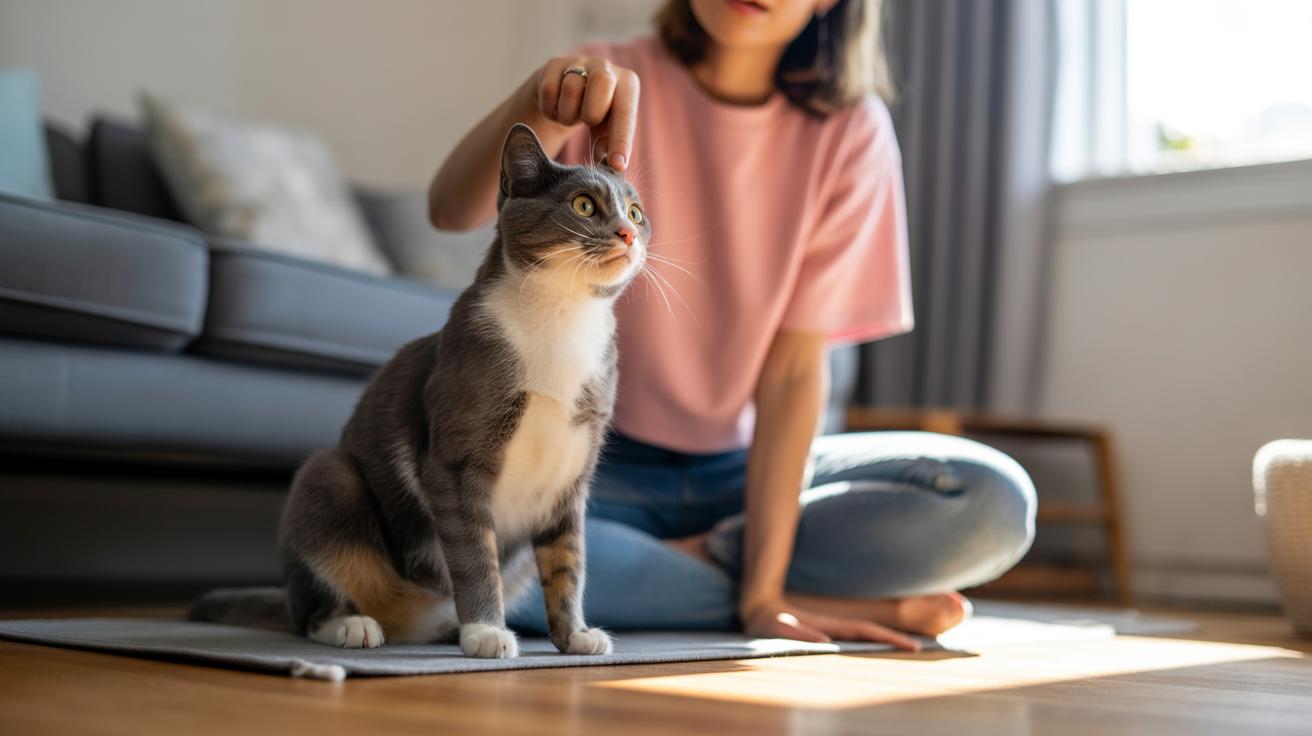
    Start small. Hold a tiny high-value treat (a special, super-tasty snack your cat only gets for training) just above your cat’s nose and lift it straight up so their hindquarters lower into a sit. That’s called a lure (using a treat to guide your cat into a position). The instant their rear hits the floor, click or say your marker word and give a tiny treat right away. A clicker (a small plastic sound device) or a clear word like "yes" works great for marking the exact moment.

    Do short mini-sessions of 3 to 5 minutes. Keep reps quick and fun, then finish with a calm reward so your cat ends on a good note. For deeper methods, see methods; see tools; see tracking; see troubleshooting.

    Timing and hunger matter. Work after a nap when your cat is alert and a little hungry. Practice only one skill per session so the cue stays simple. Use a motivating treat and the same marker each time so your cat learns the pattern: lure, mark, reward.

    A simple plan:

    1. Gather a tiny high-value treat and a clicker or a short marker word.
    2. Pick a short verbal cue and a clear hand signal.
    3. Run a single 3–5 minute session focused just on "sit."
    4. Train after a nap or when your cat’s mildly hungry for best focus.
    5. Lure the cat into position, mark the exact moment, and reward immediately (then slowly fade the lure).
    6. End every session with a calm final treat and a pause so they feel good about it.
    7. Aim for dozens up to about 50–100 short reps across the day, split into many tiny sessions.
    8. If your cat stalls or shows stress, stop and check the troubleshooting section.

    Quick checklist recap: short session, single skill, lure → mark → reward, finish calm. Watch for stress signals like tucked ears, wide pupils, or a swishing tail; if you see those, take a break and consult troubleshooting. Worth every paw-print.

    Train cats: core training methods (clicker, lure-and-reward, shaping)

    for full diagnostics Do not include detailed schedules, logging formats, or sample daily plans in this section (moved to session structuretracking).jpg

    There are three go-to ways to teach cats: clicker training, lure-and-reward, and shaping. Each one shines for different jobs, so think of them as tools in your kitty toolkit. Target training (getting a cat to touch a stick or your hand) is a handy bridge between lure work and shaping.

    Clicker training is great when you need perfect timing and fast learning. First, pair the clicker with treats about 10 times: click, then give a tiny treat right away, repeat until your cat looks for the treat after the click. Keep the timing tight , mark the exact movement within a 0.5-1.0 second window, and deliver the reward immediately. Common mistakes are clicking too late, clicking for the wrong motion, or handing the treat slowly. To fade the clicker, click for only the best reps, then switch to a short marker word or an intermittent click schedule as the behavior becomes solid (see starter plan; see tracking).

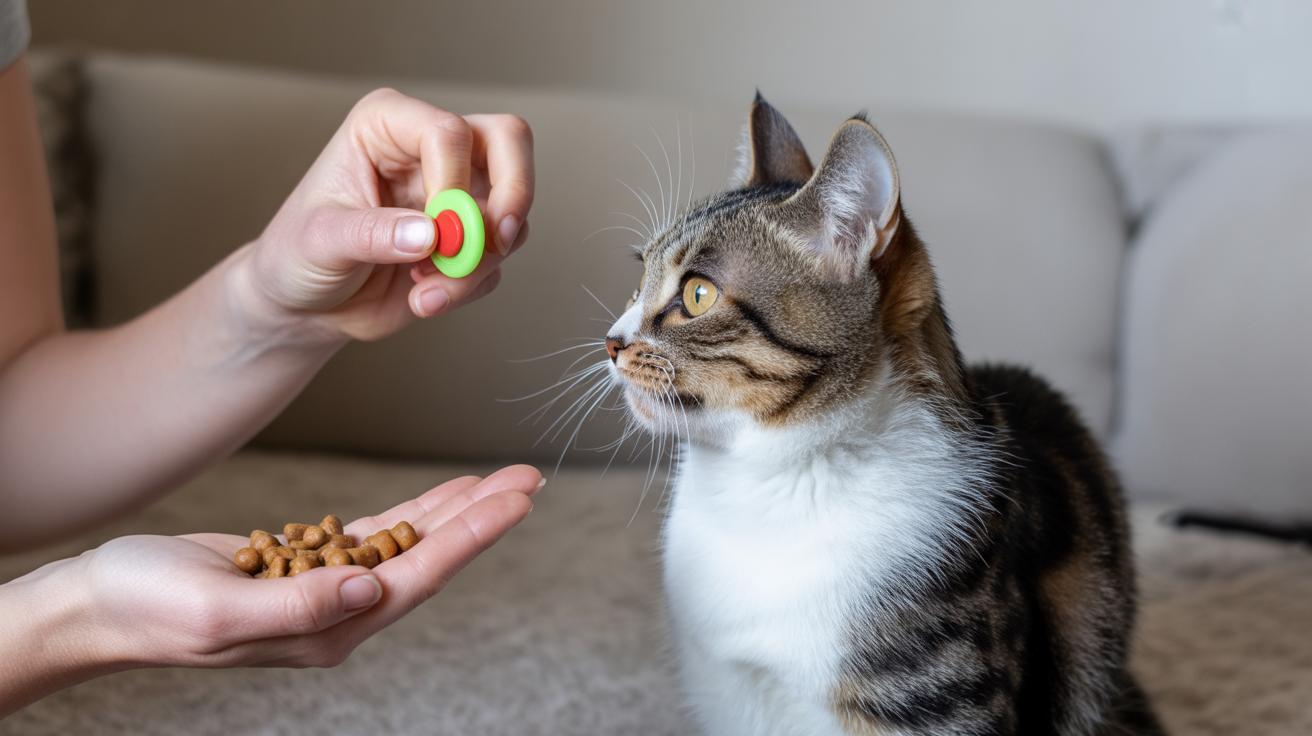
    Lure-and-reward is perfect for showing a new action, like a sit or a go-to-mat. Hold a treat above your cat’s nose and move it straight up so their hind end lowers into a sit; mark that instant and reward. Fade the visible lure by using an empty hand that follows the same path, then just the hand signal, and finally the verbal cue once the move is consistent. Think of it like a fishing rod for cats, just, um, with kibble.

    Shaping helps when the trick is too big to teach in one step. Break the goal into tiny micro-steps and reward the smallest move toward the target. If your cat looks stressed, back up: flattened ears, wide pupils, or a whipping tail are signs to slow down. Ever watched your cat’s whiskers twitch as they figure something out? Reward that curiosity. For picky eaters, switch textures, freeze-dried bites (small crunchy meat pieces), squeezable treats (soft paste), or even a quick play session, to keep motivation high.

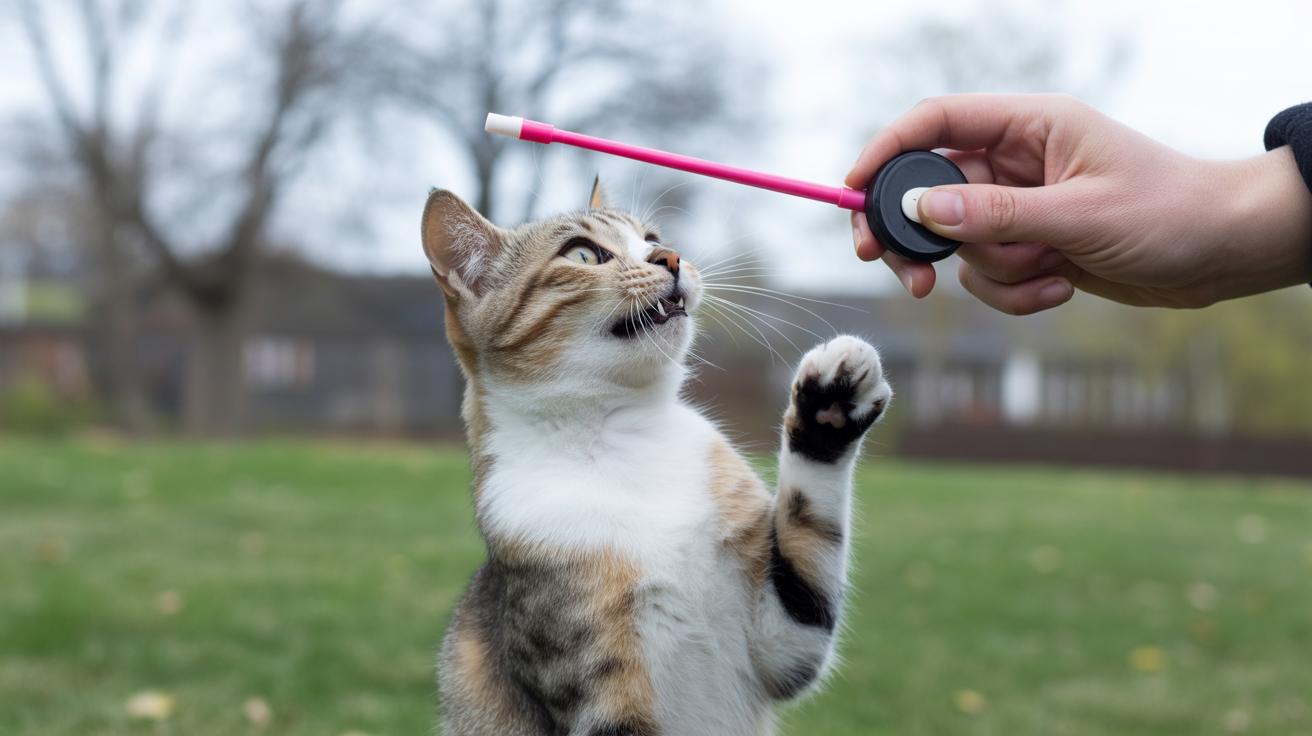
    Target training ties it all together. Ask your cat to touch a stick or your hand, click or mark the touch, then reward. It’s a simple step that leads to steering, shaping, and more complex tricks. Worth every paw-print.

    Teach a cat to sit, come, and stay: command-by-command progressions
    - Train cats core training methods (clicker, lure-and-reward, shaping).jpg

    Think tiny steps. Use one clear cue, a precise mark, and a fast reward. Marking can be a clicker (a small handheld click noisemaker) or a short word like "Yes." Give the treat within about a second so your cat links the action to the reward. Short, enthusiastic reps feel fun to your kitty, do a handful at a time and end while you both still want more. Ever watched your kitty chase shadows? This is the same playful focus, but with goals.

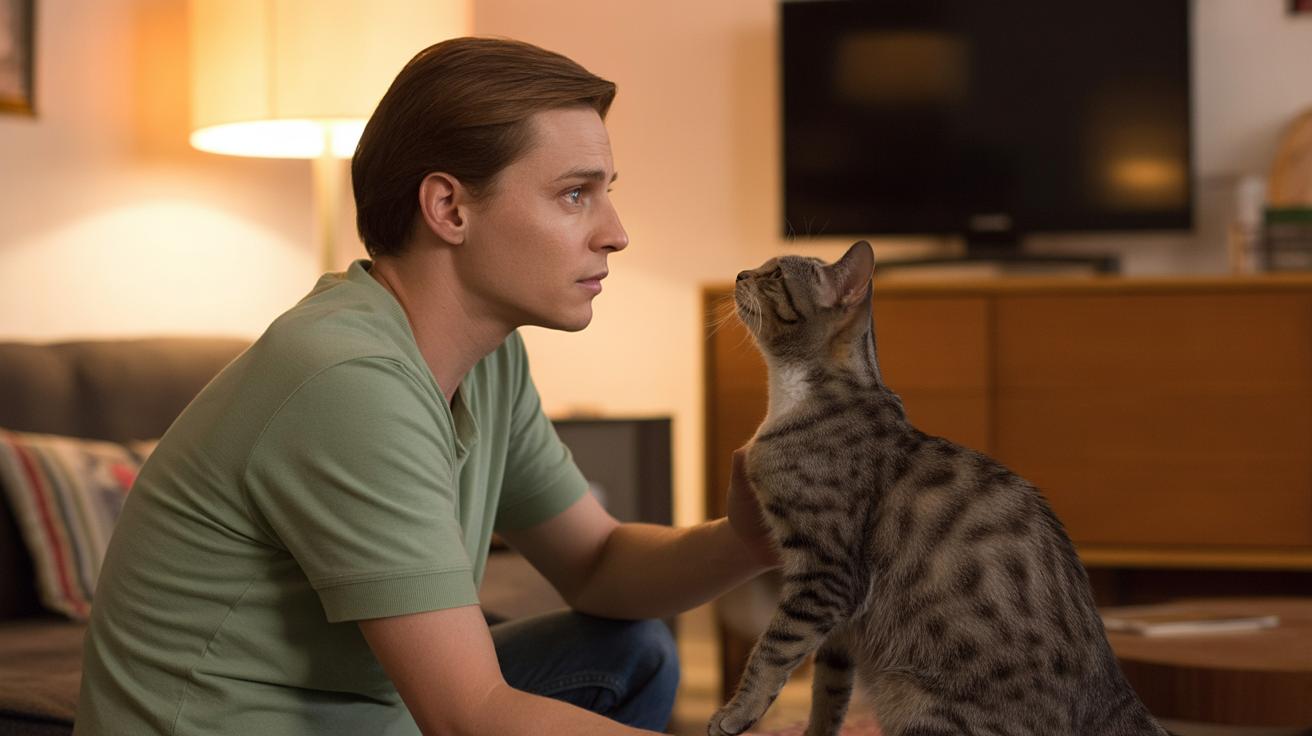
    Sit: hold a tiny treat just above your cat's nose and lift straight up so the hindquarters naturally drop. The instant they sit, mark it and give the treat within about a second. Repeat brief, excited reps and slowly fade the visible lure into a hand signal over several sessions. You can build high-five and lie down from target work and shaping, reward small improvements and click each better try. Many cats get a solid sit in 1–7 days with dozens up to 50–100 short reps spread through the day.

    Come / Recall (come when called): start a few steps away in a quiet room with one distinct cue. Call once, wait for them to move, mark arrival with the click or word, and reward heavily at the finish. Gradually add distance and light distractions. Some cats learn quickly; others take time, expect 1–6 weeks depending on motivation and practice. Aim for 10–30 reps a day split into mini-sessions.

    Stay: teach sit first. Ask for a 1-second hold, click and reward, then build to 3 seconds, then 10 seconds before treating. Once holds are steady, add gentle distractions and use a clear release cue to end the stay. Practice dozens of short holds daily; weeks of steady practice usually make it reliable.

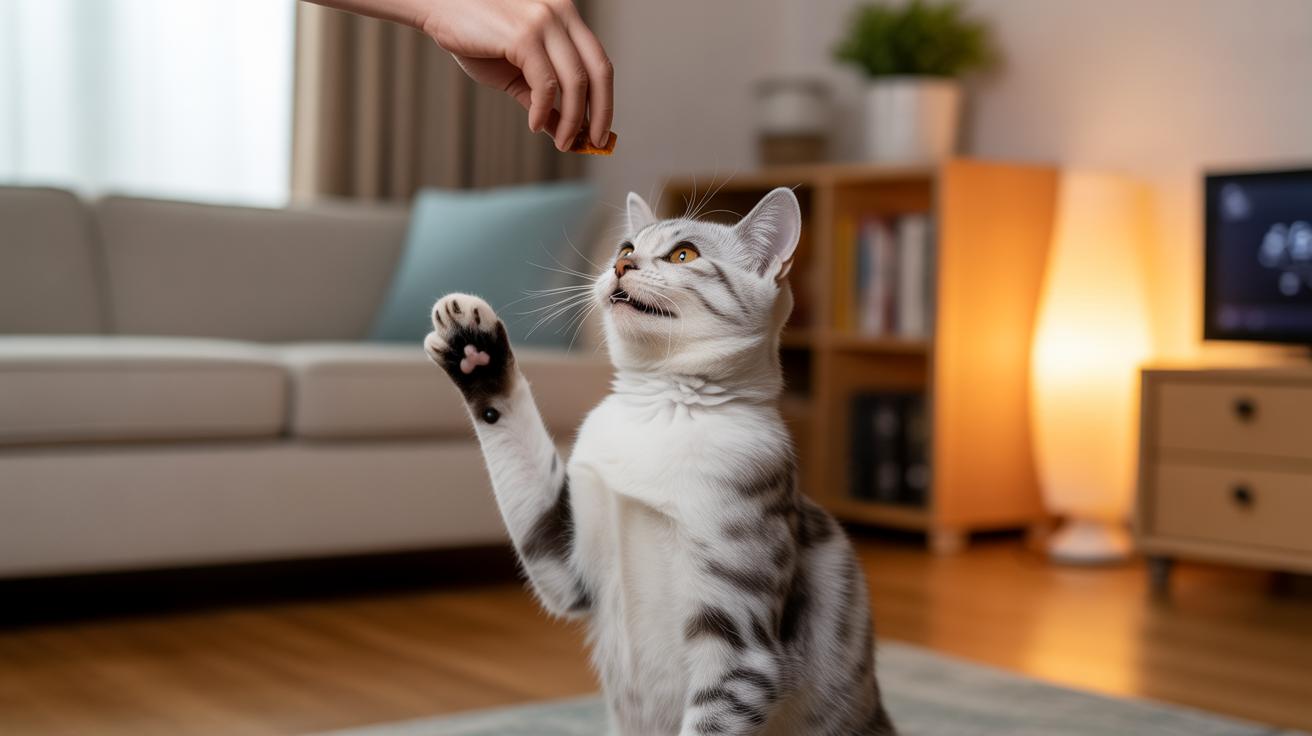
    Lie down: from sit, lure the treat down and slightly forward so the chest lowers. Mark the full down position and shape deeper lowers over reps. High-five: use a target or hold a treat near paw height; click tiny paw lifts and reward, then shape to a full flat-paw touch and add a verbal cue. Both of these often come together in 1–4 weeks with many short reps through the day.

    Timing and progression rules keep things tidy. Mark the exact successful movement quickly, within 0.5–1.0 second, so your cat links the cue to the result. Keep sessions short and frequent, train one skill at a time, and increase challenges slowly. It’s better to stop while your cat is still happy than to push for one extra rep.

    Motivation and surroundings matter. Use high-value treats and rotate textures for picky kitties, or swap in a quick play burst for cats who prefer motion. Pick a low-distraction spot and have everyone use the same words and hand signals so your cat doesn't get mixed messages. Your cat’s whiskers will twitch as the ball rolls across the carpet, use that focus.

    Watch for stress signals, flattened ears, wide pupils, tail thrash, and stop if your cat looks unhappy. If progress stalls or you don’t see steady improvement after a few weeks of consistent practice, check the troubleshooting tips or talk to your veterinarian or a behaviorist. Worth every paw-print.

    Command Step-by-step micro-steps Typical timeline to reliable response
    Sit Hold tiny treat above nose and lift straight up so hindquarters drop; mark within 0.5–1s; reward immediately; repeat short reps; fade lure to hand signal. 1–7 days; dozens to ~50–100 short reps/day
    Come / Recall Start a few feet away in a quiet room with a distinct cue; call once; mark arrival; reward heavily; slowly increase distance and distractions. 1–6 weeks (varies with motivation); 10–30 reps/day in mini-sessions
    Stay Teach sit first; ask for 1s hold → click/reward, then 3s → then 10s; add mild distractions once steady; use a clear release cue. Weeks to reliable; practice dozens of short holds daily
    Lie down From sit, lure treat down and forward so chest lowers; mark full down; shape deeper lowers over reps. 1–4 weeks with shaping; dozens of reps/day
    High-five Use a target or hold treat near paw height; click tiny paw lifts and reward; build to full flat-paw touch and add verbal cue. 1–4 weeks with shaping; many short reps throughout the day

    Train cats: session structure, timing, and progress tracking
    - Teach a cat to sit, come, and stay command-by-command progressions.jpg

    Set up a quiet corner with your treat pouch (a small bag that holds tiny snacks), a clicker (a little sound device) or a marker word like "yes" (a short praise), and a small mat or chair so your cat always has the same place to work. Keep things simple so your cat knows this is training time. I like to think of it as a tiny classroom for one furry student.

    Keep each mini-session to about 3 to 5 minutes. Start with a quick warm-up of 2 to 3 easy reps (a rep is one repeat of the behavior) to help your cat focus, then spend the rest of the short session on one skill only. Your cat’s whiskers will tell you when they’re in the zone. Ever watched them lock on like a tiny hunter? Cute.

    Spread lots of these tiny sessions through the day, after naps or right after a short play burst, when your cat is alert and a bit hungry. The goal is dozens of little practices, roughly 50 to 100 reps total across the day, broken into playful bites. For busy days, toss an unbreakable ball or do a quick recall drill before you head out, that’s ten minutes of safe play and learning.

    Time Skill Session length Planned reps Primary reward
    Morning Sit 3–5 min 20 high-value treat (tiny piece of chicken)
    Midday Recall (come) 3 min 10 wet treat (creamy or meaty)
    Evening Trick (high-five or target) 3–5 min 15 short play burst (1–2 minutes)

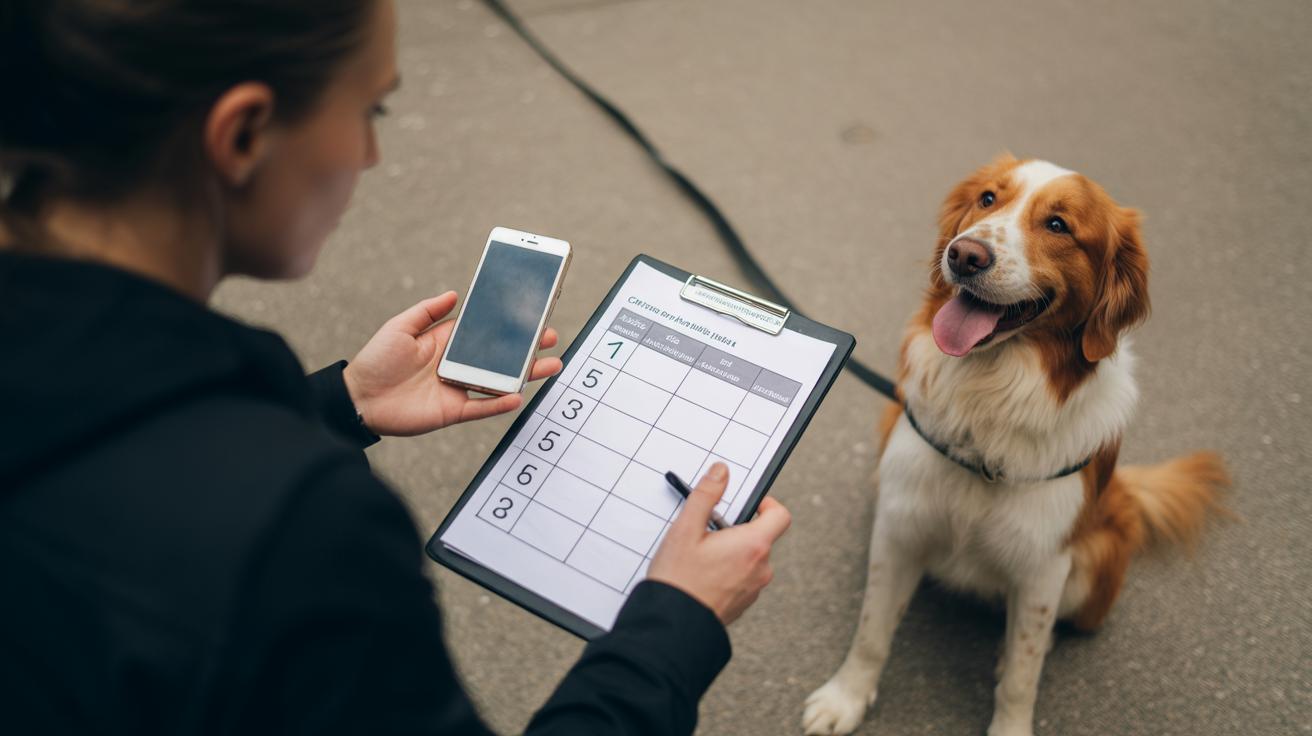
    Track every session in a simple log so you can spot patterns over a week or two. Write down Date, Behavior, Session #, Reps, Successes, % Success, and Notes (like distractions or stress signals such as wide pupils or a swishing tail – a sign your cat might be annoyed). Calculate % Success as (Successes ÷ Reps) × 100. Yep, a little math, but it shows if you’re moving forward.

    Look for steady improvement across 1 to 2 weeks. Small jumps up mean you can raise the bar a bit. Flat lines or falling scores mean back up a step, change the reward, or make the cue clearer. Move to the next difficulty when you hit at least 80% success across three sessions in a row. Oops, make that three good sessions in a row, consistency matters. For treat sizes and gear, check the tools section if you need help with portioning or equipment.

    Date Behavior Session # Reps Successes % Success Notes
    Mon Sit 1 20 16 80% Calm, good focus
    Tue Recall 1 10 7 70% Distracted by bird outside
    Wed Trick 1 15 10 67% Needed higher-value treat
    Thu Sit 2 20 17 85% Nice progress
    Fri Recall 2 10 8 80% Shorter distance
    Sat Trick 2 15 12 80% Switched to squeezable treat
    Sun Sit 3 20 18 90% Ready to fade lure

    Train cats: tools, treats, and enrichment to motivate learning
    ).jpg

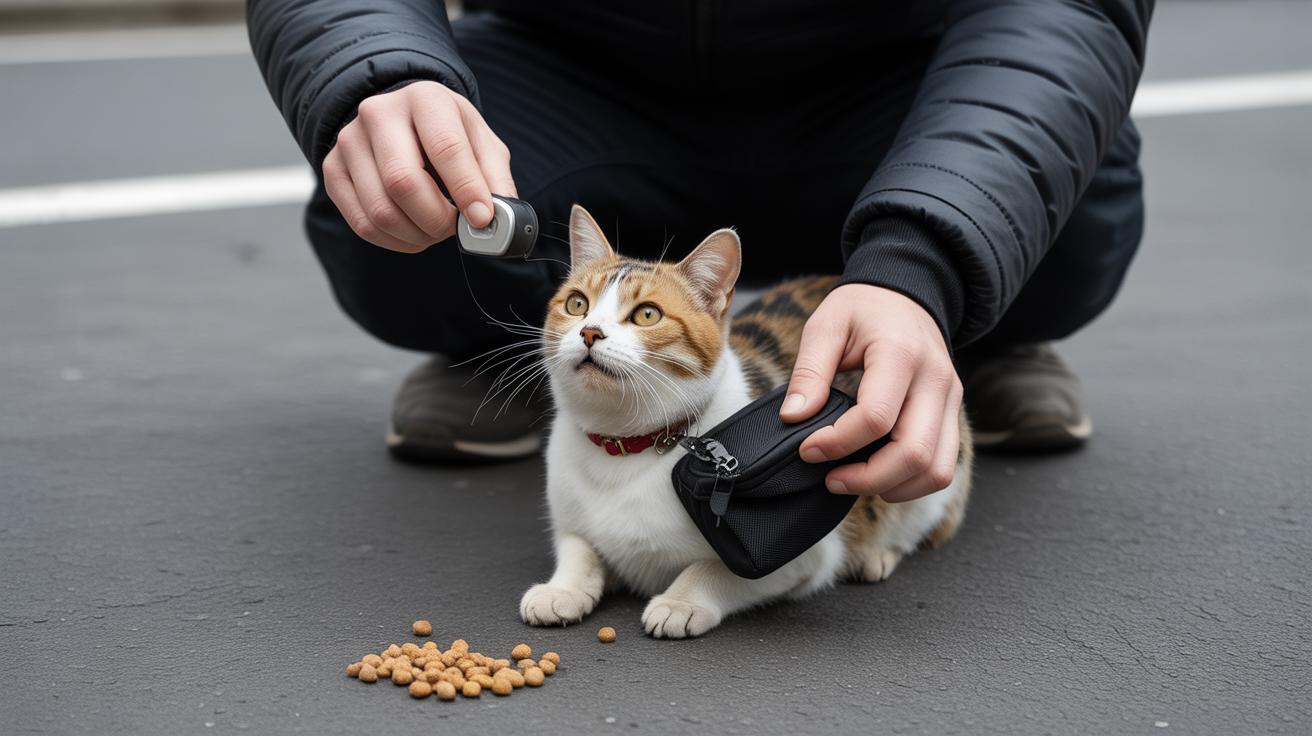
    A small training kit makes short sessions feel easy and fun. Pack a quick-release clicker (a tiny handheld marker that makes a sharp sound), or pick one short marker word everyone uses. Toss in a treat pouch with a swivel clip (a small bag that snaps to your belt or pants) so treats are always at hand.

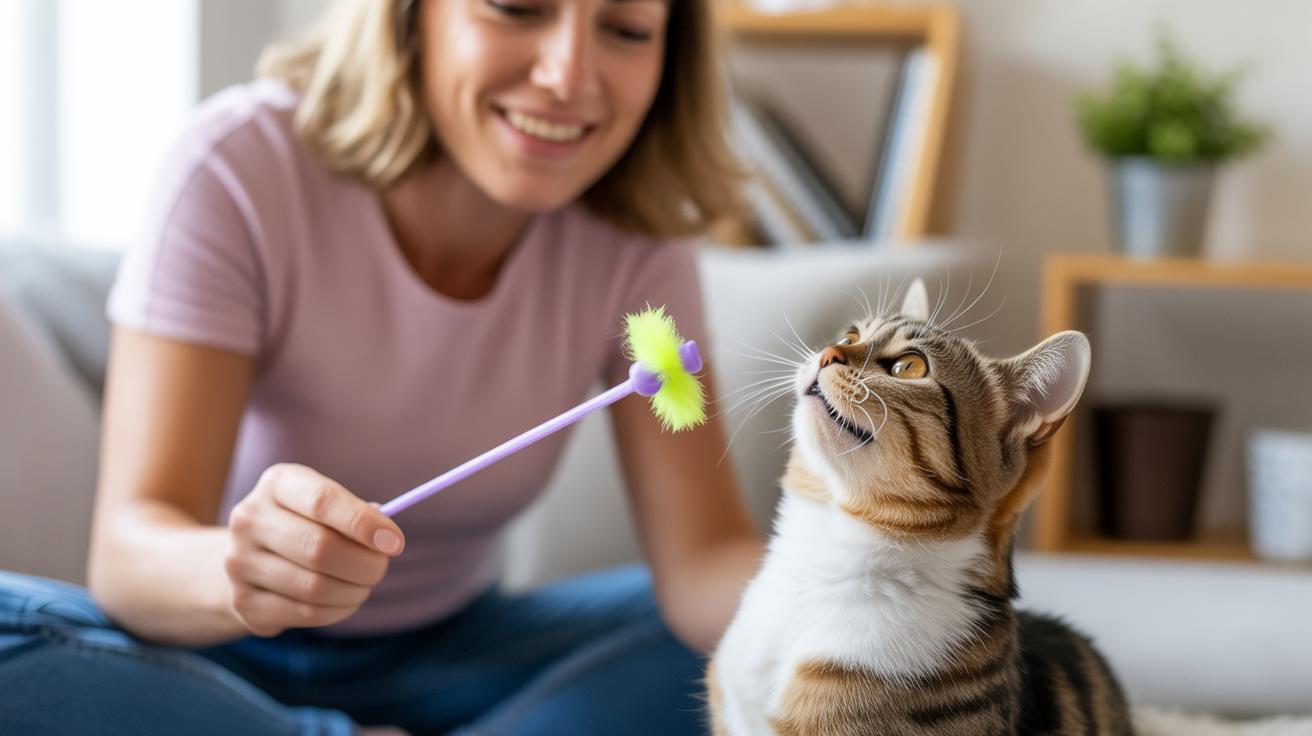
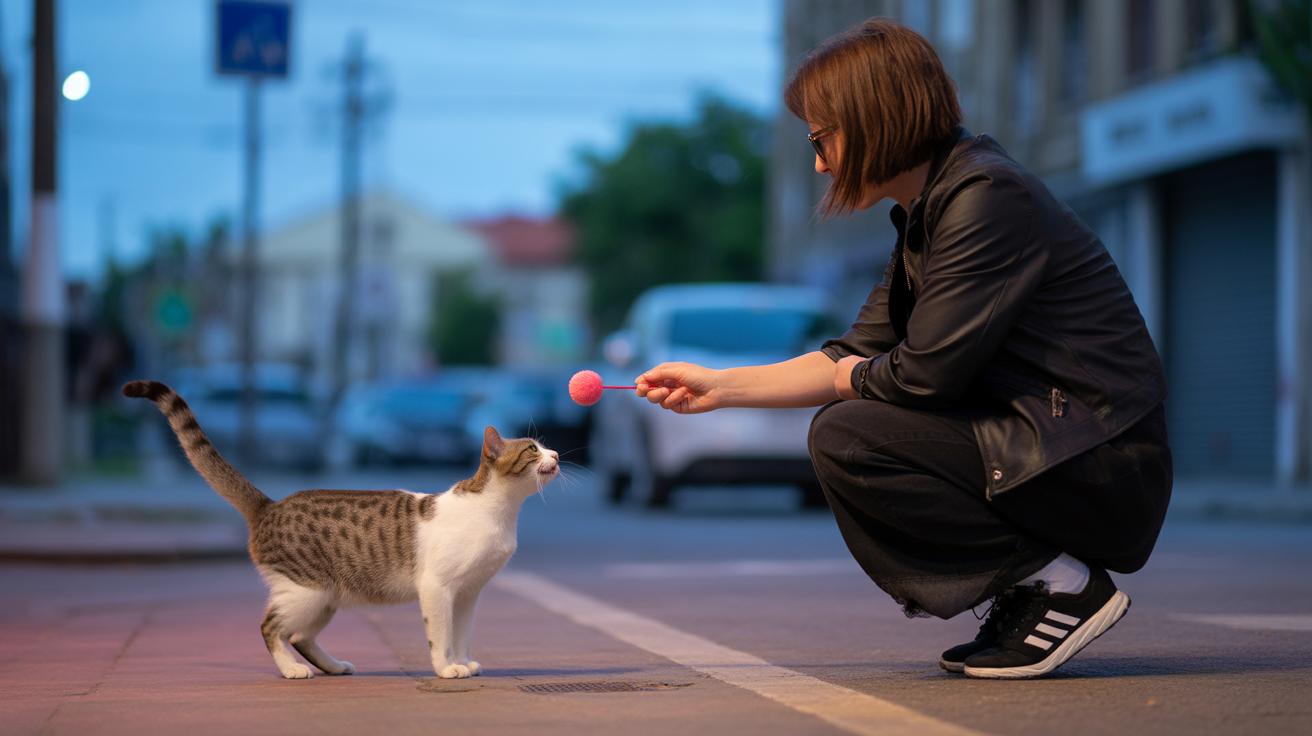
    Bring a finger target or a target stick (a long stick with a soft tip you can ask the cat to touch). Think of the target stick like a fishing rod for cats, just point, ask, and reward. Also stow a teaser wand (a long wand with string and feathers) for motion rewards and high-energy play.

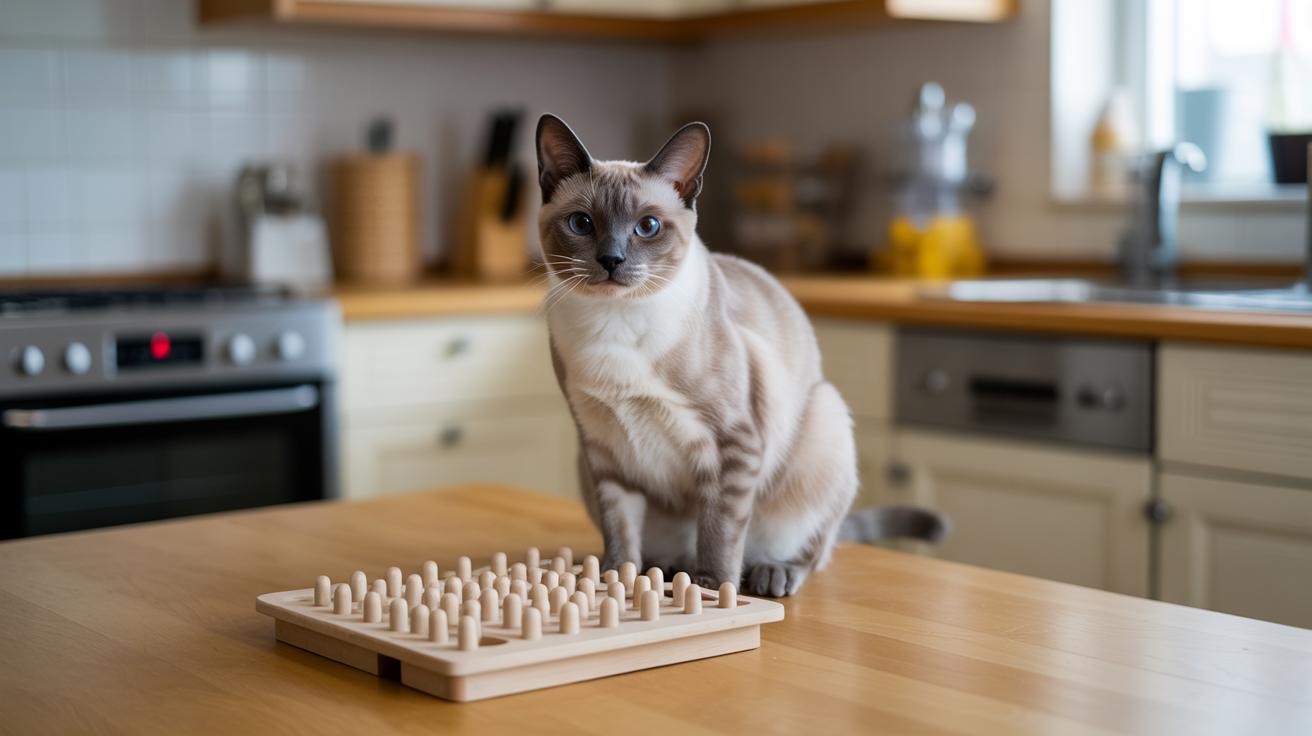
    A basic puzzle feeder (a slow-feeding toy that hides treats) is perfect for enrichment during downtime. Rotate puzzle toys so they stay interesting, and always watch new toys the first few times to make sure your cat plays safe. Inspect toys regularly for loose parts or frayed string.

    Treat variety helps with picky kitties, so carry a few textures and flavors. Use tiny bites so you can run many reps without overfeeding. Pea-sized pieces (about the size of a green pea) of freeze-dried chicken, little wet-kibble nibbles, or squeezable single-serve treats work especially well.

    For a short 3–5 minute practice, expect to use about 8–12 tiny bites. Take those treats from part of the cat’s daily meal allowance so you don’t overdo calories. If you want numbers, check the treat package for calories and cut the meal portion accordingly.

    Safety first, always. Keep treats tiny to avoid choking, read ingredient lists to avoid unsafe human foods, and replace worn tips on target sticks. Supervise play with teaser wands and puzzle feeders, and toss any toy that gets torn or has loose bits.

    Enrichment keeps learning playful and fights boredom. Use puzzle feeders during rest periods for slow rewards, and save the teaser wand for big, exciting rewards. Isn’t it nice when a toy just lasts? Worth every paw-print.

    Train cats to stop problem behaviors while teaching basic commands
    - Train cats session structure, timing, and progress tracking.jpg

    Replace-not-punish is the golden rule here. Give your cat a better choice and reward the swap. Click and treat (use a clicker for a clear, repeatable sound) when they pick the new option so they learn without fear. Expect slow, steady change. Most cats shift habits over several weeks. And if you see sudden aggression or big behavior shifts, call a pro or your vet.

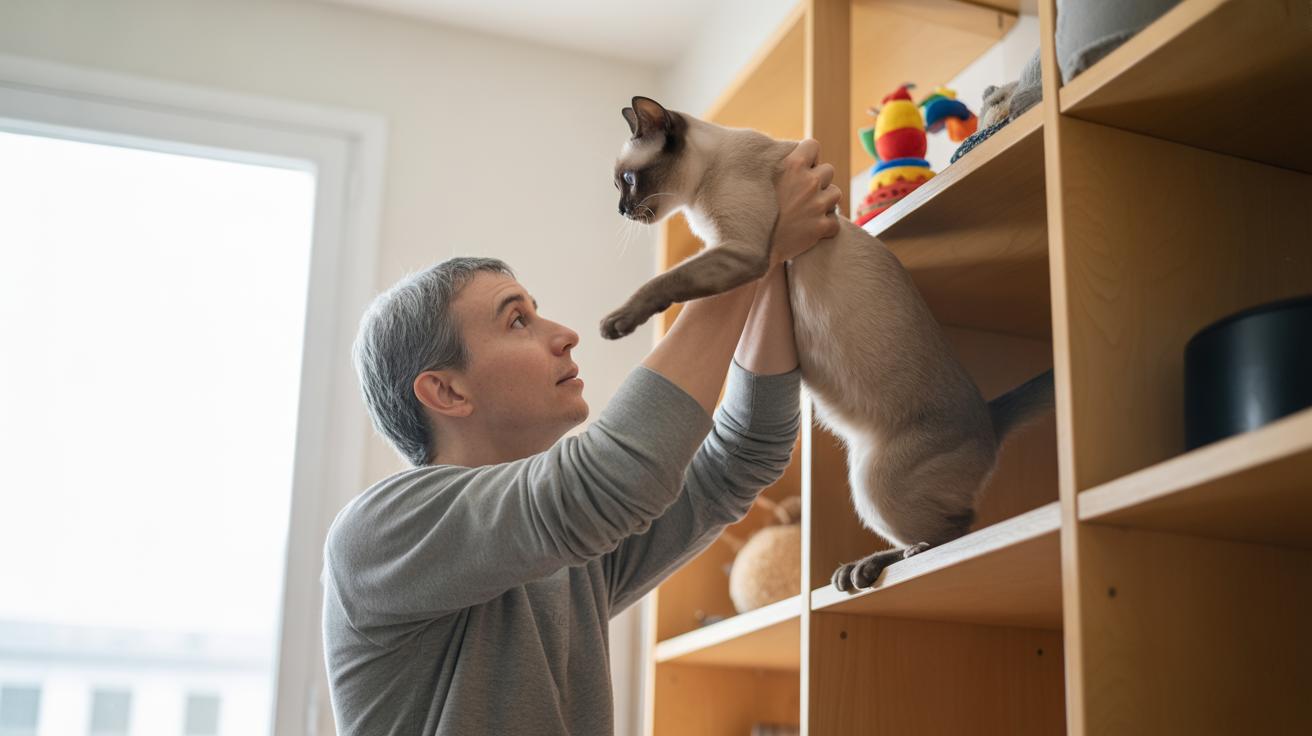
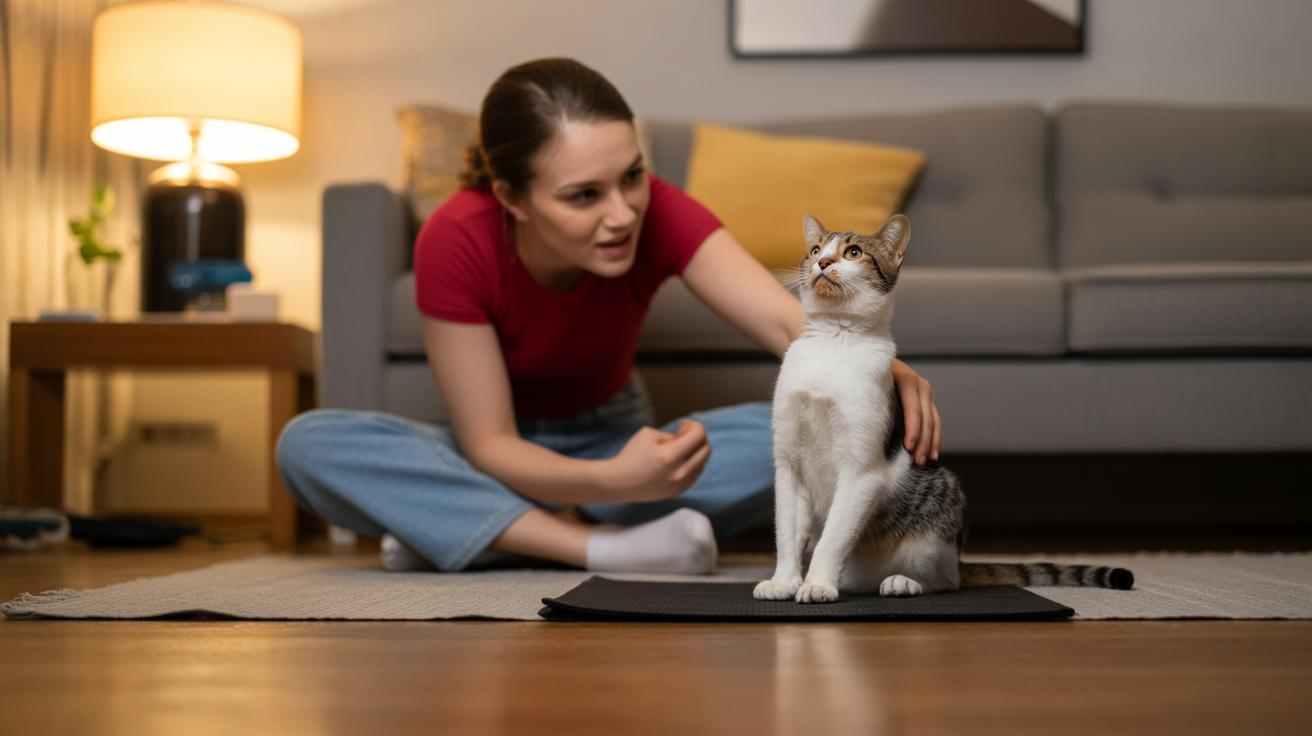
    To keep cats off counters, take away tempting items and make the surface less cozy with short-term deterrents like double-sided tape. Then set up a rewarded high spot nearby, a cat tree or shelf, and shape the move: click and reward each tiny step toward the tree, and then slowly swap food rewards for praise or a quick play burst. Try little training sessions after naps so your cat links the new spot with good stuff. Track progress over weeks. It’s worth it when you catch that satisfied little look as they hop up.

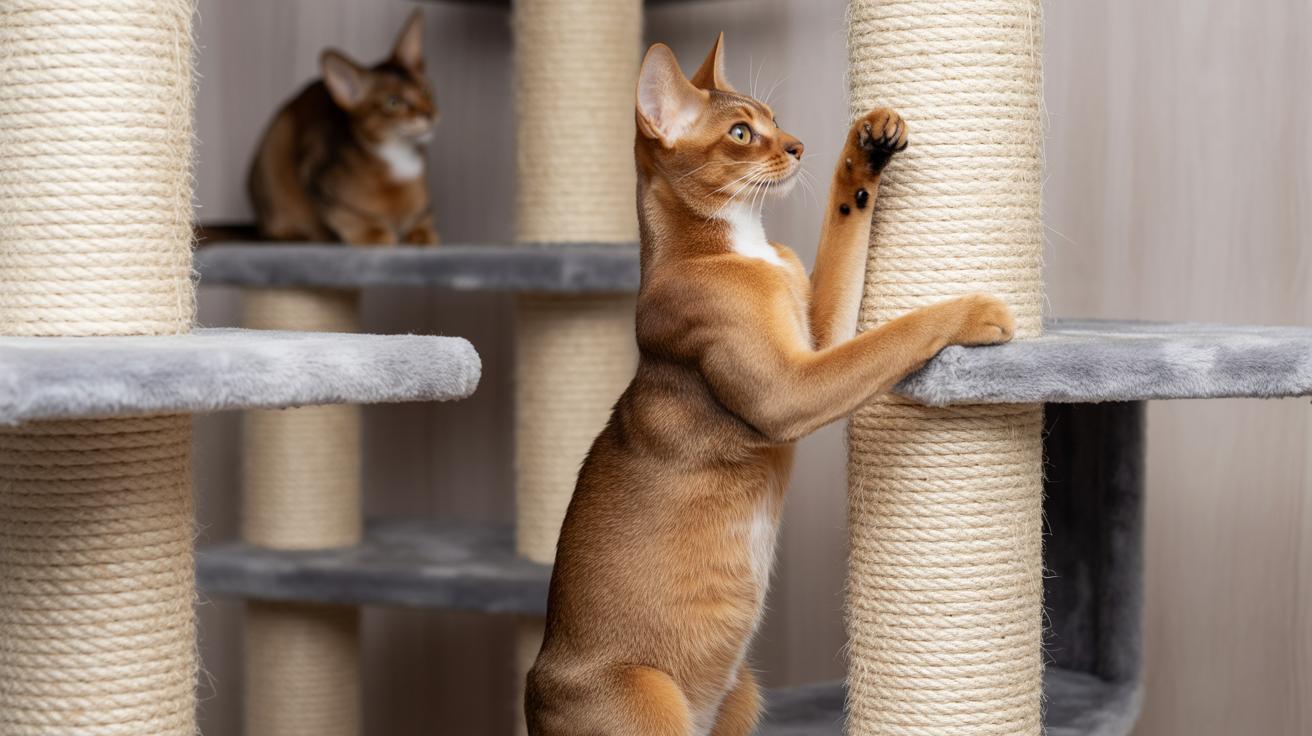
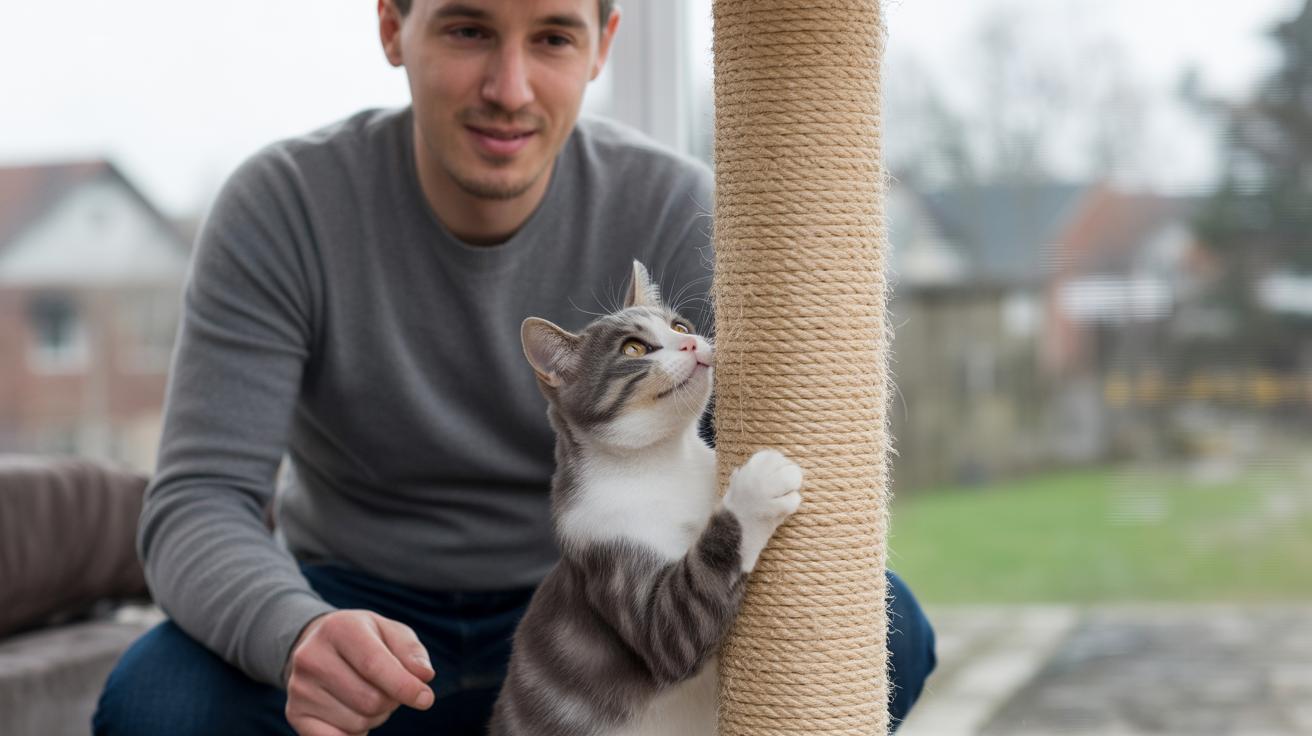
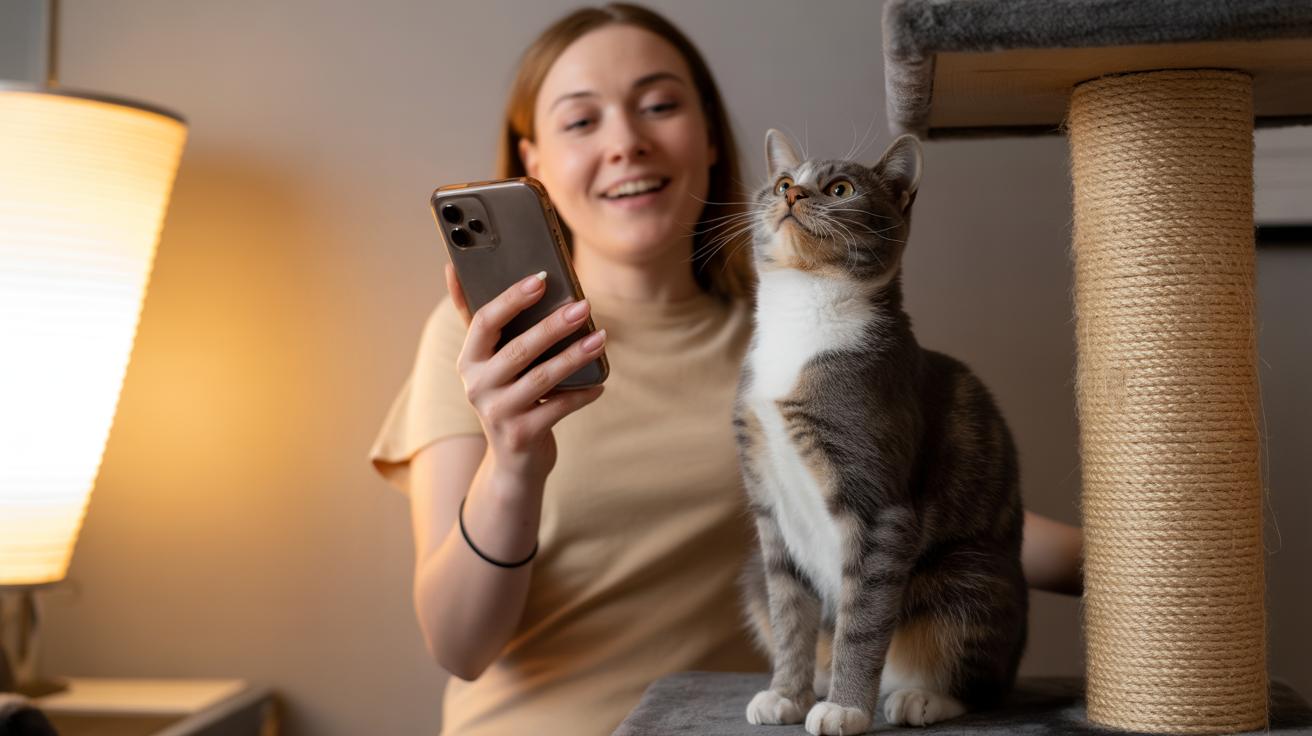
    To stop furniture scratching, offer several good scratching choices: a vertical post (tall post for stretching), a horizontal pad, and a few textures like sisal, cardboard, or fabric. Put them near the problem area so your cat finds them easily. Click-and-treat every time the post gets used, then reward less often as they start preferring it. Protect furniture temporarily with deterrent tape or covers, keep nails trimmed on a regular schedule, and rotate post placement or surface texture if interest cools off. Small changes keep things fresh.

    Practical redirect tactics you can start today:

    • double-sided tape on counters
    • cat tree placement with rewards
    • scheduled play sessions to reduce boredom
    • sit-before-feeding rule (require calm before meals)
    • microchip feeder use (feeds only the cat with the registered chip)
    • regular nail trims

    To stop biting and nipping, end play the moment teeth or claws appear. Turn away and stay quiet. Only start play again when your cat is calm so calm behavior gets the reward. For food stealing, don’t free-feed. Use elevated bowls or a microchip smart feeder to protect food from other pets. If steady training doesn’t fix a problem, consult a behaviorist or your vet for next steps.

    Troubleshoot training: common problems, stress signs, and fixes
    - Train cats tools, treats, and enrichment to motivate learning.jpg

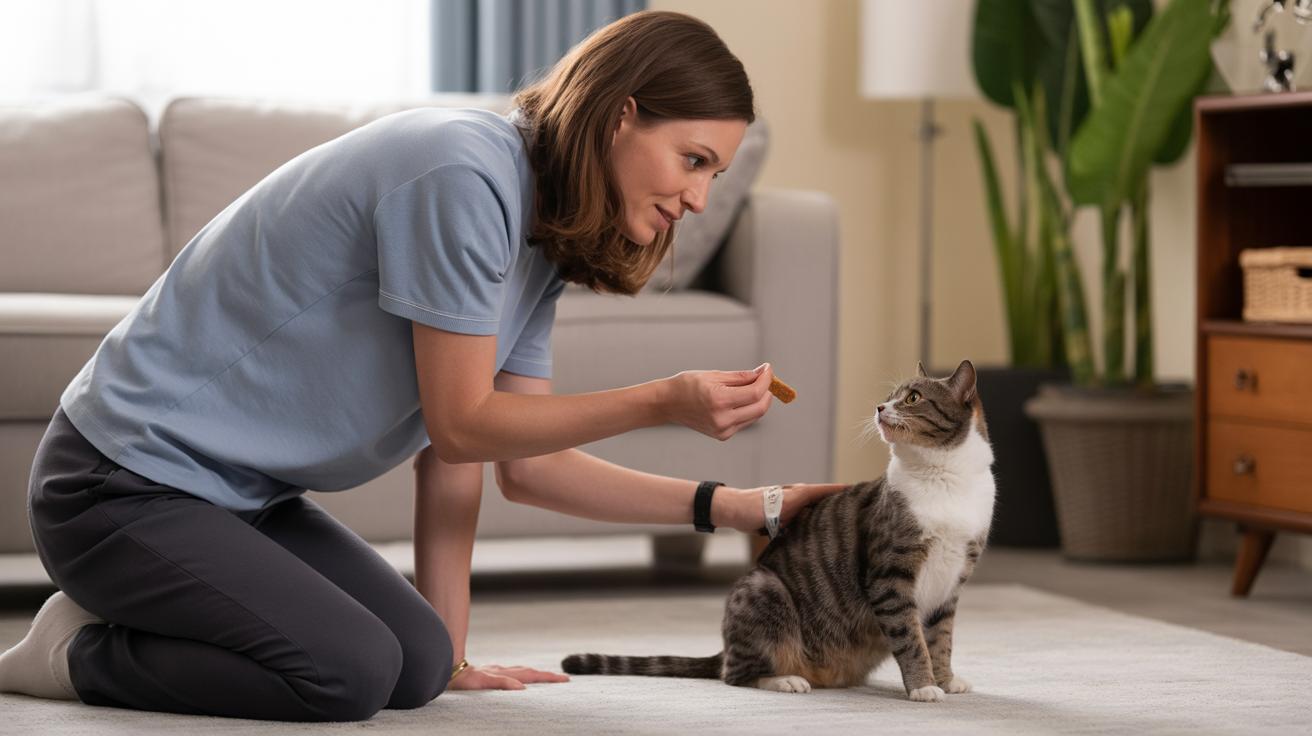
    Do a quick pre-check before you start a session: treat type and how motivating it is, what’s distracting the room, who’s giving the cues, and how long you plan to train. Pick one tiny change and try that by itself. Small experiments work best and they save both of you from frustration.

    Compact troubleshooting box:

    • Check timing. Try training right after a nap when your cat is alert. Example: "Five minutes after waking, try one short cue."
    • Swap the reward. Offer a new treat texture or a short play burst. Example: "Try a squeeze-treat (soft paste in a tube) or a 30 second feather chase."
    • Shorten the session. One to three minutes can be plenty. Example: "Two one-minute rounds beats one ten-minute flop."
    • Reduce distractions. Close doors, move other pets out of sight, and turn off noises.

    Stop a session immediately if you see stress signals, and check Problem Behaviors for the full list. Seriously, don’t push it. Your cat will tell you when they’re done.

    Six-step rescue checklist (see Session Structure, Tools, Problem Behaviors):

    1. Check timing – move training to right after a nap or whenever your cat seems most awake.
    2. Swap reward – try a different treat texture or a quick play reward to spark interest.
    3. Shorten session – break training into very short repetitions so it feels easy and fun.
    4. Reduce distractions – quiet the room, limit movement, and remove other pets from view.
    5. Back up the criterion – reward smaller steps, even just a look toward you, then build up.
    6. If no steady progress after 2 to 4 weeks of consistent, small changes, consult your vet or a certified behaviorist.

    Worth every paw-print.

    Train cats to tolerate handling: carrier, grooming, and nail trims
    - Train cats to stop problem behaviors while teaching basic commands.jpg

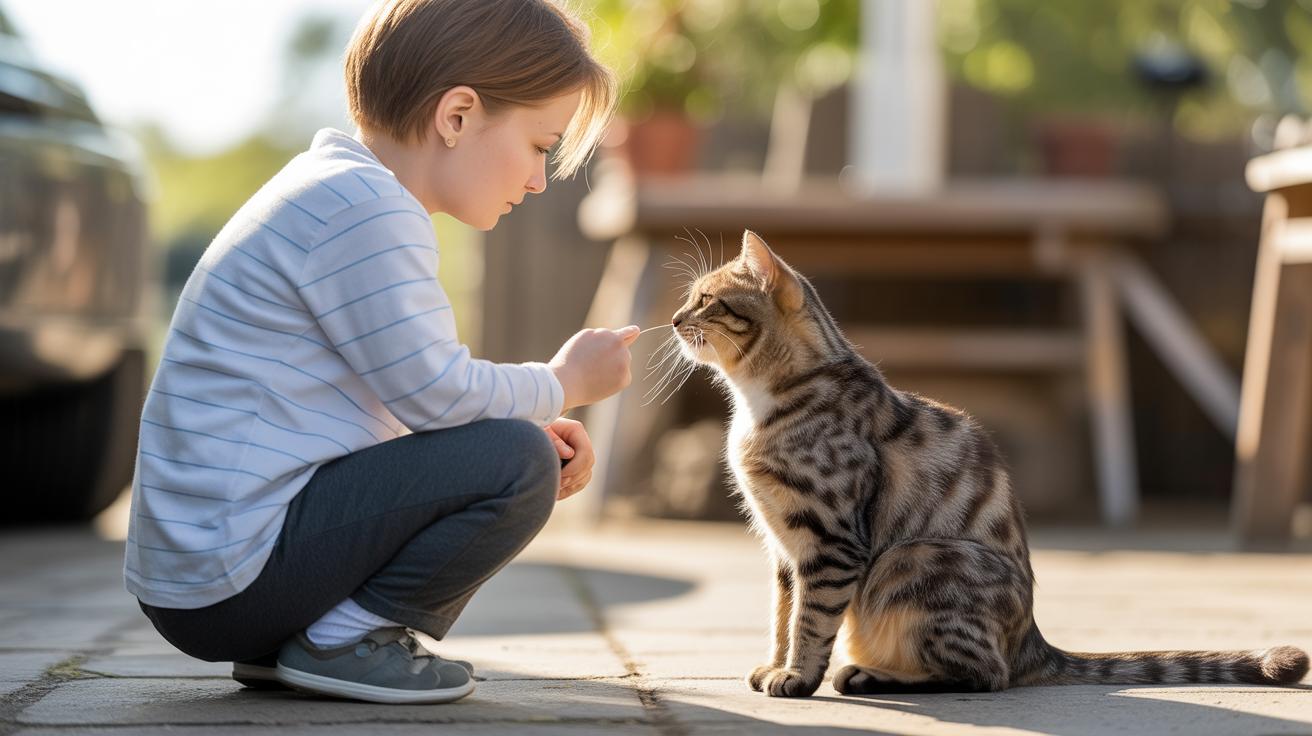
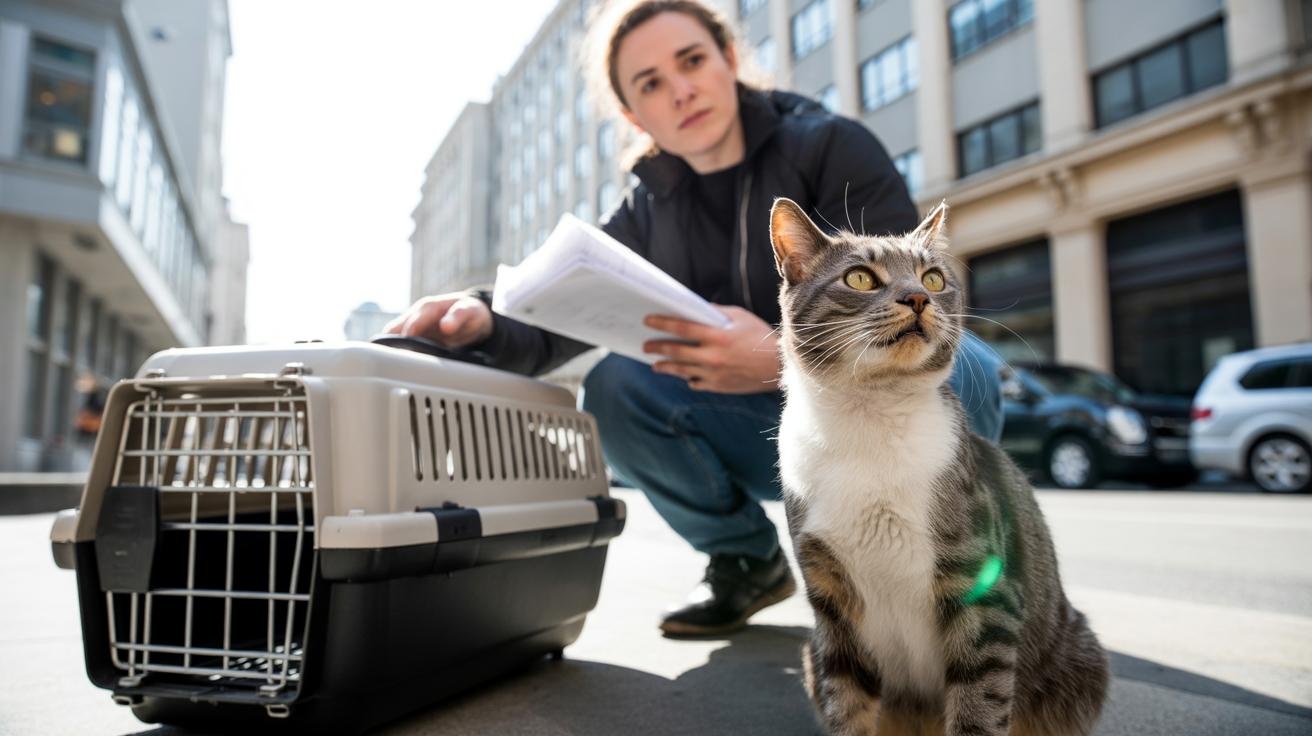
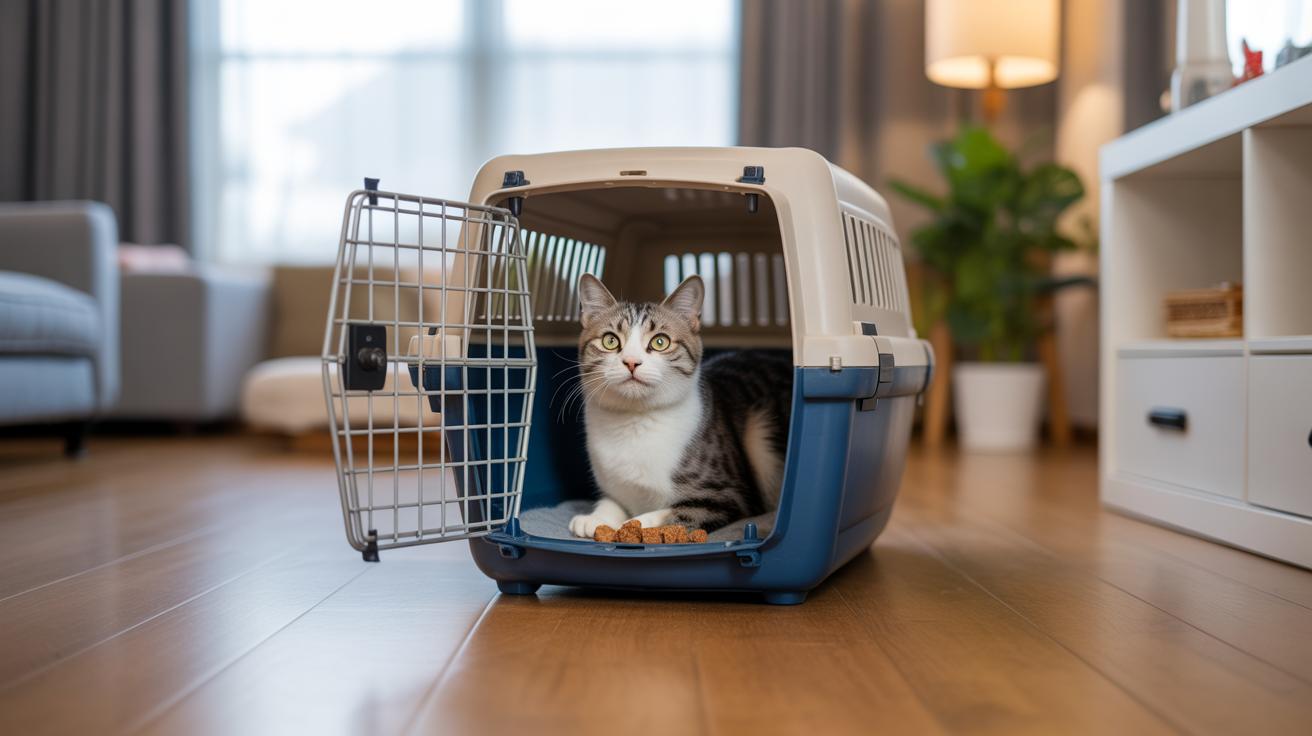
    Start by setting an open carrier (portable cat box) where your cat already hangs out. Pop a favorite blanket inside and tuck a few tiny treats in the back so it smells like good stuff. Let your cat wander in and out on their own, and click or mark (say “yes” or use a clicker) and reward any voluntary entry. Your cat should learn the carrier is cozy, not scary.

    Once your cat happily steps in, close the door for just a couple seconds, open it, and reward. Do that a few times, then slowly add time – seconds into minutes, not minutes into hours – so it feels like a safe den instead of a trap. Picture whiskers twitching as they sniff the blanket and settle down. Nice, right?

    For grooming, make the tools boring and tasty. Pair the brush (soft-bristle brush, like a gentle comb) and the nail trimmers (small clippers) with treats so your cat thinks, “Oh, this means snacks.” Touch paws briefly, then reward. Do one nail at a time and give a tiny treat after each clip so your cat learns calm pays. Keep sessions tiny and upbeat: a few pats, a quick brush stroke, a reward. That’s it.

    Practice handling for meds the same way. Drop a tasty bite over a pill or hide medicine in a favorite treat to teach calm acceptance. Train short, gentle restraint (one hand under the chest, one supporting the back) while you offer treats so your cat doesn’t freak out. If you need to wrap them in a towel for safety, make the towel soft and quick.

    Quick checklist recap:

    • Leave the carrier open and comfy; add bedding and treats.
    • Let your cat enter on their own; mark and reward voluntary entry.
    • Close the door briefly, then build closed-door time slowly (seconds to minutes).
    • Pair every tool with treats so grooming becomes normal.
    • Touch paws, reward often, and trim one nail at a time.
    • Practice med handling with tasty bites or pill pockets.
    • Reward calm exits.
    • Stop and step back if your cat panics; try an easier step next.

    Worth every paw-print.

    Train cats in special situations: kittens, senior cats, deaf/blind cats, and multi-cat households
    - Troubleshoot training common problems, stress signs, and fixes.jpg

    Start kittens early, around 8 to 12 weeks, and make training feel like play. Keep sessions tiny and game-like , one to three minutes , so they stay excited and curious. Use lots of praise and tiny treats so they learn fast without filling up, and switch toys often to keep their whiskers twitching.

    For housetraining, pick a low-sided litter box (short sides so kittens can hop in) and use non-clumping litter (litter that doesn’t form hard clumps, safer if a kitten nibbles it). Put the box in a quiet spot and show them where it is after naps and meals. Little, consistent routines win here more than long lectures.

    Older cats can learn new tricks, just more slowly. Choose higher-value rewards , treats they can’t resist , and chop behaviors into tiny steps so nothing feels scary. Watch for mobility limits or dental pain, and get a quick vet check if they suddenly lose interest; you don’t want discomfort to hide behind a stubborn streak. Keep sessions short, use lots of praise, and celebrate tiny progress.

    Training deaf or hard-of-hearing cats means swapping voice cues for vibration, touch, or light signals. Try tapping the floor gently or using a blinking light, then pair that cue with target training (teach the cat to touch a stick or your hand). Once they get the idea, those nonverbal cues work like charm.

    For blind cats, lean on touch and scent. Mark key spots with a distinct scent or a textured mat so they can find the litter box, bed, or food bowl by feel and smell. Keep furniture where it is , stability builds confidence , and guide them with a target stick or a gentle touch until they learn safe routes. Speaking of routes, I once watched a blind kitty map an entire apartment by scent , so smart.

    Multi-cat households need slow pacing and a calm plan. Train one cat at a time, run separate sessions and feedings, and keep rewards scaled so no one feels cheated. Start with solo work, then let the other cat watch from behind a barrier, and only try shared sessions when both cats stay calm. Small, steady wins keep jealousy down and learning up.

    Worth every paw-print.

    Maintain and generalize trained behaviors: proofing, fading rewards, and next steps after basic commands
    - Train cats to tolerate handling carrier, grooming, and nail trims.jpg

    Proofing (practicing a cue in lots of different real-life places so your cat knows it everywhere) is how you turn a good trick into a true habit. Start in a quiet room with just you and your cat, soft carpet, whiskers twitching, no distractions, then move to the living room with the TV or family noise, and later try a screened porch or patio where birds and breezes add mild distractions. Have several people give the same cue and signal so your cat learns the command, not a single voice or hand. Take it slow. Small, steady steps keep your cat confident and curious, not overwhelmed.

    Reward fading (gradually giving fewer treats so the trick stays strong without food every time) helps you keep behavior reliable long-term. Begin with continuous rewards (a treat every correct rep) until your cat is steady, around 80% success across a few sessions, then switch to intermittent reinforcement (reward sometimes, not every time) so the behavior holds up when treats are rare. Over a few weeks mix full-treat rounds with low-value rewards like warm praise (soft, happy words), a gentle pet, or a tiny play burst (ten seconds of feather-chasing) and make food the occasional jackpot. Fade visible lures (treat paths or hand-guides used to shape the movement) by swapping the treat trail for a hand signal, then use the verbal cue alone.

    Next, build fun sequences and new goals to keep your cat’s brain busy. Link actions into chains, sit → go-to-mat → stay, and then add a door-wait cue for safer exits or brief leash walking sessions outside (short steps, lots of praise). Toss in tricks like spin or high-five for variety, and run proofing sessions in different rooms and with different people so commands generalize. Keep a tiny maintenance plan: two or three short refresher sessions each week to keep those behaviors sharp and ready.

    Worth every paw-print.

    Final Words

    In the action: you now have a copyable 3-step starter, clear clicker and lure basics, command scripts for sit/come/stay, session structure and tracking tips, treat and tool picks, problem-behavior fixes, handling steps, and maintenance guidance.

    Short sessions after naps, dozens of tiny reps spread through the day, and simple logging help you spot wins and tweak pace as needed.

    Stick with playful patience and tiny treats, and before long training how to train cats to behave: basic commands will feel like a joyful part of your routine. Worth every paw-print.

    FAQ

    FAQ

    How to train cats to behave with basic commands at home?

    Training cats to behave with basic commands at home starts with short, frequent 3–5 minute sessions using a lure (treat-guiding motion), a marker like a clicker (small handheld sound marker), and tiny high-value treats.

    How to train cats to behave using YouTube or Reddit resources?

    You can learn basic command demos and community tips on YouTube and Reddit; pick positive-reinforcement trainers, cross-check clicker (small handheld sound marker) timing advice, and follow short session rules.

    What commands or tricks can I teach my cat, and are classes helpful?

    Cats can learn sit, come, stay, lie down, high-five, fetch, target, leash walking, and dozens more; short classes or online courses speed progress and give live feedback from trainers.

    How to train a cat to be friendly and teach good behavior?

    Training a cat to be friendly and well-behaved uses gentle socialization, reward calm approaches with treats or play, short daily sessions, and never forcing contact—reward desired calm actions instead.

    Do you have to train cats to use the litter box?

    You usually do not have to train cats to use the litter box. Most instinctively bury waste; provide clean, accessible boxes, low sides for kittens, and gentle guidance for troubleshooting.

    What is the 3-3-3 rule with cats?

    The 3-3-3 rule with cats describes adoption adjustment: three days to settle, three weeks to explore routines, and three months to fully relax and bond with new people and places.

    What is a red flag behavior in cats?

    A red flag behavior in cats is any sudden change like aggression, extreme hiding, loss of appetite, repeated urination outside the box, or frantic vocalizing. Consult a vet or behaviorist.

    How to stop problem behaviors while teaching basic commands?

    Stopping problem behaviors while teaching commands uses redirection and reward: remove temptations, teach an alternative (like sit or go-to-mat), click-and-treat the desired action, and avoid punishment.
    Related Articles

  • Cat Puzzle Feeder Ideas and Benefits

    Cat Puzzle Feeder Ideas and Benefits

    Are you serving your cat fast food every night? Puzzle feeders can fix that.

    They turn mealtime into a slow, brainy hunt that makes your cat work for each bite. That slows down gobbling and sparks curiosity, and it’s a claw-tastic way to feed.

    Today we’ll share easy DIY projects, cheap household hacks, a few store-bought favorites, simple training tips, and which cats benefit most: kittens, adult cats, seniors, and disabled cats (those with limited mobility).

    Think of kibble as drive-through food. A puzzle feeder is like a mini foraging game your cat has to solve. Your cat’s whiskers will twitch as they paw treats out. Ever watched that? It’s oddly satisfying.

    Worth every paw-print.

    What cat puzzle feeder ideas and benefits will teach you

    - What cat puzzle feeder ideas and benefits will teach you (DIY, commercial, how they work, and who should use them).jpg

    This short intro gives you the good stuff: easy DIY projects, cheap household hacks, a few store-bought picks, a simple way to train your cat, and which kitties get the most out of feeders, kittens, adults, seniors, and disabled cats. Think of it like a quick toolbox for making mealtime more fun and natural for your cat. Ever watched your kitty stalk a rolling ball? That same focus can happen at dinner time.

    Quick, low-effort ideas to try right away: a toilet paper roll pyramid (reuse cardboard tubes to hide kibble), a muffin tin with tennis balls (put treats under the balls so your cat noses them around), and a Nina Ottosson puzzle (a commercial puzzle toy that hides food and rewards problem solving). These are all easy to set up and watch your cat’s whiskers twitch as they work it out.

    Indoor bowl meals are usually short and concentrated, unlike ancestral foraging that involved longer hunts and more effort. Think of today’s kibble as drive-through food compared to a scavenger hunt. Puzzle feeders bring some of that hunt back, stretching mealtime into a little adventure.

    The Journal of Feline Medicine and Surgery reports that puzzle feeders help cats across life stages, keeping kittens, seniors, and disabled cats more engaged and mentally active. So this isn’t just play, there’s real benefit backed by research.

    Training your cat to use a feeder is simple. Show them where the food is, help them get the first treat out, then cheer and reward. Start easy and make it slightly harder over days. Patience wins. Your cat learns the game and you get those proud cat-parent moments.

    Benefits at a glance:

    • Slow feeding: Makes meals last longer so cats don’t gulp everything down. It helps them feel fuller and calmer during dinner.
    • Mental stimulation and problem-solving: Keeps curious indoor minds busy and reduces boredom behaviors. Your cat gets to think and win treats.
    • Weight control: Pacing portions over time reduces binge-style eating and helps with weight management without complicated gear.
    • Increased activity: Gets cats moving between bites, adding light exercise to their day and a satisfying thud when a toy rolls away.
    • Multi-cat strategies: Use separate stations and rotate feeders so cats don’t compete for food. It reduces stress and mealtime squabbles.
    • Safety and cleaning basics: Pick non-toxic, easy-to-clean materials and check for small parts that could be swallowed. Wash regularly and inspect for wear.

    Worth trying for busy people too: toss a puzzle feeder before you leave and get ten minutes of safe solo play for your cat. I once watched Luna leap for a hidden treat and then nap like a champ. It’s cute, useful, and kind of genius, right?

    Puzzle feeder benefits for cats: health, behavior, and measurable outcomes

    - Puzzle feeder benefits for cats health, behavior, and measurable outcomes.jpg

    Many indoor cats finish a bowl in about 30 seconds. Their ancestors spent roughly 6 to 8 hours a day hunting and foraging. So yeah, that quick-eat habit is a mismatch with how cats evolved. Puzzle feeders spread meals out and add little bursts of effort, pawing, batting, stalking, so the whole thing feels more like a hunt.

    Research in the Journal of Feline Medicine and Surgery links slower, puzzle-based feeding with less regurgitation (spitting up or vomiting) across life stages and in cats with mobility or cognitive limits. For numbers to keep in mind: a normal bowl is gobbled in ~30 seconds versus ancestral 6 to 8 hours; puzzles usually stretch a meal to about 5 to 20 minutes depending on design; and most puzzles add about 10 to 40 minutes of low-intensity activity per day as cats work for kibble. Those are useful benchmarks when you’re tracking changes.

    1. Slow feeding to prevent overeating , Meals that once took 30 seconds can stretch to 5–20 minutes with the right toy. Slower pacing helps reduce gulping. It gives digestion a gentler start, and your cat gets to savor the chase.

    2. Reduce regurgitation and improve digestion , Slower intake is tied to fewer vomiting episodes. Caretakers often see episodes drop by a few each week after switching to puzzles. That matches what vets and the Journal report.

    3. Obesity prevention , Pacing portions and adding tiny activity bursts changes how calories are eaten and burned. Over time, that helps with weight control for plump kitties. Think of it as swapping a few minutes of idle kibble for a little workout.

    4. Increased daily activity , Puzzle play commonly adds 10–40 minutes a day of gentle movement (pawing, batting, stalking). It’s not marathon-level exercise, but it’s consistent. Those minutes add up.

    5. Stronger mental engagement , Problem-solving keeps indoor minds busy. Boredom-driven trouble, loud meowing, destructive scratching, often drops when cats have a job to do. Ever watched a cat figure out a sliding lid? It’s pride-filled and hilarious.

    6. Reduced stress and better focus , The steady reward rhythm of a puzzle can calm anxious cats and give them a clear task. They know what to expect: work, then treat. Comforting for many felines.

    7. Easier multi-cat management , Spread-out feeding stations and different puzzle styles lower competition. Shy cats can eat at their own pace and confident cats can be challenged without stealing meals. That can cut squabbles and speed-eating.

    8. Life-stage benefits , From curious kittens to sleepy seniors, puzzles come in difficulty levels. Match the toy to ability so each cat gets the right challenge without frustration. For seniors, choose lower-effort puzzles. For kittens, start simple and level up.

    Quick tips and troubleshooting: start slow. Introduce one puzzle at a time and watch how long meals take. Keep a simple log, meal duration, vomiting frequency (if any), and weight trends, for 2 to 4 weeks. If vomiting or weight issues keep happening, take your notes to the vet. It helps them see patterns fast.

    Worth every paw-print. Try one for a week and see how your cat’s routine changes. I once watched Luna leap across the couch for a kibble drop and then chill like she’d earned a spa day. Cute, useful, and uh, sort of addicting to watch.

    DIY cat puzzle feeder ideas and step-by-step builds

    - DIY cat puzzle feeder ideas and step-by-step builds.jpg

    Want low-cost, quick puzzle feeders that use stuff you already have? These projects are easy to make, change as your cat learns, and keep playtime fresh. You’ll get a rolling bottle spinner, a tiny egg-carton puzzle, a toilet paper roll pyramid, a muffin tin nose-work game, and a bigger cardboard board you can upgrade. Perfect for busy days or kitten training.

    Water bottle feeder

    A bottle that tumbles kibble when batted. It’s simple, a little noisy in the best way, and cats learn fast by pawing and watching the treats clack out. Start with big holes, then make them smaller as your cat gets good at it.

    Materials:

    • Clean plastic water bottle (empty, rinsed)
    • Dowel (wood stick) or stiff skewer (wood or metal)
    • Sandpaper (abrasive paper to smooth edges)
    • Utility knife (box cutter) or scissors
    • Tape or hot glue (quick-melting craft glue)

    Steps:

    1. Cut several treat-sized holes around the bottle body. Start large so food drops easily.
    2. Sand the hole edges until smooth, no sharp bits.
    3. Cap one end and thread the dowel through the bottle to act as an axle, then mount it in a low box or between two supports.
    4. Put kibble inside, set it near a perch, and watch whiskers twitch as your cat learns to spin it.

    Egg carton puzzle

    Tiny, shallow, and perfect for kittens or shy cats who like quick wins. It’s quiet, low-stress, and great for teaching the idea of hidden food. My cat Luna loved the tiny surprise each time she nudged a lid.

    Materials:

    • Cardboard egg carton
    • Kibble or small treats
    • Small toys or scrap cardboard
    • Tape (optional)

    Steps:

    1. Drop a few pieces of kibble into selected cups.
    2. Close lids or leave them slightly ajar so your cat can nudge them open.
    3. For more challenge, stack two cartons and tape lightly so they don’t slide.

    Toilet paper roll pyramid

    A modular cardboard game that’s cheap and easy to reconfigure. It smells like home, rustles nicely, and you can rearrange it every day. Think of it as a tiny cardboard mountain to conquer.

    Materials:

    • 6 empty toilet paper rolls (cardboard tubes)
    • Small box or tray base
    • Non-toxic glue (pet-safe glue) or tape
    • Kibble

    Steps:

    1. Arrange rolls in a 3-2-1 triangle on the box base.
    2. Glue or tape at contact points so the stack won’t topple.
    3. Fill rolls with kibble and place near a cat tree so your cat can scout before pouncing.

    Muffin tin feeder

    Fast to set up and great for mixing up nose-work and problem solving. Cover some cups with balls or cardboard circles for a quick puzzle rotation. It’s perfect for portion control, too.

    Materials:

    • 6-cup muffin tin
    • Tennis balls or cut cardboard circles
    • Kibble or small wet-food portions
    • Non-slip mat (to stop the tin from sliding)

    Steps:

    1. Put food in a few cups, leave others empty.
    2. Cover occupied cups with a ball or cardboard lid.
    3. Change which cups hold food each day to keep it novel.

    Large cardboard sheet puzzle

    A bigger, upgradeable board for layered hiding spots and taller play. You can make it as simple or as tricky as you like, adding small containers for varied sounds and textures. It’s a great project to involve kids or shelter volunteers.

    Materials:

    • Large cardboard sheet
    • Toilet paper roll halves (short cardboard tubes)
    • Small containers (bottle caps, jar lids)
    • Hot glue or strong craft glue

    Steps:

    1. Glue roll halves upright across the sheet in rows.
    2. Attach small containers at different heights for layered hideouts.
    3. Scatter kibble across compartments and fold gentle flaps to create lids.

    Build time for these projects is usually 5-10 minutes and cost is minimal. Start easy with wide openings and obvious rewards, then tighten holes or add lids as your cat learns, progression keeps them interested. Check all materials for chew risks, smooth any rough edges, and clean pieces regularly. See the Safety section for full cleaning and hazard guidance. Worth every paw-print.

    Store-bought and commercial cat puzzle feeder options (what to buy and why)

    - Store-bought and commercial cat puzzle feeder options (what to buy and why).jpg

    Think in simple categories and you’ll score quick wins. There are rotating or tumbler toys that spill kibble when batted , great for active cats who love the chase. Lickimat-style pads slow down wet food and encourage calming licking. Multi-chamber puzzle boards test clever problem-solvers, and simple slow-feeder bowls help speedy eaters stretch their meals. If you like brand names, check Nina Ottosson for adjustable puzzles, Lickimat for textured wet-food play, and Kong for sturdy treat-dispensers , solid starting points when shopping.

    Pick the model that fits your cat’s habits. Durability and chew resistance matter if your cat likes to gnaw; look for tough plastics or rubber (rubber is soft, flexible material). Wet-food compatibility matters if you use pâté or paste. Cleaning ease matters if you hate scrubbing , dishwasher-safe parts save time and keep mold away. Budget feeders are great for casual use, while premium interactive feeders often use tougher plastics (a chew-resistant polymer), let you change difficulty levels, and have parts made for frequent washing.

    Model/Type Best for Price range
    Lickimat Wet-food pacing & sensory engagement $10–20
    Nina Ottosson puzzle Problem-solvers & adjustable difficulty $25–60
    Simple slow feeder bowl Fast eaters who gulp kibble $10–30

    Quick buying tips to keep things simple:

    • Durability: choose sturdy plastics or rubber if your cat chews a lot; think heavy-duty, not flimsy.
    • Cleanability: dishwasher-safe parts save time and help hygiene.
    • Wet/dry compatibility: get lick mats or bowls that work with wet food if you feed pâté or soft paste.
    • Adjustable difficulty: models that let you change the challenge grow with your cat’s skills.
    • Multi-cat homes: pick extra stations or feeders that limit access so one bossy cat doesn’t eat everyone’s food.

    A few last thoughts: try one new feeder for short play sessions first and watch how your cat reacts. Ever seen your cat figure out a puzzle in seconds? It’s oddly proud-making. Worth every paw-print.

    How to introduce and train cats to use puzzle feeders (four-week progression and proactive tips)

    - How to introduce and train cats to use puzzle feeders (four-week progression and proactive tips).jpg

    Short, gentle sessions win. Puzzle feeders (interactive bowls or toys that make your cat work a bit for food) are a great way to turn mealtime into play. Keep the treats tasty, sessions short, and your tone cheerful, your cat will pick up confidence faster than you think. Ever watched whiskers twitch as a toy rolls? That’s the good stuff.

    Four-week progression

    1. Week 1: Beginner access
      Start easy. Use feeders with wide openings or lids that come off easily so food pops out with little effort. Offer high-value treats or favorite kibble (dry cat food) and keep sessions to 5–10 minutes while you cheer and praise. Supervise closely so the first tries feel like a win.

    2. Week 2: Slight challenge increase
      Make the holes a bit smaller or add a light cover so your cat has to paw or nudge a little more. Stretch sessions to 10–15 minutes and keep showing the first few rewards so they understand the payoff. Keep praising, and don’t worry if progress is slow.

    3. Week 3: Add mild obstacles
      Introduce a light flap, a small barrier, or a rolling piece, think gentle puzzles, not frustration. Give a short play burst before feeding to boost interest, then let them try with minimal help. Step in only if they stall for too long; sometimes a tiny nudge teaches more than doing it for them.

    4. Week 4: Combine and normalize
      Use two puzzle types during normal mealtime so solving becomes part of the routine. If needed, return some meals to a regular bowl now and then, then switch back to puzzles so confidence stays high. Aim for predictable timing so your cat learns the new rhythm.

    Many cats hesitate at first. Extra praise, easy wins, and patience go a long way, adjust difficulty slowly so they feel clever, not blocked.

    Proactive tips to reduce failure rates:

    • Place puzzles near a quiet perch so your cat can watch and feel safe before trying.
    • Start each session with a few hand-fed treats to build interest and a positive link.
    • Change only one thing at a time when you adjust difficulty, too many changes confuse them.
    • Supervise the first several sessions and celebrate every small success with a soft voice or a scratch behind the ear.
    • Keep sessions short and frequent instead of long and rare; ten minutes often beats one long stretch.
    • Rotate feeder styles weekly to keep novelty high and boredom low.

    Worth every paw-print.

    Safety, cleaning, and hygiene for cat puzzle feeders

    - Safety, cleaning, and hygiene for cat puzzle feeders.jpg

    Good hygiene keeps your cat safe and the toys fun. This short guide covers cleaning puzzle feeders, chewing risks, and quick inspection steps so feeders stay safe and useful. Think of it as a few easy habits that save you headaches and your cat’s whiskers.

    • Choose non-toxic materials and smooth any rough edges. For plastics, look for "food-safe" (made to meet standards so no harmful chemicals leach). Cardboard should be dry and intact, wet, crumbling cardboard is a no-go.
    • If your cat chews cardboard or soft plastics, swap to chew-proof options like hard plastics (polypropylene (PP) (a tough, dishwasher-safe plastic) or polycarbonate (a very strong clear plastic)) or metal (stainless steel (rust-resistant metal)). Safer materials mean fewer surprises.
    • Do a quick wipe of dry-food puzzles every day with a damp cloth to remove crumbs and slow bacteria growth. Easy and fast.
    • Deep clean wet-food mats and lick mats 1 to 2 times a week. Use warm, soapy water, rinse well, and let air-dry completely so mold doesn’t get a foothold.
    • Use the dishwasher when parts are labeled dishwasher-safe. The heat helps kill microbes and makes life easier, just check the label first.
    • Always dry every piece completely before storing or reusing. Trapped moisture invites mildew and mold.
    • Do a weekly quick check for cracks, loose bits, or weird smells. Once a month, do a deeper look at moving parts, seals, and anything glued on. Give glued parts a firm tug to see if they come loose.
    • Keep small, detachable bits out of reach to avoid choking hazards. If something can pop off, consider removing it or replacing the feeder.
    • Supervise your cat the first few times you introduce a new DIY feeder so you can spot chewing or unsafe behavior fast. Ever watched your kitty figure out a new toy? It’s entertaining, and useful for safety checks.
    • Favor easy-to-clean designs: smooth surfaces, removable trays, and few crevices. They cut cleaning time and lower contamination risk.

    Retire or replace any feeder that shows cracks, persistent odors, loose pieces, visible mold, or chewing damage that exposes stuffing or sharp edges. Better safe than sorry. Worth every paw-print.

    Using cat puzzle feeder ideas and benefits in multi-cat homes and for implementation

    - Using cat puzzle feeder ideas and benefits in multi-cat homes and for implementation.jpg

    Quick checklist to keep feeding fair, calm, and fun for every cat. Use separate stations, RFID (radio-frequency identification, reads a cat’s implanted microchip or a collar tag), microchip-locked feeders, staggered schedules, pre-measured portions, puzzle rotation, and supervise early sessions. Think of this as a simple game plan to cut stress and keep tails up.

    • Separate stations – give each cat their own puzzle feeder in a different room or at different heights so shy kitties can eat away from the bossy ones. Example: label a shelf bowl "Luna (40 g)" so everyone knows whose is whose. Your cat’s whiskers will thank you.

    • RFID or microchip-locked feeders – tech that only opens for the right cat (reads the implanted microchip or a tag). This really stops food-stealers without you playing referee. Example: "Only Bella’s chip opens this bowl."

    • Staggered schedules – feed cats a few minutes apart so they don’t rush or crowd each other. Example: 7:00 Milo, 7:05 Luna. Little gaps = calmer meals.

    • Pre-measure portions – scoop each cat’s food into labeled containers so servings don’t get mixed up. Example label: "Milo – 50 g." Quick, tidy, and no guessing.

    • Rotate puzzles – swap feeder types and move stations weekly to keep curiosity high and guarding low. Swap a ball-feeder for a treat mat every seven days and watch how they stay interested. It’s like toy rotation for humans, but furrier.

    • Supervise early sessions – watch new setups for several days to spot stealing, chewing, or stress and step in gently. If one cat gets anxious, tweak the arrangement. Worth the few extra minutes.

    A few extra tips: put food out on different textures or low surfaces for older kitties, and use short play sessions before meals to slow down speedy eaters. Ever watched your kitty chase shadows and then eat like a champ? Little things add up. Worth every paw-print.

    Modifying cat puzzle feeder ideas for kittens, seniors, and cats with special needs

    - Modifying cat puzzle feeder ideas for kittens, seniors, and cats with special needs.jpg

    Small changes to size, height, and texture can make a puzzle feeder work for every cat in your home. Move slowly when you raise the difficulty, and check with your vet about any medical or mobility limits before trying a new design. Think of this as gentle training, not a race.

    Senior adjustments

    Lower the feeder so older or arthritic cats don’t have to stretch or twist their spine. Put puzzles on the floor or a low, steady step so reaching is easy and comfy.

    Make the holes bigger and the compartments shallower for stiff paws or sore mouths. Bigger openings mean kibble or wet food comes out with a gentle nudge, so the effort feels rewarding, not frustrating.

    Give the puzzle a non-slip base (rubberized pad that grips tile or wood floors) so tubes, trays, and tins don’t slide when a cat pushes them. Stability cuts down on strain and gives older cats the confidence to try the toy. Worth every paw-print.

    Kitten safety

    Start kittens on very shallow compartments and give larger reward pieces so they score quick wins. Tiny parts can be tempting and risky, so keep treats a bit oversized at first.

    Supervise every new DIY puzzle for the first few weeks and swap out any bits that get chewed or come loose. Kittens learn by mouthing, so watch closely and raise the challenge slowly. Ever watched your kitten pounce on a moving ball? It’s adorable, but safety first.

    Features to look for

    • Non-toxic materials (safe if licked or chewed)
    • Dishwasher-safe parts (can go in the dishwasher for easy cleaning)
    • Soft edges (no sharp cardboard flaps or rough cuts)
    • Stable base (won’t tip or slide during play)
    • Shallow compartments (easy wins for kittens and seniors)
    • Wet-food compatibility (lick mats, textured lids, or ice-tray portions)

    Keep it fun, keep it safe, and adjust one small thing at a time. Your cat will thank you with purrs and playful taps.

    Troubleshooting common problems and measuring success with cat puzzle feeder ideas and benefits

    - Troubleshooting common problems and measuring success with cat puzzle feeder ideas and benefits.jpg

    We removed this standalone troubleshooting section and folded the practical fixes into the "How to introduce and train…" and "Using cat puzzle feeder ideas in multi-cat homes" sections so the tips live where you use them. The metrics table moved into "Puzzle feeder benefits for cats: health, behavior, and measurable outcomes."

    • Widen holes and make early wins obvious. Start simple. Show them how it works: push a ball so a kibble piece pops out, then let your cat try. Your cat’s whiskers will twitch and confidence grows fast.

    • Sit with them for the first few plays. Help with the first handful of treats so a confused cat learns the game. Think of it like teaching a trick – patient, short sessions win.

    • For multi-cat guarding, give each cat its own station or separate room. Stagger meal starts by a few minutes and label portions or bowls so each cat learns their spot. If one cat dominates, try dividing food across rooms until everyone gets the hang of it.

    • If a cat chews or swallows bits, stop the DIY parts and switch to chew-proof commercial feeders made from sturdy materials like polymer (a tough plastic) or stainless steel (durable metal). Supervise until you’re sure it’s safe.

    • If you notice vomiting or repeated regurgitation, pause puzzles and go back to bowls with small, frequent meals. Watch symptoms closely and reintroduce gentler puzzles only if the cat is doing better. And yes, call your vet if it keeps happening.

    Note on tracking: meal duration, body weight, BCS (body condition score), and behavior signs were moved into the benefits section as a compact "What to track / Frequency / Targets" box so monitoring sits right beside the outcomes. Check "Puzzle feeder benefits for cats: health, behavior, and measurable outcomes" for the specifics.

    Worth every paw-print.

    You jumped straight into DIY builds, household hacks, store-bought picks, training tips, and who benefits, kittens, adults, seniors, and cats with special needs. Quick examples: toilet paper roll pyramid, muffin tin + tennis balls, and a Nina Ottosson puzzle.

    We contrasted indoor meals with ancestral foraging, showing why meals need more effort spread across the day to feel natural.

    Journal of Feline Medicine and Surgery supports puzzle feeders across life stages; we covered training, safety, and multi-cat logistics. Try a mix, rotate puzzles, and watch calmer, fitter cats. Give cat puzzle feeder ideas and benefits a try, purrfect payoff.

    FAQ

    Frequently Asked Questions — Cat Puzzle Feeders

    Are cat puzzle feeders suitable for wet food or dry food?

    Cat puzzle feeders are suitable for both wet and dry food. Wet meals work best on lickmat-style pads (textured rubber mat) or shallow trays, while dry kibble fits balls, tumblers, and slot puzzles.

    What are the best cat puzzle feeders and brands to buy?

    The best cat puzzle feeders include Nina Ottosson (sturdy puzzle boards), Lickimat (textured mats), Catit, and Kong, available from major retailers like Amazon. Match the feeder to your goal — slow-eating, problem-solving, or wet-food pacing.

    How can I make a homemade cat puzzle feeder?

    You can make a homemade cat puzzle feeder from common items:

    • Toilet paper roll pyramid (empty cardboard tubes)
    • Muffin tin plus tennis balls
    • Bottle spinner using a plastic water bottle and some tape
    What is a cat puzzle feeder ball and how does it work?

    A puzzle feeder ball is a round toy that releases kibble as your cat bats it, promoting chasing and slower eating. It works best with dry food for active, playful cats.

    Can puzzle feeders slow my cat’s eating and reduce vomiting?

    Puzzle feeders slow a cat’s eating by forcing them to work for food, lengthening meal time, reducing gulping and regurgitation, and adding mental challenge and extra movement during meals.

    Are puzzle feeders safe for kittens, seniors, or cats with special needs?

    Puzzle feeders can be safe when adapted: use shallow compartments for kittens, lower height and larger openings for seniors, and soft lick mats (textured rubber pad) for dental sensitivity. Consult your vet for cats with medical issues.

    How do I introduce my cat to a puzzle feeder?

    Introduce a puzzle feeder gradually with a four-week plan: start with wide access and high-value treats, extend session length, add mild obstacles, then mix puzzle types. Keep sessions short and supervised.

    How should I clean and maintain puzzle feeders?

    Clean puzzle feeders by wiping dry-food toys daily and deep-cleaning wet-food mats 1–2 times weekly. Dry thoroughly to prevent mold, inspect weekly, and replace cracked or smelly parts promptly.

    What setup works best for puzzle feeders in multi-cat homes?

    In multi-cat homes, set separate puzzle stations, stagger feeding times, label each feeder, or use RFID-enabled bowls for single-cat access. Supervise early sessions and rotate puzzles to match each cat’s skill level.

    Related Articles

  • Do Unbreakable Cat Toys Stop Destructive Chewing

    Do Unbreakable Cat Toys Stop Destructive Chewing

    Think unbreakable cat toys will stop every bit of destructive chewing? Not quite. They help a lot, but they’re not magic.

    A well-made, tough toy gives your cat a safe place to chomp and fun textures to explore. Picture the satisfying chomp and whiskers twitching as a bouncy ball rolls across the carpet. These toys work by turning hunting and teething urges into play, so your couch gets a break. Pretty claw-tastic, right?

    But no toy lasts forever. Some cats are relentless, so test new toys in short, supervised sessions, especially at first. Retire anything with holes, loose threads, or exposed stuffing (the fluffy filling inside toys) to keep your cat safe.

    Do Unbreakable Cat Toys Stop Destructive Chewing

    - Do unbreakable cat toys actually reduce destructive chewing Clear verdict up front.jpg

    Well-made "unbreakable" toys can cut down destructive chewing by giving your cat a safe place to chomp and fun textures to explore. But no toy is truly indestructible for every cat. You’ll still want to watch how your cat attacks a toy, some cats are relentless.

    They work by offering a satisfying chew surface and by encouraging play and focus. See Materials and Safety below for construction and safety details and inspection and cleaning tips. Common materials include polymer (tough plastic), puncture-proof fabric (fabric that resists holes), and reinforced seams (strong stitching).

    • When toys help: they redirect chewing that comes from play or teething. Toss a tough ball or a chew tube during a teething spurt and your couch might get a break.
    • Limits of durability: nothing lasts forever, so expect progressive wear. You’ll spot frayed edges, soft spots, or tiny tears before a toy fails.
    • One-line safety rule: supervise new toys and retire anything with exposed fill (the stuffing inside) or jagged edges.
    • Immediate next step: try a short supervised test session to see how your cat treats the toy, or consult the Buying Guide for simple home durability tests.

    Worth every paw-print.

    How unbreakable cat toys redirect chewing and which features matter

    - How unbreakable cat toys redirect chewing and which features matter.jpg

    Cats chew and bite as part of hunting, teething, and boredom cycles. So the best unbreakable toys give that urge a safer outlet: new textures to gnaw, sudden movement to chase, and little rewards that teach your cat the toy is the fun spot, not the sofa. Ever watched your kitty chase a bouncing ball until its whiskers twitch? That’s the idea.

    When a toy offers an unpredictable bounce, a tasty treat, or a chewy surface that feels good on the gums, the cat switches focus and repeats the play loop instead of shredding household items. In practice, simple plush won’t hold up. Toys that mix toughness with engagement keep attention longer and cut down on destructive chewing.

    Real-world testing and product behavior show a pattern. Treat-dispensing designs use narrow slots that reward pawing and problem solving. Motorized balls create erratic rolling that fuels a chase for 30 to 120 minutes. Dental textures like nylon (strong synthetic fiber) meshes or rubber nodules (soft raised bumps) massage gums while resisting teeth. Magnetic-feather actions pop in and out of holes for fast, irresistible swats. Three-track toys spread attention across multiple paths so the toy doesn’t just scoot under the couch. Rechargeable rolling toys, battery-powered and ready to go, can run for hours to cut down on idle chewing. And maintenance-friendly bits, refillable catnip or silvervine (a plant similar to catnip), plus dishwasher-safe parts, help toys stay safe and interesting over time.

    Enrichment features to prioritize

    • Treat-dispensing toys , A treat slot rewards pawing and brings cats back, again and again.
    • Refillable catnip/silvervine , Refillability keeps the scent fresh without tossing the whole toy.
    • Motorized movement , Unpredictable rolling or wobble mimics prey and keeps the chase alive.
    • Multi-path tracks , Three-track or multi-path designs split attention so one toy can entertain longer.
    • Textured chewing surfaces , Nylon (strong synthetic fiber) meshes and rubber nodules (soft raised bumps) offer chew-resistant surfaces that feel good on gums.
    • Replaceable-center designs , Swap a worn core, like a cardboard insert, so the outer shell lasts and you save money.

    Materials and safety: what qualifies as an "unbreakable" cat toy

    - Materials and safety what qualifies as an unbreakable cat toy.jpg

    Start by choosing toys made from tough, safe materials so they stand up to play and don’t become hazards. Look for natural rubber (a flexible, bouncy material that resists punctures), durable nylon (a strong synthetic fiber), polyester and cotton twill (tighter-woven fabrics that handle scratching), reinforced fabrics (extra layers or stitching for strength), and woven nylon pouches (mesh-like pockets that let teeth grip without shredding). Prefer chew toys labeled food-safe or free of harmful dyes and glues. That way you’re buying for fun and peace of mind.

    Know how toys usually fail so you can spot trouble fast. Seams can split and spill out stuffing, which cats can swallow. Fabric can fray and get sharp at the edges. Little bits like beads, bells, or plastic clips can pop off and become choking hazards. Broken plastic or busted motors can leave jagged edges. Pick sizes that can’t be swallowed whole, and skip toys with tiny attached parts if your cat’s a serious chewer.

    Cleaning and quick checks are part of safety, not optional extras. Run dishwasher-safe parts as the maker directs. Hand-wash fabric toys with mild soap and let them air-dry. After any rough session, take a close look for loose seams, small tears, or exposed stuffing. Retire anything with jagged bits, detached pieces, or soft spots that keep coming back. Worth every paw-print.

    Want a simple home test and clear rules for when to replace a toy? See the Buying Guide. Ever watched your cat go after a toy like it’s the best thing ever? Me too. Keep it safe, keep it fun, and your kitty will thank you with purrs and flying zoomies.

    Best unbreakable cat toys by chewer type

    - Best unbreakable cat toys by chewer type.jpg

    A quick match-up helps you pick a toy that stands up to how your cat plays and chews. Think texture, size, and whether the toy rewards hunting instincts. Those three often decide if a toy saves the couch or becomes chew confetti.

    Strong chewers (adult)

    Go for dense natural rubber (flexible, bouncy rubber) and woven nylon (tough synthetic fiber). Big rope-covered mice are perfect for wrestling and tugging , they handle gnawing, hard shakes, and claws that love to grip. Look for thick stitching and no loose bits, so you don’t end up sewing a new toy mid-play.

    Teething kittens

    Pick softer stuff that soothes gums. Chillable rubber rings with nodules (small raised bumps) cool and massage sore spots, and plush chewables made for kittens let them bite without hurting developing teeth. Short, supervised chew sessions and frozen options calm teething flare-ups, try a chilled ring for a minute or two when things get intense.

    Senior or low-energy cats

    Choose gentle textures and mild dental surfaces that massage gums without asking for big chases. Floss-like toys (thin, stringy dental surfaces) or plush pieces with soft ridges work well. Low-effort treat dispensers reward small, slow interactions so seniors stay curious without getting tired.

    Multi-cat or competitive households

    Robust motorized toys (battery or rechargeable moving toys) and multi-track designs (multiple lanes for balls) keep several cats busy at once. Rechargeable rotating balls and three-track sets spread attention so one cat can’t hog all the fun. Keep identical toys around to cut down guarding and squabbles.

    Size and texture matter more than brand. KONG-style rubber pieces (like classic KONG toys), rechargeable rotating balls, rope mice, and dental, floss-like chew toys are good examples to try. Catnip or silvervine (stimulating plants) can boost interest, but responses vary by age and personality. Try supervised sessions, watch how your cat attacks the toy, and retire anything with exposed fill, loose threads, or sharp edges. Worth every paw-print.

    How to introduce and rotate unbreakable cat toys to stop destructive chewing

    - How to introduce and rotate unbreakable cat toys to stop destructive chewing.jpg

    Rotating toys is the single best trick to keep your cat from getting bored. Swap out 3 to 4 toys each week so each one feels fresh, and fit 2 to 3 short chase or chew sessions into your day. Short bursts match a cat’s attention span and cut down on couch attacks. Your cat’s whiskers will twitch as the toy skitters across the carpet, and that pounce is everything.

    When you bring out a new indestructible toy, don’t just leave it on the floor all day. Introduce it during a live play slot so your cat learns that toy equals fun, not furniture. Try chew-proof toys (thick nylon or puncture-proof fabric that resists teeth) during those sessions so you can see how it holds up. If you spot exposed fill or any sharp edges, retire the toy right away.

    Try this simple plan:

    • Rotate 3 to 4 toys each week so favorites feel new.
    • Run two to three quick supervised play sessions daily, five to ten minutes each, timed for when your cat is most active.
    • Use treat-dispensing toys (toys that release a small treat when nudged) right after meals so your cat links the toy with rewards.
    • When you introduce a chew-proof item, watch a short session and remove anything damaged.

    If play stalls, try clicker training (a small sound that marks good behavior) to reward calm interactions and discourage chewing. Pair toys with a tall scratching post so paws and teeth get redirected to the right places. Donate toys that never catch interest. And if chewing looks stress-driven or your cat goes after dangerous things, talk to your vet.

    Worth every paw-print.

    When unbreakable toys aren't enough: veterinary and behavior strategies

    - When unbreakable toys arent enough veterinary and behavior strategies.jpg

    A sudden change in chewing is a big red flag. If your cat starts gnawing on wires, foam, or other dangerous stuff overnight, pay attention. Watch for other signs too , loss of appetite, hiding, over-grooming, drooling, pawing at the mouth, or clear pain. Write down the dates, what your cat chewed, and try to get a short video. If they swallow something or have trouble breathing, take away the hazard and call your vet right away. Otherwise save your notes for the first appointment so the vet can spot patterns faster.

    At the clinic they’ll do a physical and dental check to look for pain, mouth disease, nausea, or neurological problems. Sometimes that includes x-rays (radiograph images) or bloodwork (blood tests). Medical options can be dental treatment (teeth cleaning or extractions), short-term pain meds, or a prescription anti-anxiety plan (meds to lower stress) when anxiety is obvious. Vets often suggest pheromone diffusers (synthetic calming scent that mimics cat facial pheromones) and might refer you to a certified behaviorist (trained cat behavior specialist) if medical causes are ruled out or the habit needs extra help.

    Behavior plans mix clear rewards with consistent structure. Clicker training (a sound-based reward method) and a steady reward schedule can teach your cat what’s okay to chew instead of your stuff. Match that with enrichment (toys and activities that keep cats busy) , rotate toys, use timed treat dispensers, and do short supervised chew sessions. Combine training with pheromones or meds if you need quicker progress. Ever watch your kitty pounce on a crinkly ball like it’s the best thing ever? Use that energy.

    Follow up with your vet or behaviorist about 4 to 8 weeks after you start the plan to review progress and tweak tools. Keep a chew log so you can see what’s helping and what isn’t. Worth every paw-print.

    Buying guide and simple home tests for truly durable "unbreakable" cat toys

    - Buying guide and simple home tests for truly durable unbreakable cat toys.jpg

    Start with a short buyer checklist. Pick toys with reinforced seams (extra rows of stitching for strength). Choose replaceable cores (you can swap a cardboard or plastic center; cardboard is a stiff paper tube, plastic is a hard polymer). Prefer solid rubber cores (dense, puncture-resistant rubber). Look for refillable catnip or silvervine pockets and dishwasher-safe parts for treat-dispensers (easy cleaning equals fewer odors and less bacteria). Skip toys with tiny glued-on bits or flimsy clips that can pop off. Remember, no toy is truly indestructible for every cat, so focus on how something is made, not just catchy buzzwords. Read review patterns for clues, but don’t treat them like gospel.

    A quick home test you can do right after purchase. Run one supervised, intense 10 to 15 minute play session that copies how your cat really plays, chew, tug, bat, and roll the toy. Pay attention to sounds and feel: does it give a satisfying thud on the floor? Do your cat’s claws leave tiny pulls? After play, inspect seams, zipper pulls, and small parts for looseness, fray, or wobble. Repeat this test 2 to 3 times over a week to spot progressive damage; slow fraying or rubber softening often means trouble ahead. If you find exposed stuffing, sharp edges, or detached pieces, stop use and retire the toy.

    Want a quick checklist for safety signs? Look for exposed fill, jagged plastic edges, loose stitching, popped-out cores, or small bits that can be swallowed. Those are not repair jobs. Toss them or retire them to supervised play only.

    Read warranties like a detective. Check how long the coverage lasts, which failures they cover (seams, motors, replaceable cores), and what you need to file a claim, keep your receipt and any photos of the damage. Do simple price math: cost-per-month = price ÷ expected months of solid use. A higher upfront cost can save money over time if the toy actually lasts. Favor designs that lower running costs: replaceable-center toys, dishwasher-safe pieces, and refillable catnip parts.

    Practical tips for busy people. For hectic mornings, toss an unbreakable-feeling ball before you head out and get ten minutes of safe play. For chewers, choose dense rubber cores and fewer dangling bits. Ever watched your kitty chase shadows? Try teaser wands that mimic a fishing pole (teaser rod like a fishing rod for cats) for supervised bursts of play.

    A final note on reviews and brand claims. Patterns in customer reviews are useful signals, but they are not proof of indestructibility. Use them with the other checks above. Oops, let me rephrase that, take reviews as one part of your decision, and trust hands-on tests and construction details more. Worth every paw-print when a toy lasts.

    Final Words

    Right now: well-made "unbreakable" toys can cut down on destructive chewing by giving cats satisfying chew surfaces and focused play, no toy is truly indestructible, but they redirect the urge.

    Match materials (natural rubber (bouncy, chew-resistant), durable nylon (dense, tough)) to your cat, rotate toys, run supervised test sessions, and see a vet if chewing starts suddenly or targets dangerous items. So, do unbreakable cat toys stop destructive chewing? They really can when used right, claw-tastic results and calmer furniture. Worth every paw-print.

    FAQ

    FAQ

    What do vets recommend for aggressive chewers?

    Vets recommend checking for medical or dental issues, offering durable chew-safe toys (solid nylon — strong synthetic fiber — or natural rubber — stretchy, tear-resistant material), using supervised redirection and reward-based training, and consulting a behaviorist if chewing persists.

    How do I stop my cat from chewing on everything? / How to discipline a cat for chewing?

    Redirect chewing to tough toys, run short reward-based training sessions, remove tempting items, supervise new toys, and avoid physical punishment — gentle redirection works best.

    What toys do cats never get bored with?

    Toys that move unpredictably, dispense treats, hide catnip, use multi-track designs (several play lanes), pop-out magnetic feathers, or offer textured chewing surfaces to mimic prey and extend play.

    Related Articles

  • interactive unbreakable cat toys for indoor exercise reviews

    interactive unbreakable cat toys for indoor exercise reviews

    Think indoor cats don't need real workouts? Think again. Ever watched your kitty sprint from the couch to the kitchen for no reason? Those zoomies need an outlet, or boredom and extra pounds sneak up fast.

    When energy has nowhere to go your cat gets restless. Toys get shredded, naps get excessive, and you end up chasing stray fur around the house. It’s not just silly behavior. It’s your cat asking for play time.

    In this review we test interactive, unbreakable toys for indoor cats: exercise wheels (like a big hamster wheel for cats), motorized chase gadgets (battery-powered toys that drive themselves), and rechargeable rolling balls (USB for charging, USB means universal charging cable). We look at which toys match a kitten, a couch-loving adult, or a hard-chewing cat, and how much floor space each needs.

    You’ll get clear pros and cons, safety tips about cords and tiny bits that could come off, and practical picks for busy people who want a happier, more active cat. Toss one of these out before you head to work and you’ll probably come home to a calmer, content kitty. Worth every paw-print.

    Interactive unbreakable cat toys for indoor exercise: quick buy guide

    - Interactive unbreakable cat toys for indoor exercise quick buy guide.jpg

    One Fast Cat Exercise Wheel Gen 6 , full-speed indoor workouts for high-energy cats; supports up to 22 lb.
    MayMaw Kitifish , rechargeable USB (universal serial bus for charging) wheeled toy with 7 fast modes, auto-reverse (it changes direction if it gets stuck) and a 5-minute inactivity shutoff; about 2 hour runtime.
    Rechargeable rolling ball with detachable magnetic (attaches with small magnets) feathers , USB recharge, about 2 hour runtime; self-play that rolls, lights up, and swaps feathers for washing.

    Match the toy to your cat’s age, chewing tendency, how much floor space you have, and whether you want owner-led bonding or solo play. Ever watched your kitty chase a dot of light until they flap at nothing? That’s why finishing a laser session with a physical toy feels good to them. Watch for cord-chew risk on hanging toys, small detachable parts on motorized items, and toys that can wedge under furniture.

    Quick safety checklist:

    • Keep cords and long ribbons away from nibblers.
    • Check motorized toys for small screws or bits that could come loose.
    • Don’t let toys slip under couches where cats might get stuck chasing them.
    • Trim frayed ribbons or swap attachments if they start to shred.

    Toy types, pros and cons

    • Wand and feather (owner-led) , Pros: amazing for jumping and back-leg strength. Con: ribbons can fray, so trim or change attachments.
    • Motorized chase toys (self-play, battery or USB powered) , Pros: programmable patterns keep curious cats busy. Con: can disappear under furniture or have small parts.
    • Laser (owner-led) , Pros: gets calorie-free sprints. Con: there’s no catch, so end play with a toy they can grab.
    • Exercise wheel , Pros: steady cardio in a small footprint, great for zoomers. Con: pricey and not every cat will try it.
    • Treat-dispensing puzzle , Pros: mental work and slow feeding. Con: can add calories if you overdo treats.
    • Track-and-ball systems , Pros: great for households with multiple cats and usually sturdy. Con: watch for loose balls or clips.
    • Hanging self-play (door-frame) , Pros: cheap and no batteries. Con: cord-chew risk and not ideal for senior cats.

    How to use this guide
    Pick a starter from the top three based on your space and your cat’s personality. Rotate play styles through the week so things stay fresh. Supervise new toys for the first few sessions. Aim for about 30 minutes of active play a day for most adult cats, split into short bursts. And offer fresh water after vigorous play.

    A little bonus tip: try a short, timed play before you leave the house to give an anxious cat a safe way to burn energy. My cat once leapt six feet for a rolling ball and then snoozed like a loaf for hours. Worth every paw-print.

    Interactive unbreakable cat toys for indoor exercise: play styles and best matches

    - Interactive unbreakable cat toys for indoor exercise play styles and best matches.jpg

    Think of play styles as simple lanes: pounce, stalk, chase, bat, and solve. Each toy usually fits one or two lanes, wands spark pounce and jumping, chase toys get them sprinting, puzzles make them think, and tunnels invite stalking and wrestle-time. Sound familiar? Good. Let’s match toys to moods.

    • Wand and feather – Owner-led jumping and back-leg strength. Wands are great for short, intense sessions where you control the pace. Trim frayed ribbons and swap plush lures often so nothing gets swallowed.
      Buying tip: Kittens need soft, chew-safe pieces and short flutter sessions. Seniors like slow, low-impact motion and plush carry options. Aggressive chewers should avoid loose fabric unless reinforced with nylon (strong synthetic fabric) strips or stainless steel (metal resistant to rust) fittings.

    • Motorized chase toy – Solo bursts of sprinting with random movement patterns and multiple speed modes. Look for low-noise motors and stable bases so the toy doesn’t skitter across the room.
      Buying tip: Kittens enjoy unpredictable movement at gentler speeds. Big adults often want higher-speed settings and sturdier housings made from polymer (durable plastic-like material) or metal. If your cat chews, pick toys with reinforced housings.

    • Laser – Human-led, calorie-free sprints that are instantly addictive. Always end a laser session by tossing a real, catchable toy so your cat tastes success (try a plush mouse or small ball).
      Buying tip: Short, gentle laser sessions work for seniors. Kittens love the chase but pair the laser with physical rewards to avoid frustration.

    • Puzzle / treat-dispensing – Slow-feeding and brain work rolled into one. These toys slow down gobblers and give clever cats a job; choose models with dishwasher-safe parts for easy cleanup.
      Buying tip: Kittens need simpler puzzles that actually open for them. Seniors need low-effort openings. For chewers, opt for reinforced plastic (stiff plastic with extra strength) lids and strong polymer (durable plastic-like material) components.

    • Track-and-ball system – Continuous batting and great multi-cat entertainment. Tracks that offer different speeds or ball types keep interest high.
      Buying tip: Tiny kittens can get stuck on narrow tracks, so pick wider channels for small feet. Large adults need roomy tracks and hard-ball designs if chewing is an issue. Replaceable track pieces are a big win.

    • Tunnel and wrestling toys – Ambush play and cozy hideouts in one. Look at tunnel diameter for big cats and choose crinkle textures if your cat loves rustle noises.
      Buying tip: Kittens adore popping in and out. Seniors prefer softer, more stable tunnels. For chewers, go with heavy-gauge fabric or reinforced seams and check for chew-resistant trim.

    • Exercise wheel – Sustained cardio for high-energy cats who love to run. Many wheels support up to 22 lb, so look for wide running surfaces for comfort.
      Buying tip: Introduce the wheel slowly to kittens and keep speeds low for seniors. For chewers, choose chew-resistant trims and wheels with replaceable running surfaces.

    • Hanging self-play – A fixed lure that your cat can swat at again and again. Avoid exposed cords and double-check the attachment strength so nothing falls.
      Buying tip: Don’t use thin strings for kittens. Seniors may prefer lower-hanging, softer lures. Chewers do better with rubber (elastic, chew-resistant material) or reinforced attachments and easily swapped parts.

    How to use this guide

    Owner-led toys like wands and lasers build bonding and let you match intensity to your cat’s age and mood. Self-play gear (USB-rechargeable rolling balls and motorized snails) gives independent activity when you’re busy. Auto-off cycles commonly run 5 to 40 minutes, which helps with short attention spans and safety. Look for USB-rechargeable designs or easy battery access, and favor toys with replaceable parts so repairs are simple.

    Safety and small-space / multi-cat checklist:

    • Low-noise motors for less stress and better focus
    • Separate feeding or treat zones to avoid squabbles
    • Slim wheel footprints for narrow rooms or hallways
    • Replaceable parts and easy repairs so toys last longer

    Worth every paw-print.

    Product comparison matrix: price, durability, materials, and best use cases for indoor exercise

    - Product comparison matrix price, durability, materials, and best use cases for indoor exercise.jpg

    This quick matrix lines up price, what toys are made of, and a durability score so you can compare tough interactive cat toys at a glance. Use the price vs durability notes to match your budget with how long a toy will last under real claw-and-chew play.

    Think about your cat’s age, how much they chew, and how much floor space you have. If you’re eyeing big-ticket items like an exercise wheel, check for replaceable parts and clear warranty terms before you dive in.

    Product Type Avg Price Range Material / Durability Profile Durability Score (1–5) Best For Key Caveats
    MintCat Hanging $ Elastic cord (stretchy rubber), faux fur lure (soft synthetic hair), nylon strips (strong synthetic fiber) 3 Budget-minded self-play; no batteries needed Cord-chew risk; not great for older cats with weak jaws
    MayMaw Kitifish $$ Polymer housing (sturdy plastic), rubber wheels (grippy rubber), removable feathers (replaceable soft bits) 4 Small-space motorized bursts; rechargeable May slip under low furniture; feathers need replacing over time
    One Fast Cat Wheel Gen 6 $$$–$$$$ Composite frame (lightweight mixed-material shell), stainless reinforcement (rust-resistant metal), replaceable running surface (swap-in traction mat) 5 High-energy runners up to 22 lb Pricey. And uh, not every cat will take to it right away
    Cheerble Wicked Snail / motorized snail $$ Durable polymer shell (tough plastic), silicone bumpers (soft, rubber-like material), LED attractors (light features) 4 Short autonomous play sessions; good when you’re busy Motor noise varies; has small removable parts
    Kong Kitty Kong $$ Natural rubber (plant-based stretchy rubber), treat slots, cotton twill (woven fabric) inserts 4 Treat play, chewing and kicking sessions Not motorized; treats add up in calories
    Three-track mouse toy $–$$ Hard plastic tracks (rigid molded plastic), nylon strips, replaceable balls 3 Multi-cat batting and focused play Loose balls or clips can wear out over time
    Testing methodology used for scores: simulated chewing cycles, claw-abrasion runs, motor run-hours, and replaceable-part longevity checks.

    When you’re spending more on gear like the One Fast Cat Wheel, look for a trial period, clear warranty coverage, and easy-to-find replacement parts so you’re not stuck if the running surface or motor needs fixing. Worth checking , and worth every paw-print if your cat takes to it.

    Durability testing methodology

    We tested every toy the same way: repeated simulated chewing, claw-abrasion runs, long motor runtime cycles, and we logged where parts failed or wore out. A score of 5 means the toy kept going through many chew and claw cycles plus motor hours, with only replaceable parts showing wear.

    Safety and sizing for interactive unbreakable cat toys (kittens, adults, seniors)

    - Safety and sizing for interactive unbreakable cat toys (kittens, adults, seniors).jpg

    Start by checking the product specs in the Product comparison matrix for weight limits and materials. The matrix header now includes a Materials & Mounting note that flags preferred non-toxic materials: natural rubber; food-grade silicone; reinforced polymer (a tough, plastic-like material). It also shows a mounting/suction load-rating column so you can scan safety at a glance. Example header text: "Materials & Mounting – natural rubber; food-grade silicone; reinforced polymer; mounting load: 5 kg (11 lb)."

    Before you buy, look for cord length adjustability and real-world attachment notes from user tests. Those attachment notes tell you if a suction cup actually held up in a home, example: "Cord adjustability – elastic cord shortens from 24 in to 8 in"; "Attachment notes – suction held 4 kg in user tests." Small details like that save you a mess later.

    We moved age- and chewer-specific buying tips into each toy-type's Buying tip bullets so you don’t read the same thing over and over. Quick examples you’ll see there: kittens , chew-safe soft lures ("soft silicone lure, kitten-safe"); seniors , low-vibration motors, short sessions, auto-off ("low-vibration motor, auto-off at 10 min"); aggressive chewers , nylon or stainless reinforcement ("nylon strips + stainless rivets"). Handy, right?

    Multi-cat homes need a little extra care. Supervise new toys until you learn how your crew shares stuff, and set up separate treat or play zones if tension shows up. Also check that parts are replaceable or washable so you can swap out a worn cover instead of tossing the whole toy. Worth every paw-print.

    Quick pre-use safety checklist:

    • Non-toxic materials listed on the label (look for natural rubber; food-grade silicone; reinforced polymer) , example: "Made from food-grade silicone and reinforced polymer (a tough, plastic-like material)."
    • No small or loose parts that could be swallowed
    • Replaceable or washable components available ("washable cover; replaceable motor pack")
    • Low motor noise and low-vibration specs plus auto-off present ("low-vibration motor; auto-off after 10 minutes")
    • Cord length adjustable or chew-resistant design called out ("elastic cord shortens from 24 in to 8 in" or "chew-resistant braided cord")
    • Secure mounting or suction load rating included in product specs (flag/column in the matrix) , example: "mounting load: 5 kg (11 lb)"

    Exercise routines, toy rotation, and calorie-burning play with interactive unbreakable cat toys

    - Exercise routines, toy rotation, and calorie-burning play with interactive unbreakable cat toys.jpg

    Routine gives your cat regular chances to sprint, stalk, and think, which helps keep weight down and moods up. Think of play like scheduled breaks in their day: short, focused bursts beat one long workout for most indoor kitties. Ever watched your cat’s whiskers twitch as a toy rolls by? That’s the good stuff.

    Match toy intensity to your cat using the Safety and Product comparison sections so speed settings and weight limits fit your cat’s size and mobility. For example, choose a low-speed motorized (battery-run moving) toy for older cats and a faster setting for spry adults. If a toy lists a weight limit, stick to it, safety first, um, and fewer shredded toys later.

    Aim for about 30 minutes of active play a day for an average adult cat, split into short sessions. A 5–10 minute wand tease in the morning wakes up the pounce reflex and gets them ready for the day. Midday, a 10–15 minute motorized chase (battery-run moving toy) can burn off energy when you’re busy. Evening puzzle-feeder (treat-dispensing toy) time gives slow eating and brain work, double win.

    Rotate toys across the week so nothing feels stale. Try a wheel session one day (cat exercise wheel – a small running wheel), a tunnel wrestling day another, and a track-and-ball day next. The variety keeps them curious and gives different muscles a workout. Speaking of feathers, my cat once sprinted like a tiny tiger for a feather wand and then collapsed in a pile of bliss. Worth every paw-print.

    If your cat needs to lose weight, favor feather chases and motorized play over treat-based games so they burn calories without extra snacks. For seniors, slow things down: gentle wand movements, lower motor speeds, shorter play bursts, and extra rests. Keep water handy and easy to reach after play.

    Quick, playful routine you can copy:

    1. Warm-up 2–3 minutes: gentle wand tease, low jumps to wake the muscles.
    2. Sprint 5–8 minutes: fast wand work or a short run on the wheel (if your cat uses one).
    3. Rest 2–4 minutes: petting, praise, and water.
    4. Solo burst 10–15 minutes: motorized rolling ball or a Kitifish-style toy (a wiggling fish toy that moves on its own).
    5. Puzzle feed 5–10 minutes: a treat-dispensing puzzle or Kong-style feeder for slow dining.
    6. Cool-down 2 minutes: let them carry a plush or give soft grooming.

    Mix and match the order depending on your day. On busy mornings toss an unbreakable ball for ten minutes before you go, that’s safe play and peace of mind. And if your cat naps through a session, that’s okay. Cats know when they’ve had enough.

    Safety tips: check toys for loose parts, swap out anything rough or frayed, and follow the weight and speed recommendations in the Safety and Product comparison sections. Small clarifications help: motorized means battery-run moving toys, puzzle-feeder means treat-dispensing devices, and Kitifish-style means a self-moving fish-like toy.

    Play is as much about joy as it is exercise. Watch for those little victory pounces, the satisfied thud of a rolling ball, and the soft nibbles on a plush ear. Isn’t it nice when a toy just lasts and your cat looks feline fine?

    Power, maintenance & warranties for durable interactive cat toys

    - Power, maintenance  warranties for durable interactive cat toys.jpg

    Match the toy’s power to your life and your cat’s play style. Small button-cell toys that use LR44 batteries (LR44 is a tiny round battery) usually run about 2 hours of continuous play , for example, the SmartyKat Loco uses three LR44s. USB-rechargeable toys (USB means universal serial bus for charging), like rolling balls and the MayMaw Kitifish, often give around 2 hours per charge. Many motorized toys also have auto-shutoff cycles of 5 to 40 minutes to line up with a cat’s short attention span. Charge on a hard surface, unplug chargers if your cat can reach them, and use the maker’s cable for the safest charging.

    Cleaning and storage depend on the kind of toy. Always remove electronics and batteries first; keep motors and battery packs (the plastic housing that holds batteries and wiring) away from water. Treat-dispensing parts are often dishwasher-safe on the top rack, while magnetic feather attachments pop off for gentle hand-washing and air-drying. Fabric toys usually just need spot-cleaning and air-drying , if a big mess happens, take out any removable stuffing before a gentle machine wash. Store chargers and spare parts in a dry box out of reach of curious teeth and paws.

    Fixes and replaceable parts save money and the planet. Look for toys with replaceable cardboard centers, detachable magnetic feathers, and swap-in wand attachments you can buy from the maker or make safely yourself , check out DIY replacement attachments for teaser wands for a safe how-to. For big-ticket items like exercise wheels, read trial period and warranty details before you buy. Keep proof of purchase and take photos of any damage right away for claims.

    Toy Type Maintenance Tip
    Motorized ball Take out electronics before washing; wipe shell with a damp cloth
    Treat dispenser Top-rack dishwasher-safe parts; dry completely before reuse
    Fabric toy Spot-clean and air-dry; remove inner stuffing if machine washing
    Wand Replace attachments per manufacturer or follow a safe DIY guide
    • Keep receipts and serial numbers in both digital and paper form.
    • Photograph damage right away and save the images.
    • Note the manufacturer’s claim timeline and act within it.
    • Contact manufacturer support before taking apart parts covered by warranty.
    • Follow replacement-part instructions and use approved spares when possible.

    Ever watched your cat’s whiskers twitch as a ball rolls? Little choices , like using the right charger or snapping on a fresh feather , can mean more pounces and less sighing over shredded toys. Worth every paw-print.

    FAQs: quick answers

    - FAQs common questions about interactive unbreakable cat toys for indoor exercise.jpg

    • Q: How do I pick a toy for a heavy chewer?
      Think tough. Look for nylon strips (a strong synthetic fiber), cotton twill (a tight, durable woven fabric), or stainless steel reinforcement (rust-resistant metal). Two to three layers or replaceable covers help the toy last longer. See Materials & Safety.

    • Q: Are rechargeable toys safe and how long do they run?
      Most rechargeable toys run about two hours per full charge. Many include an auto-off that kicks in after 5 to 40 minutes so they don’t run nonstop. See Power, maintenance & warranties.

    • Q: How much daily play does a cat need?
      Aim for about 30 minutes a day, split into short bursts, quick chases, pounces, a few feather swats. Ever watched your kitty chase shadows? Ten-minute sessions sprinkled through the day work wonders. See Play recommendations.

    • Q: Can motorized toys be left unsupervised?
      Only if they have reliable auto-off cycles and no small, detachable parts. Always supervise the first session to spot chewing or fit issues, then use caution. See Safety and sizing.

    • Q: What are clear signs a toy should be retired?
      Visible chew-through, loose bits, exposed wiring, or a motor that stutters are all retirement flags. Seriously, zero tolerance for exposed wiring. See Safety and sizing.

    • Q: Any quick sizing/warranty notes for wheels and big toys?
      Running wheel capacity often tops out around 22 lb, so check weight limits for your cat. Always read maker trial periods and warranty details before buying. See Product selection & warranties. Worth every paw-print.

    Final Words

    Grab one of the top three picks and start play, the quick-buy guide gives immediate options. The buy checklist helps match a toy to age, chewing style, space and whether they play solo or need owner-led fun. Safety checks, sizing, cleaning and warranty notes keep play worry-free.

    Aim for about 30 minutes of active play daily. You'll love watching cats stay fit, curious, and delightfully entertained with interactive unbreakable cat toys for indoor exercise.

    FAQ

    Frequently Asked Questions

    What are the best interactive unbreakable cat toys for indoor exercise and where can I buy them?

    The best interactive unbreakable cat toys for indoor exercise are One Fast Cat Exercise Wheel Gen 6 (supports 22 lb), MayMaw Kitifish (USB, 7 modes, ~2h), and a rechargeable rolling ball with magnetic feathers (~2h). Buy at Amazon, Chewy, Petco, PetSmart, Walmart, Target.

    How do I keep my cat entertained during work?

    To keep your cat entertained during work, give a 10–15 minute wand warm-up, set a rechargeable chase ball and a puzzle feeder for solo play, and rotate toys daily for novelty and focus.

    What cat wand toy won’t break, and can attachments be replaced?

    A cat wand that won’t break has a reinforced fiberglass (like a strong fishing-rod core) or nylon (strong woven fabric) shaft with replaceable magnetic or clip-on attachments; swap frayed pieces when needed.

    What is the best exercise routine for indoor cats?

    The best exercise routine for indoor cats mixes short high-energy chase intervals (wand sprints or chase balls), vertical jumps, and puzzle-feeder sessions for mental work, targeting roughly 30 minutes of active play per day.

    How durable are rechargeable motorized cat toys and what are typical runtimes?

    Rechargeable motorized cat toys usually run about two hours per full USB charge, use auto-shutoff cycles of 5–40 minutes, and last longer with sturdy housings and stainless-reinforced parts (stainless steel).

    Are motorized cat toys safe for unsupervised play?

    Motorized cat toys can be safe for unsupervised play if they have auto-shutoff, secure housings with no small detachable parts, and cords kept out of reach to avoid chew-risk and entanglement.

    Which toys suit heavy chewers?

    Toys that suit heavy chewers use heavy-duty rubber (natural or synthetic rubber), nylon strips (strong woven fabric), or stainless-reinforced parts; pick solid-core designs and replaceable covers to extend lifespan.

    How long should I play with my cat each day?

    You should play with your cat about 30 minutes daily, split into short intervals (5–10 minute wand bursts, 10–15 minute motorized chase sessions, puzzle feeder time) for variety, fitness, and mental stimulation.

    Related Articles

  • Oriental Shorthair: energy levels and best toys

    Oriental Shorthair: energy levels and best toys

    Think Oriental Shorthairs are just lazy lap cats? Think again. They’re sleek, chatty athletes who usually need two 15-20 minute interactive play sessions a day (ever watched your kitty’s whiskers twitch as they pounce?), with kittens wanting more short bursts and seniors preferring gentler games.

    I’ll map energy by life stage and show the best toys so you can match play to their speed and smarts. Try teaser wands (a stick with a dangly lure, like a fishing rod for cats) for stalking practice, cat trees (tall climbing towers for jumping and napping) for vertical play, fetch balls (small rolling balls for chase sessions) for bursts of speed, and puzzle feeders (food-dispensing toys that make them think) for brainy rewards. Short, lively sessions for kittens, structured chase for adults, slow, low-impact play for seniors. Worth every paw-print.

    Oriental Shorthair energy levels owners need to know

    - Oriental Shorthair energy levels owners need to know.jpg

    Oriental Shorthairs are high-energy cats. Expect two 15–20 minute interactive play sessions each day. Kittens need more frequent short bursts; adults and seniors adjust as they age. These cats are social and vocal, with a lean, athletic body that loves attention and play. Picture whiskers twitching as they stalk a feather or the satisfying thud when they land after a leap.

    Kittens are tiny dynamos: curious, fast learners, and happiest with short, frequent games that build coordination and confidence. Think of a teaser wand like a fishing rod for cats, just add feathers. Ever watched a kitten somersault for a ribbon? Cute and chaotic, and great for muscle and brain development.

    Most adults stay very active. Many prefer interactive puzzles, games of fetch, and climbing to burn energy. Add vertical space, cat trees and wall shelves, and you’ll see them sprint, leap, and survey their kingdom. Seniors slow down, though. Gentle, lower-impact play keeps joints moving and minds sharp without overtaxing them.

    The exact daily play target for oriental shorthair energy levels is two 15–20 minute interactive sessions each day. This is the single source-of-truth for timing in the article. Other sections will reference this paragraph when they give timing guidance; see Energy section for exact targets. Use simple cues, play enthusiasm, rest patterns, and how they act after a session, to fine-tune intensity.

    Typical adult weight is about 8–12 pounds (3.6–5.4 kg), a slim, muscular frame built for speed and leaping. Health problems that can lower activity include dental disease (gum or tooth pain), respiratory issues (breathing trouble tied to facial shape), hypertrophic cardiomyopathy (heart muscle thickening), progressive retinal atrophy (slow vision loss), and amyloidosis (protein buildup in organs). If your cat pants heavily, hides, or seems unusually tired after play, shorten sessions and check with the vet.

    These cats do well in apartments when you give them vertical territory and scheduled play. Toss in short interactive sessions before you leave for work for ten minutes of safe, tiring fun. Worth every paw-print.

    Best toys for Oriental Shorthair: categories that match their high energy

    - Best toys for Oriental Shorthair categories that match their high energy.jpg

    This is your go-to toy catalog for Oriental Shorthairs. These cats are lean, jumpy, and chatty, so pick toys that invite chasing, leaping, stalking, and clever problem solving. Keep their minds and muscles busy. See this Best Toys list when a later section says "refer to Best Toys."

    Durability matters with athletic cats. Choose puncture-proof fabric (tight-woven, tear-resistant cloth), polymer (a tough plastic), or fiberglass (like a strong fishing-rod core) in moving parts. Look for toys with replaceable attachments or sealed seams. Check toys often for loose bits, frayed threads, or exposed stuffing so nothing can be swallowed.

    • Feather wands / teaser poles: Great for leap-and-pounce sessions and bonding time. They mimic prey and get that high, snappy chase going, your cat’s whiskers will twitch, guaranteed.
    • Laser pointers and electronic moving mice: Perfect for the nonstop chaser who loves sprinting. Pair them with a catchable toy so your cat gets a satisfying win at the end.
    • Puzzle feeders and treat-dispensing toys: Mental work plus snacks equals happy, tired kitties. Good for clever cats who like to problem solve. See how to use feeder toys for slow feeding for tips.
    • Ball tracks and rolling balls: Continuous motion invites stalking and batting. Ideal for cats that chase the same thing over and over, almost hypnotic to watch.
    • Cat tunnels and boxes: Short ambush corridors for the hunter and the explorer. Sprint, hide, pop out, simple and irresistible.
    • Tall cat trees, wall shelves, and climbing structures: Vertical territory for surveying and leap practice. They support natural climbing instincts and make great nap lookout spots.
    • Plush kick / wrestler toys: Stuffed toys made tough for wrestling and kicking. Perfect for the cat that loves to grab and hug a prize with their back legs.
    • Fetch-friendly lightweight balls: Easy to toss and retrieve; many Oriental Shorthairs pick up fetch fast. Great for quick play when you’ve got a minute.
    • Sturdy scratch posts: Heavy-duty posts that stand up to hard climbs and sharp claws. Helps keep furniture safe and supports claw care.
    • Crinkly or bell-textured toys: Toys with sound and strange textures that spark curiosity. Awesome for attention-seekers and vocal players.

    Quick tip: rotate toys every few days to keep things fresh. Your cat will act like they just discovered the best thing ever. Worth every paw-print.

    Oriental Shorthair toys by life stage: kittens, adults, and seniors

    - Oriental Shorthair toys by life stage kittens, adults, and seniors.jpg

    This section just tweaks the Best Toys list for kittens, adults, and seniors. I won’t repeat full categories or timing here. See Energy section for exact targets.

    Kittens

    Go small and light. Think tiny wands with soft feathers that tickle whiskers, little plush mousers, and mini balls that won’t bruise tiny paws. Use replaceable attachments (small parts that snap on and off) so you swap worn bits without tossing the whole toy. Feed kitten-formulated meals in small, frequent portions to fuel short bursts of play; timing meals can help steer peak energy before a session. Aim for lots of brief play rounds and watch for overexcitement or quick fatigue.

    Adults

    For grown cats go tougher and smarter. Choose durable interactive toys and vertical structures (cat trees and shelves) that encourage climbing and stalking. Add training goals like fetch or simple tricks to channel curiosity and brainpower, rotate puzzle difficulty or change climb heights with the seasons and your cat’s health. Use treats and praise when teaching cues, and lower intensity if any medical flags pop up. It keeps play fresh and mentally satisfying.

    Seniors

    Make everything gentler and easier to reach. Opt for soft plush kickers, easy-to-manipulate puzzle feeders (food-dispensing toys), and lower perches to cut joint strain. Put toys close to favorite naps spots and stick to slow, gentle chase games, short sessions work best. Watch for stiffness, panting, or quick tiring and shorten play as needed. Worth every paw-print.

    Daily routines and high-energy games for Oriental Shorthair

    - Daily routines and high-energy games for Oriental Shorthair.jpg

    A steady routine wires play into your cat’s day and copies the real hunt: tease, chase, catch, snack. Start with a gentle warm-up, build up to a fast chase, and finish with a satisfying capture so your kitty doesn’t feel cheated. See the Energy section for exact session lengths and targets.

    Mix short interactive bursts with solo enrichment so your cat gets both company and independent activity. Teach simple trick cues during interactive hunts , sit, fetch, spin , to channel brainpower and keep things interesting. And if you use laser play, always end by letting them catch a physical toy or a treat so the hunt feels complete.

    Here’s a simple daily plan you can try. Adjust times and intensity to the Energy section recommendations.

    1. Morning interactive session – an active hunt near a sunny window or a climbing spot (cat tree) using feather wands or teaser poles (a long stick with feathers). Follow with a small food reward.
    2. Mid-day solo enrichment – leave a ball track or a treat-dispensing puzzle (a toy that releases food when nudged) on a low shelf or in a quiet room for independent play and mental work.
    3. Evening interactive hunt – a higher-energy chase using tunnels, electronic mice (battery-powered moving toys), or fetch-friendly balls in a hallway or open space. Add short training cues for tricks.
    4. Post-play reward – a puzzle feeder (a slow feeder that makes them work a bit for food) or a favorite treat in the feeding area to simulate a successful hunt and encourage calm.
    5. Bedtime calm-down – low-impact play, brushing, or gentle grooming near their sleeping spot to settle them before lights-out.

    See the Energy section for exact targets and session lengths.

    Sample interactive session script

    1. Warm-up: slow, flirty wand movements to get attention and a few soft pounces.
    2. Escalate: quick, unpredictable dashes and short bursts to mimic prey. They’ll sprint, skitter, and zoom.
    3. Allow capture: switch to a plush toy or a treat-dispensing item (puzzle feeder) so they can grab something. Let them feel victorious.
    4. Praise/reward: soft words, a gentle pet, and a small treat for successful catches. Positive vibes.
    5. Cool-down: slower motions and gentle batting to lower arousal.
    6. Quiet time: brief grooming or a cuddle to finish, so they drift off content.

    Ever watched your kitty stalk a sunbeam? Use that same rhythm , tease, chase, catch, reward , and you’ll have a happier, tuckered-out Oriental Shorthair. Worth every paw-print.

    Solo play and automatic toys: what works for Oriental Shorthair

    - Solo play and automatic toys what works for Oriental Shorthair.jpg

    Automatic toys are a real lifesaver on busy days. Durable ball-track toys and battery-operated electronic mice (battery-powered moving toys) keep an Oriental Shorthair chasing, thinking, and burning energy when you can’t play. Timed treat dispensers (machines that drop a snack on a schedule) add a tasty puzzle. The soft hum of a running track or the quick dart of a motorized mouse gives your cat a healthy outlet for those famous zoomies.

    Lasers are a bit trickier. Automatic lasers (small projectors that move a red dot) light up a cat’s hunting instincts, but laser-only sessions can frustrate a hunter because there’s nothing to catch. That frustration can turn into obsessive circling or overstimulation. Also, in multi-cat homes a single dispenser or toy can become guarded by the alpha cat, which sparks competition or stress. Ever watched one cat hog the treat slot? Yeah, not cute.

    So, bring in the rules. Introduce automated toys slowly. Supervise the first few plays so you can spot stress signs fast and stop before it becomes a habit. Keep laser-only time short. And always finish a laser session with a real capture , a treat or a plush toy , so the hunt feels complete and your cat doesn’t get laser-obsessed.

    Mix solo devices with human-led play and rotate toys from your Best Toys list to keep things fresh. For care tips, see Safety section for maintenance, cleaning, and rotation steps. For how long to play each session, see Energy section for exact session-length guidance. Worth every paw-print.

    Safety, maintenance, and toy-rotation strategies for Oriental Shorthair

    - Safety, maintenance, and toy-rotation strategies for Oriental Shorthair.jpg

    Start every play session with a quick safety scan. Think of it like a once-over, look for anything small or loose that your cat could swallow. Remove toys with tiny detachable bits, loose bells, or anything that pulls off easily. Choking hazards are real, and a minute now can save a vet trip later.

    Never leave ribbon or string toys unsupervised; they’re like candy to a curious cat. Supervise ribbon play and put strings away when you’re done. Cut away frayed threads and retire chewed pieces. Pick toys made from tight-woven puncture-proof fabric (fabric that resists tearing) or polymer (tough plastic) for moving parts so claws don’t turn fun into a hazard.

    Cleaning and electronics need a simple routine. Machine-wash soft plush when the care label allows, use mild detergent, and air-dry so the stuffing stays sealed. Wipe hard toys with warm water and mild soap. For electronic toys, follow the manufacturer’s cleaning steps to disinfect surfaces safely. Check batteries every few weeks, keep spare batteries in a dry spot, and remove any leaking or swollen batteries right away, dispose of them according to local rules. See the Solo Play section for rules about unsupervised use; this part focuses on maintenance.

    Before you hand a toy back to your cat, do this quick tick-off:

    • Frayed fabric or threads that pull away
    • Exposed stuffing or foam
    • Loose or missing parts (bells, eyes, clips)
    • Motors that stutter or jerky movement in electronic toys
    • Any sign of battery leakage or corrosion
    • Bite or chew punctures in plastic parts
    • Weakened seams or split stitching

    Rotate toy sets every 1 to 2 weeks. Bring a stored group back only after a full inspection and any repairs. Keep a repair/retire list and toss toys when seams split, stuffing shows, or mechanisms fail. Regular checks save teeth, tails, and your peace of mind. Worth every paw-print.

    DIY, hands-on projects and budget-friendly builds for Oriental Shorthair

    - DIY, hands-on projects and budget-friendly builds for Oriental Shorthair.jpg

    Hands-on builds give you tough, low-cost toys that survive an Oriental Shorthair’s zoomies. Keep things pet-safe and simple, choose projects with replaceable parts, and always test a toy before your cat gets full access. These five mini-recipes focus on strength, easy fixes, and saving money.

    Feather-wand replacement attachment

    • Materials: wooden dowel (a straight stick), screw-eye (a small metal loop screw), feathers, fishing line (thin strong nylon thread), non-toxic craft glue.
    • Steps: screw the screw-eye into the dowel tip, bundle the feathers and tie them with fishing line, knot the bundle through the screw-eye and add a tiny dab of glue, then wrap the join with tape or heat-shrink for extra grip. The feathers will give a fun flutter and chase moment. See DIY replacement attachments for teaser wands for a fuller how-to.

    Sewn kick-toy (kick-stick)

    • Materials: heavy-weight fabric (thick, sturdy cloth), heavy-duty thread (strong sewing thread), polyfill stuffing (soft pillow stuffing that’s pet-safe).
    • Steps: cut two rectangles, sew three sides with tight reinforced stitches, stuff firmly so it has a satisfying thud when kicked, then finish the last seam with a double stitch. Tug the seams hard to make sure it won’t open during a wrestling match.

    Toilet-roll puzzle feeder

    • Materials: empty toilet rolls, tape, small dry treats, a small box.
    • Steps: fold the ends of each roll to make little treat pockets, tuck treats inside, arrange and glue or tape the rolls into the box in a mixed pattern, and leave openings so paws can fish treats out. It’s cheap, clever, and great for slow-foraging play.

    Reinforced cardboard hide box

    • Materials: corrugated cardboard (cardboard with wavy inner layers), packing tape, box cutter.
    • Steps: cut entrance holes and peek-windows, tape seams and corners heavily, and stack smaller boxes inside to make tunnels and layers. The rustle and peek-holes make hide-and-pounce super tempting.

    Simple treat-bottle dispenser

    • Materials: clean plastic bottle, scissors, small dry treats, wooden dowel or stopper.
    • Steps: cut small, bite-size holes so treats fall out sometimes, sand the edges smooth so no sharp bits remain, insert a dowel or cap to slow the treat flow, then fill and test. Roll it and watch your cat bat it for a tasty payoff.

    Safety first. Inspect every DIY toy before your cat plays: no sharp edges, no loose bits, seams must hold, and any glue should be labeled non-toxic. Pull toys out of rotation if chewing exposes stuffing or small parts, and replace worn pieces as soon as you spot them. For how long to play with these, see Energy section for exact targets.

    Final Words

    in the action , this guide gives one clear energy target (two 15–20 minute interactive sessions daily), life-stage tweaks, a master toy list, routine ideas, solo-play rules, safety checks, and DIY builds.

    Use the Best Toys list and see the Energy section for exact targets before you plan sessions.

    Keep toys clean, swap sets every 1–2 weeks, retire damaged pieces, and try a few sturdy DIY options.

    You’ve now got the plan for Oriental Shorthair: energy levels and best toys, so happy pouncing and many playful days ahead.

    FAQ

    Frequently Asked Questions

    Are Oriental Shorthairs high in energy?

    Oriental Shorthairs are high in energy. Expect two 15–20 minute interactive sessions daily; kittens need more frequent short bursts, adults stay active with regular exercise, seniors slow down.

    What toys are good for cats with energy?

    Toys good for high-energy cats are feather wands, laser pointers, puzzle feeders, ball tracks, tunnels, tall cat trees, plush kick toys, fetch balls, sturdy scratch posts, and electronic mice. Pick durable materials and replaceable parts.

    Do Oriental cats like to be held?

    Oriental cats like social contact but vary in how much holding they accept. Many prefer short, secure holds and active play to long cuddles. Watch body language and stop if stressed.

    What health issues affect Oriental Shorthair activity?

    Oriental Shorthair health issues that affect activity include dental disease, respiratory problems, hypertrophic cardiomyopathy, progressive retinal atrophy, and amyloidosis. Regular veterinary checks help catch problems early.

    What should I know about Oriental Shorthair kittens?

    Oriental Shorthair kittens are extremely playful. Favor lightweight wands, small soft mousers, and frequent short bursts of play. Feed high-quality kitten food to support energy and growth, and monitor fatigue.

    How much do Oriental Shorthairs cost and where can I buy one?

    Oriental Shorthairs can be found through reputable breeders, breed rescue groups, and some shelters. Prices vary widely by pedigree and location; check local rescues for lower-cost options and ask about health clearances.

    Related Articles

  • Tonkinese cat: play style and enrichment needs

    Tonkinese cat: play style and enrichment needs

    Think cats are lone wolves? Tonkinese (a social cat breed) prove that wrong. They’re chatty and clingy in the sweetest way, like a tiny furry roommate who follows you from room to room. Ever had a cat that wants to be in on every conversation? Yup, Tonks will be your little gossip partner.

    They’re medium-sized with springy muscles and clever, dog-like smarts, so plan on 30 to 45 minutes of active play a day to keep them calm and out of trouble. Picture zooms across the living room, high leaps and quick pounces that make their whiskers twitch and your heart smile.

    Make play easy. Do owner-led chase sessions (you wiggle a wand or drag a toy), use puzzle feeders (toys or bowls that make your cat work for food), and give them tall climbing spots like cat trees (tall scratching and climbing posts) or wall shelves. A second pet or a devoted human playmate helps too, Tonks love company and can get bored alone.

    Worth every paw-print.

    Tonkinese cat: play style and enrichment needs

    - Quick lede Tonkinese play style, daily play target, and three immediate actions.jpg

    Tonkinese cats are social, chatty, and clever in a dog-like way. They’re medium-sized with strong, springy muscles and an endless curiosity. Plan on 30-45 minutes of active play each day to keep them happy.

    They really want company and can get anxious if left alone for long stretches. They do best in busy homes, with someone working from home, or with another pet around. Ever had one follow you from room to room asking for a game? Yep, that’s classic Tonkinese.

    Their smarts mean they learn tricks fast and love routines. Expect lots of vocal requests and a taste for variety. Short training sessions, fetch, wand play (a teaser rod with feathers or toys), and puzzle challenges keep their minds busy and cut down on attention-seeking. Puzzle feeders (feeding devices that make cats work a bit to get kibble) are a great way to slow meals and add problem solving.

    Quick checklist

    • Do daily owner-led interactive sessions to mimic prey play (short chases and pounces that copy what they’d do with birds or toys).
    • Replace part of meals with puzzle feeders (slow feeding and mental exercise).
    • Add vertical climbing and lookout spots: tall cat trees (climbing posts with platforms), wall shelves, and a secure window perch (a flat spot that lets them watch outside).
      See Interactive play strategies for toy list and routines; See Puzzle feeders for feeding protocols; See Vertical space for setup tips.

    Worth every paw-print.

    Tonkinese cat age and individual play variations

    - Tonkinese cat age and individual play variations.jpg

    Kittens do best with lots of tiny practice runs. Try several 5-10 minute sessions a day to build coordination, social skills, and gentle bite control. Use quick training snippets with praise and tiny treats to teach recall and how to play with toys instead of hands. Those little wins add up and help make a confident, playful adult. Ever watch a kitten pounce on a rolling crinkle ball? The wobble and that tiny hop are training in motion, so cute.

    Adult Tonkinese run the whole personality spectrum. Some are turbo fetch fans who want non-stop chase, while others prefer slow stalking or puzzle toys that make them think. Match the game to your cat's vibe and rotate intensity through the day so they get both sprint time and brain time. Outgoing cats usually love chase-and-capture play; more reserved cats often do better with scent games or food puzzles that reward thinking. See Quick lede for the daily minutes target.

    Senior Tonkinese need gentler, lower-impact fun that respects joints and dental limits (like missing or sensitive teeth). Short, calm sessions and brainy puzzles keep them engaged without taxing their bodies. Add lower shelves, padded ramps, and plush resting platforms so they can join in without big jumps. Watch for stiffness, slower movements, or refusal to jump, then lower heights and slow the play down.

    Worth every paw-print.

    Interactive play strategies for Tonkinese cats

    - Interactive play strategies for Tonkinese cats.jpg

    Think of play in three simple stages: a quick warm-up to wake the hunting brain, a fast, twisty chase that changes speed and direction, and a calm capture so your cat finishes with a win. This recipe keeps play realistic and satisfying , the kind that makes whiskers twitch and paws fly.

    Pace each session by reading your cat’s cues: tail flicks, ear position, sudden freezes. Short bursts of training and tricks fit right into this pattern. See Quick lede for the daily minutes target.

    • Wand / feather teaser , swing, pause, and tease like fluttering prey; great for interactive pounces.
    • Lightweight balls for fetch , toss low-rolling balls that are easy to bat and bring back.
    • Treat-dispensing puzzle (puzzle feeder) , use as the capture reward or a solo brain game after play.
    • Motorized chaser (battery-powered moving toy) , good for short solo sprints; supervise the first few runs.
    • Crinkle tunnel (tunnel with crinkly fabric) , perfect for hiding, sprinting, and ambush-style fun.
    • Lick mat (textured mat for pet-safe spread) , calming lick-time reward during capture and grooming.
    • Sniff / nose-work mat (scent-work mat) , slow scent games that shift focus from chase to search.
    • Safe bubbles (cat-safe bubble solution) , floaty targets that encourage leaps and swats; finish with a physical toy.
    Toy Type Best Use Intensity Level (low/med/high) Quick Safety Note
    Wand / feather teaser Interactive pouncing and stalking High Secure attachments so feathers can’t come loose
    Lightweight balls for fetch Chase and retrieve practice High Avoid small balls that could be swallowed
    Treat-dispensing puzzle Cognitive challenge and meal slow-down Med Match difficulty to your cat’s skill level
    Motorized chaser Solo bursts and quick dashes High Watch for overstimulation on first uses
    Crinkle tunnel Ambush play and exploration Med Supervise around loose fabric or zipper parts
    Lick mat Calming rewards and grooming aid Low Use only pet-safe spreads
    Sniff / nose-work mat Scent games and slow foraging Low Check mats for loose fibers regularly
    Safe bubbles Floating targets for jumps and swats Med Use a cat-safe bubble solution and end with a toy

    Training techniques

    Start clicker training with one clear cue, mark the behavior, then reward immediately. A clicker (small training device that makes a sharp sound) helps your cat link action and reward fast. Keep sessions short and repeatable so your cat builds reliability without getting bored.

    For fetch, teach "take" and "drop" using treats, then slowly switch treats for play as the reward. For leash work, fit the harness indoors first, let your cat wear it for short supervised bursts, then try slow leash walks outside. Time the reward right after the desired action so your cat knows exactly what worked.

    Session structure and pacing

    Begin with a gentle warm-up , soft teaser flicks and short chases , then ramp up speed and change direction for an energetic pursuit. End by letting your cat capture a toy or a treat so they feel successful. Watch for signs like tail thrashing, flattened ears, or sudden nips; when you see those, pause, swap to a lower-intensity toy, or offer a calm petting break. See Puzzle feeders for feeding protocols when using treat-dispensing toys.

    Worth every paw-print.

    Tonkinese vertical space, cat trees, and window perch setup

    - Tonkinese vertical space, cat trees, and window perch setup.jpg

    Tonkinese love to climb and crown their rooms. They want high spots to scan the scene, pick an ambush point, and feel in charge. Put perches and shelves near doors, hallways, and other busy spots so your cat can watch comings and goings, and give at least one perch with a clear view of a window where birds or backyard motion show up. A few spread-out spots let them pick a quiet nap corner or a busy lookout.

    Pick trees and shelves that feel rock-solid: wide platforms, a heavy base, and clear weight ratings on the label. In an apartment, one tall, well-anchored tower saves floor space and gives lots of vertical real estate. In a multi-level home, space smaller shelves between floors to make fun climbing routes. Offer a mix of scratching surfaces like sisal (a rough natural fiber good for claws), corrugated cardboard (fluted paperboard that crunches satisfyingly), and horizontal wood boards, and use removable, washable bedding so you can freshen spots quickly.

    Window perches should sit where sun patches and safe views line up with feeders or lawns, and pick a spot that catches your cat's favorite nap time sun, morning or afternoon. Avoid drafty places near old windows or vents. Mount perches to studs (the vertical wall framing) or use heavy-duty anchors (strong fasteners for drywall) and test them by pressing firmly before trusting a jump. Low-cost options like sturdy cardboard boxes, stacked crates, or a DIY wall shelf let you try layouts without big expense. Quick list: three immediate actions you can take now are add one high perch, secure it to a stud or anchor, and put a comfy washable cushion where the sun hits.

    Choosing cat trees and perches

    Aim for platforms at least 12 inches square so an adult Tonkinese can curl up comfortably. Look for a clear weight capacity on the product and solid anchor methods like wall brackets or floor-to-ceiling tension poles (a pole that presses between floor and ceiling for support). Favor sisal for scratching, solid plywood (layers of wood glued together) or MDF (engineered wood board) for platforms, and cushions you can zip off and toss in the wash. Stability matters more than style. Your cat will thank you with purrs and acrobatic leaps.

    Window perches and outside viewing

    Line up perches with a clear sightline to bird feeders or lawns and avoid blocked views. Think about when your cat likes to nap and place the perch in morning sun or afternoon light accordingly. Avoid drafts and cold spots, secure the mount well, and give the perch a test push to check stability before your cat takes the first leap. Ever watched your kitty freeze, whiskers forward, as a sparrow lands on the feeder? Yeah, worth getting it right.

    Puzzle feeders, feeding protocols, and calorie management for Tonkinese

    - Puzzle feeders, feeding protocols, and calorie management for Tonkinese.jpg

    Swap one daytime meal for a puzzle feeder (a device that makes your cat work for food) to turn lunch or an afternoon snack into a little hunt. Start simple , a slow-dispense bowl or a snuffle mat (a fabric mat that hides kibble) works great. Put the cat’s full meal portion into the toy so your Tonkinese still gets the same calories. Track the kcal you move into puzzles (kcal means food calories) and weigh your cat regularly so you know the change is helping body condition, not just being a neat novelty.

    Move difficulty in stages. Easy options: open slow-dispensing bowls and snuffle mats. Moderate: wobble feeders and single-compartment treat balls that need batting (think: nudge it and a few pieces roll out). Advanced: multi-compartment puzzles or timed dispensers (a gadget that releases food on a set schedule). Your cat’s whiskers will tell you if it’s fun or meh. If your Tonkinese breezes through a puzzle and looks bored, bump the level. If they stop trying, step back , reset motivation with easier solves, tastier treats, or a quick food-motivated play session first.

    Measure portions carefully and set a fixed kcal target for puzzles each day so feeding via toys stays predictable for weight control. Weigh your cat weekly and log the trend; simple notes work. If weight climbs, cut free kibble and shift more kcal into active puzzles. If weight falls, add straight meals back until things stabilize. Pair puzzle feeding with short hunt-style drills so meals feel like earned captures , your cat will pounce with more pride.

    Worth every paw-print. See Daily routine for tracking metrics and See Interactive play strategies for toy list.

    DIY and low-cost enrichment ideas for Tonkinese cats

    - DIY and low-cost enrichment ideas for Tonkinese cats.jpg

    Cardboard boxes and paper bags (use only with supervision) are pure gold for Tonkinese play. Homemade catnip socks (catnip: dried herb that many cats love) or silvervine (silvervine: a plant-based feline attractant), folded-cardboard treat puzzles (simple hide-the-kibble games), snuffle boxes (shallow bins with crumpled paper to hide treats), tube tunnels, lick mats (textured rubber mats that encourage licking), scent trails made with cat-safe herbs, and crinkle toys give your cat a bunch of new ways to play.

    These toys hit the instincts Tonkinese adore. They get to hide and ambush, hunt by scent, explore different textures, and solve easy puzzles. Picture your cat’s whiskers twitching as a kibble rolls out, or the satisfying crinkle when they leap into a box.

    To make a catnip sock, fill a clean cotton sock with dried catnip or silvervine, tie it shut, and toss or tuck it under furniture for pounces. You’ll see kicking, kneading, and gentle nibbles. For a treat puzzle, cut flaps in a small cardboard box so kibble can nestle under folds; start with easy openings so your cat learns the game. A snuffle box is even simpler: hide kibble in crumpled paper inside a shallow bin and let your cat forage.

    Rotate homemade items every few days to a week so things stay novel. Always watch toys with strings, loose stuffing, or small parts. Instead of tossing a whole wand toy, try fixing it, replace the bit or attachment. Find a handy how-to at DIY replacement attachments for teaser wands.
    Quick checks, a little creativity, and small repairs keep play safe and low-cost. Your Tonk stays entertained, you save money, and your favorite toys live longer. Worth every paw-print.

    Safety, signs of boredom, and managing overstimulation in Tonkinese play

    - Safety, signs of boredom, and managing overstimulation in Tonkinese play.jpg

    Keep an eye on your Tonk’s behavior and health. If they start frantic scratching, shredding furniture, showing new aggression, or changing litter box habits (where they go potty), that’s a red flag. Ever come home to a torn-up armrest and wonder what happened? Yeah, that’s the kind of clue you want to notice.

    A sudden jump in vocal requests , lots more meowing or yowling , can mean they need more play or there’s a medical issue. Skin problems, tummy upsets, weight changes, or urinary trouble can all make a cat louder or more demanding, so don’t shrug off a new, noisy habit.

    Learn the signs of overstimulation during play: rapid tail twitching, ears flattened, a hard stare, quick nips, or sudden bites. When you see those, stop the game, put the active toy out of reach, and offer a calm swap like a lick mat (textured mat for calming licks) or a soft stuffed toy they can bite safely. If your cat stays on edge, give a short cool-down in a quiet spot with gentle pets or a brief time-out until their breathing and body language relax.

    Choose toys made from non-toxic fabrics (materials that won't poison if licked). Skip toys with small detachable bits or loose strings that can be swallowed. Check seams often and replace worn parts. Supervise higher-risk activities like harness walks or water play, and don’t play near litter or feeding areas.

    Keep up grooming: nail trims every 2-3 weeks and regular dental checks help cut down on accidental injuries during rough play. If you notice sudden weight loss, ongoing vocalizing, new aggression, limping, or big changes in litter-box use, call your veterinarian right away.

    See Interactive play strategies for toy list and safety notes.

    Daily routine templates, toy rotation cadence, and measuring Tonkinese play progress

    - Daily routine templates, toy rotation cadence, and measuring Tonkinese play progress.jpg

    Make a predictable day that fits your life. Morning active play helps burn off overnight energy, think quick chase sessions with a wand so you get the satisfying thud of a landed pounce. Midday, give them a puzzle feeder (a toy that hides food and makes your cat work to get it) or a sniff-work break to keep the mind busy. In the evening, do an interactive chase that mimics hunting before sleep, so your Tonkinese settles down ready for bed. See Quick lede for the headline 30–45 minute daily play target and map totals into this template.

    Rotate toys on a three-to-seven-day cadence so favorites feel fresh when they come back. Keep a small “shelf” or box of stored toys and swap a couple items every few days; your cat will act like it’s a brand new treasure. Automatic toys on timers (battery or plug-in devices that move on a schedule) are great for alone time, test them empty first, run supervised sessions at the start, and don’t let them replace some human-led play that builds your bond. Ever watched your Tonkinese launch off the couch for a blinking toy? So fun.

    Track a few simple metrics every day so you can see trends without getting bogged down. A short checklist works best, tacked to the fridge or a notes app:

    • Active sessions per day (count short play bursts)
    • Puzzle solves per week (how often they finish the feeder)
    • Body-weight trend (weekly weight on the same scale)
    • Any behavior shifts, like new vocalizing, restless nights, litter-box changes

    If activity falls off suddenly, weight changes a lot, or you spot limping, hiding, or rising aggression, call your veterinarian. Use your trend notes to adjust play time or puzzle difficulty, and to decide when a vet-guided change is needed. Keep the logs simple and visible so tweaks feel easy and progress is obvious. Worth every paw-print.

    Final Words

    Right in the action: Tonkinese are social, vocal, dog-smart hunters who crave playful challenge and need 30–45 minutes of play each day.

    They love company and can stress when left alone, so they're excellent for active or multi-cat homes.

    Checklist: interactive owner-led sessions (See Interactive play strategies for toy list and routines), puzzle feeders at meals (See Puzzle feeders for feeding protocols), and vertical climbing/window perches (See Vertical space for setup tips), a tidy plan that matches Tonkinese cat: play style and enrichment needs and keeps them curious and happy.

    FAQ

    How playful are Tonkinese cats?

    Tonkinese cats are highly playful, social, vocal, and trainable with dog-like smarts; they love interactive games and typically do best with about 30–45 minutes of daily play to stay happy.

    What is the 3-3-3 rule for cats?

    The 3-3-3 rule for cats means three days to calm in a new place, three weeks to settle into routine, and three months to feel fully at home and confident.

    What enrichment does a cat need?

    A cat’s stimulation needs include owner-led interactive play, puzzle feeders for mental work, vertical perches for surveying, and regular social time to prevent boredom and unwanted behaviors.

    Do Tonkinese cats shed a lot?

    Tonkinese cats shed moderately; their short, silky coat benefits from weekly brushing to remove loose hair, cut down hairballs, and keep skin and coat healthy.

    Where can I find Tonkinese kittens for sale?

    Finding Tonkinese kittens for sale means checking reputable breeders and rescues, requesting health clearances, meeting the kittens and parents, and choosing well-socialized, responsibly raised kittens.

    What colors do Tonkinese come in and how do they compare to Siamese?

    Tonkinese come in pointed, mink, and sepia patterns, including chocolate tones; they mix Siamese energy with Burmese softness, resulting in friendly, playful cats that are usually less intense than Siamese.

    Related Articles

  • Abyssinian cat: activity level and toy recommendations

    Abyssinian cat: activity level and toy recommendations

    Think an Abyssinian is just a cuddly couch companion? Think again. These cats are tiny athletes, curious, lightning-fast, and always plotting the next leap. Your couch might get a cuddle, but their whiskers are ready to twitch at any movement.
    Kittens have zoomies and need short, explosive play: feather wands (a stick with feathers that mimics prey), quick motion toys (battery-powered toys that move on their own), and things to chase. Adults need stamina-building play and brain games: puzzle feeders (a toy that makes your cat work for food) and tall climbing options (a tall cat tree or wall shelves for climbing) to burn energy and keep them sharp. Seniors do best with gentler motion toys, lower perches, and slow, soft play that still sparks curiosity.

    Daily short sessions work wonders. Try two or three five- to ten-minute play bursts a day, the satisfying pounce, the soft flutter of feathers, the thud when a toy hits carpet, then leave smart solo toys out for when you’re gone. Rotate toys so they don’t get bored, and you’ll see fewer shredded curtains and more content paws.

    Ever watched your kitty chase a feather and look totally delighted? Me too, um, every time. Worth every paw-print.

    Abyssinian cat: activity level and toy recommendations

    - Abyssinian cat activity level quick breed-specific summary and instant action plan.jpg

    Kitten: very high activity. Plan for short, supervised bursts of play with interactive toys.
    Adult: steady, high energy, aim for the daily play targets below.
    Senior: lower-impact play and joint-friendly choices (see the "kitten-to-senior" section for details).

    Abyssinians are athletic, curious, and clever. They usually live about 12 to 15 years and weigh around 6 to 12 lb (2.7 to 5 kg). Your cat will often look like it’s ready to run, jump, or investigate anything that moves, so indoor enrichment is key.

    These cats are very social and need vertical space and company to stay happy. Think cat trees, wall shelves, and window perches that let them climb and survey their kingdom. Ever watched your kitty stare out a window like it’s on patrol? That’s them being content.
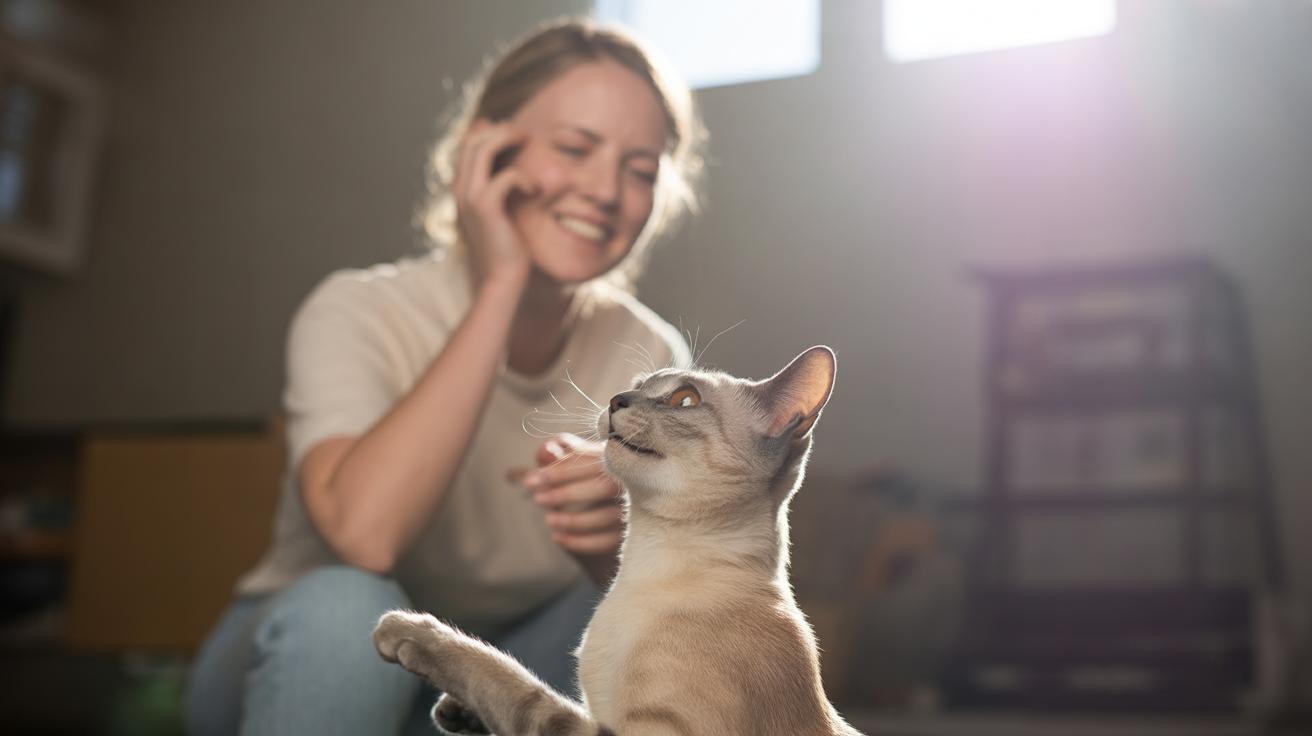
    Action plan , daily minimum: 2 to 3 interactive sessions totaling 15 to 30 minutes. That’s the practical, do-able goal for most busy homes. For short outings, toss an unbreakable ball before you leave, that’s ten minutes of good solo fun.

    Go-to toys and picks:

    • Feather wand (premium) , mimics prey and sharpens chasing skills; great for interactive play (see the Abyssinian toy recommendations section for model picks).
    • Puzzle feeder/treat dispenser , slows eating and gives mental work; Catit and Kong style puzzle feeders work well (puzzle feeder: a toy that makes your cat work for food).
    • Motion/chase toy , for solo stimulation when you’re busy; PetSafe FroliCat Bolt is a good example (motion toy that zips a light or dot).
    • Climbing modules and tall cat trees , satisfy the vertical instinct and provide safe jumping spots.
    • Plush prey and tunnels , perfect for ambush play and stalking practice.
    • Treat-dispensing balls , mix meal time with play so food becomes enrichment.
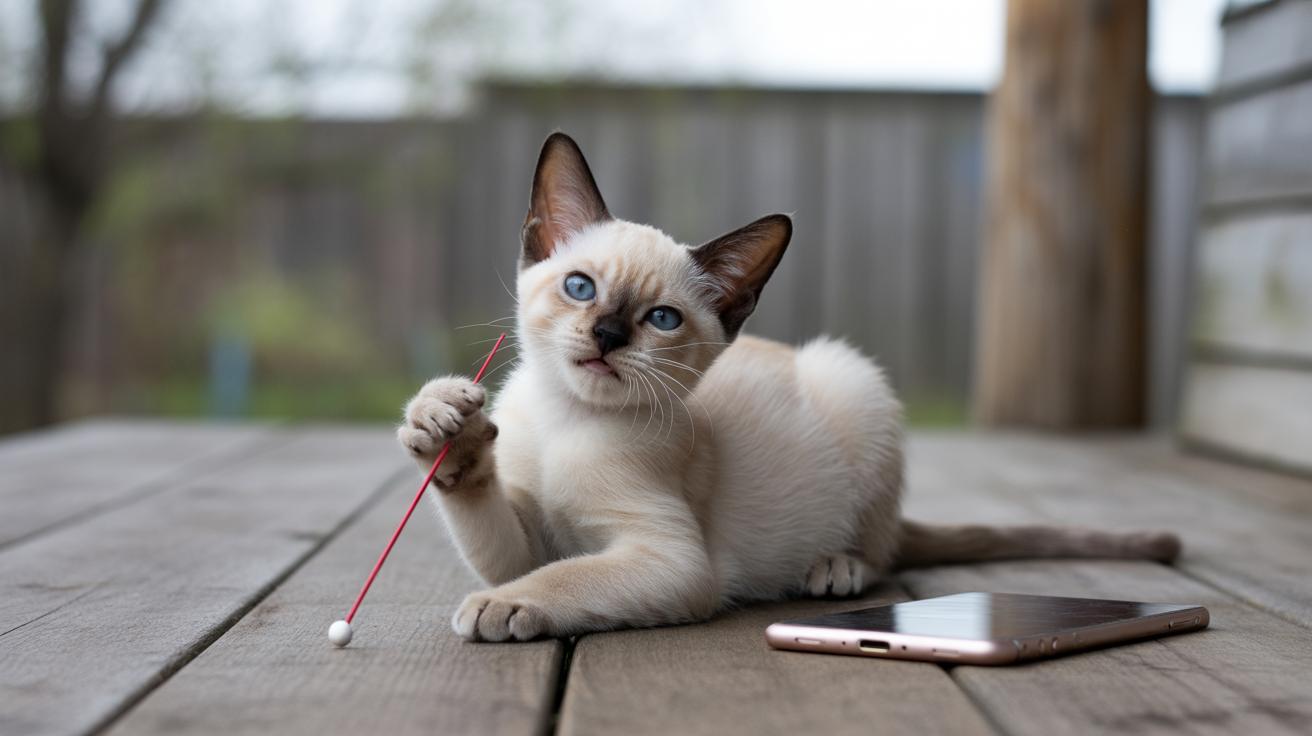
    Toy types and why they matter:

    • Wand and feather toys mimic prey and build hunting and pounce timing.
    • Puzzle feeders and treat balls give mental exercise and slow eating.
    • Motion and chase toys provide solo engagement when you can’t play.
    • Climbing modules and shelves meet vertical needs and reduce boredom.
    • Plush prey and tunnels encourage stalking and surprise attacks (the good kind).
    • Treat-dispensers make feeding into play and extra enrichment.
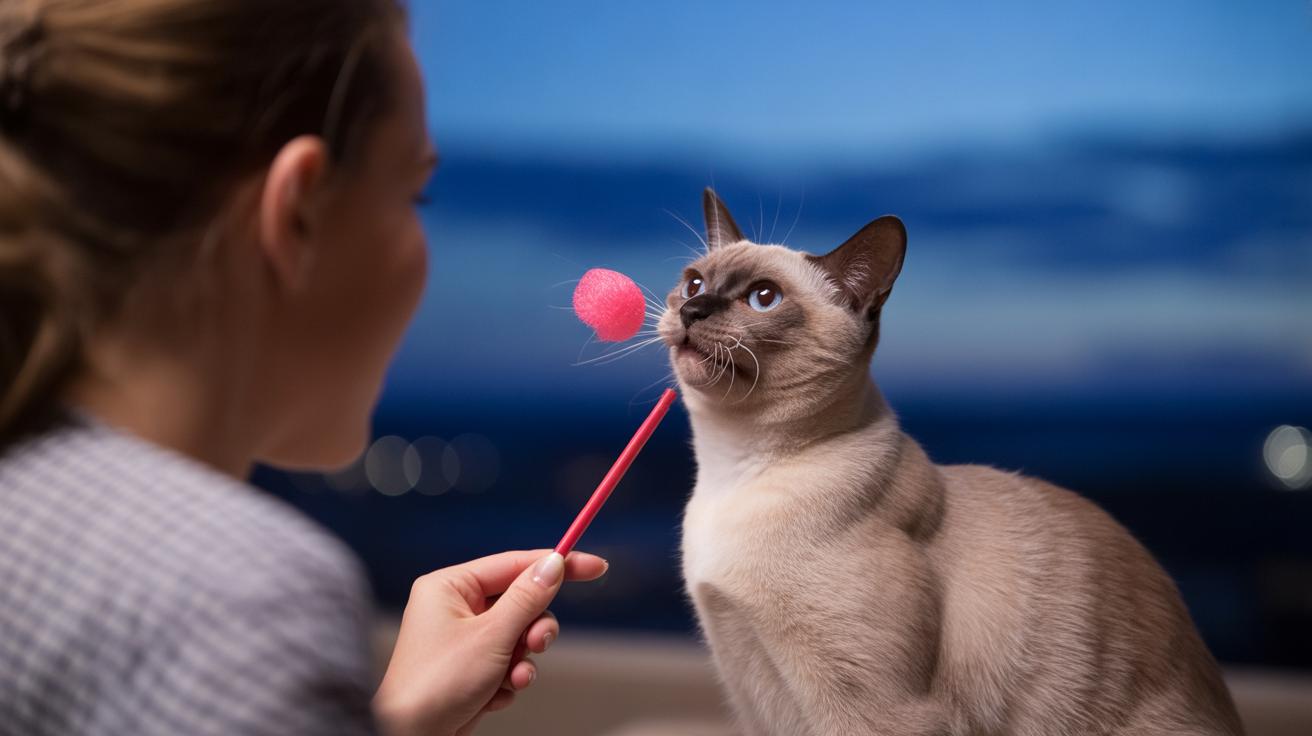
    A few safety and setup tips: rotate toys so nothing gets boring, check toys for loose parts, and pick soft, joint-friendly surfaces for senior jumps. Worth every paw-print.
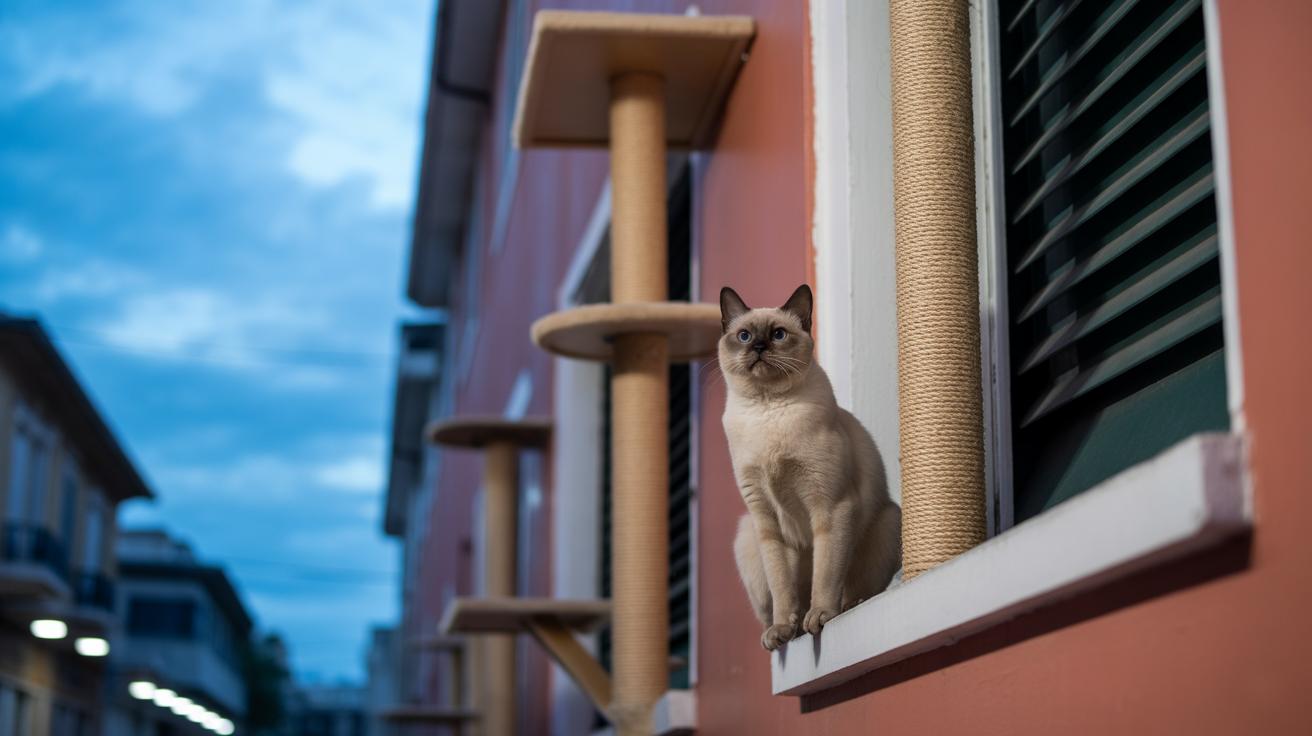
    Abyssinian kitten-to-senior: age-specific activity, feeding ties, and modification checklist

    - Abyssinian kitten-to-senior age-specific activity, feeding ties, and modification checklist.jpg

    Kittens: Abyssinian kittens are bundles of zoom, short, furious bursts of play that build coordination and confidence. Feed them 3 to 4 small meals a day, and sneak in supervised interactive time between meals, like quick wand sessions or tiny fetch tosses, to practice hunting moves and gentle bite control. Ever watched whiskers twitch during a sudden pounce? It’s the best. Keep sessions short and upbeat so they learn play is fun, not scary.

    Adults: Adult Abyssinians need focused daily work to match their athletic curiosity. Shoot for 2 to 3 interactive sessions a day totaling about 15 to 30 minutes, and use puzzle feeders at mealtime so eating becomes mental exercise. Most adults eat 1 to 2 meals a day, so split portions into puzzle rounds or timed treat-dispensing moments. Train in tiny steps with treats and praise, teach fetch, a high-five, or safe jump routines, because they pick up tricks fast.

    Seniors: Senior Abyssinians still want to play, but with softer landings and gentler pacing. Offer low-impact toys, room ramps or short-step modules, and cut down chasing intensity while keeping brief daily engagement to preserve muscle tone. If activity falls, trim calories a bit and keep meals in easy-to-manage puzzle portions so eating stays fun. Don’t skip weekly grooming; a healthy coat helps them feel good and usually doesn’t stop play.

    Age-specific checklist:

    • Match feeding cadence to activity: kittens 3–4 meals; adults 1–2 meals split into puzzle-feeder sessions.
    • Play intensity by life stage: kittens short bursts; adults longer chase peaks; seniors gentle, brief play.
    • Supervise kitten toys: wand/feather and small plush only during play.
    • Senior-friendly choices: ramps, low platforms, softer toys, and low-impact chase options.
    • Watch for warning signs: reduced mobility, appetite change, reluctance to jump; consult your vet if you see them.

    Refer to the “Durable and safe toys” section for all cleaning, inspection, and retirement rules.

    Abyssinian toy recommendations: the single detailed catalog

    - Abyssinian toy recommendations the single detailed catalog (brands, DIY, proscons, comparison table).jpg

    This is the one complete catalog of interactive toys for Abyssinians, with brand examples, easy DIY projects, and quick pros and cons so you can match toys to their athlete-level energy. It’s packed with owner-play toys, solo-play options, climbing gear, and safety tips. See the "Durable and safe toys" section for cleaning, inspection, and retirement rules.

    Interactive owner-play toys

    • Wand and feather teasers – Example: FeatherPlay Deluxe Wand. These mimic prey and trigger that epic pounce response. Great for short owner-led sessions that teach targeting and timing. Not for unsupervised play; check and remove any loose bits when you see wear.

    • Fetch kits – Example: SoftFlight Mini Fetch Set. Light, bouncy toys that fly a little and roll fast, perfect for sprint training and recall practice. Some Abyssinians take to fetch right away, others need treats and patience to learn it.

    • Tug-and-chase ropes – Example: ClawGrip Tug Rope. Super for tug games that build bonding and teach bite control. Made from woven nylon (a tough synthetic fabric), so it stands up to teeth. Keep an eye on long ropes so they don’t wrap around paws or necks.

    Solo-play and mental toys

    • Puzzle feeders – Example: Catit Senses 2.0. These turn meals into a foraging game and slow down fast eaters. Many have adjustable difficulty which keeps clever cats busy. They can be messy with wet food and need regular cleaning.

    • Treat dispensers – Example: Kong Wobbler. Sturdy and reward-based, they encourage nudging and batting for treats and help with portion control. Watch for damage though – small parts on a broken unit can be dangerous.

    • Motion and chase toys – Example: PetSafe FroliCat Bolt. They mimic erratic prey movement and give solo chase sessions when you’re out. Timers help keep play regular. End a session with a catchable toy so your cat feels successful.

    Climbing gear and DIY options

    Climbing: multi-level trees like Catmandu or Kazoo models give vertical territory and safe jumping platforms. Vertical space is huge for Abyssinians – they love to be up high. DIY ideas: cardboard playscape, foldable fabric tunnel, paper-ball stash, and teaser-wand repairs (see the DIY section for the full how-to). DIYs are budget-friendly but need routine checks. Repair tip: reinforce seams with fabric tape and swap worn parts quickly.

    Quick pros and cons

    • Wand/feather – pro: instant prey simulation; con: supervise for loose bits.
    • Puzzle feeder – pro: mental work and slower meals; con: can be messy and needs cleaning.
    • Treat dispenser – pro: durable reward play; con: damaged units risk small parts.
    • Chase ball/track – pro: long high-energy runs; con: balls can jam in narrow tracks.
    • Automated motion toy – pro: solo stimulation on schedule; con: batteries and moving parts need checks.
    • Plush prey – pro: soft to carry and shake; con: seams can open under heavy play.
    • Tunnel/hide – pro: great ambush spots; con: cardboard versions weaken when wet.
    • Climbing modules – pro: vertical territory for jumping and naps; con: bulky and needs floor space.
    Toy Type Best For Example Brand/Model Pros Cons
    Wand / Feather Interactive prey play FeatherPlay Deluxe Wand Mimics prey; great for short, intense sessions Needs supervision; feathers wear
    Puzzle Feeder Mental challenge / slow feeding Catit Senses 2.0 Adjustable difficulty; stretches mealtime Harder to clean if messy
    Motion Toy Solo chase PetSafe FroliCat Bolt Mimics erratic movement; timer options Batteries and parts need maintenance
    Treat Dispenser Meal enrichment Kong Wobbler Durable; rewards nudging and batting Can release too much if tipped hard
    Chase Ball / Track High-energy sprinting TrackMaster Loop Long play cycles; encourages speed Balls may jam; needs space
    Plush Prey Hunting simulation Hunter’s Buddy Plush Mouse Soft to carry and shake Seams can split under heavy chewing
    Tunnel / Hide Ambush play Foldable Fabric Tunnel Creates ambush points; folds for storage Cardboard versions wear fast
    Climbing Module Vertical territory Catmandu / Kazoo multi-level tree Multiple platforms and scratching posts Large footprint; secure anchoring needed

    DIY mini-recipes

    • Paper-ball stash: crumple A4 paper into tight balls and tuck them in a shallow box for quick pounce practice. My Aby once lived in that box for an hour, no joke.
    • Cardboard playscape: stack boxes and cut entry holes to make multi-room ambush zones. Swap wet boxes fast because cardboard gets weak when damp.
    • Quick teaser repair: replace frayed feathers with braided leather (leather strips woven together) or fabric strips and secure with heat-shrink tubing (a plastic tube that tightens with heat). Wrap the join, apply heat carefully, and trim stray fibers.

    Safety and upkeep notes

    Check toys weekly for loose parts, sharp edges, and frayed seams. Clean plastic and silicone toys with warm soapy water and let them dry fully. For fabric toys, stitch or replace weak seams; fabric tape works well for quick fixes. Retire toys that shed stuffing or break into small pieces. Worth every paw-print to keep play safe.

    Interactive play strategies for Abyssinian cats: session structure, training games, and daily routine

    - Interactive play strategies for Abyssinian cats session structure, training games, and daily routine.jpg

    Abyssinians need daily interactive play. Short, focused sessions keep their clever minds busy and their lean bodies happy. Think of a simple play template with a warm-up, a peak chase, and a calm finish so each session feels like a complete hunt.

    Session structure

    Warm-up (1–2 minutes): slow teasing with a wand or a slowly moving toy to grab attention and wake hunting instincts. Use a wand toy or teaser (a stick with feathers or ribbon) so your cat can watch and stalk.
    Peak chase (6–10 minutes): fast bursts of running, pouncing, and short fetch or chase rounds. Let your cat stalk, leap, and carry a small prey toy (a tiny stuffed toy that mimics prey) so the whole hunt sequence feels finished. Short repeats are better than one long sprint.
    Cool-down (1–2 minutes): slow the pace with gentle petting and offer an easy-to-catch toy so they finish with a win. Stop a session if your cat freezes, bolts away, pins ears back, grooms obsessively, or looks frantic.

    Small signs matter. Watch whiskers and tail flicks. Ever notice your cat’s pupils go huge? That can mean too much excitement.

    Training games for exercise

    Fetch progressions (3 steps):

    1. Start with a bright, soft toy and tiny, short tosses so your cat sees it easily.
    2. Reward each return with a tiny, high-value treat (something especially tasty) and a simple cue word like "bring" or "drop."
    3. Slowly increase distance and add a release cue once returns are steady.

    Clicker-assisted tricks (3 steps): clicker (a small handheld sound marker) training is great for precise timing.

    1. Click the moment your cat does the tiny action you want to mark.
    2. Give a small tasty treat right away.
    3. Chain clicks to build longer behaviors like spin or high-five, then slowly fade food rewards.

    Safe jump and hurdle training: start low with platforms or boxes 2–4 inches high (about the height of a paperback book). Use treats and praise to reward success. Raise height in small steps and keep jumps below about 12 inches for beginners. Watch for slipping or hesitance and stop if your cat looks unsure.

    Quick tips for consistent play

    1. Schedule 2–3 interactive sessions a day: morning, midday, and evening.
    2. Use tiny, high-value treats for shaping new behaviors.
    3. Rotate toys between sessions to keep things novel.
    4. End automated or motion toys with a tangible prey toy so the hunt feels complete.
    5. Watch for overstimulation signs and stop early if you see them.
    6. Track small progressions like reps or treats to build complexity safely.

    See the "Abyssinian toy recommendations" section for product choices and the "Durable and safe toys" section for safety, cleaning, and retirement rules.

    Climbing and vertical enrichment for Abyssinian cats: trees, shelves, and perches

    - Climbing and vertical enrichment for Abyssinian cats trees, shelves, and perches.jpg

    Abyssinians live for vertical space. Give them tall, steady cat trees, staggered wall shelves, and a snug window perch so they can climb, watch birds, and nap up high in a sun-warmed spot. My cat goes full circus when there’s a new perch. Brands like Catmandu Australia and Kazoo Pet make sturdy multi-level options that suit this athletic breed.

    Choosing a cat tree

    Look for a tree with a wide, heavy base so it does not tip when your cat launches herself. Aim for a weight capacity that covers multiple cats or big jumps. Platforms should be at least 12 inches (30 cm) square so an adult Abyssinian can sit, turn, and groom comfortably. Include at least three tiers with ramps or staggered steps to make ascending safe and fun. Use sisal (tough plant fiber cats dig into) or tightly woven carpet (dense fabric made to last) on scratching areas, and pick models with several scratching posts to save your furniture.

    It’s good to think about textures. Abyssinians love to dig their claws into something that gives a little, and they’ll appreciate a variety of surfaces for batting and stretching. Toss a soft toy on a high platform and watch the whiskers twitch.

    Wall shelves & installation

    Space shelves about 12 to 18 inches (30 to 45 cm) apart so the jumps feel natural, not scary. Shelf depth should be at least 6 to 8 inches (15 to 20 cm) so your cat has room to perch. Put the highest perch near a window for bird-watching and add a soft landing mat below higher modules. Ever watched your kitty launch, rotate midair, and stick the landing? Yep, that.

    Mount shelves into studs (the vertical wood behind drywall) or use heavy-duty wall anchors rated for dynamic loads (anchors built to handle the force of jumping). If you’re renting or unsure, get a pro to check it. Safety first, playtime second.

    Installation safety checklist:

    • Mount type: stud-mounted or heavy-duty wall anchors rated for jumping loads (choose based on wall type).
    • Platform size: 12 in (30 cm) minimum square for adult perches.
    • Shelf spacing: 12–18 in (30–45 cm) between platforms for natural jumps.
    • Materials: sisal (tough plant fiber cats dig into) or tightly woven carpet (dense fabric for durability) on scratching surfaces.
    • Placement: put high perches near windows for views and sunshine.
    • Landing zones: add soft mats or lower platforms under elevated spots; inspect regularly and follow "Durable and safe toys" for inspection and upkeep.

    Worth every paw-print.

    Durable and safe toys: materials, chew resistance, cleaning, and replacement timetable (central safety hub)

    - Durable and safe toys materials, chew resistance, cleaning, and replacement timetable (central safety hub).jpg

    Start with chew-resistant toys. Look for reinforced stitching (extra thread and bar tacks, which are tight rows of stitches), rubber parts instead of thin brittle plastic, and fabrics like ballistic nylon (very tough woven fabric, like heavy-duty backpack material). Match toy size to your cat’s mouth and weight so nothing can be swallowed. Supervise wand and ribbon play and never leave long strings or loose feathers unattended. Ever watched a kitty chase a ribbon and suddenly go ninja? Yep, supervision matters.

    Make cleaning and quick inspections part of playtime. Plush toys: wash or spot-clean weekly if your cat uses them every day. Puzzle feeders and food-mess toys: clean after each messy meal and check the dishwasher-safe label before loading them (dishwasher-safe usually means top rack only). Wipe plastic and silicone pieces (silicone is a soft, rubbery plastic) with warm soapy water once a week. For powered toys, check batteries monthly, store fresh spares separately, and give moving parts and chargers extra attention.

    Keep a steady replacement rhythm so old toys don’t turn into hazards. Retire any toy with exposed stuffing, split seams, cracked plastic, or loose batteries right away. Rotate toys weekly so wear spreads out and your cat stays curious. Use this section as your go-to safety hub for the rest of the guide. Worth every paw-print.

    Safety and durability checklist:

    • Prefer reinforced stitching and double-stitched seams for plush items.
    • Look for bar tacks (extra tight rows of stitching) at stress points.
    • Choose rubber or thick polymer (polymer means durable plastic) parts over thin, brittle plastics.
    • Avoid small detachable parts; toy diameter should be larger than your cat’s mouth.
    • Plush washing: wash or spot-clean weekly if used daily; machine wash on gentle only if the label allows.
    • Puzzle feeders: clean after each messy meal; check for dishwasher-safe parts and put those on the top rack.
    • Wipe down plastic and silicone pieces weekly with warm soapy water.
    • Supervise wand and ribbon play and never leave strings or long ribbons unattended.
    • Battery routine: check monthly, remove batteries for long storage, and store spares in a safe, dry place.
    • Rotate toys weekly to slow wear and keep novelty high.
    • Dispose of broken toys responsibly in a sealed bag so small pieces don’t escape.

    Replacement timetable (short and exact):

    • Immediate: retire anything with exposed stuffing, split seams, cracked parts, or loose batteries.
    • Plush toys with heavy daily play: replace every 6 to 12 months.
    • Powered toys: check batteries monthly and do a full inspection every 3 months.

    DIY and budget-friendly options: where to make, repair, and source low-cost toys

    - DIY and budget-friendly options where to make, repair, and source low-cost toys.jpg

    All the full DIY mini-recipes and the pros and cons live in the "Abyssinian toy recommendations" section. I folded the quick ideas into those mini-recipes too , think cardboard tunnels (moving-box hideouts), paper balls, and fabric pouches stuffed with catnip or silvervine (a cat-attracting herb). Rotate them weekly to keep things fresh. This week: tunnel. Next week: paper-ball sprint. Your cat will thank you with zoomies.

    See the teaser-wand repair bullet in the Abyssinian DIY mini-recipes for step-by-step replacement-attachment tips (internal cross-reference). It’s a handy little how-to if your wand loses its feathers or the handle gets tired.

    Buying used and repair advice is now tucked into the climbing-gear and DIY options paragraph. Quick budget tips: buy used, sturdy climbing modules but check weight capacity (max load, or how much weight it can hold), fastenings (screws, bolts, carabiners, which are the clipped metal hooks), and anchoring (how it is secured to the wall or floor) before you install them. Or make a cheap cardboard play tunnel from moving boxes for some ambush-style play; imagine your cat’s whiskers twitching as a toy rolls by.

    For cleaning, inspection, and retirement rules, plus safety checks on adhesives, staples, and small parts, see the central "Durable and safe toys" section. Safety first, fun second, but really both matter for long-lasting play.

    Worth every paw-print.

    Activity tips for multi-cat households and indoor-only setups (focus on household dynamics)

    - Activity tips for multi-cat households and indoor-only setups (focus on household dynamics).jpg

    Abyssinians are social and curious, and they do best with company. But they’re clever and confident, so introductions and territory need a gentle plan. Go slow. Use scent swaps (swap bedding or a cloth so they get each other’s smell), short supervised meetups, and make sure every cat has a clear escape route so anyone can bow out without a scene.

    Multi-cat household strategies

    Start with a locked-room intro: the new cat stays in a quiet room with food, bedding, and a hiding spot while resident cats sniff swapped bedding. Then move to short, supervised visual visits and tiny shared sessions with a wand toy (a stick with feathers or string) or a treat station so the meetups become a happy thing. Keep separate feeding stations, litter boxes, and resting spots – rule of thumb is one per cat plus one extra. Spread vertical territory with shelves, trees, and window perches so cats can claim different heights, and watch for resource guarding signs like a stiff body, hissing, or blocking access.

    Indoor-only and catio basics

    Train a harness (a fitted vest-style strap) inside first: short wear sessions, then clipped-leash walks in a calm room before you step outside. A catio (a secure outdoor enclosure) should offer shade, sturdy mesh (wire or vinyl netting), lots of perches, and escape-proof latches so curious paws stay safe. Schedule one-on-one interactive play so each cat gets mental work and human time, and leave solo motion toys for when they’re by themselves.

    • Place multiple feeding stations far enough apart to cut competition.
    • Give one litter box per cat plus one spare in quiet spots.
    • Route vertical space so paths do not force close encounters – stagger shelves and trees.
    • Use scent swaps and very short supervised visits for introductions.
    • Watch for stress signals: hiding, reduced appetite, flattened ears.
    • Safe supervised outdoor options: short harness walks or a secure catio with perches.

    Worth every paw-print.

    See the Abyssinian toy recommendations section for specific enrichment items and the Durable and safe toys section for cleaning and inspection rules.

    Buying guide and top product picks (quick-buy summary)

    - Buying guide and top product picks (top-10 table + brief purchase cues only).jpg

    Want the full deep dive? See the Abyssinian toy recommendations catalog and Durable and safe toys for cleaning and retirement rules. Price tiers used here: budget (<$15), mid-range ($15-$60), premium (>$60).

    Buying checklist:

    • Match the toy to how your cat plays , chase, puzzle, fetch, or climb. Check the catalog for model-by-play-style fits so you get the right match.
    • Inspect materials and construction: look for reinforced stitching, thick rubber, or tight-weave fabric. Watch for polymer (a durable plastic-like material) or sisal (coarse plant fiber used for scratching) in the specs.
    • Size and weight matter. Make sure nothing is small enough to be swallowed and that lightweight parts won’t be eaten.
    • Prefer washable parts or dishwasher-safe pieces (top-rack safe is best). Clean toys often and retire anything that’s chewed or stained.
    • Check battery and upkeep needs before you buy. If it needs a screwdriver every week, grab a simpler toy.
    • Use price tier as a guide: budget for light or occasional play, mid-range for regular use, premium for heavy daily activity.

    Quick-buy summary (3–4 lines per product)

    • PetSafe FroliCat Bolt – Motion toy | Mid
      Quick purchase cue: Check battery compartment access and covers over moving parts. Keep spare batteries on hand so playtime doesn’t stop mid-chase.
      Tip: Supervise the first sessions to watch for chewing or small parts coming loose.

    • Catit Senses 2.0 Puzzle Feeder – Puzzle feeder | Mid
      Quick purchase cue: Confirm dishwasher-safe parts (top-rack) and BPA (bisphenol A, a plastic chemical) free labeling. Check the opening size to make sure your kibble fits.
      Tip: Great for slowing fast eaters and making breakfast feel more like a hunt.

    • Kong Wobbler – Treat dispenser | Mid
      Quick purchase cue: Made from sturdy polymer (a durable plastic-like material); wipe clean and inspect for cracks before each use.
      Tip: Toss a few treats in and watch your cat flip it with a satisfying thud.

    • Catmandu multi-level cat tree – Climbing | Premium
      Quick purchase cue: Verify weight capacity and anchor options. Ask if posts use replaceable sisal (coarse plant fiber used for scratching).
      Tip: If it smells like new wood and adventure, your cat will be all in. Secure it to a wall if your cat is a wild jumper.

    • Kazoo multi-level tree – Climbing | Premium
      Quick purchase cue: Check base footprint and whether sisal posts are replaceable. A firm base reduces tipping and keeps kitties safe.
      Tip: Bigger bases mean more solid pounces. Worth the splurge for heavy leapers.

    • FeatherPlay Deluxe Wand – Wand/feather | Budget
      Quick purchase cue: Replace feathers often and use only for supervised play; inspect the wand joint for looseness.
      Tip: Think of it like a fishing rod for cats , irresistible, but keep fingers out of the splash zone.

    • TrackMaster Loop – Chase track | Mid
      Quick purchase cue: Keep rails clear of jams and ensure rails snap together firmly and roll smoothly.
      Tip: Your cat’s eyes will track the blip like it’s prey. Watch for small gaps where whiskers could catch.

    • Hunter's Buddy Plush Mouse – Plush prey | Budget
      Quick purchase cue: Inspect seams and stitching before handing it over. Retire the toy if stuffing or inner bits start to peek out.
      Tip: Add a pinch of catnip and watch the tiny predator appear.

    • Foldable Fabric Tunnel – Tunnel/hide | Budget
      Quick purchase cue: Confirm machine-wash instructions and drying notes on the label. Dry fully before reuse to avoid damp smells.
      Tip: Tunnels are great for ambush practice and nap hideouts. My cat vanishes into them and I love it.

    • SoftFlight Mini Fetch Set – Fetch kit | Budget
      Quick purchase cue: Look for tear-resistant fabric or foam core and easy-to-rinse surfaces; check size so your cat can pick them up safely.
      Tip: Perfect for short fetch sessions before you head out , ten minutes of play and done.

    Final Words

    In action: three age-specific lines set play goals, vertical space and puzzle feeders were flagged, and three concrete toy types were named for quick shopping.

    We laid out energy, feeding ties by life stage, climbing options, the full toy catalog and DIY fixes, plus session templates and a safety hub, so you can act fast.

    Stick to 2–3 interactive sessions totaling 15–30 minutes and pick durable pieces from the catalog; Abyssinian cat: activity level and toy recommendations will keep multi-cat homes lively and your furniture safer. Happy pouncing.

    FAQ

    Abyssinian cat FAQ

    What is the activity level and personality of an Abyssinian cat, and are they mischievous?

    Very high and playful — athletic, curious, and can act mischievous if bored. They benefit from daily hunting-style play and plenty of vertical space.

    What toys are good for active Abyssinian cats?

    Interactive wand or feather teasers, puzzle feeders that dispense food slowly, and motion chase toys (for example, PetSafe FroliCat Bolt) are good choices.

    What do Abyssinian cats need in home care and enrichment?

    Daily interactive play, vertical climbing space, puzzle feeding for mental work, social time with people or other pets, and durable toys to prevent boredom and stress.

    What is the lifespan and typical size of an Abyssinian cat?

    About 12–15 years, typically weighing roughly 6–12 pounds (2.7–5 kg). Grooming needs are generally low-maintenance.

    Do Abyssinian cats get along with small pets like guinea pigs?

    They can coexist but have a strong prey drive. Supervise introductions, keep rodents in secure enclosures, and use gradual, positive, closely supervised meetings.

    What colors and pattern does the Abyssinian have, and where did it originate?

    Common coat colors include ruddy, sorrel, blue, and fawn. The breed traces back to Abyssinia (modern Ethiopia) and was further developed by breeders overseas.

    Related Articles

  • Playful Cat Breeds and Their Exercise Needs

    Playful Cat Breeds and Their Exercise Needs

    Think all cats are lazy lap warmers? Think again! Some breeds need an hour or more of zoomies (short, frantic bursts of running). Others are happy with quick lap games and a curl-up on your blanket.

    Ever watched your kitty chase shadows across the wall? Your cat’s whiskers twitch as a toy rolls and paws tap the floor. Play keeps them sharp and fit, and it makes them much less likely to redecorate your curtains.

    This quick guide pairs playful breeds with practical daily playtime ranges (15 to 120 minutes) so you can pick toys, plan routines, and find a pace that fits your life and keeps your cat purring and ready to pounce. For busy days, toss an unbreakable ball before you head out – that’s ten minutes of safe, satisfying play. Worth every paw-print.

    Playful Cat Breeds and Their Exercise Needs

    - Playful cat breeds quick energy rankings and daily exercise needs.jpg

    Here’s a friendly guide to how much play different breeds usually want each day. Think of these as headline ranges you can aim for: High 60-120 minutes; Medium-high 45-60 minutes; Medium 30-45 minutes; Low-medium 15-30 minutes. Ever watched your kitty chase shadows? That’s the kind of play we mean.

    Energy Level Daily Playtime
    High 60-120 min
    Medium-high 45-60 min
    Medium 30-45 min
    Low-medium 15-30 min

    High energy (60-120 min)

    • Bengal , loves climbing and puzzle feeders (toys that hide food, so your cat works for treats). Bengals like vertical space and brain games.
    • Savannah , enjoys leash walks and high shelves. These cats are athletic, so think tall perches and supervised outdoor walks.
    • Egyptian Mau , needs sprint play and interactive fetch. Quick chases and fast toys keep them happy.

    Medium-high (45-60 min)

    • Abyssinian , chasing wand toys and short trick sessions. Try one minute bursts of play, then a quick rest.
    • Siamese , social play and fetch practice. They want people time, so schedule short playdates.
    • Somali , fetch games and problem-solving toys. Smart and playful, they’ll figure out puzzles fast.

    Medium (30-45 min)

    • Cornish Rex , vertical play and quick chase drills. Light jumping and short sprints work well.
    • Devon Rex , perch games and fast teaser bursts. They love being close to you, then zooming off.
    • Oriental Shorthair , pounce practice and wand play. Clear floors help with fast turns.
    • Balinese , agility runs and climbing challenges. Think obstacle courses with soft landings.

    Low-medium (15-30 min)

    • Singapura , interactive lap play and short bursts. Small, lively, but happy with calm cuddles afterward.
    • Maine Coon , gentle chase sessions and sturdy climbing. Big cats who like long, relaxed play more than nonstop zoomies.

    A few practical notes
    High-energy breeds usually need daily interaction, climbing spots, or a playful companion. Vocal breeds like the Siamese want scheduled social time. Ask yourself: do you have the space for active climbing? Can you stick to a training routine? Will neighbors mind nighttime zoomies?

    Kittens do best with many short bursts of play. Seniors need gentler sessions and lower jump heights. Overweight cats should ramp up activity slowly and check with the vet. And a heads up about Savannahs: early-generation (closer to wild ancestry) animals may have legal restrictions and higher care costs, so research local rules before you adopt.

    Worth every paw-print. My Luna once launched six feet for a wand toy and then flopped on her back like she’d finished a marathon. Try a few games, see what makes your cat’s whiskers twitch, and adjust from there.

    Playful cat breeds profiles: detailed exercise context for Bengal, Abyssinian, Siamese, and Rex breeds

    - Playful cat breeds profiles detailed exercise context for Bengal, Abyssinian, Siamese, and Rex breeds.jpg

    Bengal cats are clever, endlessly curious hunters who treat your home like a big puzzle. They love to explore, open things, and chase scent trails , so try scent-based recall drills (practice calling your cat to come using treats or scent) and short, goal-focused sessions like clicker work (a small device that makes a click to mark a good behavior) or target work (teaching your cat to touch a target with their nose). Keep sessions short and fun so they stay focused. Ever watched a Bengal vault from couch to bookshelf? It’s glorious and a little nerve-racking, so watch for overexertion and joint strain (when joints get stressed from too much jumping). Regular vet checks help catch athletic injuries early. See Toys & Training sections for matched gear and step-by-step routines.

    Abyssinians move like tiny explorers , always sniffing out the next sunny spot or box. They respond really well to short, repeatable trick sessions and slow leash-introduction steps (gentle practice getting used to a harness and walking). Use high-value rewards and quick repetition so they learn fast. Keep an eye on weight and muscle tone since their busy behavior can hide slow weight changes, and don’t skip routine dental and wellness checks. See Toys & Training sections for matched gear and step-by-step routines.

    Siamese are social, chatty, and they crave company and routine; if bored they’ll invent mischief and tell you all about it. Use clear, consistent vocal cues and set predictable social playtimes so they learn when attention comes; scheduled short sessions help cut down on attention-seeking outbursts. Watch for signs of separation stress or too much vocalizing, those are your cues to add more structured interaction. Regular vet visits are important to keep stress-related issues in check. See Toys & Training sections for matched gear and step-by-step routines.

    Cornish and Devon Rex cats are little acrobats , springy, light-footed, and obsessed with high perches and fast chases. Train them with vertical challenges, quick agility runs, and recall-to-perch routines (teaching them to hop to a specific high spot on cue) that reward speed and precision rather than long endurance. Their skin and coat can be more delicate, so check for skin sensitivity (tender or easily irritated skin) and keep an eye on joints as they age; ease off intensity if you notice stiffness. Short, frequent drills win every time. See Toys & Training sections for matched gear and step-by-step routines.

    Toys, climbing and interactive gear for playful cat breeds (toy recommendations table)

    - Toys, climbing and interactive gear for playful cat breeds (toy recommendations table).jpg

    Here’s the spot where we pull all the toy picks, climbing gear, and safety tips out of the breed blurbs and put them in one easy place. Think clear matches for energetic breeds, notes on what lasts, and simple safe-use rules so your cat stays happy and your stuff stays intact.

    Want repair ideas for wand tips? See DIY replacement attachments for teaser wands.

    Toy / Gear Best For (breeds/age) Play Style Safety / Use Notes
    Wand teaser Abyssinian, Siamese, kittens Interactive chase and recall Watch dangling bits; retire frayed ends; replace tips regularly (see DIY link above)
    Puzzle feeder (food-dispensing toy) Bengal, Somali, overweight cats Problem-solving and slow feeding Measure portions; wash after use; check for worn seams
    Ball / chase toy Egyptian Mau, Bengal, Bombay Sprinting, pouncing, fetch Pick solid, bite-resistant materials (like hard rubber); avoid toys with tiny parts
    Climbing tree / catio / vertical shelves Bengal, Savannah, Maine Coon, Rex Vertical play, perching, short runs Anchor to wall studs (solid beams in the wall); check weight rating; pad landing zones
    Laser pointer Abyssinian, Siamese, Somali High-speed chases Never shine at eyes; end each session with a real toy for a tangible catch to avoid frustration
    Harness & leash (fitted vest for walks) Trainable adults: Bengal, Savannah, curious cats Supervised outdoor exploration Start with short indoor sessions; confirm a snug fit; keep first walks brief and supervised

    Toy rotation keeps things interesting and cuts down on boredom mischief. Keep a small stash out of sight, swap things weekly, and check wand tips before play. Your cat will thank you with dramatic pounces.

    • Swap core toys every 7 to 10 days to renew novelty.
    • Pair a puzzle feeder session with a short chase game for mental plus physical work.
    • Rotate toys by play zone: one set upstairs, one downstairs, one hidden for surprise play.
    • Wash washable toys weekly; inspect seams and elastic after heavy use.
    • Check wand attachments before each play session; replace any frayed bits right away.
    • Measure food put into puzzle feeders so feeding goals stay steady.

    Safety quick hits

    • Always supervise toys with strings, elastic, or small parts.
    • Retire fabric toys once stuffing or seams show wear.
    • Anchor tall climbing gear to wall studs (that means find the solid wood behind the drywall) and test stability before use.
    • Start harness sessions indoors, short and supervised, before trying outside.

    A few extra tips from my own cat-ventures: keep one irresistible toy that only comes out for solo play so it stays special. And if your cat gets obsessed with a laser, try ending each session by tossing a small ball so they get to actually catch something. Worth every paw-print.

    Training and enrichment techniques for playful cat breeds: practical step-by-step routines

    - Training and enrichment techniques for playful cat breeds practical step-by-step routines.jpg

    This is where you’ll find full training sequences for zippy, playful cats. Pick the routine that matches your cat’s energy from the breed profiles, then run short sessions, three to ten minutes, several times a day. Your cat’s whiskers will twitch, you’ll get a few adorable pounces, and progress comes fast when you keep it fun.

    1. Clicker training (7 steps)

    2. Get a clicker (a small plastic device that makes a sharp click) and tiny tasty treats your cat loves.

    3. Click, then give a treat right away so the click means "good." Repeat until your cat looks for a treat after the click.

    4. Pick a simple behavior, like sit or touch a target (a stick or object your cat taps). Wait for the cat to do it naturally, then click the instant it happens.

    5. Give the treat immediately. Keep repetitions short and upbeat so the cat stays interested.

    6. Add a cue word once the action is reliable, then use click plus treat to link the word to the behavior.

    7. Slowly increase the gap between click and treat to build focus and patience.

    8. End every session on a win and let the cat walk away, short wins mean they’ll come back for more.

    9. Teaching fetch (6 steps)

    10. Pick a small, soft ball or toy your cat already likes.

    11. Toss it a short distance and reward the cat when they bat or chase it.

    12. Call the cat back with a tasty treat and reward when they come near you.

    13. When they bring the toy closer, give a big reward and trade the toy for a fresh treat.

    14. Keep throws short at first, then lengthen distance as the cat stays engaged.

    15. Make the game playful, not pushy. Stop before the cat loses interest.

    16. Leash and harness introduction and walking (8 steps)

    17. Choose a soft, well-fitting harness (a vest-style harness is usually easiest for cats).

    18. Let the cat sniff and wear the harness indoors for a few minutes at a time, pairing it with treats.

    19. Adjust the fit so it’s snug but you can fit two fingers under the straps; check for rubbing or chafing.

    20. Clip a leash (a light cord or strap) on indoors and follow your cat instead of pulling.

    21. Take short indoor strolls first, then try outside in a quiet spot once they’re calm.

    22. Keep initial outdoor outings under five minutes and always stay with them.

    23. Watch body language: ears back, crouching, or frozen stillness means pause and step back.

    24. Gradually increase time as confidence grows, and always end on something positive.

    Quick troubleshooting and tips

    • If your cat freezes, go back one step and reward tiny progress. Small wins matter.
    • If treats stop working, switch to a higher-value reward for that session.
    • Cats distracted by noise? Move to a quieter room for training.
    • If fear shows up, pause and try again later; never force things.
    • Keep sessions short and frequent to build a habit you’ll both enjoy.

    Match the above sequences to breeds described in the Profiles section.

    Adapting exercise by life stage and special needs (kittens, adults, seniors, overweight cats)

    - Adapting exercise by life stage and special needs (kittens, adults, seniors, overweight cats).jpg

    This is your quick, friendly guide to how much play time cats usually need by age, energy level, and weight. Check the "Session Structure" section (how to split daily minutes into short bursts or longer sets that fit your cat’s stamina [energy]) to figure out the best schedule.

    Think of the minute targets as friendly goals, not hard rules. Match the intensity to your cat’s body language and health history. If your cat has a health issue, ask your veterinarian before changing routines or adding new gear.

    Life Stage Recommended Daily Activity (minutes) Session Structure Top Toy Types
    Kittens 60+ (many short bursts) 6 to 12 sessions of 5–10 minutes spread through the day Wand teasers (feather or string on a stick), small balls, supervised climb spots (watch them on shelves)
    Adult , high-energy 60–120 3 to 6 sessions of 10–20 minutes; mix chase play with puzzle work Puzzle feeders (food puzzles that make cats work for kibble), climbing towers (tall cat trees), fast chase toys
    Adult , moderate 30–45 3 to 5 sessions of 6–15 minutes; include one short training drill Wand toys, balls, low-level agility (short obstacle course)
    Senior / overweight 10–30 (gentle) 4 to 8 short, low-impact sessions of 3–8 minutes Slow puzzle feeders (easy-release food toys), soft chase toys, low ramps (gentle incline)

    Safely increasing activity for overweight or medically limited cats

    • Get a health check and a target weight plan from your vet first. They’ll tell you safe goals and limits.
    • Start with low-impact play (easy on the joints), like walking up short ramps or gentle wand chases.
    • Use lots of short sessions instead of long marathons. Ten minutes broken into a few bursts wins every time.
    • Track small weekly progress and portion treats so calories stay controlled.
    • Stop and call your vet if your cat shows trouble breathing, balance issues, or seems to be in pain.

    Signs a session is too intense

    • Heavy panting or open-mouth breathing. That’s not normal for cats.
    • Sudden collapse or fainting. Stop play and seek help.
    • Refusing to play repeatedly after a warm-up.
    • Limping, favoring a leg, or obvious stiffness.

    Senior cat modifications

    Lower jump heights and add soft landing spots like rugs or foam pads. Use food or treat-based motivation and easy puzzle feeders to make movement rewarding. Shorten sessions into tiny wins so your senior cat finishes happy and not tired. Ask your veterinarian before starting new routines or toys , safety first, paw-sitive results next.

    Worth every paw-print.

    Space, multi-cat dynamics, apartments and safe outdoor exercise for playful cat breeds

    - Space, multi-cat dynamics, apartments and safe outdoor exercise for playful cat breeds.jpg

    Small apartments can work for bouncy, clever breeds. You just need to give them vertical territory. Think tall cat trees and wall shelves where they can climb and nap in the sun. Run short, frequent play sessions so they burn energy, and rotate toys weekly to keep things interesting , novelty matters to cats. Ever watched your cat pounce on a rolling ball? Those little thuds and whisker-twitches make it worth the effort.

    In homes with more than one cat, set up separate play zones so no one feels cornered. Stagger play times if a crowd forms, and supervise social play so wrestling doesn’t turn too rough. Give shy cats escape routes and high perches. Small changes cut stress, and everyone ends up feeling more confident.

    If your cat wants outdoor time, options range from balconies to full runs. Secure enclosures and catios (an enclosed outdoor patio for cats) let them get fresh air and sunlight without the risks. Harness walks teach a different kind of focus and can be great for curious, trainable breeds, but they need slow, patient training and short outings. Also, some high-generation Savannahs, like F1 Savannahs (first-generation cross with a serval), face legal or ownership limits in some places , check local rules before planning outdoor time.

    Outdoor Option Pros Cons
    Catio (built-in) Safe outdoor access and sunny spots for naps Can be costly; needs to be anchored to walls or railings; check building rules
    Portable catio (pop-up) Low-cost and flexible to move Less durable; needs supervision in wind or bad weather
    Harness walks Mental stimulation and leash skills Requires gradual training; keep walks short and supervised
    Supervised yard time (on leash or fenced) Natural smells and room to sprint Risks from predators, traffic, or pesticides
    Fully enclosed run / outdoor pen Generous room to roam safely Needs secure fencing and shaded spots
    Free roaming Total freedom High danger from cars, wildlife, and legal limits in many places
    Catio membership / cat park Social time and a controlled space Sanitation and supervision rules vary

    Apartment safety checklist (quick)

    • Give each active cat tall vertical spaces so they can escape or survey the room.
    • Remove breakaway collars during play to prevent snags.
    • Keep a hidden toy stash and rotate toys weekly to renew interest.
    • Anchor tall furniture to studs (the wall framing studs) so trees and shelves won’t tip.
    • Use short, frequent play sessions instead of one long marathon to match apartment life.

    Worth every paw-print.

    Monitoring activity, signs of insufficient exercise, and when to seek veterinary advice

    - Monitoring activity, signs of insufficient exercise, and when to seek veterinary advice.jpg

    Keep an eye on small shifts in behavior and body shape. Slow weight gain, louder or more frequent meowing, chewing or scratching furniture, nighttime zoomies, or repeated over-grooming can mean your cat isn’t getting enough physical or mental play. Ever watched your cat sprint across the hall at 3 a.m.? Yeah, that can be a clue.

    Track a few simple things so you can spot trends. Keep a play log (a tiny diary: date, how long you played, and what toy you used). Do a quick treat-recall test: does your cat come when you call for a treat? Try an activity tracker (a small device that counts movement) worn for a week to set a baseline. These easy checks help you catch a problem early.

    Set clear action points so you know when to call in help. If your cat gains more than 10% of body weight in two months, or if destructive behavior keeps rising despite two to four weeks of focused play, make an appointment with your veterinarian or a certified behaviorist (a professional who studies animal behavior). Jot down what you tried and for how long, small changes over a month or two tell you if the plan is working. Worth every paw-print.

    Metric How to Measure Action Threshold
    Weight changes Weekly weigh-ins (use a kitchen or vet scale); track percent change Gain >10% body weight in 2 months → vet consult
    Activity minutes per day Play log or activity tracker (small device that counts movement) averaged over 7-14 days Steady decline vs. baseline for 2+ weeks → adjust plan; consult if no improvement
    Behavioral flags Log destructive acts, excessive vocalizing, or grooming episodes Increase despite 2-4 weeks of added play → seek professional help

    Warning signs that need immediate veterinary attention

    • Sudden severe lethargy or collapse.
    • Limping, obvious pain, or refusing to put weight on a limb.
    • Trouble breathing, open-mouth breathing, or gasping (this is serious).
    • Rapid, unexplained weight loss or gain.
    • Sudden, persistent aggression that’s new for your cat.
    • Repeated inability to finish short, gentle play sessions.

    If any of these show up, call your vet right away. It’s better to check and sigh with relief than to wait.

    Final Words

    In action: we laid out quick energy ranks with headline daily-minute ranges, a 12-breed quick list, and one-line activity cues to get play started fast.

    We gave short breed profiles with training tips, a toy and climbing gear table, step-by-step training routines, life-stage tweaks, apartment and multi-cat strategies, plus monitoring tips.

    Keep a simple play log and match routines to your household. playful cat breeds and their exercise needs , you're ready to keep your crew fit, curious, and joyfully entertained.

    FAQ

    What cat breed is the most playful?

    The most playful cat breeds are Bengals, Savannahs, Egyptian Maus, Abyssinians, Siamese, Somalis, Cornish Rex, Devon Rex, Oriental Shorthairs, and Ocicats; color doesn’t predict energy—breed and personality do.

    Small playful cat breeds and their exercise needs

    Small playful breeds like the Singapura (tiny, muscular), Cornish Rex, Devon Rex, and Ocicat benefit from short, frequent play bursts totaling roughly 30–60 minutes daily, plus climbing structures and interactive toys for variety.

    What defines high-energy or playful cats and how should they be exercised?

    High-energy or playful cats show nonstop curiosity, chasing, and problem-solving; they do best with interactive play sessions, vertical challenges (cat trees, shelves), and puzzle feeders to channel energy and reduce boredom-driven mischief.

    Which breeds are least playful or most low maintenance?

    Less playful, lower-energy breeds include Ragdolls, Persians, British Shorthairs, and Exotic Shorthairs. They’re often calmer—Persians do require regular grooming (long coats need weekly brushing), while Ragdolls commonly enjoy lap time.

    What breed is Taylor Swift’s cat?

    Taylor Swift’s cats include Olivia Benson and Meredith Grey, both Scottish Folds (folded-eared), and Benjamin Button, a Ragdoll.

    Is a playful cat a healthy cat?

    Playfulness often signals good physical and mental health—energy, curiosity, and engagement. A sudden loss of play or a drastic behavior change warrants a vet check for pain, illness, or stress.

    Related Articles

  • When-to-Seek-a-Behaviorist-for-Cat-Play-Aggression

    When-to-Seek-a-Behaviorist-for-Cat-Play-Aggression

    If playtime leaves you with nips, a bruised ego, or bleeding hands, that’s not just "kittens being kittens." It’s a warning sign. Your palm might sting and your heart sink, really.

    First step: see your veterinarian (a doctor for animals who checks for pain or illness). Cats are pros at hiding discomfort, and pain or sickness can make playful bites turn rough. Ever had a purr turn into a sudden snap? That could be pain talking.

    Next, use a quick checklist to decide if you need an expert. A certified feline behaviorist (a trained cat behavior specialist) helps with training and changing the home setup. A veterinary behaviorist (a veterinarian with extra behavior training) looks at medical and behavior issues together.

    If bites break the skin, attacks happen every day, or you feel unsafe at home, book a consult and start a short incident log (a simple record of date, time, what happened, what led up to it, and any injuries). Don’t wait, those notes make it much easier for a pro to help. Oops, let me rephrase that, a few clear entries can speed up the right fix.

    When-to-Seek-a-Behaviorist-for-Cat-Play-Aggression

    - Deciding if a behaviorist is needed for cat play aggression  clear signs, thresholds, and immediate steps (this section answers the searchers need).jpg

    Use this short checklist to figure out whether you need a behaviorist for cat play aggression. It’s quick, clear, and meant to help you go from worried to doing something useful.

    First things first: get a vet exam (veterinarian). Cats hide pain, and health problems can cause or make aggressive play worse, so rule out medical issues before you call a behaviorist.

    If any of the items below fit, contact a certified feline behaviorist (trained cat behavior specialist) or a veterinary behaviorist (a veterinarian with behavior training) for a consult.

    1. Any bite that breaks the skin or draws blood, even once.
    2. Repeated attacks every day, multiple times per day, on people or other pets.
    3. Episodes that get worse or happen more often over several weeks.
    4. Aggression that causes injury to household members or other animals.
    5. Aggressive events that come with appetite loss, litter box changes, big grooming changes, or major shifts in activity.
    6. Caregivers who are afraid of the cat, avoid interacting with it, or whose home life clearly worsens because of the behavior.

    If an event happens, do this now: stop interaction immediately and move your hands and body parts out of reach. If you need to keep everyone safe, put the cat in a secure room with a litter box, water, and a comfy bed.

    Start a short incident log (simple notes) with date, time, location, who was there, what may have triggered it (toy, another pet, a sudden noise), the exact behaviors you saw (biting, scratching, tail and ear cues), any injuries, and how long it lasted. If you can safely record video, do that too. Then arrange a prompt veterinary exam and bring the incident log, any videos, a current medication list, and notes about recent behavior or medical changes to the appointment.

    Other sections go into medical triage, emergency safety steps, and how behaviorist consults work, so you won’t need to repeat those details here. Worth every paw-print.

    Red flags and urgent clinical guidance for cat play aggression

    - Red flags and urgent clinical guidance for cat play aggression (quick-reference emergency page).jpg

    Yikes, cat bites are riskier than they look. Cat mouths commonly carry Pasteurella spp. (common cat-mouth bacteria) and anaerobes (bacteria that grow without oxygen). Puncture wounds often seal up and trap those germs inside. They usually need professional irrigation (thorough flushing) and sometimes antibiotics (medicines that kill bacteria).

    Seek emergency medical care for people if bleeding won’t stop, if there are signs of a spreading or systemic infection like fever or rapidly spreading redness, or for deep puncture wounds. Don’t wait to be sure.

    Get urgent veterinary care for the cat if the aggression is sudden and comes with collapse, stumbling, disorientation, or other neurologic signs (problems with balance, coordination, or awareness). Those can be medical emergencies and not just behavior issues.

    See the article’s central emergency/triage section for the simplified triage checklist. And please save any video or photo evidence with timestamps, plus witness names for clinicians and behaviorists. For example: "00:12 cat lunges; witness: Alex; clothing torn at sleeve."

    Vet-first checklist to prepare for a behavioral consult (what to report and diagnostics to request)

    - Vet-first checklist to prepare for a behavioral consult (what to report and diagnostics to request).jpg

    At triage say this exact line: "My cat has bitten [person/pet], this happened [dates/times], here are videos and the incident log; the behavior is new/worse; I’m worried about pain or neurologic disease." Bring the incident log, short video clips, current meds, and any recent vet notes – they make the exam much more useful.

    Quick note before we dive in: those videos and the timeline are pure gold. Ever watched your cat’s whiskers twitch before a bite? Yeah, footage helps.

    Medical red flags to report right away:

    • Appetite or weight change. Even small shifts matter.
    • Litter box accidents (peeing or pooping outside the box). That can signal pain or illness.
    • Marked lethargy or being unusually sleepy.
    • Vocalizing when handled or obvious pain spots when you touch them.
    • Changes in grooming, like overgrooming or matted, unkempt fur.
    • Stiffness, limping, or trouble jumping.
    • A sudden rise in how often or how hard they’re being aggressive.

    Expect these diagnostics during the visit:

    • Full physical exam and pain scoring with an orthopedic check (feel joints and spine for soreness or injury).
    • CBC/chemistry blood tests (CBC = complete blood count; chemistry checks liver, kidneys, electrolytes).
    • Urinalysis (simple urine test).
    • Neurologic exam (checks coordination, reflexes, and nerve responses).
    • Imaging like x-rays or ultrasound (sound-wave imaging for organs and soft tissues) if trauma or neurologic signs are suspected.
    • Thyroid or other endocrine testing (hormone checks) when indicated.
    • Regional infectious disease panels (tests for local infections, like tick-borne diseases) when relevant.

    Many vets will also try a short therapeutic pain or anti-inflammatory trial (a brief pain-med test) if pain seems likely. If the behavior improves, that’s a big clue it was pain-related.

    Bring patience and your notes. Short videos, a clear incident log, and the meds list turn a good exam into a great one. Worth every paw-print.

    When-to-Seek-a-Behaviorist-for-Cat-Play-Aggression

    - Failed home remedies and realistic timing for behaviorist referral on cat play aggression.jpg

    Start with the basics. Try short, scheduled play sessions to burn off chase drive, swap your fingers for toys, and give puzzle feeders (toys that make cats work for food). Set clear petting limits and add hiding spots or perches (high resting spots). You can try pheromone diffusers (scent signals that mimic feline comfort), too. Done consistently and with good timing, these moves often cut down on misdirected arousal (an excited state that turns into rough play).

    Call a certified behaviorist (a pro trained to read cat body language and change behavior) if those steps, done correctly, don’t shrink the problem after 4 to 8 weeks. “Done correctly” means you kept a clear routine, used appropriate toys and session lengths, and watched your cat’s cues. If the bites or swats get more frequent or harder, or if anyone’s getting hurt, reach out sooner. And please, skip punishment or scary fixes , they usually make things worse, not better.

    Make notes like a little detective. Jot dates and times, how long each session lasted, which toys or treats you used, who ran the session, and what your cat’s body looked like before and after (tail, ears, pupils). Short video clips of a typical session are gold for a behaviorist. Professionals say owner follow-through is one of the biggest predictors of success, so aim for steady, honest logs, not random attempts.

    Worth every paw-print.

    Examples of common home strategies owners try

    • Daily teaser-wand play (a fishing-rod style toy for cats) and tossing soft balls.
    • Limiting lap time and plugging in pheromone diffusers (scent signals that mimic feline comfort).
    • Offering puzzle feeders (toys that make cats work for food).
      Common mistakes: irregular play schedules, using bare hands, not rotating toys, and ignoring early body-language warnings.

    What a certified or veterinary behaviorist does for cat play aggression and credentials to look for

    - What a certified or veterinary behaviorist does for cat play aggression and credentials to look for.jpg

    There are a few kinds of pros who help with play aggression. DACVBs (board-certified veterinary behaviorists) are vets with extra training in animal behavior (think: a vet who studied behavior deeply). Applied animal behaviorists usually have graduate degrees in animal behavior or psychology (advanced study in how animals learn and act). Feline behavior consultants are often hands-on specialists who focus on cats and everyday household fixes. All three tend to use science-based, non-aversive methods (no punishment, respectful of cat instincts).

    Ever watch your kitty stalk a toy like it owes them dinner? A typical consult starts like that, by watching. The expert reviews medical records and your incident log, and asks for short videos if you have them. Then they run a differential diagnosis (a process of ruling out causes – play, predatory drive, redirected aggression, or fear) to figure out what’s really going on.

    Next comes a tailored behavior plan. That usually includes enrichment (toys, puzzles, and play routines to keep your cat busy), structured impulse-control games (short, repeatable activities that teach your cat to pause before reacting), safety steps for your home, and follow-up visits to tweak things. It’s practical stuff, you know, clear start-and-stop games, timing tips, and low-effort routines you can repeat.

    Sometimes meds help. When a cat’s arousal is very high, or a medical issue slows learning, a vet may suggest medication so training can actually work. Examples include fluoxetine (an antidepressant that can lower anxiety) and gabapentin (a nervous-system med that can reduce reactivity). Meds aren’t magic; they’re a tool, prescribed by a veterinarian, and progress usually shows up over weeks to months with regular check-ins and consistent owner practice.

    Credentials matter because anyone can claim they’re an expert. Look for DACVB board certification, university affiliations, published case studies or documented client outcomes, and listings in reputable professional directories. Ask about continuing education, sample case notes, and real-world experience specifically with feline play aggression before you hire someone.

    You want someone who uses science, respects your cat’s instincts, and gives you a plan you can actually follow. Worth every paw-print.

    What to bring to a behaviorist appointment, costs, timeline expectations, and progress tracking for cat play aggression

    - What to bring to a behaviorist appointment, costs, timeline expectations, and progress tracking for cat play aggression.jpg

    Bring a few things to make the consult useful. Think of it like packing for a vet visit, but for behavior.

    • Incident log (short, dated notes about each event , what happened, when, and what set it off).
    • Short video clips of incidents or normal play sessions, saved on your phone or a cloud link so the behaviorist can view them easily.
    • Complete veterinary records and recent diagnostics (health tests, like bloodwork or X-rays).
    • A list of home strategies you’ve tried and how the cat reacted.
    • Current medications with doses.
    • A brief household map (who lives there, other pets, daily routine).
    • Your notes on body language and common warning signs (ears back, tail flicks, pupil size, etc.).

    Label files clearly. It saves time and makes the session way more productive.

    Costs vary by region and by the behaviorist’s experience. Some charge a flat initial assessment fee. Others sell packages that include follow-ups. Ask for a sample fee schedule up front so there are no surprise charges.

    How long change takes depends on the severity and how steady you are with the plan. You might see small improvements in a few weeks. Meaningful, reliable change often takes several weeks to a few months with steady work and check-ins. Owner consistency is huge , the more you follow the plan, the faster things usually improve.

    Track progress with a short daily or weekly diary , think of it like a workout log for your cat. Note frequency of incidents, intensity (mild nip vs. a bite that breaks skin), likely triggers, what you tried, and the outcome. Expect an initial assessment, a first follow-up within 1 to 3 weeks, then check-ins every 2 to 6 weeks as the plan gets tweaked. Keep the records simple, honest, and repeatable , those notes are the biggest predictor of success, really.

    Immediate safe-play protocols and environmental enrichment strategies while awaiting professional help

    - Immediate safe-play protocols and environmental enrichment strategies while awaiting professional help.jpg

    Grab a long teaser wand or fishing-rod toy (long wand toy, like a fishing rod for cats) so your hands stay well out of reach. Set play up like a tiny hunt: a short stalk, a quick chase, a neat pounce, then a tiny food reward. Keep each session short , three to seven minutes , and do a few rounds through the day instead of one marathon. Rotate toys every few days to keep things fresh, and always finish calm: dim the lights, offer soft petting if the cat wants it, so the excitement doesn’t hang around.

    Add enrichment that replaces the hunt and lowers baseline arousal. Use food puzzles and puzzle feeders (toys that make cats work for food) to slow eating and give their brain something to do. Slow-feeders (bowls or mats that make mealtimes longer) help too. Give vertical territory , shelves and perches , so your cat can watch from above and not feel cornered, and add extra elevated resting spots in multi-cat homes to cut down on competition. Toss in scent and tactile options like safe catnip or hiding boxes (cardboard forts are fine); the rustle of a box and a soft catnip whiff can do wonders for boredom.

    For homes with kids or several cats, teach children to use only wand toys and never hands, and keep play short and supervised so everyone knows the rules. Keep duplicates of favorite toys in different rooms and stagger play times if one cat gets riled up by another’s activity. If things suddenly change, refer to the Deciding section for emergency actions and the Vet-first section for medical concerns. For a practical how-to on using teaser wands and training cats to target toys instead of hands, see how to train kittens with interactive teaser wands.

    Worth every paw-print.

    Final Words

    In the action, this post gave the single checklist you need to decide whether to see a certified behaviorist after basic medical checks.

    You got the vet-first step, the six clear referral thresholds (blood-drawing bites, repeated daily attacks, escalation over weeks, injuries, appetite/litter/grooming shifts, or caregiver fear and a big drop in household life), and the four immediate actions: stop interaction, isolate if needed, document date/time/triggers plus video, and get a veterinary exam.

    If those signs show up, use when to seek a behaviorist for cat play aggression as your guide , help is available and your cats can get calmer.

    FAQ

    How do I stop play aggression between cats?

    Lower arousal with long teaser wands (fishing-rod toy), run short 3–7 minute chase sessions several times daily, rotate toys, add perch spaces, and give supervised calm breaks.

    How do I stop cat aggression toward people, including redirected aggression?

    Start with immediate safety, get a veterinary exam to rule out pain, avoid known triggers, and seek urgent care if a bite breaks the skin.

    When should I see a cat behaviorist and how do I find one?

    See a trained cat behavior specialist when any bite breaks skin, attacks are daily or escalating, injuries occur, appetite or litterbox use changes, or caregiver fear lowers household life. Ask your vet for referrals.

    When should I see a vet for cat aggression?

    See a vet when aggression is sudden, comes with appetite or litter changes, causes injury, or when bites break the skin. Vets check for pain, neurologic issues, infection, and run diagnostics.

    What is territorial aggression in cats and how do I handle it?

    Territorial aggression is defending perceived space. Handle it by adding vertical territory (shelves and perches), separating resources, using supervised introductions, and seeking a behaviorist if injuries or chronic conflicts continue.

    What is the 3-3-3 rule for cats?

    The 3-3-3 rule says expect three days of shock, three weeks of adjustment, and three months to fully settle after a move or rescue; keep calm routines and use slow, gentle introductions.

    Related Articles

  • How to Stop Play Aggression in Cats Safely

    How to Stop Play Aggression in Cats Safely

    Tired of surprise ankle ambushes and those tiny, sharp nips? Ever watched your kitty pounce from nowhere and wondered what just happened? Play aggression (when cats act out hunting, biting, pouncing, ambushing during play) is the usual culprit.

    You’re not alone. It’s not spite. It’s hunting instincts mixed with extra energy and boredom. Kind of like a kid with too much sugar, but furrier.

    First rule: stop using your hands as toys. Seriously. Hands teach them that skin is fair game. Swap to wand or teaser toys (a stick with feathers or string you wave around) so your fingers stay safe. Think of it like a fishing rod for cats, just add feathers.

    Use quick time-outs after a bite: 30 to 60 seconds of removing attention (time-outs, meaning brief calm breaks) when teeth land. No yelling, no drama, just pause the party and walk away. They’ll learn that biting ends the fun.

    Block ambush spots where your cat loves to jump out, behind doors, under chairs, or at the foot of the bed. Add a little obstacle or a toy lure to change the habit. And run two 10–15 minute interactive play sessions daily (interactive play sessions = you moving the toy so they chase). Morning and evening works great for most schedules, watch the satisfying pounce and the soft thud when they catch it.

    Short, consistent practice changes behavior. Do this every day for a few weeks and you’ll see real improvement. Oops, let me rephrase that… stick with it, and you and your cat will be pals again.

    Worth every paw-print.

    Immediate and Long-Term Fixes

    - Immediate and Long-Term Fixes.jpg

    Let’s get practical and a little bit gentle. Stop using your hands or feet as toys right away, your skin is not a cat toy. Swap to wand or teaser toys so you keep some distance and the fun stays safe. Ever watched your kitty chase a feather and go full ninja? That’s the good stuff we want to keep.

    If a bite happens within the next five minutes, stop play right away. Move away calmly. Give a 30–60 second time-out by leaving the room and withholding attention while you check the spot for bleeding or punctures (puncture wounds = deep skin holes). If the skin is broken or it’s a deep puncture, see a doctor. If the bite is just a nip with no skin break, clean it and keep an eye on it.

    If your cat ambushes ankles, don’t stomp or yell. Toss a toy away from your body to interrupt the ambush and lure them off you. Block common hiding spots where ambushers wait. Then, later that evening, run a focused 10–15 minute interactive session to help drain energy, part of a twice-daily routine that really helps.

    Here’s a short, friendly checklist to follow now:

    1. Stop using hands or feet as toys. Your toes are not a teaser.
    2. Use wand/teaser toys to keep distance and make play predictable.
    3. Do timed interactive play sessions of 10–15 minutes, twice a day.
    4. End each session with several successful captures so play finishes on a win.
    5. Rotate toys regularly so stuff feels new and exciting.
    6. Redirect ambushes by tossing a toy away from your body and blocking hiding spots.
    7. If bitten, give a 30–60 second time-out by leaving the room and withholding attention.
    8. If aggression shows up suddenly or behavior changes a lot, schedule a vet check (veterinarian = animal doctor) and consult a certified behaviorist (trained animal behavior specialist) for ongoing issues.

    Want a practical multi-week rhythm? Keep sessions short and consistent, and track progress. Follow the drills in Step-by-Step Training Plan, learn posture and sounds in Recognizing Play Aggression, set up toy rotation and timing from Toys, Rotation & Routines, and use the safety and wound steps from Safety, Overstimulation & First Aid. Add tall perches and quiet zones from Environmental Enrichment so they’ve got choices. If sudden aggression or deep bites show up, move to When to Consult for veterinary or behaviorist escalation.

    Call a pro fast if you see any of these escalation signs: sudden, unprovoked aggression; deep puncture wounds; aggression that gets worse or happens more often; or clear signs your cat is in pain. Act quickly and get medical or behavioral help, worth every paw-print.

    Recognizing Play Aggression in Cats vs Other Aggression

    - Recognizing Play Aggression in Cats vs Other Aggression.jpg

    Play aggression looks a lot like hunting practice. You’ll see short, gentle mouthing (soft nibbling), a relaxed "play face," and quick grab-and-release moves instead of a long, holding bite. The body stays loose, ears and tail look normal, and there’s no growling or hissing. Your cat’s whiskers might twitch as they stalk a toy. Ever watched your kitty chase shadows? Same vibe, just practice.

    Fear or defensive aggression feels and sounds different. You’ll hear growling or hissing, see flattened ears or a crouched, flattened body, and notice tail flipping or sustained piloerection (raised hackles). The whole cat looks tense and ready to defend. Rule out pain, illness, or redirected aggression with a veterinary exam before you call behavior "play" , sudden changes can be medical. See 'Immediate and Long-Term Fixes' above for quick safety steps.

    Play signals:

    • Quiet mouth, light mouthing (gentle nibbling, not hard bites).
    • Relaxed "play face" and a loose, bouncy posture.
    • Intermittent grab-and-release, not a sustained hold.
    • Normal ear and tail position, no stiffness.

    Aggression or fear signals:

    • Growling or hissing during the interaction.
    • Flattened ears or a low, flattened body stance.
    • Rapid tail flipping or sustained piloerection (raised hackles).
    • A very stiff, defensive stance.

    Checklist: get a veterinary exam if you see any of the following

    • Sudden start of aggressive behavior with no clear trigger.
    • Signs of pain or a limp after handling or while moving.
    • Repeated severe bites that puncture the skin.
    • Other medical signs like appetite change or unusual lethargy.

    Primary Causes of Play Aggression in Cats

    - Primary Causes of Play Aggression in Cats.jpg

    Play-biting is usually just your cat's hunting instinct at work and little gaps in their day. The prey drive (the urge to chase, catch, and bite fast-moving things) can turn toes and hands into moving targets during short, excited bursts. Kittens who missed littermate play (the rough-and-tumble between siblings that teaches gentle biting) often never learn soft-mouth skills, and boredom or teething (when baby teeth fall out and adult teeth come in) makes mouthing worse.

    Ever had your ankle attacked at 2 a.m.? Yeah. That’s often a mix of pent-up energy and instinct. Pain, sudden changes at home, or high-arousal moments with other cats can turn playful nips into harder bites. Neutering (surgical removal of reproductive organs) can lower sex-driven aggression, but it won't stop the prey-driven pounce.

    • Hunting instinct , Prey drive (instinct to chase and capture prey) makes cats stalk, pounce, and bite. Think fluttering toys, socks, or moving toes.
    • Undersocialized kittens , Missed littermate play means poor bite inhibition (they never learned to hold back their teeth).
    • Boredom and lack of enrichment , Not enough play or toys leads to rough, attention-seeking nips. Tossing an unbreakable ball before you leave can help.
    • Teething , Mouthing and chewing peak when kitten teeth are changing, because it feels soothing to their sore gums.
    • High energy from a sedentary routine , Long naps then sudden zoomies end in boisterous ambushes.
    • Playing with hands , Using your fingers as toys teaches that skin is fair game, so use wands instead (like a fishing rod for cats).
    • Multi-cat redirected triggers , A fight or excite­ment with another cat can get redirected at a person (they bite you after a cat squabble).
    • Pain or illness , Discomfort lowers patience and makes a cat more likely to snap or bite.

    Understanding why it happens makes it easier to fix. Try more play, safer toys, and small changes in the routine. Worth every paw-print.

    Step-by-Step Training Plan

    - Step-by-Step Training Plan.jpg

    See "Immediate and Long-Term Fixes" above for the eight immediate actions. This section lays out a friendly, multi-week plan you can follow to teach gentler play and cut down on nips.

    Bite-Inhibition Training for Kittens

    Kittens learn bite inhibition (learning to control how hard they bite) from rough-and-tumble littermate play, where siblings yelp or stop playing when a bite is too hard. You can copy that lesson with short, supervised sessions that shape softer mouthing (light use of the mouth, not a full bite) using a click-and-treat method and clear stopping cues.

    Keep sessions short and playful. Use a wand toy (a long stick with a toy on the end so your hands stay out of reach), let the kitten stalk and pounce, then mark gentle mouthing with a clicker (a small plastic device that makes a sharp click) and offer a tiny treat right away. If a bite is hard, stop the motion immediately and pause play for a short quiet break so the kitten learns that hard bites stop the fun. Repeat often and be patient. Ever watched your kitten pounce like a little tiger? That joy is what we keep, we just teach them softer landings.

    Checklist – gradual bite-pressure reduction:

    1. Start with distance play using a wand toy so the kitten never practices biting skin.
    2. Mark soft mouthing with a click and give a small treat within one second.
    3. If the kitten bites too hard, stop movement instantly and hold still for 3 to 5 seconds.
    4. Resume play only when the kitten is calm and paws are relaxed.
    5. Over several sessions, require softer mouthing before you click-and-treat.
    6. End each session with a few successful gentle captures so play finishes on a high note.

    Teaching "Leave It" and Calm Cues

    Teach "leave it" and a calm cue with short, easy drills. Present a toy or a low-value treat, say the cue, and reward the cat when they look away or sit calmly. Start with tiny wins and only raise the challenge once your cat reliably looks away for a second or two.

    Practice sequence:

    1. Offer a toy, say "leave it," and reward any glance away within one second.
    2. Increase the calm time to about three seconds before giving the reward.
    3. Add mild distractions (a different room or a moving hand) once three-second trials succeed.
    4. Use the calm cue to pause play just before exciting moves so your cat learns to settle first.

    Time-Out and Escalation Protocol

    If a bite breaks skin or becomes persistent, stop play right away and remove your attention so biting doesn't pay off. Use short, predictable time-outs that teach limits without scaring your cat.

    1. On a hard bite, freeze and stop all movement for 1 to 2 seconds, then leave the room.
    2. Give a 30 to 60 second time-out out of sight with no petting or eye contact.
    3. Return calmly and only resume play when the cat is settled and quiet.
    4. If bites continue, lengthen time-outs or pause training for the day.
    5. If bites are severe, there’s sudden aggression, or you see no progress after steady practice, get a veterinary check and consult a certified behaviorist.

    Expect measurable change in 2 to 8 weeks with steady practice: fewer nips per session, longer calm windows, and fewer ambush attempts mean you’re making good progress. Worth every paw-print.

    Toys, Rotation & Routines

    - Toys, Rotation  Routines.jpg

    Pick toys that look and move like prey. Rotate them so each one feels new. Do two short play sessions a day , 10 to 15 minutes each , and you’ll hit your cat’s stalking and pouncing sweet spot. Your cat’s whiskers will twitch, paws will tap, and that final pounce will be oh-so-satisfying.

    • Wand/teaser: Think fishing rod for cats. The wand shaft (the stick part) keeps your hands safe while the lure skitters and teases. Check shafts for cracks and swap frayed attachments right away (safety: replace any torn pieces).
    • Fuzzy mouse: A plush, soft mouse (plush toy with a furry exterior) is great for batting and gentle captures. Toss it when stuffing (soft inner filling) shows or small parts loosen.
    • Lightweight ball: A foam or plastic ball (light enough to roll easily) is perfect for rolling and chase drills. Pick sizes too big to swallow.
    • Tunnel/box: Cardboard boxes or fabric tunnels are hide-and-ambush gold. Cut any handles and smooth sharp edges before play.
    • Motion-activated toy: Battery-powered moving toys (battery-powered toy that moves on its own) give solo exercise when you’re out. Let your cat test it while you watch and turn it off if it gets hot.
    • Puzzle feeder: A food-dispensing toy (puzzle feeder) turns meals into hunting practice and slows down gulpers. Use food-safe materials and wash it regularly.
    • Safe chew toy: For teething kittens and mouthy cats, a chew toy (durable rubber or fabric designed for chewing) redirects biting. Avoid ones with small bits that can break off.
    • Laser pointer (rules): Laser play is great for high-speed stalking, but always end with a real, catchable toy so your cat feels rewarded. Never shine the beam in your cat’s eyes.
    • Supervised novelty toys: New textures or sounds spark curiosity for short bursts. If your cat rips them up, remove the toy after a quick trial to keep things safe.
    Toy Type Best Use Rotation Interval Session Example
    Wand/teaser Interactive chase and stalk Rotate every 2-3 days 10-15 minutes before bed
    Furry mouse/ball Batting and capture practice Swap daily Quick morning hunt, 10 minutes
    Puzzle feeder Slow feeding and hunting simulation Change puzzle style weekly Midday enrichment, 10-15 minutes
    Motion toy Solo exercise Use on alternate days Afternoon solo play, 10-15 minutes

    Keep toys safe and in good shape: ditch or fix anything with loose strings, exposed stuffing, or small parts. Inspect moving pieces often and mend or toss toys that show wear. For wand longevity and safe replacement parts see DIY replacement attachments for teaser wands, which walks through safe repairs so your wand stays a reliable, hands-off play tool.

    See 'Immediate and Long-Term Fixes' above for the distilled action steps that mention toy rotation and captures.

    Safety, Overstimulation & First Aid

    - Safety, Overstimulation  First Aid.jpg

    We folded safety details into the right sections so we’re not repeating ourselves. Below are quick cross-references that point to where the useful, actionable bits now live. Read them like a cheat sheet you can skim between naps.

    Immediate and Long-Term Fixes

    • Look for early overstimulation cues so you can stop things before they escalate: tail twitching, quick ear turns, a fixed stare, or suddenly harder pounces.
    • Spot these and you’ll usually be able to redirect play or give a break before anyone gets hurt. Ever watched a tail go crazy like a windshield wiper? Yeah, that’s a clue.

    Medical first aid (now in the same section)

    • First aid steps are listed exactly where they belong: wash the area with soap and water, press gently to stop bleeding, cover with a sterile dressing (clean bandage), and seek medical care for puncture wounds (deep, narrow wounds) or any signs of infection such as spreading redness, warmth, more pain, or fever.
    • If bleeding won’t stop or the wound looks deep, see a clinician sooner rather than later. Yes, that includes bites.

    Toys , Do’s and Don’ts

    • Quick tips added: trim nails in a low-stress way, and don’t use glove-play or deterrent sprays as training shortcuts.
    • Low-stress nail trimming tip: trim just the very tip while your cat is calm and reward with a quiet treat. Simple. Quiet. Effective.

    Time-Out and Escalation Protocol

    • Human-safety and time-out guidance are consolidated here. The protocol keeps the 30 to 60 second timeout and the no-pick-up / no-punish rule so training stays safe and consistent.
    • Example: leave the room, close the door, and come back when things are calm. Don’t pick up or scold.

    For quick immediate-action steps see "Immediate and Long-Term Fixes" above. Worth a pinned note for busy days.

    Environmental Enrichment and Multi-Cat Strategies

    - Environmental Enrichment and Multi-Cat Strategies.jpg

    Give your cats room to be cats, more usable space, steady resources, and safe choices cut down on bored, redirected, or over-excited attacks. Vertical spots let a cat climb up, watch, or slip away without a fight, separate feeding and litter areas lower competition, and planned play sessions turn surprise ambushes into satisfying hunt practice so everyone naps better.

    • Vertical climbing structures (cat trees, wall shelves) give high ground to watch and chill, which lowers tension between roommates. Your cat’s whiskers will twitch as she surveys the room.
    • Window perches let cats watch birds and street life safely, offering real mental stimulation without any cat-on-cat drama. Ever watched your kitty stare, utterly entranced? Cute.
    • Tunnels and cardboard boxes create stalking lanes and cozy hideouts that satisfy hunt-and-hide instincts. Think of them like little theaters where your cat rehearses pounces.
    • Puzzle feeders (food toys that make cats work for meals) stretch mealtime and turn chase drive into problem-solving instead of targeting people or other cats. It’s food and a brain game in one.
    • Duplicate food, water, and litter stations prevent resource guarding (when one cat hogs food or space) and lower fights in multi-cat homes. Two of everything is twice the peace.
    • Staggered play schedules give each cat focused interactive time so the high-energy ones aren’t chasing others for attention. Ten minutes of zoomies with a wand toy can do wonders before you head out.
    • A sanctuary room (a quiet space with food, litter, and a bed) for introductions lets a new cat decompress while resident cats keep their routines. Newcomers get calm; everyone else stays stable.
    • Supervised two-toy group play means each cat has its own “prey” target during shared sessions, which cuts competition and keeps play positive. Keep sessions short and happy.
    • Safe retreat zones with soft beds and hidden spots let stressed cats opt out without being cornered. Worth every paw-print.

    Introduce a new cat slowly. Start with the newcomer in a sanctuary room. Swap scents on towels so they get used to each other’s smell. Then do supervised visual-only sessions through a door, baby gate, or cracked-open space so they can see one another without full access. Next, try short shared play sessions with separate exits and tasty treats at hand. Watch closely for stress signals, fixed staring, flattened ears, rapid tail flipping, and if you see them, pause or step back to the previous stage. Better slow than sorry.

    For timing and session examples used in staggered play see 'Toys, Rotation & Routines' and 'Immediate and Long-Term Fixes' above.

    When to Consult a Veterinarian or Certified Behaviorist

    - When to Consult a Veterinarian or Certified Behaviorist.jpg

    We moved this standalone section into other parts of the article, but don’t worry , the important bits are still here. Check "Immediate and Long-Term Fixes" for the quick escalation checklist if things look serious. It’s the short list you want front of mind when your cat’s behavior changes fast.

    Bold checklist for immediate escalation:

    • sudden onset
    • escalating severity or frequency
    • human injuries requiring medical care
    • signs of pain or neurologic change (neurologic means nerve or brain problems)
    • clear fear-based aggression
    • multi-cat fights causing injury

    If you want details on what a veterinarian will do, see "Step-by-Step Training Plan". In short, a vet will do a full medical exam, bloodwork (simple blood tests to check for infection or organ problems), and imaging like X-rays or ultrasound (pictures to look for pain, infection, or nerve issues). They’re ruling out medical causes before we blame behavior.

    A certified behaviorist takes a different tack. They’ll collect a behavior history, review video of the incidents, and build a customized modification plan with stepwise goals. Think short, practical steps you can follow each week, with follow-up over weeks to months so the plan actually sticks.

    For quick first-aid and fast comfort measures before you can get professional help, open "Safety, Overstimulation & First Aid". It’s the go-to for safe, immediate steps you can take at home.

    Final Words

    In the action, we packed quick safety moves, a step-by-step training plan, toy rotation and routine tips, overstimulation signals, multi-cat strategies, and clear referral signs so you can act fast: stop hands-as-toys, use wands, run 10–15 minute sessions twice daily, finish with captures, rotate toys, redirect ambushes, use time-outs, and check with your vet for sudden change.

    If a bite happens, give a 30–60 second time-out, toss a toy to interrupt ambushes, and tidy up your play routine over days and weeks (those small wins add up).

    Stick with short, playful practice, watch for worsening or deep bites, and reach out to pros when needed , you’ll get calmer, more confident cats and real progress on how to stop play aggression in cats.

    FAQ

    How to stop play aggression in cats towards humans?

    Stopping play aggression in cats toward humans involves stopping hands-as-toys, switching to wand toys, doing 10–15 minute interactive sessions twice daily with captures, giving 30–60 second time-outs after bites, rotating toys, and a vet check for sudden changes.

    How do I stop my cat from aggressive play?

    Stopping aggressive play means replacing hand play with wand/teaser toys, scheduling 10–15 minute sessions twice daily, ending with successful captures, using 30–60 second time-outs for bites, and rotating toys to reduce boredom.

    How to stop play aggression in cats towards other cats / Play aggression between cats / How to deal with an aggressive cat towards other cats?

    Stopping play aggression between cats needs separate play sessions, duplicate resources, added vertical space, staggered play schedules, supervised two-toy group play, sanctuary-room slow introductions, and a vet check for sudden or escalating fighting.

    Redirected aggression in cats towards humans

    Redirected aggression is when a cat attacks a person instead of the original trigger (misdirected arousal); interrupt safely, toss a toy away from your body, block hiding spots, give a 30–60 second time-out, and seek a vet if sudden.

    Cat toys for play aggression

    Cat toys for play aggression include wand/teaser toys (keeps hands safe), fuzzy mice (capture practice), lightweight balls (batting), tunnels (stalking), puzzle feeders (slow feeding), motion toys (solo exercise), safe chew toys, and supervised novelty items.

    What is the 3-3-3 rule for cats?

    The 3-3-3 rule for cats means three days to settle into a new space, three weeks to explore and meet household members, and three months to feel fully comfortable and bonded in a new home.

    What age do cats grow out of play aggression?

    Cats typically mellow from rough play around 6–12 months as impulse control develops, though some adults keep a strong hunting drive; consistent short practice often reduces nips within weeks.

    What is the difference between play aggression and cat aggression?

    The difference between play aggression and true aggression shows in body language: play has a quiet mouth, “play face,” and grab-and-release; true aggression has growling/hissing, flattened ears, tail flipping, and a defensive posture, so check a vet for pain.

    Related Articles