Author: Nathaniel Price

  • Best cat tunnels for indoor cats

    Best cat tunnels for indoor cats

    Are cat tunnels a silly gimmick or the best thing you can give an indoor cat? I say they’re often the latter. A good tunnel turns your living room into a safe sprint track, a hideout, and a pouncing arena so bored kitties stop inventing mischief.

    Here’s a quick, friendly guide to pick the right tunnel for your cat. Think diameter (width of the opening), length (how long the tunnel is), material (faux fur (like fake sheepskin) or puncture-proof fabric (tough cloth that resists claws)), washability (how you clean it), and multi-cat options (designs made for more than one cat). Match a smaller diameter to kittens and cozy curlers, and a wider one to big cats or breeds that need extra elbow room. If you want a movie-night win, choose something that makes a soft rustle and is machine-washable so cleanup is easy.

    Ever watched your kitty’s whiskers twitch as a toy slips through a tunnel? Toss a teaser or an unbreakable ball in before you head out for ten minutes of safe play, your cat gets exercise, you get peace of mind. I once watched Luna leap six feet for one. Worth every paw-print.

    Choosing cat tunnels: a quick buyer checklist
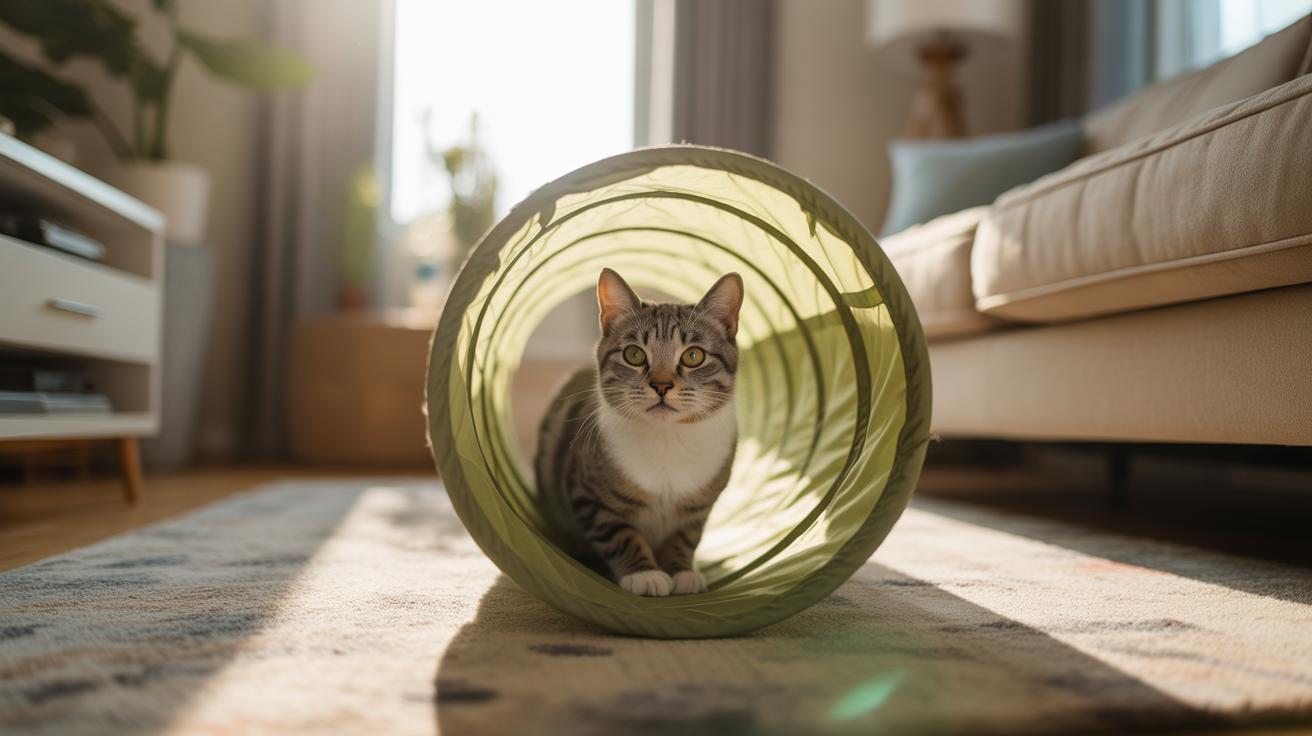
    - Choosing cat tunnels a quick buyer checklist (this section answers the main needs).jpg

    Match the tunnel to your space, your cat’s size, and how easy it is to wash. That’s the fastest way to pick a winner.

    Best For Model Key Feature
    Small apartments Ikea Lurvig Folds flat, 50.5 in long
    Multi-cat homes PAWZ Road Collapsible Tunnel Modular, connectable shapes
    Large breeds / seniors Kong Play Spaces Rave Cave 11.75 in diameter opening

    Quick checklist for what really matters

    • Diameter. Aim for 9 to 12 in for most cats. Use 11 to 12 in if you have a big breed or a senior who likes extra room. Think of diameter like the doorway your cat needs to feel comfy while still being able to run through.
    • Length. Single straight tunnels around 32 to 50 in give good run-and-pounce action. Shorter tunnels are fine for quick bursts. Longer runs let them build speed.
    • Material type. Look for polyester or plush or faux fur (faux fur is soft, like a fake-sheepskin lining) and check recycled options if that matters to you. Ikea says their Lurvig uses about 90% recycled materials.
    • Collapsible and storage. Pop-up frames or fold-flat designs save space. If you live in an apartment, this is a lifesaver for closet real estate.
    • Washable parts. Choose tunnels with machine-washable pads or removable covers. Always remove metal frames or electronics before washing.
    • Multi-cat compatibility. Y, S, or hub systems let you zip or clip pieces together so cats can take different routes or stage ambushes. Great for roommates with four paws.
    • Toy attachments and sensory extras. Dangling balls, catnip pockets, crinkle liners (crinkle liner is a noisy inner layer that makes an exciting rustle), and little glow bits or LEDs can add interest. Glow pieces usually last about 3 to 5 hours after a charge.
    • Anti-chew and tear resistance. Look for tear-resistant fabrics and sturdy frames if your cat likes to bite or wrestle. Heads-up: metal bits can sometimes poke through washers if you machine-wash the whole thing.
    • Ventilation and peepholes. Mesh ends or peek-holes give airflow and let your cat spy on you while hiding. Your cat’s whiskers will twitch when they spot a move through a tiny window.
    • Senior and kitten fit. Kittens like snug, cozy tunnels. Seniors prefer wider, plush, and quieter tunnels that are easy on their joints.
    • Price and warranty. Budget tunnels can be under $20, mid-range $25 to $60, and premium $60 plus. Check return policies and warranties so you’re not stuck with a dud.

    A few quick scenarios

    • Small apartment. Pick a collapsible 32 to 50 in straight tunnel or a fold-flat model to stash under the bed.
    • Multi-cat home. Go modular with Y, S, or hub systems that zip or clip together so everyone can play at once.
    • Large-breed or senior. Choose an 11 to 12 in diameter tunnel, or wider hubs and longer runs for easier access.

    Ever watched your kitty launch from the couch into a tunnel? It’s pure joy. Pick the right size, pick something washable, and you’ll get hours of safe, claw-tastic play.

    Best cat tunnels for indoor cats
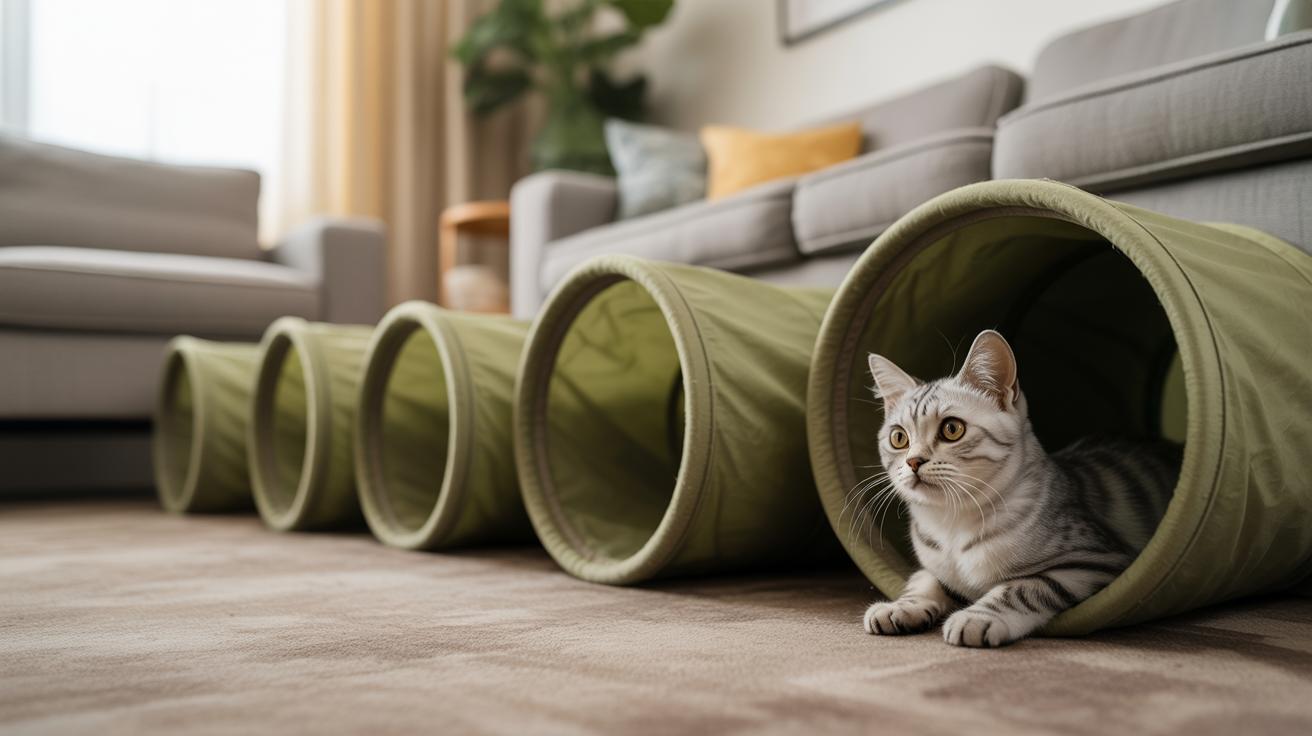
    - Best cat tunnels by design and budget (product comparison table  reference the checklist).jpg

    Think of this quick checklist as your map. The table below lines up with the 10-item checklist , diameter, length or footprint, material, best-for, and price , so you can scan fast and pick what matters most.

    Start by choosing the features you need first, like size and washable parts, then use the table to compare price and durability before you buy. Easy.

    Model Diameter (in) Length/Footprint Material Best for Price range
    Lesure 2-in-1 Cat Tunnel Bed Varies (bed / tunnel) Bed-style footprint (about the size of a standard cat bed) Plush exterior (soft fabric), crinkly interior (thin crackle film) Dual-use: nap and play $60–$120
    Kong Play Spaces Rave Cave 11.75 3.25 x 11.75 x 11.75 (overall) Plastic (rigid molded plastic) with crinkle floor and electronics (battery-powered moving parts) Large breeds or cats that need high stimulation $25–$60
    PAWZ Road Collapsible 3-Shape ~10.5 S ~46 x 10.5 x 10.5 Faux fur (soft synthetic fur) over steel frame (strong metal core) Multi-cat modular setups $25–$60
    SmartyKat Crackle Chute 9.5 35 x 9.5 x 9.5 Polyester (synthetic fabric) with PET (thin crinkle plastic) liner Budget sensory play and playful kittens $15–$30
    Catit Vesper C-shaped 11 26.8 x 38.2 x 11 Polyester (soft synthetic fabric) with padded bed insert Seniors or cats that like a cushioned rest $60–$120
    Pawaboo 5-Way Hub ~9.9 (hub) Hub plus arms (~15.7–20.8 inch arms) 190T polyester taffeta (light, smooth fabric), alloy steel frame (durable metal) Expansive multi-arm play circuits $25–$60

    If you have a solo kitten, compact crinkle-lined tunnels like the SmartyKat or Lesure are a win , they double as cozy snooze spots and noisy, chaseable lanes. Multi-cat homes do best with modular PAWZ or Pawaboo hubs so everyone can race, hide, and peek through little windows.

    Living in an apartment? Look for fold-flat or short-footprint tunnels, think Ikea Lurvig-style, so you can stash them when guests come over. Got a senior or a big-breed cat? Pick wider openings like the Catit Vesper or Kong-style caves so entering and exiting is easy and comfy.

    Match any table pick back to the 10-item checklist , diameter, washability, material, and so on , before you click buy so your new tunnel is claw-tastic and built to last.

    Worth every paw-print.

    Materials, features, cleaning & durability
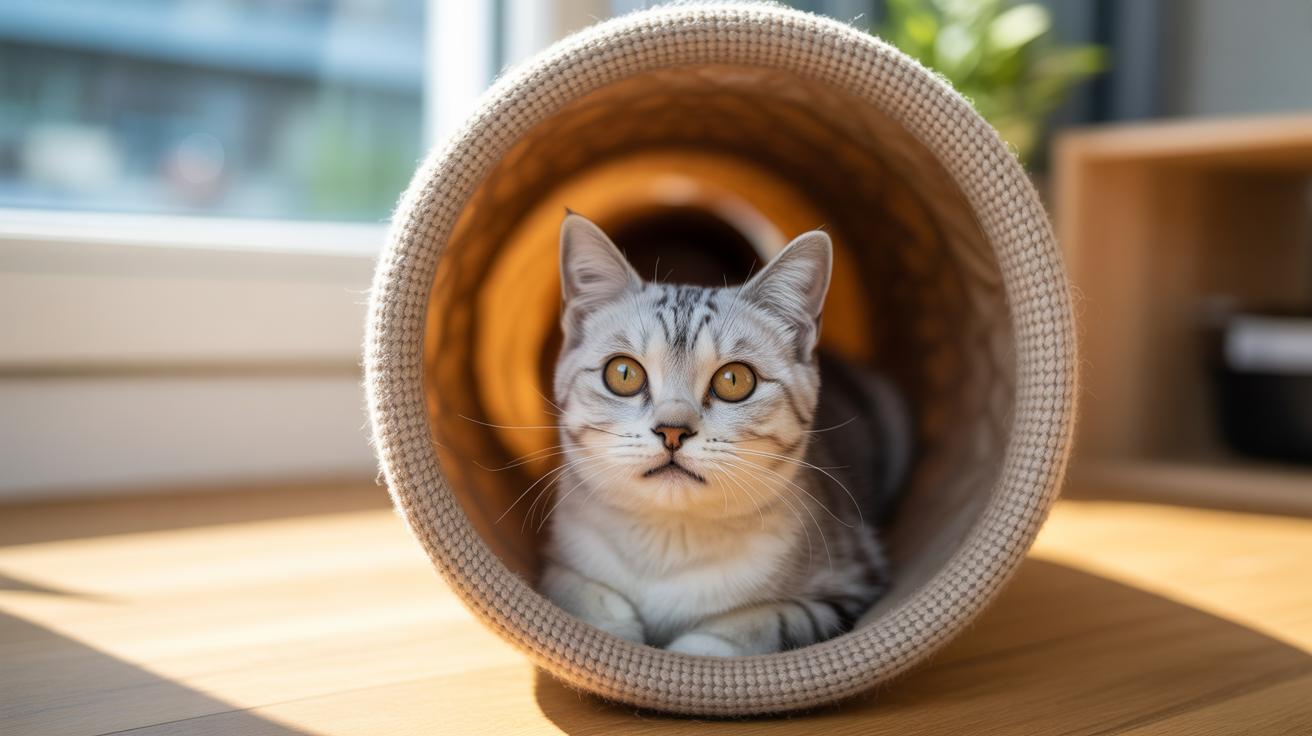
    - Materials, features, cleaning  durability.jpg

    Think about how your cat plays and how much laundry you want to deal with. A soft tunnel becomes a cozy nap spot; a tough one survives chewers and rough tumbles. I’ll walk you through common materials, fun extras that make cats purr, and a plain-language care plan so your tunnel lasts.

    Materials

    Most tunnels use polyester (a strong synthetic fabric) or polyester blends, like 190T polyester taffeta (a lightweight, tightly woven polyester that feels smooth). Some have faux fur (soft synthetic fur) or plush exteriors for snuggling. Others include PET liners (thin crinkly plastic that makes that irresistible rustle). Frames are usually steel (metal rods that hold the shape) or alloy steel (lighter metal rods). Watch out when washing: frames can poke through fabric if left inside. You’ll also find recycled polyester (made from reused plastic bottles) in eco-friendly models, and some brands offer tear-resistant textiles for heavy chewers.

    Trade-offs are simple. Soft fabrics win for naps and coziness. Tighter-weave polyesters win for cleaning and lasting through rough play. Which one you pick depends on whether you want your cat to nap or wrestle.

    Sensory & attachments

    Crinkle liners, glow-in-the-dark bits, dangling toys, and catnip pockets all add interest, but more parts means more things to remove before washing. Match extras to your cat’s personality and your cleanup patience. Ever watched your kitty freeze, whiskers forward, then pounce the moment a crinkle sound starts? That’s the joy right there.

    Some quick use-cases:

    • Collapsible storage , saves space, folds flat for small apartments.
    • Machine-washable liners , pulls hair and smells out fast; great for messy cats.
    • Crinkle/crackle sensory , adds sound and curiosity, perfect for playful kittens.
    • Built-in toys and catnip pockets , invites repeat visits from indoor kitties.
    • Heavy-duty, anti-chew construction , tougher seams and fabrics for chewers and multi-cat homes.

    Washing & safety

    Don’t toss a tunnel in the washer with metal frames, batteries, or glued toys still attached. Pop out frames, unzip or unclip padded inserts, and remove battery packs before any machine cycle. Spot-clean spills or drool weekly, and wash removable covers or pads every 4 to 8 weeks depending on use. After a long play session, air the tunnel the same day to cut down on damp smells and mildew.

    Safety checklist:

    1. Remove electronics and batteries before washing.
    2. Check frame ends for sharp points or broken wire before each use.
    3. Retire shredded or chewed toys and replace dangling bits.
    4. Dry fabric completely before storing to prevent mold.
    5. Supervise rough multi-cat play until you confirm zips, clips, and seams hold up.

    Worth every paw-print.

    Tunnel sizes: measurement guidance and quick planning table
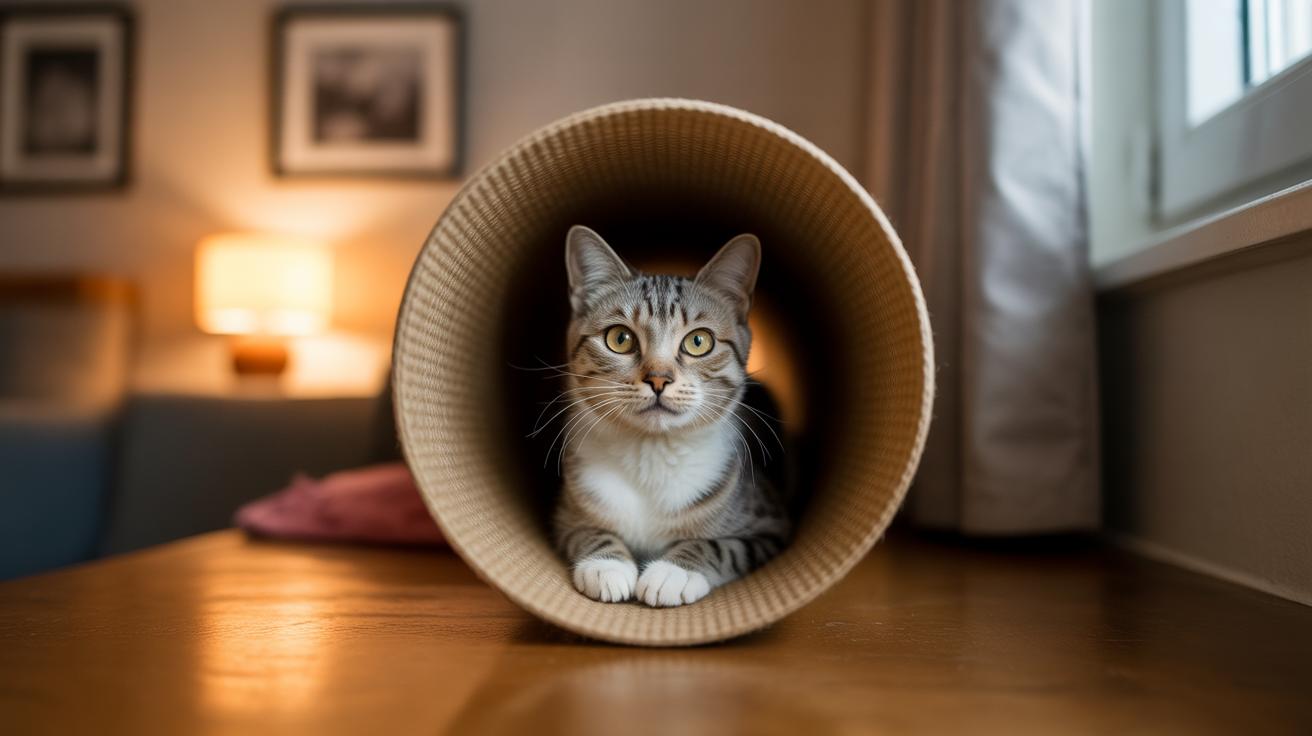
    - Tunnel sizes measurement guidance and quick planning table.jpg

    Pick a tunnel size that fits your cat’s shoulders and your floor plan so they can run, hide, and nap without feeling squeezed. Diameter (across the tunnel) and length matter more than you might think , your cat should be able to turn around and lie down comfortably. Ever watched your kitty poke their head out and freeze? That’s the magic moment you want to enable.

    Quick reference: Diameter 9–12 in; Length 32–50 in. For large breeds and seniors, aim for 11–12 in diameter or longer runs.

    Cat size / use Recommended diameter (in) Recommended length (in) Notes
    Average adult cat 9–11 32–40 Good for chasing, hiding, and naps
    Large breeds / seniors 11–12 40–50 Extra room helps comfort and easy turning
    Multi-cat play or long runs 9–12 50+ Connect multiple tunnels for longer routes

    Placement tips: tuck tunnels into corners. Try this: slide the tunnel into a corner and watch your cat set up an ambush. You’ll see whiskers twitch and that tiny crouch before the sprint.

    You can thread a tunnel through under-furniture gaps or line it up with a cat tree or bed so your cat has clear routes for stalking and a fast escape. For tight spaces, pick a fold-flat model (collapses flat for storage) with Velcro (hook-and-loop fastener) and arrange U-shapes to save floor area. I once looped a U-shape down a hallway and my cat treated it like a racetrack.

    Safety check: make sure the tunnel’s fabric and seams are sturdy, that there are no loose strings, and that entrances stay open so your cat won’t get stuck. It’s worth a quick look every few weeks.

    Short tip for busy days: toss a favorite toy into the tunnel before you head out , ten minutes of safe play while you’re gone. Worth every paw-print.

    Multi-cat and modular tunnel systems

    - Multi-cat and modular tunnel systems.jpg

    If you want a racetrack for more than one ambush artist, modular tunnels with Y, S, or hub pieces let kitties split up, chase, and regroup without bumping into each other. It’s like giving them their own tiny highways to zoom and hide on , perfect for multi-cat households who love a good sneak attack.

    Setting up a tunnel play circuit

    Start by sketching a rough map of the floor and measuring clearances so doors and walkways stay usable. Think about the PAWZ Road S/Y shapes (S is about 46 x 10.5 x 10.5 inches) or the Pawaboo 5‑Way hub (hub is about 9.9 inches across with arms roughly 15.7–20.8 inches) when you plan routes. A hub (the central connector where several tunnel arms meet) helps you create branching paths and hidey-holes.

    Connect sections, zip or clip pieces together, and make sure seams line up , misaligned zippers are the most common annoyance. Test the full layout with a short supervised session so you can spot popped clips, dangly toys that snag, or floppy sections that need extra support. Ever watched your cat pounce and a tunnel fold in half? Yep, that’s what you want to catch during setup.

    Quick setup checklist:

    • Plan the footprint and measure clearances before assembling.
    • Connect sections, align zippers or clips, and tuck fabric edges.
    • Run a supervised 10–15 minute trial play to watch for weak points.

    Anchoring and stability in multi-level homes

    If you have stairs or multi-level spaces, tunnels need extra grip so they don’t slide or pull on furniture. Use non-slip rug pads or rubber shelf liner (a grippy mat) under hubs and along long runs to add friction. Velcro strips or furniture clips (hook-and-loop fastener, aka Velcro, or small clamps) can anchor tunnel ends to a sofa leg or the base of a cat tree without drilling holes.

    Avoid heavy anchors or screwed brackets that might topple furniture if a curious cat gives a tug. I once had a tunnel scoot across the rug , not dramatic, but annoying , so adding a little grip made a big difference.

    Anchoring tips:

    • Use non-slip rug pads or rubber shelf liner under hubs and long runs.
    • Secure tunnel ends with Velcro/furniture clips to stable furniture.
    • Don’t use heavy screws or bolts that could damage furniture or fall.

    Retire frayed sections and stagger dangling toys so cats don’t tangle in one hotspot , safer play, more happy pounces.

    DIY and budget cat tunnel options

    - DIY and budget cat tunnel options.jpg

    Cardboard and recycled bits make amazing, low-cost tunnels your cat will happily patrol. Corrugated cardboard (sturdy paperboard with a wavy middle) crinkles in a way that seems to hypnotize kitties, and that little echo down the tube is oddly satisfying to both of you. Toss in a soft nap spot and you’ve got a hideaway that’s lightweight and replaceable.

    If you want the tunnel to hold its shape, use a pop-up hoop or flexible wire (think a floppy hula-hoop for cats) to keep openings from collapsing. For that crinkle-shop feel, line the inside with a thin PET-like sheet (PET: a plastic similar to the film on water bottles) to mimic commercial liners like the SmartyKat Crackle Chute. It adds texture and sound without costing much.

    Quick step-by-step plan:

    1. Measure a run that fits your space, about 32 to 50 inches long if you can, or shorter for tight rooms.
    2. Cut entry holes wide enough for your cat’s shoulders. Safety first: use a utility knife (sharp blade , cut away from your fingers) and go slow.
    3. Tape panels together with heavy-duty tape so seams stay put. Use fabric or glued seams where you want a softer interior.
    4. Line the floor with soft fabric (polyester fleece or plush) for naps, or a crinkle sheet for play. Add a few small peek-holes so your cat can spy out.
    5. Attach a short, securely fastened plush toy at one entrance to tempt play. Keep any string very short so it can’t tangle.

    Materials and tools:

    • Corrugated cardboard panels or large boxes (corrugated: strong, layered paperboard)
    • Utility knife (sharp blade, cut away from fingers)
    • Heavy-duty tape (duct tape or packing tape; sticks well)
    • Fabric liner (polyester fleece or soft plush)
    • Pop-up hoop or flexible wire (optional, for framed shape)
    • Non-toxic glue (pet-safe glue for fabric seams)
    • Securely attached dangling plush toy (short string only)

    Assembly time is about 30 to 90 minutes for a simple cardboard tunnel. Keep strings short and small parts glued or sewn so nothing can come loose and be swallowed. Worth every paw-print.

    Oh, and a tiny confession: my Luna once lunged so hard the tunnel squeaked like a toy and then dozed in it for an hour. Classic.

    Special populations: kittens, seniors, and shy/rescue cats
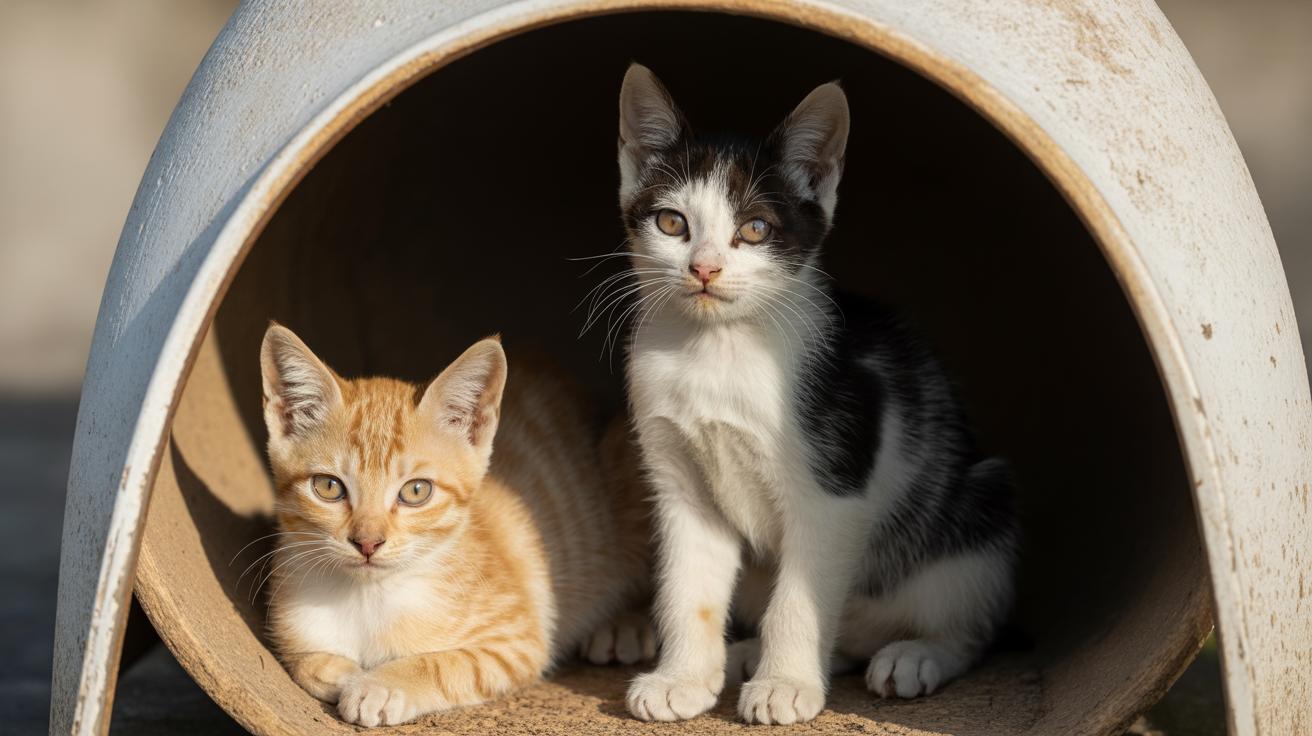
    - Special populations kittens, seniors, and shyrescue cats.jpg

    Pick a tunnel that fits your cat’s age and personality so play feels safe, not scary. Size, noise level, and how you introduce the tunnel matter most. Ever watched a cat freeze at a noisy tube? Make it inviting and go slow.

    Kittens

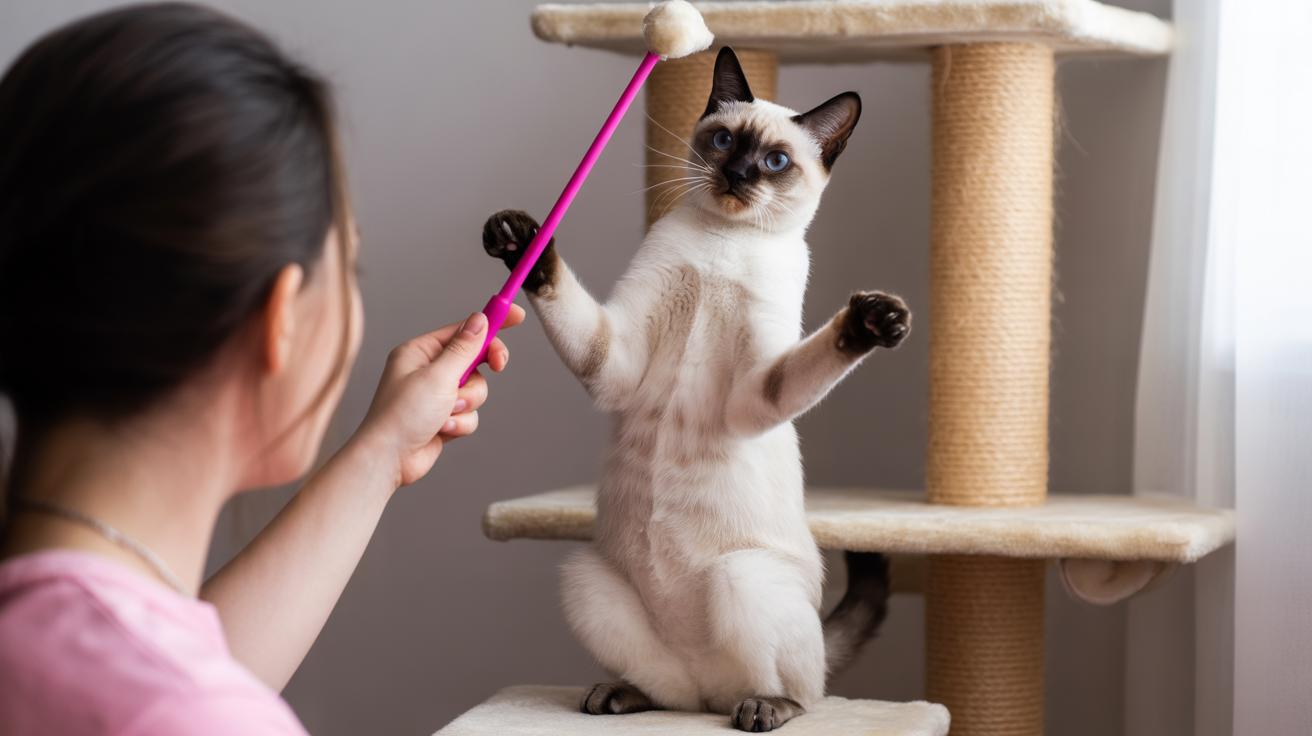
    Kittens learn social play in short bursts. Aim for 5 to 10 minute supervised sessions using a wand toy (a stick with feathers or a toy on a string) at the entrance to teach stalking and quick exits. Use a soft tunnel with a mild crinkle liner (thin, crackly fabric) or no liner at first so they build confidence. As they get bolder, gently lengthen playtime and let those whiskers twitch.

    Seniors

    Older cats want roomy, quiet comfort. Choose tunnels with 11 to 12 inch entrances (inches) so turning and stretching is easy. Pick plush-lined tunnels (plush: soft synthetic nap) with low profiles or shallow ramps for gentle access. Add a machine-washable padded insert (removable cushion you can wash) and quiet materials to spare creaky joints. Warm blankets are a nice touch for nap time.

    Shy / Rescue Cats

    Introduce timid cats in tiny steps. Put the tunnel in a calm spot and leave it empty so they can sniff and explore at their own pace. Remove noisy crinkle liners at first, then place treats just inside the opening and reward short, calm visits of 3 to 5 minutes. When the tube feels safe, slowly add gentle extras like a dangling toy or a faint crinkle sound. Patience wins here. Worth every paw-print.

    Where to buy: price ranges, warranties, and return tips

    - Where to buy price ranges, warranties, and return tips.jpg

    Price map: budget collapsible tunnels (fold-flat play tubes) run under $20. Mid-range multi-function tunnels (tunnels with pockets, peek-holes, or attached toys) usually land between $25 and $60. Premium modular systems (pieces you snap together to build different layouts) and 2-in-1 beds (sleep spot plus play tunnel) sit around $60 to $120. Lower-priced models can wear out sooner, and return policies or warranties vary a lot, so read the fine print. Shopping online gives you a bigger selection and recent customer ratings. Shopping local lets you feel the fabric, check seams, and test collapsibility in person.

    Think about how your cat will use it and how you’ll clean it. Washable pads (machine-safe liners) and removable frames (detachable supports) save time. Electronics (battery-operated rattles or lights) and glued toys (toys attached with glue instead of stitching) need extra care and usually can’t be tossed in the washer. For busy days, toss an unbreakable ball before you head out, that’s ten minutes of safe play.

    Document everything so a dud doesn’t become a permanent floor ornament. Take close-up photos of defects. Save receipts and packaging when possible. Prefer sellers with clear return windows and warranties so you can swap it out if it falls apart or your cat immediately claims it as a chew toy.

    • Inspect frame and fabric in person or via close-up photos , look for poking wires (thin metal supports) or weak seams
    • Check washable labels and whether inserts or frames are removable before laundering
    • Confirm the return window and warranty terms, and keep packaging and your receipt
    • Read recent customer reviews and ratings for durability and real-world wear

    If you’re unsure, buy the most returnable option first. Worth every paw-print.

    Final Words

    In the action, this guide gave you a one-minute checklist to match tunnel size, diameter and washable durability; a compact product comparison, materials and cleaning tips, size planning, modular setup help, DIY options, and quick advice for kittens, seniors, and shy cats.

    Pick a tunnel with the right diameter and washable parts, fit it to your floor plan, and follow the short washing and safety checklist.

    Happy pouncing. Cat tunnels for indoor cats will keep play lively and furniture safer.

    FAQ

    Frequently Asked Questions

    Are cat tunnels good for cats?

    Cat tunnels are great enrichment for cats because they offer hiding, stalking, and solo play, reducing boredom and boosting activity; pick the right diameter and texture for your cat’s size and energy.

    What is an alternative to a cat tunnel?

    An alternative to a cat tunnel is a cat tree (vertical climbing platform) or a cardboard box maze; wand toys and puzzle feeders also mimic hunting and provide mental and physical play.

    Can you turn indoor cats into outdoor cats?

    Turning indoor cats into outdoor cats is risky; a safer option is supervised leash walks or a catio (outdoor enclosure) that gives fresh-air time while protecting them from traffic, predators, and disease.

    How to make a cat tunnel at home?

    To make a cat tunnel at home, join corrugated cardboard panels or large boxes, cut entry holes, reinforce seams with heavy-duty tape, add a fabric liner (polyester, a durable synthetic) and a short sewn-on plush toy.

    Where can I buy cat tunnels?

    You can buy cat tunnels at major retailers like Walmart and Amazon, pet specialty stores, or local shops; online listings show measurements, washable labels, and customer reviews to help comparison before buying.

    Can cat tunnels be used outdoors?

    Cat tunnels can be used outdoors when made from weather-resistant fabrics like polyester (a waterproof-friendly synthetic) and anchored; remove battery modules and bring tunnels indoors after rain to prevent mold and wear.
    Related Articles

  • Calico Cat Facts: Genetics, Gender, Care

    Calico Cat Facts: Genetics, Gender, Care

    Almost every calico you meet will be female. Male calicos are rare, about 1 in 3,000, and when they do show up it’s usually because they have extra sex chromosomes (like XXY, an extra X) or they’re chimeras (two different cell lines in one body). Ever seen one? They feel like a tiny miracle.

    Calico isn’t a breed. It’s a tri-colored coat: white plus black and orange, and when the colors are softer you’ll hear people call them dilute (dilute means the pigments are paler). That patchwork look comes from X chromosome inactivation (each cell randomly switches off one X chromosome, so different patches express different colors). The result is like someone gave your cat a tiny, one-of-a-kind painting. So pretty.

    So why the rare males? Two main reasons. One: an extra sex chromosome, XXY (which often means the male is sterile). Two: chimerism (when two embryos fused early on, leaving mixed cell lines). Think of it like a biological collage, two color patterns living in one kitty.

    Quick care tips so your calico stays happy and healthy. Grooming: brush regularly to cut down shedding and hairballs, short-haired cats once a week, long-haired a few times a week. Diet: feed a balanced food and watch weight; treats are fine, but don’t overdo them. Play: interactive toys and teaser wands (like a fishing rod for cats) give great exercise and mental fun, your cat’s whiskers will twitch, and you’ll get the best camera shots. For busy days, toss an unbreakable ball before you head out for ten minutes of safe play.

    I’ll break down the genetics, walk through those rare male cases, and share simple grooming, diet, and play tips so your calico stays healthy and you can keep watching those whiskers twitch. Worth every paw-print.

    Tri-Color Coat Quick Facts (Lede)

    - Tri-Color Coat Quick Facts (Lede).jpg

    Calico means a tri-colored coat: white plus black and orange, and sometimes the colors are lighter like cream and blue in dilute cats (dilute = a softer, paler version of the color). It’s a coat pattern, not a breed, so you’ll see it across many purebreds and mixed cats. Picture little painted patches that land differently on every cat.

    Calico coats turn up a lot in shelters and rescues, so don’t assume a calico’s breed by the pattern alone. If you’re adopting, check the Care & Adoption section for breed-specific tips and what to expect.

    Almost all calicos are female, about 99.9%, because the color pattern comes from genes on the X chromosome (X-linked = the gene lives on the X chromosome). The patchwork look happens when one X gets randomly switched off during development (X-inactivation, also called a Barr body, means one X is put to sleep in each cell). It’s like nature’s little mosaic trick.

    Male calicos are very rare, roughly 1 in 3,000. When they do appear they often have extra sex chromosomes (XXY or XXX, meaning an extra X) or are chimeras (two embryos that merged early on and made one cat). These males are usually sterile and may need a vet check for related health issues, so keep an eye on them.

    Health and lifespan notes: calicos typically live around 15 years with normal care. For details on routine care, common health checks, and the male-specific caveats, see Health & Lifespan. Simple preventative care goes a long way.

    Care basics: grooming, diet, and activity needs follow the cat’s coat length and breed, not the calico pattern. Long-haired calicos need more brushing. Short-haired ones are lower maintenance. Enrichment matters, toss a crinkly ball or dangle a teaser wand (think fishing rod for cats) and watch those whiskers twitch. For practical daily tips, check Care & Adoption.

    Worth every paw-print.

    Calico Genetics: X Chromosome Inactivation, Sex Ratios, and Pattern Mechanics

    - Calico Genetics X Chromosome Inactivation, Sex Ratios, and Pattern Mechanics.jpg

    Calico coats happen when two genetic pieces team up: an orange/non-orange switch on the X chromosome and separate white-spotting genes that leave blank patches of fur. The orange switch is the O gene (the gene that tells a hair to make orange pigment or not). Pigment comes in two main types: eumelanin (dark or black pigment) and pheomelanin (red or orange pigment). Random X-inactivation, also called the Barr body effect (where one X chromosome is turned off in each cell), decides which color allele shows up in each patch. The white-spotting genes control where pigment-making cells settle on the skin, so they create the white gaps. Put it together and you get a one-of-a-kind patchwork. Ever notice no two calicos look the same? Yep.

    Why mostly female

    The orange/non-orange switch sits on the X chromosome. A cat with two Xs (XX) can carry both an orange allele and a non-orange allele at that spot, and early in development one X gets randomly turned off in each cell. That makes neighboring patches show different alleles, which gives the coat that patchy look. Males usually have only one X (XY), so they rarely carry both allele types. That’s why almost all calicos are female , about 99.9 percent. For breeders, this means calico patterning is not something you can easily select for like a simple dominant or recessive trait.

    How male calicos occur

    Male calicos happen when the usual sex-chromosome setup is unusual. If a male has an extra X (XXY, sometimes XXX), he can carry both orange and non-orange alleles and then show tri-color patches after X-inactivation, this is similar to Klinefelter’s in people. Another way is chimerism, when two embryos fuse early on and create an individual with two different cell lines. These males are rare, roughly 1 in 3,000 calicos. XXY males are often sterile and may have higher risks for some medical issues, so a vet check is a smart move if you meet one.

    Mosaicism vs chimerism

    Mosaicism comes from a single embryo where cells diverge genetically through things like X-inactivation or somatic mutation (a change in some body cells). This is the usual cause of calico patterns in females and generally doesn’t affect fertility because it’s part of normal development. Chimerism happens when two embryos merge early on, producing an individual with two distinct cell populations; a chimera male might carry both male and female cell lines and could be fertile depending on which gonadal tissue developed. If you want to know what’s going on, genetic testing like karyotyping (a chromosome test) or specialized DNA tests, plus a chat with your veterinarian or a geneticist, can confirm whether an atypical calico is XXY, a chimera, or another mosaic type and help guide any needed health follow-up.

    Calico Coat Patterns: Variants, Dilutes, Torbie and Caliby

    - Calico Coat Patterns Variants, Dilutes, Torbie and Caliby.jpg

    Calico cats show up in a few playful styles, and they all look like tiny watercolor paintings on fur. You’ll see bold white patches with clear black and orange, softer cream and blue mixes, mixed-up tortoiseshell blends, tabby stripes peeking through, or a full-on mashup of patches and stripes. Cute, right?

    The main names you’ll hear are standard calico, dilute calico, tortoiseshell-and-white, torbie, and caliby. Dilute means a gene that lightens pigment (it turns orange to cream and black to blue-gray). Tabby means striped or swirled markings. Caliby is just a calico with tabby striping inside the colored areas. Each pattern has its own vibe, from high-contrast drama to soft, muted tones.

    Genes explain most of what you see. The dilute gene reduces pigment density so colors look paler. White-spotting genes control where melanocytes (pigment-making cells) land on the skin, which makes those clear white gaps. Tabby pattern genes sit under the colors and can peek through as stripes or swirls, turning a regular calico into a torbie or caliby. Think of pigment like paint on a canvas, and genes decide how much paint gets laid down.

    Quick, practical tips: dilute calicos look softer and paler than standard ones. Torbies show clear striping inside the colored patches. Tortoiseshell-and-white usually has less white and more blended color. Names can change by region, so you might hear different labels outside North America. If you’re telling a vet or a rescue about your cat, using words like “dilute,” “torbie,” or “caliby” gives a much clearer picture.

    Worth every paw-print.

    Pattern Description Common names
    Standard calico Bold white patches with solid black and orange Calico, tricolor
    Dilute calico Orange becomes cream and black becomes blue-gray (paler palette) Dilute calico, blue-cream calico
    Tortoiseshell-and-white Blended black and orange with some white; more mottled look Tortie-and-white
    Torbie Tortoiseshell colors that show tabby striping inside patches Tortie-tabby, torbie
    Caliby Calico patching combined with visible tabby markings Caliby, tabby-calico

    Calico vs Tortoiseshell: Identification Tips and Regional Terminology

    - Calico vs Tortoiseshell Identification Tips and Regional Terminology.jpg

    Identification tips

    One-line rule of thumb – "If noticeable white breaks the coat into separate black-and-orange patches, it's a calico; if the black and orange are mostly blended with little or no white, it's a tortoiseshell."

    Think of it like paint on a canvas. If you see big, separate white areas with clear black and orange patches, that’s a calico. If the colors are all smooshed together and there’s little white, that’s a tortie. Ever misread a cat from across the room? Yep, me too, oops, let me rephrase that, I still do it.

    • Amount of white: lots of white usually means calico; little or none usually means tortoiseshell.
    • Patch edges: sharp, well-defined patches point to calico; soft, marbled edges point to tortie.
    • Tabby striping: visible stripes inside the colored areas means torbie or caliby (tabby striping is the striped pattern you see on some cats).
    • Dilute colors: muted shades like cream or blue-gray (dilute colors are softer versions of orange and black) can hide contrasts and confuse identification.
    • Regional terms: watch for local names like "tortie-and-white", people sometimes swap labels by region or habit.
    Pattern Typical look ID cues
    Calico Large, separate white patches with clear black and orange blocks High amount of white; sharp patch edges; distinct color blocks
    Tortoiseshell (tortie) Mottled, intermingled black and orange with little or no white Low or no white; blended, marbled colors; can be confused by dilute colors (cream and blue-gray)
    Torbie / Caliby Mix of tortie coloring with visible tabby striping Tabby striping inside colored areas (striped pattern) plus mottling
    Dilute variants Softened colors (cream and blue-gray) that reduce contrast Dilute colors can hide the calico vs tortie distinction; look closely for subtle patches or stripes

    Breeds That Commonly Show Calico Patterns

    - Breeds That Commonly Show Calico Patterns.jpg

    Calico coloring shows up in lots of different breeds because it comes from color genes (tiny instructions in DNA), not from a breed itself. That means you can find calicos in shelters and fancy pedigrees alike, the same patchwork rule but on different body shapes and coat lengths. Ever seen that spilled-paint look on a long, fluffy tail? Cute, right.

    • Domestic Shorthair / Domestic Longhair , super common; mixed-breed cats and shelter rescues often wear calico coats, in short or long fur.
    • Japanese Bobtail , a classic calico in Japan, where the tri-color look is part of its charm and cultural image.
    • Persian , longhaired calicos pop up often; show classes may even ask for specific white placement on face, chest, and feet.
    • Maine Coon , big, rugged cats with tufted ears that often show bold calico patches on a large frame.
    • Norwegian Forest , thick, water-shedding coat (great for cold weather) where calico patterns can look extra dramatic in winter fur.
    • Turkish Van / Turkish Angora , mostly white breeds that sometimes carry striking colored patches.
    • British Shorthair , stocky, plush-coated cats that turn up in calico colorations.
    • Cornish Rex , sleek, curly-coated bodies that occasionally sport tri-color patterns.
    • Devon Rex , another curly breed, usually lithe and playful, where calico coloring can appear.

    Calico is usually linked to the X-chromosome (the female sex chromosome) because of X-chromosome inactivation (when one of the two X chromosomes in females gets switched off in different cells), so most calicos are female. If you’re thinking about showing a calico, check the breed’s registry rules for color placement first, since standards can vary by organization and breed. Worth every paw-print.

    Health & Lifespan: General Expectations and Male-Specific Risks

    - Health  Lifespan General Expectations and Male-Specific Risks.jpg

    Calico cats often live into their mid-teens, around 15 years on average. That number can go up or down depending on breed, whether they live indoors or outdoors, diet, and regular vet care. Good food, parasite control, and a daily play session – even a quick wand game – usually add healthy years. Short-haired and long-haired calicos follow the life expectancy of their breed, so check breed notes if you want a closer estimate.

    The tri-color coat itself does not cause illness in female calicos. Their colors come from X-linked pigment genes (genes on the X chromosome) and white-spotting genes (genes that make patches of white), not from a disease gene. So most health risks for female calicos come from breed traits and lifestyle – things like dental disease, overeating and obesity, and common age-related problems.

    Male calicos are rare, roughly 1 in 3,000, and many have atypical sex chromosomes or a different karyotype (the pattern of chromosomes in a cell). A common pattern is XXY, similar to Klinefelter’s in humans (an extra X chromosome). These males are often sterile and may be more prone to metabolic or developmental issues, such as lower bone mineral content (a measure of bone density) and a tendency toward obesity, plus possible learning or behavioral differences. Chimeric males can happen too – that’s when two embryos fuse early in development – and whether they can reproduce depends on which reproductive tissues formed.

    Routine monitoring keeps most problems small and treatable. Think of it as simple, steady care that pays off with more happy purrs and fewer emergency vet runs.

    • Annual or twice-yearly vet exams for life-stage checks and early problem catching.
    • Watch weight and body condition; aim for lean muscle, not fluff.
    • Regular dental care, like at-home brushing or professional cleanings, to avoid gum and tooth trouble.
    • Keep vaccinations and parasite prevention up to date, as your vet recommends.
    • Ask about genetic testing or a specialist referral if you have a male tri-color cat or if something unusual appears.

    If your vet suspects an atypical karyotype (a chromosome pattern that differs from the usual), ask about chromosome testing and a tailored health plan – endocrine checks and bone assessments can be useful. A little extra monitoring for rare males usually means a calmer, longer life for your cat. Worth every paw-print.

    Care & Adoption: Grooming, Nutrition, Enrichment, Naming and Shelter Tips

    - Care  Adoption Grooming, Nutrition, Enrichment, Naming and Shelter Tips.jpg

    Calico care depends more on the cat’s coat length and breed than the patchy pattern. Regular vet checkups, up-to-date vaccines, dental care, and a balanced diet your vet recommends keep most calicos healthy and happy. Daily play and brain games stop boredom and help control weight , huge for longer lives and fewer trips to the vet. Ever watched your kitty chase a stray sunbeam? Pure joy.

    Grooming routines change with fur type. Shorthaired calicos usually need a quick once-weekly brush and some deshedding during heavy shed. Longhaired kitties want steady brushing to prevent mats. Useful tools: a slicker brush (fine wire bristles that lift loose hair), a deshedding tool (a comb that pulls loose fur), and a wide-tooth comb for tangles. Trim sanitary fur when needed and check skin for bumps or hidden mats after brushing.

    Task Shorthaired Longhaired
    Brushing frequency Once weekly Daily to every other day
    Deshedding tool use Monthly during shedding seasons Weekly during heavy shed
    Bathing frequency Rare – as needed Every 6-8 weeks if coat gets greasy or matted
    Mat prevention Brush trouble spots weekly Daily grooming, prompt detangling

    Grooming longhaired calicos

    Daily brushing keeps that tri-color coat glossy and stops mats before they start. Work in small sections, hold the skin gently to avoid tugging, and use a detangling comb for stubborn knots. A dematting tool (a small blade or comb used to safely cut through tight mats) can help, but if a mat is tight or close to skin, let a pro groomer handle it , safer all around. Sanitary trims keep fur clean after meals and litter, and your cat will feel better too.

    Food and health basics: choose a complete cat food for your cat’s life stage and body condition, and follow your vet’s calorie advice to avoid weight gain. Keep teeth healthy with home brushing or professional cleanings, and stick to a parasite and vaccine plan. Enrichment matters: short daily wand sessions, puzzle feeders (treat-dispensing toys), and vertical spots like shelves or a tall cat tree keep kitties lean, curious, and calm. Spay or neuter unless you plan responsible breeding, and microchip for safety , worth the peace of mind.

    Shelter and adoption tips, plus naming and photo pointers: calicos show up often in rescues, usually for modest adoption fees; pedigreed or show-quality cats cost more. Ask the rescue for medical records, spay/neuter status, and behavior notes before you bring a cat home. For photos, use natural light so the color patches look true, groom a little so the colors pop, and take side-angle shots to show the tri-color pattern. Try a few names and see what fits your new pal , some of these tend to match calico charm.

    • Callie
    • Patches
    • Cleopatra
    • Snickers
    • Amaretto
    • Camo
    • Oriole
    • Picasso
    • Spice
    • Mottle

    Worth every paw-print.

    Myths, Folklore, and Cultural Calico Facts

    - Myths, Folklore, and Cultural Calico Facts.jpg

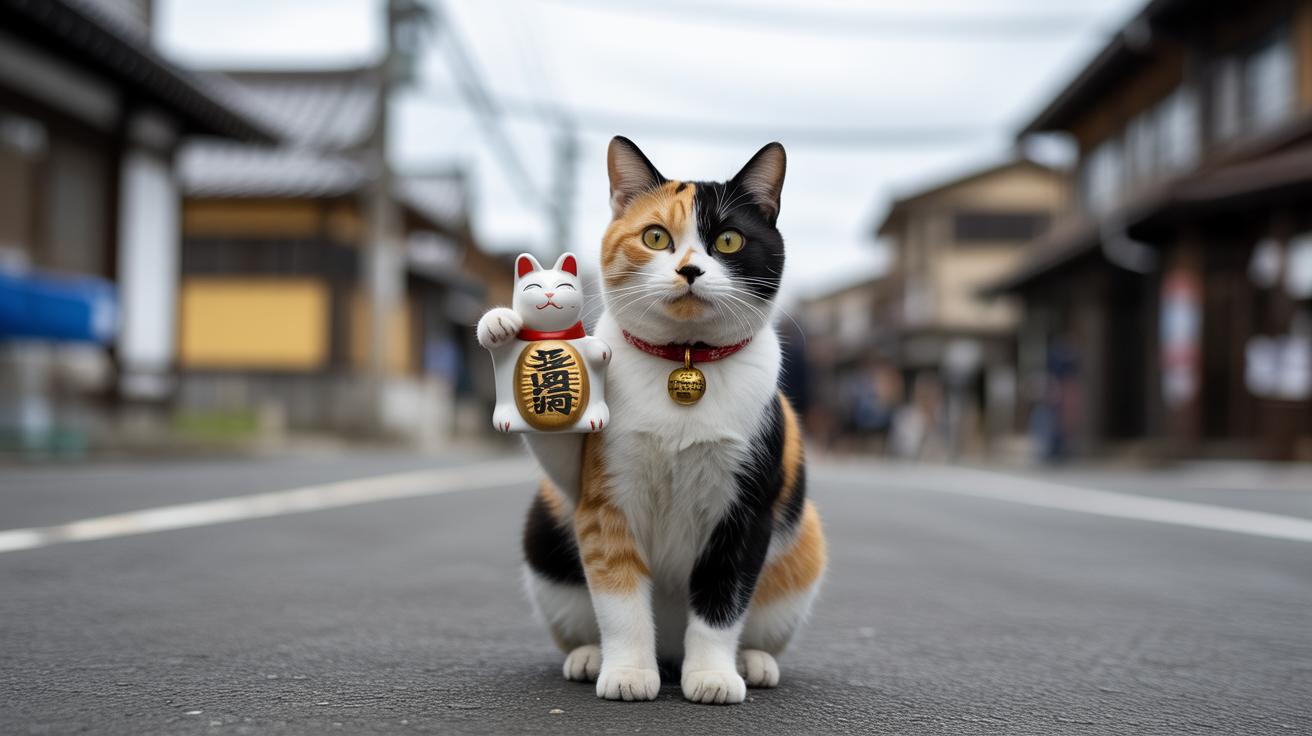
    Folklore treats calico cats as lucky, and you see that everywhere. The Maneki Neko (the Japanese beckoning cat figurine) is often shown as a calico, and Japanese fans call tri-color cats mi-ke (mi-ke means "three fur"). Sailors used to keep calicos on ships for good luck. In the U.S., people picked up nicknames like "money cat" for the same reason. Cute superstitions, right? But these are cultural stories, not science.

    Real calicos have made real headlines. Tama became station master at Kishi Station in 2007 and brought about 1.1 billion yen worth of publicity before she died in 2015. In July 2018 a calico named Sweet Tart won a symbolic mayoral vote in Omena, Michigan, those $1 votes raised over $7,000 for the historical society. And Maryland officially named the calico its state cat in 2001, since the colors echo local symbols. Fun, heartwarming stuff.

    That said, myths like calicos having special healing powers or a fixed personality aren’t backed by biology. Coat color is charming. It’s not causal. Still, who doesn’t smile when a lucky-looking cat pads up to the porch, whiskers twitching and tail high? Worth every paw-print.

    FAQ: Concise Pointers to the Canonical Sections

    - FAQ Concise Pointers to the Canonical Sections.jpg

    Quick, scannable answers to point you straight to the full pages on calico facts and care , no big data repeats here. Use these one-line pointers to jump to the deep dives.

    • Is calico a breed? → See Calico Genetics and Breeds That Commonly Show Calico Patterns for the coat-versus-breed explanation. It’s mostly about pattern, not breed.
    • Are calicos always female? → See Calico Genetics ("Why mostly female") for the X-linked (on the X chromosome) explanation and sex-ratio (male-to-female counts) notes. Short and science-y.
    • How rare are male calicos? → See Calico Genetics ("How male calicos occur") for incidence (how often it happens), causes, and any health implications. Yes, they’re uncommon.
    • Do calicos have special health problems? → See Health & Lifespan for female versus male distinctions and monitoring tips. A few differences matter, so keep an eye on your kitty.
    • What is the average lifespan? → See Health & Lifespan for the typical lifespan estimate, breed caveats, and care influences. Plenty of variables there.
    • How do I groom a calico? → See Care & Adoption (grooming table and Grooming longhaired calicos) for brushing schedules, tools, and mat prevention. Think simple routines that fit busy days.
    • Calico vs tortoiseshell , how to tell? → See Calico vs Tortoiseshell for the quick visual checklist and regional naming notes. They look similar, but the pattern rules change the name.
    • Can I breed for a calico coat? → See Calico Genetics for inheritance (how the trait is passed) limits and why breeding for the pattern isn’t reliable. Don’t expect consistent results – and ethical concerns exist.

    Final Words

    Jumping into the action, this post gave the clean calico answer, explained X-linked genetics (color genes on the X chromosome), showed pattern variants, and shared care, health, and adoption tips.

    You can now tell calico from tortoiseshell, spot dilute colors, and know when rare male calicos may need extra vet checks.

    If you’re short on time, skim the quick facts and FAQ, they're built for busy multi-cat homes who want lasting toys, smart grooming, and confident care, and calico cat facts help you keep those patchwork pals happy and playful. Worth every paw-print.

    FAQ

    Calico cat FAQs

    What is the personality of a female calico cat? Are they friendly and cuddly?

    The personality of a female calico cat is not set by coat color; calico is a pattern. Temperament follows breed and individual history. Many owners report a spirited “calico attitude,” and friendliness varies by cat.

    How common are calico cats, and how rare is a female calico cat?

    Calico describes a tri-colored coat. About 99.9% of calicos are female, so female calicos are common among calico cats; male calicos remain very rare.

    What is special about a calico cat? (kid-friendly facts)

    Calico cats have a tri-colored coat (white plus black and orange). Each pattern is unique. Calico is a coat pattern, not a breed. The color pattern is linked to X chromosomes.

    Why are calico cats only female?

    Calicos are mostly female because the orange/non-orange color genes are X-linked. X-inactivation (random silencing of one X chromosome) in XX cats produces the patchwork of different colors.

    Are calico cats autistic?

    Calico cats are not autistic. There is no scientific link between coat color and autism, and human autism is not a diagnosis applied to cats. A cat’s behavior comes from genetics, environment, and socialization.

    How rare are male calico cats and why might they cost more?

    Male calicos occur at about 1-in-3,000 and often have an extra X chromosome (XXY) or are chimeras (fusion of two embryos). Their rarity and possible medical or testing needs can raise adoption or breeder prices.

    What are common problems with calico cats?

    Health issues for calicos are the same as for other cats. Female calicos have no color-linked diseases. Male XXY calicos may face sterility and some metabolic or developmental risks, so regular vet monitoring is wise.

    Related Articles

  • Causes of Blood in Cat Urine

    Causes of Blood in Cat Urine

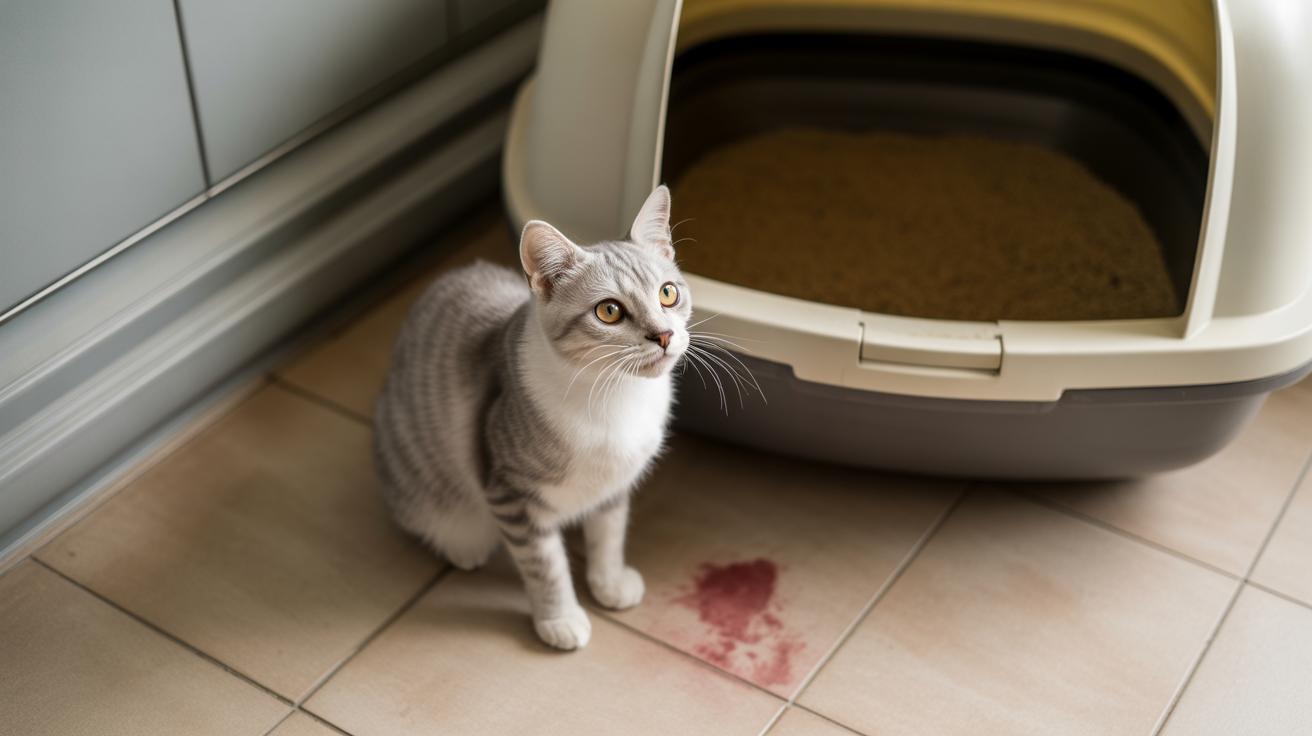
    See blood in the litter box? Don’t shrug it off. That pink puddle can mean something as simple as a urinary tract infection (UTI) or as dangerous as a urethral obstruction (a plug or blockage in the tube that carries urine out), so it deserves a quick check.

    Common causes include urinary tract infection (UTI) , germs that bug the bladder , bladder stones (hard mineral lumps that irritate or block the bladder), cystitis (bladder inflammation), and clotting disorders (when blood doesn’t clot properly). Tiny crystals (small mineral bits that can form stones) can show up too and start trouble. Each one feels different to your kitty, but they all can make peeing painful or bloody.

    Watch for emergency signs like straining in the box, repeated short trips with little or no pee, loud crying while trying to pee, a hard or swollen belly, vomiting, or sudden weakness. If your cat is struggling and producing almost no urine, go to a vet right away , this can become life-threatening in a matter of hours. Ever watched a cat try and fail to pee? Heartbreaking.

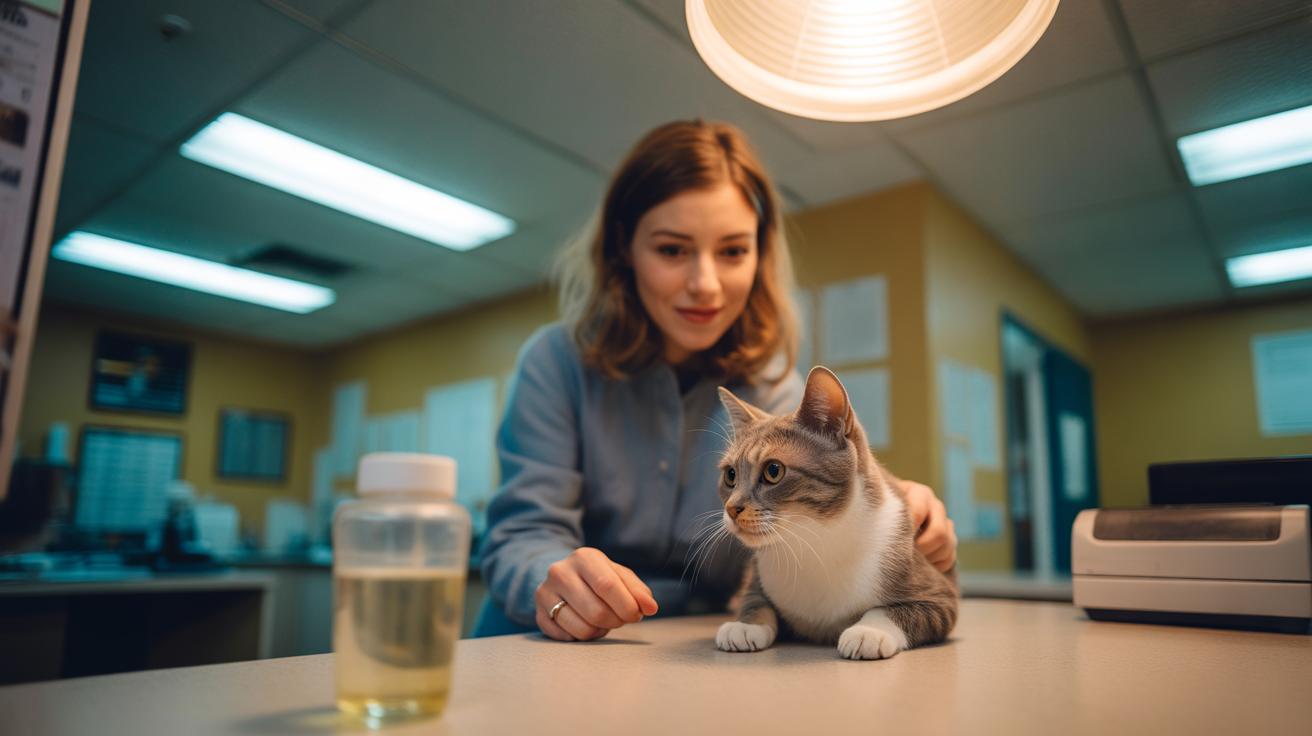
    Basic tests your vet might run include urinalysis (a urine test that checks for blood, crystals, and bacteria) and sometimes bloodwork to look at kidney function. Quick first-aid at home: stay calm, keep your cat warm, offer fresh water, and try to collect a small urine sample if you can (a clean shallow container or a plastic bag on the litter works in a pinch). Don’t try to squeeze the bladder or give human meds, okay? Pack the cat carrier and see your vet if you notice any worrying signs.

    You’ll feel better getting it looked at , and your cat will too. Worth every paw-print.

    Rapid answers for blood in your cat's urine: why it happens, how serious it is, and what to do now

    - Rapid answers for blood in your cats urine why it happens, how serious it is, and what to do now.jpg

    If your cat is straining with little or no urine, go to an emergency clinic now.

    • Keep your cat safe and stay calm. Close them in a quiet room so they don’t panic.
    • Watch to see if they are straining and whether any urine comes out.
    • If you can, collect a urine sample or snap a photo of the urine or soiled litter , that can help the vet.
    • Don’t give antibiotics or other meds at home, and keep your cat away from possible toxins.
    • Call your regular clinic or an emergency clinic and head there right away if you think there might be a blockage.

    Watch for these emergency signs:

    1. Straining with little or no urine.
    2. Repeated vomiting.
    3. Collapse or not responding.
    4. Open-mouth breathing or trouble breathing.
    5. Extreme sleepiness or not waking up.
    6. A hard, swollen, or painful belly.

    A urethral obstruction (a plug or blockage in the tube that carries urine out) can get dangerous fast. If it’s not treated, your cat can get kidney failure, a life-threatening electrolyte imbalance (too much potassium), or the bladder could rupture within 48 to 72 hours. If you suspect a blockage, getting to an emergency vet quickly is critical.

    Do not try to put in a catheter at home , you can hurt the urethra or push the plug in further. Don’t give antibiotics without a vet’s advice; the wrong drug can hide signs or harm the kidneys. Bring a fresh urine sample or clear photos of urine color or soiled litter if you can, plus any recent medicines and a short history of the signs you’ve seen.

    For full diagnostic-test descriptions and the official clinic test table, see the "How vets confirm hematuria" section, which outlines urinalysis (checking urine for blood, crystals, infection), culture (growing bacteria to identify infection), bloodwork (checking organ function and electrolytes), and imaging (x-rays or ultrasound) that vets use to find the cause of blood in a cat’s urine.

    Ever watched your kitty’s whiskers twitch while they try to go? It’s scary when things go wrong, but quick action really helps.

    Causes of Blood in Cat Urine

    - Common medical causes of blood in cat urine the quick checklist of likely diagnoses.jpg

    Seeing blood in your cat’s urine is scary, and it’s one of the top reasons folks call the vet. The common culprits are FLUTD, urinary tract infection, and bladder stones, and each can make your kitty pee outside the box, strain, or produce bloody or discolored urine.

    FLUTD, which stands for feline lower urinary tract disease, is basically sterile bladder inflammation (bladder irritation without bacteria). It often hits young to middle-aged cats under stress and causes lots of trips to the litter box, tiny amounts of urine, and sometimes blood. It’s usually not an emergency unless the cat becomes blocked.

    A urinary tract infection (UTI) is more common in older cats and in females. With a UTI you’ll often see painful, frequent urination and visible blood. Prompt vet care is a good idea.

    Bladder stones and crystalluria (tiny mineral crystals in the urine) can show up at any age, but certain kinds of stones are more common in middle-aged to older neutered males. Stones are hard mineral lumps that can cause pain, repeat infections, or even blockages. Some cases need surgery.

    Urethral plugs or obstructions are most common in neutered males and cause straining with little or no urine, plus severe pain. This is an emergency. Get your cat to an emergency clinic right away.

    Trauma to the urinary tract after a fall, fight, or accident can cause visible blood and pain at any age, so urgent evaluation is wise. Coagulopathy (a bleeding disorder that makes blood not clot properly) can cause bleeding from multiple places, including the urine, and may be life-threatening.

    Bladder tumors (cancer) occur more often in older cats, usually over ten, and often cause persistent blood in the urine and weight loss. Kidney disease or pyelonephritis (a kidney infection) tends to affect older cats and can cause darker or bloody urine plus lethargy or vomiting; these sometimes need quick treatment.

    Intact females can have reproductive tract bleeding (uterine or vaginal bleeding) that looks like bloody urine and should be checked by a vet.

    Visible blood can be pink, brown, bright red, or come with clots, and sometimes the blood is microscopic and only a vet will find it. Other signs that vary by cause include changes in how much your cat pees, odd urine smell, vocalizing while peeing, or extra licking around the genitals. Ever watched your cat make everything dramatic around the litter box? Yeah, that’s the one to watch.

    Match your cat’s signs to the short list below to help the vet triage quickly:

    • FLUTD/FIC (sterile bladder inflammation): Often young to middle-aged cats of any sex, stress-related frequent urination, blood, and litter-box avoidance; usually not an emergency unless blocked.
    • Urinary tract infection (UTI): More common in older or female cats, painful and frequent peeing with visible blood; prompt vet care is typical.
    • Bladder stones/crystals: Seen in middle-aged to older cats and often neutered males; signs include straining and blood and may need urgent care or surgery.
    • Urethral plugs/obstruction: Most common in neutered males, causes straining with little or no urine and severe pain. This is an emergency.
    • Trauma to urinary tract: Any age after a fall or fight, shows blood and pain; urgent evaluation advised.
    • Coagulopathy and bleeding: Can affect cats of any age, causes bleeding from multiple sites including urine and may be life-threatening (bleeding disorder).
    • Bladder tumor: Tends to occur in older cats with persistent blood and weight loss; needs a thorough workup.
    • Kidney disease/pyelonephritis (kidney infection): Usually older cats, may cause darker or bloody urine plus lethargy or vomiting and can need fast treatment.
    • Reproductive tract bleeding: Intact females can have uterine or vaginal bleeding that may look like bloody urine and requires veterinary assessment.

    For which diagnostic tests are typical for each cause, refer to the "How vets confirm hematuria" section for full descriptions and the diagnostic table.

    How vets confirm hematuria in cats: tests you can expect at the clinic

    - How vets confirm hematuria in cats tests you can expect at the clinic.jpg

    When a vet looks into blood in your cat's urine, they follow a clear, step-by-step plan. First they take a focused history and do a physical exam, then they test the urine, check bloodwork, and image the urinary tract if needed. Think of it like building a puzzle, each test adds a piece until the picture makes sense. Ever watched your kitty stare at a puddle and you wonder why? Yeah, this is the clinic version of that curiosity.

    1. Take a detailed history and do a physical exam.
    2. Run a urinalysis (urine test) and examine urine sediment (microscope check of particles).
    3. Send a urine culture and sensitivity (grow any bacteria and find the best antibiotic) when infection is suspected or before a long antibiotic course.
    4. Perform a CBC (complete blood count) and blood chemistry panel (blood chemistry, including electrolytes and creatinine – kidney marker).
    5. Use abdominal ultrasound (sound-wave imaging that shows soft tissues) to look for stones that don’t show on x-ray, masses, and subtle kidney changes.
    6. Take radiographs (x-rays) when radiopaque stones (stones that show up on x-ray) are likely or to screen for other changes.

    Urinalysis uses a dipstick (a quick chemical strip) plus a microscopic sediment exam (looking for red blood cells, crystals, bacteria, and cells). Dipsticks are fast but can give false positives from foods, cleaning agents, or contamination, so the sediment exam tells the real story and can catch microscopic hematuria you wouldn’t see with the naked eye. Urine culture and sensitivity takes about 48 to 72 hours, and it helps pick the right antibiotic for a clear infection or for recurrent problems.

    Cystocentesis (taking urine with a needle straight from the bladder) gives the cleanest sample for culture and lowers contamination risk, but a vet must do it because there is a small risk of bleeding or poking something if the bladder is tiny or scarred. Catheterized samples can be useful sometimes, but they may introduce bacteria or need sedation in male cats, so your vet will choose the method that fits your cat’s situation.

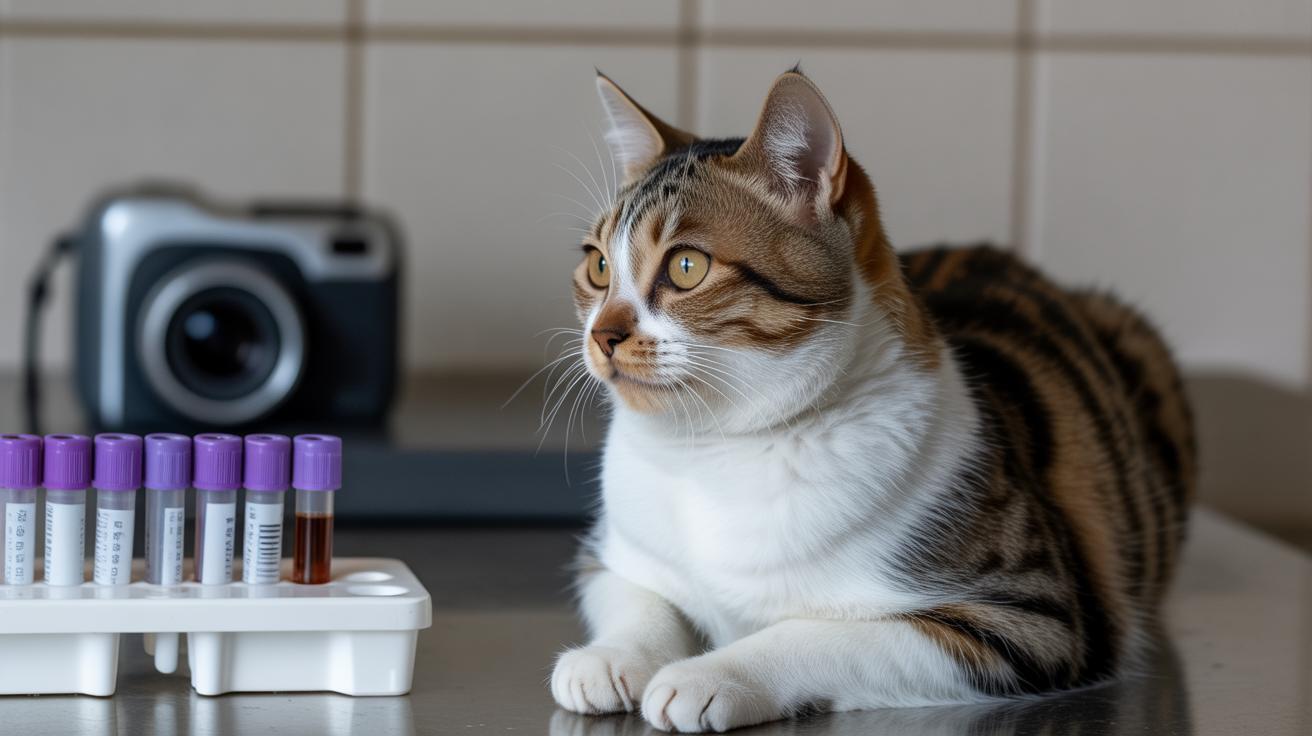
    Bloodwork checks for infection, dehydration, how the kidneys are doing, and dangerous electrolyte problems like high potassium (a salt your body uses for heart and nerve function). Imaging choices: radiographs (x-rays) pick up radiopaque stones; ultrasound finds nonradiopaque stones (stones that don’t show on x-ray), bladder masses, and subtle kidney changes. If a mass shows up or the cause stays unclear, the vet might suggest cystoscopy (a camera into the bladder) or a biopsy (tissue sample).

    Sample collection tips: a voided or free-catch sample is the easiest, but it can be contaminated. Use a clean container, keep the sample chilled, and try to get it to the clinic within two hours. Bring a list of recent medications, a photo of discolored urine if you have one, and a short timeline of signs. Rechecks are common. For example, we usually recheck urinalysis 7 to 14 days after finishing treatment for a simple UTI, and follow-up is longer for kidney infections or stones.

    Test Purpose What it reveals
    Urinalysis Quick screen for blood, protein, glucose, and pH Shows visible versus microscopic hematuria, urine concentration, and clues to infection or crystals
    Urine culture Identify bacterial infection and antibiotic sensitivity Grows bacteria and guides targeted antibiotic choice (results about 48 to 72 hours)
    Urine sediment Microscopic exam of cells, crystals, and organisms Confirms red blood cells, white blood cells, bacteria, and crystal type
    CBC / Chemistry (including electrolytes) Assess overall illness and organ function Finds anemia, signs of infection, kidney values, and dangerous electrolyte imbalances
    Abdominal ultrasound Detailed look at bladder, kidneys, ureters, and masses Finds stones that don’t show on x-ray, tumors, inflammation, and subtle kidney structure changes
    Radiographs Screen for stones that show on x-ray Shows dense stones like some struvite or calcium oxalate stones when they are dense enough to appear

    Urinary tract infections and kidney infections: presentation, treatment, and timelines

    - Urinary tract infections and kidney infections presentation, treatment, and timelines.jpg

    A urinary tract infection in cats can involve the bladder (where urine is stored), the urethra (the tube urine leaves through), the ureters (tiny tubes that carry urine from the kidneys), or the kidneys themselves. You might notice blood in the litter box, more trips to the box, straining, or crying while your cat pees. Sometimes the signs are subtle, like lingering at the box or licking down there. Older cats and females tend to get bacterial UTIs more often, but any cat can be affected. Ever watched your kitty freeze and stare while trying to pee? Yeah, not fun.

    When the infection moves up into the kidneys it’s called pyelonephritis (kidney infection). That’s deeper and tougher. Cats with pyelonephritis often seem sick overall , fever, not eating, and vomiting, on top of dark or bloody urine.

    Vets confirm a UTI with a urinalysis (a dipstick test plus looking at the urine under a microscope). They’ll usually send a urine culture and sensitivity (growing the bacteria to choose the right antibiotic) when infection is likely or before starting a long antibiotic course. For full test descriptions and timing, see the "How vets confirm hematuria" section. Hydration helps the whole process , offering canned food or giving supervised subcutaneous fluids (fluids given under the skin) can ease the kidneys while medications work.

    • collect urine for urinalysis and culture
    • give a targeted antibiotic chosen from the culture results (antibiotic selection for cats)
    • provide pain control if your cat seems uncomfortable
    • recheck urinalysis and culture at the end of treatment
    • keep fluids up and watch litter-box output

    Uncomplicated lower UTIs often start to feel better in days and are usually clearer within a week with proper treatment. Kidney infections usually need a longer antibiotic course, commonly 4-6 weeks. Follow-up testing (repeat urinalysis and culture) helps confirm the infection is truly gone. Isn’t it nice when a treatment actually works? For a practical owner resource on prognosis and recurrence, see Do cat UTIs go away.

    Bladder stones, crystals, and urethral obstruction: types, risks, and emergency potential

    - Bladder stones, crystals, and urethral obstruction types, risks, and emergency potential.jpg

    Stones are hard mineral lumps that form in the kidneys, ureters (tiny tubes that carry urine from the kidneys), or bladder. Crystals (crystalluria – tiny mineral bits seen in urine) can show up on a test even when no stone is present, especially if the urine is concentrated. Vets confirm what’s going on with a urinalysis (lab check of urine), radiographs (x-rays), and ultrasound (sound-wave imaging) – see the "How vets confirm hematuria" section for the full clinic test details.

    Struvite and calcium oxalate are the two most common types, and they act differently. Struvite stones (made of magnesium ammonium phosphate – a mineral salt) often respond to a prescription diet that dissolves them. You’ll usually see these in younger to middle-aged cats. Calcium oxalate stones (hard mineral lumps) don’t dissolve and most of the time need surgery to remove. These are more common in middle-aged to older neutered males.

    Other types you might hear about:

    • struvite (younger to middle-aged cats; often dissolves with a prescription diet)
    • calcium oxalate (middle-aged to older neutered males; usually needs surgical removal)
    • urate (rare; linked to certain breeds and managed case-by-case; related to uric acid)
    • cystine (rare; genetic origin and often lifelong management; caused by an inherited amino acid handling problem)

    Here are a few practical points to keep in mind:

    • Male cats have a higher risk of a complete urethral blockage (urethral obstruction – a full stop that prevents urine from leaving the body).
    • Do not try to pass a catheter at home – a catheter is a thin tube used to open the urethra and you can cause severe damage if you do it yourself.
    • If you think your cat is blocked, follow the urgent-action block at the top of this article and go to the clinic right away.
    • Bring any recent x-rays or ultrasound reports when you go to the clinic so the vet can compare images.

    A urethral obstruction is a medical emergency. Your cat may strain, cry, pace, lick the area, or only produce tiny dribbles of urine. Untreated blockage can lead to kidney failure, a dangerous electrolyte imbalance (high potassium – called hyperkalemia), or even bladder rupture within 48 to 72 hours. Fast veterinary care can be lifesaving, so get your cat to the clinic as quickly as you can.

    - Feline idiopathic cystitis (FLUTDFIC) and stress-related bladder bleeding.jpg

    Feline idiopathic cystitis, or FIC (bladder inflammation with no clear cause), is a common noninfectious reason you might see blood in your cat’s urine. It falls under the bigger category called FLUTD (feline lower urinary tract disease), which just means problems in the bladder and urethra. Ever watched your cat squat and look uncomfortable? That’s the kind of thing we’re talking about.

    Vets first rule out things we can treat, like infection (bacterial infection) and urinary stones (hard mineral crystals). They’ll check urine, do bloodwork, and sometimes run imaging (x-rays or ultrasound) to confirm hematuria (blood in urine) and find the cause , see How vets confirm hematuria for clinic tests and imaging details.

    Practical prevention and home monitoring (owner-facing):

    • Offer more wet food (canned food) to boost moisture intake.
    • Add a cat water fountain (continuous-flow bowl) or other flowing water , many cats drink more from moving water.
    • Put several fresh-water stations around the house and try shallow, wide dishes if your cat prefers them.
    • Lower household stress with quiet resting spots, short regular play sessions, and easy-to-reach hiding places. Ever watched your kitty chase a ribbon and then flop down for a nap? That calm matters.
    • Watch litter-box habits closely: note how often your cat urinates and what the urine looks like. Keep enough boxes , one per cat plus one extra , and place them in separate, quiet areas.

    For the full prevention checklist and step-by-step home-care guidance, see the Treatment/Prevention section.

    Worth every paw-print.

    Causes of Blood in Cat Urine

    - Less common but important causes of hematuria trauma, coagulopathy, infection links, and tumors.jpg

    Blunt trauma , from a fall, a cat fight, or being hit by a car , can nick the bladder (the small sac that holds urine), kidneys (the organs that filter blood), or urethra (the tube that carries urine out) and lead to visible blood in the urine. Sometimes there are no scratches or cuts on the fur to show something’s wrong, so if you know your cat was injured and you see blood, get them to the vet right away. They may need imaging like X-rays or an ultrasound, and sometimes surgical repair.
    Example: He seemed fine after the scuffle, then his urine had blood , internal bladder tears can hide under unmarked fur. Ever see that? It’s scary.

    Coagulopathy (a clotting disorder) can be something a cat is born with, a side effect of medications, or the result of toxins like anticoagulant rodenticide (rat poison that stops blood from clotting). You’ll often see bleeding from more than one spot: gums, skin bruises, nosebleeds, and bloody urine. Quick lab work such as clotting panels (blood tests that measure how fast blood clots) helps figure this out and guides treatment. Quick tip: if you suspect your cat ate bait or poison, tell the vet right away so they can run the right tests.

    Less common causes include bladder cancer, which shows up more in cats over ten and usually causes ongoing blood in the urine plus unexplained weight loss, and systemic viruses like FeLV (feline leukemia virus) and FIV (feline immunodeficiency virus) that can raise bleeding risk. Advanced kidney infection, called pyelonephritis (kidney infection), can also cause bloody urine. It’s not always one thing, so vets look at the whole picture.

    Red flags that mean you should get urgent veterinary care

    • Any recent trauma or obvious injury. Imaging or surgery may be needed, and internal bruising can happen with no outside wounds.
    • Bleeding from more than one place, like gums, skin, or the nose.
    • Sudden extreme tiredness, easy bruising, or weakness.
    • Known or suspected rodenticide exposure. Consider clotting panels (tests that check blood clotting).
    • An older cat with persistent blood in the urine and weight loss.

    What to expect at an emergency clinic

    - When blood in cat urine is an emergency clinic procedures, condition-specific nuances, and cross-reference to urgent-owner steps.jpg

    Start by following the urgent-action checklist at the top for immediate steps. When you get to the clinic, they’ll stabilize your cat first, then run the tests described in the diagnostics section. Note: owner cautions like "Do not attempt catheterization at home" and that male cats are at higher risk of complete urethral obstruction are placed in the urgent-action block so you can find them fast.

    Ever watched your kitty suddenly stop peeing? That’s the kind of emergency this is, so staff move quickly.

    • Stabilization and triage happen right away. They’ll check vital signs: temperature, heart rate, and breathing.
    • Dangerous electrolyte imbalances get corrected with IV fluids (fluids given into a vein). They’ll also monitor for hyperkalemia (high potassium) using an ECG (electrocardiogram, a test that checks heart rhythm) and bloodwork.
    • If the bladder is blocked, catheterization may be done under sedation. Catheterization (a thin tube placed to relieve a blockage) lets the bladder decompress and relieves the immediate danger. Please don’t try this at home.
    • Your cat might be hospitalized for a while for monitoring, pain control, and urine-output checks (so the team can make sure your cat is actually peeing again).

    Worth every paw-print.

    Treatment options, recovery expectations, and a master prevention checklist

    - Treatment options, recovery expectations, and a master prevention checklist.jpg

    Follow the diagnosis-specific plan your vet gives you. See the UTI/pyelonephritis, stones, FLUTD, and How vets confirm hematuria sections for details. Meds and procedures are chosen based on tests, not guesses. For example: if a culture (a lab test that grows bacteria from urine) finds bacteria X, the vet will switch to drug Y for the best result.

    Home support matters. Give medications exactly as directed. Boost hydration with canned food and a water fountain so your cat sips more (hydration helps flush the bladder). Watch the litter box and write down changes in color, amount, and how often your cat goes. Example note: "Day 3 , pale yellow, three small clumps, peed mid-day and evening."

    Bring a fresh urine sample and clear photos to rechecks whenever you can. That really helps the clinic track color and volume changes. Photo tip: place a clean white paper under the litter area and zoom in on the wet spot to show color and size.

    If your cat is straining, collapsing, or not producing urine, use the clinic’s emergency/obstruction guidance right away. Those signs can mean a urethral obstruction (a blocked urethra) and need urgent attention. The ER/obstruction section explains the next steps.

    Follow the recheck schedule below for typical timing and what to bring, but always adjust to your vet’s plan.

    Condition Typical recheck timing What to bring
    Uncomplicated lower UTI Urinalysis (urine test) 7–14 days after finishing antibiotics Fresh urine sample, list of meds, photo of any urine change
    Pyelonephritis (kidney infection) Culture (bacterial growth test) and/or urinalysis during therapy; repeat at 2–4 weeks and at end of the 4–6 week course Fresh urine, prior culture results, any imaging reports
    Stones (medical dissolution or post-op) Imaging (x-ray or ultrasound) and urinalysis per surgeon/vet , commonly 2–6 weeks after treatment Recent imaging (CD/USB/photos), urine sample, medication list
    Post-urethral obstruction Clinic recheck within 24–72 hours, then 7–14 days as advised Fresh urine, photos, notes on litter-box behavior and meds

    Reminder: bring a fresh urine sample and photos to rechecks so the clinic can compare changes quickly. Worth every paw-print.

    Final Words

    In the action: fast triage steps, a clear shortlist of likely diagnoses, the full clinic test plan, and practical treatment plus prevention tips. You’ve got what to do right now and what vets will do next.

    Keep calm, collect a safe sample or photo, and get help fast if your cat shows emergency signs. Small changes at home, more wet food, fresh water, quiet litter boxes, go a long way.

    Stay hopeful. With quick action and steady care, you can protect playtime and spot the causes of blood in cat urine early.

    FAQ

    Causes of blood in cat urine (male)

    The causes of blood in a male cat’s urine include urinary tract infection, feline lower urinary tract disease (FLUTD), bladder stones or urethral obstruction, trauma, clotting disorders, and less commonly bladder cancer.

    Blood in cat urine (female)

    The causes of blood in a female cat’s urine include urinary tract infection, FLUTD, bladder stones, reproductive tract bleeding, trauma, kidney infection, and clotting problems; UTIs are relatively more common in females.

    Why is my cat peeing blood but acting normal?

    If your cat is peeing blood but acting normal, the cause may be early UTI, FLUTD, small stones, or intermittent bleeding; cats often hide pain, so a vet exam and urinalysis are wise.

    Blood in cat urine home remedies

    Home remedies for blood in cat urine are limited; try offering canned food and fresh water, reduce stress, and keep litter-box records, but never give antibiotics or try home catheterization.

    How do you treat blood in a cat’s urine?

    Treatment depends on the cause: antibiotics guided by culture for bacterial infection, pain relief for cystitis, diet or surgery for stones, and fluids/catheterization for obstruction.

    When is blood in cat urine an emergency?

    Blood in cat urine is an emergency if your cat is straining with little or no urine, vomiting repeatedly, collapsing, breathing poorly, extremely lethargic, or has a tense, painful abdomen — get to a clinic now.

    Related Articles

  • Conjunctivitis and Eye Infections in Cats: Care

    Conjunctivitis and Eye Infections in Cats: Care

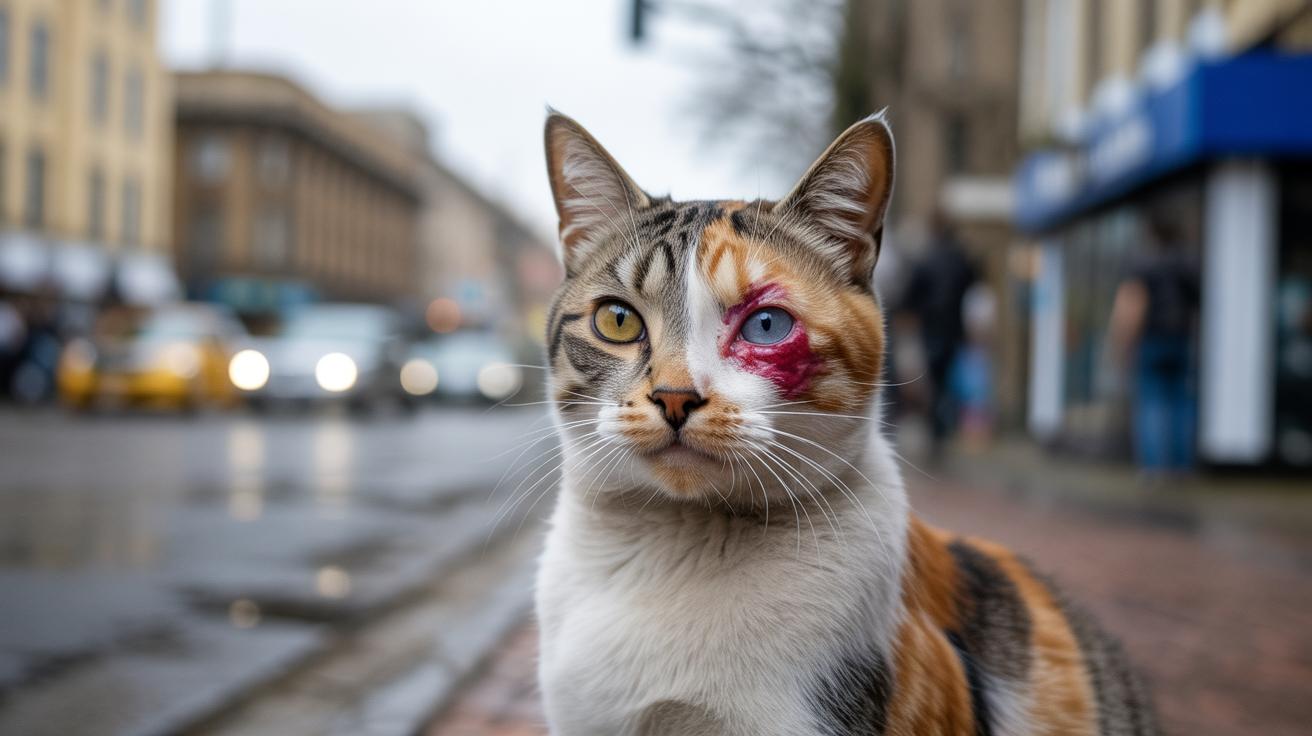
    Ever wake up to your cat with a red, goopy eye? Conjunctivitis (inflamed conjunctiva, the thin, moist tissue lining the inner eyelid) makes kitties squint, paw at their face, and wake with crusty fur around the eye. It can be small and annoying, or the start of something that could hurt their vision.

    Look for these signs: constant squinting, lots of blinking, a thick yellow or green discharge, redness, swelling, or a cloudy-looking eye. You might see your cat rubbing their face on furniture or avoiding bright light. The sticky crust at the corner of the eye is a classic, and it smells a bit off sometimes.

    Causes are usually simple: feline herpesvirus (a common cat virus that acts like cold sores), bacteria (tiny germs), allergies, or a scratch to the cornea (the clear front surface of the eye). Even a tiny foreign speck can start the whole mess. Kittens and cats with weak immune systems can get worse faster.

    When to call the vet right away: if the eye is shut and won’t open, if the cornea looks cloudy or blue, if there’s blood or lots of pus, if your cat seems in real pain, or if they suddenly stop seeing. Also get help fast if both eyes go bad quickly, or if your cat is a kitten, frail, or has a fever. Don’t wait and hope it fixes itself.

    Home care that actually helps: gently wipe discharge with a soft cloth moistened with sterile saline (you can buy it or make it by dissolving 1/4 teaspoon salt in a cup of boiled, cooled water). Dab from the inner corner outward, use a fresh bit of cloth each time, and warm-compress the eye for a few minutes to loosen crusts. If the vet prescribes drops or ointment, use them exactly. Don’t put human eye drops in kitty eyes unless the vet says so. My Luna hated the compress at first, then tolerated it, and finally purred.

    Keep other cats safe by isolating the sick one until the vet says it’s fine, washing hands after touching eyes, and cleaning bowls and bedding. If you’re unsure, call your vet and snap a quick photo to send them. Better safe than sorry.

    Quick answer – At-a-glance: cat pink eye

    - Quick answer  At-a-glance cat pink eye.jpg

    Conjunctivitis, or cat pink eye, is when the conjunctiva (the thin, moist tissue that lines the inner eyelids and covers the white of the eye) gets inflamed. It can show up in one eye or both. Not fun for your kitty, and not great for you either.

    The usual culprits are viruses, bacteria, allergies, or injury. Viral cases often involve feline herpesvirus FHV-1 (a common cat cold virus). Bacterial infections are, well, bacteria. Allergies or a scratch can irritate the eye too.

    Watch for red flags. Sudden vision loss, obvious severe pain, or heavy, thick yellow-green discharge (that’s purulent gunk) need a vet right away. These signs can mean a corneal ulcer (a painful scratch or erosion on the clear front of the eye) or a worse infection.

    Your cat needs a vet exam to tell what’s behind the redness, prevent corneal ulcers, and stop other cats from getting sick. Diagnosis usually means an eye check, maybe a swab to see bacteria or virus, and a look for corneal damage. Treatment can include topical antibiotics for bacterial infections, antiviral meds or supportive care for FHV-1, and anti-inflammatory or allergy meds when needed.

    At home, gently wipe away crust with a warm, damp cloth and keep your hands clean. Don’t use human eye drops unless your vet says so. If you have multiple cats, keep them separate until the vet clears things up.

    Read below for symptoms, diagnosis, treatment, and home care.

    Recognizing conjunctivitis and eye infection symptoms in cats

    - Recognizing conjunctivitis and eye infection symptoms in cats.jpg

    Cat eyes tell a story. When something’s wrong you’ll spot it , whiskers twitching, a soft paw to the face, or that tiny, worried blink. Ever watched your kitty squint and wondered if it’s just nap-time or something more? Let’s break it down in plain, friendly terms.

    Here are the main signs to watch for:

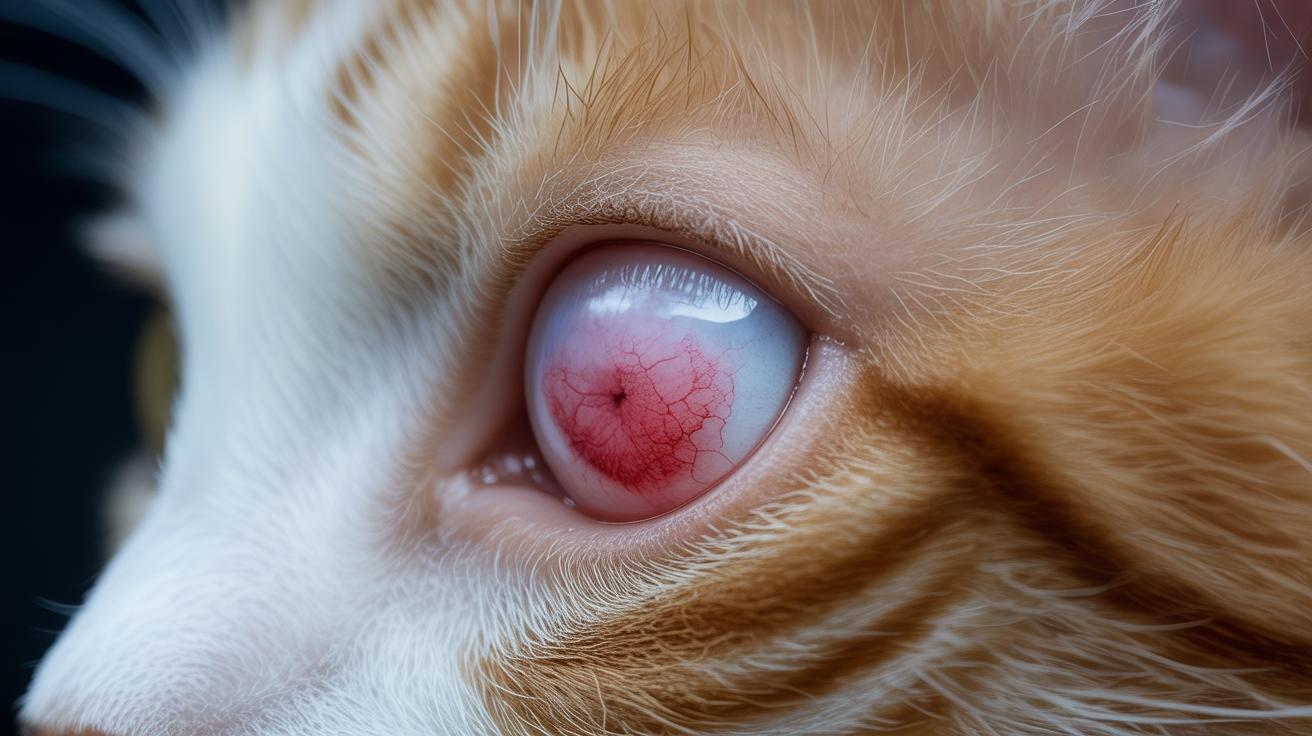
    • Red eye: conjunctival redness (hyperemia) , extra blood in the eye tissues that makes the white or rim look flushed.
    • Puffy eyelid lining: conjunctival swelling (chemosis) , the thin membrane around the eye gets puffy.
    • Too-teary: excessive tearing (epiphora) , tears running or pooling at the corner of the eye.
    • Clear watery discharge , the eye looks wet but not thick.
    • Thick yellow or green gunk: mucopurulent or purulent discharge (mucus plus pus) , this can cake into crusts on the lashes.
    • Crusty eyelid boogers or sticky eyelids after sleep.
    • Squinting or blinking a lot: blepharospasm (involuntary eye squeeze because the eye hurts).
    • Pawing at the face or rubbing the eye with a paw.
    • Corneal clouding , the clear front surface of the eye looks hazy or frosted, and you might see sudden vision changes.

    One eye or both?

    • If only one eye is affected, think foreign body, local injury, or an early localized infection.
    • If both eyes are involved, viral or systemic causes are more likely.

    Kittens
    Kittens often get sticky eyes. That can be neonatal infection or blocked tear ducts (tiny tear channels that didn’t open properly). Don’t ignore it , little ones can worsen fast.

    What to do and what to show your vet
    Take clear photos or a short video of the eye, the discharge, and any squinting. Note if the problem came on fast, if the discharge is thick and colored, or if your cat seems bumping into things. These details help the vet decide if it’s a simple conjunctivitis case, a corneal problem, or something needing urgent care.

    If you see thick yellow/green gunk, heavy pain signs, corneal clouding, or sudden vision loss, get veterinary help sooner rather than later. Worth getting checked.

    Common causes of conjunctivitis and cat eye infections: viral, bacterial, allergic, trauma

    - Common causes of conjunctivitis and cat eye infections viral, bacterial, allergic, trauma.jpg

    Infections are the biggest reason cats get conjunctivitis, especially where cats live close together, like shelters, catteries, or busy multi-cat homes. Kittens, stressed cats, or those with weak immune systems and conditions like FIV (feline immunodeficiency virus) or FeLV (feline leukemia virus) are more likely to get sick or have repeat problems. Ever notice sneezing or a runny nose along with the eye stuff? That often points to a viral cause.

    Viral causes
    Feline herpesvirus, FHV-1 (feline herpesvirus 1), is the most common viral culprit. Most cats meet it when they’re young and many stay lifelong carriers, meaning they harbor the virus and flare up again later when stressed or ill. Flareups usually bring watery or mucoid eyes, sneezing, and often both eyes get involved. Calicivirus can affect the eyes too, but it’s less likely to be the main cause.

    Bacterial causes
    Some bacteria commonly involved are Chlamydophila felis (a bacterial species) and Mycoplasma (tiny bacteria), which often show up in young or stressed cats. Other bacteria like Staphylococci or Streptococci can move in after a virus or an injury and make the discharge thicker and yellow-green , that sticky gunk usually means your vet will recommend topical antibiotics (eye drops or ointments).

    Non-infectious causes and trauma
    Allergic conjunctivitis comes from pollen, dust, smoke, or household chemicals , airborne irritants that make eyes red and itchy. Trauma or a foreign object in the eye usually causes sudden, one-sided signs and needs quick attention. Structural problems, like entropion (an inward-rolling eyelid) or issues with the third eyelid (the thin protective lid at the inner corner), can keep the eye irritated until they’re fixed. Worth getting checked, you know, before it turns into a bigger mess.

    How veterinarians diagnose conjunctivitis and eye infections in cats

    - How veterinarians diagnose conjunctivitis and eye infections in cats.jpg

    If your cat has red, watery, or crusty eyes, vets start with a close eye check and a quick head-to-toe look for signs of a cat cold or other health issues. That extra context helps them figure out whether the eye problem is local or part of something bigger. They use magnifying tools and bright lights to examine the eyelids, the cornea (the clear front window of the eye), and the third eyelid (a thin, protective fold you might not notice).

    Next, they do a few quick bedside tests. The Schirmer tear test (measures tear production) checks for dry-eye problems. A fluorescein stain (a safe dye that highlights corneal scratches or ulcers) shows if the cornea is scratched. An intraocular pressure check (measures pressure inside the eye) helps rule out glaucoma. It’s fast, and most cats tolerate it fine.

    To find the cause, vets often collect a conjunctival swab (a sample from the lining of the eye) or perform a corneal scraping (gently removing a few surface cells) for cytology (cell exam) and culture (growing microbes to see what’s there). They may also order PCR testing for FHV-1 (a lab test that looks for feline herpesvirus DNA) or bloodwork if they suspect a systemic illness. Culture and sensitivity testing helps pick the right antibiotic by showing which drugs will work best.

    If the case is painful, keeps coming back, or the cornea has a deep ulcer, your vet may refer you to a veterinary ophthalmologist (an eye specialist) for advanced imaging or surgery. Worth every paw-print when it saves sight. Ever watched a kitty suddenly perk up after treatment? Heart-melting.

    Test Purpose Typical finding
    Schirmer tear test (measures tear production) Check for dry eye Low in KCS (dry-eye); normal otherwise
    Fluorescein stain (safe dye for corneal defects) Detect corneal scratches or ulcers Bright uptake indicates an ulcer
    Intraocular pressure (measures eye pressure) Rule out glaucoma or abnormal pressure High or low is abnormal
    Conjunctival swab / cytology (cell exam) Look for bacteria, fungi, or inflammatory cells Organisms, neutrophils, or other cell changes
    PCR for FHV-1 (detects feline herpesvirus DNA) Confirm viral infection Positive result indicates FHV-1
    Culture & sensitivity (grow and test microbes) Identify bacteria and best antibiotic Growth with an antibiogram

    Conjunctivitis and Eye Infections in Cats: Care

    - Treatment options for conjunctivitis and eye infections in cats (medications and procedures).jpg

    Treatment depends on what is causing the problem. If bacteria are to blame, your vet will usually prescribe a topical antibiotic ointment (medicine you put on the eye) placed in the lower lid, and sometimes systemic antibiotics (pills or injections that treat the whole body) if the infection is severe or your cat has a fever. Viral eye disease, like flares from feline herpesvirus, may get topical antiviral drops or ointments (meds that fight virus at the eye) or oral antivirals (pills) when the vet thinks it will shorten the flare.

    Steroid eye drops can help inflammation, but they can also make trouble worse if a corneal ulcer is present. So vets usually check with a fluorescein stain first (a tiny dye test that shows corneal scratches or ulcers). If an ulcer is there, steroids can slow healing. Oops, not worth the risk.

    Thick, sticky eye gunk (mucopurulent discharge – thick yellow or green goop) is handled by the antibiotic ointment plus gentle cleaning with a warm, damp cloth to loosen crusts so the meds actually reach the eye. Pain control matters too. Topical lubricants like artificial tears (eye drops that keep the surface moist), warm compresses, and an Elizabethan collar to stop rubbing are common parts of care. Ever watched your kitty try to claw a sore eye? Yeah, that collar helps.

    Finish the full course your vet prescribes so the infection does not come back or breed resistant bacteria. Plan rechecks so the vet can watch healing and stop or change meds if needed. Some people try L-lysine (an amino acid supplement) to help suppress feline herpesvirus, though the evidence is mixed. If infections keep coming back or the cornea (the clear front layer of the eye) is damaged, your vet may refer you to an ophthalmologist (eye specialist) for advanced care or surgery.

    Topical antibacterials and antiseptics

    Topical antibiotic ointments are picked to target the common eye bacteria and are put into the lower conjunctival sac (the little pocket under the eyelid) so they stay on the surface longer than drops. Antiseptic eye rinses may be used briefly to wash away heavy debris, but they are not a long term fix.

    Antivirals and systemic therapy

    Topical antiviral agents can be used for localized viral disease, while oral antivirals (pills) are reserved for more severe or widespread herpes flares. PCR testing (a lab test that finds viral genetic material) can help guide whether antivirals will be useful.

    Supportive care and surgical procedures

    Supportive care includes lubricants, warm compresses, pain meds, and E-collars to prevent rubbing. For chronic problems caused by anatomy or long term damage, surgical options like tear duct surgery or entropion correction (fixing an eyelid that rolls inward) can stop ongoing irritation and help the eye heal. Worth every paw-print when it gets your cat comfortable again.

    Home-care and medication administration

    - Safe home care and step-by-step guidance for treating cat conjunctivitis.jpg

    Use a clean, warm cloth for each eye and fresh water every time. A warm compress helps a lot. Soak a soft cloth in warm (not hot) water, wring until slightly damp, and hold it over the closed eye for a few minutes to soften dried gunk and calm irritation. I warmed a clean rag and held it over Luna’s closed eye for two minutes, then switched to a fresh cloth for the other eye. Nice and soothing.

    Never put human eye drops or ointments in a cat’s eye unless your vet tells you to. Use an Elizabethan collar (cone) until the eye is healed to stop scratching. And in homes with more than one cat, wash bedding, toys, and bowls to help limit spread. The cone really works. The cone stopped Mittens from pawing the sore eye so it could heal.

    1. Wash your hands before and after handling your cat.
    2. Prep two soft cloths, a bowl of warm water, and the meds your vet prescribed.
    3. Warm compress: soak a cloth in warm (not hot) water, wring it out, and hold it over the closed eye for a few minutes to loosen crusts.
    4. Gently open the lower eyelid with your thumb and forefinger.
    5. Put a pea-sized ribbon of ointment or one drop into the lower conjunctival sac (tiny pocket under the eyelid); don’t let the tip touch the eye.
    6. Hold the eyelids closed for 5 to 10 seconds so the medicine spreads across the surface.
    7. Clean dried crusts twice a day with the warm damp cloth. Pat gently. Don’t rub.
    8. Keep the Elizabethan collar (cone) on until your vet says it’s OK to take off, and wash bedding and shared items in multi-cat homes. Stop home treatment and call the vet if pain or swelling gets worse, or if thick yellow-green discharge appears.

    Take clear photos or short videos once a day from the same angle, note the time and what meds you gave, and share them with your vet for follow-up. Example note: 8:00 AM after ointment: less redness on the outer corner compared with yesterday.

    See Home-care and medication administration.

    Contagiousness, zoonotic risk, and preventing spread of cat conjunctivitis

    - Contagiousness, zoonotic risk, and preventing spread of cat conjunctivitis.jpg

    Conjunctivitis in cats spreads fast when they live close together, like multi-cat homes, shelters, or catteries (places where cats are housed). Common culprits are feline herpesvirus (a common cat cold virus that often hits the eyes) and Chlamydophila (a bacterial eye infection). These spread through eye goo and sneezes, so one sick cat can pass signs to others quickly. Watch for redness, watery eyes, or sticky crusts on the lashes.

    Can cats give humans conjunctivitis? It’s rare. Chlamydophila has a low zoonotic risk (a small chance of jumping to people), but simple hygiene makes that risk tiny. Wash your hands after petting or treating a sick cat. Gloves are a good idea if you’re handling heavy discharge, and don’t touch your face until you’ve cleaned up. Ever rubbed your eye after cuddling a sneezy cat? Yeah, don’t.

    Practical steps to stop an outbreak are simple and do-able. Separate the affected cat and keep bowls, toys, bedding, and litter boxes from being shared. Wash or launder bedding and soft toys, and disinfect hard surfaces. Wear gloves when cleaning and throw out disposable wipes or clean them separately. For shelters, check nearby cats daily for any new redness or discharge.

    Keep vaccinations current. The FVRCP vaccine (protects against feline viral rhinotracheitis, calicivirus, and panleukopenia) helps lower the chance of respiratory and eye outbreaks. It won’t stop every case, but it of­ten makes outbreaks smaller and milder.

    How long a cat is contagious depends on the cause. Some viruses can be shed for days or weeks, so keep infected cats apart until your veterinarian clears them. If you’re unsure, call the vet, better safe than sorry. Worth every paw-print.

    Complications, prognosis, and when conjunctivitis becomes an emergency in cats

    - Complications, prognosis, and when conjunctivitis becomes an emergency in cats.jpg

    Left untreated, an eye infection can cause a chain of problems. It can lead to corneal ulcers (a scratch or erosion on the clear front surface), keratitis (inflammation of the cornea), corneal opacity (clouding of the cornea), scarring, ongoing conjunctivitis (pink eye), spread to the other eye, and in bad cases partial or complete vision loss. Imagine your cat squinting, then the eye getting cloudy or crusty , that’s when you need to act.

    Most simple infections start to improve in 5 to 14 days with the right vet care. But ulcers, deep corneal damage, or long-standing issues usually need more time and sometimes a referral to a veterinary ophthalmologist (an eye specialist).

    Some things make a worse outcome more likely:

    • Existing corneal ulcers (those deep scratches).
    • Kittens with immature immune systems.
    • Cats with FIV (feline immunodeficiency virus) or FeLV (feline leukemia virus) , these weaken immunity.
    • Facial shape that causes eyelid problems, like flat-faced breeds or inward-rolling lids.
    • Heavy secondary bacterial infection.
    • Waiting too long to see the vet.
      These factors slow healing, raise the chance of scarring, and can cause repeat flare-ups. Not great. Really.

    Watch closely for true emergency signs:

    • Sudden loss of vision or bumping into things.
    • Severe eye pain , constant pawing at the eye, hiding, or refusing food.
    • Rapidly worsening redness or a thick yellow-green discharge.
    • A clearly cloudy or bulging eye.
    • Systemic signs like fever or extreme lethargy.

    If you see any of these, keep your cat calm and stop them from rubbing the eye. Use an E-collar (plastic cone) if you have one. Take a quick photo to show the vet, and call an emergency clinic right away. Do not put unprescribed human drops or medicines in the eye.

    A short example message to the clinic you can send or read: "My cat started pawing at a suddenly cloudy left eye two hours ago and won’t eat – needs urgent advice."

    Special considerations for kittens, brachycephalic breeds, and chronic/recurrent conjunctivitis in cats

    - Special considerations for kittens, brachycephalic breeds, and chronicrecurrent conjunctivitis in cats.jpg

    Kittens and neonatal care

    Kittens often get sticky eyes or neonatal conjunctivitis (eye inflammation in newborns) because their tear ducts can be narrow or blocked. Clean gently with warm sterile saline (cooled, boiled water works in a pinch) using a soft cotton ball 2–4 times a day. Be gentle, think soft nibbles on a plush ear.

    Only give systemic antibiotics (oral or injectable antibiotics your vet prescribes) if your vet suspects a bacterial infection , signs include thick yellow‑green discharge, fever, or the whole kitten acting sick. Photo records really help. Take a quick daily picture and write a one-line note so your vet can see the trend. Example: "Day 1: right eye glued shut AM; Day 3: less discharge after cleaning; Day 6: alert, eyes opening more."

    If the eye looks worse, the cornea (the clear front of the eye) looks cloudy, or the kitten is off its feet, get a vet check quickly. See Recognizing/Quick answer; see Chronic management.

    Flat-faced breeds like Persians and Exotics can have exposed corneas, shallow eye sockets, or inward-rolling lids that make irritation happen faster and lead to chronic tearing or rubbing. Small anatomy issues in these cats can become big problems fast, so ask your vet about an ophthalmology referral earlier rather than later. Think of it like catching a small leak before it floods the room. See Complications/prognosis; see Supportive care and surgical procedures.

    Managing chronic and recurrent conjunctivitis (when to refer, long-term strategies)

    Refer to a specialist when episodes keep coming back despite usual topical treatment, when corneal ulcers or vision changes appear, if discharge stays thick or foul, or if the eyelid position or tear drainage looks wrong. For clarity, nasolacrimal duct means the tear drainage tube from the eye to the nose.

    Long-term topical plans often include targeted antibiotic stewardship, anti-inflammatory drops or ointments, and sometimes immune-modulating ointments for stubborn surface inflammation. Use preservative-free gels or ointments at night and consider daytime lubricants plus a humidifier to keep the eye surface comfy. Carbomer (thick gel base) or petrolatum (a thick, protective ointment like a heavy moisturizer) products are common night choices. Rotate treatments as your specialist recommends to help prevent resistance.

    Stress matters more than you might think. Keep routines predictable, give hiding spots, and try a short, gentle play session before stressful events like carrier time or vet visits. Ever watched your kitty calm down after a quick feather chase? Works wonders.

    Quick checklist:

    • When to refer: repeated flareups, corneal ulcers, vision loss, or discharge that won’t clear.
    • Long-term topical strategies: specialist-prescribed ointments, night lubricants (carbomer or petrolatum-based gels), and planned rotation to limit resistance.
    • Daily care tips: keep a photo log (see Kittens), clean gently, treat suspected secondary bacteria quickly, and reduce stress with steady routines.

    See Kittens for neonatal specifics and see Complications/prognosis or Supportive care and surgical procedures for notes on surgery and specialist interventions.

    Frequently asked questions owners ask about conjunctivitis and eye infections in cats

    - Frequently asked questions owners ask about conjunctivitis and eye infections in cats.jpg

    Quick FAQ – short answers are in the sections below: Recognizing, Care, Home-care, Contagiousness, and Complications.

    Tap any link for vet-reviewed details on timelines, safe medications, isolation, rechecks, and when to call your clinic. We cover conjunctivitis (eye inflammation) and other common eye infections, what treatment usually looks like, and simple home-care tips to keep your cat comfortable while healing. Ever watched your kitty squint and wondered if it’s serious? Click a section and you’ll get clinic-backed answers fast.

    Final Words

    In the action we defined conjunctivitis as inflammation of the thin mucous membrane lining the eyelids and eye surface, named the main causes (viral FHV‑1, bacterial, and allergy or trauma), and listed warning signs like vision loss or heavy purulent discharge.

    We explained how vets diagnose (Schirmer, fluorescein, swabs, PCR), treatment options, safe home care steps, and prevention in multi‑cat homes, with short practical tips for busy households.

    Keep photos and follow vet advice. Rest easy. Your cats can bounce back from conjunctivitis and eye infections in cats with the right care.

    FAQ

    Cat conjunctivitis — FAQ

    How is conjunctivitis in cats treated?

    Treatment depends on the cause. Vets commonly prescribe topical antibiotics for bacterial infections or antivirals for viral disease. Care also includes gentle eye cleaning, lubricating drops, pain control, and often an Elizabethan collar to prevent rubbing.

    Can I treat my cat’s conjunctivitis at home?

    Home care can help (warm compresses, gentle cleaning), but a veterinary exam and prescription medication are usually needed. Do not use human eye drops in a cat’s eye.

    Is cat conjunctivitis contagious to other cats or humans?

    Conjunctivitis is commonly spread between cats, especially in multi‑cat environments. Transmission to humans is rare but possible with some bacteria (for example Chlamydophila). Wash hands and isolate affected cats.

    Will conjunctivitis in cats resolve on its own?

    Sometimes it can improve on its own, but untreated infections may worsen or damage the cornea. A vet check helps prevent complications and ensures correct treatment.

    How serious is conjunctivitis in cats?

    Severity ranges from mild irritation to sight‑threatening disease. Sudden vision loss, severe pain, or heavy purulent discharge are red flags requiring urgent veterinary attention.

    Should I wipe my cat’s eye when it has conjunctivitis?

    Yes, gently wipe with a warm, damp cloth and use a fresh cloth per eye. Stop and contact your vet if the cat shows pain, the eye bleeds, or the condition worsens.

    When is cat conjunctivitis an emergency?

    Seek immediate veterinary care for sudden vision loss, severe eye pain, a bulging or cloudy cornea, or rapidly worsening or heavy discharge.

    What are common symptoms of conjunctivitis and eye infections in cats?

    Typical signs include redness, swelling, tearing, mucopurulent discharge, crusting, squinting, frequent blinking, pawing at the eye, and sometimes sneezing or other respiratory signs.

    When should I see a veterinarian for my cat’s eye?

    See a veterinarian if signs persist beyond 48–72 hours, worsen, affect both eyes, are accompanied by respiratory symptoms, or if your cat is very young, old, or immunosuppressed.

    Related Articles

  • Tonkinese Cat Personality: Traits and Compatibility

    Tonkinese Cat Personality: Traits and Compatibility

    Think cats are aloof? Tonkinese will make you rethink that. They’re chatty, clingy, and acrobatic all at once. One minute they’re a warm lump on your lap, the next they’re chirping at a window bird like they’re telling secrets.

    They crave company. Tonkinese are social and love to be where people are, not hidden away. They play hard too, zooming, leaping, and batting toys like tiny gymnasts. And their voice is a happy chitter, a mix of little meows and trills that sounds like a tiny conversation.

    Who gets along best with a Tonkinese? Active families with playful kids, homes with tolerant dogs, or anyone who’s around a lot. Or get two cats, Tonkinese often prefer a feline friend to keep the chat going. If you work long hours and can’t come home for cuddle o’clock, they might get lonely.

    Daily play matters. Aim for a few short sessions each day, ten to fifteen minutes works wonders. Use a wand toy for high-energy chases and a small ball for fetch. Try a puzzle feeder (a toy that hides food so your cat has to “hunt” for it) to keep their brains busy and reduce naughty behavior.

    Lap time is sacred. Make a comfy spot with a soft blanket and a low light, Tonkinese love warmth and gentle strokes. If they hop on and demand attention, go with it when you can; a little routine helps them feel secure.

    Simple setups help a lot. Add a cat tree (a tall climbing post with perches) by a sunny window, rotate toys so things stay interesting, and put a safe hideaway where they can nap alone. Secure breakables and supervise rough play with kids or dogs.

    Ever watched your kitty chatter at a bird and then do a perfect mid-air twist? It’s ridiculous and delightful. Keep them engaged, give them company, and you’ll cut down on trouble and double the joy.

    Worth every paw-print.

    Tonkinese Cat Personality: Traits and Compatibility

    - Tonkinese temperament snapshot (fast answer).jpg

    Tonkinese cats are social, snuggly, playful, talkative, and clever. They’ll curl up on your lap one minute and sprint across the room the next. Ever watched a Tonkinese chirp at a bird outside? It’s basically a tiny, furry conversation partner.

    They do great with families, kids, and cat-friendly dogs. But they don’t love long stretches alone. Plan on regular human time or a second cat, plus several short play sessions each day to keep them happy.

    • Weight: 6–12 lbs
    • Length: up to about 28 inches including the tail (long and graceful)
    • Color development: coat color usually finishes by around 16 months (coat tones deepen as they mature)
    • Lifespan: about 10–16 years (how long they typically live)

    Personality at a glance:

    • Sociability: Craves company. Best if someone’s home often or there’s another pet to hang with.
    • Affection: Loves close contact and laps. Expect lots of purrs and gentle head-butts.
    • Activity: Needs daily play and vertical space like cat trees or shelves. Climbing makes them gleeful.
    • Vocality: Very conversational, soft, chirp-like sounds rather than loud yowls.
    • Intelligence: Quick study. They learn tricks fast, especially with food-based training (treats as rewards).
    • Play style: Fetch, climbing, and puzzle toys keep them busy. Think of a teaser wand like a fishing rod for cats, so much fun.
    • Grooming: Low-maintenance coat (short and smooth). Weekly brushing keeps hair under control.
    • Health watch: Keep an eye on dental health and urinary signs (frequent peeing, straining, or accidents).

    Adoption note: If you’re away a lot, please consider a companion cat or a routine of interactive play sessions. Your Tonkinese will thank you with acrobatic pounces and nonstop cuddles. Worth every paw-print.

    Social needs: implementation and risks

    - Social needs implementation and risks.jpg

    Tonkinese are social butterflies. They thrive on company, so regular human contact keeps them sharp and less likely to act out. Left alone, a Tonkinese can get clingy, start following you like a shadow, or get into mischief, soft mews at midnight, sudden zoomies, that sort of thing.

    Introduce new people and pets slowly. Start with scent swapping (swap bedding so each animal gets the other’s smell), then move to short supervised visual meetings behind a gate (a baby gate or screen works great), and finally try brief play sessions in neutral territory (a room neither pet claims). Think of it like gentle speed-dating for pets. Build social windows into your day , two or three short play or cuddle blocks work well , and use a puzzle feeder (a food toy that makes your cat work for meals) or a pet sitter for longer absences. Pairing tip: a second Tonkinese or a playful, cat-friendly dog often cuts down on loneliness.

    Kids and visitors need a quick lesson. Three simple steps: sit down, offer a treat, and show the right petting spots , stop if the cat flees. Supervise interactions during the first week and model calm voices and slow movements. Praise both kid and cat for calm exchanges with treats or gentle petting. Worth every minute.

    Watch for trouble signs: louder attention-seeking like yowling or blocking doors, clinginess, redirected aggression, or hiding and loss of appetite during shaky introductions. If you see those, give your cat a quiet retreat, break play into short separate sessions, and slow the reintroduction pace. Pheromone diffusers (a plug-in calming cat scent) can help, and a quick vet consult is a smart move if stress keeps up.

    Timeline for socializing your Tonkinese:

    When What to do
    Days 1–7 Start scent swapping (bedding exchange) and short, calm handling sessions. Let the cat set the pace.
    Weeks 2–6 Supervised play, gentle exposure to household sounds and kids. Keep sessions short and positive.
    Weeks 6–12 Begin controlled introductions to other pets and try short group play in neutral rooms.
    Weeks 12–16 Extend social sessions, practice brief separations, and do short crate/car trips (carrier rides) so your Tonkinese learns everyday coping skills.

    A quick aside: ever watched your Tonk stalk a sunbeam with laser focus? It’s proof they love company and stimulation. Keep play predictable, praise calm behavior, and remember , slow and steady wins the purr.

    Energy and training: activity plan and schedules

    - Energy and training activity plan and schedules.jpg

    See Snapshot above. Tonkinese are lively and athletic; they do best with short bursts of play plus mental work so they don’t turn your house into a playground of mischief. Think sprinting zoomies, then a satisfied nap.

    Training is food-motivated and clicker-friendly (clicker = small handheld device that makes a consistent click sound). Keep sessions short and tasty. Five to ten minutes of treats and praise will teach tricks, recall, and calm behavior without boring your cat. Ever watch a Tonkinese learn a trick in two treats? It’s oddly delightful.

    Create vertical territory. A tall cat tree (sturdy climbing post), a shelf network, and sunny window perches give jumping and lookout options. Secure shelves to studs so they don’t wobble. Offer multiple scratch posts , sisal (a durable natural fiber used for scratching) is excellent , so your Tonkinese has clear spots to climb and sharpen claws.

    • Interactive wand play: 2 × 10–15 minutes daily – perfect for chase instincts; swap attachments regularly so it stays novel.
    • Puzzle feeder: one meal per day – a puzzle feeder (toy that makes your cat work for food) slows eating and gives mental work.
    • Clicker/treat training: 5–10 minute sessions – teach sit, high-five, or target touches (touching a target with nose or paw).
    • Fetch sessions: short tosses of soft, durable balls – repeat 3–8 throws per play.
    • Tall cat tree + shelf network: daily access – jumping keeps muscles toned and joints happy.
    • Treat-dispensing ball: roll-and-chase snack play (dispenses kibble when rolled) – great for solo enrichment.
    • Hide-and-seek scent games: hide treats around the house – mental scavenger hunts that tap natural hunting drive.
    • Supervised water curiosity play: drip faucet or shallow bowl exploration – short, novel fun for curious kitties.
    • Rotating toy schedule: swap toys every 3–7 days – keeps interest high and prevents boredom.
    • Short daily target-training practice: 2–5 minutes – quick focus work before meals helps calm excitement.
    Time Activity Duration
    Morning Puzzle feeder 10 min
    Midday Short play or training session 10 min
    Evening Interactive wand + fetch 15–20 min

    Toys wear out. Frayed wands and loose stitching are a safety risk, so replace attachments every few months or as soon as you see damage (or try DIY replacement attachments for teaser wands). Match play intensity to your cat’s age and mobility. See Snapshot above for typical energy baselines.

    Worth every paw-print.

    Vocal and body language: decoding examples only

    - Vocal and body language decoding examples only.jpg

    See the snapshot above. Tonkinese talk to their people with soft, chirp-like sounds that almost beg for a reply. They’re not yelling; they’re saying, I’m here, notice me.

    Greeting chirps – a short, upbeat sound when you walk in the door. It usually comes with a tail held high and a happy weave between your legs. Think: tiny hello-bells.

    Attention-request chirps – repeated trills (a rolling chirp sound) or quick chirps while pawing or rubbing to ask for play, pets, or food. Your cat might paw at your hand, chirp, then dart toward a toy to show you the plan.

    Urgent or distressed vocal changes – louder, drawn-out cries or frantic mews (a thin, high-pitched meow) that don’t match their usual chatter. These are different. They can mean pain, fear, or a litter-box problem, so pay close attention.

    Tail up – friendly and open. It’s a green light to approach and pet. Slow blink – a calm trust signal; blink back and you’ll share the moment. Flattened ears with a rigid tail – big red flags. Give space and quiet.

    Scenario A: Greeting at the door. Your Tonkinese chirps, tail high, weaves between your legs, then nudges for pets. It’s warm, immediate, and so hard not to scoop them up.

    Scenario B: Requesting play. The cat paws at your hand, gives a short chirp, then zips toward the toy to lead the session. It’s like they’re saying, Follow me.

    If your cat’s voice or body language suddenly changes or stays off for a while, that could point to stress or a medical issue. Watch closely, and if things don’t improve, call your vet. Worth every paw-print of attention.

    Care and health: prevention and schedules

    - Care and health prevention and schedules.jpg

    See the Snapshot above, Tonkinese thrive when grooming and healthcare match their social, indoor lifestyle. Regular routines keep them playful and help prevent common problems like dental disease or urinary trouble. Think of it as daily TLC that keeps your cat feeling feline fine.

    Grooming and routine care

    Brush once a week with a soft-bristle brush or a rubber mitt (a glove with short rubber nubs that lifts loose hair). Their short, silky coat rarely mats, so brushing is mostly bonding time, your cat gets the pets, you get less fur on your couch. Ever watched a Tonk do the happy-tail flick after a brush? Cute.

    Trim nails every 2–4 weeks so claws don’t snag during play. If your cat resists, try clipping after a nap when they’re mellower. Check ears and eyes weekly for wax, redness, or discharge and wipe gently with a damp cloth if needed. Little checks now save big vet visits later.

    Health prevention schedule

    Kittens follow the usual vaccine and parasite-control series set by your vet. Parasite control means treatments for fleas, ticks, and intestinal worms (common pests that make cats miserable). Adult Tonkinese should get at least one annual exam where vaccinations and parasite prevention are reviewed.

    Dental care is super important. Start brushing young and book professional cleanings if you see tartar or gingivitis. Dental disease is common, so a quick daily tongue-and-tooth peek goes a long way. Ask about heart screening early on, especially HCM (hypertrophic cardiomyopathy, which is thickening of the heart muscle). Also talk with your vet about testing for liver issues (some lines have higher risk), IBD (inflammatory bowel disease, which is chronic gut inflammation), and amyloidosis (protein build-up in organs) if there’s a family history. Keep vaccine boosters and parasite protection current based on your vet’s plan.

    Weekly brush. Daily quick dental/tongue check. Annual vet exam with heart listening. Watch litter-box frequency and any changes in urine. Keep a balanced diet and weigh-ins to catch weight shifts early.

    Litter setup matters for Tonkinese comfort and health, roomy, clean boxes are best. See comparing top-entry vs open litter box designs for ideas. Seek vet care quickly for straining, blood in the urine, sudden appetite changes, or big drops in energy. Worth every paw-print.

    Behavior problems: troubleshooting steps

    - Behavior problems troubleshooting steps.jpg

    See Snapshot above.

    We folded the old, separate troubleshooting block into the relevant sections so everything lives where it makes sense: Social needs, Energy and training, and Care and health. That way you won’t have to hop around to find the right tip.

    What to expect callouts (added under the relevant subsections):

    • Excessive vocalizing (Energy and training): 2-6 weeks – "With two short play sessions and one puzzle meal daily, expect gradual quieting in about 2-6 weeks."
    • Separation anxiety (Social needs): 4-12 weeks – "Start tiny departures and slowly increase time away; many cats show steady gains in 4-12 weeks."
    • Play aggression (Energy and training): 2-8 weeks – "Redirect bites to a wand and reward calm; you’ll often see safer play in 2-8 weeks."

    Concrete troubleshooting steps moved into matching sections:

    • Graded departures → Social needs (stepwise short departures to lengthen time alone). Think tiny practice walks out the door, then a bit longer each time.
    • Puzzle feeders and scheduled interaction blocks → Energy and training (mental work plus play to reduce vocalizing and boredom). Puzzle feeders (food-dispensing toys that slow eating and give mental work) are great for this.
    • Wand redirects, stop-play-after-bite, and short reward-based training → Energy and training (for play aggression). Use a wand like a fishing rod for cats – safer teeth and paws-only play.
    • Scratch-post placement (put posts where the cat already scratches, vertical or horizontal as needed) → Play/scratching subsection. Match the post to the scratch pattern you see.
    • Scoop-daily box hygiene and box placement/number checks → Care and health (litter box management). Clean boxes, in the right spots, work wonders.

    Quick note: See Care and health for urgent signs: blood, straining, injury, or persistent severe stress. Those need immediate vet or behaviorist help. If you spot any of those, don’t wait, call your vet right away.

    Worth every paw-print.

    Comparisons and adoption: decision factors, tests, and costs

    - Comparisons and adoption decision factors, tests, and costs.jpg

    See Snapshot above.

    Quick breed comparison tips

    Tonkinese sit right between Siamese and Burmese. Siamese are very vocal and can demand attention, while Burmese tend to be more people-first and mellow. So think about how much talking you want: low, medium, or high vocal level; how active you like a cat to be: moderate or high; and how long they can handle being alone: low to medium. If you want a chatty, playful buddy who still loves to curl in your lap, a Tonkinese is a lovely middle ground. Ever watched your cat talk back to you? Yeah, Tonks do that a lot.

    Buyer tip: check the Snapshot above for quick metrics like activity and social needs so you match your household schedule before you commit.

    Adoption checklist, tests, and cost considerations

    Ask breeders for cardiac screening , an echocardiogram (heart ultrasound that checks structure and function) , and thorough dental checks (watch for tartar, loose teeth, or gum disease). Request any genetic screens (simple DNA tests for known issues) and health clearances. Bring up HCM (hypertrophic cardiomyopathy – thickening of the heart muscle) when you talk about heart health. It’s okay to be a little nosy here; you want a healthy kitten.

    Watch for red flags: no health records, reluctance to show the kitten’s parents, lots of litters always available, or kittens that seem poorly socialized. Those are signs you should step back. Typical breeder prices reported run about $600-$1,200. Rescue adoption is a solid alternative with lower fees and fast love, though lineage may be unknown.

    First-week setup checklist: give daily short social blocks and a few play sessions so they learn you’re fun. Add a puzzle feeder or slow-food option to make meals engaging. Provide a tall scratching/post network and clean litter boxes in calm spots. Start a weekly brushing habit to cut down on loose fur and bonding time. See Snapshot above for how much daily interaction your Tonkinese will want.

    Worth every paw-print.

    Final Words

    In the action: this post gave a compact Tonkinese temperament snapshot, practical steps for socializing and playing, training and daily schedules, vocal and body-language decoding, care and prevention tips, behavior fixes, and adoption guidance.

    Quick wins: add short daily play sessions, rotate durable toys, use tall shelves, and watch vocal and body cues for stress. Small moves like these cut boredom and protect furniture.

    The Tonkinese cat personality truly shines with company and regular activity, so pick routines that fit your busy life and enjoy the purrs.

    FAQ

    What is the temperament of a Tonkinese cat, and do males and females differ?

    The temperament of a Tonkinese cat is highly social, affectionate, active, conversational, and trainable. Males and females share core traits; individual personality and early socialization shape differences.

    Do Tonkinese cats like to be held?

    Tonkinese cats like to be held for many owners, enjoying laps and close contact, but they usually prefer short sessions and choice; gentle early handling and reading body language helps.

    What personality problems do Tonkinese cats have and how do I handle them?

    Tonkinese personality problems include excessive vocalizing, separation anxiety, play aggression, and litter-box avoidance; remedies are scheduled interactive play, puzzle feeders, training, early socialization, or a companion, plus vet checks if needed.

    How much does a Tonkinese cost?

    The cost of a Tonkinese typically ranges $600-$1,200 from responsible breeders; rescue adoption fees are usually lower. Also budget for supplies, vaccines, spay/neuter, and routine vet care.

    How long do Tonkinese cats live?

    The Tonkinese lifespan commonly ranges about 10-16 years, and indoor living, a balanced diet, regular vet care, and maintaining healthy weight support longer, healthier years.

    Can Tonkinese cats be black, and when does their color finish developing?

    Tonkinese cats can appear in darker solid, mink, or pointed patterns, so a “black” Tonkinese is possible; full coat color usually finishes developing by around 16 months.

    How does a Tonkinese compare to Siamese, Burmese, Balinese, Ragdoll, or Snowshoe, and which breed is most cuddly?

    Tonkinese sit between Siamese (very vocal) and Burmese (mellower), offering social, softer vocalizing. Ragdolls are often called the most cuddly; Balinese are long-haired Siamese-like, Snowshoe friendly but less demanding.

    Are Tonkinese good with children, other pets, and busy households?

    Tonkinese are great with children and other pets when socialized early and matched for energy; they thrive on regular interaction and often do best with a second pet or scheduled daily play.

    Related Articles

  • What to Feed a Newborn Kitten Without a Mother

    What to Feed a Newborn Kitten Without a Mother

    Ever been handed a newborn kitten and told to give it regular milk? That’s a quick way to make things worse. Tiny tummies can’t handle cow’s milk and they can get sick fast. Ever watched a kitten shiver in your hands? It’s awful.

    First things first. Warm the kitten so its body temperature comes up. Call a vet right away. And get kitten milk replacer (KMR, a balanced commercial formula made specifically for kittens).

    Don’t give regular cow’s milk. Really. Don’t. Oops, worth saying twice.

    We’ll walk you through safe warming methods, the single last-resort evaporated milk recipe (canned evaporated milk diluted to a kitten-friendly strength), and exactly how much to feed in the critical first 24 hours so you can help without causing harm and know when to seek emergency care. You’ll feel more confident. Worth every paw-print.

    Emergency Quick Action (first 24 hours)

    - Emergency Quick Action (first 24 hours)  immediate steps to care for an orphaned newborn kitten.jpg

    Do not feed a cold kitten. Warm the kitten first with warm towels, a warm water bottle wrapped in a cloth, or close body contact until the skin feels warm to the touch. Newborns can't control their body temperature, so warming comes before any feeding.

    Call a veterinarian or your local rescue right away for triage and transport options. Try to get commercial kitten milk replacer (KMR) (kitten milk replacer, a balanced commercial formula) as soon as you can. If KMR isn't available, use the single, explicitly worded evaporated milk emergency recipe only as a last-resort (see detailed section).

    For the first feeding use a small syringe or a kitten bottle and be conservative. For kittens 0-10 days old, give about 3 to 4 cc (ml) every 2 hours. Watch every swallow. If the kitten coughs, gags, chokes, or seems to inhale milk, stop feeding and get help right away.

    After each feed burp the kitten and gently stimulate elimination with a warm, moist cloth (like mom would with her tongue). Begin hourly weight checks during the first 24 hours: log the time, amount given, and weight to build a baseline. This helps you spot trouble early. Ever watched a tiny tail twitch after a good feed? Small joys.

    Go to emergency care now for any urgent signs: an unresponsive or very weak kitten, skin that stays cool even after warming, severe breathing difficulty, repeated aspiration (milk going into the airway), or inability to swallow.

    1. Confirm the kitten is warm to the touch; if it's cold, warm it with safe methods and do not feed while cold.
    2. Call a vet or local rescue for immediate advice and transport options.
    3. Locate KMR (kitten milk replacer); if you can't get it, use the single, clearly written evaporated milk emergency recipe (see detailed section) as a last resort.
    4. Administer the first feed by syringe or bottle using a conservative volume and frequency (0-10 days: about 3-4 cc every 2 hours); watch swallowing closely and stop at any coughing or choking.
    5. Burp the kitten and stimulate elimination after each feeding using a warm, moist cloth.
    6. Weigh and log the kitten hourly during the first 24 hours: record time, volume given, and weight to create a baseline.
    7. Get emergency care now for any of the urgent signs listed above.
    Age/Condition Frequency Typical volume per feeding (cc/ml) Feeds per day
    0-10 days every ~2 hours 3-4 cc (ml) ~12 feeds/day

    See detailed sections below for full formula choices, preparation and warming tips, bottle vs syringe vs tube feeding techniques, a complete feeding chart, hygiene steps, and troubleshooting.

    What to Feed a Newborn Kitten Without a Mother

    - Choosing kitten formula for a newborn kitten without a mother KMR and emergency recipes.jpg

    The best choice is a commercial kitten milk replacer like KMR (kitten milk replacer – a vet-formulated milk substitute made to match a mother cat's milk). These products are designed to give tiny bodies the right balance of nutrients without the tummy trouble that cow’s milk can cause. Powdered formulas (dry powder you mix with warm water) are light to store and let you mix small batches. Ready-to-use liquids (pre-mixed, grab-and-feed) are lifesavers at 3 a.m., but they take more space and usually cost more.

    If you can’t get a proper replacer right away, there’s a single evaporated milk – based emergency mix mentioned later; use that only as a last resort and call your vet fast. Cow’s milk is not a good long-term substitute – it often causes diarrhea and poor nutrition. Goat milk raises safety questions, so only use it with your vet’s OK.

    Follow the formula label for dosing by weight and age. Kittens usually stop when they’re full, so watch for slow lapping or relaxed paws as signs they’re done. Warm the formula to lukewarm before offering it – not hot. Make small batches so leftovers don’t sit around. Ever watched a kitten lap for the first time? Cute, messy, and their whiskers get all sticky, so have wipes nearby.

    Quick care tips: feed with a proper kitten nursing bottle or syringe, keep the kitten on its belly while feeding (not on its back), and burp gently if it seems gassy. If you can’t source formula locally, call nearby shelters, veterinarians, or pet stores for same-day help.

    Do/don’t

    • Do use a commercial kitten milk replacer (KMR or equivalent).
    • Do follow the package dosing by weight and age.
    • Do keep a powdered mix and a ready-to-use bottle on hand if possible.
    • Don’t give cow’s milk as routine food for kittens.
    • Don’t use homemade mixes except the single emergency evaporated milk recipe, and only short-term.
    • Don’t offer goat milk without a vet’s OK.

    Recommended on-shelf brands

    • PetAg KMR
    • Royal Canin Babycat Milk
    • Tomlyn Nutritional Milk Replacer

    If you don’t have formula now, locate some fast or contact local shelters or a veterinarian for immediate help. Worth every paw-print.

    Preparing and warming powdered kitten formula safely for a newborn kitten without a mother

    - Preparing and warming powdered kitten formula safely for a newborn kitten without a mother.jpg

    First things first: wash your hands and clean your gear. Powdered formula (a dry, balanced kitten milk mix) must be measured and mixed exactly the way the package says so the kitten gets the right nutrients. Use a clean bottle or syringe (a small plunger device) and only make as much as you need for the next feeding. Saves waste. Saves stress.

    Warm the mixed formula in a warm water bath, not the microwave. Put the sealed bottle in a cup or bowl of warm water and swirl gently until it feels lukewarm. Never give cold formula; chilled milk can upset a tiny belly and drop body temperature. Test a drop on the inside of your wrist , it should feel warm and comfortable, not hot. Think skin temperature. Ever watched a kitten tuck into warm milk and sigh? That’s the purr-fect sign.

    If you’re using bottle nipples, check the flow before you start. If the formula trickles too slowly, gently widen the hole with a sterilized pin (sterilized means germ-free; heat or boil the pin first). Make tiny increases only. Don’t cut the whole tip off , that makes the flow too fast and can cause choking.

    Handle leftovers the way the label tells you. If the label allows refrigeration, chill the bottle right away and use within the time the maker recommends. If not, toss it. And remember: warm only what you’ll use for the next feeding. Saves trouble. Worth every paw-print.

    Numbered preparation checklist

    1. Wash hands and clean or sterilize bottles, nipples, and mixing tools.
    2. Measure powdered formula exactly per package directions.
    3. Warm the sealed bottle in warm water; never microwave.
    4. Test a drop on your inner wrist , it should be lukewarm, not hot.
    5. If needed, enlarge the nipple hole with a sterilized pin; do tiny changes only.
    6. Refrigerate or discard leftovers following the formula label’s instructions.
    Test site Desired result
    Inside of your wrist Feels warm and comfortable, not hot; like your skin temperature

    How to bottle feed a newborn kitten without a mother: positioning, nipple choice, and aspiration prevention

    - How to bottle feed a newborn kitten without a mother positioning, nipple choice, and aspiration prevention.jpg

    Safety first. Slow, steady milk flow and the right hold keep milk out of tiny lungs and lower the chance of aspiration pneumonia (when milk goes into the lungs and causes infection). Use kitten bottles with elongated nipples (long, narrow rubber teats that mimic a mother cat's teat) and make tiny adjustments to the flow with a sterilized pin (a pin boiled or heat-treated to kill germs). Never cut the whole tip off , that makes milk gush and can lead to choking or lung trouble.

    Hold the kitten belly-down, the way it would nurse from mom. Tip the bottle so milk pools at the end of the nipple but does not pour. Watch every swallow; you should see the throat move. If the kitten coughs, gags, or seems to inhale, stop and get help.

    Ever watched a kitten’s whiskers twitch as milk appears at the nipple? It’s the sweetest. But pace matters. Tiny pauses let them breathe and reset their latch.

    1. Pick an elongated nipple size made for neonates (newborn kittens) and have spares to try.
    2. Test the flow by holding the bottle upright and letting a single drop fall slowly , not a stream.
    3. Place the kitten on its stomach, supporting head and chest; never feed a kitten on its back.
    4. Angle the bottle so the nipple stays partly full and the kitten must swallow gently.
    5. Feed at a calm, steady rhythm; pause if the kitten sputters or pulls away.
    6. If the latch looks poor (wide gape, no swallowing), reposition the head or try a different nipple size.
    7. After feeding, burp and gently stimulate elimination with a warm, soft cloth per routine.
    8. Clean bottles and nipples right away; dry parts fully before reassembly to prevent bacteria.

    Worth every paw-print.

    How to burp and clean after bottle feeding

    Hold the kitten upright against your shoulder or tummy and give gentle, rhythmic pats until you feel a burp. Wipe the face and chin with a warm, damp cloth and dry thoroughly so the kitten doesn’t get chilled. Change damp bedding quickly and keep the feeding area warm and clean.

    Common feeding mistakes to avoid

    • Cutting the nipple tip off or making a large hole that lets milk gush.
    • Feeding a kitten on its back.
    • Pouring milk too fast or forcing a full syringe into the mouth.
    • Skipping burping or leaving the kitten wet and chilled.

    If you’re unsure, ask a vet or experienced caregiver. It’s scary at first, but with slow feeds and steady hands you’ll help that tiny fluff thrive.

    What to Feed a Newborn Kitten Without a Mother

    - Syringe, dropper, and tube feeding guidance for newborn kittens without a mother.jpg

    Syringe and dropper feeding work when a kitten can breathe and swallow but can’t latch. A syringe (small plastic tube with a plunger for measured liquid) or a dropper (a little rubber bulb and tube) lets you give tiny, slow drops at the side of the mouth so the kitten can swallow without gulping air. Use warmed kitten milk replacer (kitten formula that replaces mom’s milk) just like you would in a bottle, but give very small, paced amounts and watch every swallow. You’ll notice tiny gulps and maybe a sleepy face afterward.

    Tube feeding, which means placing a small, flexible feeding tube into the kitten’s stomach, is a last-resort option for very weak, premature, or kittens that won’t suck. It can save lives, but it has higher risks: aspiration (milk going into the lungs), internal injury, and infection if done wrong. Get a veterinarian to teach you and watch the first few feeds; this is not a home DIY. It’s lifesaving sometimes, but higher stakes, so be careful.

    Practical safety tips for syringe and dropper feeding:

    • Hold the kitten on its belly, like how they nurse from mom.
    • Tilt your head slightly so the milk pools at the mouth corner, then give tiny drops.
    • Go slow. Pause if the kitten coughs, sputters, or seems startled.
    • After feeding, burp gently and stimulate elimination with a warm, damp cloth on the belly and rear.
    • If the kitten fails to swallow reliably, goes limp, or keeps aspirating, stop and get urgent vet help.

    A few quick comparisons to help you choose:

    • Bottle: most natural, since the kitten can nurse and suck. Needs a good latch.
    • Syringe/Dropper: great for weak nursers who can still swallow. Easy to overfeed if you rush.
    • Tube Feeding: gives exact volume when sucking fails. Higher risk of lung aspiration and injury, so vet supervision is required.
    • When a kitten can latch, bottle feeding is usually safer. When they can’t latch but can swallow, syringe or dropper is better. When they can’t suck or are very weak, tube feeding may be the only option.
    Method When to use Main risk
    Bottle Kitten can latch and swallow Aspiration if flow is too fast or the position is wrong (milk into the lungs)
    Syringe/Dropper Cannot latch but can swallow Overfeeding or fast flow causing coughing or choking
    Tube Feeding Very weak, premature, or non-suckling kittens; vet-guided Internal injury, aspiration, infection

    Emergency checklist – stop home feeds and get to a vet now if:

    1. The kitten chokes, coughs repeatedly, or milk sprays from the nose.
    2. The kitten becomes very limp, won’t wake, or is hard to rouse.
    3. You see signs of aspiration: wet-sounding breathing, persistent coughing, or blue gums.
    4. The kitten cannot suck or swallow at all despite warming and belly stimulation.

    Don’t try tube feeding without veterinary training and supervised practice. Really. It can save a life, but it needs a pro to show you how.

    Feeding schedule and exact volumes by age for what to feed a newborn kitten without a mother

    - Feeding schedule and exact volumes by age for what to feed a newborn kitten without a mother.jpg

    Newborn kittens run on tiny, frequent meals. Use these conservative guides as a starting point and follow the kitten formula label (kitten formula = commercial milk replacer) for exact amounts by weight. Keep feedings regular so you notice right away if a kitten skips a meal or seems unusually sleepy after eating. Ever watched a kitten fall asleep mid-suck? Cute, but also a flag.

    Weigh each kitten every day to watch steady growth. Use a digital gram scale (small kitchen or postal-style scale that reads grams) and write down time, volume given, and weight so any stall or loss jumps out at you. If a kitten isn’t gaining or loses weight, call your veterinarian right away.

    Age Frequency Typical volume per feeding (cc/ml) Feeds per day
    0–10 days about every 2 hours 3–4 cc (ml) , cc/ml = cubic centimeters or milliliters about 12 feeds/day
    11 days–2.5 weeks every 3–4 hours 5–6 cc (ml) about 6–8 feeds/day
    2.5–4 weeks every 5–6 hours 13–17 cc (ml) about 4 feeds/day
    4 weeks and older switch to 2–3 times daily while weaning variable , mix formula with wet food to transition 2–3 feeds/day + free access to gruel/kibble
    1. Use the same scale and weigh at the same time each day, ideally before the first morning feed. Consistency makes trends obvious.
    2. Log each kitten’s weight: date, time, weight, and any notes about feeding or stool. A simple notebook works fine.
    3. Aim for steady daily gain. Most healthy neonates put on about 10–20 grams per day (about 0.35–0.7 ounces). Look for a steady upward line, not one big jump.
    4. Call your vet if a kitten loses weight, shows no gain for 24 hours, or is unusually lethargic or won’t nurse.

    For very small or hypoglycemic kittens (low blood sugar), warm them first , a warm towel or your lap works , then offer a tiny supplemental feed, just a fraction of a normal volume. If you’re unsure, ask your vet about extra feeds or urgent care. Worth every paw-print.

    Hygiene, sterilizing feeding equipment, and safe formula storage when feeding orphan kittens

    - Hygiene, sterilizing feeding equipment, and safe formula storage when feeding orphan kittens.jpg

    This is the short, friendly version: wash your hands before and after handling kittens, dry them well after feeds, and swap out damp bedding fast. See the Preparing/Warming and Bottle-Feeding sections for the single checklist we use across the article. Below are the extra, practical details to keep or move into those sections so we don’t repeat stuff.

    Keep these action points front and center. Sterilize any pin before every use , a pin (like a straight sewing pin used to widen nipple holes) can carry germs. Hold it with tongs and boil it for 2 minutes, or flame-sterilize it briefly, then let it cool on a clean rack. Use a dishwasher sanitize cycle only if the manufacturer says that cycle is safe for that part (sanitize cycle means the high-heat, hot-water sanitizing setting). Follow product labels for refrigeration times and when to throw formula away , the Handle leftovers paragraph covers timing and fridge rules. Wash nesting fabrics every 2-3 days, or right away if they’re damp or soiled, to cut down on skin irritation and funky smells.

    • Bottles & nipples: clean after every feed. Replace nipples if they’re cracked, sticky, split, or misshapen. Nipple (the rubber or silicone feeding tip) wear is normal with heavy use , you may need to swap them every few weeks.
    • Pins for enlarging holes: sterilize before every use.
    • Syringes / dropper tips: clean after each use. Replace if the tip warps, cracks, or traps residue.
    • Nesting fabrics / towels: launder every 2-3 days or any time they get damp.

    Please make sure the Bottle-Feeding and Preparing/Warming sections include the merged, numbered cleaning protocol so readers find one clear workflow. Worth every paw-print.

    Stimulating elimination, burping, and post-feeding care for newborn kittens without a mother

    - Stimulating elimination, burping, and post-feeding care for newborn kittens without a mother.jpg

    Newborn kittens under about four weeks usually need help to pee and poop after every feeding. Use a warm, moist cotton ball (soft round pad), tissue, or washcloth (small damp towel) and rub gently in tiny circles over the genital and anal area (where they pee and poop) until they go. Think of it like mom’s tongue, soft, steady, and patient. Give the kitten a minute or two of gentle work; some need a little extra coaxing. Ever watched a tiny tail wiggle the moment they go? Cute and rewarding.

    After each feed, hold the kitten upright against your shoulder or lay them across your lap and pat until you feel a small burp. That little, satisfied burp means the air is out and the tummy feels better. Wipe any milk from the face and chin with a warm damp cloth, then dry the fur completely so the kitten doesn’t get chilled. Keep their nesting spot cozy while you work, warmth helps digestion and comfort.

    Formula-fed stools (from kitten milk replacer) are often soft and paste-like. Watery or very foul-smelling stools can mean illness or parasites and need quick attention from your vet. Around four weeks many kittens begin going on their own; that’s your cue to offer a low, shallow litter box (a small tray with litter) and show them how to step in and scratch. Next, let them explore it after a meal and praise the tiny successes.

    1. After every feeding: use a warm, moist wipe (cotton ball, tissue, or washcloth) and gentle circular rubbing until the kitten pees and poops.
    2. Rub with small, circular strokes; pause briefly if they fuss and then try again.
    3. Expect soft, pastey stools on formula (kitten milk replacer); note color and odor in your care log.
    4. If a kitten hasn’t peed or pooped within 24 hours, or you see straining, call your vet right away.
    5. Burp each kitten upright on your shoulder or tummy; pat until you feel a burp.
    6. Dry the kitten fully and return them to a warm nest; introduce a shallow litter box once they start eliminating unassisted.

    Troubleshooting

    • No elimination after repeated tries: warm the kitten (wrap in a warm towel), try again, then phone your vet if nothing changes.
    • Diarrhea or very watery stool: stop any extra feeds and contact your vet, dehydration can set in fast.
    • Straining without results or blood in the stool: get the kitten to a vet urgently.
    • Kitten cool after cleaning: dry quickly and apply gentle, safe warmth like a warm water bottle wrapped in a towel or a low-heat heating pad set under supervision; monitor closely.

    Worth every paw-print.

    What to Feed a Newborn Kitten Without a Mother

    - Troubleshooting feeding problems and emergency signs for what to feed a newborn kitten without a mother.jpg

    If you’re caring for a newborn kitten alone, pay close attention. Some signs mean you need help right away. If a kitten won’t eat, lies limp, feels cool, or breathes strangely, call a vet now. Milk coming out of the nose, repeated coughing, or spraying from the nostrils usually means the feeding flow or technique is wrong and the airway might be at risk (aspiration is when milk goes into the lungs).

    Other problems can start small and get dangerous fast. Heavy yellow discharge, bloody stools, no or very little peeing, very watery diarrhea, or obvious dehydration need urgent care. Parasites and fleas can steal blood and energy from tiny kittens, so check skin and stool. If you see pale gums, fast breathing, or sudden weakness, call a vet. Keep a simple feeding and weight log and, if you can, collect a stool sample to bring to the clinic , example log entry: "9:10 am: 8 mL; weight 260 g; soft yellow stool."

    Sign What it likely means Immediate action
    Not feeding / refusing Low energy, low blood sugar, or poor latch Warm and stimulate, try tiny warm feeds; call a vet if still refusing
    Unresponsive / listless Severe illness, shock, or very low blood sugar Warm carefully and get emergency veterinary care now
    Cool-to-touch skin Hypothermia (low body temp) Warm safely (wrapped warm water bottle/towels), then seek vet help
    Labored breathing Airway trouble, aspiration, or pneumonia Stop feeds, keep upright, get emergency care immediately
    Persistent diarrhea Parasites, infection, dehydration risk Collect stool if possible, call vet and bring sample
    No urination for 24 hours Blocked, dehydrated, or very weak Warm, stimulate, contact vet right away
    Visible blood or heavy yellow discharge Serious infection or internal issue Transport to emergency vet immediately
    1. Stop feeding at the first sign of choking, coughing, or milk in the nose. Aspiration can be deadly.
    2. Warm the kitten before feeding. Warmth helps digestion and circulation, so use gentle heat like a warm water bottle wrapped in towels.
    3. If the airway is blocked, only clear visible obstructions gently and get emergency care right away. Don’t poke blindly.
    4. Call an emergency vet or rescue. Tell them the signs you see, the kitten’s current weight, and recent feedings.
    5. Bring your feeding and weight log to the clinic. Example: "8:30 am , 6 mL; weight 295 g; soft stool."
    6. Try to collect and bring a fresh stool sample in a clean container, labeled with the time. That helps diagnosis.
    • Warm before feeding; see the Preparing/Warming section for safe methods.
    • Use the right nipple size and test flow as explained in the Bottle Feeding section.
    • Stimulate elimination and burp after feeds like the Syringe/Tube and Bottle Feeding sections show.
    • If the kitten starts aspirating, stop feeding and get emergency care immediately.

    Worth every paw-print. Keep calm, log everything, and get help fast if things look off.

    What to Feed a Newborn Kitten Without a Mother

    - Weaning and transitioning to wet and dry food when raising a newborn kitten without a mother.jpg

    Start offering gruel (thin, mashed wet kitten food mixed with warm formula (kitten milk replacer)) when kittens are about 3 to 4 weeks old. Cut bottle feeds back to about three times a day while they learn to lap so they still get enough calories. Move slowly. Tiny tummies are sensitive and a gentle pace keeps them comfortable.

    Use a shallow, flat dish and coax lapping with a spoon or tongue depressor (a small flat stick). Put a little gruel on the spoon, let the kitten lick it off, then nudge the spoon closer to the dish over a day or two. Weeks 5 and 6 are real transition weeks: blend the old food with the new over about seven days to avoid upset. By weeks 7 to 8 most kittens will eat mostly dry kitten food and be ready for vet checks and adoption prep.

    Weaning timeline (step-by-step)

    1. Week 3: Offer tiny amounts of warm gruel on a spoon after a short bottle feed; watch for lapping and interest.
    2. End of week 3: Increase gruel servings and reduce bottle volume a little; let them practice lapping more.
    3. Week 4: Bottle feed about three times a day; keep gruel in a shallow dish available so they can try it whenever.
    4. Week 5: Mix a bit of dry kitten kibble into the wet mash; start with small amounts so bellies stay happy.
    5. Week 6: Slowly shift the ratio over seven days until most meals are the new mix; keep bottles as a backup if needed.
    6. Week 7: Offer mostly canned and dry kitten food; keep an eye on stool and appetite.
    7. Week 8: Mostly dry kibble with free access to fresh water; prepare for spay/neuter and adoption checks.

    Gruel recipes

    • Small batch: 1/2 can wet kitten food + 1/4 can warm formula (use the empty can to measure). Warm to about body temperature.
    • Large batch: Whisk 8 cans wet kitten food with 4 cans warm formula until smooth. Store small portions in the fridge and warm slightly before serving.
    Week Primary food offered Bottle feed frequency Notes
    3 Start gruel + bottle Frequent, tapering Use spoon to teach lapping
    4 More gruel, smaller bottle ~3 times/day Flat dish, watch stools
    5–6 Mix wet + dry slowly ~3 times/day Seven-day mix transition
    7 Mostly canned and kibble 2–3 times/day as needed Monitor weight and digestion
    8 Primarily dry kitten food 2–3 times/day Ready for vet checks and adoption

    Offer a shallow water dish once they lap reliably. Introduce a low-sided litter box as they start to move and eliminate on their own. Move from spoon to dish by shortening spoon time each day until they choose the dish on their own. Patience wins every time. Worth every paw-print.

    Special cases: feeding premature, low-birth-weight, or multiple orphaned newborn kittens without a mother

    Newborn (neonatal) kittens need steady warmth and close watching. Keep them in a cozy, quiet spot and check on them often. Ever watched a tiny whisker twitch while they sleep? It’s the best alarm that something’s right.

    Weigh every kitten once a day on a gram scale (a small scale that measures grams) and write down the gains. Weigh the tiniest kittens twice a day and log both numbers , example entry: "0700: 95 g; 1900: 98 g." Small records save lives.

    Group same-age orphans so they can share body heat and comfort. Put sick or much smaller kittens in a separate box to reduce stress and stop bugs from spreading. Check for fleas; tiny kittens can bleed out fast and become anemic. Pale gums mean immediate vet care.

    If you have a litter with many kittens, feed in shifts so each one gets a calm, focused feed and its own notes. If a kitten won’t suck or is losing weight, call a vet right away. Tube feeding (a vet-taught method using a tiny tube to deliver milk to the stomach) might be needed , see the tube-feeding paragraph in this guide for trained instructions.

    Keep clear, simple records: time, amount, weight, and stool notes help you and your vet spot trends fast. Use ml/cc (milliliters, same as cc) for amounts so everyone’s on the same page.

    Quick checklist

    • Weigh daily; weigh the tiniest kittens twice daily and log each gain.
    • Increase feed frequency for very small kittens; offer tiny, extra feeds between scheduled bottles.
    • Call a vet if a kitten won’t suck, shows no weight gain, or seems weak , refer to the tube-feeding paragraph for trained methods.
    • House same-age kittens together for shared warmth; separate sick or much smaller kittens.
    • Feed in shifts for multi-kitten litters so each gets calm, focused attention and individual records.
    • Keep clear records (time, amount in ml/cc, weight, stool notes) and check for fleas; pale gums require immediate veterinary care.

    Feeding supplies checklist and record-keeping for caring for a newborn kitten without a mother

    If you’re feeding a newborn kitten solo, this is the short, friendly checklist and the log routine you’ll want. Tip from Preparing and warming powdered kitten formula: "Keep a gram scale and log by the nest; you'll thank yourself at 3 a.m." Ever done a midnight weigh-in? Yeah, you’ll get used to it.

    Supplies

    • Kitten bottles with elongated nipples, neonate size (neonate means newborn kitten fit).
    • Spare nipples with different flow rates, slow to medium (so you can match the kitten’s suck).
    • Small syringes or droppers, 1-3 ml (for tiny, precise feeds).
    • Digital gram scale for daily weighing (measures grams, helps track weight gain).
    • Soft nesting box and a safe heat source, like a warm water bottle wrapped in a towel, or a covered low-heat pad (keeps them cozy, like a mom cat).
    • Warm washcloths and towels for cleaning and snuggles.
    • Cotton balls or soft pads for stimulation and wiping.
    • Powdered kitten formula and measuring scoop (powder formula, mix per directions).
    • Ready-to-use commercial formula, if you can get it (no mixing fuss).
    • Small shallow dishes for gruel when weaning starts.
    • Wet kitten food for gruel mixes (make it mushy at first).
    • Notebook or printed log sheets and a pen, plus a small flashlight or headlamp for night checks (hands-free light is a lifesaver).

    Quick tips: label opened formula, keep supplies clean, and have backups of nipples and syringes. You’ll appreciate the spare parts when a nipple chews out mid-feed. Cute, but annoying.

    Record-keeping routine

    1. Record the time of each feed, even the 3 a.m. ones.
    2. Log the exact volume given in ml or cc.
    3. Weigh the kitten and write their weight in grams at every weighing.
    4. Note stool and urine details, and jot any odd signs or concerns (less active, not eating, breathing weird).

    A few how-to notes: weigh at the same time each day, before a feed if possible, and use the same towel or lining so readings stay consistent. If the kitten isn’t gaining or you see worrying signs, call your vet.

    Need help or supplies? Call local shelters, rescue groups, or your veterinarian , they often have formula, spare gear, or short-term foster options. You don’t have to do this alone. Worth every paw-print.

    Final Words

    in the action: you’ve got the life-saving checklist, warm a cold kitten first, call a vet or local rescue, and find KMR (kitten milk replacer) or the single last-resort evaporated milk mix. Start with conservative syringe or bottle feeds and stop if you see coughing or choking.

    Burp and stimulate elimination with warm, moist cloths, and log hourly weights during the first day. Keep gear clean and watch warning signs so you can get emergency care fast.

    Knowing what to feed a newborn kitten without a mother gives you a calm, hopeful edge.

    FAQ

    Kitten Milk Replacer

    A kitten milk replacer is a commercial formula specially mixed to match a queen’s milk, supplying balanced nutrients and fluids. Use a KMR powdered or ready-to-use product and follow the label directions.

    How to take care of a newborn kitten without a mother

    Warm the kitten first, call a vet or rescue for guidance, feed KMR when the kitten is warm, burp and stimulate elimination after feeding, and weigh hourly for the first 24 hours to establish a baseline.

    How to feed a newborn kitten without a bottle or syringe and what to feed if you don’t have formula

    If you don’t have a bottle or syringe, offer KMR with a dropper or a shallow dish so the kitten can lap. If no kitten formula is available, a last-resort evaporated milk mix (canned concentrated cow’s milk) may be used only under veterinary guidance.

    How to take care of newborn kittens with their mother

    Allow the kittens to nurse, keep the nest warm and quiet, confirm each kitten is feeding and gaining weight, and contact a veterinarian if the queen appears unwell or her milk seems insufficient.

    Newborn kitten feeding chart by age (what to feed 3, 4, 5 week old kittens)

    Typical volumes and frequencies by age:

    • 0–10 days: every ~2 hours — 3–4 cc per feeding
    • 11 days–2.5 weeks: every 3–4 hours — 5–6 cc
    • 2.5–4 weeks: every 5–6 hours — 13–17 cc
    • 4+ weeks: begin weaning (introduce wet food/formula mixtures)

    What is the 3-3-3 rule for kittens?

    The 3-3-3 rule: wait up to 3 hours for the mother to return, monitor the kittens closely for 3 days, and seek veterinary help if kittens are cold, weak, crying nonstop, or not feeding.

    Related Articles

  • Best Cat Towers for Small Spaces

    Best Cat Towers for Small Spaces

    Thought a tiny apartment meant no room for a full cat kingdom? Think again! With a few quick measurements and the right slim tower or a wall-mounted climbing circuit (a path of shelves fixed to the wall so your cat can run and perch), your kitty can climb, nap, and bird-watch without taking over the living room.

    We’ll show the best cat towers for small spaces and hand you a quick 6-step measurement and selection checklist to pick a stable, comfy tower. The checklist covers floor footprint (how much floor it takes), ceiling height, and each cat’s size and mobility, so even a shy senior or a zooming kitten gets a perfect fit. Ever watched your cat’s whiskers twitch as a bird lands outside? This helps make moments like that happen more often.

    Worth every paw-print.

    Checklist: Quick 6-step measurement & selection guide for compact cat towers

    - Checklist Quick 6-step measurement  selection guide for compact cat towers.jpg

    1. Measure the floor footprint (the floor space the tower will take) and check clearance near walls or any obstacles.
    2. Measure ceiling height and note how much room you need above the top perch.
    3. Record each cat's weight and any mobility needs, young, spry, arthritic, or extra large.
    4. Pick whether you want a wider base or a taller stack for your room.
    5. Look for stability features: a wide base, a solid post core (the strong center that gives a post its support), and anchor options.
    6. Confirm how easy it is to clean and whether parts can be replaced.

    Start by measuring what the room actually gives you: the floor area you can spare, the vertical space up to the ceiling, the usual traffic lanes, and where the windows are. This helps your cat climb, nap, and watch birds without blocking walkways or your view.

    Match perch style to each cat. Tiny cats often love narrow perches and high paths. Medium cats do fine on standard platforms. Big cats need deeper beds and wider platforms that feel sturdy under their weight. For exact platform depths and weight capacities, check the Multi-cat section for concrete numbers.

    If you have more than one cat, plan spots so each cat has a private perch and a shared high lookout. Give shy cats a route that keeps them off the floor sometimes. For precise layout and how many platforms you need in a small home, see the Multi-cat section.

    Quick product picks to consider: wall-mounted circuits (platforms attached to the wall that create vertical routes) save floor space and are great for shy climbers or tight rooms. Slim vertical towers stack perches straight up and fit narrow spaces, though they may need wall support for extra stability. Corner towers tuck into unused corners and offer several levels while keeping the base tiny, perfect beside a window or between furniture.

    Worth every paw-print.

    Design types of cat towers for small spaces: pros, cons and situational fit

    - Design types of cat towers for small spaces pros, cons and situational fit.jpg

    Four main styles cover most small-room needs: wall-mounted condos, corner towers, tension-pole or slim vertical towers, and floating shelf circuits. See the Installation, placement and renter-friendly anchoring section for anchor and safety specifics. These options let you give your cat lots of vertical playground without taking over the floor.

    Wall-mounted cat towers

    Wall-mounted condos free up floors and make real vertical highways for window-watching kitties. They must be attached to studs (the wood framing behind drywall) or rated anchors (heavy-duty wall fasteners) so the route does not pull away, which means they are less portable. Perfect for studios or anyone who wants a neat, furniture-like look and the most floor space left free. Your cat will love hopping from ledge to ledge and watching the street below.

    Corner cat towers

    Corner towers use those forgotten 1 by 2 foot spots and give your cat several levels without eating room. Two walls add natural stability, so these fit nicely beside a sofa or near a sunny window. Great when floor space is tight but you still want multiple platforms for naps and pounces. They feel sturdy, and honestly, my cat turned one into a personal lookout.

    Tension-pole and slim vertical towers

    Tension-pole trees use a spring-loaded upright that presses between floor and ceiling (a rod that grips each surface) and they often work well for renters. Slim vertical designs stack small perches high with a tiny footprint; they trade platform depth for height, so add wall support if your cat is a big jumper. These are ideal for hallways or narrow rooms where every inch counts.

    Floating shelves and shelf circuits

    Floating shelves let you build a stitched-together vertical path across walls, great for single or shy cats who like hopping between spots. They look sleek and are very configurable, but each shelf has a load limit (weight capacity) so plan routes carefully to keep the jumps comfy and safe. Arrange them like stepping stones and watch your cat glide along.

    Design Type Typical Footprint (sq ft) Best For Key Pros Key Cons
    Wall-mounted cat condo 0–1 Stud-backed walls, window routes Max floor savings; continuous vertical paths Needs solid anchoring (studs or rated anchors); not very portable
    Corner cat tower for apartments 1–2 Small living rooms, corners near windows Stable thanks to two-wall support; lots of levels on a small base Less flexible placement; may block a corner use
    Tension pole cat tree / slim vertical cat tree <1–2 Narrow rooms, renters Renter-friendly; tiny footprint Smaller platforms; may need extra wall support for active cats
    Floating cat shelves setup 0 (wall area) Shy cats, custom vertical runs Highly customizable; very space-efficient Each shelf has a weight limit; requires careful layout planning

    Materials, durability and weight capacity for small-space cat towers

    - Materials, durability and weight capacity for small-space cat towers.jpg

    Pick a strong core and the tower won’t wobble when your kitty launches into a leap. Ever seen a cat freeze mid-air because the tower shook? Not cute. A solid base feels calm under paw and keeps naps undisturbed.

    Engineered wood (layers pressed together to resist warping) and solid plywood (thin sheets of real wood glued in layers) stand up to hard landings way better than particleboard (wood chips glued into a cheap core). Post cores matter too. Cardboard tubes feel fine at first, but solid wood or fiberglass (like a strong fishing-rod core) stay stiff and resist sagging over time.

    Scratch surfaces change a tower’s lifespan. Sisal-wrapped posts (sisal is a coarse natural fiber good for digging claws into) usually outlast short-pile carpet. Faux fur perch pads (soft synthetic fabric) are dreamy for naps, but they wear where cats knead or jump, so go for thicker foam and tough stitching.

    Manufacturers often list per-platform weight ranges you can use as a guide. Small single-perch platforms commonly rate about 10 to 30 lb. Reinforced, multi-cat platforms often run 25 to 50+ lb. Look for per-platform weight numbers, base width, and post-core material in the specs. Remember, listed capacities are often static tests; jumping and several cats create dynamic forces, so pick a model with some wiggle room above your heaviest cat’s weight.

    Common wear spots are seams, sisal wrap ends, and fasteners. Models that let you replace posts, swap sisal wraps, or change out cushions will last much longer and save you money over time. I once watched Luna leap six feet onto a tower with replaceable parts , worth every paw-print.

    Best Cat Towers for Small Spaces

    - Top compact cat towers by budget and size (budget, mid-range, premium).jpg

    I chose these towers by footprint, stack height, what the core is made of, and whether they suit more than one cat. I pictured kitties weaving between perches and tested for stability, comfort, and real-life wear. Ever watched a cat decide a shelf is a trampoline? Yeah, I kept that in mind.
    Budget picks (affordable small cat towers under $100- $150):

    • AmazonBasics Cat Activity Tree , about 3 ft tall, narrow footprint, simple perches. Pro: super wallet-friendly starter. Con: particleboard (cheap wood bits glued together) is lighter and won’t last like sturdier cores.
    • Go Pet Club 62-Inch Cat Tree , 62 in tall with a slim base and hammocks to nap in. Pro: lots of levels for the price, so your cat gets vertical fun. Con: thinner posts may wear out faster and need replacing.
    • KBS Multi-Tier Cat Tree with Scratching Posts , mid-height and compact with multiple platforms. Pro: scratching surfaces are replaceable, which is nice. Con: basic cushions that flatten sooner than premium foam.

    Mid-range picks (best balance of style and durability):

    • Vesper V-High Base , tall but streamlined, with memory-foam (dense sleep foam that molds a little) cushions on the beds. Pro: classy laminate finish and comfy spots for naps. Con: pricier than the very basic trees.
    • KBSPETS Multi-Tier Tree , compact footprint with modular platforms and condos you can rearrange. Pro: flexible layout is great for tiny rooms. Con: the wood finish isn’t as fancy as some modern pieces.
    • SpryInterior Cat Tree Tower , slim corner-friendly design with reinforced posts for extra strength. Pro: perfect for multi-cat small homes where everyone needs a zone. Con: higher cost for the build quality, but you get sturdiness.

    Premium compact cat trees (premium compact cat trees and best narrow cat trees):

    • KBSPETS Wooden Modern Cat Tree , designer vibe with solid plywood (real layered wood) core and a cozy condo. Pro: upscale materials and great stability. Con: it costs more, but it looks like furniture.
    • Frond Design Studios Trestle Tree , elegant materials and thoughtful engineering make it blend with home decor. Pro: it’s furniture-grade and quiet to the eye. Con: luxury price tag.
    • Frisco 72-Inch Cat Tree , very tall with a broad base so multiple cats can patrol the heights. Pro: a lot of vertical territory for zoomies and naps. Con: needs a corner or a strong spot so it stays steady.

    Pick taller, slim towers when floor space is tiny and your cats are young or agile jumpers , they’ll love the vertical routes. Pick shorter, wider models when you have big cats, seniors, or want lower-step access that’s easier on hips and knees. Worth every paw-print.

    Installation, placement and renter-friendly anchoring for cat towers in apartments

    - Installation, placement and renter-friendly anchoring for cat towers in apartments.jpg

    Put the tower where your cat can see outside, ideally by a window. Cats love a good lookout, and you’ll enjoy watching their whiskers twitch as birds pass. Keep the main walkways clear so people don’t trip, and try corners or the space beside a sofa or bed for low-traffic spots. Placing a perch near food or water helps shy or older cats feel safe and more likely to use it.

    Anchoring and renter-friendly options

    If you can find a stud (wood framing behind drywall), anchor into it with a lag bolt (a thick screw for wood) for the strongest hold. Anti-tip straps (safety straps that secure furniture) that attach to studs give tall trees a useful backup and stop the wobble when a cat lands with a satisfying thud or when two kitties pile on one perch.

    Check the manufacturer’s recommended fastener length so the anchor actually grabs the stud and not just the drywall (wallboard). If you can’t hit a stud, tension poles (a pole that presses floor to ceiling) are a common renter-friendly choice because they usually don’t need drilling. Pick poles rated for your cat tower’s weight and for your ceiling type, since textured ceilings and drop ceilings (suspended ceiling panels) grip differently.

    There are no-drill adhesive or bracket systems (stick-on mounts) too, but they come with tested weight limits. Use those for light shelves or a single-cat route unless the product specifically lists higher loads. In other words, don’t trust a sticker with a heavy, multi-level tree.

    Measure the tower against your ceiling and test-fit the base in the spot to check traffic flow. Anchor to a stud or install the tension pole following the maker’s directions. Then load-test by pressing down on platforms slowly and watching for wobble. Move the tree a few inches if it bumps doors or walks into a busy path. Worth every paw-print.

    Multi-cat and cat-size considerations when choosing small-space towers

    - Multi-cat and cat-size considerations when choosing small-space towers.jpg

    If you have one cat, a small tower with a couple of sturdy perches and a cozy enclosed nap spot usually does the job. It gives them high places to watch from and a tucked-away bed for naps, your cat’s whiskers will twitch as they settle in. Simple and space-smart.

    With two or three cats, think vertical territory so everyone can spread out and pick their own view. We moved the exact numbers into other sections so you don’t have to hunt: see Materials & durability for platform depth (how deep each ledge is) and load guidance; see Checklist for platform-count and mobility notes. Give cats choices, higher lookout, lower chill spot, and a private condo, and fights over prime real estate drop fast. Ever watched two cats negotiate a sunbeam? It’s hilarious.

    Big-boned cats need deeper, wider surfaces that feel solid under their paws, roomy ledges so they can curl up without toes hanging off. For per-platform loads (how much weight each shelf should hold) and a quick note about dynamic forces from jumps (the extra stress when they land), check Materials & durability. That section also explains core materials like solid wood (sturdy and heavy) and fiberglass (like a strong fishing-rod core), and what to look for so the tower handles big leaps and landings.

    We put kitten and senior tips into the Checklist mobility item to keep things simple: kittens need closer platform spacing and little ramps or steps; seniors need low steps and deeper, cushioned pads. Quick why: kittens are still perfecting their jumps, so short hops feel safe and fun. Seniors appreciate easy-to-reach beds that keep joints comfy. Worth every paw-print.

    Multi-cat layout tips
    • Stagger platform heights so cats can avoid each other and pick their favorite views.
    • Provide at least one private condo per cat for quiet alone time.
    • Add a dual-aspect perch (faces a window and the room) so shy cats can observe without feeling cornered.

    Maintenance, cleaning and replacement parts for compact cat towers

    - Maintenance, cleaning and replacement parts for compact cat towers.jpg

    Good upkeep means the tower stays steady and cozy so your cat can jump, scratch, and nap without wobble or grime. A short check routine prevents surprise tumbles and stretched-out cushions, and it helps the tower survive many zoomie sessions. Think of it like quick TLC between playtimes.

    Weekly

    • Vacuum fabric surfaces and faux-fur pads to pull out hair and dander from naps. Your cat’s whiskers will thank you when the perch looks and smells fresh.
    • Spot-clean fresh messes right away with a pet-safe cleaner.

    Monthly

    • Inspect fasteners (screws, bolts, clips), seams, and sisal rope for fraying or loose ends.
    • Give posts and bases a wobble test and tighten anything that feels loose. It’s quick and it stops a small problem from becoming a big one.

    Every 2–3 months

    • Give all fasteners a little extra twist to keep things snug.
    • Check replaceable sisal rope (sisal is a coarse natural fiber cats hook claws into) and swap out worn sections before they shred into a hazard.

    Quarterly deep-clean

    • Remove washable perch cushions and covers. Machine-wash on a gentle cycle with cold or warm water using a mild, fragrance-free detergent; air-dry or tumble low only if the label says it’s okay.
    • For cushions with foam (the soft inner padding), take the foam out before washing and spot-clean or air the foam to keep its shape.
    • Treat fixed stains with a pet-safe enzymatic cleaner and let everything dry completely before you put it back together. Clean fabrics last longer and odors stay away.

    Replacement parts and quick fixes

    • Replacement parts come from the brand’s spare-parts shop, specialty pet-furniture retailers, or you can grab DIY sisal kits and hardware at a local store. Keep a short parts list, post size, screw length, rope thickness, so you can order fast.
    • Stocking an extra length of sisal rope and a couple extra screws is a small, smart move for busy people.

    When to retire a tower

    • If the core is split, posts are cracked beyond repair, or the whole thing has persistent, unexplained wobble, it’s time to replace it.
    • If screws keep loosening no matter how often you tighten them, that usually means the internal support is failing. Don’t risk it.

    Worth every paw-print.

    DIY and modular cat towers for small spaces: renter-safe plans and modular add-ons

    - DIY and modular cat towers for small spaces renter-safe plans and modular add-ons.jpg

    DIY and modular setups give your cat big vertical territory without stealing floor space, which is perfect if you rent or watch your budget. Try simple [DIY small cat tower plans] for ideas that use shelves, poles, and replaceable sisal so your cat gets a climbing route and you get something that looks neat by a window or above the sofa. Wall shelves turned into a cat walkway are especially fun for shy jumpers. Ever watched your kitty creep along a shelf like a tiny ninja? Cute.

    Basic renter-safe DIY plan (tension-pole shelf circuit)

    Build a tension-pole shelf circuit using a tension pole (a spring-loaded rod that presses between floor and ceiling), two to four shelves, sisal panels (coarse natural fiber good for scratching), washable cushions, and solid plywood cores (thin sheets of real wood glued in layers) for the shelf bases. Pick a pole rated for the total load and space shelves about 10 to 16 inches apart , closer for kittens, a bit farther for athletic adults. It’s a good idea to test each shelf by pressing down on it and then gently dropping a small weight on it to mimic a landing; watch for wobble and give a tweak if it feels loose. Use removable wall anchors or stud-mounted brackets where extra support is needed , a stud is the vertical wooden or metal beam behind drywall.

    Modular add-ons keep this setup interesting and long-lived. Clip on a replaceable sisal post (a scratchable pole you can swap out), mount a little wall condo above a perch, or add a ramp to connect a low shelf to a sunny window seat. Foldable towers slide under a bed when you need storage and no-drill cat shelves or small bracket kits help keep things renter-safe. If you plan to mount heavier pieces, have a stud finder, drill, and the right screws handy, and choose anchors rated for live loads (the moving weight of a cat jumping or landing).

    Small tweak, big payoff. Worth every paw-print.

    Final Words

    Measure the floor footprint and ceiling height, note each cat’s weight and mobility, and check base and post stability right away, those six quick steps set you up for success.

    Pick a wall-mounted run, a slim vertical tower, or a cozy corner tree based on traffic flow and window spots; favor engineered wood (pressed layered wood) and sisal (natural rope-like fiber) for longer life.

    For homes with multiple cats, aim for three-plus platforms and deeper perches for big cats, with lower steps for seniors and kittens.

    You’re ready to pick cat towers for small spaces that keep cats playful, calm, and kind to your furniture, claw-tastic choices ahead.

    FAQ

    Frequently Asked Questions

    What are the best cat towers for small spaces?

    The best cat towers for small spaces are slim vertical towers, wall-mounted condos, or corner units that save floor room while giving perches, scratchers, and stable bases for safe climbing and naps.

    Large cat towers for small spaces — what should I pick?

    Large cat towers for small spaces are reinforced slim or corner modules with wider perches and higher per-platform weight ratings; look for engineered wood (pressed wood layers) and broad, heavy bases for stability.

    Are corner cat trees a good choice for tiny rooms?

    Corner cat trees are a great choice for tiny rooms because they use small floor corners, gain stability from two walls, and often place perches near windows for bird-watching and sun naps.

    Can a small cat tree include a scratching post and still last?

    A small cat tree with a scratching post works well when it uses replaceable sisal-wrapped posts (coarse natural fiber) and sturdy cores, letting cats scratch without shredding the whole unit.

    What makes a cat tree feel modern and space-friendly?

    A modern, space-friendly cat tree favors clean lines, slim footprints, wall-mounted perches, and removable cushions—giving sleek style while keeping vertical territory and easy-to-clean surfaces.

    Related Articles

  • Maine Coon Teething Timeline and Care

    Maine Coon Teething Timeline and Care

    Think kitten teething is quick and harmless? Think again. Maine Coon kittens often take their sweet time, so you’ll see more fuss and more chewing than with a tiny kitty.

    Baby teeth start coming in at about 3 weeks, and adult teeth begin pushing through around 3 to 4 months. Expect some gum soreness (inflamed, tender gums) that can hang around from roughly 5 months up to a year. Yup, that long.
    Kittens get 26 baby teeth, deciduous (baby teeth), and later end up with 30 adult teeth. Since Maine Coons are a large breed, their whole dental timeline stretches out longer than smaller cats. Bigger mouth, slower schedule.

    So what should you do? Calm, simple stuff helps. Offer chilled, soft toys or a cold wet cloth for them to chew on, cold soothes the gums. Swap dry kibble for softer food if they seem picky. And try a short play session to distract them; the satisfying chomp and chase really helps some kitties.

    When should you call the vet? If you see heavy bleeding, swelling that won’t go down, a kitten refusing to eat for more than a day, or signs of infection like pus or fever, get medical help. Also check in if adult teeth aren’t coming in by 6 months or if baby teeth stay loose and never fall out. Better safe than sorry.

    Watching those giant kitten jaws grow is kind of magical, and, uh, hilarious too. Keep a gentle hand, a cold toy nearby, and enjoy the pounces, your Maine Coon will thank you later with epic snuggles.

    Teething Timeline for Maine Coon Kittens (Start-to-Finish guide)

    - Teething Timeline for Maine Coon Kittens (Start-to-Finish guide).jpg

    Most Maine Coon kittens start showing baby teeth at about 3 weeks. Their adult teeth usually begin coming in around 3 to 4 months. Kittens have 26 baby (deciduous) teeth and grow 30 adult teeth. Expect some gum soreness from about 5 months up to a year.
    Big-breed kittens like Maine Coons follow the same schedule as smaller cats, but things run a bit slower. Around 3 months you’ll see lots more chomping and loose baby teeth as adults push through. Middle incisors (front biting teeth) often appear near 14 weeks, with the other incisors by 15–16 weeks. Canines (pointed fangs) and the back molars tend to finish erupting over the next 6 to 12 months. Ever watch a kitten stop mid-bite because a new tooth popped in? Cute. A little dramatic, too.
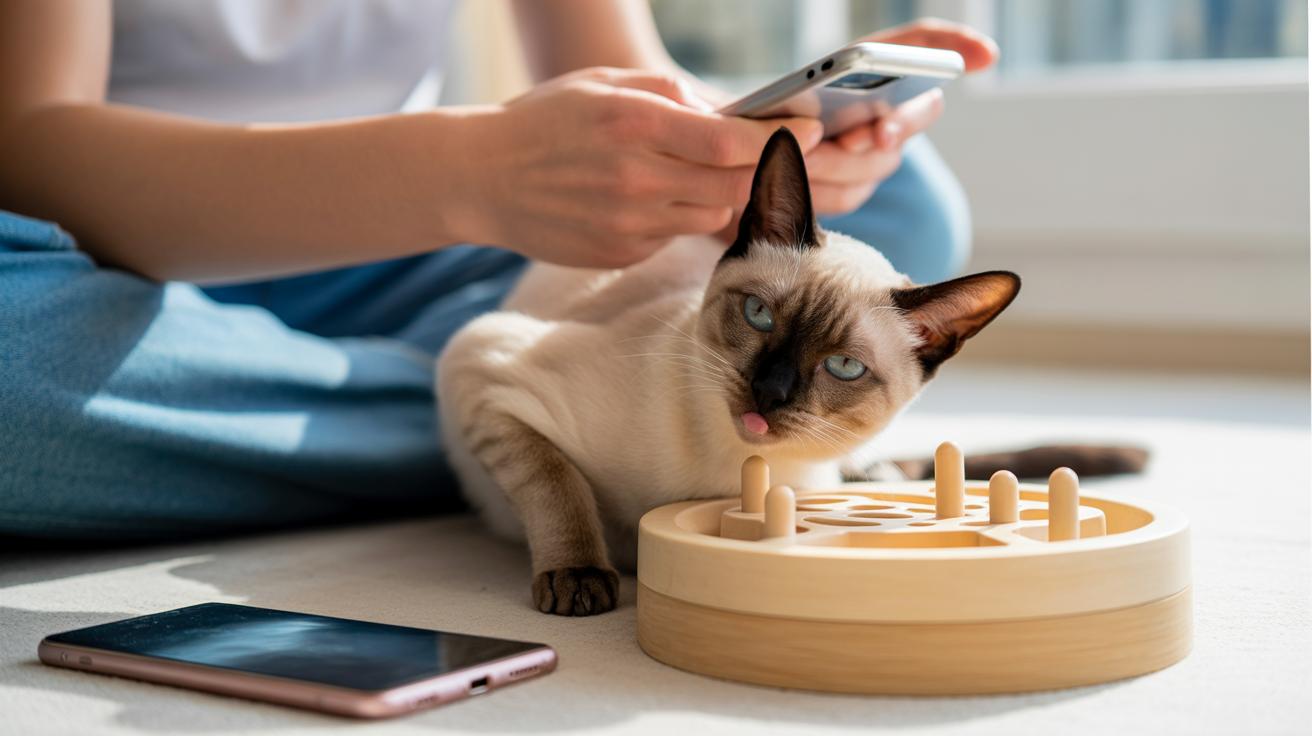
    Remember, the full adult dentition (your cat’s full set of grown-up teeth) comes in gradually, and Maine Coons keep filling out physically until about 4 to 5 years old. That means the dental picture can look stretched out compared with small breeds. If teeth don’t show up on schedule or gums are very swollen or bleeding, call your veterinarian (See Symptoms and Red Flags section for when to contact your veterinarian).

    Worth every paw-print.

    Age (weeks/months) Baby teeth event Permanent teeth event Notes
    Newborn Born without teeth.
    2–3 weeks Baby (deciduous) teeth begin to appear. First deciduous incisors (small front teeth) erupt.
    6–8 weeks Kittens normally have a full set of 26 baby teeth. All baby teeth usually in place by then.
    3–4 months Start losing baby teeth as adults push through. Permanent teeth begin erupting around 3–4 months. Big jump in chewing and mouthing , toys get a workout.
    14–16 weeks Middle incisors often appear about 14 weeks; the rest by 15–16 weeks. Incisors usually finish by about 16 weeks.
    5 months–1 year Most remaining baby teeth are lost. Teething-related gum swelling and discomfort can happen anytime in this window.
    6–12 months / full dentition Canines and molars finish coming in during this period. Full adult teeth arrive gradually; overall growth continues to 4–5 years in Maine Coons.

    Symptoms and Red Flags

    - Symptoms and Red Flags.jpg

    Teething kittens often chew more, mouth things, give tiny nips, drool a little, paw at their mouths, eat a bit less, and act a touch grumpy. That’s usually normal while baby teeth loosen and adult teeth push through. A few days of extra chewing is fine. Enjoy the cute chaos.

    Look closely for clinical gum signs though. Gingivitis (gum inflammation that makes gums look red or swollen and can cause bad breath) is common , about 8 out of 10 cats show some gum issue at some point. Stomatitis, called Feline Chronic Gingivostomatitis (severe, painful inflammation of gums and mouth tissues), is much less common but a lot worse; in Maine Coons it affects roughly 2% and often brings poor appetite and drooling.

    A vet dental exam usually includes an oral check and dental radiographs (x-rays that show tooth roots and hidden problems). Treatments can include antibiotics and anti-inflammatories (meds that reduce infection, swelling, and pain). In bad stomatitis cases extractions may be needed to stop the cycle of inflammation. Get x-rays before any surgery, and if someone suggests elective extractions for a young kitten, ask for a second opinion from a veterinary dentist. For follow-up scheduling, treatment plans, and what to watch for at home, see Dental Care & Owner Checklist (Checklist section).

    Some signs need fast action. Refusing to eat is a red flag that needs prompt attention. Ongoing weight loss is serious and shouldn’t be ignored. Persistent mouth bleeding, severe drooling with trouble swallowing, or a sudden jump in bad breath all mean see the vet soon. If your kitten stops grooming, hides, or growls at food, that’s a strong clue they’re in pain and need help.

    Worth every paw-print to catch problems early.

    Soothing Techniques and Safe Chew Toys for Teething Maine Coon Kittens

    - Soothing Techniques and Safe Chew Toys for Teething Maine Coon Kittens.jpg

    Cold toys and chilled chews give the quickest relief. Pop a soft rubber chew or a safe toy in the fridge or freezer for a few hours and your kitten will get a few minutes of cool, numbing comfort , picture tiny teeth on a frosty rubber ear. Keep sessions short and supervised so the toy doesn’t get chewed into bits. It’s simple, and your kitten will thank you with tiny, satisfied nibbles.

    Big-breed mouths need bigger, tougher toys. Pick items that match a Maine Coon’s jaw size so they can chew without swallowing a chunk. Durable, plain shapes hold up to heavy mouthing and save your socks from becoming chew toys, honestly.

    Vet-safe chew toy materials

    Good choices include:

    • Food-grade silicone (soft, non-toxic rubber-like material).
    • Hard rubber (tough, non-toxic rubber).
    • Textile options (woven fabric that resists shredding).

    Each of these resists quick breakdown, but if you’re unsure about a brand, ask your vet. For the full safety checklist and when to toss a toy, see Dental Care & Owner Checklist (Checklist section).

    DIY and chilled/frozen toy remedies

    Try this easy trick: wet a clean washcloth, seal it in a freezer bag, and chill it for a few hours. Or stick a vet-safe silicone toy in the fridge briefly. Offer chilled items for short 5–10 minute sessions while you watch, then take the toy away. Never leave frozen or small DIY bits unsupervised , safety first, and fewer emergency vet calls, phew.

    A quick personal note: my cat Luna once went nuts for a chilled washcloth and then flopped down for a nap. Worth every paw-print.

    Diet and Feeding Adjustments During Maine Coon Teething

    - Diet and Feeding Adjustments During Maine Coon Teething.jpg

    Teething can make a kitten eat less for a little while. Try softer food or wet meals so your kitten still gets enough calories (caloric intake = how many calories they get). Give smaller, moister portions more often. Warm the food a bit to make it smell extra tempting, and try gentle hand-feeding for picky moments. If your kitten refuses food for 48 to 72 hours, contact your veterinarian (See Symptoms and Red Flags).

    Transitioning to adult food usually lines up with the arrival of permanent teeth. Big-breed kittens like Maine Coons often need a slower, milestone-based switch that matches their dental and growth pace. For short-term relief, swap one or two meals a day to wet food or moistened kibble and keep a close eye on weight. For safe texture ideas and typical diet guidance, see what do maine coon cats eat.

    When you’re ready to move to adult formulas, time the change to permanent tooth eruption and steady growth markers rather than a calendar date. Pick a high-protein, large-breed formula that supports joints and size (large-breed = made for bigger, heavier cats). If appetite or weight loss sticks around, get veterinary help and bring a simple feeding log so they can see what and when your kitten has been eating.

    Weaning and soft-food options

    Offer wet food, moistened kibbles, and smaller, frequent portions so each bite is easy on sore gums. Watch for choking with very thick gruels; supervise the first few offers and pull back if it seems hard for them.

    Timing the switch to adult food for large-breed kittens

    Match the change to the arrival of permanent teeth and steady weight gain, not just age alone. Think growth and dental milestones first, this helps big kittens grow into strong adults without getting over or underfed.

    Managing Behavior: Nipping, Chewing, and Play During Maine Coon Teething

    - Managing Behavior Nipping, Chewing, and Play During Maine Coon Teething.jpg

    Teething makes mouthing and nipping worse. Your kitten’s gums are sore, so chewing really helps; that’s why socks, fingers, and bigger tugs show up more often with a Maine Coon’s larger jaws. Bigger mouths need bigger toys, so redirecting chewing to safe items is extra helpful for this large-breed stage.

    When a bite happens, stop play and pull your attention away right away. Offer a chilled chew toy (soft rubber you can cool in the fridge) or a durable chew like a nylon toy (polymer – tough plastic). If the kitten grabs the toy, praise them and go back to play. Repeat: stop play, offer the toy, reward use, then continue. Short, regular play sessions work best. Rotate toys so things stay interesting, and reward gentle mouthing to teach limits. No yelling needed.

    Keep kids and other pets safe by supervising rough play and setting a clear rule: hands are not toys. For furniture chewing, place chew targets nearby and block unsupervised access to tempting fabrics. See [Dental Care & Owner Checklist](Dental Care & Owner Checklist) for a full toy-safety checklist and guidance on when to remove a toy.

    Redirecting chewing to safe targets

    Swap your hand or shoes for a chilled chew toy right after a nip so the kitten learns the trade. Offer a range of textures: soft rubber (cool and squishy), nylon (tough polymer – long-lasting), or puncture-proof fabric (reinforced weave for heavy chewers). Rotate toys every few days to keep novelty high. Check the Checklist for discard cues like big cracks, stuffing leaks, or loose bits.

    Teaching bite inhibition and supervision tips

    Teach bite inhibition (helping kittens learn how softly to bite) by pausing play on a bite and using a calm verbal cue. If needed, give a very short time-out, then restart with a toy. Supervise child-kitten interactions, keep sessions brief, and set firm, simple rules so everyone stays safe and happy.

    Dental Care & Owner Checklist

    - Dental Care  Owner Checklist.jpg

    Routine tooth care cuts down plaque that can lead to gingivitis and periodontal disease. Think of this checklist as your daily map for keeping a teething Maine Coon kitten comfy and cavity-free. Aim to brush 2–4 times a week with a feline enzymatic toothpaste (toothpaste with enzymes that help break down plaque). Daily is ideal, but I get it – that can be tough. Ever watched your kitty decide the toothbrush is a chew toy? Uh, same.

    A quick note on products: look for VOHC-approved items (VOHC = Veterinary Oral Health Council) when you can. That approval helps pick things shown to reduce plaque and tartar.

    • Daily: quick visual mouth check. Lift the lips and look for obvious swelling or bleeding.
    • Daily: note appetite and any drooling. If something looks off, snap a photo.
    • Weekly: weigh the kitten and write down the number. Small changes can matter.
    • 2–4 times weekly: brush with feline enzymatic toothpaste (see above). Start gentle using a finger brush or gauze (soft cloth) so it feels okay for your kitten.
    • Ongoing: offer a rotation of chilled chew options (soft chews or rubber toys kept cool); limit frozen sessions to short, supervised times so their teeth stay safe.
    • Weekly: check toys for tears and toss anything shredded or sharp. A ripped toy can hide a tooth hazard.
    • Photograph protocol: take two angles – straight on of the front teeth with the mouth open, and a side view showing the canines. Use good light, steady your phone, and repeat weekly if you see changes.
    • Schedule a first pro dental check by the time permanent incisors start coming in, about 3 to 4 months old, or sooner if red flags pop up.
    • If persistent red-flag signs show up (see Symptoms and Red Flags), contact your vet right away and have your photo log ready for a remote consult.
    • Before any elective extraction in a young kitten, get a second opinion and request dental radiographs (dental x-rays) so hidden roots or bone problems aren’t missed.

    Good photos speed triage. Use natural light, keep your phone steady, and label files with the date and a short note – for example "Jun10_leftcanine_swelling". If you send images to a clinic or telemedicine service, include the weight log and appetite notes so the vet can see trends. Compress big files if you need to, but keep the originals in case higher-res images are requested.

    Book a professional dental exam when permanent incisors are erupting (about 3 to 4 months) unless you hit a red flag sooner. Ask for dental radiographs before any extraction. For tricky cases, seek out a veterinary dental specialist and get that second opinion before elective tooth removal. Worth every paw-print.

    Final Words

    First baby teeth at 3 weeks; permanent teeth begin erupting at 3–4 months; 26 baby teeth, 30 adult teeth; gum soreness window ~5 months–1 year.

    Big-boned kittens follow the same map but on a slower clock, especially for big canines and molars. Expect canines and molars to keep moving in through 6–12 months, with some lingering gum swelling while that happens.

    Their skeletons keep growing to 4–5 years, so dental change can feel drawn-out. Stick to gentle routines and chilled chews. With a little patience, maine coon teething will end with healthy smiles and playful pounces.

    FAQ

    Maine Coon Teething FAQ

    When do Maine Coon kittens start teething and how long does it last?

    Baby (deciduous) teeth appear at about 3 weeks. Permanent teeth begin erupting around 3–4 months. Gum soreness is most likely between roughly 5 months and 1 year, though skeletal growth can continue to 4–5 years.

    How many baby and adult teeth do Maine Coons have and how do they compare to normal cats?

    A kitten normally has 26 baby teeth and an adult cat has 30 permanent teeth. Maine Coons have the same tooth counts as other cats, though teeth may be proportionally larger in large-breed kittens.

    What are common teething symptoms in Maine Coon kittens?

    Common signs include increased chewing and mouthing, mild drooling, pawing at the mouth, brief appetite dips, and disrupted sleep in young kittens. These usually pass as teeth come in.

    What is stomatitis and how common is it in Maine Coons?

    Stomatitis (Feline Chronic Gingivostomatitis) is severe mouth inflammation. It affects roughly 2% of Maine Coons. Around 8 in 10 cats may experience some gum issue at some point.

    How can I soothe teething pain and what toys are safe?

    Offer chilled or briefly frozen soft rubber or food‑grade silicone toys (non-toxic). Choose larger, durable sizes for big-breed kittens and supervise short frozen sessions to avoid choking.

    When should I see a vet for teething problems?

    See a vet if the kitten refuses to eat, loses weight, has persistent mouth bleeding, severe drooling, sudden worsening bad breath, or signs of severe pain. Exams often include dental radiographs (x‑rays).

    When should I switch my Maine Coon to adult food during teething?

    Time the switch around permanent tooth eruption and growth markers rather than a strict age. Large‑breed kittens often benefit from adult formulas designed for bigger mouths.

    How do I stop nipping and chewing during teething?

    Stop play immediately on a bite, offer a safe chew toy, reward gentle play, rotate toys for novelty, and supervise children and other pets during energetic sessions.

    Where can I find real-life teething stories and photos?

    Reddit and breed forums are good sources for real-life teething stories and photos. Use caution with advice you find online and consult a veterinarian for health concerns.

    What does “Maine Coon syndrome” mean?

    “Maine Coon syndrome” is an informal phrase often used to refer to breed-linked conditions such as hypertrophic cardiomyopathy (HCM) or hip dysplasia. Ask your breeder or veterinarian for specifics.

    Related Articles

  • Signs of Feline Leukemia in Cats: Early Symptoms

    Signs of Feline Leukemia in Cats: Early Symptoms

    Think your cat is just being cozy? Think again.
    Low energy, losing weight because they won’t eat, and pale gums are the three earliest signs you can act on.

    You might notice long naps where they barely twitch, a lighter frame when you pick them up, or pale pink gums when you lift their lip. Ever watched your kitty sleep and wondered if something’s off? These little changes feel small, but they matter.

    If you see two or more of these signs, call your vet and ask for a blood test that checks for FeLV (feline leukemia virus, a contagious virus that can weaken a cat’s immune system). It’s a simple test. Catching it early makes treatment easier, lowers the chance of repeat infections, and buys you more purr-filled, playful afternoons with your buddy.

    Quick tip: snap a photo of the gums to show the vet if you can. Worth every paw-print.

    How to recognize early signs of feline leukemia in cats (what to watch for now)

    - How to recognize early signs of feline leukemia in cats (what to watch for now).jpg

    The three earliest signs you can act on are low energy, losing weight from poor appetite, and pale gums that hint at anemia. Keep an eye out for two or more of these and see a vet for a blood test (this checks for feline leukemia virus, or FeLV). Quick check now can save headaches later.

    • Lethargy – your cat plays less, naps longer, stops jumping on the couch, or hides more than usual. This is often the first thing owners notice.
    • Poor appetite and weight loss – if your cat eats less and trims down over a few weeks without a clear reason, that is a red flag. Weighing them now and then helps catch slow losses.
    • Pale gums – look inside the lip for color. Pale mucous membranes may mean anemia (low red blood cell count), which is common with FeLV.
    • Intermittent fever – feel for warm ears or a hotter-than-usual body when your cat seems off. A fever often shows up with tiredness and poor eating.
    • Swollen lymph nodes – gently feel under the jaw and along the neck for lumps or firmness that do not go away in a few days; lymph nodes are small immune system glands.
    • Recurrent infections – repeated sneezing, runny eyes, or skin sores that come back despite treatment suggest the immune system is weakened.
    • Ongoing diarrhea or vomiting – watch how often and how long it lasts. Persistent gastrointestinal upset that does not clear up needs testing.
    • Severe gingivitis or mouth infections – bad breath, drooling, or pawing at the mouth can mean gum inflammation (gingivitis) or other oral disease tied to FeLV.
    • Eye infections or conjunctivitis – red, sticky, or constantly squinting eyes that return after treatment may be an early sign. Conjunctivitis means eye lining inflammation.
    • Poor coat condition or slow healing – a rough or thinning coat, or wounds that take forever to close, often point to lowered immunity.

    For a fuller symptom list, see symptoms of feline leukemia in cats.

    Early signs can be subtle and may come and go. If you spot two or more of these, ask your vet about a quick in-clinic blood test (FeLV antigen test). Worth the trip.

    Common and progressive FeLV symptoms in cats (how signs change as disease advances)

    - Common and progressive FeLV symptoms in cats (how signs change as disease advances).jpg

    FeLV often starts with small, vague changes that are easy to miss, then moves into bigger, body-wide problems as the virus attacks bone marrow (the spongey tissue inside bones that makes blood cells) and immune cells. Watch for signs that hint at a weakening immune system or poor blood-cell production, and tell your vet about them at checkups. Ever notice your cat seems a bit off but not sick-sick? That could be the start.

    Acute versus persistent and regressive FeLV stages

    Acute viremia (virus in the blood) can show up days to weeks after exposure and usually lasts a few weeks to a few months while the virus is multiplying. If the virus sticks around, that’s persistent viremia, which usually means a worse outlook; vets typically recheck at 6 to 12 weeks to see if it’s still present. Regressive infection means the virus calms down and the amount of virus falls, but the risk isn’t zero, kittens especially can move from regressive to persistent infection more often than adults.

    Mechanisms: bone marrow suppression and immune failure

    FeLV targets bone marrow and immune cells, causing bone marrow suppression (slower or damaged blood-cell production) that leads to cytopenias (low blood cell counts). That shows up as anemia (low red blood cells, which can make a cat tired or pale), leukopenia (low white blood cells, which raises infection risk), and thrombocytopenia (low platelets, which can cause bruising or bleeding). Your vet will look for these clues on a CBC (complete blood count) , low red cells, low white cells, and low platelets all point to trouble.

    How signs evolve or cluster over time

    Early, nonspecific signs like low energy, poor appetite, or mild fever can pile up into repeat infections, slow recovery, unexplained bleeding, or even cancer such as lymphoma linked to FeLV. Look for patterns: repeated illness, new lumps, prolonged recovery, or strange bleeding. Secondary infections are common in FeLV-positive cats, so regular bloodwork and close monitoring help your vet guide care and catch problems early. If you see changes, mention them , small details help a lot.

    Red-flag warning signs: when signs of feline leukemia in cats become emergencies

    - Red-flag warning signs when signs of feline leukemia in cats become emergencies.jpg

    If your cat has feline leukemia (FeLV), some signs need urgent attention right away. These are the things that mean go now, not later, your clinic or the ER can help fast.

    Severe breathing difficulty. This could be pleural effusion (fluid around the lungs) or pneumonia (a lung infection). Get emergency care now. Your cat may need oxygen therapy (extra oxygen) and chest imaging like X-rays or ultrasound to see what’s going on.

    Collapse or sudden, severe weakness. That might mean profound anemia (very low red blood cells) or shock. Head to an emergency clinic immediately and bring any medications and recent lab results you have.

    Uncontrolled bleeding, lots of bruises, or petechiae (tiny red or purple pinpoint spots). These signs suggest thrombocytopenia (very low platelets). Urgent testing is needed; transfusion (a blood transfusion) or platelet support may be required.

    Seizures or a sudden neurologic change. This could mean the central nervous system (the brain or spinal cord) is involved, or there’s a severe metabolic derangement (a dangerous chemical imbalance). Emergency stabilization and rapid diagnostics are essential.

    Sudden, marked pallor with rapid breathing. This usually points to severe anemia from bone marrow suppression. Immediate care is critical. A blood transfusion can be lifesaving.

    High, uncontrolled fever. That raises concern for a severe infection or sepsis (a life-threatening whole-body infection). Seek emergency assessment for IV antibiotics (medication given through a vein), IV fluids, and close monitoring.

    Intractable vomiting or diarrhea with signs of dehydration. Your cat can lose vital salts and fluids fast, risking electrolyte collapse and shock. Emergency rehydration (fluids under the skin or into a vein) and tests are needed.

    Not eating or drinking for more than 24 hours. That can lead to rapid decline and metabolic complications, so urgent veterinary attention is important.

    What an emergency clinic will typically do: stabilize breathing with oxygen, give IV fluids (fluids through a vein), run bloodwork/CBC (complete blood count) to check red cells, white cells, and platelets, start antibiotics if needed, and arrange transfusion or referral for advanced care. It can feel scary, but fast action really helps. Worth every paw-print.

    Final Words

    In the action, we named the top three early signs: lethargy, poor appetite or weight loss, and pale gums, and gave a 10-item home checklist; see a vet for a blood test if you notice two or more.

    We then explained how the virus can shift from mild, vague problems into bone-marrow and immune system issues, described acute, persistent and regressive stages, and flagged red-flag emergencies that need immediate care.

    Keep checking your cats, trust your gut, and act quickly when several clues appear, quick testing catches trouble earlier and helps your multi-cat household stay healthier; remember the signs of feline leukemia in cats.

    FAQ

    What are the first signs of feline leukemia in cats?

    The first signs of feline leukemia in cats are lethargy (low energy), poor appetite with weight loss, and pale gums indicating anemia (low red blood cells). See a vet for a blood test if you notice two or more.

    How do cats act when they have leukemia?

    Cats with leukemia often act unusually quiet and tired: lethargic, hiding, grooming less, playing less, and they may have recurrent infections or fever—these behavior changes are common early clues.

    How long can a cat have feline leukemia before showing symptoms?

    A cat can have feline leukemia for weeks to months before showing symptoms, though some remain symptom-free for years; kittens often progress faster, so recheck testing at 6–12 weeks after exposure.

    How does a cat get feline leukemia, and can indoor cats get it?

    A cat gets feline leukemia through close contact with infected saliva or blood—grooming, bite wounds, shared bowls, or mother-to-kitten transmission; indoor cats can become infected if an infected cat joins the household.

    What is feline leukemia treatment?

    Feline leukemia treatment focuses on supportive care and treating infections; there is no cure. Vets may use antibiotics, IV fluids, transfusions, or cancer therapy for tumors, plus regular monitoring and indoor care.

    What are the final stages of feline leukemia?

    The final stages of feline leukemia show severe bone marrow suppression (marrow stops making blood cells), profound anemia, bleeding, weight loss, uncontrolled infections, and tumors like lymphoma, with rapid decline and poor prognosis.

    What eye symptoms can feline leukemia cause?

    Feline leukemia can cause eye problems like conjunctivitis (red, watery eye), uveitis (inflammation inside the eye), discharge, cloudiness, or vision changes; see a vet promptly for eye care.

    Related Articles

  • Symptoms of Feline Leukemia in Cats: Early Detection

    Symptoms of Feline Leukemia in Cats: Early Detection

    Ever watched your kitty race around the room then suddenly flop on the couch? It’s not always just a lazy day.

    Those little clues, like pale gums (when the pink turns ghostly) or unexplained weight loss, could point to feline leukemia virus (FeLV, a virus that attacks blood cells). And uh, catching it early is a total game-changer. No more playing hide-and-seek with your cat’s health.

    Think of it like spotting small ripples before a big wave. No more guessing games. Next, we’ll share six claw-tastic warning signs to help you catch FeLV fast and keep your furball feeling feline fine.

    Six Critical Early Warning Signs of FeLV

    - Six Critical Early Warning Signs of FeLV.jpg

    FeLV (feline leukemia virus) can be sneaky. It often starts with tiny clues before bigger problems appear. Ever watched your cat just flop instead of pouncing? It could be a sign.

    • Lethargy
      When your kitty usually goes full-speed but suddenly feels like a couch potato, that’s lethargy. Poor energy. Slowed play. It’s like watching a slo-mo video.

    • Unexplained weight loss
      You serve the same food, yet the pounds keep dropping. No special diet needed.

    • Persistent fever
      A cat’s normal temp is about 100.5–102.5°F. If they stay too warm, fever (body temp above 102.5°F), it could point to FeLV.

    • Pale mucous membranes
      Flip up their lip. If the pink lining inside their mouth (mucous membranes) turns ghostly white, that’s anemia.

    • Enlarged lymph nodes
      Gently feel under the jaw or behind the knees for little bean-shaped filters (lymph nodes). If they’re swollen (lymphadenopathy), pay attention.

    • Oral lesions
      Red bumps or sores in their mouth, like stomatitis (painful ulcers), can make eating tough. Ouch.

    These clues can show up in the gut, breathing, nerves, eyes, blood or mouth. Spot any of them? Don’t wait – call your vet right away. Worth every paw print.

    Progression Phases of Feline Leukemia Virus Infection in Cats

    - Progression Phases of Feline Leukemia Virus Infection in Cats.jpg

    When your kitty first picks up feline leukemia virus (FeLV), it sneaks in almost unnoticed. This acute infection phase (initial infection) lasts a few days to a couple of weeks – it’s like your cat caught a cold, minus the sneezes. You might spot a tiny fever or a bit more napping, or you might not see anything at all. Ever watched your cat chase a sunbeam across the floor? They could be fighting off FeLV and you’d never guess.

    Next comes the regressive infection phase, often called the asymptomatic carrier stage. Here the virus hides in bone marrow (the soft, spongy inside of bones) and lymphoid tissues (parts of the immune system) but stays quiet. Your cat still zooms around like a tiny tiger, batting at toys and purring for pets. With regular vet check-ups and a careful eye, many FeLV-positive cats live years before any serious signs appear.

    Then the chronic disease phase kicks in – the progressive clinical illness. FeLV revs up, weakening immunity (your cat’s natural defenses) and causing anemia (low red blood cells), infections, and weight loss. You might notice swollen lymph nodes, mouth sores, or labored breathing. This is when extra vet visits, cozy home care, and gentle playtime really matter. Keep their favorite blanket close and ask your vet about supportive treatments – every soft head-butt will feel like a victory.

    Worth every paw-print.

    Hematological and Immunosuppressive Effects of Feline Leukemia in Cats

    - Hematological and Immunosuppressive Effects of Feline Leukemia in Cats.jpg

    When FeLV sneaks into a cat’s bloodstream, it sets up shop in the bone marrow (the spongey tissue inside bones where blood cells are born). And when that factory slows or stops, you’ll notice pale gums and that soft flop when your cat jumps off the couch. Chronic anemia (low red blood cells) steals their energy over weeks, leaving them extra wobbly and weak.

    Blood Disorder Key Lab Findings Clinical Impact
    Hemolytic anemia (RBC breakdown) Low hematocrit (red cell percentage), high bilirubin Pale gums, jaundice (yellow skin), weakness
    Neutropenia (low infection fighters) Reduced neutrophil count Frequent infections, slow wound healing
    Thrombocytopenia (low platelets) Low platelet count Bruising, nosebleeds, bleeding gums
    Pancytopenia (all cells low) Low RBC, WBC, platelets Extreme fatigue, severe infections, hemorrhage

    And those immune defenses take a nosedive, leaving your kitty open to bugs like feline infectious peritonitis, Mycoplasma (tiny bacteria-like germs), and stubborn respiratory bugs that just won’t quit. Ever seen your cat catch a simple cold and it sticks around forever? That’s FeLV’s doing. For more on how FeLV shakes up your cat’s whole body, check out Feline Leukemia Overview.

    By spotting anemia signs or a sudden drop in neutrophils early, vets can step in with antibiotics, blood transfusions, or extra fluids before things get scary. Next time your furball seems extra pale or bruised, you’ll know it’s time for a quick vet visit. Worth every paw-print.

    Neurological and Ocular Manifestations of Feline Leukemia in Cats

    - Neurological and Ocular Manifestations of Feline Leukemia in Cats.jpg

    FeLV (feline leukemia virus) can sneak into your cat’s nervous system in odd ways. You might spot Horner syndrome (when one eyelid droops and the pupil shrinks) or anisocoria (one eye sporting a bigger pupil). Then there’s mydriasis (when bright light makes a pupil freeze wide open). Ever seen that robotic stare? That fixed gaze can point to trouble.

    Ever caught your kitty forgetting the litter box? Urinary accidents or even a floppy leg can crank up the drama. Over days or weeks, muscle weakness and central blindness (losing the center of their sight) can tiptoe in until you look real close. Catching these neurological signs early helps flag FeLV before it pounces.

    FeLV can also mess with your cat’s eyes. You might see uveitis (swelling in the eye’s middle layer) that leaves eyes red and sore. Conjunctivitis (pink eye) brings tearing, redness, and crusty bits that can glue your cat’s lids shut by morning.

    Then there’s keratitis (inflammation of the cornea, the eye’s clear front window), which can cloud or scar the surface. Your kitty might paw at its eyes or squint like it’s staring at the sun. Yikes.

    Any weird eye twitches, drippy eyes, or sudden vision loss? Call your vet fast!

    Symptoms of Feline Leukemia in Cats: Early Detection

    - Gastrointestinal and Respiratory Signs of Feline Leukemia in Cats.jpg

    When feline leukemia virus (FeLV) first nudges your cat’s organs, you’ll often see hints in digestion (how they break down food) or breathing (inhaling and exhaling). Um, ever notice your kitty’s whiskers twitching while they cough or clutch their tummy? Actually, these low-key signals can slip by if you’re not looking. Spotting them early gives you a better shot at treatment before things get serious.

    Tummy troubles often start subtle, with soft stools you barely notice on the carpet. Vomiting might feel like a quick gag or a half-eaten snack left behind. If these issues stick around, your furry friend can get dehydrated (losing too much body fluid), leading to weight loss and limp paws. When diarrhea or vomiting don’t ease up, it’s time to call your vet.

    Then there’s the breathing stuff. Your cat might pant like a puppy while resting or breathe faster after chasing a toy. A sudden cough can sound like they’re clearing a hairball, except it keeps coming back. If your kitty seems to gasp for air or has a runny nose with food regurgitating, don’t wait, breathing problems are urgent.

    Worth every paw-print.

    Oral Health Challenges: Stomatitis in Cats with Feline Leukemia

    - Oral Health Challenges Stomatitis in Cats with Feline Leukemia.jpg

    Ever watched your kitty drool like a fountain? For cats fighting FeLV (feline leukemia virus), stomatitis (serious gum inflammation) and ulcers (open sores in the mouth) can turn mealtime into a showdown. You might spot matted fur under their chin or catch them pawing at their cheeks, poor things.

    Eating gets tough when gums puff up and sores feel like burning embers. Extra spit on the floor or a sudden skip of dinner? Those are your red flags. Gingivitis (gum redness and bleeding) is like minor mouth drama. But stomatitis brings in painful clusters of ulcers on cheeks, tongue, and throat. Really rough.

    Over time, ulcers can wear down tissue, loosen teeth, and make the jaw ache, yikes. Uh, don’t ask me how I know. A vet’s dental check is a game-changer. They’ll spot deep wounds early and guide you to treatments, professional cleanings or gentle mouth rinses that ease the burn.

    Next, swap to soft foods that slide down easy. And, you know, hold off on the chin scratches until they’re feeling better, unless you want an accidental love tap from a grumpy kitty. It’s all part of giving them relief and extra cuddles. Worth every purr.

    Diagnostic Approaches for Feline Leukemia in Cats

    - Diagnostic Approaches for Feline Leukemia in Cats.jpg

    Ever felt your heart do a little flip while waiting on vet news? Most vets start with an ELISA test (that’s Enzyme-Linked Immunosorbent Assay, a way to spot FeLV proteins in blood). It’s pretty reliable once you hit the sweet spot, two to six weeks after exposure, when enough viral proteins are floating around. Oops, did I scare you? Labs often double-check positive results to rule out rare false alarms from recent shots or other bugs.

    Next up is PCR testing (polymerase chain reaction, like a DNA photocopier for tiny virus bits). This one’s super sensitive, perfect when antigen levels are whisper-quiet or if your cat seems fine but the virus is hiding in the bone marrow. Vets often pair PCR with ELISA in kittens or after high-risk encounters. Early detection means more time for supportive care and a happier purr.

    Sometimes your vet will glance at a stained blood smear (a slide of dyed blood cells that really shows off their shapes). You might see low red cell counts, odd lymphocyte shapes, or even viral inclusion bodies (tiny virus spots inside cells). Testing too early or low viral load can sneak in false negatives, so a repeat check a few weeks later is common. Combining ELISA, PCR, and blood smear clues gives the clearest picture, and the best next steps for your furball’s care.

    Worth every paw-print.

    Prognosis and Care Strategies for Cats with Feline Leukemia

    - Prognosis and Care Strategies for Cats with Feline Leukemia.jpg

    Managing feline leukemia can feel like taking a winding road full of surprises. Some cats cruise along for years with vet check-ups and a calm home. Others may slow down faster if extra infections or cancers sneak in. Every kitty’s journey is different, your vet is like a co-pilot helping you pick the best route. Ever watched your furball chase shadows one moment and then snooze like a tiny loaf the next?

    Supportive care starts with zapping infections as soon as they show up. Antibiotics (germ-fighting meds) swoop in to boot out bacteria. Analgesics (pain relievers) hush any aches. And steady hydration, you know, fresh water or brothy treats, keeps them from feeling weak. Pair that with high-protein wet food or even a bit of hand-feeding when needed. Plus, fresh bedding, gentle brushing, and a quiet hangout spot can make your cat feel like royalty!

    Antiviral choices are a bit thin on the ground, but some vets recommend interferon (a protein therapy) or zidovudine (an antiviral drug) under close watch. These aim to slow the virus and give your cat’s immune system a little boost. You might also hear about B-vitamin shots or appetite stimulants, tiny helpers to keep energy high and weight steady. Chat with your vet to find the perfect paw-scription!

    Keep tabs on your cat’s mood, playtime, and munching habits to know how they’re doing. When the zoomies fade and feeding turns into hard work, it’s time for extra-soft beds, gentle pain checks, and more snuggle breaks. Making end-of-life decisions can feel tough, but sometimes comforting them is kinder than chasing another treatment. Lean on your vet’s advice, and your heart, because every choice honors your kitty’s comfort and dignity!

    Prevention and Monitoring of Feline Leukemia in Multi-Cat Homes

    - Prevention and Monitoring of Feline Leukemia in Multi-Cat Homes.jpg

    Let’s make this kitty crew a fortress against FeLV (feline leukemia virus). Think of vaccines, tests, a bit of kitty crowd control, and you’ll slash risks faster than your cat can bat a feather.

    First, start FeLV shots when kittens are 8 to 12 weeks old. Then stick to your vet’s booster plan, showing up on time means better protection. Ever watched your cat fluff up after a shot? Don’t worry, that tiny poke is worth the peace of mind.

    Thinking of adding a new fluffball? Ask for an ELISA test (a simple blood test that looks for FeLV antigens, or virus markers). Then, about a month later, say in 4 to 6 weeks, test again to catch any late bloomers. Worth every mew.

    Until their status is clear, give newcomers a 2- to 3-week timeout in a cozy spare room. This helps block horizontal spread, like grooming sessions, sharing bowls, or sneaky nose-to-nose sniffing.

    • Quarantine every new or boarding cat for 2–3 weeks before letting them mingle.
    • Keep FeLV shots up to date: core vaccines and boosters.
    • Test before adoption: an ELISA screen, then another in 4–6 weeks.
    • Wipe down litter boxes, food bowls, and bedding daily to stop virus spread via saliva and nose drips.
    • Keep kittens apart until you know their FeLV status to avoid mom-to-kitten transmission.

    Jot down every shot, test date, and room spot in a simple log. It’s like your kitty health diary, super handy for spotting trends. Then, schedule vet check-ups every 6 to 12 months or after any risky encounter.

    With everyone tested and vaccinated, you’ll sleep soundly knowing your clowder is safe, and you’ll get back to the fun stuff, like watching them chase rays of sunshine across the floor.

    Final Words

    From spotting lethargy or weight loss to noticing fever and anemia, we covered the six critical early warning signs of FeLV. We then mapped out stages from initial infection to illness progression and showed how blood, immune, nervous, and eye systems get involved. Next, we highlighted GI, respiratory, and oral challenges.

    We closed with diagnostics, care tips, and prevention strategies perfect for busy multi-cat homes, aimed at quick intervention and stress reduction.

    Symptoms of feline leukemia in cats can feel frightening, but early action sparks hope and purrs ahead.

    FAQ

    What are the first signs of feline leukemia in cats?

    The first signs of feline leukemia include lethargy, unexplained weight loss, persistent fever, pale mucous membranes (anemia), swollen lymph nodes, and oral lesions such as stomatitis or ulcers.

    What gastrointestinal and eye-related symptoms can feline leukemia cause?

    Feline leukemia can cause vomiting, persistent diarrhea, red or swollen eyes, conjunctivitis, and occasional ocular inflammation (uveitis), so watch digestive upset and eye discharge as warning signs.

    How does the feline leukemia virus spread, and can healthy cats catch it?

    Feline leukemia virus spreads through saliva, nasal secretions, urine, feces, and blood via bite wounds, shared food bowls, or grooming, so close contact or multi-cat environments raise transmission risks.

    How long do cats live after a feline leukemia diagnosis?

    After a feline leukemia diagnosis, cats live from several months up to a few years, with many surviving one to three years depending on immune response, secondary infections, and care quality.

    How do cats behave when infected with FeLV?

    Cats with leukemia often become lethargic, eat less, hide more, lose interest in play, and may show weak coordination or unsteady movements as the virus weakens their energy and immune system.

    What conditions can be mistaken for feline leukemia?

    Conditions such as FIV infection, immune-mediated anemia, or chronic infections can mimic feline leukemia symptoms; only FeLV-specific blood tests (ELISA, PCR) confirm a definite diagnosis.

    What symptoms do kittens born with feline leukemia display?

    Kittens born with feline leukemia often show poor weight gain, slow growth, persistent fever, pale gums (anemia), diarrhea, and frequent infections due to their underdeveloped immune systems fighting the virus.

    Related Articles