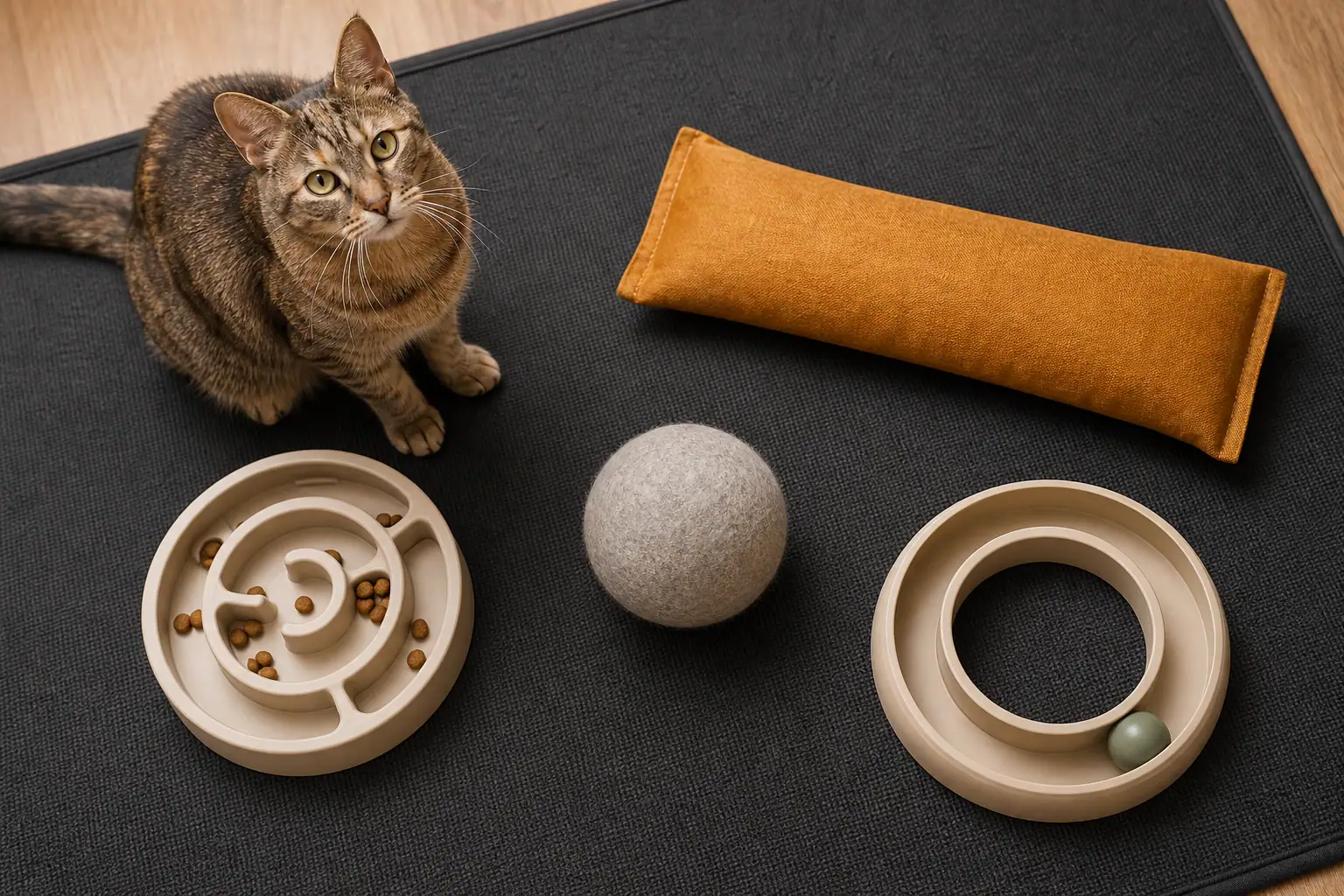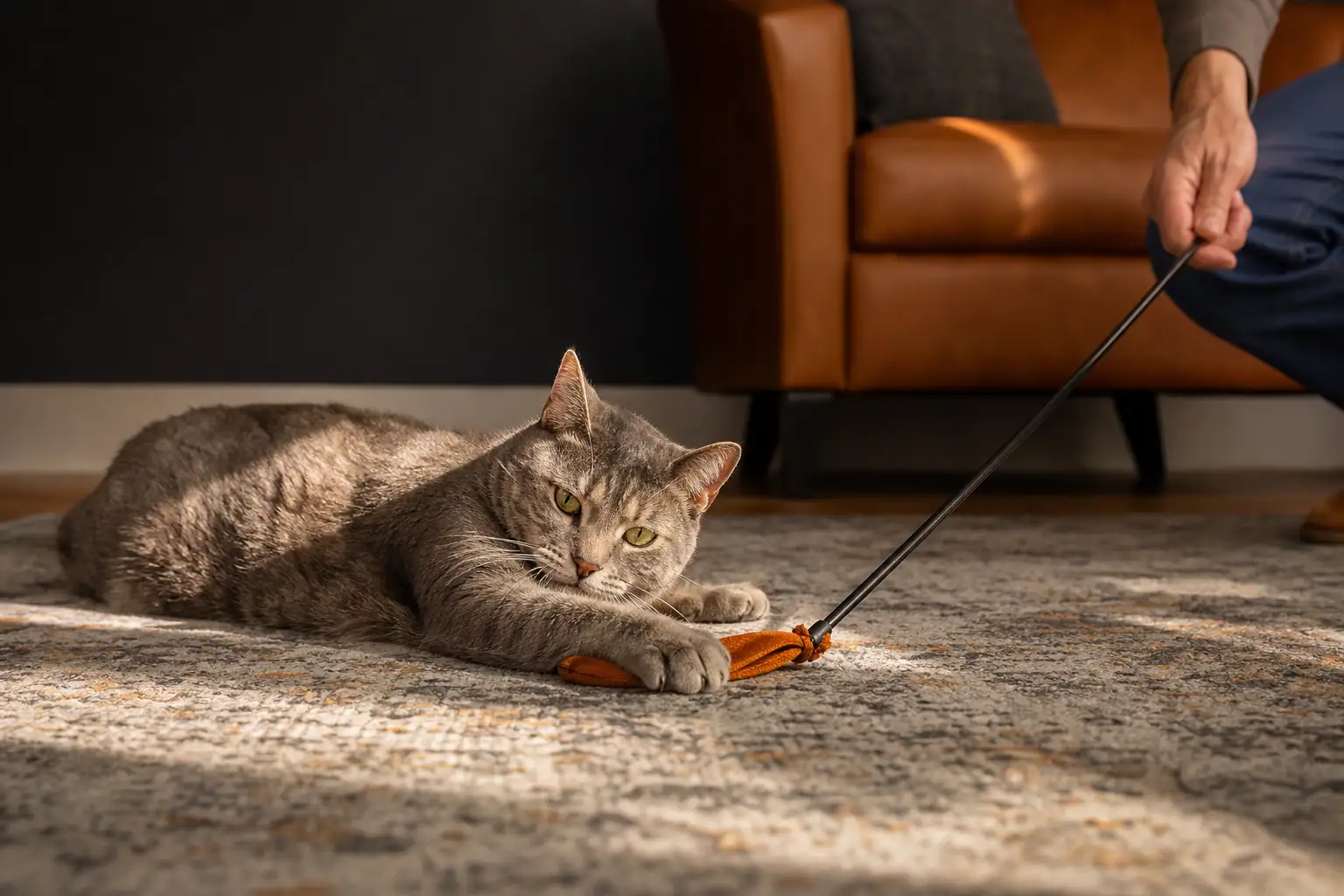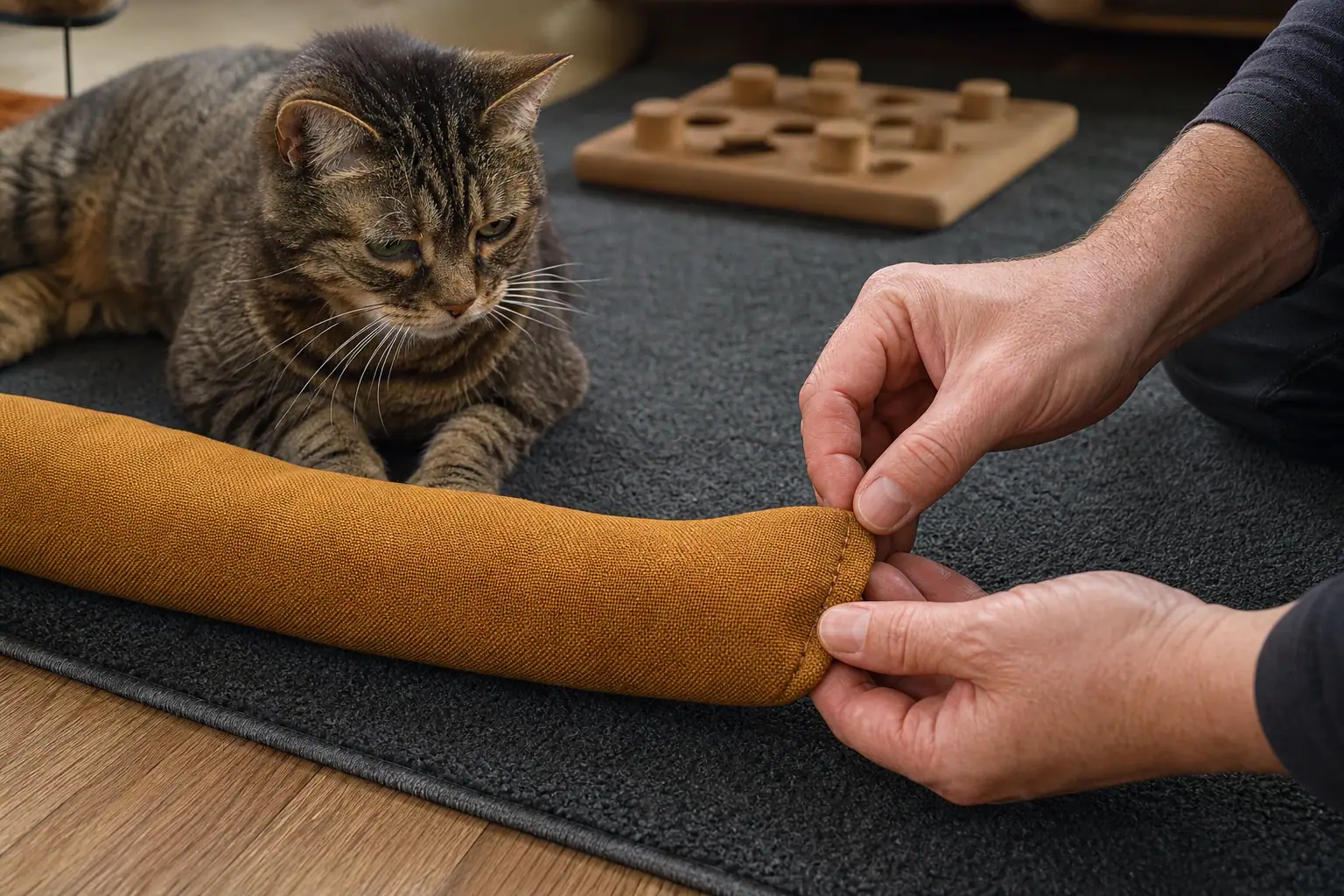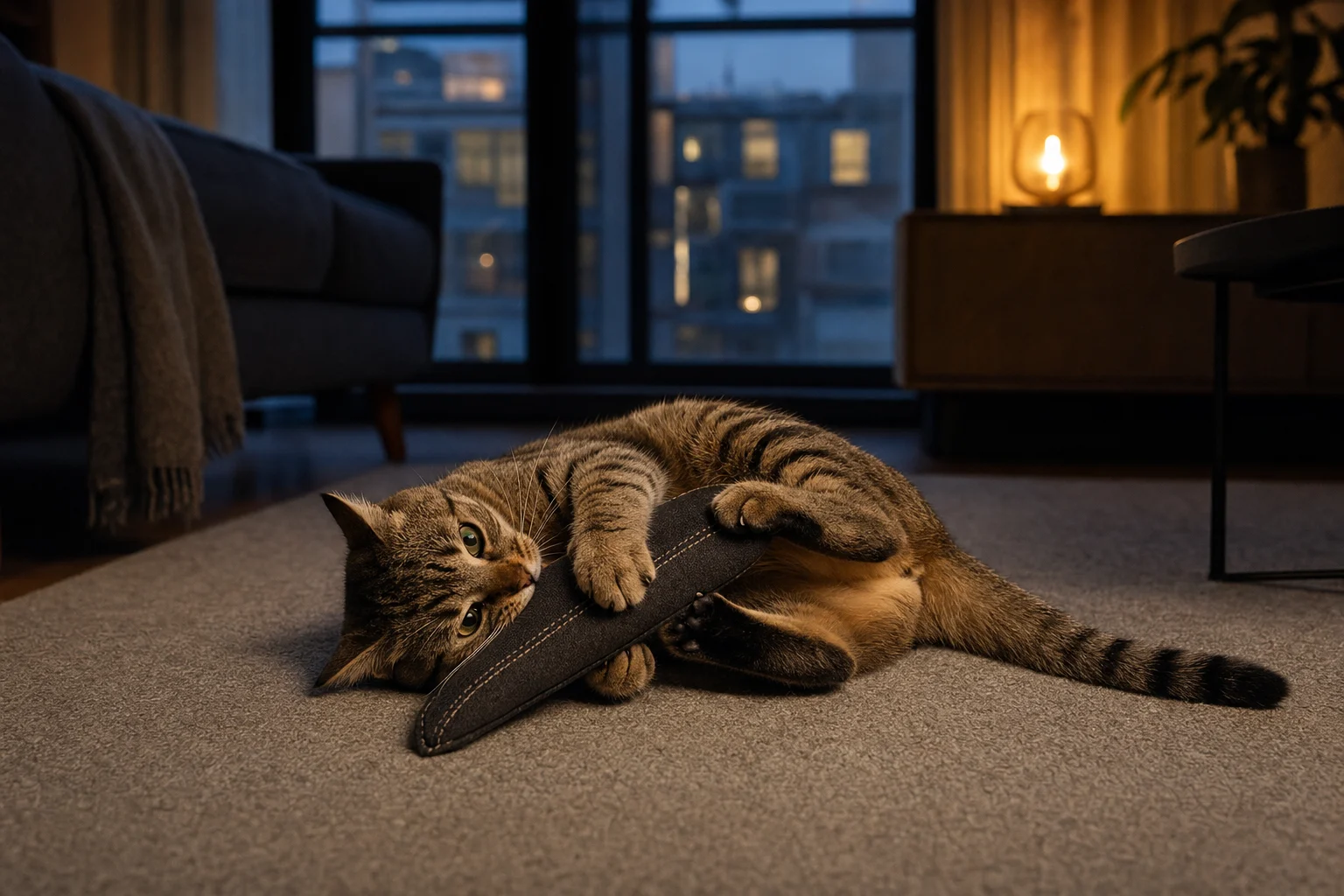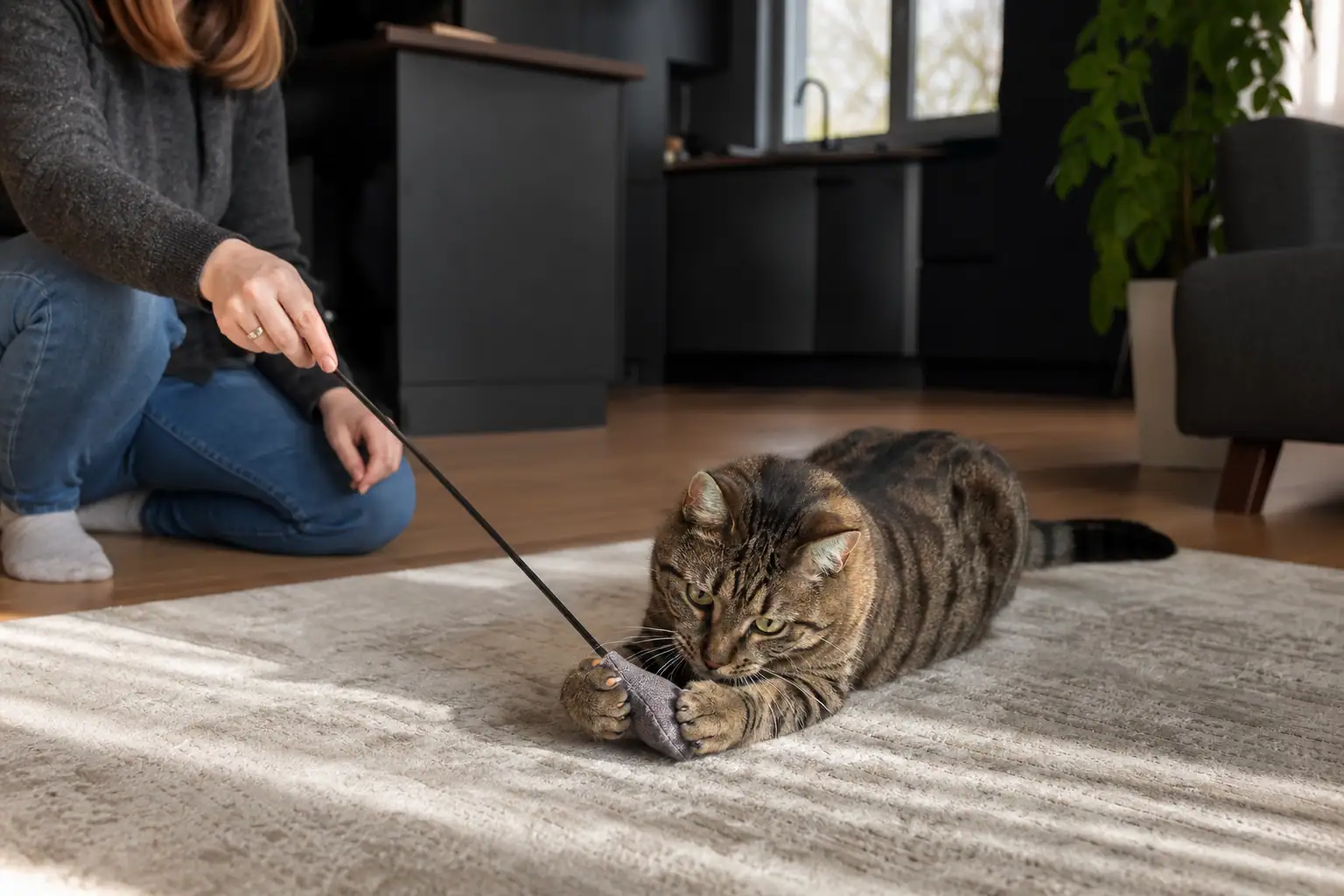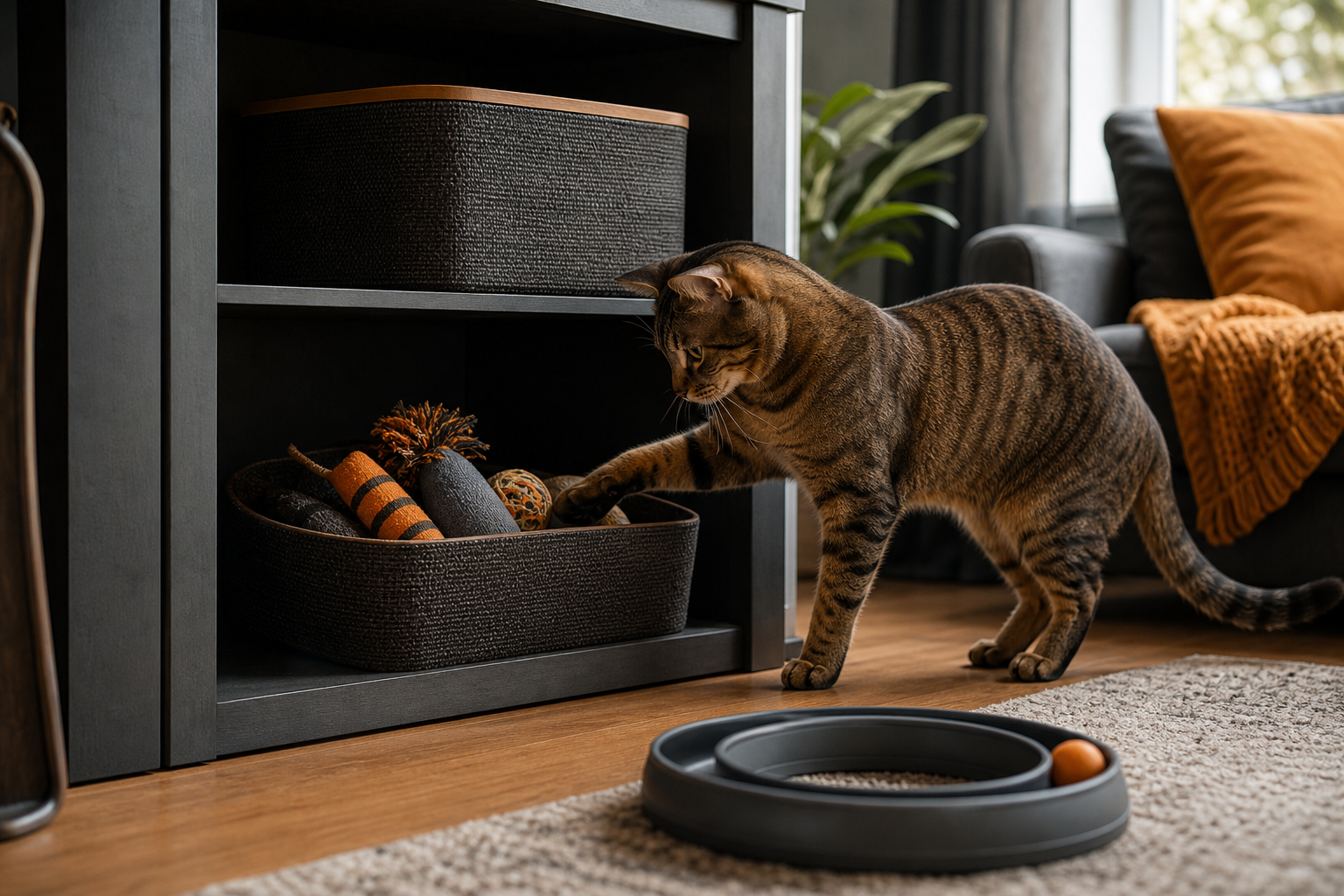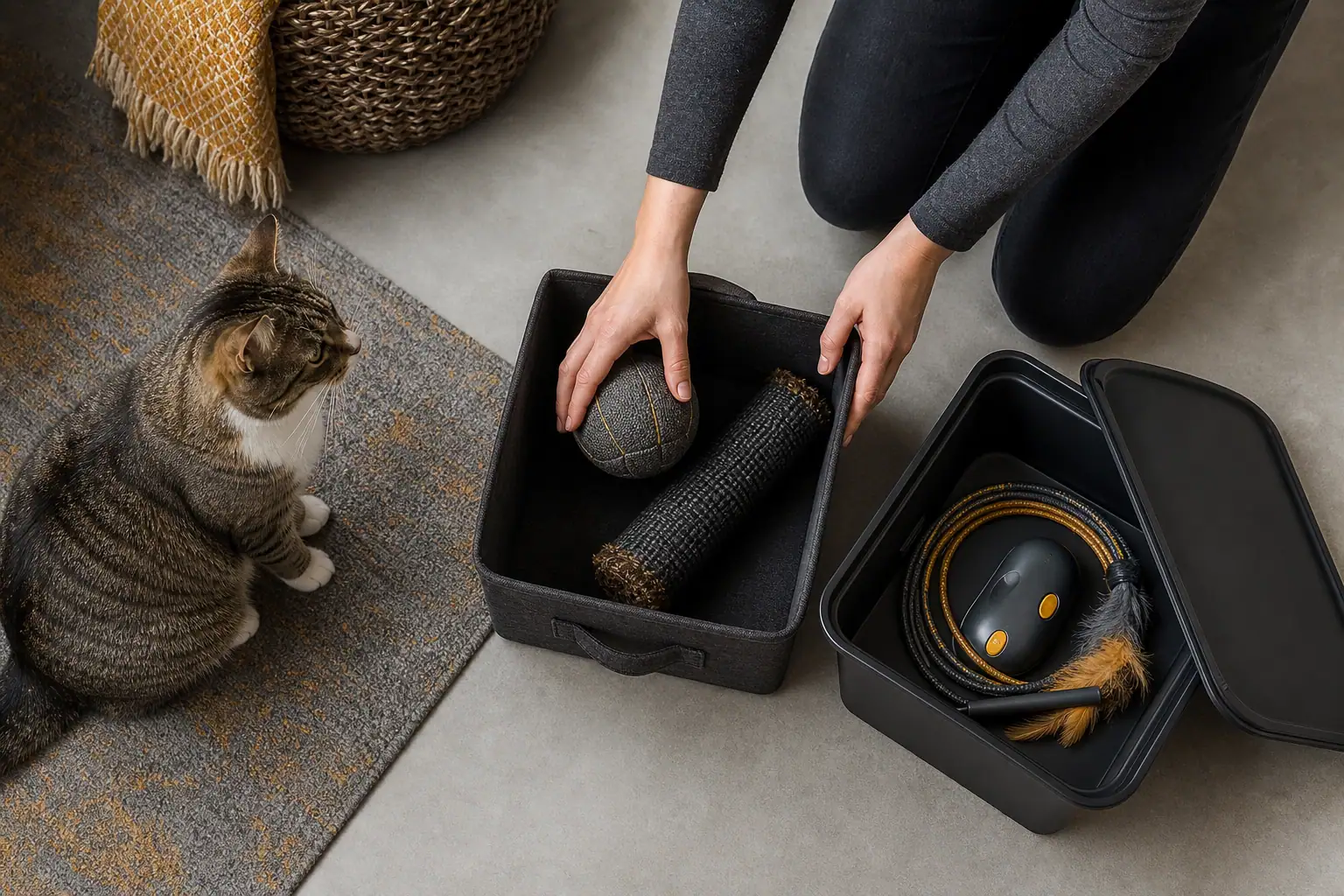
Category: Cat Behavior

  • Recognizing Overstimulation Signs in Cats Promotes Happy Bond

    Recognizing Overstimulation Signs in Cats Promotes Happy Bond

    Ever watched your cat purr one moment and swat the next? It’s like a soft vibration turning into a mini karate chop. That sudden change means they’re overstimulated – too much petting is flooding those tiny nerve endings (the little sensors in their skin) and they’ve hit their dose limit.

    Think of it as reading your kitty’s mood map. Ever notice their tail whipping back and forth like a tiny whip? Or their ears flattening like little airplane wings? Those are your cue to ease off before those claws fly.

    By tuning into these signals, you’ll keep cuddle time safe and comfy. And you know, your cat will thank you with more purrs than surprises. Plus, you’ll build a stronger, happier bond – worth every paw print. Uh, seriously.

    Key Overstimulation Cues in Feline Body Language

    - Key Overstimulation Cues in Feline Body Language.jpg

    Ever watched your kitty’s tail whip like a tiny whip? That’s one of the first clues they’re hitting their petting limit.

    Unintentional Movements

    • Tail whipping or twitching: rapid flicks at the tail base signaling rising frustration.
    • Flattened ears (like airplane wings): ears pressed tight against the head.
    • Dilated pupils: wide, dark eyes showing anxiety or high alert.
    • Raised hackles (fur along the spine stands on end).
    • Visible skin rippling (tiny shivers under the fur).
    • Muscle tension: stiff legs and a ready-to-spring stance.

    Clear “Back Off” Behaviors

    • Sudden nips or swats: gentle claw touches or light scratches that say “enough.”
    • Low growls or cat hissing when petted: a vocal “stop right there.”
    • Abrupt stop of purring: the comfy buzz falls silent in a flash.
    • Walking away: the ultimate “I’m done here” move.

    Overstimulation happens when a cat’s senses get flooded by too much touch or play, leaving them feeling trapped. Learning those tiny tells, from a flicking tail to a rippling coat, helps keep purrs rolling instead of hisses.

    Most kitties have a petting window of about 20–60 seconds (depending on their personality or past handling). Watch for those early signs and tweak your strokes, shorter, softer, or switching to a toy. Next time you spot flattened ears or dilated pupils, give your friend some space and let them choose when the cuddle session ends.

    Common Overstimulation Triggers in Cats

    - Common Overstimulation Triggers in Cats.jpg

    Ever felt like you were giving kitty a massage and then – whoops – they bolt away? That’s overstimulation talking. Cats have tons of nerve endings (tiny sensors in their skin) under their fur – especially along the back and sides. So the same spot petted again and again can light up like little alarms in a blink.

    And pain makes it worse – um, a lot worse. Arthritis (joint inflammation), a sore back, or rough grabbing at a shelter can drop their patience level fast. If your cat missed out on gentle kitten snuggles, every prolonged stroke can feel forced and scary. Feeling trapped by your hand or not knowing when the petting stops sends stress soaring.

    Keep an eye on the belly, flanks, and chest. Those spots are super sensitive – a quick rub might lead to flips or nips. Chest pets usually have a very low checkout time. So stick to safe spots for purrs instead of swats – think the top of the head or under the chin.

    Understanding Overstimulation Thresholds and Tolerance Levels in Cats

    - Understanding Overstimulation Thresholds and Tolerance Levels in Cats.jpg

    Ever timed your kitty’s petting window? Most cats can take 20 to 60 seconds of gentle strokes before they go from purr to pause. Some mellow pals soak up over a minute of chin scratches. Others freeze or give a tiny swat after just a few taps.

    But cats aren’t built like dogs. Their frontal lobes (the front part of the brain that helps with self-control) are smaller. That means they get excited faster and chill out more slowly. So when your cat starts pacing or twitches its whiskers, it’s stress kicking in not just tired whiskers.

    Start jotting down how long your cat loves being petted before they stiffen up. Note the sweet spots that make them purr and the ones that earn a side-eye. After a few days you’ll spot a pattern.

    Maybe your tortie taps out at 30 seconds while your tabby begs for a full minute of neck scratches. Then you can tweak cuddle time to each cat’s rhythm and make every session purrfect.

    Preventing Overstimulation with Petting and Play Techniques

    - Preventing Overstimulation with Petting and Play Techniques.jpg

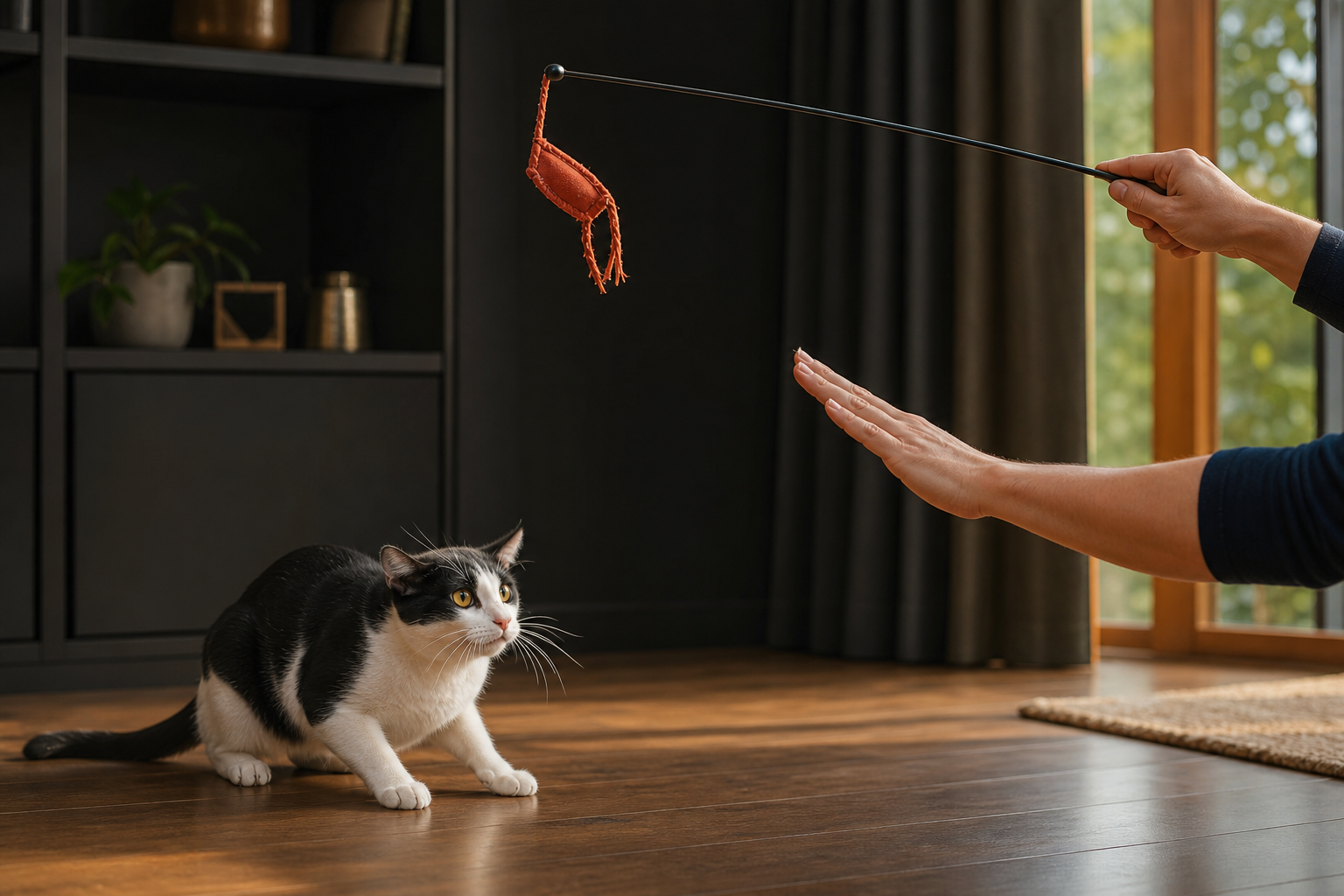
    Ever watch your kitty switch from purr to prickly? A light touch and quick breaks keep them purrful. Try gentle fingertip strokes (just your fingertips, no full-hand rubs) on their favorite spots: head, cheeks, and the base of the neck. Keep sessions under a minute. If you see a tail flick, ear flatten, or whisker twitch, you know it’s time to stop.

    • Give tiny strokes on the head, cheeks, and the base of the neck.
    • Time it: under one minute. Oops, or stop sooner when they twitch, flick, or flatten.
    • Look for slow blinks (what do cat slow blinks mean) as a yes-sign.
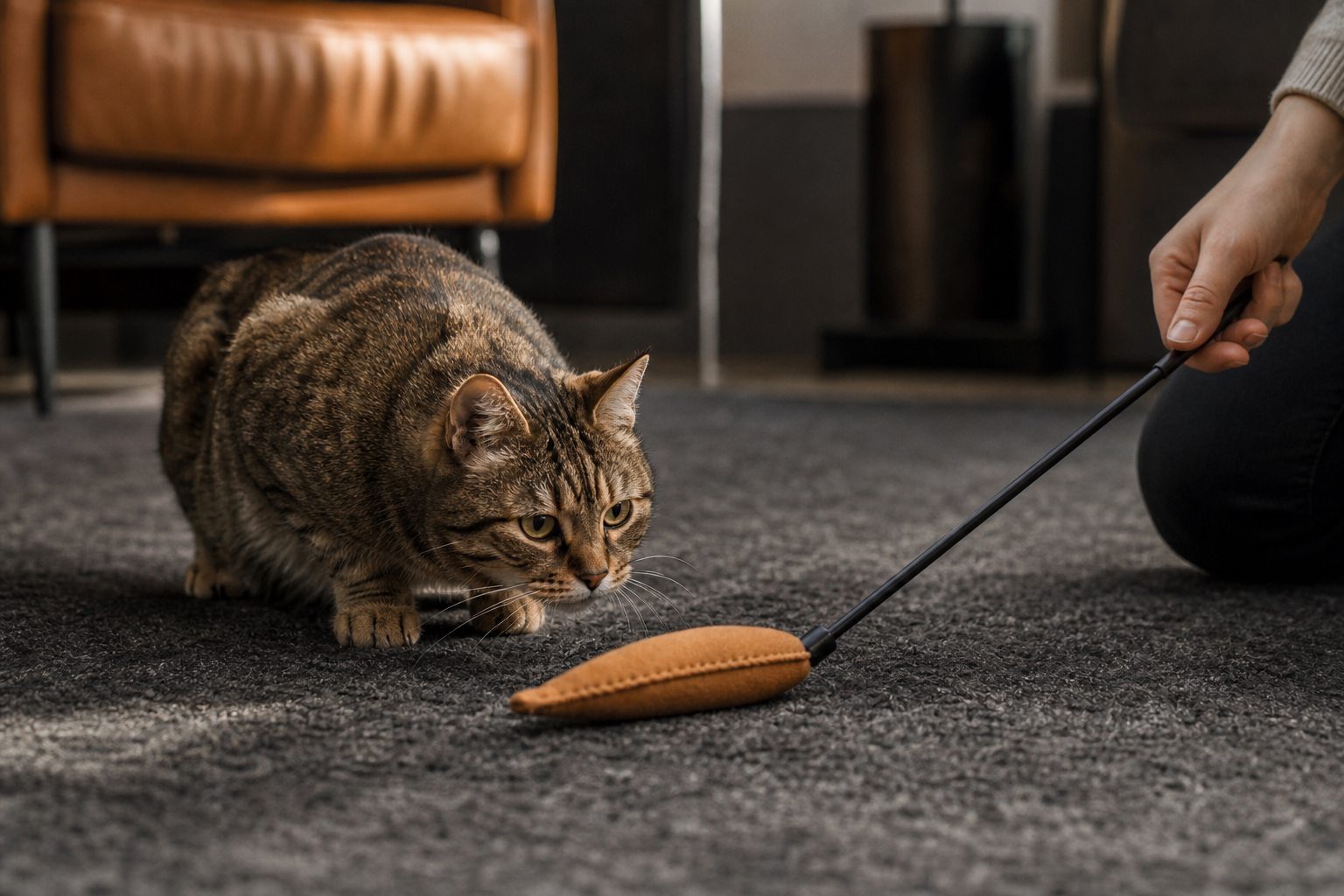
    • When your cat gears up, toss in an interactive wand toy (like a fishing pole for cats) or a puzzle toy (a treat hunt game) to channel that zoomie energy.
    • Rotate puzzle feeders (toys that hide food) and feather toys each week so play never gets old.
    • Pair quick pets with a lickable treat or a splash of tuna water (reward based play sessions) for mellow vibes.
    • Skip laser-pointer chases and choose toys they can actually catch. Then use clicker training (clicker training benefits) to mark calm behavior.

    Just 20 minutes of interactive play every day, wand waves, puzzle hunts, little breaks, burns off that extra energy and makes your next cuddle even more soothing. Um, you’ll both thank me later.

    Calming Strategies and Environmental Support to Reduce Cat Overstimulation

    - Calming Strategies and Environmental Support to Reduce Cat Overstimulation.jpg

    When your kitty’s tail flicks like a paintbrush or their ears go flat, that’s their sign you’re on info overload. Ever noticed how they pace before the twitch? Give them 5 to 60 minutes of quiet, no sudden swoops or “come play” calls, so they can self-soothe and reset. Patience is your secret weapon. Really.

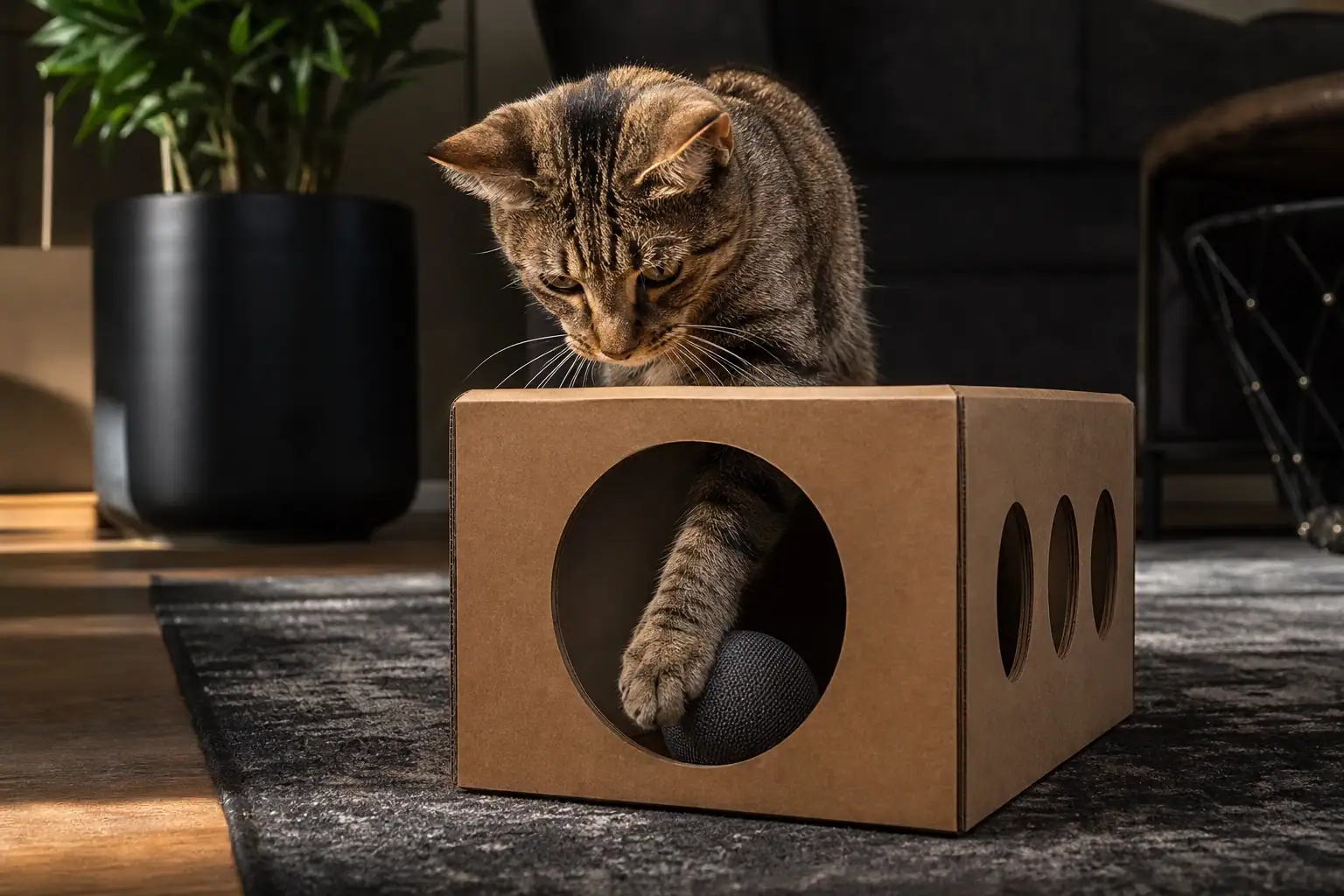
    Next, carve out cozy hideaways around the house. Cardboard boxes (fun tunnels) and covered beds turn any corner into a private snuggle spot. Add tall perches, like a cat tree (tower for climbing) or sturdy shelves, so they can keep an eye on their realm. Up high, they’ll feel like little emperors with the world at their paws.

    You can also try a pheromone diffuser (a gadget that releases kitty comfort signals) or a calming collar (soft band infused with soothing scents). These work like a gentle hug for your cat’s senses and help them feel steady in their kingdom.

    Finally, keep your day on a mellow beat. Serve meals at the same time, play around the same hour, and dim lights when things wind down. Those small cues say it’s time to relax. Before you know it, your furball will see your home as a purr-fect chill zone where they decide when and how to join the fun.

    Final Words

    In the action of caring for your cat, we covered key body cues, tail flicks, flattened ears, dilated pupils, and clear steps to spot warning swats or hisses.

    Then we talked about why certain touches trigger stress and how each cat’s petting threshold (about 20–60 seconds) can vary.

    We also shared simple play swaps, calming spaces and routine tips to keep cats relaxed.

    With these notes on triggers, safe touches and calm spots, you’ll feel confident recognizing overstimulation signs in cats and enjoy more happy purrs.

    FAQ

    How do you tell when a cat is overstimulated?

    You can tell a cat is overstimulated by spotting tail whipping, flattened airplane ears, dilated pupils (wide eye openings), skin rippling, sudden nips or swats, hissing, or quick withdrawal from petting.

    What causes overstimulation in cats?

    Overstimulation in cats happens when repetitive touch, petting on sensitive zones like belly or chest, underlying pain, or feeling loss of control overwhelms their nerves and leads to defensive reactions.

    Why do cats suddenly swat or bite when overstimulated?

    Cats suddenly swat or bite when overstimulated because they’ve hit their petting tolerance limit and shift into defense mode to stop unwanted touch and guard their comfort.

    How can I calm an overstimulated cat?

    To calm an overstimulated cat, pause petting, give space, offer a hiding spot or high perch, then use gentle strokes paired with treats once they’ve relaxed.

    Which play triggers can overload a cat’s senses?

    Overload in cats can come from unstructured rough play, laser pointers without a catch, or constant waving of feathers and strings, which overstimulate skin receptors and spark frustration.

    How long does it take for a cat to recover from overstimulation?

    Recovery time varies from five minutes to an hour, as cats need space to self-soothe; offering safe retreats and slow reintroductions helps them regain calm.

    What is the 3-3-3 rule of cats?

    The 3-3-3 rule for cats says three days to adjust to new home sights, three weeks to handle sounds, and three months to fully settle, building their comfort and trust.

    Related Articles

  • Safe Play Behaviors for Indoor Cats Spark Joy

    Safe Play Behaviors for Indoor Cats Spark Joy

    Ever imagine your cat pouncing on a harmless yarn ball, only to swallow a sneaky thread? That soft little puff can turn into a swallow hazard before you know it. Playtime should be all joy – not a trip to the vet.

    Let’s pick claw-tastic toys that last. Look for organic cotton (soft natural fiber) or tear-resistant linen (strong plant cloth) – they stand up to sharp claws and wild pounces. You’ll hear the satisfying swoosh as your kitty bats them across the floor.

    Next, inspect every toy for loose bits before you toss it. A quick check for fraying threads or tiny pieces can save a lot of worries. And hey, safe play is part of the fun.

    Follow these simple steps and you’ll see whisker twitches of pure delight. You’ll sleep easy knowing playtime’s safe and your feline friend is bouncing with joy.

    Top 5 Indoor Play Activities for Safe, Engaging Fun

    - Top 5 Indoor Play Activities for Safe, Engaging Fun.jpg

    Hey there, cat lovers! Indoor kitties still crave a little hunt-time, you know? Mixing quick dashes with brain teasers keeps them curious and calm. Ever watched your cat’s whiskers twitch when a toy zooms by? That’s the magic of play that taps into stalking, chasing, and catching instincts right in your living room. Oops, let me rephrase that… it’s all about safe, risk-free fun that stops boredom in its tracks.

    • Wand-and-feather chases: Wave a fluffy feather wand like a fishing rod for cats. Soft fluttering feathers, surprise speed changes, and epic leaps.
    • Laser-pointer sessions ending in a toy catch: Dash a red dot across walls for high-speed sprints. Then drop a toy mouse so your cat can snag something real (no frustrated paws).
    • Puzzle feeders for mental challenge: Stuff kibble into a treat bowl maze so your cat “hunts” dinner. Shifting puzzles or sliding lids keep it fresh.
    • Ball-track toys for solo chase: A small ball trapped in a plastic track makes a click-clack as it rolls. Your cat bats and races on its own, which can be uh, oddly mesmerizing.
    • Catnip-filled mice for sensory play: Soft plush mice scented with catnip invite gentle nibbles and kicking hind legs. Bonus squeaks or crinkles add extra thrill.

    Switch these games up every few days to keep things new and exciting. Next, let’s pick super-tough toys and tuck away anything breakable so your home stays safe and playful. Worth every paw-print.

    Safe Play Behaviors for Indoor Cats Spark Joy

    - Toy Selection  Safety.jpg

    I always reach for toys made from organic cotton (soft natural fiber), linen (a tough plant cloth), or BPA-free plastic (no-chemical, bite-safe). They’re built to handle those sharp little claws. Look for double-stitched seams (extra thread around the edges) and pet-safe adhesives (glue without toxins). And watch out for tiny bits, loose beads or little bells can disappear into a curious mouth.

    Next, let’s cat-proof your play zone. Ever seen kitty bat at a loose cord? Uh oh. Slip chew-proof sleeves (cord covers) over wires so you avoid a trip to the vet. Secure windows with sturdy guards or snap-in screens that stay put, even during a zoom session. Push heavy furniture against walls and anchor wobbly shelves, no books raining down mid-pounce. A non-slip mat (grippy base) under rugs or tunnels gives your acrobat sure footing.

    • Double-stitched seams to prevent fraying when your cat hammers a toy
    • Fabrics free of dyes or yucky chemicals (non-toxic materials)
    • No dangly ribbons or beads that spell choke hazard
    • BPA-free labels on plastic parts for safe chewing
    • Window guards on lower sills to stop surprise tumbles
    • Chew-proof cord covers to block shocking discoveries
    • Anchored furniture and shelves, books stay put, paws stay happy
    • Non-skid mats under tunnels or play rugs to avoid skid slides

    Oops, don’t skip routine checkups. If you spot loose bits or frayed seams, retire that toy. Your kitty will reward you with purrs and zoomies. Worth every paw-print.

    Interactive Play Techniques for Indoor Cats

    - Interactive Play Techniques for Indoor Cats.jpg

    Ever watched your kitty chase shadows? Try two quick 10-15 minute sessions each day – morning and evening are purrfect. It’s like a fun mini workout to zap those zoomies before nap time.

    When you see a tail tip twitch or ears flattening, your cat is saying “time out please.” Pause the fun. Let them catch their breath and maybe toss in a quick snack.

    Then switch to gentle petting or drop in a puzzle feeder treat (a snack release toy). This little combo turns all that excitement into a happy calm.

    Do this twice a day and you’ll soon have a zen kitty purring with delight.

    Worth every paw print.

    Solo Play Strategies and Mental Stimulation Games for Indoor Cats

    - Solo Play Strategies and Mental Stimulation Games for Indoor Cats.jpg

    Ever watch your kitty stare at the blank wall and wonder, “Are you even paying attention?” Oops, that sounded harsh. But seriously, cats left alone can get pretty bored. So let’s fix that.

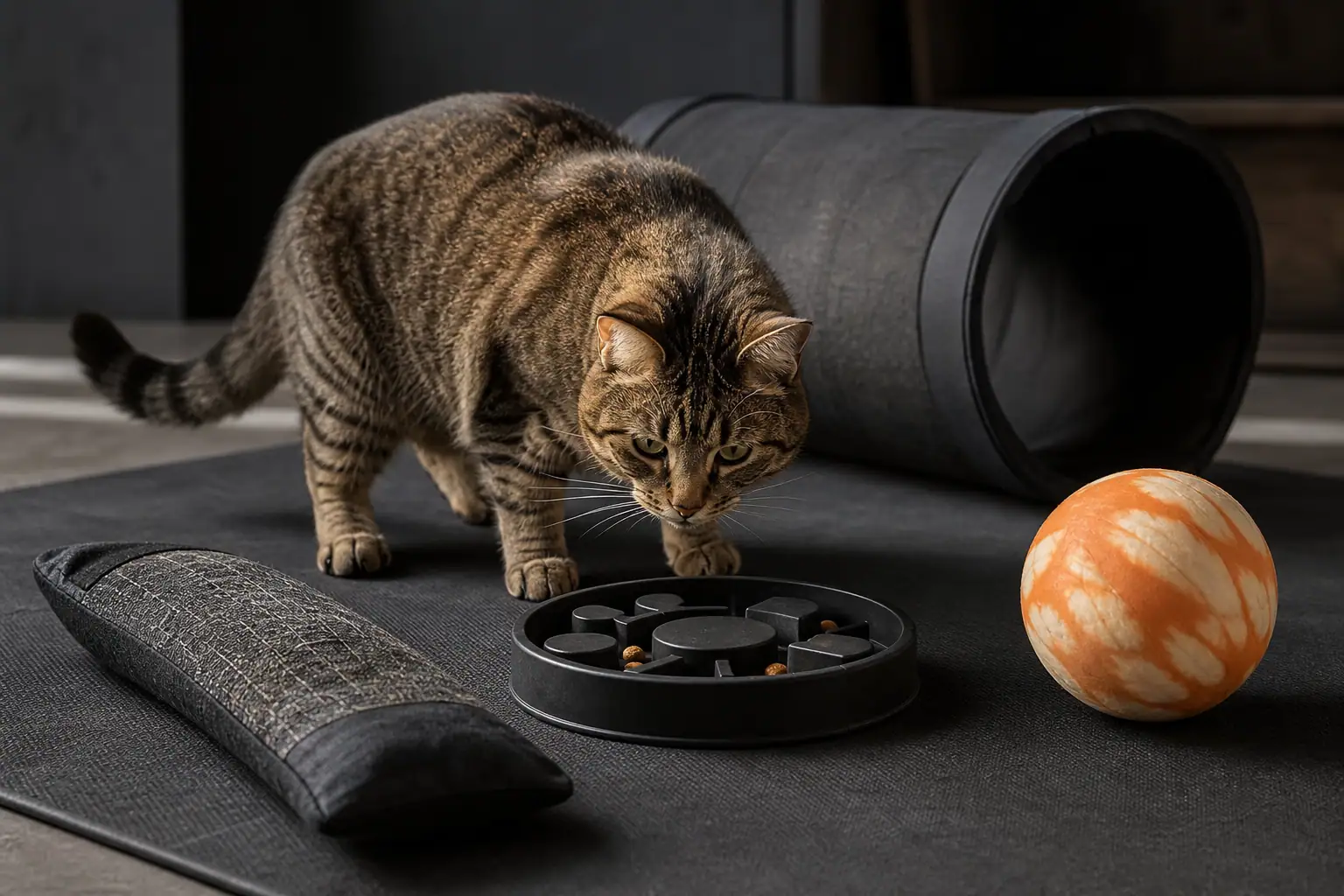
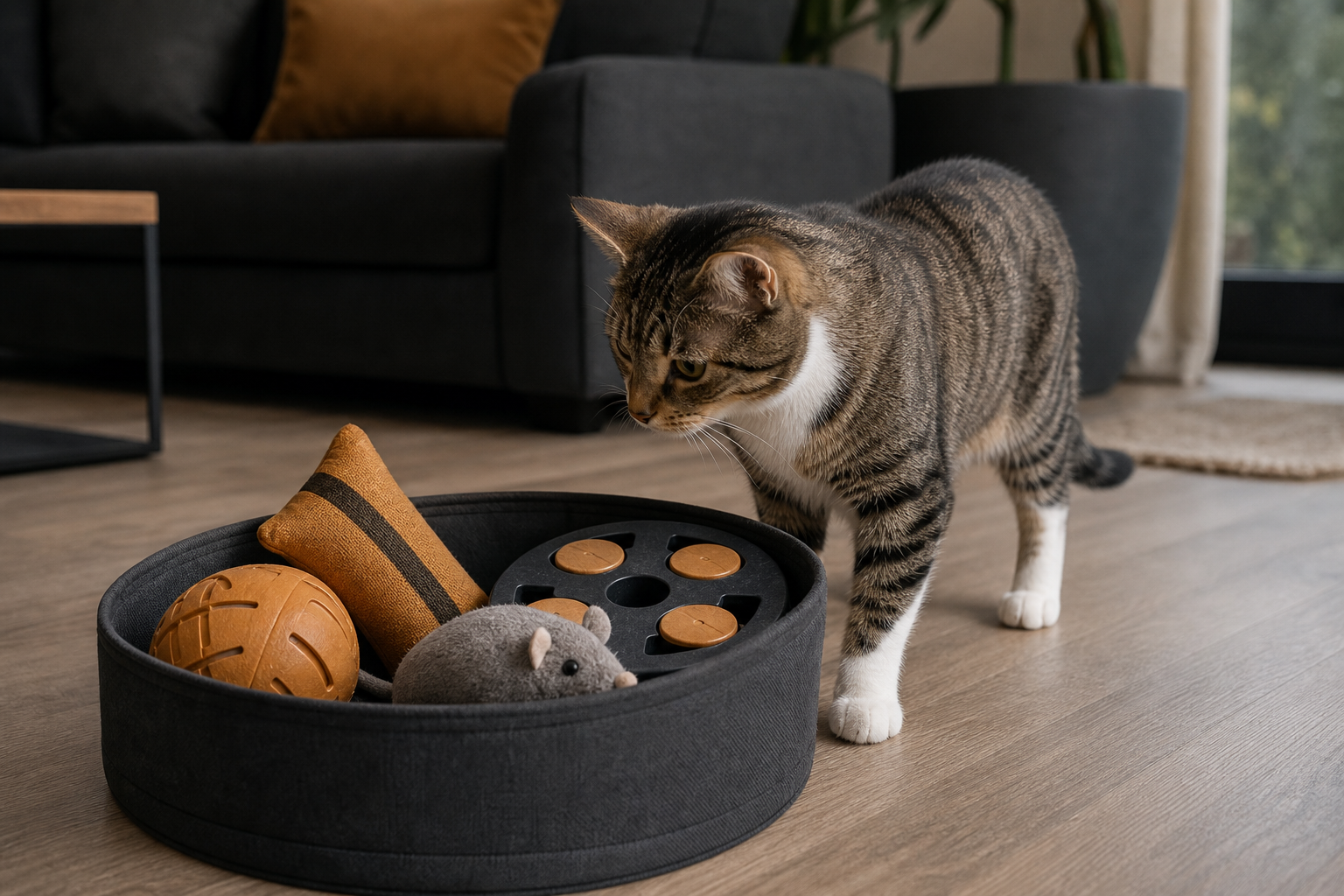
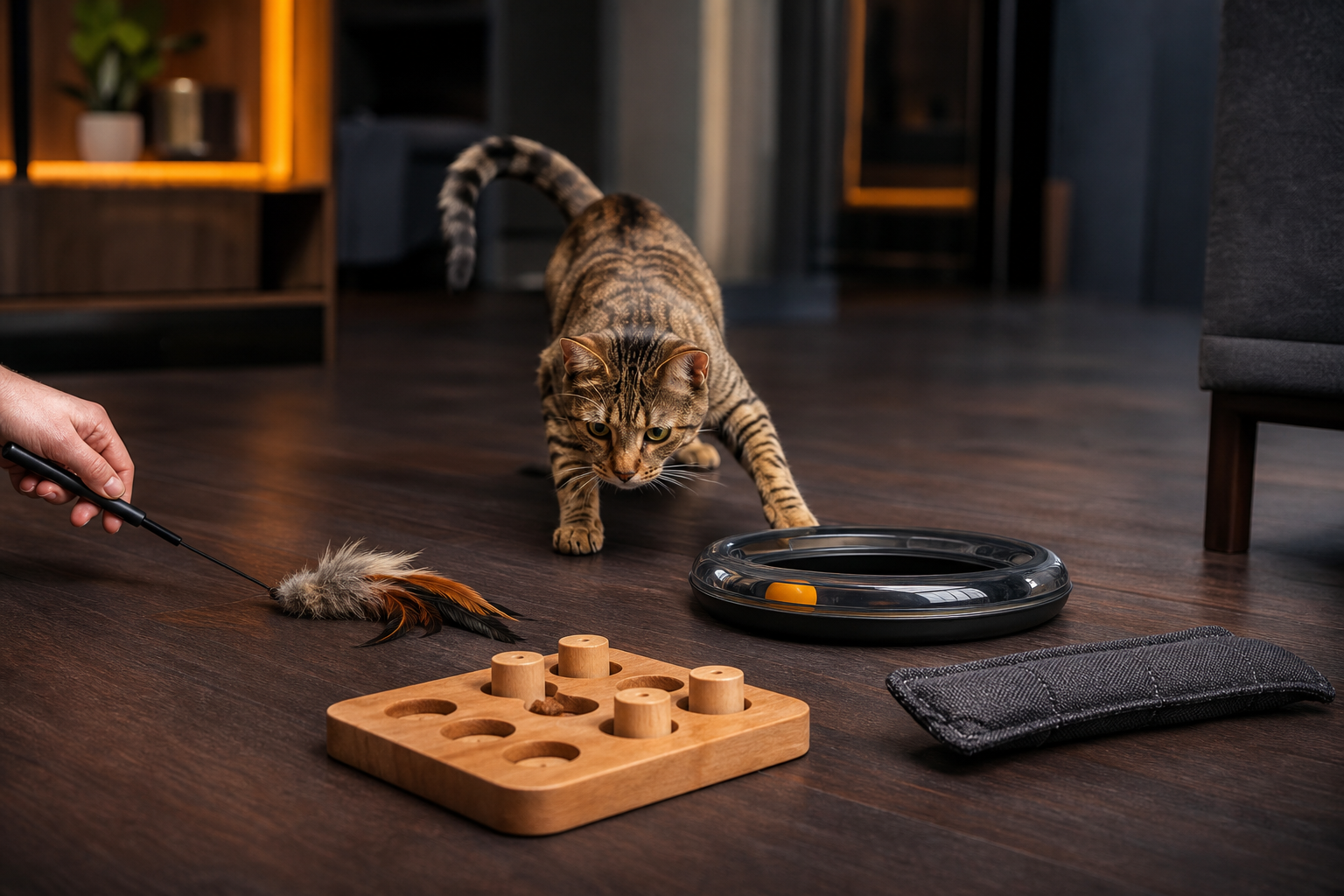
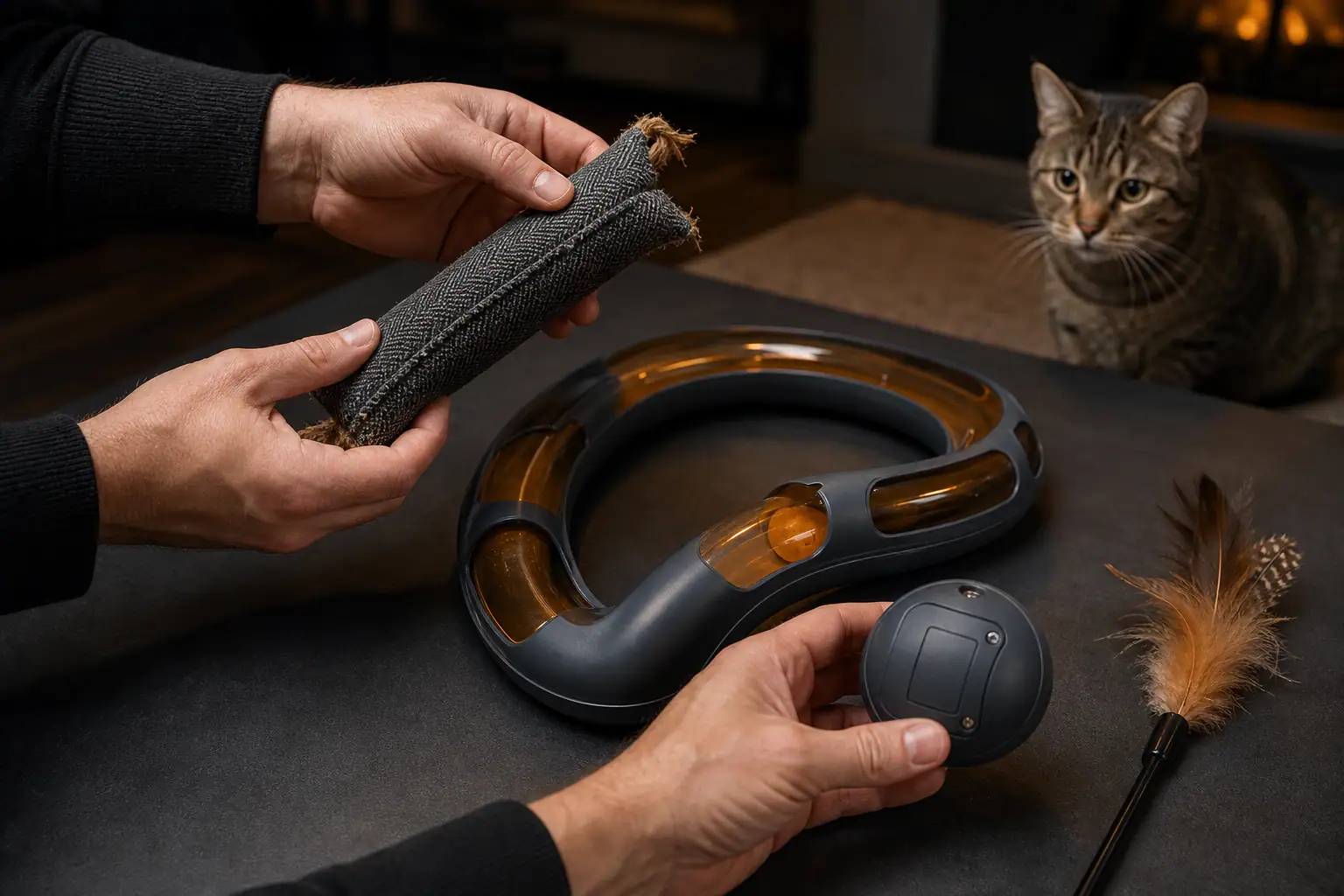
    Puzzle feeders (food puzzles) turn snack time into a brain game. Imagine your cat’s whiskers twitch as it works out each treat. Motorized tracks (battery-powered loops) send a little mouse or ball zooming across the floor. Rolling balls let your kitty feel that satisfying thud with every bat. Treat dispensers (snack puzzles) hide tiny bites inside for a fun nose hunt. Tunnels (tube toys) offer secret ambush spots. And catnip toys (plush toys stuffed with a plant that makes cats go wild) add a burst of scent adventure. Even if you’re tied up, these toys let your fur baby hunt, swipe, and puzzle-solve for hours.

    Toy Type What It Does Safety Tips
    Puzzle Feeder
    (food puzzle)
    Slows eating; mental workout Look for loose bits that could break off
    Motorized Track
    (battery-powered loop)
    Keeps kitty chasing; self-moving Remove small loose parts; secure battery cover
    Treat Dispenser
    (snack puzzle)
    Nose work; reward play Clean often to prevent mold
    Rolling Ball
    (lightweight ball)
    Solo bat and chase fun Avoid balls small enough to swallow
    Tunnel
    (tube toy)
    Hide and ambush space Check for tears and sharp wires
    Catnip Toy
    (plush toys with catnip herb)
    Scent stimulation; kick games Replace when stuffing wears thin

    Um, switch out toys each week so your cat never gets bored. A quick sprinkle of fresh catnip or silver vine (an alternative cat plant) brings back the claw-some fun. Move that tunnel to a new corner, hide treats under a soft rug, or pop a window perch with bird sounds playing low. Mixing up sights, smells, and textures keeps indoor play as thrilling as the real hunt.

    Adapting Play for Kittens, Adult, and Senior Cats

    - Adapting Play for Kittens, Adult, and Senior Cats.jpg

    Kittens go nuts for quick play, just 5 to 10 minutes with a tiny plush mouse (a soft toy) or a feather wand (stick with feathers). Those brief chase bursts sharpen tiny hunters’ reflexes without stressing growing joints. It’s like a mini sprint, fun but easy on bones. Swap in new toys every few days so those paws stay curious and claws stay strong. Ever watched a kitten bunny-hop after a feather? It’s pure joy!

    Older cats and chubby adults need a slower pace. Um, puzzle feeders (toys that hide treats inside) turn snack time into a gentle brain teaser, no big leaps required. Slow wand toys that crawl along the floor invite lazy pounces instead of sky-high jumps. Overweight kitties love rolling treat-dispensing balls (balls that drop a nibble when they spin); each snack gives a little shimmy workout.

    In a multi-cat home, playtime can turn into a furball free-for-all. So do one-on-one sessions: bring one cat into the living room with a dancing ribbon toy while the others chill elsewhere, then swap. Always watch group chases to avoid toy theft or scrapes. You can also do turn-taking games with a teaser rod (stick with a dangly toy) so each cat gets their moment in the spotlight and no one feels left out.

    Worth every paw-print.

    Final Words

    In the action, we kicked off with five interactive activities: wand chases, laser fun, puzzle treats, rolling tracks, and catnip mice.

    Then we dug into picking sturdy toys, non-toxic materials, and setting up a safe play zone.

    Next, we covered owner-led sessions, solo puzzles, and tips for kittens through seniors.

    Keep rotating toys, watch for wear, and tune in to your cats’ cues.

    With these tools, you’re all set to boost energy, curb boredom, and master safe play behaviors for indoor cats.

    Enjoy every pounce!

    FAQ

    Signs your cat wants to play?

    The signs your cat wants to play include tail twitching, perked ears, gentle paw taps and short bursts of energy as they stalk toys, shadows or moving fingers.

    What safe play behaviors for indoor cats should I encourage?

    Safe play behaviors for indoor cats include supervised sessions, soft non-toxic toys, padded play areas and sturdy scratchers that mimic hunting without risking injury or swallowed parts.

    How do I play with or entertain my indoor cat?

    Playing with or entertaining your indoor cat means offering wand-chase games, puzzle feeders, feather teasers and rolling balls that mimic prey. Rotate toys often for fresh excitement and mental challenge.

    How often does an indoor cat need to play?

    Indoor cats need supervised play at least twice daily for 10–15 minutes each. That boosts exercise, mental enrichment and stress relief while preventing boredom and unwanted behavior.

    What is the 3-3-3 rule for cats?

    The 3-3-3 rule for cats describes a new-cat adjustment: three days to settle and hide, three weeks to explore safely and three months to form a lasting bond.

    How do cats play with humans?

    Cats play with humans by stalking hand movements, pouncing on dangling toys, batting fingers gently and enjoying interactive chase games that simulate catching prey, strengthening their bond with you.

    Cat enrichment ideas DIY?

    DIY cat enrichment ideas include cardboard-box mazes, paper-bag hideouts, toilet-paper-roll treat puzzles, simple wand toys made from string and sticks, plus blanket tunnels for ambush play.

    How long do cats play with each other?

    Cats play with each other in short bursts, often five to 15 minutes, followed by naps or grooming breaks before they resume stalking and pouncing on playmates.

    How do I find cat behavior training near me and what is VCA cat behavior?

    VCA cat behavior refers to professional guidance from Veterinary Centers of America. To find local training, search online for certified cat behaviorists or ask your veterinarian for recommended resources.

    Related Articles

  • How Often Should Cats Play Each Day Joyfully

    How Often Should Cats Play Each Day Joyfully

    Ever watched your kitty chase shadows and then crash on the sofa? You might think they can snooze all day and still be happy. But playtime is what lights up that pouncing spirit, gives claws a workout, and keeps surprise ankle attacks at bay.

    Short bursts of chase – batting a plush mouse or waving a teaser wand (like a fishing pole for cats with feathers) – really do the trick! Zoomy kittens crave lots of quick games. Crepuscular adults love a dawn or dusk workout. Gentle seniors prefer sweet, short sessions.

    Next, we'll explore how many daily mini-playdates each life stage needs so your furball stays fit, curious, and totally feline fine.

    How Often Should Cats Play Each Day: Age-Based Daily Play Frequency

    - How Often Should Cats Play Each Day Age-Based Daily Play Frequency.jpg

    Ever wonder how much playtime your kitty needs? It depends on their age, you know.

    Kittens have boundless zoomies. They thrive on three to five quick play breaks each day, just 10 to 15 minutes a pop. They’ll bat at a crinkle ball (a noisy, fun bouncy toy), pounce on a toy mouse, then crash for a nap. It’s snack-sized exercise that taps into their natural hunting urges and keeps boredom away.

    Adult cats shine with two play sessions daily. Aim for 15 to 20 minutes in the morning and another 15 to 20 minutes at dusk, totaling 30 to 40 minutes of fun. Grab a feather wand (like a fishing rod for cats), a laser pointer (never aim it at their eyes), or a treat puzzle (a food-based brain teaser). This morning-and-evening routine matches their crepuscular nature (active at dawn and dusk) so playtime feels instinctive, not forced.

    Senior cats still need play, um, just in shorter bursts. Try three to four mini sessions of 10 to 15 minutes with gentle wand twirls and low-impact puzzle toys to keep joints limber. These mellow bouts help older kitties stay strong and sharp as they age.

    All in all, your cat’s playtime should total 20 to 60 minutes a day, split into 10 to 15 minute chunks. One session at sunrise, another at twilight, and maybe a quick game between meals. Matching play frequency to your cat’s age gives them just the right dose of joy every day.

    Worth every paw print.

    Factors Influencing How Often Cats Play Each Day

    - Factors Influencing How Often Cats Play Each Day.jpg

    Playtime is more than just fun. It taps into your cat’s hunting instinct, keeps muscles toned (think of those graceful leaps), and sharpens their mind. And it breaks up the day so your furball stays curious. There’s something purr-fect about hearing the soft thud of a rolling ball.

    Every kitty hits its own play sweet spot. You can spot feline boredom by sudden restlessness or surprise sofa ambushes. Then it’s time to bring out the toys.

    • Breed and personality: some cats zoom like race cars; others drift along like lazy clouds.
    • Play style: batting a crinkle ball solo versus chasing feathers on a wand with you.
    • Health status: overweight cats (nearly 60 percent of U.S. cats) might need slow warmups. Cats with arthritis (joint pain) or heart conditions (a weak heart) often do better with shorter, gentler sessions.
    • Energy swings: a high-energy breed may demand extra bursts. A laid-back lounger might be happy with fewer rounds.

    Ever catch your tabby just staring at a toy? That’s your cue to give them a nudge. Slowly build playtime from five minutes up to fifteen if they seem into it. For older or less spry cats, chop sessions into mini bursts, three or four quick games of ten minutes each works wonders.

    Playing also deepens your bond. You’re not just tossing a toy; you’re matching their wild side while they teach you patience. That’s joy for paws and people alike.

    Worth every paw-print.

    Play Session Duration and Ideal Timing for Daily Cat Play

    - Play Session Duration and Ideal Timing for Daily Cat Play.jpg

    Ever watched your kitty’s whiskers twitch as it hunts for dinner? Try giving a puzzle feeder before meals to mimic that hunt-eat cycle. Your cat swipes at hidden kibble (tiny dry food morsels tucked into a toy), then settles down for a calm meal. It’s like letting them catch their dinner twice, feline fine, right?

    After they finish eating, spark a short play burst. Toss a teaser wand or roll a ball so they can chase and pounce. This little workout helps their digestion and keeps extra calories in check. And yep, that means fewer surprise zoomies in the kitchen.

    End each mini-session on a high note. Let your cat snag a plush toy mouse or a crinkle ball for the big catch. The soft thud of victory under their paws builds confidence and keeps them purring for more. Worth every paw-print.

    How Often Should Cats Play Each Day Joyfully

    - Interactive and Solo Play Ideas to Meet Daily Cat Play Needs.jpg

    Want a happy, healthy cat? Mix play you join with toys they can chase on their own. A feather wand (tiny fishing pole for paws) gets your kitty leaping and swatting. And when you’re busy, a puzzle feeder (toy hiding treats) or a wind-up mouse keeps them entertained. Try both every day so play never feels the same.

    Interactive cat toys:

    • Feather wand: darting feathers that mimic bird wings and spark wild leaps.
    • Laser pointer (never shine in eyes): that zippy red dot your cat can’t resist chasing across the floor.
    • Wind-up mouse (tiny motor inside): it scurries under furniture like a real little prey.
    • Treat-feeder puzzle (compartments hiding snacks): turns snack time into a fun brain workout.

    Self-play opportunities:

    • Plush prey, soft mice or birds your cat can bat around solo.
    • Crinkle ball (lightweight and noisy): satisfying rustles with every pounce.
    • Automatic toy (battery-powered): meanders or zooms when you’re out, fun without you.

    Ever watched your kitty stalk a window perch? Layer textures and heights to make the room an adventure. A tall cat tree with a cushioned top is prime bird-watching real estate. Sisal-wrapped scratching post (sisal is rough rope) lets claws dig in just right. And a window perch offers live-action backyard TV.

    Rotate or introduce new toys every week or two so each one feels fresh. Tuck extras away and surprise your cat later, watch those eyes light up.

    Want safe outdoor fun? A catio (enclosed patio space) or short harness walk lets your fur friend sniff new scents and feel the breeze. Ramps, shelves, and towers add climbing challenges and big stretching spots between levels.

    Blend these hands-on and solo games to hit 20–60 minutes of daily play. Your kitty’s whiskers will twitch, muscles will flex, and that clever brain will stay sharp, pure joy in every paw swipe.

    Fine-Tuning Your Cat’s Play Routine

    - Fine-Tuning Your Cats Play Routine.jpg

    Oops, we’ve given these play pointers a makeover (sorry about that!). If you’re used to finding hyperactive play ideas here, whisk yourself over to “Health status” for all the zoomie-friendly suggestions.

    For our chonky pals (you know, the ones who prefer lazy paw swishes over mad dashes), hop into “Overweight cats.” There you’ll find step-by-step session plans to get them moving at their own pace.

    And for older or achy kitties whose joints might complain, we tucked gentle, low-impact fun under the “Arthritis” subsection. Worth every paw-print.

    Fine-Tuning Your Cat’s Play Routine

    - Building a Consistent Daily Play Routine for Cat Play Frequency.jpg

    Ever thought about making playtime a family affair? One person can kick off the morning fling with a wand toy, uh, then someone else sweeps in for the dusk dance. Shared play helps you all bond and feels like a surprise party for your kitty every day. I guess that’s a win-win!

    Let’s talk about your interactive-toy toolkit. A feather wand (like a fishing rod for cats – just add feathers). A crinkle ball – listen for that satisfying thud as it bounces across the floor. A puzzle feeder (think of it as a little kibble hunt at breakfast and dinner). And stash half your cat’s toys in a box and swap them weekly to keep things fresh!

    Calming diffuser tip. Plug a FELIWAY Optimum diffuser near your play area. It releases pheromones (calming scent cues) to help nervous kitties relax so they stay in the game. Worth every paw-print.

    Final Words

    in the action we wrapped up age-based play guidelines: kittens need 3–5 short bursts, adults aim for two 15–20 minute sessions, and seniors enjoy three to four gentle play breaks.

    We also explored factors like health, breed, timing at dawn and dusk, plus a mix of interactive and solo toys, puzzle feeders, and climbing spots to spark curiosity.

    By fine-tuning routines for busy days and special needs, you can keep play sessions fresh and fun. And that’s your answer on how often should cats play each day, paws up for happy, healthy felines.

    FAQ

    How often should I play with my cat each day?

    The recommended daily playtime depends on age: kittens need 3–5 short 10–15 minute sessions, adults should have two 15–20 minute sessions at dawn and dusk, seniors benefit from three to four 10–15 minute bursts.

    Is it okay to not play with your cat every day?

    Not playing daily can leave cats bored and restless. Offering solo toys or puzzle feeders helps fill gaps, but aiming for regular interactive sessions keeps cats mentally and physically healthy.

    What are signs my cat wants to play?

    Signs your cat wants to play include stalking or batting toys, tail twitching, soft chirps, sudden zoomies, and gentle paw taps inviting you into their game.

    How long should I play with my cat before bed?

    A pre-bed routine of about 15–20 minute interactive play mimics dusk hunts, helping your cat burn off energy and settle into a calm, restful evening.

    How long do cats play with each other?

    Cat-to-cat play sessions usually follow burst-rest rhythms, with each interactive bout lasting around 5–10 minutes several times a day to mirror natural hunting pauses.

    Related Articles

  • difference between predatory and social play in cats!

    difference between predatory and social play in cats!

    Think your kitty is just messing around? Sometimes she zips after a toy mouse and leaps like a little tiger, tapping into her inner hunter, that predatory play (hunting-style pounce). But then she might flop on her back and gently paw the toy, that’s social mode, when she’s asking for a buddy round. Spotting her mood helps you choose the right toy, keep her safe, and burn off that cat-ergy. Um, pretty cool!

    Next, watch her stalking signals. When she lowers her belly to the floor and her whiskers twitch, she’s gearing up to pounce. A sudden dash across the room means chase time. Really.

    For predator mode, reach for a feather wand (like a tiny fishing rod for cats) so she can leap, snap, and chase. For social play, toss a soft plush ball that makes a satisfying thud. I once watched Luna crouch behind the couch and then spring six feet in the air. Best toy ever! Tailoring playtime this way keeps your kitty purring and in tip-top shape.

    Key Distinctions Between Predatory and Social Play in Cats

    - Key Distinctions Between Predatory and Social Play in Cats.jpg

    Ever watch your cat crouch low and lock eyes on a toy mouse? That’s predatory play. Your kitty lowers its belly, bursts into a fast dash, pounces, then “kills” the toy before settling in to munch on a treat or sink claws into a plush prey.

    Social play feels more like a friendly wrestling match. You’ll see cats chase each other, roll around, bat at paws and pounce gently with claws tucked in. Spotting which game your cat picks helps you choose the perfect toy or playmate.

    Predatory play follows a simple hunt: stare, stalk, sprint, pounce, kill, and eat, even if “eat” is just a bite of kibble or a quick nibble on a soft mouse. Skip that final snack and your kitty might feel teased, pacing around for more action.

    Social play is all about turn taking and trust. Both cats pause, switch from chaser to chased, and keep claws sheathed. Gentle nips teach bite inhibition (how softly to bite) and build trust without nasty scratches. Those breaks and role swaps also set clear limits and stop play from speeding off the rails.

    Knowing these cues lets you mix predatory and social fun to keep your cat happy and healthy. First, spark the hunt with a feather wand (think fishing rod for cats) or a motorized toy. When your cat goes in for the pounce, reward it with a grab-able toy. Then switch to a soft kicker toy (a long, snuggly pillow for kicking) or roll out a gentle wrestling session with you or a friendly feline.

    Balance the thrill of the chase with cuddly team play. Your cat’s muscles stay strong, its mind stays sharp, and its whiskers twitch with delight, whether you’re entertaining a bouncy kitten or a laid-back senior.

    Predatory Play: Cat Hunting Instincts in Action

    - Predatory Play Cat Hunting Instincts in Action.jpg

    Cats have ancient hunter genes, so predatory play taps right into their wild side. Ever see your kitty crouch low, ready to pounce? It’s the same drill tiny wildcats used when stalking mice. That prey drive (hunt urge) was a survival trick long ago, wiring their brains to reward a good catch with a burst of feel-good chemicals.

    In one play session you’ll spot the classic hunt moves. First is the stare – your cat’s eyes lock on the toy, firing up the visual cortex (the brain’s sight center) and flooding their mind with dopamine (happy chemical). Then comes the stalk, belly brushing the floor as silent paws creep forward.

    Next up is the chase. Whoa – a sudden dash that gets your heart racing and your cat’s muscles humming. Finally the pounce. Claws out, target yanked close, even if “kill” just means biting a plush mouse. Toss the toy in erratic, twitchy ways to keep that hunt-fire burning.

    Age and upbringing shape play style. Kittens four to sixteen weeks old practice wild, clumsy bursts – it’s how they nail down coordination. Adult cats still love mixing play and hunting skills but shift to short, sharp sessions to save energy. Indoor kitties may zoom around with pure joy, but they often miss the quiet finesse of outdoor siblings. So pick toys and times that match your cat’s stage, and you’ll see those primal instincts shine.

    Social Play: Feline Social Behavior and Cooperative Interactions

    - Social Play Feline Social Behavior and Cooperative Interactions.jpg

    Kittens start little wrestling matches almost as soon as their eyes open, around three to four weeks old. You’ll spot tiny paws batting at each other, soft nibbles and gentle chases across the litter box. Their practice peaks between seven and fourteen weeks, when they work on bite inhibition (learning how softly to bite) and figure out play boundaries so no one ends up with a real ouch.

    Littermates are the purr-fect play partners. Every tussle teaches them communication cues, tail flicks, ear twitches and body-posture signals. When one kitten stops and the other waits, they’re actually learning to take turns. These practice bouts help them gauge force, read each other’s signals and build trust. Skills they’ll use in every whisker-twitching friendship.

    Group play often looks like a mini-meow hunting team. One little croucher becomes the stalker while another pounces in ambush. Then they swap roles so everyone gets a chance to lead the chase. You can jump in too, toss a soft ball, hide a toy under a blanket or wiggle a ribbon wand like a fish. Your involvement turns solo moves into cooperative games, boosting confidence and deepening your bond through shared playful teamwork.

    Recognizing Overstimulation: Play Aggression vs Healthy Social Play

    - Recognizing Overstimulation Play Aggression vs Healthy Social Play.jpg

    When play is healthy, it’s all soft paws and quick licks. You’ll see claws tucked in (kitty chooses not to scratch), wiggly bodies and friendly breaks that feel fun for everyone. Ever watched your cat take a breather, flop over and lick your hand? That’s the good stuff!

    But sometimes your kitty’s hunting urge goes into overdrive. That’s when play aggression kicks in. You might notice teeth and claws out, ears flattened, and non-stop stalking like it’s the wild.

    • Forceful bites that draw blood
    • Claws fully out when pouncing
    • Ears pressed back flat
    • No friendly breaks, just go, go, go
    • Stealthy stalking or sudden ambushes

    So pause play the moment you spot these signs. Then swap to a feather wand (like a fishing rod for cats) to redirect that zoomies energy.

    • Plan two 10 to 15 minute play sessions each day
    • Offer a kicker toy (a soft, long toy for grabbing) when teeth start snapping
    • Never use your hands as a teasing target
    • Keep sessions short so your kitty doesn’t overheat

    Cool things down by breaking up play, rotating toys, and sticking to a steady schedule. If your cat can’t switch back to gentle mode or rough play keeps popping up, reach out to your vet or a feline behavior expert for tailored tips. Worth every paw-print.

    Advanced Enrichment

    - Enrichment Strategies Integrating Predatory and Social Play.jpg

    Tired of just chase-and-wrestle? Hide treats in a puzzle feeder (a toy that makes your cat work for snacks) or toss a handful of kibble around the room. Your kitty’s whiskers will twitch as they hunt down each piece like tiny treasures. It’s brain games with a tasty reward!

    Next, mount a window perch or stick up some shelves so your furball can bird-watch and chill out. Ever seen them lean forward, nose pressed against the glass? That quiet focus is pure gold. They’ll love having their own kitty lookout.

    Then tuck a soft kicker toy by their favorite hideaway or the scratch post – you know, that plush thing they love to kick with back feet. Those back-foot wrestling moves are adorable. Move these play spots around every week. Keeps your cat curious and eager for what’s next.

    Worth every paw print.

    Age Differences in Play: From Kitten to Senior Cats

    - Age Differences in Play From Kitten to Senior Cats.jpg

    Kittens are little bundles of fluff that mix sneaky pounces with silly wrestles. You’ll hear the satisfying thud of a plush mouse as they smack it around! Their zoomies send them zooming like tiny rockets, then they just flop and nap.

    Then six months to a year hits, hello, teenage zoomies. They chase feather wands (a stick topped with feathers) across the floor like tiny hunters. It’s cute and a bit relentless, um, you know? Ever tried to catch that sneaky feather wand?

    Adult cats chill out. They go for quick bursts, chase, pounce, then curl up with a soft sigh. Think of it as kitty interval training. Perfect when you only have a few minutes to play.

    Senior kitties swap big leaps for gentler games. They tap toys gently to save their creaky joints and keep their minds sharp.

    Match toys and timing to their age. Kittens thrive on 10-15 minute teaser wand adventures and plush mice for batting and nibbling.

    Adolescents burn off energy in 20-30 minute chase marathons with feather wands and kicker toys (pillows they can grab with their back paws).

    Adults find their sweet spot in 10-12 minute sprints. Throw a motorized ball or wave a wand in quick bursts and they’re satisfied.

    Seniors prefer 5-8 minute bat-and-nap sessions with soft balls or slow-food puzzles that make them think before gobbling treats.

    Watch your cat’s style. If older cats seem stiff, trade high jumps for sit-and-bat wands. If kittens run wild, split play into small spurts so they don’t burn out.

    And mix in brain teasers for all ages, treat puzzles, hidden toys. You’re not just tossing playthings, you’re tuning in to every paw and purr.

    Safety in Cat Play: Preventing Injuries in Solo and Group Sessions

    - Safety in Cat Play Preventing Injuries in Solo and Group Sessions.jpg

    Solo play can be a riot, but let’s think safety first. Grab a wand toy with a dangling ribbon so your hands stay out of the swipe zone. Swap loose yarn for a sturdy ribbon (a tough strip tied to a stick) to cut down on tangles. Stick around and watch the fun so you can step in before things get too wild.

    You’d be amazed at how simple household items can turn into awesome cat toys. Empty cardboard boxes act like cozy hideouts, and you’ll hear the satisfying thud as they tumble across the floor. Toilet paper rolls roll just right for batting. Just toss any bits that start to splinter or shred so your kitty stays safe.

    Group play needs a bit more planning. Set up tall spots like shelves or cat trees so cats can climb up and chill if the chase heats up. Tuck in extra boxes or little tunnels to give them fast escapes. Spread out toys and treats to ease the “mine” feeling and cut down on squabbles.

    When things get too rough, you’re the referee. Keep a gentle clap or soft noise ready to break up scuffles. You can also slide a box between them to cool things down. And always clear away breakable items and tuck loose wires out of paw’s reach.

    Watch for signs of play fatigue: panting, slow pounces, droopy ears. Pause every 10 minutes so your kitty can catch its breath and calm a racing heart. If they suddenly flop or stop batting, stash the toys and offer soft pets instead. Short, snappy sessions keep play fun and strain-free.

    Worth every paw-print.

    Final Words

    In the action of exploring your cat’s world we nailed down what makes predatory play, think stalk, chase, pounce, so different from gentle social play with twirls and wrestles.

    Then we spotted warning signs of overstimulation, flagged safe solo and group routines, and built smart enrichment plans from feather wands to puzzle feeders.

    Tuning into the difference between predatory and social play in cats makes every session hit the right note, keeps your multi-cat crew happy, and leaves you both feline fine.

    FAQ

    What is the difference between predatory and social play in cats?

    The difference between predatory and social play in cats lies in intent. Predatory play mimics solo hunting steps—stalk, chase, pounce—while social play is mutual, gentle interactions with sheathed claws and role switches.

    What are predatory behaviors in cats?

    Predatory behaviors in cats are instinctive hunting actions like staring, stalking, chasing, pouncing, and mock biting, often triggered by erratic toy movement or small moving objects.

    How do I tell if my cat is playing or being aggressive?

    You can tell if your cat is playing when they keep claws sheathed, pause regularly, and show relaxed body language. Aggressive behavior shows unsheathed claws, hard bites, flattened ears, and nonstop stalking.

    What is the 3 3 3 rule of cats?

    The 3 3 3 rule of cats guides new cat introductions: 3 days in a single room, 3 weeks of supervised exploration, and 3 months for full integration and comfy coexistence.

    What causes aggression between cats?

    Aggression between cats often stems from fear, resource guarding, territorial disputes, redirected prey drive, or social mismatches. Stressful changes or limited resources can trigger hostile behaviors.

    What is fear aggression in cats?

    Fear aggression in cats occurs when a cat feels trapped or threatened and uses hissing, swatting, or biting to defend itself, often while crouching with flattened ears and wide eyes.

    What is noise-induced aggression in cats?

    Noise-induced aggression in cats happens when sudden loud sounds like fireworks or thunderstorms startle them, triggering defensive swatting, hissing, or fleeing behaviors.

    What is territorial behavior in cats?

    Territorial behavior in cats involves marking areas with scent by rubbing or spraying, patrolling favored spots, and displaying hissing or blocking postures to keep other animals away.

    What are common cat behavior problems?

    Common cat behavior problems include inappropriate scratching, litter box avoidance, excessive meowing, aggression, anxiety-driven hiding, and nighttime restlessness, often signaling unmet needs.

    Related Articles

  • Cat body language during play Radiates Joyful Signals

    Cat body language during play Radiates Joyful Signals

    Ever wondered if your cat’s tail is running its own talk show? It waves and twirls like a tiny host on stage.

    When whiskers (those sensitive touch-hairs) flutter and ears shift forward, your kitty is saying “time to play!” Ever watched them zero in on a toy mouse, you know?

    We’re going to break down five playful signals. Tail flags. Ear shifts. A crouched stance. Happy chirps and trills. Gentle bite style.

    You’ll pick up on your cat’s unspoken cues and share more pounces, gentle trills, and cozy snuggles. It’s like learning a secret language only you two speak.

    Master these fun hints, and every play session becomes a joy fest for you and your feline friend.

    Cat body language during play Radiates Joyful Signals

    - Recognizing Playful vs Aggressive Cat Body Language.jpg

    Ever noticed your cat chatting without a single meow? When they’re feeling playful, they talk in body signals: flagging their tail (like a tiny flag), tipping their ears, shifting their stance, trilling softly, and giving gentle nibbles. But if they get tense, those signals flip to stiff poses, low growls, wide eyes, quick pounces, and piloerection (fur standing on end).

    Keep an eye on five simple spots, tail, ears, posture, sounds, and bite style, to know if your kitty wants to play or needs a breather. It’s like learning a secret cat code.

    • Tail held high and quivering shows curious play.
    • Rapid tail thumps warn of too much excitement.
    • Ears perked forward say “I’m ready to join.”
    • Ears flattened point to tension building.
    • Soft bites with tucked claws mean friendly fun.
    • Sharp bites with claws out signal “I’m done playing.”

    Next, we’ll dive into each of those cues, tail dances, ear twitches, body stances, vocal hints, and bite pressure, in full detail.

    Decoding Tail Signals in Cat Body Language During Play

    - Decoding Tail Signals in Cat Body Language During Play.jpg

    Ever see your cat greet you at the door with its tail held straight up? That proud vertical stick is basically your kitty saying, “I’m feline fine and ready for fun!”

    When your cat’s tail base quivers like a tiny engine revving (a little tail shake to get you going), that’s a clear invite to chase. Tip twitching at the end of the tail shows your kitty is lining up a pounce, stalking mode on. Totally claw-some, you know?

    A sudden side-to-side flick means your furball is alert or a bit annoyed, so watch for shifts in that tail. And when your cat gently wraps its tail around your wrist, that’s a warm trust hug, your kitty’s way of saying “you’ve got my heart.”

    But if you spot vigorous thrashing, fur flying, tail slapping the floor, it’s time for a break. Give your kitty space to reset. Worth every paw-print.

    Knowing these tail cues helps you tune into your cat’s energy. Next time play winds down, you’ll have the perfect toy or a soft snuggle ready.

    Tail Position Meaning
    Held straight up Confidence and happy greeting
    Base quiver Invitation to play
    Tip twitch Stalking or hunting focus
    Side-to-side flick Alert or mild agitation
    Tail wrap Bonding and trust
    Vigorous thrash Overstimulation warning

    Interpreting Ear, Eye, and Whisker Cues in Cat Body Language During Play

    - Interpreting Ear, Eye, and Whisker Cues in Cat Body Language During Play.jpg

    Ever wonder what your cat is thinking when you play? Cats don’t use words. They use their ears, eyes, and whiskers to chat. A tiny tilt of the ears can mean they’re ready to pounce. Watch those whiskers and pupils, too. If you catch these signals, you’ll join the fun without overstepping their paws, um, or scaring them off.

    Ear Positions in Play

    When your cat’s ears point forward, they’re curious and ready to chase. Think of their ears like a radar locking onto a feather wand. If the ears angle out to the side, they’re mildly interested, sort of like bird-watching through a window. But if the ears lie flat or tilt way back, that’s a warning. They might feel spooked or be close to a rough pounce.

    Eye Signals During Play

    Huge, round pupils mean your cat is all fired up, kind of like wearing zoom goggles. Slow, gentle blinks during a break say “I trust you.” That’s prime time for a soft pet or a quick cuddle before the next sprint. Really.

    Whisker Movements in Play

    When whiskers fan forward, your cat feels bold and curious, like antennae (feelers) on full alert. It’s perfect for hunting a tiny toy mouse. But whiskers pulled back tight against the cheeks mean play might be too intense. Time to switch to a gentler game or take a break.

    Vocal and Paw Actions in Cat Body Language During Play

    - Vocal and Paw Actions in Cat Body Language During Play.jpg

    Um, ever noticed how your cat chats with their paws or the sweet trill that means “let’s go”? Oops, let me rephrase that. Cats tap, trill, and purr to say they want fun. Pay attention and you’ll hop in right as the game heats up.

    • Chirps and trills: little birdlike sounds packed with excitement. They say “playtime now!”
    • A string of meows: like a live concert telling you “I’m ready” or “don’t stop.”
    • Purring plus kneading (the push-pull paw motion): chill vibes and happy hearts.
    • Soft paw taps or gentle hand-bats: tag, you’re it, jump in!
    • Low, playful growls: pretend roars for a mock chase, not anger.
    • Gentle nibbles with claws tucked in: part of the game, not a warning.

    Watching all those clues feels like reading a secret playbook. I once saw Luna freeze mid-bat when a sunbeam winked at her, it was adorable! If your cat suddenly pauses or shifts from purrs to a soft hiss, that’s your cue for a break. Switch toys or offer a quick chin scratch before diving back into feather-fishing or a gentle wrestling match.

    Body Posture and Movement Patterns in Cat Body Language During Play

    - Body Posture and Movement Patterns in Cat Body Language During Play.jpg

    Ever seen your kitty crouch low, belly brushing the floor, shoulders dipping like a sneaky tank? They rock back and forth, eyes locked on a toy, in stalking mode as mini predators getting ready to pounce. Their back legs pump just a bit, tail tip flicks (quick tail movement), and that narrowed gaze means serious playtime. So much focus, right?

    Then comes the freeze. Oops, let me rephrase that: mid-stalk, they stop – tail still, whiskers (those stiff hairs on their face) push forward, and muscles coil like springs. Um, it’s pure energy waiting to burst. Next moment, POW – they launch with their hind legs, a fuzzy blur of fur and claws (retracted, of course) as they tackle a feather wand or stuffed mouse.

    After the big leap, many cats flop onto their backs, legs waving in the air like little flags. That belly-up move screams “wrestle with me!” but careful – there’s a Venus cat trap (haha) hiding a surprise swat if play ramps up too fast. When your cat flips over, peek at their face and shoulders: if they look soft and calm, go ahead with a gentle belly rub (just one). But if ears flatten or you see tension, switch to light paw taps or hit pause on play.

    Interactive Toys and Enrichment for Clear Cat Body Language Feedback

    - Interactive Toys and Enrichment for Clear Cat Body Language Feedback.jpg

    Ever waved a feather wand chase (a stick with feathery lure) and seen your kitty turn into a tiny tiger? Her body lowers, her tail quivers and her ears point forward like she is locking on real prey. It is magic.

    Ever watched your cat chase that tiny red dot from a laser (a small light beam) and pounce before it moves? That simple game sparks crouch and pounce play every time. Her swift jumps and soft nibbles tell you when to cheer her on or slow down before she gets overstimulated.

    Watching her wrestle a stuffed toy (a plush fighter) shows off her strength and technique. She grabs it with her front paws and kicks with her hind legs like a champ. Once my Luna took down a toy mouse in two seconds flat.

    Some cats go wild for a squeaky plush mouse; others bat at a crinkly ball (a crunchy play ball). Swap toys every few days to keep the chase fresh.

    Just grab a handful from a toy bin or stash some in a drawer, then surprise your furball with a new treasure to sniff out and tackle. It is a simple trick to beat boredom every time.

    Create a safe play zone with open floor space and a soft rug for gentle landings. Add a high perch or cat tower (a multi-level climbing shelf) so she can watch before diving back in. You know, spy on her next move.

    These small changes help her feel secure and confident. And that brings out more fun body language – soft mews, ear flicks and tail wraps.

    Want wand options that last through endless feathery whirls? Check our durable cat teaser wand comparison to find the toughest teaser for your kitty’s pounce sessions.

    Preventing Overstimulation and Redirecting Rough Play in Cat Body Language During Play

    - Preventing Overstimulation and Redirecting Rough Play in Cat Body Language During Play.jpg

    Playtime can go from fun to too much in a flash. Ever watched your kitty’s tail lash like a mini rope or their whiskers flattening (pressed tight to the cheeks)? If they suddenly hiss or go statue-still, that’s stress tapping you on the shoulder. So pause the game. Talk soft. Step back. Let them breathe.

    Once your cat’s whiskers start to relax, it’s time to change things up. Try a crinkly ball (a ball that rustles like a snack bag) instead of a feathery wand, um, mix in a new texture for fresh excitement. I once watched Luna leap six feet after one, feline athleticism at its best.

    This switch lets them chase without sharp swats. If they still pounce or bite too hard, give a short time-out behind a baby gate or in another room. That little break helps them learn gentle nibbles are the only way to play.

    Next, make calm play awesome with rewards. Soft praise, a scratch behind the ears, or a tiny treat when they bat the toy gently goes a long way. Avoid scolding. Yelling can turn fun into fear. Instead, celebrate every moment your kitty keeps those claws tucked in or uses soft paws. Worth every paw-print.

    For more tips on keeping play fun and safe, check out how to encourage interactive play in cats

    Final Words

    Spotting a high tail or a gentle quiver shows pure play, not stress. We dived into ear tilts, pupil dilation, whisker direction, play bites, and vocal chirps so you know the signs in real time.

    We mapped stalking postures, rolling antics, interactive toy setups, and tips for cooling off over-enthused wrestlers. Next time a laser dot dances or a feather wand twirls, you’ll read their cues like a pro.

    Keep celebrating each whisker twitch and pounce. Your insight into cat body language during play makes playtime paw-some.

    FAQ

    What does a playful cat’s body language look like?

    A playful cat’s body language shows a high tail, forward ears, relaxed posture, and gentle batting or pouncing. Watch for a soft quivering tail tip and open body stance inviting interaction.

    How can I tell if my cat is happy while playing?

    You can tell if your cat is happy while playing by spotting a gently quivering tail, soft kneading with paws (pushing paws rhythmically), purring, and relaxed whiskers pointing forward in curiosity.

    How can I tell if my cat is playing, overstimulated, or being aggressive?

    Cats playing use light bites, soft paw taps, and a loose body. Overstimulation shows a whipping tail, flattened ears, and louder swipes. Aggression brings forceful bites and stiff posture with growls.

    How do cats show play when interacting with humans versus other cats?

    When interacting with humans, cats often wrap their tail around you, slow blink, and use gentle head nudges. With other cats, they pounce in crouch posture, wrestle gently, and use varied meows to invite chase.

    Do male and female cats play differently?

    Male and female cats follow the same play cues but may differ in intensity. Males often display more rough-and-tumble chasing while females might use precise, gentle batting and shorter stalking bursts.

    What does it mean when a cat lies down during play?

    A cat lying down during play may be inviting belly-up wrestling or catching its breath. Check for relaxed paws and a loose belly; if it tenses or swipes, it’s time to pause the game.

    Is there a chart that shows cat body language during play?

    A cat body language chart breaks signals into tail positions, ear placement, eye cues, whisker orientation, and vocal sounds. Use it to quickly decode playful invitations versus warning signs.

    Where can I find video examples of cat body language during play?

    You can find video examples of cat body language during play on pet behavior channels, dedicated Reddit forums like r/catbehavior, and educational clips showing tail, ear, and whisker signals in action.

    Related Articles

  • how to encourage interactive play in cats easily

    how to encourage interactive play in cats easily

    Ever catch your kitty zooming under the couch when it should be curled up? My Luna once shot past me like a furry rocket (oops, I mean a fuzzy blur) just before dinner. So, um, what gives? Your cat might be bored, not sleepy.

    Interactive play is the secret. It makes whiskers twitch and paws dance. And it keeps your socks safe from surprise scratch attacks.

    Here are three fun ideas to spark that hunter’s heart. Try a feather wand (a stick topped with feathers) for soft nibbles and swoops. Shine a laser dot (that tiny red light) across the floor or toss small treat bits as snack rewards for every triumphant pounce.

    Toss an unbreakable toy ball before you head out the door. That’s ten worry-free minutes of play. At night, grab your wand instead of the TV remote and watch your cat turn into a shadow-chasing machine. Suddenly, wasted energy turns into happy pounces and quiet evenings feel like whisker-twitching thrill time.

    Worth every paw-print.

    Core Strategies to Encourage Interactive Play in Cats

    - Core Strategies to Encourage Interactive Play in Cats.jpg

    Interactive play is like giving your cat a fun job: it sends zoomie energy into gentle pounces instead of shredded furniture or surprise nips. When your kitty chases, jumps, and bats at a toy, you’re tapping into its wild side. Ever seen your fluffball launch six feet into the air for a feather on a string? That leap is proof playtime is non-negotiable.

    Keep an eye on tail twitches, quick hops, and that triumphant meow after a catch. You can check signs of healthy cat play behavior to spot upgrades in mood and mobility.

    Tapping into your cat’s natural hunting instincts keeps it sharp and excited. Indoor enrichment (think of your home as a tiny jungle) uses darting laser dots and floppy feather wands that tease like real bugs. Ever tried surprising your kitty from around a corner? It gets their whiskers twitching and tail flicking.

    One-on-one sessions build trust and show your cat you’re the top play pal. It’s mental work and cardio rolled into petite jumps and swift turns.

    Next, lock in these core pillars for a lasting play program:

    • Consistent playtimes
      Short bursts at similar times each day help your kitty learn the fun routine.

    • Partner games
      You matter, cats love two-player “hunt” sessions that follow their prey-chasing script.

    • Indoor enrichment
      Toys that mimic mice or bugs spark curiosity and sharpen stalking skills.

    • Group play
      Invite other cats (or family members) for mini hunting parties, extra whisker-tingling excitement.

    • Positive reinforcement
      Celebrate every catch with a tasty treat or soft praise to seal the delight.

    Aim for brief 10 to 15 minute sessions, two or three times a day. This tempo respects your cat’s attention span and keeps each play burst fresh. Rotate toys and slip in quick games before naptime, and watch your home transform into a purr-fect playground. Worth every paw-print.

    Choosing Engaging Toys for Interactive Play in Cats

    - Choosing Engaging Toys for Interactive Play in Cats.jpg

    Your cat’s ears perk up when a toy feels like real prey. A feather wand flutters like a bird swooping by, and a plush mouse scurries under your kitty’s paws. Ever watched your kitty chase shadows? That quick dot from a laser pointer taps into the hunt-or-be-hunted thrill. Puzzle balls sneak in treats, turning snack time into a game. In truth, rotating these toys is key, stash them after play and surprise your cat later for fresh excitement.

    Laser Pointer Entertainment Tips

    • Guide the red dot along a 10-minute hallway obstacle course, through doorways and around chair legs.
    • Keep the beam 1 to 2 feet away from walls to avoid hard thumps.
    • Never aim it at your cat’s eyes. Trace it on the floor or a low wall so your kitty can safely stalk.

    Wand Teaser Variations

    • Um, start with slow sweeps for shy kitties. Then speed up to spark a pounce.
    • Swap out attachments: ribbons that whisper through the air, faux fur (like mouse fur) for extra realism, or feathers that tickle whiskers.
    • Hide behind a sofa corner, peek out, and launch a surprise attack. Your cat’s whiskers will twitch with delight.

    Puzzle Feeder Rotation Tips

    • Use a treat-dispensing ball that you fill with kibble. It rolls until snacks pop out.
    • Swap in a differently shaped ball every three days so play feels brand new.
    • If your cat grows bored, drop a few treats around the feeder to lure her back.

    Catnip & Durable Toy Recommendations

    • Offer a plush mouse stuffed with catnip and a crunchy catnip ball for double feline fun.
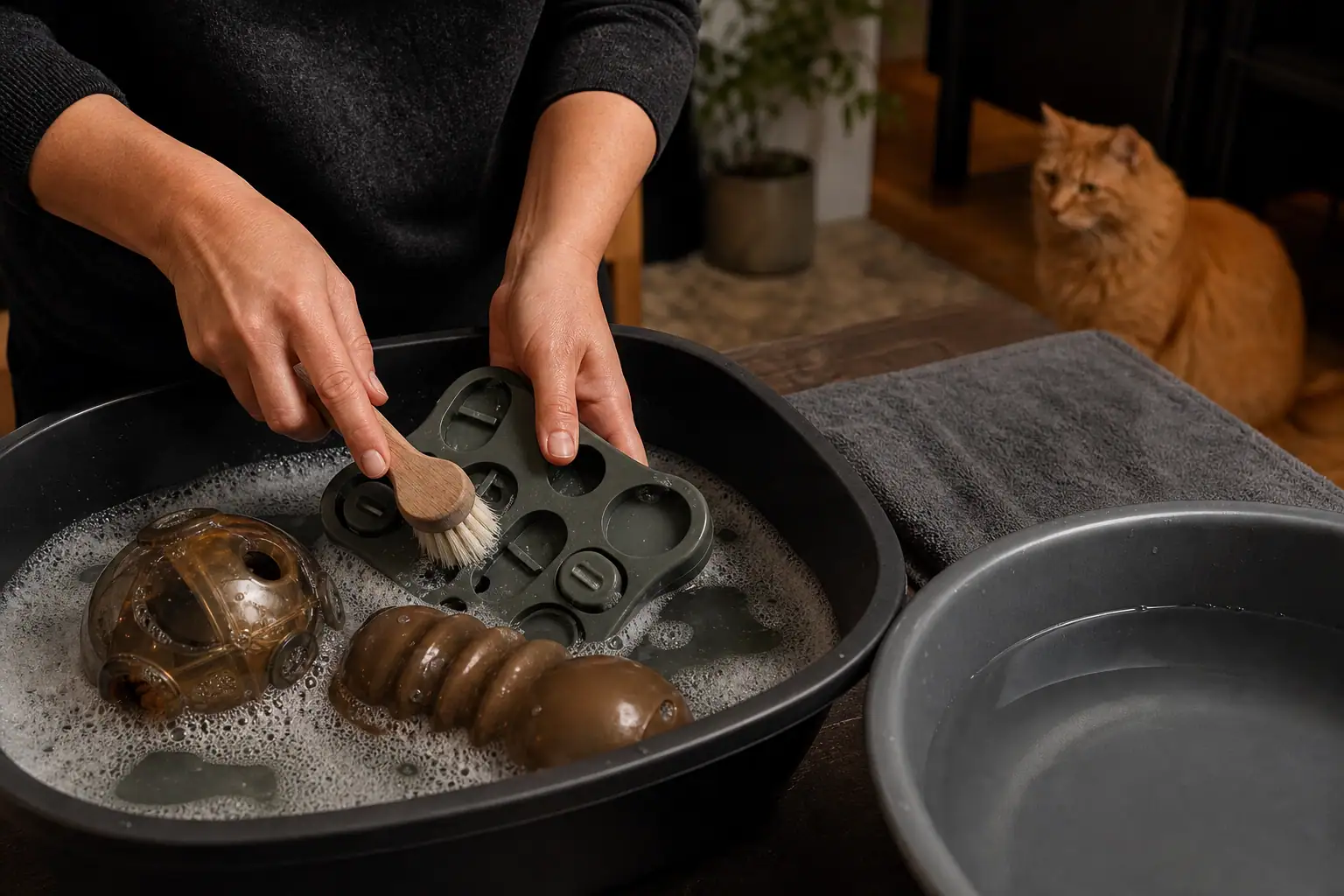
    • Look for toys made of silicone (soft, bendy plastic) or thick cloth, they’re chew proof and washable.
    • Toss them in a gentle cycle and let them air dry. Fresh toys, happy whiskers.

    Setting Up a Safe Play Environment for Interactive Play in Cats

    - Setting Up a Safe Play Environment for Interactive Play in Cats.jpg

    Remove anything fragile like glass vases or picture frames. Tuck loose cords behind furniture or clip them along walls with simple cord clips (little plastic holders). Nothing ends a zoomie session faster than a lamp crashing or a cord tangling around tiny paws, trust me, I once watched Luna almost topple our floor lamp!

    Next, set up a scratcher right in your play zone so your cat learns to dig into sisal (like a tough rope fiber) instead of your couch. That satisfying thud of paws on a solid post is purr-fect music to their claws.

    Place a climbing tower by a sunny window. Birds fluttering outside fire up your kitty’s curiosity. Pro tip: add a low shelf or cushioned pillow at the base so your feline friend can hop up easily and scan the sky.

    For fish tanks, install a clear barrier, think mesh cover or acrylic shield (sturdy see-through plastic), to keep curious paws at a safe distance and your fins splash-free.

    When you bring out new toys, stick around and supervise. Gently tug on attachments, watch for loose bits, and stash any toy that starts to fall apart.

    Give your home-cat gym a weekly once-over. Tighten loose screws, fold away crumpled boxes, and re-clip stray wires. Your home becomes a safe playground where every leap, scratch, and pounce is worry-free.

    Worth every paw-print.

    Creating Tailored Play Routines to Encourage Interactive Play in Cats

    - Creating Tailored Play Routines to Encourage Interactive Play in Cats.jpg

    Keep play times in a routine so your kitty knows when fun is on the menu. Oops, let me rephrase that – morning sessions are pure magic and sleepy paws get a gentle nudge. I once saw Luna stretch low and long before pouncing on the feathery tip – her personal wake-up call.

    Ever watched your kitty chase a feather? Try dragging a wand across the rug like a slow-moving bug. It lures in even the most cautious cats.

    Evening games help burn off that prime-time energy. A laser dot weaving around chair legs can spark a full-on zoomie fest. Or toss a wand high then sweep it low for dramatic swoops – cat tag gone pro. End by guiding the dot into a hiding spot so your cat gets that satisfying catch.

    Weekend Cat Carnival

    On weekends, build a tiny obstacle course with boxes and tunnels made of crinkly paper. Sprinkle in catnip-scented mice for hide-and-seek thrills. Luna once dove in headfirst and popped out like a spring-loaded toy. Then, um, reward her with a treat – applause-worthy fun.

    Seasonal Theme Swaps

    Switch toys with the seasons to keep play fresh. In winter, hide catnip mice in a blanket fort for extra coziness. Summer means window bird-watching – set up a perch and clip a fluttering butterfly toy nearby. Tiny theme tweaks can spark huge pounces.

    Tuning Intensity to Your Cat’s Mood
    Go slow if your cat seems sleepy – gentle wand swipes or soft rolling balls invite a chill pace. See that hunting gleam in her eye? Speed things up with a laser or a high-flying teaser. Watch for tail flicks, ear twitches, and pouncing patterns to dial in the perfect thrill level.

    Troubleshooting When Cats Resist Interactive Play

    - Troubleshooting When Cats Resist Interactive Play.jpg

    Scent Trail Adventures

    Pick a safe, edible scent you know your cat loves. Tuna oil, unsalted chicken broth, or catnip oil work great. Lightly dab it on a small toy or cotton ball with a Q-tip (cotton swab). Then hide these scented crumbs along a blind path using furniture corners or low boxes. Your cat will follow by nose, not sight.

    Here’s the scent game:

    1. Place one scented toy just out of view.
    2. Lead a second scent mark about five feet away.
    3. Give a treat when your cat finds each spot.
    4. Make it trickier by adding turns around a chair.

    Watch whiskers twitch as they track each fragrant clue. Perfect for shy or bored kitties.

    Feeder Type Recipe
    Slow-Feed Bowl (bowl that slows eating) Dry kibble mixed with ½ tsp fish juice
    Wet Food Puck (ice-cube treat) Wet pate pressed into an ice cube mold
    Rolling Treat Ball (ball that rolls out food) Crunchy bits mixed with tiny cooked chicken pieces

    Play-Mealtime Merger

    Swap about 25% of your cat’s meal into a puzzle feeder (toy that makes cats hunt for food). For wet food, freeze pate pucks in small molds, then pop them into a licking pad (toy mat) or maze tray (mini food maze). This turns dinner into play time.

    Try this schedule for a week:

    • Morning toss: five minutes of kibble-ball chasing.
    • Evening slow-feed bowl: 10 minutes of nibbling (helps with weight control).
    • Switch feeder styles every three days so each meal feels fresh.

    Track portions on a simple calendar, no guessing or overfeeding. Rotate recipes between dry and wet food once a week. That way your cat stays curious and engaged.

    For toy rotation and intensity tuning, see Choosing Engaging Toys.

    Advanced Enrichment and DIY Options to Encourage Interactive Play in Cats

    - Advanced Enrichment and DIY Options to Encourage Interactive Play in Cats.jpg

    Ever watched your kitty’s whiskers twitch with curiosity? Grab a plain box, some treats, and a dash of imagination. We’re about to turn everyday items into kitty playgrounds and puzzle feeders. Me-wow, this is going to be fun.

    Hide and Seek Treat Boards

    Take a sturdy cardboard box and cut little peek-holes just big enough for a paw or nose. Tuck treats inside paper bags and slide them into pockets at different depths, shallow ones for newbies, deeper nooks for pros. It’s snack time turned treasure hunt. Your cat’s nose will lead the way as she sniffs, paws, and discovers each tasty surprise.

    Feather-Chase Obstacle Course

    Set up a mini agility course with a play tube (like a tunnel), rolled-up towels for low jumps, and crinkly paper tubes for rustle fun. Attach a fluffy feather to a wand and pull it through curves so it flutters like a bird. Your cat will dart, leap, and swat with ears forward and tail flicking. Whoa, that satisfying pounce.

    Fetch Training Basics

    Pick a small ball, soft rubber or a fuzzy pom-pom, and roll it gently across the floor. When your kitty bats it back, offer a treat or a happy click. Before you know it, she’ll trot after the ball and deliver it at your feet like a pro. It’s a back-and-forth game that turns lazy afternoons into quality bonding time.

    Clicker Training Sessions & Target Training Tips

    Clicker training (a tool that makes a sharp “click” sound) is great for teaching a “touch” or “target” cue. Hold a target wand (a stick with a small ball on the end) near your cat’s nose. Once she nudges it, click and give a tiny reward. Keep it short, two or three clicks, and finish on a high note. Confidence booster guaranteed.

    Scent Trail Adventures

    Drag a wooden skewer with a dab of tuna oil (think liquid catnip) along floors and under tables to create a sneaky scent trail. Place a treat at the end, then sit back and watch your cat channel her inner detective. Mix up the route with chairs or pillows to raise the challenge. It’s simple scent play that taps into her natural hunting instincts.

    Final Words

    In the action, we covered why interactive play keeps cats healthy and happy, tapping their hunting instincts.

    Then we picked toys that mimic prey, from wand teasers to puzzle feeders.

    Next we prepped a safe play zone, with scratchers and window perches.

    We showed you how to set up short, daily play rituals and what to try when your cat says “nah.”

    Finally, we wrapped up with fun DIY obstacles and clicker games. Here’s to many playful moments, learning how to encourage interactive play in cats.

    FAQ

    How to encourage interactive play in cats at home?

    Encouraging interactive play at home involves short daily sessions, varied toys like feather wands or puzzle feeders, and praise. Hide treats, use a laser pointer, and match your cat’s pace to spark hunting instincts and bonding.

    What is the 3-3-3 rule of cats?

    The 3-3-3 rule of cats gives new cats 3 days to settle in, 3 weeks to explore and feel safe, and 3 months to fully trust their home and humans.

    How to play with a cat without toys?

    Playing without toys means using your hands or household items as pretend prey—wiggle fingers, dangle a sock, or create shadow tags on walls. Move gently and stop if your cat nips too hard.

    How to keep your cat entertained for hours?

    Keeping your cat entertained for hours means setting up puzzle feeders, window perches for bird-watching, rotating scent trails, and timed treat dispensers. Change activities daily to sustain curiosity and exercise.

    How to get a cat interested in interactive toys?

    Getting a cat interested in interactive toys starts with a short teaser session—move the toy slowly, sprinkle catnip (minty herb) on it, and offer treats when your cat bats or pounces to build a positive habit.

    What are some DIY mental stimulation ideas for cats?

    DIY mental stimulation ideas for cats include hiding treats in cardboard boxes or paper bags, crafting simple felt puzzle boards with treat holes, and dragging scented sticks for tracking games that engage and tire curious minds.

    Related Articles

  • Signs of Healthy Cat Play Behavior Spark Joy

    Signs of Healthy Cat Play Behavior Spark Joy

    Think your kitty’s pouncing is just chaos? Think again. Those soft hops and tiny chirps aren’t random. They’re signs your cat feels confident and healthy.

    See that slow tail wiggle? It’s your cat saying “I’m totally chill.” And that smooth, hunting-style leap? It’s pure joy. And it builds your bond. Really.

    In this post you’ll spot the happy body-language cues that show your feline friend is thriving. Then you’ll learn how to jump in and have the most paw-some play sessions together.

    Signs of Healthy Cat Play Behavior Spark Joy

    - Quick Overview of Top 5 Universal Healthy Play Indicators.jpg

    Ever watched your kitty chase shadows? These playful moves show your cat feels safe and joyfully engaged:

    • A tail that waves slowly or hangs loose – no fluffing or whipping in sight.
    • Quiet purrs or soft chirps – little meow-hums that say “I’m having fun.”
    • Gentle, controlled pounces – your cat lands smoothly, not like a wild leap.
    • Fair turn-taking stalking (quiet, sneaky tip-toe play) – each cat waits its turn before pouncing.
    • Smooth, relaxed movements with no growls or hisses – just pure, friendly fun.

    Worth every paw-print.

    See Section 2 (“Deep Dive: Cat Body Language in Play”) for more detailed nuance.

    Deep Dive: Cat Body Language in Play

    - Deep Dive Cat Body Language in Play.jpg

    Your cat’s tail speaks volumes during play. A slight puff (a tiny raise of fur along the tail) shows joyful anticipation, like they’re gearing up for the next move. Rapid lashing, on the other hand, signals frustration or overstimulation, time for a quick break. Watch their ears too: forward for laser focus on the toy, gently back when they’re relaxed and giving consent for more play.

    Stalking posture cats adopt is pure stealth mode. They lower their belly almost to the floor, align their head with the target, and inch forward on bent legs, ready to spring. Ever notice them pause mid-creep? That brief freeze and a quick eye lock with you or a playmate are play posture cues, a mutual “still good?” check. Then they dive back in, pounce, and keep the fun going.

    Common Play Activities Reflecting Healthy Cat Behavior

    - Common Play Activities Reflecting Healthy Cat Behavior.jpg

    Ever watched your kitty crouch low before springing at a feather? Mixing up play keeps them sharp and taps into those ancient hunting moves left over from kittenhood. Uh, they’re gonna be feline fine. It’s like a little prey chase right in your living room, whiskers quivering and tail twitching.

    • Pouncing on feather wands or string toys
    • Playing chase with you or another cat
    • Batting plush mice or soft balls with their paws (claws tucked in)
    • Wrestling and kicking pillows or stuffed toys with their back legs
    • Sneaking and hiding before a big leap
    • Gentle kneading on blankets or cushions
    • Zoomies (sudden bursts of wild running)

    Letting your cat bounce around like this burns energy and makes their brain purr. Zoomies give them room to explore and shake off stress. Gentle kneads on a soft cushion? Totally calming. Mix in pouncing, chasing, wrestling and kneading and you get a cat who’s fit and paw-sitively happy, no boredom in sight.

    Age-Appropriate Play Patterns and Energy Levels in Cats

    - Age-Appropriate Play Patterns and Energy Levels in Cats.jpg

    Cats at different ages bring their own play vibes! Kittens (under 1 year) move in short bursts, they wrestle, stalk, and pounce like tiny hunters. Their paws skitter across the carpet for 5 to 10 minutes at a time, about three to five times a day.

    Adult cats (1 to 7 years) shift into more focused play. You’ll see them chasing feather teasers or batting at wand toys (think fishing rod for cats) for 10 to 15 minutes twice daily. Ever watched your kitty leap for feathers? It’s a thrill.

    Senior cats (over 7 years) lean into gentler fun. They love low-impact batting or working puzzle feeders (toys that hide treats inside) for 5 to 8 minutes once or twice a day. Their whiskers still twitch, but at a slower pace, and it’s just as rewarding.

    Age Group Play Duration Common Play Moves
    Kittens (<1 yr) 5–10 min bursts, 3–5×/day Wrestle, stalk siblings
    Adults (1–7 yrs) 10–15 min sessions, 2×/day Chase, interactive games
    Seniors (>7 yrs) 5–8 min sessions, 1–2×/day Low-impact batting, puzzle play

    Every cat’s battery recharges on its own schedule. By matching play length and frequency to your kitty’s age, you’ll dodge boredom and avoid the zoomies that come from too much excitement. Oops, almost forgot. You can tweak each session based on mood and energy. Keep those paws busy and spirits bright!

    Creating a Safe Environment for Healthy Cat Play Behavior

    - Creating a Safe Environment for Healthy Cat Play Behavior.jpg

    Let’s start by picking toys and play spots that make your cat feel feline fine. Feathery teaser wands (sticks topped with soft plumes that mimic a bird in flight) send your cat’s whiskers twitching in anticipation, and laser pointers spark that “I must catch it!” instinct. For bonding time and reflex sharpening, try the best interactive teaser wand for kittens – you can control the flutter, wiggle, or dart that keeps your kitty pouncing. Just make sure everything’s sturdy, non-toxic (safe if chewed or licked), and free of tiny bits they could swallow before setting up climbing shelves, a solid cat tree (a mini jungle gym), scratching posts, and cozy hideaways for pounce practice.

    Next, keep playtime claw-tastic by swapping toys every week – new surprises mean no snooze-fest. Scatter puzzle feeders (treat puzzles) around the house so snack time feels like a game. Tuck extra water bowls or a spare litter box into quiet corners and map out a few escape routes for zoomies. These simple tweaks turn each room into a mini-wild playground, making your kitty’s day totally purrfect.

    - Distinguishing Healthy Play from Play-Related Aggression in Cats.jpg

    Signs of Healthy Cat Play

    Gentler nibbling (tiny bites) and retracted claws signal your kitty’s consent. Paws land softly. Cats take turns chasing and biting with healthy bite inhibition (just enough to feel a nibble). Ears stay forward or slightly back, and short pauses let both cats check in before leaping again.

    Deep Dive

    When Play Turns Too Rough

    A rigid back or stiff posture means your cat’s feeling tense. Flattened ears, low growls, or hisses mark a shift toward aggression. Extended claws digging in and forceful bites add to the warning signs. Intense staring or sudden leaps can flag overstimulation.

    Creating a Safe Environment

    Pause the fun when things get wild. Offer a soft plush toy or click your fingers to stop the chase. Wait a few seconds, then swap in a feather wand or treat puzzle. Time-outs and toy swaps cool down overstimulation so play stays safe and enjoyable.

    Encouraging Balanced Play Routines for Overall Cat Well-Being

    - Encouraging Balanced Play Routines for Overall Cat Well-Being.jpg

    Mix 10 to 15 minutes of interactive play with 5 to 10 minutes of solo fun. Ever watched your kitty’s whiskers twitch at a feather wand? It’s claw-tastic! Then toss in a treat ball (a little toy that drops snacks as it rolls). It’s perfect for bonding and letting them pounce when you’re on a coffee break.

    Um, match playtimes to meals or nap cues so your cat knows when it’s chase o’clock and when it’s chill o’clock. It builds routine and keeps those wild zoomies from popping up at midnight.

    Swap out toys each week to keep curiosity fresh. Try puzzle feeders (toys that hide treats), scented toys or a crinkly paper ball for new textures. A quick toy rotation means they never get bored.

    Play every day for mental and physical exercise. It stops messy mischief – no more shredded curtains or broken knickknacks. Your couch cushions will thank you.

    But seriously, a little fuss-free play goes a long way for overall cat happiness.

    Final Words

    In the action, we listed the top five signs of healthy cat play behavior: relaxed tail posture, gentle purrs, soft pounces, turn-taking stalking, fluid movements.

    We explored tail signals, ear shifts, stalking poses and pause cues that help you read your cat’s mood.

    Our section on playful games, from pouncing and batting to solo zoomies, plus age-specific tips keeps cats active.

    You also saw how to set up safe play areas, spot gentle play versus rough moments, and stick to a steady routine.

    Spotting these signs of healthy cat play behavior makes multi-cat homes happier, calmer and ready for the next game.

    FAQ

    What are signs of healthy cat play behavior, with other cats or at night, and how can I tell they’re playing nicely?

    Healthy cat play shows relaxed tail posture, gentle purrs or chirps, soft controlled pounces, balanced turn-taking stalking, and fluid non-threatening movements, even in low light or among littermates.

    How can I tell if my cat is playing with me rather than fighting?

    You can tell a cat is playing with you by its retracted claws, gentle bite pressure, relaxed ears, soft meows or chirps, regular pauses, and role swaps instead of stiff postures or hissing.

    How can I tell if my cat’s play with a kitten is gentle or aggressive?

    You can tell if your cat’s play with a kitten is gentle when it uses retracted claws, slow body movements, soft vocalizations, and takes turns. Stiff stance, extended claws, pinned ears, or yowling signal aggression.

    How do I know if my cat’s play is too rough?

    You know play is too rough if your cat extends claws, sinks in hard bites, adopts a stiff posture, vocalizes loudly, or chases without breaks. Redirect or pause play when you spot these signs.

    How can I tell if my cat is playful or just stressed?

    A playful cat shows bright eyes, upright ears, soft chirps, and eager pouncing on toys; a stressed cat hides, licks lips repeatedly, flattens ears, dilates pupils, or hisses.

    How can I tell when my cat is done playing?

    You can tell a cat is done playing when it stops stalking or batting, starts grooming, offers yawns, lowers its tail, or curls up in a cozy spot for a nap.

    Related Articles

  • Understanding Cat Play Motivations Sparks Joyful Bonding

    Understanding Cat Play Motivations Sparks Joyful Bonding

    Have you ever seen your cat rocket across the living room at dawn, paws skidding on the rug? It’s not just silly zoomies, you know. Your little night prowler is tapping into instinct-driven play to sharpen speed, sneak moves (quiet steps for surprise attacks), and senses like super-tuned hearing and low-light vision.

    Toss a crinkly ball (it crackles more than a snack bag) or wiggle a feather wand, and you’ll see them pounce. You’re giving them a brain boost (a fun mental workout) and building those jump-ready muscles all at once. In this guide, you’ll discover how decoding each zoom and leap turns playtime into a paw-some bonding adventure with your furball. Worth every paw-print.

    Core Drivers of Cat Play Motivations

    - Core Drivers of Cat Play Motivations.jpg

    Have you ever seen your kitty zoom across the floor like a furry speedster? Um, scratch that, like a kitty rocket? They’re practicing speed (quick sprints), stealth (silent sneaks), and cunning (smart tricks) all at once. You can almost feel the tension as their whiskers twitch and eyes lock on a crinkly ball. It’s like a mini safari in your living room.

    Playtime is brain time too. A puzzle feeder is a kitty brain teaser. It sharpens coordination (how their body and mind work together), boosts memory when they remember where the treat is hiding, and melts away stress. Ever watch your cat tilt its head while figuring out a new toy? That little look of concentration is real mental workout in action.

    Stalking a feather wand or batting a puzzle ball really taps into hunting stuff. When outdoor prey is scarce, tunnels and paper bags become perfect hideouts. Every jump feels like a triumph. Who knew your couch could host such epic ambushes?

    Playtime is also sneakily healthy. Quick darts around the sofa build strong muscles and keep joints flexible. It’s kitty cardio that helps them keep an ideal weight. Then they’ll flop down for a peaceful nap.

    Worth every paw print.

    Understanding these play motivations shows toy time is more than fun. It’s vital enrichment for your cat’s mind and body all in one happy session. You’ll see they’re not just playing, they’re staying sharp, fit, and totally entertained.

    Unpacking Cat Play Behavior and Motivational Cues

    - Unpacking Cat Play Behavior and Motivational Cues.jpg

    Ever watch your kitty bat at a feather wand? That’s play, not fight. When your cat’s tail is held high and her body stays loose, she’s in a playful mood. Forward-tilted ears and eyes tracking a toy show curiosity, not alarm.

    When she springs with fluid, springy moves and pounces softly on a plush mouse, that satisfying thud says all you need. See those claws? They stay sheathed (hidden inside) during a fun pounce. But a stiff jump with claws unsheathed can turn tense fast. So keep an eye on her paws.

    Listen close. Playful little meows or chirps come with soft, dreamy eyes. You know, a hiss or low growl means back off. You’ll hear the difference between happy chatter and a warning rattle. Then there’s gentle batting with open paws or quick bunny kicks with her back feet. Utterly harmless fun.

    Wanna spot cat play in action? Look for:

    • A low crouch as she stalks the toy, like a tiny hunter
    • A soft pounce with zero intent to harm
    • Kneading a blanket or plush friend, those little paw presses
    • Play wrestling with a stuffed toy using her front paws

    Understanding these cues makes playtime claw-tastic for both of you. And when she pops out from behind a box or curtain, she’s practicing her hunting moves, not plotting against you. Next, grab a teaser wand and get ready to bond. You’ll even learn to read her whisker twitches and tail flicks like a pro.

    Enhancing Prey-Drive Play

    - Predatory Play Drive and Hunting Instincts in Cat Play Motivations.jpg

    Play up your kitty’s hunting instincts with new twists. Ready to pounce?

    • After a few minutes of red-dot zoomies, drop a plush mouse (a soft, fluffy rodent). Your cat will stalk and pounce for a real catch. The tiny thump when she scores? Adorable.
    • Give her a puzzle feeder with polymer (plastic-like material) chambers. She’ll bat, nudge, and jiggle each pocket until crunchy kibble spills out. (Ever watched her paws work those compartments?) It slows her down and taps into her inner hunter.
    • Then switch things up. Toss in a crinkle ball or squeaky mouse for a rustle or peep, then swoop in with a feather wand. Think of the wand like a fishing pole for cats. For tips on picking one, check out how to choose an interactive teaser wand for cats.

    Worth every paw-print.

    Social Play Interactions and Environmental Enrichment Motivations

    - Social Play Interactions and Environmental Enrichment Motivations.jpg

    Cats love teaming up to play. They’ll wrestle with siblings or bat the same toy back and forth. In a multi-cat home, these friendly bouts help them hone their balance and learn gentle bite control. But don’t worry if yours is a solo kitty. You can become play partner number two. Ever tried a feather wand dance or a soft ball chase? It’s a sweet way to bond, exactly what cats need for connection and companionship.

    You can spark these fun moments with easy tools. Wave a feather wand just above your cat’s head and watch her leap like a furry acrobat. Tie a pom-pom (a fluffy little ball) to a string for a tug-of-war challenge. Or toss a light foam ball across the room and see her sprint, pick it up, and drop it at your feet. Play fetch indoors, it’s enrichment at its best!

    And toys are just the start. Slide a collapsible tunnel under the coffee table so your cat can slink through and launch surprise ambushes. Scatter washable puzzle-pad pieces to build a mystery maze. Just swap shapes now and then to keep things fresh. Don’t forget vertical perks like wall shelves or cat trees. High look-outs feed hunting instincts and offer snug hideaways.

    Treat-filled mats are another win. Tuck kibble or soft treats into a silicone mat’s little pockets, then let your cat nose, paw, and nudge her way to snack time fun. You can also try a foraging puzzle with sliding disks. Turn dinner into a brain-boosting game that fights boredom.

    Rotate your setups every week or two. A new hideout or puzzle lights up that hunter spark. With playful social games plus clever indoor adventures, you’ll keep your cat sharp, active, and truly engaged.

    Selecting Interactive Toys to Meet Cat Play Motivations

    - Selecting Interactive Toys to Meet Cat Play Motivations.jpg

    Toy Type What It Does How It Feels/Smells
    Puzzle Feeder (treat game) Slows down snacking. Gives your kitty’s brain a playful workout. Ridged grooves that spark your cat’s natural hunting instinct.
    Feather Wand (bird teaser) Builds chase skills. Boosts their leap strength. Soft feathers that mimic bird fluff under tiny paws.
    Ball Toy (crinkle ball) Invites batting and a round of fetch. A crinkle core that rustles with every tap.
    Catnip Toy (nip pouch) Turns on playful excitement then helps them mellow out. Premium oil scent that lingers for longer fun.
    DIY Box Tunnel Offers hiding spots and a brand-new playground. Sturdy corrugated cardboard (like a strong paper shell).

    Ensuring Safe and Effective Play Sessions for Cats

    - Ensuring Safe and Effective Play Sessions for Cats.jpg

    Understanding why cats love to play is the first paw-step to safe fun. Cats chase toys to burn off zoomies or sharpen those lightning-fast reflexes. Ever watched your kitty’s whiskers twitch as a toy mouse skitters across the floor? You’ll know things are getting too tense if you spot flat ears, a bristled tail, stiff stalking, or an arched back.

    When you hear a hiss or low growl, pause the game and let them catch their breath. Oops, don’t forget to check toys for fraying edges before the next round. Um, a quick scan keeps play safe.

    Telling play from aggression gets easier with practice. A playful pounce comes with sheathed claws (claws hidden), soft paws, and a chirpy meow. But if claws fly out and you hear a warning growl, that’s when play crosses a line. When things get too rough, stop moving the toy, wait until your cat relaxes, then offer a plush ball or a wand toy (think fishing pole for felines) to keep paws busy without your fingers at risk.

    Always pick sturdy, non-toxic toys with no small parts that could break off and become choking hazards. Rubber, polymer coated fabric (tough plastic-covered cloth), or puncture-proof nylon (rip-proof fabric) stand up to sharp teeth and paws. Keep play sessions short and sweet – five to ten minutes, two to three times a day. That little routine fires up your cat’s mind and muscles and can even help curb overeating later on.

    Try a ten-minute chase game before breakfast to slow down dinner chow time. I still smile thinking of Luna’s six-foot leap when she snagged her favorite ball. Keeping it safe, short, and fun turns every nibble and pounce into a memorable bonding moment. Worth every paw-print.

    Adapting Play Motivations Across Age and Personality

    - Adapting Play Motivations Across Age and Personality.jpg

    Kittens love quick bursts of energy. Think red-dot zoomies or a feather wand dance that sends their tiny paws pitter-pattering across the floor. Ever watched your kitty chase shadows? Those three- to five-minute sprint-and-pounce sessions build confidence and coordination in the cutest way.

    Adult cats do best with a daily play habit and fresh surprises. Try a rotating toy stash: today a crinkle ball, tomorrow a pulley teaser, then a puzzle feeder for a brainy snack hunt. Aim for two ten-minute mini-workouts, one before breakfast and another after dinner, to keep curiosity alive and boredom at bay.

    Senior cats need gentler, low-impact fun that matches their slower pace. A plush mouse or soft pom-pom on a string invites a calm chase without stressing joints. Then let them stalk a teaser wand in slow motion. It’s just right for aging muscles and keeps those whiskers twitching.

    And personality matters, too. A shy cat might peek out from a tunnel before batting a toy, while a fearless jumper will tackle a dangling bell with gusto. Watch their body language, tweak toy type and session length, and you’ll create a custom play plan that sparks joy, um, and a few adorable kitty antics.

    Final Words

    in the action, we explored core instincts driving cat play, from stalking to ambush. We decoded body language, teased out hunting and social drives, and suggested toys that mimic prey while boosting mental and physical health.

    You learned safety tips to spot overstimulation, redirect rough play, and craft sessions that suit kittens, adults, or seniors.

    With durable, engaging options, you’ll reduce stress, protect furniture, and keep multi-cat households happily busy. Keep understanding cat play motivations at the heart of every playful moment.

    FAQ

    What is in the understanding cat play motivations PDF?

    The understanding cat play motivations PDF explains how cats use play to sharpen hunting instincts, improve coordination, relieve stress, and support healthy weight through mental and physical stimulation.

    Where can I find cat motivational posters or memes?

    You can find cat motivational posters and memes on pet-focused websites, social media pages dedicated to feline art, or by searching “cat inspiration” and “cat motivation” online for a playful dose of whisker wisdom.

    How many cat breeds does the International Cat Association recognize?

    The International Cat Association recognizes 73 cat breeds, each with unique traits and play styles to match your feline’s personality and enrichment needs.

    How intelligent are cats and can they understand human emotions?

    Cats demonstrate intelligence through problem-solving, memory recall, and social learning, while also picking up on human tones, facial cues, and routines to sense and respond to our emotions.

    How do cats signal they want to play?

    Cats signal they want to play by lowering their bodies, blinking slowly, offering toys, or performing quick pounce attempts, inviting you to mimic prey and spark a fun chase session.

    How can I tell if my cat is playing or fighting?

    You can tell if your cat is playing or fighting by watching for relaxed ears, soft paws, and gentle bites in play, versus flattened ears, stiff body, hissing, and hard swats in aggression.

    How can I tell if my cat enjoys playing?

    You can tell if your cat enjoys playing when they return for more, purr mid-pounce, chase toys with focus, and show relaxed whiskers and tail flicks of excitement.

    Why does my cat always want to play?

    Your cat always wants to play because play taps into hunting instincts, offers mental stimulation, relieves stress, and helps maintain healthy weight and muscle tone through fun energy bursts.

    Related Articles

  • cat hissing when petted calmed with gentle care

    cat hissing when petted calmed with gentle care

    Ever reached out to scratch your cat’s chin only to get a hiss? That quick “hsss” isn’t a personal attack. It’s your kitty’s way of saying “hold up,” since they might be tired of pets or hiding a sore spot under all that fluffy fur.

    Next, give a few short cheek rubs or light chin scratches (you’ll even see their whiskers twitch). And if they pull away, step back before their paw taps your hand. It’s their boundary. Oops, um, I guess that little nudge is their gentle warning.

    Stick with gentle moves and respect their quiet limits. Soon enough that hiss will turn into a soft, rumbling purr. Worth every paw-print.

    Why Cats Hiss When Petted

    - Why Cats Hiss When Petted.jpg

    Ever heard that sharp hiss when you pet your kitty?
    It’s not a personal insult.
    It’s a reflex (an automatic defense) saying “Whoa, too much!” like yelping when you touch something hot.
    Cats just warn you, plain and simple.

    Sometimes a flurry of long, back-to-tail strokes tickles their nerves.
    Whiskers twitch.
    Even a gentle belly rub or tail-base scratch can hit a mega-sensitive spot.
    Add a new person, a weird smell, or a sudden move, and your cat might freeze, then hiss.

    You’ll see other signs of stress:

    • Big, round pupils
    • Ears flattened against their head
    • A tail flicking like a flag in the wind

    Pain can make them hiss, too.
    Arthritis (joint pain), hidden wounds, itchy skin, or dental ache can turn sweet pets into surprise pinchers.

    Spot limping, over-grooming, or random swats?
    Time for a vet visit using gentle Fear Free handling (low-stress approach).
    Then swap full-body rubs for light cheek strokes or soft chin scratches.
    Trust me, small tweaks build big trust, and purr-fect moments.

    Recognizing Body Language Before a Hiss

    - Recognizing Body Language Before a Hiss.jpg

    Ever watched your kitty’s whiskers quiver when something feels off? Noticing these clues early can keep your cat feeling safe, and you feline fine.

    • Ears flat against the head (pressed like tiny pancakes)
    • Pupils blown wide with big black centers
    • Tail twitching or lashing side to side
    • Fur puffed up and back arched (hackles standing like a little Halloween cat)
    • Body low and stiff, like they’re ready to sprint

    Once you spot any of these warning signs, back off and give your cat a breather. Worth every paw print.

    Why Cats Hiss When Petted

    - Common Petting Triggers for Hissing.jpg

    Petting your cat can feel like the sweetest thing. But sometimes a simple scratch ends in a sharp hiss. Ever wondered why?

    When you stroke along the spine (your cat’s back) for too long, the soft fur can tickle like crazy. That tickle zings down their nerves and can tip your kitty into overstimulation. Oops, guess I should say: just two or three more strokes and you might hear a sudden hiss. And that switch flips fast.

    Gentle, rhythmic pats can cross a comfort line if you go too fast or press too hard. Pressing the belly or the base of the tail feels like hitting a secret button. Those spots make your cat reflexively hiss.

    Unlike playful ambushes that lead to cat hissing during play, petting hisses sneak up on you in calm moments. Watch for these tricky moves:

    • Long strokes along the spine
    • Belly or chest rubs
    • Touching the tail base
    • Handling paws or legs
    • Fast or circular hand motions
    • Sudden loud gestures

    Notice your cat’s signals, whiskers twitch, tail flicks, or ears tilt back. Some kitties melt for a slow chin scratch, while others jump at a single belly pat. Respecting your cat’s comfort means tweaking your petting speed, pressure, and spot. You’ll go from hisses to happy purrs in no time. Worth every paw-print.

    Who is the ABC Platform for?

    - Medical Causes Behind Petting-Related Hissing.jpg

    If you run a small or mid-sized business or you work at an agency and you know the basics of tech and automation but just don’t have the time to build everything yourself, this is for you. Agencies will love it most because you can manage multiple client sites all in one place and see a huge return on your work.

    What is the ABC Platform?

    It’s a subscription bundle that gives you two apps plus access to Scale By Tech’s advanced automation vault. One app is a visual database (a drag-and-drop tool to store and view your data) and the other is an automation platform (software that links tasks and runs workflows automatically). The SBT Vault is full of ready-to-use automations that are production grade so you can skip the build and go live fast.

    Why should you care?

    With a visual database, an automation platform, and pre-built automations all in one bundle, you’ll be up and running in no time with very little effort. You need both a database and an automation engine to make meaningful workflows. So we simplified it by putting them together. Deploy & Enjoy.

    Tiger Spirit Animal

    The tiger spirit animal is all about raw feelings and going with your gut. Ever watched a tiger box with shadows? Then you know its power. It stands for willpower, courage, and trusting yourself to act fast.

    What does it mean when the tiger appears? Choose these vibes:

    • Personal strength and courage that helps you roar when you need to
    • Hidden parts of yourself you might normally hide or ignore
    • Anger or aggression you feel toward yourself or someone else
    • Unpredictable changes in life or emotions

    Pay attention to how the tiger shows up in your dreams or meditations and notice the feelings it brings. It helps you tap into instincts deep inside you. In truth, you’ll find a more embodied sense of meaning when you follow its lead.

    Elephant Symbolism & Spiritual Meaning

    Elephants show up in many cultures as symbols of power, wisdom, and respect. Have you ever seen one moving slowly across the savannah? Their calm strength is legendary and it can inspire you to take charge of your life.

    What does the elephant symbolize?

    • Strength and physical power that makes you feel invincible
    • Wisdom that comes from a long memory and deep knowing
    • Intuition that guides you when you listen to your heart
    • Longevity and a drive to live a full life
    • Motherly care that reminds you of safety and support
    • Stability that keeps you rooted even when life gets wild

    Think of the elephant as a friend who teaches you to own your power and use it for good. If you’ve ever felt small or powerless, you can meditate on its spirit and find your own inner might. When you let this gentle giant into your practice, you’ll stand taller and walk steadier through any challenge.
    But remember it takes time. So start small, touch a picture of an elephant or say its name before you begin your day.

    Petting Dos and Don’ts

    - Gentle Petting Techniques to Prevent Hissing.jpg

    • Do move in slow, calm motions so your kitty stays curious instead of spooked. You’ll see their whiskers twitch, paw-fect feedback.
    • Do use long, gentle strokes on the top of their head, cheeks, and chin (like drawing soft lines with your fingertip). It’s basically a mini cat massage.
    • Do whisper a cozy “good kitty” or hum softly with each rub. That low sound is extra soothing, um, trust me.
    • Don’t touch the belly or the base of the tail unless you’re 100% sure your cat loves it. To them, those spots can feel like a surprise trap.
    • Don’t ignore a flicking tail, a whisker tremble, or a low growl (a tiny warning grumble). Pause right away if they give stress signals.
    • Do keep sessions short, just a couple minutes, so your feline friend stays happy instead of overstimulated.

    Building Trust Through Desensitization

    - Building Trust Through Desensitization.jpg

    Building trust through desensitization calms a hissing cat. Ever noticed your kitty flinch when you reach out? When you focus on building cat trust with short, positive sessions, your kitty learns that gentle pets bring treats, not bites. This gradual contact methods approach feels calm and respectful. Adding clicker training basics and hand feeding moments creates a safe routine your cat can look forward to.

    1. Offer your closed fist a few inches from your cat’s nose and wait for a sniff. When they do, click or say “yes” and drop a tiny treat.
    2. Encourage more sniffs by keeping your hand still and rewarding each nose-boop with a morsel. This positive reinforcement use teaches that hands mean good things.
    3. Slip in a light fingertip brush on the head or cheek, then follow with a treat or gentle praise. Keep touches brief and soft.
    4. Each day, extend that gentle stroke by a second or two before giving the next treat. Work up to a slow, soothing few seconds.

    Patience and consistency are everything. You may spend a few days or even a week on each step before your cat relaxes, just watch for whiskers leaning forward or half-blink slow blinks. Keep sessions under five minutes, repeat twice a day, and journal any changes. With regular hand feeding trust exercises and a clicker click to mark calm behavior, those hisses will soon give way to soft purrs. Before long, your kitty will greet your hand with nuzzles instead of flights. It’s slow, sure, and completely worth it for a bond that lasts well beyond the next treat.

    cat hissing when petted calmed with gentle care

    - Environmental and Routine Adjustments to Lower Hissing.jpg

    Ever watched your kitty puff up at a sudden noise? I have. But giving cats scratch posts (wooden poles to sink their claws into), puzzle toys (treat games), perches (high resting spots), and cozy hidey-holes makes your home feel like a safe playground. My Luna even claimed a cardboard box as her chill zone and stopped hissing at every creak. When they have fun spots and hideouts, loud sounds or empty days barely register.

    • Cozy hidey-holes or covered beds for retreats
    • Tall cat trees or wall shelves for climbing adventures
    • Puzzle feeders (games that make your cat work for treats)
    • Soft rugs and quiet corners to muffle noise
    • Multiple scratching posts scattered around the home
    • Window perches for birdwatching entertainment

    Next, a simple routine can work wonders. Serving meals at the same time each day and then tossing a soft ball for ten minutes lets your cat know what’s coming. Miss a mealtime or skip play and you might spark their nerves. I set phone alarms for 7 AM and 5 PM to keep Luna on track.

    Worth every paw-print.

    Consistent routines help your cat relax. Hisses soon turn into gentle purrs you can feel rumbling through their fur.

    Consulting Professionals for Persistent Hissing

    - Consulting Professionals for Persistent Hissing.jpg

    If hissing keeps popping up despite gentle petting tweaks, that’s your cue things aren’t fully settled. When your cat still flicks ears, arches back, or spits after a few calm sessions, it’s time to seek extra support.

    Start with a veterinary checkup to spot hidden pain or medical issues. Pick a clinic or vet who uses Fear Free handling, they know how to ease feline nerves during exams. Once health concerns are ruled out, consider a behaviorist consultation. A certified feline behaviorist can craft a step-by-step plan, often via home visits or online calls. Share your cat’s hissing patterns, body-language notes, and petting tweaks tried so far. Teaming up with pros at the right moment helps your cat feel safe and keeps your cuddle sessions stress-free.

    Final Words

    In this guide we dove into what a hiss really means and mapped out the early warning signs that your cat might be feeling stressed.

    Then we covered spots and petting styles that can spark a hiss, plus hidden aches that call for gentle handling and a vet check.

    We wrapped up with step-by-step petting tips, trust-building treats, home tweaks and pro help to keep things calm.

    You’re all set to swap startled hisses for happy purrs and ease cat hissing when petted.

    FAQ

    Why does my cat hiss when petted?

    Hissing when petted often signals that your cat feels startled, stressed, or in pain. Overstimulation, touching sensitive spots, or past bad experiences can trigger that defensive reflex.

    What does it mean when my cat hisses but still acts friendly?

    When a cat hisses but still acts friendly, it sets a mild boundary without fear. She still trusts you but needs you to pause or change how you touch her.

    Why does my cat hiss at me after I pet another cat?

    When your cat hisses after you pet another cat, she may feel jealous or left out. That hiss warns you to give her attention and respect her space before approaching.

    What is the 3-3-3 rule of cats?

    The 3-3-3 rule of cats guides new adoption: three days to settle in, three weeks to trust family, and three months to fully bond and feel safe in your home.

    Can cats hiss when they are happy?

    Cats rarely hiss when they are happy. Hissing signals threat, surprise, or pain. A happy cat more often purrs, chirps, or kneads to show joy and comfort.

    Related Articles

  • cat hissing during play Signals Healthy Boundaries

    cat hissing during play Signals Healthy Boundaries

    Think your cat’s hiss during play means she’s about to snap at you? Um, I used to think that too. Oops. Let me rephrase that. It’s more like my kitty’s polite “whoa, easy there” signal than a sneak attack.

    When she chases a wand toy and pauses with a soft hiss, she’s simply marking her play boundary, not planning revenge. Spotting these tiny warnings keeps the fun flowing and the stress low. Your cat’s whiskers might twitch, her tail might flick right before that little hiss. Really.

    In this post, we’ll explore why that quick hiss is a good sign, how you can spot it, and what to do when you hear it. Ready to make playtime purr-fect?

    Quick Answer: Is Hissing During Play Normal?

    - Quick Answer Is Hissing During Play Normal.jpg

    Ever seen your feline friend let out a quick hiss while chasing a toy? It’s totally normal, just a tiny reminder that kitty wants to set a boundary, not start a battle. You’ll hear a short hiss, then see her flick her tail and dive back into the fun. Really, it’s like hitting pause for a sec!

    Cats hiss mostly when they feel a little stressed or uncomfortable. So if your cat hisses once and then goes right back to batting that pom-pom, she’s fine. Want the science scoop? Check why do cats hiss.

    • Playful vs. defensive cues

      • Playful: ears up, a quick hiss, then back to pouncing
      • Defensive: ears flat, fur standing on end, repeated or loud hisses
    • What to do next

      • Hit pause if tail starts lashing or hackles rise (hackles: fur along the back sticking up)
      • Try a softer wand toy or offer a tasty treat

    Decoding Body Language Cues in Play Hissing

    - Decoding Body Language Cues in Play Hissing.jpg

    It’s like your cat pressing a little pause button in the middle of play when they let out a hiss. Watch their ears, eyes, tail, and whiskers, they’re talking more than any meow. Miss those hints and a fun pounce can slip into a mini scrap.

    If you see ears up and tilted forward (like tiny radar dishes), big round pupils full of excitement, front legs crouched, back legs ready to spring, and a low tail giving a soft flick, that quick hiss is just a friendly brake. It says, “Hey, I’m still having fun, but let’s slow down a bit.” You might even notice whiskers leaning forward, a grown-up cat’s way of saying “I’m curious here.” Ever watched those whiskers in action? Cool, right.

    But real distress looks different. Ears flattened against the head, hackles (fur along the spine) standing up like bristles, a stiff or twitchy tail, whiskers pulled tight, pupils pinched, and the body hunched or arched like a scared Halloween kitty. That’s their stop sign, “Please, no more.”

    Playful cues:

    • ears forward
    • wide pupils
    • crouched front with reared hind legs
    • gentle low-tail flick

    Stress signals:

    • flattened ears
    • raised hackles
    • stiff or twitching tail
    • whiskers pulled back
    • hunched or arched back

    Pause play for a beat. Your kitty will thank you.

    Identifying Common Triggers of Hissing in Play Sessions

    - Identifying Common Triggers of Hissing in Play Sessions.jpg

    Playtime feels purr-fect, until your cat’s fun bar hits “too much.” Suddenly there’s a sharp hiss, a clear “no more, please.” Spotting these common triggers early helps you steer clear of overstimulation (too much excitement) and keep play sessions smooth.

    • Overmatched play styles
    Kittens zoom around with zippy energy, while grown cats often prefer a leisurely paw-bat. Ever seen a kitten’s nibble turn into a full-on ambush? When that rapid bat-pat on the carpet keeps going, your older cat’s excitement dial just flipped to red. You’ll spot the tail-twitch warning before the hiss.

    • Rough tumble sessions
    It’s hilarious to watch two furballs tumble, but it can cross the line. When claws sink in or teeth clamp too hard, your kitty’s mood shifts in an instant. They’ll back off with a hiss, think of it as their fuzzy stop sign. Better to pause and swap for a soft teaser wand.

    • Toy and bowl showdowns
    In multicat homes, a favorite toy or food dish can feel like a club VIP pass. Two cats chasing the same ball? Uh, stress city. A hiss here means “Hey, that’s mine.” Spread out bowls, beds, and scratchers so everyone gets their own spot.

    • Pain spots and sudden scares
    Sore joints (like aching hips) or a stray scratch can turn gentle pets into “ouch” moments. Even a sudden clap or odd smell might spook them faster than you can say “treat.” They’ll hiss to protect themselves. Notice those quick retreats and give them room.

    Next, slow the pace or swap to a gentler toy. You can even pause for a calm time-out. These tweaks go a long way to keep the fun rolling, without the hiss.

    Toy Selection and Play Adjustments to Reduce Hissing

    - Toy Selection and Play Adjustments to Reduce Hissing.jpg

    Picking the right toys can really help when your kitty plays tough. You know how some cats go full ninja mode, biting and scratching everything in sight? That’s when sturdy, catnip-packed toys save the day, they soak up wild energy without turning your socks into confetti. Check out indestructible cat toys for aggressive chewers for ideas that stand up to even the rowdiest pounces.

    Sensory toy ideas

    • Crinkle balls that make a little crunch when squished
    • Plush mice with sneaky catnip pouches
    • Soft rubber rings perfect for gnawing

    Interactive toy safety

    • Wands with breakaway clips to stop choking
    • Feather teasers on reinforced fiberglass (like a strong fishing-rod core)
    • Laser pointers with timers so they shut off automatically

    Indoor enrichment strategies

    • Tall climbing towers for lofty naps
    • Multi-level scratching posts to sink those claws
    • Cozy tunnels or pop-up tents for playful hideouts

    Toy rotation magic

    • Swap out a couple toys every few days
    • Stash extras in a box to keep novelty fresh
    • Bring back favorites after a little break

    And tweaking how you play can keep those hisses away. Try quick, five-minute chase sessions with calm pauses so your cat can catch her breath and reset. If you spot a flicking tail or a soft hiss, that’s your cue to slow down or switch toys. A mix of fast fun and chill time means more purrs, fewer growls, claw-bulous, right?

    Positive Reinforcement Techniques for Redirecting Hisses in Play

    - Positive Reinforcement Techniques for Redirecting Hisses in Play.jpg

    Ever watched your kitty settle after a hiss, whiskers twitching for cues? That’s when you swoop in with a crunchy treat. The sound of that nibble grabs attention and cools the moment. A clicker click, like applause in a cat’s ears, labels calm behavior and lays groundwork for peaceful play.

    Pick a cue word, gentle, easy, or chill, spoken in a soft tone right as the tail stops flicking. Repeat it every time she shifts from hissing to paw-tap. Soon she’ll know the word means “play safe.” If the hiss persists, give a sixty-second breather: step away or toss a favorite toy nearby so she feels in control of the calm-down.

    • Redirect snacks: offer a tiny treat or crunchy kibble right after a hiss.
    • Click-to-reward: click once whiskers relax, then hand over the treat.
    • Cue-based cool-down: use the same gentle word each time tension drops.
    • Time-out spots: create a cozy corner with a blanket or tunnel for short breaks.

    A tossed wool ball or gentle rolling disc also works wonders for distraction.

    Reward soft mouthing or no-scratch moves to teach bite inhibition and reinforce boundaries. More soothing tricks in how to calm a hissing cat.

    When Hissing During Play Warrants Veterinary or Behaviorist Intervention

    - When Hissing During Play Warrants Veterinary or Behaviorist Intervention.jpg

    So your kitty starts hissing more often during playtime, and it’s not because you swung the wand too close. When a once-rare hiss turns into a frequent protest, that’s a tip-off: something’s off, maybe discomfort or anxiety creeping in! Ever watched your cat freeze and let out a hiss for no clear reason?

    Watch for those hisses when you’re petting her softly or lifting her up. Those sharp little “hssss” might point to joint pain (like achy hips or knees) or dental discomfort (sore teeth or gums) when you touch her head. You might notice her pulling away, favoring one side, or flinching in spots that used to feel fine. Cats are pros at hiding pain, so you have to pay close attention.

    But if you hear hissing outside of play, at mealtime, during grooming, or in cuddle sessions, it’s time to call in a pro. A veterinarian can check for medical culprits like infections, loose teeth, or sore muscles. And if the vet rules out illness but kitty’s still on edge, a certified behaviorist can help you uncover stress triggers or social skirmishes under the sofa.

    Getting a clear diagnosis isn’t just about silencing the hisses. It’s about bringing back happy, hiss-free play sessions. Truly.

    Final Words

    We jumped right in to answer if hissing amid play is typical, then broke down body signals so you know when a hiss is playful or a warning.

    Next, we pinpointed common triggers, from overstimulation to rough wrestling, and shared toy picks plus environment tweaks to keep sessions smooth.

    We also covered reward-based tips to gently redirect hisses and signs that mean a vet check might help.

    With these steps, every whisker-twitch and gentle hiss turns into fun. And your cat stays healthy and happy with cat hissing during play handled just right.

    FAQ

    Is it normal for a cat to hiss or growl while playing?

    It is normal for a cat to hiss or growl while playing if it’s short, gentle, and followed by relaxed play. Hisses can be playful warnings like a purr in reverse.

    Why does my cat hiss or growl when playing with toys?

    Cats hiss or growl when playing with toys when they feel overstimulated (too much excitement) or if a toy taps a sore spot. A quick hiss helps your kitty set gentle boundaries.

    Do cats hiss or growl when playing with other cats?

    Cats do hiss or growl when playing with other cats if play styles clash or one cat feels startled. Friendly hisses are brief and followed by resumed play or grooming.

    Can overstimulation cause cats to hiss during play?

    Overstimulation can cause cats to hiss during play when they get too excited too fast. Offering breaks and gentle toys keeps play fun and stops kitty stress hisses.

    Do male and female cats hiss differently in play?

    Male and female cats hiss similarly in play. Each kitty has its own style based on mood not gender. Watching body cues (ear position or tail flick) tells you more than fluff under the fur.

    When should I seek help for my cat’s hissing during play?

    You should seek help for your cat’s hissing during play when hisses become constant or aggressive, or if your kitty looks fearful or in pain. A vet or behaviorist can rule out health issues.

    Related Articles