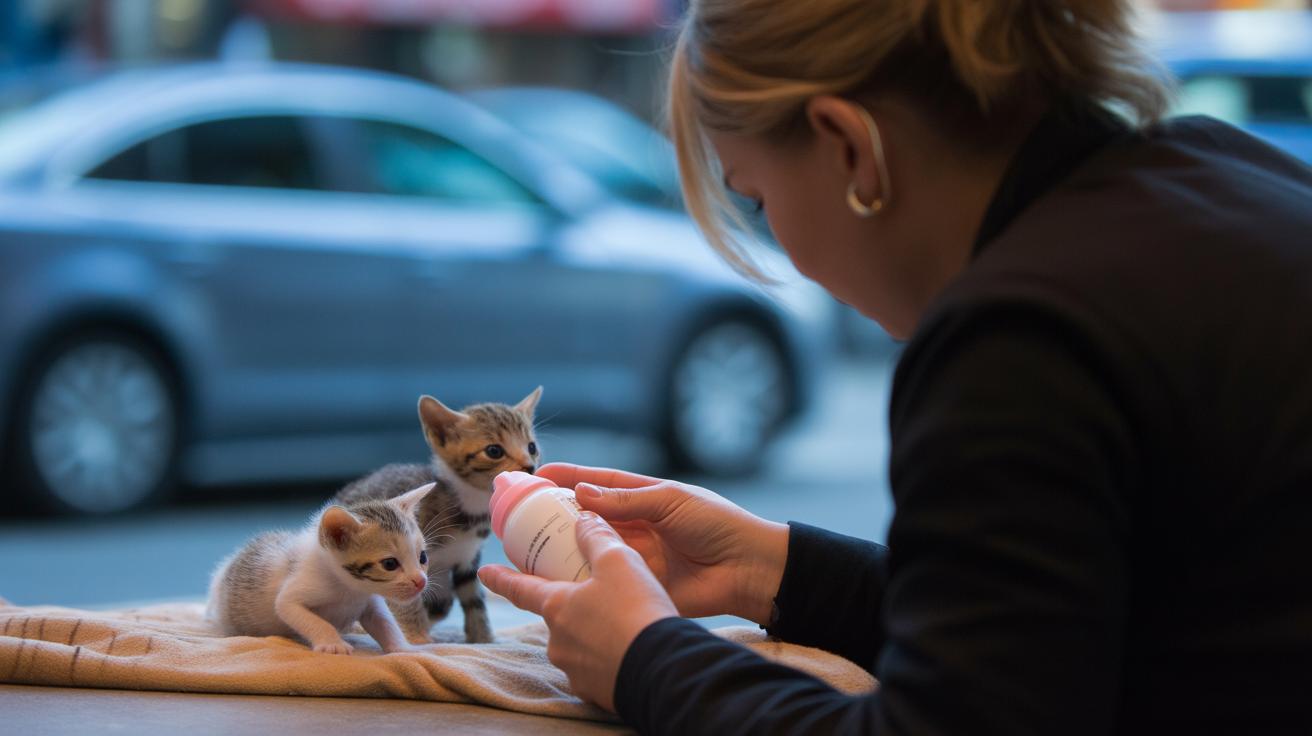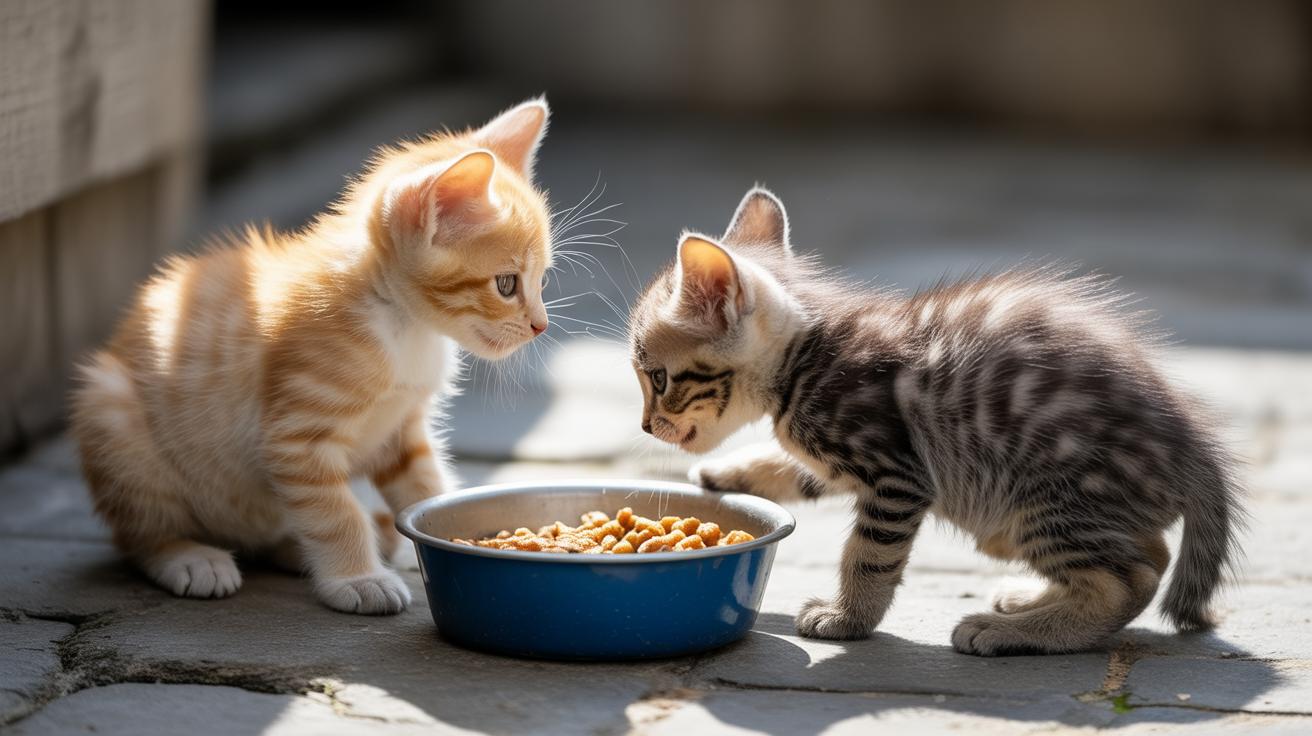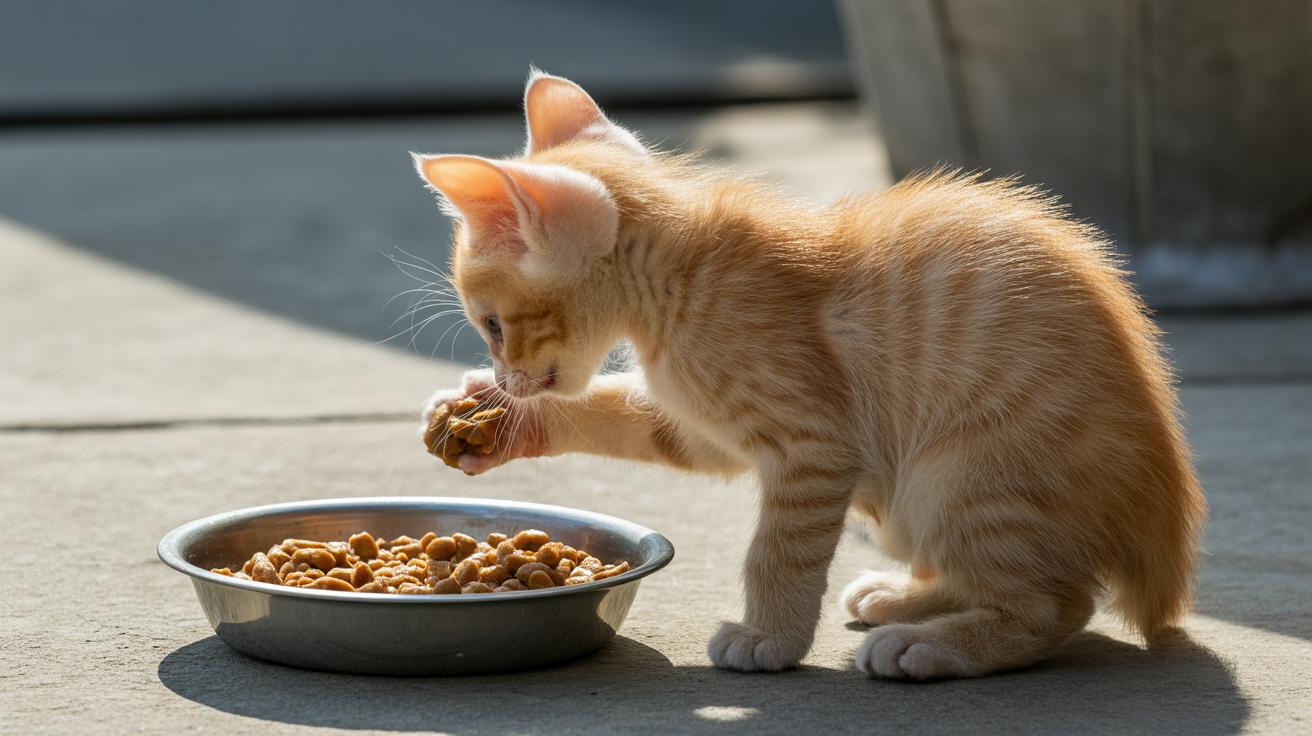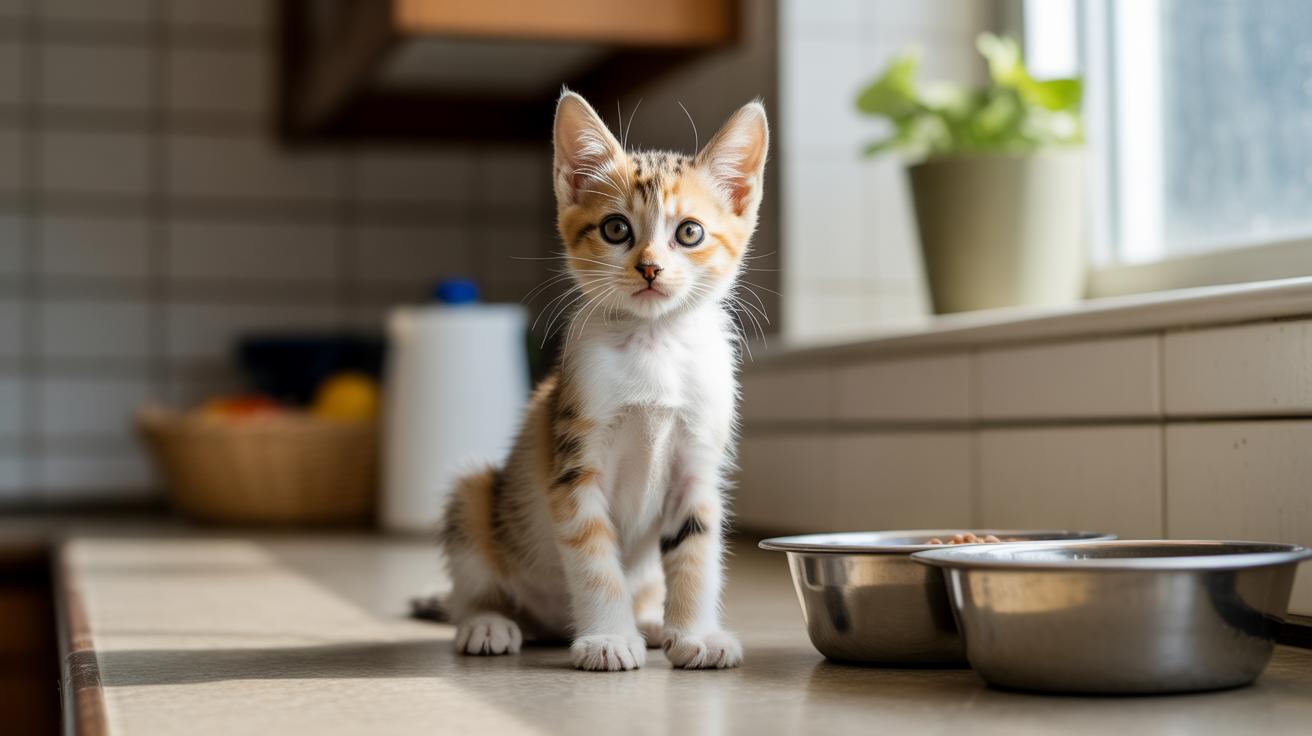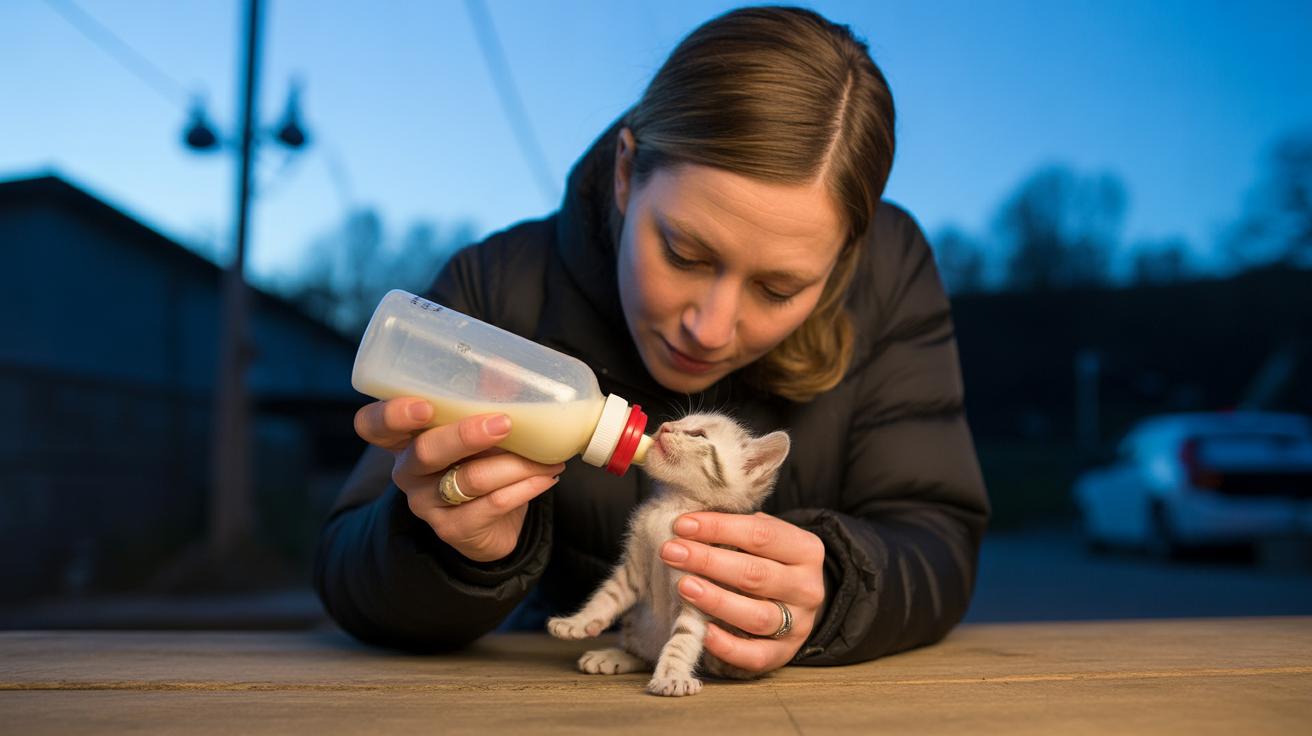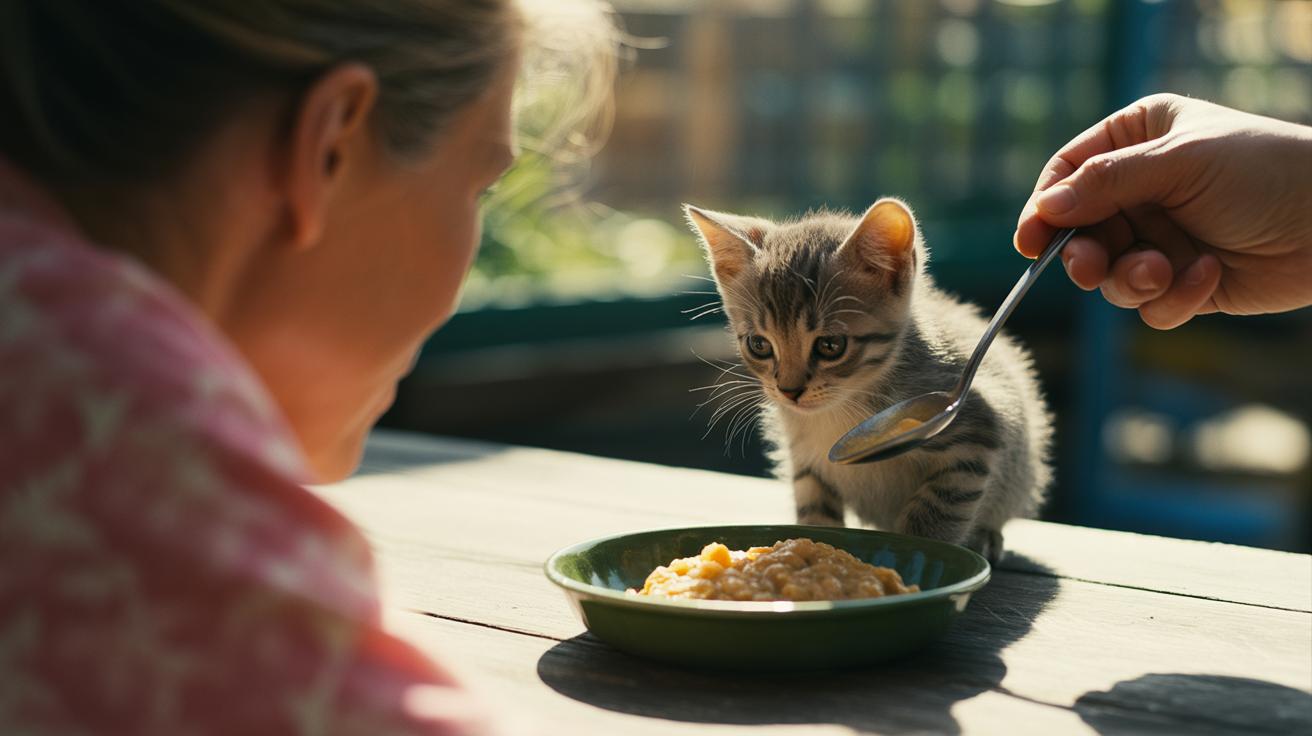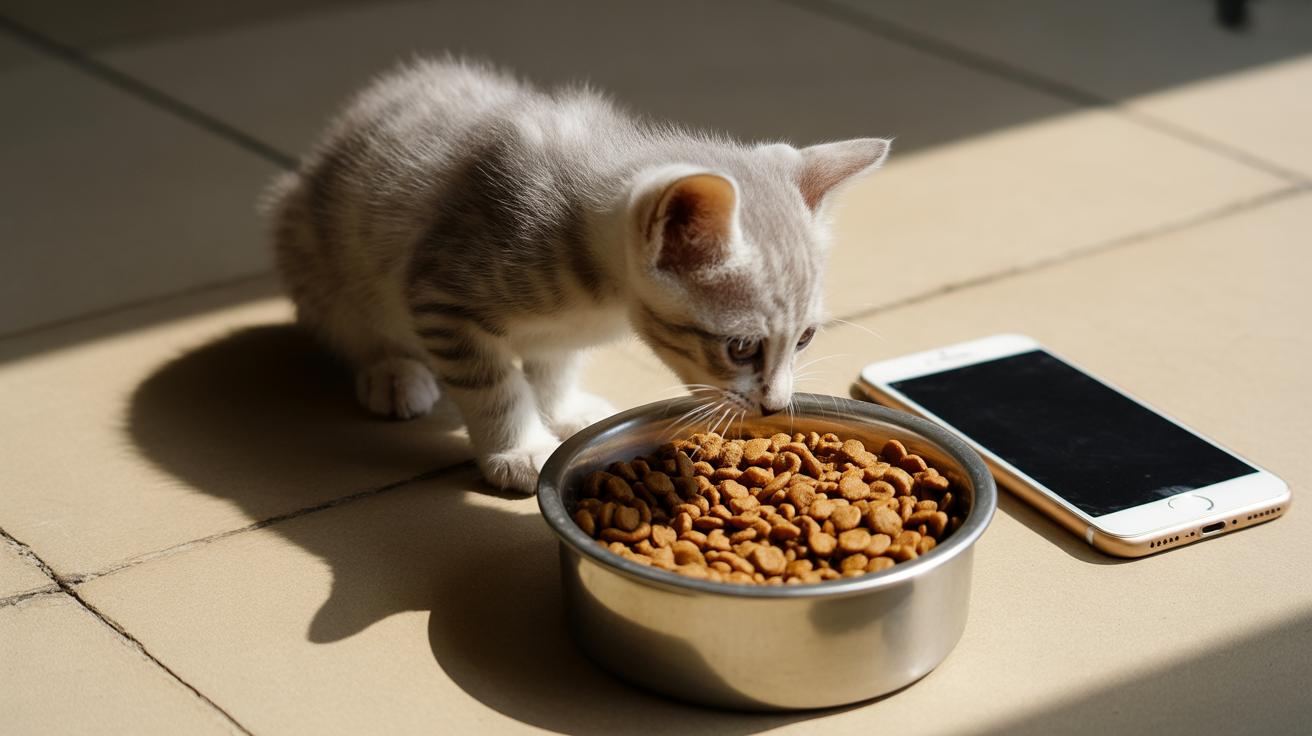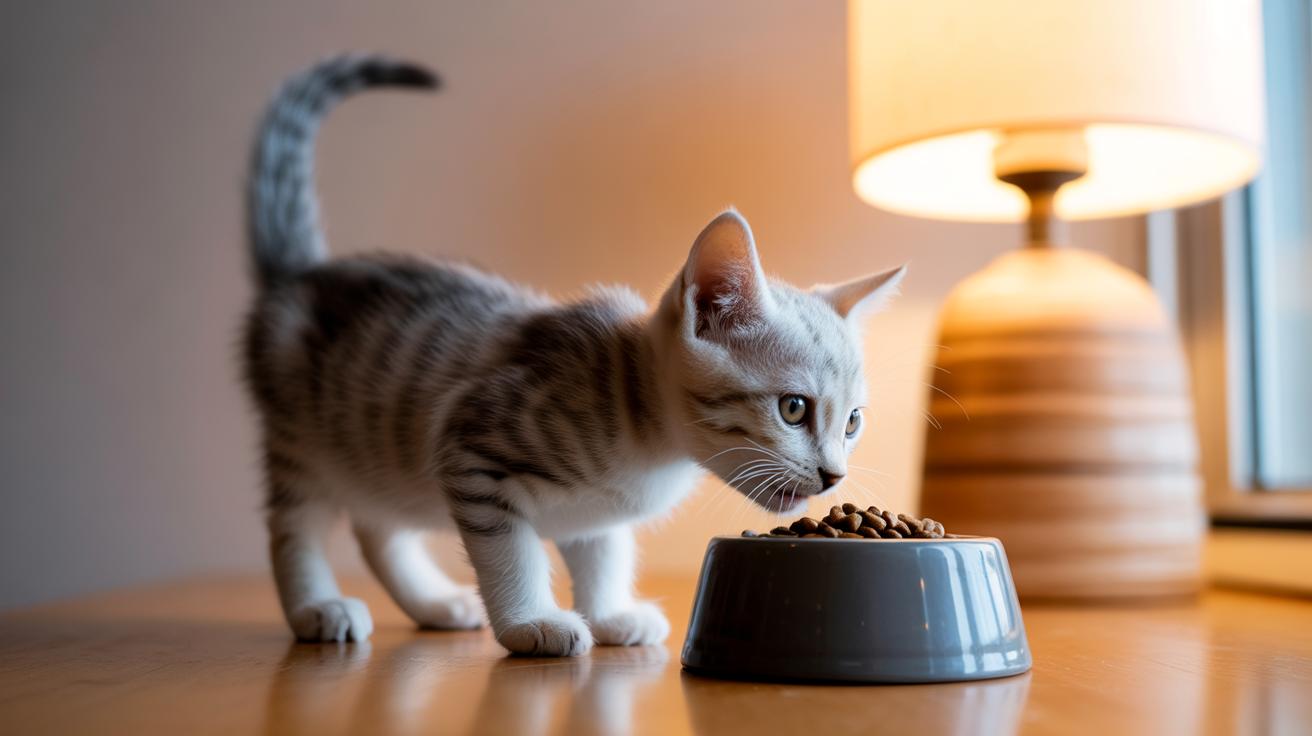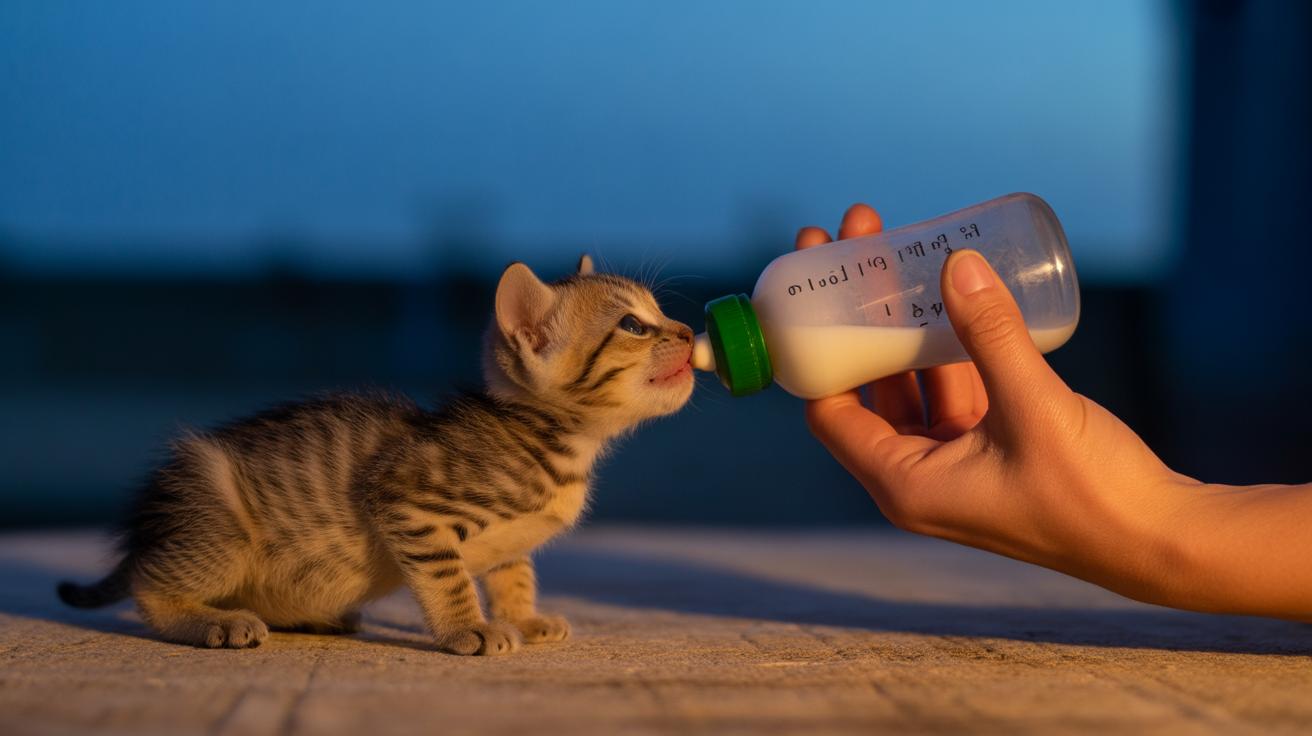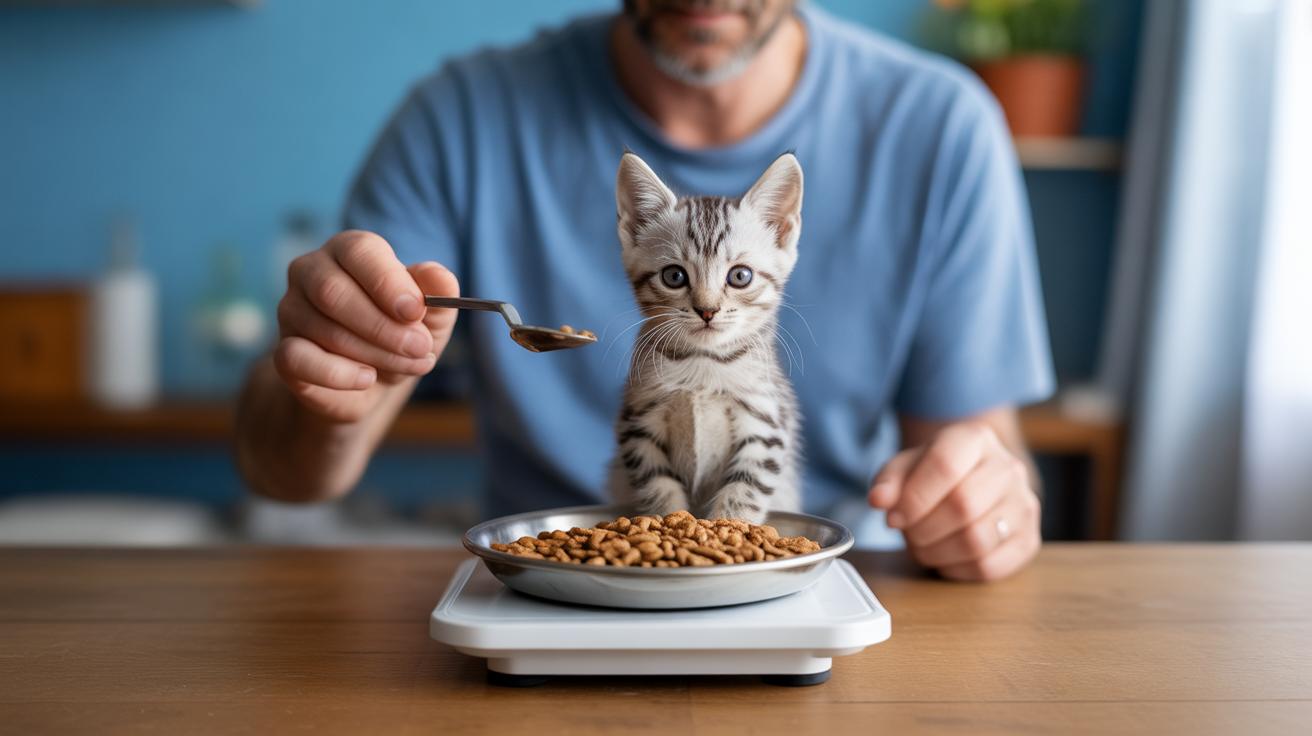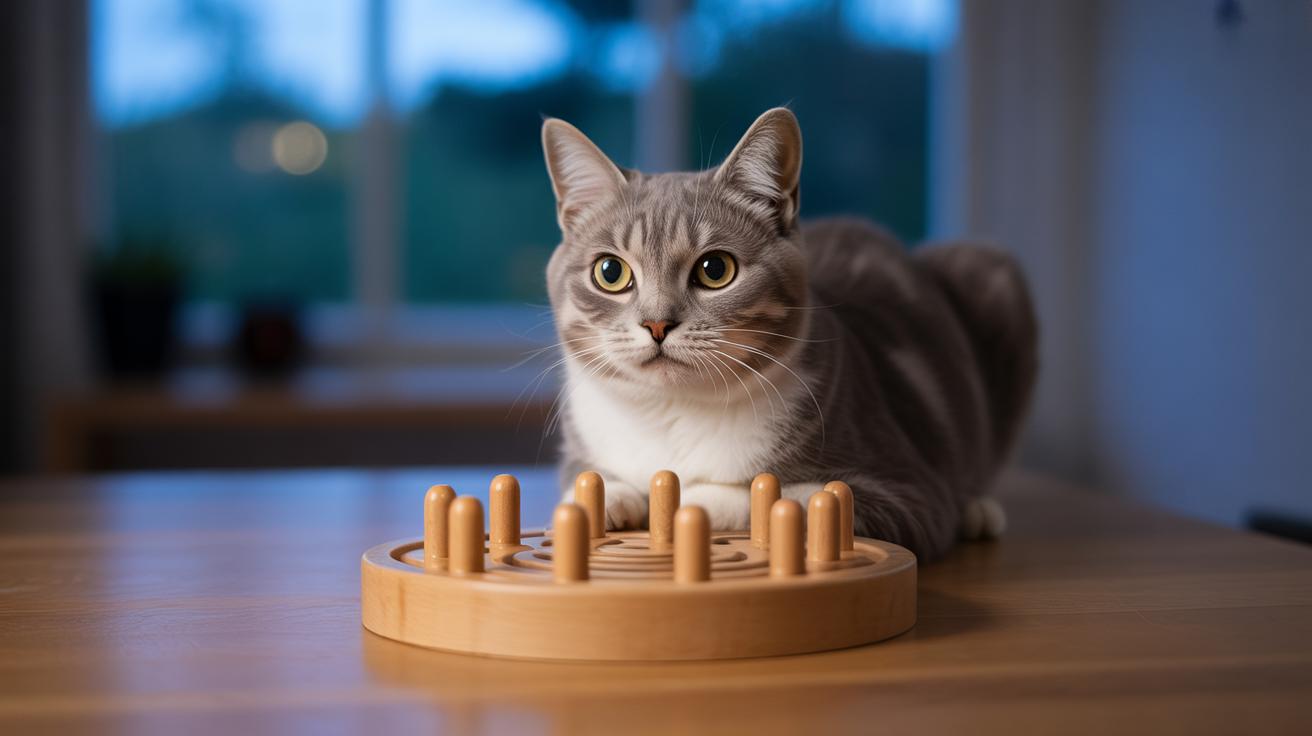
Category: Cat Diet

  • Cat Puzzle Feeder Ideas and Benefits

    Cat Puzzle Feeder Ideas and Benefits

    Are you serving your cat fast food every night? Puzzle feeders can fix that.

    They turn mealtime into a slow, brainy hunt that makes your cat work for each bite. That slows down gobbling and sparks curiosity, and it’s a claw-tastic way to feed.

    Today we’ll share easy DIY projects, cheap household hacks, a few store-bought favorites, simple training tips, and which cats benefit most: kittens, adult cats, seniors, and disabled cats (those with limited mobility).

    Think of kibble as drive-through food. A puzzle feeder is like a mini foraging game your cat has to solve. Your cat’s whiskers will twitch as they paw treats out. Ever watched that? It’s oddly satisfying.

    Worth every paw-print.

    What cat puzzle feeder ideas and benefits will teach you
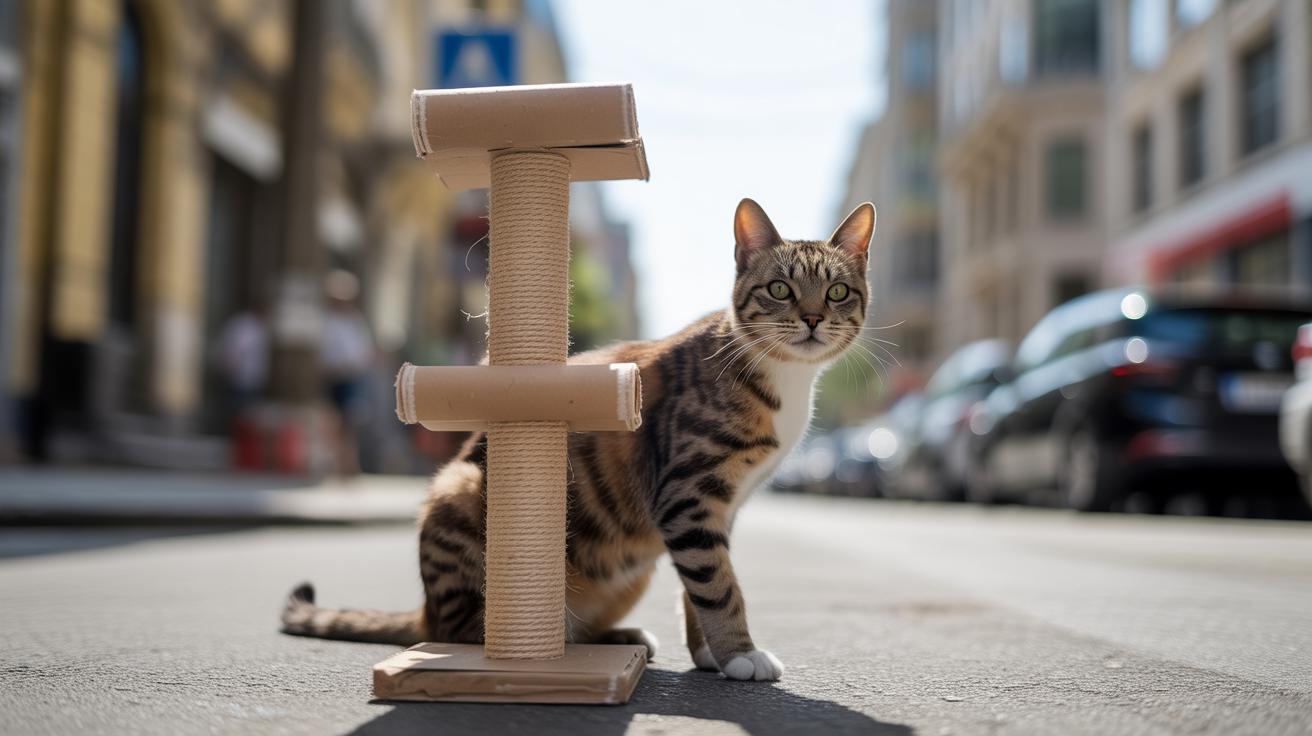
    - What cat puzzle feeder ideas and benefits will teach you (DIY, commercial, how they work, and who should use them).jpg

    This short intro gives you the good stuff: easy DIY projects, cheap household hacks, a few store-bought picks, a simple way to train your cat, and which kitties get the most out of feeders, kittens, adults, seniors, and disabled cats. Think of it like a quick toolbox for making mealtime more fun and natural for your cat. Ever watched your kitty stalk a rolling ball? That same focus can happen at dinner time.

    Quick, low-effort ideas to try right away: a toilet paper roll pyramid (reuse cardboard tubes to hide kibble), a muffin tin with tennis balls (put treats under the balls so your cat noses them around), and a Nina Ottosson puzzle (a commercial puzzle toy that hides food and rewards problem solving). These are all easy to set up and watch your cat’s whiskers twitch as they work it out.

    Indoor bowl meals are usually short and concentrated, unlike ancestral foraging that involved longer hunts and more effort. Think of today’s kibble as drive-through food compared to a scavenger hunt. Puzzle feeders bring some of that hunt back, stretching mealtime into a little adventure.

    The Journal of Feline Medicine and Surgery reports that puzzle feeders help cats across life stages, keeping kittens, seniors, and disabled cats more engaged and mentally active. So this isn’t just play, there’s real benefit backed by research.

    Training your cat to use a feeder is simple. Show them where the food is, help them get the first treat out, then cheer and reward. Start easy and make it slightly harder over days. Patience wins. Your cat learns the game and you get those proud cat-parent moments.

    Benefits at a glance:

    • Slow feeding: Makes meals last longer so cats don’t gulp everything down. It helps them feel fuller and calmer during dinner.
    • Mental stimulation and problem-solving: Keeps curious indoor minds busy and reduces boredom behaviors. Your cat gets to think and win treats.
    • Weight control: Pacing portions over time reduces binge-style eating and helps with weight management without complicated gear.
    • Increased activity: Gets cats moving between bites, adding light exercise to their day and a satisfying thud when a toy rolls away.
    • Multi-cat strategies: Use separate stations and rotate feeders so cats don’t compete for food. It reduces stress and mealtime squabbles.
    • Safety and cleaning basics: Pick non-toxic, easy-to-clean materials and check for small parts that could be swallowed. Wash regularly and inspect for wear.

    Worth trying for busy people too: toss a puzzle feeder before you leave and get ten minutes of safe solo play for your cat. I once watched Luna leap for a hidden treat and then nap like a champ. It’s cute, useful, and kind of genius, right?

    Puzzle feeder benefits for cats: health, behavior, and measurable outcomes
    - Puzzle feeder benefits for cats health, behavior, and measurable outcomes.jpg

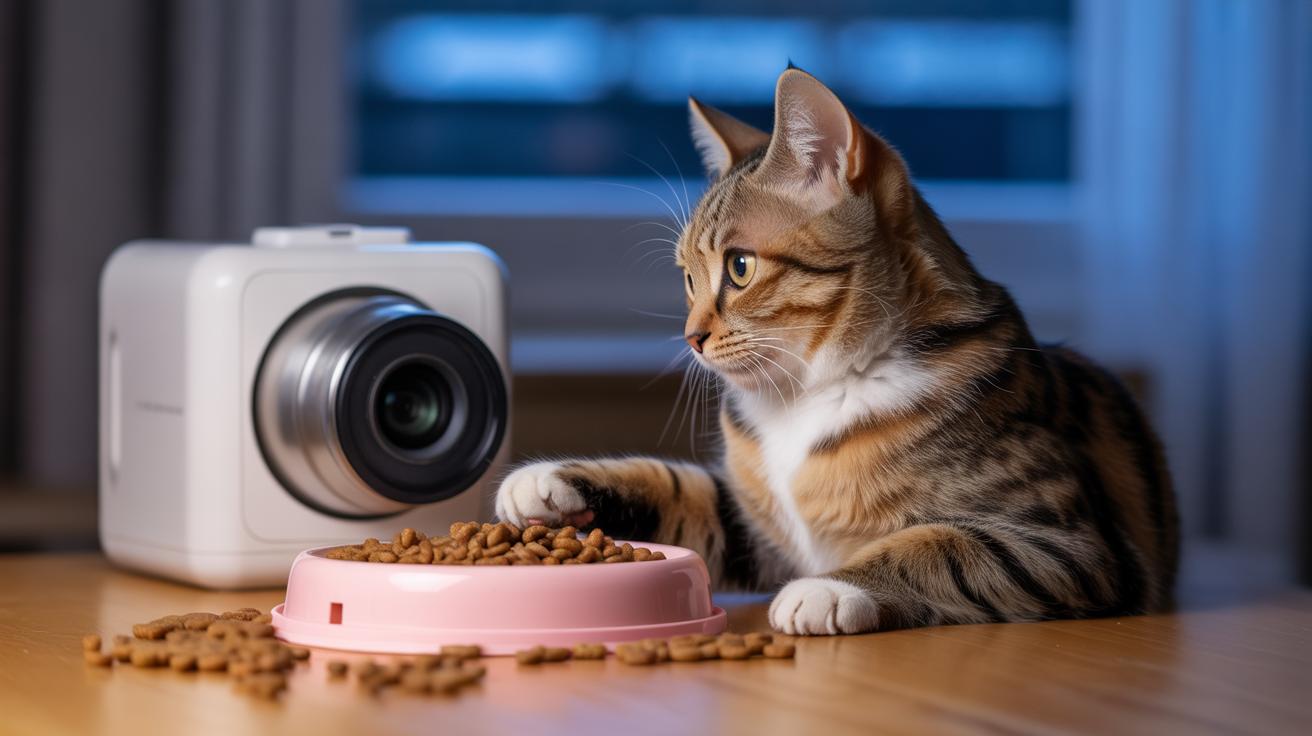
    Many indoor cats finish a bowl in about 30 seconds. Their ancestors spent roughly 6 to 8 hours a day hunting and foraging. So yeah, that quick-eat habit is a mismatch with how cats evolved. Puzzle feeders spread meals out and add little bursts of effort, pawing, batting, stalking, so the whole thing feels more like a hunt.

    Research in the Journal of Feline Medicine and Surgery links slower, puzzle-based feeding with less regurgitation (spitting up or vomiting) across life stages and in cats with mobility or cognitive limits. For numbers to keep in mind: a normal bowl is gobbled in ~30 seconds versus ancestral 6 to 8 hours; puzzles usually stretch a meal to about 5 to 20 minutes depending on design; and most puzzles add about 10 to 40 minutes of low-intensity activity per day as cats work for kibble. Those are useful benchmarks when you’re tracking changes.

    1. Slow feeding to prevent overeating , Meals that once took 30 seconds can stretch to 5–20 minutes with the right toy. Slower pacing helps reduce gulping. It gives digestion a gentler start, and your cat gets to savor the chase.

    2. Reduce regurgitation and improve digestion , Slower intake is tied to fewer vomiting episodes. Caretakers often see episodes drop by a few each week after switching to puzzles. That matches what vets and the Journal report.

    3. Obesity prevention , Pacing portions and adding tiny activity bursts changes how calories are eaten and burned. Over time, that helps with weight control for plump kitties. Think of it as swapping a few minutes of idle kibble for a little workout.

    4. Increased daily activity , Puzzle play commonly adds 10–40 minutes a day of gentle movement (pawing, batting, stalking). It’s not marathon-level exercise, but it’s consistent. Those minutes add up.

    5. Stronger mental engagement , Problem-solving keeps indoor minds busy. Boredom-driven trouble, loud meowing, destructive scratching, often drops when cats have a job to do. Ever watched a cat figure out a sliding lid? It’s pride-filled and hilarious.

    6. Reduced stress and better focus , The steady reward rhythm of a puzzle can calm anxious cats and give them a clear task. They know what to expect: work, then treat. Comforting for many felines.

    7. Easier multi-cat management , Spread-out feeding stations and different puzzle styles lower competition. Shy cats can eat at their own pace and confident cats can be challenged without stealing meals. That can cut squabbles and speed-eating.

    8. Life-stage benefits , From curious kittens to sleepy seniors, puzzles come in difficulty levels. Match the toy to ability so each cat gets the right challenge without frustration. For seniors, choose lower-effort puzzles. For kittens, start simple and level up.

    Quick tips and troubleshooting: start slow. Introduce one puzzle at a time and watch how long meals take. Keep a simple log, meal duration, vomiting frequency (if any), and weight trends, for 2 to 4 weeks. If vomiting or weight issues keep happening, take your notes to the vet. It helps them see patterns fast.

    Worth every paw-print. Try one for a week and see how your cat’s routine changes. I once watched Luna leap across the couch for a kibble drop and then chill like she’d earned a spa day. Cute, useful, and uh, sort of addicting to watch.

    DIY cat puzzle feeder ideas and step-by-step builds
    - DIY cat puzzle feeder ideas and step-by-step builds.jpg

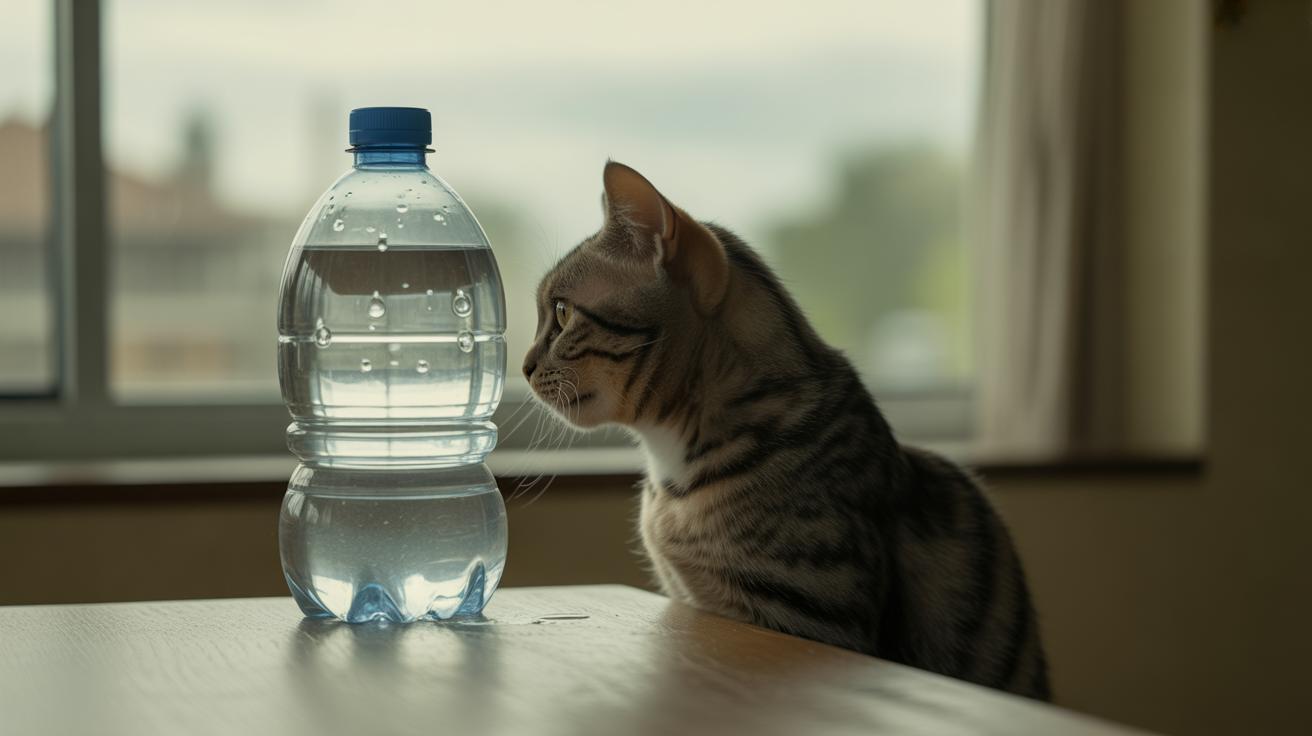
    Want low-cost, quick puzzle feeders that use stuff you already have? These projects are easy to make, change as your cat learns, and keep playtime fresh. You’ll get a rolling bottle spinner, a tiny egg-carton puzzle, a toilet paper roll pyramid, a muffin tin nose-work game, and a bigger cardboard board you can upgrade. Perfect for busy days or kitten training.

    Water bottle feeder

    A bottle that tumbles kibble when batted. It’s simple, a little noisy in the best way, and cats learn fast by pawing and watching the treats clack out. Start with big holes, then make them smaller as your cat gets good at it.

    Materials:

    • Clean plastic water bottle (empty, rinsed)
    • Dowel (wood stick) or stiff skewer (wood or metal)
    • Sandpaper (abrasive paper to smooth edges)
    • Utility knife (box cutter) or scissors
    • Tape or hot glue (quick-melting craft glue)

    Steps:

    1. Cut several treat-sized holes around the bottle body. Start large so food drops easily.
    2. Sand the hole edges until smooth, no sharp bits.
    3. Cap one end and thread the dowel through the bottle to act as an axle, then mount it in a low box or between two supports.
    4. Put kibble inside, set it near a perch, and watch whiskers twitch as your cat learns to spin it.

    Egg carton puzzle

    Tiny, shallow, and perfect for kittens or shy cats who like quick wins. It’s quiet, low-stress, and great for teaching the idea of hidden food. My cat Luna loved the tiny surprise each time she nudged a lid.

    Materials:

    • Cardboard egg carton
    • Kibble or small treats
    • Small toys or scrap cardboard
    • Tape (optional)

    Steps:

    1. Drop a few pieces of kibble into selected cups.
    2. Close lids or leave them slightly ajar so your cat can nudge them open.
    3. For more challenge, stack two cartons and tape lightly so they don’t slide.

    Toilet paper roll pyramid

    A modular cardboard game that’s cheap and easy to reconfigure. It smells like home, rustles nicely, and you can rearrange it every day. Think of it as a tiny cardboard mountain to conquer.

    Materials:

    • 6 empty toilet paper rolls (cardboard tubes)
    • Small box or tray base
    • Non-toxic glue (pet-safe glue) or tape
    • Kibble

    Steps:

    1. Arrange rolls in a 3-2-1 triangle on the box base.
    2. Glue or tape at contact points so the stack won’t topple.
    3. Fill rolls with kibble and place near a cat tree so your cat can scout before pouncing.

    Muffin tin feeder

    Fast to set up and great for mixing up nose-work and problem solving. Cover some cups with balls or cardboard circles for a quick puzzle rotation. It’s perfect for portion control, too.

    Materials:

    • 6-cup muffin tin
    • Tennis balls or cut cardboard circles
    • Kibble or small wet-food portions
    • Non-slip mat (to stop the tin from sliding)

    Steps:

    1. Put food in a few cups, leave others empty.
    2. Cover occupied cups with a ball or cardboard lid.
    3. Change which cups hold food each day to keep it novel.

    Large cardboard sheet puzzle

    A bigger, upgradeable board for layered hiding spots and taller play. You can make it as simple or as tricky as you like, adding small containers for varied sounds and textures. It’s a great project to involve kids or shelter volunteers.

    Materials:

    • Large cardboard sheet
    • Toilet paper roll halves (short cardboard tubes)
    • Small containers (bottle caps, jar lids)
    • Hot glue or strong craft glue

    Steps:

    1. Glue roll halves upright across the sheet in rows.
    2. Attach small containers at different heights for layered hideouts.
    3. Scatter kibble across compartments and fold gentle flaps to create lids.

    Build time for these projects is usually 5-10 minutes and cost is minimal. Start easy with wide openings and obvious rewards, then tighten holes or add lids as your cat learns, progression keeps them interested. Check all materials for chew risks, smooth any rough edges, and clean pieces regularly. See the Safety section for full cleaning and hazard guidance. Worth every paw-print.

    Store-bought and commercial cat puzzle feeder options (what to buy and why)
    - Store-bought and commercial cat puzzle feeder options (what to buy and why).jpg

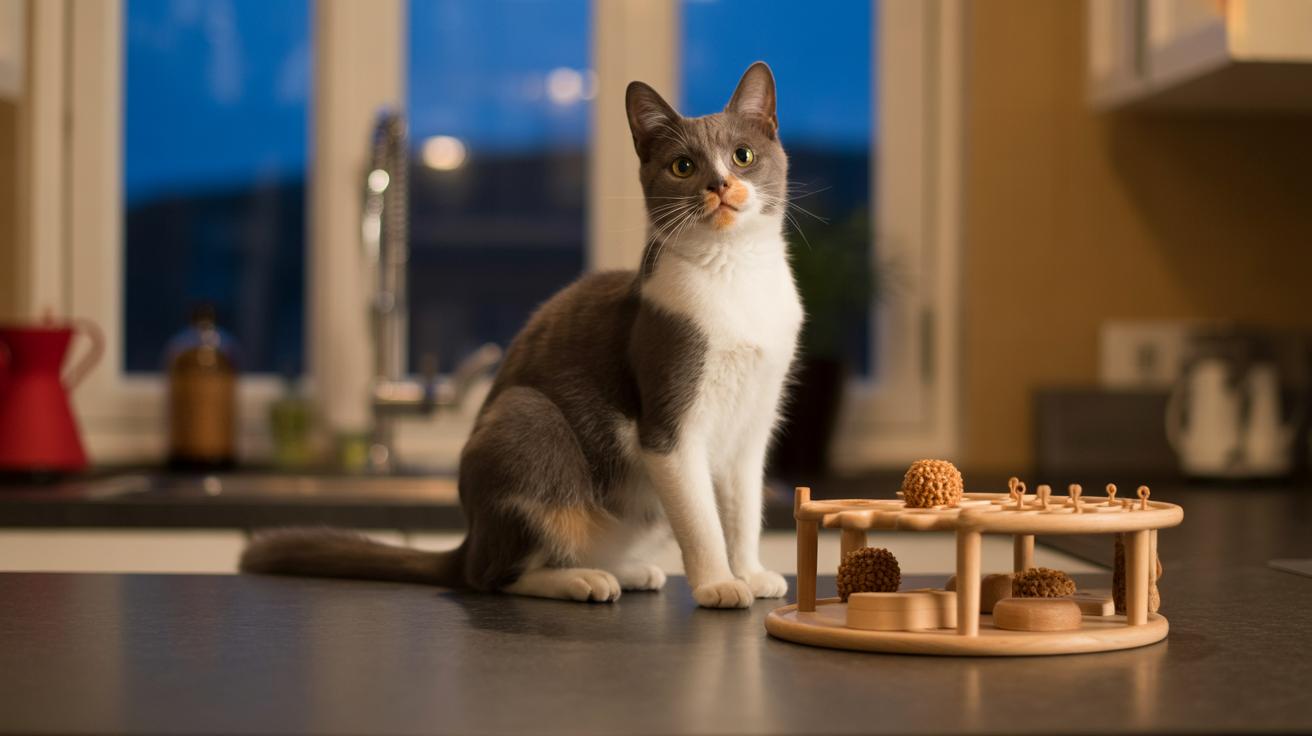
    Think in simple categories and you’ll score quick wins. There are rotating or tumbler toys that spill kibble when batted , great for active cats who love the chase. Lickimat-style pads slow down wet food and encourage calming licking. Multi-chamber puzzle boards test clever problem-solvers, and simple slow-feeder bowls help speedy eaters stretch their meals. If you like brand names, check Nina Ottosson for adjustable puzzles, Lickimat for textured wet-food play, and Kong for sturdy treat-dispensers , solid starting points when shopping.

    Pick the model that fits your cat’s habits. Durability and chew resistance matter if your cat likes to gnaw; look for tough plastics or rubber (rubber is soft, flexible material). Wet-food compatibility matters if you use pâté or paste. Cleaning ease matters if you hate scrubbing , dishwasher-safe parts save time and keep mold away. Budget feeders are great for casual use, while premium interactive feeders often use tougher plastics (a chew-resistant polymer), let you change difficulty levels, and have parts made for frequent washing.

    Model/Type Best for Price range
    Lickimat Wet-food pacing & sensory engagement $10–20
    Nina Ottosson puzzle Problem-solvers & adjustable difficulty $25–60
    Simple slow feeder bowl Fast eaters who gulp kibble $10–30

    Quick buying tips to keep things simple:

    • Durability: choose sturdy plastics or rubber if your cat chews a lot; think heavy-duty, not flimsy.
    • Cleanability: dishwasher-safe parts save time and help hygiene.
    • Wet/dry compatibility: get lick mats or bowls that work with wet food if you feed pâté or soft paste.
    • Adjustable difficulty: models that let you change the challenge grow with your cat’s skills.
    • Multi-cat homes: pick extra stations or feeders that limit access so one bossy cat doesn’t eat everyone’s food.

    A few last thoughts: try one new feeder for short play sessions first and watch how your cat reacts. Ever seen your cat figure out a puzzle in seconds? It’s oddly proud-making. Worth every paw-print.

    How to introduce and train cats to use puzzle feeders (four-week progression and proactive tips)
    - How to introduce and train cats to use puzzle feeders (four-week progression and proactive tips).jpg

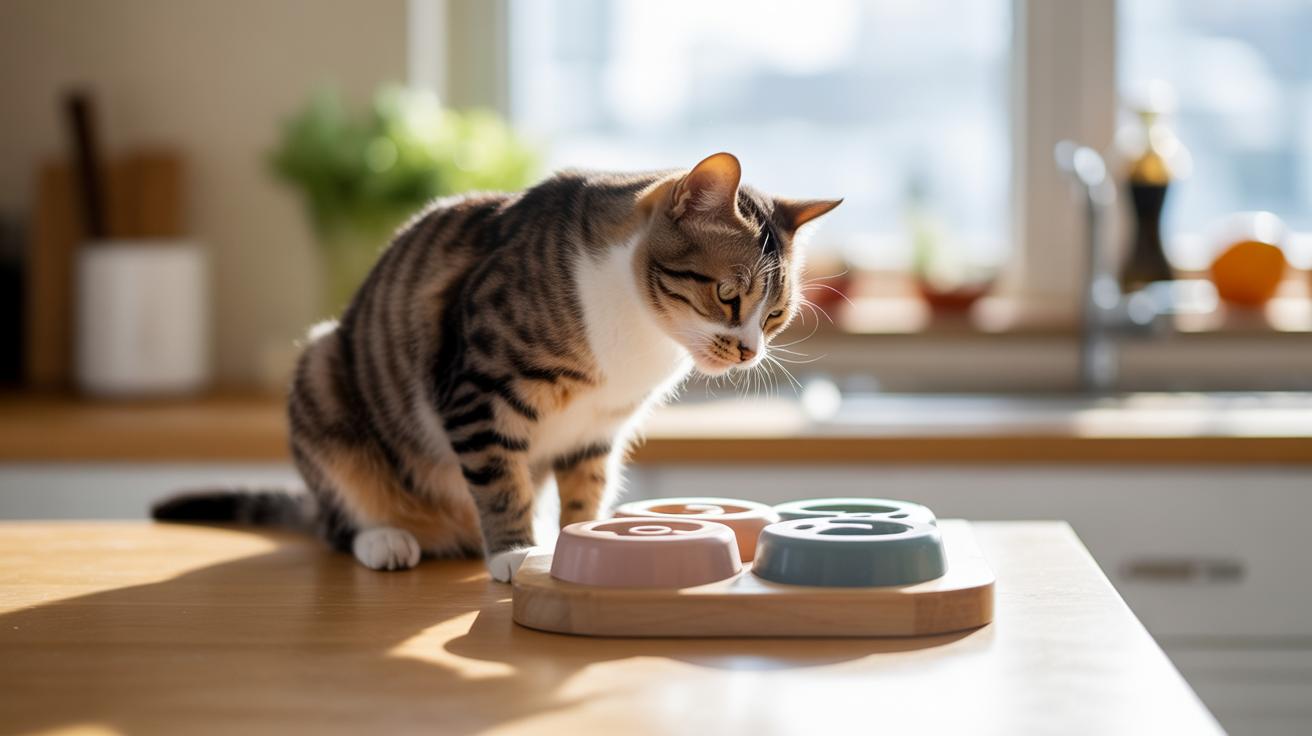
    Short, gentle sessions win. Puzzle feeders (interactive bowls or toys that make your cat work a bit for food) are a great way to turn mealtime into play. Keep the treats tasty, sessions short, and your tone cheerful, your cat will pick up confidence faster than you think. Ever watched whiskers twitch as a toy rolls? That’s the good stuff.

    Four-week progression

    1. Week 1: Beginner access
      Start easy. Use feeders with wide openings or lids that come off easily so food pops out with little effort. Offer high-value treats or favorite kibble (dry cat food) and keep sessions to 5–10 minutes while you cheer and praise. Supervise closely so the first tries feel like a win.

    2. Week 2: Slight challenge increase
      Make the holes a bit smaller or add a light cover so your cat has to paw or nudge a little more. Stretch sessions to 10–15 minutes and keep showing the first few rewards so they understand the payoff. Keep praising, and don’t worry if progress is slow.

    3. Week 3: Add mild obstacles
      Introduce a light flap, a small barrier, or a rolling piece, think gentle puzzles, not frustration. Give a short play burst before feeding to boost interest, then let them try with minimal help. Step in only if they stall for too long; sometimes a tiny nudge teaches more than doing it for them.

    4. Week 4: Combine and normalize
      Use two puzzle types during normal mealtime so solving becomes part of the routine. If needed, return some meals to a regular bowl now and then, then switch back to puzzles so confidence stays high. Aim for predictable timing so your cat learns the new rhythm.

    Many cats hesitate at first. Extra praise, easy wins, and patience go a long way, adjust difficulty slowly so they feel clever, not blocked.

    Proactive tips to reduce failure rates:

    • Place puzzles near a quiet perch so your cat can watch and feel safe before trying.
    • Start each session with a few hand-fed treats to build interest and a positive link.
    • Change only one thing at a time when you adjust difficulty, too many changes confuse them.
    • Supervise the first several sessions and celebrate every small success with a soft voice or a scratch behind the ear.
    • Keep sessions short and frequent instead of long and rare; ten minutes often beats one long stretch.
    • Rotate feeder styles weekly to keep novelty high and boredom low.

    Worth every paw-print.

    Safety, cleaning, and hygiene for cat puzzle feeders
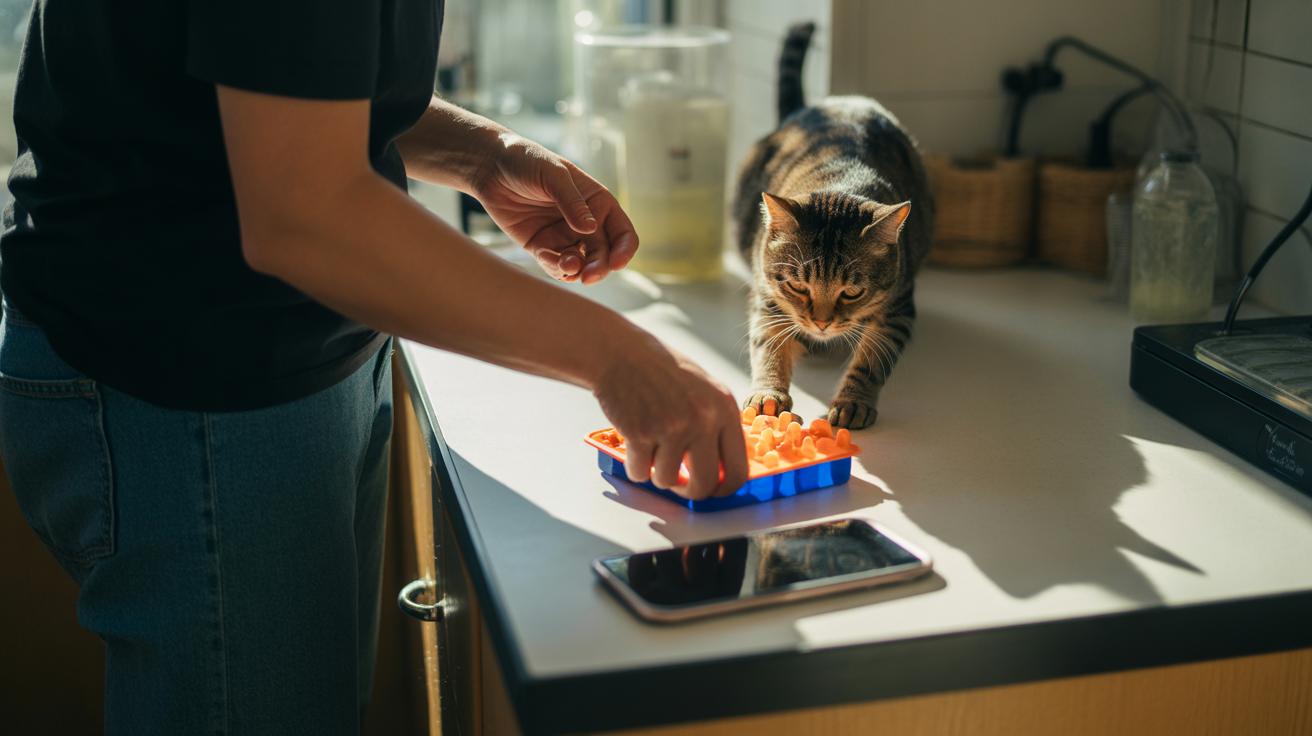
    - Safety, cleaning, and hygiene for cat puzzle feeders.jpg

    Good hygiene keeps your cat safe and the toys fun. This short guide covers cleaning puzzle feeders, chewing risks, and quick inspection steps so feeders stay safe and useful. Think of it as a few easy habits that save you headaches and your cat’s whiskers.

    • Choose non-toxic materials and smooth any rough edges. For plastics, look for "food-safe" (made to meet standards so no harmful chemicals leach). Cardboard should be dry and intact, wet, crumbling cardboard is a no-go.
    • If your cat chews cardboard or soft plastics, swap to chew-proof options like hard plastics (polypropylene (PP) (a tough, dishwasher-safe plastic) or polycarbonate (a very strong clear plastic)) or metal (stainless steel (rust-resistant metal)). Safer materials mean fewer surprises.
    • Do a quick wipe of dry-food puzzles every day with a damp cloth to remove crumbs and slow bacteria growth. Easy and fast.
    • Deep clean wet-food mats and lick mats 1 to 2 times a week. Use warm, soapy water, rinse well, and let air-dry completely so mold doesn’t get a foothold.
    • Use the dishwasher when parts are labeled dishwasher-safe. The heat helps kill microbes and makes life easier, just check the label first.
    • Always dry every piece completely before storing or reusing. Trapped moisture invites mildew and mold.
    • Do a weekly quick check for cracks, loose bits, or weird smells. Once a month, do a deeper look at moving parts, seals, and anything glued on. Give glued parts a firm tug to see if they come loose.
    • Keep small, detachable bits out of reach to avoid choking hazards. If something can pop off, consider removing it or replacing the feeder.
    • Supervise your cat the first few times you introduce a new DIY feeder so you can spot chewing or unsafe behavior fast. Ever watched your kitty figure out a new toy? It’s entertaining, and useful for safety checks.
    • Favor easy-to-clean designs: smooth surfaces, removable trays, and few crevices. They cut cleaning time and lower contamination risk.

    Retire or replace any feeder that shows cracks, persistent odors, loose pieces, visible mold, or chewing damage that exposes stuffing or sharp edges. Better safe than sorry. Worth every paw-print.

    Using cat puzzle feeder ideas and benefits in multi-cat homes and for implementation
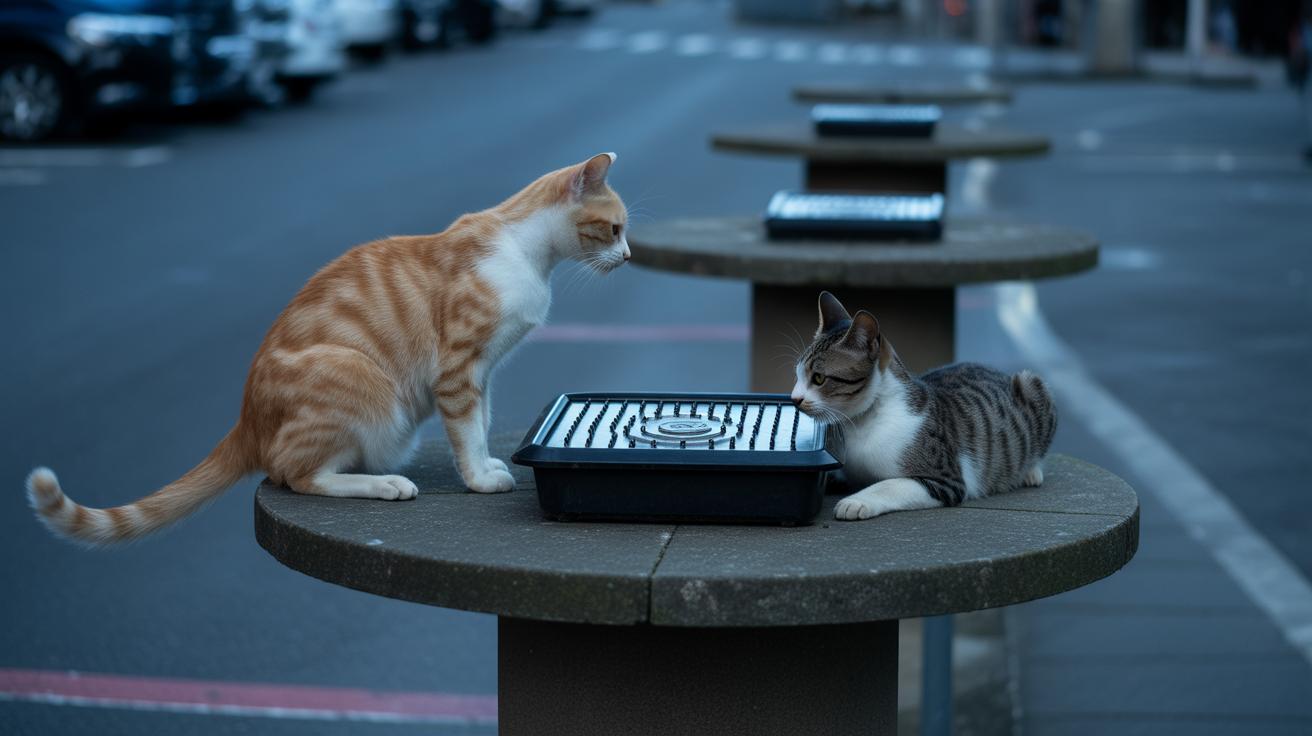
    - Using cat puzzle feeder ideas and benefits in multi-cat homes and for implementation.jpg

    Quick checklist to keep feeding fair, calm, and fun for every cat. Use separate stations, RFID (radio-frequency identification, reads a cat’s implanted microchip or a collar tag), microchip-locked feeders, staggered schedules, pre-measured portions, puzzle rotation, and supervise early sessions. Think of this as a simple game plan to cut stress and keep tails up.

    • Separate stations – give each cat their own puzzle feeder in a different room or at different heights so shy kitties can eat away from the bossy ones. Example: label a shelf bowl "Luna (40 g)" so everyone knows whose is whose. Your cat’s whiskers will thank you.

    • RFID or microchip-locked feeders – tech that only opens for the right cat (reads the implanted microchip or a tag). This really stops food-stealers without you playing referee. Example: "Only Bella’s chip opens this bowl."

    • Staggered schedules – feed cats a few minutes apart so they don’t rush or crowd each other. Example: 7:00 Milo, 7:05 Luna. Little gaps = calmer meals.

    • Pre-measure portions – scoop each cat’s food into labeled containers so servings don’t get mixed up. Example label: "Milo – 50 g." Quick, tidy, and no guessing.

    • Rotate puzzles – swap feeder types and move stations weekly to keep curiosity high and guarding low. Swap a ball-feeder for a treat mat every seven days and watch how they stay interested. It’s like toy rotation for humans, but furrier.

    • Supervise early sessions – watch new setups for several days to spot stealing, chewing, or stress and step in gently. If one cat gets anxious, tweak the arrangement. Worth the few extra minutes.

    A few extra tips: put food out on different textures or low surfaces for older kitties, and use short play sessions before meals to slow down speedy eaters. Ever watched your kitty chase shadows and then eat like a champ? Little things add up. Worth every paw-print.

    Modifying cat puzzle feeder ideas for kittens, seniors, and cats with special needs
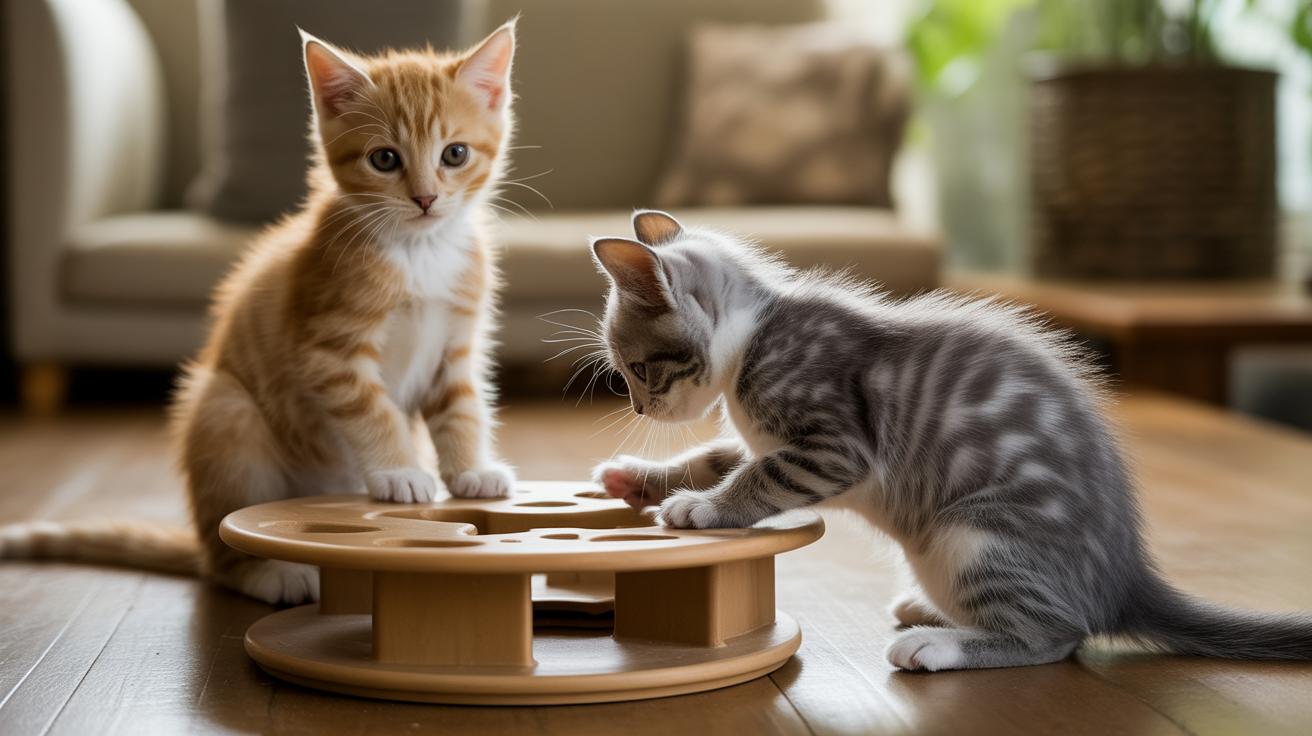
    - Modifying cat puzzle feeder ideas for kittens, seniors, and cats with special needs.jpg

    Small changes to size, height, and texture can make a puzzle feeder work for every cat in your home. Move slowly when you raise the difficulty, and check with your vet about any medical or mobility limits before trying a new design. Think of this as gentle training, not a race.

    Senior adjustments

    Lower the feeder so older or arthritic cats don’t have to stretch or twist their spine. Put puzzles on the floor or a low, steady step so reaching is easy and comfy.

    Make the holes bigger and the compartments shallower for stiff paws or sore mouths. Bigger openings mean kibble or wet food comes out with a gentle nudge, so the effort feels rewarding, not frustrating.

    Give the puzzle a non-slip base (rubberized pad that grips tile or wood floors) so tubes, trays, and tins don’t slide when a cat pushes them. Stability cuts down on strain and gives older cats the confidence to try the toy. Worth every paw-print.

    Kitten safety

    Start kittens on very shallow compartments and give larger reward pieces so they score quick wins. Tiny parts can be tempting and risky, so keep treats a bit oversized at first.

    Supervise every new DIY puzzle for the first few weeks and swap out any bits that get chewed or come loose. Kittens learn by mouthing, so watch closely and raise the challenge slowly. Ever watched your kitten pounce on a moving ball? It’s adorable, but safety first.

    Features to look for

    • Non-toxic materials (safe if licked or chewed)
    • Dishwasher-safe parts (can go in the dishwasher for easy cleaning)
    • Soft edges (no sharp cardboard flaps or rough cuts)
    • Stable base (won’t tip or slide during play)
    • Shallow compartments (easy wins for kittens and seniors)
    • Wet-food compatibility (lick mats, textured lids, or ice-tray portions)

    Keep it fun, keep it safe, and adjust one small thing at a time. Your cat will thank you with purrs and playful taps.

    Troubleshooting common problems and measuring success with cat puzzle feeder ideas and benefits
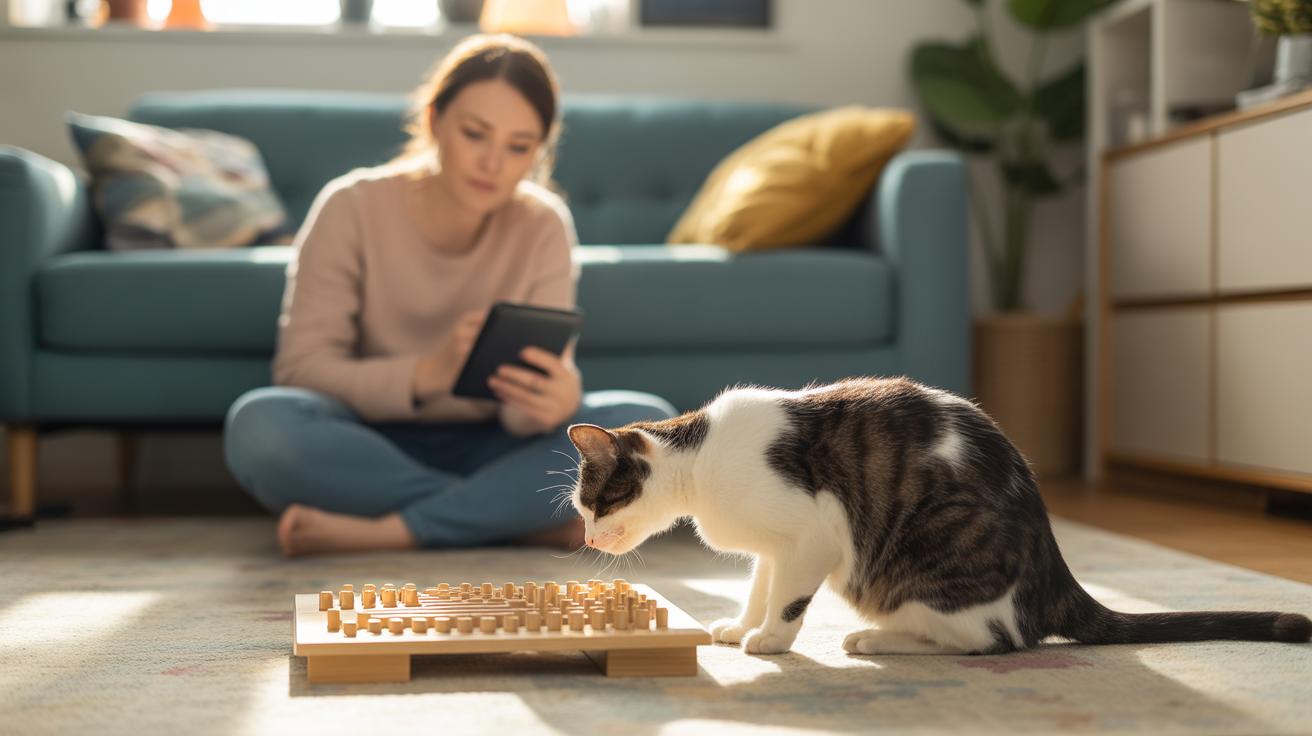
    - Troubleshooting common problems and measuring success with cat puzzle feeder ideas and benefits.jpg

    We removed this standalone troubleshooting section and folded the practical fixes into the "How to introduce and train…" and "Using cat puzzle feeder ideas in multi-cat homes" sections so the tips live where you use them. The metrics table moved into "Puzzle feeder benefits for cats: health, behavior, and measurable outcomes."

    • Widen holes and make early wins obvious. Start simple. Show them how it works: push a ball so a kibble piece pops out, then let your cat try. Your cat’s whiskers will twitch and confidence grows fast.

    • Sit with them for the first few plays. Help with the first handful of treats so a confused cat learns the game. Think of it like teaching a trick – patient, short sessions win.

    • For multi-cat guarding, give each cat its own station or separate room. Stagger meal starts by a few minutes and label portions or bowls so each cat learns their spot. If one cat dominates, try dividing food across rooms until everyone gets the hang of it.

    • If a cat chews or swallows bits, stop the DIY parts and switch to chew-proof commercial feeders made from sturdy materials like polymer (a tough plastic) or stainless steel (durable metal). Supervise until you’re sure it’s safe.

    • If you notice vomiting or repeated regurgitation, pause puzzles and go back to bowls with small, frequent meals. Watch symptoms closely and reintroduce gentler puzzles only if the cat is doing better. And yes, call your vet if it keeps happening.

    Note on tracking: meal duration, body weight, BCS (body condition score), and behavior signs were moved into the benefits section as a compact "What to track / Frequency / Targets" box so monitoring sits right beside the outcomes. Check "Puzzle feeder benefits for cats: health, behavior, and measurable outcomes" for the specifics.

    Worth every paw-print.

    You jumped straight into DIY builds, household hacks, store-bought picks, training tips, and who benefits, kittens, adults, seniors, and cats with special needs. Quick examples: toilet paper roll pyramid, muffin tin + tennis balls, and a Nina Ottosson puzzle.

    We contrasted indoor meals with ancestral foraging, showing why meals need more effort spread across the day to feel natural.

    Journal of Feline Medicine and Surgery supports puzzle feeders across life stages; we covered training, safety, and multi-cat logistics. Try a mix, rotate puzzles, and watch calmer, fitter cats. Give cat puzzle feeder ideas and benefits a try, purrfect payoff.

    FAQ

    Frequently Asked Questions — Cat Puzzle Feeders

    Are cat puzzle feeders suitable for wet food or dry food?

    Cat puzzle feeders are suitable for both wet and dry food. Wet meals work best on lickmat-style pads (textured rubber mat) or shallow trays, while dry kibble fits balls, tumblers, and slot puzzles.

    What are the best cat puzzle feeders and brands to buy?

    The best cat puzzle feeders include Nina Ottosson (sturdy puzzle boards), Lickimat (textured mats), Catit, and Kong, available from major retailers like Amazon. Match the feeder to your goal — slow-eating, problem-solving, or wet-food pacing.

    How can I make a homemade cat puzzle feeder?

    You can make a homemade cat puzzle feeder from common items:

    • Toilet paper roll pyramid (empty cardboard tubes)
    • Muffin tin plus tennis balls
    • Bottle spinner using a plastic water bottle and some tape
    What is a cat puzzle feeder ball and how does it work?

    A puzzle feeder ball is a round toy that releases kibble as your cat bats it, promoting chasing and slower eating. It works best with dry food for active, playful cats.

    Can puzzle feeders slow my cat’s eating and reduce vomiting?

    Puzzle feeders slow a cat’s eating by forcing them to work for food, lengthening meal time, reducing gulping and regurgitation, and adding mental challenge and extra movement during meals.

    Are puzzle feeders safe for kittens, seniors, or cats with special needs?

    Puzzle feeders can be safe when adapted: use shallow compartments for kittens, lower height and larger openings for seniors, and soft lick mats (textured rubber pad) for dental sensitivity. Consult your vet for cats with medical issues.

    How do I introduce my cat to a puzzle feeder?

    Introduce a puzzle feeder gradually with a four-week plan: start with wide access and high-value treats, extend session length, add mild obstacles, then mix puzzle types. Keep sessions short and supervised.

    How should I clean and maintain puzzle feeders?

    Clean puzzle feeders by wiping dry-food toys daily and deep-cleaning wet-food mats 1–2 times weekly. Dry thoroughly to prevent mold, inspect weekly, and replace cracked or smelly parts promptly.

    What setup works best for puzzle feeders in multi-cat homes?

    In multi-cat homes, set separate puzzle stations, stagger feeding times, label each feeder, or use RFID-enabled bowls for single-cat access. Supervise early sessions and rotate puzzles to match each cat’s skill level.
    Related Articles

  • Cat Slow Feeder: Why Use One, Top Options

    Cat Slow Feeder: Why Use One, Top Options

    Is your cat a speed-eater? You know the type: loud gulps, whiskers twitching, and the bowl emptied in seconds.

    Eating that fast can cause regurgitation (throwing up food soon after eating). It also raises the chance of obesity (too much body fat). And it makes digestion harder, which can mean tummy discomfort, choking, or messy cleanup. Not fun for you or your cat.

    Slow feeders change mealtime. A slow feeder (a bowl or toy that makes your cat work for food) slows the bite, adds a bit of play, and eases mealtime stress in homes with multiple cats. Your kitty will paw or nose for bites, eat calmer, and get mental stimulation while you get fewer scattered kibbles.

    I’ll walk you through why slow feeders matter, how to introduce one safely, and the top bowls, puzzles, toys, and lick-mats to try. Ever watched your cat figure out a treat puzzle? It’s oddly satisfying.

    Cat Slow Feeder: Why Use One

    - exactly why to use one.jpg

    A cat slow feeder does more than make dinner take longer. It helps stop regurgitation (throwing up food soon after gulping), lowers the chance of obesity (too much body fat) and diabetes (blood-sugar problems), and eases digestion. Your kitty will eat calmer, and their tummy will thank you.

    There’s more to it than health. Slow-eating bowls add enrichment, your cat gets to work a little for their food, which is mentally stimulating. In multi-cat homes, slow feeders cut down on resource-competition (yelling or rushing at the food bowl), so everyone stays calmer and less stressed. Ever watched whiskers twitch as a kibble slides out? Cute and satisfying.

    How to start: try a slow-feed bowl under $10 for three to five days. If your cat takes to it, transition over one to two weeks to puzzle feeders (toys that hide food and make cats forage) or lick mats (flat mats that spread wet food so cats lick slowly). Move slowly and watch for changes in eating or behavior.

    If regurgitation keeps happening or you suspect a medical issue, call your vet right away. Don’t wait. Better safe than soggy food on the rug.

    Worth every paw-print.

    Cat Slow Feeder: Why Use One, Top Options

    - cat slow feeder types compared bowls, puzzle feeders, mats, and automatic dispensers.jpg

    Okay, short version: there are four main types of feeders that cover different goals and personalities. Slow-feed bowls, puzzle feeders, food-dispensing toys, and lick mats. You can also use automatic feeders (timed machines that drop portions) if you want set meals without play. Each option gives you a different mix of ease, brain work, cleanup, and cost.

    Pick based on what you want. Want simple anti-gulp help? Go slow-feed bowl. Want a hunt-and-think session? Try a puzzle feeder. Wet-food lickers do best with a lick mat. Need exact timing? Automatic feeders are your friend. Oh, and think about cleaning and clutter before you buy , some toys shed kibble all over the floor, and some pieces need hand-washing.

    Your cat’s whiskers will tell you a lot. Fast eaters might love the ridges in a slow bowl. Curious cats usually enjoy puzzle feeders and food-dispensing toys. If your cat gets bored fast, simplicity wins. Ever watched your kitty bat a rolling toy across the room? That’s the kind of engagement you can aim for.

    Type Best for Typical price range Key pros Key cons
    Slow-feed bowl (bowl with ridges to slow eating) Fast eaters; simple anti-gulp Under $10 Cheap and easy to swap in; quick wins Low enrichment; just slows pace a bit
    Puzzle feeder (toy that hides food and makes your cat work for it) Longer engagement; indoor cats who like a challenge $11–$39 Great mental work; stretches mealtime into a hunt Can be harder to clean; takes time to learn
    Food-dispensing toy (rolling or wobbling toy that releases kibble) Active play; cats who chase and bat things $8–$20 Encourages chasing and exercise; fun to watch Portion control can vary; may scatter food
    Lick mat / mat feeder (textured pad for wet food or pastes) Wet meals and calming licking behavior Under $20 Soothes anxious cats; great for wet food and slow licks Usually hand-wash only; not ideal for dry kibble

    Quick cues: for dry kibble, start with a slow-feed bowl or a puzzle feeder to add challenge and slow intake. For wet food, pick a lick mat so your cat has to lick and savor each bite. For busy days, automatic feeders (timed portion machines) give reliable portions and keep things on schedule. Worth every paw-print.

    cat slow feeder features to prioritize when choosing a model

    - cat slow feeder features to prioritize when choosing a model.jpg

    Materials and care

    Pick non-toxic materials that match how your cat eats and how often you’ll clean the feeder. Silicone (soft, flexible rubber-like material) is gentle on whiskers and usually dishwasher-safe, plus it packs flat for travel. Ceramic (fired clay with a glazed surface) is smooth and heavy so it won’t slide, but it chips if dropped. Stainless steel (food-grade metal) is tough and low-odor, though it can feel cold and make a clank if your cat is jumpy. Avoid thin plastics (cheap molded material) that scratch, trap gunk, or might leach chemicals.

    Think about dishwasher-safe versus hand-wash items when you compare models. Silicone and stainless often go in the dishwasher. Ceramic pieces and most mats usually need gentle hand washing. Keep a long-bristled brush handy to reach grooves and crevices in fancier designs. Match materials to how much washing you’ll tolerate and whether you’re okay with fragile pieces.

    Design and ergonomics

    Look for anti-gulp features that slow bites without making your cat give up in frustration. Organic ripples and wide, shallow channels let kibbles peek out so whiskers can find them; tight spirals or deep mazes can hide every last piece and annoy your pal. Many budget bowls hold about 1.25 cups , fine for a single average cat , while larger breeds do better with wider, shallower dishes or 2 to 3 cup options to avoid crowding.

    Check for a non-slip base and solid stability so the feeder doesn’t skate across the floor. Consider a slight elevation of about 3 inches if your cat likes better posture while eating. And if you have multiple cats, see whether the feeder works with hopper-style dispensers (gravity or timed) or microchip/RFID bowls (RFID, radio-frequency ID) so only the right cat can eat. Worth every paw-print.

    Cat Slow Feeder: Top Options

    - cat slow feeder top picks by budget and purpose (best budget, best puzzle, best for wet food, best automatic).jpg

    See Lede timeline for when to trial each type. Pick based on how well it slows eating, the price, how your cat tolerates the mechanics, and any size limits in your feeding area. Quick example: "Try a budget bowl for 1-2 weeks, then move to a puzzle feeder if gulping continues."

    1. Budget slow-feed bowl – capacity ~1.25 cups; price under $10.
      Ridges and shallow channels make cats take smaller bites. Silicone (soft, rubber-like material) versions bend for travel and pack easily, while cheap plastics may scratch and trap gunk. Your cat will have to work a bit more at the bowl – simple, cheap, effective.

    2. Puzzle feeder – capacity several cups; price $11–$39.
      Hidden compartments, sliding cups, or push-open lids create a 10-30 minute food hunt. Great brain work, and most cats catch on after a few tries. More nooks mean more cleaning, and some kitties need a short learning period.

    3. Food-dispensing toy – capacity ~1/4–2/3 cup; price $8–$20.
      Roll it, bat it, and kibble drops out as your cat plays. Mixes snack time with exercise – which is purr-fect for busy days. Watch for scattered food and varying portion control depending on the design.

    4. Lick mat / mat feeder – capacity ~2–3 oz wet food; price under $20.
      Textured silicone holds spreads so your cat licks slowly; great for calm, cozy meals. Best for wet diets and usually hand-wash only. Ever watched whiskers twitch while a cat slooowly licks? Yep, very soothing.

    5. Elevated ceramic slow feeder – capacity ~10 oz; diameter ~8.5 in; height ~1.5–2 in; price $20–$50+.
      Ceramic (fired clay with a glazed surface) is heavy and stays put, so whisker stress goes down. It’s fragile though, so expect to handle with care. Some premium pieces even include a warranty for chips or defects.

    6. Automatic feeder (hopper / timed) – hopper sizes vary from a day’s worth to several days; price $50–$200+.
      Timed dispensing gives precise portions and a steady schedule – great for routine or if you’re out. Watch for motor noise, hopper jams, and be sure the kibble shape matches the dispenser opening. Hopper (bulk food container) sizes change how often you refill.

    Worth every paw-print.

    Type Typical capacity Typical diameter / height Price range Quick notes
    Budget slow-feed bowl ~1.25 cups 6–9 in diameter <$10 Ridges and channels slow bites; silicone (soft, rubber-like material) packs for travel; plastics may scratch or trap dirt.
    Puzzle feeder several cups varies by design $11–$39 10–30 minute engagement; good mental work; more crevices to clean; learning curve for some cats.
    Food-dispensing toy 1/4–2/3 cup ball or wobble shape, 2–4 in $8–$20 Encourages activity while eating; portion control varies and some designs scatter kibble.
    Lick mat 2–3 oz wet 5–7 in square/round <$20 Textured silicone holds wet food spreads; calming; usually hand-wash only.
    Elevated ceramic slow feeder ~10 oz ~8.5 in diameter; 1.5–2 in height $20–$50+ Ceramic (fired clay with a glazed surface) is heavy and stable but fragile; premium models may include a warranty for chips or defects.
    Automatic feeder (hopper) varies , day’s worth to several days hopper height varies $50–$200+ Timed portions and scheduling; watch motor noise and jam risks; match kibble shape to the opening.
    Quick specs See rows above Silicone bends for packing; ceramic = heavy but fragile Price bands listed per type Food-dispensing toys can scatter food; premium ceramics sometimes include warranty.

    Cat Slow Feeder: Why Use One, Top Options

    - cat slow feeder transition and training how to introduce one to kittens, seniors, and multi-cat homes.jpg

    Start simple and slow. Grab a slow-feed bowl under $10 (a bowl with ridges or a little maze to make eating slower) and use it for 3 to 5 days. If your cat stays calm, move on to puzzle feeders or lick mats (puzzle feeder = a toy that makes your cat work for food; lick mat = a flat sticky surface that encourages licking) over the next 1 to 2 weeks. This gentle step-up tests tolerance first, then adds fun and challenge so mealtime becomes less frantic and more satisfying.

    Phase 1 – testing with a cheap bowl: Offer a normal meal in the slow bowl at your usual feeding times for 3 to 5 days. Sit nearby for the first two meals and give quiet praise if your cat eats calmly; offer a tiny high-value treat only after calm behavior. Keep treats small so they’re about 10 to 20 percent of that meal’s calories. Watch for fewer gulping motions, less pawing at the bowl, and steady eating, those are the green lights to try the next step.

    Phase 2 – supervised puzzle sessions: Start with short, 5 to 10 minute supervised sessions. Put half the meal in a simple puzzle and half in the slow bowl so your cat still “wins” some easy bites. Use low-difficulty settings and tiny soft treats to motivate, think small, smelly nibbles that roll or hide just a bit. If your cat stays relaxed, increase puzzle time slowly over 7 to 14 days. For toy-handling tips and example games, see a practical slow-feeding toy routine.

    1. Day 1: place familiar kibble in the slow bowl; sit nearby.
    2. Day 2–3: repeat bowl meals and reduce supervision if calm.
    3. Day 4–5: introduce a simple puzzle for 5 to 10 minutes, supervised.
    4. Week 2: move more of the meal into the puzzle and extend the session to the full meal.

    Phase 3 – progressive difficulty: Every 3 to 4 days nudge up the challenge only if your cat finishes meals calmly. Back off a step if your cat avoids food or shows stress signs like flattened ears, long staring, or hiding. For homes with multiple cats, stagger feeding times, set up multiple stations, or use microchip/RFID feeders (tiny ID chip plus reader) so each cat gets its own pace and food. Kittens and seniors need shallower obstacles, lower difficulty, shorter sessions, and sometimes a slight elevation (a low platform) to help posture and comfort.

    Ever watched whiskers twitch as a ball of kibble rolls away? Little wins like that make the whole process worth it. Worth every paw-print.

    Cat Slow Feeder: Why Use One, Top Options

    - cat slow feeder hygiene, safety, and troubleshooting common issues.jpg

    Daily cleaning routine

    Rinse and wash every feeder right after each meal. That stops biofilm (a slimy layer of bacteria) from building up, and it’s the single best thing you can do to keep microbes low. Put dishwasher-safe pieces on the top rack. For parts that don’t go in the dishwasher, scrub with hot, soapy water and a long-bristled brush so you can get into grooves and little crevices.

    Remove fabric or plush pieces and wash them according to the care label, and toss anything that is stained, frayed, or smells off. Let everything air-dry completely before you snap it back together so damp spots don’t invite mold. Worth every paw-print.

    Deep cleaning & sanitizing

    Once a week, or anytime an odor won’t quit, give non-porous parts a soak in 2 teaspoons of household bleach per 1 gallon of water for up to 10 minutes, then rinse very well and air-dry. Non-porous means smooth surfaces that don’t soak up liquid; don’t use this bleach soak on porous materials (things that absorb liquid), fabrics, or wood. Dishwasher cycles work well as an alternative for dishwasher-safe items, but hand-wash mats and most lick-mat styles to protect textures and adhesives (adhesives are the glues that hold layers together) and to avoid ruining sticky bits.

    Only use bleach or high heat on parts the maker says are safe for it. When in doubt, follow the manufacturer’s care instructions.

    Troubleshooting common problems

    If your cat refuses the feeder, simplify the setup and shorten sessions. Try giving a normal bowl plus a tiny portion in the slow feeder for 5 to 10 minutes of supervised play, then slowly up the challenge over several days. Watch for stress signs like flattened ears, hiding, staring without blinking, or skipping meals, and back off if you see those; calm praise and tiny incentives (about 10 to 20 percent of that meal’s calories) help cats learn.

    Mold and stubborn stains are most likely after wet food sits damp. Rinse wet-food bowls right away, scrub textured mats with a brush until they look and smell clean, and toss fabric parts that won’t come clean. Replace cracked or warped plastics (plastic is a hard synthetic material) as soon as you spot fissures, because tiny cracks trap gunk and can’t be reliably sanitized.

    Finally, check for small detachable bits that could be choking hazards, listen for odd noises or jams in motorized feeders, and look up the maker’s replacement-part policy so you can swap worn pieces instead of keeping a risky item in rotation. Uh, and have fun watching your kitty figure it out.

    Cat Slow Feeder: Why Use One, Top Options

    - cat slow feeder FAQs and a short buying checklist to pick the right option fast.jpg

    Slow feeders help cats eat more like hunters and less like vacuum cleaners. They make mealtimes last longer, cut down gulping that can cause vomiting or bloating, and add a bit of fun to a boring kibble bowl. Picture your cat’s whiskers twitching as they paw and nudge a food maze. Cute, right? It’s also healthier.

    Top options to try:

    • Slow-eating bowls with ridges (bowls with raised bumps that force smaller bites and slow scooping).
    • Low-difficulty puzzles (toys that hide kibble so your cat has to work a little to get each bite).
    • Automatic dispensers (timed feeders that drop measured portions) paired with a slow bowl or puzzle so each portion still takes effort. Um, a good setup is: set the dispenser to drop a tiny portion, and let the slow bowl make every bite work for it.

    Q: How do I size a feeder for large-breed cats?
    A: Go wide and shallow so whiskers aren’t cramped, this helps prevent whisker fatigue (discomfort when whiskers keep brushing bowl sides). Aim for about 9 to 11 inches across and a capacity near 2 to 3 cups for big adults. Add a small raised stand (a low platform that lifts the bowl about 3 inches) to improve posture and reduce neck strain.

    Q: How long before I stop using a slow feeder if my cat resists?
    A: Give a new slow bowl 5 to 10 days and a puzzle up to two weeks of gentle, supervised trials before deciding it’s not a fit. Stop sooner if your cat skips meals, loses weight, or shows clear stress signs. If your cat keeps rejecting the feeder, call your vet.

    Q: What signs show a feeder is causing stress or pain?
    A: Watch for flattened ears, a tucked tail, repeated avoidance, vocal distress, or sudden changes in eating posture. If your cat paws at its mouth, drools, refuses food, or seems stiff while reaching, switch back to an easier setup and check for dental or mobility issues. If you’re unsure, a quick vet check can give you peace of mind.

    Quick tips:

    • For busy days, set an automatic dispenser (timed feeder) to release small portions and use a slow bowl so your cat still works a little.
    • If your cat prefers surface eating, try scattering a few kibbles across a tray so they forage.
    • Celebrate small wins. Watching a cat figure out a puzzle is oddly satisfying.

    Worth every paw-print.

    Final Words

    In the action, we named the top health wins: prevent regurgitation, reduce obesity/diabetes risk, and improve digestion. We also compared feeder types, picked the features that matter, shared budget and premium options, and covered training and cleaning. Slow feeders add mental play and ease resource-tension in multi-cat homes.

    If you're curious about cat slow feeder: why use one and top options, start with an under $10 slow-feed bowl for 3–5 days, then move to puzzle feeders or lick mats over 1–2 weeks. Your cats will eat calmer and stress less. Worth every paw-print.

    FAQ

    Frequently Asked Questions

    Why use a cat slow feeder and what are the top options?

    A cat slow feeder slows eating to prevent regurgitation, lower obesity and diabetes risk, and improve digestion. Top options include simple slow bowls, puzzle feeders, food-dispensing toys, and lick mats for wet food.

    Is a ceramic slow feeder cat bowl a good choice?

    A ceramic slow feeder bowl is heavy and stable with low odor retention and is often dishwasher-safe, but it can chip or break—best for calm areas rather than rough-play spaces.

    Is a stainless steel slow feeder cat bowl better?

    Stainless steel is nonporous, rust-resistant, and easy to clean, making it hygienic and durable for active cats and everyday use.

    Can slow feeders be used for wet food?

    Slow feeders for wet food work best as lick mats or shallow mat feeders; they slow intake but require daily washing to prevent bacterial growth and mold.

    What slow feeder type or brand should I pick (for example, Meucats)?

    Pick based on your goals: Meucats-style silicone bowls are great for testing, puzzles add mental play, and automatic feeders control portions—consider material, cleanability, and your cat’s tolerance.

    How do I use a slow feeder or puzzle feeder with my cat?

    Start with a basic slow-feed bowl for 3–5 days, then introduce puzzle feeders or lick mats over 1–2 weeks, supervising and gradually raising difficulty as your cat adapts.

    Do vets recommend slow feeders for cats?

    Vets recommend slow feeders for cats who gulp, vomit, or gain weight; consult your veterinarian if regurgitation repeats or you suspect an underlying medical issue.

    Do slow feeders cause whisker fatigue?

    Slow feeders can cause whisker fatigue if designs force deep, narrow reaches; choose shallow, whisker-friendly patterns and wider channels to avoid discomfort.

    Why do cats not like half-empty bowls?

    Cats may avoid half-empty bowls because they prefer predictable, full-feeling resources and cleaner scents; picky or anxious cats especially notice changes in portion or freshness.

    What is the “silent killer” of cats?

    Chronic kidney disease is often called a silent killer because it progresses slowly with subtle signs; regular vet checkups and routine bloodwork help catch it earlier.

    Related Articles

  • How to Wean Kittens to Solid Food

    How to Wean Kittens to Solid Food

    Think kittens will just switch to solid food like magic? Not always. This short, step-by-step plan tells you exactly when to start, how to mix and gently warm that first cozy gruel (a thin mash of wet food and kitten milk replacer), how many meals to offer each day, and which vet signs mean you should stop and call for help. When you warm it, test a drop on your wrist , warm, not hot.

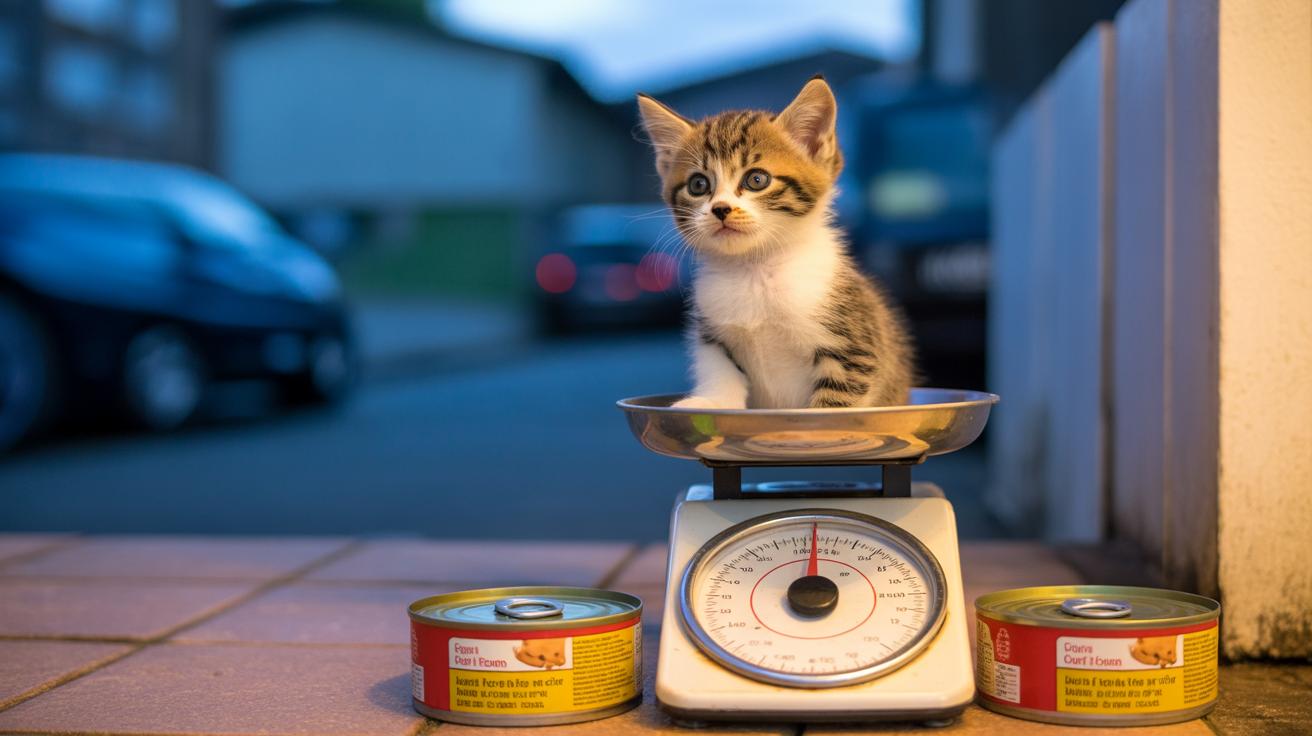
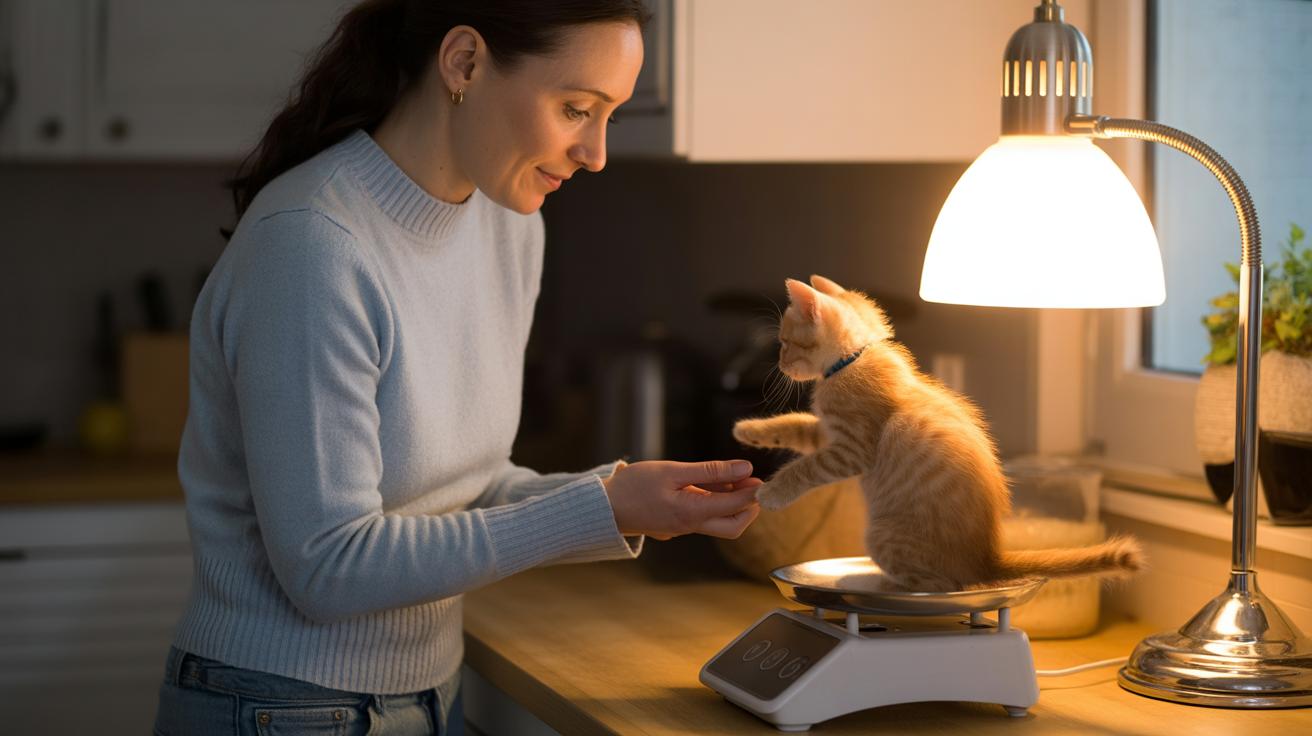
    Grab a kitchen scale (a small digital scale for weighing tiny portions) and a shallow, low-lip dish (a flat bowl with a tiny rim), then follow the seven simple steps below so you can wean kittens onto solid food quickly and with confidence. Ever watched a kitten pounce on a crumb? You’ll get that same tiny thrill, only less messy.

    Worth every paw-print.

    Wean kittens: a step-by-step plan

    - Wean kittens a step-by-step plan.jpg

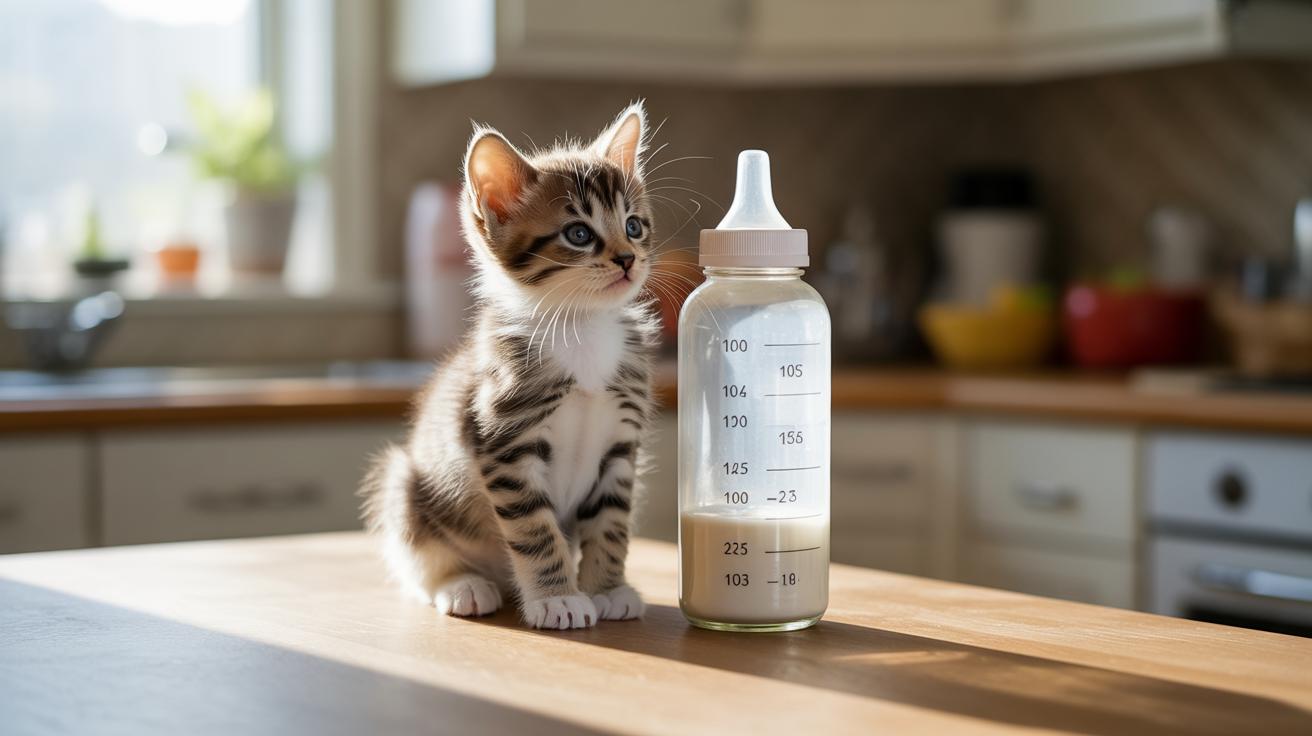
    Quick , grab a kitchen scale and a shallow, low-lip dish. This short 7-step checklist gives the exact ages, mixing ratios, warming temp, meal counts, and vet red-flags so you can move fast and confident.

    1. Start trials between 3 and 5 weeks of age. Check that the kitten can sit steady in your lap and lap from a dish, and that premolars and canines have erupted (premolars are the back chewing teeth, canines are the pointy front teeth). See the Signs section for more details.

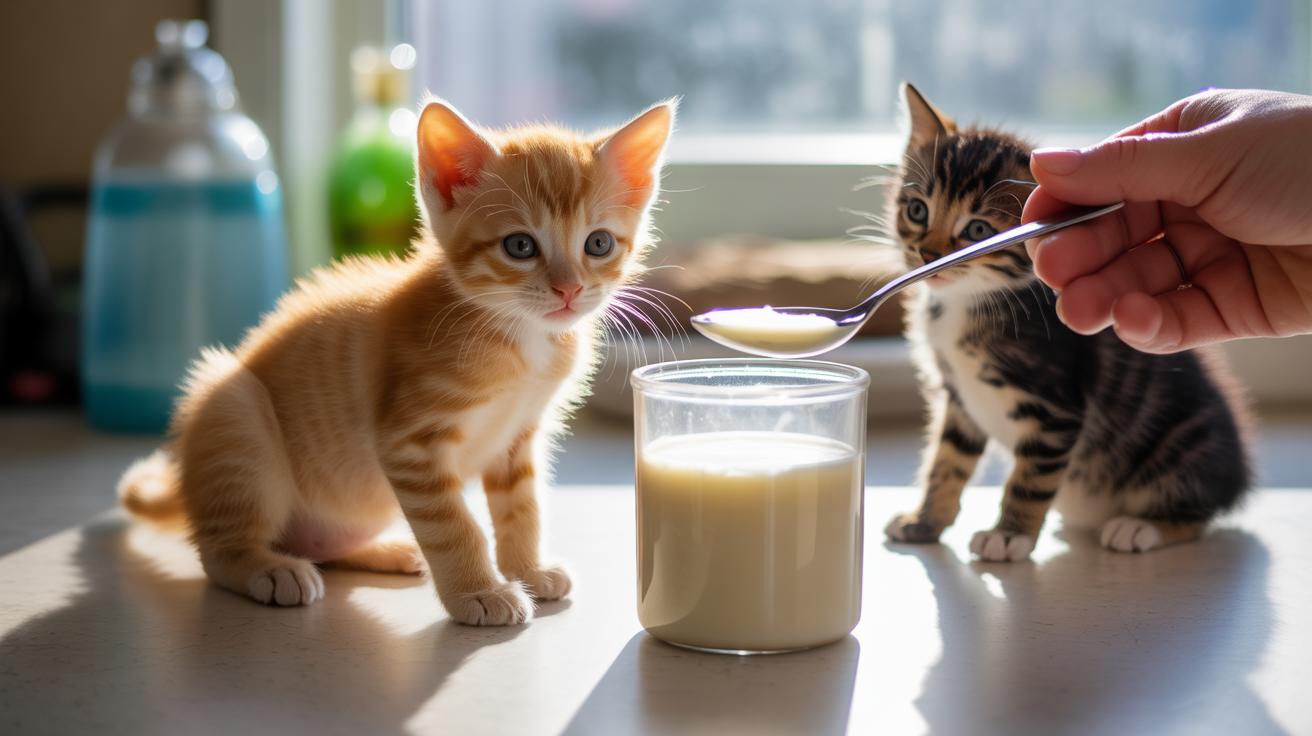
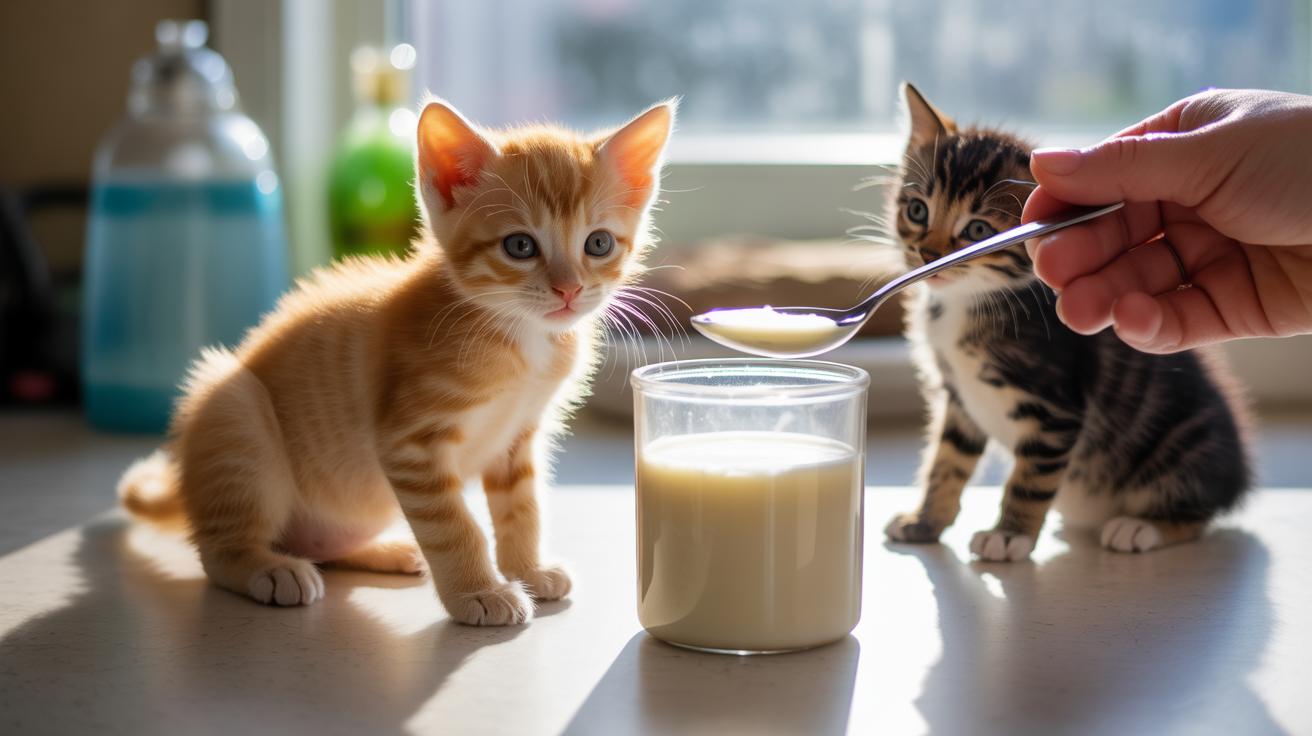
    2. Make the first gruel by mixing equal parts canned kitten food and kitten formula (kitten milk replacer, a commercial milk substitute made for kittens). Warm it to about 100°F (38°C) and test a drop on your wrist so it feels cozy, not hot.

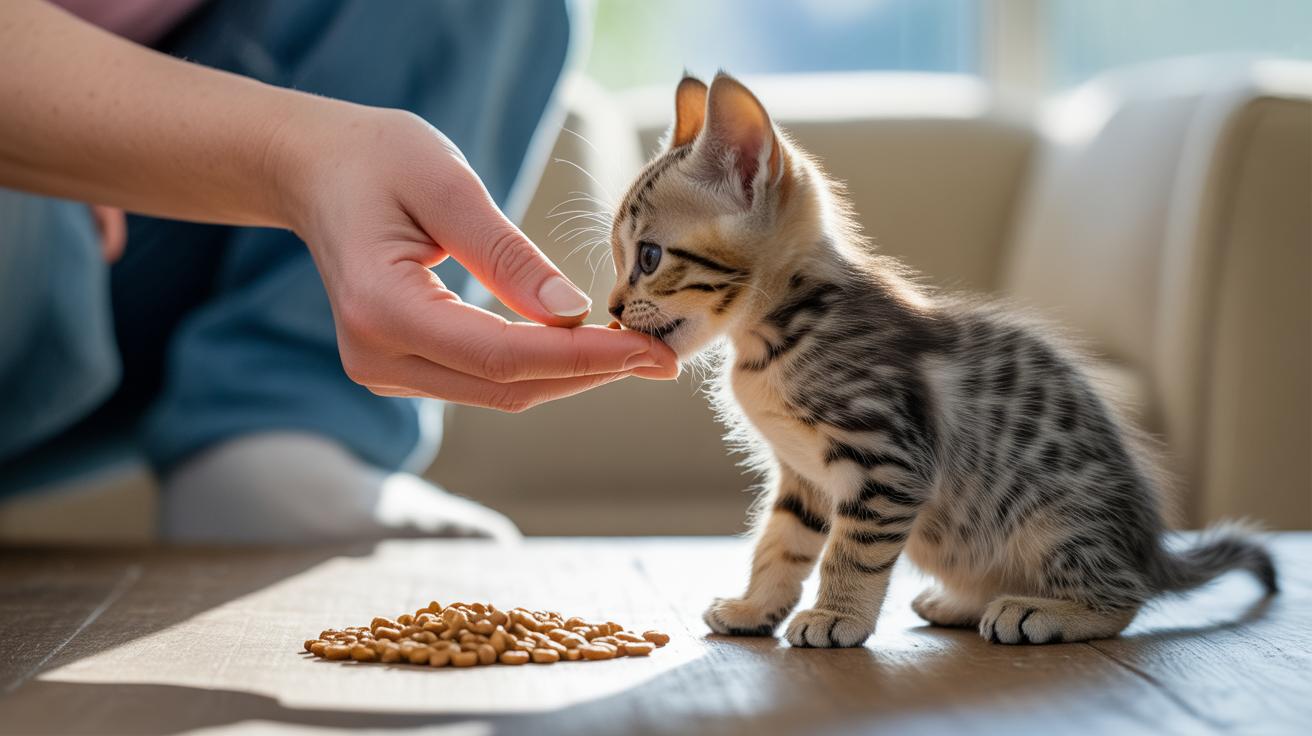
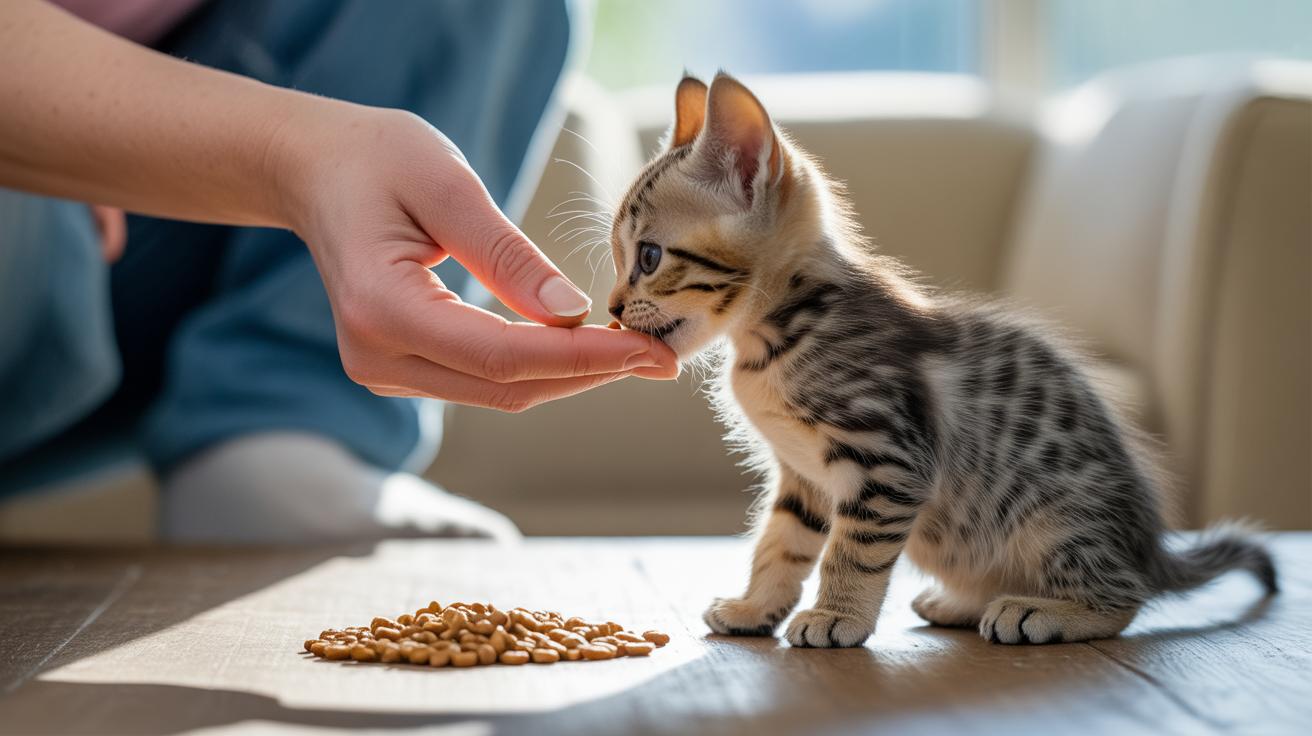
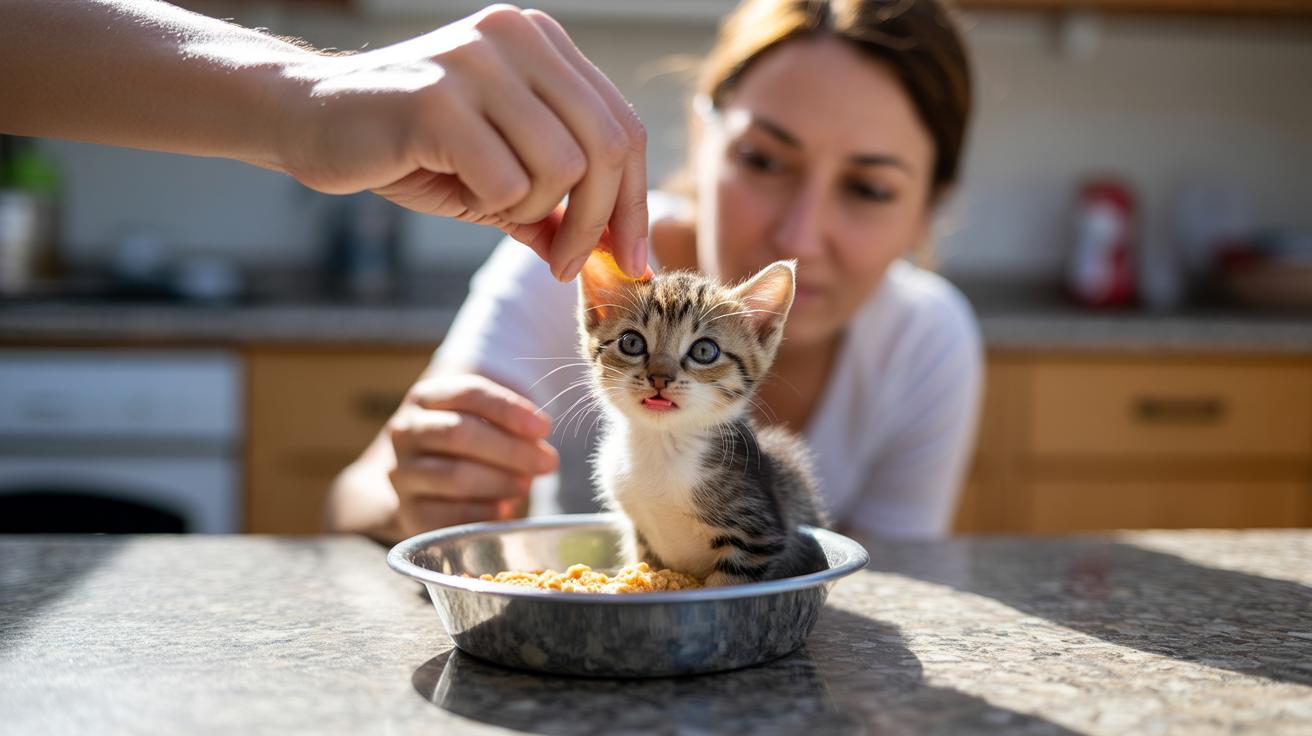
    3. Offer 3 to 4 wet meals a day in shallow dishes. Encourage lapping , try a soft spoon or gentle hand-feeding if the kitten needs help. Small wins add up; even a few confident licks matter.

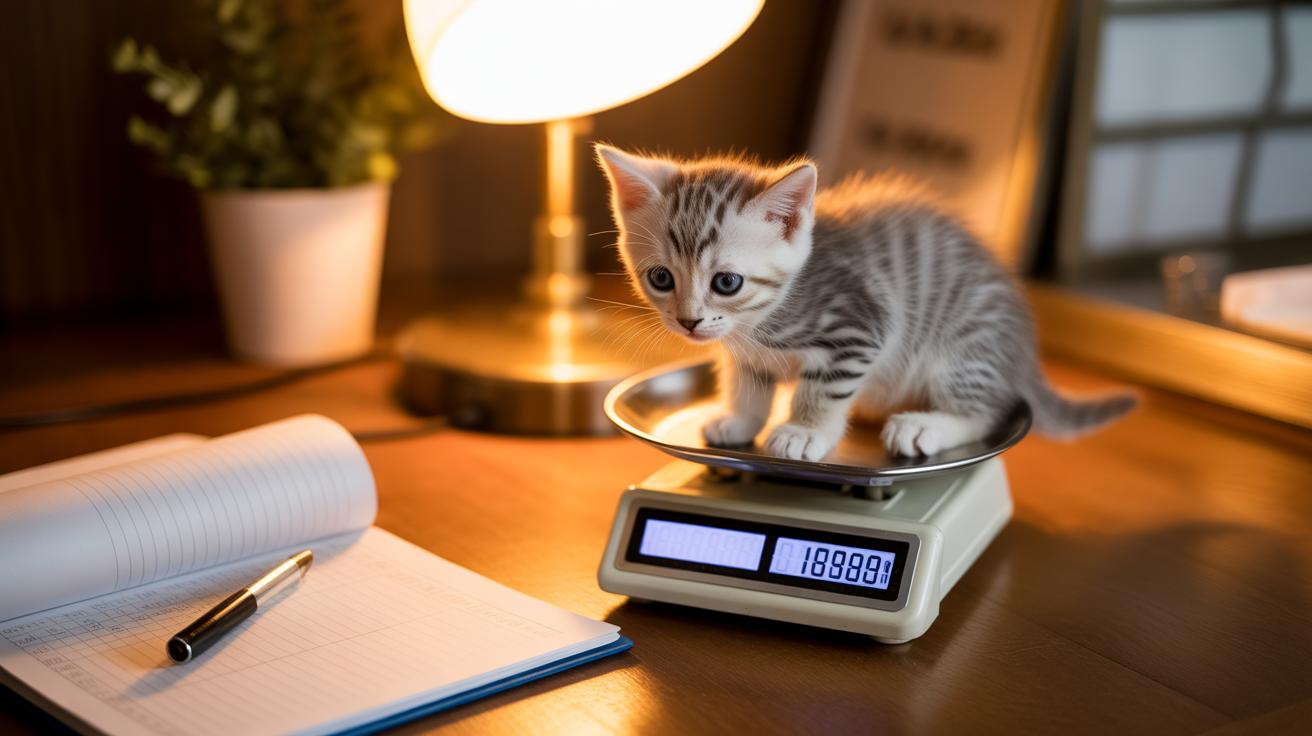
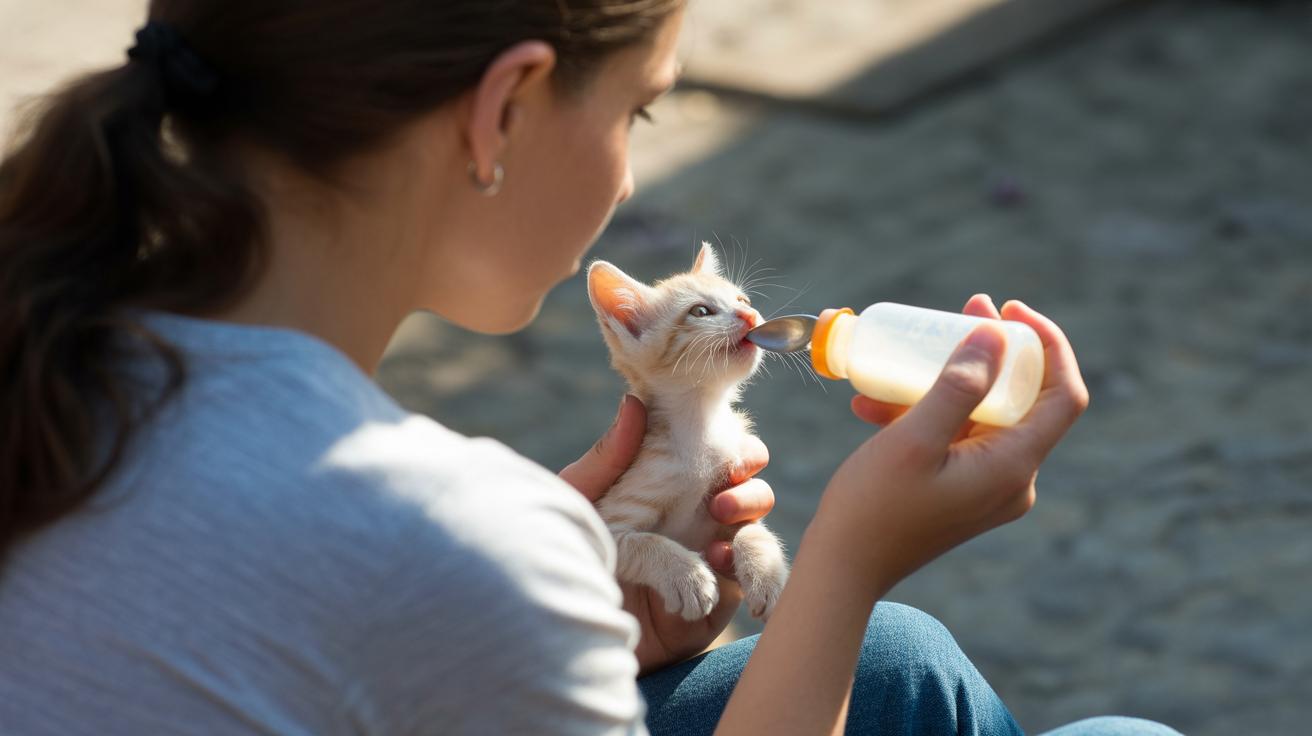
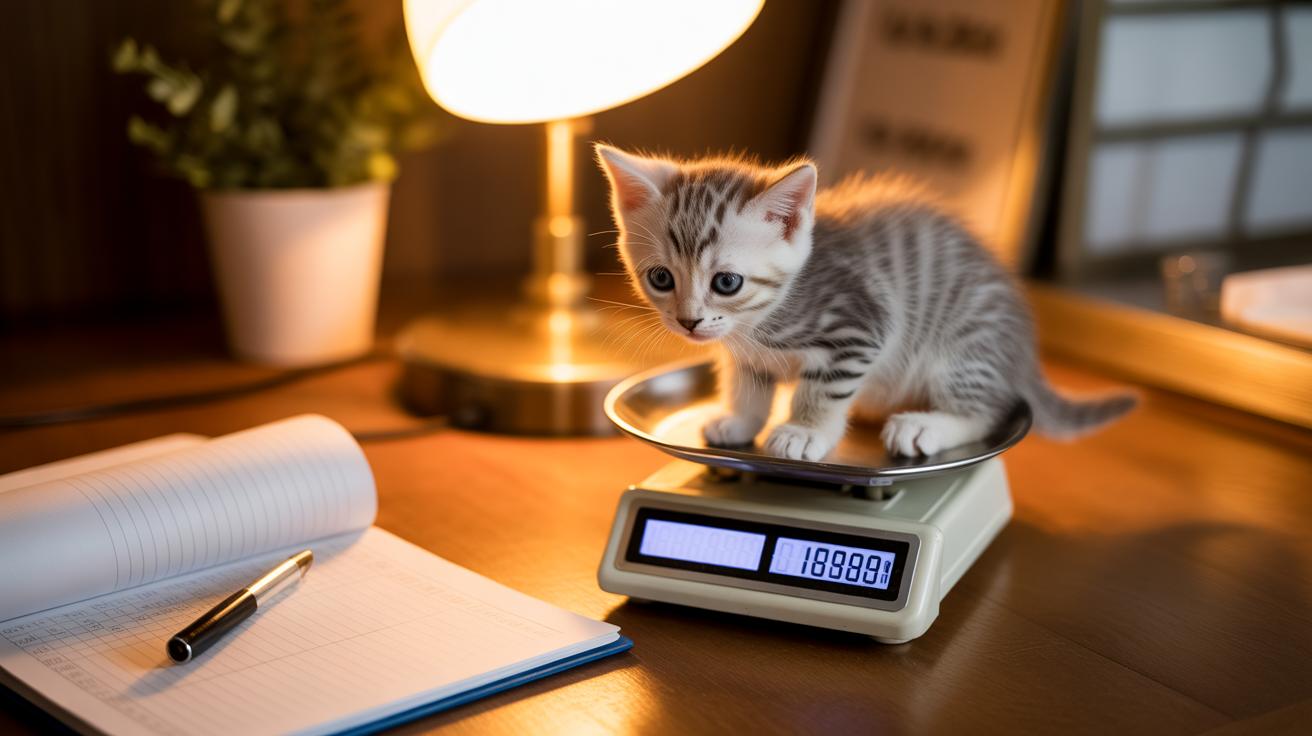
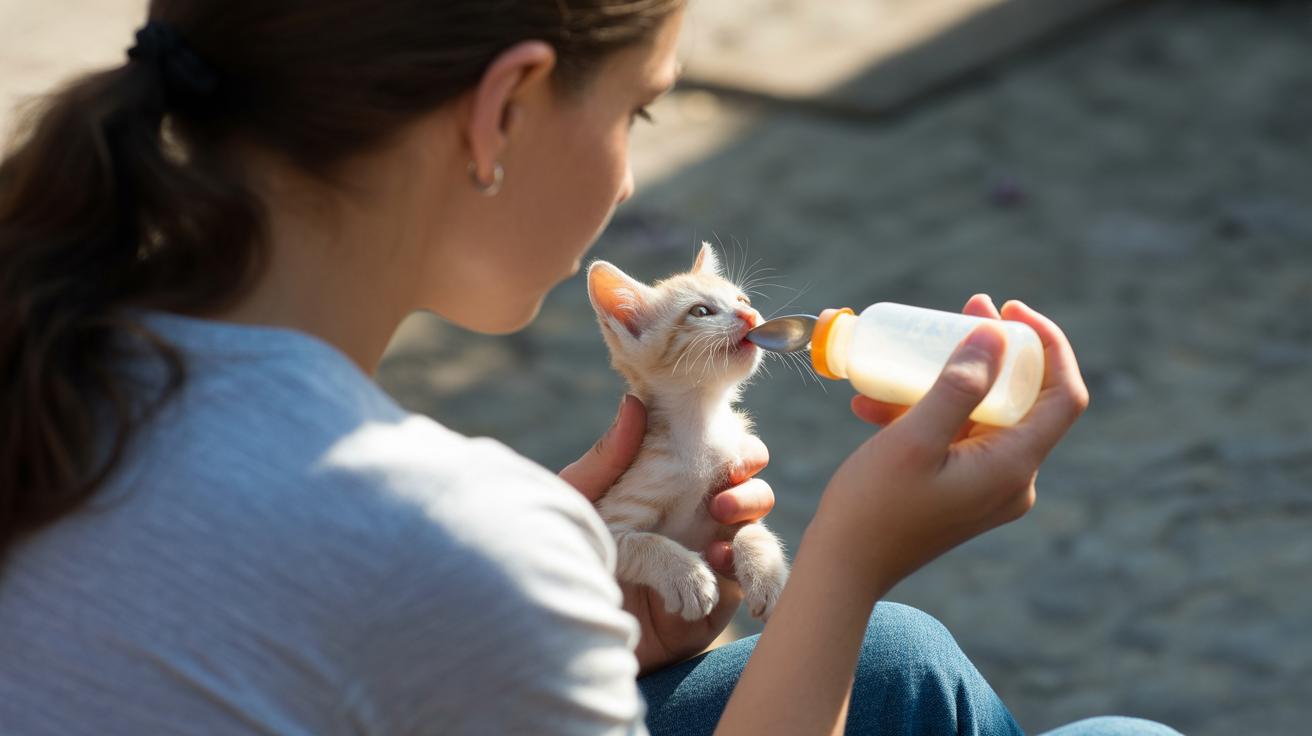
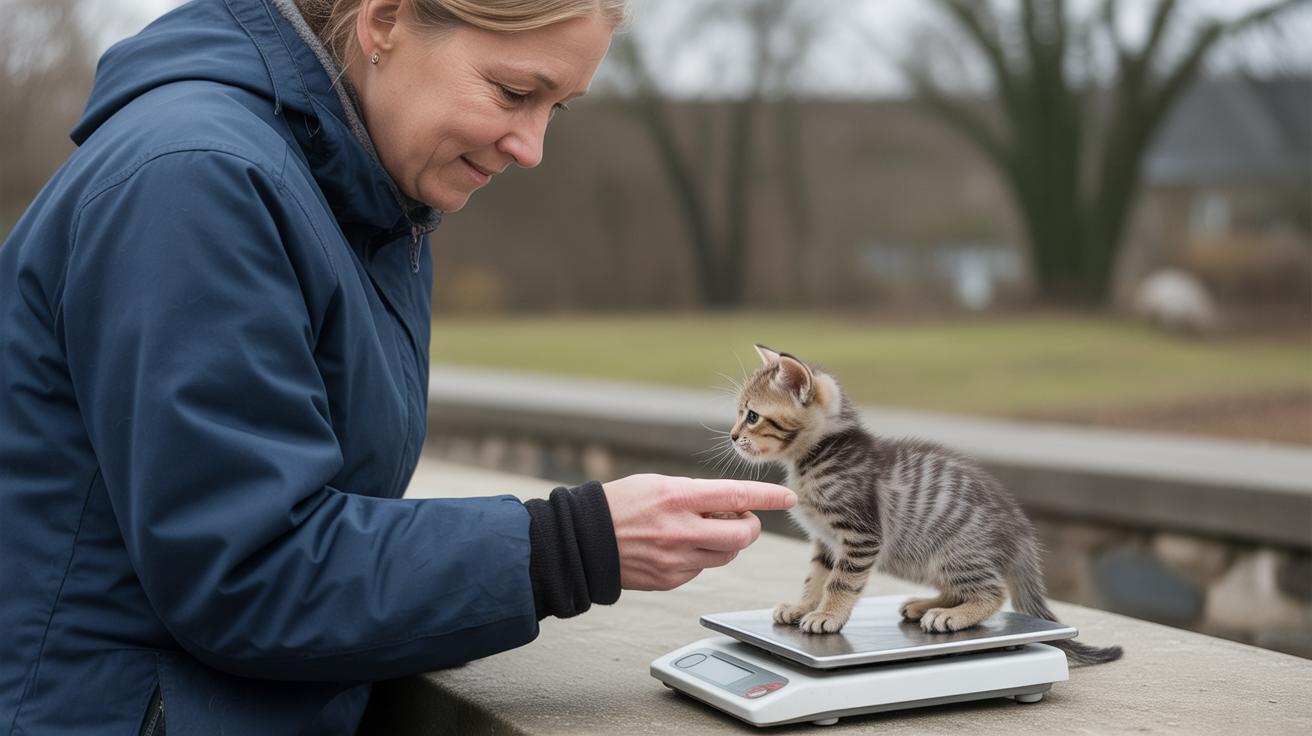
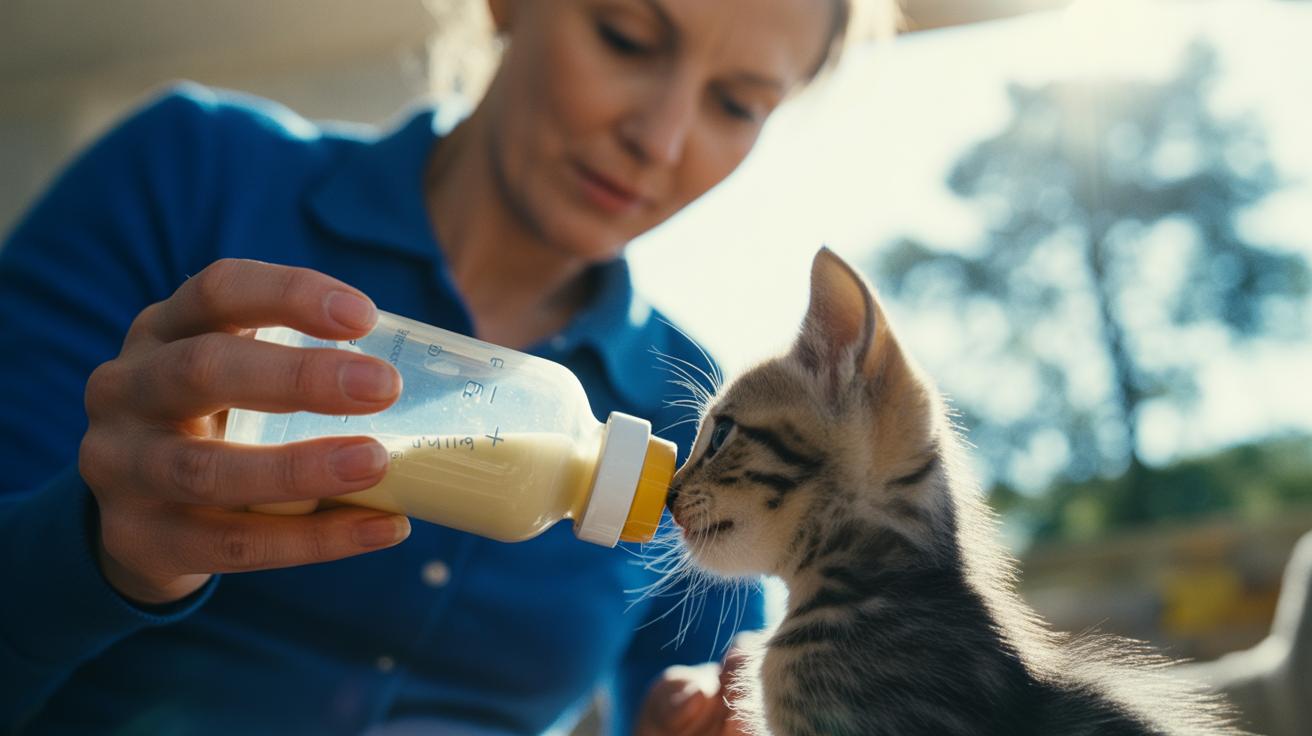
    4. Cut back on supplemental bottle feeds (a small nursing bottle or syringe) slowly as the kitten eats more solids. Weigh the kitten every day and jot down the numbers so you can see trends and catch problems early.

    5. Over several days, make the mix thicker so the kitten practices chewing. Aim for about a 1:2 to 1:3 wet food to liquid ratio as tolerated, then introduce softened kibble (dry food soaked until soft). Patience here pays off , let them set the pace.

    6. Expect about a +10 g per day weight gain during the active transition phase (g means grams, about 0.035 ounces). Many kittens finish weaning around eight weeks, but keep fresh water available at all times.

    7. Watch for vet triggers: diarrhea lasting more than 24 to 48 hours, ongoing vomiting, signs of dehydration like sticky gums or sunken eyes, severe lethargy, or failure to gain weight. If any of these happen, resume supplemental bottle feeds right away, weigh daily, and contact your veterinarian.

    Keep this checklist as your single source of truth for ages, meal counts, mixing ratios, warming temp, and red-flag thresholds. Other sections should point back here instead of repeating the numbers. Worth every paw-print.

    Wean kittens: signs of readiness and quick health checks before you begin

    - Wean kittens signs of readiness and quick health checks before you begin.jpg

    Here’s a short, friendly checklist to help you spot when a kitten is ready for its first meat trials. Use these as go/no-go checks before you follow the lead plan. Think of it as a quick health and behavior scan so you and the kitten both feel confident.

    • Dental cue: gently peek inside the mouth. If you see deciduous premolars or canines (baby teeth), that’s a helpful confirmation. It’s a good sign, but don’t use this as the only test.

    • Lap ability: the kitten can sit steady and lap from a shallow dish. Or the kitten will accept gentle spoon or hand feeding without gagging. If they can lap, they’re coordinating mouth and tongue movements.

    • Behavioral cue: the kitten shows curiosity about food, reaches toward the dish, and mouths in a coordinated way instead of just pawing. Ever watched a little head-tilt before a bite? That’s the good kind of focus.

    • Baseline weight: weigh and record a starting weight before trials begin. Track daily gains toward the target of +10 g per day (about +0.35 oz per day) during transition, and use the same scale and time of day for consistency.

    If you’re unsure, refer to the lead checklist for the exact age window, feeding frequency, mixing ratios (how much formula to mix), warming temperature (in F and C), and veterinary triggers to watch for. Follow those details and you’ll be in a much better spot.

    Worth every paw-print.

    Wean kittens: feeding tools, supplies, and feeding area setup

    - Wean kittens feeding tools, supplies, and feeding area setup.jpg

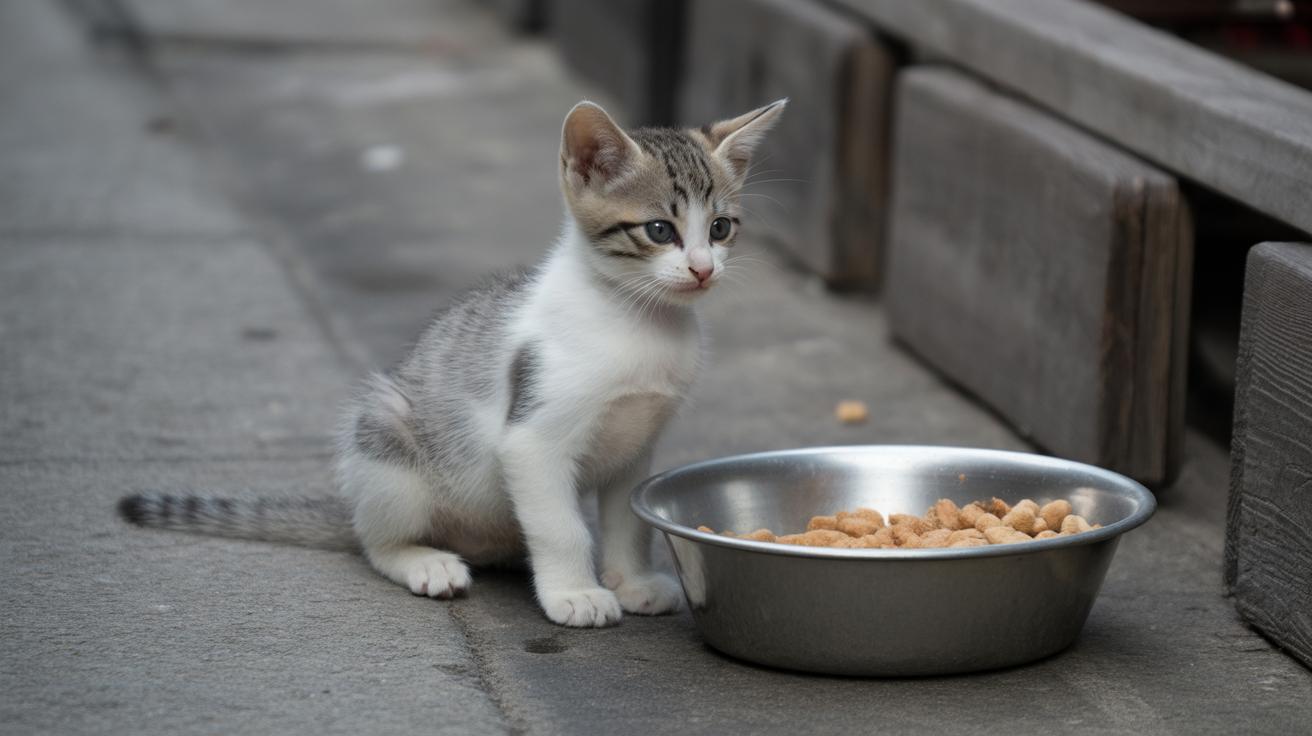
    Set up a tidy, low-stress feeding corner so kittens can focus on learning to eat. Keep it warm, quiet, and easy to clean, and you’ll see them relax faster. Ever watched a tiny face concentrate on a bowl? It’s the best.

    • Shallow, low-lip dishes (about 2 inches deep) so little faces can lap without tipping or struggling. Think saucers, not deep bowls.
    • Soft baby spoons for guided tasting and gentle hand-feeding when you first introduce gruel (gruel, a softened mix of formula and canned food). These help teach licking and reduce mess.
    • Non-slip mats and washable surfaces to catch spills and keep bowls from sliding during enthusiastic lapping. Carpets are fine, but wipeable floors make your life easier.
    • Small, shallow water dish (about 2 inches high); change the water daily so it smells fresh and invites sips. Hydration matters.
    • Gram kitchen scale (small digital scale that measures grams) for daily weigh-ins so you can track that target gain of about +10 g/day (g means grams) during the transition. Quick weigh-ins catch problems early.
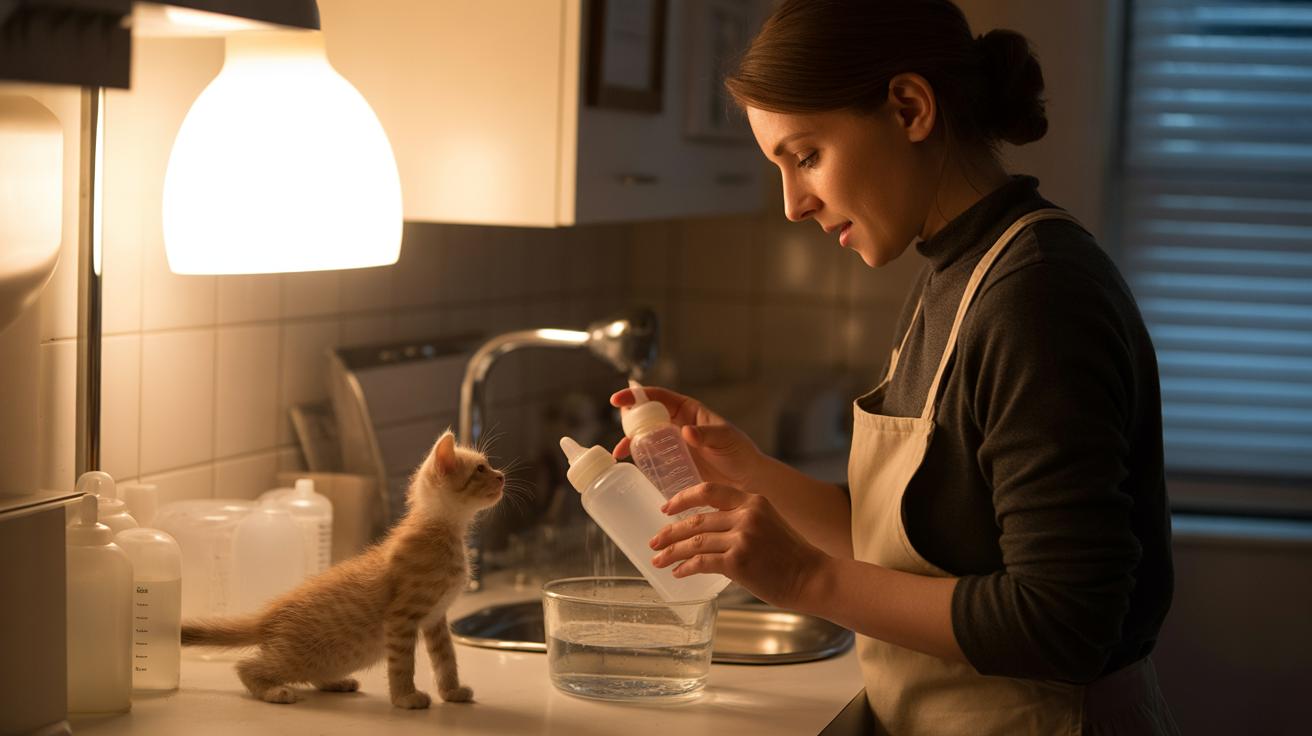
    • Cleaning supplies: mild dish soap, a separate bottle brush, and a small pot or steam sterilizer (steam sterilizer, like a baby bottle steam cleaner) for utensils used with orphaned kittens. Keep one set just for the kittens.
    • Bottles and kitten formula (kitten milk replacer, a commercial formula that substitutes for mom’s milk) on hand as backup until solids are reliably eaten. Check your lead checklist for when to scale back bottles.
    • Feed kittens individually when you need to measure intake or stop a stronger sibling from stealing food. One-on-one feeds help shy babies learn without pressure.

    For utensils used with bottle-fed kittens, wash in hot soapy water, rinse well, then boil or use a steam sterilizer every day. If food intake drops or weight stalls, follow the lead checklist for when to resume bottle feeds and contact your vet. Don’t wait, small kittens can turn downhill fast.

    Worth every paw-print.

    Wean kittens: simple gruel recipes, mixing ratios, warming and storage

    - Wean kittens simple gruel recipes, mixing ratios, warming and storage.jpg

    Lead checklist – key numbers and where to find staging:

    • Warm the gruel to about 38°C / 100°F. Test one drop on your wrist first. It should feel warm, not hot, like a baby’s bath water.
    • See the lead checklist for exact ages, how often to feed, and the vet red flags to watch for. Keep other sections linked to that checklist so the numbers stay the same.
    • Keep a kitchen thermometer handy for consistency. It makes life easier and helps nervous humans sleep better.

    Detailed recipes & storage

    Quick recipe examples:

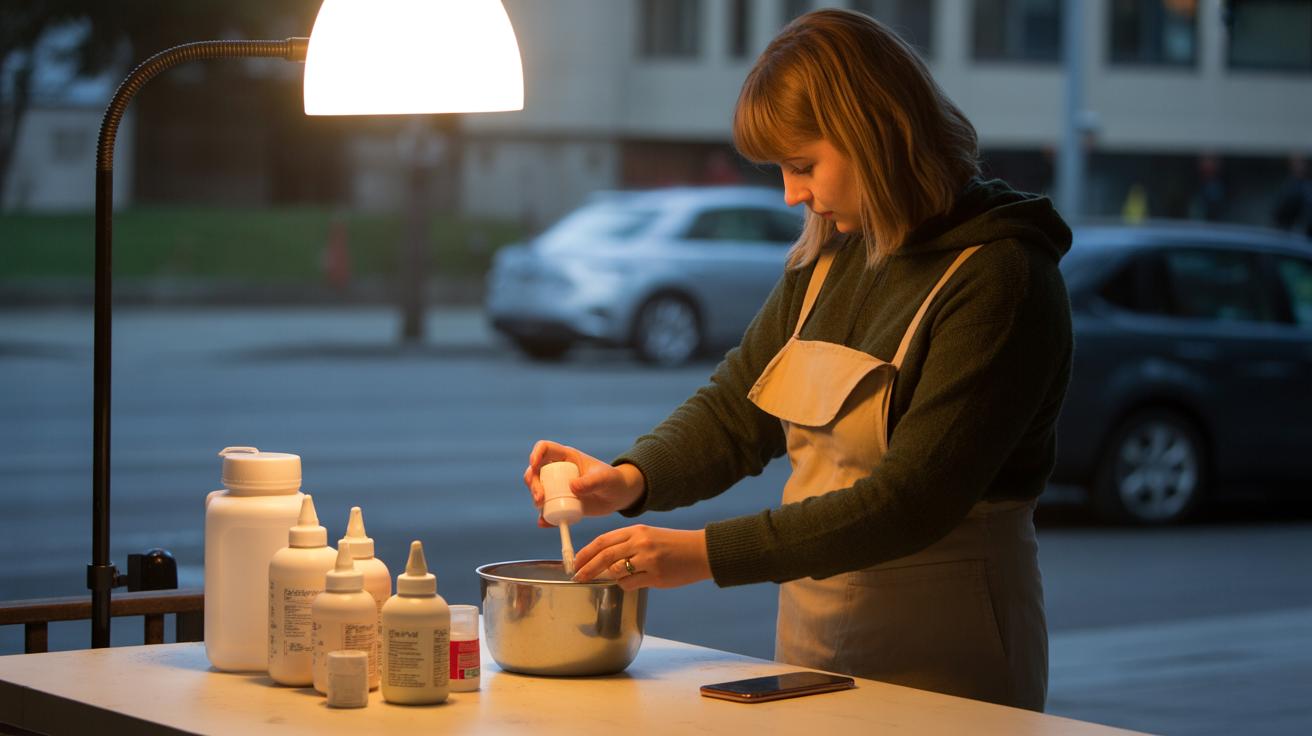
    • Initial gruel – 1 part canned kitten food : 1 part kitten milk replacer (a store-bought milk substitute made for kittens) for a thin, lappable soup. Think gentle, drinkable texture so tiny tongues can learn to lap.
    • Progression – over several days, slowly thicken toward 1 part wet food : 2 parts liquid or 1:3 wet:liquid as chewing improves. Let them graduate at their own pace.
    • Kibble soak – when introducing solids, soften dry kibble with formula or warm water at about 1:3 (kibble:liquid). The pieces should be soft, not crunchy.

    Practical serving tips:

    • Use shallow dishes so tiny faces can easily lap. The satisfying little slurp helps them learn fast.
    • For shy eaters, dip a clean fingertip in the gruel and wiggle it near their mouth. Many kittens will lick and figure it out. Ever watched one suddenly discover food? Cute.
    • Keep mealtimes calm and short. A little praise and a tiny pat afterwards goes a long way.

    Storage and safety guidance:

    • Opened wet food: refrigerate and use within 24 to 48 hours.
    • Freeze small gruel portions in ice cube trays for up to 1 month. Thaw completely, then rewarm to about 38°C / 100°F before serving.
    • Keep formula and feeding bottles on hand as a backup until steady weight gain is recorded. If weight stalls, check the lead checklist and call a vet.
    • Toss any leftover gruel that sat out longer than two hours to avoid tummy trouble.

    Quick reference: see lead checklist for ages, meal frequency, and vet red flags. Worth every paw-print.

    Wean kittens: week-by-week schedule with sample daily feeding plans

    - Wean kittens week-by-week schedule with sample daily feeding plans.jpg

    Quick, printable weekly plan that links back to the lead checklist for the exact ages, mixing ratios, warming temperature, and vet red-flags. Read the lead for the numeric thresholds; use the steps below as the day-to-day flow you’ll follow. Ever watched a kitten try to lap? Cute chaos, but we’ll make it easy.

    1. Week 3-5: start meat trials with thin gruel (gruel = canned kitten food mixed with kitten formula, kitten formula = commercial milk replacer). Keep sessions short and calm so the kitten can practice lapping and learn tongue control. Offer small amounts and let them sniff and lick at their own pace.
    2. Week 5-6: increase the canned food portion and cut back on formula as the kitten shows more interest in solids. Keep meals frequent and patient; that builds confidence. If they’re hesitant, don’t rush it.
    3. Week 6-8: introduce softened kibble (kibble = dry kitten food soaked in warm water or a little formula) so chewing skills can develop. Reduce the liquid over several days so texture changes slowly.
    4. Move by texture, not a calendar – if a kitten struggles, pause the thickening and go back to thin gruel until they’re comfortable. It’s okay to repeat a week.
    5. Phase out supplemental bottle or syringe feeds (syringe = small feeding syringe) gradually as the kitten eats reliably. Weigh daily and track gains (see the lead checklist for the +10 g/day target).
    6. If any vet triggers appear, follow the lead checklist’s corrective actions right away – resume bottles if needed, weigh more often, and contact your veterinarian.

    Sample 5-week day schedule (practical):

    • Meal 1: thin gruel in a shallow dish, aim for 5-10 tiny licks; use a gentle spoon-feed if the kitten needs help.
    • Meal 2: short trial with the same thin gruel; offer the bottle afterward only if intake was very small.
    • Meal 3: warm, thin gruel; encourage with a fingertip dab so they learn to lap from the dish.
    • Meal 4: final thin gruel of the day; weigh before bedtime and record the number.

    Sample 8-week day schedule (practical):

    • Meal 1: wet kitten food warmed slightly, served in a shallow dish so it’s easy to access.
    • Meal 2: wet food again; leave dry kibble out to sniff and taste during the day.
    • Meal 3: wet food; always have fresh water in a small shallow dish.
    • Weigh daily and use the lead checklist to decide when to stop bottles or call the vet.

    A few quick tips: use warm, not hot, food – think cozy bathwater, not scalding. Keep feeding sessions calm and short, and praise the tiny wins. If you’re juggling life and kittens, a consistent routine gives huge benefits, ten minutes of guided feeding can buy you hours of nap time later. Worth every paw-print.

    Wean kittens: moving from wet food to kibble and safe texture progression

    - Wean kittens moving from wet food to kibble and safe texture progression.jpg

    Start offering dry food when your kitten is ready to move away from mostly wet food. Think slow and steady so the mouth learns to chew, not just swallow. Ever watched a tiny jaw figure out a crunchy bite? Cute and impressive.

    Keep these practical tips handy as you shift from canned to kibble textures:

    • Soften kibble with kitten formula (kitten milk replacer, a commercial milk substitute) or warm water at first; the pieces should be soft, not mushy.
    • Gradually reduce the liquid over 1-3 weeks so the kitten learns to chew; small steps, please.
    • Pick small, soft kibble (kibble = dry, crunchy pet food) or puppy-style kitten kibbles (tiny, softer pieces made for small mouths).
    • Chew-check procedure (a simple test to confirm safe chewing): offer one softened piece, watch three to five chews, make sure there’s no coughing or gagging, and verify the kitten can break the piece with jaw motion.
    • Avoid large adult kibble and watch for choking signs; keep feedings supervised until chewing is confident.
    • Always keep fresh water available, and let the kitten set the pace , proud little progress beats rushed crunches.

    Refer to the recipes table for the recommended mixes and exact ratios.

    Stage Mix Notes
    Starter (Days 1-3) 75% wet + 25% softened kibble Soften with kitten formula or warm water; pieces should be easily compressible.
    Transition 1 (Days 4-7) 50% wet + 50% softened kibble Reduce liquid a bit so the kibble keeps some texture but is still easy to chew.
    Transition 2 (Week 2) 25% wet + 75% softened kibble Make the kibble firmer each day; watch chewing and reduce wet food if comfortable.
    Final (Week 3-4) 100% dry kibble (unsoftened) Only move to full dry once the kitten reliably chews and breaks pieces.

    Keep an eye on your kitten’s comfort and appetite. If coughing, gagging, or refusal happens, slow down and try a softer step. I once watched a kitten leap for a crunchy piece like it was a tiny treasure , worth the patience.

    Wean kittens: troubleshooting refusals, diarrhea, dehydration, and other common issues (includes quick checks)

    - Wean kittens troubleshooting refusals, diarrhea, dehydration, and other common issues (includes quick checks).jpg

    Weaning can be tricky. Kittens suddenly refuse food, get loose stools, or show signs of dehydration. Those are the big problems you’ll likely meet. Quick checks you can do right now help you decide whether to try gentle fixes or call the vet.

    Quick checks to run now:

    • Feel the gruel (thin weaning food) temperature on your wrist – it should be warm, not hot.
    • Sniff the food for freshness – spoiled food smells off.
    • Check recent meds – vaccines or deworming (treatment to kill intestinal worms) can change appetite.
    • Weigh the kitten daily to catch any sudden drops.

    Start with easy, gentle fixes. Warm the gruel to about 38°C / 100°F and test a drop on your wrist so it’s comfy for the kitten. Offer tiny, calm tries with a soft spoon or by letting them lick from your fingertip, then hand-feed small amounts if needed. Keep things quiet and slow – a nervous kitten gets overwhelmed.

    If stools get softer or runny, reduce meal sizes and go back to thinner gruel or to formula (kitten milk replacer). Pause any new foods and note when meds or deworming happened – timing matters. Weigh the kitten every day to watch trends; numbers don’t lie.

    Watch hydration closely. Signs that mean act-now: tacky or sticky gums, sunken eyes, very low energy, or poor skin elasticity. If you see those, resume bottle feeds and weigh twice daily. Syringe or tube feeding is risky – only use if your vet shows you how. Keep volumes tiny, hold the head slightly elevated, and watch that the kitten keeps breathing normally.

    If a kitten simply won’t eat but isn’t yet in the red zone, try short, frequent sessions so they don’t get overwhelmed. Offer a stronger-palate option for a quick dab – sometimes a bolder smell or flavor wakes their interest. Let them set the pace. Ever watched a kitten go from snooze to zoom after one lick? Yeah.

    Practical checklist – quick actions:

    • Refusal: warm gruel to about 38°C / 100°F before serving.
    • Refusal: offer spoon or fingertip licks, then hand-feed tiny amounts.
    • Refusal: try a kitten-safe stronger flavor for a short trial (small dab).
    • Refusal: run short, frequent meal sessions so they don’t get overwhelmed.
    • Stool changes: reduce meal size and switch back to thinner gruel or formula for the lead checklist window.
    • Stool changes: pause new foods and note timing of any meds or deworming (treatment to kill worms).
    • Stool changes: watch stool consistency and weigh daily to track trends.
    • Dehydration/acute: if gums are tacky, eyes sunken, or kitten very lethargic, resume bottle feeds and weigh twice daily.
    • Dehydration/acute: syringe or tube feeding only as instructed by a vet; use tiny volumes, keep the head slightly elevated, and watch breathing.
    • Dehydration/acute: contact your vet if the lead checklist red flags appear; follow its corrective steps immediately.

    If those quick fixes don’t work, follow the lead checklist for exact time windows and the vet-contact steps so you don’t miss a needed escalation. Worth every paw-print to catch trouble early.

    Wean kittens: monitoring, deworming, vaccine timing, and final checklist for declaring fully weaned

    - Wean kittens monitoring, deworming, vaccine timing, and final checklist for declaring fully weaned.jpg

    Weaning is a messy, sweet, and sometimes frantic time. Think of it as helping tiny fuzzballs move from mom's milk to real food, one curious nibble at a time.

    Monitoring is everything. Weigh kittens every day if you can, aiming for steady gains of about 10 to 15 grams per day. Watch their energy, appetite, and poops; soft formed stool is good, watery or bloody stool is not. Check hydration by gently lifting loose skin at the scruff (it should snap back quickly). If a kitten seems listless, not nursing or eating, or stops gaining weight, call your vet.

    Start solids slowly. Offer gruel at about 3 to 4 weeks old, gruel is wet kitten food mashed with a little kitten milk replacer (a commercial formula made for kittens). Put a dab on your finger so they learn to lick. Over the next 2 to 4 weeks, make the gruel thicker and leave dry food softened with water or formula for nibbling practice. By around 7 to 9 weeks many kittens will eat canned and dry food; by 8 to 10 weeks most are usually eating well on their own, though some take a little longer. Patience helps. Your couch will probably get messy.

    Deworming is routine but important. Start at 2 weeks old and then follow your vet’s schedule, often every 2 weeks until around 8 to 12 weeks (this treats roundworms and other common gut parasites). Deworming means giving medicine that removes intestinal parasites. Keep an eye on stool for worms or mucus and note any persistent vomiting or diarrhea. Always use products and doses your vet recommends.

    Vaccines start when kittens are old enough to make their own protection. Most vets begin core shots at 6 to 8 weeks and give boosters every 3 to 4 weeks until about 16 weeks. Core vaccine FVRCP protects against feline viral rhinotracheitis, calicivirus, and panleukopenia (serious viral illnesses). Rabies is usually given later, around 12 to 16 weeks, depending on local rules and your vet’s advice. Talk with your vet about timing, local disease risk, and shelter or adoption requirements.

    Final checklist for calling a kitten fully weaned:

    Checklist Item What to look for
    Eats canned and dry kitten food Regular meals from a bowl, no need for milk replacer
    Drinks from a water bowl Not just licking wet food, actually sipping water
    Uses the litter box reliably Consistent digging and covering, normal stools
    Steady weight gain Daily gains near 10–15 g or as your vet recommends
    Independent between feedings Comfortable resting or napping without needing to nurse
    Healthy behavior and energy Playful, alert, and curious with no signs of illness

    See lead checklist for numeric thresholds and the printable final checklist.

    Wean kittens: special-case guidance for orphaned, single, or medically fragile kittens

    - Wean kittens special-case guidance for orphaned, single, or medically fragile kittens.jpg

    Orphaned, single, or medically fragile kittens need a gentler, closely watched plan than a typical litter. Keep bottles and syringes close, weigh the kitten more often, and aim for small, steady gains. Not speed. Ever watched a tiny belly ripple with each successful feed? That’s the goal.

    • Supplemental schedule: give bottle or syringe feeds before and after gruel sessions until the kitten is steadily gaining weight (weigh daily). Gruel is just thin, softened food that’s easy to lap up.
    • Feeding frequency: offer very small, frequent meals so the kitten doesn’t get overwhelmed or inhale food. For fragile neonates, try every 2 to 3 hours. Tiny amounts, often.
    • Vet consult triggers: call your vet if vomiting keeps happening, diarrhea lasts more than 24 to 48 hours, signs of dehydration appear (sticky gums, sunken eyes), or weight stalls or drops. If that happens, resume bottle feeds and contact your veterinarian right away, see the lead checklist for exact corrective steps.
    • Aspiration precautions: use tiny volumes, hold the head slightly elevated, feed slowly, and stop immediately if the kitten coughs or gags. Aspiration (when liquid goes into the lungs) is serious. Only syringe or tube feed with your vet’s instruction; a tube feed means using a thin feeding tube placed by a professional.
    • High-calorie options: ask your vet about concentrated kitten-formulated diets or vet-approved high-calorie toppers to boost calories without big volumes. Good for wobblier babies who need more energy.
    • Extra social feeding tips: hand-feed or use a soft spoon to mimic a littermate’s nudges; gentle purring or skin-to-skin warmth can calm single kittens and help them eat. My cat once relaxed into a nap after a warm spoonful, adorable, and effective.

    Keep any formula or supplement changes coordinated with your veterinarian. Small kittens can wobble quickly. Watch weight, stay calm, and act fast. Worth every paw-print.

    Final Words

    In the action: follow the compact 7-step checklist, start trials at 3–5 weeks, warm 1:1 gruel to ~38°C/100°F, offer 3–4 wet meals daily, weigh kittens and aim for about +10 g/day, thicken mixes over days, and watch the vet-trigger signs so you can act fast.

    Stick to the recipes and week-by-week plan, use shallow dishes and gentle spoon-feeding when needed, and resume bottle feeds if trouble shows. That routine helps busy multi-cat homes keep kittens happy and moving forward with how to wean kittens to solid food. You're doing great.

    FAQ

    Kitten Weaning FAQ

    How to wean kittens to solid food at home?

    Start trials at 3–5 weeks, offer warmed 1:1 gruel (canned kitten food mixed with kitten milk replacer), feed 3–4 times daily, and weigh daily for steady gain.

    When do kittens start eating food and drinking water?

    Begin solid-food trials at about 3–5 weeks. Kittens will sip from a shallow water dish once they can lap; many reach solid-food independence by roughly eight weeks.

    At what age should a kitten start eating dry food?

    Introduce softened dry food around weeks 6–8. Soften kibble with warm formula or water and reduce liquid over 1–3 weeks as chewing improves.

    How to wean kittens from mom or from the bottle?

    Offer warmed gruel and gentle spoon/hand feeding, gradually cut supplemental bottle feeds (kitten milk replacer) as solids increase, and resume bottles if weight drops.

    What is the kitten weaning schedule and how often should I feed weaning kittens?

    Start trials at 3–5 weeks and increase canned food through weeks 5–8. Offer 3–4 wet meals per day while tapering bottles.

    What mixing ratios and warming temperature should I use for gruel?

    Use a 1:1 wet food (canned kitten food) to formula (kitten milk replacer) for first trials, thicken to 1:2–1:3 over days, and warm gruel to about 38°C/100°F (test on your wrist).

    How do I transition a kitten to hard food?

    Soften kibble with warm formula or water (start about 1:3 kibble:liquid), reduce liquid over 1–3 weeks, and pick kitten-sized kibble to lower choking risk.

    What signs show a kitten is ready to start weaning?

    Ready signs include eruption of baby (deciduous) teeth, ability to lap from a shallow dish, curiosity and coordinated mouth movements, and a recorded baseline weight.

    Mother cat not weaning kittens — what should I do?

    Begin warmed gruel trials, hand- or spoon-feed as needed, keep bottle feeds as backup, weigh kittens daily, and call your vet if refusal or weight loss persists.

    What problems should I watch for during weaning and when should I call the vet?

    Watch for diarrhea lasting over 24–48 hours, persistent vomiting, dehydration (tacky gums, sunken eyes, lethargy), or failure to gain weight. Resume bottle feeds, weigh daily, and contact your veterinarian right away if concerns persist.

    How do I know when a kitten is fully weaned?

    A kitten is fully weaned when it eats three meals per day of kitten-formulated food, drinks from a dish, gains about +10 g/day, has normal stool, and hasn’t had bottles for 48–72 hours.

    Any special tips for orphaned, single, or medically fragile kittens?

    Continue supplemental bottle or syringe feeds around gruel meals, weigh more often, offer vet-approved high-calorie toppers, and use small, frequent feeds to reduce aspiration risk.

    Related Articles

  • 4-week old kitten feeding schedule

    4-week old kitten feeding schedule

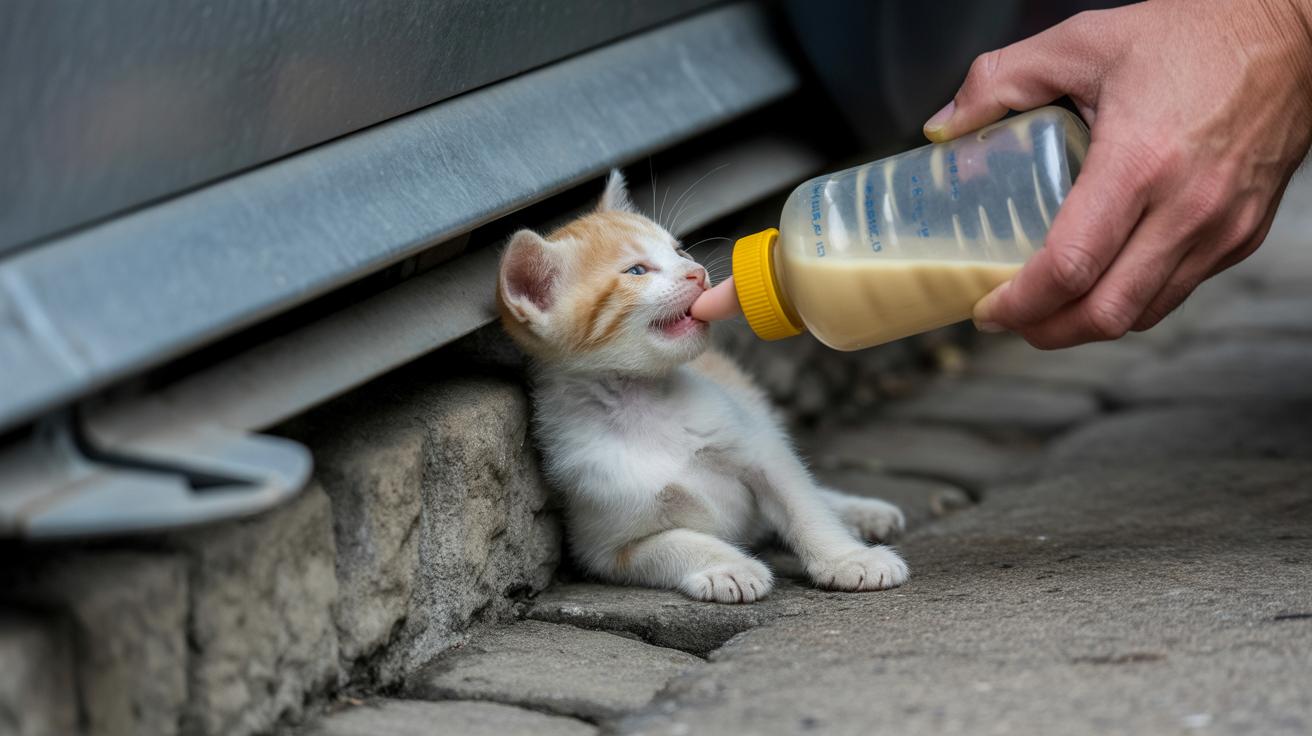
    Think a 4-week-old kitten can wait for grown-up food? Nope. At four weeks they still need kitten-friendly meals and a little formula support.

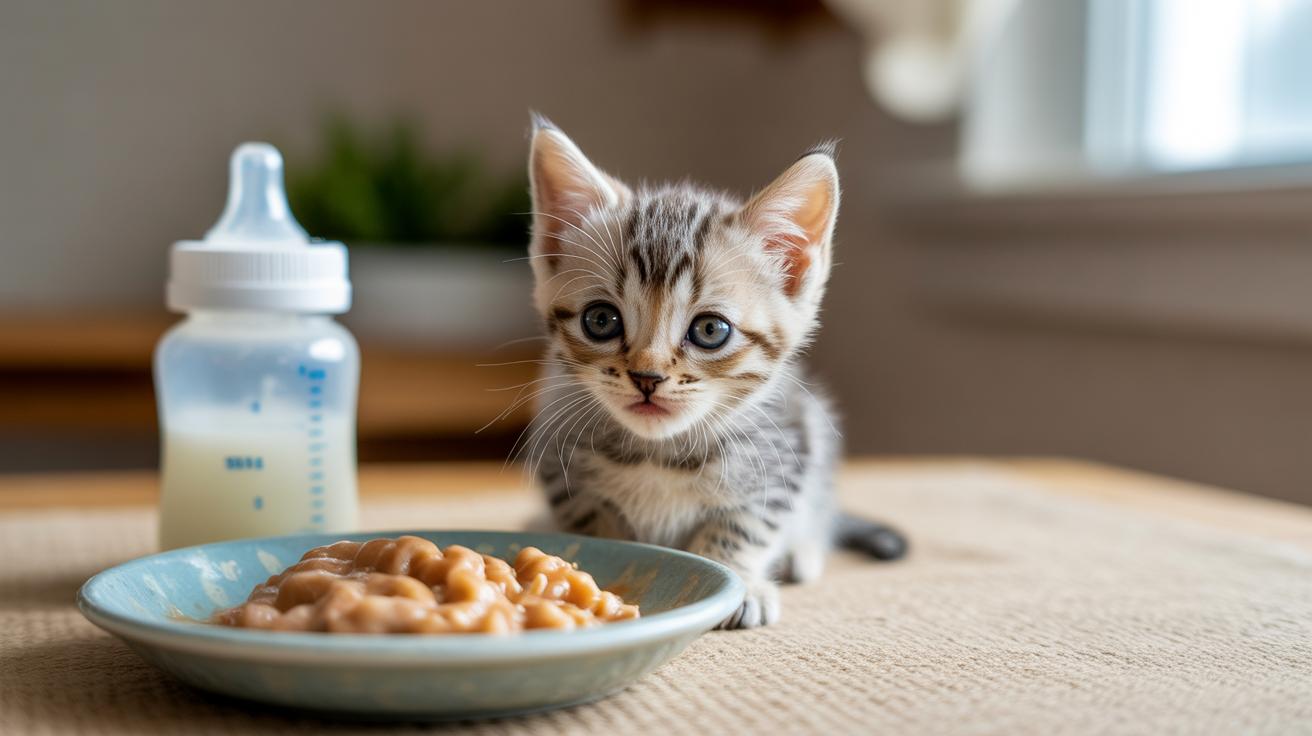
    This quick, waking-hours plan uses warm mixed gruel (soft, mashed kitten food blended with kitten formula) and tiny bottle top-ups (kitten-milk replacement – a commercial powdered milk made for kittens). Keep portions simple and rounded – 1 or 2 tablespoons so you can spoon-feed fast, even half-asleep.

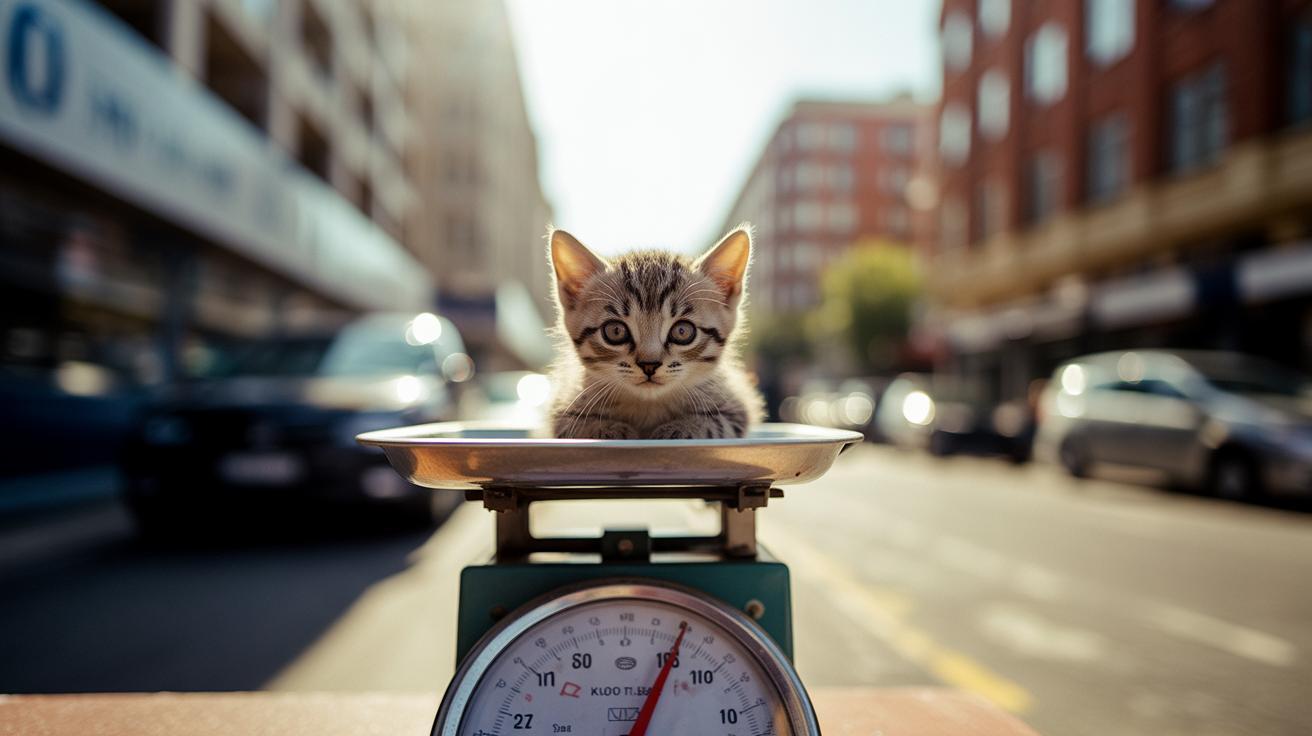
    Ever watched a tiny head bob over a saucer? Pretty cute. Aim for steady weight gain of about 0.5 to 1 ounce per day. If the kitten is orphaned or underweight, do one brief overnight check and offer a small bottle feed.

    You’ll find exact portions, easy recipes, and step-by-step how-to tips in the rest of this post. Worth every purr.

    4-week old kitten feeding schedule

    - 24hour actionable feeding timetable (single 4week kitten).jpg

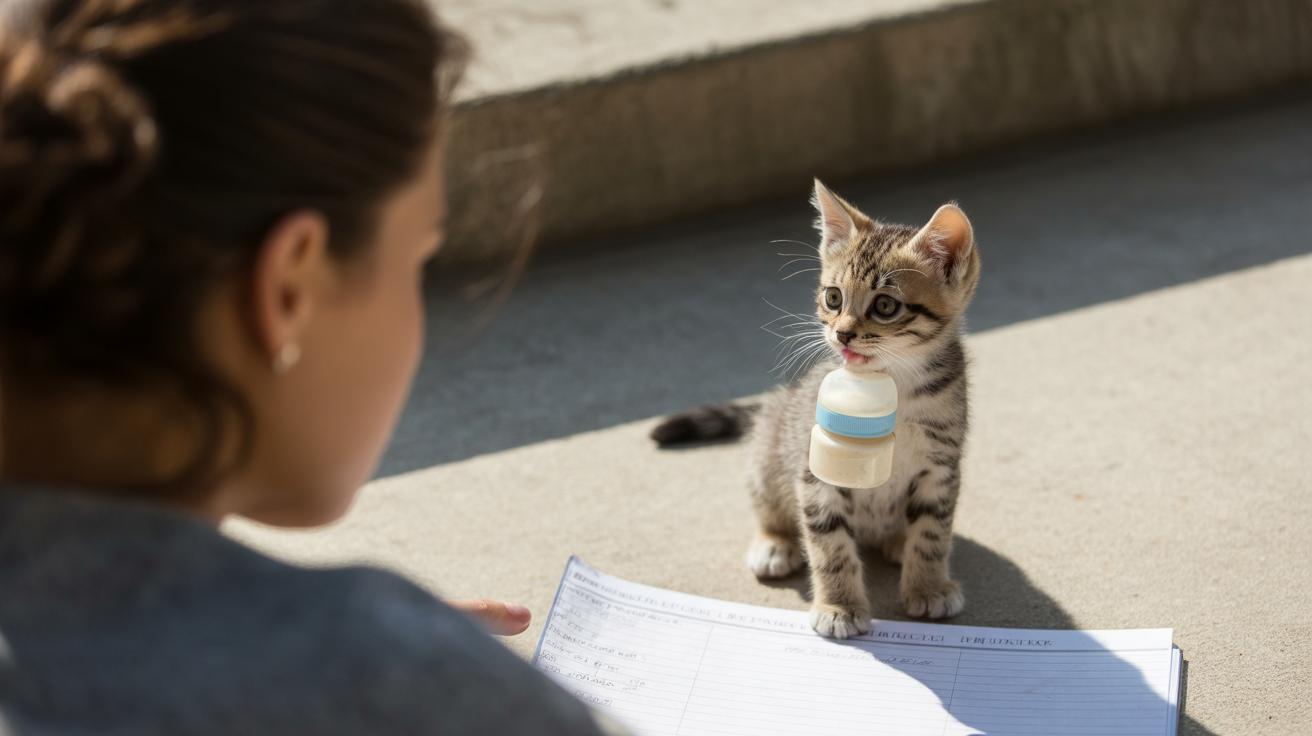
    This is a simple, waking-hours plan: offer mixed gruel (soft, mashed kitten food made with formula) warmed to body temperature, plus small bottle top-ups. Aim for steady weight gain of about 0.5 to 1 ounce per day, and do one short overnight check if the kitten is orphaned or underweight. Ever watched a tiny head bob over a saucer? Pretty cute, and useful too.

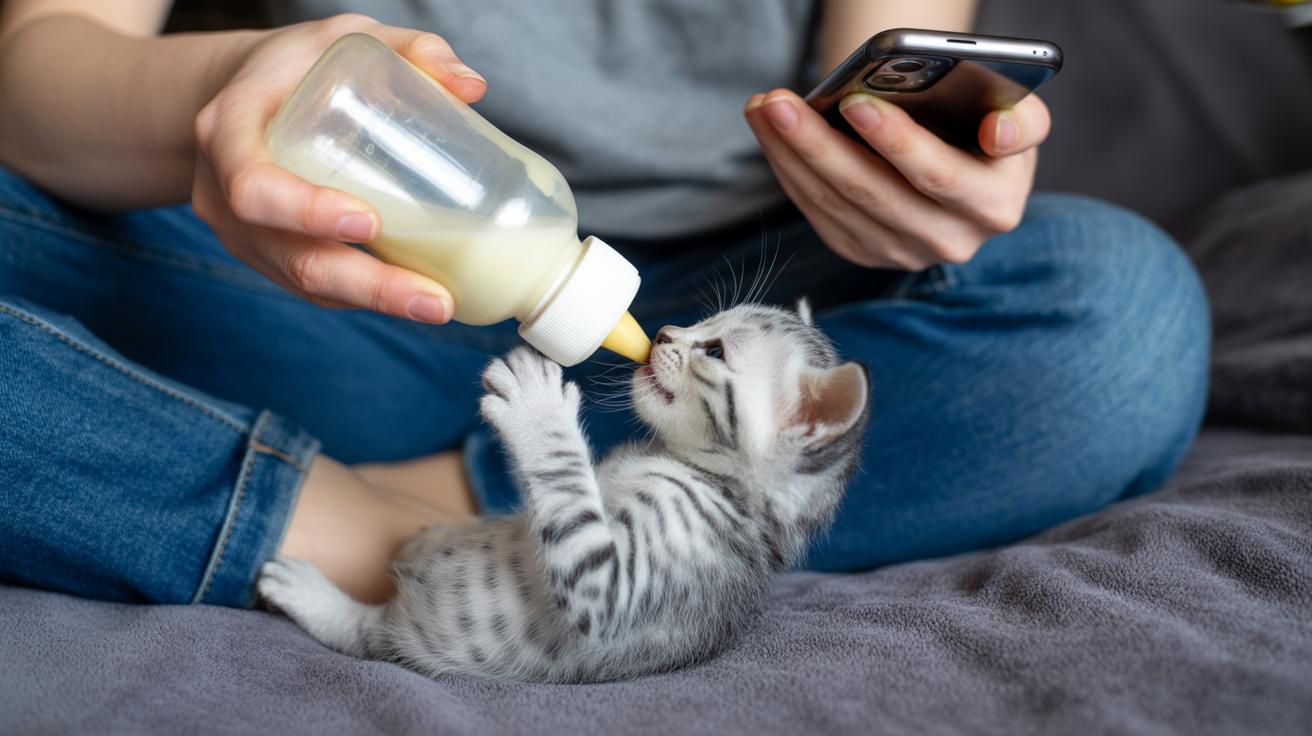
    Keep portions easy to grab when you're half asleep. Round to single numbers like 1 tbsp or 2 tbsp so you can feed fast. Gruel is the daytime star; bottle top-ups (small formula feeds from a bottle) fill the gaps and calm kittens who miss nursing. Serve gruel in a shallow dish so they lap, not suck, keep bottles warm and free of clumps, and check the Weight Monitoring and Weaning sections for exact tbsp/ml and recipes if you need precise numbers.

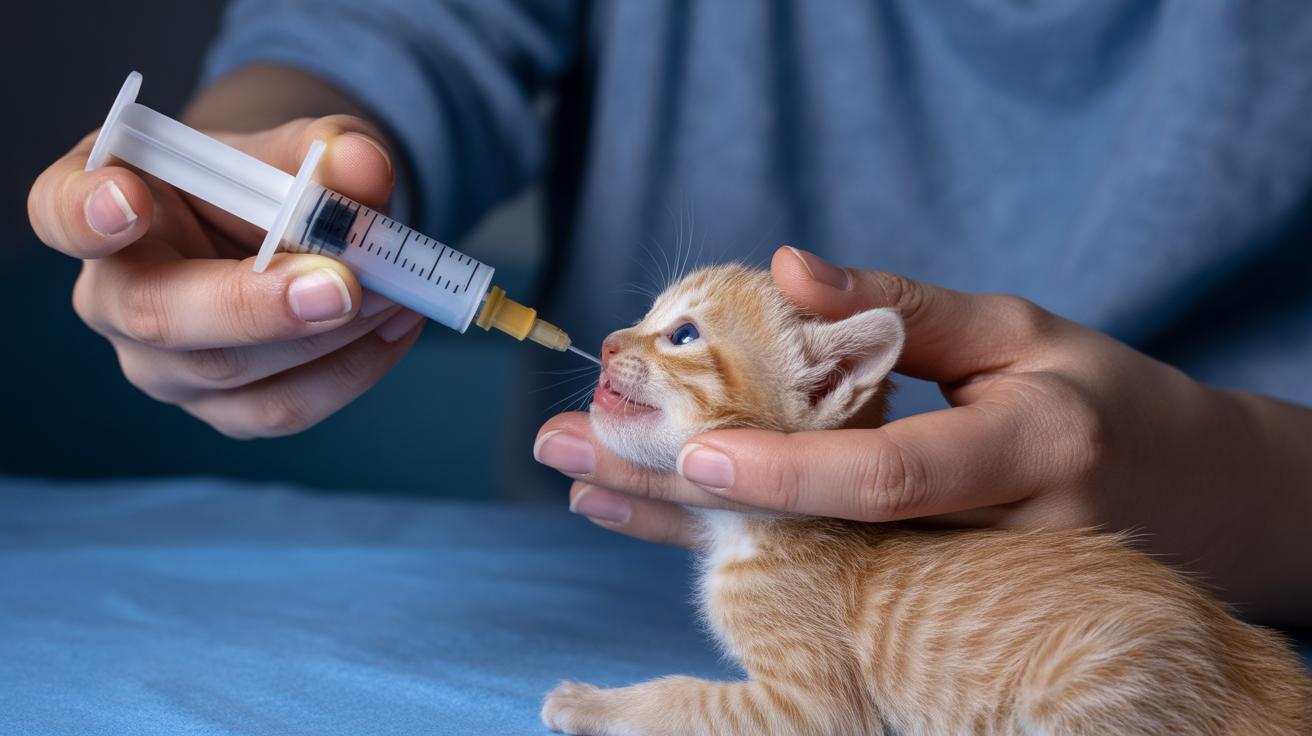
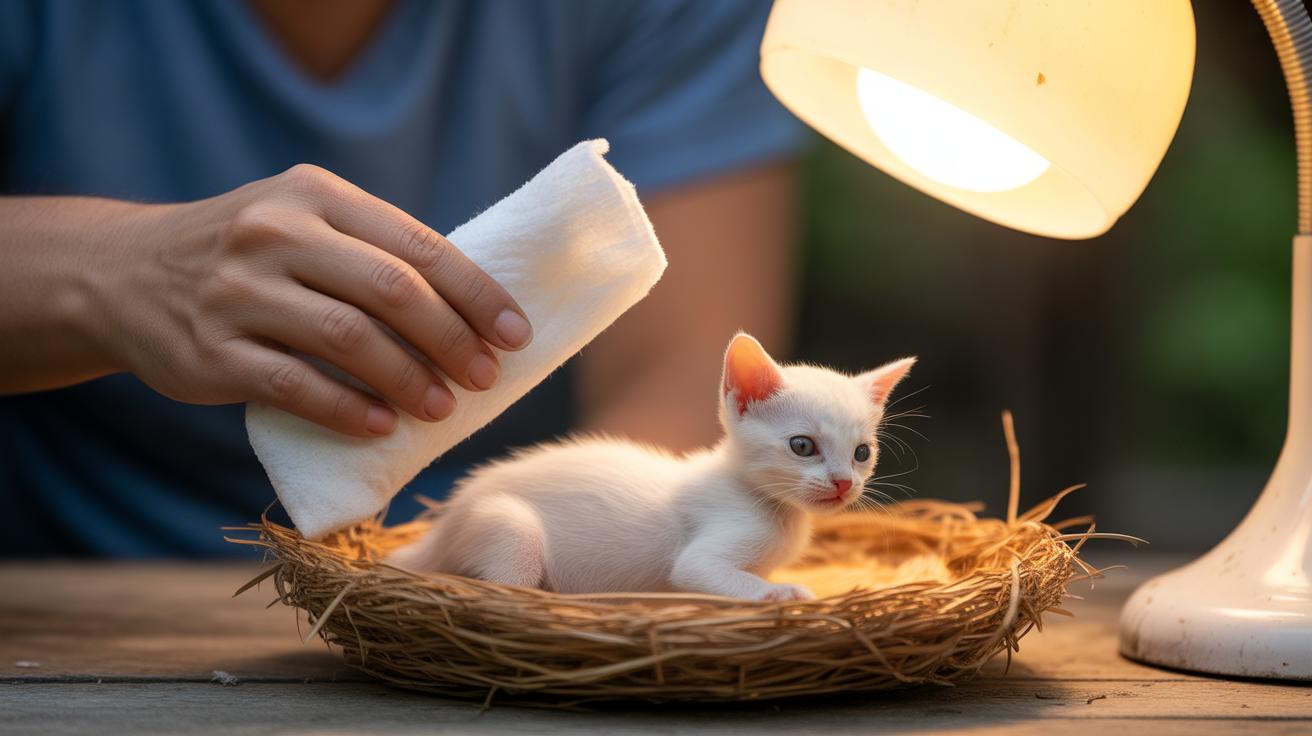
    Night-care for fragile kittens is short and focused. If the kitten is orphaned or not gaining well, do one quick overnight check: warm the kitten, offer 1 tbsp bottle if they’re sleepy but can swallow, and stimulate elimination (gently rub the belly and genitals with a warm, damp cloth to help them pee and poop). If you see breathing trouble, refusal of two meals, or weight loss over two to three days, get urgent help. For full how-to on preparing formula, choosing nipple sizes, latch technique, and exact growth targets, see Formula Handling, Bottle Technique, and Weight Monitoring.

    Time Feed type Approx portion (rounded) Notes
    Morning wake Mixed gruel + bottle top-up 2 tbsp (30 ml) gruel + 1 tbsp (15 ml) bottle Serve warm in a shallow dish so they lap. Gentle bottle top-up if still hungry; praise the tiny lappers.
    Midday Bottle feed (formula) 1 tbsp (15 ml) Hold belly-side down to mimic nursing, offer the nipple and watch for steady swallowing. Calm, steady strokes help.
    Early afternoon Saucer gruel 1 tbsp (15 ml) Tip very small amounts so they learn to lap. Stay close and cheer on the curiosity.
    Late afternoon Mixed gruel + bottle top-up 2 tbsp (30 ml) gruel + 1 tbsp (15 ml) bottle Keep the texture smooth and clump-free. Offer the bottle if they lose interest in the saucer.
    Early evening Saucer gruel 1 tbsp (15 ml) Let the kitten explore the saucer; gentle lapping is the goal. Little paws in the dish are normal, um, adorable.
    Late evening Bottle feed 1 tbsp (15 ml) Hold calmly and clean the face after feeding to prevent crusty residue. A soft wipe goes a long way.
    Overnight check (if orphan/underweight) Small bottle top-up 1 tbsp (15 ml) Quick warmth and breathing check, offer 1 tbsp if they’ll swallow, and stimulate elimination if needed (warm, gentle rubbing).
    Morning weigh-in Weigh then feed if low 1 tbsp (15 ml) if needed Log the weight daily; target about +0.5 to +1 ounce per day. If not gaining, consult Weight Monitoring steps.

    Week‑by‑week weaning plan (days 1–7 starter + weeks 5–8 overview)

    - Weekbyweek weaning plan (days 17 starter + weeks 58 overview).jpg

    Start slow and follow your kitten’s cues. Offer a daytime gruel made from the week‑4 recipe (1/4 cup wet kitten food + 1/2 cup kitten formula + 1 tbsp warm water, blended smooth and served at body temperature) while keeping regular bottle top‑ups. Move on to thicker textures only when the kitten licks, laps, and swallows steadily. Think of it like baby steps: tiny saucer tries now, fewer bottles later.

    1. Day 1 , thin gruel introduction
      Make: 1/4 cup canned wet kitten food (60 ml) + 1/2 cup kitten formula (120 ml) + 1 tbsp warm water (15 ml). Kitten formula means commercial powdered kitten milk replacer (a milk substitute made for kittens). Blend until smooth, warm to about body temperature (about 100°F / 38°C) and serve in a shallow dish so they can lap easily. Offer the gruel twice a day and keep giving bottle feeds between saucer attempts. Put tiny drops on the rim so they learn to lap. Move forward when they lick confidently and keep the food down.

    2. Day 2 , repeat thin gruel
      Same recipe and two saucer sessions today, with bottle support. Tip a drop toward their whiskers to encourage lapping, cute and effective. Keep going if they start nosing more of the saucer.

    3. Day 3 , thicken slightly
      Change to: 1/4 cup wet (60 ml) + 1/3 cup formula (80 ml) + 1 tbsp warm water (15 ml). Offer gruel 2–3 times a day and leave it out a few minutes so they can explore the texture. If they lap eagerly and don’t just suck at the dish, you’re ready to advance.

    4. Day 4 , thicker texture
      Make: 1/4 cup wet (60 ml) + 1/4 cup formula (60 ml) + 1 tbsp warm water (15 ml). Do saucer sessions three times daily and slowly reduce bottle top‑ups as they eat more gruel. Advance when they lap steadily and show interest between meals.

    5. Day 5 , prep for chunks
      Use the same thicker mix as Day 4, but stir in tiny soft bits while keeping most of it smooth. Offer three times a day and watch for chewing attempts. Ready to move on when they try to chew the soft pieces or push them around with their tongue.

    6. Day 6 , soft pieces added
      Make: 1/4 cup wet (60 ml) + 1/4 cup formula (60 ml) + 1 tbsp water (15 ml) + 1 tsp soft chunks (5 ml). Serve in a shallow dish three times daily, encouraging lapping and gentle biting. Move forward when they chew and swallow without coughing or gagging.

    7. Day 7 , chunky gruel practice
      Same mix but with slightly larger soft pieces (about 1–2 tsp total). Offer 3–4 saucer meals a day and keep bottles as short top‑ups only. If chewing and lapping are consistent, start shifting toward mostly saucer feeds. Worth every paw‑print.

    Weeks 5–8 overview
    By week 6 aim for about four gruel meals a day. Then in weeks 7–8 move to three firmer meals daily, steadily cutting bottle reliance as lapping and chewing become reliable. For busy days, toss a short saucer session before you head out, ten minutes of play and practice gives you peace of mind. Ever watched a kitten figure out food? It’s the best.

    Formula handling and KMR mixing (mixing ratios, temperature targets, storage)

    - Formula handling and KMR mixing (mixing ratios, temperature targets, storage).jpg

    Pick a commercial kitten formula and follow the directions on the can. KMR (kitten milk replacer) is the right kind of formula for kittens , not cow’s milk, human baby formula, or dairy alternatives; those can give kittens terrible tummy trouble. Keep opened cans or cartons in the fridge the way the maker says and only prepare fresh, clump-free portions right before feeding for the healthiest digestion.

    Read the label first and match the brand’s mixing ratio. A common example is 1 level scoop of powder to 2 fl oz (60 ml) water, but brands vary, so double-check your container. Stir or shake until fully dissolved and test the flow through the nipple (bottle tip) so it drops steadily before you let your kitten latch on.

    Warm prepared formula to about 100 to 102°F (about 38 to 39°C) so it feels like the inside of your wrist. If it’s too cool, pop the sealed bottle into a warm water bath and test again; if it’s too hot, cool it quickly under running cold water. Never heat bottle formula in a microwave , microwaves can create hot spots that burn tiny mouths.

    If the mix clumps, strain it with a fine mesh strainer (like a small kitchen sieve) or just remake that portion so it’s smooth. Store prepared formula in the fridge and follow the manufacturer’s time limit , many recommend using it within 24 hours , and toss any leftovers after that. Wash bottles, nipples, and prep tools with hot, soapy water and sanitize regularly so you don’t invite bacteria to snack on your kitten.

    Want tips on nipple hole cutting, flow testing, or preventing aspiration? See the Bottle Technique and Troubleshooting sections. Ever watched a kitten figure out a bottle for the first time? It’s the cutest thing , and worth making sure every step is safe.

    Bottle technique, syringe feeding options, and introducing the shallow dish

    - Bottle technique, syringe feeding options, and introducing the shallow dish.jpg

    Ever watched a kitten figure out nursing? Hold the kitten belly-down in a natural nursing position, belly against your forearm like mom would hold them, and steady the head with your non-dominant hand. Offer the nipple (rubber teat) at the lip crease and let the kitten latch and swallow at its own pace; don’t squeeze formula (kitten milk replacer) into the mouth or force the flow. Look for a steady swallow rhythm and little jaw pulses you can feel, those mean they’re doing it right. If the kitten coughs, stops breathing, or the lungs sound wet, stop and get help fast, because that can be aspiration (liquid getting into the lungs).

    Syringe feeding can be a handy backup when the bottle flow is hard to manage or the kitten won’t latch. Use a blunt, needleless syringe (a small plastic tool that gives tiny measured amounts) and work very slowly, a drop or two at a time. Keep the kitten upright enough to swallow. Rapid pushes increase the risk of aspiration, so take your time. For when to try syringe feeding and what warning signs to watch for, see Troubleshooting for flow problems and aspiration signs.

    Nipple prep really matters. Cut the hole so formula drips slowly when the bottle is inverted and always test the flow before offering it; too fast and the kitten may aspirate, too slow and they’ll get tired and give up. If a kitten fusses at the bottle, try a different nipple shape or a slightly larger hole and re-test the flow until it feels right. For detailed step-by-step nipple cutting, flow-rate tricks, and emergency aspiration responses, check Bottle Technique and Troubleshooting.

    When it’s time to teach lapping, bring out a shallow dish and serve warm, slightly thinned gruel (a porridge-like mix of formula). Tip tiny amounts toward their whiskers so they discover how to lap rather than suck. Keep saucers very shallow and stay close so you can guide them and praise each little lick. After any feeding, wipe the face clean with a warm, damp cloth to prevent crusty residue. For tips on helping with elimination (stimulating urination and defecation when needed), see Orphaned Kittens.

    Worth every paw-print.

    4-week old kitten feeding schedule

    - Weight monitoring, portion sizing table, and growth targets.jpg

    Wondering how much a 4-week-old kitten should eat? Most are about 440 to 470 g (15.5 to 16.6 oz) at this age and should gain roughly 0.5 to 1 oz (14 to 28 g) each day. Use a digital scale (one that reads to 0.1 oz, like a small kitchen or postal scale) and do a morning weigh-in every day. That daily weigh-in is the single best habit for keeping track of a 4-week kitten's growth.

    Keep a simple log with the date, weight, total daily intake, and any stool notes. Try a three-day rolling average of weight so you can spot trends without panicking over one small dip. If the weights level off or drop, assume the trend is real and increase feeding opportunities instead of guessing. Ever watched a kitten refuse food one meal and then gobble the next? Yep, patterns matter more than a single day.

    Kitten weight (g / oz) Recommended gruel per feeding (tbsp / ml) Typical bottle top-up per feeding (ml) Daily gain target (oz / g)
    <400 g (<14 oz) 2 tbsp (30 ml) – gruel is a milk-based slurry 30 ml 1 oz (28 g)
    440 to 470 g (15.5 to 16.6 oz) 2 tbsp (30 ml) 15 ml 0.5 to 1 oz (14 to 28 g)
    >500 g (>17.6 oz) 3 tbsp (45 ml) 15 ml 0.5 oz (14 g)

    If growth starts to lag, increase the number of small feedings each day. Offer short bottle top-ups after saucer sessions, or try a higher-calorie formula per your troubleshooting notes. Use the chart portions as a starting point and change amounts slowly while watching the three-day trend. Big jumps in volume can cause tummy troubles, so go easy.

    Call your veterinarian if a kitten fails to gain over 2 to 3 days, refuses two meals in a row, becomes unusually sleepy for several hours, has diarrhea lasting more than 24 hours, or shows breathing trouble. Those are clear red flags that need prompt care. Worth every paw-print to catch problems early.

    Troubleshooting common feeding problems, red flags, and emergency first‑aider steps

    - Troubleshooting common feeding problems, red flags, and emergency firstaider steps.jpg

    If your kitten skips two meals in a row, that’s a real red flag. Try warming the gruel a bit and offering a tiny bottle top‑up, or rub a little on the whiskers to spark interest. Weigh the kitten on a kitchen or baby scale. If weight drops or the kitten seems unusually sleepy for several hours, increase feeding attempts and call your vet if things don’t improve. Signs of underfeeding: limp energy, cooler body temperature, and flat or falling weight over two to three days.

    Loose stools or diarrhea that lasts more than 24 hours needs attention. Pause any new textures for a day and give small, bland portions of formula while you watch hydration and stool patterns. If you see blood, mucus, or very watery, frequent stools, bring a stool sample or a clear photo to your vet and get help fast. Kittens can dehydrate quickly, so be proactive.

    Dehydration shows up as a slow skin tent (pinch a bit of skin, if it doesn’t snap back quickly, that’s bad), tacky or pale gums, or sunken eyes. Offer warm formula in tiny amounts and keep the kitten warm with a supplemental heat source on one side (think a low heat heating pad, covered and set so the kitten can move away). If the kitten won’t drink or the skin tent is slow to recover, call your vet right away, fluids and a circulation check may be needed.

    Aspiration and flow problems are serious. Aspiration is when milk or formula goes into the lungs (not the stomach) and that can cause coughing, gagging, or wet, noisy breathing during feeding. If that happens, stop feeding immediately. Sit the kitten upright, keep it warm, do a quick weight check, and get to urgent care if breathing is noisy or difficult. Don’t resume feeding until a professional clears the lungs or shows you syringe‑feeding rescue steps.

    Check stools every day for color, frequency, and texture. Pale, greasy, or very loose stools can mean a dietary mismatch or parasites. Signs a kitten is ready for solids: confident lapping, chewing soft bits, and swallowing without coughing. Move textures slowly and follow a weaning plan so the transition stays gentle.

    When to call the vet: refusal of two meals in a row, diarrhea over 24 hours, failure to gain or weight loss over two to three days, persistent lethargy for several hours, or any breathing trouble. Immediate first‑aider steps: stop feeding if you suspect aspiration, keep the kitten warm, perform a brief weight check, and get the kitten to veterinary care for breathing problems or severe dehydration.

    Orphaned kittens, multi‑kitten feeding logistics, hygiene, and daily care station checklist

    - Orphaned kittens, multikitten feeding logistics, hygiene, and daily care station checklist.jpg

    Orphaned kittens need more hands-on time. Expect extra bottle sessions, more night checks, and a slower move to saucer food. You’ll also need to keep helping them pee and poop with a warm, damp cotton ball or cloth (manual stimulation to mimic the mother’s tongue). Warmth and a calm buddy cat or kitten really help with social skills and immunity, ever watched a tiny belly relax against a warm chest? Cute.

    Set up a tidy care station with:

    • A low-sided litter box and non-clumping unscented litter (litter that doesn’t form hard clumps and has no added fragrance). Shallow sides make it easy for tiny legs to get in and out.
    • Shallow food and water dishes so kittens can reach without tipping or slipping.
    • A digital scale that reads to 0.1 oz (about 3 g) so you can track tiny gains accurately (also note grams if you prefer).
    • A one-sided supplemental heat source (like a low-wattage heat pad or ceramic emitter) so the area sits around 75-80°F, with a warm side and a cooler side so kittens can move where they’re comfy.
    • Machine-washable bedding and towels that hold warmth but wash clean.
    • A couple soft, age-appropriate toys for batting and paw practice.

    Keep the heat source covered and give an easy escape route so no kitten gets too toasty. Safety first. Really.

    Start litter training with short, frequent box placements right after meals and naps. Show them how to scratch at the litter so they copy the motion, cats learn fast by watching. If a kitten can’t eliminate on its own, gently stimulate the genital area while they’re in the box (use that warm, damp cloth). Patience, praise, and consistent timing make this less stressful for everyone.

    Feeding more than one kitten takes a plan. Use several bowls and start meals a few minutes apart if one sibling crowds the others. Supervise saucer sessions, move a dominant kitten aside for a short break if it’s hogging food, and give tiny bottle top-ups one by one so the weaker babies meet their goals without competition. Weigh them before and after feeding to be sure they’re getting enough.

    Keep an individual log for each kitten so nothing slips through the cracks. Useful fields: date; morning weight (g & oz); total gruel (ml); bottle volume (ml); stool notes (consistency, color); eliminations stimulated (yes or no); behavior notes (energy level, latching); and night feeds.

    Date Morning weight (g & oz) Total gruel (ml) Bottle volume (ml) Stool notes Eliminations stimulated Behavior notes Night feeds
    2025-01-01 250 g / 8.8 oz 15 ml 10 ml Soft, brown No Active, latched well 2

    Wash bowls and bottles with hot, soapy water after each use and practice good hand hygiene to lower infection risk. Little things like clean hands and clean bottles add up, worth every paw-print.

    Final Words

    Start feeding on the 24-hour timetable: timed gruel at body temp, rounded portions, measured bottle top-ups, and a single overnight check for orphaned or underweight kittens.

    Use the day-by-day weaning steps, KMR temps, bottle-hold tips, saucer lapping, and morning weigh-ins to track ~0.5–1 oz/day growth.

    Keep this 4-week old kitten feeding schedule with the weight chart and troubleshooting notes; it helps you spot problems early and keep night checks simple. You're set to enjoy playful, healthy kittens.

    FAQ

    What should I feed a 3–5 week old kitten without a mother?

    A 3–5 week old kitten without a mother should get commercial kitten formula by bottle. From around week 4, begin offering a thin saucer gruel made by blending canned kitten food with formula so the kitten can lap it easily.

    Can 4‑week old kittens eat wet food?

    Yes. Start a thin gruel: mix 1/4 cup canned kitten food, 1/2 cup kitten formula, and 1 tablespoon warm water; blend smooth and serve at about body temperature.

    How often should a 4‑week old kitten be fed and what does a sample schedule look like?

    Feed every 3–4 hours while the kitten is awake. Use mixed gruel during the day with bottle top-ups as needed. Plan for about 6–8 daytime feeding opportunities and at least one overnight check or feed if the kitten is orphaned or underweight.

    How much should a 4‑week old kitten eat?

    Typically about 1–2 tablespoons (15–30 ml) of gruel per feeding with small bottle top-ups as needed. Aim for a weight gain of roughly 0.5–1 oz (14–28 g) per day.

    What is the 3‑3‑3 rule for kittens?

    The 3‑3‑3 rule highlights milestones: first 3 weeks = neonatal dependence; weeks 3–6 = start of weaning and social play; the next 3 weeks = increasing independence toward about 9–12 weeks old.

    Can 4‑week old kittens go all night without eating?

    A 4‑week old kitten should not routinely go all night without eating unless it is steadily gaining weight. Orphaned or underweight kittens need at least one overnight feed or check.

    How often do 4‑week old kittens need to drink milk?

    They need milk every 3–4 hours, with feeds gradually reduced as gruel and wet food increase. Bottle feeds are still useful for calories and comfort during weaning.

    What signs show a 4‑week kitten is ready to lap from a saucer or eat solids?

    Signs include approaching the saucer, licking thin gruel, scooping gently with the tongue, chewing small soft pieces, and sustained interest in the food.

    Related Articles

  • How Much Wet Food Should a Kitten Eat

    How Much Wet Food Should a Kitten Eat

    Think letting your kitten eat whatever they want will make them healthier? Not really. It sounds sweet, but that free-for-all can lead to under- or over-feeding pretty fast.

    Rule of thumb: aim for 100-300 g per day (grams, g, a small unit of weight, about 1 paperclip per gram). That’s roughly 1 to 4 of those 71 g cans (71 g, single-can size; about 2.5 oz). Newborn kittens need three to four tiny meals a day; by six months most do fine on two meals.

    Your kitten’s whiskers will twitch at a full bowl, happy, satisfied, and ready to pounce. Ever watch them bury their face in the food? Cute, right.

    Practical steps: weigh portions on a kitchen scale, track kcal (kcal, kilocalories, the Calories listed on pet food), check body condition once a week (feel the ribs, look for a waist), and tweak amounts with your vet’s advice. Think of kcal like fuel for playtime, too little and they’re tired, too much and they pack on the pounds.

    Worth every paw-print.

    How Much Wet Food Should a Kitten Eat

    - Wet food portions for kittens age- and weight-based guide (this section answers the search intent).jpg

    Quick start: if you want a simple rule, feed about 100-300 g per day (grams), which is roughly 1-4 of the 71 g (2.5 oz, ounces) sample cans. Split that into 3-4 small meals a day for very young kittens, and move toward two meals a day by about six months when growth slows and appetites settle. This is a starting point, not gospel, so watch your kitten and tweak as you go.

    Pick the row in the chart that best matches your kitten's age and weight. Then choose a daily kcal target (kcal means kilocalories, the Calories listed on pet food) toward the low or high end based on how active your kitten is and how they look – lean or chubby. The wet grams/day and cans/day columns assume about 90 kcal per 71 g can. If your brand lists a different kcal or can size, follow the conversion how-to and use a kitchen scale (digital food scale) to measure portions precisely. Start with the suggested daily grams, divide into the meal count shown for that age group, weigh each serving, and check your kitten's weight and body condition weekly. Talk with your veterinarian to personalize portions for health, activity level, and breed. See the Adjusting section for tips if your kitten needs to gain or lose a little.

    Age (weeks/mo) Approx weight (lbs/kg) Daily kcal target (range) Wet grams/day (based on 90 kcal per 71 g) Approx cans/day (2.5 oz/71 g cans)
    4 weeks 1 lb / 0.45 kg 150-200 kcal 118-158 g 1.7-2.2 cans
    6 weeks 1.5 lb / 0.7 kg 180-260 kcal 142-205 g 2.0-2.9 cans
    8 weeks 2 lb / 0.9 kg 220-320 kcal 174-252 g 2.4-3.6 cans
    3 months 3 lb / 1.4 kg 260-380 kcal 205-300 g 2.9-4.2 cans
    4 months 4 lb / 1.8 kg 300-420 kcal 237-331 g 3.3-4.7 cans
    6 months 6 lb / 2.7 kg 320-420 kcal 252-331 g 3.6-4.7 cans
    12 months 8 lb / 3.6 kg 240-320 kcal 189-252 g 2.7-3.6 cans
    See conversion how-to for brand-specific math and kitchen-scale method.

    How to convert wet food calories and cans into kitten portions

    - How to convert wet food calories and cans into kitten portions.jpg

    Small label differences in kcal and can sizes can change your kitten's meal plan a lot, so do this math once and you can feed precise, comfy portions every day. kcal (kilocalories, the energy in food) and grams (g, a metric weight unit) are the two things you need to compare. Think of it like translating food labels into what your kitten actually eats.

    1. Find the kcal per serving on the label and the serving weight in grams.
    2. Calculate kcal per gram: kcal ÷ grams = kcal/g (example: 90 kcal ÷ 71 g = 1.27 kcal/g).
    3. Pick a target kcal/day from a portions table that fits your kitten’s age and activity level.
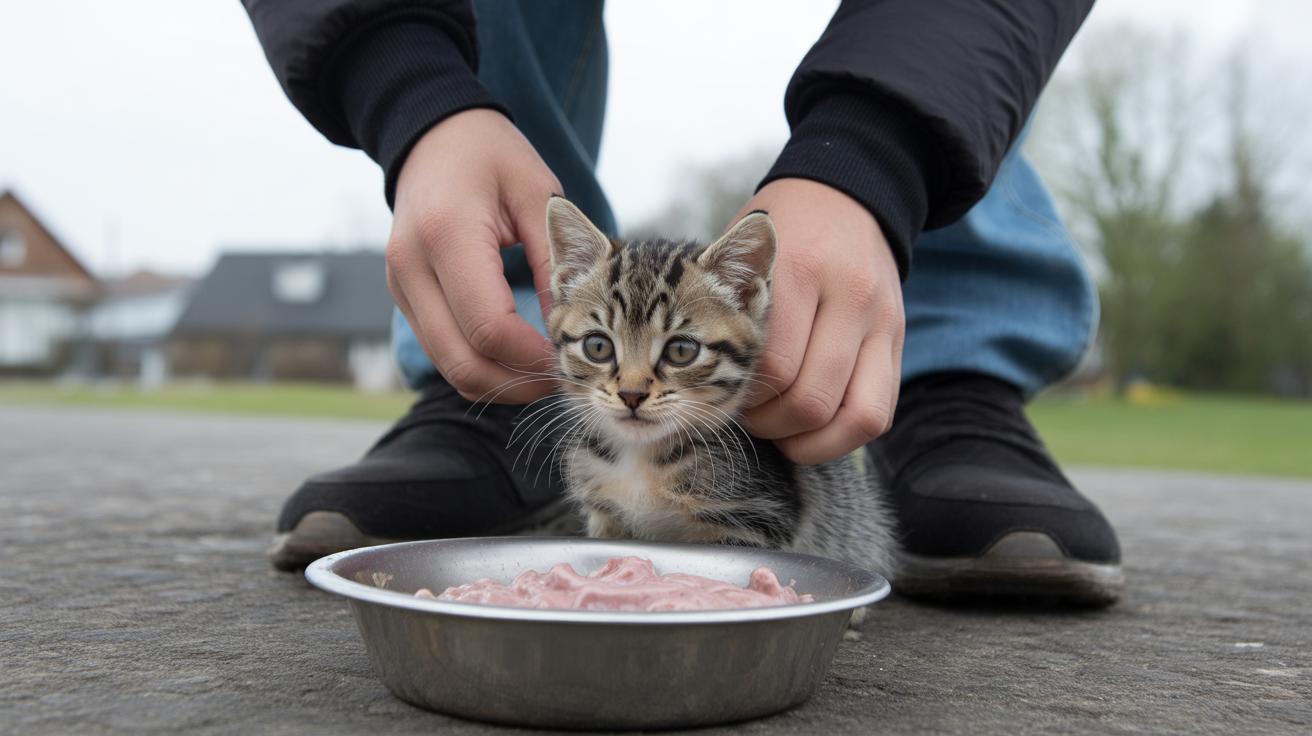
    4. Divide the target kcal by kcal/g to get grams per day (example: 200 kcal ÷ 1.27 kcal/g ≈ 158 g/day).
    5. Convert grams per day into cans or pouches using the product’s serving weight (158 g ÷ 71 g ≈ 2.2 cans).
    6. Weigh and record actual portions for 3 to 7 days with a digital food scale (digital food scale – a small kitchen scale that shows grams). Tare the scale with the empty bowl, add the serving, note the grams, and put measured portions in labeled containers in the fridge.
    Label kcal per serving Serving weight (g) kcal per g Grams needed for 200 kcal/day Cans/servings for 200 kcal/day
    90 kcal 71 g 1.27 kcal/g 158 g 2.2 cans
    120 kcal 85 g 1.41 kcal/g 142 g 1.7 cans
    150 kcal 100 g 1.50 kcal/g 133 g 1.3 cans
    100 kcal 75 g 1.33 kcal/g 150 g 2.0 cans
    70 kcal 50 g 1.40 kcal/g 143 g 2.9 pouches

    Handle multipack wet pouches the same way: check each pouch’s kcal and grams, then portion into daily jars or reusable trays and label with the date. For cans, move leftovers into airtight containers and use within the fridge window the label recommends. Weigh servings at each meal the first week so you notice inconsistencies and learn what a proper portion feels like.

    If you mix wet and dry food, add up the kcal from each so the whole day hits the target (see Mixing section for ratio guidance). When choosing kitten formulas, pick higher calorie and higher protein options for growing kittens, here's a good reference: wet cat food high in protein.

    If anything feels off, sudden weight change, different stool, or a drop in appetite, call your veterinarian so portions can be adjusted for health, breed, or activity. Ever seen your kitten pounce on a bowl like it’s prey? That’s a good sign the portion was just right.

    How often should a kitten eat wet food: meal frequency and sample schedules

    - How often should a kitten eat wet food meal frequency and sample schedules.jpg

    Kittens do best with regular, small meals so their energy and growth stay steady. Young kittens usually eat three to four times a day until about four months old, then slowly move toward two meals a day by around six months. Timed meals help you spot appetite changes, stop one kitten from gobbling everything, and make it easier to track calories and weight.

    If you’re caring for an orphaned or bottle-fed kitten, skip the schedules below and see the Weaning section for round-the-clock guidance and formula volumes (kitten milk replacer, the special kitten formula).

    Sample schedule: 4–12 weeks

    For kittens raised by their mother, try three to four small meals: morning (7–9 am), midday (11 am–1 pm), late afternoon (3–5 pm), and evening (7–9 pm). Keep portions small and steady so your kitten gets energy between naps and play. Picture tiny whiskers twitching as the bowl hits the floor, adorable and practical.

    Portion each meal as part of the daily total. Example: if the daily wet-food amount is 200 g (about 7 oz), give roughly 50 g (1.8 oz) at each of four meals, or about 67 g (2.4 oz) at each of three meals. Weigh the servings a few times so you get a feel for a proper portion.

    Sample schedule: 3–6 months

    Start shifting from three meals to two across several weeks: keep a morning meal and an evening meal, and add a small midday snack during growth spurts if needed. Try breakfast around 7–9 am and dinner around 6–8 pm. Watch your kitten’s body condition and weight during this change. If they seem ravenous or lose weight, add a small mid-afternoon portion and reweigh after a week to tweak the amounts.

    Worth every paw-print.

    Mixing wet and dry for kittens: ratios, hydration and calorie tracking

    - Mixing wet and dry for kittens ratios, hydration and calorie tracking.jpg

    Wet food holds about 75% moisture, while dry kibble has roughly 6 to 10% moisture. Wet meals give kittens extra water, which helps hydration, softens stools, supports kidney health, and can tempt picky eaters. Picture a glossy pate that smells like a tuna parade, tempting, right? That aroma often gets timid tummies eating.

    A simple starting plan is to aim for a 2/3 wet to 1/3 dry split by calorie contribution. In plain terms, that means two thirds of the day’s calories come from wet food and one third from kibble. Measure wet and dry separately on a kitchen scale, check each product’s kcal (food calories) per serving on the label, then add the kcal totals so the day matches your kitten’s calorie target.

    If you want to convert calories into how much to feed, you’ll do kcal to grams math (kcal, food calories; grams, metric weight). We walk through the kcal → grams → cans steps in the Conversion section. See How to convert wet food calories for step-by-step math.

    Practical tips that actually help: weigh servings into labeled containers so you don’t guess mid-day. Use timed meals so one kitten doesn’t gobble up all the kibble between wet feedings. Give each kitten its own bowl or use a microchip feeder (feeds only the cat with the matching chip) if competition is an issue.

    Always keep fresh water nearby, even with lots of wet food. And before you mix brands, compare calorie density across wet foods so you don’t accidentally overfeed. For a quick product-choice reference, check wet cat food brands.

    Worth every paw-print.

    When to start wet food: step-by-step weaning from milk or formula to wet food (includes orphan/bottle schedules)

    - When to start wet food step-by-step weaning from milk or formula to wet food (includes orphanbottle schedules).jpg

    We usually start weaning around 3-4 weeks and most kittens are eating solids by 6-8 weeks. Go slow. Think thin gruel first, then a thicker mash, then plain wet food. That gentle pace helps tiny tummies adjust and saves you from a dramatic clean-up scene.

    Stage 1: 3-4 weeks – first exposure

    Put a shallow dish down with a tiny amount of gruel moistened with kitten formula (kitten milk replacer , powdered formula that replaces a mother’s milk). Make it runny, like thin oatmeal, so the kitten can lap or nudge it. Mash and stir with a fork so it’s easy to lap. Let them taste for short sessions a few times a day and keep servings just a spoonful or two while they figure out mouth mechanics.

    Stage 2: 5-8 weeks – increasing solids

    Over several days make the mix thicker by cutting back on formula or water so it becomes pate-like (pate = smooth wet food). Offer three to four small meals a day. By 6-8 weeks most kittens will take straight wet food; if one sniffs and walks away, warm a little to room temperature to boost the smell. Your cat’s whiskers will twitch at that aroma.

    Stage 3: 8+ weeks – fully weaned

    At about eight weeks most kittens eat kitten-formulated wet food only, getting about three meals a day and moving toward two meals by six months. Stop the formula once they consistently eat wet food, and always keep fresh water available. For a 4-week-old, keep portions tiny and mostly moistened, this is practice, not the full diet yet.

    Orphan and bottle-feeding schedules (newborn-focused)

    Newborn orphans need round-the-clock care. Feed every 2-3 hours at first, then slowly stretch the time between feeds as they grow. Follow the formula maker’s feeding chart (it lists volumes by weight), weigh the kitten daily on a kitchen scale (digital kitchen scale , measures grams for accuracy) and follow the ml-per-weight guidelines rather than guessing.

    Use safe bottle technique: warm formula to body temperature and test a drop on your wrist, hold the kitten belly-down (not on its back), let it latch and suck at a gentle angle, and burp by rubbing between the shoulder blades. Clean bottles and nipples after each use, refrigerate unused mixed formula per the label, and discard any warmed leftover formula after the time the maker recommends.

    If a kitten won’t suck, feels cold, cries constantly, breathes fast, or isn’t gaining weight, call your veterinarian right away. For formula-calorie math and exact portion conversions by weight, see the Conversion section and use a digital kitchen scale so you can be precise. Worth every paw-print.

    Signs a kitten is getting the right amount of wet food and red flags for under- or overfeeding

    - Signs a kitten is getting the right amount of wet food and red flags for under- or overfeeding.jpg

    Keeping an eye on a kitten’s weight and eating habits is the best way to know if their wet food amount is right. Watch energy, litter box output, and how they feel when you pet them. Your goal: steady growth, bright eyes, playful pounces, and regular poops. Sounds simple, right? Mostly it is, until it isn’t.

    When to call the vet

    • Call the vet right away if your kitten loses more than 5% of body weight in one week.
    • Call if the kitten won't eat for 24 to 48 hours.
    • Call for ongoing diarrhea or vomiting that lasts more than 24 hours, or for repeated vomiting more than twice.
    • Call if the kitten is very lethargic, having trouble breathing, or showing dehydration signs like sunken eyes or dry gums.
      Quick example note: "Lost 6% in 5 days; refused breakfast and dinner."

    How to weigh accurately (short how-to)

    • Use a digital scale that measures grams (g) or ounces (oz) and reads to at least 5–10 g (a small, precise kitchen or postal scale works).
    • Weigh at the same time each day, ideally first thing in the morning before feeding. Example: "Weighed at 8:00 AM before breakfast: 1.3 lb."
    • Tare method for accuracy: put the carrier or towel on the scale, press tare (zero), then place the kitten inside and record the weight. Tare explained: set the scale to zero with the empty carrier so you only measure the kitten. Example: "Tare carrier = 0.0 oz; kitten = 18.2 oz."
    • If you must hold the kitten, weigh yourself alone, then weigh yourself holding the kitten and subtract the first number.
    • Weigh weekly during weaning (weaning = when kittens move from milk to solid or wet food), then every 1–2 weeks once growth is steady unless something changes.

    Simple 1–5 body condition score (feel + sight)
    Think of this like a quick hand-and-eye check you can do while cuddling.

    • 1 – Emaciated. Ribs, spine, and pelvic bones are very obvious; no fat. Example: "Score 1: ribs show with no fat."
    • 2 – Thin. Ribs easily felt with little fat covering; waist obvious.
    • 3 – Ideal. Ribs can be felt under a slight layer of fat; waist visible from above. Example: "Score 3: ribs felt with slight fat; waist visible."
    • 4 – Overweight. Ribs harder to feel under thicker fat; waist reduced.
    • 5 – Obese. Ribs not palpable; no waist and a noticeable abdominal fat pad.
      Run your hands gently along the ribs and look from above and the side, your touch should tell the story more than a quick glance.

    Concrete red-flag thresholds (short checklist)

    • Weight loss greater than 5% in seven days.
    • No eating for 24 to 48 hours.
    • Diarrhea or vomiting lasting over 24 hours, or vomiting more than twice.
    • Marked lethargy, breathing trouble, or dehydration signs (sunken eyes, dry gums).
      If you see any of these, don’t wait.

    Daily monitoring log template (use once per day)

    Date Time Weight Meals (type + amt) Stool Notes
    2026-01-13 8:15 AM 1.2 lb Wet 3×15 g Firm Ate well, playful

    Adjusting amounts and weaning tips

    • If weight is steady and body score is about a 3, keep the current portion. Small tweaks are fine – add or subtract 5-10% and recheck weight in a week.
    • If the kitten is gaining too fast and moves toward score 4, cut portions a bit and offer short play sessions before meals to slow eating.
    • If the kitten is losing weight or dropping toward score 2, increase food slightly and try offering multiple small meals. If appetite doesn’t improve, call the vet.
      Weaning tips (weaning = gradual switch from milk to wet food): start with moistened wet food and offer small amounts several times a day. Weigh weekly during this time. Once they’re reliably eating and gaining, you can space weigh-ins to every 1–2 weeks.
      Quick note: for busy days, weigh once in the morning and jot down meals and stool, ten minutes of tracking makes a big difference.

    Final little human touch
    Keep it simple, and try to make weighing and logging a calm routine. Your kitten will thank you with happy head butts and ridiculous zooms. I once watched a tiny tabby leap three feet for a wet-food pouch – totally worth the tracking.

    Adjusting wet food portions for health status, breed, spay/neuter and multiple kittens

    - Adjusting wet food portions for health status, breed, spayneuter and multiple kittens.jpg

    Spay or neuter usually lowers a kitten’s baseline energy needs by about 30%. Metabolism (how fast the body burns calories) slows a bit after surgery, so cut daily kcal (kilocalories, the energy in food) by roughly 30% and check body condition once a week. Keep an eye on the weight tape or scale and tweak portions as needed.

    Pregnant or nursing queens need about 25–50% more kcal, since they’re fueling kittens. Very active or outdoor kittens burn extra energy chasing and exploring, so they may need more than the chart shows. Whenever you change portions for life stage or activity, redo the kcal-to-grams math using your Conversion section so the totals stay accurate.

    If a kitten is underweight, try a calorie-dense wet diet (higher kcal per gram, so more energy in each spoonful) and weigh the kitten every 3–5 days while watching stool and play energy. Contact your veterinarian if there’s no steady gain. For mild dehydration or poor appetite, choose moisture-forward wet food (more water per serving) to help rehydrate. For diarrhea or repeated vomiting, only change diets under veterinary direction, some kitties do fine with a short bland diet, others need a prescription gastrointestinal formula and further testing.

    Multi-kitten homes are chaotic in the cutest way, but logistics matter. Use separate bowls in quiet stations, supervise meals, or get a microchip feeder (a feeder that opens only for the cat with the matching implanted chip) to stop one bold kitten from hogging food. Label refrigerated, pre-measured portions, stagger meal times if needed, and record each kitten’s weight weekly so you can spot who’s winning or losing the food race.

    Practical condition-specific actions:

    • Underweight: switch to calorie-dense wet diets; weigh every 3–5 days and call your vet if there’s no steady gain.
    • Overweight: reduce daily kcal by about 10–20% and reweigh weekly; contact your vet for fast or unexplained loss.
    • Diarrhea/vomiting: only fast 12–24 hours under vet advice, then follow a bland or prescription diet per your vet.
    • Post-spay/neuter: lower kcal by roughly 30% and check body condition weekly.
    • Nursing: increase kcal by 25–50% and offer free-choice food so mom can eat when she needs to.
    • Multi-kitten competition: use separate feeding stations or microchip feeders; track individual weights weekly.

    Keep a simple weighing and log routine (a quick notebook or phone note works). Whenever you swap diets, recalculate kcal so portion sizes stay right. And if weight changes persist, diarrhea continues, vomiting repeats, or a kitten refuses to eat, call your veterinarian. Isn’t it nice when a plan makes life easier and your kittens stay happy and healthy?

    Final Words

    We jumped straight into practical stuff: an age- and weight-based portions chart, a clear kcal-to-grams conversion how-to, meal schedules, mixing tips, staged weaning steps, signs to watch, and rules for special cases like post-spay or multi-kitten homes.

    Use the chart as your starting point. Weigh food, follow the conversion steps, split daily grams into the meal counts listed, and check in with your vet if something feels off. Ever watched a kitten ignore a perfect bowl? Me too.

    Now you’ve got a solid answer for how much wet food should a kitten eat, with happier tummies and more playful zoomies ahead.

    FAQ

    Kitten wet food — Frequently Asked Questions

    How much wet food should a kitten eat per day?

    The amount depends on age and weight. Young kittens often need about 100–300 g/day (≈1–4 cans of 71 g), split into 3–4 meals. Older kittens typically drop to 2 meals per day.

    How much wet food should a kitten eat by weight?

    Feed by setting a daily kcal target from a portions chart, then divide by the food’s kcal per gram (kcal = food calories). Typical wet food ranges run about 100–300 g/day for growing kittens, adjusted for weight and activity.

    How much wet food should I feed a kitten at 2, 3, 4, and 6 months?

    Approximate amounts:
    2 months — 100–200 g/day (3–4 meals);
    3 months — 200–300 g/day (3–4 meals);
    4 months — 180–250 g/day (about 3 meals);
    6 months — 120–180 g/day (about 2 meals).

    Can you give a kitten too much wet food?

    Yes. Overfeeding can cause rapid weight gain, loose stools, or metabolic strain. Weigh weekly, track treats and dry food calories, and adjust portions if weight climbs.

    What is the 3-3-3 rule for kittens?

    The 3-3-3 rule: expect about 3 days to hide, 3 weeks to adjust, and roughly 3 months to feel fully settled and confident in a new home—useful for behavior expectations.

    Should kittens have unlimited access to food?

    Generally no. Scheduled meals (3–4/day until ~4 months, then 2/day) help monitor appetite, prevent overeating, and spot health changes early.

    How do I use a wet-food feeding chart and convert cans or grams?

    Pick the kcal/day for your kitten from the chart, find the food’s kcal per serving on the label, then divide target kcal by kcal-per-gram to get grams or cans (kcal = food calories).

    Related Articles

  • How to Wean Kittens to Solid Food

    How to Wean Kittens to Solid Food

    Think kittens will just switch to solid food like magic? Not always. This short, step-by-step plan tells you exactly when to start, how to mix and gently warm that first cozy gruel (a thin mash of wet food and kitten milk replacer), how many meals to offer each day, and which vet signs mean you should stop and call for help. When you warm it, test a drop on your wrist , warm, not hot.

    Grab a kitchen scale (a small digital scale for weighing tiny portions) and a shallow, low-lip dish (a flat bowl with a tiny rim), then follow the seven simple steps below so you can wean kittens onto solid food quickly and with confidence. Ever watched a kitten pounce on a crumb? You’ll get that same tiny thrill, only less messy.

    Worth every paw-print.

    Wean kittens: a step-by-step plan

    - Wean kittens a step-by-step plan.jpg

    Quick , grab a kitchen scale and a shallow, low-lip dish. This short 7-step checklist gives the exact ages, mixing ratios, warming temp, meal counts, and vet red-flags so you can move fast and confident.

    1. Start trials between 3 and 5 weeks of age. Check that the kitten can sit steady in your lap and lap from a dish, and that premolars and canines have erupted (premolars are the back chewing teeth, canines are the pointy front teeth). See the Signs section for more details.

    2. Make the first gruel by mixing equal parts canned kitten food and kitten formula (kitten milk replacer, a commercial milk substitute made for kittens). Warm it to about 100°F (38°C) and test a drop on your wrist so it feels cozy, not hot.

    3. Offer 3 to 4 wet meals a day in shallow dishes. Encourage lapping , try a soft spoon or gentle hand-feeding if the kitten needs help. Small wins add up; even a few confident licks matter.

    4. Cut back on supplemental bottle feeds (a small nursing bottle or syringe) slowly as the kitten eats more solids. Weigh the kitten every day and jot down the numbers so you can see trends and catch problems early.

    5. Over several days, make the mix thicker so the kitten practices chewing. Aim for about a 1:2 to 1:3 wet food to liquid ratio as tolerated, then introduce softened kibble (dry food soaked until soft). Patience here pays off , let them set the pace.

    6. Expect about a +10 g per day weight gain during the active transition phase (g means grams, about 0.035 ounces). Many kittens finish weaning around eight weeks, but keep fresh water available at all times.

    7. Watch for vet triggers: diarrhea lasting more than 24 to 48 hours, ongoing vomiting, signs of dehydration like sticky gums or sunken eyes, severe lethargy, or failure to gain weight. If any of these happen, resume supplemental bottle feeds right away, weigh daily, and contact your veterinarian.

    Keep this checklist as your single source of truth for ages, meal counts, mixing ratios, warming temp, and red-flag thresholds. Other sections should point back here instead of repeating the numbers. Worth every paw-print.

    Wean kittens: signs of readiness and quick health checks before you begin

    - Wean kittens signs of readiness and quick health checks before you begin.jpg

    Here’s a short, friendly checklist to help you spot when a kitten is ready for its first meat trials. Use these as go/no-go checks before you follow the lead plan. Think of it as a quick health and behavior scan so you and the kitten both feel confident.

    • Dental cue: gently peek inside the mouth. If you see deciduous premolars or canines (baby teeth), that’s a helpful confirmation. It’s a good sign, but don’t use this as the only test.

    • Lap ability: the kitten can sit steady and lap from a shallow dish. Or the kitten will accept gentle spoon or hand feeding without gagging. If they can lap, they’re coordinating mouth and tongue movements.

    • Behavioral cue: the kitten shows curiosity about food, reaches toward the dish, and mouths in a coordinated way instead of just pawing. Ever watched a little head-tilt before a bite? That’s the good kind of focus.

    • Baseline weight: weigh and record a starting weight before trials begin. Track daily gains toward the target of +10 g per day (about +0.35 oz per day) during transition, and use the same scale and time of day for consistency.

    If you’re unsure, refer to the lead checklist for the exact age window, feeding frequency, mixing ratios (how much formula to mix), warming temperature (in F and C), and veterinary triggers to watch for. Follow those details and you’ll be in a much better spot.

    Worth every paw-print.

    Wean kittens: feeding tools, supplies, and feeding area setup

    - Wean kittens feeding tools, supplies, and feeding area setup.jpg

    Set up a tidy, low-stress feeding corner so kittens can focus on learning to eat. Keep it warm, quiet, and easy to clean, and you’ll see them relax faster. Ever watched a tiny face concentrate on a bowl? It’s the best.

    • Shallow, low-lip dishes (about 2 inches deep) so little faces can lap without tipping or struggling. Think saucers, not deep bowls.
    • Soft baby spoons for guided tasting and gentle hand-feeding when you first introduce gruel (gruel, a softened mix of formula and canned food). These help teach licking and reduce mess.
    • Non-slip mats and washable surfaces to catch spills and keep bowls from sliding during enthusiastic lapping. Carpets are fine, but wipeable floors make your life easier.
    • Small, shallow water dish (about 2 inches high); change the water daily so it smells fresh and invites sips. Hydration matters.
    • Gram kitchen scale (small digital scale that measures grams) for daily weigh-ins so you can track that target gain of about +10 g/day (g means grams) during the transition. Quick weigh-ins catch problems early.
    • Cleaning supplies: mild dish soap, a separate bottle brush, and a small pot or steam sterilizer (steam sterilizer, like a baby bottle steam cleaner) for utensils used with orphaned kittens. Keep one set just for the kittens.
    • Bottles and kitten formula (kitten milk replacer, a commercial formula that substitutes for mom’s milk) on hand as backup until solids are reliably eaten. Check your lead checklist for when to scale back bottles.
    • Feed kittens individually when you need to measure intake or stop a stronger sibling from stealing food. One-on-one feeds help shy babies learn without pressure.

    For utensils used with bottle-fed kittens, wash in hot soapy water, rinse well, then boil or use a steam sterilizer every day. If food intake drops or weight stalls, follow the lead checklist for when to resume bottle feeds and contact your vet. Don’t wait, small kittens can turn downhill fast.

    Worth every paw-print.

    Wean kittens: simple gruel recipes, mixing ratios, warming and storage

    - Wean kittens simple gruel recipes, mixing ratios, warming and storage.jpg

    Lead checklist – key numbers and where to find staging:

    • Warm the gruel to about 38°C / 100°F. Test one drop on your wrist first. It should feel warm, not hot, like a baby’s bath water.
    • See the lead checklist for exact ages, how often to feed, and the vet red flags to watch for. Keep other sections linked to that checklist so the numbers stay the same.
    • Keep a kitchen thermometer handy for consistency. It makes life easier and helps nervous humans sleep better.

    Detailed recipes & storage

    Quick recipe examples:

    • Initial gruel – 1 part canned kitten food : 1 part kitten milk replacer (a store-bought milk substitute made for kittens) for a thin, lappable soup. Think gentle, drinkable texture so tiny tongues can learn to lap.
    • Progression – over several days, slowly thicken toward 1 part wet food : 2 parts liquid or 1:3 wet:liquid as chewing improves. Let them graduate at their own pace.
    • Kibble soak – when introducing solids, soften dry kibble with formula or warm water at about 1:3 (kibble:liquid). The pieces should be soft, not crunchy.

    Practical serving tips:

    • Use shallow dishes so tiny faces can easily lap. The satisfying little slurp helps them learn fast.
    • For shy eaters, dip a clean fingertip in the gruel and wiggle it near their mouth. Many kittens will lick and figure it out. Ever watched one suddenly discover food? Cute.
    • Keep mealtimes calm and short. A little praise and a tiny pat afterwards goes a long way.

    Storage and safety guidance:

    • Opened wet food: refrigerate and use within 24 to 48 hours.
    • Freeze small gruel portions in ice cube trays for up to 1 month. Thaw completely, then rewarm to about 38°C / 100°F before serving.
    • Keep formula and feeding bottles on hand as a backup until steady weight gain is recorded. If weight stalls, check the lead checklist and call a vet.
    • Toss any leftover gruel that sat out longer than two hours to avoid tummy trouble.

    Quick reference: see lead checklist for ages, meal frequency, and vet red flags. Worth every paw-print.

    Wean kittens: week-by-week schedule with sample daily feeding plans

    - Wean kittens week-by-week schedule with sample daily feeding plans.jpg

    Quick, printable weekly plan that links back to the lead checklist for the exact ages, mixing ratios, warming temperature, and vet red-flags. Read the lead for the numeric thresholds; use the steps below as the day-to-day flow you’ll follow. Ever watched a kitten try to lap? Cute chaos, but we’ll make it easy.

    1. Week 3-5: start meat trials with thin gruel (gruel = canned kitten food mixed with kitten formula, kitten formula = commercial milk replacer). Keep sessions short and calm so the kitten can practice lapping and learn tongue control. Offer small amounts and let them sniff and lick at their own pace.
    2. Week 5-6: increase the canned food portion and cut back on formula as the kitten shows more interest in solids. Keep meals frequent and patient; that builds confidence. If they’re hesitant, don’t rush it.
    3. Week 6-8: introduce softened kibble (kibble = dry kitten food soaked in warm water or a little formula) so chewing skills can develop. Reduce the liquid over several days so texture changes slowly.
    4. Move by texture, not a calendar – if a kitten struggles, pause the thickening and go back to thin gruel until they’re comfortable. It’s okay to repeat a week.
    5. Phase out supplemental bottle or syringe feeds (syringe = small feeding syringe) gradually as the kitten eats reliably. Weigh daily and track gains (see the lead checklist for the +10 g/day target).
    6. If any vet triggers appear, follow the lead checklist’s corrective actions right away – resume bottles if needed, weigh more often, and contact your veterinarian.

    Sample 5-week day schedule (practical):

    • Meal 1: thin gruel in a shallow dish, aim for 5-10 tiny licks; use a gentle spoon-feed if the kitten needs help.
    • Meal 2: short trial with the same thin gruel; offer the bottle afterward only if intake was very small.
    • Meal 3: warm, thin gruel; encourage with a fingertip dab so they learn to lap from the dish.
    • Meal 4: final thin gruel of the day; weigh before bedtime and record the number.

    Sample 8-week day schedule (practical):

    • Meal 1: wet kitten food warmed slightly, served in a shallow dish so it’s easy to access.
    • Meal 2: wet food again; leave dry kibble out to sniff and taste during the day.
    • Meal 3: wet food; always have fresh water in a small shallow dish.
    • Weigh daily and use the lead checklist to decide when to stop bottles or call the vet.

    A few quick tips: use warm, not hot, food – think cozy bathwater, not scalding. Keep feeding sessions calm and short, and praise the tiny wins. If you’re juggling life and kittens, a consistent routine gives huge benefits, ten minutes of guided feeding can buy you hours of nap time later. Worth every paw-print.

    Wean kittens: moving from wet food to kibble and safe texture progression

    - Wean kittens moving from wet food to kibble and safe texture progression.jpg

    Start offering dry food when your kitten is ready to move away from mostly wet food. Think slow and steady so the mouth learns to chew, not just swallow. Ever watched a tiny jaw figure out a crunchy bite? Cute and impressive.

    Keep these practical tips handy as you shift from canned to kibble textures:

    • Soften kibble with kitten formula (kitten milk replacer, a commercial milk substitute) or warm water at first; the pieces should be soft, not mushy.
    • Gradually reduce the liquid over 1-3 weeks so the kitten learns to chew; small steps, please.
    • Pick small, soft kibble (kibble = dry, crunchy pet food) or puppy-style kitten kibbles (tiny, softer pieces made for small mouths).
    • Chew-check procedure (a simple test to confirm safe chewing): offer one softened piece, watch three to five chews, make sure there’s no coughing or gagging, and verify the kitten can break the piece with jaw motion.
    • Avoid large adult kibble and watch for choking signs; keep feedings supervised until chewing is confident.
    • Always keep fresh water available, and let the kitten set the pace , proud little progress beats rushed crunches.

    Refer to the recipes table for the recommended mixes and exact ratios.

    Stage Mix Notes
    Starter (Days 1-3) 75% wet + 25% softened kibble Soften with kitten formula or warm water; pieces should be easily compressible.
    Transition 1 (Days 4-7) 50% wet + 50% softened kibble Reduce liquid a bit so the kibble keeps some texture but is still easy to chew.
    Transition 2 (Week 2) 25% wet + 75% softened kibble Make the kibble firmer each day; watch chewing and reduce wet food if comfortable.
    Final (Week 3-4) 100% dry kibble (unsoftened) Only move to full dry once the kitten reliably chews and breaks pieces.

    Keep an eye on your kitten’s comfort and appetite. If coughing, gagging, or refusal happens, slow down and try a softer step. I once watched a kitten leap for a crunchy piece like it was a tiny treasure , worth the patience.

    Wean kittens: troubleshooting refusals, diarrhea, dehydration, and other common issues (includes quick checks)

    - Wean kittens troubleshooting refusals, diarrhea, dehydration, and other common issues (includes quick checks).jpg

    Weaning can be tricky. Kittens suddenly refuse food, get loose stools, or show signs of dehydration. Those are the big problems you’ll likely meet. Quick checks you can do right now help you decide whether to try gentle fixes or call the vet.

    Quick checks to run now:

    • Feel the gruel (thin weaning food) temperature on your wrist – it should be warm, not hot.
    • Sniff the food for freshness – spoiled food smells off.
    • Check recent meds – vaccines or deworming (treatment to kill intestinal worms) can change appetite.
    • Weigh the kitten daily to catch any sudden drops.

    Start with easy, gentle fixes. Warm the gruel to about 38°C / 100°F and test a drop on your wrist so it’s comfy for the kitten. Offer tiny, calm tries with a soft spoon or by letting them lick from your fingertip, then hand-feed small amounts if needed. Keep things quiet and slow – a nervous kitten gets overwhelmed.

    If stools get softer or runny, reduce meal sizes and go back to thinner gruel or to formula (kitten milk replacer). Pause any new foods and note when meds or deworming happened – timing matters. Weigh the kitten every day to watch trends; numbers don’t lie.

    Watch hydration closely. Signs that mean act-now: tacky or sticky gums, sunken eyes, very low energy, or poor skin elasticity. If you see those, resume bottle feeds and weigh twice daily. Syringe or tube feeding is risky – only use if your vet shows you how. Keep volumes tiny, hold the head slightly elevated, and watch that the kitten keeps breathing normally.

    If a kitten simply won’t eat but isn’t yet in the red zone, try short, frequent sessions so they don’t get overwhelmed. Offer a stronger-palate option for a quick dab – sometimes a bolder smell or flavor wakes their interest. Let them set the pace. Ever watched a kitten go from snooze to zoom after one lick? Yeah.

    Practical checklist – quick actions:

    • Refusal: warm gruel to about 38°C / 100°F before serving.
    • Refusal: offer spoon or fingertip licks, then hand-feed tiny amounts.
    • Refusal: try a kitten-safe stronger flavor for a short trial (small dab).
    • Refusal: run short, frequent meal sessions so they don’t get overwhelmed.
    • Stool changes: reduce meal size and switch back to thinner gruel or formula for the lead checklist window.
    • Stool changes: pause new foods and note timing of any meds or deworming (treatment to kill worms).
    • Stool changes: watch stool consistency and weigh daily to track trends.
    • Dehydration/acute: if gums are tacky, eyes sunken, or kitten very lethargic, resume bottle feeds and weigh twice daily.
    • Dehydration/acute: syringe or tube feeding only as instructed by a vet; use tiny volumes, keep the head slightly elevated, and watch breathing.
    • Dehydration/acute: contact your vet if the lead checklist red flags appear; follow its corrective steps immediately.

    If those quick fixes don’t work, follow the lead checklist for exact time windows and the vet-contact steps so you don’t miss a needed escalation. Worth every paw-print to catch trouble early.

    Wean kittens: monitoring, deworming, vaccine timing, and final checklist for declaring fully weaned

    - Wean kittens monitoring, deworming, vaccine timing, and final checklist for declaring fully weaned.jpg

    Weaning is a messy, sweet, and sometimes frantic time. Think of it as helping tiny fuzzballs move from mom's milk to real food, one curious nibble at a time.

    Monitoring is everything. Weigh kittens every day if you can, aiming for steady gains of about 10 to 15 grams per day. Watch their energy, appetite, and poops; soft formed stool is good, watery or bloody stool is not. Check hydration by gently lifting loose skin at the scruff (it should snap back quickly). If a kitten seems listless, not nursing or eating, or stops gaining weight, call your vet.

    Start solids slowly. Offer gruel at about 3 to 4 weeks old, gruel is wet kitten food mashed with a little kitten milk replacer (a commercial formula made for kittens). Put a dab on your finger so they learn to lick. Over the next 2 to 4 weeks, make the gruel thicker and leave dry food softened with water or formula for nibbling practice. By around 7 to 9 weeks many kittens will eat canned and dry food; by 8 to 10 weeks most are usually eating well on their own, though some take a little longer. Patience helps. Your couch will probably get messy.

    Deworming is routine but important. Start at 2 weeks old and then follow your vet’s schedule, often every 2 weeks until around 8 to 12 weeks (this treats roundworms and other common gut parasites). Deworming means giving medicine that removes intestinal parasites. Keep an eye on stool for worms or mucus and note any persistent vomiting or diarrhea. Always use products and doses your vet recommends.

    Vaccines start when kittens are old enough to make their own protection. Most vets begin core shots at 6 to 8 weeks and give boosters every 3 to 4 weeks until about 16 weeks. Core vaccine FVRCP protects against feline viral rhinotracheitis, calicivirus, and panleukopenia (serious viral illnesses). Rabies is usually given later, around 12 to 16 weeks, depending on local rules and your vet’s advice. Talk with your vet about timing, local disease risk, and shelter or adoption requirements.

    Final checklist for calling a kitten fully weaned:

    Checklist Item What to look for
    Eats canned and dry kitten food Regular meals from a bowl, no need for milk replacer
    Drinks from a water bowl Not just licking wet food, actually sipping water
    Uses the litter box reliably Consistent digging and covering, normal stools
    Steady weight gain Daily gains near 10–15 g or as your vet recommends
    Independent between feedings Comfortable resting or napping without needing to nurse
    Healthy behavior and energy Playful, alert, and curious with no signs of illness

    See lead checklist for numeric thresholds and the printable final checklist.

    Wean kittens: special-case guidance for orphaned, single, or medically fragile kittens

    - Wean kittens special-case guidance for orphaned, single, or medically fragile kittens.jpg

    Orphaned, single, or medically fragile kittens need a gentler, closely watched plan than a typical litter. Keep bottles and syringes close, weigh the kitten more often, and aim for small, steady gains. Not speed. Ever watched a tiny belly ripple with each successful feed? That’s the goal.

    • Supplemental schedule: give bottle or syringe feeds before and after gruel sessions until the kitten is steadily gaining weight (weigh daily). Gruel is just thin, softened food that’s easy to lap up.
    • Feeding frequency: offer very small, frequent meals so the kitten doesn’t get overwhelmed or inhale food. For fragile neonates, try every 2 to 3 hours. Tiny amounts, often.
    • Vet consult triggers: call your vet if vomiting keeps happening, diarrhea lasts more than 24 to 48 hours, signs of dehydration appear (sticky gums, sunken eyes), or weight stalls or drops. If that happens, resume bottle feeds and contact your veterinarian right away, see the lead checklist for exact corrective steps.
    • Aspiration precautions: use tiny volumes, hold the head slightly elevated, feed slowly, and stop immediately if the kitten coughs or gags. Aspiration (when liquid goes into the lungs) is serious. Only syringe or tube feed with your vet’s instruction; a tube feed means using a thin feeding tube placed by a professional.
    • High-calorie options: ask your vet about concentrated kitten-formulated diets or vet-approved high-calorie toppers to boost calories without big volumes. Good for wobblier babies who need more energy.
    • Extra social feeding tips: hand-feed or use a soft spoon to mimic a littermate’s nudges; gentle purring or skin-to-skin warmth can calm single kittens and help them eat. My cat once relaxed into a nap after a warm spoonful, adorable, and effective.

    Keep any formula or supplement changes coordinated with your veterinarian. Small kittens can wobble quickly. Watch weight, stay calm, and act fast. Worth every paw-print.

    Final Words

    In the action: follow the compact 7-step checklist, start trials at 3–5 weeks, warm 1:1 gruel to ~38°C/100°F, offer 3–4 wet meals daily, weigh kittens and aim for about +10 g/day, thicken mixes over days, and watch the vet-trigger signs so you can act fast.

    Stick to the recipes and week-by-week plan, use shallow dishes and gentle spoon-feeding when needed, and resume bottle feeds if trouble shows. That routine helps busy multi-cat homes keep kittens happy and moving forward with how to wean kittens to solid food. You're doing great.

    FAQ

    Kitten Weaning FAQ

    How to wean kittens to solid food at home?

    Start trials at 3–5 weeks, offer warmed 1:1 gruel (canned kitten food mixed with kitten milk replacer), feed 3–4 times daily, and weigh daily for steady gain.

    When do kittens start eating food and drinking water?

    Begin solid-food trials at about 3–5 weeks. Kittens will sip from a shallow water dish once they can lap; many reach solid-food independence by roughly eight weeks.

    At what age should a kitten start eating dry food?

    Introduce softened dry food around weeks 6–8. Soften kibble with warm formula or water and reduce liquid over 1–3 weeks as chewing improves.

    How to wean kittens from mom or from the bottle?

    Offer warmed gruel and gentle spoon/hand feeding, gradually cut supplemental bottle feeds (kitten milk replacer) as solids increase, and resume bottles if weight drops.

    What is the kitten weaning schedule and how often should I feed weaning kittens?

    Start trials at 3–5 weeks and increase canned food through weeks 5–8. Offer 3–4 wet meals per day while tapering bottles.

    What mixing ratios and warming temperature should I use for gruel?

    Use a 1:1 wet food (canned kitten food) to formula (kitten milk replacer) for first trials, thicken to 1:2–1:3 over days, and warm gruel to about 38°C/100°F (test on your wrist).

    How do I transition a kitten to hard food?

    Soften kibble with warm formula or water (start about 1:3 kibble:liquid), reduce liquid over 1–3 weeks, and pick kitten-sized kibble to lower choking risk.

    What signs show a kitten is ready to start weaning?

    Ready signs include eruption of baby (deciduous) teeth, ability to lap from a shallow dish, curiosity and coordinated mouth movements, and a recorded baseline weight.

    Mother cat not weaning kittens — what should I do?

    Begin warmed gruel trials, hand- or spoon-feed as needed, keep bottle feeds as backup, weigh kittens daily, and call your vet if refusal or weight loss persists.

    What problems should I watch for during weaning and when should I call the vet?

    Watch for diarrhea lasting over 24–48 hours, persistent vomiting, dehydration (tacky gums, sunken eyes, lethargy), or failure to gain weight. Resume bottle feeds, weigh daily, and contact your veterinarian right away if concerns persist.

    How do I know when a kitten is fully weaned?

    A kitten is fully weaned when it eats three meals per day of kitten-formulated food, drinks from a dish, gains about +10 g/day, has normal stool, and hasn’t had bottles for 48–72 hours.

    Any special tips for orphaned, single, or medically fragile kittens?

    Continue supplemental bottle or syringe feeds around gruel meals, weigh more often, offer vet-approved high-calorie toppers, and use small, frequent feeds to reduce aspiration risk.

    Related Articles

  • Kitten Bottle Feeding Chart: Amounts, Schedule, Weaning

    Kitten Bottle Feeding Chart: Amounts, Schedule, Weaning

    Think you can wing kitten bottle feeding by eye? Don’t. Guessing can cost a life. Those tiny bellies need exact amounts and precise timing, no guesswork, no improv.

    This kitten bottle-feeding chart tells you exactly what to give and when. It lists precise volumes, a clear feeding schedule, and step-by-step weaning instructions (weaning means switching from bottle to solid food). It even shows when to weigh the kitten and how often, so you’re not guessing in the middle of the night. Ever watched a newborn paw at a nipple? Yeah, this makes that moment less frantic.

    Follow the chart and you’ll aim for that healthy 10 to 15 grams of weight gain per day. You’ll also avoid aspiration (when milk gets into the lungs and causes coughing or breathing trouble), which is one of the scariest feeding problems. If you see poor weight gain, weak or cold kittens, persistent diarrhea, milk leaking from the nose, or any trouble breathing, call your vet right away.

    It saves time and worry, too. Instead of fretting over every feed, you’ll know you’re giving the right amount at the right time, and your foster or newborn kitty gets the best start possible. Worth every paw-print.

    Quick Essentials: Fast Rules to Apply the Kitten Feeding Chart

    - Quick Essentials Fast Rules to Apply the Kitten Feeding Chart (weighing, triggers, aspiration, warmingstorage).jpg

    Think of this as your quick cheat sheet , the must-follow weighing, adjustment, emergency, and warming/storage rules. Short, clear, and lifesaving when you need it.

    • Daily weighing protocol – Weigh kittens at the same time each day, before feeding. Use a digital scale (measures tiny weights to 0.1 g) and zero it with a small towel under the kitten. Record weights in grams in a dedicated log so trends are easy to spot. Ever watched those tiny feet twitch on the scale? It helps to note the time too.

    • Target gain – Aim for 10 to 15 g per day. Simple goal. Lots of relief when you see it.

    • 10% weight-loss trigger and first response – If a kitten is down by 10 percent or more by day two, act fast: increase the total daily volume of formula by 10 to 20 percent or add one extra feeding. Call your vet right away and have your weight and feeding log ready for their assessment. Quick note: "total daily volume" just means the total amount of formula the kitten gets in a day.

    • Aspiration red flags – Watch for coughing, noisy breathing, nasal discharge, choking, or failure to swallow. These signs suggest aspiration (formula going into the lungs). Stop feeding immediately. Keep the head elevated, try to clear the airway if you can, and get emergency veterinary care right away. Don’t guess, get help.

    • Safe formula heating and storage rules – Warm bottles in a warm water bath (place the bottle in a bowl of warm water), do not microwave. Test a drop on your wrist so it feels skin-warm (about 95 to 100 °F). Refrigerate unused prepared formula exactly as the product label says, and discard any warmed leftovers after a feeding.

    This box is the authoritative source for weighing and emergency actions referenced elsewhere in the article. Worth every paw-print.

    Age- and Weight-Based Feeding Chart

    - Age- and Weight-Based Feeding Chart (table only)  Use with Quick Essentials.jpg

    This is your go-to starter plan for bottle-feeding kittens. Use it per kitten, and check Quick Essentials for how to tweak amounts if their weight or appetite changes. Ever watched a newborn kitten wiggle for milk? Cute, and you’ll get the hang of timing fast.

    Age (weeks) Typical weight range (g, grams) Feeds per 24 h ml per feeding (ml = milliliters) Total ml per 24 h (ml = milliliters) Approx kcal/day (kcal = kilocalories) Notes
    0-1 wk 80-150 g 8-12 5-8 ml 40-80 ml ~60-100 kcal/day (estimate, check formula label) Very frequent tiny feeds. Watch for aspiration (milk going into the airway).
    1-2 wk 150-200 g 6-8 8-12 ml 48-96 ml ~80-150 kcal/day (estimate, check formula label) Keep them warm. Steady weight gain should start.
    2-3 wk 200-300 g 4-6 12-18 ml 48-108 ml ~120-200 kcal/day (estimate, check formula label) Eyes open, appetite grows. Watch the stool for changes.
    3-4 wk 300-400 g 4-5 18-25 ml 72-125 ml ~180-260 kcal/day (estimate, check formula label) Feeds get bigger, less often. Start trying small amounts of wet food.
    4-6 wk 400-600 g 3-4 20-35 ml 80-140 ml ~240-320 kcal/day (estimate, check formula label) Moving toward canned food. Weigh daily to track gains.
    6-8 wk 600-900 g 2-3 25-50 ml 80-150 ml ~300-450 kcal/day (estimate, check formula label) Mostly weaned. Use the chart to taper bottles gently.

    Read the kitten’s current weight and pick the matching row as your starting plan. Use the ml per feeding and feeds per 24 h to set bottle times (ml means milliliters, the tiny volume measure). Aim for a daily weight gain of about 10-15 g per day.

    If a kitten’s weight hits the 10% drop or trigger, follow Quick Essentials: increase total volume by 10-20% or add a feed, and call your veterinarian. And um, don’t guess, weighing and logging daily saves headaches.

    The combined chart plus feeding log template is downloadable in the Chart and Printable Template sections. Worth every paw-print.

    Preparing Kitten Formula and Bottles

    - Preparing Kitten Formula and Bottles (reference Quick Essentials for warmingstorage and Common Problems for emergencies).jpg

    Getting bottles and formula ready can feel a little nerve-racking, but it's mostly routine once you know the steps. Think of it as prepping a tiny, furry breakfast buffet. Ever watched a newborn kitten (neonate, meaning a baby under about 4 weeks) tuck their face into a bottle? Cute and messy.

    1. Choose a commercial milk replacer (kitten formula powder) , that means a ready-made powder designed to feed kittens. Check the expiration date and the batch or lot sticker on the can so you know it’s fresh and safe.
    2. Mix the powder and water exactly the way the label says. Use measured water and stir until the mix is totally smooth, with no lumps. It should look like thin cream, not gloppy paste.
    3. Warm bottles in a warm water bath, not a microwave. Microwaves heat unevenly and can make hot spots. Swirl the bottle so the heat spreads evenly, then test a drop on the inside of your wrist , it should feel warm, not hot.
    4. Check nipple flow by turning a filled bottle upside down , one slow drop should fall from the nipple (the little rubber teat). If it’s too slow, trim the tip a tiny bit at a time and re-test until the flow is right. Too fast is bad, and too slow makes the kitten work too hard.
    5. Clean and disinfect bottles and nipples after each use. Hot soapy water works, or you can boil parts briefly, or use the dishwasher if the bottle is labeled dishwasher-safe. Let everything air dry. Replace any nipples that look brittle or cracked, and label bottles with the date you mixed them.

    A few quick notes: follow the product label for exact mixing and storage rules, and check Quick Essentials for precise temperature and storage timelines. If you run into choking, aspiration (milk getting into the lungs), or other emergencies, see Common Problems for step-by-step actions. Worth every paw-print.

    Bottle Feeding Technique and Positioning

    - Bottle Feeding Technique and Positioning (see Quick Essentials and Common Problems for aspiration rules).jpg

    Place the kitten belly-down on your lap or on a warm towel so it feels like natural nursing. The warm towel and the kitten’s soft fur help calm them, and keeping them on their belly keeps the airway (the breathing passage) above the milk so swallowing is safer.

    Hold the bottle at about a 45 degree angle and steady the head and neck with your non-dominant hand so the kitten can concentrate on latching. Ever watched those whiskers twitch as they get ready? That steady hold makes all the difference.

    Gently touch the nipple (the soft rubber teat) to the kitten’s tongue and wait for the kitten to curl its tongue into a U-shape and swallow. That curling-and-swallowing rhythm is your green light , it means they’ve got the right latch and pace.

    Let the kitten control the flow with its suck, not you squeezing the bottle. Test the nipple size first so the kitten can draw milk without gagging , not a flood and not a dribble. If the milk comes too fast or too slow, swap to a smaller or larger teat.

    If the kitten won’t latch after gentle coaxing, starts coughing, or seems to choke, stop feeding and get help right away. See Common Problems for step-by-step emergency actions and Quick Essentials for the aspiration red flags you need to watch. Worth every paw-print.

    Tracking Weight and When to Consult Quick Essentials

    - Tracking Weight and When to Consult Quick Essentials (daily logs, simple math, refer to Quick Essentials for adjustments).jpg

    See Quick Essentials for the daily weighing protocol (simple steps to weigh your pet each day), the adjustment rules (how and when to change feeding amounts), and clear guidance on when to consult a veterinarian (vet). It’s all laid out so you don’t have to guess.

    Printable feeding and weight-log templates are in the Chart and Printable Template sections. Print one, stick it on the fridge, and you’ve got an easy spot to jot down numbers before you rush out the door.

    Ever watched your cat stare at the scale, like it’s judging you? If you notice sudden weight loss or gain, big appetite changes, or your pet seems off, follow the Quick Essentials advice and call your vet, sooner rather than later.

    Common Problems and Emergency Signs

    - Common Problems and Emergency Signs (full list of red flags and first-response actions).jpg

    Kittens can go from playful to very sick fast, so watch them closely. Ever heard a tiny, raspy cough or felt a cold, limp kitten in your hands? Those are the moments to act calm and act fast.

    • Aspiration (when milk or formula goes into the lungs) – Stop feeding right away. Keep the airway clear by gently tilting the kitten forward and wiping visible milk from the mouth with a soft cloth. Do not push more formula. Seek emergency vet care immediately if you see choking, coughing, noisy breathing, or bluish gums.

    • Failure to gain weight or losing more than 10% by day two – Increase feeds per Quick Essentials (boost feeds by 10 to 20% or add one feed) and call your vet. Bring the kitten's weight and your feeding log so the vet can see patterns.

    • Diarrhea (loose, watery, green or yellow stools) – Write down what formula you used and what the stool looked like. If diarrhea lasts more than 24 hours, or the kitten seems depressed, call the vet. Diarrhea can quickly cause dehydration, so watch for that.

    • Constipation or no stool for over 48 hours – Try gentle stimulation: massage the area under the tail with a warm, moist cloth to encourage a bowel movement. If nothing changes, check with your vet before trying any laxatives.

    • Dehydration (sunken eyes, tacky gums – gums feel slightly sticky) – This needs urgent vet care and fluids. Do not try aggressive rehydration at home; you could make things worse.

    • Lethargy or hypothermia (dangerously low body temperature) – Warm the kitten slowly using warm towels or a low-heat pad while you arrange transport. Don’t warm too fast. Get an urgent vet assessment.

    • Refusal to swallow or signs of choking – Stop feeding and get immediate care. Don’t force fluids or feedings if the kitten can’t swallow or is struggling to breathe.

    • Skin or face irritation from formula residue – Clean gently with warm water and pat dry. If irritation keeps happening, change feeding technique or the nipple and keep an eye on the area.

    Keep a clear record of every incident in the printable template so your vet can review the details and advise promptly.

    Weaning Schedule and Using the Chart to Transition to Wet Food

    - Weaning Schedule and Using the Chart to Transition to Wet Food.jpg

    Kittens usually start weaning around 3 to 4 weeks old. Look for eager sniffing, persistent nibbling, or a sudden interest in what you are eating, those are your cues. Ever watched your kitten poke at your sandwich? That’s the one.

    When to Introduce Wet Food

    Begin with warmed, softened canned kitten food (wet food) mixed with formula (kitten milk replacer). Start with about 1 part formula to 3 parts food and slowly move toward a 1:1 mix. Serve a small spoonful after a couple bottle feeds so the kitten is not starving or too sleepy to try new textures. Offer it on a shallow dish or your fingertip so they can investigate with their whiskers and little nibbles. Weigh daily and watch appetite and stool (poop). If the kitten loses weight, stop cutting back formula and go back to the previous amounts.

    Sample 7-Day Weaning Plan (for a 3–4 week old kitten)

    Try this gentle 7-day plan as a baseline; adjust by what the chart and daily weighs tell you.

    1. Day 1 to 2: Offer moistened wet food once a day after a bottle feed; keep other bottles at chart volumes. Let them lick and explore.
    2. Day 3 to 4: Offer wet food twice daily; reduce total formula by about 10 to 20 percent over 48 hours, spread across feeds. Keep weighing and checking energy.
    3. Day 5: Encourage lap-eating from a shallow dish; if they eat well, reduce two smaller bottle feeds down to one. Watch those whiskers twitch.
    4. Day 6: Shift the mix toward more food, closer to a 1:1 ratio; look for steady stools and bright, playful behavior.
    5. Day 7: Aim for mostly wet food with one or two small bottle feeds left; keep weighing each day and pause any reductions if weight drops.

    Introduce dry kibble softened with warm water or formula (kitten milk replacer) after about 6 to 8 weeks, once canned intake is steady. If a kitten struggles to adapt or loses weight, call your veterinarian for individualized guidance. Worth every paw-print.

    Printable Kitten Feeding Template (merged chart + feeding log) and Foster-Care Use

    - Printable Kitten Feeding Template (merged chart + feeding log) and Foster-Care Use.jpg

    This downloadable merged template pairs an age and weight chart with a fillable 24-hour feeding log for each kitten. You can grab it from the Chart section to print or use digitally in a foster home or with adopters. It’s set up to share with your vet, and it tracks weight in grams (g = grams) and feed volume in milliliters (ml = milliliters) so everyone is on the same page.

    Below is an example day filled in for a two-week-old kitten so you can see how the log works.

    Time Age (wks) Weight (g) ml given Cumulative ml Stool color/consistency Notes (urine, temp, behavior)
    00:00 2 120 6 6 brown/formed active, warm
    03:00 2 123 6 12 brown/formed pee, good tone
    06:00 2 126 6 18 yellow/soft slightly sleepy
    09:00 2 129 8 26 brown/formed good appetite
    12:00 2 132 8 34 brown/formed nursing well
    15:00 2 135 8 42 brown/formed energetic
    18:00 2 138 8 50 brown/formed wet diaper
    21:00 2 141 8 58 brown/formed calm, warm

    For foster setups, label each kitten and use color coded sheets so bottles and logs do not get mixed up. Share the merged file as a fillable PDF (a digital form you can type into) with your team so every caregiver updates the same record. Stagger feed times between kittens, scale the ml by each kitten’s weight, and always time stamp entries so it is easy to follow shifts.

    Keep individual weight and stool (poop) and urine records in the merged template for quick vet review. That way a vet can glance at one file and see trends, not a stack of sticky notes. Ever watched the vet nod and ask for a consolidated log? Yeah, this helps.

    Conversion note: 1 oz ≈ 30 ml (use this when charts or labels list ounces and for simple feeding math).

    Worth every paw print.

    Final Words

    In the action, this post lays out the Quick Essentials for weighing, warming, and emergency steps, the age-and-weight feeding chart, bottle prep, feeding technique, tracking tips, common problem responses, a weaning plan, and a printable merged template.

    Use the kitten bottle feeding chart as your baseline, weigh at the same time each day, aim for about 10–15 g gain, and follow Quick Essentials if weight drops or aspiration (milk entering the airway) happens.

    You’ll feel calmer with a simple plan and a tidy log. Happy, healthy kittens and fewer shredded cushions ahead.

    FAQ

    Kitten bottle feeding FAQ

    Where can I get a newborn kitten bottle feeding chart, PDF, or calculator by age or weight?
    A newborn kitten bottle feeding chart or PDF gives age- and weight-based baselines; many rescues and manufacturers offer downloadable charts or calculators to convert weight into total daily ml and feed counts.
    <dt>What is kitten milk replacer and how do I use it?</dt>
    <dd>Kitten milk replacer is a commercial formula (a balanced milk substitute for kittens); follow the product label for mixing, feeding amounts, and storage, and use small nipples sized for neonates.</dd>
    
    <dt>How much should a bottle-fed kitten eat?</dt>
    <dd>A bottle-fed kitten should eat a total daily volume based on age and weight; newborn baselines often run 40-80 ml per 24 hours, adjusted to hit weight gain goals of about 10-15 grams daily.</dd>
    
    <dt>Can you overfeed a bottle baby kitten?</dt>
    <dd>You can overfeed a bottle-fed kitten, which raises vomiting, diarrhea, and aspiration risks; stick to chart volumes, avoid squeezing the bottle, and stop if the kitten coughs, chokes, or refuses to swallow.</dd>
    
    <dt>How do I correctly bottle feed a kitten?</dt>
    <dd>To correctly bottle-feed a kitten, place it on its stomach, hold the bottle at about a 45° angle, touch the nipple to the tongue for a latch, watch for a U-shaped swallow, and never squeeze the bottle.</dd>
    
    <dt>Do kittens need to be bottle fed overnight?</dt>
    <dd>Kittens under four weeks usually need overnight bottle feeds; newborns may require feeding every 2-4 hours around the clock, with frequency dropping as they age and start weaning at about 3-4 weeks.</dd>
    
    <dt>What are common side effects or problems from bottle feeding kittens?</dt>
    <dd>Side effects from bottle feeding kittens include aspiration (coughing, noisy breathing), diarrhea, constipation, skin irritation from formula residue, dehydration, and stress; keep good hygiene, correct flow, and daily weighing to catch issues early.</dd>
    

    Related Articles

  • how often should you feed a kitten

    how often should you feed a kitten

    How often should you feed a kitten?
    Kittens are tiny engines that burn through calories fast, so one or two meals won’t cut it. They grow quickly and then burst into goofy zoomies, so frequent, small feedings keep them happy and healthy.

    Use an age-based plan. Newborns need round-the-clock bottle feeds with kitten formula (cat milk replacer). As they get older, they move to three to four small meals a day, and by about a year most cats are fine on two meals daily. Think of it like training wheels for eating – slowly give them bigger, less frequent meals.

    Quick cheat sheet:

    • Newborns: feed every few hours, day and night, using kitten formula (cat milk replacer).
    • Young kittens: switch to 3 to 4 small meals a day as they start eating solids.
    • Around one year: most cats settle into two meals a day.

    When to call the vet: if your kitten won’t eat for a day, seems listless, has diarrhea or vomiting, isn’t gaining weight, or looks dehydrated, get help right away. Trust your gut – if something feels off, ring the vet.

    Worth every paw-print.

    Feeding Frequency Answered: Age-Based Quick-Answer Table

    - Feeding Frequency Answered Age-Based Quick-Answer Table.jpg

    Age range Typical feeds per day Night feed notes
    Neonate 0-2 weeks (newborn kitten) About 8 bottle feeds/day (use cat milk replacer (kitten formula); avoid cow’s milk) Round-the-clock feeds every 2-3 hours, including overnight
    2-4 weeks 6-8 small feeds/day (mix brief bottle or syringe feeds (small syringe used to feed) as needed) Still needs frequent night feeds; caregiver wake-ups are common
    4-8 weeks 4-6 small meals/day; start solids around 5-6 weeks (weaning – switching to solid food) Overnight feeds taper off; many kittens eat mostly during the day by 8 weeks
    2-4 months 3-4 meals/day Generally daytime-focused with a small evening snack
    4-6 months 3-4 meals/day (higher energy needs at this stage) Night feeds usually not needed; offer the last meal in the evening
    6-12 months 2-3 meals/day, moving to 2 meals by about 12 months Typically no overnight feeding; morning and evening meals

    Think of this as a quick cheat sheet for feeding frequency. Match your kitten to the age row and follow the feeds-per-day column, then pick portion sizes from the portions chart in Section 2 or ask your vet to tweak amounts for weight and health. Ever watched your kitty pounce mid-meal? Feeding on a steady schedule helps with behavior and growth.

    If your kitten is orphaned, sick, underweight, or acting odd, call your veterinarian instead of making big changes at home. Seriously. A vet can give precise amounts and timing for special cases.

    Night feeding is normal for neonates and during early weaning – expect interrupted sleep and feeds every few hours. As kittens move through the 4-8 week window, overnight feeds drop off and most cats become daytime eaters by 8 weeks. By about one year most cats have settled into two meals a day. Worth every paw-print.

    Kitten Feeding Chart: Exact Portions, Wet/Dry Conversions and Calorie Steps

    - Kitten Feeding Chart Exact Portions, WetDry Conversions and Calorie Steps.jpg

    This chart is a quick, friendly reference for grams, pouch equivalents (1 pouch = 100 g), calorie steps (kcal = food calories listed on the label), and common reasons you might change portions. Use it when you’re measuring meals or comparing labels. Think of pouches as 100 g each to make the math easier. Ever watched a kitten tuck into a pouch and go all happy paws?

    Age range Wet food (grams / pouches per day) Dry food (grams per day) Approx daily kcal (example) Notes
    Neonate (bottle) Bottle-fed (use weight-based ml chart; not listed in grams here) 0 Varies by formula (follow product label and vet guidance) Use kitten milk replacer (KMR) and follow the newborn weight chart
    4 weeks 30–60 g (0.3–0.6 pouches) 0–10 g (taste amounts) About 30–100 kcal/day (wet ≈1 kcal/g; dry ≈4 kcal/g) Just starting tastes. Make wet food soupy to encourage eating
    8 weeks 100–150 g (1–1.5 pouches) 10–15 g About 140–210 kcal/day Most kittens are weaned and mostly on solid food
    2–4 months 150–200 g (1.5–2 pouches) 15–20 g About 210–280 kcal/day Typical mix: around two thirds of calories from wet, one third from dry
    4–6 months 200–250 g (2–2.5 pouches) 15–20 g About 260–330 kcal/day Energy needs stay high. Watch body condition as growth slows
    6–12 months 300 g (3 pouches) wet-only OR 200 g (2 pouches) wet (mixed) 0 (wet-only) OR 20–25 g (mixed) Wet-only ≈300 kcal/day; Mixed ≈280–300 kcal/day By about 12 months start a gradual transition to adult food

    These numbers are starting points, not a one-size-fits-all rule. Match the grams and pouch counts to your feeding schedule and tweak for your kitten’s weight, breed, and activity level. If a product’s label lists different kcal per pouch or per cup, use that number for the conversion below.
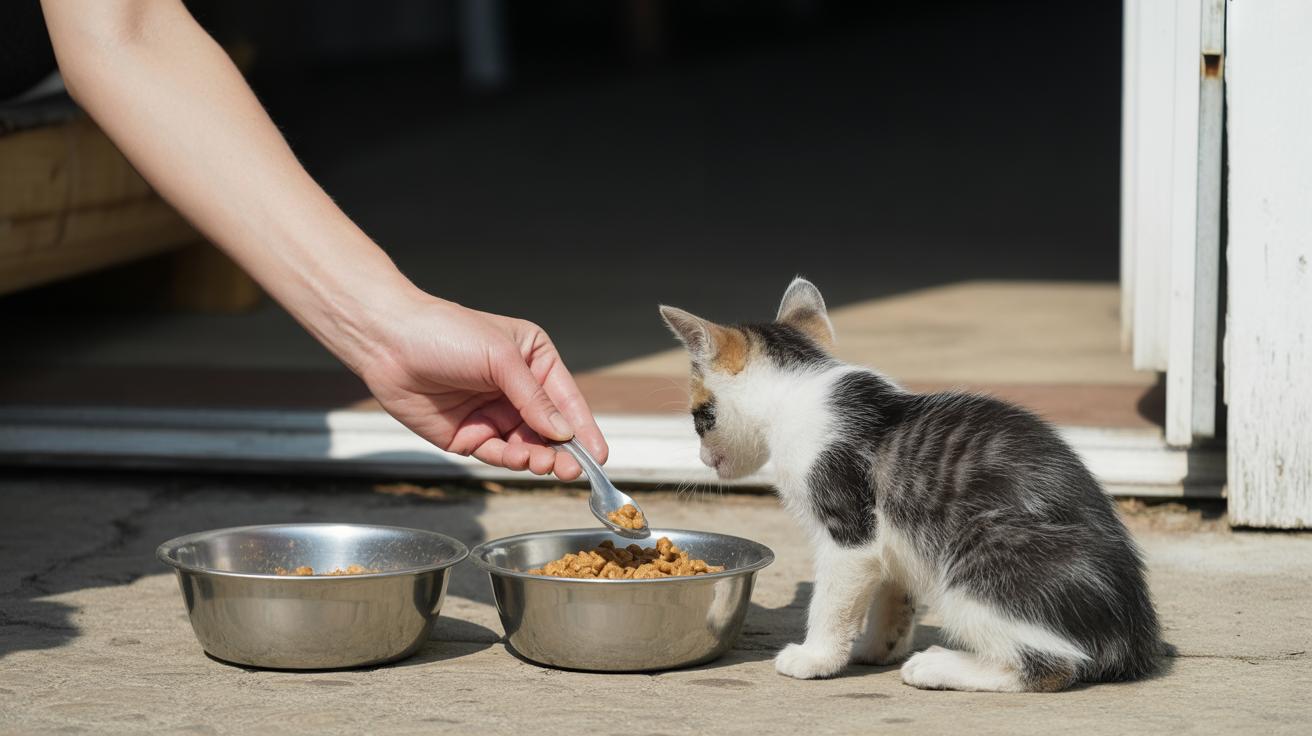
    1. Find kcal on the product label (kcal per pouch or per gram/cup).
    2. Multiply that kcal by the daily pouch or gram total from the chart to get total daily kcal.
    3. Compare the total to your vet’s target or the product’s recommended kcal for your kitten’s age and weight, then adjust portions as needed.

    Common signals that you should change portions:

    • Slow weight gain – compare your kitten’s weight to the expected growth curve and raise portions a bit, or check with your vet for medical causes.
    • Rapid weight gain or signs of obesity – reduce portions slowly and follow a vet-recommended plan.
    • Persistent loose stool or poor stool quality – cut treats, try a single food to test, and consult your vet before big diet changes.
    • Big drops or spikes in activity – more active kittens may need extra calories; calmer kittens may need less. Track for a week and then adjust.

    Oops, one more tip: weigh your kitten every week for the first months to catch trends early. Worth every paw-print.

    See Wet vs. Dry sidebar for a short comparison and recommended mix ratios that match this chart.

    Newborn and Orphan Kittens: Bottle-Feeding Volumes by Weight, Night Routine, and Safety

    - Newborn and Orphan Kittens Bottle-Feeding Volumes by Weight, Night Routine, and Safety.jpg

    This section shows bottle-feeding volumes by weight, a sample 24-hour caregiver routine, and simple safety checks. Use the Feeding Frequency table in Section 1 for the exact number of feeds per day for each age or special case.

    Mother's milk is best. If the queen can't feed, use a kitten milk replacer (KMR) (commercial formula that mimics mother’s milk). Don’t give cow’s milk , lactose (milk sugar) can upset tiny tummies. Warm formula to about body temperature and test it on your wrist. Follow the product label or your vet for ml per feed based on the kitten’s weight.

    Kitten weight (g) Volume per feed (ml) Example nipple size/flow
    350–450 g 10–15 ml (approximate; follow product or vet for exact ml) Small, slow-flow nipple (tiny hole to slow milk)
    450–600 g 15–20 ml (approximate; follow product or vet for exact ml) Small, slow-flow nipple
    600–800 g 20–25 ml (approximate; follow product or vet for exact ml) Medium, slow-flow nipple
    800–1000 g 25–30 ml (approximate; follow product or vet for exact ml) Medium, slow-flow nipple
    1000+ g 30–40 ml (approximate; follow product or vet for exact ml) Medium, gentle-flow nipple (slightly larger hole)

    Sample 24-hour night routine (use with the feeds-per-day guidance in Section 1):

    1. 12:00 AM , feed using the volume-for-weight table and Section 1 guidance.
    2. 3:00 AM , feed as above.
    3. 6:00 AM , feed as above.
    4. 9:00 AM , feed as above.
    5. 12:00 PM , feed as above.
    6. 3:00 PM , feed as above.
    7. 6:00 PM , feed as above.
    8. 9:00 PM , feed as above.

    Feeding tips and safety checks

    • Hold the bottle at a natural nursing angle so the kitten's head is slightly up, not straight up. It feels more like mom does it.
    • Use gentle, slow-flow nipples (small hole to slow milk). The kitten should suck, not gulp.
    • Warm formula to about body temperature. Test a drop on your wrist , it should feel warm, not hot.
    • Burp after feeding by holding the kitten upright and rubbing the back softly. A tiny burp helps.
    • Watch for aspiration (milk going into the lungs). Signs include coughing, noisy breathing, or milk coming from the nose. If that happens, stop feeding and call your vet.
    • Call your veterinarian right away if the kitten chokes, refuses to feed, feels very weak, or has trouble breathing.

    Preventing Aspiration

    Keep the head a little elevated and angle the bottle so milk flows slowly. Pause often to let the kitten swallow. If the kitten coughs, gags, or you see milk at the nose, stop feeding and call your vet right away. Better safe than sorry , and worth every paw-print.

    Weaning Timeline and Transition: When Kittens Start Wet and Dry Food

    - Weaning Timeline and Transition When Kittens Start Wet and Dry Food.jpg

    Kittens usually start poking at solids around 3 to 4 weeks old. They’re often ready to try real food at 5 to 6 weeks, and many are mostly off the bottle by 7 to 8 weeks. Go slow so their tiny tummies and baby teeth can keep up. You want gentle progress, not a frantic switch.

    Mixing Formula with Wet Food (ratios and technique)

    Start with a porridge that’s easy to lap. Mix three parts kitten milk replacer (KMR) (kitten formula that mimics mother’s milk) with one part wet kitten food so it’s mushy and spoonable. Put the mix in a shallow dish so the kitten can tip in and practice lapping. Expect it to be messy and adorable.

    Warm the mix to about body temperature, then test a drop on your wrist. If your kitten was bottle-fed, replace just one bottle feed first, at 5 to 6 weeks, and cut volumes slowly. Don’t stop cold turkey.

    Over one to three weeks push the mix toward a 1:1 ratio, then toward mostly wet food. You can add a little softened dry kibble (small dry pellets of kitten food) once they handle the 1:1 texture. Keep meals small and frequent while they learn.

    Signs your kitten is ready to wean

    Look for chewing interest, standing in the bowl, shorter nursing sessions, and playful nibbling at food. Spotting tiny baby teeth and steady weight gain are good signs too. If your kitten sniffs, laps, and comes back for more, that’s a thumbs up. Ever watched whiskers twitch while a ball of mush rolls away? Same focus.

    A few simple cues to watch for

    • Chewing motion or trying to bite at food.
    • Standing in or over the dish instead of clinging to the mom.
    • Shorter nursing sessions and more curiosity about meals.
    • Clear weight gain and normal stool.

    Week by week plan

    1. Week 1: Offer a shallow dish of 3:1 formula to wet porridge once a day. Keep the usual bottle schedule for other feeds.
    2. Week 2: Offer porridge 2 to 3 times daily and reduce one bottle feed by the same volume you remove.
    3. Week 3: Move to a 1:1 mix, add a little softened dry kibble if you want, and drop another bottle feed.
    4. Week 4: Serve mostly wet kitten food in small, frequent meals. Keep a bottle only if the kitten really needs it.
    5. Finish: Aim for full solid meals by 7 to 8 weeks. Watch weight and stools and check with your vet if anything seems off.

    Tips and little realities
    Warm food, be patient, and expect mess. Talk to your vet if a kitten won’t eat, is losing weight, or has diarrhea. For busy days, leave an easy porridge meal before you go out and let them practice solo. Worth every paw print.

    Wet vs. Dry for Kittens: Concise Comparative Sidebar Linking to the Portions Chart

    - Wet vs Dry for Kittens Concise Comparative Sidebar Linking to the Portions Chart.jpg

    Wet food brings extra moisture and a stronger smell, so kittens usually eat it faster. It’s easy to mix meds into wet food, and the soft bite is gentle on baby teeth and tender gums. Ever watched a kitten bury its face in a saucer of wet food? Cute.

    • Wet – high moisture and aroma that tempts picky eaters and helps with hydration.
    • Wet – mixes easily with supplements or meds when a kitten won’t eat or needs extra fluids.
    • Wet – soft textures that are kind to developing teeth and gums.
    • Dry – handy for free-feeding during busy days, so food is available all day.
    • Dry – longer shelf life after opening, so you toss less food.
    • Dry – chewing gives mild dental abrasion, which can help reduce soft plaque.

    See Kitten Feeding Chart for exact mix ratios.

    For grams and calorie conversion steps, check the chart too. See Kitten Feeding Chart.

    how often should you feed a kitten

    - Sample Daily Feeding Schedules by Age Practical Timetables (Reference the Canonical Table for FeedsDay).jpg

    Check Section 1 (Feeding Frequency Answered) for the exact number of feeds per day that match each life stage. The times below are ready-to-use daily timetables you can tweak to fit your routine.

    • Neonate (newborn kitten that needs bottle feeds)
      Feed every 2 to 3 hours around the clock. Example clock times: 12:00 AM, 3:00 AM, 6:00 AM, 9:00 AM, 12:00 PM, 3:00 PM, 6:00 PM, 9:00 PM. Match the number of feeds to the table in Section 1. These little guys eat a lot. Their tiny bellies empty fast.

    • 4-week (starting to wean, mixed bottle and soft food)
      Spread feeds across day and night as they learn solids. Example times: 1:00 AM, 5:00 AM, 9:00 AM, 1:00 PM, 5:00 PM, 9:00 PM. Match the number of feeds to the table in Section 1. Expect messy faces and enthusiastic nibbles.

    • 8-week (mostly daytime feeds, learning routine)
      Shift most meals into the daytime so nights are quieter. Example times: 7:00 AM, 10:00 AM, 1:00 PM, 4:00 PM, 7:00 PM. Match the number of feeds to the table in Section 1. Your kitten will start showing real appetite and zoomies after meals.

    • 3-month (day-focused with an evening snack)
      Most kittens do fine on set daytime meals plus a small evening feed. Example times: 7:00 AM, 11:30 AM, 4:00 PM, 8:00 PM. Match the number of feeds to the table in Section 1. It’s a good time to build a consistent routine.

    • 6-month (energy still high; routine stabilizes)
      By now feeding usually settles into three regular meals. Example times: 7:30 AM, 12:30 PM, 5:30 PM. Match the number of feeds to the table in Section 1. Keep play sessions after meals to help burn off that kitten energy.

    • 10–11 month (moving toward two meals)
      Most cats transition to two meals a day around here. Example times: 7:30 AM, 6:30 PM. Match the number of feeds to the table in Section 1. Almost adult-sized appetite, but still playful.

    Shift these clock times to match your day. Watch how much your kitten actually eats and weigh weekly to spot trends. If appetite drops, stools change, or weight stalls, call your veterinarian before you tweak the schedule. Worth every paw-print.

    Portions, Calories and Tracking: When to Change How Often You Feed a Kitten

    - Portions, Calories and Tracking When to Change How Often You Feed a Kitten.jpg

    First, check the food label for kcal per pouch or per cup (kcal = food calories). Use your Kitten Feeding Chart totals to pick a daily energy target. Multiply kcal-per-pouch (calories in one pouch) or kcal-per-gram (calories in one gram) by how much you plan to feed to get the daily kcal total.

    1. Weigh your kitten on the same digital scale at the same time of day once a week and write it down. (Digital baby or parcel scale works great for little kitties.)
    2. Log every meal: grams, pouches, and kcal (or cups), plus the time. Use a kitchen scale for food and a simple app or spreadsheet to keep it tidy.
    3. Compare the weekly weight to expected growth for the kitten’s age and breed. Flag it if gains are too slow or too fast. Ever watch a kitten pack on weight one week and barely budge the next? Yeah, that.
    4. Adjust portions slowly based on the trend – small 5 to 10 percent changes. Check with your veterinarian before you make bigger shifts. Oops, better safe than sorry.
    5. After any change, re-weigh and review the log weekly for at least a month to make sure your kitten stays on a steady track.

    Practical tools that make tracking easy: a kitchen scale for food, a digital baby/parcel scale for the kitten (a small, accurate scale for pets or packages), and a tracking spreadsheet or pet-feeding app to store grams and kcal. If you see steady weight loss, persistent diarrhea, big appetite changes, or lethargy, call your vet, these are reasons to change feeding frequency or test for medical issues. And if you’re short on time, toss a clean, unbreakable treat ball before you head out for a short burst of safe play.

    Metric How to measure Frequency
    Weight Digital scale (same scale and same time each week) Weekly
    Intake log Kitchen scale + app or spreadsheet (record grams, pouches, kcal) Daily
    Stool and hydration checks Visual inspection and gentle belly/skin check Daily

    Red Flags and Troubleshooting: When Feeding Frequency or Portions Need Veterinary Attention

    - Red Flags and Troubleshooting When Feeding Frequency or Portions Need Veterinary Attention (Reference Feeding Frequency Table for Stage Context).jpg

    See Section 1 (Feeding Frequency Answered) for stage-specific feeding targets before you change amounts or timing.

    Quick troubleshooting and emergency signs (see linked sections below for details):

    • Persistent diarrhea: Check Portions, Calories and Tracking for stool and hydration tips. Watery or frequent poops can dehydrate a tiny kitten fast, so weigh and watch energy levels. Call your vet if diarrhea lasts more than 24 hours or the kitten looks unwell.

    • Failure to gain weight: Weigh weekly and use Portions, Calories and Tracking to log trends. If your kitten isn’t putting on weight, talk to your vet to rule out infections or nutrient needs and to adjust calories. It’s better to ask sooner than later.

    • Dehydration: See Portions, Calories and Tracking for first-aid steps. Dehydration means too little fluid in the body (look for dry gums, skin that doesn’t snap back, or less pee). Offer small sips if the kitten can drink, and call your vet if there’s no quick improvement.

    • Repeated vomiting: Pause feeding for a short time and check Portions, Calories and Tracking for dehydration risk and when to call the vet. Vomiting can make a kitten lose fluids and energy fast. Example: Pause feeds for 30 minutes, give a few tiny sips of water, then call your vet if vomiting continues.

    • Aspiration during bottle feeds: Aspiration means liquid went into the lungs (watch for coughing, noisy breathing, or milk from the nose). Stop feeding and follow the newborn bottle-feeding safety section in Newborn and Orphan Kittens. Seek veterinary help right away if you suspect aspiration.

    • Hypoglycemia in neonates: Hypoglycemia is low blood sugar and shows as shaking, tremors, or very weak suckling. See Newborn and Orphan Kittens for immediate first-aid. Warm the neonate gently and call your vet now. Example: Wrap the neonate in a warm towel and phone your vet.

    Emergency action: If you see collapse, seizures, continuous vomiting, severe trouble breathing, or marked hypothermia (very low body temperature), get emergency veterinary care immediately. Worth every paw-print.

    Quick FAQ: How Often Should You Feed a Kitten – Short Answers with Pointer to the Canonical Table

    - Quick FAQ How Often Should You Feed a Kitten  Short Answers with Pointer to the Canonical Table.jpg

    Short answers below. See Sections 1–2 for full tables and charts.

    1. Q: How often do newborn kittens need feeding?
      A: Newborn kittens need feeds every 2 to 3 hours, day and night. Newborns = neonates, the first tiny days and weeks. See Section 1 (Feeding Frequency Answered) for exact feeds per day and Section 2 (Kitten Feeding Chart) for portion grams and pouch conversions (pouch = single wet-food packet).

    2. Q: When should I introduce wet or dry food?
      A: Start offering soft wet food for weaning at about 5 to 6 weeks. Weaning means slowly moving from milk to solids; begin with mashy wet food and go slow. See Section 1 for timing and Section 2 for portions and wet-to-dry guidance (how to mix wet food and kibble).

    3. Q: When do kittens move to three meals a day?
      A: Many kittens are eating three meals a day by about 4 to 6 months. Some get there sooner, some later. Check Section 1 for age-based feed counts.

    4. Q: How do I transition from kitten to adult food?
      A: Mix adult food in gradually over several days near the end of the first year. Ease the change so their tummies don’t protest. Use Section 2 for pouch-to-gram conversions (pouch = single wet-food packet).

    5. Q: What if my kitten is ill or won’t eat?
      A: Call your veterinarian right away. They’ll give a feeding plan and medical advice. Once your vet clears them, follow the stage-appropriate feeds in Section 1.

    6. Q: Is night feeding normal and when does it stop?
      A: Night feeds are normal for neonates and usually taper off during weaning. See Section 1 for stage-specific night-feed guidance. Ever had a 3 a.m. chorus of meows? Yep, that’s common.

    7. Q: Can I feed dry-only and how often then?
      A: Dry-only can work if fresh water is always available. Dry-only means kibble only, so watch hydration and calorie intake. Follow Section 1 for feeds per day and Section 2 for calorie and portion conversions.

    8. Q: How should bottle-fed kittens shift to solids?
      A: Replace one bottle at a time with a mushy wet mix during the weaning window. Bottle-fed means using a kitten feeding bottle. See Section 1 for feed counts and Section 2 for portion sizes.

    9. Q: When should I consult a vet about feeding frequency?
      A: Contact a veterinarian for poor weight gain, ongoing diarrhea, sudden appetite loss, or severe lethargy. Don’t wait on these signs.

    10. Q: How do I match portions to activity or growth changes?
      A: Track your kitten’s weight and how much they eat, then adjust grams or pouches using Section 2. Spread those portions across the daily feeds listed in Section 1. Weigh-ins once a week help a lot.

    Final Words

    In the action, we gave a clear age-based feeds-per-day table, a portions chart with grams and pouches, bottle-feeding volumes, weaning steps, sample schedules, tracking tips, and red-flag signs.

    Use the tables as your quick guide: match feeds to age, measure portions from the chart, and call your vet for worrying signs like weight loss or persistent diarrhea.

    If you want a short answer to how often should you feed a kitten, check the age table at the top and start there. Healthy, playful kittens are worth it.

    FAQ

    How often should you feed a kitten?

    How often you should feed a kitten depends on age: neonates (newborns) need about eight tiny feeds daily, 2-6 months three to four, and about twice daily by 12 months; ask your vet for tweaks.

    How often do kittens eat at 1 week?

    One-week-old kittens eat about every 2–3 hours, roughly eight feeds in 24 hours; use warmed kitten milk replacer (KMR) if orphaned and never cow’s milk.

    How often should you feed a 2- to 3-month-old kitten?

    A 2-3 month kitten should eat about 3–4 times daily, spaced evenly; adjust portions as they grow and use a feeding chart or vet guidance for exact grams.

    How much food should I feed a 3-month kitten or a kitten in general?

    How much you should feed a kitten depends on age, weight, and product calories; a 3-month kitten often needs around 150–200 g wet plus a small dry portion—check kcal (food energy) on labels.

    Can you overfeed kittens?

    You can overfeed kittens; excess calories cause unhealthy weight and joint stress—watch growth, follow portion charts, and consult your vet if weight climbs quickly.

    How do I know if my kitten is hungry and should I let it eat as much as it wants?

    You know a kitten is hungry by vocalizing, pacing, nibbling at the bowl, or rooting for food; free-feeding isn’t ideal—scheduled meals keep growth and weight purrfectly healthy.

    How often should you feed a kitten by weight or using a calculator?

    Feeding frequency by weight uses weight-based volume charts for neonates and kcal targets for older kittens; use a kitchen scale with the feeding chart to match portions and check growth with your vet.

    Related Articles

  • What to Feed a Newborn Kitten Without a Mother

    What to Feed a Newborn Kitten Without a Mother

    Ever been handed a newborn kitten and told to give it regular milk? That’s a quick way to make things worse. Tiny tummies can’t handle cow’s milk and they can get sick fast. Ever watched a kitten shiver in your hands? It’s awful.

    First things first. Warm the kitten so its body temperature comes up. Call a vet right away. And get kitten milk replacer (KMR, a balanced commercial formula made specifically for kittens).

    Don’t give regular cow’s milk. Really. Don’t. Oops, worth saying twice.

    We’ll walk you through safe warming methods, the single last-resort evaporated milk recipe (canned evaporated milk diluted to a kitten-friendly strength), and exactly how much to feed in the critical first 24 hours so you can help without causing harm and know when to seek emergency care. You’ll feel more confident. Worth every paw-print.

    Emergency Quick Action (first 24 hours)

    - Emergency Quick Action (first 24 hours)  immediate steps to care for an orphaned newborn kitten.jpg

    Do not feed a cold kitten. Warm the kitten first with warm towels, a warm water bottle wrapped in a cloth, or close body contact until the skin feels warm to the touch. Newborns can't control their body temperature, so warming comes before any feeding.

    Call a veterinarian or your local rescue right away for triage and transport options. Try to get commercial kitten milk replacer (KMR) (kitten milk replacer, a balanced commercial formula) as soon as you can. If KMR isn't available, use the single, explicitly worded evaporated milk emergency recipe only as a last-resort (see detailed section).

    For the first feeding use a small syringe or a kitten bottle and be conservative. For kittens 0-10 days old, give about 3 to 4 cc (ml) every 2 hours. Watch every swallow. If the kitten coughs, gags, chokes, or seems to inhale milk, stop feeding and get help right away.

    After each feed burp the kitten and gently stimulate elimination with a warm, moist cloth (like mom would with her tongue). Begin hourly weight checks during the first 24 hours: log the time, amount given, and weight to build a baseline. This helps you spot trouble early. Ever watched a tiny tail twitch after a good feed? Small joys.

    Go to emergency care now for any urgent signs: an unresponsive or very weak kitten, skin that stays cool even after warming, severe breathing difficulty, repeated aspiration (milk going into the airway), or inability to swallow.

    1. Confirm the kitten is warm to the touch; if it's cold, warm it with safe methods and do not feed while cold.
    2. Call a vet or local rescue for immediate advice and transport options.
    3. Locate KMR (kitten milk replacer); if you can't get it, use the single, clearly written evaporated milk emergency recipe (see detailed section) as a last resort.
    4. Administer the first feed by syringe or bottle using a conservative volume and frequency (0-10 days: about 3-4 cc every 2 hours); watch swallowing closely and stop at any coughing or choking.
    5. Burp the kitten and stimulate elimination after each feeding using a warm, moist cloth.
    6. Weigh and log the kitten hourly during the first 24 hours: record time, volume given, and weight to create a baseline.
    7. Get emergency care now for any of the urgent signs listed above.
    Age/Condition Frequency Typical volume per feeding (cc/ml) Feeds per day
    0-10 days every ~2 hours 3-4 cc (ml) ~12 feeds/day

    See detailed sections below for full formula choices, preparation and warming tips, bottle vs syringe vs tube feeding techniques, a complete feeding chart, hygiene steps, and troubleshooting.

    What to Feed a Newborn Kitten Without a Mother

    - Choosing kitten formula for a newborn kitten without a mother KMR and emergency recipes.jpg

    The best choice is a commercial kitten milk replacer like KMR (kitten milk replacer – a vet-formulated milk substitute made to match a mother cat's milk). These products are designed to give tiny bodies the right balance of nutrients without the tummy trouble that cow’s milk can cause. Powdered formulas (dry powder you mix with warm water) are light to store and let you mix small batches. Ready-to-use liquids (pre-mixed, grab-and-feed) are lifesavers at 3 a.m., but they take more space and usually cost more.

    If you can’t get a proper replacer right away, there’s a single evaporated milk – based emergency mix mentioned later; use that only as a last resort and call your vet fast. Cow’s milk is not a good long-term substitute – it often causes diarrhea and poor nutrition. Goat milk raises safety questions, so only use it with your vet’s OK.

    Follow the formula label for dosing by weight and age. Kittens usually stop when they’re full, so watch for slow lapping or relaxed paws as signs they’re done. Warm the formula to lukewarm before offering it – not hot. Make small batches so leftovers don’t sit around. Ever watched a kitten lap for the first time? Cute, messy, and their whiskers get all sticky, so have wipes nearby.

    Quick care tips: feed with a proper kitten nursing bottle or syringe, keep the kitten on its belly while feeding (not on its back), and burp gently if it seems gassy. If you can’t source formula locally, call nearby shelters, veterinarians, or pet stores for same-day help.

    Do/don’t

    • Do use a commercial kitten milk replacer (KMR or equivalent).
    • Do follow the package dosing by weight and age.
    • Do keep a powdered mix and a ready-to-use bottle on hand if possible.
    • Don’t give cow’s milk as routine food for kittens.
    • Don’t use homemade mixes except the single emergency evaporated milk recipe, and only short-term.
    • Don’t offer goat milk without a vet’s OK.

    Recommended on-shelf brands

    • PetAg KMR
    • Royal Canin Babycat Milk
    • Tomlyn Nutritional Milk Replacer

    If you don’t have formula now, locate some fast or contact local shelters or a veterinarian for immediate help. Worth every paw-print.

    Preparing and warming powdered kitten formula safely for a newborn kitten without a mother

    - Preparing and warming powdered kitten formula safely for a newborn kitten without a mother.jpg

    First things first: wash your hands and clean your gear. Powdered formula (a dry, balanced kitten milk mix) must be measured and mixed exactly the way the package says so the kitten gets the right nutrients. Use a clean bottle or syringe (a small plunger device) and only make as much as you need for the next feeding. Saves waste. Saves stress.

    Warm the mixed formula in a warm water bath, not the microwave. Put the sealed bottle in a cup or bowl of warm water and swirl gently until it feels lukewarm. Never give cold formula; chilled milk can upset a tiny belly and drop body temperature. Test a drop on the inside of your wrist , it should feel warm and comfortable, not hot. Think skin temperature. Ever watched a kitten tuck into warm milk and sigh? That’s the purr-fect sign.

    If you’re using bottle nipples, check the flow before you start. If the formula trickles too slowly, gently widen the hole with a sterilized pin (sterilized means germ-free; heat or boil the pin first). Make tiny increases only. Don’t cut the whole tip off , that makes the flow too fast and can cause choking.

    Handle leftovers the way the label tells you. If the label allows refrigeration, chill the bottle right away and use within the time the maker recommends. If not, toss it. And remember: warm only what you’ll use for the next feeding. Saves trouble. Worth every paw-print.

    Numbered preparation checklist

    1. Wash hands and clean or sterilize bottles, nipples, and mixing tools.
    2. Measure powdered formula exactly per package directions.
    3. Warm the sealed bottle in warm water; never microwave.
    4. Test a drop on your inner wrist , it should be lukewarm, not hot.
    5. If needed, enlarge the nipple hole with a sterilized pin; do tiny changes only.
    6. Refrigerate or discard leftovers following the formula label’s instructions.
    Test site Desired result
    Inside of your wrist Feels warm and comfortable, not hot; like your skin temperature

    How to bottle feed a newborn kitten without a mother: positioning, nipple choice, and aspiration prevention

    - How to bottle feed a newborn kitten without a mother positioning, nipple choice, and aspiration prevention.jpg

    Safety first. Slow, steady milk flow and the right hold keep milk out of tiny lungs and lower the chance of aspiration pneumonia (when milk goes into the lungs and causes infection). Use kitten bottles with elongated nipples (long, narrow rubber teats that mimic a mother cat's teat) and make tiny adjustments to the flow with a sterilized pin (a pin boiled or heat-treated to kill germs). Never cut the whole tip off , that makes milk gush and can lead to choking or lung trouble.

    Hold the kitten belly-down, the way it would nurse from mom. Tip the bottle so milk pools at the end of the nipple but does not pour. Watch every swallow; you should see the throat move. If the kitten coughs, gags, or seems to inhale, stop and get help.

    Ever watched a kitten’s whiskers twitch as milk appears at the nipple? It’s the sweetest. But pace matters. Tiny pauses let them breathe and reset their latch.

    1. Pick an elongated nipple size made for neonates (newborn kittens) and have spares to try.
    2. Test the flow by holding the bottle upright and letting a single drop fall slowly , not a stream.
    3. Place the kitten on its stomach, supporting head and chest; never feed a kitten on its back.
    4. Angle the bottle so the nipple stays partly full and the kitten must swallow gently.
    5. Feed at a calm, steady rhythm; pause if the kitten sputters or pulls away.
    6. If the latch looks poor (wide gape, no swallowing), reposition the head or try a different nipple size.
    7. After feeding, burp and gently stimulate elimination with a warm, soft cloth per routine.
    8. Clean bottles and nipples right away; dry parts fully before reassembly to prevent bacteria.

    Worth every paw-print.

    How to burp and clean after bottle feeding

    Hold the kitten upright against your shoulder or tummy and give gentle, rhythmic pats until you feel a burp. Wipe the face and chin with a warm, damp cloth and dry thoroughly so the kitten doesn’t get chilled. Change damp bedding quickly and keep the feeding area warm and clean.

    Common feeding mistakes to avoid

    • Cutting the nipple tip off or making a large hole that lets milk gush.
    • Feeding a kitten on its back.
    • Pouring milk too fast or forcing a full syringe into the mouth.
    • Skipping burping or leaving the kitten wet and chilled.

    If you’re unsure, ask a vet or experienced caregiver. It’s scary at first, but with slow feeds and steady hands you’ll help that tiny fluff thrive.

    What to Feed a Newborn Kitten Without a Mother

    - Syringe, dropper, and tube feeding guidance for newborn kittens without a mother.jpg

    Syringe and dropper feeding work when a kitten can breathe and swallow but can’t latch. A syringe (small plastic tube with a plunger for measured liquid) or a dropper (a little rubber bulb and tube) lets you give tiny, slow drops at the side of the mouth so the kitten can swallow without gulping air. Use warmed kitten milk replacer (kitten formula that replaces mom’s milk) just like you would in a bottle, but give very small, paced amounts and watch every swallow. You’ll notice tiny gulps and maybe a sleepy face afterward.

    Tube feeding, which means placing a small, flexible feeding tube into the kitten’s stomach, is a last-resort option for very weak, premature, or kittens that won’t suck. It can save lives, but it has higher risks: aspiration (milk going into the lungs), internal injury, and infection if done wrong. Get a veterinarian to teach you and watch the first few feeds; this is not a home DIY. It’s lifesaving sometimes, but higher stakes, so be careful.

    Practical safety tips for syringe and dropper feeding:

    • Hold the kitten on its belly, like how they nurse from mom.
    • Tilt your head slightly so the milk pools at the mouth corner, then give tiny drops.
    • Go slow. Pause if the kitten coughs, sputters, or seems startled.
    • After feeding, burp gently and stimulate elimination with a warm, damp cloth on the belly and rear.
    • If the kitten fails to swallow reliably, goes limp, or keeps aspirating, stop and get urgent vet help.

    A few quick comparisons to help you choose:

    • Bottle: most natural, since the kitten can nurse and suck. Needs a good latch.
    • Syringe/Dropper: great for weak nursers who can still swallow. Easy to overfeed if you rush.
    • Tube Feeding: gives exact volume when sucking fails. Higher risk of lung aspiration and injury, so vet supervision is required.
    • When a kitten can latch, bottle feeding is usually safer. When they can’t latch but can swallow, syringe or dropper is better. When they can’t suck or are very weak, tube feeding may be the only option.
    Method When to use Main risk
    Bottle Kitten can latch and swallow Aspiration if flow is too fast or the position is wrong (milk into the lungs)
    Syringe/Dropper Cannot latch but can swallow Overfeeding or fast flow causing coughing or choking
    Tube Feeding Very weak, premature, or non-suckling kittens; vet-guided Internal injury, aspiration, infection

    Emergency checklist – stop home feeds and get to a vet now if:

    1. The kitten chokes, coughs repeatedly, or milk sprays from the nose.
    2. The kitten becomes very limp, won’t wake, or is hard to rouse.
    3. You see signs of aspiration: wet-sounding breathing, persistent coughing, or blue gums.
    4. The kitten cannot suck or swallow at all despite warming and belly stimulation.

    Don’t try tube feeding without veterinary training and supervised practice. Really. It can save a life, but it needs a pro to show you how.

    Feeding schedule and exact volumes by age for what to feed a newborn kitten without a mother

    - Feeding schedule and exact volumes by age for what to feed a newborn kitten without a mother.jpg

    Newborn kittens run on tiny, frequent meals. Use these conservative guides as a starting point and follow the kitten formula label (kitten formula = commercial milk replacer) for exact amounts by weight. Keep feedings regular so you notice right away if a kitten skips a meal or seems unusually sleepy after eating. Ever watched a kitten fall asleep mid-suck? Cute, but also a flag.

    Weigh each kitten every day to watch steady growth. Use a digital gram scale (small kitchen or postal-style scale that reads grams) and write down time, volume given, and weight so any stall or loss jumps out at you. If a kitten isn’t gaining or loses weight, call your veterinarian right away.

    Age Frequency Typical volume per feeding (cc/ml) Feeds per day
    0–10 days about every 2 hours 3–4 cc (ml) , cc/ml = cubic centimeters or milliliters about 12 feeds/day
    11 days–2.5 weeks every 3–4 hours 5–6 cc (ml) about 6–8 feeds/day
    2.5–4 weeks every 5–6 hours 13–17 cc (ml) about 4 feeds/day
    4 weeks and older switch to 2–3 times daily while weaning variable , mix formula with wet food to transition 2–3 feeds/day + free access to gruel/kibble
    1. Use the same scale and weigh at the same time each day, ideally before the first morning feed. Consistency makes trends obvious.
    2. Log each kitten’s weight: date, time, weight, and any notes about feeding or stool. A simple notebook works fine.
    3. Aim for steady daily gain. Most healthy neonates put on about 10–20 grams per day (about 0.35–0.7 ounces). Look for a steady upward line, not one big jump.
    4. Call your vet if a kitten loses weight, shows no gain for 24 hours, or is unusually lethargic or won’t nurse.

    For very small or hypoglycemic kittens (low blood sugar), warm them first , a warm towel or your lap works , then offer a tiny supplemental feed, just a fraction of a normal volume. If you’re unsure, ask your vet about extra feeds or urgent care. Worth every paw-print.

    Hygiene, sterilizing feeding equipment, and safe formula storage when feeding orphan kittens

    - Hygiene, sterilizing feeding equipment, and safe formula storage when feeding orphan kittens.jpg

    This is the short, friendly version: wash your hands before and after handling kittens, dry them well after feeds, and swap out damp bedding fast. See the Preparing/Warming and Bottle-Feeding sections for the single checklist we use across the article. Below are the extra, practical details to keep or move into those sections so we don’t repeat stuff.

    Keep these action points front and center. Sterilize any pin before every use , a pin (like a straight sewing pin used to widen nipple holes) can carry germs. Hold it with tongs and boil it for 2 minutes, or flame-sterilize it briefly, then let it cool on a clean rack. Use a dishwasher sanitize cycle only if the manufacturer says that cycle is safe for that part (sanitize cycle means the high-heat, hot-water sanitizing setting). Follow product labels for refrigeration times and when to throw formula away , the Handle leftovers paragraph covers timing and fridge rules. Wash nesting fabrics every 2-3 days, or right away if they’re damp or soiled, to cut down on skin irritation and funky smells.

    • Bottles & nipples: clean after every feed. Replace nipples if they’re cracked, sticky, split, or misshapen. Nipple (the rubber or silicone feeding tip) wear is normal with heavy use , you may need to swap them every few weeks.
    • Pins for enlarging holes: sterilize before every use.
    • Syringes / dropper tips: clean after each use. Replace if the tip warps, cracks, or traps residue.
    • Nesting fabrics / towels: launder every 2-3 days or any time they get damp.

    Please make sure the Bottle-Feeding and Preparing/Warming sections include the merged, numbered cleaning protocol so readers find one clear workflow. Worth every paw-print.

    Stimulating elimination, burping, and post-feeding care for newborn kittens without a mother

    - Stimulating elimination, burping, and post-feeding care for newborn kittens without a mother.jpg

    Newborn kittens under about four weeks usually need help to pee and poop after every feeding. Use a warm, moist cotton ball (soft round pad), tissue, or washcloth (small damp towel) and rub gently in tiny circles over the genital and anal area (where they pee and poop) until they go. Think of it like mom’s tongue, soft, steady, and patient. Give the kitten a minute or two of gentle work; some need a little extra coaxing. Ever watched a tiny tail wiggle the moment they go? Cute and rewarding.

    After each feed, hold the kitten upright against your shoulder or lay them across your lap and pat until you feel a small burp. That little, satisfied burp means the air is out and the tummy feels better. Wipe any milk from the face and chin with a warm damp cloth, then dry the fur completely so the kitten doesn’t get chilled. Keep their nesting spot cozy while you work, warmth helps digestion and comfort.

    Formula-fed stools (from kitten milk replacer) are often soft and paste-like. Watery or very foul-smelling stools can mean illness or parasites and need quick attention from your vet. Around four weeks many kittens begin going on their own; that’s your cue to offer a low, shallow litter box (a small tray with litter) and show them how to step in and scratch. Next, let them explore it after a meal and praise the tiny successes.

    1. After every feeding: use a warm, moist wipe (cotton ball, tissue, or washcloth) and gentle circular rubbing until the kitten pees and poops.
    2. Rub with small, circular strokes; pause briefly if they fuss and then try again.
    3. Expect soft, pastey stools on formula (kitten milk replacer); note color and odor in your care log.
    4. If a kitten hasn’t peed or pooped within 24 hours, or you see straining, call your vet right away.
    5. Burp each kitten upright on your shoulder or tummy; pat until you feel a burp.
    6. Dry the kitten fully and return them to a warm nest; introduce a shallow litter box once they start eliminating unassisted.

    Troubleshooting

    • No elimination after repeated tries: warm the kitten (wrap in a warm towel), try again, then phone your vet if nothing changes.
    • Diarrhea or very watery stool: stop any extra feeds and contact your vet, dehydration can set in fast.
    • Straining without results or blood in the stool: get the kitten to a vet urgently.
    • Kitten cool after cleaning: dry quickly and apply gentle, safe warmth like a warm water bottle wrapped in a towel or a low-heat heating pad set under supervision; monitor closely.

    Worth every paw-print.

    What to Feed a Newborn Kitten Without a Mother

    - Troubleshooting feeding problems and emergency signs for what to feed a newborn kitten without a mother.jpg

    If you’re caring for a newborn kitten alone, pay close attention. Some signs mean you need help right away. If a kitten won’t eat, lies limp, feels cool, or breathes strangely, call a vet now. Milk coming out of the nose, repeated coughing, or spraying from the nostrils usually means the feeding flow or technique is wrong and the airway might be at risk (aspiration is when milk goes into the lungs).

    Other problems can start small and get dangerous fast. Heavy yellow discharge, bloody stools, no or very little peeing, very watery diarrhea, or obvious dehydration need urgent care. Parasites and fleas can steal blood and energy from tiny kittens, so check skin and stool. If you see pale gums, fast breathing, or sudden weakness, call a vet. Keep a simple feeding and weight log and, if you can, collect a stool sample to bring to the clinic , example log entry: "9:10 am: 8 mL; weight 260 g; soft yellow stool."

    Sign What it likely means Immediate action
    Not feeding / refusing Low energy, low blood sugar, or poor latch Warm and stimulate, try tiny warm feeds; call a vet if still refusing
    Unresponsive / listless Severe illness, shock, or very low blood sugar Warm carefully and get emergency veterinary care now
    Cool-to-touch skin Hypothermia (low body temp) Warm safely (wrapped warm water bottle/towels), then seek vet help
    Labored breathing Airway trouble, aspiration, or pneumonia Stop feeds, keep upright, get emergency care immediately
    Persistent diarrhea Parasites, infection, dehydration risk Collect stool if possible, call vet and bring sample
    No urination for 24 hours Blocked, dehydrated, or very weak Warm, stimulate, contact vet right away
    Visible blood or heavy yellow discharge Serious infection or internal issue Transport to emergency vet immediately
    1. Stop feeding at the first sign of choking, coughing, or milk in the nose. Aspiration can be deadly.
    2. Warm the kitten before feeding. Warmth helps digestion and circulation, so use gentle heat like a warm water bottle wrapped in towels.
    3. If the airway is blocked, only clear visible obstructions gently and get emergency care right away. Don’t poke blindly.
    4. Call an emergency vet or rescue. Tell them the signs you see, the kitten’s current weight, and recent feedings.
    5. Bring your feeding and weight log to the clinic. Example: "8:30 am , 6 mL; weight 295 g; soft stool."
    6. Try to collect and bring a fresh stool sample in a clean container, labeled with the time. That helps diagnosis.
    • Warm before feeding; see the Preparing/Warming section for safe methods.
    • Use the right nipple size and test flow as explained in the Bottle Feeding section.
    • Stimulate elimination and burp after feeds like the Syringe/Tube and Bottle Feeding sections show.
    • If the kitten starts aspirating, stop feeding and get emergency care immediately.

    Worth every paw-print. Keep calm, log everything, and get help fast if things look off.

    What to Feed a Newborn Kitten Without a Mother

    - Weaning and transitioning to wet and dry food when raising a newborn kitten without a mother.jpg

    Start offering gruel (thin, mashed wet kitten food mixed with warm formula (kitten milk replacer)) when kittens are about 3 to 4 weeks old. Cut bottle feeds back to about three times a day while they learn to lap so they still get enough calories. Move slowly. Tiny tummies are sensitive and a gentle pace keeps them comfortable.

    Use a shallow, flat dish and coax lapping with a spoon or tongue depressor (a small flat stick). Put a little gruel on the spoon, let the kitten lick it off, then nudge the spoon closer to the dish over a day or two. Weeks 5 and 6 are real transition weeks: blend the old food with the new over about seven days to avoid upset. By weeks 7 to 8 most kittens will eat mostly dry kitten food and be ready for vet checks and adoption prep.

    Weaning timeline (step-by-step)

    1. Week 3: Offer tiny amounts of warm gruel on a spoon after a short bottle feed; watch for lapping and interest.
    2. End of week 3: Increase gruel servings and reduce bottle volume a little; let them practice lapping more.
    3. Week 4: Bottle feed about three times a day; keep gruel in a shallow dish available so they can try it whenever.
    4. Week 5: Mix a bit of dry kitten kibble into the wet mash; start with small amounts so bellies stay happy.
    5. Week 6: Slowly shift the ratio over seven days until most meals are the new mix; keep bottles as a backup if needed.
    6. Week 7: Offer mostly canned and dry kitten food; keep an eye on stool and appetite.
    7. Week 8: Mostly dry kibble with free access to fresh water; prepare for spay/neuter and adoption checks.

    Gruel recipes

    • Small batch: 1/2 can wet kitten food + 1/4 can warm formula (use the empty can to measure). Warm to about body temperature.
    • Large batch: Whisk 8 cans wet kitten food with 4 cans warm formula until smooth. Store small portions in the fridge and warm slightly before serving.
    Week Primary food offered Bottle feed frequency Notes
    3 Start gruel + bottle Frequent, tapering Use spoon to teach lapping
    4 More gruel, smaller bottle ~3 times/day Flat dish, watch stools
    5–6 Mix wet + dry slowly ~3 times/day Seven-day mix transition
    7 Mostly canned and kibble 2–3 times/day as needed Monitor weight and digestion
    8 Primarily dry kitten food 2–3 times/day Ready for vet checks and adoption

    Offer a shallow water dish once they lap reliably. Introduce a low-sided litter box as they start to move and eliminate on their own. Move from spoon to dish by shortening spoon time each day until they choose the dish on their own. Patience wins every time. Worth every paw-print.

    Special cases: feeding premature, low-birth-weight, or multiple orphaned newborn kittens without a mother

    Newborn (neonatal) kittens need steady warmth and close watching. Keep them in a cozy, quiet spot and check on them often. Ever watched a tiny whisker twitch while they sleep? It’s the best alarm that something’s right.

    Weigh every kitten once a day on a gram scale (a small scale that measures grams) and write down the gains. Weigh the tiniest kittens twice a day and log both numbers , example entry: "0700: 95 g; 1900: 98 g." Small records save lives.

    Group same-age orphans so they can share body heat and comfort. Put sick or much smaller kittens in a separate box to reduce stress and stop bugs from spreading. Check for fleas; tiny kittens can bleed out fast and become anemic. Pale gums mean immediate vet care.

    If you have a litter with many kittens, feed in shifts so each one gets a calm, focused feed and its own notes. If a kitten won’t suck or is losing weight, call a vet right away. Tube feeding (a vet-taught method using a tiny tube to deliver milk to the stomach) might be needed , see the tube-feeding paragraph in this guide for trained instructions.

    Keep clear, simple records: time, amount, weight, and stool notes help you and your vet spot trends fast. Use ml/cc (milliliters, same as cc) for amounts so everyone’s on the same page.

    Quick checklist

    • Weigh daily; weigh the tiniest kittens twice daily and log each gain.
    • Increase feed frequency for very small kittens; offer tiny, extra feeds between scheduled bottles.
    • Call a vet if a kitten won’t suck, shows no weight gain, or seems weak , refer to the tube-feeding paragraph for trained methods.
    • House same-age kittens together for shared warmth; separate sick or much smaller kittens.
    • Feed in shifts for multi-kitten litters so each gets calm, focused attention and individual records.
    • Keep clear records (time, amount in ml/cc, weight, stool notes) and check for fleas; pale gums require immediate veterinary care.

    Feeding supplies checklist and record-keeping for caring for a newborn kitten without a mother

    If you’re feeding a newborn kitten solo, this is the short, friendly checklist and the log routine you’ll want. Tip from Preparing and warming powdered kitten formula: "Keep a gram scale and log by the nest; you'll thank yourself at 3 a.m." Ever done a midnight weigh-in? Yeah, you’ll get used to it.

    Supplies

    • Kitten bottles with elongated nipples, neonate size (neonate means newborn kitten fit).
    • Spare nipples with different flow rates, slow to medium (so you can match the kitten’s suck).
    • Small syringes or droppers, 1-3 ml (for tiny, precise feeds).
    • Digital gram scale for daily weighing (measures grams, helps track weight gain).
    • Soft nesting box and a safe heat source, like a warm water bottle wrapped in a towel, or a covered low-heat pad (keeps them cozy, like a mom cat).
    • Warm washcloths and towels for cleaning and snuggles.
    • Cotton balls or soft pads for stimulation and wiping.
    • Powdered kitten formula and measuring scoop (powder formula, mix per directions).
    • Ready-to-use commercial formula, if you can get it (no mixing fuss).
    • Small shallow dishes for gruel when weaning starts.
    • Wet kitten food for gruel mixes (make it mushy at first).
    • Notebook or printed log sheets and a pen, plus a small flashlight or headlamp for night checks (hands-free light is a lifesaver).

    Quick tips: label opened formula, keep supplies clean, and have backups of nipples and syringes. You’ll appreciate the spare parts when a nipple chews out mid-feed. Cute, but annoying.

    Record-keeping routine

    1. Record the time of each feed, even the 3 a.m. ones.
    2. Log the exact volume given in ml or cc.
    3. Weigh the kitten and write their weight in grams at every weighing.
    4. Note stool and urine details, and jot any odd signs or concerns (less active, not eating, breathing weird).

    A few how-to notes: weigh at the same time each day, before a feed if possible, and use the same towel or lining so readings stay consistent. If the kitten isn’t gaining or you see worrying signs, call your vet.

    Need help or supplies? Call local shelters, rescue groups, or your veterinarian , they often have formula, spare gear, or short-term foster options. You don’t have to do this alone. Worth every paw-print.

    Final Words

    in the action: you’ve got the life-saving checklist, warm a cold kitten first, call a vet or local rescue, and find KMR (kitten milk replacer) or the single last-resort evaporated milk mix. Start with conservative syringe or bottle feeds and stop if you see coughing or choking.

    Burp and stimulate elimination with warm, moist cloths, and log hourly weights during the first day. Keep gear clean and watch warning signs so you can get emergency care fast.

    Knowing what to feed a newborn kitten without a mother gives you a calm, hopeful edge.

    FAQ

    Kitten Milk Replacer

    A kitten milk replacer is a commercial formula specially mixed to match a queen’s milk, supplying balanced nutrients and fluids. Use a KMR powdered or ready-to-use product and follow the label directions.

    How to take care of a newborn kitten without a mother

    Warm the kitten first, call a vet or rescue for guidance, feed KMR when the kitten is warm, burp and stimulate elimination after feeding, and weigh hourly for the first 24 hours to establish a baseline.

    How to feed a newborn kitten without a bottle or syringe and what to feed if you don’t have formula

    If you don’t have a bottle or syringe, offer KMR with a dropper or a shallow dish so the kitten can lap. If no kitten formula is available, a last-resort evaporated milk mix (canned concentrated cow’s milk) may be used only under veterinary guidance.

    How to take care of newborn kittens with their mother

    Allow the kittens to nurse, keep the nest warm and quiet, confirm each kitten is feeding and gaining weight, and contact a veterinarian if the queen appears unwell or her milk seems insufficient.

    Newborn kitten feeding chart by age (what to feed 3, 4, 5 week old kittens)

    Typical volumes and frequencies by age:

    • 0–10 days: every ~2 hours — 3–4 cc per feeding
    • 11 days–2.5 weeks: every 3–4 hours — 5–6 cc
    • 2.5–4 weeks: every 5–6 hours — 13–17 cc
    • 4+ weeks: begin weaning (introduce wet food/formula mixtures)

    What is the 3-3-3 rule for kittens?

    The 3-3-3 rule: wait up to 3 hours for the mother to return, monitor the kittens closely for 3 days, and seek veterinary help if kittens are cold, weak, crying nonstop, or not feeding.

    Related Articles

  • When Can Kittens Eat Dry Food Safely

    When Can Kittens Eat Dry Food Safely

    Thinking of switching your kitten to dry kibble the minute they wobble out of the nest? Not so fast, your kitten needs a few milestones first. Ever watched their whiskers twitch as they sniff new textures? Cute, right?

    Start offering moistened dry kibble or a little gruel (soft, wet mash) at about 4 to 6 weeks. Around five weeks you’ll often see nibbling and the arrival of premolars (back baby teeth that help chew). That nibbling is a good sign to keep trying the new textures.

    By 8 to 10 weeks most kittens handle dry or mixed diets. Many weigh about 2 pounds by eight weeks, and that weight plus clear chewing is your green light to switch safely. If their weight stalls or they aren’t eating well, call your vet , don’t wait.

    Worth every paw-print.

    When Can Kittens Eat Dry Food Safely

    - Ages and readiness when kittens can start dry food.jpg

    Start offering moistened dry kibble or a little gruel (soft, wet mash) at about 4-6 weeks. Most kittens are happily eating dry or mixed diets on their own by 8-10 weeks. Your kitten’s whiskers will twitch as they sniff and paw at new textures, cute, right?

    Watch for clear readiness signs. Nibbling and soft mouthing often show up at 3-4 weeks. Around 5 weeks you’ll see premolars (back baby teeth that help chew) starting to come in. You might notice real curiosity about food and tiny attempts to take bites instead of just nursing.

    Use weight as a simple checkpoint. Many kittens weigh about 2 pounds by 8 weeks. If weight gain stalls or the kitten loses weight while weaning, call your veterinarian for advice and a quick health check.

    1. 3-4 weeks: Offer the first supervised tastes and watch for nibbling and soft mouthing.
    2. 4-6 weeks: Begin with moistened kibble or gruel (soft, wet mash) and see if they can chew.
    3. 6-8 weeks: Move to firmer textures as premolars (back baby teeth that help chew) strengthen and the kitten handles bites better.
    4. 8-10 weeks: Expect most kittens to eat dry or mixed diets independently; recheck weight and contact a vet if gains stall.

    Worth every paw-print.

    How to transition kittens to dry food safely and gradually

    - How to transition kittens to dry food safely and gradually.jpg

    Start slow. Over about two weeks you’ll move kittens from a thin gruel to firmer textures, and you should let each kitten set the pace. Mix canned kitten food with warm KMR (kitten milk replacer, a commercial milk substitute) or warm water into an oatmeal-like gruel. Then add tiny pieces of softened kibble and slowly cut back the liquid until the kitten can handle dryer bites. For wet-food options to make gruel, check wet cat food brands. Ever watched a kitten lap at a spoon? Cute and useful.

    Keep daily steps simple and steady. Offer small amounts in a shallow dish so little faces can reach easily. Warm the food to about body temperature, not hot. Let the kitten come and nibble at her own speed. If she seems shy, try spoon-feeding a few bites or bringing the spoon close to her mouth. Always have fresh water available. And keep nursing or bottle support with KMR if weight gain slows.

    Clean setup helps meals go well. Rinse dishes after each feeding and dry the surface so things don’t get sticky. Change towels that collect food. Warm food in a water bath (a bowl in warm water) instead of using a microwave so temperatures stay even. Pick a quiet spot for meals so your kitten can focus.

    Watch weight and attitude like a hawk. Weigh kittens daily on a kitchen scale and jot down the numbers. If a kitten refuses food or loses weight at any step, go back to the previous texture and give bottle supplements with KMR until weight climbs again. Call your veterinarian right away if weight drops, or if you see repeated vomiting or severe lethargy.

    Week-by-week transition plan

    This is a gentle, stepwise two-week plan. If a kitten stalls, return to the prior step and add bottle feeds.

    1. Step 1 , Days 1–2: Mix 3 parts canned kitten food with 1 part warm KMR or warm water. Aim for a smooth, oatmeal-like texture. Serve small spoonfuls and supervise.
      (Troubleshoot: no interest? Try tiny spoon-fed bites and keep nursing/bottle support.)

    2. Step 2 , Days 3–4: Mix 2 parts canned with 1 part warm KMR or water. Texture should be a thicker porridge. Put a small smear in a shallow dish.
      (Troubleshoot: if weight stalls, go back to Step 1 and supplement.)

    3. Step 3 , Days 5–6: Mix 1 part canned with 1 part KMR or water and add 1–2 teaspoons of small kibble that’s been pre-soaked for 10 minutes. Texture becomes chunky porridge.
      (Troubleshoot: hand-feed a couple bites and watch appetite closely.)

    4. Step 4 , Days 7–8: Mix 3 parts canned with 1 part KMR and stir in 1–2 tablespoons of softened kibble soaked 5 minutes. Kitten starts practicing crunching.
      (Troubleshoot: if chewing is weak, drop back to Step 3.)

    5. Step 5 , Days 9–10: Mix 1 part canned with 3 parts softened kibble soaked 2–3 minutes. Most of the bowl is small-kibble pieces that still yield to the tongue.
      (Troubleshoot: low intake? Offer extra bottle feedings overnight.)

    6. Step 6 , Days 11–12: Mostly dry kibble with a quick 30–60 second soak if needed. Kibble should be manageable by premolars (the back chewing teeth).
      (Troubleshoot: slow progress? Keep brief soaks and offer a wet topper.)

    7. Step 7 , Days 13–14: Dry kibble freely available. Keep fresh water handy and monitor daily weight and stool quality.
      (Troubleshoot: if weight drops, resume short soaks plus KMR supplements until recovery.)

    Tools and feeding setup

    Have these basics ready so mealtime is calm and clean:

    • Shallow dishes with low lips so kittens can reach easily.
    • A small spoon or spatula for mixing and spoon-feeding.
    • A kitchen scale to weigh kittens every day.
    • A separate shallow water dish that’s easy to reach.
    • Clean towels and a washable feeding surface for quick cleanup.

    Worth every paw-print. Watch the little whiskers twitch as they figure it out. If something feels off, step back one stage and give extra bottle support. You’ve got this.

    Choosing kitten-formula dry food and appropriate kibble size

    - Choosing kitten-formula dry food and appropriate kibble size.jpg

    Pick a kitten formula that puts growth first. That means higher protein and fat than adult foods, plus extra nutrients to help the brain, bones, and eyes develop. Think of it as a mini power-packed meal for growing paws.

    Look for DHA (an omega-3 fatty acid that helps brain and eye development) and taurine (an amino acid cats need for a healthy heart and vision). Short, clear labels that show a guaranteed analysis make it easy to compare protein and fat percentages. Oops, let me rephrase that, those numbers tell you how much protein and fat are actually in the food.

    Use the feeding chart on the bag as a starting point, then watch your kitten’s weight and body shape and adjust. Tiny mouths need tiny pieces, so kibble shape matters as much as the recipe. If the pieces are too big, chewing gets awkward and the kitten might gag.

    • High-quality animal protein (chicken, turkey, or fish listed by name)
    • DHA (an omega-3 fatty acid for brain and eye development)
    • Taurine (an amino acid critical for heart and vision)
    • Enough fat for healthy growth and energy
    • Named micronutrients like calcium, phosphorus, and vitamin A
    • Small, round or pellet-shaped kibble that's easy for premolars (the back baby teeth that start chewing) to grip

    Kibble should be small and uniform so premolars can handle bites without fuss. Too-large chunks make chewing hard and can lead to gagging or wasting food. Try a few small trial bags, watch how your kitten chews and what their stool looks like, and tweak the choice if they seem uncomfortable or gain weight too fast. Ever watched a kitten try to crush a giant kibble? Cute, but not ideal, pick something that fits their little mouth and keeps playtime pawsitive.

    How much dry food should a kitten eat, feeding frequency, and hydration

    - How much dry food should a kitten eat, feeding frequency, and hydration.jpg

    Most kittens around 8 weeks weigh about 2 pounds and need roughly 160 kcal per day (kcal = kilocalories, the "calories" you see on pet food). That usually works out to about 3/8 to 1/2 cup of typical kitten kibble (kibble = dry cat food pieces), or roughly 35–50 g (grams). Kibble varies a lot in calories per cup (energy density – how many calories are packed into a cup), so use the bag’s feeding chart as a starting point and measure with the same dry cup or a kitchen scale each time for consistency.

    During early weaning offer small, frequent meals , think up to six times a day , then step down as the kitten gets used to solids to at least three meals daily. When you’re feeding three times a day, split the total into equal thirds so each meal is predictable. A steady routine helps you spot if they’re eating less or more, and it keeps a hungry kitten calmer. Ever watched your kitty bat at a bowl like it’s a drum? Yeah, routine helps with that.

    Weigh kittens often at first: daily during weaning, then every few days once their growth evens out. If weight climbs too fast, cut portions a bit. If growth stalls or weight drops, increase calories and call your veterinarian. Always leave fresh, shallow water out when serving dry kibble to help digestion and hydration , kittens often prefer a shallow bowl so their whiskers don’t touch the sides.

    Worth every paw-print.

    Age/Stage Sample daily portion (notes) Meals per day
    Weaning (4–8 wks; starting solids) 30–60 g (0.25–0.5 cup) mixed wet/dry; recheck if weight gain is slow 4–6
    8 wks–20 wks 35–50 g (≈0.4 cup ≈160 kcal/day); weigh weekly during rapid growth 3
    5–7 months 1/3–1/2 cup (≈45–75 g); reduce as growth rate slows, recheck monthly 2–3
    7–12 months 1/2–1 cup (≈75–150 g); monitor for excess weight and adjust 2

    Common problems after introducing dry food and when to call a veterinarian

    - Common problems after introducing dry food and when to call a veterinarian.jpg

    Mild tummy upset is normal when kittens switch from wet to dry food. Expect an adjustment window of a few days up to two weeks, and watch appetite, energy, and stool shape (formed log, soft blobs, watery). Keep an eye on the litter box like it’s a little weather report for your kitten’s health. If a step in the transition makes stools looser, go back to the previous step and try slower.

    Call the vet for big red flags. If diarrhea lasts more than 48 hours, weight gain stops or your kitten loses weight, they keep vomiting, refuse to eat, or they’re strangely limp and sleepy, get help. Watch for dehydration signs too: skin tenting (pinch the scruff – if the skin stays up), dry or sunken gums, sunken eyes, or skin that doesn’t snap back quickly.

    Before you call, try a few home steps: drop back one texture stage, offer KMR (kitten milk replacer – a milk formula made for kittens) or small bottle supplements if they won’t eat, keep wet food and fresh water available, and clean litter and bedding to lower infection risk. If stools get worse after a change or diarrhea goes past 48 hours, revert that change and call your vet.

    1. Stalled weight gain (daily gains stop or slow)
    2. Weight loss (any measurable drop over 24 to 48 hours)
    3. Persistent diarrhea longer than 48 hours
    4. Clear signs of dehydration (skin tenting, dry or sunken gums, sunken eyes, skin that won’t snap back)
    5. Repeated vomiting or inability to keep food down
    6. Severe lethargy or weakness

    Special situations: orphan or bottle-fed kittens, picky eaters, and dental concerns when offering dry food

    - Special situations orphan or bottle-fed kittens, picky eaters, and dental concerns when offering dry food.jpg

    Orphan and bottle-fed kittens

    Keep your bottle schedule while you start solids, using KMR (kitten milk replacer, a kitten milk substitute) so they still get the calories they need. Offer small amounts of softened food between feeds, but don’t cut out the bottle too fast, these little ones still need that steady nutrition. Ever watched a tiny mouth latch on and snooze right after? It’s the best.

    Weigh the kitten every day on a kitchen scale (grams are easiest) and write the numbers down. If weight gains slow or stop, go back to regular bottle support and give smaller, more frequent supplements until the scale trends up again. If you’re worried or the kitten seems weak, call your vet sooner rather than later.

    Picky eaters and dental issues

    Hand-feeding can work wonders for shy or nervous kittens. Offer tiny tastes on a clean fingertip or a small spoon, in a calm voice, and let them lick at their own pace. Try a pea-sized scoop on your fingertip and see if curiosity wins out.

    Warm food slightly to boost aroma, or add a teaspoon of warm low-sodium chicken broth (no salt added) or a commercial kitten topper (flavor enhancer) to make meals more tempting. For kitties with sore mouths, keep kibble or canned mixes moistened so chewing is easier. Watch for dental red flags: painful chewing, drooling that won’t stop, or teeth that don’t come in on time, those mean a vet visit is needed.

    Quick interventions for picky or orphan kittens:

    • Hand-feeding tip: use a small spoon or your fingertip, speak softly, and give tiny bites so the kitten builds confidence.
    • Appetite boost: warm food a little and stir in a teaspoon of low-sodium broth or a kitten topper for extra smell and flavor.
    • Easier chewing: soak kibble or mix canned food so it’s soft if the mouth looks sore.
    • Dental red flag: schedule a vet exam if chewing is painful, drooling is persistent, or tooth eruption seems delayed.

    Worth every paw-print.

    When Can Kittens Eat Dry Food Safely

    - Timeline for switching to adult dry food and monitoring long-term growth.jpg

    Most kittens can move from kitten-formulated food (higher protein and calories made to fuel growth) to adult dry food (kibble for adult maintenance) at about 10 to 12 months old. Big-boned breeds , like Maine Coon-style growers (kittens that keep getting bigger for a long time) , and kittens that are underweight may do better on kitten food up to 12 months while they finish growing.

    The fastest growth happens in the first six months, so watch growth curves (weight plotted over time) more than the calendar. Check weight and body condition once a month while you switch: use a kitchen scale and do a simple body check , feel the ribs gently and look for a tucked waist (a slimmer line behind the ribs). If weight gain slows or extra fat appears, slow the swap down.

    Go slow if stools loosen or your kitten eats less. Pause the change if weight drops , step back to the previous mix and let weight recover while you talk with your veterinarian. Ever watched your kitty sniff a new bowl like it might be a mystery? Same idea, they need time.

    Plan for a gradual change over about 7 to 10 days, and cut down any added moisture stepwise if your kitten has been eating moistened food (kibble soaked in water or mixed with canned food). Move more gently if you see loose stool or a drop in appetite.

    1. Days 1–3: Start with about 75% kitten formula + 25% adult food; keep the usual moisture level.
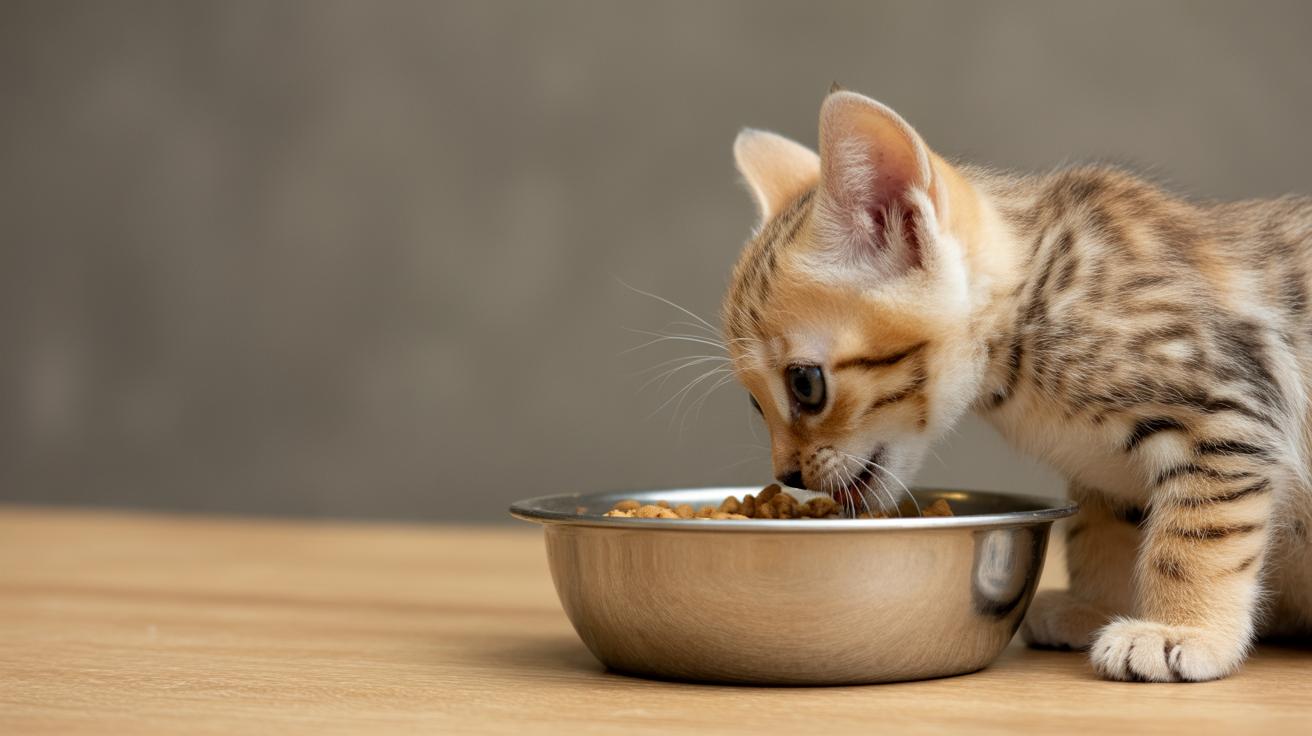
    2. Days 4–7: Shift to roughly 50% kitten + 50% adult; reduce added water or soak time slightly.
    3. Days 8–14: Move to 25% kitten + 75% adult, then go to full adult food by day 11–14 if weight and stools stay steady.

    If things go off-track, don’t panic. Go back to the mix that worked, give it a week or two, and check in with your vet. Worth every paw-print.

    Final Words

    In the action: start offering moistened kibble or gruel at about 4-6 weeks; most kittens are eating dry or mixed diets by 8-10 weeks.

    Watch for nibbling at 3-4 weeks, premolars (front chewing teeth) appearing around 5 weeks, and curious dish-eating behavior. Those are the measurable green lights.

    When can kittens eat dry food? Most will be ready by 8-10 weeks if those signs and steady weight checks line up, and then you’ll have playful, healthy kittens filling the house with purrs.

    FAQ

    When can kittens eat dry food?

    Kittens can start eating moistened dry food around 4–6 weeks, and most are on dry or mixed diets by 8–10 weeks once chewing and weight gain progress.

    What signs show a kitten is ready for dry food?

    A kitten is ready when it nibbles solids at 3–4 weeks, shows premolar eruption around five weeks, explores dishes, and gains steady weight toward about 2 pounds by eight weeks.

    Can 4-week-old or 5-week-old kittens eat dry food?

    Four-week-old kittens should receive moistened gruel; five-week-olds can handle softened kibble as chewing improves, with fully dry kibble usually introduced later in the weaning timeline.

    When do kittens start eating food and drinking water?

    Kittens begin nibbling solids around 3–4 weeks and can be offered fresh water once solids start; most reliably drink from a dish by about 6–8 weeks.

    When can kittens eat wet food?

    Kittens can eat wet food beginning around 4–6 weeks, using canned food made into a gruel for early weaning and progressing to thicker textures across about two weeks.

    What is a basic kitten feeding chart by age?

    A basic chart: 4–8 weeks moistened gruel and small meals; 8–20 weeks larger growing portions (about 160 kcal/day at eight weeks); meals drop from up to six daily to three as solids increase.

    What is the 3-3-3 rule for kittens?

    The 3-3-3 rule means three days to settle into a new home, three weeks to adapt to routines and the household, and three months to feel fully comfortable and bonded with family.

    Can 4-week-old kittens poop on their own?

    Many four-week-old kittens can poop on their own as reflexes mature, though some still need stimulation; consult a veterinarian if elimination doesn’t occur or stools look abnormal.
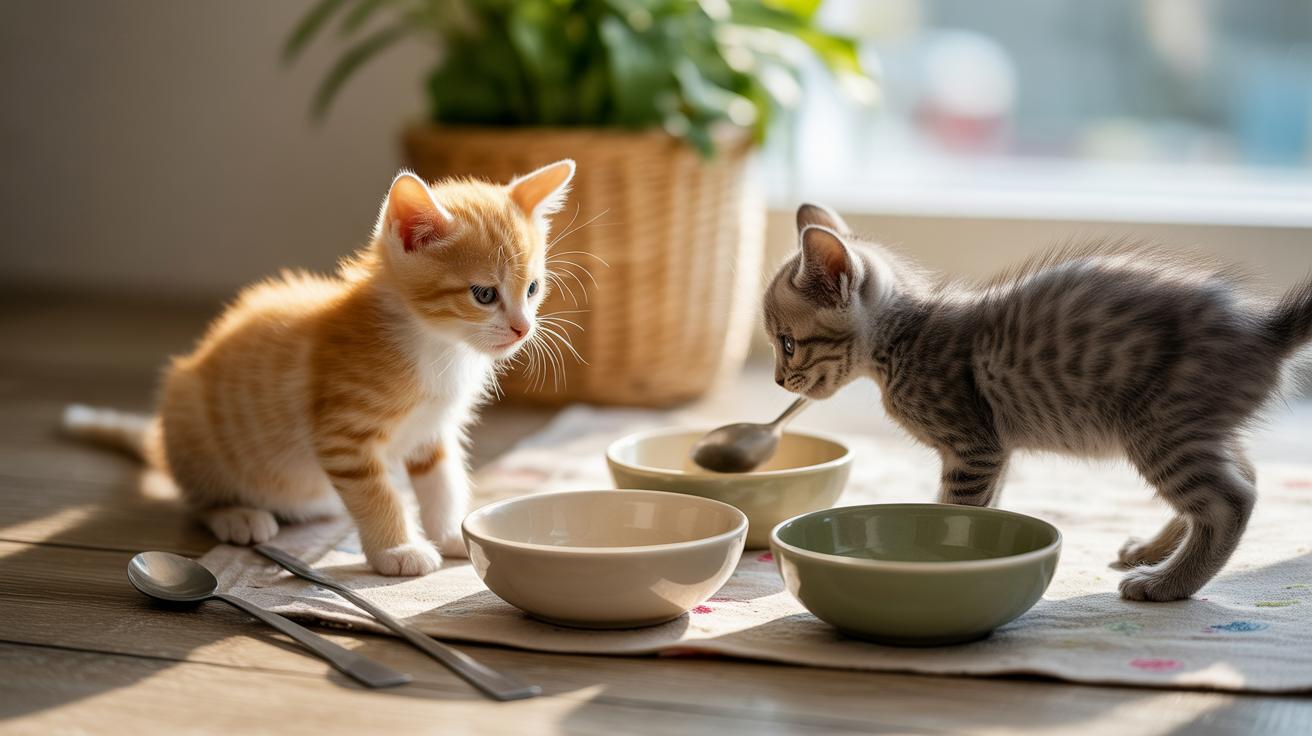
    Related Articles