Category: Cat Toys

  • how to clean and sanitize unbreakable cat toys

    how to clean and sanitize unbreakable cat toys

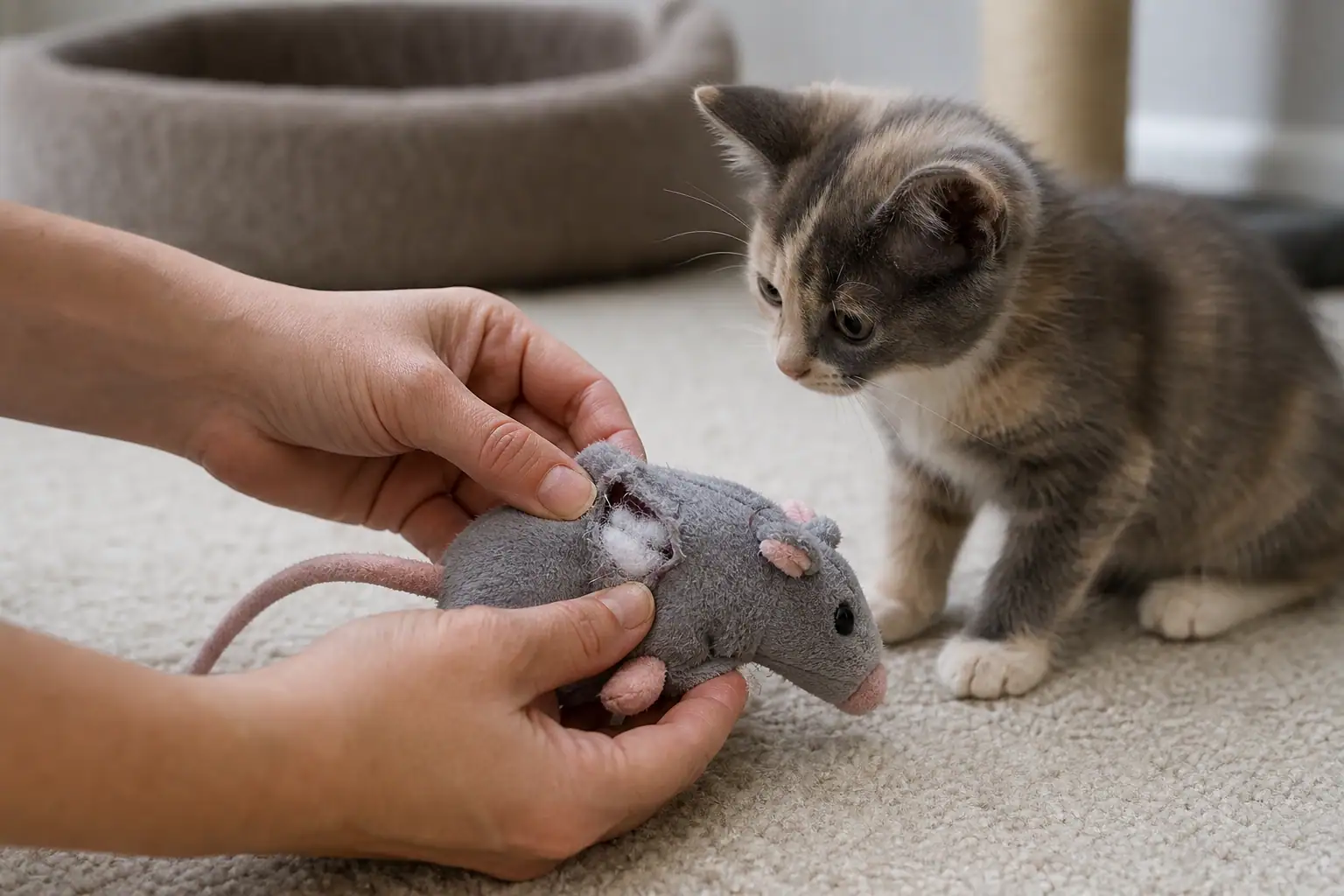
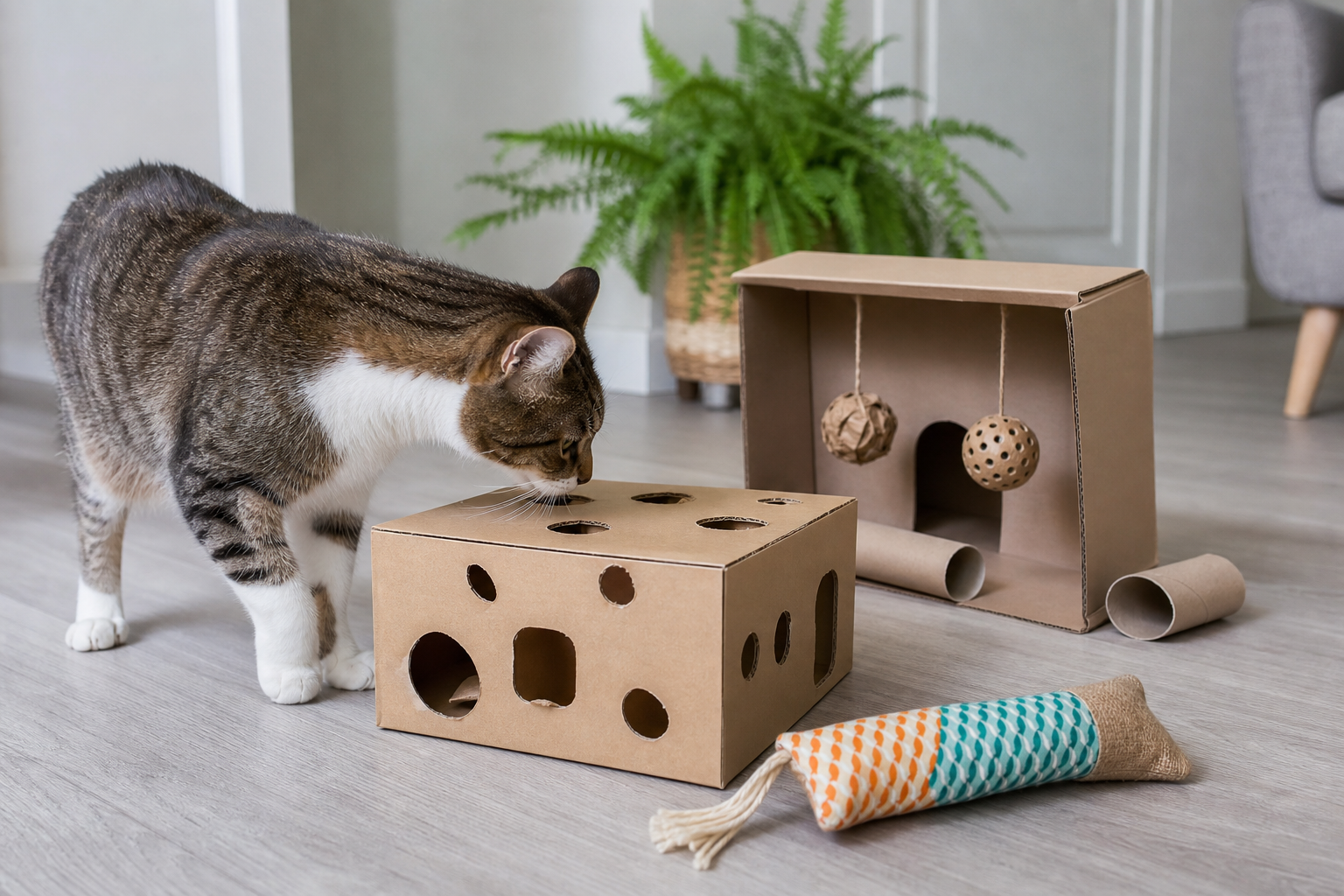
    Think your unbreakable cat toys never need cleaning? Nope. Food bits, drool, and mystery gunk sneak into cracks, nooks, and treat chambers. Ever watched your cat poke a treat chamber like it’s a tiny treasure chest? Those little compartments need extra care, trust me.

    Quick, simple cleaning steps that actually work. Soak in hot-soap water (hot tap water plus mild dish soap) for 10–15 minutes. For puzzle toys, follow with a vinegar soak (one part white vinegar to three parts water) to cut oils and odors. Scrub crevices with a soft brush, rinse well, and let everything air-dry until fully dry. It’s satisfying when the toys look and smell clean again.

    Sort by material so you don’t wreck anything. Rubber (flexible synthetic) and plastic (molded polymer) usually take a warm soak and a good scrub; some are fine on the top rack of the dishwasher, but check the label. Fabric (woven cloth) pieces should be machine-washed or hand-washed on gentle, and toss removable covers in a laundry bag. Treat chambers and tiny holes love a toothbrush or toothpick for digging out the crumbs.

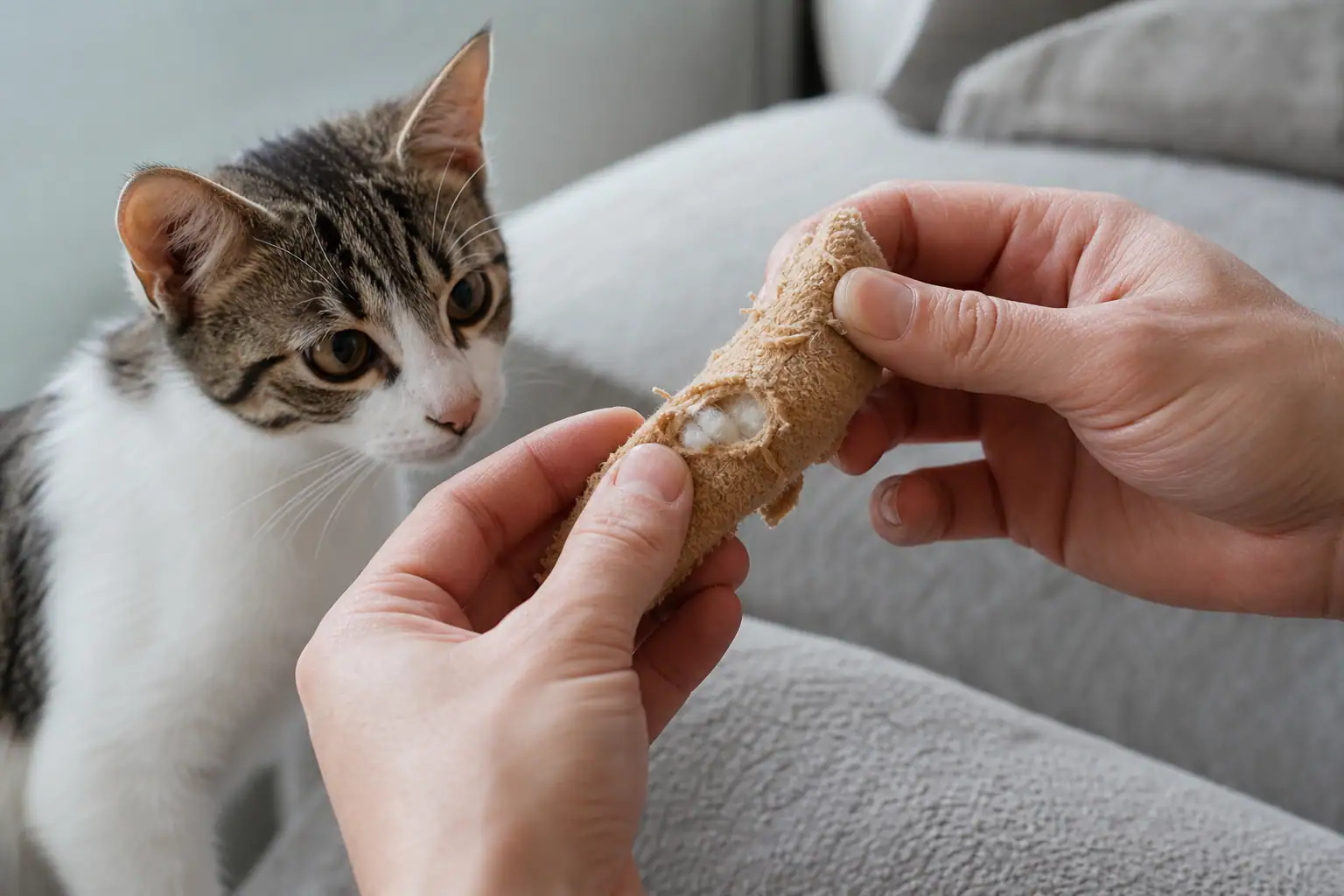
    When to trash a toy? If fabric is shredded and stuffing shows, if plastic or rubber is cracked or has sharp edges, or if a smell won’t go away after cleaning, toss it. Toss it if it can’t be made safe. Worth every paw-print.

    Avoid bleach and scented oils. Bleach can leave harsh residue and damage materials, and many essential or scented oils are toxic to cats (they can harm breathing or skin). Stick to mild soap, vinegar, and warm water for safe, effective cleaning. For busy days, give an unbreakable ball a quick scrub and toss it for ten minutes of solo play before you head out.

    Happy cleaning, your cat will probably give you a purr or a chew for your trouble, um, in the best way.

    how to clean and sanitize unbreakable cat toys

    - Complete cleaning and sanitizing protocol for unbreakable cat toys (fast, actionable emergency lede).jpg

    If a toy gets messy, your first move is to pull it out of play right away. Knock off any loose gunk, then follow the quick checklist below for a fast, full cleanup. Ever watched your cat poke a treat chamber like it’s a tiny treasure chest? Those need special care.

    Hot-soap soak: use hot water (as hot as your tap, but not scalding) and about 1 tablespoon mild dish soap per gallon; soak 30 minutes.
    Vinegar option for puzzles/treat chambers: white vinegar : water 1:1; soak 20 to 30 minutes (vinegar helps cut grease and odors, and it smells tangy but rinses away).
    Treat-dispensing toys: clean after every use. Wash any toy that touched vomit, diarrhea, or a sick pet right away.

    1. Isolate the contaminated toy and put it in a “dirty” bin so it doesn’t go back into rotation.
    2. Sort toys by material: hard (rubber (flexible synthetic material), plastic (molded polymer)), fabric (woven cloth), electronics (battery-powered parts).
    3. Toss anything with obvious hazards: loose bits, exposed stuffing, or sharp edges. Safety first.
    4. Pre-rinse under running water to remove loose debris, then do the hot-soap soak (see ratio) or the vinegar soak for puzzles and treat chambers (see ratio).
    5. Use a brush or an old toothbrush to scrub seams, nooks, and treat chambers until they look clean. Get into those tiny corners.
    6. Rinse under running water until the soap or vinegar smell is gone. No residue left behind.
    7. Air-dry completely, turning chambers upside down so water drains out, before letting your cat play with it again.
    8. Put the toy in a labeled clean bin and rotate it back into play when it’s fully dry.

    Do not use bleach for routine cleaning. It’s harsh and can leave residues that irritate paws and noses. Avoid essential oils and dryer sheets on pet toys too; they can be toxic or leave greasy films.

    Other sections expand on material caveats, sanitizer options, and homemade recipes – cross-reference this lede for soak times and how often to clean.

    how to clean and sanitize unbreakable cat toys

    sections expand on material caveats, sanitizer options, and recipes  cross-reference this lede for soak times and frequency rules so downstream sections do not repeat them.jpg

    Before you start, check the lede for exact soak times and dilution rules, and always spot-test any cleaner on a small, hidden area first so color or texture does not change. A quick swab test can save a ruined toy and one very disappointed cat.

    Rubber toys

    Rubber (flexible synthetic material, like a soft, bendy shoe sole) does not love heat or harsh solvents. Don’t boil rubber unless the maker explicitly says it’s okay – repeated high heat can soften it or leave a tacky surface that traps dirt. If a rubber toy smells, sprinkle on baking soda, let it sit a few minutes, then rinse and dry; that usually freshens things without harsh chemicals. Worth a try before you get desperate.

    Silicone toys

    Silicone (heat-resistant polymer, like an oven-safe spatula) usually handles heat well and is often safe on the dishwasher top rack or for boiling sterilization, but check the manufacturer label first. Many folks treat silicone toys as dishwasher-safe and use steam cleaning too. If the maker warns against boiling or high heat, follow their guidance to avoid warping.

    Hard plastic toys

    Hard plastic (molded polymer, like a sturdy plastic cup) can sometimes go on the top-rack of the dishwasher, but thin seams, tiny hairline cracks, or flaking paint hide bacteria. Inspect seams closely; if plastic flakes or cracks, toss it. Small parts can pop loose in the dishwasher, so keep tiny toys out or hand-wash them.

    Material Material Caveats Safe Heat Limits One-line Exceptions
    Rubber (flexible synthetic material) Degrades with repeated heat or solvents; can get tacky Low to moderate heat only – avoid boiling unless maker approves Use baking soda for odors; do not use harsh solvents
    Silicone (heat-resistant polymer) Heat-stable and resists warping when approved Usually safe for boiling and dishwasher – follow maker if not Good for steam cleaning and high-temp cycles when allowed
    Hard plastic (molded polymer) Seams and cracks trap bacteria; paint can flake Top-rack dishwasher only for compatible pieces Replace if hairline cracks or flaking appear

    And one last tip: refer back to the lede for exact soak times and how often to clean each toy so you do the job right without repeating steps here.

    Mechanical sanitizers: dishwasher, boiling/steam, UV and ultrasonic options (pros and cons)

    - Material-specific caveats and heat limits for rubber, silicone and hard plastic toys.jpg

    Mechanical sanitizers save time and cut down on chemicals, which is perfect when you’re juggling work and whiskers. Check the lede first for base soak time and dilution notes (that’s where the exact timing lives) before you swap methods. Pick the tool that matches the toy material and the maker’s instructions so you don’t warp or wreck a favorite plaything.

    • Dishwasher

      • Pro: hot-water cycles give a solid rinse and heat boost for many plastics (lightweight molded material) and some silicone (soft, heat-resistant rubber-like material).
      • Con: dishwasher detergent can leave residue, and tiny parts may pop off or get tossed around during the cycle.
    • Boiling / Steam (steam = hot vapor)

      • Pro: chemical-free high heat for heat-tolerant silicone (soft, heat-resistant rubber-like material). Great for stubborn gunk without soap.
      • Con: not safe for many rubbers (stretchy material) or thin plastics (lightweight molded material); heat can warp or soften them.
    • UV (UV = ultraviolet light)

      • Pro: no moisture, so electronics (battery-powered parts) and dry hard surfaces avoid water damage.
      • Con: UV light can’t reach into seams or tiny crevices, so hidden gunk may survive. Think of it as surface-level only.
    • Ultrasonic (high-frequency sound waves above human hearing)

      • Pro: the tiny sound-driven bubbles in a cleaning solution reach deep into nooks and crannies for a thorough clean.
      • Con: don’t use on electronics, soft porous fabric (breathable, fuzzy materials), or toys with glued parts that might loosen.

    Match the method to the toy’s material and follow manufacturer guidance. If you’re unsure, refer back to the lede for exact soak times and dilution so you don’t overdo heat or skip a rinse.

    Worth every paw-print.

    Quick recipes & cautions

    - Mechanical sanitizers dishwasher, boilingsteam, UV and ultrasonic options (pros and cons).jpg

    Base wash steps are in the lede. This little box has the extra, useful bits you won’t find there: a baking-soda paste, a machine-wash tip for plush toys, and a few hard safety calls.

    1. Baking-soda deodorizer: Use 3 tablespoons baking soda (sodium bicarbonate, a mild natural deodorizer) mixed with 2 to 3 teaspoons water until it becomes a spreadable paste. Spread on smelly spots, wait 5 to 10 minutes, scrub gently, then rinse completely. Example: 3 Tbsp baking soda + 2 tsp water , spread, wait 7 minutes, scrub, rinse.

    Machine wash plush toys using a pet-safe enzyme detergent (enzymes break down proteins like drool and food). Pop toys in a mesh laundry bag, run a gentle cycle, and air-dry to keep seams and stuffing happy.

    Do not use:

    • Household phenol disinfectants (toxic to pets)
    • Undiluted isopropyl alcohol on porous or plush items (it soaks in, can damage materials, and may leave harmful residue)
    • Unlabeled industrial cleaners or solvents (unknown residues and hazards)

    If you’re unsure, spot-test in an out-of-sight area first or check with your vet. Worth every paw-print.

    Cleaning treat-dispensing and puzzle toys: tools, inspection cues and targeted technique

    - Pet-safe cleaners, precise dilution recipes and substances to avoid.jpg

    Treat and puzzle toys trap food, saliva, and sticky bits, so they breed more germs than plain toys. Check the lede first for recommended soak times and per-use cleaning rules before you start. This section sticks to the tools you need, how to reach inner chambers, and the signs that a toy needs extra attention.

    Tools and technique

    Here’s what I reach for every time. Bottle brush (a long, flexible brush for cleaning deep tubes), small toothbrush (for seams and edges), cotton swabs (cotton-tipped applicators for tiny spots), compressed air (a can of air to blow out crumbs), and a pipe cleaner (a thin, bendable wire brush for narrow channels). You can also use a soft sponge for outer surfaces and a basin for soaking warm water (warm, not hot).

    Start in this order. Empty the toy. Pre-rinse. Use the hand tools. Rinse again. It keeps the job tidy and faster, trust me.

    Step-by-step cleaning sequence

    1. Empty the toy and tap out loose kibble and crumbs into the trash or sink.
    2. Pre-rinse under warm running water to loosen sticky kibble and saliva.
    3. Use the bottle brush to scrub deep chambers, pushing stuck food free from tubes and hollows.
    4. Scrub seams and edges with the small toothbrush, paying attention to places where drool and food collect.
    5. Work cotton swabs and a pipe cleaner into tiny channels and valves (valves are little one-way parts that control flow), then use compressed air to blow out any last crumbs.
    6. Rinse thoroughly under running water until no soap or loose bits remain, then air-dry upside down so water drains from cavities.
    7. Give it a sniff and a visual check before putting the toy back in rotation. If you still smell food or see discoloration, clean it again.

    Watch for these warning signs

    • Persistent odor even after cleaning.
    • Discoloration, mold spots, or a gummy film inside pockets.
    • Cracks, warped plastic, or damaged seals and valves (seals are the rubber or plastic rings that keep parts tight).
    • Internal cavities you just can’t reach and clean.

    If internal cavities can’t be cleaned fully, or seals and valves show wear, remove the toy from use. Better safe than sorry, right? Worth every paw-print.

    Cleaning plush, catnip and non-washable fabric toys: preservation, machine settings and odor control

    - Cleaning treat-dispensing and puzzle toys tools, inspection cues and targeted technique.jpg

    If a toy is labeled machine-safe and sturdy, toss it in the washer. If it’s delicate or stuffed with catnip, hand-wash to keep that irresistible scent alive. The soak and dilution rules you read earlier apply for deep soaks, so this part just covers settings and gentle handling to protect fabric and aroma.

    1. Use a mesh laundry bag for small toys.

      • Mesh laundry bag (zippered mesh pouch like a little laundry net) keeps tiny toys from vanishing, snagging, or losing eyes and bells.
    2. Choose the right detergent.

      • Use a pet-safe enzyme detergent (enzymes are cleaners that break down proteins like drool and food). Follow the label for the right dose.
    3. Wash cold and gentle.

      • Run a cold, delicate cycle to protect seams, printed fabrics, and any glued bits. Cold water helps keep catnip oils from fading.
    4. Dry carefully.

      • If the label allows, tumble dry on low. But air-dry flat or hang in the shade when you can to keep shape and catnip potency (how strong the scent is). Avoid dryer sheets – they coat fabrics and can dull smells and textures.
    5. Hand-wash tips for catnip or fragile toys.

      • Gently agitate in warm (not hot) water with mild soap. Don’t wring; press out water and reshape the plush. Air-dry completely to stop mildew.

    For mild odors, sprinkle baking soda (sodium bicarbonate) on the toy, let it rest a few minutes, then vacuum or rinse lightly. If an odor won’t budge, the catnip scent is ruined, or the toy has irreversible contamination (blood, feces, mold), toss it.

    Quick note: small repairs like a resewn seam or glued-on eye can save a favorite toy. But if you’re unsure, safety first. Worth every paw-print.

    how to clean and sanitize unbreakable cat toys

    - Cleaning plush, catnip and non-washable fabric toys preservation, machine settings and odor control.jpg

    Wet toys are the enemy. After you wash anything, drying it fully is step one , moisture left in seams or inside chambers (hollow parts of a toy) invites mold and that funky smell your nose hates. Check how long to soak and how often to clean, then give each toy a full air-dry cycle: use racks, turn hollow toys upside-down to drain, and let fabric pieces dry in sun or shaded airflow (fabric: woven material).

    Toy Type Inspection Cues Repair vs Replace Storage Notes
    Plush Loose seams, damp stuffing (stuffing: the soft filling inside), faded catnip scent (catnip: herb many cats love) Sew small tears. Replace if stuffing is exposed or smell won’t quit. Keep in breathable bins. Avoid damp basements.
    Rubber toy Tacky surface, deep cuts, odor that won’t rinse out (rubber: stretchy, bouncy material) Patch tiny nicks. Toss if rubber softens, cracks, or rips. Dry fully on a rack. Don’t store near heat.
    Silicone dispenser Warping, stuck lids, food trapped in seams (silicone: flexible, rubber-like plastic) Swap gaskets or seals (gasket: a soft sealing ring). Replace if shape is distorted. Store upside-down so chambers drain. Keep lids off until dry.
    Rope toy Fraying, discoloration, musty smell (rope: twisted fibers) Trim loose ends. Replace if heavy fray or mold appears. Air out flat. Avoid airtight tubs that trap moisture.
    Electronic / interactive Battery corrosion, loose wiring, persistent wetness (batteries: small power cells) Fix simple attachments. Replace if electronics look compromised. Remove batteries before storing. Keep in a cool, dry spot.
    Multi-cat shared toys Frequent drool buildup, visible residue, cross-contamination risk Rotate or dedicate toys per cat. Toss if internal cleaning fails. Label per cat or use color bins to prevent swaps.

    Watch for these deal-breakers:

    • Loose parts your cat could swallow.
    • Exposed stuffing or torn seams.
    • Sharp edges from chewing or broken pieces.
    • Flaking, cracking, or softening plastic or rubber (plastic: synthetic polymer).
    • Smell that won’t go away after cleaning or a baking-soda treatment (baking soda: common household cleaner).
    • Visible internal residue, mold, or unreachable gunk.

    Rotate toys so your cat gets fresh stuff to chase and you get fewer shredded messes. Keep a labeled clean bin and a dirty bin so you always know what’s ready. Store toys in a dry, ventilated container and let hollow items drain upside-down before tucking them away. For teaser wand fixes and small attachment swaps, check DIY replacement attachments for teaser wands: https://titanclaws.com/diy-replacement-attachments-for-teaser-wands/

    Worth every paw-print.

    how to clean and sanitize unbreakable cat toys

    - Drying, inspection, repair vs replace cues and rotationstorage practices.jpg

    When your cat gets sick, toys can pick up germs fast. Pull any toy that touched vomit, diarrhea, or the sick kitty out of rotation and seal it in a bag right away. The lede has the exact soak and dilution steps for deep cleaning; this section walks through the tricky stuff, things water or heat can ruin and toys with electronics.

    Electronics and battery toys

    Remove batteries before you touch any electronic toy. Don’t submerge these items, water and circuits do not mix. Wipe the outside with a cloth dampened with 70% isopropyl alcohol (rubbing alcohol) and be careful not to push liquid into ports (openings for cables) or seams. Cover openings with tape or plastic wrap while you clean nearby areas, let everything dry completely, then reinstall batteries and test. Follow the maker’s cleaning notes when they’re available.

    Post-illness handling (5 steps)

    1. Isolate the toy in a sealed bag or a designated dirty bin to stop cross-contamination.
    2. If the illness might be contagious, ask your vet whether testing or extra precautions are needed.
    3. Deep-clean toys that can handle it using the lede’s soak and dilution instructions; scrub all nooks and chambers (hidden cavities) so nothing gross is left behind.
    4. Inspect seals and gaskets (rubber rings), and check electronics for trapped moisture or corrosion (rust or damage).
    5. Toss any toy with internal contamination, broken seals, or compromised electronics, don’t try to fix a soggy gadget.

    In homes with more than one cat, mark or color-code toys so each cat keeps their own. Avoid sharing high-risk treat or puzzle toys without cleaning between users; use labeled clean and dirty bins so toys don’t get swapped by accident. Little tricks help, stick a strip of colored tape on a toy, or use different colored balls, simple, but it saves a lot of worry.

    Quick advanced checklist and FAQs

    - Special cases electronics, shared-toy handling and post-illness protocols (nuances, not repeats).jpg

    • Use pet-safe cleaners when you can (see Quick Recipes). They clean well without upsetting your cat or leaving weird smells.
    • Don’t use essential oils or dryer sheets on toys , they can irritate noses and skin. See the Plush section.
    • Check the Material Table before you try heat, solvents, or heavy methods. Solvents (strong chemicals that dissolve stuff) and heat can ruin some materials.
    • Keep a puzzles toolbox handy: a soft brush, a small toothbrush, pipe cleaners, and compressed air (the canned spray used to blow dust). These little tools make treat toys easy to clean. See Treat‑Dispensing Tools.
    • For electronics, pull the batteries first and follow the Electronics Protocol. Batteries can leak or short if you use water.
    • Not sure whether to fix or toss a toy? Follow the Inspection Cues / Repair vs Replace table for quick guidance.
    • Label toys by cat and keep separate clean and dirty bins so you don’t mix things up. See Storage Notes.
    • If a toy was involved in an illness or heavy contamination, contact your vet or the toy maker right away (see Post‑Illness handling). Better safe than sorry.

    FAQ (jump to existing answers):

    Final Words

    In the action: you’ve got a grab-and-go emergency protocol, an 8-step cleanup checklist, and clear soak recipes so you can act fast when a toy gets messy. Then the post walks material heat limits, mechanical sanitizers, pet-safe cleaners, puzzle/treat tools, plush care, drying and storage, plus electronics and post-illness tips, so multi-cat homes stay healthy and tidy.

    Stick with the lede soak ratios and rotation habits, and playtime stays safe, low-stress, and long-lived. Want to know how to clean and sanitize unbreakable cat toys? Happy pouncing.

    FAQ

    Cat Toy Cleaning & Disinfecting FAQ

    How to clean and sanitize unbreakable cat toys at home (DIY, YouTube, Reddit, vinegar)?

    Soak in hot water with 1 tbsp mild dish soap per gallon for 30 minutes, or soak puzzles/toys in a 1:1 solution of household white vinegar and water for 20–30 minutes; scrub, rinse thoroughly, and air-dry.

    How can I wash catnip-filled and plush cat toys (can you wash cat toys with catnip)?

    Machine wash in a mesh bag on cold/delicate with a pet-safe enzyme detergent, or hand-wash gently. Reshape and air-dry to help preserve catnip potency and fabric shape.

    How to safely disinfect cat toys and what disinfectant is safe to use on cats?

    Wipe nonporous items with 70% isopropyl (rubbing) alcohol; use diluted white vinegar for puzzles and similar items. Avoid routine use of bleach on toys, and do not use essential oils or dryer sheets on items that cats contact.

    How to disinfect toys that can’t be washed?

    Wipe surfaces with a cloth dampened with 70% isopropyl alcohol or use a UV sanitizer for solid nonporous items. For plush that can’t be laundered, deodorize by sprinkling baking soda then vacuuming. Discard toys contaminated with feces or vomit.

    How to clean toys after vomiting or illness?

    Remove affected toys from rotation, remove visible debris, pre-rinse, then perform a full hot-soap soak or vinegar soak as above, scrub, rinse thoroughly, and air-dry. Discard porous items that were contaminated by bodily fluids.

    How to clean fabric cat toys and preserve smell or catnip?

    Wash in a mesh bag on cold/delicate with pet-safe enzyme detergent or hand-wash with gentle agitation and minimal wringing. Air-dry completely. For mild odors, sprinkle baking soda, let sit, then vacuum.

    Related Articles

  • Toy Rotation Strategies Extend Unbreakable Cat Toys

    Toy Rotation Strategies Extend Unbreakable Cat Toys

    Think "unbreakable" means forever? Think again. Cats get bored fast and they’ll test a toy the moment it seems predictable. Ever watched your kitty bite, fling, and pounce until the toy gives up? It’s like a tiny, furry stress-test.

    Swap a few toys each day or week to keep textures and motion feeling new. Try toy rotation (hiding and swapping toys so each one feels fresh). That little swap cuts down chewing (gnawing with teeth) and can stretch toy life from weeks to months. Your cat will chase with that wide-eyed focus and you’ll hear the satisfying thunk of a ball on the floor.

    Here’s a simple plan you can use right away: quick swaps, short cycles (brief play sessions), weekly themes, and a 30-day rotation option so you can match the rhythm to a zoomy kitten or a mellow senior. For busy days, toss an unbreakable ball for ten minutes before you head out, ten minutes of safe play buys you quiet time later.

    Little changes now mean fewer shredded toys and more playful pounces. I once watched Luna leap six feet for a plush mouse after it’d been hidden for three days, claw-tastic. Worth every paw-print.

    Start Today: Practical Rotation Plan to Extend Toy Life

    - Start Today Practical Rotation Plan to Extend Toy Life.jpg

    Start-today checklist:

    1. Put 3 to 5 toys out where your cat can see them so there’s a small, fresh set for daily play.
    2. Divide the rest into 3 to 4 groups and tuck those groups into closed bins out of sight to keep them novel. (Closed bins means airtight or lidded containers that block scent and sight.)
    3. Try a few cadences: daily quick swap; a short 3 to 7 day cycle; a weekly thematic swap; or a 30-day cycle with 5 to 7 day rest periods for each group.
    4. Store toys sealed, and before you bring them back either re-scent with catnip or silvervine (silvervine is a plant that drives many cats wild) or wash toys that are machine-safe.
    5. Supervise wand and electronic toys (battery-powered motion or motorized toys) during active sessions, and keep some interactive items just for supervised play so things stay safe and fun.

    Daily quick swap , change 2 to 3 visible items every day; perfect for kittens and zoomy adults who burn energy fast.

    Short cycle , swap one full group every 3 to 7 days; this works well for most adult cats who like steady novelty without overload.

    Weekly thematic , focus a week on a play type, like chase week, puzzle week, or ambush week; great for mixing up how they move and think.

    30-day cycle , rotate groups over 3 to 4 weeks with each group getting a 5 to 7 day rest period; ideal for keeping things fresh long-term and for multi-cat homes.

    Why this works: rotation cuts down on constant wear and boredom. Your cat gets varied textures and motion, so toys feel new again when they come back. That reduces destructive chewing and shredding, and it keeps your cat mentally engaged longer. It also means fewer broken toys, which is nice for your wallet and for less clutter.

    Match cadence to age and energy: go faster for kittens and high-energy adults, slower for seniors or mellow cats. Need a ready plan? Check the "Toy rotation schedule templates" section for exact templates.

    Worth every paw-print. Oops, let me rephrase that, it’s worth every paw-print and a little extra attention. Ever watch your kitty go wild for a toy they haven’t seen in weeks? That’s the magic.

    Organizing and grouping: labeling, storage workflow, and quick-swap mechanics

    - Organizing and grouping labeling, storage workflow, and quick-swap mechanics.jpg

    A tidy system makes toy rotation feel easy, so you actually rotate toys instead of letting them pile up. Think of your stash like a tiny library: neat shelves, clear labels, and toys you can grab fast. That little bit of order keeps novelty alive and your cat curious.

    Start with simple labels. Put Toy ID (a short code you make), Type (wand, puzzle, plush), and Last‑Used Date on each bin so you know what’s inside and when it last saw daylight. Use closed bins for long-term storage , airtight or lidded containers that block smell and sight , and keep easy-access trays or open bins on a low shelf near play spots for the current rotation. A waist-height staging shelf works great: out of paw reach, but easy for you to snag a set.

    Group like with like so themed swaps are one quick move. Make grab-ready trays for interactive wands, puzzle/feeders, plush toys, balls, catnip or scented items, and electronic motion toys (battery-powered moving toys). Label lids or add visible tags and grab-handles so you can pull a whole theme in seconds. Ever watched your kitty pounce when a fresh toy appears? Yep, worth it.

    Build a 1-2 minute swap ritual into your day. Pull a tray, give a short supervised tease, then tuck retired toys back into sealed storage. Use clear-front bins if you like to peek without opening, or keep a small staging basket for the toys currently cycling. See the "Toy rotation schedule templates" H2 for cadence choices and the "Maintenance & Safety" H2 for cleaning and inspection routines. Worth every paw-print.

    Toy rotation schedule templates to extend life of unbreakable cat toys

    for cadence choices and Maintenance  Safety.jpg

    This is the short, easy-to-scan summary of the three main cadences (cadence means the schedule or rhythm you use). If other parts of the guide say "See the Toy rotation schedule templates," send readers here instead of copying the full templates. Nice and tidy, right?

    • Daily quick swap , swap 2 to 3 visible toys each day so things feel new.
    • Short-cycle rotation , rotate one full group every 3 to 7 days. Keeps interest up without too much fuss.
    • Month-cycle with rest , use a 3 to 4 week rotation so each group rests about 5 to 7 days before coming back.

    Try a template for 2 to 4 weeks and tweak it based on what actually happens. Quick test story: Tried the short-cycle for three weeks; Luna preferred group B, so we moved those toys to brighter spots and her playtime jumped from 5 to 12 minutes. See? Little changes matter.

    Multi-cat tactics: keep duplicates of prized toys and stagger reintroductions so play doesn’t turn into a tug-of-war. For example, keep two FeatherWands; give one to Solo for five minutes, then bring out the second for the other cat. Calm, fair, and way less drama.

    Keep a tiny engagement log to track what works. Simple columns: Date | Toy ID | Minutes played | Reaction (1-5). Example entry: 04/12 | FeatherRod-2 | 7 | 4 , pounced immediately.

    Use those quick notes to tweak your cadence. For deeper tracking tips, head over to the "Measure & Troubleshoot" H2. Worth the five minutes to get better playtime for everyone.

    Maintenance & Safety (Inspection, Cleaning, Repair, When to Retire)

    A little routine care keeps toys safe and makes rotation fun instead of risky. Spend a few minutes each swap to check and freshen toys so novelty doesn’t bring hidden hazards. You’ll save money, and your cat will thank you with extra zoomies. Worth every paw-print.

    Inspection

    Handle each toy before you put it back out. Feel for fraying, torn seams, exposed stuffing, loose or missing bits, sharp edges, wobble or rattle in battery-powered toys (battery-powered means it runs on batteries). Sniff for odd smells, mold or burned plastic is a red flag. For electronic toys, turn them on and listen for grinding or jerky movement; if it sounds wrong, it probably is.

    Use a simple pass/fail approach: tag anything that fails for repair or retirement and skip it from the rotation until it’s fixed. Ever watched your cat pounce on a broken toy? Not pretty. So don’t risk it, out it goes until you’re sure it’s safe.

    Cleaning Methods

    Match the cleaning to the material. Hand-wash fabric toys with mild soap and hot water. Machine-launder only if the care label says it’s safe. Sanitize silicone (flexible rubber-like plastic) or rubber items on the dishwasher top rack or wipe them with a silicone-safe cleaner if the maker allows.

    Keep catnip toys sealed in bags when stored so the scent stays fresh. Avoid harsh solvents and strong chemicals; many toys should air-dry only. Quick tip: a sun-fresh smell and a dry toy make playtime way more inviting.

    Repair Guidelines

    Set damaged toys aside and decide if they’re fixable. Small repairs often work: restitch seams with heavy-duty thread (strong sewing thread), swap or reattach wand tips, replace buttons or bells with secure fasteners, or use pet-safe adhesive (non-toxic glue safe for pets) for non-structural joins. For wand tips, see this handy how-to: https://titanclaws.com/diy-replacement-attachments-for-teaser-wands/.

    Stop repairing when a hazard remains. If a repair still leaves loose bits, exposed stuffing, or weak joints, retire the toy. Uh, been there, sometimes patching is more work than it’s worth, and that’s okay.

    When to Retire

    Retire toys that show exposed stuffing, detached small parts, chewed-through plastic, or electronics that fail inspection. Before tossing a plush with exposed filling, cut it into pieces so no one else can reuse it. Donate only clean, fully intact toys to shelters or rescues.

    Use your engagement log from the Measure & Troubleshoot section to spot toys that should retire because they’re ignored or repeatedly unsafe. If a toy never gets played with or keeps coming back broken, let it go and make room for something new and safe.

    Tailoring toy rotation strategies for kittens, seniors, and multi-cat households

    - Toy rotation schedule templates to extend life of unbreakable cat toys.jpg

    We removed this standalone section and folded the practical tips into the places people already look. It keeps the advice handy and stops the same safety notes from popping up everywhere, which felt a bit repetitive.

    Kitten note: you’ll find kitten-specific tips in "Start Today: Practical Rotation Plan" next to cadence advice. Expect reminders about small parts (things a kitten could swallow), close supervision, faster toy turnover, and inspecting toys after rough play. We link safety and cleaning details to "Maintenance & Safety" instead of repeating the same steps here, so you can jump to one place for the nitty gritty.

    Senior note: tips for older cats live under "Toy rotation schedule templates" where cadence guidance appears. Look for notes on softer textures, low-impact activities, gentle puzzle feeders, and a slower swap pace to keep play fun but comfy. Inspection and cleaning pointers point back to "Maintenance & Safety."

    Multi-cat homes: we added a callout in "Organizing and grouping." It covers duplicates, staggered reintroductions, labeled bins, supervised group play, and ways to prevent one cat from hogging a toy. Safety checks and how often to inspect are linked to "Maintenance & Safety" so you don’t miss the important stuff.

    Putting these tips where cadence, organization, and safety are discussed makes the guide easier to use. Less flipping around. More playtime. Worth every paw-print.

    Toy Rotation Strategies Extend Unbreakable Cat Toys

    for tracking and analysis).jpg

    Rotating toys helps your unbreakable stuff last longer, and it keeps cats excited. For the nitty gritty on wand care and session length, check Repair Guidelines and the Start Today checklist. They even give this quick rule: "Swap attachments, keep the shaft; 3-10 minute supervised bursts" , shaft (the wand pole) and supervised bursts (you watch them play).

    Want cleaning and inspection tips? Peek at Maintenance & Safety for Cleaning Methods and Inspection. A handy line to remember is: "Rotate difficulty; wash food-contact puzzles after each use." Food-contact puzzles (puzzles that touch your cat’s food) should be cleaned more often, and turning up the challenge slowly keeps kitties engaged.

    For battery-powered toys, follow the electronic toy care notes. The checklist says: "Limit unsupervised runtime; vary run-times/recharge cycles; watch for grinding or odd motor noises." Motor (the small machine that moves parts). If you hear weird sounds or see smoke, stop playtime and check it out.

    Little habits make a big difference. Swap a feather for a bell. Toss a tougher puzzle one day, an easier one the next. Your cat stays curious. Your toys last longer. Worth every paw-print.

    Measure & Troubleshoot: track engagement, diagnose low interest, and guide retirement decisions

    - Maintenance  Safety (Inspection, Cleaning, Repair, When to Retire).jpg

    Keeping a tiny tracking habit turns guesswork into clear actions. Use the numbers you collect to pick a better cadence in the "Toy rotation schedule templates" H2 and to follow repair or retirement rules in the "Maintenance & Safety" H2. Ever watched your kitty ignore a toy for days and then suddenly pounce? Little notes add up fast and stop toys from lingering past their prime.

    What to track:

    • Session length in minutes.
    • Frequency of use per week.
    • Intensity (how hard they play – pounce/chase versus light batting).
    • Whether a toy re-engages after you bring it back.
      For quick logging, keep a three-column note: Date | Toy photo/ID | Reaction/minutes. Keep that log for 2 to 4 weeks to spot trends. It’s a fuss-free way to see which toys actually thrill your cat.

    Troubleshoot with a simple sequence. If frequency is low, try re-scenting with catnip (a plant cats love) or silvervine (a cat-attracting plant similar to catnip), then pair the toy in a short supervised session to model play. If sessions are short but intense, give toys rest days to prevent burnout. If a toy never re-engages after reintroduction, inspect it using the checklist in "Maintenance & Safety" H2; repair if it’s safe to fix, replace if it fails inspection. Start by changing presentation or location, then check for fixable damage, then rotate in a replacement if needed.

    Think cost-per-play: divide the toy’s price by total sessions to see real value. Use your log and the safety notes in "Maintenance & Safety" H2 to decide when to repair versus discard based on how much play the toy actually delivers. Worth every paw-print.

    Final Words

    Start today: put 3–5 toys where cats can see them and play, split the rest into 3–4 closed bins, and try a daily quick swap, a 3–7 day short cycle, a weekly theme, or a 30-day plan with 5–7 day rests. Store sealed and re-scent or wash before reuse. Supervise wands and electronics during active sessions.

    Rotation cuts boredom and trims destructive habits. It keeps smells and textures fresh so interest stays high and toys last.

    Match cadence to age and energy , faster for kittens, slower for seniors , log a few weeks of notes. Worth every paw-print: toy rotation strategies to extend life of unbreakable cat toys.

    FAQ

    Should you rotate your cat’s toys? How to rotate toys for cats? What is the toy rotation strategy?

    Yes — rotating your cat’s toys is a smart move. A simple strategy:

    • Keep 3–5 toys visible for everyday play.
    • Store the rest in 3–4 sealed groups (in a box or bag).
    • Swap groups on a schedule: some toys daily, some every 3–7 days, others weekly or around every 30 days.
    • Wash or re-scent toys before reintroducing them to refresh interest.
    • Always supervise wand-style toys during play for safety.

    How to rejuvenate catnip toys?

    To refresh catnip toys:

    • Store them sealed when not in use to preserve scent.
    • Re-scent with fresh catnip or a small amount of catnip oil if potency fades.
    • Briefly tumble-warm cloth toys (low heat or dryer for a few minutes) to boost aroma.
    • Wash toys when dirty, following care instructions; re-scent after washing if needed.
    • Replace toys that lose potency or become torn/unsafe.

    Related Articles

  • Shelter-Friendly Unbreakable Cat Toys: Bulk Buying Tips

    Shelter-Friendly Unbreakable Cat Toys: Bulk Buying Tips

    Think a dollar toy will do for a hundred cats? Think again. That tiny gamble eats staff time, busts budgets, and leaves a lot of stressed whiskers.

    Start by sampling a few suppliers. Do simple landed-cost math (total cost including shipping, duties, and taxes). Size your first order to match your shelter's population so toys don't pile up and become trash.

    I once watched Luna ignore a sad, shredded plush mouse and go crazy for a reinforced silicone ball (silicone: soft, durable rubber-like material) that gave a satisfying thud when it bounced and made her whiskers twitch. This short, usable checklist helps shelters pick sturdy, washable toys that actually last.

    Worth every paw-print.

    Immediate Bulk-Buying Checklist (quick starter)

    - Immediate Bulk-Buying Checklist (quick starter).jpg

    Start by ordering samples from a few suppliers so your first bulk buy lines up with your shelter census. Ask for 5 to 10 units per SKU from 2 to 3 suppliers to check durability and appeal. Ever watched your kitty pick the one toy that never leaves their side? Sampling helps you find those keeper toys.

    For first bulk orders, size them to your shelter: small 100 to 300 units, medium 300 to 800 units, large 1,000+ units. That way you won’t overstock or run short.

    Quick landed-cost math (what it really costs to get a toy to your door): Landed cost per unit = (Unit price × quantity + Shipping + Duties + Packaging + Local handling) / quantity. Example: if unit price = $1.50 and shipping for 100 units = $150, landed cost = (1.50 × 100 + 150) / 100 = $3.00 per unit. Use that number in your budgeting.

    1. Identify needs by population and list SKUs by life-stage (kitten / adult / senior) so you stock the right shelter-friendly unbreakable cat toys.
    2. Sample order targets: request 5 to 10 units per SKU from 2 to 3 suppliers.
    3. Initial bulk order rule: small 100 to 300, medium 300 to 800, large 1,000+.
    4. Landed-cost calc: Unit + Shipping + Duties + Packaging + Local handling (use the formula above).
    5. Replacement target: plan for 0.5 replacements per cat per month (adjust based on how fast toys wear).
    6. Sanitation budget: set aside about 3% of monthly toy spend for cleaning supplies and staff time.
    7. Mix ratio rule: start with 40% interactive (wands, balls), 30% plush/reinforced kickers, 20% puzzle/feeder, 10% motion/novelty.
    8. Minimum safe size spec: no parts smaller than 1 in / 25 mm; no loose stuffing or easily pulled trims.
    9. Storage & rotation: reserve 10 to 20% of each incoming order for quarantine and cleaning.
    10. Inspection schedule: sample-check on arrival, do weekly rotation checks, and run a quarterly bulk review.

    Favor durable, washable items like silicone (soft, wipe-clean rubber-like material) and reinforced plush (plush fabric with extra stitching and an inner lining) so staff spend less time repairing toys. Buy affordable wholesale packs that match your life-stage mix and run the landed-cost calc on each SKU before you commit. Oops, let me rephrase that, run the math first, then buy.

    Worth every paw-print.

    Unbreakable Toy Materials and Shelter-Safe Construction (what to accept / avoid)

    - Unbreakable Toy Materials and Shelter-Safe Construction (what to accept  avoid).jpg

    Pick toys that survive chomps, wash cycles, and daily romps. Think high-density silicone (firm, chew-proof rubber-like polymer), thermoplastic rubber (flexible, rubbery polymer), ballistic nylon (tough woven fabric used in luggage), reinforced plush (plush with an inner lining and extra stitching), hemp or wool (natural fibers that hold up), and recycled fibers. They should be non-toxic and easy to clean , less replacement, less waste.

    Watch the usual failure spots to keep cats safe. Reject low-density plastics (brittle, chew-through material) and glued-on bits that can pop off, and avoid tiny detachable parts that become choking hazards. Skip PVC (polyvinyl chloride) (cheap plastic often made with phthalates) when you can. Look for chew-resistant designs: hidden seams, reinforced hardware, and strong stitch counts. Ask suppliers for photos of seams, stitch specs, or test reports so your bulk packs actually match the chew-resistant, non-toxic expectations.

    Favor machine-washable fabrics or fully non-porous surfaces for toys used in medical or quarantine areas so sanitation is fast and reliable. For busy days, toss a washable ball before you head out , ten minutes of safe play.

    Material Accept / Reject Main Risk
    Silicone (firm, chew-proof rubber-like polymer) Accept Chew resistance; washable
    Ballistic nylon (tough woven fabric used in luggage) Accept Abrasion resistance; may need stitched edges
    Low-density plastic (brittle, cheap plastic) Reject Chew-through; brittle breakage
    Glues / Small parts (adhesives and tiny bits) Reject Detachment; choking

    Worth every paw-print.

    Best Toy Types for Shelters: mix ratios and age notes

    - Best Toy Types for Shelters mix ratios and age notes.jpg

    A smart mix of toys keeps cats curious, lowers boredom, and saves money because you replace fewer shredded items. Think textures, motion, and scent, so shy cats and zooming kittens both get something they love. Ever watched a kitten pounce on a feather and do a full backflip? Yeah, that.

    Kittens need soft, safe toys with no loose bits that they could swallow. Seniors usually prefer low-effort items that smell nice or feel interesting under their paws and whiskers.

    • Interactive wands – Best for socialization and play training; aim for about 40% of active-play items. Interactive wand (a long handle with a lure on a string) is great for bonding; avoid small attachments for kittens.
    • Reinforced plush kickers – Good for group rooms and rough play; about 20%. Reinforced (extra stitching and an inner lining of tough fabric) so they don’t fall apart after a few fights.
    • Puzzle/feeder toys – Slow-feed benefit; 15%. Puzzle or feeder toy (dispenses food or treats slowly) helps with bored or fast-eating cats; pick easy-clean designs.
    • Balls/rolling toys – Solo chase play; 10%. Choose solid, chew-resistant (hard rubber or thick plastic) balls that won’t break into bits.
    • Scent-based (catnip/matatabi) – Low-effort engagement for seniors; 10%. Matatabi (also called silver vine) is a plant that some cats love, like catnip’s cousin.
    • Tunnels/novelty – Exploration and hiding; 5%. Supervise for tangles or stuck tails, and pick collapsible, washable options.
    Toy Type Best For Starter Mix %
    Interactive wands Socialization, training 40%
    Reinforced plush kickers Group play, tugging 20%
    Puzzle/feeder toys Slow feeding, mental work 15%
    Balls/rolling toys Solo chase play 10%
    Scent-based (catnip/matatabi) Low-effort engagement for seniors 10%
    Tunnels/novelty Exploration and hiding 5%

    For a first bulk pack, use this simple checklist: 40% interactive, 30% plush/reinforced kickers, 20% puzzles/feeders, 10% motion/novelty. Then tuck in smaller categories like scent-based or tunnels where space and budget allow.

    Example for a small shelter ordering 200 pieces: 80 interactive items (of those, split the 80 into about 60% wands = 48 wands, 25% balls = 20 balls, 15% tunnels/scent = 12 items), 60 kickers, 40 puzzle/feeders, and 20 novelty pieces. Favor washable, chew-resistant items when you need to pick a single winner. Worth every paw-print.

    Testing & Field Trials

    - Testing  Field Trials.jpg

    A quick arrival check plus a short in-shelter trial helps you find hidden problems fast and saves time when choosing which bulk lots to accept. Arrival checks catch shipping damage. Live play finds chew and seam problems that lab notes miss. Ever watched a cat find a weak stitch in two minutes? Yep.

    Ask each supplier for 5 to 10 samples per SKU (stock-keeping unit) from two to three different sources. Label every sample with SKU, batch number (production run ID), and supplier name. Do arrival checks within 48 hours of delivery. Then put marked samples into a 30-day in-shelter trial with volunteers who log interactions so you get real-use data on durability and cat appeal.

    1. Verify counts and SKU labels against the packing list. Make sure what arrived matches what was ordered.
    2. Inspect packaging for water damage and photograph any odd spots or tears. Photos save arguments later.
    3. Look over the toy for sharp edges, loose threads, and weak seams. Think paws and teeth, not hands.
    4. Do a tensile/seam pull test (gentle manual pull at stitched areas; tensile = pull strength). If a seam opens easy, note it.
    5. Try to separate small parts by hand to simulate a cat pulling at attachments (small-part separation test). If pieces come off, that is a no-go.
    6. Spot-check weight and dimensions versus the spec sheet so nothing is undersized or weird.
    7. Run one wash cycle or surface disinfect per manufacturer instructions (surface disinfect = approved cleaner or wipe). Note any color fading, seam changes, or warping.
    8. Let a volunteer do a 5–10 minute bite-and-tug play session to reproduce chew stress. Watch for stuffing, loose bits, or fast failures.
    9. Log odor, residue, and any immediate failures with photos and timestamps. Keep the records tidy.
    KPI Definition Target / Benchmark Measurement Method
    Average lifespan (weeks) Weeks until the toy fails 8–12 weeks (starter target) Weekly condition scoring
    Plays per week Average play interactions per toy 10–20 plays/week Volunteer play log
    Replacement rate (%/month) Percent of items retired each month 5–10% or less Inventory rotation log
    Cost-per-play ($) Total landed cost divided by estimated plays Under $0.25 per play Landed cost analysis + play count
    Injury incidents Toy-related incidents per 1,000 plays 0–1 Incident reports
    Sanitation time per item (min) Minutes to clean and inspect each item 2–5 minutes Time studies

    If a sample fails key thresholds like short lifespan, high replacement rate, or safety issues, reject the batch. Ask the supplier for corrective action or rework, or negotiate price reductions and return terms based on your photos and logs. It’s better to be picky now than deal with shredded toys and worried foster parents later.

    Sourcing, Costing & Shipping

    - Sourcing, Costing  Shipping.jpg

    Think in landed cost (the true total cost to get one unit to your door). That means unit price plus shipping, duties, packaging and local handling. Lower MOQs (minimum order quantity) usually raise the price per unit, while bigger orders cut unit price but add storage needs, damage risk, and tie up cash. Balance those tradeoffs with how much space you have and how fast you sell through stock.

    Simple landed-cost formula: Landed cost per unit = (Unit price × quantity + Shipping + Duties + Packaging + Local handling) / quantity. For example, if unit price = $1.50 and you buy 100 units with $150 shipping, the math is (1.50 × 100 + 150) / 100 = $3.00 per unit. Add $100 in duties and that same batch becomes (150 + 150 + 100) / 100 = $4.00 per unit. See how freight and duties can flip your margins fast.

    Order Qty Unit Price (example) Shipping & Duties Landed Cost per Unit
    100 $2.50 $150 shipping + $0 duties ($2.50 × 100 + 150) / 100 = $3.00
    500 $1.75 $300 shipping + $0 duties ($1.75 × 500 + 300) / 500 = $2.35
    1,000 $1.35 $600 shipping + $0 duties ($1.35 × 1000 + 600) / 1000 = $1.95
    1. Evaluate MOQ (minimum order quantity) against per-unit price and the space you have so you do not overbuy.
    2. Ask suppliers about palletizing discounts and freight terms like FOB (seller loads product and buyer arranges freight) versus DDP (seller handles delivery and duties) so you know who pays what.
    3. Compare local versus overseas lead times and possible customs fees before you commit. Longer transit can mean out-of-stock angst or surprise extra charges.
    4. Consider pooling orders with other shelters or groups to split pallet costs, lower MOQ, and snag bulk-shipping savings. Team buys can be a lifesaver.
    5. Request supplier packing photos and pre-shipment inspection windows to cut down on surprises when the truck arrives.
    6. Factor returns policy and warranty into your landed cost so you do not get hit with replacement bills later.

    Palletizing logistics matter. A pallet is a flat platform used to stack boxes, and standard pallets are about 48 × 40 inches (roughly the size of a small coffee table). Typical pallet weight limits run around 1,000 to 2,000 pounds depending on carrier and how things are stacked. Plan for safe stacking, shrink-wrap, and a clear delivery window so staff can stage unloading.

    Ask your carrier about cargo insurance and set a damage holdback policy. For example, inspect goods before signing delivery papers, note visible damage, and hold a small retainage until inspection is complete. That way a big shipment does not turn into a costly claim.

    Worth every paw-print.

    Sourcing, Suppliers and Negotiation Tactics

    - Sourcing, Suppliers and Negotiation Tactics.jpg

    Pick the kind of supplier that fits what you can live with. Local manufacturers are great for rescues because you can visit, inspect in person, and get faster lead times (time from order to shipment). Overseas factories usually mean a lower unit cost but longer shipping and trickier forecasting. Trusted wholesale vendors move fast from stocked SKUs (stock keeping unit) when you need quick fulfillment. Think lead time versus unit cost versus delivery speed when you choose.

    Vetting criteria What to check
    Lead times & forecasting Typical production slots, seasonal slowdowns, and realistic ship windows; ask how far ahead you need to forecast
    MOQ (minimum order quantity) Price breaks and whether orders are realistic at 100, 300, and 1,000 units
    Return policy & warranty Repair, replace, or credit rules for defects and missing items, and how claims are handled
    Certifications & material safety Non-toxic claims and any third-party test reports or lab checks for materials
    Packaging flexibility Private labeling, multipack options, and whether they can ship donation-ready kits
    Review history & references Verified customer feedback and supplier contacts you can call for a quick reference

    When you get to the negotiating table, be clear and keep it simple. Ask for what you need, get things in writing, and don’t be shy about samples or photos. A few direct questions up front will save headaches later.

    Negotiation checklist
    Ask sample price and who covers sample shipping , “Please quote a sample price and state if you cover sample shipping.”
    Request clear price breaks at 100 / 300 / 1,000 units , “Can you confirm price tiers for 100, 300, and 1,000?”
    Negotiate shared freight or free-shipping threshold for the first order , “Will you share first-order freight or waive shipping over X amount?”
    Ask about custom labeling for donation drives and packaging options , “Do you offer private labeling and prep for donation kits?”
    Set a pre-shipment inspection window (photos or hold for damage claims) , “We request pre-shipment photos and a 5-day hold for damage claims.”

    A tiny tip from experience: get samples early, and compare them like you’d test a new toy. Feel the materials, check labels, and imagine how they travel. Worth every paw-print.

    Sanitation, Inventory & Donation SOPs

    - Sanitation, Inventory  Donation SOPs.jpg

    Clean toys last longer and keep cats safer. So we treat quarantine, cleaning, and rotation as one steady habit that cuts disease risk and waste. Quick checks and clear labels mean volunteers spend minutes, not hours, managing a healthy toy stash. Ever watched a kitty choose a freshly cleaned toy? That little twitch of the whiskers is worth the effort.

    1. Quarantine new arrivals for 24-48 hours before you touch them. Let them sit so any surface germs settle and you get time to plan inspections.
    2. Do an arrival inspection: count items, check for water or shipping damage, and confirm materials are allowed. Note anything that looks off right away.
    3. Before washing, inspect each batch and label it with a batch number, date, and inspector initials. Labels save time later and stop mix-ups.
    4. Clean by type: machine-wash soft items (machine wash – gentle cycle). Wipe down silicone (flexible, rubbery plastic), rubber (elastic synthetic material), and plastic (durable polymer) following the maker's instructions or product label. Use gentle cleaners unless a stronger disinfectant is required.
    5. Dry everything completely, then store in dry, labeled bins sorted by batch and rotation date. Damp toys invite mold, yuck.
    6. Rotate toys into active use using first-in, first-out and a simple condition score from 1 to 5 (1 = like new, 5 = trash). That keeps playthings fresh and fun.
    7. Run weekly volunteer inspection rounds. Allow quick repairs only if the item passes the safety checklist, and record who did the fix.
    8. Donation acceptance: accept new, unopened bulk packs or pre-approved used items that meet our material and condition rules. Say no to items with small parts, stains, or obvious contamination.
    9. Record every retirement or donation transfer with a condition code, date, and inspector initials so we can track why an item left the stash.
    Toy Type Sanitation Method Rotation Frequency
    Plush (soft fabric toys) Machine wash – gentle cycle; low-heat dry Rotate monthly / replace as needed
    Silicone / Rubber (flexible, non-porous materials) Wipe with diluted bleach solution or approved disinfectant; follow contact time on label Rotate quarterly
    Feather wands (natural or synthetic feathers) Surface disinfect and replace attachments when frayed Rotate monthly
    Automatic toys (battery or electric) Follow manufacturer cleaning steps; check batteries and seals Inspect monthly
    Tunnels (fabric or collapsible) Machine-washable if fabric; otherwise surface-sanitize Rotate quarterly
    • Donation acceptance criteria: clean condition only. We prefer labeled, unopened bulk packs for drives.
    • No small parts, loose stuffing, or detached pieces allowed. Those are choking hazards.
    • Materials list must be on file and approved – non-toxic and washable. Add simple parentheticals where helpful.
    • Drop-off hours should be published and staffed so intake checks are quick.
    • Give donors a tax receipt at drop-off; follow the documented procedure.

    Keep a sanitation log with the last-wash date, inspector initials, and a condition rating. Use simple codes so volunteers know what to do at a glance: A = good, B = repair, C = retire. Short notes help too – "stitch loose" or "button missing." Worth every paw-print.

    DIY, Upcycled and Volunteer-Safe Projects

    - DIY, Upcycled and Volunteer-Safe Projects.jpg

    Use DIY and upcycled builds to bridge the gap between bulk orders, giving you quick, low-cost, and sturdy toys volunteers can make during slow shifts. Keep homemade items to low-risk categories, no batteries or motors, and buy commercial versions for any electrified or higher-risk gear. Easy to stack, label, and donate, worth every paw-print.

    1. Reinforced fabric kickers
      Make long soft toys cats love to hug and kick. Use durable fabric, polyfill (synthetic stuffing), and strong thread. Double-stitch seams and box-tack the ends so the stuffing stays put. Skip buttons, beads, or glued eyes that could come off, and label each piece with the date and the builder’s initials.

    2. Braided rubber rings
      Great for chewing and batting. Use recycled rubber tubing (old inner tube or hose) and tie secure knots. Melt-seal cut ends or clamp them with heat-shrink tubing (plastic sleeve that tightens with heat) to stop frays. Trim any loose bits and label with date and builder initials.

    3. Cardboard puzzle feeders
      Cheap, fun, and replaceable for food-motivated kitties. Use corrugated cardboard (layered paperboard), non-toxic glue tape (safe adhesive tape), and fold slots so pieces stay together. Glue folds and tape edges for strength, and don’t add small parts that could detach. Label with date and builder initials.

    4. Teaser-wand replacement attachments
      Keep wands exciting without buying whole new toys. Use safe feathers (pet-safe feathers) or soft tassels and secure them with strong thread. Tie and sew attachment points, trim loose threads, and avoid tiny pieces. Label with date and builder initials and check the maker pattern: DIY replacement attachments for teaser wands.

    Project Materials Needed Time per Unit
    Reinforced fabric kickers Durable fabric, polyfill (synthetic stuffing), thread 20–30 minutes
    Braided rubber rings Recycled rubber tubing (old inner tube or hose), heat-shrink tubing (plastic sleeve that tightens with heat) 10–15 minutes
    Cardboard puzzle feeders Corrugated cardboard (layered paperboard), non-toxic glue tape (safe adhesive tape) 15–25 minutes
    Teaser-wand attachments Feathers (pet-safe), tassels, thread 10–20 minutes

    Run volunteer build-days with a QC station that uses your shelter arrival inspection checklist before items enter inventory so nothing slips through. The checklist should include count, material check, a seam-pull test (tug seams to check strength), and a quick photo record. Invite volunteers to sign and date items, easy tracking, and you’ll spot problems fast.

    Final Words

    In the action, use the Immediate Bulk-Buying Checklist to order samples, size your first pallet, and run arrival plus 30-day field trials.

    Pick shelter-safe materials like silicone (tough, easy to wipe) and ballistic nylon (abrasion-resistant), follow the mix ratios, sanitation SOPs, and landed-cost math to keep spending sensible.

    Stick to the census-driven mix and favor durable, washable items when in doubt.

    You’ll cut replacements, calm bored cats, and protect furniture with shelter-friendly unbreakable cat toys: bulk buying tips.

    FAQ

    Frequently Asked Questions

    How to make cat toys for animal shelters?

    The cat toys for animal shelters can be made by sewing reinforced fabric kickers, braiding rubber rings, building cardboard puzzle feeders, and making safe wand attachments; use durable materials like ballistic nylon (tough fabric) and hidden stitching, machine-washable when possible.

    What toys do cats never get bored with?

    The toys cats never get bored with are wand teasers, puzzle feeders, reinforced kickers, solid chew-resistant balls, and scent toys like catnip (dried herb); rotate types and textures to keep play fresh and lively.

    What materials are unsafe for cat toys?

    The materials unsafe for cat toys are low-density plastics (soft, chewable plastic), PVC with phthalates (cheap plastic plus softeners), glued-on bits, and any small detachable parts that create choking or ingestion risks.

    Which goodies attract the most cats?

    The goodies that attract the most cats are catnip (dried herb), silvervine/matatabi (cat-attracting plant powder), and strong-smelling protein treats like freeze-dried chicken or tuna oil; scent-based items offer quick, low-effort engagement.

    Related Articles

  • Do Unbreakable Cat Toys Stop Destructive Chewing

    Do Unbreakable Cat Toys Stop Destructive Chewing

    Think unbreakable cat toys will stop every bit of destructive chewing? Not quite. They help a lot, but they’re not magic.

    A well-made, tough toy gives your cat a safe place to chomp and fun textures to explore. Picture the satisfying chomp and whiskers twitching as a bouncy ball rolls across the carpet. These toys work by turning hunting and teething urges into play, so your couch gets a break. Pretty claw-tastic, right?

    But no toy lasts forever. Some cats are relentless, so test new toys in short, supervised sessions, especially at first. Retire anything with holes, loose threads, or exposed stuffing (the fluffy filling inside toys) to keep your cat safe.

    Do Unbreakable Cat Toys Stop Destructive Chewing

    - Do unbreakable cat toys actually reduce destructive chewing Clear verdict up front.jpg

    Well-made "unbreakable" toys can cut down destructive chewing by giving your cat a safe place to chomp and fun textures to explore. But no toy is truly indestructible for every cat. You’ll still want to watch how your cat attacks a toy, some cats are relentless.

    They work by offering a satisfying chew surface and by encouraging play and focus. See Materials and Safety below for construction and safety details and inspection and cleaning tips. Common materials include polymer (tough plastic), puncture-proof fabric (fabric that resists holes), and reinforced seams (strong stitching).

    • When toys help: they redirect chewing that comes from play or teething. Toss a tough ball or a chew tube during a teething spurt and your couch might get a break.
    • Limits of durability: nothing lasts forever, so expect progressive wear. You’ll spot frayed edges, soft spots, or tiny tears before a toy fails.
    • One-line safety rule: supervise new toys and retire anything with exposed fill (the stuffing inside) or jagged edges.
    • Immediate next step: try a short supervised test session to see how your cat treats the toy, or consult the Buying Guide for simple home durability tests.

    Worth every paw-print.

    How unbreakable cat toys redirect chewing and which features matter

    - How unbreakable cat toys redirect chewing and which features matter.jpg

    Cats chew and bite as part of hunting, teething, and boredom cycles. So the best unbreakable toys give that urge a safer outlet: new textures to gnaw, sudden movement to chase, and little rewards that teach your cat the toy is the fun spot, not the sofa. Ever watched your kitty chase a bouncing ball until its whiskers twitch? That’s the idea.

    When a toy offers an unpredictable bounce, a tasty treat, or a chewy surface that feels good on the gums, the cat switches focus and repeats the play loop instead of shredding household items. In practice, simple plush won’t hold up. Toys that mix toughness with engagement keep attention longer and cut down on destructive chewing.

    Real-world testing and product behavior show a pattern. Treat-dispensing designs use narrow slots that reward pawing and problem solving. Motorized balls create erratic rolling that fuels a chase for 30 to 120 minutes. Dental textures like nylon (strong synthetic fiber) meshes or rubber nodules (soft raised bumps) massage gums while resisting teeth. Magnetic-feather actions pop in and out of holes for fast, irresistible swats. Three-track toys spread attention across multiple paths so the toy doesn’t just scoot under the couch. Rechargeable rolling toys, battery-powered and ready to go, can run for hours to cut down on idle chewing. And maintenance-friendly bits, refillable catnip or silvervine (a plant similar to catnip), plus dishwasher-safe parts, help toys stay safe and interesting over time.

    Enrichment features to prioritize

    • Treat-dispensing toys , A treat slot rewards pawing and brings cats back, again and again.
    • Refillable catnip/silvervine , Refillability keeps the scent fresh without tossing the whole toy.
    • Motorized movement , Unpredictable rolling or wobble mimics prey and keeps the chase alive.
    • Multi-path tracks , Three-track or multi-path designs split attention so one toy can entertain longer.
    • Textured chewing surfaces , Nylon (strong synthetic fiber) meshes and rubber nodules (soft raised bumps) offer chew-resistant surfaces that feel good on gums.
    • Replaceable-center designs , Swap a worn core, like a cardboard insert, so the outer shell lasts and you save money.

    Materials and safety: what qualifies as an "unbreakable" cat toy

    - Materials and safety what qualifies as an unbreakable cat toy.jpg

    Start by choosing toys made from tough, safe materials so they stand up to play and don’t become hazards. Look for natural rubber (a flexible, bouncy material that resists punctures), durable nylon (a strong synthetic fiber), polyester and cotton twill (tighter-woven fabrics that handle scratching), reinforced fabrics (extra layers or stitching for strength), and woven nylon pouches (mesh-like pockets that let teeth grip without shredding). Prefer chew toys labeled food-safe or free of harmful dyes and glues. That way you’re buying for fun and peace of mind.

    Know how toys usually fail so you can spot trouble fast. Seams can split and spill out stuffing, which cats can swallow. Fabric can fray and get sharp at the edges. Little bits like beads, bells, or plastic clips can pop off and become choking hazards. Broken plastic or busted motors can leave jagged edges. Pick sizes that can’t be swallowed whole, and skip toys with tiny attached parts if your cat’s a serious chewer.

    Cleaning and quick checks are part of safety, not optional extras. Run dishwasher-safe parts as the maker directs. Hand-wash fabric toys with mild soap and let them air-dry. After any rough session, take a close look for loose seams, small tears, or exposed stuffing. Retire anything with jagged bits, detached pieces, or soft spots that keep coming back. Worth every paw-print.

    Want a simple home test and clear rules for when to replace a toy? See the Buying Guide. Ever watched your cat go after a toy like it’s the best thing ever? Me too. Keep it safe, keep it fun, and your kitty will thank you with purrs and flying zoomies.

    Best unbreakable cat toys by chewer type

    - Best unbreakable cat toys by chewer type.jpg

    A quick match-up helps you pick a toy that stands up to how your cat plays and chews. Think texture, size, and whether the toy rewards hunting instincts. Those three often decide if a toy saves the couch or becomes chew confetti.

    Strong chewers (adult)

    Go for dense natural rubber (flexible, bouncy rubber) and woven nylon (tough synthetic fiber). Big rope-covered mice are perfect for wrestling and tugging , they handle gnawing, hard shakes, and claws that love to grip. Look for thick stitching and no loose bits, so you don’t end up sewing a new toy mid-play.

    Teething kittens

    Pick softer stuff that soothes gums. Chillable rubber rings with nodules (small raised bumps) cool and massage sore spots, and plush chewables made for kittens let them bite without hurting developing teeth. Short, supervised chew sessions and frozen options calm teething flare-ups, try a chilled ring for a minute or two when things get intense.

    Senior or low-energy cats

    Choose gentle textures and mild dental surfaces that massage gums without asking for big chases. Floss-like toys (thin, stringy dental surfaces) or plush pieces with soft ridges work well. Low-effort treat dispensers reward small, slow interactions so seniors stay curious without getting tired.

    Multi-cat or competitive households

    Robust motorized toys (battery or rechargeable moving toys) and multi-track designs (multiple lanes for balls) keep several cats busy at once. Rechargeable rotating balls and three-track sets spread attention so one cat can’t hog all the fun. Keep identical toys around to cut down guarding and squabbles.

    Size and texture matter more than brand. KONG-style rubber pieces (like classic KONG toys), rechargeable rotating balls, rope mice, and dental, floss-like chew toys are good examples to try. Catnip or silvervine (stimulating plants) can boost interest, but responses vary by age and personality. Try supervised sessions, watch how your cat attacks the toy, and retire anything with exposed fill, loose threads, or sharp edges. Worth every paw-print.

    How to introduce and rotate unbreakable cat toys to stop destructive chewing

    - How to introduce and rotate unbreakable cat toys to stop destructive chewing.jpg

    Rotating toys is the single best trick to keep your cat from getting bored. Swap out 3 to 4 toys each week so each one feels fresh, and fit 2 to 3 short chase or chew sessions into your day. Short bursts match a cat’s attention span and cut down on couch attacks. Your cat’s whiskers will twitch as the toy skitters across the carpet, and that pounce is everything.

    When you bring out a new indestructible toy, don’t just leave it on the floor all day. Introduce it during a live play slot so your cat learns that toy equals fun, not furniture. Try chew-proof toys (thick nylon or puncture-proof fabric that resists teeth) during those sessions so you can see how it holds up. If you spot exposed fill or any sharp edges, retire the toy right away.

    Try this simple plan:

    • Rotate 3 to 4 toys each week so favorites feel new.
    • Run two to three quick supervised play sessions daily, five to ten minutes each, timed for when your cat is most active.
    • Use treat-dispensing toys (toys that release a small treat when nudged) right after meals so your cat links the toy with rewards.
    • When you introduce a chew-proof item, watch a short session and remove anything damaged.

    If play stalls, try clicker training (a small sound that marks good behavior) to reward calm interactions and discourage chewing. Pair toys with a tall scratching post so paws and teeth get redirected to the right places. Donate toys that never catch interest. And if chewing looks stress-driven or your cat goes after dangerous things, talk to your vet.

    Worth every paw-print.

    When unbreakable toys aren't enough: veterinary and behavior strategies

    - When unbreakable toys arent enough veterinary and behavior strategies.jpg

    A sudden change in chewing is a big red flag. If your cat starts gnawing on wires, foam, or other dangerous stuff overnight, pay attention. Watch for other signs too , loss of appetite, hiding, over-grooming, drooling, pawing at the mouth, or clear pain. Write down the dates, what your cat chewed, and try to get a short video. If they swallow something or have trouble breathing, take away the hazard and call your vet right away. Otherwise save your notes for the first appointment so the vet can spot patterns faster.

    At the clinic they’ll do a physical and dental check to look for pain, mouth disease, nausea, or neurological problems. Sometimes that includes x-rays (radiograph images) or bloodwork (blood tests). Medical options can be dental treatment (teeth cleaning or extractions), short-term pain meds, or a prescription anti-anxiety plan (meds to lower stress) when anxiety is obvious. Vets often suggest pheromone diffusers (synthetic calming scent that mimics cat facial pheromones) and might refer you to a certified behaviorist (trained cat behavior specialist) if medical causes are ruled out or the habit needs extra help.

    Behavior plans mix clear rewards with consistent structure. Clicker training (a sound-based reward method) and a steady reward schedule can teach your cat what’s okay to chew instead of your stuff. Match that with enrichment (toys and activities that keep cats busy) , rotate toys, use timed treat dispensers, and do short supervised chew sessions. Combine training with pheromones or meds if you need quicker progress. Ever watch your kitty pounce on a crinkly ball like it’s the best thing ever? Use that energy.

    Follow up with your vet or behaviorist about 4 to 8 weeks after you start the plan to review progress and tweak tools. Keep a chew log so you can see what’s helping and what isn’t. Worth every paw-print.

    Buying guide and simple home tests for truly durable "unbreakable" cat toys

    - Buying guide and simple home tests for truly durable unbreakable cat toys.jpg

    Start with a short buyer checklist. Pick toys with reinforced seams (extra rows of stitching for strength). Choose replaceable cores (you can swap a cardboard or plastic center; cardboard is a stiff paper tube, plastic is a hard polymer). Prefer solid rubber cores (dense, puncture-resistant rubber). Look for refillable catnip or silvervine pockets and dishwasher-safe parts for treat-dispensers (easy cleaning equals fewer odors and less bacteria). Skip toys with tiny glued-on bits or flimsy clips that can pop off. Remember, no toy is truly indestructible for every cat, so focus on how something is made, not just catchy buzzwords. Read review patterns for clues, but don’t treat them like gospel.

    A quick home test you can do right after purchase. Run one supervised, intense 10 to 15 minute play session that copies how your cat really plays, chew, tug, bat, and roll the toy. Pay attention to sounds and feel: does it give a satisfying thud on the floor? Do your cat’s claws leave tiny pulls? After play, inspect seams, zipper pulls, and small parts for looseness, fray, or wobble. Repeat this test 2 to 3 times over a week to spot progressive damage; slow fraying or rubber softening often means trouble ahead. If you find exposed stuffing, sharp edges, or detached pieces, stop use and retire the toy.

    Want a quick checklist for safety signs? Look for exposed fill, jagged plastic edges, loose stitching, popped-out cores, or small bits that can be swallowed. Those are not repair jobs. Toss them or retire them to supervised play only.

    Read warranties like a detective. Check how long the coverage lasts, which failures they cover (seams, motors, replaceable cores), and what you need to file a claim, keep your receipt and any photos of the damage. Do simple price math: cost-per-month = price ÷ expected months of solid use. A higher upfront cost can save money over time if the toy actually lasts. Favor designs that lower running costs: replaceable-center toys, dishwasher-safe pieces, and refillable catnip parts.

    Practical tips for busy people. For hectic mornings, toss an unbreakable-feeling ball before you head out and get ten minutes of safe play. For chewers, choose dense rubber cores and fewer dangling bits. Ever watched your kitty chase shadows? Try teaser wands that mimic a fishing pole (teaser rod like a fishing rod for cats) for supervised bursts of play.

    A final note on reviews and brand claims. Patterns in customer reviews are useful signals, but they are not proof of indestructibility. Use them with the other checks above. Oops, let me rephrase that, take reviews as one part of your decision, and trust hands-on tests and construction details more. Worth every paw-print when a toy lasts.

    Final Words

    Right now: well-made "unbreakable" toys can cut down on destructive chewing by giving cats satisfying chew surfaces and focused play, no toy is truly indestructible, but they redirect the urge.

    Match materials (natural rubber (bouncy, chew-resistant), durable nylon (dense, tough)) to your cat, rotate toys, run supervised test sessions, and see a vet if chewing starts suddenly or targets dangerous items. So, do unbreakable cat toys stop destructive chewing? They really can when used right, claw-tastic results and calmer furniture. Worth every paw-print.

    FAQ

    FAQ

    What do vets recommend for aggressive chewers?

    Vets recommend checking for medical or dental issues, offering durable chew-safe toys (solid nylon — strong synthetic fiber — or natural rubber — stretchy, tear-resistant material), using supervised redirection and reward-based training, and consulting a behaviorist if chewing persists.

    How do I stop my cat from chewing on everything? / How to discipline a cat for chewing?

    Redirect chewing to tough toys, run short reward-based training sessions, remove tempting items, supervise new toys, and avoid physical punishment — gentle redirection works best.

    What toys do cats never get bored with?

    Toys that move unpredictably, dispense treats, hide catnip, use multi-track designs (several play lanes), pop-out magnetic feathers, or offer textured chewing surfaces to mimic prey and extend play.

    Related Articles

  • interactive unbreakable cat toys for indoor exercise reviews

    interactive unbreakable cat toys for indoor exercise reviews

    Think indoor cats don't need real workouts? Think again. Ever watched your kitty sprint from the couch to the kitchen for no reason? Those zoomies need an outlet, or boredom and extra pounds sneak up fast.

    When energy has nowhere to go your cat gets restless. Toys get shredded, naps get excessive, and you end up chasing stray fur around the house. It’s not just silly behavior. It’s your cat asking for play time.

    In this review we test interactive, unbreakable toys for indoor cats: exercise wheels (like a big hamster wheel for cats), motorized chase gadgets (battery-powered toys that drive themselves), and rechargeable rolling balls (USB for charging, USB means universal charging cable). We look at which toys match a kitten, a couch-loving adult, or a hard-chewing cat, and how much floor space each needs.

    You’ll get clear pros and cons, safety tips about cords and tiny bits that could come off, and practical picks for busy people who want a happier, more active cat. Toss one of these out before you head to work and you’ll probably come home to a calmer, content kitty. Worth every paw-print.

    Interactive unbreakable cat toys for indoor exercise: quick buy guide

    - Interactive unbreakable cat toys for indoor exercise quick buy guide.jpg

    One Fast Cat Exercise Wheel Gen 6 , full-speed indoor workouts for high-energy cats; supports up to 22 lb.
    MayMaw Kitifish , rechargeable USB (universal serial bus for charging) wheeled toy with 7 fast modes, auto-reverse (it changes direction if it gets stuck) and a 5-minute inactivity shutoff; about 2 hour runtime.
    Rechargeable rolling ball with detachable magnetic (attaches with small magnets) feathers , USB recharge, about 2 hour runtime; self-play that rolls, lights up, and swaps feathers for washing.

    Match the toy to your cat’s age, chewing tendency, how much floor space you have, and whether you want owner-led bonding or solo play. Ever watched your kitty chase a dot of light until they flap at nothing? That’s why finishing a laser session with a physical toy feels good to them. Watch for cord-chew risk on hanging toys, small detachable parts on motorized items, and toys that can wedge under furniture.

    Quick safety checklist:

    • Keep cords and long ribbons away from nibblers.
    • Check motorized toys for small screws or bits that could come loose.
    • Don’t let toys slip under couches where cats might get stuck chasing them.
    • Trim frayed ribbons or swap attachments if they start to shred.

    Toy types, pros and cons

    • Wand and feather (owner-led) , Pros: amazing for jumping and back-leg strength. Con: ribbons can fray, so trim or change attachments.
    • Motorized chase toys (self-play, battery or USB powered) , Pros: programmable patterns keep curious cats busy. Con: can disappear under furniture or have small parts.
    • Laser (owner-led) , Pros: gets calorie-free sprints. Con: there’s no catch, so end play with a toy they can grab.
    • Exercise wheel , Pros: steady cardio in a small footprint, great for zoomers. Con: pricey and not every cat will try it.
    • Treat-dispensing puzzle , Pros: mental work and slow feeding. Con: can add calories if you overdo treats.
    • Track-and-ball systems , Pros: great for households with multiple cats and usually sturdy. Con: watch for loose balls or clips.
    • Hanging self-play (door-frame) , Pros: cheap and no batteries. Con: cord-chew risk and not ideal for senior cats.

    How to use this guide
    Pick a starter from the top three based on your space and your cat’s personality. Rotate play styles through the week so things stay fresh. Supervise new toys for the first few sessions. Aim for about 30 minutes of active play a day for most adult cats, split into short bursts. And offer fresh water after vigorous play.

    A little bonus tip: try a short, timed play before you leave the house to give an anxious cat a safe way to burn energy. My cat once leapt six feet for a rolling ball and then snoozed like a loaf for hours. Worth every paw-print.

    Interactive unbreakable cat toys for indoor exercise: play styles and best matches

    - Interactive unbreakable cat toys for indoor exercise play styles and best matches.jpg

    Think of play styles as simple lanes: pounce, stalk, chase, bat, and solve. Each toy usually fits one or two lanes, wands spark pounce and jumping, chase toys get them sprinting, puzzles make them think, and tunnels invite stalking and wrestle-time. Sound familiar? Good. Let’s match toys to moods.

    • Wand and feather – Owner-led jumping and back-leg strength. Wands are great for short, intense sessions where you control the pace. Trim frayed ribbons and swap plush lures often so nothing gets swallowed.
      Buying tip: Kittens need soft, chew-safe pieces and short flutter sessions. Seniors like slow, low-impact motion and plush carry options. Aggressive chewers should avoid loose fabric unless reinforced with nylon (strong synthetic fabric) strips or stainless steel (metal resistant to rust) fittings.

    • Motorized chase toy – Solo bursts of sprinting with random movement patterns and multiple speed modes. Look for low-noise motors and stable bases so the toy doesn’t skitter across the room.
      Buying tip: Kittens enjoy unpredictable movement at gentler speeds. Big adults often want higher-speed settings and sturdier housings made from polymer (durable plastic-like material) or metal. If your cat chews, pick toys with reinforced housings.

    • Laser – Human-led, calorie-free sprints that are instantly addictive. Always end a laser session by tossing a real, catchable toy so your cat tastes success (try a plush mouse or small ball).
      Buying tip: Short, gentle laser sessions work for seniors. Kittens love the chase but pair the laser with physical rewards to avoid frustration.

    • Puzzle / treat-dispensing – Slow-feeding and brain work rolled into one. These toys slow down gobblers and give clever cats a job; choose models with dishwasher-safe parts for easy cleanup.
      Buying tip: Kittens need simpler puzzles that actually open for them. Seniors need low-effort openings. For chewers, opt for reinforced plastic (stiff plastic with extra strength) lids and strong polymer (durable plastic-like material) components.

    • Track-and-ball system – Continuous batting and great multi-cat entertainment. Tracks that offer different speeds or ball types keep interest high.
      Buying tip: Tiny kittens can get stuck on narrow tracks, so pick wider channels for small feet. Large adults need roomy tracks and hard-ball designs if chewing is an issue. Replaceable track pieces are a big win.

    • Tunnel and wrestling toys – Ambush play and cozy hideouts in one. Look at tunnel diameter for big cats and choose crinkle textures if your cat loves rustle noises.
      Buying tip: Kittens adore popping in and out. Seniors prefer softer, more stable tunnels. For chewers, go with heavy-gauge fabric or reinforced seams and check for chew-resistant trim.

    • Exercise wheel – Sustained cardio for high-energy cats who love to run. Many wheels support up to 22 lb, so look for wide running surfaces for comfort.
      Buying tip: Introduce the wheel slowly to kittens and keep speeds low for seniors. For chewers, choose chew-resistant trims and wheels with replaceable running surfaces.

    • Hanging self-play – A fixed lure that your cat can swat at again and again. Avoid exposed cords and double-check the attachment strength so nothing falls.
      Buying tip: Don’t use thin strings for kittens. Seniors may prefer lower-hanging, softer lures. Chewers do better with rubber (elastic, chew-resistant material) or reinforced attachments and easily swapped parts.

    How to use this guide

    Owner-led toys like wands and lasers build bonding and let you match intensity to your cat’s age and mood. Self-play gear (USB-rechargeable rolling balls and motorized snails) gives independent activity when you’re busy. Auto-off cycles commonly run 5 to 40 minutes, which helps with short attention spans and safety. Look for USB-rechargeable designs or easy battery access, and favor toys with replaceable parts so repairs are simple.

    Safety and small-space / multi-cat checklist:

    • Low-noise motors for less stress and better focus
    • Separate feeding or treat zones to avoid squabbles
    • Slim wheel footprints for narrow rooms or hallways
    • Replaceable parts and easy repairs so toys last longer

    Worth every paw-print.

    Product comparison matrix: price, durability, materials, and best use cases for indoor exercise

    - Product comparison matrix price, durability, materials, and best use cases for indoor exercise.jpg

    This quick matrix lines up price, what toys are made of, and a durability score so you can compare tough interactive cat toys at a glance. Use the price vs durability notes to match your budget with how long a toy will last under real claw-and-chew play.

    Think about your cat’s age, how much they chew, and how much floor space you have. If you’re eyeing big-ticket items like an exercise wheel, check for replaceable parts and clear warranty terms before you dive in.

    Product Type Avg Price Range Material / Durability Profile Durability Score (1–5) Best For Key Caveats
    MintCat Hanging $ Elastic cord (stretchy rubber), faux fur lure (soft synthetic hair), nylon strips (strong synthetic fiber) 3 Budget-minded self-play; no batteries needed Cord-chew risk; not great for older cats with weak jaws
    MayMaw Kitifish $$ Polymer housing (sturdy plastic), rubber wheels (grippy rubber), removable feathers (replaceable soft bits) 4 Small-space motorized bursts; rechargeable May slip under low furniture; feathers need replacing over time
    One Fast Cat Wheel Gen 6 $$$–$$$$ Composite frame (lightweight mixed-material shell), stainless reinforcement (rust-resistant metal), replaceable running surface (swap-in traction mat) 5 High-energy runners up to 22 lb Pricey. And uh, not every cat will take to it right away
    Cheerble Wicked Snail / motorized snail $$ Durable polymer shell (tough plastic), silicone bumpers (soft, rubber-like material), LED attractors (light features) 4 Short autonomous play sessions; good when you’re busy Motor noise varies; has small removable parts
    Kong Kitty Kong $$ Natural rubber (plant-based stretchy rubber), treat slots, cotton twill (woven fabric) inserts 4 Treat play, chewing and kicking sessions Not motorized; treats add up in calories
    Three-track mouse toy $–$$ Hard plastic tracks (rigid molded plastic), nylon strips, replaceable balls 3 Multi-cat batting and focused play Loose balls or clips can wear out over time
    Testing methodology used for scores: simulated chewing cycles, claw-abrasion runs, motor run-hours, and replaceable-part longevity checks.

    When you’re spending more on gear like the One Fast Cat Wheel, look for a trial period, clear warranty coverage, and easy-to-find replacement parts so you’re not stuck if the running surface or motor needs fixing. Worth checking , and worth every paw-print if your cat takes to it.

    Durability testing methodology

    We tested every toy the same way: repeated simulated chewing, claw-abrasion runs, long motor runtime cycles, and we logged where parts failed or wore out. A score of 5 means the toy kept going through many chew and claw cycles plus motor hours, with only replaceable parts showing wear.

    Safety and sizing for interactive unbreakable cat toys (kittens, adults, seniors)

    - Safety and sizing for interactive unbreakable cat toys (kittens, adults, seniors).jpg

    Start by checking the product specs in the Product comparison matrix for weight limits and materials. The matrix header now includes a Materials & Mounting note that flags preferred non-toxic materials: natural rubber; food-grade silicone; reinforced polymer (a tough, plastic-like material). It also shows a mounting/suction load-rating column so you can scan safety at a glance. Example header text: "Materials & Mounting – natural rubber; food-grade silicone; reinforced polymer; mounting load: 5 kg (11 lb)."

    Before you buy, look for cord length adjustability and real-world attachment notes from user tests. Those attachment notes tell you if a suction cup actually held up in a home, example: "Cord adjustability – elastic cord shortens from 24 in to 8 in"; "Attachment notes – suction held 4 kg in user tests." Small details like that save you a mess later.

    We moved age- and chewer-specific buying tips into each toy-type's Buying tip bullets so you don’t read the same thing over and over. Quick examples you’ll see there: kittens , chew-safe soft lures ("soft silicone lure, kitten-safe"); seniors , low-vibration motors, short sessions, auto-off ("low-vibration motor, auto-off at 10 min"); aggressive chewers , nylon or stainless reinforcement ("nylon strips + stainless rivets"). Handy, right?

    Multi-cat homes need a little extra care. Supervise new toys until you learn how your crew shares stuff, and set up separate treat or play zones if tension shows up. Also check that parts are replaceable or washable so you can swap out a worn cover instead of tossing the whole toy. Worth every paw-print.

    Quick pre-use safety checklist:

    • Non-toxic materials listed on the label (look for natural rubber; food-grade silicone; reinforced polymer) , example: "Made from food-grade silicone and reinforced polymer (a tough, plastic-like material)."
    • No small or loose parts that could be swallowed
    • Replaceable or washable components available ("washable cover; replaceable motor pack")
    • Low motor noise and low-vibration specs plus auto-off present ("low-vibration motor; auto-off after 10 minutes")
    • Cord length adjustable or chew-resistant design called out ("elastic cord shortens from 24 in to 8 in" or "chew-resistant braided cord")
    • Secure mounting or suction load rating included in product specs (flag/column in the matrix) , example: "mounting load: 5 kg (11 lb)"

    Exercise routines, toy rotation, and calorie-burning play with interactive unbreakable cat toys

    - Exercise routines, toy rotation, and calorie-burning play with interactive unbreakable cat toys.jpg

    Routine gives your cat regular chances to sprint, stalk, and think, which helps keep weight down and moods up. Think of play like scheduled breaks in their day: short, focused bursts beat one long workout for most indoor kitties. Ever watched your cat’s whiskers twitch as a toy rolls by? That’s the good stuff.

    Match toy intensity to your cat using the Safety and Product comparison sections so speed settings and weight limits fit your cat’s size and mobility. For example, choose a low-speed motorized (battery-run moving) toy for older cats and a faster setting for spry adults. If a toy lists a weight limit, stick to it, safety first, um, and fewer shredded toys later.

    Aim for about 30 minutes of active play a day for an average adult cat, split into short sessions. A 5–10 minute wand tease in the morning wakes up the pounce reflex and gets them ready for the day. Midday, a 10–15 minute motorized chase (battery-run moving toy) can burn off energy when you’re busy. Evening puzzle-feeder (treat-dispensing toy) time gives slow eating and brain work, double win.

    Rotate toys across the week so nothing feels stale. Try a wheel session one day (cat exercise wheel – a small running wheel), a tunnel wrestling day another, and a track-and-ball day next. The variety keeps them curious and gives different muscles a workout. Speaking of feathers, my cat once sprinted like a tiny tiger for a feather wand and then collapsed in a pile of bliss. Worth every paw-print.

    If your cat needs to lose weight, favor feather chases and motorized play over treat-based games so they burn calories without extra snacks. For seniors, slow things down: gentle wand movements, lower motor speeds, shorter play bursts, and extra rests. Keep water handy and easy to reach after play.

    Quick, playful routine you can copy:

    1. Warm-up 2–3 minutes: gentle wand tease, low jumps to wake the muscles.
    2. Sprint 5–8 minutes: fast wand work or a short run on the wheel (if your cat uses one).
    3. Rest 2–4 minutes: petting, praise, and water.
    4. Solo burst 10–15 minutes: motorized rolling ball or a Kitifish-style toy (a wiggling fish toy that moves on its own).
    5. Puzzle feed 5–10 minutes: a treat-dispensing puzzle or Kong-style feeder for slow dining.
    6. Cool-down 2 minutes: let them carry a plush or give soft grooming.

    Mix and match the order depending on your day. On busy mornings toss an unbreakable ball for ten minutes before you go, that’s safe play and peace of mind. And if your cat naps through a session, that’s okay. Cats know when they’ve had enough.

    Safety tips: check toys for loose parts, swap out anything rough or frayed, and follow the weight and speed recommendations in the Safety and Product comparison sections. Small clarifications help: motorized means battery-run moving toys, puzzle-feeder means treat-dispensing devices, and Kitifish-style means a self-moving fish-like toy.

    Play is as much about joy as it is exercise. Watch for those little victory pounces, the satisfied thud of a rolling ball, and the soft nibbles on a plush ear. Isn’t it nice when a toy just lasts and your cat looks feline fine?

    Power, maintenance & warranties for durable interactive cat toys

    - Power, maintenance  warranties for durable interactive cat toys.jpg

    Match the toy’s power to your life and your cat’s play style. Small button-cell toys that use LR44 batteries (LR44 is a tiny round battery) usually run about 2 hours of continuous play , for example, the SmartyKat Loco uses three LR44s. USB-rechargeable toys (USB means universal serial bus for charging), like rolling balls and the MayMaw Kitifish, often give around 2 hours per charge. Many motorized toys also have auto-shutoff cycles of 5 to 40 minutes to line up with a cat’s short attention span. Charge on a hard surface, unplug chargers if your cat can reach them, and use the maker’s cable for the safest charging.

    Cleaning and storage depend on the kind of toy. Always remove electronics and batteries first; keep motors and battery packs (the plastic housing that holds batteries and wiring) away from water. Treat-dispensing parts are often dishwasher-safe on the top rack, while magnetic feather attachments pop off for gentle hand-washing and air-drying. Fabric toys usually just need spot-cleaning and air-drying , if a big mess happens, take out any removable stuffing before a gentle machine wash. Store chargers and spare parts in a dry box out of reach of curious teeth and paws.

    Fixes and replaceable parts save money and the planet. Look for toys with replaceable cardboard centers, detachable magnetic feathers, and swap-in wand attachments you can buy from the maker or make safely yourself , check out DIY replacement attachments for teaser wands for a safe how-to. For big-ticket items like exercise wheels, read trial period and warranty details before you buy. Keep proof of purchase and take photos of any damage right away for claims.

    Toy Type Maintenance Tip
    Motorized ball Take out electronics before washing; wipe shell with a damp cloth
    Treat dispenser Top-rack dishwasher-safe parts; dry completely before reuse
    Fabric toy Spot-clean and air-dry; remove inner stuffing if machine washing
    Wand Replace attachments per manufacturer or follow a safe DIY guide
    • Keep receipts and serial numbers in both digital and paper form.
    • Photograph damage right away and save the images.
    • Note the manufacturer’s claim timeline and act within it.
    • Contact manufacturer support before taking apart parts covered by warranty.
    • Follow replacement-part instructions and use approved spares when possible.

    Ever watched your cat’s whiskers twitch as a ball rolls? Little choices , like using the right charger or snapping on a fresh feather , can mean more pounces and less sighing over shredded toys. Worth every paw-print.

    FAQs: quick answers

    - FAQs common questions about interactive unbreakable cat toys for indoor exercise.jpg

    • Q: How do I pick a toy for a heavy chewer?
      Think tough. Look for nylon strips (a strong synthetic fiber), cotton twill (a tight, durable woven fabric), or stainless steel reinforcement (rust-resistant metal). Two to three layers or replaceable covers help the toy last longer. See Materials & Safety.

    • Q: Are rechargeable toys safe and how long do they run?
      Most rechargeable toys run about two hours per full charge. Many include an auto-off that kicks in after 5 to 40 minutes so they don’t run nonstop. See Power, maintenance & warranties.

    • Q: How much daily play does a cat need?
      Aim for about 30 minutes a day, split into short bursts, quick chases, pounces, a few feather swats. Ever watched your kitty chase shadows? Ten-minute sessions sprinkled through the day work wonders. See Play recommendations.

    • Q: Can motorized toys be left unsupervised?
      Only if they have reliable auto-off cycles and no small, detachable parts. Always supervise the first session to spot chewing or fit issues, then use caution. See Safety and sizing.

    • Q: What are clear signs a toy should be retired?
      Visible chew-through, loose bits, exposed wiring, or a motor that stutters are all retirement flags. Seriously, zero tolerance for exposed wiring. See Safety and sizing.

    • Q: Any quick sizing/warranty notes for wheels and big toys?
      Running wheel capacity often tops out around 22 lb, so check weight limits for your cat. Always read maker trial periods and warranty details before buying. See Product selection & warranties. Worth every paw-print.

    Final Words

    Grab one of the top three picks and start play, the quick-buy guide gives immediate options. The buy checklist helps match a toy to age, chewing style, space and whether they play solo or need owner-led fun. Safety checks, sizing, cleaning and warranty notes keep play worry-free.

    Aim for about 30 minutes of active play daily. You'll love watching cats stay fit, curious, and delightfully entertained with interactive unbreakable cat toys for indoor exercise.

    FAQ

    Frequently Asked Questions

    What are the best interactive unbreakable cat toys for indoor exercise and where can I buy them?

    The best interactive unbreakable cat toys for indoor exercise are One Fast Cat Exercise Wheel Gen 6 (supports 22 lb), MayMaw Kitifish (USB, 7 modes, ~2h), and a rechargeable rolling ball with magnetic feathers (~2h). Buy at Amazon, Chewy, Petco, PetSmart, Walmart, Target.

    How do I keep my cat entertained during work?

    To keep your cat entertained during work, give a 10–15 minute wand warm-up, set a rechargeable chase ball and a puzzle feeder for solo play, and rotate toys daily for novelty and focus.

    What cat wand toy won’t break, and can attachments be replaced?

    A cat wand that won’t break has a reinforced fiberglass (like a strong fishing-rod core) or nylon (strong woven fabric) shaft with replaceable magnetic or clip-on attachments; swap frayed pieces when needed.

    What is the best exercise routine for indoor cats?

    The best exercise routine for indoor cats mixes short high-energy chase intervals (wand sprints or chase balls), vertical jumps, and puzzle-feeder sessions for mental work, targeting roughly 30 minutes of active play per day.

    How durable are rechargeable motorized cat toys and what are typical runtimes?

    Rechargeable motorized cat toys usually run about two hours per full USB charge, use auto-shutoff cycles of 5–40 minutes, and last longer with sturdy housings and stainless-reinforced parts (stainless steel).

    Are motorized cat toys safe for unsupervised play?

    Motorized cat toys can be safe for unsupervised play if they have auto-shutoff, secure housings with no small detachable parts, and cords kept out of reach to avoid chew-risk and entanglement.

    Which toys suit heavy chewers?

    Toys that suit heavy chewers use heavy-duty rubber (natural or synthetic rubber), nylon strips (strong woven fabric), or stainless-reinforced parts; pick solid-core designs and replaceable covers to extend lifespan.

    How long should I play with my cat each day?

    You should play with your cat about 30 minutes daily, split into short intervals (5–10 minute wand bursts, 10–15 minute motorized chase sessions, puzzle feeder time) for variety, fitness, and mental stimulation.

    Related Articles

  • Are Unbreakable Cat Toys Safe for Kittens

    Are Unbreakable Cat Toys Safe for Kittens

    That "unbreakable" label doesn't always mean safe for kittens. Toys can be fine when they're the right size for your kitty, made from non-toxic materials (won't poison if licked or chewed), and used with supervision, especially with kittens who like to mouth everything.

    Small parts, loose strings, button batteries (small, coin-shaped batteries), or tiny magnets (small magnetic bits) are the real troublemakers. They can cause choking or fast internal injury. Check seams and attachments for anything that could come off. Ever watched your kitten's whiskers twitch as it pounces, then grab a stray bead? Oops.

    Quick checks help a lot. Make sure toys are bigger than your kitten's mouth. Give seams and glued bits a gentle tug to see if anything loosens. Keep toys with batteries or tiny pieces only for supervised play, and swap in solid, single-piece toys when you can't watch. I once left a beaded toy out and learned that lesson the hard way, so yeah, inspect often.

    Keep play fun, not risky. With a few simple checks, those "unbreakable" toys can stay claw-tastic and safe.

    Are Unbreakable Cat Toys Safe for Kittens

    - Quick verdict on unbreakable cat toys for kittens.jpg

    Yes, unbreakable cat toys are safe for kittens when they’re the right size, made from non-toxic materials (safe if licked or chewed), and used with active supervision. For tiny kittens, save catnip until about 3-6 months. For the youngest ones, pick very simple, oversized soft toys so they don’t swallow anything.

    Here are the main hazards to watch for:

    • Small parts that fit in a kitten’s mouth. They can choke or be swallowed and cause an intestinal blockage (may need surgery).
    • Loose strings or feathers. If a kitten swallows string it can bunch up and cut or knot inside the gut. Feathers can also poke or scratch the mouth and throat. Store fishing-pole style toys away after play.
    • Button batteries (small, coin-shaped batteries). These cause rapid, severe internal burns if swallowed. Treat as an emergency and get help right away.
    • Magnets (especially strong, rare-earth magnets). If a kitten swallows more than one, the magnets can attract inside the intestines, pinch tissue, and cause holes fast. Go to the ER.
    • Toy wear and tear. Inspect toys before each session. Do a quick visual check and give seams and attachments a gentle tug.
    • Retire damaged toys immediately. Toss anything with exposed stuffing, sharp edges, loose beads, or broken parts.

    Supervision tip: play together when you can. If you’re short on time, toss an unbreakable ball or set out a safe puzzle for a few minutes so your kitten gets activity without danger. Ever watch them pounce on a rolling toy? It’s the best.

    Worth every paw-print.

    Materials used in unbreakable cat toys and kitten safety

    - Materials used in unbreakable cat toys and kitten safety.jpg

    Always check the label. Look for phrases like free of lead, phthalates (chemicals used to soften plastics), and BPA, and watch for food-grade or medical-grade markings when the toy is meant for chewing. Food-grade silicone (a flexible, kitchen-safe rubber-like material) and medical-grade rubber (pure rubber used in medical tools) are the usual safe picks for teething. If a toy only says "non-toxic" with no certification, be wary, cheap plastics or unlabeled polymers can hide PVC (a cheap, rigid plastic) or other additives you don’t want near a curious mouth. Ever seen a toy with no markings? Uh-oh.

    Soft materials have their own ways of wearing out, and those changes matter. Silicone, TPE (thermoplastic elastomer – a stretchy plastic that acts like soft rubber), and medical rubbers can get surface cracks, turn sticky, pill into tiny balls, or thin where your cat gnaws most. That creates little bits or strings a kitten can chew off and swallow. If a soft toy starts to fuzz, stick, or lose shape, treat it like a no-mouthing toy and swap it out.

    Harder toys fail differently. Nylon and rigid plastics can get brittle after lots of chewing or sun exposure, then chip into sharp slivers or micro-shards. Look for hairline cracks, flaking, or chips around edges and seams , those are the warning signs that a once-solid toy could cut gums or drop fragments that might block the gut. Low-quality rubber or plastic often breaks into jagged pieces instead of wearing down cleanly, which raises the risk of sharp fragments. I once saw a once-sturdy ball turn into a shard party, no fun.

    Cleaning and sanitizing silicone/rubber toys

    If the toy is labeled dishwasher-safe, toss it in the top rack and call it a day. Food-grade silicone takes boiling or soaking at the manufacturer-recommended temps pretty well (great for teething items). For rubber, stick to mild soap and hot water and a good scrub. Skip harsh solvents or bleach , they can weaken materials or leave residues your kitten might lick. When in doubt, follow the maker’s care notes and replace toys that show wear. Worth every paw-print.

    Are Unbreakable Cat Toys Safe for Kittens

    - Size and design hazards in unbreakable cat toys for kittens.jpg

    A safe toy should never fit entirely inside a kitten’s mouth; if it can slip behind their teeth and lips, it’s too small. For very young kittens , about 6 to 8 weeks old , go for oversized, soft items roughly the size of an adult fist or bigger so nothing can be swallowed. Those early weeks are all about simple textures and cozy, supervised snuggle-play. Keep sessions short and watched so they learn what’s okay to chew.

    Watch for design hazards that invite chewing or parts coming off: detachable bits, exposed batteries (batteries are small power cells), and embedded magnets (tiny metal pieces that can stick together inside the body and cause serious harm). Ever see a kitten try to pull a bell off a plush toy? Yep, that’s why we worry. Household things are sneaky culprits too , like hair ties, rubber bands, and bottle caps , so keep those off the floor.

    Inspect toys often and retire anything that looks tired or broken. Check seams and attachments for loose stitching, glue gaps, or glued-on decorations (glued eyes, bells, or buttons can be pried off and swallowed). Remove toys showing these visual red flags right away:

    • loose stitching or glue gaps
    • exposed hard or sharp edges (chips, hairline cracks, or flaking plastic)
    • small parts that wobble or can be pinched off

    Shop smart: pick toys with integrated construction, sealed battery compartments, or battery-free designs. Plain shapes with no detachable decorations are a lifesaver. Worth every paw-print.

    Testing, supervision, and maintenance for unbreakable kitten toys

    - Testing, supervision, and maintenance for unbreakable kitten toys.jpg

    When you test a new toy at home, bring your kitten into a quiet room and introduce one toy at a time for a 5 to 10 minute supervised session. Watch closely for aggressive chewing, tugging that loosens bits, or any head-dipping that looks like swallowing parts – those are big red flags. After play, do a gentle tug-and-pinch check on seams, attachments, and any moving bits to catch hidden weak spots before the toy goes back into rotation.

    Keep supervised solo play simple: short, frequent sessions for very young kittens so they don’t get worn out, and always stash wands, feather toys, and stringed items out of reach between uses. Put battery-powered or electronic toys away when you can’t watch them; coin-shaped power cells (button batteries) and stray wires invite trouble. If you must leave one toy for a short unsupervised spell, pick a plain, sturdy ball or a solid silicone teether (soft kitchen-style rubber) that’s clearly larger than their mouth.

    Make inspecting toys a habit with a clear rhythm: do a quick visual sweep before every session, run your fingers over seams and fasteners once a week, and do a detailed check after any rough chewing or tumble. Retire toys that show loose stuffing, hairline cracks, missing pieces, exposed batteries (button batteries), or magnets (small but powerful metal pieces) poking through. Practical rule of thumb – if a toy that’s been chewed hard shows fraying or material loss in two separate supervised sessions, take it out of service.

    Repairs are fine for purely cosmetic, non-ingestible damage – think reinforcing a seam or replacing a fabric cover that doesn’t hide small parts – but never reattach something in a way that leaves tiny loose bits or a weak seam. If you find batteries, magnets, exposed stuffing, cracked hard plastic, or missing pieces, retire the toy right away. For safe wand repairs and clear examples of when to fix versus toss, check this repair resource: DIY replacement attachments for teaser wands. Keep play safe, and your kitten will reward you with dramatic pounces and happy head-butts – claw-tastic.

    Are Unbreakable Cat Toys Safe for Kittens

    - Age-appropriate guidelines when kittens can use unbreakable or hard toys.jpg

    Short answer: yes, with the right toys and a bit of supervision. Kittens hit key tooth and coordination milestones as they grow, so match toy size, firmness, and complexity to their age to keep play safe and fun.

    • 0–4 weeks: No toy play yet. Newborns need warmth, gentle human contact, and a cozy bed.
    • 4–8 weeks: Offer oversized plush or soft silicone (flexible, kitchen-safe rubber-like material) teethers and toys for supervised sniff-and-paw exploration. Use a teether (a soft chew toy that soothes gums) and avoid anything that fits fully in their mouth.
    • 8–12 weeks: Start firmer kitten teether toys and brief supervised chew sessions as balance and bite strength improve. Keep play short and watch for any bits that start to come loose.
    • 12+ weeks: Most durable toys are usually fine with supervision. Try small puzzle feeders (simple food-dispensing toys) to spark thinking. Catnip reactions often appear around 3–6 months.

    Delay catnip until about 3–6 months. Keep high or unstable climbing gear away from kittens under about 12 weeks because their jumps and landings are still getting reliable. Hold off on very hard chews until roughly 6–9 months, when adult teeth replace baby teeth (this is when their chew strength and tooth structure mature). Before each play session, give toys a quick safety check for exposed batteries, loose glue, or small detachable parts.

    Quick checklist:

    • Toy must be larger than the kitten’s mouth.
    • No small detachable parts, glued decorations, or exposed batteries.
    • Supervise new toys and early chew sessions.
    • Delay very hard chews until about 6–9 months, when adult teeth come in.

    Worth every paw-print.

    Are Unbreakable Cat Toys Safe for Kittens

    - Safer alternatives and vet-recommended features for unbreakable-style kitten toys.jpg

    Firmer chews are best once a kitten is about 8-12 weeks old, when their bite gets stronger and their paws are less clumsy. Before then, stick with food-grade silicone teethers (a soft, safe rubber-like material), tightly sewn plush toys with no glued-on bits, and kitten-sized puzzle feeders for slow eating and gentle brain play. If you need something tougher, pick chew toys labeled for young chewers, but wait until that 8-12 week window.

    At 9 weeks, Luna loved the silicone teether, soft on her gums and no shredded bits. Ever watch a kitten try to destroy a sock? Yeah, that.

    • Non-toxic materials, labeled free of lead, BPA, and phthalates (BPA is a hard-plastic chemical; phthalates are plastic softeners).
    • No detachable small parts or glued decorations that a kitten could pull off.
    • Sealed battery compartments or battery-free designs (so batteries stay out of paws and mouths).
    • Machine-washable surfaces and no tight nooks that trap fur or crumbs.
    • Size clearly larger than the kitten’s mouth so nothing can be swallowed.

    Worth every paw-print.

    Emergency signs and actions if a kitten swallows or chokes on an unbreakable toy

    - Emergency signs and actions if a kitten swallows or chokes on an unbreakable toy.jpg

    If your kitten suddenly starts gagging, drooling, pawing at its mouth, coughing, or having trouble breathing, treat it like an airway emergency (the path air takes into the lungs) and act right away. Quick action can make a big difference, so stay calm and move fast.

    If breathing seems OK after a suspected swallow, keep a close eye for signs of a gastrointestinal blockage (when something blocks the stomach or intestines). Look for repeated vomiting, a painful or bloated belly, extreme tiredness, or not passing stool. Those signs might show up hours to days later. Wondering what to do if your kitten swallows a toy? Here’s a clear, simple plan.

    1. If the kitten is coughing but can breathe, stay calm. If you can clearly see a loose object in the mouth, try a careful finger sweep to remove it. Only do this if the object is easy to grab and you won’t push it deeper.
    2. If the kitten cannot breathe or becomes unresponsive, call your emergency vet or animal poison control right away and follow their directions. Don’t guess. Call.
    3. If you’re trained and it’s safe, give small-pet back blows or abdominal thrusts (like a Heimlich for pets) exactly as your vet or first-aid training shows, while you arrange transport. Don’t try fancy moves you haven’t practiced.
    4. Go to emergency veterinary care even if the toy comes out or symptoms ease. Problems can show up later, and vets can check for hidden injury.
    5. If you think your kitten swallowed a button battery (a small flat battery found in toys and remotes) or magnets (small strong pieces that can stick together through tissue), go to the ER immediately no matter how the kitten looks. These can cause fast, serious damage.
    6. Bring the toy, its packaging, and any broken pieces with you to the vet so they can see exactly what was swallowed.
    Symptom Likely severity Immediate action
    Severe respiratory distress (gasping, blue gums) High Call emergency vet, start first aid if trained, and get to the clinic now
    Persistent vomiting or no stool High Go to the ER for imaging and treatment for possible obstruction
    Drooling or excessive salivation Medium Bring to your vet the same day for an exam and possible X-ray
    Mild coughing after play Low Monitor for 12 to 24 hours, remove the toy, and see the vet if it gets worse

    Final Words

    In the action, we ran a check: toys can be safe when matched to a kitten’s size, made from non-toxic materials (free of lead, BPA, and phthalates), and used with supervision. We covered materials' aging, size and design red flags, testing, age-based choices, alternatives, and emergency steps.

    Inspect before every session. Retire damaged toys, store wands and small parts away, and keep batteries and magnets out of reach. Your cats will reward you with lively pounces.

    With these habits you’ll keep a busy multi-cat home playful, cut replacements, and you can confidently answer are unbreakable cat toys safe for kittens.

    FAQ

    Kitten toys & care — FAQ

    Are unbreakable or indestructible cat toys safe for kittens?

    They can be safe when sized for small mouths, made from non-toxic materials, and used under supervision. Watch for small parts, button batteries (coin cells), and magnets, and remove any damaged toys.

    Are toys with catnip safe for kittens and can a 2-month-old have catnip? How do I use catnip for kittens?

    Toys with catnip are generally safe, but many kittens under about 3–6 months don’t respond. Wait until roughly that age, then offer brief supervised catnip play and avoid toys with detachable parts.

    What toys should kittens avoid and what are the safest toys for kittens?

    Avoid toys with small detachable parts, long strings, loose stuffing, button batteries, and magnets. Safest choices include oversized plush toys, food‑grade silicone teethers, and well‑reinforced wand toys used only while supervised.

    What is the 3 3 3 rule for kittens?

    The 3‑3‑3 rule: about 3 days to settle in, 3 weeks to grow comfortable exploring, and 3 months to fully feel at home. Introduce people and spaces slowly and gently.

    Are KONG or Yeowww toys good for tough chewers and what toys suit tough cats?

    KONG rubber chews (sturdy rubber) and Yeowww catnip toys can suit tough cats when chosen in the right size and labeled non‑toxic. Supervise initial use and retire any toy that becomes damaged.

    How can I keep a kitten entertained while at work?

    Use a puzzle feeder or timed treat dispenser, rotate safe toys, provide a sunny window perch, and do a 10‑minute interactive play session before you leave.

    Related Articles

  • How to Choose Unbreakable Cat Toys for Heavy-Chewers

    How to Choose Unbreakable Cat Toys for Heavy-Chewers

    Most so-called indestructible cat toys are marketing fluff, and your couch can probably back that up. Ever watched your cat chew a toy like it’s a snack or a trophy? Then you want toys that take real pressure, not cute labels.

    Here’s the quick, no-fluff checklist. Pick natural rubber (a tough, bouncy rubber like the kind used in KONG-style toys), puncture-proof fabric (tightly woven cloth that resists holes), and reinforced or double-stitched seams (extra sewing that keeps stuffing in). Look for solid, single-piece cores or chew-resistant inserts (a hard inner layer that keeps teeth from reaching the fluff), and avoid thin fabrics or loose trim that peel off.

    Simple home test so you can spot a true heavy-chewer winner fast: squeeze and twist the toy to feel bounce and elasticity, pinch seams and tug gently at attachments to check stitch strength, and fold the fabric to see if stuffing pokes through. If stuffing pops or the seam gives, put it back on the shelf.

    Do this and you’ll save money, avoid shredded stuffing all over the floor, and get back to the satisfying thud of a ball across the carpet. Worth every paw-print.

    How to Choose Unbreakable Cat Toys for Heavy-Chewers

    - Practical checklist for how to choose unbreakable cat toys for heavy chewers.jpg

    Here’s a short, no-fluff checklist to help you pick toys that actually survive a heavy chewer. Think of it as the quick shopping guide for when your cat treats toys like chew toys and toys like trophies.

    1. Preferred materials , natural rubber (a tough, bouncy rubber used in KONG-style toys), woven nylon (tightly woven fabric like seatbelt webbing), reinforced polyester (synthetic fabric with extra stitching for tear resistance). These three materials are your best bet for durability and chew resistance.
    2. Immediate do , supervise the first play session to see how your cat attacks the toy. Ever watched your kitty go from gentle pawing to full-on chomping? That first few minutes tell you a lot.
    3. Immediate don’t , retire any toy at the first sign of shedding fabric, loose stuffing, or exposed cores. Don’t wait. If bits are coming off, it’s time to swap it out.
    4. Purchase signals , choose toys with replaceable cores (so you can swap the inside), reinforced stitching (extra rows where seams meet), and dishwasher-safe parts (easy cleaning). Those features usually mean the toy will last longer and stay safer.
    5. Quick size check , pick a toy bigger than your cat’s mouth or gape so it can’t be swallowed whole. Safety first.
    6. Fast home trial note , run a short stress test: a timed supervised play session plus a chilled chew if your cat is teething. See the Testing section for the exact protocol on how to test unbreakable cat toys for heavy chewers at home.

    This is your quick go-to reference. Other sections will link back here instead of repeating these bullets. Worth every paw-print.

    Materials and construction that make unbreakable cat toys for heavy chewers (deep dive)

    - Materials and construction that make unbreakable cat toys for heavy chewers (deep dive).jpg

    First thing: pick the right material. Natural rubber (a tough, flexible polymer, like the rubber used in KONG-style toys) resists punctures and has a satisfying bounce, perfect for bite-and-toss play. It will show surface gouges over time, though. Woven nylon (a tight synthetic weave, like seatbelt webbing) handles clawing and shredding, feels rough enough to help scrape plaque, and usually wears at the edges. Reinforced polyester (synthetic fabric with an extra backing) balances abrasion resistance with flexibility. Cotton twill (a heavy cotton weave) is softer on gums but will fray faster with constant chewing. Stainless steel parts (a corrosion-resistant metal) add a lot of structural strength for cores or load-bearing pieces, but they need sealed joins to stay safe. Think texture, bite feedback, and how long a toy will actually last when you shop. Ever watch your cat go after a bouncing rubber ball? That mouth feedback matters.

    Construction matters as much as material. Reinforced seams (double rows or bar-tack stitching) move stress away from a single stitch line and stop tears from running. Replaceable cores let you swap out worn insides instead of throwing the whole toy away, great when refills use non-toxic materials. Enclosed hardware hides screws, magnets, or rings so teeth can’t get to them. Heat-sealed edges and folded hems reduce raw edges that cats can grab. Look for toys that lock moving parts behind thick fabric or rubber so little teeth can’t pry them open. My cat once found a loose snap, oops, lesson learned.

    Know the common failure modes and how fast they show up. Heavy daily chewing can fray seams in weeks to months. Magnets that aren’t fully enclosed can pop out after repeated pinching; those are real hazards. Small glued pieces usually shed within the first few sessions. For sizing, KONG’s Kitty KONG cavity is about 2.25" x 1.5", a handy benchmark when checking fit against your cat’s mouth. Use that and the materials guidance when judging claims about longevity. Rubber toys for power chewers will survive surface wear longer than most fabric options.

    Material Best for Typical failure mode Typical service (sessions/month estimate)
    Natural rubber (flexible polymer used in KONG-style toys) Power gnawers, treat-dispensing Surface gouges, hairline cracks 30–90
    Woven nylon (tight synthetic weave, like seatbelt webbing) Shredders, tug/wrestle play Edge fray, seam pull 20–60
    Reinforced polyester (synthetic fabric with extra backing) General durable play, outdoor toys Abrasion wear, delamination at seams 20–50
    Cotton twill (heavy cotton weave) Gentle chewers, seniors, kittens Fraying, stuffing exposure 10–30
    Stainless steel / metal-reinforced parts (corrosion-resistant metal) Structural cores, heavy-duty tugs Loosening joints, corrosion if poorly sealed 50–200+
    • Glued-on eyes or decorations that can peel off
    • Exposed magnets or hardware within reach of teeth
    • Single-row seams or cheap overlock stitching at stress points
    • Single-layer plush with no reinforcement or sewn-in stuffing

    Use the quick reference checklist above as your buying anchor when you compare product listings. It’ll help you separate marketing fluff from toys that actually stand up to serious chewing. Worth every paw-print.

    Toy types and designs for heavy chewers: mapping styles to chewing profiles and use-cases

    - Toy types and designs for heavy chewers mapping styles to chewing profiles and use-cases.jpg

    Rubber and dental toys , for gnawers and dental chewers. These are firm natural rubber (a flexible polymer that bends instead of tearing) toys with little bumps that massage gums and help wear away plaque. Chill one in the fridge for teething relief and your kitten might do a slow, content chew. Aim for a nodule-covered chew or a Kitty-style treat toy (KONG cavity about 2.25" x 1.5") for daily 10 to 15 minute gum-massage sessions. Caution: surface gouges and hairline cracks appear over time, so inspect often; even the toughest toys need retiring when they crack.

    Woven nylon and reinforced fabric pouches and ropes , for shredders and wrestlers. Woven nylon (a tight synthetic weave) and heavy rope exteriors resist tugging and rough play, and the abrasion can help scrape plaque during wrestle sessions. A chew-resistant rope or a woven nylon pouch with a replaceable core is great for 5 to 20 minute tug bursts. Caution: seams and hems take the hit first, so look for doubled stitching; even chew-resistant items can show seam pull after heavy daily roughhousing, so supervise new toys.

    Treat-dispensing and puzzle toys , for reward-driven chewers. These turn chewing into a game: slow-feed puzzles, KONG-style cavities (KONG is a common brand of hollow chew toy), or refillable cores keep cats working for treats for 15 to 30 minutes and steer them away from furniture. Pick a sturdy treat ball or puzzle with enclosed hardware and replaceable parts. Caution: cheap models can lose small internal parts or gaskets, so test at home and avoid toys with exposed fittings.

    Motion and electronic toys , for high-activity cats that trash static items. Motorized rolling balls with tails or magnetic feather gliders convert chew energy into chase energy, often giving a good 1 to 2 hour active window when supervised. Try a battery-powered rolling ball with a fluffy tail for short supervised play sessions. Caution: motor housings and tail attachments are common failure points, so check enclosures and fastenings before each run.

    Quick buying guide and chew-match tips:

    • Aggressive gnawers -> Rubber and dental nodules for daily gum massage
    • Shredders and wrestlers -> Woven nylon pouches or heavy rope tugs with reinforced stitching
    • Reward-driven chewers -> Treat-dispensing puzzles for slow, engaging sessions
    • Active hunters -> Motion and electronic toys for supervised chase windows
    • Teething kittens or seniors -> Chilled soft nodules or reinforced plush with limited stuffing
    Chewing Profile Best Toy Type Typical Session Length
    Aggressive gnawers Rubber/dental nodules (natural rubber) 10–15 minutes
    Shredders and wrestlers Woven nylon pouches, heavy rope tugs 5–20 minutes
    Reward-driven chewers Treat-dispensing puzzles, KONG-style toys 15–30 minutes
    Active hunters Motorized balls, feather gliders Supervised 1–2 hours total
    Teething kittens / seniors Chilled soft nodules, reinforced plush Short, gentle sessions

    A few last real-talk tips. Always inspect toys before and after play. Replace anything with cracks, exposed parts, or loose stitching. And hey, ever watched your cat leap six feet for a rolling ball? Worth every paw-print.

    How to test unbreakable cat toys for heavy chewers at home (protocol, log template, timelines)

    - How to test unbreakable cat toys for heavy chewers at home (protocol, log template, timelines).jpg

    Want to know if a toy is truly chew-proof or just pretending? This simple, repeatable test will give you clear answers fast. Check the checklist for buying signals before you start so you don’t waste time on dud toys.

    1. Take baseline photos and label everything.
      Snap a few clear shots of the toy, note the model/name and size, and label the photos so you can compare wear later. A picture now saves a guess later.

    2. Supervised intro session.
      Let your cat play for 10 to 15 minutes while you watch how they attack – gnaw, tug, shred, or nibble. Note any immediate failures like loose bits or popped seams.

    3. Timed stress session.
      Do one 30-minute active session, or three 10-minute bursts, to push seams, gaskets (small seal pieces), and attachments. You want to see how parts hold up under real play.

    4. Record simple metrics.
      Log session length, behavior (gnaw/tear/tug), visible wear rating (0 to 5, where 0 is no wear and 5 means near destruction), any loose bits, and odd smells. This is your core data for comparing toys.

    5. Chilled teething test.
      Put rubber or teether items in the fridge for 20 to 30 minutes, then run a short chew session to see if cold changes how your cat chews. Rubber (flexible, bouncy material) can behave differently when chilled.

    6. Repeat across days.
      Do these sessions on nonconsecutive days so you catch gradual wear and not just a one-off reaction. That gives a more honest picture of longevity.

    7. Final stress push.
      After 3 to 5 sessions, do one last 30-minute push to check for delayed failures like seam pulls or exposed cores (the inner structure). Sometimes the problem shows up later.

    8. Retire criteria.
      Remove toys that shed pieces, show exposed or softened cores, or reach a visible wear rating of 3 or higher. Don’t wait until full failure. Safer to swap early.

    Date Session length (min) Cat behavior (gnaw/tear/tug) Visible wear rating (0–5) Action taken

    Quick timeline: run at least 3 to 5 sessions over 7 to 14 days for an initial read. Revisit at 30 and 90 days to build a durability signal you can trust. Think of this like reviewing toys the way pros do, so you can compare brands and pick winners.

    Quick pass/fail checklist:

    • No loose threads or shedding pieces after sessions
    • No exposed or softened cores that could come out
    • Wear rating is 2 or less after 5 sessions
    • Seams and hardware stay tight and intact

    For inspection steps and cleaning methods, see the Safety/Cleaning section and swing back to the checklist for quick purchase signals before you test. Worth every paw-print.

    - Safety checks, cleaning, and maintenance for unbreakable cat toys for heavy chewers (detailed procedures + DIY repair link).jpg

    A quick once-over keeps play safe and stops tiny bits from becoming kitty snacks. Look for frayed seams, loose pieces, exposed cores (the toy's inner filling), and soft spots , those are the main fail signs for chew-proof toys. A fast check before playtime can prevent swallowed fragments and sore mouths. Ever watched your cat chase a toy that was falling apart mid-pounce? Yeah, don’t let that happen.

    Do the right cleaning for the right material so you don’t shrink, warp, or leave nasty residue. Some treat dispensers are dishwasher-safe. Other toys need gentler hand care. Toys with replaceable parts make cleaning and repairs much easier , handy for heavy chewers and busy humans alike.

    Inspection checklist

    1. Visual sweep – Scan every surface for pulled threads, splits, holes, or shiny metal peeking through.
    2. Tactile seam test – Press and wiggle seams; if stitches separate under light pull, flag it.
    3. Hardware and magnet check – Run fingers over enclosures to confirm screws, magnets, and rings are fully covered.
    4. Core exposure check – Push gently on cavities and replaceable cores (the inner filling) to feel for soft or loose filler.
    5. Smell and residue test – Sniff for sour or chemical smells and wipe sticky spots; odd odors mean deep clean or retire.
    6. Flex and fatigue test – Bend rubber parts and stretch fabric edges to find hairline cracks or delamination.
    7. Bite-through pinch test – Pinch fabric layers where teeth meet to see if layers separate; don’t let cats be the testers.
    8. Retirement threshold – Retire toys that shed, show exposed cores, have loose hardware, or score 3 or more on your wear scale; record it in the Testing log template.
    Material Cleaning method Drying/storage notes
    Natural rubber (stretchy plant-based rubber) Warm soapy water or top-rack dishwasher if labeled Air dry fully. Store out of direct sun to avoid cracks
    Woven nylon (strong woven fabric) Spot-clean. Machine wash in mesh bag on gentle if allowed Air dry. Avoid high heat that melts fibers
    Reinforced polyester (durable synthetic fabric) Machine wash gentle or hand wash with mild soap Hang to dry. Fold for storage to prevent creases
    Cotton twill (soft cotton weave) Hand wash or gentle machine wash. Remove stuffing first if possible Air dry. Store in a dry place to avoid mildew
    Treat dispenser (plastic / rigid plastic) Dishwasher-safe parts on top rack or hand wash. Use a bottle brush for crevices Dry fully before reassembly. Store with lid off to air out

    Minor repairs can buy you days or months of extra fun. Restitch seams, swap in a new replaceable core (inner filling), or use a heat-seal patch on small tears. For step-by-step fixes, see DIY replacement attachments for teaser wands. Stop repairing and replace the toy if metal is exposed, cores are crumbly, or your fixes don’t hold up , that’s not worth the risk.

    Maintenance tips and schedule

    • Inspect daily during week one with a new toy, then drop to weekly if everything looks good.
    • Wash food-contact and treat-dispensing parts after each use or at least once a week.
    • Rotate toys every few days to spread wear and keep interest high.
    • Store toys dry and out of sunlight. Keep small, loose parts in labeled containers so they don’t disappear.

    Record every inspection in the Testing log template for warranty or return proof. Safe, clean toys mean calmer cats and fewer midnight panic moments. Worth every paw-print.

    Picking unbreakable cat toys for heavy chewers by age, chew style, and play goals (concrete product matches)

    - Picking unbreakable cat toys for heavy chewers by age, chew style, and play goals (concrete product matches).jpg

    We folded the age-based guidance into the other sections so you get everything in one place. Check Toy types and designs, Materials and construction, and How to test for the full, easy-to-scan advice. That way you won’t have to flip around , everything is grouped by what matters: how your cat chews and what you want them to do.

    Chilled-teether tips are now tucked into Toy types and designs, and the chilled-teether test lives in How to test. So if you want to soothe a teething kitten or a picky gnawer, look there first. Ever watched a kitten happily nibble on something cool? It works.

    Replaceable cores and reinforced rope or nylon pouches are explained in Materials and construction. Replaceable core (the inner piece you swap out) makes long-lasting toys way easier to keep safe. Nylon (tough synthetic fabric) and reinforced rope (woven fibers with extra stitching) both get short notes about when they’re best.

    We added senior-friendly callouts right in the toy-type table under the kitten and senior rows. You’ll see things like hand-woven cotton pads (cotton: soft natural fiber) and low-resistance puzzles that need little bite or paw force. Those tiny changes make a big difference for older cats who still want to play but don’t have the jaw power they used to.

    Quick pointer example – "See How to test for the chilled-teether test; see Materials and construction for replaceable-core details." Worth every paw-print.

    Brand comparisons, price signals, longevity trade-offs, and warranty tips

    - Brand comparisons, price signals, longevity trade-offs, and warranty tips.jpg

    We removed this section and folded the useful bits into other pages to avoid repeating ourselves. Less clutter, same advice, just in the places you’ll actually look: How to Choose and How to Test / Safety checks.

    Price versus longevity got boiled down to one clear point in How to Choose: mid-range value often beats flimsy premium items. Short price guide now lives there too: budget $3-$10; mid $10-$30; premium $30+ (typical longevity ranges and examples are shown in How to Choose). Helpful, not overwhelming.

    Warranty and returns steps are with the safety stuff now. The checklist and the short “what to document for claims” steps , photos, session notes, and wear ratings , are in How to Test / Safety checks alongside the Testing log (Testing log = a simple record of photos, timestamps, and wear notes you keep while trying a product). That way you’ll have everything you need if you file a claim.

    We also deleted the repeated tiered table, overlapping bullets, and duplicate advice, and consolidated the essentials under the existing checklist elsewhere. Cleaner. Easier to follow. Worth every paw-print.

    Frequently asked questions about how to choose unbreakable cat toys for heavy chewers

    - Frequently asked questions about how to choose unbreakable cat toys for heavy chewers (succinct edge-case answers).jpg

    1. Q1 – Is "indestructible" realistic?
      Short answer: no. No toy is truly indestructible. See Safety & materials (#safety-materials) for the full scoop and how to pick the toughest designs. Look for layered, puncture-proof materials (fabric made to resist teeth and claws) and reinforced cores (strong inner parts like a fishing-rod style core).

    2. Q2 – How often should I inspect toys used by heavy chewers?
      Start by checking every day during week one, so you learn how your cat attacks it. Then inspect at least once a week. Do a quick pre-play check each session, run your fingers for loose threads, sniff for stuffing, and feel for hard bits.

    3. Q3 – What exact signs mean I should retire a toy right away?
      Toss it if seams are frayed, cores or stuffing are exposed, or hardware is loose or reachable. Magnets (tiny swallowing hazards) or sharp edges are a no-go. If your cat can pull out pieces, it’s time to say goodbye.

    4. Q4 – Can I repair a shredded toy?
      Minor fixes are fine short-term, sew a seam or glue a patch and watch for durability. But stop repairing if the fix exposes metal, creates small parts, or just doesn’t hold up. Better safe than sorry.

    5. Q5 – Are magnets ever safe?
      Only when they are completely enclosed and impossible to access. Otherwise retire the toy at once. See Magnet safety (#magnet-safety) for why magnets are risky and how to test enclosures.

    6. Q6 – When should I contact the retailer or manufacturer about warranty?
      Reach out if the toy fails well before its expected life or meets your replacement criteria. Include photos, purchase info, and a brief testing log so they can see what happened. See Warranty & contact (#warranty-contact) for details.

    Final Words

    In the action, this post gave a fast checklist, a materials deep dive, toy-style matches, home testing steps, safety and cleaning routines, age-based picks, brand/price trade-offs, and quick FAQs.

    Use the checklist as your go-to quick reference; run the testing protocol, watch for shedding or exposed cores, and pick materials that match chew style.

    Follow these steps and you'll know how to choose unbreakable cat toys for heavy chewers, your multi-cat home will get more play and fewer shredded toys.

    Worth every paw-print.

    FAQ

    Frequently Asked Questions

    Best how to choose unbreakable cat toys for heavy chewers?

    Favor natural rubber (stretchy plant-based rubber), woven nylon (tight, shred-resistant fabric), or reinforced polyester (durable synthetic cloth). Supervise first play sessions and prefer toys with replaceable cores so you can retire worn parts.

    What do vets recommend for heavy chewers?

    Vets recommend firm natural rubber toys and dental-chew designs, supervised play, avoiding toys with glued small parts, and retiring toys at the first sign of fraying to prevent swallowing hazards.

    What is the cat wand toy that won’t break?

    A reinforced teaser with a fiberglass-like shaft and a replaceable head is the most durable. Pick extra-stitched models and watch initial play to spot weak points.

    What toys are good for cats who play rough?

    Good choices include firm rubber chews, woven nylon pouches, heavy rope tugs, and sturdy treat-dispensers. Choose items without loose bits and test them in short supervised sessions.

    What toys do cats never get bored with?

    Interactive treat-dispensers (KONG-style), motion toys, and rotating catnip pouches tend to hold interest. Rotating toys and swapping rewards keeps play fresh.

    KONG Cat toys — are they good for heavy chewers?

    KONG cat toys use resilient natural rubber; the Kitty KONG’s treat cavity boosts interest and durability. No toy is truly indestructible, so supervise and inspect regularly.

    Yeowww cat toys — are they durable for strong chewers?

    Yeowww toys use dense cotton and potent catnip, which many cats love. They suit gentle to moderate chewers; heavy power chewers may shred plush styles faster.

    Kicker toys for cats — are they right for power chewers?

    Kicker toys are long plush buddies for kicking and wrestling. Choose versions with reinforced seams and limited stuffing, and expect plush to wear faster under aggressive chewing.

    Maine coon kitten teething toys — what should I pick?

    Pick larger, soft-but-reinforced teething rings and chilled rubber nodules for relief. Match size to a big kitten’s mouth and supervise chewing.

    Related Articles

  • unbreakable cat toys: what makes them durable

    unbreakable cat toys: what makes them durable

    Most so-called "unbreakable" cat toys are marketing hype. Ever watched your cat shred one in five minutes, stuffing and fuzz flying everywhere?

    Real toughness comes down to three things. First, the core material, like TPR (thermoplastic rubber, a grippy, bouncy plastic) that gives the toy shape, bounce, and that satisfying thud when your kitty pounces. Second, a tough outer skin such as ballistic nylon (heavy, puncture-resistant fabric) to stand up to teeth and claws. Third, strong seams and joints, like welded seams or double-stitching, so the stuffing and squeakers stay inside instead of becoming snack time.

    Match those bits to how your cat plays and you get a toy that actually lasts. If your cat chews, go for a solid TPR core and welded seams. If your cat bats and pounces, pick a bouncy core wrapped in ballistic nylon. For mixed players, double-stitching is your friend, honestly, it keeps the toy from turning into confetti. Ever seen your cat launch a toy across the room and it survive? That’s the goal.

    Worth every paw-print.

    unbreakable cat toys: what makes them durable

    - How unbreakable cat toys resist chewing and scratching.jpg

    When shoppers say a toy is "unbreakable," they mean it survives chewing, scratching, and wrestling long enough to cut down replacements and avoid exposing small parts that could hurt your cat. Think less fragile plaything, more long-lasting sidekick. Ever watched your kitty rip a toy in two five minutes after you bought it? Yeah, not fun.

    Durability really comes down to three things. The right material. Strong construction. And a design that matches how your cat plays. Match those and you’re golden.

    • Core material: Look for TPR (thermoplastic rubber, a grippy, bouncey plastic), natural rubber (stretchy and chew-friendly), or hard nylon cores (very tough, like a plastic bone). Check the Materials section for hardness and chew-resistance trade-offs.
    • Fabric or skin strength: Prefer ballistic nylon (a heavy, puncture-resistant fabric), reinforced canvas, or tightly woven synthetic skins. These handle claws and rough rolls better. See Construction and Materials for abrasion data.
    • Seam and joint integrity: Seek welded seams, double-stitching, or bar-tacks (extra-strong stitches at stress points). Those details stop a toy from unraveling mid-wrestle. Refer to Construction for seam tests and examples.
    • One-piece vs replaceable parts: For heavy chewers, sealed one-piece shells keep guts and small parts away from teeth. For multi-cat or high-use homes, modular toys with official replacement parts make sense. The Buying Guide explains when each approach wins.
    • Match-to-playstyle and safety: Pick materials and shapes that fit chewers, wrestlers, or chasers and avoid small detachable bits that could come off. See Testing and Maintenance/Repair to learn how to evaluate and keep toys safe.

    Pick TPR or natural rubber for aggressive chewers. They take bites and bounce back, so you get longer play sessions and fewer shredded surprises. For wrestlers, go with ballistic nylon plus reinforced stitching, those toys survive the tumble and the satisfying thud of a kitty body hitting the floor. Kittens need softer silicone (a gentle, rubbery material) or soft rubber so their teeth don’t get hurt. Chasers want light, catchable lures that flutter and dart. Multi-cat homes do best with rugged toys that let you swap in replacement parts.

    Want side-by-side comparisons, test methods, and repair tips? Check the Materials, Construction, Buying Guide, How durability is tested, and Maintenance/Repair sections below to match puncture-resistant toys and chew-resistant materials to your cat. Worth every paw-print.

    Materials comparison for durable unbreakable cat toys

    - Materials comparison for durable unbreakable cat toys.jpg

    Material choice is the biggest factor in how long a toy survives teeth and claws. When you compare materials for durable cat toys, you’re really weighing puncture resistance, flex-fatigue (how a material bends and bounces back), and how easy it is to clean. Those three things decide if a toy lasts a few months or a few years. Picture your cat’s whiskers twitching as a toy keeps on going after yet another pounce.

    Material Typical Use Durability Traits (puncture/abrasion) Cleaning & Care Typical Lifespan Notes
    Thermoplastic Rubber (TPR) (a bouncy, rubber-like polymer) Chew toys, balls Tough against bites. Bouncy and returns shape. Handles repeated bending well. Soap and water. Air dry. Months to years, depending on how hard your chewer is.
    Silicone (soft, flexible medical-grade polymer) Kitten-safe toys, teething rings Soft and stretchy; low puncture risk for kittens. Sharp chewers can slice it. Usually dishwasher-safe (top rack). Months to years. Great for teething and gentle play.
    Natural Rubber (sap-based stretchy material) Durable chewables, treat dispensers Stretchy and tough. Resists puncture better than cheap plastics. Soap and water. Avoid prolonged sun exposure. Months to years; holds up well to biting.
    Ballistic Nylon / Reinforced Canvas (tightly woven tough fabric) Wrestle toys, tug toys High abrasion resistance. Stands up to wrestling and claws. Spot clean or hand wash. Hang dry. Years for most wrestlers.
    Reinforced Plush / Cotton Twill (soft fabric with extra stitching) Cuddly wrestle toys Soft and snuggly. Reinforced seams reduce tearing and unraveling. Warm water, mild detergent. Air dry. Months to years if seams hold.
    Sisal (natural plant fiber for scratching) Scratch posts, textured toys Fantastic for claws. Fibers will fray with heavy use. Brush or vacuum. Replace when frayed. Months to years based on how much scratching happens.
    Nylon Rope (man-made nylon fibers twisted into rope) Tug lines, reinforced tails Sturdy and resists fraying. Can be heavy for small kittens. Hand wash. Air dry. Months to years; strong chewers shorten life.
    Hard Plastic (ABS / Polycarbonate) (strong rigid plastics) Track toys, rigid cores Very tough and rigid. Can last years but watch for chips that make sharp edges. Wipe with damp cloth. Keep dry if electronics are involved. Years, but inspect regularly for cracks or sharp bits.

    Match materials to your cat’s habits. Aggressive chewers usually do best with TPR or hard nylon cores because they resist bite forces and stay intact. Wrestlers need ballistic nylon or reinforced canvas with solid stitching so seams don’t give out mid-tumble. Kittens love silicone, soft on their teeth and easy to clean in the dishwasher. Multi-cat homes benefit from nylon-reinforced construction and abrasion-resistant fabrics so toys survive lots of play and frequent washing.

    Keep an eye on cleaning needs and on safety. Replace anything with sharp chips or torn seams. Ever watched your kitty shred a plush in seconds? Oops, yes, that happens. Pick materials that balance puncture resistance with tooth safety for your cat’s profile, and you’ll get more playtime and fewer tossed toys, claw-tastic.

    unbreakable cat toys: what makes them durable

    - Construction features that extend lifespan of unbreakable cat toys.jpg

    Durability starts at the seams. The best toys use reinforced stitching , double rows, bar-tacks (tiny blocks of dense stitches) at stress points, and folded hems (fabric folded over so threads don’t catch a claw). Those simple fixes keep seams from splitting when a paw or tooth tugs.

    For rubber and plastic bits, pick welded seams (edges heat-joined or molded together) not glued lines that peel. Welded or molded joins mean fewer gaps for teeth to pry. So when your cat launches a three-am leap, the toy is more likely to survive the satisfying thunk of impact.

    What’s inside matters as much as the outside. Solid-core designs (one single molded core) remove weak join points chewers love, while modular toys (parts you can swap) let you replace lures or batteries without tossing the whole thing. Brands also add weighted or low-slip bases (rubbery bottoms that stop sliding) and multi-track layouts so impact spreads across parts instead of beating up one corner.

    Seamless chew toys (one-piece shells) are great for serious biters. But modular systems win for long-term value , keep the tough outer shell and just swap the worn bits. Oops, I mean, that’s saved me a few toys when Luna decided a mouse needed remodeling.

    Know the usual failure spots and how smart design fixes them. Embedded squeakers and battery packs die fast if exposed, so look for sealed cavities (sealed pockets keeping innards dry) or user-replaceable modules. Tails and feathers shred quickly; reinforced tails and appendages with extra stitching or nylon-reinforced cores (nylon is a tough synthetic fiber) slow the damage. And choose no-small-parts safety designs , lobster-style clasps (spring-loaded metal hooks) or sewn-on lures instead of pins , so there’s nothing easy for a mouth to pry off.

    Worth every paw-print.

    How durability is tested for unbreakable cat toys

    - How durability is tested for unbreakable cat toys.jpg

    Labs like hard numbers. They run a bunch of standard tests to tell you how tough a toy really is. Puncture tests (measuring the force to pierce a material) check whether claws or teeth will poke through. Flex-fatigue testing (repeated bending cycles to see when cracks form) looks for parts that get brittle after lots of play. Abrasion tests for fabrics (simulating claws rubbing) show how the surface holds up. Cyclic loading or pull tests for seams and attachments test repeated tugs on the same spot. Rubber pieces get a Shore A rating (a scale that tells how soft or hard a rubber is), which helps predict chew and puncture resistance. Impact and tensile tests (drops and how much pulling force before something breaks) check plastics and welded joins.

    Real-world protocols try to copy actual cat chaos. Reviewers do timed play sessions , think 50 to 200 hours, or hundreds to thousands of repeated strikes and pulls. They run multi-cat stress tests and aggressive-chewer simulations that bite and tug the same spot over and over. Shelters or dedicated testers may log cycles (how many tugs until a seam fails) or hours of continuous motion for electronic toys. Ever watched your kitty chase a wand until its whiskers twitch? The Pet Fit for Life wand, for example, was put through many hours of play to see if the wand joint would wear out or separate under stress. It’s very hands-on.

    When you read product claims, look for specifics, not fluff. Good signs: named test types, numeric results (cycles, pounds of force, Shore A value), and independent lab or third-party durability certifications. Vague phrases like built to last without numbers mean little. If a page lists test methods, compare those methods to real-world metrics , hours, pulls, or the kinds of tugs your cat actually does , and check whether the company describes likely failure modes and replaceable parts so you know what fails and how easy it is to repair or swap out.

    Worth every paw-print.

    Safety standards and non-toxic choices in durable cat toys

    - Safety standards and non-toxic choices in durable cat toys.jpg

    Start by choosing toys labeled non-toxic, BPA-free, and phthalate-free. Look for food-grade silicone (soft, flexible polymer that’s safe for teething) or natural rubber (sap-based stretchy material). If the spec sheet says "polymer," that just means a plastic-like chain material, ask what kind. Third-party test marks or references to standards like CPSIA (US safety rules for kids' products) or ASTM (an independent testing group) are a good sign. Vague claims like "built to last" without test details should make you ask questions.

    Good safety design means no small parts that can come off and a secure attachment for anything your cat can chew. For electronic toys, pick ones with screw-closed battery doors or tamper-resistant panels and an automatic shutoff timer to prevent overheating. (Some products, like PetSafe Bolt, use a 15-minute auto-off as an example.) Squeakers should be fully encased or left out, and one-piece or sealed shells keep guts away from teeth.

    Replaceable lures and strong metal clasps win over glued-on bits every time. Look for lobster-style clasps (heavy metal spring clips) or welded rings instead of glued loops. Avoid toys with exposed staples, loose glued-on eyes, unsealed seams, visible stuffing, frayed strings, or thin telescoping joints that can collapse. Small parts and weak joins are the usual culprits when toys fail.

    When you shop, zoom in on photos and read the description like a detective. If pictures don't show the battery compartment or close-up seams, ask the seller for more shots. For kittens, pick soft silicone chew toys and skip anything with heavy hardware. Your cat will thank you with purrs and fewer vet visits.

    Quick durability recap

    - Types of unbreakable cat toys and durability trade-offs.jpg

    Durability boils down to three things: material, construction, and how you care for the toy. Materials (like fabric, polymer (a plastic-like material), or fiberglass (like a strong fishing-rod core)) decide how a toy stands up to bites and rubbing. Construction , seams, bonds, and attachment points , is what keeps parts from coming apart. See the Materials, Construction, Testing, and Maintenance sections for the full details.

    Different toy types trade one strength for another. Chew toys aim for puncture resistance (how well a surface resists pokes and teeth) and toughness. Plush toys rely on smart seam design and stuffing-access control so fluff doesn’t explode across the living room. Wand toys balance wand rigidity with line strength so motion feels natural. Interactive toys add moving parts or electronics that need their own tests and care.

    Testing looks at bite, tug, abrasion, seam, and moving-part cycles so you know what fails first. We simulate real play with repeated-use cycles; moving parts and electronics get extra focus to show wear patterns. Read the Testing section for methods and pass/fail thresholds and details on how we recreate real play.

    Match the toy to your cat’s play style and pick toys with replaceable parts or simple mechanics for longer life in multi-cat homes. For busy days, favor something you can swap a part on instead of tossing the whole toy. Small tip: Swap a worn lure before the whole toy quits.

    Worth every paw-print.

    Maintenance, repair, and prolonging life of unbreakable cat toys

    - Maintenance, repair, and prolonging life of unbreakable cat toys.jpg

    Start with a simple habit: a quick weekly check for loose threads, exposed stuffing, frayed lines, or parts that look like they might fall off. Once a month do a deeper look at seams (where two pieces of fabric are sewn together) and clasps (the little fasteners). Catching problems early means fewer shredded toys later. Ever watched your cat pounce on a toy and think, uh-oh, that won’t last? Yep, that.

    Cleaning is easier than it sounds. Fabric toys: wash in warm water with mild detergent and air dry. Rubber toys? Soap and water do the trick. Silicone (flexible, heat-resistant, rubber-like plastic) usually survives the top-rack dishwasher on a gentle cycle. Electronic toys should be wiped with a damp cloth, have batteries removed, and be kept dry. Toss or repair anything that shows stuffing or sharp edges, safety first.

    When a toy rips, you’ve got options. Reinforce seams with a double stitch or a bar-tack (a short, tight stitch used to strengthen a spot). Patch holes with fabric glue (quick-setting adhesive safe for cloth) or swap in replacement lures and tails. For teaser wands, replace the line or lure instead of chucking the whole wand, see DIY replacement attachments for teaser wands for step-by-step tips on making safe connectors and clasps. And a quick safety note: skip glued-on buttons or tiny bits, and use non-toxic materials for any repair.

    Little habits make toys last way longer. Rotate toys weekly so no single item gets chewed to dust. Store favorites out of reach between play sessions so they dry and reset their scent, your cat will love the novelty. Buy spare packs when a toy uses replaceable parts, and keep a backup lure or ball ready; swapping parts saves money and keeps your kitty guessing, which means more play and fewer shredded casualties.

    Bonus tip: for busy days, toss an unbreakable ball before you head out, ten minutes of safe play buys you a breather. Worth every paw-print.

    Buying guide: selecting truly durable unbreakable cat toys

    - Buying guide selecting truly durable unbreakable cat toys.jpg

    Start by checking the materials listed. Look for TPR (thermoplastic rubber, a flexible durable polymer), natural rubber (rubber from trees that stays stretchy), or ballistic nylon (heavy woven fabric used for tough gear). If the spec sheet says "TPR" or "ballistic nylon," that’s a good sign. Ever watched a ball bounce and your cat go nuts? That’s the feeling we want.

    Zoom in on product photos for the seams. Good toys show welded seams or bar-tacks (short reinforced stitches). A close-up that reads "welded seam" or shows neat bar-tacks tells you it was made to last. Soft, floppy stitching? Pass.

    Prefer sealed one-piece cores or toys that offer official replacement parts. A "sealed core" means fewer bits for teeth to work on. Modular toys can be great too, as long as the maker sells replacement lures or parts ("maker-sold lure"). Keeps things simple when your tiger gets extra playful.

    Ask for numbers when a seller claims "durable." Demand test data or a Shore A rating (Shore A is a hardness scale for rubber). Example: "Shore A 60." If they won’t show a number, be skeptical.

    Check warranty and replaceable-lure policy before you buy. Look for clear notes like "30-day warranty; replaceable lures." That tells you the company stands behind the toy.

    Do a quick review scan. Search buyer photos and reviews for failure phrases like "rope frayed," "battery not replaceable," or "lure tore." Give extra weight to reports from multi-cat homes or heavy-chewers. Those situations expose weak points fast.

    Who should use what? Here’s a simple guide:

    • Aggressive chewers: one-piece TPR or natural rubber cores. Tough and hard to shred.
    • Wrestlers: ballistic nylon (heavy woven fabric) with bar-tacks (reinforced stitches). Built for rough play.
    • Kittens: soft silicone or gentle rubber. Teething-friendly and kind to gums.
    • Interactive chasers: rigid wands with woven lines and secure clasps. Think fishing rod for cats.
    • Multi-cat homes: commercial-grade materials and modular parts you can swap during a play session.

    Maintenance and repairs matter. Brand examples and cost-of-ownership notes live in the Maintenance/Repair callout. See Materials, Construction, Testing, and Maintenance for deeper explanations. Oops, let me rephrase that, check those sections if you want brand names and repair tips.

    Worth every paw-print.

    Final Words

    We defined "unbreakable" as a toy that stands up to chewing, scratching, and wrestling long enough to cut replacement and keep small parts out of reach.

    Main takeaway: durability comes from the right material, robust construction, and a match between design and your cat’s play style.

    Use the checklist to choose cores like TPR (thermoplastic rubber), soft silicone (kitten-safe flexible material), or ballistic nylon (heavy-duty woven fabric). Read the Testing and Maintenance sections and you’ll know why unbreakable cat toys: what makes them durable matters for busy multi-cat homes. Your cats will repay you with zooms and purrs.

    FAQ

    Frequently Asked Questions

    What makes unbreakable cat toys durable?

    The durability comes from tough core materials, strong outer skins, reinforced seams, one-piece or replaceable designs, and matching the toy’s form to your cat’s play style.

    What material is best for cat toys?

    It depends on play style: TPR (thermoplastic rubber) is tough and bouncy; natural rubber is flexible and chew-resistant; ballistic nylon suits wrestlers; silicone is soft and good for kittens.

    What cat wand toy won’t break?

    A durable wand has a rigid polycarbonate shaft, a woven nylon line, reinforced joints, and replaceable lures so you swap the lure instead of the whole wand.

    Why does my cat break every toy?

    Your cat may break toys when their bite force or rough play outmatches the toy’s material or construction; choose chew-rated cores, double-stitched seams, or rotate toys to reduce continuous wear.

    What toys are good for cats who play rough?

    Good options are one-piece TPR or hard nylon chews, ballistic nylon wrestle toys, weighted track balls, and sealed treat dispensers.

    What are the best toys for destructive cats or aggressive chewers?

    Best picks include sealed rubber or hard nylon chew toys, commercial-grade ballistic nylon plush with reinforced seams, modular toys with official replacement parts, and heavy-duty puzzle feeders.

    Are KONG, Yeowww, and Jackson Galaxy toys durable?

    KONG often uses durable rubber chews; Yeowww makes dense catnip-filled plush (strong scent but may not suit heavy chewers); Jackson Galaxy products vary by model—check materials and user durability reports.

    How do I pick unbreakable cat toys on Amazon?

    On Amazon, look for clear material callouts, reinforced seams or welded joints, one-piece or replaceable parts, specific test claims, and user reviews that mention hours of play and failure modes.

    Related Articles

  • Best durable interactive cat toys for multi-cat households

    Best durable interactive cat toys for multi-cat households

    Think a pile of cheap toys will keep the peace in a multi-cat home? Think again.

    You need toys that actually survive biting, clawing, and being dragged across the living room. Pick pieces made from tough molded polymer (like a hard shell), sturdy metal (strong, won’t bend), or reinforced plastic (plastic strengthened with fibers). Also choose toys with replaceable lures (little feathers or faux fur you can swap) and multiple play hubs (several spots for cats to bat and chase).

    Read on for the best durable interactive cat toys for multi-cat households. I rate them for rough group play, easy cleaning, and shared access so shy cats get safe options and bold cats get more targets to pounce, ever watched a shy one suddenly join the fun? You’ll love the sight of whiskers twitching and the satisfying thud of a rolling ball.

    Claw-tastic.

    How durable interactive cat toys for multi-cat households deliver on what buyers need

    - How durable interactive cat toys for multi-cat households deliver on what buyers need.jpg

    If you have more than one cat, you know toys need to survive serious playtime. Pick toys with sturdy housings, replaceable lures, and multiple play hubs so more than one kitty can join the chase. You’ll want something that takes biting, clawing, and being dragged across the living room, so it stays useful for 6 to 12 months and saves you from constant replacements. The satisfying thud of a rolling ball and the soft swish of a wand are better when the toy actually lasts, claw-tastic, right?

    Look for a few practical features when you shop. Secure battery compartments with screw-locked access (so curious paws can’t pop them open), metal or reinforced plastic (tough molded polymer, like a hard shell), replaceable lures or refillable scent chambers, and washable surfaces that dry quickly after spills. Nylon (strong synthetic fiber) or canvas covers stand up to scratching way better than thin fabrics. Multiple play modes keep cats interested, and refillable parts mean you’re not throwing the whole thing away when one piece wears out.

    The payoff is simple: longer play, fewer squabbles over one toy, and less time fixing or buying replacements. Shy cats get safe options, bold cats bounce between hubs, and busy owners get dependable entertainment without a fuss. Um, isn’t that nice?

    Worth every paw-print.

    • sturdy housings (metal or reinforced plastic, tough molded polymer)
    • replaceable lures/parts or refillable scent chambers
    • multiple play hubs or modes for shared access
    • washable, fast-drying surfaces
    • sealed battery compartments with screw-locked access (keeps batteries safe from curious paws)

    Top durable interactive cat toys for multi-cat households , rated picks and quick comparison

    - Top durable interactive cat toys for multi-cat households  rated picks and quick comparison (includes product test observations and trade-offs).jpg

    We scored these toys on how well they hold up to rough group play, whether several cats can use them at once, how easy they are to clean, and if worn parts can be replaced. Scores come from hands-on testing in real multi-cat homes and simple durability checks like tug trials, motor run-time tests, and how easy it is to swap lures.

    Quick test notes and trade-offs. The automatic randomized laser toy is USB-powered (plugs into any USB port), runs about 2.5 hours, and has three speed modes , great for getting a room full of cats moving, but bold kitties might rocket into furniture if your space is tight. Wand toys like the Pet Fit for Life have a 66-inch nylon shaft (strong synthetic fiber) with replaceable feather lures, so they’re perfect for group chases, just give them room to stretch. Puzzle and track toys do a lot of mental work for multiple cats; heavier plastics and metal parts last longer but can add noise and weight. And heads up: replaceable parts matter. A toy that ships spare lures or easy-replacement parts will outlast a cheaper sealed novelty every time.

    Ever watched whiskers twitch as a ball rolls across the carpet? That’s the kind of play these are built for. Below is a quick comparison to help you pick the best fit for your crew.

    Toy Best for Materials / Key durability features Price range Suitability for multi-cat use (1–5)
    Automatic randomized laser toy Group chasing & exercise USB-powered motor (small electric motor via USB), enclosed plastic housing (protects innards); randomized laser patterns $$ 4
    KONG Window Teaser Solo window play & independent hunting Suction-cup mount (attaches to glass), wand attachment; compact sturdy plastic (durable polymer) $ 3
    Pet Fit for Life Ultimate Feather Teaser Long-reach interactive wand sessions 66-inch nylon shaft (strong synthetic fiber), replaceable feather lures (easy swap) $–$$ 4
    Cat-Stages Tower of Tracks Quiet, multi-cat ball play Durable plastic tracks (tough polymer), multi-tier design to spread access and reduce fighting $$ 5
    Nina Ottosson Buggin’ Out Puzzle Multi-cat mental stimulation Wood/plastic composite (sturdy blended material), BPA-free (no harmful plastics), modular compartments $$ 4
    Cat Amazing Treat Maze Recyclable puzzle feeding Recycled cardboard (eco-friendly but watch hygiene); fully recyclable when worn $ 3
    Yeowww! Catnip Banana Rough batting, kicking, and chew-friendly play Canvas-like cotton twill (heavy weave cotton), packed with strong catnip $ 3
    Cat Dancer spring-steel wire High-engagement bouncing & chasing Spring-steel wire (flexible metal) with cardboard ends; simple, repairable design $ 4

    Short takeaway: for heavy chewers and rough play, the Yeowww! banana and canvas-style toys hold up best. For multi-user brainy play, pick the Nina Ottosson puzzle or the Cat-Stages Tower of Tracks to keep several cats busy at once. Worth every paw-print.

    Durability materials and safety features for multi-cat durable toys

    - Durability materials and safety features for multi-cat durable toys.jpg

    Materials matter. Your toys get bitten, scratched, and pulled in a four-way tug-of-war, so pick stuff that survives the chaos. Metals (like steel or aluminum) give hard shells that shrug off bites. Fiber-reinforced plastics (plastic mixed with glass or carbon fibers for extra strength) make rigid housings that resist punctures. And rubber or silicone (flexible, bouncy polymers) handle chewing and keep a nice, consistent bounce for chase sessions.

    Think about common pairings when you shop. Metal or reinforced plastic housings beat thin plush or canvas for puncture resistance. In lab-style puncture tests, metals and reinforced plastics usually take many times the force needed to pierce heavy canvas. Rubber or silicone shells soak up claw attacks better than stuffed toys. Nylon (a strong synthetic fiber) and canvas (heavy woven cotton) are great for wands and pads, but yep, they’ll show claw marks over time.

    Electronics need extra love. Look for chew-proof housings with battery doors that stay shut during play. Sealed enclosures with screw-down or tamper-resistant fasteners and gasketed panels (rubber strips that keep out dust and water) help keep motors and batteries safe. Check the IP rating (ingress protection score that shows how well something resists dust and water) , for example, IPX4 means splashes won’t short the motor. Avoid toys with exposed wiring, loose batteries, or tiny screws cats can work loose.

    Surface safety and hygiene save headaches. Favor BPA-free plastics (no bisphenol A, a chemical sometimes used in plastics) and non-toxic finishes that wipe clean. Removable, quick-drying covers for fabric parts are a lifesaver , toss them in the wash and air-dry. Skip dangly ribbons and small detachable bits that become choking hazards, and treat toys that hold damp food like mold magnets , dry them completely between uses.

    A few practical tips: before you buy, squeeze and tug a toy to see how seams and fasteners hold up. If a toy has replaceable parts, check how easy it is to swap them without tools. For busy days, give your cat an unbreakable ball or rubber shell toy , ten minutes of safe play, and you’re out the door.

    Worth every paw-print.

    (Okay, one tiny confession: my cat once opened a battery door in thirty seconds flat. So yeah, test the closures.)

    Play modes and toy designs that support simultaneous play in multi-cat households

    - Play modes and toy designs that support simultaneous play in multi-cat households.jpg

    I tightened things up so the article doesn't repeat itself, and put the most useful tip right at the top. The quick idea: make toys that let more than one cat join in, without falling apart or turning into a snack for claws. Think sturdy tracks, multiple play points, and motion that invites a few kitties to pounce at once.

    How durable designs let multiple cats play at once. Use tough materials and layouts that share the action. Wide or double tracks keep two cats chasing a ball side by side. Staggered or concentric track layouts (tracks nested or offset so toys pass each other without jamming) let cats take turns batting without tangles. And yes, make it quiet and smooth so shy cats feel safe joining the fun.

    Motion-activated notes now sit with each product description. Sensors matter: inertial sensors (simple motion detectors) give different behavior than mechanical switches (basic on/off triggers). Battery choices are important too: Li-ion batteries (rechargeable lithium-ion packs) usually give longer run time and faster recharge, while AA batteries (standard replaceable cells) are easy to swap at the store. We moved those tradeoffs into each toy entry so readers see the real-world pros and cons where it counts.

    Motor noise and vibration tips are in the durability and safety section. Look for low-RPM gearboxes (slower motor gears that cut noise) and rubber dampers (soft mounts that absorb vibration) to keep motors from scaring off skittish cats. Also consider enclosed housings and screw-locked battery doors (battery covers fastened with screws) so curious paws and teeth can’t fling batteries or tangle wiring.

    Wand details are now all together in the wand product table entry. Fiberglass (like a strong fishing-rod core) and reinforced nylon shafts are the usual choices for flex and strength. Quick-release lure mounts (easy-swap toy attachments) and two-piece connector designs (shafts that separate for storage) make wands more versatile and less likely to break when two cats tug at once.

    A short runtime and battery-door warning, collapsed into one line: randomized lasers often run about 2.5 hours on a charge and usually offer three speed modes, so check runtime specs. And please, look for enclosed housings and screw-locked battery doors to keep your cat from redecorating the toy with battery parts.

    Worth every paw-print.

    Managing sharing, resource guarding, and playtime routines with durable interactive cat toys for multi-cat households

    - Managing sharing, resource guarding, and playtime routines with durable interactive cat toys for multi-cat households.jpg

    Small routine changes can cut down on fights and make playtime feel fair. Spread out toys, give shy cats their own safe options, and set simple schedules so every kitty gets hunting time without turning a toy into a trophy. Ever watched your cat stalk a wand like it’s the best thing ever? That’s what we want to preserve.

    • Scheduled individual wand sessions , set aside 5 to 10 minutes of focused wand play per cat so each kitty gets solo hunting attention. A wand here means a teaser wand (a stick with feathers or ribbon on the end) that mimics prey. Keep these one-on-one so rivals don’t swoop in.

    • Multiple identical toys , buy two or three of the same toy, especially wands and small mice, so several cats can play at once. It’s less drama when there isn’t just one prized item.

    • Staggered puzzle-feeder placement , put puzzle-feeders (food-dispensing toys) in different rooms or run them at staggered times so cats can eat calmly without guarding food. Calm meals = fewer snips and tense tail flicks.

    • Rotate toys weekly , swap toys in and out to keep things fresh and lower the chance one item becomes an obsession. Novelty matters. Your cat will act like it’s a brand new treasure.

    • Spread communal hubs across rooms , set up more than one track, tree, or activity station so access isn’t a single choke point. Think small activity zones around the house rather than one big hotspot.

    • Supervised multi-cat sessions with neutral toys , use lasers, self-moving balls, or track toys together while you watch; step in if one cat gets possessive. Neutral toys mean no one thinks it’s theirs alone.

    • Provide quiet solo toys for shy cats , leave soft heartbeat plushes or window-mounted teasers so timid cats can play without pressure. Those gentle, solo options help them build confidence.

    Aim for about 1.5 to 2 interactive toys per cat, plus one communal hub, to balance solo outlets with shared play opportunities. Worth every paw-print.

    Maintenance, testing protocols, and signs a durable interactive cat toy needs replacement

    - Maintenance, testing protocols, and signs a durable interactive cat toy needs replacement.jpg

    A simple maintenance routine keeps busy multi-cat homes safe and smelling fresh. Do a quick weekly spot check and a deeper clean once a month. Focus on toys that get messy – food, drool, or outdoor dirt make smells build up and fabric (washable cloth) stay damp. Ever watched your cat sniff a soggy toy? Yeah, not great.

    After one to two weeks of play, run a short testing routine. Look at seams and stitching (the thread that holds pieces together) for loose or pulled threads. Press and flex hard-shell housings (rigid plastic shell) to see if hairline cracks appear. Wiggle battery doors and try the latch gently – don’t force it. Give motorized toys a short power run and listen closely for grinding, rattles, or slack in moving parts. That little grind can tell you a lot.

    For treat toys, open and dry internal chambers (where the treats sit) and rinse any washable fabric pieces with water. Hose-down rubber or mat-style toys and let them air-dry fully. I also do a gentle bite test – apply steady, gentle pressure at key stress points to spot weak spots before they fail. Oops, make that a gentle squeeze, not a full chomp.

    Take a toy out of service right away if you find loose parts, exposed stuffing, persistent dampness, or any active mold. Replace toys that squeak oddly, have cracked housings, or show bitten-through seals. Safety first. Your cat will thank you with enthusiastic pounces.

    Quick checklist:

    • Loose seams or pulled stitching (thread coming undone)
    • Exposed stuffing or foam
    • Chipped or sharp plastic edges
    • Cracked or compromised housings (rigid plastic shell)
    • Battery compartment integrity (where the batteries sit) – doors that don’t latch
    • Lingering moisture or mold in treat toys (internal chambers)

    A little upkeep goes a long way. Toss a toy that looks risky, and you’ll save yourself a vet visit and your cat from chewing on something unsafe. Worth every paw-print.

    Pricing, warranties, replaceable parts, failure modes, and DIY options for durable interactive cat toys for multi-cat households

    - Pricing, warranties, replaceable parts, failure modes, and DIY options for durable interactive cat toys for multi-cat households.jpg

    If you share your home with more than one cat, price is more than upfront cost. Budget picks , tiny mice, plush catnip toys , feel cheap at first, and they are. They cost less, but with multiple cats gnawing, pouncing, and kicking, they wear out fast. You’ll hear the sad little squeaks and see stuffing poke out sooner than you expect.

    Premium interactive hubs and electronic toys cost more up front, but they’re built tougher. Look for housings made from polymer (tough plastic) or fiberglass (like a strong fishing-rod core). Those parts stand up to rough play. Lots of higher-end toys also use replaceable lures and modules, so you swap the worn bits instead of tossing the whole toy. Over time that saves money, honestly.

    Watch for these common failure modes: feathers that wear off, cardboard that falls apart, stuffing that gets punctured, and suction cups losing their grip on window-mounted toys. Each of these shortens a toy’s useful life and can double your replacement costs if spare parts aren’t available. Oops , that favorite toy can become a short-lived casualty.

    Toys with refillable catnip chambers or easy lure swaps are the real winners for multi-cat houses. Replace the catnip pouch or the lure, and the toy feels new again. Think of it like replaceable batteries for fun , quick fixes that keep playtime going.

    Always read the warranty and spare-part details before you buy. Aim for mechanical-failure coverage of at least 6 to 12 months, and make sure the brand mentions spare-part availability or repair channels. If a company lists extra feather lures, track modules, or motor assemblies (small electric motors and gears) and sells them separately, that’s a green flag.

    Worth every paw-print.

    1. Warranty length and terms (mechanical failure coverage for parts and motors)
    2. Spare-part availability (feathers, motors, lures, track or module replacements)
    3. Sealed battery compartments (screw-locked or tamper-resistant for safety)
    4. Washable surfaces or removable covers (fast-drying fabrics are best)
    5. Refillable scent chambers or replaceable catnip pouches
    6. Clear return policy and responsive support for defective units

    If a lure frays, or a wand connector strips, try the DIY replacement attachments for teaser wands resource for quick, low-cost fixes that keep toys working longer.

    Final Words

    In the action, follow the buying capsule: pick sturdy housings (the tough outer shell), replaceable lures or parts, and multiple play hubs so every cat gets a turn.

    We covered what buyers need, tough materials, sealed battery compartments, washable surfaces, and play modes that let several cats play without squabbles. Fewer broken parts and lower replacement costs over 6–12 months. Calm afternoons. Happy zoomies.

    Choose durable interactive cat toys for multi-cat households and you’ll get happier cats, fewer replacements, and more relaxed, playful moments. Worth every paw-print.

    FAQ

    What toys do cats never get bored with?

    Toys cats rarely get bored with are hunting-style items: wand teasers, self-moving balls, puzzle feeders (treat-dispensing puzzles), and refillable catnip toys—rotate them weekly to keep interest high.

    How do I keep my house cat entertained?

    To keep a house cat entertained, schedule short daily play sessions, offer window perches, mix interactive and solo toys, and use puzzle feeders for mental and physical activity.

    Are interactive cat toys worth it?

    Interactive cat toys are worth it because they boost exercise, reduce boredom and unwanted behavior, and improve mental health when you pick sturdy, safe designs for your cats.

    What toys are good for two cats?

    Toys good for two cats include multi-access track systems, rotating hubs, long wands, puzzle feeders with multiple openings, and duplicate toys so both cats can play without guarding.

    What are the best durable interactive cat toys for multi-cat households?

    The best durable interactive cat toys for multi-cat households prioritize sturdy housings (reinforced plastic (thicker polymer shell)), replaceable lures, and multiple play hubs—think randomized lasers, track towers, and heavy-duty wands.

    What are the best stimulating interactive toys for indoor cats?

    The best stimulating interactive toys for indoor cats blend motion, puzzle solving, and scent: randomized lasers, multi-level track balls, puzzle feeders, and refillable catnip pouches.

    What is the Cat Dancer interactive cat toy and is it durable?

    The Cat Dancer is a spring-steel (flexible metal wire) wand that makes fast, erratic motion—very engaging and long-lasting, though not chew-proof for determined nibblers.

    How do I choose a durable interactive toy for a multi-cat home?

    Choose toys with sealed battery compartments, metal or reinforced plastic housings (resist punctures), replaceable lures, washable surfaces, and multiple play modes to cut breakage and sharing fights.

    Related Articles

  • unbreakable teaser wands: safety and benefits

    unbreakable teaser wands: safety and benefits

    Think teaser wands are a safety risk? Not when they’re truly unbreakable. Seriously, a wand that doesn’t fall apart means playtime without the scary little parts that hide under the couch or around your cat’s whiskers!

    They cut down on loose bits, snapped strings, and choking hazards, so your cat can pounce with less danger. No tiny pieces to chew or swallow, and fewer surprise cleanups after a wild zoom session.

    These last longer because they use tough cores like fiberglass (like a strong fishing-rod core) or tested polymer (a tough plastic blend), plus snug attachments and replaceable tips. That combo gives a solid feel in your hand, less rattling, and way fewer broken bits mid-chase.

    They also make play less messy and save you money over time. For busy days, toss one out before you leave and get ten minutes of safe, satisfying chase time, watch those whiskers twitch! Ever seen a cat go full ninja for a feather? It’s worth it.

    Read on for quick pre-play checks, simple safe-play tips, and why a little supervision plus a clear warranty gives extra peace of mind for busy owners, kitten parents, and shelter staff. Worth every paw-print.

    How Unbreakable Teaser Wands Answer Safety Questions and Buying Needs

    - How Unbreakable Teaser Wands Answer Safety Questions and Buying Needs.jpg

    Short answer: yes. Unbreakable teaser wands cut down playtime hazards when you use them with supervision and quick targeted checks. Premium cores and snug assembly make breakage and loose bits much less likely during wild pounces. But you still need to look them over now and then.

    • Core / material type: fiberglass (like a strong fishing-rod core) or tested polymer (tough plastic blend). Check for hairline cracks, permanent bends, or parts that look like they might snap.
    • Tether length and attachment: keep the lure under 12 inches and fasten it with a secure knot or crimp to avoid loops and tangles. Shorter tethers mean fewer wrap-ups.
    • Replaceable heads or quick-swap lures: being able to swap the tip is great. You replace the worn part, not the whole stick, and that cuts waste.
    • Non-toxic coatings and finishes: look for BPA-free paints/coatings (BPA is a chemical sometimes found in plastics) and no flaking or peeling. If it sheds, toss it.
    • Handle and joints: a comfy, non-slip grip and tight snap-click joints that do not wobble when you twist are what you want. Your hand should feel steady while your cat zooms.
    • Warranty or replacement policy: clear coverage for breakage or defective parts so you can get fixes instead of guessing.

    Play session tips: kittens 5 to 10 minutes, adults 15 to 20 minutes. Entanglement and chewing are the main risks, and supervision stops small problems from becoming big ones. Ever watched your cat stalk a feather like it’s prey? Yep, that focus is amazing, and also why you should keep an eye on the toy.

    Worth every paw-print.

    See the "Materials, Cores, Coatings and Tip Designs" section for deeper technical details.

    Unbreakable Teaser Wands: Materials, Cores, Coatings and Tip Designs

    - Unbreakable Teaser Wands Materials, Cores, Coatings and Tip Designs.jpg

    When we call a teaser wand "unbreakable," we mean it’s built with a tough inner core plus protective layers that take the usual cat abuse: chomps, hard pounces, and wrenching tugs. Think of a core that keeps its shape while a chew-resistant cover and a safe tip do the heavy lifting. Common cores are fiberglass (like a strong fishing-rod core), polycarbonate (phone-case plastic), and engineered polymers (tough plastic blends). Each one fails in its own way: polymers can grow tiny fatigue cracks after lots of flexing, while fiberglass might bend and stay bent or, if pushed too far, snap cleanly. In tests, 30-inch polycarbonate rods often flex without losing shape, and some polymer sleeves lasted about fifty chomps before showing wear.

    Protective sleeves and tip designs matter more than you might think. Polymer sleeves over tethers (chew-resistant covers) and rubberized end caps cut down exposed fibers and splinters. Flexible tips that bend on impact lower the risk of eye or facial injuries. Look for BPA-free finishes (BPA is a chemical used in some plastics) and coatings that stick tight, peeling paint or flaking finishes are a red flag because bits can end up in whiskers and mouths. Machine-washable lure heads made from fleece or woven nylon are super handy, but watch for loose fibers, very fuzzy wool or suede can shed tiny bits that your cat might nibble or get stuck in teeth.

    Tradeoffs are real. A stiffer shaft gives big, dramatic jumps and long casts, but it raises impact forces and splinter risk if it fails. A more flexible core soaks up hits and protects faces, but it may wear out sooner. Pick tip designs that prioritize flex and soft end caps if your cat is an all-out jumper. If your kitty loves full-on pounces, favor polymer-coated shafts with snug joints. And check the packaging for third-party test marks like ASTM-style pet toy references or CE labels, plus any mentioned test methods, those mean the maker actually ran durability checks and didn’t just hope for the best. Ever watched your cat launch like a tiny rocket for a wand? Yeah, safety matters.

    Fiberglass vs Polymer Cores

    Fiberglass gives high tensile strength and a springy bend-back (great for repeat high jumps). But it can take a permanent set or, under a sudden extreme load, snap. Polymers flex more before cracking and often fail with hairline fatigue cracks over time. Choose fiberglass for explosive leapers who need snap-back power. Choose polymers for chewers or players who prefer steady, forgiving flex.

    Non-toxic coatings and lure fabrics

    Favor coatings labeled BPA- and phthalate-free (phthalates are plastic softeners) with strong adhesion. If you see delamination or flaking, pass. For lures, machine-washable heads in fleece or tightly woven nylon are practical and stay cleaner. Tightly woven fabrics shed less, avoid anything that leaves loose fibers or fuzz your cat could swallow. Worth every paw-print to have a toy that’s both fun and safe.

    Safety Tests, Common Risks and Real-World Durability Checks for Unbreakable Teaser Wands

    - Safety Tests, Common Risks and Real-World Durability Checks for Unbreakable Teaser Wands.jpg

    There aren’t federal toy rules for pet gear, so many makers borrow kids-toy test methods and lab checks – bend, tug, and toxicity testing for plastics – then turn those into simple at-home checks you can run before play. These quick checks catch wear, corrosion, loose bits, and long-string snare risks before your cat gets hurt. Think of them as a quick pre-play ritual, like shaking a wand and giving it the once-over. Worth every paw-print.

    • Twist / wobble test: hold the wand by the handle and twist at the joint. Pass = no wobble and no grinding. Fail = any play at the joint, a visible gap, or a new click you didn’t hear before.
    • Tug / attachment-security test: give the lure (the toy at the end) a firm, steady tug for five seconds. Pass = knot and tether (the string or cord) stay put. Fail = stretched-out cord, pulled knots, or loose crimps (metal sleeves that clamp the knot).
    • Bend / recovery test: flex the shaft (the rod) under steady pressure and let go. Pass = the shaft springs back to shape with no permanent bend. Fail = a permanent curve, hairline cracks, or sharp edges.
    • Chew-simulation observation: rub and press the lure and sleeve where teeth meet material. Pass = no fraying and no separated coating. Fail = exposed fibers, split sleeves, or bits that could come off and be chewed.
    • Clasp / connector stress check: open and close any clips, metal rings, or crimp sleeves. Pass = smooth motion, no rust, no wobble. Fail = corrosion, sharp burrs, or loose connectors.

    Simple at-home tests and what failure looks like

    Do the twist, tug, bend, chew, and connector checks and you’ll see clear pass/fail signs: a tight no-wobble fit and solid snap-clicks mean pass. Signs of failure include microcracks, a permanent set, loose stitching, separated coatings, or rust. For toxicity, look for clear labeling like BPA-free and no flaking finishes – peeling coatings can end up in whiskers or mouths and turn into a choking hazard.

    These tests catch the usual suspects: small detachable parts, frayed tethers, rusty metal rings, wood splinters from cores, and long loops of string that could form a snare. If a toy fails any test, set it aside and either repair it only for a single session using a temporary fix like heat-shrink tubing (a thin plastic sleeve that shrinks with heat) or toss it – new toys are cheaper than vet bills. See the "Maintaining Unbreakable Teaser Wands: Cleaning, Storage, Inspection and Repair vs Replace" section for the full weekly inspection checklist.

    unbreakable teaser wands: safety and benefits

    - Benefits of Unbreakable Teaser Wands Enrichment, Exercise, Longevity and Cost.jpg

    I cleaned up the content and folded unique bits into the right places so you won’t read the same tip twice. Think of it as spring cleaning for the guide, neater, easier to scan, and less fluff.

    Quick benefits snapshot added to How Unbreakable Teaser Wands Answer Safety Questions and Buying Needs: wands keep a cat’s brain busy and body moving, help with recall and impulse-control drills, and swapping worn tips cuts down on waste. They’re great for single cats, and they scale up nicely for multi-cat homes and shelters too. Yep, less tossing, more play.

    Durability notes and replaceable-head info now live under the Replaceable heads or quick-swap lures bullet. Short version: durable cores and joints (the parts that take the stress) cut breakage, and replaceable heads let you swap chewed or dirty tips instead of tossing the whole wand. Saves money. Saves trees. Your cat wins.

    That tradeoff about core stiffness versus flexibility got moved into Materials, Cores, Coatings and Tip Designs where it belongs. Core stiffness (how firm the wand’s center rod is) gives reach and precise flicks. Flexibility gives safer, bouncier movement and softer contact. Coatings (the wand’s outer finish, like rubberized or slick plastic) change grip and feel, and tips matter for texture and safety.

    I removed playtime guidance from this spot and left it only in Play session tips, so you’ll find all the how-to-play stuff in one place. Model-specific play-hour and cost-per-play figures stay in Comparing Real-World Tested Products, and I cut duplicate recommendation lists so the comparisons read cleanly.

    For safety tests and upkeep routines, see Safety Tests, Common Risks and Real-World Durability Checks for Unbreakable Teaser Wands and Maintaining Unbreakable Teaser Wands: Cleaning, Storage, Inspection and Repair vs Replace. Those sections cover the tests we ran, common wear patterns, and simple upkeep steps to keep a wand safe and trusty.

    Worth every paw-print.

    How to Choose Safe Unbreakable Teaser Wands: A Consumer Table and Buying Guidance

    - How to Choose Safe Unbreakable Teaser Wands A Consumer Table and Buying Guidance.jpg

    Quick buy tip: pick the wand length for your room and your cat’s zoomies. Small room? Go 20-30 in, less fling and more floor space. Big room or sky-high jumpers? Try 30-48 in for dramatic leaps. Also think cleaning, spare heads, and price-per-play , it matters more than the sticker price.

    Feature Why it matters What to look for
    Material / Core Core strength controls flex and snap risk, and how well it stands up to chewing Fiberglass (like a strong fishing-rod core) or tested polymer (tough plastic blend); check for no hairline cracks
    Tether length / type Long tethers can loop, tangle, or become a choking hazard Keep tether under 12 in, choose woven nylon or coated cord, and look for secure crimps or sewn knots
    Replaceable heads Swapping tips cuts waste and saves money when kitties shred the lure Quick-swap lures, maker sells spares, simple snap or screw fit
    Handle grip A good grip keeps play steady and saves your wrist Soft foam or rubberized sleeve, ergonomic curve, and no loose end caps
    Length / room fit Right length shapes play style and safer landings 20-30 in for small rooms; 30-48 in for larger rooms or big jumps. Short stick for tight apartments.
    Certifications / Warranty Third-party testing and clear policies back product claims and give you peace of mind Visible pet-product test labels, clear warranty or replacement policy
    Cleaning instructions Regular cleaning keeps lures sanitary and lasting longer Machine-washable heads or simple spot-clean steps; avoid alcohol-based cleaners. Example: “Cold wash plush heads, air dry.”
    Price-per-play indicator Shows the real long-term value beyond the sticker price Estimate cost ÷ expected play hours; favor replaceable heads and long play-hour claims to lower cost per play

    Want more detail? Check the canonical pre-buy checklist in "How Unbreakable Teaser Wands Answer Safety Questions and Buying Needs" and use the weekly inspection list in "Maintaining Unbreakable Teaser Wands: Cleaning, Storage, Inspection and Repair vs Replace" for step-by-step safety checks. Worth the few minutes , and the peace of mind.

    Unbreakable Teaser Wands: Cleaning, Storage, Inspection and Repair vs Replace

    Keep care easy and a little playful. A quick clean and a weekly check will help your wand last longer and keep playtime safe. Wipe handles with warm water and a little mild dish soap, then dry completely so the shaft (the stick) won’t warp or the coating (protective finish) won’t get damaged. If the head is fabric, machine wash only when the label says it’s okay; choose a gentle cycle and air-dry. Don’t use alcohol or bleach on coatings. They can strip finishes and leave sticky spots your cat might try to lick. Store wands upright in a narrow vase or a sheath, out of reach of chewers and away from sinks or damp areas that cause rust or swelling.

    Weekly inspection checklist

    • Frayed tethers

      • Pass: no loose fibers.
      • Fail: visible threads or fuzzing. If fibers pull free with a light tug, replace the tether or the whole head.
    • Loose knots or crimps (small metal clips)

      • Pass: knot holds under a firm five-second pull.
      • Fail: knot slips or crimps shift. Re-tie securely or replace the lure if metal crimps are bent or broken.
    • Microcracks in shaft or coating (tiny hairline breaks)

      • Pass: no hairline breaks under bright light.
      • Fail: any crack near stress points. Toss the stick if you spot cracks. A cracked core (central rod that gives strength) can fail mid-play.
    • Rust on metal rings or clips

      • Pass: clean, smooth metal.
      • Fail: surface rust or pitting. Replace any rusty connector right away.
    • Loose stitching on fabric heads

      • Pass: tight seams with no gaps.
      • Fail: open seams or pulled threads. Repair only if a solid stitch fix holds; otherwise replace the head.
    • Permanent set on the shaft

      • Pass: shaft springs back straight after bending.
      • Fail: permanent curve or kink. Replace the shaft. A bent core is weaker and not safe.
    • Wobbling joints or clicks that don’t click

      • Pass: firm snap and no wobble when twisted.
      • Fail: grinding, gaps, or play at the joint. Stop using until the joint is fixed or swapped out.
    • Separated coatings or peeling finish

      • Pass: smooth, intact coating.
      • Fail: any flake, peel, or lifted edge. Quarantine or replace the wand. No licking, please.
    • Loose lure attachments or shrunken fittings

      • Pass: attachments seat snugly.
      • Fail: loose, wiggly, or falling-off pieces. Swap to a replacement head or retire the wand.
    • Bite-through points or exposed core

      • Pass: outer cover intact with no tooth marks.
      • Fail: exposed fibers, core, or sharp points. Discard immediately. Core damage is a hard fail.

    Temporary fixes like heat-shrink tubing (a thin plastic sleeve that tightens when heated) or pet-safe tape can buy one safe session while you swap in a proper part, but treat them as short-term only. Don’t try long-term repairs on a weakened core, shaft, or joint. If any structural part shows damage, replace the stick. Your cat’s safety is worth a new wand.

    One more thing. Ever watched your kitty chase a feather and win? Do the quick pass/fail checks before playtime and you’ll both relax more. For the at-home tests you can run before each session, see the Safety Tests, Common Risks and Real-World Durability Checks for Unbreakable Teaser Wands section.

    Comparing Real-World Tested Products: Top Unbreakable Teaser Wands and Performance Metrics

    and the weekly inspection in the Maintenance section (no extra lists).jpg

    We put five popular teaser wands through real play sessions to see what holds up and what falls apart. We tracked price, real play hours, cost per play hour, and the actual wear we saw. The usual failure spots were slipping locks, shafts that bent or stayed crooked, and heads that popped off when a cat tugged hard. Turns out the build details – the rod core (the inner strength), the tether cover (the outer cord or sheath), and the fasteners (clips or screws) – really decide if a wand stays safe and fun.

    Hepper Fish and Chews , ~$25. Machine-washable head (safe to toss in the washer), replacement heads available; about 70+ play hours; ~$0.35 per play hour; one-year warranty. This one felt sleek and heavy-duty in hand, and the washable fabric head kept smelling fresh through long sessions. Joints stayed tight and the replaceable heads mean little repairs instead of tossing the whole thing. If your crew plays hard, this lasted the longest in our tests.

    Pet Fit For Life Cat Wand Teaser , ~$15. 30-inch polycarbonate rod (phone-case plastic), foam handle, woven nylon line (strong braided cord); about 50+ hours; ~$0.30 per play hour; quick-swap lures. A solid midrange pick. The shaft stayed stiff and steady, the handle is comfy for long tease sessions, and the line handled aggressive chases without shredding. Quick lure swaps are handy when you want to change the mood fast.

    Cat Dancer Rainbow Charmer , 48-inch fleece ribbon. Long-lasting fabric lure and a soft swoosh that keeps cats hooked. We saw minimal fiber shedding, so it’s great for kitties that prefer ribbons instead of feathers. Ever watched a cat stalk a ribbon and go full ninja? This one nails that quiet, fluttery chase.

    MeoHui Retractable Kit , telescoping 16-39 in (collapsible pole); lots of attachments; play hours vary. Tons of variety with many lure types, which is awesome if you like switching things up. But thicker telescopes bent when a cat went truly berserk and locks sometimes slipped under extreme stress, so you’ll want to supervise the wild play. Best for people who rotate toys and check the gear between sessions.

    Frisco Bird Teaser , ~$3. Real feathers and stretchy cord; about 5-10 hours; ~$0.50–$1 per play hour. Cheap and immediately irresistible, this one gives quick, electric bursts of fun. Feathers and elastic make for a lively chase, but the head wears fast and the cord frays sooner than the others. Great for short sessions or introducing wand play, not for heavy hitters.

    Match the wand to your home. Hepper is our premium pick for heavy players and multi-cat households that want low cost-per-play and washable parts. Pet Fit For Life is a durable, budget-smart choice for an active solo cat. Cat Dancer is perfect for ribbon lovers and calm, stalking play. MeoHui is for variety seekers who like to swap lures and watch closely. Frisco Bird is a cheap, thrilling burst of fun for short sessions.

    A quick, practical tip. For busy days, toss a durable ball or a washable-head wand before you leave and get ten minutes of safe, supervised play in. Worth every paw-print.

    Unbreakable Teaser Wands: FAQ, First-Aid Tips and Reporting Defects

    - Maintaining Unbreakable Teaser Wands Cleaning, Storage, Inspection and Repair vs Replace.jpg

    Quick action helps. If your cat gets a small cut or a splinter, gently clean the spot with mild soap and water, pat it dry, and cover with a sterile dressing. If the wound is deep, jagged, or bleeds a lot, call your vet right away.

    If you think your cat swallowed something, call your vet or your local poison-control line right away. Keep the toy packaging, take clear photos of the item and any damage, and bring those to the clinic if they ask. Ever watched your kitty chase a string and then suddenly freeze? That’s the moment to be ready.

    Where to find more help fast – short pointers for quick reference:

    • The pre-buy checklist is in the first H2: "How Unbreakable Teaser Wands Answer Safety Questions and Buying Needs."
    • At-home safety tests and common risks are in "Safety Tests, Common Risks and Real-World Durability Checks for Unbreakable Teaser Wands."
    • Weekly inspection steps live in "Maintaining Unbreakable Teaser Wands: Cleaning, Storage, Inspection and Repair vs Replace."

    Quick FAQs and tips (short and useful):

    • What do I do for a small cut from a splinter? Clean it with mild soap and water, apply a sterile dressing, watch for swelling or redness, and see your vet if it gets worse.
    • My cat has a splinter in a paw – can I pull it out? If it’s tiny and sitting near the surface, you can try gently with tweezers. If it’s deep, painful, or your cat resists, stop and get vet help.
    • Suspected ingestion – what next? Call your vet and poison-control, keep the packaging and take photos, and follow their instructions. Don’t try to induce vomiting unless a professional tells you to.
    • How do I claim a warranty or return a broken wand? Note the purchase date and any batch or serial numbers, take clear photos of the damage, then contact the maker’s support and ask for a repair, replacement, or refund.
    • Where are the safety checks and tests? See the at-home tests section and the weekly inspection list in the "Maintaining" H2 for step-by-step checks.
    • When should I call the vet immediately? Heavy bleeding, choking, trouble breathing, extreme lethargy, repeated vomiting, or if you think a sharp object was swallowed.

    First-aid items to keep near your play area (easy to grab when chaos happens):

    • Antiseptic wipes
    • Sterile gauze pads
    • Small adhesive bandages
    • Styptic powder (a clotting powder to stop small bleeds)
    • Your vet’s phone number and the poison-control line

    Reporting a failed toy or an injury – do this right away:

    1. Document: write the date, where you bought it, any batch or serial numbers, and take clear photos of the damaged toy and any injuries.
    2. Contact the manufacturer: email or call, share your notes and photos, and request repair, replacement, or a refund.
    3. Escalate: if the maker won’t help and the defect is serious, report it to your local consumer safety agency with your documentation.

    A tiny aside – I once watched Luna bat at a wand until she sneezed from the feather. Cute, but also a reminder to check toys often. Regular inspections save a lot of worry. Worth every paw-print.

    Final Words

    in the action we answered the big question: do unbreakable teaser wands lower hazards? Yes, when owners supervise and run quick checks. The article covered cores, coatings, at-home tests, a six-item pre-buy checklist, maintenance rules, and product comparisons.

    Run the six-item checklist before buying, follow the weekly inspection, and keep play sessions short and watched, kittens 5–10 minutes, adults 15–20 minutes, because strings and chewing can become risky.

    With these tips and the technical notes in Materials, Cores, Coatings and Tip Designs, your multi-cat home can stay lively but safe; unbreakable teaser wands: safety and benefits are within reach. Worth every paw-print.

    FAQ

    Are unbreakable teaser wands safe and what are their benefits?

    Unbreakable teaser wands are safer because premium designs lower breakage and small-part risks when supervised and inspected; benefits include longer life, more mental stimulation, better exercise, and lower cost per play.

    Are unbreakable teaser wands sold on Amazon safe?

    Unbreakable teaser wands sold on Amazon can be safe if you check seller ratings, product photos, and the six-item pre-buy checklist in the article’s opening section before purchase.

    Are expandable batons easy to conceal?

    Expandable (telescopic) batons are easy to conceal because they collapse to a short tube, but legality and local carry rules vary; check laws and carry only after training.

    What is the best baton for self-defense and what length should I choose?

    The best baton for self-defense depends on your training and carry style; ASP-style telescopic batons (hardened steel) balance control and reach; 16–26 inches fits most needs based on carry method.

    Is a spring-loaded baton better than a friction-lock telescopic?

    Spring-loaded (push-button) batons deploy very fast but can be less durable than friction-lock telescopics; choose a reputable model, inspect locks regularly, and train to use them safely and legally.

    What features matter in police-style batons and where should I buy one?

    Police-style batons should have a secure lock, solid grip, and optional guard (hand protection ring); use hardened steel models and buy from vetted dealers or official suppliers, checking local legality and training requirements.

    Related Articles