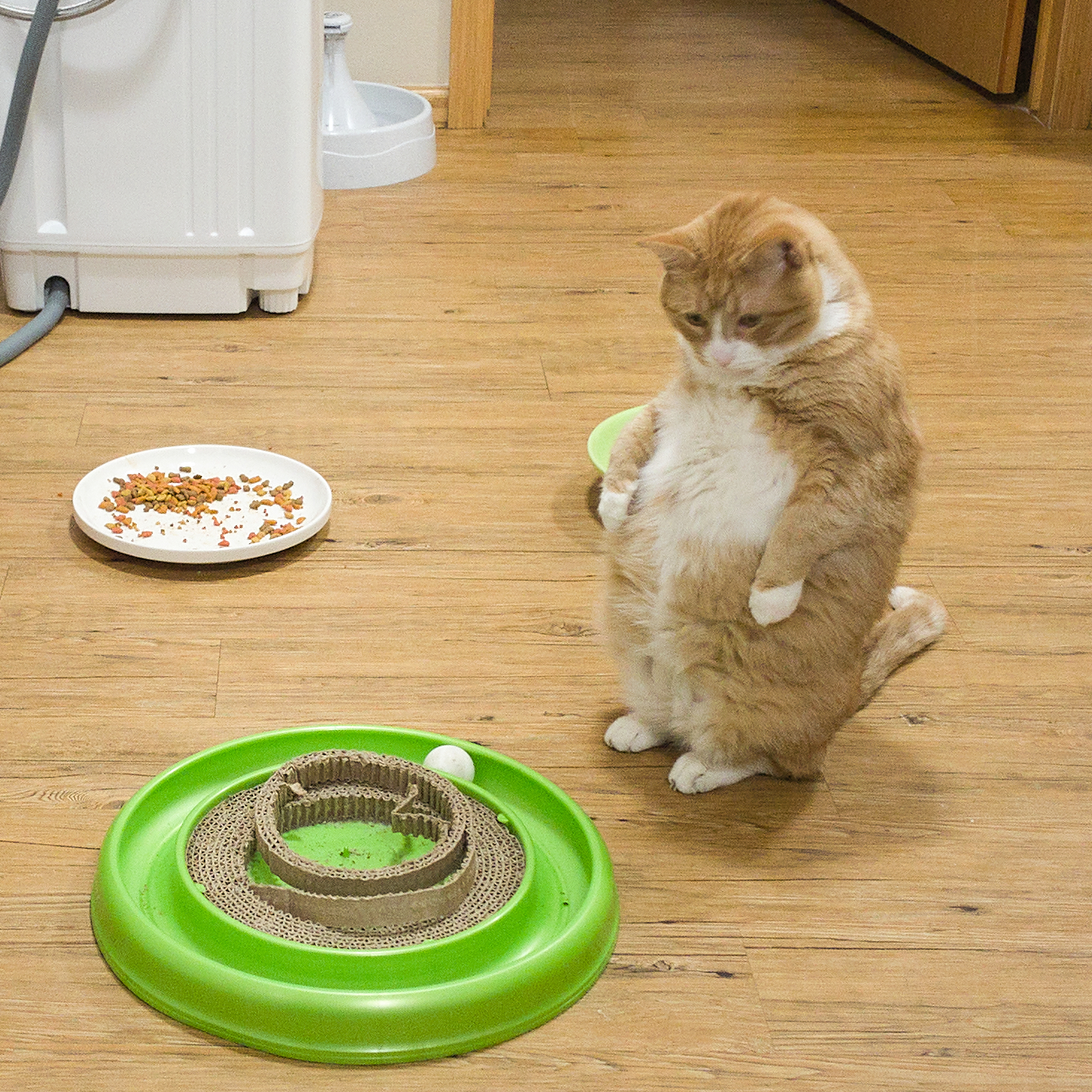
Automatic cat toys can help a bored indoor cat move, stalk, pounce, and reset between owner-led play sessions. The best ones are not magic babysitters. They are short-session enrichment tools: useful when they create prey-like movement, safe when they are inspected, and most effective when they are rotated with wand play, puzzle feeders, scratchers, and tough toys your cat can actually catch.
If your cat destroys ordinary toys, shop with a stricter standard. Look for enclosed motors, sturdy housings, replaceable attachments, no loose bells or glued-on pieces, and a motion pattern that gives your cat a chase without letting them chew the electronics. Avoid any automatic toy that invites your cat to bite a battery compartment, swallow string, or work one weak seam until stuffing comes out.
What automatic cat toys are best for
Automatic cat toys are most useful for three jobs: adding movement when you are busy, giving indoor cats more daily hunting-style activity, and keeping novelty in a toy rotation. They can be especially helpful for cats that stare at a toy before launching, cats that need short bursts of exercise, and cats that get bored when a toy moves the same way every time.
Veterinary behavior guidance supports this general idea. The AAFP and ISFM environmental needs guidelines include play and predatory behavior as a core feline need, with toys, owner interaction, and feeding devices all used to help cats hunt, capture, and manipulate objects. That is the standard an automatic toy should serve.
Think of the toy as one part of the sequence, not the whole routine. A good session may look like this: five minutes of automatic motion while your cat stalks, a wand or kicker toy they can grab, a small treat or meal puzzle, then rest. That final catch matters because endless chase without a capture can frustrate some cats, especially with lasers and toys that always escape.
Choose by movement, not just by gadget features
The toy’s motion matters more than the app, lights, or number of modes. Cats tend to respond to movement that resembles prey: quick starts, pauses, hiding, darting away, and occasional chances to pin the target. Smooth circles and repetitive buzzing may work once, then become furniture.
- Randomized wand toys: Good for cats that like feather or fabric lures, but the attachment must be replaceable and put away if it frays.
- Rolling balls or mice: Better for chasers, but only if the shell cannot crack into sharp pieces and the toy does not trap paws under furniture.
- Peekaboo or hidden-motion toys: Useful for stalkers because the target appears and disappears instead of sitting in plain view.
- Flopping fish and plush electronics: Often exciting at first, but rough chewers can focus on seams, zippers, or charging ports.
- Laser toys: Use sparingly and end with a physical toy or treat so the hunt has a real finish.
Product roundups often rank toys by entertainment value. That is useful, but rough-player households should add a second filter: where will this fail if a cat bites it hard for 30 seconds? If the answer is a feather glued to a wire, an exposed seam, or a thin plastic shell, treat it as supervised-only.
Safety checks before the first session
Before giving your cat any automatic toy, run a two-minute inspection. Open and close the battery compartment. Tug attachments. Press around seams. Check whether the toy has tiny parts, bells, exposed string, loose fabric, brittle plastic, or a charging port your cat can chew. If the toy smells strongly chemical or leaves residue on your hands, do not use it.
The VCA guidance on cat play and toys recommends monitoring play so cats do not consume non-food toys. The AAFP/ISFM guidelines also advise putting away string-like toys after play and avoiding small ingestible parts for unsupervised access. Automatic does not cancel those rules.
Use this quick pass before and after rough play:
- Battery door closes firmly and cannot be pried open by claws or teeth.
- No loose string, elastic, ribbon, feather shaft, bell, eye, or plastic tab.
- No exposed wires, cracked shell, sharp plastic edge, or hot motor smell.
- Fabric covers have tight stitching and no stuffing leaks.
- The toy shuts off reliably and does not keep running under furniture.
- Your cat can walk away, hide, or decline the game without being chased by the toy.
For cats that destroy toys, durability is a safety issue
A tough cat does not need a louder motor. They need a toy that separates the chase part from the chew part. Let the automatic device create motion, then give your cat a durable kicker, ball, or fabric toy for the bite-and-rake finish. That keeps teeth away from batteries and moving parts.
For chew-prone cats, avoid plush electronic toys with easily opened seams unless you can supervise every session. Choose hard housings with rounded edges, recessed fasteners, and replacement lures. When you want a toy your cat can grip hard, use a non-electronic option built for abuse. Titan Claws’ guide to unbreakable cat toys for aggressive chewers covers the rough-player side of that decision, and the materials guide explains why toy materials and failure modes matter.
Be careful with the word indestructible. No cat toy deserves unlimited trust. Even strong materials can become unsafe when they crack, fray, shed fibers, or expose hardware. The better standard is durable enough for the play style, easy to inspect, and retired before failure becomes a swallowing risk.
When automatic toys are useful while you are away
Automatic cat toys for when you are away should be boringly safe. That means no strings, feathers, loose plush, elastic cords, or chewable battery doors. If your cat is a heavy chewer, do not leave electronic plush toys out unattended. Use a timed feeder, food puzzle, sturdy rolling toy without attachments, window perch, scratcher, or hidden treats instead.
The safest away-from-home setup is usually a rotation, not one gadget running all day. Leave out two or three passive enrichment options and save the powered toy for a short supervised session when you return. Cats play in bursts, and many lose interest when a toy becomes predictable. More runtime is not always more enrichment.
Build a better toy rotation
Novelty keeps toys valuable. The AAFP/ISFM guidelines recommend rotating toys to prevent habituation, and an Ohio State veterinary enrichment resource describes play as part of the natural predatory sequence of stalking, chasing, pouncing, and biting. Use that sequence to organize your week.
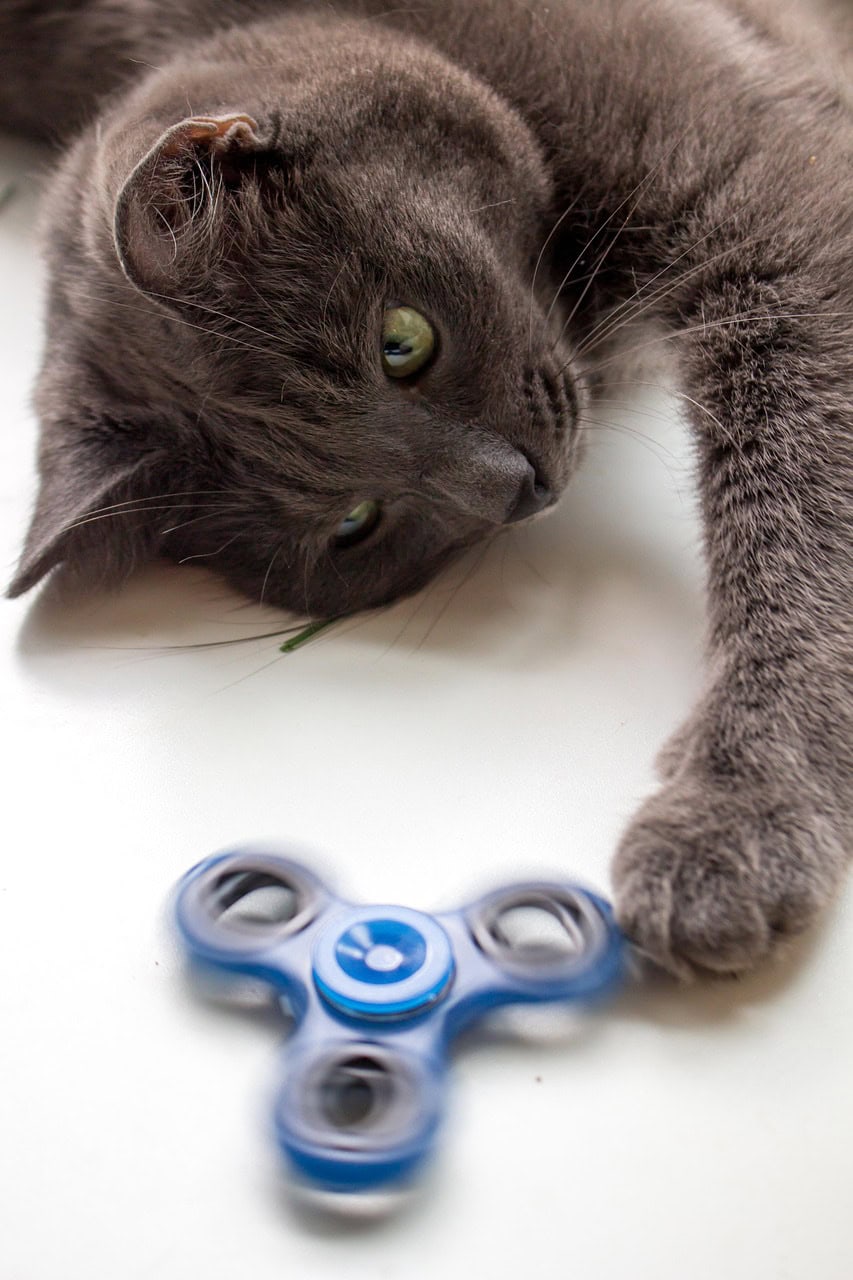
- Monday: Automatic peekaboo toy for stalking, then a kicker toy for biting and raking.
- Tuesday: Wand play with swoops and pauses, then a puzzle feeder.
- Wednesday: Sturdy rolling toy in an open hallway, then a scratcher session.
- Thursday: Rest from powered toys; hide treats or kibble in safe locations.
- Friday: Automatic wand toy under supervision, then retire any frayed attachment.
- Weekend: Longer owner-led play, claw checks, and toy inspection.
For cats that redirect play onto hands or ankles, add more distance between the cat and your body. Wand toys, rolling toys, and automatic devices can help, but do not use your hands or feet as the target. The 2021 AAHA/AAFP feline life stage guidelines warn that teaching cats to treat hands and feet as toys can lead to scratching or biting injuries.
What to avoid
Skip toys that make safety depend on optimism. A cheap automatic toy can be fine for a gentle watcher and wrong for a cat that bites, shakes, and disassembles things. The risk is not only that the toy breaks. The risk is that it breaks in a way your cat can swallow.
- Open battery compartments, button batteries, or charging cables accessible during play.
- String, elastic, ribbon, or feather toys left out after the session.
- Small detachable parts, glued-on decorations, bells, or plastic eyes.
- Hard shells that already show cracks or sharp seams.
- Laser-only routines with no catchable reward.
- Toys that chase a fearful cat, block escape routes, or keep activating near food and litter areas.
Quick buying checklist
Use this checklist before buying the next automatic toy:
- The motion matches your cat: stalker, chaser, pouncer, kicker, or watcher.
- The powered part is not the part your cat is expected to chew.
- Attachments are replaceable, inspectable, and easy to remove after play.
- The battery or charging system is enclosed and inaccessible during use.
- The toy has an automatic shutoff or you can control session length.
- The surface is easy to wipe clean, and fabric parts can be washed or replaced.
- The toy works in your actual space without trapping itself under furniture.
- You have a durable catch toy ready for the finish.
The bottom line
Automatic cat toys are worth using when they add safe movement and novelty to a richer play routine. They are not a replacement for owner-led play, and they are not a good unattended choice for every cat. For a gentle indoor cat, a motion-activated toy may be a useful boredom breaker. For a rough player, the smarter setup is supervised automatic motion plus a tough, inspectable toy your cat can capture without reaching batteries, wires, or weak seams.
Start with one short session, watch how your cat attacks the toy, inspect it afterward, and adjust from there. The best automatic cat toy is not the one with the most modes. It is the one that lets your cat hunt safely, finish the game, and come back tomorrow still interested.
Leave a Reply