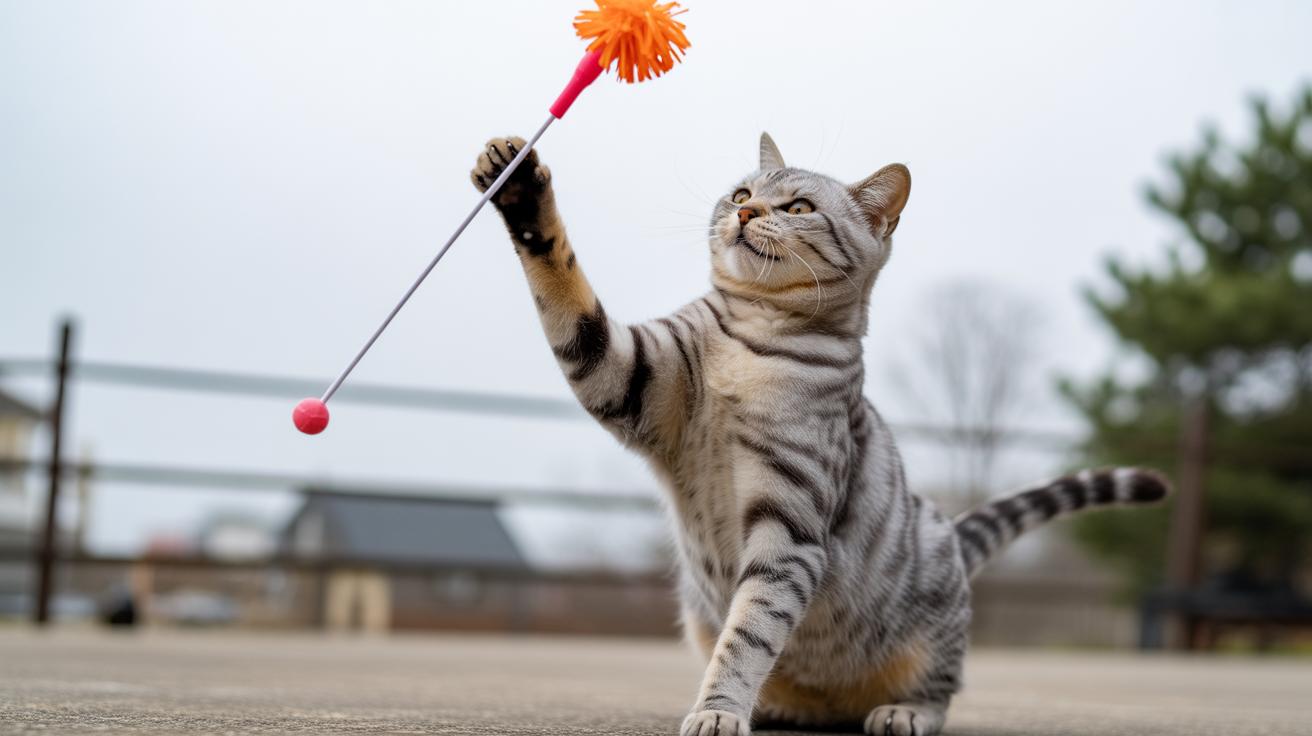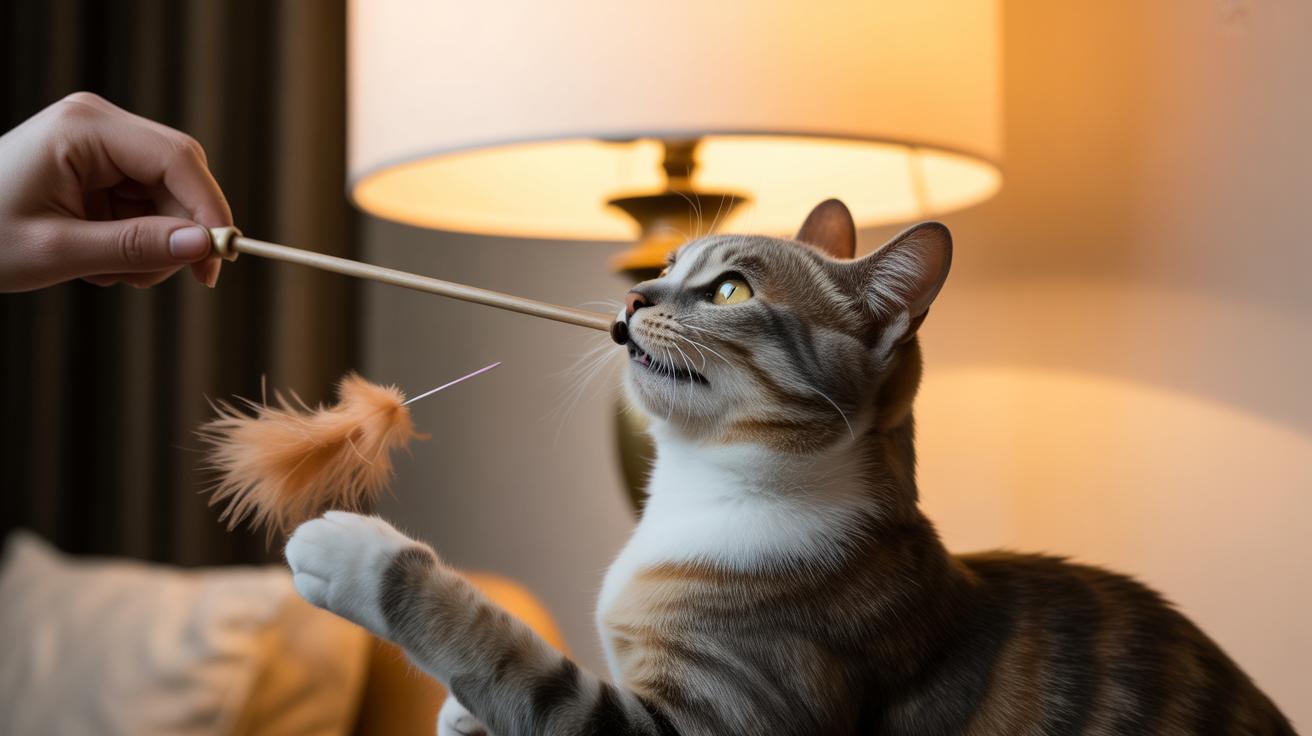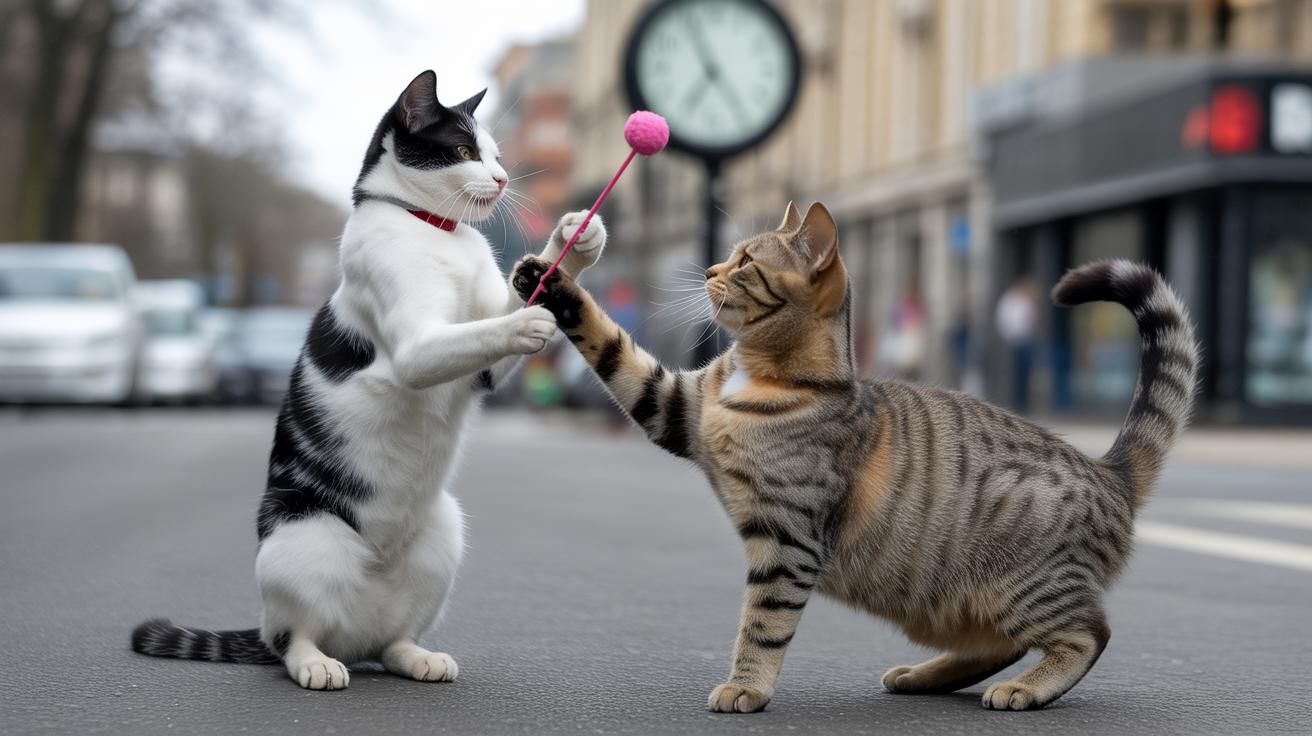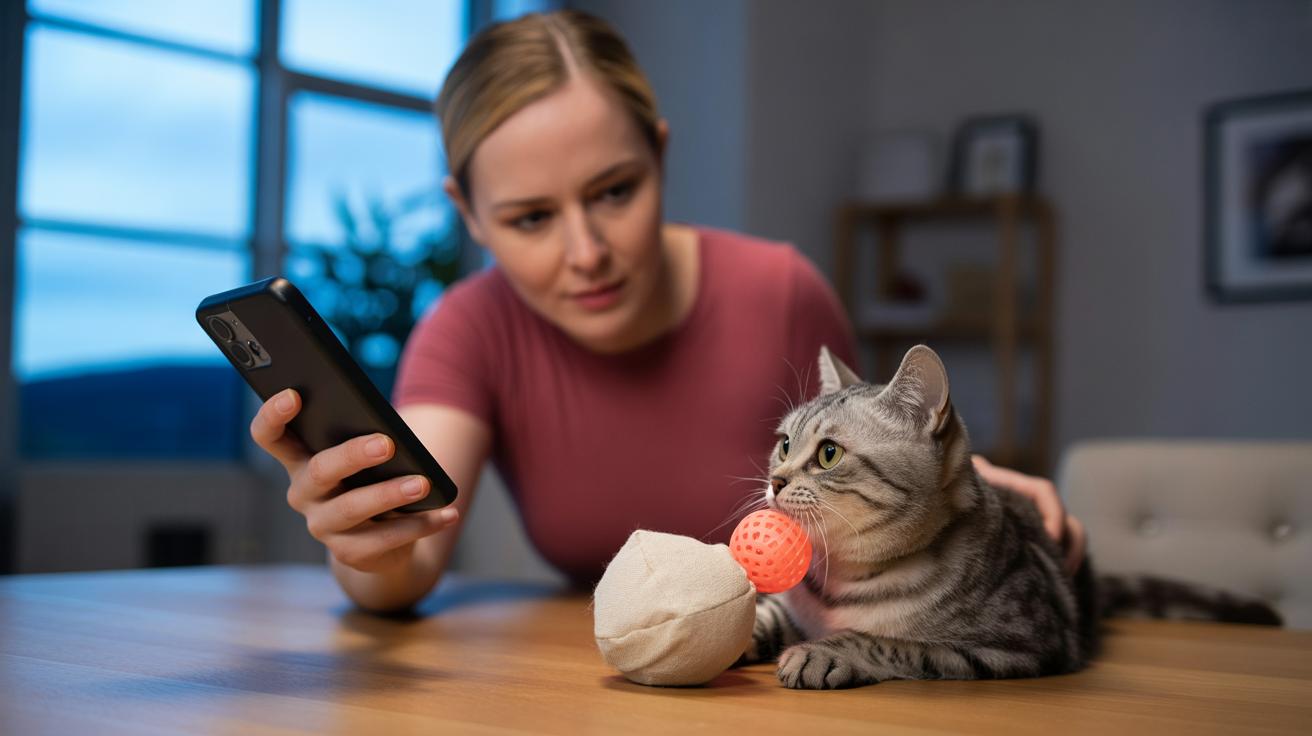
Author: Lucas Turner

  • Clicker Training for Cats: Step-by-Step Basics

    Clicker Training for Cats: Step-by-Step Basics

    Think cats can't be trained? You're not alone. But clicker training is actually simple, precise, and surprisingly fast.

    A clicker (a small handheld noisemaker that gives a crisp click) acts like a camera for behavior , it pins the exact moment your cat does something you like. The click is your marker (a short, clear sound that tells your cat "yes"), and a treat right after solidifies the idea. The crisp click and the soft crunch of a treat make the lesson click in their head.

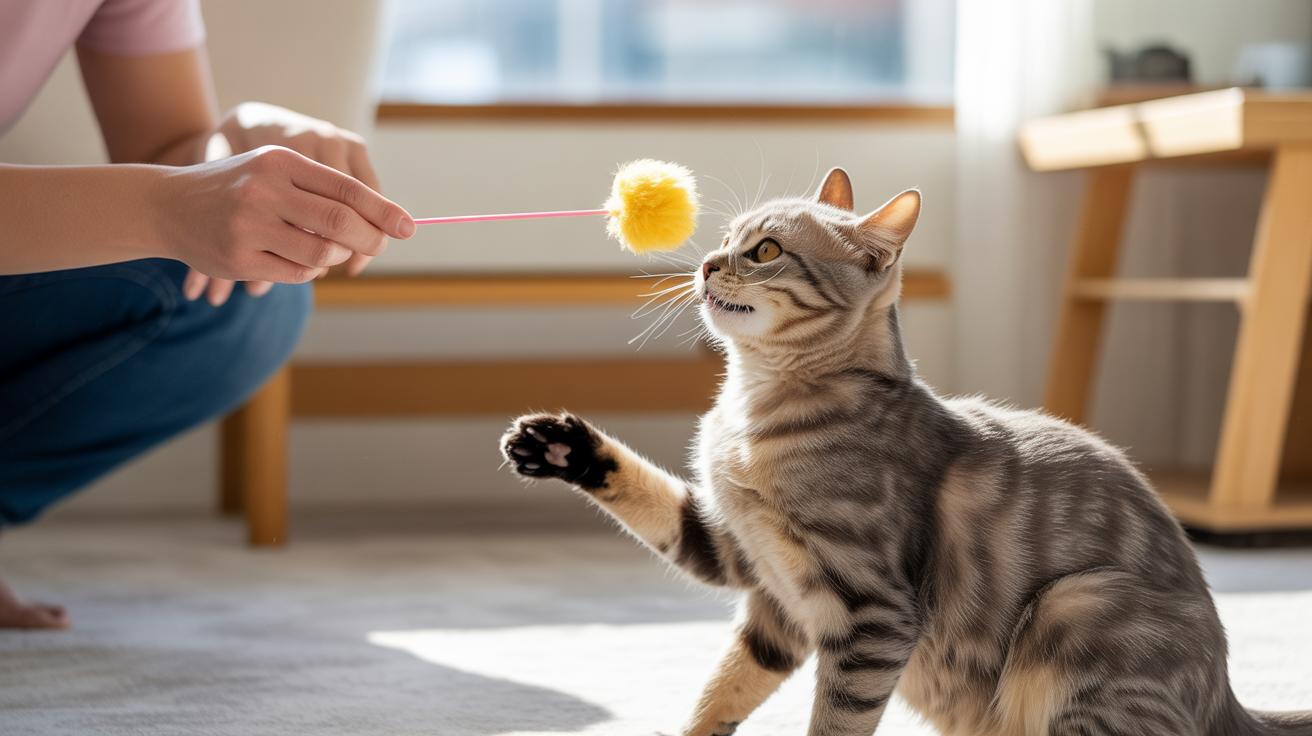
    Start by "loading the marker" (teach your cat that click equals treat). Keep sessions short, five minutes is perfect, and repeat a few times a day. Time your clicks to the very instant your kitty sits, comes, or bats a toy, and you’ll see those behaviors show up fast. Ever watched your cat zero in on a tiny sound? It's magic.

    Worth every purr.

    Clicker Training for Cats: Step-by-Step Basics

    A clicker (a small handheld noisemaker that gives a crisp click) marks the exact moment your cat does something you like. That click acts as a marker (a sound that tells your cat, yes, that was it), and you follow it right away with a treat so the cat links action to reward. It’s precise timing that makes clicker training work, and it can feel a little magical when your kitty figures it out. Ever watched a cat suddenly get it? Cute, right.

    1. Pair the click sound with a treat 8-12 times to "load" the marker (teach your cat that click equals reward).
    2. Run short sessions , about 5 minutes each , 2-4 times per day. Short and sweet keeps them engaged.
    3. End every session while your cat is still interested. Finish on a happy note.

    See details: Basics (#basics), Tools (#tools), Step-by-step (#step-by-step), Troubleshooting (#troubleshooting).

    Always follow the click with a treat. If your cat is scared of the sound, muffle the clicker (cover it with a soft cloth) and pair the quieter click with treats until they relax (see Troubleshooting). Worth every purr.

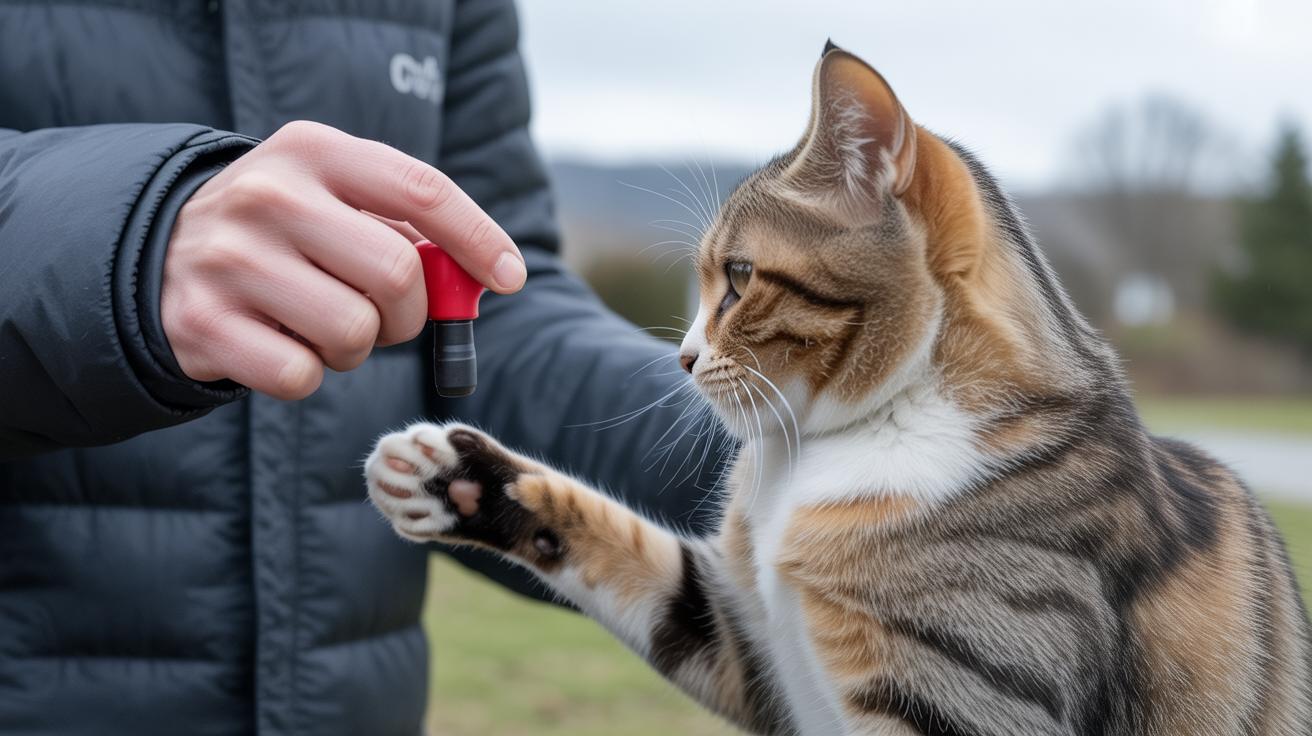
    Detailed how-to , Basics: marker timing, loading, and why it works
    - Detailed how-to  Basics marker timing, loading, and why it works.jpg

    A marker is a crisp sound that pins down the exact moment your cat did something you like. Think of a marker (a short, clear sound that says "that!"), like a clicker (small handheld noisemaker) or a mouth click (a tiny click made with your tongue). That precise cue tells your cat exactly which action earned the reward. Timing is the whole trick.

    Click the microsecond the behavior finishes, then give the treat within one second so the cat can link the sound and the reward. For shaping a sit, click the split-second the rear touches the floor. If you click when a paw lifts, you’ll mark a different action, so watch closely and practice those split-second choices.

    To load the marker, pair click + treat 8–12 times in a calm spot so your cat learns that every click means a snack is coming. Space those pairings across a short session (not all at once), use tiny fragrant treats (small, smelly bites), and stop when the cat looks for the snack after the click , that’s your cue the marker is loaded. Keep sessions brief so the click stays meaningful and your kitty stays game.

    If you don’t have a physical clicker, a mouth click or a clear “Yes” works, but it can be harder to hit the exact microsecond because your voice or mouth may lag. For lightning-fast moves, a handheld clicker usually gives the sharpest timing. Ever watch your cat snatch a toy in a blink? That’s when the clicker really helps.

    Practical timing drills

    Hand-movement drill: hold a treat in a closed fist, move your hand just a little, and click the exact instant your cat looks at or touches your hand. Repeat slowly until your reflex to click matches that tiny motion. It trains your eye-hand timing and helps you catch real behavior moments.

    Slow-motion click drill: exaggerate a simple action, like lifting a paw very slowly, and click at the precise end of the motion, then reward. Do this a few times so your brain and fingers learn the exact endpoint. Then bring the action back to normal speed and you’ll be ready to mark real, quick moves.

    See details: Quick Start (#quick-start)

    Detailed how-to , Tools: choosing a clicker and treat strategy (portioning & calories)
    - Detailed how-to  Tools choosing a clicker and treat strategy (portioning  calories).jpg

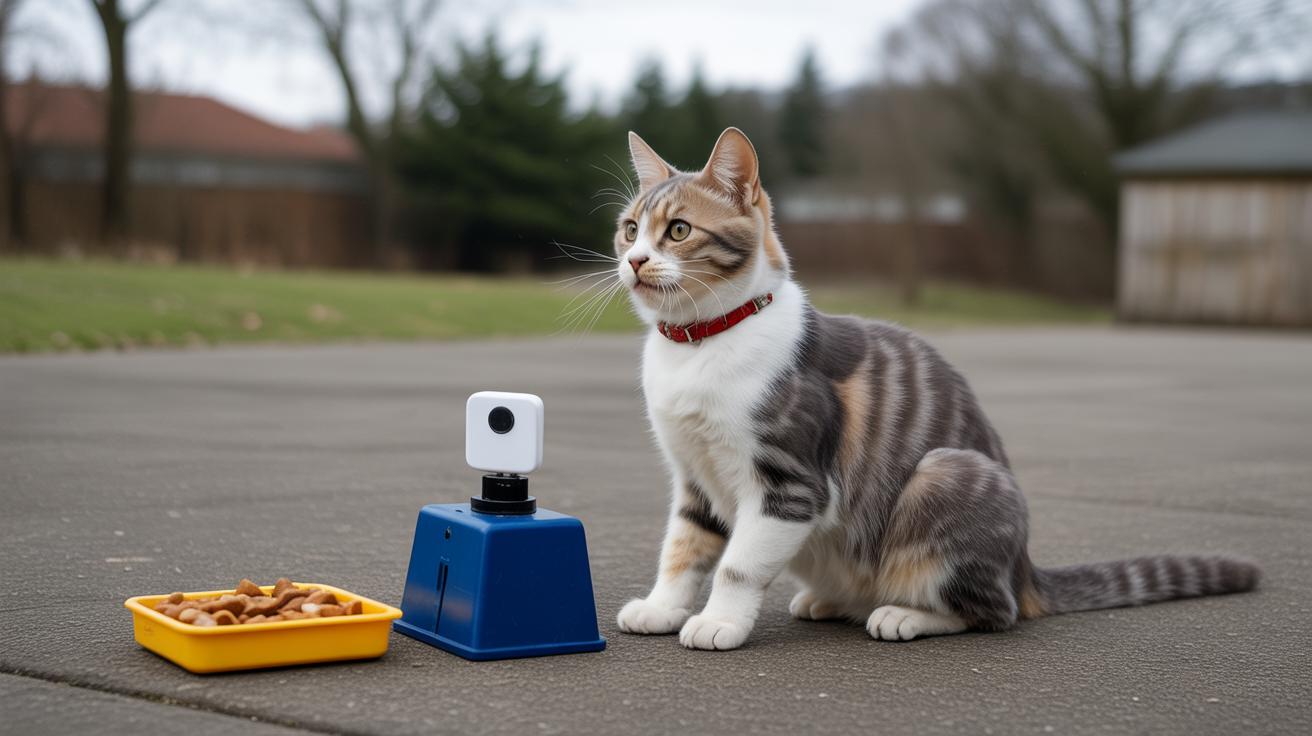
    Keep your kit simple and ready. Use a small, consistent cat clicker (handheld noisemaker) so your timing stays sharp and your cat learns the sound fast. If you like moving targets, try a combined clicker-and-target wand (a clicker with a short stick attached) , it saves a hand and gets you moving with the toy. A target stick (long, lightweight rod that points or taps) lets you guide motion without touching your cat. For treats, a shallow treat saucer (a low dish) keeps pieces visible and from rolling off. Carry extras in a zipped treat pouch or pocket so you can reward on the fly. The best clickers are the ones you actually use: comfy in your hand, loud enough to mark, and simple to press without fumbling.

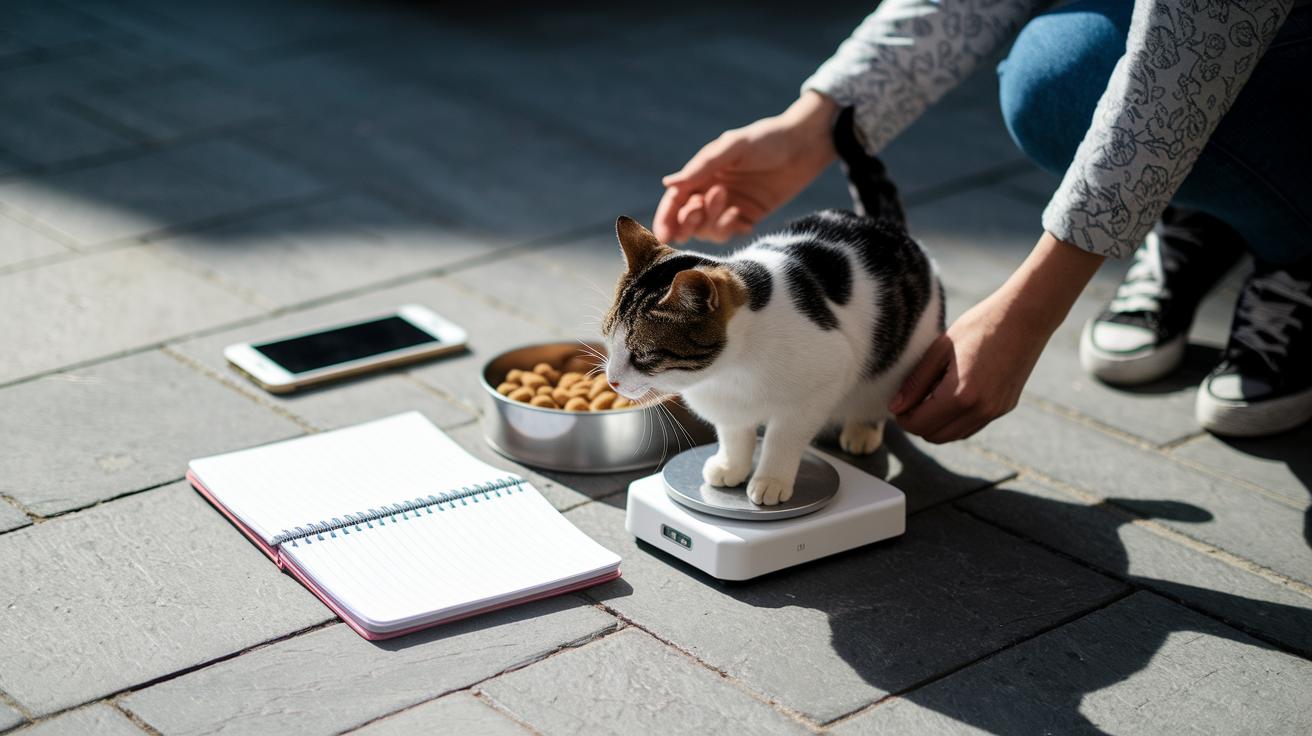
    Pick tiny, high-aroma treats most of the time. Think a bite the size of the tip of your little finger , or a pea-sized nugget. Good choices: high-aroma wet treats, freeze-dried meat (dehydrated meat snacks), or lickable purees (soft spreadable treats). Portioning tip: aim for pea-sized or smaller so calories stay low. Many pea-sized training bits are about 1 to 3 kcal each. Freeze-dried chunks are denser, so break them into micro pieces. To log calories, do this: check the package for kcal per serving, count how many bites are in that serving, then divide to get kcal per bite. Easy math, and you can jot it in a quick note. For cats who aren’t food-motivated, use short toy bursts , a feather teaser or a toss of a tiny ball , as the reward.

    Rotate rewards so your cat stays excited. Keep two or three food options plus one toy in play, and save the highest-aroma treat for the toughest steps. If your cat ever startles at the click, there’s a muffling protocol in Troubleshooting (#troubleshooting). See details: Troubleshooting (#troubleshooting)

    Reward type Example items Portion / notes
    High-aroma wet treats e.g., salmon puree tiny pea-sized portions; low calorie per bite; check kcal per serving
    Freeze-dried meat e.g., chicken liver bites very high value; break into micro pieces before using
    Lickable puree e.g., tuna paste small blots on saucer; low total kcal if used sparingly
    Toy rewards feather teaser, small ball use for short play breaks; calorie-free

    Set up a small training tray with your saucer, clicker, and treat pouch within arm’s reach. Carry treats in a zipped pocket for quick access, and jot treat calories in a short log after each session , it only takes a few seconds and saves confusion later. Treat-size, portion guidance, and calorie monitoring live only in this Tools section; other sections should cross-reference Tools for those specifics.

    Detailed how-to , Step-by-step training plan (first 10 sessions and sample behaviors)
    - Detailed how-to  Step-by-step training plan (first 10 sessions and sample behaviors).jpg

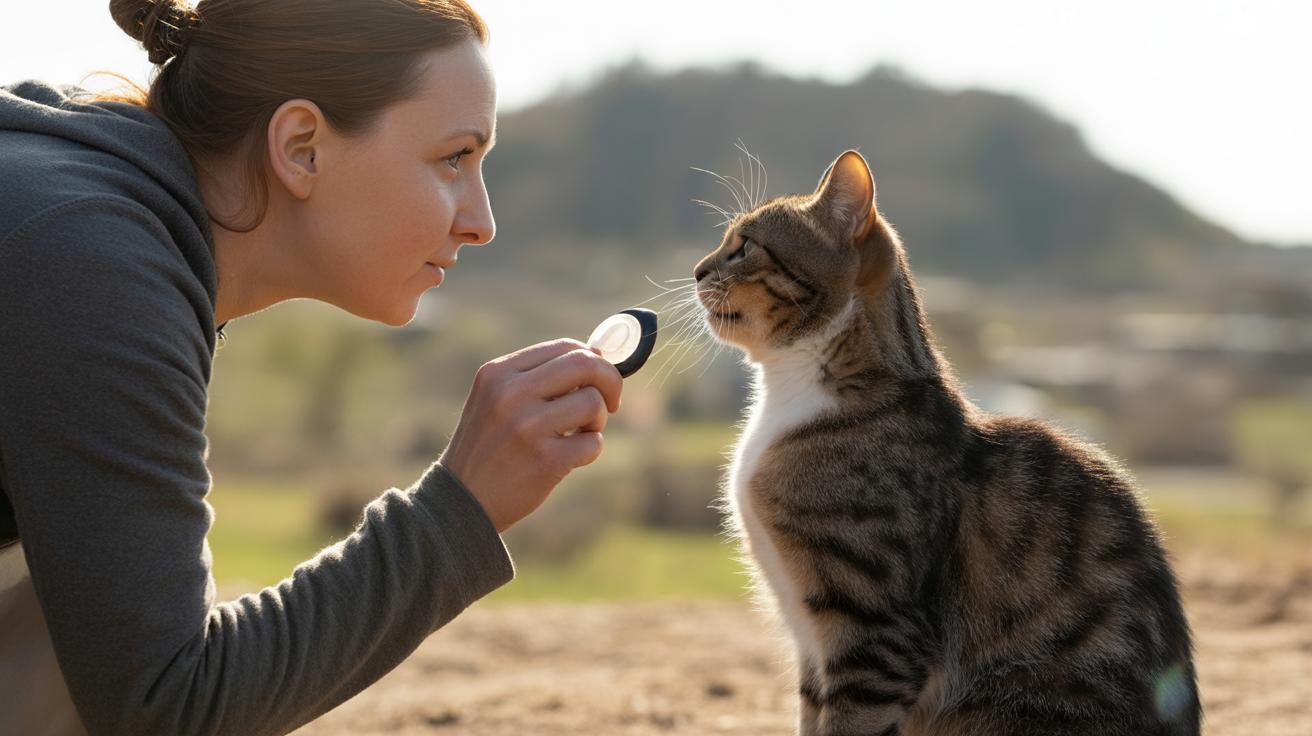
    Keep it short. Five-minute sessions, two to four times a day is perfect. Make them upbeat and predictable so your cat knows the game. Check the Quick Start rules at Quick Start and loading tips at Basics. Have a tiny saucer of treats and a clicker (the click sound that marks the exact right moment) nearby so you can move fast between click and reward.

    Start with easy, clear goals. Ask for a look at your hand, a touch to a target stick (a small wand with a dot or ball on the end), and tiny steps toward a sit. Reward the smallest improvements and slowly raise the bar. Track progress and practice the behavior in different rooms so the skill holds up.

    1. Session 1: Load the marker gently with calm pairing. Five minutes of click + treat while your cat watches , soft, slow, and no pressure.
    2. Session 2: Capture looks to your hand. Aim for three clean reps where you click for the cat looking at your hand.
    3. Session 3: Tap the target stick briefly. Try for two clear, intentional touches on the stick.
    4. Session 4: Start shaping a sit by clicking any lowering of the rear. Goal: three reps showing a deeper sit.
    5. Session 5: Chain look to target in one short run. Click the look, then click the target touch in the same session.
    6. Session 6: Fade a gentle lure for the sit. Reward the first solid contact of rear to floor once.
    7. Session 7: Build sit duration. Work toward holding two seconds across three reps.
    8. Session 8: Move from target to mat. Guide the cat to a small mat and click the first two contacts.
    9. Session 9: Proof in a slightly busier space with one mild distraction (another person or a toy nearby). Check for reliable responses.
    10. Session 10: Mix drills quickly: look, target touch, short sit. Link the skills in one playful run.

    Sample behavior outlines

    Sit: Capture or lure an initial sit and click the instant the rear meets the floor (marker = click). Reward right away so the moment becomes obvious. Slowly fade the lure and only raise the hold time when your cat is comfy. Success = two seconds held across three consecutive sessions before you step up the requirement. Worth every paw-print.

    Target-to-mat: Teach a touch to the target stick (think fishing-rod for cats). Once your cat reliably touches the stick, move the stick onto the mat and click the first paw or nose that contacts the mat. Success = three clear mat contacts from about one meter away in a single session.

    Recall indoors: Use a visible treat or toy, call your cat, and click when they come within two meters, then reward at arrival. Keep rewards small and tasty so you can repeat. Success = a voluntary approach in three of four repetitions across two sessions.

    Increase difficulty only after your cat meets the success criteria and stays eager. For timing tips see Basics and for treat portioning see Tools. Keep it playful, keep it short, and enjoy the little wins , your cat will too.

    Detailed how-to , Troubleshooting: common mistakes, muffling protocol, and when to get help
    - Detailed how-to  Troubleshooting common mistakes, muffling protocol, and when to get help.jpg

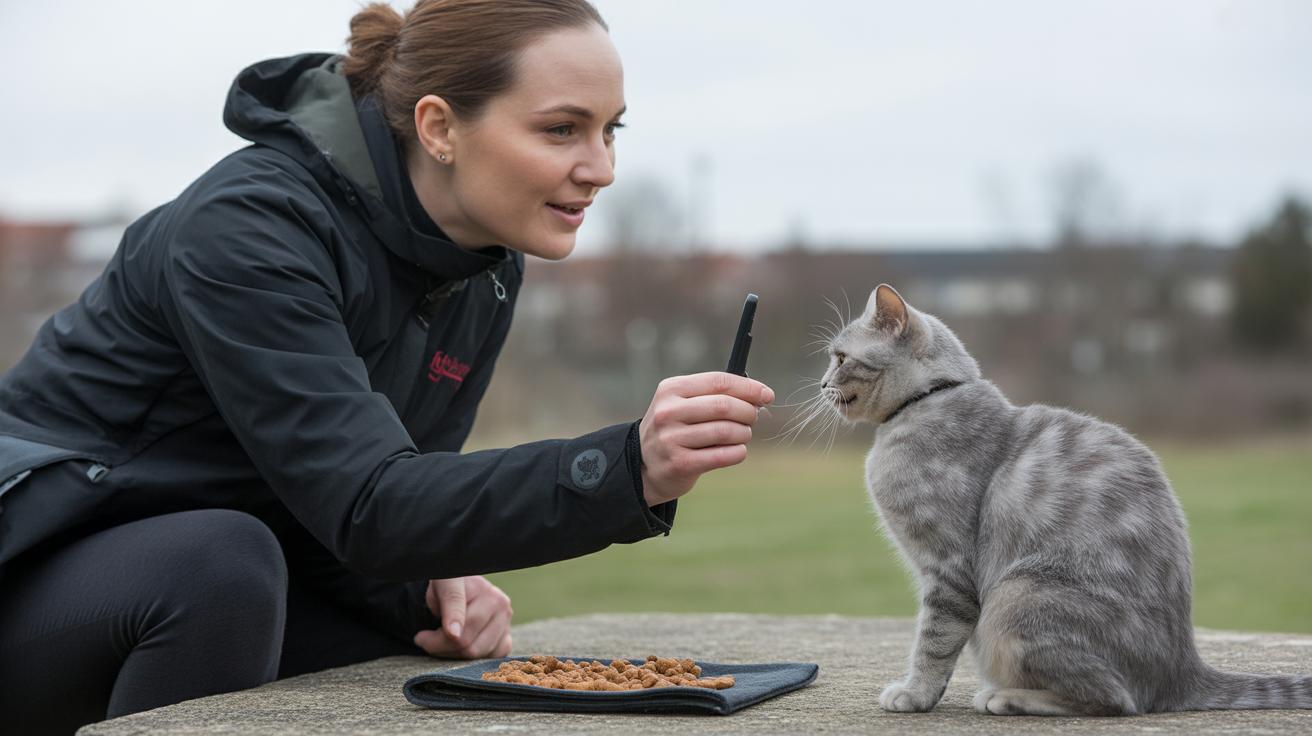
    Most stalled training comes from a few repeat offenders: clicking without giving the treat, marking the wrong instant, sessions that run too long, rewards that feel boring, and too many treats that mess with appetite. Your cat gets confused or bored, and progress grinds to a halt. Frustrating, I know , been there with a toy-flinging tuxedo.

    Fixes are simple and friendly. Click only when you will deliver a reward, and make that reward worth a sniff and a nibble. If a treat fails, swap to a higher-aroma bite (high-value treats: strong-smelling, extra tasty bites) or give a tiny toy burst instead. Also, the clicker (a small handheld device that makes a sharp sound) should always be paired with something your cat wants right away.

    Keep sessions short , think five minutes. Break big behaviors into tiny steps, click small approximations (tiny steps toward the final trick) and reward each one. If motivation dips, tighten meal timing a bit so training treats count as part of the day’s food rather than extras. That helps treats stay exciting without overfilling the belly.

    Muffling protocol (step-by-step):

    1. Cover the clicker with a sock or soft cloth so the sound is gentler.
    2. Click and immediately toss a tiny treat 8 to 12 times while the sound is quiet, until your cat looks expectant , whiskers twitching, ears forward.
    3. Over several calm sessions, peel the cloth back a little each day and keep pairing the click with treats.
    4. When your cat stays relaxed with the quieter then slightly louder clicks, remove the cover.
      Watch body language: relaxed blinking, a loose tail, and coming closer are good signs. Flattened ears, crouching, or fleeing mean slow down and make the steps easier.

    Once a behavior is solid, move to intermittent rewards (giving treats sometimes instead of every time). Reward every click for a stretch, then every other click, then switch to an unpredictable pattern. Mix in high-value treats now and then so the behavior stays sharp without constant treats.

    When to seek professional help
    Talk to an experienced trainer or a certified behaviorist if stress escalates, if you see aggression or fear that worsens, or if progress stalls even though your timing and rewards are correct. Professionals can keep both of you safe and sane, and offer steps tailored to your cat’s needs.

    See details: Quick Start, Tools

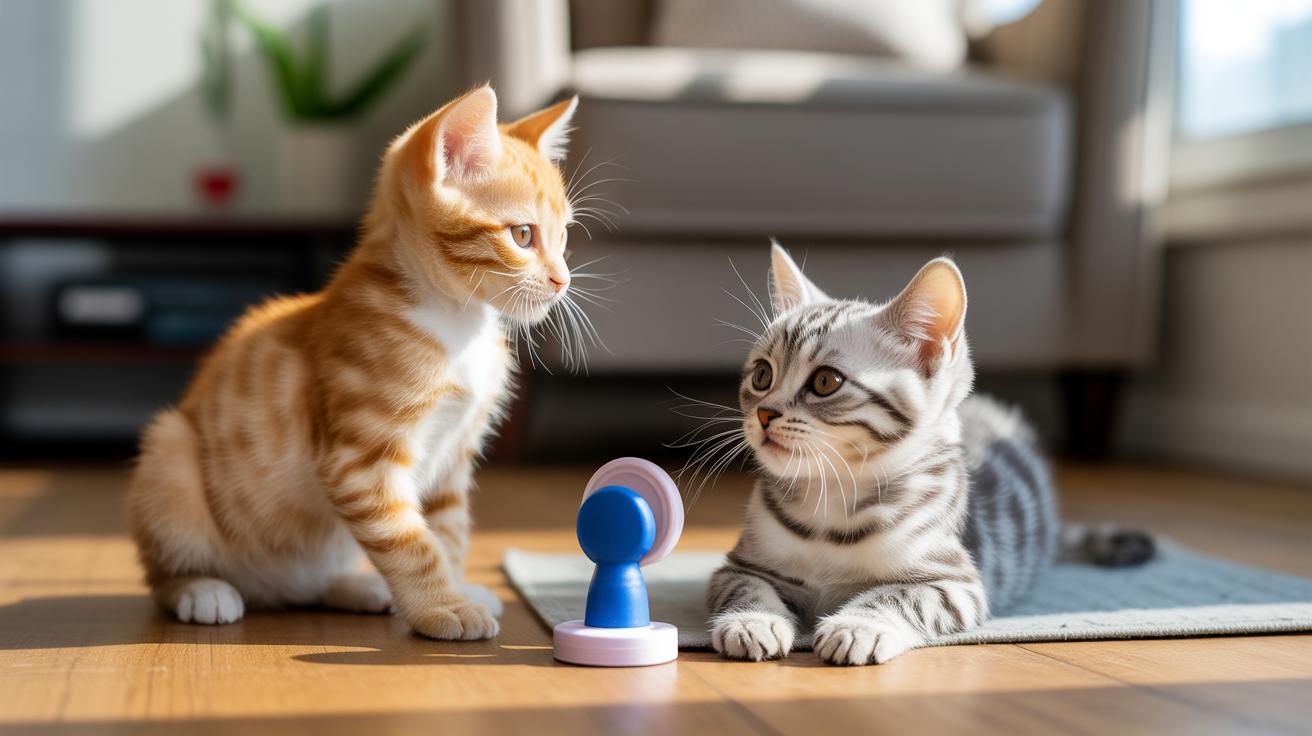
    Clicker training adaptations for kittens, senior, and shy or fearful cats (special cases)
    - Clicker training adaptations for kittens, senior, and shy or fearful cats (special cases).jpg

    Kittens (~8 weeks) learn fast but tire faster. Keep sessions tiny , 30 seconds to 2 minutes, several short rounds a day , and focus on positive handling (gentle petting, calm voice, brief friendly touches). Start with ultra-simple goals: look at your hand, nose-tap a target (a small object you want them to touch with their nose), or sit for a heartbeat. Measurable progress looks like three clear, eager reps in one short session where the kitten looks or taps on cue without fuss.

    Senior cats benefit from mental work without lots of movement. Pick stationary tasks , nose-touch, short sits, or target-to-mat (ask the cat to touch a target then step onto a mat) , and shape slowly with tiny increases in expectation. Two brief sessions of 2–5 minutes a day keeps it gentle and enjoyable. Pairing training with light play boosts engagement; see importance of play for senior cats to learn simple ways training plus play improves wellbeing. Success is steady, relaxed participation across three sessions.

    Shy or fearful cats need an extra-soft approach, and the muffling protocol in Troubleshooting (#troubleshooting) can help reduce sound sensitivity (muffling protocol means softening the clicker sound, or switching to a quieter marker). Work at the cat’s pace: one calm click (clicker: a small handheld device that makes a crisp sound), one tiny treat, and lots of space; sessions may be 20–60 seconds at first. Look for relaxed blinking, approaching within about a meter, or a steady tail as signs you can inch forward. When food motivation is low, use play-based rewards and go slow , trust-building beats speed every time.

    See details: Tools (#tools), Troubleshooting (#troubleshooting)

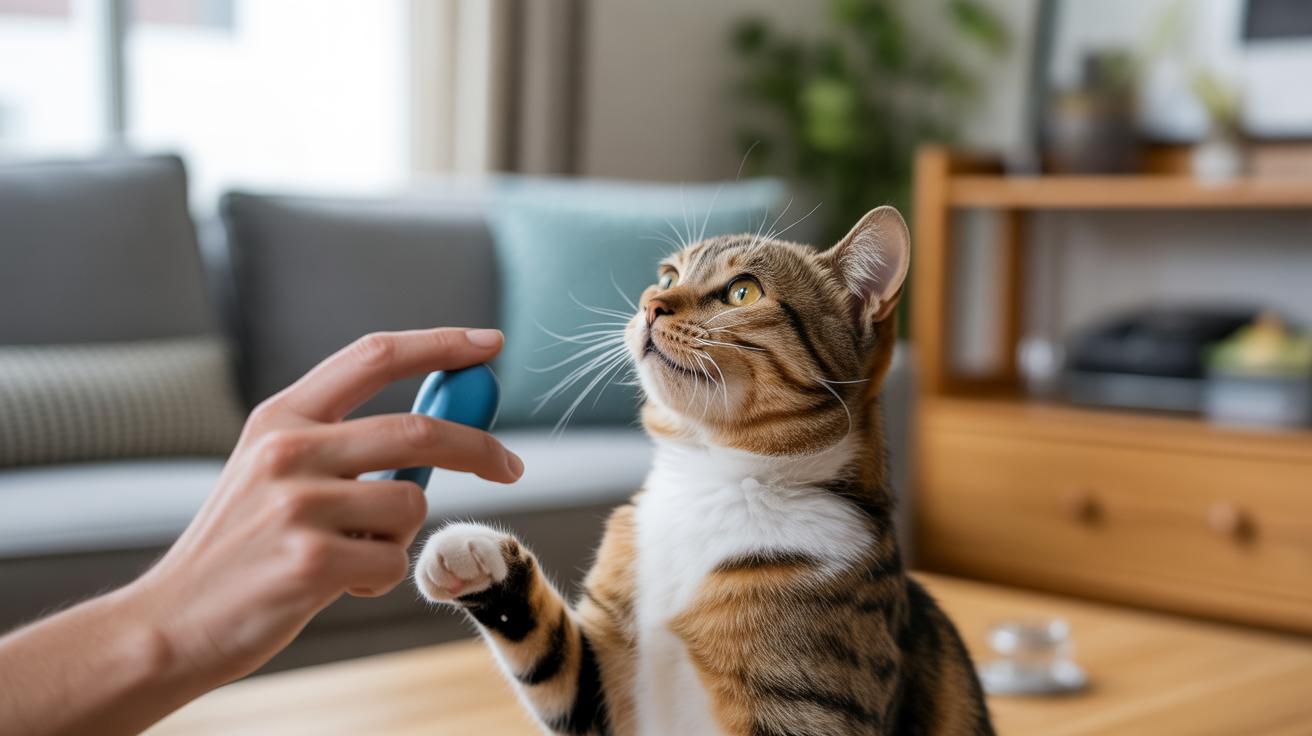
    Advanced clicker techniques: shaping, chaining, proofing and enrichment (Detailed how-to)
    - Advanced clicker techniques shaping, chaining, proofing and enrichment (Detailed how-to).jpg

    For a quick refresher on tiny shaping steps, click timing, and the basic tools, see Quick Start, Tools and Step-by-step. This piece skips the basics and jumps into practical, advanced ways to build and troubleshoot multi-step chains, plus enrichment plans that pair puzzle feeders with training.

    Keep the core rules in mind but I won’t repeat them here: shaping means tiny steps. Intermittent reinforcement means rewarding some correct responses, not every one (reward some but not all). Proofing means practicing the behavior in different rooms and situations. See Quick Start, Tools and Step-by-step for basics if you need them.

    Multi-step chain examples (3–5 linked actions)

    Here are simple chains to try. Train each link by itself first, then connect them slowly.

    • 3-step chain example: recall → target touch (target = small object cats touch) → sit on mat.
      • Teach each part alone. Add the cue for the first link once it’s solid. Then link 1 to 2, and later link 2 to 3. Keep sessions short so your cat stays keen.
    • 4-step chain example: come to box → jump on box → turn 180° → paw touch a switch.
      • Teach the turn and the paw touch separately (use a clear reward each time). Then practice the short moves between them until the flow feels smooth.
    • 5-step chain example: move to low platform → hop to mid platform → target nose-touch a spot → spin → sit.
      • Use short bursts and frequent resets. Small, predictable steps keep transitions crisp.

    I once watched Luna nail a three-step jump-spin-sit in under a minute. Tiny wins stack fast, you know?

    Fading schedules and intermittent-reward progressions

    Use clear numbers so you know how to fade rewards and move to variable reinforcement (variable ratio = rewards on an unpredictable pattern).

    Stage Reward Rate Goal / Criteria
    Stage 1 100% Reward every correct link to build reliability
    Stage 2 75% Skip about 1 in 4 correct responses at random; keep marking the right moments
    Stage 3 50% Reward roughly half the correct sequences; still give the occasional full-sequence prize
    Stage 4 Variable (variable ratio) Unpredictable pattern; give occasional high-value rewards for perfect runs

    Timing tip: shorten the pause between clicks as you link actions. If your cat hesitates, back up one link and rebuild confidence.

    Troubleshooting chained behaviors (timing errors, error propagation)

    • Timing errors (click comes late):
      1. Stop the chain right away.
      2. Re-teach the tiny step where timing failed with a clear bridging signal (bridging signal = a short sound that marks the exact correct moment).
      3. Do 3–5 reps at that micro-step pace before you try linking again.
    • Error propagation (one bad link ruins later links):
      1. Find the earliest shaky link.
      2. Rebuild that link at 100% rewards for a few short blocks.
      3. Only add the next link when the first is solid.
    • Timing drift between links (little pauses stack up): shorten the interval between clicks and reward only when transitions hit your target tempo.

    Enrichment protocol: combining puzzle feeders and training

    This is fun. Start with a little foraging to wake the brain, then train transitions, then finish with a puzzle that needs the trained behavior.

    • Session structure (example): 5–10 minutes with a puzzle feeder to get the problem-solving drive going, then 3 short training bursts (1–2 minutes each) focused on transitions, finish with a quick puzzle challenge that uses the trained behavior as the key.
    • Progression: bump puzzle difficulty slowly (adjustable resistance = puzzle you can make harder or easier) while keeping training bursts concise so your cat stays engaged.
    • Rotation: switch tasks across days so your cat practices chains, foraging, and new problems, keeps motivation high.

    For busy mornings, toss an unbreakable ball before you head out and you’ve bought ten minutes of safe play.

    Advanced problem / solution (3 real scenarios)

    • Problem: Cat stops mid-chain and stares off.
      1. Pause training.
      2. Go back to the last reliable link and reward at 100% for 5 reps.
      3. Re-link with shorter transitions and add a brief, obvious cue to restart momentum.
    • Problem: Cat loses interest across sessions.
      1. Shorten sessions to 1–2 minutes.
      2. Add variety: change the order of links or start in a new spot.
      3. Give easy wins early to rebuild engagement.
    • Problem: Poor generalization (works in one room only).
      1. Move the chain one small step toward the new room (practice the first link in the new room).
      2. Add the next link in that room once the first is solid.
      3. Use brief, frequent sessions across several rooms to transfer the behavior.

    See Quick Start, Tools and Step-by-step for the fundamentals. Worth every paw-print.

    Progress tracking, schedules, milestones, and measuring success
    - Progress tracking, schedules, milestones, and measuring success (Detailed how-to).jpg

    Think of a training log like a map for your cat’s progress , it shows what’s working, what needs a tweak, and when to celebrate a real win. A quick record keeps timing tight (click-to-treat means the time between the clicker marker and the treat), prevents overfeeding, and helps you spot trends your memory will miss. You’ll stop guessing and start celebrating actual progress. Cute moment bonus: watching whiskers twitch as a behavior clicks into place never gets old.

    Keep sessions short and steady. Start with five-minute bursts, two to four times a day for beginners, then cut back on treat frequency as the behavior becomes reliable. Jot a line or two right after each session so details don’t blur , small daily notes add up into clear patterns that tell you when to raise the bar or move practice to a new room. For busy days, toss an unbreakable ball or do a quick recall drill before you head out , that’s ten minutes of safe enrichment.

    Simple fields to track after each session:

    1. Date , when you trained.
    2. Duration , minutes spent this session (how long you actually worked).
    3. Behavior targeted , exactly what you asked for (sit, target touch, recall , recall means coming when called).
    4. Click-to-treat latency , seconds between the marker (clicker sound) and the reward (how fast you delivered the treat).
    5. Success rate , clear reps out of total attempts (how often the behavior was correct).

    Keep it honest and tiny. A few lines per session beat a long, perfect log you’ll never fill out. Then, when you spot steady wins, raise criteria or add distance, distractions, or another room. Worth every paw-print.

    See details: Tools (#tools) for treat-calorie calculations and Step-by-step (#step-by-step) for session templates.

    Final Words

    Click the instant you like a behavior and reward right away. That quick-start marker method (marker = a sound that marks the exact moment of desired behavior) plus the Basics give you fast, clear results.

    Gather simple Tools: a small clicker, tiny high-aroma treats, and a pouch. Follow the Step-by-step plan, five-minute sessions, 2–4 times daily, to shape sits, targets, and recalls.

    If progress stalls, check Troubleshooting for muffling and fixes. Keep sessions short and fun. With a bit of practice, clicker training for cats brings smarter play and calmer, happier homes.
    FAQ

    FAQ

    Is clicker training good for cats?

    Clicker training is good for cats. It gives precise timing, builds clear associations, provides mental play, and teaches alternative behaviors with short, fun sessions that most cats enjoy.

    What are the negatives of clicker training?

    Negatives include poor timing, clicking without a treat, overfeeding, stress from loud clicks, and the time needed for consistent practice. Fixes include short sessions, careful timing, proper portioning, and muffling or using a quieter marker if needed.

    What is the 3-3-3 rule for cats?

    The 3-3-3 rule describes settling milestones: three days hiding and calming, three weeks exploring the space, and three months to settle into new routines and bonds.

    How do I start clicker training my cat?

    Pair the click and a treat 8–12 times to load the marker. Run five-minute sessions 2–4 times daily, and end each session while the cat is still interested.

    Can clicker training stop bad behavior or excessive meowing?

    Yes. Mark and reward an alternative action like quiet or sit to reinforce the replacement habit, and rule out medical causes with your vet.

    Where can I find books, PDFs, or free clicker training resources for cats?

    You can find books, free PDFs, and active Reddit communities with step-by-step plans. Start with a Quick Start checklist and the Tools section for treats, portioning, and timing tips.

    What should be in a cat clicker training kit or what’s the best clicker?

    A good kit includes a small consistent clicker or clicker-target combo, a target stick, a discreet treat pouch, tiny high-aroma pea-sized treats, and a saucer for portioning.

    Related Articles

  • Using Toys to Reduce Cat Aggression

    Using Toys to Reduce Cat Aggression

    Think your cat's nip is a power move? Nope. She's following an ancient hunting instinct , stalking, pouncing, and testing prey with a quick bite. Toys let that urge land where it belongs: chasing, tumbling, and the satisfying thud of a mouse-like toy instead of your hand. Ever watched your kitty sneak up on a feather? Cute and useful.

    Try short, regular play sessions. Start slow, build to a fast burst, then calm things down so she can settle. Use a clear "all done" cue , say the words, give a tiny treat, or put the toy away , so she learns when playtime ends. Teaser wands (think fishing rod for cats) and small balls work great, and ten minutes a few times a day goes a long way.

    This cuts bitey behavior, keeps skin intact, and gives you way more purrs. Worth every paw-print.

    Rapid-action plan to calm aggressive cats with toys

    - Rapid-action plan to calm aggressive cats with toys.jpg

    Toys help redirect a cat’s hunting drive into safe targets , chasing, pouncing, and batting go to toys instead of your hands or feet. Think of it as play therapy for a tense kitty. It’s practical, and honestly, kind of satisfying to watch.

    Never use your hands as toys. If a hard bite breaks the skin, stop play, separate for a little while, clean and dress the wound, and call your vet if it’s deep or looks infected. Ouch, I know, but safety first.

    See the Recognizing play aggression section for the full list of warning signs and root causes. For a detailed step-by-step plan, check Structuring play sessions.

    1. Warm-up: 2–3 minutes of low-intensity wand movement to prime the hunting sequence. Move the toy slowly so your cat’s whiskers start to twitch. Ever watched a kitty zoom from zero to full pounce? This sets that mood.

    2. Peak: 5–7 minutes of high-intensity chase and pounce with a wand or a motorized toy, this is the core play to burn off biting energy. Play fast and erratic sometimes, then tease a quick snag so they get the satisfaction of a catch. Think of the wand like a fishing rod for cats , fun and focused.

    3. Cool-down: 2–3 minutes of slower motions, quieter voice, and gentler toy play. Let the movement calm and let them "catch" the toy more often so arousal drops. Soft pats and a calm tone help them wind down.

    4. End cue: teach a release word, for example "done," and say it the same way every session. Consistency helps them learn when play is over. You can follow the cue with a brief pause or a small treat for calm behavior.

    5. Log: jot the time, toy type, and a 10–30 word note about behavior and arousal. Track patterns , what toys calm them fastest, what sparks biting , and adjust sessions as you go.

    Worth every paw-print.

    Recognizing play aggression vs normal play when using toys to reduce cat aggression

    - Recognizing play aggression vs normal play when using toys to reduce cat aggression.jpg

    Normal play looks like quick chases, little pounces, batting at a toy, rolling and gentle wrestling with a stuffed mouse or a playmate. Your cat’s whiskers flare, eyes lock, there’s that satisfying thud when they nab the toy, then a calm pause and some relaxed sniffing or grooming. Healthy play often includes soft nibbles on toys, short breaks, and an easy return to chill kitty behavior. Think of it like a mini hunting lesson that leaves them content and tired.

    Play aggression is when that same fun flips into frustrated or overstimulated behavior (overstimulation – too much excitement, like sensory overload) and people become the target. Causes are simple: raw hunting drive that hasn’t been burned off, not enough interactive practice as a kitten, or too few regular play sessions to drain energy. Spotting small early cues, tail flicks, pinned ears, sudden tense focus, lets you pause before anything gets painful. Ever watched your kitty suddenly fixate on your hand? That’s your cue to change tactics.

    • Rapid tail twitching – quick tail twitches mean rising arousal. Pause play and give a calm moment.
    • Flattened or pinned ears – ears pinned back usually mean irritation or fear (not a good mood). Stop the game and offer a hide spot or quiet space.
    • Sudden hard biting that breaks skin – withdraw your hand slowly, use a calm cue like “settle,” separate briefly, and treat any wound. If a bite breaks skin, clean it and call your vet if you’re worried.
    • Focused stalking of owner’s hands – when hands look like prey, switch to a wand or distance toy (think fishing-rod style play) so you stay out of reach.
    • Over-arousal vocalization (yowling, shrill) – loud, frantic sounds mean intensity is too high. Tone it down or end the session.
    • Repeated pouncing on people after play – your cat still has excess energy. Add a longer, high-intensity outlet earlier in the day, like a three-minute chase with a motorized ball or a vigorous wand session.

    Short, regular interactive play beats one long wild session. Try two or three focused 5–10 minute games a day to burn energy and sharpen hunting skills safely. Worth every paw-print.

    Choosing the most effective interactive toys

    - Choosing the most effective interactive toys.jpg

    Active chase toys are the go-to when your cat needs to burn off raw hunting drive. Wand toys (a stick with feathers or ribbon on the end), feather teasers, ribbon wands, and tug-style ropes (tiny tug-of-war ropes) get them sprinting, leaping, and earning a prize. Keep your hands out of direct play so fingers don’t get mistaken for prey, and always supervise any string or ribbon, strings can be chewed or swallowed. Retire frayed attachments right away. Feather teasers move in jerky, unpredictable ways that mimic small birds, which really satisfies that pounce-and-catch instinct.

    Brain-focused gear helps when boredom is turning into biting. Puzzle feeders (food puzzles that make cats work for kibble), treat-dispensers (toys that drop treats when batted), and foraging mats (flat mats with little hiding spots for food) turn mealtime into a job. Use them at mealtimes or as part of your daily routine so food feels purposeful, not free-standing snack time. Start with an easy puzzle so your cat can win quickly and stay motivated.

    Motorized cat toys (battery-powered toys that move on their own) and scented toys add variety when you need independent options. Motorized toys offer unpredictable movement that wears energy down without constant human direction. Catnip or silvervine (a plant similar to catnip that many cats love) can either mellow a cat out or spark wild play, depending on your cat. Rotate toy types every 3-7 days to keep things fresh and cut boredom-driven aggression, swap a wand week for a puzzle week, then bring back the motorized ball. Worth every paw-print.

    Structuring play sessions: timing, frequency and the cool-down

    - Structuring play sessions timing, frequency and the cool-down.jpg

    Keep a steady daily rhythm. Aim for two focused play sessions a day, and if you have a kitten or a turbo-charged cat, try 3 to 4 short bursts instead. Kittens need shorter, more frequent peaks; adults can handle slightly longer play and longer cool-downs. Watch your cat’s body language , twitching tail, flattened ears, or slowing down will tell you when to pause.

    We skipped repeating the full timing plan here to avoid duplication with the Rapid-action plan. For the step-by-step warm-up, peak, and cool-down timings and examples, check the Rapid-action plan section. If you want a gentle brain game after play, add a puzzle feeder (a slow-eating toy that hides kibble) as a low-exertion finisher.

    Train a clear end cue and a calm-down ritual so sessions end calmly and biting drops off. Pick a short release word like "done" and use the same calm tone every time. Remove the toy, lower your voice, offer a tiny treat or a quiet perch break, and follow the cool-down routine below. For very excited cats (high-arousal – very jumpy or hyper), add extra cool-down time; for kittens, keep peaks short and cues extra consistent so they learn fast.

    Cool-down scripts and cues

    • Say "done" softly, put the toy in its box, give one small treat, then spend 60 to 90 seconds stroking gently while your cat settles on a favorite perch.
    • Cover the toy with a cloth, dim a nearby lamp, tuck a favorite blanket on a perch, then step back and let your cat relax quietly for two minutes.
    • Use a soft chime as the release, put the toy away, offer a low-calorie treat, and speak in a quiet voice while your cat sniffs the reward.

    Notes: add a bit more cool-down time for very high-arousal cats; for kittens, shorten the peak and keep cues ultra-consistent so they learn fast. Worth every paw-print.

    Safety, material choices and supervising play when using toys to reduce cat aggression

    - Safety, material choices and supervising play when using toys to reduce cat aggression.jpg

    Always watch interactive toys while your cat plays, especially strings and cords (thin fibers like yarn or ribbon). Ever watched your kitty chase a ribbon and suddenly look like a tiny tornado? Unsupervised string toys can be swallowed or wrap around a paw or neck, so keep an eye on the fun.

    If a toy has loose parts, exposed stuffing, or frayed seams, retire it right away. Tossing a shredded mouse now is way better than a vet visit later. Oops, make that: if it looks unsafe, bin it.

    Pick chew-resistant, non-toxic materials. Tightly woven cloth (fabric with close stitching) holds up to teeth. Durable rubber (rubber designed to resist tearing and punctures) stands up to bad moods. Hard plastic (sturdy plastic unlikely to crack into small bits) is okay for tough chewers. Skip toys with tiny bells or glued-on eyes since those little bits are choking hazards.

    Keep soft toys clean by washing them every 1 to 2 weeks, using the warmest setting the label allows. Wipe motorized toys after play with a damp cloth and dry them well. Motorized toys (battery-powered moving toys) also need their battery contacts checked so terminals don’t corrode and stop working.

    Make a quick inspection routine and stick to it. Check weekly for fraying, exposed stuffing, loose stitching, or cracked plastic, and remove dead batteries from motorized toys before storage. Store stringed attachments in a closed box out of reach, and replace anything showing wear right away. For busy days, toss an unbreakable ball before you head out, that’s ten minutes of safe play. Worth every paw-print.

    Troubleshooting: corrective actions and escalation criteria

    - Troubleshooting corrective actions and escalation criteria.jpg

    Sometimes a toy makes play worse instead of better. That usually happens when we pick the wrong kind of toy, crank the excitement too high, skip a cool-down, or let play accidentally target hands. Try swapping toy types , for example, use a wand (a stick with feathers or a toy on a string) instead of a motorized toy (a small battery-powered moving toy). Lower the intensity. Pause as soon as you see early warning signs. And reward calm-only behavior with treats or quiet praise to steer bites away from people and back onto safe toys. Cute and calm wins.

    Watch for these red flags that mean you should call a pro:

    • Sudden onset aggression that comes out of nowhere.
    • Signs of pain: limping, hiding, or loss of appetite.
    • Aggression that happens outside of play.
    • Bites that break skin repeatedly.

    Prep for a vet or behaviorist visit so the consult is useful. Gather medical history and a list of current meds. Record a short video of the behavior if you can. Bring a play-log summary so the vet or behaviorist can see patterns instead of guessing. Start with your vet to rule out pain. If the vet thinks it is not medical, ask for a referral to a certified behaviorist.

    Use the play-log method from Building a long-term enrichment plan to track progress. Record date, time, toy type, intensity, and a few notes on how your cat responded. The log helps you spot triggers like time of day or toy type, and it lets you test fixes in a controlled way. For cases with visitor-directed stress, see why is my cat hissing at visitors for related tips.

    Case vignette: One owner kept a two-week play-log and found bites always followed motorized-toy bursts. They switched to short wand sessions, rewarded calm-only behavior, and showed the log to their vet. Aggression dropped within three weeks. Worth every paw-print.

    Building a long-term enrichment plan with toys to reduce cat aggression in single and multi-cat homes

    - Building a long-term enrichment plan with toys to reduce cat aggression in single and multi-cat homes.jpg

    Ready to cut down on hisses and swats with a toy-based plan that actually works? This is a friendly, 12-week roadmap you can start today. It’s simple, playful, and meant to fit busy lives.

    Weeks 1-4: start small.
    Do two short play sessions a day, five to ten minutes each. Match toys to your cat’s style: wands for chasers, puzzle feeders (a food toy that makes your cat work to get kibble) for thinkers. Keep sessions lively and predictable so your cat learns play = fun, not a fight. Ever watched your kitty chase a feather and go full ninja? That’s the ticket.

    Weeks 5-8: level up.
    Add puzzle feeders and foraging games (hiding small meals around the room) at mealtimes to slow eating and boost mental work. Begin a toy rotation so favorites get a break and feel new again when they return. Actually, make that three play modes: solo rolling toys, interactive wand time, and food-based puzzles.

    Weeks 9-12: expand the space.
    Add vertical spots and hiding places like shelves or tall cat trees so cats can perch and feel safe. More high places equals less tension. Use what do cat sleeping positions mean as a handy reference to see if your cat is truly relaxed.

    Multi-cat homes , extra tips:
    Stagger toy time so each cat gets one-on-one attention and you avoid a big group scramble that sparks guarding. Run duplicate wand sessions or parallel play in separate rooms. Put puzzle feeders in different zones so no one has to compete. Keep routines calm and predictable. Short, frequent sessions across the day spread energy out , it’s better than one chaotic playtime. Think of it as smart management, not extra chores.

    Maintenance checklist:

    • Rotate toys every 3–7 days so items feel new.
    • Inspect toys weekly for wear and toss anything with loose bits.
    • Keep a simple play log: time, toy type, and your cat’s reaction.
    • Use the notes to tweak session length and timing.
    • Expect to see notice-able improvement in 3–8 weeks; a full routine usually settles in 2–3 months.

    Worth every paw-print.

    A quick note from me: watching a calmer household is so satisfying. Keep it playful, keep it steady, and don’t be afraid to try little changes until things click.

    Final Words

    Jump into action: this guide gave a fast, hands-on plan to redirect hunting drive into toys, spot play-aggression cues, choose durable interactive toys, structure short sessions, and keep play safe.

    Use the warm-up/peak/cool-down blueprint, teach a clear end cue, rotate toys every few days, and log sessions so you can tweak what’s working. Little tweaks often stop bites and furniture attacks.

    Keep at it , using toys to reduce cat aggression is doable, and with a steady routine and the right toys, multi-cat homes get calmer and cats get more playtime. Worth every paw-print.

    FAQ

    Frequently asked questions

    Do toys reduce cat aggression?

    Toys reduce cat aggression by redirecting hunting drive into safe chase-and-pounce outlets, which lowers biting and scratching toward people or other cats when used regularly and with supervision.

    How can toys stop cat aggression toward humans and other cats?

    Toys stop cat aggression toward humans and other cats by offering interactive outlets, scheduled energy release, and clear end cues; never use hands as toys and pause at early warning signs.

    What toys work best to reduce aggression?

    Wand toys prompt chase and pounce; puzzle feeders (food-dispensing puzzles) add mental work; motorized toys give unpredictable movement; scented toys calm some cats—rotate every 3–7 days to keep interest.

    How should I structure play sessions for best results?

    Play sessions follow a warm-up (2–3 minutes), peak chase (5–7 minutes), and cool-down (2–3 minutes); aim for at least two daily sessions, more for kittens or high-energy cats.

    How do I stop overstimulation or play aggression during sessions?

    To stop overstimulation aggression pause play at early cues, separate briefly, offer a calm cue or hide spot, switch to distance toys like wands, and teach a consistent release word at session end.

    What safety rules should I follow with toys?

    Safety rules: never use hands as toys, supervise strings and motorized toys, retire frayed toys, choose chew-resistant non-toxic materials, wash soft toys every 1–2 weeks, and check batteries and loose parts weekly.

    When should I consider medication or a professional consult?

    Medication or a consult is needed when aggression is sudden, linked to pain, causes severe bites, or occurs outside play; bring medical history and a two-week play-log to your vet or certified behaviorist.

    How can I reduce cat aggression at night?

    Night aggression drops if you schedule a high-energy play session before bedtime, add a late puzzle feeder, dim lights, and offer a quiet perch so your cat sleeps through the night.

    How do toys help in multi-cat homes to prevent aggression?

    In multi-cat homes stagger wand sessions, offer duplicate toys and puzzle feeders in separate zones, provide vertical perches, and watch for guarding during shared play to prevent fights.

    How should I track progress and decide what to change?

    Track progress with a play-log: record time, toy category, and a 10–30 word note on response; review weekly for patterns and tweak toy type, intensity, or timing.

    Related Articles

  • Comparing top-entry vs open litter box designs

    Comparing top-entry vs open litter box designs

    Top-entry litter boxes are the tidy, smell-hiding options , so why do lots of cat parents still use open pans? Let’s break it down so you can pick the box that fits your cat and your life.

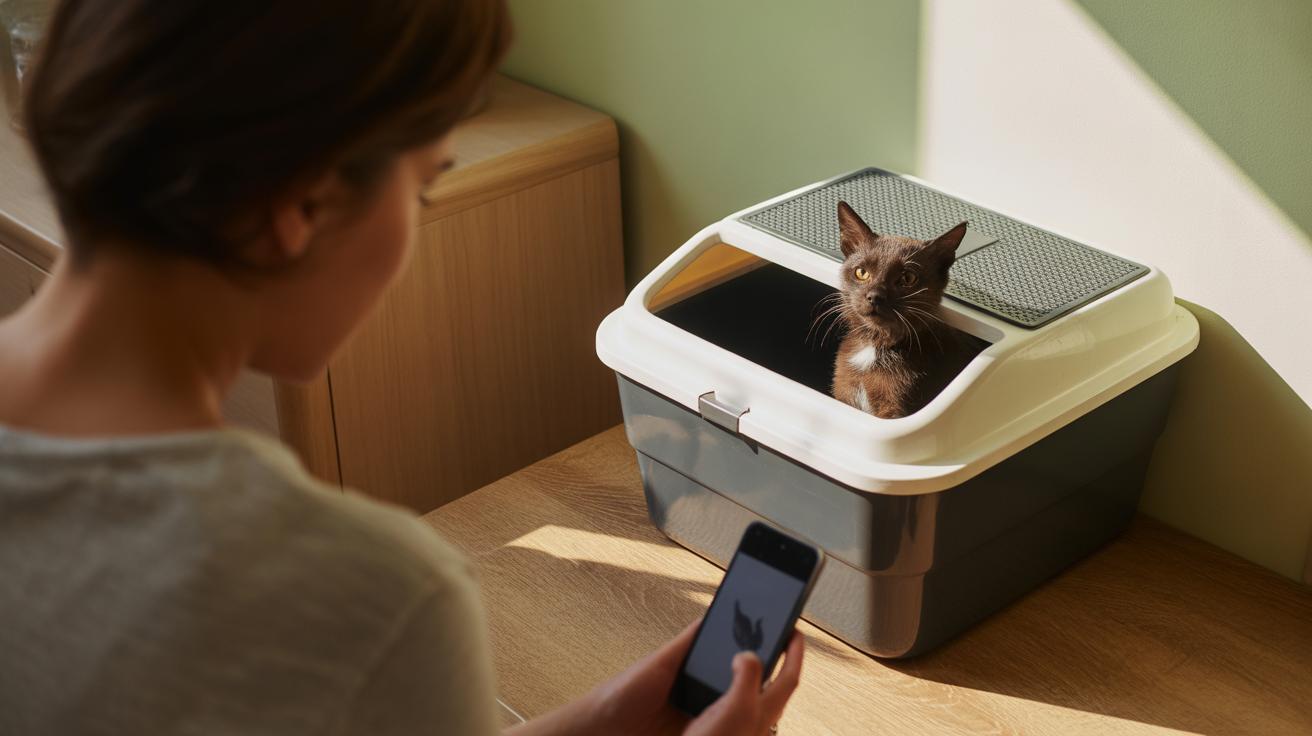
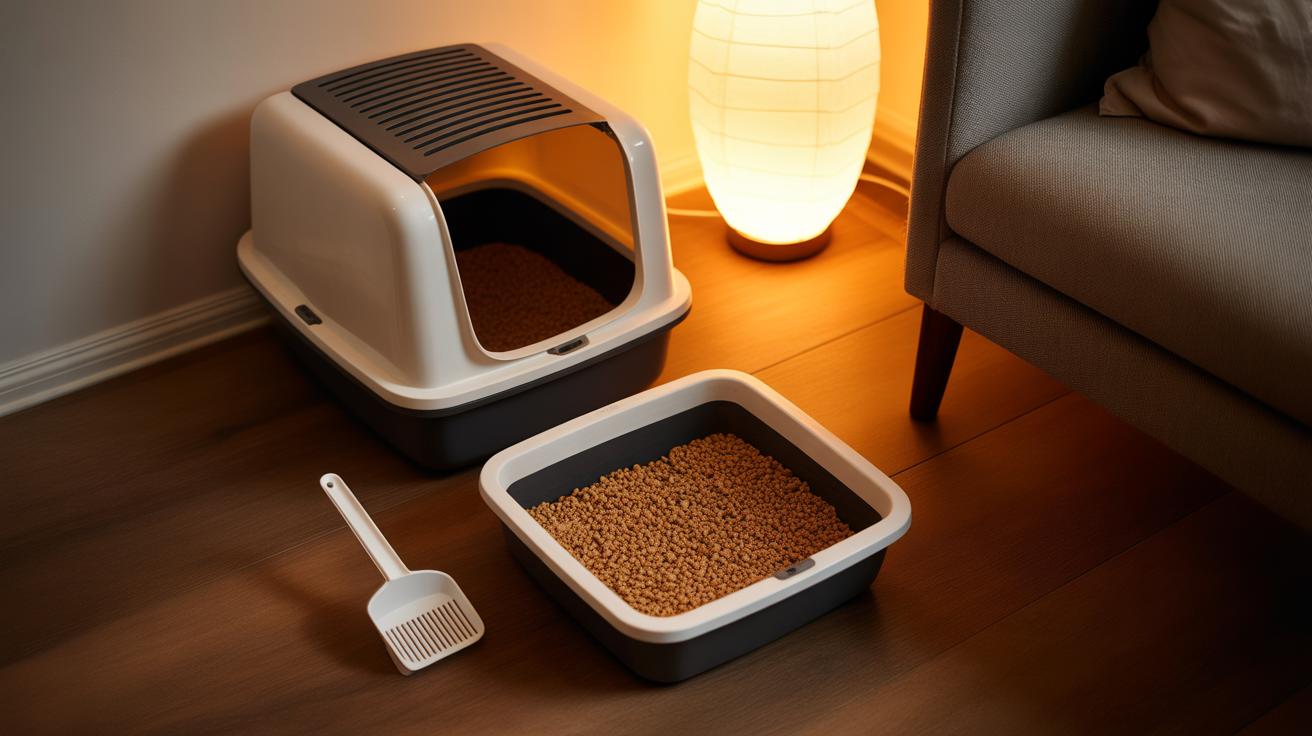
    Top-entry boxes (a box with a lid and a hole on top) keep litter and odors tucked inside. They cut down on tracking, hide the mess from guests, and make the room feel cleaner. Your floors stop looking like a sandy beach after playtime. Really.

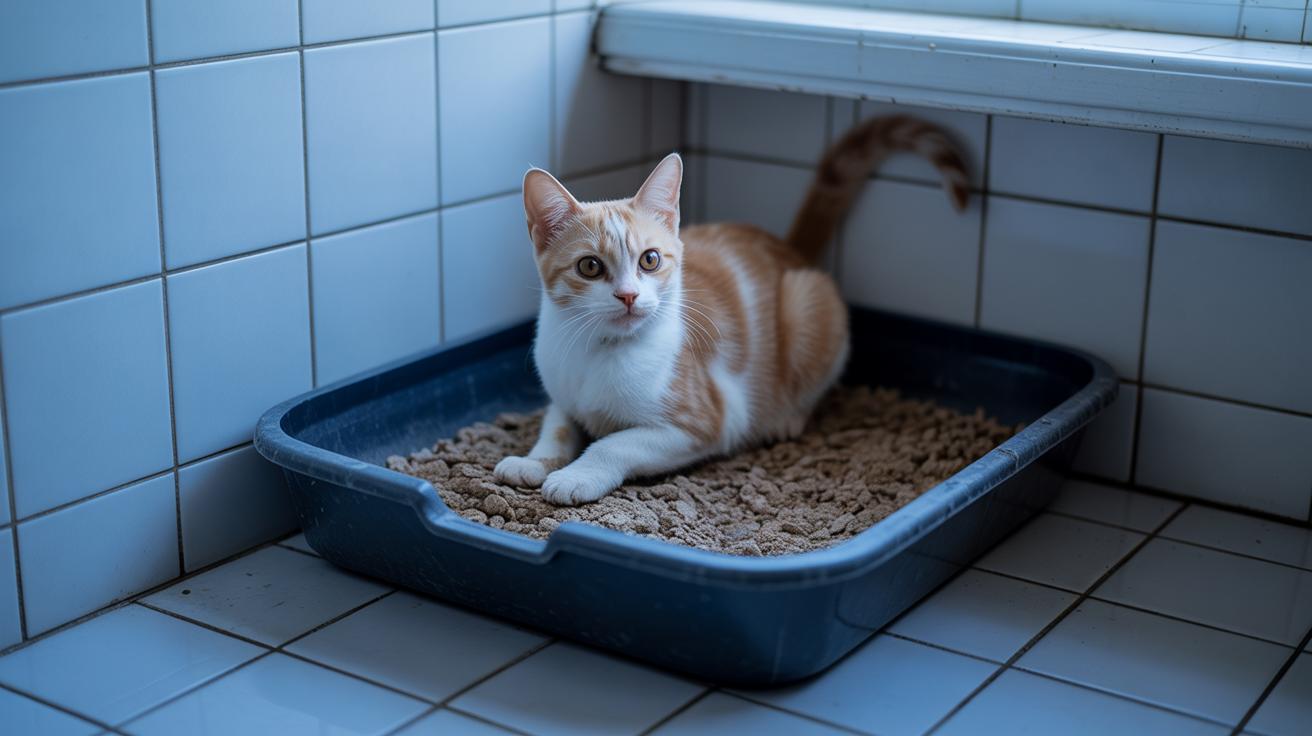
    Open pans (low-sided trays) give cats easy access and better ventilation (simple air flow), which helps smells dissipate faster. They’re way easier to scoop, especially for kittens, seniors, or broad-shouldered cats who can’t twist themselves into a lid hole. Ever watched a senior cat try to climb into a top hole? Yep, not great.

    Now the quick compare: scatter control , top-entry wins. Odor management , top-entry keeps smells contained, but good airflow in an open pan can fight smell too. Ventilation , open pans win. Scooping ease , open pans win, hands down. Think about your cat’s size, mobility, and whether you want less sweeping or faster scooping.

    For kittens, older cats, or big-chested breeds, pick an open pan so getting in and out is simple. For active diggers, apartment living, or if you hate sandy footprints, a top-entry box is claw-tastic. For multi-cat homes, try a mix or a larger open pan to avoid traffic jams.

    Match the box to your cat’s needs and your cleaning style, and both of you will be feline fine. Worth every paw-print.

    Quick verdict and decision checklist

    - Quick verdict and decision checklist.jpg

    Pick top-entry if you want the best scatter and odor control and your cats are nimble adults. Pick open pans if airflow (ventilation), easy scooping, or pets with mobility issues are more important to you.

    Top-entry boxes are great at keeping litter tucked away and hiding waste, so your bathroom looks tidier and tracking drops a lot. They trap smells well, especially with regular filter (charcoal filter or similar) maintenance, but the enclosed sides cut airflow and can hold moisture and odors. The smaller top opening makes scooping a bit fiddly, and big or broad-shouldered cats may feel cramped inside, so when you compare top-entry vs open designs think about your cat's size, how many people and pets use the area, and how you like to scoop.

    Open pans give barrier-free access that helps kittens, seniors, and arthritic cats move in and out without trouble. They breathe better (better ventilation reduces humidity and bacterial risk) and make health checks easy, you can see changes fast. Scooping is quicker, and options like high-sided pans or sifting inserts (screens that separate clean litter) can cut down scatter, but odors are more noticeable and litter can spread across the floor. So factor in your space, how much smell you can tolerate, and whether you want high sides or sifting solutions when you build your litter box checklist and daily routine.

    See the Odor control, ventilation, and hygiene section for exact cleaning frequencies and tools.

    Worth every paw-print.

    Feature Top-entry Open pan
    Odor control Very good at containing smells (best with regular filter maintenance) Smells spread more; people notice odors sooner
    Litter tracking Low: litter stays inside; textured top helps remove litter from paws Higher: litter can scatter; use mats or high-sided pans to catch it
    Accessibility (kittens/seniors) Poor: requires climbing, not ideal for young or arthritic cats Excellent: low-entry options and high-sided choices available
    Cleaning effort Moderate: smaller opening can make scooping slower Easy: full access; sifting inserts (screens that separate clean litter) speed changes
    Ventilation Reduced unless model includes vents; can trap moisture and odors Strong: open airflow lowers humidity and bacterial risk
    Privacy High: enclosed and private Low: fully visible
    Suitability for large cats Variable: some feel cramped for big breeds Better: larger pans are easier to size up
    Multi-cat dynamics May reduce one-cat monopolizing but could create ambush spots Easier shared access but can increase competition at peak times
    Quick recommendation Choose for maximum scatter and odor control if your adults are agile Choose for ventilation, faster scooping, and mobility-friendly access

    Top-entry litter box design: features, pros, and when it works best

    - Top-entry litter box design features, pros, and when it works best.jpg

    Top-entry boxes are litter boxes with the opening on the top (a top-opening litter box). They have taller walls that really help stop scattered litter. Many models use a textured top plate (a ridged surface that scrapes stray granules off paws, like a tiny doormat) and some are built into furniture-like shells so the whole setup looks tidy and out of the way. Think neat. Think less sweeping.

    They’re perfect if you want litter hidden and out of reach from dogs or curious kids. Ever watched a puppy dive headfirst into a litter pan? Yeah, this helps. But they limit airflow, which can let moisture and odors hang around longer. And they can be tricky for kittens, seniors, or big-bodied cats to get into.

    Pros: quick glance

    • Excellent at stopping tracked litter. Your floors will thank you.
    • Keeps the litter area hidden and looks tidy.
    • Keeps dogs and kids from nosing around.
    • Great for a single cat that prefers privacy.

    Cons: quick glance

    • Reduced airflow can trap moisture and smell over time.
    • Harder entry for kittens, elderly cats, or arthritic kitties.
    • Smaller opening makes scooping awkward.
    • Filters and liners (disposable bags or cartridges) need regular upkeep, and the hidden design can lead to less-frequent cleaning.

    Quick tip: place the box somewhere with some natural airflow and check it more often than you might with an open box. For busy days, a quick scooping session before you go out gives your cat a fresh spot and saves you from odors later. Worth every paw-print.

    Sample copy line for product pages:
    Textured top plate: "The ridged top scrapes off litter like a tiny doormat, leaving less grit on the floor."

    Open litter box design: features, benefits, and common drawbacks

    - Open litter box design features, benefits, and common drawbacks.jpg

    Open-pan litter boxes usually come in three shapes, and each one has a different vibe for your cat. Low-sided pans (shallow lip for easy entry) are great for kittens and older cats who want an easy step in. High-sided pans (taller walls to contain scatter) help keep litter off the floor when your cat digs with gusto. High-sided with low-entry cutouts (tall sides plus a lowered opening for easier access) give the best of both worlds , containment and a friendly doorway.

    • Quick selection tip: measure your cat’s shoulder height and compare it to the pan’s entry height (lip means the entry height). If the lip sits below their shoulder, stepping in will be easier. Example: If Luna's shoulder is about 5 inches, pick a pan with an entry under 5 inches. Easy peasy, and your cat will thank you with fewer balks at the box.

    • For multi-cat homes, keep at least one open pan per cat plus one spare to cut down on competition and make it easier to notice changes in use. Three cats? Try four open pans spaced around the house so no one has to wait in line. It really helps calm the household and makes scooping schedules simpler.

    See the Odor control, ventilation, and hygiene section for cleaning schedules and tools.

    Odor control, ventilation, and hygiene by box type

    - Odor control, ventilation, and hygiene by box type.jpg

    Top-entry boxes tend to trap smells inside their tall walls and small opening, so odors build up instead of drifting away. That tighter space also cuts airflow, so humidity hangs around and gives bacteria (tiny microbes that multiply in damp places) and mold a cozier spot to grow. Your nose pays the price later. Ever watched your cat give you a look like, “Really?” Yeah.

    Open pans let odor molecules spread into the room instead of collecting in the box. That means the litter stays drier and less friendly to bacteria, but you’ll usually smell things sooner around the house. Tradeoffs, you know?

    Scoop at least twice a day and use a clumping litter (forms firm clumps for easy removal) kept 2–3 inches deep so digging feels natural and waste gets contained. Wash the box weekly with hot water and a mild detergent (soap that cleans without harsh fumes), and fully replace the litter every 2–4 weeks. Useful tools: a long-handled scoop for posture-friendly scooping, a sifting insert for faster full changes, disposable liners for messy days, and a gentle scrub brush. Worth every paw-print.

    Odor-neutralizing litters and silica crystals (tiny beads that soak up moisture and smells) can help, but how well they work depends on the box. Enclosed designs hide smells better when paired with good clumping litter or silica; open pans do best with lightning-fast scooping and an odor-control litter to keep room smells down.

    Many top-entry models include carbon or charcoal filters (carbon: a porous material that soaks up odor molecules) or disposable liners, but they only do their job if you replace them on schedule. Ventilation fixes are simple. Pick a model with built-in vents, drill a few small holes in non-structural areas of the lid to boost airflow, or add a quiet circulation fan aimed so it moves air without spooking your cat.

    Quick practical tips:

    • Put the box where cross-ventilation reaches it, like near a window or hallway breeze.
    • Keep a weekly scrub routine and change filters per the maker’s schedule.
    • Use a mat to catch tracked litter so odors don’t cling to nearby carpet.
    • For top-entry boxes, check seals and lids often so air can move freely.

    In truth, a little daily scooping and a smart setup go a long way. Your cat gets a cleaner bathroom, and you get fewer surprise “oops” moments when you walk into the room.

    Cleaning, maintenance, and owner ergonomics for top-entry and open pans

    - Cleaning, maintenance, and owner ergonomics for top-entry and open pans.jpg

    Scooping ergonomics

    Pick a scoop that fits the pan. For open pans (low-sided boxes with a wide top) use a wide, shallow scoop so you can lift clumps fast and cut wrist strain. For top-entry pans (tall-sided boxes with a small top opening) choose a narrower scoop that slips through the hole and reaches down the tall walls.

    Use an angled-handle or long-handled scoop to keep your back straighter – less bending, less groan. Like a tiny shovel, a wide shallow scoop lifts clumps in one smooth motion. Your wrist will thank you. Ever tried scooping with a tiny spoon? Not fun.

    One-line cross-reference: for tools such as sifting inserts (mesh trays that separate clean litter) or disposable liners (single-use liners for easy cleanup), see the Odor control, ventilation, and hygiene section.

    Washing and deep cleaning

    If the model has a removable inner pan (a separate insert you can pull out), take it out first so pouring and rinsing are easier. I usually do this outdoors when I can – less mess, more fresh air.

    Follow this quick routine:

    1. Empty litter into trash.
    2. Rinse with hot water.
    3. Scrub with a mild detergent (soap that cleans without harsh fumes).
    4. Dry fully in sun or air. Moisture left behind invites microbes (tiny germs) and odors.

    Keep wipes for quick rim-touches between deep cleans. For exact change and scooping schedules, refer to the Odor control, ventilation, and hygiene section. Worth every paw-print.

    Suitability for kittens, senior cats, and large breeds when comparing top-entry vs open litter box designs

    - Suitability for kittens, senior cats, and large breeds when comparing top-entry vs open litter box designs.jpg

    Measure your cat from the tip of the nose to the base of the tail, then add 6 to 8 inches. That gives the interior length your cat needs to turn and dig without bumping into the walls. Check shoulder height against the entry lip (the raised edge your cat steps over) and pick an entry lower than the shoulder so stepping in feels natural. Measure across the shoulders and add a few inches so broad-chested breeds like a Maine Coon do not feel cramped.

    Top-entry boxes usually need a hop up and a climb, so they can be tough for kittens, seniors, and cats with arthritis who struggle with stairs or jumping. Open pans and low-entry, high-sided boxes (high-sided means tall walls to stop scatter) are easier for mobility-impaired cats because paws hit the floor quickly and there is plenty of room to spin. Some makers do low-entry or cut-out top-entry versions that solve this, and there are self-cleaning models too. Self-cleaning (a mechanism that automatically rakes or sifts waste into a bin) low-entry boxes can have specs like a 4.8-inch low entry, about 57.6-liter capacity, and noise under 40 dB , quiet enough for most skittish cats.

    Ever watched your kitty hesitate at a tall lip? Um, yeah, been there. For seniors and kittens aim for a low entry lip under 5 inches. Make sure interior length equals your cat length plus 6 to 8 inches. Pick high walls or a tall rim to cut down on scatter without forcing a climb. A removable inner pan makes scooping and washing so much easier, trust me.

    Also look for a textured, non-slip floor or a gentle ramp to help balance and reduce slipping. If your cat startles at noise, choose a model that runs under 40 dB. Secure lids or cut-outs are fine as long as they still let air flow and don’t trap smells. Worth every paw-print when the box fits your cat.

    Multi-cat households, placement, and behavioral considerations for top-entry vs open litter box designs

    - Multi-cat households, placement, and behavioral considerations for top-entry vs open litter box designs.jpg

    One good rule to remember is one box per cat, plus one extra. It cuts down on fights, lowers the chance a cat pees or poops outside the box, and gives nervous kitties options. Simple. Worth writing on the fridge.

    Top-entry boxes (a litter box with a lid and a small hole on top) can help in busy multi-cat homes. The small opening makes it harder for a bossy cat to sit guard and hog the box. That can stop anxious cats from finding a new, less appropriate spot to go. But watch for ambushes. If a shy cat climbs out and another cat waits by the only exit, the first cat might start avoiding the box. Try placing a top-entry so cats can approach and leave from different angles. That way no single cat can block the only way out.

    Open pans (the shallow, no-lid style) give fast, visible access. Caregivers can see who's using the box, swap it out quickly, and spot health changes like diarrhea or frequent peeing. For busy people, that visibility is a big win. It’s also easier to tidy between cats so nobody feels crowded.

    Placement matters as much as the box style. Avoid tight corners and noisy, high-traffic spots where a cat can be startled. Bathrooms or laundry rooms can work if ventilation (airflow that keeps the box dry) is good and the door is left slightly open so a cat does not feel trapped. Think about clear approach and exit paths. Your cat should be able to walk in and out without being cornered.

    Clean more often in multi-cat homes. Seriously. Scoop frequency and full cleanings need to go up as you add cats. If one cat is sick or sprays a lot, give them a dedicated spare box in a quiet spot for a while. Keep that box just for them so they can go in private and you can monitor any changes.

    Little things help a lot. Put boxes on different levels if you can, especially for shy cats or elders who dislike stairs. Add low-sided pans for kittens or older pets who struggle with high entrances. And if you like a tidy look but want airflow, check the DIY litter box enclosure guide to turn an open pan into a ventilated hideaway.

    In truth, there’s no one perfect box for every home. Watch your cats, try options, and follow where they take you. Your couch will thank you.

    Litter choice, tracking, and containment solutions for each design

    - Litter choice, tracking, and containment solutions for each design.jpg

    We moved this section into the design-specific pages to avoid repeating the same tips everywhere. You’ll find practical, hands-on advice on each design page instead of a long repeat here. Ever notice how litter advice can read like a broken record? We fixed that.

    See Top-entry litter box design for anti-tracking granules and textured top plate guidance (textured top plate: a ridged surface that scrapes stray granules off paws). Set the plate flush over the opening so your cat’s paws brush the ridges as they step out, and give it a quick wipe or rinse every week. It cuts down on the breadcrumb trail across the floor. Worth every paw-print.

    See Open-litter-box design and Odor control/ventilation for high-sided pans, sifting pans, and mat placement advice. High-sided pans (pans with taller walls) help stop scatter. Sifting pans (pans that separate clumps from clean litter) speed up cleaning. Put the mat where your cat’s paws land as they step down, about 6-12 inches from the box exit, so it actually catches stray bits.

    See Odor control/ventilation (clumping litter: forms solid clumps when wet) for the recommended 2-3 inch clumping-litter depth. Try pellets (coarse compressed pieces that track less) if tracking is your main worry, but know some deep-diggers hate them. Silica crystals (absorbent gel beads) are great for odor, but watch for dust or allergy signs like sneezing or watery eyes. If that happens, swap back to a low-dust option.

    Transitioning and training tips when switching between top-entry and open litter box designs

    - Transitioning and training tips when switching between top-entry and open litter box designs.jpg

    Switching litter boxes works best when you go slow, keep the same litter, and pay close attention to your cat. Expect about one to three weeks for most cats to adjust. Older or shy kitties might need more time, and that’s totally okay.

    Step-by-step transition plan

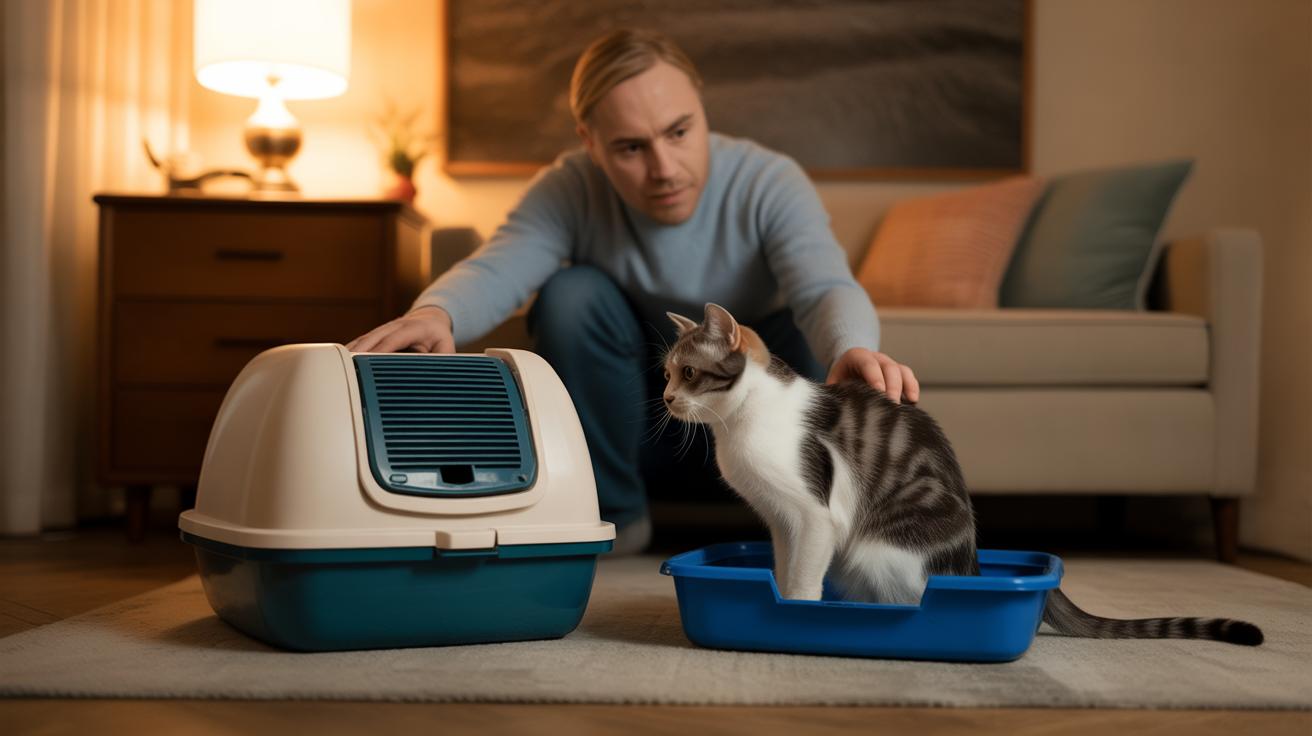
    Day 1–3: put the new box right next to the old one and fill it with the same litter so the scent feels familiar. If the new box is top-entry (a box with a hole on top), or hooded (a covered box with a roof), or an open pan (no cover, low sides), mention that to your cat with a treat. Place a small treat or a smear of wet food on the new box so they sniff and explore.

    Day 4–10: each day, move the new box a little closer to its final spot. Offer quiet praise or a tiny treat after your cat uses it. For switching from hooded to top-entry, let your cat climb on the lid first, put a treat on the textured top so they learn the route. Think of top-entry like a little rooftop door for cats. It’s a simple training tip that helps kittens and cautious adults both.

    Week 2: if your cat is using the new box consistently, move it fully into place and remove the old pan. Keep a backup for a while, just in case.

    Monitoring signs and when to stop the transition

    Watch their body language. Hesitant paws, long sniffing without digging, crouched posture, tail flicks, or loud meows can mean stress. Repeated accidents outside the box, changes in appetite, or straining to urinate are red flags. If you see accidents or clear avoidance for 7 to 14 days, pause the switch and go back to the old box or try a different design.

    Transitioning to an open pan often goes faster, since cats can see in. But if your cat shows stress, slow down. Your cat’s comfort matters more than the perfect setup.

    If you notice painful urination, blood, or any big health change, call your vet right away. Worth every paw-print.

    Comparing top-entry vs open litter box designs

    - Product selection checklist and practical recommendations for comparing top-entry vs open litter box designs.jpg

    Once you’ve already decided on size, the stuff that really matters is ventilation, filter access, and how easy the box is to clean. Look for built-in vents or an easy-to-replace carbon filter (carbon filter = a charcoal layer that soaks up smells). Also favor boxes with a removable inner pan or a lid that lifts off so you can reach every corner. A big open top makes scooping fast, but it also lets more smell out. Ever tried scooping with your spine hunched? Not fun. Make sure you can reach clumps without twisting your back. If you can’t, try a different model.

    Want a quick win? I switched to a pan with a removable inner tray and scooping went from awkward to one-handed. Huge relief.

    Thinking about automated or self-cleaning units? Aim for measurable performance. Target about 57.6 liters of waste capacity (that’s roughly 15.2 gallons) and noise under 40 dB for a quieter home (40 dB is about a quiet library). Low-entry self-cleaning boxes with those numbers tend to be easier for kittens and seniors to step into. When you test models, run a 7 to 14 day trial. Watch daily use, note odor control, check litter tracking, and test scooping ergonomics if the unit has a manual option. Keep a tiny log like this: "day 4: less odor, day 9: cat uses box at night." It helps you compare like a pro.

    Quick model comparison suggestions

    • Top-entry picks:

      • Textured top plate so litter shakes off paws (the little bumps mean fewer paw prints on the couch).
      • Easy carbon filter access (replaceable charcoal layer) and a secure spot for it.
      • Removable inner pan for fast, full cleaning.
      • Stable lid fit for cats that like to burrow and flip around.
    • Open pans:

      • High-sided or high-sided-with-low-entry options to control scatter.
      • Sifting inserts for fast full changes.
      • Wide, shallow rims that make scooping simple and quick.
      • Put a durable mat 6 to 12 inches from the exit to catch tracked litter.
    • Automated / self-cleaning criteria:

      • Low-entry option for kittens and seniors.
      • About 57.6 L (15.2 gal) waste capacity.
      • Noise under 40 dB for calmer homes.

      • Easy manual override so you can scoop if the mechanism jams.

    A little sensory note: imagine your cat’s whiskers twitching as the litter rolls away. Small changes like a textured top or a removable tray can make cleanup feel almost fun. Worth every paw-print.

    Final Words

    in the action: choose top-entry for maximum scatter and odor control if your adult cats are agile; choose open pans when ventilation, easy scooping, or mobility friendly access matter.

    Top-entry boxes keep litter contained and block curious kids, but they can limit airflow and be tough for kittens or seniors.

    Open pans breathe better and make scooping simple, though smells can be more noticeable and litter may scatter.

    See the Odor control, ventilation, and hygiene section for exact cleaning steps. Good luck comparing top-entry vs open litter box designs. You’ll be feline fine.

    FAQ

    Frequently Asked Questions

    Which is better: top-entry or open pan litter box?

    Choosing between a top-entry and an open pan litter box comes down to needs: pick top-entry for maximum scatter and odor control and agile adult cats, pick open pans for better airflow (ventilation) and easier access for kittens or seniors.

    Do cats like top-entry litter boxes or do they dislike them?

    Cats’ reaction to top-entry litter boxes varies: many confident adult cats enjoy privacy and less scatter, while kittens, elderly, arthritic, or shy cats often avoid the climb or cramped interior.

    Do top-entry litter boxes smell less?

    Top-entry litter boxes can smell less to nearby people by trapping scatter and some odor under high walls, but reduced airflow (ventilation) may let moisture and smells build; add vents and keep regular cleaning to prevent buildup.

    What is the golden rule for litter boxes?

    The golden rule for litter boxes is one box per cat plus one extra. This reduces competition, lowers stress, and cuts down on accidents so everyone stays feline fine.

    Are top-entry boxes suitable for kittens, senior cats, or large breeds?

    Top-entry boxes are often unsuitable for kittens, seniors, or mobility-impaired cats because of the climb; choose low-entry or high-sided open pans and size the box by measuring nose-to-base-of-tail plus 6–8 inches interior length.

    Are top-entry boxes a good choice for multi-cat households?

    Top-entry boxes can help in multi-cat homes by cutting monopolization and blocking dogs or children, yet some cats may feel exposed; follow one-per-cat-plus-one, space boxes apart, and watch for tension or avoidance.

    Related Articles

  • persian cat facts: Grooming, Health, Lifespan

    persian cat facts: Grooming, Health, Lifespan

    Think Persian cats are just plush pillows that need no fuss? Their cloud-like fur, smooshy faces, and slow-motion pounces make them irresistible. Ever watched one tiptoe in slo-mo and still land the cutest flop? Yeah, charming but a little high-maintenance too.

    That long coat and short muzzle mean daily grooming, wiping tear stains, and more vet visits than a short-haired buddy might need. Brush to stop mats. Clean their eyes because those smooshy faces can trap tears and goop. Little habits now save big hassles later.

    In this post you’ll get clear, practical Persian facts about grooming routines, common health issues like PKD (polycystic kidney disease, where fluid-filled sacs form in the kidneys) and HCM (hypertrophic cardiomyopathy, a thickening of the heart muscle), plus realistic lifespan expectations so your kitty stays comfortable and thriving. We’ll cover what to watch for, simple home-care steps, and when to call the vet. Ready to keep your cat feline fine?

    persian cat facts: Grooming, Health, Lifespan

    - Persian Basics Quick breed facts that answer what owners want.jpg

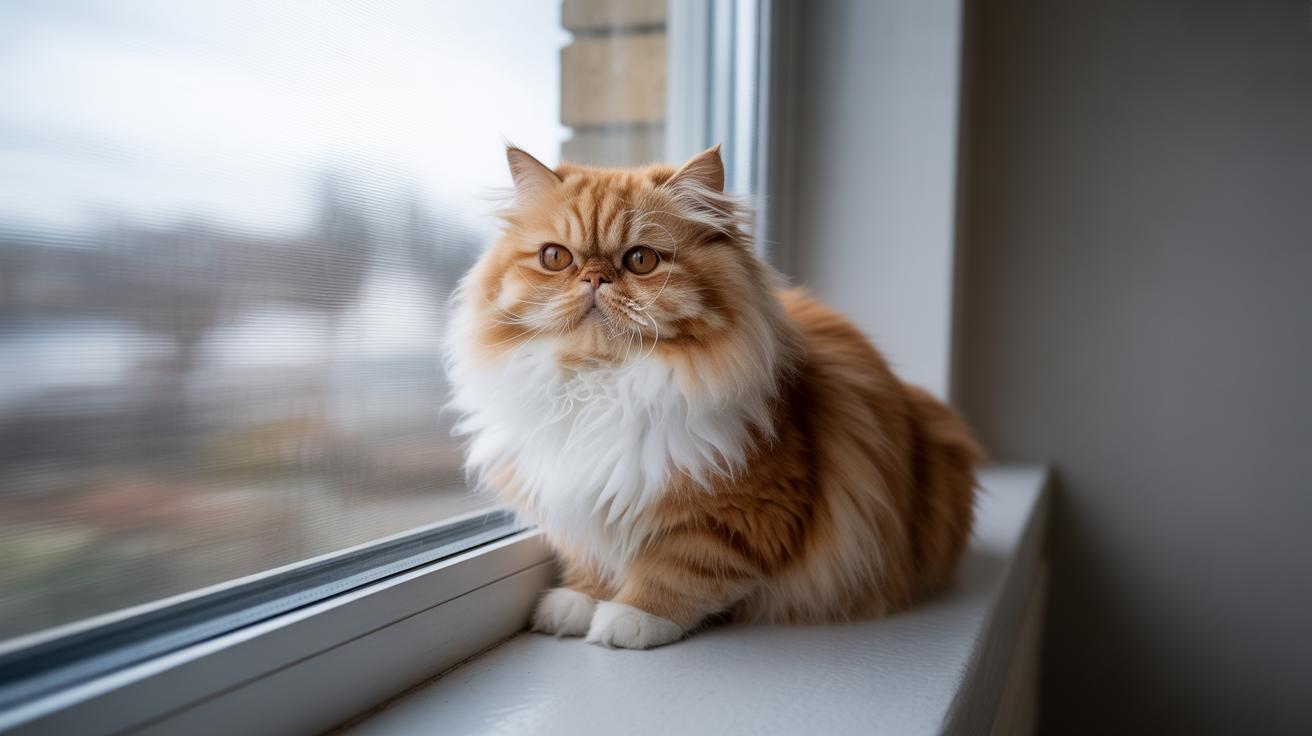
    Persians are those plush, round-faced cats you see lounging like little fur pillows. They’re medium-to-large, usually 7 to 14 pounds, with a broad round face, a short muzzle, and big, wide-set eyes. Calm and a bit regal, they love a sunny spot and quiet pats , but they can be shy around strangers. Ever watched a Persian knead a blanket? Pure slow-motion joy.

    Their coat is long, dense, and silky with a thick undercoat (the soft layer close to the skin that keeps them warm). That gorgeous fur means daily brushing to stop mats, and a monthly bath helps keep things smooth. Eyes need daily wiping to manage tear stains caused by their short face – it’s normal, but worth checking for irritation.

    Healthwise, Persians do best with regular vet care. Average lifespan is about 10 to 17 years with routine checkups. Watch for a few breed-specific issues: brachycephalic breathing problems (short-nosed breathing difficulties), hypertrophic cardiomyopathy – HCM (a condition where the heart muscle thickens), and polycystic kidney disease – PKD (kidney cysts that can hurt function). Talk with your vet about screening for HCM and PKD if you’re getting a Persian from a breeder or rescue.

    Quick facts:

    • Weight: typically 7 to 14 pounds (some sources say up to 15 pounds).
    • Length: about 14 to 18 inches nose to tail.
    • Coat: long, dense, silky with a thick undercoat (think soft, warm cloud).
    • Face types: from dollface to very short-muzzled, more extreme varieties.
    • Grooming: daily brushing; monthly baths to prevent mats.
    • Eye care: daily wiping to reduce tear stains and watch for irritation.
    • Lifespan: around 10 to 17 years with regular vet care.
    • Living situation: best kept indoors with toys and perches; outdoor time only when supervised.

    Persians fit calm homes where someone will commit to daily grooming and watchful health care. I once watched a Persian named Luna leap for a toy and then go back to her throne , they’re playful, but in a very elegant way. For tips on choosing between adoption and buying, breeder questions, and early-life milestones, see the Choosing a Persian section later. Worth every paw-print.

    Persian Appearance & Coat Types: coat structure, facial-variety trade-offs and health effects (see Basics for quick stats)

    - Persian Appearance  Coat Types coat structure, facial-variety trade-offs and health effects (see Basics for quick stats).jpg

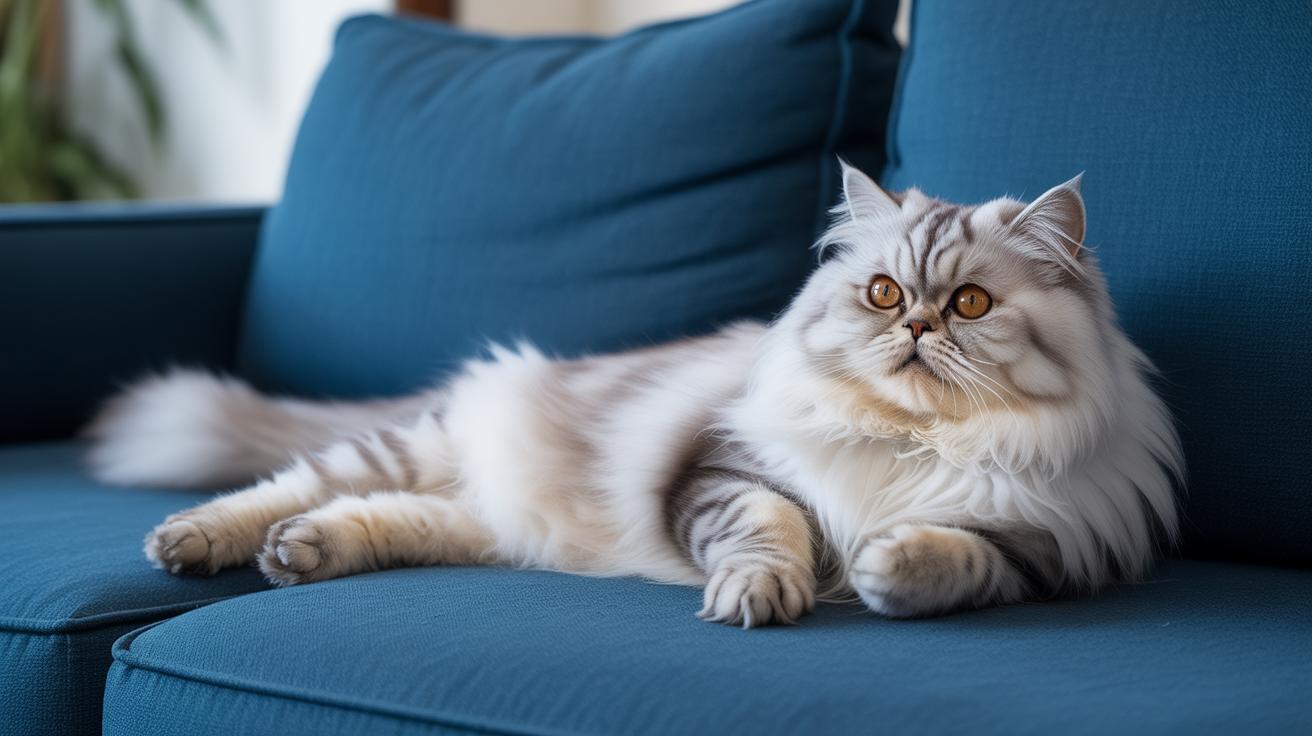
    Persians are solidly built, with a broad chest, short thick legs, and big paws that give them a compact, plush shape, think cuddly aristocrat. They look like a velvet loaf, all soft curves and presence. See Basics for quick stats on size, grooming, and lifespan.

    Their coat has two main layers. The undercoat (the soft, insulating layer next to the skin) is dense and fluffy, while the guard hairs (longer hairs that create the shiny surface) sit on top and give that glossy finish. Together they trap loose fur and moisture, so mats form in places with little air or movement, like the neck, armpits, and behind the ears. Seasonal shedding can come in heavy waves, too, so expect some serious vacuuming.

    Dollface vs Peke-face

    Dollface Persians have a longer muzzle (the snout area) and more open nasal passages, so breathing tends to be quieter. It’s easier to clean around their eyes and nose, and they usually have fewer airway or tear-drainage problems. You’ll still groom them a lot, but they often need fewer medical fixes. See Basics for quick stats.

    Peke-face Persians have a very short muzzle and are strongly brachycephalic (a short-nosed skull shape), which gives that ultra-flat look. Cute, right? But it also brings louder breathing, snoring, and more tear-staining because tear drainage is often altered. Face grooming is trickier, and vets see more clinical issues with extreme faces, so plan for extra care. See Basics for quick stats.

    Common colors & patterns

    Persians come in solids, shaded and chinchilla types, bicolors, tabbies, and pointed varieties like Himalayans (colorpoint pattern with darker ears, face, paws, and tail). Light coats show tear stains more clearly, while dark coats hide stains but make dandruff and dust stand out. One quick safety note: white Persians with blue eyes carry a small risk of deafness, so ask breeders or shelters about hearing checks like the BAER test (a vet hearing test) when you’re considering a white or blue-eyed cat.

    Persian Grooming & Coat Care: routines, tool uses, troubleshooting and pro-groomer thresholds

    - Persian Grooming  Coat Care routines, tool uses, troubleshooting and pro-groomer thresholds (reference Basics for frequency).jpg

    See Basics for quick stats on grooming frequency and eye care. Below is an easy, step-by-step routine you can do at home to keep that long coat shiny and mat-free – and to know when it's time to call a pro.

    Brushing: step-by-step routine

    Goal: remove loose undercoat (undercoat is the soft insulating layer right next to the skin), stop mats early, and check the skin for bumps or irritation.

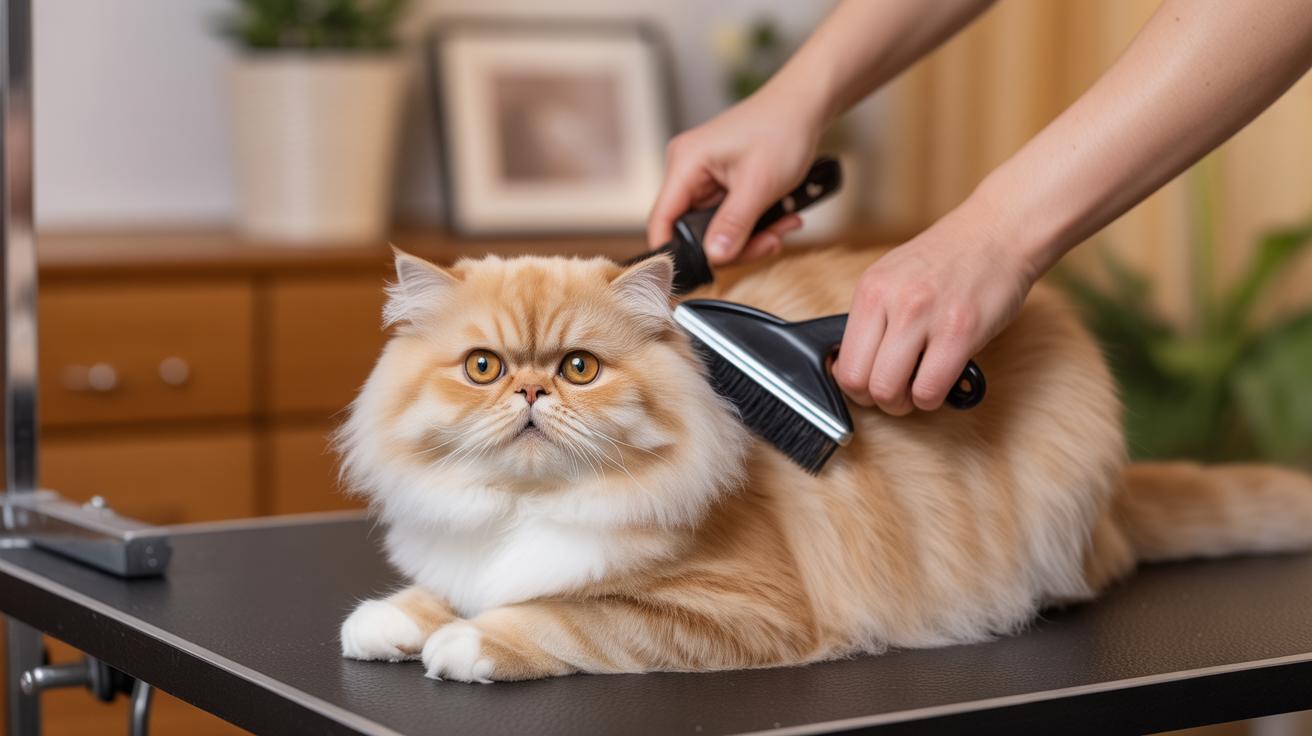
    Start calm. Gather your tools and let your cat sniff them like a tiny inspector. Work from the head toward the tail in short passes. Separate the coat into panels so you don’t miss spots. When you hit a tangle, work from the tips toward the skin while gently holding the base of the hair to reduce tugging. Finish with a soft brush or a fingertip rub to smooth the guard hairs (guard hairs are the longer outer hairs that give the coat shine). For kittens, keep sessions to 1 to 2 minutes, use treats, and slowly lengthen the time as they relax.

    • Slicker brush – lifts loose fur and teases small tangles.
    • Wide-tooth comb – opens up dense areas and helps find mats.
    • Stainless-steel comb – fine teeth for finishing and catching tiny tangles.
    • Dematting comb or knife (a tool that cuts or slices through very tight mats; use only if you know what you’re doing)
    • Grooming rake (pulls the undercoat out without over-brushing the topcoat)
    • Soft finishing brush – smooths and buffs the coat for shine.
    • Fingertip massager – calms nervous cats and gives you a skin check at the same time.

    A quick tip: think of brushing like a slow, gentle massage. Your cat’s whiskers will twitch, their tail might flick, and sometimes they’ll nap right after. Worth every paw-print.

    Bathing, dematting & eye care

    Bathing: use warm, shallow water and a cat-safe shampoo. Protect ears and eyes, lather gently, rinse thoroughly, towel dry, then use a low-warm blow dryer if your cat tolerates it. For a full step-by-step, see do cat need bath.

    Dematting: first figure out if the mat is loose or tightly stuck to the skin. Loose mats can often be teased apart with a comb. For tighter mats, spray a detangler, work at the edges, and never yank. If the skin looks red, swollen, or the cat cries, stop right away. Seek professional help for skin redness, oozing, very large or tightly adhered mats, or when mats cover more than a small area.

    Eye care: use a soft cotton pad or a vet-approved wipe moistened with saline and wipe from the inner corner outward, using a fresh pad per wipe. Don’t press. If the discharge is thick, green or yellow, bloody, or the eye looks swollen, call your vet.

    When to call a pro
    Bring in a professional groomer or your vet when mats are skin-tight or cover more than 10 to 20 percent of the coat, when at-home attempts cause stress or skin damage, or when the cat’s behavior makes grooming unsafe. Major de-matting can take hours, and sometimes it needs sedation in a clinic. Better safe than sorry, your cat and your fingers will thank you.

    Health & Lifespan: screening protocols, timelines, warning signs and management strategies

    See Basics for lifespan and routine care stats. This section focuses on what to watch for and when to test, so you can catch common Persian problems early and keep your cat comfy.

    Brachycephaly (short, flat face common in Persians) brings some special precautions. Watch breathing when your cat is relaxed: count breaths per minute, listen for noisy breathing or snoring, and notice how they handle activity. If your cat tires quickly or breathes with an open mouth at rest, that’s a red flag.

    At home, move a hot or breathless cat to a cool shaded spot, keep handling calm and gentle, and call your vet if the fast or noisy breathing continues or your cat seems distressed. Ever watched a Persian try to nap while snoring like a tiny tractor? Yeah, pay attention.

    Key inherited conditions and screening timelines

    PKD (polycystic kidney disease) can be found with a DNA test (cheek swab or blood sample) at any age. A renal ultrasound (kidney imaging scan) shows cysts and is useful for breeding cats or adults showing symptoms. Breeders should test parents before breeding. If you adopt or buy a kitten, ask your vet about PKD testing at the first adult exam so you can monitor later.

    HCM (hypertrophic cardiomyopathy, thickening of the heart muscle) often starts quietly. Your vet listens for murmurs during checkups and may suggest an echocardiogram (heart ultrasound) if anything sounds off. For breeding or at-risk cats, get a baseline echo by 1 to 2 years old and follow the cardiologist’s advice about repeat checks, usually every 12 to 24 months when prior changes exist.

    Eye problems like entropion (eyelid rolling inward) and corneal ulcers (a sore or scratch on the eye surface) are common in flat-faced cats. Vets look at eyelid position and corneal health during exams. Dental checks matter too, with cleanings scheduled when tartar (hardened plaque) or gum disease shows up.

    Watch for these urgent signs and call your vet right away:

    • Labored or noisy breathing, or open-mouth breathing at rest.
    • Fainting, sudden collapse, or trouble standing.
    • Rapid weight loss or big appetite changes.
    • Persistent bloody or green eye or nasal discharge.
    • Swollen belly, severe lethargy, or trouble eating.

    Long-term care mixes simple home steps like cooling, keeping a healthy weight, and gentle play with vet-led monitoring, medicines when needed, and surgery for serious issues such as entropion or airway correction under specialist care. Regular rechecks and timely referrals to a cardiologist or ophthalmologist really help. Oops, actually, consistent follow-up can change outcomes a lot.

    Worth every paw-print.

    Nutrition, Weight Management & Hairball Prevention for Persians: feeding plans, portion guidance and enrichment schedules

    Kittens need small, frequent meals to grow strong. Feed 3 to 4 small meals a day so they get steady calories and nutrients for bone and brain growth. Ever watched a kitten eat like it’s training for Olympic pouncing? Me too.

    Adult Persians do best on two measured meals a day, one in the morning and one in the evening. That helps control calories and cuts down on thirst-driven nibbling. Pick foods with a high-quality animal protein first on the ingredient list, because protein keeps muscles toned and kitties spry.

    Senior Persians usually need fewer calories as activity drops. Reduce portion size or switch to senior formulas (diets made for older cats with fewer calories and joint-friendly nutrients). Check with your vet for a target calorie range and adjust portions using a body condition score (a simple vet scale that checks fat versus muscle by feeling ribs, waist, and tummy).

    Balance wet and dry food for variety and hydration. Wet food (canned food with lots of moisture) adds water to your cat’s day and helps urinary health. Dry kibble gives crunchy texture that some cats love and can help keep teeth feeling cleaner. Offer regular wet meals for extra moisture and aim for foods that include omega-3/6 (healthy fats that support skin and coat).

    Switch diets slowly over 7 to 10 days to avoid tummy upset. Start with about 25 percent new food mixed with 75 percent old food, then increase the new food a bit each day until it’s 100 percent. Oops, let me rephrase that… go slow and watch for any upset tummies.

    Hairball prevention is a team effort. Daily brushing is the easiest win, short strokes, extra around the mane where Persians matt. Add short courses of fiber supplements (a gentle fiber that adds bulk so swallowed hair moves through the gut) or try hairball-formulated wet food. Your vet may recommend occasional lubricating pastes to help hair pass safely.

    Play first, groom later. Try a 5 to 10 minute interactive play session right before meals to let hunting instincts out. That often reduces frantic overgrooming. Then use feeding enrichment like puzzle feeders or slow-dispense bowls to slow eating and keep boredom at bay. Think of the puzzle feeder like a tiny hunt you hide in plain sight.

    Measure portions with a kitchen scale or a standard scoop so you’re not guessing. Weigh your cat and run a quick body-condition check each week, feel the ribs, look for a waist, check the tummy. If weight creeps up or drops even after portion tweaks, ask your vet or a feline nutritionist for a custom plan.

    Final tip: small changes, big rewards. A little routine, a few grooming minutes, and the right food can keep your Persian fluffy, healthy, and feeling feline fine. Worth every paw-print.

    Persian Temperament & Living: practical socialization steps, enrichment schedules and household integration

    See Basics for a quick temperament summary. This part gives hands-on scripts and simple schedules you can try at home to help a shy Persian feel safe, playful, and like part of the family.

    When someone new meets your cat, let the cat set the pace. Try this short script: sit quietly, blink slowly at your cat like you’re saying hello, offer a small treat on an open palm, then step back. Keep first meetings to 2 to 3 minutes and watch for relaxed signals, soft ears, slow blinking, a gentle tail. Supervise visits until your cat looks calm and curious.

    Kids need special coaching. Ask them to sit, whisper, and hold a closed hand for the cat to sniff; no grabbing, chasing, or rough play until the cat asks for attention. It helps to show them how to move slowly and keep voices low. Kids love seeing a timid cat become bold, you’ll love it too.

    Introducing other pets is a slow, staged process. Start with scent swapping (rub a cloth on one animal, leave it with the other so they learn each other’s smell). Next try parallel feeding in separate but adjacent rooms so they associate each other’s presence with good food. Then schedule short, controlled meetings with the dog on a leash (a short leash for control) or the cat in a carrier (a small travel crate). Increase time over several days only if both animals stay calm. Pause and regroup if you see hissing, flattened ears, swatting, or long hiding spells.

    Keep your Persian’s brain busy with a steady routine. Aim for two 10-minute interactive play sessions each day, morning and evening. Add 10 to 15 minutes of puzzle-feeder work after meals (a puzzle-feeder is a bowl or toy that makes your cat work a bit to get food). Rotate a new toy each week and carve out quiet perch time for sun-napping. Your cat’s whiskers will twitch and you might hear that happy little chuff when they pounce.

    Set the home for calm living. Place perches near windows so your cat can watch birds and street life (perches are raised spots for sitting). Offer multiple litter boxes, one per cat plus one extra, and keep them clean. Soften loud noises with rugs, curtains, or a gentle white-noise machine (a device that plays steady background sound). Secure high-risk items like loose cords and tiny objects so curious paws stay safe.

    Small touches make a big difference. Ever watched your kitty chase a shadow and suddenly look triumphant? Little routines, predictable play, and safe spaces help a reserved Persian relax and show their goofy, claw-tastic side. Worth the patience.

    Choosing a Persian: adoption vs buying, detailed breeder-interview scripts, costs and early-age milestones

    Adopting a Persian can be a sweet, faster way to bring a mellow adult cat into your home, and it often costs less. Buying from a breeder gives you more control over health checks and lineage, though it usually costs more, so check local price ranges before you decide. See Basics for quick suitability and living recommendations.

    Breeder / shelter checklist to request or confirm:

    • Health test results for both parents, including PKD DNA or ultrasound (PKD is polycystic kidney disease; DNA testing or ultrasound looks for cysts) and HCM echo or cardiac history (HCM is a heart condition; an echo is an ultrasound of the heart).
    • Vaccination and deworming records for the kitten, with dates and vaccine names.
    • A written contract or health guarantee that spells out return or rehoming terms.
    • Microchip details and any registration papers if available.
    • References from previous buyers or adopters you can call or message.
    • Recent photos showing the kitten with its dam and littermates so you can see socialization and living conditions.
    • Notes on early socialization and handling practices used by the caretaker, like play, gentle holding, and exposure to household sounds.

    Sample breeder-interview script you can use word-for-word:

    • Opening: “Can you show me the health test results for the parents and explain what they mean?”
    • Follow-up: “Have these cats produced any kittens with breathing, eye, or kidney problems?” “May I see the kitten with its mother and the housing conditions?” “What vet care and vaccinations has this kitten received and when should I schedule the first vet visit?”
    • Closing and contract queries: “Do you offer a written health guarantee? What are the terms for return or rehoming if health issues arise?”
      Red flags to watch for: refusal to show test results, vague answers about care, kittens kept away from their dam, or high-pressure tactics to make you buy right now. Trust your gut.

    Early-care milestones and first-visit checklist:

    • Eyes open around 7 to 14 days after birth.
    • Weaning usually starts near 8 weeks, though some breeders wait longer.
    • First vaccinations and a vet exam by 6 to 8 weeks; follow your vet’s schedule after that.
    • Spay or neuter timing should follow your veterinarian’s advice (commonly around 4 to 6 months, but ask your vet).

    First-week starter checklist:

    • Transition food slowly over 7 to 10 days so their tummy adjusts.
    • Begin short, gentle grooming sessions to get them used to brushes and paw handling.
    • Create quiet bonding times with soft voices and low lighting so your Persian feels safe.
    • Set up a dedicated litter box and a cozy sleeping spot, and schedule the first vet visit.

    Curious about hypoallergenic myths or how Persians stack up against other breeds? See are siamese cats hypoallergenic for a quick myth-busting comparison.

    Final Words

    We jumped straight into the essentials: size and coat, face types, daily grooming steps, screening for PKD/HCM, feeding and play plans, and how to pick a healthy kitten.

    Daily brushing, eye care, vet screening, and a calm indoor setup keep longhair Persians comfy and less likely to shred your sofa. Short grooming sessions can even feel like a spa break for some cats.

    Keep these persian cat facts handy as you make choices, and enjoy the soft purrs and cozy company, worth every paw-print.

    FAQ

    Frequently Asked Questions — Persian Cats

    What are some fun facts about Persian cats?

    The fun facts about Persian cats include that they’re medium-to-large (7–14 lb), have long silky coats, round faces with short muzzles, calm lounge-loving natures, live about 10–17 years, and need daily grooming.

    How much does a Persian cat cost?

    The Persian cat price varies widely: adoption fees often run $50–300, pet-quality kittens from responsible breeders commonly cost $800–1,500, and show or rare-color kittens can reach $2,000–3,000+.

    What are the types of Persian cat faces and what is a traditional Persian?

    The types of Persian cat faces include the traditional dollface and the extreme peke-face; the traditional dollface has a longer muzzle, while peke-face shows brachycephaly (short-muzzled skull shape) with more breathing and tear-drainage issues.

    What are the disadvantages and health problems of Persian cats?

    The disadvantages and health problems of Persians include breathing issues from flat faces, hypertrophic cardiomyopathy (HCM, heart-muscle thickening), polycystic kidney disease (PKD, fluid-filled kidney cysts), eye and dental problems, heavy grooming, and indoor care needs.

    What is a Persian cat’s personality, do they like to be held, and are they intelligent?

    The Persian cat personality is calm and affectionate; females may be slightly more reserved. Many Persians enjoy gentle holding if socialized early. They show practical intelligence, learning routines and cues.

    What is the rarest color of Persian cat?

    The rarest color Persian cats tend to be chocolate, cinnamon, and lilac, with some shaded chinchilla and unusual pattern combinations also uncommon; rarity shifts by breeder lines and local demand.

    Related Articles

  • Top Unbreakable Cat Toys for Aggressive Chewers

    Top Unbreakable Cat Toys for Aggressive Chewers

    Think your cat can chew through anything? Most so-called indestructible toys give up in a week. If you’re tired of stuffing strewn everywhere and toys that vanish or fall apart, you’re not alone.

    Here’s the short truth. Molded natural rubber (bouncy, tough rubber that flexes under pressure but snaps back) really holds up. Molded silicone (soft, flexible plastic, like a chewy teether) is gentle on kitten gums and stubborn against teeth. Ballistic nylon (super-strong woven fabric, like the stuff heavy-duty backpacks use) stands up to the claws and chomps of hardcore chewers.

    This list points you to real unbreakable cat toys that survive aggressive chewers, soothe teething kittens, and save you money. You’ll get quick picks, safety tips, and real-life testing notes so you don’t buy another dud. Worth every paw-print.

    Quick Buyers’ Guide: Fast Picks for Tough Chewers and Kittens

    - Quick Buyers Guide Fast Picks for Tough Chewers and Kittens.jpg

    TL;DR: For heavy chewers, choose molded rubber or Kong-style toys. For kittens, pick soft teething-core toys (soft center for sore gums). These are the go-to unbreakable cat toys for strong jaws and tiny mouths.

    • Materials: Look for molded natural rubber (bouncy, tough rubber), molded silicone (soft, flexible plastic), or ballistic nylon (super-strong woven fabric). These materials stand up to serious chewing , see Materials and Construction.
    • Size and safety: Match the toy size to your cat’s mouth and weight so it won’t be a choke risk. Safety matters more than shiny features , see Safety, Size & Supervision.
    • Play style: If your cat likes to gnaw, grab chew-resistant bits. If they chase, pick rolling treat dispensers. Toys that match play style last way longer.
    • Age and teething: Kittens need softer teething-core toys (soft foam or fabric center) to soothe gums. Adult cats do better with tougher molded pieces. This helps you choose unbreakable toys for every life stage.
    • Cleaning and washability: Prefer dishwasher-safe molded parts or wipeable silicone so smells don’t build up. Easy cleanup keeps toys healthy , see Cleaning/Warranty.
    • Warranty and returns: Check for explicit chew coverage and replacement rules. A clear chew clause can save you grief.
    • Price and lifespan: Think about upfront cost versus months of use. Factor how often you’ll replace a toy into the value math , see Budget vs Premium.

    Price tiers and typical lifespans:

    • Budget (under $20): Often lasts 3 to 6 months with heavy chewers; cheap but you’ll buy more.
    • Mid ($20 to $60): Commonly lasts 12 to 24 months with normal play and repair options.
    • Premium (above $60): Expect 24 to 48+ months, often with better warranty and replaceable parts , see Budget vs Premium.
    Criterion Quick pick Where to read more
    Materials Molded rubber / Kong-style (molded natural rubber or silicone) see Materials and Construction
    Size Match toy diameter to mouth/gape see Safety, Size & Supervision
    Cleaning Dishwasher-safe molded pieces or wipeable silicone see Cleaning/Warranty
    Warranty Explicit chew coverage / replacement policy see Cleaning/Warranty and Budget vs Premium

    Worth every paw-print. Ever watched your kitty go to town on a toy and thought, wow, I need a tougher one? Start here, and you’ll save money and sanity.

    Top‑Rated Unbreakable Cat Toys by Type (Field‑Tested Categories , pointers to reviews)

    - TopRated Unbreakable Cat Toys by Type (FieldTested Categories  pointers to reviews).jpg

    Here’s a quick, friendly map to the toys we field-tested so you can hop straight to the reviews and lab data for tough-as-nails cat playthings. Think of it like a cheat sheet, short, useful, and made for busy cat people. Ever watched your kitty pounce and thought, “I need that thing to survive the next five lives”? This helps.

    • Treat dispenser , PetSafe SlimCat: Great for slow feeding. See the SlimCat review for load capacity and the adjustable openings, plus Durability Testing where we simulated bites and rolling across carpet to see how it holds up.

    • Molded rubber chew , Kitty Kong / Kong treat dispensers: We looked at rubber (durable, bouncy material) versus silicone (soft, rubber-like plastic) and how each stands up to gnawing. Check Materials and Construction for the tradeoffs and Durability Testing for chew survival results.

    • Heavy-duty wand , Repounce Forever Stick: Built for cats that go full ninja. See Top-Rated review notes and Durability Testing focused on flex (how much it bends) and attachment wear where toys get swung and flung hard.

    • Track toy , three-track and single-ring designs: Perfect for batting and stalking sessions. See Top-Rated reviews and Durability Testing for abrasion and slip tests, basically how well the balls keep spinning without popping out.

    • Rechargeable chase ball , LED rolling balls with tails: Fun for evening zoomies, especially with a glowing tail. See Durability Testing for runtime claims (reviewer note: some report about 2-hour play) and Materials for battery safety (battery = rechargeable lithium battery; we tested for safe charging and heat).

    • Magnetic glider , levitating feather popper: A sneaky hover-and-pop toy that keeps kitties guessing. See Top-Rated review pointers and Durability Testing for magnet retention (how well magnets stay in place) and repeated pop cycles.

    • Rope wrestling mouse , giant rope mouse: Built for wrestle sessions and tugging. See Materials and Construction for rope abrasion numbers and Safety, Size & Supervision tips so you know when to step in during rough play.

    • Dental chew , anti-unravel dental toys: For the chewers who also need a bit of teeth love. See Materials and Construction and Durability Testing for anti-unravel fabrics and dental wear metrics.

    Toy Type Example Review/Test Primary test referenced
    Treat dispenser PetSafe SlimCat review & test Durability Testing (dispense/load)
    Molded rubber chew Kitty Kong / Kong treat dispensers Materials and Construction (rubber vs silicone)
    Heavy-duty wand Repounce Forever Stick review Durability Testing (flex & attachment)
    Track toy Three-track toy review Durability Testing (abrasion & slip)
    Rechargeable chase ball Rechargeable rolling ball test Durability Testing (runtime & impact)
    Magnetic glider Levitating feather glider test Durability Testing (magnet retention)
    Rope wrestling mouse Giant rope mouse review Materials and Construction (rope abrasion)
    Dental chew Anti-unravel dental toy test Durability Testing (anti-unravel & dental wear)

    Materials and Construction: Full Technical Pros/Cons, Test Data, and Tradeoffs

    - Materials and Construction Full Technical ProsCons, Test Data, and Tradeoffs.jpg

    Pick toy materials like your cat picks a nap spot: by feel, weight, and how well it survives a pounce. Think non toxic, tough stuff that stands up to teeth and claws but is safe if your cat gives it a lick. Look at seams, cores, and balance. Seams and exposed cores are where even the so called indestructible toys usually give up. Ever watched whiskers twitch as a toy rolls away? That little drama tells you a lot about weight and balance.

    Tests show clear trade offs. A molded natural rubber (bouncy elastic material) will survive bite forces longer than a sewn plush, but when a seam fails the plush unravels fast. Ballistic nylon (dense woven nylon, like tough luggage fabric) resists abrasion but can fuzz and fray under heavy tugging. Heavy rigid cores roll truer and resist crushing, but they can put extra stress on a cat s teeth if the cat clamps down. Replaceable bits and cardboard centers are easy to fix. Molded cores usually mean you replace the whole toy. See Durability Testing for methods and Safety, Size & Supervision for sizing guidance. Cleaning/Warranty covers repair hacks and manufacturer claims.

    1. Natural rubber (molded rubber chew toys for cats)
      Pros – high bite resistance and bounce. Cons – very rigid pieces can transfer force to teeth. Key metric – typical lab tensile strength about 15 to 25 MPa (a measure of how much pull the material handles). Tear resistance holds up for many aggressive chewers. Repairability – low; parts usually not replaceable.

    2. Molded silicone (soft, flexible plastic batting toys)
      Pros – softer than natural rubber, non porous and easy to clean. Cons – softer surface shows teeth marks sooner. Key metric – reviewers found silicone has about 20 to 40 percent less tear growth than fabric in puncture tests. Repairability – moderate; you can use surface patches or food grade sealant.

    3. Nylon / ballistic textile (nylon gnaw toys)
      Pros – excellent abrasion resistance and seam strength. Cons – can fray where chewing is focused. Key metric – abrasion resistance around 150 to 400 hours in reviewer trials; it outlasted plain cloth by months in heavy chewer tests. Repairability – high; restitching or epoxy patches work well.

    4. Cotton twill with reinforced core (reinforced plush)
      Pros – a cat friendly texture, great for wrestling and pouncing. Cons – seams are the weak point. Key metric – seam pull force roughly 50 to 120 N with reinforced stitching in reviewer tests. Repairability – high; reinforce stitches or swap the core.

    5. Recycled plastics for tracks (track toys and rolling dispensers)
      Pros – rigid, low friction, some are dishwasher safe. Cons – brittle plastics can crack from repeated impact. Key metric – some samples reached about 10,000 impact cycles before cracking (manufacturer claims vary and reviewers often saw fewer cycles). Repairability – moderate; swap track inserts or balls.

    6. Reinforced composites / metalized cores
      Pros – extreme bite resistance and structural strength. Cons – added weight and possible dental stress for your cat. Key metric – pull or seam strength above 200 N in lab tests. Repairability – low; parts are often not user serviceable.

    Material Key measured metrics Common failure modes Repairability
    Natural rubber Tensile strength ~15 to 25 MPa (how much pull the material takes) Surface puncture, chunking if teeth focus on one spot Low – usually replace whole unit
    Molded silicone Shows 20 to 40% less tear growth vs fabric; non porous, easy to clean Surface teeth marks, edge tearing Moderate – surface patches or food grade sealant
    Ballistic nylon Abrasion ~150 to 400 hours in reviewer trials Fraying at stress points, seam failure High – restitching or patch
    Cotton twill w/ core Seam pull ~50 to 120 N with reinforced stitching Seam tear, core exposure High – reinforce stitches or replace core
    Recycled plastics (tracks) Impact cycles up to ~10,000 in some samples (manufacturer/reviewer mix) Crack at high impact points, latch wear Moderate – swap inserts or balls
    Reinforced composites / metal cores Pull strength >200 N in lab tests Heavy weight causes dental stress, seam shear Low – often not user serviceable

    Want a quick rule of thumb? For heavy chewers, pick dense textiles or composites and supervise play. For solo rolling or treat toys, lighter balanced cores are friendlier and safer. And hey, if your cat starts drilling a seam, that toy s time is probably up. Keep an eye on teeth marks, exposed cores, and loose bits, and you ll keep playtime safe and fun.

    Safety, Sizing Charts, Supervision Protocols, and Emergency Steps

    - Safety, Sizing Charts, Supervision Protocols, and Emergency Steps.jpg

    Match toy size and supervision to your cat’s jaw and play style first. Too-small toys can turn play into a choke risk if your cat chews hard. Always bring new toys out during a supervised session so your kitty can sniff and poke them. Let solo sessions be short at first. Retire any toy that exposes its core (the hard center) or shows fraying (threads pulling apart) longer than a few millimeters.

    Cat size/age Typical mouth/gape (mm) (how wide their mouth opens) Minimum toy dimension recommended When to replace (visual signs)
    Kitten <6 months 20–30 mm Small teething-safe pieces 40 mm+ (no loose bits; teething-safe = soft, non-toxic) Loose threads, chew-through foam (squishy padding), ragged edges
    Adult average 30–45 mm Balls/discs 50 mm+; wands with 10–20 cm handles (handle = length you hold) Exposed cores (hard center), deep bite gouges, missing fasteners (buttons, clips, stitches)
    Large breed / strong chewer 45–60 mm Chunky molded chews 60 mm+; reinforced wands (extra stitching or metal join) Fraying >5 mm, detached parts, cracked rigid cores (cracked hard center)
    1. Introduce: Give new toys during a short supervised session so your cat can smell and inspect them.

    2. Observe: Watch the first 10–30 minutes to learn their chewing style. Swap toys if you see aggressive gnawing.

    3. Limit solo time: Let unsupervised play happen only after several safe sessions; keep solo sessions short.

    4. Rotate: Swap out toys weekly and replace chew items every 7–14 days for high-intensity chewers.

    5. Inspect: Check seams, attachments, and rigid cores (hard inner parts) after heavy play; measure fraying if needed.

    6. Retire: Pull toys the moment cores are exposed or parts detach, don’t wait for a disaster.

    7. If choking, try to clear the airway and call an emergency vet right away.

    8. Remove only pieces you can see and reach safely; don’t push things deeper.

    9. Don’t induce vomiting unless a vet tells you to.

    10. Get to the vet immediately if pieces were swallowed or your cat’s breathing is affected.

    For the quick shopping checklist and material notes, see the Quick Buyers’ Guide for compact buying steps and sizing reminders.

    Durability Testing, Lab Ratings, and Real‑World Reviews (Methods and How to Read Results)

    - Durability Testing, Lab Ratings, and RealWorld Reviews (Methods and How to Read Results).jpg

    We test toys so you know what will survive a cat’s fury and what won’t. Think of this as a behind-the-scenes tour of our lab and our in-home trials. Ever watched your cat chew a toy into confetti? Yeah, we do too, so we measure it.

    1. Bite simulation (chew tests for powerful jaws)
      We use a hydraulic jaw rig (a machine that closes like a jaw, with force set in Newtons) to mimic repeat bites. A Newton (N) is a unit of force (how hard something pushes or pulls). The rig applies controlled bites, usually between 50 and 500 N, and records punctures, crushes, and how the material rebounds. It’s precise to about plus or minus 5 N, so we can compare toys apples-to-apples. Field note: a 150 N pass often lines up with 4 to 8 weeks of life for an aggressive chewer in our home tests, while 300 N tends to mean 12 or more weeks.

    2. Abrasion hours (lifespan testing methods)
      We put fabric samples into an abrasion chamber (a box that rubs a pad back and forth against the material) and run it until you can see wear or a hole. We log hours to visible wear under set pressure and speed, so fabrics, rope, and ballistic fabric (a tough synthetic used in backpacks) can be compared. Lab abrasion gives a good hint of how fast a toy will fuzz up or shred on your couch.

    3. Seam pull strength
      We clamp stitched or bonded seams and pull until the stitch or joint fails, recording the force in Newtons. This shows whether sewn edges survive tugging and wrestling. We also note how it failed , did the thread snap, the stitch pull free, or the fabric tear?

    4. Mechanized fatigue cycles
      We run impact rigs (repeat drops and hits) and flex rigs (bend parts over and over) to speed up wear. Typical targets are 10,000 impact cycles for rolling or track parts and 1,000 flex cycles for wands. These tests make loose hardware, plastic fatigue, and joint loosening show up fast, so we don’t wait months to learn how things break.

    5. Field longevity trials
      We hand toys to tough household cats for multi-month trials and log the time to first failure and the failure type. This catches real-life problems like chew-throughs, seam blowouts, or motor burnout, and helps us translate lab numbers into weeks or months of likely home use. If a maker claims a 2-hour runtime for a rechargeable toy, we mark that as manufacturer- or reviewer-reported unless we specifically test the runtime in the lab.

    Test What it measures Typical pass/fail threshold How to read it for home use
    Chew/Bite Resistance to crushing and puncture (Newtons, N) Pass: 300 N (durable for aggressive chewers) About 150 N usually means 4–8 weeks with an aggressive chewer; 300 N maps to roughly 12+ weeks in our field trials. Use 300 N as a practical threshold for long-term chew toys.
    Abrasion Hours until surface wears through (hours) Pass: 200 hours (midpoint benchmark for heavy-use textiles) 200+ hours in the lab usually means the fabric will outlast plain cloth at home; lower hours predict fuzzing and holes sooner.
    Seam Pull force until stitch or joint fails (Newtons) Pass: 150 N for reinforced seams Seams testing under 150 N often start unraveling with heavy tugging; reinforced seams should test above this value.
    Functional longevity Real-world lifespan in homes (months) Pass: category dependent , translate lab scores to months Match lab scores to field data. Chewing, tugging, and motor wear are different. See our field reviews for product-level lifespan notes. Manufacturer runtime claims are flagged as reported unless we test them.

    See Materials and Construction for raw material test data and the Top‑Rated review pointers for product-level field reviews and detailed lifespan reports.

    Cleaning, Maintenance, Repair Hacks, and Sample Warranty Clauses

    - Cleaning, Maintenance, Repair Hacks, and Sample Warranty Clauses.jpg

    Quick note: keep toys clean and fixed so play stays safe and fun. A little care goes a long way for durable, washable, hard-wearing toys. You’ll thank yourself when the fluff stays fluffy and the batteries don’t short out.

    1. Disassemble (molded rubber/silicone, fabric, tracks, electronics)
      Take apart any pieces that come off easily. Pop tops off treat dispensers, unclip feather attachments from wands, and remove batteries from rechargeable balls (take the battery pack out first). This keeps water away from motors and wiring.

    2. Rinse (all types)
      Rinse everything under warm running water to wash out kibble, dander, and loose dirt. For fabric toys, give them a good shake and brush before rinsing so gunk comes out more easily.

    3. Soap and scrub with material notes

      • Molded rubber or silicone (stretchy, soft plastics): scrub with mild dish soap and a soft brush. For stubborn stains use a baking soda paste.
      • Fabric with reinforced seams like cotton twill (sturdy woven cotton) or ballistic nylon (heavy-duty synthetic fabric): use a soft brush and pet-safe laundry soap, and spot-treat stains.
      • Track plastics and rigid parts: clean with a nonabrasive sponge and mild soap so you don’t leave tiny scratches.
      • Electronics: don’t soak. Wipe casings with a damp cloth and clean charging ports with a dry brush or toothpick.
    4. Sanitize options (when smell or germs are a worry)

      • Rubber and silicone: soak 5 to 10 minutes in a one-to-ten vinegar to water mix or use a pet-safe disinfectant, then rinse well.
      • Fabric: if the label allows, run a short hot-water wash or steam-clean for a deeper refresh. Skip soaking anything with electronics.
    5. Full-dry guidance
      Air-dry toys completely in a warm, ventilated spot. Stuff fabric toys with crumpled paper to keep their shape. Never reassemble until everything is bone dry, especially parts with electronics or cardboard cores (stiff paper tubes).

    6. Reassemble and inspect
      Put the pieces back together and give seams, fasteners, and attachments a tug test. Sniff for lingering odors. If seams pull or inner cores are exposed, it’s time to repair or retire the toy.

    Repair hacks (short, practical fixes)

    • Reinforce a seam: dab pet-safe fabric glue, then hand-stitch a backstitch line for extra strength.
    • Replace wand attachments: swap in new feathers or make a DIY one with a short heat-sealed nylon strip and a zip-tie.
    • Fix small rubber tears: clean and roughen the area, then use a two-part epoxy (a strong glue that hardens) or a food-grade silicone patch (safe flexible sealant).
    • Swap a cardboard core: cut a snug new cardboard insert to bring wrestle toys back to shape.
    • Secure detachable parts: sew a safety stitch through plastic loops and knot well so bits don’t slip off.
    • Smooth ragged treat openings: use food-grade silicone to seal chewing edges and prevent further tearing.

    Sample warranty clause templates (copy/paste starters)

    • Clause A (12-month chew coverage): "Manufacturer warrants against structural failure from normal chewing for 12 months; proof of purchase required; replacement or refund at seller’s discretion."
    • Clause B (30-day trial + replace): "30-day satisfaction window; for chew damage reported within 6 months, submit photos and video; eligible units receive replacement part or full refund."
    • Clause C (limited lifetime parts): "Core components covered for life against breakage not caused by misuse; user pays return shipping; manufacturer covers replacement shipping."

    Warranty checklist , what to look for before you buy

    • Length of coverage (months or years).
    • Scope (does chewing and attachment wear count?).
    • Replacement steps (are photos, video, or returns required?).
    • Required proof (receipt, date-stamped images, or video of the failure).
    • Seller shipping responsibility (who pays to send items back?).

    For repair-versus-replace decisions, check Materials and Construction and Durability Testing for test data and common failure modes.

    Budget vs Premium: Cost‑Per‑Month Calculations and Lifespan Case Studies

    - Budget vs Premium CostPerMonth Calculations and Lifespan Case Studies.jpg

    Want to choose a toy that actually saves you money and keeps your cat entertained? Let’s break it down in plain, playful terms so you can see what lasts and what’s just fluff. Swap in your own prices and play habits and you’ll get a quick win for both your wallet and your whiskered roommate.

    Price Tier Example product price Assumed lifespan (months) Calculated cost/month
    Budget (<$20) $15 4 months $3.75/month
    Mid ($20–$60) $45 18 months $2.50/month
    Premium (>$60) $120 48 months $2.50/month

    Case study 1 – heavy chewer nylon strip
    Meet the chewer. One reviewer’s cat attacked a nylon strip toy (nylon is a strong synthetic fabric) until the seams were shredded at month 14. The owner could have swapped a part but chose to replace the whole toy. Quick math: $25 for 14 months is about $1.79/month. Add roughly $5 a year if you try patching it, and the totals shift. Lesson: even budget stuff can be cheap per month if your cat goes all-in.

    Case study 2 – midrange treat dispenser with replaceable parts
    This midrange treat ball (a toy that drops treats as it rolls) lasted 18 months with daily play. Owners replaced rubber gaskets (small rubber seals) and tightened a latch twice. Total extra parts were about $12 over the life of the toy, so the effective cost stayed near $3.00/month. Repair-friendly designs make midrange buys look smart. See the Cleaning/Warranty tips below if you want to keep these working longer.

    Case study 3 – premium electronic track system with warranty support
    A rechargeable track system (an electronic toy with moving parts and a battery) entertained two cats for 36 to 48 months depending on battery life and part swaps. The maker honored a parts warranty twice, which cut replacement costs. After warranty fixes the owner averaged $2.50/month over four years, and the nightly zoomies stayed glorious. Worth every paw-print.

    How to model your own cost

    1. Pick your play intensity – low, medium, or high.
    2. Choose single vs multi-cat. More cats = more wear.
    3. Decide if you patch or fully replace when stuff breaks. Small fixes add up but can be cheaper.
    4. Do the math: (Price + total repair parts) ÷ expected months of life = cost per month.
      Example: $45 toy + $12 parts = $57 total. If it lasts 18 months, $57 ÷ 18 = $3.17/month.

    Small habits that lower cost-per-month

    • Clean toys regularly and follow the Cleaning/Warranty instructions.
    • Keep spare parts on hand for things like gaskets or lids.
    • Rotate toys so nothing gets annihilated every day.
    • For busy days, toss an unbreakable ball before you head out – that’s ten minutes of safe play.

    Final thought
    Sometimes a pricier toy pays off, sometimes a cheap one does , it all depends on your cat’s play style and whether you fix or toss. Ever watched your kitty chase a single feather for half an hour? That’s the kind of value no spreadsheet can fully capture.

    Enrichment Plans and Alternatives Using Durable Toys

    - Enrichment Plans and Alternatives Using Durable Toys.jpg

    Rotation and pairing are the secret to keeping toys fresh and ready for serious play. Think of a tiny toy menu you swap every week so your cat always meets something that feels new, not threadbare. Ever watched your kitty rediscover a forgotten toy and go absolutely wild? That’s the magic.

    • Assess play style. Watch a 10 to 30 minute play session to see if your cat mostly chews, bats, or chases. Label them chewers, batters, or sprinters so you can pick the right tough toys.
    • Pick three durable toys. One chase item, one chew/tug (chew/tug: a toy made for biting or pulling), and one puzzle (puzzle: a treat-dispensing toy that drops kibble when nudged). That way each playtime hits a different itch.
    • Weekly rotate toys. Keep three active toys in circulation and swap them weekly so novelty lasts. For heavy chewers, swap chew items more often – replace them about every 10 days if your cat goes full demolition.
    • Mix chase + chew + puzzle across the day – morning chase for zoomies, midday chew to blow off steam, evening puzzle for slow feeding and brain work. It spreads out energy and keeps things interesting.
    • Supervised introductions. Show new toys during short supervised sessions (watch the first 10 to 30 minutes). Let solo time happen only after you see the toy hold up and your cat use it safely.
    • Monitor wear weekly. Inspect seams, fasteners (like snaps or Velcro), and rigid cores (rigid core: the stiff inner piece, plastic or fiberglass) for exposed stuffing or fraying. Retire anything with exposed core or loose parts.

    A quick tip: combine textures and sounds – a soft, crinkly chew plus a fast-rolling chase ball makes play layered and irresistible. Uh, and if your cat prefers feathers, try a feathered wand with a reinforced base so it doesn’t shred on the first pounce.

    For stepwise supervision protocols and exact material tradeoffs, see Safety and Materials for deeper guidance on sizes, tests, and when to repair or retire a toy. Worth every paw-print.

    Final Checklist: Where to Buy and How to Verify Durability Claims

    - Final Checklist Where to Buy and How to Verify Durability Claims.jpg

    Quick, friendly checklist to help you buy tough cat toys – use these steps at checkout or when you message a seller so you don’t end up with fluff that falls apart mid-pounce.

    1. Confirm what it’s made of and how it’s built. Ask about polymers (a tough plastic), fiberglass (like a strong fishing-rod core), or puncture-proof fabric (tight woven fabric) and check Materials and Construction for tradeoffs and lab data (independent test results).

    2. Make sure the size and supervision plan fit your cat. Kittens, jumpers, and heavy chewers need different things – see Safety, Size & Supervision.

    3. Test the cleaning method as soon as it arrives. Try the dishwasher setting listed (top rack), a quick soak in warm soapy water, or a wipe-down, and consult Cleaning/Warranty for details.

    4. Read the warranty closely for chew coverage and how replacements work. Know what’s covered and how to start a claim – see Cleaning/Warranty.

    5. Scan user reviews for durability patterns. Look for how long toys lasted in real homes and repeated complaints about the same weak spot – see Durability Testing.

    6. Pick designs with replaceable parts or that are easy to repair. Little fixes save money and stress – see Materials and Construction.

    7. Do a quick price-per-month check before splurging. Divide the price by expected months of use to compare cheap vs premium options – see Budget vs Premium.

    8. Plan a supervised intro session and set time limits for solo play. Let your cat explore for a few minutes under watch, then rotate toys for independent play – see Safety, Size & Supervision.

    9. Match toy tests and field notes to your cat’s play style. Tuggers, chasers, and flingers need different toys – see Top‑Rated review pointers.

    10. On arrival, do a short safety check. Tug fasteners, sniff for odd smells, and run that cleaning test right away – see Cleaning/Warranty.

    When you ask sellers for proof, request dated photos or a short video of the toy under stress, any sample test results they have, and the exact warranty language in writing. Buy from a known retailer or directly from the maker when you can, keep receipts, and make sure return and replacement steps are clear before you pay. Worth every paw-print.

    Final Words

    In the action, you've got the quick TL;DR, the seven-point buying checklist, price tiers, and a small table to point you toward deeper tests.

    We also pointed to top-rated toy types, material pros/cons (nylon = tough woven fabric), safety sizing and supervision steps, lab and field durability tests, cleaning and repair tips, cost-per-month math, and rotation plans for multi-cat homes.

    Use this as your quick action map to pick unbreakable cat toys that keep kitties busy, cut replacement trips, and protect furniture. Happy pouncing.

    FAQ

    FAQ

    What are the best unbreakable or indestructible cat toys and where can I buy them?

    The best unbreakable cat toys are molded rubber chews (molded rubber: solid rubber core hard to bite) for tough chewers and soft teething-core toys for kittens; find KONG, Forever Stick, Da Bird and more on Amazon.

    Is the Forever Stick cat toy durable?

    The Forever Stick is durable; its flexible fiberglass-like wand (fiberglass: like a strong fishing-rod core) and replaceable heads last months for many cats, though feather or fabric attachments wear fastest.

    Which cat wand won’t break and where can I get replacement heads?

    Da Bird and similar heavy-duty wands use a fiberglass shaft (fiberglass: like a strong fishing-rod core) and have replaceable heads sold on Amazon and maker sites for easy swaps.

    How do I stop my cat from being so destructive?

    To stop destructive behavior, redirect chewing to durable toys, add short daily play sessions, rotate toys for novelty, remove tempting items, and check with a vet for stress or dental pain.

    What toys will cats not get bored of?

    Cats rarely tire of hunt-style toys: wand teasers, motorized prey and treat puzzles; rotate items weekly and change motion or rewards to keep play surprising and engaging.

    What toys are good for cats who play rough?

    For rough players pick molded silicone or rubber chews (silicone: soft, stretchable polymer), ballistic nylon toys (ballistic nylon: tough woven fabric), heavy-duty wands and treat-dispensing puzzles with replaceable parts.

    Related Articles

  • serval cat facts: Size, Diet, Behavior

    serval cat facts: Size, Diet, Behavior

    What if a cat about as big as a medium dog could launch ten feet straight up and hear a mouse under thick grass? Meet the serval (an African wild cat with long legs and big ears). Ever watched your house cat sprint after a toy and thought, whoa, where did that skill come from? Servals turned those moves into a whole lifestyle.

    They’re built to hunt in tall grass. Long legs give them extra reach and speed, and those huge ears act like sound funnels (they help pinpoint the tiniest rustles). You can almost see the whiskers twitch as they lock on to a hidden prey.

    Let’s break down what makes them so efficient. Size, meaning how long and heavy they get, helps with jump power and stride. Diet includes mostly rodents (mice and similar small mammals), plus birds, frogs and fish. Behavior is the showstopper: high pinpoint pounces (fast, straight-up jumps to catch prey) and soft trills (short chirpy calls) that seem part acrobat, part detective.

    By the end you’ll get why servals move like gymnasts and sound like chatty sleuths. Worth every paw-print.

    Serval Quick Overview

    - Serval Quick Overview.jpg

    Meet the serval. Leptailurus serval is a long-legged African wild cat found across much of sub-Saharan Africa. It’s built for hunting in tall grass, with big ears that seem to listen to every mouse rustle. Ever watched one pounce? It’s a show.

    • Size: head-and-body length 67–100 cm (26–39 in) (measured from the tip of the nose to the base of the tail). Think medium dog body, cat agility.
    • Weight: males 10–18 kg (22–40 lb); females 6–13 kg (13–29 lb). Males are usually noticeably bigger.
    • Primary diet: mostly rodents, plus birds, reptiles, fish, frogs, and insects. They’re rodent specialists but opportunistic feeders.
    • Typical habitat: well-watered savannah (grassland with scattered trees), long grass, reedbeds (thick wetland grasses), and riparian zones (areas next to rivers and streams). In short, places with tall cover and water.
    • Lifespan in captivity: some have lived past 20 years (there are reports of 19+ years elsewhere). They can live a long time with good care.
    • Vertical leap: about 3 m (roughly 9–10 ft) straight up. Whoa. That pounce is why birds never feel safe.
    • Hunting success: roughly 50 percent of hunts succeed. About half the time they bag a meal, which is pretty solid for a wild cat.
    • Vocalizations: a mix of mews, chirps, and trills used for staying in touch and maternal calls. They don’t roar like big cats; they talk more like high-pitched chitchat.
    • Legal and permits: ownership and permit rules vary by jurisdiction. Check your local law before you get excited.

    See sections below for details and sources.

    Serval Appearance, Markings, and Physical Adaptations

    - Serval Appearance, Markings, and Physical Adaptations.jpg

    Those huge, rounded ears sitting wide on a small, delicate head give the serval crazy good directional hearing. They can hear the tiniest rustles in tall grass and zero in on prey. Ever watched a serval cock its head and freeze? That’s hearing doing the work – "Is that a rustle or a mouse?" The skull (head bone structure) and teeth are compact and built for quick, precise bites. Paw pads (thick skin cushions under the paw) are soft and grippy so stalking stays silent.

    The hind legs are much longer than the front legs, so the serval walks with a high-stepping, almost stilted gait and launches huge pounces from those back limbs. Muscles and tendons (stretchy tissue that stores elastic energy) work like a loaded spring, giving sudden, powerful thrusts for ambush attacks. The short tail helps balance during tight turns and mid-air corrections. Think of the serval as a precision jumper and ambush hunter, not a long-chase sprinter. Worth every paw-print.

    Coat colors range from pale yellow to buff, dotted with bold black spots that sometimes merge into stripes along the neck and back. West African speckled variants, called servalines, are reported, and rare melanistic individuals (very dark or black-coated due to extra pigment) show up from time to time. The belly is white, the eyes are amber, and the ringed tail usually has 6 to 7 black bands plus a black tip. See Quick Overview for compact measurements.

    Trait Measurement / Description
    Head & ears Small head with very large rounded ears for acute directional hearing
    Tail length & rings 24–35 cm (9–14 in); typically 6–7 black rings with a black tip

    Serval Hunting Skills, Diet, and Sensory Abilities

    - Serval Hunting Skills, Diet, and Sensory Abilities.jpg

    Servals hunt using a classic listening-hunt posture. They freeze, tilt the head, push whiskers forward, and let their ears twitch until a tiny sound points them to hidden prey. Ever watched one lock onto a mouse under the grass? It’s like watching a furry radar do its thing (see Appearance for the anatomy that makes this possible).

    Diet centers on small mammals, but servals will also take birds, reptiles, fish, amphibians, and large insects depending on where they live. They pick what’s easiest to catch in reedbeds (tall wetland grasses), long grass, or near water. So habitat really shapes the menu.

    For birds they use a vertical leap and a two-paw aerial catch. Picture a straight-up launch, forepaws clapping together to trap the bird midair, quick, precise, and oddly graceful. Like catching a tossed ball with two mitts, only fluffier.

    Ground prey gets a different move: a tucked, springing pounce that ends with a single, decisive bite. You’ll see the body coil, the quiet wait, then that satisfying thud as they land right on target. Really impressive aim.

    Servals will also wade into shallow water for fish or probe muddy edges for frogs, striking with fast, downward swipes. You might catch a splash and a flash of spotted fur as they nab something slippery.

    Their whole hunting style is stealth plus bursts of speed. Vision favors low-light activity, crepuscular (active at dawn and dusk), and hearing does a lot of the locating work in tall grass or under cover. Curious about jump height, speed, or hunting success rates? Check the numbers in the Quick Overview.

    Serval Habitat, Range, and Daily Activity Patterns

    - Serval Habitat, Range, and Daily Activity Patterns.jpg

    Servals live across much of sub-Saharan Africa, with smaller pockets in southwest Africa and a few old records from Morocco and Algeria. They’re common where water and tall cover meet, and sightings thin out near the edges of their range. Think of them as a creature of the wetter, grassy bits of the continent.

    They prefer well-watered savannah (grassland with scattered trees), long grass, reedbeds (thick wetland grasses), and riparian zones (river and stream edges). You’ll also find them in alpine grasslands (high-elevation grassy areas) and woodland edges that border waterways. They avoid dense rainforest and true deserts because there’s no good hiding or hunting there. Picture tall grass brushing against their legs and a soft chorus of mousey noises underfoot.

    Servals are mostly solitary. Their activity peaks at dawn and dusk, with plenty of nighttime hunting too , crepuscular (active at dawn and dusk) and nocturnal (active at night) habits that match their giant ears and pinpoint hearing. Ever watch one freeze, ears swiveling as if tuning a radio? Yeah, that listening style really works.

    Males and females keep largely separate territories (home ranges), only overlapping briefly for mating, and individuals can roam several miles while foraging. When seasons change and water shifts, servals follow the food and move toward wetter ground. See Quick Overview for the compact numeric summaries on size, jump height, and captive lifespan.

    Serval Reproduction, Gestation, and Kitten Development

    - Serval Reproduction, Gestation, and Kitten Development.jpg

    Servals live mostly alone, so moms and dads only meet briefly to mate. These meet-ups are short and quiet. After that, the female raises the kittens on her own, picking a hidden den (a snug, secret nest) and doing the lion's share of parenting. It’s a very private start to life.

    Gestation & Birth

    Gestation (pregnancy length) is about 67 to 77 days, most often around 73 days. Litters can be as small as one kitten or as large as five, but two is the usual number, so moms often handle either a solo baby or a tiny sibling crew. Newborns are fragile and tiny, weighing roughly 240 to 255 g (about 8.5 to 9 oz). For the first few days the mother keeps them hidden, popping in to nurse and then moving them if the den feels unsafe. It’s all careful, low-key parenting.

    Kitten Growth & Maturity

    Eyes usually open at 9 to 12 days, and the little furballs start exploring more as their senses sharpen. Around three weeks they begin tasting solid food while still nursing, which kick-starts the hunting lessons they’ll need later. By 6 to 8 months many kittens are roaming farther from the natal den and can fend for themselves on short trips. Sexual maturity comes at about 18 to 24 months; at that point youngsters, especially males, are often pushed out of mom’s territory and start carving out their own ranges.

    Worth every paw-print.

    Serval Conservation Status, Threats, and Captive Population Notes

    - Serval Conservation Status, Threats, and Captive Population Notes.jpg

    Servals face both natural dangers and human threats. Leopards and free-roaming domestic dogs can kill them or steal their food. People also target servals for pelts, sell hides for ceremonies or tourist curios, and in some places hunt them for meat. Losing tall grass and wetland pockets to farms, new settlements, and deliberate grassland burning fragments their habitat and leaves small, isolated groups that struggle to survive.

    Legally, Leptailurus serval (the serval's scientific name) is listed on CITES Appendix II (the international agreement that regulates trade to prevent overuse). For captive-population figures, the Felid TAG/studbook is the go-to source; Felid TAG is the taxon advisory group and a studbook is the official registry of animals in managed care. It reports 292 servals in zoos worldwide, with 130 in the United States, so treat those numbers as the canonical totals when you need a reliable captive count.

    Zoos help a lot with public education and zoogeographic study, but ex situ management has limits. Most captive servals are of unknown origin, and many are not suitable for managed breeding, which makes genetic planning tricky. The first serval studbook was published in 2003. The Population Management Plan (PMP, a coordinated plan for breeding and genetic goals) sets a target of 80 individuals, a modest number that reflects realistic aims for managed collections.

    Strong, coordinated husbandry and careful record-keeping matter. Support for protecting habitat on the ground matters too. Worth every paw-print.

    - Serval in Captivity Care Needs, Risks, and Legal Considerations.jpg

    Keeping a serval is a serious, long-term choice. They can live many years in care, so you’re signing up for space, specialist medical help, and daily activities that let their hunting instincts run. If you love a sleek, high-energy cat, great, just know it’s a big responsibility.

    Enclosure & Diet Requirements

    A serval needs a large, secure outdoor enclosure with buried fencing to stop digging and a strong top barrier to stop jumps and climbs. Add a buried apron (an underground mesh or concrete extension that keeps them from tunneling out) and a tall top fence – those are non-negotiable for safety. Warm climates suit them best, and a shallow pool gives them a place to drink, paddle, and fish like they would in the wild. Think tall grasses to hide in, ledges for perching, and open vertical space for those amazing leaps.

    Food should be high-protein and prey-focused. Offer whole prey (whole frozen-thawed mice, chicks, or similar) or muscle-and-organ mixes so meals feel like real hunting rewards. Pelleted diets (processed kibble-style pellets) are only a supplemental option. Watch for choking hazards and foreign-body ingestion, servals will chew and swallow small parts. For safe play attachments and enrichment choices, see Feather vs toy attachments on teaser wands. Need play ideas that match a high-drive small felid? Try Teaser wand games for senior cats.

    Behavior, Bonding, and Household Safety

    Servals are naturally solitary and often form a close bond with one main caregiver, not with a crowd. Many don’t enjoy heavy stroking and can be unpredictable around children or small pets, their hunting drive stays sharp. Supervision and strict separation from household pets is the safest plan. Keep loose parts, small toys, and anything chewable off the menu; foreign-body risks can mean emergency surgery, which nobody wants.

    Laws on serval ownership vary by state and country; permits are common and rules change, so check local regulations before you consider one. See the Conservation section for consolidated captive-population figures (Felid TAG).

    Veterinary care should come from an exotic-pet–experienced clinician (a vet comfortable treating non-domestic species). Annual vaccinations and routine de-worming are standard. Declawing is controversial and discouraged by many vets because it causes pain and can make injuries worse during conflicts. Consider safer alternatives like supervised handling, training, and soft nail caps when appropriate.

    Worth every paw-print.

    Serval vs Domestic Cat and Hybrids: Key Comparisons

    - Serval vs Domestic Cat and Hybrids Key Comparisons.jpg

    Serval vs. Domestic Cat – Quick Take

    A serval (a wild African cat about the size of a medium dog) is much larger, can leap crazy high, and keeps a fierce hunting drive day after day. They are not lap pets. You’ll need secure space, tight supervision, and a plan that respects their wild instincts. Ever watched a serval launch after a toy? It’s like watching a tiny, spotted athlete.

    For size context and a quick look at behavior, check the Appearance table below and the Hunting notes that follow. Think of a serval as a wild athlete with independent habits; that really matters if you have small pets or kids around or limited space.

    "A serval will launch like a spring, not curl up on your lap."

    Type Approx. Weight Typical Leap Temperament
    Serval (wild) 20–40 lb (9–18 kg) Can clear several feet straight up Independent, high prey drive, needs large secure space
    Domestic Cat 6–15 lb (3–7 kg) Great jumper, but not serval-level Affectionate to variable, fits indoor homes well
    Savannah Hybrid (varies) 10–30+ lb (4.5–14+ kg) Very high in early generations Energetic, curious, often retains strong hunting traits

    Hunting, Energy, and Daily Care

    Servals hunt obsessively. They listen, stalk, pounce, and repeat, often for hours if allowed. That’s thrilling to watch, but it means you’ll need to offer hunting-style play, secure feeding routines, and enrichment that tires them out safely. For busy owners, toss an unbreakable ball or use food puzzles, ten minutes of focused play can help.

    Domestic cats vary a lot: some will nap and nudge your hand, others turn into shadow-chasers at dusk. It’s easier to meet their needs in a small home than a serval’s. So, if you want cuddles and low-maintenance vibes, a house cat usually wins.

    Hybrids (Savannah cats)

    Savannah cats are hybrids (a cross between a serval and a domestic cat). Early-generation hybrids like F1 and F2 mean first and second generation offspring from a serval parent. Those early generations often keep a lot of serval traits: extreme leaping, huge energy, and a strong prey drive. In plain terms, an F1 is closer to a serval in behavior and needs than an F4 or later.

    Because they can act more like semi-wild animals, many places limit or regulate F1–F2 ownership. That’s not just bureaucracy, those animals need large, secure enclosures, daily hunting-style play, and owners who know how to handle fast, independent cats. An F1 Savannah can clear a sofa in a single bound, thrilling, but not great for a small apartment.

    Practical Takeaways

    If you want a dramatic, high-energy companion and can meet safety, space, and legal needs, a serval or early-generation Savannah might fit, if you’re experienced and prepared. If you want a friendly, lower-energy pet who loves laps and a predictable routine, pick a domestic cat or a later-generation hybrid.

    Worth every paw-print.

    Serval FAQ & Myth vs Fact

    - Serval FAQ  Myth vs Fact.jpg

    Quick, friendly FAQ and a little myth-busting for anyone curious about servals. They’re gorgeous to watch, but they’re not just big house cats.

    FAQ: three essential Q&As:

    • Q: Can you keep a serval as a pet?
      A: Usually no. Ownership often requires permits (official government permission) and is illegal in many places. Check the Legal and Captivity sections for local rules and what permits you might need.

    • Q: Are servals suitable as house pets?
      A: No. They stay wild and need lots of space. Think large, secure outdoor enclosure (high fencing and escape-proof design) and caretakers who know exotic-cat care.

    • Q: Do servals threaten small pets or children?
      A: Yes. Their prey drive (the instinct to chase and kill prey) can put small animals at real risk, and interactions with kids are risky. See the Behavior section for more on safety.

    Myth vs Fact: two key corrections:

    • Myth: Servals can be tamed like house cats.
      Fact: They’re wild animals with strong hunting instincts and often unpredictable behavior. They need specialist care, experienced handlers, and proper enclosures (species-appropriate, secure spaces).

    • Myth: All zoo servals are from managed breeding programs.
      Fact: Some are in coordinated breeding programs (zoo or conservation breeding), but many captive animals have unknown origins and breeding status varies. See the Conservation section for context.

    See the Conservation and Appearance table for captive counts and measurements.

    Sources, Measurement Notes, and Citation Guidance (for editors/writers)

    - Sources, Measurement Notes, and Citation Guidance (for editorswriters).jpg

    Use metric units as the primary format and put imperial equivalents in parentheses for clarity (example: 67–100 cm (26–39 in)). Keep unit punctuation and spacing consistent across the article so readers and editors won’t get confused about conversions or ranges. Think of it like lining up numbers on a ruler, clean and easy to follow.

    Treat the Felid TAG (Feline Taxon Advisory Group) studbook (official registry of captive animals) as the canonical source for captive-population figures, and cite it when you use consolidated numbers. For example: 292 servals in zoos worldwide and 130 in the United States (Felid TAG/studbook). For any captive-population discussion, reference that studbook as the authoritative registry.

    Prefer peer-reviewed papers (articles checked by experts), major field guides (regional ID and natural-history books), and official zoo studbooks or management plans for range, hunting, and life-history stats. When you use site-specific data, name the study and year so editors can trace the original report. Got it? Good.

    Checklist for editors:

    • Do not duplicate numeric tables outside the Appearance or Conservation sections.
    • Use internal cross-links instead of repeating statistics, for example "See Quick Overview" or "See Hunting section".
    • Always show metric first, with imperial in parentheses, and keep spacing and punctuation consistent.
    • Cite the Felid TAG/studbook (official registry) for consolidated captive-population numbers.
    • Prefer peer-reviewed papers, major field guides, and official management plans for key stats.
    • When using site- or study-specific numbers, include the study name and year so the source is easy to trace.
    • If you pull numbers from another source, give the citation and a link when available.

    Clean, clear, and editor-tested. Worth every paw-print.

    Final Words

    A serval springs into the air, and suddenly the measurements and behaviors we covered click into place.

    We ran fast through the Quick Overview, then the Appearance table, Hunting, Habitat, Reproduction, Conservation, Captivity care, comparisons with house cats, the FAQ, and the sources, each part gives a clear, scannable answer for reports or study.

    Keep the husbandry (care practices) and legal notes in mind if you’re thinking about keeping or writing about servals.

    Keep these serval cat facts handy, there’s real joy in knowing how this high-jumping wildcat lives. Worth every paw-print.

    FAQ

    Serval Cat FAQ

    Serval cat facts for kids / What are some fun facts about servals?

    The serval (Leptailurus serval) is a long-legged African wild cat with very large ears and superb hearing. It can leap about 3 m (10 ft) straight up, mainly eats rodents and small animals, and captive individuals have been reported to live past 20 years.

    Can a serval cat kill a human / Are serval cats dangerous?

    Servals are wild carnivores and can be dangerous. They are strong and unpredictable and can seriously injure a person in rare cases, so they pose higher risk to small children and to untrained handlers.

    Serval cat price / Can you keep a serval as a pet?

    Prices vary widely and often run into thousands of dollars. Keeping a serval requires permits in many places, large secure enclosures, exotic-veterinary care and ongoing costs; laws and requirements vary by location.

    Serval habitat?

    Servals live in well-watered savannahs, tall grass, reedbeds and riparian (river) zones across sub-Saharan Africa. They tend to avoid dense rainforest and true deserts and favor areas with water and tall cover.

    How high can servals jump?

    Servals can jump roughly 3 meters (about 10 feet) straight up, using their long hind legs for precise, high leaps to snare birds or pounce on hidden rodents.

    Serval lifespan?

    In captivity servals can exceed 20 years of age; wild lifespans are typically shorter because of predators, disease and human-related impacts.

    What does a serval cat eat?

    Servals eat mostly rodents, plus birds, reptiles, fish, frogs and insects. They locate prey by keen hearing and use stealth followed by sudden bursts of speed or vertical leaps.

    Do serval cats have slit eyes?

    Servals have amber eyes whose pupils change with light. In bright conditions the pupils can appear narrow, similar to many other cat species.

    Related Articles

  • Best Wet Cat Food for Sensitive Stomachs

    Best Wet Cat Food for Sensitive Stomachs

    Think your cat's tummy is just being dramatic and will grow out of it? Lots of sensitive-stomach kitties aren't fussy, they're hurting, and the wrong food can make that pain worse. Ever watch your kitty bat away a bowl and feel totally lost? You're not alone.

    I've picked vet-ranked wet foods that calm digestion, add hydration, and actually tempt picky eaters, so you can stop guessing and start feeding with confidence. You'll find gentle gravy slices that coax a tongue-licking taste, and pumpkin-swirled broths (pumpkin is a source of fiber that helps the gut) that soothe rather than rile your purring roommate. Think soft textures, easy-to-digest recipes, and flavors even finicky hunters will stalk.

    There are picks for seniors, too, milder formulas that are gentle on older tummies and easy to chew. Worth every paw-print.

    Top vet-ranked wet food picks , quick shortlist to help sensitive cats now

    - Top vet-ranked wet food picks  quick shortlist to help sensitive cats now.jpg

    Royal Canin Adult Instinctive Thin Slices in Gravy is our single top pick for cats with sensitive stomachs. Check with your veterinarian before switching diets or starting a trial (they can rule out bigger issues and guide the change).

    1. Royal Canin Adult Instinctive Thin Slices in Gravy , Gentle, multi-texture recipe with water and protein listed first; 66 kcal per 3-oz can. Pro: Very palatable for picky, sensitive eaters , the soft thin slices in gravy often tempt reluctant cats. Con: Can cost more than basic budget cans.

    2. Hill’s Science Diet Adult Sensitive Stomach & Skin Tuna & Vegetable Entrée , Grain-free, with prebiotics (food for good gut bacteria) and fiber (plant bits that help digestion); 87 kcal per 2.9-oz can. Pro: Made to soothe tummies and support skin. Con: Tuna flavor could upset fish-sensitive kitties.

    3. Royal Canin Aging 12+ Thin Slices in Gravy , Senior-focused with controlled phosphorus (a mineral that affects kidneys) and prebiotics (good-gut food) for easier digestion; 71 kcal per 3-oz can. Pro: Helps joint and kidney-related needs in older cats. Con: Not meant for younger adults or kittens.

    4. Purina Pro Plan Complete Essentials Chunky Chicken Entrée , Protein-forward for active cats who digest meat well; 94 kcal per 3-oz can. Pro: High protein (muscle-supporting fuel) helps maintain strength. Con: Higher protein may be hard on cats with kidney or liver problems.

    5. Tiki Cat Aloha Friends / Grill Variety Packs , Fish-forward broths with pumpkin (a fiber source) for added fiber and hydration (more water in the food); 57–76 kcal per 2.8–3-oz can. Pro: Great for picky eaters who need extra moisture. Con: Strong fish aroma might not be loved in small apartments.

    6. Hill’s Prescription Diet Metabolic Weight Management , Veterinary weight-loss option with high-fiber satiety support; 136 kcal per 5.5-oz can (vet authorization required). Pro: Clinically tested to help cats lose weight. Con: Requires a vet’s OK and follow-up.

    7. Purina Pro Plan Veterinary DM Dietetic Management , Lower-carb (fewer carbs), higher-protein option for diabetic cats; 158 kcal per 5.5-oz can (vet authorization required). Pro: Helps control blood sugar under vet care. Con: Not for general use without vet oversight.

    8. Hill’s Prescription Diet c/d Multicare Urinary Care , Targets bladder stones and urine health with added minerals and omega-3s (healthy fats); 178 kcal per 5.5-oz can (vet authorization required). Pro: Helps reduce stone recurrence. Con: Long-term use should follow vet guidance.

    9. Purina Fancy Feast Seafood Grilled Collection in Gravy , Budget-friendly, varied seafood flavors that still offer moisture; 70–71 kcal per 3-oz can. Pro: Low cost and often wins over picky cats. Con: Doesn’t offer the specialized support some chronic GI cases need.

    Start with over-the-counter, limited-ingredient (few ingredients to isolate sensitivities), high-moisture wet foods (adds hydration) for mild or occasional stomach upsets or picky eating. If vomiting or diarrhea keeps happening, weight drops, or symptoms come back after a short trial, see your vet for a prescription formula and a diagnostic workup. Trust me , a little testing now can save lots of worried nights later. Worth every paw-print.

    Ingredients & Label-reading: what to look for and how to read the label

    - Ingredients  Label-reading what to look for and how to read the label.jpg

    Want to pick wet cat food that’s gentle on the belly? Start with two spots on the label: the ingredient list and the guaranteed analysis (the percent breakdown of protein, fat, moisture, and more). Those tell you what’s most common in the can and how calorie-dense it is. Ingredients matter because some proteins and fibers soothe the gut, while others can cause reactions. And the order on the list shows what’s actually in the recipe.

    Claims like "limited-ingredient" or "sensitive" can help narrow things, but don’t rely on them alone. Scan for gut-friendly bits: prebiotics and probiotics for microbiome support, soluble fiber like pumpkin for gentle stool shaping, and a sensible fat level if your cat has pancreatitis (pancreas inflammation). A simple rule of thumb: a named animal protein first and water high on the list usually mean a higher-moisture, easier-to-digest recipe.

    • Named animal protein first , Easier digestion and clearer tracking during an elimination trial (systematic food testing to find allergens); you’ll know if it’s salmon, turkey, or lamb.
    • Water listed early on wet-food labels , Adds hydration and helps food move through the gut more gently, which can lower vomiting.
    • Prebiotics (food for good gut bacteria; FOS is a common type) and probiotics (live beneficial microbes) , They support a healthy microbiome.
    • Soluble fiber like pumpkin (fiber that forms a gentle gel in the gut) , Helps firm stool and improves transit without harsh bulk.
    • Omega-3 fatty acids (EPA and DHA, fats that reduce inflammation) , Calm the intestinal lining and support immune response.
    • Limited-ingredient or single-protein formulas , Make elimination trials simpler and cut down on hidden trigger proteins.
    • Hydrolyzed proteins (proteins broken into tiny pieces so the immune system is less likely to react) , Useful when food allergy is suspected.
    • Moderate to low fat options , Important for cats with a pancreatitis history (pancreas inflammation); lower fat eases the pancreas while still giving energy.

    Quick label sub-checklist:

    • Check the life-stage claim and that the food is labeled complete and balanced (per AAFCO, the US feeding standards).
    • Read the ingredient order for named proteins and water content.
    • Scan for prebiotics/probiotics and visible fiber sources like pumpkin.
    • Review the guaranteed analysis (percentages of protein, fat, moisture, etc.) and compare protein/fat on a dry-matter basis (removes moisture so you can compare nutrients) if you’re comparing brands.
    • Look for added omega-3s and the absence of artificial colors, flavors, or preservatives.
    • Verify calories per can for portion planning.

    A useful research note: a 2019 ingredient-reactivity study found rice showed higher reactions in some cats, while pork, lamb, turkey, and white fish tended to cause fewer reactions for many cats. That’s not a rule, but it’s a handy hint when choosing alternatives. And of course, always look for the "complete and balanced" statement so you know the food meets baseline nutrition for the life stage listed.

    Speaking of real life, I once switched my picky pouncer to a pumpkin-forward wet food and, within days, fewer messes and more playful zoomies. Worth every paw-print.

    When to use prescription or condition-specific wet diets

    - When to use prescription or condition-specific wet diets.jpg

    Prescription wet diets should only be started with your vet’s okay. They usually follow diagnostic tests like stool checks (examining poop for parasites or bacteria), blood work (tests that check organ function and signs of infection), and urine tests (looking for infection or mineral crystals). Your vet will pick the exact formula (the specific diet recipe) after reviewing results so you’re treating the root cause, not just covering symptoms.

    For brand and calorie examples, see the Top vet-ranked picks list where those notes are kept. It’s a handy place to compare options and narrow things down.

    Try telling your vet: "My cat has vomited several times a week for two months and has lost weight." Simple. Clear. It helps your vet move faster.

    Nutrient needs depend on the condition, so your vet will match a formula and plan follow-up care. You’ll often do a short trial (about 6 to 8 weeks, a test period to see if the diet helps). Practical monitoring advice and the shortened 6 to 8 week trial guidance are now in the Ingredients & Label-reading / care-advice section.

    Track these things at home so you and your vet can see progress:

    • Appetite , is your cat eating the same amount or less?
    • Vomiting frequency , how often and what does it look like?
    • Stool consistency , firm, loose, bloody, or normal?
    • Weight , regular checks are key.
    • Energy and behavior , more playful or still lethargic?

    Call your vet right away if things get worse or new signs appear. Worth every paw-print of attention.

    Transitioning plan: how to switch to wet food for sensitive stomachs safely (with monitoring timeline and red flags)

    - Transitioning plan how to switch to wet food for sensitive stomachs safely (with monitoring timeline and red flags).jpg

    Aim for a gentle 7 to 14 day switch so your cat's gut can adapt. Each step below includes quick check-ins for stool, vomiting, appetite, and weight. If your cat is very sick or needs faster relief, your vet can shorten the window to 4 to 7 days and guide closer monitoring.

    1. Day 1 to 2: 75% old diet, 25% new wet food.
    2. Day 3 to 4: 50% old, 50% new.
    3. Day 5 to 7: 25% old, 75% new.
    4. Day 8: full new diet.
    5. If GI upset shows up, pause or slow the transition and call your vet for next steps or an accelerated, supervised plan.
    Age group Day 1 to 3 Day 4 to 7 Notes
    Adult sensitive cat Small starter portions; follow the ratios above Keep the ratios; watch appetite Active adults may need higher-protein choices
    Senior sensitive cat Start with smaller meals; consider controlled-phosphorus options (lower phosphorus for kidney support) Move more slowly; weigh twice weekly Watch for decreased appetite and weight loss

    Stool consistency: should be formed and easy to pick up within 24 to 72 hours. Meaningful improvement usually shows by 2 to 4 weeks.
    Vomiting: an occasional single event can happen. Repeated vomiting (more than 2 episodes in 48 hours) is a red flag.
    Appetite: should stay steady or get better. If your cat refuses food for more than 24 hours, call your vet.
    Weight: aim for stability. Losing more than 5 percent of body weight in a week is serious.
    Energy and coat: look for equal or improved energy and a shinier coat within 2 to 4 weeks.
    Probiotics or topper changes: write down dates and any effects (probiotics = good bacteria supplement) so you can spot patterns.

    Stop the plan and call your vet if diarrhea lasts more than 48 hours, stool looks bloody, vomiting repeats, your cat is very sleepy or unresponsive, or there is rapid weight loss. Your vet will likely run tests like blood work, fecal testing, and a urine test, and may suggest a prescription therapeutic diet or other treatments based on the results.

    Quick tip: try offering a small warmed spoonful first so the aroma tempts them. Ever watched a cat change its mind after one sniff? Worth every paw-print.

    Texture and palatability: choosing between pâté, minced, and chunks in gravy for sensitive eaters

    - Texture and palatability choosing between pate, minced, and chunks in gravy for sensitive eaters.jpg

    Texture really changes how a sensitive cat eats and digests. Pâté (smooth, blended meat) is creamy and uniform, so it’s easy to lap and less likely to get stuck on the tongue. That makes it gentler on a queasy belly or a cat with dental problems. Short, simple meals can mean fewer gag reflexes and calmer digestion.

    Chunks in gravy (small pieces of meat in savory liquid) and minced recipes (finely chopped meat) give a different experience. The visible meat and the smellier gravy tend to be more tempting for picky cats. The extra liquid boosts hydration and can make a cat eat when they otherwise refuse. Ever watched your kitty perk up at the scent of warm gravy? That’s the difference.

    Brands with multi-texture options like Royal Canin and fish-forward broths such as Tiki Cat’s variety packs (about 57 to 76 kcal per can) are handy when you need both moisture and a bolder aroma. Pumpkin or fiber-including recipes help stool regularity. And yes, extra gravy can soothe refusal to eat and may lower vomiting risk by keeping your cat better hydrated.

    Quick comparison to help you decide:

    • Lap-friendly digestion , Pâté: smooth texture that’s easy to swallow and often gentler on upset bellies. Chunks/gravy: chunk size can slow gulping and encourage more chewing.
    • Hydration and vomiting risk , Pâté: consistent moisture for steady lapping. Chunks/gravy: extra liquid in gravy boosts total water intake and can reduce vomiting risk.
    • Palatability for picky eaters , Pâté: mild, predictable aroma some sensitive cats prefer. Chunks/gravy: stronger smell and varied mouthfeel often tempt reluctant diners.

    Try small samples or variety packs during your transition trial and note which textures your cat accepts best. Toss a few tasting sessions into the day, watch their whiskers and tail, and you’ll quickly see what they prefer. Worth every paw-print.

    Homemade wet food, supplements and safe toppers for cats with sensitive stomachs

    - Homemade wet food, supplements and safe toppers for cats with sensitive stomachs.jpg

    Homemade food can feel like a hug in a bowl, but it can miss key nutrients or have too much fat and salt if you borrow human recipes. Have a veterinarian or feline nutritionist check any long-term home plan so your cat gets the right vitamins and minerals. Your vet will help you balance things without risking stomach upset.

    • Plain canned pumpkin – A gentle fiber source that firms stool; start with 1 teaspoon to 1 tablespoon depending on cat size and vet advice.
    • Low-sodium chicken or beef broth – Adds hydration and a smell cats love; use unsalted broth and make sure there is no onion or garlic.
    • Fish oil (EPA/DHA) – Omega-3 fats (EPA/DHA are anti-inflammatory fats) that can soothe the gut lining; dose only as your vet recommends.
    • Probiotic supplements – Friendly bacteria (probiotics help gut balance); choose veterinary formulations with strains made for cats and note when you start them.
    • Plain cooked novel protein (boiled rabbit or turkey) – A “new” protein for elimination trials only (novel protein means a protein your cat has not eaten before); use short-term, not as a full diet.

    When you start a new food, or if you see mild, short-lived diarrhea, consider adding a probiotic or a digestive enzyme, but check with your vet first. Ever watched your cat sniff a spoonful of pumpkin like it’s a gourmet treat? It’s a small win.

    Keep a simple log so patterns jump out fast. Note the date, food brand or recipe, any topper and its dose, stool type (formed, loose, bloody), vomiting, appetite, and weight. Here’s a quick template you can copy:

    • Date
    • Food or recipe name
    • Topper or supplement + dose
    • Stool: formed / loose / bloody
    • Vomiting: yes / no
    • Appetite notes
    • Weight or other changes

    If you want a DIY example, see homemade diabetic cat food. Compare any recipe to your cat’s condition with your veterinarian before feeding. Worth every paw-print.

    Cost, packaging, storage and buying tips for wet cat food for sensitive stomachs

    - Cost, packaging, storage and buying tips for wet cat food for sensitive stomachs.jpg

    Single-serve pouches and cans each have perks for sensitive kitties. Single-serve pouches (pre-portioned packets) cut down on spoilage and are great for travel. Cans usually offer familiar recipes and can be cheaper per ounce once you know your cat tolerates them. Opened cans need quick care so the food stays fresh and safe.

    • Pick single-serve packs when you’re testing new formulas. They save you from wasting food if your cat turns up their nose.
    • Refrigerate opened cans and use them within 24 to 48 hours to slow bacterial growth.
    • Scoop leftovers into an airtight container (a seal-lock food storage container) so air and smells don’t speed spoilage.
    • Check manufacturing or lot dates and rotate stock so older cans get used first. It avoids surprise spoilage.
    • Buy small cases or use a subscription when trying sensitive diets so you’re not stuck with a bunch of food that doesn’t agree.
    • Figure out cans-per-day from calories-per-can and your cat’s daily calorie target for accurate portions. For many adult cats that’s about 180 to 220 kcal.

    Quick cost-per-day method: pick your cat’s daily calorie goal, then divide by the calories in one can to find cans per day. For example, with a 200 kcal target:

    Product Can size Calories per can Cans per day (200 kcal)
    Royal Canin 3 oz 66 kcal ≈ 3.0
    Hill’s Sensitive 2.9 oz 87 kcal ≈ 2.3
    Purina Pro Plan 3 oz 94 kcal ≈ 2.1

    Multiply the cans-per-day number by the price per can to get a simple daily cost. Easy math, less guessing.

    A couple more real-world tips: if you travel a lot, single-serve pouches are clutch. Ever watched your cat sniff a new pouch and then dive in? Cute. Also, if you must stash extras, note that freezing pet food can change texture, so only do that if you’re okay with a different mouthfeel. Worth every paw-print.

    Start by choosing a vet-recommended can (Royal Canin Adult Instinctive is our top pick) and schedule a quick vet check before switching.

    We covered a ranked shortlist, label-reading tips, when prescription diets are needed, a 7–14 day transition plan, texture choices, safe toppers, and smart buying and storage notes. Try OTC picks for short, mild upset; ask for prescription formulas if symptoms stick around or get worse.

    Track stool, appetite, and weight, keep brief notes, and with a little patience your multi-cat crew will be purring , best wet cat food for sensitive stomachs.

    FAQ

    What is the best wet food for a cat with a sensitive stomach?

    The best wet food for a cat with a sensitive stomach is a high-moisture, named-animal-protein-first formula like Royal Canin Adult Instinctive or Hill’s Science Diet Sensitive, with prebiotics (feed good gut bacteria).

    What is the best wet cat food for cats that throw up a lot?

    The best wet food for cats that throw up a lot is a highly digestible, low-fat can – options include GI-targeted or hydrolyzed-protein formulas (broken-down proteins less likely to trigger allergies) to calm the gut.

    What wet cat food won’t give my cat diarrhea?

    The wet foods least likely to cause diarrhea are limited-ingredient or single-protein formulas with soluble fiber (pumpkin) and probiotics (live gut bacteria), such as Hill’s Sensitive or Tiki Cat varieties.

    What wet cat food do vets recommend for sensitive stomachs?

    Vets often recommend Royal Canin Adult Instinctive, Hill’s Science Diet Sensitive, and Purina Pro Plan wet formulas because they use predictable ingredients, added prebiotics, and controlled nutrient profiles for sensitive digestion.

    What do Reddit and community picks say about best wet food for sensitive stomachs?

    Reddit picks usually favor Royal Canin, Hill’s, Purina Pro Plan, and Tiki Cat for palatability and gentle digestion; user reports help, but persistent vomiting or diarrhea still needs a vet check.

    What about dry cat food for sensitive stomachs that cause vomiting?

    Dry food for vomiting-prone cats should be limited-ingredient, low-residue kibble or a prescription low-fat option; wet food is generally gentler, and a vet exam is recommended before long-term dry feeding.

    Related Articles

  • Best wet cat food for picky cats

    Best wet cat food for picky cats

    Think your cat is being difficult? Most picky eaters are actually following their nose. They want a strong smell, the right texture, and food warm enough to wake the aroma in the bowl. Weirdly satisfying to watch, right!

    Ever noticed your kitty’s whiskers twitch when a bowl goes from fridge-cold to gently warm? Steam rising, scent opening up, and suddenly their ears perk, like a tiny radar. I once watched Luna leap three feet for a dish that had been warmed for thirty seconds. True story.

    Texture matters as much as smell. Pâté (smooth, ground texture) sits differently in a mouth than shredded (stringy pieces) or flaked (light, flaky bits like canned fish). Some cats prefer smooth, some want those little threads to chew, so the wrong texture will kill the whole meal.

    Here I’ll give three quick tricks, simple texture tests, and a short list of wet-food picks that actually tempt fussy eaters so you stop wasting cans and start seeing real bites. Ready to make mealtime claw-tastic?
    Worth every paw-print.

    Best wet cat food for picky cats

    - Quick solutions immediate wet-food fixes for picky eaters.jpg

    Picky cats usually care about three things: a strong smell, the right texture, and the food being warm enough so the scent comes through. Think of pâté (smooth, ground texture), shredded (stringy pieces), flaked (small tender bits), or stew (chunks in gravy). Your cat’s whiskers will tell you what they like.

    Try three quick tricks right away. Warm food briefly to wake up the aroma. Offer different textures on separate plates to see which one gets a pounce. Or add a short-term topper to spark interest , see the Texture and Transitioning sections and the brand comparison table for step-by-step instructions and numeric details.

    • Mild warming , microwave for 2 to 5 seconds, or stir in a splash of warm water to lift the smell. See Texture for safe warming tips.
    • Texture swap , put pâté, shredded, and flaked on separate plates so your cat can choose. Wait a few minutes between offers to avoid overwhelming them.
    • Short-term topper , a little sardine, tuna water (not oil), or a Churu lickable puree (a thin treat paste) can help. Use only a small amount and check Palatability Boosters for doses and safety.

    Ever watched your kitty’s nose follow a warmed bowl? It’s oddly satisfying. If one trick doesn’t work, mix two , warming plus a topper often does the job. And remember, sudden diet changes can upset tummies, so transition slowly.

    Quick brand picks to test:

    Brand Why try it
    Smalls Simple single-protein recipes, easy to test one flavor at a time
    Tiki Cat Punchy aroma and short ingredient lists that attract picky noses
    Nulo Freestyle Soft pâté textures many finicky eaters prefer

    Small wins matter. Worth every paw-print.

    Texture and flavor choices in wet cat food for picky cats

    - Texture and flavor choices in wet cat food for picky cats.jpg

    Texture often matters more than what the label says when a picky cat decides yes or no. Start by trying the main formats: pâté (smooth, ground paste), shredded (stringy meat ribbons), flaked (small tender flakes), and chunky or stew (meaty morsels in gravy). Some older cats or those who like a steady mouthfeel will pick pâté. Other kitties want something to chew and will only eat shredded. Funny how picky they are, right?

    Flavor is simpler. Poultry feels familiar and comforting, so try chicken or turkey first. Fish can lure in seafood fans, so include one fish option in your taste test. Smell is the real hook , warmer food releases volatile aromas (strong-smelling molecules that float up from the food) and cats use that to decide if it’s worth a bite. Fancy ingredient names rarely beat the nose.

    Warming and mild dilution are quick, safe tricks. Heat in a microwave oven (the microwave) for very short bursts of 3 to 5 seconds, stir, and test with your fingertip so it’s lukewarm, not hot. Or mix in 1 to 2 teaspoons of warm water per serving to loosen texture and lift scent. Don’t overheat; a scalded mouth will make any cat avoid that food again. Try a quick scent-only test by holding the bowl near your cat’s whiskers before offering a full portion. Ever watch those whiskers twitch? It’s the best little drama.

    Try this quick texture-testing protocol to find what your cat prefers:

    1. Serve three tiny samples at once on separate plates , one pâté, one shredded, and one flaked or chunky.
    2. Watch and note which one gets attention first, how fast they eat, and if they refuse any over 72 hours.
    3. Warm or slightly moisten the best performer and offer it again to confirm the preference.

    Senior cats and those with dental problems usually favor softer textures. If chewing seems hard, stick with pâté (soft and easy to lap) or gently soften chunks with warm water until they’re easy to lap. If your cat chews less, paws at food, or seems frustrated, switch to a softer option for a few days and keep an eye on appetite and stool.

    Worth every paw print.

    Top wet cat food for picky cats: side‑by‑side brand comparison

    - Top wet cat food for picky cats sidebyside brand comparison.jpg

    Here’s one quick spot with the hard numbers so you can grab test samples fast. Think of it as your tasting flight for finicky eaters, try different textures and protein levels to see what makes your cat purr.

    Brand / Product Texture Min Protein (%) Calories/oz (energy per ounce) Cost per day Best use case
    Smalls Fresh Ground Bird Fresh ground / rippable 13 40 $4.00 Single-protein sampler for picky testers
    Tiki Cat Shredded / flaked 16 25 $6.70 High-aroma option to tempt finicky noses
    Nulo Freestyle Soft pâté 11 30 $3.67 Pâté for texture-sensitive or older cats
    Caru Classic Stew Stew / chunky 59 114 $0.89 Very high-protein, calorie-dense meal booster
    Stella & Chewy’s Rabbit (Freeze-Dried) Freeze-dried (rehydrate) 12 36 $3.49 Topper or rehydrated meal for variety seekers
    Open Farm Chicken & Grass-Fed Beef Pâté Pâté 45 130 $4.30 Human-grade, nutrient-dense choice for picky underweights
    Weruva Truluxe Flaked / gravy 10 21 $6.29 Lower-calorie, lower-phosphorus pick for seniors

    Pick a mini lineup that covers textures and protein ranges. Protein (the building block for muscles) and calories (the energy in each bite) matter a lot , higher protein and calorie-dense recipes like Open Farm and Caru can help underweight cats gain and often smell richer, which tempts picky noses. Lighter, lower-calorie foods like Weruva suit seniors or cats that need a lower-phosphorus (a mineral that affects kidneys) approach.

    Midrange options such as Smalls, Tiki Cat, and Nulo balance taste and budget. Want to narrow down food sensitivities? Start with single-protein choices like Smalls or Stella & Chewy’s rabbit to spot reactions; single-protein formulas make it easier to see what causes trouble.

    Pouch versus can is worth a quick thought. Pouches usually blast a stronger aroma and are easy to portion and zipper up in your memory, oops, I mean, in your hand. Cans are easier to cover and store for multiple meals. For sampling, grab a few pouches and one or two cans if you plan to split servings over the day.

    Quick tip: try one new texture at a time and serve in a quiet spot. Your cat’s whiskers will twitch, you’ll hear the tiny paws, and you’ll figure out which style wins the heart (and the bowl).

    Worth every paw-print.

    Palatability boosters and toppers for wet cat food for picky cats

    - Palatability boosters and toppers for wet cat food for picky cats.jpg

    Little flavor nudges can save a meal. Think of these toppers as gentle temptations that bring scent and texture to the bowl so your cat actually shows up to dinner. I’m keeping the list safety-first, with simple amounts and what to watch for.

    • Sardines (water-packed): Mash about half a sardine per 10 pounds of body weight and stir a teaspoon or so into the food. Sardines are fishy and strong-smelling, which pulls picky noses in fast. Use 1-2 times per week, and skip oil-packed or salted cans to avoid extra fat and salt.

    • Tuna or tuna water: Drizzle a teaspoon of the tuna packing water or scatter a bit of flaked tuna on top for a quick aroma boost. Tuna is tempting but strong, so use it sparingly and not every day because of heavy seafood flavor and higher sodium.

    • Churu lickable puree (thin squeezable cat treat): Squeeze a thin ribbon on top or swirl a little into the scoop to make the meal lick-friendly. Go for single-ingredient styles when you can, and treat Churu as a short-term bridge, not a full meal replacement.

    • Bonito flakes (dried smoked fish flakes): A tiny pinch adds big umami punch and that irresistible flaky texture. They’re potent, so keep portions very small and avoid mixes with extra salty seasonings.

    • Coconut oil (soft tropical oil): Mix about 1/8 teaspoon into the evening meal for a smoother mouthfeel and mild aroma some cats like. Start slow. Bigger amounts can cause loose stool.

    • Meat baby food (plain chicken or turkey): Stir a teaspoon of plain meat baby food into wet food or kibble for smooth texture and protein scent. Check the label for no onion, garlic, salt, or added spices.

    • Fish oil (concentrated fish oil rich in omega-3 fatty acids): Add 1/4 to 1/2 teaspoon per day for cats up to about 15 pounds to boost scent and give omega-3 benefits. Keep the bottle in the fridge and watch stool for oil-related changes.

    • Nutritional yeast powder (inactive yeast with a cheesy flavor): Lightly dust a pinch for a savory, cheesy note and B vitamins. Use plain nutritional yeast only, no leavening agents or added flavors.

    • Grated parmesan (aged hard cheese): A tiny sprinkle can entice some cats with salty, savory flavor. Because it is salty and fatty, keep servings very small and infrequent.

    • Bone broth (slow-simmered bones, low-sodium): Pour a teaspoon of plain, low-sodium bone broth over food to add aroma and moisture. Make sure the broth has no onion, garlic, or extra salt.

    A few quick safety notes: avoid onions, garlic, and added salts in anything you add. Watch portion sizes, weight, and stool. If you see persistent digestion changes, call your vet.

    Introduce toppers early when you are mixing new food in as a bridge in your Transitioning section plan, then slowly taper them once your cat accepts the new base meal. Watch weight and stool, and check with your vet if changes persist.

    Transitioning, feeding strategies, and practicalities (mixing, storage, and serving logistics)

    - Transitioning, feeding strategies, and practicalities (mixing, storage, and serving logistics).jpg

    Start with a slow, steady switch to wet food over about 7 to 10 days so your cat’s nose and tummy can adapt. Small, calm wins beat rushed switches every time. If your cat shows zero tummy trouble, you can speed things up a bit, but don’t rush it.

    1. Day 1–3: mix roughly 10% new wet food into the food they already like.
    2. Day 4–6: raise the new food to about 25% to 50% depending on appetite and stool (poop).
    3. Day 7–10: move toward 75% to 100% new food if stools stay normal; if you see loose stools or a drop in appetite, hold the current mix for 48 hours before changing more.

    Set a feeding routine to cut fussiness: two to three timed meals instead of free-feeding helps your cat feel hungry and curious at mealtime. Keep portions small and watch meals so food stays fresh and aromatic between servings. Worth every paw-print.

    Little behavior tricks can help. Warm the food a touch or add a splash of warm water to boost scent. Try hand-feeding tiny tastes to make mealtime a happy thing, or use a puzzle feeder to spark hunting-style play. Offer food in a quiet spot or another room to reduce distractions. Ever watched your kitty chase shadows? Same idea, make feeding feel like fun.

    Shopping tips: pouches (soft packets) tend to blast aroma, which is great for picky noses, and single-serve pouches (one-meal portions) cut waste while you’re sampling. Cans are easy to cover and store for multiple meals. If you mix wet and dry, start with a little wet mixed into kibble (dry crunchy food) and increase the wet ratio as acceptance grows.

    Store opened food airtight (sealed so no air gets in) in the fridge. Freeze single portions in safe containers and label with the date. Thaw in the fridge overnight or in a warm-water bath, then serve at room temp so the scent shines. For exact safe windows on how long wet food can sit out and other time-out rules, see how long can wet cat food be left out.

    Keep an eye on weight, body condition, stool (poop), and drinking. Introduce toppers (flavorful additions) early as a bridge during the mixing schedule and taper them once the new base is accepted. If appetite falls sharply, weight drops, or stool problems last more than a few days, call your vet for a checkup and possible testing.

    Nutritional must-haves and ingredients to avoid in wet cat food for picky cats

    - Nutritional must-haves and ingredients to avoid in wet cat food for picky cats.jpg

    Your picky eater still needs the basics. Feed animal-sourced protein first , meat, poultry, or fish that your cat can digest easily. Make sure taurine (an amino acid essential for heart and eye health) is included. And don’t forget moisture. Wet food’s water helps hydration and supports kidney health, and your cat will often slurp it right up.

    Check the ingredient list. The named animal protein should be near the top so each bite feeds muscle and organs, not just carbs or fillers. Cats care about flavor, sure, but don’t swap away core nutrients for a tempting smell.

    Read the guaranteed analysis (the label section showing crude protein, crude fat, crude fiber, and moisture) to compare recipes side by side. Higher moisture means lower calorie density, so wet diets let you serve a bit more food for the same calories , great for underweight cats or those who barely drink. Look at ingredient order, not slogans; the first few items tell you what most of the can or pouch actually contains.

    Watch these red flags. Carrageenan (a seaweed-derived thickener) and other gums (plant-based thickeners) can bother some cats. Lots of carbs like corn, wheat, or tapioca can dilute protein and add empty calories. Avoid added sugars or syrups , they aren’t needed and can upset digestion. High sodium can be hard on seniors or cats with kidney or heart issues. A small amount of a texture agent isn’t always a deal-breaker, but if your cat develops loose stools or a dull coat after a food change, reevaluate the label.

    Think limited-ingredient or single-protein formulas if you suspect sensitivity. These use one meat source and fewer extras, so it’s easier to spot a problem. For true food reactions, do an elimination trial (systematic removal of suspect ingredients to spot reactions) with your vet watching, so nutrient balance stays safe.

    Grain-free options are popular, but don’t be sold by marketing. Focus on the guaranteed analysis and ingredient order to decide what’s best. Want more on labels and when grain-free makes sense? See grain free wet cat food.

    A quick tip: for a fussy moment, warm a spoonful of wet food a little so the aroma wakes up your cat’s whiskers. It’s simple, and sometimes it’s all you need to get a happy, messy slurp. Worth every paw-print.

    Wet cat food for picky senior cats and cats with medical concerns

    - Wet cat food for picky senior cats and cats with medical concerns.jpg

    Older cats usually need three things from wet food: moisture first, softer textures next, and the right minerals when your vet recommends them. High-moisture diets help keep them hydrated. If a vet suggests it, look at lower-phosphorus options (phosphorus is a mineral that can strain kidneys). And pick scents and textures that wake up their appetite , soft pâtés are often easier for seniors to eat, and the aroma can get those whiskers twitching.

    Dental and texture recommendations

    Go for pâté (smooth, spreadable texture, like a soft loaf) or gently softened chunks so chewing stays simple. Try a tiny spoonful at room temperature or stir in a little warm water to loosen the texture and lift the aroma; that often prompts a tentative lick. Offer a few bites and watch: does your cat lick the bowl clean, or paw at it? That tells you if the texture and scent are working.

    Medical diet selection and vet oversight

    Chat with your veterinarian before switching to prescription or renal diets , prescription formulas change more than just flavor, so get the OK. Consider lower-phosphorus recipes when your vet advises it, and choose calorie-dense wet food (higher calories) if your senior needs to gain weight, or lower-calorie options if you’re managing weight. After any change, monitor weight, drinking, stool, and meal enthusiasm, and call your clinic if you see a noticeable drop in eating or energy.

    Weruva Truluxe is a common lower-phosphorus, palatable example. See the brand comparison table for how it stacks up.

    Brand Phosphorus Palatability Notes
    Weruva Truluxe Lower-phosphorus example High Talk with your vet before switching

    Worth every paw-print.

    Buying, storing, and serving practicalities for wet cat food for picky cats (merged into Transitioning)

    - Buying, storing, and serving practicalities for wet cat food for picky cats (merged into Transitioning).jpg

    We removed this as a separate section. All buying, storage, freezing, thawing, and serving logistics now live in the Transitioning, feeding strategies, and practicalities section. Jump to: #transitioning-feeding-strategies-and-practicalities.

    Writers: when you spot duplicate single-serve, storage, or serving tips elsewhere, delete them and drop in this one-line cross-reference instead: "Practical storage/serving guidance is in Transitioning." Simple. Keeps the article tidy and the reader happy.

    Make sure the Transitioning section includes these practical, easy-to-scan details:

    • safe room-temperature sitting windows (how long opened wet food can sit before it should be discarded) , include a short explanation and examples so readers know when to toss food.
    • fridge storage durations (opened cans/pouches and opened leftovers) , mention fridge (short-term cold storage) best-practices and typical timeframes.
    • freezer portioning and labeling best practices (portion sizes, date and content labels) , show how to portion for single meals, and label with date + contents for easy thawing later; freezer (long-term cold storage).
    • thawing methods (safe thaw paths and timing) , list safe options (in the fridge overnight, under cold running water, etc.) and roughly how long each takes.
    • reheating and serving safety notes (what not to microwave, safe serving temps) , include clear “don’t do this” items and target serving temps so picky kitties won’t turn their noses up.

    Add clear anchor text inside Transitioning so readers can jump to each item above. For example: Jump to the Practicalities subsection at #transitioning-feeding-strategies-and-practicalities.

    Do a quick pass through the whole article and remove small redundant logistics lines elsewhere; keep only context-specific tips where they add value. Your readers (and their finicky felines) will thank you.

    Measuring success and red flags for wet cat food for picky cats

    - Measuring success and red flags for wet cat food for picky cats.jpg

    Switching wet food for a picky cat? Track three simple checkpoints to tell if the change is working. Body weight , step on a scale once or twice a week and jot it down. Body condition score (BCS – a quick visual and feel scale for fat and muscle) helps you judge whether they’re losing or gaining the right kind of weight. Stool quality (poop – look at consistency, how often they go, and any blood or mucus) rounds out the trio.

    Also watch appetite and hydration. Is your cat interested at regular mealtimes, or sniffing and walking away? Notice daily water intake and urine frequency (how often they pee) so your wet-fed kitty stays hydrated. Ever watched whiskers twitch as a bowl hits the floor? That little sign matters.

    Red flags to act on are pretty clear:

    • Fast weight loss or a big drop in BCS.
    • Refusing food for more than 24 to 48 hours.
    • Ongoing loose stools or repeated vomiting.
    • Drinking a lot more or almost none, or straining to urinate.
      If you see any of these, don’t wait , the sooner you catch it, the easier it usually is to help.

    See your veterinarian when appetite loss is sudden, weight falls quickly, or digestion problems last more than a couple of days. Useful checks may include a dental exam (mouth pain can hide appetite loss), bloodwork (blood tests to check organs and infection markers), urinalysis (a urine test for kidney or bladder issues), fecal testing (stool test for parasites or infection), and imaging like x-rays or ultrasound if an obstruction is suspected. These tests help find the cause so you and your cat can get back to playtime and naps.

    Quick note: small, temporary picky behavior can be normal, but serious changes deserve attention. Catching problems early usually means an easier, happier fix for you and your feline friend.

    Frequently asked questions about wet cat food for picky cats

    - Frequently asked questions about wet cat food for picky cats.jpg

    How often should I feed wet food to my picky cat?
    We usually suggest two to three small, scheduled meals a day. That routine helps wake up an appetite and stops constant grazing. See Transitioning → Meal timing & schedules.

    What portion sizes should I offer for wet food picky cats?
    Portion by kcal (kilocalories) and your cat’s weight, then tweak until their weight stays steady. Start with the feeding guide on the can and adjust after a few days. See Transitioning → Portioning & kcal targets.

    How long can wet food sit out before it’s unsafe?
    Follow the safe room-temperature window listed under Practicalities and toss any leftovers past that time. Bacteria can multiply fast at room temp, so don’t risk it. See Transitioning → Practicalities for storage and safe sitting times.

    What are the best wet food flavors for picky cats (poultry vs fish)?
    Start with poultry since it’s familiar and usually milder. If your cat ignores that, offer a fish option, fish has stronger smells and can lure scent-driven kitties. Ever watch a cat pick fish over chicken? See Texture and flavor choices → Flavor testing protocol.

    Can I freeze single portions of wet food safely?
    Yes. Freezing single-serve portions helps with portion control and travel prep. Pack in airtight containers, label the date, and follow safe thawing steps. See Transitioning → Freezing & thawing for safe handling steps.

    Will warming food help my picky eater?
    Mild warming or adding a splash of warm water can boost the aroma and make food more tempting. Test the temperature on your wrist first so it’s not too hot; microwaves can make hot spots, so be careful. See Texture and flavor choices → Warming & texture notes.

    What toppers should I test to entice a finicky cat?
    Try scent-forward toppers like sardine water or bonito flakes, and thin paste toppers for a tasty texture change. Start with tiny amounts so you don’t overwhelm their belly. See Palatability Boosters → Toppers & safe doses.

    My cat refuses food and is losing weight, what now?
    If refusal or weight loss keeps happening, that’s a red flag. Contact your veterinarian right away, weigh your cat regularly, and bring notes or a photo of what they’re eating. See Measuring success → Red flags & when to seek help.

    Final Words

    in the action we showed how aroma, texture, and a little warmth can win over a choosy eater, plus which textures to try and safe warming tips.

    We walked through texture tests, toppers, quick-brand picks, and a stepwise transition plan, and reminded you to watch weight, stool, and appetite during changes.

    Try the simple tweaks, give each test a few days, and celebrate the small wins, with fewer bored cats, less wasted kibble, and more purrs, and for extra help see our guides on wet cat food for picky cats.

    FAQ

    Frequently Asked Questions

    What wet food is best for picky cats?

    Prioritize strong aroma, an appealing texture, and proper serving temperature. Try Smalls, Tiki Cat, and Nulo Freestyle for single-protein options, bold scents, or soft pâté (smooth, blended texture).

    How do I get my picky cat to eat wet food?

    Start by warming the food to boost aroma, swap textures (pâté, shredded, flaked), and use a short-term topper; follow the Texture and Transitioning sections for step-by-step plans.

    What wet cat food do cats love most?

    Cats most love wet foods with strong aroma and soft textures. Poultry and fish flavors usually win, especially stews or flaked pouches that smell rich and tempting.

    What wet food is best for picky kittens?

    Look for a nutrient-dense kitten formula with soft pâté (smooth, blended texture) or minced pieces; warm slightly and offer small, frequent meals.

    What dry food works for picky cats?

    Use high-protein kibble paired with wet mixers or toppers to add aroma. Serve on a schedule and test a few formulas to find a favorite.

    What cat food is good for picky senior cats?

    Focus on high moisture, softer pâté (smooth, blended texture), and lower phosphorus when needed. Weruva Truluxe is one example; consult your vet for medical guidance.

    What wet food toppers work for picky cats?

    Effective toppers include water-packed sardines (in small portions), tuna water, Churu, bonito flakes, and bone broth. Introduce them as a short-term bridge and monitor stool and weight.

    How long can wet cat food sit out?

    Wet cat food can sit out about 1 to 2 hours at room temperature; discard after that to avoid spoilage and food-borne illness.

    Related Articles

  • Tips for Socializing Kittens Through Play

    Tips for Socializing Kittens Through Play

    Controversial take: skip play and your kitten could grow into a shy housemate who watches life from the cat tree. I’ve seen kitties choose the top perch over people. Not ideal.

    Play isn’t just fun. It’s training. Short, predictable sessions teach kittens that people and everyday noises are safe. Little steps can turn hiding into a curious hello. Ever watched your kitty flinch at a vacuum? This helps.

    Here’s an exact 4-week play plan. Start with a 48-hour quiet adjustment, then introduce scent (smell), sound (noises), sight (visuals), and touch (gentle handling) in stages so each thing feels normal. You’ll get session schedules and quick wins you can use today.

    Think of it like a gentle boot camp for kittens. Short wand-toy bursts (a teaser wand is like a fishing rod for cats) and tiny, predictable exposures build confidence. Twitching whiskers become confident pounces. Worth every paw-print.

    Core 4-week play routine: exact session schedule and quick wins

    - Core 4-week play routine exact session schedule and quick wins.jpg

    This is the fast plan for socializing kittens through play. Day 1 is a 48-hour quiet adjustment (time alone to settle). Days 2–7 are 3–6 short sessions totaling about 20–30 minutes a day. Weeks 2–4 ramp up to roughly 2 hours a day split into 4–6 short bursts.

    scent – sound – sight – touch. Staged exposure lowers stress and builds predictable signals your kitten can learn. See 'Social introductions' for protocols.

    1. Get a small, safe room ready and start the 48-hour quiet adjustment (quiet adjustment = low-stress settling time). Keep handling light so the kitten can sniff, nap, and feel safe before play-based socializing begins.

    2. Scent exposure (getting used to smells): swap bedding and wear different household clothing near the kitten so it learns friendly household scents. Your kitty will start to link those smells with calm people , whiskers twitching is a good sign.

    3. Low-volume sound exposures (soft household noises): play short radio or TV clips at low volume near the room, then slowly add more types of sounds as the kitten stays relaxed. Think dishwasher hum, quiet chatter, or a ticking clock , small, predictable noises that say this place is normal.

    4. Visual exposure: let the kitten watch people and other pets from a secure perch (a cat tree or behind a baby gate) so curiosity grows without pressure. It’s like window-shopping for social skills , safe, slow, and interesting.

    5. Short wand-toy sessions (wand-toy = a stick with feathers or ribbons): start with 1–3 minute bursts for the tiniest kittens, and lengthen sessions as focus improves. Move the toy in small, tempting ways so your kitten practices stalking, pouncing, and keeps play positive.

    6. Follow the Playtime schedule for Weeks 2–4: add a little more time each day until you reach about 2 hours total, broken into 4–6 playful, reward-based sessions (reward-based = treats, praise, or a favorite toy). For busy days, toss an unbreakable ball before you head out , ten minutes of safe play goes a long way.

    7. Only introduce touch (touch = gentle petting and short handling) after calm responses to scent, sound, and sight. Go slow and keep things positive so your kitten learns to trust hands and people.

    If fear or aggression shows up, stop and back up a step. Move slower. For safety scripts, bite-inhibition wording, and signs of overstimulation, see Handling for exact cues and timed scripts.

    Worth every paw-print.

    Age-appropriate play activities and sample drills

    - Age-appropriate play activities and sample drills.jpg

    Use the Step-by-step timing and daily totals for how long and how often to play. Start short and sweet, then slowly build sessions as attention grows. Think tiny bursts of fun, not marathon workouts.

    Safety first. Never leave very young kittens with toys that have loose small parts or long strings unsupervised. Check toys often for shredding and pick non-toxic materials (safe if chewed). Wait on catnip until about 4 to 6 months, when most kittens respond to it. Always supervise handling, and keep things calm if your kitten hides, hisses, or seems overwhelmed.

    Kittens’ focus grows fast. Newborns and 2 to 3 week olds mostly need sensory comfort and very brief social touches. By 3 to 4 weeks they start exploring and like low-intensity tug or crinkle play. At 4 to 6 weeks, pounce practice with a wand toy (a stick with feathers or ribbons) is perfect. By 6 to 8 weeks you can add short chases, small climbs, and tiny fetch drills, still in quick, playful bursts.

    Refer to Step-by-step for the core routine and exact session totals; the examples below help you match play to age.

    • 2–3 weeks: gentle scent and soft heartbeat stimulus, like a towel with a ticking clock to mimic a heartbeat. A few seconds of supervised hand presence helps social comfort. Use soft, high-contrast visuals such as a black-and-white cloth so their eyes get interesting input.

    • 3–4 weeks: introduce crinkly fabric toys and very low-intensity dangling toys, like short ribbons on a short wand (short to reduce risk). Try short, assisted floor exploration with an adult nearby so they build confidence while staying safe.

    • 4–5 weeks: bring in wand toys with feathers or ribbons to prompt pounce practice. Add shallow tunnels and cardboard or fabric hide boxes for ambush play, watch those whiskers twitch. Keep sessions short and upbeat.

    • 6–8 weeks: play brief chasing games across a soft surface so they don’t slip. Use small plush mice (soft stuffed toys) for pounce accuracy, low climbing steps for balance, and gentle fetch drills with soft toys for quick practice.

    Session length expands with age per Step-by-step. Use these toy types and play styles to fill your daily totals, keep play joyful, and stay safe. Worth every paw-print.

    Toys and tools that support social play and skill building

    - Toys and tools that support social play and skill building.jpg

    Rotate toys every 3-5 days and keep about 4-6 options out so kittens do not get bored or overstimulated. It helps them stay curious and gives each toy a novelty boost. I swap toys every few days; Mr. Whiskers attacks the feather like it is brand-new prey.

    Around 8+ weeks, introduce puzzle feeders (toys that release food when the kitten bats or nudges them) so kittens can practice foraging and problem solving. For busy days, toss an unbreakable ball before you leave – that buys you ten minutes of safe solo play.

    Do a quick safety check every day. Look for non-toxic materials (safe if chewed), no loose small parts, and no long strings that can tangle. If stuffing is showing or stitching is coming apart, retire the toy. Quick test: give the toy a gentle tug and squeeze; if fuzz or bits come loose, it is time to toss it.

    Delay catnip until about 4-6 months so young kittens do not get overwhelmed.

    Toy Type Suggested introduction age (purpose)
    Wand / fishing pole 3+ weeks (approach-and-chase, bite redirection)
    Tunnel / box 3+ weeks (hiding, confidence, pounce practice)
    Crinkly toys 3+ weeks (curiosity, gentle stalking)
    Small plush / toy mice 6+ weeks (fetch, pounce accuracy)
    Climbing posts / trees 6+ weeks (vertical exploration, safe climbing)
    Puzzle feeders 8+ weeks (foraging, treat-driven engagement)

    Daily safety check example: "Give the toy a gentle tug and a squeeze; if fuzz or bits come loose, it's time to toss it."

    Refer to Step-by-step for session totals and how long to use each toy during play. Worth every paw-print.

    Sample session schedules and adjustments

    - Sample session schedules and adjustments.jpg

    Short, frequent bursts of play keep kittens engaged and prevent overwhelm. Break your day into several tiny sessions, and save a lively chase right before lights-out to help calm nighttime zoomies. It’s a simple playtime plan that actually works.

    Short sessions for young kittens are about quality, not length. Quick focus, then a break. Your kitten learns more from a few intense minutes than from a long, sleepy game.

    Watch their energy windows. Kittens often wake hungry and curious, or slow and sleepy after a nap. Match the game to that mood , gentle grooming-play after sleep, fast wand sprints when they’re zooming around. A wand toy (string or feather on a stick) is great for quick bursts. A puzzle feeder (a toy that hides food) buys supervised exploration time. Newborns need micro-stints. Older kittens can do more repeats and longer bursts.

    1. Morning (7:30): 5-7 minute gentle play with grooming mixed in to wake them up and bond.
    2. Midday (12:30): 5-10 minute focused wand play with small treats for rewards.
    3. Early afternoon (16:00): Supervised exploration plus a short puzzle feeder session to slow them down and work their brains.
    4. Early evening (18:00): 5-10 minute interactive play and simple recall games with treats when they come back.
    5. Pre-bed (21:00): 10-15 minute chase and pounce session to burn off energy before sleep.
    6. Post-play calm: Short petting and a quiet snack to wind down. Worth every paw-print.

    These are templates. Use Step-by-step for the master progression and exact daily minutes. If you see fear, hissing, or frozen posture, shorten sessions and back up a step until your kitten shows calm behavior. Ever watched a whisker-twitching pounce? That’s the good stuff.

    Handling, bite inhibition, and feeding-as-bonding techniques

    - Handling, bite inhibition, and feeding-as-bonding techniques.jpg

    This section gives the exact scripts, timing, and step-by-step sequences you’ll use for safe handling, teaching bite inhibition through play, and making handling and grooming feel friendly. Other pages will point here for the real how-to, so treat this as the go-to playbook.

    Pay attention to signs of overstimulation so you stop before things escalate. Watch for quick tail flicks, flattened ears, hissing, wide pupils, or a sudden freeze. Back off when you see those cues. See the body-language checklist below and the linked guide for more detail: https://titanclaws.com/recognizing-overstimulation-signs-in-cats/

    Teaching bite inhibition

    Teaching bite inhibition through play is easy when you use the same short script every time a kitten nips. Try this routine and keep it calm and consistent.

    1. Give a sharp vocal cue: “OW!” , clear and brief.
    2. Immediately stop play and pull your hand away for 10 to 30 seconds.
    3. Offer a toy for redirection, like a wand toy (a stick with feathers or string).
    4. Only restart play when the kitten is calm and not biting.
    5. Praise or give a small treat for gentle play so the kitten learns that not biting is rewarding.

    Consistency is everything. Repeat the cue, the short break, and the redirected toy every time and the kitten will quickly connect the dots.

    Feeding-as-bonding and grooming integration

    Start feeding-as-bonding by leaving wet food in the kitten’s room so meals feel safe and predictable. Over several calm sessions, move the bowl a little closer to you. Once the kitten stays calm around the sight, sound, and smell of food, try offering tiny treats from your hand.

    Pair short, gentle petting with meals only after the kitten tolerates those earlier steps. It’s low-pressure bonding , food first, touch later.

    Use handling and grooming through play to make touch, trimming, and touching paws routine. Do a short handling session right after a quiet play burst, then give a treat or two. Support the kitten’s hind legs if you need to hold them briefly. Trim nails regularly to cut down on accidental scratches. Avoid harsh scruffing (scruffing = grasping the loose skin at the back of the neck) unless the kitten clearly tolerates it.

    Quick do/don’t checklist:

    • Do use toys to redirect biting.
    • Don’t use your hands as play targets.
    • Do pause play for a short timeout when nips happen.
    • Don’t punish physically or shout loudly.
    • Do trim nails to reduce accidental damage.
    • Don’t force handling; build touch up slowly.
    • Do watch body language cues , see https://titanclaws.com/recognizing-overstimulation-signs-in-cats/
    • Don’t leave kittens unsupervised with unfamiliar adult animals or rough children.

    Get everyone on the same page: caregivers should jot quick notes, follow the step-by-step play routine, and run short, regular sessions so teaching bite inhibition through play and play techniques to stop nipping become habits. Repeat handling and grooming play a few times a day to speed learning and keep your kitten confident.

    Worth every paw-print.

    Social introductions and group play protocols

    - Social introductions and group play protocols.jpg

    This section lays out playful, step-by-step ways to introduce kittens to people and other animals. Timing follows Step-by-step for the core routine and total session minutes. We cover meeting adult cats through play, bringing kids into the mix, socializing multiple kittens together, and meeting dogs using play-based methods.

    Always keep early meetings supervised. If anyone looks tense, move them to separate play areas and slow things down. Pause and go back a step when you see hissing, frozen stillness, or ears flattened , that’s your cue to calm the vibe, not push it. Ever watched a kitten freeze mid-pounce? Yeah, that’s the moment to back off.

    Start with these gentle steps and play with the order if needed:

    1. Scent swap (sharing smells) , trade bedding and toys so everyone gets used to each other’s scent.
    2. Controlled distant play , let the kitten watch from a comfy distance while you tease it with a wand toy (a stick with a string and lure).
    3. Barrier sessions , set up a baby gate (a low doorway barrier) or playpen (small fenced area) so they can play in parallel with shared toys and see each other without pressure.
    4. Short supervised face-to-face play , 2 to 5 minutes once both sides look relaxed. Keep it brief and fun.
    5. Reward calm behavior and feed separately after sessions to lower competition and tension.
    6. Lengthen sessions slowly over days; stop if you see stress signals and step back to earlier stages.
    7. For children: teach soft tosses, no grabbing, and always supervise their play with kittens. Show kids how to let the kitten win sometimes.
    8. For dogs: keep the dog leashed (on a leash), reward calm behavior, and use brief play pairings to build positive links.

    Make sure each kitten gets its own solo play time so a confident buddy doesn’t hog all the fun. Follow Step-by-step for the exact daily minutes and how many sessions to run. Worth every paw-print.

    Troubleshooting progress and milestones

    - Troubleshooting progress and milestones.jpg

    Track play-based milestones alongside the Step-by-step routine so you can tell what’s normal for your kitten and when to tweak things. Keep a simple log of session dates, reactions, and any body language changes (ears, tail, posture, vocal cues) so you can spot steady gains or stalls. Ever watched your kitten chase a shadow? Those tiny wins add up.

    Milestone Expected timeframe What to record
    Approaches human voluntarily days to 2 weeks how often and in what situations
    Allows brief petting 1 to 3 weeks which body areas are tolerated
    Plays with wand or toy on cue 1 to 4 weeks session length and what prompts play
    Comfortable with new people nearby 2 to 6 weeks number of new faces and the kitten’s reaction
    • Move through sensory exposure slowly: scent, sound, sight, then touch, and always go at the kitten’s pace (sensory exposure progression: scent, sound, sight, touch).
    • Give shy kittens individual sessions so they get focused attention and don’t feel crowded.
    • Add high-value treats during play to build good associations (tiny, super-tasty bits like cooked chicken or special cat treats).
    • Shorten sessions but increase how often you play when you see stress signs (hissing, flattened ears, hiding, wide eyes).
    • Use play-based carrier familiarization (introduce the carrier slowly with treats and naps) so vet trips feel less scary.
    • Schedule victory vet visits where treats happen in the exam room to help the clinic smell like rewards.

    I once watched a foster kitten go from hiding under a couch to batting a wand in one week. Small steps. Big pride.

    If aggression or extreme fear continues past the table timeframes after steady use of the Step-by-step routine, reach out to a qualified behaviorist or an experienced rescuer for help. It’s kinder to ask sooner than later.

    Final Words

    In the action, this post gave one clear 4-week routine.
    Day 1 = 48-hour quiet. Days 2–7 = 3–6 short sessions (20–30 min/day). Weeks 2–4 = about 2 hours/day split into 4–6 short sessions.

    It listed the sensory order, scent → sound → sight → touch, to lower stress and build predictable cues. See 'Social introductions' for protocols.

    You got age-specific games, toy rotation tips, sample schedules, and stepwise handling scripts for bite inhibition and feeding-as-bonding.

    Use these tips for socializing kittens through play to help shy kittens bloom, cut boredom, and protect furniture. Happy paws ahead.

    FAQ

    Frequently Asked Questions

    What is the kitten socialization window?

    The kitten socialization window is roughly 2–9 weeks, with core human contact before 10–12 weeks helping adaptation; avoid adopting younger than 8 weeks to support healthy social development.

    What is the 3-3-3 rule for kittens?

    The 3-3-3 rule describes adjustment phases: first 3 days quiet settling, next 3 weeks learning home and people, next 3 months building confidence and consistent behavior.

    How do I socialize a kitten with other cats?

    Begin with scent swapping, progress to barrier visual meetings, then short supervised play together, lengthening sessions only when both remain calm and relaxed.

    How do I socialize a kitten with a dog?

    Keep the dog leashed, use barrier or distant play first, reward calm dog behavior, supervise brief face-to-face play, and stop on any fear or aggression.

    How can I socialize a kitten to be affectionate?

    Offer gentle, regular handling and short reward-linked play, present treats by hand once the kitten is calm, and respect the kitten’s pace to build trust and closeness.

    How do I socialize a feral kitten or cat?

    Start with a safe quiet room, minimal handling, daily food and scent exposure, brief play through barriers, and ask experienced rescuers for help if progress stalls.

    How do I socialize kittens through play and engage them effectively?

    Follow short frequent sessions: begin with a 48-hour quiet start, do 3–6 short sessions totaling 20–30 minutes daily the first week, then increase to about 2 hours spread across 4–6 sessions.

    What is the two kitten rule?

    Adopting two kittens together provides play-based learning, bite inhibition practice, and companionship; still give each kitten individual attention and separate training sessions.

    What milestones should I track during socialization?

    Track voluntary approach (days–2 weeks), brief tolerated petting (1–3 weeks), playing on cue (1–4 weeks), and calm presence around new people (2–6 weeks).

    Related Articles

  • feather vs toy attachments on teaser wands Safer

    feather vs toy attachments on teaser wands Safer

    Feather attachments look irresistible, but are they safer than toy attachments on teaser wands? They send a soft flutter that makes whiskers twitch and usually ends in a full-body pounce. Ever watched your kitty chase one across the couch? Cute chaos.

    Feathers do shed quills (the stiff stem of a feather) and tiny fragments, so you’ve got to keep an eye on the floor and the mouth. If your cat chews or swallows pieces, there’s a choking or tummy-risk, so supervision matters.

    Toy attachments tend to last longer. They’re often made of wipe-clean materials and can hide small parts or sealed batteries (batteries enclosed so they can’t be opened), which means you still need to check them for loose bits. Some toys are tougher, good for chewers, but no toy is totally indestructible, ok?

    Short, cat-first advice: if your cat is a gentle chaser and you’re playing with them, feathers are fun and rewarding. If you have a chewer, a busy schedule, or a kitten who explores with their mouth, go for sturdy toy attachments and check them regularly. Simple trade-offs, same goal: safe, joyful playtime. Worth every paw-print.

    Head-to-Head Decision: Quick Practical Verdict

    - Head-to-Head Decision Quick Practical Verdict.jpg

    Feather attachments are the go-to for cats that love aerial, chase-driven play. They trigger an intense hunting burst , the flutter, the snap of a pounce , but they shed and need replacing more often. Toy attachments last longer and clean up easier, but sometimes hide small parts or sealed batteries (batteries enclosed so they can’t be opened), which means more supervision.

    • Attraction / Movement: Feather attachments: irresistible flutter and erratic aerial motion that makes whiskers twitch. Downside: they lose loft and shed with heavy use.
    • Durability: Toy attachments: tougher seams and stuffing (soft filling inside toys). Downside: may include small parts or sealed batteries.
    • Maintenance / Hygiene: Toy attachments: often easier to wipe or wash if removable. Downside: not all are washable when electronics or sealed catnip (a closed scent pouch) are inside.
    • Safety Risks: Feather attachments: watch for loose quills (the stiff stem of a feather) and tiny fragments. Toy attachments: watch for exposed stuffing or tiny bits if your cat chews.
    • Typical Cost Signal: Feather attachments: lower up-front cost per piece but you’ll replace them more. Toy attachments: higher per-piece cost but they last longer, so cost evens out.
    • Best Cat Profile: Feather attachments: perfect for aerial chasers and pouncers who love to leap. Toy attachments: best for chewers, multi-cat homes, and folks who want easier cleaning.
    Feature Feather Attachments Toy Attachments
    Movement Profile Birdlike flutter and erratic aerial motion that sparks pouncing Chunkier, textured motion with added sound or weight
    Maintenance/Hygiene Can shed quills; spot-clean friendly Often washable if removable; beware sealed batteries or sealed catnip
    Typical Lifespan Signal Shorter under heavy play Longer if seams and fillings hold up
    Main Safety Note Watch for loose quills and small feather fragments Watch for exposed stuffing or tiny parts if chewed
    Best For High-energy chasers and aerial play Chewers, hygiene-minded homes, sustained play

    Quick buying guidance: match the lure to your cat’s play style and choose parts that are easy to replace. For pricing and lifespan numbers see Durability, Connectors & Replacement Planning for pricing and lifespan numbers, and for inspection and cleaning steps see Cleaning, Storage & Repairs for inspection and cleaning steps.

    Worth every paw-print.

    Feather Attachments for Teaser Wands: Motion, Materials, Shedding

    - Feather Attachments for Teaser Wands Motion, Materials, Shedding.jpg

    Feather lures work because the quick flutters, tiny pauses, and wild arcs copy real bird motion and make hunting instincts pop. Your cat’s whiskers twitch as the lure jerks up, slows, then sails away. Boom. Next thing you know there’s an airborne pounce and a very proud kitty.

    Most wand feathers are about 2 to 4 inches long so they keep some loft (ability to stay in the air) without weighing the lure down. Think of a feather that floats and flicks, not one that pulls and drags. That light, flicky feel is what makes the chase so fun.

    Check lures often and retire them as soon as a quill (the stiff feather stem) gets loose. Loose quills can be sharp, and you don’t want your cat or your floor getting poked. If a quill wiggles free, toss the lure and grab a fresh teaser, worth every paw-print.

    Natural vs Synthetic
    Natural feathers (plucked bird feathers that give a real wobble and glossy shine) feel more like the real thing. Synthetic feathers (man-made fibers) shed less and take color better, so they stay bright and last longer. If you choose natural, look for ethical sourcing notes so you know where the feathers came from.

    Further reading: see the Durability and Cleaning sections for replacement timing and inspection routines.

    Toy Attachments for Teaser Wands: Types, Textures, and Care Caveats

    - Toy Attachments for Teaser Wands Types, Textures, and Care Caveats.jpg

    Toy attachments come in a bunch of flavors: plush critters, pom-poms and foam (soft, squishy synthetic material), ribbons and streamers, bells and crinkle panels, squeakers, and little catnip pouches. Each one teases your cat in a different way , the flutter of feathers is all about motion, while a chunky plush or jangly bell gives satisfying thuds and jingles your kitty can chase and wrestle. Ever watched whiskers twitch as a pom-pom rolls across the carpet? Yeah, that.

    A few care surprises hide inside some designs, so watch closely. Many electronic squeakers hide non-removable batteries and sealed modules that should not be dunked in water. Catnip pockets are often sewn shut. If the topper comes off, you can usually wash it. If it’s sealed, then spot-clean only. Keep an eye out for exposed stuffing, glued-on beads, or weak seams that might come loose under chewing.

    When you shop, favor chew-resistant fabrics and tight stitching. Double-stitched seams and reinforced tails are great signs. Pick attachments with removable inserts or clear care labels so you can wash or replace parts. Toys that list non-toxic materials or safety marks help calm worried owners. Worth every paw-print.

    Plush, Bell, and Crinkle: Choosing Textures

    Plush toys are gentle and great for tactile play. Crinkle panels and ribbons tempt curious stalkers with sound and texture. Bells and squeakers are for the sound-driven kitties and the high-energy chasers who love noisy rewards. Your cat might bat a plush, then bite a foam ball, then pounce on a ribbon , variety keeps play fresh.

    Safe Materials and Care Caveats

    Look for chew-safe fabrics like heavy-duty canvas (a tough woven fabric) or tightly woven felt (dense fabric made of compressed fibers). Foam toppers (soft, spongy pieces) are fine if they’re removable and washable. If a toy has sealed electronics or sewn-in catnip, plan to spot-clean those spots only. Labels that say removable or machine-washable are golden , you won’t be stuck with uncleanable pockets or dead batteries.

    A quick checklist before you buy:

    • Tight stitching and double seams.
    • No loose beads or exposed stuffing.
    • Removable covers or inserts for washing.
    • Clear care labels and non-toxic material notes.

    Keep it safe. Keep it fun. Your cat will thank you with a happy, slightly loud pounce.

    Durability, Connectors & Replacement Planning

    - Durability, Connectors  Replacement Planning.jpg

    Entry wands usually cost $5 to $15. Mid-range kits sit around $15 to $35, and fancy telescoping or multi-lure sets often top $40. Replacement feather lures run about $2 to $6 each, single toy attachments about $3 to $10, and multi-packs commonly fall in the $12 to $30 range, which is great if you want a starter mix.

    Feather lures wear fastest under heavy play. Expect a few weeks with daily rough-and-tumble sessions, or a month or two with moderate use. Plush or crinkle attachments can last several months if seams and stuffing hold up, but chew-happy cats make that timeline much shorter. Your mileage will vary, and, um, some cats are tiny shredders.

    Connectors and line choices change how quickly parts fail. Clip-on or snap connectors (think small lobster-claw clips) make swaps fast and painless. Breakaway connectors (a safety clasp that separates under load) cut entanglement risk in multi-cat or chewer homes. For line materials, prefer woven nylon (strong braided fabric) for good control, braided cord (low-stretch braided rope) for minimal bounce, or thin steel wire (steel-core wire) when you want almost no stretch, just test metal lines for kinks first. Single-piece rods feel steadier and last longer than cheap telescoping poles that can pop loose.

    Quick plan:

    1. Figure out your cat's play style: light, moderate, or heavy.
    2. Set aside a small monthly replacement budget based on that intensity.
    3. Choose lures that are replaceable, not sealed single-use toppers.
    4. Match lines and connectors to safety needs, use breakaway in multi-cat or chewer homes.

    Component Typical Lifespan Signal Typical Replacement Cost Range Recommended Line/Connector
    Feather lures Worn within weeks of heavy daily play; a month or two with moderate use $2 to $6 per piece Clip-on for quick swaps; woven nylon (strong braided fabric) for control
    Toy attachments (plush / crinkle) Several months if seams hold; shorter if your cat is a chewer $3 to $10 each; multi-packs $12 to $30 Snap connectors or sewn loops; braided cord (low-stretch braided rope) or woven nylon
    Wand rod / line Single-piece rods last longest; weak telescopes wear faster or pop loose Prices vary from entry to premium models Single-piece rod for steadiness; woven nylon for balanced control
    Connector types Clip-on speeds swaps; breakaway reduces entanglement risk Small cost difference; add-on clips are inexpensive Use breakaway in multi-cat or chewer homes; clip-on for easy changes

    feather vs toy attachments on teaser wands Safer

    - Matching Attachments on Teaser Wands to Cat Age, Energy, and Play Style.jpg

    Kittens do best with very light feathers and slow, gentle moves. Keep play short, about 5-10 minutes, and lure them slowly so they learn to stalk and swat without turning every session into a sprint. Their whiskers will twitch as the feather flutters, so cute. Tiny feather tips or short ribbons help build coordination and confidence.

    Adult cats love variety, so swap attachments between sessions to mix aerial chases with tactile wrestling. Use quick, fluttering feathers for big leaps, and a plush (soft fabric toy) or crinkle (thin, noisy textured material) topper for that satisfying capture. Match the toy to the mood: pick pieces that spark explosive bursts for chasers, and slower, realistic lures for patient stalkers.

    Senior cats need gentler, floor-level play and shorter bursts, around 5-8 minutes, so hips and joints don’t take hard landings. Choose light, easy-to-move lures like ribbons or small plush toppers and avoid high arcs. Gentle motions keep them engaged without causing strain. Worth every paw-print.
    In multi-cat homes, stagger sessions or give each cat a wand to cut down on guarding and squabbles. Supervise group play so excitement doesn’t turn into a scuffle, and rotate attachments between cats to keep everyone interested. Consider breakaway (safety clasp that separates under load) connectors if you’ve got chewers or multiple players sharing gear.

    Play Techniques, Safety Checks, and Session Guidelines for Teaser Wands with Feather vs Toy Attachments

    - Play Techniques, Safety Checks, and Session Guidelines for Teaser Wands with Feather vs Toy Attachments.jpg

    Before you start, run a quick safety check. Glide your fingers along the lure (feather or toy) and the line to feel for loose threads or sharp quills. Give the connector (small clip) a gentle tug to make sure it’s seated and not about to pop off. Clear the play area of cords, breakables, and anything your cat could snag. Stow spare lures and the wand out of your cat’s reach between sessions. Stay present during play. Keep rounds short and finish with a small treat or a soft toy so your cat gets a real catch and feels rewarded.

    Move the lure like real prey. Keep it roughly parallel to your cat’s path so their whiskers twitch and they can track it. Mix slow, stalk-like drifts with quick darts, then pause so they can pounce or bat. Think of the wand like a fishing rod for cats, tease, then reel in. Short bursts work best. Aim for a few minutes per round, repeat several times a day for active kitties rather than one long marathon.

    Want new game ideas? Try hide-and-pounce, simple obstacle courses, or treat hunts to keep things fresh. See step-by-step sequences here: interactive teaser wand play ideas for cats. My Luna once leapt off the couch like a tiny ninja when I hid a lure under a towel. Worth every paw-print.

    Watch for overstimulation. Signs include a whipping tail, flattened ears, fixed wide pupils, or hard, unexpected swats. If you see those, stop and give your cat space. Offer a calm toy to sniff or a small treat to help them reset. Let them settle before trying again.

    Managing multiple cats takes a bit of planning. Rotate one-on-one sessions so each cat gets attention and doesn’t feel competitive. Use breakaway connectors (quick-release clips that open under tension) to reduce tangle risk. Keep play zones separate when one cat gets grabby. These are classic supervised-play tips to prevent scuffles and keep everyone safe.

    A few quick safety notes: avoid tiny parts that could be swallowed, replace frayed lines, and never leave wand play unsupervised. Play should feel fun, not frantic. And hey, isn’t it great when a toy actually lasts?

    Cleaning, Storage & Repairs

    - Cleaning, Storage  Repairs.jpg

    Wash detachable fabric and plush toppers by hand with mild soap and warm water. Rinse until the suds are gone and let them air dry completely before you bring them back to playtime. Plush (soft stuffed fabric) likes gentle handling, think soft nibbles on a plush ear. For step-by-step washable component instructions and extra cleaning and drying tips, see interactive teaser wand cleaning instructions.

    Feather pieces need a gentle touch. Rinse them softly, blot with a towel, and let them dry flat. Handle the quills (stiff feather shafts) carefully so they don’t split. And hey, ever watched your kitty chase a lone feather? Keep that feather in good shape.

    Keep electronics (battery-powered parts) and sealed catnip pockets (small closed pouches that hold catnip) completely dry. Remove batteries or sealed modules (closed battery units) before any water gets near them. No one wants a soggy gadget or a ruined surprise.

    Store wands and loose lures in a dry container out of direct sunlight to slow material breakdown and color fading. Lay feathers flat or loosely rolled so quills don’t bend or snap. A zip pouch or small box for each lure type keeps things tidy and cuts down on tangles and the urge to chew when the wand is tucked away between sessions.

    Retire a part at the first sign of trouble. Look for:

    • Loose quills or split shafts.
    • Heavy fraying, exposed stuffing, or loose stitching.
    • Visible battery casing or cracked electronics.
    • Frayed lines, kinks in metal cores (stiff internal rods), or connectors (joining pieces) that pull free under a firm tug.

    Small fragments and exposed bits are choking hazards. Don’t risk a game of keep-away with a damaged piece.

    Quick DIY fixes can give toys a second life. Re-thread a replacement feather through the lure loop and secure it with a snug knot or a small clip, then test that knot before play. Sew tiny rips in plush toppers with hidden stitches and matching thread so seams stay strong under bites. Try connector knots and clips on the floor first. If a part still fails early, check the warranty and return options with the maker. Worth every paw-print.

    Final Words

    In the action, feathers spark stalking and aerial pounces. Natural feathers move like real birds. Synthetic feathers (man-made strands that shed less) trade some realism for durability. Toy attachments (plush, soft fabric) give tougher textures for longer play.

    Feathers thrill but shed more. Toys last longer and clean easier, though they can hide small parts or sealed batteries, so watch seams.

    See Durability, Connectors & Replacement Planning for pricing and lifespan numbers, and Cleaning, Storage & Repairs for inspection and cleaning steps. The feather vs toy attachments on teaser wands decision comes down to play style and household. Happy pouncing!

    FAQ

    FAQ

    Feather vs toy attachments on teaser wands review

    A feather vs toy attachments review shows feathers win for aerial, chase-driven cats with lively flutter, while toy attachments deliver better durability and easier cleaning; both have safety and replacement trade-offs to mind.

    Why do they put feathers on cat toys? What is a feather teaser? Should cats have toys with feathers?

    They put feathers on cat toys as a feather teaser to mimic bird movement, sparking stalking and pounce play; many cats adore them, but supervise for shed quills and chewing hazards.

    How to attach feathers to cat toy?

    To attach feathers to a cat toy, thread the feather shaft through the lure loop and secure with a tight knot or small clip (clip: tiny snap that holds under pull), then test the tie before play.

    What is the Da Bird cat wand and why do people like it?

    The Da Bird cat wand is a classic feather teaser using a long, fluttering lure that mimics bird flight; it’s loved for lifelike motion and strong chase appeal, though feathers shed faster than plush.

    What types of cat wand attachments exist and are interchangeable toys worth it?

    Cat wand attachments include feathers, plush mice, pom-poms, crinkle strips, bells, and catnip pouches; interchangeable toys are worth it for variety and hygiene since you can swap washable or safer pieces between sessions.

    What safety risks come with feather versus toy attachments?

    The main safety risks with feather versus toy attachments are loose quills and shed fragments from feathers, and small detachable parts, exposed stuffing, or sealed batteries in toys—supervised play and retiring damaged pieces reduces risk.

    How should I choose between feathers and toy attachments for my cat?

    To choose between feathers and toy attachments, pick feathers for aerial chasers and toy attachments for durability and easier cleaning; favor replaceable lures and sturdy lines or breakaway connectors (safety link that releases under tension) for safer, longer play.

    Related Articles