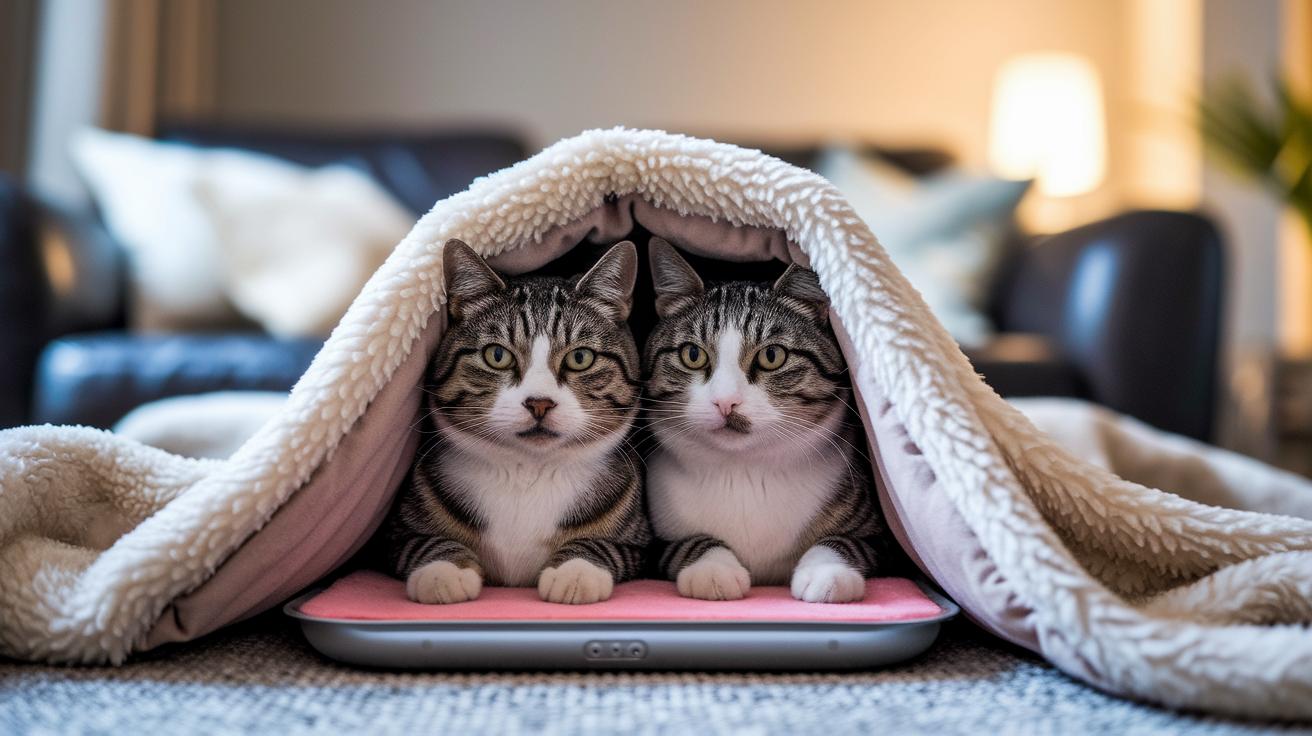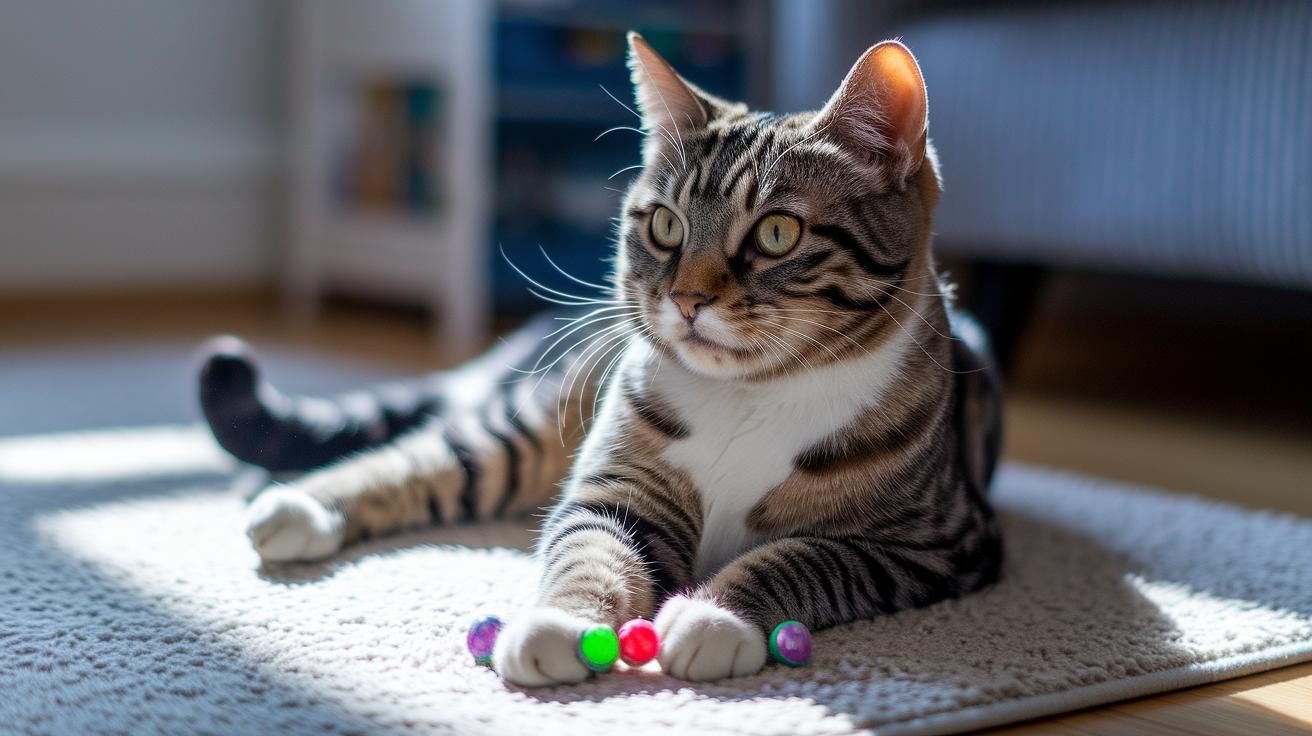
Category: About Cats

  • do cats fleas live on dogs: Yes Stress-Free

    do cats fleas live on dogs: Yes Stress-Free

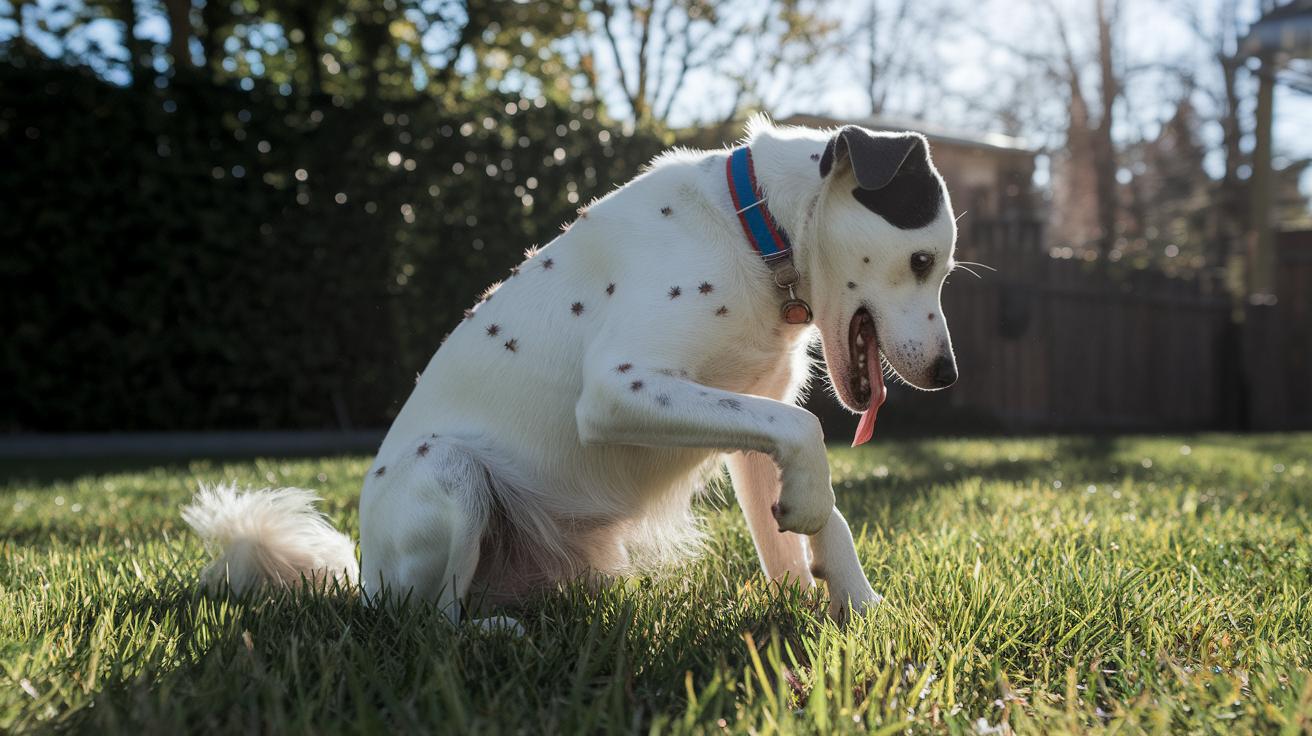
    Could your dog be throwing a cat flea takeover? Sounds wild, right? But here’s the deal: about 90 percent of the fleas that land on pets in North America are cat fleas (tiny insects that jump and bite). And they don’t care if they end up on fluffy fur, twitchy whiskers, or wagging paws.

    They bite. They feed. Then they sneakily lay eggs right in your pup’s coat. Ew. It’s like a flea fiesta no one asked for.

    If your dog’s been scratching non-stop, you’re not alone. Many pet parents lose sleep over the constant itch. Um, I get it.

    So what’s next? I’ll walk you through how cat fleas make themselves at home on dogs and share stress-free tips to send those little jumpers packing. By the end, your pup will be back to napping instead of scratching. Ready? Let’s dive in.

    Cat Flea Infestation on Dogs: Fact vs. Fiction

    Cat Flea Infestation on Dogs Fact vs Fiction.jpg

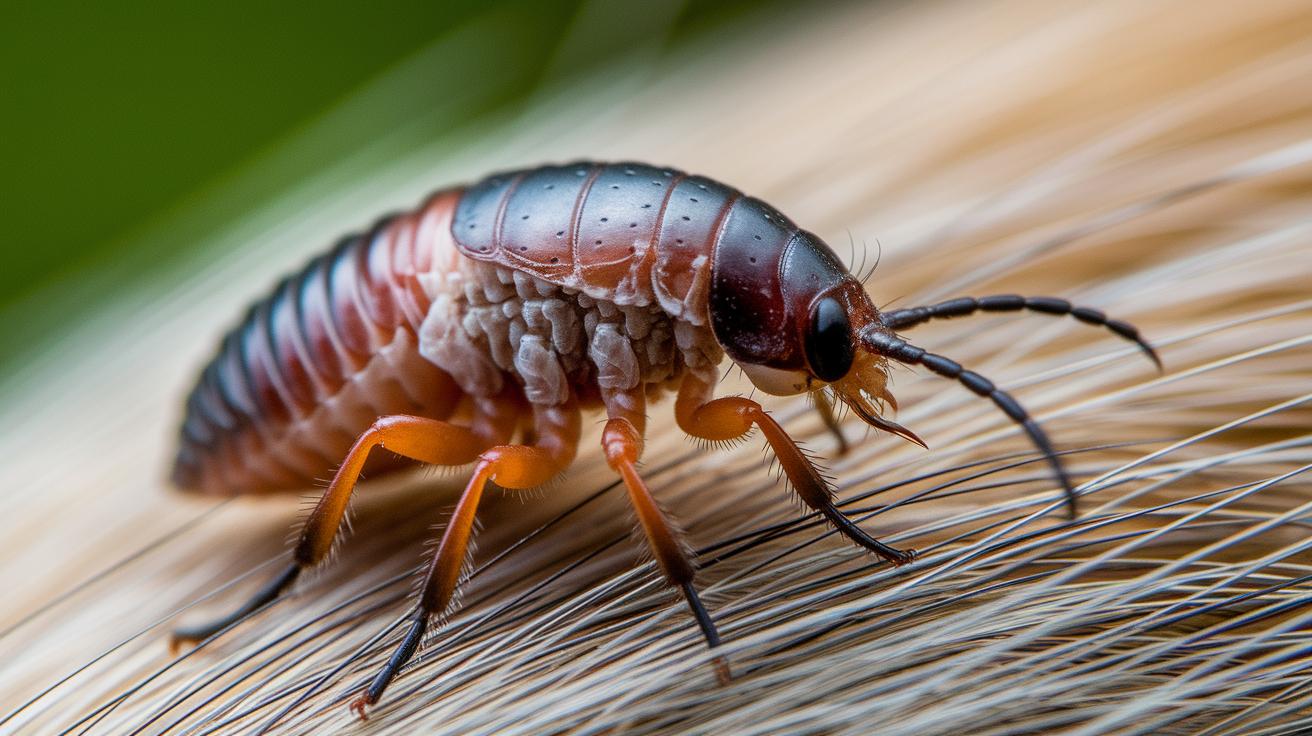
    Ever noticed your pup scratching like crazy and wondered if cat fleas could be the cause? Surprise – about 90% of the fleas on both cats and dogs in North America are actually cat fleas, and they love living on dogs too.

    These tiny jumpers don’t just hitch a ride. They bite, feed, mate, and lay eggs right in your dog’s fur, yum, right? If you’ve ever found flea dirt (tiny black specks) on your dog, that’s a telltale sign.

    Folks often blame Ctenocephalides canis (dog fleas, the species that usually prefers dogs), but in most homes it’s cat fleas doing the dirty work.

    Here’s how cat fleas keep their party going:

    • One flea can lay up to 50 eggs a day, right on your pet’s coat.
    • Those eggs fall into carpets, dog beds, and yard patches.
    • Tiny larvae hatch and spin cocoons in hidden spots, then emerge as adults.
    • The new fleas leap onto any warm body, and the cycle starts again.

    So yes, your dog can get cat fleas, and they’ll breeze through every stage of their life cycle right on your pup.

    Worth a double take next time you see your dog bite at its fur.

    Cat Flea Biology and Lifecycle Implications for Dogs

    Cat Flea Biology and Lifecycle Implications for Dogs.jpg

    Fleas are tiny stowaways that settle on your dog and hide in your home. Ever felt your pup twitch from one of those itchy bites? They go through four busy stages before they’re ready to hop back on. Knowing how each step works gives you the edge to stop them.

    • Egg: tiny oval bits (salt-grain size) a female cat flea can lay up to fifty of each day in your dog’s fur or deep in carpet fibers.
    • Larva: a pale, worm-like baby (think tiny caterpillar) that hatches in about 2-12 days and feasts on flea dirt (adult flea droppings).
    • Pupa: tucked inside a sticky cocoon (like a minuscule sleeping bag), this stage can snooze for weeks to months, shrug off sprays or cold, and finally pop out when it senses warmth, vibrations or carbon dioxide.
    • Adult: wingless jumpers (1-3 mm long) that leap onto dogs to drink blood, mate and lay eggs. In warm, humid spots, this whole cycle can finish in just 2-4 weeks.

    Next, break their party at home. I once vacuumed Ziggy’s bed and watched tiny specks tumble out – eggs, larvae and pupae staging a flea festival. So grab your vacuum and go over rugs, bedding and furniture often. Um, each pass shakes out those sneaky stages so they meet your chosen treatment.

    Then treat pet areas with a home-safe insecticide spray to stop fleas before they hop back onto your dog. Worth every moment you spend fighting those tiny invaders.

    Recognizing Cat Flea Signs on Dogs

    Recognizing Cat Flea Signs on Dogs.jpg

    Ever peek at your pup’s fur and spot tiny black specks that look like pepper? That crunchy peppery bit under your fingers is flea dirt (tiny flea droppings packed with blood). And um, ever watch your dog scritch-scratch so hard you hear a soft thud on the carpet? Ouch, that sound makes me wince.

    Common clues to catch early:

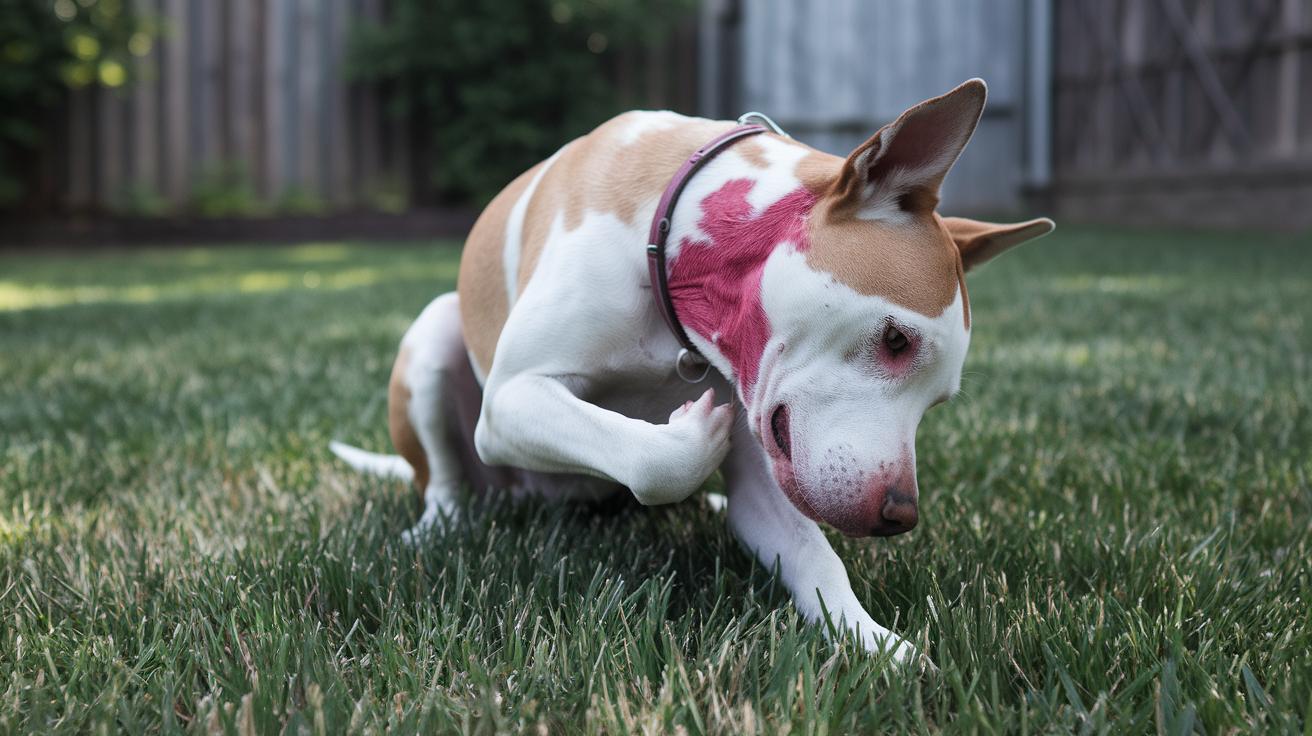
    • Scratching or biting at the base of the tail and belly
    • Little bald patches around the neck or hind legs
    • Red or sore skin that looks raw or scabby
    • Tiny black dots (aka flea dirt) hugging the skin

    Each flea bite pokes through the skin to sip your dog’s blood. Then your pup might lick or chew those spots until they turn into red, oozing sores if germs (bacteria) crash the party. Itchy misery.

    Puppies and small dogs with lots of fleas can lose enough blood to feel weak. Check for pale gums, a racing heart, or low energy, signs that anemia (low red blood cells) is sneaking in. Yikes.

    Some dogs hit the jackpot with flea allergy dermatitis (a super itchy reaction to flea spit). They scratch until they carve out hot spots, moist, raw patches that can smell and ooze. Your pup may fixate on that one unlucky spot.

    Catch these signs early for faster relief and cozier, itch-free nights.

    Treatment Options for Cat Fleas on Dogs

    Treatment Options for Cat Fleas on Dogs.jpg

    Ever watched your dog scratch like there’s no tomorrow? It’s rough on them and on you. Let’s talk about easy ways to zap those pesky fleas.

    • Topical spot-on products
      Think of this as a magic drop you squeeze right between your dog’s shoulder blades. Ingredients like fipronil (a bug paralyzer), imidacloprid (a flea nerve blocker), or selamectin (a broad bug fighter) kill adult fleas on contact and stop eggs from hatching. Just do it once a month, and you’re set for weeks of calm fur.

    • Oral flea meds
      Pop a pill or give a tasty chew and voilà, your pup becomes a flea-fighting factory. Nitenpyram wipes out adults in hours. Spinosad sticks around in the bloodstream for longer protection. Perfect for dogs that hate baths or love treats.

    • Flea collars
      Clip on a collar with flumethrin or imidacloprid and let it work its magic. Some collars repel fleas, others knock them out on the spot. They last two to eight months, so you can go hands-off for a while. Worth it when life gets busy.

    • Flea shampoos
      A sudsy shampoo session gives your dog a squeaky-clean bath and kills the first wave of adult fleas. Just know you’ll need follow-up spot-on drops or sprays, those suds can’t reach every egg or pupa hiding in your home. Great for a quick spruce-up before company arrives.

    • Prescription flea treatments
      When over-the-counter options just don’t cut it, vets can prescribe stronger combos that tackle eggs, larvae, pupae, and adults all at once. These usually blend insect growth regulators with adult killers. Ideal for serious flea invasions.

    Mix and match what feels right for your dog’s comfort and how fast you need relief. If your pup has sensitive skin or you’re dealing with a stubborn flea crowd, chat with your vet first. Then set a calendar reminder, consistency is your best defense against a flea comeback.

    Environmental Control to Combat Cat Fleas on Dogs

    Environmental Control to Combat Cat Fleas on Dogs.jpg

    Ever spot tiny flea eggs tumbling off your dog onto the carpet? Vacuuming isn’t just busywork, it’s what shakes loose those eggs, larvae (baby fleas), and pupae (cocoon stage) so your flea spray can do its thing. Aim to run your vacuum over every room once or twice a week, paying extra attention to rugs, couch seams, and under furniture!

    Next, let’s tame those fabrics and bedding. Washing pet beds in hot water zaps eggs and larvae hiding in seams. And don’t forget to toss throw blankets or washable toys into the dryer, heat is a quick flea killer. Oops, make that two laundry chores you can actually feel good about.

    Now, bring out the big guns: home-safe flea sprays or foggers for adults and larvae sneaking into cracks and crevices. Remember, pupae can shrug off many sprays inside their cocoons, so plan to reapply in about 10–14 days. Here’s a simple routine to follow:

    • Vacuum floors, rugs, upholstery, and pet zones
    • Wash all bedding, blankets, and toy covers in hot water
    • Spray pet bedding and furniture with a flea-safe mist
    • Fog rooms only if fleas really spike
    • Reapply sprays or foggers after two weeks to catch new hatchlings

    Don’t forget the yard, fleas love to hang out under shrubs and patio edges. Sprinkle insect growth regulators (a treatment that stops larvae from maturing) around problem spots. Then add diatomaceous earth (fine powder that dries out bug bodies) and a ring of cedar chips, dogs and cats tend to steer clear of that woody scent.

    Stick with this vacuum-wash-spray-yard combo until your floors go crunchy-quiet and your pup’s coat is scratch-free. Worth every minute.

    Preventing Cat Fleas on Dogs with Routine Measures

    Preventing Cat Fleas on Dogs with Routine Measures.jpg

    Ever caught your cat mid-itch then spotted your dog scratching? Let’s set up a claw-tastic integrated pest management plan (a mix of flea-fighting methods that work together). Chat with your vet about spot-on treatments (liquid flea medicine you apply between the shoulder blades), safe home remedies, um, and regular cleaning routines.

    Next, tackle your home and yard with this checklist:

    • Vacuum floors and carpets (that satisfying swoosh) every week.
    • Wash pet bedding in hot water to zap hidden fleas.
    • Keep grass trimmed and leaf piles cleared so fleas have nowhere to hide.

    Then set a monthly reminder on your phone: flea drops day. You’ll stay on track and keep fleas off your dog all year. Worth every paw-print.

    Recognizing Cat Flea Signs on Dogs

    When to Consult a Veterinarian for Flea Issues.jpg

    Hey pet pals, fleas that love cats can hop onto your dog too. You might notice your pup twitching, scratching or nibbling more than usual. Sometimes you’ll spot tiny dark specks (flea dirt) near the hair roots or live fleas jumping around. Watch for these clues:

    • constant scratching or chewing
    • little black specks at the base of hairs
    • red bumps or rash-like spots
    • patches of missing fur

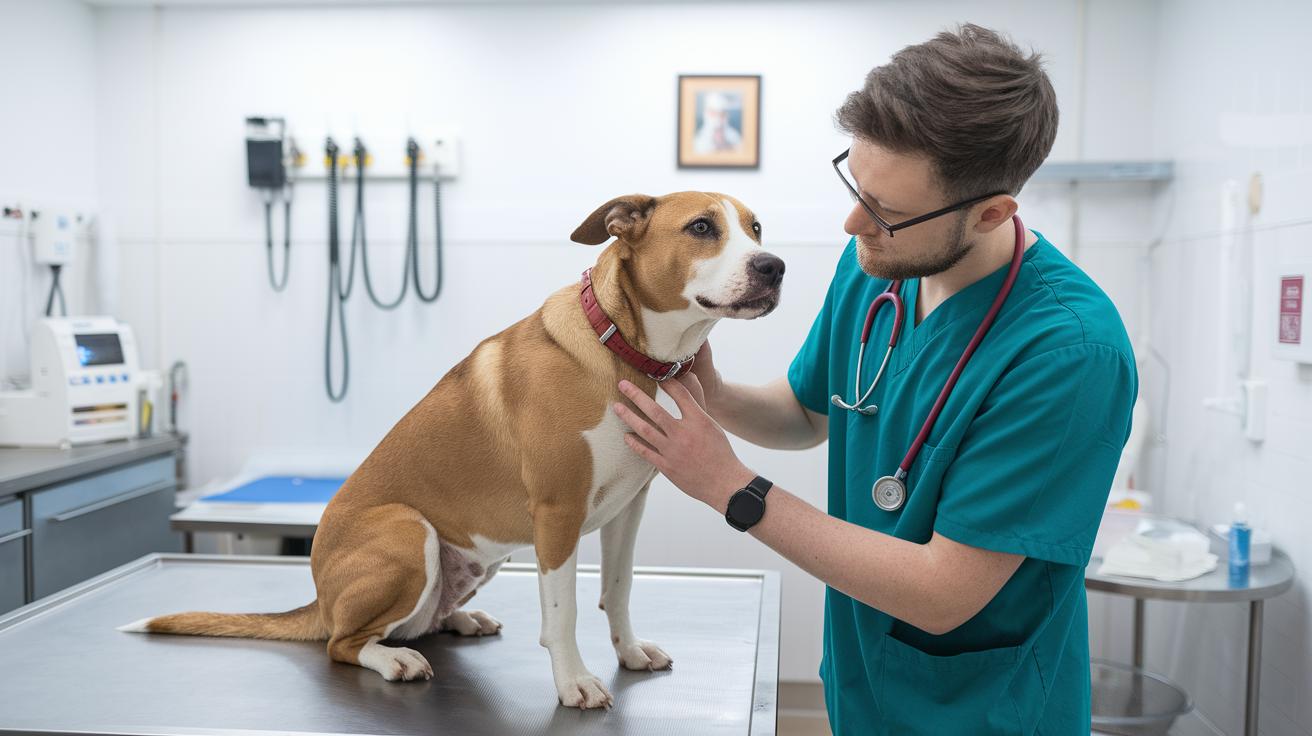
    Ever had your dog spin in circles because they can’t stop itching? If the scratch party lasts over a week, it’s time to call your vet. And if you see new bald spots, red oozing sores (hot spots), pale gums, low energy or a racing heart (signs of anemia), don’t wait. Smelly scabs or odd reactions to flea treatments also mean vet time.

    Worth every wag.

    Treatment Options

    Spot-on drops, sprays or collars usually kick fleas to the curb. Think of spot-ons like tiny shields that spread oil to repel those jumpy pests. You can also toss a tough toy (we love a rubber ball with that satisfying bounce) to distract your pup for a few itch-free minutes. In tougher cases, your vet will check for flea allergy dermatitis (a skin allergy from flea bites) or infections and may prescribe topical or oral meds.

    But wait, there’s more fun: regular brushing not only bonds you and your pet but can spot fleas early. That’s a game-changer.

    Final Words

    You’ve now separated fact from fiction about cat fleas on dogs, diving into life cycle details and spotting signs like flea dirt and itchy skin. That knowledge helps you catch infestations early.

    Then we explored treatment options, shampoos, spot-ons, oral meds, and learned how home and yard care breaks the flea cycle before it starts.

    Your vet is there for stubborn cases or allergy flare-ups. With these tips in hand, you’ll keep furry pals comfortable, stress free, and living their best lives. Remember, do cat fleas live on dogs? They sure can, but you’re ready to stop them.

    FAQ

    How long do cat fleas live on dogs?

    The cat flea (Ctenocephalides felis) lives on dogs feeding, mating, and laying eggs. Adults survive about two to three months on an untreated dog’s fur, producing dozens of eggs daily.

    Can cat fleas live on dogs and persist in the home?

    Cat fleas readily infest dogs—crawling into fur, including feet—and lay eggs that fall into your home’s carpets and bedding, where larvae hatch and pupae develop, fueling ongoing infestations.

    How do I get rid of cat fleas on dogs?

    To get rid of cat fleas on dogs, apply veterinarian-recommended spot-on treatments or oral medications. Complement with flea shampoos, collars, home vacuuming, and washing all pet bedding in hot water.

    Can cat fleas live on humans?

    Cat fleas can bite humans but usually survive only a few days on people. They cannot complete their life cycle on human blood and prefer animal hosts for reproduction.

    Are cat fleas worse than dog fleas?

    Cat fleas are not necessarily worse than dog fleas, but they account for about 90% of North American infestations on both species. Their adaptability makes them common and resilient.

    How long can dog fleas live on cats?

    Dog fleas (Ctenocephalides canis) can live on cats for several weeks—up to about a month—feeding, mating, and laying eggs if not removed by grooming or treated promptly.

    Are cat fleas and dog fleas the same?

    Cat fleas (Ctenocephalides felis) and dog fleas (Ctenocephalides canis) are different species but behave similarly. Cat fleas infest both pets more often, while dog fleas are less common in North America.

    Will cat fleas hurt my dog?

    Cat fleas hurt dogs by biting to feed on their blood, causing itching, skin inflammation, hair loss, anemia in heavy infestations, and potential secondary infections if left untreated.

    Related Articles

  • how do cats cry Gentle Cues, Soothing Care

    how do cats cry Gentle Cues, Soothing Care

    Ever catch a tiny tear sliding down your kitty’s cheek? Makes you wonder – is she feeling blue?

    Trust me, you’re not the only one! Oops, let me rephrase that… we’ve all paused at a teary eye thinking the same thing.

    But um, cats don’t cry emotional tears like we do. Those glistening drops come from tear ducts (tiny eye pipes) that keep their eyes clean.
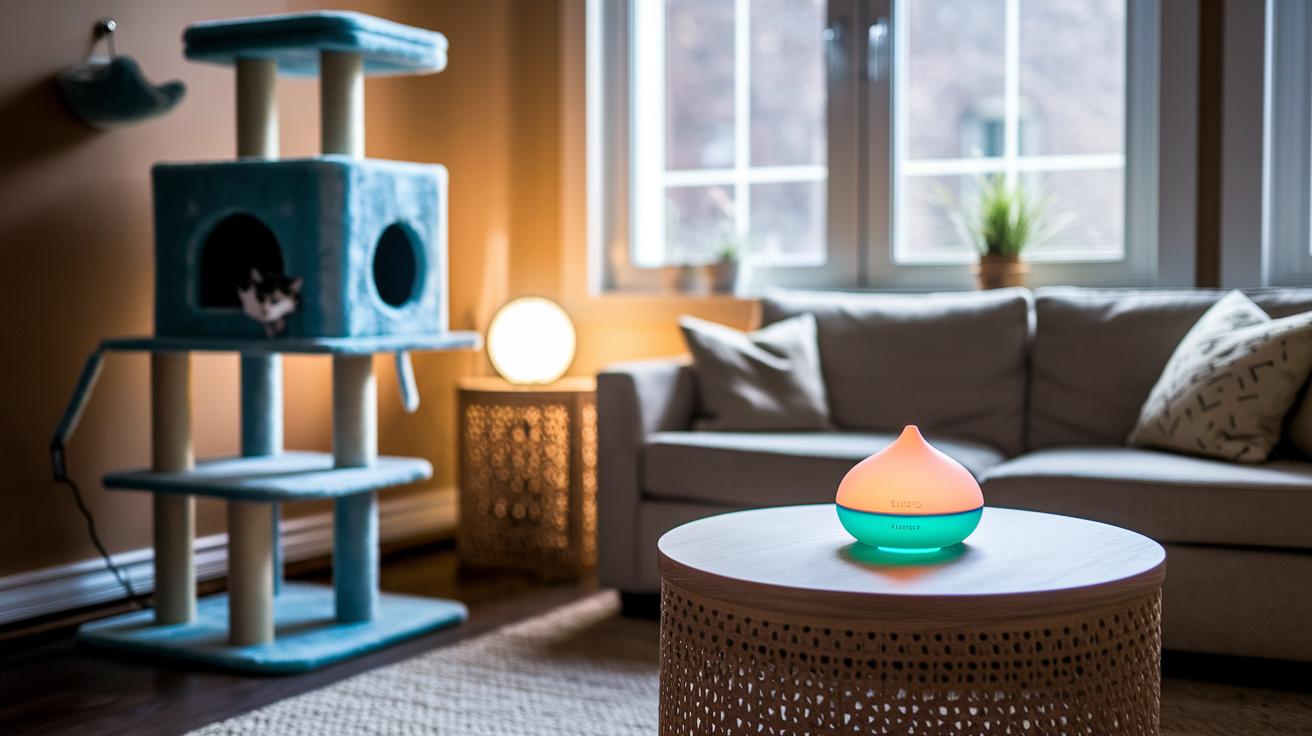
    When your cat feels hungry, uncomfortable, or stressed, she’ll meow, yowl, or give a soft whimper to let you know.

    So in this post, we’ll spot those subtle hints – like a faint mewl or an extra-watery eye – and share simple, soothing tips to keep your feline friend purring and paw-sitively comfy.

    Understanding Cat Crying: Vocalization and Tear Production

    Understanding Cat Crying Vocalization and Tear Production.jpg

    Cats don’t cry tears like we do when we’re sad. Their eyes drip a bit of liquid to keep the surface smooth, wash away tiny dust bits, and guard against infection. This clear rinse comes from a small tear-maker near each eye (the lacrimal gland). So when you see a glistening drop at the corner of your cat’s eye, it’s just nature’s mini car wash.
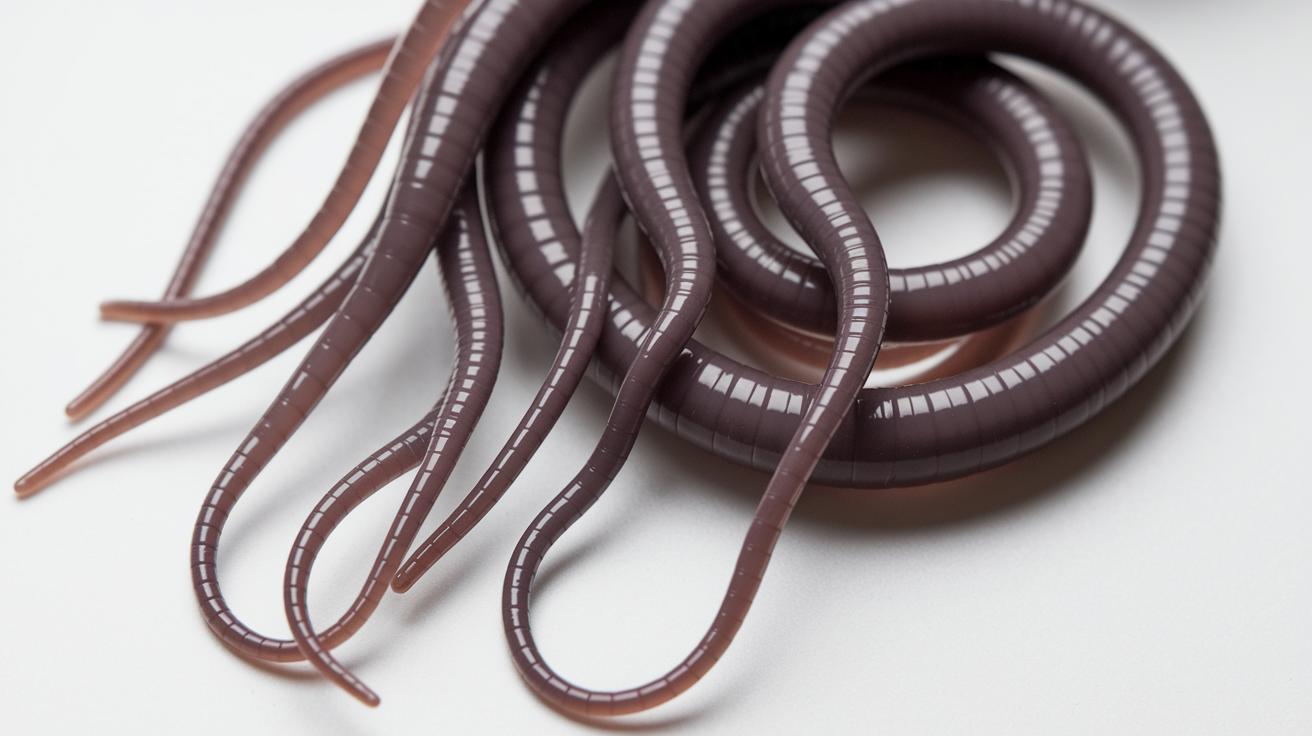
    Meows, yowls, and soft whimpers are how cats talk to us. A high-pitched meow usually means “feed me” or “pet me,” while a drawn-out yowl could signal discomfort or pain, like a sore tooth or a strained muscle. Whimpers often show stress or loneliness when you step out. All these sounds come from the voicebox (the larynx) and air pushed out of the lungs, not from tear ducts, purr-fect communication!

    Ever watched your kitty blink back a droplet and wondered if it’s sad? Cats don’t shed emotional tears, and stress or allergies might make their eyes water, not sorrow. Tears serve just one job: wash and protect the eye. If you spot clear tears or see your cat rubbing an eye, a quick vet visit can set you both at ease.

    No tissues needed.

    Common Medical Causes of Excessive Tearing in Cats

    Common Medical Causes of Excessive Tearing in Cats.jpg

    Your cat’s eyes normally shed tears to wash away tiny bits of dust or dander. Ever noticed a wet streak on your kitty’s cheek? A tiny drip now and then is fine. But constant tears or brownish stains hint at something deeper.

    Allergies to pollen, dust, or certain foods can send those tears rolling. Conjunctivitis (pink eye) or other eye infections often show up as colored gunk or eyelid swelling. Tiny hairs or specks of debris can clog the nasolacrimal duct (tear duct), so tears just pool instead of draining away.

    And flat-faced (brachycephalic) breeds like Persians can get extra staining when skin folds pinch their ducts. Household irritants (smoke or strong cleaners) can also make eyes water. If you spot red, puffy lids or thick discharge, this isn’t normal and needs a closer look.

    When to Call the Vet: Eye Emergency Signs

    • Colored discharge that stays after 24 hours
    • Puffy or swollen skin around the eye
    • Constant redness or an inflamed look
    • Nonstop pawing or rubbing at the eye

    Worth a call to your vet if you see any of these signs.

    Decoding Cat Crying Sounds: Gentle Cues and Soothing Care

    Decoding Cat Crying Sounds Meows, Yowls, and Whimpers.jpg

    Ever notice your kitty chatting at dawn? That morning meow often means breakfast time. Your cat’s whiskers twitch like radar when their bowl is empty. Before you bolt to the kitchen, toss a lightweight ball (with puncture-proof fabric (tough material that stops claw pokes)) onto the carpet. You’ll hear that soft thud and see their eyes light up. Or wiggle a teaser wand (think fishing rod for cats) to spark some feline fun. Ever seen them pounce like a tiny tiger?

    When the house feels quiet, you might hear gentle whimpers. It’s like a soft SOS, your cat saying “I’m lonely.” Give them a cozy hideaway box (a cardboard fortress) with a plush pillow (like a mini cloud). They’ll curl up and purr! Oops, make that two toys. Swap them out every few days so playtime stays fresh and exciting.

    Sound Type Behavior Cue Soothing Tip
    Meow Early-morning calls, whiskers twitching Toss a puncture-proof ball; refill bowl; chin scratches
    Yowl Long, drawn-out note; pacing or limping Check for pain; gentle pets; warm compress
    Whimper Soft murmurs, restless by the window Offer hideaway; teaser-wand play; soft chatter

    When to Call the Vet: Vocal Red Flags

    • Your cat’s yowling won’t stop after 30 minutes
    • Howls mixed with limping, restlessness or hiding
    • Whining that comes with refusing food or water
    • New, high-pitched screams that never quit

    Worth every paw-print.

    Red-Flag Signs That Require Veterinary Attention

    When to Seek Veterinary Care.jpg

    Notice that wet gunk around your cat’s eyes? Persistent tear discharge (wet gunk in the eye) and puffy eyelids (swollen lids) might mean your kitty is in pain or fighting an infection.

    And when you hear that loud yowl – like a siren at midnight – or see your cat turn down dinner, it’s often a plea for help! Refusing to eat is a big red flag.

    Tear discharge teaming up with nonstop yowling? That’s double trouble and calls for quick action. Really.

    Soft crying meows plus hiding under the couch or moving in slow motion could be a hidden sign of pain. Monitor closely – your cat might be masking discomfort.

    Time is tight. Eye and vocal issues can worsen fast. Don’t wait.

    Use the quick chart below as your go-to checklist.

    Sign Combination Recommended Action
    Persistent tear discharge (wet gunk) + puffy eyelids (swollen lids) Contact veterinarian within 24 hours
    Continuous loud yowling (like a siren) + loss of appetite (refusing food) Contact veterinarian within 24 hours
    Tear discharge (wet gunk) + nonstop yowling (continuous loud meows) Contact veterinarian within 24 hours
    Soft crying meows + hiding or lethargy (sluggish movement) Monitor for 48 hours; if it sticks around, seek vet care

    Practical Home Strategies to Reduce Cat Crying

    Practical Home Strategies to Reduce Cat Crying.jpg

    Let’s start by clearing out stressors that make your kitty’s eyes water. Those scented candles, strong cleaning sprays, and cigarette smoke can turn into little tear triggers. Switch to gentle, unscented cleaners and open a window for fresh air. You’ll notice fewer sniffles and fewer dawn meows begging for breakfast.

    Next, lock in a fun routine and plenty of play. Cats love set times – feed and play at the same hour each day so they know what to expect. Offer a tall cat tree with cozy perches and a scratching post (sturdy post wrapped in sisal rope – a rough plant fiber) for satisfying scratch sessions. Scatter a few plush mice (tiny stuffed toys) or a rolling ball so they can bat and pounce even when you’re busy.

    Then bring in extra help with calming aids that really purr-suade. Plug in a pheromone diffuser (it gives off a gentle cat scent that feels like a hug). Play soft cat music (yes, there are tunes made just for kitties) to ease their nerves. And drop a fluffy bed in a quiet corner – it feels like a soft cloud they can knead as they drift off.

    Final Words

    Understanding how cats produce tears and vocal cries gives you a clear view of why they might meow or show watery eyes.

    Spotting common medical triggers – blocked ducts, allergies, eye infections – and sound cues like meows, yowls or whimpers helps you know when to vet check.

    Mix simple home fixes – clean air, play sessions, pheromones – with a steady routine to curb cries and keep paws happy.

    Now you know how do cat cry and have all the tools to keep your crew purring.

    FAQ

    Do cats cry tears when sad?

    Cats don’t shed tears when they’re sad. Their tear glands only keep eyes moist and clear, not express emotion. Stress might irritate eyes and cause extra tearing, but not emotional weeping.

    Do cats cry tears when in pain?

    Cat tear glands react to irritation from injury or infection, but tears don’t signal pain directly. Painful conditions may trigger tearing due to eye irritation, but not emotional crying.

    Do cats cry tears when happy?

    Cats don’t produce tears when they’re happy. Their lacrimal (tear) glands only release moisture for eye health. Contentment shows in purring and relaxed body language, not watery eyes.

    Why do cats cry at night?

    Cats cry at night because they’re often hungry, lonely, or seeking attention. Their natural hunting routines can make them vocal after dark. A consistent feeding and play schedule may help.

    What is the spiritual meaning of a cat crying at night?

    The spiritual meaning of a cat crying at night can symbolize change, intuition, or a guardian’s message in some traditions. Often it simply reflects their needs, but many believe it carries deeper insight.

    How do cat cries sound?

    Cat cries sound like meows, yowls, or soft whimpers. Meows often mean hunger or greeting, yowls signal pain or mating calls, and whimpers can show anxiety or loneliness.

    How do I know if a cat is crying?

    You can tell a cat is crying by observing vocal distress like repeated meows or cries, watery or red eyes, and changes in behavior such as restlessness or hiding.

    What is a cat’s cry called?

    A cat’s cry is called a vocalization, which includes meowing, yowling, chirping, and chattering. Each sound conveys different needs, from hunger to mating or warning signs.

    What does a cat meow mean?

    A cat meow means your cat is seeking attention, food, or greeting you. Tone and pitch vary: a short meow might say “hello,” while a louder, drawn-out meow can request urgent needs.

    Related Articles

  • what do cats roundworms look like: Spot Easily

    what do cats roundworms look like: Spot Easily

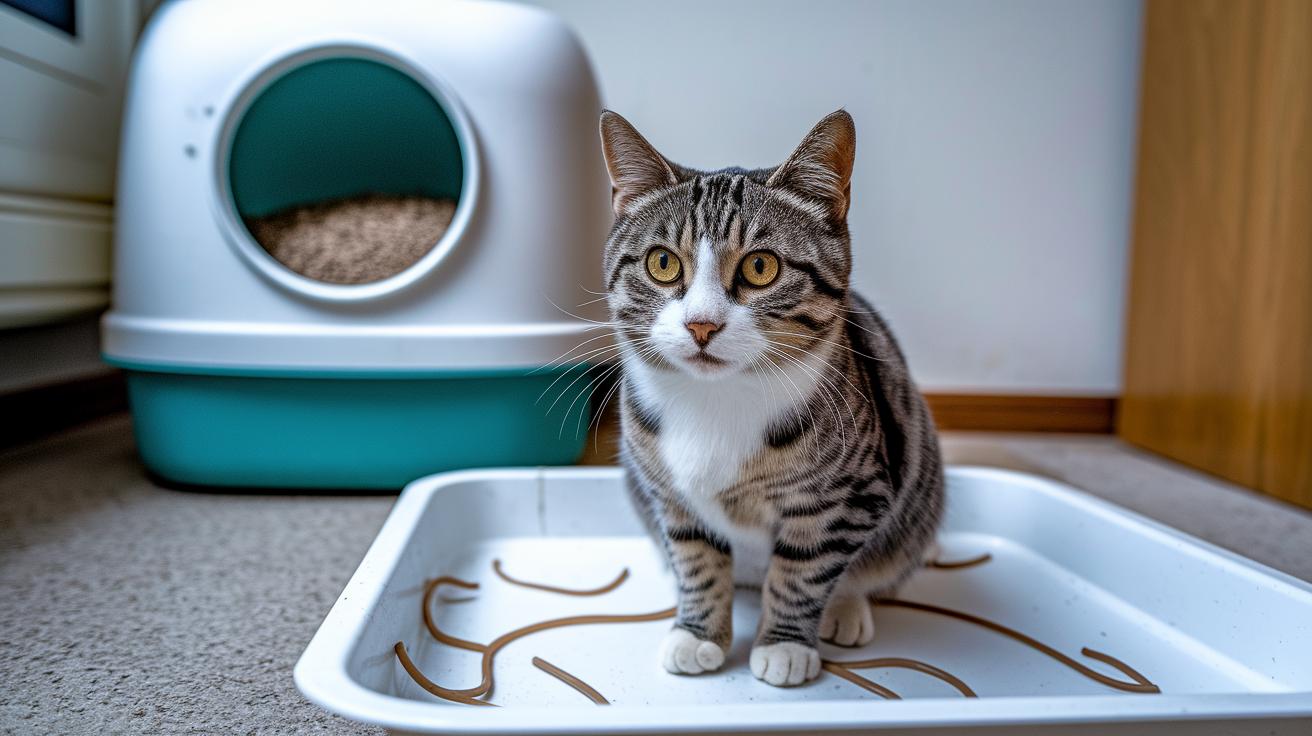
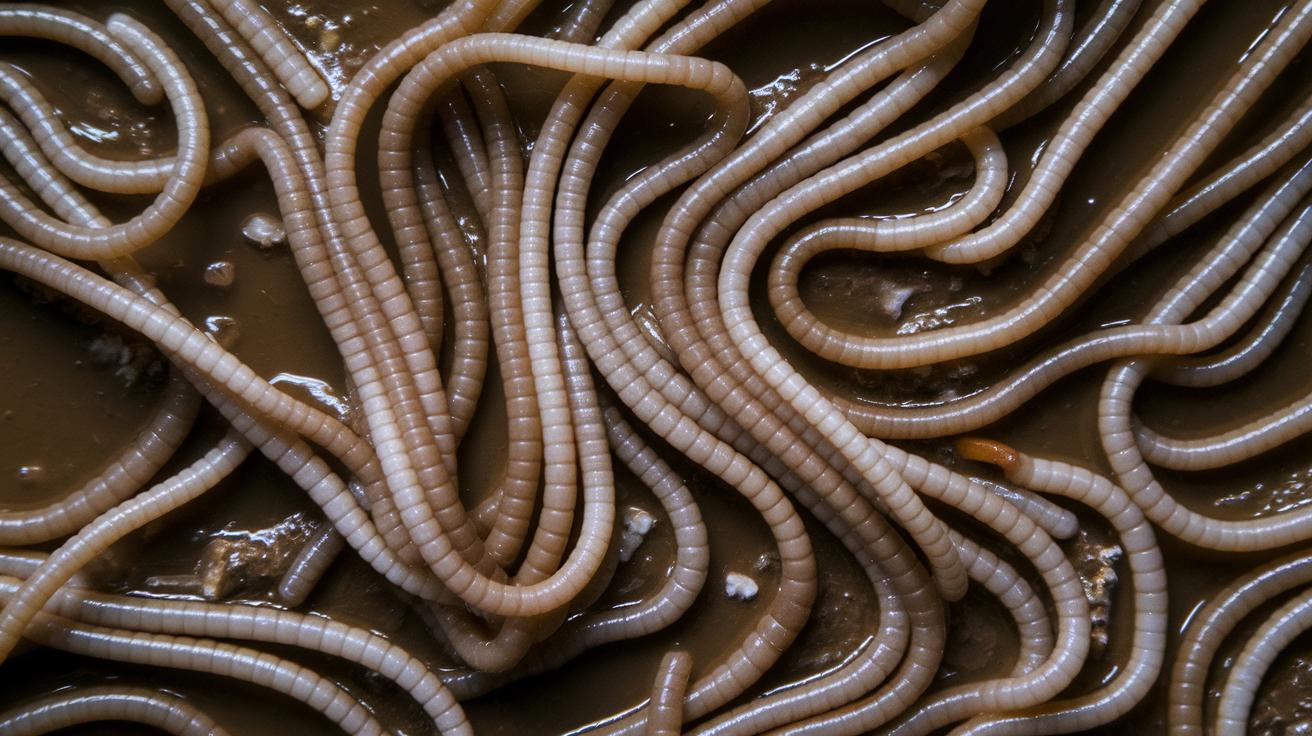
    Ever blamed a hairball only to pull out what looked like pale spaghetti? Finding roundworms (tiny worms that live in your cat’s gut) in the litter box can surprise you. These smooth, soft tubes feel like little pasta strands. Um, gross, right?

    Adults can stretch up to three inches (about as long as a dollar bill). Kittens might host one- or two-inch mini worms. And their color? Off-white to tan, usually a bit shiny.

    Ready to get feline fine on worm-spotting? I’ll walk you through four clues: shape, length, color, and texture. Then you’ll know exactly when to call the vet.

    Visual Identification of Cat Roundworms

    Visual Identification of Cat Roundworms.jpg

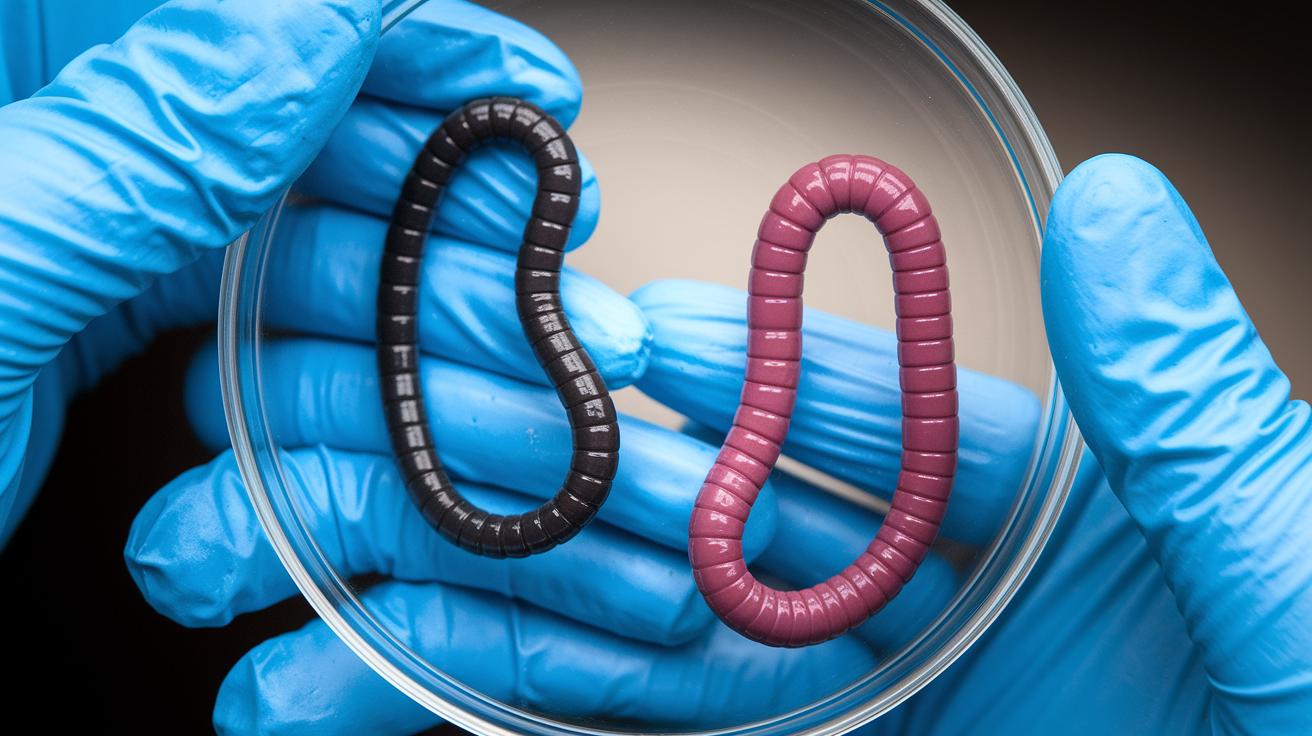
    Spotting roundworms feels like finding strands of cooked spaghetti in your cat’s litter box. Adult worms can stretch up to three inches, while kittens host thinner, one- to two-inch threads that feel like delicate pasta strings. Ever thought your kitty was playing with a loose string of yarn? Well, it might actually be a worm.

    These worms range in color from off-white to tan or light brown. Their bodies are smooth cylinders with faint cuticle ridges (tiny grooves along their skin). Shine a light behind one and you’ll see a soft glow through its slightly see-through body. And they feel springy, not slimy, slipping right through wet litter or soapy water.

    • Adult cats: up to 3 inches long and about one-eighth inch thick
    • Kittens: 1–2 inches long and narrower
    • Shape: smooth cylinder, gently curved or straight
    • Color: off-white, cream, tan, or light brown
    • Texture: firm bounce, slight transparency, fine ridges

    When a cat has a heavy infestation, she might cough or vomit up dead worms that look darker and shriveled. Check fresh regurgitation right away, because older bits can dry into nondescript flakes. In the litter box, new poop gives the clearest view, but dried clumps can hide curled-up fragments. Placing a white tray under the box makes those tan strands stand out.

    I once scooped what looked like broken pasta from Luna’s litter box after her dewormer treatment. Oops, it was worm fragments that had darkened and curled like dried noodles. Worth keeping an eye out for those telltale threads.

    Differentiating Roundworms from Other Cat Parasites

    Differentiating Roundworms from Other Cat Parasites.jpg

    Ever spotted a wriggly guest in your litter box? Um, let me help you sort the wormy lineup. Roundworms (smooth, tube-like parasites) come in two main flavors: Toxocara cati (a cat-only spaghetti worm) and Toxascaris leonina (a dog-and-cat hopper).

    Toxocara cati grows up to three inches long, tan in color, and only hangs out in cats. Toxascaris leonina is a bit shorter, paler, and jumps between dogs and cats. Both feel like silky pasta on your fingertip, but cati is a fat noodle while leonina is thin like angel hair.

    Next up, hookworms (tiny half-inch critters with a fishhook-shaped end). You’ll spot a little curve at one tip. Flatworms (tapeworm pals) look like flat ribbons made of rice-grain segments. They snap off like breadcrumbs and don’t bounce when you poke them. Ever watched your kitty fuss over a flatworm crumb? It’s weirdly fascinating.

    Parasite Description Size & Shape
    Roundworms Smooth cylinder with faint lines Up to 3 inches long; noodle-like
    Hookworms Curved hook on one end About 0.5 inch; slim bodies
    Flatworms Segmented like rice grains Flat ribbon shape; breaks into bits

    Oops, did I mention male vs female roundworms? Males are narrow with a hooked tail, while females have a straight, plump rear. And baby worms look skinnier and almost see-through compared to the chunky adults. Next time you’re on litter-box patrol, you’ll know exactly who you’ve found.

    Worth every paw print.

    Lifecycle Stages and Larval Appearance of Cat Roundworms

    Lifecycle Stages and Larval Appearance of Cat Roundworms.jpg

    Ever peeked at a microscope slide and seen tiny specks that look like glass beads? Those could be roundworm eggs – microscopic spheres with thick, shiny shells. At first, they are unembryonated (no baby worm inside) and look clear and smooth under the lens. Give them two to three weeks in warm, damp soil (think muddy garden dirt), and they fill with coiled larvae (tiny baby worms). You’ll spot little springs waiting to hatch.

    Once they hatch, larvae are teensy – about 0.3 to 0.5 mm long (thinner than a human hair!). They’re clear, wiggly, and glide like tiny snakes under 40× magnification (you need a 40× microscope lens to see them). Kittens often pick these up when nursing – dormant larvae in mom’s tissues spring to life and ride her milk train straight into newborns.

    Eggs can hide out in soil for years, waiting for a curious kitten or stray to snack on contaminated dirt. Talk about a long wait! Then, after roughly three weeks (the prepatent period – time before eggs appear in feces), they pop up in poop, ready to restart the cycle.

    Inside the cat’s gut, larvae grow into adults – the familiar spaghetti-like worms you might find in vomit or the litter box. They range from one to three inches long (2 to 8 cm) and are off-white to tan. Tiny but mighty.

    Stage What It Looks Like Where You See It
    Unembryonated Egg Clear, smooth shell Fresh fecal float slides
    Embryonated Egg Larva coiled inside Soil samples, lab slides
    Larva 0.3–0.5 mm, transparent, wriggly Microscope view of stool
    Adult Worm 1–3 inches, off-white to tan Vomit or litter box

    Inspecting Cat Stool and Vomit for Roundworms

    Inspecting Cat Stool and Vomit for Roundworms.jpg

    Ever peek into your cat’s litter box and wonder if there are roundworms (tiny tube-shaped parasites) on the loose? It might feel gross, but it’s a simple check you can do in minutes to catch any unwelcome guests early, your vet will be grateful, and so will your kitty.

    Inspecting stool (cat poop):

    • Slip on a disposable glove and scoop a small sample of fresh stool.
    • Spread it on a clean, white tray so off-white worms really pop.
    • Focus on the moist bit first, you might see live, springy strands up to 3 inches long.
    • Then gently sift the drier clumps to reveal dark, shriveled fragments that used to be worms.

    Checking vomit:

    • If your cat pukes, lay it on a white paper towel or that same tray right away.
    • Check before it dries: fresh worms lie straight or in gentle curves; older pieces curl up and darken.
    • You know, just give it a quick scan, those tiny tubes aren’t hard to miss once you’re looking.

    Worth every glove. Catching worms now can save your cat a lot of trouble later. Who knew a white tray could be such a hero?

    what do cat roundworms look like: Spot Easily

    Photographing Cat Roundworms for Documentation.jpg

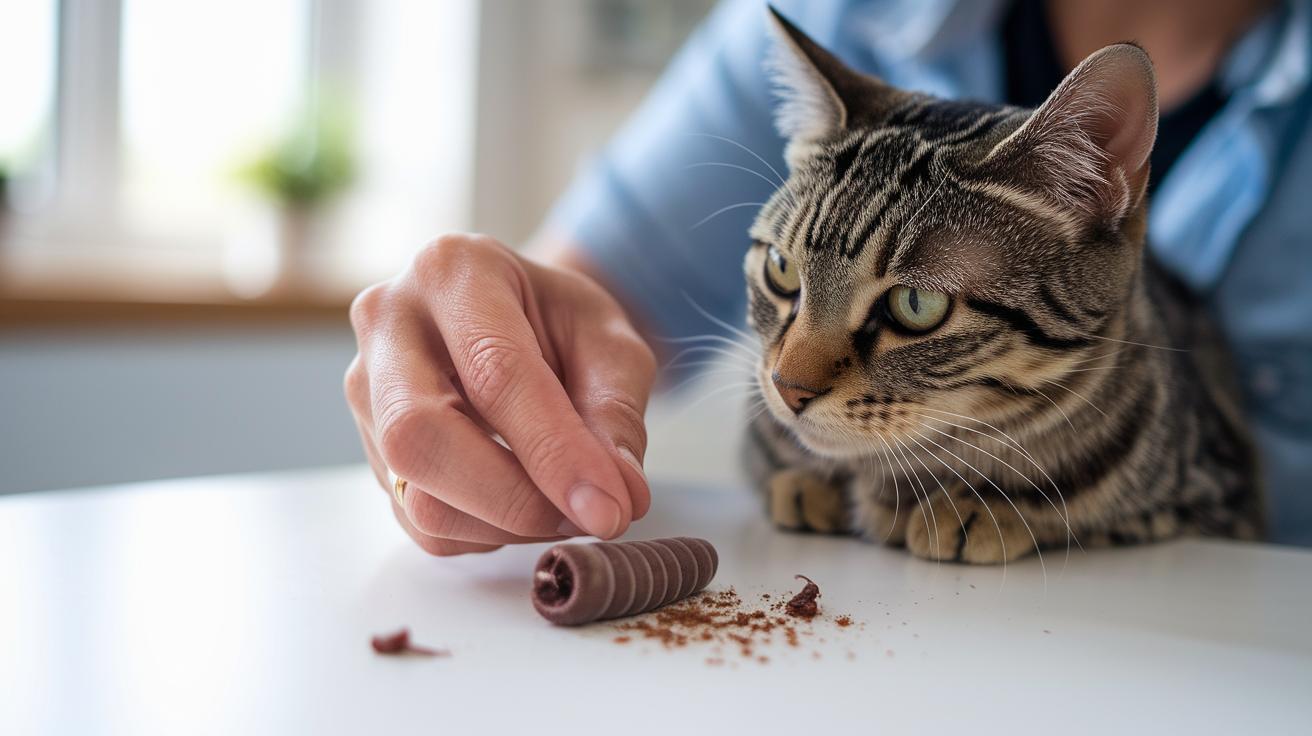
    Ever tried to snap a picture of a wriggly spaghetti noodle – um, a worm? Getting a clear, close-up shot of that squirmy guest really helps your vet know exactly what you’ve found. A smartphone macro lens (a small clip-on lens for your phone that magnifies up to 10× (ten times bigger)) turns faint color bands and tiny ridges into crisp details.

    • Clip the macro lens onto your phone and line it up with soft daylight or an LED ring light. This cuts harsh shadows.
    • Shine a gentle backlight (light behind the worm) so its slightly see-through body glows and the ridges stand out.
    • Lay the worm on a clean white disposable pet-safe tray for contrast – tan strands really pop against bright backgrounds.
    • Place a small ruler or a marked toothpick next to the worm to show its length (adults are 1–3 inches, kittens 1–2 inches).
    • Slip on a disposable glove so you’re not handling the worm directly – they can squirm fast – and use tweezers or a tongue depressor if needed.

    Keep your phone steady, tap the screen to lock focus on the ridges, and frame the worm in the center. After you shoot the photo, seal the tray and ruler in a bag and wash your hands well. These clear, scaled photos make it easy for your vet to confirm a roundworm and choose the right treatment.

    Signs to Consult a Veterinarian After Finding Cat Roundworms

    Signs to Consult a Veterinarian After Finding Cat Roundworms.jpg

    Your cat might purr and play without missing a beat. But they can still hide a roundworm (long, skinny parasite) problem. A big worm load can slow even the spryest furball.

    • Watery or bloody poop
    • Noticeable weight loss and no interest in snacks
    • Lethargy or a “nap all day” vibe
    • Pale gums or eyelids (anemia (fewer red blood cells) can make them look washed out)
    • A pot-bellied tummy, especially in kittens who should look sleek
    • Worms or slimy strands in vomit or poop (oops, gross)
    • Squiggly worm bits after you give dewormer medicine

    And if you still spot wriggly bits or your kitty seems off after treatment, don’t wait. A vet can check for anemia, make sure the medicine worked, and have your cat back to pouncing on toys in no time.

    Diagnosis and Treatment Overview for Cat Roundworm Infections

    Diagnosis and Treatment Overview for Cat Roundworm Infections.jpg

    We spot roundworm eggs with a fecal float test (a lab test that makes eggs float to the surface in a special solution). Ever watched your kitty peek over the edge while you scoop? It’s a bit gross, but it really helps us catch those pesky eggs. Vets say to do this check at least once a year, even if your fluffball seems perfectly purr-fect. Finding eggs early keeps them from growing into long, spaghetti-like worms in your cat’s tummy.

    When eggs turn up, it’s time for oral dewormers, pills or a tasty liquid that zap adult worms in the gut. Heavily infected kitties often need two or three doses over two to four weeks so any newly hatched babies don’t sneak past the treatment. Then, about six weeks later, we run another fecal float to make sure those wrigglers are toast.

    Many monthly heartworm preventatives double as roundworm shields, so you get two defenses in one pill. But always stick to your vet’s schedule, skip a dose, and you might let a fresh batch of eggs hatch.

    Good litter-box habits are your secret weapon. Scoop daily, wash the box in hot, soapy water once a week, then add fresh litter. And if your adventurous cat goes outside, try to keep those expeditions short, outdoor prey can carry wormy surprises.

    With regular testing, prompt deworming, and clean litter-box routines, you’ll keep your kitty roundworm-free and feeling feline fine.

    Worth every paw-print.

    Final Words

    In the action, we spotted those spaghetti-like worms in your cat’s stool or vomit, learned how to tell roundworms apart from hookworms and flatworms, and mapped out each life stage under the microscope.

    We shared tips on inspecting fresh litter, snapping clear macro photos and recognizing when it’s time for a vet visit.

    Finally, a quick rundown on diagnosis tests and deworming plans keeps everyone safe.

    With these simple steps, your multi-cat household will stay playful, comfy and stress-free, and you’ll feel confident whenever you wonder what do cat roundworms look like.

    FAQ

    How can I tell if my cat has roundworms?

    The cat with roundworms can be spotted by worms in vomit or stool, a pot-bellied look, weight loss, diarrhea, vomiting, dull coat and low energy.

    What do roundworms look like?

    Roundworms in cats look like long, smooth, cylindrical worms (up to 3 inches long) that are off-white, tan or light brown and resemble cooked spaghetti in vomit or feces.

    How do cats get roundworms?

    Cats get roundworms by ingesting infective eggs from contaminated soil, feces or prey, through nursing if their mother is infected, or by eating rodents carrying larval worms.

    How should I treat roundworms in cats?

    Treating roundworms in cats involves giving veterinarian-prescribed deworming medications on schedule, repeating doses as directed, and cleaning litter areas to stop reinfection.

    What should I do if my cat vomits worms?

    If your cat vomits worms, save a sample, note the timing, contact your veterinarian right away and keep the area clean to prevent further spread.

    Can I touch my cat if it has roundworms?

    You can touch a cat with roundworms but wear disposable gloves, wash hands with soap afterward and keep litter boxes hygienic to reduce risk of egg transmission.

    Can cats pass roundworms to humans?

    Cats can pass roundworms to humans if infective eggs from feces hatch in soil and contaminate hands or food, so practice good hygiene.

    What is the difference between roundworms and hookworms in cats?

    Roundworms are long, smooth, spaghetti-like and up to 3 inches long; hookworms are smaller, thinner and have hooked ends that attach to the intestinal wall.

    Related Articles

  • do cats hair grow back Beautifully and Fast

    do cats hair grow back Beautifully and Fast

    Ever peeked under your kitty’s tail and noticed a tiny bald spot? No more bare bums!

    Your cat’s fur bounces back faster than you’d think. It can grow about half an inch a month (um, that’s like a paperclip). You’ll see little sprigs of fuzz in just days, and short-haired pals hit full fluff in around eight weeks. Longhairs catch up soon after.

    Let’s explore how your feline friend regains a soft, full coat so you can kick back and enjoy the gentle tickle of fresh fuzz under your fingertips. Ready for some purrfect fluff?

    How Cat Hair Regrows: Timeline for Fur Recovery

    How Cat Hair Regrows Timeline for Fur Recovery.jpg

    If you’ve ever wondered do cat hair grow back after a shave or a patch of loss, the answer is yes. New strands peek out within days, giving your kitty that soft “fluff” look you love. Ever watched those tiny hairs tickle your hand?

    Cats average about 0.6–1.3 cm (0.25–0.5″) of growth per month, pretty close to human hair speed. That feline coat regrowth time varies by breed and hair length. Short-haired cats race to full thickness in roughly two months. Long-haired breeds move at a gentler pace, wrapping up in about six months.

    • Immediate post-shave “fluff” appears in 1–2 weeks
    • Noticeable stubble by 3–4 weeks
    • Short-haired full-length regrowth in ~8 weeks
    • Long-haired full-length regrowth up to 24 weeks

    If you don’t see any new fuzz on a short-haired cat after eight weeks, it’s time for a vet check. Regular peek-ins and gentle comb-throughs help track progress on this timeline for cat fur recovery.

    Cat Hair Growth Phases and New Growth Cycle

    Cat Hair Growth Phases and New Growth Cycle.jpg

    Follicles cycle through three stages as they fluff up your cat’s coat: anagen (growth burst), catagen (short transition), and telogen (rest mode). It’s like a furry conveyor belt pushing new hairs outward. That’s why you see tiny, soft whisker tips just days after a shave. Really.

    Ever seen your kitty become a fur fountain each spring? Heavy seasonal shedding peaks in April and May as part of a normal molt. You’ll find hundreds of hairs drifting off daily, all over the coat. No need to panic if the fur comes off evenly, you know, it’s just nature’s way of spring cleaning.

    But if you spot a smooth bald spot? That’s a cat bald patch, and it usually means something’s up with the skin or your cat’s been stress-grooming instead of a regular shed. Uh-oh, right?

    Can lost feline fur come back? In most cases, yes. Treat any skin infection or help curb the over-grooming, and those follicles snap right back into anagen. Soon enough, you’ll be stroking soft, healthy strands again. Worth every paw-print.

    Common Causes of Cat Hair Loss Impacting Regrowth

    Common Causes of Cat Hair Loss Impacting Regrowth.jpg

    Ever watched your cat’s whiskers twitch as a toy rolls by? But their fluffy coat can hit a growth roadblock when something goes wrong deep down at the follicles (tiny root pockets). Feline alopecia (hair loss) pops up for all sorts of reasons – stress, infections, or even allergies.

    Ringworm (skin fungus) often leaves round, crusty spots. And mites (tiny parasites) can make your kitty scratch non-stop and end up with rough patches. Left alone, bacteria or fungal (mold-like) infections dig in and slow down hair regrowth fast.

    Cause Effect on Fur Treatment Regrowth Notes
    Ringworm (skin fungus) Circular bald spots Antifungal therapy Hair returns in 6 – 8 weeks
    Mange (mites) Intense itching, patchiness Miticide doses Full coat in ~3 months
    Allergies Red, inflamed skin Allergen avoidance, immunotherapy Variable regrowth timeline
    Overgrooming (stress) Localized thinning Stress reduction, e-collar (plastic cone) Follicles recover in weeks

    Ever caught your cat chewing or licking fur into a sad little tuft? That’s barbering – bored or anxious cats overgroom and snip their own coat. Maybe they’re worried about new furniture or a neighbor’s dog. Toss in play rotations and an e-collar (plastic cone) to break the cycle, and before you know it fluffy sprouts appear.

    Allergic dermatitis (skin allergy) shows up as itchy red patches that have your cat scratching like crazy. Dust bunnies, pollen, or even weird-smelling cleaners can spark a flare-up. Finding the trigger can feel like detective work, but swap it out and those follicles wake back up.

    Think there’s a mite party under the skin? Don’t DIY – let your vet check with skin scrapings so you can zap those pests. After treatment, watch for soft hairs popping up in a few weeks. With patience and gentle care, that patchy coat turns into a bouncy fur masterpiece.

    Nutrition and Grooming for Healthy Cat Fur Regrowth

    Nutrition and Grooming for Healthy Cat Fur Regrowth.jpg

    Give your cat a balanced diet to wake up sleepy hair follicles. Use high-quality protein (the building blocks for fur) and B vitamins (nutrients that help skin and coat). Toss in trace minerals (tiny bits of fur-loving minerals) and a pinch of biotin supplements (the shiny fur booster). Don’t forget omega-3 fatty acids (skin-soothing fats) for that extra gloss. And, um, keeping fresh water nearby is a must. Hydration stops hairs from snapping off like thin twigs.

    Next, gentle brushing turns grooming into playtime. Daily sessions with a soft-bristle tool (like a rubber or nylon brush) whisk away loose strands and perk up blood flow to each follicle. Ever tried brushing while your cat purrs a storm? Think of it as a mini massage that leaves fur sleek instead of shed all over the sofa. And hey, hairball control and fur health go paw-in-paw. Catch those fuzzies before they tumble into your kitty’s tummy.

    • Feed a diet with 30–40% animal protein (meat-based protein)
    • Add omega-3 supplement (as your vet recommends)
    • Keep fresh water available at all times
    • Brush 5–7 minutes daily with a soft-bristle tool
    • Offer a hairball formula food or paste once a week
    • Skip harsh metal brushes during regrowth

    Worth every paw-print.

    Your kitty will soon be feline fine with a soft, sturdy coat.

    Medical and Therapeutic Options to Support Fur Recovery

    Medical and Therapeutic Options to Support Fur Recovery.jpg

    Diagnostic Steps

    Ever worry your kitty looks like a little bald cloud? A vet visit is the first step, basically a head-to-tail check of your cat’s coat.

    Here’s what might happen:

    • Skin scraping (a tiny bit of skin to find mites or bacteria)
    • Fungal culture (we let any ringworm fungus grow in a lab dish so we know it’s there)
    • Blood work (checks hormones like thyroid and vitamin levels)
    • Biopsy (a small sample of skin to peek at deeper issues)

    Ever watched your cat try to scratch off her whiskers? That itch might be what we’re hunting.

    Treatment Options

    Once we know the culprit, vets hand you a toolbox of treatments:

    • Topical ointments (soothing creams that help fur sprout)
    • Antifungal meds (pills or shampoo to zap ringworm)
    • Antibiotics (for when bacteria move in uninvited)
    • Steroid therapy (short, controlled doses to calm the itch)
    • Hormone therapy (balancing thyroid to kickstart hair growth)
    • Immunotherapy (retraining your cat’s immune system)
    • Flea and tick prevention (keeping those pesky parasites away)

    And if you’re into the high-tech side:

    • Cold laser therapy (gentle light pulses that wake up sleepy hair follicles)
    • Platelet-rich plasma (PRP) injections (your cat’s own blood factors give follicles a boost)
    • Stem cell therapy (new science to revive tired follicles)

    In truth, each kitty is unique. With the right checks and treatments, your furball will soon be flaunting her soft, fluffy coat, ready to pounce on her favorite toy again.

    Worth every paw-print.

    Monitoring Cat Coat Regrowth and When to Consult a Veterinarian

    Monitoring Cat Coat Regrowth and When to Consult a Veterinarian.jpg

    So, your kitty just got a medical shave and you’re itching to see that soft fuzz return. Here’s a simple, playful checklist to catch sneaky warning signs and celebrate every whisker-twitch of new growth.

    • Snap a weekly photo of the shaved or bald spot from the same angle (it helps you spot even tiny changes).
    • Jot down diet shifts, new grooming tricks, and any supplements (like omega-3 oil) in a little journal.
    • Inspect skin for scabs, redness, little sores (lesions: tiny skin wounds), or patches where fur looks thin.
    • Notice if your cat seems stressed by new pets, loud noises, or other changes, then tweak the environment to keep things calm.
    • Before each vet visit, flip through your photos and notes so you can tell the full fur-recovery story.

    And don’t forget to book follow-up exams every 4 to 6 weeks, that checkup is worth it until your kitty’s coat feels as plush as a stuffed toy.

    Final Words

    in the action, we tracked fur from first fluff to full regrowth and set clear timelines by breed. Fluff appears in days, stubble in weeks, and full length in a few months.

    We then flagged common causes of patchiness, laid out feeding and brushing tips, and listed medical checks and home monitoring steps. No more guesswork on why mites, allergies, or stress can stall that growth.

    Now you know do cat hair grow back, how long it takes, and when to reach out for help. Here’s to soft, shiny coats and many happy pounces ahead.

    FAQ

    Do cats regrow hair after surgery, spaying, or lion cuts?

    Cats begin regrowing hair days after shaving, spaying, or lion cuts, with soft fluff in 1–2 weeks, noticeable stubble by 3–4 weeks, and full coat in about eight weeks for short-haired breeds and up to 24 weeks for long-haired cats.

    How long does it usually take a cat to grow hair back?

    Cats typically develop visible stubble by three to four weeks after hair loss and regain full fur in about eight weeks for short-haired cats, while long-haired breeds may need up to six months.

    How long does it take for cat fur to grow back after fleas?

    Fur regrowth after flea treatment takes about one to two months once fleas are eliminated, as healing skin and follicles resume growth when itching stops and normal hair cycles restart.

    Does cat hair grow back after over-grooming?

    Hair usually regrows after over-grooming once stress or skin issues are addressed, often showing initial fuzz in a few weeks and full coat return within two to three months with gentle care.

    Will cat fur grow back after injury or being pulled out?

    Fur generally regrows after injuries or hair pulling once follicles heal, producing soft fuzz in about two weeks and a full coat in two to four months, depending on breed and wound care.

    What happens if a cat is shaved?

    Shaving removes protective fur and exposes skin to sun and temperature swings; coats regrow gradually, but extra skin protection and gentle grooming may be needed until natural insulation returns.

    Related Articles

  • do cats claws need to be trimmed Healthy

    do cats claws need to be trimmed Healthy

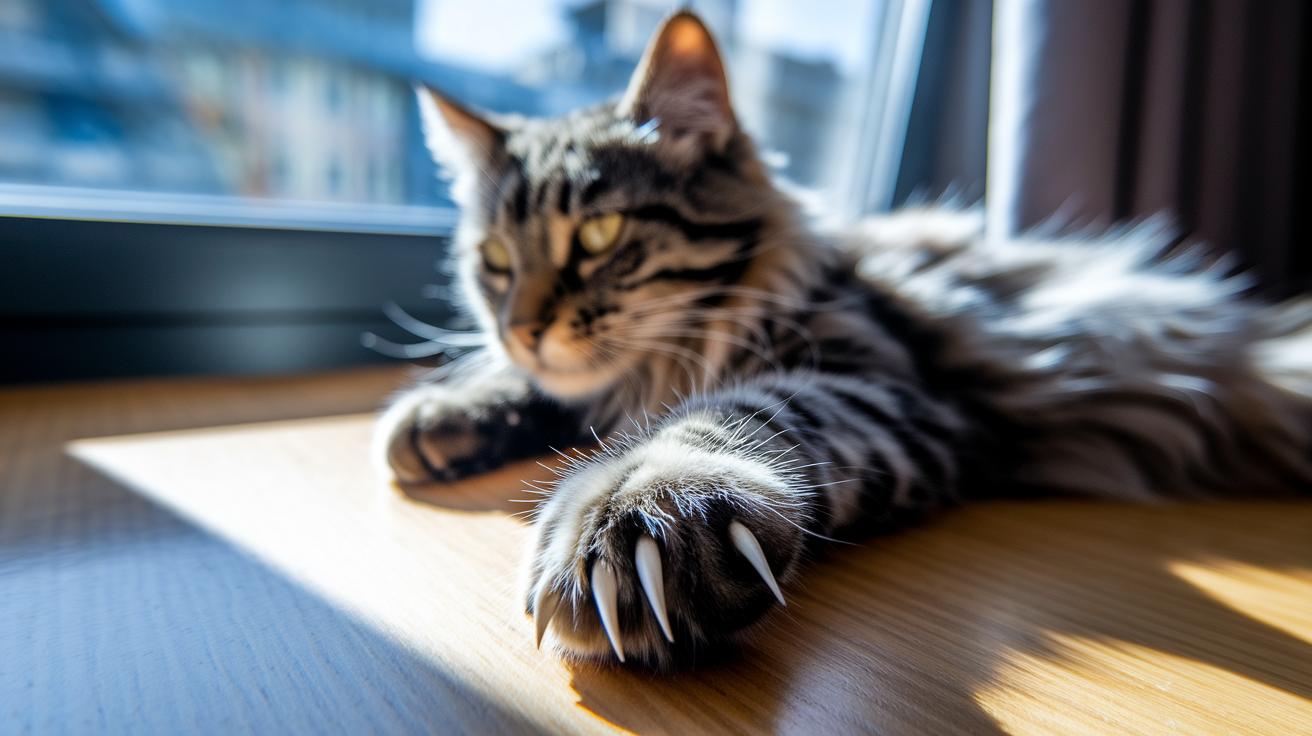
    Ever think those tiny claws can’t do any harm when your cat’s just binge-napping on the sofa? Oops, let me rephrase that… even loungers need a trim.

    Skip those nail trims and you’ll find pointy tips poking right through the soft cushion under each toe (paw pad). Yikes. And your sofa might start looking like it survived a mini-jungle safari.

    Outdoor kitties get a free manicure from gravel and bark. Indoor cats? They miss out on that rough stuff. So their nails just keep growing. Kind of like a fishing rod (a sturdy pole that spools new layers) endlessly adding length.

    Trimming your cat’s claws is the secret to a happy, healthy feline. You’ll dodge painful piercings, claw-tastic furniture snags, and surprise ouchy moments. Ready to see how quick trims keep claws in check and kitties feeling fine?

    Why Cat Claws Need Regular Trimming

    Why Cat Claws Need Regular Trimming.jpg

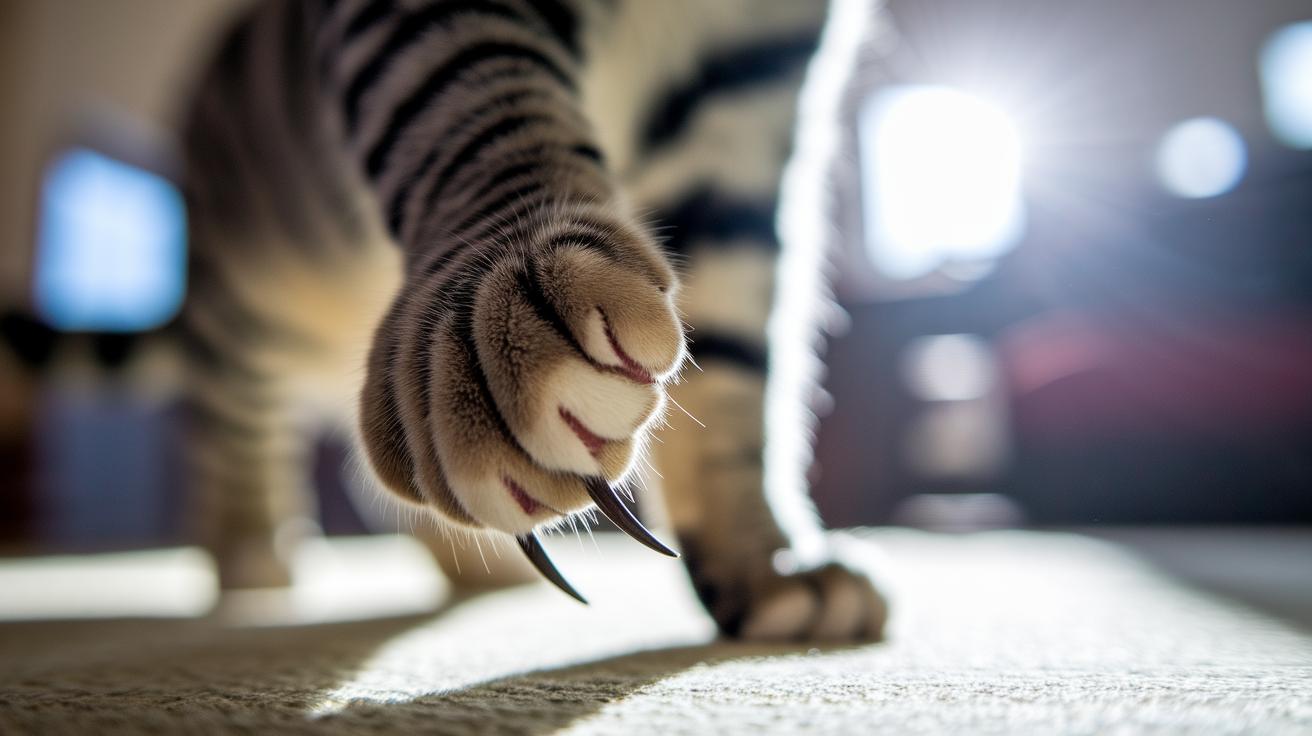
    Cats claws never stop growing. They push out new layers like a fishing rod (like a strong fishing rod core) that keeps spooling. Some kitties wear them down on rough floors or scratch posts, but many get tips so long they curl into the paw pad (soft cushion under each toe) and cause pain or even bleeding. Ever feel that click on the floor – um, it’s not a fun beat, it’s a tiny alarm bell.

    Indoor cats miss out on natural filing. There’s no bark or gravel under their paws to chip away tips. Even a trusty cardboard scratcher only dulls them so much. If you’re busy or your kitty naps all day, you know, zero filing by the midnight zoomies.

    So we step in with clipping. Regular trims fill in for missing scratch sessions and keep each tip at a safe length. This simple claw check stops nails from snagging your sofa seams or your favorite sweater. Worth every paw-print.

    Untrimmed claws aren’t just a furniture nightmare – every swipe can snag fabric or skin. Those tiny scratches can harbor bacteria and lead to infections. Trimming claws gives you peace of mind – fewer wardrobe tears and no surprise ouch when your kitty gives a friendly paw-bump. And it lets your cat stretch and pounce with ease!

    Signs Cat Claws Are Too Long and Need Trimming

    Signs Cat Claws Are Too Long and Need Trimming.jpg

    Even if your kitty seems to handle their claws (the sharp nails on their paws) just fine, tiny signs can let you know a trim is overdue. Ever watch your cat pad across the floor and notice those claws poking out? It might look harmless but extra-long nails can lead your cat to claw at everything in sight. Checking their paws now and then keeps both you and your couch happy!

    Here’s what to watch for:

    • Claws peeking out when your cat walks or rests
    • Claws catching on carpets, fabrics, or upholstery
    • Curved tips digging into their paw pads (the soft part under their foot)
    • More frantic scratching of furniture or even your legs
    • Limping, reluctance to jump, or saying “no thanks” to playtime
    • Excessive licking of paws, redness, swelling, or tiny bleeding spots

    When you spot these hints, it’s time for a nail trim. It’s quick, it’s easy, and it makes your cat feel so much better. Worth every paw-print.

    Recommended Trimming Frequency for Cat Claws.jpg

    Cats need regular nail trims because their claws grow about 1–2 millimeters (mm; roughly the thickness of a nickel) each month. Ever wonder do cat claws grow back so fast? A steady nail-trimming schedule helps keep paws comfy, and your sofa scratch-free.

    Kittens under six months shoot out new nail layers like little tape-measure rollers, so you’ll want to clip their claws every 1–2 weeks. It’s quick. And it keeps those nibbling feet from turning into mini daggers.

    Adult indoor cats usually need a trim every 2–4 weeks. They don’t wear down tips much on carpet or wood floors, so a check every couple of weeks keeps nails at a good length.

    Older cats or those with long fur can end up with painful ingrown claws (when the nail grows into the paw pad). A monthly peek and trim helps avoid ouch-moments. Plus, it’s a sweet way to hang out with your senior kitty.

    Outdoor adventurers often file their own tips while climbing and scratching. Just glance at their paws now and then, and trim only when you see a sharp point.

    Age Category Trim Every
    Kittens (under 6 months) Every 1–2 weeks
    Adult Indoor Cats Every 2–4 weeks
    Senior or Long-haired Cats Monthly
    Active Outdoor Cats As needed

    Choosing the Best Tools for Trimming Cat Claws

    Choosing the Best Tools for Trimming Cat Claws.jpg

    Picking the right tool feels like choosing a trusty sidekick for your kitty’s nail trims. Each one has its perks (and quirks) to keep claws neat and drama free. Ready to meet your new grooming partner?

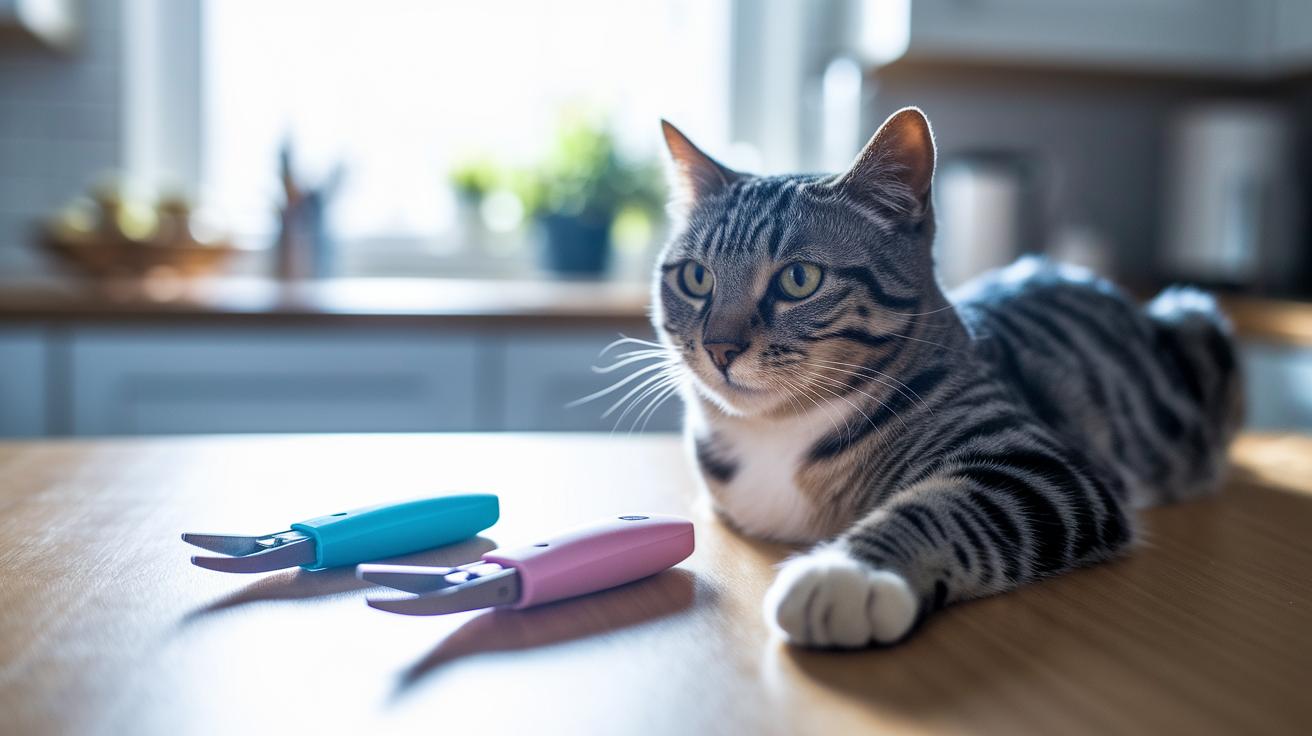
    • Guillotine clippers (a ring that your cat’s nail slides into and a blade that cuts in one smooth motion): You’ll hear a quick snip as it glides through. It’s super fast for most cats. But uh, you need a steady hand or you might pinch the skin.
    • Scissor-style clippers (big scissor jaws made for thick nails): They give you more control on chunky claws and you’ll feel each cut. Shy kitties might fuss when you open their paws wide. Try a treat to win them over.
    • Nail grinders (a tiny sanding drum that spins and smooths edges): They file away rough spots so you avoid splinters. Some cats hate the buzzing and vibration. Start slow. Let them sniff it before you switch it on.
    • Cat-specific scissors (slim, curved blades for little nails): Perfect for tiny or split claws with no crushing. Just a neat little snip when you need precision.

    Never grab your own nail clippers, they can crush or split your cat’s nails. Always work in a bright spot so you can see the quick (the pink part with blood vessels). And keep styptic powder (it stops bleeding fast) within reach for those “oops” moments when you nick the quick. A bit of prep means safer trims and no more claw-tastrophes. Your cat will be paw-sitively chill.

    Safe Techniques for Trimming Cat Claws at Home

    Safe Techniques for Trimming Cat Claws at Home.jpg

    Acclimation and Preparation

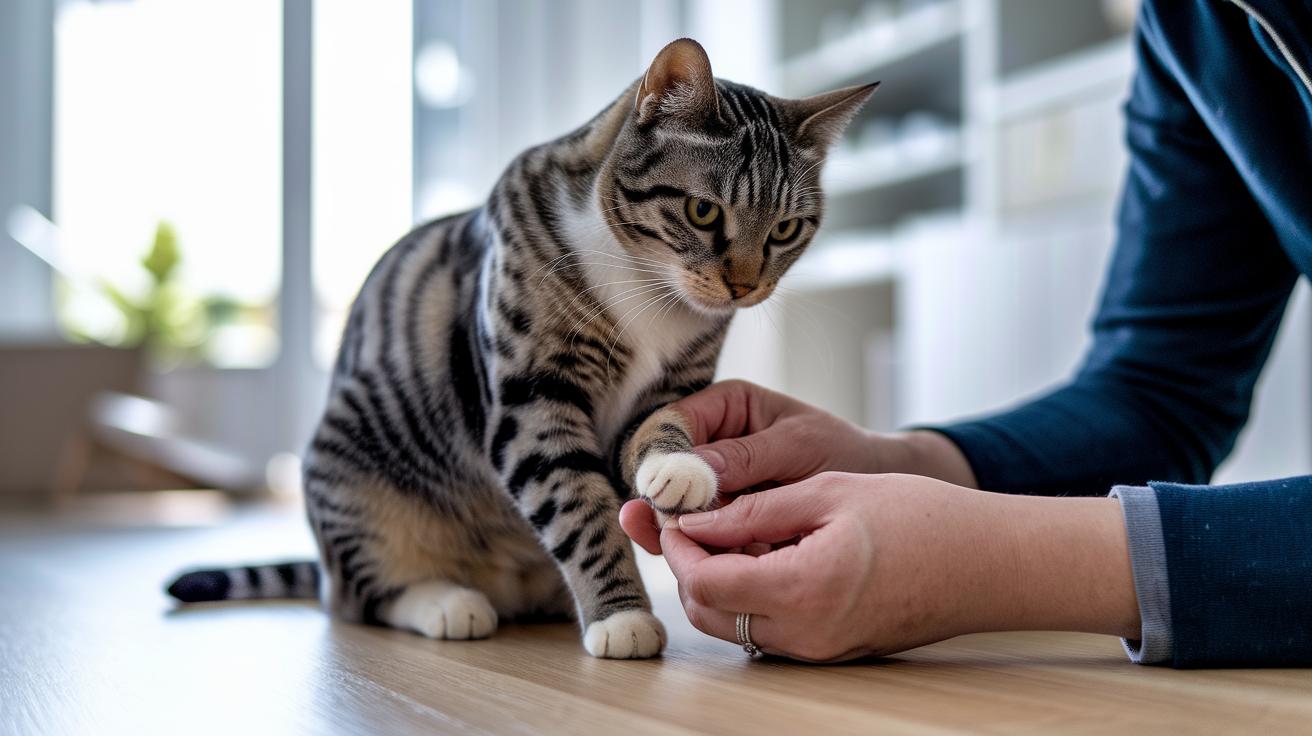
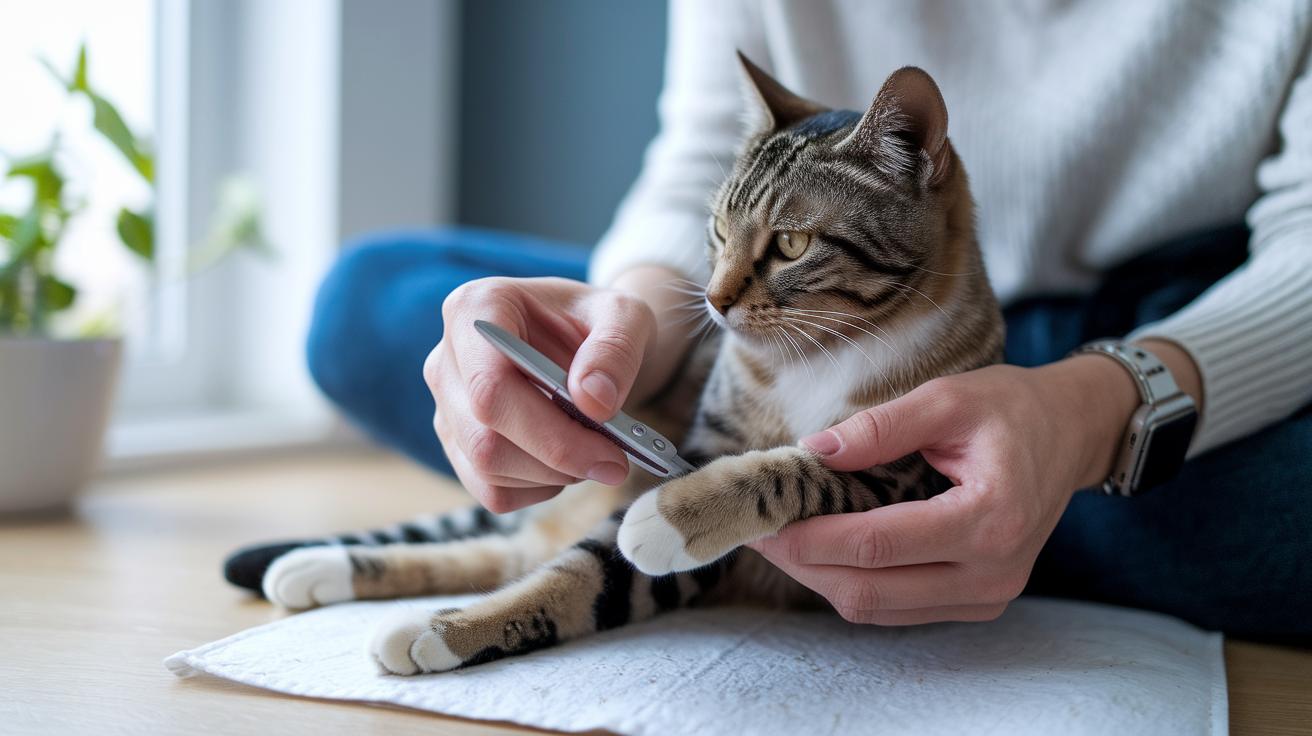
    Choose a quiet, well-lit spot where your kitty feels safe and cozy. After playtime or a snooze, when they’re mellow, hold one paw and gently rub each toe. Do this a few times over several days so they link paw handling to a calm moment.
    Ever watched your kitty chase shadows? Offering a treat or a soft “good job” when they let you touch their paws makes it a positive game. Short, happy sessions win over one long, scary event.

    Clipping Workflow

    Set your cat on your lap or a sturdy table with a towel beneath for extra grip. Press each pad softly to extend the claw, you’ll see the clear tip and the quick (tiny blood vessel under the nail). Only trim the transparent part, leaving about 3–4 mm (about the width of a pencil eraser) back from the quick to avoid pain or bleeding.
    Take a small snip, then pause. Clip one nail at a time and switch paws if your cat starts to wiggle. Don’t forget those dewclaws up front, they’re like thumb nails for cats and need a little love too.

    Aftercare and Rewards

    If you nick the quick, press gently with a bit of styptic powder or cornstarch and the bleeding stops fast, no sweat. Then unleash the treats and praise. A few crunchy bites or a quick toy chase seals the idea that nail time = fun time.
    Short clips with big rewards build trust and make the next session even smoother. Before you know it, your cat will be purring through every claw-tastic trim!

    Natural and Declawing Alternatives for Cat Claw Care

    Natural and Declawing Alternatives for Cat Claw Care.jpg

    Declawing means cutting off the last joint of each toe – it’s like removing a human fingertip. It can cause long-term pain, posture changes, and odd behaviors. Vets call it unethical, and many places have banned it.

    But you don’t have to do that to keep your furniture safe.

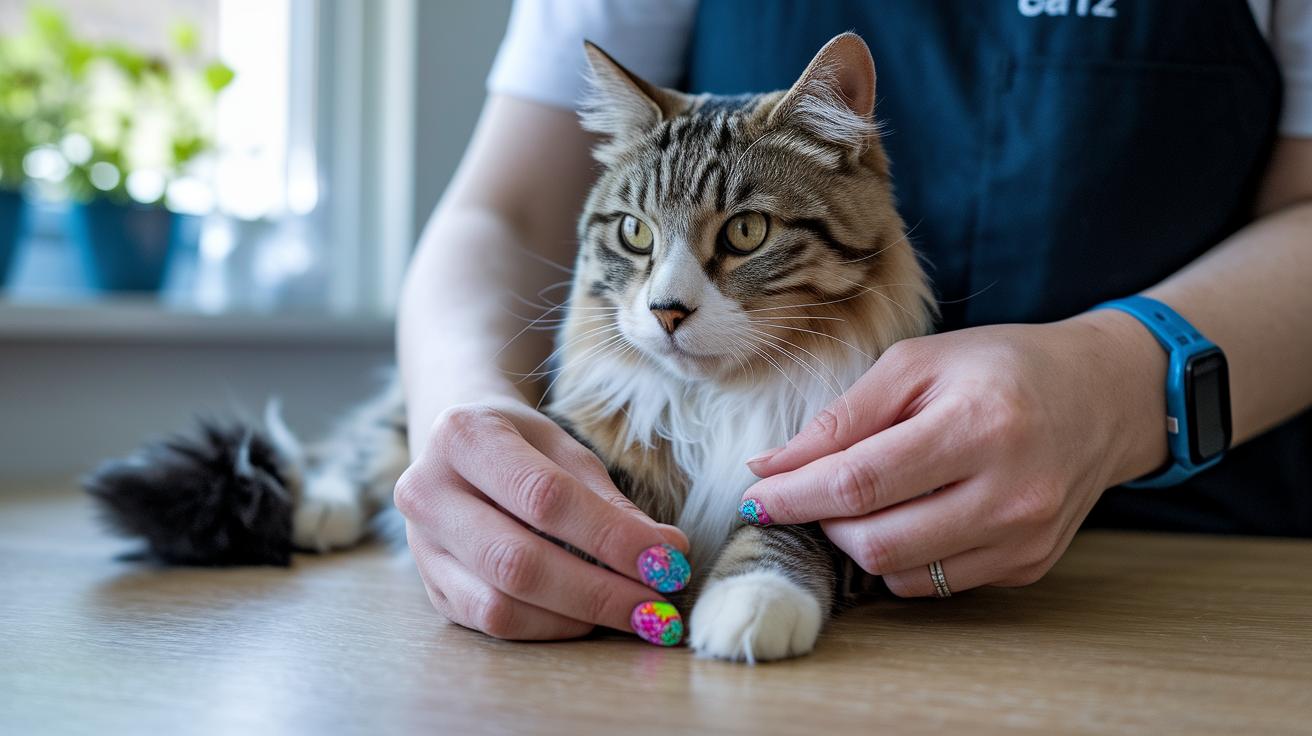
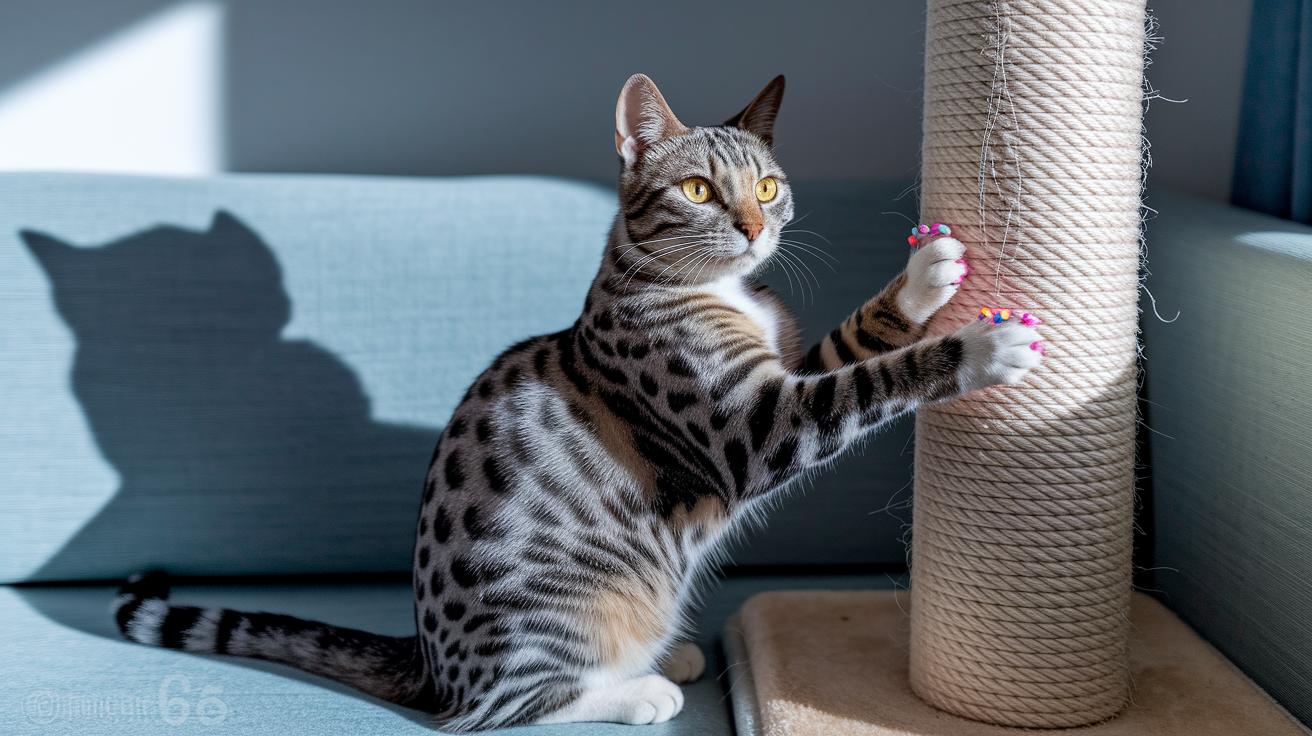
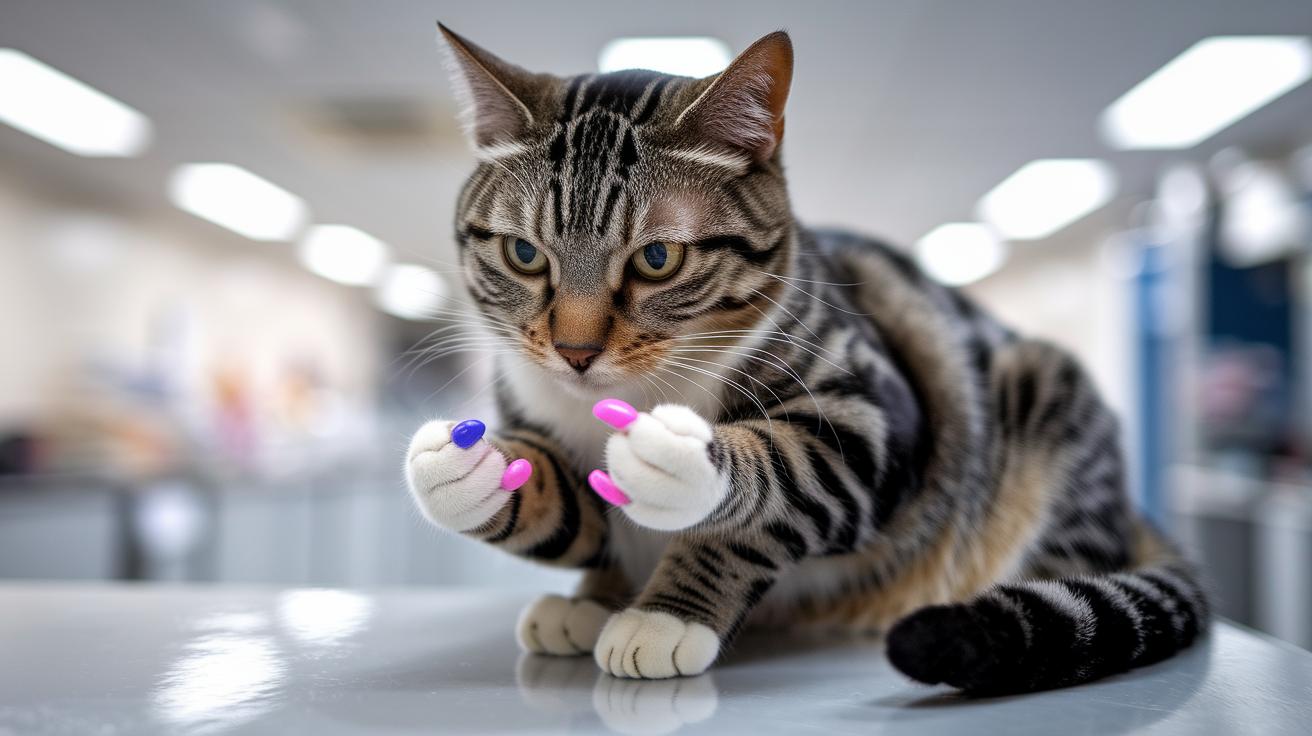
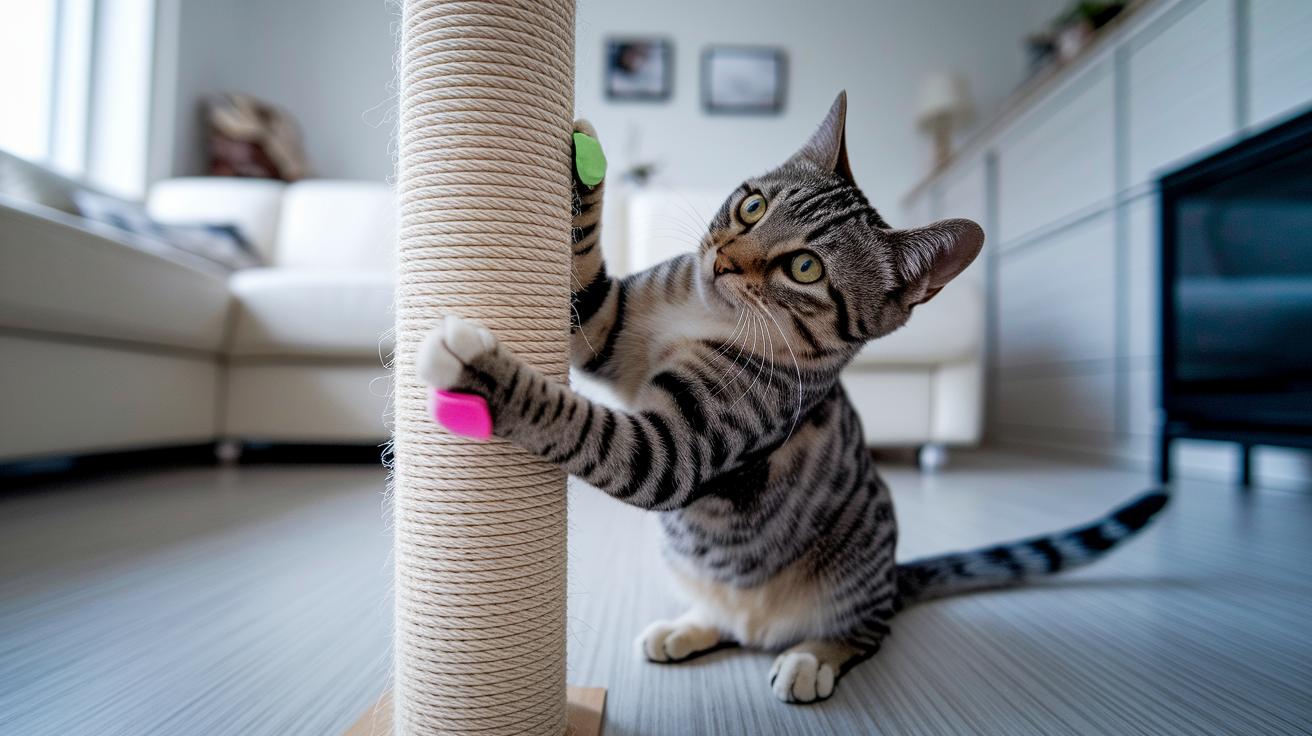
    Soft paw nail caps are a simple, non-surgical solution. These tiny vinyl (flexible plastic) covers slip onto each claw and last about four to six weeks before you pop on a fresh set. Ever watched your kitty knead like it’s making pizza dough? They come in fun shades like pink, blue, or green and won’t slow your kitty from pouncing, kneading a soft blanket, or stretching high – they’ll still feel feline fine.

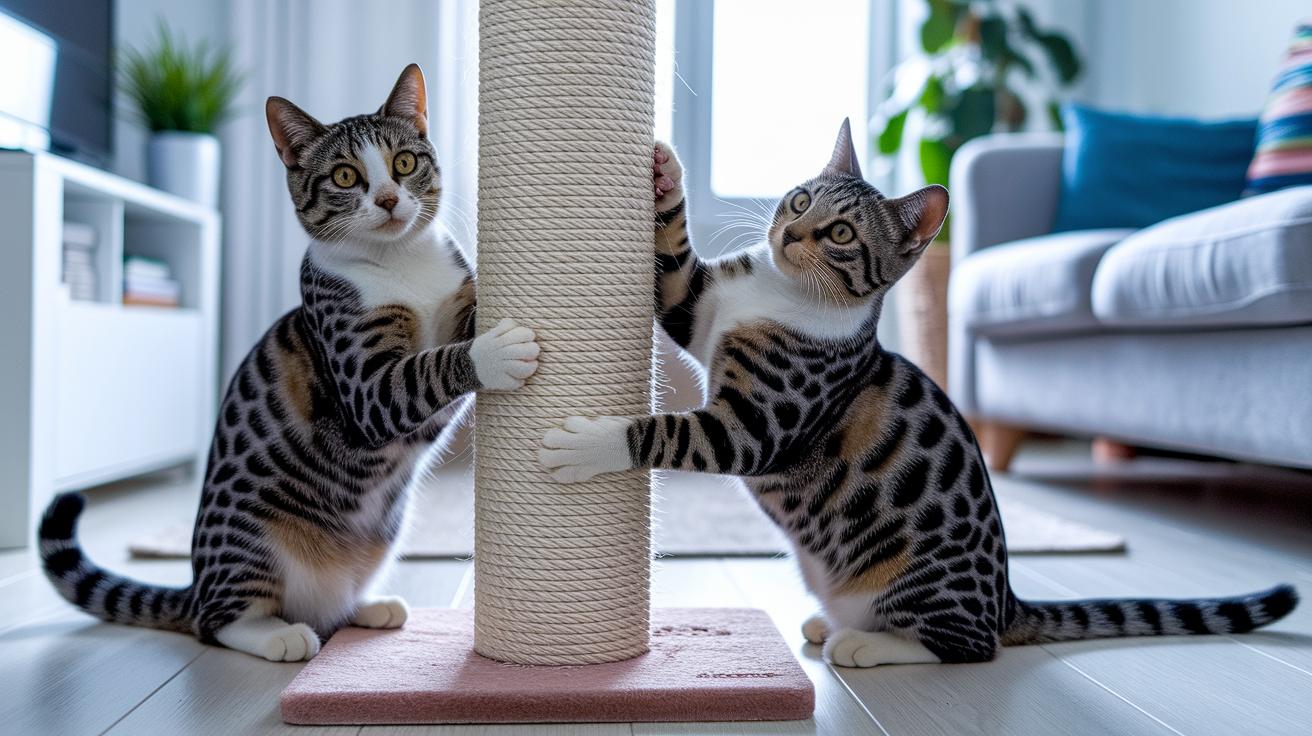
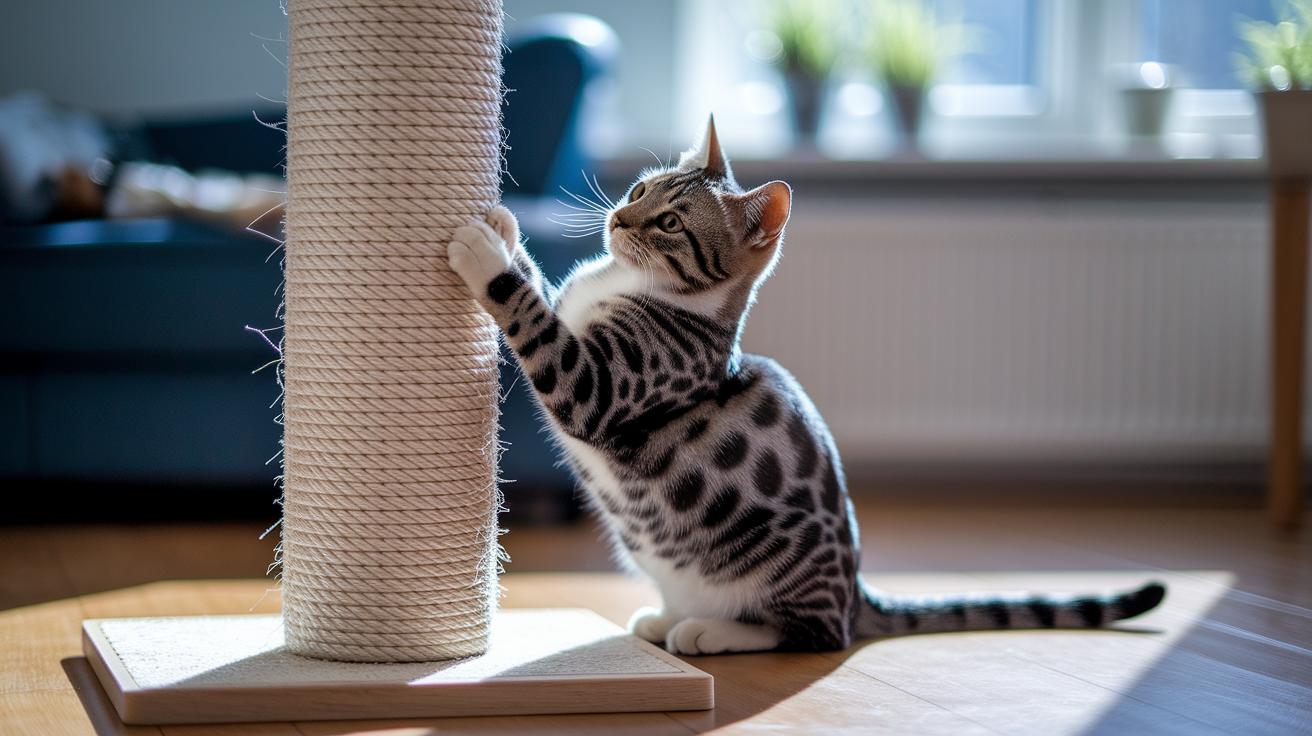
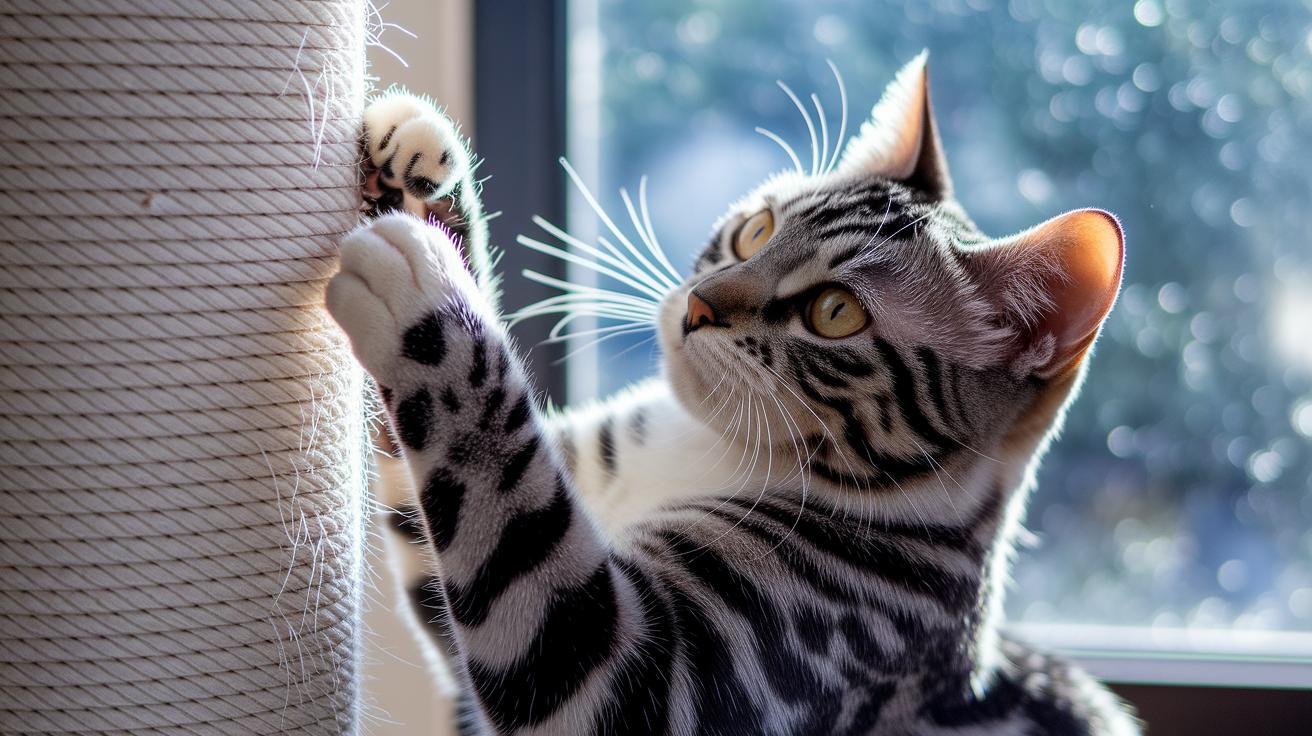
    Next, give your cat plenty of scratching options. Vertical posts wrapped in sisal rope (a tough plant fiber) let them pull and file their claws. Horizontal cardboard scratchers and carpet ramps add new textures for claw maintenance. Move these scratch zones around the house so every day feels like a fresh adventure.

    Training your cat to use the right scratcher is part of the fun. Sprinkle catnip (a mild herb) on fresh posts, dangle a teaser toy beside them, or hide treats under the base. When you catch your kitty scratching the right way, um, cheer them on with a happy “Good job!” or a quick cuddle. Over time, that couch carnage becomes ancient history and you end up with healthy paw habits everywhere.

    When to Seek Professional Cat Nail Trimming Services

    When to Seek Professional Cat Nail Trimming Services.jpg

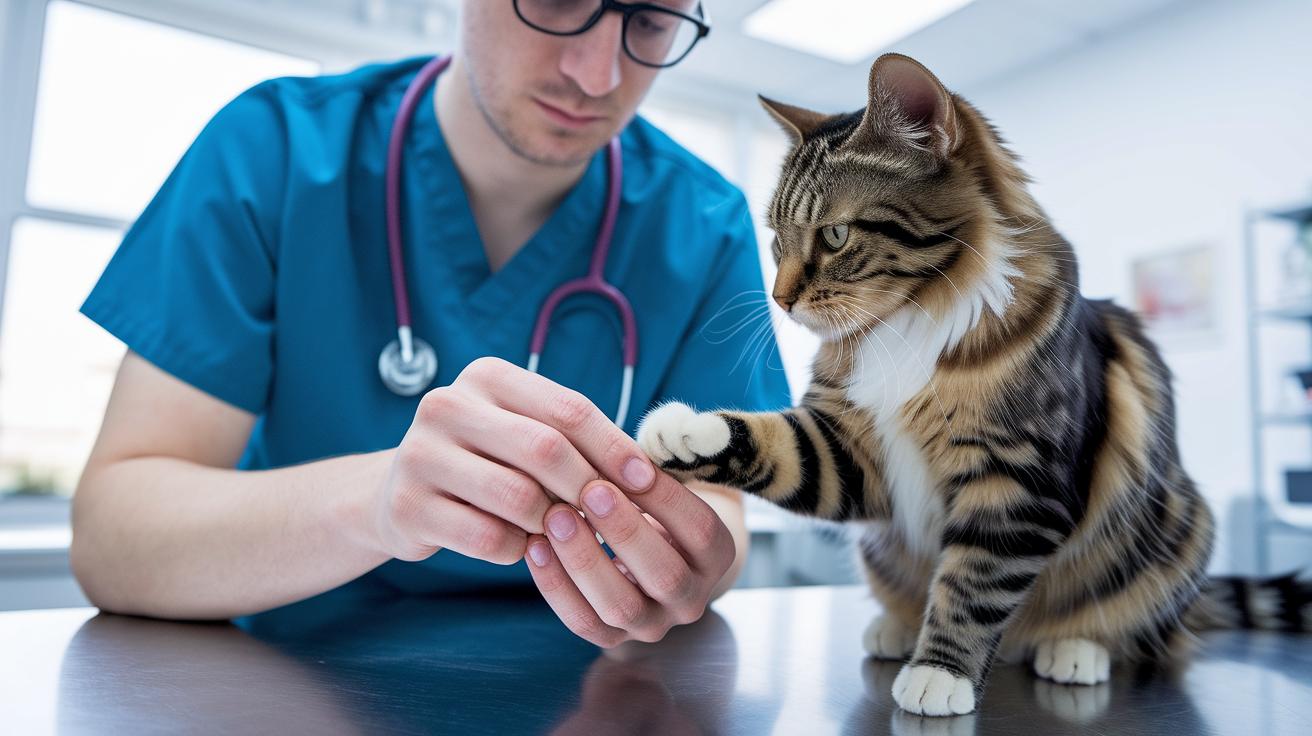
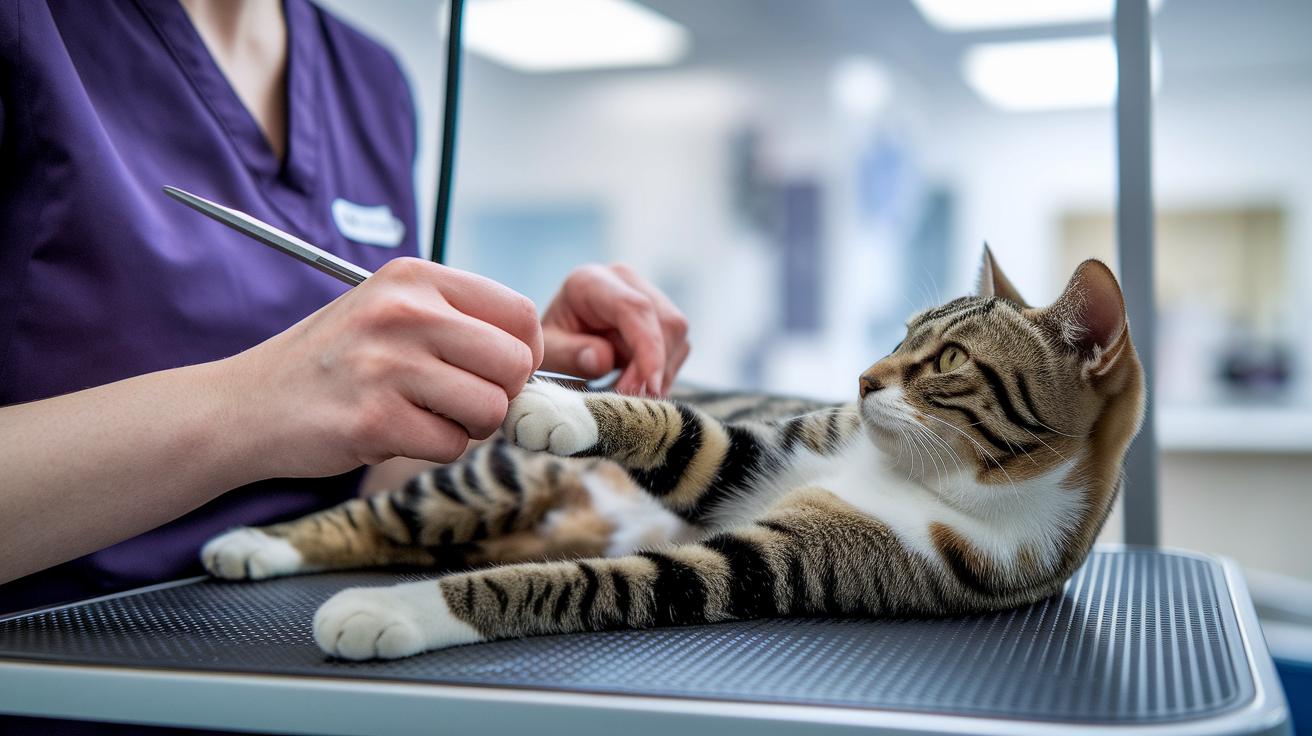
    Ever tried clipping your cat’s nails and ended up in a paw chase? Veterinary clinics and mobile groomers offer nail-only trims, sometimes with mild sedation (a gentle sleepy state) for those kitty ninjas who freak at clipper sounds. These claw-some pros can handle fussy, elderly, or creaky-joint cats with ease. You get a calm cat and less shredded sofa.

    Costs can vary, so just search “cat nail trimming near me” to compare local options. Mobile groomers bring everything to your door. It’s perfect if your cat slices the air at carrier time. Many clinics welcome walk-ins for quick trims, and some bundle it with a routine checkup.

    Wondering when to reach out to a vet? If you notice an ingrown claw, constant redness, swelling, or bleeding that won’t quit after a home clip, it’s time. Letting it slide can lead to bigger paw problems.

    A skilled groomer knows exactly how far from the quick (the tiny blood vessel under the nail) to snip. They can also treat any infection on the spot. Don’t wait – your cat and your furniture will thank you.

    Final Words

    We jumped straight into why claws grow and need a trim, spotted the tell-tale signs of overgrown nails, and laid out a simple schedule for kittens to seniors.

    We picked our favorite clippers (and felt that satisfying snip), walked through safe trimming steps, and even tossed in friendly fixes like soft paw caps or a pro’s help when claws get feisty.

    Tidy little hooks mean comfy paws, less scratched-up furniture, and a calmer home. So show those paws some love, do cat claws need to be trimmed? You bet, and your multi-cat crew will be feline fine.

    FAQ

    Do cat claws need to be trimmed?

    Cat claws need regular trimming because they grow continuously and can curve into paw pads, causing pain, tearing fabrics, and increasing scratch risks in your home.

    How often should I trim my cat’s claws?

    Trimming every 2–4 weeks for indoor cats, every 1–2 weeks for kittens, and monthly for seniors keeps nails at a safe length, preventing overgrowth and scratching injuries.

    What happens if I don’t trim my cat’s nails?

    Without trims, claws can curl into pads, causing pain, infection, and limping. Sharp nails also tear furniture and increase the chance of accidental scratches for you and your pet.

    Do cats trim their nails naturally, and do indoor cats need trimming?

    Cats wear claws on rough surfaces outside, but indoor cats lack enough abrasion to shorten nails naturally, so they still need regular trimming for comfort and safety.

    Do scratching posts keep my cat’s claws trimmed?

    Scratching posts help remove dead claw sheaths and satisfy instincts, but they rarely shorten claws enough, so you’ll still need periodic nail trims to prevent overgrowth.

    Is clipping my cat’s claws cruel?

    Clipping your cat’s claws isn’t cruel when done properly. It gently removes only the transparent tip, preventing pain and health issues, while keeping both cat and furniture safe.

    Should I trim my cat’s back claws?

    Back claws grow just like front ones and can snag fabrics or hide debris. Trimming them alongside front nails maintains overall paw health and prevents injury.

    What tools are best for trimming cat claws?

    You can use guillotine (blade pushes through tip) or scissor-style clippers for clean cuts. Nail grinders smooth edges, but some cats dislike noise. Avoid human clippers that split claws.

    How can I trim my cat’s claws safely, even if my cat is cranky?

    Calm your cat by handling paws gradually, choose a quiet spot, press pads to extend tips, trim small sections, use treats, and pause if your cat resists, rewarding good behavior.

    Related Articles

  • do cats hibernate Enjoy Warm And Active Winters

    do cats hibernate Enjoy Warm And Active Winters

    Ever thought your kitty curls up and hibernates all winter? Actually, cats don’t hibernate like bears! They slip into a torpor (a quick dip in body temp). It’s more like a power nap. Then they pop right up, whiskers twitching.

    When cold weather hits, your cat’s fluffy coat and twitching whiskers act like tiny thermostats. Their fur puffs up, trapping heat like a sealed thermos flask (a mug that keeps drinks hot). You’ll still catch them chasing a fuzzy ball across the rug. Pure zoomies!

    Curious how your whiskered pal stays toasty and playful all season long? Let’s dive in.

    Cats and Hibernation: The Definitive Answer

    Cats and Hibernation The Definitive Answer.jpg

    Ever watched your kitty curl up on a snow-dusted windowsill and wondered if they’re drifting into hibernation? Spoiler: they aren’t! Winter chills don’t change their everyday rhythm. They still nap, stalk imaginary mice, and keep their body temp locked in, like a thermostat set to ‘purr-fect.’

    In truth, cats sometimes slip into torpor (a short, reversible drop in metabolism, which is how the body turns food into energy), but it’s more like a power nap than a months-long snooze fest. They slow down for a few hours, then snap right back, no deep hibernation here.

    Next, we’ll peek under the fur to see why felines skip real hibernation, hint: their lean muscles and high-energy ways. Then we’ll compare city cats and wild cats in winter, and bust the biggest myths about cat dormancy. Ready to pounce on the answers? Let’s dive in.

    Hibernation vs Torpor and Feline Physiology

    Hibernation vs Torpor and Feline Physiology.jpg

    Hibernation is like a sleep marathon, lasting days or even months. Torpor, by contrast, is a quick power-nap of just hours. Think of it as your cat’s mini siesta.

    Cats don’t dive into long cold spells. If their body temperature dips, it’s only a tiny drop, and it’s over in minutes. So one moment they’re curled up, the next they’re zooming around the room. Ever watched your kitty’s whiskers twitch as they spring awake?

    Even in the chill, a cat’s metabolism stays buzzing. That means their muscles stay warm and ready for action. And those whiskers? Always on twitchy alert.

    Adaptations of cats to cold:

    • Seasonal fur fluff: Cats grow a slightly thicker coat in winter, like a brushed-fleece hoodie that traps warm air next to the skin.
    • Peripheral vasoconstriction (blood vessels tightening at the skin): This pulls blood inward to keep the core toasty, kind of like a built-in heat bank.
    • Cozy spot selection: Your cat will seek out sunny windowsills, foam-lined beds (a super soft pad), or even your warm laptop for maximum snuggle points.

    Worth every paw-print.

    Domestic vs Feral and Wild Cats: Winter Behavior and Hibernation Myths

    Domestic vs Feral and Wild Cats Winter Behavior and Hibernation Myths.jpg

    Indoor cats sleep when we sleep. You hit the pillow, they do too. In winter, they stretch out longer day naps, then zoom around at dawn when you’re pouring your coffee. But calling it hibernation is just a mix-up, your couch-potato kitty won’t snooze away the whole season.

    Some believe feral cats vanish in January because they’re hibernating. In truth, wild cats don’t hibernate. You might see a cat slip into torpor (a short, sleepy state) on a truly frigid night, but it lasts only hours. Do cats hibernate like bears? Nope, they spring right back once the sun peeks through.

    So, cats use claw-ver cold-weather moves instead of real hibernation. They tuck into snug dens under porches, curl up in crunchy leaf piles (ever watched your kitty wiggle in those?), or burrow into thick brush. Their fur fluffs up (like a built-in sweater) for extra warmth. And if you leave fresh laundry lying around, they’ll claim your warm socks for a dreamy nap. These simple habits keep your feline friend cozy, curious, and ready to pounce all winter.

    Felid Winter Survival: Do Big Cats Hibernate?

    Felid Winter Survival Do Big Cats Hibernate.jpg

    Ever watched a bobcat padding through fresh snow at dawn? Big cats like lions and tigers don’t curl up and sleep all winter. They’re out prowling, um, keeping their body heat steady no matter the temp. So, how do these cool cats stay feline fine in the frost?

    Snow leopards live on rocky cliffs where cold winds roar. Their dense woolly undercoat (a thick fur layer) acts like nature’s strongest parka. They slip through blustery gusts on soft, silent paws ready to pounce. It’s wild watching them peek around ice-carved rocks for dinner.

    Lynx rock oversized, fur-lined paws (think snowshoes) to stay on top of deep drifts. You might see one stalking ptarmigan or hopping across a snowy log. Even cougars on chill mountain slopes move slow to save energy. Then they spring into action – zoom!

    Instead of a months-long snooze, these wild kitties bank on fat reserves and quick naps. They hunt most at dawn and dusk (crepuscular hours when prey is on the move). Later, they curl into a snug rock nook or fallen log to recharge. Their lean, alert muscles are always ready for the next chase.

    Worth every paw-print.

    Caring for Cats in Winter: Tips to Support Your Feline Friend

    Caring for Cats in Winter Tips to Support Your Feline Friend.jpg

    Ever wondered if cats hibernate when the temperature drops? Nope, they don’t curl up and snooze away all winter. Indoor kitties still need cozy spots to stay toasty. Try a heated pad (an electric mat that warms a cat bed) or a blanket fort on a sunny windowsill.

    Keep fresh water in shallow bowls so it stays ice-free and your cat stays hydrated. Speaking of hydration, clean water helps with grooming and keeps fur soft. Um, and playtime counts too. A teaser wand (think fishing rod with feathers) and a quick chase across the carpet mimic hunting bursts and burn off lazy-day calories.

    Outdoor cats need snug shelters that stay dry and off the cold ground. A small wooden box lined with foam board (insulation that traps heat) with a flap to block wind and a cozy layer of straw or fleece inside works wonders. Stick a thermometer inside so you know when it’s time to bring them in. Wondering how cold is too cold? Check signs of frostbite and hypothermia at Do Cats Get Cold Outside?

    Senior pals might struggle with stiff joints in chilly weather. Watch for slower jumps or shorter strolls, that could be arthritis talking. A vet checkup for winter care will spot early sniffles or muscle aches. They can also adjust your cat’s diet for warmth and extra energy.

    Small changes now can mean cozy, happy winters ahead. Your cat will purr for the extra care.

    Final Words

    We’ve seen that cats keep steady temps and classic sleep patterns, not real hibernation. We compared torpor’s quick dips with true hibernation, plus feline fur fluff-ups and cozy habits.

    We looked at domestic, feral, and big cats, none dive into months-long dormancy. Winter resting rules stay short and sweet.

    Our care tips, warm beds, fresh water, extra play, vet checks, have your team ready for chilly days. And when someone wonders do cat hibernate, you can confidently say they don’t. Keep those paws playful and warm!

    FAQ

    Do any types of cats hibernate?

    No types of cats hibernate; domestic, feral, wild, and big felines maintain regular sleep–wake cycles and steady body temperatures, only entering brief torpor (short metabolic dips) in extreme cold.

    Do cats migrate?

    Cats do not migrate; they adapt locally by growing thicker fur, seeking warm spots, and adjusting activity patterns, staying within their territory year-round without seasonal long-distance travel.

    Do cats eat less in winter or what happens to cats in winter?

    Cats may eat slightly more in winter to fuel thicker coats and stay warm. They stay more indoors, nap more, and maintain energy with regular feeding despite shorter daylight hours.

    At what temperature is it too cold for cats?

    Indoor cats generally stay comfortable above 60°F; temperatures below 45°F risk hypothermia. Outdoor cats need insulated shelters and limited exposure once it dips under 50°F.

    Do cats sleep more on rainy days and do cats sleep 75% of their life?

    Cats sleep anywhere from 12 to 16 hours daily—about 50–66% of their life—and they often nap more on rainy or overcast days while staying alert during active breaks.

    Do dogs hibernate?

    Dogs do not hibernate; they remain active year-round, adapting to seasonal changes with thicker winter coats and adjusted play or exercise routines to stay comfortable in colder weather.

    Do bats hibernate?

    Some bat species hibernate in caves or tree hollows during winter, lowering heart rates and body temperatures for months to survive reduced insect availability.

    What animals hibernate?

    True hibernators include bears, ground squirrels, hedgehogs, some bats, and dormice; these mammals undergo prolonged metabolic depression and body temperature drops to survive winter.

    Related Articles

  • do cats remember you for lasting bonds

    do cats remember you for lasting bonds

    Ever wonder if cats forget your face the moment you turn away? People tease that kitty attention spans are shorter than a cat nap. But um, have you ever peeked around the corner to see them waiting by the door, ears perked and whiskers twitching?

    They’re stashing your scent and the sound of your voice in their kitty memory bank (like a secret scrapbook of cozy naps). Today, let’s sneak a peek at their feline memory files, short-term meows and long-term purrs.

    We’ll show how the jingle of your keys or the smell of your favorite shampoo keeps you front and center in their little minds. Then I’ll share simple games, like hide-and-seek treats and wand teaser play, that prove your furball never really forgets you!

    Could memory get any more claw-tastic?

    Do Cats Remember You and How It Works

    Do Cats Remember You and How It Works.jpg

    Do cats remember you? You bet! They tuck away your scent and your gentle voice in a memory bank (like a photo album of warm moments). Every time you fill the bowl or scratch behind their ears, your kitty links that cozy feeling back to you. Ever notice them waiting by the door when you’re late? That fur-filled hello means, “I remember you!”

    So cats also hold onto tiny details. Working memory (short-focus storage) captures a toy’s bounce or a tail twitch just before a pounce. Short-term memory hangs on for minutes or hours. It’s what helps them sniff out a hidden snack or perk up at the jingle of keys.

    Long-term memory is all about feelings, um, bookmarking people and places by the comfort or excitement they bring. No need for every little story – just the moments that make your cat purr or crouch in curiosity.

    Next, we’ll sniff out how your cat’s super senses – smell, sight, and sound – spark those memories. Then we’ll map them from quick snack hunts to lifelong loyalty. And hey, you’ll learn fun, simple games to test your kitty’s recall – and prove they really remember you down to every whisker twitch.

    Short-Term vs Long-Term: How Cats Remember You Over Time

    Short-Term vs Long-Term How Cats Remember You Over Time.jpg

    Ever wonder how your cat actually remembers you? In their brain, two key players share the spotlight: the hippocampus (memory hub) and the amygdala (emotion spot). So when your kitty sniffs your shampoo or purrs at your voice, it tucks away short video clips of you in a quick memory file – um, kinda like a mini scrapbook.

    During deep slow-wave sleep the hippocampus replays those clips and passes them on to the neocortex (outer brain layer) for long-term storage. Ever watched your cat twitch its paws mid-nap? That’s their brain running a private catnap movie. Um, pretty cool.

    In a 2022 test at the University of Guelph researchers taught cats to tap one of two shapes on a screen for treats. Twenty-four hours later the cats still picked the right shape about 70 percent of the time – proof those lessons stuck after a day. That’s pawsome!

    • Hippocampus holds fresh info for minutes to hours.
    • Sleep replay cements clips into lasting memories.
    • Amygdala tags moments with happy or watch-out feelings.

    Watching your kitty curl up next to you then purr when you walk back in isn’t just sweet – it’s science in action. Those quick snaps grow into warm long-term bonds that make you feel feline fine.

    How Cats Remember You: Sensory Cues and Owner Recognition

    How Cats Remember You Sensory Cues and Owner Recognition.jpg

    Ever wonder if your cat remembers you for more than just your lap? Their nose writes the first chapter of your story. They sniff first, then add details with sight and sound. That’s how they learn you one whiff at a time.

    They mix smells, sights, and sounds into a special loyalty brew. Purrrfect.

    Scent Recognition

    Cats have almost 200 million scent receptors (tiny nose filters). When they sniff your shirt, they’re reading your scent like a map. Then they coat your hands with pheromones (chemical tags) to mark you as their treat stash. When you come home, they rub their cheeks on your legs and nudge your sneakers, using glands under their paws and cheeks to stamp your scent as safe.

    Facial and Visual Cues

    Ever watched your kitty chase shadows? Cats care more about motion than fine lines. Picture a looping video of your silhouette (your outline).

    Still, they learn your hair color and shoulder tilt to know it’s you. Thanks to their tapetum lucidum (light-reflecting eye layer), they spot shapes at dawn and dusk. After a while, the way you walk to the fridge or cradle your coffee mug becomes a one-of-a-kind movie they love to replay.

    Auditory Recognition

    Your voice is their favorite tune, and studies show cats perk up more when their owner calls than a stranger. They remember your pitch, rhythm, and even the words you use. Once, I whispered 'treat' under a door and watched my cat bolt three rooms in a blink. Um, that’s loyalty in action – cat style.

    Duration Matters: How Long Cats Remember You

    Duration Matters How Long Cats Remember You.jpg

    Ever wonder if cats can remember you after years away? Real-life stories say they sure do. One brave kitty wandered back home after 7 years, and another shot under the bed when it heard its name after a 2-year break. Whoa.

    Oops, let me rephrase: your scent (that cozy smell only your cat knows) and the sound of your voice stick in their brains like superglue. Some return-home champs even trot to old napping spots or follow the path to their food bowl – proof they stash home layouts and meal times in their memory bank.

    And if you jet off for just a month, expect a reunion party full of purrs and head bumps. Science on how long cats really remember stuff is still catching up, but these kitty comebacks prove that strong bonds can outlast even long trips.

    By contrast, short-term memories vanish fast when they don’t get fresh play or treats – like a secret snack forgotten in hours or a jingly toy that’s boring by bedtime. Instead, cats lean on tiny reminders: your scent on the doorknob, the click of your keys, or the sound of your dinner call.

    Think of those as bookmarks snapping them right back to you. Researchers run memory tests (like quizzes for cats) and discover quick snapshots drop away while deeper connections stick around. Routine playtime, the satisfying thud of a ball, and regular mealtime cues become um, emotional anchors.

    Then, after two or three months away, your kitty still knows: a sunny spot awaits, head bumps come, and purrs fire back up – showing just how strong long-term memory can be. Worth every whisker twitch.

    Factors Influencing How Cats Remember You

    Factors Influencing How Cats Remember You.jpg

    Ever wondered if your cat tucks your scent and routines into memory? They really do! Here are the key factors that help them recall you.

    • Bond strength: Cats tuck away memories of people who bring treats, scratch behind their ears, or share that satisfying swat with a feather wand. When you feed or snuggle them on the daily, those happy moments stick in their long-term memory. It’s like they save a bookmark to your face.

    • Social nature: If your kitty is a social butterfly, they’ll forge attachments faster. More outgoing kittens might greet you with chirps or head bumps as soon as you walk in. It’s kind of like they’re saying “Hey, remember me?” Casual pats can turn into memories that last.

    • Separation experiences: Time apart matters. When you’re away, the care your cat gets leaves a big mark. If they’re spoiled with play and pets, they’ll greet you like a long-lost friend. But a rough day alone can make them a bit shy at first.

    • Age and cognitive decline: Older kitties sometimes face memory lapses just like us. Senior cat memory loss can blur names or favorite faces. You might have to reintroduce yourself with extra pets and snacks. But a little patience goes a long way.

    • Stressful events: Loud noises or vet visits can scramble a cat’s thoughts. A shelter stay or a car ride might leave them feeling puzzled. That stress can slow down new memory storage. So give them calm cuddles to rebuild trust.

    • Rescue background: Cats from rescue or neglect often carry old fears in their memory. It takes consistent, gentle care to help them feel safe. Think soft voices, slow blinks, and extra treats. Over time, new happy memories win out.

    Testing Your Cat’s Memory of You: Methods and Signs

    Testing Your Cats Memory of You Methods and Signs.jpg

    Ever wondered if your kitty still remembers you after a day away? Let’s play scientist and test that memory together. You’ll need a stopwatch (or your phone timer), a few smell samples, and a sprinkle of curiosity. Ready for some purr-worthy fun?

    1. Name Test
      Step out of the room for an hour or so. Then call your cat’s name in that soft, loving voice you always use. Watch for ears perking up, a little head tilt, or a sprint your way. Those signs say, “Hey, I remember you!”

    2. Scent Test
      Grab two small cloths, one you’ve worn all day and a fresh one from your drawer. Lay them out and let your kitty sniff each for about a minute. If your cat sniffs the worn cloth longer, that’s their memory of your scent at work. Isn’t that neat?

    3. Visual Cue Test
      Hold up a photo – or a quick video if you prefer – at kitty-eye level. Note how long your cat gazes or if their tail flicks. A focused stare or soft meow means they recognize your face and familiar posture.

    4. Sound Test
      Record your voice saying “treat” or calling your cat on your phone. Then get a stranger to say the same thing. Play them one after the other. If your cat perks up more for your voice, meows, head nudges, or ear twitches, that’s memory in action.

    5. Bond Check
      After each mini test, watch for gentle head rubs, follow-the-leader strolls, or soft meows. These everyday moves often tell you more about your cat’s memory and love than any lab-style trial. It’s all about that special bond.

    Worth every whisker twitch. Now go enjoy some memory-making moments with your best furry friend.

    Strengthening How Cats Remember You: Memory and Bond Building

    Strengthening How Cats Remember You Memory and Bond Building.jpg

    Ever wish your kitty never forgot how pawsome you are? With a few playful habits – like rewarding good behavior, keeping a steady schedule, and playing brain games – you can turn small moments into memory magic. Your cat will soon link your name to treats, cuddles, and goofy fun. Ready?

    Training Techniques for Memory

    Clicker training is almost magic. Ever watched your kitty’s ears perk up at the very first click? You tap the clicker when they touch a target or respond to their name, then treat them right away. Keep it short – two or three minutes – so they stay curious and eager. They’ll start to link that click to yummy snacks and your friendly voice.

    Handle kittens gently between two and seven weeks old to build trust you can count on later. Feeding them at set times is like bookmarking their day. Every “dinner time” cue reminds your cat you’re in charge of good things – and that means you!

    Brain-Building Fun

    Puzzle feeders and treat-dispensing balls make mealtime feel like a brain workout. Your cat bats the toy and – whoosh – a snack pops out. They’ll learn the trick and remember it every time. It’s like hiding snacks on a tiny obstacle course.

    Try scent-based hide-and-seek by tucking treats under cups or in cloth pouches. Your cat’s whiskers will twitch as they sniff out each treasure – purr-fect fun! Feather wands, laser dots, and rotating toys keep things fresh and surprising. And don’t forget a cozy sniff mat (a soft pad that hides treats under fabric) with your worn T-shirt tucked in – your scent lingers and says “snuggle time.”

    Final Words

    We dove right into how cats recognize and remember their people, exploring short-term recall, long-term bonds, and the nifty sensory tricks they use.

    Next we compared memory spans, peeked at scent, sight, and sound clues, and laid out real-world tests and tips to strengthen that feline bond.

    Now when you wonder do cat remember you, you’ve got the answers, plus playful strategies to keep their whiskers twitching and spirits bright.

    Enjoy every purr-packed moment!

    FAQ

    How long can cats remember their owners?

    Cats remember their owners through short-term memory lasting minutes to hours and long-term memory stretching months or years when routines, scents, and affectionate bonding reinforce the connection.

    Do cats recognize their owners after being separated?

    Cats recognize their owners after separation by using scent, voice, and visual cues, often responding positively even after months apart when bonds are strong and routines familiar.

    Will a cat remember me if I feed it?

    Cats remember people who feed them through positive association, linking your scent and voice to mealtime rewards, which strengthens their recall and affection over time.

    Do cats remember traumatic events?

    Cats remember traumatic events by associating sights, sounds, or smells with fear, which can trigger stress or avoidance behaviors until they relearn safety through gentle reassurance and positive interactions.

    Do cats remember faces?

    Cats remember faces by matching visual cues with familiar scents and sounds, although they rely more on smell and voice recognition to find you than facial features.

    What is the 3-3-3 rule of cats?

    The 3-3-3 rule in cats guides expectations after adoption: three days to decompress, three weeks to settle in, and three months to fully adjust and feel at home.

    Related Articles

  • do cats food expire? Protect Your Cat’s Health

    do cats food expire? Protect Your Cat’s Health

    Ever wonder if that bag of kibble in your pantry could be a sneaky danger zone for your kitty? We all stash crunchy nuggets or cans of creamy paté (ground meat in gravy) without a second thought. But hey, every bite has an actual shelf life (the time food stays good). Um, that little date stamp is really a heads-up for bland crunch, faded aroma, or surprise bacteria.

    So how do you spot stale chow? Give it a sniff, if the smell’s flat or off, that’s your first clue. Check the texture: dull pieces, cracked bits, or soggy lumps in wet food mean it’s past its prime. And if your cat sniffs then walks away, trust that nose.

    Next, scoop kibble into an airtight container (one that seals tight to keep air out). For leftover cans, spoon paté into a small dish and stow it in the fridge. On busy mornings, freeze single servings in an ice cube tray, snap out a cube for a quick snack. Each trick adds extra days of crunch or creaminess, so your cat stays purring.

    Also, become a rotation pro, move newer bags behind older ones so you always use up the oldest first. Mark the open date with a permanent pen, so you never lose track. And toss any food after a few days in the fridge, better safe than sorry. Your whiskered pal will reward you with head boops and playful pounces.

    Worth every paw-print.

    Do Cat Foods Expire?

    Do Cat Foods Expire.jpg

    Ever peek at your cat’s food stash and wonder if it goes bad? Spoiler alert: yes. That date stamped on the bag or can shows when things start to lose their punch.

    Dry kibble (little crunchy nuggets) stays fresh up to 18 months when it’s sealed in a cool pantry. It’s like the satisfying thud of a bouncing ball under your cat’s paw. Rip the bag open, though, and air sneaks in. Then your kitty will notice flat crunch and dull aroma after a few weeks. Ever watched your cat sniff and walk away? Yup.

    Canned wet food (moist pate) stays good for about a year as long as the can stays sealed. Pop the lid, and that savory wobble is ready to eat. Just remember to use it in three or four days once it’s open to avoid spoilage.

    Fresh-frozen meals kept at zero degrees Fahrenheit (0°F) hold nutrients for up to 12 months in your freezer. When you thaw a batch, your fridge gives you about five days before it’s time to toss leftovers. Freeze-dried treats (water-removed, super-light morsels) behave more like dry kibble. They last up to 18 months when sealed.

    Prescription or vet-recommended blends usually expire sooner, so always check the date code, okay?

    On to the numbers!

    Format Unopened Shelf Life After Opening
    Dry Kibble (crunchy nuggets) Up to 18 months 3–4 weeks (flavor and crunch fade)
    Wet Food (moist pate) About 1 year 3–4 days
    Fresh-Frozen Meals Up to 12 months (0°F) 5 days (in fridge)
    Freeze-Dried Treats (super-light morsels) Up to 18 months N/A (keep sealed)
    Prescription/Vet Blends Check label Check label

    Shelf Life Variations Among Wet, Dry, and Raw Cat Foods

    Shelf Life Variations Among Wet, Dry, and Raw Cat Foods.jpg

    Ever stare at your cat food stash and wonder when it goes bad? Let’s break it down so your kitty never gets a surprise tummy upset. Ready?

    Dehydrated (water removed) packs and broth mix (meat stock powder) are shelf champs. Sealed up tight, they stay fresh for up to 18 months. After you add water, they puff into soft, juicy bites, yum, but they only last 3-4 days in the fridge. So plan snack time fast!

    Raw (uncooked) cat food ships frozen at 0°F (the usual freezer temp). It can chill for up to 12 months without a fuss. When you thaw it, your kitchen smells like fresh fish and your cat’s whiskers go wild. You’ve got 1-2 days to serve it once it’s soft and ready.

    Here’s a quick cheat sheet.

    Format Unopened Shelf Life After Opening or Thawing
    Wet cat food (canned) Up to 1 year 3-4 days in the fridge
    Dry cat food 12-18 months 4-6 weeks
    Freeze dried food (water removed) Up to 18 months Keep sealed
    Fresh-frozen food Up to 12 months 5 days in the fridge
    Dehydrated formula or broth mix Up to 18 months 3-4 days after adding water
    Raw cat food (uncooked) Up to 12 months 1-2 days after thawing

    Decoding Cat Food Labels: Best-Before vs. Use-By Dates

    Decoding Cat Food Labels Best-Before vs Use-By Dates.jpg

    Ever watched your kitty sniff a can and walk away? That tiny stamp by the rim can make a big difference for your purr-fect pal. A best-by date tells you when flavor and nutrients might start slipping away, but it’s not a strict safety cutoff. If you spot a use-by date, know you’re on the clock, and feeding past it can spark tummy trouble.

    Every pouch or can must show either a best-by date or an expiration date. Oops, don’t see one? Put it aside. These labeling rules keep meals safe and tasty, so you won’t end up with food that’s past its prime.

    Peek at the bottom or side of cans and pouches. You’ll find a maker date code next to a batch code, secret tags that say when the feast rolled off the line. I like to jot them down when I stash fresh food, so I never lose track.

    Heat and time go after fats and preservatives (helpers that keep food fresh). They slowly chip away at nutrients, zap vitamins, and even cause protein oxidation (where oxygen changes proteins). Your cat may still nibble, but the meal’s punch is fading. Keep your cat’s bowl top-notch and your peace of mind fresh.

    Worth every paw-print.

    Proper Storage Methods to Extend Cat Food Shelf Life

    Proper Storage Methods to Extend Cat Food Shelf Life.jpg

    Store unopened dry kibble and canned food in a cool, dark pantry away from heat and light. Your goal is a steady 55-70°F zone so oils stay fresh. No sunbeams or hot air blasts please. Ever watched your cat sniff a bowl and walk away?

    Once you pop open a bag of kibble, seal it right away. Zip the bag shut or scoop the food into an airtight container (no air in or out). Label it with the date and the printed use-by date so you never second-guess. It’s a tiny step that keeps meals crunchy and your cat craving more.

    Leftover pate and saucy cups deserve some TLC, too. Scoop them into small, food-safe jars and tuck them in your fridge. I always wipe the rims to keep extra moisture out. Then serve within five days or guess who will turn up their nose?

    Fresh-frozen meals thrive at zero degrees Fahrenheit in your freezer. When dinner time comes, move a portion to the fridge and let it thaw overnight, then feed within five days. You’ll keep those tasty nutrients intact. Never refreeze once it’s soft or you’ll lose all the crunch.

    Pick sturdy packaging like thick plastic (polymer material) or a glass jar. Skip flimsy bags or wrappers that let moisture creep in. And keep containers opaque so no sunlight can fade the flavors. Oh, and after washing, let them dry completely before refilling, goodbye mold.

    Signs of Spoilage: How to Spot Expired Cat Food

    Signs of Spoilage How to Spot Expired Cat Food.jpg

    Ever catch a whiff of sour tuna and wonder if your cat’s just picky or if the food went bad? A quick sniff check is all you need to spot spoilage early. When fats go bad (that’s rancid fat), the food gives off a sharp, rotten smell. Trust your nose.

    Then peek closely for mold (tiny fuzzy spots) or even bugs on the surface. Little beads of moisture inside a can or on dry kibble invite uninvited guests. Dark splotches or feathery fuzz aren’t art. They’re a neon sign to toss it out.

    Watch for color shifts too. Fresh wet food has a consistent hue. Faded bits or dark streaks mean it’s losing its quality. And on dry kibble, if crunchy nuggets look slick with oily patches (oils spoil first), say goodbye.

    Texture can tell you a lot. Clumpy chunks or a slimy film on pate scream bacteria party. Kibble that’s mushy around the edges is another red flag. Swipe a clean finger through. If it’s sticky or gooey, walk away.

    And hey, pay attention to your cat. If they sniff, walk off, or vomit after a meal, expired food could be the culprit. You know your kitty’s normal crunch-happiness dish. Anything weird? Better safe and swap it out.

    Health Risks of Feeding Expired Cat Food

    Health Risks of Feeding Expired Cat Food.jpg

    Expired cat food can hide tiny germs (pathogens, or sickness-causing bugs) that turn dinner into a surprise trip to the vet. These little invaders are invisible, so your cat won’t know until their belly starts acting up. It’s like serving sushi that’s been left out too long, only your kitty can’t tell until they feel sick.

    And once those germs invade, your kitty might start vomiting. Or they could get diarrhea, cramps or gassy belly aches. Ever seen your cat camp out by the litter box? That’s their way of saying “help!” You might also spot them shaking off water after a drink, another red flag.

    Then there’s mold (fuzzy fungus) lurking in old cans or bags. You might miss it in a dim corner until it’s spread everywhere. Mold and bacteria can make toxins that hurt the gut lining and weaken your cat’s defenses. Yikes!

    Plus, nutrients sneak away over time. Vitamins fade. Protein oxidation (when proteins break down and lose power) creeps in like a thief, leaving meals less healthy. Your clever cat might clean the bowl but still miss out on the good stuff for a shiny coat and strong muscles.

    In serious cases, expired food can suck the water right out of your cat, giving them sunken eyes and dry gums. If you spot confusion, tremors, or no interest in food for more than a day, call the vet fast. A quick check can save the day!

    Proper Storage Methods

    Best Practices Date Checks, Rotation, and Disposal.jpg

    • Before you fill the bowl, peek at the use-by or best-before date on each bag or can. Write it on the lid or side so you’re never serving surprise dinners. Ever found an old pouch? Not fun. “Use by 07/15” scribbled in marker makes it clear.

    • Think of your pantry like a mini store, you know. Slide new bags behind the old ones so you use the oldest first. That way, every crunch is fresh. Your cat will notice the extra snap in each bite.

    • Scoop out daily portions of dry kibble into small food-safe jars (jars meant for food storage). Jot down when you opened them and keep the original expiry code on the side. It’s like a little diary for your cat’s dinner.

    • Transfer opened wet food into tight-sealing glass jars. Pop them in the fridge and finish within five days. Seal, chill, enjoy by day five for purr-fect freshness.

    • After every meal, wash bowls and spoons in hot, soapy water. It’s the best way to kick germs out. Your kitty will thank you with extra head bunts.

    • If anything smells odd or looks weird, toss it right away. No second chances for mold or mystery microbes. Safety first, furballs second.

    Final Words

    Yes, your cat’s dinner box has an expiration date, dry kibble lasts up to 18 months, wet cans roughly one year, and raw or freeze-dried meals each follow their own clock.

    We walked through how to read best-before vs use-by dates, store open and sealed bags the right way, and spot spoilage by smell or color.

    Practice first-in, first-out rotation, keep bowls clean, and toss anything past its prime.

    With these tips, you’ll never wonder again do cat food expire and you’ll serve fresh bowls that earn extra purrs and happy paws.

    FAQ

    Does cat food expire and is it safe to feed expired food?

    The cat food does expire, and feeding expired food isn’t safe since fats turn rancid and bacteria or mold can grow, risking vomiting, diarrhea, dehydration, and nutrient loss.

    How long is dry cat food safe unopened and after opening?

    Dry kibble stays fresh unopened for 12–18 months but starts losing nutrients over time; once opened, use within 4–6 weeks if stored in an airtight container in a cool, dark spot.

    How long does canned or wet cat food last unopened and after opening?

    Canned wet food is safe up to one year unopened; once opened, refrigerate leftovers in a sealed container and use within five days to prevent spoilage and bacterial growth.

    What to do with expired dry cat food?

    Expired dry cat food should be discarded when rancid or moldy. If it’s a few days past date and smells normal, consider composting it—never feed expired kibble to pets.

    Do cat foods expire in the fridge?

    The cat food expires even in the fridge. Refrigeration slows spoilage but opened wet food still lasts only five days; chilling dry kibble can introduce moisture, so keep it sealed at room temperature for best shelf life.

    Does dry cat food spoil and how can I tell?

    Dry cat food does spoil over time as fats go rancid and mold grows; check for off‐smell, oily kibble, clumps or discoloration—then toss it out.

    Related Articles

  • how long do cats vaccine side effects last

    how long do cats vaccine side effects last

    Is your kitty acting like a grumpy ninja after her shots? You might spot a tiny red bump at the injection site or feel a warm spot under her fur. And maybe she’s sneaking extra catnaps, her whiskers barely twitching! Yep, the sniffles and snoozing are her immune system (the body’s defense troops) on patrol.

    Think of vaccines like a practice drill at kitty boot camp. They train her body to fight real threats later and most mild reactions pack up and leave in one to five days. That satisfying purr will be back before you know it. Really.

    Serious alarms are super rare (under 0.5 percent of cats). But it’s good to know what to expect and when to ring your vet, you know. In this post, we’ll walk you through each side effect from the first yawns to the final purr so you can relax and keep your cat feeling fine.

    Worth every paw-print.

    how long do cat vaccine side effects last

    Duration and Severity of Cat Vaccine Side Effects.jpg

    After your kitty’s shots, most side effects pack up and go within one to five days. You might notice a bit of soreness, some sniffles, or extra snoozing, totally normal. Serious allergic reactions are super rare (around 0.5%), so don’t stress. Here’s a quick snapshot to help you spot mild vs. “better call the vet” signs at a glance.

    Side Effect When It Starts How Long It Lasts
    Soreness at injection spot (tender red bump) 2–4 hours after shot About 24 hours
    Slight fever (body temp up to ~102°F) 2–6 hours after shot Back to normal by next day
    Lethargy (extra naps, low energy) 2–4 hours after shot Usually gone within 24 hours
    Sniffles or coughing 4–8 hours after shot 2–5 days
    Injection-site lump (firm, pea-sized bump) Within a day Up to 3 weeks
    Severe reaction (hives, facial swelling, trouble breathing) Minutes to 48 hours Immediate vet care

    Expected Mild Reactions

    These are your cat’s immune system doing a happy dance. Most whisker-twitching signs vanish by tomorrow.

    • Injection-site soreness (little red bump): pops up in 2–4 hours, usually gone in a day
    • Slight fever (warm to the touch): starts 2–6 hours later, back to normal in 24 hours
    • Lethargy (extra catnaps): begins 2–4 hours after the shot, fades by bedtime
    • Skipped meals (lost appetite): kicks in around 2–4 hours post-vax, eats again by tomorrow

    Warning-Level Severe Reactions

    If you see any of these, call your vet right away, no kittening around.

    • Hives or nonstop itching (raised red welts): within minutes to 2 hours, urgent care
    • Puffy face around eyes or muzzle: 30–60 minutes after the shot, head to the clinic
    • Struggling to breathe or severe coughing: immediate action, off to the vet
    • Collapse or fainting: seconds to minutes later, rush your cat in
    • Crazy vomiting or diarrhea (more than two episodes): 1–48 hours post-vax, seek help now

    Worth every paw-print to keep your fluffball healthy!

    Symptom-Specific Duration of Cat Vaccine Reactions

    Symptom-Specific Duration of Cat Vaccine Reactions.jpg

    Symptom Starts Lasts Home Soothing
    Lethargy (tiredness) 2–4 hours Up to 24 hours Quiet rest in a comfy spot
    Fever (higher body heat) 2–6 hours Up to 24 hours Cool damp cloth
    Injection-site swelling (where shot went in) Right away Up to 3 weeks Warm compress
    Appetite loss (less hunger) 2–4 hours 24–48 hours Offer favorite food
    Respiratory signs (sneezing, coughing) 4–8 hours 2–5 days Monitor breathing. how long do cat upper respiratory infections last
    GI upset (vomiting, diarrhea) 4–12 hours 24–48 hours Bland diet, hydration. what to do cat diarrhea

    Easy Home-Soothing Tips

    • Lethargy (tiredness): Your cat might flop onto a soft blanket and snooze. Just let them rest in a calm corner away from noise.
    • Fever (higher body heat): You might feel a warm forehead under your hand. Gently dab a cool, damp cloth on their head and paws, you know, to help them chill out.
    • Injection-site swelling (where shot went in): That spot can feel tender. A warm compress (like a damp washcloth heated with warm water) for a few minutes eases puffiness.
    • Appetite loss (less hunger): Sometimes your kitty skips meals. Warm up some wet food or dangle a favorite treat under their nose, it usually does the trick.
    • Respiratory signs (sneezing, coughing): If they start to sneeze or hack, give them some fresh air or sit near a fan but not right in the draft. Keep an eye on their breathing. how long do cat upper respiratory infections last
    • GI upset (vomiting, diarrhea): Offer small portions of bland food and plenty of water. Stay close and make sure they stay hydrated. what to do cat diarrhea

    Side Effect Duration by Vaccine Type in Cats

    Side Effect Duration by Vaccine Type in Cats.jpg

    Ever watched your kitty snooze after a vet visit? Here’s the scoop on how long those mild side effects hang around:

    • FVRCP (combo vaccine for feline viral rhinotracheitis, calicivirus, and panleukopenia) and rabies shots: Your cat might feel a tad warm (mild fever) and grab a few extra catnaps about 2-6 hours after the poke. These traits usually vanish within 1-2 days. Worth every paw-print.
    • Intranasal FVRCP (nose spray version): Expect some sneezes, light sniffles (nasal discharge), or a tiny cough starting 4-8 hours in. It all wraps up in 24-48 hours.
    • FeLV (feline leukemia virus) shots¹: Around 3-4 hours after the jab, your furball might skip a meal or run a low-grade fever. But um, don’t worry. It’s usually gone after about a day.
    • Boosters²: Think of boosters as the encore of the first dose: same signs, but quicker and gentler.

    ¹ FeLV stands for feline leukemia virus (a blood-borne kitty disease).
    ² Booster reactions often wrap up faster than the initial dose.

    Who is the ABC Platform for?

    When to Call the Vet for Cat Vaccine Side Effects.jpg

    Ever sat staring at a to-do list a mile long? The ABC Platform was made for busy small and mid-sized businesses (SMBs) and agencies that already know their way around tech but just can’t spare the hours to build automations from scratch. Agencies get an extra perk, a built-in client and multi-site management system that delivers a crazy ROI (return on investment).

    What is the ABC Platform?

    At its heart, the ABC Platform is a subscription bundle that combines two user-friendly tools: a visual database (an online layout that shows your data like building blocks) and an automation platform (software that connects tasks on its own). Plus, you unlock Scale By Tech’s automation vault, packed with pre-built, production-grade automations (ready-to-run workflows).

    Why should you care?

    Because when you bring your data hub and automation engine together, with a stash of ready-made automations, you’re live in no time and barely lift a finger. You’d normally need separate apps just to kick off serious workflows. We thought, why not bundle them all into one neat package?

    Deploy & Enjoy.

    Tiger Spirit Animal

    Ever felt a fierce burst of emotion you couldn’t quite name? That’s the tiger spirit animal prowling into your world. Tigers live for raw feelings and pure instinct (your gut reactions). They teach us to trust ourselves and leap into action when life roars our name.

    In spirit animal lore, seeing a tiger can mean these things:

    • Willpower and personal strength
    • Shadow side (the parts of you you usually hide)
    • Aggression or anger, at yourself or others
    • Unpredictability in actions or feelings

    To really get what the tiger is saying, watch how it behaves in your dreams or meditations and notice how you feel around it. That emotional feedback is your guide to tapping into its message.

    Elephant Symbolism & Spiritual Meaning

    Imagine standing beside a gentle giant whose slow, steady steps shake the ground, it’s a perfect picture of elephant energy. In so many cultures, elephants stand for power, wisdom, and a deep sense of respect. Their legendary might and long memory (like a mind that never forgets) make them ideal spirit guides when you want to take charge of your life.

    Generally, elephants symbolize:

    • Strength and physical might
    • Power and invincibility
    • Wisdom and deep intuition
    • Longevity and endurance
    • Maternal instinct and caring presence
    • Stability when life feels wobbly

    Think about an elephant lifting 16,000 pounds (about four small cars) or charging at up to 40 miles per hour, despite that hefty size. It reminds us we all have hidden power we can use for good. Through quiet meditation (focus practice) or simply tuning in to your gut, you can tap into your own elephant energy.

    Worth the gentle rumble, right?

    If you ever feel powerless, pause, breathe, and ask for help when you need it. Remember, real strength often grows when we lean on others. When the elephant shows up in your spirit world, it’s nudging you to stand firm in your might and make the world a kinder place.

    Home Care and Monitoring After Cat Vaccination

    Home Care and Monitoring After Cat Vaccination.jpg

    Set a timer so Luna never skips a snack break. Check her food bowl and water dish every 4 to 6 hours so she gets tiny bites and sips to stay comfy. I pop an alert on my phone. Luna’s meows remind me her snack schedule is sacred.

    Keep play mellow for two days. No zoomies or wrestling matches for 48 hours so her tender spots heal. Sorry, Tigger. Gentle chin scratches win over full-on pounce sessions right now. Your cat will thank you with soft purrs.

    Grab a small notebook and jot down any odd bumps or sneezes plus when they start and stop. I write stuff like “lump under shoulder: 2 PM to 3 PM.” It’s super handy for vet chats. Think of it as a diary for your kitty’s recovery.

    Keep an eye out beyond the usual snoozing or tiny sniffles. If sneezing or sleepiness lasts over two days or new signs pop up call your vet right away.

    When to Use Medications

    So here’s the scoop on meds. Only give them if your vet prescribes them and follow the instructions exactly. That means any NSAIDs (nonsteroidal anti-inflammatory drugs) or antihistamines (allergy meds) go in at the time and dose your vet wrote down. My vet told me to give Bella her allergy pill at breakfast to keep things simple.

    Final Words

    You’ve jumped right into the timeline covering mild fevers, sneezes, lumps and serious reactions.

    You’ve seen the symptom table for home care and how injectable versus intranasal shots compare.

    You know what signs, hives, breathing trouble, mean it’s time to call the vet.

    Set up a cozy spot, jot down onset and duration, and pause rough play for a day.

    Now you’re ready with real talk on how long do cat vaccine side effects last and can support your kitty with confidence.

    FAQ

    How long do cat vaccine side effects last and is prolonged lethargy normal?

    Cat vaccine side effects usually clear within one to five days. Mild signs like lethargy or fever fade in 24–48 hours. Lumps can last up to three weeks. Lethargy beyond five days needs vet attention.

    How can I help my cat feel better after vaccination?

    Offer a quiet spot for rest, fresh water, favorite treats, gentle play breaks, and follow your vet’s pain relief or antihistamine directions.

    What side effects occur from the 4-in-1 cat vaccine?

    The 4-in-1 cat vaccine can cause mild fever, reduced appetite, injection-site swelling, and low energy for 24–48 hours. Some cats sniffle or sneeze if it’s an intranasal version.

    What behavior changes are normal after vaccination?

    Normal changes include mild lethargy, increased sleep, less interest in play, slight fever, and maybe a mild loss of appetite for one to two days.

    What is a delayed vaccine reaction in cats?

    A delayed reaction often shows as a firm, pea-sized lump at the injection site days later. It can last up to three weeks but should shrink over time.

    What side effects follow the FVRCP vaccine?

    FVRCP vaccine side effects may include mild fever, reduced appetite, lethargy for 24–48 hours, occasional sneezing or nasal discharge if given intranasally, and a small, temporary lump at the injection site.

    What is the 3:2:1 rule for injection site lumps in cats?

    The 3:2:1 rule warns that any injection-site mass still present after three months, larger than two centimeters, or growing one month post-vaccine needs prompt veterinary evaluation.

    Related Articles

  • how long do cats upper respiratory infections last

    how long do cats upper respiratory infections last

    Ever notice Fluffy’s whiskers twitch when she has a runny nose? That’s a mild upper respiratory infection (URI, like a cat cold). Most cats shake it off in about five to seven days. But if you’ve got a tiny kitten or a senior kitty, those sniffles can stick around up to three weeks.

    Knowing these timelines lets you set up a cozy nap spot, offer extra water, and know when to ring the vet. You’ll feel calmer. And your purring pal will appreciate it too. Sounds helpful?

    Next, let’s break down how long those sneezes and snuffles usually hang on so you can tackle every wet-nose moment with confidence.

    Average Recovery Time for Cat Upper Respiratory Infections

    Average Recovery Time for Cat Upper Respiratory Infections.jpg

    Ever wondered how long your kitty’s upper respiratory infection (URI – a fancy name for a cat cold) will last? Mild sniffles and sneezes often clear up in just a few days. Tracking how long these kitty colds stick around helps you plan cozy care and set expectations.

    Cat Cold Type How Long What to Expect
    Mild cat cold 5-7 days Most healthy cats bounce back without any meds
    Adult cat cold 7-10 days Vaccinated cats usually recover in this time
    Tough cases 3+ weeks Kittens, seniors, or cats with weak immune systems need extra care

    Feline herpesvirus (a virus that hides in a cat’s nerves) flare-ups run about two weeks on average, and stress can stretch that time. Calicivirus (the one that can give kitty mouth sores) also sticks around a similar length but often needs extra TLC.

    In kittens and seniors, your cat cold can drag on past three weeks. Their immune systems are still growing or slowing down, so sniffles and drippy noses hang on. You might end up giving fluids or even antibiotics (medicine that fights infections).

    Cats with weakened defenses (immunocompromised cats) may have a slow drip of discharge until the root problem gets sorted out.

    Knowing these timelines makes it easier to spot when your furball should be zooming again or when it’s time for a vet check. If the sniffles stick around past the usual window, reach out to your veterinarian for advice.

    Factors That Affect How Long Cat URIs Last

    Factors That Affect How Long Cat URIs Last.jpg

    Age and Immune Status

    Kittens under six months old often slog through sniffle season from a URI (upper respiratory infection) for weeks (sometimes three or more!). Their immune systems (your cat’s germ fighters) are still learning the ropes. Older cats feel it, too, because their defenses slump over time. And if they skip booster shots, viruses sneak back in like uninvited guests.

    Viral vs Bacterial Causes

    A straight-up viral URI usually wraps up in about a week. You’ll see thin, clear nose drips and just a few sneezes. But if bacteria (tiny germs that love to cause trouble) join in, the gunk turns thick and yellow-green and it’s time for antibiotics (meds that kill bacteria). If it turns into chronic feline respiratory disease (a long-term infection), your cat could be sniffling for months until you fix the root cause.

    Stress and Environmental Factors

    Stress is a sneaky trigger. A new home, loud noises, or even a vet visit can send feline herpes virus into high gear. Calicivirus can stick around on toys or food dishes for up to 30 days, so that old feather teaser might spark fresh sniffles. Flat-faced cats (brachycephalic breeds like Persians) struggle to clear tight nose passages, and in a busy home or shelter those drippy noses can pass from one furball to the next.

    Recovery Stages After Feline Respiratory Infection

    Recovery Stages After Feline Respiratory Infection.jpg

    Days 1–3

    Your kitty might start sneezing and have watery drips from the nose and eyes. Whiskers tremble as thin, clear gunk dots the fur. Some cats rub their faces or paw at their runny eyes. It feels like a morning dew of sniffles.
    Hang in there.

    Days 4–7

    Sneezes and congestion peak now, with eye swelling or tiny ulcers (little sores) on the eyelids or tongue. Mealtime might be a reluctant nibble and sneezing fits can burst up. Most cats nap more but still show up at the food bowl.
    Worth every paw-print.

    Days 8–10

    That thick gunk finally starts to thin out. Sneezes slow to an occasional “achoo.” Appetite rebounds and whiskers twitch again during play sessions. Energy returns with light zooms across the room and cozy vibes are back.

    Days 10–14

    Most sniffles disappear now, though a stray sneeze or trace drip may linger, especially in herpesvirus (a common cat virus) carriers. Your cat’s nose looks pink and clear and weight is back on those paws. It’s like the cold just tiptoed away.

    Viral shedding (when the virus comes out even if your cat seems fine) can last after symptoms fade. So be careful sharing toys and bowls until two weeks pass.

    When to See a Vet for Cat Upper Respiratory Issues

    When to See a Vet for Cat Upper Respiratory Issues.jpg

    Ever watched your kitty chase shadows? Noticing sniffles early can make all the difference.

    Thick green or yellow goo from the nose or eyes usually means bacteria (tiny germs) have moved in. That’s a sign your furball needs antibiotics, don’t wait.

    A smelly or crusty ring around the eyes? Yuck. It hints the infection is spreading and calls for a vet visit.

    If your cat starts breathing with an open mouth or panting fast, pneumonia (lung infection) could be lurking. That’s an emergency, get help now.

    Coughing fits or wheezing? Their lower airways might be involved and that’s not normal. You know what to do, call the vet.

    Mouth ulcers or extra drool mean pain and possibly an advanced issue. Ouch.

    A fever over 103°F (39.4°C) that won’t break is serious. Fever shows their body is fighting hard, time for professional care.

    Skipping food or water for more than 48 hours risks dehydration and possible hepatic lipidosis (fatty liver). Big trouble, reach out to your vet.

    No appetite for two days straight is a major red flag. Don’t drag your feet.

    Extreme lethargy, no play, no grooming, no litter box visits, is urgent. Your kitty could be very sick.

    Symptoms hanging on past ten days? Tests like PCR (germ detective test) or X-rays help find hidden problems.

    Watching these signs can guide you on when to rush to the vet. But don’t wait, cats can go downhill fast.

    Immediate care now can stop serious complications later.

    Home Care Strategies to Support URI Recovery in Cats

    Home Care Strategies to Support URI Recovery in Cats.jpg

    Hydration and Nutrition

    Ever noticed your kitty pawing at their water bowl? Offer tiny sips of fresh water all day. If your furball loves chasing moving streams, a pet fountain can be a game-changer.

    Warm wet food or a drizzle of low-sodium broth smells irresistible and adds extra fluids. Suddenly mealtime becomes a hydration boost.

    And if you spot weight loss, stir in a bit of tuna juice (no salt added) or plain chicken baby food. Regular little meals help keep your cat’s energy up and ward off dehydration when appetites dip.

    Humidity and Steam Therapy

    Stuffed-up noses are no fun for anyone. That’s why I do a quick 5-10 minute steam session: shut the bathroom door, run hot water, and let your cat sniff the warm mist from a safe spot, no dunking required. It loosens congestion fast.

    Then place a cool-mist humidifier a few feet from the litter box to calm inflamed airways without turning your home into a sauna. You’ll see your cat breathing easier, munching happily, and snoozing more soundly.

    Medication and Supplements

    Always follow your vet’s instructions for eye drops, antibiotics, or antiviral meds, no substitutions without a thumbs-up from your pro. L-lysine (an amino acid) can help tame herpesvirus flare-ups, and probiotics (good gut bacteria) support immune balance.

    Skip untested herbal blends or essential oils, they might irritate delicate feline airways. Keep a simple log of each dose and watch for side effects like vomiting or extra sleepiness. If something feels off, call your vet right away. Seriously.

    Prevention and Vaccination to Reduce URI Recurrence

    Prevention and Vaccination to Reduce URI Recurrence.jpg

    Keeping your kitty from repeat sniffles starts before the first achoo. A few simple steps can cut down on flare-ups and keep your furball feeling feline fine. Ready to paw-tect your nosey buddy?

    • Vaccines for cat colds
      The fVRCP vaccine (feline viral rhinotracheitis, calicivirus, panleukopenia) cuts down on how fierce and how long your kitty’s sniffles last. And if your home feels like a kitty condo, ask your vet about the Bordetella shot (extra bacterial defense). It’s like nose armor.

    • Isolating sick cats
      Keep new or ill cats on their own for at least two weeks. Most sniffle symptoms pop up in 5 to 7 days, so giving a kitty space stops germs from tag-teaming the rest of your fur crew. Ever watch a cat glare at an empty corner? That’s quarantine time.

    • Disinfecting the cat zone
      Viruses like calicivirus (a common feline bug) can hide on bowls, bedding, and litter pans for up to 30 days. A bleach solution (one part bleach to 32 parts water) zaps those sneaky germs. Wipe hard surfaces, wash fabrics, and swap toys so nothing lingers.

    • Stress relief for furballs
      Stress can spark herpesvirus flare-ups, so offer hidey spots and calm corners where cats can chill. Toss in a scratching post for some swipe therapy. Stick to steady feeding and play routines, cats love knowing what’s next.

    • Better airflow and dish rules
      A well-ventilated room blows away airborne germs. And giving each cat its own food and water station stops sharing germs on whiskers and paws. Simple swaps, big relief.

    Put all these tips together, and your furball has the best chance at beating colds before they even start.

    Final Words

    We outlined average recovery times, 5–7 days for mild sniffles, 7–10 for adults, and up to three weeks for kittens or seniors. We spotted age, breed, and stress factors that can stretch those sneezes.

    We mapped each recovery stage and flagged red flags, green discharge or open-mouth breathing, and shared home-care tricks, from steam sessions to warm food, plus when to ring up the vet.

    You’ve got prevention steps, vaccines, quarantine spots, and stress busters, to keep sniffles at bay. Now you know how long do cat upper respiratory infections last and can help your cats bounce back happy.

    FAQ

    How long does a cat’s upper respiratory infection last?

    A cat’s upper respiratory infection usually lasts 7–10 days in healthy adults, with mild cases improving in 5–7 days. Kittens, seniors, or severe infections may take 2–3 weeks or more to fully resolve.

    What are the common symptoms of a cat upper respiratory infection?

    A cat upper respiratory infection causes sneezing, watery eyes or nasal discharge, coughing, fever, lethargy, and reduced appetite. Kittens often show eye swelling and may refuse food when congestion worsens.

    Are cat upper respiratory infections contagious?

    Cat upper respiratory infections are contagious and spread easily by direct contact, shared bowls, bedding, or litter boxes. Infected cats can shed viruses for days after symptoms clear, so quarantine and hygiene help prevent spread.

    What home remedies help treat my cat’s upper respiratory infection?

    Home care for a cat’s upper respiratory infection includes offering humidified air or short steam sessions to clear congestion, warmed wet food and extra water for hydration, plus L-lysine (an amino acid) and probiotics to support immune response.

    Which antibiotics or medications work best for feline upper respiratory infections?

    The best antibiotics or medications for feline upper respiratory infections are broad-spectrum antibiotics like doxycycline (kills bacteria) or amoxicillin-clavulanate (amoxicillin plus clavulanic acid) when bacteria are suspected. Eye drops, antivirals, or L-lysine also help; effects appear in 48–72 hours.

    Can a cat’s upper respiratory infection be fatal?

    A cat’s upper respiratory infection rarely kills healthy adults, but kittens, seniors, or immunocompromised cats face higher risks of dehydration, pneumonia, or organ stress if untreated. Prompt veterinary care is vital for severe cases.

    Related Articles