Category: About Cats

  • what do cats urine crystals look like vividly

    what do cats urine crystals look like vividly

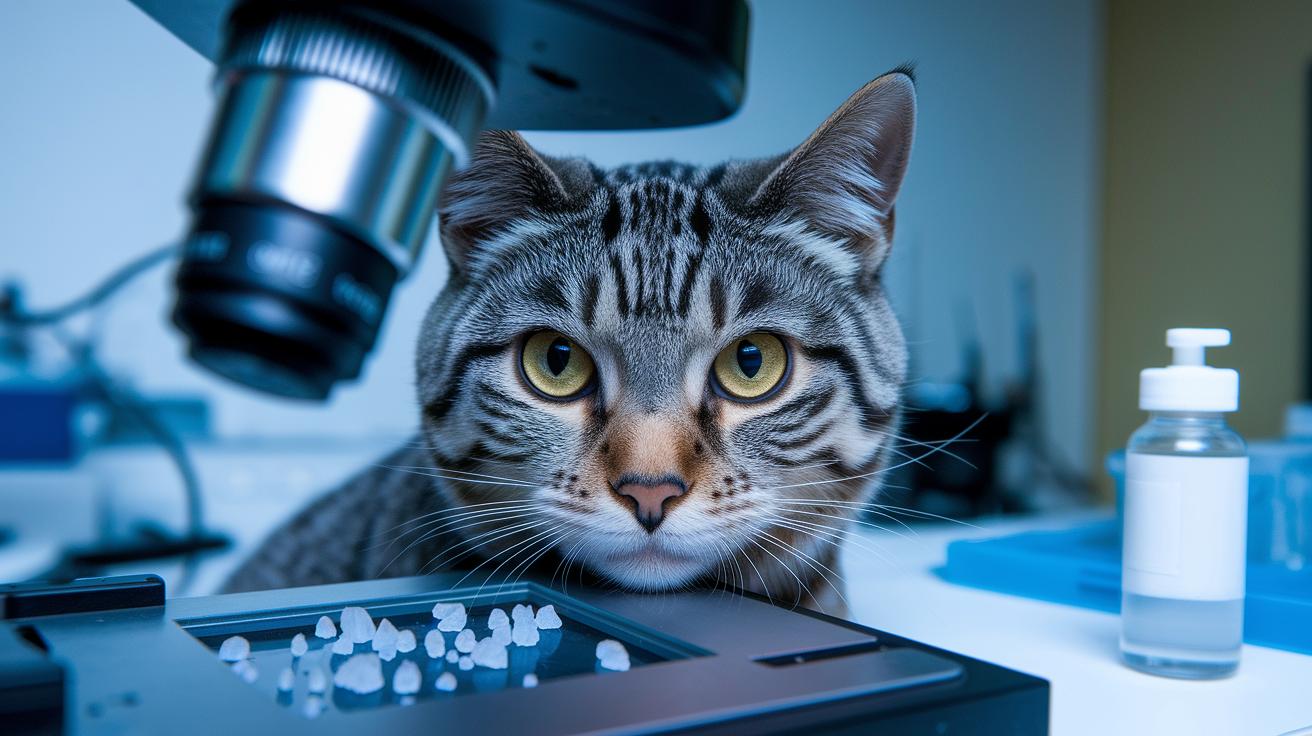
    Ever thought your cat’s litter box was just litter and pee? Oops, let me rephrase that – what if it’s actually a tiny health lab? Under a microscope (a tool that makes little things look huge) those crystals sparkle like sad disco balls. And each color and shape tells a bladder story.

    You might spot coffin-lid prisms (flat crystals shaped like tiny coffins), envelope Xs (folded like little letters), dumbbell spikes (mini rods with knob ends), and more. Catching odd shapes early can spare you a messy vet trip.

    This guide walks you through the colors, shapes, and sizes you’ll see under the lens. Ready to be your kitty’s litter detective?

    What Do Cat Urine Crystals Look Like Vividly

    Visual Identification of Cat Urine Crystals Colors, Shapes, and Sizes.jpg

    Ever peeked at your cat’s urine under a microscope? Spoiler: it’s full of tiny crystal shapes that clue us in on bladder health. They range from about 5-40 µm (micrometers, one-millionth of a meter or roughly the width of a human hair). And each shape and color tells its own tale.

    Spot a clear coffin-lid prism. That’s a struvite crystal, often tied to urinary infections – gross but true. A little clear envelope with an X stamped on it? That’s calcium oxalate dihydrate (like finding a tiny unwanted letter). Spindle-shaped monohydrate oxalate crystals, kind of like mini dumbbells, hint at chemical imbalances. Yellow-brown bumpy spheres are ammonium biurate from liver issues. You might also find yellow-brown ovoid xanthine crystals, colorless hexagonal cystine plates, or orange-red bilirubin needles. Matching these visual patterns to crystal types helps vets pick the right diet or treatment fast.

    Crystal Type Color Shape Size (µm)
    Struvite Clear Coffin-lid/prism 5-20
    Calcium Oxalate Dihydrate Clear Envelope with “X” 5-15
    Calcium Oxalate Monohydrate Clear Spindle/dumbbell 5-10
    Ammonium Biurate Yellow-brown Irregular sphere 10-40
    Xanthine Yellow-brown Ovoid 5-20
    Cystine Colorless Hexagonal plate 5-15
    Bilirubin Orange to reddish-brown Needle 5-30

    If your cat’s urine looks sandy or cloudy to the naked eye, it’s time to collect a fresh sample and sneak a peek under the microscope – those grains might actually be a swarm of crystals.

    Collecting Cat Urine Samples for Crystal Detection

    Collecting Cat Urine Samples for Crystal Detection.jpg

    So, if you’re tracking down those sneaky crystals at home, start with a non-absorbent litter tray (no-scour sand) or slide a clean, shallow dish (like a little baking pan) under your cat’s regular litter. Ever watched your kitty circle the tray? When they go, you’ll spot a fresh puddle glistening, you scoop it up. Easy and almost stress-free.

    In the clinic, vets might ask for a free-catch sample (just let Kitty wander into a clean tray). Or, if they need more, they could do bladder centesis (drawing urine with a tiny needle) or catheterization (inserting a thin tube), both under mild sedation so your cat stays comfy.

    As soon as you have the pee, label it with your cat’s name, date, and time. Then pop it into a sterile container (germ-free for a squeaky-clean test) within 30 minutes. This step is super important for any urinalysis (urine test).

    Store it at about 4 °C (fridge-cold) and aim to have it checked within four hours. Let it sit longer and the urine pH (how acidic it is) might drift above 6.6 or below 6.3, making crystals appear or vanish. That could trick your vet with fake deposits (artifacts).

    Handy tips:

    • Use fresh trays or dishes each time and wash them well afterward
    • Keep the container sealed tight and pack it on ice during transit
    • Note if your cat’s been on meds or has a fever, stress and drugs can shift urine chemistry

    Getting the sample right and storing it safely lays the groundwork for accurate crystal counts and better treatment choices. Worth every paw-print.

    Microscopic View of Cat Urine Sediment

    Microscopic View of Cat Urine Sediment.jpg

    Ever peek at your cat’s pee under a microscope? It’s like scoring a backstage pass to bladder health. By spotting crystals early, we can nip issues in the bud. And that keeps your feline feeling fine.

    Here’s how to do a simple urine sediment check (that’s a lab test to find particles):

    • Spin 5 mL of fresh urine in a centrifuge (spin machine that packs stuff down) at 1,500 rpm for 5 minutes.
    • Pour off the clear liquid (supernatant, basically the top water) but keep the pellet of particles at the bottom.
    • Stir that pellet in 0.5 mL of supernatant so the crystals get tightly packed.
    • Place a drop on a slide and scan under low power (10×) to find clumps or bits.
    • Switch to high power (40×) to see crystal shapes (think mini diamonds) and their colors.
    • Count crystals per high-power field (HPF is one view slice). More than 10 crystals per HPF is not normal.

    Note the urine pH (acidity level) and specific gravity (density). pH over 6.6 or under 6.3 can hide or fake crystals, so always test pH right before you spin, and use fresh samples only, old pee will trick you.

    Worth every paw-print.

    Detailed Overview of Common Cat Urine Crystal Types

    Detailed Overview of Common Cat Urine Crystal Types.jpg

    Struvite Crystals

    Ever noticed your cat’s pee smelling extra strong? Struvite crystals are tiny, grain-like bits often linked to urinary infections. They often dissolve on a low-magnesium, low-phosphate diet. Try adding an extra scoop of wet food (it’s like giving your cat a mini hydration boost) to help rinse them out. And cutting back on magnesium turns up the speed on crystal break up!

    • Clinical tip: Offer more wet food and dial back magnesium to speed crystal dissolution.

    Calcium Oxalate Crystals

    Calcium oxalate crystals often hint at toxin exposure like antifreeze. They can build into stubborn bladder stones that refuse to budge. To keep new ones from forming, boost urinary citrate with potassium citrate and make fresh water your cat’s best friend! Then, double check for any toxin risks around the house.

    • Clinical tip: Increase potassium citrate, keep water bowls full, and scan for household toxins.

    Ammonium Biurate Crystals

    Ammonium biurate crystals point to liver hiccups in your kitty’s system. They show up when the liver isn’t processing waste as it should. If you spot these, plan on running liver enzyme tests or grabbing an abdominal ultrasound. And consider a liver-friendly diet to smooth things out!

    • Clinical tip: Test liver enzymes, schedule an ultrasound, and switch to a hepatic-support diet.

    Cystine Crystals

    Cystine crystals signal a hereditary amino acid transport glitch – like a traffic jam in the kidney filter. These crystals tend to return, so prevention is key. A low-protein diet plus urine alkalinizers like potassium citrate can keep them at bay. Genetic screening can help flag any repeat offenders!

    • Clinical tip: Try genetic screening, feed low protein, and add potassium citrate to keep urine alkaline.

    Xanthine Crystals

    Xanthine crystals mean your cat is missing an enzyme to break down purines – like a missing tool in a toolbox. You can outsmart them by offering a low-purine diet and making fresh water available 24/7. A cat water fountain is purr-fect to flush xanthine crystals out!

    • Clinical tip: Serve low-purine meals and keep water flowing freely to flush xanthine.

    Bilirubin Crystals

    Bilirubin crystals flag a backup in bile flow or a buildup in the liver. They’re like little SOS signals from your cat’s body. Spotting them means it’s time to check bile acids and think about adding a hepatoprotective supplement like SAMe. It’s all about keeping the bile highways clear!

    • Clinical tip: Test bile acids and introduce SAMe for smoother bile passage.

    Amorphous Crystals

    Amorphous crystals are the tiny, shapeless fragments with almost no clinical weight. They’re usually harmless on their own. No fancy diet is needed – just zero in on any bigger crystals you find and keep your cat super hydrated. A full water dish is all it takes!

    • Clinical tip: Focus treatment on defined crystals and always provide plenty of water.

    Interpreting Cat Urine Crystal Findings and Warning Signs

    Interpreting Cat Urine Crystal Findings and Warning Signs.jpg

    Most healthy cats have a few urinary crystals under a microscope. But um, if you spot over 10 crystals in a high-power field (HPF, think of a concentrated pee snapshot), your vet will want to check the lower urinary tract. That 10-crystal cutoff helps guide your vet’s diagnosis.

    Ever seen your kitty straining or yowling during a pee break? Here are the warning signs to watch:

    • Straining or meowing while urinating
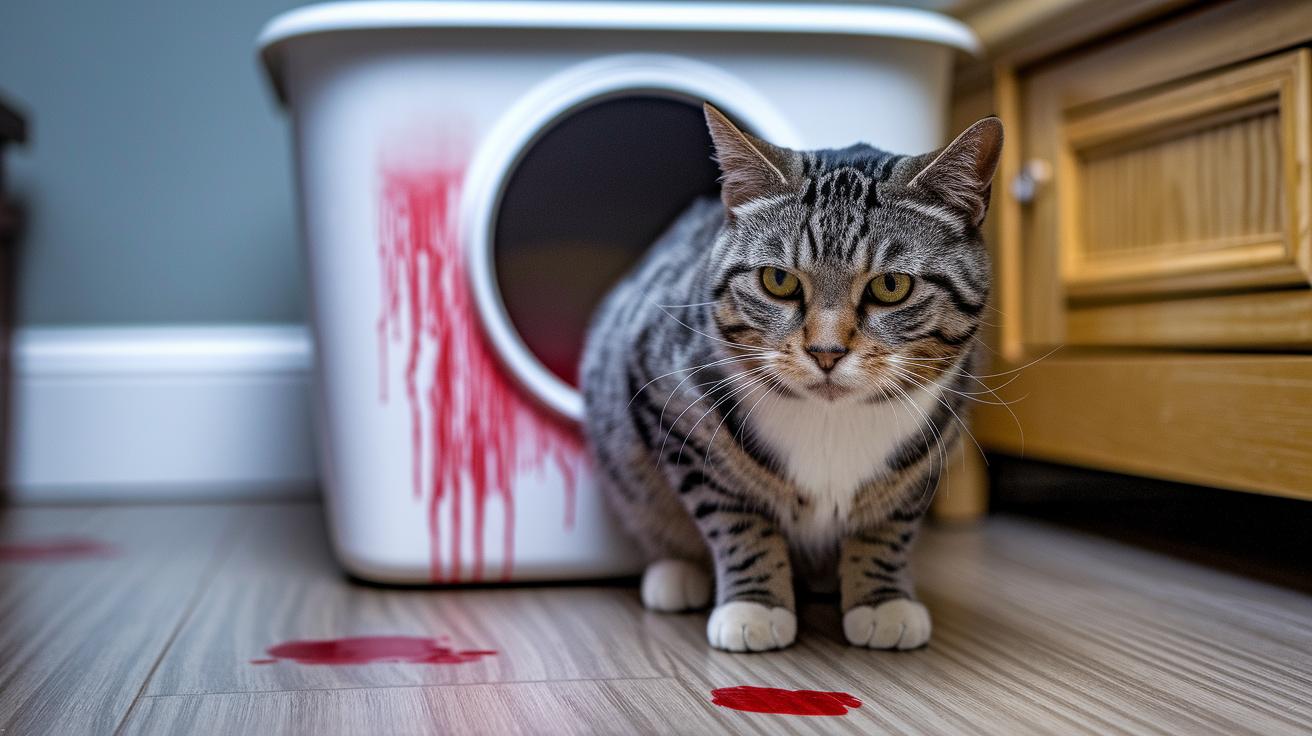
    • Pink or red tint in the litter box (hematuria, aka blood in urine)
    • Zipping in and out of the box (pollakiuria, lots of quick trips)
    • Tiredness, skipping meals, or rubbing at a sore belly
    • No urine output for over six hours. That’s an emergency

    Male cats face more risk since their urethras are narrower. A full blockage stops pee cold. That can turn life-threatening in hours. Really.

    So if your cat seems blocked or in pain, dash to the vet. Trust me, your purr pal’s life could depend on it.

    Worth every paw-print.

    Dietary and Hydration Strategies to Prevent Cat Urine Crystals

    Dietary and Hydration Strategies to Prevent Cat Urine Crystals.jpg

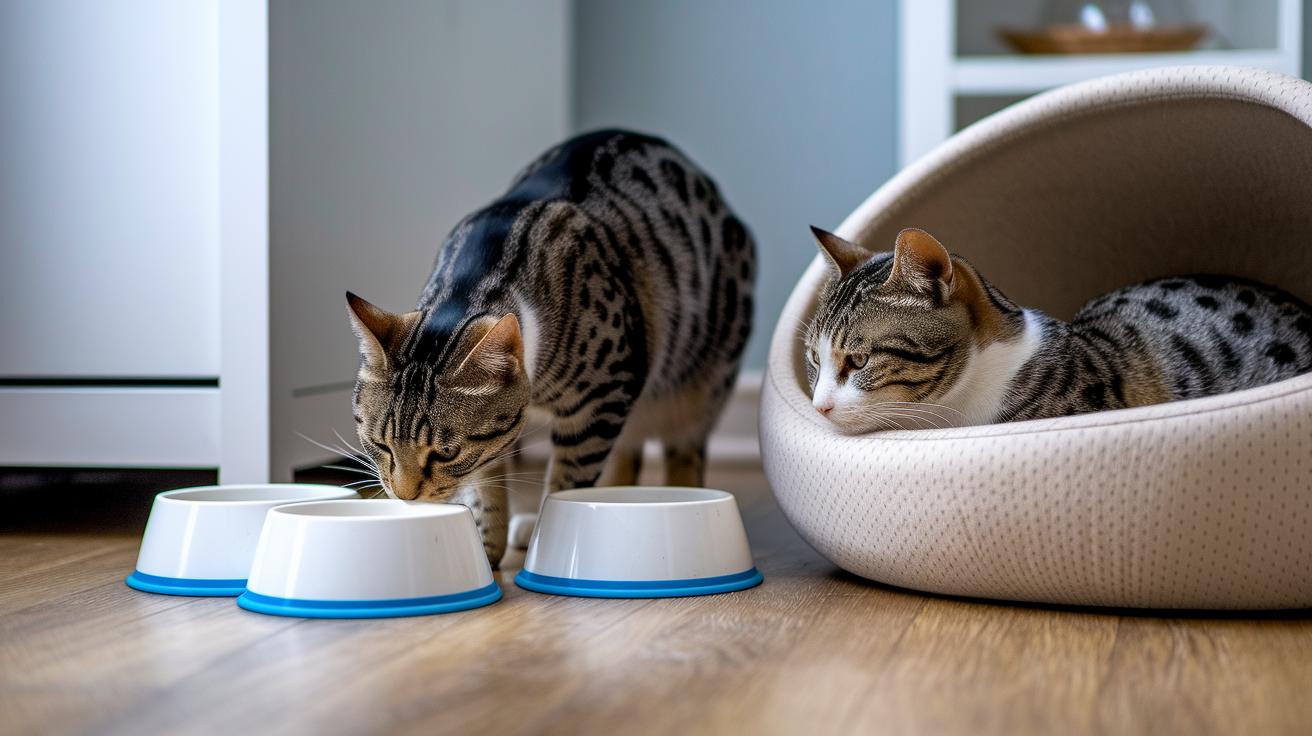
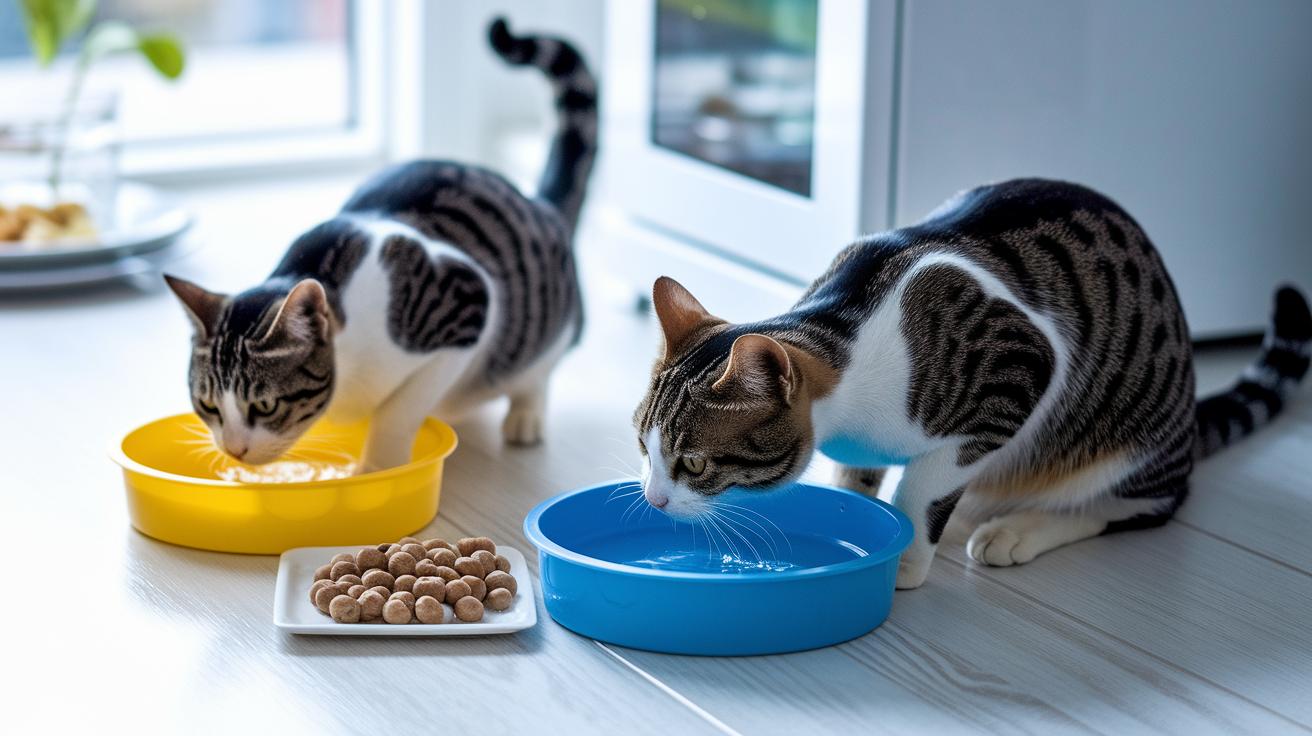
    Ever watch your kitty sniff a water bowl and walk away? Hydration is super important to keep those pesky urine crystals from forming. Aim for about one ounce of water per pound your cat weighs each day. Think of it like a thimble of water for every pound.
    Wet or canned food sneaks in extra moisture and cuts down on dry kibble. You can also stir in a spoonful of plain broth (no onions or garlic) for a tasty boost that’ll have your cat lapping more.

    Choosing the right diet can help lower struvite crystals (a type of kitty kidney crystal) and oxalate crystals (harder pee stones) risks. Low-magnesium, low-phosphate recipes keep struvite from forming. Special acidifying or dissolution formulas (prescription urinary control diets) gently shift urine pH to dissolve small stones. Stone-dissolving feeds zoom in on specific crystal types, but they can be pricey, talk with your vet about the best match for your cat’s crystal profile.

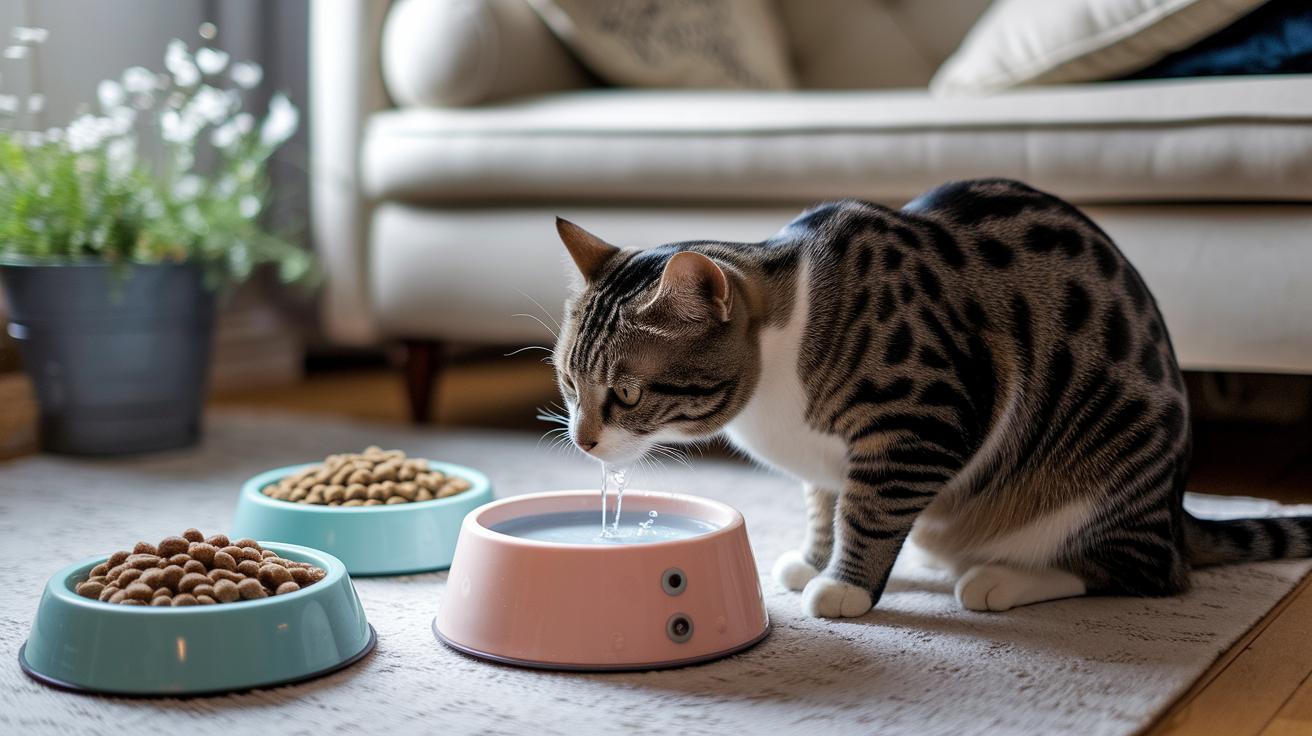
    Next, set up water spots around the house to invite more sips. A bubbling fountain is like kitty candy, cats love moving water. Tuck bowls in quiet corners or place a shallow dish by a sunlit window to spark curiosity. A well-hydrated cat makes more diluted urine, so crystals are less likely to stick around. Worth every paw-print.

    Monitoring Cat Urine Crystals: Long-Term Care and Follow-Up

    Monitoring Cat Urine Crystals Long-Term Care and Follow-Up.jpg

    Mark your calendar for a twice-a-year urine test (urinalysis, basically a pee check) and a quick physical exam. Those six-month check-ins give your vet a heads-up if crystals start creeping back! It’s a small step for you. And a big leap for bladder health.

    At home, keep an eye on how often your cat dashes to the litter box and what you spot in the pan. Ever notice your kitty circling like it’s on a secret mission? Grab some feline urinary pH test strips (tiny paper strips that change color to show if the pee is too acidic) and jot down any crystal sprinkles in a log. Switch to non-clumping or crystal-free litter so you can spy gritty bits without digging through dusty clumps.

    Water is your secret weapon. Set out a bubbling cat fountain (moving water is like cat candy) and watch your kitty bat at the flow. Add shallow bowls by a sunny window and tuck a second dish near the food station. Those quick water stops add up, washing crystals away before they gather.

    Playtime doubles as a hydration hack. A feather teaser or jingly puzzle feeder gets your cat zooming, and thirsty. I once watched Luna leap halfway across the room, stop, and lap up water like it was a race cooldown. Those quick bursts of play followed by sips keep the bladder happy.

    Stick with this playful habit for crystal-free checkups.

    Final Words

    You’ve peered under the scope at tiny prisms, envelopes, needles, and more, spotting crystals by color, shape, and size.

    You’ve learned easy ways to grab fresh samples, spin them down, and spot gritty or sandy urine that needs a closer look.

    Diet tips, water play and regular checks help keep crystals at bay and your furniture scratch-free. Playtime puzzles and extra water stations make hydration fun.

    With these tools, you’ll feel confident spotting what do cat urine crystals look like and keeping your busy home crystal-smart and calm.

    FAQ

    What do cat urine crystals look like?

    The appearance of cat urine crystals under a microscope ranges from clear coffin-lid shapes (struvite) to X-marked envelopes (calcium oxalate dihydrate), spindle-like monohydrate and a sandy, grainy look when crystals pack a punch.

    How can I tell if my cat has crystals in its urine?

    You can spot crystals when urine looks cloudy, feels sandy or your kitty strains to go. Vet urinalysis under a microscope confirms crystals if counts exceed ten per high-power view.

    How do I get rid of crystals in my cat’s urine?

    Flushing out crystals in your cat’s urine means feeding a prescribed dissolution diet, boosting hydration with wet food or cat-approved fountains and following your vet’s pH-balancing plan plus follow-up urinalysis.

    How can I dissolve struvite crystals in cats naturally?

    Dissolving struvite crystals naturally is all about water wizardry: boost your cat’s flow with wet food, bowls or fountains, offer a low-magnesium menu and use home pH strips to keep urine slightly acidic.

    How long can cats live with bladder crystals?

    With prompt treatment and hydration your cat can chase laser pointers for years. Most cats with bladder crystals live happy, normal lives under a vet-guided diet and fluid plan.

    How long does it take for cat crystals to dissolve?

    Struvite crystals typically dissolve within 4–6 weeks on a vet-prescribed dissolution diet and top-up hydration. Calcium oxalate crystals rarely budge and may need surgical removal or lifelong dietary management.

    Related Articles

  • do cats claws grow back strong

    do cats claws grow back strong

    Ever wondered if your cat’s snapped claw can come back even tougher? Well, it does! When a claw snaps or you trim it just right, your kitty’s soft paw pad (the cushion under their foot) gets to work, pumping out keratin (the tough stuff that makes up our nails).

    Pretty soon, a fresh claw tip pops up like a surprise toy. Oops, that’s nature’s tiny repair crew adding new layers. Ever watched your fluffball knead the carpet as those claws grow? In this post, we dive into claw regrowth speed, share tips to keep them strong, and show why your cat’s claws can snap back tougher than ever.

    Cat Claw Regrowth: How Fast Claws Grow Back

    Cat Claw Regrowth How Fast Claws Grow Back.jpg

    Ever seen your kitty lose a claw after a wild scratch session? When they scratch rough surfaces or you give them a trim, the base of their paw keeps pumping out keratin (tough protein like our nails). That keratin stacks up in layers until a fresh claw tip peeks out.

    Pretty cool, huh? As long as the nail bed (skin under the claw) and quick (soft tissue with blood vessels and nerves) stay healthy, the claw just keeps pushing forward.

    Science calls it regeneration (natural regrowth process). Fancy word, but it means your kitty’s claw rebuilds bit by bit.

    So yes, declawing is different, and not fun to think about. When a cat is declawed, the surgery removes the distal phalanx (last toe bone) along with the nail bed and quick. With no living tissue left, there’s nothing to fuel new growth. So claws don’t come back.

    So how fast do claws grow back? On average, a claw grows about 1 to 2 mm per week. You might spot tiny tips in just a few days. Full regrowth, after a break or when they shed the old outer layer, can take roughly three weeks to two months. And if a claw breaks but the quick is okay, you’re on that same schedule.

    Young cats and those who climb furniture like tiny acrobats tend to heal the fastest. But if your kitty is under the weather, lazy around, or, you know, cracked a claw near the quick, regrowth can drag. Good nutrition (think quality proteins and minerals) helps feed new keratin and keeps healing on track. Keeping paws clean and calling the vet for serious breaks can have your fluffball chasing shadows again soon.

    Feline Nail Anatomy: Structure of Cat Claws & Sheaths

    Feline Nail Anatomy Structure of Cat Claws  Sheaths.jpg

    Each front paw has five claws and each hind paw has four. That extra inner front claw – called a dewclaw – helps your kitty grab onto toys or even a wiggly mouse. Ever wonder if dewclaws grow back? They do, as long as the nail bed (the soft tissue under the claw) isn’t hurt. Some polydactyl cats (cats with extra toes) can even sport bonus dewclaws, making their paws extra unique.

    Claws are made of keratin (the same tough protein in our fingernails). They curl into a sharp tip that tucks into a soft skin-and-fur sheath when your cat walks or rests. This little cover keeps claws off the floor so they stay sharp and helps your kitty sneak around almost silently.

    When your cat scratches a post, you’ll hear a satisfying scrape as the tip digs in and peels off old layers – like unwrapping a tiny candy – to reveal a fresh, pointy edge. Under each claw is the quick, that pink spot packed with blood vessels and nerves. If you trim too close, ouch, your cat might feel pain or start bleeding.

    Um, when you clip, go just for the tip and stay clear of the quick to keep those paws happy. A clean nail bed and gentle trims help claws grow back smooth and strong.

    Worth every paw-print.

    Claw Regrowth

    Natural Shedding  Renewal Cat Claw Shed Cycle.jpg

    Ever notice your kitten’s tiny claws peeking out like little needles? Kittens swap their old sheaths every 2 to 3 weeks. Grown-up cats take about 4 to 6 weeks for a full reset. I once watched my cat flick off a sheath like confetti.

    But inside our homes, cats often miss rough tree trunks or sidewalk edges. That means old sheaths can stick around and feel a bit scratchy. Your cat might even pause mid-step if a claw tip hangs on.

    Try a simple routine: quick claw trims every 4 to 5 weeks. Or better yet, add a sisal (tough plant fiber) or bark (rough tree bark) scratcher. Let your cat file down those sheaths all by themselves.

    Worth every paw print!

    Trimming Cat Claws Safely & Maintaining Length

    Trimming Cat Claws Safely  Maintaining Length.jpg

    To keep your kitty’s claws in tip-top shape, pick clippers made just for cats. You can go with guillotine clippers or scissor clippers, both have slim, sharp blades that make a clean cut. Human nail clippers can crush or splinter keratin (the tough stuff in nails), and hey, nobody wants a sad meow or an ouchie. Look for a pair that fits your hand and lets you see each nail clearly.

    Plan to clip every two to four weeks. You’re aiming to leave about 3–4 mm of nail beyond the quick (the pink part with blood vessels). Too close and you risk pain or a drop of blood.

    1. Find a calm spot with soft lighting and little background noise.
    2. Sit your cat on your lap or use a low table, and gently hold one paw.
    3. Press the toe pad to extend a claw, think of it like giving your cat a tiny high-five.
    4. Spot the pink quick (the part you don’t want to cut) and angle the clipper about 45 degrees.
    5. Snip just the clear tip, keeping those 3–4 mm of buffer.
    6. Pause between claws for a treat or a quick pet, your kitty will feel like a star.

    If you do nick the quick, don’t panic.

    • Sprinkle on a bit of styptic powder for cats (stops bleeding fast).
    • Press clean gauze to help the clot form.
    • Keep your voice soft, your kitty will pick up on calm vibes.
    • Wipe the area with a gentle antiseptic and check for any swelling later.

    Worth every paw-print.

    After you finish clipping, roll each nail between your thumb and forefinger to feel for rough spots. Then smooth them with a cat-safe nail file (like mini sandpaper). This little extra step stops snagging and helps nails wear down evenly, so you can ditch the shredded sofa look for good.

    Encouraging Healthy Claw Wear & Prevention of Broken Cat Claws

    Encouraging Healthy Claw Wear  Prevention of Broken Cat Claws.jpg

    Nothing beats the feel of a good scratch for keeping claws in tip-top shape. Offer sisal (rough plant fiber) posts, cardboard scratchers, or small bits of untreated wood so your cat can gently file tips down through play. You’ll hear that soft rasp as their claws swipe, so satisfying, right? These simple tools help avoid overgrown claws that snag or snap and save you from worry when they pounce.

    Picking spots for scratching posts is half the fun. A tall vertical post lets your cat stretch its whole body, while a low horizontal pad is perfect for a quick swipe after a nap on the couch. Try placing them by the living room chair, near the bedroom door, or even beside the food bowl to catch your kitty’s attention. Indoor cats especially need these stations since they miss the bark-filing action of trees outside.

    If you’re still worried about your sofa or curtains, nail caps for cats are a great non-surgical option. Vinyl caps like Soft Paws let claws extend and retract as usual while cutting down on accidental couch scratches. Swap them out every six to eight weeks as claws grow and peek often for any loose or worn caps. Beyond saving your upholstery, nail caps help prevent snag-related injuries to paws and cozy blankets alike.

    do cat claws grow back strong

    Managing Complications Injuries  Infections in Cat Claws.jpg

    Ever spot blood on the carpet or see your cat limping? Those are telltale signs of a claw injury or infection you can’t ignore. A swollen nail or a paw your kitty won’t touch to the ground means help is needed.

    If it’s just a small tear or scrape, you can handle minor nail care at home. First, rinse the paw with saline (saltwater solution) to wash out dirt. Pat it dry with a soft cloth, like a cuddly kitten ear. Smear on a thin layer of vet-approved antibiotic ointment your cat can’t lick off too quickly.
    Next, find a quiet spot and snuggle in. Toss your furball a treat so they start to love these first-aid moments. Check that paw twice a day, reapply ointment, and peek for any redness or oozing.

    But if the bleeding won’t quit or you notice a deep rip, time to call the vet. They’ll probably sedate your cat (a mild sleep-like state), trim away jagged nail bits, and wrap on a sterile bandage. You’ll head home with pain meds so your fluffball stays comfy.

    Plan for daily bandage changes and watchful paws-on care for about 5 to 7 days. If the paw feels warm or the limping hangs on, ring the vet again for stitch checks or stronger antibiotics. Your kitty deserves nothing less than a smooth recovery.

    When that new claw finally grows back, it’s usually tougher and ready for epic zoomies across the living room floor. Worth every paw-print.

    Final Words

    in the action, we explored claw regrowth versus permanence, peeked at the keratin structure and quick, and tracked those 1–2 mm weekly growth spurts.

    We outlined safe trimming steps, natural shed cycles, scratcher setups and even first-aid tips for oops moments.

    Now you know do cat claws grow back, what speeds up healing, and how to keep multi-cat homes playful and furniture friendly.

    Here’s to happy paws, healthy nails, and stress-free play sessions ahead.

    FAQ

    Do cat claws grow back after being declawed?

    Cat claws don’t grow back after being declawed because the surgery removes the distal phalanx, preventing any new claw tissue from forming.

    How fast do cat claws grow back?

    Cat claws grow about 1–2 mm per week, achieving full regrowth in roughly three weeks to two months, depending on your cat’s age, health, and activity level.

    Do cat claws shed naturally?

    Cat claws shed their outer dull sheath every three to six weeks through scratching motions, revealing a sharper layer beneath; kittens cycle sheaths faster than adult cats.

    What should I do if my cat loses or injures a claw?

    When a cat loses or injures a claw—whether bleeding from a tear or clipped—gently clean with saline, apply styptic powder if needed, keep it covered, and seek vet care if bleeding persists or signs of infection appear.

    Related Articles

  • do cats calming collars work Effective Anxiety Aid

    do cats calming collars work Effective Anxiety Aid

    Ever watched your kitty bolt from the vacuum cleaner’s thunder?
    You’re not alone. Many cats shiver at that loud whirr.

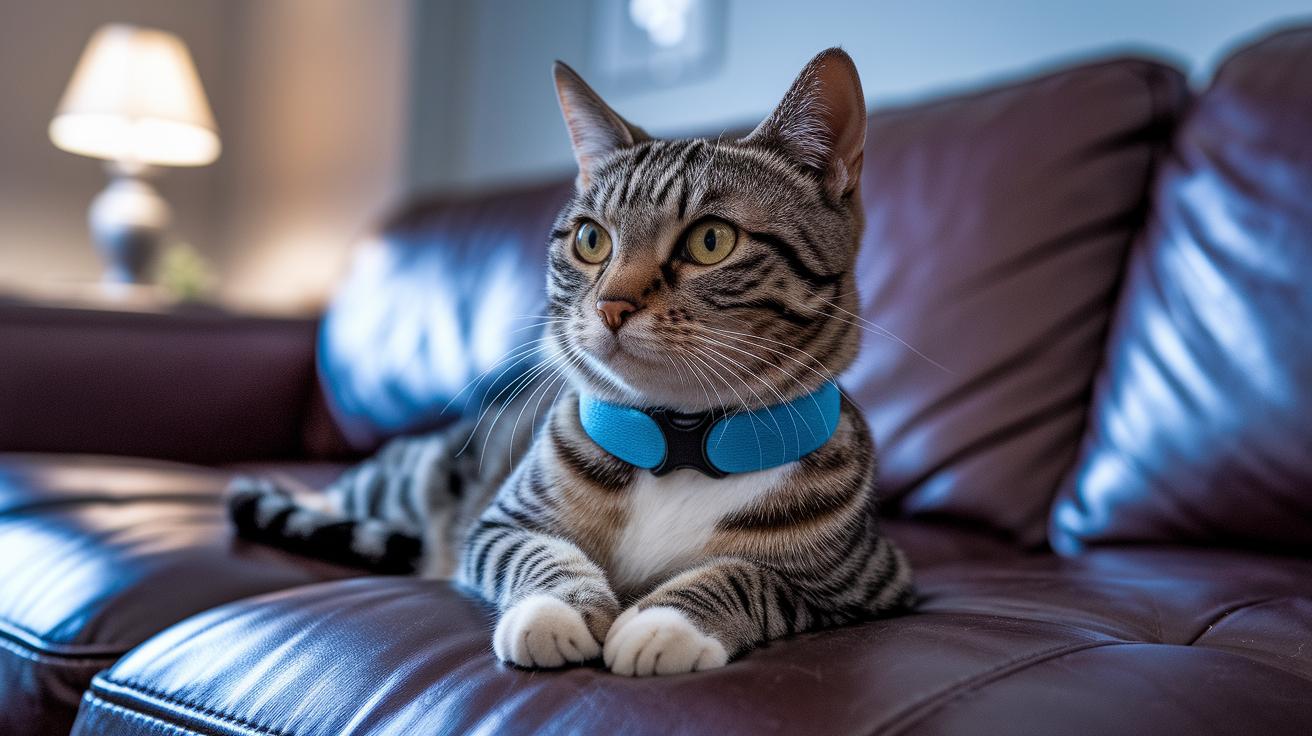
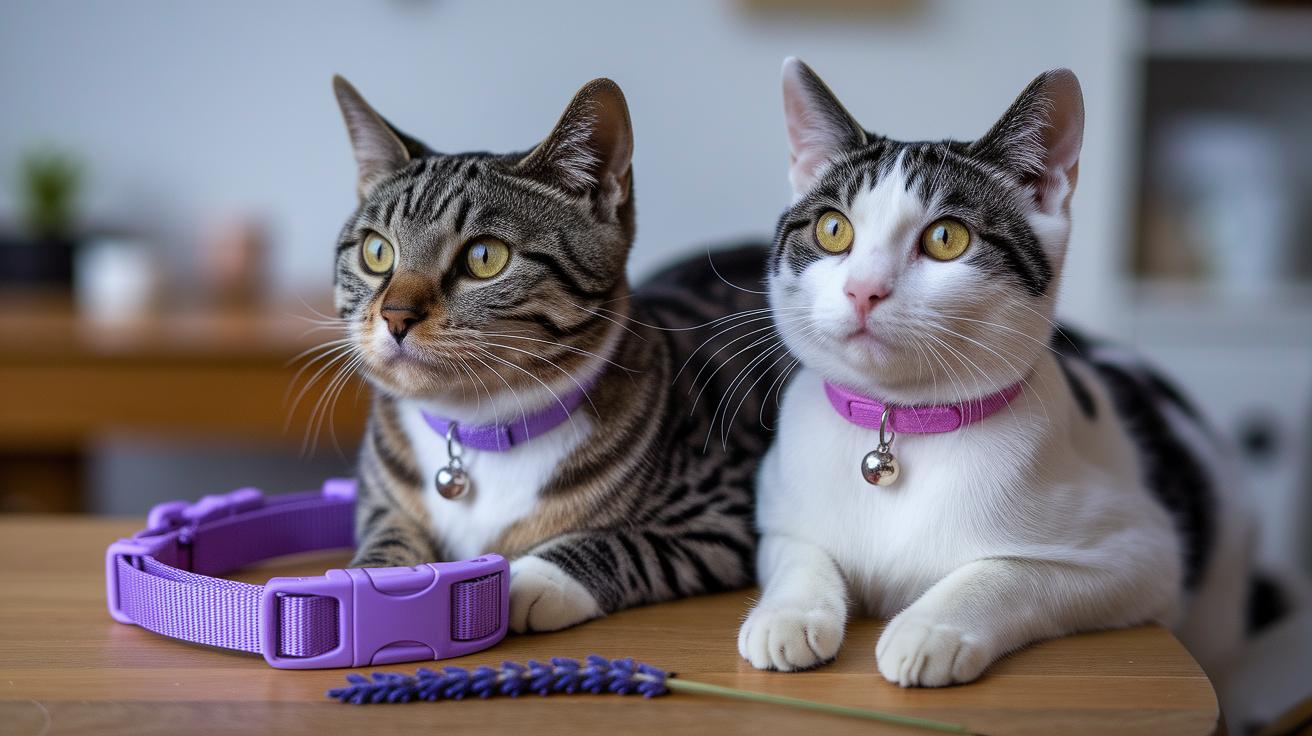
    Enter the calming collar. It slowly releases a safe, synthetic CAP pheromone (Cat Appeasing Pheromone, think of a mama cat’s cuddly hug). It’s like a soft whisper that says, “You’re okay.”

    Some fur-parents swear by it. Others call it a fad. But small studies show it can cut stress by about 30%. That’s real peace for anxious fluffballs.

    So, how do these collars work? And do they really help your jittery fluffball unwind? Let’s find out.

    do cat calming collars work Effective Anxiety Aid

    Quick Answer Calming Collars and Cat Anxiety.jpg

    Ever wondered if those calming collars actually help with kitty nerves? They use a synthetic CAP pheromone (Cat Appeasing Pheromone) that mimics the cozy smell of a mama cat. It’s like giving your cat a soft hug when things get noisy or new. In one small study, stressed cats wearing the collar saw their stress dip by about 30%.

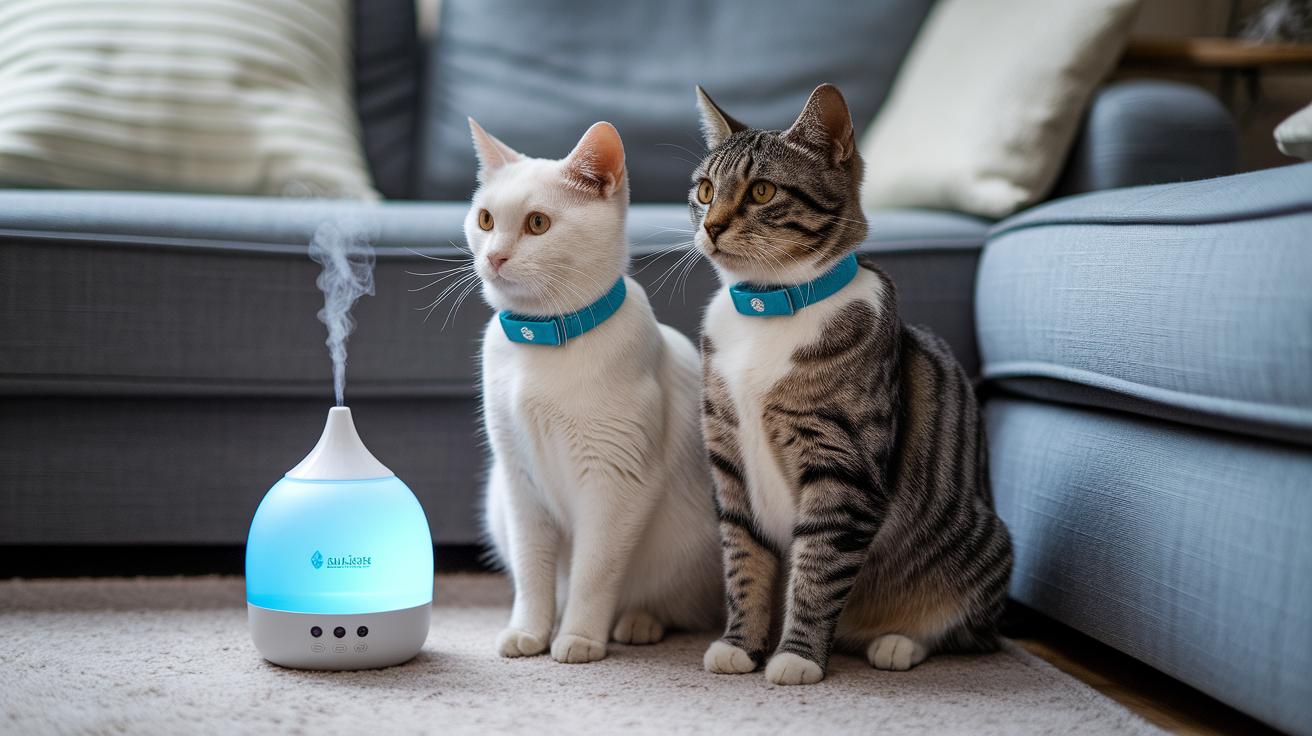
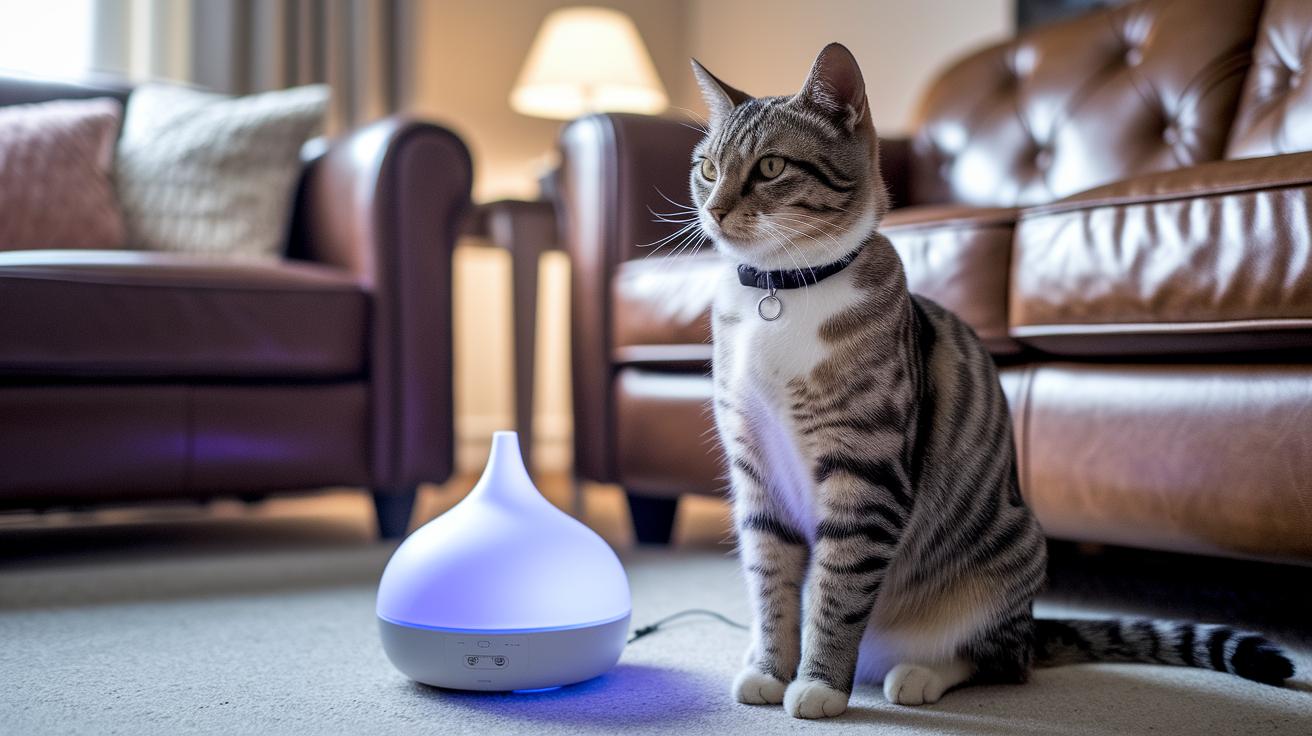
    Vets often recommend pairing the collar with fun toys or a pheromone diffuser (a plug-in that spreads a calming scent) for extra chill time. Think puzzle feeders or interactive wands for a double dose of calm and play. Uh, every cat is different so you might need to try a few options. But once you find the combo that works, your furball will be purr-ready for any busy day.

    • Synthetic CAP pheromone can lower situational stress by as much as 30%
    • Best when used with toys, puzzles, or pheromone diffusers
    • Results vary from cat to cat so a bit of experimenting is key

    Feline Pheromone Technology in Cat Calming Collars

    Feline Pheromone Technology in Cat Calming Collars.jpg

    Your kitty doing zoomies or hiding under the bed? Pheromone collars tuck in a scent-infused polymer (a plastic-like strip that slowly gives off a calming scent) right next to your cat’s fur. Two synthetic pheromones (scent signals cats naturally make) mimic those friendly facial cheek rubs and gentle mama-cat vibes. As your furball wanders, it gets tiny sniffable puffs for about 30 days, so you get a chilled-out cat without lifting a finger.

    Pheromone Type Intended Use Typical Duration
    Facial Helps solo cats feel safe ~30 days
    Maternal Encourages harmony in multi-cat homes ~30 days

    Some collars come scented with lavender (flowery calm) or chamomile (soft herbal hug) if your kitty enjoys a little extra aroma. But there’s also a fragrance-free option for noses that hate smells. This way even the sniffiest cat can join in on the chill-out session without a scrunched-up whisker.

    Worth every paw-print.

    Clinical Research and Owner Feedback on Cat Calming Collars

    Clinical Research and Owner Feedback on Cat Calming Collars.jpg

    Peer-reviewed studies (small scale and not blinded) found cats wearing synthetic pheromone collars had about an 18% drop in cortisol (stress hormone). And guess what? They hid less and started rubbing the couch like they were greeting an old friend. Ever watched your kitty do a happy rub?

    Vets say collars work even better when you pair them with a plug-in diffuser during thunderstorms or vet visits. One veterinarian told me her shy patient popped out of hiding twice as fast with both pheromone tools in place during a surprise storm. You could almost hear the purr of relief.

    Owners notice whisker twitching at the first thunder rumble usually stops once the collar’s on. Some cats roll into a cozy donut shape and drift off, while others barely flinch, proof that every feline nose is one of a kind. Um, isn’t that cool?

    Worth every paw print.

    Fitting, Sizing, and Safety Features of Cat Calming Collars

    Fitting, Sizing, and Safety Features of Cat Calming Collars.jpg

    Getting the fit right is the secret to comfort and safety. Use a soft measuring tape behind your cat’s ears to find the right length. Then slip two fingers under the collar, snug but not tight. Uh, if it slides off or feels like a noose, pick a different hole so your kitty can breathe easy and the pheromone (calming scent strip) hugs the fur.

    And kittens need a gentler fit. The collar should move easily as they wiggle and grow.

    Ever watch your cat scale a tree? Breakaway clasps are your best friend for preventing collar injuries. These little fasteners pop open when your collar catches on a chair leg or cat tree so your kitty won’t get stuck. Give it a gentle tug before each use to make sure it opens under light pressure but won’t come undone during play.

    Soft fiber or woven collars feel much friendlier than hard plastic.

    Avoiding skin irritations is a bit of detective work. Check your cat’s neck every few hours for redness, swelling, or flaky spots. Slide the collar off at night so your kitty gets a skin break.

    Watch for extra scratching or sudden head shakes as clues that something’s off. If you spot sore skin, remove the collar right away. You want calm, not ouch.

    Cat Calming Collars versus Other Anxiety Relief Tools

    Cat Calming Collars versus Other Anxiety Relief Tools.jpg

    Cat calming collars travel with your furry pal. They don’t need a plug and release a gentle scent for about a month. You’ll notice a soft, rolling calm wafting around your kitty wherever they roam. If your cat loves to explore every nook, collars purr-form better than stationary gadgets.

    But plug-in diffusers need a wall socket and can cover roughly 700 square feet. They work wonders in living rooms or shelter hallways, offering a constant low hum of comfort. Just remember they stay put, you can’t slip one into a carrier for vet trips or car rides. If your kitty hangs out in one spot all day, swapping refills each month is no big deal.

    Pheromone sprays let you target trouble zones like litter boxes or carriers in a snap. A quick spritz sends a breeze of calm right where you need it, perfect for a tense ride or frantic scratching in the laundry room. Sprays fade fast, so you’ll want to reapply before the next stress wave hits. Collars, by contrast, drip out soothing signals all day long until the strip runs dry.

    Thundershirt vests (a snug fabric wrap) hug your cat like a cozy burrito. Some kitties melt into a relaxed pancake, while others stiffen up and wriggle free. Collars leave paws and bodies completely free, so your cat can leap onto cat trees or dash down the hall without missing a beat. And on hot days, collars feel like a breeze compared to a snug vest.

    Anti-anxiety diets and chews use tryptophan (an amino acid that helps serotonin, the feel-good brain chemical) or alpha-casozepine (a milk protein fragment that soothes nerves). You’ll need to stick to feeding schedules or treat times to see results. Collars start working the moment you clip them on, no waiting required. And hey, don’t forget simple enrichment: puzzle feeders, toy mice, window perches, or even a quick laser-dot chase can make a huge difference in your kitty’s stress levels.

    Leading Cat Calming Collar Brands and Price Comparison

    Leading Cat Calming Collar Brands and Price Comparison.jpg

    The Nurture Calm Collar releases gentle lavender and chamomile scents for about 30 days (like sending your cat to a mini spa). You can buy a single collar or a twin pack, so testing is easy. Some cat parents rave about the soft scent and snug fit. Others find it a bit loose or too strong for picky noses.

    The vet-recommended Sentry HC Collar soothes marking, stress, and aggressive tendencies for about 30 days. You can snag a three-pack at Amazon or Chewy without emptying your wallet. Many users report calmer cats during car rides or thunderstorms. A few mention the fastener loosens too easily, but overall it’s a solid starter collar for new users.

    The Comfort Zone Breakaway Collar offers about 30 days of scent-free calming (perfect for kitties with sensitive noses). Its breakaway clasp (a safety clasp that pops open if it snags) helps prevent accidents on cat towers or furniture. Some say the premium price stings, but many love the no-scent option for nervous felines. It’s often a top pick for cats who cringe at perfumes.

    Pzlagia’s four-pack of adjustable breakaway collars gives you fresh collars every month without emptying your wallet. Each collar lasts around 30 days and has a pheromone strip (a strip that releases calming scents) to help ease scratching and marking. Some cats seem totally chill while others hardly notice the pheromones, um, I guess it depends on the kitty. Still, that low price per collar makes Pzlagia the cost champ for multi-cat homes.

    Best Practices for Using Cat Calming Collars with Your Cat

    Best Practices for Using Cat Calming Collars with Your Cat.jpg

    Ever wish your kitty could stay calm when things get noisy? A calming collar (a nylon band that slowly releases soothing pheromones) might do the trick. But before you clip it on, peek for any snags or fraying. You don’t want a loose thread tickling their neck.

    Fasten the collar so you can slip in two fingers without a struggle, comfy but not too tight. Every few days, give the fit a once-over. As fur poofs out, move to the next hole to keep things just right. It’s all about that perfect, peaceful fit.

    Bonus tip: pair the collar with a plug-in diffuser (it fills the air with a gentle herbal scent) in your cat’s top snooze spot. Then toss in a puzzle feeder or feather wand for extra fun. Your kitty will be feline fine in no time.

    If you notice red spots, extra scratching, or head shaking, take the collar off right away. Your cat’s skin should feel smooth and happy. Give them a break and try another chill-out method later.

    Maintenance, Longevity, and Cost of Cat Calming Collars

    Maintenance, Longevity, and Cost of Cat Calming Collars.jpg

    Ever watched your kitty sniff a new collar and then flop right down? That’s the magic of pheromones (cat scent signals). Each calming collar typically stays active for 30 to 60 days before the scent runs low. They come in hard plastic, stretchy rubber, and soft woven fibers (breathable threads). Some even have fabric covers you can wash by hand. Just rinse gently and let air dry. In our tests, plastic collars keep their shape best. Rubber ones bend when your cat plays. And woven collars feel extra cozy against fur. A quick rinse shakes off dust and dander, keeping that chill-out scent fresh.

    So, worried about refills? Some brands offer monthly subscription services for collars or refill strips. You’ll get a fresh collar without lifting a finger. When a new batch arrives, tuck extras into sealed bags or airtight containers (no air, no scent fade). Keep them out of direct sun and away from heat, maybe stash them in a dark drawer. These little storage tricks turn every day into a mini spa for your whiskered pal.

    One collar runs about $10 to $20. Multi-packs lower the price per collar, which is paw-sitively purr-fect if you plan to use them long term. But um, be careful: collars stored too long can lose potency. Check how long each pack stays fresh and rotate extras into use before the scent fades. If you’re on a budget, start with one collar to see if your cat digs it. Then grab a pack once you know it works. When the scent starts to vanish, or you hit that 60-day mark, pop on a fresh collar so Fluffy never skips a day of chill.

    Final Words

    In the action, we summed up pheromone science, study stats, safety tips, and real-owner feedback.

    We saw how collars emit feline pheromones (like a cozy whisker hug), what vets suggest, and how to size and fit them for comfort.

    We compared collars to sprays, vests, and diffusers, shared top brand picks, and offered care and pairing tips.

    Now you know do cat calming collars work and can keep your fur family calm, playful, and purr-fectly happy.

    FAQ

    Are cat calming collars effective and recommended by veterinarians?

    Calming collars can lower mild situational stress by up to 30%, and many vets recommend pairing them with behavior-focused play, cozy hiding spots, and consistent routines for best results.

    Are calming collars safe for cats and what side effects occur?

    Calming collars are generally safe, but some cats experience mild skin irritation (redness or flakiness). Inspect your cat’s neck regularly and remove the collar at the first sign of discomfort.

    How long does it take for a calming collar to work on a cat?

    Calming collars begin releasing pheromones immediately, with many cats showing measurable relaxation within 24 to 48 hours and the strongest effects usually by day five.

    What is the best calming collar or aid for cats?

    The best calming aid often combines a pheromone collar (lasting about 30 days) with daily play activities and cozy resting areas. Top-rated collars include Sentry HC for marking issues and Comfort Zone Breakaway for scent-sensitive cats.

    What do reviews say about calming collars like Sentry HC?

    Reviews praise Sentry HC collars for reducing marking and situational stress over 30 days, though some owners report loose fasteners or mild scent strength issues and recommend checking fit before extended use.

    What is a breakaway calming cat collar?

    A breakaway calming cat collar is a safety-focused design that uses a quick-release clasp to prevent choking if snagged, while delivering slow-release pheromones to help soothe feline stress.

    Related Articles

  • do cats spit Eases Cat Owner Worries

    do cats spit Eases Cat Owner Worries

    Ever jumped when your cat shoots out a little spit? It feels odd. That quick puff of drool is actually your kitty’s built-in alarm and stress relief.

    Cats might do this when a stray bit of fluff tickles their tongue or a sudden noise spooks them. You spot those tiny spit moments early when you watch for your cat’s stress tells, you know?

    Once you know why they puff, you can swoop in with gentle pets or quiet words to soothe them. Your cat stays purring. And you get fewer surprise vet trips and a more peaceful, happy home.

    Feline Spitting Behavior Explained

    Feline Spitting Behavior Explained.jpg

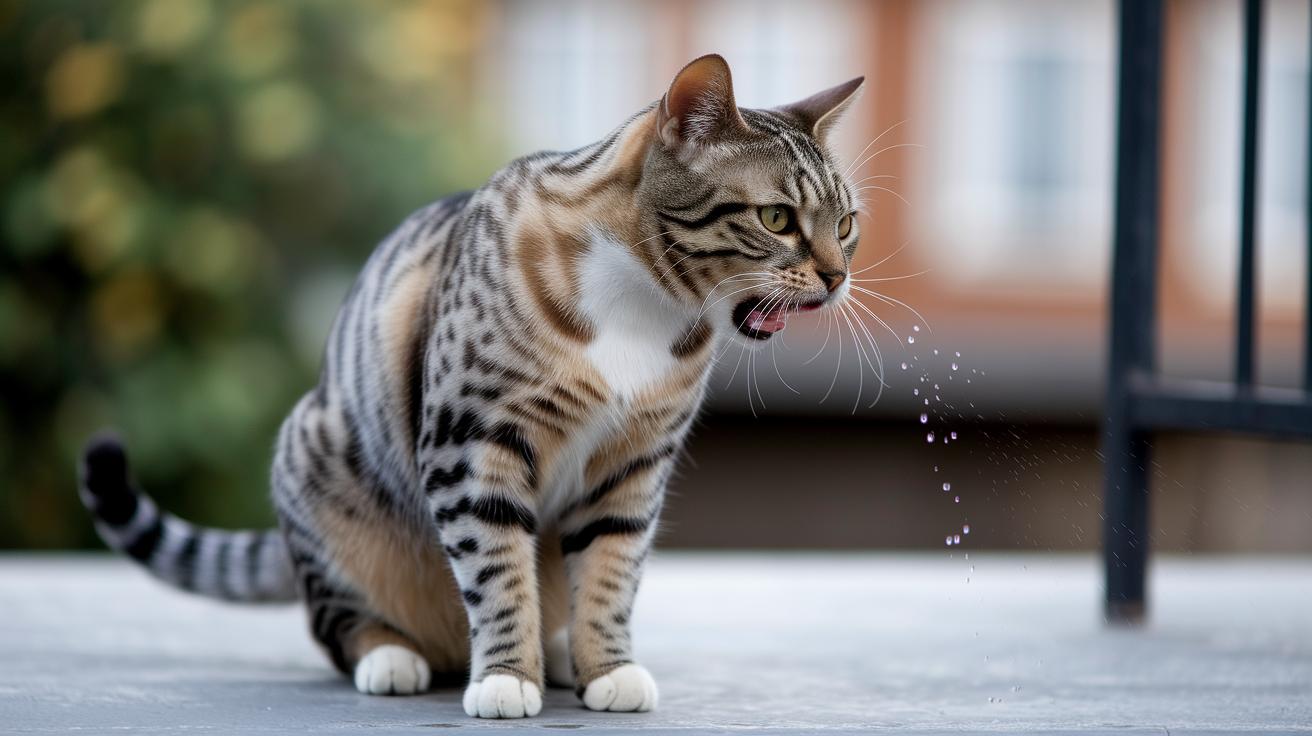
    Ever wondered if cats spit like we do? It’s like a quick puff of air with a drop or two of saliva. Not the same as hacking up a hairball or drooling everywhere. It’s more like a mini alarm, a cousin to the hiss that warns off trouble with no full-on growl.

    And um, licking is totally different. That’s slow and soothing. Cats groom or cool off with their tongue. But spitting? That’s a burst of air and a little spit at whatever spooked them.

    Inside your cat’s mouth, you know, the barbed tongue (tiny backward hooks) and jaw shape team up for that spit. The tongue directs air over those rough patches. Then a quick inhale and strong exhale make that sharp sound. It’s unplanned, almost a startled gasp. Really.

    What sets off a feline spit session:

    • Loud bangs or stress. Your vacuum roars and your kitty jumps.
    • Mouth or throat aches can trigger a defensive spit.
    • Feeling threatened. Like another cat at the window or a fast hand reach.

    Spotting this tells you they’re anxious or scared. Once you know why cats spit, you can give them room or check for pain. Maybe your cat spits at a new toy because it needs a slower intro. Noticing these signs turns confusion into calm. And that’s worth every paw-print.

    Common Causes of Cat Spitting

    Common Causes of Cat Spitting.jpg

    Ever seen your cat suddenly spit saliva? It’s a quick mouth reflex to clear a scratchy bit or loose hair. It’s not the same as hacking up a hairball or that big stress puff. Often it means their tummy (stomach and intestines) feels off or something in their mouth is bothering them.

    • Sudden food swaps. When you change your cat’s meal too fast, their tummy (stomach and intestines) can get upset. Then they might retch or send out a little spray of saliva. Like Muffin who tried that new salmon kibble (dry cat food pieces) and let out a spit because her tummy just wasn’t ready.
    • Sharp kibble fragments. Tiny crunchy bits can jab your cat’s gums (soft tissue around the teeth) or scrape enamel (hard coating on a tooth). Then they’ll flick saliva to rinse it away. Simba learned that the hard way. He crunched a piece, winced, and spat like he was saying “ouch.”

    Lip smacking, drooling, or a quick spit is your cat’s way of telling you “my mouth needs a break.” Next time, go slower with new meals or try softer bites.

    Worth every paw-print.

    Spitting vs Hissing vs Drooling: Understanding Cat Mouth Sounds

    Spitting vs Hissing vs Drooling Understanding Cat Mouth Sounds.jpg

    Spitting happens when your kitty lets out a quick, sharp puff of air with a tiny spray of saliva. It sounds like a startled gasp, really sudden. Ever seen a cat spit at its reflection? It’s basically your cat’s way of saying “back off!” Uh, don’t take it personally.

    Hissing is a louder, drawn-out ssss, like a slow wind sneaking under a door. Ever watched your kitty fluff up then hiss? Your cat hisses when it feels threatened or ready to guard its turf. It’s pure defensive mode.

    Drooling is a gentle, steady drip of saliva along the chin. Think of a tiny stream winding down a rock. Um, often it means your cat is content, purring and kneading away, or sometimes it flags an upset tummy or a sore tooth.

    Sound Why It Happens What to Watch For
    Spitting Quick warning puff Sharp spray, startled look
    Hissing Defensive threat Long “sss,” ears flat
    Drooling Contentment or discomfort Steady chin drip, maybe purring

    Spotting these mouth sounds helps you figure out if your cat is marking territory, feeling scared, or just feline fine. Worth every paw-print.

    Normal vs Concerning Spitting Signs in Cats

    Normal vs Concerning Spitting Signs in Cats.jpg

    Ever catch your kitty in a mini hairball upchuck? That quick cough of fur (hairball is a clump of swallowed fur) or tiny spit of saliva (natural mouth fluid) usually just clears loose hair and bits of dust. Their barbed tongue flicks (little hooks on their tongue) pull fur away and channel saliva to whisk dirt off.

    But keep an eye out when spitting turns worrisome:

    • Spits a lot with hairball dribbles – you’ll spot wet clumps on the floor and damp fur around the mouth.
    • Sudden drool slicks or spurts – especially if the spit smells funky. Could be dental disease drool (mouth issue) in action. See how much do cat teeth cleaning cost for ideas.
    • Bright red gums or stomatitis (gum swelling) – your cat may wince, paw at its mouth, then spit more.
    • Drooling after chewing string or a splinter – a stray thread or sliver can get stuck and trigger a spit reflex.
    • Steady puddles of spit with weakness or loss of appetite – not just a messy chin, but a sign your cat feels unwell.

    Allergic reactions to a new plant or a toxic snack can cause sudden drool and spits too, so sniff-test new toys and greens. If spitting sticks around, you spot blood in the spit, or it comes with seizures and lethargy, trust your gut and call the vet. Quick vet attention can turn a fur-raising scare into a simple checkup fix.

    Immediate Care and Veterinary Advice for a Spitting Cat

    Immediate Care and Veterinary Advice for a Spitting Cat.jpg

    Ever seen your cat spray spit at you? If your kitty starts spitting when scared, don’t dive in with treats or pets. Instead, take a step back. That little retreat gives them space to chill and stops the spit-show. You see, a cat’s spit is just their “stay away” reflex, not an invitation for cuddles!

    If you live with more than one furball, things can get hairy. Don’t try to grab either cat, your hands will regret it. Instead, hold up a thick towel (like a blanket barrier) so they can’t see each other. That simple shield breaks the hiss-and-spit loop without risking scratched arms. Next, give each kitty its own cozy nook, fresh water bowl, and litter box. Personal space for the win.

    Now, if the spitting just won’t quit, especially when your cat isn’t eating, moves slowly, or you notice odd mouth twitches, it’s time to get serious. Grab your phone and film a short video of the drooling or puffy cheeks. Showing this to your vet helps them spot throat pain or other issues faster than any fuzzy description ever could, seriously.

    Sometimes extra drool is more than just messy, like heavy foaming after chewing something toxic (poisonous substance) or drooling during a seizure. These can lead to toxins spreading or dehydration before you know it, so don’t wait around. Race your kitty to the vet. They’ll likely do mouth rinses, give IV fluids (intravenous fluids, like a tiny hydration drip), or prescribe anti-inflammatories to calm things down.

    Minimizing Cat Spitting Through Environment and Grooming

    Minimizing Cat Spitting Through Environment and Grooming.jpg

    Ever wondered why your kitty makes that little spit puff? It often comes down to stress and feeling unsafe. Think of a covered crate (like a cozy sleeping cave) or a soft bed tucked in a quiet corner, the kind of hideout where your cat can curl up away from loud noises. Add tall posts or shelves so they can keep watch from above, almost like their own penthouse perch. When they feel in control, they’re way less likely to let you know “back off” with a spit puff.

    A steady routine works wonders too. Feed your cat at the same times each day and carve out play sessions with a teaser wand (toy on a stick with feathers). Play before mealtime can spark their appetite and distract from that defensive spit reflex. And bonus, those play breaks turn grooming into cuddle time instead of a quick chore.

    Brushing every few days is like a mini spa session for your furball. Use a slicker brush (fine wire brush) or a rubber mitt (glove with soft bumps) to sweep away loose hair before it slides down the throat and forms hairballs. You’ll hear the soft swish of bristles and feel the gentle tug of tangles. Plus, cat spit isn’t an angry spray, it’s packed with enzymes (protein helpers) and has a slightly alkaline pH for healthy digestion and mouth care.

    Let’s bust that spit myth once and for all. Cats aren’t squirting saliva just to be nasty. They only let out that tiny spray when they’re startled or anxious. It’s also a subtle way to scent-mark their favorite spots, not a hissy temper tantrum. Worth every paw-print of understanding, right?

    Final Words

    Wading into feline spitting behavior, you now know how a cat’s mouth anatomy (barbed tongue with tiny bristles, clever airflow) shapes that sharp exhale.

    You’ve seen why hairballs, tummy upset, or stress can make them spit, and how to tell spitting from hissing or drooling.

    Spotting worrisome signs (excess drool, blood) helps you decide when a vet visit is due, while calm handling and clever routines ease future blowouts.

    And when you wonder do cats spit and what it means, you’re equipped to keep your busy, multi-cat home running smoothly.

    Worth every purr.

    FAQ

    Is cat spit poisonous or harmful to humans?

    Cat spit isn’t poisonous to humans, but it can carry bacteria or parasites. People with weak immunity or open wounds should still wash any spit area right away to avoid mild infections.

    Can cat spit blind you?

    Cat spit won’t blind you. But if saliva with bacteria gets into your eye it might cause irritation or infection. Rinse eyes with clean water right away.

    Can cats spit at you and do they spit while playing?

    Cats can spit tiny saliva droplets at you, even during play. It’s often a reflex when they catch toys or groom fur around their face. It’s not aimed to hurt you.

    Do cats spit when angry and is it normal?

    Cats often spit when they feel threatened or irritated. It can be a defensive cue, but occasional spitting (like hairball expulsion) is normal. Watch body language to tell which it is.

    What does a cat spitting sound like?

    A cat spitting sounds like a quick, sharp exhale with a little “ptth” and maybe a tiny spit drop. It’s louder than a gentle cough and shorter than a hiss.

    Why is my cat blowing spit bubbles or spitting up foam?

    Spit bubbles or foam mean your cat might feel queasy, grooming stress, or hairball buildup. The frothy foam sounds like soft snorts. If it’s frequent, chat with your vet.

    Where can I find a cat spitting video?

    You’ll find cat spitting videos online showing that short “ptth” noise and spray. Look on pet forums or social media for real-life clips that help you spot this behavior.

    Related Articles

  • How do cats say “I Love You”

    How do cats say “I Love You”

    Ever watched your cat knead a blanket and wondered if it’s their way of saying “I love you”?
    Cats speak love with soft purrs (that happy rumble), gentle headbutts, and slow blinks.
    And whiskers twitching in delight are the cherry on top.

    Those rhythmic paw presses feel like tiny dough hugs.
    Um, it’s oddly calming to watch each paw press in a steady beat!

    In this post, we’ll share five heartwarming signals your kitty sends when it feels safe and cherished.
    You’ll catch every purr, blink, and rub so you can return the love with the perfect ear scratch or a goofy smile!

    How Cats Say ‘I Love You’: Key Affection Signals

    How Cats Say I Love You Key Affection Signals.jpg

    Cats have a special way of sharing love using soft sounds, gentle touches, friendly looks and custom cat scents. Ever tune into their purr? That low rumble at 25 to 150 Hz (cycles per second) means they feel safe. And when your kitty kneads your lap with those dough-like paws it’s a sign they think of you as their happy place.

    Here are the top five cat love moves:

    • A steady purr on your palm. It feels like a cozy, gentle vibration made just for you.
    • Rhythmic kneading with claws gently flexing. Think kneading bread dough under your fingers.
    • Slow blinks that say “I trust you.” Try blinking back and see what happens.
    • Soft headbutts to your hand or face. They’re leaving their scent mark to welcome you into their circle.
    • Full-body flops or a loaf shape with paws tucked in. That loose posture shows they feel calm and right at home.
    You’ll start spotting these tiny cues during petting sessions or while you both relax in the evening. When you blink back or give a gentle scratch, you build even more trust. It’s amazing how a little signal can turn into a deeper bond.

    Next, we’ll look at each move up close, from purring and tummy flops to cheek rubs, so you know exactly when to blink slow or offer that perfect head scratch. Soon you’ll be fluent in your cat’s love language, and those quiet moments of full-body contentment will feel like your own little celebration.

    Worth every paw print.

    Purring and Kneading in Cat ‘I Love You’ Language

    Purring and Kneading in Cat I Love You Language.jpg

    Cats often serenade us with a gentle hum when they feel safe. That soft vibration (like a tiny cat motor) sits around 25 to 150 cycles per second. Put your palm on their fur and it tickles your skin. When they curl in your lap, the purr is light and musical. Stroke behind their ears and it grows deeper and richer. That low drone means “I trust you.” Ever felt your heart melt as a kitty hum warms your hand? It’s their secret way of saying they’re happy and connected to you.

    Next comes the kneading. Those little paw presses trace back to kitten days, when they pushed on mom’s belly for milk. With claws tucked in, each soft push feels like they’re making dough on your lap. People call it “making biscuits.”

    Sometimes they pause to nibble your sleeve or snuggle in closer mid-knead. I once watched Luna press my sweater until it looked well-loved. Worth every paw-print. That gentle paw dance is a tactile “I love you.” They’re saying “It’s safe here. Relax with me.”

    Slow Blinks and Eye Contact Silent I Love You from Cats.jpg

    There’s that moment when your kitty slowly closes and reopens their eyes right at you. It’s like they’re sending a secret “I trust you” note. You’ll often spot it while you’re both chilling, maybe half-dozing in a sunbeam or you’re reading a book. You can almost feel the sun on their fur as their lids drift shut. Ever noticed how their whiskers twitch in time?

    Um, try blinking back next time. Give a soft, friendly gaze, no hard stare, and let your eyelids droop. You might just catch a tiny return blink. And when they narrow their eyes, looking half-asleep and half-awake, that’s their happy, “I’m content here” face. No dramatic meows. No crazy leaps. Just gentle, slow-eyed calm.

    Sometimes those slow blinks end in a full flop, belly up, legs in the air. That tummy reveal? Huge trust badge. Oops, scratch that, your cat’s way of saying, “I feel super safe with you.” Add in a soft-eyed look and voila, you’ve got a hushed chat about trust. Notice these quiet signals, and soon you’ll speak cat, one blink at a time.

    Headbutts, Cheek Rubs and Grooming: Scent ‘I Love You’ from Cats

    Headbutts, Cheek Rubs and Grooming Scent I Love You from Cats.jpg

    Your cat’s headbutt might feel like a fuzzy nudge, but it’s actually bunting. Bunting is when they press their head, using glands (tiny waxy pads that hold special scents called pheromones) on their cheeks, against you to mark you as family. It’s like a secret feline handshake. Ever felt that soft bump on your leg and thought, “What was that?” That’s your kitty saying, “You’re my favorite.”

    Cheek rubbing works the same way. When your cat rubs its chin or side of the face on you, it’s sharing those pheromones again. Think of it like getting a smell invite into their social group. Then they step back, look at you, and maybe offer another headbutt as they do their patrol, just to check you’re still in the squad.

    And then there’s grooming time. When they lick your hand or nuzzle into your hair, that’s grooming human style. Those gentle licks and tiny nibbles are like mom-cat cleaning her kitten, full of trust and care. Sometimes they finish with one more cheek rub, a final touch to seal the paw-made bond. Worth every whisker twitch.

    5 how do cat say i love you sweetly

    Tail and Body Posture Visual I Love You in Cat Language.jpg

    Ever walk in the door and your cat greets you with a tiny tail wiggle? That little quiver at the tip feels like a soft “hello” you can almost hear. They stand with their back loose and belly low, shoulders melting into the floor. Their whiskers flare a bit and ears point forward, totally relaxed and maybe ready for some pets.

    Notice your kitty roll onto one side before the wiggle? That’s the prep-flop, serious love incoming. Then those big, soft eyes lock onto yours in a direct gaze. You feel it, right? It’s your cue to lean in for some head bumps and chin scratches.

    Later, you might feel a fuzzy brush as they circle close then wrap a tail loop around your leg. That tail hug means they want to stay near you and mark you with their scent. Um, keep an eye out for a playful quiver when they bat a toy or a slow tail swish when they want your attention. And if they wind around your ankles with a gentle ripple? They’re saying “more pets, please.”

    It’s the mix of those little moves, prep-flop, tail quiver, relaxed pose, that tells you you’re part of their safe circle. Worth every purr and head-butt.

    Tail Position Meaning
    Quivering tail A rapid shake greeting from a happy cat
    Upright tail tip Warm welcome and readiness for interaction
    Tail wrapping Attachment and marking you as family
    Slow tail swish Playful interest or gentle attention
    Relaxed tail posture Comfort and contentment in their surroundings

    5 how do cat say i love you sweetly

    Meows, Chirps, and Trills Vocal I Love You from Cats.jpg

    When you walk through the door and your kitty greets you with a soft, tiny meow, it feels like a secret “hi” just for you. Um, that quiet sound isn’t a dinner demand – it’s more like “I missed you” or “can I get some pets?” Compare that to a loud, fast meow – “Feed me now!” so listen close! And when your cat gently rubs against your leg with a little mew and purr rolled inside, that’s pure trust and love.

    Then there are chirps and trills – soft, bird-like sounds your cat makes to get your attention from across the room. Ever heard that quick “prrrup” as they weave around your ankles at breakfast – a playful invite that says “Hey, come see this!” They’re tapping into wild hunting instincts, copying bird calls to share their excitement, and in those purr-fect moments, you’re part of their little adventure – a feline “I love you” if I’ve ever heard one.

    Responding to Your Cat’s ‘I Love You’: Speaking Their Feline Language

    Responding to Your Cats I Love You Speaking Their Feline Language.jpg

    Ever notice that slow blink your cat gives you? Blink back with soft eyes and let your lids drift closed. You’re basically saying “I get you” in cat talk.

    Offer your hand for a gentle head rub or cheek scratch near their scent glands (tiny pads that hold pheromones). It’s like getting a VIP welcome from your furry friend. Ever feel that little purr burst?

    Next, invite kneading by laying a soft blanket or your warm lap under them. When they press their paws with claws tucked in, that’s pure comfort. Really.

    And don’t forget a quick play session. Try a simple how to do cat cradle game and see those whiskers twitch as the toy skitters across the floor. Watch them pounce like they’re on a hunt. Then move slowly, cats catch every move; learn more at what do cat see.

    A steady routine makes your home feel like a safe zone. Feed at about the same time each day, sneak in 10-minute play breaks, and carve out a cozy nap spot. Habit builds trust, you know? Notice when your kitty leans into your leg or taps your arm, those little signals mean “I’m here.” If they hop in your lap, that warm snuggle is their way of saying they love you. Follow their lead, from pets to play, and you’ll both feel that bond grow.

    Final Words

    You’ve seen cats use purring, kneading, slow blinks, headbutts and relaxed postures to share their love.

    Recognizing these cues, plus the soft meows, chirps and tail twitches, gives you tips on how to respond with slow blinks, gentle scritches and a secure routine that fits your busy life.

    Seeing how do cat say i love you in action helps you build a trust bond that lasts. Keep celebrating those small moments and enjoy every purr, blink and headbutt with a smile.

    FAQ

    How can I tell if a cat loves me?

    You can tell if a cat loves you when it purrs softly, kneads with retracting claws, slow-blinks, headbutts, relaxes its entire body, and wraps its tail around you as clear signs of trust and affection.

    How can I show my cat I love them?

    You can show your cat love by offering gentle slow blinks, soft meows or trills, cheek rubs, head scratches near scent glands, respectful play sessions, and a calm, predictable routine.

    How do I understand or speak cat language?

    Understanding cat language means observing vocal and body signals, such as purrs for contentment, slow blinks for trust, and tail positions for mood, then mirroring those cues with gentle sounds and a relaxed posture.

    How can I make a cat love me instantly?

    You can make a cat warm to you quickly by offering treats, letting it approach at its own pace, using slow blinks, speaking softly, and providing a soft blanket for kneading comfort.

    How do cats show they hate someone?

    Cats show dislike by flattening their ears, hissing, growling, swatting, dilating their pupils, avoiding eye contact, and hiding or backing away when they feel threatened.

    Related Articles

  • do cats tails have bones? Vet-Backed Answers

    do cats tails have bones? Vet-Backed Answers

    Ever watched your kitty’s tail swish like a dancer’s ribbon? You might think it’s just fluff and flair. But vets say it’s made of 18 to 23 tiny bones called caudal vertebrae (little tail bones), plus muscles, ligaments, nerves and blood vessels. That mix is why every flick feels so smooth.

    Next, I’m sharing five vet-approved answers to your biggest tail bone questions. We’ll explore what those bones really do, how they help your cat whip her tail with grace and when it’s time to call the vet if something feels off. Ready to feel feline fine about all that tail action? Let’s dive in!

    Confirming Bones in Cat Tails: Quick Overview

    Confirming Bones in Cat Tails Quick Overview.jpg

    Let’s tackle the big question: do cat tails have bones? Yep. Your kitty’s tail is just an extension of her spine, built from 18 to 23 tail bones (caudal vertebrae – the small bones at the end of the spine). That makes up almost 10% of her skeleton.

    Those tiny bones don’t float alone, you know. They’re wrapped in muscles (for movement), tendons and ligaments (the stretchy tissues that hold bones and muscles together), blood vessels (for fuel), nerves (for feeling) and a layer of skin. You ever watch your cat’s tail flick like a whip? That silky smooth motion is all those parts dancing together.

    The spinal cord actually stops near the fifth lumbar vertebra (one of the lower-back bones) and doesn’t run down the tail. So if Fluffy takes a tumble or gets her tail caught, she probably won’t go fully limp. Nerve damage can still happen and it hurts. Still, total paralysis is pretty rare.

    After any mishap, give your cat gentle pats and keep an eye out for yelps or swelling. Those are little red flags that it’s time for a vet visit. Better safe than sorry, paws down.

    Detailed Feline Tail Bone Anatomy and Vertebrae Count

    Detailed Feline Tail Bone Anatomy and Vertebrae Count.jpg

    A cat’s tail is really part of her spine. It’s made of 18 to 23 tiny bones called caudal vertebrae (little tail bones).

    These bones let your kitty curl and flick her tail with perfect grace. Ever watched a cat chat with her tail? It’s like a soft poem in motion.

    The exact number can change by breed or by cat. Long-tailed breeds often have around 23 bones. Shorter-tailed kitties might only have 18.

    Region of Tail # of Vertebrae Relative Size
    Base 5-7 Largest
    Middle 8-10 Medium
    Tip 5-6 Smallest

    The bone sizes match their jobs. The big ones at the base anchor strong muscles for those hearty swishes. Medium bones in the middle help your cat swing and scoop. Tiny tip bones give her the power to flick with pinpoint precision.

    Soft intervertebral discs (cushioning pads between bones) fit between each vertebra. They act like little shock absorbers, making every tail move feel smooth. Next time your kitty swishes her tail across your lap or balances on a narrow fence, you’ll know exactly how that magic happens.

    Tissues Surrounding Cat Tail Bones: Muscles, Nerves, and More

    Tissues Surrounding Cat Tail Bones Muscles, Nerves, and More.jpg

    Ever watched your kitty flick her tail like a paintbrush? Oops, let me rephrase that. The tail is more than a string of tiny bones. It’s stuffed with tissues that let her balance, swish, and even text you in cat code.

    • Muscles (bundles of fibers that contract)
      These tiny rope-like fibers pull each vertebra to lift, curl, or whip the tail. It’s like your cat’s own bouncing ribbon for play and balance.

    • Tendons (cords linking muscle to bone)
      Think of tendons as tough cables that pass muscle power straight into motion. They let her snap that tail tip with laser-sharp precision.

    • Ligaments (bands holding bones together)
      Ligaments are stretchy straps that keep the bones lined up but still let the tail bend. They stop joints from popping out when your cat goes tail-whip wild.

    • Blood vessels (veins and arteries)
      A network of tiny tubes delivers oxygen and nutrients to every bit of tail. It’s the fuel line that keeps muscles, nerves, and skin happy.

    • Nerves (bundles carrying signals)
      Nerves are like message highways between the tail and brain. They let your cat know exactly where her tail is and what it’s doing.

    • Skin and subcutaneous tissue (outer covering and tissue under the skin)
      That soft fur and underlayer guard everything inside and feel each brush or tickle. Every pet feels like a mini tail massage.

    Worth every twitch.

    Cat Tail Bones in Balance, Movement, and Communication

    Cat Tail Bones in Balance, Movement, and Communication.jpg

    Your cat’s tail is like a built-in counterweight. When she pads along a narrow fence or windowsill, each tiny tail bone (caudal vertebra) shifts just right to keep her steady. It’s bones, muscles, and soft discs (little cushions between bones) all working together. You almost feel the magic when she pivots on a dime or teeters on a ledge.

    And if she takes a tumble? That tail saves the day with the righting reflex (a midair twist that flips her so she lands on all paws). Muscles hooked to each vertebra spin her body while tendons and discs absorb shocks. Fun fact: her spinal cord ends higher up, so a tail injury won’t cause full paralysis, though nerve damage can still sting. Every bone and cushion-like disc protects her joints and smooths every flip.

    Cats also chat with those swishy bones. A slow tail flick means she’s zeroed in, think playful hunting or deep focus during zoomies. A loud thump on the floor signals irritation, and a rapid whip at bird videos screams excitement. Ever notice your kitty wrapping her tail around your arm? That’s subtle body talk saying she’s feeling cozy and secure.

    Variations in Cat Tail Skeleton: Breeds and Development

    Variations in Cat Tail Skeleton Breeds and Development.jpg

    Your new kitten’s tail is basically a bendy noodle of cartilage (flexible tissue) that feels like soft rubber when you gently poke it. In about 6 to 8 weeks those jelly-like rings (tiny vertebrae) turn to bone. You can almost feel each little bump if you trace its length. Some kittens arrive with odd kinks or missing bits thanks to congenital tail deformities (birth quirks), so their tails look more crooked or stubby than long and swishy. Really.

    Ever seen a Manx strut by with nothing but a teeny stump or flat rear end? That’s a dominant gene stitching vertebrae (spinal bones) together or even tangling nerves low in the spine. On the flip side, Japanese bobtails have 13 to 17 caudal vertebrae (tail bones) instead of the usual 18 to 23, folding into a fluffy pompom that makes you go “aww.”

    Breeding two no-tail cats? Oops, that risky move often leads to stillborn kittens or serious spine and nerve problems. Always chat with your vet before you plan any breedings to keep every tiny spine safe. They can do an early scan if you spot a weird kink. You know, just to be sure.

    Injuries, Treatment, and Recovery of Cat Tails

    Injuries, Treatment, and Recovery of Cat Tails.jpg

    Common Injury Mechanisms and Signs

    Outdoor kitties love to roam, but sometimes they get into tail trouble. Ever seen your cat hold her tail low after a jump? That might mean something’s wrong.

    • Bite wounds from other animals (can crush vertebrae, the tiny bones in the spine)
    • Fractures from getting hit by a car (bones snapping near the tip)
    • Breaks when tails get caught in doors or from high falls
    • Degloving injuries (when skin and tissue peel off the bone)
    • Tail held stiff or limp, as if she’s too sore to wag
    • Swelling or bruising along the tail
    • Pain reaction when you gently touch it

    Veterinary Diagnosis and Intervention

    At your vet’s, they’ll start with a gentle tail exam and take X-rays (like a photo shoot of the inside) or other imaging (special pictures). That tells them exactly which bones or tissues need help.

    • Rest and splinting to keep the tail still (splinting is a firm wrap to hold it straight)
    • Pain relief with vet-approved medicine
    • Follow-up visits to check healing progress
    • Partial or full amputation if the damage is too severe

    Healing Process and Behavioral Adaptation

    Soft calluses (new bone tissue) often form in three to six weeks, so your cat can wag her tail again without pain. In the meantime, set up a quiet corner for naps and gentle play.

    You might notice her balance shift on narrow ledges or her tail signals stay a bit low. That’s okay. Give extra pets and soft toys for comfort.

    Watch for any tilt or wobble in her walk, some kitties keep a slight limp. But most bounce back with no hiccups. And soon she’ll swish that tail with all the chatty flair you adore. Worth every paw print.

    Final Words

    Jumping right in, we saw how a cat’s tail extends the spine with 18–23 vertebrae wrapped in muscles, tendons, ligaments, vessels, nerves, and skin.

    Next we checked how those bones help cats balance, leap, and signal mood with every flick. We covered breed differences and even how vets treat tail injuries.

    You’re now armed with clear facts and confident care steps. Stay curious and keep those whiskers dancing, especially when pondering do cat tails have bones.

    FAQ

    How many bones are in a cat’s tail and what is it made of?

    The cat’s tail contains 18 to 23 caudal vertebrae (tail bones) surrounded by muscles, tendons, ligaments, nerves, blood vessels, and skin for strength, flexibility, and sensation.

    What does a broken cat tail look like and can cats feel pain in their tails?

    The appearance of a broken cat tail includes bends, bruising, swelling, and bleeding; cats feel pain in their tails because they have many nerve endings.

    Do dogs have bones in their tails and do cats have bones in their ears?

    Dogs and cats both have bones in their tails—vertebrae that extend their spines—but cats’ ears don’t contain bones, only cartilage, skin, and fur.

    Do cats’ tails fall off and are they fragile or sensitive?

    Cats’ tails don’t detach on their own; they’re sturdy yet sensitive. Extreme force or trauma can fracture tail bones, damage nerves, and cause pain or lasting mobility issues.

    Related Articles

  • How to do cat’s cradle: playful flair

    How to do cat’s cradle: playful flair

    Think cat’s cradle is just a dusty kids’ trick?
    Oops, let me rephrase that.
    This simple flick of yarn can calm you like a purring kitty and bring everyone together around one playful loop.

    You’ll learn each fun step – tying loops, hooking yarn, flipping (turning over with a quick wrist movement) loops.
    It’s like teaching your cat to bat at a feather (a light soft piece) toy.
    No stress. No frustration. Just paws-itive vibes.

    Soon you’ll weave tiny X shapes into a cozy cradle that mesmerizes friends and gives your fingers a playful workout.
    Feel the yarn slide under your thumbs like a whisper-soft feather.
    Um, doesn’t that sound claw-tastic?
    Ready to spark fun with every gentle tug?

    2 how to do cat cradle: playful flair

    Step-by-Step Cat Cradle Instructions.jpg

    1. Cut about 36 inches of string and tie the ends in a loop (a circle of string). Think of a yarn circle a playful kitten loves to chase.
    2. Slide your hands into the loop, thumbs outside, pinkies tucked in, palms facing each other.
    3. Hook your middle fingers under the loops on the opposite hand. Tiny catchers.
    4. Pull gently. Now you have two crisp X shapes and a little cradle in the middle.
    5. Pinch each horizontal X between your thumb and index finger.
    6. Lift those pinched Xs up and toward your partner. Watch the cradle shift like magic.
    7. Slip your hands out and let them hold the pattern. Easy.

    And there you go! The classic baby-in-a-cradle frame ties you and a friend into cat’s cradle fun. Feel the string slide under your thumbs and pinkies like a soft feather toy, not yanking a stubborn twig. Keep loops snug. Too floppy, and it turns into a lazy yarn blob. Too tight, and ouch, you might pinch yourself or break the loop.

    Watch for slack before each transfer and give a gentle tug to tidy things up. When you sense the right pull, the cradle will flip over smooth as a cat’s leap. Ever tried adding a little meow? It turns practice into a kitty carnival.

    If a loop sneaks off, rewind and revisit that step. A slow-mo video helps you spot when a loop slips away.

    Picture trading this loop like a secret handshake, only fuzzier. Start slow, then build a steady rhythm. It’s great for parties, family hangouts, or a quiet solo break. Kids love the tactile feel. Grown-ups can geek out over the geometry of Xs and loops.

    Bonus: mastering these patterns flexes fine motor muscles, handwriting, typing, even painting gets a boost. Soon you’ll spot tiny triangles appearing before each tug, a secret signal your fingers learn to read. Before long, you’ll weave cat cradle basics with a grin, feeling feline fine from the first loop to the final pass.

    Cat Cradle Setup and String Selection

    Cat Cradle Setup and String Selection.jpg

    Ready to weave your first cat cradle? Grab about 4 to 6 feet of 1/8-inch cord (about as slim as a swimsuit strap). I love smooth cotton or polyester cord (cord: a thin, rope-like string) because it glides through your fingers and won’t fray when your kitty pounces on it – smooth sailing all the way. You want it thin enough for silky loops but not so wispy it feels like fishing line.

    Too thick, and your fingers get stuck. Too thin, and a playful tug might snap it. The sweet spot gives you a smooth slide and crisp X shapes – purrfect for feline fun.

    Tie a secure double knot, pulling it snug so the loop lies flat against your skin. Trim the tail close to the knot – no loose ends to snag on those claws.

    Slip the loop over your hands (thumbs outside, pinkies inside) and look for any twists. Give it a gentle tug to smooth out kinks. And there you go – you’re all set to weave that pawesome first cradle.

    Mastering Finger Positions in Cat Cradle

    Mastering Finger Positions in Cat Cradle.jpg

    Ready to weave a finger spider-web that’s almost as fun as chasing a yarn ball?
    Start by laying a piece of string across your palms and slipping it over both thumbs.
    Keep your thumbs on the outside to anchor the outer loops.
    Tuck your pinkies inside those loops to create the cradle walls.

    Keep your palms flat and peek for little triangles in the center before you pull.
    Next, point your middle fingers, your tiny catchers, downward.
    Reach across and pull the opposite loop first over, then under.
    Then use your index fingers to guide and release loops, passing the pattern smoothly to your other hand.

    Pull with even tension.
    It’s snug enough for crisp X’s.
    And gentle enough to avoid pinching.
    No pinched paws here, right?

    Troubleshooting Common Cat Cradle Issues

    Troubleshooting Common Cat Cradle Issues.jpg

    Troubleshooting Tips

    Ever feel like your hands are chasing shadows in this string game? Try these quick fixes.

    • Spread the yarn strands flat in your palms. It makes the X shapes pop, kind of like whiskers on a playful kitten, and stops loops from sneaking on top of each other.
    • Rub the string (thin cord) between your fingers to unkink stubborn twists. Um, it’s almost like giving the yarn a gentle massage, so satisfying.
    • Before you lift any loop free, count “one-two” with your partner. That way no hand pounces away too soon – claw-some teamwork!
    • Peek for tiny triangles tucked under the loops. That little triangle is your perfect pinch point to keep things running smooth.

    Cat Cradle Variations and Advanced Moves

    Cat Cradle Variations and Advanced Moves.jpg

    Taking cat cradle play beyond the basics sharpens your finger skills and keeps things fresh. Ever watched your hands dance with string like your cat chasing its tail? And yes, scoring a perfect shape feels like a pounce-worthy catch.

    Diamond Formation

    Pinch the two crisscross spots (the X shapes in the middle) between your thumb and forefinger. Now pull each side out and watch the loop stretch into a sparkling diamond. Keep it tight so it doesn’t flop. Pinch a hair firmer and tug until it snaps softly, like a springy toy bouncing.

    Manger and Cat’s Eye Formation

    Next, let’s flip to a Manger, which is just an upside-down cradle: turn your palms up and lift the same X shapes through the top loops. Boom. An upside-down bed. For Cat’s Eye, grab the small loops on each side of your Manger and pull them forward. You’ll see a slim diamond with a tiny string gap in the middle, like a curious kitty peeking out.

    Sailboat and Butterfly Patterns

    Ready for more fun? To make a Sailboat, hook your pinky under one side of your Diamond and pull up, making a mast at the top. The bottom stays wide, like smooth ocean waves.

    Uh, for the Butterfly, twist your wrist so one loop crosses over, slide your finger through both layers, then tug. You’ll have two delicate wings and a slender body.

    Keep playing, mix fingers, add extra twists or team up with a friend for multi-loop shapes. It’s claw-tastic wrist exercise and a fun way to pass the time. Worth every paw-step.

    Practice Tips and Skill Progression for Cat Cradle

    Practice Tips and Skill Progression for Cat Cradle.jpg

    Ever felt the soft tug of your loops? First, let’s warm up by pacing through the basic figures. Spend about a minute on each move, loop placement (where your string lands on your fingers), the X shape, and cradle transfer (sliding one loop neatly into another). It’s like stretching before a playful pounce.

    Ready for a quick challenge? Set a timer for 60 seconds and repeat one transfer move four times without a slip. Feel that satisfying snap when it clicks into place. Really.

    Next, grab a partner and call out every pinch and pull as you hand off loops. Narrating each step sharpens your focus and makes practice feel like a fun team game, purr-fect for staying in the groove.

    Want extra help with those tricky transitions? Check out the Troubleshooting section for labeled images and slow-motion clips.

    Final Words

    We covered step-by-step moves, string tips, finger placements, and common fixes for a smooth pass.

    We even explored fun shape swaps, set-up tricks, and practice drills to boost your speed and skill.

    Give it a go. Keep that loop flat and tension gentle.

    Soon you’ll wow friends (or a curious cat) with a perfect baby-in-the-cradle fold.

    Your string fun is just a twist away.

    Time to flex those fingers, grab your string, and master how to do cat cradle, happy twisting and passing ahead!

    FAQ

    What is the Cat’s Cradle game and what are its rules?

    The Cat’s Cradle game is a hand-loop string figure activity passed between two players. You start with a loop of string around both thumbs and pinkies, create shapes like the cradle and diamond, then hand the figure to your partner until no more moves remain.

    How do you play Cat’s Cradle step by step for beginners?

    Use a 36-inch loop of string over your thumbs and pinkies. Hook your middle fingers under the opposite loops, pull tight to form two X shapes with a central cradle, then pass the loop to your partner to continue.

    Can you play Cat’s Cradle by yourself (Cat’s Cradle Solo)?

    Yes. Practice alone by cycling through figures yourself. Begin with the basic cradle and then use your fingers to pick up loops and form shapes like the diamond and cat’s eye without a partner.

    What kind of string should I use for Cat’s Cradle?

    Choose 1.5 to 2 yards of 1/8-inch cord or smooth yarn. Tie a flat loop that fits comfortably around your thumbs and pinkies and trim any excess so it lies evenly.

    Are there Cat’s Cradle instructions available as a PDF?

    Yes. Many craft and educational sites offer free PDF downloads with illustrated steps. You can also scan printed guides into a document to create your own PDF.

    What tricks or variations can I try with Cat’s Cradle?

    After mastering the basic cradle, explore variations like the diamond, manger (upside-down cradle), cat’s eye, sailboat, and butterfly by pinching and pulling specific loops for each shape.

    Related Articles

  • What do cats see Brilliant Night Colors

    What do cats see Brilliant Night Colors

    Have you ever wondered if your cat is seeing secret rainbows when the lights go out? At dusk your furball relies on rod cells (light-sensing powerhouses) to spot shapes in just one-sixth the light we need. Trying ping-pong with a glow-in-the-dark paddle in near darkness? That’s your kitty’s nightly advantage.

    Oops, let me rephrase that. It’s no magic trick. It’s pure feline superpower. Ever watched your cat’s whiskers twitch as she darts across the carpet? That’s rod cells at work.

    Next we’ll look at five brilliant colors cats still catch after sunset. Then we’ll see how those stray blues and yellows can turn a quiet living room into a pounce-ready playground.

    What do cat see Brilliant Night Colors

    What Cats See Compared to Humans Vision Basics.jpg

    Ever watched your kitty chase dust specks at dusk? Cats need only one sixth the light we do to see shapes in a dim room. Their retinas pack in rod cells (cells that sense light) at a ratio of about 20 to 1 over cones (cells that sense color). So twilight play feels more like high noon for your furry friend.

    Um, their view is a bit softer when it comes to small details. A cat can make out clear edges up to about 20 feet (6 meters), while we humans spot fine lines 100 to 200 feet away. But those fuzzy outlines don’t slow down a stalking kitty. They still tell your fur baby how big and fast that toy mouse or bug really is.

    Cats see almost 200 degrees side to side – like a mild fish eye lens – while we get about 180 degrees. Roughly 90 degrees overlap in front for depth cues, so pounces land right on target. Peripheral vision beyond that is slightly narrower, but extra light sensing makes up for it. In a dark room your cat will still notice a twitching tail or a sneaky snack anywhere you hide it.

    Colors fade into the background at night. With just two cone types, cats best see blues and yellows. Reds and greens slip into gray territory. But in the dark, it’s movement and contrast that rule. Your cat will pounce on that bright, dashing toy before it even wonders what shade it is. Worth every paw print.

    Cat Color Vision: How Cats See Hues

    Cat Color Vision How Cats See Hues.jpg

    Ever wonder how your kitty spies the tiniest wobble in soft dawn light? Ever watch them chase shadows before your first coffee? Cats have about twenty rods (low-light sensing cells) for every cone (color-spotting cells). So at dawn or dusk they move like a built-in night-vision camera. It’s perfect for sneak hunts in near-dark.

    They also have a tapetum lucidum (mirror layer behind the retina). It bounces stray photons back through the eye for a second look. That spooky green shine when you use your phone light? It’s the tapetum making every bit of light count. Cool, right?

    Cones handle blues and yellows best. In bright rooms your cat sees sky-blue ribbons and lemon-yellow balls in true color. But when the lights drop low it’s all about those rods. Motion is the real star of twilight play.

    Tip: Reach for toys in blue or yellow, like a turquoise feather wand (pretty feather on a stick that wiggles like a fishing rod for cats). Even in dark corners your cat will spot it, leap in the air, and keep the fun going long after sunset. Worth every paw-print.

    5 what do cat see Brilliant Night Colors

    Night Vision in Cats Low-Light Adaptations.jpg

    Cats have slit-shaped pupils that work like adjustable telescopes. In low light, they stretch wide open (like a camera lens), gulping in every photon to brighten their world. In bright sunlight, those slits pinch down to tiny lines, sharpening depth of field and guarding their photoreceptors (light-sensing cells) from glare. Think of your kitty’s eye as a built-in zoom lens.

    Ever watched your cat spring on a slow-moving moth at twilight? That’s mesopic vision (twilight seeing) in action. Cats pick up motion about six times better than we do at dawn and dusk. They’ll lock onto fluttering wings or the faintest scuttle across the floor, turning dusky corners into a secret play zone.

    And there’s more. Your cat’s whiskers twitch as those eyes track every tiny move. They see shapes you might miss and even sense shifts in air currents, like a private light-and-sound show.

    Worth every whisker twitch.

    Anatomy of the Cat Eye: Structural Features

    Anatomy of the Cat Eye Structural Features.jpg

    Light first slips into a cat’s eye through the cornea (the clear, shield-like layer over the eyeball) and then the lens (the flexible, focusing part). Think of the cornea as a little window and the lens like a camera’s zoom ring. Together they steer light right where the magic happens.

    Beneath that is the retina (the multi-layered sensor net). The top photoreceptor layer holds rods (light-sensing cells) and cones (color-spotting cells). There are about twenty rods for each cone, and the cones cluster along a visual streak for crisp detail straight ahead.

    Next come bipolar cells and ganglion cells, each passing messages down the optic nerve to the brain. Ever noticed your cat fixating on a dancing shadow? You can thank these layers for that high-definition view.

    Look at a cat’s pupil and you’ll see a vertical slit. In a dim room it opens wide, gulping in light. In bright sun it pinches down to a thin line, protecting those sensitive rods and cones.

    And there’s a hidden hero: the nictitating membrane (the third eyelid). It slides across the eye for extra protection and spreads tears to keep the surface moist. You might spot it as a faint whitish film in the corner of a relaxed cat’s eye. Worth every blink.

    Feature Description
    Cornea & Lens Focus and clarity for incoming light
    Retina Layers Rods outnumber cones 20:1; visual streak for detail
    Pupil Shape Vertical slit allows wide dilation and tight constriction
    Nictitating Membrane Third eyelid for protection and tear distribution

    Field of View & Depth Perception in Cat Sight

    Field of View  Depth Perception in Cat Sight.jpg

    Ever noticed how your cat seems to see it all? They have about 200 degrees of side-to-side vision, plus roughly 90 degrees of binocular overlap (the area both eyes focus on). This overlap helps them judge distances like a pro. This little refresher takes us back to our chat about night vision and sleek eye anatomy.

    When your kitty is stalking a toy, it will tilt its head down about 15 degrees. That little tilt boosts the overlap zone for sharper depth cues (hints about how far away that fluttering mouse is). Ever watch your cat cock its head, like it is solving a puzzle?

    Last night my Luna did exactly that. She leapt three feet onto the couch back, landing paws-first each time. Really. A small lab trial even found cats using that tilt placed 85 percent of their jumps accurately, versus 60 percent without.

    So next time you dangle a feather wand, keep an eye out for the head dip and squint. That tiny move is pure feline depth perception magic. Worth every paw print.

    Motion Detection & Visual Acuity in Cat Vision

    Motion Detection  Visual Acuity in Cat Vision.jpg

    Ever watched your cat track a tiny feather floating overhead? Cats have a flicker fusion threshold (how fast their eyes refresh images) at about 70 frames per second, or 70 Hz. Us? We’re near 60 frames per second, or 60 Hz. That means a darting toy mouse looks silky smooth to them. It’s like a slow-motion dance you’d envy.

    Their edge radar is something else. Cats lock onto sharp outlines and quick light shifts, so a toy’s shape jumps out even when its pattern blurs. Think of your kitty zeroing in on that fluttering feather, um, that’s edge-hunting in action. You’ll see every whisker twitch and paw flex right before the pounce.

    Worth every paw-print.

    Feature Cat Vision Human Vision
    Flicker Fusion Rate (frames per second) ~70 Hz (refreshes 70 times a second) ~60 Hz (refreshes 60 times a second)
    Visual Acuity (sharpness of sight) 20/100 (soft, like a fuzzy snapshot) 20/20 (crisp, pin-sharp)

    Specialized Vision Features: UV Perception & Eye Shine

    Specialized Vision Features UV Perception  Eye Shine.jpg

    Did you know cats can see ultraviolet light (invisible rays from the sun)? That’s like a secret map of smells and markings you can’t even see. Ever heard of a study where cats sniffed out treats dusted with UV-reflective powder (glow-in-the-dark dust) while ignoring plain kibble?

    Back in the 1980s, researchers coated toys with UV-sensitive film and watched kitties pounce only on the glowing ones. In the wild, feline hunters might even follow a glowing urine trail left by rodents, like a neon road straight to dinner. Cool, right?

    Flower petals also carry ultraviolet patterns (like neon landing pads) that guide bees. And they might lure curious cats to stalk blossoms, too. Ever watched yours freeze beside a dandelion patch? They’re reading those hidden signals, making your backyard feel a little magical.

    That spooky green gleam in their eyes comes from a mirror-like eye layer (tapetum lucidum). It bounces light around so kitties can see better in low light. Check the Anatomy & Color Vision sections for all the glowing details.

    Worth every stare.

    Final Words

    In the action, you saw how cats outshine humans in low light, spotting shadows with six times better vision.

    Color vision got the spotlight too, two cones (light sensors) make blues and yellows vivid while reds fade to gray.

    Anatomy brought the details: slit pupils, rod-heavy retinas (low-light cells), tapetum lucidum (mirror layer), and a sweeping 200° field for precise pouncing.

    All this unpacks what do cat see and invites us to marvel at feline sight, here’s to more tail wags and curious whiskers ahead!

    FAQ

    What do cats see in the dark?

    Cats see six times better than humans in low light, needing only one-sixth the light. Their rod-filled retina (light-sensitive cells) and tapetum lucidum (reflective layer) boost night vision.

    How do cats see humans?

    Cats see humans as large moving shapes with muted colors. They read your voice and body language and view you like a gentle giant who offers safety and warmth.

    How does cat vision differ from human vision?

    Cat vision differs from human vision with about 20/100 clarity (versus 20/20), a 200° field of view, faster motion detection, and limited color range.

    What colors do cats see best?

    Cats see blues and yellows clearly, while reds and greens appear gray. Their two cone photoreceptors (color cells) shape a world closer to blue-yellow than a full rainbow.

    How far can cats see?

    Cats see clear detail at about 20 feet (6 m), compared to human clarity at 100–200 feet. Beyond that, shapes blur though they still detect movement.

    What does cat vision look like?

    Cat vision looks slightly blurry at a distance, with muted reds and greens, stronger edge contrast, a pale blue-yellow tint, and bright eye shine in dark rooms.

    What is the 3-3-3 rule for cats?

    The 3-3-3 rule for a new cat says they may hide for 3 days, explore for 3 weeks, and take about 3 months to fully settle and trust their home.
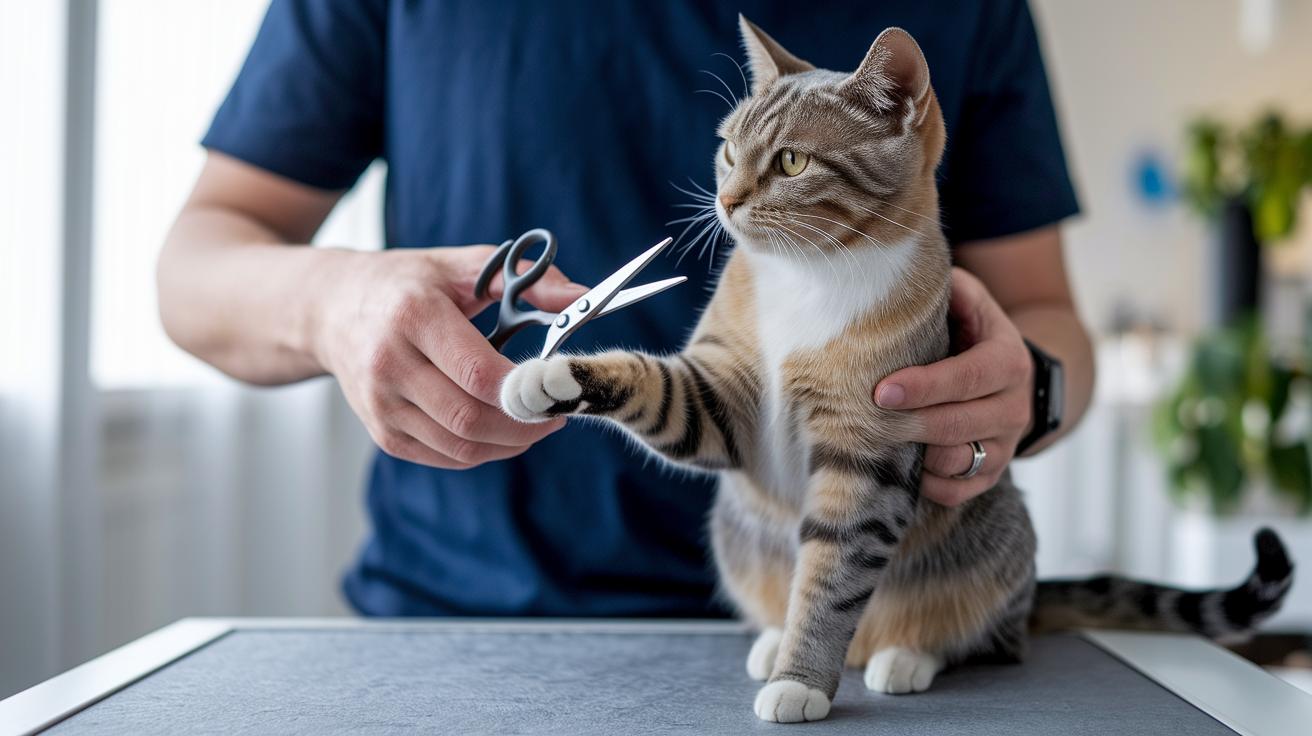
    Related Articles

  • How to do CPR on a cat

    How to do CPR on a cat

    Ever held your kitty and watched them go totally limp?
    Whoa. Your own heartbeat feels loud as you wait for a breath.
    It’s wild how every second stretches out when the air just stops on their soft fur.

    When your furball quits breathing, time feels like it’s racing ahead. But you can help, you know.
    Gentle chest presses (tiny squeezes on the ribcage) and soft rescue breaths (small puffs of air) can keep that little heart beating until the vet swoops in.

    This quick guide shows you five easy steps.
    It’s like learning a simple hand dance. Each move is clear, so you’ll know exactly how to jump in and give your feline friend a fighting chance.

    Plus, you don’t need fancy gear. Just your hands, a bit of courage, and a sprinkle of hope.

    Ready to step up and be your cat’s hero?

    Immediate Cat CPR Steps

    Immediate Cat CPR Steps.jpg

    When your kitty’s not breathing, every second is precious. Grab a flat spot – like the floor or a sturdy table – and throw on disposable gloves and a barrier device (a simple face mask works). These keep you and your furball safe while you play lifesaver. Ready to be your cat’s hero? Let’s roll.

    This quick guide walks you through what to do when your cat goes limp. Fast action can keep blood pumping and oxygen (the air your cat needs) flowing to the brain before help arrives.

    Checking Responsiveness & Airway

    Before you do chest squeezes or rescue breaths, make sure your cat really needs help. No movement and no breathing? You likely won’t feel a pulse.

    1. Gently roll your cat onto its side. Softly shake its shoulder or call its name.
    2. Lift the chin to straighten the neck and tilt the head back. This opens the airway.
    3. Pull the tongue forward and peek inside the mouth. Use gloved fingers or a cloth to clear any bits of debris.
    4. Watch for chest movement and feel for breath at the nose.
    Compression Technique

    Next up: chest compressions (pushing on the chest to pump blood). Lay your cat on its right side, chest facing you. Bend the left front leg at the elbow – that’s your landmark for the heart.
    Keep your arms straight and shoulders above your hands. Then push at the right pace:

    Cat Size Hand Placement Compression Depth Compression Rate
    Small Cat Thumb and fingers on opposite sides About 1 inch 100 to 120 per min
    Large Cat Interlocked fingers, straight arms 1.5 to 3 inches 100 to 120 per min

    Rescue Breaths & Ventilation

    After every five compressions, give rescue breaths. Seal the muzzle with your hand so both nostrils are covered. Breathe in big and blow full lungfuls into the nose. Watch the chest rise.

    • Keep that seal tight.
    • Exhale fully into the nose.
    • Pause so the chest falls before the next breath.
    • Aim for one breath every five seconds – no rapid puffs, um, please.
    • If the chest stays flat, tilt the head back and try again.

    When to Continue or Stop CPR

    Alternate compressions and breaths, checking for a pulse or breath after each cycle. If you see no signs of life after 20 to 30 minutes, it may be time to stop. But if your cat starts breathing or shows a heartbeat, give yourself a high five and call the vet.

    Your purr pal still needs professional care, since brain damage can begin in just four to six minutes without oxygen. Dash to the clinic and let the pros take over, worth every paw-print.

    Troubleshooting Cat CPR Challenges

    Troubleshooting Cat CPR Challenges.jpg

    Mistakes happen when adrenalin’s high. Pushing in the wrong spot, squeezing too shallow or too deep, or leaning on the chest can stop blood flow. If your pace wobbles, too slow, too fast, it won’t match the heart’s rhythm. Blowing too hard during rescue breaths can even overinflate those tiny lungs.

    Kitten CPR adjustments matter because little bodies need gentler care. Aim for about half an inch of compression depth and slow to around 80–100 squeezes per minute (that’s one every 0.6–0.75 seconds). Your hands should feel light, like petting the fluffiest kitten. Pausing too long between squeezes steals precious seconds.

    Senior cat considerations call for even softer touch. Fragile bones can crack, so reduce depth and place a folded towel under the spine for extra support. If the chest seems too stiff, ease back on force and rely more on rescue breaths. Always scan for pain signals, ears flat, a soft groan, before trying another cycle.

    Hypothermic cat resuscitation needs warmth first. Wrap them in blankets to lock in heat between CPR sets and move fast to a warm surface. Watch for stress signals during CPR: hissing, wide pupils, frantic paws. If your cat panics, pause gently, clear the airway again, then resume, cold plus stress makes breathing worse.

    When to stop CPR cats is a tough call. Keep going until you see breathing, twitching, or a heartbeat return. If no change shows after 20–30 minutes, chances of recovery drop sharply. Trust your rhythm and your feel, if you hit that time mark with no pulse, it may be time to let go and focus on comfort.

    Post-CPR Care and Veterinary Referral for Cats

    Post-CPR Care and Veterinary Referral for Cats.jpg

    Once your kitty starts breathing or twitching again, gently roll her onto her side with her head a little higher than her chest. Watch her ribs rise and fall every few minutes so you know she’s still getting air. It’s like spotting tiny waves on a sandy beach. If you’ve got an oxygen mask or chamber (a clear box that gives extra oxygen), slip it on softly so she can breathe easier.

    Before you hit the road, grab your pet first aid kit. You’ll want:

    • gauze pads
    • antiseptic wipes
    • thermometer (for checking her temperature)
    • tweezers
    • an up-to-date vet contact list

    Toss it all into a little bag you can grab, um, in a flash. You don’t want to be digging around while racing to help your furball.

    Next, head straight to the nearest emergency clinic or call a mobile vet who can meet you on the way. CPR can hide bruises or stress inside those tiny bodies, and only a vet knows how to find internal injuries. Even if your cat seems calm, it can be a quiet sign of trouble. Don’t wait around – that extra minute could make all the difference.

    Worth every paw print.

    Final Words

    in the action we checked your cat’s breathing and pulse, cleared the airway, delivered chest compressions at the right pace and depth.

    Next we covered slip-ups, like wrong hand spots, too shallow pushes, or rushed breaths, and shared tips for tiny kittens and senior cats.

    Then post-CPR: keep your pal warm, watch for gasps, and have a first-aid kit ready before heading to a vet.

    Following these easy steps on how to do cat cpr can make a real difference. You’ll feel calmer, more prepared, and your furry friend will thank you with a happy head bump.

    FAQ

    How do I perform cat CPR step by step at home?

    Cat CPR starts by laying your cat on its right side with its neck extended. Check for response, clear the airway, confirm breathing or pulse, then perform 100–120 chest compressions per minute with rescue breaths in a 5:1 ratio.

    Which side do you CPR a cat on?

    You position a cat on its right side so the left chest faces you, making it easier to find landmarks for compressions and ensuring proper lung expansion during rescue breaths.

    What is the success rate of CPR on a cat?

    Cat CPR success rates vary, but studies show around 6–12% survival to discharge. Immediate action and correct technique improve chances, though risks remain high without veterinary support.

    What should I do if my cat is not responding?

    If your cat does not respond, continue five compressions to one breath cycles for up to 20–30 minutes. Call an emergency vet for guidance and prepare to transport your cat as soon as possible.

    How do I give CPR to a kitten or newborn?

    Kitten CPR uses gentle compressions (about 0.5 inch) at 80–100 per minute with rescue breaths every 5 seconds. Clear the airway first, wrap the kitten in a warm towel between cycles, and seek immediate vet care.

    How can I help a choking cat during CPR?

    When a cat is choking, open its mouth and gently sweep debris with gloved fingers. If it stays blocked, give firm back blows, then resume chest compressions and rescue breaths once the obstruction clears.

    Where can I find a reliable cat CPR video tutorial?

    You can find reliable cat CPR tutorials on YouTube channels hosted by veterinary professionals. Search for “cat CPR demonstration” from accredited vets to see correct hand placement, compression depth, and rescue-breath techniques.

    Related Articles

  • How Often Do Cats Poop Understanding Feline Bowel Habits

    How Often Do Cats Poop Understanding Feline Bowel Habits

    Ever wondered how often your cat should poop? Feline bathroom habits might not top your chat list, but they're vital for keeping our furry friends healthy. In this blog, we'll dive into the pooping patterns of cats and spot any changes you should watch for. You'll learn about the typical frequency for both kittens and adult cats. By the end, you'll have a clearer understanding of what to expect and when to worry. Let's explore what your cat's poop schedule can tell you about their health!

    Understanding Typical Cat Poop Frequency

    Understanding Typical Cat Poop Frequency-1.jpg

    Adult cats usually have a regular pooping schedule, defecating about 1-2 times a day. This frequency is considered normal and reflects a healthy digestive system. Variations might occur based on factors like diet, activity level, and individual differences. If you notice your cat straying from this pattern, it could be an early sign of a digestive issue or dietary imbalance.

    Kittens, on the other hand, often poop more frequently than adult cats. Their faster metabolism and developing digestive systems contribute to this increased frequency. As kittens transition from milk to solid foods, expect them to have bowel movements multiple times a day. By the time they reach adulthood, their poop frequency usually stabilizes to align more closely with adult cats.

    Factors Affecting Cat Bowel Movements

    Factors Affecting Cat Bowel Movements-1.jpg

    Diet plays a significant role in a cat's bowel movements. A well-balanced diet with the right amount of fiber is essential for smooth digestion. Too little fiber can lead to constipation, while too much might cause diarrhea. Hydration is equally important. Cats are notorious for not drinking enough water, which can lead to hard, dry stools, making it difficult for them to pass. Including wet food in their diet or ensuring constant access to fresh water can help maintain regularity in their poop schedule.

    • Health Issues: Conditions such as intestinal parasites can disrupt normal bowel movements.
    • Stress: Changes in the environment or routine can lead to constipation or diarrhea.
    • Dietary Changes: Sudden changes in diet can upset the digestive system, causing irregular pooping patterns.
    • Medications: Some medications may cause side effects that affect bowel movements.
    • Environmental Factors: Lack of access to a clean and comfortable litter box can deter cats from defecating regularly.

    Kittens have unique bowel movement needs, especially during the transition from milk to solid foods. Their digestive systems are still developing, and any changes in diet should be gradual to avoid upsetting their stomachs. Kittens often poop more frequently due to their faster metabolism, and their stools might vary in consistency as they adapt to new foods. Monitoring their litter box habits during this time is crucial to ensure they are adjusting well.

    Activity levels and stress are also pivotal in influencing a cat's digestion rhythm. Active cats usually have a faster metabolism, which can result in more frequent pooping. Conversely, stress from environmental changes or a lack of stimulation can lead to digestive issues like constipation. Senior cats face additional challenges. As they age, they may become less active and drink less water, leading to constipation. Keeping senior cats engaged with moderate play and ensuring they have easy access to water can help maintain a healthy bowel routine.

    Identifying and Addressing Irregularities in Cat Poop

    Identifying and Addressing Irregularities in Cat Poop-1.jpg

    Irregularities in a cat's bowel movements can often be an indicator of underlying health issues. Constipation in cats, particularly older ones, is common and can manifest as less frequent litter box visits, straining during defecation, or passing hard, dry stools. On the flip side, diarrhea can result from sudden dietary changes, food allergies, or infections, leading to loose, watery stools and increased frequency. Both conditions, if persistent, can cause discomfort and may lead to more serious health concerns if left unaddressed.

    Symptom Possible Cause When to See a Vet
    Hard, dry stools Dehydration, low-fiber diet After 48 hours without pooping
    Loose, watery stools Dietary changes, infections If lasting more than 24 hours
    Straining Constipation, obstruction If accompanied by vomiting or pain
    Blood in stool Parasites, allergies Immediately

    It's crucial to monitor your cat's litter box habits for any persistent irregularities. If your cat shows signs of constipation or diarrhea that do not resolve within a short period, it is wise to consult a veterinarian. These symptoms could be indicative of more serious conditions, such as intestinal blockages, infections, or chronic diseases. A quick response can prevent potential complications, ensuring that your cat remains healthy and comfortable.

    Monitoring and Improving Cat Poop Health

    Monitoring and Improving Cat Poop Health-1.jpg

    Normal cat poop is typically well-formed and has a consistent brown color. This indicates that your cat's digestive system is functioning properly. Deviations in color or consistency can be red flags for potential health issues. For example, black or tarry stools might suggest bleeding in the gastrointestinal tract, while a yellowish hue could point to a liver problem. Keeping an eye on the litter box can provide valuable insights into your cat's overall health.

    • Black or Tarry Stools: May indicate gastrointestinal bleeding.
    • Yellowish Stools: Could be a sign of liver issues.
    • White or Gray Stools: Suggests a bile duct obstruction.
    • Excessively Soft or Runny Stools: Often due to dietary changes or infections.
    • Mucus in Stools: Could point to inflammation in the colon.

    Improving your cat's poop health involves making dietary and lifestyle adjustments. Ensure your cat has a balanced diet with adequate fiber to promote smooth digestion. If your cat is prone to constipation, increasing their water intake can make a significant difference. Wet food can help, or consider a water fountain to encourage more drinking. Regular exercise also aids in maintaining a healthy digestive system. For those with more sedentary lifestyles, interactive toys or scheduled playtimes can stimulate activity and support regular bowel movements.

    Final Words

    Understanding how often cats poop helps us keep an eye on their health. Adult cats usually poop once or twice a day, while kittens may need more frequent bathroom breaks. Factors like diet, hydration, and activity levels play a key role in maintaining a normal cat poop schedule.

    Being alert to changes, like diarrhea or constipation, can signal health issues. Monitoring cat poop health through color and consistency helps take action early. By making proper dietary and lifestyle adjustments, we can ensure our cats are happy and healthy every day.

    FAQ

    How often should an indoor cat poop?

    A: Indoor cats typically poop once or twice a day. This frequency can vary slightly based on diet, age, and health.

    How long can a cat go without pooping?

    A: A cat should not go without pooping for more than 48 hours. If constipation persists, consult a vet.

    How often do cats pee?

    A: Cats usually pee two to four times a day. If your cat is urinating much less or more frequently, consider discussing it with a veterinarian.

    Do cats poop less on dry food?

    A: Cats may poop less on dry food due to lower moisture content. Ensure they have plenty of water to avoid constipation.

    How often do kittens poop compared to adult cats?

    A: Kittens often poop more frequently than adult cats due to their high metabolism. Expect them to poop several times a day.

    What factors can affect a cat's bowel movements?

    A: Diet, hydration, activity levels, health issues, and stress can all impact bowel movements. Addressing these can help regulate pooping frequency.

    My cat poops 5-10 times a day. Is this normal?

    A: Frequent pooping, like 5-10 times daily, can indicate a diet issue or health problem. Monitor for other symptoms and consult a vet if needed.

    How to identify irregularities in cat poop?

    A: Watch for signs of constipation or diarrhea. Changes in frequency, color, or consistency should prompt a vet visit if they persist.

    How can I improve my cat's poop health?

    A: Ensure a balanced diet, maintain hydration, and promote regular activity. Monitor poop regularly for changes and adjust their diet as needed.

    Related Articles