Category: Teach My Cat

  • How to Train a Cat to Use an Exercise Wheel

    How to Train a Cat to Use an Exercise Wheel

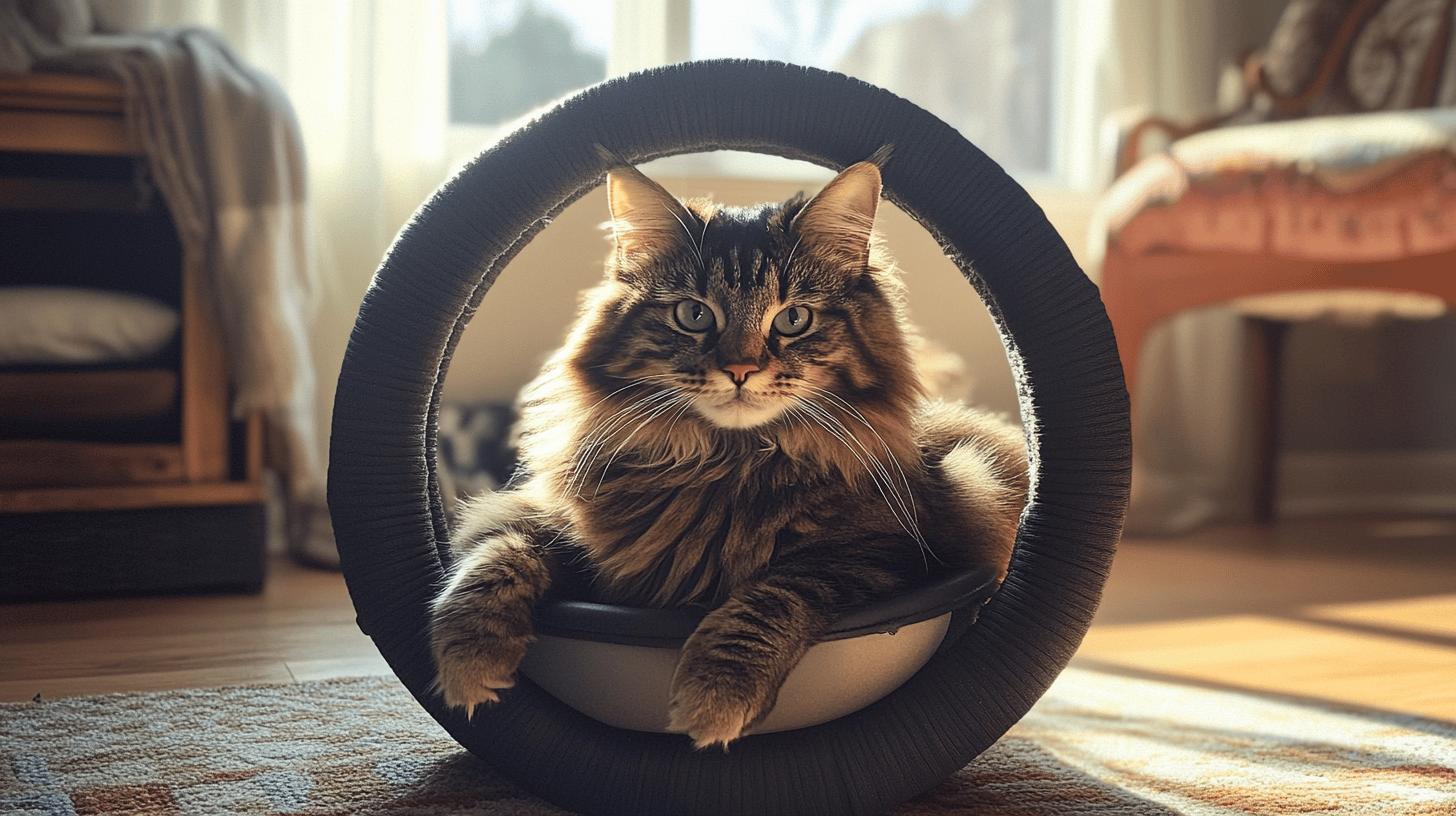
    Can cats really enjoy exercise wheels like their canine counterparts on treadmills? It’s a question many cat owners ponder interactive play. While some may doubt it, using an exercise wheel can actually boost your cat’s physical well-being and provide mental stimulation, enhancing their playtime experience.

    Imagine your feline friend zooming happily on the wheel, just like a mini athlete! In this guide, I’ll walk you through simple steps to get your cat running joyfully on their very own exercise wheel while keeping them safe and entertained. Let’s get started!

    How to Train a Cat to Use an Exercise Wheel: A Step-by-Step Guide
    How to Train a Cat to Use an Exercise Wheel A Step-by-Step Guide-1.jpg

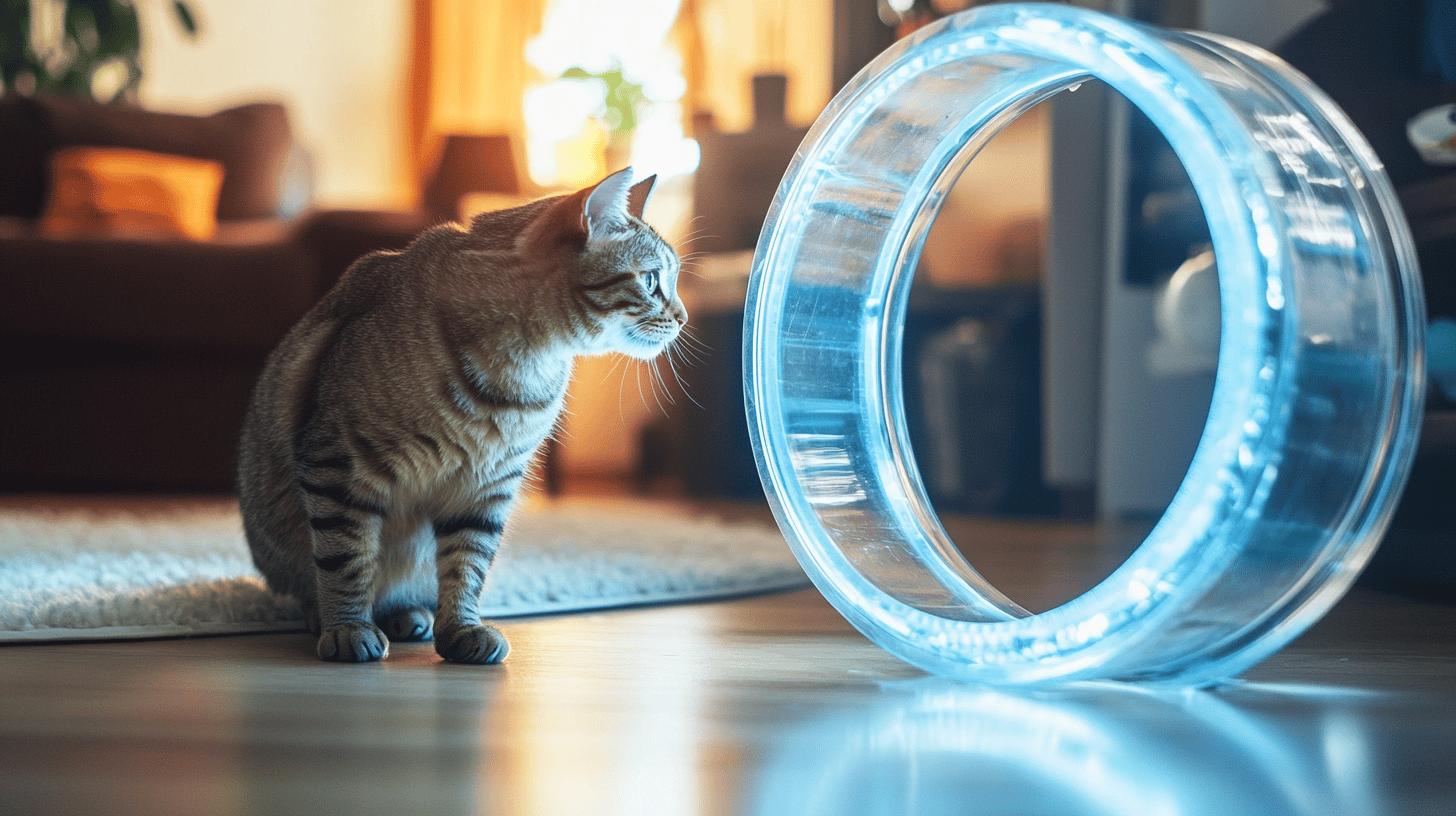
    Introducing your cat to an exercise wheel can be an exciting endeavor. Start by placing the wheel in a familiar area where the cat spends a lot of time, like a playroom or near a window. This helps reduce anxiety and encourages curiosity.

    Allow your cat to approach the wheel at their own pace. Avoid any sudden movements or loud noises that might startle them. The key is to let them sniff and explore the wheel freely, creating a positive first impression.

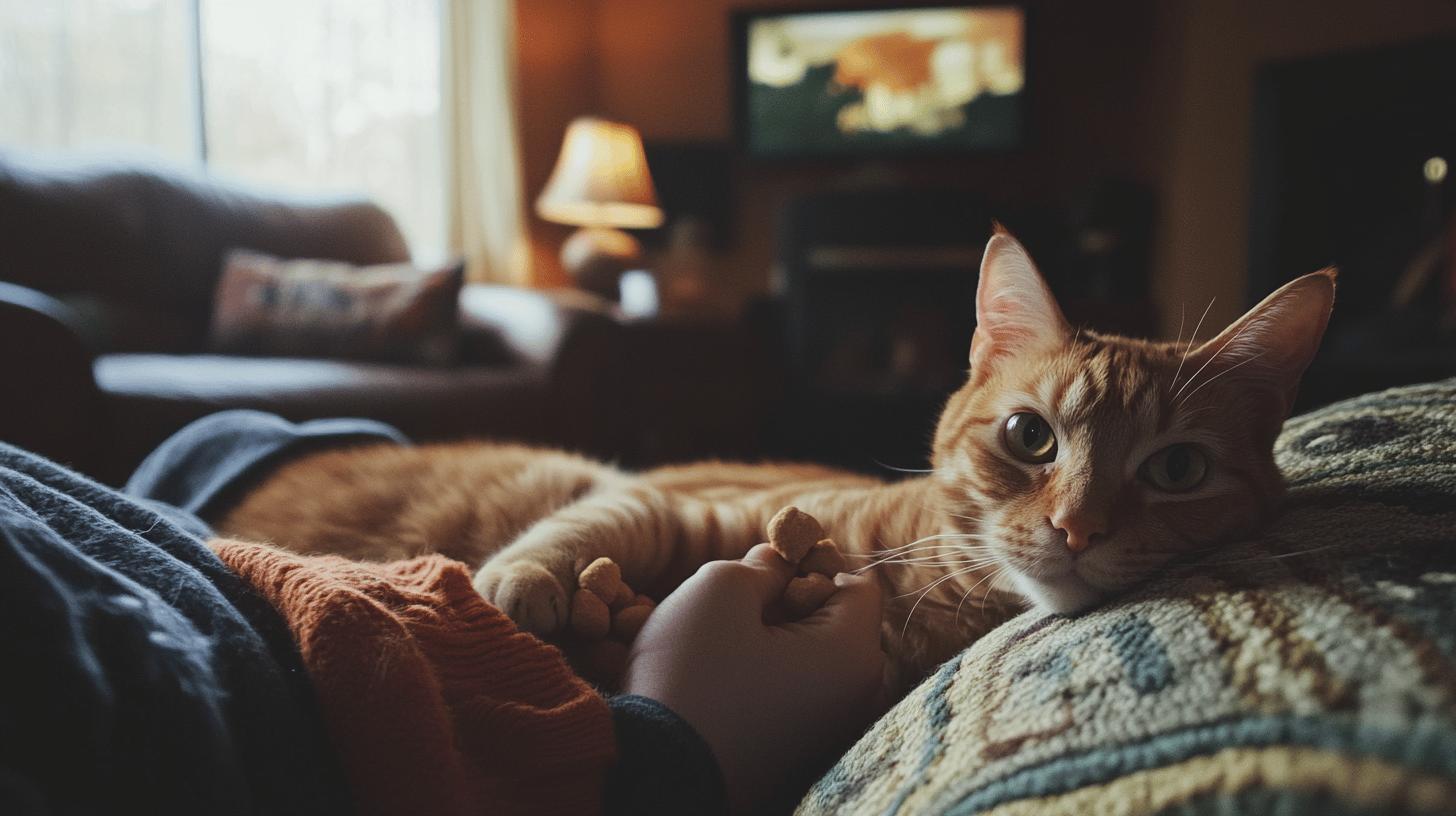
    1. Entice with Treats: Begin by placing a few treats near the wheel to draw their interest. Gradually create a trail leading up to and onto the wheel.
    2. Reward Interaction: Each time your cat sniffs or touches the wheel, reward them with a treat or praise. This positive reinforcement builds a favorable association.
    3. Encourage Exploration: Once your cat is comfortable around the wheel, place a treat or small toy on the wheel itself. This encourages them to step onto it.
    4. Introduce Movement: Gently turn the wheel by hand while your cat is on it, rewarding them for staying calm. This helps them get used to the wheel’s motion.
    5. Increase Wheel Time: As your cat becomes more comfortable, gradually extend the time they spend on the wheel. Always reward them for their progress.
    Safety Tip Explanation
    Monitor Sessions Always supervise your cat during wheel sessions to ensure they don’t get scared or injured.
    Check Stability Ensure the wheel is stable and secure to prevent tipping while in use.
    Avoid Overexertion Limit initial sessions to prevent exhaustion, gradually increasing as the cat builds stamina.

    Consistency and patience are the backbone of successful training wheel training. Most cats can learn to use the wheel within one to two weeks, but some may take longer. Watch for changes in your cat’s behavior, such as increased confidence or eagerness to approach the wheel. This is a sign of progress. Keep the sessions positive and short, gradually extending them as your cat grows more comfortable. Remember, every cat is unique, so adjust your approach based on their responses and comfort level.

    Selecting the Right Exercise Wheel for Your Cat
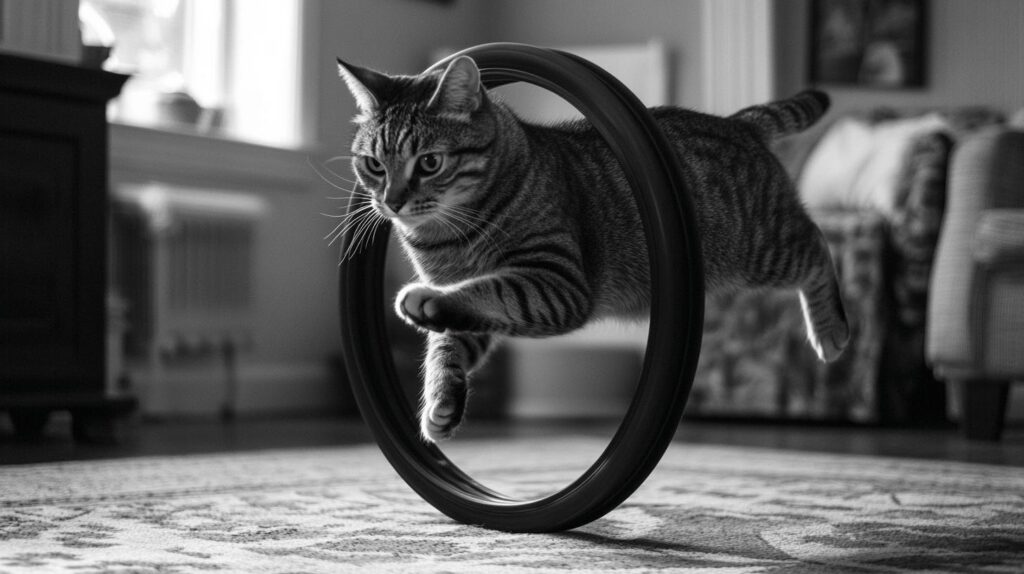
    When choosing an exercise wheel for your cat, consider the size, stability, and ease of assembly. A wheel that matches your cat’s size ensures they can use it comfortably. Stability is crucial, as a wobbly wheel might scare your cat away. Look for designs that are easy to assemble so you can set it up quickly without hassle.

    • One Fast Cat: Measures 48 inches high, 46 inches wide, and 11 inches deep. It’s known for safety and easy assembly.
    • GoPet TreadWheel: Offers a durable build with a non-slip surface, though it requires more space.
    • Cat in Motion Wheel: Compact and lightweight, ideal for smaller spaces.

    Matching the wheel to your cat’s size and your home’s available space is key. A large wheel might not fit in a compact apartment, while a small wheel might not support a bigger cat. Consider your cat’s personality and physical needs when selecting the perfect wheel.

    Benefits and Challenges of Using a Cat Exercise Wheel
    Benefits and Challenges of Using a Cat Exercise Wheel-1.jpg

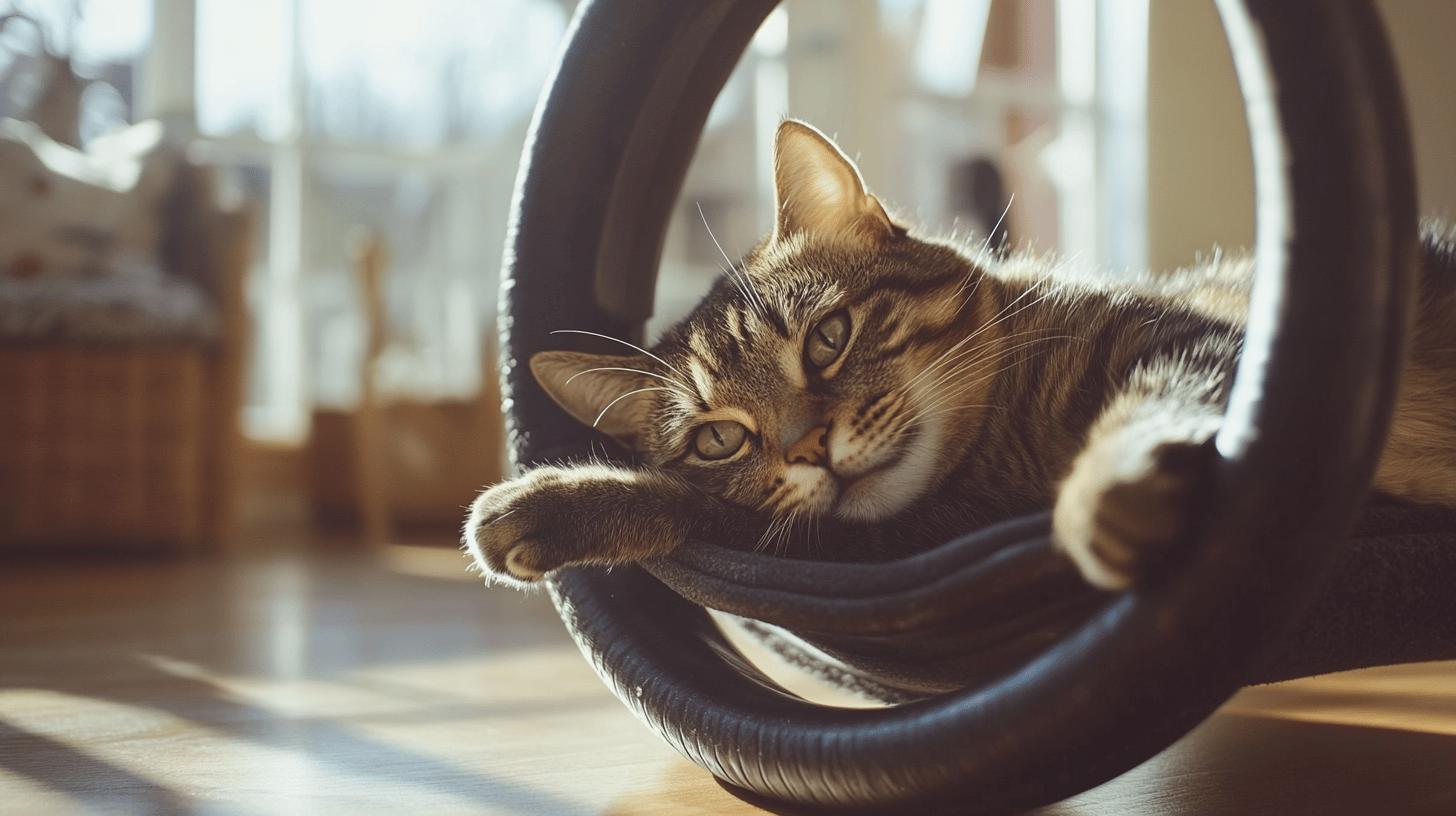
    Using a cat exercise wheel can offer a range of physical and emotional benefits for indoor cats. One of the primary advantages is improved fitness, as the wheel provides an opportunity for cardiovascular exercise that many indoor cats lack. Regular use of the wheel can aid in weight loss, helping to prevent obesity-related health issues.

    Beyond the physical benefits, exercise wheels can also reduce boredom by providing a stimulating activity. This can be particularly beneficial for cats that tend to be anxious or exhibit aggressive behaviors, as the wheel offers a productive outlet for their energy.

    Despite these benefits, training a cat to use an exercise wheel comes with its own set of challenges. Initial reluctance is common, as many cats are wary of new objects and experiences. Maintaining a cat’s interest in the wheel can also be difficult, especially once the novelty wears off.

    Cats may lose motivation to use the wheel if they don’t see it as rewarding or enjoyable. These challenges can make the training process feel slow and frustrating for both the cat and the owner.

    To overcome these challenges, it’s important to employ a variety of strategies. Using different types of rewards, such as treats, toys, or praise, can keep the cat motivated and make the exercise wheel a positive experience. Adjusting training strategies, like varying the time of day or duration of sessions, can also help maintain the cat’s interest.

    Patience and consistency are key, as it may take time for a cat to fully acclimate to the wheel and incorporate it into their routine. With the right approach, most cats can learn to enjoy the exercise wheel and benefit from its use.

    Final Words

    Training your cat to use an exercise wheel can greatly enhance their fitness routine.
    It involves gradual introduction, positive reinforcement, and patience.
    Choosing the right wheel and being aware of the benefits and challenges helps make the process smoother.
    Consistency is key in building your cat’s confidence and motivation.

    Remember, successful training hinges on safety and comfort.
    With dedication, you can teach your cat to enjoy the exercise wheel, boosting their physical and mental health.
    In the end, you’ll have a happier, healthier feline friend.

    FAQ

    How do I get my cat to use her exercise wheel?

    A: To get a cat to use an exercise wheel, start with gradual exposure. Use treats to encourage her curiosity and reward any interaction. Maintain patience; it can take a few weeks.

    Can you train a cat to use a cat wheel?

    A: Yes, cats can be trained to use a cat wheel. Key steps include positive reinforcement, using treats, toys, and gradually increasing wheel time to build their comfort and confidence.

    How do I know if my cat will use an exercise wheel?

    A: Check if your cat is playful and curious playful breeds. Introduce the wheel slowly and observe if she shows interest or interacts with it. Enthusiasm for movement or toys can be a good sign.

    Do cats like cat exercise wheels?

    A: Some cats enjoy exercise wheels, especially those who are active and inquisitive. The wheel can provide fun and mental stimulation, aiding in reducing anxiety and improving fitness.

    A: Popular options include:

    • One Fast Cat wheel: Known for safety and easy assembly.
    • GoPet Treadwheel: Offers adjustable resistance.
    • DoggySwim wheel: Designed for high-energy cats.

    Consider size, stability, and space when choosing a wheel.
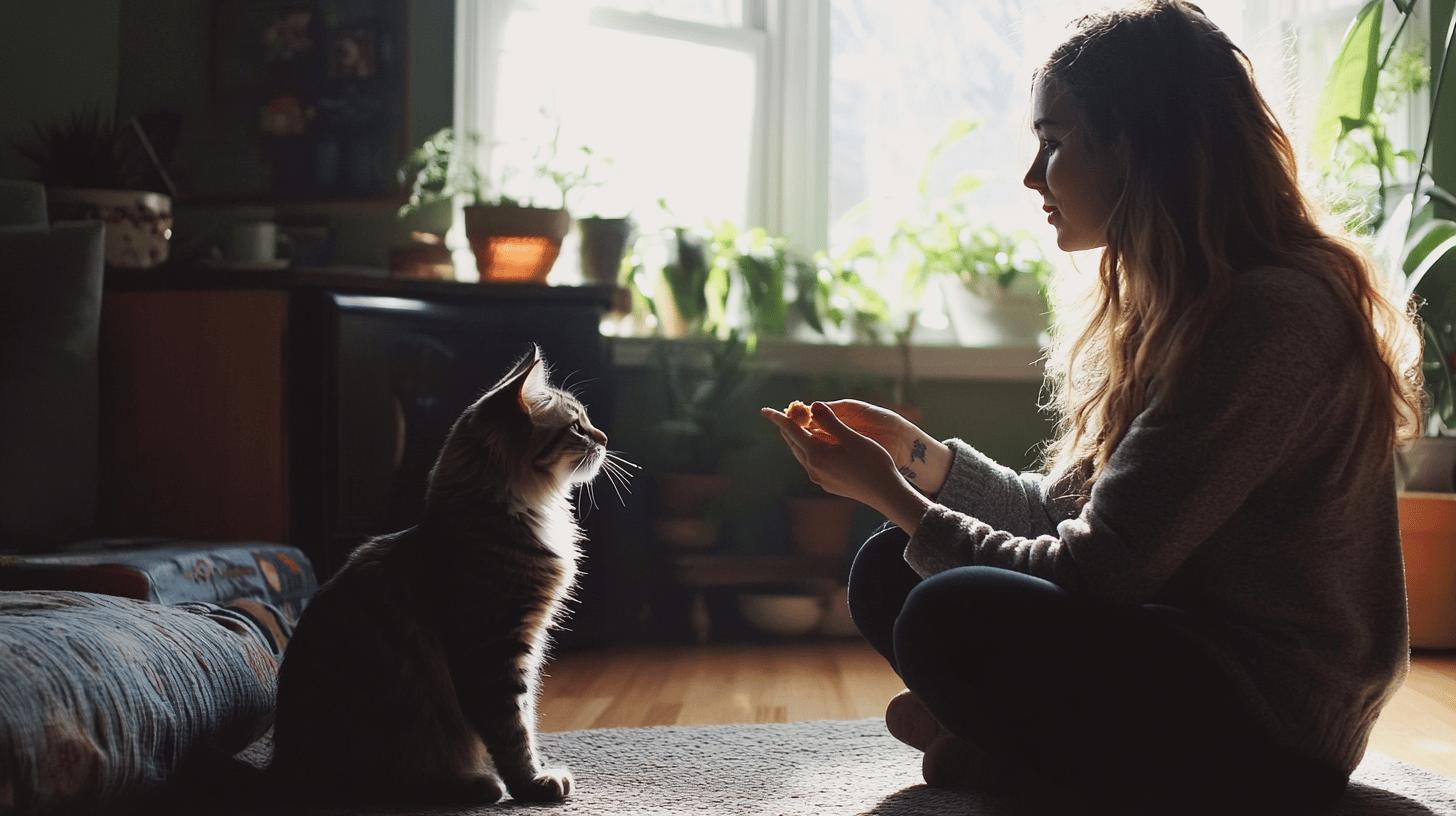
  • How to Train a Cat Without a Clicker Using Positive Techniques

    How to Train a Cat Without a Clicker Using Positive Techniques

    Can you train a cat without a clicker? Absolutely. While clickers are popular training tools, they’re far from necessary. Cats learn through consistent reward, timing, and positive association-none of which require a mechanical device. In fact, many expert cat behaviorists argue that voice markers and treats alone create stronger behavioral bonds than clickers ever could. This guide shows you the science, the techniques, and the step-by-step methods to train your cat without gadgets.

    Why Clickers Aren’t Necessary (The Brain Science)

    Clicker training works because it creates a conditioned stimulus: the sound bridges the gap between the desired behavior and the reward, marking the exact moment your cat did something right. But here’s the truth: clickers are just a tool for achieving precise timing. They’re not magic.

    How Cat Learning Actually Works

    Cats learn through operant conditioning-a behavior followed by a positive consequence (reward) becomes more likely to repeat. The timing between behavior and reward matters profoundly. A 2-3 second delay is acceptable; longer gaps and the cat loses the connection.

    A clicker produces a distinct, emotionally neutral sound. Cats don’t inherently understand what a click means; you teach them: “Click = treat is coming.” Once learned, the click becomes a bridge-it tells your cat exactly when they earned the reward.

    Voice Markers Work Equally Well

    Your voice can do everything a clicker does, with advantages clickers lack:

    • Consistent timing: You can deliver a voice marker (“Yes!” or “Perfect!”) with the same precision as a click, sometimes faster.
    • Emotional connectivity: Your voice carries tone, warmth, and personality. Your cat associates rewards with YOU, not a device.
    • No equipment needed: Your voice is always with you. No dead batteries, no forgotten devices, no noise complaints in apartments.
    • Dual-purpose: “Yes!” can mean treat is coming; “Good cat” can be affection-based praise. A clicker is one-dimensional.
    • Faster learning: Research shows cats trained with voice markers sometimes learn as quickly or faster than clicker-trained cats, particularly for complex behaviors.

    Understanding Cat Training Fundamentals

    Before starting any training, understand what motivates cats:

    What Cats Actually Care About

    • High-value treats: Small pieces of cooked chicken, freeze-dried meat, or premium cat treats. Nothing gets a cat’s attention like meat.
    • Playtime rewards: For cats that prefer interaction, 30 seconds of wand toy play can be more motivating than treats.
    • Attention: Petting, praise, or simply your undivided focus.
    • Toys: For toy-driven cats, access to a favorite toy is potent reward.
    • Exploration: Some cats prioritize access to new spaces or objects.

    The Training Session Sweet Spot

    • Duration: 5-10 minutes maximum. Cats have limited attention spans; longer sessions frustrate both you and your cat.
    • Frequency: 2-3 short sessions daily beats one long session.
    • Timing: Train when your cat is hungry (before meals) and alert, not exhausted or overstimulated.
    • Environment: Quiet, familiar space with minimal distractions. No kids, dogs, or competing noise.

    Voice & Sound Markers as Clicker Alternatives

    Choosing Your Marker Word

    Pick a short, distinct word your cat won’t hear in normal conversation. Options:

    • “Yes!” – Simple, enthusiastic, easy to say consistently
    • “Perfect!” – Longer but clearly distinct
    • “Got it!” – Conversational but trainable
    • “Bingo!” – Fun, memorable
    • A whistle or tongue click – Non-verbal alternatives for non-voice preference

    Whatever you choose, use it consistently. Your cat will learn: “[marker word] = treat is coming in 1-2 seconds.”

    Establishing the Marker-Treat Connection

    Before training anything, teach your cat what the marker means:

    1. Say your marker word (“Yes!”)
    2. Immediately give a high-value treat (within 1 second)
    3. Repeat 10 times in a session
    4. Do this for 3-5 days until your cat’s ears perk up when they hear the marker

    You’ll know it’s working when your cat looks at you with anticipation after hearing the marker. That’s the moment you know they’ve made the connection: marker = reward.

    Step-by-Step Training Techniques (No Clicker Needed)

    Teaching “Sit”

    Goal: Cat’s hindquarters touch the floor on cue.

    1. Lure setup: Hold a high-value treat just above your cat’s nose, slightly back toward their head.
    2. The movement: As your cat’s nose follows the treat, their rear naturally lowers. The moment their bottom touches the floor, say “Yes!” and immediately give the treat.
    3. Repeat: 10 reps per session. After 3-5 sessions, your cat starts anticipating the sit.
    4. Add the cue: Once the behavior is reliable, say “Sit” just before luring. Repeat 20+ times.
    5. Test without lure: Say “Sit” without treat in hand. If your cat sits, immediately produce treat and enthusiastic praise.
    6. Duration building: Once “Sit” is solid, wait 2-3 seconds before saying “Yes!” This teaches your cat to hold the sit.

    Timeline: 1-2 weeks to reliable “Sit” behavior with daily 5-minute sessions.

    Teaching “Touch” (Targeting)

    Goal: Cat touches their nose to a specific point (your hand, a target stick, a mark on the wall).

    “Touch” is foundational-it teaches your cat that moving toward things earns rewards, which enables teaching almost any other behavior.

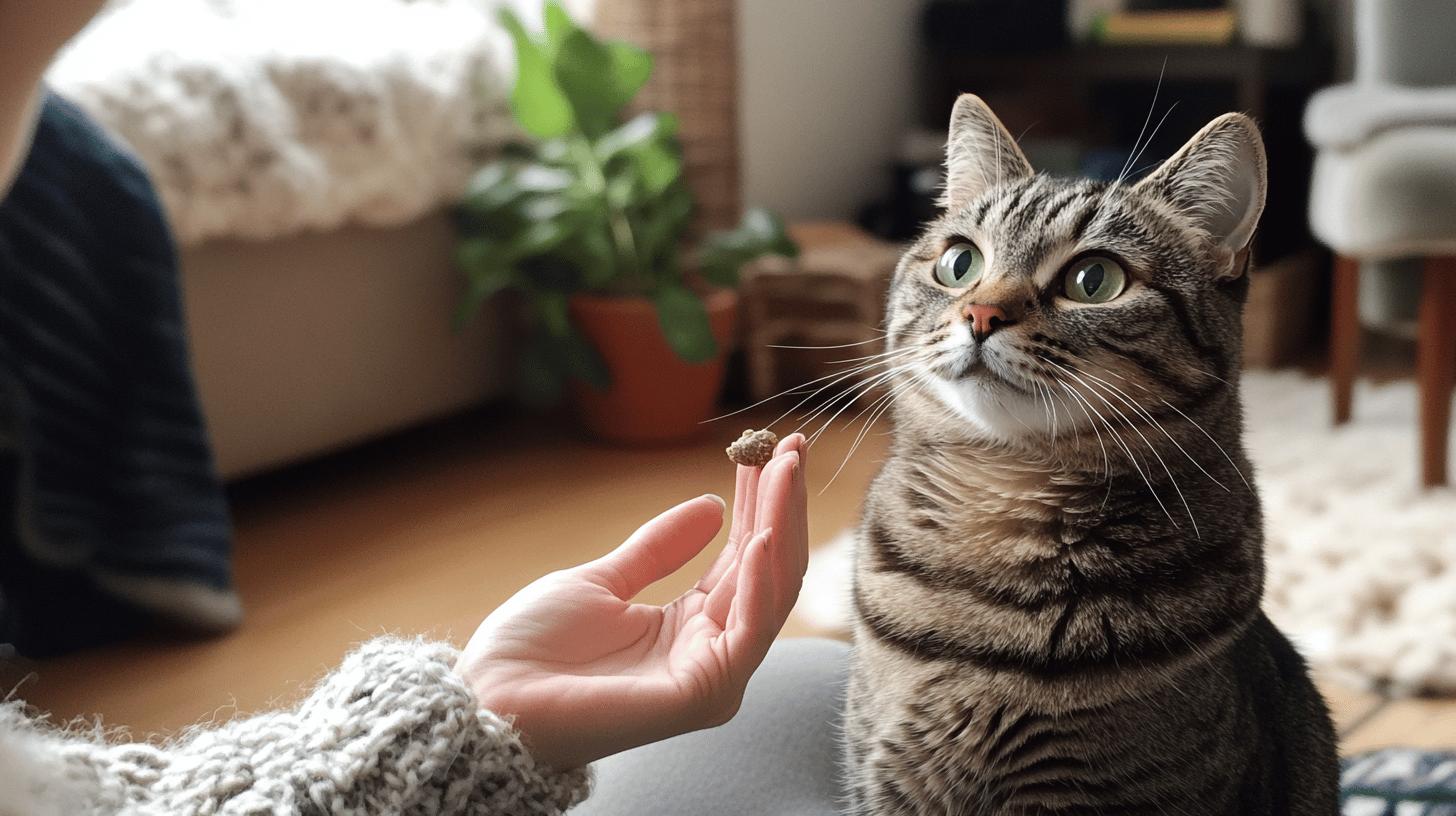
    1. Hand positioning: Hold an open hand (palm up) at your cat’s nose height, 6 inches away.
    2. Natural curiosity: Most cats will sniff or touch your hand. The instant they do, say “Yes!” and give treat.
    3. Build distance: Gradually move your hand further away (inch by inch, over sessions) so your cat walks toward your hand to touch it.
    4. Add cue: Say “Touch” just before presenting your hand.
    5. Hand or target switch: Once reliable, use a small stick or object instead of your hand. The principle is identical.

    Application: Once your cat reliably touches a target, you can use targets to lure them to:

    • Different rooms (recall training)
    • The carrier for vet visits
    • A specific spot (useful for photos or during household chaos)

    Teaching “Come” (Recall)

    Goal: Cat comes to you reliably when called.

    1. Choose a recall word: “Come!” or “Here!” – something you’ll use consistently and positively.
    2. Start at ultra-short distance: Sit on the floor with your cat 2 feet away.
    3. Excited delivery: Say “Come!” with genuine enthusiasm, immediately shake a treat bag or show a high-value treat.
    4. Reward heavily: When your cat walks toward you, say “Yes!” and give multiple treats (not just one).
    5. Extend distance slowly: Over weeks, increase the distance: 3 feet, 5 feet, across the room, to another room.
    6. Add distractions carefully: Practice with mild distractions first (TV on); progress to busier environments.
    7. Build reliability with high-value treats: Only use recall in situations where you have excellent treats. Boring kibble won’t compete with outdoor birds.

    Critical rule: Never use “Come” punitively (for nail trimming, vet visits, medication). Train a separate approach word for unavoidable unpleasant experiences. If “Come” means good things always happen, your cat will reliably respond.

    Teaching “Sit” on Command (Advanced Variation)

    Once your cat knows “Sit” with luring, teach them to sit without the lure:

    1. Say the cue: “Sit”
    2. Brief pause (1-2 seconds): Don’t lure. Wait to see if your cat sits.
    3. If they sit: “Yes!” and treat immediately.
    4. If they don’t: Show the lure and guide them into sit. This is a gentle reminder.
    5. Repeat: Each session, gradually reduce the lure and rely more on the verbal cue.

    Treat Timing & Reward Psychology

    The Critical 1-2 Second Window

    The time between desired behavior and reward is crucial. Ideally:

    • 0-1 seconds: Perfect. The behavior is fresh in your cat’s mind.
    • 1-2 seconds: Good. Acceptable for building association.
    • 2-3 seconds: Weak. Your cat may lose the connection.
    • 3+ seconds: Too late. Your cat won’t associate the reward with the behavior; they’ll remember whatever they were doing 3 seconds ago.

    This is why a voice marker (“Yes!”) can be superior to treats alone-you can deliver the marker instantly, then follow with the treat. Marker = “Reward coming in 1-2 seconds.”

    Reward Variety & Motivation

    • Treat size: Pea-sized pieces, not chunks. You want rapid delivery, not chewing delays.
    • Treat variety: Rotate high-value treats. Repetition bores cats; novelty keeps them engaged.
    • Jackpot rewards: Occasionally (randomly) give 3-4 treats instead of one after a successful behavior. This keeps your cat guessing-high motivation.
    • Non-food rewards: Alternate treats with playtime (5-10 seconds of wand toy). Some sessions, mix rewards so your cat doesn’t lose interest.

    Troubleshooting Common Training Issues

    “My cat won’t sit even with luring.”

    Diagnosis: Either the reward isn’t motivating enough, or your cat is too distracted.

    Solutions:

    • Upgrade treats. If you’re using regular kibble, switch to fresh cooked chicken.
    • Train before meals (hungry cat = motivated cat).
    • Reduce environmental distractions. Close doors, turn off TV, minimize noise.
    • Try a different position. Some cats prefer “stand” to “sit.” That’s okay; train what works for your cat.

    “My cat sits for a treat but ignores the command without luring.”

    Diagnosis: The word “Sit” hasn’t become a true cue yet. Your cat has learned the lure predicts treats, not the word.

    Solutions:

    • Fade the lure more gradually. Reduce hand movement with each repetition.
    • Say the cue more enthusiastically. Cats respond to tone; make “Sit” sound exciting.
    • Add a hand signal (point downward) along with the verbal cue. Some cats respond better to visual cues.
    • Ensure reliable lured sits before introducing the cue. You need 30+ perfect lured reps first.

    “My cat trained for 2 days and then stopped responding.”

    Diagnosis: Boredom or treat satiation (your cat isn’t hungry anymore).

    Solutions:

    • Take a break. Training fatigue is real. Resume after 1-2 days.
    • Switch treats. Novelty re-engages interest.
    • Train before meals (hunger = motivation).
    • Keep sessions shorter (5 min max) and more frequent (3x daily).
    • Rotate different behaviors in the same session. Variety prevents boredom.

    Complex Behaviors: Building on Basics

    Teaching “Litter Box Use” (For Multi-Cat Homes)

    Some cats need training to use a specific box or location.

    1. Isolate and establish: Confine your cat to a small room with the target litter box for 2-3 days.
    2. Catch and reward: Observe when your cat uses the box. Immediately say “Yes!” and give treats.
    3. Expand space: Gradually allow access to larger areas while maintaining the designated box.
    4. Reinforce regularly: Continue rewarding litter box use for weeks, even after the behavior seems established.

    Teaching “High Five” (Fun Trick)

    1. Start with “Touch”: Ensure your cat reliably touches your hand.
    2. Raise your hand higher: Gradually position your hand higher each session.
    3. Shape the leap: As your cat reaches higher to touch, they naturally extend a paw. Say “Yes!” and reward.
    4. Add cue: Say “High five!” with enthusiasm.
    5. Polish: Your cat will eventually raise a paw to meet your hand. That’s your high five.

    Special Considerations: Age & Personality

    Kittens (Under 6 Months)

    Kittens learn extremely quickly but have shorter attention spans, so use 2-3 minute sessions, 4-5 times daily with high-value treats. Expect rapid progress, but keep up daily practice as kittens can forget quickly without reinforcement.

    Adult Cats (1-10 Years)

    Adult cats are in their prime learning years, so keep sessions to 5-10 minutes, 2-3 times daily; behaviors learned at this stage tend to stick well.

    Senior Cats (Over 10 Years)

    Senior cats are absolutely trainable, though sometimes slower; use high-value treats and be patient, keeping sessions to 5 minutes max to prevent fatigue. Pain or cognitive decline may slow learning-consult your vet if suddenly resistant.

    Personality Considerations

    • Food-motivated cats: Use treat-based training. These cats are easy to train.
    • Play-motivated cats: Use wand toy access as reward. Mix in occasional treats.
    • Affection-motivated cats: Petting and praise can be primary rewards. Supplement with treats.
    • Independent cats: Respect their nature. Train willingly, not coercively. Stop if they disengage.

    Frequently Asked Questions

    Can adult cats be trained without clickers?

    Yes. Adult cats learn just as well with voice markers. The principle is identical; the tool differs. Some adult cats trained with voice markers learn faster than clicker-trained cats because the emotional connection to your voice is stronger.

    Is a clicker really better than a voice marker?

    No. Both work equally well. Clickers are standardized (every click sounds identical), which some people find easier. Voice markers are customizable (your tone carries emotion) and always with you. Neither is objectively superior.

    How long does it take to train a cat without a clicker?

    Expect “Sit” to take 1-2 weeks, “Come” 4-8 weeks, and complex behaviors months; the variable isn’t the tool but consistency and training frequency. 3 sessions daily for 1 week beats 1 session per day for 3 weeks.

    Can cats learn multiple behaviors simultaneously?

    Yes, but introduce them separately. Train “Sit” to fluency, then add “Touch,” then add “Come.” Once each is solid independently, you can practice them together.

    What if my cat refuses to cooperate?

    If your cat disengages, end the session; training should feel playful, not frustrating. Try again later with better treats or a quieter environment, and never force interaction or training.

    Can I train my cat to do anything?

    Mostly. You can teach cats to sit, come, touch, high five, use a harness, enter a carrier, and many other behaviors. You cannot train cats to fully ignore their nature-don’t expect a cat to fetch like a dog or give up predatory behavior toward small animals. Work with cat nature, not against it.

    The Bottom Line

    You don’t need a clicker to train your cat. A simple voice marker (“Yes!”), high-value treats, and consistency are all you need. Your voice carries emotion and connection that a mechanical device cannot. Start with “Sit,” build to “Come,” and enjoy the enrichment training brings to your cat’s life. No equipment required.

    Related Training & Behavior Guides

  • Training Your Cat to Lay Down Easily

    Training Your Cat to Lay Down Easily

    Did you know cats can learn to lay down on command just like dogs? It's true! Training your cat to lay down isn't just a convenient trick; it enhances your playtime experience and strengthens your bond. Imagine the satisfaction of watching your feline friend respond eagerly to your cue.

    With a few simple steps, patience, and some tasty treats, you can make this happen. Let's dive into the easy guide that turns your furry companion into an obedient and happy learner. Ready to start this exciting journey? Let’s go!

    Step-by-Step Guide: How to Train a Cat to Lay Down

    Training Your Cat to Lay Down Easily-2.jpg

    Before starting your training session, make sure your cat is calm and relaxed. This helps them be more attentive and receptive to learning. Choose a quiet space free from distractions. Decide on a consistent command, like “lay down” or “relax,” and stick with it throughout the training process. This consistency helps your cat associate the command with the action you want them to perform.

    Now, use a treat to guide your cat into a lying position. Start with your cat sitting directly in front of you. Hold a treat near their nose to get their attention. Slowly move the treat towards the ground and slightly away from them.

    As your cat follows the treat, they’ll naturally lower their body to the ground. Once they lie down, immediately reward them with the treat and praise. Repeat this process several times, ensuring your cat understands that lying down leads to a tasty reward.

    Here are five essential tips for maintaining consistency and reinforcing behavior:

    1. Use the same command each time.
    2. Reward promptly with treats and praise.
    3. Keep training sessions short and enjoyable.
    4. Be patient if your cat doesn’t respond immediately.
    5. Practice daily for steady progress.

    Adjust the training frequency based on your cat’s learning pace. Some cats may catch on quickly, while others might need more time. If your cat seems frustrated, take a break and try again later. Keep sessions positive and engaging, ensuring that both you and your cat enjoy the process. With patience and practice, your cat will learn to lay down on command.

    Positive Reinforcement in Cat Training

    Positive Reinforcement in Cat Training-2.jpg

    Positive reinforcement is a powerful technique in cat training. It means rewarding desired behaviors with treats or praise. This approach not only helps in teaching new commands like laying down but also strengthens the bond between you and your cat.

    Cats learn that good behavior leads to positive outcomes, making them more eager to engage in training sessions. This method is enjoyable for both you and your cat, creating a positive environment for learning.

    Selecting the right treats and praise is crucial for effective training. Choose treats that your cat loves and are easy to eat quickly. Soft, small treats work best since they won't interrupt the flow of training.

    Praise your cat with a happy voice, using words like "Good job!" or "Well done!" to make them feel appreciated. The combination of tasty treats and loving words can motivate your cat to repeat the desired behavior.

    Action Reward Type
    Sitting on command Treat and verbal praise
    Coming when called Favorite toy
    Using the scratch post Petting and praise
    Laying down on command Treat and praise

    Positive reinforcement can also be effective with shy or stubborn cats. By consistently rewarding small successes, even the most reluctant felines can become more motivated. Gradually, as they associate good behavior with rewards, they'll be more willing to participate in training. This method ensures that every cat, regardless of personality, has the chance to learn and grow in a supportive environment.

    Understanding Cat Behavior for Effective Training

    Alternatives to Coconut for Cats-2.jpg

    Understanding cat behavior is key to effective training. Cats communicate through subtle body language and signals, which indicate their mood and willingness to train. By recognizing these cues, you can tailor your training sessions to suit your cat's needs.

    Paying attention to your cat's ears, tail, and overall posture can reveal if they are interested, relaxed, or stressed. This awareness helps establish a positive training environment where your cat feels comfortable and open to learning.

    Here are four common signals indicating training readiness or reluctance:

    1. Ears Forward: Shows curiosity and readiness to engage.
    2. Relaxed Tail: Indicates comfort and willingness to participate.
    3. Dilated Pupils: May suggest excitement or stress, so watch for context.
    4. Slow Blinking: Suggests trust and relaxation, ideal for training.

    Adapting your training strategies based on your cat's mood can make sessions more productive. If your cat seems stressed or uninterested, give them time to relax before trying again. Use positive reinforcement when they display readiness signals.

    This approach not only improves training success but also strengthens the bond between you and your cat. By being attentive to their body language, you can ensure a rewarding training experience for both of you.

    Training Tools and Treats for Your Cat

    Positive Reinforcement in Cat Training-4.jpg

    Clickers are fantastic for marking when your cat does something right. They make a clear sound that tells your cat exactly when they’ve done well. If you don't have a clicker, snapping your fingers or using a pen with a click works too. The secret is to be consistent. Help your cat know what they did to earn the reward.

    Pick treats that your cat loves for training. Small and soft treats keep things moving. They should be easy for your cat to eat quickly. Try different treats to see which ones your cat gets excited about.

    1. Freeze-dried chicken: Packed with protein and super tasty.
    2. Soft salmon bites: Easy to chew and loved by many cats.
    3. Turkey jerky strips: Break them into small pieces for training.
    4. Tuna-flavored soft treats: The strong smell is very attractive.
    5. Catnip-infused snacks: Adds fun with a familiar scent.

    Use simple words or phrases for training cues. Stick to the same cue each time. Change tools and treats as your cat improves. Keep your cat’s interest and make learning fun!

    Understanding Cat Behavior for Effective Training

    Training Your Cat to Lay Down Easily-3.jpg

    Cats can be independent and sometimes stubborn, making training a challenge. They may not always show interest or eagerness to follow commands. This independence requires adapting training strategies based on their mood and behavior.

    Here are some tips to help keep your cat engaged:

    1. Change Up the Time or Location: If your cat seems uninterested, try training at a different time or in a new spot. This change can renew their interest.
    2. Be Patient: Every cat learns at their own pace. Adjust your methods as needed and ensure training is fun and rewarding for your cat.
    3. Observe Their Mood: Pay attention to how your cat is feeling. If they seem stressed or disinterested, take a break and try again later.
    4. Keep It Positive: Always use positive reinforcement to encourage small successes and progress.

    By understanding your cat's behavior and remaining flexible, you can create a more effective training environment.

    Final Words

    Training a cat to lay down isn't just possible; it's rewarding. Starting with patience, you guide your cat with treats and reinforce positive behavior.

    Using the right tools and understanding cat behavior can make these sessions more effective. Positive reinforcement strengthens your bond and makes learning fun for both of you.

    Remember, it’s key to notice cat signals and adjust the training to their needs. Challenges might come up, but solutions help keep progress steady. Stay patient, and enjoy the journey with your feline friend!

    FAQ

    How can I train my cat to lay down?

    Start with your cat in a sitting position. Use a treat to guide them into a lying position. Reward them immediately. Be consistent with the command and repeat in short, fun sessions.

    How do I get my cat to lay down with me?

    Spend time relaxing with your cat. Use treats or toys to encourage them to lay near you. Create a comfy, inviting space. Be patient and positive.

    How can I teach my cat to roll over?

    Begin with your cat on its side. Gently use a treat to guide it to roll. Reward the behavior immediately. Practice regularly for best results.

    What’s the best way to teach a cat to sit?

    Use a treat to lure the cat's head back, causing the back to lower into a sit. Say "sit" and reward once the position is right. Repeat training sessions often.

    How do I use a clicker to train my cat to sit?

    Use a clicker to mark the behavior you want. When your cat sits, click, and reward with a treat. Consistency in timing is key to success.

    How can I teach my cat to sit without a clicker?

    Guide the cat into the sitting position using a treat. Use verbal commands and reward as soon as they sit. Consistent practice helps reinforce the command.

    Can I communicate "sit down" in cat language?

    Cats respond best to consistent commands paired with actions. Use the word "sit" with a hand signal and reward when successful.

    What are some common cat training commands?

    Common commands include sit, lay down, stay, and come. Pair each with a consistent cue or hand signal for clarity.

    Why does my cat struggle to lay down?

    This might be due to discomfort or lack of understanding of the command. Ensure your cat is comfortable and use positive reinforcement consistently.

    How do I train my cat to get down?

    Use the cue "down" and guide your cat off the surface with a reward. Reward immediately upon completion. Repetition helps reinforce learning.

    Related Articles

  • How to Train a Cat to Do a Backflip

    How to Train a Cat to Do a Backflip

    Did you know that with a little patience, your cat can learn to pull off a backflip? It might sound impossible, but with the right tools and techniques, even your feline friend can master this jaw-dropping trick.

    In this guide, I’ll show you how to transform playtime into a training session that gets results. By using simple toys and consistent routines, you’ll engage your cat’s natural jumping instincts. Combine this with encouragement and rewards, and soon your cat will be flipping to impress! Ready to get started? Let’s dive in.

    Step-by-Step Guide: Training Your Cat to Do a Backflip

    Step-by-Step Guide Training Your Cat to Do a Backflip-2.jpg

    1. Choose the Right Toy: Select an interactive toy such as a feather wand or laser pointer. These toys can trigger your cat’s natural instinct to leap and play.
    2. Establish a Routine: Schedule regular training sessions at the same time each day. Consistency helps your cat understand the training pattern.
    3. Encourage Jumping: Use the toy to encourage your cat to jump. Begin with low heights and gradually increase as your cat becomes more comfortable.
    1. Introduce the Flip: Once your cat is confidently jumping, gently guide the toy in a circular motion above their head. This movement encourages your cat to twist mid-air.
    2. Reward Success: Each time your cat performs a movement resembling a backflip, reward them with a treat or praise. This reinforces the behavior.
    3. Practice Consistently: Continue practicing these steps regularly, building up the backflip motion over time.

    Cats are naturally agile creatures, capable of impressive acrobatic feats. Their playful nature often leads them to perform flips and somersaults during regular playtime. This agility makes them excellent candidates for learning tricks that involve jumping and twisting.

    Using toys is crucial in training your cat to do a backflip. Toys not only engage a cat’s interest but also provide the motivation needed to perform complex movements. Interactive toys like laser lights can be particularly effective, as they simulate prey, prompting cats to leap and twist.

    Patience and positive reinforcement are key to successful training. Cats learn at their own pace, and it’s important to celebrate small victories.

    Rewarding your cat with treats or affection after each successful attempt encourages them to repeat the behavior. By maintaining a positive and patient approach, you can strengthen the bond with your cat while teaching them new tricks.

    Tools, Environment, and Understanding Feline Behavior for Cat Training

    Tools, Environment, and Understanding Feline Behavior for Cat Training-2.jpg

    Creating a safe and distraction-free training environment is essential for successful cat training. Cats are curious creatures, and a cluttered space can easily divert their attention away from the task at hand. Ensure that the room is free of any hazards that could cause injury, like sharp objects or furniture that could be tipped over during enthusiastic play.

    A room with minimal disturbances allows your cat to focus solely on the training session. Consider using a space where your cat already feels comfortable and secure, as this will help them relax and be more open to learning new tricks.

    Motivation is a key component in training, and it often comes in the form of treats and play. Cats are naturally motivated by both food and the thrill of the hunt, which you can simulate with interactive toys.

    Offering a tasty reward after a successful attempt reinforces positive behavior and encourages your cat to continue participating. Playtime itself can be a powerful motivator, as it taps into a cat’s instinctual desire to chase and pounce. By integrating play into training, you keep your cat engaged and eager to learn new skills.

    Recommended Training Tools:

    • Laser pointers
    • Feather toys (such as “Da Bird”)
    • Soft treats
    • Clicker for clicker training
    • Small training mat or safe play area

    Understanding feline behavior is crucial when training your cat to perform tricks like backflips. Cats communicate through body language and vocalizations, so it’s important to read their cues during training sessions. Pay attention to their ears, tail, and body posture, as these can indicate whether they’re comfortable, stressed, or ready to engage.

    For example, a wagging tail might mean irritation, while forward-facing ears signal attention and readiness. By observing these signals, you can adjust your training techniques to ensure that your cat remains happy and willing to participate. Positive reinforcement, paired with careful observation, helps build trust and encourages your cat to try new things without fear.

    Advanced Tips for Training Your Cat to Do a Backflip

    Understanding your cat’s psychology can enhance training efficiency. Cats are driven by curiosity and the desire to hunt. Use this natural instinct to your advantage by incorporating toys that mimic prey, like feather wands or small motorized toys. These can trigger a more focused and enthusiastic response during training.

    For experienced trainers, consider advanced techniques such as clicker training. Use a clicker to mark the precise moment your cat performs the desired movement, followed by a treat. This method can help cats associate the sound with success and improve their learning speed.

    When facing challenges, troubleshoot by observing your cat’s reactions. If your cat seems uninterested, try different toys or adjust the training environment. A quiet, distraction-free space can make all the difference.

    Training offers numerous benefits beyond teaching tricks. It stimulates your cat mentally, preventing boredom, and contributing to their overall well-being. Physically, it keeps them active and agile, promoting healthier joints and muscles. By viewing training as an enriching activity, rather than just a means to an end, you can foster a deeper connection with your feline friend.

    Tools, Environment, and Understanding Feline Behavior

    Overcoming Challenges and Ensuring Safety in Cat Training-2.jpg

    Creating a safe training environment is crucial for both the cat and the trainer. Always supervise your cat during training sessions to prevent accidents.

    Gradually increase the difficulty of tricks to match your cat’s comfort level. Regularly monitor your cat’s physical condition to ensure they are not strained or injured. Use soft surfaces like carpets or mats to cushion any awkward landings.
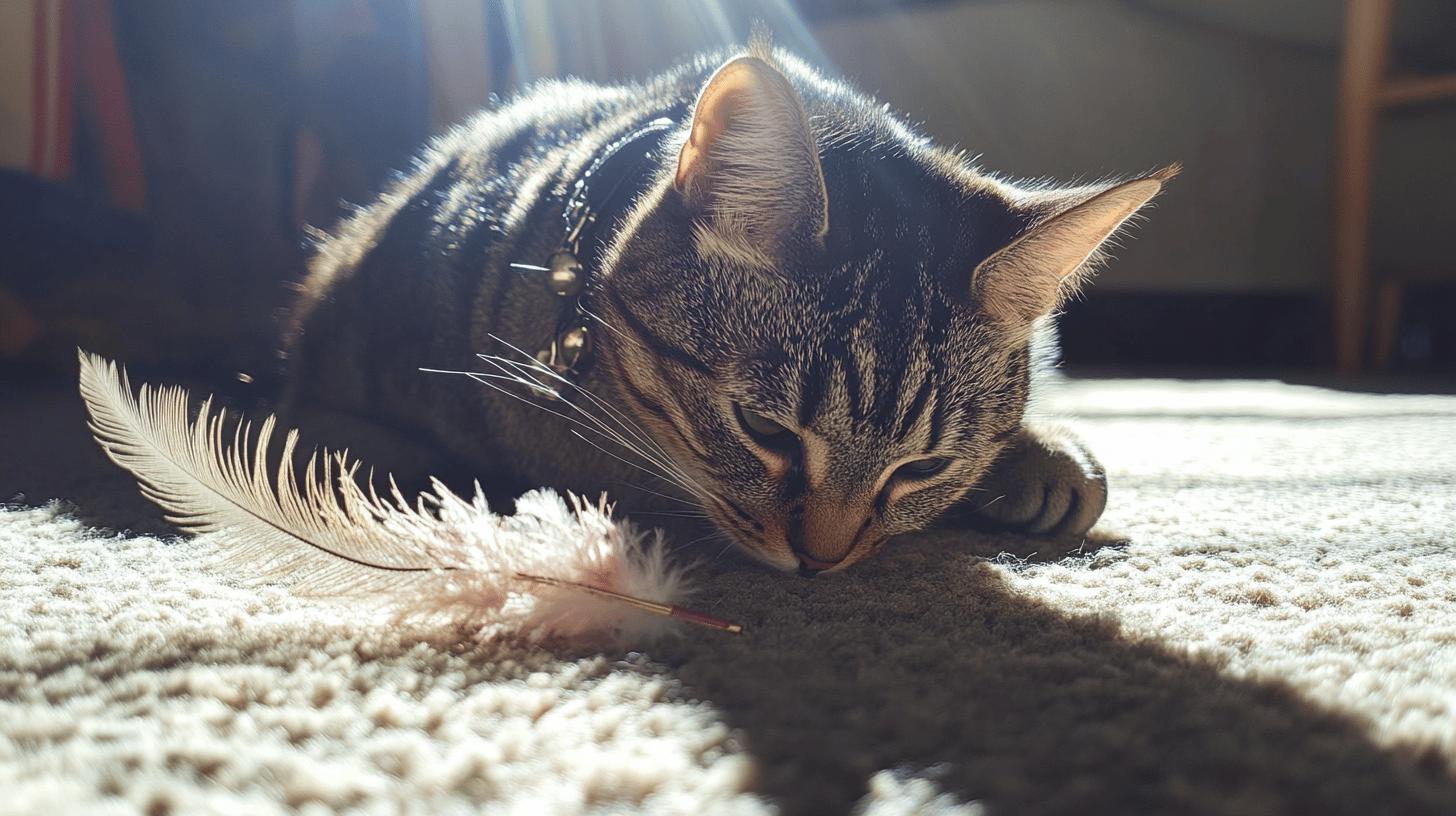
    Maintaining a cat’s interest and motivation can be challenging. Cats can become easily distracted or lose interest in repetitive tasks. Keep training sessions short and engaging to prevent boredom. Incorporating a variety of toys and treats enhances motivation and positive reinforcement.

    Handling setbacks is a normal part of any training process. Approach them with patience and understanding. If your cat struggles with a particular trick or seems hesitant, take a step back and reassess the training environment and techniques.

    Sometimes, giving your cat a break or changing the routine can reignite their interest. Always celebrate small victories and reward your cat’s efforts with treats and affection.

    Celebrating Success: Progress and Advanced Tricks

    Celebrating Success Progress and Advanced Tricks-4.jpg

    Celebrating training milestones is key to maintaining motivation for both you and your cat. Recognizing these achievements with rewards, like treats or extra playtime, reinforces positive behavior and encourages your cat to continue learning.

    When your cat performs its first successful backflip, it’s a moment worth celebrating. Consistent performance over multiple training sessions is another milestone that signifies progress. Acknowledging these accomplishments helps build your cat’s confidence and strengthens your bond.

    Once your cat masters the backflip, it’s time to introduce advanced tricks to keep them engaged. Cats thrive on mental stimulation, and challenging them with new tricks can prevent boredom. C

    onsider teaching your cat to jump through hoops or perform a sequence of flips. Introducing variety in your training regimen keeps your cat’s curiosity piqued and ensures that they remain active and interested in participating. Keep each session positive and rewarding, and your cat will continue to look forward to learning new skills.

    Milestone Reward
    First Successful Flip Treat and Praise
    Consistent Performance Extra Playtime
    Introduction of New Tricks Special Treat
    Sequence of Tricks Interactive Play Session

    Final Words

    Training your cat to do a backflip can be a fun challenge. We explored the natural agility of cats and their love for acrobatics. Using toys for motivation and creating a safe space are important. Patience and positive reinforcement drive success.

    We looked at overcoming challenges with safe practices. Celebrating milestones helps keep training engaging. Understanding how to train a cat to do a backflip requires dedication. Remember to enjoy the journey and stay patient, and you’ll see progress before you know it. Your bond with your cat will grow even stronger.

    FAQ

    How to train a cat to do a backflip without?

    A: To train a cat for a backflip, use toys like feathers to lure jumps. Position the toy high and slightly behind, encouraging the cat to flip naturally.

    How to train a cat to do a backflip while?

    A: While teaching a backflip, direct your cat with treats. Use toys to guide its focus and ensure jumps are controlled and safe.

    Can a cat do a backflip?

    A: Cats can indeed perform backflips, especially during play. Their flexibility and agility allow them to execute such acrobatic moves naturally.

    Can I train my cat to do tricks?

    A: Yes, you can train your cat to do tricks using consistency, positive reinforcement, and patience. Start with simple tricks, gradually progressing to more complex ones.

    How to train for back flips?

    A: Training for backflips involves using interactive toys to entice jumps, providing rewards, and ensuring your cat feels secure in a safe environment.

    How long does it take for a cat to learn a trick?

    A: The time varies for a cat to learn a trick. It depends on their interest and motivation. Generally, it can take from a few days to a few weeks with consistent practice.

    Related Articles

  • How to Train a Cat to Give Paw

    How to Train a Cat to Give Paw

    Can a cat really be trained to give a paw like a dog? While it might sound impossible, it’s a fun and rewarding trick for both you and your feline friend. Imagine the surprise of family and friends when your cat extends a paw on command! With the right approach, patience, and a touch of cat psychology, you can teach your beloved pet this impressive feat. Let’s walk through a step-by-step guide to ensure both you and your cat enjoy the training journey.

    Step-by-Step Guide to Train a Cat to Give Paw

    Step-by-Step Guide to Train a Cat to Give Paw-3.jpg

    Teaching your cat to give paw is not just an adorable trick—it’s a great way to bond and communicate with your feline friend. A structured approach is key to making the training process smooth and successful. By following these steps, you’ll create an environment where your cat can learn and enjoy the experience.
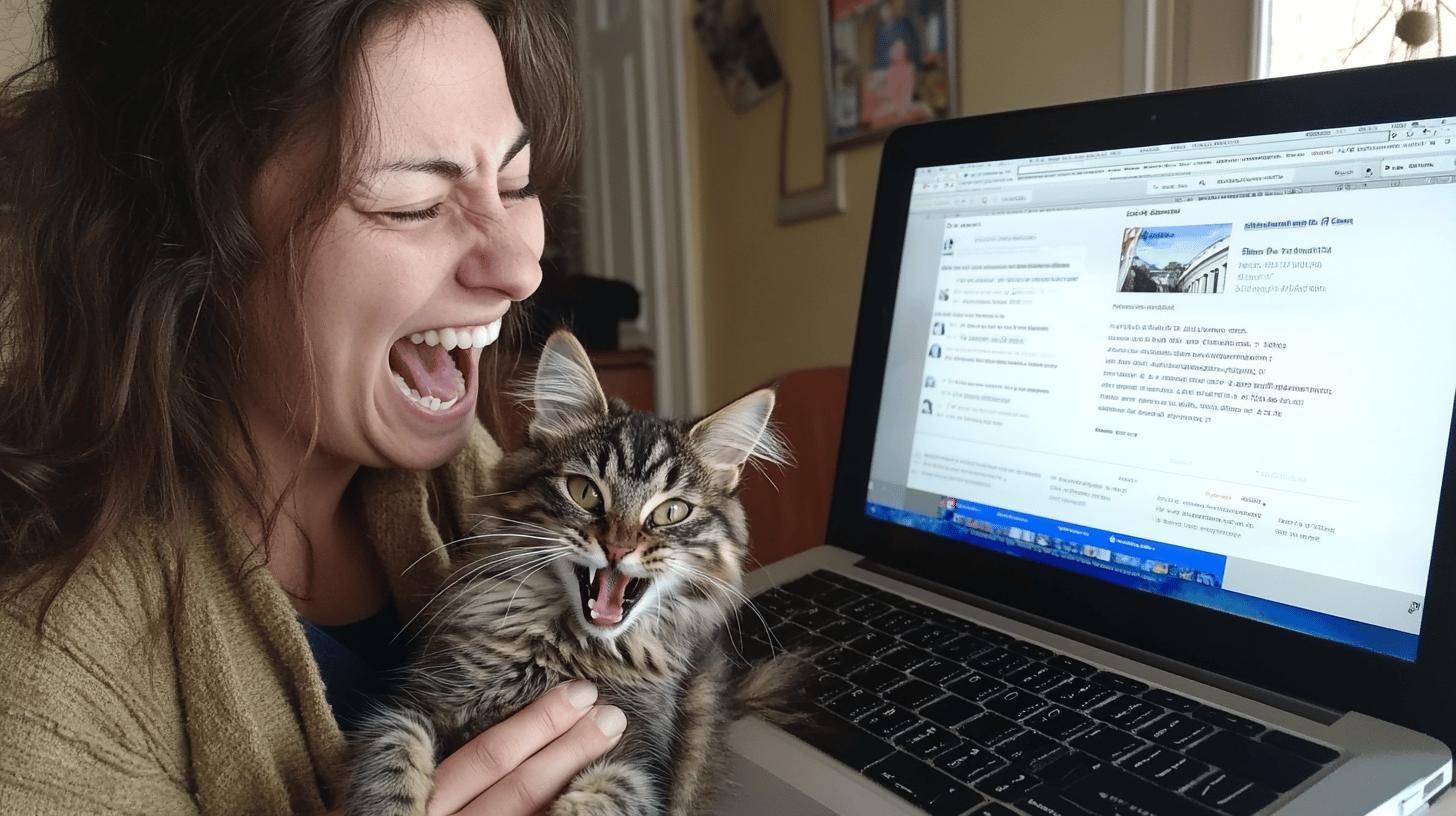
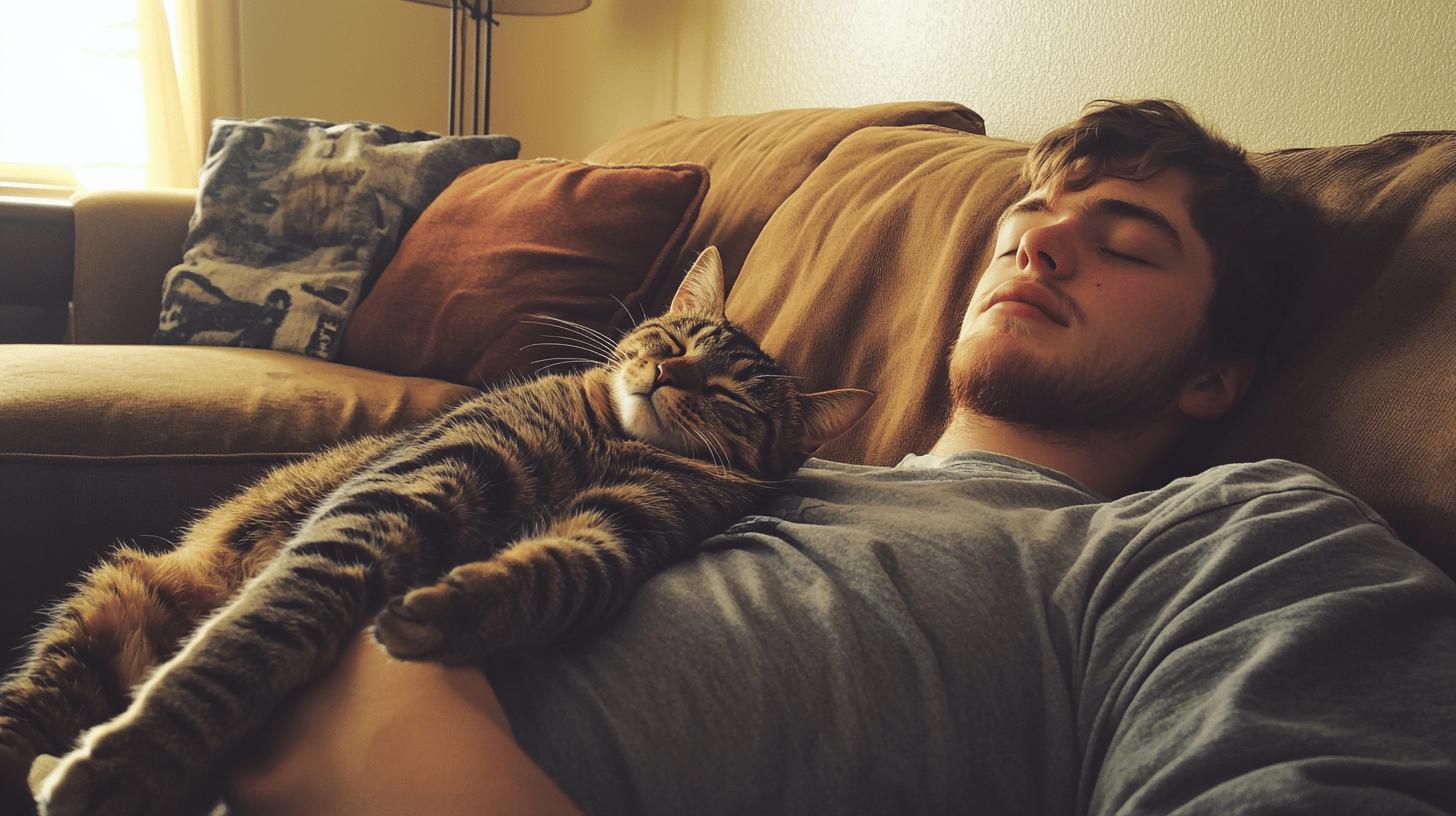
    • Step 1: Begin by placing your cat on a secure surface where they feel comfortable. Make sure the area is free from distractions to keep your cat focused on the task at hand.
    • Step 2: Offer your open hand, palm up, within reach of your cat’s front paw. As soon as your cat touches your hand, click and treat immediately. If your cat doesn’t respond, you might gently tap their paw until they do, then click and treat. Repeat this step several times.
    • Step 3: Once your cat starts touching your hand on their own, shape the behavior by clicking only when they touch the middle of your palm. This helps your cat understand the specific action you are teaching. Practice this 4 to 5 times.
    • Step 4: Gradually increase the interaction by gently holding your cat’s paw for a second before clicking and treating. As your cat becomes comfortable, introduce a light shake.
    • Step 5: Introduce a verbal command like “Paw” or “Shake” as you perform the action. Start by saying the command while you shake the paw, and then transition to saying the command earlier until your cat responds to it alone.

    Repetition and consistency are the cornerstones of successful cat training. Cats, unlike dogs, may take a little longer to grasp new commands. It’s crucial to practice regularly and maintain a consistent routine. This helps reinforce the behavior and solidifies the trick in your cat’s mind.

    Incorporate short, frequent sessions into your daily routine. Initially, reward your cat every time they perform the trick correctly. As they become more familiar with the command, gradually reduce treats, substituting with praise and affection. This keeps the training positive and enjoyable, ensuring your cat remains eager to learn and respond.

    Choosing the Right Environment and Timing for Training

    Choosing the Right Environment and Timing for Training-2.jpg

    Creating the right environment is crucial when training your cat to give paw. A quiet space free from distractions will help your cat focus better on learning the new trick. Cats are curious creatures, and any noise or sudden movement might divert their attention. Ensure the training area is a familiar and comfortable place for your cat, which can further enhance their ability to concentrate and learn.

    • Choose a quiet room away from household noise.
    • Remove any distracting objects or toys.
    • Use a familiar space where your cat feels safe.
    • Keep the lighting soft and natural if possible.
    • Ensure the temperature is comfortable for your cat.

    Timing the training sessions is just as important as the environment. Cats are more receptive when they are in a good mood and not distracted by hunger or sleepiness. Aim to train your cat during their more active periods of the day. Short sessions, around 5-10 minutes, keep your cat engaged without losing interest.

    By paying attention to your cat’s mood and energy levels, you’ll find the best time for training. Avoid times when your cat seems tired or overstimulated. With patience and the right setup, you’ll create an effective training session that helps your cat learn the paw shake trick with ease.

    Additional Tips for Teaching a Cat to Give Paw

    Training a cat to give paw can be an exciting adventure, but sometimes things don’t go as planned. Here are some tips to tackle common challenges and enhance your training experience.

    Troubleshooting Common Issues

    • Lack of Interest: If your cat seems uninterested, try using a more enticing treat or toy as motivation. Cats have different preferences, so finding the right reward can make all the difference.
    • Fear or Anxiety: Ensure your cat feels safe during training. If they appear anxious, take a break and try again later in a quieter space.
    • Inconsistent Response: If your cat sometimes responds and other times ignores the command, reinforce the behavior by rewarding them every time they perform the trick correctly during early training sessions.

    Alternative Methods for Less Responsive Cats

    • Use a Clicker: A clicker can be a precise way to mark the desired behavior. Click the moment your cat touches your hand, followed by a treat, to create a clear association.
    • Shorter Sessions: Keep training sessions brief, around 5 minutes, to maintain your cat’s focus and prevent them from losing interest.

    Benefits Beyond the Paw Shake Trick

    Training provides mental stimulation, which is important for a cat’s health and happiness. It strengthens the owner-pet bond, builds trust, and can even reduce behavioral issues by providing a constructive outlet for your cat’s energy.

    Regular training sessions can enhance your cat’s cognitive abilities and make them more adaptable to learning other tricks or commands in the future.

    Using Positive Reinforcement and Reward Systems

    Using Positive Reinforcement and Reward Systems-4.jpg

    Positive reinforcement is key to teaching your cat the paw shake trick. This approach uses rewards to encourage your cat to repeat desired behaviors. Unlike punishment, which can cause fear or confusion, positive reinforcement builds trust and strengthens your bond with your cat.

    When your cat performs the trick correctly, immediately reward them with something they love. This makes the experience enjoyable and motivates your cat to continue learning. Consistency is crucial, so always reward the correct behavior to create a strong association in your cat’s mind.

    Different types of rewards can be effective depending on your cat’s preferences. Treats are often the most powerful motivator, especially when they are reserved exclusively for training sessions. However, some cats respond well to other forms of reward:

    Reward Type Usage
    Treats Offer immediately after the correct behavior to reinforce the action.
    Toys Use as a reward by allowing playtime after a successful trick.
    Affection Provide petting or gentle praise to show approval, especially for affectionate cats.
    Play Engage in a favorite game as a reward for good performance.

    As your cat becomes more familiar with the paw shake trick, gradually transition from treats to other forms of rewards. Start by occasionally substituting a treat with praise or a short play session. This helps your cat understand that the trick is still valued even when treats are not always given.

    Over time, your cat will learn to associate the action with any positive outcome, not just the immediate reward of a treat. This approach ensures that your cat remains motivated and engaged in the training process long-term.

    Understanding Cat Behavior and Patience in Training

    Understanding Cat Behavior and Patience in Training-2.jpg

    Cats have a unique way of perceiving the world, which significantly affects how they respond to training. Unlike dogs, cats are often more independent and can be less motivated by commands. This makes understanding cat behavior crucial when teaching them new tricks like giving paw.

    Cats tend to have shorter attention spans and may need more time to grasp commands. Their natural curiosity means they might get distracted easily. Therefore, training should be adapted to fit their pace and temperament. By appreciating these behavioral traits, you can tailor your training approach to keep your cat engaged and willing to learn.

    Recognizing and respecting your cat’s limits is vital for a positive training experience. Pay attention to signs of stress or frustration, such as tail twitching, ears flattening, or sudden disinterest. If your cat shows these signals, it’s time to pause and allow them to relax. Pushing a cat beyond its comfort zone can lead to negative associations with training and hinder progress. Always end training sessions on a positive note, ensuring your cat remains eager for future interactions.

    Patience is the cornerstone of successful cat training. Cats often take longer to learn new tricks compared to dogs, so maintaining consistency is essential. Use the same command and reward system to reinforce learning. Avoid common mistakes such as irregular training schedules or inconsistent cues, as these can confuse your cat and slow down the learning process. By being patient and persistent, you create a supportive environment that encourages your cat to learn and thrive.

    Advanced Tips for Successful Cat Training

    Advanced Tips for Successful Cat Training-1.jpg

    Advanced cat training goes beyond basic tricks, challenging your feline friend with more complex behaviors. Begin by gradually increasing the complexity of tasks. Start with simple commands and slowly integrate multiple commands into a single session. For example, once your cat masters the paw shake, you can teach them to perform it while standing on their hind legs. This gradual transition helps maintain your cat’s interest and encourages continuous learning.

    • Introduce new tasks one step at a time to prevent overwhelming your cat.
    • Combine multiple commands into one training session for variety.
    • Use a rotating selection of high-value treats to keep your cat motivated.
    • Observe your cat’s body language to adjust sessions for optimal engagement.

    Each cat has its own personality, so tailoring training to fit their unique preferences is crucial. Some cats might thrive on affectionate praise, while others may need a variety of toys to stay motivated. Pay attention to what excites your cat, and incorporate those elements into your training sessions. By understanding their individuality, you can create a rewarding and effective training environment.

    Final Words

    Training a cat to give paw is a rewarding journey that starts with a secure spot and a clear plan. Using positive reinforcement, like special treats, helps your cat associate good behavior with rewards. Patience and understanding cat behavior are essential as you adapt to your cat’s pace, ensuring a stress-free learning environment.

    By keeping sessions brief and engaging, and tailoring techniques to suit your cat’s unique personality, you’ll make learning enjoyable for both of you. With the right steps, your furry friend will soon master the paw shake trick, adding to the joy you share together.

    FAQ

    How do I train my cat to give me his paw?

    To train your cat, use positive reinforcement. Start with them sitting, offer your open hand, and reward any touch. Gradually reward only correct paw placement and introduce a command like “Paw” or “Shake.”

    How to make your cat give you a high five?

    Teaching a high five involves similar steps to the paw trick. Offer your hand slightly elevated, encourage their interest, and reward any effort to touch or raise their paw towards your hand.

    What is the easiest trick to teach a cat?

    The easiest trick to teach is the “sit” command. Use a treat held above their nose, move it over their head until they naturally sit, and reward them immediately.

    Why does my cat not let me hold her paw?

    Cats might resist paw handling due to sensitivity or discomfort. They need time to build trust and comfort. Approach slowly, reward calm behavior, and be patient.

    What are easy tricks to teach your cat?

    Some easy tricks include sit, stay, come, and fetch. Start with basic commands and use positive reinforcement to encourage them. Always keep sessions short and fun.

    How can my cat stay stress-free when I’m on holiday?

    Ensure your cat stays in a familiar environment with a consistent routine. Leave comforting items and consider hiring a trusted pet sitter to provide companionship.

    Related Articles

  • How to Train a Cat Not to Pee on Beds

    How to Train a Cat Not to Pee on Beds

    Is your beloved feline turning your cozy bed into a personal litter box? This is a common and frustrating issue for many cat owners. But don't worry, there's hope for change. Understanding why your cat might be doing this is the first step. Health issues, stress, and territorial instincts often lead cats to urinate on beds. In this article, we'll explore practical steps to tackle this behavior and protect your bed. Let's make life more comfortable for both you and your furry friend by ensuring a happy and pee-free home.

    Understanding and Addressing Why Cats Pee on Beds

    Understanding and Addressing Why Cats Pee on Beds-1.jpg

    When a cat suddenly starts urinating on the bed, it can be frustrating for any pet owner. One of the first steps in addressing this behavior is to rule out any medical issues. Cats may urinate outside their litter box due to underlying health conditions such as urinary tract infections, kidney problems, or diabetes. Consulting with a veterinarian is essential to ensure your cat's health isn't compromised. A thorough examination can determine if a medical condition is the root cause of the inappropriate urination.

    Environmental changes can significantly impact a cat's behavior as well. Cats are creatures of habit, and disruptions in their routine or environment can lead to stress-related behaviors like urinating on beds. Moving to a new home, introducing new pets, or even minor changes in the household can trigger anxiety in cats. Understanding these stress triggers can help manage their behavior more effectively.

    Common reasons why cats urinate on beds include:

    • Litter Box Preferences: Cats may dislike the type of litter or location of the litter box. Make sure there is at least one litter box per cat, plus an extra, placed in quiet, easily accessible locations.
    • Territorial Marking: Especially in multi-cat households, cats may mark their territory with urine to assert dominance or cope with insecurity.
    • Insecurity: Changes in the household, like new family members, can make cats feel insecure, leading them to mix their scent with yours on the bed.

    To address these issues effectively, start by ensuring your cat's health is in check with a vet visit. Then, focus on creating a calm and predictable environment for your cat. Maintain a consistent daily routine and minimize changes that can cause stress. Enhance the litter box setup by choosing the right type of litter and providing multiple boxes in serene locations. Additionally, increase interaction time with your cat through play and bonding activities to boost their confidence and security. These strategies can help curb the behavior and keep your bedding dry and fresh.

    Step-by-Step Guide to Train Your Cat Not to Pee on Beds

    Step-by-Step Guide to Train Your Cat Not to Pee on Beds-1.jpg

    Consistency and positive reinforcement are key when training your cat not to pee on beds. Cats respond well to routines and rewards. By creating a predictable environment and rewarding appropriate behavior, you can guide your kitty towards better bathroom habits. Here's a step-by-step guide to help you achieve this:

    1. Set Up Multiple Litter Boxes
      Provide at least one litter box per cat plus one extra. This gives your cat options and reduces territorial disputes.

    2. Place Litter Boxes Strategically
      Ensure boxes are in quiet, low-traffic areas, away from noisy appliances. Cats like privacy when doing their business.

    3. Choose the Right Litter

    Some cats are picky about litter. Experiment with different types to find one your cat prefers, such as unscented clumping clay.

    1. Keep Litter Boxes Clean
      Scoop daily and do a full clean weekly. Cats avoid dirty boxes, and a clean box encourages use.

    2. Use Deterrent Sprays
      Apply pet-safe deterrent sprays on the bed to make it less appealing. Citrus scents can be effective as cats generally dislike them.

    3. Provide Alternative Engagement

    Offer toys and scratching posts to keep your cat mentally and physically stimulated, reducing stress-related urination.

    1. Reward Correct Behavior
      Every time your cat uses the litter box, reward them with treats or affection. Positive reinforcement builds good habits.

    2. Monitor and Adjust
      Pay attention to your cat's preferences and make adjustments as needed. If they seem to prefer a specific litter or box location, cater to that preference.

    3. Address Household Changes

    Try to minimize changes in your home environment. If changes are necessary, introduce them gradually to reduce stress.

    1. Consult a Vet if Needed
      If the behavior persists, consult a vet to rule out medical issues, as these can contribute to inappropriate urination.

    Maintaining these practices is crucial for long-term success. Keep routines consistent and continue to offer positive reinforcement. This not only helps with the current issue but also strengthens your bond with your cat. Over time, with patience and persistence, your cat will likely develop better habits and feel more secure in their environment.

    Cleaning and Deterrent Techniques for Cat Urine on Beds

    Cleaning and Deterrent Techniques for Cat Urine on Beds-1.jpg

    When it comes to managing cat urine on beds, immediate cleaning is crucial. The lingering scent of urine can tempt your cat to mark the same spot again. Removing all traces of odor helps prevent repeated incidents.

    • Enzymatic Cleaners: Use enzymatic cleaners specifically designed to break down proteins in cat urine. These cleaners neutralize the odor, making the area less attractive for future urination.
    • Baking Soda and Vinegar: Apply a mixture of baking soda and vinegar to absorb and neutralize odors. Let it sit before vacuuming for best results.
    • Hydrogen Peroxide Solution: Mix hydrogen peroxide with a bit of dish soap to lift stains and smells. Test on a small area first to ensure it doesn’t bleach the fabric.
    • Frequent Washing: Wash beddings frequently using a pet-safe detergent to remove any residual scents.

    Deterring your cat from returning to the bed is equally important. Consider incorporating deterrent products to keep your furry friend away:

    Citrus-scented sprays are often effective as cats typically dislike the smell. Spritz a small amount on the bed or use double-sided tape at the edges to make the surface less appealing. These methods can discourage your cat from jumping onto the bed, reducing the likelihood of future accidents.

    Final Words

    Training a cat not to pee on beds begins with understanding the reasons behind the behavior. Health checks are vital to rule out medical causes like infections or stress. Creating a comforting environment, enhancing litter box setups, and maintaining consistency in routines play key roles.

    Implementing positive reinforcement and using deterrent sprays can improve the situation. Coupled with effective cleaning methods using enzymatic cleaners, you can prevent future mishaps. With patience and dedication, you can successfully learn how to train a cat not to pee on beds, ensuring a happier home for both you and your furry friend.

    FAQ

    Why is my cat peeing on my bed all of a sudden?

    A cat might start peeing on a bed suddenly due to medical issues. Consulting a veterinarian can rule out health concerns. Stress and changes in the environment can also trigger this behavior.

    How do I stop my cat from peeing on my bed?

    To stop a cat from peeing on a bed, maintain a clean litter box in a quiet place and ensure it’s easily accessible. Use positive reinforcement when your cat uses it correctly.

    How can I train a cat not to pee on beds at night?

    Training a cat not to pee on beds at night involves setting a consistent routine. Reward your cat for using the litter box and remove stress by providing toys and comfortable spaces.

    What scent deters cats from peeing?

    Citrus-scented sprays can deter cats from peeing in unwanted areas. Cats typically dislike these smells, making them effective for behavioral training.

    How do you discipline a cat for peeing?

    Discipline through positive reinforcement rather than punishment. Reward your cat when it uses the litter box correctly and ensure a stress-free environment.

    What home remedies help clean cat pee from bed?

    Use enzymatic cleaners for cleaning cat pee on beds. It helps remove odors that attract cats to re-urinate. Consider washing bedding thoroughly to eliminate all traces of scent.

    Related Articles

  • How to Train a Cat to Use a Cat Flap

    How to Train a Cat to Use a Cat Flap

    Ever wondered why some cats casually stroll through a cat flap, while others treat it like a terrifying trap? Training your cat to use this handy exit can seem a bit tricky, but it's simpler than you think. The secret lies in patience and consistent steps. In this guide, I'll walk you through the process from introduction to mastery. You'll discover how to make your cat comfortable with the flap, turning it into just another part of their safe and cozy world. Ready to get started? Let's dive in!

    Comprehensive Guide on Training a Cat to Use a Cat Flap

    Comprehensive Guide on Training a Cat to Use a Cat Flap-1.jpg

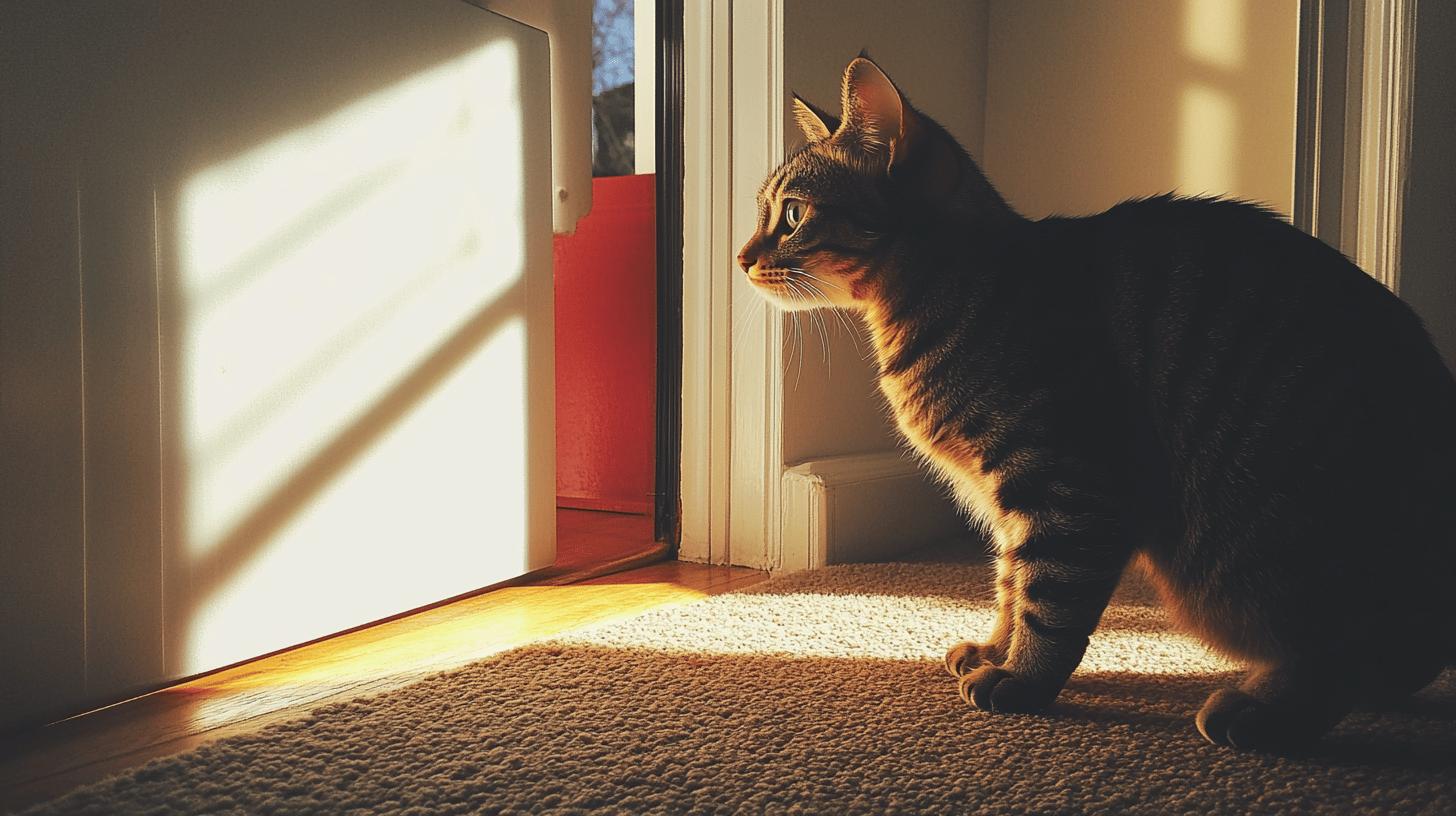
    Training a cat to use a cat flap requires patience and consistency. The key is to introduce the flap gradually, allowing your cat to familiarize itself without feeling threatened. Start by leaving the flap open so your cat can explore and sniff around it.

    This exposure helps reduce fear and builds curiosity. By making the flap a regular part of their environment, cats are more likely to investigate and attempt to use it. Make sure the flap is at a comfortable height and size for your cat to pass through easily. Creating a positive association with the flap is crucial in this initial phase.

    Step-by-step cat door training:

    1. Introduce the Flap: Prop the flap open and let your cat explore without any pressure door training. Reward them for showing interest.
    2. Demonstrate Use: Gently guide your cat through the flap yourself or use a toy to entice them through.
    3. Gradually Lower the Flap: Once your cat is comfortable with the open flap, start lowering it a little more each time they use it.
    4. Use Treats: Encourage your cat with treats or their favorite snacks on the other side of the flap.
    5. Repeat and Reinforce: Consistently practice these steps daily to build confidence.
    6. Close the Flap: When your cat is accustomed to pushing the flap, close it completely and watch them navigate it independently.

    Positive reinforcement is a powerful tool in cat training. Offering treats, praise, and affection can motivate your cat to engage with the flap. Treats like small pieces of cooked chicken or commercial cat treats are excellent incentives.

    Toys can also be useful; dangling a toy through the flap or using a laser pointer can entice a playful cat to pass through. Remember to celebrate small victories. Each time your cat uses the flap, reward them with enthusiasm to reinforce the behavior.

    Troubleshooting common issues may involve addressing your cat's reluctance or fear. Ensure the flap is the right size and is located in an accessible area where your cat feels safe. If your cat seems frightened by the noise, try taping a soft cloth on the flap edge to muffle it.

    Practice patience and maintain a calm demeanor to help your cat feel secure. Consistent practice is essential, so incorporate flap training into your daily routine. With time and encouragement, your cat will naturally learn to navigate their new point of access.

    Choosing the Right Cat Flap for Your Pet

    evening access.com/wp-content/uploads/2024/12/Choosing-the-Right-Cat-Flap-for-Your-Pet-1.jpg” alt=”Choosing the Right Cat Flap for Your Pet-1.jpg”>

    When it comes to selecting a cat flap, there are several options to consider. Manual models are the simplest and require your cat to push the flap open. Electronic flaps, on the other hand, offer the advantage of controlled access, often using a sensor to unlock the flap when your cat approaches.

    Microchip-activated flaps provide added security by recognizing your cat's microchip, preventing stray animals from entering your home. Each type has its benefits, and the choice largely depends on your lifestyle and how much control you want over your cat's comings and goings.

    The size of the cat flap is crucial for your pet’s comfort and ease of use. A flap that is too small can make it difficult for your cat to pass through, leading to frustration and reluctance to use it. Measure your cat from the ground to the base of its stomach to ensure the flap is at a suitable height. A properly sized flap should allow your cat to move through without squeezing or struggling, encouraging regular use.

    Type of Cat Flap Features
    Manual Simple, cost-effective, requires cat to push open
    Electronic Sensor-based, controlled access, often programmable
    Microchip-Activated Recognizes microchip, prevents entry by stray animals

    When deciding on a cat flap, take into account your cat's temperament and your home's security needs. A timid or anxious cat might benefit from a quieter, microchip-activated flap. If security is a priority, an electronic or microchip model can prevent unwanted guests. Ultimately, the right cat flap will balance your pet's comfort with the necessary security features for your home.

    Ensuring Safety and Security with Cat Flaps

    Ensuring Safety and Security with Cat Flaps-1.jpg

    When installing a cat flap, ensuring it is secure and fits properly is crucial to prevent unwanted intrusions. A poorly fitted flap can be a weak point, so double-check the installation and make sure it is sturdy. Consider the location of the flap as well, placing it in an area that is not easily accessible from the outside. Additionally, opt for a flap with security features that suit your home's needs.

    Features to look for in secure cat flaps:

    • Lockable Options: Choose a flap that can be locked to prevent access when needed.
    • Microchip Recognition: Ensures only your cat can enter, keeping strays out.
    • Multiple Entry Modes: Allows for flexibility, such as in/out only or fully locked.
    • Reinforced Materials: Provides extra durability against potential break-ins.

    Before allowing your cat to use the flap unsupervised, ensure the outdoor environment is safe and free from potential hazards. Check for any nearby dangers such as busy roads or unfriendly neighborhood animals outdoor safety. Regularly inspect the flap and surrounding area to maintain a cat-safe door environment. By taking these precautions, you can manage outdoor access effectively and keep your feline friend secure.

    Final Words

    Training a cat to use a cat flap calls for patience and persistence. In this guide, we've explored the steps to introduce the flap gradually, use positive reinforcement, and troubleshoot common issues. Choosing the right cat flap also plays a crucial role, with options like electronic and microchip-activated models available.

    Remember, safety is key; ensure the flap fits securely and check the outdoor environment. By maintaining a positive approach and considering your cat's comfort, you can successfully train your cat to use a cat flap. Happy training!

    FAQ

    How to teach an older cat to use a cat flap?

    Start by propping the flap open and using treats to create a positive experience. Gradually lower it as your cat becomes comfortable. Consistency and patience are key to success.

    How do I get my cat to use a microchip cat flap?

    Introduce the microchip flap in a relaxed manner. Gently guide your cat towards it and offer rewards when they interact with it. Practice consistently to build your cat's comfort and familiarity.

    How long does it take for a cat to use a cat flap?

    Cats vary in their learning pace. It could take from a few days to weeks. Regular practice and positive reinforcement help speed up the process.

    How do you train a feral cat to use a cat door?

    Use enticing food or treats near the door to gain the cat's trust. Gradually encourage interaction with the door by rewarding each successful attempt.

    Will my cat ever use the cat flap?

    With patience and the right training techniques, most cats learn to use a cat flap. If your cat remains reluctant, experiment with different motivation methods, like toys or different treats.

    Are cat flaps a good idea?

    Cat flaps offer your pet freedom and independence. When chosen and installed correctly, they add convenience for both cat and owner while maintaining security.

    What are some training steps for a cat flap?

    1. Prop open the flap initially.
    2. Use treats to attract the cat.
    3. Gradually lower the flap.
    4. Offer praise and rewards for using it.
    5. Practice daily.
    6. Troubleshoot any issues with fear or size.

    How to troubleshoot common cat flap issues?

    Check if the flap fits well and isn't intimidating. Engage your cat with toys. Ensure the location is accessible and free from obstacles, adjusting training methods if fears persist.

    What should I consider when choosing a cat flap?

    Consider your cat's size, temperament, and your home's security needs. Options include electronic, microchip, and manual models, each offering various security and convenience features.

  • How to Train a Cat to Take a Bath Successfully

    How to Train a Cat to Take a Bath Successfully

    Think cats and water don't mix? It's a widespread belief, but sometimes, giving your feline friend a bath is not just a good idea—it's necessary. Whether dealing with annoying skin issues or simply a sticky mess, baths can boost their health and comfort. While many cats are naturally wary of water, with patience and the right strategy, you can train your cat to manage bath time like a pro. Get ready to learn how to make this seemingly impossible task a bit more manageable and less stressful for both you and your cat.

    Step-by-Step Guide on How to Train a Cat to Take a Bath

    Step-by-Step Guide on How to Train a Cat to Take a Bath-1.jpg

    Training a cat to take a bath can be crucial for their health, particularly if they suffer from certain skin conditions, fungal infections, or if the owner has allergies. While it's uncommon for cats to enjoy baths, sometimes it's necessary to introduce this practice.

    Cats are known for their grooming habits, but when they encounter greasy fur or substances they can't clean off themselves, a bath becomes essential. It's important to address these situations to keep your cat healthy and comfortable.

    Desensitizing your cat to water is a vital step in the bathing process. Cats often dislike water, so a gradual introduction is key to reducing stress and anxiety. Start by letting your cat explore the bathroom without the pressure of an immediate bath.

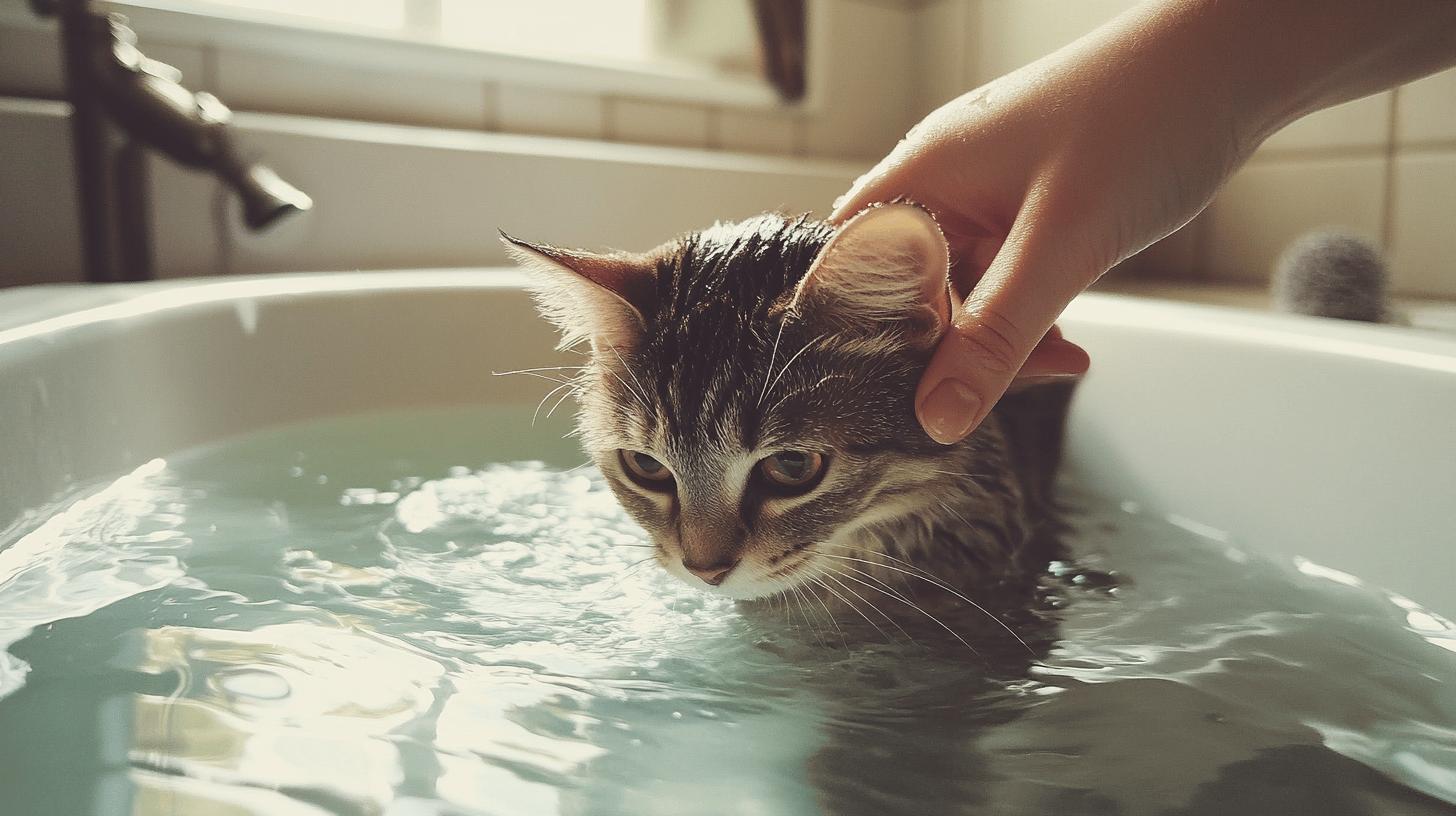
    Allow them to play around the tub or sink when it's dry, and slowly introduce them to the sound of running water. You might even let them dip a paw into a shallow dish of water to get used to the sensation. This gradual process will help them become more comfortable with the idea of getting wet.

    Patience and positive reinforcement play a central role in training cats to accept baths. Use treats, praise, and gentle petting to reward your cat for calm behavior around water. This positive association makes the experience less intimidating.

    Bath time should be a relaxed event, so take it slow and be mindful of your cat's responses. If they seem stressed, give them a break and try again later. Remember, the aim is to make bath time a pleasant experience, not a dreaded one.

    Here's a straightforward list to guide you through training your cat to take a bath:

    1. Introduce the Environment: Let your cat explore the bathroom where baths will occur. Allow them to sniff and get comfortable with the space.

    2. Familiarize with Water Sounds: Gradually introduce the sound of running water by turning on the faucet at a trickle. Let your cat listen and observe without pressure.

    3. Involve Water Gradually: Start with a shallow dish of water. Encourage your cat to dip their paws and get used to the sensation.

    1. Positive Associations: Use treats and praise when your cat remains calm around water. This builds a positive connection with the bathing process.

    2. Practice Short Sessions: When ready, try short and gentle bath sessions. Keep them brief and reward your cat with treats and affection afterward.

    Implementing these steps can help in bathing reluctant cats and gradually desensitize them to water. By following this guide, you're setting the groundwork for a less stressful and more successful bath time for your feline friend.

    Understanding Cat Behavior and Creating a Stress-Free Bathing Environment

    Step-by-Step Guide on How to Train a Cat to Take a Bath-2.jpg

    Creating a calm environment is essential when you're preparing your cat for a bath. Cats are sensitive creatures, and their comfort level is directly influenced by the atmosphere around them. A serene setting helps minimize anxiety and makes the bathing process smoother for both you and your cat.

    This means setting up a quiet, warm space with no loud noises or sudden movements. Soft lighting and a room temperature that's just right go a long way in keeping your cat at ease. The calmer the environment, the more receptive your cat will be to the experience.

    Calming aids can be beneficial in easing a cat's anxiety during bath time. Products like pheromone sprays or diffusers can create a soothing ambiance. These mimic the natural calming chemicals cats release, helping them feel secure. You can also try playing gentle music or offering a favorite toy to distract your cat during the bath. Techniques like these can reduce stress and make the experience more pleasant.

    Cats have varied temperaments, which can significantly affect how they respond to baths. Some cats are naturally more laid-back, while others may be more anxious or resistant. Understanding your cat's personality is crucial. For a calm cat, the bathing process might be relatively straightforward. An anxious cat might need more reassurance and a slower introduction to the water. Tailoring your approach to suit your cat's temperament ensures a more successful bath time.

    Handling resistance or aggression in cats during baths requires patience and strategy. If your cat becomes aggressive, it's important to stay calm and not force the situation. Instead, try taking breaks and offering treats to encourage cooperation. Gently restraining your cat with a towel can provide a sense of security without making them feel trapped. Remember, the goal is to help your cat feel safe, not to rush through the process.

    Maintaining a positive experience is key to making bath time less stressful for your cat. Use treats and praise as rewards, reinforcing good behavior and creating a positive association with baths. Over time, this can transform a dreaded activity into one that your cat tolerates, or even enjoys. Consistency and patience are your best tools in creating a stress-free bathing environment.

    4 Tips for Creating a Stress-Free Bathing Environment for Cats

    1. Set the Scene: Ensure the room is quiet and warm. Soft lighting and a relaxed atmosphere help keep your cat calm.

    2. Use Calming Aids: Pheromone sprays or diffusers can help soothe your cat. Consider gentle music or a favorite toy for distraction.

    3. Understand Your Cat's Temperament: Tailor your approach based on whether your cat is calm, anxious, or resistant. Patience is key.

    1. Reward Positive Behavior: Use treats and praise to create a positive association with bath time, reinforcing calm behavior.
    Behavior Type Suggested Approach
    Calm Proceed gently with minimal restraint, using soothing voices and gentle touches.
    Anxious Introduce water gradually, use calming aids, and offer frequent reassurance.
    Resistant Take breaks, provide treats, and gently restrain with a towel for security.

    Recommended Tools and Products for Cat Bathing-1.jpg

    Selecting the right tools and products is key to making bath time a positive experience for your cat. A non-slip mat is essential, providing stability and preventing your cat from slipping, which can cause stress.

    A gentle cat shampoo is a must; it should be free from harsh chemicals and specifically designed for your cat's skin type to avoid irritation. A handheld showerhead allows for controlled water flow, making rinsing easier and less intimidating for your cat. These tools help create a smoother and more comfortable bathing process.

    Choosing cat-friendly shampoos and products tailored to your cat's temperament can make a big difference. Some cats may benefit from hypoallergenic shampoos, especially if they have sensitive skin.

    Additionally, consider using calming sprays or diffusers to ease bath-time anxiety. These products are designed to work with your cat's natural needs, ensuring they feel safe and comfortable throughout the process. By matching the products to your cat's specific requirements, you enhance their bathing experience and make it less stressful.

    6 Essential Tools and Products for Cat Bathing

    1. Non-slip mat
    2. Gentle cat shampoo
    3. Handheld showerhead
    4. Hypoallergenic shampoo (if needed)
    5. Calming spray or diffuser
    6. Soft towels for drying

    Safety Considerations and Techniques for Cat Bathing

    Recommended Tools and Products for Cat Bathing-2.jpg

    When bathing your cat, preventing escape is a top safety concern. A slippery cat can quickly turn a calm bath into chaos. Make sure the bathroom door is securely closed and all escape routes are blocked. Handling your cat with gentle firmness is key. This provides security and reduces stress.

    To enhance safety, use lukewarm water to avoid shock. A handheld showerhead helps control water flow. Keep it away from the cat's face and ears. This prevents discomfort and potential infections. A non-slip mat in the tub adds stability. After the bath, dry your cat thoroughly. This step avoids chills, especially in cooler weather.

    5 Safety Tips for Ensuring a Secure and Safe Cat Bath

    1. Secure the Environment: Close doors and block escape routes to prevent sudden escapes.
    2. Control Water Flow: Use a handheld showerhead to gently direct water away from the face and ears.
    3. Use Lukewarm Water: Ensure the water is not too hot or cold to avoid discomfort.
    4. Employ a Non-Slip Mat: Provide stability and prevent slipping during the bath.
    5. Thorough Drying: Dry your cat completely to avoid chills, especially in cooler temperatures.

    Final Words

    Getting your kitty comfortable with baths can be tricky, but with patience and a gentle approach, it's possible. Gradual desensitization to water, creating a calming space, and having the right tools make a big difference. Understanding your cat's behavior ensures a stress-free experience for both of you. Plus, choosing cat-friendly shampoos supports their well-being. Remember, the journey on how to train a cat to take a bath might take time. But every small step is a victory. Keep the process positive, and enjoy a cleaner, happier cat.

    FAQ

    How do you train a cat to take a bath at night?

    Training a cat to take a bath at night involves gradual desensitization. Start by introducing your cat to water slowly and use positive reinforcement, like treats, to associate bath time with positive experiences.

    How do you bathe a cat without getting scratched?

    The key is creating a stress-free environment. Use calming aids, maintain a comfortable water temperature, and gently handle your cat. It's helpful to wear long sleeves and keep your cat's nails trimmed.

    How do you calm a cat for a bath?

    Use calming aids like pheromone sprays or diffusers. Speak softly and pet your cat to soothe them. Giving a treat before and after the bath can also help ease anxiety.

    Is it cruel to bathe cats?

    Bathing cats isn't cruel if done properly. Some cats need baths for health reasons like skin conditions. Always prioritize the cat's comfort and keep the bath short.

    Can you train a cat to like baths?

    You can condition a cat to accept baths through patience and gradual exposure. Make the experience positive with treats and calm interactions.

    What is the easiest way to give a cat a bath?

    Prepare everything beforehand and use a handheld showerhead for better control. Keep the bath quick and gentle, and speak reassuringly to your cat throughout the process.

    How do you bathe an aggressive or unwilling cat?

    Handle them carefully and consider using a professional if aggression is severe. Minimize stress with a calm environment, and never force them into the water, as this increases anxiety.

    Related Articles

  • How to Train a Cat to Be Quiet

    How to Train a Cat to Be Quiet

    Is your cat's constant meowing driving you up the wall? You're not alone counter jumping. While vocalizing is a natural part of a cat's communication toolkit, excessive meowing can turn into a persistent challenge for cat owners. The key to a quieter household is understanding the reasons behind those incessant cries. From attention-seeking to expressing discomfort or anxiety, each meow carries a message.

    By learning how to identify and address these underlying causes, you can train your feline friend to enjoy more peaceful moments meowing solutions.com/how-to-train-a-cat-not-to-do-something/”>behavioral correction. Let's dive into the steps to transform those noisy nights into tranquil evenings.

    Understanding Why Cats Vocalize

    Understanding Why Cats Vocalize-1.jpg

    Cats meow for many natural reasons and it's their way of communicating with us. Unlike dogs, who bark for various reasons, cats have a more subtle approach. From the moment they are born, kittens use vocalizations to communicate with their mothers. As they grow, meowing becomes a tool to interact with humans. Cats often meow to signal an immediate need or desire. Here are some common reasons why cats meow:

    • Attention Seeking: They might want to be fed, played with, or simply held.
    • Expressing Discomfort: A meow might indicate they are in pain or uncomfortable.
    • Greeting: Some cats vocalize when their owners return home as a form of greeting.
    • Announcing Territory: Cats may meow to assert their presence or mark their territory.
    • Stress or Anxiety: Changes in their environment can cause cats to meow more.

    Recognizing when a cat's vocalization is excessive is key to addressing it. If a cat meows continuously without a clear reason, it could be a sign of underlying issues. Excessive meowing might indicate boredom, stress, or even medical concerns. If a cat’s meowing suddenly increases or changes in tone, it’s crucial to pay attention. Understanding body language along with vocal cues can help differentiate between normal communication and excessive noise. Paying attention to these signals can guide you in knowing when to seek further intervention, such as a vet check-up.

    Identifying and Addressing Underlying Causes

    Identifying and Addressing Underlying Causes-1.jpg

    Before you start training your cat to be quiet, it's crucial to rule out any medical conditions that might be causing excessive vocalization. If your cat's meowing is a new behavior, or if your feline friend is getting older, there could be underlying health issues at play. Conditions like hearing loss, hyperthyroidism, or cognitive dysfunction can lead to increased vocalizations. A visit to the veterinarian will help determine if a medical issue is contributing to your cat's chatter. Getting a clean bill of health is the first step in addressing any excessive noise.

    Beyond medical reasons, behavioral factors can also lead to a chatty cat. Sometimes, we might unintentionally reinforce the very behavior we want to change. If you rush to feed, pet, or play with your cat every time it meows, you might be teaching it that meowing gets results. Your cat learns that vocalizing is a successful way to get attention or treats. Identifying these behavioral patterns is key to understanding why your cat might be more vocal than usual.

    If excessive meowing persists, consulting a veterinarian can provide further insights. A vet can offer advice on distinguishing between normal communication and problematic vocalization. They might suggest behavioral strategies or recommend a specialist in feline behavior. Professional guidance ensures that you address the root cause of the issue, helping you and your cat communicate more effectively without the constant noise.

    Training Techniques to Reduce Cat Vocalization

    Training Techniques to Reduce Cat Vocalization-1.jpg

    Training a cat to be quieter is all about understanding their behavior and using it to guide them gently. Cats are smart and can learn what actions lead to rewards. The key is to reinforce the behaviors you want while ignoring the ones you don't. By doing this, you teach your cat that silence, rather than meowing, is what gets them the attention or treats they crave. This approach requires consistency and patience, but with time, your cat will start to meow less.

    Here are five practical steps to train your cat to be quieter:

    1. Ignore the Meowing: Do not respond to your cat's meows. This can be tough, but it’s essential to avoid reinforcing the behavior.
    2. Reward Silence: When your cat is quiet, immediately reward them with a treat or affection.
    3. Increase Quiet Time: Gradually extend the time your cat must be quiet before getting a reward.
    4. Use Clicker Training: Consider using a clicker to mark the quiet moments and follow it with a treat.
    5. Create a Routine: Consistent feeding and playtimes can reduce meowing caused by uncertainty or boredom.

    Patience and consistency are crucial throughout this process. Cats won't change their behavior overnight, and each cat learns at its own pace. Stick to the plan even if progress seems slow. Cats are creatures of habit, and with consistent training, they will begin to understand that silence is golden. The rewards will reinforce this new behavior.

    You might wonder how long it takes to see results. While some cats may show improvement in just a few weeks, others might take a couple of months. This timeline varies depending on the cat's personality and the consistency of your training. Keep the sessions short to avoid overwhelming your feline friend. Remember, every quiet moment is a step toward a more peaceful coexistence with your cat.

    Using Environmental Enrichment to Reduce Vocalization

    Using Positive Reinforcement and Environmental Enrichment-1.jpg

    Enriching your cat's environment is essential for reducing vocalization. Cats may meow due to boredom or anxiety, so offering stimulating activities and toys can keep them occupied and content. By focusing on environmental enrichment, we can tackle the root causes of vocalization and provide a more harmonious home life. Here are some enrichment activities to consider:

    • Interactive Toys: Engage your cat's hunting instincts with toys that move or make sounds.
    • Puzzle Feeders: Challenge your cat during mealtime, making it a more engaging experience.
    • Cat Trees and Perches: Give your cat vantage points to observe their surroundings.
    • Scratching Posts: Allow your cat to expend energy and mark territory.
    • Regular Play Sessions: Tire your cat out with dedicated playtime, reducing the urge to meow for attention.

    Utilizing these techniques can encourage quieter behavior by addressing the underlying causes of vocalization. Regular play and a stimulating environment can significantly reduce the need for a cat to vocalize excessively. By focusing on enrichment, you're providing practical solutions that benefit both you and your feline friend.

    When to Seek Professional Help for Cat Vocalization

    When to Seek Professional Help for Cat Vocalization-1.jpg

    There are times when seeking professional help for your cat's vocalization is the best course of action. If your cat's excessive meowing persists despite your best training efforts, it might be time to consult a cat behaviorist or a veterinarian.

    Professional help is particularly important if the vocalization is accompanied by other behavioral changes, such as aggression or withdrawal, which could indicate stress or medical issues. Additionally, if your cat's meowing is a new behavior, especially in older cats, a vet visit can help rule out underlying health conditions.

    For those looking for professional resources, a directory of certified cat behaviorists and trainers can be a valuable tool. These experts offer insights into problem-solving meowing issues and can provide tailored advice for your cat's specific needs.

    Educational materials, such as downloadable posters and courses, are also available to guide you in understanding and managing your cat's behavior. Veterinary students and faculty can benefit from discounts on these resources, supporting their education in handling techniques and feline behavior.

    Final Words

    Understanding why cats vocalize, from seeking attention to health issues, is key to addressing their noisiness. Identifying underlying causes helps ensure there's no medical problem, and you might discover behavioral patterns that need change. Training your cat to be quiet involves consistency and rewarding silence, which can guide them to a more peaceful routine.

    Positive reinforcement and enriching activities can make a big difference, offering your cat new ways to engage and communicate.

    If these steps don't help, professional advice can offer tailored solutions. Your pet’s quietude is within reach with patience and the right approach.

    FAQ

    How to train a cat to be quiet in the morning?

    To train a cat to be quiet in the morning, reward quiet behavior moments. Gradually extend the quiet time before rewarding. Stay consistent and only acknowledge your cat when it's silent.

    How to train a cat to be quiet at night?

    Training cats to be quiet at night involves ignoring meows and rewarding silent behavior. Start with short quiet periods and increase them gradually. Consistency is key to success.

    How to get my cat to stop meowing in the morning for food?

    Stop morning meows for food by feeding on a schedule. Don't give in to demands and only feed your cat when it's quiet. Stick to a routine for best results.

    Why is my male cat meowing so much all of a sudden?

    If a male cat meows suddenly, it may signal medical issues. Consult a vet to check for hearing loss, illness, or age-related changes that can affect vocalization.

    Should I ignore my cat meowing for attention?

    Ignoring a cat's meows for attention teaches them meowing won't work. Only respond when they're silent to encourage quieter behavior.

    Is it okay to ignore my cat meowing at night?

    Ignoring night meows can be effective. Ensure your cat’s needs are met first, then ignore to discourage nocturnal vocalization.

    What age do cats quiet down?

    Cats often quiet down with age, typically by the time they are adults, around 1-2 years old. Aging cats may vocalize more due to medical issues.

    How do I get my cat to stop meowing constantly?

    To stop constant meowing, rule out medical causes first. Use training and rewards to reinforce silent behavior. Patience and consistency are essential.

    How do I stop my cat from waking me up at 4am?

    Prevent early wake-up calls by adjusting the feeding schedule and providing nighttime enrichment. Training them to stay quiet can reduce disturbances.

  • How to Train a Cat to Play Dead

    How to Train a Cat to Play Dead

    Ever wondered if cats can play dead like dogs? Believe it or not, you can train your cat to master this entertaining trick! It’s not just a fun party trick—it’s a great way to bond and communicate with your feline buddy. With some high-value treats like diced chicken and simple commands, you can teach your cat to play dead. The trick is starting small and building on behaviors they already know. Dive into our guide to see how rewarding and amusing this training can be for both you and your cat.

    Step-by-Step Guide on How to Train a Cat to Play Dead

    Step-by-Step Guide on How to Train a Cat to Play Dead-1.jpg

    Training your cat to play dead can be a rewarding experience for both of you. It’s important to start with a high-value treat that your cat rarely gets, like diced chicken or low-sodium tuna. Using these treats as motivation can make the learning process more enjoyable for your cat. Before jumping into complex tricks, familiarize your cat with simpler tricks that align with their natural behaviors, such as sitting or coming when called. This foundation will make it easier when you introduce the playing dead cat trick.

    To help your cat master the play dead trick, follow these step-by-step instructions:

    • Find the Right Spot: Choose a quiet, distraction-free area for training.
    • Get Your Cat’s Attention: Show them the treat to get them interested.
    • Use a Command: Decide on a command like “bang” or “play dead” and say it clearly.
    • Guide the Action: Gently guide your cat into lying on their side using the treat.
    • Reward Immediately: As soon as they lie down, give them the treat and praise them.
    • Repeat Consistently: Practice in short bursts to avoid overwhelming your cat.

    Consistency is key when training your cat. Keep sessions short, ideally just a few minutes each, and repeat them several times a day. Cats have shorter attention spans, so ensuring they stay engaged is crucial. Over time, as your cat becomes more familiar with the command and action, gradually reduce the treats, so they respond to verbal cues alone. This approach not only helps in teaching the trick but also strengthens the bond between you and your feline friend.

    Understanding Your Cat’s Behavior and Signals

    Understanding Your Cats Behavior and Signals-1.jpg

    Recognizing and interpreting cat behavior is crucial when training your feline friend to perform tricks like playing dead. Cats communicate through a complex array of signals and body language, which can indicate their mood and readiness to learn. By understanding these signals, you can tailor your training approach to align with your cat’s current state, ensuring a more effective and enjoyable experience for both of you.

    Signal Meaning
    Slow Blinking Trust and affection
    Flattened Ears Anxiety or fear
    Tail Twitching Annoyance or excitement
    Purring Contentment, but also self-soothing

    Adapting your training based on these signals can make a big difference. If your cat shows signs of stress, such as flattened ears or tail twitching, it might be best to pause and give them a break. On the other hand, if they’re purring or giving slow blinks, their relaxed state suggests it’s a good time to proceed with training. By tuning into these behaviors, you can create a training environment that respects your cat’s needs and fosters better learning outcomes.

    Positive Reinforcement and Training Tools for Cats

    Positive reinforcement is a powerful tool in cat training. It involves rewarding your cat for performing desired behaviors, which encourages them to repeat those actions. This method helps build a positive association with training, making it an enjoyable experience for your cat.

    By using rewards like treats, praise, or playtime, you can effectively motivate your feline friend to learn new tricks, including playing dead. Unlike punishment-based techniques, positive reinforcement focuses on encouraging good behavior rather than discouraging bad behavior, which can lead to a stronger bond between you and your pet.

    When it comes to training tools and treats, here are some recommended options:

    • Clicker: A small device that makes a distinct sound, used to mark the exact moment your cat performs the desired behavior.
    • Soft Treats: Easily consumable and highly appealing snacks, such as small pieces of cooked chicken or commercial cat treats.
    • Target Stick: A stick with a ball or marker at the end to guide your cat into specific positions.
    • Interactive Toys: Toys that engage your cat mentally and physically, reinforcing skills learned during training.

    Using these tools effectively requires timing and consistency. Start by using the clicker to mark the precise moment your cat performs the trick, immediately followed by a treat. Over time, your cat will learn to associate the sound of the clicker with a reward, reinforcing the behavior.

    Keep sessions short and engaging, gradually increasing the complexity of the tricks as your cat becomes more confident. This approach not only facilitates learning but also keeps your cat enthusiastic about training, ensuring a positive experience for both of you.

    Common Challenges and Troubleshooting in Cat Training

    Common Challenges and Troubleshooting in Cat Training-1.jpg

    Training a cat to play dead, or perform any trick, can come with its own set of challenges. Cats are known for their independent nature and may show a lack of interest or stubbornness during training sessions.

    Recognizing these common hurdles is the first step in creating a successful training strategy. It’s important to understand that each cat is different, and what works for one may not work for another. Observing your cat’s behavior and adjusting your approach accordingly can make a significant difference.

    Here are some common mistakes made during cat training and how to troubleshoot them:

    • Inconsistent Commands: Use the same command and hand signals every time to avoid confusing your cat.
    • Overly Long Sessions: Keep training sessions short, ideally just a few minutes, to prevent boredom and frustration.
    • Lack of Motivation: Ensure you’re using high-value treats that your cat finds irresistible to keep them engaged.
    • Ignoring Stress Signals: Pay attention to your cat’s body language; if they seem stressed, take a break and try again later.

    Patience and flexibility are key when training a cat. Cats learn at their own pace, and pushing them too hard can backfire, leading to resistance. Be prepared to adapt your methods and take breaks when necessary. Positive reinforcement, paired with understanding and persistence, can lead to rewarding outcomes and a stronger bond with your feline friend.

    Positive Reinforcement and Training Tools for Cats

    Building Trust and a Positive Training Environment-1.jpg

    Positive reinforcement is key to successful cat training. Trust plays a vital role here. When your cat trusts you, it’s more willing to engage and respond to training cues, enhancing the effectiveness of positive reinforcement techniques. Building this trust strengthens your bond and improves training outcomes.

    Step-by-Step Guide on How to Train a Cat to Play Dead

    Choose a quiet, distraction-free area for training to create a stress-free environment. This helps your cat focus on learning. Keep training sessions short and end on a positive note with treats and praise to maintain an engaging atmosphere. This approach ensures your cat remains relaxed and open to learning, paving the way for enjoyable training experiences.

    Final Words

    Training a cat to play dead requires patience and understanding. Using high-value treats and short, frequent sessions helps your cat learn effectively. Recognizing cat behavior is crucial. Adjusting your approach based on your cat’s signals makes the training more effective.

    Positive reinforcement, like clicker training, turns learning into a positive experience. Overcoming challenges with patience keeps the training process smooth. Building trust and a stress-free environment ensures your cat feels safe and engaged.

    With consistency, you can master how to train a cat to play dead, turning playtime into a rewarding experience for both you and your feline friend.

    FAQ

    Can I teach my cat to play dead?

    A: Yes, you can teach a cat to play dead using high-value treats like diced chicken. Start with basic tricks, use treats as rewards, and keep training sessions short to maintain interest.

    How do you make a cat understand “no”?

    A: Use a firm tone and consistent cues to teach “no.” Redirect unwanted behavior with positive reinforcement, providing an alternative action or behavior for your cat to follow.

    How to train a cat to high five?

    A: Begin by holding a treat above your cat’s head, encouraging them to reach up. Reward your cat each time it raises a paw, pairing the action with the command “high five.”

    How to entertain a sad cat?

    A: Engage a sad cat with interactive toys, playtime, or puzzle feeders. Offer affection and maintain a stimulating environment to lift your cat’s mood and encourage activity.

    Related Articles