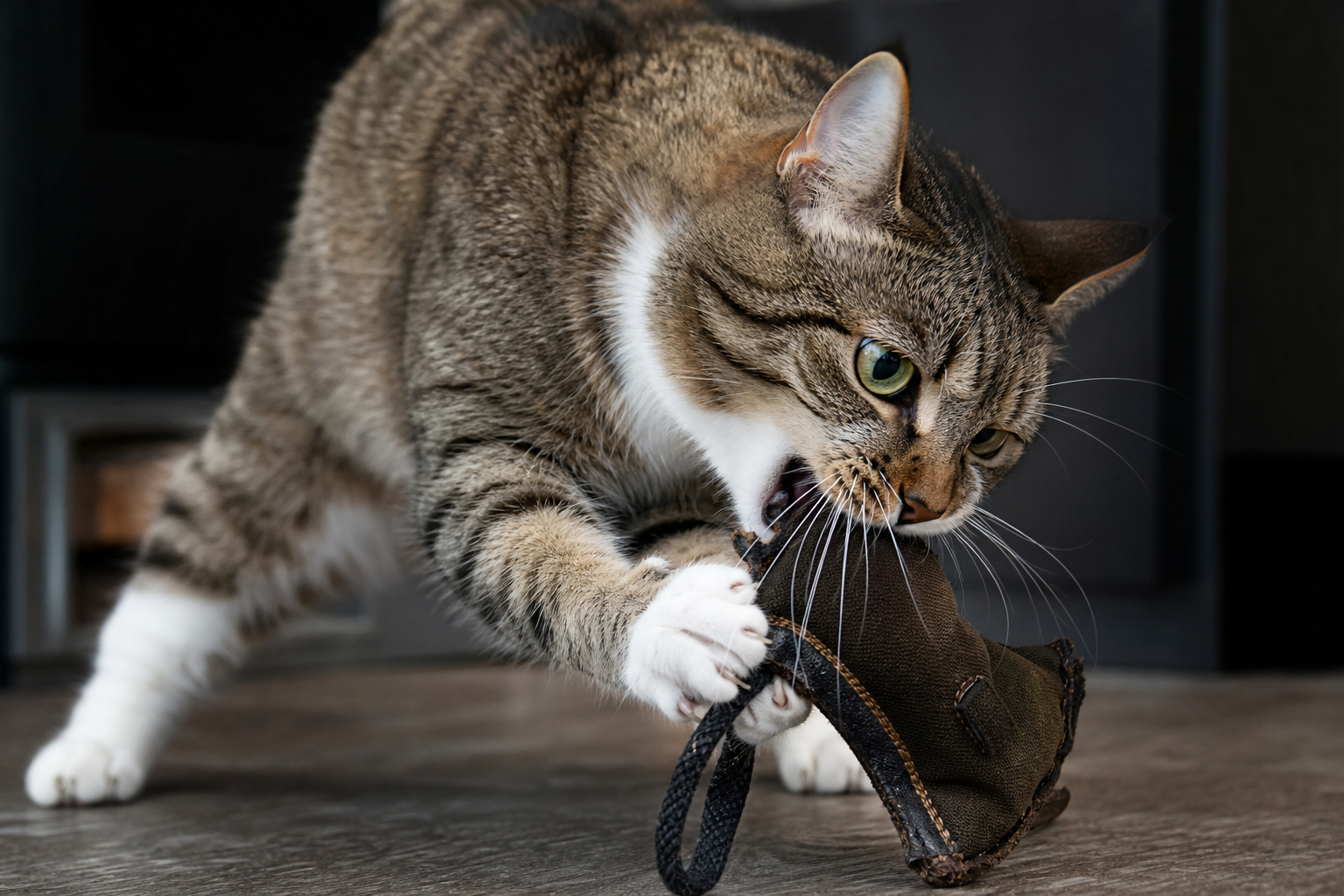
Cat chewing toys can help when a cat gnaws plush mice, cardboard corners, shoelaces, cords, or the tags off every toy in the house. The right toy gives the cat a safer outlet for biting and carrying. The wrong toy adds new hazards: loose string, cracked plastic, exposed stuffing, small bells, feathers, or pieces a determined cat can swallow.
The safest approach is not to look for an indestructible chew toy. Look for a toy that fits why your cat is chewing, is too large to swallow, has simple construction, survives the first supervised sessions, and can be inspected easily. If your cat eats non-food material rather than just chewing it, treat that as a veterinary and safety issue, not a shopping problem.

Why Cats Chew Toys
Cats chew for different reasons, and the reason changes what you should offer. A kitten may mouth objects while teething. A young adult may bite hard during prey play because the toy is finally close enough to catch. A bored indoor cat may chew cardboard, plastic, fabric, or cords because the environment is not giving enough work to do. Some cats lick, chew, and consume non-food objects in a pattern that looks like pica.
That distinction matters. Normal play biting can often be redirected into better toys and routines. Repeatedly eating fabric, string, rubber bands, plastic, wood, or other non-food objects needs a stricter plan and a veterinarian’s input. UC Davis School of Veterinary Medicine describes pica as persistent chewing and consumption of non-nutritional substances, and notes that it can be associated with medical problems, anxiety, boredom, or compulsive behavior.
Before buying more toys, write down what your cat actually does:
- Mouths and carries toys: choose larger soft toys, sturdy kickers, and supervised catch-and-bite games.
- Gnaws seams and tags: avoid thin plush, labels, loops, glued decorations, and dangling parts.
- Chews cords or strings: remove access first; do not try to solve this with more string-like toys.
- Eats pieces: stop giving destructible toys unattended and speak with a veterinarian.
- Chews when bored: add rotation, food puzzles, active play, hiding places, and window or climbing enrichment.
What Makes a Cat Chewing Toy Safer?
A safer chewing toy is built around damage control. It should still be interesting to bite, but it should not invite the cat to pull off swallowable parts. For Titan Claws readers, the best choices are usually simple, sturdy, and easy to inspect.
Look for these traits:
- Large enough sizing: the toy should not fit fully inside your cat’s mouth, and it should not have small removable parts.
- Simple construction: fewer eyes, beads, bells, feather plugs, tails, strings, ribbons, and glued accents means fewer failure points.
- Dense outer material: tightly woven fabric, durable fleece, canvas-style covers, and flexible rubber-like materials often handle chewing better than thin plush.
- Reinforced seams: inspectable stitching, protected seams, or one-piece molded construction is better than single stitching and glue.
- Safe shape: choose a toy the cat can bite and carry without wedging a tooth, trapping a claw, or breaking off a point.
- Washability: drool, food dust, catnip, and moisture can weaken fabric and stitching, so cleaning instructions matter.
If your cat destroys ordinary toys quickly, start with the broader Titan Claws guide to durable cat toys. For cats that like softer mouth-feel, compare the tradeoffs in our guide to chewy cat toys.
Good Toy Types for Cats That Like to Chew
No toy type is automatically safe for every cat. Use these categories as starting points, then judge by your own cat’s first few supervised sessions.
Large soft chew toys and kickers
A long kicker can work well for cats that grab, bite, and rake with the back feet. Choose dense fabric, firm stuffing, and reinforced ends. Avoid thin appendages and decorative pieces. The toy should be long enough that your hand is not part of the target. Retire it when seams open, stuffing appears, or the cat starts removing fabric instead of only biting the surface.
Flexible rubber-like chew toys
Some cats enjoy flexible rubber or silicone-style chew toys, especially when the texture gives their teeth something to press. These should bend rather than splinter, and they should be too large to swallow whole. Watch for deep bite marks, cracks, sticky surfaces, or pieces starting to peel. If a cat can shave off bits, the toy is no longer a good match.
Cat chew sticks
Silvervine, matatabi, and other cat chew sticks can interest cats that like plant-based textures. Use them only if the product is sized appropriately, clean, and intended for cats. Remove sharp splinters, broken pieces, and worn-down ends. If your cat tries to swallow chunks, stop using sticks and choose a different outlet.
Food puzzles and foraging toys
Some chewing is really frustration or boredom. A puzzle feeder can make part of a meal take longer and give the cat a job. Choose sturdy designs without tiny caps or brittle parts. Start easy, wash food-contact surfaces, and supervise until you know the cat will not pry off pieces.
Supervised wand play followed by a bite target
Wands are not chewing toys, but they can reduce unwanted chewing by giving the cat a proper hunt. Move the lure like prey, let the cat catch it sometimes, then end with a kicker or chew-aware toy the cat can bite. Store the wand afterward. A cat that chews string should not have unsupervised access to wand cords, feathers, ribbon, or elastic.

What to Avoid for Chewing Cats
Many ranking pages show long product lists, but they do not always separate cats that gently mouth toys from cats that dismantle them. If your cat chews aggressively, be strict about what stays out.
- String, yarn, thread, ribbon, and elastic: these can be dangerous if swallowed, especially when one end anchors in the mouth or digestive tract.
- Feathers and sparkly trim: they are fun in supervised play, but many chewers ingest them.
- Small plush mice with hard parts: glued eyes, noses, bells, and tails are common failure points.
- Thin plastic or brittle toys: cracks can create sharp edges or swallowable fragments.
- Battery toys left unattended: battery doors, charging ports, moving lures, and replacement parts all need inspection.
- Human household items: hair ties, rubber bands, foam ear plugs, twist ties, shoelaces, and cords are not safe chew toys.
- Children’s plush or collectibles: they are not built around feline teeth, drool, hiding, and ingestion risk.
The University of Wisconsin School of Veterinary Medicine gives especially useful guidance for this topic: cats that chew aggressively may ingest feathers, strings, sparkly bits, and similar toy materials, so those are best avoided. It also recommends sturdy construction, no loose decorations, removing loops or tags, and taking away pieces that get chewed off.
The 60-Second Chew Toy Inspection
For a chewing cat, inspection is part of the product. Do it after rough sessions and before returning a toy to the bin.

- Check the mouth-sized parts. Look at bells, eyes, knots, caps, tags, feathers, tails, and any glued or sewn-on detail.
- Press every seam. If stuffing, pellets, foam, or inner material is visible, retire the toy.
- Flex hard material. Watch for cracks, sharp edges, deep bite channels, or pieces that are lifting.
- Look for swallowed evidence. Missing chunks matter even if the toy still looks mostly intact.
- Smell and feel the toy. Sticky surfaces, chemical odor, battery heat, or leaking residue mean immediate removal.
- Decide now. Keep, wash, move to supervised-only use, or throw it away. Do not put a questionable chew toy back on the floor.
A small replacement bin helps. If you have a fresh safe option ready, you will be less tempted to stretch one more session out of a damaged toy.
Build a Chewing-Safe Daily Routine
A single chew toy cannot carry the whole enrichment plan. The AAFP and ISFM environmental needs guidelines describe opportunities for play and predatory behavior as part of a healthy feline environment. For a chewing cat, that means offering legal outlets while reducing access to risky objects.
Try this daily structure:
- Morning: five to ten minutes of wand or chase play, then a safe bite target or breakfast puzzle.
- Daytime: leave out only toys your cat has already proven safe with, such as a sturdy ball track, large kicker, or inspected chew toy.
- Evening: a more intense hunt session, followed by a meal, then toy inspection.
- Overnight: store strings, wands, feather toys, electrical cords, hair ties, and anything your cat has tried to eat.
For more ideas beyond chewing, see Titan Claws’ cat enrichment activities guide and the guide to cat toys for enrichment. If your cat is still a kitten, our kitten teething toys guide can help separate normal mouthing from risky object chewing.
When Chewing Needs Veterinary Help
Call your veterinarian if your cat swallows toy parts, repeatedly eats fabric or plastic, chews electrical cords, vomits after chewing, stops eating, hides, drools, gags, strains in the litter box, has belly pain, or seems lethargic. Do not pull string or thread from a cat’s mouth or rear end; ask a veterinarian what to do.
The ASPCA Animal Poison Control Center warns that yarn and thread can pull the intestines together like a drawstring when swallowed. That is why the safest advice is boring but important: supervise string-like toys, store them after play, and treat suspected ingestion as urgent.
Chewing can also point to dental pain, stress, anxiety, lack of enrichment, or compulsive behavior. A veterinarian can check teeth and health first, then help you decide whether behavior support or environmental changes are needed.
Quick Buying Checklist
- Is this toy intended for cats, not children, dogs, or general decor?
- Is it too large to swallow whole?
- Are there any strings, ribbons, feathers, loops, tags, or elastic parts?
- Can your cat pull off eyes, bells, beads, caps, tails, or glued decorations?
- Does the material bend or compress without cracking into sharp pieces?
- Can you inspect every seam and likely bite point?
- Can you clean it after drool and catnip dust?
- Do reviews mention the same failure mode your cat creates?
- Will this be a supervised toy, a solo toy, or a toy that never belongs in your home?
The best cat chewing toys are not the toughest-looking products on a retailer page. They are the toys that match your cat’s real chewing pattern, avoid swallowable parts, support daily enrichment, and get retired the moment they stop being safe. Choose for the cat in front of you, supervise the first sessions, inspect damage, and keep risky household items out of reach.
Sources
- University of Wisconsin School of Veterinary Medicine: Safe toys for cats
- UC Davis School of Veterinary Medicine: Abnormal eating habits in cats
- AAFP and ISFM Feline Environmental Needs Guidelines
- ASPCA Animal Poison Control Center: string, yarn, and foreign body risks
- Cats.com: chew toy product-list context from current SERP
Leave a Reply